Operational staff are often the first to identify issues. Their experience and understanding can help you get to the root of a problem or highlight precursors. But people are not always straightforward in bringing forward information.
The observations that could reveal patterns in operational risk could seem minor or not worth reporting at first glance. People might be reluctant to ‘cause a fuss’, including when their experiences are repeated often and they’ve raised the same thing before.
If there’s a perception that reporting could cause more time pressure or work, this can also act as a barrier. Time is a cost in a highpressure environment, particularly on a high-risk site where there may be many things to report.
On the other hand, you know that all the information you get, even the small and repetitive details, can help you to build a clearer picture of the situation and develop a case for change.
Then there’s the follow up. When someone knows that the concern they’ve raised has been resolved, or that there’s a plan to deal with it, or that it’s being fully investigated, it helps make the time and energy cost of raising it feel worth it. The CIRAS confidential safety hotline closes the feedback loop.
CIRAS is your partner in listening. We offer a simple, direct and accessible way for your staff to be heard – whatever else is going on in your business and no matter how busy things are. They can share what they know without being identified. We’ll pass it on to the right people, whether it’s for their employer or another company. You can use this information in your own risk management. Offering a choice of reporting channels, including CIRAS, can help to close the reporting gap by overcoming any barriers – real or perceived. Confidential reporting
can reveal the concerns and information you might otherwise have missed.
When you receive a CIRAS report, you can respond and ask the reporter further questions through us. Your response lets the reporter know you are listening. When people believe someone is listening and that reporting is having an impact, they’re far more likely to make the right call and report their concerns.
To find out more, contact Susan Gray, stakeholder manager, at:


NEWS 164
West Midlands extension opens; Portland awards new streetcar contract to CAF; Goodbye to Washington streetcar; Revised route revealed for Cork Luas extension.
TEN YEARS IN BERLIN 208
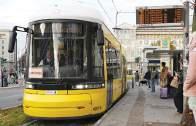
Neil Pulling reviews the network changes that have happened over the past ten years since TAUT’s last visit to Berlin.
LIGHT RAIL IN SOUTH AMERICA 213 TAUT discusses LRT and metro systems across Latin America, where a surprising number of new lines and extensions are underway.
STYLING MILANO
Andrew Thompson explores Italy’s fashionista capital, which is investing heavily in expanding its networks.
219
CLYDE METRO: GLASGOW
222
Will trams return to Glasgow, the UK's third-largest city? The Clyde Metro project seeks to do just that. Richard Foster finds out the details.
UKTRAM: A PATH FOR LRT
Shaping the path for new tramways.
SYSTEMS FACTFILE: DLR
225
227 East London has been transformed by the development of the DLR: Neil Pulling uncovers this symbiotic relationship.
WORLDWIDE REVIEW
Plans for 14 new extensions in Wrocław; Eight extensions announced for Brno.
CLASSIC TRAMS: BRUXELLES
Mike Russell reports on the 100-year anniversary of line 39 in Brussels.

It’s taken ten years and cost almost double what was intended, but South Wales is poised to complete the transformation of its suburban transport system in its capital city Cardiff with the entry into service of its 36 smart new tram-trains.
The price has spiralled to around GBP13bn (EUR15bn), but Transport for Wales (TfW) has held its nerve and secured enough money for a complete bi- and tri-mode fleet that will, when expansion into city and town centres pushes further forward, be capable of transferring from conventional railway tracks to street-running. Edinburgh, another UK capital city renowned for its doubts and indecision, is also exploring tram-trains for its south suburban railway, which has not had passenger services since 1962 but clung onto life because of its freight business. The will seems to be there to do it, because nationalist politicians who were so vocally opposed to the inauguration of Edinburgh Trams 20 years ago are now its greatest supporters.
232
236
As always, our news pages are packed with stories about new systems and extensions, so it’s always sad to learn that they don’t always work. It’s farewell to the pioneering DC Streetcar demonstration line in the USA’s capital city Washington, where poor patronage and political disinterest has killed it off. We had hoped it would grow into a five-line network, but the motor car has won this time.
The UK Light Rail Conference celebrates its 20th anniversary in Nottingham on 30 June and 1 July, and it will be opportune to reflect on all the changes that have taken place since the first gathering in London. We’ve had nine governments and eight Prime Ministers since then, and we can all ponder how much we have moved on with urban transport policy. You can join in the healthy debate by booking your place now.
Matt Johnston, Editor
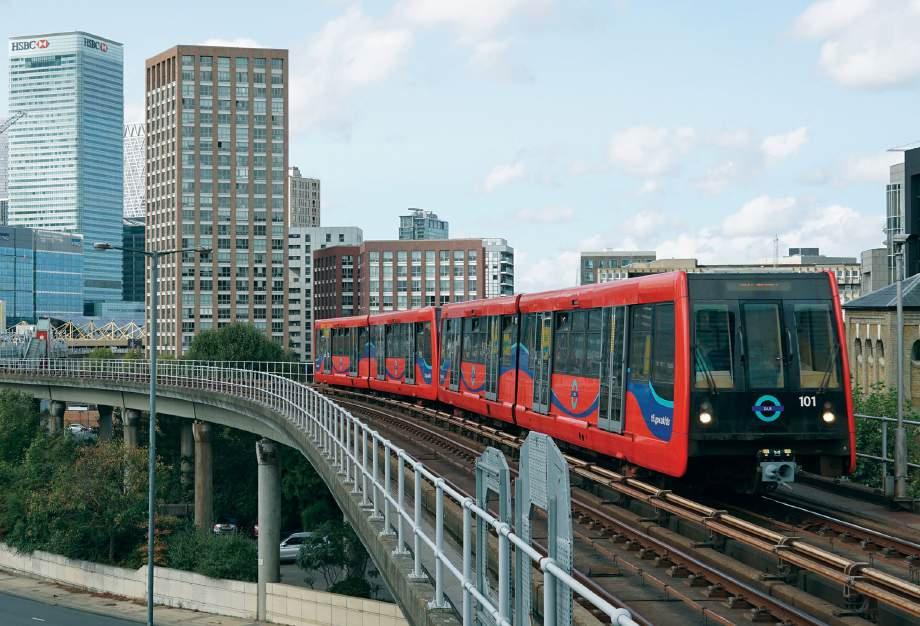
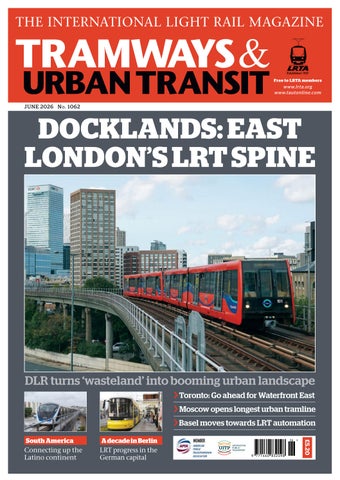
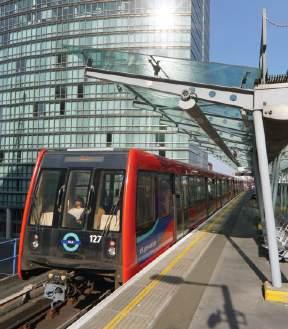
COVER: In London, UK, with a backdrop of the Canary Wharf Estate as it appeared in August 2023, 101 leads a B07 pair towards East India. Neil Pulling
JUNE 2026 Vol. 89 No. 1062
www.tautonline.com
EDITORIAL
EDITOR – Matt Johnston hello@mainspring.co.uk
ASSOCIATE EDITOR – Tony Streeter tony.streeter@mainspring.co.uk

WORLDWIDE EDITOR – Michael Taplin miketap@mainspring.co.uk
SENIOR CONTRIBUTORS –Howard Johnston , Neil Pulling WORLDWIDE CONTRIBUTORS
Richard Foster, Andrew Grahl, Andrew Moglestue, Herbert Pence, Mike Russell, Nikolai Semyonov, Alain Senut, Andrew Thompson, Witold Urbanowicz, Bill Vigrass, Thomas Wagner, Philip Webb.
PRODUCTION – Lanna Blyth Tel: +44 (0)1733 367604 production@mainspring.co.uk
DESIGN – Debbie Nolan
ADVERTISING
COMMERCIAL MANAGER – Geoff Butler Tel: +44 (0)1733 367610 geoff@mainspring.co.uk
Tramways & Urban Transit
13 Orton Enterprise Centre, Bakewell Road, Peterborough PE2 6XU, UK
Tramways & Urban Transit is published by Mainspring on behalf of the LRTA on the third Friday of each month preceding the cover date.
LRTA MEMBERSHIP (with TAUT subscription) Tramways & Urban Transit is sent free to all paid-up members of the Light Rail Transit Association.
LRTA WEBSITE AND DIARY Tim Kendell webmaster@lrta.org meetings@lrta.org
SUBSCRIPTIONS, MEMBERSHIP AND BACK ISSUES
LRTA Membership Secretary (Dept T06), 38 Wolseley Road, Sale M33 7AU, UK. Tel: +44 (0)117 951 7785 membership@lrta.org Website: www.lrta.org FOR CORPORATE SUBSCRIPTIONS VISIT www.mainspring.co.uk
LRTA REGISTERED OFFICE 13 Orton Enterprise Centre, Bakewell Road, Peterborough PE2 6XU, UK Private company limited by guarantee, No. 5072319 in England and Wales. LRTA CHAIRMAN – Paul Rowen chair@lrta.org
© LRTA 2026
Articles are submitted on the understanding they may also be used on our websites or in other media. A contribution is accepted on the basis that its author is responsible for the opinions expressed in it, and such opinions are not those of the LRTA or Mainspring. All rights reserved. No part of this magazine may be reproduced or transmitted in any form by any means, electronic or mechanical, including photocopying, recording or by any information storage and retrieval system, without prior permission in writing from the copyright owner. Multiple copying of the contents of the magazine without prior written approval is not permitted.
The Manson Group Limited, St Albans, Herts AL3 6PZ
DISTRIBUTION Warners (Midlands), Bourne, Lincs PE10 9PH, UK
Beograd Metro & Train has awarded Alstom a turnkey contract worth EUR915m to equip the new metro line 1 in Beograd (Belgrade). The 15km (9.3-mile) line, 11km (6.8 miles) of which will be underground, is now at the detailed design stage. It will run between Makiško Polje in the south-west of the Serbian capital and Karaburma in the north-east via Trg Republike.
Alstom is to provide the power supply, track, platform screen doors, depot equipment and 32 three-car Metropolis trains. Line 1 is to be fully automated using Alstom’s Urbalis communications-based train control system, which will permit a 90-second service.
The project is supported by financial assistance from the French government in the form of a EUR150m direct loan, along with commercial bank loans of up to EUR530m. Basic infrastructure is being built by Power China. Construction is to start this spring, with completion planned for 2030. It is to be operated by RATP Dev. BMT director Andreja Mladenović said: “Given the complexity of the project and the involvement of a large number of participants, it is important to provide sufficient time for planning. Our goal is for Beograd to have one of the most modern and high-quality metro systems in Europe and the world.”
Prague bridge opens Tatra T3 Cabrio 5573 and Škoda 52T 9506 worked the first public services over the CZK1.62bn (EUR66.5m) Dvorecký bridge across the Vltava river in Praha (Prague) on 18 April. This follows a preview day on 17 April – World Public Transport Day – which featured modern and historic trams. The 361m-structure connects the Podlí district on the east bank and Zlíchov on the west, and is the 21st bridge over the river in the Czech capital. Lines 20 and 21 cross the bridge, which is reserved for pedestrians, cyclists and trams. The opening has altered the routes of lines 2, 4, 7, 15 and 24. A new line, 34, is introduced between Bílá Labuť and Nádraží Holešovice while line 14 has been withdrawn.
Canadian Prime Minister Mark Carney, Ontario
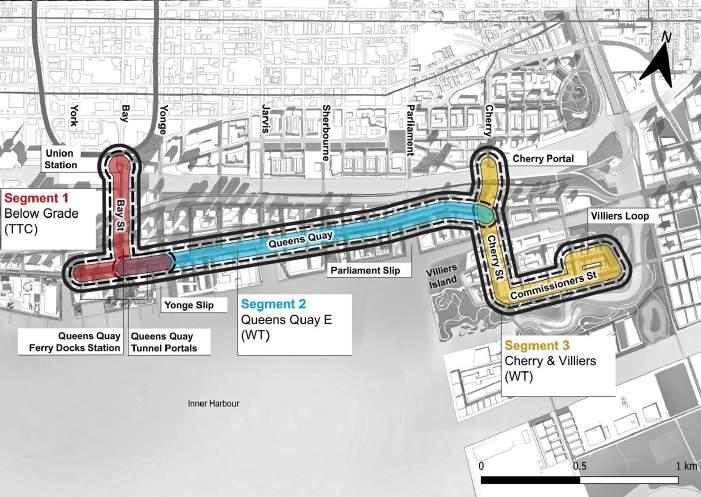
Premier Doug Ford and Toronto Mayor Olivia Chow have committed CAD1bn (EUR625m) each from federal, provincial and municipal funds to build Toronto’s 3.8km (2.4mile) Waterfront East line. The announcement was made on 30 March as part of a CAD8.8bn (EUR5.5bn) investment in housing and infrastructure in the capital of Ontario province.
Planning for the Waterfront East light rail line started in 2018 and CAD36m (EUR22.5m) has been spent so far. However, the line has until now remained unfunded.
It is planned to start in a
subway at Union Station, before running south to Ferry Docks where the line will run on the surface to Queens Quay East, Cherry Street and Commissioners Street. It is to serve the Port Lands development area, where 75 000 new homes are planned.
The new line is expected to serve 150 000 people, with an expected daily ridership of 50 000 passengers. A statement from Waterfront Toronto, which oversees the whole waterfront redevelopment, said that the new line “is expected to create more than 100 000 jobs and generate more than CAD13.2bn [EUR8.3bn] in economic value”.
Prime Minister Carney said: “While we build major
infrastructure, we’re also accelerating local infrastructure projects that frankly have stalled too long. Canadians deserve faster, more reliable commutes back home and to our major cities.”
Mayor Chow added: “Waterfront East Transit is about building the future of Toronto. Today’s historic announcement will unlock new homes, connect people to jobs and support communities along the eastern waterfront. Together, we are delivering a more affordable, caring and safe city for Torontonians.”
Waterfront East LRT is set to open in 2032. Toronto Transit Commission is to lead its construction.
Transport Infrastructure Ireland has revealed a revised route for the proposed Cork Luas. The change has been made in response to 2025’s public consultation on the Emerging Preferred Route.
The new 20km (12-mile), 27stop route is broadly similar to
the Emerging Preferred Route, as it links Ballincollig to the west of the city with Mahon Point to the east via the city centre. However, it now passes through the Cork University Hospital (CUH) campus, while moving the line onto Flynn’s Road in Ballincollig “[widening] the catchment area”.
Changes on Station Road have improved access to the Church of St Mary and St John. There has been criticism from some political leaders in Cork that the tramway doesn’t connect the north of the city to the airport. The new EUR2.5bn line could open in 2036.
Services start on new 33km Diameter
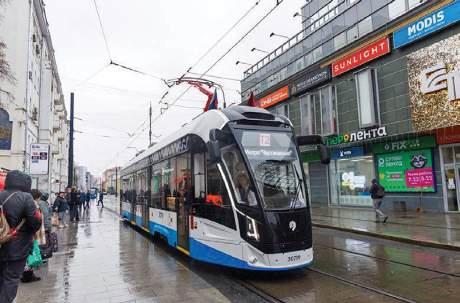
On 9 April, Moskva (Moscow) Mayor Sergei Sobyanin inaugurated Diameter line T2, described as ‘the world’s longest urban tram line’. At 33km (20.5 miles), the 79-stop line has an end-to-end running time of over 140 minutes, with services every six minutes.
The opening of the first Diameter route (T1) in 2025 has led to a growth in passenger numbers. Line T2 forms the next part of a plan to create a ‘surface metro’ reducing travel times and providing convenient transfers to metro and commuter rail lines across the Russian capital. T2 shares 10km (six miles) of track with T1, including the new link along Academician Sakharov Avenue. It runs from MCD-4 Novogireyevo station in the east to Chertanovskaya station in the south, via four central area railway stations (Yaroslavsky, Leningradsky, Kazansky and Paveletsky). It connects with 31 metro stations.
Operator Moskva Metro said: “Development of the tram
network remains one of the priorities of the city’s transport strategy and infrastructure modernisation and rolling stock renewals are planned for the coming years to improve the speed, reliability and environmental friendliness of the surface transport system.”
T2’s 51 trams are based at Apakov depot. They comprise articulated 71-931M Vityaz-M
and PKTS 71-911EM Lyonok-M low-floor bogie trams. PKTS is delivering 100 new 71-911EM trams with traction batteries to provide power on the 4km (2.5 mile) sections of line without overhead.
From 10 April, tram lines 3 and 37 were withdrawn and line 13 became peak hours only. Line 39 now runs weekdays only.
Alstom has already delivered more than 3000 Alstom Citadis to over 70 cities around the world, with more on order. However, a Citadis ‘first’ took place on 26 March: delivery of the first metre-gauge versions.
Ilévia, the public transport authority for the French city of Lille, ordered 24 Alstom Citadis 405 100% low-floor trams in 2023. The deal was later increased to 27.
The new five-section, 32.4m trams can carry up to 196 passengers each. This represents a 20% increase in capacity on the 24 Ansaldo Breda trams, built in 1993-94, that they are to replace. Costing EUR 4.62m each, the new vehicles are part of a larger investment programme of EUR276m to improve public transport in the greater Lille area. The Alstom trams will start to enter service this summer on the Mongy tramway.
West Midlands Metro’s Millennium Point extension (UK) opened on 5 April. The 500m branch diverges from the Wolverhampton – Edgbaston main line at Bull Street, with
an intermediate stop at Albert Street, serving Moor Street bus interchange.
Midland Metro Ltd’s Managing Director Sophie Allison said: “The launch of
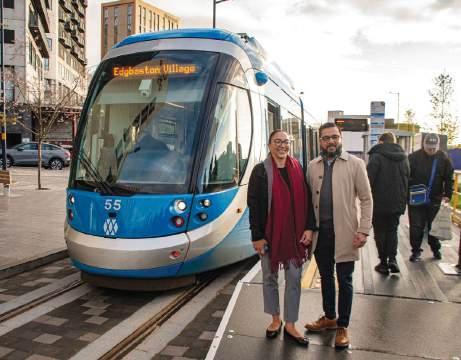
services to Millennium Point marks another important milestone in the expansion of the tram network and the two new stops will initially see trams every 15 minutes.
“They’ll deliver a wealth of benefits for local businesses and the travelling public by connecting another vibrant part of the city centre to the wider tram system.”
With the new terminus adjacent to the Clayton Hotel Birmingham, hotel guests can now enjoy a 15% discount on tram travel.
This extension is the first part of WMM’s 1.7km (one-mile) Eastside Extension to open. This will eventually terminate at High Street Deritend in Digbeth, and much of the infrastructure between here and Meridien
Street is complete. However, it remains isolated from the Millennium Point terminus by the Cursor Street worksite for the under-construction highspeed line HS2. Once Midland Metro Alliance contractors access Curzon Street, the two halves will be connected. A 2027 opening to Digbeth has been suggested.
Meanwhile, the first trams should start testing on the GBP649m (EUR749m) extension to Dudley in June. The 9.7km (six-mile) line should open to passengers in August. Its trams will be the first to run in Dudley since the Dudley Stourbridge & District Electric Traction Company closed in 1930.
The 8km (five-mile) section from Dudley to Brierley Hill is due to open in 2028.
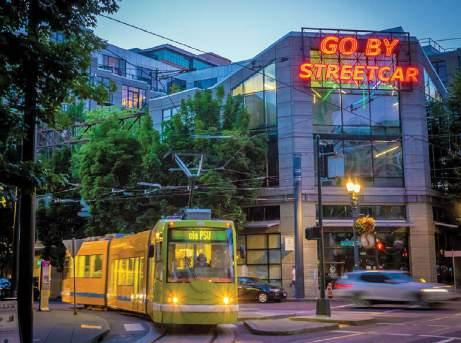
Portland’s Bureau of Transportation (US) has awarded a contract for new low-floor trams to CAF USA. The 15 doubleended 20m Urbos trams are to be constructed at CAF’s rolling stock assembly plant in Elmira, New York State, which has built –or is building – light rail vehicles for Kansas City, Cincinnati and Omaha.
The next stage is for representatives from the city, operator Streetcar Inc and CAF USA to finalise the vehicle specifications and delivery timescale.
Portland’s new vehicles are set to have batteries to allow operation on the 1.3km (0.8-mile) North South Line extension to Montgomery Park,
Cologne’s new tram tender
KVB, the transport operator in Germany’s Köln (Cologne), has issued a tender for up to 113 trams, with a firm order for 33. The new vehicles have been classified NF6.2 and are to be double-ended, 30m long and 2.65m wide. Capable of running at 80km/h (50mph) they will also need to negotiate a minimum curve radius of 25m and cope with 6% gradients.
An initial three (pre-production) cars should be delivered in 2030, with the remainder following in 2031-32.
Rome narrow-gauge rebuild
A tender worth around EUR250m has been issued to rebuild the Termini – Giardinetti 950mmgauge line in Roma (Rome) as a 1435mm-gauge express tramway. The project in the Italian capital involves rebuilding Centocelle depot, building a 3.6km (2.2-mile) extension from Giardinetti to Parcheggio Scambiatore parkand-ride, and a 540m extension at Termini to make a link with ATAC lines 5 and 14.
German cities opt for Stadler
Görlitz and Zwickau have chosen Stadler to produce 14 three-section, 30m TINA 100% low-floor, air-conditioned trams. Both German cities pulled out of the Sachsentram project with HeiterBlick (TAUT 1058). The new vehicles are to be built at Stadler’s Polish factory, for delivery in 2028. They will replace Tatra KT4D highfloor trams in both cities.
which will not be equipped with overhead wires. Construction is due to start in 2028, with a planned opening in 2030.
The new CAF trams are to replace seven Czech-built Škoda 10T trams that worked the initial 3.9km (2.4 miles) of the North South Line when it opened in 2001. They will also replace three Inekon 12-Trio vehicles built in 2006-07, unique United Streetcar 10T3 015, accident-damaged United Streetcar 024, and the three ex-Tacoma 10Ts that have yet to enter service.
Portland Streetcar Executive
Director Dan Bower said:
“Replacing 25-year-old vehicles with brand new streetcars will be an improvement in the comfort, safety and reliability riders can expect, and sets the stage for the
Škoda 008 on the
next 30 years of success.”
The tram system through Oregon comprises three lines covering 11.6km (7.2 miles)
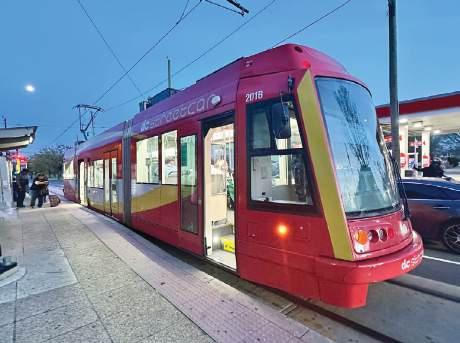
Tram 201 operated the last service on Washington DC’s DC Streetcar at 22.40 on 31 March. This is not the first time that the US capital has closed a tram system; its original 1862 tramway shut in 1962.
Construction of the 3.5km (2.2-mile) DC Streetcar started in 2009 and was completed in 2016. DC Streetcar was a demonstration project of modern streetcars and did not charge a fare for passengers. However, it has suffered from low passenger numbers, slow operation due to badly-parked cars and fading political support.
At one time, a five-line 60km (37.5-mile) network was being planned.
Rising costs – with an annual bill of USD10m-12m (EUR8.6m10.3m) – meant that although the line was originally due to close in 2027, this was brought forward to 2026. Bus D20 continues to serve the same route along H Street, although Mayor Muriel Bowser has suggested that trolleybuses could reuse the existing overhead equipment.
DC Streetcar’s six 20m trams (three Inekon Trios and three United Streetcar 10Ts) are to be auctioned online.
of track. It carries over 2.6m passengers per year and complements the MAX light rail system.
Sheffield Supertram’s GBP10m (EUR11.5m) Magna tramtrain stop opened on 9 April, becoming the UK system’s first new calling point to do so since 2018. It lies about halfway between Meadowhall South and Rotherham Central on the heavy rail Dearne Valley Line, being served by Supertram’s Class 399 tram-trains. The stop serves Magna Science Adventure Centre and a new, 100-space park-and-ride facility.
South Yorkshire’s Mayor Oliver Coppard said that the opening of Magna stop is “exactly what taking back control of our public transport looks like; us building the future.”
Opening came soon after South Yorkshire Mayoral Combined Authority’s Board was asked to vote on the Supertram 2026/27 Business Plan at a meeting on 24 March. The Business Plan focuses on consolidating the system and delivering improvements to punctuality and reliability. The only expansion project included in the plan is extension of the tram-train network to the proposed Rotherham Gateway station. This would serve Rotherham’s new Innovation Campus and a 2500-house development.
Stadler to supply new control system to
Baselland Transport (BLT) has taken the first steps towards automating its network around the Swiss city of Basel by ordering Stadler’s NOVA Pro communication-based train control system. This will be fitted to 38 TANGO and 25 TINA trams as the first step towards automating the system.
BLT already uses NOVA Pro on its 13.1km (8.1-mile) Waldenburgerbahn line between Liestal and Waldenburg. Once the driver is given permission to proceed, the system is engaged and, according to Stadler, “journeys are carried out fully-automatically: the communication-based CBTC system regulates speed, controls level crossings, and ensures precise stopping at stations”.
The Waldenburgerbahn has “a punctuality rate of over 99% [and] the line is among the most reliable in Switzerland”.
NOVA Pro is to be tested on BLT Line 11 from 2027. Communication between the onboard systems and the trackside equipment uses the public mobile network.
Silvio Gemperli, Stadler’s Head of Business Unit Signalling Switzerland, said: “Building on our long-standing collaboration, this project marks an important milestone in our partnership, for the next ten years and beyond. BLT is far more than a customer for us – it is a close strategic partner. Together we are developing the network step-bystep and setting new standards in reliability, automation and innovation... [and] shaping the next digitalised generation of rail transport’.
BLT is owned by the Canton of Baselland and is responsible for the tramway infrastructure of lines 10, 11 and 17, which pass through Basel on BVB (city tramway) tracks.
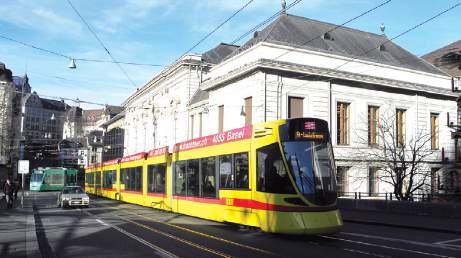
A pair of rolling stock manufacturers in the Polish city of Pozna ń, Modertrans and H. Cegielski-Pozna ń S.A, could merge. Modertrans is a subsidiary of MPK Pozna ń, the municipal transport company, and has previously been linked with a possible takeover by Spanish manufacturer CAF. H. Cegielski-Pozna ń S.A was founded in 1846 and its
current factory site in the city is surrounded by housing, leaving it little room to expand. Its Chief Executive Jerzy Woli ń ski told Rynek-Kolejowy : “Running an industrial business will become very difficult, perhaps impossible. I believe that a merger [with] Modertrans… could be an interesting and valuable solution. Both parties are interested in the concept.”
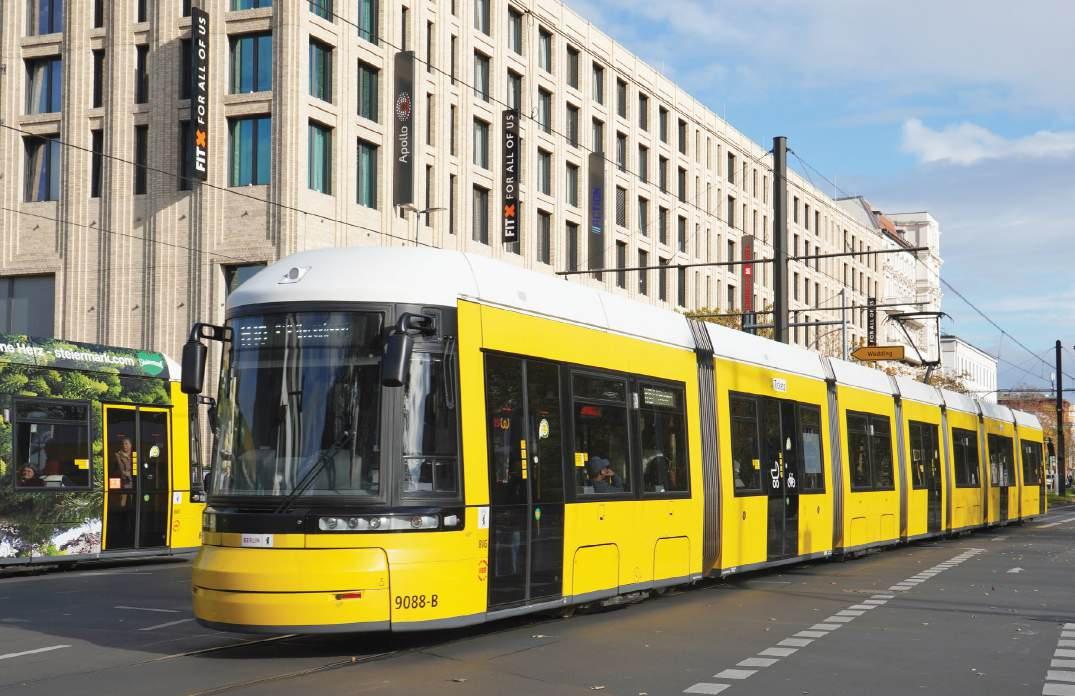
In 2016 TAUT ran a two-part feature on Berlin’s public transport. Neil Pulling assesses aspects of the network’s changes around the city-state since that time.
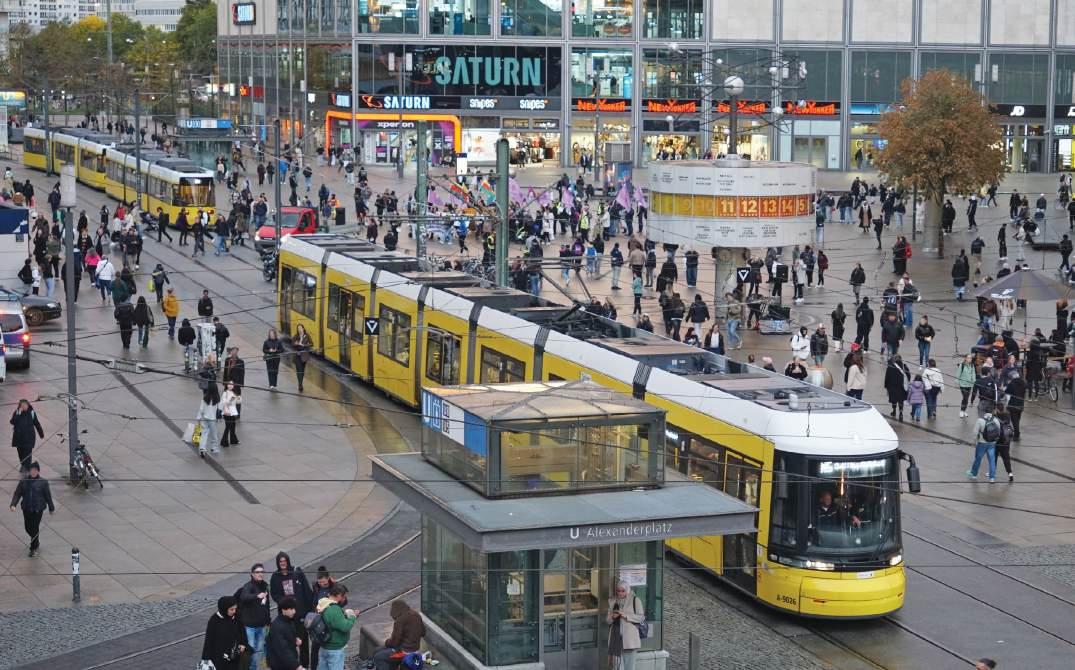
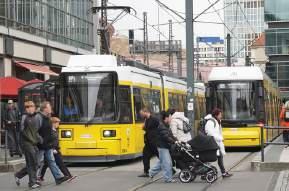
LEFT (TOP): Flexity Berlin 9088 on 21 October 2025 approaching Turmstraße, an expanded interchange near the Schultheiss Quartier redevelopment of a former brewery site. On the extension opened in September 2023, the terminus platforms are above Turmstraße U-Bahn station and near bus stops. All images by Neil
Pulling]
LEFT (BOTTOM): Alexanderplatz became an East Berlin transport hub, albeit losing trams in the name of modernity. Including a return of trams, its multimode interchange role has expanded, as have social and commercial activities. On 23 October 2025, tram services were about to be paused for a protest to cross near the Weltzeituhr (World Time Clock).
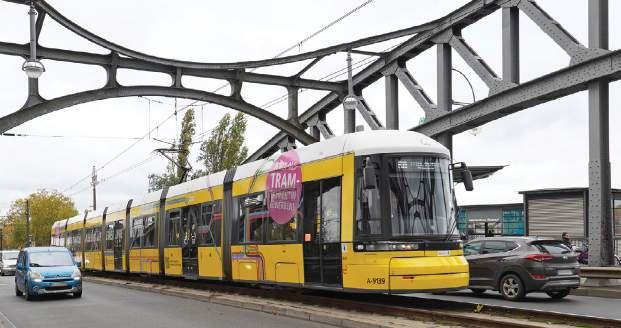
Crossing historic Bösebrücke, bi-directional 40-metre long 9139 built in 2021 exemplifies the most numerous Flexity Berlin variant. It carries advertising for tram driver recruitment: staff shortages are a pressing issue for BVG
Aperson would now have to be at least 40-years-old to have first-hand memories of a Berlin divided by two political and economic systems. Following the 1989/90 German Wende (Turning Point), significant changes came to the city’s transport arrangements. Influenced by years when travel beyond both sides of Berlin had constraints, plus a growing scarcity and cost of parking space, car ownership in the capital is low by German standards. Berlin’s 2025 population of about 3.9 million is within an overall rise since reunification, with increases mainly due to incomers, for the birth rate is falling. Public transport’s coverage, costs, frequencies and capacity also influence personal travel decisions.
Transport responsibilities which became split in 1949 were formally re-combined in 1992 under the municipal body Berliner Verkehrsbetriebe (BVG). In 2020 a 15-year agreement between the city administration and BVG came into force, continuing their responsibilities for the 155km (97 miles) of U-Bahn, 22 tram lines, buses and ferries. The distinction of classifying road-based services that have higher frequency and operating hours with M-prefixed numbers introduced for trams in 2004 and buses in 2006 remains in use; other lines are designated by number only.
In an acknowledgement of ageing infrastructure and fleets, staff shortages and heavy service demands, in December 2024 BVG announced its ‘Stabilität vor Wachstum’ (Stability before Growth) strategy. The corporate focus was to move from expansion to optimising resources which already exist. This includes maintaining services as scheduled, better communication with users, and aspects of workforce relations.
The national rail network in Berlin carries long distance, regional and freight trains of various operators. Two rail formats have infrastructure in the care of DB InfraGO, constituted in 2023. The more specifically local is the S-Bahn which uses dedicated third-rail tracks and is run under contracts with a DB-Regio subsidiary, S-Bahn Berlin. Berlin is wholly surrounded by Brandenburg state, with the respective transport services coordinated by Verkehrsverbund BerlinBrandenburg (VBB) operators union.
The sudden end of Berlin’s division in November 1989 presaged the abolition of ‘East’ and ‘West’ in October 1990. Bus and some rail services changed relatively quickly, as with reopening stations on U-Bahn lines routed under East Berlin. Creating a capacious network suitable for the combined city and country needed much longer. With the end of access to Berlin being limited to guarded corridors, the Verkehrsprojekt Deutsche Einheit (VDE) ‘Unity’ programme for better road, rail and waterway links was launched. Restored and entirely new railways increased routes between the former East and West Germany. Berlin gained faster links with major cities such as Hanover and Hamburg, the latter subject to more upgrading in 2025/26.
Continuing into the mid-2020s, the biggest Unity rail project is the multi-stage VDE8, covering Berlin to Nuremberg, from where existing high-speed tracks proceed towards Munich. This brings cities such as Erfurt, Halle and Leipzig into the network’s mainstream. Timings like Munich to Berlin in around four hours and ten minutes, and Leipzig to Berlin in 75 minutes, brought more traffic directly into the capital’s core area, from where local connections can be made.
The 2023 introduction of the subscriptionbased Deutschlandticket (EUR 63 monthly in 2026) stimulated regional and urban demand, covering heavy rail (except ICE/IC), light rail and buses. Deutschlandticket does not have the weekday time or area restrictions of the state-based Ländertickets such as the Brandenburg-Berlin Ticket (EUR36.50 for
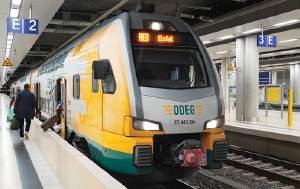
one day). Making commuting by public transport cheaper for many, holding a Deutschlandticket also encourages use for leisure journeys, highly relevant to Berlin with its great concentration of attractions. If a major project of national significance approved in 2004 had gone to plan, the 2016 TAUT feature might have reflected on five years of ground transport related to Berlin Brandenburg Airport (BER). As it turned out, the 2011 target opening proved to be very over-optimistic. BER’s site just outside Berlin’s southern boundary extended from the former East German Schönefeld Airport. After reunification, Schönefeld capacity was increased and it became busy with low-cost airlines. With the closure of Tempelhof in 2008, the other former West Berlin airport, Tegel, became the principal gateway until replaced by BER in October 2020. U-Bahn stations near Tempelhof have remained active due to them being in a residential district; Tegel in the north-west had never gained a fixed link. Concentrating flights at BER led to it becoming Germany’s thirdbusiest airport after Frankfurt (Main) and Munich. With the latter two established as Germany’s long-haul gateways and with more populous hinterlands than Berlin, that pecking order seems likely to remain. Railway infrastructure was available well in advance of BER’s opening, but had to be maintained with ‘ghost’ running until the airport became approved for public use. The FEX (Flughafen Express) service was then implemented between BER and the lower level at Berlin Hauptbahnhof (Hbf), which had opened in 2006.
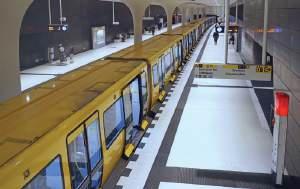
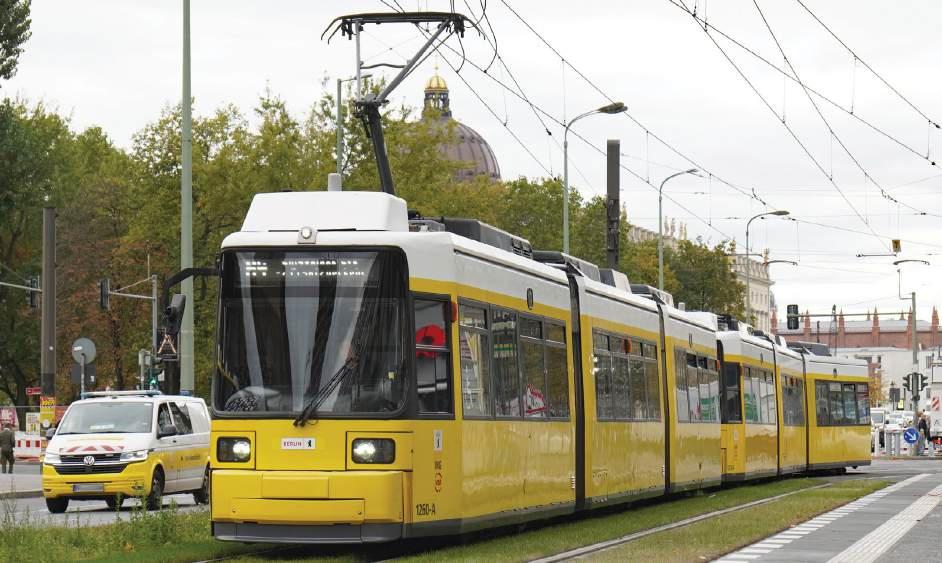
Until late 2025, limitations on the central east-west rail axis, the Stadtbahn, meant that FEX took an indirect route. This included a north-eastern part of the Ringbahn (an inner ring railway with separate S-Bahn and main line tracks) to reach Berlin Hbf via Gesundbrunnen station. Upon the Dresdner Bahn project’s completion in December 2025, FEX began using this renewed railway into Berlin Hbf via the north-south line through Südkreuz. This change almost halved the FEX travel time between BER and Berlin Hbf to 23 minutes. The S9 and S85 serving BER run via Schönefeld station, much reduced in importance after the air terminal closed in 2022. Regional trains are routed in both directions at BER; to date, long-distance services have a minor presence there.
The Ringbahn’s Gesundbrunnen and Südkreuz exemplify where post-Wende changes led to outer stations gaining importance in the 21st Century. Not only local interchanges, some have gained regional and long-distance services which relieve demand for transfers at Berlin Hbf.
Complete rebuilding of the eastern Ringbahn counterpart, Ostkreuz, was completed in 2018; within a year it was Berlin’s third-busiest station by passenger numbers after the Hbf and Friedrichstrasse. A project intended to give Ostkreuz closer tram access by 2016 has been characterised by plan modifications and objections. With no construction begun, line 21 which was intended to take the new 1.2km (0.7-mile) section, was split in November 2025 due to the original alignment’s condition. Rebuilt around the time of Ostkreuz, nearby Warschauer Straße station has tram services from the north.
To the south, the Spree river bridge, Oberbaumbrücke, once had reminders of thwarted expansion. Tracks installed after the bridge’s restoration in 1995 were removed without being used, as were those on Leipziger Straße, with their destination of Potsdamer Platz remaining one of several longstanding targets for tram coverage. Even if such plans are realised, the mode seems unlikely to spread across the metropolitan area if the pattern of extending from the extant system continues. This contrasts with Paris where separate lines were installed from the 1990s around the urban area according to localised needs.
“It was from the 2014 expansion bringing Berlin Hbf onto the tram system that the latest extension opened in 2023.”
Berlin’s projects have been prone to objections over disruption during construction, environmental harm, financial cost and debates over whether trams are the most suitable mode. High-capacity buses such as double-articulated vehicles frequently appear in the debate as to how best/how cheaply/how rapidly to address growing demand.
An old/new combination
When the inner border fortifications –collectively ‘The Berlin Wall’ – were breached at B ösebr ücke on Bornholmer Straße in 1989, the tramway was wholly within East Berlin.
The system was largely in the north-east, connecting with a smaller southern cluster around the once-separate town of Köpenick. West Berlin’s tram operations had reduced from 1954, with complete closure by 1967 as the U-Bahn was extended. It was not until October 1995 that trams ran there again, with a celebratory service worked by a low-floor tram, equipment newly available to BVG but then far from commonplace. Czech ČKD Tatra trams dominated East Berlin’s fleet in later years and became used on the new reach into the former West. Deliveries of low-floor AEG (later Adtranz and Bombardier) three-section GT6 stock which began in 1994 could not keep pace with demand and a target of Tatra withdrawal by 2015 was pushed back, with their final public use coming in May 2021.
Fleet renewal continued with Bombardier’s Flexity Berlin in a mix of five- and sevensection lengths, with some also increasing the proportion of bi-directional vehicles which reflected layout changes. From prototypes assessed from 2009, the last Flexity Berlin (9157) of 231 was delivered in 2022. Except for accident withdrawals from an original 150, modified GT6 remain in service. Working relatively low-demand lines, they are also used in pairs on some M-lines pending replacement by the next BVG tram generation, the Urbanliner. Ordered in 2020 from Bombardier, the first in the 5001-series was received from successor Alstom, in 2024. With 65 on order, there was a prospective debut in early 2025. The nine-section, 50.9-metre long trams will become the biggest single units to operate in Berlin, but several issues have delayed their introduction. A persisting concern is their compatibility with infrastructure, including weight potentially imposed where tram
tracks run above shallow tunnels, as with the U-Bahn convergence around Alexanderplatz. It was from the 2014 expansion bringing Berlin Hbf onto the tram system that the latest extension opened in September 2023. An approximately 1.6km (one-mile) addition took line M10 to a stub-track terminus at Turmstraße in Moabit. Far from being an arbitrary ending, Turmstraße already had a U9 station and bus coverage. It was also next to the Schultheiss Quartier, a shopping centre opened in 2018 on the former Schultheiss brewery site. Reflecting recent changes in retail economics and a growing demand for housing, part of this development seems due for conversion to residential use. Turmstraße is projected as the starting point of a 3.8km (2.4-mile) western tram extension with ten new stops to S+U Jungfernheide station. The letters indicate the S-Bahn and U-Bahn at this Ringbahn station which also has other services. Jungfernheide features in proposals for more north-western tram coverage. Influenced by proximity to the thenfuture Berlin Brandenburg Airport, land in the south-east became adopted for housing, educational and commercial use. A 2011 extension from Adlershof S-Bahn station took trams to Karl-Ziegler-Straße. This became one end of a new 2.7km (1.7-mile) connection with Schöneweide station which was added in October 2023. Including a remodelling of the tram tracks at Schöneweide completed in August 2024, this busy regional and S-Bahn station has been completely rebuilt.
A substantial change in the central Mitte district was the Lückenschluss (closing the gap) U-Bahn project, realising an objective which had origins in the 1970s. The 2.2km (1.4-mile) westward extension of U5 from Alexanderplatz added three new stations in December 2020. It passed beneath the main avenues of Unter den Linden and KarlLiebknecht-Strasse to meet the temporarily titled U55 which had opened in 2009. As a standalone 1.4km (0.9-mile) line, U55 was little more than a token presence at the Hbf and the symbolic Brandenburg Gate and Reichstag building (Bundestag station), but incorporation with U5 added much-needed east-west capacity across Mitte.
U-Bahn and S-Bahn rolling stock has changed over the last decade. Originated in East Germany’s final years and designated the 485 series for the unified system, the last such trains were withdrawn in late 2023. The 483/484 series, respectively two-and four-section vehicles supplied by a Siemens-Stadler consortium, entered passenger service in January 2021. Internally gangwayed and with air-conditioning, the 106 units appreciably improve S-Bahn travel; developments of the type will be added. The need for new U-Bahn stock led to the IK-series (K denotes lines U1-U4) from 2015, with the JK entering service in autumn 2025.
As at April 2026, the J-series for use on large-profile lines remains due for public service. BVG bus routes use 1630 vehicles, with the first regular electric buses entering service in 2015. Such vehicles now number around 280. Double-deck buses have been used on busy routes in Berlin for over a century, with the latest generation being 200 British-built Alexander Dennis Enviro500 MMC, the last being received in 2023.
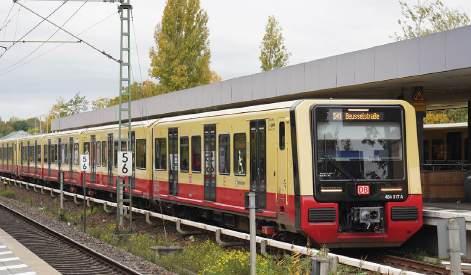
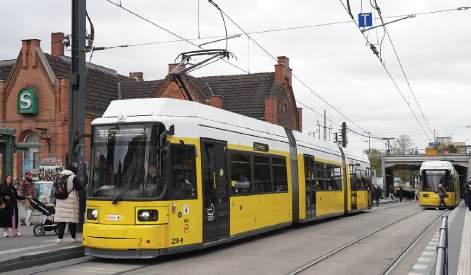
LEFT: A prospective addition to the tram system, Jungfernheide station on the north side of the Ringbahn handles S-Bahn, regional trains and U-Bahn. The newest S-Bahn Berlin type, Class 483/484 (shown here) spread to the Ringbahn in late 2022.
LEFT: Rebuilding of Schöneweide station completed in summer 2024 included tram tracks being changed to this alignment, having previously passed along the frontage of the now-abandoned building (left).
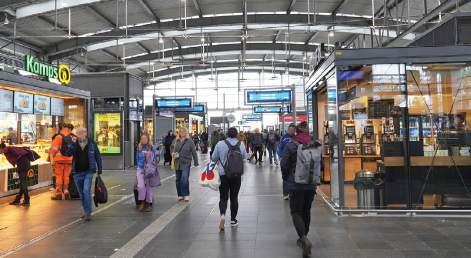
LEFT: Completed in 2019, the transformed layout and facilities at Ostkreuz expanded the service beyond S-Bahn and added capacity to this key eastern rail interchange. Planned improved tram connections here remain stalled.
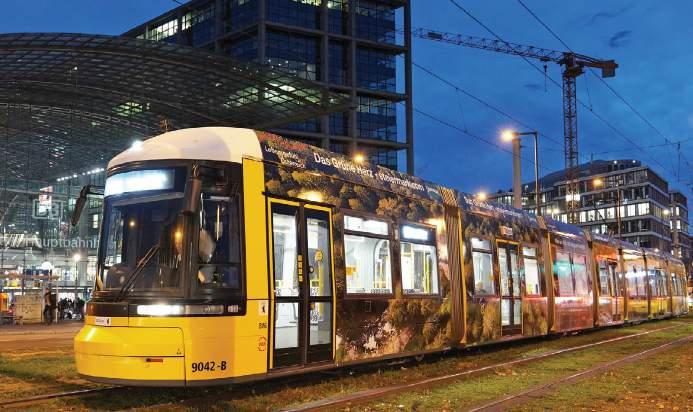













There’s more to South America than its dramatic natural wonders and iconic cultural landmarks. TAUT uncovers LRT systems from Brazil to Venezuela, finding a surprising number of new lines and extensions underway.
The 21st Century has been defined by instant communication and information being just a fingerclick away. Despite this, there are still gaps in our collective knowledge, places from where information is less forthcoming.
For light rail followers and those in the industry who are based in, say, Western Europe or North America, it’s hard to appreciate that there are parts of the world where it’ difficult to assess, with 100% accuracy, the size and spread of a country’s light rail network. China is a good example. News of openings and extensions often filters out long after new systems are operational.
Another such place is South America. That's perhaps partly due to its vastness. Despite the regularity of news about the rain forest’s destruction, scientists estimate that 60% of it still hasn’t been explored in detail.
Then there are the Andes, the mountains that stretch north-south for 8900km (5500 miles), the peaks of which have an average height of 4000m. And don’t forget that the southernmost tip of the Tierra
del Fuego archipelago is less than 1000km (621 miles) away from the coast of Antarctica.
The main South American landmass measures 17.8 million km 2 (6.9 million square miles), making it the world’s fourth-largest continent. The continent geographically also includes some islands, including the Falklands and Trinidad & Tobago.
What follows is a tour of the main landmass, which has 13 countries and a population of over 400 000 000 people. Of its countries, 12 are sovereign states while French Guiana one of France’s Overseas Departments and part of the EU, although it has no rail-based public transport system. Neither does Suriname, although this does possess 166km (103 miles) of 1435mm-gauge and 1000mm-gauge railway, all of which is currently mothballed.
A pair of South American states have revealed ambitions for their first urban mass transit systems. After elections in March 2025, Uruguay’s incoming government confirmed its support for a 35km (22-mile) tram-train system through the capital, Montevideo.
The USD521m (EUR444m) project could link the city centre with Ciudad de la Costa. As yet, the tendering process does not appear to have started.
Meanwhile, in Guyana, President Dr Irfaan Ali unveiled plans last autumn for a feasibility study into a proposed light rail line in the capital, Georgetown. Traffic congestion is a major problem, as illustrated in this open letter published by the Guyana Chronicle on 9 March: “At any given daylight hour in downtown Georgetown, the traffic congestion, together with the number of parked vehicles, seems like we have a city with one of the highest density of vehicles in the world.”
The potential route would be along the east bank of the Demerara River, possibly from the suburb of Diamond and around the East Coast to Golden Grove. Such a line would offer an alternative to car travel for 300 000 residents.
As we reported in TAUT 1060, the signing of a transport and energy Memorandum of Understanding between Paraguay’s President Santiago Peña and United Arab Emirates President Sheikh Mohammed bi Zayed
Nahyan on 3 February could finally end the saga of delivering a new tram line in the capital Asunción. A contract to build a line from Asunción to Ypacaraí with a South Korean consortium was signed in 2022 but was cancelled in September 2024.
The newly-proposed 44km (27-mile) tram-train line could be built under a 30-year concession between Paraguay’s rail operator FEPASA and Etihad Rail, with a EUR390m contribution from the UAE.
Of the South American states with aspirations for light rail systems, it makes sense to start our overview proper with Brazil. This is South America’s largest country and is responsible for producing over half its Gross Domestic Product.
São Paulo is Brazil’s most populous city and boasts a large metro system that’s complemented by a 281km (175-mile), sevenline 1600mm-gauge commuter rail network. This is operated by three companies, two private and the state-owned Companhia Paulista de Trens Metropolitanos. Line 9 was extended by 1.8km (1.1 miles) from MendesVila Natal to Varginha on 27 January 2025.
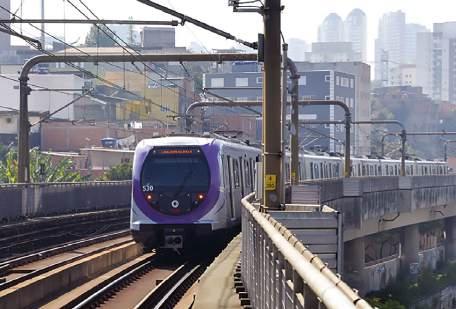
São Paulo’s metro carries about 4.2 million passengers a day across its seven lines. The oldest part of the system dates back to 1974 and the most recent section, the Line 5 extension, opened in 2015. To date, the system comprises 110.3km (68.5 miles)
of track and five lines. There are also two monorails, the 14.7km (9.1-mile) ‘Metro’ line 15 and the 5.9km (3.7-mile) line 17, which opened on 31 March.
This is a system that continues to expand and the first 15.9km (9.9-mile) section of line 6 is due to open later this year, to be worked by 22 new Alstom trains. On top of this, construction is underway on a further four extensions with a further 164.7km (102 miles) planned.
The extensions underway comprise:
• Line 2: Vila Prudente – Penha, 8km (five miles)
• Line 4: Vila Sônia-Profa Elisabeth Tenreiro – Taboão da Serra, 3.3km (2.1 miles)
• Line 15: Jardim Colonial – Jacu Pêssego and Vila Prudente – Ipiranga, 4.6km (2.8 miles)
• Line 17: Brooklin Paulista – Washington Luís, 0.8km (0.5 miles)
Rio de Janeiro is arguably Brazil’s most recognisable city, overlooked as it is by the 30m-tall Christ The Redeemer statue, which crowns the Corcovado mountain.
The city is perhaps better known in light railway circles for the Santa Teresa Tram, which has operated through its streets since 1877 (electrified in 1896). Recent developments on the 1100mm-gauge system have included reopening the connection to the Corcovado rack railway at Silvestre (last used in 1966), restoring the full length
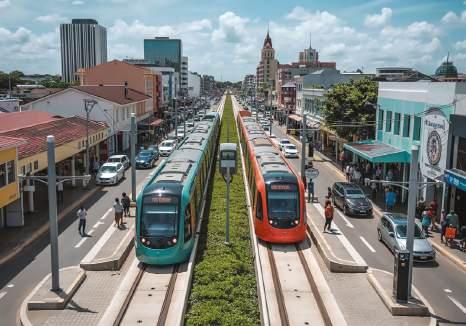
LEFT: Plans were unveiled in the autumn for a light rail line in Guyana’s capital, Georgetown, where congestion is a big problem – pictured is an AI generation of what this could look like. The proposed route would follow the east bank of the Demerara River. Travel and Tour World
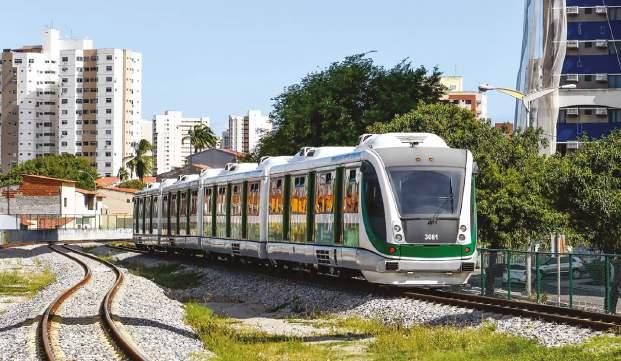
BELOW: Fortaleza is Brazil’s fourth-largest city. Metrofor is the metro system, which runs for 43.6km on lines 1 and 2 through the city. Metrofor
of the 1.3km (0.8-mile) Paula Mattos branch, which closed in 2011.
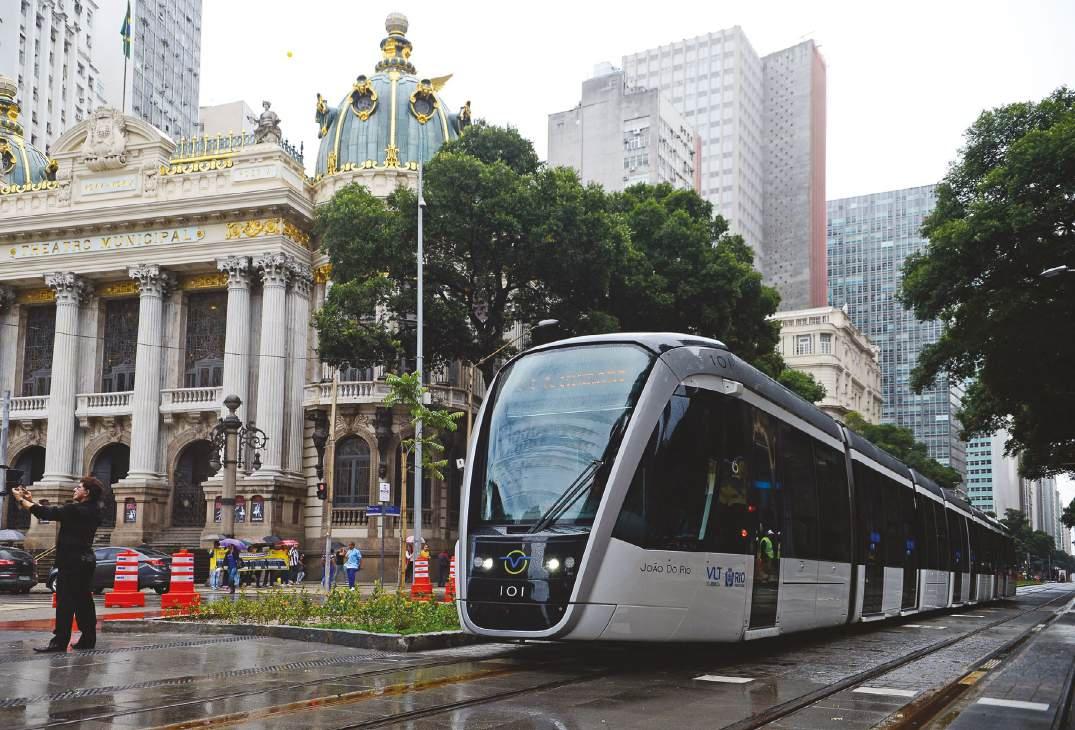
Rio also boasts a modern tram system in the form of VLT (Veículo Leve Sobre trilhos), the first part of which opened in 2016. It now comprises a four-line, 28km (17-mile) system worked by 32 Alstom Citadis 402 trams. Discussions are underway to extend VLT from Gentileza terminal to São Christóvão stadium, a distance of approximately 5km (3.1 miles).
There’s also a metro, which has its origins in the rapid, 1960s expansion of the city. The first stretch opened in 1979 and it now consists of 58km (36 miles) of 1600mm-gauge track.
There are three lines, but lines 1 (Uruguai/ Tijuca – General Osório) and 4 (General Osório - Jardim Oceânico/Barra da Tijuca) are often operated as a single line. Line 2 connects Pavuna to Botafogo. Meanwhile, Rio de Janiero’s state government has announced (TAUT 1049) plans to build the 22km (14-mile) metro line 3 to Niterói, which involves crossing the Guanabara Bay.
At the same time, Brazil’s federal government is to fund the Niterói light rail project with BRL450m (EUR72m). The 5km (three-mile) light rail line is to link the Barreto district to the city centre. It is to have ten stops. Stage 2 of the project comprises an 11.8km (seven-mile) extension to Charitas.
However, neither São Paulo nor Rio de Janiero is the capital of Brazil. Since 1960, that’s been Brasília and its 42.4km (26.3-mile) Federal District Metro opened on 17 August 1998. This comprises the Green and Orange lines and a loan of BRL444.5m (EUR72.4m) has been approved to finance a 3.6km (2.2-mile) Orange Line extension from Samambaia to the Olympic Centre. Construction is underway and it will require 15 new trains to complement its 32 Alstom-built trains.
Meanwhile, tenders have been invited for a feasibility study into a 15km (nine-mile) light rail line linking Taguatinga and Ceilândia via Pistão Norte.
Brazil continues to develop new light rail systems but here are its operational systems:
• Recife has a 39.5km (24.5-mile) metro comprising three lines and a 1000mm-gauge, 31.5km (20-mile) diesel-powered light rail line.
• Belo Horizonte’s 1600mm-gauge metro is 28.1km (17.5 miles) long; a 10.5km (6.5-mile) line 2 is due to open in 2027.
• Teresina has a 15.8km (9.8-mile) 1000mm-gauge, diesel-powered metro, which opened in 1991.
• Metrofor is Fortaleza’s metro, comprising lines 1 and 2, totalling 43.6km (27.1 miles). The diesel-powered 13.2km (8.2-mile) Parangaba – Macuripe Line 3 was joined by a 2.4km (1.5-mile) single-track branch line to the airport in February 2025. This is line 5.
Metrofor also operates Cariri Metro, the 13.9km (8.6-mile) diesel commuter line from Crato to Juazeiro do Norte. This uses Bom Sinal Indústria e Comércio Ltda-built two-car LRV-style DMUs.
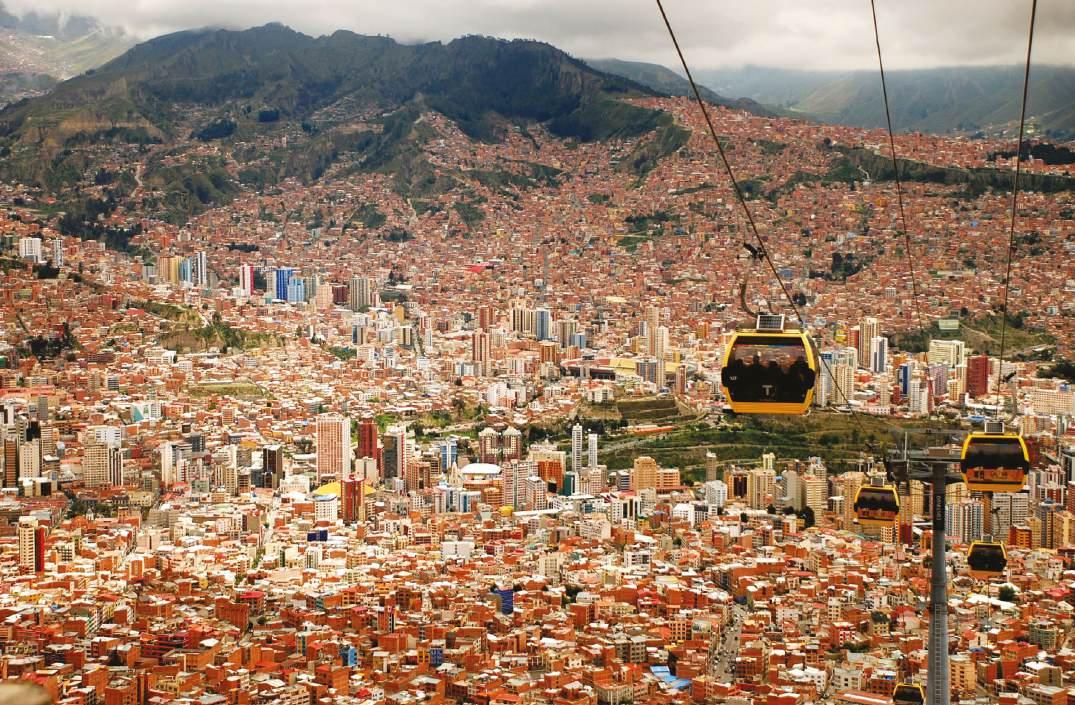
RIGHT: Neither of Bolivia’s two ‘capital’ cities has light rail, although La Paz does operate the world’s largest cable car network at 30.6km. Snowscat, Unsplash
“São Paulo’s metro... is a system that continues to expand, and the first section of line 6 is due to open later this year.”
• Maceió has a 1000mm-gauge, two-line light rail transit system, using converted heavy rail alignments. Diesel-powered, the 34.7km (21.6-mile) line is divided into the Blue and Green lines by a 2.3km (1.4-mile) section of deactivated track through Mutange station.
• The Baixada Santista LRT operates in the cities of São Vincente and Santos, crossing the modern system and featuring trams from various countries. It comprises the 11.5km (7.1-mile) Line 1 (Barreiros –Porto) and a single 8km (five-mile) loop through Santos’ streets from Avenue Conselheiro Nébias to Valongo. The latter started operating in December 2025, and a full timetable is due to be implemented later this year. A 19.5km (12-mile) extension is to take the line west from Tatico to Baixada Santista.
Salvador has had a metro since 2014. This has now expanded into a two-line network. Line 1 is 17km (11 miles) long and connects Lapa with Rodoviária, while line 2 makes a connection at Acesso Norte. It terminates at Lauro de Freitas, 19.6km (12 miles) away.
However, Salvador is worthy of note because the first tracks for the 16.7km (ten-mile) Ilha de São João - Calçada tramway have been laid. This is the first phase in a BRL3.2bn (EUR514m) tram project to replace and expand upon a run-down suburban
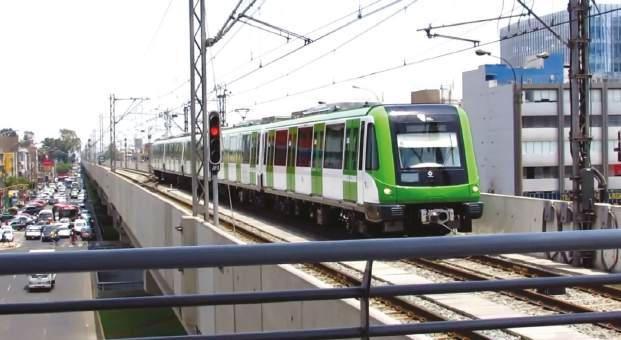
ABOVE: Lima, Peru, opened the first section of its metro in 1990, with the full 34km opening in 2014. The final section of line 2 is due to open in 2028, and a further four lines are under development. James C, Flickr CC BY-SA 2.0
RIGHT: São Paulo’s metro dates back to 1974, although line 5 (pictured) opened in 2015. The system continues its expansion, with line 6 due to open later this year and four further extensions planned. Sao Paolo Government
heavy-rail network with a new tramway. Completion of the three-line, standardgauge, 36.4km (23-mile) tramway is planned for October 2027. Salvador has bought 40 CAF Urbos, built in 2013-14 for the failed tramway project in Cuiabá, Mato Grosso state, at a cost of BRL750m (EUR120m). CAF has started delivering them from its factory at Hortolândia, São Paulo.
In Campina Grande, in the State of Paraiba in northern Brazil, 15.5km (9.6 miles) of the closed 1000mm-gauge Transnordestina railway through the city has been transferred to the city council. Construction of the BRL170m (EUR27.8m), ten-stop project has started.
Campinas lost its trams in 1968, although a 3.5km (2.2-mile) heritage tramway opened in 1972. As well as the tramway, the city created a lake, picnic grounds and other amenities on land donated by resident Joaquim Bento Alves de Lima.
That’s not been the only light rail system in the area: Ferrovias Paulistas, S.A. rebuilt 8km (five miles) of its heavy rail line from Campinas Central railway station to Campos Elíseos into a double-track light rail line. Services started in 1991 but increasing costs and falling receipts led to its closure in 1995.
However, the new ‘Campinas LRV’ project has been launched, designed to complement neighbouring São Paulo’s Urban Mobility Plan. The scheme proposes two 22km (13.6-mile) light rail lines, each with 18 stops, serving three municipalities. A feasibility study into the USD900m
(EUR767m) scheme is underway and public consultation is due to start in 2027.
Two further Brazilian projects continue to make progress: ground breaking on the 13km (eight-mile) suburban light rail line in Arapiraca – in the Brazilian State of Alagoas – took place last August and Marcopolo Rail, a manufacturer based in the suburbs of Caxias do Sul, is completing the line’s dieselpowered units.
Meanwhile, Bauru’s city council – in the State of São Paulo – has proposed turning 28km (17.4 miles) of railway into a light rail system. It has funded a BRL500 000 (EUR84 927) feasibility study into the project.
Argentina has three light rail systems. Two are located in the capital, Buenos Aires.
The most extensive network is Buenos Aires Underground, known as Subte, which dates back to 1913. It comprises 64.1km (39.8 miles) of railway on seven lines. Lines A, C, D, E, H are 1435mm-gauge and use overhead 1500V dc power. Line B is slightly different, comprising underground and surface-running on its 11.8km (7.3-mile) route from Leandro N. Alem station in the city centre, westwards to Juan Manuel de Rosas in Villa Urquiza. This line mixes 550v dc overhead and third-rail operation.
Line B is being modernised. CRRC Changchun has been awarded a contract to supply 174 new cars and the voltage will be raised to match the rest of the system.
Also worthy of note is line P. This is a 7.4km (4.6-mile) surface line that runs through
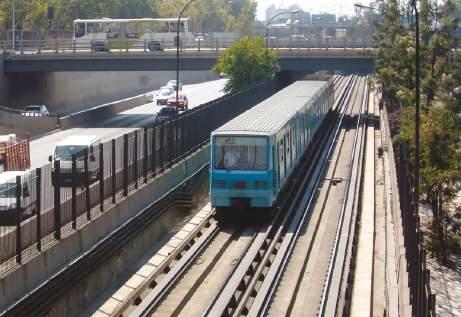
LEFT: Santiago in Argentina has an extensive metro system of almost 150km. Here can be seen the rubber-tyre section that is styled on Paris’ network. Ian Longworth
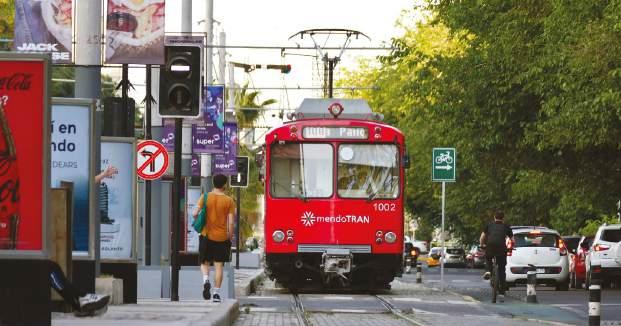
BELOW: Mendoza is home to Metrotranvía –a 17km line laid along a former heavy rail bed. Construction is underway on two new extensions. Juan Pablo Mascanfroni, Unsplash
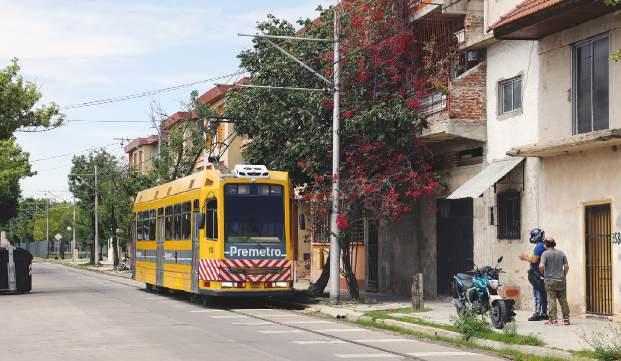
the city’s suburbs from Plaza de los Virreyes station (and a connection to Underground Line E) to General Savio, plus a branch to Centro Cívico. This was the only part of a planned network of lines, dubbed PreMetro and proposed in the 1980s, to materialise.
Subte is to gain an eighth line. Tenders are being issued for the construction of the 9.8km (six-mile) line F. The 11-station line connecting the suburbs of Barracas and Palermo is estimated to cost USD1.3bn (EUR1.1bn) and could open in 2031.
There is also a 2km (1.2-mile) demonstration line, Puerto Madero, which operated between 2007 and October 2012 with trams from Mulhouse and Madrid.
The city of Mendoza, west and slightly to the north of Buenos Aires, close to the border with Chile, is home to Metrotranvía Mendoza. This 17km (11-mile), 1425mmgauge line has been laid on former 1676mmgauge heavy rail trackbed. The Mendoza and General Gutiérrez section opened in 2012, with a Mendoza – Avellaneda extension opening in 2019. The line utilises secondhand trams from San Diego. Construction is underway on two further extensions: north by 4.8km (three miles) to El Plumerillo International Airport; and a 15km (9.3-mile) branch between Pellegrini and San Martín stations to reach Luján de Cuyo. Both should open in 2027.
Argentina shares its western border with Chile, which is home to two light rail systems. The most extensive, quite naturally, is in the capital, Santiago. First opened in 1975, it is now the second-largest metro system in Latin America (South and Central America combined) and the sixth-largest in North, South and Central America combined.
It carries approximately 600 million people a year and its 149km (93 miles) of track is divided into seven lines. Several of these lines are rubber-tyred, based on the Parisian system. The metro is due to become bigger over the next decade.
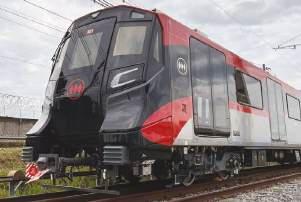
Alstom unveiled the first of 37 five-car metro trains for the new 25.8km (16-mile) automated line 7 on 20 January. This is due to open in 2028. Last summer, construction started on the 27km (17-mile) line 9 from the city centre to Puente Alto. This USD2.7bn (EUR2.3bn) project is due to open in 2030. Meanwhile, SYSTRA is working on detailed design work for the tunnels and ventilation shafts for the 4.3km (2.7-mile) line 8 from Chile España station to Los Leones.
That’s not all: construction on line 6’s 3km (1.9-mile) western extension to Lo Errázuriz started in 2024 (due for completion in 2027), while a 1.4km (0.9-mile) eastern extension to Isidora Goyenechea should be completed in 2028. The 10km (6.2-mile) Del Sol – La Cisterna extension of line 4A is due to be finished by 2037, culminating in the line being renumbered as 10.
To the north-west of Santiago is the coastal city of Valparaíso. The Greater Valparaíso urban area is connected by the 1676mm-gauge Tren Limache-Puerto, formerly known as Metro Valparaíso. This 43km (26.7 miles) 21-station system opened in 2005, worked by 27 (later increased to 35) Alstom X’Trapolis 100 EMUs. The fleet now stands at 40 after the arrival of five CRRC SFE400 Series trains in January 2026.
Another Chilean city that has repurposed heavy rail services as light rail is in Concepción. Called Biotrén, it comprises two lines on 66.6km (41.4 miles) of track, and CRRC Qingdao Sifang has supplied 11 three-car EMUs.
Chile shares land borders with both Bolivia and Peru as well as Argentina. Peru’s capital, Lima, started building its first metro back in 1986 and the first section opened in 2012. However, the full 34km (21.5 miles) from Villa El Salvador to Bayóvar via the city centre didn’t open until 2014.
The first 5km (3.1-mile) phase of line 2 opened in 2023. The remaining 22km (13.7 miles) is due to open in 2028. A further four lines are in various stages of development, while a PEN14.1bn (EUR3.6bn) expansion programme has been announced that would increase capacity on line 1, including connecting it to line 2.
Lima also launched a new commuter rail service in 2025, although this is currently not working due to aged and unreliable rolling stock. This uses 19 diesel locomotives and 90 double-deck coaches acquired from Caltrain in San Francisco.
Bolivia is most unusual for it effectively has two capital cities. The seat of government is La Paz, whilst the constitutional capital is Sucre. Neither has any form of light rail, although Mi Teleférico does operate La Paz’s cable car network, which, at 30.6km (19 miles) is the world’s largest such system. The largest Bolivian city is Santa Cruz de la Sierra, but it is Cochabamba that boasts the country’s only light rail system.
The first section opened in September 2022 but its 12 Stadler METELITSA trams now run over a three-line, 42km (26.1-mile) system. The newest section, the 5.8km (3.6-mile) Yellow line, opened on 17 September 2025 and connects the Old Railway Station to Jorge Wilstermann International Airport and the new Bus Station.
Colombia’s first taste of modern mass transit was in the city of Medellín. Its 1435mm-gauge metro started operating in 1995 and now comprises 31.3km (19.4 miles) of railway with the north-south line A and line B running west from the centre, which makes a connection at San Antonio station.
However, Medellín Metro now not only encompasses these lines but also a six-line cable car system, three bus rapid transit routes, and a 4.2km (2.6-mile) Translohr tram. This is line T, which opened in 2016 using 12 rubber-tyred vehicles running on a centre guide rail.
In the spring of 2025, Medellín announced plans for the COP3.5bn (EUR743m) 13.3km (8.3-mile) ‘Metro de la 80’ light rail system. This is being built by a consortium comprising CRRC (rolling stock), MotaEngil (civil construction), Ineo Urban Transportation Solutions (telematics) and Siemens Mobility (power engineering and signalling). It is due to open in 2028.
The Colombian capital Bogotá is not likely to be outdone by Medellín though, and has embarked on two construction projects. Infrastructure work on the 24km (15-mile) north-south metro was due to be completed by the end of 2026; it was 72% complete at the end of January. CRRC Changchun has started testing the first of 30 six-car automated trains. It should open in 2028.
Meanwhile, the ground-breaking ceremony for the 39.6km (25-mile) RegioTram took place on 18 June 2025. China Civil Engineering Construction Corporation is delivering the COP2.9tr (EUR606m) project and the first section should open in late 2027. It is planned to use 18 CRRC-built LRVs. Design work on a second, 48km (30-mile) RegioTram route is underway.
Ecuador boasts two light rail systems. The capital, Quito, has a 1435mm-gauge metro but this is not a network, such as London, New York or even Santiago boasts. It’s simply a single 22km (14-mile) line from El Labrador in the north to Quitumbe to the south. It opened in December 2023 after 11 years of construction.
Cuenca is more than 460km (286 miles) south of Quito, and this is home to a 10.7km (6.6-mile) 1435mm-gauge tramway. This is another north-south line, running from Parque Industrial to the shopping centre at Rio Tarqui, via the city centre. It opened in 2020 and is worked by 14 Alstom Citadis trams.
We conclude our South American tour in Venezuela, a country that has suffered political turmoil in recent years. Leaving that aside, the capital, Santiago de León
de Caracas – or more simply Caracas – has had a metro since 2 January 1983. This has expanded to become a four-line, 54.1km (33.6-mile) system. Where reference to the country’s political situation becomes relevant is that it has led to a deteriorating economy. For the metro, this has shown itself in poor availability of stock due to overrunning repairs and the stalling of expansion plans. An example of this is the stalling of the USD2bn (EUR1.7bn) Guarenas-Guatire Metro project. Construction started in 2007 but progress is apparently on hold with no opening date in sight.
The Los Teques Metro makes a connection with Caracas Metro at Las Adjuntas station. It comprises two lines: Line 1 runs Las Adjuntas to Ali Primera, and line 2 is Ali Primera to Independencia. Construction of the 11.2km (seven-mile) system commenced in 2001 and was completed in 2006. It is operated by Metro de Caracas and is effectively considered part of the Caracas Metro. A 28.7km (17.8-mile) extension has been under construction since 2007 but, again, it’s not clear when it might open.
Maracaibo is Venezuela’s second city and lies on the western side of the strait that links Lake Maracaibo to the Gulf of Venezuela, on the Caribbean Sea.
The city’s metro currently comprises a 6.5km (four-mile) line from Altos de la Vanega to Libertador. It opened throughout on 8 June 2009, and the fleet comprises seven Siemens-built trains that are said to be based on those used on Praha’s (Prague’s) Metro Line C. As with other light rail systems in Venezuela, there were ambitious plans for the metro – in this case, a four-line, 60km (37-mile) network – but only a small fraction has been built.
Valencia is Venezuela’s third city and it, too, boasts a metro: a 7.7-mile (4.8-mile) single line linking the city centre to the Naguanagua suburbs. The fleet comprises 12 Siemens SD-460 two-car sets. Again, two extensions totalling 9.9km (6.2 miles) are being developed, but information about their current status is not easy to discover.
A lack of information is typical for much of the continent, but once you scratch beneath its surface, South America has more light rail and metro development than you might think.
UKTram
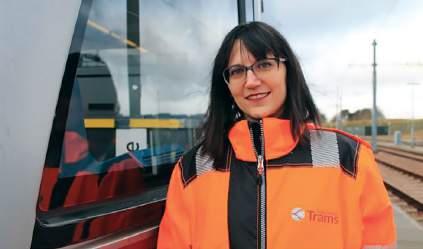
talks to Marilena Papadopoulou, Chair of the UKTram Light Rail Engineering Group (LREG).
As Renewals Manager at Edinburgh Trams, Marilena Papadopoulou plays a leading role in shaping how one of the UK’s newest light rail networks plans, delivers and manages long-term asset renewals. Appointed Chair of UKTram’s Light Rail Engineering Group (LREG) in May 2023, she brings a strong operational perspective grounded in hands-on engineering delivery and collaboration.
Marilena’s work at Edinburgh Trams includes delivering infrastructure projects, introducing new safety processes and overseeing a long-term renewals programme that supports network resilience and performance.
Ahead of the group’s latest meeting, we caught up with Marilena to discuss her journey through the sector and her priorities as Chair of LREG.
Q: You’ve progressed through a wide range of roles at Edinburgh Trams, from frontline customer-facing positions to leading projects and renewals. How has that journey shaped your perspective as Chair of the Light Rail Engineering Group?
Working across various departments at Edinburgh Trams gave me a unique, rounded perspective on how engineering decisions can affect operations and balance priorities with the needs of customers, operations and maintenance. My hands-on experience delivering strategic projects has enabled me to adopt a more realistic, collaborative approach. As Chair of the Light Rail Engineering Group, I am focused on encouraging light rail systems to support one another and work together to deliver real benefits for our customers and improve our cities.
LREG is a forum that, in my opinion, allows us to share our successes, challenges and lessons learned. From personal experience, having access to wider industry knowledge has helped my team keep critical skills alive, reduce mistakes and adopt best practice. Structured collaboration is vital for retaining skills and strengthening the future light rail engineer and it is very important that the Light Rail Leaders continue to encourage their engineering teams to actively participate in LREG and all the other groups that UKTram is hosting.
Q: Looking ahead, what would success look like for LREG during your time as Chair? Are there particular areas where you’d like to see the group have greater impact? As the Chair of LREG, I want us to continue sharing knowledge, proactively support new engineers, and drive greater consistency in how networks approach renewals and standards. Success can be measured in many different ways, but for LREG it would mean becoming a more influential technical voice for the sector. If we make the industry more connected, aligned, and confident in its future skills, that’s a huge win.
Q: Engineering renewals are becoming increasingly critical as networks mature. What do you see as the key challenges facing light rail systems over the next few years, and where can collaboration make the greatest difference?
Managing asset renewals with minimal service disruption, and funding and prioritising projects, have been and will continue to be the main challenges for light rail systems. Especially when most tramways run through busy parts of the city, shutting down the network to undertake rail or overhead line equipment renewals will not only affect commuters but also the city’s general traffic. I genuinely believe that collaboration between the light rail systems can make a massive difference. If we start working on joint procurement frameworks by building long-term partnerships through UKTram, we can achieve efficiencies and share lessons learned that could improve project delivery.
Q: Skills and knowledge retention are growing priorities across light rail. How important is structured collaboration, such as that through LREG, in supporting future engineers and sharing expertise across networks?
Q: What’s one moment in your career that made you particularly proud to work in light rail?
One of my proudest moments was being part of the Trams to Newhaven project. It was a complex and challenging project with huge expectations from the city. Being involved from the design phase to construction and ultimately to a fully delivered, operational extension was incredibly rewarding. Our team worked very hard, and being part of such a strong-performing team that delivered an improved customer experience reminded me why I love working in a light rail system.
In addition to her experience, Marilena’s commitment and enthusiasm continue to be key in driving the work of a group that, as well as helping operators overcome day-to-day challenges, plays an important role in making light rail an even more attractive solution for the UK’s future transport needs.
That commitment is reflected not only in her professional achievements but also in the way she leads. Feedback from across the sector consistently highlights her enthusiasm and clarity in chairing the group, creating an environment where open discussion and practical knowledge sharing are evident.
As networks mature and engineering challenges grow more complex, that combination of technical expertise and positive leadership continues to strengthen LREG’s role within UKTram and the wider light rail community.
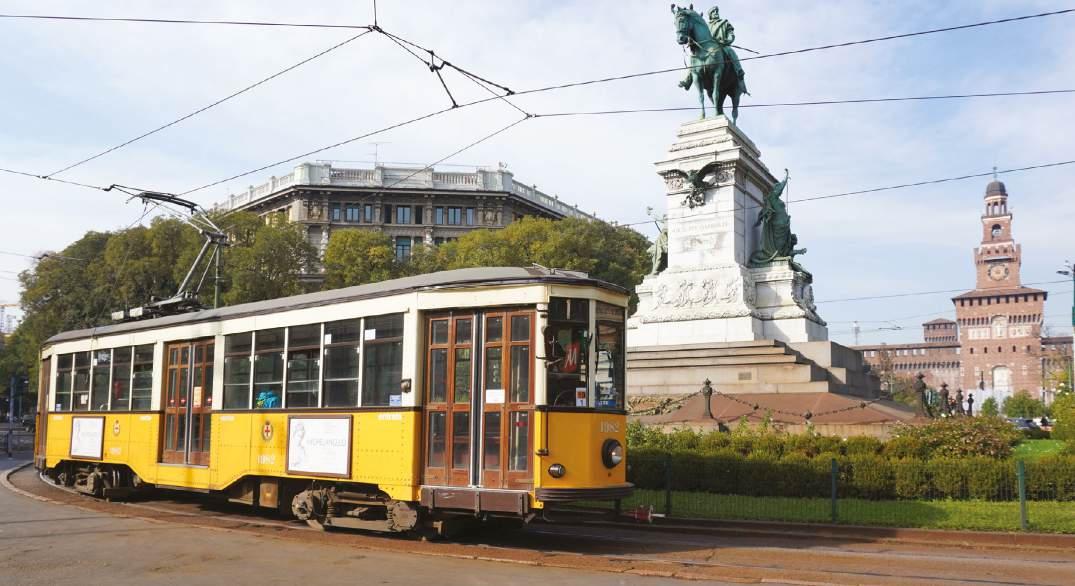
A wealth of projects are underway in Italy’s fashion and design capital – Andrew Thompson explores how these will change the city.
As the host of the 25th Olympic Winter Games in February 2026, Milan (Milano) has benefited from significant investment in public transportation schemes during the past few years, including the construction of the all-new driverless Metro line M4 to Linate airport. This opened in three separate stages between November 2022 and October 2024. Over its full length M4 is now 15.2km (9.4 miles) in length and features 21 stations, including interchange points with three other metro lines as well as suburban rail at the Dateo junction and the southwestern terminus San Cristofero FS. The opening of the San Cristofero metro station in October 2024 helped make the historic surface railway line from San Cristofero to Porta Genova redundant in December 2025. Dating back to 1870, the 3.3km (two-mile) branch line closed after 155 years of use.
M4 is Milano’s second driverless metro line to use the system originally developed by the Italian company AnsaldoBreda, prior
to its takeover by Hitachi in 2015. The 13km (eight-mile) line M5 had previously opened in three phases between February 2013 and April 2015, with five more stations along the line opening in summer and autumn 2015. Both lines M4 and M5 are completely barrier-free. Now there are ambitious plans to extend line M5 by 13.1km (8.1 miles) and 11 stations north to the neighbouring city of Monza, famous for its Grand Prix race track. The massive project has a budget of almost EUR2bn, and along the way will also link up the towns of Sesto San Giovanni and Cinisello Balsamo. Inauguration of the M5
extension is currently planned for late 2033. In order to fund the higher-priority M5 project, the mooted 3.1km (1.9-mile) eastern extension of Metro M4 from Linate to Segrate has been paused.
The metro boom in Milano is not limited to driverless lines, as in February 2026 construction started on the 3.3km (two-mile) western extension of M1 from Bisceglie to Baggio and the new terminus at Olmi. It is expected that the three new stations should generate an additional 7.5 million riders per year, serving a residential district with a population of around 60 000. Completion of
Tramway Metro
San Babila
Sant’Ambrogio
Coni Zugna
California
Bolivar
Tolstoi Frattini
Gelsomini
Segneri
San Cristforo
Stazione Forlanini
Tricolore
Vetra De Amicis
Santa Sofia
Sforza/Policlinico

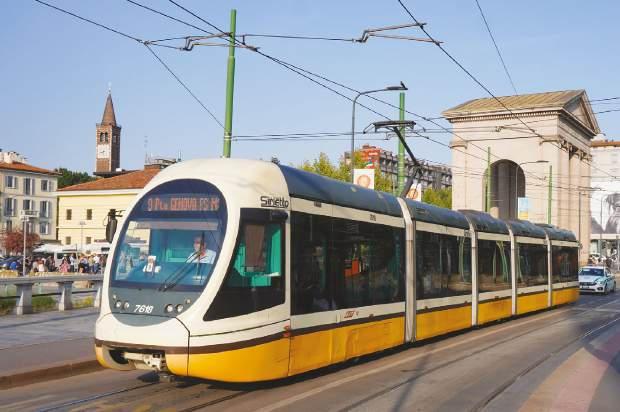
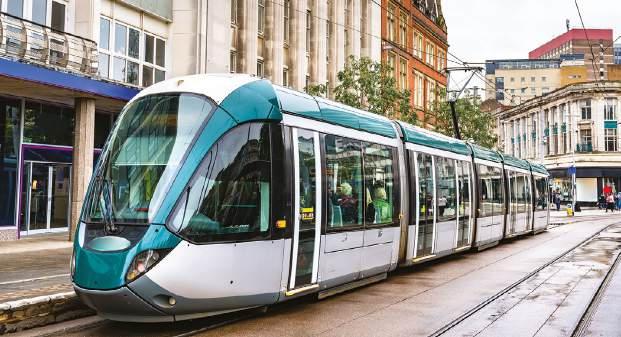
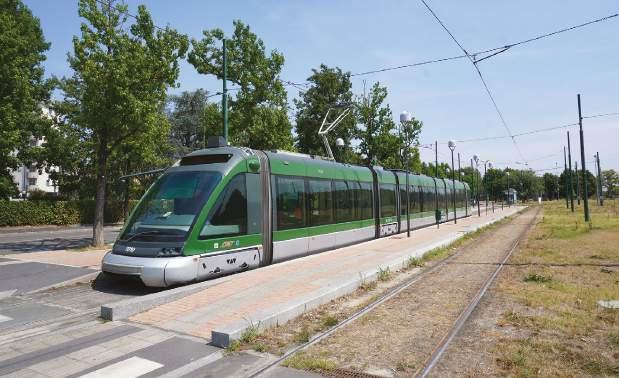
BELOW: Even as they approach 30 years of age, the 26 Eurotram, delivered by Adtranz and later Bombardier from 1999 to 2002, retain a futuristic appearance and sleek image. Their green livery also distinguishes them from operator ATM's other LRVs. Here, 7019 is seen at Rozzano Via Guido Rossa, the terminus of line 15 and also the southernmost point of Milano's sprawling tram system.
this project is expected in 2030-32. Currently line M1 is 26.7km (16 miles) long, and from the junction at Pagano features both a northwestern branch to the exhibition centre at Rho Fiermilano, as well as a southwestern spur to Bisceglie. At the other end of M1 is the northeastern terminus Sesto 1 Maggio in Sesto San Giovanni.
M1 remains Milan’s original underground line: its first 11.8km (7.3-mile) section between Sesto Marelli and Lotto opened in November 1964. Since then, the Milano underground system has grown to its current size of 112km (70 miles), making it the largest such network in Italy.
In order to better integrate the ‘Metropolitana’ with suburban rail, the ‘Passante’ cross-city railway tunnel was built in the late 1990s/early 2000s. The Milano Nord Bovisa to Porta Venezia section opened in December 1997, followed by the Lancetti to Certosa FS northern spur in 1999 and the extension from Porta Venezia to the southeastern junction Dateo in June 2002. Following the opening of the Porta Vittoria station in December 2004, it proved possible to relaunch an upgraded and enhanced network of regional commuter railway lines, which are also branded as ‘S’ services as in Germany. Since 2011, all of these suburban and regional train services have been operated by the joint-venture of Trenitalia and Ferrovie Nord under the brand name ‘Trenord’.
An indispensable part of Milan’s public transport backbone is the legacy tramway, which first opened in 1881 and remains by far Italy’s largest with a current size of about 117km (73 miles). Even though a large part of the existing tram tracks and infrastructure in the northeast of the city hasn’t been used for revenue service in decades and only functions for dispatching rolling stock to and from the depot at Leoncavallo, the system has still grown twice during the past decade. In September 2018, a 1.6km (one-mile) southern extension of line 15 from Viale Romagna to Rozzano Via Guido Rossa opened, which serves a densely-populated residential district in the southern periphery of the city.
The most recent extension is the short 1.4km (0.9-mile) northeastern addition to the route of tram line 7 from Parmenide to Quartiere Adriano. This is actually part of the larger project to build a northern tangent called Metrotranvia Interquartiere Nord, designed to connect northeastern and northwestern neighbourhoods without passing through the city centre. Key sections, including a 1.9km (1.2-mile) link between Piazza Bausan, Bovisa-Politecnico and Villapizzone station, are currently under construction and structural completion is expected later in 2026.
From Milan’s historic tramway infrastructure, there currently remain about 16km (ten miles) of ‘dead tracks’ in situ, which were given up during previous decades after either more efficient and higher capacity metro links opened with subsurface routes, or the tram network was streamlined to focus on better utilised lines.
Further victims of changed transport priorities have been Milan’s once numerous interurban tramways. These include the remnant of the former Tranvia MilanoCarate/Giussano, which in 1982 had already
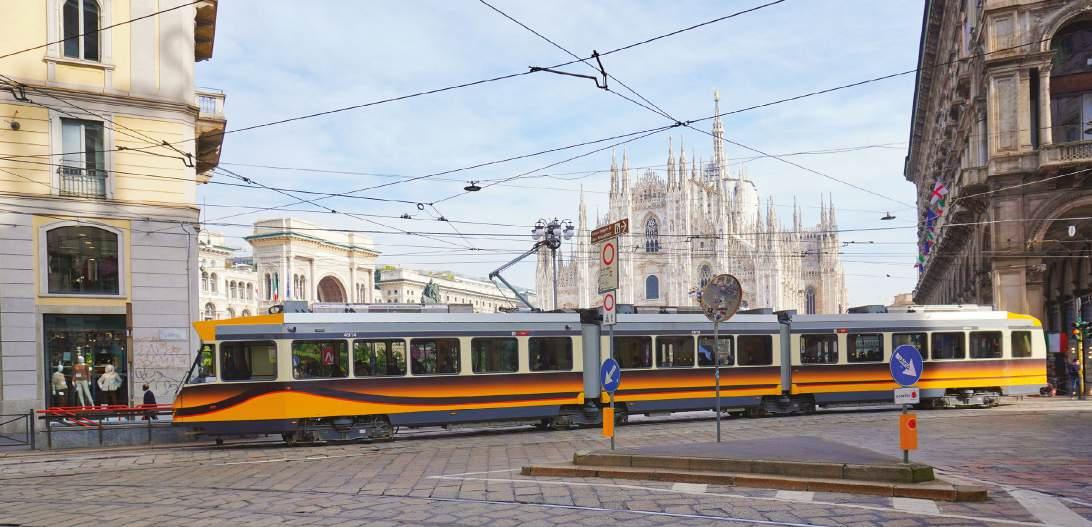
ABOVE: As a legacy tramway, most of Milan's LRVs are single-ended. Since their delivery in 1976-78, the 100 Jumbotrams have served as a high-capacity backbone on the busiest lines. Originally orange, they have been repainted into the standard dark yellow, black and cream scheme over the past few years. Here the 29m-long car 4914 is seen passing the iconic Duomo in the city centre.
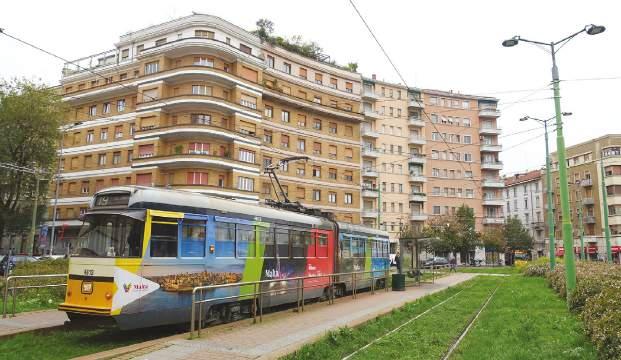
RIGHT: The classic articulated cars of the 4600 and 4700 series date from 1955-60. These high-floor cars are still indispensable, and often feature full vehicle advertising vinyls. Car 4613 is seen in the turning loop of the line 19 Lambrate terminus, where tramway, trolleybuses, metro and regional trains all link up.
been cut back to Desio, and finally also closed the shortened Milano Niguarda –Desio Deposito section in September 2011. The last to close was the overland tramway line 179, from the M3 northern terminus Milano Comasina to Limbiate Ospedale, in September 2022. For both overland tramways, decades of underinvestment had resulted in unsafe track conditions, forcing slow speeds and reducing service reliability, often leading to replacement buses or poor service frequencies outside of peak hours. The mainly single-track infrastructure was outdated, requiring extensive maintenance. Ultimately the authorities decided that a complete reboot and ambitious rebuild to modern light rail standards, with prolonged closure, would represent better value for money and be the prerequisite to achieving any kind of modal shift in Milan’s northern suburbs.
As part of the new Metrotranvia project, there are plans to replace both lines with a single, purpose-built light rail corridor from Milano Parco Nord to Seregno FS railway station, which is located on the Milano –Como – Chiasso main line to Switzerland. Designed as rapid transit with reserved paths, the 14.3km (8.9-mile) light rail route is to serve 25 different stops and the towns of Bresso, Cormano, Cusano, Milanino, Paderno Dugnano, Nova Milanese, Desio and Seregno. On the rolling stock front, the city
continues to feature a vibrant mix of old and new. Even though the first modern low-floor trams were introduced in 1999/2000 with 26 Adtranz (later Bombardier) Eurotram LRVs and three successive series of 116 Sirio and Sirietto cars from AnsaldoBreda between 2002-09, the signature vehicles of the ‘Tranvia di Milano’ remain the iconic ‘Ventotto’ bogie cars from the 1920s and 1930s. These are an Italian adaptation of the American Peter Witt design and are sometimes also referred to as ‘Carello’. These nearly 14m-long fixedframe trolleys are an icon of the city and purposefully run on those shorter, more central tram lines most utilised by tourists and visitors. Their lack of accessibility with a high step and hard wooden bench seating along the windows is compensated for with their nostalgic charm and screeching sound, allowing everyone to experience time travel back to the late 1920s with just the purchase of a regular public transport ticket. The status of the ‘Ventotto’ cars in Milan is similar to that of the cable cars in San Francisco, or the red Routemaster double-decker buses in London. From the original 502 cars built, the municipal operator ATM currently maintains a fleet of about 125-130 cars and deploys them on lines 1, 5, 10, 19 and 33. ATM uses a system under which most lines have a fixed allocation of just one type of LRV, so while the tourist routes use the ‘Ventotto’, the high-
capacity lines intended for local commuters use the modern low-floor cars.
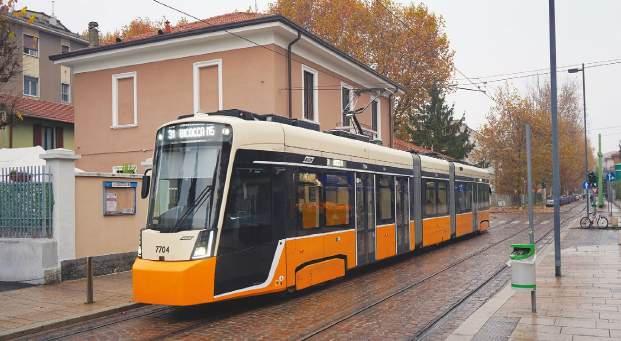
The most recent fleet additions are the double-ended Stadler Tramlink LRVs, which ATM has classified as Series 7200. Although the first Tramlink prototype arrived in December 2022, the class didn’t enter service until late February 2025, with an initial deployment on lines 7 and 31. Following the growing introduction of these trams to other lines, sadly one of the Tramlinks, 7707, was involved in a major accident on line 9 on 26 February. The tram derailed at 16.00 at Viale Vittorio Veneto, killing a passing pedestrian and one passenger, while injuring 39 others. The cause of the incident is currently under investigation.
In total ATM has 74 Tramlink cars on order, including the standard three-part 25m variant already in service, and a highercapacity 35m version for use on the busiest lines. Delivery of the 14 high-capacity Tramlink cars is expected to be completed by this summer, with Stadler producing these LRVs at its Valencia plant in Spain.
All of these public transport projects are designed to keep ensuring a high standard of mobility and ongoing innovation in Italy’s major metropolis and economic hub.
For more information and full system maps, see: https://www.atm.it/
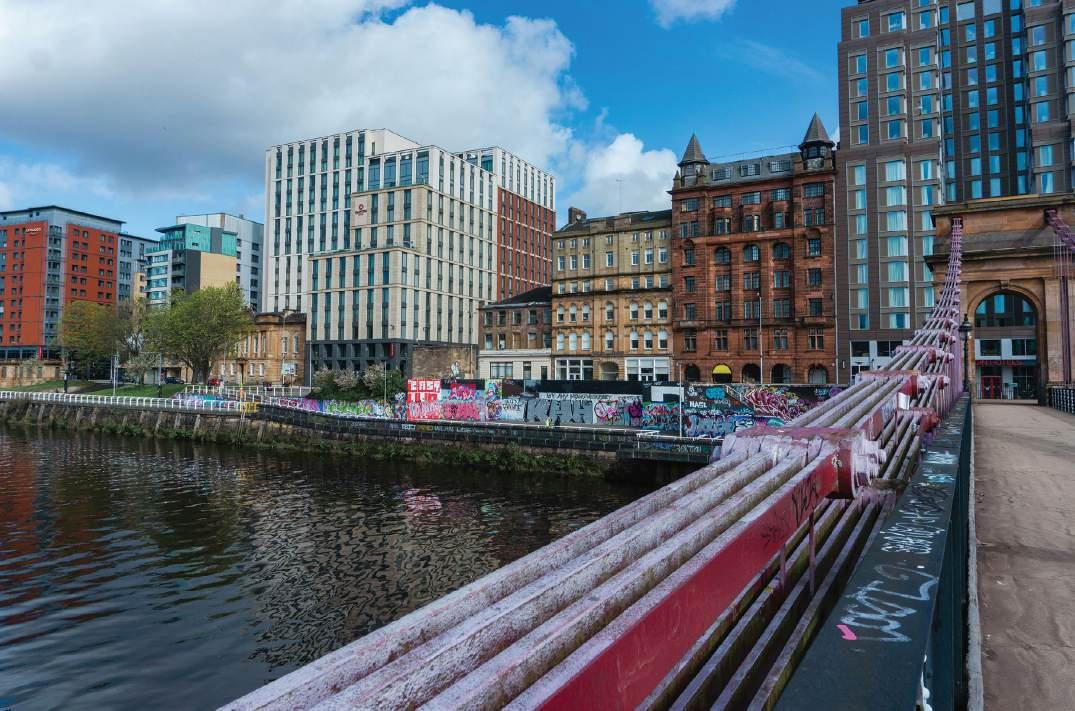
Glasgow was the last UK city to lose its trams in the 1960s – the ambitious Clyde Metro project could bring them back as part of a vast multi-modal network. Richard Foster explores the details.
Something unprecedented is being planned for the Scottish city of Glasgow (UK): the creation of a new, rapid mass transport network. Meet Clyde Metro. This article includes a summary of the initial proposals for Clyde Metro as presented at the UK Light Rail Conference 2025.
Simon Nesbitt, Project Director for Mott MacDonald, told delegates at the Conference: “Clyde Metro will extend to around 15km [nine miles] to 20km [12 miles] from the regional centre. Locations outside the study area will require complementary non-network developments. These include integration with bus, rail, active travel as well as integrated ticketing and modes. These are vital to ensure that Clyde Metro benefits the whole Glasgow City Region.”
The Glasgow City Region (GCR) is Scotland’s most populous region (1.8m people compared to around 600 000 in the capital, Edinburgh and its surrounding region). At the time of writing, Glasgow was the UK’s fourth most populous city, behind London, Manchester and Birmingham.
It has quite a notable history with regards to light rail. Glasgow Corporation Tramways’ cream, green and orange livery was highly distinctive and the network, at its peak,
comprised 227.5km (141.4 miles) of track. Glasgow was the last UK city to lose its trams and some 250 000 people reportedly turned out to witness the last day on 4 June 1962.
The 1219mm-gauge, 10.5km (6.5-mile) Subway runs in a circle beneath the city’s streets. It opened on 14 December 1896 and is the world’s third-oldest underground railway, pre-dated only by parts of London’s Underground and Budapest’s metro. Today, it’s owned and operated by Strathclyde Partnership for Transport (SPT).
The suburban heavy rail services around Glasgow are operated by ScotRail. ScotRail Trains Limited (SRT) is owned by the Scottish Government and overseen by Scottish Rail Holdings Limited (SRH Ltd). These extend to Helensburgh, 49.6km (30.8 miles) to the north-west of the city centre, south-west to Ayr nearly 60km (36 miles) away, and to the eastern satellite towns of Cumbernauld, Airdrie and Motherwell. Much of the suburban network was electrified by 1960, its distinctive ‘Blue Train’ EMUs bringing a splash of colour and modernity to a city stained by decades of heavy industry.
Glasgow also boasts an airport, located to the west of the city, on the site of a World War Two aerodrome. It was first established in 1966 and is a more conveniently-located
ABOVE: Glasgow has traditionally relied on heavy industry as the basis of its economy, with a good proportion of the Royal Navy fleet being built on the River Clyde, which bisects the city. However the decline in industry is tangible – Clyde Metro aims to better connect the city to increase access to employment and education opportunities. Focus Pictures/Unsplash
facility than Glasgow Prestwick Airport, established in 1938, which is more than 48km (30 miles) to the south-west.
However, despite being close to the Glasgow – Weymss Bay heavy rail line, Glasgow Airport’s closest station is over 1.6km (one mile) away. That’s not overly convenient if you’re weighed down by luggage, and while it is connected to the city by buses (including the First 500 bus service that operates 24 hours a day with a journey time of 15 minutes when not subject to congestion on the M8), the car –whether private or taxi – remains the first choice for users.
Clyde Metro initially emerged as a key recommendation from Transport Scotland’s national Strategic Transport Projects Review 2 (STPR2). Published in December 2022, STPR2 outlines the Scottish Government’s national transport investment priorities for the next 20 years (2022-42). This followed the first Strategic Transport Projects Review that was published in 2008. Consultants Jacobs and AECOM said in STPR2, published in 2022: “Metro transport systems include one of, or a combination of, bus rapid transit, tram, light rail and metro rail. These options would complement the service provided by traditional railways.
“Clyde Metro aims to deliver lasting transformationl change for the Glasgow City Region.”
“Clyde Metro is aimed to improve connectivity within the Glasgow conurbation by providing high-quality public transport links to key hubs and unserved or underserved areas.”
An SPT report in the wake of STPR2 said that Clyde Metro “aims to provide a step-change in our transport system, transforming the life opportunities of communities currently impacted by unaffordable, unreliable, and poorlyconnected public transport,” and “would complement the service provided by traditional railways and may include the conversion from existing railways to tram or metro rail”.
Glasgow’s tramway was laid to the unusual gauge of 1416mm, which enabled 1435mm-gauge railway wagons to be hauled over tramway metals to reach shipyards in the Govan area of the city, the wagon wheels running in the flangeways. That’s because Glasgow has long relied on heavy industry as the basis of its economy. Indeed, those traditions are still strong and a good proportion of the Royal Navy’s current surface fleet has been built on the river Clyde that bisects the city and its suburbs. Financial consultants PricewaterhouseCoopers calculated that Glasgow climbed 13 places in its Good Growth for Cities Index in 2025. Its new 18th spot in the UK-wide table made it the third most-improved city in Scotland.
But while Glasgow is generating new sources for its economy, the decline in heavy industry can still be felt and the most recently-published statistics show that nearly 25 000 children across the city are living below the poverty line.
Clyde Metro, Nesbitt explains, aims to “better connect more than 1.8 million people to employment, education, and health services in and around Glasgow”. Giving Glaswegians a cohesive public transport network should “alleviate deprivation and social exclusion through place-based solutions”.
Clyde Metro, as its name suggests, is not just a Glasgow-based project, but one that encompasses the wider GCR. Its vision is to “deliver transformational change for the Glasgow City Region, providing opportunity for all through sustainable, transport-led investment”.
Consulting firm Mott MacDonald was appointed initially in March 2024 to develop the ‘Case for Change’ and initial network options for Clyde Metro as part of Stage 1a of the Case for Investment. Mott MacDonald was then appointed to lead Stage 2 of the Case for Investment in April 2025 (TAUT 1051). It will undertake two vital jobs. Firstly, it will lead Scottish Transport Appraisal Guidance work “and related technical workstreams” before developing “the preliminary engineering statement, which will outline the technical and engineering requirements for Clyde Metro”.
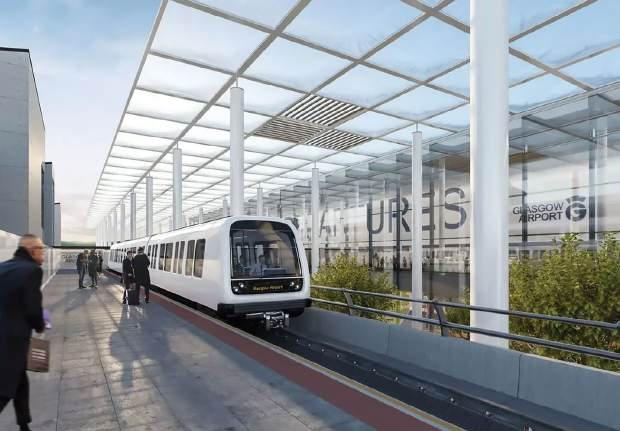
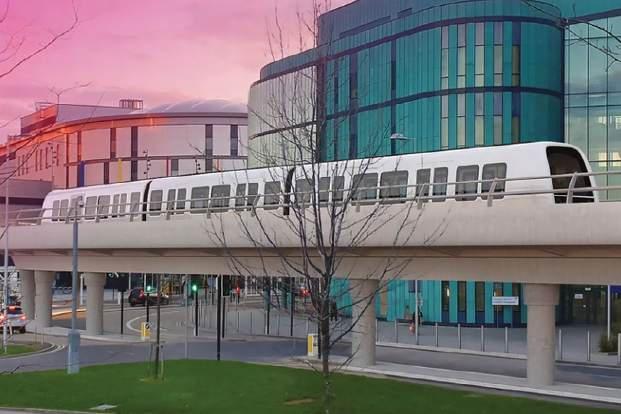
Nesbitt says, “In developing the Case for Change, the first step was to re-confirm the strategic context for development of Clyde Metro. This involved considering national policy and strategy from Scottish Government and their agencies with the priorities for the Glasgow City Region and the local context for authorities within the GCR.
“In developing the Case for Change, we identified several core problems including… lack of alternatives to the car and challenges to enhance existing networks. However, these problems do offer significant opportunities.”
The themes that Nesbitt lists are familiar ones in the UK and, arguably, can be applied to towns and cities across Europe too. There’s a need to reduce dependency on the car,
while lower income families, who can’t afford to run one, are denied access to opportunities due to poor public transport links.
“Clyde Metro aims to deliver lasting transformational change for the Glasgow City Region”, he says.
Improved access to public transport offers better access to opportunities, effectively increasing the number of workers available to existing and new businesses. Clyde Metro’s transport modes will be more environmentally-friendly (which will also help Scotland meet its Net Zero commitments) while those parts of society at risk of transport-related social exclusion will have more equitable access to transport.
In addition, Nesbitt explains, Clyde Metro will be combined with place-making and place-mending activities, to enhance a ‘sense
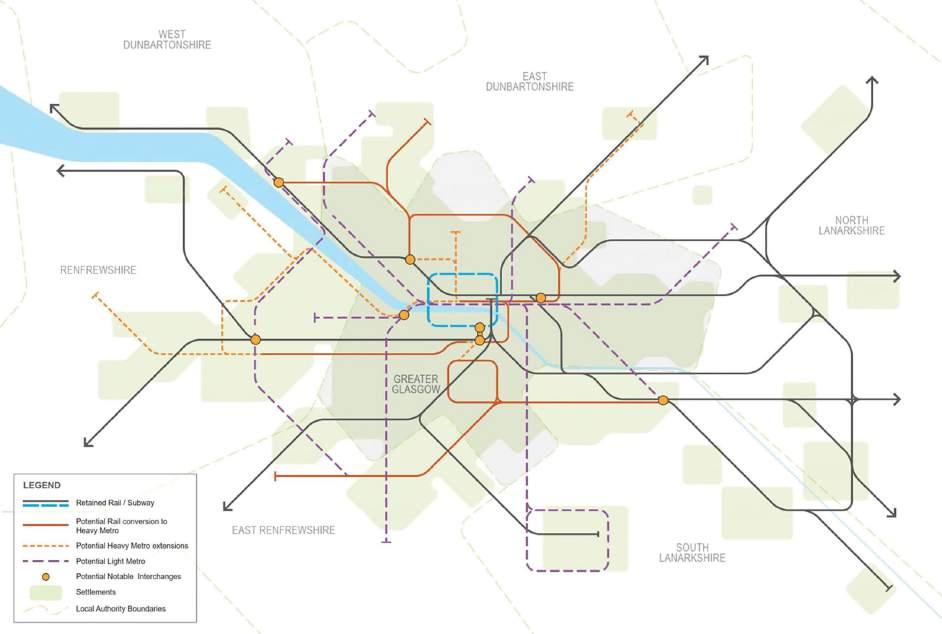
of place’ and to improve the quality of life and wellbeing of residents.
Two questions raise their heads at this stage: where will Clyde Metro actually go and how much of it will be light rail? At this stage, the answers to both are unknown.
Nesbitt revealed a concept map of one potential network option to delegates which featured various rapid mass transit lines (modes including Light Rapid Transit and Heavy Rail Conversion to Metro), radiating out from the city centre. North of the River Clyde and looking at a west to east arc, there could be new light rail lines out to Clydebank, Milngavie and Kirkintilloch and Moodiesburn.
South of the Clyde would be new lines (in a west to east arc) to Bishopton, Johnstone, Barrhead, Newton Mearns and East Kilbride. There would, of course, be new connections to Glasgow Airport.
Coupled to the new lines could be tramtrain connections north-west to Clydebank and south-east to Hamilton, while a combination of tram-train and new line could take Clyde Metro to Coatbridge and Airdrie in the east. Even more tantalising on Nesbitt’s map is the potential conversion to Metro of the heavy rail line from Westerton south via Queen Street station to Neilston and Newton, including the ‘Cathcart Circle’.
The driver for converting heavy rail to Metro is that it could “release capacity and/ or rolling stock to enhance levels of service [and] performance across the non-Metro [rail] network”.
Such an ambitious network would certainly cost a significant amount. In 2022, figures such as GBP11 to 16bn (EUR12.5 to 18.4bn) were being suggested. The complex negotiations required with Network Rail (or its Great British Railways successor) could only be described as ‘mind boggling’!
Yet while it’s highly likely that Clyde Metro will feature light rail in some form or another, it’s by no means a given.
“Metro will be combined with place-making and place-mending activities, to enhance a ‘sense of place’.”
Nesbitt says, “The study area of the whole GCR [Glasgow City Region] is is clearly vast and… where Metro infrastructure is most likely is home to 1.5 million people, around 30% of Scotland’s population. To frame the evidence on need for individual places, we considered 12 sub-areas, split by local authority boundaries.”
Mott MacDonald employed a rigorous evidence-led approach to assess and develop the most effective network options for Clyde Metro. This involved extensive data collection and analysis of over 100 data sets in order to assess each sub-area for deprivation, population density, air quality,
the amount of vacant and derelict land, bus connectivity, rail network capacity constraints and the availability of cars.
From this, Mott MacDonald has compiled a list of priority places in need of transformational change. What Nesbitt describes as “wide corridors” have been formed to “pick up” up as many priority places as possible. These corridors have been assessed against the strategic themes (Economic Development, People and Places and Environmental Protection & Enhancement) and the transformational objectives to identify the best performers.
These corridors will be combined to form possible network options, four of which are to be taken forward to Stage 2, described on SPT’s website as ‘Development of Programme Business Case & Supporting Workstreams’. This is due to be completed in “early 2027”. Clyde Metro will have to jump through many hoops before construction starts. But who knows? Many lessons have been learnt from the problematic first phase of Edinburgh’s tram system, and Scotland has an enviable track record in reopening heavy rail routes to passenger traffic –138km (85.8 miles) between 2008 and 2024 – so a compelling enough business case might accelerate things.
We should start to see Clyde Metro plans take shape by this time next year.
Information based on the presentation given at UKLRC 2025. An update on the project will be featured later in the year.


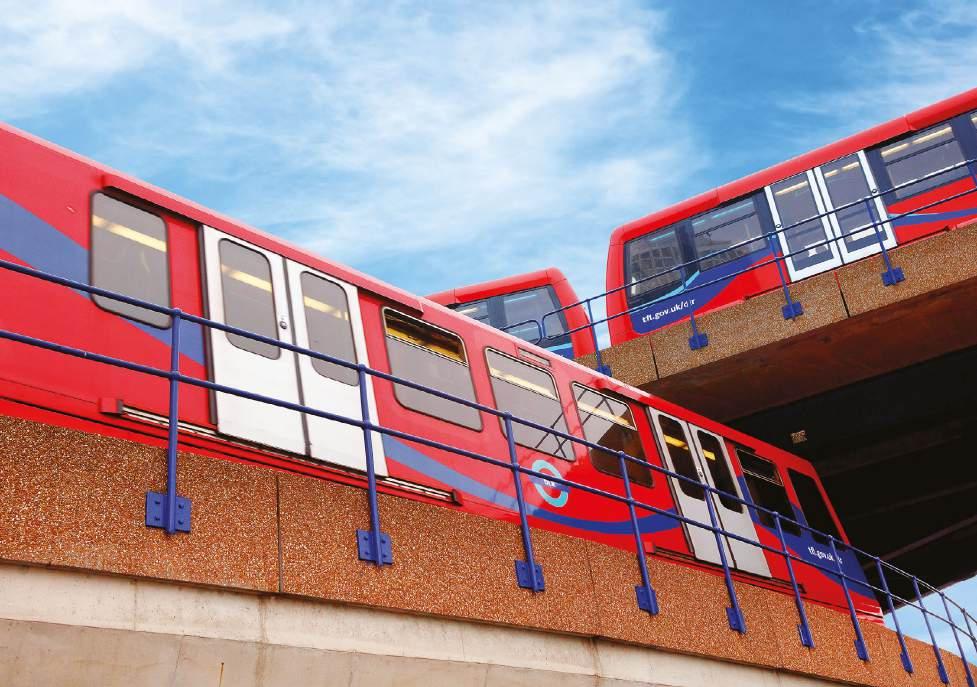
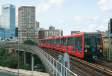

The Docklands Light Railway contributed to the transformation of East London and has in turn been influenced by developments in the areas that it covers.
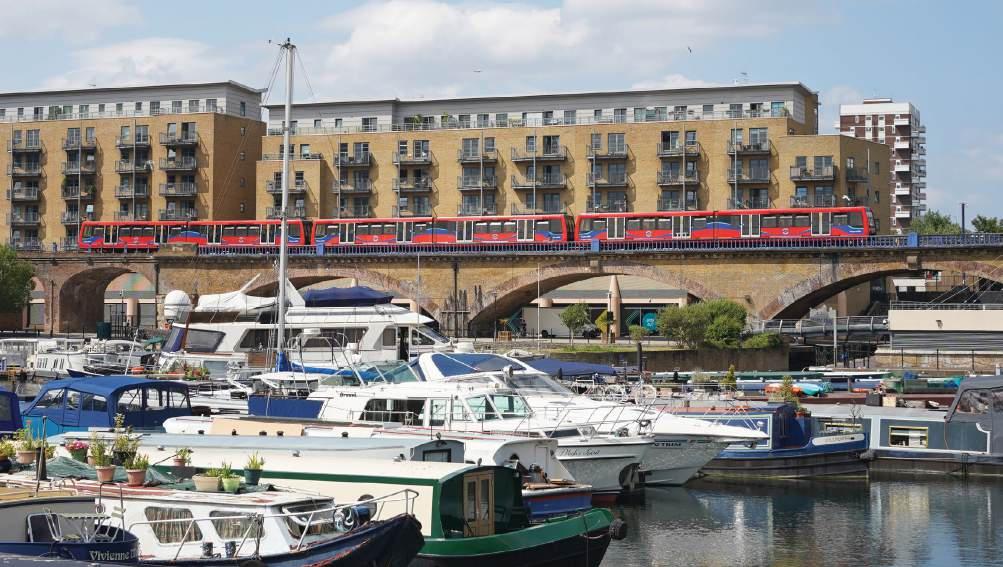
The Docklands Light Railway (DLR) is a driverless automatic 1435mm-gauge metro using a dedicated and mainly elevated right of way. It is markedly different from the UK capital’s older, more famous and much longer metro, the London Underground. Both are in the Transport for London (TfL) network which also includes buses, trams and ferries. TfL’s Overground system and the Elizabeth line are both integrated with the national heavy rail network. Like many services under the public sector TfL brand, operation and maintenance of the DLR is contracted to a train operating company. This is currently the joint venture KeolisAmey 2015. Such vehicles now number second contract (for eight years) in April 2025, continuing from a previous ten-year term. Proportional to London’s size – about 58km (36 miles) across and 40km (25 miles)
north to south – DLR coverage is small. The system’s 38km (24 miles) of route and its characteristics were, however, formulated for roles that could not readily be filled by other means.
Dereliction of docks due to containerisation and increased vessel sizes have worldwide equivalents. With commercial traffic ended by 1981, the scale of the problem in London could not be overlooked: it was ‘6000 acres of forgotten wasteland’ according to the British Secretary of State. The London Docklands Development Corporation had powers to stimulate economic and social activity, mainly through attracting investment rather than using public money. Its remit covered a wedge of land, mostly north of the River Thames, extending east from near Tower Bridge to the Royal Docks group and the Beckton district. With buses and the Underground then ruled out, a new rail format was devised to connect Docklands with London’s
Formerly Regent’s Canal Dock and used for goods transhipment, Limehouse Basin and its marina are part of a fashionable residential area. Limehouse DLR station is just west of this section of the re-engineered London and Blackwall Railway viaduct, seen on 12 June 2025.
traditional business district (‘the City’). It had to handle anticipated demand, be accessible and capable of installation in restricted settings.
With a far from generous budget, DLR opened with 15 stations on three arms totalling 12km (7.7 miles) in August 1987. An appreciation of the early days may still be gained if joining at Tower Gateway, the first City terminus. Although reconfigured in 2009, some original features and the adoption of heavy rail space are evident. The DLR used the abandoned London and Blackwall Railway’s viaduct alignment, running beside the suburban line from Fenchurch Street until Limehouse, where there are separate but connected stations. The first divergences of DLR routes were around the Westferry, West India Quay and Poplar stations. Coming from the west, the first junction was originally on one level, later replaced by a complex grade-separated structure rising east of Westferry.
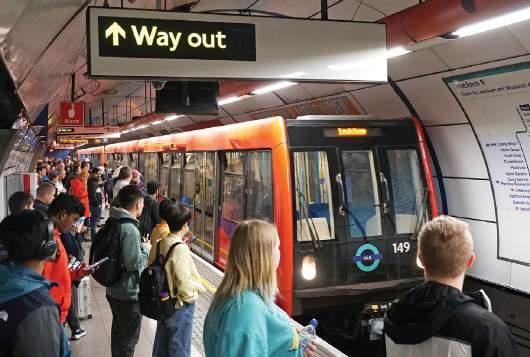
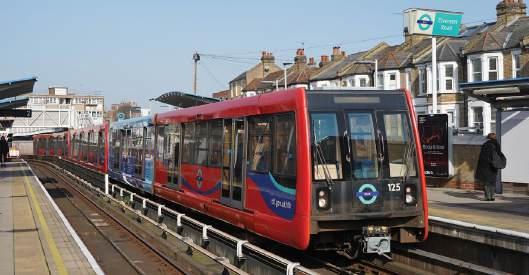
Aside from disposals to Germany and accident damage, substantial withdrawals from autumn 2025 began in expectation of B23 trains entering service. Upon complete removal of B90, B92 and B2K, the fleet will have two types. Essentially the same but in two batches, B07 (101-124) and B09 (125-155) were built in Bautzen, Germany. At 38.2 tonnes, each car has a similar weight to five-section low-floor trams like the Citadis 302. Classified by CAF in their Inneo metro range, the B23 (201-254) are built at Beasain in north-east Spain. They are air-conditioned, gangwayed throughout and, unlike their predecessors, have longitudinal seats except at the cab ends. Service information screens include ‘Change for’ points to other services. Unlike the predominant red on most earlier stock, B23 is mainly white plus the blue-green (‘teal’) as used in the DLR’s version of the TfL roundel and signage. The capacity of 792, 156 seated, approximates to 10% more than a three-car DLR formation. Non-articulated with 20 axles, the single near-87 metre long B23 has necessitated changes at the Beckton depot.
TOP LEFT: Bank DLR terminus opened in 1991 at the lowest level of this major interchange in the heart of the City financial district. With interconnected Monument station, Bank also has five TfL Underground lines.
LEFT: Like Cutty Sark and also on the 1999 Lewisham extension, Elverson Road has not been extended to handle the full length of three-coach trains. It is also unusual for being amongst mature low-rise housing and having some street-level access.
BELOW: Then the oldest DLR vehicle, now withdrawn B90 22 was at Shadwell in March 2025. The masts support wires above the adjoining main line tracks east of Fenchurch Street. Tower blocks exemplify modern developments in the traditional ‘City’ trading district.
“With a far from generous budget, DLR opened with 15 stations on three arms in August 1987.”
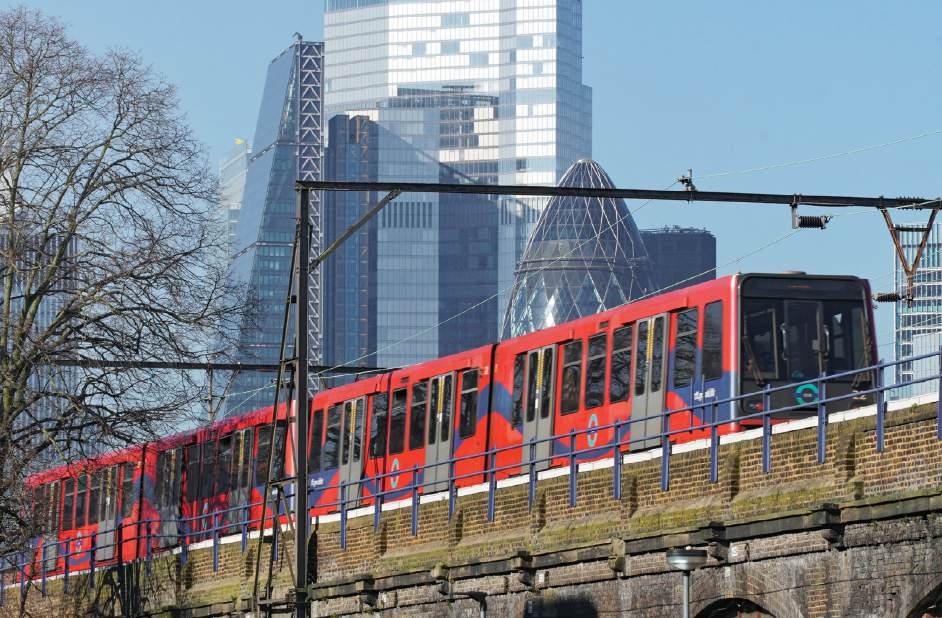
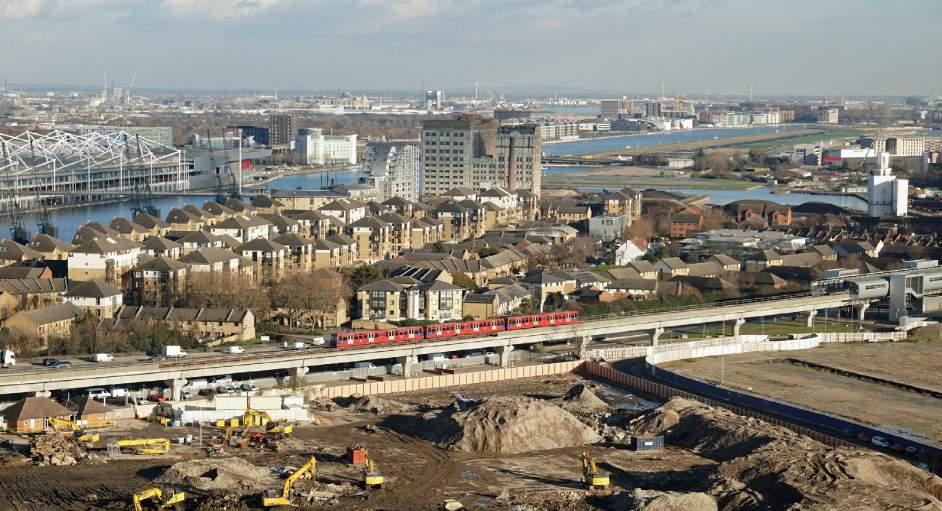
Just before Poplar, the southern line went along the Isle of Dogs peninsula. Passing over the West India Docks, it ended at the raised Island Gardens terminus overlooking the Thames. Just east of Poplar, a line headed north to Stratford, already important for being on the Great Eastern Main Line and the Underground’s Central line.
The second western terminus, Bank, dates from July 1991, linked by approximately 1.6km (one-mile) twin-bore tunnels. These merge with surface tracks between Tower Gateway and Shadwell. Bank station in the City greatly increased loadings, enabling connections with Underground lines which in turn linked with London’s main line termini. Adding DLR tunnels and signalling changes brought disposal of the initial P86 and P89 stock to Germany by 1991. Fitted with driving cabs and pantographs, 19 remained in April on Ruhrbahn lines (TAUT 1054). With Poplar depot outgrown as the DLR increased its reach and fleet size, a much larger facility was added in Beckton during 1994. This is at the system’s most easterly point, with access from a junction just north of Gallions Reach station.
Immediately north of Poplar station is the system’s administrative base and original depot, now mainly used as storage sidings. To the south is the Canary Wharf Estate, blocks of privately-owned land bordering dock basins which became the second London business district, later with a proliferation of apartment towers. When the initial system opened, few of the buildings now here existed. The early pace of change meant that
the decision to build today’s Canary Wharf station, the system’s biggest, was taken without the intended rudimentary installation ever opening. Other stations with the Canary Wharf name are on the Underground’s Jubilee line (opened 1999) and Elizabeth line (2022): none are close to each other. Conversely, West India Quay, Canary Wharf and Herons Quay DLR stations are all within about 400 metres, but intervening dock basins justify such spacing.
The 1999 opening to Lewisham brought convenient and rapid transport between the banks of the Thames, notably for commuting to the growing jobs concentration around Canary Wharf. The original Islands Gardens station closed, with a covered replacement sited on the northern ramp of a tunnel which emerged near Greenwich station.
With tourism adding to local demand, the intermediate tunnel station is Cutty Sark (the eponymous museum vessel is nearby). This reopened in March 2026 after a tenmonth closure to improve surfaceto-platform travel. The potential for using fixed-wing aircraft in Docklands was demonstrated by a landing on the site of today’s Heron Quays DLR station in 1982. London City Airport opened five years later with a runway between the King George V and Royal Albert docks. Extending from business demand into leisure use, it now handles regional jets like Embraer 190 and Airbus A220 aircraft. The airport’s DLR station opened in December 2005 on a branch extending southeast from Canning Town to King George V. This line reached Woolwich
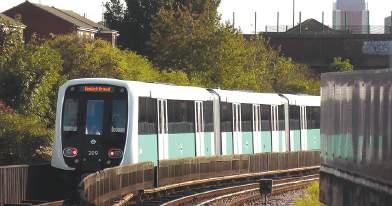
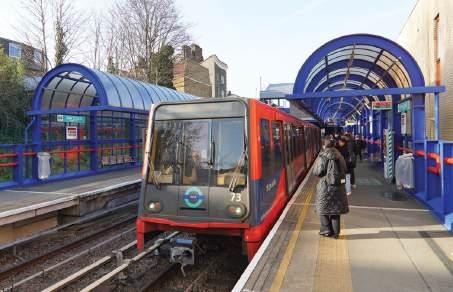
Opened: 1987
Stations: 45
Depots: 2
Approx. weekday hours: 05.30-00.00
Line frequency: 5-10 minutes
Gauge: 1435mm
Power: 750V dc, bottom contact from raised third rail
Fleet: In transition
Network: Transport for London https://tfl.gov.uk
Operator: KeolisAmey Docklands www.keolisameydlr.co.uk/
Civic information : Greater London Authority www.london.gov.uk
Tourist information: www.visitlondon.com
“The 1999 opening to Lewisham brought convenient and rapid transport between the banks of the Thames, notably for commuting.”
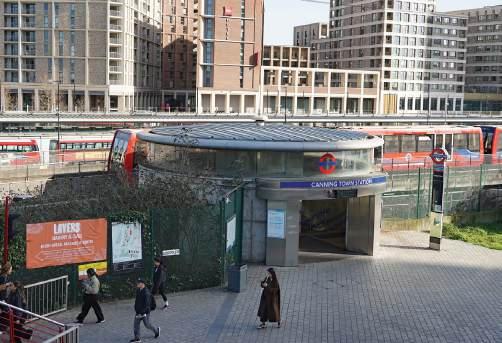
ABOVE RIGHT: The One North Quay development emerging beside West India Quay station in February 2026: this location is close to Canary Wharf Elizabeth line station. The train to the right is on track from the west which bypasses West India Quay.
LEFT: High-density building on London City Island (actually a peninsula) was approved in 2015. A bridge over the River Lea from the development leads to the south side of the Canning Town interchange where the DLR has platforms on two levels.

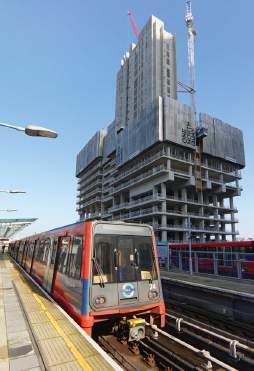
Arsenal by way of the DLR’s second Thames tunnel in January 2009. Like Lewisham, this is also an interchange with suburban trains serving southeast London and TfL bus lines.
The July 2005 announcement of London as the summer 2012 Olympic and Paralympic Games host accelerated DLR developments and led to increased capacity. Eastern London had the greatest concentration of venues, including the main site and Olympic Village at Stratford. As core Games transport, the DLR also received Olympic Delivery Authority funding. Amongst initial system enhancements, the original Stratford DLR station was replaced by 2007.
Greater change came in August 2011 when the Canning Town to Stratford
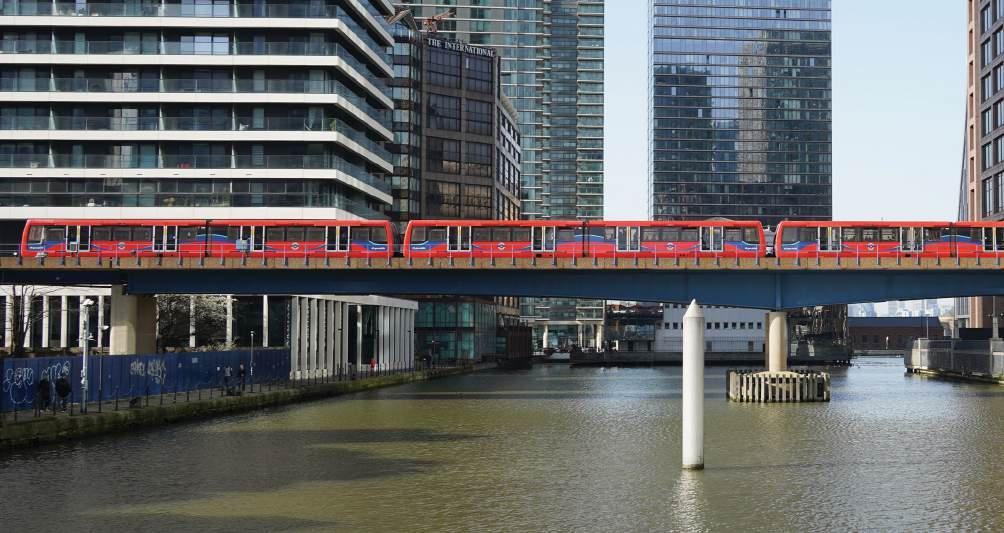
ABOVE:
A three-car B07 train above South Dock on 25 February. Replacing the original station in 2002, Heron Quays station (right) is a free-standing structure around which the tower block was later constructed.
International route opened, en route adding a main line and Underground interchange at West Ham. At Stratford the DLR passes through the main station on the low-level former North London Line alignment. Now in a major residential area, Stratford International is near the same-named High Speed 1 line station; despite the title, this only hosts domestic trains. Just south of the Olympic Park, Pudding Mill Lane station was re-sited to give space for Crossrail works to create the Elizabeth line. Reopened in 2014, a much bigger replacement now gives access to West Ham United’s stadium, with the ABBA Arena opened directly opposite the station in May 2020. As around Pontoon Dock and West Silvertown stations on the Woolwich line, Pudding Mill Lane is in a development area.
The Elizabeth line was fully
commissioned in May 2023, which soon greatly exceeded demand forecasts. The mainly in-tunnel core diverges in the east, with DLR interchanges on both arms. Stratford is on the northerly arm which extends onto the Great Eastern Main Line.
Canary Wharf is on the southern route which also includes Woolwich (about 200 metres from Woolwich Arsenal DLR) and Custom House. The latter and Prince Regent are Beckton line DLR stations which are designated for access to the 600-metre long Excel London exhibition complex.
Nearby Royal Victoria DLR is a short walk to the northern terminus of the IFS Cloud Cable Car (part of the TfL network) which crosses the Thames to the O2 Arena in North Greenwich.
The DLR service is organised as several regular routes, although not distinguished in the same manner as
the Underground or (since 2024) the Overground lines, both of which use colour coding and names. DLR does differentiate routes by colour shades, but the main identification is by destination as on information displays and audio.
FAR
An Elizabeth
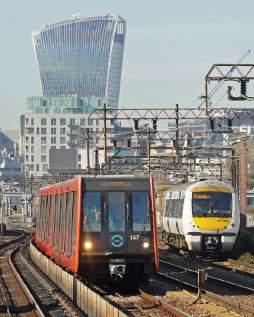
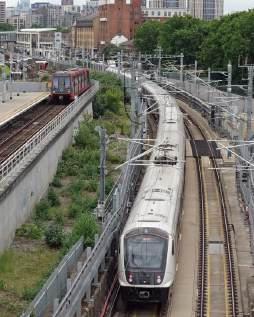
DLR trains are driverless, but all services carry a staff member with mixed duties including train dispatch, passenger information, and manual driving as required. Stock is classified by the expected delivery year when the order was placed. A letter denotes the depot: only P86 and P89 referenced Poplar, with others as B for Beckton. Several classes followed, compliant with the changing system. Built by BN (later Bombardier), these were compatible with each other in multiple formations. These, the B90, B92 and B2K (for 2000) with 91 examples continued the configuration of 28-metre long, 2.65-metre wide high-floor, six-axle articulated pairs. Re-using the P86/P89 numbers accounts for B2K 01-16 not being the oldest cars. Again, with the established dimensions and in revenue service from September 2008, the Bombardier B07 and B09 totalled 55. They introduced new interior layouts and exterior styling. They have AC traction motors and cannot run in multiple with the previous DC motor classes. With three-car trains at around 84 metres becoming the new standard, nearly all of the stations not originally built to handle such lengths had platforms lengthened. For the next generation TfL opted for single vehicles, and this obviated space lost to unused ends in multiple
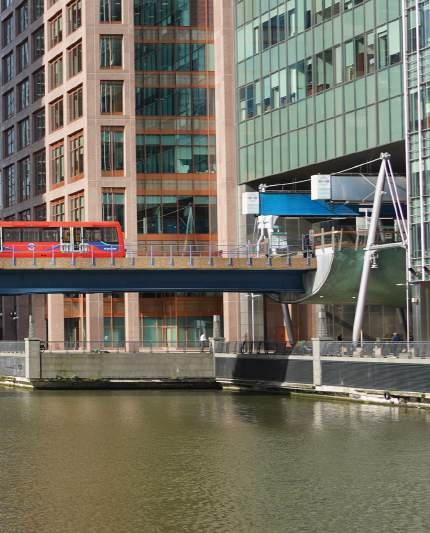
RIGHT: The cityscape at the northern end of the Isle of Dogs has changed drastically since the DLR’s early days: this view is between South Quay and Crossharbour.
BELOW: With platform lengths for single-car trains and the Canary Wharf towers yet to rise, this was the view in 1989 along the straight section towards West India Quay. In the initial fleet livery, Linke-Hofmann-Busch P86 05 is at Herons Quay.
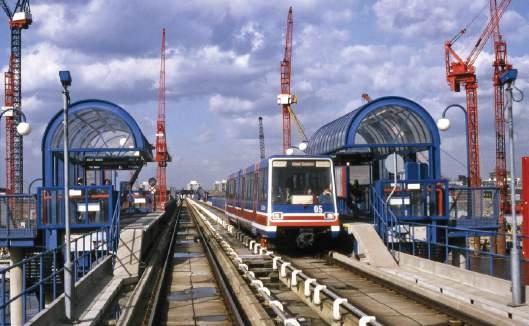
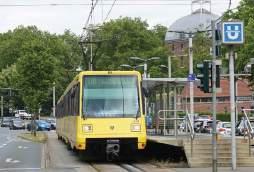
As Ruhrbahn 5229, ex-DLR P89 20 calls at Schloß Horst Buer, Gelsenkirchen, on 27 May 2025. Unlike on the DLR, the stock has street-running.
formations, also allowing easier on-board movement by passengers and the PSA. A contract for 43 fivesection B23 was placed with CAF in 2019 (later increased by 11), with the first delivered in January 2023. Replacement of all DLR stock apart from B07/B09 by B23 has not gone to plan. Revenue service began in September 2025, but the type was soon withdrawn after problems were identified. To maintain the service, timetable modifications and shorter formations were implemented.
Although several Docklands Light Railway expansion schemes have been forwarded, the only project currently identified by TfL would extend east from a junction between Gallions Reach and Beckton. The surface-level Beckton Riverside station would be north of a new Thames tunnel, with a southern terminus in Thamesmead. The project is closely related to current and future housing around the new stations; TfL indicates an opening in the early 2030s.
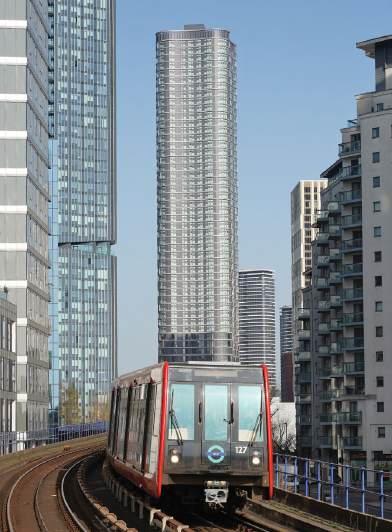
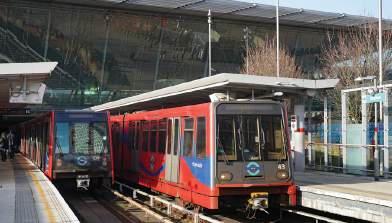
Local travel: TfL has zone-based, cross-mode fares (DLR in zones 1-4), with cash payments much more expensive than the alternatives: see https://tfl.gov. uk/fares. Except for locations where DLR combines with other services (for example Bank and Woolwich Arsenal), there are no ticket barriers. Although most stations are unstaffed, there are random revenue checks by staff. Yellow touch-in/out validators for ‘pay as you go’ payments such as rechargeable TfL Oyster Cards and contactless cards/devices; fare capping applies. Travelcards (Londononly or combined with rail tickets from outside London) cover DLR.
What is there to see? Major attractions include the Tower of London and Tower Bridge, also the Greenwich maritime area and nearby Royal Observatory/Prime Meridian. Near the spectacular high-rise concentration of the Canary Wharf estate, old dock buildings (including exhibits: www.londonmuseum.org.uk/ docklands) spread west of West India Quay station. Access to the Queen Elizabeth Olympic Park from Pudding Mill Lane and Stratford/Stratford International. Thames views from the riverside path and River Bus (‘Thames Clipper’: see TfL website) with piers near DLR including Tower, Canary Wharf, Greenwich and Woolwich Arsenal.
GENERAL. Australia has offered free public transport to combat fuel shortages caused by the US/IsraeliIran war. Victoria offered free travel on suburban and long distance rail travel from 31 March until 30 April, while bus and ferry travel in Tasmania is free until 30 June.
NEW SOUTH WALES. The NSW government has signed a renewable energy contract worth AUD1.9bn (EUR1.2bn) that will power all the state’s electric buses, trams and trains from July 2027 until 2034. This is expected to save the state AUD130m (EUR74.9m) a year.
Sky news, Guardian
WIEN (Vienna). Viaduct repairs are to close the Praterstern – Hbf S-Bahn line from 7 September to 31 October. Tram line O will operate a five-minute service with long ULF trams. Line 62 is to operate every 7.5 minutes and run to Quartier Belvedere via Hbf. Line 18 is to run every six minutes to Stadion for U-Bahn interchange.
ANTWERPEN (Antwerp). Line 11 trams were to have resumed running to Melkmarkt from 4 May after a 3.5-year City Loop resurfacing project. From the same date, lines 3, 5, 9 and 15 were to be suspended to Linkeroever to permit tram subway renovation. This is expected to last until March 2027. Following an accident on 30 December, the undamaged front sections of 7317 have been combined with the undamaged rear sections of 7312 to create a new 7317. The damaged sections from both trams will be repaired to form a new 7312. T-2000 BRUSSEL/BRUXELLES (Brussels). The western section of line 81 has been replaced by buses, to permit complete reconstruction of Chaussée de Mons.
Articulated PCC 7815 has been privately preserved, while 7735 and 7806 have joined the Woluwe museum collection. T-2000 CHARLEROI. Line M5 testing between Waterloo and Les Viviers started in early March. T-2000 GENT (Ghent). Political opposition has led to cancellation of plans for the 10km (six-mile) line 7 branch to Sint-Denijs-Westrem. T-2000
BELO HORIZONTE. Finance has been agreed to permit design work to start on planned metro lines 3 and 4. RGI SAÕ PAULO. Monorail line 17 opened on a trial basis on
31 March, using 14 BYD fivesection SkyRail trains. It links Aeroporto de Congonhas and Morumbi metro interchange. Full service is expected to begin on 1 October. The 6km (3.7-mile) line was originally planned to open in time for the 2014 FIFA World Cup. Work on metro line 4’s 3km (1.8-mile) underground extension to Taboão da Serra started on 24 March. Completion is planned for 2031. Skyscrapercity
MONTREAL. The REM private metro’s 8.6km (5.3-mile) extension from REM Bois France to Anse a l’Orme was to open on 18 May. urbanrail.net
CZECH REPUBLIC
BRNO. A strategy to expand the tram network has been agreed: four extensions are to be built by 2030 and another four by 2035. The first sections to be built comprise 1.8km (1.1 miles) to Lisen Holzova; 600m to Bulvár, 1.1km (0.7 miles) to Bosonohy and 400m to the depot at Medlánky.
Tatra K2 six-axle articulated tram 1080 undertook a farewell tour for the class on 19 April. DS PRAHA (Prague). The latest T3R. PLF tram to enter service is 8782, built using parts from 8152.
The 130th anniversary of the 2.2km (1.4-mile) Krizik tramway was celebrated on 22 March by operating Ringhoffer museum trams between Florenc and Palmovka.
A CZK29.9bn (EUR1.2bn) construction contract for the 10.6km (6.9-mile) metro line D has been awarded to Subterra, Hochtief and BeMo Tunnelling. The Olbrachtova – Nové Dvory line is scheduled to open in 2032. dopravek.eu
KØBENHAVN (Copenhagen). An initial test run on the northern section of the new Lyngby –Lundtofte light rail line took place on 1 April. Services should start in August. T. Pixsson
SANTO DOMINGO. Alstom delivered the first two of eight three-car Metropolis metro trains in early April. Railway-news
EGYPT
AL-ISKANDARIYYAH (Alexandria). Problems with the replacement bus service meant the El Raml tramway did not close for its makeover until 4 April. The rebuilt line should open at the end of 2027. UTM
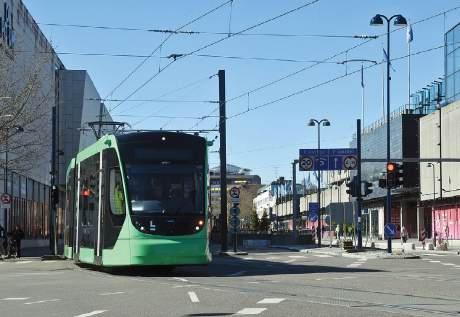
HELSINKI. Finland’s Market Court has rejected ŠkodaTranstech’s appeal against the award of a contract for 63 new trams to Stadler. Škoda has said it will appeal to the Supreme Court. The first tram to be tested on the King’s Bridges line ran on 7 April; passenger services should start in early 2027. lok-report.de, TP
BORDEAUX. Lines A and E will be curtailed 23 June-30 August to permit renovation of Pont de Pierre. DS
TBILISI. A tender for the design and construction of the 7.5km (4.6-mile) Didi Dighomi – Didube tram line has attracted three bids from Turkish companies and one from a Chinese company. gbc.ge
GERMANY
AUGSBURG. Stadler’s 42m TRAMLINKs entered passenger service on 13 April. Initially working line 6’s morning peak services, nine are expected to be in service by the end of the year. There is an option for a further 12. DS BAD SCHANDAU. Bautzen tram 9 is to mark its centenary by running on selected dates this year (20-21 June, 22-23 August and 19-20 September). BS BERLIN. A newly-released study is likely to lead to the cancellation of the planned 4km (2.5-mile), EUR578m, U7 U-Bahn extension to Heerstrasse Nord. It has revealed that the scheme has a negative economic benefit and does not meet state budget regulations. It has suggested that a tramway would offer higher modal shift benefits. DS DORTMUND. HeiterBlick delivered 389, the first of ten
outstanding Stadtbahn cars, on 14 April.
DÜSSELDORF. Rheinbahn, in association with the International Association of Public Transport, ran a shuttle service between Hbf and Medienhafen to mark World Public Transport day on 17 April, using preserved KSW set 14+32, GT6 2432, K66 2269 and GT8SU 3206. DS FRANKFURT AM MAIN. A three-year bridge reconstruction project in Mörfelder Landstrasse that started on 16 March means line 18 now runs Preungesheim – Südbahnhof – Stresemannallee –Breslauer Strasse.
Line U2 terminates at a temporary terminus at OberEschbach. DS HAMBURG. U3 is to close between Mundsburg and Barmbek from 11 May to 5 July to permit bridge renovation. HHA JENA. Gotha car 26 of 1929, 1959 Gotha train 101+155+ Reko 207, Bombardier GT6M 620, Solaris Tramino 703 and Stadler LICHTBAHN 801 took part in the 125th anniversary tram parade on 18 April. JeNa PLAUEN. A restructuring plan has been implemented to solve a financial crisis. The city council transferred bus operations to Zweckverband Öffentlicher Personennahverkehr Vogtland (ZVV), while the tramway is now a wholly-owned subsidiary of the city. The move should save EUR3m per year, although ten new trams and infrastructure renewals are required. DS RUHRBAHN. This year’s programme of preserved tram and bus operation is as follows: 20-21 June, Mülheim; 27 June, Essen; 19 July, Essen; 16 August, Mülheim; 6 September, Borbeck in Essen; 13-14 September, Mülheim; 20 September, Essen; 3 October,
Essen. Further details are available at: at vhag-evag.de
STUTTGART. In preparation for the renewal of the S-Bahn operating contract from 2032, Verband Region Stuttgart has agreed to own trains in the future and lease them to the chosen operator. VRT is also to acquire the 56 new Class 430 trains from the current fleet and retain the so-called Panoramabahn monorail. lok-report.de
ATHÍNA (Athens). Completion of the 12.8km (eight-mile) metro line 4 from Alsos Veikou to Goudi is not likely to take place until 2032. RGI
BUDAPEST. A Hungarian consortium has won the HUF26.9bn (EUR81m) contract to build a 2.8km (1.7-mile) tramway extension from Szent Gellért tér to Budafokiut/Dombóvári út and an interchange with line 1.
An open day at Szépilona depot on 18 April marked the end of original-condition Tatra T5C5 trams. RGI, transphoto.org
MUMBAI. Metro Line 2B was extended by 5.4km (3.4 miles) from Diamond Garden to Mandale on 8 April. The same day brought opening of the 3.6km (2.2-mile) Dahisar East – Kashigaon Line 9. At Dahisar East, Line 7 trains continue onto Line 9 instead of Line 2A. BMEL Ltd has delivered 63 six-car trains for Lines 2, 7 and 9. urbanrail.net
DUBLIN. Protesters campaigning against high fuel costs disrupted Luas Green Line services on 7 April by blocking O’Connell Bridge with vehicles and tractors.
An Coimisiún Pleanála has approved the railway order for the 3.9km (2.4-mile) Finglas extension. This will take Luas from the Green Line terminus at Broombridge to Charlestown, with three new stops. It is due to open in 2031.
Transport Infrastructure Ireland’s CEO Lorcan O’Connor said that the resignation of MetroLink’s Programme Director Seán Sweeney would not affect delivery of the 18.8km (11.7-mile) railway under Dublin. Mr Sweeney stepped down in April, citing the distance between Dublin and his home in New Zealand. MetroLink construction is due to start in 2027, with costs estimated at EUR11bn.
GENERAL. The Manx Heritage Transport Festival is to take place 28 July-2 August, encompassing
the Manx Electric Railway, Snaefell Mountain Railway and Douglas Bay Horse Tramway, as well as the island’s steam railways and buses. Events include parallel running on the MER and driver experiences with diesel-powered MER works car 34.
BERGAMO. Ranica depot received the first of ten new 33.5m Škoda 49T trams (101-110) on 12 March. TP NAPOLI. EAV has awarded the Webuild consortium a EUR660m civil works contract for the automated 6.5km (four-mile) seven-station metro line 10 from Piazza Di Vittorio to Afragola Centro. Work is due to start in 2027. Extensions totalling 7.3km (4.5 miles) and five stations should follow in a second-phase contract, worth EUR1.1bn. fanpage.it ROMA (Rome). A firm order for 16 new metro trains has been placed with Hitachi Rail STS. The deal includes four years of maintenance. lok-report.de SOPRABOLZANO – COLLALBO.
The Rittnerbahn is acquiring Duewag M8C trams, with low-floor centre sections, from RNV in Mannheim. DS TORINO (Turin). The Sassi –Superga rack tramway reopened on 3 April after a ten-week closure to permit maintenance of infrastructure and trams. D. Quaglia
KAZAKHSTAN
ASTANA. A simulated commercial service on the new automated light metro began on 7 April but there is still no date for public opening. IRJ PAVLODAR. Belkommunmash has delivered ten BKM T811 trams, believed to be numbered 177-186. transphoto.org
AMSTERDAM. A tender has been published for up to 165 new trams, intended to replace the Siemens Combino fleet by 2032. A firm order for 75 single-ended cars is planned, with an option for between ten and 52 double-ended trams. A nine-year maintenance agreement is sought.
The first test run on line 26’s Strandeiland extension took place on 24 February. The 1.8km (1.1mile) line could open in May. OR DEN HAAG (The Hague). Test running on the line 19 extension to Mekelpark (TU Campus) in Delft started on 8 April. Passenger services are to start on 31 August. OR
CZĘSTOCHOWA. Plans to build a tram line to the Parkitka housing
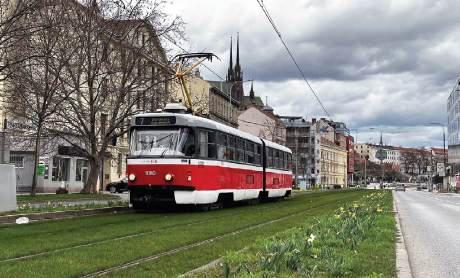
area have been cancelled in favour of electric buses. TP GDAŃSK. Both PESA and Škoda have bid to supply 20 (with an option for 15 more) 47m trams.
cs-dopravak
KATOWICE. A tender has been published for the construction of a 4.6km (2.9-mile) tramway extension from Brynów to Kostuchna, with completion expected in 2029. tram-silesia.pl SZCZECIN. Double-ended Modertrans Moderus Gamma trams 631-637 entered service on lines 2 and 4 on 28 March. wszczecinie.pl WROCŁAW. Plans have been announced for 14 tramway extensions to be built by 2032, including five to new park-and-ride sites. wroclaw.pl
KALININGRAD. Contractors are being sought for a RUB100m (EUR1.1m) tramway infrastructure renewal programme.
City tours from South Station using ex-Mannheim Düwag tram 443 resumed on 18 April.
J. Carpenter MOSKVA (Moscow). A parade of historic trams and an exhibition at Ulitsa Sergiy Radonezhsky on 4 April marked 127 years of tramway operation.
Work has started on a new metro depot at Troitskoye that promises to be the largest on the system. Opening is scheduled for 2029. RGI SANKT PETERBURG (Saint Petersburg). A contract has been signed with Natproektsroy for four tramway extensions totalling 40km (25 miles) through the southern suburbs. Construction is due to start next year. RGI SARATOV. Line 3 was reinstated on 31 March after infrastructure work. New PKTS 71-931M trams 1031-41 entered service the same day. transphoto.org YEKATERINBURG. Funding has been approved for a seven-year lease of 50 three-section trams, costing RUR13.2bn (EUR149m). Tenders are to be invited this summer
and the agreement includes the provision to buy the trams at the end of the lease period. RGI
SPAIN
JAÉN. The Empreza Ruiz SA/ Barraqueiro consortium has won the EUR10.9m, four-year operating contract for the revival of the mothballed 4.7km (2.9-mile) tramway. cope.es PALMA DE MALLORCA. Work on the 6km (3.7-mile) metro line 2 from Plaça d’Espanya to Secar de Real is to start in 2029. IRJ SEVILLE. CAF delivered two 33m Urbos trams on 18 March. The batch of six will work the 12km (7.5-mile) tramway that will link Metro de Sevilla line 1 at Universidad Pablo de Olavide with Alcalá de Guadaíra (Montecarmelo); it is due to open by the end of 2026. RGI
GÖTEBORG (Gothenburg). Regional transport operator Västtrafik has started the tendering process for up to 65 M35 trams. lok-report.de
ZERMATT (GGB). A further four POLARIS rack trains have been ordered from Stadler for the Gornergratbahn; six are already in service. The contract is worth CHF30m (EUR32.6m) and delivery is due in 2028. lok-report.de ZÜRICH. A mutual exchange of liveries has taken place: VBZ tram 3019 has been wrapped in Rhätische Bahn Bernina Express’ red livery while RhB 3165 has received VBZ’s blue colour scheme. ÖV Schwyz
THAILAND
CHIANG MAI. Feasibility and design studies are in progress for a 5km (three-mile) tram line linking Mae Hia and Rajapruek. Due to be built in 2028-31, the line could feature six stops, with two park-and-ride sites. thairath.co.th
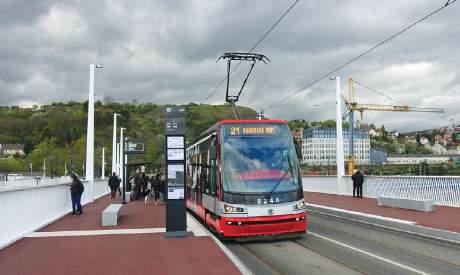
GAZIANTEP. With the city having used secondhand trams for the last 15 years, four new doubleended, five-section trams have been ordered from Bozankaya. Costing EUR10.6m, they are to be delivered in 2029. cs-dopravak ISTANBUL. The European Bank for Reconstruction & Development is providing a EUR110m loan to the municipality to fund completion of the 13km (eightmile) Ümraniye – Ata ş ehir –Göztepe metro line. This could open before the end of the year. IRJ
BLACKPOOL. Tram services to Fleetwood Ferry resumed on 15 April after work on track between the system’s northern terminus and Fisherman’s Walk ( TAUT 1061). Further track renewals in Fleetwood – around Esplanade, Pharos Street and North Albert Street – are to take place later this year.
CAMBRIDGE. Cambridgeshire & Peterborough Combined Authority (CPCA) Mayor Paul Bristow has written to the UK Secretary of State for Housing, Communities and Local Government to set out the case for CPCA to receive Established Status. This would enable it to unlock funding to help deliver its Local Growth Plan, which includes proposals for mass transit around Cambridge (TAUT 1060).
CARDIFF. How can the electrified South Wales Metro network have a wider benefit to the surrounding area? That question – and others – is expected to be answered at the ‘Metro & Us’ event in Cardiff on 4 June. This is to feature representatives from Transport for Wales and leading consultancy groups including Arup and Mott MacDonald. The cost of electrifying Metro routes and procuring new rolling stock – including 36 Class 398 tram-trains – has risen to GBP1.3bn (EUR1.5bn).
DERBY. The Light Rail Transit Association held two public events on 16 April to promote its proposed four-line tram system. It is hoped that the GBP550m (EUR634m) estimated cost could be covered by the GBP2bn (EUR2.3bn) promised to East Midlands Combined County Authority under the UK Government’s new ‘Transport for City Regions Fund’.
GREATER MANCHESTER. The Rail Accident Investigation Branch is to look into an incident on 5 April when the wheels on one axle of an Ashton – Bury Metrolink service left the rails on the approach to Piccadilly. The incident resulted in minor damage to the trams and infrastructure. INDUSTRY. UKTram worked with Skill Step Group to deliver the first Light Rail & Tramway Overhead Line Equipment training course on 30 March-1 April. Participants from tram and heritage systems across the UK undertook theoretical learning and hands-on training.
LONDON (TRAMS). Contractor VolkerRail replaced 500m of embedded rail and a crossover during a 15-day blockade in February. It brought the first UK use of Sika’s Icosit KC 350/45 polymer rail grout and the first use of Sika’s grout application machine worldwide.
LONDON (UNDERGROUND).
A preliminary market engagement notice has been published for a Bakerloo Line upgrade that would pave the way for a new train fleet to replace the 1972 Stock. The contract involves rebuilding Stonebridge Park Depot, increasing stabling capacity at Queen’s Park and introducing a Driver’s Training Facility at London Road Sidings. Feasibility studies into providing step-free access at Barkingside, Brent Cross, Preston Road, Queensbury and Totteridge & Whetstone are to take place. Northolt is to become the 95th step-free Underground station this summer, followed by Leyton in spring 2027.
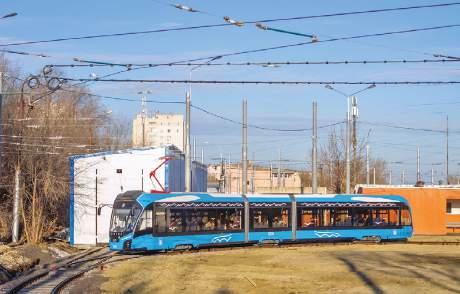
STOURBRIDGE. Passenger numbers on Pre-Metro Operation’s Stourbridge shuttle have now topped pre-COVID figures. More than 576 000 people used the 1.3km (0.8-mile) line from Stourbridge to Stourbridge Junction in 2025-26; in 2018 the figure was 546 000. Over 8m passenger journeys have been made on the service since it launched in 2009.
WEST MIDLANDS. What have been dubbed ‘eco islands’ are to be created at selected stops across the West Midlands Metro network. The first is at Black Lake, where a 16m2 space has been planted with wild flowers to attract insects.
ATLANTA, GA. Mitsubishi subsidiary Crystal Mover Services has been awarded a ten-year contract for operations and maintenance of the 2.2km (1.4-mile) Hartsfield-Jackson Airport automated people mover. Mass Transit CHICAGO – SOUTH SHORE, IL/ IN. A ribbon-cutting ceremony to mark the completion of the West Lake Corridor took place on 31 March. This is the South Shore commuter rail line’s new 14km (nine-mile) line to serve the Monon corridor from Hammond Gateway to Munster/Dyer. Mass Transit CLEVELAND, OH. RTA is proposing to remove all nonevent-day services on the 3.5km (2.2-mile) Waterfront light rail extension to cut costs in the face of declining passenger numbers. The line opened in 1996. Mass Transit HOUSTON, TX. Alstom is to upgrade the Skyway automated people-mover at George Bush Intercontinental Airport under a 15-year USD437m (EUR374m) contract. This includes supplying 16 new Innovia cars. Mass Transit LEXINGTON, NC. Siemens Mobility opened its new rolling stock manufacturing factory on 8 April. The USD220m (EUR188m) facility’s first
contract is to build passenger coaches for Amtrak. Mass Transit LOS ANGELES, CA. Subway Line D’s 6.2km (3.9-mile) extension from Western to La Cienega opened on 8 May.
LACMTA has selected the San Vicente – Fairfax alignment for the 16km (ten-mile) Crenshaw/ Expo – Hollywood Bowl LRT Line K northern extension. Mass Transit NEW YORK, NY. MTA is due to receive USD60m (EUR51m) in withheld federal funding for the Second Avenue Subway Phase 2 project. Mass Transit NEW YORK – NEW JERSEY, NJ. The first of 40 Alstom-built double-deck commuter rail cars was delivered to Kearny workshops on 13 April. Mass Transit OMAHA, NB. Contractor Kiewit laid the first rails for the 5.1km (3.2-mile) streetcar project in April. Services could start in 2028. J. May PHILADELPHIA, PA. SEPTA is buying 24 Bombardier-built 1980s commuter rail coaches from the EXO system in Montréal, Canada, for USD8.58m (EUR7.3m).
Mass Transit
PORTLAND, OR. The last day of the Type 1 LRVs, built by Bombardier in 1983-86, took place on 2 April. Car 113 ran on the MAX Blue Line until 14.30. A public farewell party was held on 18 April, with car 124 parked on the former Vintage Trolley spur at Lloyd Center. Its cabs were open to the public. Around 2000 people attended. S. J. Morgan SAN BERNARDINO –REDLANDS, CA . Metrolink Arrow’s trials of a hydrogenpowered Stadler FLIRT ended in February after a lorry trailer delivering hydrogen canisters exploded, leaving one person dead. The cause is not yet known. EB SAN DIEGO, CA. California State Transportation Agency has awarded a USD48.3m (EUR41.3m) grant to fund the second phase of Orange Line improvements. This includes replacing
signalling between Lemon Grove and El Cajon. J. May
SEATTLE, WA. Hoffman Construction Company has been awarded a USD350m (EUR299m) design and build contract for a new operations and maintenance facility at South 336th St in Federal Way. Due to open in 2032, it is to house the 72-strong Series 3 LRV fleet and could employ over 600 people. Mass Transit
ABERDEEN (UK). Aberdeen Corporation Tramways 15 was to move from Aberdeen & District Transport Preservation Trust’s Alford museum to a site in Northumberland for restoration this spring. It was built by Brush in Loughborough in 1901 and was withdrawn in 1929. The restoration only encompasses the body and not the running gear and bogies.
CHEMNITZ (DE). Strassenbahnmuseum Kappel opened for the season on 4 April. The day featured 1958-built Gotha T57 802 and honoured Sir William Rosebuck, the founder of the city’s tramway. Trams are to operate every Thursday, Friday and Saturday (10.00-16.00) until 24 October. strassenbahn-chemnitz.info
COATBRIDGE (UK). North Lanarkshire Council has advertised for a Tramway & Historic Engineering Technician to help reactivate Summerlee Museum Of Scottish Industrial Life’s 500m tramway. The museum has four trams – Glasgow Corporation Tramways 1017 and 1245, Lanarkshire Tramways 53 and 392 from Dusseldorf –but none have run since 2022.
CRICH (UK). The National Tramway Museum has received a GBP490 000 (EUR569 835) grant from Arts Council England, which will go towards weatherproofing its main display hall. The London Transport Museum also received GBP999 999 (EUR1.2m) as part of the GBP25.5m (EUR29.4m) allocated to museums across the country. The Black Country Museum is to use its GBP454 159 (EUR523 859) to carry out repairs to historic buildings, while Greater Manchester Transport Society will use its GBP244 000 (EUR281 447) to repair the former Manchester Corporation Tramways tram depot that houses its Manchester Transport Museum.
DUDLEY (UK). Black Country Living Museum has been awarded GBP272 000 (EUR314 077) from the DCMS/Wolfson Museums & Galleries Improvement Fund to restore its trolleybus route. The museum has not ruled out using the reinvigorated infrastructure for its trams, which have not run for over a decade.
ÉREZÉE – DOCHAMPS (BE).
The 60th anniversary of the TTA tourist tramway is to be marked by events on 4-5 July.
ART 90 from Grottes de Han has arrived on a one-year loan.
T-2000, R. Dussart-Desart KINGSTON (US). Former SEPTA Philadelphia Market – Frankford Budd 1960 subway car 618 has joined the Trolley Museum of New York’s collection.
MALMKÖPING (SE). The Swedish tramway museum’s 2026 season commences on 16 May. It opens at weekends until 30 June
and then Tuesdays-Sundays from 30 June to 9 August. muma.se
NORTH SHIELDS (UK). Tyne and Wear Metro operator Nexus has donated logs collected from around its network to the North Tyneside Steam Railway.
PERTH (AU). Melbourne W6 tram 998 has entered service at the PETS Whitman Park museum, converted into an accessible tram.
Perth Electric Tramway Society YAKIMA (US). The city council has renewed the operating agreement with Yakima Valley Trolleys ( TAUT 1059), taking it through to 2030. However, the council has voted to exclude track renewal in the budget for a long-planned rebuilding of 6th Avenue. If the museum group is unable to raise the estimated USD7m (EUR6m) to relay the track and renew the overhead wire by spring 2027, the 6th Avenue track and 6km (four-mile) line to Selah will close. This will leave just 1km (0.6 miles) of usable track on Pine Street. S. J. Morgan
Worldwide items for inclusion should be sent to Michael Taplin at Flat 8, Roxan Villa, 33 Landguard Manor Rd, Shanklin, Isle of Wight PO37 6EA, UK. Fax: +44 (0)1983 862810 or e-mail miketap@mainspring.co.uk UK and Ireland items, please e-mail: uknews@lrta.org
Acknowledgements are due to: Blickpunkt Straßenbahn (BS), cope.es, cs-dopravak, dopravek. eu, Drehscheibe (DS), Eisenbahn (EB), fanpage.it, gbc.ge, Guardian, HHA, International Railway Journal (IRJ), JeNa, lok-report.de, Mass Transit, muma.se, Op de Rails (OR), ÖV Schwyz, Perth Electric Tramway Society, Railway Gazette International (RGI), Railwaynews, Sky News, Skyscrapercity, strassenbahn-chemnitz.info, Tram2000 (T-2000), tram-silesia.pl, transphoto.org, Transport Publiczny (TP), urbanrail.net, Urban Transport Magazine (UTM), wroclaw.pl, and wszczecinie.pl.
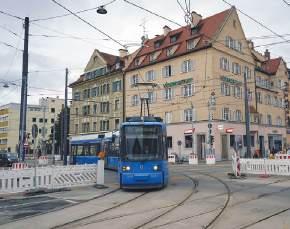
Following
‘Better late than never’ is an oft-repeated phrase and is certainly appropriate to this month’s feature about an excellent Bruxelles anniversary event that took place last year.
Mike Russell reports on the centenary of line 39.
So great were the number of special events in the tramway world vying for inclusion in our magazine in 2025 that coverage of one in Bruxelles (Brussels) was repeatedly deferred. This month we make amends, for it is an indisputable fact that the Belgian capital has a wonderful record of laying on spectacular events to mark important dates in the history of its tramway. They are not all on the grand scale of the 2019 sesquicentenary, of course, but noteworthy nonetheless.
Last summer it was the turn of line 39 (Stockel) to have its centenary marked and on a glorious 15 June a special event took place that, by the end of proceedings, had featured no fewer than 16 motor cars and six trailers. This is a belated account of the proceedings.
Situated in the south-east of the city, the Stockel line has a tendency to be overshadowed. This arises from its creation from an earlier spur from the well-established line to Tervuren that had opened in 1897 to provide mass transportation to the Belgian Colonial Museum built in the park. The Tervuren line was a model of its kind, laid out beyond the point now known as Square Montgomery on totally reserved-track – an early example of a segregated tram-only facility created in the days when the need for such a creation was much less than it later became. It was served from the new Tramways Bruxellois car depot at Woluwe, then as now an important feature of the route. Woluwe has survived to provide modern rolling stock for the routes that pass its doors, with part of the original depot now repurposed as the excellent Bruxelles Tramway Museum, well publicised by cars serving routes that stop outside. The Tervuren line became a popular tram ride for those seeking a pleasurable recreational experience even after the colonial exhibition closed.
The new line had its origins in a spur leading along Avenue de Stockel from a new double-track junction with Avenue de Tervuren at rue Alfred Madoux to serve the new Hippodrome de Stockel, opened on 14 June 1908. Single-track was laid along Avenue de Stockel and terminated by an elongated loop at the Hippodrome. In its first years, services ran on a limited-stop and unnumbered basis, and were only provided on Hippodrome event days using two-axle motor trams hauling two trailers.
New developments mushroomed in the areas abutting the line, and by the mid-1920s a case had arisen for the provision of an
extended regular tram line to serve the area to the north-east of the existing line leading to the settlement of Stockel. There, the line terminated in the local square at Place Dumon, with a double-track stub. A regular short-working service from Porte de Namur to Woluwe bridge had been operated as line 41 from as early as 15 August 1909.
At the city end of the new Stockel line (39) services terminated at Treurenberg, a point off rue Royale located near its junction with rue de la Croix de Fer. The two inner variants met at Porte de Tervuren and followed a common trunk through to Madoux junction.
The opening of the first stage of the Metro in September 1976 greatly changed the importance of the Stockel branch. On the one hand the route was substantially truncated to terminate (along with the Tervuren line) at Square Montgomery, with onward transportation into the city being afforded by the Metro. However, at the other end plans were drawn up for an extension beyond Stockel to serve a new housing development on land adjacent to a former railway line, with a terminus at Ban Eik. This extension opened on 31 August 1988. At the new outer end, the terminal arrangement was laid out as a triangular reverser – an arrangement maintained for many years and only superseded by a single-track stub consequent upon the sole allocation of double-ended cars to the line.
The cars that operated the centenary service all ran under route number 39 and used as their inner terminal the surface transfer loop at Square Montgomery. The rolling stock itself featured a variety of car types associated with the route over its existence.
Oldest by far was 984, originally built by les Ateliers Métallurgiques of Nivelles in 1906 and more recently fitted with the bodywork from Standard 1285, suitably modified to present a very reasonable recreation of its original form. Cars of this type, painted in the old Tramways Bruxellois (TB) all-over dark green livery, were a standard formation on the line until the appearance of the Standard Bruxelles two-axle cars designed for the TB in the late 1920s. Incidentally, 984 has been chosen to be represented as a classic Bruxelles veteran tramcar and appears as an all-over advertisement for the Tramway Museum on PCC 7706, one of the few remaining cars of this type still in service.
A trio of the later Standard two-axle cars put in appearances on the line, these being 1002+102, 1064+2004 and 1259+2118.
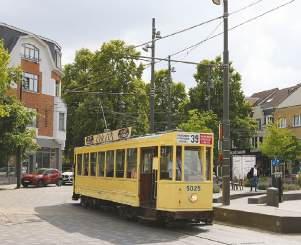
Of these, motor car 1064 is now equipped only with a pantograph (not original) so that it can be used throughout the present system. Sets of similar cars were a common sight on lines 39 and 41 right up to the opening of the first Metro line.
The Exposition bogie cars made frequent appearances between 1947-52. Cars 5008, 5018 and 5025 represented the class in its various stages of development. For example, 5008 has been retro-fitted with a pantograph to allow its versatile deployment over the whole system, while 5018 is one of the six cars fitted with PCC-style bodywork in 1949; when the PCC cars proper arrived in the city from 1952 onwards the Exposition bogie cars could be distinguished by being fitted with trolley-poles only for current collection. Car 5025 is in original as-built condition.
The PCC cars themselves were much in evidence with 7047, 7065, 7093 and 7171 giving all-day service. Car 7047 was fitted with the first destination/route number blind with an all-blue background. This contrasted with the standard red/white 39 version that was introduced later in 1952 and used on 7065 and 7093. Car 7171 is one of the last batch of 16 PCC bogie cars fitted with secondhand bogies acquired from Johnstown, Pennsylvania.
A variant of the PCC cars is 7500, Caroline, the prototype articulated PCC dating from 1962. This was built as single-ended PCC 7501 and acted as a prototype for the series which started life as 7500-7599, later being renumbered into series 77xx after conversion to double-ended configuration. Caroline has recently received a full external repaint and looks remarkably bonny in its new clothes.
Last but by no means least came the sole surviving example of the deeply unpopular ‘two-rooms-and-a-bath’ articulated cars, 4032. These cars, which enjoyed a relatively short working life, moved around the system and spent a few months serving the Stockel and Tervuren lines in 1977-79, though quite what passengers in those areas had done to deserve their attentions is hard to discover. Still, 4032 survives as the sole example of this interim style of articulated car distinguished (like all others of the type worldwide) by their appalling riding characteristics.
The centenary celebration of Bruxelles line 39 was in the fine traditions of other preceding route-related events and with such a varied operational museum fleet, one hopes it will be far from the last.
With thanks to Luc Koenot for additional reporting and historical notes.
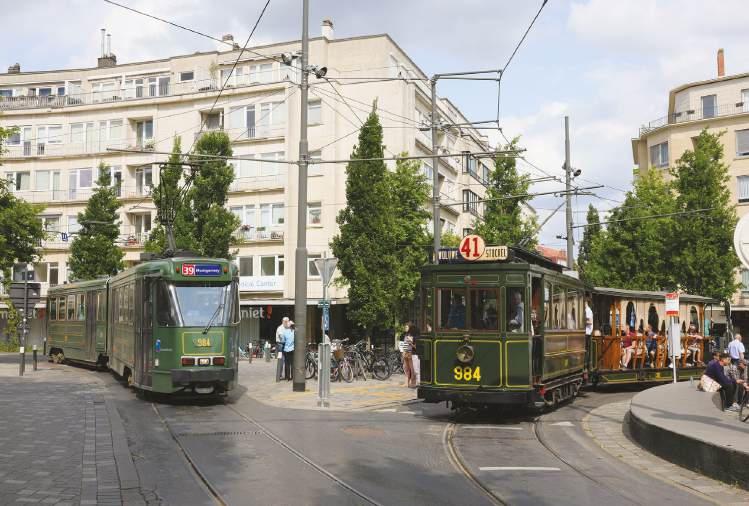
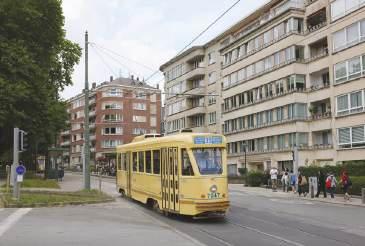
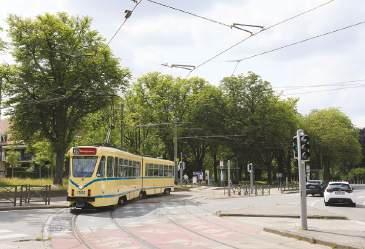
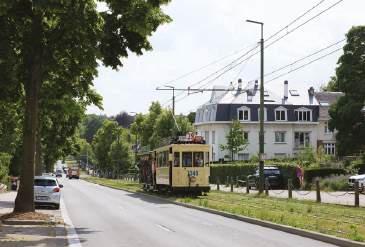
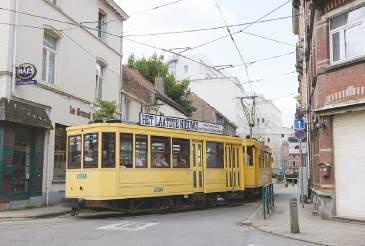
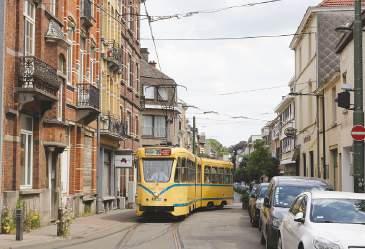
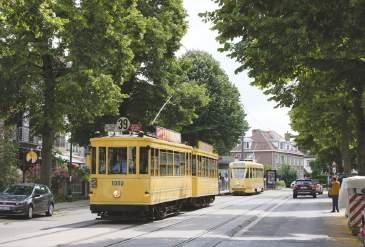
1. A quieter spell at Stockel’s Place Dumon finds Exposition bogie car 5025 of 1935 awaiting its next trip to Square Montgomery. This specimen has been restored to original condition; cars of this type operated on line 39 in the early post-war years.
2. A chance encounter at Stockel short-working loop between heritage two-axle car 984 built by Métallurgiques in 1906 and articulated PCC car 7706, dressed in original Tramways Bruxellois green livery as car 984, to represent an all-over advertisement for the Bruxelles Tramway Museum at Woluwe.
3. First series PCC car 7047 of 1952 is descending Avenue de Tervuren, displaying the light blue background destination indicator initially fitted to these cars in 1952; they were later replaced by the standard red/white form for route 39.
4. The Bruxelles two-axle Standard cars are regularly featured in heritage operations, but their Compatriot trailer cars much less so. To make amends, here is trailer 2004 being hauled by motor car 1064 around the constricted roads of the Square Montgomery surface turning loop. The trailer was a product of Les Ateliers Métallurgiques.
5. The bifurcation between the Tervuren and Stockel lines at Avenue Alfred Madoux, with prototype articulated car 7500, Caroline, forsaking Avenue de Tervuren for its journey to Stockel.
6. ‘Two-rooms-and-a-bath’ articulated car 4032 of 1965 waggles its three sections around the narrow streets of the Square Montgomery turning loop. Their lives spent serving these routes in the relatively well-to-do quarter of the city were deservedly of short duration.
7. A good impression of the gentle gradients and undulations of line 39 between the junction at Madoux and the loop at Stockel. Car 1348 was built by Métallurgiques of Nivelles in 1914 and would have been typical of rolling stock employed initially on the line when extended as double-track to Stockel.
8. The Standard two-axle set of motor car 1002 and trailer 102 depart from Escrime, with PCC car 7047 in rear in its 1952 condition.
By Paul Rowen
The LRTA held a very successful conference recently, putting forward the case for trams for Derby. More than 55 people attended two sessions, with speakers presenting the benefits that trams would bring to this UK city.
Speakers included East Midlands Regional officer Dave Gibson, who outlined where a four-line system could go and the communities it would serve. He was followed by Roger Harrison, who led the scheme that introduced NET to Nottingham. Michael Soloman Williams from the Campaign for Better Transport spoke next, outlining some of that group’s work on campaigning for light rail. Elaine Greenwood took to the stage after this, as a Derby resident with over 30 years of experience working
in the light rail industry, along with Ian Ambrose, representing UK Tram. Finally, the group heard from a consultant at the Royal Derby Hospital, who spoke about detrimental health effects of traffic congestion in the city.
Attendees included local councillors, a secretary of a local party and members of Rail Futures, as well as campaigners against road extensions.
The Association also signed up several new members and people willing to campaign for light rail in the city.
We will now await the result of the Metro Mayor’s consultation on transport investment, as well as continuing to work with groups in the city.
Further details of Dave Gibson’s report can be found on the LRTA website.
It was announced at the end of April that Tramtown, a museum which houses Blackpool’s heritage trams in the UK, is being forced to close after the building was found to be unsafe. Following the announcement, LRTA Chair Paul Rowen has written to Blackpool Transport MD Lee Harrison and the leader of Blackpool Coucil.
He said: “Frankly I find the sudden closure of Tramtown and the failure to fully consult Paul Maynard and the volunteers beforehand very concerning. [Blackpool Transport/the council has] spent GBP30 000 (EUR34 759)
of public money that was supposed to be used to secure the building, and it should now be returned to the public purse.
I have asked to meet them to find out first hand what their ‘ambitious’ plans are. Frankly they have had five years to secure funding, and talk of jam tomorrow does not ensure that Blackpool’s Heritage fleet is not left to rot in an unsuitable unsafe building.
I will be asking what steps they are taking to ensure the fleet is fully protected while a more suitable premises are secured.”
Tuesday 2. Southampton 19.30. Members’ digital images. Junction Church, Eastleigh, SO50 9FE. Contact: southern@lrta.org. GBP3. (LRTA/SEG) Thursday 4. Brentford 14.30. Bob Hodges films. London Museum of Water and Steam, Brentford, TW8 0EN. Contact: thamesvalley@tlrs.info
GBP5 inc. refreshments. (TLRS) Monday 8. Leeds 19.30. David Farrar Buses Galore. The Engine House Middleton Railway, Leeds, LS10 2JG. GBP1 (inc. light refreshments). Contact: enquiries@ lths.co.uk. (LRTA/LTHS) Wednesday 10. Sussex 19.40. Keith Carter: Trams, tramways & trolleybuses on film. Southwick
The LRTA Library comprises a substantially complete collection of publications issued by the LRTA since its founding as the Light Railway Transport League in 1937. This includes the journals Tramways and Urban Transit (formerly Modern Tramway) and Tramway Review, as well as books and pamphlets. The Archives include minutes and papers of Council and AGMs. The more recent journals and minutes are also held in electronic format.
To date, issues for the previous year of TAUT have been available via the Members’ Pages of the website. It is now proposed to make all issues of TAUT back to 2011 similarly available. Issues of Tramway Review will be available back to 2014, excluding the most recent five years. The yearly indexes to both magazines will also be available.
Some of the more recent Council and AGM minutes and papers are already available via the Members’ Pages, and these will be added to as time permits.
Work is in progress to put both the Library catalogue and cumulative magazine indexes into a form suitable for adding to the website.
The Librarian is happy to receive any enquiries concerning the Association’s publications. Please contact: librarian@lrta.org.
Please note that the LRTA’s publications are copyright and all items, whether available via the website or supplied by the Librarian, are for the purposes of private study only. The specific permission of the Light Rail Transit Association must be obtained for distribution of multiple copies or for any commercial use.
We are also investigating transferring the library to a store where members can view all of the Association’s publications and magazines. More information will follow.
Compiled by the LRTA. For a full list of the year’s events and meeting places, including online meetings, visit www.lrta.org
Community Centre, BN42 4TE. Contact: sussex@tlrs.info GBP2 visitors. (TLRS) Saturday 13. Cumbernauld 13.00. Scottish Area Group show and tell. Cumbernauld Theatre, Cumbernauld, G67 2UF. Contact: scotland@tlrs.info. (TLRS) Friday 19. Solent 10.00. Martin Petch and Paul Coles: The
Southampton Tram Project restorations. Community Kettle CIC, Portsmouth PO6 2PS. Contact: solent@tlrs.info. GBP3. (TLRS) Saturday 27. Arnside 14.00. Jon Allen’s garden tramway, 1/16 scale. Contact: northlancs@tlrs.info. (TLRS) Saturday 27. Visit to West Midlands Metro. Contact: eastmidlands@tlrs.info. (TLRS)

Order online from https://shop.lrta.org/ – or by post from:
LRTA Publications, 38 Wolseley Road, SALE, M33 7AU
(Please provide telephone contact details and quote LRTA membership number if applicable)
Outside UK = Airmail to Europe (includes all of Russia) / Surface mail to rest of world; Airmail Zone 1 = outside Europe excluding Australia, New Zealand & USA; Airmail Zones 2/3 = Australia, New Zealand & USA
Trams of Kolkata
The creeping decline of a colonial monument
This book is dedicated to the last operating tramway in South Asia. It covers the 152year history of this huge Indian city’s tram system. English and German text.
> A4 softback; 168 pages, 200+ colour and black & white pictures, 20 maps.
£42.00 (UK addresses); £53.50 (outside UK); £68.00 (Airmail Z1);
£73.50 (Airmail Z2/3); LRTA Members: £3.75 discount

The second in our new series of colour albums covering the historic Lisbon, Porto and Sintra tramways plus the new Metro do Porto and Metro Transportes do Sul light rail networks introduced in 2005/07.
> A4 hardback, 144 pages, 287 colour pictures plus 16 maps.
£33.50 (UK); £40.00 (outside UK); £47.50 (Airmail Z1);
£52.50 (Airmail Z2/3); LRTA Members: £3.00 discount
This fascinating book details all the UK tram schemes that failed to see the light of day.
> A4 softback; 192 pages; 116 colour and 119 black & white pictures; 117 maps.
£23.00 (UK); £30.00 (outside UK);
£37.50 (Airmail Z1);
£42.00 (Airmail Z2/3); LRTA Members: £2.00 discount
Tramways and Light Railways of Barcelona, Mallorca and Valencia in Colour (1954-1980)
The first in a series of three books covering many of the tramways and electric light railways operational in Spain in the mid-1950s.
> A4 hardback, landscape format; 144 pages, fully illustrated in colour throughout.
£42.50 (UK); £54.00 (outside UK); £66.00 (Airmail Z1);
£67.50 (Airmail Z2/3); LRTA Members: £3.90 discount
I tram di Milano – Immagini a colori (1954-1978)
Third in the series of colour albums exploring the fascinating combination of urban and interurban tramways in and around Milan. The variety of rolling stock is amazing and is richly illustrated. English and Italian text.
> A4 hardback, 144 pages, 176 colour pictures plus two maps.
£33.50 (UK); £40.00 (outside UK); £47.50 (Airmail Z1);
£52.50 (Airmail Z2/3); LRTA Members: £3.00 discount
A companion volume to our Bolton book, describing the different generations of tramway from the Company steam era, the Corporation electric period and through to today’s Metrolink system.
> A4 softback; 184 pages, over 220 photographs, four maps and extensive appendices.
£26.00 (UK); £37.50 (outside UK); £48.50 (Airmail Z1);
£52.50 (Z2/3); LRTA Members: £2.25 discount
For further details of all this and other books, please go to our website.
Order direct from the website shown (not from the LRTA) Darlington
Super Prestige Collection No. 49
The history of the tram and trolleybus systems and subsequent motorbus network, through to its demise in 1994, is set out, along with fleet lists for the trolley- and motorbuses.
> B5 softback, 324 pages, 106 mainly black & white pictures, six maps.
£20.00 – www.mdsbooks.co.uk
The LNWR/LMS Watford and North London DC Lines in the early BR era
Those lucky enough to have travelled on this unique stock reckoned it sounded more like a tram than a train! A must for all with an interest in electric traction.
> B5 hardback, landscape format, 80 pages, 85 black & white pictures. £17.50 – www.ttpublishing.co.uk
The BIGGEST YEAR in our history.
The STRONGEST PROGRAMME we’ve ever delivered.
The event the ENTIRE SECTOR is talking about.

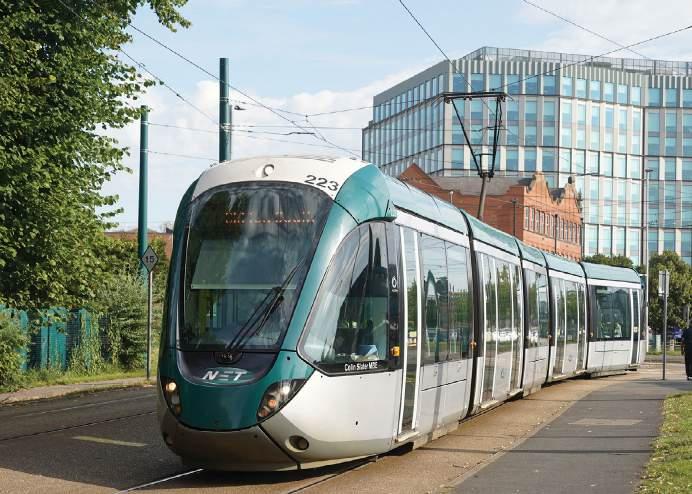



Be part of the milestone year that brings the entire UK light rail community together.
For our 20th anniversary, we’re returning to Nottingham Trent University, where it all began. We’re bringing a fresh new look inspired by sustainability, innovation, and the future of green transport.
This is your chance to:
• Build powerful relationships with UK and international leaders
• Hear industry-shaping insights from the people setting the agenda
• Discover new tech, solutions and suppliers
• Position your organisation at the heart of the next decade of light rail
This isn’t just another conference, it’s the UK’s most influential light rail gathering, trusted for two decades by operators, suppliers, policymakers, innovators and solution providers.
www.mainspring.co.uk