Fall 2026
Why Fire Drills Matter — And the Rules Behind Them Workplace Eye Wellness
This is a reminder to take proactive steps to prevent digital eye strain and protect vision at work and at home. We all share this same affliction no matter where we work. Digital eye strain, also known as computer vision syndrome, is a common workplace issue caused by prolonged use of computers, tablets, and smartphones. Symptoms can include dry or irritated eyes, blurred or double vision, headaches, tearing, and neck or shoulder stiffness. VSP Vision Care’s 2025 Workplace Vision Health Report found that nearly 6 in 10 employees say digital eye strain reduces their productivity, and 27% have taken time off due to it. While office workers are at higher risk for digital strain, all employees should be aware of eye safety.
Tips to Prevent Eye Strain • Follow the 20-20-20 rule: Every 20 min, look away from your screen and focus on an object 20 feet away for 20 seconds. • Optimize your workspace: Position your screen 20–26 inches from your eyes, slightly below eye level. Use a document holder to avoid neck strain. • Control lighting: Reduce glare and harsh reflections; use glare filters or adjust lighting to improve contrast. • Adjust your chair and desk: Choose ergonomic furniture that supports proper posture. Continued on pg. 3
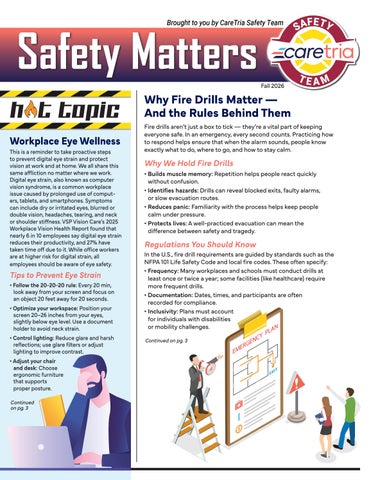
Fire drills aren’t just a box to tick — they’re a vital part of keeping everyone safe. In an emergency, every second counts. Practicing how to respond helps ensure that when the alarm sounds, people know exactly what to do, where to go, and how to stay calm.
Why We Hold Fire Drills • Builds muscle memory: Repetition helps people react quickly without confusion. • Identifies hazards: Drills can reveal blocked exits, faulty alarms, or slow evacuation routes. • Reduces panic: Familiarity with the process helps keep people calm under pressure. • Protects lives: A well-practiced evacuation can mean the difference between safety and tragedy.
Regulations You Should Know
In the U.S., fire drill requirements are guided by standards such as the NFPA 101 Life Safety Code and local fire codes. These often specify: • Frequency: Many workplaces and schools must conduct drills at least once or twice a year; some facilities (like healthcare) require more frequent drills. • Documentation: Dates, times, and participants are often recorded for compliance. • Inclusivity: Plans must account for individuals with disabilities or mobility challenges. Continued on pg. 3
Change of Season: Preparing for the Cooler Weather Don’t wait for the rain or snow to come before you start your preparations. It may not be winter yet, but with cooler weather just around the corner, you may want to make sure your home is sealed up tight and ready. 1. Check your home for leaks in your window seals or roof. If your home’s eaves have stains, that can indicate a leak. If you find any stains, call a roof contractor to make any repairs before winter. 2. Ensure the water drains away from the home. If your area experiences snow, any back-up of gutters may result in ice damming and lead to water damage. 3. Before winter arrives, shut off all outside water faucets or garden hose connections, then drain hoses and store them in the garage. 4. Insulate pipes. Wrap any exposed water pipes in your unheated basement, crawlspace, or garage with foam sleeves to prevent them from freezing when the temperatures drop. 5. Clean overgrown vegetation and trim dead branches from trees that are close to your home. Also give your lawn one last cut before cleaning and storing your lawn mower. Apply a fertilizer and pre-emergent to your lawn to prevent winter damage and from weeds germinating underground. 6. Clean out your grill and firepit. Cover up or store any outdoor furniture, so it’s out of the elements safe from wind-storms, and stays nice for next year. 7. If you have a HVAC service contract, have them stop by. Otherwise, replace filters and install covers on the AC condensing units on the outside of the home. 8. Call a professional to check your fireplace and chimney – especially if you plan to use it during the winter. Nothing is worse than smoking up your home when the weather is cold because your fireplace flue wasn’t cleaned. If you use a wood burning fireplace, be sure to dispose of the ashes properly using a fireproof metal bucket. 9. Make sure everything you’ll need before winter is in good working order. If your area gets snow, test your snowblower and have it serviced. Ensure your outdoor activated night lights or security system components are all operating correctly. 10. Repair cracks in driveways, walkways, and steps. Fixing these issues prevents water from getting into the cracks, freezing, and expanding which can turn the small cracks into big cracks.
Fall 2026
2
WHY FIRE DRILLS MATTER, continued from pg. 1
• Coordination: Drills should involve all occupants and, in some cases, local fire departments.
SAFETY STATISTICS
Quick Fire Drill Safety Checklist 1. Know the alarm sound — Recognize the signal that means evacuate immediately.
Slips, Trips, and Falls
2. Follow the nearest safe exit — Don’t use elevators during a fire.
While autumn injuries primarily stem from seasonal slips and trips (often exacerbated by wet leaves and early frosts), fall-related injuries occur year-round. Annually, over 8.8 million people are treated in U.S. emergency rooms for fall injuries, with slips and falls contributing to roughly $70 billion in medical costs.
3. Assist others — Help colleagues who may need extra support. 4. Go to the assembly point — Stay there until given the all-clear. 5. Stay calm and alert — Listen for instructions from safety wardens or emergency personnel.
Fire Drills in the Remote & Hybrid Workplace While traditional fire drills focus on physical office spaces, today’s workforce often includes remote or semi-remote employees. For businesses with hybrid teams:
Here is how seasonal injury trends break down: Seasonal ER Visits: : Autumn accounts for roughly 24.3% of older adult fall-related ER visits, making it slightly lower than winter’s 26.2% peak but higher for some outdoorspecific weather events. Outdoor Hazards: In outdoor areas, autumn weather transitions (such as slick, wet leaves) can cause vehicles to travel twice as far when braking, significantly spiking seasonal auto accidents. Wet leaves and the first seasonal frosts also greatly increase outdoor slip and trip risks for pedestrians. Older Adults: : Falls are the leading cause of injury-related deaths for adults over 65, with one in four Americans in this age group experiencing a fall every year. Workplace Risks: : In 2024–25, private industry workers reported over 674,100 injuries resulting in days away from work due to slips, trips, or falls.
• On-site staff should still participate in regular, documented drills. • Remote workers should be reminded to review their home fire safety plans — knowing escape routes, checking smoke alarms, and having a meeting point with household members. • Virtual safety briefings can keep all employees engaged in safety culture, even if they’re not physically present during drills.
BOTTOM LINE: Fire safety is everyone’s
responsibility, no matter where they work.
WORKPLACE EYE WELLNESS, continued from pg. 1
• Use protective eyewear: For office work, consider computer glasses with yellow-tinted lenses or anti-reflective coatings to block blue light and reduce glare. • Encourage breaks: Short pauses from screens help reset eye focus and reduce fatigue. Protecting your eyes is not just about comfort — it’s about productivity, safety, and long-term vision health. Whether you work at a desk or on the job site, small changes in setup, habits, and breaks can make a big difference.
3
Fall 2026
Ken Bent.............................Content Creator Carol Chifulio...................Content Creator Debbie Lada.....................Graphics & Layout
Fall 2026
4