2022 VINTAGE REPORTS
BORDEAUX – Charles Taylor MW www.montrachetwine.com
Profound and harmonious, an historic vintage May 2023 - ‘I’m just back from a fortnight in Bordeaux tasting the 2022 vintage and it is clear that it is a magnificent one. Everyone expected the warm, dry summer to give dense, concentrated wines but the 2022s also have unanticipated freshness and elegance. This is one of the most exciting en primeur vintages I have tasted and many of the château owners feel likewise. Henri Lurton at Château Brane Cantenac describes it as ‘legendary, like 1945 and 1961’ whilst Christian Moueix likens it to 1982. [see issue 146 for full report]
GRAVES (RED): 7 NOT READY YET
HAUT-MEDOC: 7 NOT READY YET
POMEROL & ST EMILION: 7 NOT READY YET
GRAVES (WHITE): 6 NOT READY YET
SAUTERNES: 6 NOT READY YET
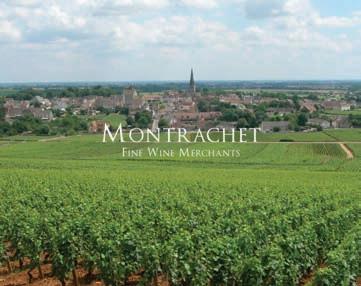
BURGUNDY 2022
Charles Taylor MW
www.montrachetwine.com
Ripe, aromatic whites - Sumptuous, fresh reds
After one of the warmest, driest summers on record, Burgundy has produced some of the freshest, most vividly fruity wines ever. The succulent textures and intense flavours make 2022 a hugely successful vintage where good volume and high quality go hand in hand. After a wet winter, an unremarkable spring enabled the vines to avoid any frost damage and good weather in May allowed the flowering to pass off successfully, guaranteeing an early harvest. June saw a return to mixed
weather culminating in a series of thunderstorms including hail and heavy rain at the end of the month. For many vineyards, that was the last rain they would see. July and August were unremittingly hot and dry but the water reserves enabled most vines to avoid undue stress. Relatively cool nights allowed the grapes to retain fresh flavours and adequate levels of acidity. By the second half of August the grapes were approaching full maturity and most growers opted to pick promptly to avoid the danger of over-ripeness. In the Côte d’Or, most of the white grapes were gathered in the last week of August and first week of September with the red wine harvest following immediately afterwards. Most growers were expecting a bumper crop after the successful flowering but the dry summer reduced the amount of juice in the grapes and the eventual yields in most places were only a little above average. The quality, however, is superb. The whites are fresh and aromatic with plush textures, rich, intense flavours and fine structure. They will be delicious young but also age gracefully. They have the vitality and concentration of other, recent, successful white wine vintages such as 2017 and 2020. The reds, if anything, are even more impressive. It was easy for wine-makers to extract colour, flavour and tannin from such perfectly ripe, healthy and concentrated fruit. With the experience gained in the hot vintages of 2018, 2019 and 2020, most producers have mastered the art of picking promptly and speedily to retain freshness and acidity and extracting only the finest, ripest tannins. They have been rewarded with a magnificent range of wines that, in terms of recent vintages, combine the power and concentration of hot years such as 2018 and 2020 with the freshness and elegance of 2016 and 2017. In short, it is a great vintage for red wines that will rank with the finest of the past 25 years: 1999, 2005, 2010, 2015 and 2019.
COTE DE BEAUNE (RED): 7 NOT READY YET
COTE DE NUITS (RED): 7 NOT READY YET
CHABLIS: 7 NOT READY YET
COTE D’OR (WHITE): 7 NOT READY YET
IWFS Wine, Food & Friends 8

BEAUJOLAIS
Will Heslop www.flintwines.com
The majority of producers are very pleased with their ‘22s in terms of quality and fairly satisfied in terms of quantity. It’s a millésime solaire: the rich, “sunny” profile of the wines indicative of a warm growing season and low rainfall. Nonetheless, the best Beaujolais wines of the ’22 vintage remain fresh and site-specific. Winter ’21-’22 was relatively cold and long, causing a late budbreak around April 10th, but the warmest May since the Fifties meant flowering was complete by the end of the month. Most of the region received less than 10mm of rain in July but there had been sporadic heavy rain in June, and again in mid-August, so hydric stress was somewhat mitigated – though the size of the crop would be approximately 20% below the ten-year average owing to drought (and some localised hail in early May and June). Harvest for most producers began week commencing August 22nd.
BEAUJOLAIS: 6 NOT READY YET

ALSACE 2021
David Ling
www.confrerie-st-etienne.com
First tastings of the 2022 vintage Alsace wines confirm our initial impressions at harvest time that the overall quality is extremely high. However microclimatic effects caused yields to vary widely, not just from village to village but from one vineyard to the next, depending on altitude and aspect. In short, the wines are expressive and aromatic, with moderate acidity. 2022 Riesling is particularly floral.
The year began with an unusually warm winter with hardly any rain in the first three months, so the vines remained
dormant until quite late, with budburst only in early April. Temperatures throughout the month continued warm with the arrival of a generous amount of beneficial rain. Temperatures in May continued above the seasonal norm, with accelerated vegetation growth leading to predictions of an early vintage.
Flowering took place in mid-June without incident and with the appearance of the first bunches a bumper crop seemed likely. However this turned into one of the hottest summers on record. High temperatures with practically no rainfall caused certain vineyards to su ffer and winegrowers were hard-pressed to protect them from excess sunshine.
Four months of heat and hydraulic stress blocked growth and delayed veraison until mid-August. In fact it was not until early September that welcome rain began to fall. These much cooler conditions enabled the crop to mature more slowly and prospects of an early vintage receded.
Picking began in mid-September, and throughout Alsace the general feeling is of a quite satisfactory result, as the September rains arrived just in time to save the harvest, by alleviating the e ff ects of a warm winter, a hot spring and a scorching summer.
ALSACE 6: NOT READY YET


CAHORS/MADIRAN
Sud-OuEST
Per & Britt Karlsson
As was the case in most of France, the region of Sud-Ouest had a hot and mostly very dry growing season in 2022. However, in Cahors and in some other places, rain in the beginning of September helped to make this an outstanding, maybe even exceptional, vintage. Temperatures over 40°C did cause alarm as ripening in some places were blocked but the September rain and the fresher nights helped to get it started again. At the time of picking the grapes were healthy with some heterogeneity in ripeness and with some grapes burnt by the sun. The yields were better
than expected at around 40-45 hectolitres per hectare, so not far from normal. The alcohol is lower than expected at around 13 %. The malbec actually showed a good resistance to the drought and the heat. (This assessment is primarily for Cahors but is overall similar for the whole of the Sud-Ouest.)
CAHORS/MADIRAN: 6 NOT READY YET

CHAMPAGNE 2021
James Simpson MW www.polroger.co.uk
This has been well and truly an exceptional campaign, the grapes in magnificent condition to the eye and producing musts of exuberant perfume, those of all three cépages tasting extremely well. It is difficult to imagine a more promising start and, as the icing on the cake, the quantity is there too. From a purely technical point of view, the potential degree (if we take all the cépages together) is 10.7% vol. with total acidity averaging 5.3g/l and a pH of 3.16. If in reflecting on a vintage one is tempted to think purely in terms of the wines we are going to produce this same year, there is another vital consideration to be taken into account: the reserve. This is often described as the cornerstone of the champagne appellation in the sense that it permits every producer to release the quantity necessary to make up the shortfall, should he not achieve the level of yields fixed annually by the CIVC. The vignerons of Champagne are sheltered from the impact of a terrible year thanks to this unique stocking system, which ensures the continuity of the production of (non-vintage) champagne. The 2022 vintage will permit the rebuilding of the reserve and this comes at a timely moment. Last year, against the background of a more challenging vintage, the appellation as a whole was obliged to draw on reserves in order to reach a satisfactory level for tirage (first bottling, the first stage of production). >
Winter 2024 9
< This year, the exceptional quality and quantity of the grapes are such that the yield available for tirage has finally been set at 12,000 kg/ha (as compared to 10,000 kg/ha in 2021).
It is the story of a year of sunshine which has given musts of an exceptionally high degree and we will need to prepare ourselves for this to be repeated in the future. This vintage would seem also to indicate to us – at least for the moment –that quantity is not necessarily incompatible with quality. Optimism can certainly be justified, but as always, let us remain cautious and wait for the tasting of the vins clairs which will prove, as always, to be the true test!

LOIRE VALLEY
Jim Budd jimsloire.blogspot.com
Overall the 2022 growing season was marked by some periods of extreme heat and drought during the summer. Rain in August made a big di fference. Grapes were very healthy. Overall quantities vary considerably depending on April frost damage and whether the drought blocked grape maturity, which would have been dependent on soil type, the age of the vines and producers who encourage their vines to develop deep roots by not using weed-killers.
There was less frost damage than in 2021 as the frost struck at the end of March into the beginning of April early in bud-break. East of Tours there was little damage as bud-break hadn’t started. Also the substantial investment in frost protection since 2016 is paying off
After a very hot and dry summer, rain made a welcome return around 15th August, coming just in time to make a significant difference. More rain later provoked botrytis, so some sweet wines were made. However, the trend to make more and more dry wine in traditional sweet wine areas even in the Quarts de Chaume Grand Cru is due to the current lack of demand for sweet wine.
2022 was another very early harvest with picking in the Pays Nantais starting from 23rd August.
This is a good quality vintage across the board. Some are hailing it as one of the great years – time will tell! Certainly more than a year on from the 2022 harvest there are some very attractive wines both red and white without the excessive alcohols of vintages such as 2019 and 2020. However, 13%-13.5% is increasingly the norm, where 10-15 years ago it was 12%-12.5%. Many wines in all styles should have a good potential to age
RED: 6 NOT READY YET
SWEET: 6 NOT READY YET
DRY WHITE: 6 NOT READY YET

PROVENCE
Rod SMITH
As in the rest of France this was a vintage of great chaleur, with an August heatwave. But this followed a relatively cool and very dry winter, so the vines were well rested and there were no issues of frost at budbreak, or subsequent hail, as happened elsewhere.
The heat of the summer bodes very well for the reds, especially those from older vineyards. The fruit for the rosés was picked even earlier than usual, commencing mid August. (Although this is, in itself, becoming the usual). Flavour may have been lost in the pursuit of acidity (and vice versa). However, the reds experienced excellent September conditions and, if raisining on the vine was avoided, will be substantial, concentrated and of very high warm-vintage quality.
RED: 6 NOT READY YET

English Sparkling
Mimi Avery
2022 saw the hottest summer on record, with much faster ripening and flavour development than is common.
“It will be interesting to see what happens to dosage levels when the wines come out. Will they have the exhilarating English acidty we are used to?” quoted by Sam Lindo – (already 2023 is seen to have returned to more usual levels of acidity). “At Camel Valley we picked early but it wasn’t much di ff erent to normal just a lot earlier. I had half term o ff for the first time ever.”
In the east it got so hot the vines shut down for a couple of weeks. What was incredible is the amazing quality of the grapes. “Whilst volumes were slightly down due to lack of rainfall, we made up for this in the complex and intense flavour profiles while still managing to keep overall good acidity. What was very interesting was how much further advanced the Chardonnay was than the Pinots. It is usual for us to pick our Pinots first. However, this year we bucked the trend by starting with Chardonnay in all vineyards” Matt Strugnell, Vineyard manager Ridgeview ENGLAND SPARKLING: 5 NOT YET RELEASED
konstantin baum www.baumselection.com
The 2022 was another year of extremes in Germany. The summer was dry and hot, causing ripeness levels to accelerate while vines struggled due to high temperatures and lack of rain. Winemakers had to monitor the vineyards carefully for signs of water stress, and many winemakers started to pick earlier than usual in order to maintain the balance between acidity and potential alcohol.
Heavy rainfalls in September brought relief to the vines and increased yields but also raised disease pressure in the vineyards. Winemakers had to keep a cool head in order to identify the right time for harvest. The volume of the 2022 vintage was up compared to 2021, and the quality was high overall. Hard work during the season paid o ff and the best wines are balanced, combining freshness and concentration.
MOSEL: 6 NOT READY YET
RHINE: 6 NOT READY YET
: 6 NOT YET RELEASED
CHAMPAGNE
GermanY
HUNGARY
Charles Mount
www.royal-tokaji.com
A mild and dry winter significantly lowered the water table. March and April both had relatively normal rainfall and temperature. The second driest May of the past fifty years (the driest being 2001) marked the beginning of 10 weeks of severe drought in Tokaj. August was the second hottest in half a century (after 1992) but substantial rainfall, starting from around the 21st September alleviated the drought and allowed the development of botrytis for those with the motivation and patience to wait. Picking of botrytis-affected grapes for aszú wines took place from early October to the beginning of November. The aszú wines have intense botrytis and richness and are round, tropical and balanced despite relatively low acidity for Tokaji.
5 NOT YET RELEASED
 Richard Baudains
TuscAnY (now including Bolgheri)
In Italy, seven of the years with the highest average annual temperatures on record have occurred in the last decade, and the trend towards ever drier and hotter weather conditions continued in 2022. In Tuscany the winter was mild again and there was only light rain in the early part of the spring. Temperatures rose rapidly in May and continued high, with record peaks and virtually total absence of rain through to mid-August, resulting in inevitable drought stress in areas without access to emergency irrigation. However, rain in the second half of August brought welcome relief and the harvest was gener -
ally concluded in fine weather in the first ten days of September. The character of the vintage in di fferent parts of the region will depend on the extent to which the vines were able to regain physiological balance in the run in to the harvest. In any case, sugar content was high and the wines can be expected to be concentrated, full and round with ripe fruit and breadth of tannins. Quantities are in line with 2020. Overall, producers are positive about the outcome of the vintage. The ability to adapt vineyard management to meet the challenging conditions means that the wines today are far more balanced than those of the first wave of heatwave vintages in the early 2000s.
5 NOT YET READY
Sicily
Overall, despite the temperature peaks of June and the extended period of drought, Sicily experienced more favourable weather conditions than many other parts of the country.
July was a little cooler, there was rain in August, September was warm and dry and in October there was light, well-distributed rain and long sunny periods. Generally among the first regions to pick, the weather favoured long, slow ripening and the red wine harvest in Sicily was late, lasting through October into early November on the north face of Etna. The combination of summer drought and extreme temperatures in June reduced yields, but overall grape quality was excellent. Nerello Mascalese in particular shone. Predictions are for wines with body but also very good balance which will have attractive fruit for early drinking but also great ageing potential.
6 NOT READY YET

VINTAGE PORT
Richard Mayson
www.richardmayson.com
2022 A challenging year with extreme heat and drought
The year began with a very dry winter. It rained heavily in March but thereafter the
spring and summer were abnormally dry with frequent heat waves, starting in early June. July 2022 was the hottest since 1931 with nine days over 40ºC and the temperature peaking at 47ºC in Pinhão on 14th. Port grapes were being harvested in late August by which time ‘the vines were looking brown and tired’ in the words of David Guimaraens, wine maker for the Fladgate Partnership. At the Symington family’s Quinta do Vesúvio grapes were already being trodden on 29th August, the earliest in the history of the estate. The grapes were small, acidity levels were low but there was very little raisinisation where the grapes shrivel on the vine. Temperatures dropped in the first week of September but from 9th September it rained on and off for ten days. Early picked Tinta Roriz and Touriga Nacional showed well with Touriga Franca taking much longer to ripen. As Sophia Berqvist at Quinta de la Rose wrote ‘there was extreme uneven ripening in the vineyards with grapes ranging from very ripe to green’. Yields were 20% below average due to the drought. There was a lot of variation in quality with the Cima Corgo generally performing better than the Douro Superior. Producers are still circumspect about overall quality but it is expected that there will be some good single quinta and/or site-specific vintage Ports wines showing some lifted, expressive character.
4 NOT YET RELEASED

SPAIN
HAROLD HECKLE
Spain was a ffected by high temperatures in 2022. The country su ffered almost 500 wildfires that devastated huge swathes of land and disrupted many lives. Norrel Robertson MW saw how flames nearly engulfed some of his vineyards in central Calatayud. He was spared, his neighbours weren’t. Rainfall was also low in many regions, compounding the problems for many viticulturists. Paradoxically, some important wine-producing locations saw increased yields. Álvaro Palacios said his vineyards in Priorat produced a fifth more grapes than normal. >
Winter 2024 11
ITALY
< “What unprecedented phenomenon is behind the combination of extreme water stress and a quantity of grapes 20% higher than a normal harvest in the Priorat vineyard?” he posed, rhetorically. “The vines experienced a blockage of ripening due to the excessive heat, they closed down to survive, forgetting to ripen their grapes in the normal way by photosynthesis and photo-transpiration,” he added. He said he had observed “pinkish, translucent Garnacha grapes,” perhaps as a result of exceptional “distress and struggle.” His conclusion was that “There are many lessons to be learned from the 2022 vintage.” Despite the di fficulties, Palacios rated the quality potential as being very high. On the basis of his recommendation and of others in the region, I would give Priorat a six (6), pending future assessments. No Priorat vintage 2022 wine will be available for sale for at least threefour years as the D.O. only authorises oak-aged wines.
Rioja saw a difference of opinions between the overall Consejo Regulador and its junior off shoot in Rioja Alavesa. The latter declared an Excellent vintage. “The analytical values allow us to conclude that we are dealing with wines with high alcohol content and the freshness typical of Rioja Alavesa wines. The colour intensity, phenolic load and dry extract are above those of vintages classified as excellent in the Denomination and the pH and total acidity are in line with those of recent vintages.” The main Consejo Regulador of the DOCa Rioja rated the 2022 vintage as ‘Very Good’,” the authority said in a statement. “Our assessment of the campaign recalls how demanding the weather conditions were for the vineyard, where there was a very rapid vegetative cycle, with a shortening of the phenological stages, high temperatures from May until the end of the cycle, and a lack of rainfall that did not vary until August,” the DOCa said in a statement. Pablo Franco, director of the Control Board of the DOCa Rioja, pointed
By Neal Vitale, Hollywood Branch
out that the harvest was a prolonged one. “It began on 10 August and lasted 88 days,” he said.
Ribera del Duero also acknowledged the climate had taken the edge off the quality of the harvest. “Taking into account the criteria of the internal reports of the Consejo’s technicians, the Plenary has decided to classify the 2022 vintage as Very Good,” the D.O. said in a statement. Winemaker Antonio Díez Martín, who makes wines for the single vineyard Martín Berdugo estate in the upstream, higher altitude, region of Aranda de Duero said the main challenge was maintaining the equilibrium in his vineyard. “In my opinion, the vintage was good to very good, depending on the terrain and when you harvested the grapes.”
Overall, in Spain we can say with increasing authority that the country had a very good but not excellent vintage, rating it overall as a six.
EAST 6: NOT READY YET
DEL DUERO 6: NOT READY YET
RIOJA 6: NOT READY YET
A A TRIP THROUGH WILLAMETTE VALLEY
number of us in the Hollywood branch read the July 4 profile of winemaker Maggie Harrison in The New York Times Sunday Magazine and decided that a visit to Oregon’s Willamette Valley was in order. The description of her approach to producing her Antica Terra wines was tantalizing and unique. We enlisted a few of our Burgundy connoisseurs-curious to taste what is being done with Oregon’s chardonnay and pinot noir grapes-and put together a plan for a week long trip in early October.
Five of us met up on a Sunday night in Portland, a city that seems to have seen better days. On a weekend, it felt like a ghost town, with few people on the streets. But the food and beverages are still first-rate. We walked the few blocks into the once-trendy Pearl District and stopped for a pre-dinner drink at Fools & Horses, a local bar with a speakeasy vibe. From there, it was off to Mediterranean Exploration Company (MEC) for a meal of delicious Middle Eastern dishes, paired with Vermentino from Sardinia and
We arrived in Newberg late Monday morning for lunch just as it started to rain at a relatively new Chehalem Mountains AVA winery, Anacréon. Owners Kipp and Danell Myers led us through a six-course paired tasting of their wines in a beautifully appointed dining room next to a much-appreciated fireplace.
We then visited Beaux Frères, a winery started in 1986 by Michael Etzel and his brother-in-law, wine critic Robert Parker, Jr. (the winery name refers to the French idiom for “brother-in-law”). We would come to hear Etzel’s name repeatedly over the course of the week. As one of the early pioneers in the area, he seems to have had a hand in much of the wine industry’s subsequent development. The tasting experience at BF harkened back to the old days of winery visits-a rustic, open barn setting, with freshly harvested pinot grapes still being pressed, lots of flannel and fleece (and flies!), and the winery cat and dog stalking the room.
Nicolas-Jay was next on our agenda. This winery is a collaboration between Burgundy winemaker Jean-Nicolas Méo and music executive/entrepreneur Jay Boberg. Tasting excellent, though young wines, we took note of the vineyards that would reappear on other wineries’ labels-Bishop Creek, Temperance Hill, and, notably, Nysa.
We left Nicolas-Jay and headed to McMinnville, to check into our decidedly humble accommodations at the Comfort Inn. On the way, we passed one of Penner-Ash’s locations and decided to do a quick late afternoon walk-in. I won’t go into details, as this was one of a few wineries we visited that overlapped with the IWFS May festival lineup. But a shout out to Penner-Ash Assistant Estate Manager Alexander McCrea, gave us a wonderful run-through of some of their most distinctive wines.
Day One concluded with dinner at Rosmarino Osteria Italiana in Newburg. This is a small, casual spot that makes delectable food. While they have a short, printed wine list, their more extensive-and constantly
IWFS Wine, Food & Friends 12
Luigi Tecce’s hard-to-find Aglianico, the 2015 Puro Sangue.
NORTH
RIBERA
