Umrah in 10 Simple Steps: A Beginner-Friendly Guide
Umrah in 10 Simple Steps
A Beginner-Friendly Guide to Performing Umrah
Simple Flow
Clear, step-by-step guidance through every ritual
Easy to Understand
Plain language designed for all levels of experience
First-Time Pilgrims
Especially crafted for those embarking on their first Umrah
Understanding Umrah
Umrah is a beautiful spiritual journey that can be performed at any time of the year — a voluntary act of worship and devotion that brings a pilgrim closer to Allah (SWT). Unlike Hajj, it carries no fixed dates, yet its spiritual weight is immeasurable.
However, many first-time pilgrims feel uncertain about where to begin. Common points of confusion include:
The Correct Sequence of Rituals
Understanding the order from Ihram through to completion
Ihram Rules & Restrictions
Knowing what is and is not permitted once in the sacred state
Tawaf, Sa'i & Beyond
Performing each ritual correctly with confidence and calm
This guide simplifies Umrah into 10 easy, clearly explained steps — so you can focus entirely on worship and reflection.
Make Your Intention (Niyyah)
The Foundation of Umrah
Every act of worship in Islam begins with a sincere intention. Before embarking on your Umrah journey, take time to purify your heart, clarify your purpose, and make a firm commitment to performing this act solely for the pleasure of Allah (SWT).
Niyyah is not merely a verbal declaration — it is a deep, conscious orientation of the heart. Prepare spiritually and mentally in the days leading up to your journey by learning the rituals, seeking forgiveness, and making dua.
�� Umrah begins with sincerity. Without the correct intention, the rituals are empty actions. Let your heart lead every step.
How to Prepare
• Study the rituals thoroughly before travel
• Seek forgiveness from those you may have wronged
• Make dua for an accepted Umrah
• Approach the journey with humility and gratitude
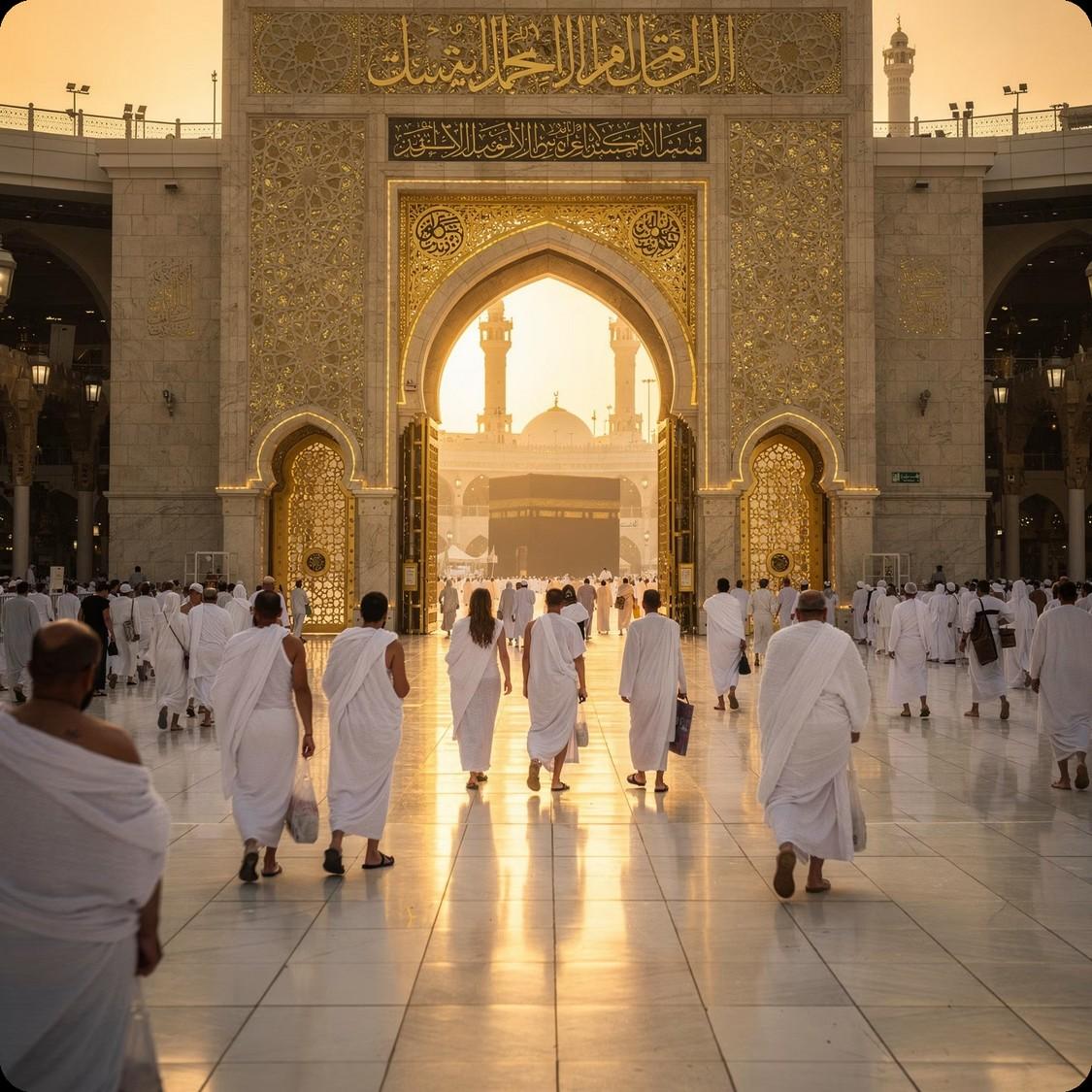
Enter Ihram at Miqat
The Miqat is the designated boundary point beyond which no pilgrim may proceed towards Makkah without being in the sacred state of Ihram. This is one of the most important steps — and must be completed before crossing the boundary.
For Men
• Wear two unstitched white Ihram cloths
• One wrapped around the waist (Izar), one over the shoulder (Rida)
• Ensure the right shoulder is uncovered during Tawaf
For Women
• Wear modest, full-covering Islamic clothing
• The face and hands should remain uncovered
• Any colour is permissible; plain and modest is recommended
Once in Ihram, recite the Talbiyah and avoid all prohibited acts including cutting hair or nails, using perfume, and engaging in arguments or inappropriate behaviour.
Arrive in Makkah
Your First Moments in the Holy City
As you arrive in Makkah, allow the weight of this sacred moment to settle in your heart. Countless prophets, companions, and believers before you have walked these same streets with the same longing. Continue reciting the Talbiyah throughout your arrival.
What to Do Upon Arrival
• Enter with humility, reverence, and deep gratitude
• Continue reciting Talbiyah until you begin Tawaf
• Make dua upon first sighting the Kaaba
• Prepare yourself spiritually for the rituals ahead
�� For many pilgrims, the first sight of the Kaaba is an overwhelming, deeply emotional experience. Allow yourself to absorb this moment — your duas at this point are especially blessed.
Perform Tawaf
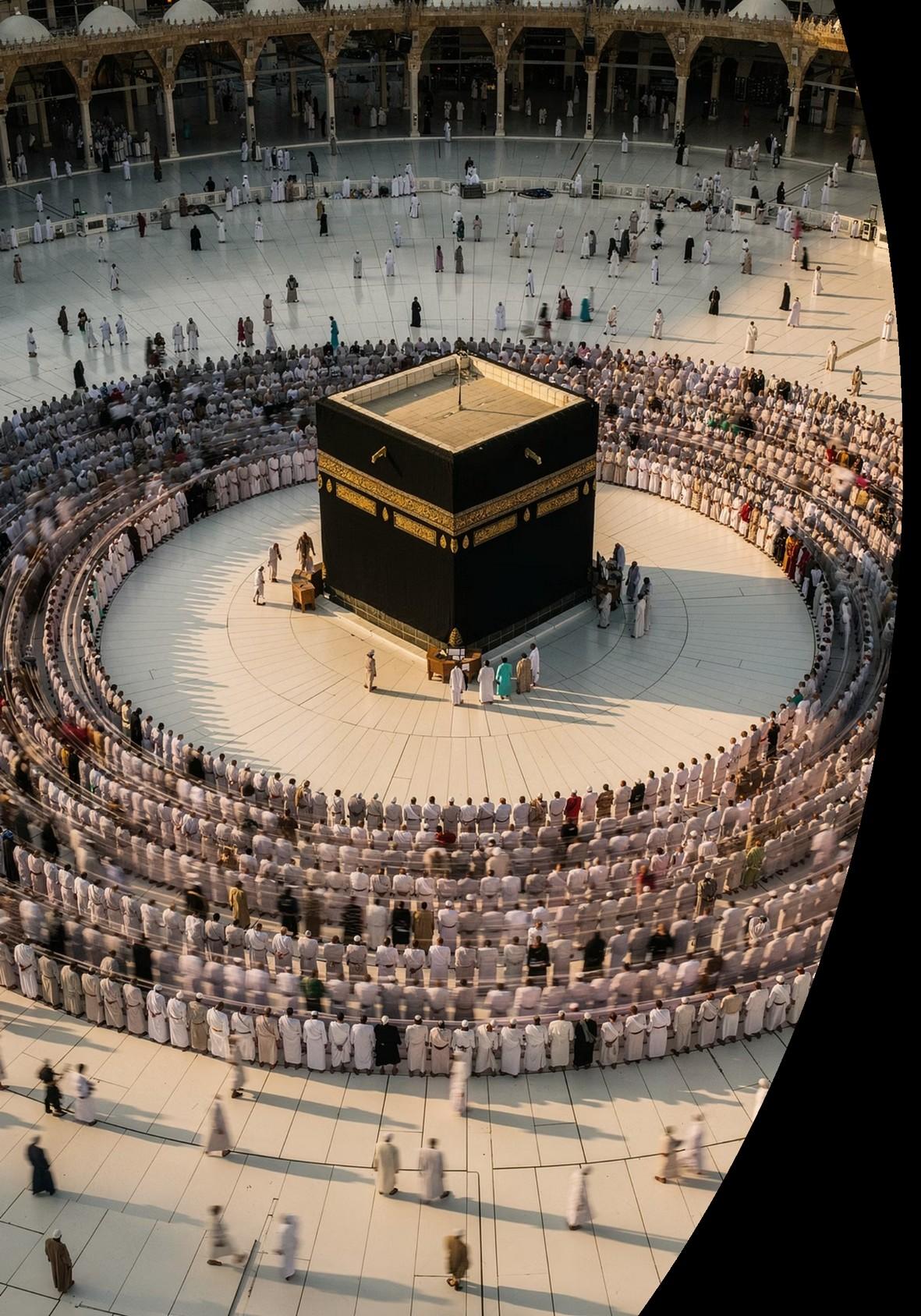
Tawaf is the act of circumambulating the Kaaba seven times in an anti-clockwise direction. It is one of the central pillars of Umrah and a profound act of worship — a visible symbol of the believer's life revolving around Allah (SWT).
Begin at the Black Stone
Start each round aligned with the Hajar al-Aswad, raising your hand or pointing towards it
Move Anti-Clockwise
Keep the Kaaba on your left at all times as you complete each of the 7 circuits 3
Stay Calm & Focused
Avoid pushing or rushing; maintain dhikr and dua throughout each round
Complete All 7 Rounds
Tawaf is only valid when all seven circuits are completed continuously
Pray After Tawaf & Perform Sa'i
Step 5 — Prayer After Tawaf
Upon completing Tawaf, proceed to Maqam Ibrahim and offer 2 Rak'ahs of prayer if possible. This station marks where Prophet Ibrahim (AS) stood whilst building the Kaaba. Afterwards, drink Zamzam water — a blessed act that has nourished pilgrims for centuries.
• Pray 2 Rak'ahs near Maqam Ibrahim
• Drink Zamzam water with intention and dua
• Take a moment to pause, reflect, and make sincere duas
Step 6 — Sa'i: Safa to Marwah
Sa'i commemorates the remarkable faith of Hajar (AS), who ran between the hills of Safa and Marwah in search of water for her infant son Ismail (AS). Allah (SWT) responded with the miracle of Zamzam — and we honour that devotion in every round we walk.
• Begin at Safa with dua and intention
• Walk (and lightly jog between the green markers for men) to Marwah
• Complete all 7 rounds, ending at Marwah
�� As you walk Sa'i, remember Hajar's (AS) unwavering trust in Allah. Let her story inspire your own faith and patience throughout the journey.
Cut Hair & Exit Ihram
Step 7 — Cut or Trim Hair (Halq
or Taqsir)
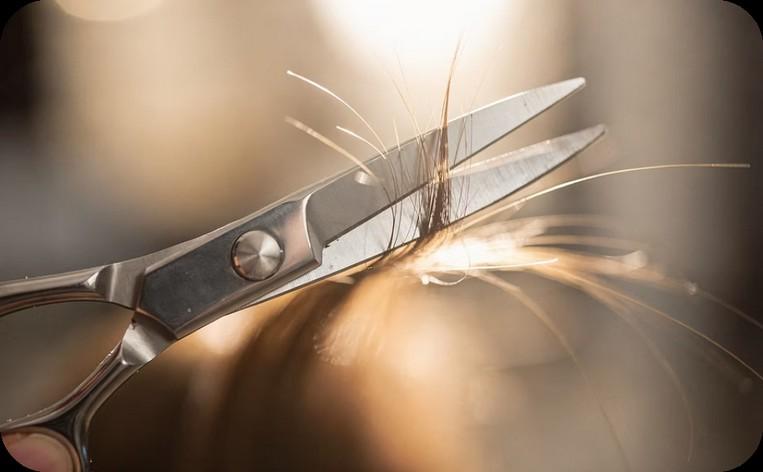
After completing Sa'i, men should either shave their head completely (Halq) or trim their hair significantly (Taqsir). Women trim a small portion — approximately a fingertip's length — from the ends of their hair. This act symbolises humility, renewal, and the formal completion of Umrah rituals.
Step 8 — Exit Ihram
Once hair has been cut or trimmed, the state of Ihram officially ends. All Ihram restrictions are lifted — you may return to normal clothing, use fragrance, and resume everyday activities. This marks a beautiful moment of transition: your Umrah is now complete.
�� Mabrook! Upon exiting Ihram, your core Umrah rituals are complete. You have fulfilled a deeply blessed act of worship.