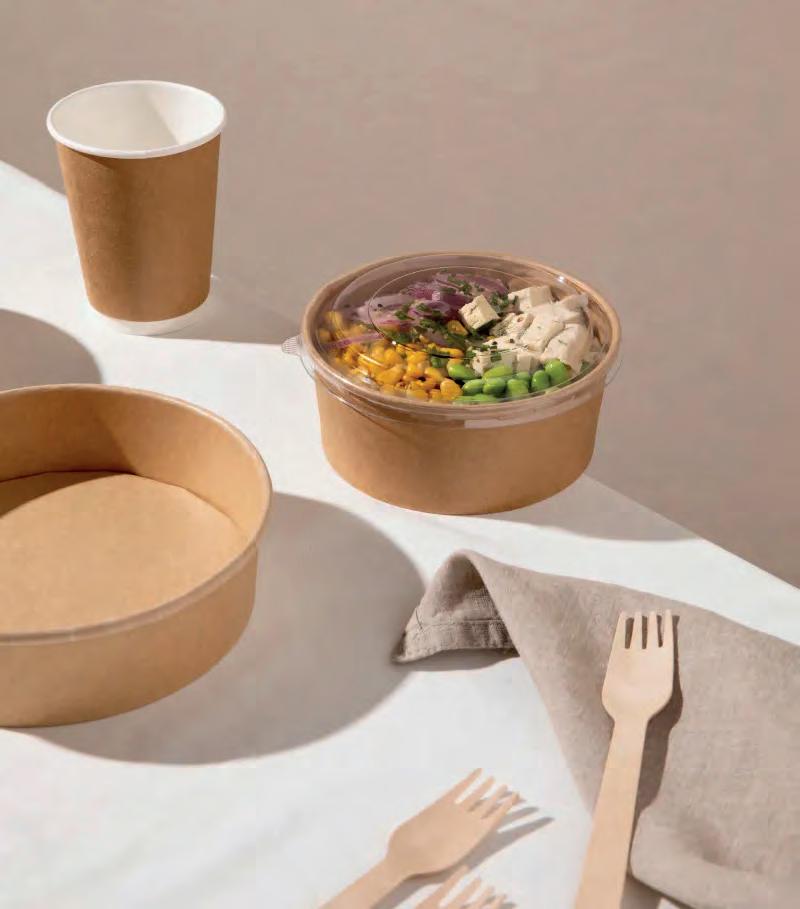
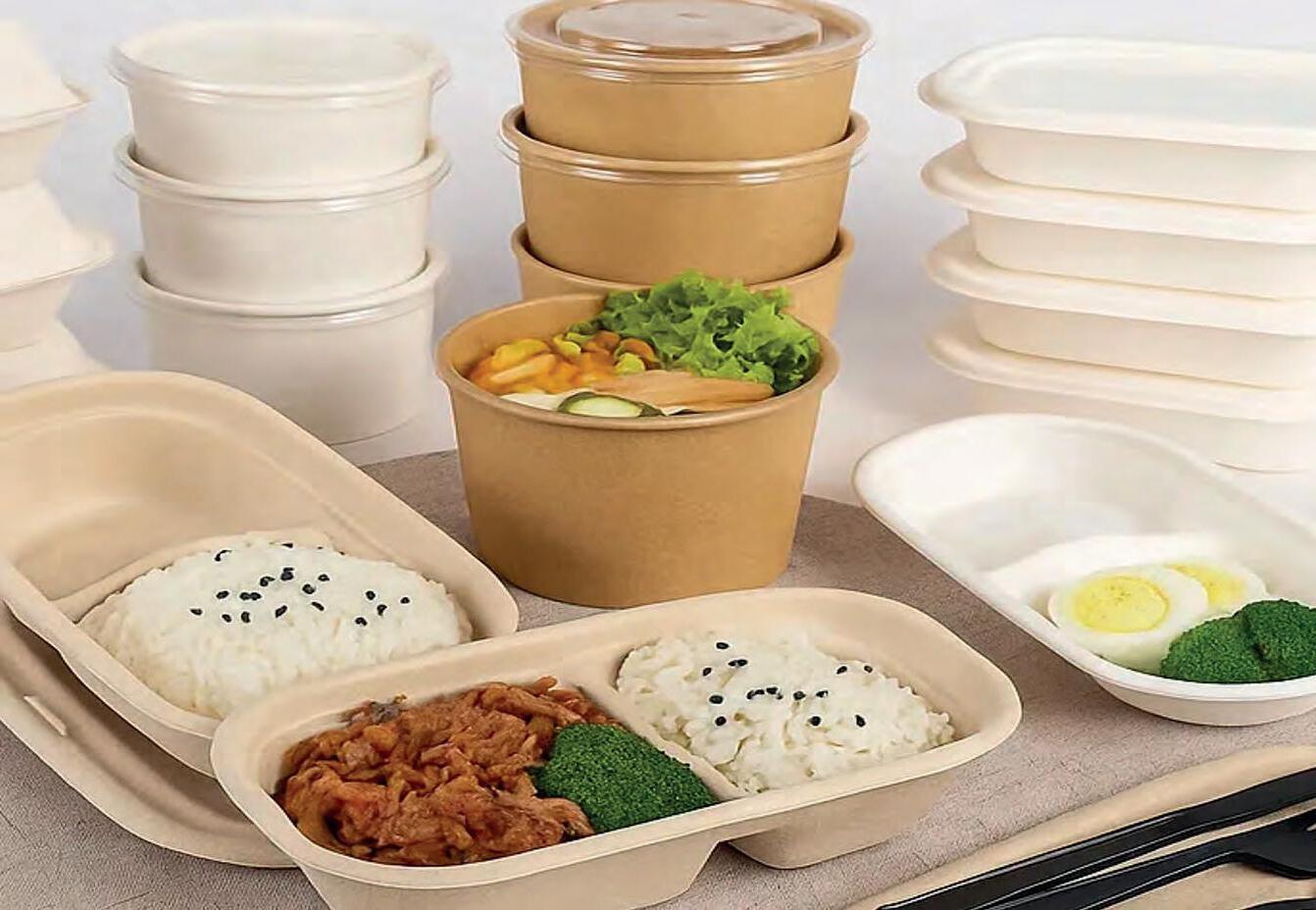
In packaging, sustainability has become an operational issue, directly involving materials, design and production processes across both food and non-food sectors.
Reducing raw materials, developing mono-material solutions and designing for recycling are redefining industry standards. However, every innovation must meet concrete industrial requirements: product protection, long-term stability and compatibility with existing production lines.
From an industrial perspective, the real challenge is to turn environmental goals into scalable, reliable solutions. It is in this balance between sustainability and performance that the sector’s level of maturity is now defined.
The
Quarterly magazine dedicated to the world of packaging. Registration: Court of Monza no. 5. Reg. Stampa of 22/12/2020. Rivista trimestrale dedicata al mondo del packaging. Registrazione: Tribunale di Monza al N. 5 Reg. Stampa dal 22/12/2020.
Editorial management and registered office:
Via Cesare Cantù, 16 20831 Seregno (MB) - Italy
Tel. +39 0362 244182 / +39 0362 244186
web site: www.editricezeus.com
e-mail: redazione@editricezeus.com
portal: www.packaging-mag.com
skypeTM: editricezeus
INDUSTRIAL AUTOMATION
Packaging International
Europe: single issue: Euro 25
Annual (four issues): Euro 90
Outside Europe: single issue: US$ 30
Annual (four issues): US$ 109
Subscription payment can be made in the name of Editrice Zeus srl, by bank money transfer or cheque. Elena Costanzo amministrazione@editricezeus.com project and layout design creative dep. ZEUS Agency grafica@editricezeus.com translations: Zeus Agency printing: Zeus Agency
PACKAGING INTERNATIONAL is the international magazine for the packaging industry year VII - 2-2026 editorial manager: S.V. Maffizzoni redazione@editricezeus.com editorial production: Sonia Bennati bennati@editricezeus.com account dep. manager:
D.C.M.: TECHNOLOGY, EXPERTISE AND
PARTNERSHIP FOR INDUSTRIAL
PACKAGING
For over fifty years, D.C.M. has been a reference point for the packaging and automation industry. Founded in 1974, the company built its reputation on the distribution of paper folding machines, but over time it has evolved into a complete technology partner for machine manufacturers and companies operating in the pharmaceutical, paper converting, food & beverage, cosmetics, and logistics sectors.
Today, D.C.M. goes beyond simply supplying machines: it provides expertise, application consulting, technical services, and support throughout the entire lifecycle of production systems.
This partnership-oriented approach enables customers to tackle the challenges of productivity, flexibility, and sustainability that define modern packaging with greater confidence.
FOOD & BEVERAGE PACKAGING MANUFACTURING SECTORS
Autonox Robotics mechanics for packaging Robotics is now one of the key pillars of automation in packaging and end-of-line operations.
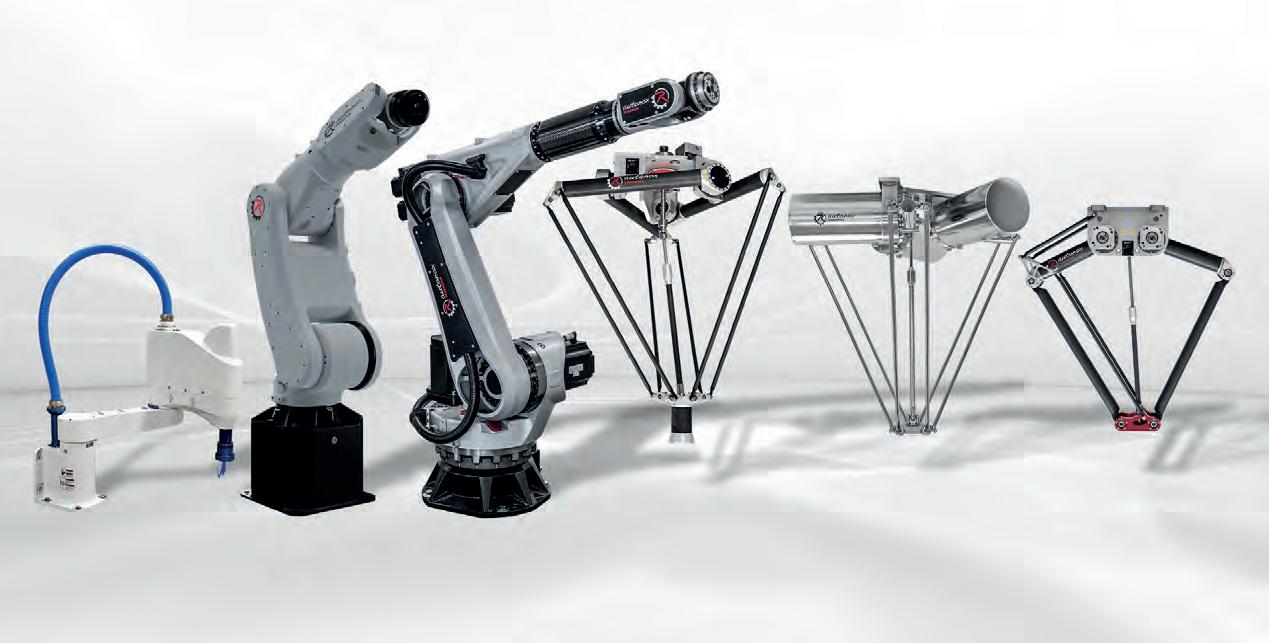
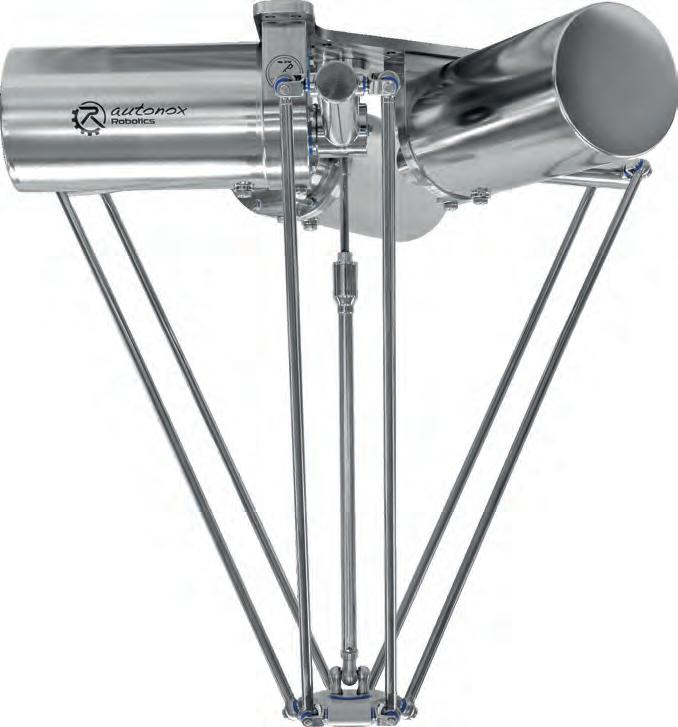
In this field, D.C.M. offers in Italy the solutions of autonox Robotics, characterized by an innovative approach based on controller independent robot mechanics.
The range includes Duopods, Delta robots from 3 to 5 axes, articulated robots from 3 to 6 axes, SCARA robots, and hygienic design versions, for a total of more than 350 available mechanical configurations. This modularity allows the creation of tailor-made solutions for applications in any industrial sector.
Thanks to controller independence, robots and production lines can share the same control platform without the need for dedicated interfaces. This approach offers several advantages, including the elimination of hardware duplication, greater freedom in controller selection, enhanced software integration, and full ownership of the solution.
At Interpack, it will also be possible to discover some of the latest innovations developed by autonox Robotics,
presented as concrete examples of the potential of parallel kinematics.
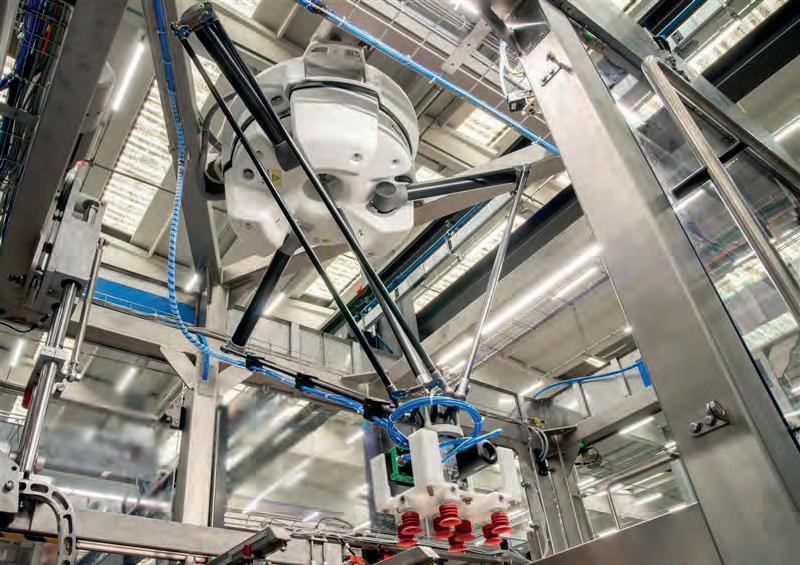
Among these, the Delta RLL stands out, a kinematic design specifically developed for applications involving long tools. Its distinctive RLL design ensures extremely high rigidity against tool-holder tilting, enabling the use of very extended end effectors—such as multi-gripper systemswhich generate significant tilting moments during motion.
Another noteworthy innovation is the world’s largest Delta robot mechanics, featuring a working area of up to 2400 mm, designed to handle applications requiring large operating spaces and high payloads.
Alongside this solution, a new Delta robot concept for close-proximity configurations will also be showcased, developed to enable compact, high-density installations within production lines.
These solutions represent a concrete example of the modular and highly flexible approach that defines autonox robotics: components designed to integrate seamlessly into machines and production lines, offering machine builders and system integrators maximum design freedom.
Visit: www.dcm-italia.it
DUETTI’S SECONDARY PACKAGING SOLUTIONS AT INTERPACK 2026
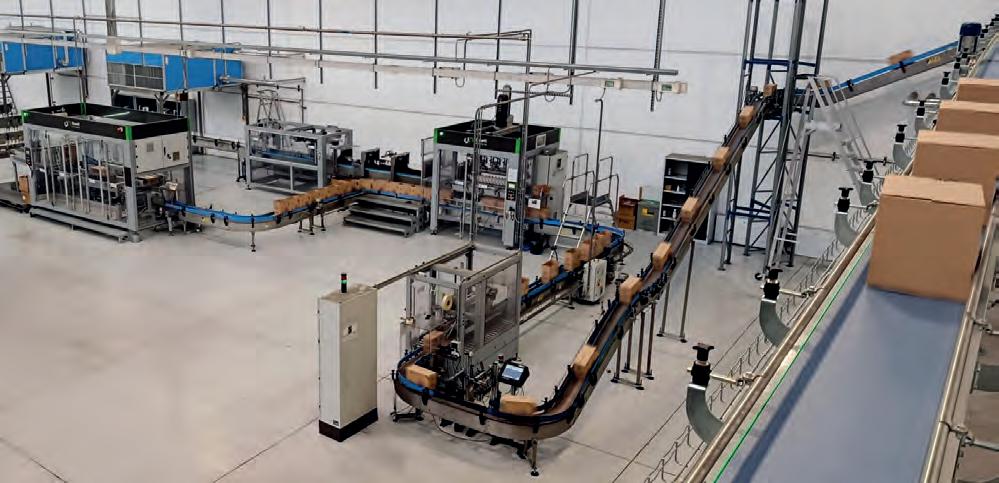
Duetti Packaging specialises in secondary packaging systems, also known as end-of-line solutions, delivering high-performance technology to a wide range of industries worldwide. As a proud ambassador of Italian engineering excellence, the company combines the creativity and flexibility of Italian design with state-of-the-art industrial standards.
At Interpack 2026, Duetti Packaging will be showcasing two compact end-of-line solutions: a wrap-around system and a collaborative robot.
These machines stand out for their application flexibility, ease of use, rapid format changeovers, and high production performance, all integrated into a refined design that embodies the essence of ‘Made in Italy’.
Over the years, Duetti Packaging has built solid expertise in secondary packaging on a global scale. In the past decade alone, the company has received numerous awards and recognitions, including being named one of the fastest-growing companies by both “Il Sole 24 Ore” and
PROCESSES AND PACKAGING / TECHNOLOGY
“The Financial Times” in Italy and across OECD countries respectively.
Since its foundation, Duetti Packaging has installed over 3,000 packaging systems in more than 100 countries worldwide. Its solutions serve a broad spectrum of clients, ranging from family-owned businesses to multinational corporations operating in sectors such as beverages, food, chemicals, pharmaceuticals, home care, cosmetics, and personal care. A key strength of Duetti Packaging is its comprehensive after-sales service, which ensures full operational support and long-term reliability for every installed system.
Our Solutions Suite
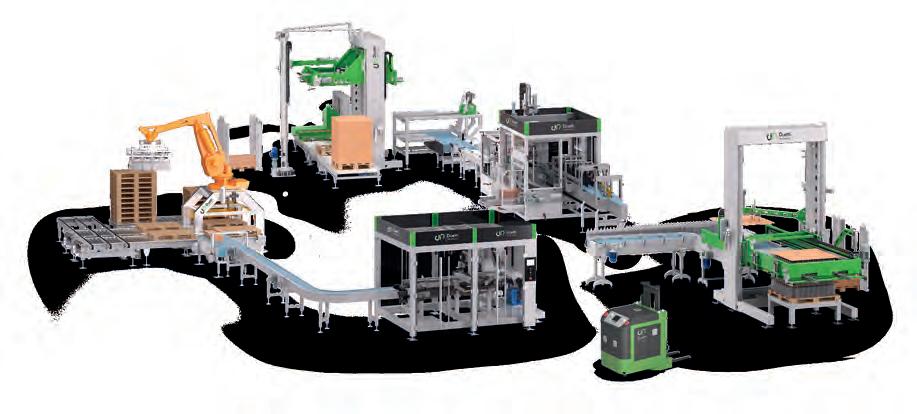
Duetti Packaging’s portfolio offers a complete range of systems designed to optimise production performance:
-Depalletisers
-Cartoners
-Case erectors
-Case packers
-Partition inserters
-Case closers
-Wrap-around case packers
-Traditional, Cartesian and Robotic Palletisers
-Automated Guided Vehicles (AGVs)
Efficiency and innovation
Designed with ease of use, low maintenance, fast changeovers and reduced energy consumption in mind, the entire product range is fully aligned with Industry 5.0 principles.
Further enhancing performance and supporting the transition towards smarter, more connected and efficient manufacturing are advanced features such as AI-assisted
operator support, energy consumption monitoring and intuitive supervision interfaces. These tools streamline daily operations and line monitoring while meeting the most demanding Industry 4.0 requirements.
Committed to meeting the evolving needs of global markets, Duetti Packaging continues to invest in innovation and quality, striving every day to exceed expectations and strengthen the reputation of Italian manufacturing excellence.
EXHIBITOR INFO & CONTACTS – INTERPACK 2026
EXHIBITOR: DUETTI PACKAGING SRL
DATES: MAY 7 – 13, 2026
LOCATION: HALL 11 | STAND D02
WEBSITE: WWW.DUETTIPACKAGING.COM
ADVANCED AUTOMATION FOR SECONDARY AND
TERTIARY PACKAGING LINES
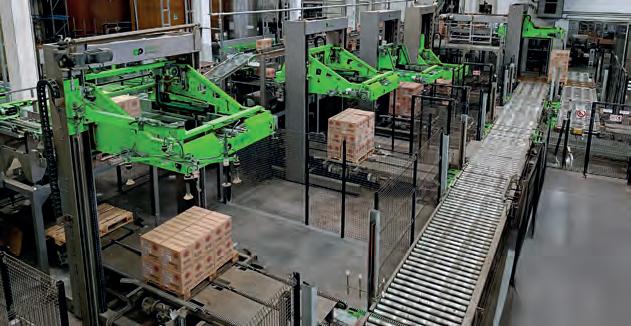
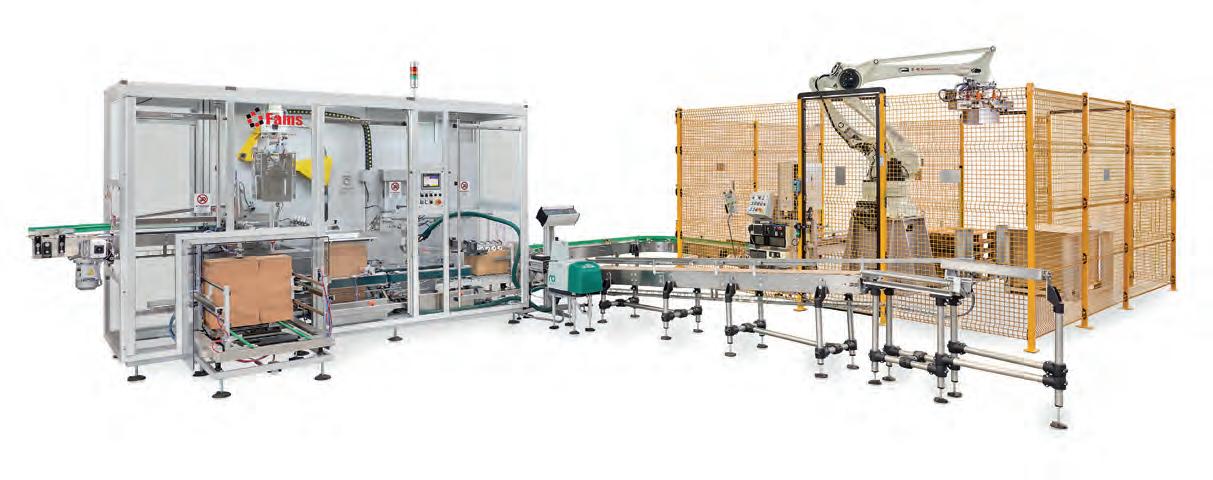
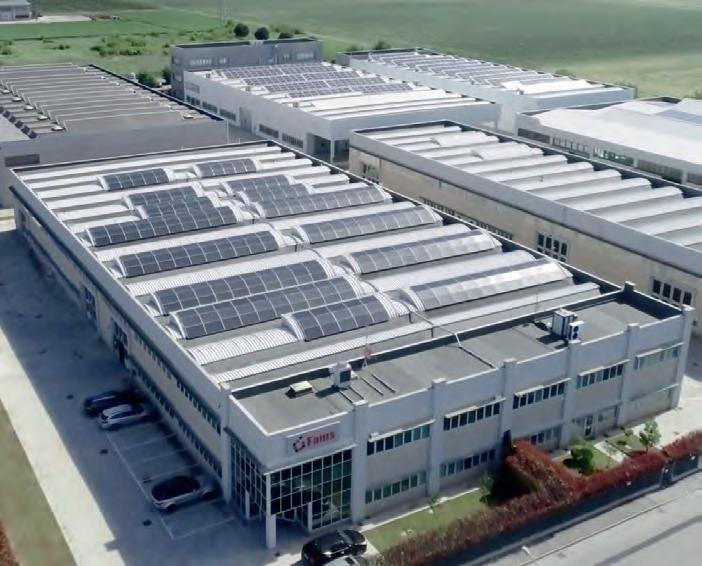
The result of a great family passion, FAMS was founded in 1992 and quickly gained success for its work in the design and construction of automatic packaging machines, particularly in end-of-line automation applied to a wide variety of production sectors: from food to beverage, from cosmetics and detergents to lube oil and corrosive products
FAMS: ADVANCED AUTOMATION FOR
SECONDARY AND TERTIARY
PACKAGING LINES
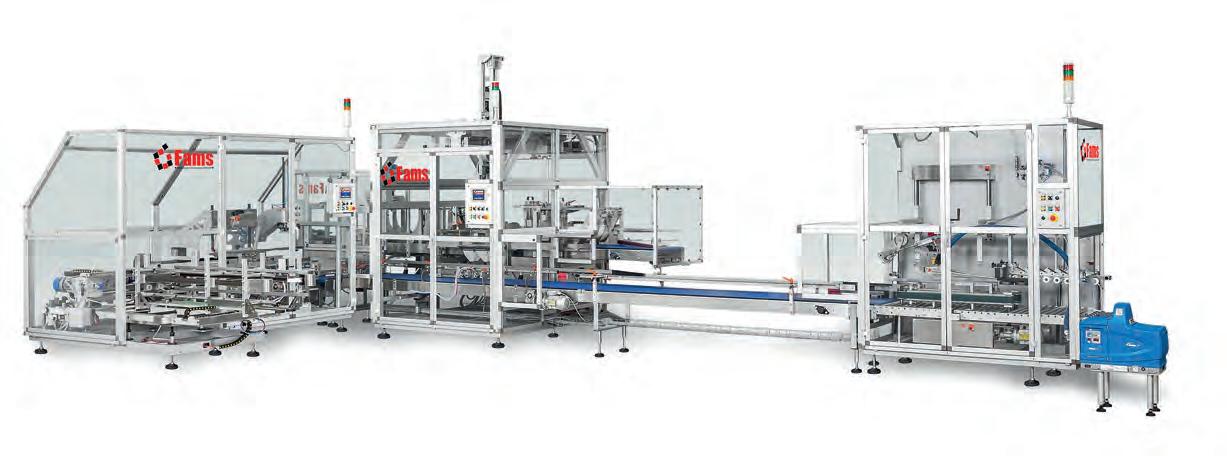
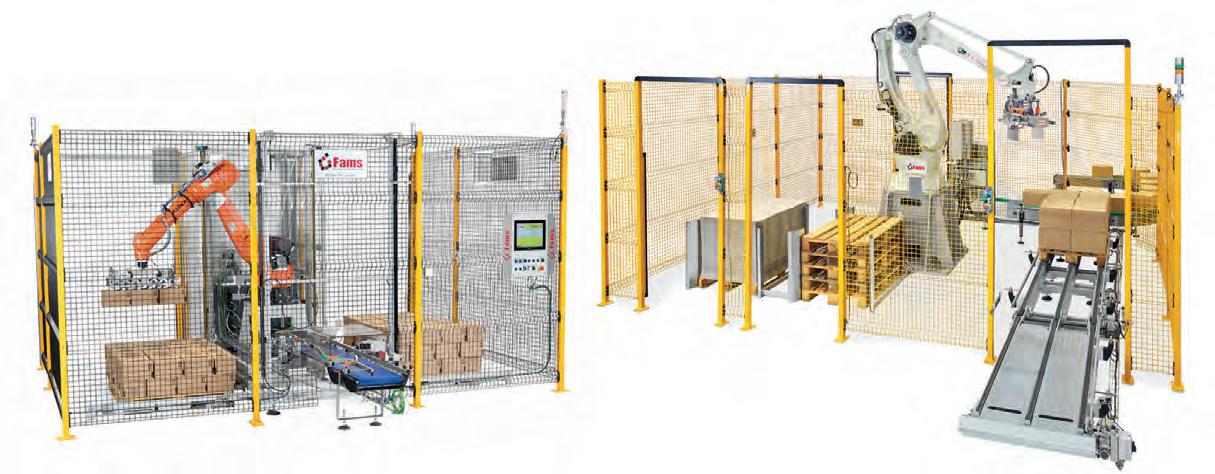
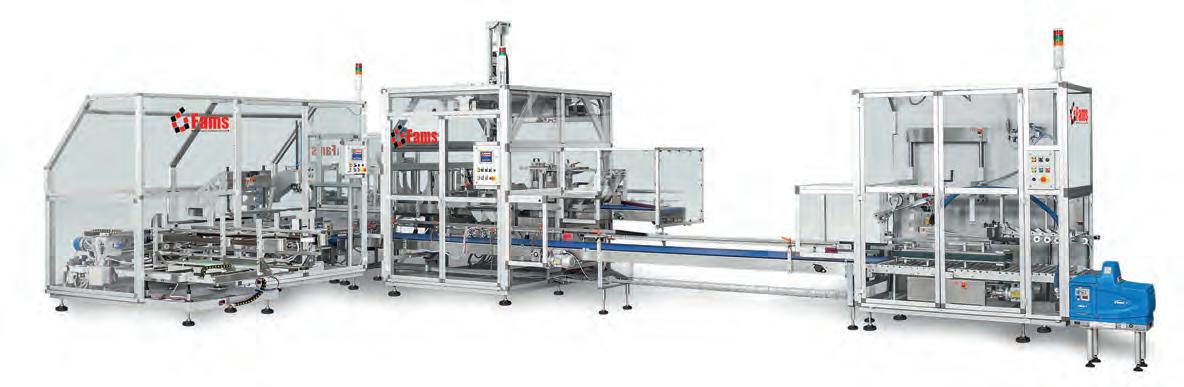
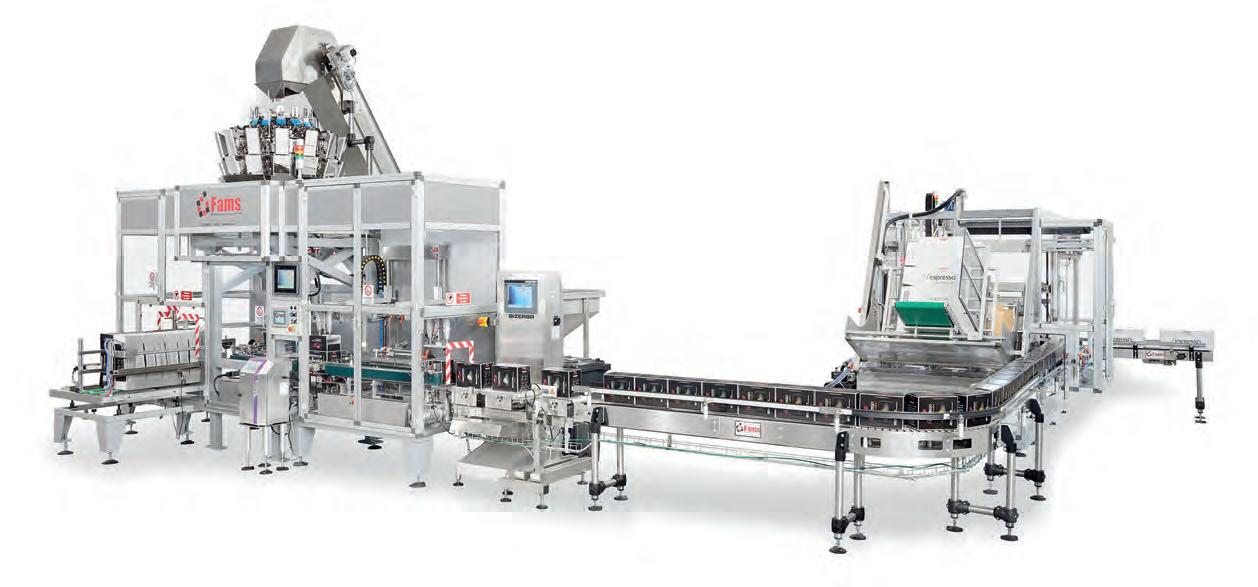
The result of a great family passion, FAMS was founded in 1992 and quickly gained success for its work in the design and construction of automatic packaging machines, particularly in end-ofline automation applied to a wide variety of production sectors: from food to beverage, from cosmetics and detergents to lube oil and corrosive products.
This broad range of applications is supported by a consolidated experience in case packing and palletizing
PROCESSES AND PACKAGING / TECHNOLOGY
technology; an experience that translates every day into simple, robust, flexible, and high-performance solutions capable of fully satisfying the customer’s specific needs, both in terms of types of products handled and in terms of production speed.
The functional and distinctive advantage of FAMS’ machines lies in products’ pick-up and placement inside the case, which are aligned with the cases’ travel direction, thus reducing the accumulation during the infeed phase and consequently speeding up cycle times.
Over the years, FAMS has earned the trust and loyalty of numerous customers, exporting its versatile and technologically sound know-how worldwide.
Its customer base includes small national producers as well as large multinationals.
Countless subcontractors also rely on the guaranteed flexibility of FAMS machinery to diversify and optimize their production using both small and large batches.
Today, FAMS is an internationally recognized manufacturer of automatic case packing and palletizing machines. Its solutions offer the
best price/quality ratio compared to those available in the market, so much so that it is also the Supplier of choice by many foreign manufacturers as well as the ideal partner for the construction of complete production systems.
www.fams.it
THE OPTIMUM MIX OF KNOWLEDGE AND TECHNOLOGY DELIVERS PACKAGING PERFECTION
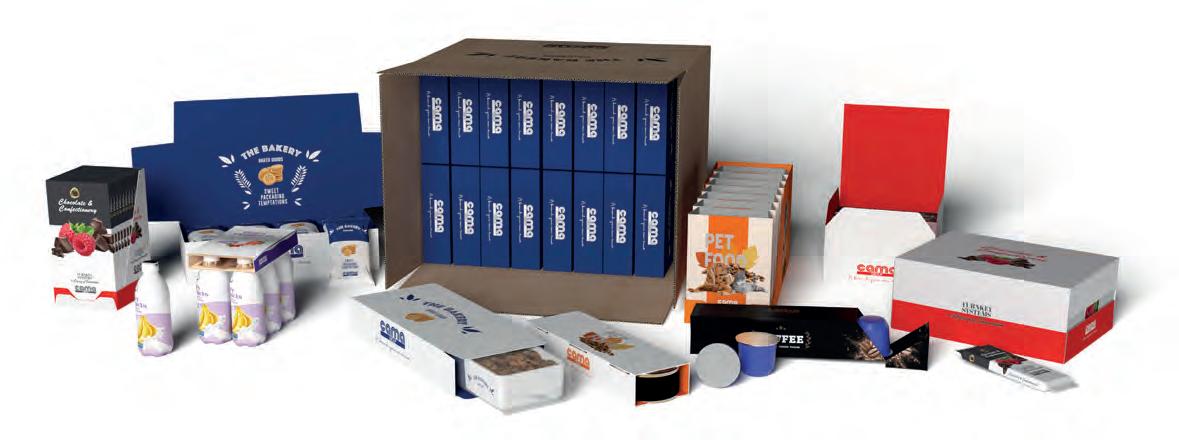
Don’t miss Cama Group’s class-leading solutions at interpack 2026 – 7th to 13 May, Messe Düsseldorf
At this year’s interpack event, global packaging specialist Cama Group will be showcasing the technology, solutions and multi-industry expertise that have made it a world leader in highly robotised secondary and tertiary packaging.
With three state-of-the-art machines forming a focal point in hall 13, visitors to stand A33 will be left in no doubt as to what can be achieved in terms of speed, flexibility, repeatability and OEE when Cama Group takes on even the most demanding packaging applications. What is more, they are all built to Cama’s demanding breakthrough generation (BTG) principles, which guarantee optimised flexibility, accessibility and hygiene.
With access to a broad array of packaging solutions and in-machine technologies, Cama Group can adapt its highly modular portfolio to precisely match its customers’ needs, not just through technology, but also using its knowledge and experiences from decades of problem solving across all major industries and packaging applications.
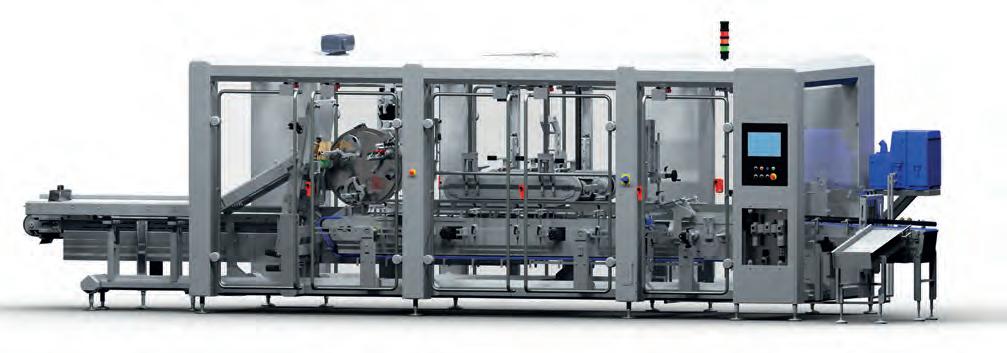
In one corner of stand A33, visitors will see a brand-new model of Cama’s popular CL169 continuous motion sideload cartoner. This latest machine evolution – developed
to address market challenges – employs a new approach to cartoning that delivers enhanced repeatability and simpler operation. Ergonomics is also improved, resulting in easier loading, while more intuitive toolless changeovers support maximised uptime.
The machines at the show use control solutions from Rockwell Automation, with the CL169 showcasing Cama’s deployment of the new FactoryTalk Optix HMI solution.
Cama’s machines can also use servo-driven conveyor solutions, which use independently driven product-conveying platforms, for ever greater flexibility and agility.
In the next corner visitors will find the MTL (monobloc top loader). Highlighting Cama’s capabilities in non-food applications, the monobloc machine demonstrates carton erection, product grouping, carton filling, and carton closing, all within a single machine envelope. Improved ergonomics for operation, changeover and maintenance are visible here, too, with easier machine access, greater visibility and lowered carton magazines for easier loading.
The machine is one of the company’s flagship technologies, showcasing Cama’s in-house-developed robotic technologies – with no less than six RB002 and the new carbon fibre RB003 robot in action, where they will demonstrate a ballet of precision movement and perfect choreography.
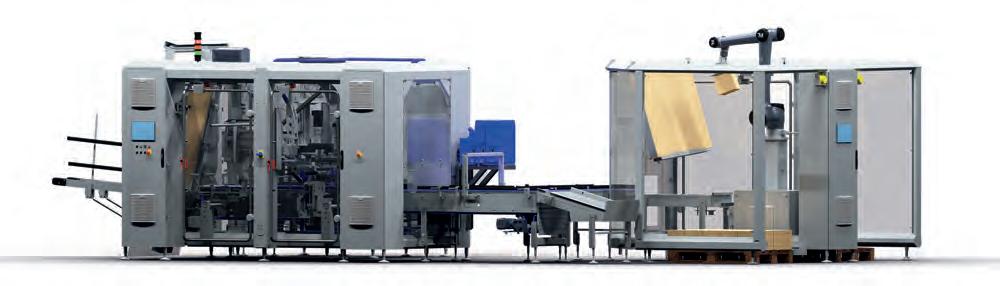
The final machine is the company’s FW748 wraparound case packer, one of Cama’s most popular machines with multiple orders per year. As well as highly effective case packing, this machine showcases semi-automated chan-
geover capabilities, where the press of a button on the HMI will result in automated adjustments to machine dynamics and motion profiles, to adapt it to a different batch format or packaging recipe.
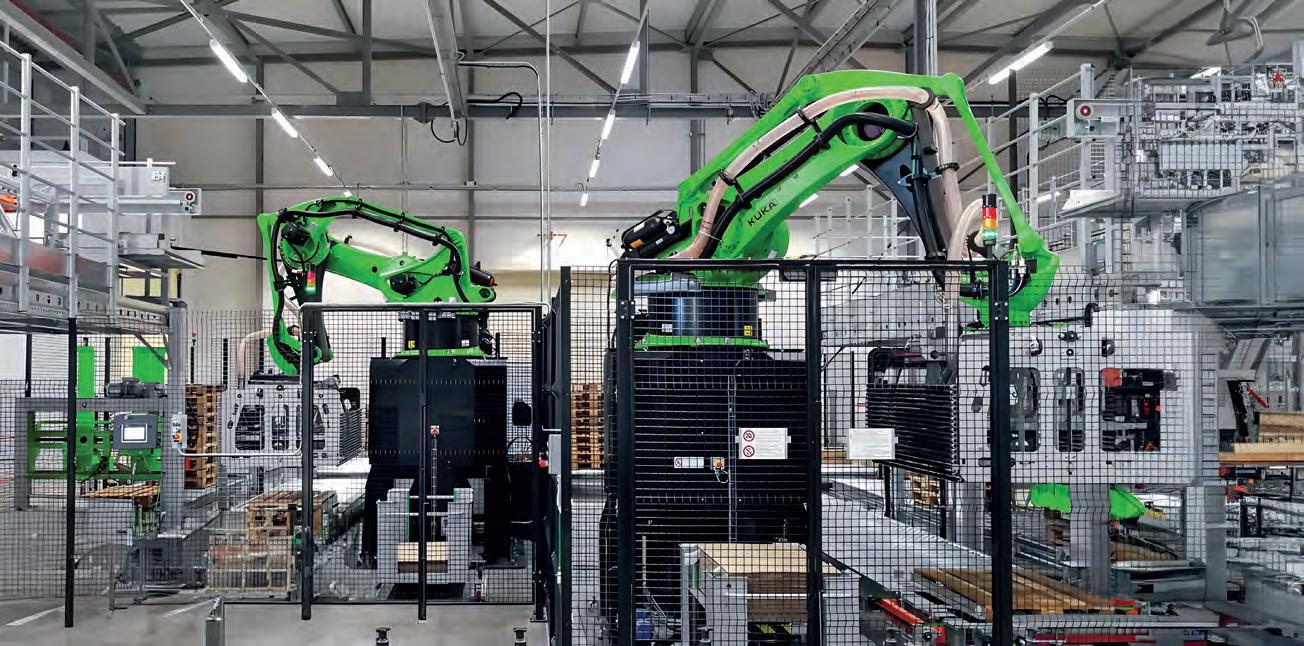
The FW748 also demonstrates core elements of Cama Group’s cobot-based MEP – Machine-Enhancement Programme. The automated carton loader (ACL) and automated case palletiser (ACP) on show are designed to remove human limitations and fatigue-induced slowdowns from pre- and post-packaging operations.
The ACL and ACP systems integrate seamlessly with CAMA’s machine portfolio, but they can also be purchased separately and couple with any third-party packaging machine, removing operator repetition, burden and fatigue. Autonomous mobile robots (AMR) are a core element of the MEP portfolio, too.
Completing the event showcase is digital access to the wider Cama portfolio. In addition to even more machine styles and formats, this also includes complementary technologies and add-ons, such as advanced vision systems that leverage artificial intelligence and machine learning. All of these additions will only be suggested by Cama following in-depth studies of the applications, and only if they add tangible value.
Finally, visitors will see how efficient mechanical design, contemporary automation solutions, maximised uptime, optimised throughput, advanced packaging design and minimised waste all contribute to more sustainable packaging solutions.
www.camagroup.com
By the editorial staff
PHARMACEUTICAL PACKAGING: SAFETY, TRACEABILITY AND REGULATORY CONTROL
In pharma, packaging is a critical system for safety, traceability and compliance.
In the pharmaceutical industry, packaging is inseparable from product safety, process integrity and regulatory compliance. Unlike many other sectors, where packaging primarily supports protection and marketing, pharmaceutical packaging must operate as a controlled system that preserves efficacy, prevents tampering, enables traceability and documents conformity at every stage. For manufacturers, this means that packaging decisions are never marginal: they affect validation pathways, production architecture, risk management and, ultimately, patient trust.
One of the most transformative developments in recent years has been serialization. The assignment of a unique identifier to each sales unit has changed the way companies manage traceability and anti-counterfeiting strategies. Serialization is not simply a coding exercise. It requires the integration of printing, inspection, data handling and aggregation across multiple packaging levels. Cartons, bundles, cases and pallets must be linked
coherently, while software systems must ensure secure data exchange with external stakeholders. The packaging line therefore becomes a digital control point as much as a mechanical one.
Tamper-evident design is another essential requirement. Breakable seals, glued flaps, security labels and film overwraps are intended to provide visible proof of unauthorized access. Their function is both technical and communicative: they preserve the integrity of the product and reassure patients, pharmacists and distributors that the package has not been compromised. In highly regulated environments, the effectiveness of these features must be demonstrated consistently, which means that design, materials and machine setup all have to work together reliably.
Material selection is equally critical. Pharmaceutical products may be sensitive to moisture, oxygen, light, contamination or temperature variation, depending on
their formulation and presentation. Blisters, bottles, vials, sachets and secondary packs must therefore be designed with precise barrier characteristics and long-term stability in mind. Compatibility with sterilization methods or cleanroom procedures adds further complexity. The packaging system must protect the product without introducing extractables, leachables or particulate risks that could undermine safety.
Automation plays a decisive role in meeting these requirements. Modern pharmaceutical lines integrate filling, sealing, inspection, labeling, leaflet insertion, cartoning and serialization in tightly controlled sequences. Vision systems verify print quality and code readability. Checkweighers, leak detectors and rejection devices support in-line quality assurance. The objective is not only to increase speed, but to minimize deviation, document every critical step and maintain reproducibility across batches and sites.
This is why packaging in pharma is deeply connected to validation culture. Equipment settings, material changes, artwork revisions and software updates can all trigger qualification or requalification activities. What may appear to be a simple packaging modification can have implications for compliance documentation, line clearance procedures and release timelines. For production teams, packaging is therefore part of the quality system itself. Sustainability is becoming more relevant here as well, although with a different pace and logic than in food or cosmetics. Lightweighting, recyclable components and reduced secondary materials are being explored, but every change must be assessed against stability, patient
safety and regulatory acceptance. Progress is possible, yet it must be managed within a framework where risk tolerance remains appropriately low.
Digital technologies are expanding the potential of pharmaceutical packaging further. Line data can now feed supervisory systems that support deviation analysis, preventive maintenance and continuous improvement. The result is a packaging environment that is more transparent, more traceable and more controllable than ever before.
For pharmaceutical manufacturers, packaging is not the final wrap around a finished medicine. It is a regulated technological interface between product, process and patient, where precision is not an advantage, but a requirement.
The same logic applies to human factors. Child resistance, senior friendliness, dosage clarity and label readability are increasingly important in package development, especially for therapies used outside hospital settings. A compliant pack that is difficult to open or easy to misuse can create real safety issues. As a result, packaging engineering now includes usability considerations that were once treated as secondary. In practice, pharmaceutical packaging must satisfy machine efficiency, regulatory discipline and user protection at the same time.
This role explains why packaging technology remains a strategic priority. Companies that combine robust materials, reliable automation and disciplined change control are better equipped to manage complexity across international markets.
IMA PHARMA AT INTERPACK 2026
Innovation, Integration and the New “Sound of Pharma”
Interpack 2026 will be the ideal stage for IMA Pharma divisions to demonstrate how its All-In-One approach is shaping the future of solid dose manufacturing, sterile processing, medical device assembly and pharmaceutical packaging.
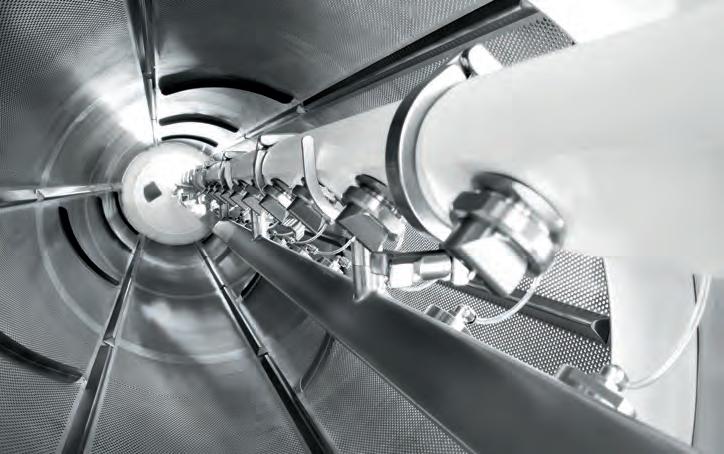
In the realm of solid dose processing, IMA Active will highlight major developments in direct compression and continuous coating, alongside several core technologies. The PERPETUA Continuous Direct Compression line with the DOMINA 500 tablet press will demonstrate a future-oriented approach to Continuous Manufacturing, ensuring fast startup, minimal waste and consistent product quality.
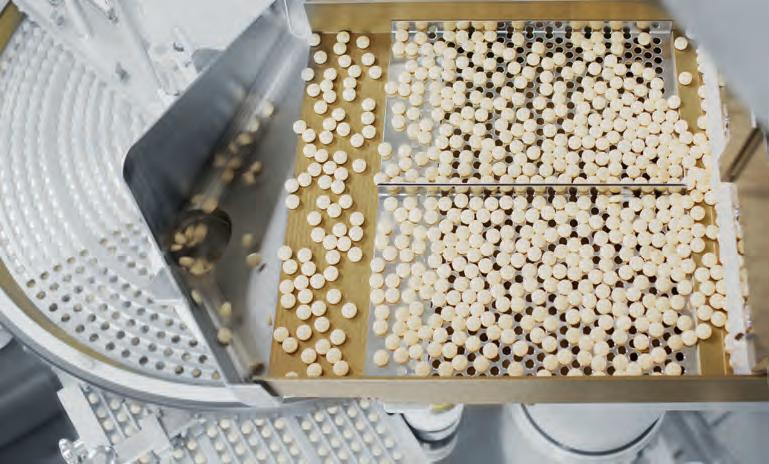
ACCELA CTC 1000 by IMA Thomas will display high throughput, waste-free coating up to 1200 kg/h thanks to its new advanced loading design. Alongside these solutions, the ADAPTA 50 capsule-filling machine will demonstrate precise dosing, flexible adjustment and 100% net weight control, processing up to 50,000 capsules/hour.
At Interpack 2026, the configuration for DPIs production will be showcased.
On the sterile processing front, IMA Life will showcase the high-speed INJECTA 36 fill-finish line integrating the new DETECTA inspection unit, NEBULA, the highthroughput decontamination tunnel, and, for the first time ever, the TILE-X line – our gloveless platform implementing electromagnetic levitation for high-value drug product processing in small batches.
Each TILE-X module fulfils a single process phase for RTU components, generating zero particulate
ACCELA CTC 1000 continuous coater
PROCESSES AND PACKAGING
INJECTA 36 filling and stoppering
with its frictionless component handling. De-lidding/ de-nesting, filling with 100% check-weighing, stoppering and capping. Innovations in freeze-drying technologies will be presented by our Lab4Life team, with a focus on new-generation refrigerants and rapid nucleation.
A quick stop at the IsoTech Corner will also offer insight into our latest developments: designed for VPHP bio-decontamination cycles used in isolators, IMA VPHP BioIndicator is a brand-new solution ready to accompany our Microbiological Support Services.
Completing the portfolio, SWIPE, the labelling solution for RTU components, highlights our ability to tailor cutting-edge technologies to evolving pharmaceutical traceability needs. More from the labelling scene – this time for cartons – our renewed SENSITIVE AP400 CW platform offers the widest range of functions, printing capabilities and T&T compliance.
Packaging innovations by IMA Safe will include the GIANT1-A80 line
with a new connection and predisposed for an integrated blister-overturning module, enabling blister interlocking to reduce carton size and drastically lower material consumption, a concrete step forward in sustainable packaging, while also allowing blister flipping for enhanced flexibility in carton formats, as well as a bypass mode.
The highspeed GIANT5-A96 line, reaching up to 1300 blisters/min, will run with mono-PET film and will be the platform for the debut of IMA’s breakthrough robotic line-clearance system, where a single smart camera managed by a cyber-dog inspects the entire line to streamline the workflows.
Completing the portfolio, SAAS 2 vertical form-fill-seal machine for suppositories, VERTICARE P vertical cartoner for parenterals and the versatile G-BLOK for bottle and jar filling and closing with puck configuration, now in a new design, demonstrating flexibility and modularity across diverse pharma and personal care formats and pack styles.
The latest PRIMEWRAP overwrapping machine launched by IMA BFB highlights its versatility as a solution for both cosmetic and pharmaceutical products, delivering consistently high-quality and precise wrapping.
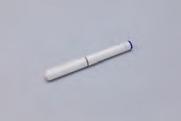
X PEN: Efficiency and Precision in a Compact Footprint
Its versatility allows the handling of both single packs and bundles, ensuring excellent pack integrity and appearance. PRIMEWRAP supports a wide range of overwrapping materials, including renewable and compostable cellulose films and other compostable solutions, enabling sustainable packaging options without compromising performance.
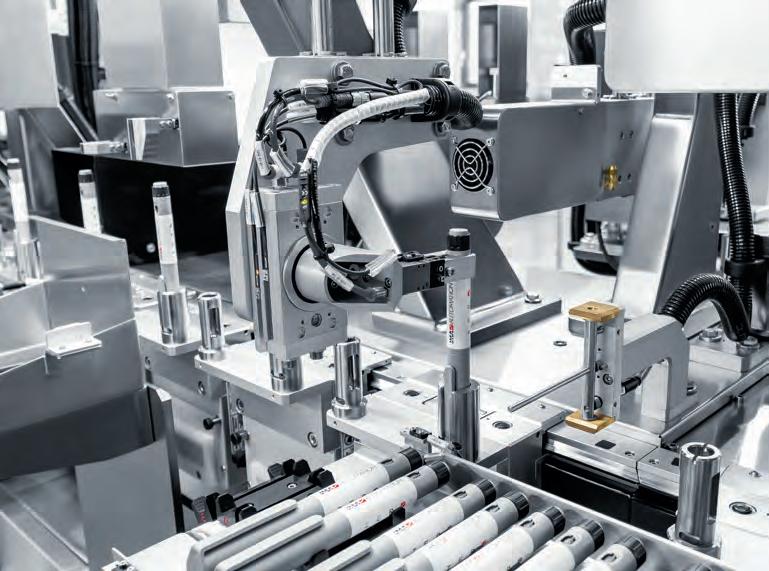
Medical devices will play a prominent role as well with IMA MED TECH, introducing its new modular concept for autoinjectors, pens and inhalers. ASSEMBLA, the engineer-to-order platform scaling up to 500 ppm, will demonstrate its versatility across injectables, inhalers, diagnostics, ophthalmic devices and NextGen wearables.
The range will also include X-PEN for standard pens and autoinjectors (up to 160 ppm) and X-PEN LAB for early-stage batches (up to 20 ppm), reinforcing a unified and scalable approach from R&D to full-scale commercial assembly.
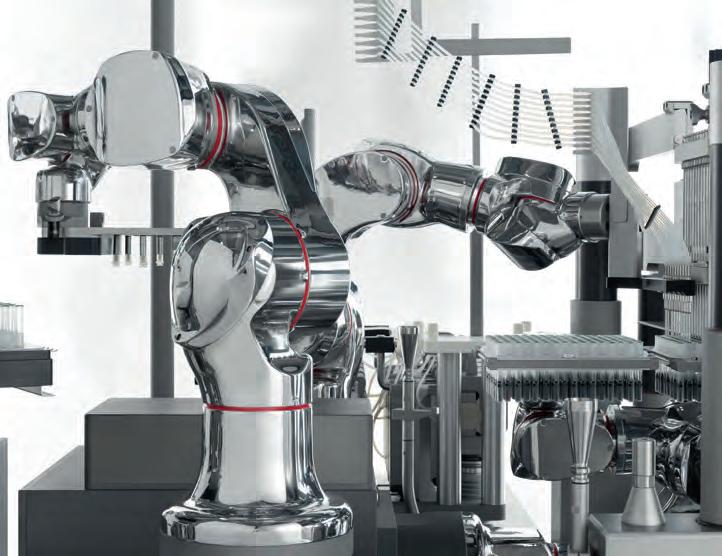
Digital innovation will form another key pillar of IMA’s presence. Visitors will see AI-powered support tools, guided conversational assistance, real-time machine monitoring and robotic integrations involving humanoids and cyber-dogs: a preview of the next generation of intelligent, connected manufacturing.
At the heart of this ecosystem is the All-In-One Pharma philosophy: a single supplier capable of delivering fully integrated solutions across the entire value chain, enabling smoother project execution, faster validation and long-term operational efficiency.
This philosophy has inspired “Sound of Pharma ”, the new communication concept that will be unveiled at Interpack.
Like a symphony, where harmony emerges from perfectly coordinated instruments, Sound of Pharma expresses the vision of technologies, expertise and people coming together as one unified whole.
WE LOOK FORWARD TO WELCOMING YOU TO INTERPACK, HALL 17!
Discover more imagroup.com/pharma/
PHARMACEUTICAL CHEMICAL FOOD & COSMETIC SECTORS
PACKAGING FOR EMOTIONAL WELL-BEING
Quadpack has created caps and collars for the fragrance roll-ons of Neuraé, Sisley’s skincare brand based on neuroscience.
Neuraé is a new Sisley brand rooted in the connection between skin and emotions, enhancing positive feelings by focusing on well-being, energy, and serenity through a three-step routine. The packaging of the neurocosmetic products is masterfully designed, featuring glass jars and bottles with maple wood caps and collars from Quadpack, the international manufacturer and supplier of cosmetic packaging. Quadpack also developed its exceptional roll-ons, creating a wide range of containers designed to engage all senses. Neuraé formulas are composed of at least 95% natural ingredients. The range includes a serum and three face creams, complemented by roll-on fragrances called “Emotion Boosters.” The routine involves three simple steps: restore skin balance with the harmonizing serum harmonie; apply the face cream joie, énergie, or sérénité, depending on the desired mood; and enhance with the appropriate fragrance.
The brand is clear about its packaging goals and stated: “We aim to reduce our ecological footprint by using glass, recyclable plastics, and wood.” Quadpack’s wood experts collaborated with Neuraé to select the most suitable type of wood and finish. The company chose maple for its light surface and smooth, refined finish.
The collars and caps for the droppers, jars, and roll-ons were custom-designed and produced at Quadpack Wood’s facility in Spain, powered by renewable energy and a biomass plant fueled by production waste. Made exclusively from sustainably
managed forests, each wooden component is unique, with its own natural grain. Each cap was branded using a precise laserengraving process. The laser was meticulously calibrated to ensure shallow engraving, avoiding the typical burnt effect, making maple an ideal material.
The Emotion Boosters are conveniently sized for travel. The 6.5 ml glass bottles were lacquered and decorated with singlecolor screen printing. Each variant’s roller applicator features a gemstone: jade for énergie, rose quartz for joie, and amethyst for sérénité. Here too, the cap is made of maple wood.
Overall, the combination of natural wood, glass, and gemstones enhances the sensory appeal of the range, supporting Neuraé’s mission to “nourish the skin and promote well-being.”
COSMETIC PACKAGING SECTORS
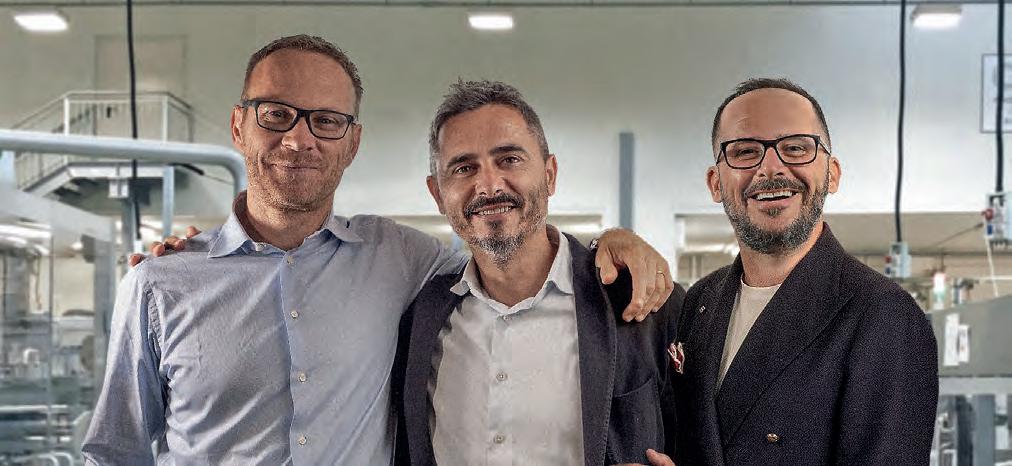
OMAG AT INTERPACK 2026: PLACING PEOPLE AT THE HEART OF INNOVATION
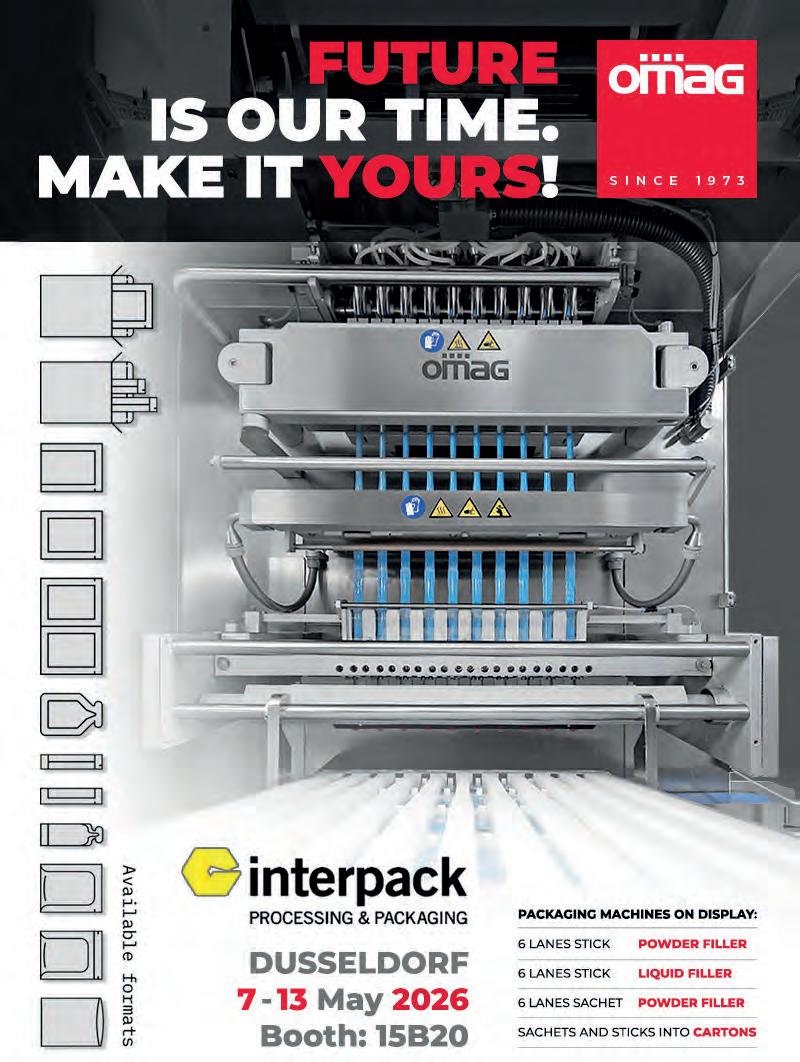
F“uture Is Our Time: Make It Yours!” This is the Manifesto-far more than a mere marketing slogan-with which Omag presents itself at the upcoming Interpack 2026.
The future is indeed our time, but our true mission is to make it become also the time of our customers. How? Omag will guide you through an extraordinary journey, showcasing a wealth of innovations at the Dusseldorf exhibition (Hall 15 - Stand B20)
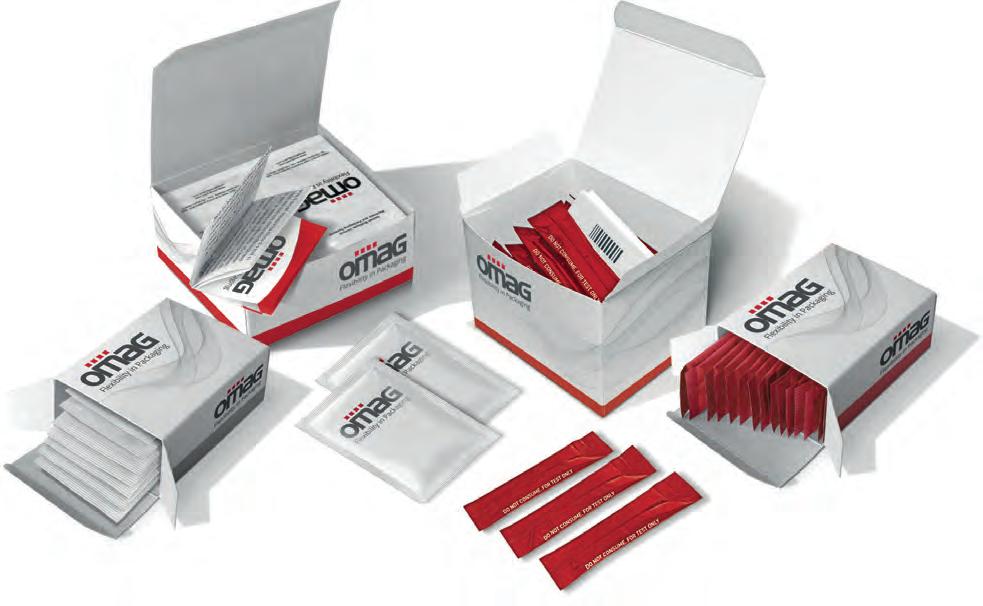
Driven by a powerful energy that is now ready to be unleashed, the company will display four (4) different types of packaging machines for single-dose sachets and stickpacks, suitable for both liquid and powder products, as well as cartoning solutions.
For the most important industry event of the year, Omag has chosen to put its best outfit, making its excellence accessible to all of you.
You are at the CENTER of this futuristic universe, a principle that guides our every action, decision, and thought. Always. At Omag technology is at the service of people, not the other way around.
For OMAG people play a central role, around whom we develop an ecosystem designed to make their work as easy as possible. For this reason 2026 will see the launch of a new user interface for Omag machines, designed to make human-machine interaction smoother, more complete, clearer, and more innovative.
How? We will provide operators with more advanced tools, giving them the confidence and control needed to
simplify the management of complete production lines, which are inherently becoming increasingly complex.
The ultimate goal is to increase productivity, flexibility, and speed up operations such as batch changeover, cleaning, and format change.
These topics are increasingly important for our customers, especially in the pharmaceutical sector. All of this will be managed simply by recalling the appropriate recipe via the HMI.
This implementation will be supplied as standard on all new packaging machines, both primary and secondary, while maintaining unchanged pricing.
Among the many projects we have ready to be launched, there are some others not less important but unfortunately not visible at Interpack. And We want to tell you about them.
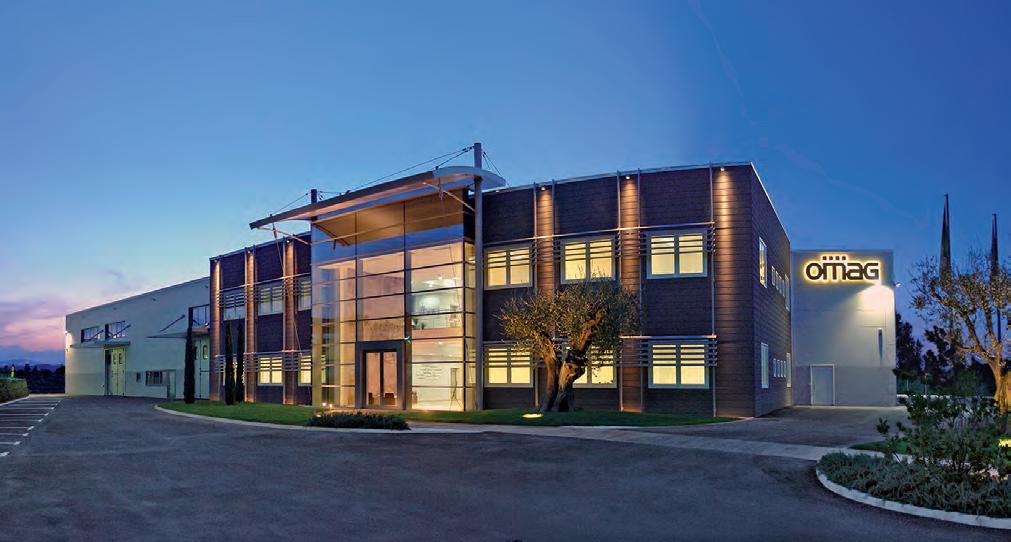
We are about to inaugurate a new wing of our main facility, which will host new and larger offices to accommodate the new talents who will join our ever-growing family. An additional 2,000 square meters, over two floors, will be added to the space already available.
A new locker room area and a new, finally larger cafeteria will allow our team to enjoy their breaks in spaces more suited to our current size.
In addition, new offices for increasingly larger teams: greater expertise at the service of all those who continue to invest in Omag with confidence in the results.
Last but not least, the presence of a panoramic terrace designed as a living area where we can spend enjoyable moments together after completing machine commissioning, challenging tests for new opportunities, and customer-requested implementations, ensuring they can face tomorrow’s challenges with the certainty of an effective and efficient partner.
As a result, all this will free up new space in the central area of the facility, which will soon undergo a complete renewal.
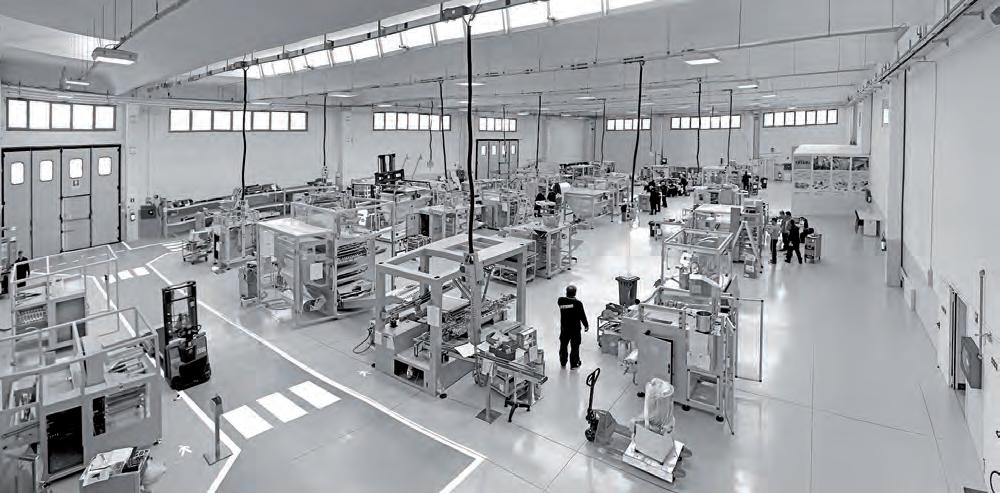
It is worth mentioning our flagship: a state-of-the-art laboratory equipped with all the technologies and instruments necessary for our test department to provide a complete analysis of customer products and films at any time, and therefore to determine the most suitable dosing systems for each specific product.
I always like to say that it will not be one more or one less sale that guarantees our firm projection into the future. Rather, it is the long-term journey we will take together.
That is why we want the tens, hundreds, and thousands of partnerships we have built, are building, and will build to speak only one tense: the future. To go there together and stay there together.
So get ready for a wave of novelties: it is our way of reaffirming that, for Omag, innovation is not a luxury, but a core value to be shared with everyone, building a future of growth, efficiency, and shared success together.
CAVANNA LOOKS AHEAD AT INTERPACK 2026
From long-life equipment to next-generation materials, the group brings to Düsseldorf a packaging vision shaped by efficiency, flexibility and continuous support.
In packaging, the future is rarely a sudden break.
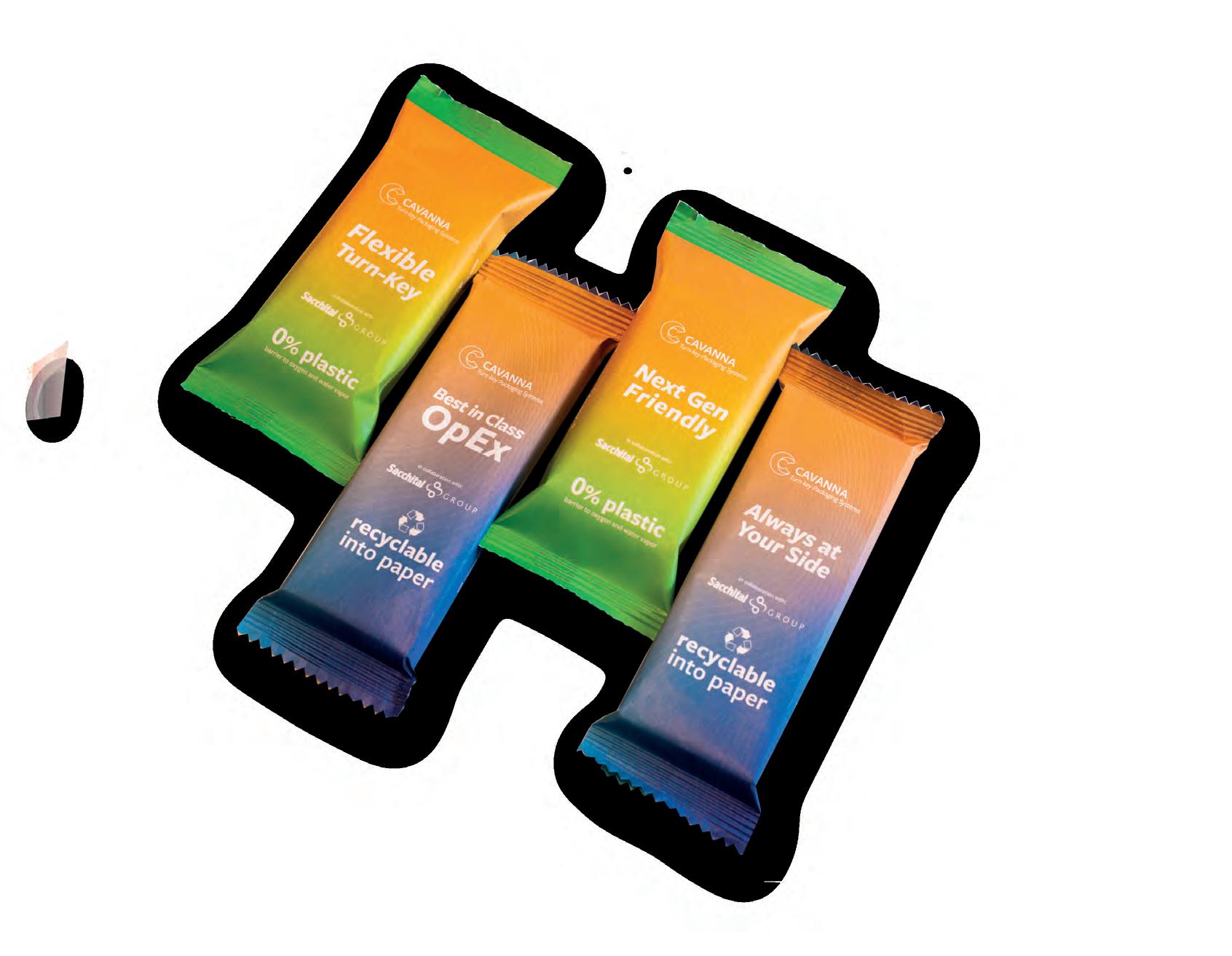
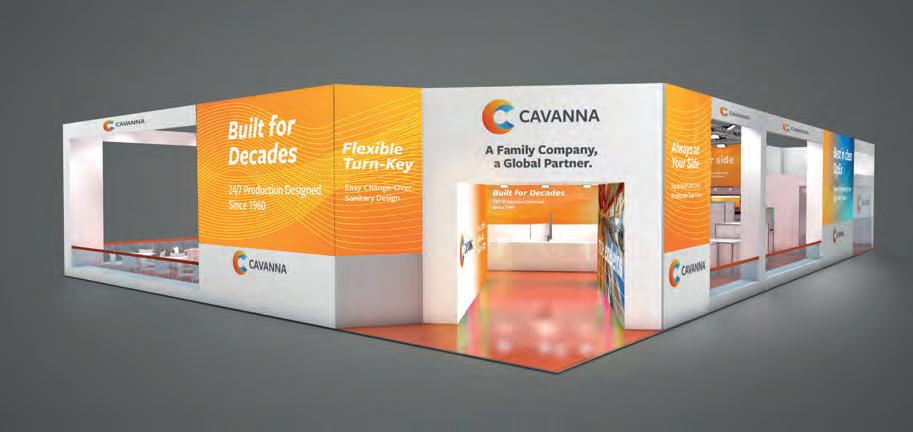
More often, it is the result of steady engineering, industrial insight and the ability to adapt without losing reliability. That is the perspective Cavanna is bringing to interpack 2026, where the Italian group will present a vision of packaging technology rooted in continuity, but clearly oriented toward the needs of a changing market. Founded in 1960, Cavanna has built its identity around integrated flow wrapping solutions for food and non-food applications, and still positions durability as one of the pillars of its industrial culture.
Today, however, durability alone is no longer enough. Manufacturers are being asked to combine output, efficiency and versatility in increasingly complex production environments, where different formats, retail channels and product requirements must often coexist within the same line.
This is where Cavanna’s current message becomes particularly relevant.
Under the strategic direction of Riccardo Cavanna, the company is focusing on systems designed to improve operating expenditure, maximize capacity utilization and deliver repeatable size changeovers, turning efficiency into something broader than speed alone. In today’s factories, real performance is measured in uptime, consistency and the ability to respond quickly to variation.
One of the most interesting aspects of Cavanna’s positioning is the way it addresses sustainability. Rather than framing the issue as a simple materials switch, the company approaches it as a balance between environmental goals and industrial reality. Cavanna highlights its work with packaging suppliers and the activity of TESTCLAB, its testing laboratory dedicated to sealing performance and the evaluation of new wrapping materials. The point is a practical one: new-generation materials only become meaningful when they can also protect the product, preserve shelf life and fit smoothly into production. That makes the company’s material-neutral approach particularly significant, as it opens the door to different options, from monomaterials to compostable and paper-based structures. Flexibility is the other decisive word. Cavanna’s systems are developed for sectors such as bakery, confectionery and other food applications, with turnkey solutions that re-
Meet Cavanna at interpack 2026 Hall 3, Stand 3B74
Discover Cavanna’s latest packaging solutions for efficiency, flexibility and next-generation materials.
flect the growing need for adaptable packaging architectures. The market is moving toward greater diversification, and machine builders are increasingly expected to offer not just technology, but a framework capable of absorbing change. In this context, Cavanna’s proposition is less about a single machine and more about an industrial approach, one that connects gentle handling, packaging variation and line integration.
Then there is service, which in Cavanna’s case is presented not as an accessory, but as part of the machine’s value over time. Technical support, upgrades, revamping, training and spare parts are backed by C-Connect, the group’s digital platform for customer assistance. It is a detail that says a great deal about the company’s broader mindset: the line does not stop at installation, and neither should the relationship with the customer.
Seen from this angle, Cavanna’s presence at interpack 2026 goes beyond the exhibition of machinery. It becomes a statement about where packaging is heading: toward solutions that must be efficient but also resilient, advanced but also practical, open to innovation yet firmly grounded in the realities of industrial production. For a sector under pressure to do more, adapt faster and waste less, that is a message likely to resonate.
www.cavanna.com
SECTORS
PACKAGING
FACEGLOSS PACKAGING COMBINES
Launching a new cosmetic brand in such a competitive market is no easy feat. facegloss appeared on the scene in October 2023 with a full range of skincare products. Four months later, the Spanish brand found itself at the top of the charts, acclaimed on social networks and high-profile media. A key factor in its success is the beautiful recyclable packaging developed by the international cosmetics packaging manufacturer and supplier Quadpack.
Anna Arbós – founder, cosmetic coach and “skinfluencer” –already had a loyal following on social media as “Glow by Anna”. Creating facegloss was the realization of a dream; Anna has brought together all her knowledge in the creation of a range of highly performing and affordable skincare products, aimed at the millennial audience. With €220,000 in funding and the right partner network, they turned to Quadpack for the packaging of various products such as Cloud cleansing mousse, Chill toning and emollient spray, Superglow antioxidant serum, Glasskin all-in-one serum and the Feels Like Water moisturizing cream.
Quadpack has created a simple and refined range, in different formats, customizing some of its flagship items such as the Skin-Up bottle and the Regula glass jar as well as an excellent foamer and a nebulizer spray. The caps and pumps were decorated with a pastel lilac injection while the
bottles and jars remained transparent but with a light touch of color, to highlight the formula inside.
For facegloss, sustainability is a fundamental factor, a part of its philosophy and its way of being. The packaging materials – polypropylene (PP), polyethylene terephthalate (PET) and glass – were in fact chosen based on their recyclability.
Arbós said: “facegloss has been incredibly well received. We already have loyal consumers who appreciate the brand not only because it offers high quality products but also for its aesthetic image and spectacular packaging. As we always say, these are the products that you want to have in your bathroom.
“Our packaging is absolutely beautiful. Even though we were clear on what we wanted, Quadpack helped us from the beginning to consider the best options, always supporting us and offering us the best quality. Their professionalism and closeness to an emerging brand like ours is It was flawless!”
www.quadpack.com
B.M. GROUP: EXCELLENCE IN ALUMINUM PROCESSING AND TREATMENT FOR THE INDUSTRY
With over fifty years of experience, the Venetian company stands out for its cutting-edge solutions in CNC machining, surface treatments, and aluminum anodizing, ensuring quality, speed, and international certifications.
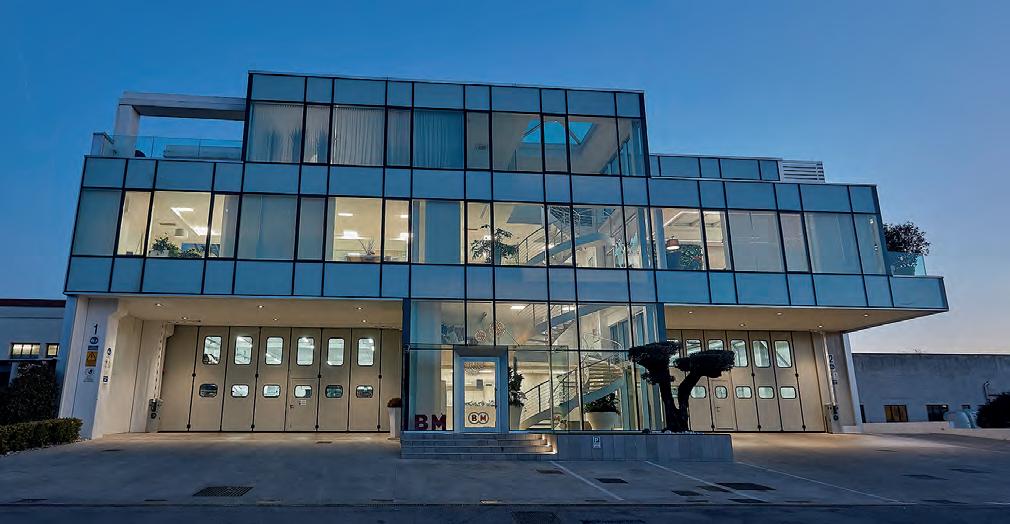
Founded over fifty years ago, B.M. Group S.r.l. has established itself as a leader in aluminum machining and treatment, offering complete and certified solutions for the food industry and other industrial sectors. The company, based in the province of Vicenza, operates two strategically located production hubs in Thiene and Zanè, both easily accessible from major highways. This prime location enhances logistics efficiency and ensures rapid response times to customer needs.
At the helm of B.M. Group is Silvano Busin, the company’s President and a key industry figure with deep sector expertise, who personally oversees the technical department.
Alongside him, Vice President Marina Vitacca manages communication strategies and research departments,
Quality, speed and service are our strenghts MACHINING
ensuring an innovative and forward-thinking approach. The company’s team consists of young, skilled professionals committed to continuous improvement and professional development.
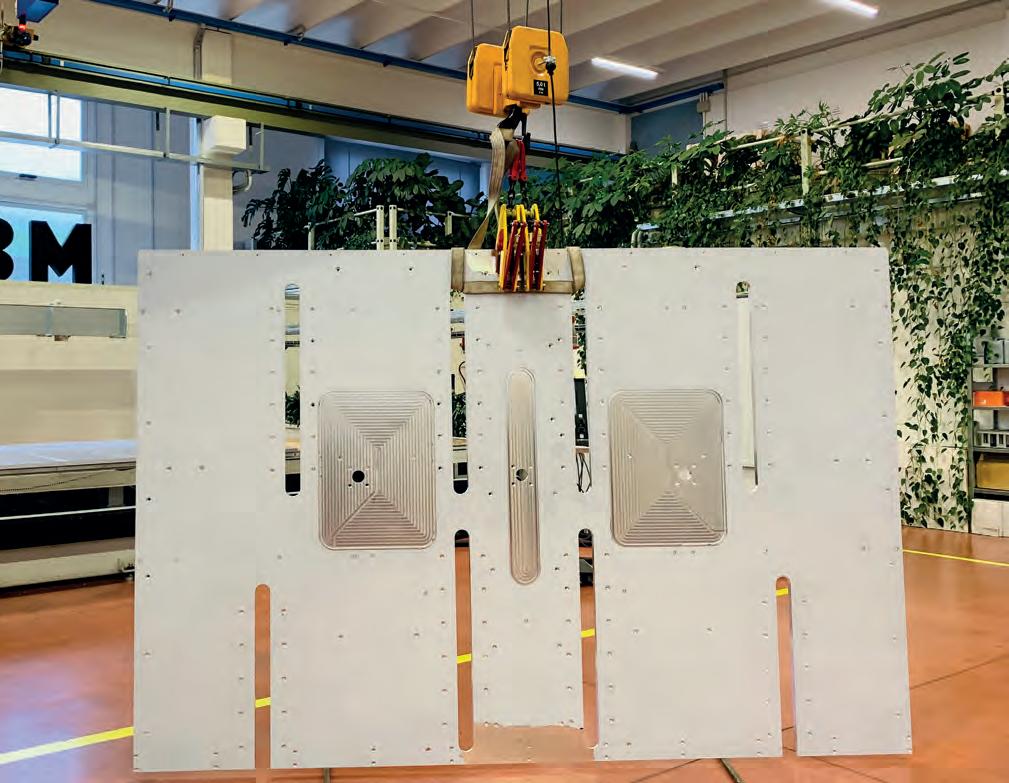
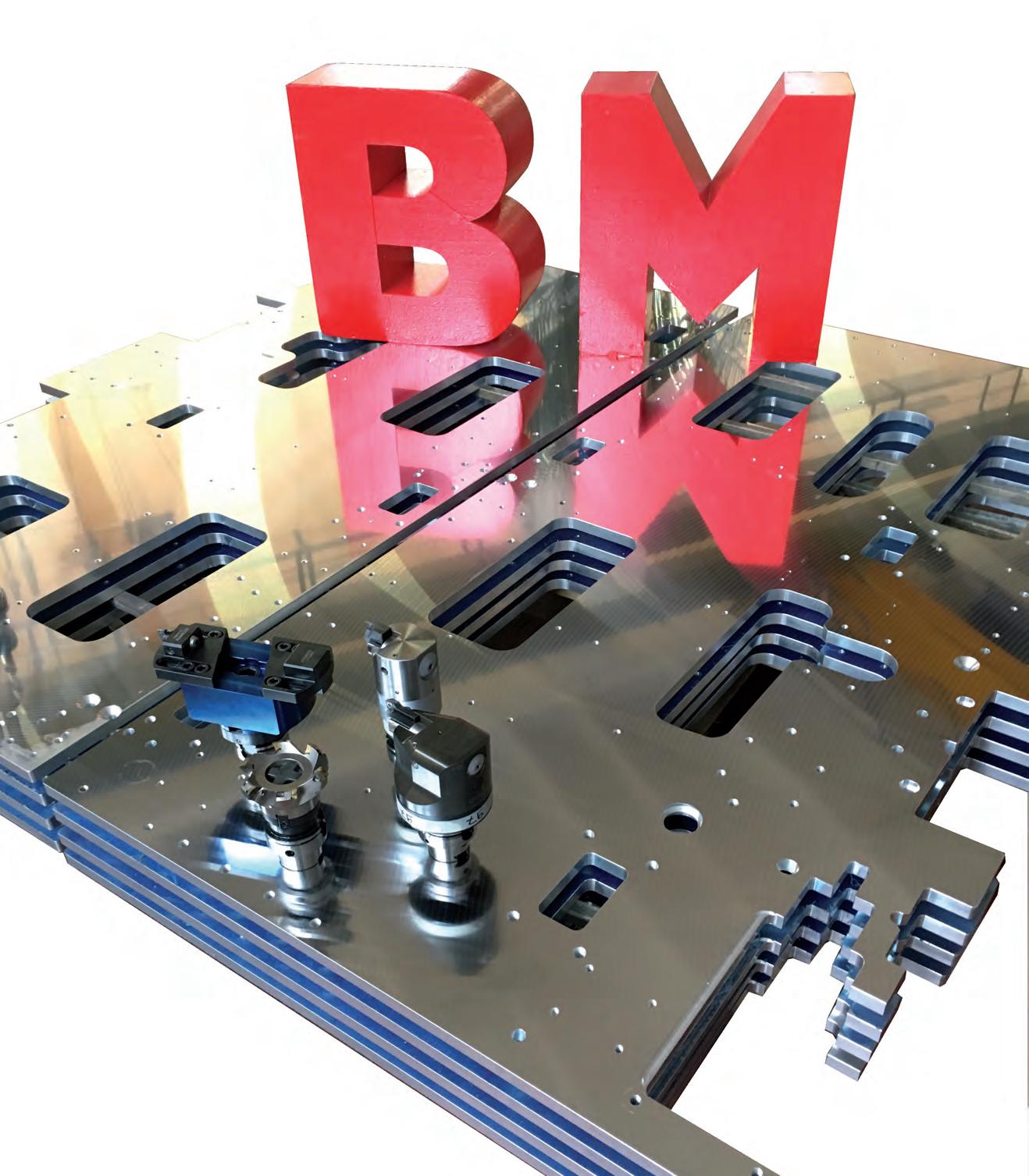
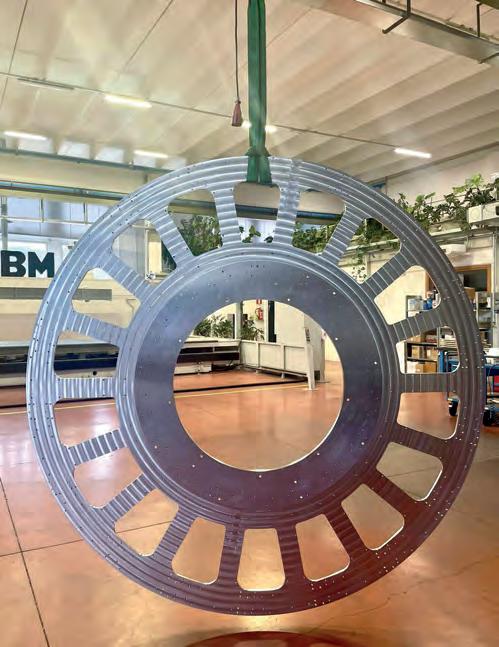
One of the company’s main strengths is its ability to perform CNC machining on large aluminum plates, utilizing machinery capable of processing pieces up to 13 meters in length and 2.5 meters in width. This expertise has allowed B.M. Group to establish itself in key European markets, catering to the needs of a niche sector with high-quality standards.
In addition to mechanical processing, the company provides a comprehensive range of preliminary treatments, including mechanical brushing with various finishes, chemical pre-treatments, and aluminum anodizing. These integrated services ensure tailored solutions and a high level of customization for clients.
The company’s efficiency is further enhanced by a large warehouse that stocks materials in various alloys (such as 5083, 6082, 7075) and different thicknesses. This enables B.M. Group to promptly meet customer demands, reducing lead times and optimizing production efficiency.
The quality of its processes and products is certified by the ISO 9001:2015 standard, demonstrating a firm commitment to excellence. Upon request, B.M. Group can provide order compliance declarations, MOCA certifications (for materials and objects in contact with food), measurement reports, anodizing certificates, and material certificates, all in accordance with the UNI EN 10204 European standard.
By combining experience, know-how, and passion, B.M. Group positions itself as a reliable and innovative partner for companies seeking cutting-edge solutions in aluminum processing and treatment. Its dedication to continuous improvement and focus on specific customer needs make it a key reference point in the sector, capable of making a difference in the global market.
www.bmgroupsrl.com
PROVEN INNOVATION
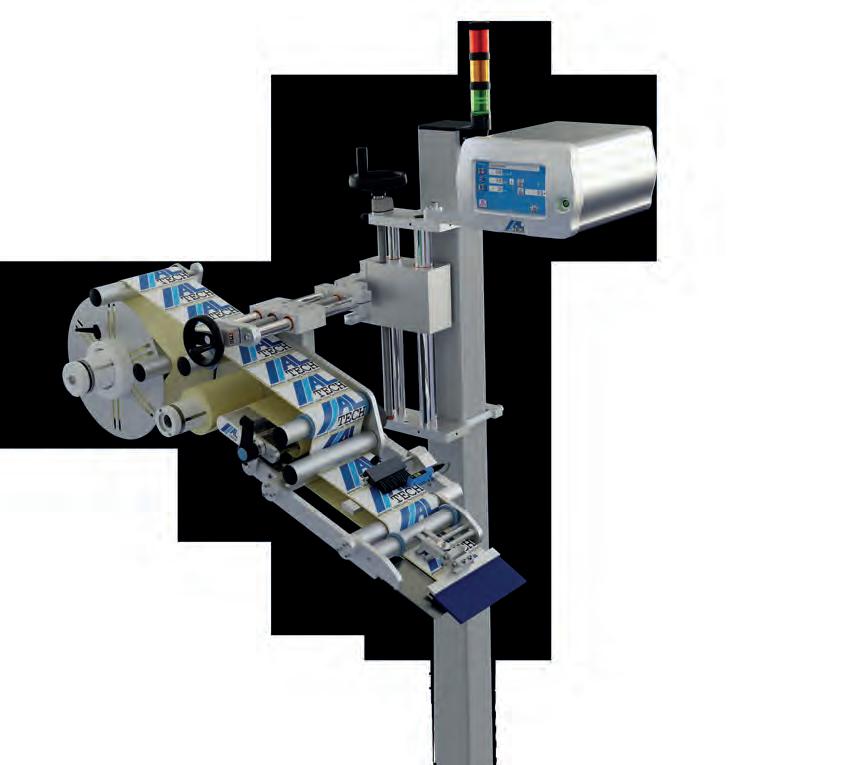
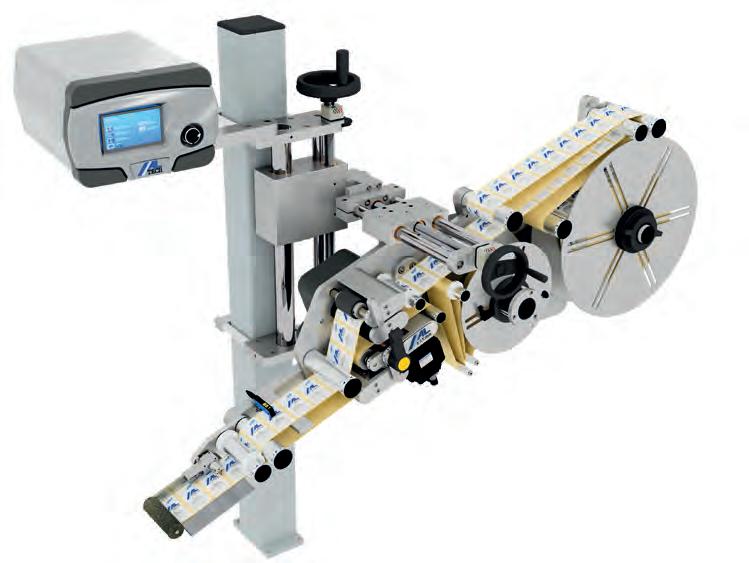
High-performance ALritma labelling head:
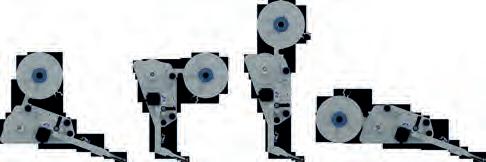
• Modular structure with swiveling components.
• High-torque stepper motor.
• Unwinder with expansion locking system.
• Rewinder with collapsible device for easy liner removal.
• Microprocessor control for high accuracy at variable speed.
• 7” multilingual touchscreen panel with 100 recipes and Industry 4.0 connectivity.
Innovation or conservation? These philosophies are apparently opposite and irreconcilable. The former promises superior performance and new features. The latter guarantees the reliability and practicality typical of tried and tested solutions.
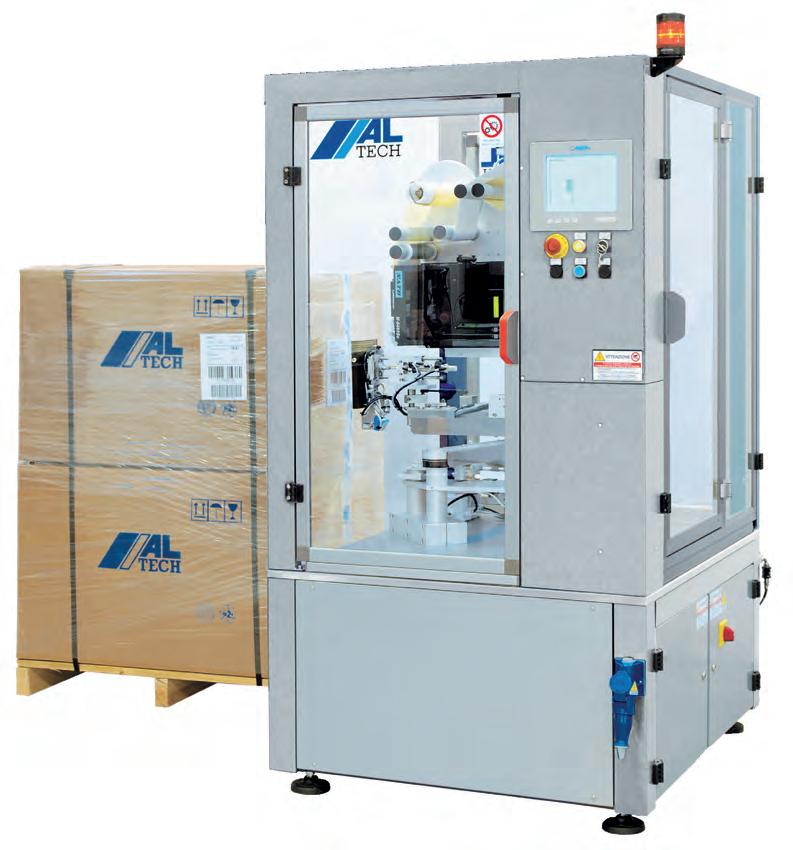
ALTECH is committed to both innovation and conservation in our labelling machines. Each of them contains the most innovative technologies, but it is also the result of design refinements based on 30,000 acceptance tests. Thanks to such technical expertise, we are able to state that every labeller we offer is not only state-of-the-art, but it is also user-friendly, functional, and reliable.
An example? Our ALritma labelling head.
ALTECH Srl
Viale de Gasperi, 70 20008 Bareggio (MI) - Italy
Tel. +39 02 90363464
info@altech.it
www.altech.it
35 YEARS OF ALTECH EXCELLENCE SHOWCASED AT INTERPACK 2026
In 2026, ALTECH celebrates 35 years of activity in the labeling machinery sector: an important milestone that confirms a path of steady growth, technological innovation, and international presence.
Founded with a strong engineering-driven vision, the company has built its identity on a clear principle: designing and manufacturing in-house reliable, modular, and highly customizable labeling systems. Over the past 35 years, ALTECH has evolved alongside the market, meeting the demands of the food & beverage, cosmetics, chemical, and pharmaceutical industries, where precision, speed, and reliability are essential requirements.
Continuous Innovation
Innovation at ALTECH is an ongoing process that integrates technical research, mechanics, electronics, and
software, supported by fully controlled in-house production.
From the ALstep labeling heads to linear systems integrated into complete automatic lines, every solution is designed to ensure efficiency and operational flexibility.
PROCESSES AND PACKAGING
established commercial and technical network, while maintaining the core values that have guided its growth: proven solutions, attention to detail, and trusted customer relationships.
The 35th anniversary marks not only a milestone, but also a new step toward the future of industrial labeling, driven by digitalization, sustainability, and increasingly customized solutions.
www.altech.it
New Solutions at Interpack 2026
ALTECH will be exhibiting at Interpack 2026, the leading international trade fair for the packaging industry, taking place in Düsseldorf, Germany, from May 7 to 13.
The company will showcase some of its most re presentative solutions:
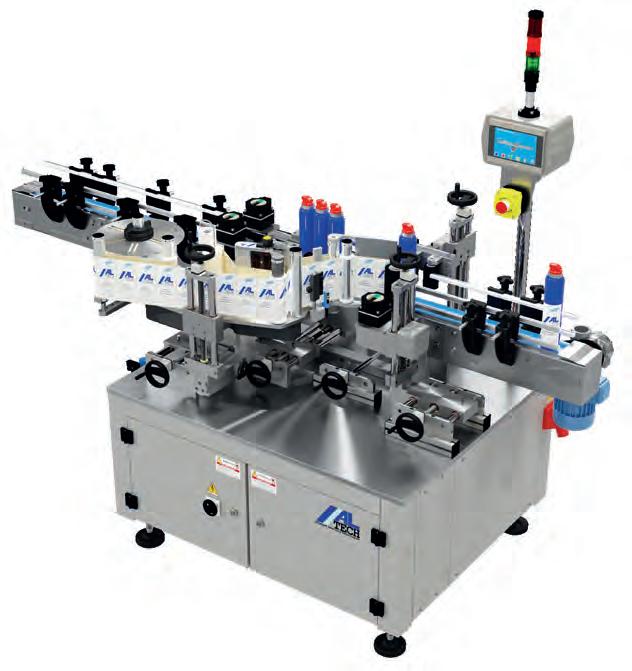
• ALline C , featuring a three-roller system for wraparound labeling, ideal for cylindrical containers;
• ALbelt, designed for top and bottom labeling, configu red with the ALritma T print-and-apply unit;
• ALcode , a system for real-time printing and application of variable data;
• ALcode P , a robotic pallet labeling system presented in a new modular and programmable configuration;
• ALritma X, updated version, a high-speed labeling head capable of reaching speeds up to 90 m/min and a rate of up to 1,000 labels per minute.
The machines will be on display at Hall 8B / C48, where visitors will have the opportunity to discover the latest developments and see ALTECH solutions in action.
Looking Ahead
Today, ALTECH operates globally through a well-
PACKAGING
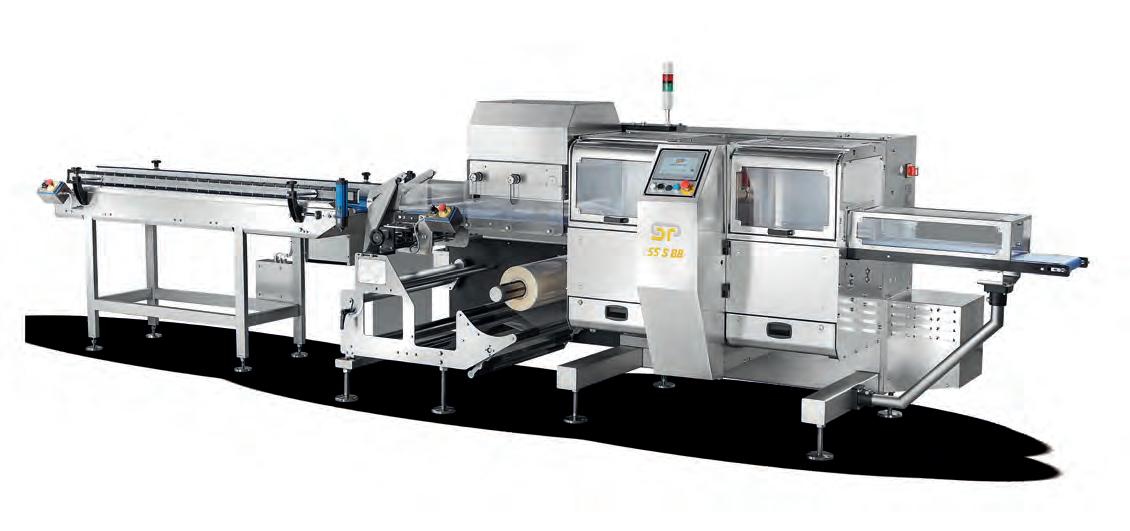
GSP - PACKAGING MACHINES AND AUTOMATIC PACKAGING SYSTEMS
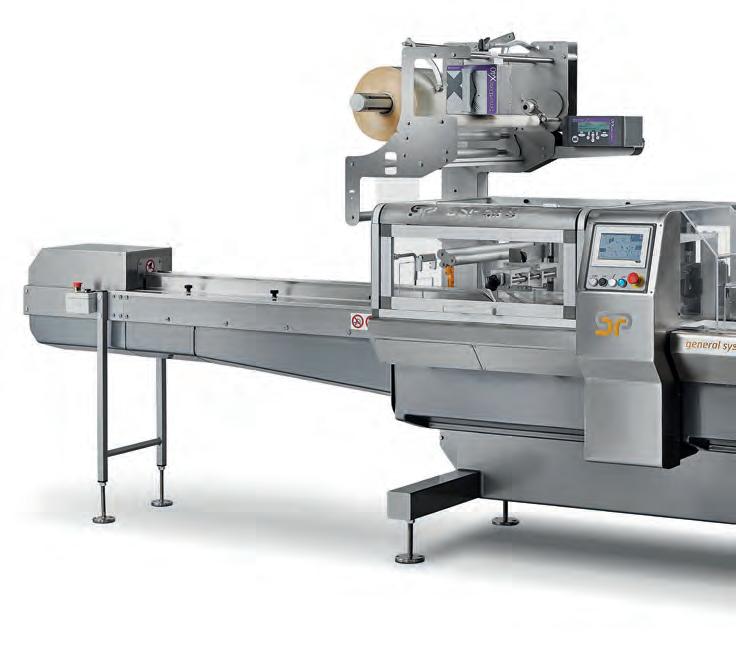
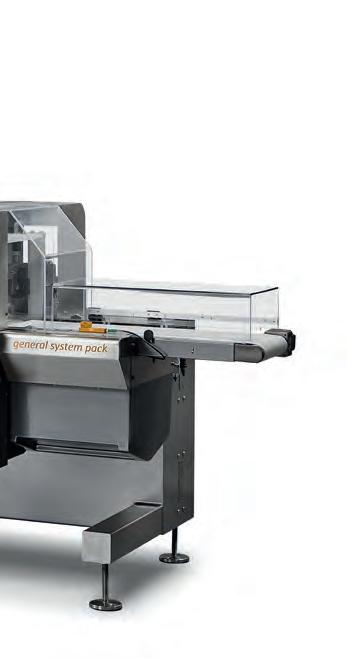
General System Pack builds and supplies packaging machines and automatic packaging systems, distinguishing itself with its advanced technology and extremely high quality standards.
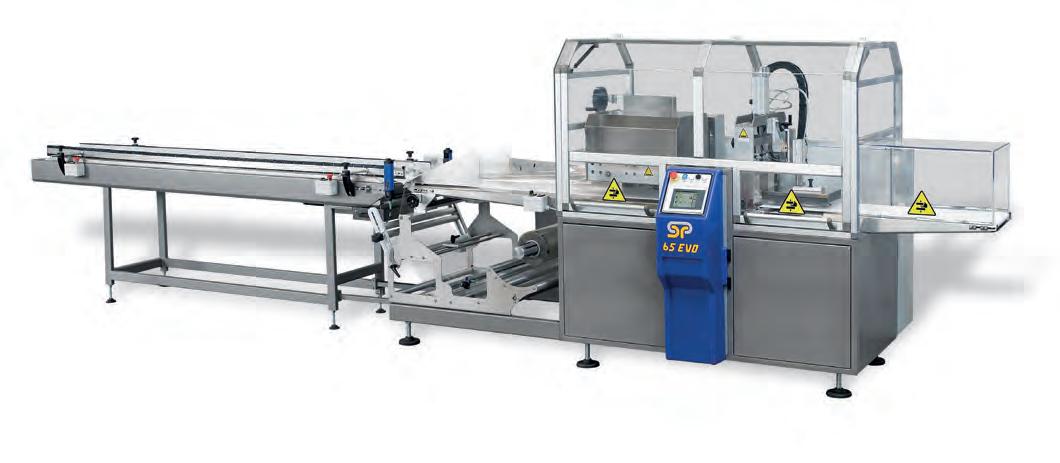
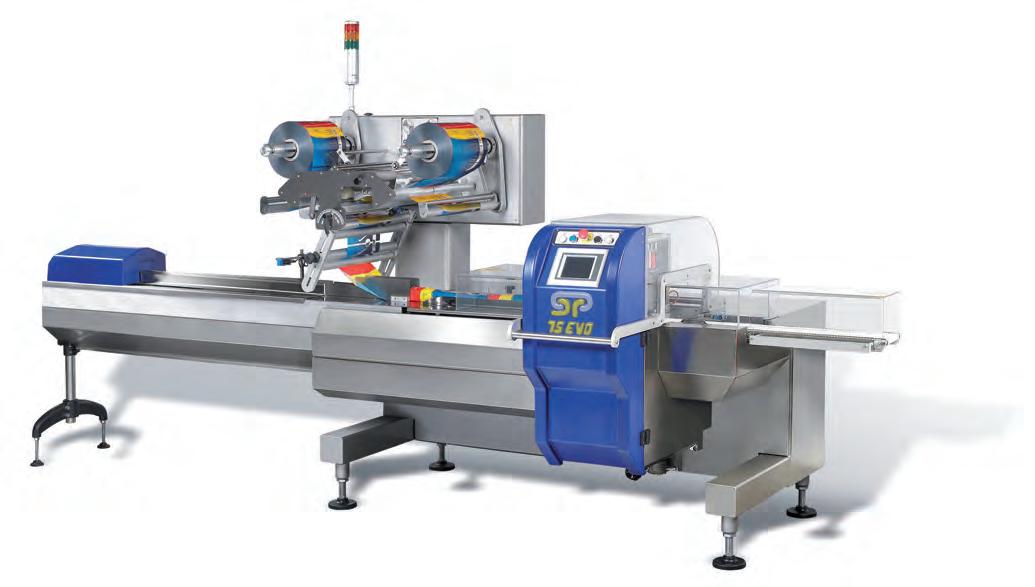
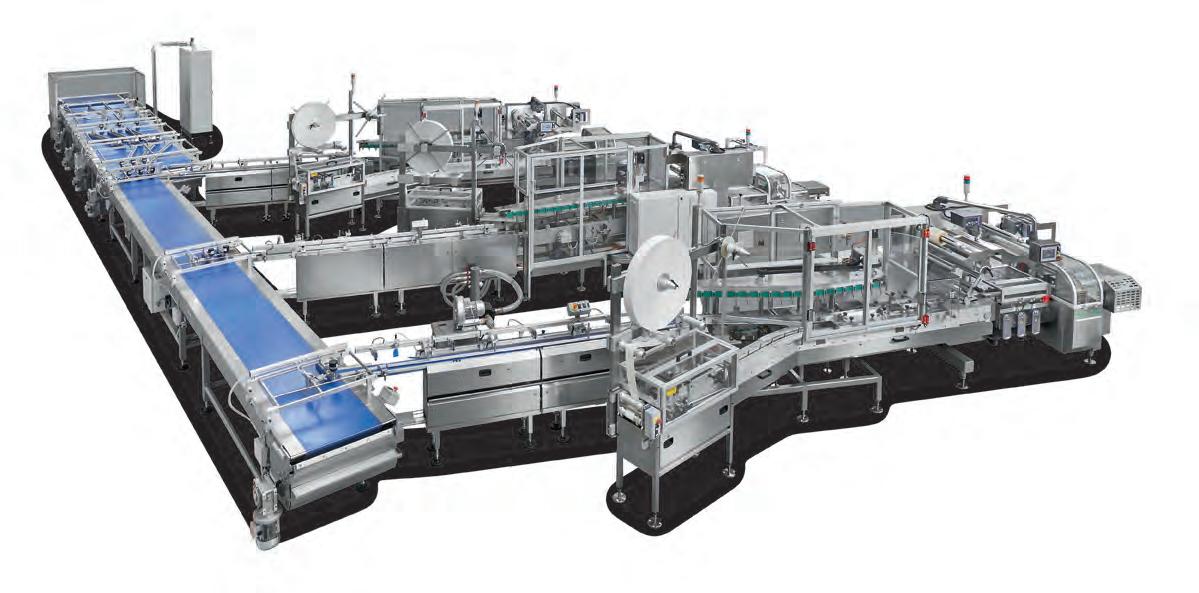
The packaging lines produced by General System Pack are electronically managed, extremely sturdy, durable, and simple to operate and are built adopting solutions that aim to meet the most stringent ergonomic and hygienic demands. The wide range of models which General System Pack offers provide excellent flow pack solutions for every packaging sector, including automatic feeders and end-of-line equipment, ranging from controlled atmosphere to high speed, all the way to maximum levels of automation. The packaging lines offered are the best solutions for small and medium enterprises that wish to provide industrial-style packaging for their products.
GSP 65 BB
GSP 50 EVO
The following are several examples of packaging machines and automatic series:
GSP 55 EVO: Electronic packaging machine, versatile and reliable, extremely flexible when it comes to changes in format, perfect for food and non-food products, for both single servings and multi-packages. It is characterised by a cantilevered structure and ease of accessibility, as well as its hygienic standards, simple maintenance, and built-in safety.
GSP 65 BB: Horizontal electronic packaging machine for long term heat sealing, designed to create hermetic bags in a controlled atmosphere for products that are more challenging to transport or that require extreme caution and zero shocks during transport and insertion
in the film. It is the perfect solution for increasing the shelf life of food products, while also providing a bag that is aesthetically pleasing and able to provide good mechanical protection to the contents.
GSP 50 EVO: Highly technological horizontal electronic packaging machine: a fast, easy-touse, and versatile machine that is capable of combining high technology and an excellent quality-price ratio.
Visit: www.gsp.it
FOOD BIOMEDICAL HARDWARE SECTORS
GSP 75 EVO
PACKAGING PRINTING: CREATIVITY AND SUSTAINABILITY IN MOTION
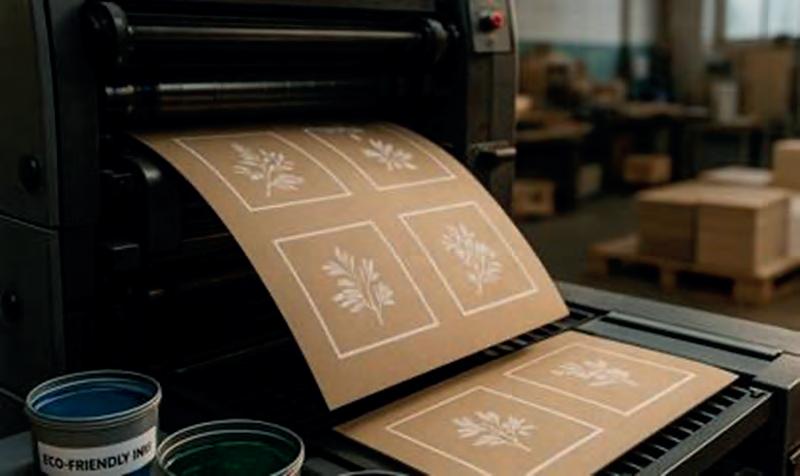
Between digital innovations, eco-friendly inks and traceability requirements, packaging printing is undergoing a real transformation. Between digital innovations, eco-friendly inks and traceability requirements, packaging printing is redefining its role at the heart of industrial chains. Far from being a mere decoration, it is becoming a strategic lever where aesthetics, performance and sustainability converge.
Packaging printing, long perceived as a finishing step, is now establishing itself as a strategic link in the chain. The global packaging printing sector is showing sustained growth, estimated at more than 6% per year according to The Business Research Company. In France, this momentum contrasts with the decline in commercial printing: packaging is driving the entire sector upwards, buoyed by the boom in the food, cosmetics and pharmaceutical markets. This structural change is altering expectations: colour accuracy, compatibility with sustainable substrates, shorter lead times, customised runs and the integration of variable data. The printer is becoming a technical and creative partner, serving to deliver a complete brand experience.
The rise of digital printing is transforming business models. High-definition inkjet and dry toner technologies enable short, adaptable print runs without any loss of quality. Brands can now customise their packaging by market, campaign or consumer. Variable data such as numbering, QR codes and adaptive graphics offer new opportunities for expression. Each piece of packaging becomes unique, without any major additional industrial costs. This flexibility is particularly appealing to e-commerce and cosmetics companies, which are seeking to strengthen customer loyalty while limiting waste. Digital printing also paves the way for greater energy efficiency: reduced set-up times, elimination of plates, and on-demand production.
Eco-friendly inks and materials
In the face of European regulatory constraints, sustainability is becoming a central pillar. Water-based, UV LED and natural
pigment-based inks are gradually replacing traditional solvents. Substrates are becoming lighter: high-strength recycled paper, bio-based films, cardboard from sustainably managed forests. This technical change is not at the expense of visual quality: print fineness, colour density and texture effects continue to improve. The challenge for printers now is to combine performance, recyclability and aesthetics, while ensuring process compliance. Ink, machine and substrate manufacturers are working hand in hand to develop comprehensive solutions that are sustainable, modular and interoperable throughout the production chain.
When printing becomes a vector of trust
Beyond its aesthetic dimension, printing now contributes to product security and traceability. Invisible markings, luminescent inks, micro-typography and dynamic QR codes are integrated into packaging to combat counterfeiting and enhance transparency.
This convergence between printing and data opens up a whole new field: that of ‘smart printing’. Printed matter becomes a point of access to product information, origin, composition and recyclability, while remaining a sensory object. This dialogue between material and technology illustrates the evolution of the sector: making the invisible visible, without altering the beauty of the gesture.
This sector will be featured at the ALLFORPACK EMBALLAGE PARIS trade show from 24 to 26 November 2026 at Paris Nord Villepinte.
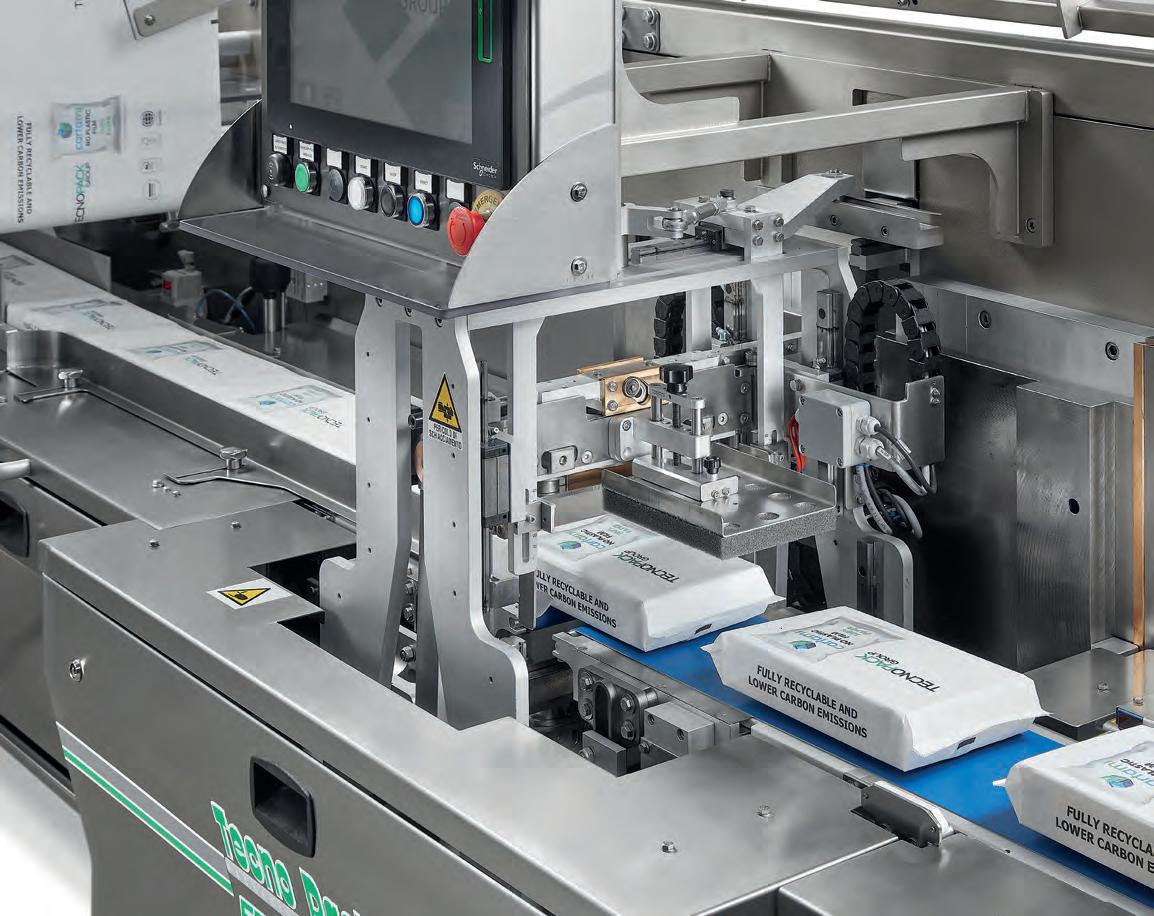
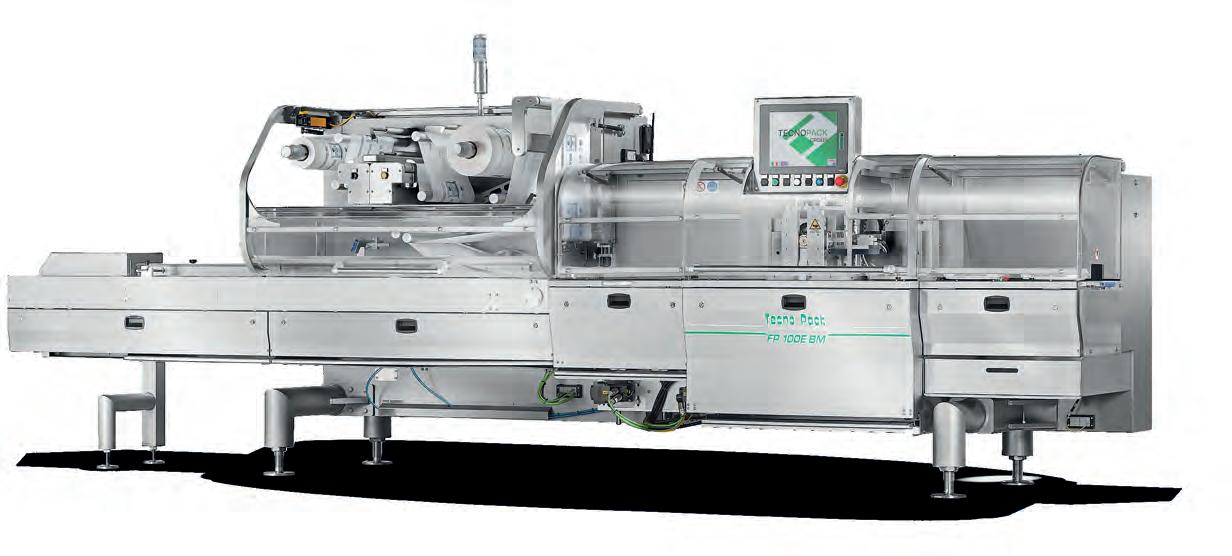
FP 100 HP: HIGH-SPEED PAPER SEALING BY TECNO PACK
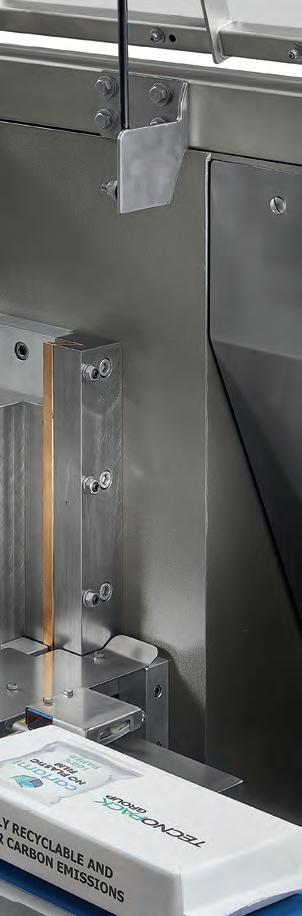
Tecno Pack continues its tradition of research and development, with an ever-increasing focus on energy savings and the shift towards fully sustainable packaging. The 2025 edition of the international IPACK-IMA trade fair marked the debut of the flagship model among horizontal flow pack packaging machines: the FP 100 HP BOX MOTION 520.
This new model has been specifically designed to ensure perfect sealing on paper, even at high speeds, delivering smooth and linear operation while elimi-
nating the typical challenges associated with similar applications.
The FP 100 HP BOX MOTION 520 is the result of extensive optimization efforts, significantly enhancing both the reel drive system and the longitudinal and transversal sealing groups.
The transversal sealing unit features an innovative box motion system with extended sealing time, capable of delivering adjustable sealing pressure up to 600 kg per square centimeter, even at the highest operating speeds.
The film unwinding mechanism benefits from precision regulation, fully automated and supported by load cells. These ensure consistent film feed to the longitudinal sealing group under all conditions - from startup to top speed, during in-cycle adjustments, restart phases, and automatic reel changes.
The longitudinal sealing unit, consisting of four pairs of wheels, features exclusive micrometric adjustments designed for paper sealing, accommodating varying thicknesses and material consistencies.
At the Tecno Pack Group booth during IPACK-IMA 2025, visitors witnessed
the FP 100 HP BOX MOTION 520 producing perfectly sealed paper packages at high speed (up to 160 packs per minute), appreciating the machine’s operational smoothness — a top-level performance maintained effortlessly at cruising speed.
Tecno Pack is fully prepared to meet the new challenges of industrialization in primary flow pack packaging, offering a thoroughly tested, reliable solution aligned with the demands of today’s market.
www.tecnopackspa.it
SECTORS
LABELING CODING
LINX TO UNVEIL NEW INK JET PRINTER SERIES AT INTERPACK
The launch of a new continuous ink jet (CIJ) printer range will be the centrepiece of the Linx Printing Technologies stand (C59, Hall 8B) at this year’s interpack exhibition in Düsseldorf, Germany.
This latest addition to the Linx product portfolio will be shown alongside the company’s current ranges of advanced coding and marking solutions which, in addition to CIJ, include laser coding machines, thermal transfer printers and large character marking printers.
All reflect Linx’s ongoing commitment to practical innovation with the development of coding and marking products and services that make production life easier for factory personnel.
“interpack provides a global showcase for the packaging industry and it therefore presents the ideal opportunity for us to share with visitors what we believe will be a gamechanger in coding and marking for busy production managers,” said Mark Cooper, Senior Director Product and Marketing, Linx Printing Technologies.
In another first at the exhibition, Linx will also be previewing a new model for its large character marking printer range,
which will be launched later this year. This will set new standards in the coding of text, logos and graphics directly onto porous substrates such as cardboard, paper and wood in industries including manufacturing, packaging and logistics.
Among the other highlights on the stand, the three models on show from the Linx laser coding machine range underline the variety of solutions offered by the company to meet the needs of many different markets and applications. All offer high-quality permanent marking at high speeds and, with no reliance on consumables, operating costs are reduced while the substrates being coded remain intact and unblemished.
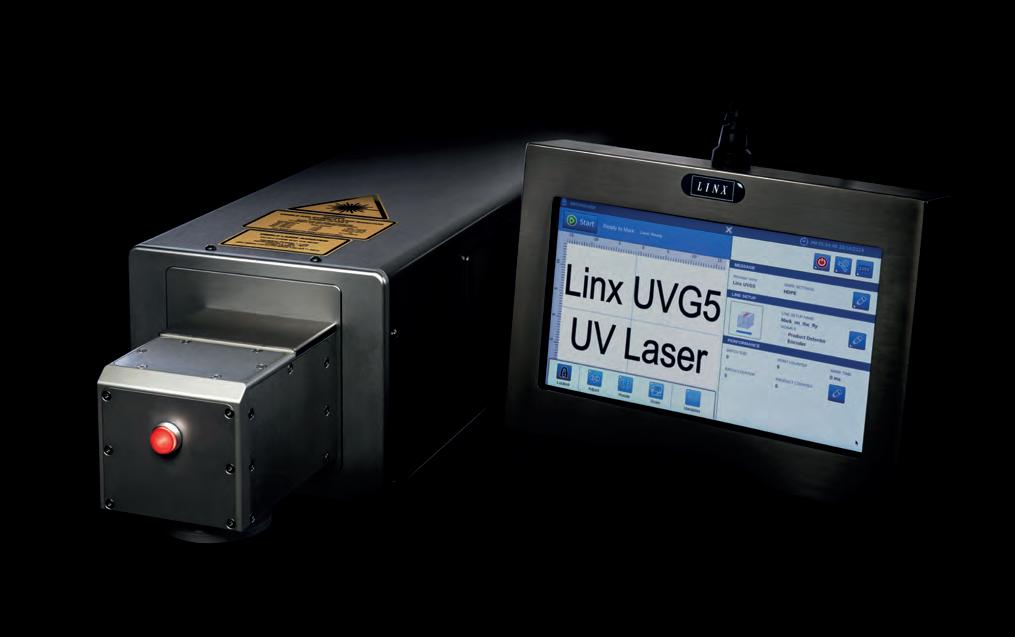
The Linx UVG5 is ideal for delicate mono-recyclable films and difficult to mark rigid plastics, delivering fast and consistent code marking, and can be seamlessly integrated into existing production lines. The Linx CSL30 produces sharp codes, even on hard to mark materials such as glass
PROCESSES AND PACKAGING
and rubber, on high-speed production lines in markets including food and beverage, pharmaceuticals, cosmetics and electronics. The adjustment focus of the coder’s CO2 laser marking head, which incorporates integrated simplified focus technology, means there is no need to move the laser or adjust it for different height or width products. This reduces changeover times and eliminates errors on lines with frequent product changes.
Linx’s fibre laser coder, the FSL20, achieves very fine spot size to deliver excellent quality codes for the clear and effective marking of very small components or products which require large amounts of information in a small area. In addition, the extreme clarity of the codes makes the coder ideal for traceability requirements in markets such as pharmaceutical, medical devices, automotive and electronics.
Linx will also showcase three models from its thermal transfer printer range, which offer high quality printing onto flexible materials including bags, pouches, labels and flow wrap. All offer a large range of ribbons to match individual applications and production line printing needs, with bi-directional stepper motors to deliver more prints per ribbon. An easy-to-use colour touch screen and simple cassette system ensure ease of set-up, operation and changeovers.
For more information on Linx’s products and services, visit www.linxglobal.com
Linx Printing Technologies is a leading global supplier of continuous ink jet (CIJ) printers, case coders, laser coders and thermal transfer printers. Its printers and coders are used across many different industries where product identification codes, batch numbers, dates and barcodes are required.
All Linx products are designed with low cost of ownership in mind and are distinguished by reliability, robustness and ease of use. Linx products code and mark millions of items every day, ranging from bottles, packages and cans of consumer goods to extruded products, cabling, electrical components and car parts.
CODING MARKING PRINTING SECTORS
AUTOMATION AND ACCUMULATION SYSTEMS: WHAT OFTEN GOES UNNOTICED
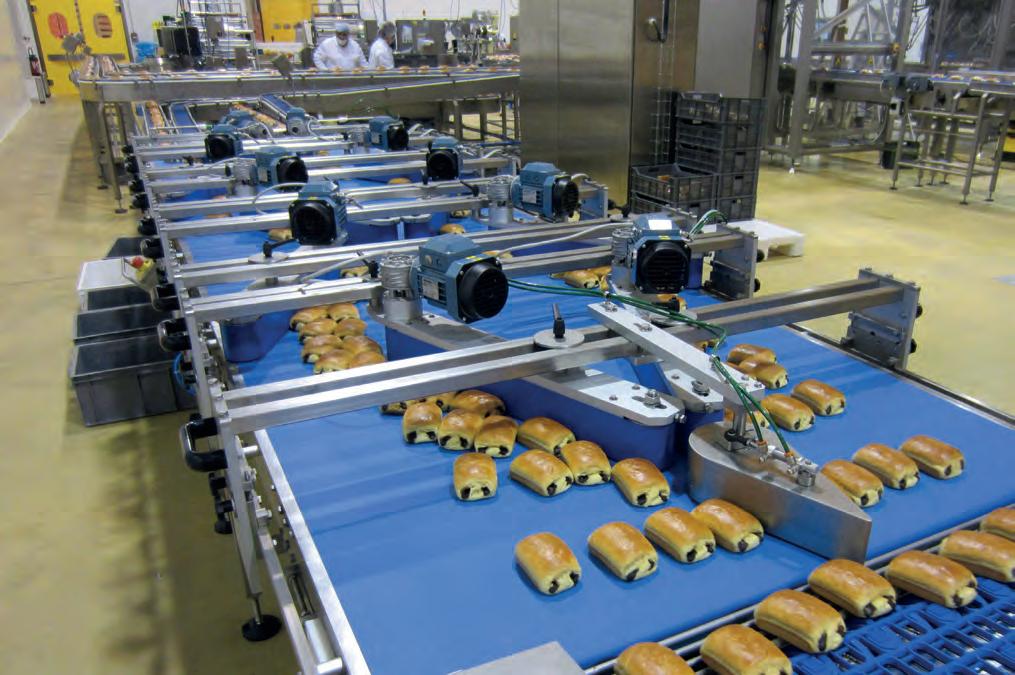
In recent years, automation has become increasingly accessible for small and medium-sized enterprises. The main goals are clear: increase productivity, reduce manual labour and improve efficiency over time. However, the common approach to automation often focuses on machines, speeds and theoretical performance, while overlooking a key aspect: what happens between machines.
In manual lines, operators absorb inefficiencies. Microstops, small delays and imbalances are managed almost invisibly, allowing the line to keep running even in nonideal conditions.
With automation, this flexibility disappears.
Machines follow fixed logic and cannot adapt to sudden variations. Even a short downstream stop can quickly spread across the line, causing chain stops, uncontrolled accumulation and loss of efficiency.
PROCESSES AND PACKAGING
This is where accumulation systems become essential.
A buffer is not just a place where products wait. It is an element that decouples different phases of the line, absorbing variations and creating an operational margin between machines.
In case of a micro-stop, upstream machines can continue running for a certain time, avoiding immediate shutdowns.
For example, if a packaging machine stops briefly, upstream machines would normally stop almost immediately. With a properly sized buffer, the line can continue running, absorbing the variation without immediate impact on production.
The result is a more stable flow, fewer interruptions and improved continuity. A buffer does not increase speed, but improves how the line behaves over time.
This need often becomes clear only after automation is introduced. In manual environments, operators naturally compensate for inefficiencies. Without them, these issues become visible. As a result, buffers are often underestimated or not considered in early project stages.
This leads to a common situation: a line that performs well in theory but struggles to maintain stable production.
Companies then try to add accumulation systems later, often facing space constraints and integration challenges.
For this reason, accumulation must be considered during the design phase.
Choosing how many buffers to use and where to place them is not only a technical decision, but a strategic one. Relying on a single central buffer is rarely effective, as it can become overloaded. Distributing accumulation along the line helps manage variations and improves overall stability.
It is also essential to consider machine recovery capacity. A buffer works only if down-
stream machines can handle the accumulated product after a stop. Otherwise, it quickly becomes a bottleneck.
Product formats add further complexity. Manual lines are flexible, but automation makes changeovers more demanding. Managing too many formats can reduce efficiency and increase downtime, making production planning a key part of the project.
Scalability is another important aspect, especially for SMEs. A gradual approach helps manage investment over time, but not all components can be expanded easily.
Accumulation systems are among the most critical. While machines can often be added later, buffer capacity is limited by space and initial design. This is why buffers should be sized with future development
in mind, even if the full line is not installed from the beginning.
Space remains a major constraint, particularly in existing plants.
Adding systems later is often complex, and compact solutions cannot fully replace proper initial planning.
Automation should be about designing a balanced system where each element supports stability and continuity.
Accumulation systems, although less visible than main machines, are essential to achieve this balance and their importance often becomes clear only when they are missing.
www.mhmaterialhandling.com
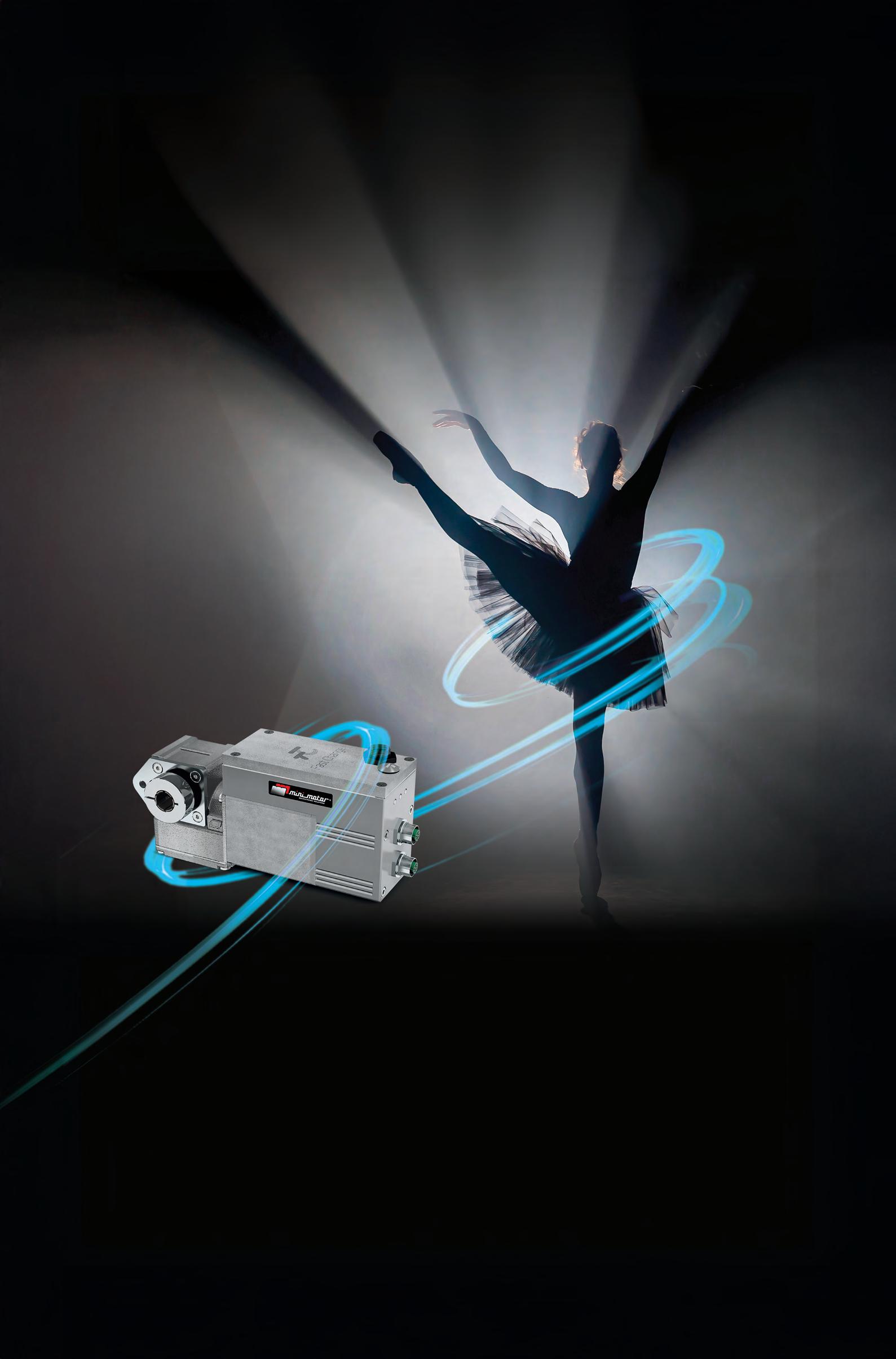
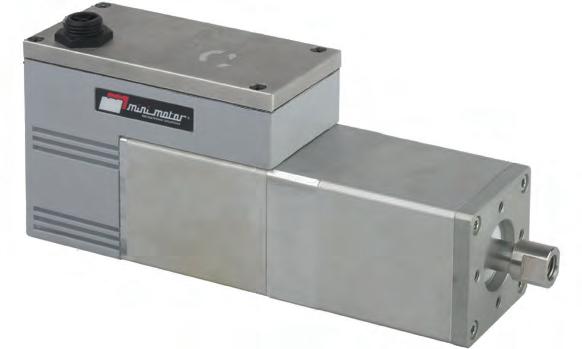
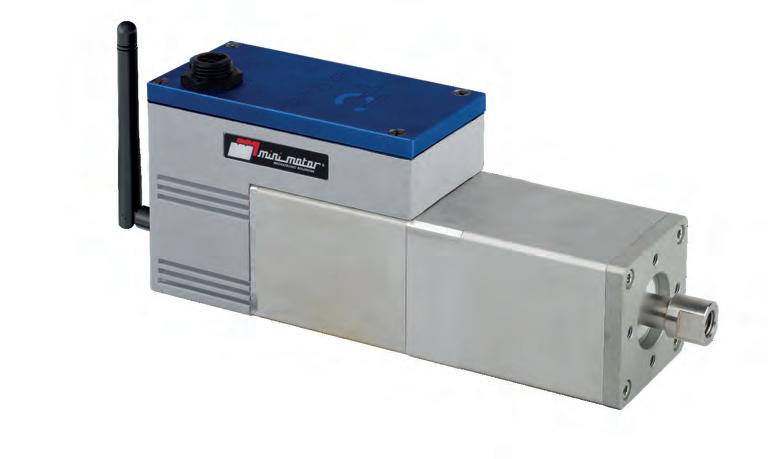
MINI MOTOR’S FC SERIES: THE CHOICE THAT OPTIMIZES FORMAT CHANGEOVER
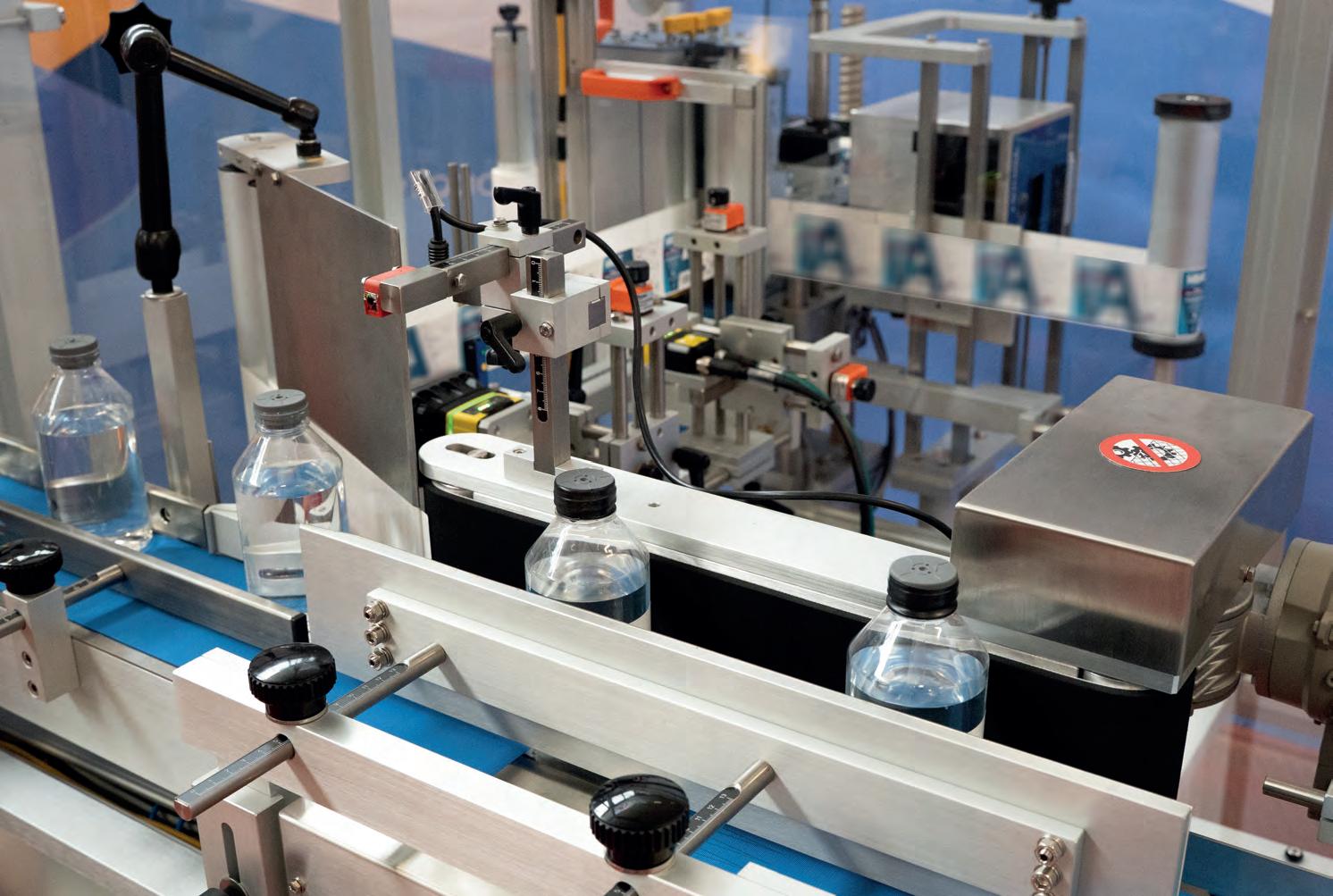
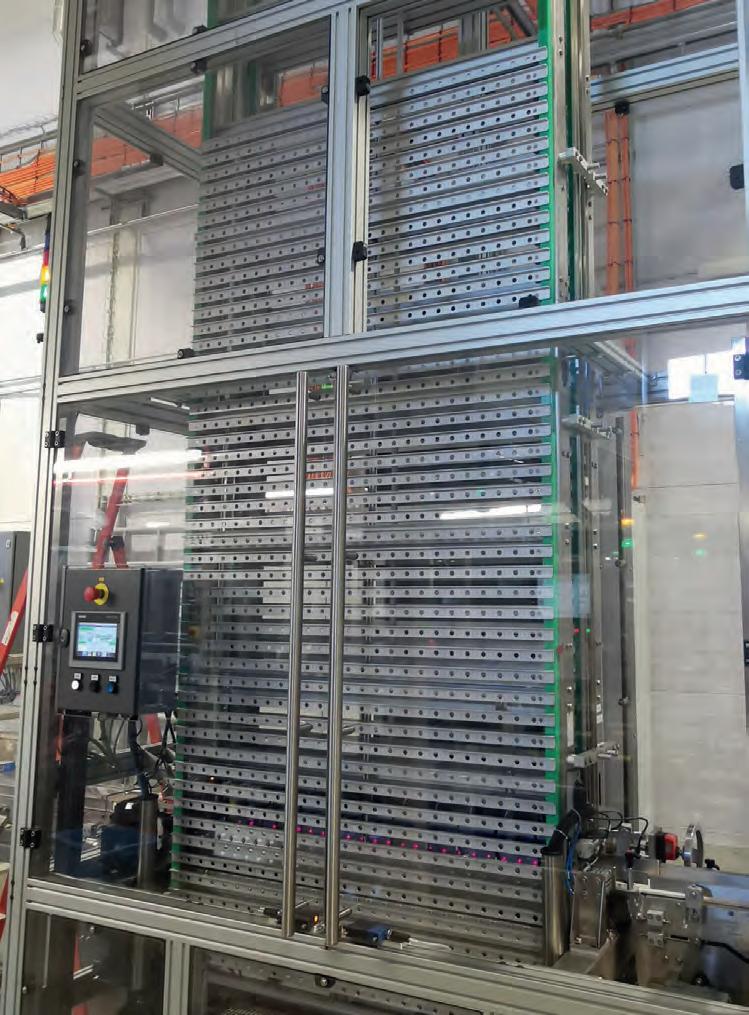
Manual format changeover is a widespread operational challenge in industrial automation. This approach leads to structural inefficiencies, prolonged downtime, and quality variability resulting from human intervention, translating into significant costs for the end user. Mini Motor’s FC Series was developed to eliminate these variables, simplifying integration for the designer and providing a measurable increase in productivity.
Automation and Performance Benefits
The transition from mechanical adjustment via handwheels to automation based on brushless technology offers three immediate technical benefits:
1. Reduced setup times: the synchronized repositioning of all axes occurs in fractions of a second via centralized PLC control.
2. Repeatability and precision: electronic control eliminates manual approximation, ensuring consistent millimeter-level precision in every format change cycle.
3. Application versatility: dynamic management of conveyor belts, side rails, and guides allows adaptation to new production layouts without invasive mechanical modifications.
In addition to the development of new systems, the FC line is designed as an optimal solution for retrofitting existing machinery, enabling the technological upgrade of already installed assets.
Rotary, linear kinematics, and dynamic control
The Mini Motor range meets specific handling requirements through differentiated architectures:
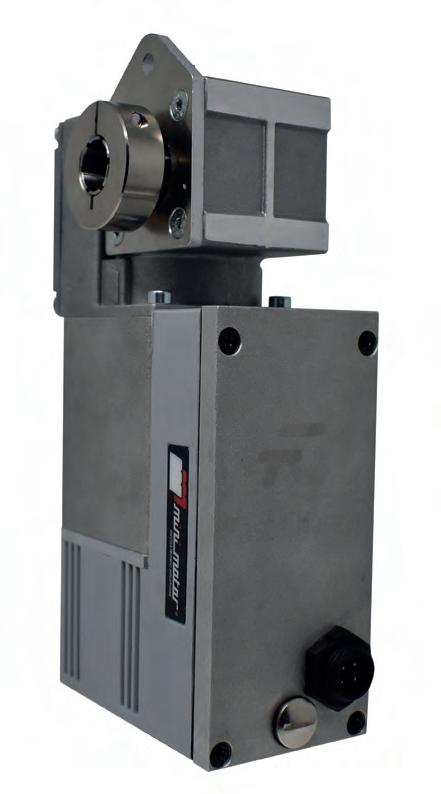
● FC Series (Rotary): specifically designed for driving positioning screws, with torque ranges between 3 and 20 Nm.
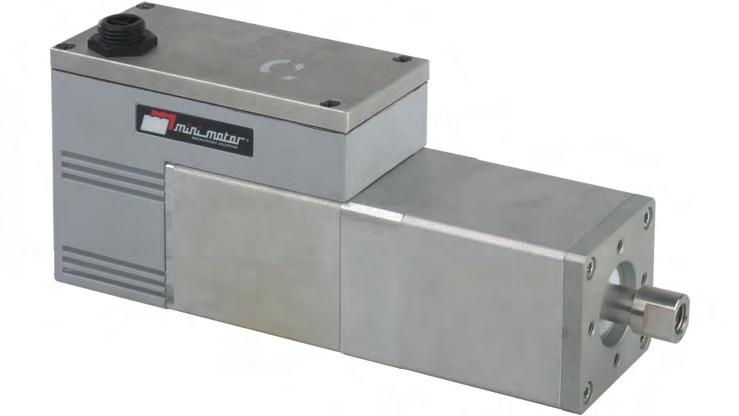
● FCL Series (Linear): actuator designed for direct thrusts up to 200 N, ideal for the automated movement of containment sides.
Dynamic behavior is controlled via dedicated function blocks. The operator can define specific acceleration ramps and gains, ensuring smooth movements even
SECTORS
INDUSTRIAL AUTOMATION
FORMAT CHANGEOVER
with high inertial loads. This software management is crucial for mitigating mechanical stress, eliminating vibrations, and preserving the integrity of the transmission components.
The FC series also integrates CoA 2.0 technology. This proprietary wireless protocol enables fieldbus communication without physical cabling, reducing network architecture complexity and installation costs.
Wireless format changeover with wireless integration: CoA 2.0 (Can Over Air)
For applications requiring maximum layout flexibility, the FC series is available with proprietary CoA 2.0 wireless technology.
This protocol operates on a 2.4 GHz radio network and relies on a Coordinator that acts as an interface between the PLC and the motor network. The elimination of physical fieldbus cabling allows for the redesign of production line architecture without the constraints imposed by communication cables. The system ensures low-latency real-time communication, comparable to the performance of wired systems, and drastically simplifies installation and maintenance.
www.minimotor.com
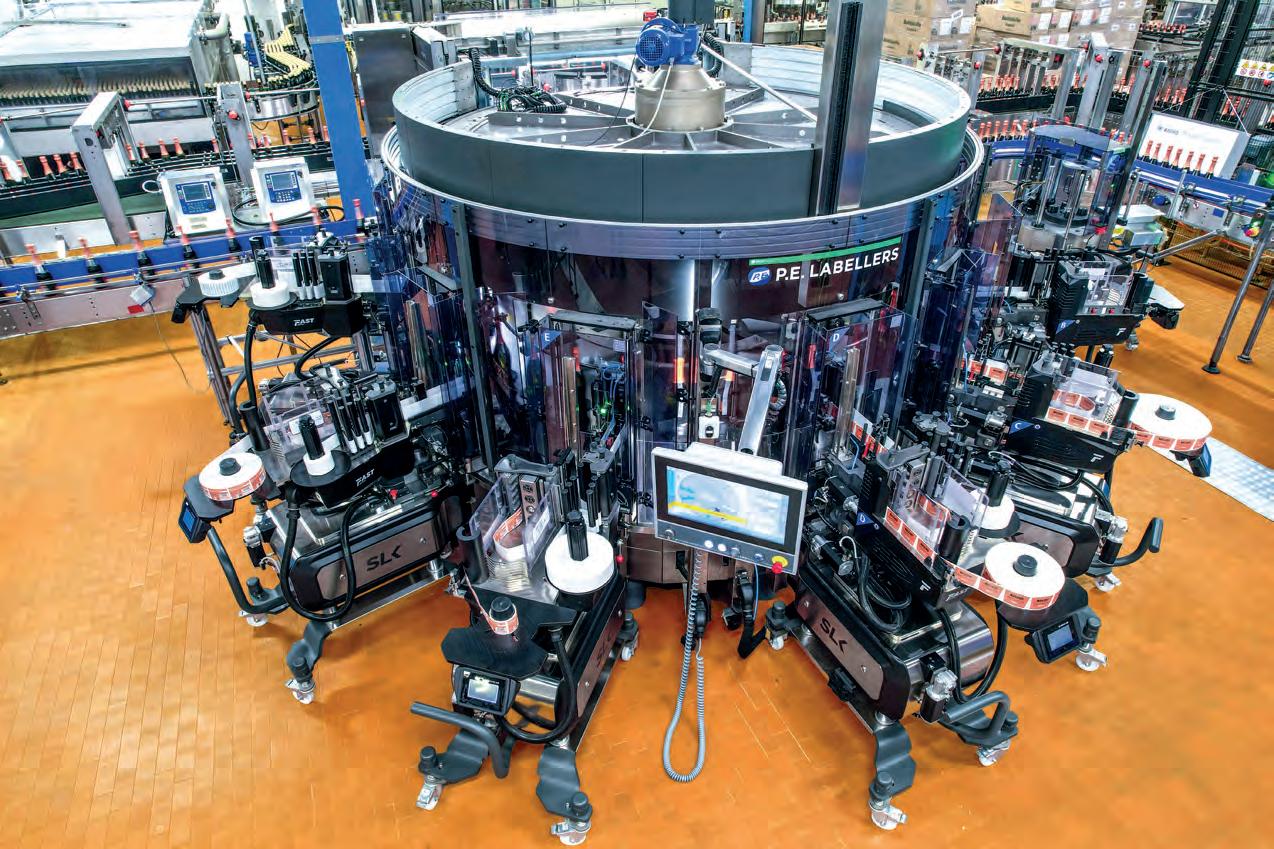
P.E. LABELLERS AT INTERPACK: ALL THE AI-BASED TECHNOLOGICAL INNOVATION ON BOARD THE LABELING MACHINES
The most flexible labeling machines in the world showcase in Düsseldorf all the technological innovation that the Mantuan company has been able to conceive, to make them even easier to manage and maintain.
This year there are three very valid reasons to stop by the P.E. Labellers stand at Interpack 2026. In Hall 13 – A75, visitors arriving from all over the world will be able to experience three live experiences:
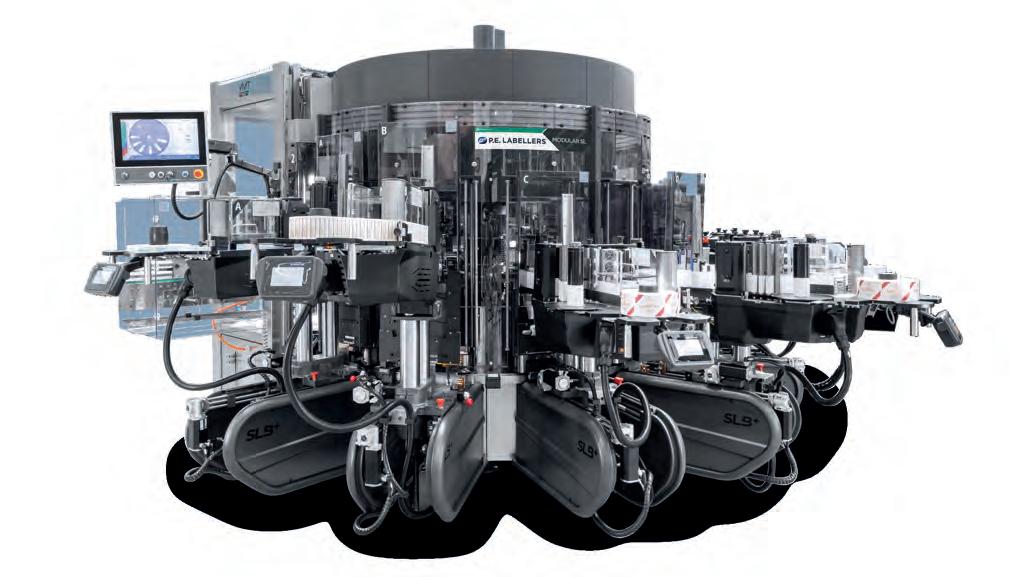
Modular SL: is the new generation modular labeling machine, designed to offer maximum flexibility in terms of applications and a very high level of technological innovation on board, from vision and control systems to AI-based ones for incredibly easy management. Modular SL is equipped with labeling stations that can be interchanged with just a few gestures, with all the application technologies on board, available in both fixed and trolley versions.
LABELING MACHINES
PROCESSES AND PACKAGING
Safety is a priority: rolling shutter guards stop the machine immediately, even on cold glue stations. It will be possible to see Modular SL live and explore the machine through the on-board AI systems.
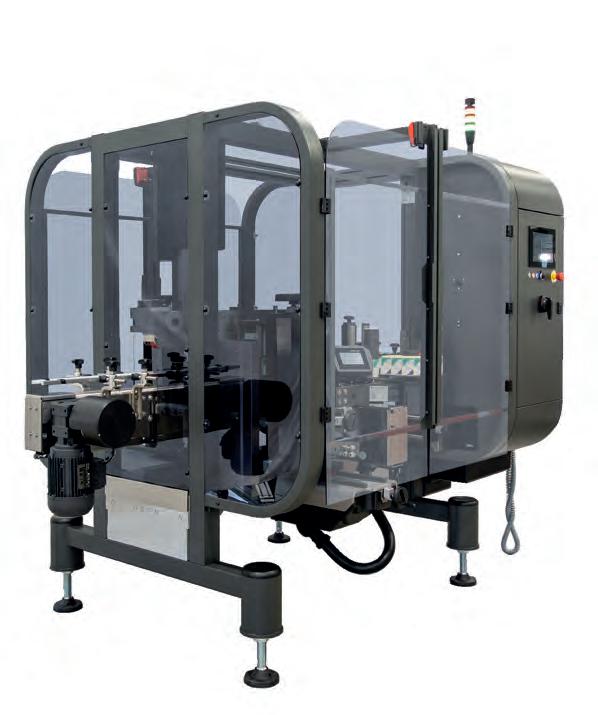
SkyLine: linear labeling solution with pressure sensitive technology, completely ergonomic with automatic adjustments and easy maintenance. This innovative solution, with an ergonomic and attractive design, contains a combination of advantages and functionality that distinguish it from any other linear labeller on the market. The new layout with an elegant design and the high technology on board the machine makes SkyLine a unique solution for multiple markets and different application needs. SkyLine allows multiple applications: front and back labels, wraparounds, collars, I-L-U seals.
It will be possible to see SkyLine live and see it in operation.
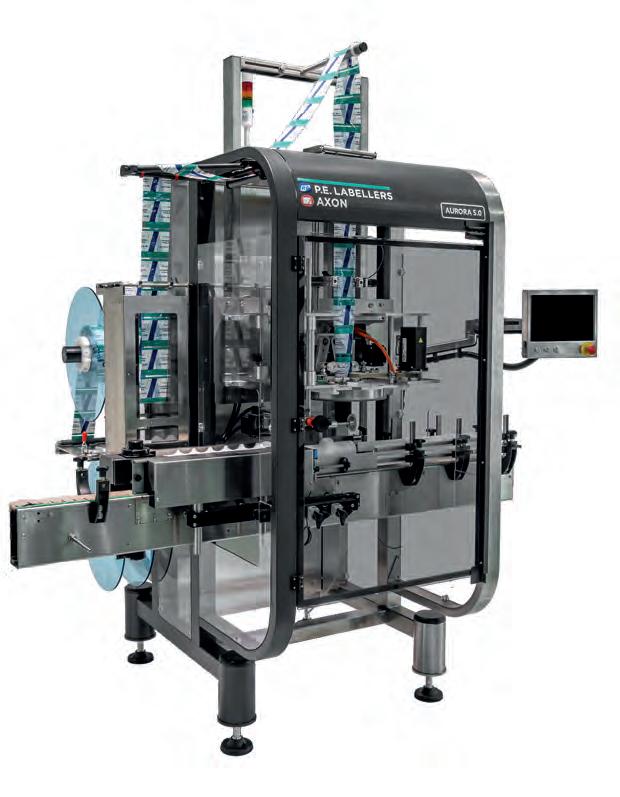
Aurora 5.0: heat shrink sleeve applicator, high speed and with rapid format changes without the use of equipment. This solution offers intuitive interfaces, optional shrink tunnels, for simple and efficient use and integration, and handles five application types: full-body, full-body over cap, partial-body, tamper-evident and multi-pack.
It will be possible to see Aurora 5.0 live and see it in operation.
The highly awaited Düsseldorf fair represents the ideal showcase to exhibit innovative labeling solutions for multiple applications and sectors. The new P.E. systems Labellers open a window onto the future.
P.E. Labellers participates in Interpack 2026 within the large ProMach exhibition area, together with ten other Product Brands part of the American multinational. In the ProMach area there will be present: P.E. Labellers • Zacmi • Zalkin • Reepack •Shuttleworth • Bartelet • Pace • Pharma • FLTècnics • PMIS • L&C, with a total of 12 machines on display.
www.pelabellers.com
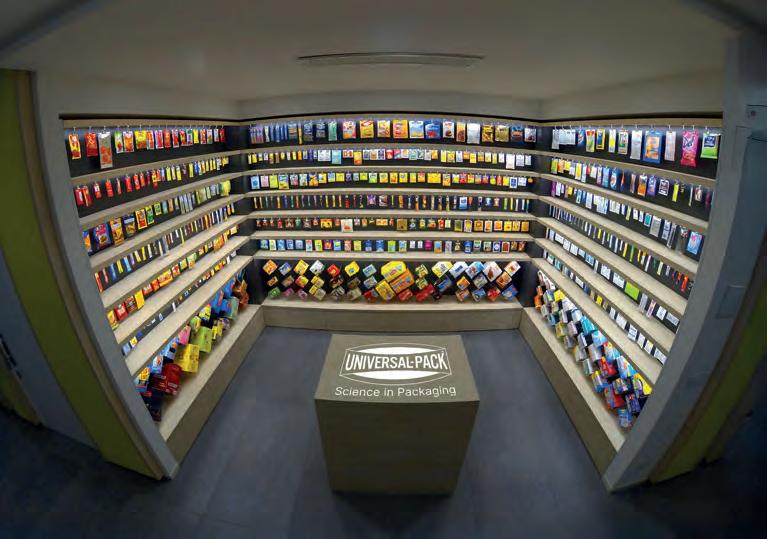
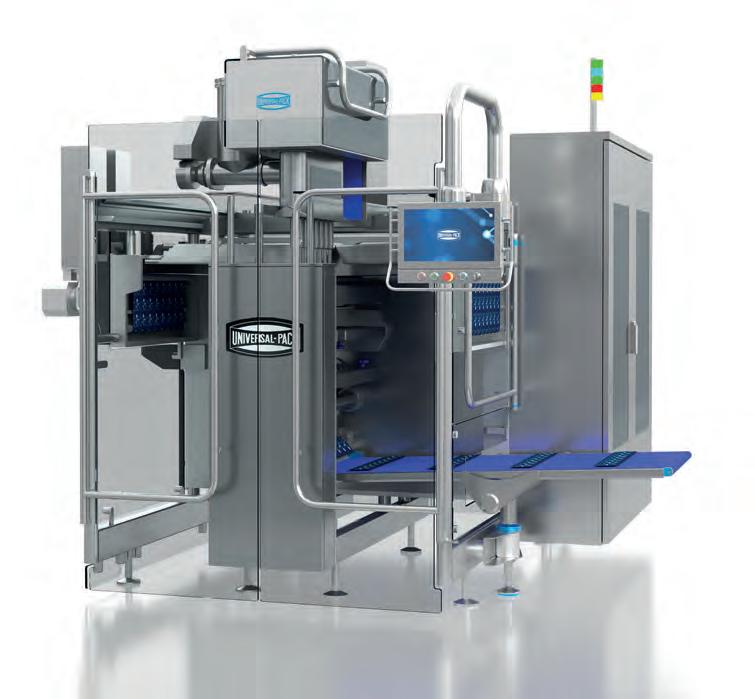
UNIVERSAL PACK: SUSTAINABLE, HIGH-PERFORMANCE SOLUTIONS FOR SINGLE-DOSE PACKAGING AT INTERPACK 2026
At Interpack 2026, Universal Pack will present its latest single-dose packaging technologies, with a focus on sustainability, performance and process safety. The company will exhibit in Hall 16, Stand B42, highlighting solutions developed for food, pharmaceutical, nutraceutical, cosmetic and chemical applications.
A long-established specialist in vertical VFFS machines and complete lines for sachets and stick-packs, Universal Pack continues to position sustainability as a core development driver. Its systems are designed to process compostable, recyclable and recycled laminates , supported by Life Cycle Assessment studies and material testing carried out in collaboration with film manufacturers, multinational groups and university research centres.
The aim is to reduce environmental impact without sacrificing efficiency, compliance or pack quality.
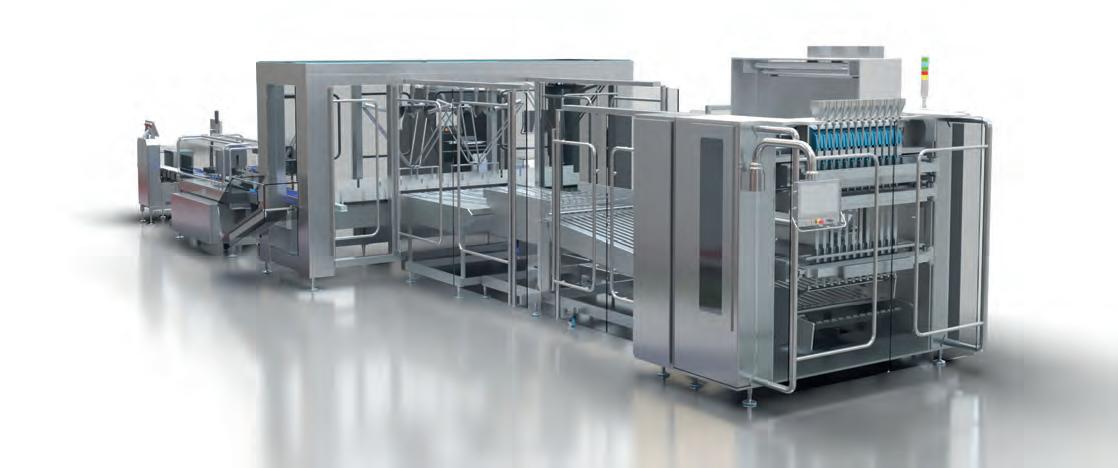
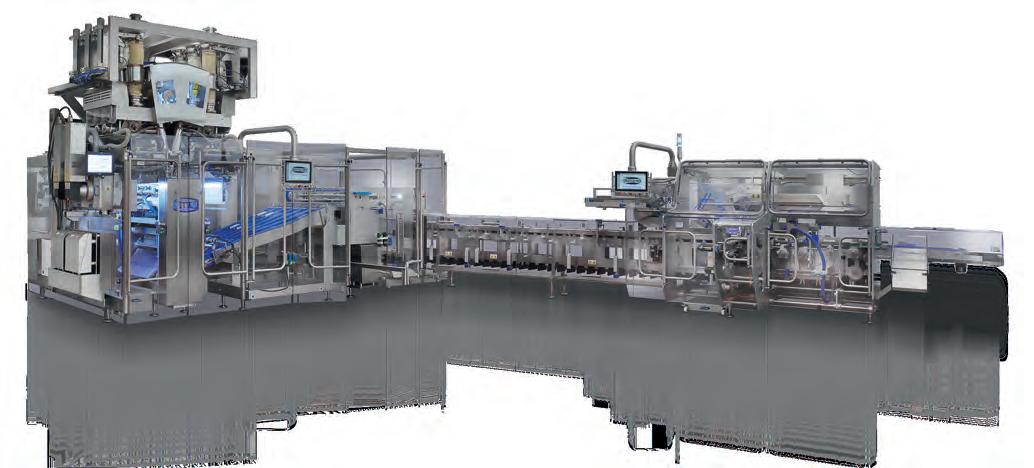
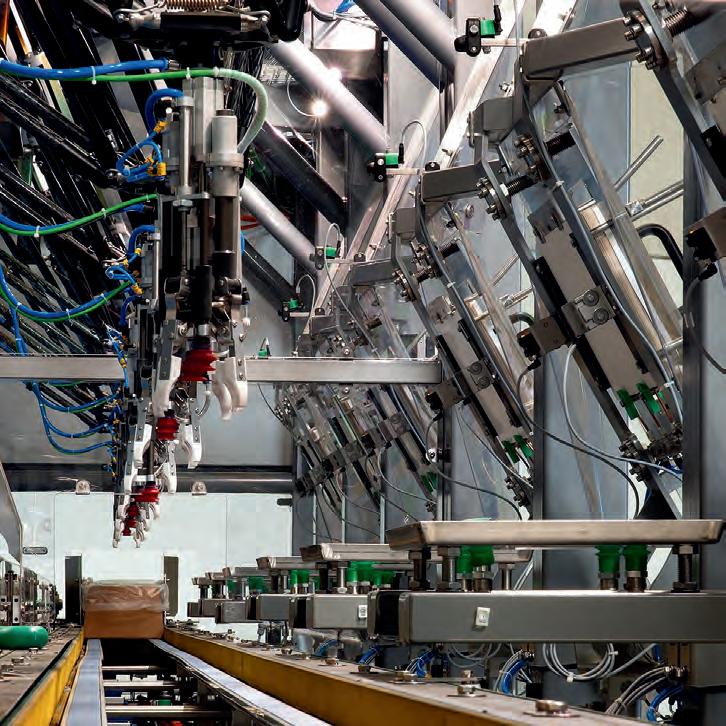
Among the key machines on display in Düsseldorf will be a new stick-pack line equipped with integrated robotic pick-and-place, upgraded stick conveying and counting, and a high-performance cartoning and closing system.
Powered by science, designed by humans.
At Interpack 2026 (Hall 16, Stand B42), Universal Pack will present three advanced technologies developed for the evolving needs of the food industry.
NEW STICK-PACK LINE with integrated pick&place robot
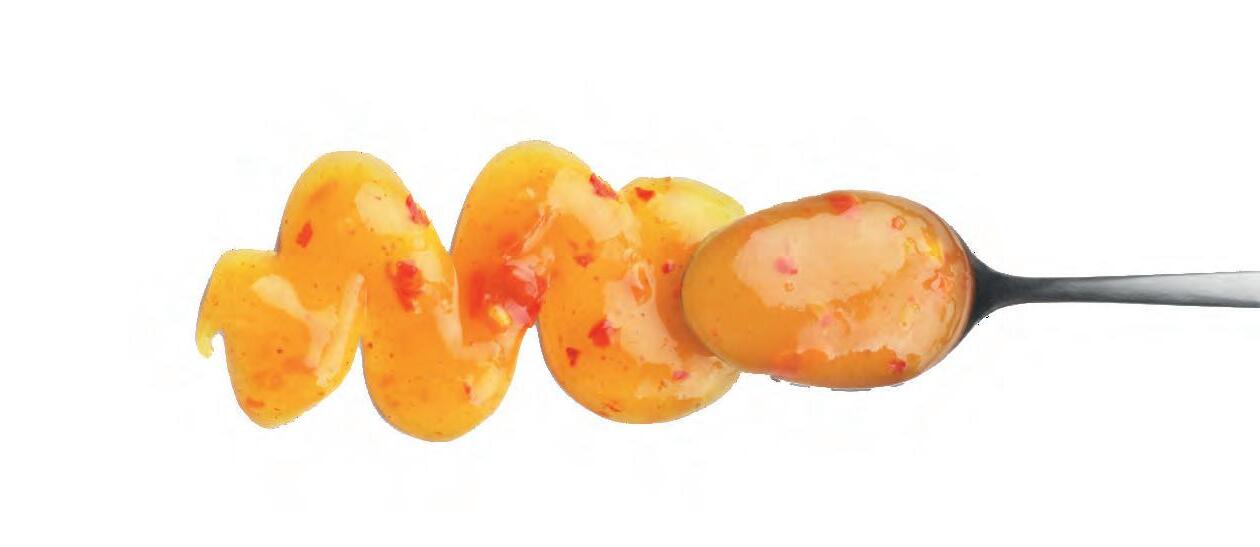
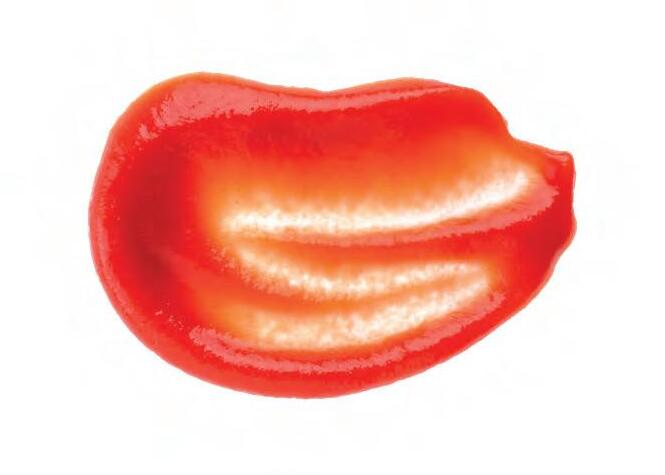
Engineered for powders, sauces and liquid products. Advanced vision systems and inline weight control ensure precision, product protection and reduced waste, even at high speeds.
THETA: High-performance sachet machine
Designed for heat-sensitive food powders like instant coffee and seasonings. Continuous motion, reliable sealing and hygienic stainless-steel construction guarantee efficiency and consistent quality. Proven up to 150 cycles/min.
ALFA FLEXI: the most versatile stick-pack solution
Quick size changeovers and immediate switch from powders to liquids. A flexible platform built for dynamic production environments and multi-product lines. www.universalpack.it | info@universalpack.it
PROCESSES AND PACKAGING
The line is intended for manufacturers handling freeflowing and non-free-flowing powders, as well as sauces and liquids, and supports dual dosing, including two recipes in the same stick-pack. It also offers broad format flexibility, with multiple carton formats and 10- to 100-count configurations, while reaching outputs of up to 60 boxes per minute, depending on format. The line also features 100% inline weight checking, automatic reject and feedback functions, exportable production data and full batch traceability.
Also on show will be the Theta four-side-seal sachet machine, designed for high-speed production while maintaining sealing quality. Proven at up to 150 cycles per minute, Theta uses an innovative horizontal sealing system that can handle thicker films and sustainable laminates, including recyclable and compostable structures, by extending sealing time while working at lower sealing temperatures. With dedicated cooling solutions, it is particularly suited to heat-sensitive food products and formulations.
The display will be completed by Alfa Flexi, Universal Pack’s most
versatile stick-pack machine. Designed for contract packers and manufacturers with diversified production, it enables rapid stick-width adjustment, quick changeover from powders to liquids, genuine multi-format capability and tool-free format changes, helping reduce downtime and improve efficiency in short runs and frequent SKU changeovers.
Universal Pack will also spotlight Universal Lab, its in-house laboratory, which supports material and product analysis to ensure full compatibility between packaging systems and packaged products.
Founded in 1965, Universal Pack marks 60 years of innovation in single-dose packaging, with over 8,000 systems installed in 160 countries and more than 3,000 customers worldwide. Backed by continuous investment in automation, Industry 4.0 and sustainable technologies, the company will welcome visitors at Interpack 2026 (Hall 16, Stand B42) to present solutions for a more efficient and sustainable future.
www.universalpack.it
GAMPACK: EXCELLENCE AND INNOVATION IN INDUSTRIAL PACKAGING
Founded in 2003, Gampack has become a global reference in secondary packaging and end-ofline turnkey solutions. With over 20 years of experience in packaging automation and a strategic acquisition in 2020 of a renowned Italian robotics company, Gampack serves industries such as food & beverages, cosmetics, pharmaceuticals, and pet food with tailored, high-performance systems.
A Company with an Innovative DNA
Gampack is renowned for its innovative approach to designing and manufacturing advanced secondary and tertiary packaging systems.
Our production is primarily structured around three specialized internal divisions (Automatics, Robotics and Palletizing Divisions), each focused on delivering high-performance solutions across different packaging areas.
A recent example of our expertise is a specialized production line for the pharmaceutical industry, designed to pack cartons into American cases. In this process, the case-packer prepares the pre-erected cases, which are then filled by a 6-axis robot and finally sealed with adhesive tape, achieving an output speed of 12 cases per minute. A dedicated labelling machine subsequently applies an overwrapping warehouse pallet label to each case. Finally, as the cases move towards the palletizing
cell, a Cobot places them on the pallet, creating the layer configuration requested by the customer.
This cutting-edge solution exemplifies Gampack’s commitment to delivering top-level technological systems tailored to the specific needs of each sector also in small spaces.
Flexibility and Reliability
Flexibility is a cornerstone of Gampack’s design philosophy. Its machines can quickly adapt to various packaging sizes and production needs, ensuring maximum versatility.
With over 1,700 installations worldwide, Gampack guarantees solutions tailored to the customer’s needs, backed by excellent after-sales service, which distinguishes the company from its competitors.
PROCESSES AND PACKAGING / TECHNOLOGY COSMETICS
This includes timely spare parts supply and technical interventions on production lines within 24 hours from the customer’s request to ensure seamless operational continuity, reinforcing the company’s reliability.
Two Decades of Growth and Vision
Led by co-founder and President Giuseppe Gazzola, Gampack pursues continuous innovation and ambitious
growth. A solid management team supports its futurefocused strategy, driving success while maintaining Gampack’s core identity. With an unwavering focus on innovation and sustainability, Gampack strengthens its leadership by offering full turnkey systems-from processing line output to palletizing and pallet transport to automated warehouses via AGVs
www.gampackgroup.com
SUSTAINABLE AND AUTOMATED PACKAGING SOLUTIONS BY HENKEL
Henkel publishes a white paper dedicated to automation and sustainability in e- commerce packaging. Entitled ‘The ideal solution: packaging automation in e- commerce.
E-commerce continues to grow rapidly, leading to an explosion in shipping volumes. This dynamic is accompanied by logistical, economic and environmental challenges: rising material costs, saturated storage capacity, increasing regulatory pressure and heightened consumer expectations. Faced with this context, e-commerce players are seeking to rethink their packaging chains. All too often, parcels are oversized, filled with unnecessary padding, or, conversely, insufficiently protected. These practices generate additional costs, waste materials and undermine the customer experience.
In its white paper ‘The ideal solution: packaging automation in e-commerce’, Henkel proposes an integrated approach to optimising packaging processes. The central idea is to automatically adapt the size of the box to the product being shipped, using intelligent packaging systems. This technology reduces empty space in parcels, eliminates unnecessary padding materials, and makes better use of space in warehouses and vehicles. The result: substantial savings in transport costs, lower CO2 emissions and a more efficient supply chain. A development
supported by European regulations The new European Packaging and Packaging Waste Regulation (PPWR) sets out a clear framework: by 2030, empty space in a parcel must not exceed 50% of its volume. This requirement encourages companies to adopt size- appropriate solutions, contributing to waste reduction and resource conservation. Henkel is anticipating these developments by offering concrete solutions based on automation and adhesive innovation that can help e-retailers comply with regulations while enhancing their operational efficiency. Adhesives: a key factor in performance While the size of the box is crucial, so is how it is sealed. The hot melt adhesives developed by Henkel are a key factor in the success of right-sized packaging.
Unlike conventional adhesive tapes, these adhesives ensure fast, stable and clean sealing without compromising the recyclability of the boxes. In addition, their low-temperature application reduces machine energy consumption and improves safety on production lines. A concrete example illustrates this efficiency: a major British e-commerce player that adopted Henkel hot melt adhesives was able to reduce its glue consumption by 52%
PROCESSES AND PACKAGING / TECHNOLOGY
and its energy consumption by 42%. These measurable gains demonstrate the added value of the technology in a circular economy approach. Combining efficiency, sustainability and customer satisfaction Adopting ap propriately sized packaging is not just a technical issue. It also contributes to improving the customer experi ence. Consumers receive better- proportioned parcels that are easier to handle and contain less unnecessary material to recycle. This consistency between logisti cal efficiency and environmental responsibility helps to strengthen trust in brands and enhance their image. In a market where returns due to damaged products weigh heavily on margins, optimising protection and cushioning is also becoming a factor in competitive ness. A white paper as a strategic tool Henkel is making its expertise available to the industry through a white paper that details best practices for automating and optimising packaging pro cesses. This guide is intended for companies seeking to reduce costs, accelerate their flows and integrate sus tainable solutions into their production model. Through this initiative,Henkel confirms its role as a key partner in supporting the ecological and technological transition of the packaging sector.
Henkel, one of the world’s leading manufacturers of ad hesives, sealants and functional coatings, continues its mission of responsible innovation. In 2024, the group achieved sales of €21.6 billion and employs nearly 47,000 people worldwide. Its commitment to sustain ability and its integrated approach, combining technical expertise and environmental awareness, make it a key player in industrial developments.
www.next.henkel-adhesives.com
AUTOMATION PACKAGING ADHESIVES SECTORS
BOXON LAUNCHES FIRST FOOD-CONTACT APPROVED RPET
BIG BAGS IN EMEA
Combining recycled materials with improved industrial performance
Boxon, a specialist in intelligent packaging solutions, is launching a new generation of rPET Big Bags made from recycled PET bottles, the first recycled Big Bag approved for direct food contact. The solution will be introduced across the EMEA market starting in week 12.
The new Big Bag represents an important step forward in circular industrial packaging. By combining recycled materials with high-performance characteristics and food-contact approval, the solution enables companies to reduce environmental impact while maintaining the strict safety and operational standards required in regulated supply chains.
Across industries, companies are facing growing demands to reduce environmental impact, comply with tightening regulations and maintain reliable supply chain
operations. Regulations such as the EU’s Packaging and Packaging Waste Regulation (PPWR) and ambitious corporate sustainability targets are accelerating the transition toward circular materials.
The new Boxon rPET Big Bags address these challenges by combining recycled content with industrial durability and reliability. Made from recycled PET bottles, the bags provide a significantly lower carbon footprint while also improving performance in demanding bulk-handling environments.
“Companies today need packaging solutions that support both compliance and operational efficiency,” says Florence Abgrall, Business Unit Manager at Boxon. “Our rPET Big Bags make it possible to transition to recycled materials without compromising durability, handling performance or supply reliability, while also meeting strict food-contact requirements.”
The rPET Big Bags are designed for food, chemical and other demanding industrial applications. The material offers several operational advantages compared with traditional solutions, including improved UV resistance, higher abrasion resistance and better form stability during transport and handling.
In addition, the bags provide sharper print quality, enabling clearer markings, improved traceability and better control in regulated supply chains.
With the introduction of rPET Big Bags, Boxon continues to support customers in transitioning toward circular packaging solutions that meet regulatory requirements while improving performance and efficiency across the supply chain.
Key facts – Boxon rPET Big Bags
•Made from recycled PET (PCR) material
•First recycled Big Bag approved for direct food contact
• Up to ~50% lower carbon footprint vs. virgin PP solutions
•Improved UV and abrasion resistance
•Temperature resistance from -20°C to +140°C
• Clear documentation and proof of compliance available
About Boxon
Boxon develops and delivers intelligent packaging solutions that improve efficiency, sustainability and performance across global supply chains. With deep expertise in industrial packaging, Boxon supports companies in designing, optimizing and securing packaging solutions for demanding logistics environments.
www.boxon.com
LABELLING
COSMETIC PACKAGING: BALANCING AESTHETICS, FUNCTIONALITY AND INDUSTRIAL PERFORMANCE latest
By the editorial staff
In the cosmetics industry, packaging sits at the intersection of product protection, brand identity and manufacturing performance. Unlike sectors where visual appeal is secondary, cosmetic packaging must function technically while also communicating positioning, quality and desirability.
For manufacturers, this creates a demanding equation: the package has to preserve sensitive formulations, perform reliably on automated lines, support logistics efficiency and deliver a distinctive presence on the shelf. In industrial terms, packaging is both a production variable and a strategic market asset. Design is therefore never a purely aesthetic exercise. The geometry of a bottle, jar, tube or compact influences filling behavior, line stability, transport resistance and consumer ergonomics. A refined finish or an unusual shape may strengthen differentiation, but it can also introduce complexity in handling, orientation or labeling. This is why packaging development in cosmetics increasingly requires close cooperation between marketing, design, engineering and operations. The success of a package depends on its ability to align visual impact with repeatable industrial execution.
Functionality has become just as important as appearance. Airless systems, precision pumps, controlled dispensing devices and contamination-resistant closures are widely used to improve the user experience and protect product integrity. This is particularly relevant for formulations containing active ingredients or natural components that are more vulnerable to oxidation and microbial exposure. In these cases, the package is not just a container, but a performance device that helps preserve efficacy over time.
Production flexibility is another defining issue. Cosmetic manufacturers often manage broad portfolios, rapid launches, promotional editions and frequent design updates. Packaging lines must therefore accommodate multiple SKUs and formats while maintaining speed and consistency. Quick changeover capabilities, modular equipment and digital setup management are becoming essential to support this level of variability. The more
dynamic the product strategy, the more critical packaging line adaptability becomes.
Material innovation is also reshaping the sector. Recycled plastics, glass-lightweighting strategies, mono-material components and refill-ready architectures are gaining ground as sustainability expectations increase. Yet the challenge is not merely to switch materials. The new solution must remain compatible with decoration processes, sealing performance, chemical resistance and brand perception. In premium cosmetics, for example, sustainability must be introduced without sacrificing tactile quality or visual refinement. This makes material substitution a more complex project than it may initially appear.
Decoration technologies deserve special attention because they are central to differentiation. Digital printing, metallization, hot stamping, silk-screen printing
and textured coatings allow brands to express a distinctive identity, but they also add process complexity. Adhesion, scratch resistance and consistency across batches are vital for industrial reliability. A visually striking pack that performs poorly in production or distribution can quickly become a costly liability.
Supply chain performance is part of the same equation. Cosmetic packaging must resist transport stress, support efficient secondary packing and remain stable in storage and retail display. Fragility, dimensional inconsistency or poor stackability can undermine operational efficiency long before the product reaches the consumer. For this reason, many companies now evaluate packaging through a full-lifecycle lens, from filling to unboxing.
Digitalization is supporting this evolution. Vision inspection, real-time process monitoring and data analysis help manufacturers control decoration quality, dosing accuracy and assembly consistency. These tools make it easier to balance aesthetics with industrial discipline. For cosmetics manufacturers, packaging is no longer just a vehicle for presentation. It is a technical system that must reconcile creativity, process reliability and sustainability in one coherent industrial solution.
Refillable concepts illustrate this shift particularly well. They promise lower material consumption and stronger consumer engagement, but they also require precise tolerances, durable components and a packaging architecture that can survive repeated use without losing functionality or premium appeal. From an industrial
standpoint, refillability changes the design brief completely.
This is why cosmetic packaging has become one of the most advanced fields of applied packaging engineering. Companies that can integrate design ambition, technical robustness and manufacturing efficiency are better positioned to respond to a market where innovation must be visible, credible and scalable. In practice, the package has become part of the product itself.
ETIPACK AT INTERPACK2026
A dual presence connecting flexibility, integration and sector expertise
At Interpack2026, Etipack presents a dual exhibition presence that reflects its ability to operate across different packaging sectors while maintaining a consistent engineering approach focused on flexibility and system integration.
The company will exhibit in Hall 8b – Stand C49, within the exhibition space shared with other companies of the Possehl Group active in identification and packaging technologies, and in Hall 16 – Stand B22, with a dedicated focus on pharmaceutical and medical applications developed in collaboration with LSS Labelling Systems Scandinavia. Together, the two stands outline a coherent industrial vision applied to different markets.
Addressing multiple packaging applications across Hall 8b and Hall 16
In Hall 8b, Etipack’s presence is dedicated to labelling solutions for food and consumer goods packaging, where adaptability and integration play a central role. The applications presented represent consolidated areas of use, selected to illustrate Etipack’s ability to design labelling systems that can be adapted to different formats, container geometries and production speeds.
Rather than highlighting individual machine features, the exhibition focuses on how labelling systems fit into the overall packaging process. Etipack’s solutions are con-
ceived as functional components within automated lines, designed to operate in synchrony with upstream and downstream equipment and to respond to layout constraints defined at line level.
The presence in Hall 16 highlights Etipack’s experience in pharmaceutical and medical packaging, where precision, compliance and process validation are essential. While operational requirements differ from food and consumer goods applications, the underlying design principles remain the same: customization, integration and long term reliability.
Engineering integration for line builders and system designers
A significant part of Etipack’s activity is carried out in close collaboration with OEMs and manufacturers of complete packaging lines, including both multisector line builders and OEMs specialized in pharmaceutical packaging. In these projects, labelling systems are designed as integrated modules, aligned with the overall automation architecture of the line.
PROCESSES AND PACKAGING / TECHNOLOGY
For both segments, Etipack can rely on solid references and long standing partnerships, built through collaborations that often extend over many years. This continuity reflects Etipack’s ability to support complex projects over time, adapting its solutions to evolving technical, regulatory and market requirements.
This collaborative engineering model allows line builders to integrate labelling solutions that are technically consistent, repeatable across projects and adaptable to different end user specifications, contributing to overall line coherence and performance. The broader industrial context of the Possehl Group provides stability and continuity, supporting Etipack’s long term development while preserving its strong application focus and technical identity.
www.eitpack.it
LABELLING PACKAGING CODING SECTORS
FACHPACK 2027
The Must-Attend Event for the Packaging Industry
FACHPACK (September 21–23, 2027, Nuremberg) is the European trade fair for packaging, technology, and processing. It serves as a central meeting place for the packaging industry and its users. The event has been held in Nuremberg for over 40 years and offers a concise yet comprehensive overview of all relevant topics in the packaging industry.
On the exhibitor side, FACHPACK covers the entire packaging process chain for industrial and consumer goods: packaging materials, packaging and accessories, bottling and packaging machinery, labeling, marking and identification technology, machinery and equipment for packaging periphery, packaging printing and finishing systems, palletizing technology, intralogistics and services.
For companies in these industries, the reasons for exhibiting at the trade show are clear, as FACHPACK brings them
into contact with a wide range of end-user groups: FACHPACK visitors come from all packaging-intensive sectors, such as food/beverages, luxury foods, pharmaceuticals/ cosmetics, chemicals, healthcare, non-food, e-commerce, pet food, other consumer goods, as well as automotive, technical products, medical technology, and other industrial goods.
With its key theme, “Transition in Packaging,” FACHPACK also stands for innovation and, over three days, fos-
ters lively exchange between packaging experts and newcomers regarding novel packaging concepts, trends, and solutions. This offers the opportunity to tackle packaging topics together with (new) partners, share knowledge, and think ahead.
FACHPACK serves as a guide and meeting place for everyone rethinking packaging. Here, all industries that drive innovation and set new standards with their products come together. Exhibitors at FACHPACK present themselves to an audience seeking solutions – and experience the entire value chain in a depth that no other trade show offers. FACHPACK exhibitors shape the market, provide impetus, and drive developments forward.
Companies across the entire packaging for industrial and consumer goods process chain should therefore secure their booth for September 2027 now and not wait until the best spots are taken.
FACHPACK is also a hub for young companies and startups that have developed innovative products. They shouldn’t miss out on FACHPACK 2027 either and should secure their booth space right away. FACHPACK offers newcomers and small businesses a variety of attractive opportunities to showcase themselves and their products, find new customers and potential partners, and become part of the FACHPACK community.
Companies can find all the information they need about participating in FACHPACK 2027 at www.fachpack.de
Contact in Italy: Marianna Lucca NürnbergMesse Italia – marianna.lucca@nm-italia.it
PACKAGING TECHNOLOGY PROCESSING SECTORS
Paris Nord Villepinte, France
2 PACK OR NOT 2 PACK?
Stop struggling and get the latest innovations for all your packaging processes.
THE MULTI-SPECIALIST TRADE SHOW FOR THE ENTIRE PACKAGING INDUSTRY
Processing and packaging machinery in operation
Automation, quality control, and robotics: improve the performance of your production lines
A business meeting service to help bring your investment projects to fruition
NEW AREAS TO DISCOVER
Paris Talks: three days of themed conferences to reinvent, revitalize, and promote packaging. Matters Matter: new materials, recycled alternatives, technical innovations… explore the future of materials.
Hack a Pack: when packaging design redefines the rules to reveal a brand’s potential. Re-Generation: concrete solutions to accelerate the transition to more sustainable packaging.
LUXURY PACKAGING IN THE AGE OF SMART DESIGN
Combining exceptional craftsmanship with digital innovation, smart packaging is redefining luxury
Packaging, a new frontier for innovation in luxury goods
In the world of luxury goods, every detail counts. Long dominated by artisanal expertise, luxury packaging is now emerging as a strategic area of innovation. Leading brands seek to preserve the emotion of the gesture (folding, gilding, paper texture) while integrating invisible technologies that extend the experience beyond the object itself. The challenge is no longer just aesthetic: it is about creating consistency between tradition, authenticity and innovation. Smart packaging is thus a natural extension of modern luxury, where the soul of the product meets technological precision.
When digital technology enhances the craftsmanship of packaging
Digital innovations do not replace packaging expertise, they enhance it. Packaging artisans now collaborate with engineers, data designers and connected materials specialists. Conductive inks, NFC tags and invisible QR codes add a layer of information, storytelling or after-
sales service elements without altering the aesthetics. A bottle or box then becomes a digital passport capable of tracing the origin of the product, ensuring the traceability of raw materials and the signature of the artisan.
In the workshops, the meticulous gestures remain the same, but the purpose changes: it is no longer just a question of ‘making things beautiful’, but of ‘making the invisible visible’.
Transparency and traceability: blockchain at the service of luxury packaging
In a context where provenance and authenticity have become essential, smart packaging meets the demand for absolute transparency.
Fashion houses, jewellers and perfumers now use blockchain to certify the origin of their creations and combat counterfeiting. Each piece of packaging becomes a living certificate, a direct link between the customer and the brand.
This new relationship of trust reinforces the value of the product and repositions packaging as a central player in the luxury value chain, from the initial design to the object’s second life.
Connected packaging: an immersive and emotional experience
Beyond security and traceability, connected packaging is becoming a medium for immersive experiences. Thanks to embedded technologies, it extends the emotional link between the brand and the customer.
With a simple scan, the customer can now access exclusive content: a video of the master craftsman, a virtual tour of the workshop, or even a playlist designed to accompany the opening of the box.
Long considered an accessory, packaging (and by extension, unpacking) is becoming a ritual, and technology is enhancing its magic. Here, digitalisation is not a gimmick: it serves to tell a story and pass on a heritage.
Responsible
luxury: packaging in the era of ‘low tech premium’
The rise of smart packaging goes hand in hand with an ecological imperative. Luxury can no longer afford to outbid itself in terms of materials. Innovations are moving towards recyclable, bio-based or biodegradable materials, incorporating discreet sensors or smart inks
without compromising recyclability.
Eco-design is combined here with high-precision technology: connected solutions are integrated into lightweight structures, often produced locally. This is the era of ‘low tech premium’ – conscious, understated and intelligent luxury.
An industry in transition
This transformation is profoundly changing the luxury packaging industry. Traditional suppliers are now collaborating with technology start-ups, research laboratories and experimental design studios. Major luxury groups are creating their own innovation hubs, where artisans rub shoulders with data scientists. Packaging is becoming a strategic pillar of differentiation, a vehicle for storytelling and responsibility. This convergence between technology and tradition is reshaping the entire value chain: design, production,
logistics, recycling and customer relations. Luxury product packaging, once a symbol of timelessness, is now pioneering sustainable modernity.
PLAST 2026: GROWING NUMBER OF NEW EXHIBITORS
Plast 2026 is preparing for its twentieth edition, scheduled for 9-12 June 2026 at Fiera Milano, registering a positive performance despite the complex international geopolitical and economic scenario characterised by trade tensions and instability in global markets.
The Milan-based event, Europe’s premier trade fair of the year for the plastics and rubber sector, demonstrates its resilience with the participation of over 160 new exhibitors to date compared to the previous edition, 30% of which are represented by international companies.
This result takes on particular significance in a decidedly complex market context, which sees strategic sectors such as automotive undergoing a phase of transformation and adaptation to current global dynamics.
The ability to attract new exhibitors in this scenario confirms the solidity and international appeal of Plast and underlines the sector’s growing confidence in the Milan event as a reference platform for presenting innovations and developing commercial partnerships.
The organisation also aims to significantly increase the presence of international visitors with representatives from the main destination countries for Italian exports, thanks to buyer delegations organised in collaboration with ICE Agency and strategic agreements with important trade associations, both within the sector and representative of target markets.
Free pre-registration for visitors will be active from March 2026.
The event will further enrich its offering with a programme of side events to be announced in the coming weeks.
A market of strong potential
The “Made in Europe” machinery segment is characterised by a strong export orientation, including towards
emerging markets with growing investment propensity, and maintains a strategic role in the global scenario. Access to these markets represents a fundamental lever for consolidating the excellence of European companies, particularly manufacturers of machinery for plastics and rubber processing.
Innovation and technology at the centre
The twentieth edition promises to be an exclusive showcase for the most advanced solutions for the plastics and rubber industry, confirming the tradition of excellence that has characterised the Milan event for decades and responding to growing requirements in terms of technological innovation and environmental sustainability in the sector.
Plast
Plast 2026 is Europe’s leading trade fair of the year dedicated to the plastics and rubber industry, scheduled for 9-12 June at Fiera Milano.
Organised by Promaplast, the event represents the reference platform for the presentation of processing equipment for plastics and rubber and state-of-the-art raw materials for the production of semi-finished and finished
products, as well as a unique opportunity for establishing new commercial relationships.
Event details
Dates: 9-12 June 2026
Venue: Fiera Milano, Rho Pero (Milan)
www.plastonline.org
MIKRON AUTOMATION GLOBAL PARTNER FOR PHARMA & MEDTECH ASSEMBLY
Mikron Automation, a division of the Mikron Group, delivers advanced assembly solutions for Pharmaceutical and Medtech devices, supporting production across inhalation, injectables, monitoring, wearables, diagnostics and more.
Headquartered in Switzerland with over 1,000 employees and sites in the USA, China, Singapore, and Lithuania, we deliver scalable platforms, complex process expertise, and lifelong support. Our services include DFM, PoP, PFMEA, and full validation in compliance with FDA, GMP, and GAMP 5 standards. This is complemented by comprehensive digital solutions.
A trusted partner for flexible and scalable assembly solutions
Mikron Automation has built a strong international reputation based on quality, process expertise, innovation, risk management, and long-term commitment to its customers.
PROCESSES AND PACKAGING / TECHNOLOGY
Scalable, modular assembly solutions supporting every stage of the product lifecycle.
To meet evolving customer needs, Mikron specializes in flexible and customized assembly solutions designed to adapt seamlessly throughout the different stages of a product lifecycle — from early development phases to fully automated, maximum-performance production. This lifecycle-driven approach enables manufacturers to reduce risk, optimize investments, and ensure a smooth transition from pilot lines to high-volume manufacturing.
As part of its scalability strategy, Mikron has developed Mikron MAIA, a low volume assembly and test platform designed to produce single or multiple variants of medical devices such as auto injectors, pen injectors, and syringes.
Addressing the specific needs of early drug device manufacturing, Mikron MAIA enables process validation, comprehensive data collection, and a secure preparation for production ramp up. All key assembly processes are fully automated, with station parameters designed for reuse in later production phases. High flexibility and reusability are ensured through fast and simple retooling, supported by dedicated tooling for device and variant management. Fully automated, ISO 7 cleanroom compatible, compressed air free and 100% servo driven, Mikron MAIA ensures repeatable quality and minimal industrial risk.
As volumes increase and products reach a higher level of industrial maturity, validated processes can be seamlessly transferred to the Mikron G05. Built on standar-
dized modular building blocks, the Mikron G05 – Modular assembly and test cell is a linear assembly and test platform delivering high speed, precision, and reliability. Its cam driven motion concept ensures perfect synchronisation between workstations and the pallet indexing system, with indexing steps tailored to production needs.
Systematic in process quality controls after each assembly step guarantee consistent product quality.
Thanks to its modular architecture and ability to scale from semi automatic to fully automated high performance lines, the Mikron G05 represents the natural continuation and conclusion of Mikron’s scalable assembly offering.
Minimum risk with flexible production starts
This scalable production concept enables customers to start manufacturing earlier, with minimal risk and a high degree of flexibility, including phased production ramps when required.
For decades, Mikron Automation has been recognized worldwide as a trusted partner for high-performance automation solutions in the large-scale manufacturing of precision products. Its leadership in scalable and flexible automation systems further strengthens its position as a first-choice, long-term partner for pharmaceutical and medical device manufacturers.
Digital Solutions – maximizing performance through data & insights
To complement its scalable assembly platforms, Mikron offers a comprehensive suite of Digital Solutions designed to increase machine availability, transparency, and performance throughout the entire lifecycle of a
production line. The modular software portfolio transforms real time machine data into actionable insights for operators, maintenance teams, and quality departments-enabling faster decisions and more stable processes.
With native connectivity to Mikron equipment and full compatibility with non-mikron systems, customers benefit from immediate visibility on rejects, alarms, trends, and capability indices, while advanced monitoring detects anomalies early and reduces unplanned downtime.
Combined with secure remote support, Mikron Digital Solutions enhances reliability, ensures full traceability, and strengthens our position as a long-terme partner committed to delivering high performance, data driven manufacturing.
SWISS Pavillion
ADVANCED PACKAGING SOLUTIONS: ARONPAK AT INTERPACK 2026
In the packaging industry, the choice of automated, reliable, and customized solutions is now one of the key factors determining a company’s competitiveness. Within this context, Aronpak is the business unit of Rossi Ingegneria Alimentare specialized in the development of packaging systems.
Aronpak’s numerous strengths include its ability to design complete, customized, turnkey packaging and handling lines for containers made of tinplate, aluminum, glass, plastic, and cardboard, managing the automation of the en-
tire packaging solution and ensuring full integration among the different machines in the line.
Among its leading technologies are seamers for tinplate and aluminum cans, designed to ensure high reliability and operational efficiency even at speeds of up to 1,000 containers per minute; the robust stainless steel structure and the closed-loop oil lubrication system ensure long component life and simplified maintenance, while the design is engineered to guarantee maximum hygiene and easy access for cleaning and maintenance.
Alongside closing systems, Aronpak also develops piston fillers, vacuum fillers, and flowmeter fillers for liquid, dense, semi-dense, and viscous food
products, with or without particulates, for glass and plastic containers, as well as jars and cans. The available configurations can reach operating speeds of up to 1,200 containers per minute while maintaining high filling accuracy and maximum safety.
The offering is rounded out by pasteurization, heating, and cooling tunnels capable of handling all types of products and containers; depalletizing and palletizing systems, either robotic or Cartesian, with the possibility for dedicated product-specific grippers; as well as conveying systems and accessories designed to optimize the production flow and improve overall line efficiency.
Drawing on its longstanding expertise, Aronpak also provides engineering consulting services to develop fully customized projects and support clients through every stage, from layout design to production start-up.
Aronpak technologies can be integrated with the food processing solutions developed by Rossi Ingegneria Alimentare, creating complete systems that cover every stage of industrial production, from product processing to final packaging.
Participation in Interpack 2026 represents an important opportunity to showcase to the international market technological solutions designed to ensure efficiency, production flexibility, and operational reliability in modern packaging lines.
Hall 11, booth E65
www.ingarossi.com
WATTTRON’S CERA2HEAT: OPTIMIZED THERMOFORMED PACKAGING WITH LOWER MATERIAL USE
With its new cera2heat thermoforming process, watttron promises packaging material savings of up to 50 percent, saving resources and costs. Packaging manufacturer GEA presented the system in operation at watttron‘s plant in Freital, Germany, to media, customers and investors
A new thermoforming process “cera2heat”, developed by German startup watttron, is capable of consistently producing uniform, thin-walled packaging shapes like yoghurt pots thereby reducing material use by up to 50 percent. With precise temperature control of individual “heat pixels”, the process can reliably handle mono-materials and also eliminate common packaging defects, including faulty shapes.
The patented cera2heat technology was presented to
media, customers and investors at the watttron plant in Freital last week. Watttron cooperated with GEA who had integrated cera2heat into their machines for the live demonstrations on December 4.
Cera2heat enables the optimization of packaging for food and beverages such as yoghurt and coffee capsules as well as meat and sausages. The process reduces material use by up to 50 percent compared with conventional thermoforming.
“The reduction in material leads to cost savings. While this depends on each individual case, we can say that on average it’s in the region of five to six figure Euros annually,” says Dr. Sascha Bach, Chief Technology Officer at Watttron.
PROCESSES AND PACKAGING
More consistent packaging despite thinner base material
A cost-effective packaging choice for perishable and durable products alike, thermoforming applies heat to a polymer film to create a desired shape. Traditional thermoforming has a single temperature setting and therefore heats the material uniformly, rather than targeting known problem zones: The bottom corners of the cavity are often affected by thinning, an issue for overall packaging strength. To give the container the necessary stability, manufacturers may use thicker base material.
Watttron’s cera2heat system can generate defined heterogeneous heating fields for problem areas using a large number of individually controllable small heating pixels. This allows the polymer film to be heated in a targeted manner and the flow behavior of the material to be optimally adapted to the desired packaging shape. This ensures a uniform wall thickness and therefore stable packaging but with a much thinner plastic film, significantly reducing the amount of material used.
Watttron’s heating system consists of multiple square 5-millimeter heat pixels, around the same size as a pencil eraser. The temperature of each pixel can be individually programmed and controlled to cope with varying heat requirements - up to 200 degrees Celsius - across the entire packaging shape. The pixels are arranged in 40 x 40 millimeter modules in any order and combination, which allows for an unlimited heating area, an advantage for thermoformed packaging with different geometries.
With cera2heat thermoformed packaging can be produced optimally, saving resources and costs at the same time. Because the wall thickness of the molded part is more homogeneous, a thinner plastic film can be used for the same product. The packaging manufacturer saves material and costs.
Optimal shaping even for complex geometric shapes
“With our cera2heat, any plastic film can be heated to suit the desired thermoforming geometry. Surfaces that need to be formed more acutely can be heated more strongly than areas that are formed less or not at all. This system helps distributing the material as desired,” says Bach.
A positive effect of the increased functionality is the system’s low energy costs compared to conventional thermoforming heating systems. The heater heats up efficiently and can remain switched off during cycle breaks. This means that up to 30 percent energy can be saved because the heterogeneous heating of the surface makes targeted use of the energy.
The exact temperature of the individual heating pixels is visualized on a screen during production. Individual pixels can be specifically controlled and heated differently if required.
The cera2heat system can be retrofitted or integrated into production lines.
PROCESSES AND PACKAGING /
Advantages when processing mono-materials
“Cera2heat has already proven its value in terms of quality and material savings. Mono-materials will play a much greater role in all packaging in the coming years, and cera2heat will therefore be a reliable companion on packaging machines,” says Bach.
Mono-materials offer both cost-effective recycling and a viable alternative to mixed materials, which are notoriously difficult to separate. However, materials such as polypropylene still pose a challenge in thermoforming as they need to be processed within a narrow temperature range. This increases the challenges for the thermoformed packaging industry.
The packaging market is increasingly demanding in terms of product aesthetics, performance and cost - and the industry has responded with improvements in design and manufacturing technologies. This includes many advances, including this heating pixel-based technology, cera2heat.
Watttron customers currently using the cera2heat process include GEA and Multivac.
For the cera2heat matrix heating system, watttron was awarded the German innovation award for climate and environment (der deutsche Verpackungspreis für Klima und UmweIt - IKU) and the German Packaging Award.
At its lab at the watttron Freital Technology Center, a team is working on further areas of application. For example, watttron has developed cera2seal, a seal-heating system that reliably seals even complex geometric packaging.
About Watttron
A startup company established in 2016, watttron specializes in digital heating technologies that allow precise processing of mono-materials, a preferred choice for recyclable packaging. Through its patented engineering technologies, Watttron supports manufacturers by reducing the complexity in recycling, minimizing waste and complying with increasingly stringent sustainability regulations.
Developed at watttron’s Headquarters in Freital, Germany, the proprietary digital heating solutions, including the award-winning cera2heat and cera2seal systems, help ensure that packaging materials are processed efficiently, supporting the shift towards environmentally friendly practices in a range of industries.
Since its inception eight years ago, watttron has opened a subsidiary in the US and has won 14 engineering, innovation and business awards, including the prestigious Sustainability Awards, Deutscher Verpackungspreis Gold (German Packaging Award), World Star Award and the International FoodTec Award Gold.
In March 2024, the company secured €12 million from Circular Innovation Fund, as part of series B funding.
www.watttron.de
PLM PERFECT ZIPPER SMART CLOSURE SOLUTIONS FOR FLEXIBLE PACKAGING
PLM Perfect Zipper is a Polish manufacturer of zipper closures designed for modern flexible packaging applications. As a family-owned company with over 30 years of experience in the packaging industry, we combine technical know-how, flexible production, and customer-focused service to deliver reliable solutions for converters and brand owners worldwide.
Our production facility is located in Białogard, northern Poland, where we continuously invest in advanced manufacturing technologies and quality control systems. With multiple production lines dedicated to zipper manufacturing, we ensure stable supply, consistent quality, and short lead times.
We specialize in zipper closures for a wide range of packaging formats and industries. Our solutions are successfully used in food packaging for coffee, tea, spices, sweets, nuts, cereals, rice, and snacks, as well as in pet food, household chemicals, cosmetics, and non-food consumer products.
PLM zipper closures are designed to improve both functionality and consumer convenience. They enable repeated opening and closing while maintaining product freshness, tightness, and attractive package appearance. Easy handling, durability, and reliable sealing performance make them an ideal choice for modern packaging.
Our portfolio includes zipper solutions made from LDPE, PP, and innovative bio-based materials such as PLA, supporting customers looking for more sustainable packaging options. We also offer a wide range of sizes, technical constructions, and customized colors tailored to individual packaging needs.
Quality and safety remain our priority. Our products are manufactured according to recognized standards and supported by certifications such as BRCGS and HACCP.
At PLM Perfect Zipper, we believe packaging should protect products, support efficiency, and enhance user experience. That is why we work closely with our partners to develop zipper solutions that meet today’s market expectations and tomorrow’s challenges.
Visit us at interpack 2026 and discover how PLM Perfect Zipper can support your packaging success.
Visit: plm-perfectzipper.com
PROPAK ASIA 2026: DRIVING EFFICIENCY AND SUSTAINABILITY IN FOOD MANUFACTURING
The food industry in 2026 is moving toward a new era of high efficiency and full sustainability. Informa highlights that amidst global conflicts, there are opportunities to accelerate the use of technology to upgrade food production and processing. To reflect these shifts, ProPak Asia 2026 is transforming into a premier regional event and relocating to a new venue at IMPACT Muang Thong Thani.
Ms. Kotchasorn Tocharoentanapol, Deputy Event Director at Informa Markets Thailand, the organizer of ProPak Asia 2026, highlighted that while the 2026 food and beverage industry faces pressures from geopolitical tensions and trade wars, these uncertainties also create significant opportunities. As countries prioritize
food security in response to climate-related supply shortages, Thailand and the ASEAN region—recognized as a neutral “Global Food Safety Zone” and a major global producer and exporter—are well-positioned to expand exports of food and beverage products. To seize this momentum, she emphasized that manufacturers must urgently elevate their production standards and innovate their products to meet evolving market demands and global safety requirements, ensuring they remain competitive on the world stage.
The manufacturing industry is entering a major transformation, moving toward higher standards, advanced efficiency, and full-scale sustainability. Manufacturers that do not adopt modern technologies or lack clear environ-
mental management plans risk being excluded from the global supply chain. Today, accessing new technology is no longer difficult. Even small businesses and SMEs can benefit from AI—now a game changer in areas such as planning, production management, packaging, and logistics. They can also improve machine performance through IoT systems and sensors, or enhance productivity by adopting affordable, small-scale automation solutions.
Therefore, ProPak Asia 2026 will not simply be an exhibition of products and machinery. It will present an Ecosystem of Transformation—a comprehensive showcase of the shifts that will drive the industry forward. Attendees will gain in-depth insights and exchange knowledge with leading global technology providers who will demonstrate AI, IoT, robotics, automation, and other advanced systems designed to work efficiently alongside human operators. These technologies will not be presented as simple displays; they will be shown through real, practical applications that deliver measurable outcomes—reduced costs, lower carbon emissions, and increased profitability. Participants will also gain valuable perspectives on the latest trends and future directions in food manufacturing,
processing, beverages, and packaging through seminars and activities led by industry experts and world-class companies.
In addition, to advance its goal of becoming the key processing and packaging event for the Asia–Pacific region in 2027—and to better accommodate participants from around the world—ProPak Asia 2026 will move to a new venue: the IMPACT Exhibition and Convention Center, Muang Thong Thani. The location offers excellent accessibility via skytrain, private vehicles, and public transportation, is close to the airport, and provides easy travel from major industrial zones such as Chonburi, Ayutthaya, Pathum Thani, Samut Sakhon, and Samut Songkhram. The event space will also be expanded from 55,000 square meters to 65,000 square meters—a 20% increase. This year, the show is expected to feature up to 2,500 exhibiting brands from 45 countries and welcome more than 80,000 visitors.
The exhibition layout has also been redesigned with new zones that align with the manufacturing value chain— from processing and packaging production to storage and logistics. ProPak Asia 2026 will feature nine key zones: ProcessingTechAsia, DrinkTechAsia, PharmaTechAsia, PackagingTechAsia, PackagingSolutionsAsia, Lab&TestAsia, Coding Marking & LabellingAsia, Coldchain Logistics Warehousing & FactoryAsia, and DigitalizationAsia, a newly added zone showcasing technologies that enhance operational management. The event will further feature major regional conferences and seminars led by more than 100 experts across diverse fields, including packaging, food, beverages, pharmaceuticals, cosmetics and personal care, laboratory testing, warehouse management, and logistics. Highlights include
EXHIBITION PROCESSING PACKAGING SECTORS
the Global Packaging Forum 2026, the Executive Talk: Asian Agri-Food Sector, which provides in-depth insights across the agriculture and food value chain and explores current challenges and future opportunities, and the Beverage Executive Talk, where senior leaders in the beverage industry will share perspectives and discuss the future direction of the sector.
The event’s main stages will feature:
•ProPak Stage – The centerpiece of ProPak Asia, where participants will hear from leading industry figures and experts who will share the latest ideas, trends, and success stories shaping the future of manufacturing and packaging. Attendees will learn how smart technologies—such as automation, AI, IoT, robotics, and data management tools—are transforming factory operations and production workflows.
•ProPak Gourmet – A hands-on exploration of food innovation, featuring workshops and live demonstrations focused on the latest technologies in food processing and product development. This stage is ideal for food manufacturers and product developers looking to elevate their products, learn new techniques, and keep pace with the fast-evolving food industry.
•ProPak Drinksphere – A dedicated hub for beverage professionals, offering demonstrations and workshops that cover every aspect of the beverage sector—from production processes to cutting-edge technologies and emerging trends. This stage provides valuable insights into the future direction of the beverage industry.
•Future Food Corner – A showcase of the future of food, highlighting how new technologies and creative solutions are being integrated into next-generation production and packaging.
ProPak Asia 2026 will be held from 10–13 June 2026 at the IMPACT Exhibition and Convention Center, Muang Thong Thani. For more details about the event, please visit www.propakasia.com
SNACKEX 2026 WHERE THE GLOBAL SAVOURY SNACKS INDUSTRY COMES TO DO BUSINESS
In June 2026, the eyes of the global savoury snacks industry will turn to Lisbon, Portugal, where SNACKEX - the sector’s flagship exhibition — comes to the FIL Expo Centre. Taking place on 17 – 18 June, this twoday event promises to be more than just a trade show. It is the definitive gathering for anyone involved in the manufacture, supply, or innovation of savoury snacks and snack nuts.
SNACKEX is unique in its exclusive focus on this fastgrowing sector. As the only international trade fair solely dedicated to savoury snacks, it has established itself as an essential meeting point for buyers and suppliers looking to shape the future of the industry.
Why SNACKEX matters
For exhibitors, SNACKEX is more than an opportunity - it’s a strategic platform. With over 70% of previous attendees influencing purchasing decisions, it offers direct access to the people who matter.
Whether you’re launching a new product, seeking international exposure, or strengthening relationships with current customers, the show floor is where deals are made and innovation is showcased.
Attendees can expect a rich mix of qualified visitors, from senior executives and procurement specialists to engineers and product developers.
In 2026, SNACKEX will again welcome buyers from over 70 countries, offering unparalleled networking opportunities and the potential to open doors to new global markets.
A showcase of innovation and capability
Exhibitors span the entire value chain - from snack producers to equipment manufacturers and ingredient suppliers.
Expect to see leading companies presenting innovations in potato
and corn chips, popcorn, baked and extruded snacks, as well as the latest in meat snacks and nut-based products. The event also features cutting-edge technology in weighing, packaging, extrusion, processing, and quality control. 2026 show will also spotlight services like consulting, paperless production metrics, and compliance solutions that are driving operational excellence across factories worldwide.
Who will you meet?
Visitors to SNACKEX represent a broad and influential cross-section of the snack food industry. From senior directors at top global snack brands to R&D leaders scouting for the next big idea, and from engineers sourcing equipment to brokers and buyers forging new supplier relationships - this is where industry-defining conversa-
tions happen. Retail representatives and companies with specific challenges will also be in attendance, looking for tailored solutions and one-on-one engagements with trusted partners and new suppliers alike.
The bottom line SNACKEX isn’t just another event - it’s where deals get done, partnerships are formed, and the future of the savoury snacks sector is shaped.
Whether you’re a long-time industry leader or an emerging player with a game-changing idea, Lisbon in June 2026 is where you need to be.
Don’t miss your chance to be part of the industry’s most targeted and high-value exhibition.
For all enquiries please email veronica@esasnacks.eu and keep an eye on snackex.com for early registration to visit.
SAVOURY
RANPAK DEBUTS CUSTOMIZABLE, ON-DEMAND, PRINTING CAPABILITIES FOR AUTOMATED PACKAGING LINES
The new Print’it!
Box lid printing solution applies individualized designs to boxes, on-demand, enabling automation within multi-brand environments while enhancing marketing performance
Ranpak Holdings Corp. (“Ranpak”) (NYSE: PACK), a global leader of sustainable paperbased automated packaging solutions for ecommerce and industrial supply chains, has announced the debut of its new Print’it!™ in-line printing solution. This solution allows customers to print full-color customized designs on up to 15 boxes of varying heights per minute.
The Print’it!™ solution supports personalization opportunities by allowing operators to manage requirements for multiple brands or create emotional connections with end-customers through individualized messages. The solution removes the need for multiple SKUs of branded or pre-printed boxes while enabling downstream box customization and branding within a standardized automation setup: where packaging is right-sized, a lid is applied,
and unique designs are printed without adding additional touchpoints. The Print’it! solution allows custom printing on boxes of varying heights, as well, delivering a unique capability in the market.
Working in tandem with a Cut’it! EVO™ height-reduction and box sealing machine or other lidded box system, it can add custom full-color printed designs to packaging along a single automation line. The ability to support separate branding for individual packages on a single line is an ideal match for third-party logistics providers (3PLs), e-commerce businesses, and other fulfillment parties looking to gain a competitive edge in their packaging presentation, supporting limited time offers, seasonal designs, birthday messages, and more.
“The Print’it! solution unlocks new personalization capabilities for automated packaging lines that are exciting for both operations and marketing,” said Bryan Boatner, Global Managing Director of Automation at Ranpak. “It’s the icing on the cake of the improved total packaging solution that Ranpak Automation delivers for end-customers. And it’s achievable while optimizing efficiency for our clients, helping them consolidate their SKUs and streamline their processes.” The Print’it! solution will also be live on site for demon-
PACKAGING FOOD & BEVERAGES MEDICAL SECTORS
stration at ProMat 2025 and LogiMAT 2025. These tradeshow appearances will be the first opportunities for Ranpak customers to see the machine in action after launch. Exhibited alongside other Ranpak Automation solutions including the flagship Cut’it!™ EVO height-reduction solution, visitors will have a chance to see the printing in action as well as how it interacts with other elements of a fully automated end-of-line packaging setup.
www.ranpak.com
By the editorial staff
FOOD PACKAGING: EFFICIENCY AND SUSTAINABILITY AS NEW INDUSTRIAL DRIVERS
Packaging is no longer a final step, but a strategic element shaping efficiency, sustainability and performance in food production.
In the food and beverage industry, packaging has moved far beyond its traditional role as a protective shell. It has become a technical, economic and strategic component of the production system, influencing line efficiency, product quality, transport optimization and environmental performance. For manufacturers, packaging is now closely tied to competitiveness, because every decision concerning materials, formats and machine integration has direct consequences on cost control, operational continuity and market positioning. One of the strongest drivers of change is the need to combine sustainability with industrial reliability. Regulations, retailer expectations and end-user awareness are pushing companies to reduce material use and improve recyclability, but packaging must still ensure barrier performance, sealing consistency and mechanical resistance. This is why the transition toward monomaterial structures is attracting so much attention. Compared with more complex multilayer combinations, these solutions simplify recycling and can reduce the environmental burden of post-consumer packaging, while recent advances in polymer engineering are helping preserve the technical properties required by food products.
At the same time, lightweighting is becoming a major engineering priority. Thinner films, redesigned containers and optimized secondary packaging can generate meaningful savings in raw materials, energy use and logistics costs. However, reducing weight is not simply a matter of removing material. Packaging must withstand filling, handling, transport and shelf exposure without compromising product integrity. For this reason, manufacturers are increasingly working with suppliers to redesign the entire pack architecture rather than making isolated adjustments.
Production flexibility is another central issue. Food plants are dealing with shorter runs, a greater number of references and more frequent format changes. In such conditions, packaging lines must support fast
changeovers, stable performance and minimal downtime. Modular machines, digital setup assistance and advanced automation all contribute to this objective. The ability to move efficiently from one pack size or format to another is particularly valuable in markets where personalization, promotional variants and retail-specific requirements are becoming more common.
Packaging choices also affect the efficiency of the wider supply chain. A primary pack may perform well on the line but create inefficiencies during warehousing or transport if it is not designed with logistics in mind. This is why many producers are reviewing the relationship between primary, secondary and tertiary packaging. Better stackability, improved pallet stability and reduced empty space can produce measurable savings and lower the
environmental impact of distribution. In this perspective, packaging is no longer evaluated only at the machine level, but across the full product journey.
Digitalization is accelerating this transformation. Sensors, vision systems and connected controls allow manufacturers to collect detailed data on sealing quality, material consumption, reject rates and machine behavior. This information supports predictive maintenance and process optimization, helping plants reduce waste and improve overall equipment effectiveness. In more advanced settings, packaging lines are becoming part of integrated smart factory architectures where data from filling, labeling, case packing and palletizing can be analyzed together.
All these developments show that packaging is no longer a downstream concern. It is a core industrial lever, where engineering, sustainability and productivity converge. For food manufacturers, investing in advanced packaging solutions means strengthening process reliability, responding to regulatory and commercial pressure, and building a more resilient production model in a market that demands both efficiency and responsibility.
Another decisive factor is the interaction between packaging materials and machine technology. Even a highly sustainable structure can become problematic if it behaves inconsistently during unwinding, forming or sealing. This is why industrial validation is becoming more rigorous. Trials under real production conditions, simulation of distribution stress and shelf-life verification
are increasingly necessary before a new solution is adopted at scale. The most effective projects are those in which packaging producers, machine builders and food companies collaborate from the earliest development stages.
The same applies to secondary and tertiary packaging automation. Case packers, wrap-around systems and palletizing cells are no longer isolated islands, but parts of a coordinated process that must guarantee speed, repeatability and gentle product handling. In sectors such as beverages, dairy or chilled foods, even small inefficiencies multiply rapidly across large volumes. The packaging system therefore becomes a performance architecture, not a set of disconnected components.
MONDI ENABLES LABEL-FREE PACKAGING OF 35,000 PARCELS PER DAY FOR KOMSA WITH HIGHPERFORMANCE DIGITAL PRINTING
• Mondi supplies a packaging solution with integrated digital printing that allows KOMSA, one of Germany’s leading IT distributors, to ship up to 35,000 parcels per day without adhesive labels.
• The printed barcodes on the corrugated packaging reduce the use of materials, improve operational efficiency and support more sustainable logistics processes.
• The solution is part of Mondi’s expanded digital printing offering, enhanced by the acquisition of Schumacher Packaging, and is designed for customised, high-volume applications.
Mondi, a global leader in sustainable packaging and paper, has expanded its portfolio with a high-performance digital printing solution, enabling customised, high-volume packaging following the acquisition of Schumacher Packaging’s Western European operations. KOMSA, a leading distributor for digital infrastructure in Germany, has been using this option to print consecutive barcodes directly onto cor-
rugated board packaging, without additional labels or manual labelling.
KOMSA dispatches up to 35,000 parcels daily, making efficiency critical to maintaining next-day delivery. One key improvement has been the integration of consecutive barcodes directly onto the packaging using Mondi’s high-performance digital printing solution.
Across KOMSA’s packaging line, 60 scanners identify and allocate each parcel. Previously, barcodes were applied using label dispensers. Now, they are printed directly onto the packaging – precisely positioned and visible on all four sides. This approach reduces lead times, lowers costs and minimises the risk of errors.
“The collaboration with Mondi is a real benefit for us – technologically, economically and strategically”, summarises Harald Josef Ollinger, Vice President Marketing & Communications at KOMSA. “We are not only making our logistics processes more efficient, but also more sustainable.”
Mondi’s high-performance digital printing enables customised barcodes and complex print images in highresolution without the need for printing plates or clichés.
The process uses water-based, food-compliant inks, and offers maximum flexibility. Series, seasonal campaigns, regional designs and individualised QR codes can be produced in a single production run with short lead times and faster time-to-market.
www.mondigroup.com
SUGARCANE PACKAGING GAINS TRACTION
The sugarcane packaging market is experiencing rapid growth driven by sustainability trends and regulatory pressures. According to a report by Future Market Insights, the market size is projected to grow from USD 304 million in 2025 to USD 586.9 million by 2035, with a CAGR of 6.8% during this period. This growth is largely fueled by increasing adoption in the food and beverage sectors, where biodegradable and compostable packaging alternatives are in high demand.
Why Sugarcane Packaging?
Sugarcane packaging primarily utilizes bagasse-the fibrous residue left after extracting juice from sugarcane stalks. This material is biodegradable, compostable, and sourced from renewable resources, making it an eco-friendly substitute for plastic packaging. With the food and beverage industry leading adoption, sugarcane packaging accounts for over 60% of the sustainable packaging market share by 2035. Its applications include trays, bowls, clamshell containers, plates, and flexible films, with bagassebased products expected to command over 67% of the market share.
Market Drivers
1.Environmental Concerns and Regulations
Growing consumer and corporate awareness about plastic pollution have fueled demand for compostable packaging. Governments worldwide are enforcing stricter bans on single-use plastics, accelerating the transition to plant-based alternatives like sugarcane packaging. The EU, India, and North America are key regions where regulatory pressure has significantly boosted market growth.
2.Technological Advancements
Innovations such as moistureresistant and grease-proof coatings have enhanced the durability and performance of sugarcane packaging, making it suitable
for diverse applications. Automation and AI-driven production technologies are improving manufacturing efficiency, reducing costs, and enabling mass customization to meet the rising demand.
3.Expanding Applications
Beyond foodservice, sugarcane packaging is penetrating sectors like cosmetics, pharmaceuticals, and electronics, driven by consumer preference for sustainable products and brand differentiation through eco-friendly packaging.
Challenges and Opportunities
Despite its benefits, sugarcane packaging faces challenges related to production costs and scaling supply chains. However, investments in advanced processing technologies and local manufacturing initiatives, especially in emerging markets like India and China, are expected to overcome these barriers.
PROCESSES AND PACKAGING / TECHNOLOGY
The market is increasingly supported by the principles of the circular economy, which focus on maximizing resource efficiency, minimizing waste, and promoting the reuse and recycling of packaging materials. This approach helps reduce environmental impact by lowering greenhouse gas emissions and conserving natural resources, aligning closely with global sustainability objectives.
Many companies are innovating to develop packaging solutions that are recyclable, compostable, or reusable, thereby closing the loop on material use and reducing reliance on virgin resources. By embracing circular economy strategies, businesses can improve their environmental footprint while also enhancing brand reputation and opening new economic opportunities in sustainable packaging
Regional Outlook
• South Asia & Pacific: Projected to witness the highest CAGR due to a booming foodservice industry and increasing regulatory support.
• North America: Strong growth driven by major foodservice chains adopting biodegradable packaging.
• Europe: Stringent plastic bans and consumer demand fuel market expansion, with Germany as a key contributor.
• Latin America and MEA: Gradual uptake supported by government incentives and rising sustainability awareness.
The sugarcane packaging market is poised for significant growth as sustainability becomes a central business imperative worldwide. With its natural biodegradability, regulatory tailwinds, and continuous innovation, sugarcane packaging offers a promising path toward reducing plastic waste and fostering a greener future. Industry stakeholders who prioritize sustainable product development and invest in advanced manufacturing capabilities will be best positioned to thrive in this expanding market.
PACKAGING SUGARCANE ECO-FRIENDLY SECTORS
TRANSFORMING THE FOOD SUPPLY CHAIN: HOW TOSCA’S REUSABLE PACKAGING SOLUTIONS TOUCH EVERY MEAL
In a world where supply chains are the invisible lifeline delivering food from farm to fork, the pressure on companies to have a compliant, food safety fitfor-purpose solution, increase efficiency, cut waste and boost sustainability has never been greater. Tosca, a global leader for 100% reusable and recyclable plastic packaging and pooling solutions, plays a crucial role in reshaping the modern food supply chain, ensuring that every meal begins with smarter logistics and ends with satisfied, sustainability-conscious consumers. From producers and processors to distributors and retailers, Tosca’s solutions touch every stage of the journey, supporting safer handling, reducing waste, and helping businesses meet rising demands for performance and responsibility. In today’s food supply chain, the right packaging choices are proving more essential than ever.
“Tosca’s mission is to eliminate waste and unlock hidden value across the supply chain,” says Jurgen Van Roy, Vice President of Supply Chain. “From reducing packaging waste to increasing the durability and
safety of assets, our model enables businesses to operate more sustainably while enhancing their operational performance.”
Safer, cleaner, smarter: packaging built for food integrity
Today’s consumers care not only about what they eat but also about how it gets to their table. Transparency, traceability and sustainability are no longer optional.
Tosca’s technology-driven solutions support these goals by enabling clear traceability of products and reducing food waste through more stable and hygienic load carriers.
Marco Gonzalez, Managing Director of Central Europe Downstream, notes: “Customers want to know that their food is safe and sustainably sourced. Our reusable plastic pallets and crates are not only more durable and hygienic, but also designed to prevent damage and contamination. That’s critical for preserving food safety and quality.”
By helping retailers eliminate food waste resulting from damaged packaging or spoil-
Jurgen Van Roy
PROCESSES AND PACKAGING
age, Tosca plays a crucial role in meeting ESG goals and reinforcing consumer trust. Whether it’s meat, dairy, produce, or packaged goods, Tosca provides customisable solutions that are aligned with each product’s unique needs and handling requirements.
Driving efficiency from the ground up
Food supply chains are complex, spanning thousands of kilometres and involving multiple stakeholders. At every link, Tosca’s packaging solutions provide an infrastructure that is both standardised and flexible, allowing retailers and producers to scale without compromising quality. One of the clearest benefits of Tosca’s approach is its impact on logistics. By using foldable, stackable, and standardised assets, customers can significantly reduce transportation costs and maximise the use of truck space. More impressively, Tosca’s pooling system slashes “empty miles” – trips where trucks return with unused capacity. Vincent Nagels, Managing Director of Upstream, points to a real-world case: “We had a customer in Denmark sending pallets to Spain, and instead of returning those pallets empty, we now collect them locally and deliver them to another customer in Spain. This simple switch has led to a huge reduction in carbon emissions and transport costs.”
Tosca’s customers also benefit from improved asset visibility and inventory control.
In markets such as Central Europe, where Tosca’s RFID and IoT technologies are already in place, customers have access to real-time tracking data that enhances pool transparency and reduces the need for buffer stock, lowering working capital requirements. This leads to greater predictability,
fewer surprises, and more strategic planning. From passive RFID tracking to active IoT monitoring, Tosca’s asset tracking capabilities are designed to evolve with customer needs. The company continues to invest in these technologies as part of its broader commitment to smarter, more responsive supply chains.
Sustainability through circularity: Tosca’s closedloop approach
Reusable packaging is inherently sustainable, but Tosca takes it a step further by embedding circular economy principles into every layer of its business. Instead of relying on single-use packaging that ends up in landfills and drains resources, Tosca’s plastic-based assets are designed for durability, and when they reach the end of their usable life, they are recycled and reborn.
“Our entire model is circular,” says Jurgen Van Roy. “We collect assets, inspect them, repair if needed, and clean them thoroughly with food-approved detergents. If an asset is beyond repair, it’s recycled and reintroduced into the system. No plastic is wasted, and the loop is fully closed.”
This closed-loop approach results in tangible environmental benefits. Tosca’s pooling model reduces packaging waste, cuts down carbon emissions, and helps customers comply with evolving legislation across Europe, such as the upcoming Packaging and Packaging Waste Regulation (PPWR).
A powerful, complete solution across the supply chain
What sets Tosca apart is its ability to apply this circular approach across the entire supply chain, offering a complete, reusable packaging solution from producer to retailer
Vincent Nagels
that delivers both operational value and environmental benefits.
As Vincent Nagels explains, Tosca is vertically integrated, which means it manages all the value contributors across the entire supply chain. “We are uniquely able to combine our upstream and downstream products to create a powerful, effective returnable packaging for our customers, ranging from smallmedium companies to one of the largest European FMCGs and retailers.”
Innovation that never stops
sights. Whether it’s reducing costs, increasing food safety or adapting to new legislation, we work hand-in-hand to find the best way forward,” says Vincent Nagels Laurent Le Mercier, EMEA President, concludes: “We value long-term relationships with everyone in the supply chain – from carriers and retailers to third-party wash centres and recyclers. It’s only through close partnerships that we can continuously improve and evolve together.”
Innovation is at the heart of Tosca’s identity. With a dedicated team focused on product design, material science and digital technologies, the company continues to push the boundaries of what reusable packaging can achieve.
“We’re not just reacting to change; we’re anticipating it,” says Jurgen Van Roy. “Our innovation team looks at how to improve the strength and durability of assets, how to make materials more sustainable, how to embed technology like tracking to create smarter, more responsive systems.”
Automation is another area where Tosca is anticipating evolving needs. As warehouses become increasingly automated, the consistency and reliability of plastic pallets become critical. As Marco Gonzalez explains, “plastic load carriers are much more suitable because they maintain their shape, weight, and integrity across multiple uses, which is essential for reliable handling by machines and AI systems.”
A trusted partner in transformation
Tosca’s value extends beyond products. At its core, the company operates as a strategic partner, working closely with customers to assess their needs, identify opportunities for efficiency, and develop long-term solutions. This collaborative approach sets Tosca apart in a crowded marketplace.
“Customers approach us because they see us as experts in reusable plastic packaging. They come to us for our in-
As the pressures on the global food supply chain grow, Tosca’s reusable packaging solutions become vital and transformative.
About Tosca
Tosca is a global leader in reusable plastic packaging and performance pooling solutions. Committed to driving sustainability and innovation across industries, Tosca focuses on supplying innovative packaging solutions for a wide variety of industries.
Tosca’s end-to-end pooling capabilities offer a smart and sustainable solution for growers, suppliers, and retailers. By utilising reusable containers and pallets, Tosca not only reduces costs but also enhances supply chain performance.
For further information about TOSCA, visit www.toscaltd.com
POOLING AUTOMATION PACKAGING SECTORS
Laurent Le Mercier
TIPA UNVEILS ADVANCED HOME
COMPOSTABLE HIGH-BARRIER FILM FOR SUSTAINABLE SNACK PACKAGING
TIPA, a global pioneer in compostable packaging innovation, is launching an advanced home compostable high-barrier film for laminated savory snack and crisp packaging. The solution addresses critical challenges in eco-conscious packaging for crisps and salty snacks, offering enhanced functionality and durability.
This unveiling coincides with growing demand for sustainable snack packaging as the global market for chips and crisps is due to significantly grow in the next five years.
The 312MET Premium film is a lightweight, ultra-thin metalized solution designed for high barrier protection against salt, oil, and moisture—traditional challenges for compostable snack packaging. These barrier properties eliminate the need for an additional sealing layer, making it highly efficient for converting and versatile for various applications. This film is available globally for purchase in reels and when paired with cellulose or paper layers, it makes one of the market’s thinnest 2-ply home compostable solutions for crisps, chips, and snacks.
Suitable for packaging crisps, chips, snacks, granola bars, grains, coffee, and tea, the film offers exceptional freshness and extended shelf life while maintaining an eco-friendly end-of-life.
“Packaging crisps in compostable materials has long been a formidable challenge due to their corrosive properties,” said Gary Tee, VP Global Converting at TIPA.
“With the improvements to our high-barrier film, we’re taking a significant step forward in reducing plastic waste
while ensuring snack brands and consumers have a viable, thin, high-performance sustainable option.”
This move underscores TIPA’s commitment to combating the mounting plastic waste crisis.
With crisps packaging making up a significant portion of non-recycled waste, TIPA’s solution aims to pave the way for brands to shift toward truly circular and environmentally responsible packaging alternatives.
HYGIENIC AND ASEPTIC FILLING MACHINES
Methods for the determination of residual peroxide in packaging
The VDMA document no. 01 “Methods for the determination of residual peroxide in packaging - Test procedures” from the VDMA Food Processing and Packaging Machinery Association has been completely revised and is now available for free download in German and English. It explains test procedures for methods for the determination of residual peroxide in packaging.
The determination of the residual peroxide content in empty packaging is part of the routine tests on hygienic filling machines of VDMA hygiene classes III, IV and V for liquid food that use sterilizing agents based on hydrogen peroxide. The document no. 01 of the VDMA Food Processing and Packaging Machinery Association describes the methods for determining the residual peroxide content in empty packaging that has been sterilized in or before filling machines of VDMA hygiene classes III, IV and V for liquid food using sterilization media containing hydrogen peroxide. The measurements ensure that the
sterilized packaging placed on the market does not have a negative impact on the product quality.
In contrast to the previous versions and in addition to the description of the analysis methods, detailed information is given on correct sampling and possible influences on the measurement. The instructions apply both to machine validation and to routine testing by the machine operator or quality assurance during operation.
This publication has been completely revised by the VDMA working group “Interface problems in aseptic plants” of the VDMA Packaging Machinery Division.
www.vdma.eu
EXHIBITIONS 2026-2027
MARCA
15-16/01/2026
BOLOGNA
European trade fairs for the private label industry and the International supermarket label exhibition.
PROSWEETS
01-04/02/2026
COLOGNE
Trade fair on technologies for the confectionery and snack industry.
FRUIT LOGISTICA
04-06/02/2026
BERLIN
Trade fair on technologies for the fruit and vegetable industry.
BEER&FOOD ATTRACTION
15-17/02/2026
RIMINI
Trade fair for the beer, food & beverage world.
SANA FOOD
22-24/02/2026
BOLOGNA
International exhibition of healthy eating out.
SLOW WINE FAIR
22-24/02/2026
BOLOGNA
International fair dedicated to the good, clean, and fair wine.
MECSPE
04-06/03/2026
BOLOGNA
International trade fair for the manufacturing industry.
PROWEIN
15-17/03/2026
DUSSELDORF
International trade fair for wine and spirits.
VINITALY
12-15/04/2026
VERONA
International exhibition for wine and spirits.
LATINPACK
14-16/04/2026
SANTIAGO, CHILE
International trade fair on packaging and packing technologies.
MACFRUT
21-23/04/2026
RIMINI
Trade fair for the fruit and vegetable industry.
INTERPACK
07-13/05/2026
DUSSELDORF
Fair on production lines, solutions, and materials for packaging.
TUTTOFOOD
11-14/05/2026
MILAN
B2B trade fair for the entire agri-food ecosystem.
MIDDLE EAST 2026/27
GULFOOD
26-30/01/2026
DUBAI
Fair on hospitality and food products.
DJAZAGRO
12-15/04/2026
ALGIERS
Fair on companies of the agri-food sector.
IRAN FOOD+BEV TEC
18-21/05/2026
TEHRAN Fair on packaging technologies.
SAUDIFOOD MANUFACTURING
08-10/06/2026
SAUDI ARABIA
Fair for the packaging and food & beverage industries.
PROPACK ASIA
10-13/06/2026
BANGKOK
International exhibition for packaging.
SAUDI FOOD SHOW
15-17/06/2026
SAUDI ARABIA Food and beverage products trade fair.
HOSPITALITY QATAR
12-14/10/2026
DOHA Fair on hospitality and HORECA.
GULFOOD MANUFACTURING
03-05/11/2026
DUBAI Fair for the packaging and food & beverage industries.
GULFHOST
26-30/01/2026
DUBAI
Hospitality fair for the Middle East, Africa, and Asia.
EXHIBITIONS 2026-2027
SPS/IPC/DRIVES
ITALIA
26-28/05/2026
PARMA
Fair on automation, components, and software for the industry.
FISPAL
16-19/06/2026
SAO PAULO, BRAZIL
Trade fair on packaging technologies.
MCTER EXPO
07-08/10/2026
VERONA
Exhibition on energy efficiency and renewable sources.
POWTECH
29/09-01/10/2026
NUREMBERG
Trade fair on technology for powder product processing.
SIAL PARIS
17-21/10/2026
PARIS
Trade fair on food products.
SUDBACK
24-27/10/2026
STUTTGART
Trade fair for baking technologies.
LABOTEC
27-28/10/2026
PARMA
Trade fair on food industry technologies and laboratory analysis
CIBUS TEC
27-30/10/2026
PARMA
Fair on technology for the food and beverage industry.
BRAU BEVIALE
10-12/11/2026
NUREMBERG
Fair on technologies for beer and beverage production.
SIMEI
17-20/11/2026
MILAN
International exhibition on enology and bottling.
ALL4PACK
23-26/11/2026
PARIS
International exhibition for packaging.
FACHPACK
21-23/09/2027
NORIMBERGA
Packaging industry trade fair.
HOST
22-26/10/2027
MILAN
Fair for the hospitality & HORECA sectors.
IBA
24-28/10/2027
DÜSSELDORF
Trade fair for the bakery.
IPACK-IMA
29/05 – 01/06/2028
MILANO
Trade fair for food and non-food processing and packaging technologies.
DRINKTEC
11-15/09/2028
MONACO
Fiera per l’industria delle bevande.
WE’VE TALKED ABOUT...
ALTECH SRL
33/35
V.le A. De Gasperi, 70 20008 Bareggio - MI
Italy
B.M. GROUP SRL
30/32
Via Garziere, 36 36010 Zanè - VI
Italy
CAMA GROUP 1-14-15
Via Verdi, 13 23847 Molteno - LC
Italy
CAVANNA SPA 26/28
Via Matteotti, 104 28077 Prato Sesia - NO
Italy
DCM SRL 6-7
Via Piersanti Mattarella, 10 20093 Cologno Monzese - MI
Italy
DUETTI PACKAGING SRl
8/10
Via Leonardo da Vinci, 43 35015 Galliera Veneta - PD
Italy
ETIPACK SPA 2-64-65
Via Aquileia, 55-61 20092 Cinisello Balsamo - MI
Italy
EUROPEAN SNACKS ASSOCIATION ASBL 90/92
Rue des Deux Eglises 26 1000 Brussels - Belgium
FAMS SRL 11/13
Via dei Bersaglieri, 1/A 40010 Sala Bolognese - BO