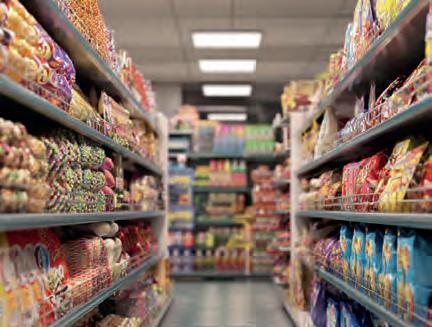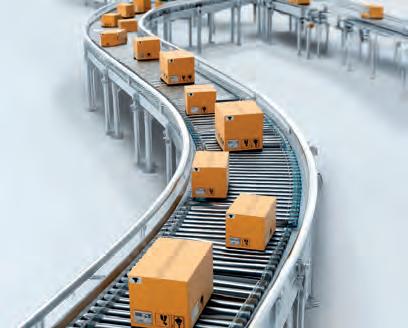




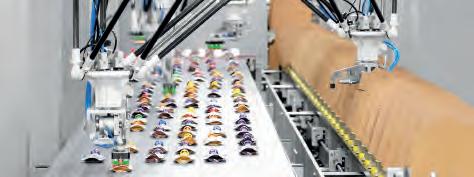
GEO PROJECT INDUSTRIES SRL - GPI: FLOW PACK, POUCHES, CUPS, CAPSULES AND DOYPACKS: EACH FOOD PRODUCT HAS ITS OWN TYPE OF PACKAGING. PG. 4/6
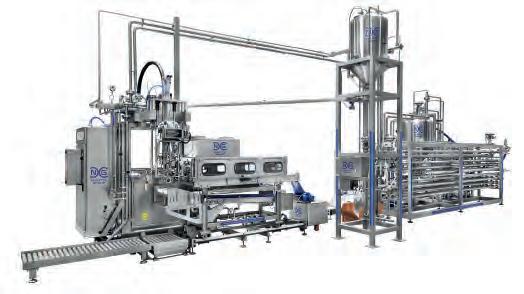
NAVATTA GROUP FOOD PROCESSING SRL: EQUIPMENT AND LINES FOR THE INTEGRATED PROCESSING OF FRUIT AND VEGETABLES. PG. 32/34
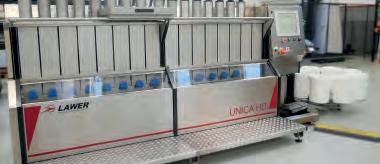
LAWER SPA: PRECISION AND EFFICIENCY IN FOOD PRODUCTION. PG. 36-37

SONIA V. MAFFIZZONI Editorial Manager
India is entering a decisive phase in the development of its food processing industry. Rising domestic demand, expanding production capacity and growing investment in modern infrastructure are accelerating the transformation of the sector.
The challenge, however, is not simply to produce more. It is to build a system capable of combining scale with efficiency, quality and food safety. Automation, digitalization and smart manufacturing are therefore becoming central to new production strategies, together with resource optimization and the reduction of losses throughout the supply chain.
What makes the Indian market particularly interesting is the opportunity to design new plants and processes around the latest technologies, rather than relying only on the modernization of existing systems.
India is not simply following established industrial models, but shaping its own path. Its ability to turn rapid growth into technological progress could make the country one of the most influential drivers of food processing innovation in the years ahead.

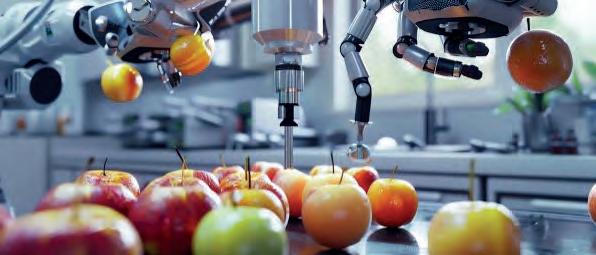
ELESA AND GANTER: TECH MEETS TASTE: HOW ELESA+GANTER IS POWERING THE FUTURE OF FOOD PROCESSING AUTOMATION. PG. 46
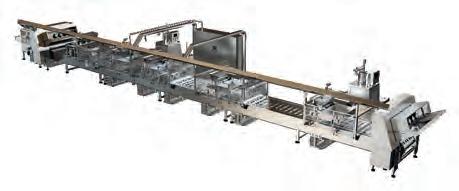

GORRERI SRL: THE CAKES PROCESS COMPANY SINCE 1987. PG. 51/55
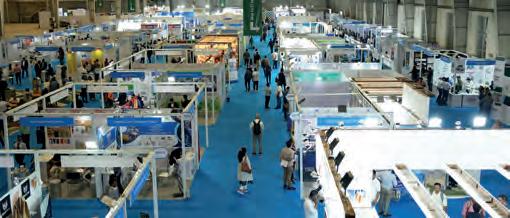
PROPAK INDIA2026: TO DRIVE SUSTAINABLE PACKAGING AND SMART MANUFACTURING TRANSFORMATION. PG. 56/58 EXHIBITIONS
In partnership with:

editorial management and registered office:
Editrice Zeus Srl: Via Cesare Cantù, 16 20831 Seregno (MB) - Italy
Tel. +39 0362 244182 / +39 0362 244186
web site: www.editricezeus.com e-mail: redazione@editricezeus.com portal: www.itfoodonline.com
Editrice Zeus: +39 379 2421278
Machineries, plants and equipment for food and beverage industry year VIII - issue n.12 - July 2026
editorial production Sonia Bennati bennati@editricezeus.com
account dep. manager amministrazione@editricezeus.com project and layout design ZEUS Agency grafica@editricezeus.com creative dep. ZEUS Agency grafica@editricezeus.com translations ZEUS Agency printing ZEUS Agency
Italian Magazine Food Processing
Europe: single issue: Euro 25
Annual (six issues): Euro 120
Outside Europe: single issue: US$ 30
Annual (six issues): US$ 170
Subscription payment can be made in the name of Editrice Zeus sas, by bank money transfer or cheque.
Italian Magazine Food Processing
An outline of the suppliers of machines, plants, products and equipment for the food industry. Published: monthly
Registration: Court of Monza no.10 of 05.09.2018
Shipment by air mail art.2 comma 20/b law 662/96 - Milan
Panorama dei fornitori di macchine, impianti, prodotti e attrezzature per l’industria alimentare
Periodicità: mensile. Autorizzazione del Tribunale di Monza, n.10 del 05.09.2018
Spedizione in a. p. 45% art. 2 comma 20/b legge 662/96 Filiale di Milano
The reproduction of the articles and/or pictures published by this magazine is reserved (the manuscripts and/or photos sent to the Publisher will not be returned). The Editor declines all responsibilities for any mistake of photocomposition contained in the published papers of any magazine by EDITRICE ZEUS.
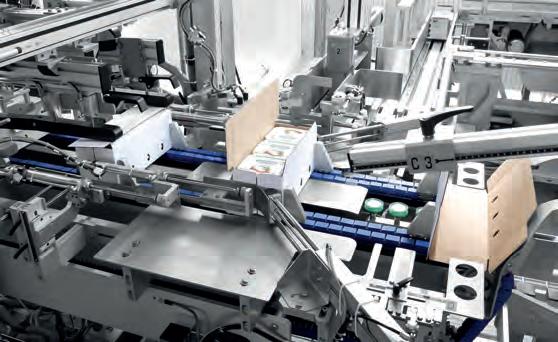
The world of food packaging is always looking for new solutions that can provide customers with safe and convenient products to use, that can guarantee the preservation of their consistency and flavor characteristics over time, made with sustainable materials and capable of responding to the needs of an extremely multifaceted and competitive market.
Today, countless types of food packaging are available that can guarantee excellent performance in terms of safety, ease of transport, storage and use, highly appreciated especially for single-dose packaging of products that are offered to the public loose or in multipacks.
Among these types of food packaging, we can mention:
- Flow pack: flexible and resistant, it is made from plastic films, sometimes laminated with aluminium, which are wrapped around the product and then heatsealed. Ideal for packaging a wide range of products,
such as dried fruit, snacks, chocolate bars, biscuits, crackers and so on.
- Pouches: flexible and practical, pouches are made from heat-sealed plastic films and are particularly suitable for liquids and semi-liquids like fruit juices, yogurt, and baby food. The option to integrate a plastic cap makes them easy to consume and reseal, making them ideal for on-the-go consumption.
- Doypack: a variant of pouches, the doypack stands out due to its flat base, which allows for vertical product display. This feature, combined with the packaging’s lightness and compactness, makes it ideal for products like cereals, legumes, and snacks.
- Capsules: designed to protect sensitive products like coffee and other soluble items from moisture and
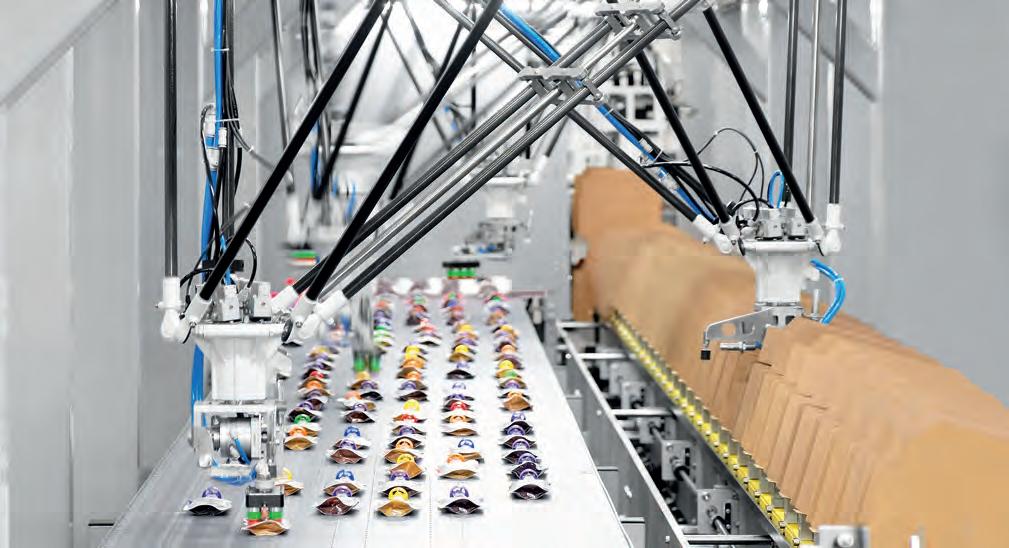

oxygen, capsules are made from rigid materials such as plastic, aluminium, or biodegradable substances. Their airtight seal ensures the freshness and aroma of the products.
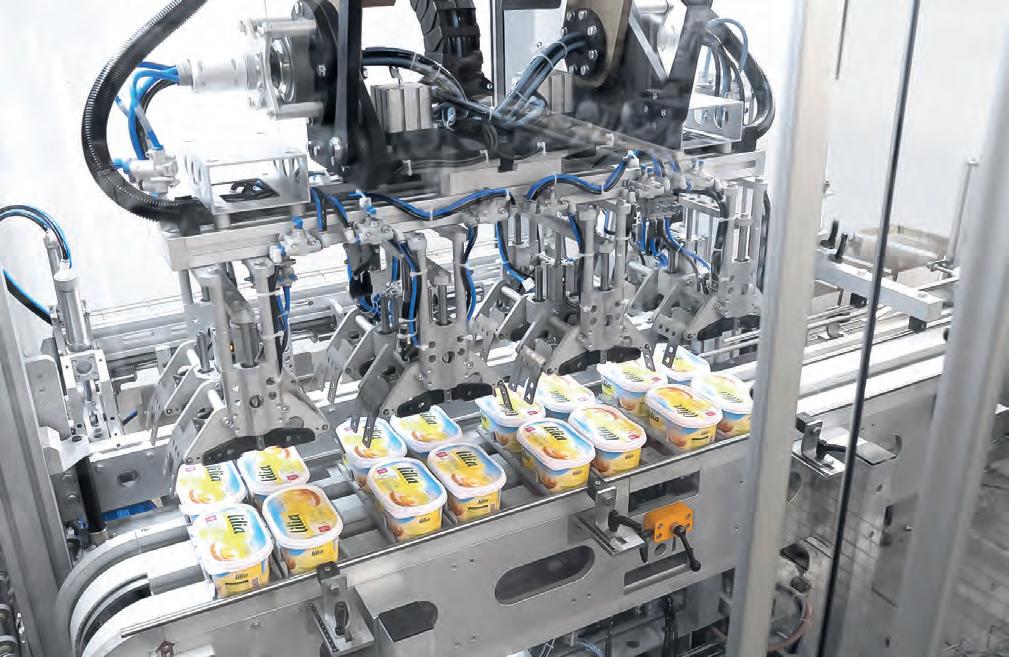
- Cups: are rigid containers ideal for liquid or ready-to-eat products like yogurt, soups, and desserts. Made from materials such as plastic, cardboard, or compostable substances, cups can be sealed with films or lids, offering both practicality and security.
All these types of primary packaging guarantee wide possibilities for customization and can be made in a wide variety of formats and sizes, depending on the needs of the manufacturing company.
However, it is essential that their design is carried out in an accurate and customized way, identifying solutions capable of combining safety and efficiency of the packaging systems.
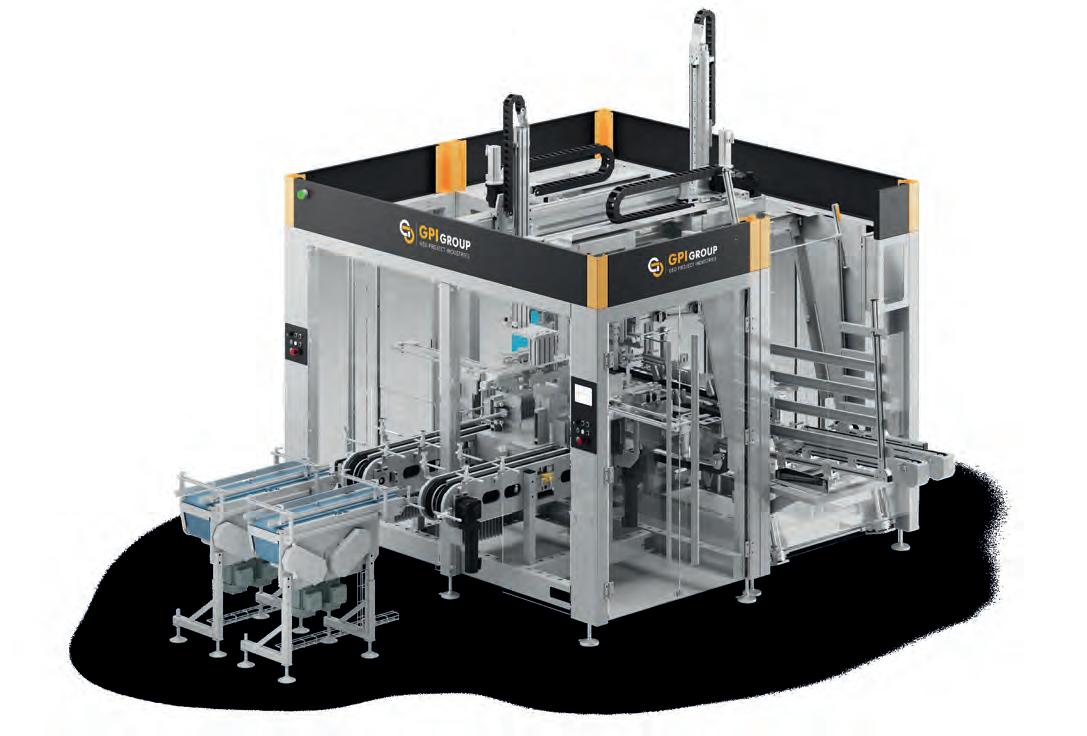
GPI GROUP, thanks to its long experience in the field of food packaging, is able to provide each customer with targeted and personalized advice, to allow them to identify the type of secondary packaging and the automated industrial solutions most in line with their needs.
www.gpindustries.eu

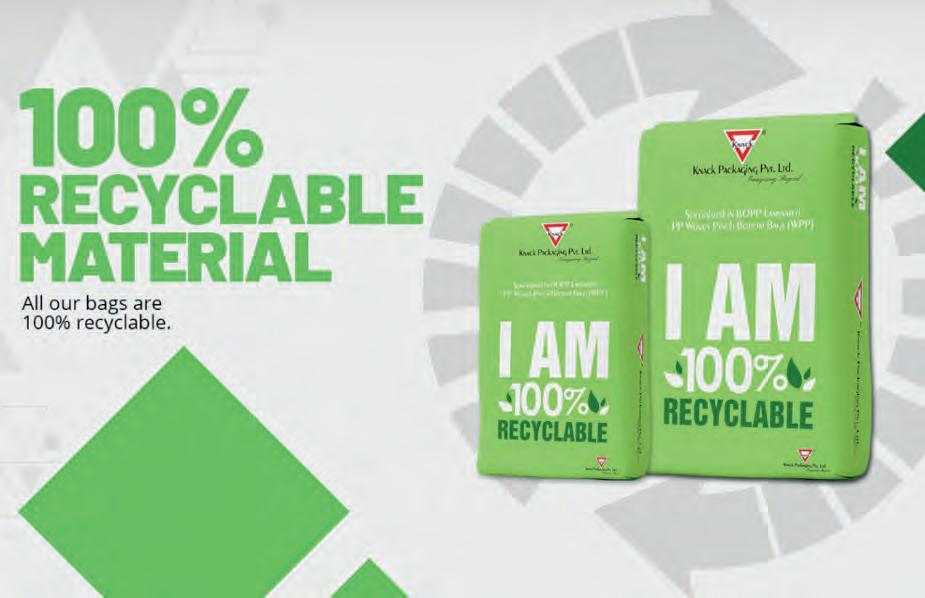
The Food & Beverage (F&B) industry is evolving, with sustainability at its core. At Anuga FoodTec India, we spotlight Knack Packaging Private Limited, a leader in responsible packaging solutions committed to minimizing environmental impact while ensuring food safety and compliance with global standards.
Aligned with the Global Plastics Pact and United Nations Sustainable Development Goals (UN SDGs), Knack Packaging drives meaningful environmental change by:
•Optimizing material usage through layer reduction strategies and minimizing headspace, reducing material consumption and enhancing resource efficiency.
•Utilizing food-grade inks & materials, ensuring hygienic manufacturing processes and compliance with FSSAI regulations for consumer safety.
•Holding BRCGS and EcoVadis certifications, reinforcing their dedication to sustainability and corporate social responsibility.
Beyond packaging, Knack Packaging is making a significant impact through:
• Renewable energy investments – currently sourcing 30% of power from solar & wind energy, with a goal of reaching 90% by 2030.
• Water conservation efforts – utilizing a Sewage Treatment Plant (STP) for sustainable water management.
Through these initiatives, Knack Packaging is setting new industry benchmarks for eco-friendly packaging solutions.
Join Anuga FoodTec India to explore their latest in sustainable packaging innovations!
Producers of food need to be more and more competitive, to face a demanding market that is continually evolving . This objective can be reached more easily if innovative, flexible and personalised solutions are used within the production plant. Starting from this requirement, and from market trend analysis, SMI invests in cutting edge solutions to offer their customers packaging lines that are characterised by high performance, optimised operation versatility and TCO (Total Cost of Ownership). Today, the design of a new bottling and packaging plant is highly influenced by the modern technology created for the “smart factory” of the future, with this high quality, production lots can be created at a reduced cost, without neglecting important aspects such as, eco-sustainability and process, energy efficiency.
In the environment of industrial plants dedicated to end of line packaging, SMI offers a wide range of models of APS ERGON automatic palletising systems, that are based on innovative principles like:
- simple operation: the SMI palletising systems are proud of their modern, technical, ergonomic and functional solutions, which allow you to reach
production efficiency high while reducing the line operators workload
- easy and intuitive control and management: this advantage can be enhanced further, if the palletisers supplied by SMI, are equipped with the SWM supervision and control system by Smitec, which allows the constant, gathering, monitoring and “interpreting” of production data, improving efficiency and safety, containing costs and a return on the investment.
- energy savings: thanks to latest generation technical solutions, like the ICOS motors equipped with integrated, digital servo-drivers, the new APS ERGON palletising systems are able to guarantee low, environmental impact and low, energy cost production, while significantly reducing maintenance, energy waste and machine and plant noise..
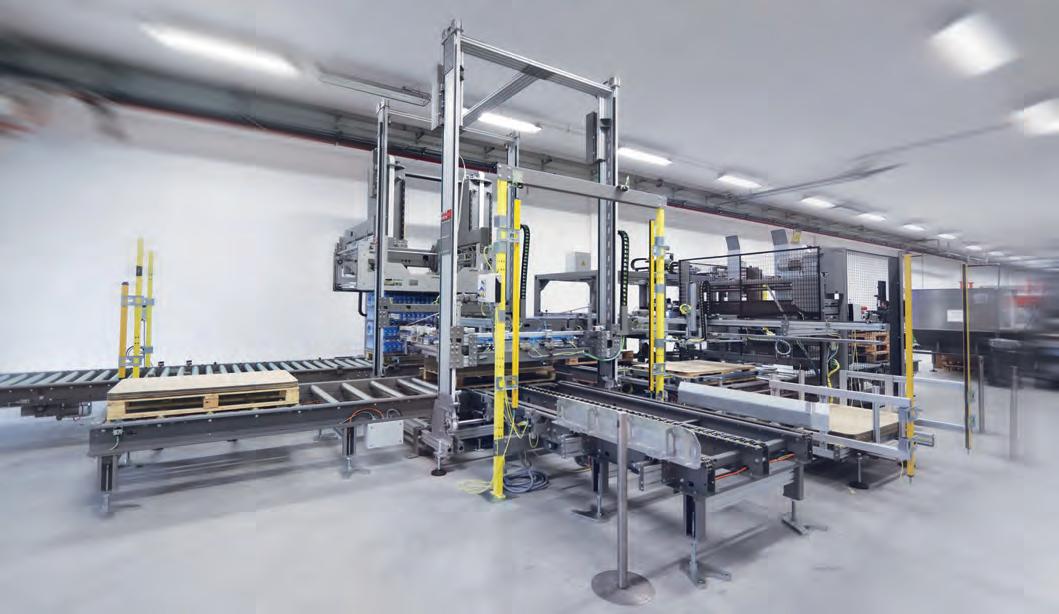
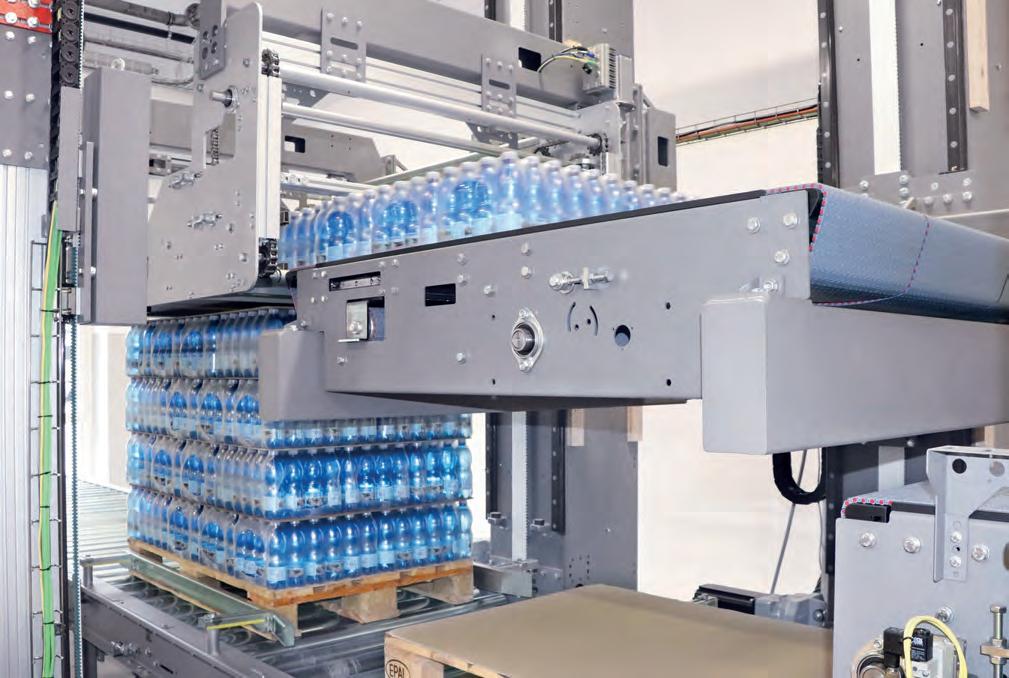
The overall efficiency of a bottling and packaging plant, also depends on the reliability of end of line operations, where palletisers need to work perfectly, to guarantee uninterrupted production flow. This is only possible if the pallet loading, layer forming and pad insertion operations are synchronised in a precise, continual way with the other machines on the production line. The technology applied to the new models of APS ERGON by SMI, guarantees vast operation versatility and high possibility to personalise production processes, as the Cartesian axis system can be programmed automatically, according to the requirements of the specific application. The SMI palletisers are easily adapted to different requirements in terms of format changeover, product changeover and logistic programes within the end of line area. They are also able to manage a wide range of palletising patterns, based on the specific requirements of the customer, contributing to guarantee the optimal performance of all the production plant.
The APS ERGON range consists of an automatic, single and double column (Model APS 4140 L) system to palletise boxes, bundles, tray and packs in general. The SMI palletisers have different modules, which can be programmed in a personalised way, according to the logistic conditions of the end of line area and to the work
required, either in existing lines or in new installations. The heart of the single column system is made up of a vertical axis module, a long fixed column, along which the horizontal work beam slides on recirculating ball guides.
The beam along which the head-holder beam slides, always on recirculating ball guides, can be combined with:
- product infeed module and preform layer system (variable according to model chosen)
- pallet module with maximum payload of 300 kg (max. 10 pallets with max. height 150 mm and max. payload of 30 kg/pallet), that includes the moving and storage of empty pallets (Pallet modules with a greater payload are available as optional accessories)
- module pad insertion (optional), consisting of a pad magazine and a pad inserting devoce with controlled axis
– surrounding safety barrier
The double column model is equipped with a colomn with a motorised belt, while the second with a basket.
At the single-column palletiser infeed, the product infeed conveyor forms the line, assisted by the transfer system that, with one direction movements, helps to create the layer. The layer loading head picks up the layer of packs that has been formed, from a conveyor at operator height. The vertical movements of the beam and the horizontal ones of the head-holder are activated by “brushless”
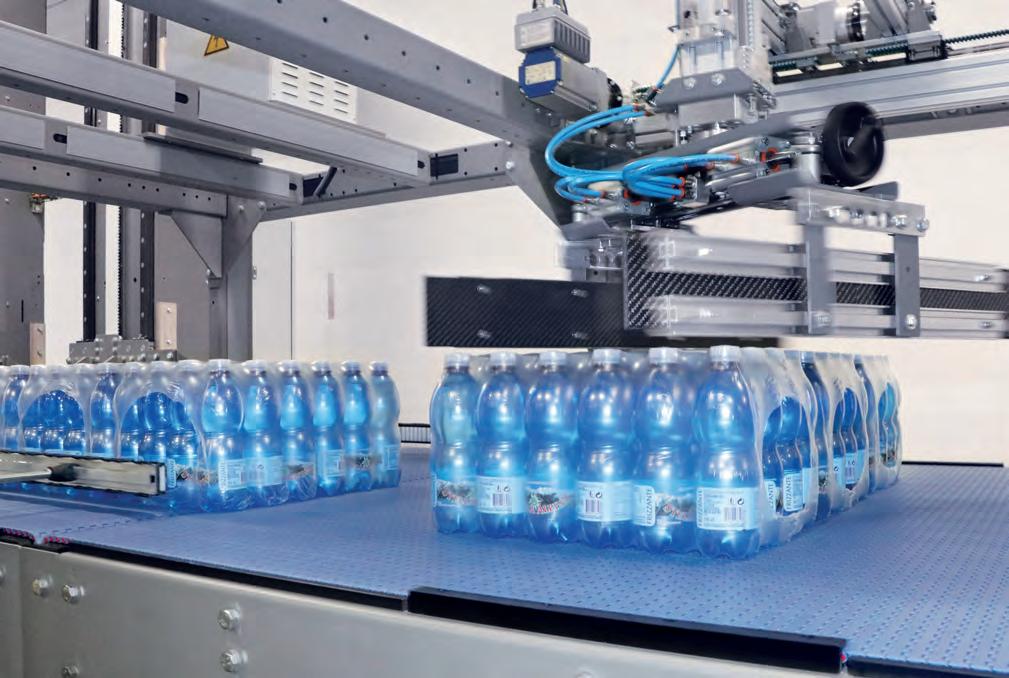
motors, which guarantee perfect trajectories during all palletising phases. All the operations are managed by a “user-friendly” machine, automation and control system, which allows the operator to use the palletising system easily and efficiently.
- The ergonomic and functional structure of the frame allows the operator to easily carry out all the activities related to the use and maintenance of the system.
- The door closure system is equipped with a deceleration device, which slows down the final phase of the cycle by accompanying the door harmoniously.
- The accident prevention protections are made of aluminum and polished polycarbonate (PC).
- Palletising schemes are optimised for truck loading.
- Format changeover times are kept to a minimum.
- The handling of the containers is fluid and avoids damage during handling.
- Use of innovative design solutions in IoT key.
- Simple and intuitive control of all operations.
- ICOS motors equipped with integrated digital servo-drive, which ensure production with reduced environmental impact and low energy consumption www.smigroup.it
Labellers, a global leader with fifty years of experience in designing innovative and modular labelling machines, is launching TelescoPE, the latest solution set to revolutionize the labelling industry. Not just highly advanced, ultra-flexible, and fully ergonomic labelling machines—now they are intelligent too.
TelescoPE is a machine digitalization solution based on Artificial Intelligence: the labeller evolves with selflearning capabilities, becoming a true partner at every stage of production. Operators benefit from intuitive access to valuable data that was previously difficult to aggregate, while companies gain deeper insights into their processes. Artificial Intelligence learns from historical and real-time data, providing targeted recommendations to improve overall efficiency.
The TelescoPE solution suggests optimizations for various processes, including delicate tasks such as format changes, guiding operators through each transition smoothly. It also offers valuable maintenance recommendations—both routine and extraordinary— minimizing the need for external technical interventions, simplifying necessary activities, and proactively analyzing potential issues.
TelescoPE is a revolutionary solution for the entire production line, not just labelling machines. It optimizes production management and enhances the productivity of the whole line, fostering
continuous improvement. TelescoPE is the smart solution for all companies, including small and mediumsized businesses.
1. Improved operational efficiency
2. Reduced maintenance costs
3. Enhanced quality and waste reduction
4. Data-driven decision support
Data access is fully secured. The encryption technology used ensures the confidentiality of both transmitted and stored information.
The TelescoPE solution was presented at the latest edition of SIMEI trade show (Milan – Italy) and won the prestigious Innovation Challenge “Lucio Mastroberardino” SIMEI 2024 award.
www.PELabellers.com

Packaged, improved, reliable: Italian food company
Barilla sets high standards for the quality and service of its suppliers and pursues continuous improvement – particularly in the area of sustainability. Barilla has enjoyed a successful partnership with Vetropack for many years. Together, they are striving to make glass packaging lighter and increase the proportion of recycled glass.
Pasta, bread, and snacks: Barilla is undoubtedly one of the world’s most recognizable food brands and the global market leader in the pasta segment. Based in Parma, Italy, the company boasts a history spanning more than 140 years. Pietro Barilla senior, who laid the foundations of the business with a small bakery producing bread and pasta, founded it in 1877. Despite early setbacks, the Barilla family succeeded in building the company. As early as 1910, Barilla embraced industrial production, opening a factory capable of producing around eight tons of pasta a day – a significant milestone on the road to the modern food industry.
In the decades that followed, Barilla became a pioneer in product quality, brand development and innovation. Under the leadership of Petro Barilla (1913–1993), the company placed increasing emphasis on advertising campaigns, packaging design and streamlined production processes. This not only secured a dominant position in the Italian market, but also paved the way for successful expansion across Europe. Today, Barilla employs over 9,000 people, operates 30 production sites worldwide, and owns a number of well-established brands – including Mulino Bianco, Wasa and Voiello – with a worldwide presence. Initiatives such as the Academia Barilla, founded in 2004, and the Barilla Centre for Food & Nutrition, launched in 2009, underscore the company’s long-term commitment to sustainable food and packaging solutions.
pose: “The joy of food for a better life.” Making no compromises on quality and ensuring comprehensive protection for consumers are among Barilla’s core values. Guglielmo Bozano, who has been with the company since 1997 and involved in packaging procurement since 2000, explains what this means in practice: “We select materials very carefully and we reduce the packaging materials – from cardboard to plastics and glass – to what is absolutely necessary. This allows us to save valuable resources while continuing to package high-quality food in high-quality packaging. And we’re always looking for ways to further improvement and innovation.”
The Barilla philosophy is founded on the following pur-
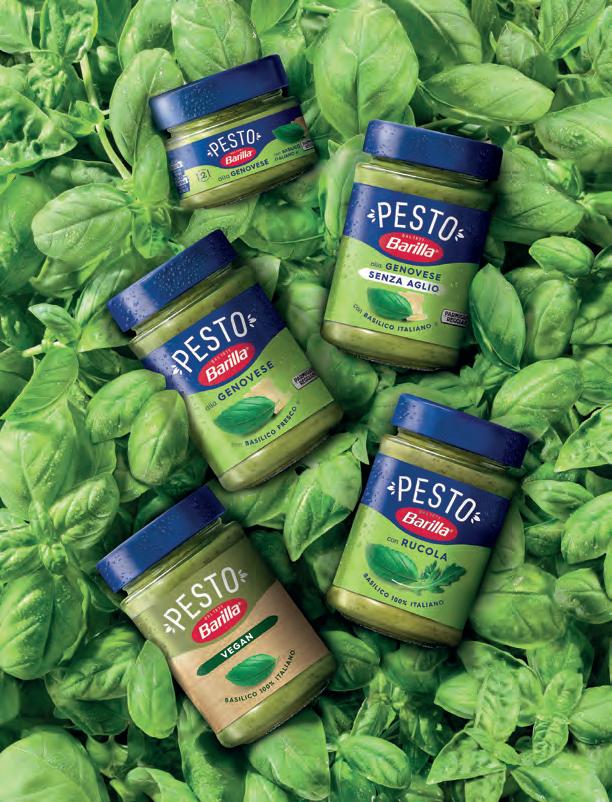
Glass packaging is primarily used for pesto varieties and sauces – and here too, Barilla is committed to continuous improvement. The partnership with Vetropack plays a key role in this. The two companies were already col-
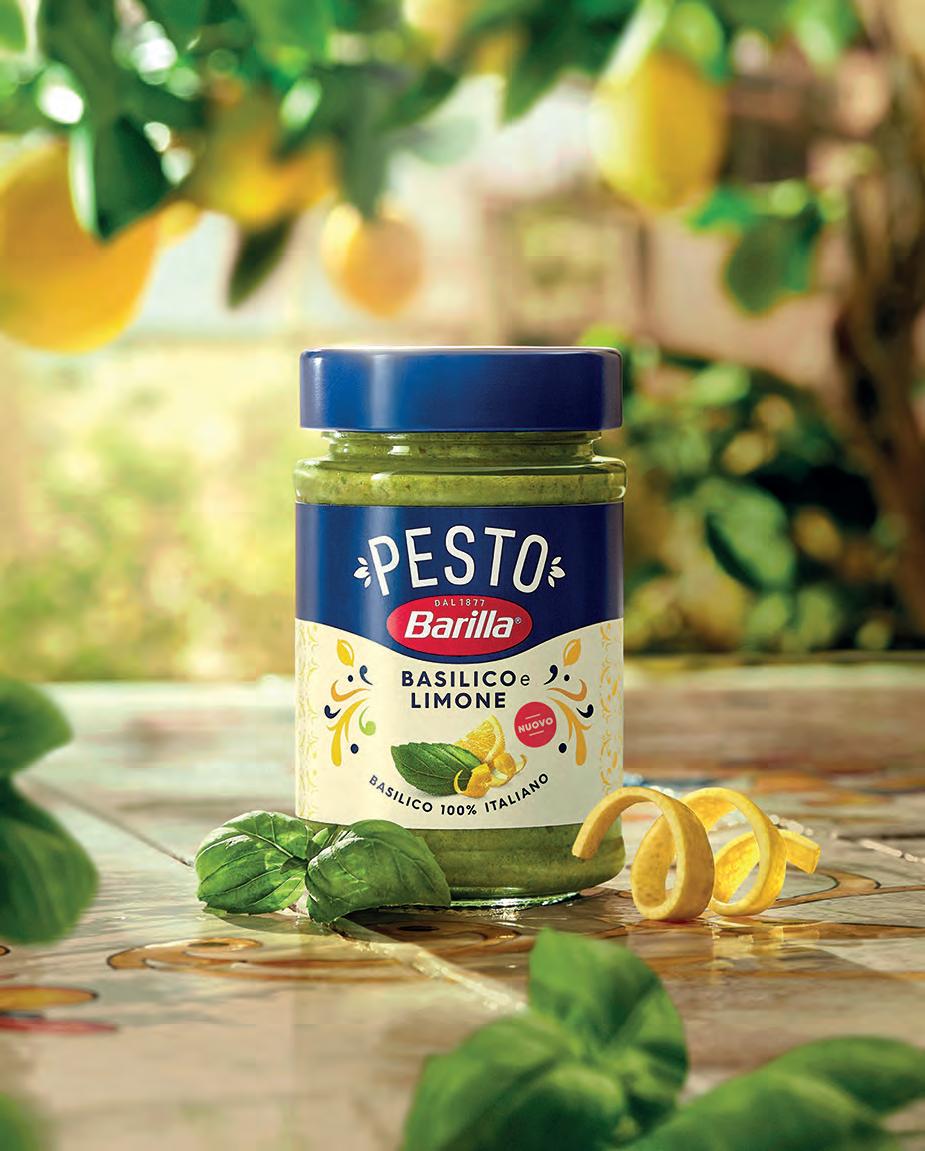
laborating when Bozano began sourcing glass. “We have high standards when it comes to quality and service. And we expect our partners to provide us with expert support in the development of new packaging,” he says.
„Vetropack has always been a trustworthy partner“ When optimizing glass packaging, Bozano focuses on two key aspects: reducing material usage and increasing the proportion of recycled glass. “When we develop a new jar, we first try to anticipate potential issues.
Drawing on the experience of both our suppliers and our own teams, we can then implement targeted improvements. In the case of the 400-gram jar, for sauces, we achieved a straightforward weight reduction by ten percent after around five years. This was in 2016/17”
Another successful project was the development of a 525-gram jar again in collaboration with Vetropack. “From the outset, Vetropack identified the right shape. The glass has shown no weaknesses or breakage issues. This clearly demonstrates Vetropack’s expertise,” Bozano explains.
He particularly values the cultural alignment between the two companies: “As family-owned businesses, we share the same mindset. For me, openness and working together on equal terms are essential – and this works seamlessly with Vetropack.”
Looking ahead, Barilla intends to further increase the proportion of recycled glass in its packaging. “Initially, we used the classic transparent flint jar. During a visit to a supplier, I noticed jars with a slight tint. That sparked my curiosity.
After thorough studies and collaboration with marketing, the benefits became clear.
We are still working on it today. I have always believed that the future lies in using more and more recycled glass,” Bozano says.
In today’s market environment, Barilla faces intense competitive pressure. The company’s strategy includes clear targets for each business unit over the next three to ten years, with a strong focus on increasing efficiency and optimizing costs. For sauces and pestos, the priority remains the expansion into new markets.
At the same time, expectations around supply chains and sustainability are rising. In fact, Barilla has launched concrete initiatives to make its production increasingly sustainable.
Over the past three years, it has tripled the power of photovoltaic systems at its Italian factories, for self-generation of renewable electricity – and plans to triple it again by 2026. Reducing emissions, improving energy efficiency, and increasing production independence are just some of the commitments made by Barilla, supported by concrete actions outlined in its Science Based Target initiatives (SBTi) plan.
Sustainability is at the heart of Barilla’s strategy and the company is set to continue growing. To support this growth, its successful partnership with Vetropack could be further expanded in the future.
Universal Pack, a leader in packaging machines and automated lines for singledose solutions, promotes sustainable practices in the food industry. Their innovative approach ensures compatibility with compostable and recyclable laminates, balancing efficiency with environmental responsibility.
Eco-Friendly packaging for the planet
Universal Pack focuses on optimizing machines to work seamlessly with compostable, recyclable, and recycled materials. Using Life Cycle Assessment (LCA) to measure environmental impact, they prioritize eco-friendly processes at every stage of production. Collaborations with global film suppliers and major corporations allow the company to deliver turnkey solutions that align with environmental standards.
The company’s commitment to sustainability goes beyond materials, addressing energy consumption during manufacturing and operations. Their state-of-the-art machines are designed to minimize energy use, ensuring that the entire packaging process has a reduced carbon footprint. This holistic approach reflects Universal Pack’s dedication to the environment while providing customers with a competitive edge.
Collaborative innovation
Partnerships are key to Universal Pack’s success. By working with film suppliers, customers, and universities, they develop advanced, sustainable laminates and ensure optimal performance on their machines. These collaborations drive innovation across the industry, setting new standards for environmentally responsible packaging.
Universal lab: engineering backed UP by science
Universal Pack’s in-house lab, Universal Lab, has been pivotal in testing over 350 sustainable laminates and refining machine designs for maximum efficiency.
Combining 30 years of research with cutting-edge technology, Universal Lab guarantees that every solution upholds product integrity while meeting sustainability goals. In addition to materials testing, Universal Lab conducts durability and performance analyses to ensure that packaging maintains product integrity. Whether it’s for powders, liquids, or semi-solids, the lab’s rigorous testing guarantees that every package withstands the demands of real-world distribution, helping to reduce food waste and ensure freshness.
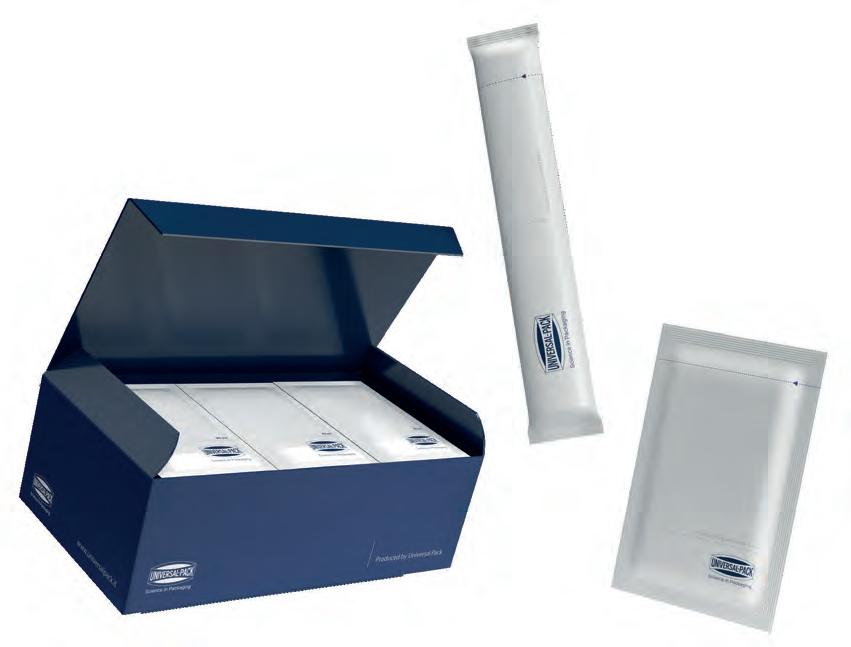
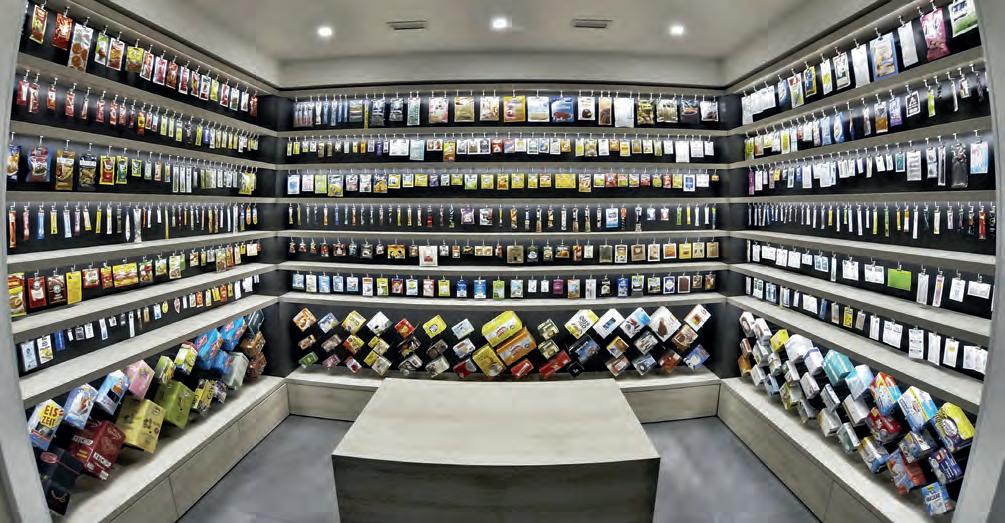
Universal Pack designs and manufactures highend packaging machines and automated lines for single-dose formats such as stick-packs and sachets. Its top-tier machines, optimized to work with compostable and recyclable materials, serve a variety of industries, especially the food market. The flexibility of their equipment allows manufacturers to transition seamlessly to eco-friendly solutions while maintaining high production speeds and precision. Their machines are not only reliable but also scalable, capable of supporting businesses of all sizes, from small producers to large multinational corporations. With customizable features, Universal Pack ensures that their systems meet the specific needs of each client, further enhancing their reputation as a leader in sustainable packaging technology.
With 60 years of experience and 8,000 systems in more than 150 countries, Universal Pack leads in packaging solutions for the food industry. Their machines can handle all the products ranging from powders and granules to
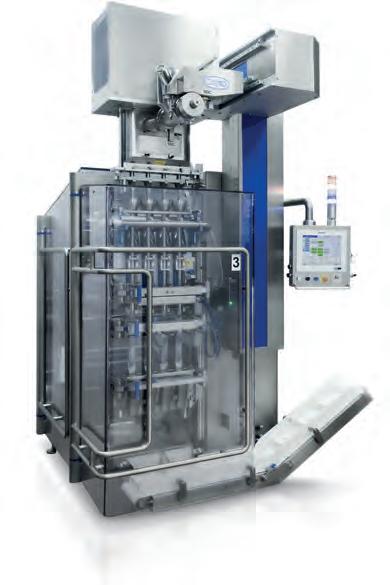
viscous and liquids, ensuring sustainable packaging options for a wide array of food products. Universal Pack’s expertise extends to diverse food applications such as dairy, sauces, spices, sugar and coffee, showcasing their versatility and adaptability. Whether packaging instant coffee sticks or mayonnaise sachets, their machines deliver precision and sustainability for every product. As sustainability becomes more important, Universal Pack remains at the forefront, offering innovative solutions for environmentally conscious packaging.
www.universalpack.it
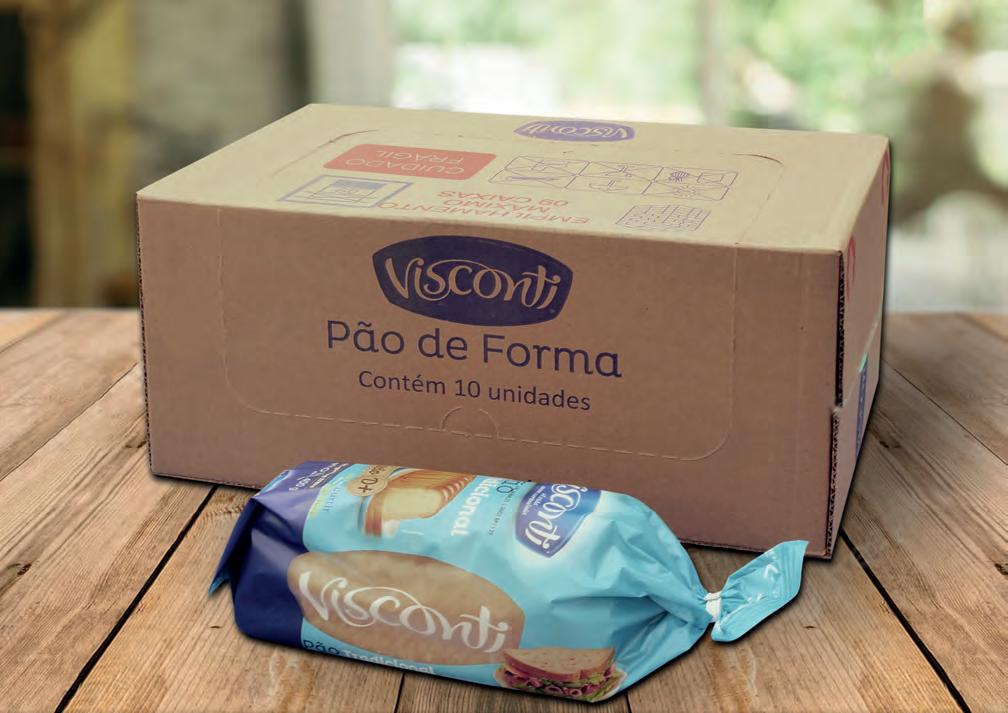
Italian machine-build quality and domain expertise, coupled to highly localized installation and support have proven pivotal to the success of a new packaging solution at a leading South American baked goods company.
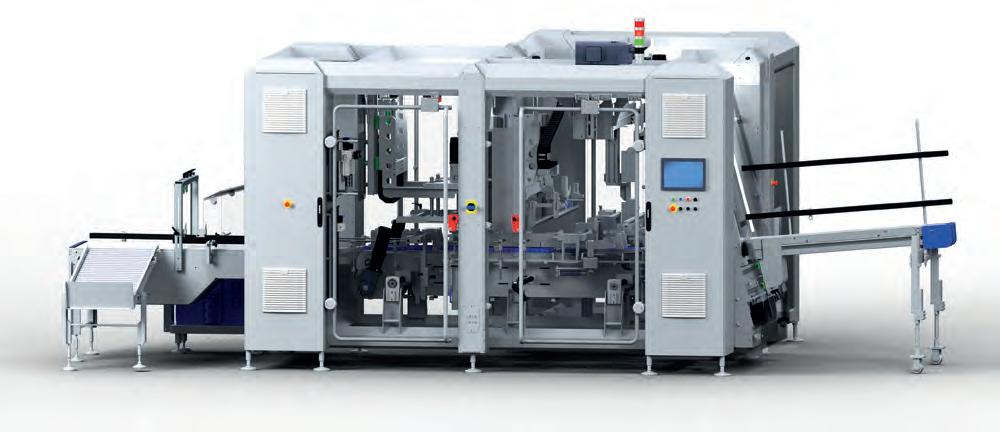
The new packaging solution for the customer’s Visconti brand deploys three of Cama Group’s popular FW748 wraparound case packers for packaging bagged sliced bread – in arrays of 8 or ten – into shelf-ready cases, all of which were installed and supported by local packaging machinery specialist Carlos A. Wanderley e Filhos. Carlos A. Wanderley e Filhos is a specialist in the field of filling, packaging and process machines, representing important international manufacturers with extensive experience across a number of industrial segments. Serving the Brazilian market since 1968, the company has a main focus and responsibility as a representative to add value to its clients’ business, seeking to build longterm partnerships while providing reliable, high-quality, high-performance equipment.
This combination of services and capabilities gives customers in the South American region the perfect equation of high quality, industry-proven machinery and technology added to back up from on-the-doorstep
local support, which cuts timescales, travel costs and downtime.
In operation the bagged bread is fed into the secondary packaging area on one of the three in-feed conveyors. The products are phased and spaced using accelerating conveyors before being loaded, in pairs, into an intermittently moving vertical racetrack. Once a pre-set count is reached, pushers transfer the grouped products into a pre-erected cases before the case flaps are folded and glued and the completed cases conveyed to the machine’s outfeed.
“We’ve been working with Visconti and its parent company for more than 10 years,” explains Oscar Hidalgo Area Manager at Cama Group, “but we never take these kinds of relationships for granted. Every order is treated as if it is their first and we have to really impress them.
However, we do have an advantage in that we already have a history, they have seen our equipment running and we have a strong relationship with our local agent.” Machine design and technology play a pivotal role too.
The FW Series is part of Cama’s Breakthrough Generation (BTG), which offers design and operational features that are setting the standard in secondary packaging.
Their modular, scalable and hygienically designed frameworks house contemporary automation solutions –including advanced rotary and linear servo technology –which can be tightly coupled to in-house-developed robotics, to deliver the all-important flexibility and adaptability required by modern packaging operations. The machine range is also based on a digital platform that supports full Industry 4.0 capabilities, including AR, VR and virtual testing, training and operation.
“The machines in this application complement another three that were installed earlier this year,” Hidalgo explains, “along with an array of other Cama machines. Operating at a speed of 135 products per minute, they are well within the capabilities of the FW Series. They can, in fact, go a lot faster, but this is what the customer wanted, comfortable in the knowledge that the machines will be able to adapt to any future throughput increases
delivered by additional machines or uprated downstream processes.
“Although the cost of labour is highly competitive in the region, many companies are looking to automate endof-line solutions,” Hidalgo elaborates. “The reasoning is simple, they want to use employees in roles that better leverage their skills, while looking for higher levels of repeatability and consistency, something that cannot be guaranteed with a fluctuating labour pool.
“The labour/machinery mix is actually strengthened with our technologies,” Hidalgo concludes, “as their full industry 4.0 architecture means that customers can deploy a complete array of AR and VR tools which add significant value and depth to operator interactions, making them faster, more efficient and more accurate.” Although a relatively simple application, which uses medium-speed machines, this deployment is a graphic illustration of the importance of another element of any project – support! Whether local (as in this case) or remote, Cama never sees the invoice as the end of the conversation. Support and advice all the time the machine is running is an essential part of the mix and is one of the reasons why Cama Groups enjoys significant success all around the world.
www.camagroup.com
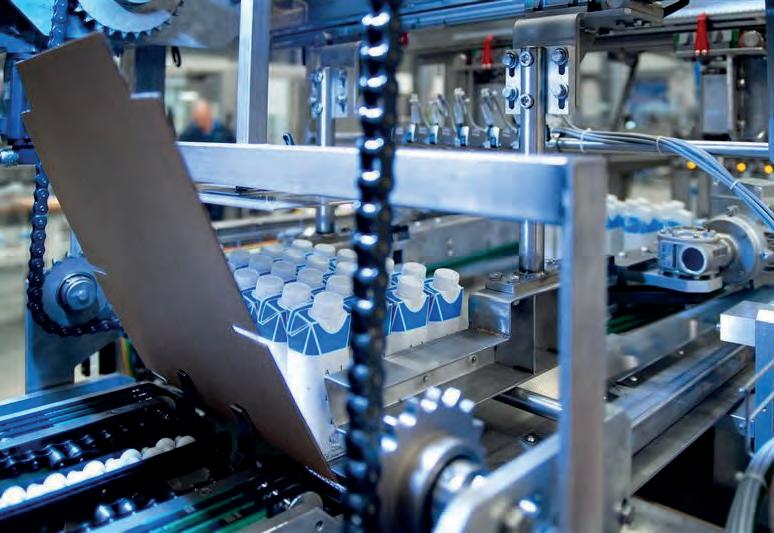
Founded in 2003, Gampack has become a global reference in secondary packaging and end-of-line turnkey solutions. With over 20 years of experience in packaging automation and a strategic acquisition in 2020 of a renowned Italian robotics company, Gampack serves industries such as food & beverages, cosmetics, pharmaceuticals, and pet food with tailored, high-performance systems.
Company with an Innovative DNA Gampack is renowned for its innovative approach to designing and manufacturing advanced secondary and tertiary packaging systems.
Our production is primarily structured around three specialized internal divisions (Automatics, Robotics and Palletizing Divisions), each focused on delivering
high-performance solutions across different packaging areas.
A recent example of our expertise is a specialized production line for the pharmaceutical industry, designed to pack cartons into American cases.
In this process, the case-packer prepares the pre-erected cases, which are then filled by a 6-axis robot and finally sealed with adhesive tape, achieving an output speed of 12 cases per minute. A dedicated labelling machine
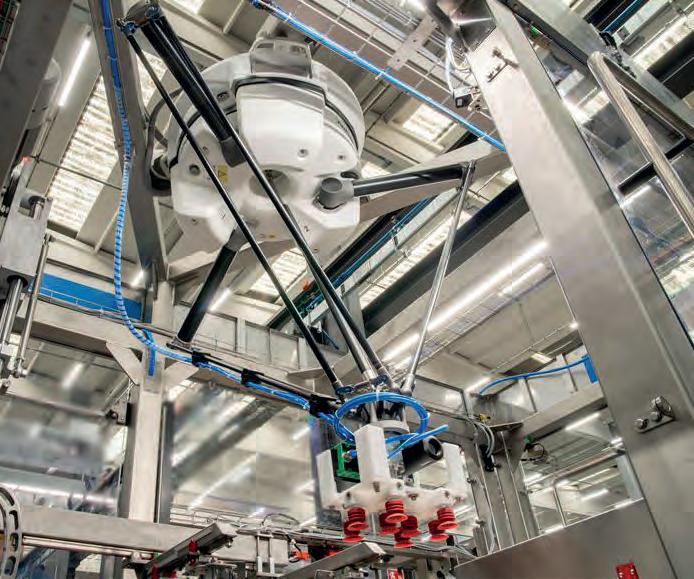
subsequently applies an overwrapping warehouse pallet label to each case.
Finally, as the cases move towards the palletizing cell, a Cobot places them on the pallet, creating the layer configuration requested by the customer.
This cutting-edge solution exemplifies Gampack’s commitment to delivering top-level technological systems tailored to the specific needs of each sector also in small spaces.
Flexibility is a cornerstone of Gampack’s design philosophy. Its machines can quickly adapt to various packaging sizes and production needs, ensuring maximum versatility.
With over 1,700 installations worldwide, Gampack guarantees solutions tailored to the customer’s needs, backed by excellent after-sales service, which distinguishes the company from its competitors. This includes timely spare parts supply and technical
interventions on production lines within 24 hours from the customer’s request to ensure seamless operational continuity, reinforcing the company’s reliability.
Led by co-founder and President Giuseppe Gazzola, Gampack pursues continuous innovation and ambitious growth.
A solid management team supports its future-focused strategy, driving success while maintaining Gampack’s core identity.
With an unwavering focus on innovation and sustainability, Gampack strengthens its leadership by offering full turnkey systems-from processing line output to palletizing and pallet transport to automated warehouses via AGVs.
www.gampackgroup.com
Thanks to the thirty years of experience of its founders, Makro was established in 2009 and quickly expanded its operations, becoming an international market leader.
Our mission is clear: to design cutting-edge labelling machines that stand the test of time, meet evolving production needs, and offer maximum efficiency and reliability.
With a fully “Made in Italy” production, Makro combines technological, mechanical and electronic innovation with environmentally conscious manufacturing processes, focused on energy savings and a truly sustainable economic development model.
This commitment stems from a deep understanding of all aspects of labelling, and it’s brought to life through
passion, professionalism, and expertise. We also strive to remain close to our customers, providing rapid support throughout the entire lifecycle of the labelling machine.
Our portfolio includes labelling machines capable of handling from 1,500 to 50,000 bottles per hour, with the ability to apply up to five labels per bottle. Available versions include: self-adhesive, cold glue, roll-fed, hot melt, or combined. For companies with limited production needs, the MAK Rotary with fixed modules
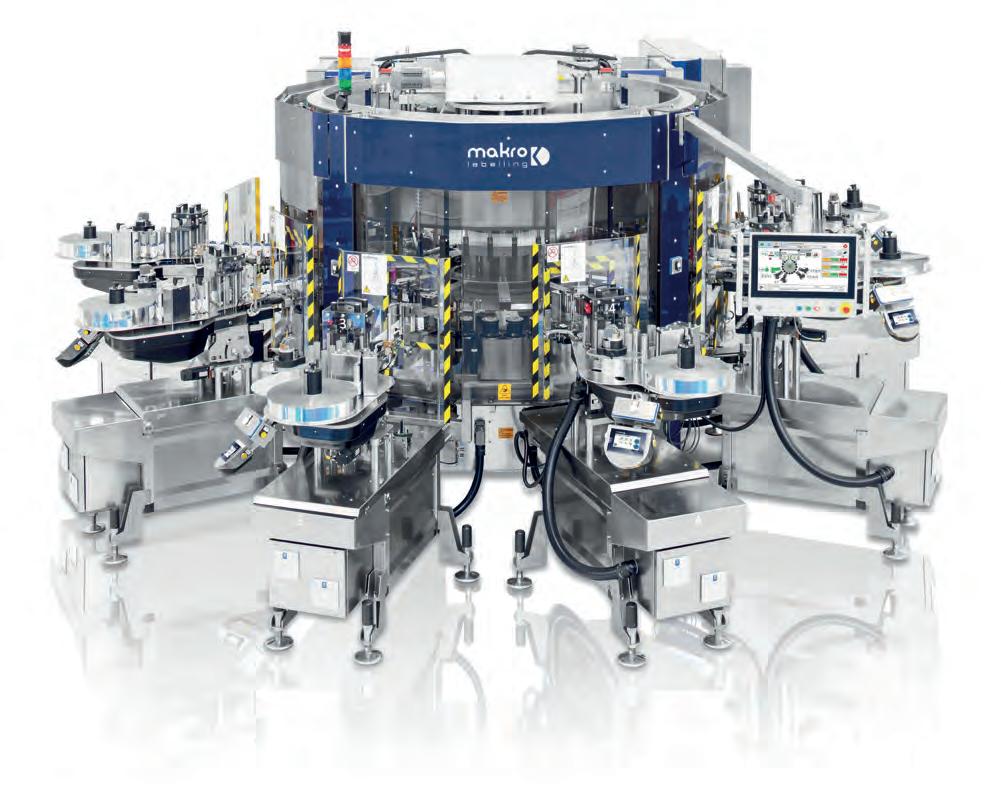
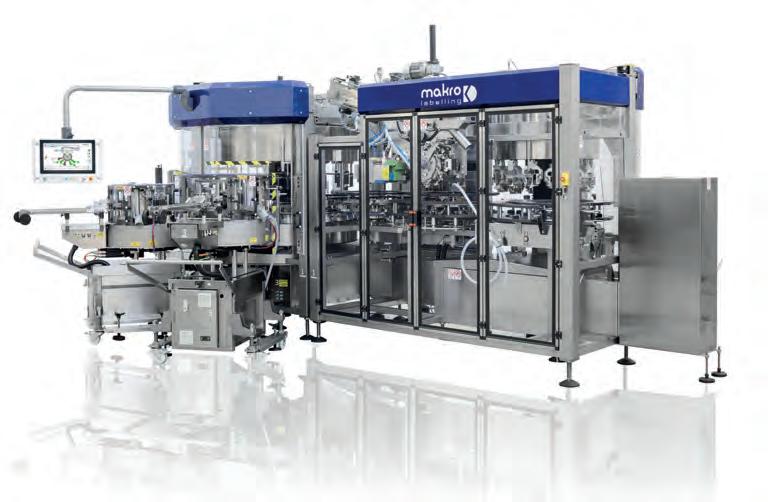
(MAK 01, 02, 03 and MAK 1) is the ideal choice, offering speeds up to 12,000 bph and available with mechanical or electronic rotation of the bottle plates.
To meet the needs of medium and large-scale enterprises, the MAK Rotary with removable modules (MAK 2, 3, 4, 5, 6, 7 and 8) enables special applications and handles speeds up to 50,000 bph. Particularly noteworthy is the high-speed self-adhesive labelling machine equipped with HS2 stations. This machine can include unwinders and a no-stop system, ensuring fullspeed operation even during reel changes. A tax seal
application system can also be integrated. For highvolume PET markets, such as bottled water and soft drinks, Makro has developed a MAK Rotary model with roll-fed technology. With speeds ranging from 6,000 to 40,000 bph and the use of wraparound plastic labels applied with hot melt glue, it offers major economic advantages in the production process. Thanks to the machine’s modularity, the Roll-Fed unit can be replaced or complemented with cold glue, self-adhesive or hotmelt stations.
The entire Makro range can be equipped with Vision Systems: the RAPTOR (Rapid to Orientate) and ALICE (Advanced Label Inspection and Control Environment) systems ensure top-level performance, reduced waste and premium quality of the final product.
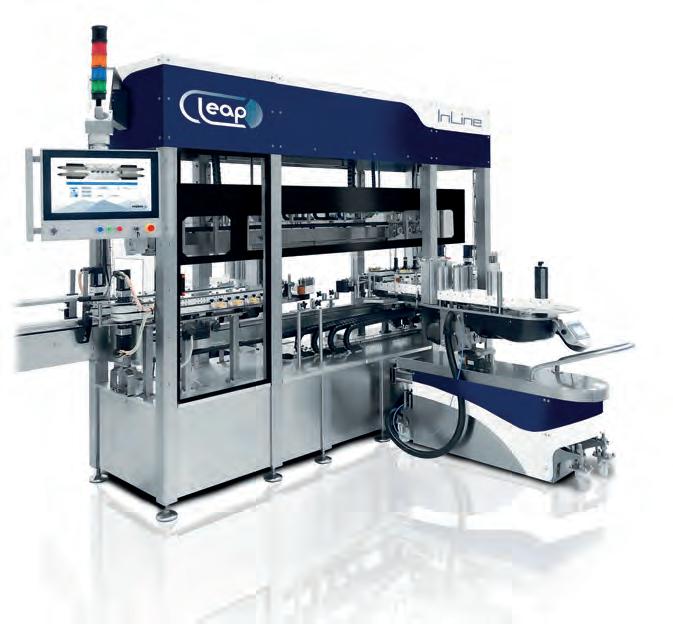
Makro has also developed and launched a new labeller concept featuring long-stator linear motor technology: the Cleap InLine.
With its rotating plates, it is the only linear labeller with centring capability that not only delivers high precision and labelling speed but also eliminates the need for format changeovers, allowing the operator to resume production in just a few minutes. Its flexibility and compact footprint make it ideal for a wide variety of applications.
www.makrolabelling.com
Founded in 1987 in Reggio Emilia, Italy, Clevertech is a familyowned company and a leader in industrial automation, specializing in the design of packaging handling solutions. Based in Cadelbosco di Sopra, with over 40,000 square meters of production space, the company delivers customized systems for every stage of the production process—from front-of-line to end-of-line.
Clevertech is a benchmark in sectors such as can and lid manufacturing, the food industry, and, more recently, the beverage sector, with a strong focus on wines and spirits.
Clevertech operates on a truly global scale, with branches in the UK, France, Germany, Poland, India, China, and a production site in Ft. Myers, Florida.
This international network allows the company to offer prompt support and customized solutions while ensuring consistent quality and efficiency across all markets. Each year, Clevertech designs systems worth over €200 million, reaffirming its commitment to innovation and growth.
What sets Clevertech apart is its ability to deliver complete, turnkey solutions—from project planning and management to postcommissioning technical support through its Dynamic Lifecycle Service (DLS). This holistic approach includes design, installation, staff training, and continuous assistance, ensuring every phase of the project meets the highest quality standards and deadlines.
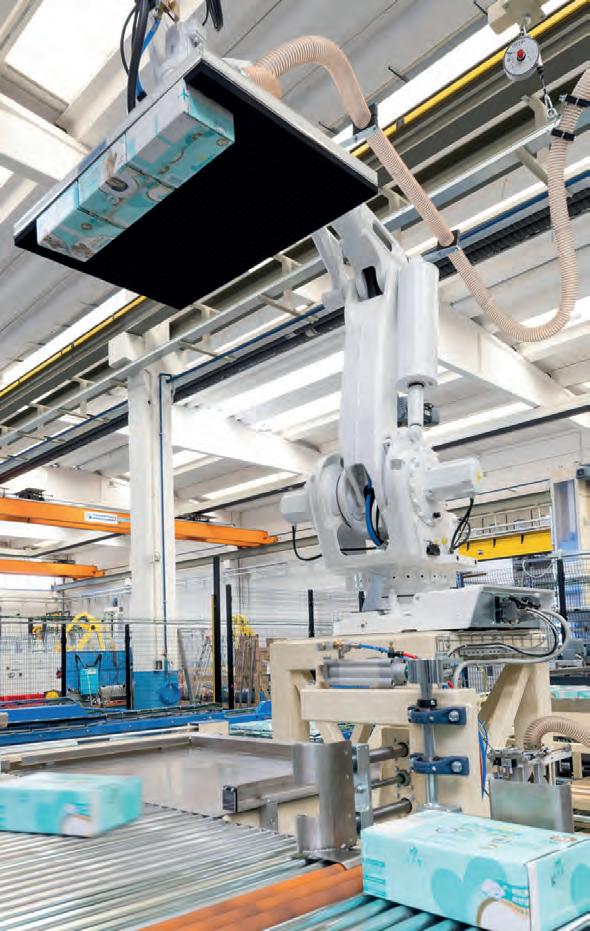
Clevertech’s expertise extends beyond primary packaging to include advanced solutions for secondary packaging, such as boxes, trays, shelf-ready packs, and large-format bags.
This dual competency allows the company to meet the needs of FMCG manufacturers and distributors, optimizing production flows and addressing the demands of an ever-evolving global market.
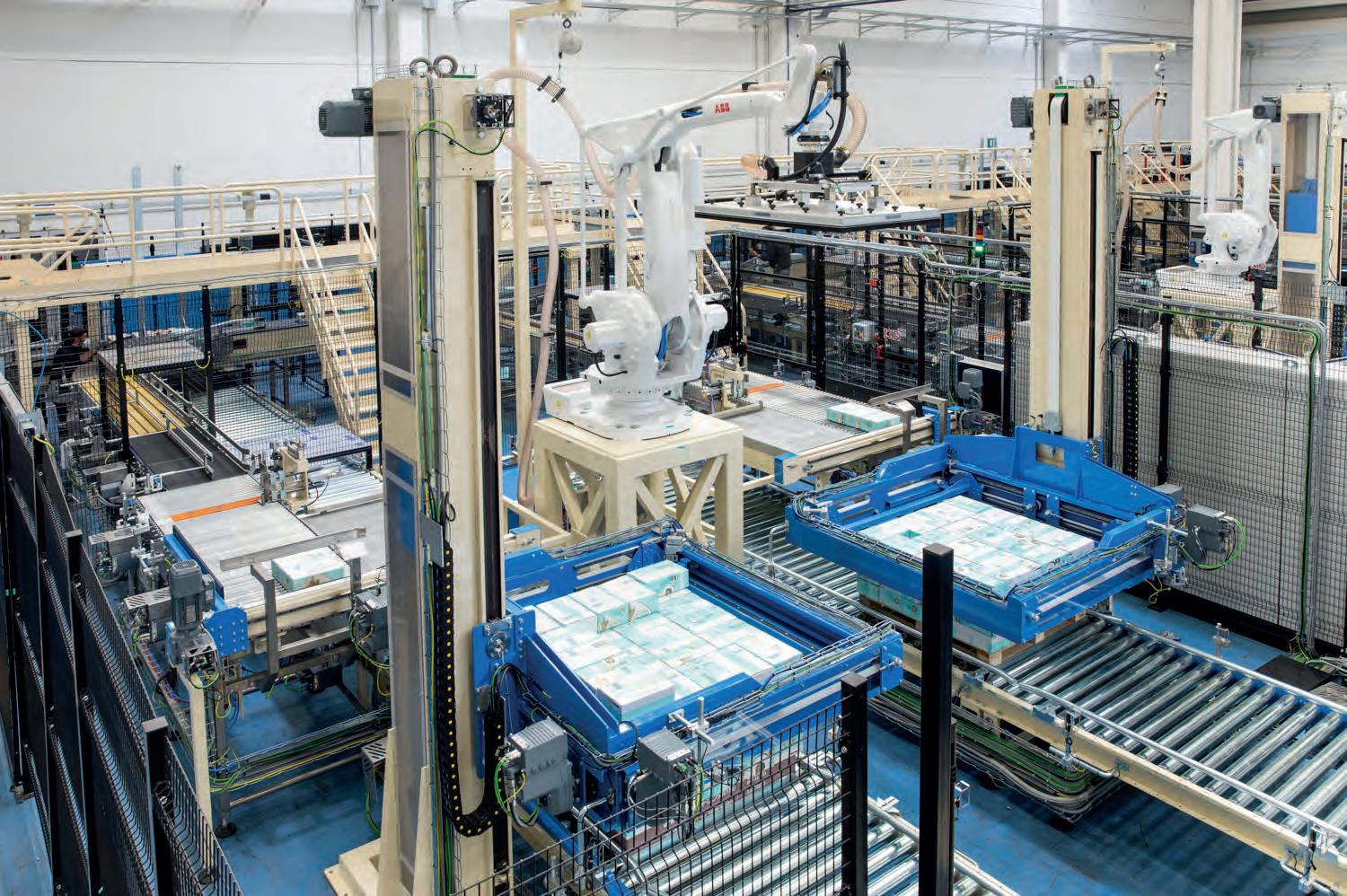
Clevertech’s Flexible Robotic Cell is a modular and highly versatile solution, ideal for brownfield projects and easy to integrate into existing production lines. The base configuration includes pallet and interlayer storage, with optional features such as empty pallet magazines and dust-proof pallet wrappers. Designed for high-speed operations, the system minimizes handling time and maximizes efficiency. Its scalable design enables the creation of fully automated palletizing centers.
Clevertech also offers advanced preforming solutions with its servo-driven Lineflex manipulator, delivering high performance, low energy consumption, and fast integration times.
Integrated into the PackML system, Lineflex ensures scalable and efficient operations, reducing both manufacturing and procurement times. With its compact design and superior performance, Lineflex allows companies to optimize preforming and automatic palletizing while minimizing energy costs and improving operational efficiency.
Thanks to a modular and scalable approach, Clevertech ensures each solution is tailored to the specific needs of every customer, boosting overall productivity and maximizing return on investment.
With continuous innovation and a global footprint, Clevertech is the ideal partner for companies looking to optimize their production plants and tackle the challenges of the global market.
www.clevertech-group.com
The last few years have been full of great news for Tropical Food Machinery: first and foremost, the design and installation of a oneof-a-kind banana puree processing line. The innovative element that makes this project important is the use of the Cerere 6000 automatic banana peeler, a machine entirely developed by Tropical Food Machinery capable of revolutionizing the processing process of this particular fruit.
Traditionally, banana processing lines still involve manual peeling of the fruit and a high level of manpower; furthermore, the rapid oxidation times of the pulp make banana processing extremely delicate. With Cerere 6000, the separation of the peels from the pulp is completely automatic: its technology guarantees precise and complete peeling of the fruits while, at the same time, respecting a high production yield. Moreover, the machine ensures the preservation of the quality of the product since the pulp is kept in an inert atmosphere thanks to the use of nitrogen in the extraction chamber. Cerere 6000 can represent a fundamental step forward in the banana processing sector and was the cornerstone for the development of this new plant.
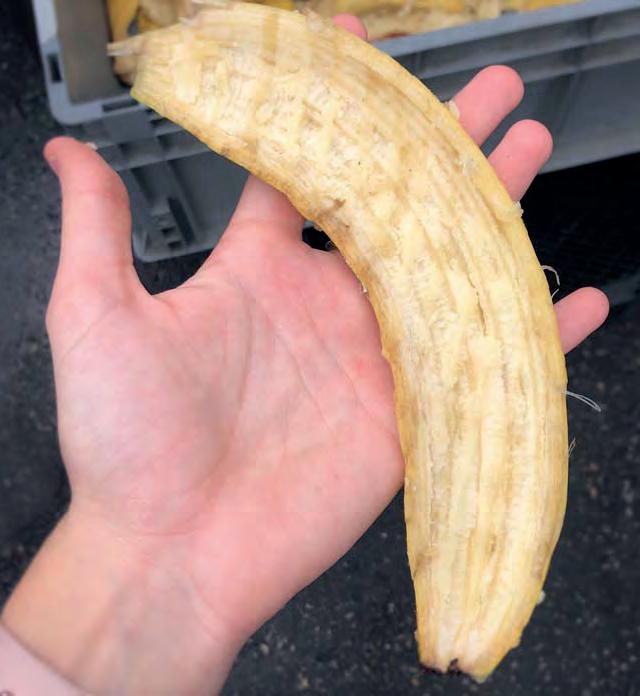
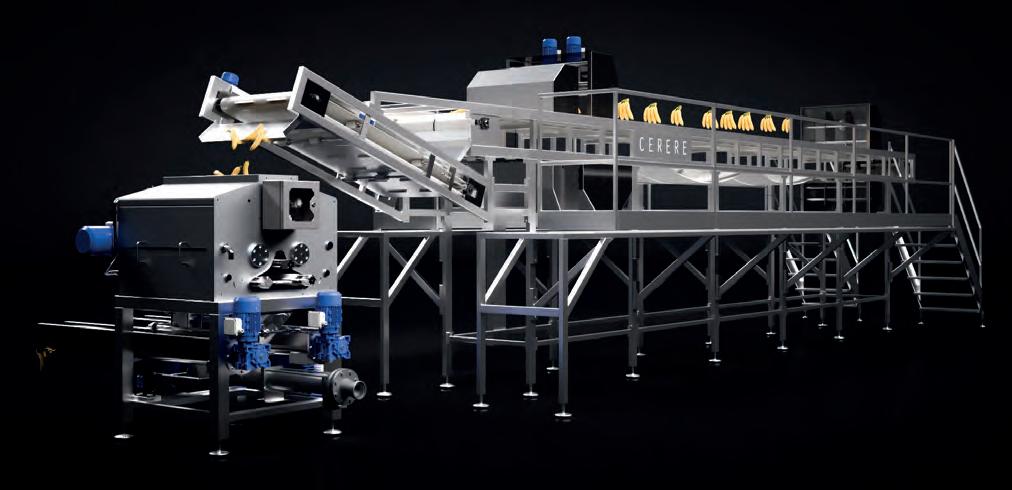
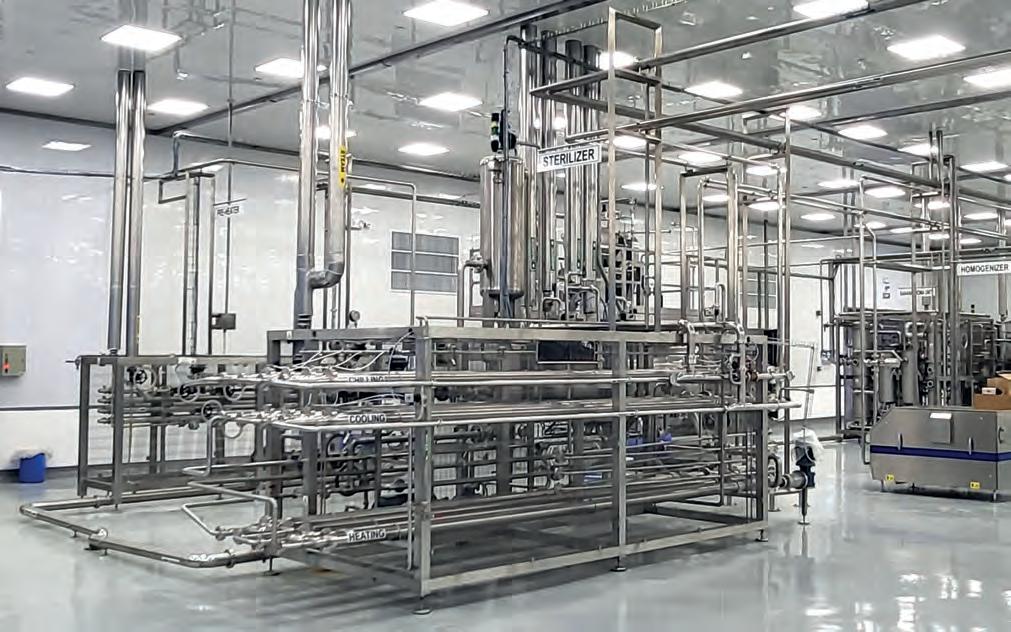
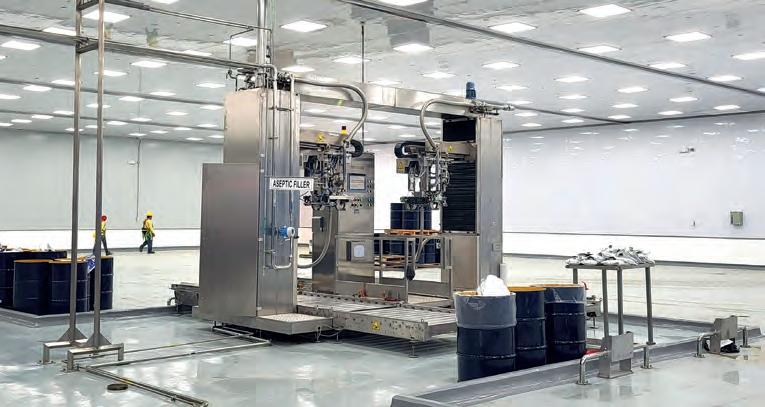
The processing line was installed in South-East Asia and includes a double automatic banana pulp extraction line, one for yellow bananas and one for green bananas: Cerere 6000 was installed on both.
Tropical Food Machinery took care of the entire design and construction of the machines, from washing the fruits to refining the pulp, up to the sterilization and aseptic filling of the banana puree. Finally, the system includes the Aroma Recovery System, a special machine that extracts and concentrates natural aromas and essences which would otherwise be lost in the puree extraction process. The processing line came into operation in mid-2023 and can process up to 6 t/h of fresh bananas.
Tropical Food Machinery is an international company with two headquarters in Italy and Brazil, leading in the global field of fruit processing machinery. The company currently has liaison offices in India, Costa Rica and the Asia-Pacific and West African regions. The company production also includes the development of multifruit processing lines. These systems combine different extraction machines, each one dedicated to a specific type of fruit –whether with thick skin like pineapple, or stone fruit as mango or even fruit
with seeds like maracuja. In this way, it is possible to use a single multifruit line for the processing of different types of products according to the harvesting season, guaranteeing a continuous productivity at high efficiency. Every production plant is designed and built in-house to satisfy a wide range of multipurpose technological solutions: mobile small-size plants can be used by producers or farmers in decentralized areas, diminishing management costs and generating local economy; large-scale plants can meet high production demands, optimizing energy consumption and expanding the producers’ market.
www.tropicalfood.net
Leafy greens like arugula, spinach and baby leaf aren’t just tasty - they’re nutritional powerhouses packed with vitamins, minerals, antioxidants and fibre. As consumers increasingly seek healthy yet convenient plant-based options, the demand for packaged, pre-washed mixed salads and readyto-eat greens is booming worldwide.
But here’s the challenge: leafy greens are fragile. During processing, they’re prone to mechanical damage and microbial contamination that can seriously affect quality, safety and shelf life. So how can producers keep these delicate vegetables fresh and safe from field to fork? This is where Sormac comes in.
Decades of expertise in leafy greens processing
Since the 1990s, Sormac has been a trusted name in vegetable processing technology. Their precision-engineered equipment is specially designed to handle fragile leafy greens on an industrial scale - helping processors to tackle the unique challenges of mixing, washing and drying these sensitive products, including 3rd party equipment integration.
The Microbiological Lab: A unique industry resource
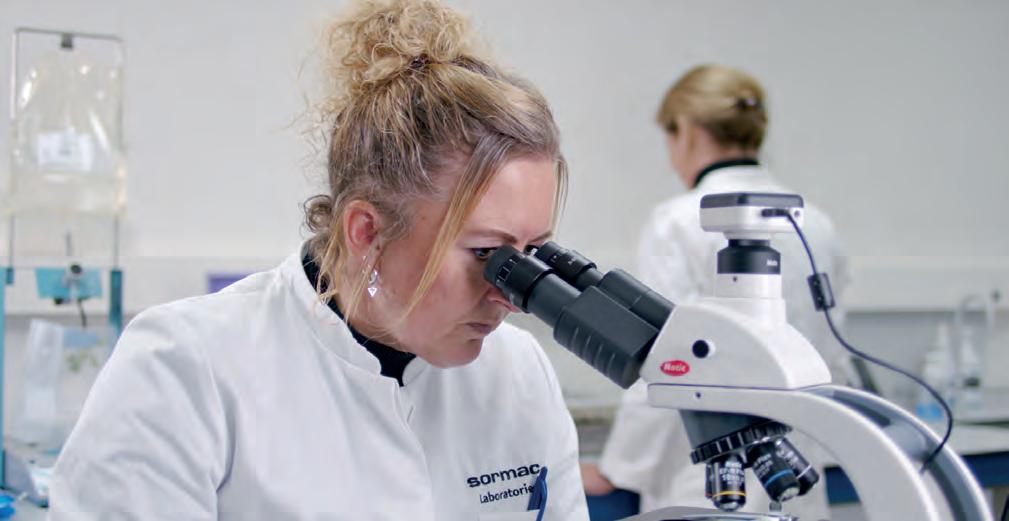
In 2015, Sormac further strengthened its expertise by launching an in-house Microbiological Lab. This facility supports both customers and Sormac’s own R&D and engineering teams in areas like hygiene, product integrity and processing efficiency.
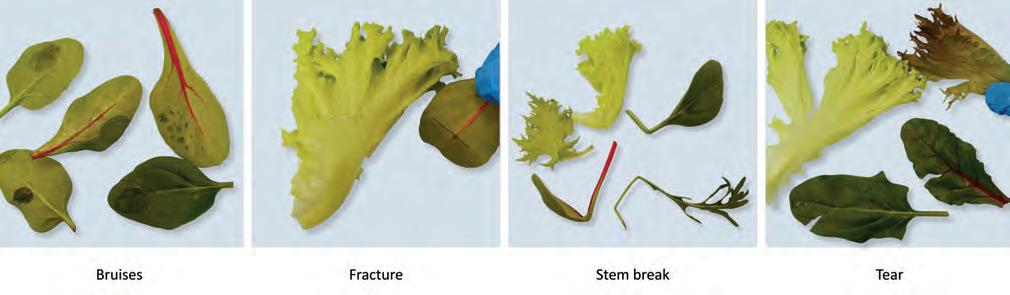
The lab provides vegetable processors with valuable insights into their own production lines. By carefully analyzing samples from critical points in the process, Sormac helps identify exactly where and how damage occurs— and offers practical advice on how to prevent it.
“We take samples from multiple points along the line and analyze them for signs of mechanical damage like tearing, bruising and stem breakage,” explains Marianne Knorr, Quality Assurance Officer and Head of the Sormac Lab. “We then advise processors on how they can optimize their own processes.”
Why even minor damage matters
It might surprise you how small abrasions or bruises can have a big impact. Damage to the leaf’s protective surface can disrupt the natural microbial ecosystem, making greens more vulnerable to spoilage and harmful pathogens - especially when temperature and humidity fluctuate during processing or storage.
Gentle handling for better results
To protect leafy greens, Sormac’s machines focus on gentle, intelligent handling at every step. Their PULSTAR
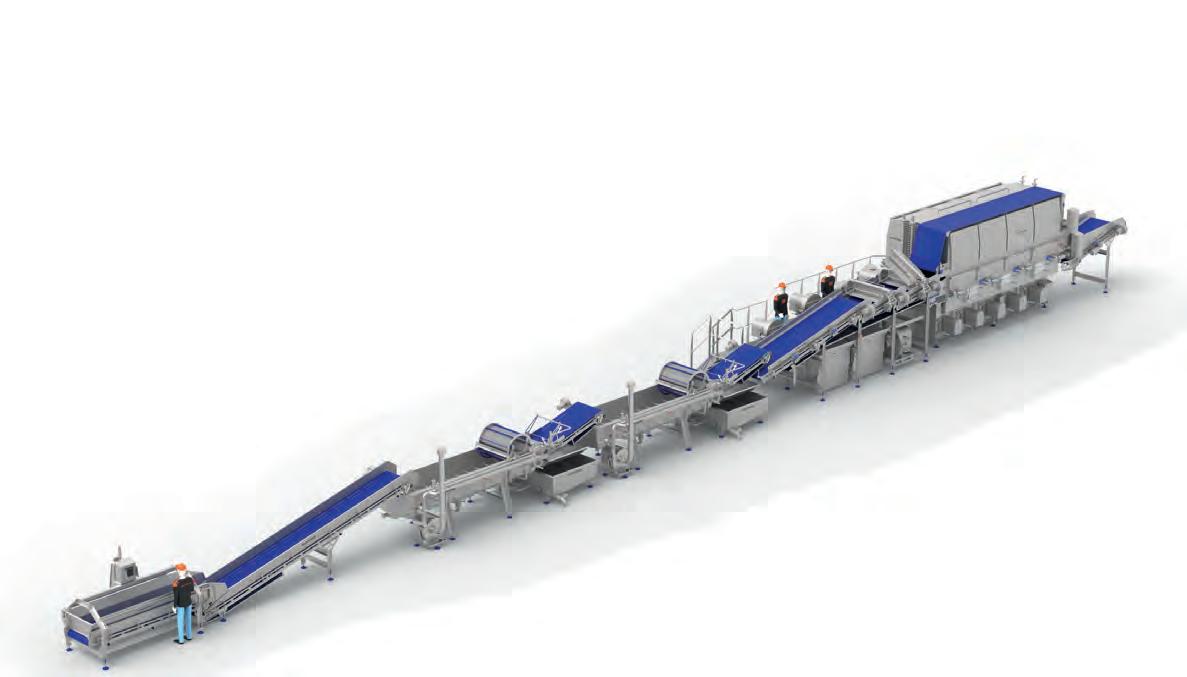

washers use low-turbulence water flow and customizable wash cycles to clean thoroughly without stressing the leaves. Sormac’s air-drying tunnels LDT are also specifically designed to gently dry delicate leafy vegetables while preserving product quality. Inside the tunnel, a regulated upward airflow causes the product to float, achieving surface moisture levels below 1%.
A partner in quality from field to fork
“Our mission is to enable processors to deliver the best possible product to the consumer,” says Marianne. “That means more than just efficiency - it means protecting the nutritional value, food safety and appearance of every single leaf.”
Today, Sormac supports leading salad producers, freshcut processors, and foodservice suppliers worldwide with innovative equipment, deep industry knowledge and expert advice. Leveraging the insights and resources of their Microbiological Lab, Sormac’s specialists also offer on-site audits and tailored support - helping customers
optimize processes and improve product quality across their entire production lines.
Sormac is a manufacturer of advanced processing machinery for the cutting, peeling, washing and drying of vegetables and selected fruits for the fresh convenience sector. Through close collaboration and customer-driven innovation, the company has become a global leader in process solutions that redefine industry standards in reliability, hygienic design and product quality.
Sormac is a privately owned company with headquarters in Venlo, the Netherlands and offices in the US and the UK. The company designs, manufactures, installs and services equipment and distributes it internationally through its own sales force and a network of dealers. Sormac proudly holds ISO certifications, including ISO 9001, 14001, and 27001.
www.sormac.com
Tropical fruit consumption, especially mango, peaks during the summer months. That’s why PND, a global leader in fruit processing machinery, has dedicated an entire line to this fruit.
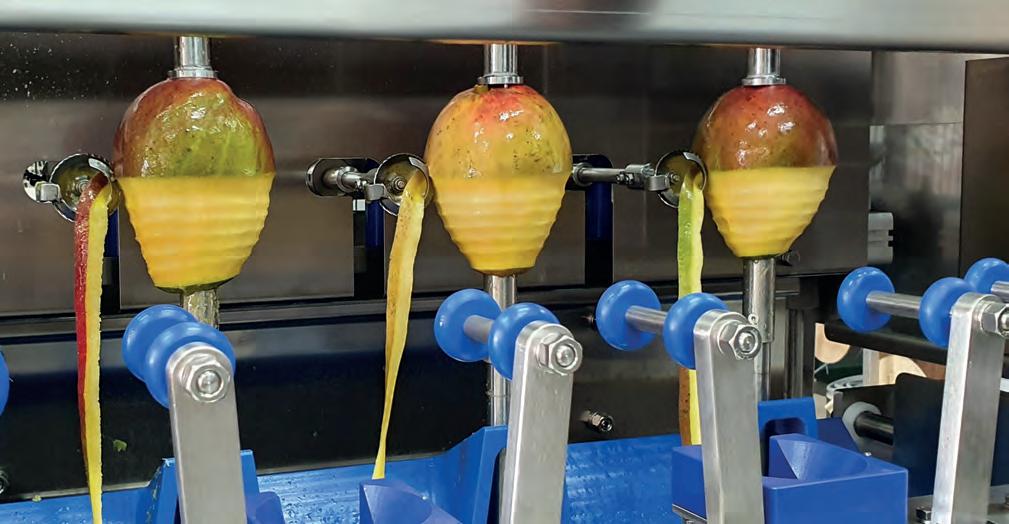
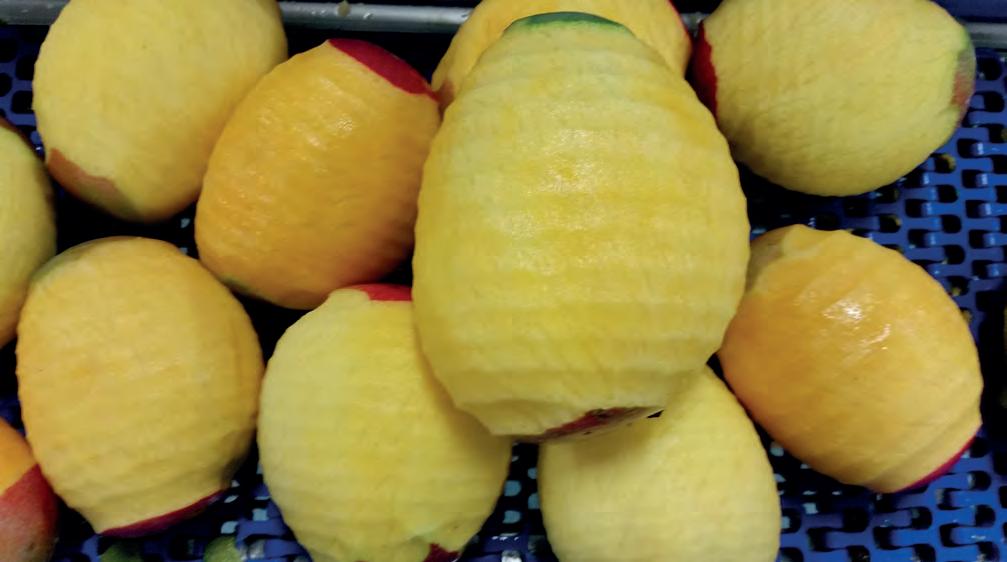
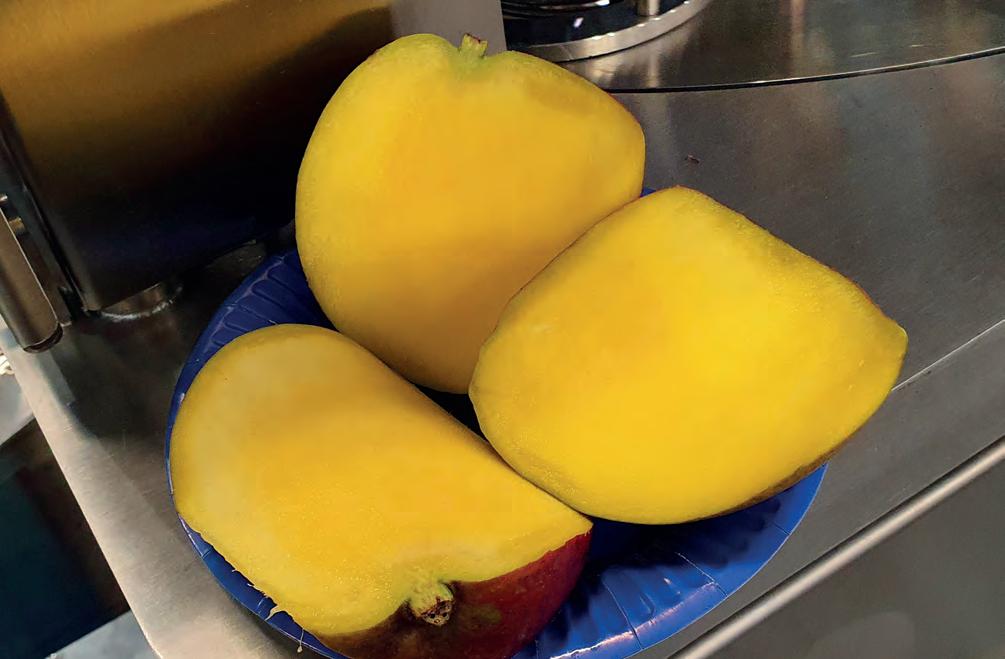
The Mango Line includes the PL4M peeler (also available with 6 or 8 processing heads) and two SS8 machines — one for coring and slicing, and one for dicing.
The PL4M is the standout of the line and one of the most in-demand machines on the market. There is no other peeler capable of processing both soft, ripe mangoes and firm, freshly harvested ones with the same efficiency. This manually loaded machine — proudly Made in Italy and entirely built in stainless steel — gently peels mangoes of any shape, size, or ripeness without altering their organoleptic properties. It handles both unripe and ripe fruit, offering a unique advantage in fruit processing. With its high output capacity, the PL4M has reached a sales record of 190 units worldwide — a testament to its reliability and performance.
Also highly successful is the SS8 semi-automatic cutting machine, also made of stainless steel, which processes 40 fruits per minute. It’s easy to operate, fast to sanitize, and versatile: the SS8 is a multi-function cutter that cores and slices fruit into wedges or cubes. Thanks to
easily interchangeable dies and holders, it allows for a wide variety of shapes and sizes.
The entire mango line can process up to 500 kg per hour and has seen booming sales in South America and Asia. PND is committed to serving both large and small-scale production with customized solutions. This is made possible through close collaboration with customers,
careful listening to individual needs, and a strong focus on performance.
Every solution is tailored to meet real operational demands with the latest technology.
Now celebrating its 25th anniversary, PND has earned the trust of industry professionals and customers alike, who
see its machines as indispensable allies in production. Visit www.pndsrl.it to browse the full catalogue of available lines and discover upcoming trade fairs and industry events.
For more information, contact: info@pndsrl.it
“
The
ongoing shift toward plant-based nutrition is not only changing
what we eat—it’s
also transforming how ingredients are processed. One of the clearest effects is the rising demand for plant protein powders, functional high-value ingredients used not only in vegan or vegetarian products, but also in hybrid formulations, protein-enriched snacks, supplements, and fortified foods.
by the editorial staff
In this context, dry processing technologies play a crucial role. Compared to wet processing, dry methods help preserve the organoleptic properties of raw materials, reduce energy consumption, and improve the shelf life of finished products. At POWTECH TECHNOPHARM-Europe’s leading exhibition for powder, bulk solids, and granulate processing-these dry processing innovations are drawing increased attention.
The ingredients in focus include proteins from peas, fava beans, lentils, ancient grains, oilseeds, and algaesources that require advanced systems for milling, sieving, separating, and homogenizing with precision, all while preventing cross-contamination, nutrient loss, or undesirable changes in sensory quality.
Key technologies include controlled impact mills, fluid bed micronizers, electrostatic separators for protein fractionation, and closed-loop blending lines to ensure consistency and uniformity. In many cases, manufacturers are also investing in by-product valorization, recovering secondary fractions in line with circular economy principles.
But dry processing doesn’t stop at the base ingredient. More and more companies are integrating functionalityenhancing technologies-to improve solubility, heat stability, or bioavailability. This is where the food industry begins to borrow from pharmaceutical methods: microencapsulation, controlled granulation, and surface coating techniques are increasingly common. One persistent challenge is ensuring flowability and shelf stability. Many plant proteins are hygroscopic and

require humidity-controlled environments, sealed transport systems, and barrier packaging. Again, solutions are being adapted from industrial solids processing: smart volumetric dosing units, vibratory conveyors, inline monitoring sensors, and automated dry system cleaning (CIP for dry lines).
Regulatory compliance is another critical factor. Plantbased protein powders-especially those used in international markets or in nutraceuticals-must meet high standards of purity, traceability, and contaminant control. Here, the TECHNOPHARM component of POWTECH provides a unique opportunity to explore the regulatory crossover between food and pharma.
From pea protein isolates to supplement blends and functional ingredients for bakery or dairy alternatives, the plant powder value chain is one of the most dynamic in today’s food & beverage landscape. And it calls for a new technical mindset-one where dry precision meets the creative flexibility of food formulation.

The company Navatta, founded by Mr. Giuseppe Navatta in 1983, produces and installs fruit and vegetable processing lines and boasts references across the globe.
NAVATTA, THE GLOBAL SUPPLIER OF INTEGRATED FRUIT & VEGETABLES
PROCESSING EQUIPMENT AND LINES, PROVIDING WELL PROVEN AND INNOVATIVE SOLUTIONS
FOR A FULL RANGE OF PLANTS also thanks to the numerous companies’ acquisitions over the years, such as Dall’ Argine e Ghiretti in 2001, a 40–year-old company world famous for rotary can pasteurizers and to-
Line to produce thermostable jams for bakery products. Working capacity: up to 2.400 kg/h product ready for hot filling.
mato pulping lines; Mova, in 2010, with extensive experience in bins handling, bins and drums emptying, palletizers and de-palletizers, washing systems; Metro International, in 2012, leader in fruit and vegetables processing, boasting international patents for juice and puree extraction, concen-
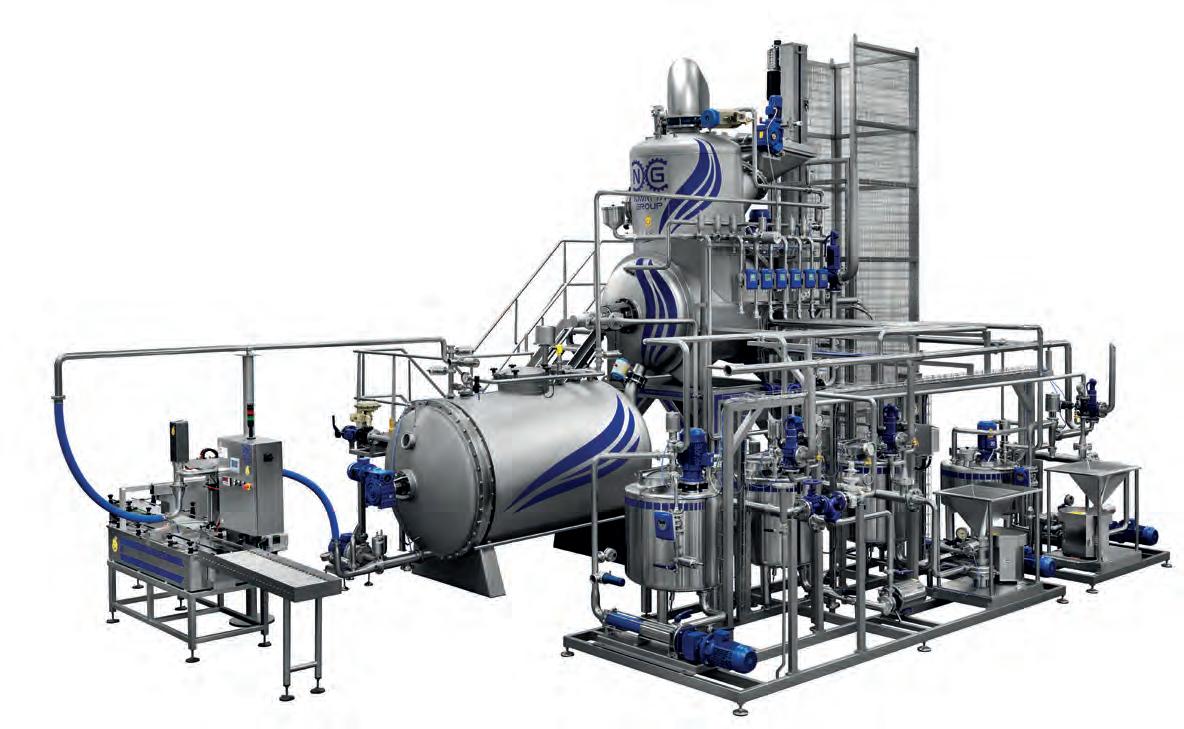
Bag-in-drums 220 l frozen fruit puree processing line: emptying, heat treatment, aseptic filling 3 - 5 kg.
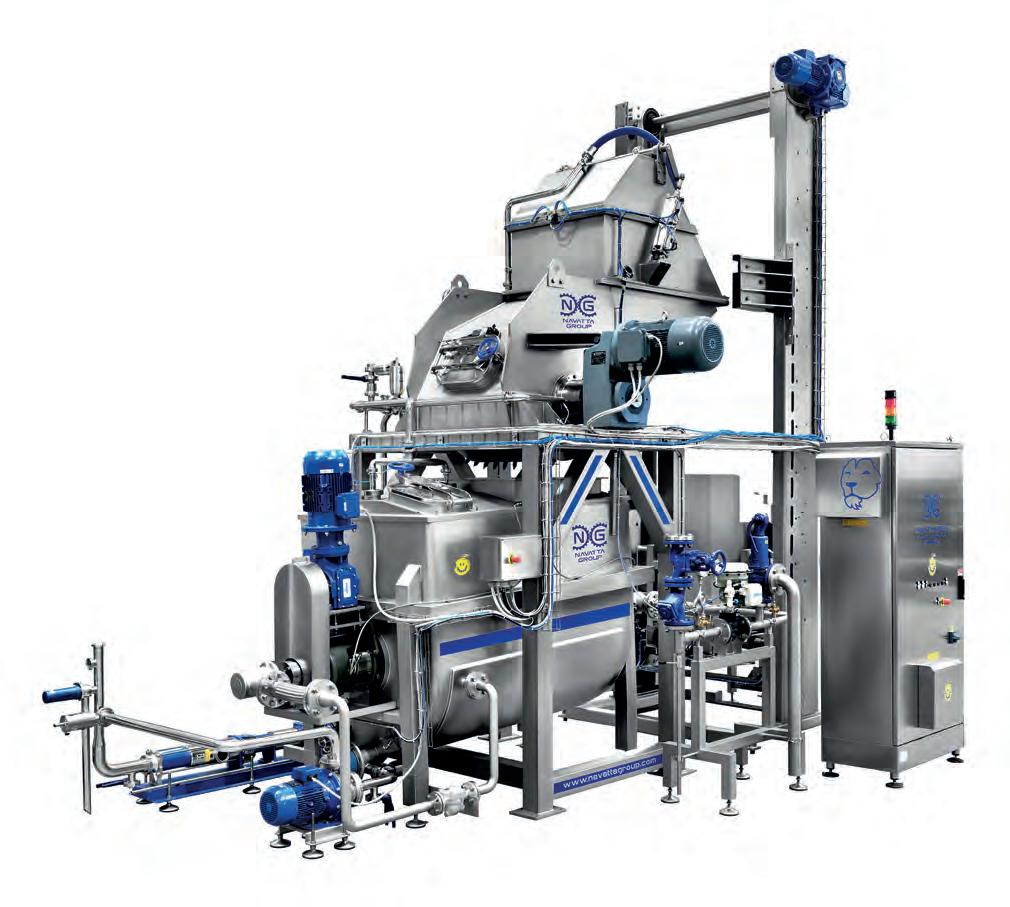
tration plants and thermal treatment; Ghizzoni Ettore, in 2012, specialized in special batch plants for ketchup, sauces and jams.
Manufacturing range
NAVATTA GROUP manufactures and commissions Processing Lines, Systems, Equipment for Fruit, Tomato, Vegetables for:
• Peeled / diced / crushed tomatoes, tomato sauces and purees, tomato paste, all filled into any kind of package or in aseptic;
• Diced, puree, juices (single strength or concentrated) from Mediterranean / tropical fruit, all filled into any kind of package or in aseptic;

• Fruit crushing lines from IQF, frozen blocks and frozen drums
• High yield PATENTED fruit puree cold extraction, fruit purees / juices equalized in aseptic.
• Wide range of evaporators to produce tomato paste Mediterranean and tropical fruit concentrate.
• Aseptic sterilizers
• Aseptic fillers for spout bags/ spout-less Bag-in-Box 3 – 20 liters, Bag-in-Drum 220 liters, Bin-in-Box / IBCs 1.000 – 1.500 liters;
• Piston Fillers
• “All-in-one” pasteurizer / cooler spirals
• Formulated products productions (jam, ketchup, sauces, drinks) start-
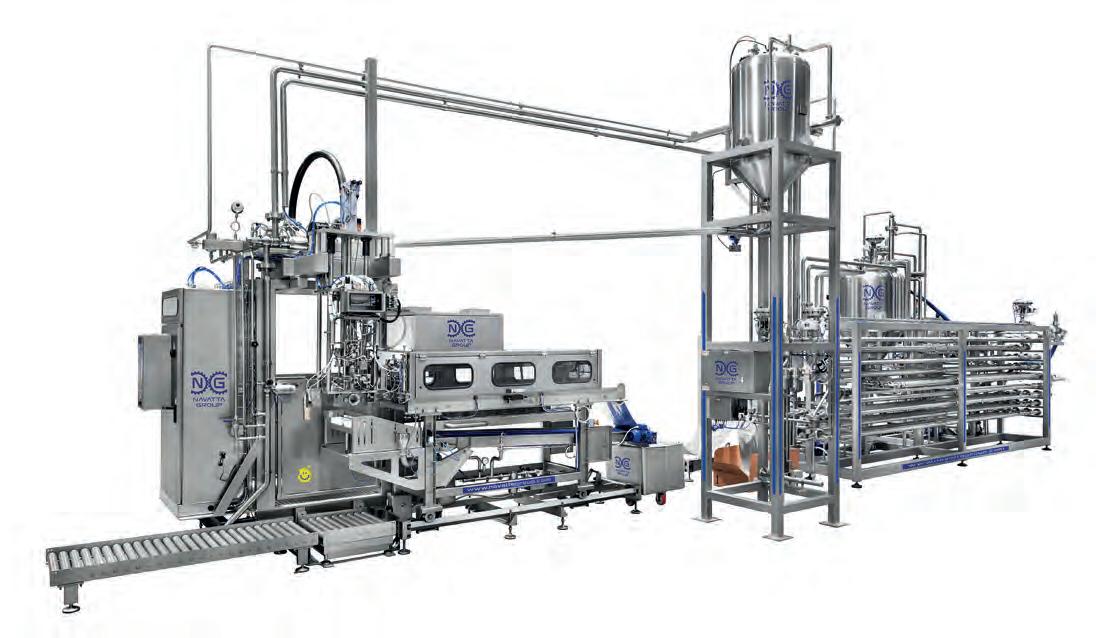
Single head aseptic filler “Webzero” for web small bags 3-5-10-20 liters - automatic loading system - no operator needed – patented system. Semi-automatic filling of 220 bags in drum. Aseptic tank and sterilizer.
ing from components unloading to dosing, mixing, mechanical / thermal stabilizing, to filling into any kind of package or into aseptic;
•Processing pilot plants;
•Vegetable processing as receiving, rehydration, cooking, grilling
Navatta Group’s headquarter and the two production units are located in Pilastro di Langhirano, Parma, with a total production area of 10,000 square meters.
A new area of 10,000 square meters has recently been purchased
and is ready for the third processing unit to be built.
Vision: passion is the factor that drives us to higher targets, in terms of technology, products and services.
Mission: to constantly increase Customers’ satisfaction and fidelity.
Visit: www.navattagroup.com
Navatta, the global supplier of integrated fruit&vegetables processing equipment and lines, providing well proven and innovative solutions for a full range of plants.

Air cooling water free, air only


High-speed production continuous operation
24/7 operation only 1.5 hours of washing every 3 days
Same input - higher output +10% ± 2% finished product
Extended shelf life
Preservative-free, longer durability

Compact and efficient
Half the space compared to traditional lines
Adjustable humidity
Precise control of outlet humidity
Clean and precise cutting
Maximum accuracy for every cut




In the competitive world of food manufacturing, precision, quality, and efficiency are paramount. The weighing process of microingredients, which form the backbone of many food recipes, needs to guarantee precision, quality, repeatability, and traceability. This is where Lawer’s automatic weighing systems come into play, offering a multitude of advantages and benefits to food manufacturers.
One of the primary advantages of Lawer’s systems is the unparalleled precision of weighing they offer. They ensure the exact measurement of micro-ingredients, maintaining the highest quality of the finished product. This precision is crucial in the food industry, where even slight deviations can affect the texture, flavor, and safety of the product. Lawer’s systems offer different levels of accuracy, ranging from 1g to 0.01g, catering to diverse production needs.
By eliminating human error, these systems ensure that every batch produced is consistent in quality and taste. This consistency is vital for building consumer trust and brand reputation. The systems are designed to maintain the right balance of raw materials, ensuring that each product meets the same high standards, and granting the perfect repeatability of the recipes.
Efficiency is another significant benefit of Lawer’s systems: they streamline the production process, reducing the time required for weighing micro-
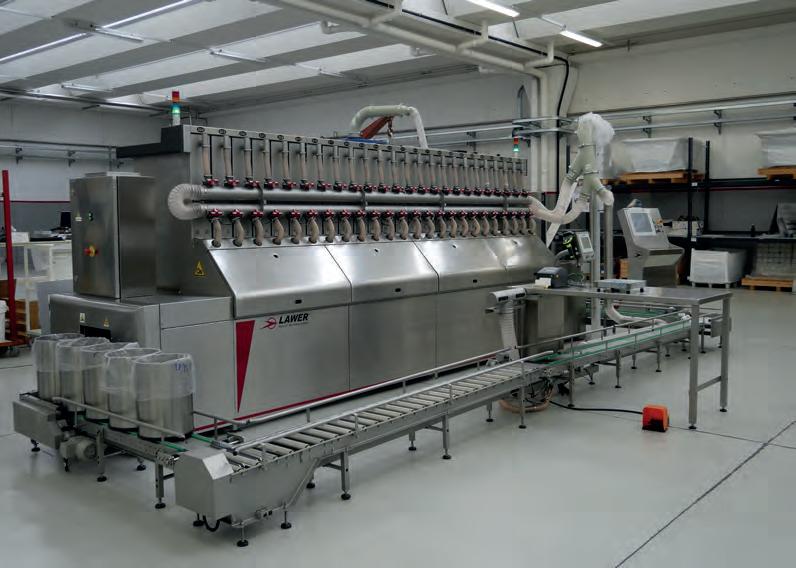
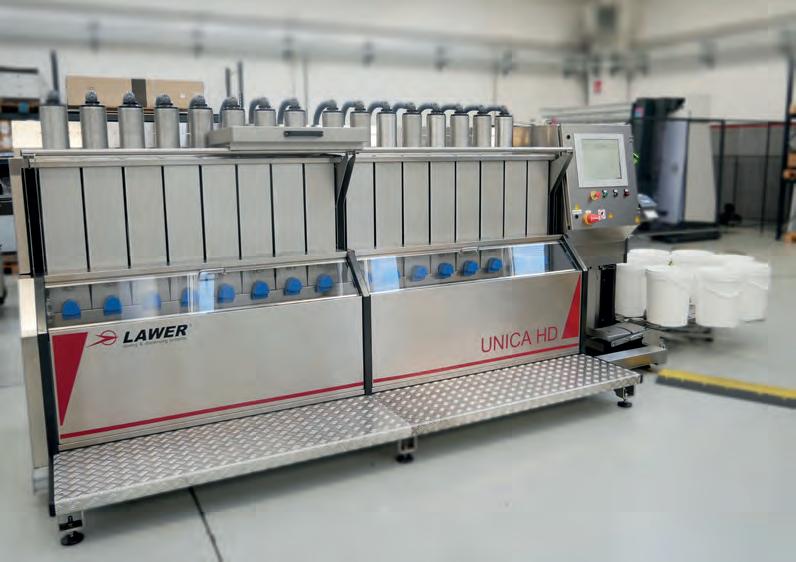
ingredients with high precision. This optimization leads to higher productivity and lower operational costs. Lawer’s systems, such as SUPERSINCRO and UNICA, are designed to cater to both large-scale and small-medium productions, offering solutions that fit various production scales and needs.
Traceability is a critical aspect of the food industry, ensuring that every step of the production process can be tracked and verified. Both SUPERSINCRO and UNICA systems are equipped with advanced control software that guarantees effective cross-checks and traceability. This software generates sophisticated reports and allows seamless integration with external systems (MES), aligning with Industry 4.0 standards. Additionally, these systems maintain perfect hygiene and safety in handling, using stainless steel silos and efficient suction-filtering devices to ensure a clean working environment.
Maintaining confidentiality of proprietary recipes and processes is essential for food manufacturers. SUPERSINCRO and UNICA can safeguard this confidential information, ensuring that know-how remains protected. This protection is crucial for maintaining a competitive edge in the market.
Flexibility is a standout feature of automatic weighing systems.They can be customized to meet specific production requirements, whether it’s storing products in fixed and interchangeable silos, hoppers, or big bags. Systems like SUPERSINCRO offer customizable solutions for various products and production scales, enhancing the versatility and adaptability of the manufacturing process.
SUPERSINCRO
•Totally customizable
•Modular system
• Silos (fixed and interchangeable), hoppers, big bags for the storage of products (from 380 to 1800 l)
• Automatic generation of bags of variable size (from 9 to 36 l)
•One bag with a recipe every 30 seconds
•Loading of the products by gravity or vacuum
•Double dosing screw and anti-clogging devices
•Efficient suction-filtering device
•Control software integrated with external systems
•Ideal for large productions
• 12, 24 or 36 stainless-steel silos, capacity 100 l
• One or two scales, with a precision of 0,1 g
•Loading of the products by gravity or vacuum
• Dosing screw (Lawer patented) and anti-clogging devices
•Efficient suction-filtering device
•Control software integrated with external systems
•Ideal for small-medium productions
•8-16 or 24 silos, capacity 50 l
•Stainless-steel screws
• One electronic scale, capacity 30kg and resolution 1g
•Loading of the products by gravity
•Control software integrated with external systems
•Ideal for small-medium productions
Lawer, an Italian company founded in 1970, has developed advanced technologies and know-how in the automatic weighing of powder and liquid products. Their expertise in single- or multi-weighing systems has made them a trusted partner in the food industry. Continuous investments in safety and improvement of the working environment further enhance the reliability and efficiency of their systems.In conclusion, the benefits and advantages of automatic weighing systems are manifold. From precision and quality to efficiency and traceability, these systems revolutionize the food manufacturing process, ensuring consistent, high-quality products while optimizing production and reducing costs. As the food industry continues to evolve, the integration of advanced automatic weighing systems will only become more critical in maintaining competitive advantage and meeting consumer demands. www.lawer.com
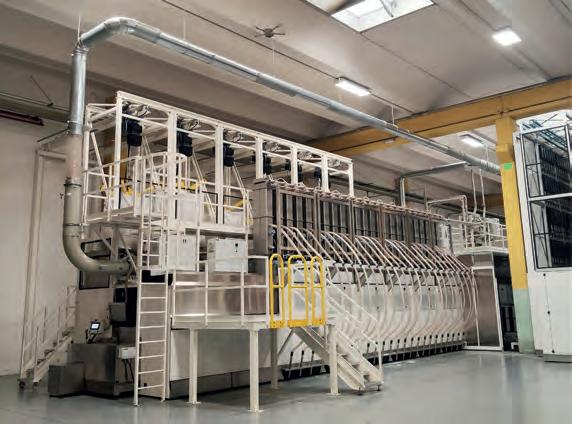
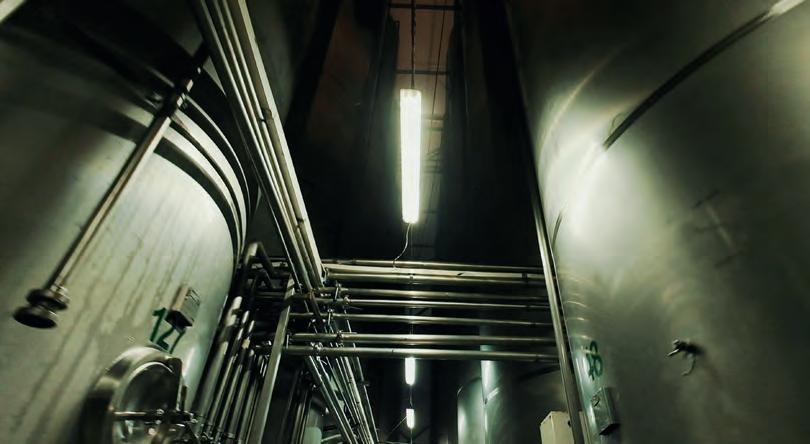
The global fruit juice market is expanding rapidly. From a value of USD 153.9 billion in 2023, it is expected to reach almost USD 216.6 billion by 2032, while the Italian market alone is forecast to grow by 31.5% over the next few years [Businesscoot SAS Report].
In a continuously expanding yet highly competitive sector, plant, skid and machine integrators are looking for dedicated technologies capable of increasing efficiency while ensuring consistent production quality for the end customer.
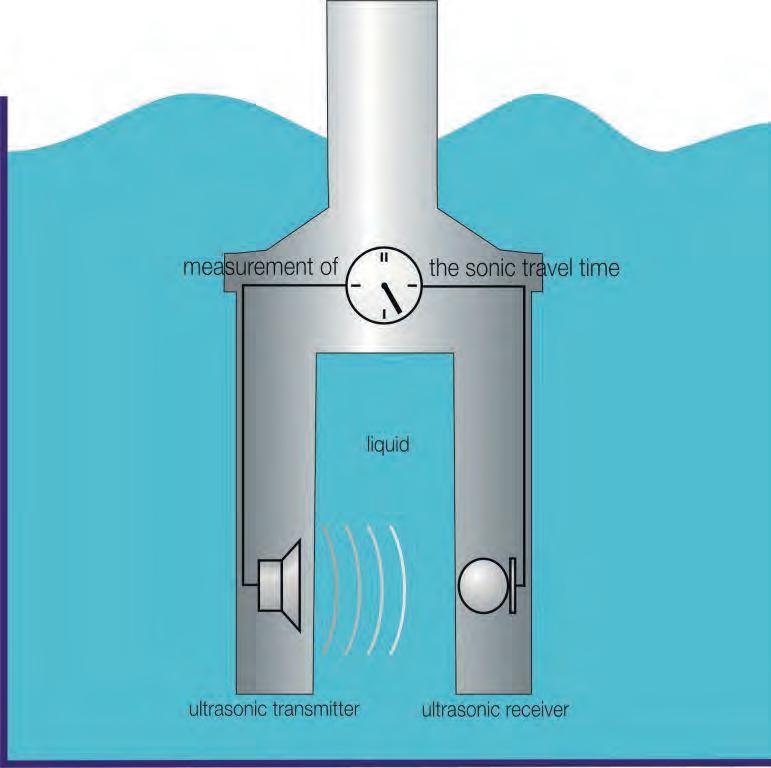
SensoTech LiquiSonic® V10 40-14 is an innovative solution for measuring concentration in liquids. It is based on

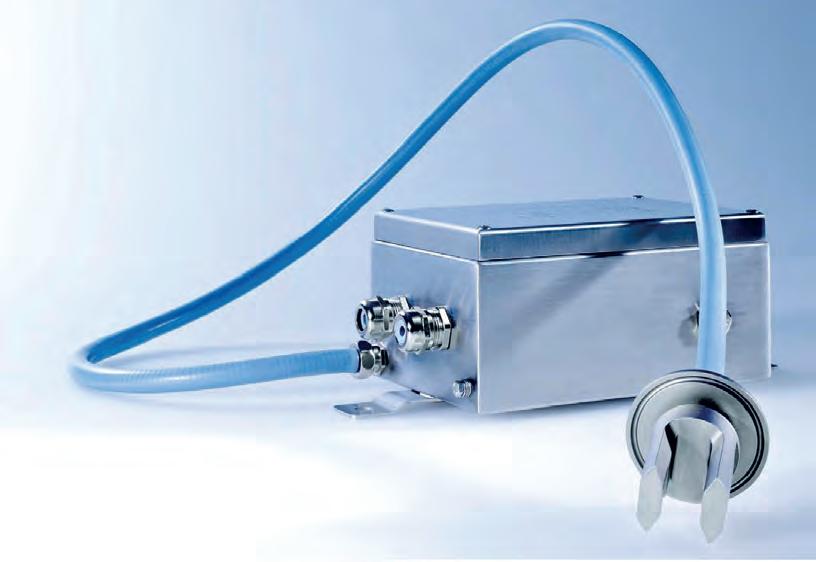
ultrasonic technology and features a hygienic sensor with no moving parts and no optical components that could become contaminated. Available both as a process analyser and in a compact OEM version, the system can improve every stage of fruit juice production without adding maintenance requirements or related costs.
Evaporation is a key step in the production of juice concentrates, but it is also one of the most expensive operations. The LiquiSonic® sensor continuously measures the concentration of the final product, providing accurate control up to 90 °Bx. This avoids unnecessary energy consumption, optimises the process and increases overall yield.
LiquiSonic® is also used during

blending, where it measures the initial concentration in the premix and regulates the final concentration in the post-mix phase during dilution with water. This ensures consistent product quality, prevents variations in formulation and maximises yield while reducing waste and out-of-specification production. Before bottling, the LiquiSonic® sensor detects the transition from fruit juice
to water, automatically and continuously monitoring the phase change and helping ensure the best possible sensory experience for the consumer. With a response time of less than one second, the analyser enables realtime and optimal production management.
During bottling, LiquiSonic® monitors the Brix value, which indicates sugar concentration, as well as the product temperature, ensuring that every batch meets the required quality standards. The system also records process data to support compliance with ISO 9000 and HACCP standards, helping manufacturers maintain total quality and meet hygiene regulations.
Fruit juices are consumed at different times of the day: during meals, as a snack or refreshing beverage, and in social settings such as aperitifs and parties. They are increasingly in demand among consumers who are becoming more attentive to product quality. As these expectations continue to rise, the adoption of technologies such as LiquiSonic® is becoming essential to ensure more efficient production and consistently high-quality fruit juices.
Contact Tecnova HT, SensoTech’s Italian partner, at www.tecnovaht.it for tailored advice on how to improve competitiveness in the fruit juice market without compromising the required quality standards.
“
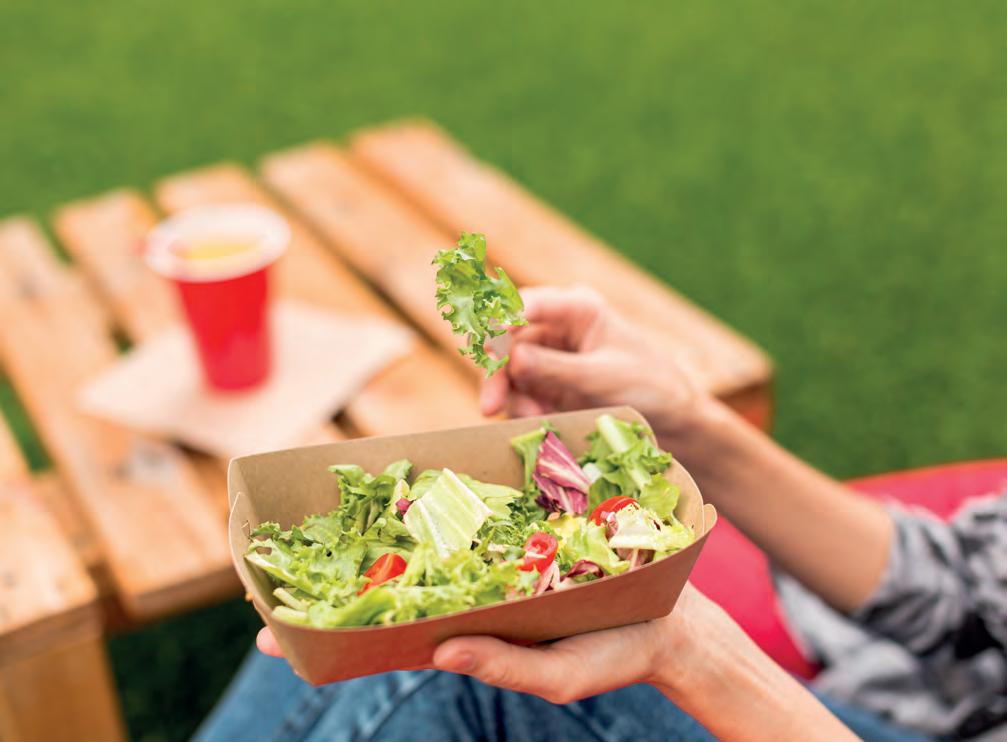
Ready-to-eat fresh produce, known as the fourth range, is synonymous with convenience and freshness and represents one of the most dynamic and growing sectors in the food industry
Behind the apparent simplicity of a bag of salad or a mix of washed vegetables lies a highly sophisticated production process where quality control is central to ensuring consumer safety and satisfaction.
In recent years, technologies for quality control have made significant advancements, transforming how fourth-range products are selected and processed. State-of-the-art optical scanners are now capable of identifying imperfections or contamination in products with

by Walter Konrad
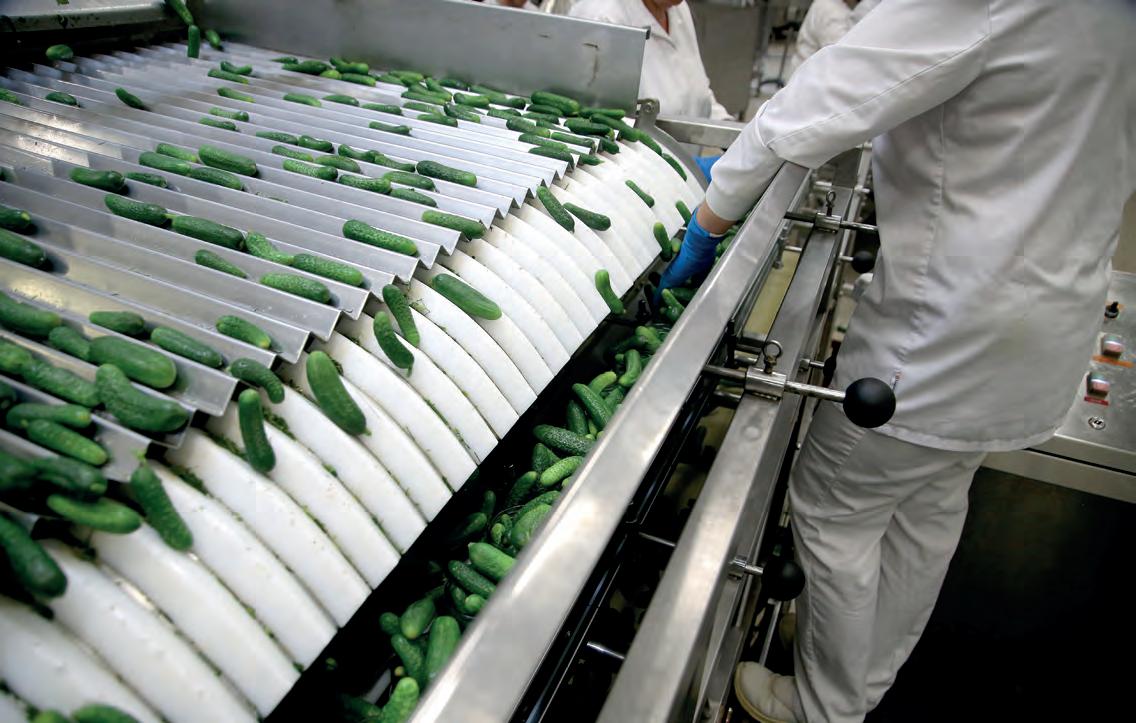
extraordinary precision. Using multispectral lighting and artificial intelligence, these machines can detect anomalies invisible to the naked eye, such as traces of bacteria or chemical residues, thereby elevating food safety standards.
Another area of innovation is non-invasive analysis techniques.
Advanced sensors can monitor parameters such as humidity, temperature, and product ripeness without damaging it, providing real-time information that helps optimize the production process.
These tools are particularly useful in reducing waste, ensuring that only perfectly compliant products reach the end consumer.
Automation is also revolutionizing the processing phase. Robotic production lines equipped with artificial vision systems can handle large volumes of products with previously unimaginable precision and speed.
This not only improves operational efficiency but also reduces the risk of human error, ensuring consistent and reliable quality.
Traceability is another central theme.
Digital systems based on blockchain technology are also finding applications in the fourth-range sector, enabling monitoring of every stage of the process, from harvesting to distribution.
This transparency not only increases consumer trust but also provides a valuable tool for quickly addressing issues or product recalls.
The impact of these technologies on overall sector efficiency is significant. By reducing machine downtime and optimizing resource use, innovations in quality control help make the fourth-range sector more competitive and sustainable. At the same time, automation allows companies to respond more quickly and flexibly to market demands, which increasingly require fresher and more personalized products.
In a sector where quality is everything, investing in advanced technologies is not just a strategic choice but a necessity to keep pace with consumer expectations and ever-stricter regulations.
The fourth range, a symbol of convenience and innovation, continues to demonstrate how technology can be an essential ally in ensuring freshness, safety, and sustainability.
Until a few decades ago, the European food industry – and the Mediterranean market in particular – relied on an extensive network of resellers. These were solid companies, often family-run, representing manufacturers of industrial machinery and technologies. These “qualified intermediaries” played an essential role. Thanks to their widespread presence and in-depth knowledge of local markets, they helped companies identify, purchase and integrate the technological solutions required for production.
They were trusted partners, with relationships built over many years, capable of translating production requirements into practical solutions and bridging the geographical, linguistic and technical gaps between suppliers and end users.
But the world has changed. The digital revolution, the growing reach of international trade fairs and the rise of instant, multilingual communication tools have gradually eroded this model. Machinery manufacturers have become increasingly independent in promoting and selling their solutions directly, while food companies –operating on an ever more global scale – have sought direct relationships with manufacturers, leaving less room for the traditional reseller.
Meanwhile, another model has gained ground in Northern Europe:
engineering and project management companies. These organisations are capable of coordinating complex projects, often with impeccable organisational and structural expertise. In most cases, however, they are not built on direct experience in a specific industry, but rather on cross-sector capabilities. This approach works well on paper, but can struggle to deliver truly highperforming solutions when product culture and in-depth sector knowledge are lacking.
It is within this changing landscape that ESG Italy has developed a completely new model. Neither a simple reseller nor a conventional engineering company, ESG Italy is a true general contractor specialising in the savoury snack industry. The founding idea is as simple as it is innovative: to combine the relationship-building capabilities of a reseller with the technical and organisational expertise of an engineering company, while adding one crucial element – hands-on experience in the specific sector.
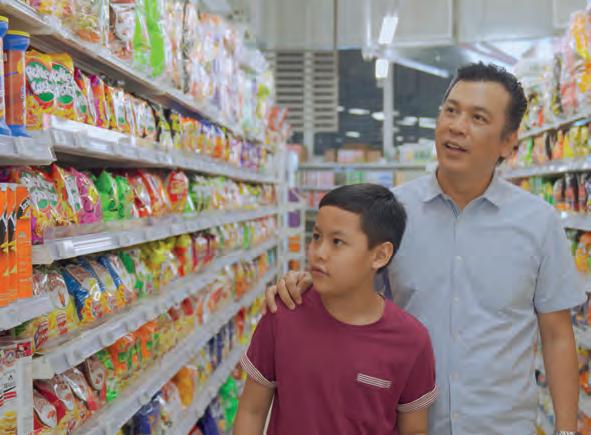
Chips: The Future of Snack Manufacturing”, we explore the reasons behind the strong growth of this product category and explain how our solutions can make it even more competitive.
ESG Italy was founded by professionals who have worked directly in the field, building plants, launching production lines and solving real problems in real manufacturing environments. This enables us to speak the same language as our customers, understand production dynamics, anticipate needs and propose solutions that truly work. We are project partners, not simply suppliers. When we become involved, we take responsibility for the entire process: from concept development to layout design, from technology selection to supplier management, and from installation coordination to production start-up. In this way, we turn complexity into simplicity, freeing manufacturers from the need to manage multiple suppliers and the unexpected issues that often come with them.
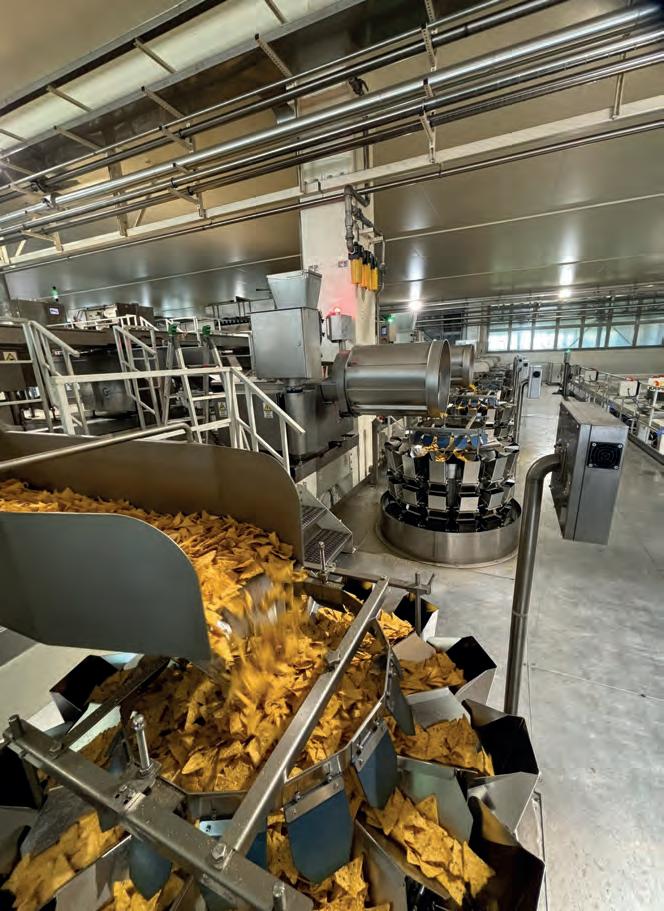
One of the sectors in which ESG Italy has recently demonstrated its innovative capabilities most effectively is tortilla chip production. This is not only due to growing global demand – which is expected to exceed USD 48 billion by 2030 – but also to our ability to design efficient, sustainable and high-yield production lines. It is a concrete example of how our general contractor model can create value, even in highly competitive markets.
our blog
The content published in the Blog & News section of the ESG Italy website reflects this vision. In “Tortilla
In “Why ESG Italy is Your Ultimate Partner”, we describe our project-based approach, from the initial design stage through to turnkey delivery.
In “ESG Italy Leading the Way in the New Trends of the Snack Manufacturing Industry”, we focus on the transformation of the sector, from the growing emphasis on well-being and product customisation to digitalisation. “Why the Bridge is Central to ESG Italy’s Brand Identity” explains why we chose the bridge as our symbol: because we connect different worlds, ideas, people and projects. Finally, “ESG Grows Beyond Borders” tells the story of our expansion into Dubai.
The opening of ESG Middle East in Dubai represents much more than a geographical expansion. It is the recognition of a real market need: the need for a partner that understands the sector, speaks the language of the food industry and knows how to translate a strategic vision into functional and sustainable growth. This need has been clearly recognised across the Middle East. Companies are no longer looking only for suppliers, but for allies. ESG is ready to respond with the same passion, expertise and dedication that have supported its growth in Europe.
Because being a general contractor does not simply mean doing things well. It means building bridges – and making them last.
esg-italy.com
The food processing industry in India is undergoing a paradigm shift with the rapid adoption of digitalisation and automation. The food processing automation market is projected to grow from USD 27.00 billion in 2025 to USD 38.58 billion by 2030, at a CAGR of 7.4%, signifying the increasing reliance on smart technologies to enhance operational efficiency and sustainability.
The rise of automation & robotics in food processing
Automation and robotics are revolutionizing F&B manufacturing by streamlining operations, reducing labor costs, and ensuring product safety. AI-powered robotic arms are now handling complex tasks such as packaging, sorting, and quality control. Advanced
automated monitoring systems track environmental conditions in real-time to maintain product integrity.
One notable example is Chipotle Mexican Grill’s ‘Autocado’, an avocado-processing robot that cuts, cores, and peels avocados in just 26 seconds, significantly improving guacamole production efficiency.
Such innovations underscore the transformative impact of automation in modern food manufacturing.
Sustainable digital solutions for food manufacturing
Digitalisation is also driving sustainability in food processing through innovative solutions such as:
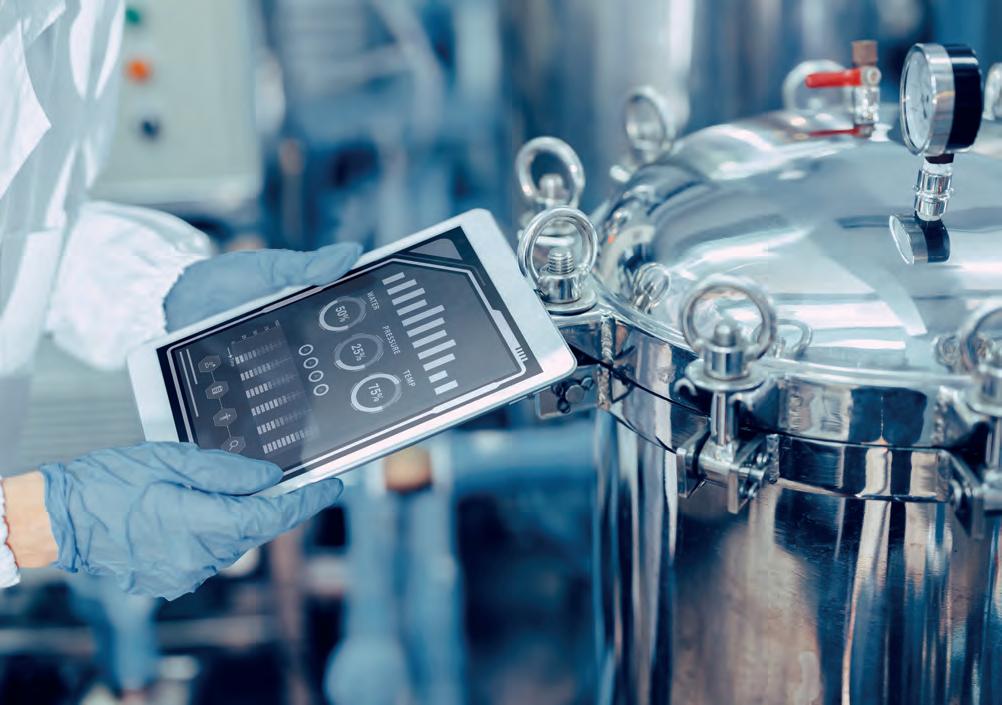
• Water-efficient Clean-in-Place (CIP) systems that reduce resource consumption.
• Biodegradable packaging materials to minimize environmental impact.
• Renewable energy-powered production facilities, aligning with global sustainability goals.
• 3D food printing technology, enabling customized food structures and on-demand production.
Automation in food packaging is enhancing efficiency, hygiene and precision in the industry. Smart packaging systems, including AI-powered vision inspection, automated sealing, and robotic pick-and-place solutions, ensure consistent quality and reduce wastage. Technologies like modified atmosphere packaging (MAP) help extend shelf life by controlling oxygen levels, while automated labelling and traceability systems improve supply chain transparency.
AI-driven solutions are reshaping manufacturing floors across India, enabling hyper-personalization in food production. From customizable beverages and AIrecommended meal kits to predictive analytics optimizing production schedules, AI is redefining efficiency and consumer satisfaction.
For Example, AI-based demand forecasting enables manufacturers to optimize inventory management and reduce food waste by accurately predicting market trends. Such advancements are positioning India’s food processing industry at the forefront of the global digital revolution.
www.anugafoodtech-india.com
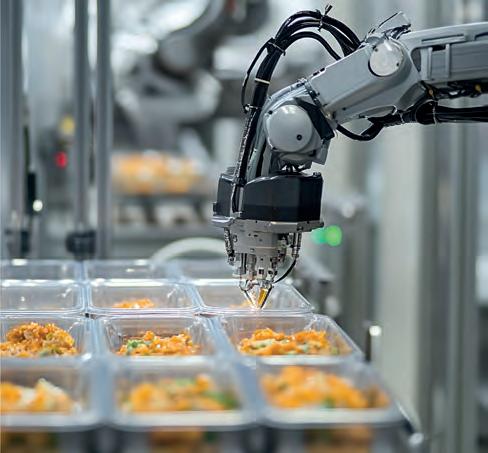
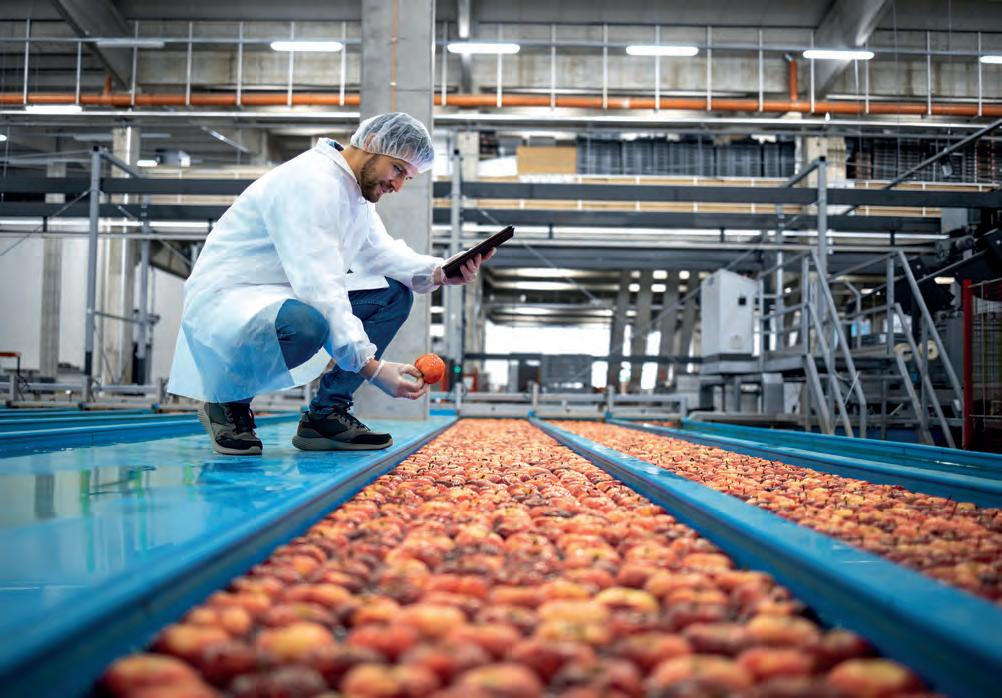
The food processing industry is rapidly evolving through the integration of automation and robotics, transforming everything from production lines to packaging systems. These innovations not only improve productivity and consistency but also help address workforce shortages and enhance food safety. At the heart of these high-tech systems are the often-overlooked components—standard machine elements—that keep everything running smoothly. This is where companies like Elesa+Ganter play a pivotal role.
Automation enables food processing operations to run with minimal downtime and maximum consistency. Robotic arms, conveyor systems, and sorting machines can work around the clock, maintaining high throughput and precise control. Elesa+Ganter supports this shift by offering a wide selection of ergonomic knobs, clamping levers, hinges, and indexing plungers that are essential for adjusting and securing machine parts with accuracy and reliability.
Food safety and hygiene standards
In food production, hygiene is paramount. Elesa+Ganter provides a specialized range of Hygienic Design components made from stainless steel and high-grade plastics that are resistant to cleaning agents, corrosion, and bacterial growth. These components comply with international
food safety standards and are designed for easy cleaning, reducing contamination risks in automated environments.
Robotic systems are not replacing workers but are helping fill gaps where labor is scarce or where tasks are too dangerous or repetitive. Elesa+Ganter’s durable and userfriendly machine elements enable quick manual adjustments during machine setup or maintenance, ensuring seamless collaboration between humans and machines on the production floor.
Automated packaging lines rely on dependable mechanical components to perform consistently. Elesa+Ganter supplies position indicators, adjustable feet, rotary controls, and safety elements that enhance machine stability and operational safety—key in maintaining uptime and ensuring product integrity during packaging and transport.
Elesa+Ganter: backbone of reliable automation
Elesa+Ganter combines German precision and Italian design, offering over 100,000 product codes that meet the rigorous demands of the food industry. From robust handles to precision alignment systems, their products are critical for machine builders developing next-gen food processing and packaging lines
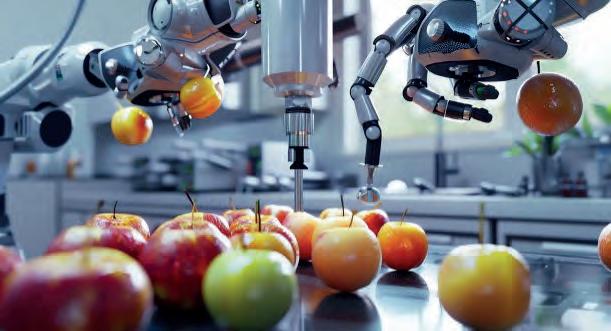
Reducing Manufacturing Waste for Cost Efficiency
Kati Hope, Global Account Manager, Mettler-Toledo Product
Kati Hope, Global Account Manager, Mettler-Toledo Product Inspection
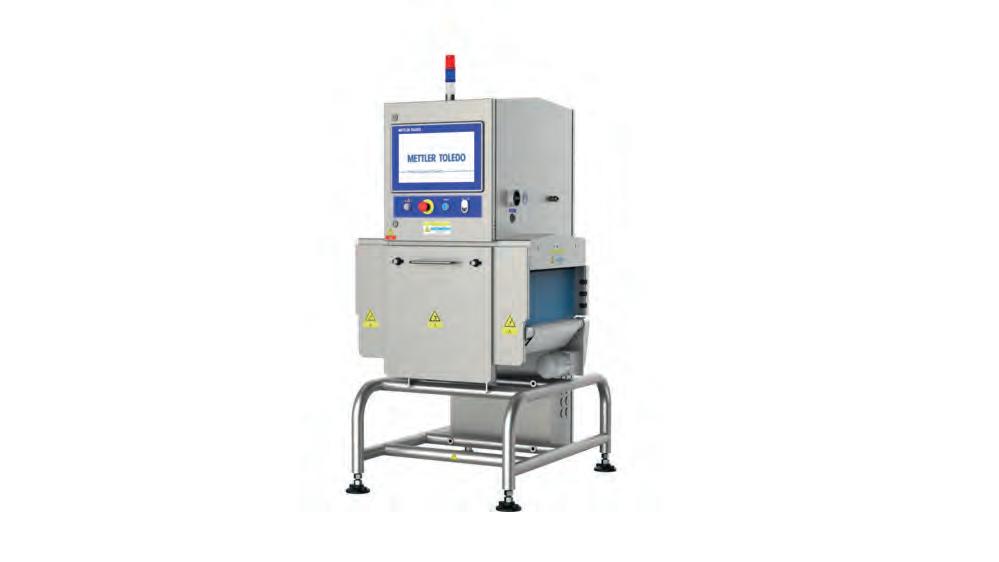
tion systems play a vital role in identifying foreign bodies before products leave the factory. However, inaccurate settings or overly sensitive systems can lead to false rejects, i.e. discarding perfectly good products unnecessarily, increasing waste and costs.
Innovative metal detection technology, such as Multi-Simultaneous Frequency (MSF), improves sensitivity without increasing false reject rates.
Meanwhile, advanced x-ray inspection offers precise contamination detection, helping manufac-
turers maintain product safety without unnecessary waste. In addition, x-ray inspection oversees product completeness, adding an extra layer of quality control.
production for long-term success
By integrating advanced checkweighing and contamination detection technologies, manufacturers can significantly cut waste, control costs and improve productivity.
In food manufacturing, every gram counts. Whether it’s minimising giveaway, avoiding unnecessary rejects or improving line effici key. Small inefficiencies quickly add up, affecting costs, sustainability production performance. Fortunately, smart weight measurement contamination detection provide solutions that not only cut wa enhance operational success.
Find out more about reducing waste and improving efficiency: www.mt.com/pi-combatcosts-pr.
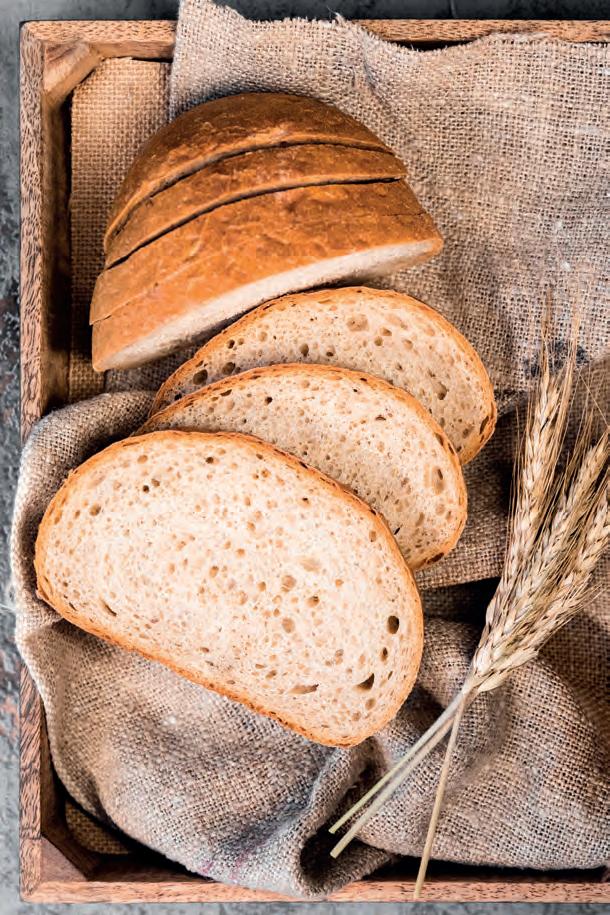
Bread is no longer just a staple food rooted in tradition; it has evolved into a response to the needs of those seeking health, energy and lightness. Slow fermentation, functional flours, plant-based proteins and less sugar: the new generation of bread embodies a quiet but profound transformation. An ancient product that renews itself every day, in step with our time.

Oby Sonia V. Maffizzoni
nce upon a time, bread was a simple, universal food consumed daily. Today, that ancient symbol has been redefined. It has become the voice of new needs, an expression of a lifestyle that values health without sacrificing pleasure. The rise in food intolerances, increased nutritional awareness, and the growing demand for functional foods have quietly but decisively revolutionized the bakery world.
According to EFSA, around 10% of the European population has some form of food intolerance, while a study by Mintel reveals that 58% of European consumers consider functional benefits (such as high fiber or protein content) a key factor when choosing bread. This transformation is guided by data as much as by taste.
And it’s not just about eliminating or reducing ingredients: it’s about adding value. Today’s bread must satisfy without weighing you down, nourish without imbalance, and tell a story of care, balance and research.
bread: the alliance between nutrition and innovation
One of the most significant trends is the growing availability of high-protein breads. No longer limited to soft white loaves, these products are made with added legumes (lentils, chickpeas, soy), oilseeds (chia, flax, hemp), isolated plant proteins or whey derivatives. They cater to the needs of physically active consumers, those following balanced diets, or anyone seeking longerlasting satiety.
According to recent market data, demand for protein bread has grown by 35% in Europe over the past three years. The challenge lies in maintaining an appealing flavor profile and texture while preserving nutritional quality.
fermentation and sourdough: digestibility comes first
The return of sourdough is not a nostalgic trend revived during lockdowns, but a deliberate choice.
Slow fermentation leads to partial predigestion of carbohydrates, lowering the glycemic index of the final product.
It also increases micronutrient availability and improves gluten tolerance, making bread suitable even for those with non-celiac sensitivities.
A study published in Food Research International shows that natural fermentation increases iron bioavailability by 62% and zinc by 38% compared to industrially leavened breads. Additionally, phytic acid levels—compounds that inhibit mineral absorption—drop by more than 50%, allowing for more efficient and complete digestion.
Long fermentation also develops complex aromas, rich scents and a crisp crust—benefits that are both sensory and health-related. “Slow” bread takes time, but pays off in quality.
Reducing sugar is another ongoing goal. In many bread recipes, sugars and maltodextrins were traditionally added to enhance color and fermentation. Today, thanks to targeted use of enzymes, aromatic flours and advanced fermentation techniques, excellent results can be achieved without added sugars.
The same goes for salt. The World Health Organization recommends a maximum daily intake of 5 grams. Bread, often a major source of sodium, can contribute to cardiovascular health if reformulated carefully. Some bakers are experimenting with natural yeast to enhance flavor while drastically reducing sodium chloride.
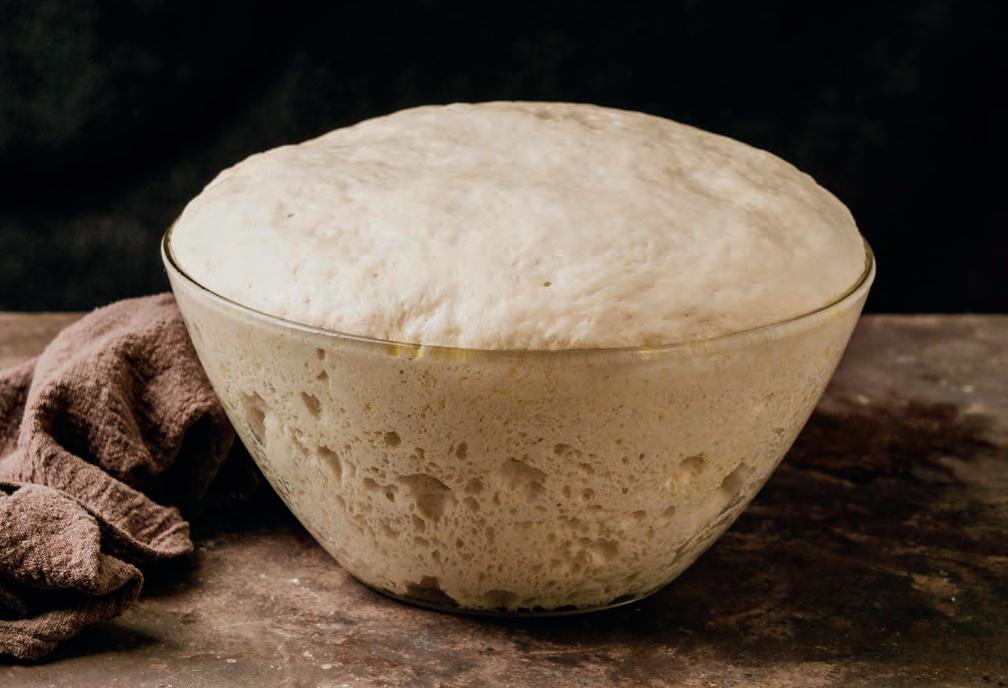
Functional flours and enriched bread: new horizons for innovation
Another trend is the rise of alternative flours— not just wheat, but rye, oats, millet, sorghum, buckwheat, and quinoa. Each of these grains offers unique benefits: soluble fiber, low glycemic impact, and essential vitamins and minerals.
Some breads are further enriched with betaglucans, omega-3 fatty acids, probiotics and B vitamins. Like the other trends, this evolution moves toward “functional bread”: a food that, in addition to its basic nutritional role, contributes to prevention and health support. The boundary between bakery and nutritional supplementation is becoming increasingly blurred—and increasingly interesting.
Personalization and targeted offerings: bread tailored to the individual
There’s no longer one bread for all. The market is diversifying by target group, nutritional need, and lifestyle. Low-glycemic breads for those managing blood sugar, enriched breads for vegetarians and vegans, high-protein options for athletes, and soft breads for the elderly or children.
In some countries, customized baking solutions are being tested based on biometric data or personalized nutrition guidelines. In Germany, for example, some bakeries are working with nutraceutical startups to offer bread tailored to the individual glycemic profile of each customer. In Japan, AI-based technologies are being tested to analyze dietary habits and lifestyle, then recommend the optimal daily bread composition. This is the era of precision nutrition, and bread—the ultimate symbol of sharing—is becoming increasingly intimate and personalized.
Bread that speaks the language of the present
In a world where health is central to food choices, bread cannot afford to stand still. It has changed, evolved, and learned to express far more than its ingredients. Today, it represents a harmonious balance between tradition and innovation, between taste and wellness.
It is no longer just flour, water, and yeast—but research, awareness, and connection. And it remains, always, a daily gesture of care.
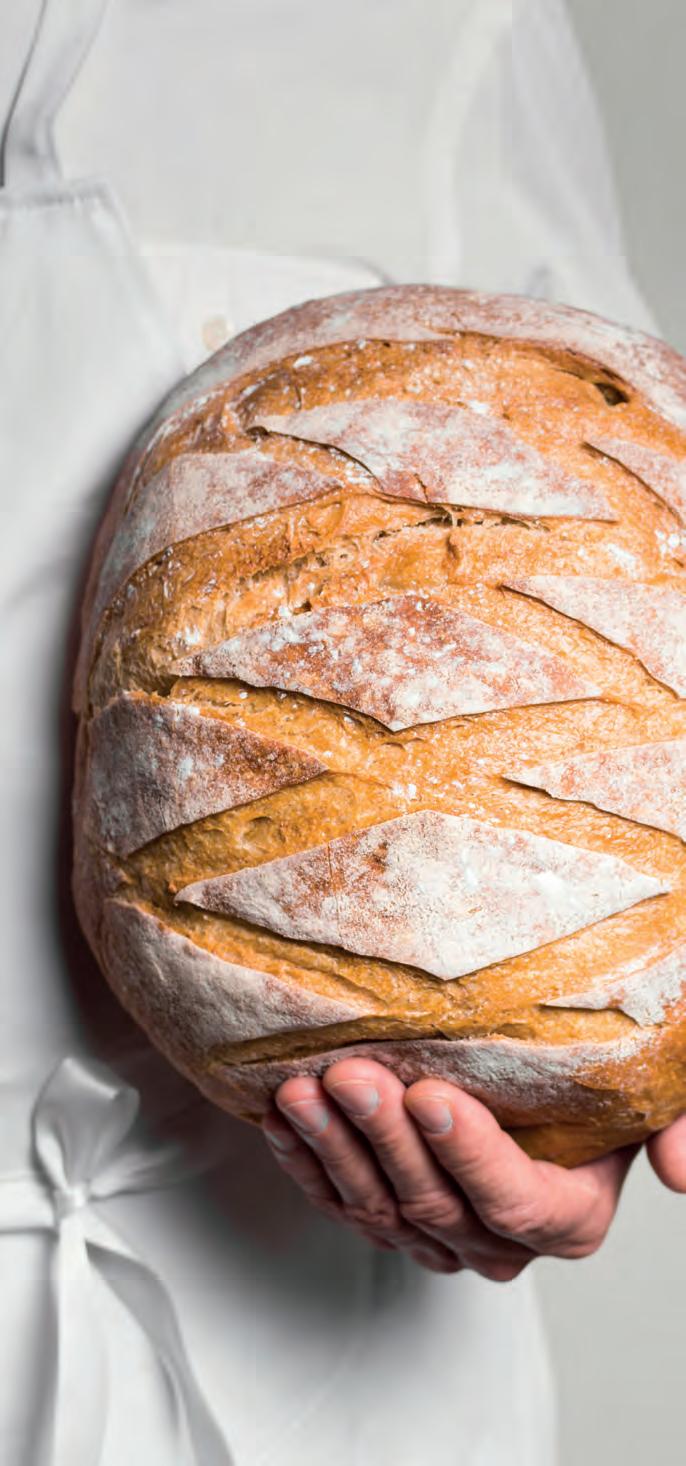
Gorreri Food Processing Technology is an Italian producer of turnkey lines and tailored machinery for the industrial and semi-industrial production of various types of cakes. Gorreri supplies a complete range of cake processing technology, designed in accordance with customers’ production needs and applying more than 55 years of experience.
The company. Founded by Mr. Luigi Gorreri, President, the Company is led by the Gorreri family and part of Middleby Bakery, which collaborate directly with customers on all types of new projects, turning product ideas into efficient lines and suggesting processing solutions drawn on years of global production. Gorreri offers crucial expertise for solving, avoid-
ing, and preventing production issues.
The range.
Gorreri produces a wide range of industrial machinery designed for top performance and efficient use of space, time, and cost, from mixing equipment to decoration and injection devices, continuing through ultrasonic cutting devices and robotic systems.
Along with premier performance, Gorreri machinery is manufactured to the highest hygienic standards to avoid product contamination and uniquely offering no-tools-maintenance and equipment that is sturdy enough to work 24 hours a day, 7 days a week, as required by industrial manufacturers.
Mixing equipment. To achieve final products of the highest quality you
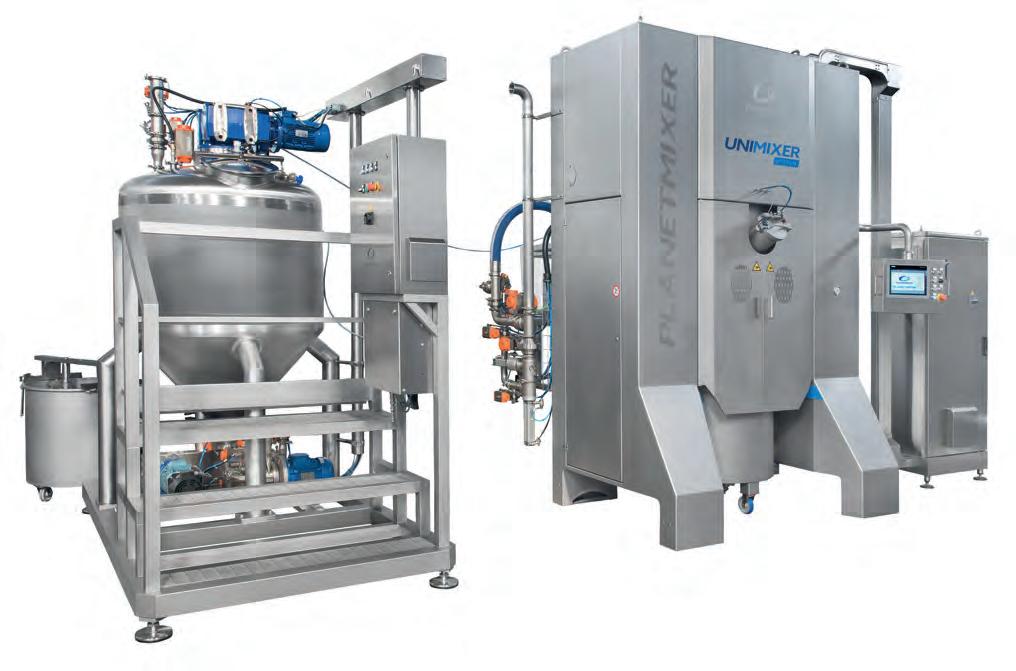
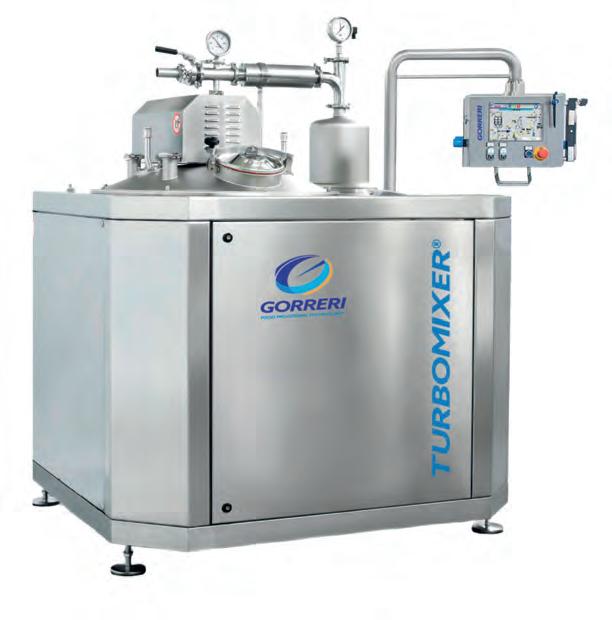
must start with the perfect batter and dough preparation. That’s why over the years, the Gorreri Team has developed and refined different mixing system concepts.
Turbomixer technology, The compact Gorreri Turboaerator is unmatched in continuous speed and superior final products. Refined over
more than 30 years, TURBO-MIXER with VERTIMIX Technology mixes, emulsifies, and aerates creams, whipped cream, parfait, meringue, and any kind of soft dough.
The Turbomixer range has endless technical solutions, all developed to optimize customers’ production processes, merging the high and unique
TURBOMIXER GMG MODEL
performance of Vertimix Technology with the advantages of continuous mixing, to grant uniformity, softness, and the compact structure of batters and creams, reducing thickening and emulsifying agents.
Thanks to the TURBOMIXER TECHNOLOGY, with its unique ability to whip egg whites to 180 gr/l, Gorreri
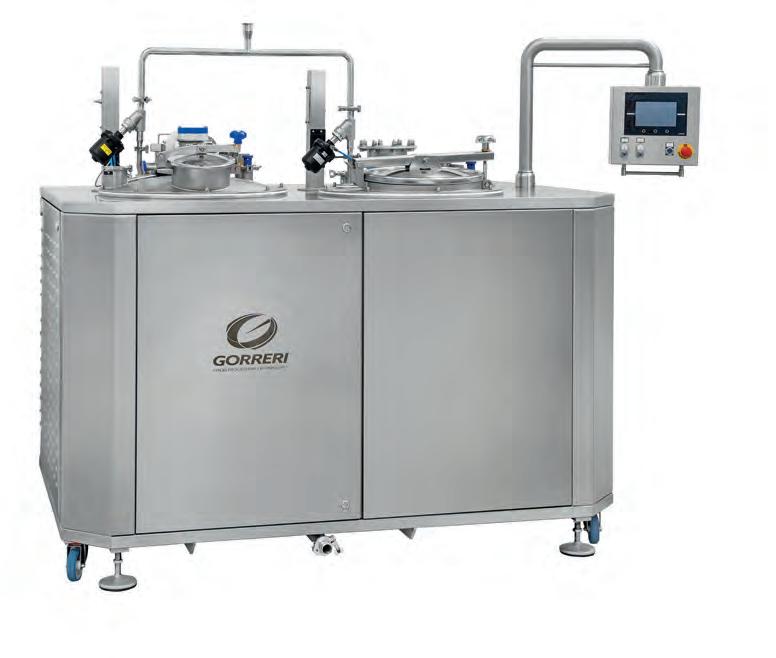
MUFFINS AND DOSED PRODUCTS INDUSTRIAL LINE
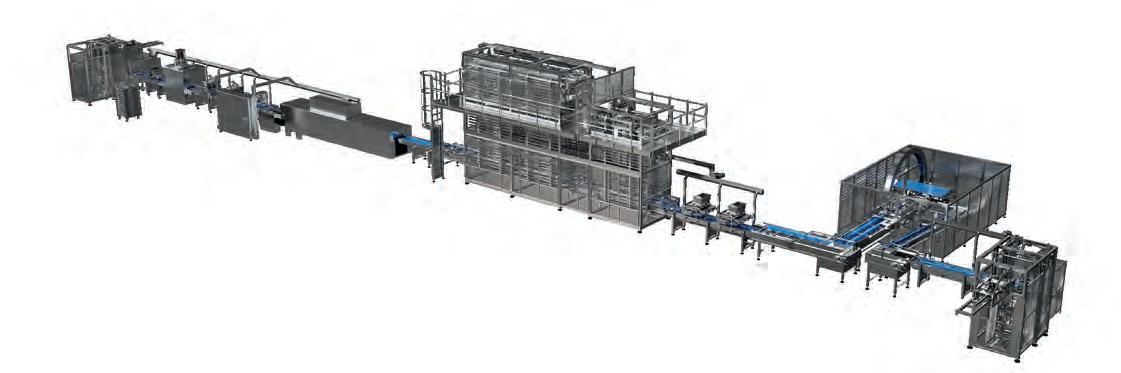
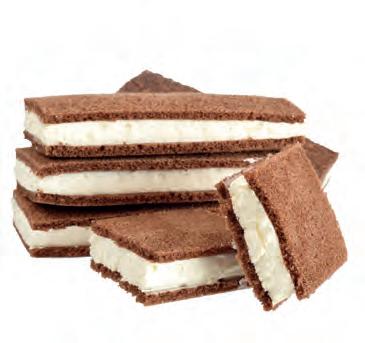
has developed different systems to produce special products like chiffon cake, angel cake, ladyfingers, replicating handcrafted processes in industrial production.
Planetmixer is a range of vertical, pressurized planetary batch mixers, able to speed up the mixing and the preparation of any kind of hard dough, batter, and cream, available in six different capabilities (from 120 up to 800 liters) to satisfy any production request.
Each PLANETMIXER is fully customizable and can be equipped with a full range of options like warm- ing and cooling systems, steam, automatic charging and discharging of ingredients, vacuum, etc.
addition to the Turbomixer and Planetmixer, Gorreri has designed a new and innovative mixing equipment, developed to chop, rehydrate, and melt cakes and sponge cake production scraps.
Cuttermixer allows the sustainable recovery and reuse of 100% of production scraps, helping companies save costs, labor, and energy.
Tailor made industrial lines. GORRERI designs and manufactures different solutions for the industrial and semi-industrial production of all types of cakes.
Originally known as a consulting company for sponge cake industrial processing lines, Gorreri has mastered the entire process from batter preparation to decoration.
With years of dedication, Gorreri developed complete and skilled proficiency in the processing of any kind of cake cupcakes, muffins, dosed soft battered cakes, shaped dosed
cakes, multi-color dose cakes, birthday cakes, slab cakes, sponge cake based products and sponge cake semi-finished products, lady fingers, individual desserts, tiramisù, cheesecakes, macarons, meringue, pies, and tarts.
Leader in fresh and frozen birthday cakes lines. One of the fields

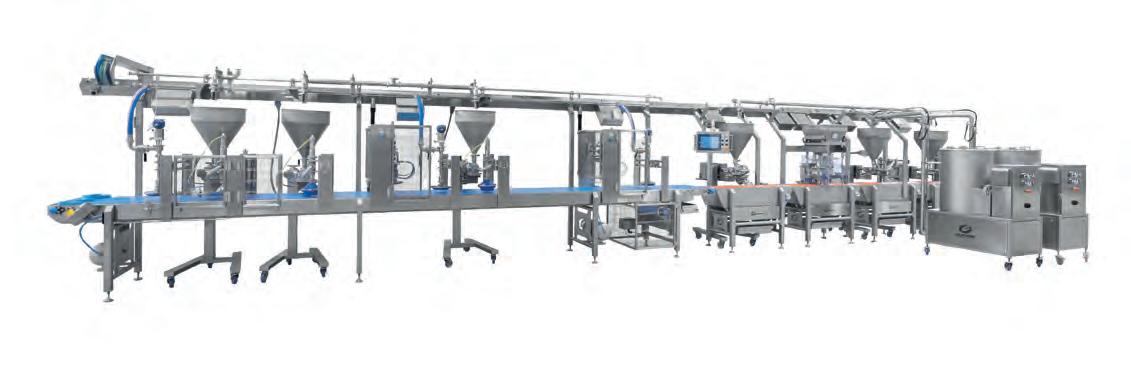
BIRTHDAY CAKES INDUSTRIAL LINE

where Gorreri has developed a matchless expertise in the last 15 years is the industrial process of birthday cakes, which can be sold by producers both fresh or frozen, due to the fact that Gorreri technology creates cakes both with and without the need of rings or moulds.
Just a few operators can oversee the customized 1500 cakes/hour automatic processing line. Pick and place cake disks, dosing systems designed according to cream structure, jam and viscous products dosing devices, masking devices which can mask two cakes in less than 3 secs, lateral and top graining systems for nuts, sprinkles, grain, powders, flakes and chocolate chips, top decorations such as rosettes and twisted dallops and robotic systems to write or replicate any kind of image are applied according to recipe.
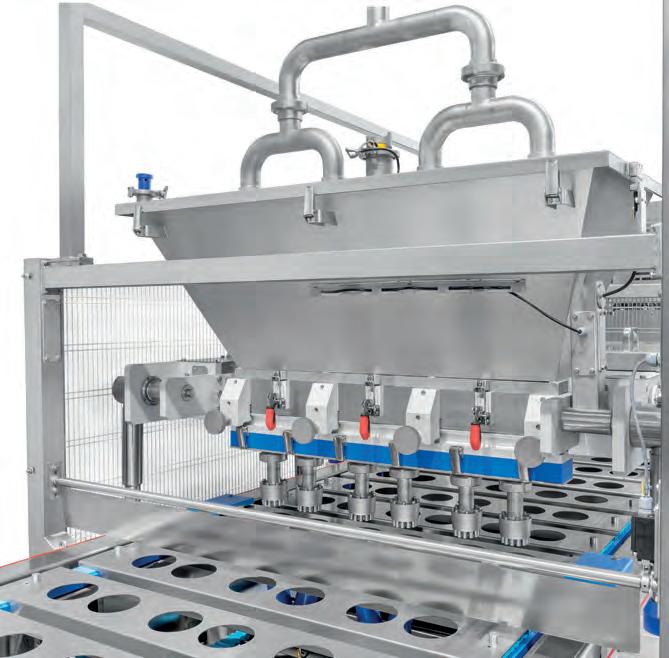
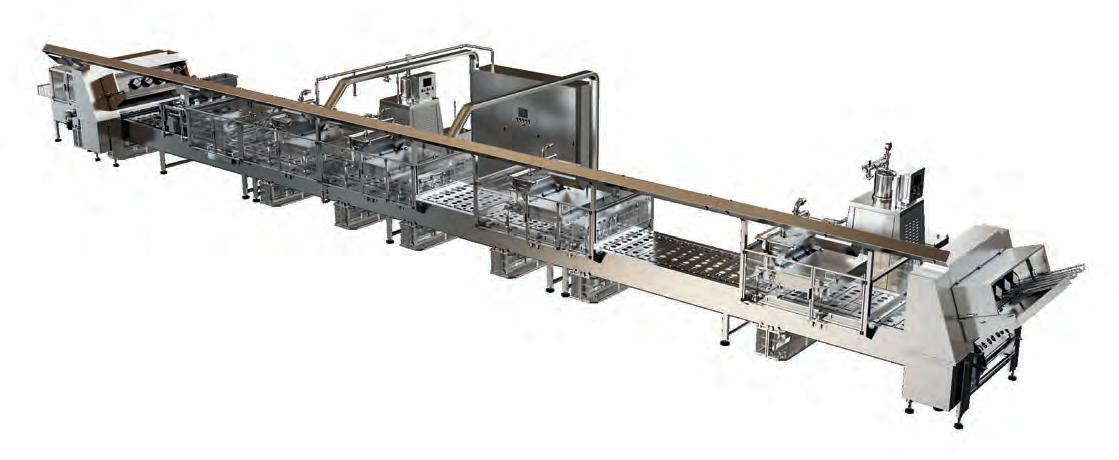

INDIVIDUAL DESSERTS LINE
In addition to fully automatic lines, GORRERI has developed one of the smartest semi-automatic processing solutions, able to produce up to 120 cakes/hour. MULTIMATIC 300 allows standard and expedited production with just one operator but can also be used for many other applications by simply changing tools for dosing cakes, filling products, and enrobing cakes. All done in a reduced space and on wheels. Gorreri’s goal is to optimize customers’ production. Gorreri Birthday Cakes Lines allow producers to improve quality, standardize final products, improve production and dramatically reduce the number of operators especially if integrated with TURBOMIXER Technology for the preparation of creams and whipped cream.
Muffins and dosed products lines. Industrial and semi-industrial lines for the production of any kind of dosed product, shaped, dual color, enrobed, decorated, filled, and grained.
Gorreri dosed product lines are all powered by Dosatronic Technology, an electronic dosing concept to grant extreme precision and uniformity of each dosage, both for dosing, injecting, and decorating. It grants endless repeatability of the process cycles even with the stickiest and the most
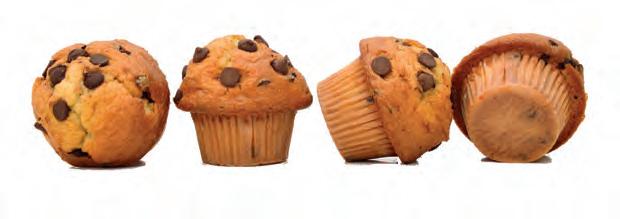
viscous products. Each muffin and dosed product line is reviewed to ensure precision and ease of use, ensuring the highest standards for hygienic design.
Tiramisù and individual desserts lines.
High precision Gorreri Dosatronic Technology integrated with the Turbomixer to continuously feed hoppers with perfect machinable creams. Initiated by customer need, Gorreri has recently introduced complete and fully automatic individual dessert lines which are completely customizable and able to produce product with plastic cup depanner, pick and place devices for biscuits and sponge cake disks, decoration stations to apply jam, icing, chocolate, grains, and powders for top décor, and automatic lid depanning.
www.gorreri.com
The 8th edition of ProPak India, India’s leading B2B platform for packaging, processing, and supply chain innovation, will take place from August 26–28, 2026, at the Bombay Exhibition Center, Mumbai. The event will bring together over 200 exhibitors, 300+ brands, and 15,000+ trade visitors from sectors including food & beverage, pharmaceuticals, FMCG, personal care, manufacturing, and logistics. As the industry navigates fluctuating raw material costs, evolving sustainability regulations, and rapid technological change, ProPak India 2026 is positioned as a key platform for innovation, collaboration, and business growth.
A strong focus this year will be on sustainable packaging solutions. With increasing emphasis on Extended Producer Responsibility (EPR) and circular economy practices, businesses are actively adopting eco-friendly materials and processes. Dedicated zones at the exhibition will showcase recyclable and biodegradable
packaging innovations aimed at reducing environmental impact while maintaining efficiency.
Alongside sustainability, the event will highlight advancements in smart manufacturing and automation. With growing demand for efficiency and cost optimization, industries are accelerating the adoption of automation, robotics, and digital technologies. ProPak India 2026 will present solutions that enhance productivity, improve quality, and enable data-driven decision-making across manufacturing and supply chain operations.
The exhibition will feature a wide range of categories, including packaging machinery, processing technologies, automation and robotics, materials and consumables, as well as logistics solutions, offering a comprehensive view of the industry landscape.
The event will also host 20+ conference sessions led by 40+ industry experts, covering key themes such as industry growth, sustainability, automation, and supply chain efficiency.
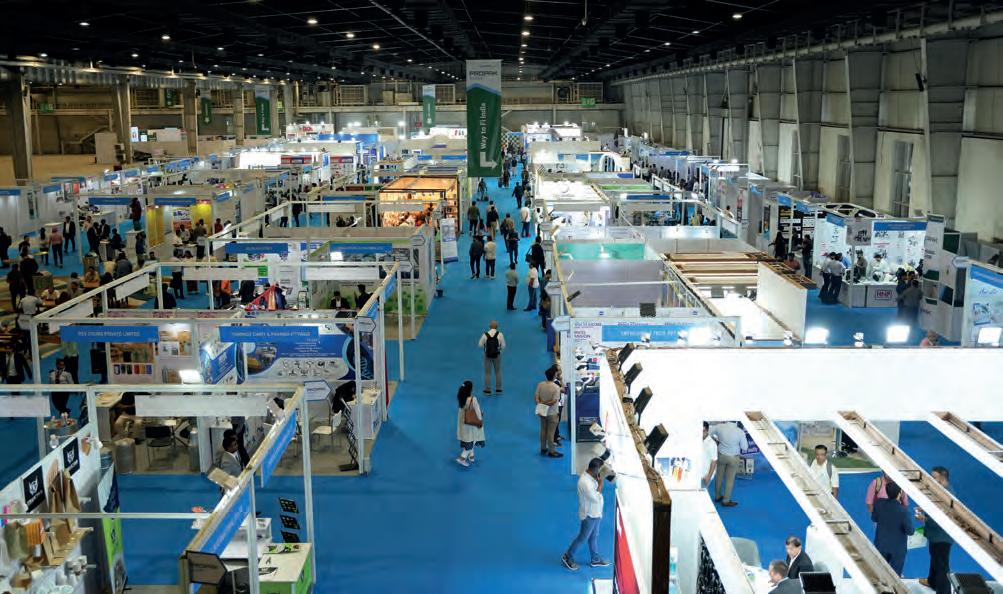
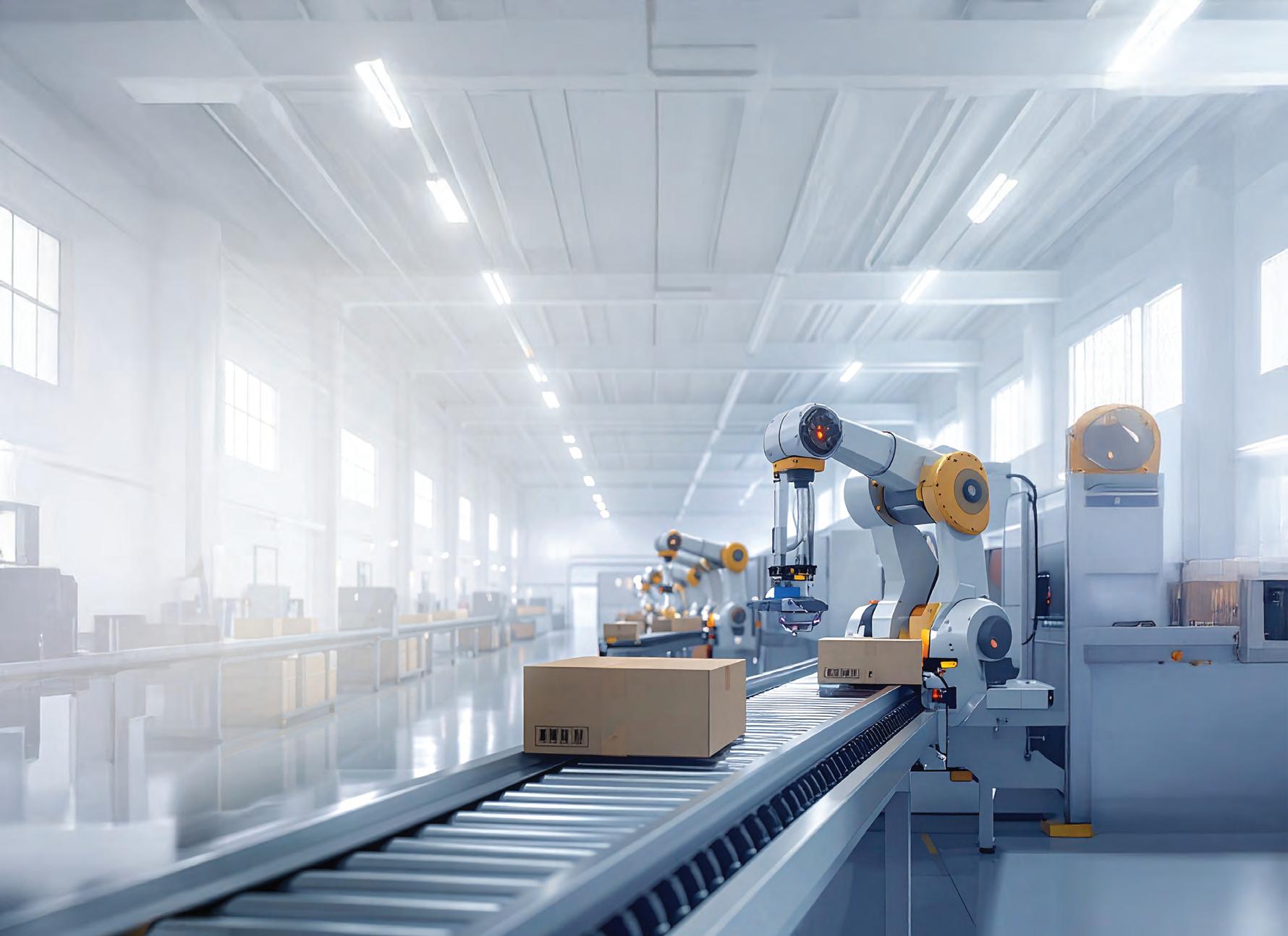



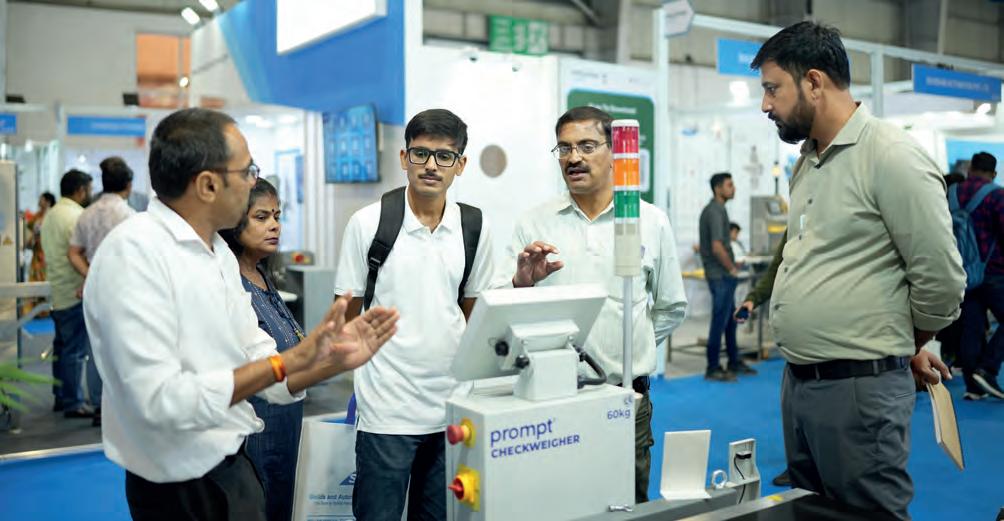
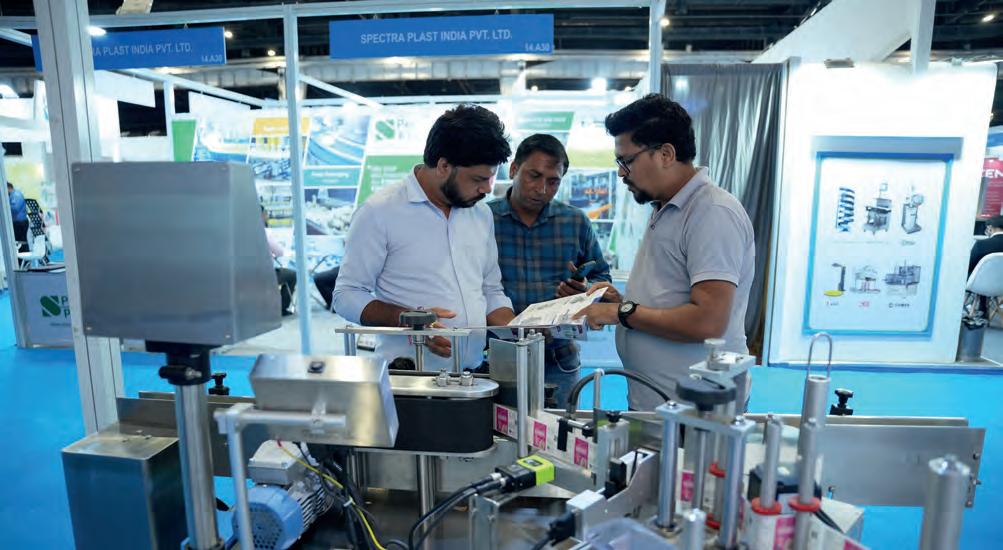
Commenting on the sector’s growth, Mr Yogesh Mudras, Managing Director, Informa Markets in India, highlighted that India’s packaging industry is expanding rapidly, driven by FMCG, e-commerce, and pharmaceuticals, with a projected CAGR of over 10–12%. He noted that the adoption of smart technologies and sustainable practices is becoming essential for businesses to remain competitive.
Supported by industry bodies such as the Indian Beverage Association and leading media partners, ProPak India 2026 continues to strengthen its role as a key industry platform. With free registration and a strong focus on high-value
B2B engagement, the event will bring together innovation and collaboration to shape the future of packaging and processing in India.
For more information and media registration, visit www.propakindia.com














FiIndia, the country’s premier and only dedicated B2B platform for food and beverage ingredients, will celebrate its landmark 20th edition from 26th to 28th August 2026 at Hall 3 & 4, Bombay Exhibition Centre (BEC), Mumbai. The event will bring together 400+ exhibitors, 1200+ brands, and over 15,000 industry professionals from India and international markets.
With participation from domestic and international exhibitors representing countries such as Singapore, Thailand, China, Vietnam, the USA, Poland, Japan, Hong Kong, and Taiwan, Fi India 2026 will serve as a key sourcing and networking hub for the food ingredients ecosystem, connecting suppliers with leading F&B manufacturers, nutraceutical companies, and industry innovators.
The sector is witnessing strong momentum, driven by growing demand for clean label products, plant-based
alternatives, and functional and fortified foods. At the same time, manufacturers are navigating cost pressures and evolving regulatory requirements around labelling and health claims, making industry platforms increasingly important for knowledge exchange and business growth.
The exhibition will showcase a wide spectrum of ingredients from food and flavours and natural ingredients to nutraceuticals, proteins, dairy, sweeteners, and biotics, while attracting visitors across segments such as bakery, beverages, dairy, sports nutrition, functional foods, and ready meals.
The show is supported by leading industry bodies including the Association of Food Scientists and Technologists of India (AFSTI), Indian Beverage Association (IBA), Chamber for Advancement of Small and Medium Businesses (CASMB), Health Foods and Dietary Supplements Association (HADSA), and the All India Food Processing Association (AIFPA). Notable
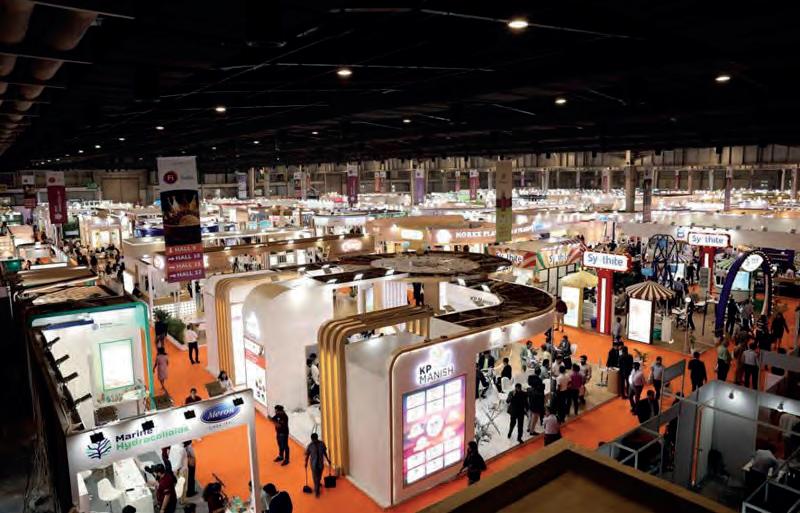
exhibitors and brands participating include KP Manish Global Ingredients Pvt. Ltd., Ace International Limited, Brenntag Ingredients India Pvt. Ltd., Azelis (India) Pvt. Ltd., IMCD India Pvt. Ltd., Novasol Ingredients Pvt. Ltd., Godrej Industries, Drytech Process India Pvt. Ltd., UniBourne Food Ingredients LLP, Sonarome Pvt. Ltd. And many more.
A key highlight will be the two-day conference featuring 40+ speakers across 15+ sessions, covering themes such as gut health and microbiome science, plantbased proteins, functional nutrition, clean label innovation, regulatory developments, and sustainable sourcing and packaging.
Additional features include the Innovative Product Showcase Zone, Live Demonstration Area, Global Trends Zone, and Fund Quest, a platform for F&B startups to connect with investors. Enhanced B2B matchmaking tools and networking lounges will further facilitate business interactions.
Commenting on the milestone edition, Mr Yogesh Mudras, Managing Director, Informa Markets in India, said, “As Fi India marks its 20th edition, the food ingredients industry is at a defining inflection point. India’s nutraceutical market is projected to reach approximately USD 18 billion by 2026, growing at over 20% CAGR, while demand for clean label, functional, and plant-based products continues to accelerate across consumer segments. This shift is pushing manufacturers to rethink formulations, sourcing, and innovation at scale.
At the same time, evolving regulatory frameworks and rising input costs are creating a more complex operating environment. In such a landscape, the need for a focused, high value platform becomes even more critical. Fi India has consistently played that role, bringing together ingredient suppliers, food manufacturers, and solution providers to enable meaningful collaboration and business outcomes.
The 20th edition is not just a milestone, but a reflection of how far the industry has evolved and where it is headed. It will spotlight the convergence of science, sustainability, and consumer driven innovation, while enabling the partnerships that will define the next decade of food in India.”
Designed for decision makers across the value chain including CXOs, founders, procurement heads, food
technologists, and R and D professionals, Fi India continues to stand apart as a highly specialised platform focused exclusively on ingredients, enabling deeper engagement and targeted outcomes.
With a strong emphasis on innovation, sustainability, and future ready solutions, Fi India 2026 is set to bring together the key stakeholders shaping the future of food.
For more information, visit Fi India Registration Link. www.figlobal.com/india/








8-10 September 2026
Dubai World Trade Centre, UAE
9,000+ Attendees
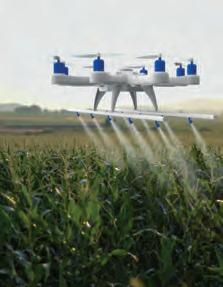
8,000+ SQM Exhibitors Space 150+ Exhibitors
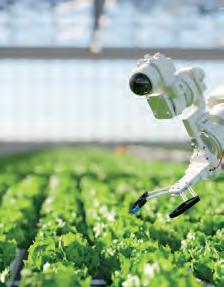






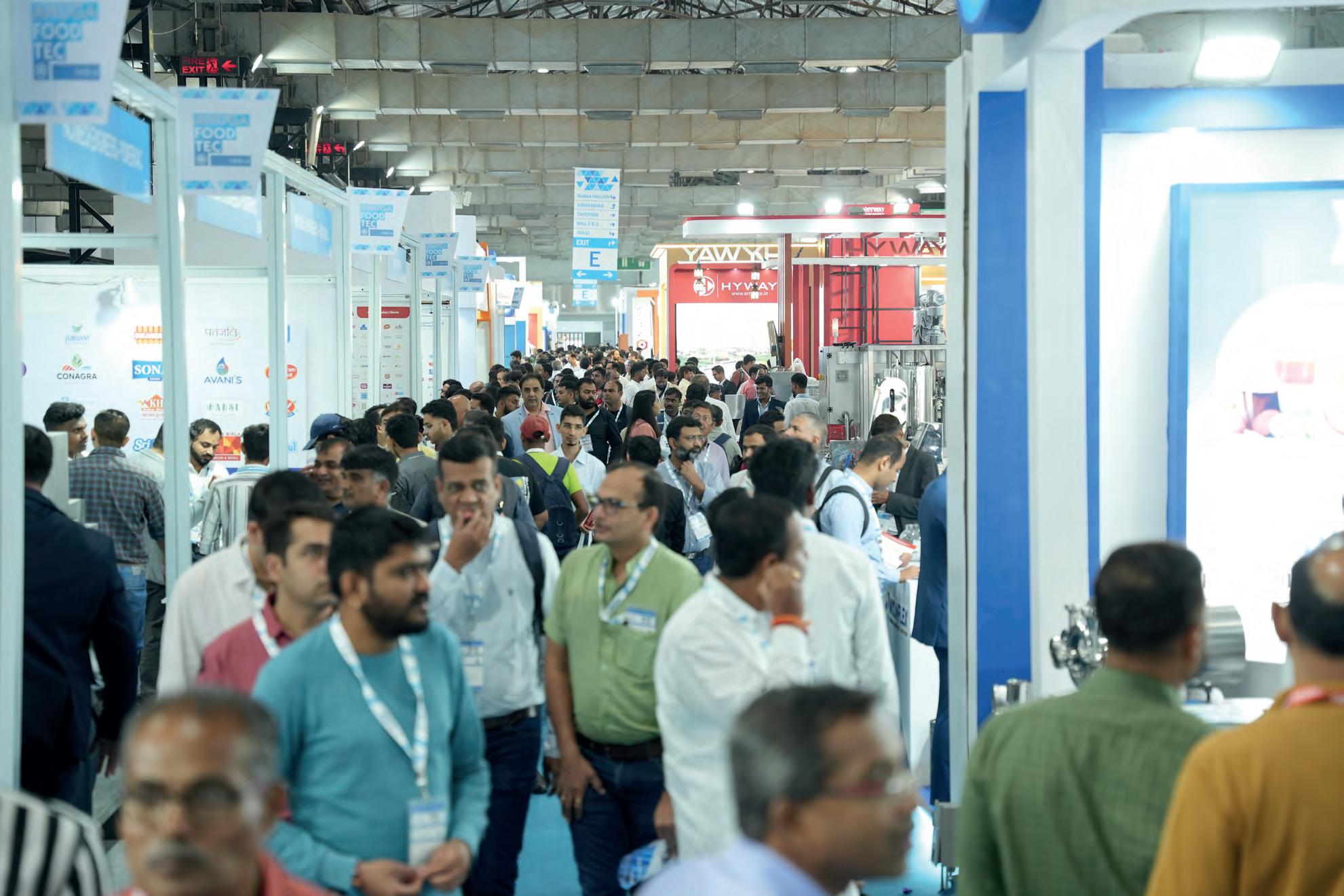
MARCA
15-16/01/2026
BOLOGNA
European trade fairs for the private label industry and the International supermarket label exhibition.
PROSWEETS
01-04/02/2026
COLOGNE
Trade fair on technologies for the confectionery and snack industry.
FRUIT LOGISTICA
04-06/02/2026
BERLIN
Trade fair on technologies for the fruit and vegetable industry.
BEER&FOOD ATTRACTION
15-17/02/2026
RIMINI
Trade fair for the beer, food & beverage world.
SANA FOOD
22-24/02/2026
BOLOGNA International exhibition of healthy eating out.
22-24/02/2026
BOLOGNA International fair dedicated to the good, clean, and fair wine.
MECSPE
04-06/03/2026
BOLOGNA International trade fair for the manufacturing industry.
15-17/03/2026
DUSSELDORF
International trade fair for wine and spirits.
12-15/04/2026
VERONA International exhibition for wine and spirits.
DJAZAGRO
12-15/04/2026
ALGIERS Fair of the agri-food sector.
IRAN FOOD+BEV TEC
18-21/05/2026
TEHRAN Fair on packaging technologies.
PROPAK ASIA
10-13/06/2026
BANGKOK Fair for packaging.
FOOD SYRIA
26-28/07/2026
SYRIA Fair for food&beverage.
SAUDI FOOD SHOW
27-29/09/2026
JEDDAH SAUDI ARABIA Food&beverage products trade fair.
SAUDIFOOD MANUFACTURING
27-29/09/2026
JEDDAH SAUDI ARABIA Fair for the packaging and food&beverage industries.
HOSPITALITY QATAR
12-14/10/2026
DOHA Fair on hospitality and HORECA.
GULFOOD MANUFACTURING
03-05/11/2026
DUBAI Fair for the packaging and food&bev.
GULFHOST
03-05/11/2026
DUBAI
Hospitality fair for the Middle East, Africa, and Asia.
OMAN AGROFOOD
1-3/12/2026
OMAN Fair of agriculture, food, fisheries and aquaculture.
FOOD AFRICA
7-10/12/2026
EGYPT Food&beverage products trade fair.
INTERPACK MEA
7-10/12/2026
EGYPT Fair for processing and packaging.
GULFOOD
15-19/03/2027
DUBAI Fair on hospitality and food products.
14-16/04/2026
SANTIAGO, CHILE
International trade fair on packaging and packing technologies.
MACFRUT
21-23/04/2026
RIMINI
Fair for the fruit and vegetable industry.
07-13/05/2026
DUSSELDORF
Fair on production lines, solutions, and materials for packaging.
11-14/05/2026
MILAN
B2B trade fair for the entire agri-food ecosystem.
ITALIA
26-28/05/2026
PARMA
Fair on automation, components, and software for the industry.
16-19/06/2026
SAO PAULO, BRAZIL
Fair on packaging technologies.
MCTER EXPO
07-08/10/2026
VERONA
Exhibition on energy efficiency and renewable sources.
29/09-01/10/2026
NUREMBERG
Trade fair on technology for powder product processing.
17-21/10/2026
PARIS
Trade fair on food products.
24-27/10/2026
STUTTGART
Trade fair for baking technologies.
27-28/10/2026
PARMA
Trade fair on food industry technologies and laboratory analysis
27-30/10/2026
PARMA
Fair on technology for the food and beverage industry.
10-12/11/2026
NUREMBERG
Fair on technologies for beer and beverage production.

17-20/11/2026
MILAN International exhibition on enology and bottling.
23-26/11/2026
PARIS International exhibition for packaging.
21-23/02/2027
BOLOGNA
Trade fair of healthy eating out.
21-23/02/2027
BOLOGNA International fair dedicated to the good, clean, and fair wine.
21-23/09/2027
NORIMBERGA
Packaging industry trade fair.
22-26/10/2027
MILAN
Fair for the hospitality & Horeca sectors.
24-28/10/2027
DÜSSELDORF
Trade fair for the bakery.
29/05 – 01/06/2028
MILANO
Trade fair for food and non-food processing and packaging technologies.
11-15/09/2028
MONACO
Trade fair for the beverage industry.

CAMA GROUP 16-17
Via Verdi, 13 23847 Molteno - LC - Italy
CLEVERTECH SPA 22-23
Via Brodolini, 18/A 42023 Cadelbosco Sopra - RE Italy
ESG SRL 42-43
Corso Genova, 28 27029 Vigevano - PV Italy
GAMPACK SRL 18-19
Via Piemonte, 1 29122 Piacenza - PC Italy
GEO PROJECT INDUSTRIES SRL - GPI 4/6
Via Leonardo da Vinci, 43 35015 Galliera Veneta - PD Italy
GORRERI SRL 51/55
Via Alfieri, 11 42041 Sorbolo Levante di Brescello - RE Italy
INFORMA MARKETS INDIA PVT LTD 56/61
1st Floor, North Wing, S14, Solitaire Corporate Park, Guru Hargovindji Rd, Chakala, Andheri (E), 400093 Mumbai - India
KOELNMESSE PVT. LTD. 65
Solitaire Corporate Park, 611/612, 1st Floor, Building No. 6, Guru Hargovindji Road, Chakala, Andheri (East), Mumbai 400093 - Maharashtra, India
LAWER SPA 36-37
Via Amendola, 12/14 13836 Cossato - BI - Italy
MAKRO LABELLING SRL 20-21
Via S. Giovanna d’Arco, 9 46044 Goito - MN - Italy
MILK SOLUTION TECHNOLOGIES SRL 35
Via Ugo La Malfa, 4 25124 Brescia - Italy
NAVATTA GROUP FOOD PROCESSING SRL 32/34
Via Sandro Pertini, 7 43013 Pilastro di Langhirano - PR Italy
PE LABELLERS SPA 11
Via Industria, 56 46047 Porto Mantovano - MN Italy
PND SRL 28-29
Via Brancaccio, 11 84018 Scafati - SA Italy
SMI SPA - SMI GROUP 8/10
Via Carlo Ceresa, 10 24015 San Giovanni Bianco - BG Italy
TECNOVA HT SRL 38-39
Via Castellazzo, 29 20006 Pregnana M.se - MI Italy
TROPICAL FOOD MACHINERY SRL 24-25
Via Stradivari, 17 43011 Busseto - PR Italy
UNIVERSAL PACK SRL 14-15
Via Vivare, 425 47842 San Giovanni In Marignano - RN Italy