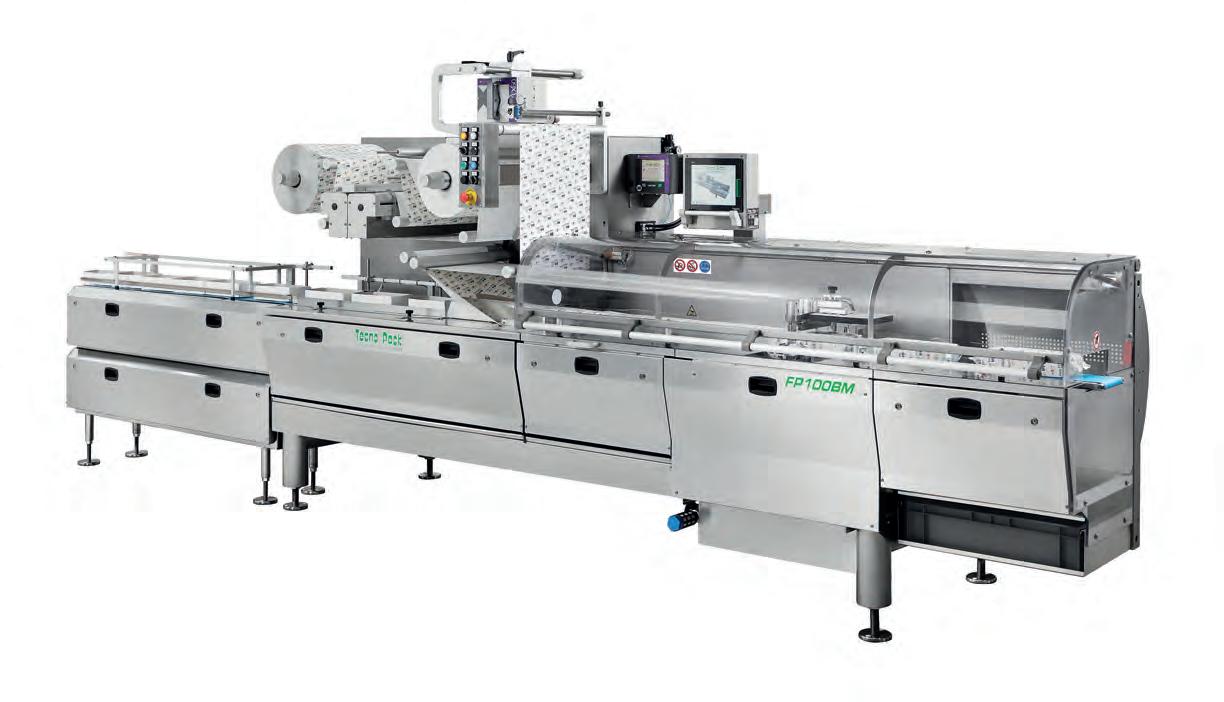
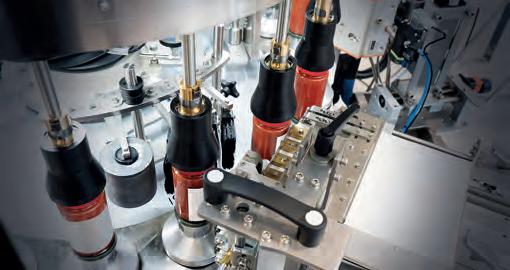
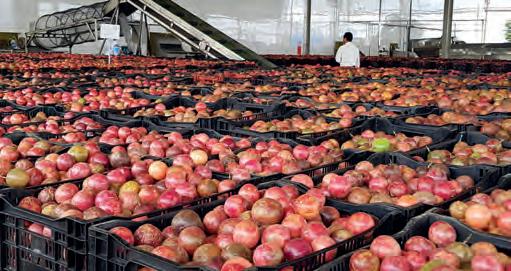
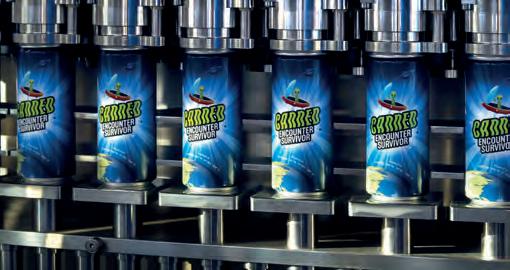
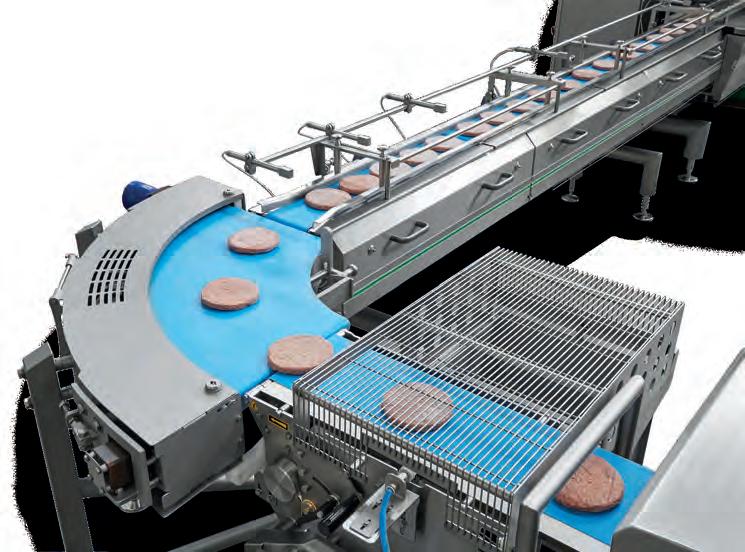
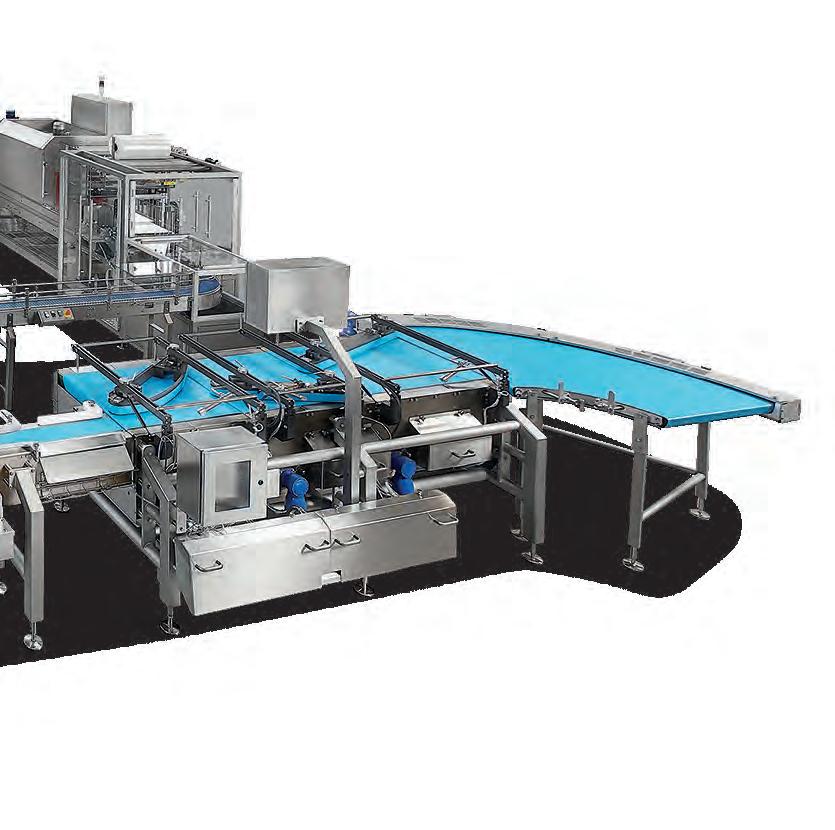
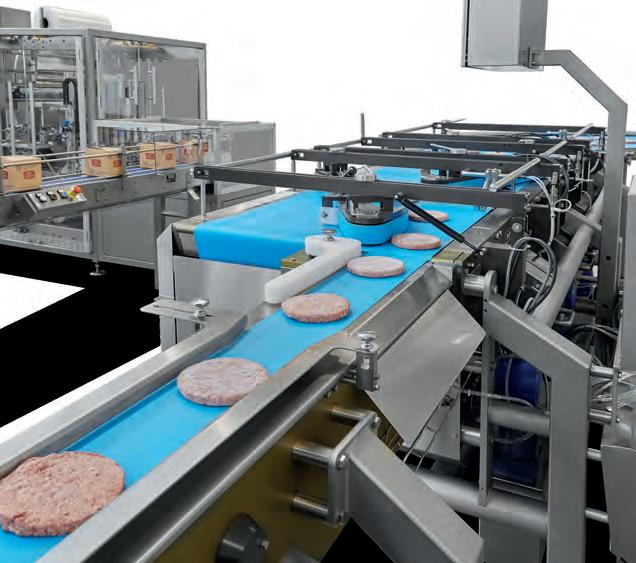
TROPICAL FOOD MACHINERY SRL: GLOBAL EXPERTISE IN FRUIT PROCESSING TECHNOLOGY. - pg. 32/34
BOTTLING
ZANICHELLI MECCANICA SPA ZACMI: ZACMI AT PROPAK ASIA 2026: SPECIALIST BY DESIGN. pg. 48/50
SONIA V. MAFFIZZONI - Editorial Manager
In 2026, the food industry is entering a phase in which efficiency and sustainability can no longer be considered parallel goals, but necessary conditions for remaining within the global value chain. In this scenario, Thailand and Southeast Asia are taking on an increasingly interesting role: not only as growing markets, but as production platforms capable of responding to international demand for food safety, innovation and reliability.
Geopolitical pressures, trade tensions and climate-related challenges are reshaping the industry’s priorities. For many companies, including small and medium-sized enterprises, technologies such as AI, IoT, robotics, automation and digitalization are no longer distant prospects, but concrete tools to improve production, packaging, logistics and process control. The impression is that the real competitive leap for this region will come precisely from here: from the ability to transform technology into measurable results, reducing costs, waste and emissions without losing flexibility. This evolution makes food processing one of the most strategic areas from which to observe the future of the food industry.
editorial management and registered office: Editrice Zeus Srl: Via Cesare Cantù, 16 20831 Seregno (MB) - Italy
editorial production Sonia Bennati bennati@editricezeus.com
account dep. manager Elena Costanzo amministrazione@editricezeus.com
project and layout design ZEUS Agency grafica@editricezeus.com
creative dep. ZEUS Agency grafica@editricezeus.com
In partnership with: THAI-ITALIAN CHAMBER OF COMMERCE info@thaitch.org
printing ZEUS Agency
Italian Magazine Food Processing
Europe: single issue: Euro 25
Annual (six issues): Euro 120
Outside Europe: single issue: US$ 30
Annual (six issues): US$ 170
Subscription payment can be made in the name of Editrice Zeus sas, by bank money transfer or cheque.
Italian Magazine Food Processing
An outline of the suppliers of machines, plants, products and equipment for the food industry.
Published: monthly Registration: Court of Monza no.10 of 05.09.2018
Shipment by air mail art.2
comma 20/b law 662/96 - Milan
Panorama dei fornitori di macchine, impianti, prodotti e attrezzature per l’industria alimentare Periodicità: mensile. Autorizzazione del Tribunale di Monza, n.10 del 05.09.2018
Spedizione in a. p. 45% art. 2 comma 20/b legge 662/96 Filiale di Milano The
PACKAGING AROUND THE GLOBE
edited by S.V. Maffizzoni
In the world of food, packaging is one of the most delicate and essential steps in the production process for a number of reasons (food preservation and shelf life, visual appearance of the finished product, etc.).
A food company - whatever its sector: bakery, fruit and vegetables, pasta, meat or anything else - needs to rely on a packaging system able to ensure safety, continuity of preservation, quality and flexibility.
Therefore, it is very important to choose the right partner. Relying on a trusted, serious and experienced partner guarantees a fruitful relationship, without nasty surprises, just like in life...
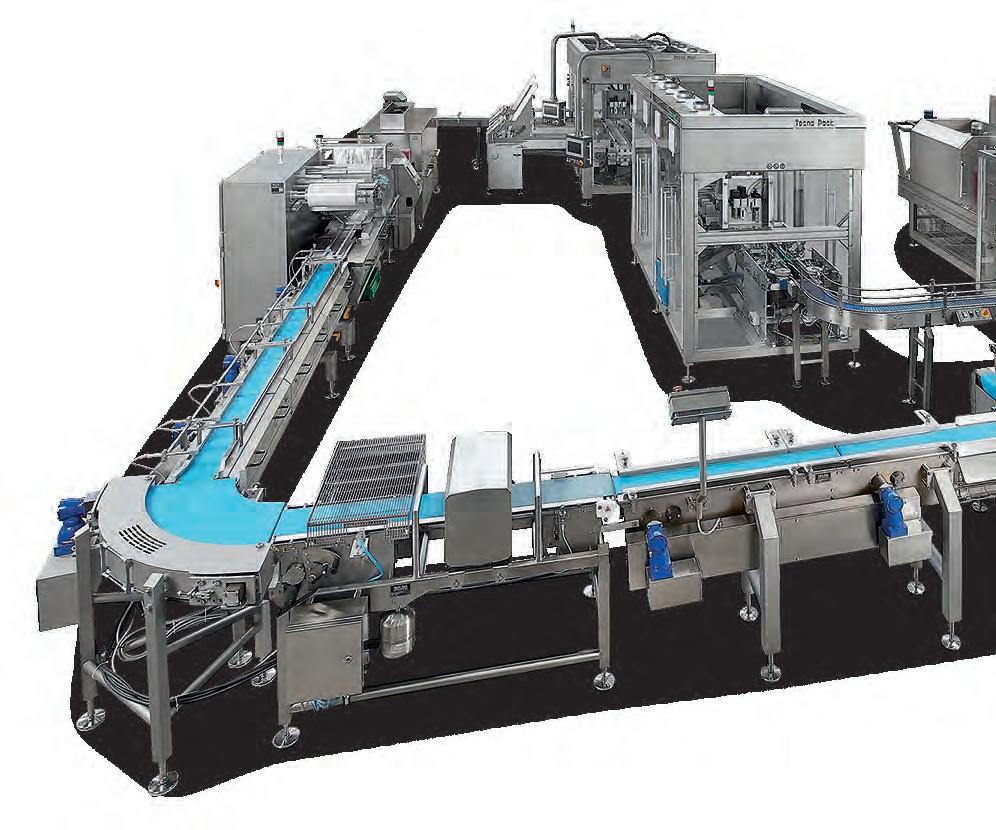
Thanks to a great team of reliable and experienced professionals, who closely follow each client all the way through, TECNO PACK can boast of long-standing relationships with clients all around the globe.
For all these reasons, small, medium and big food companies, such as Barilla, Granarolo, Kraft and Nestlé, have entrusted TECNO PACK with the packaging of their production.
The Group provides a complete service dealing with the product from the process line to the pallet, ensuring a complete and constant assistance, also during the start-up of a plant. Its extensive experience allows TECNO PACK
Food preservation is the primary objective of the food industry: packaging is the final stage of the production process, a key factor in ensuring the product quality and safety
to operate in any type of food sector as well as to satisfy even the most demanding requests coming from companies in need of complex solutions or tailor-made designs. Being able to solve complicated technical issues and to handle difficult situations with attention and determination, TECNO PACK is the ideal partner.
The price-quality ratio, the after-sales service and the spare parts service are just some of the strengths of the Group, which boasts highly qualified and committed staff in every department, beginning with the management.
The constant research and the technological evolution have helped creating highly flexible and long-lasting packaging lines.
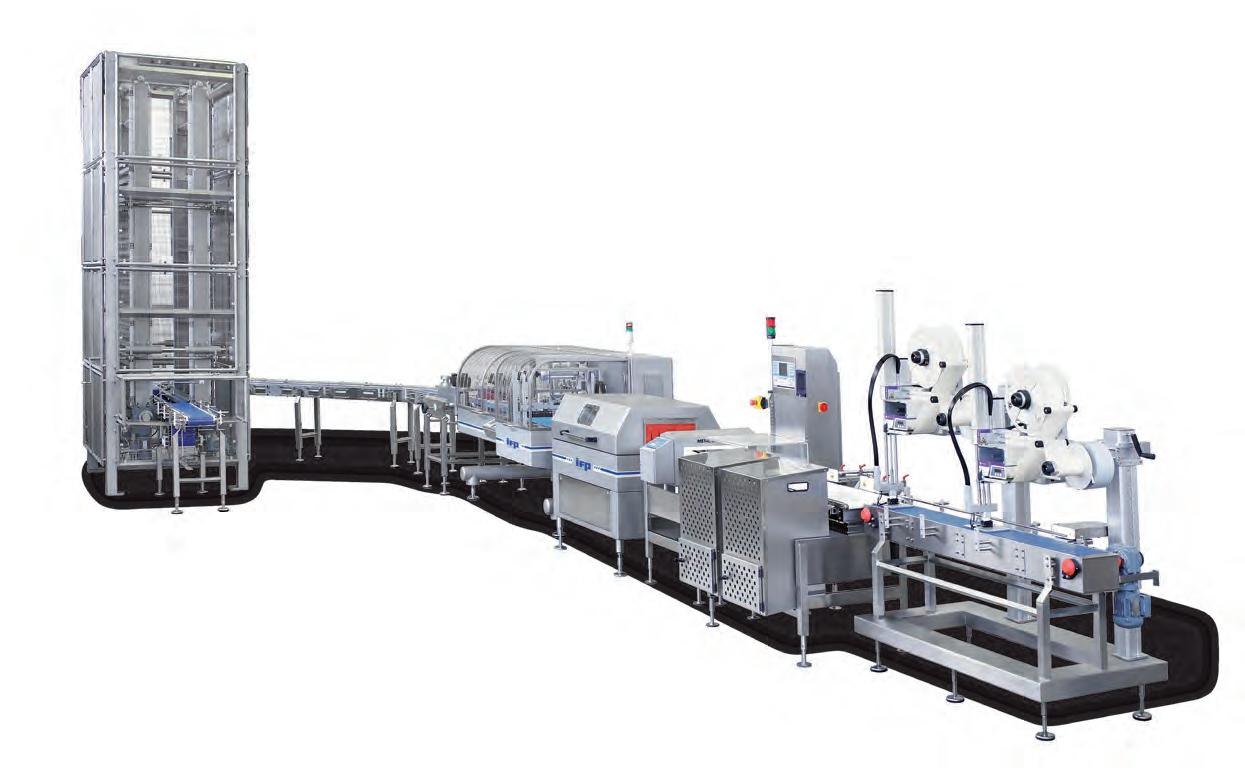
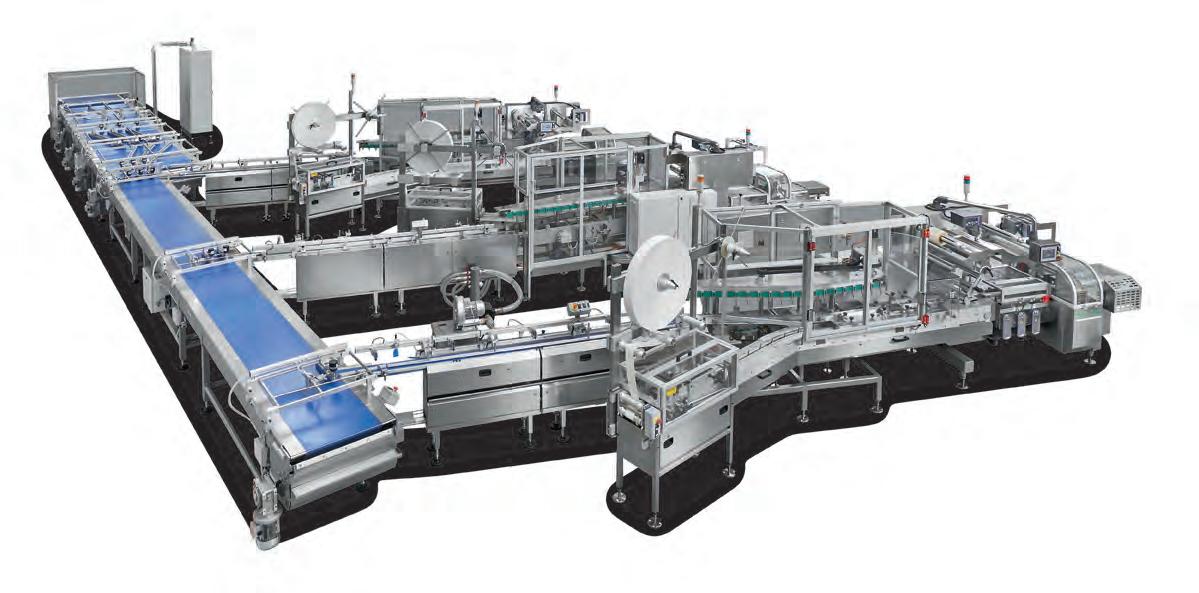
TECNO PACK offers extremely high-quality packaging lines, modified atmosphere packaging solutions - suitable for the food industry as well as for other sectors such as the biomedical and pharmaceutical industries -, vertical and horizontal packaging lines, vacuum packing, plastic or cardboard trays filling, end of line systems, case packing, pick-and-place lines and palletizing systems.
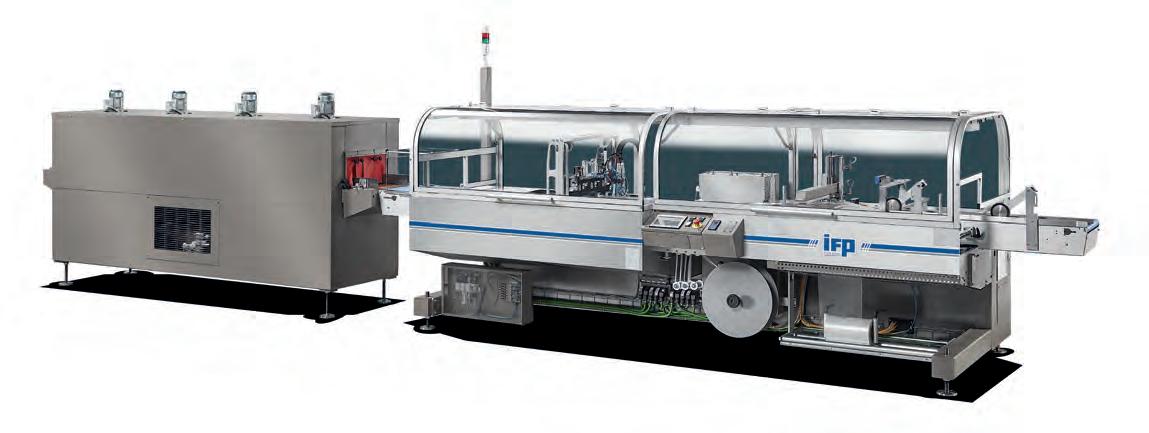
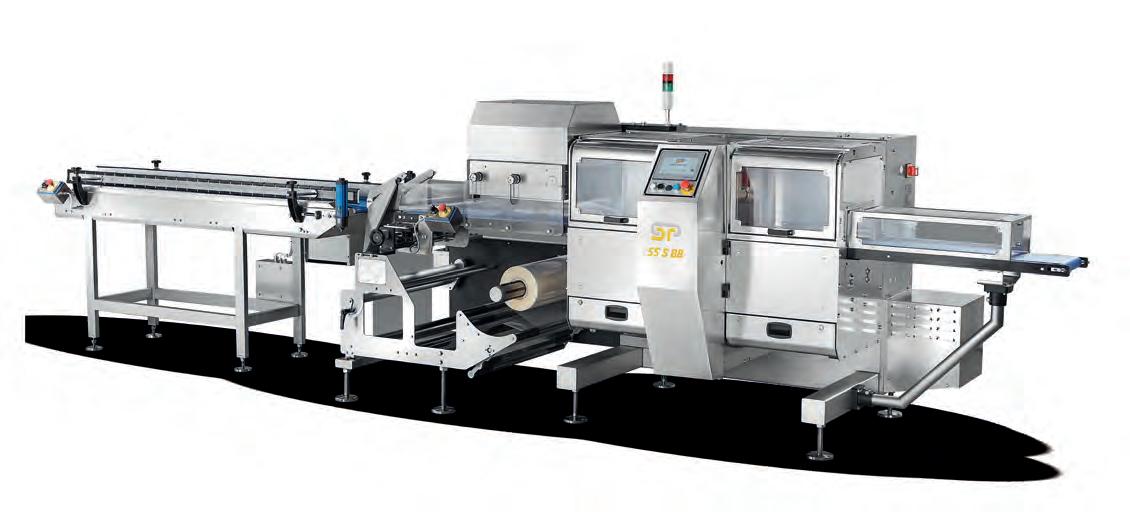
One of the latest line is FP100E, a high-speed horizontal wrapping machine.
Whenever there is a need for packaging, there is TECNO PACK.
www.tecnopackspa.it
www.ifppackaging.it www.gsp.it
FLEXIBLE PACKAGING IN ASIA:
THE NEW BALANCE BETWEEN CONVENIENCE, SHELF LIFE AND RECYCLABILITY
“
In Asia, flexible packaging is becoming a strategic driver of convenience, efficiency and sustainable innovation.
by the editorial staff
Asia is one of the most dynamic laboratories for food and beverage packaging. It is not a single market, but a complex geography of consumption habits, income levels, distribution models and regulatory pressures. From Japan’s high standards of quality and convenience to India’s rapid growth in packaged foods, from China’s advanced e-commerce ecosystem to Southeast Asia’s expanding urban middle class, packaging is becoming much more than a container. It is now a strategic tool for shelf life, logistics, brand identity, sustainability and consumer trust.
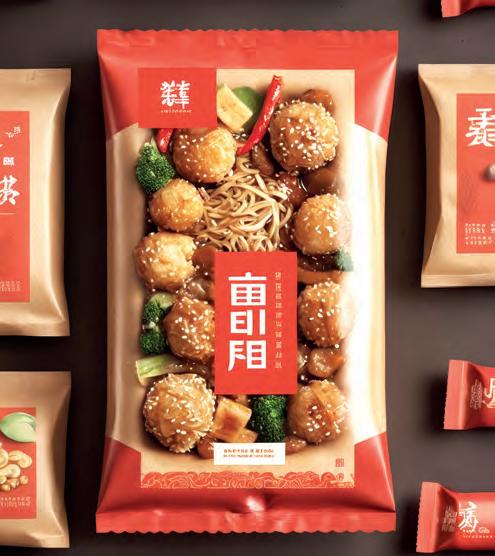
In the food and beverage industry, this transformation is particularly visible in flexible packaging. Pouches, sachets, flow packs, stick packs, wraps and lightweight bags are increasingly used because they respond to several needs at once: they reduce material usage,
occupy less space in transport, protect products efficiently and adapt well to single-serve or on-the-go consumption.
Market analyses indicate that Asia Pacific continues to play a leading role in food and beverage packaging, supported by urbanization, rising disposable income, online grocery, food delivery and demand for readyto-consume products. Flexible formats are among the fastest growing segments because they combine convenience, portability and efficient shelf management. The Asian context gives this trend a specific character. In many markets, consumers are not only looking for premium packaging or sophisticated design. They are looking for practical formats that fit daily life: smaller portions for urban households, resealable packs for snacks, lightweight pouches for beverages, single-do-
se solutions for sauces and condiments, and compact packs suited to convenience stores and e-commerce delivery. Packaging must work across very different channels, from traditional retail to modern trade, from vending and foodservice to last-mile delivery platforms. This is why flexible packaging has become a natural answer for many food and beverage producers. It enables faster product launches, easier adaptation to local tastes and more efficient distribution. For sauces, instant beverages, coffee, tea, confectionery, snacks, bakery products and ready meals, flexible packaging supports a high level of product differentiation without requiring the same material intensity as rigid formats. In markets where price sensitivity remains high, this balance between performance and cost is essential.
However, the success of flexible packaging has also created one of the sector’s biggest challenges: recyclability. Many flexible structures have traditionally relied on multilayer materials combining different polymers, aluminum or barrier coatings.
These structures offer excellent protection, but they are difficult to recycle. In Asia, where waste management systems vary widely from country to country, this issue is becoming increasingly urgent. The industry is therefore moving toward mono-material structures, recyclable films, paper-based alternatives, aqueous coatings and downgauged materials that reduce overall material consumption.
The shift is not simple. Food and beverage packaging cannot compromise product safety. A snack pack, a coffee pouch or a ready-meal film must protect aroma, moisture, oxygen sensitivity, texture and shelf life. For export-oriented Asian producers, packaging must also resist long logistics chains, humidity, temperature variations and handling stress. The challenge is not to make packaging appear sustainable, but to make it industrially sustainable: compatible with high-speed lines, safe for food contact, efficient in storage and realistic for local recycling streams.
This is where packaging technology becomes decisive. The transition to recyclable or mono-material flexible packaging requires machines capable of managing new materials that may behave differently from traditional films. They can stretch, wrinkle, seal at different temperatures or require more precise tension control. Packaging lines must therefore become more adaptive, with better sealing systems, advanced motion control, inspection technologies and digital recipe management. A material change is no longer only a procurement decision. It is a production decision.
For Asian food and beverage companies, this link between packaging material and machine performance is particularly important because many plants operate with high volumes and frequent format changes. A line that cannot handle new sustainable materials without losing efficiency risks slowing down innovation.
Conversely, equipment designed for flexible, recyclable and lightweight materials can become a competitive advantage. It allows brands to respond faster to regulation, retailer requirements and consumer expectations.
Another important driver is e-commerce. Food and beverage packaging for online channels must solve a different set of problems compared with traditional shelves. Products must arrive intact after multiple handling steps, sometimes without the protective environment of retail logistics. Leakage, crushing, temperature sensitivity and secondary packaging waste are key concerns. In Asia, where online grocery and food delivery are deeply embedded in urban life, primary and secondary packaging are increasingly designed together. The pack must communicate, protect, travel and, ideally, reduce unnecessary material.
This has opened new opportunities for flexible formats, but also for right-sized packaging systems, protective paper-based solutions and hybrid structures. E-commerce is pushing companies to think about packaging not as an isolated item, but as part of a distribution ecosystem. A pouch that performs well on shelf may need additional protection for delivery. A beverage bottle may require lighter secondary packaging. A premium food product may need tamper evidence, traceability and temperature indicators. The Asian market is therefore accelerating the convergence between packaging design, logistics and digital information. Supply chain volatility is another factor shaping the conversation. Recent disruptions in plastic packaging supplies and petrochemical feedstocks have put pressure
on several Asian companies, encouraging interest in paper-based and alternative materials. Reuters recently reported that plastic packaging shortages linked to geopolitical tensions have increased inquiries for ecofriendly alternatives in Asia, including paper tubes, pouches and cartons. The same report notes that the crisis may accelerate a longer-term shift toward greener packaging solutions in a region historically dependent on plastic.
This does not mean plastic will disappear from Asian food and beverage packaging. In many applications, plastics still provide unmatched performance in terms of barrier, weight, cost and food safety. The more realistic scenario is a selective transformation: plastic where performance is essential, recyclable mono-materials where possible, paper-based structures where appropriate, and hybrid solutions where regulation and consumer perception demand a different balance. The winning companies will be those able to choose the right material for the right product, supported by the right technology.
In this sense, Asia is not simply following global packaging trends. It is shaping them. The region combines scale, diversity and speed. It includes mature markets with strict quality expectations, fast-growing economies with huge demand for packaged foods, and manufacturing hubs capable of exporting packaging innovation worldwide. For European and international technology suppliers, this makes Asia a critical market, but also a demanding one. Solutions must be flexible, cost-conscious, scalable and able to work with local materials, local regulations and local consumer behaviors.
For the food and beverage industry, the future of flexible packaging in Asia will be defined by one central question: how can convenience and sustainability coexist without compromising product protection? The answer will not come from one material or one machine. It will come from collaboration between brands, converters, packaging machinery manufacturers, material suppliers and recyclers.
The next generation of Asian packaging will have to be lighter, smarter and more recyclable, but also robust enough to protect food across complex supply chains. It will have to serve both the shelf and the smartphone screen, both the supermarket and the delivery rider, both the cost expectations of mass markets and the sustainability expectations of younger consumers. Flexible packaging will remain central, but it will have to evolve from a symbol of convenience into a platform for responsible industrial innovation.
MULTI-FLAVOUR PACKAGING: THE TREND BORN FROM CONSUMER DEMAND
What is a multi-flavour pack, why is it worth it, and where does it perform best
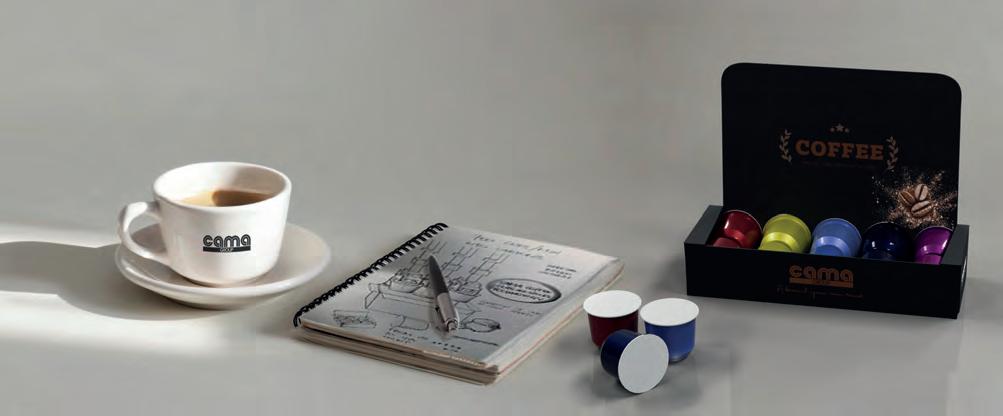
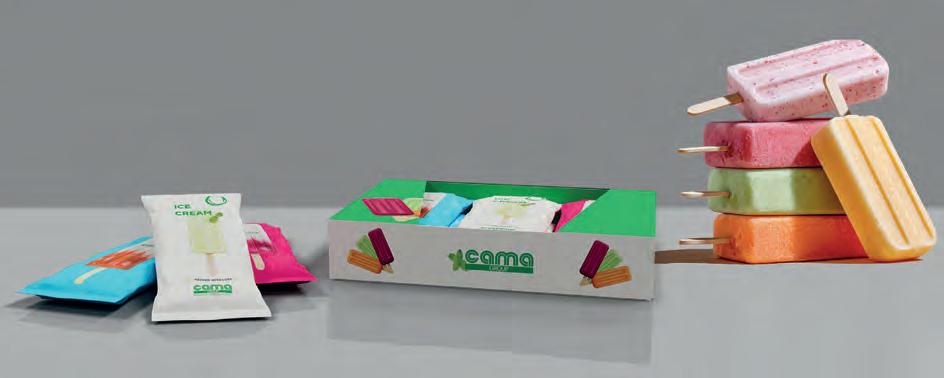
A multi-flavour pack is a secondary or tertiary packaging format that groups multiple different-flavour SKUs in the same box, such as a carton with multiple consumer packs or a case with multiple cartons. It is used mainly for marketing purposes, because it enables sales while also supporting market testing by measuring which variants are preferred and then updating the assortment. The main advantage is the speed with which a new flavour can be introduced.
On these topics, Francesco Riva, Sales Engineer Director at Cama, explains: “To do this, normally, dedicated packaging, a format changeover, and specific logistics would be needed. With the multiflavour option, we can keep the same outer box and modify only the products inside it. This reduces time and costs and speeds up the verification of the consumer’s response. The system works best where variety is perceived as value.”
Multi-flavour worldwide: differences across Europe, the United States, Asia, and the MENA Region
Multi-flavour is an international trend, but it devel-
ops differently from market to market because purchasing habits and distribution dynamics change. “In the MENA region (Middle East and North Africa), which is more traditional, single-flavour dominates and historic brands matter a lot: multi-flavour packs are still rare and adoption is slow. In Asia, assorted packs are well represented on shelves. In China, variety is wide and often very ‘scenographic’, with combinations designed to stand out,” Francesco Riva tells us.
“Production logic also changes. In the United States and in Australia, automated packing is common and is based on standard, repeatable solutions. In Asia, manual assembly is more frequent. It allows varied mixes and the use of dividers or internal inserts to keep products separate, increasing the surprise effect perceived by the consumer.”
The regulatory framework also has an impact between Europe and the United States. In the United States and Australia, it is easier to manage packs with variable counts, especially for promotions or seasonal periods. A box designed for ten pieces can be sold with eight in the standard version and increase its content during the holidays. In Europe, the focus on packaging optimization and transparency makes these practices less feasible and reduces commercial flexibility.
Multi-flavour lines: product robustness and shelf life guide choices and investments.
In multi-flavour lines, choices change depending on the product. Investments and technical solutions depend mainly on two factors: handling robustness and shelf life, an important operational constraint. Riva continues: “If shelf life is long, it is possible to produce for extended periods and plan format changeovers with more margin. If it is short, changeovers will necessarily be frequent. Production windows shrink, and the available time for stops and adjustments decreases. In this scenario, multi-flavour becomes more complex, because it requires continuity and tight timings.”
“Product fragility also matters: a chocolate bar loses value if it breaks or if it shows aesthetic defects. For this reason, the line must be designed ‘from the product’: the SKU defines the pick method, the handling, and the packaging.
“In defining the assortment, the choice is between working in-line or using storage. Picking systems can be manual, automatic, or robotic. The fact that today many solutions are still not very automated indicates an important margin for improvement.”
Zero waste: the warehouse protects efficiency as the number of flavours increases
In multi-flavour, the warehouse is a concrete lever to protect efficiency and reduce waste. In-line assortment, without inventory and without accumulation, becomes fragile as flavours increase: if one flow slows down, the balance breaks and the line can stop.
“When possible, it is better to compose the multi-flavour by picking from the warehouse in a controlled way. Composition becomes more stable, and the process is less sensitive to differences in pace between variants,” Riva specifies. He continues: “The
warehouse has a fixed cost, but it is amortized. Inefficiency, instead, is paid on the product: even small losses become raw-material scrap. If raw-material value grows, scrap weighs more. In chocolate, where value is increasing, a few points of scrap turn into a significant cost.”
“The more flavours enter the multi-flavour pack, the more variables increase and the higher the probability of line stops. For this reason, companies invest in production configurations aimed at reducing waste, also with small warehouses dedicated to individual products, managed as local “lungs”.
There is also the line’s “series” effect. When machines are in sequence, overall efficiency decreases. Two machines at 99% lead to about 98% overall. Three machines at 99% lead to about 97%. As the line is extended, the loss becomes increasingly significant. In this scenario, the warehouse works as an operational cushion. It absorbs slowdowns, protects production continuity, and reduces scrap, making multiflavour truly manageable”.
Cama Group will attend Propak Asia exhibition, please, contact our skilled Sales team to book dedicated appointment at contactus@camagroup.com
PROPAK ASIA กรุณาติดต่อทีมฝ่ายขายผู้เชี่ยวชาญของเราเพื่อจอง
contactus@camagroup.com www.camagroup.com
MAKRO LABELLING, INTELLIGENT CHOICE
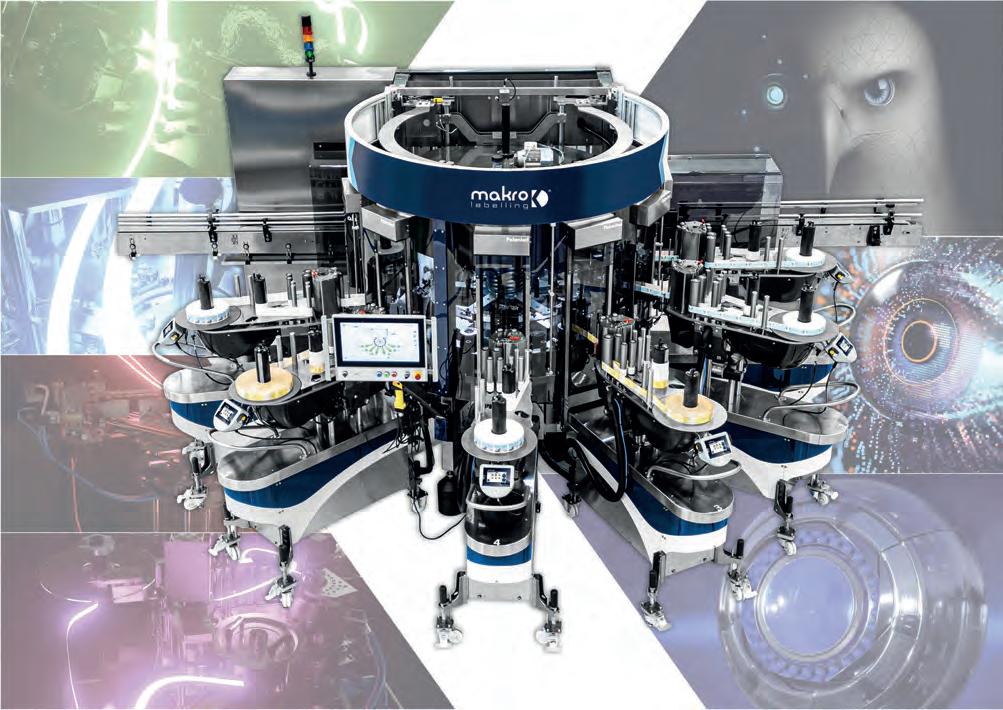
Founded in 2009 on over 30 years of experience from its founders, Makro Labelling has rapidly established itself as an international player in industrial labelling solutions. Originally rooted in the Wine & Spirits sector, the company has progressively expanded its expertise into multiple industries, including food & beverage, personal care and other industrial segments, consistently maintaining high standards of precision, reliability and aesthetic quality.
Makro’s mission is to design cuttingedge labelling machines capable of adapting to continuously evolving production needs while ensuring long-term performance. All machines
LABELLING
Packaging
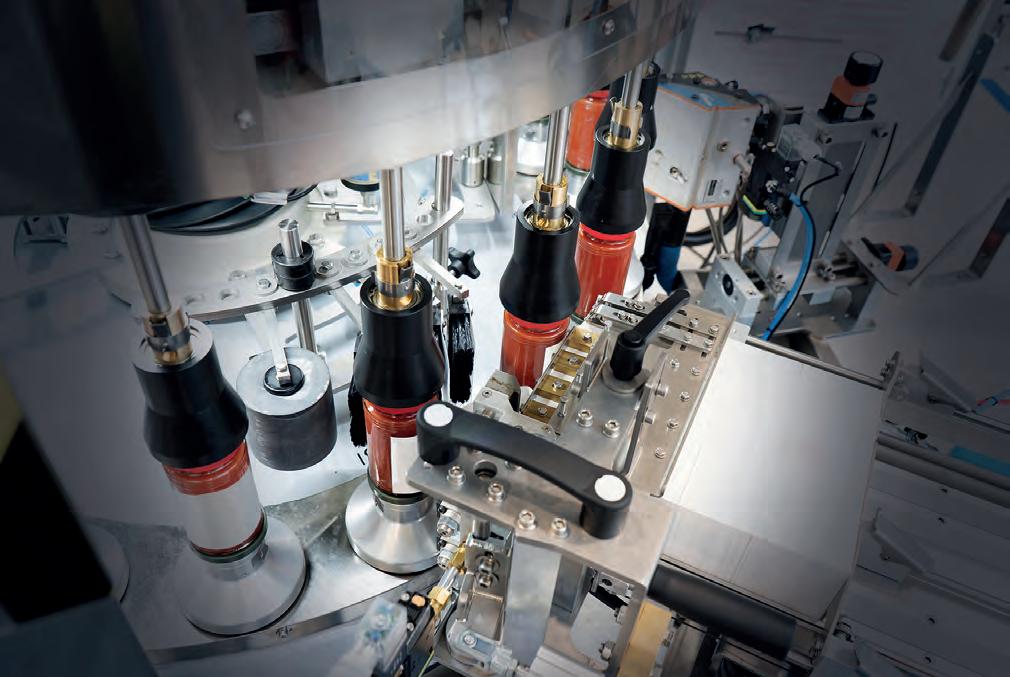
are entirely developed in-house, from mechanics and electronics to vision systems, ensuring full integration and complete process control.
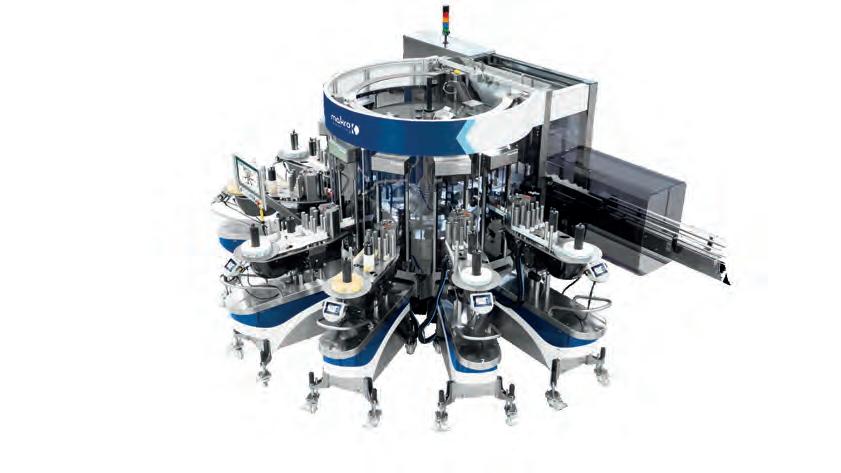
Today, MAK labelling machines are also available with a new modern and ergonomic design, developed to improve accessibility and operational efficiency while delivering high production speeds. The range covers applications from 1,500 up to 72,000 bottles per hour, with the capability to apply up to five labels per container.
Makro Labelling offers a complete portfolio of technologies: cold glue systems for high-precision and high-speed applications; selfadhesive solutions for maximum flexibility; hot melt technologies; roll feed systems designed to ensure high efficiency and operational continuity across a wide range of applications.
Packaging
Intelligent Choice is the claim that expresses Makro’s approach: a combination of expertise, values and integrated solutions designed to provide customers with a complete and effective system. It is not simply artificial intelligence, but advanced technologies developed by Makro people to ensure consistent and reliable performance.
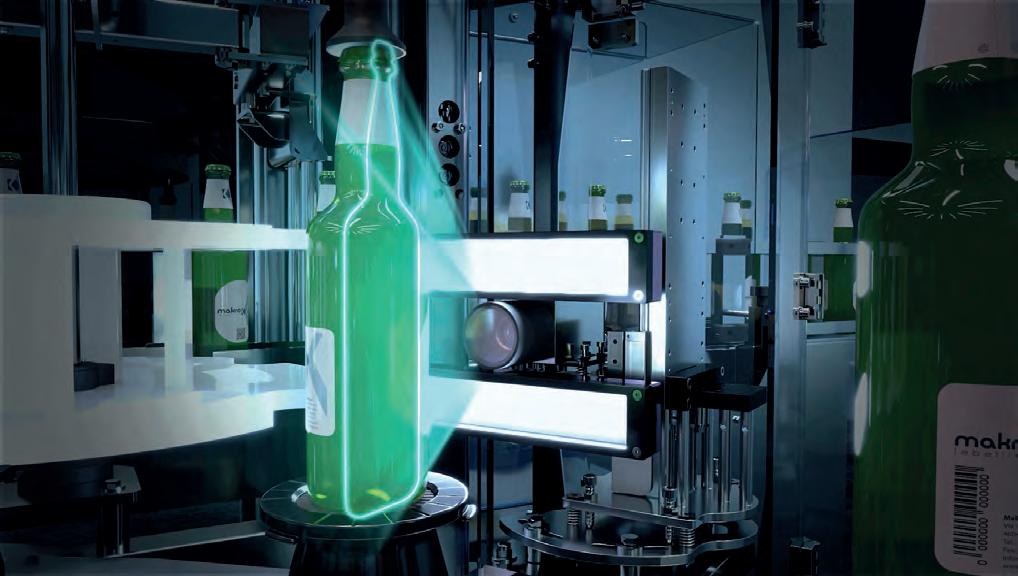
Vision systems are a key example: RAPTOR for orientation and ALICE for quality control ensure full product management throughout the entire line. Within this framework, the new Alice 360 represents the latest evolution of Makro inspection systems: by using a single camera, it can inspect the entire container circumference, reducing space requirements inside the machine carousel and delivering higher performance. The result is total control, with reduced waste and improved final product quality.
Fully integrated and exclusively supported by Makro, these systems ensure maximum reliability, operational continuity and direct service throughout the entire lifecycle of the equipment.
www.makrolabelling.com
www.makrolabelling.com
ETIPACK AND LOGOPAK
AT PROPAK ASIA 2026:
A shared vision for industrial identification in the ASEAN market
Etipack and Logopak will jointly take part in ProPak Asia 2026 in Bangkok, presenting a shared approach to industrial labelling, print & apply and product identification solutions for multi sector packaging environments.
The participation is supported by local distributor Biz Nakhon, while Logopak operates across Asia in close collaboration with its regional partner KGK, reinforcing the connection between global technologies and local market requirements.
The collaboration brings together complementary expertise aimed at supporting companies facing increasing demands in efficiency, traceability, regulatory compliance and production flexibility, across industries such as food, pharmaceutical, chemical and consumer goods.
PROPAK ASIA 2026:
FOOD
A COMPLETE RANGE OF INDUSTRIAL LABELLING, CODING AND FEEDING SOLUTONS DEDICATED TO THE FOOD INDUSTRY.
RELIABLE AND FLEXIBLE SYSTEMS FOR OEMS AND MANUFACTURERS
Packaging
Integrated identification expertise
Etipack and Logopak combine distinct yet interconnected competences covering different stages of the identification process. Etipack contributes its experience in industrial labelling solutions integrated within packaging lines, where precision, reliability and adaptability are essential. Its application driven engineering approach supports a wide range of packaging formats and production conditions, enabling manufacturers and OEMs to manage complexity, variability and evolving requirements through modular and scalable system architectures. Logopak complements this competence with end of line and logistics identification solutions, focusing on automated print & apply technologies designed to ensure traceability, data integrity and integration with higher level production and warehouse systems.
A flexible model for multi sector packaging
The joint presence of Etipack and Logopak reflects a shared philosophy suited to industrial manufacturers, system integrators and OEMs operating in multi sector contexts.
By designing labelling, printing and identification solutions as elements of an integrated architecture, companies can reduce system complexity, improve operational continuity and maintain flexibility as production requirements evolve. This approach is particularly relevant within the ASEAN market, where diversified product portfolios and variable batch sizes are common.
The collaboration with Biz Nakhon and KGK highlights the importance of strong local partnerships in the successful implementation of identification technologies.
Through application know how, system integration and service capabilities, regional partners ensure that global solutions are effectively adapted to local regulations, production environments and operational practices.
ProPak Asia and the ASEAN packaging market
ProPak Asia 2026 represents an opportunity for Etipack and Logopak to engage with packaging professionals across the region, fostering dialogue on how integrated identification solutions can support efficiency, traceability and sustainable growth.
www.etipack.it | www.logopak.de
Logopak
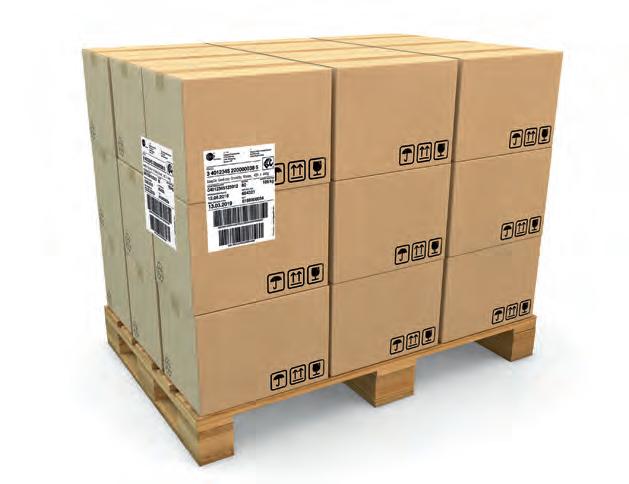
Pallet labeller series 715 PF
UNIVERSAL PACK: SUSTAINABLE, HIGH-PERFORMANCE SOLUTIONS FOR FOOD SINGLE-DOSE PACKAGING AT CIBUS TEC 2026
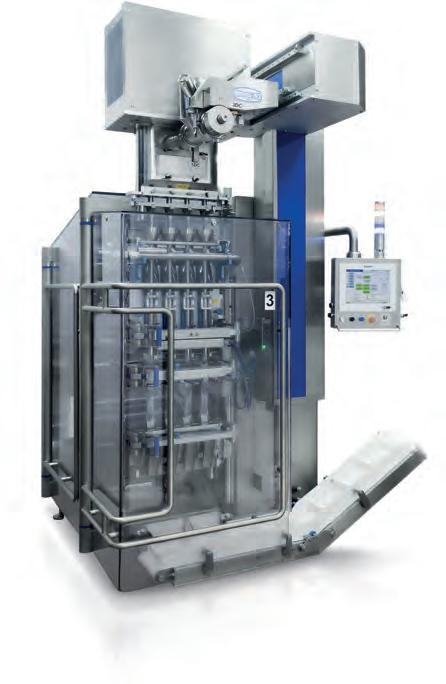
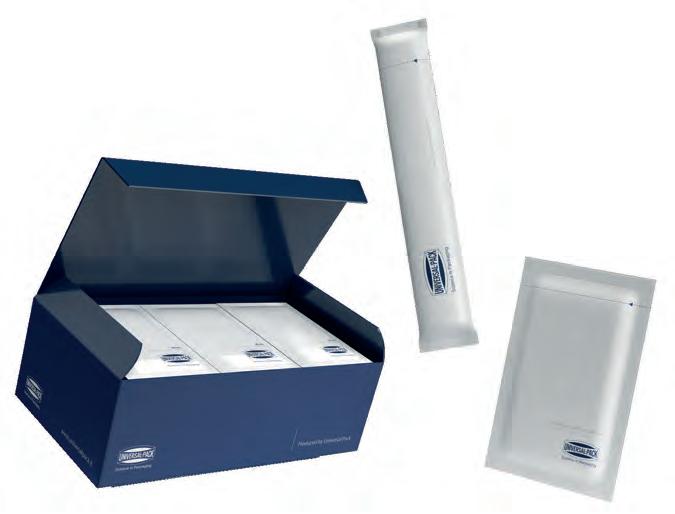
At Cibus Tec 2026, taking place in Parma from 27 to 30 October 2026, Universal Pack will present its latest innovations for single-dose packaging, with a strong focus on sustainability, performance and process reliability. The company will exhibit in Hall 2, Stand M056, showcasing solutions developed to meet the evolving needs of the food industry.
A long-established specialist in vertical VFFS machines and complete lines for sachets and stick-packs, Universal Pack continues to support food manufacturers looking for efficient,
UNIVERSAL PACK:
Packaging
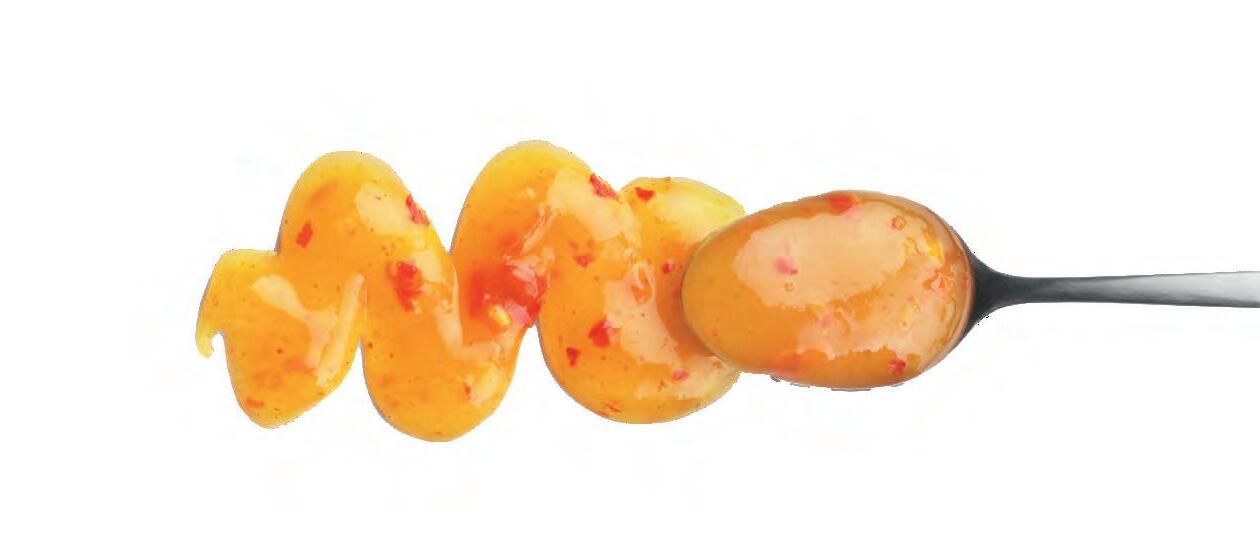
flexible and sustainable packaging technologies. Its systems are designed to handle a wide range of food applications, including powdered products such as coffee, flavour enhancers, instant mixes and seasonings, as well as liquid and viscous products such as sauces, dressings, condiments and similar formulations.
Sustainability remains one of the key drivers behind Universal Pack’s technological development. The company’s machines are engineered to process compostable, recyclable and recycled laminates, supported by material testing, Life Cycle Assessment studies and collaborations with film manufacturers, multinational groups and research centres. The goal is to help customers reduce environmental impact while maintaining high standards of efficiency, pack quality and process safety.
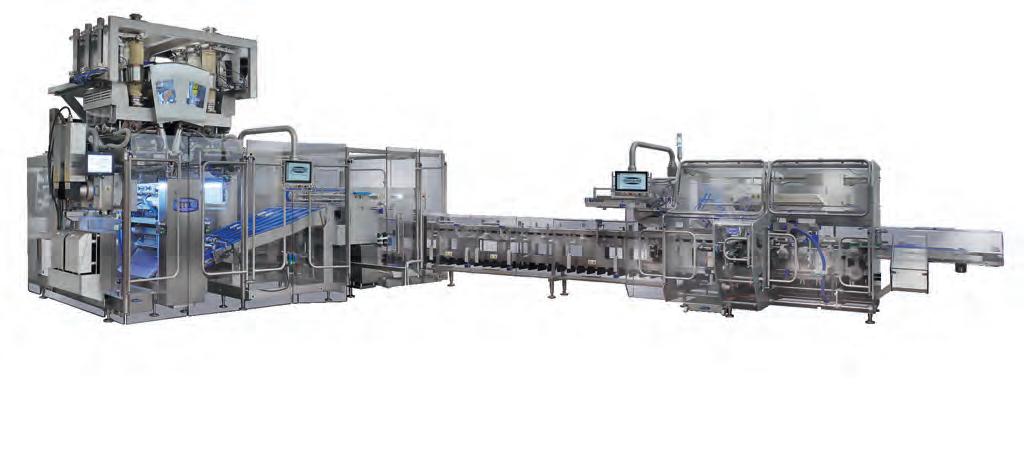
At Cibus Tec, Universal Pack will highlight its most recent technological developments for the food sector, including advanced solutions for stick-pack and sachet production, integrated
Packaging
handling systems, flexible dosing technologies and complete lines designed to improve production continuity and packaging performance. These innovations are developed to manage both free-flowing and non-free-flowing powders, as well as liquid and semi-liquid food products, ensuring accurate dosing, reliable sealing and consistent output quality.
Universal Pack’s latest solutions also focus on flexibility and efficiency, offering manufacturers the possibility to manage different formats, recipes and packaging configurations with reduced downtime. From multi-format stick-pack machines to high-speed sachet systems and integrated secondary packaging lines, the company provides technologies designed to support frequent product changes, diversified production needs and increasingly demanding market requirements.
Process control is another central aspect of Universal Pack’s approach. Its packaging systems can be equipped with advanced in-line controls, automatic reject functions, production data management and full batch traceability, helping food manufacturers improve quality assurance, operational transparency and compliance with modern production standards.
Universal Pack will also present the role of Universal Lab, its in-house laboratory dedicated to material and product analysis. Through testing activities on films, products and packaging configurations, Universal Lab supports customers in identifying the most suitable technical solution, ensuring full compatibility between the packaging system, the product and the chosen laminate.
Founded in 1965, Universal Pack celebrates over 60 years of innovation in single-dose packaging, with more than 8,000 systems installed, 3,000 customers worldwide and a presence in 160 countries. Backed by continuous investment in automation, sustainable technologies and process innovation, Universal Pack will welcome visitors at Cibus Tec 2026 – Hall 2, Stand M056 to present solutions designed for a more efficient, flexible and sustainable future in food packaging.
www.universalpack.it
www.universalpack.it
EUROPEAN INNOVATION SERVING THE ASIAN MARKET:
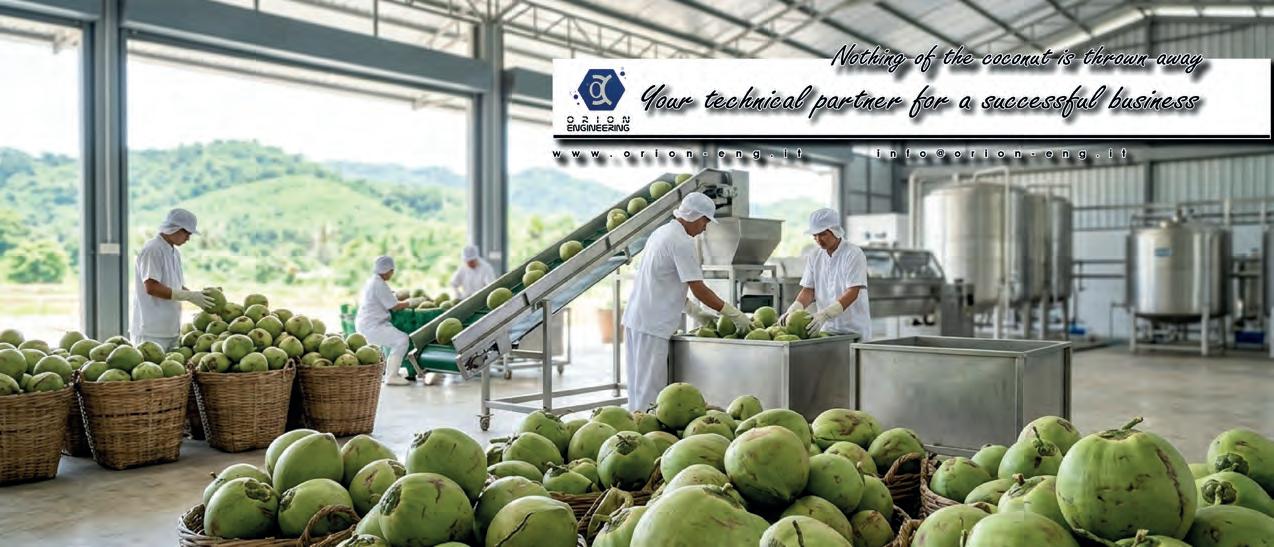
Towards the Integral and Sustainable Transformation of the Coconut
In the global landscape of food processing, the Asian market remains the undisputed epicenter of coconut production. However, increasing competitiveness and evolving environmental regulations demand a swift transition toward more efficient production models.
As a pioneering European entity, we position ourselves as a strategic partner for Asian industries, offering integral solutions for coconut transformation that turn operational challenges into high-value business opportunities.
Beyond Food: The By-Product Revolution
The core of our value proposition lies in redefining the concept of “waste.” In traditional processing, a significant portion of the coconut is discarded as residue.
Our European technology flips this paradigm: what was once a disposal cost is now a secondary raw
material destined for cross-cutting business sectors. Through our advanced separation and pretreatment systems, we prepare every component of the coconut for diversified industrial applications:
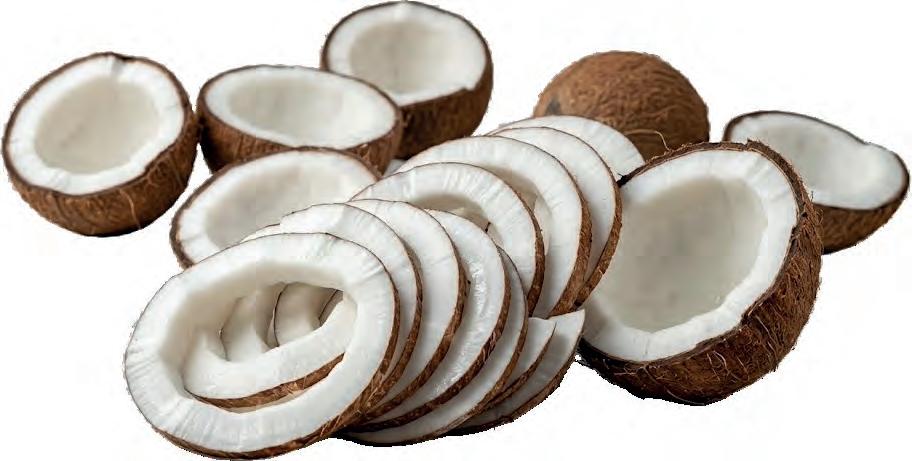
• The Husk (Fiber): Processed for technical textiles and high-end horticulture.
• The Shell: Valorised to produce premium activated carbon or advanced biofuels.
• Coconut Water and Pulp Residues: Recovered for the nutraceutical and cosmetic industries.
นวัตกรรมยุโรปเพื่อตลาด
Our solutions are engineered to prepare these materials with such precision that they can feed tailor-made plants—developed specifically to meet the end-user’s unique requirements—or be seamlessly integrated into existing production lines, optimizing previous capital expenditures through strategic brownfield enhancement.
Sustainability and Safety: The Pillars of European Engineering
Adopting our technologies ensures a dual competitive advantage, essential for meeting international export standards and ESG (Environmental, Social, and Governance) criteria.
1. Environmental Sustainability: Integral transformation drastically reduces the carbon footprint and the environmental impact of industrial landfills. Implementing a circular economy within the factory is not merely an ethical choice; it is a profit-maximization strategy achieved through product portfolio diversification.
2. Operator Safety: In an industry where automation is rapidly replacing manual processes, our engineering places worker protection at the forefront. Every machine is designed according to the most rigorous European safety standards. Advanced protection systems, intuitive Human-Machine Interfaces (HMI), and the mitigation of biomechanical risks ensure not only the health of the workforce but also operational stability by eliminating accidental downtime.
Partnerships for the Future
Choosing our expertise means embracing a forward-thinking vision.
We do not just supply machinery; we deliver comprehensive engineering solutions that speak the language of innovation and efficiency.
We are ready to collaborate with leading Asian enterprises to transform the coconut into the pillar of a new industrial era: secure, profitable, and profoundly sustainable.
Compact solutions designed according to EHEDG guidelines and in line with FDA regulations. We take your systems to a new level of operability with our solutions.
TFM: GLOBAL EXPERTISE IN FRUIT PROCESSING TECHNOLOGY
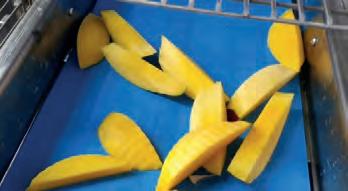
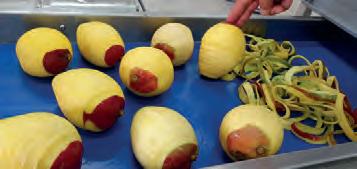
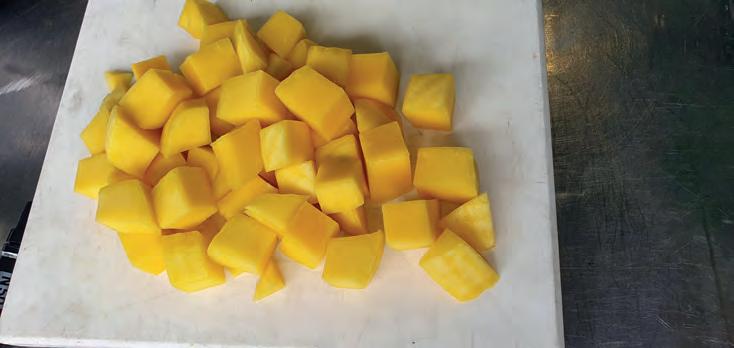
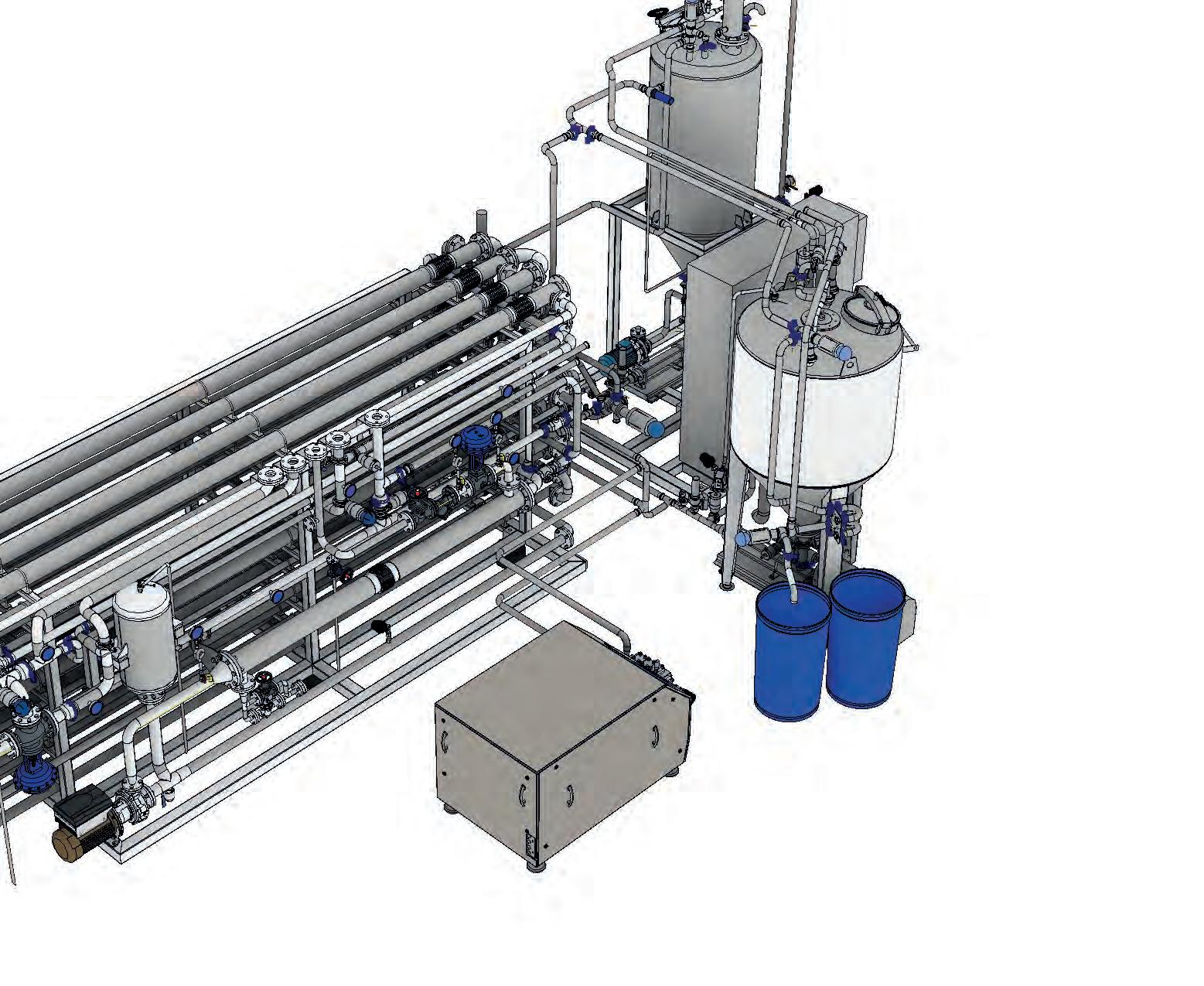
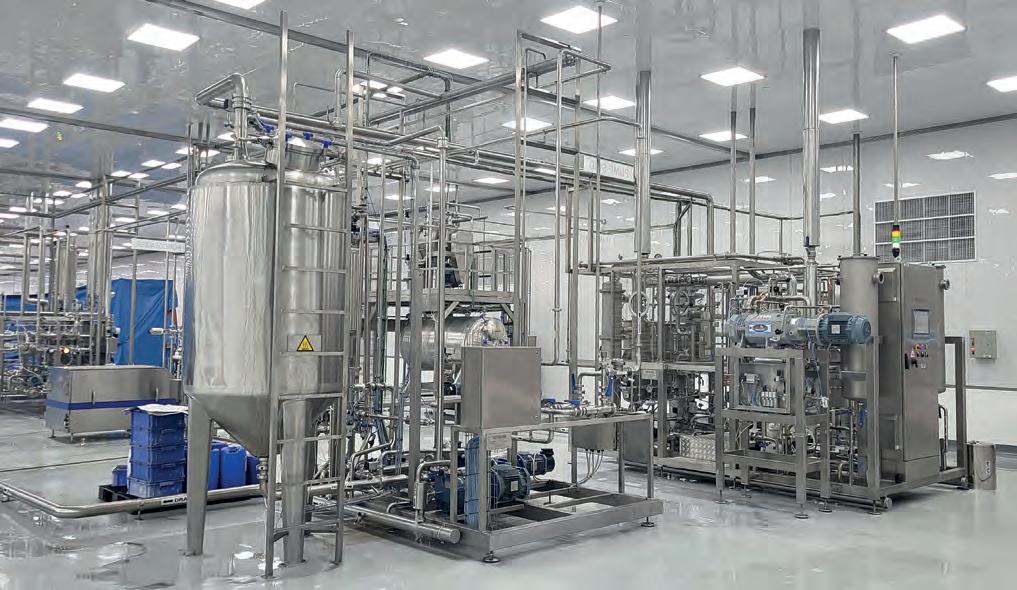
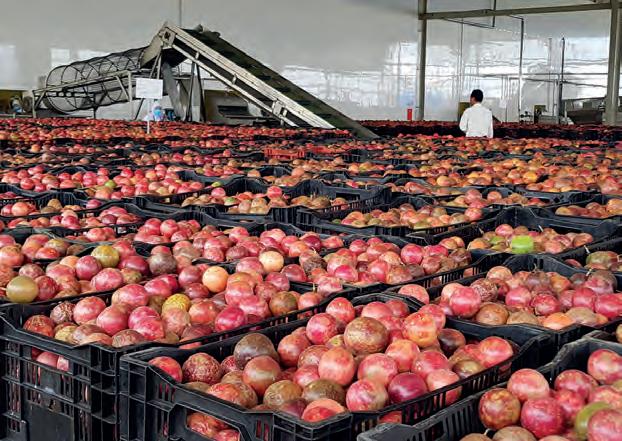
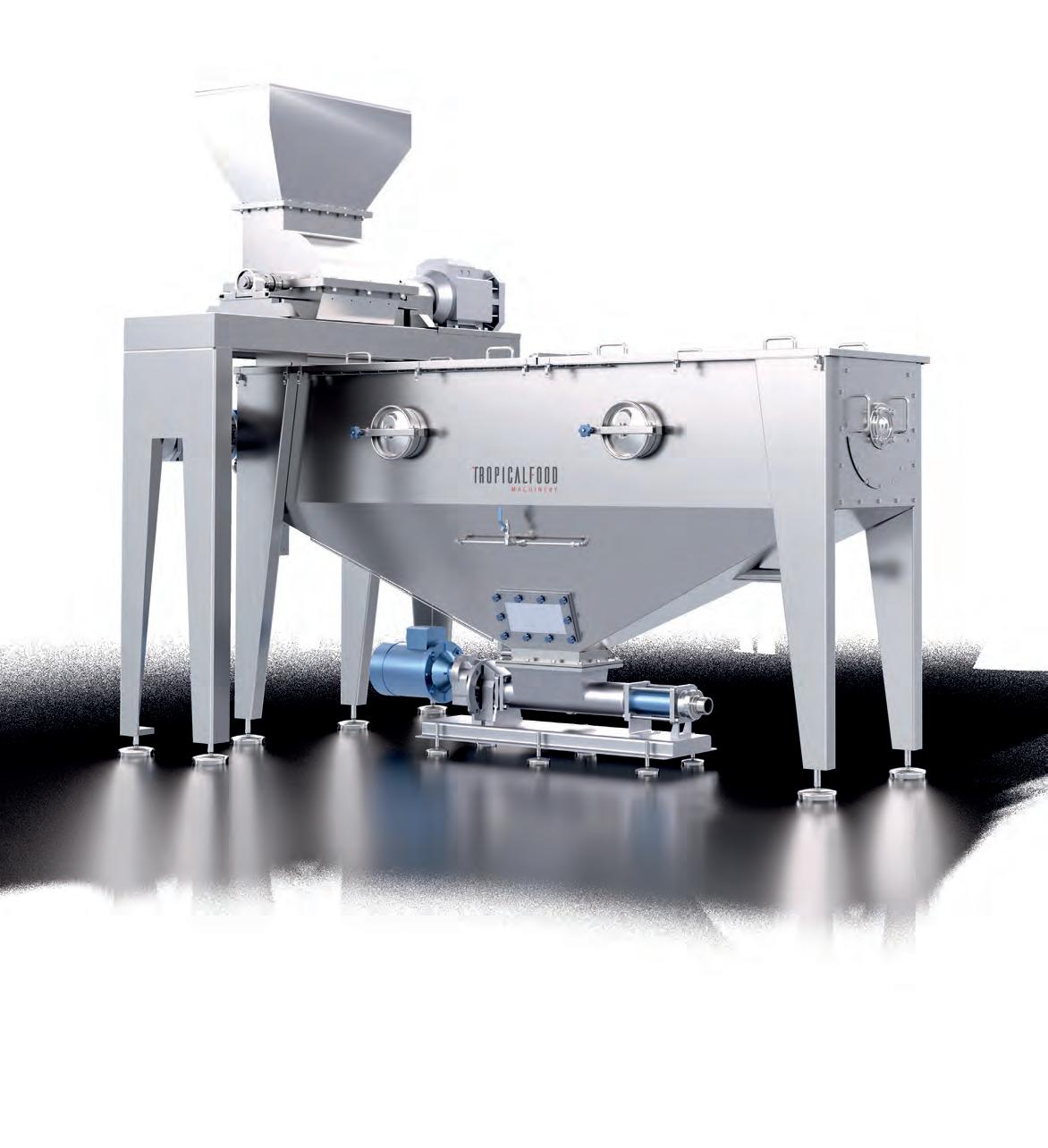
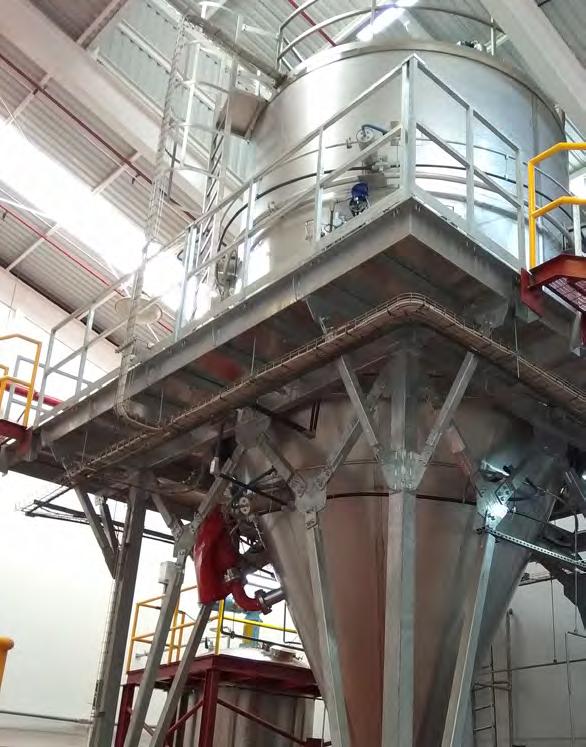
Tropical Food Machinery is an international Company with two headquarters, in Italy and Brazil, leading in the global field of fruit processing machinery. Thanks to its decades experience, TFM offers complete production plants for the industrial process of tropical and continental fruit, producing finished products such as natural juices, concentrated juices, puree, jams or fruit in syrup. Its know-how is reinforced by hands-on experience on fruit processing thanks to two production facilities in Brazil, namely Flora and Mirca, which process different fruits such as pineapple, passion fruit, papaya and mango.
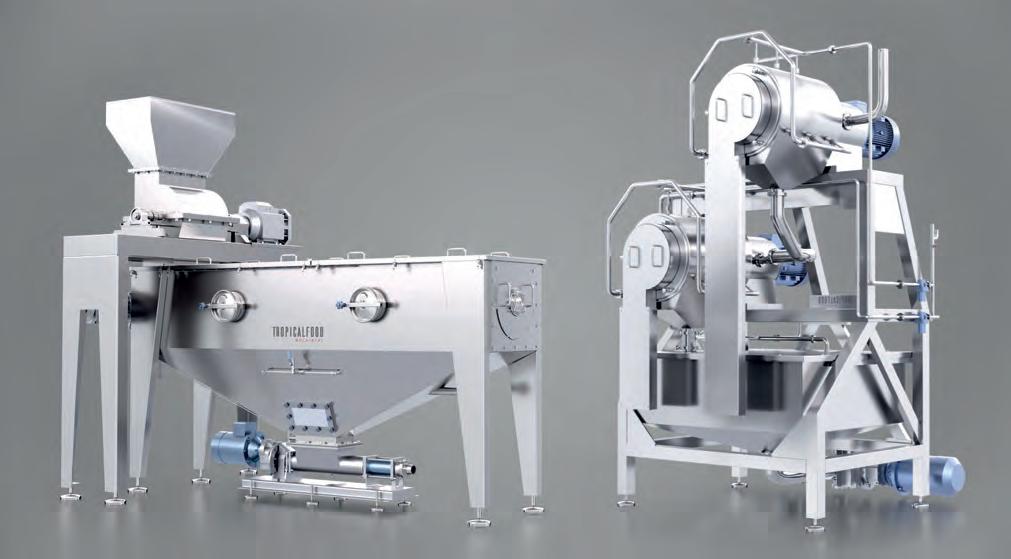
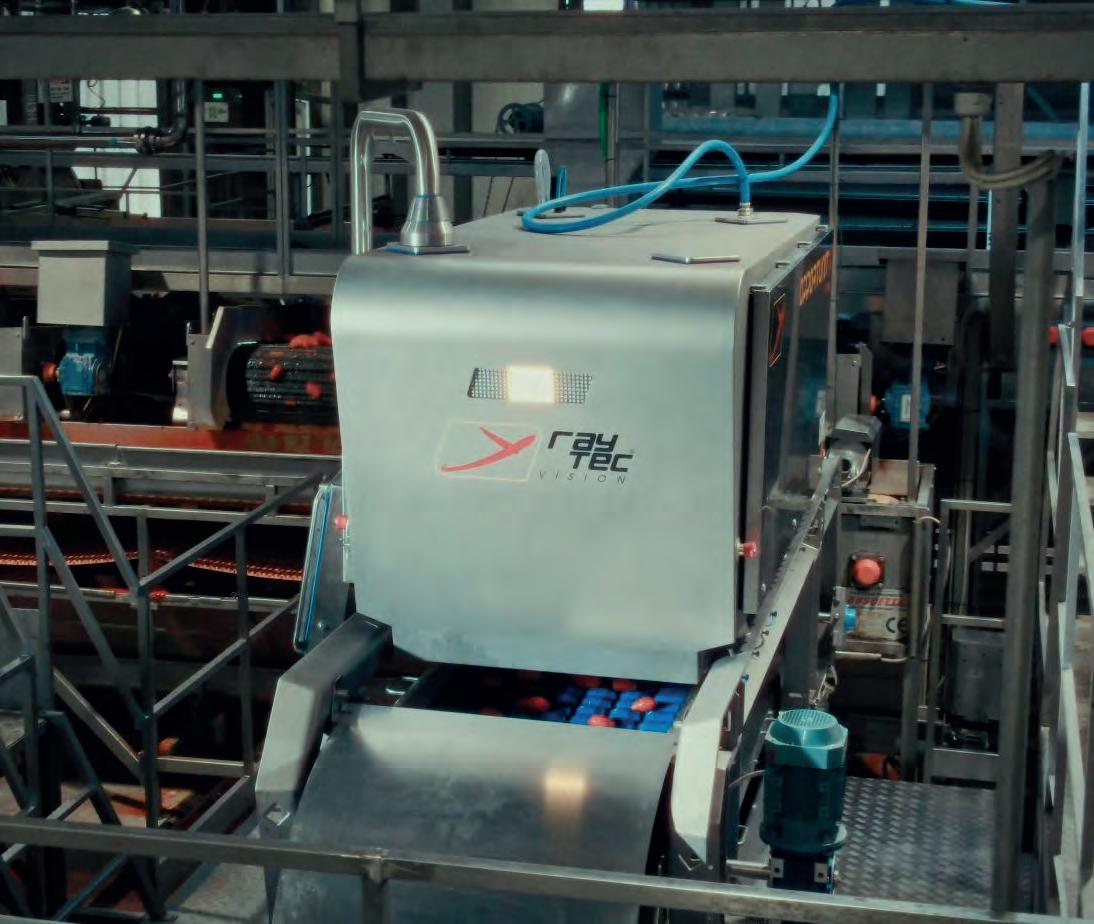
Nowadays, TFM export its lines in all five continents, with a long-standing commitment to the South Asian market: in 2025, Tropical Food Machinery installed a 12 t/h processing line for passion fruit, proving the adaptability and efficiency of its solutions. The plant includes the extractor ARTEMIDE to extract the fruit pulp and the Turbo Refiner HERA, that separates the juice from undesired parts: the combined use of these two machines guarantees the best product quality with a very high extraction yield.
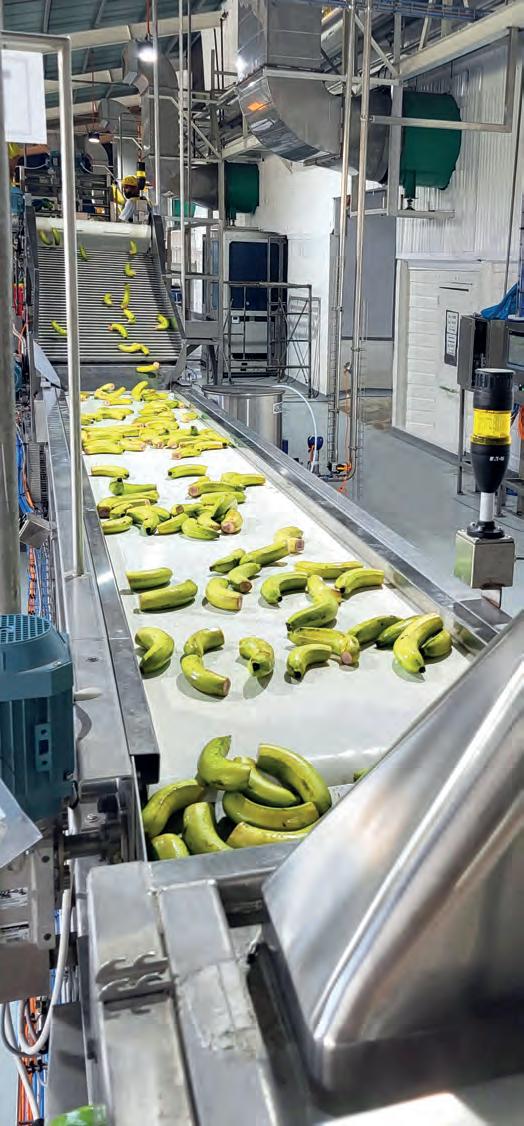
Another great achievement was the one in South Asia, with the installation of a one-of-a-kind banana puree processing line. The innovative element that makes this project important is the use of the CERERE 6000 banana peeler, a machine patented by TFM, capable of revolutionizing the processing of this fruit thanks to an automatic peeling system in an inert nitrogen atmosphere.
The plant also includes the use of another special TFM technology: the DIONISO aroma recovery system, a compact solution that extracts and concentrates natural aromas and essences that would otherwise be lost in the juice or puree extraction process.
The obtained aroma can be reintroduced into the product during the final processing stages, improving its characteristics, or it can be sold separately
with an exceptionally fast return on investment: high-quality natural flavours can command a considerable price for use markets such as food, beverage and cosmetics.
The Company can boast dozens of active plants, with machines entirely designed around the fruit juice extraction, as fruits with thick skin, stones or seeds. Every production plant is designed and built in-house and includes the entire product processing, from fresh fruit treatment to the aseptic filling of natural juice or concentrate, with a capacity up to 20 tons per hour of fresh fruit infeed.
Preserving industry NICOFRUIT PAST, PRESENT AND FUTURE
NICOFRUIT is a registered trademark, owned and distributed by Frutthera Growers, an Italian company located in a town called Metapontino, in the Basilicata region, in the south of the Country. This area is well known and is ideally suited to the growing of strawberries, grapes, kiwi and citrus. These fruits find their natural habitat here and are included in the most representative made-in-Italy productions.
Adopting the integrated production quality system means employing environmentally friendly production methods, protecting the health of both workers and consumers, making use of technical and economic features of the most modern production systems.
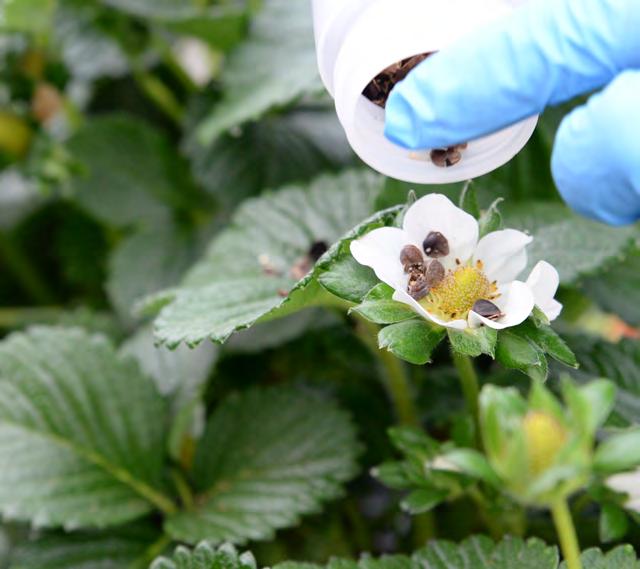
Special care to the environmental issues led the company to achieve an important result: the drastic reduction of pesticides, implementing specific natural technics and recurring to a massive use of antagonistic insects. Natural protection of the plants gave a large contribution to get a “zero residues” pesticides for a lot of the fruit we produce.
Packaging represents another way to respect Earth. A totally brand new compostable packaging has been implemented in our production lines, being entirely degradable and used as a natural fertilizer. Great help for the environment!
Frutthera adopts the integrated production quality system that consists of a combination of eco-friendly production methods, the protection of
Preserving industry
both workers and consumers’ health, and technical and economic requirements of the most modern production systems.
Storage and conditioning are controlled by a software cell that provides constant monitoring of the products’ temperature and humidity, from the countryside until their final destination into targeted markets.
Monitoring the correct temperature during transport is guaranteed by small electronic recorders installed on the means of transport. NICOFRUIT products are traceable and trackable.
Thanks to a computerized system, the product will be followed through all the stages of processing, packaging and storage to the sale moment so that the consumer can trace back the soil where the fruits and vegetables have grown.
Today FRUTTHERA Growers can count on more than 40 partners that cultivate more than 500 hectares of land.
On average, 160 seasonal workers are employed with a max of 350 in the most intense harvest periods.
The factory is 12.300 sqm (indoor and outdoor). It is newly built and it has been designed to guarantee the quality of the products.
Sustainable development is the only possible model for NICOFRUIT - solar panels are located on the storage and on the processing plants, and they are sufficient to feed most of the company’s energy needs. From the very beginning, dynamism and long-term outlook have allowed the company to reach internal large-scale retailers and important market spaces from South America to the Middle East.
Analysing percentage shares, the products are sold 50% in the foreign market, 30% in the internal retail and 20% in the general market.
Since commercial aggregation is a very important target to achieve, Frutthera joined one of the biggest Producers Organization in south Italy, with a total turnover > 70 mln €, Asso Fruit Italia, that is also a partner of Italia Ortofrutta, the biggest Italian National Union.
As a natural consequence of environmental awareness, Frutthera takes part in a lot of projects to achieve this target, organized by Universities, Research Institutions and many other reliable partners.
www.nicofruit.it
COMPACT AND EFFICIENT: PND’S INTEGRATED LINE FOR PINEAPPLE PROCESSING
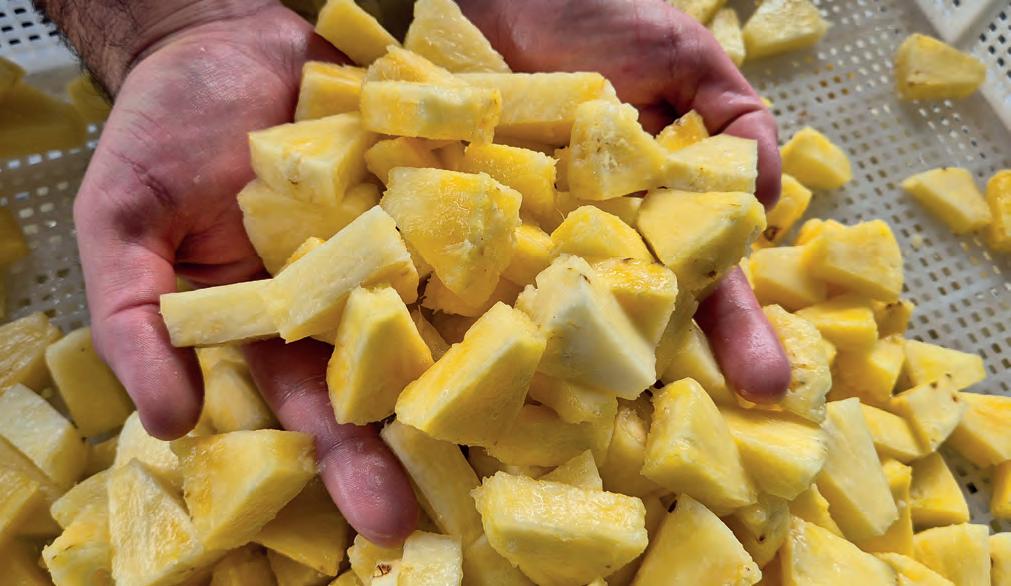
Seasonal demand for fresh cut pineapple reaches its highest levels during the summer months, pushing processors to seek solutions that combine efficiency, precision, and reliability. In response to these market needs, PND-recognized worldwide for its fruit processing technologies-has developed a compact, high performance line dedicated entirely to pineapple preparation.
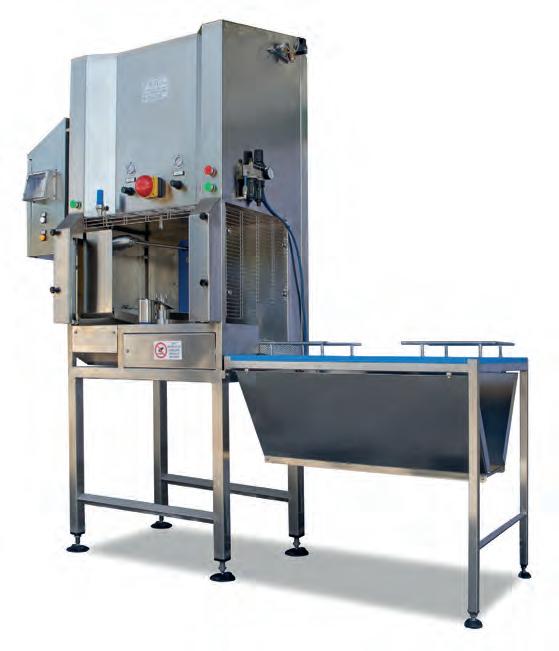
Occupying less than seven meters in total length and requiring only three operators, the line is ideal for small and medium sized producers or companies entering the fresh cut segment. The configuration includes the PL1D peeler, a manual trimming station, and the SS8 cutting machine, enabling consistent slicing and chunking for ready to eat applications. With a processing capacity of 4 to 6 pineapples per minute, the system delivers an output of approximately 500 kg per hour, ensuring both speed and product integrity.
PL1D Peeler: Precision Peeling for High Quality Fresh Cut Pineapple
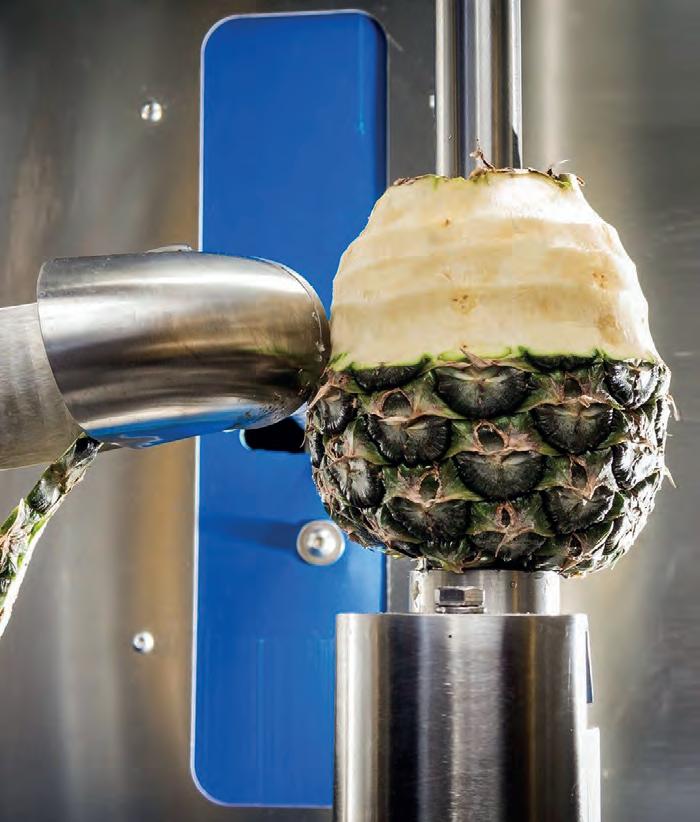
At the core of the line is the PL1D, a semi automatic stainless steel peeler engineered specifically for external pineapple peeling. The machine supports manual loading and offers adjustable rotation and peeling speeds, allowing operators to adapt the process to fruit size, ripeness, and condition while maintaining optimal yield.
The PL1D features two independent conveyors-one for waste and one for peeled fruit-along with an integrated inspection and preparation bench. Even when handling irregular or non calibrated pineapples, the machine ensures clean, uniform peeling with minimal setup. The fully visible process enhances operator control and quality assurance. Available in one , two , or four station versions, the PL1D can be scaled to match different production volumes.
SS8 Cutter: Modular Cutting Solutions for the Fresh Cut Market
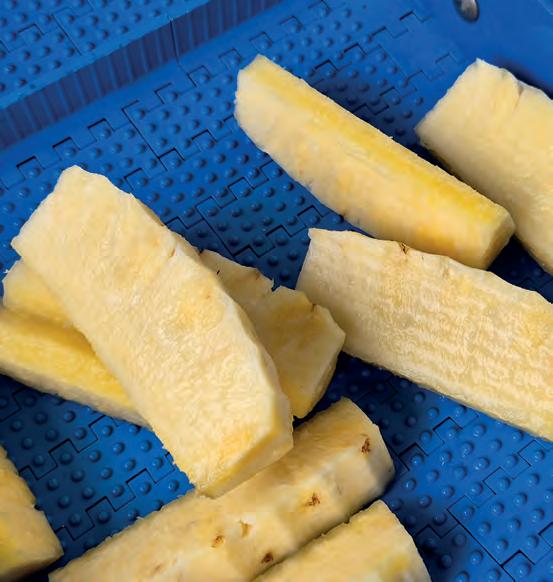
To complete the pineapple transformation process, PND integrates the SS8 cutting machine, a semi automatic unit designed for continuous operation and high precision results. Through interchangeable dies and pressing components, the SS8 offers multiple cutting formats-slices, wedges, or chunksmeeting the diverse needs of fresh cut producers. The machine requires minimal manual intervention: once positioned, each pineapple is automatically guided through the selected cutting form. The processed product is then transferred via an output conveyor, ready for immediate packaging. All contact surfaces comply with food industry standards, and the machine’s design ensures quick cleaning and simplified maintenance.
Operational Advantages and PND’s Commitment to Processors
PND’s pineapple processing line stands out for
นช่วงฤดูร้อนความต้องการสับปะรดพร้อมทาน
Preserving industry
its compact footprint, intuitive operation, and low maintenance requirements. These characteristics translate into reduced operating costs and improved productivity-key factors for companies navigating the competitive fresh cut market.
With over 25 years of experience, PND has built a reputation for technological reliability and customer focused service. The company continues to refine its machinery through thoughtful design and customization, offering solutions that evolve alongside the needs of pineapple processors worldwide.
Here is a revised version of the article, focused exclusively on the pineapple process, with an approach suitable for a trade magazine and consistent with PND’s institutional voice:
Compact and Efficient: PND’s Integrated Line for Pineapple Processing
Seasonal demand for fresh-cut pineapple reaches its highest levels during the summer months, pushing processors to seek solutions that combine ef-
ficiency, product quality, and reduced operational footprint. In response to these needs, PND—recognized worldwide for its expertise in fruit processing technology— has developed a compact, high performance line dedicated entirely to pineapple preparation.
Occupying less than seven meters in total length and requiring only three operators, the line is ideal for small and medium sized processors or companies entering the fresh cut sector. The configuration includes the PL1D peeler, a manual trimming station, and the SS8 cutting machine, enabling precise slicing and chunking for fresh cut applications. With a capacity of 4 to 6 pineapples per minute, the system delivers an output of approximately 500 kg per hour, ensuring both speed and consistent product integrity.
PL1D Peeler: Precision and Yield for Pineapple Preparation
At the core of the line is the PL1D, a semi automatic stainless steel peeler engineered specifically for external pineapple peeling. The machine allows manual loading and offers adjustable rotation and peeling speeds, ensuring optimal performance across different fruit sizes and ripeness levels while preserving yield.
The PL1D features two independent conveyors— one for waste and one for peeled fruit—along with an integrated inspection and preparation bench. This layout ensures continuous workflow and quality control. Even when processing irregular or non calibrated pineapples, the machine delivers clean, uniform peeling with minimal setup. The fully visible process enhances operator oversight and safety. Available in one , two , or four station versions, the PL1D can be scaled to match production requirements.
SS8 Cutter: High Quality Slicing and Chunking
To complete the pineapple transformation process,
PND integrates the SS8 cutting machine, a semi automatic unit designed for continuous operation and high precision cutting. Through interchangeable dies and pressing components, the SS8 can produce slices, wedges, or chunks, adapting to the specific needs of fresh cut producers.
The machine requires minimal manual handling: once positioned, each pineapple is automatically guided through the selected cutting form. The processed product is then conveyed directly to the packaging area. All contact surfaces comply with food industry standards, and the machine’s design ensures quick cleaning and simplified maintenancekey advantages for daily operations.
Operational Benefits and PND’s Customer Focused Approach
PND’s pineapple processing line combines compact design with robust performance, making it easy to integrate into existing production environments. Its reduced footprint, low maintenance requirements, and intuitive operation contribute to lower operating costs and improved productivity. With more than 26 years of experience, PND continues to stand out for its technological reliability and customer oriented service. The company’s ability to customize machinery and support processors worldwide reinforces its role as a trusted partner in the fresh cut fruit industry.
www.pndsrl.it
ALL ABOUT FOOD: MAXIMUM EFFICIENCY FOR ALL PRODUCTION LINES!
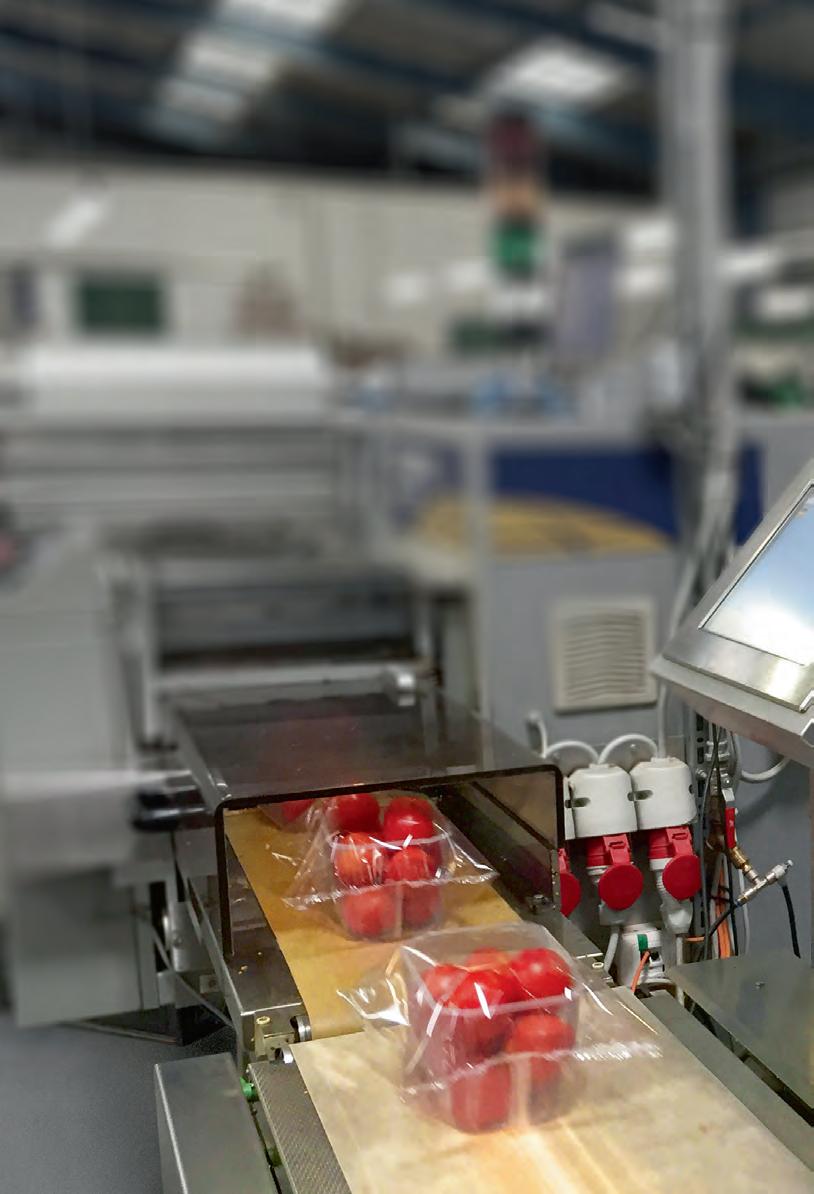
Effective planning and controlling of processes are one of the most important things when it comes to fresh food. However, the reality is different: Many producers, importers or packing houses still work with manual entries in confusing Excel tables
Planning errors are based on this and on insufficient networking of the systems. How can this be avoided?
Smart, individual, digital: Food production 4.0. with 30% efficiency increase
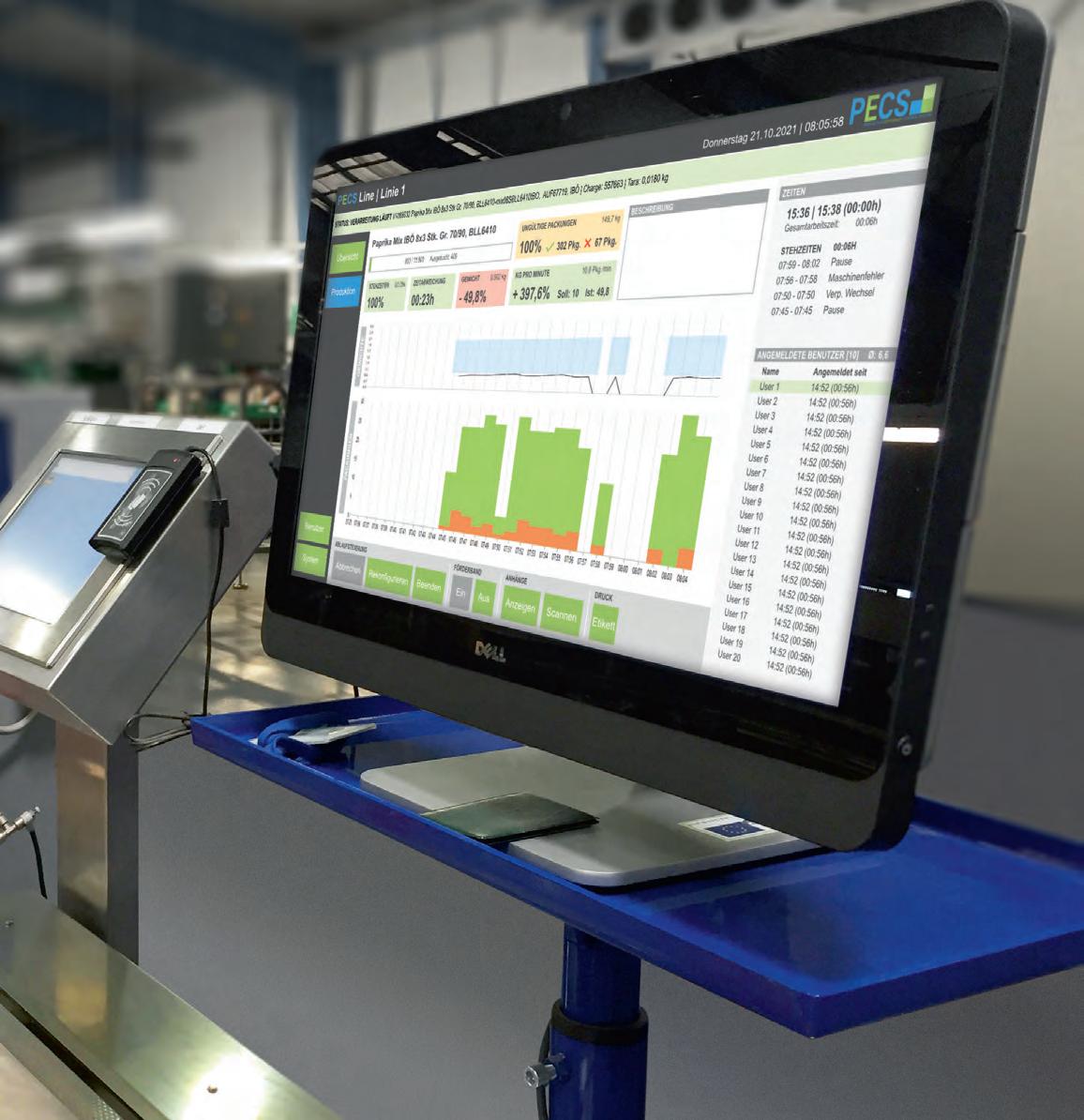
Although Industry 4.0 is a hot topic for decision-makers, there are only a few software providers dedicated to Food Production 4.0. An example of this digitalization offensive is the “PECS” tool. The Production Efficiency Control System covers the complete production control and networks plants and machines - regardless of the maker. Production lines are set up in just a few clicks, personnel planning is carried out in no time, and the performance data of the respective production is made available in a clear manner. Future orders and activities can be forecast to the minute. An average 30% increase in production efficiency can be expected.
Import & maturity planning: Preventing sources of error that often cannot be taken into in the daily business routine
Effective planning and controlling of processes are one of the most important things when it comes to fresh food.
Preserving industry
Especially in the case of perishables, it`s necessary to know exactly at which time which quantity is available at which location.
This is the only way to minimize over- or underdeliveries and the spoilage of goods.
Planning is usually based on Excel lists, which then have to be manually converted into orders in the ERP system. The fact that errors happen here can hardly be avoided. The changeover to a da-
tabase-based solution opens new potential.
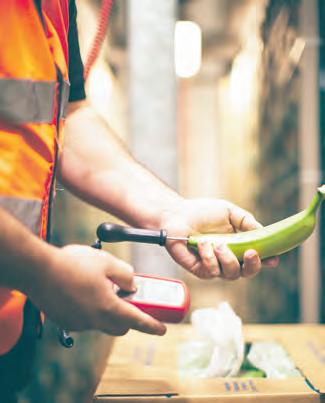
The Fruit Import Planning System “FIPS” generates orders based on a planning quantity and considers live data such as sales quantities, spoilage, lead times, transport times and ripening cycles.
This guarantees supply chain traceability and detailed planning of ripening chamber utilization. Underdeliveries are immediately apparent and appropriate replacements can be provided at an early stage.
ERP: Making yields visible even before the harvest
In many ERP systems, a comprehensive data exchange and thus a continuous, clear planning and control is only possible to a limited extent. The step towards an industry-specific solution such
as “traceNET”, which can map the processes of food-producing companies, is therefore obvious and necessary. Instead of manual entries, it works with automatisms that make everyday production easier.
The complex processes of food producers are mapped and optimised in detail. Crop and harvest reporting, ordering, packaging material planning, batch tracing and certificate management are just some of the comprehensive functions.
Individual software solutions for food producing companies, mobile solutions, real-time overview & business intelligence tools can be found at “activeIT-Software & Consulting GmbH”.
www.active-it.at
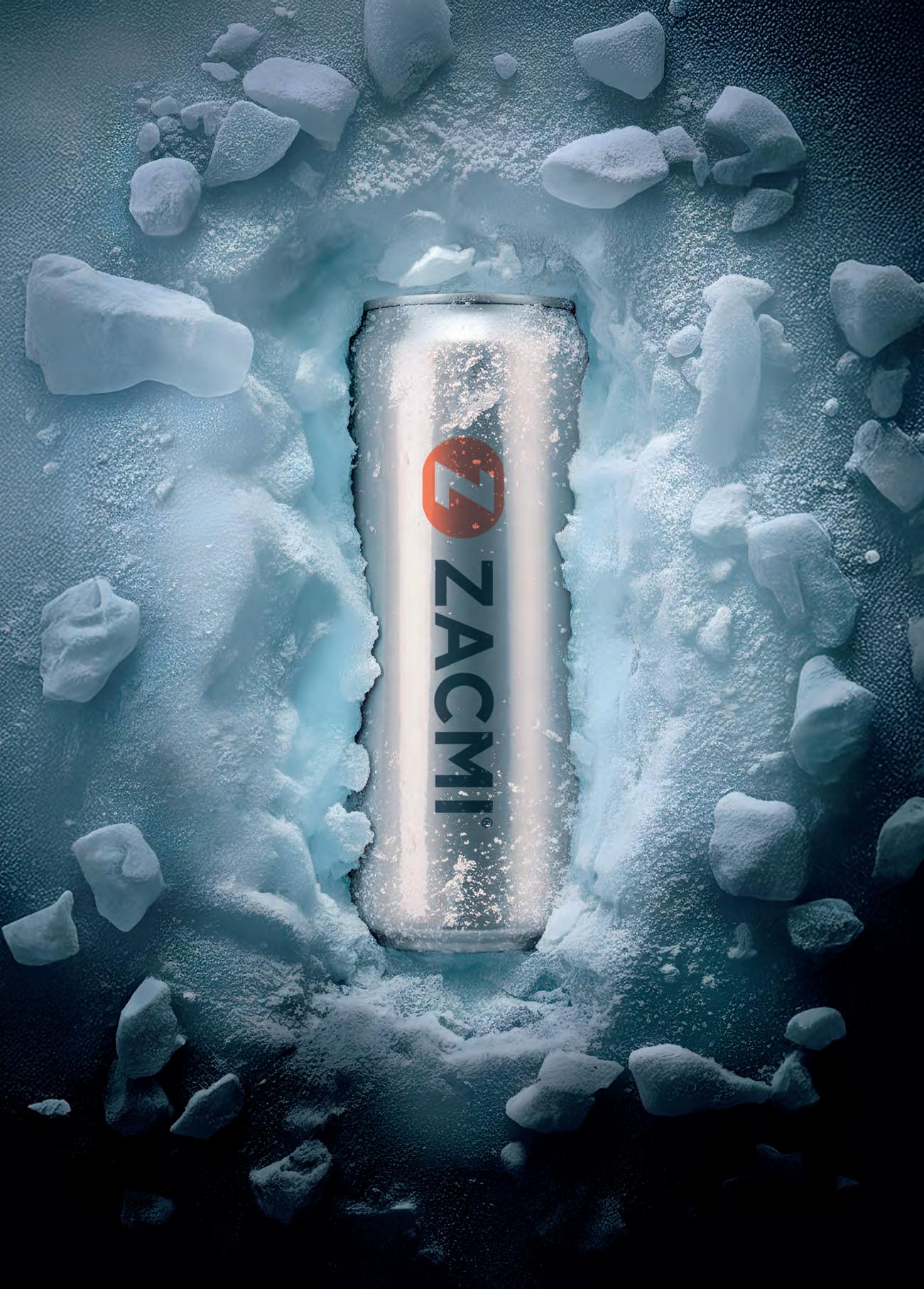
ZACMI AT PROPAK ASIA 2026: SPECIALIST BY
DESIGN
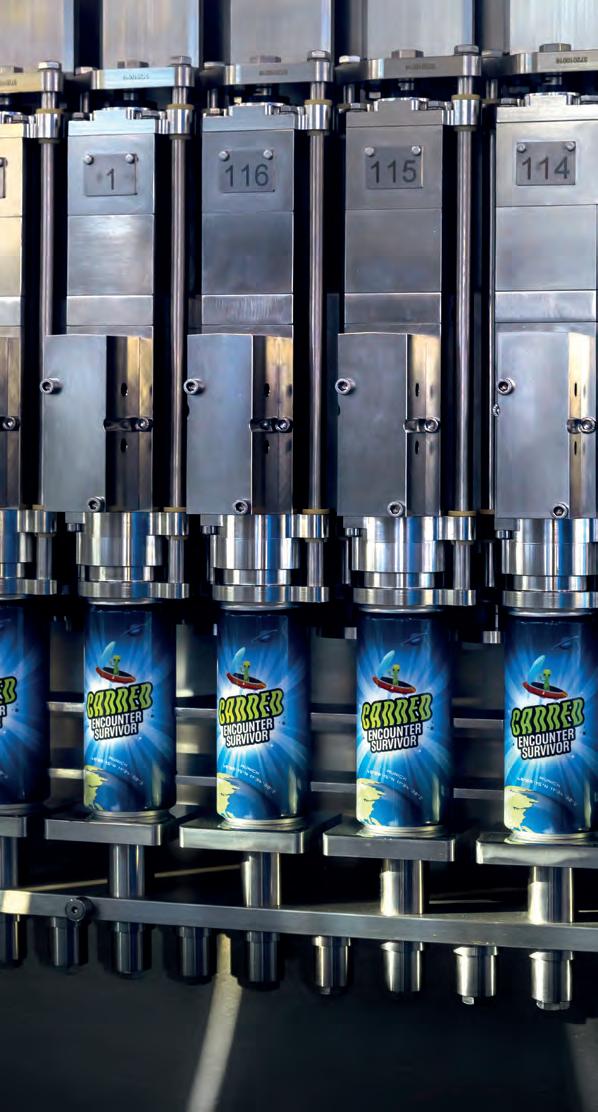
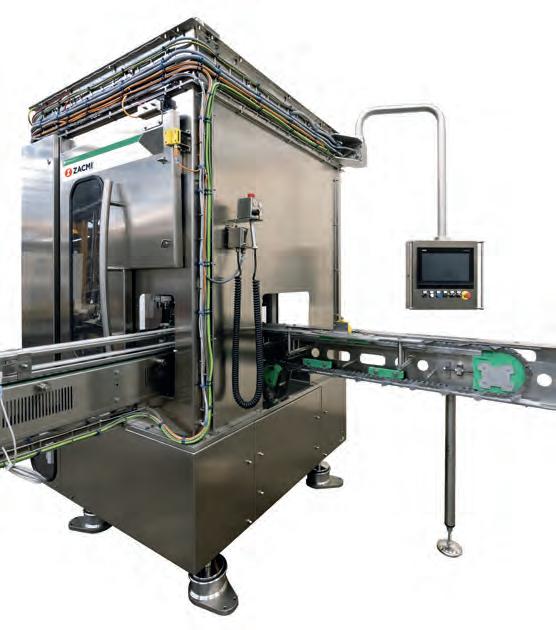
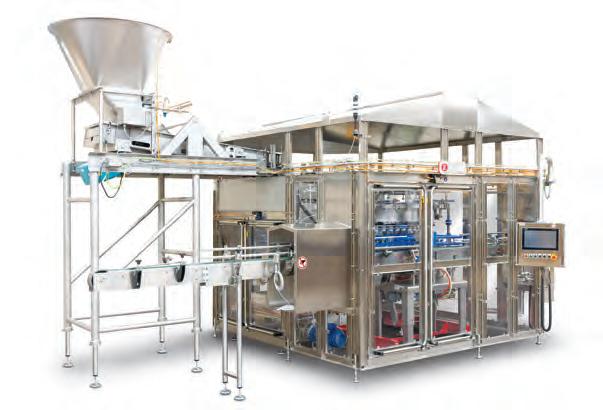
ZACMI is not a generalist. Since 1954 , the Parma-based company has built its identity around a precise industrial territory: filling, seaming and pasteurisation technologies for the food and beverage industry.
At ProPak Asia 2026, ZACMI will bring this specialist profile to the ProMach stand, offering visitors the opportunity to discover a company whose strength lies not in breadth for its own sake, but in deep technical focus, application knowledge and long-term manufacturing reliability.
Over the decades, ZACMI has grown by concentrating on what matters most in production environments where product integrity, hygiene, repeatability and efficiency cannot be left to approximation.
Its portfolio includes highly customisable filling systems, can seamers and pasteurisation solutions designed for demanding applications across the food and beverage spectrum.
Its technologies serve vegetables, sauces, soups, fruit juice, oils, baby food, pet food and beverages in rigid containers, always with the same engineering principle: adapting the machine to the product, the container and the production target.
The company’s engineering approach is shaped by the realities of the line: product characteristics, container behaviour, required output, plant layout and stable performance over time.
That is what gives ZACMI a distinct place within ProMach. In a global group that covers the production line at scale, ZACMI contributes specialist expertise whe-
re process, filling and closing must work together with precision and continuity.
Its value is not only in the machinery itself, but in the ability to translate complex technical requirements into robust, practical solutions that can be integrated effectively and supported over the long term.
Nearly 50 patents and more than 2,500 machines installed worldwide reflect a company that has combined innovation with industrial consistency rather than pursuing novelty as an end in itself, and a reputation built on hygienic design, application knowledge and close attention to customer care.
For visitors who may be encountering the brand for the first time, ProPak Asia is the right setting to understand what ZACMI represents today: an Italian engineering company with solid roots, global experience and a clear technical vocation, now strengthened by its place within ProMach.
It is a company that speaks the language of production through technologies designed to protect product quality, support line performance and create durable value for manufacturers across Asia’s food and beverage sector.
Visitors are invited to meet the ZACMI team at the ProMach stand. There, the conversation will not be about generic promises, but about real applications, real production needs and the kind of specialist expertise that remains valuable long after the trade fair ends.
ProPak Asia 2026 | 10–13 June | IMPACT Exhibition and Convention Center, Bangkok
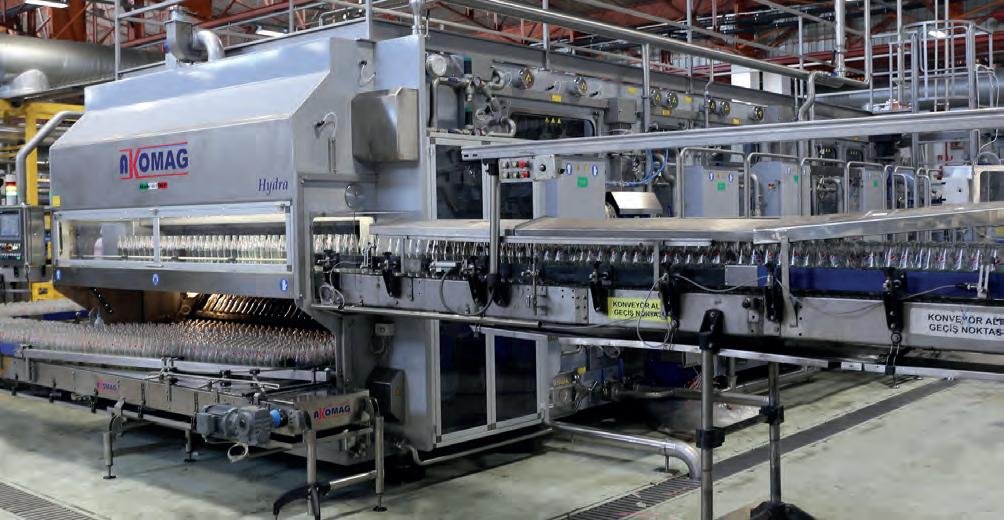
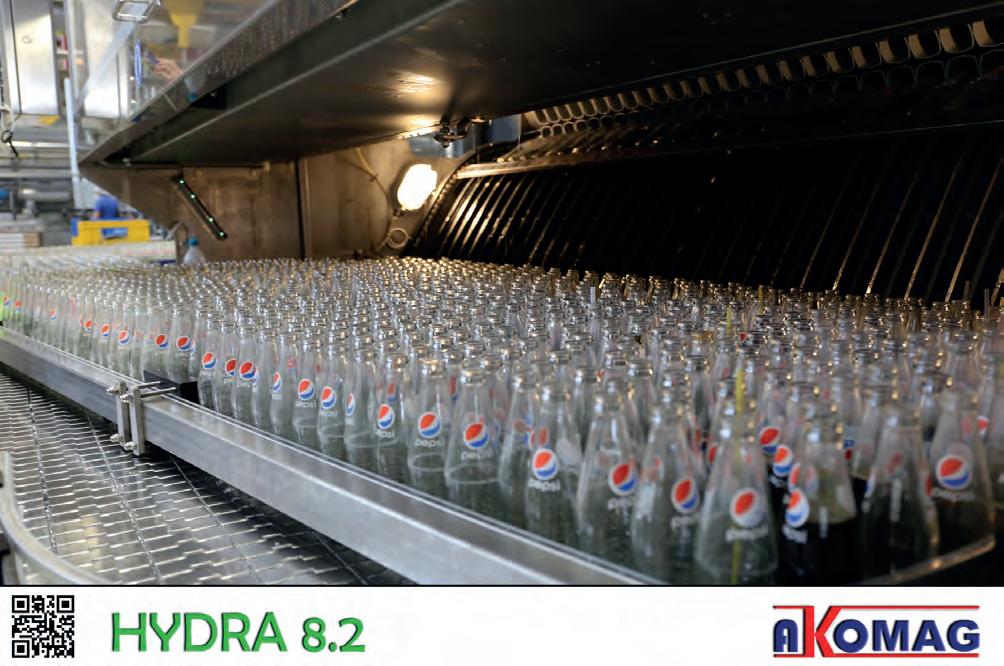
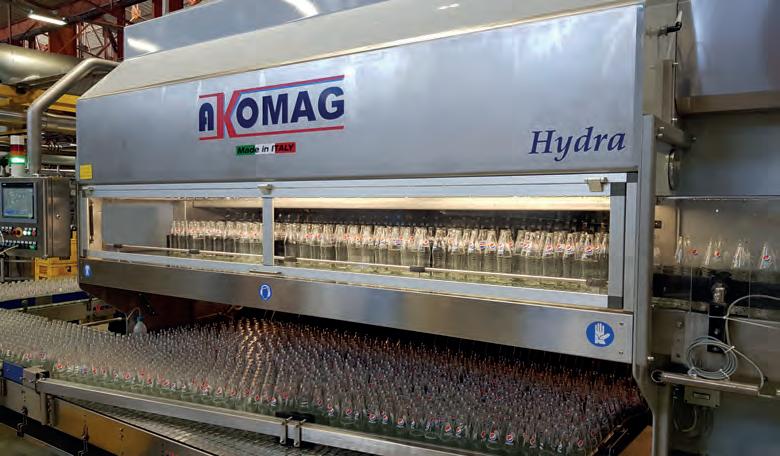
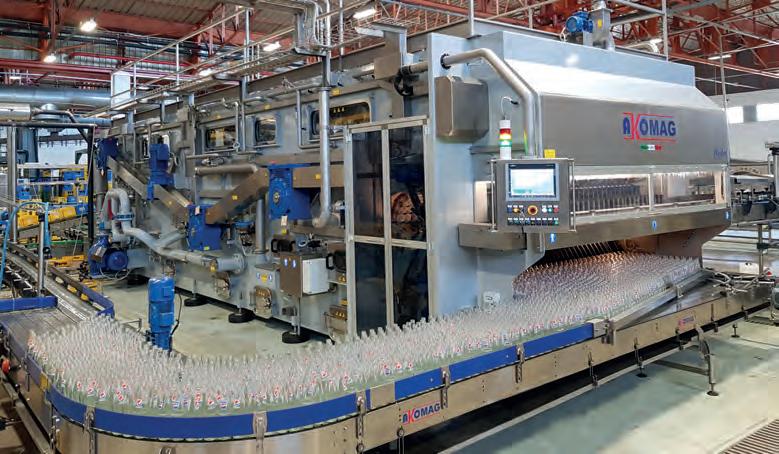
Recently the company delivered, installed and tested a new machine intended for washing recycled glass bottles. The machine for the PepsiCo group is a Hydra 8.2, characterised by a very high production: 37,500 bottles/h. The new model, the pride of mechanical Made in Italy, reaches a mechanical efficiency equal to 99.4%, successfully exceeding the standards required by the customer in the contractual phase. With this new provision, Akomag confirms itself once again as world leader in the construction of glass bottle washers.
The bottle washer has been specially designed in order to minimise the environmental impact, with particular attention to water and steam consumptions, and to the duration of the detergent bath. The completely automated wash cycle includes an initial bottle-emptying station followed by a pre-wash spraying and first pre-soak bath that significantly reduces detergent bath pollution and markedly decreases consumption levels.
In the pre-soak area the project also provides for the installation of a belt filter that allows to automatically remove the main impurities typical of recycled bottles (straws, paper, cigarette butts, for instance). The washing of bottles is completed with the internal and external high-pressure detergent wash sprays, using self-cleaning and self-centring rotating nozzles.
PEPSICO คือ HYDRA 8.2 มีคุณสมบัติ
37,500 ขวด/ชั่วโมง
ซึ่งเป็นความภาคภูมิใจที่ผลิตใน
มีประสิทธิผลเชิงกลสูงถึง 99.4% ซึ่งเกินจาก
AKOMAG
Mains water for spray-rinsing
In designing Hydra 8.2, Akomag has focused on the final rinsing sprays using mains water. The expedients developed during the design stage have allowed to achieve extraordinary results. By installing a special valve with integrated flow meter on the mains pipe (controlled directly by the control panel), it is possible to detect the instantaneous and daily water consumption required for the proper washing of the bottles. With pride and satisfaction,
Akomag technicians declare that thanks to the new design the new machine has a water consumption equal to 0.098 litres per bottle. A lower value than rigidly imposed in contractual phase by the customer.
The supply is completed with many other technological innovations, including sensors for slowing down or stopping the machine in case of missing or clogging of the bottles on the conveyor belts; synchronization systems of the bottle washer speed with that of the filling monobloc; control and introduction of detergent and additives in the washing bath and of sequestrants/ disinfectants in the spray tanks; self-cleaning filters in the tanks; automatic bottle loading and unloading, perfectly synchronized with the movement of the main chain.
Akomag is a flexible and dynamic company that bases its policy on customer satisfaction,
the quality of its systems, its assistance services and technological innovation. Akomag has been working for several years in the bottling sector and thanks to the proven experience developed in this field, the company can guarantee to its customers maximum yields, user-friendly operation and minimum operational costs, as well as long working life of its machines built with top quality materials. From the province of Parma, Akomag aims to meet the needs of all those who are looking for high quality products.
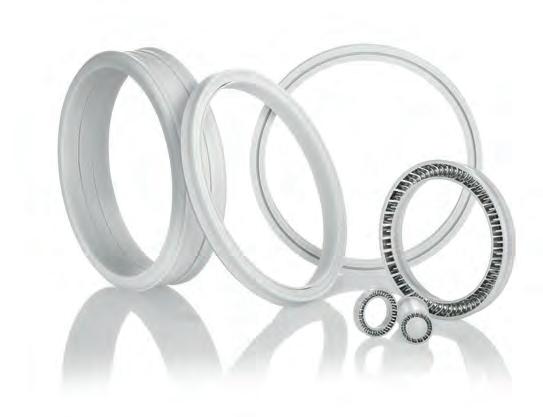
Fridle Group, Italian leader in the distribution of sealing systems and fluid connectors, has expanded its range of high-performance sealing solutions for the food and beverage industry.
The processes of the food and beverage sector increasingly require effective sealing on equipment with rotating shafts.
The critical aspects of this type of application are: guaranteeing the efficiency of operation without lubrication, allowing the sterilisation cycles foreseen by the applicable rules and regulations, and using materials compatible with food products.
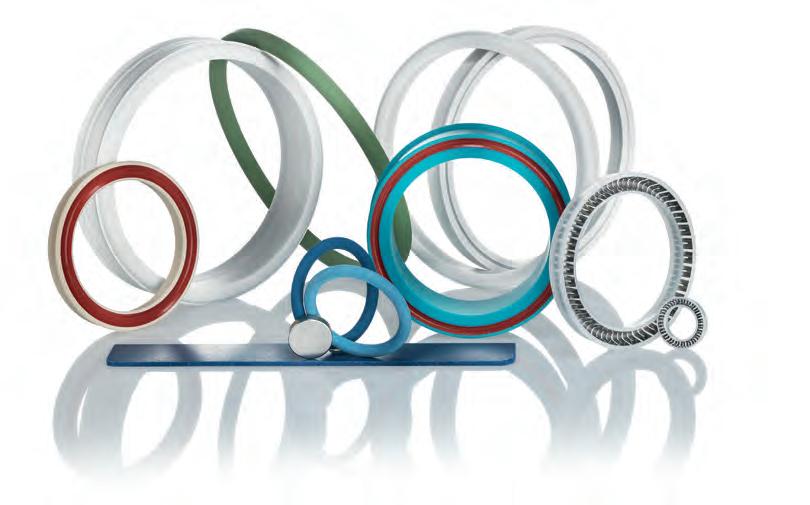
Fridle Group has introduced in its range of products a complete line of lip seals in thermoplastic mate-
rial especially for this sector and capable of adapting to the most demanding applications.
The materials used are certified according to FDA and EU (1935/2004) standards, and contain self-lubricating fillers with high wear resistance. The chemical inertia of the compound protects the seal through several sterilisation cycles; it is also possible to manufacture products that restrict the formation of residue on the surface of the seal itself.
The lip seal in thermoplastic materials represent the evolution of the rotary shaft seal for applications in the food and beverage industry.
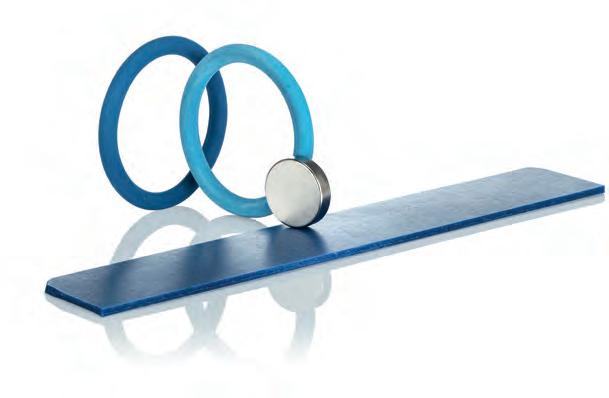
If it is necessary to guarantee the absence of contaminants in the fluid being processed, the elastomer “Metal & X-Ray Detectable” solutions offered by Fridle Group allow the constant monitoring of the product throughout processing.
These types of innovative materials, certified according to FDA, 1935/2004 and USP class VI standards, have been developed as a response to the ever more rigorous requirements of the food processing sector and the pharmaceutical industry.
In fact, these materials can come into direct contact with the foodstuffs being processed and allow the efficient identification of any type of contamination from elastomer components in the sealing systems with X-ray line checks.
Fridle Group offers several types of seals made of this material: O-rings, flange gaskets, water-jet-cut flat seals, special seals manufactured with flange or sleeve turning.
Misotech presents the MIPP System, an innovative patented machine, protected by several national and international patents, which uses cold air to cool pasta filata cheese products, completely replacing the use of water in the cooling process. This advanced technology not only optimizes production performance, but also significantly reduces environmental impact.
Misotech® is a young Italian company with a clear mission: to bring advanced technological solutions to the market, helping traditional industries enter the ongoing technological transformation. Established as the exclusive commercial division of MIPP System, Misotech® has immediately distinguished itself through a strong focus on sustainability and international development. The processing capacity starts from a few hundred kilograms per hour and can be progressively scaled up to reach the desired output, ensuring
ส�ม�รถก้�วเข้�สู่ก�รเปลี่ยนแปลงท�งเทคโนโลยีที่กำ�ลังดำ�เนินอยู่ ก่อตั้งขึ้นในฐ�นะหน่วยง�นเชิงพ�ณิชย์แต่เพียงผู้เดียวของระบบ MIPP SYSTEM ทำ�ให้ MISOTECH
24/7 operation only 1.5 hours of washing every 3 days
Same input - higher output +10% ± 2% finished product
Extended shelf life
Preservative-free, longer durability
Compact and efficient
Half the space compared to traditional lines
Adjustable humidity
Precise control of outlet humidity
Clean and precise cutting
Maximum accuracy for every cut
efficient production optimization. Among the main advantages of this technology, precision stands out.
The method makes it possible to calibrate the thickness of the incoming product with millimetric accuracy, reaching the desired size and guaranteeing consistent quality. Cooling takes place at a positive temperature, ensuring constant control over the product’s texture.
The process is also fast, being completed in just 5 to 10 minutes, thus enabling efficient and rapid production. In terms of energy performance, thanks to the efficiency of the control system and the optimized management of the process, the method allows energy consumption to be reduced by 20 to 30% compared with traditional water-cooling systems.
The product exits the machine already at the temperature required by the market, ready to be packaged, without the need for any further cooling steps.
Finally, the method allows the product cutting process to be customized, with the possibility of adjusting dimensions during processing in order to meet different market requirements.
www.misotech.it
ICF & WELKO: COLOURS AND FRAGRANCES FOR EVERYDAY LIFE
For thousands of years, man has been dedicating himself to the preparation of food, not only to satisfy the taste and the sense of smell, but also to provide a certain aesthetic pleasure to those who receive it. All food has always been combined with spices and other organic substances to change its taste, smell and appearance.
But not only that, colours and flavours are also used to create perfumes for the body or to make the use of otherwise anonymous substances or products more pleasant.
Colours and flavours in powder form have always been necessary in both the private and industrial circle for the preparation of foods, fragrances and other chemical and non-chemical products that present themselves to our sensory organs. It is therefore essential for companies to be able to produce these substances in full compliance with the natural features that are intrinsic in the ingredients used, with the aim of giving pleasure to end users.
ICF & WELKO: สีและ
It is also essential, especially in this sector, to be able to guarantee a production process where there is no contamination that could compromise the quality of flavours or smells.
In the market of Flavours and Colours for the food and chemical industry, I.C.F. & Welko S.p.A. has reached a high level of proven experience over the years and for this reason has been chosen as a partner also by important international companies with production sites in various parts of the world.
Our technological knowledge of the sector enables us to offer our customers both small plants for the production of powders of various flavours or colours in small batches, and large plants for the production of large production batches. All this is done in full compliance with international environmental and safety standards, and fully meeting the expectations of each individual customer.
In this industrial circle, too, customer’s satisfaction and trust are always our first target.
SILOS REVOLUTION: STORAGE, CONVEYING AND DOSING SOLUTIONS FOR FOOD INDUSTRIES
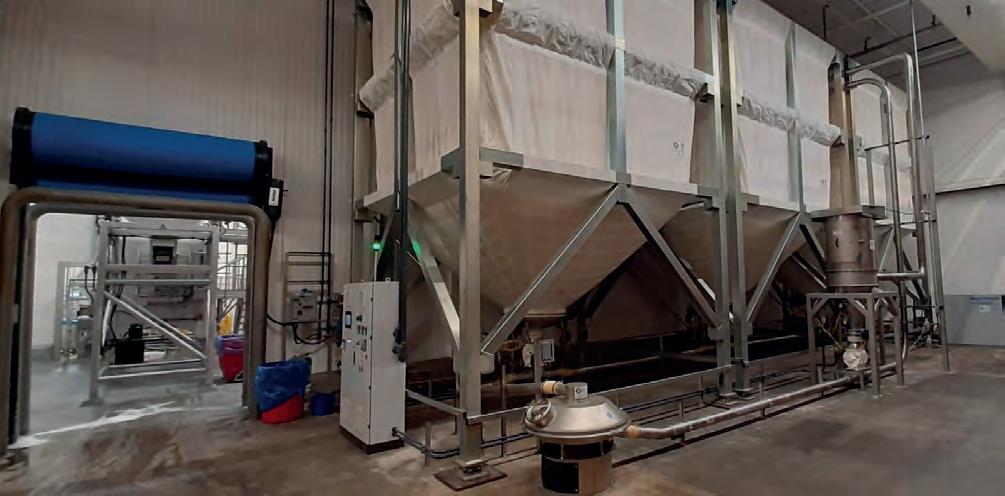
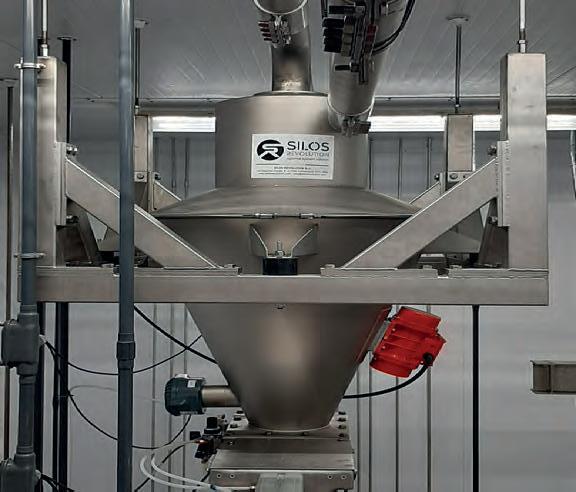
Silos Revolution is a company specializing in the design, development and customization of Raw Material Storage, Conveying and dosing systems for the food, chemical and pharmaceutical industries. Silos Revolution puts the customer’s needs at the first level and then tailors on them what will be the customer’s tailor-made system.
Dealing with particular and unique systems, there can be no copy and paste. Each system is different because the requests of the individual customer are different, only the gained experience on how to deal with certain particular ingredients that can be a game-changer.
This technical conception of work combined with the availability and flexibility of the company’s engineers and technicians has initiated important collaborations with large Italian and foreign groups. The silos most demanded by industries are:
- The anti-static Trevira Fabric Silo model STT. This particular silo is the most economical version of
the varieties of silos for storing food, chemical and pharmaceutical powders and granules. It is tailormade, so it fits well in any interior space intended for storage, with the advantage of utilizing all available height. The sack can be washed and sanitized in any industrial laundry.
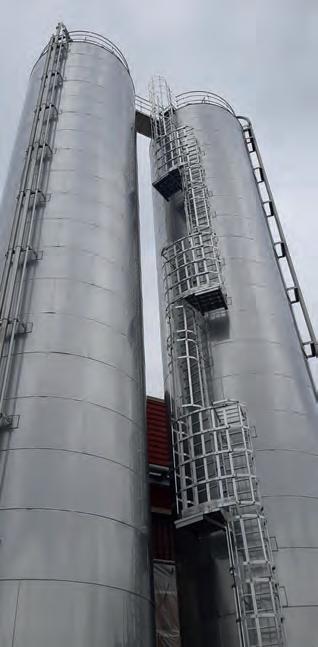
- The Monolithic Outdoor Stainless-Steel Silo model SAI or Painted Steel Silo model SAV. This particular silo is mostly used when there is insufficient interior space for storing raw materials. There is an insulated version in case the stored ingredients are sensitive to high summer temperatures or relative humidity of outside air.
- The Modular Cylindrical Segment Silo made of stainless-steel or Painted Steel outdoor model SMC. This particular silo is the natural variant of the monolithic silo, when the storage exceeds 100 m3 or the silos have to be transported in containers by ship.
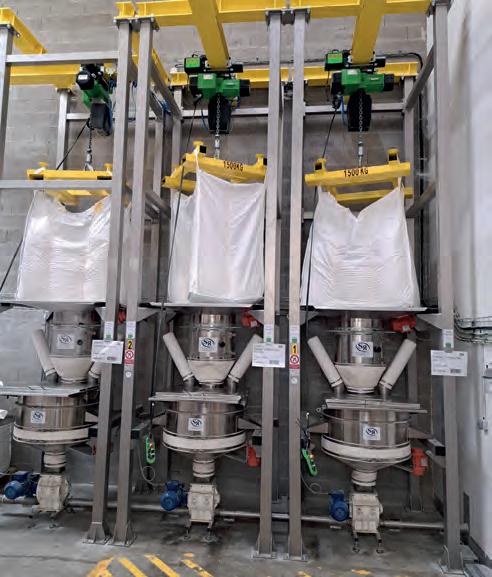
Bag emptying systems for bags up to 1 ton or bag emptying systems of 25-50 kg conclude the range of products dedicated to powder storage. On the com-
pany website you can find all storage solutions for powders, granules and liquids suitable for all needs, from the most economical fabric silos to monolithic stainless-steel outdoor silos to thermo-conditioned tanks. Indicate the precision in the dosages of individual ingredients you would like to have, and Silos Revolution will build the appropriate system to guarantee those accuracies.
Silos Revolution micro-dosing systems guarantee accuracy of +/- 5 grams per individual ingredient.
Special production processes such as:
- Flour disinfestation: We prevent the problem of flour infestation upstream of the silo.
- Flour cooling: We solve the summer problem of hot flour for leavened baked goods. Our cooling systems lower the temperature of flour by 20°C, during the automatic dosage stage. Stop dry ice.
- Powder mixing stations: We make powder and granule mixing systems with or without fat additions. Ideal systems for all those who want to prepare automatic
pre-mix of powders ready for a wide variety of uses.
- Powdered sugar: We help confectionery industries produce their own powdered sugar and manipulate it as needed.
- Inverted sugar systems: They are designed and sized ad-hoc so that they can be integrated into classic storage facilities.
Each system is managed by industrial PLC, and if the customer wishes, we can supplement the supply with management supervisors open to dialogue with existing systems and remote assistance.
If you already own a raw material storage transport and dosing system, but you are not satisfied with its performance, Silos Revolution can safely solve your problems and guarantee you the production you set out to achieve.
“Choose to be free” is Silos Revolution’s slogan, come and find out how.
You can visit our website on the following address: www.silosrevolution.com
RASSPE BLADES BY CHIARAVALLI: HERITAGE MEETS HIGH-PRECISION TECHNOLOGY
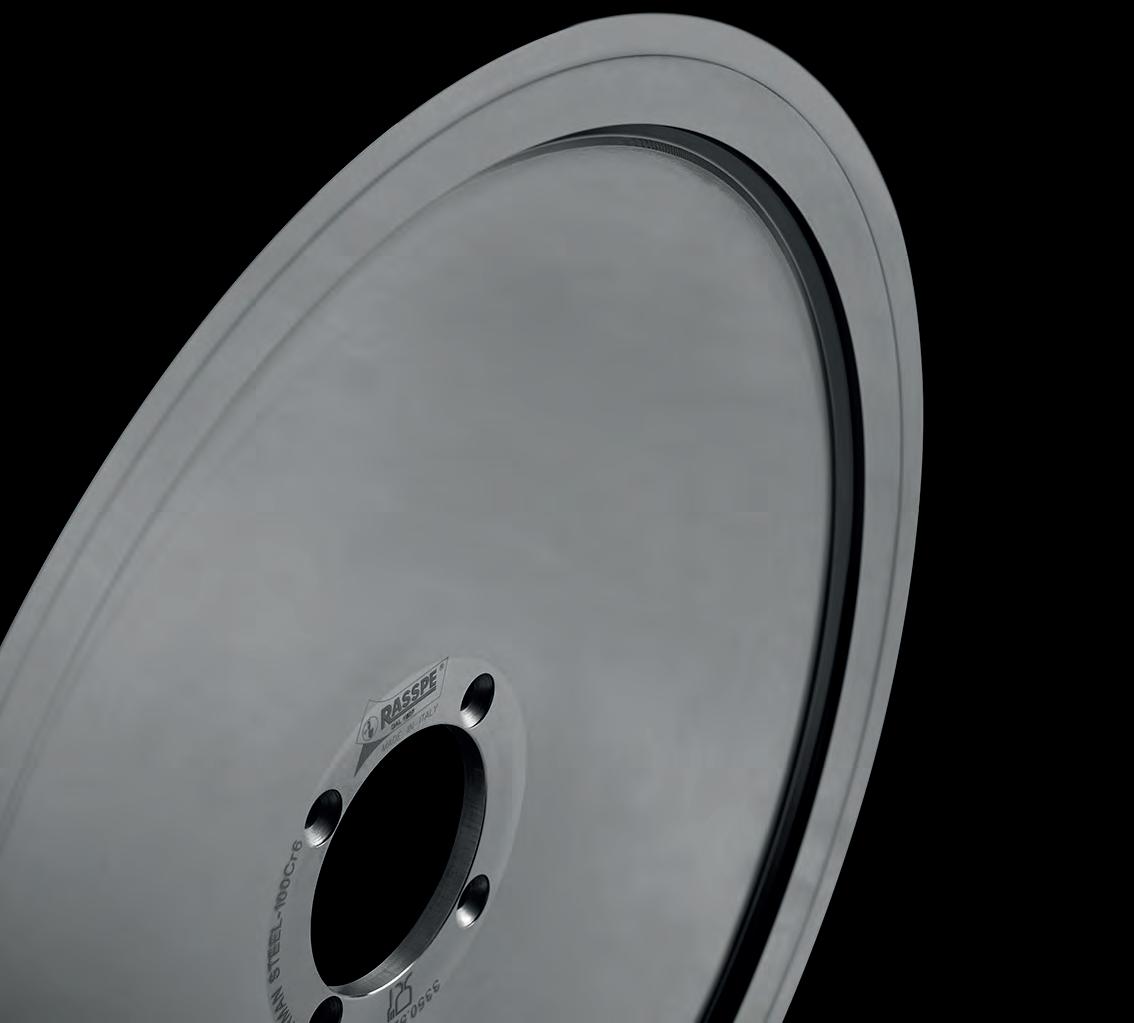
With origins dating back to 1827, RASSPE is the oldest and most iconic brand of slicer blades in the world. Today, this historic name lives inside the innovative ecosystem of Chiaravalli Group, where tradition and advanced industrial engineering meet to create one of the market’s most reliable slicing solutions.
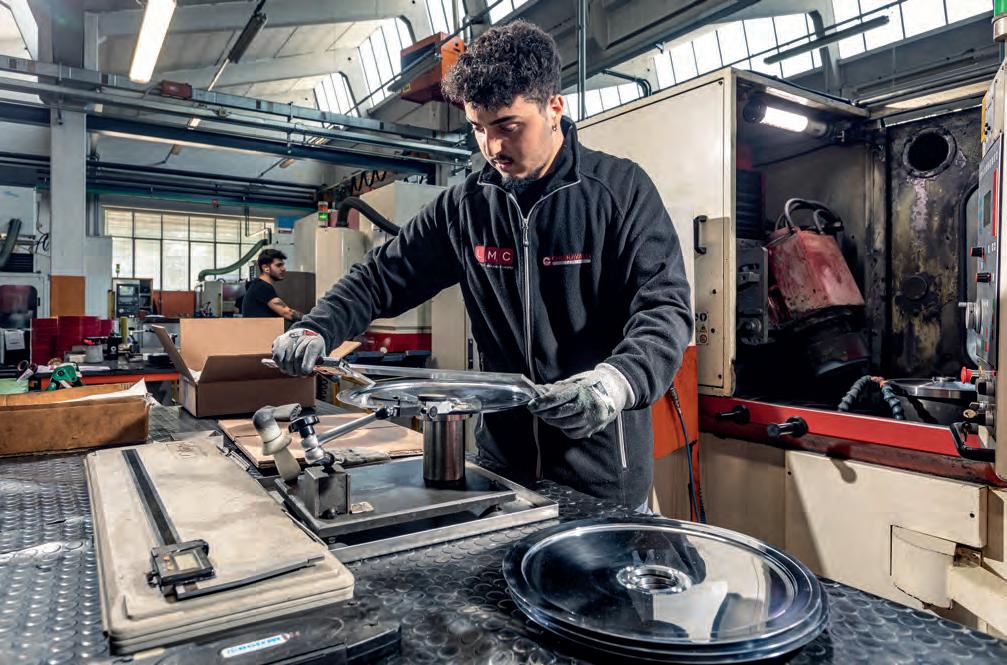
Entirely Made in Italy, RASSPE Blades combine decades of craftsmanship with the production power of a multisectoral group. Every stage — from design to
machining, induction hardening, grinding, polishing and chrome finishing — is carried out in-house using state-of-the-art CNC technologies. This fully integrated workflow ensures maximum quality, consistency and performance, with over 30,000 blades produced monthly and a vast warehouse ready to serve global OEMs.
A Complete Range for Every Cutting Application
RASSPE’s product offering includes more than 150 blade models, engineered to meet the needs of pro-
fessional slicer manufacturers and distributors. Key technological solutions include:
•Third Generation (3G) Blades
A patented double-level profile that reduces friction, keeps the blade cooler, minimises product adhesion and delivers exceptionally thin, clean slices. Ideal for deli meats, cheese and vegetables.
•Serrated Blades
Designed for products requiring greater grip: perfect for bread, semi-frozen meat and semi-frozen fish. Available in multiple tooth geometries.
• Non-Stick Coatings
To enhance smooth slicing - especially on cheeseRASSPE offers both traditional Teflon and innovative PFAS-freecoatings, ensuring improved hygiene and reduced residue.
Finishes can be combined to create the ideal cutting solution for any product type, ensuring maximum versatility and performance.
Committed to Quality and Future Growth
Supported by Chiaravalli Group’s expertise in industrial mechanics, transmissions and electric motors for food-processing equipment, RASSPE Blades are positioned as a strategic pillar of the Group’s Food Division.
This synergy enables continuous innovation, reliable supply capabilities and a growing presence in more than 37 countries worldwide. For manufacturers seeking consistency, precision and a partner with deep technical roots, RASSPE Blades by Chiaravalli remain a benchmark in professional slicing technology — a perfect blend of heritage, engineering excellence and modern production strength.
www.chiaravalli.com
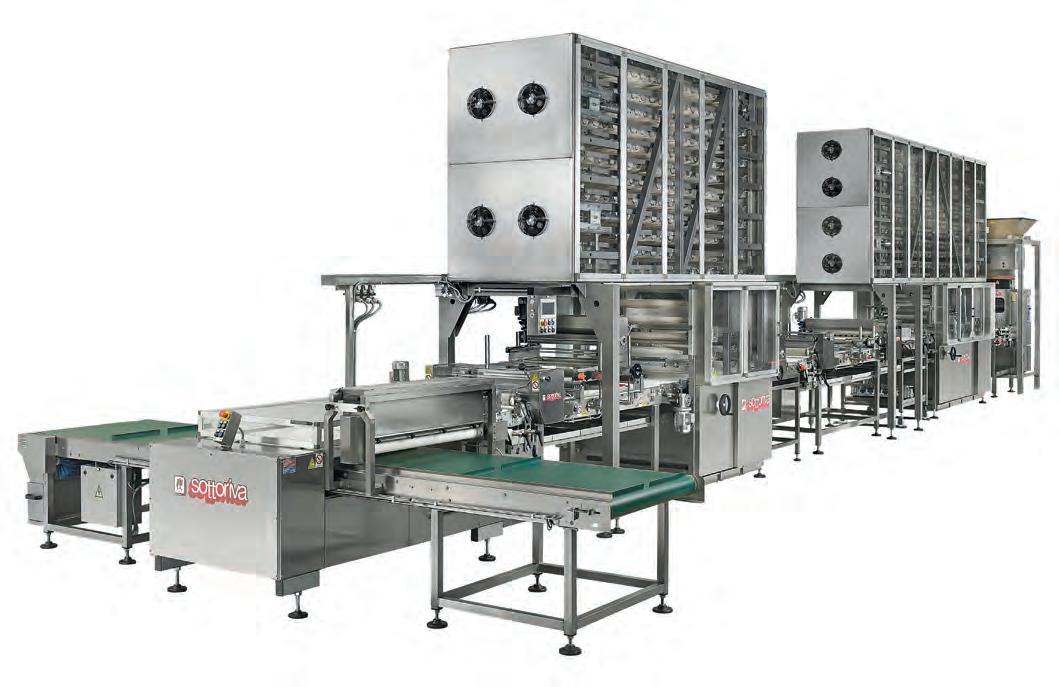
SOTTORIVA: 80 YEARS OF EXCELLENCE
When a company has 80 years of experience behind, every machine becomes a concentrate of quality and value.
In fact, this important milestone occurs in 2024: the historic company Sottoriva, founded in 1944 in Marano Vicentino (VI) Italy, is now a renowned manufacturing company that has proudly carried the Italian flag all around the world ever since.
It is a brand that over the years has become a quality synonymous of products and services offered to all its customers, grown from an artisanal business to a leading role in the manufacturing of bakery machines and lines.
The passion for the “Art of Bakery” made the brothers Giuseppe and Claudio Sottoriva give life to what is now one of the world’s leading companies for the production of machinery, semi-automatic and auto-
matic lines, designed for both small and large bakery companies.
Sottoriva’s range of machinery is totally designed and manufactured in-house, in order to be able to guarantee its customers the highest possible quality and after-sales service, as well as proven durability over time.
This is why Sottoriva products, constantly monitored at every stage of production, stand out for their safety, reliability and ease of use. The manufacturing unit, the heart of the company, avails itself of the collaboration of highly professional personnel, who take care of each single product thanks to the support of the
most modern technologies: from the Jgalileo management software to the three-dimensional CAD for mechanical and electronic design, to the CAM for the management of the software of computerized numerical control machines.
The wide range of products offered by Sottoriva varies from machines designed for small businesses, such as bakeries, pastry shops and pizzerias, which are well suited to a small but quality-conscious production, to customized automatic systems designed for large industrial companies.
Among the former, the iconic double arm mixers IBT, still manufactured in cast iron casting to guarantee extreme solidity and durability and the spiral mixers certainly deserve a mention.
Standing out among these is Sottoriva’s latest addition, the Sintesi +, a perfect combination of experience and innovation.
Thanks to the new touch screen control panel, it can work both in manual and automatic mode, allowing you to memorise up to thirty recipes of eight phases each to manage mixing times, speed and any pauses.
However, it was in the second half of the 1990s that Sottoriva began to focus its attention not only on
small bakeries but also on the large industries that were gaining a foothold in the bakery sector.
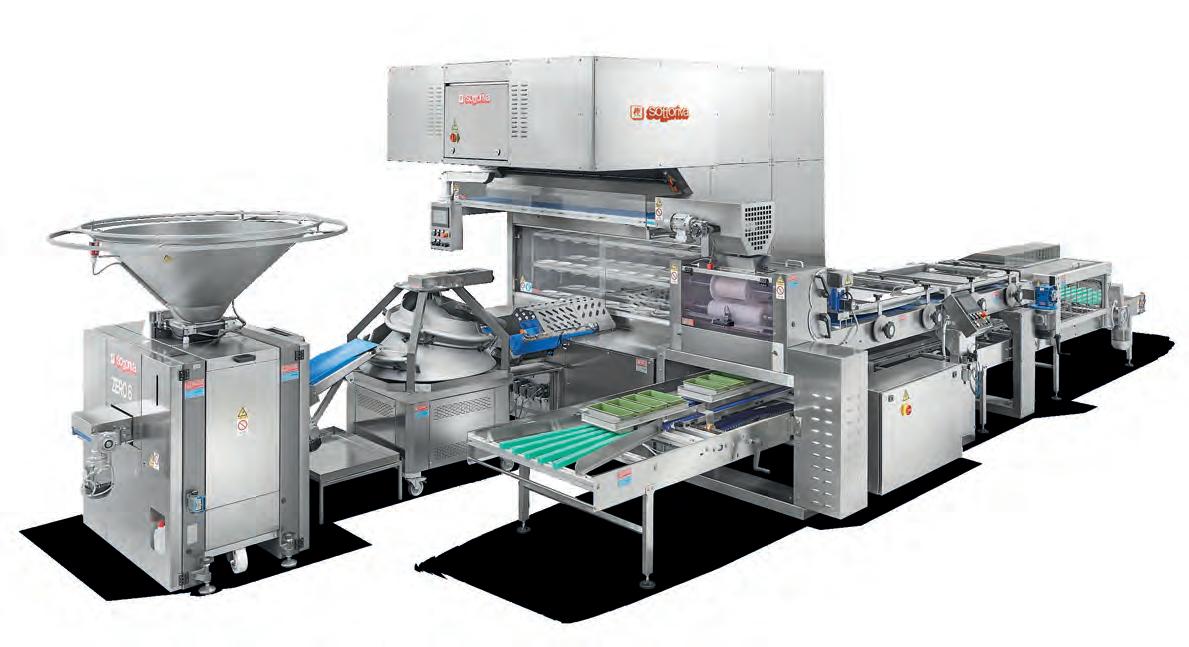
The emerging production needs require an increase in production in the shortest possible time, guaranteeing uniformity and consistency in the results: Sottoriva’s technology thus shifts to automatic plants and lines, which today represent an essential part of the production.
Such as the Bread Line, the flagship of the Sottoriva catalogue: a line for the production of loaves and baguettes, also available with tray loading system that can reach a maximum production of 4,500 pieces/ hour.
One of the lines most appreciated by Sottoriva’s customers is the Roll Line: a completely modular line designed for the production of hamburgers, finger rolls, hot dogs and stamped products, with a weight range from 20 g to 220 g and a maximum production of 15,000 pieces/hour at 6 rows.
Discover the full range of Sottoriva products at www.sottoriva.com
SCHALLER EXCELLENCE IN FOOD
Designed and engineered in Austria. Manufactured in Türkiye. Trusted Worldwide.
Raw materials, energy, labor, maintenance –costs are rising across the board. At the same time, manufacturers of bakery and confectionery products are under increasing pressure to deliver high-quality products faster and more efficiently than ever before.
At SCHALLER, we understand these challenges. With more than 36 years of experience in planning, configuring, and commissioning food production lines and turn-key factories, SCHALLER stands for reliability and long-term partnership.
In close cooperation with our manufacturing partners, we develop tailored solutions that help reduce both capital expenditures and ongoing operational costs – without compromising on quality, food safety, or production performance.
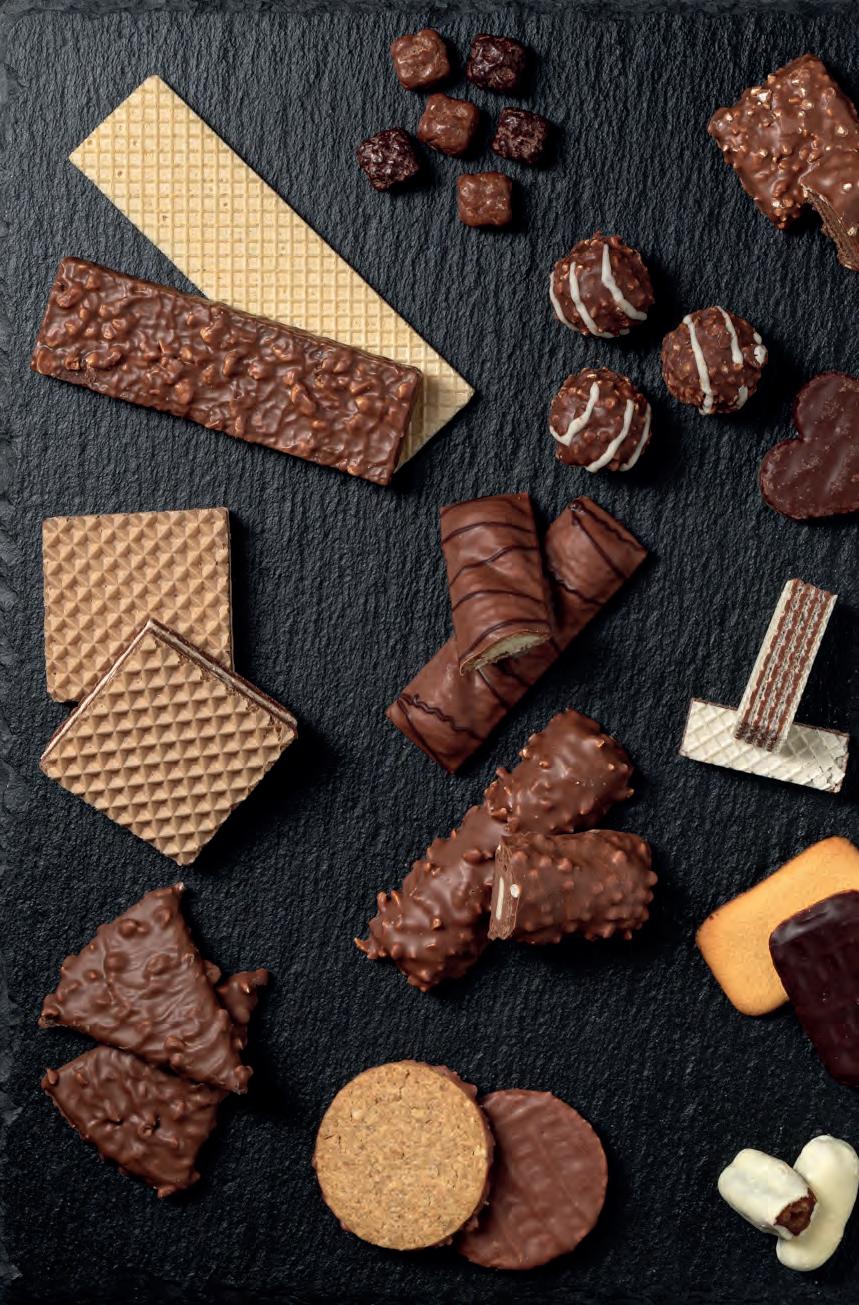
What sets us apart is our wafer competence. From flat wafers to highly customized hollow wafer, we master every stage of wafer production – batter mixing and cream preparation, baking, cooling and conditioning, spreading, cutting and enrobing.
This expertise allows us to deliver both innovative products and efficient production systems that meet the highest European standards.
An important part of our strategy: all wafer machines are manufactured by our partner GÖÇMEN in Türkiye.
This combines cost efficiency and more than 70 years manufacturing experience.
Our services – integrated and strategic:
• Product & Marketing Concepts
Fresh ideas meet strategic thinking – we help shape your product vision and market success.
• Product & Recipe Development
Innovative formulations, optimized recipes – tailored to your process and your customer.
• Layout Planning
Smart workflows, efficient spaces – engineered for seamless production.
• Factory Design
From concept to construction – scalable, hygienic, future-ready plant layouts.
• Comprehensive Services
From installation to after-sales: training, support, and service that keep you ahead.
Our products – established and efficient:
• Raw Material Handling
Efficient and hygienic
• Wafer Lines – Flat, Hollow & Soft
Scalable lines for any wafer format – crisp, precise, and reliable.
• Enrobing Systems / Cooling Tunnels
Uniform coating for compound, chocolate, and caramel – smooth and efficient.
• Cream & Chocolate Processing
Consistent textures, premium results.
• Biscuits & Cookies Lines
Reliable production for every variety
• Wafer Cones And Cups Machines
Perfectly shaped cones – crisp, scalable, and consistent.
• Breakfast Cereals lines
Versatile lines – uniform quality
Wafer – A Success Story in International
Markets
The global confectionery market is evolving rapidly, driven by changing consumer expectations, premiumization and the demand for high-quality, innovative products.
In this context, wafer production stands out as a segment where technological expertise directly translates into competitive advantage and brand differentiation.
schalleraustria.com
SALIMIX CAL: THE DEFINITIVE SOLUTION FOR THE BEST EFFICIENCY AND YIELD OF YOUR CHEESES
After years of studies, research and development about the colloidal characteristic of the milk and its implications for the coagulation, SCA is proud to announce that developed a special and specific product “SALIMIX CAL”: a colloidal dispersion of calcium phosphate in water solutions.
SCA has been the sole company, on the world stage, able to create a calcium phosphate in colloidal dispersion, mission considered impossible before, obtaining the unique and most innovative technological adjuvant for the milk coagulation.
The milk mineralization is the main factor of its own coagulation. The proper disposition of ion bridges stabilizes its structure, based on colloidal calcium phosphate.
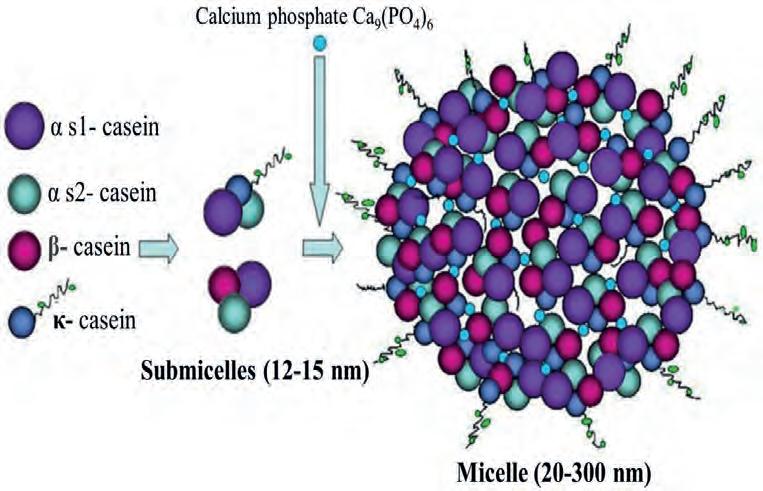
The casein micelles are permanently in colloidal dispersion in the fresh milk.
Constantly moving, they move in short distance entering in collision one each other against fat cell, changing direction. During the renneting is fundamental
that any collision can be potentially 100% positive. Unfortunately, the thermal treatments (from the cooling, storage and then pasteurization), reduce its mineralization: it’s known that any milk when in the vat and ready for the coagulation has already lost an average of 20% of its CCP and this reduce the positive collisions causing weaker milk clots.
The technological knowledge allows to say that Ca++ is the main important salt ion but not the unique.
In the event of ion losses distributed proportionally within the existing ion (CCP), the actual dairy technology is still based on the Ca++ ion only.
This practice is correct, however the use of only a “strong” ion like Calcium, “force” the protein structure triggering a partial self- replacement towards the remaining ions. The effect of that is the typical problem connected with the downsizing of the spatial structure for the reduction of the bridges, which ever causes yield losses. The role covered by SALIMIX CAL in this process is to create the best electrostatic and covalent bonds to facilitate 100% positive collisions with the formations of bridges among and between micelles. Its native structure stabilizes the casein micelles acting as cement of the hundreds sub-micelles.
Adding SALIMIX CAL, instead of using the sole ion Ca++, the original spatial structure is restored. It doesn’t induce the narrowing of the curds, as it could happen with the use of Ca++, but it guarantees the full and perfect elasticity which is the base to eliminate the formation of “fines” and the losses of fat in the whey, ensuring the highest possible yield. Contact us for more information and to organize tests.
The other SCA products are:
LACFOOD: selected dairy ingredients for cheese, ricotta, mascarpone, yogurt and processed cheeses productions;
VITALMIX: complete range of cultures and BIOPROTECTIONS for any cheese, yogurt, kefir and fermented milks;
SALIMIX: technological adjuvants 100% based on SCA technology and developed for:
•SALIMIX RIC are the key product for the production of the best RICOTTA;
•SALIMIX N to correct the acidity of milk and whey;
•SALIMIX LG to control the osmosis process into the protective liquid of mozzarella or other white cheeses.
•SALIMIX MAC for the best structure of mascarpone.
SCA is an Italian food company established in EmiliaRomagna Food Valley for over 35 years. SCA has constantly produced and researched, for the dairy industry, ingredients and natural processing aids related to the Mediterranean food tradition to offer the best to the final customer who is at the top of the mission statement.
SCA is certified with FSSC 22.000, ISO 9001 and ISO 22.000, Organic, Halal and Kosher. It is established both on the national and international markets.
SCA also distributes Domca products dedicated to any shelf-life problem, based on natural ingredients of vegetable origin. Starting from plant matrix, the company has developed the research and extraction of natural molecules with an antibacterial and preservative action.
The long study of the Allium ssp. and its compounds has allowed the creation of standardized and natural products for the improvement of shelf-life. They are also successfully used throughout the supply chain of the agro-food sector, from organic products to finished products such as cheeses, fresh meat and fish products.
Visit: www.sca-srl.com
PROTEIN AND KETO SNACKS: THE NEW BALANCE
The global functional snack market is evolving rapidly, driven by consumers who increasingly seek products that combine nutritional value, convenience and indulgence. Across Asia and international markets alike, demand is growing for protein-rich, lowcarb and keto-friendly solutions capable of supporting active lifestyles and wellness-oriented habits without compromising taste or sensory appeal.
This shift is reshaping innovation strategies throughout the food industry. Consumers are no longer satisfied with traditional “diet” products focused only on calorie reduction. Instead, they are looking for
balanced formulations that deliver functional benefits, clean positioning and enjoyable eating experiences. Protein enrichment, collagen integration, reduced sugar content and keto-compatible formulations are becoming central elements in the development of nextgeneration snacks and confectionery products.
Within this scenario, Italian company Eurosup has strengthened its positioning in the functional food segment through the development of the Ke Snack line, a portfolio dedicated to protein and low-carb nutrition. The range includes keto-friendly snacks, protein wafers, cocoa-based products, protein pasta and functional chocolate solutions designed to meet the expectations of modern consumers seeking both wellness and practicality.
One of the most representative innovations of this approach is KeCiok!, the keto protein chocolate bar recently awarded the 1st Prize in the Wellness & Bio Category at the Better Future Award 2026 during TuttoFood Milan. The recognition highlights how functional foods are increasingly evaluated not only for their nutritional profile, but also for their capacity to interpret emerging consumer trends with innovative and market-ready concepts.
KeCiok! combines chocolate indulgence with a functional formulation enriched with proteins, fibers and 1.4 g of collagen, responding to the growing interest
in products positioned at the intersection of beauty, wellness and active nutrition. The product reflects a broader movement within the snack industry, where consumers are paying closer attention to ingredients capable of supporting lifestyle goals related to fitness, healthy ageing and balanced nutrition.
Alongside KeCiok!, the company’s keto protein portfolio includes products such as KeCiok! Crisp, Ke Snack Rings, Ke Snack Bites, Keto Wafer, Chocotein and Protein Pasta — all developed to offer convenient alternatives for consumers following low-carb or highprotein lifestyles. The strategy behind the range is not only nutritional optimization, but also the creation of products able to maintain familiar textures, taste profiles and satisfying consumption experiences.
For international industry operators attending ProPak Asia, these developments reflect a wider market direction: functional foods are moving from niche positioning into mainstream consumption. Innovation today increasingly depends on the ability to merge nutritional performance, premium taste and consumeroriented storytelling into scalable food solutions.
As demand for healthier snacking continues to expand globally, the success of products such as KeCiok! demonstrates how the convergence of functionality, indulgence and innovation is becoming one of the key drivers shaping the future of the food processing industry.
www.eurosupgroup.com
SMART PACKAGING FOR FOOD AND BEVERAGE
IN ASIA: FROM PROTECTION TO CONSUMER CONNECTION
“
In Asia, smart packaging is turning the pack into a connected tool for traceability, safety, authenticity and consumer engagement.
by the editorial staff
For decades, the primary mission of food and beverage packaging was clear: protect the product. It had to preserve freshness, prevent contamination, support logistics and communicate the brand. In Asia, that mission remains essential, but it is no longer enough. Packaging is becoming an intelligent interface between producer, retailer, regulator and consumer. It carries information, enables traceability, supports anti-counterfeiting strategies, improves supply chain visibility and creates new forms of engagement.
This evolution is especially relevant in the Asian food and beverage market, where scale and fragmentation coexist. The same region includes highly digitalized consumers in South Korea, Japan, China and Singapore, fast-growing packaged food demand in India
and Southeast Asia, and complex distribution networks where products move through different temperatures, channels and retail formats. In this context, smart and connected packaging is not a futuristic concept. It is becoming a practical response to real industrial needs.
One of the strongest drivers is traceability. Consumers increasingly want to know where food comes from, how it was produced, whether it is authentic and how it should be consumed or stored. Regulators and retailers also require more transparency, especially for fresh foods, dairy, meat, beverages, baby food, supplements and high-value imported products. QR codes, barcodes, RFID, NFC and serialized labels can transform the pack into a digital access point. With a simple scan, the consumer can access product origin,
nutritional information, certifications, recipes, sustainability claims or promotional content.
The growth potential is significant. Recent market research on connected food packaging indicates that Asia Pacific is expected to grow at the fastest rate in this segment during the forecast period, while QR codes and barcodes represented the dominant technology share in 2024. RFID and smart sensor integration are also expected to gain relevance. This is particularly important because QR-based systems are relatively accessible, scalable and familiar to Asian consumers, many of whom already use mobile payment, food delivery and digital retail platforms every day.
Smart packaging is therefore not only about advanced sensors. In many cases, the simplest technologies may be the most effective. A QR code can support traceability, consumer education, loyalty programs, anti-counterfeiting and multilingual communication. For food and beverage brands operating across Asia, this flexibility is valuable. A single physical pack can connect to different digital content depending on country, language, campaign, retailer or regulatory requirement.
The anti-counterfeiting dimension is especially important for premium food and beverage products. Imported dairy products, wine and spirits, infant nutrition, functional beverages, specialty coffee, health-oriented foods and premium snacks are exposed to risks of imitation, grey market distribution and unauthorized relabeling. Connected packaging can help protect brand value by allowing verification of authenticity and monitoring of product movement across markets. This is not
only a marketing tool. It is a form of industrial control. At the same time, smart packaging can support food safety. Time-temperature indicators, freshness indicators, oxygen sensors and intelligent labels can provide information about the condition of the product, not only its identity. In cold chain applications, this can be decisive. Many Asian markets face long distribution distances, hot climates, complex urban logistics and variable storage conditions. A chilled beverage, a dairy product, a ready meal or a fresh-cut food item may pass through several handling points before reaching the consumer. Packaging that can signal temperature abuse or freshness changes has clear value for quality management.
However, the adoption of advanced smart packaging in food and beverage is not uniform. Cost remains a major barrier, especially in mass-market products. A smart label must justify its value. For low-margin foods, the business case may be limited unless the technology reduces waste, improves logistics or enables regulatory compliance.
For premium, fresh, export-oriented or high-risk categories, the value proposition is stronger. This is why Asia is likely to see a layered development: basic connected packaging for large consumer markets, more sophisticated indicators for cold chain and premium products, and data-rich solutions for regulated or export-driven supply chains.
Another key factor is e-commerce. Online grocery, food delivery and cross-border digital retail are changing the role of packaging in Asia. The pack is no longer seen
only on a shelf. It may be selected through a screen, handled by a logistics provider and received at home. In this journey, packaging must communicate trust before and after purchase. Connected packaging can extend the consumer experience beyond the physical product: preparation instructions, brand storytelling, allergen details, recycling guidance, origin videos and promotional campaigns can all be delivered through the pack.
This is particularly relevant for younger Asian consumers, who are often highly responsive to digital interaction but also attentive to authenticity and convenience. A beverage bottle, a snack pouch or a ready-meal tray can become a media channel. For brands, this opens the possibility of collecting feedback, measuring engagement and building loyalty. For consumers, it creates a more transparent and interactive relationship with the product.
Sustainability adds another layer. Smart packaging can support recycling instructions, material identification and sorting guidance. In markets where recycling infrastructure is fragmented, digital information can help consumers understand what to do with the pack. It can also help brands explain why a specific material was chosen, how to dispose of it and what sustainability commitments are being pursued. This is important because sustainability claims are increasingly scrutinized. A connected pack can offer evidence, not just slogans. The broader Asia Pacific packaging market is expected to expand strongly in the coming years, with food and beverage leading the region in 2025 and growth driven by ready-to-eat meals, snacks, single-serve products and online food ordering. Recent market analysis also highlights the role of QR codes for traceability, plasticfree barrier coatings and automation for high-speed production, with India identified as one of the fastest expanding markets during the 2026 to 2035 period. This connection between smart packaging and automation is critical. A connected pack is only effective if the production line can apply, read, verify and manage digital codes accurately at industrial speed. Serialization, variable data printing, inspection systems and database integration must work reliably. A wrong code, unreadable label or mismatched batch can create confusion instead of transparency. For food and beverage producers, smart packaging therefore requires both digital strategy and robust line technology.
Packaging machinery manufacturers play a key role in this transition. Lines must be designed to manage variable data, coding systems, vision inspection, label control, rejection systems and data exchange with MES or ERP platforms. In high-volume Asian plants, speed and
accuracy are non-negotiable. Smart packaging cannot slow down production. It must be integrated into the process with the same reliability expected from filling, sealing, wrapping or cartoning.
There is also a regulatory dimension. Food labeling rules are evolving across Asia, with growing attention to origin, safety, nutritional information and sustainability. For example, Saudi Arabia introduced new packaging and labeling rules for fresh fruits and vegetables in 2025, with the stated aim of strengthening food safety, sustainability and transparency for consumers. Although this example belongs to West Asia, it reflects a broader regional movement toward clearer information, better control and more accountable packaging systems. The next step will be data interoperability. If every brand, retailer or market uses disconnected systems, smart packaging risks becoming fragmented and inefficient. The long-term value will depend on shared standards, secure databases, reliable scanning experiences and clear data governance. Consumers must trust the information they access. Companies must protect sensitive supply chain data. Regulators must be able to verify claims. This is why smart packaging is as much an organizational challenge as a technological one. For the food and beverage industry in Asia, the opportunity is substantial. Smart packaging can reduce recalls, improve logistics, strengthen brand protection, support sustainability and create direct communication with consumers. But it must remain practical. The most successful solutions will not be those with the most complex technology, but those that solve a clear problem: freshness, authenticity, safety, engagement, recycling or traceability.
In the coming years, packaging in Asia will increasingly act as a bridge between physical product and digital ecosystem. The pack will still protect food, but it will also speak. It will tell the story of origin, guide the consumer, support the retailer, inform the regulator and help the producer understand how the product moves through the market. In a region where food and beverage consumption is expanding rapidly and digital behavior is deeply integrated into daily life, this shift could redefine the meaning of packaging itself.
The future of smart packaging in Asia will not be limited to premium products or experimental launches. It will become part of the industrial language of food and beverage. The package will remain material, functional and protective, but it will also become traceable, interactive and intelligent. For brands, this is a powerful opportunity. For technology suppliers, it is a demanding challenge. For consumers, it may become the simplest way to turn a product into a transparent and trustworthy experience.
info@ucmultrasonics.com www.ucmultrasonics.com
UCM ULTRASONICS, headquartered in Vignate (Milan), specializes in ultrasonic cutting for the food industry. Compared to traditional mechanical cutting, ultrasonic cutting ensures superior precision, reduced waste, optimal hygiene, and consistent product quality. Thanks to ultrasonic technology:
• Contact between the product and the blade is minimal, keeping the cutting surface clean and smooth.
• Cutting occurs without dragging or deformation, preserving shape and texture.
��������������� Products Suitable for Ultrasonic Cutting
� � �
UCM machines are designed to process a wide range of food products, including:
• Confectionery and pastry: cakes, cheesecakes, pies, Swiss rolls, pastries, cookies, brownies, sweet bars, soft candies, candied fruit, etc.
• Bakery products: bread, pizzas, focaccias, etc.
• Sandwiches and wraps
• Frozen products: cakes, frozen confectionery and bakery items
• Nougat and nougat-based products
• Snack bars: healthy bars, cereal bars, granola bars, etc.
• Pasta: lasagna and filled products, such as cannelloni
• Robust stainless-steel structure: ensures durability, hygiene, and long-lasting performance.
• 4-axis Cartesian robot: entirely designed and built by UCM; provides greater flexibility and precision in cutting movements.
• Brushless motors: no pneumatic handling; reliability, quiet operation, and reduced maintenance.
• Internally designed components: transducers, blades, generators, and titanium blades developed by UCM to guarantee perfect compatibility and high performance.
• Advanced customization: in addition to standard models, UCM builds tailor-made machines adapted to customers’ production lines and specific products.
• Automatic blade washing station: ensures continuous cleaning and sanitization of blades through the combined action of running water and vibration, followed by dedicated air jets for immediate drying.
� � Vision and Values
UCM ULTRASONICS constantly invests in research and development to deliver reliable and innovative technological solutions, with an approach focused on production flexibility, food safety, and direct collaboration with customers.
electronic
controlling steam dial) feature high sprays.
Automation
SITEC, STATE-OF-THE ART TIMERS AND TEMPERATURE CONTROLLERS
Take an extremely user-friendly , intuitive and multifunctional product equipped with a ergonomic dial . Add some new features , such as the UL certification setting and optional fast change function owing to the AC motor brake unit. Mix in the experience gained by a company that been producing oven timers and timers for mixers for over 25 years. The result is unique and successful: that is why Sitec products are used by 2 out of 3 professionals in the baking industry . Simply irresistible, like all the best things!
Take an extremely user-friendly , intuitive and multifunctional product equipped with a large, ergonomic dial . Add some new features , such as the UL certification setting and optional fast gear change function owing to the AC motor brake unit. Mix in the experience gained by a company that has been producing oven timers and timers for mixers for over 25 years. The result is unique and successful: that is why Sitec products are used by 2 out of 3 professionals in the baking industry . Simply irresistible, like all the best things!
Sitec timers and temperature controllers are multifunction, setting to comply with UL certification, they can be also provided with the innovative motor fast gear change function
For more than 25 years, Sitec has been the ideal partner for professional timers and temperature controllers for baking industry.
Handy (thanks to a big and ergonomic dial featuring renewed design), practical and extremely user-friendly,
Sitec timers and temperature controllers for ovens and mixers stand out as the perfect solution that meets bakery and confectionery professional requirements, since they can be highly user-friendly and reliable also in particularly difficult environments.
Electronic dial timers for mixers enable fast and clear time setting by means of an ergonomic dial that is extremely handy even thou gh operators wear gloves.
Multifunction, setting to comply with UL certification, they can be also provided with the innovative motor fast gear change function. Sitec offers a comprehensive range of dial timers for mixers, timers and temperature controllers for civil and industrial furnaces, as follows:
SITEC
Timers and electronic dial tempe rature controllers for ovens ena ble controlling cooking and steam time, and temperature in the oven. and red led lights to display coo
Temperature controllers, Se (set point through
ovens and mixers feature high protection degree that grants an excellent seal from powders and liquid sprays.
www.sitecsrl.it/en/timer
timers and temperature controllers: enjoy the simplicity.
•Timer 72x72 (3 displays and red led lights for time display)
Take an extremely user-friendly , intuitive and multifunctional product equipped with a large, ergonomic dial . Add some new features , such as the UL certification setting and optional fast gear change function owing to the AC motor brake unit. Mix in the experience gained by a company that has been producing oven timers and timers for mixers for over 25 years. The result is unique and successful: that is why Sitec products are used by 2 out of 3 professionals in the baking industry Simply irresistible, like all the best things!
•Timer 96x96 (4 displays and red led lights for time display)
Take an extremely user-friendly , intuitive and multifunctional product equipped with a large, ergonomic dial . Add some new features , such as the UL certification setting and optional fast gear change function owing to the AC motor brake unit. Mix in the experience gained by a company that has been producing oven timers and timers for mixers for over 25 years. The result is unique and successful: that is why Sitec products are used by 2 out of 3 professionals in the baking industry Simply irresistible, like all the best things!
•Timer 72x144 (control on both cycle times; led light and double display)
The novelty is the AC motor brake unit, a device designed to meet the safety standards.
Sitec electronic timers for mixers can be supplied with the electronic module AC motor brake unit, which allows controlled engine “deceleration”, with power adjustment, and braking time.
www.sitecsrl.it/en/timer/
RAYTEC VISION INTRODUCES
OPPORTUNITY: AI-DRIVEN OPTICAL
SORTER SETTING NEW STANDARDS IN FOOD SORTING
Cutting-edge technology redefines precision and quality assurance
Raytec Vision, a leading provider of optical sorting solutions, proudly announces the launch of Opportunity, an innovative optical sorter that harnesses the power of artificial intelligence (AI) to revolutionize food sorting. Designed to meet the highest standards of accuracy and quality, Opportunity is set to transform the food processing industry.
Opportunity combines advanced imaging technology with state-of-the-art AI algorithms, enabling it to analyze and sort food products with unprecedented precision.
Its intelligent system learns and adapts to various sorting requirements, ensuring
RAYTEC VISION
consistent and reliable results. With this revolutionary technology, food producers can achieve optimal product quality, reduce waste, and enhance overall operational efficiency.
“At Raytec Vision, we are committed to pushing the boundaries of optical sorting technology,” said Nicola Avanzini, Head of Sales at Raytec Vision.
“Opportunity represents a significant breakthrough, as it leverages AI to deliver unmatched results, setting new standards for the food processing industry.”
The AI-driven capabilities of Opportunity enable it to identify and eliminate defects, foreign objects, and contaminants in real-time.
By swiftly and accurately removing imperfections, companies can en-hance product quality and safety, thereby protecting their brand reputation and ensuring consumer satisfaction.
In addition to its precision sorting capabilities, Opportunity also offers a user-friendly interface, making easy for operators to monitor and manage the sorting process. Its intuitive controls, coupled with real-time data visualization, allow for efficient decision-making and quick adjustments, resulting in increased productivity.
“With Opportunity, we aim to empower food processors to deliver the highest quality products to their customers,” added Nicola. “By leveraging AI and cutting-edge technology, we are redefining what is possible in food sorting, while simultaneously improving efficiency and reducing costs.”
Raytec Vision continues to innovate and develop advanced solutions that address the evolving needs of the food processing industry. With Opportunity, food industries can embrace the future of optical sorting and achieve the utmost precision, quality, and efficiency in their operations.
For more information about Raytec Vision and their AI-driven optical sorter, Opportunity, please visit.
www.raytecvision.com
www.raytecvision.com
Automation
WE TURN YOUR VISION INTO REALITY
Siat has been active in various industrial sectors for over 80 years and it is in continuous development with the automation of production processes and an increasingly innovative production technology.
In the fruit and vegetable sector we offer a wide range of standard and customized brushes, made with certified materials for the food industry.
For the Siat company food safety is very important.
One of the many goals of the team is the realization of solutions that can guarantee maximum efficien-
cy on the fruit and vegetable processing lines minimizing waste and enhancing every resource, achieving the desired quality that the market requires.
MISSION:
The Siat team aims to be more and more efficient and to reach out to countries where it has not yet arrived with increasingly inno-
vative solutions. With a complete customisation service and a very fast maintenance service, the company guarantees maximum efficiency for its customers and fruit and vegetable processing plant owners.
INNOVATIVE SOLUTIONS:
Siat’s proffessional team provides customised solutions for all sta-
Automation
ges of fruit processing, from harvesting machines, bins unloading systems, brushing machines, polishing machines, grading machines, to packaging and bins filling. Siat’s competitiveness is high, all production processes take place in-house and the search for new materials for the production of state-of-the-art industrial brushes is continuous.
The Siat team listens to customers’ needs and, after an in-depth technical analysis, begins prototyping solutions designed in relation to the mechanical characteristics of the customer’s processing lines and individual machines.
For more information: www.siat.it
DRIVING SUSTAINABILITY: M.G.M.
MOTORI ELETTRICI’S INNOVATION IN BRAKE MOTORS
For over 75 years M.G.M. Motori
Elettrici S.p.A. has been a global leader in the field of brake motors, with a solid presence in Europe, America, Asia and the Middle East. The heart of the company is located in Serravalle Pistoiese (PT), where its main production facility is based. In Italy the company is also present in Assago where it has a warehouse with commercial offices.
Its global influence extends through subsidiaries in Montreal, Detroit, Chennai and Izmir, as well as a network of distributors for sales and assistance covering over 75 countries worldwide.
M.G.M. is synonymous with quality, innovation and reliability. The range of brake motors the company offers can be used in a wide variety of applications.
The motor shaft heights range from 71 mm to 355 mm and the power outputs are between 0.09 kW and 250 kW. The brake mo-
Automation
tors can be supplied with a brake unit powered by either alternating current or direct current.
Additionally the company is able to meet customer needs by providing customized products.
The company has always been at the forefront of technological innovation, with much of what we now know as AC brake motors having originated from M.G.M.’s research and laboratories.
Since 2008 the energy efficiency of its products has been continually evolving: the average amount of energy required for the operation of M.G.M. products has consistently decreased.
All single-speed motors comply with the new European energy efficiency regulations and improvements in the electromagnets of the brakes - both AC BA series and DC BM series - have led to reduced energy consumption and a significant increase in performance.
(CUSTOMIZED)
Automation
The future of M.G.M. Motori Elettrici is focused on sustainability and environmental respect.
With the goal of reducing environmental impact the company has committed to several initiatives.
The geothermal system for air conditioning, the reduction of plastic consumption and the ongoing search for solutions to reduce potable water consumption and the energy required to produce brake motors, along with a consequent reduction in greenhouse gas emissions, are just some of the actions undertaken.
In particular M.G.M.’s photovoltaic system, which originally covered 100% of the energy needs of the facility and offices, has recently been expanded to meet the growing demand for energy, partly due to the transition of the company’s vehicle fleet from combustion engines to electric motors.
This commitment represents a concrete response to the energy and environmental challenges of our time.
M.G.M. Motori Elettrici not only makes eco-friendly choices within its own plants but also promotes sustainable practices with its suppliers and partners worldwide.
It is only through collective effort that a greener and more sustainable future can be achieved.
The company strongly believes that awareness and global collaboration are essential to making tangible change.
M.G.M. Motori Elettrici is not just a leader in the production of brake motors: it is a company looking to the future with a concrete commitment to technological innovation, energy efficiency and sustainability, ensuring cutting-edge solutions for a more sustainable world.
THE WORLD OF FOOD AND BEVERAGE TECHNOLOGY TO ITALY
From 27 to 30 October 2026, Cibus Tec returns to Parma, Italy, as one of the most complete international exhibitions for food and beverage technologies. For professionals visiting from fast-growing markets across ASEAN, it is a unique opportunity to discover in one place the solutions, partners and ideas shaping the future of production.
For over 80 years, Cibus Tec has brought together the full spectrum of food and beverage technology, from ingredients and processing to packaging, logistics, automation and digital solutions. More than a trade fair, it is a business platform where manufacturers can explore advanced technologies, meet leading suppliers and gain direct insight into the trends transforming the industry worldwide. What makes Cibus Tec especially valuable for international visitors is
CIBUS TEC 2026
its ability to combine breadth and specialization. The exhibition offers a comprehensive view of the sector through dedicated areas, live demonstrations and direct contact with the companies driving innovation across multiple supply chains.
Among the highlights of the 2026 edition are a number of special projects designed to strengthen Cibus Tec’s role in strategic sectors. “Bakery? Yes, we tec!” will spotlight technologies for one of the most dynamic segments in food manufacturing, while “Beverage? Yes, we tec!” will focus on the evolution of beverage processing and packaging, from efficiency and sustainability to new product concepts and formats. Cibus Tec will also host World Pasta Day 2026, bringing global attention to one of the most iconic food categories, while Labotec will add a further dimension through technologies for laboratory and
CIBUS TEC
analysis, increasingly relevant to quality, safety and innovation.
A major strength of Cibus Tec is its Top Buyers Program, developed with Agenzia ICE Italian Trade Agency and supported by the Emilia-Romagna Region. The program is designed for qualified international decision makers looking for new technologies, reliable partners and concrete business opportunities. More than 3,000 top buyers from over 80 countries are expected in Cibus Tec, with access to matchmaking tools, tailored meeting opportunities, dedicated hospitality services and a highlevel international business environment.
For food and beverage companies from ASEAN, Cibus Tec is not just a place to visit. It is a place to build connections, compare solutions and identify technologies that can support competitiveness and growth. Companies interested in joining the Top Buyers Program can apply and become part of one of the most powerful international business communities in the sector.
www.cibustec.it
EXHIBITIONS 2026-2027
MARCA
15-16/01/2026
BOLOGNA
European trade fairs for the private label industry and the International supermarket label exhibition.
PROSWEETS
01-04/02/2026
COLOGNE
Trade fair on technologies for the confectionery and snack industry.
FRUIT LOGISTICA
04-06/02/2026
BERLIN
Trade fair on technologies for the fruit and vegetable industry.
BEER&FOOD ATTRACTION
15-17/02/2026
RIMINI
Trade fair for the beer, food & beverage world.
SANA FOOD
22-24/02/2026
BOLOGNA
International exhibition of healthy eating out.
SLOW WINE FAIR
22-24/02/2026
BOLOGNA
International fair dedicated to the good, clean, and fair wine.
MECSPE
04-06/03/2026
BOLOGNA
International trade fair for the manufacturing industry.
PROWEIN
15-17/03/2026
DUSSELDORF
International trade fair for wine and spirits.
VINITALY
12-15/04/2026
VERONA
International exhibition for wine and spirits.
LATINPACK
14-16/04/2026
SANTIAGO, CHILE
International trade fair on packaging and packing technologies.
MACFRUT
21-23/04/2026
RIMINI
Trade fair for the fruit and vegetable industry.
INTERPACK
07-13/05/2026
DUSSELDORF
Fair on production lines, solutions, and materials for packaging.
TUTTOFOOD
11-14/05/2026
MILAN
B2B trade fair for the entire agri-food ecosystem.
MIDDLE EAST 2026/27
GULFOOD
26-30/01/2026
DUBAI
Fair on hospitality and food products.
DJAZAGRO
12-15/04/2026
ALGIERS
Fair on companies of the agri-food sector.
IRAN FOOD+BEV TEC
18-21/05/2026
TEHRAN Fair on packaging technologies.
SAUDIFOOD MANUFACTURING
08-10/06/2026
SAUDI ARABIA
Fair for the packaging and food & beverage industries.
PROPACK ASIA
10-13/06/2026
BANGKOK
International exhibition for packaging.
SAUDI FOOD SHOW
15-17/06/2026
SAUDI ARABIA Food and beverage products trade fair.
HOSPITALITY QATAR
12-14/10/2026
DOHA Fair on hospitality and HORECA.
GULFOOD MANUFACTURING
03-05/11/2026
DUBAI Fair for the packaging and food & beverage industries.
GULFHOST
26-30/01/2026
DUBAI
Hospitality fair for the Middle East, Africa, and Asia.
EXHIBITIONS 2026-2027
SPS/IPC/DRIVES
ITALIA
26-28/05/2026
PARMA
Fair on automation, components, and software for the industry.
FISPAL
16-19/06/2026
SAO PAULO, BRAZIL
Trade fair on packaging technologies.
MCTER EXPO
07-08/10/2026
VERONA
Exhibition on energy efficiency and renewable sources.
POWTECH
29/09-01/10/2026
NUREMBERG
Trade fair on technology for powder product processing.
SIAL PARIS
17-21/10/2026
PARIS
Trade fair on food products.
SUDBACK
24-27/10/2026
STUTTGART
Trade fair for baking technologies.
LABOTEC
27-28/10/2026
PARMA
Trade fair on food industry technologies and laboratory analysis
CIBUS TEC
27-30/10/2026
PARMA
Fair on technology for the food and beverage industry.
BRAU BEVIALE
10-12/11/2026
NUREMBERG
Fair on technologies for beer and beverage production.
SIMEI
17-20/11/2026
MILAN
International exhibition on enology and bottling.
ALL4PACK
23-26/11/2026
PARIS
International exhibition for packaging.
FACHPACK
21-23/09/2027
NORIMBERGA
Packaging industry trade fair.
HOST
22-26/10/2027
MILAN
Fair for the hospitality & HORECA sectors.
IBA
24-28/10/2027
DÜSSELDORF
Trade fair for the bakery.
IPACK-IMA
29/05 – 01/06/2028
MILANO
Trade fair for food and non-food processing and packaging technologies.
DRINKTEC
11-15/09/2028
MONACO
Fiera per l’industria delle bevande.
AKOMAG SRL
51/53
Frazione Diolo, 15/D 43019 Soragna - PR - Italy
CAMA GROUP
12/15
Via Verdi, 13 23847 Molteno - LC - Italy
CHIARAVALLI
GROUP SPA SOCIO UNICO 64-65
Via per Cedrate, 476 21044 Cavaria con Premezzo - VA Italy
ETIPACK SPA
20/23
Via Aquileia, 55-61
20092 Cinisello Balsamo - MI Italy
EUROSUP SRL
72/74
Via Novara, 4 27030 Castello D’agogna - PV Italy
FIERE DI PARMA SPA 90/93
Viale delle Esposizioni, 393A 43126 Parma - Italy
FRIDLE GROUP SRL 54-55
Via G. Galilei, 53 36030 Costabissara - VI taly
FRUTTHERA GROWERS
SOC. COOP. AGR. 36/38
Via Provinciale, 15 75020 Scanzano Jonico - MT Italy
GENERAL SYSTEM
PACK SRL - GSP 11-4/6
Via Lago di Albano, 76 36015 Schio - VI Italy
ICF & WELKO SPA 60-61
Via Sicilia, 10 41053 Maranello - MO - Italy
IFP - INTERNATIONAL FAIRS & PROMOTIONS 94
3rd floor, PG 1776 Bldg, Sin El Fil/Dekwaneh Blvd 55576 Beirut - Lebanon
IFP PACKAGING SRL 4/7
Via Lago di Albano, 76 36015 Schio - VI - Italy
INFORMA MARKETS
INDIA PVT LTD
96
1st Floor, North Wing, S14, Solitaire Corporate Park, Guru Hargovindji Rd, Chakala, Andheri (E), 400093 Mumbai - India
MAKRO LABELLING SRL 16/19
Via S. Giovanna d’Arco, 9 46044 Goito - MN - Italy