






This handbook consists of two volumes which describe the ITER design from its inception up to the design, construction and assembly in 2025.
The handbook is not designed to be read as a continuous sequence of chapters. Instead, it is composed of focused, self-contained sections that address specific topics. Each chapter can be read and understood independently, allowing readers to engage with the material most relevant to their needs without requiring familiarity with preceding chapters. As a result, the reader will find certain overlapping content in chapters.
It is to be noted that at the time of writing, the design for some systems is still on-going. Therefore, the reader should consider that whilst there is significant value of this important point-in-time study, an update would be required as the Project progresses
A broad Project overview is given in the first volume, to provide the reader with background information necessary to understand the context in the subsequent moredetailed chapters of the second volume, dedicated to the individual systems composing ITER.
For the overall table of contents of the Handbook and to access each one of the chapters, please refer to https://www.iter.org/scientists/iter-technical-reports
This chapter is authored by Alexander Alekseev.
The ITER machine is designed for 30,000 full power cycles with some replaceable components designed for a lower number of cycles. However, in actual operation, ITER will not undergo exactly 30,000 cycles. Instead, it will experience a variety of loading conditions. Therefore, it is essential to continuously assess the state of the tokamak in terms of residual lifetime and its ability to withstand a range of plasma scenarios, including those not foreseen during the design phase. This approach aligns with the ITER Project Requirements, which state that ITER systems shall include instrumentation capable of measuring all parameters that may impact availability, predict failures, or indicate the need for maintenance.
To this purpose, the machine will be equipped with appropriate sensors to measure and record hydraulic, nuclear, thermal, mechanical, and electromagnetic responses during both normal operation and off-normal events. These events include plasma disruptions, vertical displacement events (VDEs), magnets fast discharge (MFD), and other scenarios including seismic events that may contribute to fatigue in tokamak components. In addition to physical instrumentation, ITER will also be equipped with numerical models (simulators) designed to estimate the accumulated damage over years of operation.
In many cases, the lifetime of structural components is determined by cyclic stress in zones of stress concentration. A typical example is the keyways in the Toroidal Field Coil (TFC) case for the poloidal shear keys. The highest stresses occur at the contact surface between the shear key and the keyway, a location that is inaccessible to sensors. Therefore, simulators will be employed to
reconstruct the cyclic stresses in these zones, enabling the calculation of accumulated damage and residual lifetime based on both recorded and planned loadings.
Another significant example is the Blanket First Wall, whose operational lifetime is primarily determined by two key factors: erosion or loss of armour, and the fatigue life of the structural components.
During the design phase, it is essential to estimate in advance the fatigue life of the various First Wall (FW) panels based on the expected loading conditions of the planned operational cycles.
However, since loading conditions are likely to vary from cycle to cycle, it would be highly advantageous if not essential to have a computational simulation tool available during operation. Such a tool would enable real-time estimation of the remaining erosion and/or fatigue life of each row of FW panels, based on the actual erosion, thermal loads, and electromagnetic forces experienced throughout previous operational cycles. These estimations would rely on data inferred from diagnostics and operational instrumentation.
This critical information will be provided by the currently planned suite of diagnostics and instrumentation systems, including, for example:
• Surface temperature from infrared camera as a measure of the surface heat flux seen by the First Wall Panels during each operation cycle.
• Shield Block thermocouple readings and coolant temperature measurement as a measure of the neutron power seen by the First Wall Panels during each cycle.
• Erosion diagnostics, such as in-vessel viewing system and First Wall samples.
• Rogowski coils for current and indication of EM loads.
During the initial stages of ITER operation, measurements obtained through engineering (operational) instrumentation will be used to validate and, if necessary, calibrate these simulators. As a result, the simulators will be based not only on the as-built geometry but also on the actual mechanical, thermal, electrical, and other relevant properties of the tokamak.
It is also important to note that sensors may degrade or fail over the long operational life of ITER. In this context, the accurate performance of simulators potentially enhanced with AI will become increasingly critical for ensuring reliable lifetime assessments and operational safety.
During ITER operation, numerous electromagnetic transient processes such as plasma control actions and disruptions will occur. These transients generate significant electromagnetic noise, which makes the use of conventional electrical sensors (e.g., resistive or inductive types) highly inefficient and unreliable under such conditions. To address this challenge, ITER employs sensors based on fibre optics, which are inherently immune to electromagnetic interference. This ensures accurate and robust measurements even in the harsh electromagnetic environment of the tokamak.
As a long-term objective the engineering instrumentation and simulators will collect the experimental data which will be also very important for development of Fusion Codes. Real operational experience serves as the most reliable benchmark for validating these codes, ensuring their accuracy and predictive capability for future fusion devices.
Clearly, this is a multi-disciplinary topic involving different PBS and the work on engineering instrumentation and simulators within the ITER Project is organized across multiple systems. Instrumentation for the tokamak is developed by individual systems such as Magnets, Vacuum Vessel (VV), Thermal Shield, and others. The primary activities related to simulators are concentrated within PBS 55-GT – Tokamak Systems Monitor (TSM) [ 1]
In addition to dedicated monitoring instrumentation, data from sensors originally designed for Tokamak Control and Interlock will also be leveraged for monitoring purposes. These data can be used directly, for example, to calculate electromagnetic (EM) loads from measured currents and magnetic fields or indirectly, through the resolution of inverse problems. However, this information is inherently limited in both the number and type of effects it can monitor. For instance, there are no direct measurements of reaction forces, heat flows, or power. Furthermore, as already mentioned, due to space and integration constraints, sensors are not always located in areas where the highest risk of damage is expected.
To address these limitations, the TSM a software suite will use available discrete sensor data to reconstruct critical engineering parameters that are not directly measurable. TSM is part of the ITER Diagnostics and is designed to provide an integrated engineering view of the ITER Tokamak.
More formally, as stated in the System Subsystem Requirements Document (sSRD), the top-level functionalities of the 55.GT TSM are:
a. Reconstruction of global engineering parameters using underlying numerical models, including various time-dependent thermal, hydraulic, EM, dynamic, mechanical, and structural levels found to be critical in respect of relevant engineering criteria (e.g. strain & stress range).
b. Evaluation of margins and lifetime by reconstruction of actual cyclic loading conditions, aimed to record accumulated fatigue damages and residual lifetime, in support for the verification and adjustment of ITER operational domain.
c. Anomaly detection, including identification and registration of faults such as accidentally loosened interfaces and resultant dynamic shocks or lack of thermal contact, electrical faults between systems, coolant leaks and pressure excursions, as well as wear and tear precursors.
d. Collection of concise engineering database and statistics related to the ITER tokamak behaviour for supporting the development of future devices.
e. Verification and calibration of numerical engineering models through measurements. This is the main requirement which underpins all others and shall be done in a staged way
Unlike conventional PBS 55 Diagnostics subsystems, TSM is a software-based system without its own instrumentation. Instead, it consumes data from other PBS instrumentation to compute its outputs. As such, it does not fall neatly under the category of “Plant System I&C” as defined in the Plant System Profile Database. However, due to its functional similarities with traditional Instrumentation and Control (I&C) systems, its design process adheres to those requirements wherever applicable.
The TSM is not classified for safety or machine protection and does not perform real-time control actions. Its primary role is to support physics studies and provide the machine operator with a comprehensive overview of the tokamak’s engineering health. By integrating and analyzing data from various subsystems, TSM enables the reconstruction of critical parameters that are not directly measurable, offering valuable insights into the operational state and long-term integrity of the ITER machine.
The following tokamak systems are covered by the TSM:
• Magnets (all superconducting coils, current feeders, structures),
• Vacuum Vessel with its pressure suppression system, VVPSS, and in-vessel coils,
• Blanket modules with their manifolds, including shield modules and first wall panels,
• Divertor cassettes with their manifolds,
• Cryostat and its interfaces with the building,
• Thermal Shields with their manifolds,
• Heating systems, including ECH, NBI and ICRH,
• Port plugs, both for diagnostics and heating systems.
The Functional breakdown of TSM is given in Figure 5.16-1
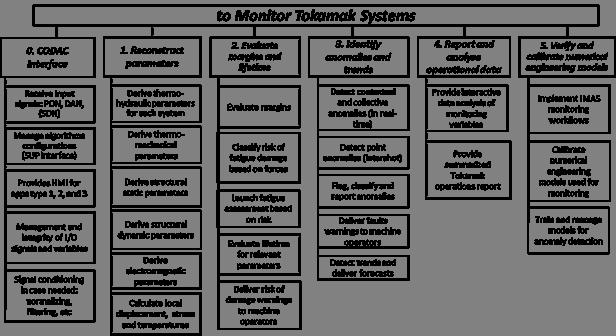
5.16-1: Functional breakdown of 55.GT TSM
The TSM is designed to provide a comprehensive overview of the status of tokamak systems during various operational phases. It delivers detailed insights into the condition of individual components, supporting both real-time operations and post-operation analysis.
To ensure performance and reliability, TSM software modules are deployed on high-performance servers located in two distinct environments:
• Plant Operating Zone (POZ): Hosts modules essential for real-time operational support.
• External to the POZ: Hosts modules dedicated to offline analysis and post-processing tasks.
The TSM software is responsible for processing inputs and determining the status of Tokamak Systems. It comprises three main types Reconstruction, Margins & Lifetime Evaluation, and Anomaly Detection each defined by its specific function and the nature of the algorithms it employs. These software types are intrinsically linked to corresponding engineering disciplines (such as thermal-hydraulics, structural mechanics, nuclear, and electromagnetics, etc.) and are associated with specific Tokamak Systems
As with any experimental facility, ITER operations involve inherent uncertainties. These are typically managed by applying conservative margins, which can limit the operational envelope. However, the integration of Engineering Instrumentation and Simulators providing accurate engineering data from actual operations aims to reduce these uncertainties. This, in turn, is expected to enhance precision and potentially expand the safe operational range of the tokamak.
ENGINEERING INSTRUMENTATION AND SIMULATORS
Vol.2, Ch. 5/16, p. 5
To fully understand the stress distribution within a structure, it is essential to have accurate knowledge of the applied loads. In the case of ITER, the primary source of loading uncertainty arises from plasma disruptions. This is particularly critical for the Vacuum Vessel, where electromagnetic loads induced by plasma disruptions play a dominant role in structural assessments.
As part of the TSM activities, two main approaches are being considered for reconstructing these loads: structural and electromagnetic.
Тhe structural reconstruction approach relies on measurements of the mechanical response such as displacements, stresses, and accelerations of key tokamak components (e.g., the Vacuum Vessel, Blanket Modules, Toroidal Field Coils, etc.) under the influence of plasma disruption forces. This method provides the most directly relevant data for assessing the mechanical state of these components, which is the goal of structural analysis.
However, the availability of mechanical instrumentation is limited. For instance, not all blanket modules will be equipped with displacement or strain sensors, which restricts the spatial resolution and completeness of the structural response data.
In contrast, the electromagnetic reconstruction method utilizes a broader set of magnetic diagnostics, including coil current measurements, magnetic sensors, flux loops, and Rogowski coils. This approach enables the calculation of Lorentz force distributions and integral load values on all components of interest, even those without direct mechanical instrumentation.
During the initial phase of ITER operation, both reconstruction methods will be employed in parallel for cross-validation and calibration. This combined approach will help establish reliable and accurate tools for estimating electromagnetic loads across all possible disruption scenarios during full-power operation.
This work is still in progress but already encouraging results have been obtained.
Plasma disruption events were simulated with help of a detailed dynamic finite element (FE) model of the Tokamak (Figure 5.16-2). A full transient analysis was performed to get the structural response under plasma disruption-induced electromagnetic loads.
The reference values of reactions at supports of tokamak components were derived directly from the FE model. In parallel, the reconstructed values were obtained using a dedicated reconstruction procedure, which relies on virtual measurements of mechanical quantities in nodes of the FE model such as displacements, strains, and accelerations at the locations corresponding to actual sensor placements.
As an example, Figure 5.16-3 presents the results of structural reconstruction of the reaction forces and moments at VV Gravity Support #2, induced by an asymmetric Vertical Displacement Event (VDE). The time evolutions of the reconstructed quantities show a close agreement.
ENGINEERING
AND SIMULATORS Vol.2, Ch. 5/16, p. 6
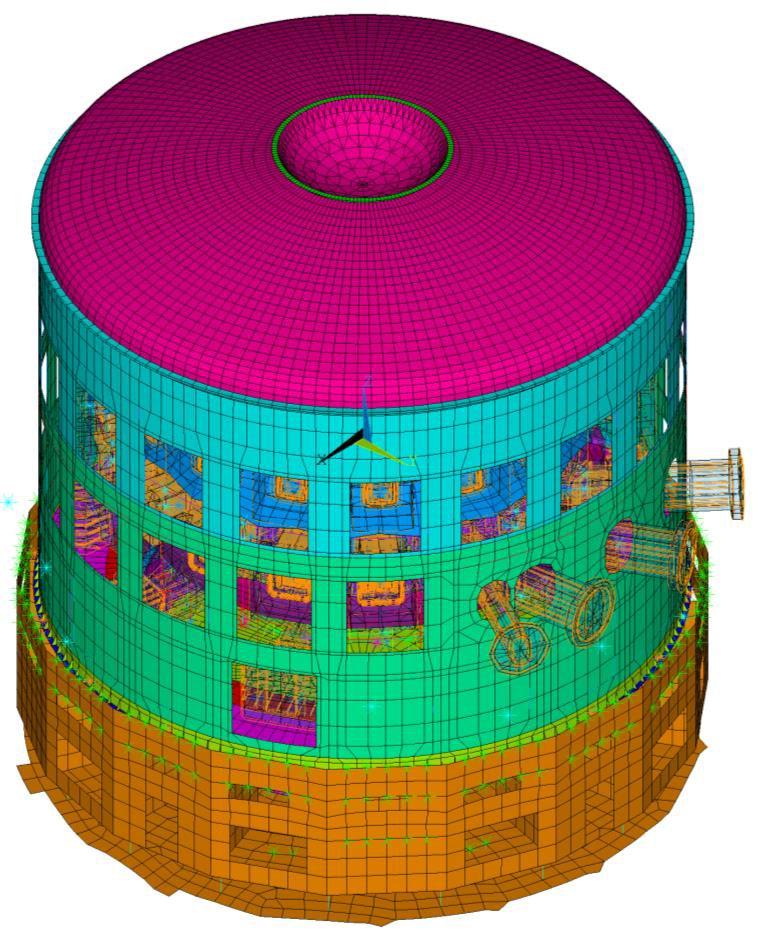
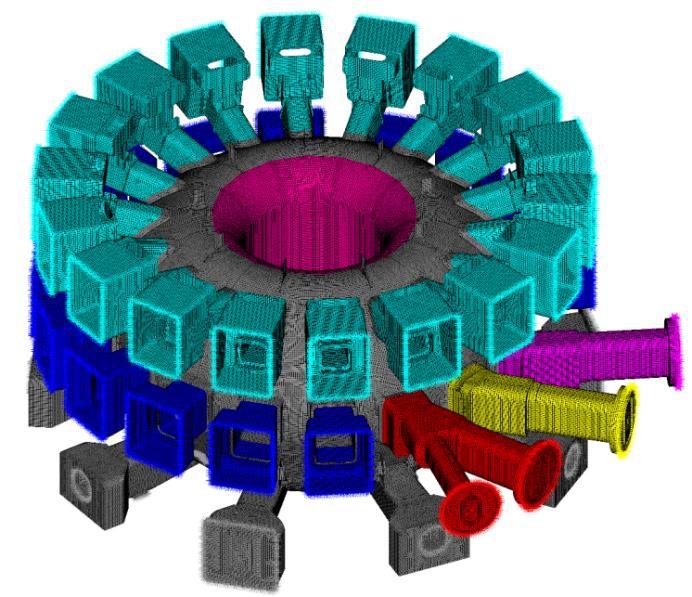
Fig. 5.16-2: Global view of the dynamic FE models
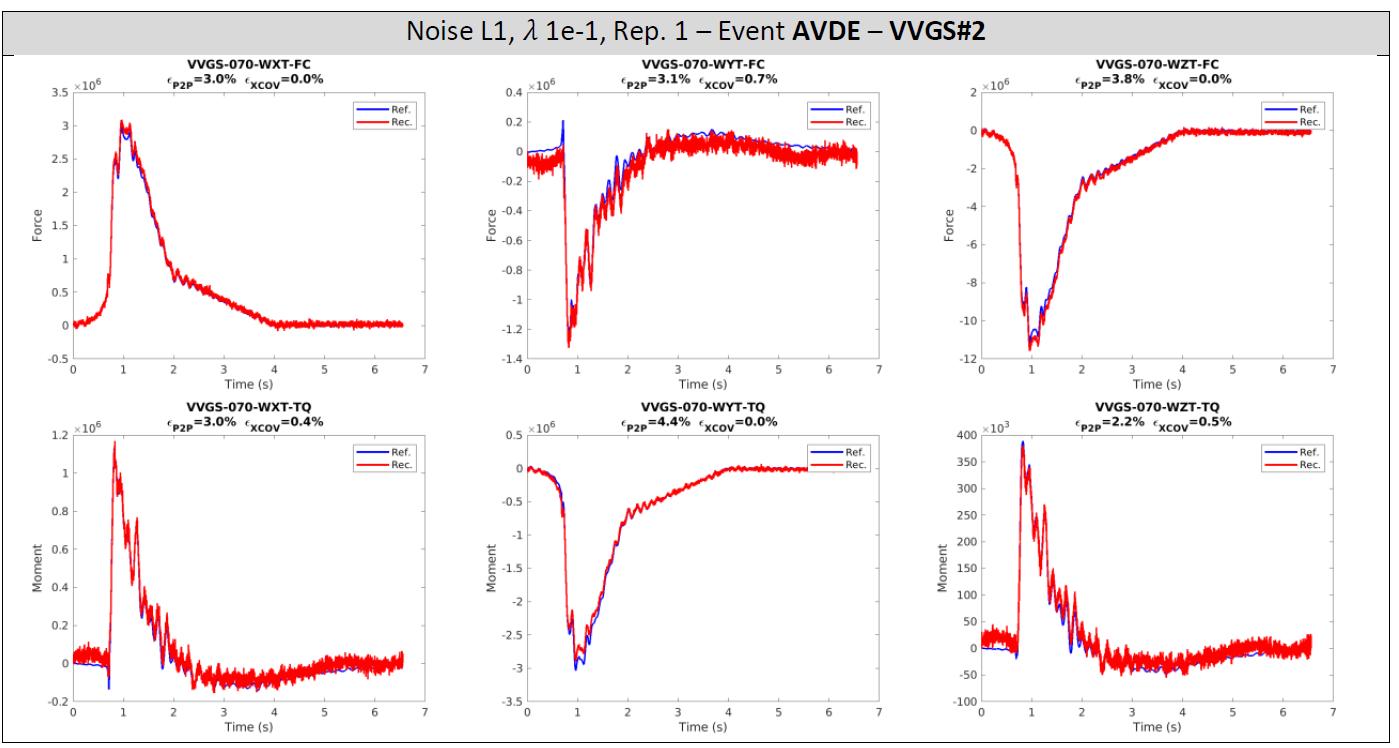
Fig. 5.16-3: Structural reconstruction. Reaction forces and moments at VV Gravity support #2 at Asymmetric VDE. Ref –directly calculated reactions, Rec – reconstructed reactions from virtual measurements
This approach enables a direct comparison between the known input-based responses and those estimated from sensor-like data, providing a robust framework for validating the reconstruction methodology.
Example of electromagnetic reconstruction is given in Figure 5.16-4. The reconstructed and applied (reference) forces on blanket module #6 are quite close.
ENGINEERING INSTRUMENTATION AND SIMULATORS
Vol.2, Ch. 5/16, p. 7
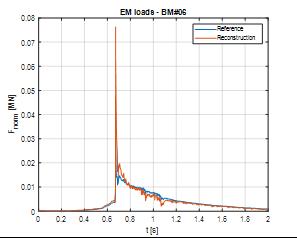
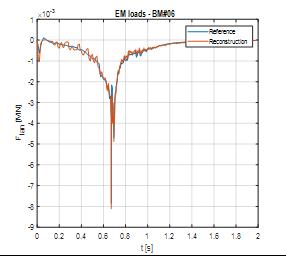
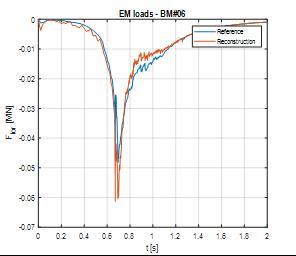
Fig. 5.16-4: Electromagnetic reconstruction. Forces and moments on blanket module #6 at VDE DW Slow even [ 2]
At the time of writing this section, the development of the TSM is still ongoing. The Final Design Review is scheduled for 2026.
Accuracy of reconstruction depends greatly on the efficiency of the measurement, which in their turn determined by proper location, number and type of sensors. So, it is very important for selecting engineering instrumentation to perform the simulations to get the most informative measurements for further use in the simulators.
Abbreviations & Glossary
AI Artificial Intelligence
DA Domestic Agency
ECH Electron Cyclotron Heating
EM Electromagnetic
FE Finite Element
FW First Wall
ICRH Ion Cyclotron Resonance Heating
IO ITER Organization
MFD Magnet Fast Discharge
NBI Neutral Beam Injection
PBS Plant Breakdown Structure
POZ Plant Operating Zone
R&D Research and Development
TF Toroidal Field
TFC Toroidal Field Coil
TSM Tokamak Systems Monitor
VDE Vertical Displacement Event
VV Vacuum Vessel
VVPSS Vacuum Vessel Pressure Suppression System
ENGINEERING INSTRUMENTATION AND SIMULATORS
Vol.2, Ch. 5/16, p. 8
References
[1] L. Maqueda, J. Almenara, D. Piñeiro, E. Rodríguez, F. Rueda, A. Yáñez, F. Villone, M. Baldrís, I. Herrero, M.A. Serrano, S. Bender, D. Iglesias, D. Nikolaeva, S. Sadakov - Feasibility evaluation and pre-conceptual design of the Iter Tokamak systems monitor https://doi.org/10.1016/j.fusengdes.2023.113435
[2] F. Villone, N. Isernia, G. Rubinacci, S. Ventre, D. Iglesias, L. Maqueda, D. Nikolaeva, S. Sadakov, Á. Yáñez-González, - Reconstruction of Electromagnetic Loads during Disruptions in ITER,–2026 Nucl. Fusion 66 016030. DOI 10.1088/1741-4326/ae1b1a
ENGINEERING INSTRUMENTATION AND SIMULATORS
Vol.2, Ch. 5/16, p. 9