




This handbook consists of two volumes which describe the ITER design from its inception up to the design, construction and assembly in 2025
The handbook is not designed to be read as a continuous sequence of chapters. Instead, it is composed of focused, self-contained sections that address specific topics. Each chapter can be read and understood independently, allowing readers to engage with the material most relevant to their needs without requiring familiarity with preceding chapters. As a result, the reader will find certain overlapping content in chapters.
It is to be noted that at the time of writing, the design for some systems is still on-going. Therefore, the reader should consider that whilst there is significant value of this important point-in-time study, an update would be required as the Project progresses
A broad Project overview is given in the first volume, to provide the reader with background information necessary to understand the context in the subsequent moredetailed chapters of the second volume, dedicated to the individual systems composing ITER.
For the overall table of contents of the Handbook and to access each one of the chapters, please refer to https://www.iter.org/scientists/iter-technical-reports
This chapter is authored by Gianfranco Federici and co-authored by the Handbook Editors Federico Casci, Stefano Chiocchio, Richard Hawryluk, John How, Akko Maas, Masanori Onozuka, René Raffray, Gabriella Saibene, Bill Spears and Eisuke Tada.
This chapter briefly describes the main historical events and major milestones on the road to ITER, from its inception until today. More detailed information on the evolution of the ITER design and technical choices and supporting R&D programme can be found in Chapter 7.
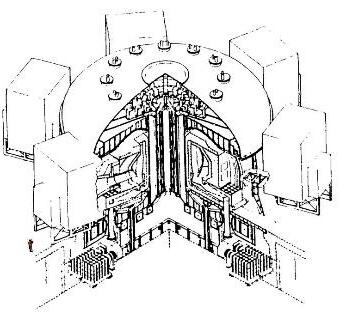
Fig. 5.1. ITER precursor – INTOR [1]
ITER precursor (INTOR) (1978–1988) The initial international cooperation for a nuclear fusion project, that was the foundation of ITER, began in 1978 with the International Tokamak Reactor (INTOR) between four partners: the Soviet Union, the European Community, the United States, and Japan (see Figure 5.1). It started with an American president meeting a Soviet General Secretary and agreeing that cooperating in the field of fusion science was a promising way of easing tensions between their two countries. Richard Nixon and Leonid Brezhnev first discussed this in Washington in June 1973. Based on this effort, General Secretary Gorbachev recommended to President Reagan at the 1985 Geneva summit conference that the two countries join to build such an experimental tokamak reactor, as a result of which the ITER project was born.
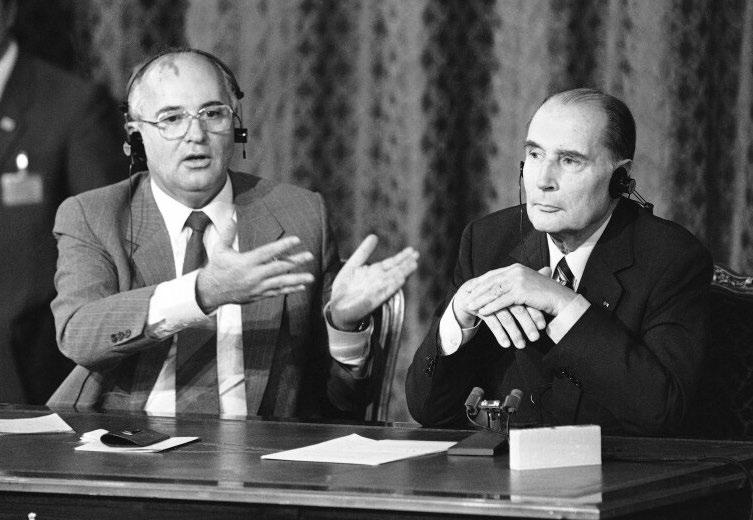
In October 1985, Secretary General Gorbachev, during a visit in Paris to President Mitterand, proposed a strengthening of fusion cooperation between the Soviet Union and Europe (see Figure 5.2). President Mitterand, in his farewell remark, referred to a joint proposal for fusion collaboration.
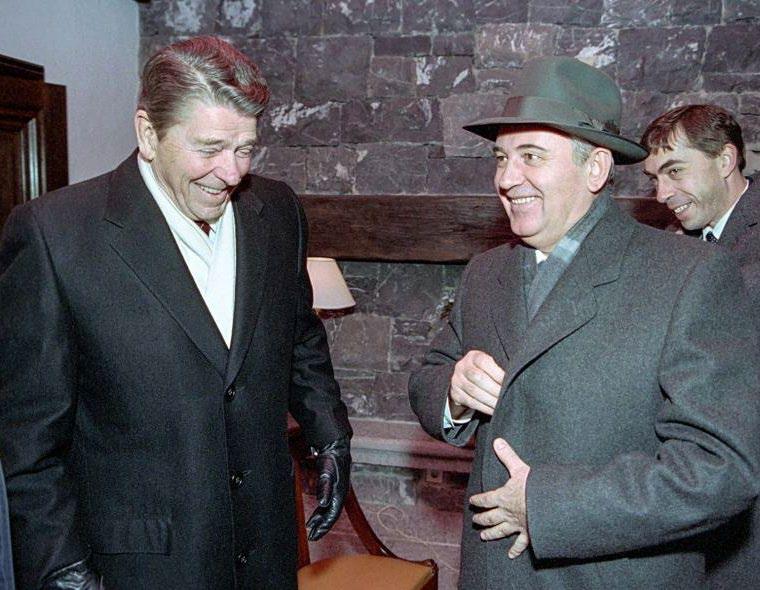
On 20 and 21 November 1985, at a USA-Soviet Union summit meeting held in Geneva, US President Ronald Reagan and Soviet General Secretary Mikhail Gorbachev met for the first time to hold talks on international diplomatic relations and the arms race (see Figure 5.3)
Proposing a large joint international scientific collaboration to open the way to a new source of energy "for the benefit of all mankind" made a powerful symbol of the post-Cold War world the two leaders wanted to shape. President Reagan and Secretary General Gorbachev emphasised "the potential importance of the work aimed at utilising controlled thermonuclear fusion for peaceful purposes and advocated the widest practicable development of international cooperation in obtaining this source of energy, which is essentially inexhaustible, for the benefit of mankind" [1].
At their second meeting in Reykjavik, Iceland, in October 1986, the two leaders reiterated their commitment and officially launched the international fusion initiative. Five months later, a Quadripartite Initiative Committee formed by US, Soviet, European and Japanese representatives decided that the project would be named ITER.
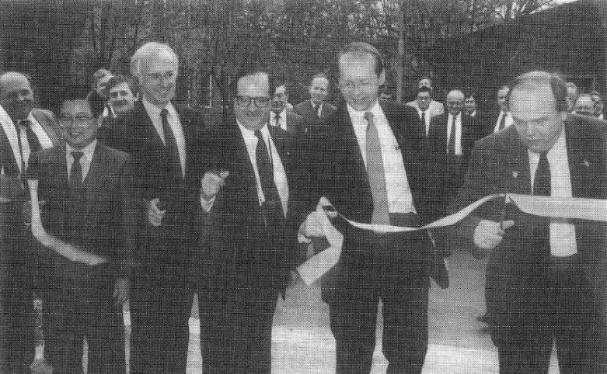
In April 1988, the ITER Conceptual Design Activities (CDA) started, under the auspices of the International Atomic Energy Agency (IAEA)
They consisted of a winter and a summer session each year and were hosted in Garching, near Munich, Germany. These were successfully completed in December 1990 (see Figure 5.4)
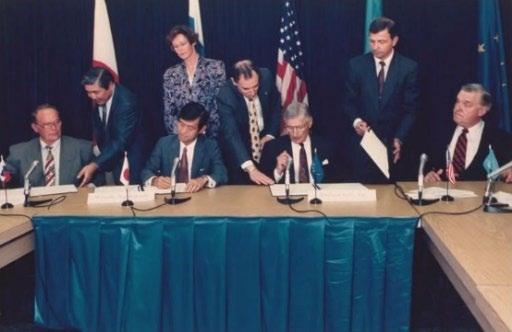
The ITER Engineering Design Activities (EDA) began on 21 July 1992. After a series of consultations, the ITER EDA Agreement was signed in Washington by the four parties (EU, Japan, Russian Federation and USA) (see Figure 5.5). The terms of this quadripartite agreement allowed for the participation of other countries in the joint work of the ITER Parties. Accordingly, Canada participated in the EDA through the EU, and Kazakhstan through the Russian Federation. Work started at the three designated Joint Work sites: San Diego (US), Garching (Germany) and Naka (Japan).
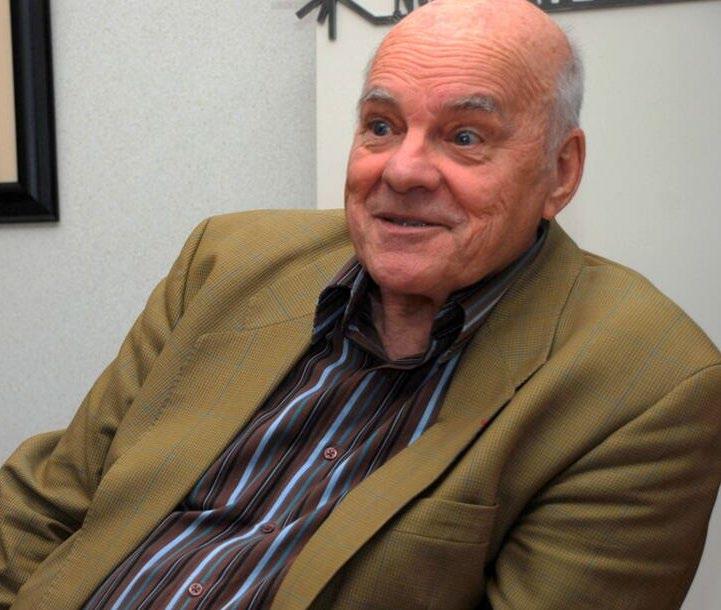
Dr. Paul-Henri Rebut former Director of JET and recognised to be one of the most successful physicists, engineers, and machine-builders was appointed Director of ITER in 1992 and led the ITER EDA Outline Design till 1994. During his term he made pioneering contributions to the design (see Figure 5.6)
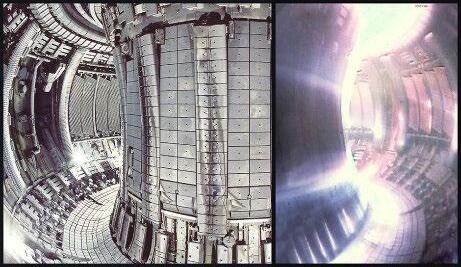
TFTR sets world record in 1994 : At Princeton, New Jersey, the American Tokamak Fusion Test Reactor (TFTR), commissioned in 1982, produces a peak of 10.7 MW controlled fusion power (see Figure 5.7). TFTR stopped operation in 1997.
Dr. Robert Aymar was appointed Director of ITER in 1994 and led the design activities until 2003 before becoming CERN Director (see Figure 5.8)
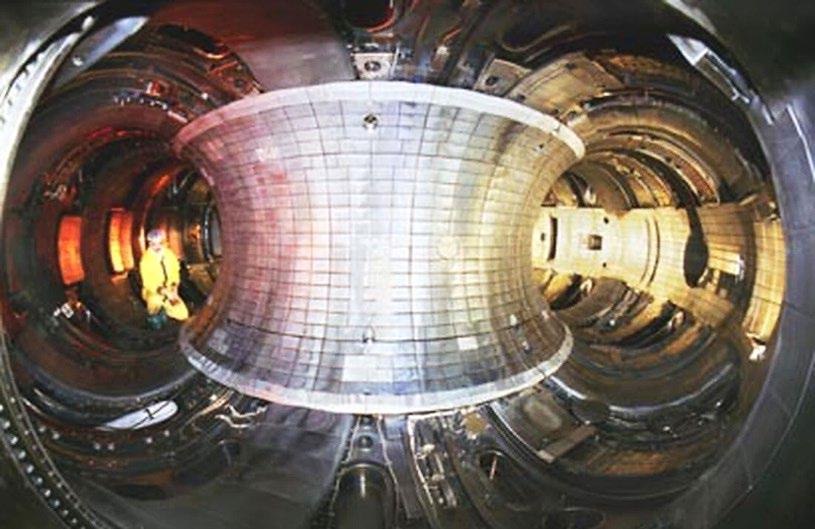
During 1997, the Joint European Torus (JET) sets three world records: 22 MJ of fusion energy in one pulse, 16 MW of peak fusion power, and a 65 percent ratio of fusion power produced to total input power. In spring 1998, the fully remote handled installation of a new divertor (a major in-vessel component) was successfully completed on time, demonstrating another technology vital both to ITER and to a future fusion power plant (see Figure 5.9).
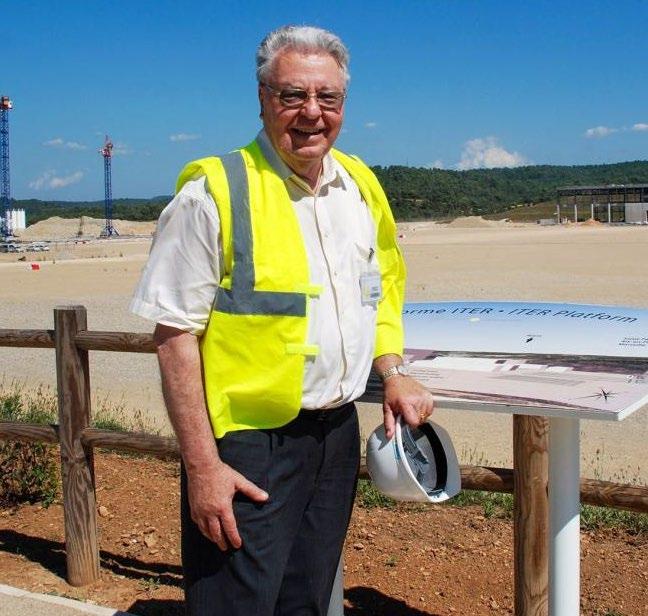
On 22 December 1997, the probability that the ITER Parties might be unable, for financial reasons, to proceed to the construction of the foreseen ITER device was discussed. The possibility to adopt a less demanding set of detailed technical objectives that would still meet the overall programmatic objectives but at a significantly reduced cost (about 50%) was discussed for the first time.
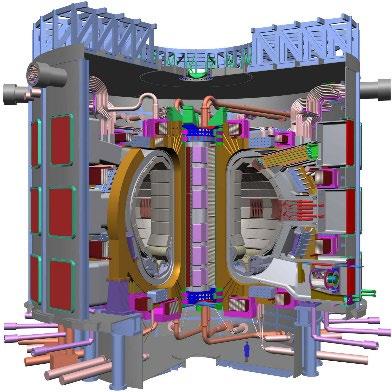
In June 1998, the Council approved ITER’s Final Design Six years of international collaborative work within the framework of the ITER EDA Agreement culminates in the approval by the ITER Council, in June 1998, of the ITER Final Design Report. This provides the first comprehensive design of the ITER tokamak based on well-established physics and technology (see Figure 5.10). Its design fulfilled the overall programmatic objective of ITER and complied with the detailed technical objectives and technical approaches adopted by the ITER Parties at the start of the EDA.
The US withdraws in December 1998: Concerns about the projected cost of the programme lead the USA to end participation in ITER. The San Diego Joint Work Site closes.
Develop a new design with reduced technical objective and reduce cost: The EU, Japan and, Russia agreed to continue working at the Garching and Naka sites. An extension period to the EDA was primarily devoted to developing the design under the revised technical objectives, as well as completion of planned technology R&D projects. Several design options with a defined value of Q were considered, with different value of aspect ratio (ratio between the major plasma radius and minor plasma radius), peak toroidal field elongation, and burn flux. Major R&D developments, were initiated and largely conducted during the EDA for seven large projects, called “The Magnificent Seven”, to verify the critical technologies of the basic ITER machine design and confirm manufacturing techniques and quality assurance.
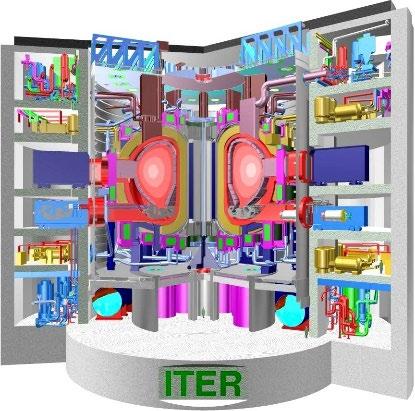
July 2001: A new design called “ITER-FEAT” is produced and is approved by the ITER Council. The new design maintains the revised programmatic objectives of the project (lower Q), while integrating cost-cutting measures (see Figure 5.11). In the months following this, intergovernmental negotiations are held towards the realisation of the joint implementation of the ITER design, including the issues of sharing the costs and the site selection for the construction of the ITER machine. Canada already offered a site located near the Darlington Nuclear Power Station on the shore of Lake Ontario, and sites at Cadarache, France, and in Japan may also be offered.
January 2003: China and Korea join ITER and USA returns - China presented a formal request to join ITER on 10 January 2003. President George W. Bush announced on 30 January 2003 the return of the United States in the ITER Project. The Republic of Korea followed suit six months later. ITER had acquired a truly global dimension.
The search for a construction site: Canada was first to offer a site for ITER in 2001. In June 2002, Japan proposes Rokkasho-Mura, located in the Aomori Prefecture. Europe evaluates two potential sites: Vandellòs, Spain, and Cadarache, France. In November 2003, Europe proposes Cadarache. On 23 December 2003, ITER-Canada, the private-sector consortium that had developed an offer to locate ITER in Clarington, Ontario, announces its withdrawal from the ITER negotiations. The choice for the location is then narrowed to Cadarache, France, and Rokkasho-Mura, Japan.
Members agree on Cadarache (2005): After a period of high-level political negotiations, the decision to locate ITER in Cadarache, France, is reached on 28 June 2005 at a ministerial-level meeting in Moscow (see Figure 5.12). The decision is based on a bilateral agreement between
Europe and Japan over cost sharing and the "Broader Approach" complementary development projects to be in Japan in support of ITER and the next-step device DEMO.
December 2005: India becomes 7th Member - India joins ITER, bringing Member Parties to seven.
December 2005: Ambassador Kaname Ikeda, former Japanese Deputy Minister for Science and Technology was appointed as first Director of General of the ITER Organization in December 2005 (see Figure 5.13).
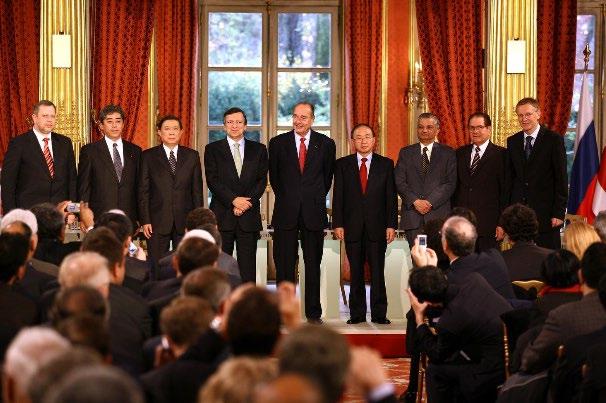
ITER Agreement signed in November 2006: The signing of the ITER Agreement takes place on Tuesday, 21 November 2006 at the Élysée Palace, in Paris. French President Jacques Chirac, European Commission President José Manuel Barroso and some 400 invited guests are present, including high level representatives from the ITER Parties and European Member States (see Figure 5.14). In the afternoon, the Interim ITER Council (IIC) convenes for its first meeting.
September 2007: Updating the ITER design after a comprehensive design review - More than 150 leading experts from the international fusion community complete the one-year-long process of updating the ITER design in September 2007. The review had become necessary because, although the design of the machine had evolved, the only officially recognised

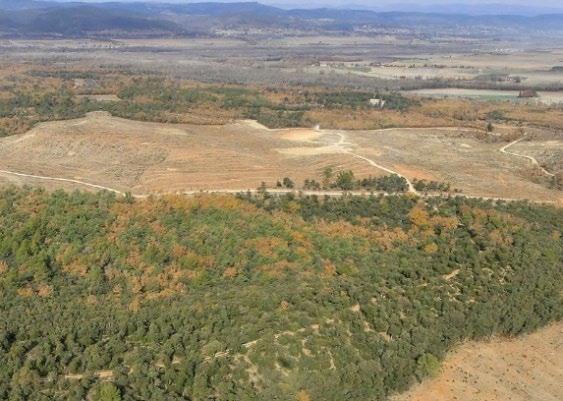
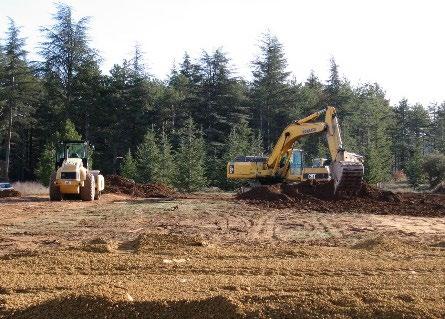
January 2007: Work begins on ITER siteSite preparation in Cadarache in southern France begins, representing an important first milestone on the road to building ITER. In total, 90 hectares of land will be cleared (see Figure 5.15)
documentation and technical specifications dating from 2001. Furthermore, specific changes resulting from the choice of site and the consequent licensing organisation needed to be incorporated. As a result of the review, 14 major design changes were defined. Among them, the poloidal field coil system was reviewed and modified to ensure that the plasma can be adequately controlled. Stabilisation of the vertical disruption event was addressed by including in-vessel coils. The impact of ELMs on plasma-facing components was recognised as a result, the requirements for gas loads in support of pellet pacing were increased and the in-vessel coils were designed to apply a resonant magnetic perturbation coil to control ELMs. The design of the vacuum vessel was changed, by reinforcing poloidal gussets supporting the vessel, to accommodate for revised loads recognising the implications of prior results on JET and associated modelling.
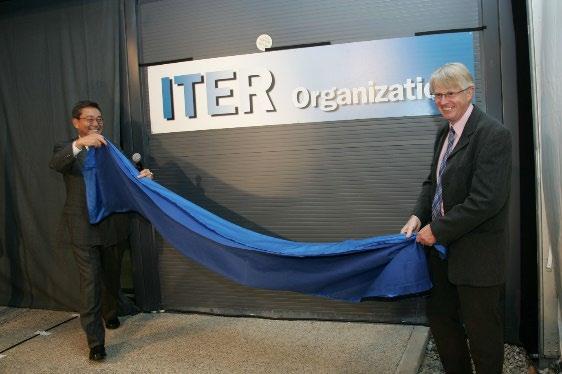
October 2007: ITER formally established - On 24 October 2007, following ratification by all Parties, the ITER Agreement enters into force and ITER Organization is formally established.
ITER Director-General Kaname Ikeda and Principal Deputy Director General Norbert Holtkamp unveil the logo, and the first official ITER Council meeting is held at Cadarache, France, on 27 November 2007 (see Figure 5.16)
January 2008: ITER Itinerary work begins - Work begins on the ITER Itinerary: a 104-kilometrelong specially modified route from the port of Berre l'Etang to Cadarache (see Figure 5.17) During the ITER construction phase, 250 delivery convoys will travel by night at reduced speeds, carrying exceptionally heavy, large components for the ITER machine. Work is completed by the end of 2010 and in September 2013, a convoy of 800 tonnes successfully tested the new itinerary.
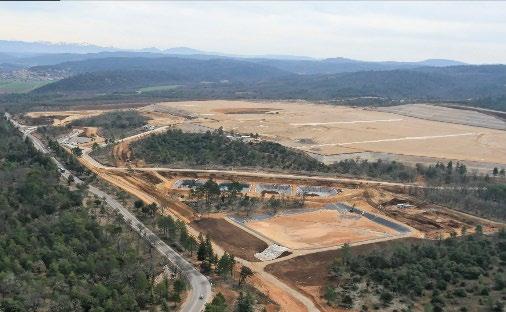
April 2009: The ITER platform is ready - Work on the ITER platform comes to an end in April 2009. Two years were necessary to clear and level 42 hectares and prepare the platform to receive the scientific buildings and facilities of the ITER Project. Pre-excavation work will begin in 2009 for the Tokamak Building to explore the underlying soil and rock in more detail (see Figure 5.18)
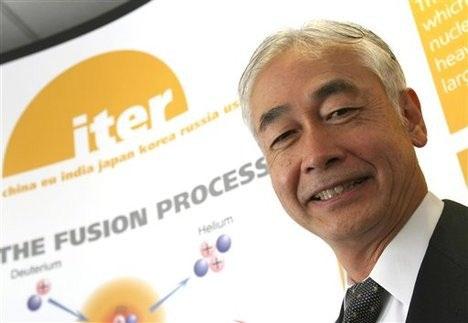
July 2010: Osamu Motojima becomes DG - At the extraordinary meeting of the ITER Council in July 2010, Professor Osamu Motojima is appointed Director-General of the ITER Organization (see Figure 5.19). Prof. Motojima takes over from Kaname Ikeda, who led the ITER Organization from
November 2005 to July 2010. Osamu Motojima, a well-known figure in the field of fusion science in Japan and abroad, was formerly Director General of the Japanese National Institute for Fusion Science.
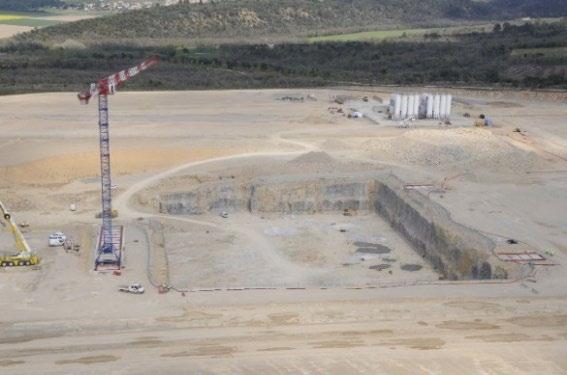
February 2011: Excavation completed - The excavation works which began in August 2010 for the Tokamak Complex Seismic Isolation Pit are now completed. Six months were necessary to excavate down to 17 m, removing 210 000 m³ of rocky material in the process, which will house the ITER Tokamak, nestled in among thick foundations and retaining walls part of the antiseismic measures planned for the protection of the machine (see Figure 5.20)
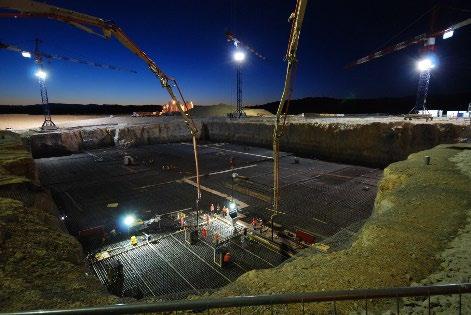
August 2011: Foundation work begins - At 5:00am on Tuesday, 9 August, foundation pouring begins to create the lower basemat of the ITER Tokamak Complex (see Figure 5.21)
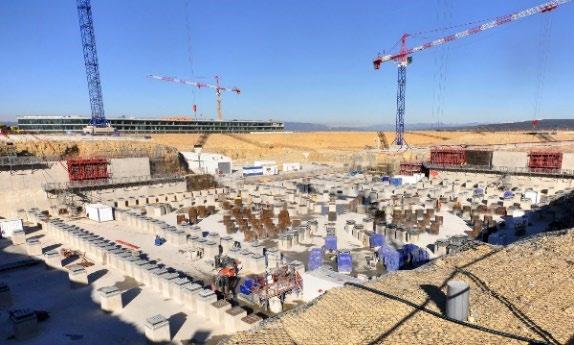
December 2011: Seismic Pit Basemat completed - The last segment of the Seismic Pit basemat is poured, four-and-a-half months after work began. The foundation work in the Tokamak Pit is on time: the retaining walls and anti-seismic bearings will be in place by March 2012, and formwork will begin to prepare for the next stage: the actual floor of the building that will house the ITER Tokamak. The seismic isolation systembasemat, retaining walls, and seismic plinths and pads - will protect the Tokamak, Tritium and
Diagnostic Buildings from ground motion in the case of an earthquake. Eighteen months were necessary to install 493 seismic pads (see Figure 5.22).
December 2011: Neutral Beam Test Facility (NBTF) - Agreements were signed between the ITER Organization, the European Domestic Energy and Consorzio RFX (Padua – Italy) to build the Neutral Beam Test Facility at Padua (see Figure 5.23). This facility comprises two teststands: SPIDER (to test full-sized ion sources), and MITICA (a full-scale test of the ITER heating system). Japan and India are also participating to this effort by supplying components to the test stands.
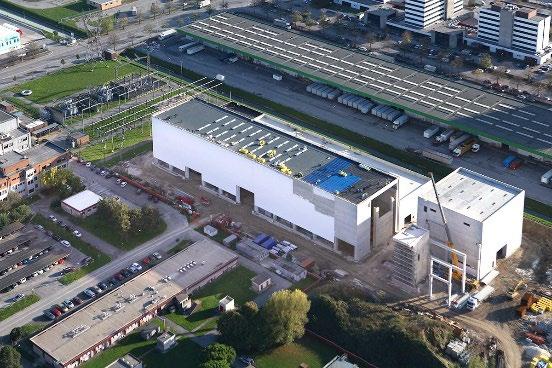
June 2012: Major licensing step - In a significant milestone for the ITER licensing process, the ITER Organization is informed in writing by the French safety authorities (ASN) on 20 June that - following an indepth technical inspection - the operational conditions and the design of ITER as described in the ITER safety files fulfils expected safety requirements (see Figure 5.24). ASN will now transmit the draft decree that authorises the creation of the ITER nuclear facility to the French government for signature. ITER will be the first fusion nuclear installation (Installation Nucléaire de Base) licensed by the French government.
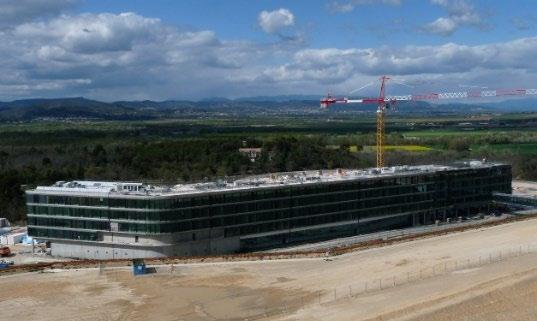
September 2012: ITER Headquarters completed- After two years of construction work, the 20 500 m2 ITER Organization headquarters are ready for occupation (see Figure 5.25). The building was financed by the European Domestic Agency and France as Host country.
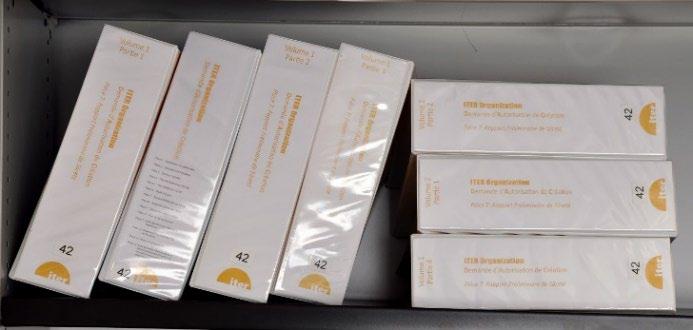
November 2012: Landmark decree for ITER - The decree authorising the ITER Organization to create the ITER Installation nucléaire de base (INB) in Saint-Paul-lez-Durance is published in the Journal Officiel de la République Française on 10 November 2012. This official decree, signed by
the French Prime Minister, brings more than 30 months of procedure to an end and clears the way for the pursuit of ITER construction.
December 2013: First pour for Tokamak Complex - In an important milestone for ITER construction, concrete pouring begins in December 2013 for the Tokamak Complex basemat - the actual floor of the three-building complex that
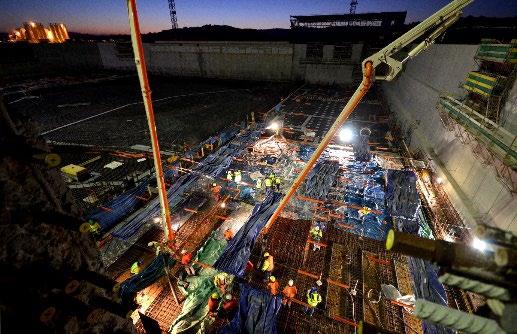
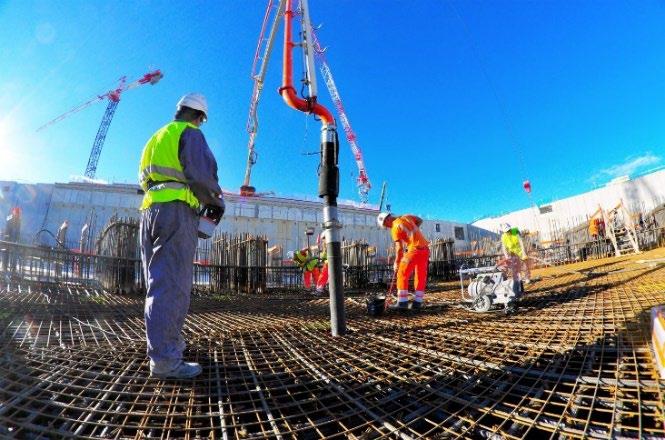
will house the ITER tokamak (see Figure 5.26) When the basemat is completed in August 2014, work can begin on the civil structure of the Tokamak Complex.
August 2014: B2 slab completed - Work on the Tokamak Complex basemat ends with the pouring of the last of 15 segments in August 2014 (see Figure 5.27). The B2 slab consists of 14 000 m³ of concrete and 3 600 t of rebar. This milestone opens the way to a new phase in ITER constructionwork can now begin on the walls of the buildings at the heart of the ITER scientific facility.
Five large drain tanks, supports for the base of the cryostat (the concrete crown), and the building walls will be positioned directly on the 9 300 m² surface of the "B2 slab."
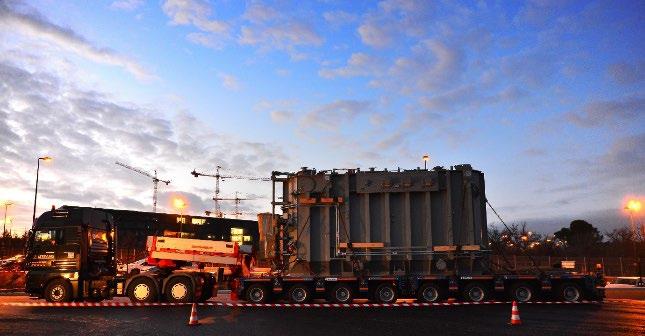
January 2015: First component along ITER Itinerary- The first ITER component to travel along the specially modified, 104 km ITER Itinerary reaches the ITER site before dawn on 14 January 2015 (see Figure 5.28) The first "Highly Exceptional Load" was an 87 t electrical transformer that had been manufactured in Korea on behalf of the US Domestic Agency. Some 250 loads are expected along the ITER Itinerary during ITER assembly.
On 5 March 2015, the ITER Council appoints the third Director-General of ITER Organization: Bernard Bigot, from France, who has had a distinguished career and a record of close involvement with ITER (see Figure 5.29) Prior to this assignment he was the president of the École Normale supérieure de Lyon, and Administrateur Général and Chairman of the French Commission for Atomic Energy.
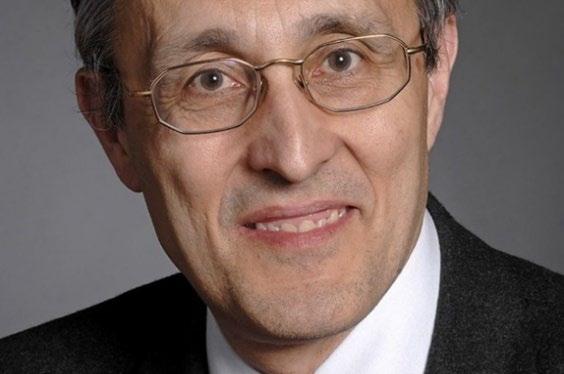
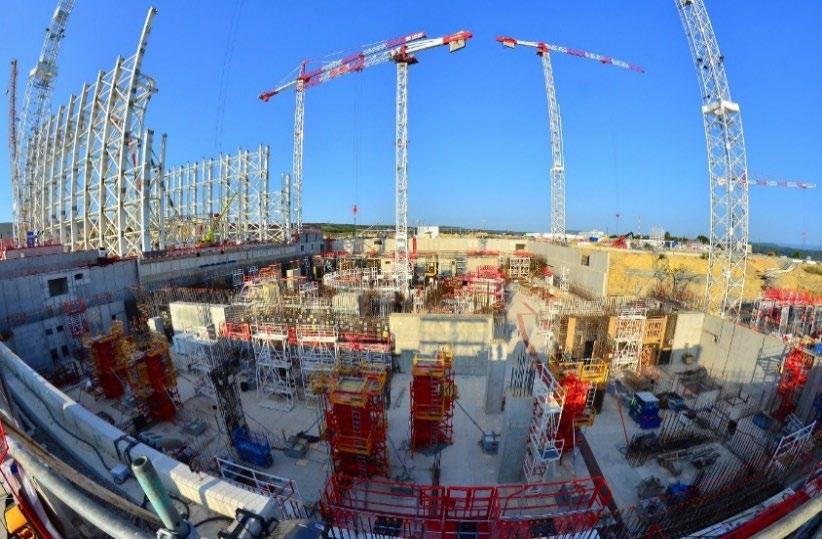
field coils and the cryostat erected, and progress made on the Assembly Building - the 60 m high edifice that will host the pre-assembly operations for ITER machine components.
On 18 December 2015 the first 12 (out of 54) segments of the massive ITER cryostat are delivered to the ITER site.
August 2015: Five years into constructionConstruction on the buildings of the ITER scientific installation began in August 2010. Five years later, the ground support structure and seismic isolation system of the Tokamak Complex are in place and civil construction is underway on the first of seven levels (see Figure 5.30). Critical networks, drainage and precipitation networks, site access facilities, and a 400kV electrical substation have been installed, manufacturing facilities for the poloidal
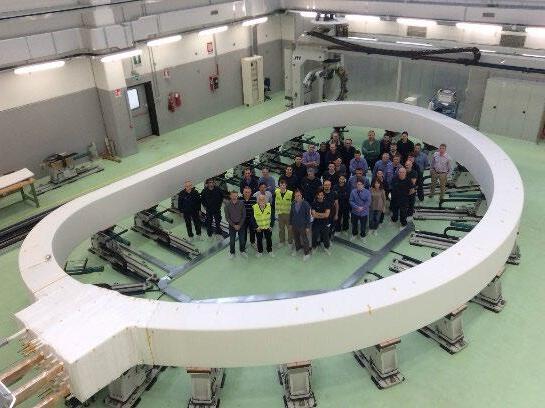
April 2016: First ITER winding pack completed in Europe- A major ITER procurement milestone is recorded in April 2016 by the European Domestic Agency, as contractors complete the first 110 t toroidal field winding pack (see Figure 5.31). The winding pack, or inner core of the Dshaped toroidal field magnet, will now be cold tested at -200 °C/80 K before being inserted into a stainless-steel case. The final toroidal field coil assembly will measure 9 x 17 m and weigh 310 t.
Eighteen toroidal field magnets will surround the ITER vacuum chamber to confine the plasma particles away from the vessel walls.
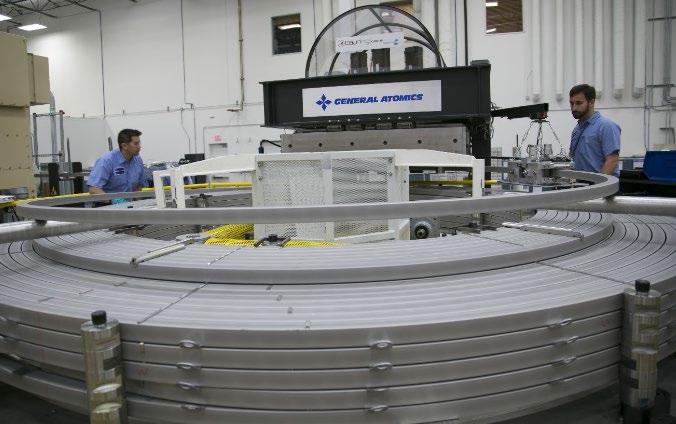
June 2016: First central solenoid module is wound- The central solenoid, a giant electromagnet that will act as the "heartbeat" of ITER, will consist of six stacked modules surrounded by a support structure. The US Domestic Agency completed the winding of the first module in June 2016 (see Figure 5.32). Each central solenoid module is fabricated from approximately 6000 m of niobium-tin (Nb₃Sn) conductor, supplied to the US by Japan in seven spools.
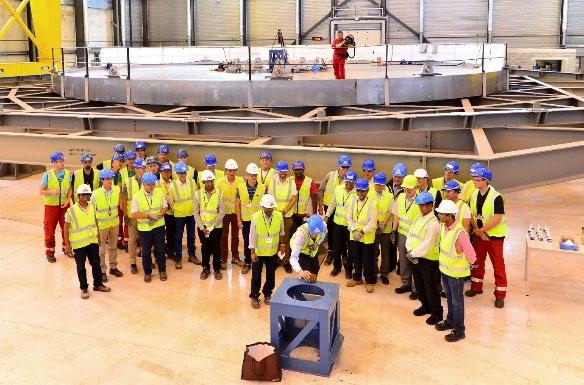
June 2016: Main assembly cranes installed - During the assembly of the ITER machine, two overhead cranes will work in tandem in the Assembly Hall to lift and transport loads of up to 1500 t between the pre-assembly area and the Tokamak Pit.
September 2016: Cryostat welding begins on site- On Thursday 8 September, welding operations begin on the ITER cryostat procured by India - the 29 m x 29 m stainless steel cryostat that surrounds the vacuum vessel and superconducting magnets to ensure a high vacuum environment (see Figure 5.33). The welding of the cryostat base (one of four main parts) took just over one year, same for the construction of lower cylinder also completed successfully.
December 2016: Toroidal field conductor completed- The jacketing of the 133rd unit length of toroidal field conductor is completed in December 2016. Six ITER Members (China, Europe, Japan, Korea, Russia and the US) have contributed to the procurement of 88 km of niobium-tin superconductor that is now being wound into ITER's toroidal field coils.
The project's longest-lead procurement effort - the acquisition of 2800 t of cable-in-conduit conductors for ITER's magnet systems was completed in September 2015.
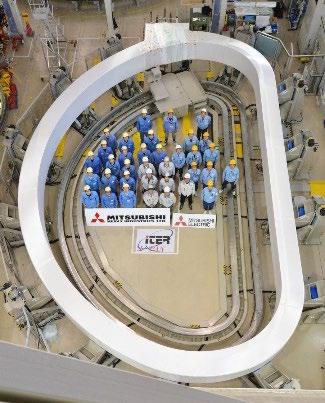
January 2017: First toroidal field winding pack completed in Japan - The D-shaped inner core winding pack of an ITER toroidal field coil is produced in a multistage process that includes winding, insertion into radial plates, vacuum-pressure insulation, stacking, and testing. Japan, which is producing nine of ITER's 19 toroidal field coils (18 plus one spare) completes its first toroidal field winding pack in January 2017 (see Figure 5.34). The winding pack, after testing, will be inserted into a stainless-steel case.
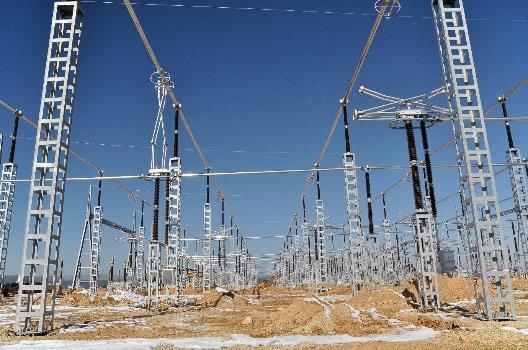
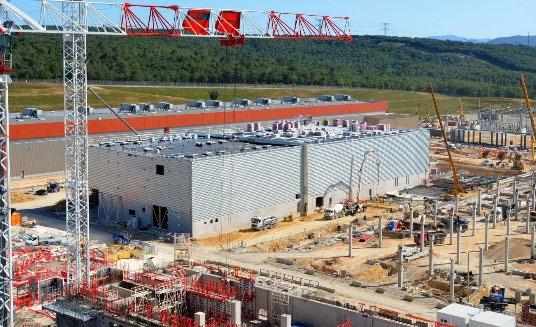
March 2017: Energisation of the 400 kV switchyard- As the needs of the construction site ramp up, the project will require more electricity than the neighbouring CEA network can supply. The power-up of the first transformer of the 400 kV switchyard is successfully achieved in March 2017 to supply the 22 kV network on site (see Figure 5.35)
June 2017: Equipment installation begins in cryoplant - Thousands of components will make up the ITER cryogenic and cryodistribution system that will provide cooling power to the magnets, the thermal shield and the cryopumps. The ITER Organization begins equipping the on-site cryoplant, installing the first components -three large helium "cold boxes" (see Figure 5.36)
June 2017: Assembly Hall ready for equipment - The completion of the tall ITER Assembly Hall, with its two heavy-haul overhead cranes (1500 t capacity) and its two smaller lift cranes is a major milestone for ITER construction (see Figure 5.37). Part of the building is now accessible for installation activities.
October 2017: First magnet feeder component delivered by China - The first segment of one of ITER's 31 magnet feeders has arrived from China and been delivered to the MIFI facility (Magnet Infrastructure Facilities for ITER) a workshop operated by a joint team from ITER and the French Alternative Energies and Atomic Energy Commission (CEA) to develop and qualify the ITER magnet elements and their assembly procedures. Testing is underway.
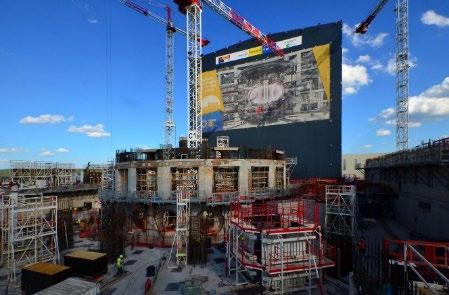
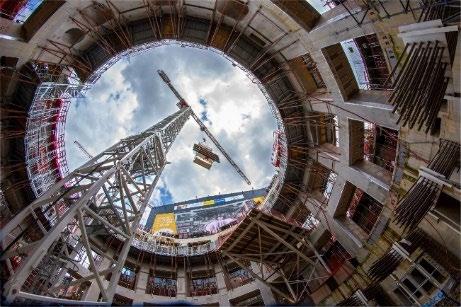
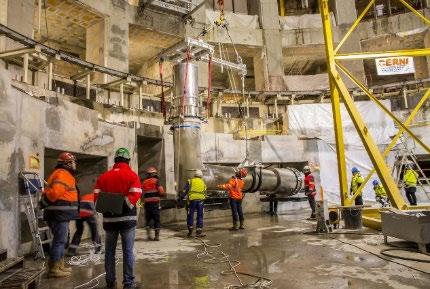
June 2018: First access to Tokamak Pit for installation activities- Access to the Tokamak assembly area depends on the maturity of Tokamak Building civil works. Europe completes an important milestone in the second quarter of 2018 by providing first limited access to the Tokamak Pit for installation activities (see Figure 5.38)
November 2018: First machine component in pit- An elbow-shaped segment of a magnet feeder for poloidal field coil #4 becomes the first machine component installed in the basement of the Tokamak Building (see Figure 5.39) The positioning of the captive segment on the floor of the bioshield will allow the complete closure of the cryostat base support crown.
March 2019: Testing of sector subassembly tool (SSAT) designed by Korea begins - Late in the first quarter of 2019, testing begins on the first 800t handling tool of the Assembly Hall sector subassembly tool #1. Precision testing followed by load testing are the final tool qualification activities, allowing operators to verify the tool's ability to accurately adjust the dummy load toroidally and to six degrees of freedom within tolerances of +/- 1mm.
July 2019: New agreement for the Neutral Beam Test Facility - The ITER Organization and the Italian consortium Consorzio RFX sign a new agreement governing the construction and operation of the ITER Neutral Beam Test Facility. In a first phase, testbed results will inform the procurement of components for the ITER system. After operation starts at ITER, the facility in Padua, Italy, will be a testbed for Neutral Beam performance enhancement.
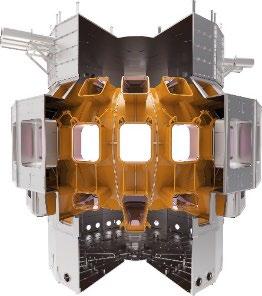
October 2019: First thermal shield segments - The role of Thermal Shields (TS) is to minimise the radiation heat load from hot components such as VV (VVTS) and cryostat (CTS) to magnets operating at 4K. The cooling pipes are welded on the TS panels and pressurised 80K helium gas flows inside the pipes to cool the TS panels. Covering a surface area of approximately 10 000 m² and standing 25 m at its tallest point, the thermal shielding around the vacuum vessel will minimise the heat loads transferred by thermal radiation and conduction. The first deliveries of vacuum vessel and cryostat thermal shielding manufactured in Korea (pictured in grey, Figure 5.40) reached ITER in October as scheduled.
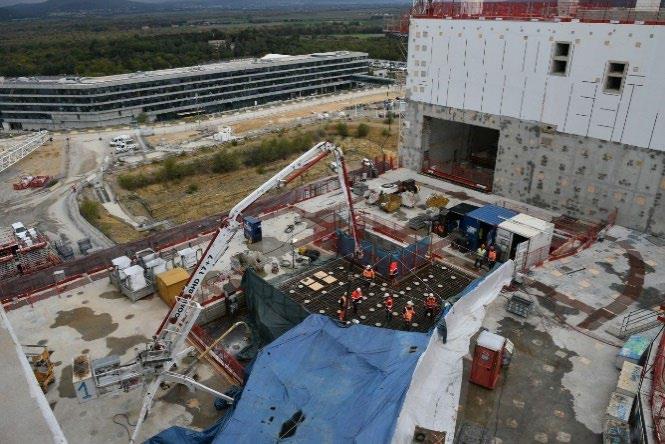
November 2019: Last concrete pour of the Tokamak Building - On 7 November 2019, the last concrete plot of the Tokamak Building is poured by the VFR consortium, contractor to the European Domestic Agency (Fusion for Energy) for construction of the main buildings on site (see Figure 5.41). This completes work on the seven-level concrete structure that will house the ITER machine. The news is announced by ITER Organization.
April 2020: Europe and Japan deliver toroidal field coil #9 and #12- The European Domestic Agency delivers its first 360 t toroidal field coil (TF9) to the ITER site on 17 April 2020. Europe is working for the winding pack and the insertion and cold testing for the production of 10 coils in total (see Figure 5.42)
The Japanese Domestic Agency delivers its first 360t toroidal field coil to the ITER site on 25 April 2020. The ITER coils are among the largest superconducting magnets ever built and represent, for each contributing Domestic Agency, more than ten years of effort.
May 2020: Installation of the cryostat base - On 26 May 2020, the 1,250t cryostat base becomes the first large-scale component to be transferred by overhead crane to the Tokamak Pit, and lowered to the bottom (see Figure 5.43). The operation goes off without a hitch. ITER machine assembly has begun.
June 2020: Arrival of heaviest poloidal field coil: Poloidal field coil #6 (PF6) may only measure 10 m in diameter (compared to the 24 m of PF3 and PF4), but it is the heaviest of ITER's six ringshaped magnets (400 t) due to a higher number of stacked pancakes, a greater number of coils turns, and exceptionally heavy clamps. The coil, manufactured in China under procurement by the European Domestic Agency, was delivered in June 2020 (see Figure 5.44)
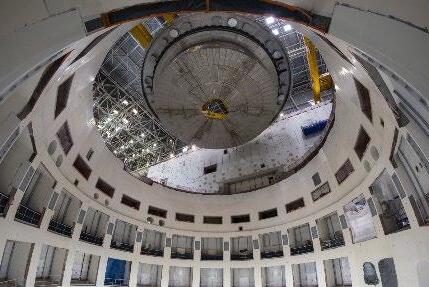
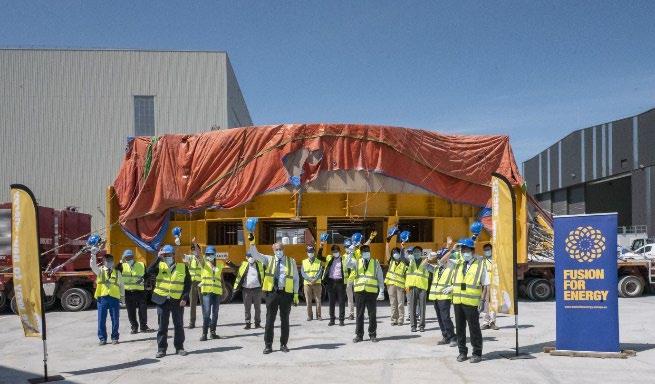
June 2020: Start of liquid helium cryogenic plant commissioning- Nearly 25 t of liquid helium at minus 269 °C will circulate in the ITER installation to reach the top clients for cryogenic power - the 10 000 t of superconducting magnets, and the cryosorption panels that ensure highquality vacuum to the cryostat and the vacuum vessel. Pre-commissioning activities have begun in the on-site liquid helium cryogenic plant.
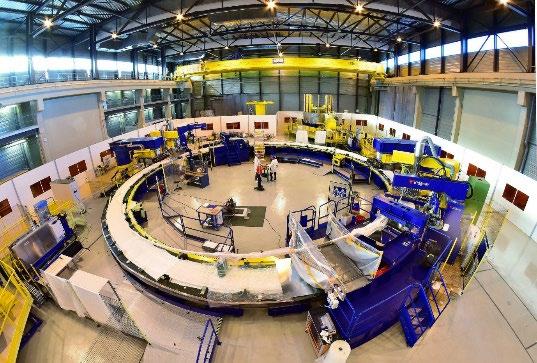
July 2020: Cold test first poloidal field coil - The last step in the manufacturing of ITER's ring-shaped poloidal field coils is cold testing at 80 K, a process that reproduces the thermal stresses that will be experienced during ITER operation (see Figure 5.45). Europe began cold testing the first poloidal field magnet, PF6, in an on-site facility early in the third quarter of 2020.
July 2020: ITER celebrates the start of machine assembly- High-level representatives from all of the ITER Members join (virtually) in ITER's start-ofassembly ceremony on 28 July 2020, hosted by President Emmanuel Macron of France - each one saluting the many achievements, small and large, that have brought the project to this decisive new phase and the one-ITER team that, together, is greater than the sum of its parts.
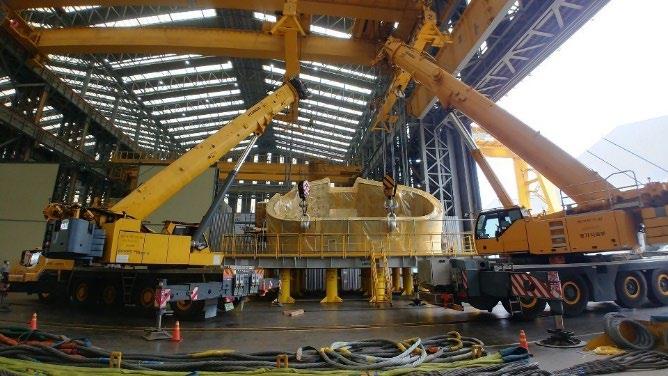
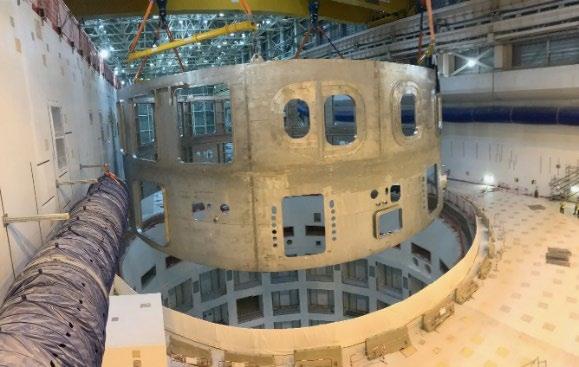
August 2020: First vacuum vessel sector arrives- The first vacuum vessel sector (VV#6), measuring over 14 m in height and weighing 440 t, has been completed in Korea (see Figure 5.46). This complex 440 t steel component is one of nine that will form the torus-shaped ITER vacuum vessel. Korea is manufacturing four sectors; Europe is responsible for the other five. This first-of-a-kind item required 10 years to plan, prototype, manufacture and test. Fifty-three port structures will also be welded into place during the assembly of the vacuum vessel. However, defects and non-conformities were identified in 2022, leading to timeconsuming repair work.
August 2020: Installation of the cryostat lower cylinder- On 31 August 2020, the 375 t cryostat lower cylinder becomes the second large-scale component to be transferred by overhead crane to the Tokamak Pit and lowered to the bottom (see Figure 5.47)
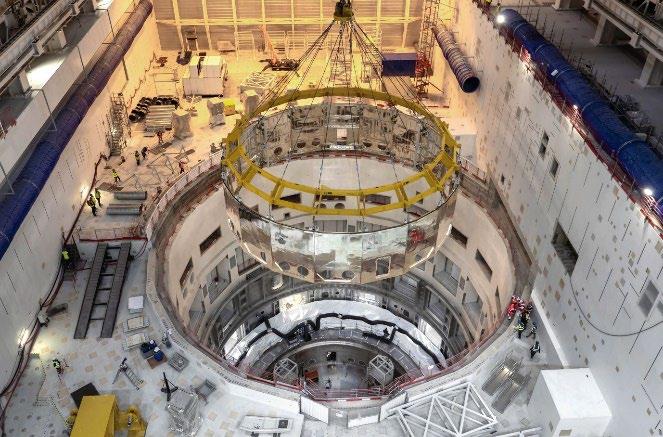
January 2021: First thermal shield installed- On 14 January 2021, the ITER assembly and construction teams successfully insert the cylindrical lower cryostat thermal shield into the Tokamak pit. Its silver-coated panels are designed to minimise the radiation heat load that will reach the magnets operating at 4.5 K.
March 2021: First two cryostat sections welded - It took approximately five months for contractors to the Indian Domestic Agency to fully weld the cryostat lower cylinder to the cryostat base and complete inspection and testing. Distortions were closely monitored using 50 metrology targets distributed on the inner surface of the components and confirmed that all tolerances were respected. The full operation is completed in March 2021 (see Figure 5.48)
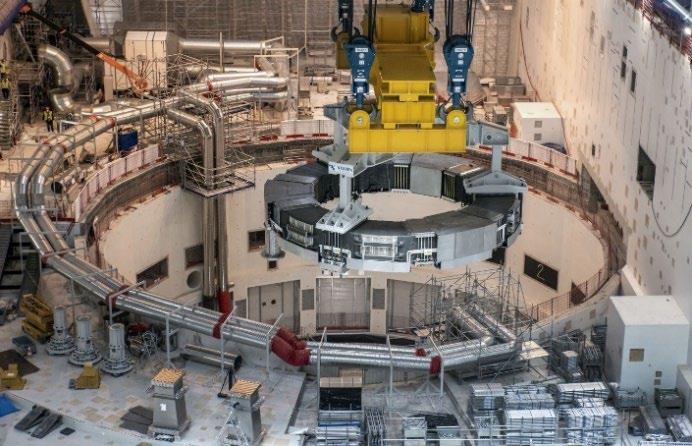
April 2021: First magnet installed - The ITER Organization assembly teams install the first superconducting magnet in the Tokamak pit on 21 April 2021 (see Figure 5.49). Poloidal field coil #6 was more than seven years in the making - procured by the European Domestic Agency, manufactured by the Institute of Plasma Physics (Chinese Academy of Sciences), and tested in the European winding facility on the ITER site.
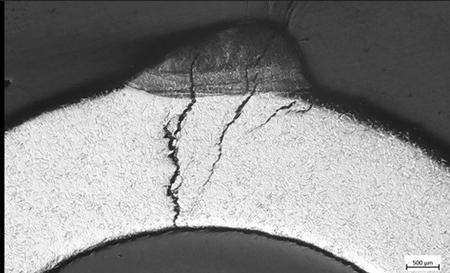
In November 2021, tiny cracks were identified in the piping of several thermal shields not yet installed on the vacuum vessel sectors. During VVTS site acceptance tests, three leaks were detected on some parts of the thermal shield. The root cause for the leaks was found to be the stress caused by the bending and welding of the cooling fluid pipes to the thermal shield panels, compounded by a slow chemical reaction due to the presence of chlorine residues in some small areas near the pipe welds (see Figure 5.50). TS repair was decided as remedial action.
February 2022: JET achieves fusion record - The EUROfusion team has achieved a first-ever sustained, high-confinement plasma on the JET tokamak using the same divertor material and fuel mix that ITER will use. The results confirm that sustained high-fusion energy production is achievable using the Deuterium-Tritium (DT) fuel mix planned on ITER and future devices.
March 2022: Completion and acceptance of cryostat top lid - India completes the last of four cryostat sections - the top lid, 665 t - in its on-site Cryostat Workshop in March 2022, marking the end of six years of cryostat welding activities (see Figure 5.51). The workshop space will now be opened for use by other assembly teams.
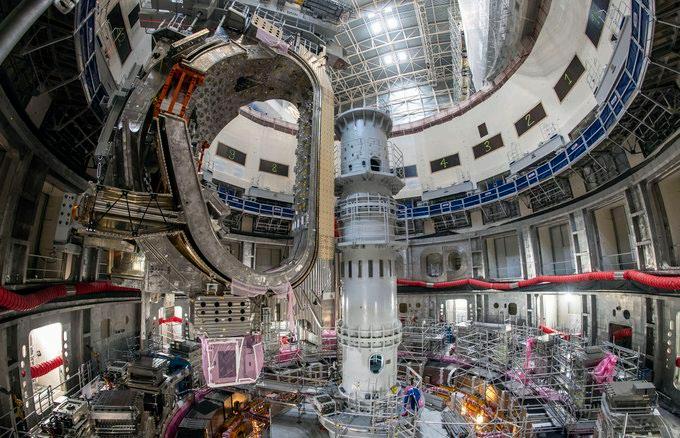
May 2022: The first sector module assembly is lowered in the tokamak pitThe first sector delivered by Korea is successfully lifted out of tooling and lowered with the thermal shield and two corresponding TF coils into the machine well, an assembly milestone for the ITER nuclear fusion project (see Figure 5.52). The weight of the component with rigging is 1380 t, close to the nominal lift capacity (1500 t) of the double overhead bridge crane in the ITER Assembly Hall. Subsequently, it is found that (i) thermal shield suffered from stress corrosion cracking and (ii) deviations during the fabrication of the vacuum vessel sector would make the further welding of the field joints connecting adjacent sectors unfeasible. As repairing in-situ was not feasible the sector module assembly had to be removed from the pit in July 2023, and repair initiated in 2024. The delay arising from this measure will be utilised to do some further cold testing of a number of TF coils, hence, enhancing the overall reliability.
May 2022: Passing of ITER Director-General Bernard Bigot - The ITER Organization loses its Director-General, Bernard Bigot, to illness on 14 May 2022. An inspirational leader for more than four decades across multiple fields of science and energy, his personal dedication and commitment to ITER over the past seven years shaped every aspect of the project.
September 2022: ITER Council appoints new Director-General - On 15 September 2022 at an Extraordinary Meeting in Paris, France, the ITER Council names Pietro Barabaschi as the new ITER Organization Director-General (see Figure 5.53). Appointed Head of the Fusion Development
Department, he led the European contributions to the JT-60SA project (a complete upgrade of the JT-60U tokamak) from 2007 to 2021. He also served as the EUDA Acting Executive Director in 2014-2015, and again in 2022 until he took over as ITER Director-General. Pietro Barabaschi was involved in the ITER design from 19922005.
Completion of manufacturing and delivery of PF1 coil from Russia: On Friday 10 February 2023, the poloidal field coil PF1 from Russia is delivered to the ITER site (see Figure 5.54). This 160 t and 9 m in diameter magnet will be the top ring magnet of the ITER machine, installed after the completion of the vacuum vessel.

September 2023: Tokamak Building: civil engineering complete- Europe finishes the full scope of civil engineering works in the Tokamak Building. Ten years and millions of work hours were required.
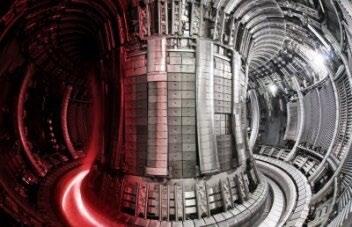
November 2023: JET tokamak completes a storied 40-year run- In its final DT experimental campaign, Europe's JET tokamak device demonstrated plasma scenarios that are expected in ITER and future fusion power plants, offering critical insights into key aspects such as heat exhaust, managing fuel retention, and the effect of fusion neutrons on cooling systems and electronics (see Figure 5.55). JET celebrated its 40th anniversary in June 2023 and ceased operations at the end of 2023. A final fusion energy record - 69.26 MJ of heat released during a single pulse was achieved in October 2023.
June 2024: 34th ITER Council: Updated baseline proposal presented for evaluation– at the ITER Council Meeting on 19 and 20 June 2024, the ITER Members received a proposed update of the project baseline. This proposal includes Start or Research Operation (SRO) by ~2034 and a First Deuterium-Tritium Operation Phase (DT-1) by ~2039. In addition, a number of design changes like
the use of tungsten on the first wall from the very beginning and the change of the ITER auxiliary heating mix, was also proposed as risk mitigation.
July 2024: A ceremony to mark TF coil completion - All 19 D-shaped toroidal field coils have been manufactured and delivered. A ceremony is held on 3 July 2024 on site to celebrate the completion of this 10+ year procurement program.
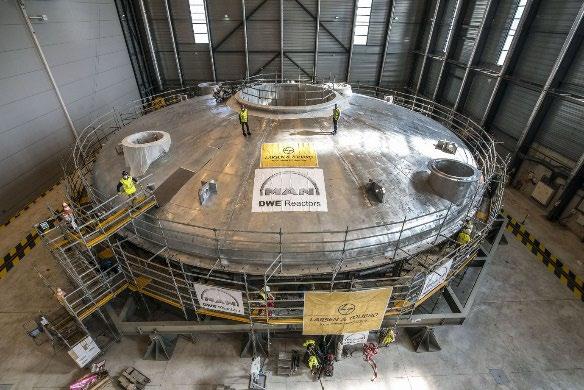
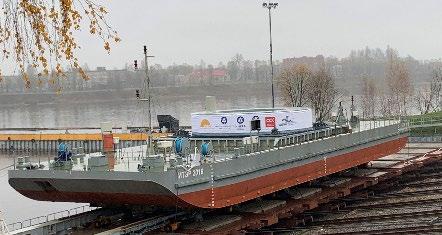
October 2024: The first vacuum vessel sector delivered by Europe - It took three weeks for sector #5 (in its protective housing, left) to travel from its manufacturing site in Monfalcone, Italy, to ITER (see Figure 5.56). Since then, it has been settled into a space in the workshop on its transport frame and unpacked.
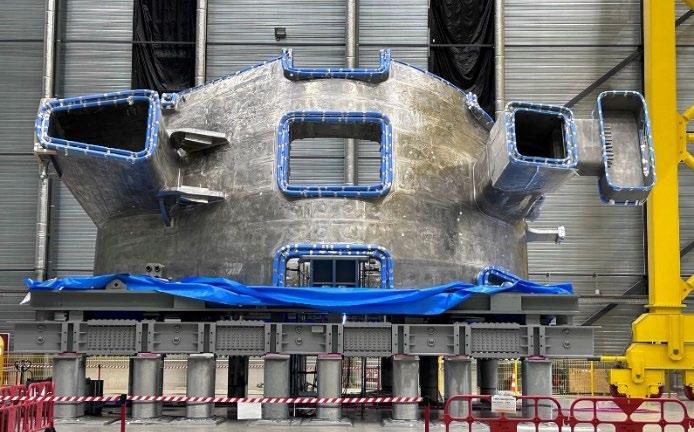
October 2024: vacuum vessel thermal shield (VVTS) and cryostat thermal shield (CTS) repair and replacement starts –Repair is in progress and in parallel manufacturing of 2 VVTS sectors has been launched (see Figure 5.57). The pipes are replaced with new 316L pipes and stitch welded to the panel, after 2 mm surface machining of the panel which removes the potential risk of residual chemicals in the panel causing corrosion. For risk mitigation, the silver coating on surface was removed. Silver plating is substituted with shiny surface polishing controlling surface roughness to <0.1 µm. A wellpolished stainless-steel surface has lower emissivity which satisfies TS design requirement at cryogenic temperature, as confirmed through several tests.
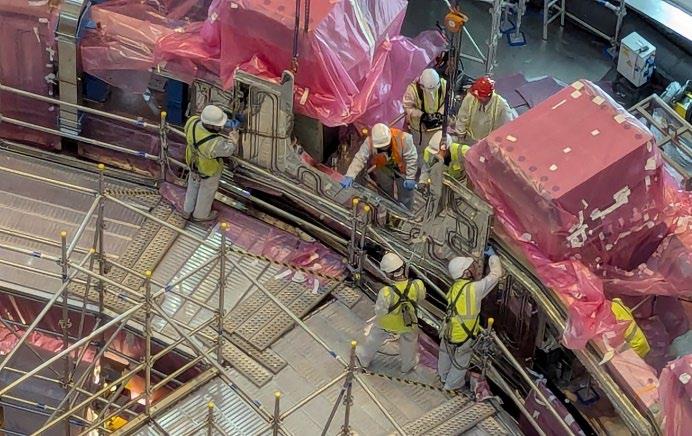
November 2024: Korea delivers the last of four vacuum vessel sectors - The Korean Domestic Agency delivers on 8 November 2024 the vacuum vessel sector #1 to the project. This is the last of four sectors expected from Korea which, since August 2020, has delivered sectors #6, #7, #8 and #1.
The upper cryostat thermal shield will be repaired using the same method as for VVTS repair. On the other hand, the lower cryostat thermal shield uses a different approach for repair, as the panels have already been installed in the pit and cannot practically be removed without the removal of many other components. A new cooling design has been developed using copper
bridges. The panels are cooled using copper thermal straps connected to new cooling pipes and copper diffuser to increase the thermal contact area on the panel. In this way, mechanical and thermal connections between pipe and panel are detached.
December 2024: Repair of the vacuum vessel starts - Because of excessive shrinkage during the VV Sectors welding/manufacturing, field joint bevels need to be corrected by an optimised combination of build-up vs machining (with minimisation of build-up) to meet the dimensional requirements for the field joint welding and Non-Destructive Examination (NDE). Build-up is applied by manual or mechanised TIG welding and volumetric examination is performed afterwards to validate the soundness of the weld (radiography test, RT, and manual ultrasonic test, M-UT). Bevel machining is made with portable milling machines bolted to the Sector T-rib.
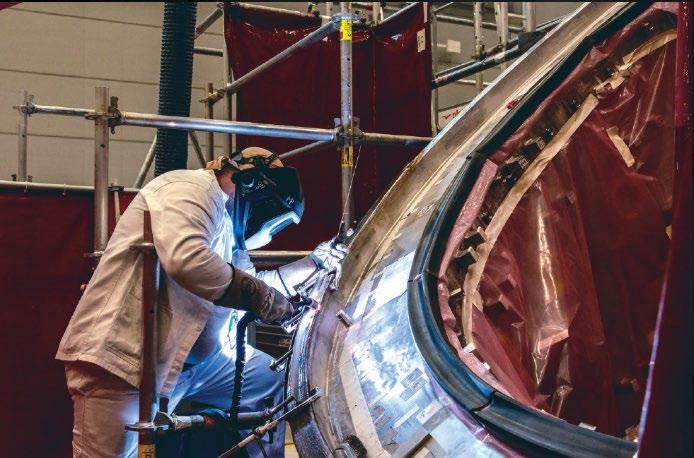
Sectors are repaired in two different configurations: in a vertical orientation (VV Sector installed on the Sector SubAssembly Tool (SSAT) in the Assembly Hall, see Figure 5.58), and in a horizontal configuration (Sector installed on the Transportation Frame/Lifting Frame).
March 2025: The US delivers all elements of central solenoid structure - The United States Domestic Agency, US ITER, has completed delivery of all components for the support structure of the central solenoid - some 9,000 individual parts in all. The role of the structure is to hold the six central solenoid modules in position within strict tolerances measured in millimetres and withstand the levels of extreme force that the central solenoid will generate.
April 2025: First sector module lowered into place in the tokamak pit - Sector module #7 is installed in the tokamak assembly pit three weeks ahead of schedule on 10 April 2025 (see Figure 5.59) It is the first of the nine “building blocks” that, once assembled and welded, will form the doughnut-shaped ITER plasma chamber. With sector module #7 now installed and sector module #6 scheduled to follow in July (see below), the project has exceeded the schedule performance targets defined in the 2024 Baseline.
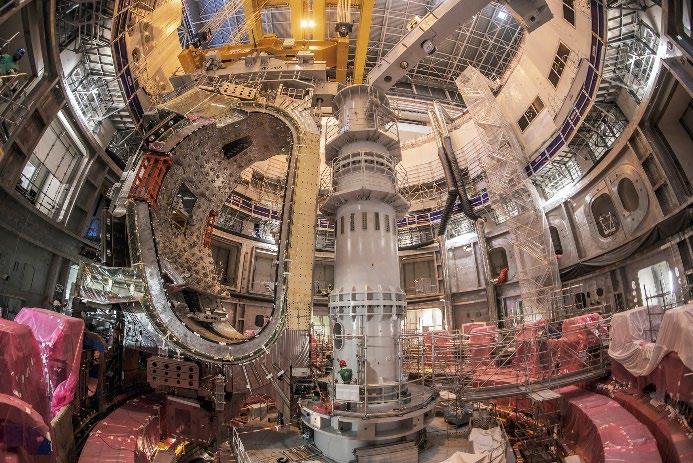
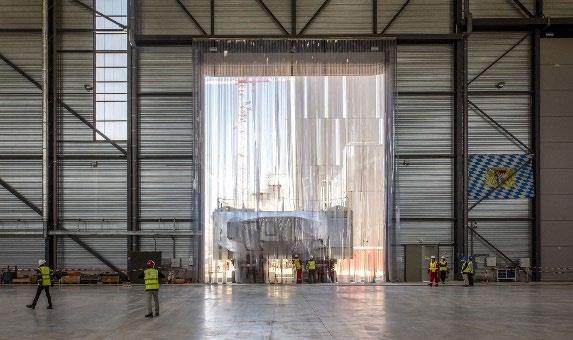
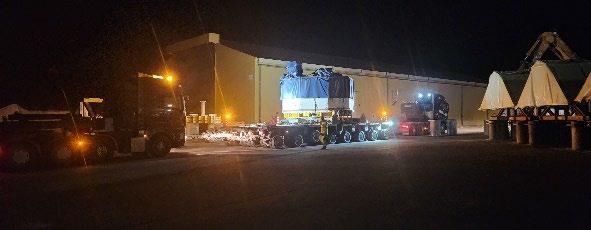
May 2025: Europe delivers Vacuum Vessel Sector #4 -The European Domestic Agency delivers vacuum vessel sector #4 on 9 May 2025 (the sector is pictured here in its protective housing, parked on the ITER site in front of a cocooned section of the ITER cryostat). Six sectors are now on site at ITER; three more are expected from Europe by 2026.
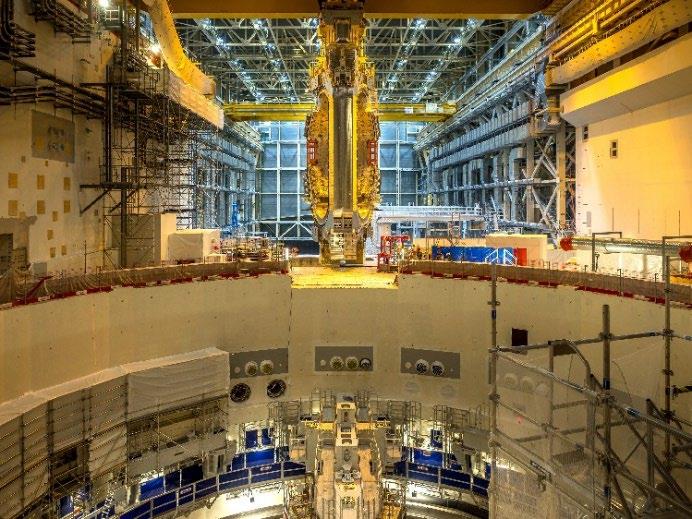
June 2025: Second sector module lowered into place - Following the insertion of the first of nine vacuum vessel sector modules into the tokamak pit in April 2025, the assembly teams successfully install a second module on 17-18 June (see Figure 5.60). This machine assembly milestone is six weeks ahead of schedule. The new sector module had to be lowered especially slowly to avoid the pendulum effect. The two sectors are only 15 cm apart.
June 2025: US delivers fifth central solenoid module - The United States Domestic Agency delivers a 110t central solenoid magnet on 27 June 2025 - the fifth of its kind to reach ITER (see Figure 5.61). Six modules are required to build the central solenoid tower; a seventh will be delivered as a spare.
[1] R. Arnoux, INTOR: The international fusion reactor that never was, ITER Newsline, ITER Organization, 15 Dec. 2008. [Online]. Available: https://www.iter.org/fr/node/20687/intor-international-fusion-reactornever-was
[2] NPR Staff, “Former Soviet leader Mikhail Gorbachev has died at 91,” South Carolina Public Radio, 30 Aug. 2022. [Online]. Available: https://www.southcarolinapublicradio.org/2022-08-30/former-sovietleader-mikhail-gorbachev-has-died-at-91
[3] [Photograph of US President Ronald Reagan and Soviet General Secretary Mikhail Gorbachev], “ITER is part of his legacy,” ITER Newsline, ITER Organization 12 Sept. 2022. [Online]. Available: https://www.iter.org/node/20687/iter-part-his-legacy
[4] [Photograph of ITER fusion veterans], “A chronicle of the early ITER days,” ITER Organization, ITER Newsline, 1 Oct. 2012. [Online]. Available: https://www.iter.org/node/20687/chronicle-early-iter -days
[5] Source unknown.
[6] R. Arnoux, “A man of unique experience,” ITER Newsline, ITER Organization, 18 Dec. 2009. [Online]. Available: https://www.iter.org/node/20687/man-unique-experience
[7] [10th anniversary of end of operations TFTR Tokamak] ITER Newsline, ITER Organization, 16 May 2007. [Online]. Available: https://www.iter.org/node/20687/10th-anniversary-end-operations-tftr-tokamak
[8] [A vision turned into reality] ITER Newsline, ITER Organization, 22 Nov. 1993. [Online]. Available: https://www.iter.org/node/20687/vision-turned-reality
[9] https://web.archive.org/web/19980124202118/http://www.jet.uk/News/1997/Dec/default.htm
[10] G. Janeschitz, “Fusion Technology Lecture 3,” Academic Training Lecture, CERN, Apr. 2011. [Online]. Available:https://indico.cern.ch/event/116347/attachments/53381/76737/GJ CERN Lecture 3 Fusion Te chnology 2011.pdf
[11] CAD of ITER. File: U.S. Department of Energy - Science - Created: 17 September 2013, Uploaded: 21 November 2017. Accessible online at: https://commons.wikimedia.org/wiki/File:U.S._Department_of_Energy_-_Science__425_003_001_(9786811206).jpg
[12] Source unknown.
[13] [France and the ITER Organization sign Headquarters Agreement], ITER Newsline, ITER organization, 17 Nov. 2007. Accessible at: Alchemy https://alchemy.iter.org/prod/
[14] [The signatories of the ITER Agreement], ITER Newsline, ITER Organization: 22 Nov 2006 – Accessible online at: https://www.iter.org/node/20687/iter-organization-gets-go-ahead
[15] [Work begins at the ITER Site of Cadarache], ITER Newsline, ITER Organization, 2007. [Online]. Available: https://www.iter.org/fr/node/20687/21-open-positions-iter
[16] [Birth of an organization], ITER Newsline, ITER Organization, 30 Oct.2017. [Online]. Available: https://www.iter.org/node/20687/birth-organization
[17] Source unknown
[18] Réacteur Iter, le projet: Accessed online at: https://www.uarga.org/nucleaire/Reacteur_Iter.php
[19] Osamu Motojima, ITER Director-General], ITER Newsline, ITER Organization, 14. Jan. 2011. [Online]. Available: https://www.iter.org/newsline/159
[20] [The Tokamak Complex Seismic Isolation Pit: 130 metres long, 90 metres wide and 17 metres deep]. ITER Newsline, ITER Organization, March 2011. [Online]. Available: https://www.iter.org/fr/projet/projetsrealises/excavation-fosse-sismique
[21] S. Griffith, “Early morning in the Seismic Pit”. ITER Newsline, ITER Organization, 23 Sept 2011. [Online]. Available: https://www.iter.org/fr/node/20687/early -mornings-seismic-pit
[22] J. Jacquinot, “ITER et les recherches sur la fusion par confinement magnétique,” Reflets de la Physique, no.32, pp.19–25,2013. [Online]. Available: https://www.refletsdelaphysique.fr/articles/refdp/pdf/2013/01/refdp201332p19.pdf
[23] M.T. Orlando, [fifth transformer installed at PRIMA test facility] ITER Newsline, ITER Organization. 11 July 2016. [Online]. Accessed: https://www.iter.org/fr/node/20687/fifth-transformer-installed-prima-testfacility.
[24] Source Unknown.
[25] [A bird's eye view of the ITER worksite]. ITER Newsline. ITER Organization. 2 March 2015 [Online]. Accessed: https://www.iter.org/fr/node/20687/birds-eye-view-iter-worksite
[26] [The International Thermonuclear Experimental Reactor A Huge Investment]. iAltEnergy [Online] Accessed: https://www.ialtenergy.com/international-thermonuclear -experimental-reactor.html
[27] [ITER Video: The Last Pour], ITER Newsline, ITER Organization, 28 Aug. 2014. [Online]. Accessed: https://www.iter.org/fr/node/20687/iter -video-last-pour
[28] R.A. [A warm welcome for the first heavy load]. Iter Newsline, ITER Organization, 19 Jan. 2015. [Online], Accessed: https://www.iter.org/fr/node/20687/warm -welcome-first-heavy-load
[29] [An Interview with ITER Director-General Bernard Bigot], ITER Newsline, ITER Organization, 8 March 2015. [Online]. Accessed at: https://www.iter.org/fr/node/20687/interview-iter-director-general-bernardbigot
[30] [Five years later …] ITER Newsline, ITER Organization, 20 July 2015, [Online], Accessed: https://www.iter.org/node/20687/five-years-later
[31] EUDA [First ITER winding back completed in Europe], ITER Newsline, ITER Organization, 2 May 2016. [Online] Accessed: https://www.iter.org/node/20687/first-iter-winding-pack-completed-europe
[32] USDA [Winding completed on first central solenoid module], ITER Newsline, ITER Organization, 11 Apr. 2016. [Online], Accessed: https://www.iter.org/node/20687/winding-completed-first-central-solenoidmodule
[33] R.A. [Cryostat welding begins], ITER Newsline, ITER Organization, 12 Sep. 2016. [Online]. Accessed: https://www.iter.org/fr/node/20687/cryostat-welding-begins
[34] JADA [Japan completes first 110-tonne winding pack], ITER Newsline, ITER Organization, 27 Feb 2017. [Online], Accessed: https://www.iter.org/node/20687/japan-completes-first-110-tonne-winding-pack
[35] R.J. Hawryluk, ITER: A Magnetically Confined Burning Plasma Integrating Fusion Science and Technology, 16 Feb. 2016 [Online Power Point Presentation], Accessed: /https://fire.pppl.gov/AAAS_2013_Hawrulyk_ITER.pdf
[36] Source unknown.
[37] [The Ring fortress], ITER Newsline, ITER Organization, 17 Jul 2017. [Online] Accessed: https://www.iter.org/fr/node/20687/ring-fortress
[38] [Countdown], ITER Newsline, ITER Organization, 1 May 2017. [Online]. Accessed: https://www.iter.org/node/20687/countdown
[39] [First machine component enters the tokamak pit], ITER Newsline, ITER Organization, 26 Nov. 2018. [Online]. Accessed: https://www.iter.org/fr/node/20687/first-machine-component-enters-tokamak-pit
[40] [Vacuum Vessel], ITER Organization. [Online]. Accessed: https://www.iter.org/machine/vacuumvessel
[41] [Civil works completed], ITER Newsline, ITER Organization, 18 Nov. 2019. [Online]. Accessed: https://www.iter.org/fr/node/20687/civil-works-completed
[42] [Japan delivers D-shaped coil], ITER Newsline, ITER Organization, 28 Apr. 2019. [Online]. Accessed: https://www.iter.org/node/20687/japan-delivers-d-shaped-coilAcA
[43] [New Developments in ITER Construction span Two Continents], Magnetics Business &Technology, 24
Aug. 2020. [Online]. Accessed: https://magneticsmag.com/new-developments-in-iter-construction-spantwo-continents
[44] [Massive ITER magnets in full production], Fusion for Energy, 14 Jul. 2020. [Online]. Accessed: https://fusionforenergy.europa.eu/news/massive-iter-magnets-in-full-production
[45] [The making of a ring coil a photo story], ITER Newsline, ITER Organization, 23 Jan. 2017. [Online]. Accessed: https://www.iter.org/fr/node/20687/making-ring-coil-photo-story
[46] [The special equipment for assembling the giant artificial sun is complete], Naver Blog, 1 Jul.2020. [Online]. Accessed: https://blog.naver.com/nfripr/222018116133
[47] [August 2020 Installation of lower cryostat cylinder (375 tonnes)], Big Science Sweden, Nov.2020. [Online]. Accessed: https://www.bigsciencesweden.se/media/5lgjtzgo/1-ai-control-systems-dataacquisition-big-data_anders-wallander_iter.pdf
[48] [A "strong back" for a fragile component], ITER Newsline, ITER Organization, 18 Jan. 2021. [Online]. Accessed: https://www.iter.org/node/20687/strong -back-fragile-component
[49] [Assembly of ITER magnet system starts], World Nuclear News, 26 Apr. 2021. [Online]. Accessed: https://www.world-nuclear -news.org/Articles/Assembly-of-ITER-magnet-system-starts
[50] [Defects found in two key components of ITER's tokamak], World Nuclear News, 22 Nov. 2022. [Online]. Accessed: https://www.world-nuclear -news.org/Articles/Defects-found-in-two-key-componentsof-ITER-tokama
[51] [Last checks before wrapping], ITER Newsline, ITER Organization, 14 Mar. 2022. [Online]. Accessed: https://www.iter.org/fr/node/20687/last-checks-wrapping
[52] [Alpes-de-Haute-Provence. Le chantier destiné à recréer un soleil avance], actu.fr, 12 mai 2022. [Online]. Accessed: https://actu.fr/societe/alpes-de-haute-provence-le-chantier-destine-a-recreer-unsoleil-avance_50899898.html
[53] [Pietro Barabaschi appointed Director-General of ITER Organization], Fusion for Energy, 15 Sep. 2022. [Online]. Accessed: https://fusionforenergy.europa.eu/news/pietro-barabaschi-appointed-directorgeneral-of-iter -organization
[54] Source unknown
[55] J. Amos, “Fusion nucléaire: la percée scientifique capitale dans l'exploitation de la source d'énergie des étoiles”, BBC News Afrique, 14 Fev. 2022. [Online]. Accessed: https://www.bbc.com/afrique/monde60350678
[56] [Pátý sektor vakuové komory ITER je z Evropy], 3pol.cz, 7 Jan. 2025. [Online]. Accessed: https://www.3pol.cz/cz/rubriky/jaderna-fyzika-a-energetika/3195-paty-sektor-vakuove-komory-iter -je-z-
evropy
[57] Source unknown
[58] Source unknown
[59] [A “record performance” brings assembly back on track], ITER Newsline, ITER Organization, 14 Apr. 2025. [Online]. Accessed: https://www.iter.org/node/20687/record-performance-brings-assembly -backtrack
[60] [Two sector modules side by side in the pit], ITER Newsline, ITER Organization, 23 Jun. 2025. [Online]. Accessed: https://www.iter.org/node/20687/two-sector-modules-side-side-pit
[61] Source unknown.
ASG Advanced Systems Group (context-dependent, ITER-related)
ASN Autorité de sûreté nucléaire (France)
CDA Conceptual Design Activities
CEA Commissariat à l’énergie atomique et aux énergies alternatives (France)
CERN Organisation européenne pour la recherche nucléaire
CNIM Constructions industrielles de la Méditerranée
CTS Collective Thomson Scattering
DA Domestic Agency
DEMO Demonstration Power Plant
DT Deuterium–Tritium
EDA Engineering Design Activities
EU European Union
FEAT Fusion Engineering Advanced Tokamak
IAEA International Atomic Energy Agency
IIC ITER International Centre
INB Installation nucléaire de base
JET Joint European Torus
PF Poloidal Field
SPIDER Source for the Production of Ions of Deuterium Extracted from RF plasma
SRO Start-up, Ramp-up and Operation
TF Toroidal Field
TFTR Tokamak Fusion Test Reactor
TS Technical Specification / Thermal Shield
US United States
VFR Volumetric Flow Rate
VV Vacuum Vessel
VVTS Vacuum Vessel Thermal Shield