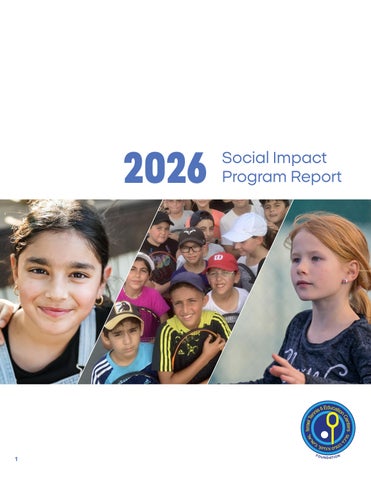
2026
1
Social Impact Program Report
2
INDEX ITEC CEO .................................................................................................................... 4-5 Director of Social Impact ........................................................................ 6-7 Head Start ................................................................................................................ 8-9 Embrace ...................................................................................................................... 10-12 Living Together ................................................................................................... 13-15 Accessible Sports ........................................................................................... 16-18 Healthy Living ....................................................................................................... 19 Girls Empowerment ....................................................................................... 20-23 Thank You Notes ............................................................................................... 24-25 Looking Ahead ................................................................................................... 26-27
3
Eyal Taoz Global CEO Dear Friends & Supporters, In my role as CEO, I have seen firsthand the impact of your support on the lives of children and families across Israel. I personally cherish and appreciate your partnership and generosity which is reflected in the resilience and hope we see at our centers. As we reflect on the recent two and half years, we have navigated unprecedented challenges. Facing the realities of an ongoing war, we have been called upon to operate not just as a sports organization, but as a critical pillar of support for our community. This has undoubtedly been one of the most challenging periods in our organization’s history. From the sudden disruption of daily operations and the necessity of closing centers
4
in high-risk areas, to the personal toll taken on our staff members, some of whom lost their homes, we have faced challenges that threatened our continuity. Yet the resilience of the ITEC community has been our hallmark. By prioritizing safety and adaptability, we have ensured that our centers remained beacons of stability, providing a vital sense of normalcy to thousands of children and families during a time of extreme uncertainty. The most significant sign of our success is that children continue to show up at our centers. We have maintained high attendance rates where it is safe to do so and continued to provide tennis education alongside critical social impact programs and mental health support. This adaptability has proven
that our infrastructure is resilient and that our staff is capable of extraordinary performance under pressure. We are not just surviving; we are upholding our commitment to excellence. Our mission to use tennis as a tool for social development, fostering coexistence, and empowering youth from all backgrounds is more urgent today than ever before. In a society currently grappling with division and trauma, ITEC serves as a rare, neutral ground where values like discipline, inclusion, and mutual respect are cultivated daily. We are building the next generation, equipping them with the confidence needed to overcome challenges that extend far beyond the court. This sustained impact is directly tied to the unwavering commitment of our
5
donors and partners. Your support is the vital resource that allows us to expand our operations, provide emergency relief to our affected staff, and ensure that no child is left behind due to the crisis. With your partnership, we are ensuring that ITEC remains a national asset, capable of meeting current needs while laying the groundwork for longterm growth. As we move forward, we are strengthened by your trust. Thank you for standing with us, believing in our purpose, and helping us turn obstacles into opportunities for growth. With deep gratitude, Eyal Taoz Global CEO
6
Shuki Rajman Director of Social Impact Programs The Israel Tennis & Education Centers (ITEC) is dedicated to promoting tennis and sports throughout Israel while creating equal opportunities for children and youth from all backgrounds. Alongside developing excellence in tennis, the organization uses the sport as a powerful tool for reducing social gaps and providing every child with access to values-based education, personal growth, leadership development, and meaningful opportunities for success. For over 50 years, the organization has been serving children and families across Israel. Today, ITEC operates community and social impact programs in 24 municipalities, reaching approximately 8,000 children, youth, and young adults throughout the country, with a particular focus on communities in Israel’s social and geographic periphery. Each center provides a comprehensive educational and community framework that supports participants from early childhood through adolescence. The centers are committed to being there for every child, including those facing the most complex circumstances, helping them overcome challenges, transform obstacles into opportunities, and develop essential life skills such as discipline, responsibility, perseverance, goal setting, self-confidence, and social responsibility. The Israel Tennis & Education Centers is the largest sports-based social and educational organization in Israel and the only one dedicated specifically to the sport of tennis. Across the country, more than 300 professionals work alongside participants, including tennis coaches, fitness trainers, mental performance coaches, nutrition specialists, social workers, educational facilitators, emotional support professionals, and additional expert staff. Together, they create a unique combination of sports and education that provides children with a safe, supportive, and empowering environment where they can express themselves, discover their strengths, and realize their potential. The goal is to help every participant develop the skills, confidence, and resilience needed to overcome social, economic, physical, or cultural barriers and pursue their aspirations with determination and hope. The Israel Tennis & Education Centers serves as a catalyst for social mobility, creating meaningful and measurable impact not only for the children who participate, but also for their families and the communities around them. Sincerely, Shuki Rajman Director of Social Impact Programs
7
Head Start 8
Head Start The Ami Ram Head Start Program, initiated by former Wimbledon Champion Andy Ram. In partnership with the Values in Sports Association and the Ami Ram Foundation, the Israel Tennis & Education Centers operates a three-year empowerment initiative that uses tennis as a platform for personal growth and social mobility. The program currently serves children in nine communities across Israel: Kiryat Shmona, Tiberias, Sajur, Ofakim, Arad, Jaffa, Katamonim (Jerusalem), Be’er Sheva, and Yoqneam. The program aims to: • Reduce social gaps through tennis and sports-based activities • Use tennis as an educational tool for individual and group empowerment • Promote social mobility by developing life skills and confidence • Provide children with tools for personal growth and leadership • Create a meaningful informal educational framework through sports • Strengthen participants’ sense of belonging to both the tennis center and their community • Foster positive leadership among children and youth Each participant receives three weekly tennis sessions combined with valuesbased educational activities led by professional facilitators. This year, 145 children participated in the Head Start program across 9 Tennis & Education Centers.
9
Embrace The Embrace Program empowers children and youth through tennis, sports, and enrichment activities. Operating in centers throughout Israel, from Kiryat Shmona in the north to Be’er Sheva in the south, the program has been serving at-risk children and youth for more than 18 years. The program primarily supports children and adolescents between the ages of 8 and 15 who are facing social, emotional, behavioral, or economic challenges. Working in partnership with schools, local authorities, and families, the program creates a strong support network that surrounds each child with guidance and encouragement. Participants attend the center twice a week for tennis and fitness training, combined with social-emotional workshops led by certified facilitators. Throughout the year, children explore topics such as: • Team building • Goal setting • Coping with success and disappointment • Leadership and personal responsibility • Healthy lifestyle habits Through tennis, participants gain practical tools that support them in all aspects of life. Each year, hundreds of children join the tennis family through this initiative, including many who are connected to welfare services or who have limited access to supportive opportunities within their communities. Some of the program’s most meaningful achievements are reflected in the increased confidence, self-worth, and belief participants develop in their own abilities. The program operates through two complementary components: • Sports-based development through tennis and physical fitness • Social and emotional empowerment through workshops, enrichment activities, and community engagement This year, more than 700 at-risk children and youth from across Israel participated in the Embrace programs each week, developing self-discipline, confidence, and resilience while learning to overcome challenges in their daily lives.
10
Embrace Program Curriculum The Embrace Programs are ITEC’s largest social impact initiative, reaching more than 700 children and teens annually across the country. While each program is tailored to a specific population, they all share a common goal: providing vulnerable children and youth with the support, opportunities, and life skills needed to thrive. Initial Assessment • & Program • Introduction (Session 1) Building Personal Resilience (Sessions 2-5)
• • • • •
Physical and mental resilience through sports-based challenges. Cognitive flexibility and adapting to changing circumstances. Turning setbacks into opportunities for growth. Emotional regulation and coping with stressful situations. Developing supportive peer relationships and learning how teammates can help one another.
Developing a Healthy Lifestyle (Sessions 6–10)
• • •
•
Nutrition and healthy daily habits. Sleep patterns and their impact on daily functioning. Physical activity and the connection between exercise and achievement. Stress management and its effect on physical and emotional wellbeing. Creating a healthy and balanced daily routine.
Teamwork & Group Development (Sessions 11–15)
• • • • •
Building trust within the group. Collaboration and working toward shared goals. Conflict resolution and effective communication. Leadership development through group responsibilities and activities. Mutual encouragement and group empowerment.
Goal Setting & Achievement (Sessions 16–20)
• • • • •
Time management and achieving personal goals. Perseverance in the face of setbacks. Strategies for overcoming discouragement. Monitoring progress and measuring growth. Maintaining motivation over time.
Personal & Group Empowerment (Sessions 21-24)
• • •
Sharing personal successes and achievements. Developing a positive mindset. Reflecting on challenges, accomplishments, and lessons learned throughout the program. Building a vision for the future and setting meaningful goals.
•
•
Program Conclusion & Impact Assessment (Session 25) 11
Opening questionnaire to assess participants’ personal resilience, self-confidence, and ability to cope with challenges. Group activities designed to introduce participants and begin strengthening personal resilience through collaborative challenges.
• • •
Completion of a closing questionnaire to evaluate personal growth and development. Reflection on progress made throughout the year. Establishing future goals based on lessons and experiences gained during the program.
Embrace 12
Living Together Tennis creates opportunities for interaction that transcends language, politics, and religion. It provides a powerful platform for promoting tolerance and nurturing relationships between people from different cultures and communities. The Living Together Program brings together Jewish, Arab, and Druze children in a shared and inclusive environment. Through tennis, participants develop mutual understanding, respect, and meaningful friendships both on and off the court. The Israel Tennis & Education Centers encourages children from different backgrounds to play together, get to know one another, work toward common goals, and experience what it means to be part of the same team. The program is built on the belief that sports can promote understanding in a region often marked by division and can help create lasting friendships across cultural and social boundaries. In contrast to the conflicts that often dominate public discourse, sport has historically served as a unifying force. It provides a common language that transcends geographic, linguistic, political, and religious differences. This year, 243 children participated in the Living Together program.
13
Living Together 14
Impact Story | Living Together Adam is a sensitive Arab child who joined the Living Together Program with almost no knowledge of Hebrew. At the beginning, he found it difficult to integrate into the group, communicate with the other children, and find common ground with them. The language barrier often made it challenging for him to connect with his peers and fully participate in the group’s activities. With the consistent, thoughtful, and professional support of coaches Miriam and Mohammed, together with the encouragement and acceptance he received from the other children in the program, Adam gradually began to find his place. Over time, he grew more confident, significantly improved his Hebrew language skills, and developed close friendships with the other participants. As his confidence increased, so did his willingness to engage with others, participate actively in group activities, and build meaningful relationships with children from different backgrounds. What once felt unfamiliar and intimidating gradually became a place where he felt comfortable, accepted, and connected. Today, Adam speaks Hebrew with confidence and is a valued and well-loved member of the group. In fact, he often remains at the center after practice has ended, choosing to stay and spend additional time playing and socializing with his friends. Adam’s journey is a moving example of the power of the Living Together Program to bring children together, bridge linguistic and cultural differences, and create genuine friendships through the shared experience of sports. His story demonstrates how consistent support, positive encounters, and a welcoming environment can help a child develop confidence, belonging, and meaningful connections that extend far beyond the tennis court.
15
Accessible Sports Over the past several decades, Israeli society has made important strides toward the inclusion of individuals with disabilities. The Israel Tennis & Education Centers views this inclusion as essential to building a healthier, more compassionate society. Programs are tailored to participants with autism, Down syndrome, intellectual disabilities, physical disabilities, and a variety of other developmental challenges. Activities are designed to improve concentration, coordination, motor skills, and confidence while encouraging healthy and active lifestyles. In addition to weekly activities, participants take part in regional and national competitions in partnership with Special Olympics Israel. The collaboration began with a shared vision of creating competitive tennis opportunities for individuals with special needs. An additional key partner in this initiative is Variety Israel, which continues to help make these opportunities possible. ITEC operates 45 Accessible Sports programs serving approximately 425 children and adults with disabilities across 16 centers throughout Israel.
16
17
Impact Story | Accessible Sports Noa, a third-grade student in the Accessible Sports program, participated in weekly tennis lessons at the Arad Tennis & Education Center throughout the school year. At the beginning of the program, she found it very difficult to cooperate with others, follow instructions, and build social connections. She often responded to challenges with frustration and was reluctant to take an active role in the lessons. Over the course of the year, however, a meaningful transformation took place. Gradually, she learned to participate more fully, cooperate with her peers, follow instructions, and remain engaged in activities. As her confidence grew, so did her willingness to try new things and take part in the group. Perhaps most importantly, she began to genuinely enjoy coming to the lessons. She arrived with enthusiasm, motivation, and a desire to succeed. Her participation in the tennis program contributed significantly to her sense of capability, self-confidence, and social development. What began as a challenge became a place where she could experience success, build relationships, and discover strengths within herself that continue to grow.
18
Healthy Living In recent years, increasing numbers of children and youth have experienced the consequences of insufficient physical activity, including rising rates of obesity and chronic health conditions that were once associated primarily with adulthood. Recognizing both the importance and complexity of this challenge, the Israel Tennis & Education Centers developed Tennis Plus, a unique program that combines physical activity, nutrition education, and personal empowerment. The program is led by a multidisciplinary team of dietitians, tennis coaches, and fitness trainers. Participants and their families meet regularly with nutrition professionals who help them understand and adopt healthier habits at home. The program focuses on creating long-term behavioral change through three core areas: • Physical activity • Awareness and healthy decision-making • Nutrition By encouraging healthy habits at an early age, Tennis Plus helps participants build the foundation for healthier lives both as children and as adults. Today, the program operates in 7 centers and serves 97 participants.
19
Girls Empowerment The Girls Empowerment program uses tennis as a platform for providing adolescent girls with knowledge, opportunities, and life skills that help them build brighter futures. The program serves girls between the ages of 11 and 14 who are facing social and economic challenges. Through group-based sports activities, participants develop independence, confidence, leadership skills, and a stronger sense of self-worth. • • • •
The program’s goals include: Creating a positive and supportive group environment Improving physical and emotional well-being Teaching essential life skills such as teamwork, goal setting, and problemsolving
Participants are recruited in partnership with municipal education and welfare departments. Many come from challenging home environments and lack strong support systems that encourage personal growth and development. The girls participate in both group and individual tennis training led by certified coaches and supported by professional educational teams. Through these experiences, participants are encouraged to broaden their horizons and envision themselves as strong, independent young women capable of pursuing higher education, meaningful careers, military or national service, and leadership roles in their communities. Today, the program operates in 13 Tennis & Education Centers and serves 197 girls.
20
Girls Empowerment Program Curriculum The Girls Empowerment Program is a structured, multi-month journey designed to strengthen confidence, resilience, and emotional well-being among young girls. Through 25 guided sessions, participants develop practical life skills, build a strong sense of self, and learn how to navigate challenges in a complex and often overwhelming environment.
21
Laying the Foundation
The program begins with an initial assessment, allowing each participant to reflect on her current sense of confidence, resilience, and ability to cope with challenges. This baseline helps guide the process and measure meaningful growth over time.
Building Personal Resilience (Sessions 2–5)
Participants engage in a combination of physical activity and guided discussions to strengthen both mental and emotional resilience. They learn how to cope with setbacks, manage stress, and navigate conflicts at home and in social settings—gaining tools that help them remain grounded even in difficult moments.
Developing a Healthy Self-Image (Sessions 6–9)
In a world heavily influenced by media and social pressure, girls explore topics of body image, self-perception, and the changes that come with adolescence. Through open conversations and supportive guidance, they develop a healthier relationship with themselves—both physically and emotionally—while learning to set appropriate personal boundaries.
Fostering Personal Empowerment (Sessions 10–13)
The program places strong emphasis on self-awareness and recognizing individual strengths. Participants identify positive role models in their lives, begin to shape a personal vision for their future, and share their own stories within a safe and supportive group setting—building confidence and a sense of belonging.
Strengthening Social Skills (Sessions 14–17)
Girls learn how to communicate effectively, stand up for themselves, and build healthy, supportive relationships. Through practical exercises, they develop the confidence to express their opinions, set boundaries, and resolve conflicts constructively.
Tools for Coping with Challenges (Sessions 18–21)
Recognizing the pressures many children face today, the program introduces concrete tools for managing academic and emotional challenges. Techniques such as mindfulness, movement, and relaxation exercises help participants regulate stress and develop healthier coping mechanisms.
Reflection, Growth, and Looking Ahead (Sessions 22–25)
The program concludes with a reflective process, where participants recognize how far they have come. Through group discussions and a final evaluation, they articulate personal insights, define future goals, and leave the program with a stronger sense of direction, confidence, and resilience.
Girls Empowerment Social Impact Coordinator The events of the past year created significant uncertainty and stress for many of the young people in our community. Against this backdrop, we recognized how important it was to restore a sense of routine and connection as quickly as possible. For many participants, the program became a source of stability and resilience, offering a place where they could take a break from daily concerns, focus on personal growth, and feel part of a caring community. As the Social Impact Coordinator, I have the privilege of working closely with the girls throughout the year and witnessing their development firsthand. Through tennis, group activities, and ongoing mentorship, we see them build confidence, form meaningful friendships, and develop essential life skills. With time, many participants become more engaged, more willing to take on challenges, and more confident in their ability to succeed. Your support allows us to provide far more than a weekly tennis practice. The program offers a comprehensive framework that combines professional coaching, personal guidance, enrichment activities, and individualized attention from a dedicated team that genuinely cares about each participant’s well-being and growth. This holistic approach helps create an environment where every girl can feel respected, supported, and empowered. The impact is evident in countless ways. We see girls who initially arrive reserved and uncertain gradually become active participants in the program. We watch them develop stronger social connections, take pride in their accomplishments, and gain the confidence to pursue goals that once felt out of reach. For many of them, the program is not simply a weekly activity but an important source of encouragement, stability, and a stronger sense of self-worth. Through your support, these young women can experience success, discover their strengths, and develop a stronger sense of their own value and potential. Your support provides a foundation from which they can continue to grow, even during difficult and uncertain times. We would be delighted to welcome you to the Jerusalem Tennis & Education Center so that you can see the program firsthand and meet some of the remarkable young women whose lives you are helping to shape. With deep appreciation and heartfelt thanks, Ephraim Fine Social Impact Coordinator ITEC Jerusalem
22
23
Letters from the Children of Israel 24
25
Looking Ahead Fall 2026 & Beyond Green Frieberg Israel Tennis & Education Center – Sderot For decades, Sderot has lived under the constant threat of rocket fire. Children grow up knowing they may have only 15 seconds to reach shelter, and many experience ongoing trauma and anxiety. The attacks of October 7th and the subsequent evacuation of much of the city caused even greater disruption to family life, education and the stability of the community. As residents return and Sderot continues to rebuild, families need more than restored buildings. Children need safe places to go outside of school, trusted adults in their lives and consistent opportunities to reconnect with friends, regain confidence and experience moments of normalcy and joy. The Green Frieberg ITEC Sderot will help build a stronger future for the city's children. By helping young people feel safe, supported and connected, this center will contribute to the long-term resilience of the entire community.
Opening Fall 2026
26
Looking Ahead Fall 2026 & Beyond Mental Health & Emotional Resillience The greatest challenge facing Israeli children today is mental health challenges. After years of war resulting in displacement and uncertainty, an entire generation is carrying the weight of chronic stress and trauma. While many organizations provide crisis counseling or localized services, no organization is addressing children’s mental health at scale through a comprehensive, preventative model that reaches children where they already are—in their schools and communities. ITEC is uniquely positioned to fill that gap. With a national network of 25 locations, decades of trusted relationships with municipalities and schools, and more than 330 staff working on the ground with children every day, with an additional 30 mental health professionals already embedded across our organization, we have the infrastructure, expertise, and credibility to deliver support immediately. Rather than asking children to seek treatment, we bring resilience-building directly into their daily lives through school sports and community centers, making mental health support accessible, inclusive, and stigma-free for every child—regardless of background or ability. A national study conducted by Bar-Ilan University in collaboration with Israel’s Ministry of Education found that 22.3% of adolescents report symptoms indicative of PTSD, while 27.2% experience at least two symptoms—including difficulty sleeping, stomachaches, low mood and irritability—almost every day. Researchers also identified increases in addiction-related behaviors and exposure to violence, alongside an erosion of young people’s hope for the future. Research shows that supportive adults, community connections and healthy social relationships are powerful protective factors that help young people cope with adversity. At ITEC, those protective factors take shape through trusted coaches and mentors, welcoming centers where children feel they belong, friendships built on court and consistent opportunities to learn, play and grow. ITEC is investing in professional training that equips coaches and social impact staff to use sport more intentionally as a tool for strengthening mental and emotional resilience. Coaches learn to recognize signs of distress and connect children with professional care when needed. Just as importantly, they gain practical tools to transform everyday coaching moments into opportunities for children to develop confidence, emotional regulation, perseverance, healthy relationships and coping skills. Through the power of sport, ITEC is creating the relationships, environments and skills children need not only to withstand adversity, but to move forward with confidence, connection and hope for the future. 27
itecenters.org Israel Tennis & Education Centers 3275 West Hillsboro Boulevard, Suite 102 Deerfield Beach, FL 33442 | (954) 480-6333 EIN: 13-2961273