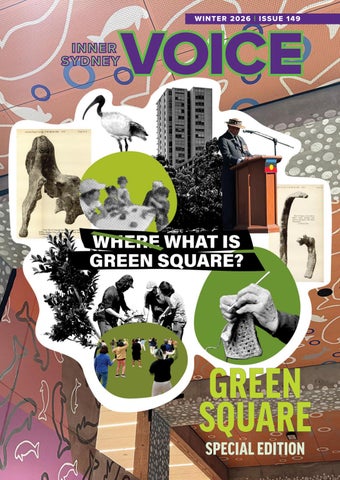
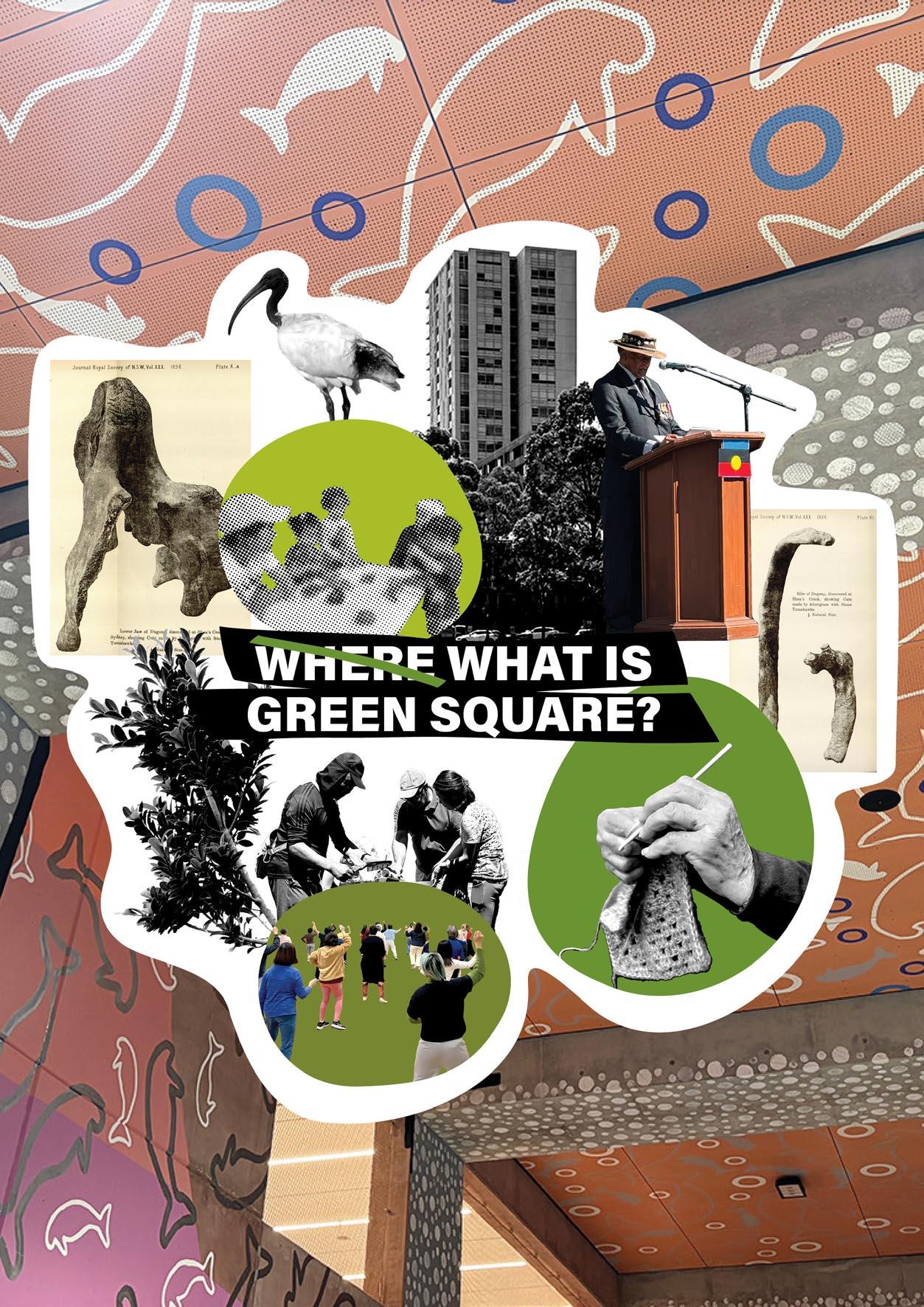
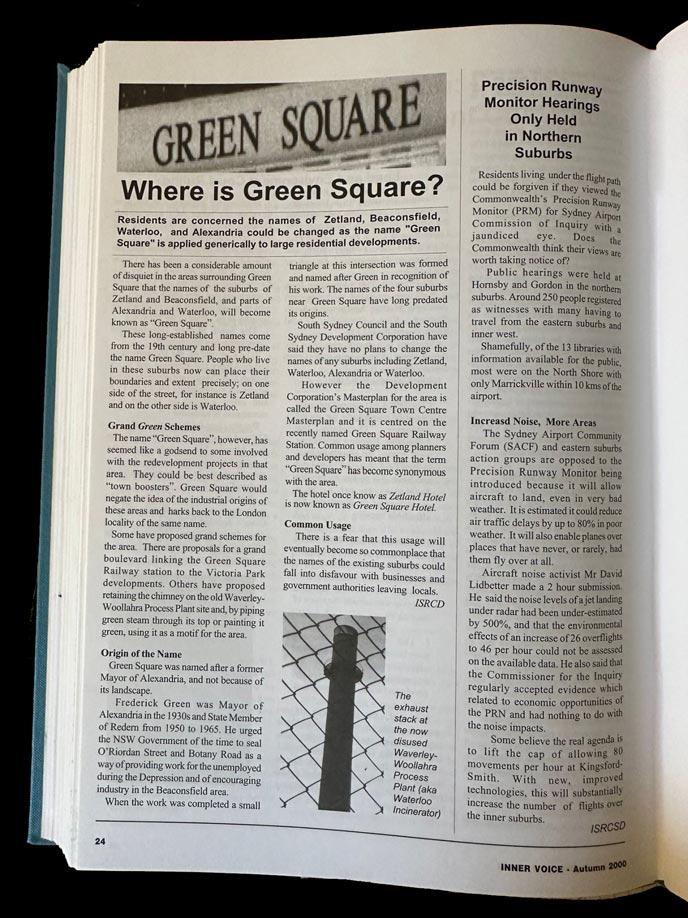
That was the question Inner Sydney Voice asked in our Autumn 2000 issue, republished here from the archives. At the time, Green Square was still an idea that many people were trying to place on the map. More than two decades later, the question has shifted from where it is to what it is becoming.
Today, Green Square is one of Australia’s largest urban renewal projects, covering 278 hectares across parts of Zetland, Beaconsfield, Rosebery, Alexandria and Waterloo. By 2030, its population is expected to peak at around 61,000 residents and 21,000 workers.
In the middle of a housing crisis, those numbers tell us about the scale of change taking place in inner Sydney, and the pressure on neighbourhoods to absorb more people and more density. But compiling this issue has shown me that numbers can also flatten a place.
Over the past couple of years, much of Inner Sydney Voice’s work in Green Square has focused on social isolation and loneliness. Through our research, we found that 70 percent of residents wanted to feel more connected to their neighbours. Yet only around half said they would feel comfortable asking a neighbour for something as simple as sugar or salt.
At first, that seemed to confirm a familiar concern about high-density living: that being close together does not necessarily make people connected. Working with the community on this issue showed how a connection is being built from shared histories and accessible public spaces.
Green Square has not simply appeared out of nowhere. It was sanddune Country, shaped by freshwater wetlands, ephemeral ponds and the
movement of water between Gamay/ Botany Bay and War’ran/Sydney Cove. Its history is not only beneath the surface, it continues to shape how the area is remembered and lived in now.
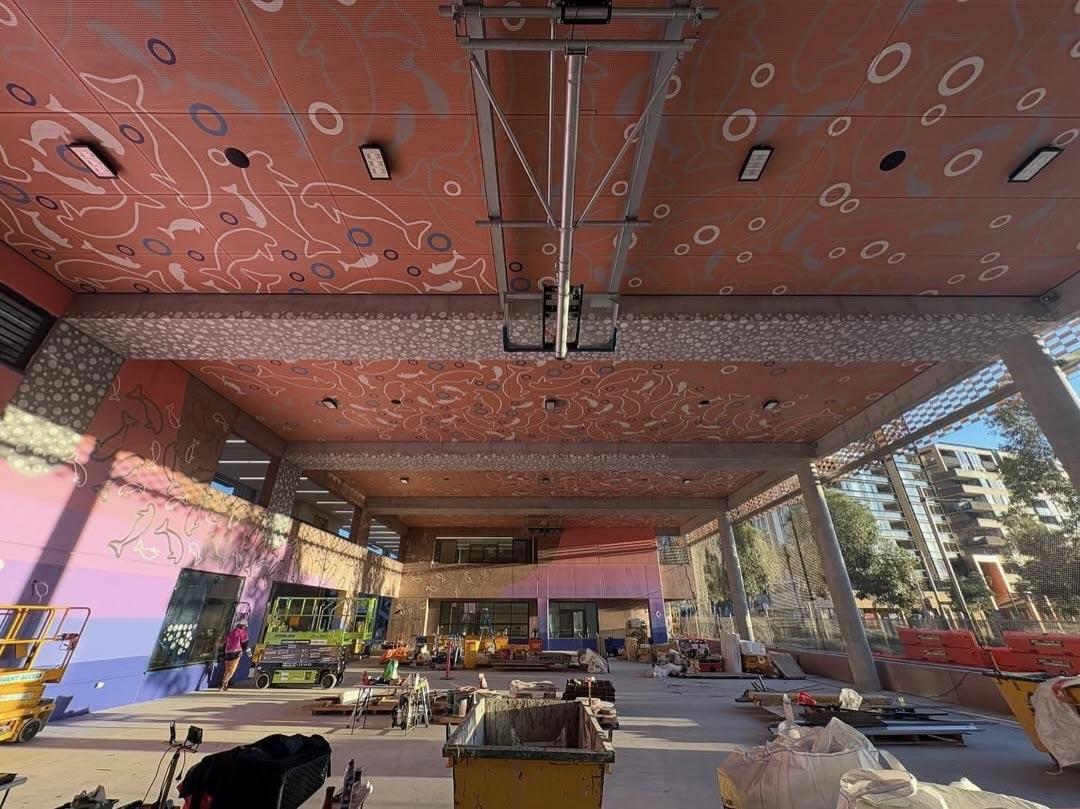
One of the clearest examples is Lucy Rawlings’ interview with Blak Douglas about The Belly of the Feast, the public artwork at Green Square Public School. Painted across a semi-exposed
Green Square’s future is still being made. This issue reminds us that a city is not renewed by construction alone. It is renewed by the people who find ways to belong to it, and to each other.
basketball court, the work draws on the dugong bones uncovered during the excavation of Shea’s Creek in 1896. Found alongside stone hatchets, the bones point to Aboriginal presence, knowledge and life in this area around six thousand years before Green Square took its current form.
Douglas turns that history into something children encounter every day through play.
Across the issue, Green Square emerges as a place being built, remembered and made liveable by the
people who use it.
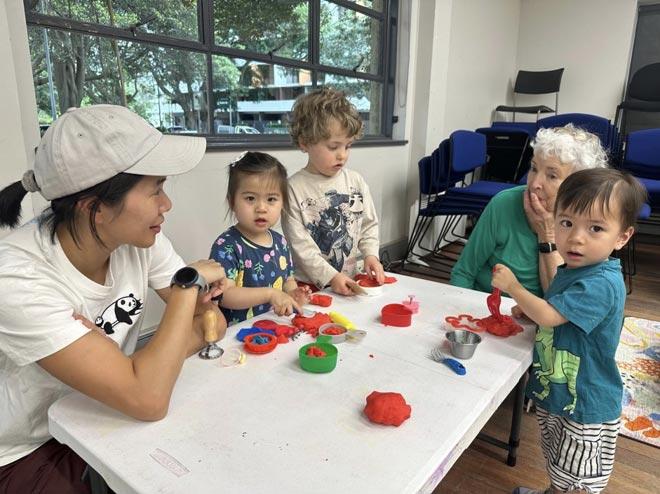
In Why Playgroups Matter in High-Density Living, we hear from parents raising children in apartments, often without extended family nearby. For them, playgroup becomes part of “the village”: a place to compare notes, notice when someone is having a hard day and build the support networks others may inherit through family.
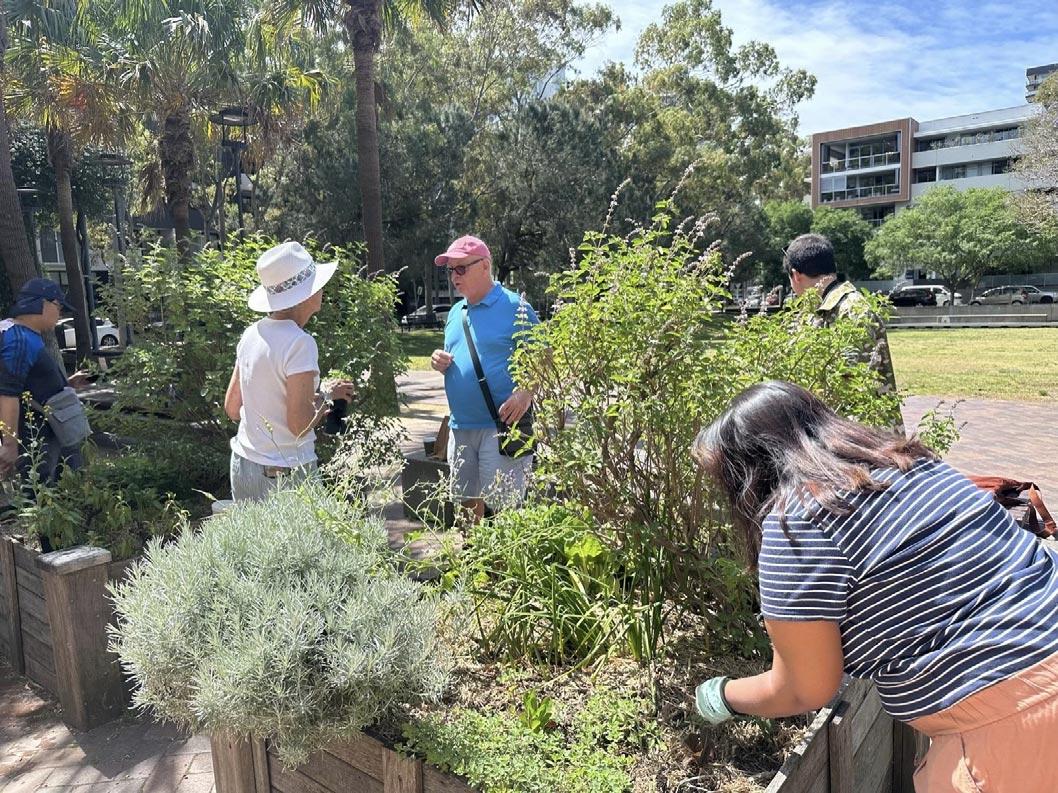
In Where Community Grows, the Green Square Growers show how a few wicking beds can become a classroom, a language exchange, a low-cost weekend activity and a way into community for new arrivals.
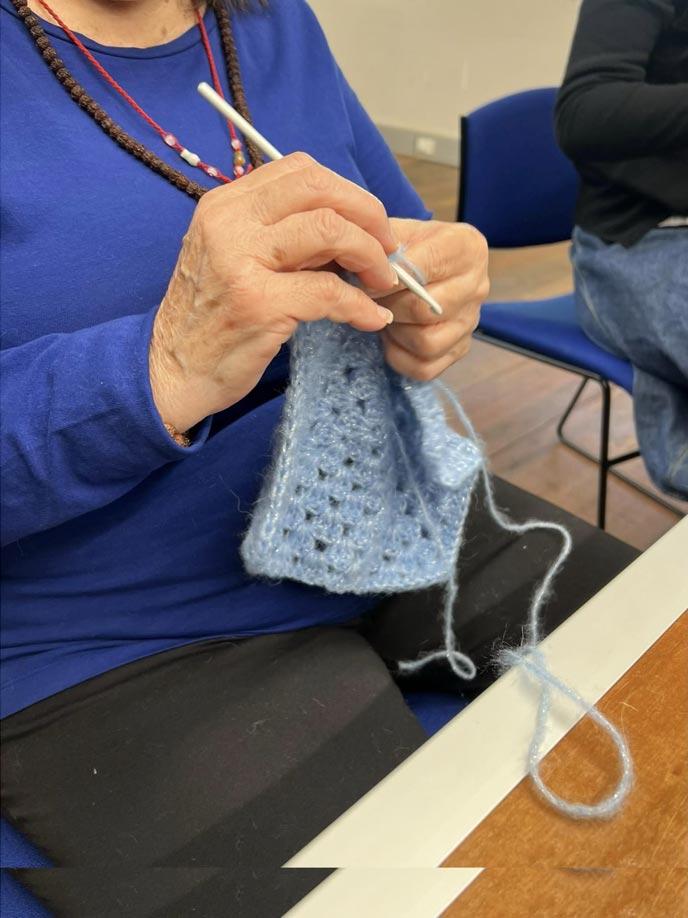
The Green Square Knitting Group tells a similar story. Around coffee, conversation, women are creating regular, practical and meaningful connection. Our noticeboard on free line-dancing sessions continues that thread, offering another low-pressure way for people to meet, move and share a laugh.
In Shared Streets, Separate Experiences, Xintong Huang writes about Green Square from the perspective of an international student, reflecting on what it means to live in the same streets as others while being separated by language, rent, routines and belonging.
Together, these stories ask what makes a neighbourhood truly connected. The answer is not only buildings, transport corridors or public squares, though all of these matter. It is also memory, culture, care, access, affordability and the ordinary places where people can keep showing up.
Green Square’s future is still being made. This issue reminds us that a city is not renewed by construction alone. It is renewed by the people who find ways to belong to it, and to each other. In solidarity, Isabelle, Editor | Inner Sydney Voice
Scoot on down to Green Square
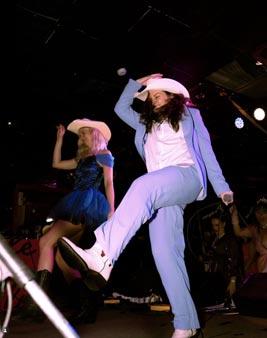
Inner Sydney Voice is teaming up with the City of Sydney and The Saddle Club to deliver six free line-dancing sessions in Green Square, creating a fun and easy way for people to meet, move and connect.
The idea came directly from our work with the community. Over the past year, ISV has been speaking with residents, community workers and local groups, including Green Square Neighbourhood Central – a network of local residents helping to create a vibrant, sustainable and connected Green Square community – about loneliness and social connection in inner Sydney. We also drew on this work in our submission to the NSW parliamentary inquiry into loneliness.
We heard that loneliness is not just about being alone. It is shaped by housing, cost of living, life transitions, safety and whether people have easy access to places and activities where they feel welcome.
Wednesdays | 6-7pm
June 24
July 1
July 8
July 15
July 22
July 29
This is especially important in Green Square, where highdensity living can mean being surrounded by people but still feeling disconnected. In ISV’s loneliness submission, one Green Square resident said: “I was living with hundreds of people and had never felt lonelier in my life.”
We heard that young people, older people, women, new mothers, social housing residents and recent arrivals can be particularly impacted by loneliness, especially during times of change.
We also heard that people wanted activities that felt fun, low-pressure and social. Line dancing emerged as a clear favourite!
These free sessions are designed to bring people together across generations through music, movement and a shared laugh. You do not need experience, a partner or the right moves. Just come along, have a go and meet others in your community.
There will also be information available about local support services.
WHO CAN COME
Everyone is welcome, especially older people, young people, women, new mothers and anyone who wants to feel more connected living in Green Square.
Inner Sydney Voice is the journal of the Inner Sydney Regional Council for Social Development Inc. We are a not-for-profit organisation committed to the idea of information as a tool for community development. Inner Sydney is defined as the LGAs of City of Sydney, Bayside, Randwick, Waverley, Woollahra, and Inner West.
ACKNOWLEDGEMENT OF COUNTRY ISV office is located on the land of the traditional owners of the Gadigal people of the Eora Nation. We acknowledge and pay our respect to the traditional owners of the lands across the areas we service, including the Bidjigal, Birrabirragal, Gadigal, Gweagal and Wangal people. We acknowledge that sovereignty over these lands has never been ceded.
Inner Sydney Regional Council for Social Development Inc trading as Inner Sydney Voice ABN 86 770 127 254
Rear 770 Elizabeth Street Waterloo NSW 2017 PHONE 9698 7690
EMAIL admin@innersydneyvoice.org.au
FACEBOOK facebook.com/innersydneyrcsd
BLUESKY @innersydneyvoice.bsky.social
WEBSITE innersydneyvoice.org.au
DISCLAIMER + COPYRIGHT
The opinions expressed in Inner Sydney Voice magazine do not necessarily represent the views of the publisher, the publication nor our funders. Unless stated otherwise, opinions belong to contributors, not the organisation or group with which they work. While every effort has been made to ensure the accuracy of the information, no responsibility can be accepted by the publisher for any contributions. Copyright belongs to the contributors.
Join and subscribe: Please see back cover
CRAVING CONNECTION:
Alone in a crowded city
Residents of Green Square share their experiences of social isolation
By Stephanie Mavridis, UTS
Social isolation is a significant and growing issue. Research shows that post-COVID, Australians are experiencing record levels of loneliness: one in three adults now report feeling lonely, and more than half say they feel more isolated than before the pandemic. This is not simply about the number of friends a person has; it reflects the deeper sense of comfort, support and belonging within our communities.
In the lead-up to Loneliness Awareness Week, Inner Sydney Voice invited Green Square residents to reflect on how socially connected they feel in their neighbourhood. Green Square presents a unique case: loneliness and social isolation are
increasingly recognised as urgent public health concerns, and the precinct is set to welcome an extra 60,000 residents in the near future. Rising housing density, a high proportion of single-person households and a transient population – including many international students – all add to the challenge. Inner Sydney Voice’s community survey reinforced these concerns, highlighting the shortage of social spaces and facilities that could foster stronger connections and community engagement in Green Square.
The survey found that 70 percent of respondents want stronger connections with their neighbours. Yet only half of these residents said they would feel comfortable asking a neighbour for something as simple as sugar or salt –revealing a gap between the desire for connection and the confidence to reach out.
Residents also told us they value opportunities to come together in
informal and welcoming ways, such as block parties, picnics and interactive workshops designed to spark conversation and build trust.
At Inner Sydney Voice, we believe that connection and belonging are fundamental to a healthy community. Loneliness is not confined to any one group; it is experienced across diverse individuals and neighbourhoods. Addressing it requires both empathy and action: reducing stigma, strengthening social supports and investing in the local services that help people feel part of something bigger. Our work aims to break down the barriers that contribute to isolation –from fragile social safety nets to underresourced community infrastructure –while creating meaningful opportunities for people to connect.
n Stephanie Mavridis is pursuing a Bachelor of Communications at the University of Technology Sydney.
GREEN SQUARE WOMEN: Knitting community
By Natalie Yong
The Green Square Knitting Group brings together people in the community over a shared love of crafting and creating.
The group meets every second Tuesday of the month at the Tote Building at 10 am and gather to knit squares for ‘Wrap with Love’ over coffee and a chat.
‘Wrap with Love’ is a non-profit organisation that supplies blankets for people in need, supplied by donations of knit or crocheted squares crafted by volunteers. When visiting the knitting group session in June, Margaret, a regular at the group, said, “Living alone, this is a good opportunity to socialise with people in the community.” Another regular, Maryanne, commented that “the women here are lovely, and it is wonderful to talk to a group of women monthly.”
area. These events aim to reduce social loneliness and isolation by offering an environment where women can connect socially, share stories and experiences, and cultivate new friendships.
the desire for more community events that bring together people of all ages. Thus, ISV is currently organising intergenerational knitting events that bring together university students and older women. While knitting has long been a popular activity among older women, it has seen a surge in interest among younger generations due to its meditative, relaxing nature. It has been shown to reduce stress and is a highly beneficial activity for university students dealing with academic stress.
At Inner Sydney Voice, we have been developing projects and events for our Women’s Hub. The Women’s Hub focuses on providing intergenerational events for women to build a stronger sense of community in
In discussion with the Green Square Knitting Group, members expressed how they don’t have many organic connections with young people or young women in their apartment buildings. This lack of interaction with the younger community has increased
n Natalie Yong is a Bachelor of Arts and Advanced Studies student at the University of Sydney, majoring in politics and international relations. For the past three months, she has interned at Inner Sydney Voice, developing events to foster community in Green Square through organising intergenerational social activities for women. This experience directly aligns with her interests to pursue a career in public policy, specifically focusing on local-based initiatives within the NGO sector.
BUILDING A VILLAGE IN THE SKY THE POWER OF COMMUNITY FOR APARTMENT FAMILIES
If you are raising children in Green Square, living in an apartment and relying on parks as your backyard, where do you go when it rains, when you need a change of scenery, or when the afternoon stretches out and you are on your own?
For Yvette, high-density living is not something she is trying to escape.
“People always say, you won’t be here for very long, because you want the backyard,” she says. “But when you look at lots of places with a backyard, that’s where you park your car, and I want to have accessibility to the city. I love living here. It’s great. So why wouldn’t I bring up children in this area?”
For many families in Green Square, apartment living works because the neighbourhood is walkable and connected. The city is close, and shops, doctors, childcare and transport are within reach. But shared indoor spaces are in shorter supply.
“Our backyards are the parks,” says
Yvette. “But when it’s raining, or you need a variation to the same park you’ve been looking at, and you want to be able to walk there, where do you go?”
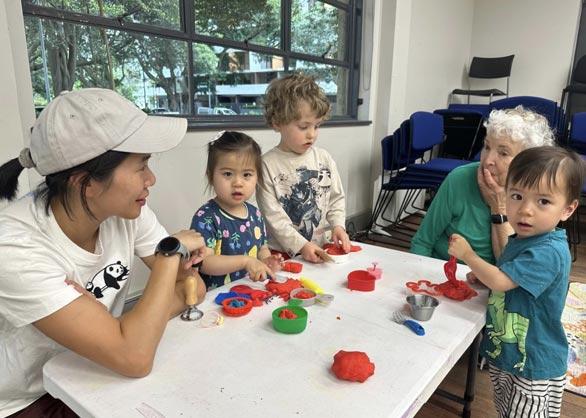
That question is part of what led Yvette and local grandmother Kathleen to establish the Green Square Playgroup.
For Kathleen, the need was both practical and personal. In 2016, while caring for her grandson, she found herself desperately looking for activities they could join in the local area. Rhyme Time was a great success, but she was the only grandparent in attendance.
“I didn’t have a social group and felt quite isolated within the community,” Kathleen says.
When she looked online for local playgroups, there was nothing available that she and her grandson could walk to. Years later, Kathleen began noticing more grandparents in the parks and supermarkets with their grandchildren. She strongly felt there was a need for an intergenerational playgroup.
“Yvette and I met for coffee and together we planned our community playgroup,” she says. “We think it provides more than we ever anticipated.”
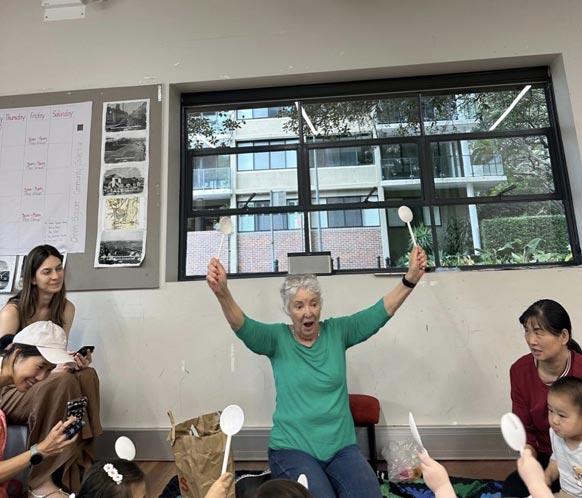
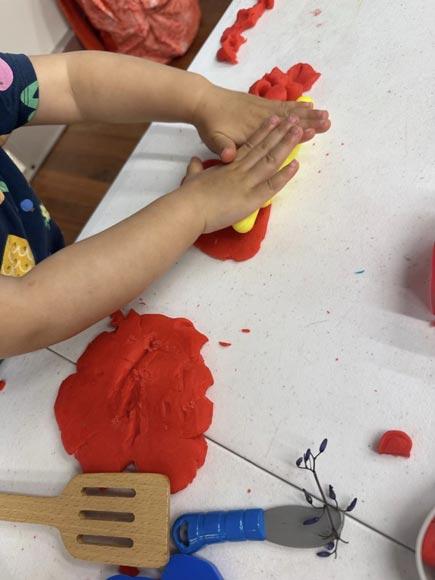
For Kathleen, the playgroup has become a place where community comes together. Children play, sing and explore. Parents chat and extend their friendship groups. Grandparents get to sit down for five minutes and enjoy watching as children join in and make new friends.
In a suburb like Green Square, that kind of local connection matters. Many parents are raising children without family close by. They may have moved from overseas, interstate or another part of Sydney. For some, grandparents are in another country. For others, family might be in Camden, the Shire or far enough away that they cannot simply drop in during a difficult afternoon.
“That afternoon period is the hardest, especially because you’re often by yourself,” one parent explains.
“We don’t have family around, so the community is our village. We really do support each other. The village is the community.”
Another parent describes the same experience.
“Because my husband and I are from Ireland, the friends we’ve made here are our emergency contacts,” she says. “If we were living in Ireland, it would be my mum or my sisters. We’ve kind of had to make our own family.”
Playgroups like these help families create the support networks that other people might inherit through extended family.
They also give adults a chance to compare notes, ask questions, share information and notice when someone is having a hard day. It is a soft entry point into the community, especially for people who may not yet know many neighbours.
life transition. It can be joyful, but it can also be lonely, repetitive and exhausting, especially when the usual supports are not nearby.
Sydney, including a community fee waiver, helped make the playgroup possible and kept it accessible.
“That really turned it around,” Kathleen explains, “because I wanted to make sure that we weren’t charging families to play with their kids.”
In a growing, high-density area like Green Square, free and lowcost community spaces are essential. They are not an optional extra. They are part of what makes apartment living work for families, older people, grandparents and children.
“The playgroup is not just for the children, it’s for the adults,” one parent told ISV. “You can see when someone’s had a hard day, but they’ve managed to make it to playgroup and push the pram or walk the child over because they know where we are. It’s here.”
In Inner Sydney Voice’s work on loneliness and social connection, new parents have been identified as one of the groups particularly vulnerable to isolation. Becoming a parent is a major
That isolation is not simply personal. It is shaped by housing, work, transport, public space and access to local services. In high-density areas, parks, libraries, community rooms and free local programs all become part of the social infrastructure that helps people feel connected to where they live.
That is why it was important to Kathleen and Yvette that the playgroup remain free. Support from the City of
The playgroup is currently holding its last session before the school holiday break. Its future space is not yet fully confirmed. Insurance remains an issue, and the group has been in contact with council and the Lord Mayor about options, including the need for sessions to be held within school grounds.
For now, the group is keeping sessions small and focused on the core group. But its value is already clear.
Playgroup helps make apartment living work for families. It gives parents without nearby family a village. It supports children, parents and grandparents. It creates a predictable place to go when the afternoon is hard. And it does all of this in a way that is local, practical and free.
GROWING CONNECTIONS
THE POWER OF COMMUNITY GARDENS E
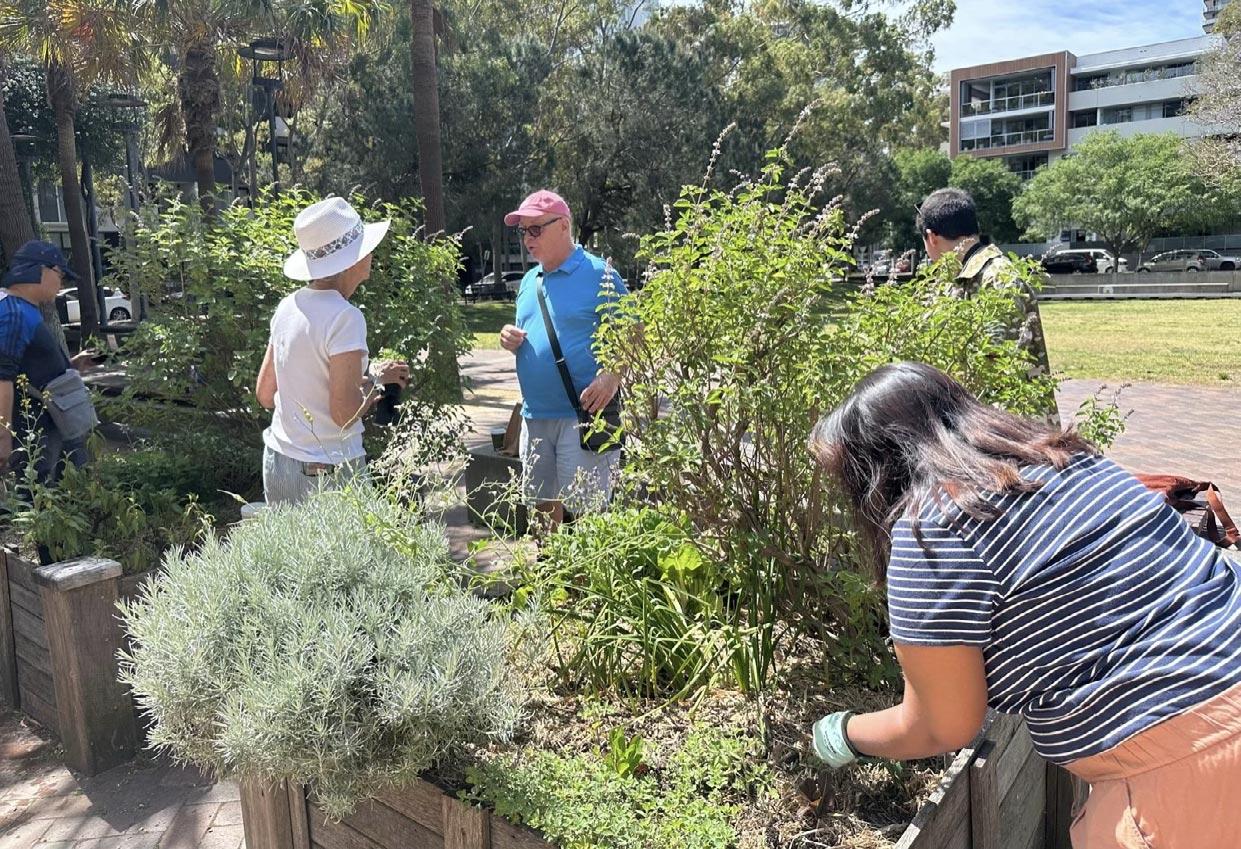
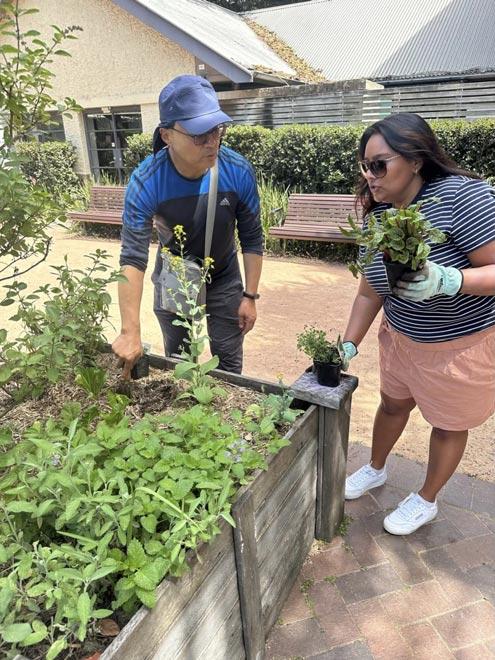
very second Sunday of the month, from 11:30am to 1:30pm, you’ll spot a small group of neighbours gathered at Tote Park in Green Square. They water, weed, harvest herbs and swap tips. Some come with years of gardening knowledge. Others are learning plant names in English for the first time. Together, they are the Green Square Growers.
Green Square is one of Sydney’s fastest-changing neighbourhoods, shaped by apartment living, construction, new arrivals and rapid urban renewal. In a place where many people live above ground level, without backyards or long-established local
networks, the Growers have created a small but meaningful form of community life at street level.
Tony, one of the group’s coordinators, didn’t have a garden in his building when he moved in, so he decided to join one in a public space. With a small grant from the City of Sydney, the group has expanded to now have 10 wicking beds across three local parks. It has become a place where people can learn, contribute and feel part of their neighbourhood, without having to spend money or already know someone.
Tony is generous with his knowledge, whether he is explaining what to plant, how to harvest, or why some herbs disappear faster than others.
A number of growers use the group in this way, brushing up on their conversatin skills while watering seedlings or harvesting herbs. The
drinks. I wanted to do something different.”
Our research into social isolation and loneliness in the Green Square area found that the cost of living was a barrier to forming connections. A public garden offers a rare opportunity to learn, connect and even take something home, for free!
“It’s impossible to grow rosemary because it’s recognisable, so everyone snips a bit off,” he laughs. “That’s the idea.”
For Tony, the different gardens also serve different purposes. “At Tote Park, it's mainly herb and vegetables. The children using the play area or attending activities in the Tote get involved.”
The gardens themselves are spaces for food production, obviously. But they are also a classroom, a meeting place, a language exchange, a low-cost weekend activity and a gentle way into community.
For Ken, who moved to Green Square during the height of the Covid pandemic, the group has helped address a challenge many people experience in new neighbourhoods: finding people to talk to. He comes to learn about gardening, but also to practise English.
garden gives people something to talk about before they have to talk about themselves.
For others, the appeal is the chance to do something social that does not revolve around spending money. Risha says, “Going out was always dinner and
The group also brings together generations. Ina learns from her neighbours and takes those skills back to her apartment. Moving as a grandmother has been challenging, socially, but the Growers gives her a way to stay connected to the neighbourhood and to other people.
Researchers have described projects like this as “civic ecologies”: communityled practices that combine care for the environment with care for place. In Green Square, you can see it in action. People lugging water together. One neighbour showing another how to cut herbs, so they grow back. A passerby stops to ask what is planted, and another takes parsley home for dinner.
Interested in joining?
People with all levels of gardening experience are welcome. Green Square Growers oversee wicking beds and other garden activities at Tote and Joynton parks, and Banga Community Shed.
n The group meets at Tote Park on the second Sunday of every month from 11:30am–1:30pm.
INSIDE THE BELLY OF THE BEAST BLAK DOUGLAS ON COUNTRY AND RECLAIMING SPACE IN GREEN SQUARE
By Lucy Rawlings, Inner Sydney Voice
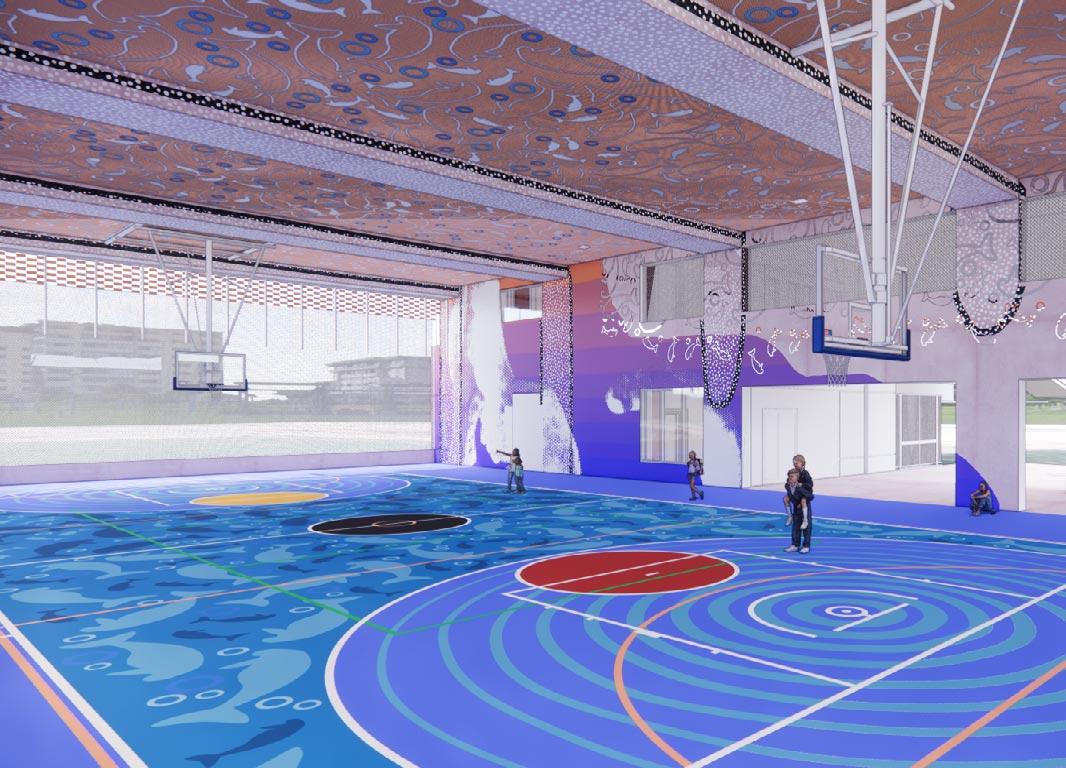
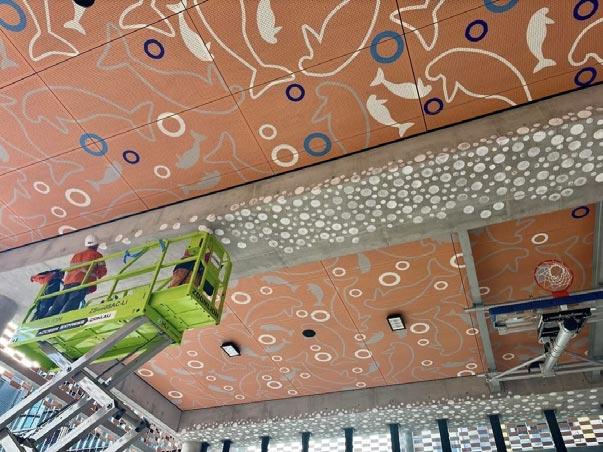
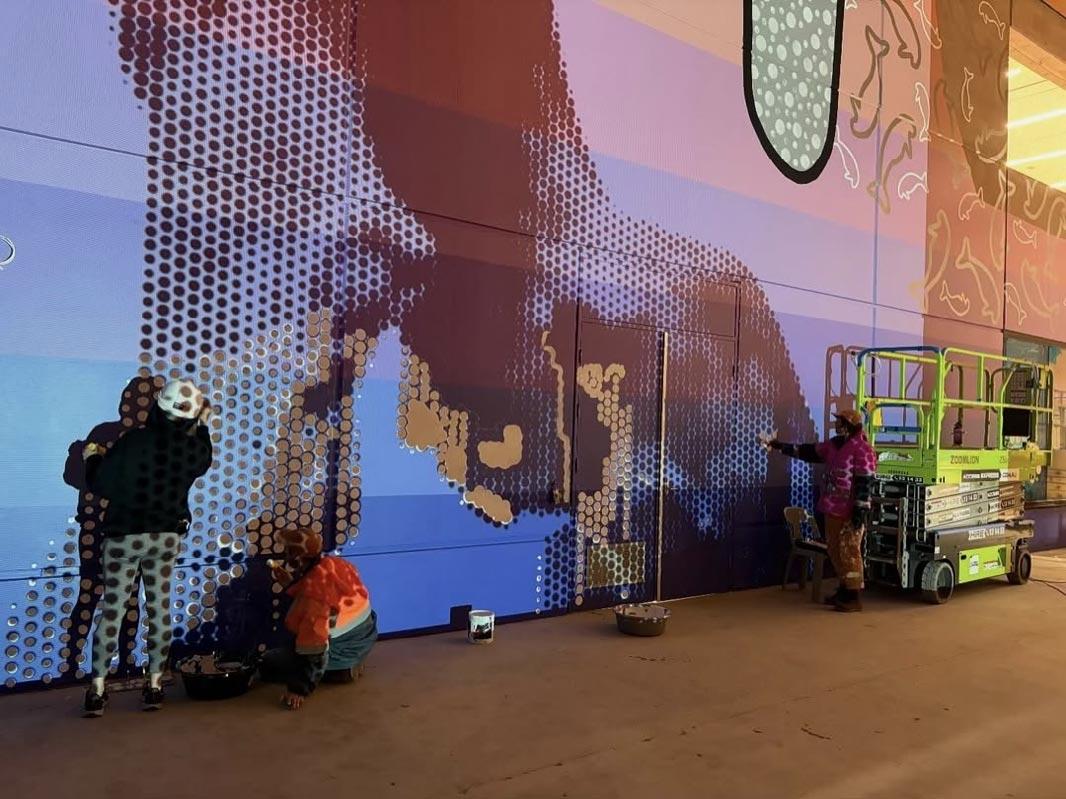
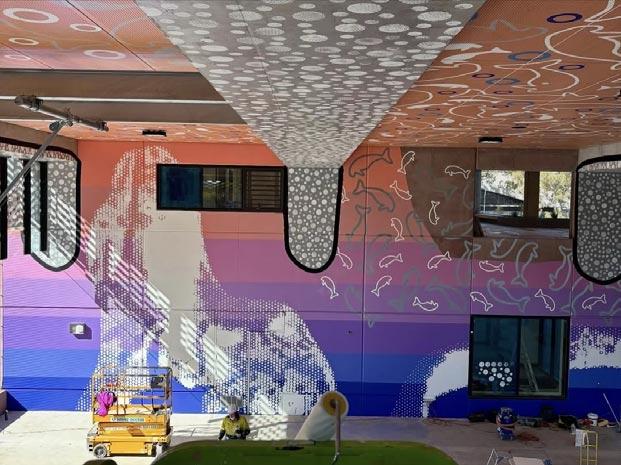
Painted across a semi-exposed basketball court at Green Square Public School, Blak Douglas’ public artwork ‘The Belly of the Feast’ is hard to miss. Stretching between concrete beams and visible from the street, the work transforms a space of everyday movement into what the artist describes as “an open gallery” – one that reasserts Aboriginal presence in Sydney’s inner south.
The work draws inspiration from a little-known archaeological discovery: dugong bones uncovered in Shea’s Creek during an excavation in 1896. The markings on the bones and the stone hatchets uncovered nearby are traces of Aboriginal presence in the area, thousands of years before the suburb took its current shape. Later testing dated the find to around 5,500 years ago. For Douglas, that discovery – and the mystery surrounding it –became a way to speak about erased
histories and what it means to encounter Country in a dense urban environment.
How did you first come across the history of the dugong bones uncovered during the Shea’s Creek excavation in 1896, and what drew you to the project?
“Well, it still remains a mystery,” Douglas says. “That’s the remarkable thing about it.” The bones, discovered alongside stone hatchets and remnants of an ancient forest.
“It was just a tremendous opportunity to be invited by the Green Square Public School Committee to play with a really interesting space and pay homage to the local people, the gathering people. Particularly, it was all about trying to become more intimate with the story, despite its mystery.”
Alexandria, Douglas notes, was “one of the first rapidly developed industrial centres of Sydney”, making the find even more striking. “From my knowledge, it’s basically the only evidence we have of any First Nations
existence in Alexandria,” he says. “There’s no signpost; no other identifiable site you can go and see.”
What do the bones tell us, and what don’t they tell us?
The bones also showed clear signs of human interaction. “They had markings, they were scoured with an implement to take the meat off,” Douglas explains. “That was an important feature in the graphic interpretation of the mural. It was human activity.”
Yet much remains unknowable. “We would have been talking several thousand years ago, when the waters were still high enough to accommodate such mammal life,” Douglas says. “It just doesn’t quite make sense, and that’s the tremendous thing about the mystery.”
How did that mystery shape the visual language of the work?
“Straight off the bat, I looked at these huge, imposing concrete beams and I saw the ribcage,” Douglas says. “I saw being inside the belly.” From there, the idea evolved into what the artist
describes as “a historic first”.
“Nobody that I know of, domestically or internationally, has produced an artwork about being inside the belly of a dugong,” he says. “That’s something I always impress on Indigenous youth –there are still so many firsts to be created.”
The mother-and-baby dugong motif appears throughout the mural. What does that pairing signify?
“Well, now we’re going down a cultural path . . . [but] to entice the mother, the baby is kidnapped,” Douglas says, referring to traditional hunting practices in parts of the Torres Strait where dugongs remain prevalent. “The baby squeals like a human baby, and the mother comes to retrieve it.”
While that narrative wasn’t consciously intended for the school setting, he acknowledges it sat “in the subconscious”. Visually, however, the
image reads differently. “Graphically, it’s more like mum dropping the little one off at school,” Douglas says.
This is a large-scale, sitespecific work that stretches across a school basketball court. What was the experience of creating something at that scale, and how did it shape your thinking, knowing the artwork would exist in a space of movement, play and everyday activity?
“As a seasoned basketball player, it was an honour to work on a basketball court for the first time,” Douglas says. After 20 years of competitive play, courts had always felt familiar to the artist, but visually limited. “You only really see the team’s logos or adverts emblazoned on the floor and walls when you go to professional games,” he says.
Seeing other artists such as Reko Rennie reimagine courts changed that. “I thought, why aren’t we doing more of this?” Douglas says. “So, when it came to this project, I saw the opportunity to create a kind of ocean or aquarium, so that when you’re standing on the court, you’re on the water.”
Concentric circles beneath the hoops reference ripples. “Every time the ball ultimately lands, if it drops into a still body of water, that’s where the ripples would form.” Ochre circles mark “meeting places”, echoing Western Desert Aboriginal art and contemporary
PHOTO BLAK DOUGLAS
dot painting traditions. “In this case, they’re the most visited pinpoints on the court,” Douglas says.
What do you hope the work might mean for the students, particularly Aboriginal students, as well as the wider school community who encounter it daily?
“From a very early age, we’re taught about confines in art,” Douglas says.
“What I hope is that they just immediately are . . . what’s the word I’m looking for? Transported? Almost inebriated by the magnitude of art, and what they could potentially create in their futures.
“At the end of the day, you’re there to play the game. How beautifully metaphoric it is for those kids. To be able to enjoy the double whammy? You think it’s just play, but you’re unconsciously absorbed in a major public artwork.
“If that were more common, maybe that would drive home the importance of art, and give it greater value in this country.”
How did it feel seeing it used for the first time?
“They launched it, and straight away the kids got into it,” Douglas laughs.
“Rotating teams, full games, the Lord Mayor had just finished speaking.” He pauses. “I even popped three threepointers in a row. I hadn’t shot a basketball in about 15 years!”
For Douglas, that moment confirmed everything. “It was quite a buzz to see it all happening, and to see it kick off.”
n Visit The Belly of the Feast at 15 Zetland Ave, Zetland NSW and Douglas’ website https://blakouglas. com.au to learn more about his works.
n Lucy Rawlings is a UK-born writer with editorial experience in Spain and the UK, including work with university press and a leading cultural magazine in Valencia. Now based in Sydney, she is drawn to stories that reveal human experience, highlight cultural shifts, and connect people to the history and character of the landscape they inhabit.
PARALLEL LIVES
By Xintong Huang
Sydney may seem busy, but up close it’s a mosaic of lives, each vibrant and distinct. Everyone walks the same streets, but lives in different worlds, formed by language, rent, and routines.
Now that I’m an international student, I’m both part of this rhythm and just a little apart from it. It makes me think about how people in a city can live right next to each other and be divided by class, culture, and a sense of belonging.
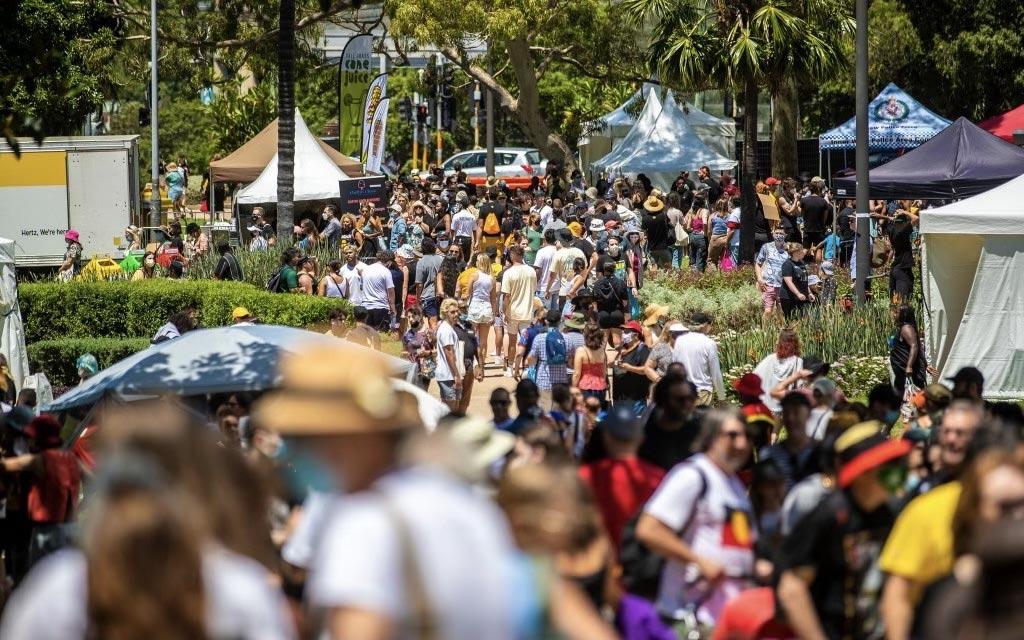
Yabun – experiencing local culture
Daily life is full of classes, work, rent, and visa issues; there’s little time left for social or cultural activities. I only know a little about Aboriginal history, just a few facts without real context or connection. Simply living here doesn’t automatically create a sense of emotional or cultural connection. Proximity is not belonging. The routines
of study, work, and daily tasks shape how we move through the city, often leaving us slightly outside the communities that live next to us.
Visibility of celebrations
Fireworks and city-wide festivals take over Chinese social media. I had never really thought about how much of Australia I was missing until I attended the Yabun festival, which celebrates Aboriginal culture and traditions. Yabun, together with many other parts of Australian life, is not often featured on Chinese online media. Attending Yabun for the first time was like coming across a side of Australia that I was previously unaware of — not due to its non-existence but due to the lack of relevant algorithmic content until that point. This says more about the priorities of the digital world than about Australia. It’s not only about which events are shown, but also about how the curated content shapes the imagination of Australia. We are often unaware of this influence of the digital sphere on our perceptions until we realise we are missing out on something.
Navigating the tension
As I walked through the Yabun crowd, it hit me — connection doesn’t just happen, it requires effort. You have to step out of your comfort zone, away from the sights of cafés and apartment buildings, and walk into a place like Yabun where different worlds meet. There is an underlying level of unease in noticing that one lives close to others, visits the same cafés, shares common spaces, but rarely steps into each other’s cultural worlds. Proximity does not mean understanding or belonging — it is the effort to bridge the gap that counts.
n Xintong Huang is a sociology and gender studies student at the University of Sydney. She is interested in how communities intersect, coexist, and sometimes drift apart in everyday life. Through her writing and observations, she explores the subtle rhythms and hidden stories of the city around her.
STANDING STRONG IN REDFERN
WE STAND ON THE TRUTH, AND TRUTH CAN’T BE SHAKEN. THAT KIND OF TRUTH WILL NEVER BE DESTROYED. — UNCLE RAY
When boos pierced Uncle Ray
Minniecon’s Acknowledge
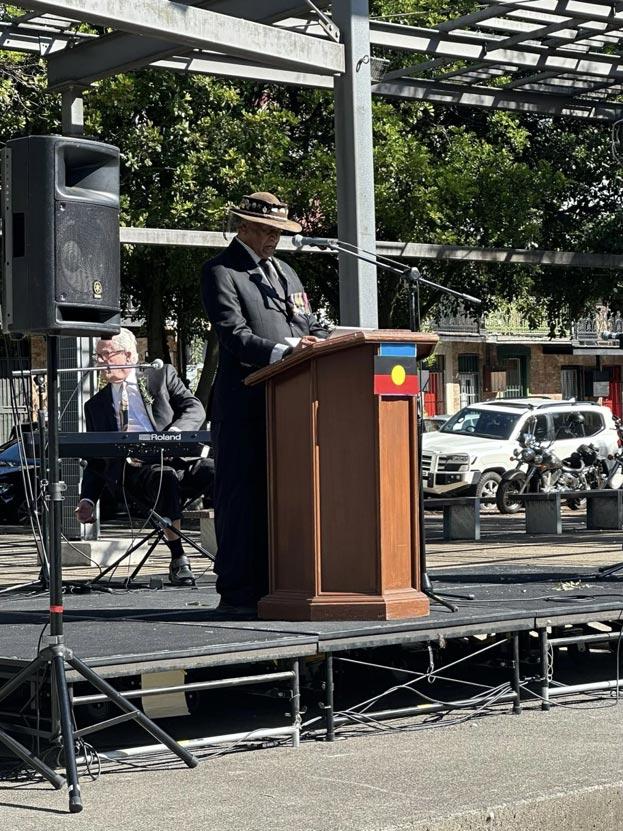
ment of Country at an Anzac Day dawn service this year, he remained characteristically calm and drew on the discipline of his military training. As he later explained to press, in moments of conflict or tension, you learn to steady yourself “and just do what you need to do.”
Across the country, similar incidents had taken place during Anzac Day services. For many Aboriginal and Torres Strait Islander people, and for many others watching on, the disrespect was confronting, though not totally surprising. A day meant to honour sacrifice had again exposed how easily the service of First Nations people can be diminished.
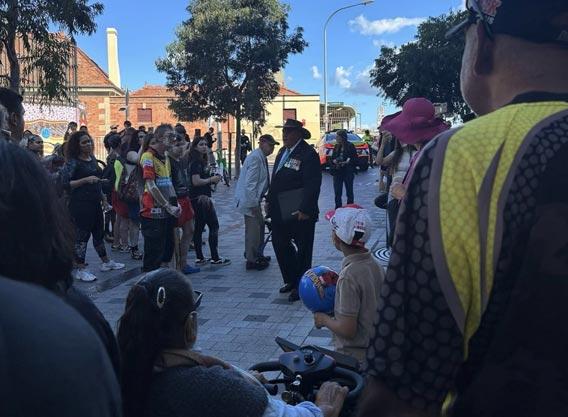
Later that day, at The Block in Redfern, Uncle Ray stood before the
crowd at the Coloured Diggers March and reminded the community that this antisocial behaviour was a whitefella problem. “Just to stand strong, stand tall. Know who we are, where we come from, and that this is Aboriginal land. Always was and always will be Aboriginal land,” he explained. “We stand on the truth, and truth can’t be shaken. That kind of truth will never be destroyed.”
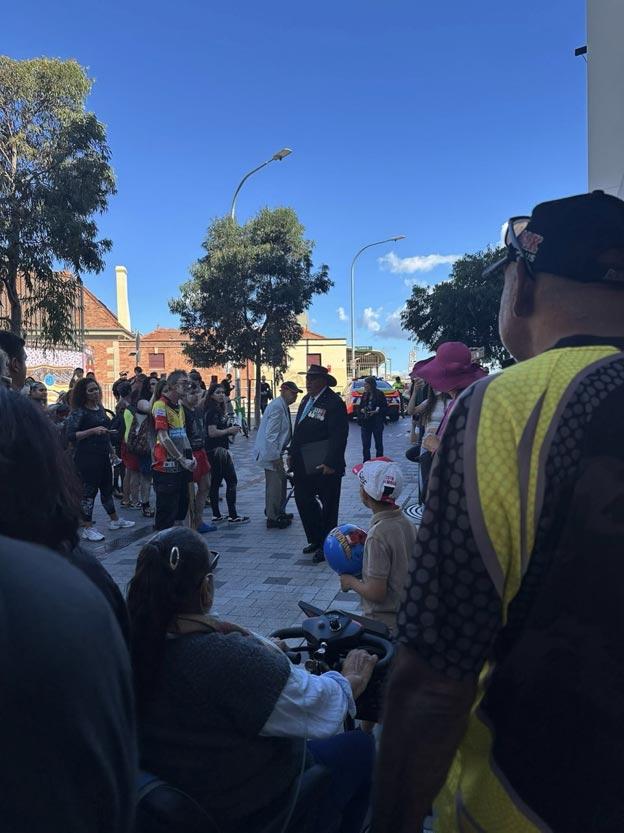
The Coloured Diggers March has become Redfern’s most significant Anzac Day gathering. It was created to recognise the Aboriginal and Torres Strait Islander servicemen and women who fought for Australia, often without receiving the respect, benefits or place in the national story afforded to others.
In 2006, while he was a pastor in Redfern, Uncle Ray and others began talking about the absence of recognition for Aboriginal service people. “Like all good things where you solve most of the world’s problems in a pub,” he said, “one or two of them walk out the door. And I think the Coloured
Digger walked out the door.”
The march began as a community act of remembrance. It was not an official government ceremony. It was Redfern saying: Our grandfathers, fathers, brothers, sisters, aunties and uncles served this country too.
“We’ve made our sacrifices and our services,” Uncle Ray has said. “We’ve shown our courage and our bravery, not only in our own country, but on foreign fields.”
But when many Aboriginal servicemen returned home, they returned to discrimination, exclusion and the restrictions of the Aborigines Protection Act. They were denied land, soldier settlement and other benefits. They could fight alongside their mates, but often could not drink with them in the same RSL or pub.
For Sunny, a social work student from rural and remote NSW, attending the march was a reminder of how much First Nations history remains absent from the national story. It was also a reminder of the cultural strength that
by those who fail to see the deep Aboriginal history and community life of places such as Redfern.
That is part of what makes the Coloured Diggers March so powerful. It is not only a correction to history, it is a living cultural practice. It creates a space
where Aboriginal and Torres Strait Islander diggers are named, honoured and held by community. It insists that Anzac Day is not complete while First Nations service remains a footnote.
As the march moved through Redfern, the day’s meaning could be felt in the street. Families walked together. Elders
were greeted with affection. Children moved between parents, aunties and uncles. People paused, embraced, listened and remembered.
Behind the march came the low rumble of motorbikes from MOB SMSC, an Aboriginal-focused and operated social motorcycle group.
Remembering Sikh service this Anzac Day
Ahead of Anzac Day, Addison Road Community Centre’s StirrUp Gallery hosted Duty, Honour, Country, a photographic exhibition recognising the contribution of Sikh soldiers in World Wars I and II.
Presented by the National Sikh Council of Australia, the exhibition brought together more than 200 historical photographs and items of memorabilia, tracing the role of Sikh troops from the late 18th century
through to the end of World War II. The images documented Sikh service across Malaya, Singapore, Burma, Indonesia, China, Hong Kong, Korea, the Middle East, Africa and Europe.
The exhibition was an important reminder that Anzac history is broader and more diverse than many of us were taught. Sikh soldiers, alongside Gurkha battalions and Punjabi mule drivers, made significant contributions to campaigns including Gallipoli, yet these stories are too often left out of mainstream commemorations.
For Inner Sydney communities, the exhibition offered a chance to reflect on how remembrance can become more inclusive. It honoured the courage and sacrifice of Sikh servicemen while inviting younger generations to better understand the many communities who have shaped wartime history.
At a time when Anzac Day continues to prompt reflection on service, sacrifice and national memory, Duty, Honour, Country helped make visible a history that deserves to be recognised.
Crafting a more inclusive democracy
By Mahoney Hore-Gibson
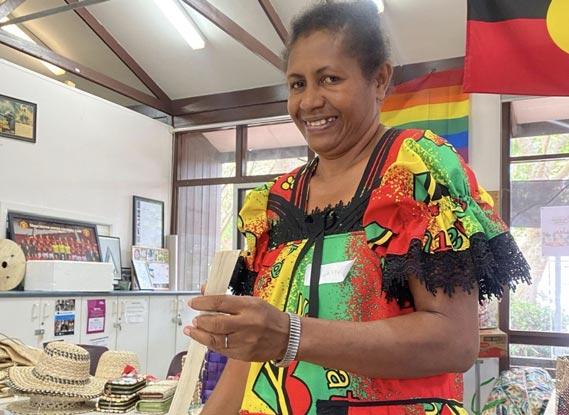
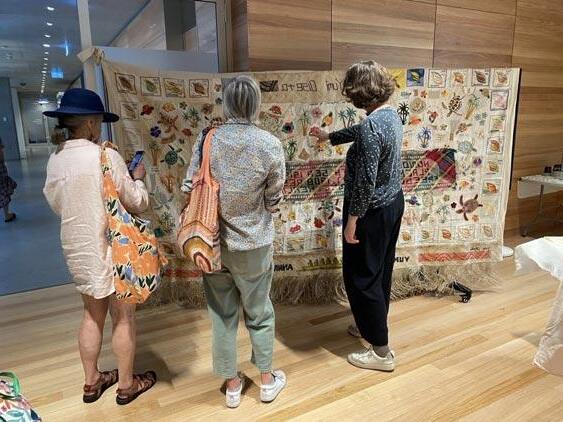
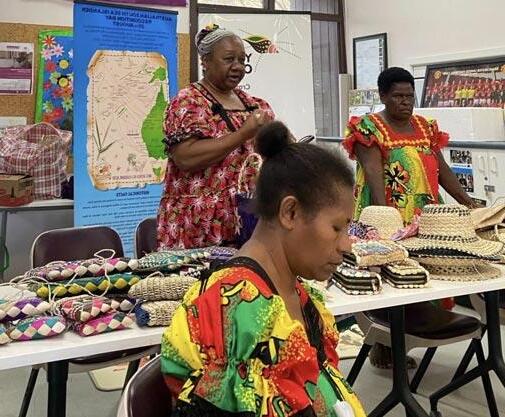
Run by Australian South Sea Islanders (Port Jackson) (ASSIPJ) and supported by the City of Sydney Council and the Vanuatu Government, Yumi Olgeta was a 12-month project that employs craftivism to reflect on the dark history of Blackbirding in NSW.
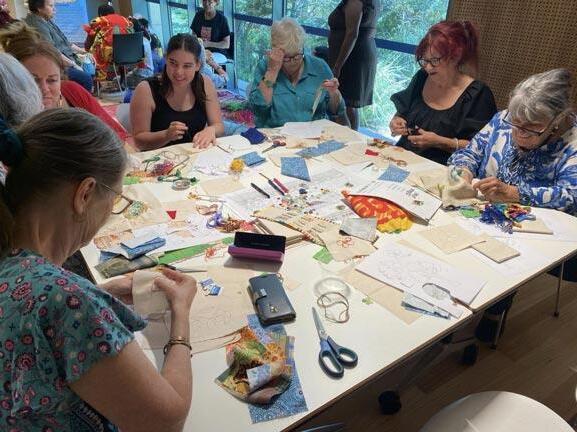
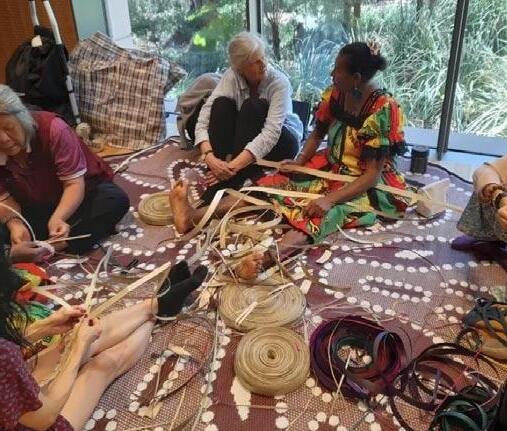
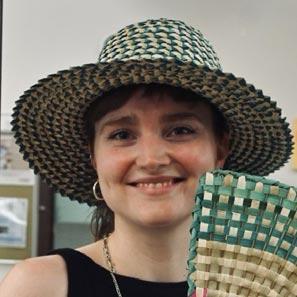
Last year, we attended two Yumi Olgeta events: a pandanus weaving workshop at the Surry Hills Neighbourhood Centre and then a quilt-making workshop at the Chau
Chak Wing Museum at USYD.
These workshops provided opportunities to engage meaningfully with history in an inclusive, informative and culturally appropriate way. We were educated about the history of the Blackbirding era that saw the kidnapping of thousands of South Sea Islanders who were forced into slavery in Australia. This was accompanied by demonstrations of weaving and embroidery, so we were able to contribute quilt blocks that illustrate this story of NSW and Benjamin Boyd’s culpability, while also
celebrating Vanuatuan culture.
With the help of Yumi Olgeta's leader, craftivist Helen Fraser, president of Ni-Vanuatu Women’s HandiKraft Markets Josephine Fred, and founder of ASSIPJ Waskam Emelda Davis, these workshops were a fantastic way to become more educated, engage with people interculturally, and learn a new skill.
Mahoney is a Graphic Designer and Project Officer at Inner Sydney Voice
By Rebecca Reddin
Protecting birds from the heat
One very hot day after a RedLink meeting at Poet’s Corner last November, I was walking towards Phillip Street heading towards the shops on the eastern end of Phillip and noticed a crow walking, half flying, with its beak open wide as if gasping for air.
I wondered whether any of the Homes NSW buildings along Morehead Street had large birdbaths out for birds in such hot weather, and pondered whether anything was being done for these poor creatures on such hot days . . . I’d never seen any around.
Waterloo and Redfern cover 114 ha 116 ha, respectively, with many trees in parks, along roadsides, and in pockets of land here and there. There are large trees along Morehead Street, so at least the crow had the advantage of plenty of shade. But that didn’t stop the crow from gaping, nor me from feeling the heat.
From a conversation in the Nature and Wildlife Facebook group in July 2024, I learned that birds often open their mouths on very hot days to cool down, expelling hot air to help regulate their body temperature. A contributor pointed out that the technical term for this behaviour is gular fluttering, essentially the avian equivalent of panting.
Unlike mammals, birds lack sweat glands in their skin, and because their bodies are covered in feathers, they rely on mechanisms such as gular fluttering to dissipate excess heat.
To treat the heat, a local Facebooker urges: “Put the sprinkler on all day under the trees”. A friend chimes in with “I had water dishes high and low
throughout my garden and a sprinkler under the fig tree … parrots love figs!” Another Facebooker put out misters for kestrels, and others used many sprinklers or a combination of baths and misters.
Bird baths should be shallow — ideally 5–8 cm deep — and refreshed daily to ensure the water stays clean and cool. Adding a simple dripper or small fountain can make a big difference: the sound and movement of water attract birds and help them cool down and preen more effectively.
If space allows, provide multiple baths spaced around 10–20 metres apart so more timid species can access water without being displaced by larger or more dominant birds.
Online bird-care communities also recommend focusing on three key areas during extreme heat:
n reducing hazards (such as keeping cats indoors and minimising hot or reflective surfaces)
n managing habitat (providing shade and shelter)
n cooling and hydration strategies (fresh water, shallow dishes and regular maintenance)
For Sydney outdoor birds, the City of Sydney council has provided information on caring for them and also on whether or not to feed them. But how does all this apply to properties owned by Homes NSW and their
tenants?
Tenants may not always know which trees are protected, or what they’re permitted to plant to increase shade. The Homes NSW webpage on Taking Care of Your Garden is a good starting point, outlining what public housing tenants can and can’t do in their outdoor spaces. Clearer guidance and encouragement could help residents create more birdfriendly, shaded environments.
And if a bird or other wildlife is found in distress, anyone can contact WIRES on 1300 094 737 or lodge a report online. WIRES operates a 24/7 rescue service and provides nationwide advice, with mobile responders across Greater Sydney.
Waterloo also has its own Birds & Exotics Veterinarian on Bourke Street, in fact, the only one of its kind in Sydney.
It would be helpful if both our Developers and Homes NSW could include more bird baths and fountains in shady areas, specifically for birds on housing properties. The odd stray dog or cat may benefit from their own water systems so that wildlife birds are not frightened away by predators or even larger birds.
As a white fella, I wonder what we might learn from Aboriginal knowledge holders, who have cared for Country and its wildlife, through extreme heat for thousands of years. Listening locally could only strengthen our response to rising temperatures.
n Rebecca is a Heatwave Peer Educator with ISV's Done By Us project.
Redfern Clean Up is more than about tidier streets
By Mahoney Hore-Gibson
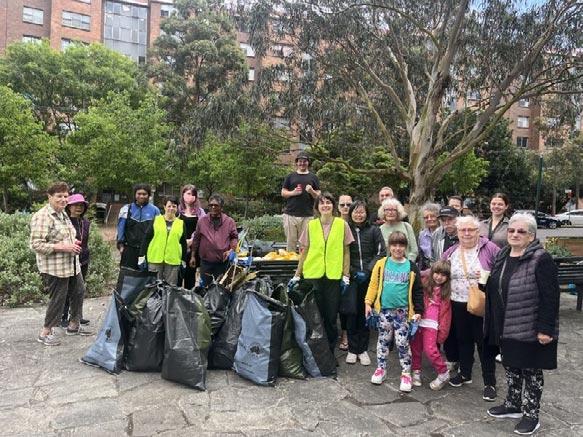
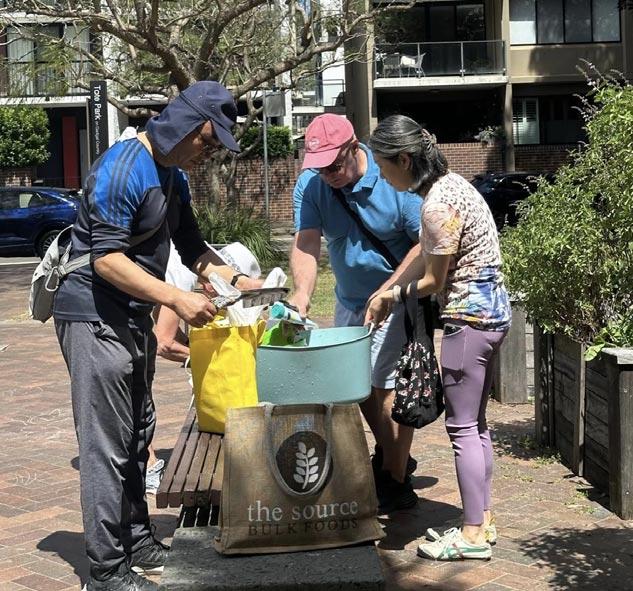
We recently joined the Redfern Clean Up at Poet’s Corner Community Garden, hosted by Clean Up Australia Day, Redfern residents of Hour of Power and Redlink.
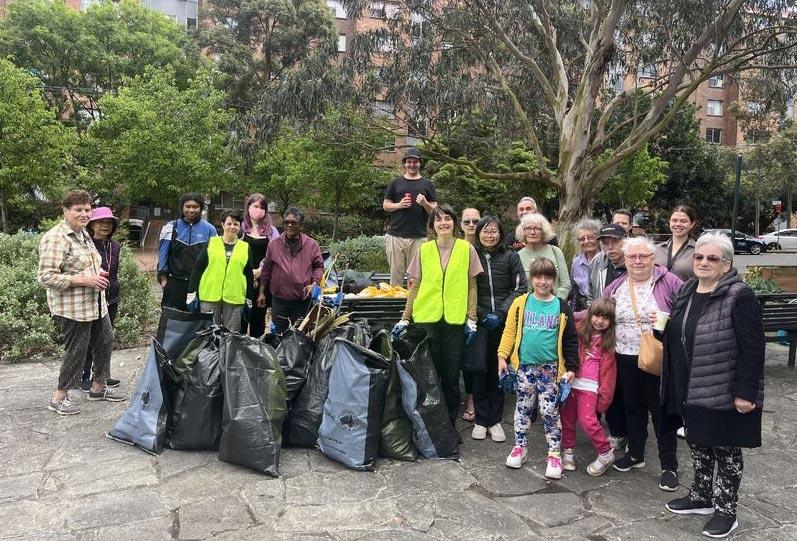
It was a warm, community-driven event where anyone and everyone was welcomed. For some residents, it was their first time participating. For others, the monthly event is something they always got involved with.
A woman who had lived in the area for seven years told us, “I find it rewarding and fulfilling, helping out in the community.” She and a friend have been helping with these clean-ups since last year. “We don’t mind helping out where the need arises – why not!”
We were also joined by Jenny Leong and staff from her office. This is what she told us when asked about the
importance of these events for communities:
“I think in the current state of the world, when we know there are so many challenges when it comes to the devastating impacts of waste on our environment, sometimes you can feel like it’s too big a task to tackle. So, getting dirty and getting on the streets of Redfern and picking up small bits of litter can make a difference, but also having a connection to community that isn't about focusing on people's lives, but on people working together to do something.”
Together with locals and people who lived outside the area, we helped collect 15 bags of rubbish in just under an hour, which would’ve otherwise been left on the street and in garden beds, to be ingested by wildlife or washed into waterways.
The event organiser Lucia, from Clean Up Australia, highlighted the
importance of awareness of the impacts of litter, and how these events strengthen communities:
“We've got a great community of people picking up litter and having more awareness about the impacts of plastic But besides the environmental element of removing rubbish from the environment, I think there's a very lovely community-building aspect. People come and have a chat with neighbours, a bit of exercise. Have some food after, it's really lovely.”
These events run on the last Thursday of every month. The July Clean Up will be at Waterloo Neighbourhood Centre on Thursday, July 30 10–11am. Everyone is welcome and there is a chance for residents to win a Coles voucher. Water and snacks provided. It's a wonderful way to get involved in taking care of the local neighbourhood and keeping litter out of the environment.
Sold! avoids easy answers. It doesn’t pin the crisis on a single villain, nor does it offer a neat resolution.
COMEDIAN MARK HUMPHRIES
TACKLES THE AUSTRALIAN HOUSING CRISIS IN THE DOCUMENTARY
SOLD! WHO BROKE THE AUSTRALIAN DREAM?
Review by Lucy Rawlings
There’s a long-held promise in Australia that if you play by the rules, work hard and save diligently, a home will follow. Sold! Who Broke the Australian Dream sets out to unravel that idea, asking not just why it no longer holds, but who it was never really designed to serve in the first place.
Directed by Bill Code and fronted by ABC’S Mark Humphries, the documentary takes an unflinching look at Australia’s current housing crisis. Disarmingly cheerful in his outrage, Humphries guides us through a system that has quietly reshaped housing from a basic need into a speculative asset, using the film’s quirky, offbeat framing to balance satire with sober critique. As he puts it, “If a D-grade celebrity like me can’t afford to buy a home, who can?”
Rather than framing the crisis as a sudden collapse, the film traces a longer trajectory: decades of policy decisions that have steadily reshaped housing from a basic need into a
speculative asset. As financial journalist Alan Kohler explains (from a bubble bath, no less), the turning point came in 1999, when capital gains tax discounts and negative gearing incentives supercharged the market.
What emerges is not a single breaking point, but a system that has been quietly tilting out of reach ever since.
The strength of the documentary lies in its balance. Economists, housing experts and political voices provide context, but it’s the lived experiences that give the story weight. Young renters speak of instability and constant movement; first-home buyers describe the exhaustion of trying to keep up; older Australians reflect on a system that worked for them, but no longer does for the next generation. These perspectives are not presented as outliers, but as part of a broader, shared reality.
Humphries threads it all together with a jolly, almost wry indignation that makes the medicine go down easier, even as the subject matter deepens.
It’s a tone echoed by housing activist Jordan van den Lamb (better known as Purple Pingers), whose ironic delivery exposes the absurdity of the system without ever needing to overstate it. Together, they expose contradictions that feel almost absurd: tens of thousands of empty homes sitting idle while homelessness rises; political incentives that reward ownership while locking others out.
Importantly, Sold! avoids easy answers. It doesn’t pin the crisis on a single villain, nor does it offer a neat resolution. Instead, it asks viewers to sit with the complexity: the interplay between government policy, investor behaviour and a deeply ingrained cultural belief that property is the ultimate marker of success.
The documentary doesn’t shock. Instead, it feels familiar. In pulling apart a narrative so embedded in Australian identity, Sold! doesn’t just question the system – it reframes the dream itself to arrive at a more uncomfortable truth: the rules were followed, the outcome just isn’t what was promised.
A SEAT IN THE CIRCLE
FINDING HEART AND HARD TRUTHS IN MUDGIN-GAL YARNS
By Lucy Rawlings
“If you’re going to talk about us, talk to us.” It’s a simple message, but one that underscores Australia’s long history of creating policies that affect Aboriginal people without asking for their input. Mudgin-Gal Yarns responds directly to this, offering a space for Aboriginal women to speak about their views on change – voices that are often critically missing from research, government bodies and formal inquiries.
The current series draws from four yarning circles held at the Mudgin-Gal Women’s Centre in Redfern, on Gadigal Country, between 2023 and 2024. Across these conversations, 18 innercity Aboriginal women aged between 10 and 65 reflect on their experiences of seeking help – particularly in the context of family and domestic violence. Importantly, the podcast does not dwell
on recounting the violence itself. Instead, it opens up a vital discussion around what support systems look like in practice, where services fall short and how they might be improved.
The first three episodes place you inside the yarning circles themselves. The format is intimate, as women speak candidly about their shared frustrations. The conversations move from the shame surrounding abuse to the role of police and the Department of Communities and Justice in domestic violence cases, and the reality of navigating services often shaped through a white lens. Yet there’s warmth, humour and an unfiltered honesty woven throughout, inviting the listener in rather than keeping them at a distance.
The final two episodes shift in structure. The penultimate episode offers a tour of the centre itself: a dropin space supporting some of the most disadvantaged women in the country.
CEO Ashlee Donohue highlights the importance of creating an environment that feels culturally safe and welcoming, from the presence of New South Wales’ first possum skin cloak to participant-created artworks in soft, earthy tones. Even in the middle of the city, it’s a place designed to foster connection and grounding.
The closing episode features Larissa Behrendt in conversation with Donohue and researcher Jane Wangmann, unpacking the project's motivations. A key takeaway is clear: sustained funding is essential if meaningful, community-led change is to continue.
Be prepared for this podcast to make you uncomfortable – and, at times, frustrated. But that’s precisely the point. By giving space to voices so often ignored, the podcast distinguishes itself, letting women speak on their own terms about the struggles they face and how they should be included in the ongoing conversation.
Digital Mentors: Calling all tenant leaders!
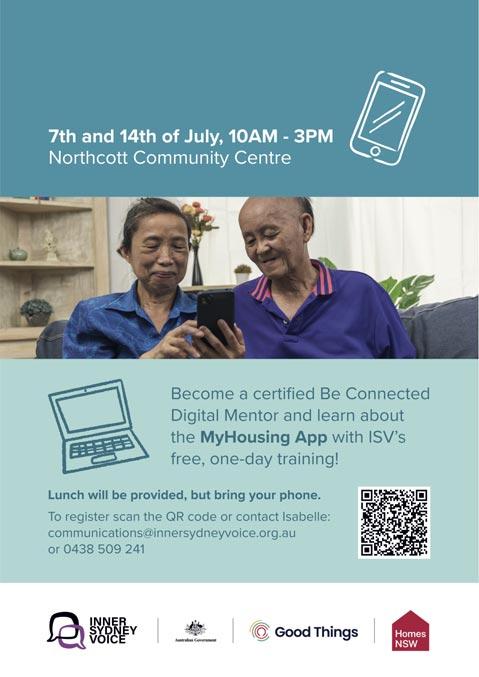
Inner Sydney Voice is inviting community members to join our Be Connected Capacity Builders program. This one-day, hands-on training session is designed to give tenant leaders the skills and confidence to support older community members to thrive in the digital world and feel confident using the MyHousing App.
Why become a digital mentor?
Make a real difference. Many older people, carers, and community members miss out on everyday opportunities, from connecting with loved ones to reporting maintenance issues, simply because they have not had someone patient and kind to guide them online. You can be that person.
Build lasting friendships
Free Digital Mentor Workshop for Tenant Leaders
Receive ongoing support
Mentorship is about connection. Digital mentors often form meaningful, longterm relationships with the people they support. You will also join a growing network of mentors working to strengthen their communities.
Grow your own skills
You do not need to be a technology expert to mentor. This program builds your confidence with digital tools and provides practical techniques to support others. Many participants find that their own skills expand significantly along the way.
Your learning does not end with the training day. You will receive follow-up support, resources, and opportunities to connect with other mentors as you begin your journey.
A welcoming and enjoyable day
The training is interactive, supportive and fully catered. It is a chance to learn, meet people, share stories and contribute to positive change in your community.
What you will learn
n Mentorship essentials and effective support strategies
n How to use and teach the Be Connected digital literacy curriculum
n How to support someone to use the MyHousing App
n Ways to create supportive and inclusive learning environments
n Practical troubleshooting and problem-solving techniques
n Methods to foster digital confidence and community connection
Why digital literacy matters
The rapid shift online during the pandemic highlighted how critical digital skills are for connection and wellbeing. People with limited digital literacy are more vulnerable to scams and are more likely to be excluded from essential aspects of daily life, such as accessing services, maintaining social connections and finding reliable information.
By becoming a Digital Mentor, you can help bridge this gap and support people to stay connected, safe and independent.
Take the first step
Becoming a Digital Mentor starts with our free, one-day train-the-trainer workshop. It is the first step toward joining a supportive network of community members making a real difference. These sessions are aimed at, but not limited to, tenant leaders and people supporting older residents reporting maintenance using the MyHousing app.
COMMUNITY
VOICES
Let’s talk about death
Ahead of Dying to Know Day (August 8), we wanted to open up a more honest and empowering conversation about death, grief and end-of-life planning.
Even for social workers, palliative-care nurses and people who have spent decades supporting others through death and dying, these conversations can still be hard to have. But when we talk before a crisis, we can give the people we love clarity, comfort and confidence when they need it most.
Read reflections from members of the ISV community on what it means to plan, grieve, remember and speak openly about death.
MARY
“I have been putting off the Advanced Care Directive business because I don’t want to think about the end, and I think it’s final. It feels like I haven’t got enough time. I haven’t finished up the stuff I want to do. I’ve still got lots of stuff to do, and I’m really anxious I’m going to run out of time. That’s one of the reasons.
I’m scared of being sick. That it's going to hurt. People often talk about that. I’ve been a social worker for about 35 years, and spent a good chunk of my time working with people at the end of life. One of the things that people often said to me at the end of life was that I shouldn’t have wasted my time working or worrying about things I shouldn’t have worried about.”
MAHONEY
“My mum has always told my siblings and I that she wants Spirit in the Sky by
Norman Greenbaum played at her funeral while we dance her coffin down the aisle. It’s an upbeat song from the ’60s that treats religion with a light touch, which is fitting for someone who has always loved a good laugh as much as a good dance.
My dad’s request is even more unconventional, with his preferred send-off being launched into an active volcano. He has also admitted that a tree-pod burial would be a good alternative. Both options feel quintessentially him: someone who enjoys a cinematic ending but is just as passionate about gardening and composting.
Beyond the humour, these conversations have given me a sense of comfort. Knowing their wishes means that when the time comes, I’ll be able to honour them in a way that reflects who they were.”
Thinking about death brought to mind someone who has been in the thoughts of many in recent weeks: Jai Arrow.
The news of the South Sydney player’s diagnosis with motor neurone disease (MND) has brought mortality into sharper focus for many Australians. MND is a devastating and incurable disease, and for a 30-year-old father with a young child, the diagnosis is particularly heartbreaking. Faced with a greatly shortened life expectancy, Arrow has nonetheless remained positive, declaring that he is ready to fight and won’t be taken out easily.
His response is a powerful reminder that acknowledging death does not mean surrendering to it. In many ways, removing the taboo around dying can be liberating. Planning for a good death is ultimately part of planning for a good life – for ourselves and for those we leave behind.
SIMON
“As a palliative-care nurse, I believe that having a plan means being able to communicate clearly and confidently your hopes and preferences.
‘‘Watching my family and being part of my grandfather's care made me appreciate what love really meant. My grandmother and mother cared for him for years and only put him into residential care when they could no longer have him safely at home. My grandfather passed in 2021, and it was the first close, immediate passing I had ever experienced. My family was at his bedside for nearly two weeks; we listened to his favourite music, played card games, shared stories, laughed and cried. This was another stage of love I had not had much contact with: grief.
SUNNY
So much of my experience has shown me that it’s not only about the clinical care. It’s often about communication and getting everyone on the same page.
Joy said she knows what she wants when she is actively dying. She would like to be alone. I’ve seen so many times where people will wait for loved ones to arrive, but just as often, they will wait for everyone to leave. Sometimes they don’t want to be a burden. Sometimes they want to feel a little more in control.
That is probably where some of the fear comes from, but it is also where the experience comes from: having control, being in charge of those last moments, and knowing what you would like to happen.
It’s great to hear someone speak with confidence about what they would like. Ideally, those conversations do not happen at the point of crisis, when emotions are high, and there is potential for conflict. They happen as
early as possible, and are shared with family, so that when the moment comes, everyone knows what is happening.”
SUNNY
“My relationship with death has always had a lingering influence. As a child, I cut my lip open at a flower shop, leading to a fascination with understanding my body and what death meant. At four years old, I had this curiosity that my mother nurtured, though schoolteachers found it concerning. This seemed to be a taboo topic; we didn’t discuss death, and I always wondered, why? My grandfather, who was the only father figure in my life, was diagnosed with Alzheimer’s when I was 12. This brought up that conversation again –‘Why do our bodies betray us? Is ageing a curse?’
Watching my family and being part of my grandfather's care made me appreciate what love really meant. My
grandmother and mother cared for him for years and only put him into residential care when they could no longer have him safely at home. My grandfather passed in 2021, and it was the first close, immediate passing I had ever experienced. My family was at his bedside for nearly two weeks; we listened to his favourite music, played card games, shared stories, laughed and cried. This was another stage of love I had not had much contact with: grief.
I remember sitting at his bedside, wondering what would happen when he did die. Would it be dramatic like a movie? Would it be loud and panicked, or quiet and calm? I asked this question and my nan spoke first. He would take one last breath and he would pass on. And that is how it happened – my grandmother held his hand, he took a breath and didn’t take another.
We sat and listened to her speak about their plans in the afterlife, where they would find each other, her telling
‘In one of my early Advanced Care Directives, I wrote, if I have to be in an aged-care facility, I want a double bed so that the grandchildren can sit on it and crawl on it or whatever. But, you know, for me, I’m quite different, because I want to die alone. I don’t want anyone around me. I just want to be at peace on my own, because the energy that’s around the bedside can be very unhelpful.
JOY
him to wait for her. There is so much love in death; this love that comes whenever I listen to his favourite song, see a VB beer or see the same model of car he used to drive when I was a child. There is so much love in missing someone. In my mind, my pop’s death only showed me how much I want to continue to find people that I love, and that continue to love me, even when I am gone and only a memory.”
NATALIE
“I believe it is incredibly important to discuss an individual’s personal preferences and choices regarding their funeral ceremony.
When my grandfather passed, I dealt with the complex situation of family members planning his funeral ceremony according to their personal religious beliefs. My grandfather had not shared his wishes concerning his funeral service. My father, who is a Christian, believed that his ceremony should be held in his church with his close Christian friends, while my grandfather’s siblings believed that his service should be non-religious; strictly a family event.
JOY
“In one of my early Advanced Care Directives, I wrote, if I have to be in an aged-care facility, I want a double bed so that the grandchildren can sit on it and crawl on it or whatever. But, you know, for me, I’m quite different, because I want to die alone. I don’t want anyone around me. I just want to be at peace on my own, because the energy that’s around the bedside can be very unhelpful.”
This religious conflict that arose was further exacerbated by the emotionally heightened situation, which I felt placed less focus on mourning and appreciating the life that my grandfather lived.
From this experience, I have learnt the importance of communicating my wishes for my funeral ceremony to my family and close friends, so that my passing can acknowledge my personal beliefs and provide a harmonious environment for my loved ones.”
MICHAELA
“A conversation I’ve had about dying that I’m grateful for was with my cousin Aaron when we were both in our 30s.
I was visiting Perth, where he lived with his partner and five kids. He was a mechanic running his own business with a team of mechanics, fixing cars and motorbikes. His partner was working in the business, doing all the office management.
I stayed with them for a couple of nights and chatted about my work with MoneySmart in ASIC’s Consumer Protection area.
I asked Aaron if he was looking after his superannuation and had his life insurance through superannuation settings up to date, given he was supporting a big family. I knew from research that small business owners who have many competing priorities can forget to look after this.
When Aaron was killed riding his motorbike a couple of years later, it was just awful.
My aunt went from being grandma to being a ‘mum’ to three grief-stricken kids.
One silver lining was that although Aaron had not done a will, he had updated his superannuation, including getting some generous life insurance settings – just in case.”
FROM THE VAULT AUTUMN 2000
Where is Green Square?
TWENTY-SIX YEARS AGO, INNER VOICE MAGAZINE WAS ASKING A QUESTION THAT STILL FEELS CURRENT: WHERE IS GREEN SQUARE?
In our Autumn 2000 edition, residents were already concerned that the name “Green Square” could be applied so broadly that the longestablished suburbs of Zetland, Beaconsfield, Alexandria and Waterloo might be blurred or absorbed into a new planning identity.
The article captured a moment when Green Square was still taking shape in the public imagination. It asked what would be gained, and what might be lost, as industrial land was rebranded, redeveloped and folded into a new urban centre.
Reading it now, the question feels less like a matter of boundaries and more like a question of belonging. Green Square is no longer only a name on a planning map. It is home to thousands of people, families, workers, renters, older residents, new arrivals and communities still working out how to live together in one of Sydney’s fastest-changing neighbourhoods.
WANT TO HAVE YOUR VOICE HEARD?
We’re always looking for new voices — opinion pieces, investigative articles, profiles of community organisations, interviews and more. If you have a feature idea, please contact the editor on 02 9698 7690 by email at communications@ innersydneyvoice.org.au
SUBSCRIBE
AND KEEP INFORMED
Subscribe to keep informed about social issues affecting the inner Sydney region and to receive four issues of ISV delivered to your inbox every year. Please contact our office on 02 9698 7690 or by email at admin@innersydneyvoice.org.au for more details or use the QR code, at right.