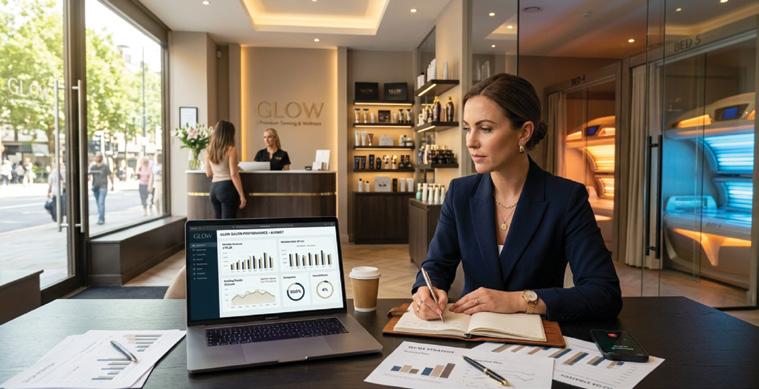
Build momentum now and make next season bigger than ever
Editor-in-Chief
Joe Schuster
Art Director
Dave Villafañe
Accounting/Circulation
Quinn Cooper
Senior Account Executive
Quinn Cooper
Executive Director
Aliesha Colvin
Contributing Writers
Kristin Lee Smithers, CLT
Dr Jim Schleckser
Mackenzie Morris
Grant Kantsios
How To Reach Us
2741 E Belt Line Rd, Suite 113 Carrollton, Texas 75006
Interested In Advertising?
Contact quinn@sunislife.com
June 2026 | Volume 2 | Issue 6
Sun Is Life ISSN 2329-8545 (USPS 023-149) is published monthly by Glo Tanning Inc., 2741 E Belt Line Rd Apt 113, Carrollton, TX 75006. Periodicals postage is paid at Flint, MI and additional mailing offices. POSTMASTER: Send address changes to: Sun Is Life, 12335 N Rockwell Ave., Oklahoma City, OK 73142. To authors, photographers and people featured in this publication: All materials, articles, reports and photos published in this publication are the property of Sun Is Life Magazine and cannot be used without written permission. The opinions and conclusions recited herein are those of the respective authors and not of Sun Is Life Magazine. Sun Is Life Magazine is not responsible for returning unsolicited manuscripts, photos or other materials. Every effort will be made however, to return rejected manuscripts, etc., if they are accompanied by sufficient first-class postage, but the publisher will not be responsible for loss of any such material.
Every salon owner knows the pattern: spring hits hard, the rooms stay full, and the days blur together. Then June rolls in, and the energy shifts. Not dramatically. Not suddenly. Just enough that you can feel the pace settle. That moment—right there—is where leadership shows up.
The busy months measure how fast you can move. The quieter ones measure how well you run your business. When the rush fades, you start to see what’s been working, what’s been slipping, and what needs attention. The salons that stay strong year-round aren’t relying on seasonal luck. They’re relying on habits, standards, and systems that hold up even when the lobby isn’t full.
This issue leans into that reality. Retention becomes the real indicator of health once the surge passes. The clients who came in because it was convenient earlier in the year are the ones who return because they feel connected to your team. They come back because someone remembered their lotion, their level, their preferences. They come back because the service feels intentional, not rushed.
Slower months have a way of revealing things you don’t always catch in March—corners cut during cleaning, inconsistent sales conversations, equipment that’s overdue for maintenance. This is the time to reset. Re‑train. Re‑establish the standards that define a professional salon. And if your team needs a knowledge boost, www.sunislife.com is still the most efficient way to get everyone aligned and certified. We’re also added a section on Red Light Therapy and other modalities to this certification program.
Staffing also looks different once the rush settles. Spring can make anyone look busy. June shows you who’s actually consistent. In this issue, our Salon Pros dig into the generational disconnect many owners are navigating, especially with Gen Z. This is the season for coaching, clarity, and—when necessary—making decisions that protect your culture. Our Salon of Distinction this month comes from Lubbock, TX. Read how Duncan and Ariel Welch “make it happen”.
Revenue management shifts too. The goal isn’t to chase the highs of peak season; it’s to build stability. Memberships, wellness add-ons, retail that actually moves, and service quality that earns loyalty—these are the pieces that keep your numbers steady long after the rush fades. The salons that master this don’t dread the off-season. They barely feel it and a great advertising plan can help. Read more on Signage as a Strategy in this issue.
As summer unfolds, remember this: the conversations you have now, the attention you give now, the care you show now—those are the things clients remember. Busy season shows your capacity. After the peak shows your character.
Continued success to all,
Joe Schuster Editor-in-Chief
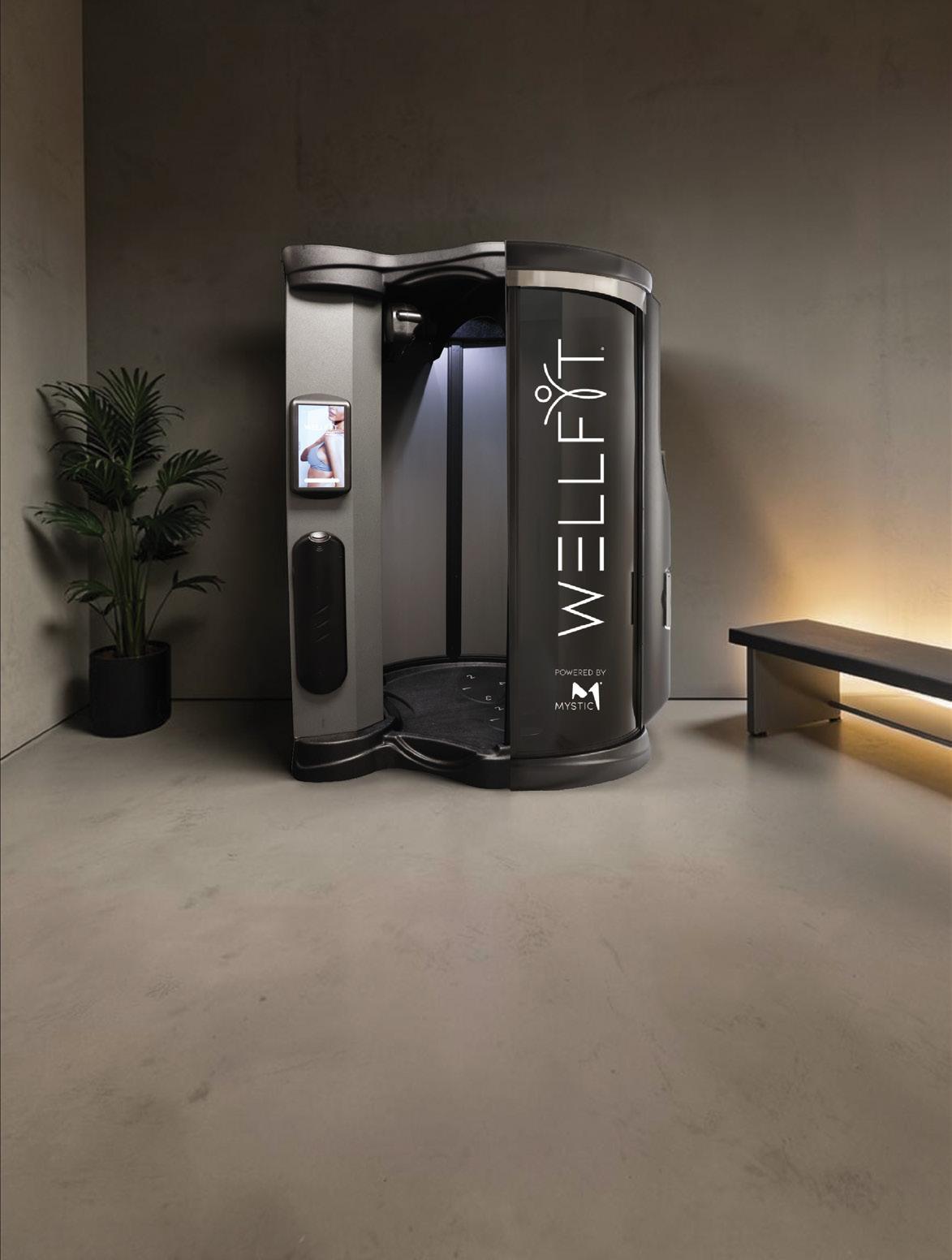
STEP INTO THE FUTURE OF FULL-BODY SKINCARE
WellFit is the next generation of full-body skincare, where advanced beauty technology meets clean, science-backed treatments. Designed to solve the gap in traditional skincare, WellFit delivers full-body results in minutes. Giving consumers the high-tech, wellness-integrated experiences they expect.
For businesses, adding WellFit means tapping into the fastest-growing segment of the $218B beauty and personal care industry, expanding premium offerings without adding staff, and meeting the rising demand for touchless, results-driven treatments.
VERSASPA:
•Intuitive Touch Screen Operation
•4 Treatment Drawers
•Height Sensor & Heated Drying Passes
•Automatic Washdown Cycle
MYSTIC:
•Intuitive Touch Screen Operation
•8 Treatment Drawers
•Sensor-based position tracking
•Automatic Washdown Cycle
To learn more about all the features & benefits of our booths visit innovebw.com
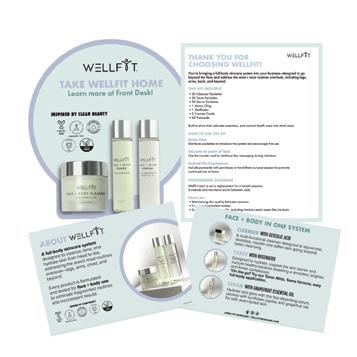
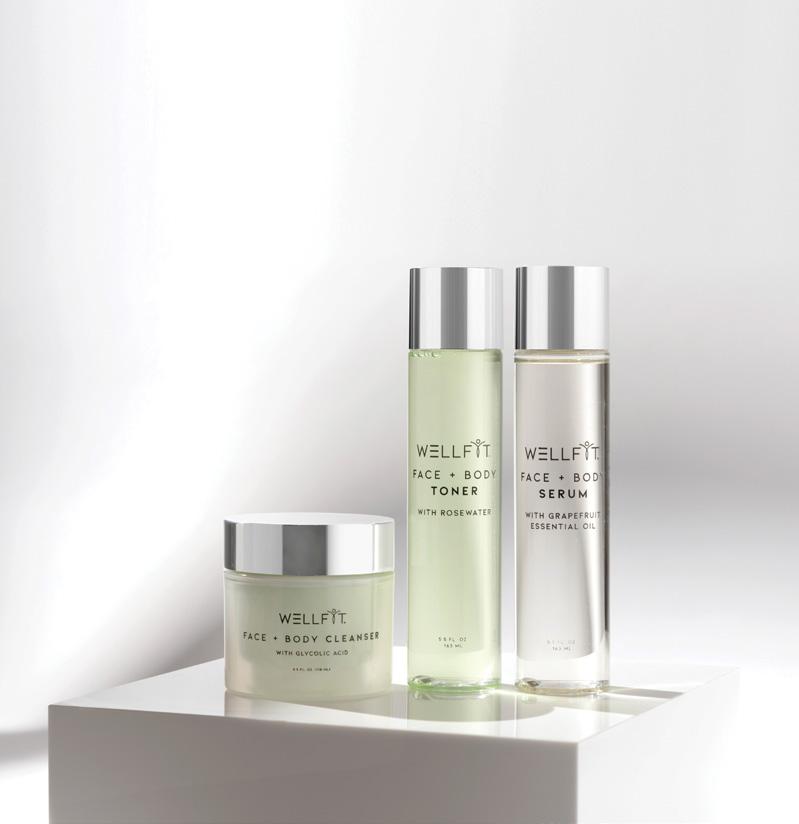
WellFit is your full-body skincare system. It cleanses, balances, and hydrates from head to toe. This system supports the other 90% of skin that’s usually ignored, areas like elbows, knees, feet, shoulders, and back.
When you purchase $250+ products, you will receive a FREE marketing kit ($85 value) for in-location awareness.* Use code WFATHOME at checkout.
*Availability and eligibility may vary by account
DEPARTMENT
ABOUT THE COVER
When the busy season slows, true leadership begins. This issue of SUN IS LIFE explores how top salons turn quieter months into stronger systems, loyal clients, smarter staffing, and steady revenue. Because peak season shows capacity, but the season after reveals character, discipline, and lasting business success. Letter from the Editor
Let’s be honest. As peak season starts to taper off, foot traffic follows.
Those packed days and fully booked beds that defined your busy months begin to slow, and before you know it, you’re heading into that mid-summer dip that can quietly stretch into fall if you’re not prepared.
But here’s the shift the most successful salon owners understand: the slowdown doesn’t start in fall, it starts now.
And the salons that win aren’t the ones reacting to it. They’re the ones preparing for it while they still have momentum.
The next few months are your opportunity to lock in client relationships, introduce new services, and position your salon as something clients continue to prioritize, even when tanning isn’t top of mind.
If you play this right, your slow season doesn’t feel slow at all. It becomes your most strategic advantage.
#1: Email Education
Let’s start with one of the most overlooked tools in your marketing stack: email.
When clients aren’t actively thinking about tanning, your job is to stay top-of-mind without being intrusive. Email does exactly that.
A strong email strategy allows you to show up in your clients’ daily lives with purpose. You’re not just sending promotions—you’re reminding them why they come to you in the first place.
Think of seasonal messaging. Holiday glow reminders. Winter skincare tips. Travel prep. Confidence boosts. Pair that with exclusive offers and suddenly your emails feel less like marketing and more like value.
Segmentation is where this really becomes powerful. Lapsed clients can receive “we miss you” incentives.
Loyal members can get early access, VIP perks, or product drops.
When done consistently, email doesn’t just fill appointments. It builds a relationship where your salon becomes the first place clients think of when they’re ready to invest in themselves again.
#2: Offer Services That Don’t Depend on the Season
Here’s the reality: not every client is chasing a tan year-round.
That’s where most salons miss the opportunity.
The industry is shifting toward wellness, and the salons that adapt are the ones that stay busy when others slow down.
If your only offering is tanning, your traffic will always be seasonal. If your offering is wellness, you become year-round.
Think about services clients want in colder months:
• Sauna sessions
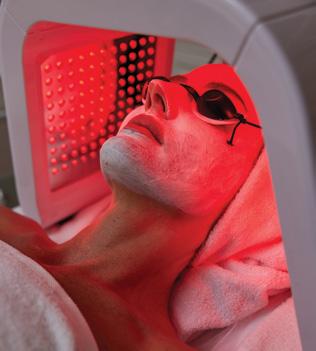
• Red light therapy
• Cryotherapy
• Oxygen bars
• Full-body facial or skin treatments
These aren’t just add-ons. They’re retention tools.
They give clients a reason to walk through your doors even when tanning isn’t top of mind, while increasing perceived value and opening the door to membership upgrades.
#3: Turn Your Salon Into a Destination Through Events
Your salon isn’t just a place to tan. It’s a space people experience.
So lean into that.
Events are one of the most effective ways to drive traffic during slower
BUSINESS
months because they give people a reason to show up beyond their routine.
• Think experiences:
• Self-care Sundays
• Skincare or wellness workshops
• “Glow & Go” brunch events
• Local business collaborations
These events attract new clients, generate buzz, and create built-in marketing through social sharing. More importantly, they position your salon as a community hub, not just a service provider.
#4: Create Off-Season Membership Incentives
If summer sells urgency, winter sells value.
Off-peak seasons are the perfect time to introduce or restructure membership offers that feel like a no-brainer.
Think about:
• Limited-time winter pricing
• Bonus services included with memberships
• Loyalty rewards for consistent visits
• “Lock-in” pricing before peak season returns
Clients are more price-conscious during slower months, but they’re also more open to committing if the value is clear.
Focus on content that connects:
The goal is to shift their mindset from “I don’t need this right now” to “I’d be crazy not to take advantage of this.”
#5: Stay Visible on Social with Purpose
When foot traffic slows, your visibility matters more than ever.
Social media isn’t just about posting— it’s about staying relevant in your clients’ daily scroll.
• Before-and-after transformations
• Client testimonials
• Staff education moments
• Behind-the-scenes content
• Wellness tips for colder months
Video performs best, especially short-form content like Reels and TikToks. Show your space, your services, and your personality.
The goal isn’t perfection. It’s consistency.
When clients see you regularly, they remember you. And when they’re ready to book again, you’re already top of mind.
The Bottom Line
Seasonality doesn’t have to control your business. Strategy does.
When you stay connected through email, expand into wellness-driven services, and create experiences people actually want to be part of, your “slow season” becomes your advantage.
The salons that win year-round aren’t the busiest in summer. They’re the ones that stay relevant in winter.
Tammy Hildebrandt 7 Questions With
BY STAFF WRITER
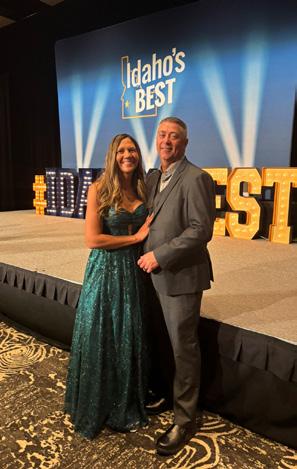
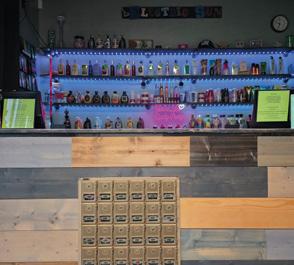
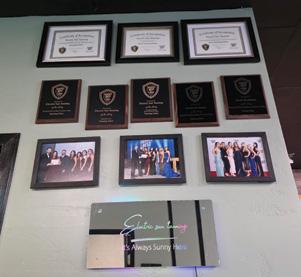
TAMMY HILDEBRANDT is the owner of Electric Sun Tanning in Caldwell, Idaho, a locally rooted salon that has served its community for over two decades. Since taking ownership in 2014, Tammy has transformed the business by expanding services beyond traditional UV tanning to include red light therapy, wellness pods, and advanced client-focused offerings. Known for her strong emphasis on education, team culture, and personalized client experience, Tammy has built a salon environment where both staff and clients feel confident, informed, and supported. Her journey reflects a hands on, growth driven approach that blends industry knowledge with a deep commitment to community and long-term success.
Can you tell us about your salon, your journey as an owner, and what led to your relocation and expansion?
Electric Sun Tanning celebrates our 22nd year here in Caldwell, Idaho. I’ve proudly owned it for the past 11+ years as the fourth owner.
In 2022, we decided we had outgrown the salon’s original home and moved our location to a better location that had main road frontage. Much better than being tucked away in a Walmart parking lot, basically invisible.
1 2 3
Our new space brought expansion and newer equipment options. My biggest supporter is my husband, an electrician, which helped us tremendously keep costs down during our move.
What is your approach to staff training and certifications, and why is education so important in your salon?
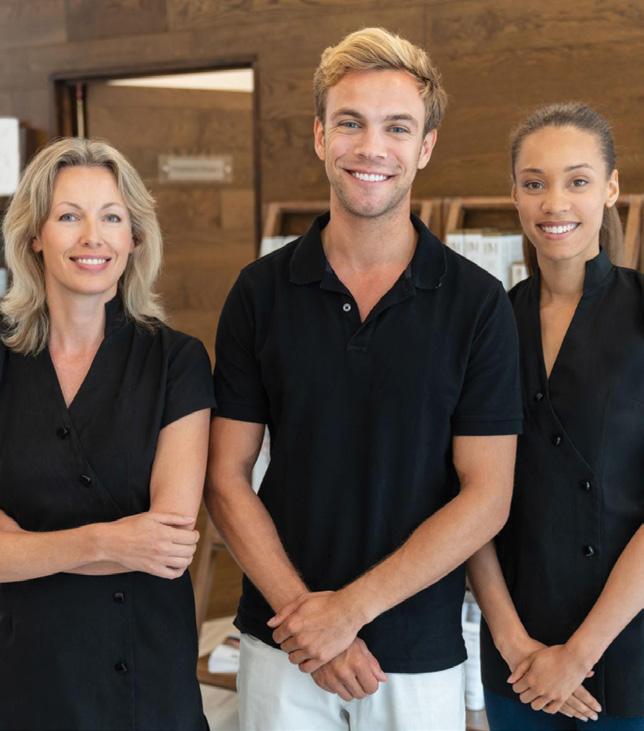
When hiring our staff, which we call Rockstars, we have them pass the Sun Is Life Certification within the first 30 days of employment.
I feel it is important for our Rockstars to be certified and have education behind our salon policies. This also teaches them why we follow guidelines here and educates not only them, but our clients as well.
How do you educate clients on pairing products with services, and what impact has expanding beyond UV had on your memberships?
This also flows into educating clients
on products that pair with services in our salon, like our red light, Cocoon Wellness Pod, or our Versa.
When we added services beyond UV, we saw a huge increase in our Savings Program memberships and EFTs. When clients realize we have so much more to offer to help them relax and feel better, they tend to stay with us longer.
4
How do personal experiences, like your mom’s results with red light therapy, help you connect with and educate new clients?
My mom, who’s in her golden years, still outruns us all. She uses our red light unit and has seen improvements in her eyesight. We love sharing real client stories like this to help new clients understand the benefits.
What is your philosophy behind implementing a rotation policy in your salon, and how do clients respond to it?
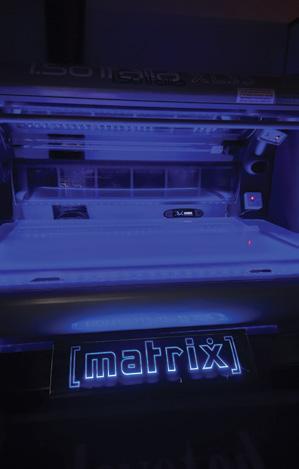
In our salon, we have a rotation policy for our units to make sure our clients are maximizing their time with us. Sometimes this is tough with newer clients who were always granted “bronzing beds” like the Matrix, in their previous salons. After reading and talking to other salon owners, I truly believe rotation gives clients the best results.
Once we explain it, they follow through and always thank us later.
5 6
How has moving to your new location impacted your visibility, growth, and recognition within your community and industry?
opportunities are there. I’ve been able to interact with them at lotion trainings, on social media or phone calls, and we help each other as needed. I have to say, they are all friends of mine. In addition, expos, salon cruises, and local trainings
- Tamie M., Salon Owner
Red Vs Infrared Vs Color
Color Does Not Equal Therapy
As light-based wellness seems to be lighting up every corner of the sales and wellness world, confusion seems to be spreading with it. One of the most common issues is the interchangeable use of terms like red light therapy, infrared, far infrared heat, and chromotherapy. These are not the same things, they do not work the same way in the body, and they should not be marketed or explained like they do.
That confusion does not just stay in conversation, it shows up in real results. Clients walk in expecting one outcome and experience something entirely different. Professionals find themselves trying to explain why something “looks” therapeutic but does not deliver the results being assumed. Over time, that disconnect can erode trust.
To make matters more confusing, many systems include red colored lighting as part of chromotherapy or mood lighting features. While this may look therapeutic, color alone does not create biological change. Understanding the difference is critical for professionals offering these services or selling these products, and for clients trying to make informed decisions.
Red Light Therapy and Photobiomodulation
Specific wavelengths of visible red light, typically in the 620–660 nanometer range, trigger cellular responses. When delivered at the correct wavelength, the correct intensity, and the correct dose, red light can interact with
BY KRISTIN LEE SMITHERS, CLT
photoreceptors in the mitochondria. This interaction supports cellular energy production, reduces oxidative stress, and can influence inflammation, skin health, and tissue recovery.
The key word here is “delivered.” Red light therapy is not about the color red, it is about measurable light energy reaching the tissue at a therapeutic dose. Without adequate irradiance and exposure time, the light may be visible but biologically inactive.
This is where many misunderstandings happen in the field. A client may see red light and assume they are receiving the same benefit across all devices, when in reality the output, intensity, and delivery can vary significantly. Without proper dosing, the expected cellular response simply does not occur.
Near Infrared Light Is Not the Same as Infrared Heat
Near infrared light sits just beyond visible red light on the spectrum, generally between 700 and 900
nanometers. Even though you cannot see it, near infrared (NIR) behaves like visible light. It travels in straight lines, it can be focused by lenses, and it does not automatically feel warm when it hits your skin.
Near infrared penetrates deeper in the body than visible red light. This is why it is often used in muscle recovery, joint support, and deeper tissue applications. Like red light, near infrared works through photobiomodulation, not through warming the skin. The body does not experience near infrared as heat in the traditional sense. Any warmth felt is secondary and minimal, not the primary mechanism of action.
Understanding this distinction is important, because many clients associate results with sensation. Just because something does not feel hot does not mean it is not working. In the case of NIR, the absence of heat is actually part of how it functions.
Far Infrared Is Heat, Not Light Therapy
When it comes to infrared heat
technology, the conversations may get a little jumbled. Far infrared does not function like red or near infrared light. Once you move into the far infrared spectrum, you are no longer working with photobiomodulation. You are working with thermal energy.
Far infrared (FIR), the kind used in saunas and heaters, is different. It is not just light, it is energy that your body absorbs as heat. Far infrared systems heat the surface of the body. That heat can increase circulation, promote sweating, and create relaxation. These effects can be beneficial, especially in sauna settings, but they are thermal effects, not lightdriven cellular effects.
It is important to remember that far infrared does not trigger the same mitochondrial responses as red or near infrared light. The benefits come from heat exposure, not from light interacting with cells.
Saying far infrared works deeper because it is called “far” is just a naming issue, not a biological reality. Near infrared penetrates deeper at the cellular level, while far infrared primarily affects the surface through heat transfer. When this distinction is misunderstood, expectations around performance can quickly become unrealistic.
Chromotherapy and Colored Lights Are Not Photobiomodulation
absolutely enhance user experience.
What chromotherapy does not do is deliver photobiomodulation.
A red colored LED used for ambiance does not automatically meet the wavelength, power density, or dosing requirements needed to trigger cellular change. If the light is not designed, measured, and delivered for therapeutic use, it is decorative, not therapeutic. This does not make chromotherapy bad, it just makes it different.
is marketed as cellular light therapy, the science gets washed away. Clients will feel confused when results do not match promises, and professionals may unintentionally overstate what their equipment can do.
Clear, truthful, and accurate information benefits everyone. It builds long-term relationships, strengthens client confidence, and elevates the professionalism of the entire industry.
Red light therapy and near infrared light are about photons interacting with cells. Far infrared is about heat interacting with tissues. Chromotherapy is about color influencing mood. All can have a place in a wellness environment, but they should not be treated as interchangeable.
In fact, when positioned correctly, chromotherapy can enhance the overall experience. The problem only arises when it is confused with clinical or cellular outcomes.
Knowing the Difference
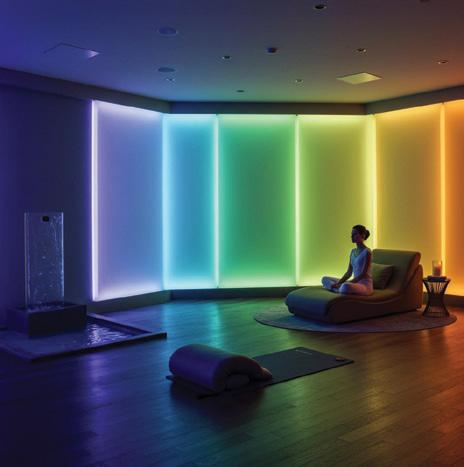
Another major source of confusion comes from chromotherapy features built into many wellness devices. Chromotherapy uses colored light to influence mood and relaxation through visual perception. Red, blue, green, or purple lights can create a calming or energizing effect that can
From a consumer standpoint, understanding these differences prevents unrealistic expectations. From a professional standpoint, it protects credibility, compliance, and trust.
When everything red is labeled as light therapy, or when infrared heat
EDUCATION Is Greater Than BUZZWORDS
The wellness industry does not need buzzwords, it needs better education. When professionals take the time to understand what their equipment actually delivers, and when clients are given honest explanations instead of simplified labels, outcomes improve across the board.
Light therapy is powerful when used correctly. Heat therapy is powerful when used appropriately. Color can enhance experience and atmosphere. They are simply not the same thing.
Understanding the difference is not about being technical. It is about accuracy, responsibility, and being respectful of both science and the people we serve. And in an industry built on results and trust, that distinction matters more than ever.
Signage as Strategy
What Is Your Salon Really Saying?
BY STAFF WRITER
When a client walks into your salon, they are forming an impression before a single word is spoken. The layout, the lighting, the cleanliness, and especially the signage all work together to communicate what your brand represents. Every visual element in your space is either reinforcing your value or quietly working against it. That is why signage should never be treated as an afterthought. It should be approached as a strategy.
The most important question to ask is simple: what message are you portraying to your clients? If
your walls, counters, and rooms are filled with warnings, restrictions, and reactive signs, the environment can begin to feel tense and corrective rather than welcoming and intentional. Even when those messages are valid, the way they are presented matters. Clients do not come into a salon expecting to be managed. They come in looking to feel better, look better, and enjoy the experience.
This is where many salons miss an opportunity. Signage can become a place to post frustrations rather than a tool to guide behavior and highlight value. A shift in mindset
from “What do I need to say?” to “What do I want them to understand or do?” changes how your space works for you. Instead of focusing on what clients should not do, strong signage reinforces what they should do, what they can expect, and what will enhance their results.
That does not mean policies and rules are not important. In fact, many of them are critical. The difference is where they live. Important rules, expectations, and policies are often better placed within a signed terms-of-use or client agreement. This creates clarity and accountability without
overwhelming your physical space. Required state and federal notices should always be displayed as mandated, but optional signage should be intentional and aligned with your overall brand experience.
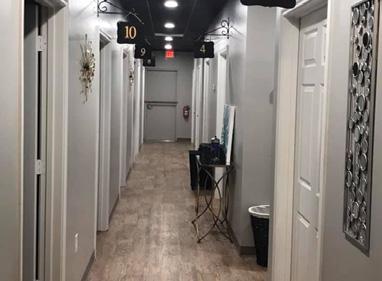
Once you approach signage this way, your salon begins to feel more cohesive. Each area can be viewed as an opportunity rather than just a location. Your front desk becomes a place for education and upgrades. Your hallways help transition clients into the experience. Your rooms reinforce benefits and introduce enhancements. Instead of clutter, your space begins to communicate.
One of the most effective ways to keep that communication working is through rotation. Updating signage at least monthly keeps your messaging fresh and relevant. Many clients visit the same rooms repeatedly, and static signage quickly becomes invisible. Rotating pieces allows you to educate in layers, introducing different services, seasonal promotions, and benefits over time. This keeps clients engaged without overwhelming them.
Another highly effective approach is creating interaction. Small, personal invitation pieces placed on or near equipment give clients something they can touch, read, and even take with them. This creates a deeper level of engagement than traditional wall signage and allows your message to extend beyond the visit itself.
Digital displays also offer a strong advantage when used correctly. Clean, eye-catching visuals that cycle through simple messages can communicate multiple benefits in a matter of seconds. The key is to keep them easy to absorb, focusing on results and highlights rather than dense explanations.
There are also overlooked opportunities throughout the salon that can become powerful selling tools. For example, high-demand units that are frequently used may be overlooked during tours. A pull-out banner highlighting the features and benefits of that unit allows you to showcase its value even when the door is closed. Similarly, placing quick, visually appealing highlights outside each room ensures that clients are still learning about your services, even when spaces are occupied.
Real-world examples from salon owners highlight how effective this can be when done well.
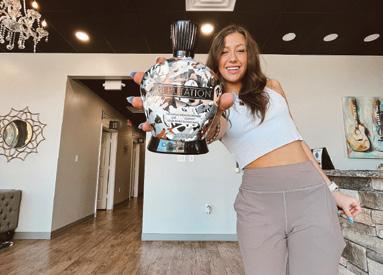
At Beach House Entourage in Olean, New York, owner (and Salon Pro contributor) Lori Van De Wall
builds confidence in both the team and the client. The display becomes both educational and functional, supporting the sales process without adding pressure.
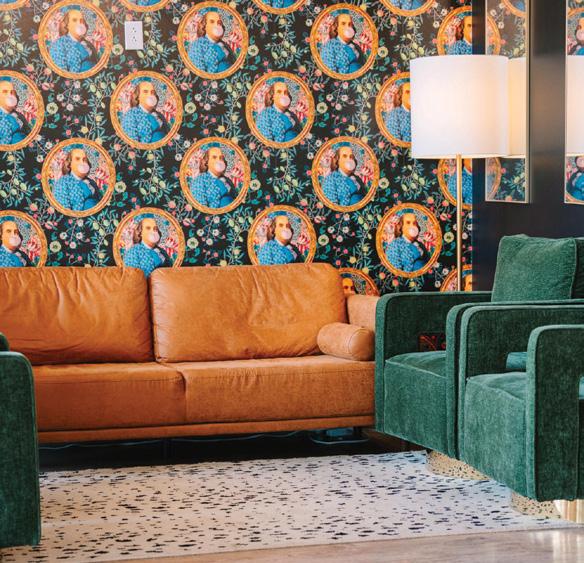
In Sebring, Florida, Diana Lynn Walker, owner of Tropical Glow Spray Tans, takes a different but equally effective approach. By incorporating tasteful artwork behind her product displays, she enhances the overall ambiance of the space without distracting from the products themselves. The visual elements draw the eye in, create a cohesive aesthetic, and elevate the perceived value of what is being offered. Instead of competing with the products, the design supports them, creating an environment that feels intentional, polished, and inviting.
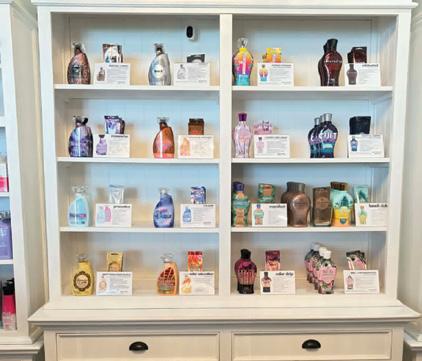
has implemented shelf talkers alongside her lotion displays that clearly outline key product benefits and pricing. This approach does more than just organize products. It creates an immediate reference point for both staff and clients. Instead of needing to look up pricing or remember detailed selling points, the information is presented clearly and professionally right where the decision is being made. This not only saves time at the front desk, but also
These examples show that effective signage is not about doing more. It is about doing it better. It is about clarity, intention, and understanding how your space can support your business goals.
At the end of the day, signage should not feel like clutter or obligation. It should feel like a natural extension of your brand. It should educate without overwhelming, guide without correcting, and sell without feeling forced. When used intentionally, your signage becomes a silent team member that is always working for you, reinforcing your value, supporting your staff, and enhancing the client experience.
Take a look around your salon with fresh eyes. If your space could speak on your behalf, would it reflect the experience you are trying to create?
Because when signage is done well, it does not just fill space. It works.
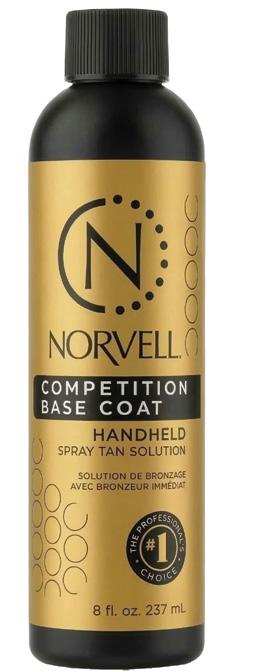
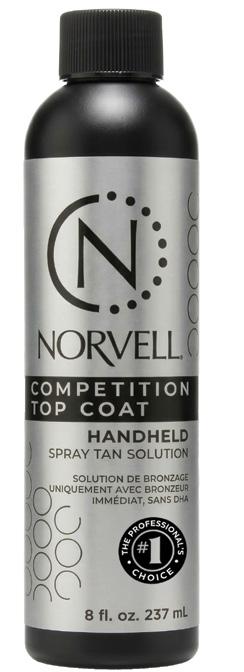
BECOME CERTIFIED WITH NORVELL UNIVERSITY
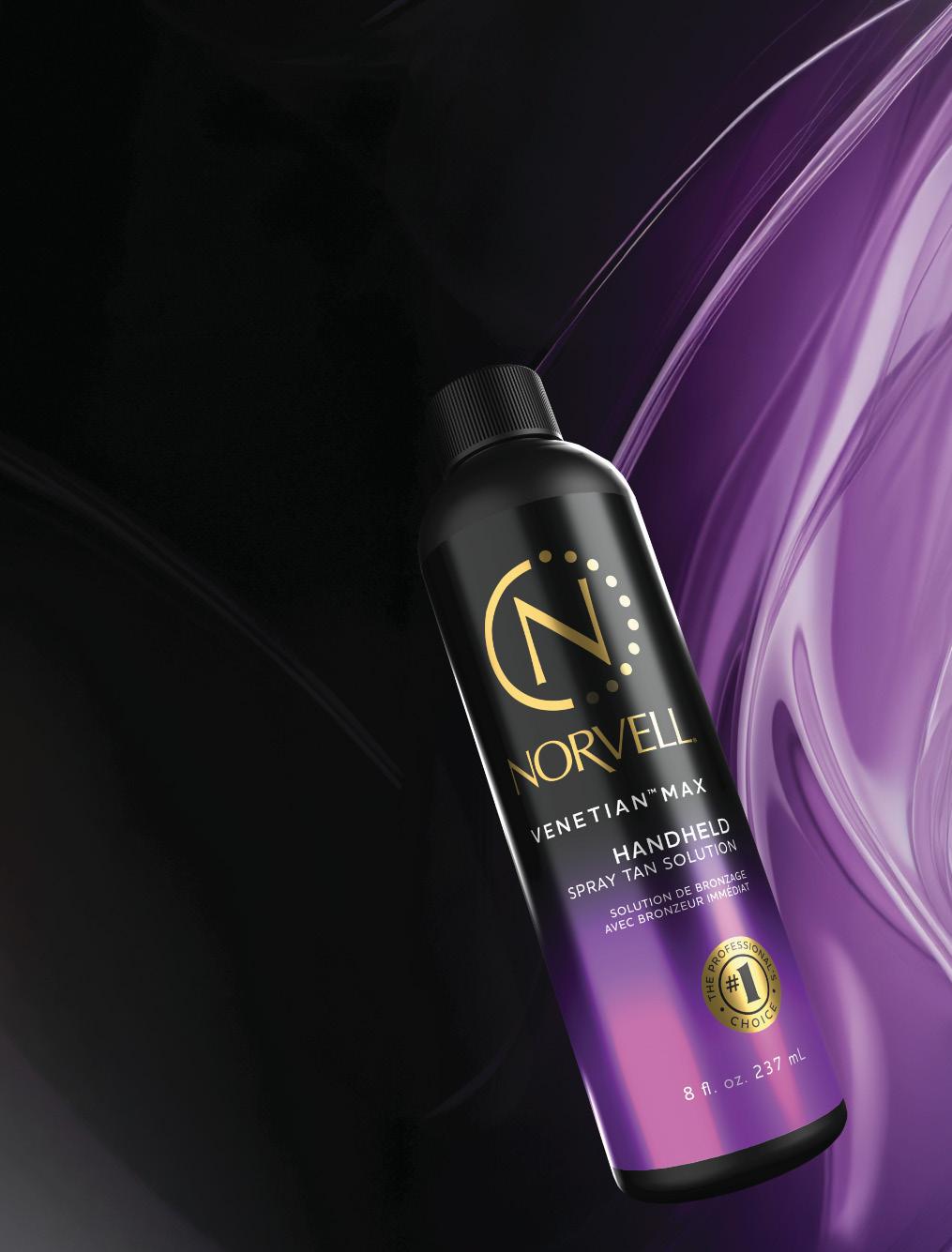
THE ORIGINAL & #1 PROFESSIONAL SPRAY TANNING CERTIFICATION PROGRAM
Partnering with norvell provides the bridge between self-taught skills & a certified professional spray tanning manufacturer curriculum. skills
YOUR PATH TO SUCCESS BEGINS HERE
Join our NU Educators for a full day of business building, technique honing and networking.
JUNE 6/28/26: Embassy Suites by Hilton, Lake Buena Vista Resort, Orlando, FL JULY 7/23/26: Heartland Tanning, Lee’s Summit, MO SEPT 9/13/26: Tan International, Phoenix, AZ NOV 11/1/26: Four Seasons National Tanning Expo, Ameristar Casino Resort Spa, St. Charles, MO
WINE DOWN WEDN ESDAYS
JOIN US FOR WINE DOWN WEDNESDAY AS WE CHAT ABOUT ALL THINGS SPRAY TAN BUSINESS!
THE LAST WEDNESDAY OF EVERY MONTH, 7PM EST
Why Effort, Humanness, and Real Connections Will Define The Brands That Win 2026 Marketing Trends
BY MACKENZIE MORRIS
There is a quiet but undeniable shift happening in marketing right now. You can feel it in conference rooms, in creator communities, in comment sections, and even in the way people talk about content behind the scenes. It’s not about which platform is “dead” or which AI tool is “best.” It’s deeper than that.
After attending countless conferences, webinars, creative summits, marketing intensives, and industry conversations, one message has echoed louder than any tactic or trend:
In 2026, the brands that win will be the ones that feel the most human, and the ones that visibly try. Not performative authenticity. Not manufactured relatability. Not “raw” content that’s actually just another format.
Real humanness. Real effort. Real intention.
We are entering a visibility era where effort itself has become a competitive advantage. In a world flooded with automation, effort is no longer assumed. It’s noticed. It’s felt. And it’s trusted.
We Are Entering a Skeptical Era of Marketing
Audiences are no longer passive consumers of content. They are trained observers. They have seen enough ads, enough launches, enough scripts, and enough templated hooks to know when something feels off.
This isn’t cynicism. It’s pattern recognition.
People can now instinctively tell when content has been massproduced, when a brand is hiding behind automation, or when something has been created without care. AI has accelerated production so quickly that trust has become the real bottleneck.
And trust cannot be automated.
This is why 2026 will reward brands that slow down just enough to show intention. Brands that are willing to show their thinking, their process, and their perspective.
When everything can be created in seconds, what you choose to spend time on becomes meaningful.
Effort Is No Longer Invisible
For years, marketing has optimized for speed, scale, and output. Faster content. More posts. More platforms. More automation.
But something interesting has happened as AI has made all of that easier.
Effort has become visible again.
People notice when someone:
• Shows up on camera instead of hiding behind stock footage
• Speaks in their own cadence instead of a teleprompter voice
• Designs graphics with taste instead of templates
• Writes something that actually sounds like a human thought
Effort sends a signal that says: someone cared enough to make this well.
And in 2026, that signal matters more than ever.
Not because audiences are impressed, but because they feel safer trusting brands that don’t feel disposable.
Humanness Is Becoming the Strongest Conversion Driver
We are officially out of the novelty phase of AI and into the detection phase.
People are not just consuming content anymore. They are scanning it. They are pausing videos, rereading captions, and subconsciously testing for authenticity. Once something triggers that “uncanny valley” feeling, the sense that it’s close to human but not quite, trust drops instantly.
This doesn’t mean AI disappears from marketing. It means AI moves behind the scenes.
The brands that win in 2026 will still use AI, but quietly. Behind the scenes. Strategically. Supportively. The front-facing brand experience, however, will feel unmistakably human.
Humanness now includes contradiction, imperfection, emotion, opinion, humor, hesitation, and personality. These aren’t liabilities anymore. They’re assets.
Because people don’t connect with flawless brands. They connect with real ones.
Why Rachel Pedersen’s 2026 Predictions Matter So Much Right Now
Social media strategist Rachel Pedersen has been one of the clearest signal readers in the marketing space, not because she chases trends, but because she watches behavior. Her 2026 predictions aren’t flashy, but they’re grounded in how humans are actually responding to content.
Her observations confirm what many marketers are quietly realizing: platforms aren’t the problem. Trust is.
Meta platforms like Facebook and
Instagram aren’t dying. They’re recalibrating. The algorithmic shifts happening now are rewarding consistency, clarity, and real engagement over viral gimmicks. When Meta works, the entire ecosystem follows, because it remains the most stable attention infrastructure available.
TikTok, while still powerful, is entering a more volatile season. It’s not collapsing, but it’s no longer a platform to build an entire business on alone. The lesson isn’t to abandon it, but to diversify and build brand equity that exists beyond any single app.
Meanwhile, AI content production is exploding. Video clones, autogenerated scripts, synthetic faces, all of it is increasing output at a staggering rate. But instead of replacing creators, AI is multiplying them, creating an overwhelming amount of sameness.
This is exactly why real, candid, human content will be favored by real people, especially younger generations, who are already adept at spotting artificiality in seconds.
We Are in a Trust Recession and Proof Is the Currency
One of the most important shifts happening right now is buyer behavior.
People aren’t buying less because they’re uninterested. They’re buying less because they’re cautious. Trust is no longer given freely. It’s earned through repetition, proof, and consistency.
Brands that cannot show:
• real testimonials
• real outcomes
• real stories
• real progress are being quietly filtered out.
This is why long-form content is coming back. Blogs, podcasts, deep YouTube videos, newsletters, and Pinterest essays aren’t just content formats. They are trust containers. They allow nuance, depth, and context to exist in a way short-form never can on its own.
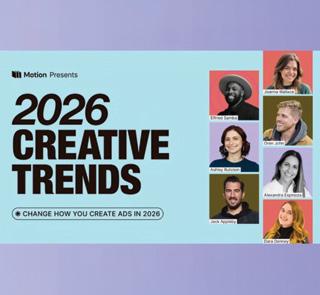
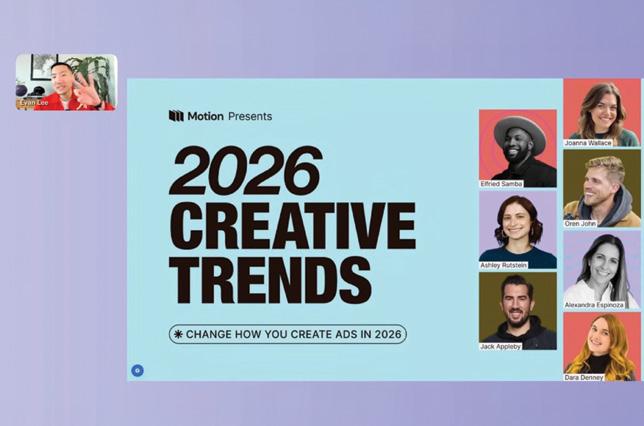
The Motion App’s Creative Trends webinar featured industry experts like Oren John , Ashley Rutstein , Elfried Samba , Dara Denny, Jack Appleby, Joanna Wallace , and Alexandra Espinoza . Each shared top marketing trends for 2026 and provided ideas, formats, and insights into what is working on social platforms going into the new era of digital marketing.
This webinar reinforced something many creatives already feel intuitively: visuals that show effort feel safer to trust.
Not overproduction. Not perfection. Effort.
Animations that guide attention. Thoughtful transitions. Format switching that creates rhythm. Graphics that feel designed, not generated.
These visual signals communicate care. And when people feel care, they lean in.
Visibility in 2026 Is About Building a World, Not a Feed
The most successful brands are no longer posting randomly. They’re building shows.
Audiences don’t follow content anymore. They follow worlds. And worlds create loyalty.
This is also why physical experiences are coming back in a major way. Print materials, snail mail, in-person events, and tangible touchpoints are becoming premium again because they ground trust in reality.
In a digital-heavy world, touch becomes emotional.
Why Effort Is Strategic, Not Optional
The brands that will dominate 2026 operate with three forms of intelligence:
• Intellectual intelligence, clear strategy and positioning
• Emotional intelligence, understanding how people feel and why
• Focus intelligence, knowing what not to do
They don’t try to be everything to everyone. They aim to mean something deeply to someone specific. They stand for something. They invite conversation. They show up consistently.
They listen, because conversation drives commerce.
Metrics Matter Less Than Meaning
Data alone doesn’t make decisions, but the interpretation of it does.
In 2026, creators and brands will analyze content based on:
• emotional resonance
• composition
• narrative clarity
• psychological impact
The numbers inform what to tweak, but the meaning behind them determines how to move forward.
Belief-Led Content Will Outperform Trend-Led Content
The most powerful content doesn’t start with a trend. It starts with a belief. A belief you actually hold. A tension your audience feels. A story only you can tell.
The future doesn’t belong to louder brands. Or faster brands. Or more automated brands.
It belongs to brands that:
• show effort
• embrace imperfection
• invite people into their world
• build trust slowly and intentionally
In a world full of noise, care is the differentiator.
And the brands that start embracing that now won’t just survive 2026.
They’ll lead it.
As we move into 2026, the brands that will stand out are the ones willing to slow down, be intentional, and actually connect. If you’re reading this and realizing your brand is ready for that next level of alignment, not just more content, but better direction, clearer messaging, and a stronger presence, you don’t have to figure it out alone. This is exactly the work I do every day. Through PrismHaus Brand Management and Marketing Agency, I help brands step into strategy, refine their voice, and build something that truly resonates. If you’re ready to align your brand with where marketing is going, you can learn more and connect with me at prismhaus.co.
Gen Z Meets the Front Desk
Closing the Gap Between Owners and Younger Staff
BY STAFF WRITER
Hiring in today’s salons means navigating a workforce that spans multiple generations, communication styles, and expectations. Owners often struggle to identify whether a candidate understands professionalism, reliability, and the realities of salon work.
Lets go to our Salon Pros for their top tips!
“One of the biggest shifts in salon hiring today is learning how to connect expectations clearly instead of assuming they are already understood. Many Gen Z candidates are highly capable, creative, and eager to grow, but they often respond best when professionalism is explained in practical terms: what being on time really means, how to greet clients confidently, when phones should stay away, and why consistency matters at the front desk. A strong interview should go beyond technical ability—ask situational questions that reveal how they handle pressure, feedback, and teamwork. Owners who explain “the why” behind salon standards often get much better buy-in than those who rely only on rules. The strongest results come when younger staff feel coached rather than judged. Set clear expectations from day one, give fast feedback, and recognize wins early so confidence builds alongside
accountability. Many younger team members thrive when communication is direct, respectful, and frequent— short check-ins can prevent misunderstandings before they become habits. At the same time, salon pros should model the professionalism they want returned: calm communication, reliability, and respect create a culture younger employees are more likely to match.”
Michelle Walters Island Glow
“As salon owners, it’s easy to get frustrated when things don’t align with “how we were taught.” But here’s the truth: if we want strong teams, we have to evolve with them—not against them. That doesn’t mean lowering standards. It means learning how to lead differently. Set the Standard early and clearly. Don’t assume they “just know.” Spell it out—attendance, phone use, client interaction, cleanliness, and accountability. Clarity creates confidence. Vagueness creates inconsistency. Train for connection,
not just tasks. Today’s younger staff don’t want to feel like cashiers—they want purpose. Teach them that they’re not just checking clients in… they’re creating an experience. In our salon, we call them Glow Consultants, not front desk staff—and that shift alone changes everything. Slow them down to speed them up. Many younger employees rush interactions because they’re uncomfortable with silence or unsure what to say. Coach them to pause, connect, and ask questions. That’s where trust—and sales—actually happen. Next, accountability without intimidation. This generation responds better to coaching than criticism. But let’s be clear—accountability still matters. Instead of: “Why did you do that?” Try: “Walk me through your thought process.” You’ll correct the behavior while building confidence. Then, create buy-in, not just a schedule. Gen Z thrives when they feel part of something bigger. Share your goals. Celebrate wins. Let them see the impact they’re making—not just the hours they’re working. When they feel connected, they show up differently. This isn’t about “fixing” the younger generation. It’s about bridging the gap. When you combine their energy, creativity, and digital instinct with your experience, structure, and standards—you don’t just build a team, you build a culture that grows your business.”
Shay Ellen
The Sun Shack
“One of the most practical ways to close the generational gap is to study it. Not in a stiff, textbook way, but in a curious, observant way. Gen Z values transparency, flexibility, and feeling seen. When you take time to understand how they think, communicate, and process the world, you stop managing “at” them and start leading with them. Equally important: stay out of their personal lives. Care about them, yes. Support them, absolutely. But resist the urge
to over-insert yourself. Boundaries build respect faster than forced closeness ever will. And then… spoil them. Not in a way that creates entitlement, but in a way that creates loyalty. Appreciation should be loud, consistent, and a little unexpected. Rotate small perks monthly so everyone feels it. Stock the fridge quarterly. Send a handwritten thankyou card in the mail. Take them out of the workplace and into shared experiences like escape rooms or pool days. Sit down one-on-one and actually listen. Celebrate birthdays and work anniversaries like they matter… because they do. At the same time, structure is non-negotiable. Clear, visible policies remove emotion from accountability. I keep our policies printed and rotate one each week in the staff area as a constant reminder. That way, when a boundary is crossed, it’s not personal. It’s not me versus them. The expectation was clear, and the responsibility is theirs. Three chances to course-correct, and the fourth comes with real consequences. That balance is where respect lives. Not in being the “fun boss,” and not in being the rigid authority figure. But in
being predictable, fair, and invested. When your team knows what to expect from you and feels valued while meeting those expectations, the gap doesn’t just close… it disappears.”
Emily Sigmon Carolina Tan & Wellness
“Hiring today means working with different generations who don’t always “speak the same work language.” Gen Z brings great energy and ideas, but salon owners still need consistency, professionalism, and reliability. As a Salon Pro, here are my top tips:
1. Be super clear from the start: Don’t assume they know. Explain expectations like punctuality, cell phone use, dress code, and customer service.
2. Ask real-life questions in interviews: Skip the generic stuff. Ask how they would handle a busy front desk, a late client, or an upset guest.
3. Hire attitude, train skills: Look for someone kind, willing to learn, and coachable. You can teach the rest.
4. Give them structure: Checklists and step-by-step systems help them succeed way faster.
5. Communicate often: Don’t just correct, check in, give feedback, and talk regularly.
6. Keep it consistent: People perform better when expectations don’t change day to day.”
Kristy Mazeika Tan Oconee
“I’ve completely shifted my mindset on hiring over the past couple of years. I used to get frustrated with younger staff—the frequent requests for time off, lack of communication and the constant need to remind them of expectations like proper cleaning or completing checklists. Because of that, I believed I needed to hire mostly “adults” to fill about 80% of my team. That perspective changed when someone I admire in this industry encouraged me to look at things differently. She helped me see the value in the energy, enthusiasm, and unique
skill sets the younger generation brings to the table—qualities my business was missing. I realized the solution to frequent time-off requests was just proper staffing. Having more staff who work less hours each, instead of having less staff who were all full time employees. Communication improved when I met them where they are: creating a staff Facebook page, sharing videos instead of relying on emails that often go unread. We also added handwritten priority lists from spa leads to guide each shift beyond the standard checklists, to help them prioritize. I had a very rigid set of expectations for both consultants and leaders. Once I gave myself permission to adjust those expectations, everything changed. Younger staff often notice things I don’t—they stay on top of trends, suggest updates, and bring a level of energy that’s contagious. They’re eager to learn, enjoy events, and bring excitement to team meetings instead of viewing them as an obligation. Our team has shifted from 80% millennials to 80% Gen Z, and I couldn’t be more excited about it. That shift has elevated our culture,
creativity, and engagement. When you change your mindset and start seeing challenges as opportunities, it can breathe new life into your business.”
Nikki Capps Tantalizing Wellness Spas
“Let’s be honest—most of the disconnect between salon owners and younger staff isn’t about attitude or work ethic. It’s about clarity. A lot of us grew up learning by being thrown into the fire, figuring it out as we went, and picking things up without much direction. That’s not how this generation operates—and expecting them to just “get it” is where frustration starts. What feels obvious to you—cleanliness standards, customer service, sales expectations— isn’t always obvious to someone brand new. If it’s not clearly defined, demonstrated, and reinforced from day one, you’re setting both of you up for disappointment. Where this really starts to click is when you pair that clarity with accountability and non-negotiables. Every salon needs a set of core standards that aren’t optional—things like cleanliness, client experience, and integrity in sales. Not in a harsh or rigid way, but in a way that’s consistent and fair. Younger staff actually respond well to this when it’s black and white. The key is explaining the why behind it. Why does a spotless room matter? Why do consultations and recommendations matter? When they understand that it impacts the client experience, the business, and even their own income, it stops feeling like random rules and starts feeling like purpose. That’s the piece a lot of owners miss. (I know I missed this piece for a very long time!) You have to bring your team into your vision. If they don’t understand where you’re going, they won’t fully buy in. Talk about what you’re building, what you want the salon to be known for, and how they play a role in that. When your team can see the bigger picture
SALON PROSE
and knows exactly what’s expected of them daily, everything changes. Performance improves, accountability feels natural instead of forced, and that gap everyone talks about? It starts to close.”
Angelique Borgerding Glo
Tanning
“The majority of clients that visit our locations are well into adulthood and expect our staff to be well trained and able to articulate the benefits of the products and services we offer. However, as with most industries, we no doubt must attract and retain new clients to secure our ability to remain in business. We also must attract and retain new staff to account for attrition and grow our business. So, who is our targeted group of potential employees? Well, it’s everyone of legal age and up. Our staff must relate to people of all ages and earn their respect to keep them coming back.
The old saying, “You only get one chance to make a good first impression” is a mentality I try to
instill in every person I hire. The best part is that it isn’t rocket science. It’s simply treating every person walking in our salons with a friendly smile, a welcoming greeting and an open invitation to talk about what we may be able to do for them. With most applicants ranging in age from 18-24, I certainly can’t expect them to have much work experience, so when I conduct my interviews, I look for lots of smiles, personal happiness, an outgoing personality, confidence and an eagerness to join our team. I encourage candidates to ask me lots of questions about anything. I want them to think on their feet and actually interview me. We have a conversation that covers many topics. I don’t ask young applicants typical HR questions like “tell me about a time when…”. I can train new staff in our policies, products, services, daily duties and operations. I can’t train friendliness, honesty or character. By the time our first interview has ended, the candidate has a fairly good understanding of my expectations, and I have a fairly good assessment of their ability to add value to our team.
Today’s younger generation wants to feel valued, understood and respected. As I keep getting older and the gap between my age and my candidates widens, it’s important for me to remain in touch with what makes them excited. I’ve learned the best way to do that is simply ask them. They are happy to teach me all about what makes them tick which allows me to relate to them on their level. We achieve a mutual respect, enjoy coming to work, learn together and continue our salons’ reputation of being a great place to tan, feel good, hang out and make new friends. Years down the road when my staff is interviewing for a big time job and they are asked to tell their interviewer “about a time when…”, I like to think they will look back and share the valuable experiences they had working in a tanning salon while they were still in school.”
Vic Perrin Total Tan
GROWTH DOESN’T. Peak Season Ends.
Reframing sunless tanning as your most powerful off-season strategy
BY STAFF WRITER
Peak season has a rhythm everyone in this industry knows well.
Full beds. Packed lobbies. High energy. Strong revenue.
And then, almost overnight, it slows.
So the real question becomes: what now?
For many salons, this is where strategy either tightens or falls apart. The businesses that maintain momentum after peak season are not relying on the same habits that carried them through spring. They shift focus. They adapt their services. And most importantly, they lean into offerings that are not dependent on seasonality.
That is where sunless tanning becomes essential.
A Service That Doesn’t Depend on the Sun
Traditional tanning demand naturally fluctuates with the seasons. As weather changes and routines shift, so does client behavior.
Sunless tanning does not follow that same pattern.
It fills the gap when UV demand softens, offering clients a consistent way to maintain their glow without relying on outdoor exposure or peak-season urgency. Whether it’s for events, travel, photos, or simply personal confidence, the need for sunless remains steady year-round.
For salon owners, that consistency is not just helpful, it’s critical.
Sunless tanning meets all of those needs.
It also opens the door to clients who may never engage with UV services at all. That alone makes it one of the most versatile tools in your service lineup.
Modern Sunless Is Built Differently
Today’s sunless tanning experience is not what it used to be.
Formulations have evolved to include skin-focused ingredients like hydration complexes and conditioning agents that support overall skin appearance. The result is not just color, but a more refined, even, and natural looking finish.
Expanding Beyond the “Summer Client”
One of the biggest missed opportunities after peak season is assuming your client base shrinks. It doesn’t. It changes.
The post-peak client is:
• Preparing for weddings, vacations, and events
• Maintaining a polished, professional appearance
• Looking for low-commitment, high-impact services
• Prioritizing convenience and immediate results
Customization has also advanced significantly. With a range of shades, undertones, and application methods, clients can now achieve results that align with their individual skin tone and preferences.
This level of personalization makes sunless more approachable, more inclusive, and more repeatable.
Confidence Without the Commitment
After peak season, clients are often less interested in long routines and more interested in immediate results.
Sunless delivers exactly that.
It provides:
• Instant visual improvement
• Even tone and enhanced definition
• A low-time commitment service with high impact
For clients balancing busy schedules
or shifting priorities, this becomes an easy “yes” service.
And for salons, it becomes a reliable driver of repeat visits.
Reframing the Role of Sunless
If sunless is still positioned as a secondary or add-on service in your salon, post-peak season is the time to rethink that.
This is when sunless should move to the forefront.
It is not just a substitute for UV. It is a standalone revenue stream that:
• Attracts new client segments
• Maintains engagement during slower months
• Supports retail through prep and aftercare products
• Reinforces your salon as a resultsdriven destination
The salons that win after peak season are the ones that understand this shift and act on it.
The Opportunity After the Rush
Peak season builds momentum. Post-peak season reveals structure.
Sunless tanning gives you a way to carry that momentum forward without relying on the same seasonal triggers. It keeps clients engaged, supports consistent revenue, and positions your business as adaptable rather than reactive.
Because the reality is simple.
Clients still want to look good. They still want to feel confident. They just want it in a way that fits their life right now.
And that’s exactly what modern sunless delivers.
Turning on the Tans in Lubbock!
BY JOE SCHUSTER
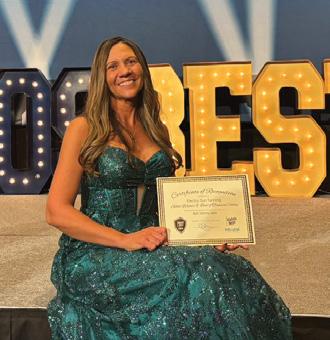
Our Salon of Distinction this month comes from Lubbock, TX, home to Texas Tech and Glow Tanning. Adeline Theroux sent several of her staff to the Heartland Summit for classroom-style Sun is Life certification.
Let’s take a look at Duncan’s journey.
How did you get into this industry? What made you decide to open a salon?
“Glow Tanning is more than just a tanning salon. It’s a passion project built on relationships, learning, and a love for making our clientele feel pampered.
We’ve been serving the Lubbock community under new ownership for a little over two years and continue to grow in both clientele and reputation. I was already
established in the beauty industry. The journey began when I was talking to the original owners of this salon. They poured a lot of care into the business for three years and were ready for their next chapter. During a conversation about selling, I asked, ‘Would you consider selling it to me?’ With a positive exchange, I shared the idea with Duncan, and he was all in. Within a week, the deal was made, and Glow Tanning entered its next era.”
What was the biggest roadblock to opening your salon?
“While Duncan and I had always loved tanning, stepping into ownership came with a learning curve. Our biggest roadblock was mastering the technical side of the tanning beds. Thankfully, Duncan’s natural ability to tinker, fix, and understand equipment made the
process seamless. As our knowledge grew, so did our passion. The more we learned, the more invested we became in offering the best possible experience to our clients.”
Describe your equipment offerings and how that ties in with the majority demographic of your salon. Describe ‘who likes what.’
“Glow Tanning proudly offers top-tier equipment featuring two red light therapy beds, seven UV tanning beds, one spray tan booth, and a dedicated airbrush room. Our most popular service, ‘the cocktail tan,’ captures the Glow Tanning experience. Clients begin with red light therapy, transition directly into a UV tanning bed, and some finish with a spray tan. It’s the ultimate pampering service for those who want maximum results while indulging in self-care.”
One of a salon’s challenges has always been centered around staffing. Do you find it a challenge to find and retain staff?
“Being located in a college town has been a blessing when it comes to staffing. Glow Tanning has never struggled to hire or retain employees because we focus on bringing in the best of the best. Our team holds each other accountable, maintains high standards, and consistently delivers exceptional customer service.”
Two of your staff passed the Sun is Life certification class at Heartland’s recent UV, Sunless, and Wellness Summit. Describe the importance of a trained staff.
“A huge part of that success comes from our manager, Adeline, who took
your class. Her dedication to training and leadership sets the tone for the entire salon. My husband and I lead by example, ensuring that positivity, professionalism, and care start at the top.”
What do you see as the biggest challenge for you in 2026?
“With rapid growth and an everexpanding clientele, the salon’s biggest challenge is being too busy! During peak season, lines are common, but the team is trained to handle the chaos with grace and efficiency, always doing their best to accommodate every guest.”
What are your goals in the next 3–5 years?
“Glow Tanning is about more than achieving the perfect tan. We create a joyful, welcoming experience
where clients feel taken care of from the moment they walk in. Our goal is to provide passion-driven ownership, a knowledgeable team, and a commitment to excellence. Maintaining that will allow us to continue to shine as one of Lubbock’s favorite places to glow.”
Glow Tanning’s story is a strong reminder that success in this industry is not just about equipment or location, it is about leadership, training, and creating an experience clients genuinely enjoy returning to. Through a commitment to education, a focus on team culture, and a clear vision for growth, Duncan and Ariel Welch have built a salon that continues to stand out in a competitive market. As they look ahead, their approach reflects what many successful operators are discovering: when you invest in your people and your client experience, growth naturally follows.
Not All Red Light Is Created Equal LEDs vs Fluorescents vs Lasers
BY KRISTIN LEE SMITHERS, CLT
Navigate modern wellness spaces for information on Red LIght Therapy, scroll social media, or attend an industry event and you will hear it:
“Fluorescent lamps are still the core of the industry but are older technology.
“LED’s have become the new gold standard.”
“Lasers are the latest technology.”
Confident statements, but often lacking context.
Red light therapy is not defined by the type of device, but by how light is delivered to the tissue. Once you understand that, the conversation shifts from marketing claims to measurable results.
The Three Main Categories of Red Light Devices
LED, Light Emitting Diodes
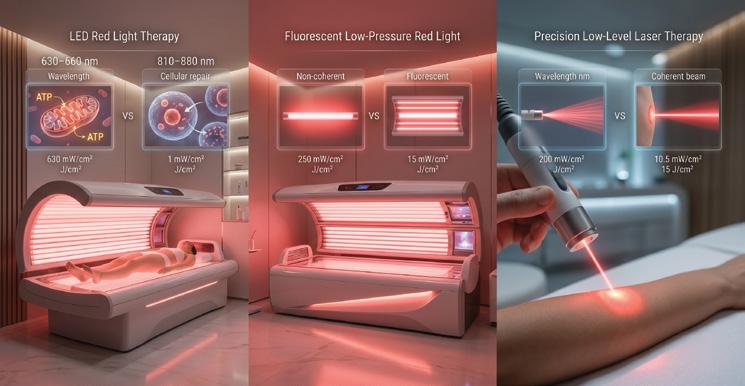
LED devices dominate the market today, from handheld tools to full-body systems. They emit non-coherent light in relatively narrow wavelength ranges, most
commonly red light at 630 to 660 nm and near-infrared at 810 to 880 nm. They are efficient, scalable, and can be designed for both targeted and full-body use. However, LED devices vary drastically in output. A unit delivering 5 mW/cm² compared to one delivering 50 mW/cm² is not comparable, even though both are labeled LED.
Fluorescent, Low Pressure Lamps
Fluorescent red light systems have been used in salons for years, often referred to as collagen beds. They emit non-coherent, multidirectional light across a broader visible spectrum. While less targeted than LEDs, and far less than lasers, they provide consistent, even full-
body exposure. They are frequently dismissed as outdated, yet many deliver steady, repeatable energy across large surface areas, making them effective for skin-focused outcomes.
Lasers, Low-Level Laser Therapy
Lasers emit coherent light, meaning the photons travel in an organized, parallel manner. This creates a focused, high-intensity beam. They are precise and powerful, often used for targeted applications such as joint therapy or hair restoration. Coherence is often marketed as superior, but once light enters the tissue, it scatters quickly. This limits the advantage primarily to surfacelevel or highly targeted treatments.
Coherent vs Non-Coherent Light
Coherent light is organized and synchronized, creating a focused beam that delivers energy to a precise point. Non-coherent light is dispersed and multi-directional. While less focused, it allows for broader, more even coverage, making it ideal for full-body and skin applications. Fluorescent systems take this a step further by producing a wider, diffused spectrum that spreads evenly across the body.
What Actually Drives Results
All three technologies can stimulate the same biological process: photobiomodulation. Photobiomodulation is the way light interacts with your cells, where light energy is absorbed and used to boost energy production, improve function, and support repair.
Cells respond to wavelength, irradiance measured in mW/cm², and total dose measured in J/cm². They do not respond to whether the source was an LED, fluorescent lamp, or laser. This is where dosing becomes the most important factor.
Understanding Dose
In practical application, dosing generally falls into these ranges: 5 to 10 J/cm² for superficial skin support, circulation, and glow; 10 to 20 J/cm² for collagen stimulation and mild inflammation support; and 30 to 60 J/cm² for deeper tissue support, recovery, and joint or muscle applications.
Many hybrid tanning systems deliver only 1 to 5 joules of red light per session and are directed at improving circulation and supporting the tanning process. On
the other hand, a full-body system delivering 30 joules or greater may be therapeutic and produce significantly different outcomes.
Simply put, a “better” device with an inadequate dose will underperform every time.
The Biphasic Dose Response
Red light therapy follows a biphasic dose response, meaning there is a precise window where light is beneficial. Too little energy produces no measurable effect, the correct dose stimulates cellular activity, and too much can inhibit function or create cellular stress.
More is not better. Precision matters more than intensity.
Safety and Risk Considerations
Each technology carries its own safety considerations, especially when dosing is misunderstood.
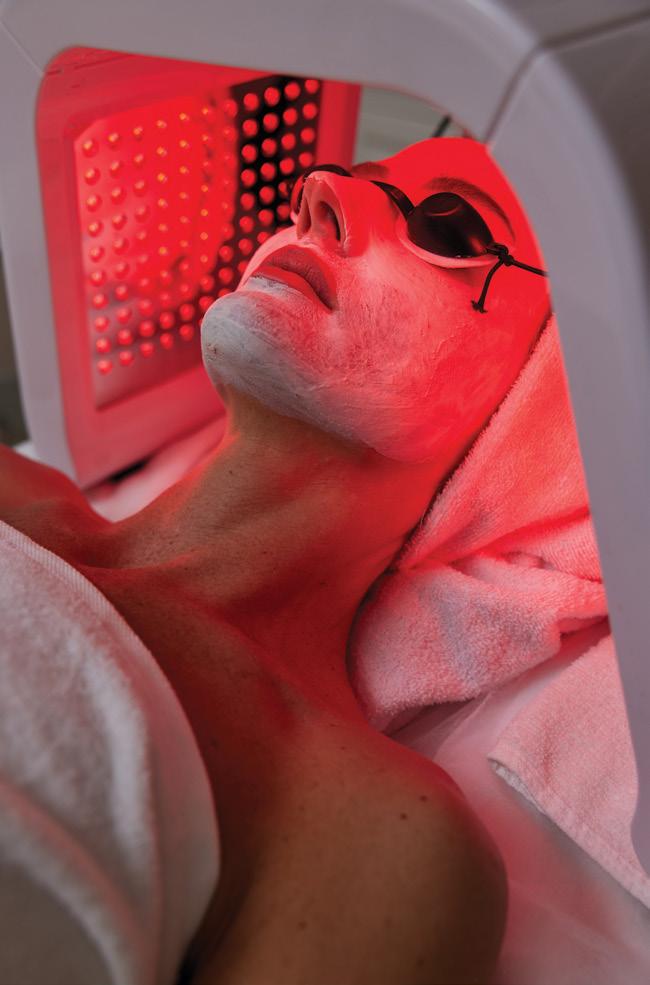
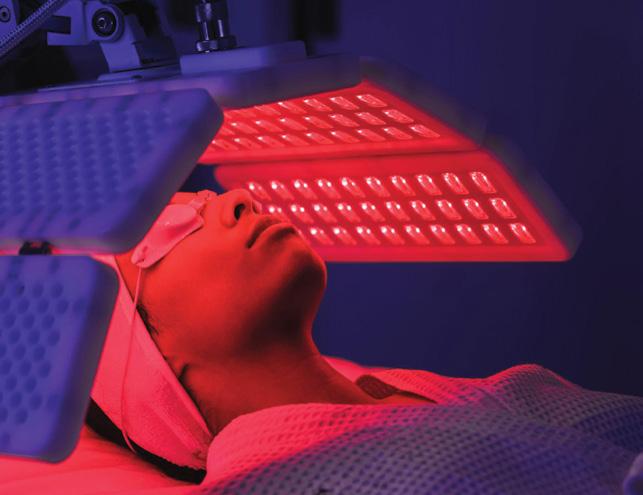
LED systems are generally low risk when used appropriately. However, high-output systems can lead to overstimulation if used too frequently or at excessive doses. Spacing sessions every other day and staying within roughly 60 to 100 joules for most applications helps maintain effectiveness. Eye protection should be used, especially with high-intensity facial devices. The most common issue with LED is inconsistency. Underdosing leads to a lack of results, while overuse leads to diminishing returns.
Fluorescent red light is diffused and lower in intensity per point, making it more forgiving. Because exposure is spread evenly, the risk of localized overstimulation is reduced. Risks remain minimal when sessions
follow recommended guidelines, though longer exposure does not necessarily mean better outcomes.
Laser systems require the most caution. They deliver concentrated, high-intensity light to a small area, increasing the risk of overexposure. Improper use can lead to tissue irritation, localized overheating, or unintended inhibition of cellular activity. Protective eyewear is mandatory, and proper training is strongly recommended. Lasers are not ideal for full-body applications and are best reserved for targeted treatments. In addition, significant training and certifications may be required by the state.
So, Which One Is Best?
There is no universal winner. LEDs offer versatility and scalability. Fluorescents provide consistent full-body coverage. Lasers excel in targeted applications.
The best device is the one that delivers the correct dose, at the correct wavelength, for the intended outcome.
Final Perspective
The red light industry often debates technology when it should be focused on delivery. A well-dosed fluorescent system can outperform an underpowered LED. A properly applied LED can outperform a misused laser. And a laser, in the right hands, can be incredibly effective for specific goals.
Brand names may appeal to the buyer, but dosing is what determines results. When you shift the conversation from what device is being used to what dose is being delivered, you move from marketing into true understanding.
And that is where real results live.
Turn Slow-Season Searches Into Next-Season Clients
How salons and spas can use June’s quieter months to dominate search rankings before the next rush begins
BY GRANT KANTSIOS
There’s a moment every salon and spa owner knows well. The phone slows down. The walk-ins thin out. The frantic pace of spring — Mother’s Day bookings, prom appointments, wedding prep — gives way to something quieter. And for most owners, that quiet feels like a problem.
But what if June’s lull isn’t a gap in your business? What if it’s a window?
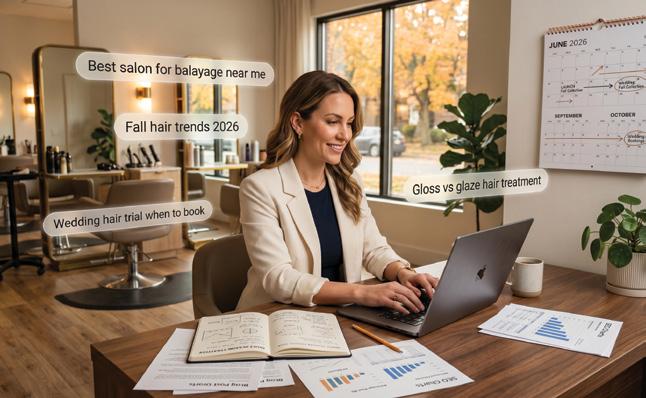
Right now, while you’re catching your breath, a very specific kind of potential client is out there searching. They’re not booking yet. They’re planning. They’re researching fall wedding hair trials. They’re looking up “best keratin treatment near me” before making their first appointment. They’re comparing salons, reading reviews, and quietly deciding who they’ll call when they’re ready.
The question is: will they find you?
Why Most Salons Miss This Window Entirely
Here’s the uncomfortable truth about search engine optimization for beauty businesses: the work you do in June shows up in September. Google doesn’t reward businesses that scramble to optimize at peak season — it rewards businesses that have already put in the work.
Most salons operate their digital presence the same way they operate their schedule: reactively. When it’s busy, marketing gets ignored. When it slows down, the panic sets in and the money gets thrown at ads.
But the salons consistently booked out — the ones with 6-week waitlists and loyal returning clientele — they treat the slow season like a second job. Specifically, they treat it like a content and SEO investment that compounds over time.
Understanding How Your Future Clients Actually Search
Before you can capture slowseason searches, you need to understand what those searches actually look like.
Peak-season searches are direct. They’re “hair salon open Saturday” or “eyebrow wax near me today.” High intent, ready to book.
Off-peak searches are different. They’re exploratory. They sound like:
“How long does a balayage last?”
“What to expect at your first facial appointment”
“Best hair treatments for damaged hair”
“How to prepare for a Brazilian blowout”
“Wedding hair trial — when should I book?”
These are called long-tail keywords — longer, more specific phrases that signal someone is early in their decision-making process. They have lower search volume than broad terms, but they’re powerful for three reasons:
1. They’re less competitive. Every salon in your city is fighting for “hair salon [your city].” Very few are writing genuinely helpful content about what to expect at a first keratin appointment.
2. They attract warm leads. Someone researching “how long does a hair gloss treatment last” is already interested in the service. They just haven’t committed yet.
3. They build trust before the first visit. When someone reads your thorough, helpful answer to their question — and then later books with you — they arrive already feeling like they know you. That’s the beginning of a loyal client relationship.
What This Looks Like In Practice
Let’s make this concrete. Imagine you’re a full-service salon with a strong color department. Here’s how you might approach a slow-season SEO strategy:
Start with your most-asked questions. What do clients ask before their first color appointment? What do they text you the week after a treatment? What does your front desk explain over and over? Those questions are your content roadmap.
Maybe it’s “Can I wash my hair after a balayage?” or “How often do I need a toner refresh?” Write genuine, helpful answers to those questions — not a sales pitch, but the kind of answer your best colorist would give a nervous new client.
Think in seasons, not moments. June is the right time to write about fall hair trends — not because you’re out ahead of it in a gimmicky way, but because fall planners are already researching. A bride getting married in October is thinking about her wedding hair right now. An article titled “What to Ask at Your Wedding Hair Trial (And When to Book One)” positions you as an expert exactly when she’s looking.
Update what’s already there. Many salon websites have service pages
that are thin, generic, or years out of date. A slow season is the perfect time to rewrite your services pages with real depth — explaining the process, setting expectations, answering common questions, and naturally including the phrases people actually search for.
The Compound Effect of Consistent Content
Here’s what makes this strategy so powerful — and so underutilized: it compounds.
An ad you run in June disappears the moment you stop paying. A wellwritten blog post answering “What’s the difference between a gloss and a glaze?” can bring new visitors to your site for years. It earns you credibility every time someone reads it. It can be linked from your email newsletter. It can be shared by clients who found it helpful. It becomes a permanent asset in your business.
Most salons aren’t doing this. They’re posting on Instagram and running occasional promotions and hoping the phone rings. The salons that invest in search-ready content during the quiet months end up with a pipeline of warm, informed potential clients who found them organically — and who convert at a higher rate because they came in already trusting your expertise.
Where to Start
If this feels overwhelming, start small and start specific. You don’t need to overhaul your entire website in one week.
This week: Identify five questions your clients ask most often. Write those down.
This month: Turn those five questions into five pieces of content — a blog post, an FAQ section
update, a service page rewrite. Aim for depth and genuine helpfulness over word count.
This season: Build a habit of looking at what your future clients are searching for, not just what your current clients are booking. Tools like Google’s autocomplete, the “People Also Ask” section on search results, and free keyword research tools can show you exactly what people in your area are typing.
And if you’re not sure where your website currently stands — how it performs in search, how quickly it loads, whether your service pages are working for you or against you — a digital marketing audit is a good place to start. The slow season is the right time for honest evaluation.
The Mindset Shift That Changes Everything
The salons that grow year over year aren’t the ones with the best Instagram feeds. They’re the ones that understand their digital presence is working for them 24 hours a day, seven days a week — even when the appointment book is light.
Every slow season is a choice. You can wait for things to pick up, or you can use the time to build the infrastructure that makes next peak season bigger than this one.
Your future clients are searching right now. The question is whether they’ll find you…or find someone else who had the same idea a few months earlier.
Red Light Therapy Has Been Added to SIL Cert Course
BY JOE SCHUSTER
As the tanning and wellness industries continue to evolve, so does the demand for education around emerging technologies. Red light therapy is one of the fastest-growing additions to salon service offerings, yet it is often misunderstood, misrepresented, or oversimplified. For professionals, understanding not just what red light therapy is, but how it works, how it is regulated, and how to properly communicate its benefits, is essential. This is exactly why Sun is Life certification continues to expand its curriculum, ensuring salon owners and staff are equipped with accurate, science-backed knowledge that builds both confidence and credibility.
The background and history of using red light therapy (RLT) systems commercially has a parallel to the indoor tanning industry. Friedrich Wolff is credited as being the “father of modern indoor tanning.” His research exposing German athletes to UV for a positive health effect and better athletic performance resulted in tanned skin, similar to sunlight exposure.
Red light came to the forefront just a few decades ago, with NASA studying new ways to grow plants in space using LED-emitting devices. Most LED devices using red light prior to that were in the form of lasers in medical applications. NASA’s research found that while astronauts were using these devices on plants, abrasions on their hands apparently healed much faster.
In 2002, the FDA approved a low-level laser therapy device, which brought red light therapy into the realm of clinical applications in dermatology and the wellness industry. The cosmetic effect of red light has offered benefits such as reducing the appearance of fine lines and wrinkles and a positive effect on treating acne and skin blemishes. The first RLT device cleared that year through the FDA’s 510(k) process was the TUCO Erchonia PL 3000 lamp for pain therapy.
Before a manufacturer can sell these devices in the U.S., they must register the product with the FDA. If the manufacturer makes any medical claims, such as improving skin texture or reducing acne, they are required to obtain FDA 510(k) clearance, verifying the product’s safety and effectiveness for those specific claims. Red light therapy systems are regulated by the FDA under 21 CFR 878.4810, 878.4850, 878.5400, and 890.5500 that regulate Class II photobiomodulation (PBM) devices, also known as low-level light therapy (LLLT) devices.
For commercial use in salons without requiring a prescription, the manufacturer may also secure overthe-counter (OTC) clearance from the FDA. Earning FDA 510(k) OTC clearance involves rigorous testing to demonstrate both safety and performance, including compliance with electrical safety standards such as ETL, CE, or UL and the accompanying electrical safety documentation in the U.S. This clearance is expensive and timeconsuming for manufacturers but is an important one for the public. It results in a critical benefit: a fully compliant, legally marketable device that meets stringent safety and performance standards. Products that achieve such clearance are listed by the FDA as Class II medical devices.
Photobiomodulation
Red light therapy (RLT), also known as photobiomodulation (PBM), uses specific wavelengths of red and near infrared light to stimulate cellular activity, particularly within the mitochondria, leading to increased adenosine triphosphate (ATP) production and promoting healing. This non-invasive treatment can help with various conditions by increasing mitochondrial function, reducing inflammation, and improving blood circulation.
Photobiomodulation (PBM), also known as low-level light therapy or red light therapy, is a therapeutic approach that uses light to stimulate, heal, and regenerate tissue. It involves applying red or near-infrared light to the body, which is absorbed by cells to promote healing and reduce inflammation.
How RLT Works
Photobiomodulation works by stimulating cellular activity, particularly in mitochondria, which
are the powerhouses of cells. Near-infrared light, typically within the 600–1000 nanometer range, penetrates the skin and interacts with cells. The light is absorbed by mitochondria, the cell’s energy producers, which then increase their production of adenosine triphosphate (ATP), a molecule that fuels cellular processes.
This increased ATP production can lead to enhanced tissue repair, improved cell function, and reduced inflammation. It stimulates cellular function by using specific red light wavelengths to trigger a photochemical reaction in the body’s cells. This process is similar to photosynthesis in plants.
Increases ATP production: The light is absorbed by the cells’ mitochondria, which increases the production of adenosine triphosphate (ATP), the primary energy currency of the cells. Promotes healing: The increased cellular energy helps to accelerate the healing process for damaged tissue, reduce inflammation and swelling, and provide pain relief.
Function
Mitochondrial function refers to the various roles that mitochondria, the powerhouses of the cell, play in maintaining cellular health and function. While primarily known for energy production through ATP, mitochondria also participate in calcium signaling, heat production, cell growth, and even cell death. They also play a crucial role in immune responses and cellular signaling.
What Are Mitochondria?
All living things are composed of cells called organelles with specific functions. Mitochondria are a type of organelle.
Where are they? Most of our cells have many mitochondria, and some may have more because they need more energy. The cell membrane encapsulates each cell and every one will have a nucleus, which holds genetic material. It will also contain cytoplasm that holds the organelles. The mitochondria, like other organelles, are located in the cytoplasm.
What do mitochondria do? The main function that occurs inside mitochondria is a chemical reaction that creates ATP, a molecule that the body uses for energy.
Beyond ATP, research suggests red light therapy may influence nitric oxide production, enhancing circulation and cellular performance. In essence, red light therapy acts as a gentle nudge to the mitochondria, helping them function more efficiently.
Benefits
Wound healing
Pain relief
Skin health improvement
Muscle recovery
Hair growth support
Things to Consider
While generally safe, it is important to consult with a healthcare professional before starting red light therapy, especially if you have underlying health conditions or are taking medications. Results may vary, and consistent sessions of 10–20 minutes are typically recommended.
Key Compliance and Safety Highlights
Non-UV Emission: Compliant RLT devices do not emit UV wavelengths and cannot burn the skin.
Protective Eyewear: Eye protection should always be used when required.
No Overexposure to UV Warnings
Required: RLT-only devices do not require UV warning labels.
Contraindications: Consult a physician for certain medical conditions or medications.
Retrofitting Sunbeds with Red Light Lamps
It is imperative to select a compliant system from a reputable
manufacturer rather than attempting to retrofit existing equipment. Altering devices can void certifications, insurance, and FDA compliance, creating liability risks.
Medical Claims
Choose compliant equipment and avoid exaggerated claims. Verify all claims with manufacturers and FDA resources. Unsupported claims may expose owners to liability.
Is red light therapy effective? More research is needed, though early studies show potential.
Is red light therapy safe?
Generally safe when used as directed. Eye protection should always be used when specified.
Clients may also choose to consult dermatologists or trained professionals for further evaluation.
As red light therapy continues to grow in popularity within the tanning and wellness space, education becomes the defining factor between trend and true value. Understanding the science, regulatory requirements, and proper application of these systems allows salon professionals to deliver services with confidence, accuracy, and integrity. By incorporating red light therapy into the Sun is Life certification, the industry takes another step forward in elevating standards, protecting consumers, and ensuring that innovation is backed by knowledge. When professionals are educated, clients are informed, and the entire industry benefits.
Most routines stop at the face. The rest of the body—elbows, knees, back, shoulders—goes untreated, despite constant exposure to sweat, heat, friction, and environmental stress. WellFit closes that gap as the first automated full-body skincare designed to reach the areas traditional routines miss.
Your Numbers Are Trying to Tell You Something
How to use leading and lagging indicators to stay ahead of the slow season
— and make it work for you.
BY DR. JIM SCHLECKSER
Every tanning salon owner knows the feeling. Spring hits, the phones ring off the hook, the beds are packed from open to close, and the register hums. Then summer arrives — and just like that, things start to cool off. Walk in traffic slows. Regulars start canceling. You look at last month’s revenue and wonder: how did we get here so fast?
The truth is, the slowdown didn’t sneak up on you. The warning signs were there weeks earlier. You just weren’t looking at the right numbers.
That’s where leading and lagging indicators come in. These two types of measurements can help you spot what’s coming before it arrives — and act while you still can.
“The warning signs were there weeks earlier. You just weren’t looking at the right numbers.”
What’s the difference?
Think of it this way. A lagging indicator is like looking in your rearview mirror. It tells you what already happened. Your total sessions last month, your revenue for the quarter, and how many memberships got canceled — these are all lagging indicators. They’re real, and they matter, but by the time you see them, the moment to act has often passed.
A leading indicator is like looking through the windshield. It tells you where you’re headed. New memberships sold this week, how many people called to ask about spray tans, how many gift cards went out the door — these point to what’s coming next. They give you time to steer.
Smart salon owners use both. They check the rearview mirror to understand where they’ve been, and they watch the road ahead, so they’re not caught off guard.
After the peak, look forward
The weeks right after your busy season are the most important time to pay attention to your leading indicators. Your lagging numbers will
Area Leading (what’s coming)
Memberships New sign-ups this week
Revenue Gift card & package sales
Traffic Appointment bookings ahead
Retail Lotion & product inquiries
Loyalty Rebooking rate at checkout
still look great — revenue was strong, sessions were up. But if you only look backward, you’ll miss what’s quietly shifting.
Here’s what to watch as the peak fades:
New memberships sold per week. This is one of the best signals you have. If new sign-ups start dropping in June, you’ll feel it in August. Track this number every single week, not just at the end of the month.
Advance appointment bookings. Are people scheduling sessions for two or three weeks out? If your calendar for next month is looking thin, that’s your cue to run a promotion now — not when the slow month actually hits.
Product and lotion inquiries. Customers who ask about products are engaged. They’re thinking about their tan, their skin, their routine. A drop in product questions often signals a drop in overall interest.
Rebooking rate at checkout. When a customer finishes a session, do they book their next one before leaving? If that rate is falling, people are less committed. That’s a leading signal worth acting on.
A quick example
Say you notice that new membership sign-ups have dropped from 20 per week to 8 per week over the past three weeks. Your revenue is still fine
Lagging (what happened)
Total active members
Monthly revenue total
Sessions logged last month
Retail revenue per visit
Membership cancellations
right now — but in 60 days, those 36 “missing” members will show up as 36 fewer monthly payments. You still have time to run a back-to-school special, start a referral campaign, or create a summer freeze option to keep people connected. That’s the power of looking ahead.
How to pick the right numbers for your salon
You don’t need a complicated system. Start with your goals. If your main goal right now is keeping members through the slow season, then your most important leading indicator is membership sign-ups and cancellation requests. If your goal is to boost revenue per visit, watch your retail sales and package upgrades at checkout.
Work backward from the result you want. Ask yourself: what must happen three or four weeks before I see that result? Those actions are your leading indicators.
Pick three to five that matter. More than that, and you’ll stop looking at all of them.
Three mistakes to avoid
[AVOID] Only checking your monthly revenue report. By the time a revenue problem shows up on that report, you’ve already lost the chance to fix it in real time. Weekly leading indicators give you a much earlier warning.
[AVOID] Tracking vanity numbers. Social media followers and post likes feel good, but they don’t fill beds. Focus on behaviors that connect directly to visits and memberships.
[AVOID] Watching too many numbers at once. A list of fifteen metrics is just noise. Pick the critical few and look at them consistently. Simple and consistent beats complex and is ignored every time.
The slow season is a choice
Here’s the mindset shift that changes everything: the slow season doesn’t have to be slow. It can be the season where you lock in loyal members, train your staff, upgrade your equipment, and prepare your promotions. But none of that is possible if you’re reacting instead of planning.
“The slow season doesn’t have to be slow. It can be the season where you lock in loyal members and prepare your best promotions.”
The salon owners who thrive yearround are the ones who watch their leading indicators closely during the peak — and start adjusting before the numbers dip. They’re not smarter. They’re just looking further ahead.
So, pull up your numbers. Not last month’s revenue. This week’s new sign-ups. Next month’s booked appointments. The gift cards were sold yesterday. Those are the numbers that tell you what’s coming — and what you can still do about it.
Tired of
Managing Payroll, HR,
and Hiring
Alone?
How Smart Salon Owners Are Reclaiming Time (And Their Sanity)
Disconnected systems and poor support are out. Reliable tools and real help are in.
Running a salon should be about people, not paperwork
We hear this often from salon owners: “We were nervous to make a change because of how bad things had gone before.” Many had a provider that overpromised but underdelivered. When problems came up, there was no one to call, no follow-up, and no real help. Some even faced serious issues like taxes not being filed correctly.
We talk to salon owners every day who felt stuck, stressed, and unsure of what to do next. Many of them trusted a provider that promised to make things easier but ended up making things harder.
When problems came up—like payroll mistakes, system errors, or even missed tax filings—they had no one to call. The person who sold them the service stopped answering, and support was slow or unhelpful. These owners were left to fix big problems alone. Some waited on hold for hours or had to explain the same issue to different people. It was frustrating and unfair.
Here’s what we hear most:
Most salon systems are hard to use and don’t work well together. You waste time entering the same info again and again. Support is often missing. You need tools that are simple, connected, and backed by real people who are there when you need help.
“Our biggest frustration was the lack of customer service and follow-up. We experienced a wide variety of issues that even ranged to our taxes not being filed properly. The salesperson who previously sold the deal ended up being nowhere to be found.”
Glo Tanning CEO, Onyi Odunukwe
. Hiring and Onboarding Still Involves Binders and aperwork
1. Hiring and Onboarding Still Involves Binders and Paperwork
3 You’re Still the One Making Sure Everyone
Correctly
The Five Biggest Time-Wasters For Tanning Salon Owners (And What To Do About Them)
Hiring in salons happens a lot Whether it’s a busy season or omeone just left, you ’ re probably bringing in new people ften. If you ’ re still using paper packets, printing forms, and ollecting signatures in person, it can slow everything down Mistakes happen more often and managers spend extra ime doing tasks that could be easier
1. Hiring And Onboarding Still Involves Binders And Paperwork
Hiring in salons happens a lot Whether it’s a busy season or someone just left, you ’ re probably bringing in new people often If you ’ re still using paper packets, printing forms, and collecting signatures in person, it can slow everything down Mistakes happen more often and managers spend extra time doing tasks that could be easier.
Payroll can be stressful when you ’ re doing it all yourself. You may be checking timecards, making sure special rates are correct, or fixing problems before payday This can take hours each pay period and leaves room for mistakes
The Five Biggest Time-Wasters for Tanning Salon Owners (And What to Do About Them)
Hiring in salons is a regular occurrence. Whether it’s a busy season or someone just left, you’re probably bringing in new people on a somewhat regular basis.
The Five Biggest Time-Wasters for Tanning Salon Owners (And What to Do About Them)
Payroll can be stressful when you ’ re doing it all yourself You may be checking timecards, making sure special rates are correct, or fixing problems before payday This can take hours each pay period and leaves room for mistakes.
That could mean retyping hours, double checking numbers, or fixing small mistakes that take too much time. When systems don’t share information, it slows everyone down.
est Practice: Many salons now use digital tools for hiring nd onboarding These tools let new hires apply online, fill ut forms, and complete tasks from their phones. This means everything is ready before their first day It saves me, lowers the chance of errors, and helps new team members feel ready to work right away.
Best Practice: Many salons now use digital tools for hiring and onboarding These tools let new hires apply online, fill out forms, and complete tasks from their phones This means everything is ready before their first day It saves time, lowers the chance of errors, and helps new team members feel ready to work right away.
4. You’re Fielding Every PTO Request And Shift Swap
Best Practice: Many salons switch to payroll systems that handle these tasks for them These systems can apply the right pay rates, catch errors, and handle taxes without extra work It gives you peace of mind and saves time
1 Hiring and Onboarding Still Involves Binders and Paperwork
1 Hiring and Onboarding Still Involves Binders and Paperwork
Best Practice :
Best Practice: Many salons switch to payroll systems that handle these tasks for them These systems can apply the right pay rates, catch errors, and handle taxes without extra work It gives you peace of mind and saves time
3 You’re Still the One Making Sure Everyone Gets Paid Correctly
3 You’re Still the One Making Sure Everyone Gets Paid Correctly
Hiring in salons happens a lot Whether it’s a busy season or someone just left, you ’ re probably bringing in new people often If you ’ re still using paper packets, printing forms, and collecting signatures in person, it can slow everything down Mistakes happen more often and managers spend extra time doing tasks that could be easier
Hiring in salons happens a lot Whether it’s a busy season or someone just left, you ’ re probably bringing in new people often If you ’ re still using paper packets, printing forms, and collecting signatures in person, it can slow everything down Mistakes happen more often and managers spend extra time doing tasks that could be easier
2 Your Systems Don’t Talk to Each Other
If you’re still using paper packets, printing forms, and collecting signatures in person, it can slow everything down. Mistakes happen more often and managers spend extra time doing tasks that could be easier.
Best Practice:
2 Your Systems Don’t Talk to Each Other
If your scheduling app, payroll provider, time clock, and point-of-sale system don’t connect, you might be doing the same work more than once That could mean retyping hours, checking numbers again, or fixing small mistakes that take too much time. When systems don’t share information, it slows everyone down
f your scheduling app, payroll provider, time clock, and oint-of-sale system don’t connect, you might be doing the ame work more than once. That could mean retyping ours, checking numbers again, or fixing small mistakes that ake too much time When systems don’t share information, t slows everyone down.
Best Practice: Many salons now use digital tools for hiring and onboarding These tools let new hires apply online, fill out forms, and complete tasks from their phones This means everything is ready before their first day It saves time, lowers the chance of errors, and helps new team members feel ready to work right away
3 You’re Still the One Making Sure Everyone Gets Paid Correctly
Using one connected system or linking your tools can make a big difference. When data flows between platforms, you don’t have to re-enter it. This saves time and makes sure pay, hours, and records are more accurate.
Best Practice: Many salons now use digital tools for hiring and onboarding These tools let new hires apply online, fill out forms, and complete tasks from their phones This means everything is ready before their first day It saves time, lowers the chance of errors, and helps new team members feel ready to work right away
Payroll can be stressful when you ’ re doing it all yourself You may be checking timecards, making sure special rates are correct, or fixing problems before payday This can take hours each pay period and leaves room for mistakes
Payroll can be stressful when you ’ re doing it all yourself You may be checking timecards, making sure special rates are correct, or fixing problems before payday This can take hours each pay period and leaves room for mistakes
1 Hiring and Onboarding Still Involves Binders and Paperwork
4. You’re Fielding Every PTO Request and Shift Swap.
4 You’re Fielding Every PTO Request and Shift Swap
Handling every time-off request and shift change by hand takes a lot of time It also slows down your day when you have to answer every question or update every schedule yourself
Payroll can be stressful when you ’ re doing it all yourself You may be checking timecards, making sure special rates are correct, or fixing problems before payday This can take hours each pay period and leaves room for mistakes
As a manager, you get it. It seems easy to be the one in charge of approving PTO at first glance. Handling every time-off request and shift change by hand takes a lot of time. It also slows down your day when you have to answer every question or update every schedule yourself.
Handling every time-off request and shift change by hand takes a lot of time It also slows down your day when you have to answer every question or update every schedule yourself
Hiring in salons happens a lot Whether it’s a busy season or someone just left, you ’ re probably bringing in new people often If you ’ re still using paper packets, printing forms, and collecting signatures in person, it can slow everything down Mistakes happen more often and managers spend extra time doing tasks that could be easier
Best Practice: Many salons switch to payroll systems that handle these tasks for them These systems can apply the right pay rates, catch errors, and handle taxes without extra work. It gives you peace of mind and saves time.
Best Practice: Many salons switch to payroll systems that handle these tasks for them These systems can apply the right pay rates, catch errors, and handle taxes without extra work It gives you peace of mind and saves time
Best Practice:
4 You’re Fielding Every PTO Request and Shift Swap
4 You’re Fielding Every PTO Request and Shift Swap
Best Practice: Many salons switch to payroll systems that handle these tasks for them These systems can apply the right pay rates, catch errors, and handle taxes without extra work It gives you peace of mind and saves time
3. You’re Still The Only One Making Sure Everyone Gets Paid Correctly
Best Practice: Self-service tools let employees make requests and see their schedules from their phones. Managers still approve changes, but they don’t have to be involved in every small detail This gives staff more control while helping managers focus on bigger tasks
4 You’re Fielding Every PTO Request and Shift Swap
Best Practice: Self-service tools let employees make requests and see their schedules from their phones Managers still approve changes, but they don’t have to be involved in every small detail This gives staff more control while helping managers focus on bigger tasks.
Handling every time-off request and shift change by hand takes a lot of time It also slows down your day when you have to answer every question or update every schedule yourself
Best Practice: Many salons now use digital tools for hiring and onboarding These tools let new hires apply online, fill out forms, and complete tasks from their phones This means everything is ready before their first day It saves time, lowers the chance of errors, and helps new team members feel ready to work right away
Handling every time-off request and shift change by hand takes a lot of time It also slows down your day when you have to answer every question or update every schedule yourself
2 Your Systems Don’t Talk to Each Other
2 Your Systems Don’t Talk to Each Other
2 Your Systems Don’t Talk to Each Other
Best Practice: Using one connected system or linking your ools can make a big difference When data flows between latforms, you don’t have to re-enter it This saves time and makes sure pay, hours, and records are more accurate.
Best Practice: Using one connected system or linking your tools can make a big difference When data flows between platforms, you don’t have to re-enter it This saves time and makes sure pay, hours, and records are more accurate
Many salons now use digital tools for hiring and onboarding. These tools let new hires apply online, fill out forms, and complete tasks seamlessly from their phones. This means everything is ready before their first day. It saves time, lowers the chance of errors, and helps new team members feel ready to work right away.
If your scheduling app, payroll provider, time clock, and point-of-sale system don’t connect, you might be doing the same work more than once That could mean retyping hours, checking numbers again, or fixing small mistakes that take too much time When systems don’t share information, it slows everyone down
Payroll can be stressful when you’re doing it all yourself. You may be checking timecards, making sure special rates are correct, or fixing problems right before payday. This can take hours each pay period and leaves room for mistakes—or even major legal issues.
Self-service tools let employees make requests and see their schedules from their phones. Managers still approve changes, but they don’t have to be involved in every small detail. This gives staff more control while helping managers focus on bigger tasks.
Handling every time-off request and shift change by hand takes a lot of time It also slows down your day when you have to answer every question or update every schedule yourself
If your scheduling app, payroll provider, time clock, and point-of-sale system don’t connect, you might be doing the same work more than once That could mean retyping hours, checking numbers again, or fixing small mistakes that take too much time When systems don’t share information, it slows everyone down
Best Practice:
2. Your Systems Don’t Talk To Each Other
5 When Something Goes Wrong, Support is Nowhere to Be Found
Best Practice: Self-service tools let employees make requests and see their schedules from their phones Managers still approve changes, but they don’t have to be involved in every small detail This gives staff more control while helping managers focus on bigger tasks
Best Practice: Self-service tools let employees make requests and see their schedules from their phones Managers still approve changes, but they don’t have to be involved in every small detail This gives staff more control while helping managers focus on bigger tasks
5. When Something Goes Wrong, Support is Nowhere to Be Found
5. When Something Goes Wrong, Support Is Nowhere To Be Found
If your scheduling app, payroll provider, time clock, and point-of-sale system don’t connect, you might be doing the same work more than once That could mean retyping hours, checking numbers again, or fixing small mistakes that take too much time When systems don’t share information, it slows everyone down
Best Practice: Using one connected system or linking your tools can make a big difference When data flows between platforms, you don’t have to re-enter it This saves time and makes sure pay, hours, and records are more accurate
Best Practice: Using one connected system or linking your tools can make a big difference When data flows between platforms, you don’t have to re-enter it This saves time and makes sure pay, hours, and records are more accurate
If your scheduling app, payroll provider, time clock, and pointof-sale system don’t connect to each other, you’re probably doing the same work more than once.
When a problem comes up, getting help should be easy But if you ’ re waiting on hold or explaining your issue to different people, it just adds more stress
Best Practice: Self-service tools let employees make requests and see their schedules from their phones Managers still approve changes, but they don’t have to be involved in every small detail This gives staff more control while helping managers focus on bigger tasks
When a problem comes up, getting help should be easy But if you ’ re waiting on hold or explaining your issue to different people, it just adds more stress.
5 When Something Goes Wrong, Support is Nowhere to Be Found
5 When Something Goes Wrong, Support is Nowhere to Be Found
Best Practice: Using one connected system or linking your tools can make a big difference When data flows between platforms, you don’t have to re-enter it This saves time and makes sure pay, hours, and records are more accurate
Or call 800-863-8013 to talk to
Or call 800-863-8013
Best Practice: A dedicated support rep who knows your setup can fix issues faster You don’t have to repeat yourself, and problems get solved quickly so you can stay focused on your business.
Most salons switch to payroll systems that handle these tasks for them. These systems can apply the right pay rates, catch errors, and handle taxes without extra work. It gives you peace of mind and saves time.
When a problem comes up, getting help should be easy. But if you’re waiting on hold or explaining your issue to different people, it just adds more stress.
5 When Something Goes Wrong, Support is Nowhere to Be Found
When a problem comes up, getting help should be easy But if you ’ re waiting on hold or explaining your issue to different people, it just adds more stress
When a problem comes up, getting help should be easy But if you ’ re waiting on hold or explaining your issue to different people, it just adds more stress
When a problem comes up, getting help should be easy But if you ’ re waiting on hold or explaining your issue to different people, it just adds more stress
Best Practice:
Best Practice: A dedicated support rep who knows your setup can fix issues faster You don’t have to repeat yourself, and problems get solved quickly so you can stay focused on your business.
Best Practice: A dedicated support rep who knows your setup can fix issues faster You don’t have to repeat yourself, and problems get solved quickly so you can stay focused on your business
Best Practice: A dedicated support rep who knows your setup can fix issues faster You don’t have to repeat yourself, and problems get solved quickly so you can stay focused on your business
A dedicated support rep who knows your setup can fix issues faster. You don’t have to repeat yourself, and problems get solved quickly so you can stay focused on your business.
Best Practice: A dedicated support rep who knows your setup can fix issues faster You don’t have to repeat yourself, and problems get solved quickly so you can stay focused on your business
The Five Biggest Time-Wasters for Tanning Salon Owners (And What to Do About Them)
SUN & WELLNESS
the experts
Joe Schuster
In addition to serving as our Editor in Chief, he’s also one of our contributing writers and serves as the Director and Instructor for our SUN IS LIFE certification and training.
Mackenzie Morris
Mackenzie Morris is the CEO of Prism Haus, a brand management and marketing agency, leading the company’s big-picture strategy, brand direction, client experience, and operational execution. She works directly with brands, founders, and companies to map out high-impact marketing campaigns, visibility strategies, and revenue-driving ecosystems—bridging the gap between creative ideas and real business growth.
Aliesha Colvin
Executive Director of Sun is Life Magazine, Aliesha Colvin, has spent over a decade in the beauty world and the last three of those helping shape the tanning industry’s creative side. Outside of the office, she channels her energy into her photography business and her social media communities –where she platforms others loving the skin they’re in.
Kristin Smithers
Kristin Smithers, the Red Light Queen™, is a Board Certified Light Therapist through the Board of Advanced Natural Health Sciences. A lifetime SPIE member and WALT member, she’s been active in the tanning industry since 2016 and a salon owner since 2019, blending science with real-world results.
Quinn Cooper
Quinn Cooper has been a professional in the tanning industry for years, showing his passion for wellness at every turn. He is a proud Senior Account Executive of SUN IS LIFE as well as being a salon owner himself.
Dr Jim Schleckser
Jim Schleckser is the CEO of the Inc. CEO Project, helping leaders grow their companies. He specializes in the issues that fast-growth firms experience. He is also a member of the Forbes Coaches Council.
Grant Kantsios
Grant Kantsios is the Chief Happy Officer at gohappybeauty.com, where he brings over 15 years of expertise in the sunless industry to help business owners thrive in a digitalfirst world. Having worked with more than 1,000 business owners to elevate their online presence, Grant knows firsthand what it takes to turn a great service into a thriving, client-loyal brand.
CONFIDENCE LIFESTYLE MEMBERSHIP RETENTION WELLNESS LOOK FOR
EXPERIENCE
Treat y -where relaxation
Indulge yourself in unparalleled comfort with our exclusive promotion on the Fujimi Luxury Massage Chairs! Introducing the EP9000MAX and EP7000S models, designed to bring the spa experience right to your home or business. Elevate your relaxation with advanced 3D massage technology, customizable settings, and heated therapy options for a truly transformative experience. Enjoy soothing massages with a sleek design, zero gravity recline, and a variety of invigorating programs to relieve tension and rejuvenate your body.
Don’t miss this opportunity, take advantage with the information provided below.
Sudoku Answers
GAMES
Word Search Answers
NOVEMBER 13-15 , 2026!
C H A R L E S T O N , S C
Embassy Suites Hotel & Convention Center
Experience three days of discovery, technology, new relationships, and knowledge.