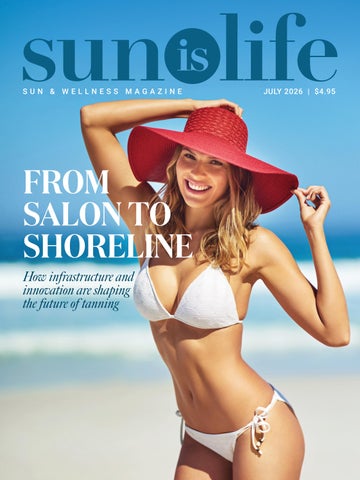

FROM SALON TO SHORELINE
How infrastructure and innovation are shaping the future of tanning

Editor-in-Chief
Joe Schuster
Art Director
Dave Villafañe
Accounting/Circulation
Quinn Cooper
Senior Account Executive
Quinn Cooper
Executive Director
Aliesha Colvin
Contributing Writers
Kristin Lee Smithers, CLT
Dr Jim Schleckser
Mackenzie Morris
Ambria Hatcher
How To Reach Us
2741 E Belt Line Rd, Suite 113 Carrollton, Texas 75006
Interested In Advertising?
Contact quinn@sunislife.com
July 2026 | Volume 2 | Issue 7
Sun Is Life ISSN 2329-8545 (USPS 023-149) is published monthly by Glo Tanning Inc., 2741 E Belt Line Rd Apt 113, Carrollton, TX 75006. Periodicals postage is paid at Flint, MI and additional mailing offices. POSTMASTER: Send address changes to: Sun Is Life, 12335 N Rockwell Ave., Oklahoma City, OK 73142. To authors, photographers and people featured in this publication: All materials, articles, reports and photos published in this publication are the property of Sun Is Life Magazine and cannot be used without written permission. The opinions and conclusions recited herein are those of the respective authors and not of Sun Is Life Magazine. Sun Is Life Magazine is not responsible for returning unsolicited manuscripts, photos or other materials. Every effort will be made however, to return rejected manuscripts, etc., if they are accompanied by sufficient first-class postage, but the publisher will not be responsible for loss of any such material.
Copyright© 2026. All rights reserved. Printed in U.S.A.
Infrastructure & Innovation: Building the Future We’re Already Living In
Every industry eventually reaches a moment when the foundation it was built on must evolve. For ours, that moment is now. The conversation around infrastructure and innovation isn’t abstract or futuristic — it’s happening in real time, in real salons, with real owners making decisions that will shape the next decade of indoor tanning and wellness.

Infrastructure used to mean the basics: equipment, electrical capacity, HVAC, square footage. Today, it’s much more dynamic and technical support can make or break you. Our Salon Pros this month deliver how they keep their equipment humming!
Innovation, meanwhile, is no longer a luxury. It’s the cost of staying relevant and many salons now feature or have added wellness to stay on top of their game. What’s striking is how these two forces — infrastructure and innovation — are no longer separate conversations. They’ve merged.This is the new reality of our industry: adaptation is no longer a brief, one time shot; it’s continuous.
We’re also seeing a shift in how owners think about investment. The smartest operators are asking, “What’s the smartest way -not the cheapest -to build something that lasts?” That mindset is reshaping everything — from equipment choices to staff development to certification standards. Sun Is Life certification and training also continued to evolve, integrating new modalities and new expectations for what professional training should look like. Visit www.sunislife.com for more information.
Innovation happens with the relationships that hold this industry together. The walls between “my business” and “the industry” now share the understanding that we rise or fall together. Our expos are a great way for salons to get face to face time with our vendors and we’ll be covering those highlights.
As we look ahead, the industry will continue to build the systems, the knowledge, with the mindset to adapt. The future belongs to the operators who embrace both sides of the equation: the infrastructure that supports growth and the innovation that drives it.
This issue is dedicated to that intersection — where ideas become action, where investment becomes advantage, and where the next era of our industry begins.
Continued success to all,
Joe Schuster Editor-in-Chief
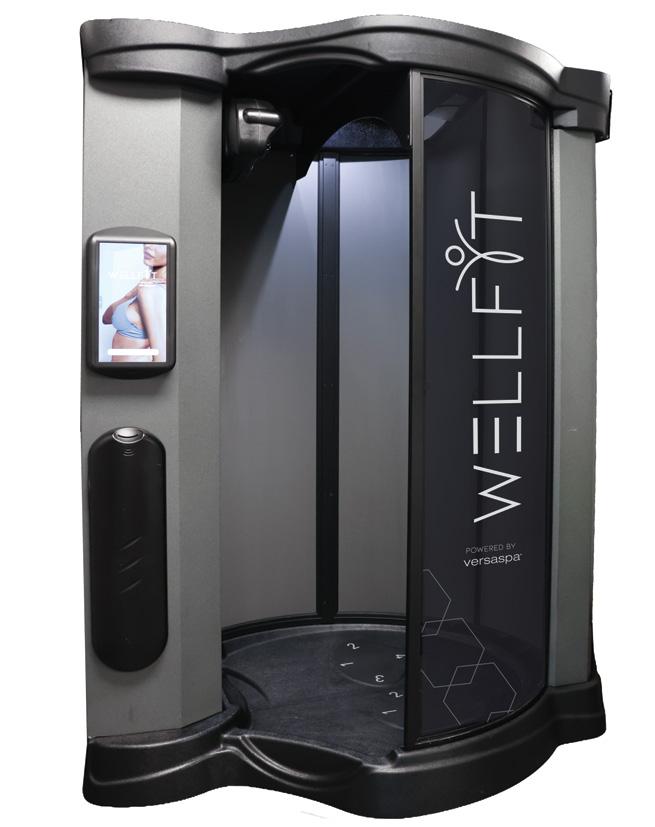
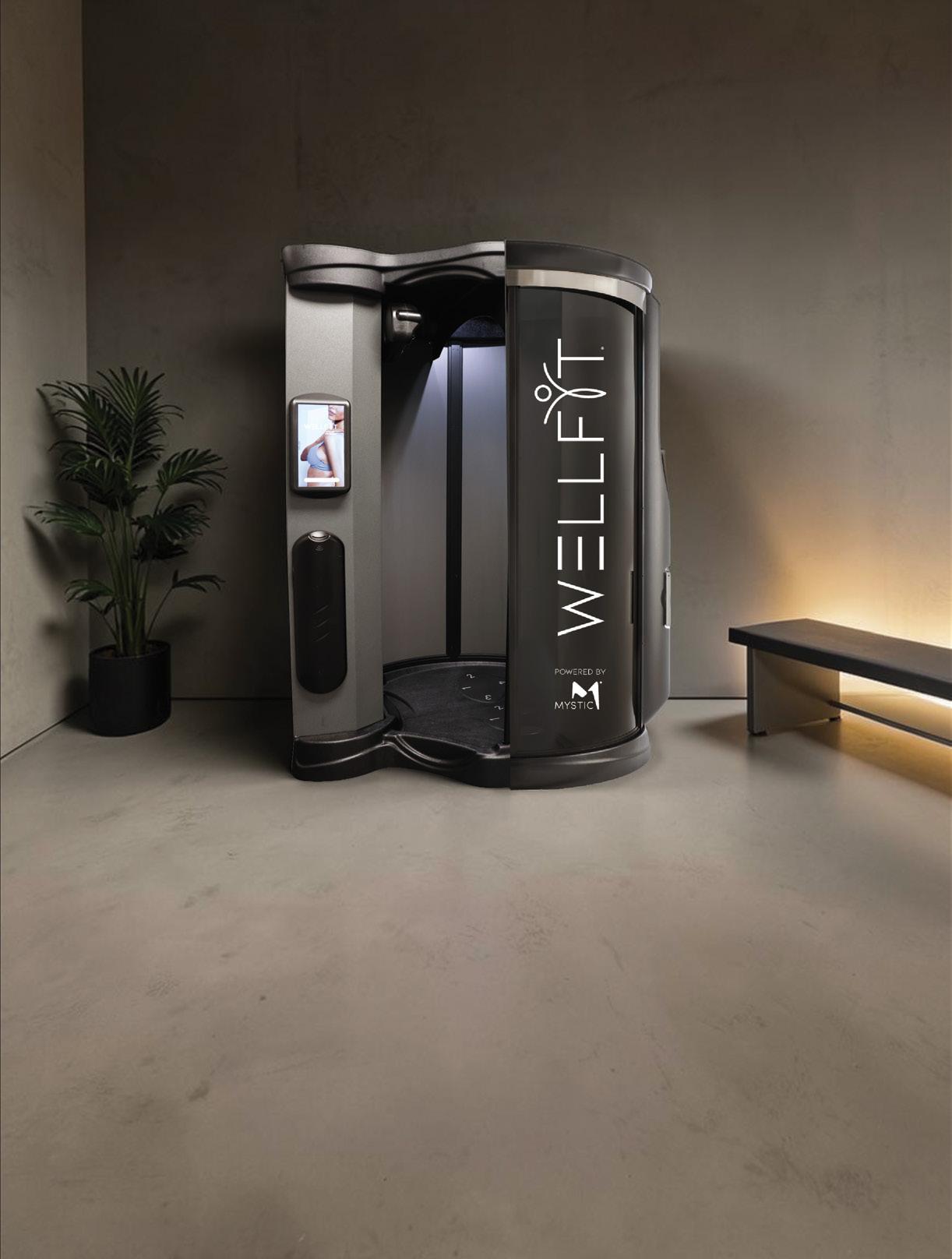
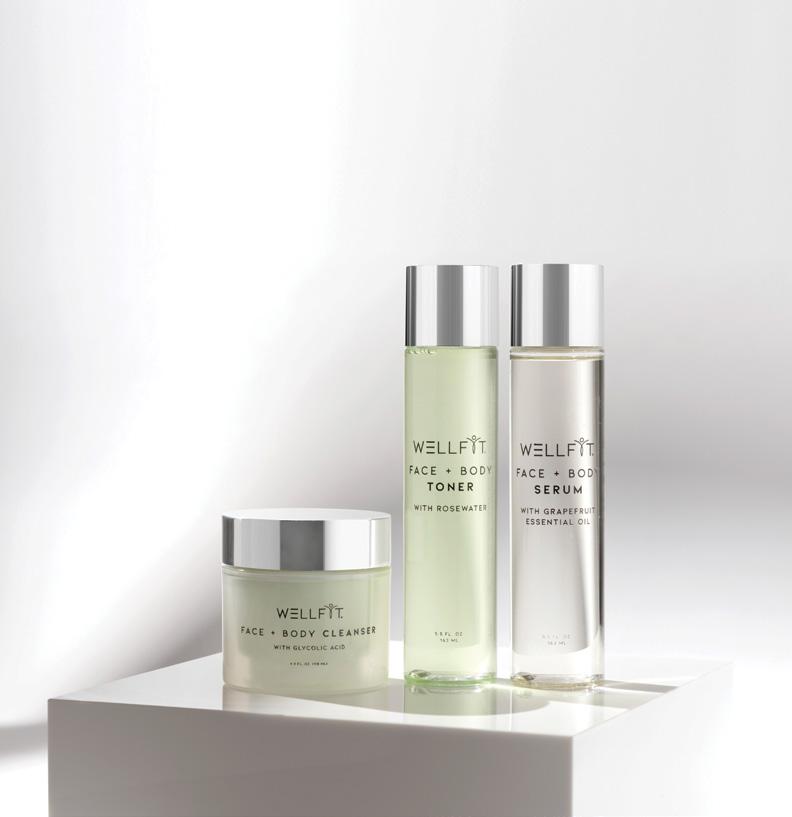
WellFit closes the gap in traditional skincare by supporting the 90% of skin that facial routines ignore: elbows, knees, feet, shoulders, back, and everywhere in between.
would tell their friends
loved how their skin felt 100% want to continue treatments 98%
Make your existing wellness amenities work harder Pair WellFit skincare with treatments your customers already love

DEPARTMENT
How infrastructure and innovation are

ABOUT THE COVER
From salon floors to sunlit shorelines, this issue explores how infrastructure and innovation are redefining indoor tanning. As salons evolve beyond equipment into fully integrated wellness spaces, owners are investing smarter, not just bigger. The future is built in real time—where systems, training, and technology shape lasting industry growth.



A Love Letter to the Tanning & Wellness Industry
BY QUINN COOPER
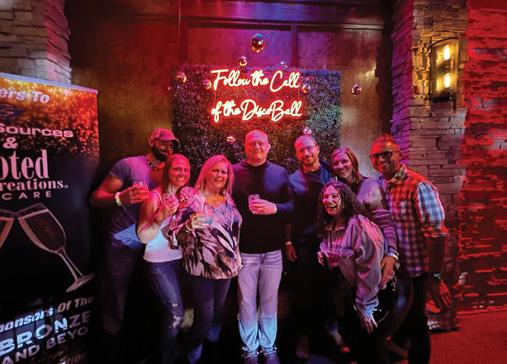
One of the most overlooked strengths of the indoor tanning and wellness industry has very little to do with tanning beds, lotions, or wellness equipment. It is the people behind it all.
In an era where many industries feel increasingly disconnected and competitive, the tanning and wellness community continues to stand out for its willingness to support, educate, and uplift one another. It is an industry built not only on business, but on relationships.
Spend even a short amount of time around salon owners, distributors, educators, or manufacturers, and a pattern quickly becomes obvious. People here genuinely want to help each other succeed.
New salon owners can log into online communities like the Tanning Salon Owners Network or Tanning Salon Owners Forum on Facebook and ask questions ranging from equipment
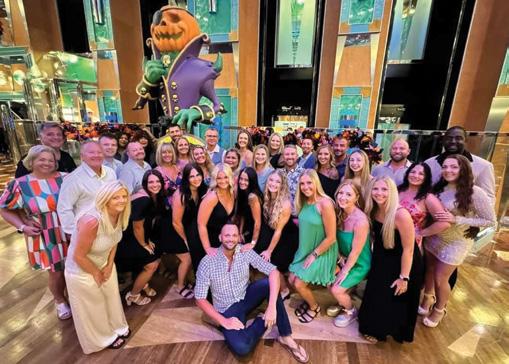
maintenance to membership pricing, staffing concerns, exposure schedules, or marketing ideas. Within minutes, experienced owners from across the country are often offering advice, sharing experiences, posting photos, and helping troubleshoot solutions. In many industries, valuable information is guarded closely. In this one, knowledge can be frequently shared openly.
That culture of collaboration has created something rare.
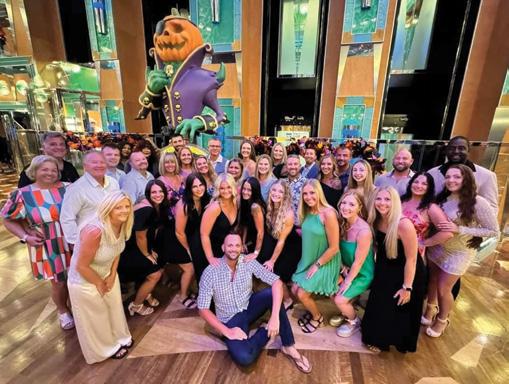
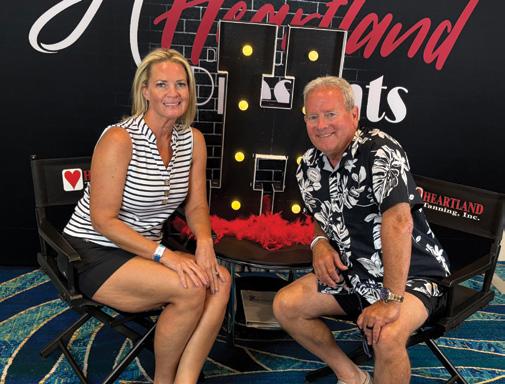
Many salon professionals spend years interacting online before finally meeting face-to-face at expos, trainings, or industry events. Yet when those meetings finally happen, there is often an immediate familiarity, as if the relationship had already existed for years. Conversations pick up naturally because they have. Friendships formed through shared industry experiences become genuine personal connections.

The support system extends well beyond salon owners themselves.
Distributors and wholesale companies deserve enormous credit for helping make this industry accessible, particularly for smaller businesses. In many retail industries, wholesale pricing structures can feel impossible for independent operators. Massive minimum orders, aggressive thresholds, and difficult buy-in requirements often create barriers that smaller businesses struggle to overcome.
The tanning industry has historically operated differently.
Many distributors offer fair salon pricing simply by asking owners to choose a primary supplier relationship. No unrealistic purchasing quotas. No overwhelming minimum quantities just to access reasonable pricing. That fairness

gives smaller salons and startup businesses an opportunity to compete and grow without being buried under impossible inventory demands from day one.
Even more impressive is the level of ongoing support that accompanies those relationships.
Sales representatives often function as far more than salespeople. They become educators, problem-solvers, trainers, and trusted contacts who are deeply invested in the success of the salons they work with. Owners regularly rely on those relationships for guidance on new products, equipment recommendations, troubleshooting, staff education, and operational advice.
The manufacturers themselves also continue driving innovation throughout the industry. Lotion companies constantly evolve formulas with skincare-focused ingredients and wellness-centered technologies. Equipment manufacturers continue improving comfort, efficiency, hybrid systems, and performance. Lamp manufacturers refine consistency and output. The industry continues adapting alongside changing wellness trends and consumer expectations.
Education may be one of the industry’s greatest strengths.
There is an extraordinary amount of free information available to salon professionals willing to learn.
Webinars, training sessions, podcasts, Facebook discussions, articles, live demonstrations, vendor education, and networking events create nearly endless opportunities for growth. There always seems to be another educational event around the corner, and if there is not, conversations continue online daily anyway.
What makes that education especially valuable is its accessibility.
Compared to many industries, expos and learning opportunities within the tanning and wellness space remain remarkably affordable. Owners can attend events, hear from industry leaders, explore new technology, and build meaningful connections without needing enormous corporate budgets to participate. Smaller independent salons are still able to sit at the same tables, attend the same trainings, and participate in the same conversations as larger operators.
That accessibility helps preserve the sense of community the industry is known for.
Even salon staff members often become deeply connected to the industry culture. Employees grow into educators, trainers, consultants, and sometimes salon owners themselves. Lifelong friendships are formed behind front counters, during trade shows, in webinars, and through shared conversations about business growth, customer service, wellness trends, and industry challenges.
At its heart, the tanning and wellness industry has always been about more than appearances.
Salons often become places where people relax, rebuild confidence, de-stress, recover, socialize, and establish routines that help them feel
better physically and emotionally. Clients build long-term relationships with salon staff and owners. Owners celebrate milestones with their customers and support them through difficult seasons of life. What may appear from the outside as a simple service business often becomes something far more personal for the people involved.
That human connection is what continues setting this industry apart.
Despite challenges, changing trends, regulations, and public misconceptions, the tanning and wellness community continues showing resilience because of the people within it. The willingness to share information, encourage one another, collaborate, and remain connected has helped many businesses survive and thrive through difficult times.

For all the conversations about equipment, lotions, technology, and wellness trends, perhaps the industry’s greatest asset has always been its people.
The salon owners are willing to mentor others.
The employees who become passionate educators.
The distributors and representatives who answer countless questions.
The manufacturers who continue innovating.
The trainers, speakers, and writers who freely share knowledge.
And the online communities that remind salon professionals every day that they are never building alone.
That sense of connection is not something every industry gets to experience.
7 Questions with Nicole Parrish
BY JOE SCHUSTER

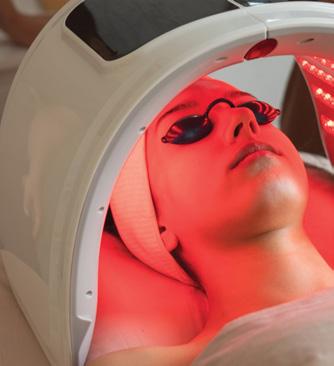
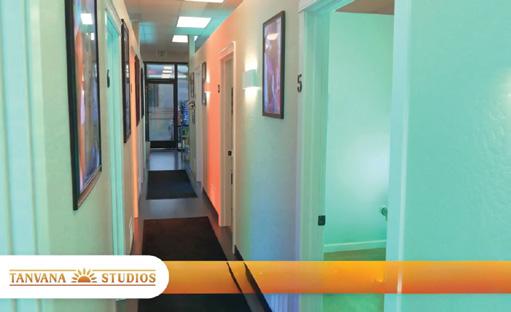
Nicole Parrish is the owner of Tanvana Studios, a modern tanning and wellness studio located in Oregon and focused on combining beauty, wellness, and customer experience into one brand. Since purchasing the salon in 2022 and rebranding in 2024, Nicole has worked to evolve the traditional tanning salon model by expanding into wellness-focused services, including red light therapy, spray tanning, sauna treatments, and skincare-centered experiences. Passionate about customer relationships, education, and creating an upscale environment, Nicole is dedicated to helping clients feel confident while continuing to adapt to the ever-changing beauty and wellness industry.
1. What originally motivated you to get into the tanning industry, and what drew you specifically toward opening Tanvana Studios?
I saw the potential to renovate and expand a local UV tanning salon by adding services like red light therapy, spray tanning, and wellness-focused options that help clients year-round. Tanvana Studios was built around the idea of combining beauty, wellness, and customer experience into one brand.
2. How long have you been in business, and what has been the biggest change you’ve seen in the industry since you started?
The salon originally opened in 2006

as Paradise Tans. I purchased it in 2022 and rebranded it in 2024 as Tanvana Studios.
The industry’s changes led me to rebrand. I wanted to move away from “tans,” but still appreciate the salon’s

SUCCESS STORIES
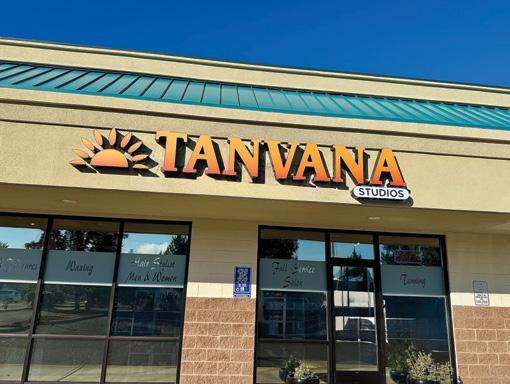
history. In October 2024, Tanvana Studios was announced.
The biggest change I’ve seen in the tanning salon industry since 2022 has been the strong shift toward wellness-focused services rather than tanning alone. Clients today are looking for more than just color. I wanted to offer services that help them overall, like red light therapy, sauna treatments, sunless tanning, teeth whitening, and skincarefocused products.
There’s also been a major increase in customer education. People are more informed and selective about equipment, product ingredients, spray tan solutions, cleanliness standards, and the overall salon experience. In my local market, salons have had to evolve from being simple tanning locations into more modern beauty and wellness studios.
Another big change has been the importance of branding and social media marketing. I’ve been actively learning what clients are looking for. I strive for a professional, visually appealing experience both online and in person. It’s important to me to create strong customer relationships, offer premium experiences, and consistently engage with my community.
3. What is your favorite part of being in this industry?
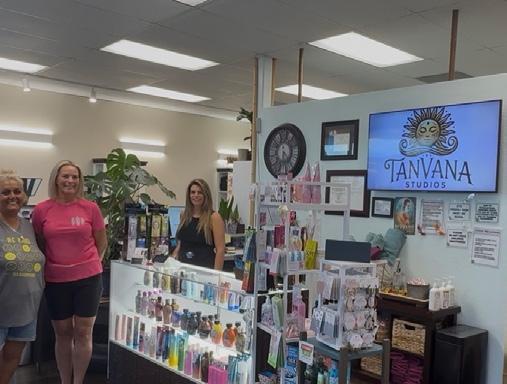
The relationships we build with our clients and seeing the confidence boost people get from our services. A salon becomes part of many people’s routines, so you really get to know your customers and create a welcoming environment where they enjoy coming in.
I also enjoy the mix of beauty, wellness, and customer service. Every client has different goals, whether it’s preparing for a vacation, maintaining year-round, staying consistent with red light therapy, or getting ready for a special event with a spray tan. It’s rewarding to help them achieve their expected success.
4. What do you think sets your salon apart from others in your area?
Tanvana Studios is set apart from local salons because we provide an overall experience. We focus heavily on customer service, cleanliness, and creating an upscale, welcoming atmosphere where clients feel comfortable the moment they walk in.
We also take a more personalized approach than many salons. Instead of offering a one-size-fits-all experience, we spend time educating
clients on the best options for their skin type, goals, and comfort level.
We’re constantly evolving. We pay close attention to industry trends so we can continue improving the services and experience we offer. We’ve worked hard to build a brand that combines beauty, wellness, and professionalism, and I think clients recognize that difference with Tanvana Studios.
5. What has been one of the biggest challenges of owning and operating a tanning business, and how did you overcome it?
One of the biggest challenges of owning and operating a tanning business has been adapting to client expectations and the industry itself. Clients are shopping for a modern environment, exceptional customer service, wellness-focused options, and a strong overall experience.
Educating customers and overcoming misconceptions about the industry can be challenging. Tanvana Studios focuses heavily on transparency, proper tanning education, moderation, equipment, skincare, and offering alternatives like spray tanning and red light therapy to meet different client preferences.

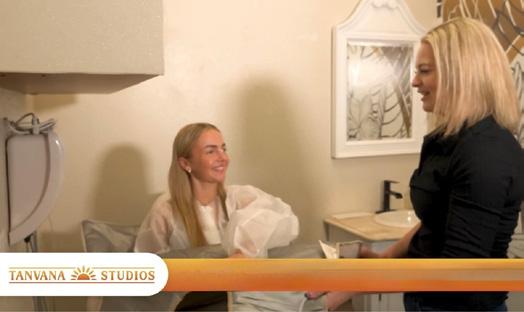
I’ve worked to overcome those challenges by staying adaptable and continuing to invest in the business through upgrading equipment, improving the customer experience, strengthening our branding and social media presence, and expanding services beyond traditional tanning. I’ve learned that long-term success in this industry comes from consistently evolving and building strong relationships with clients rather than relying on tanning alone.
6. Where do you see the future of tanning and wellness heading over the next few years?
I think the future of tanning and wellness is moving toward a more complete beauty and self-care experience rather than focusing on tanning alone. Clients are becoming much more interested in services that combine appearance, skincare,
relaxation, and overall wellness in one place.
I see growth in areas like red light therapy, sunless tanning, and wellness services that help people feel good both physically and mentally. Technology will also continue improving, with smarter equipment, more customized experiences, and better products designed around skin health and client comfort.
I also think personalization will become even more important. Clients want recommendations tailored to their specific goals.
Overall, I believe the salons that succeed in the future will be the ones that position themselves as modern wellness and beauty studios in a modern and professional environment.
7. What advice would you give to someone who is thinking about entering the tanning or wellness industry today?
My advice would be to focus on building an experience and a brand, not just offering a service. The tanning and wellness industry is much more competitive and customer-focused today, so success comes from creating an environment where clients feel comfortable, educated, and valued.
I’d also recommend being adaptable and willing to evolve with industry trends. The businesses that do well are the ones that continue learning, investing in new technology, expanding wellness-focused services, and paying attention to what clients want. Social media, branding, and customer relationships are just as important today as the equipment itself.
Most importantly, genuinely care about your clients and your reputation. Word of mouth and customer loyalty are huge in this industry. If you consistently provide a clean, professional atmosphere and make people feel good about themselves, you can build a very strong and lasting business.
Nicole’s journey with Tanvana Studios reflects where the tanning and wellness industry is headed: more personalized, more experience-driven, and more connected to overall beauty and self-care. By honoring the salon’s history while continuing to evolve through wellness services, education, branding, and client relationships, Nicole has created a studio that feels both modern and intentional. Her approach is a reminder that long-term success comes from adapting with the industry while staying rooted in what matters most: making clients feel confident, cared for, and excited to return.
EXTEND YOUR SKINCARE. INCREASE YOUR SALES.
WellFit supports full-body skincare results, gives clients product to take home and another reason to come back.

Purchase $250+ and receive a FREE marketing kit ($85 value) for in-location awareness.*
Use code WFATHOME at checkout.
*Availability and eligibility may vary by account
INSPIRED BY CLEAN BEAUTY
PARABEN
Why Red Light Education Needs a Reality Check
BY KRISTIN LEE SMITHERS, CLT, BOARD CERTIFIED LIGHT THERAPIST
The Growth of Wellness Services
The wellness and tanning industries have always adapted with the times. From advanced UV equipment and hybrid tanning systems to wellness rooms, red light therapy, infrared heat, and recovery-focused services, salons are no longer just places where clients come for color. Many are becoming full wellness destinations, offering services that support the way clients want to look, feel, recover, and care for themselves.
That growth is exciting, but it has also created a problem we cannot ignore. Red light therapy has become one of the most talked-about services in our industry and, unfortunately, also one of the most misunderstood. Between social media reels, manufacturer sales pitches, influencer claims, and salon marketing that gets
copied and pasted without context, misinformation is spreading almost as fast as the technology itself.
Focusing on infrastructure and innovation, I believe one of the most important conversations we can have is not just about what new equipment salons are bringing in, but whether we are building the educational infrastructure to support it. Innovation should not simply mean adding another glowing device to the service menu. It should mean improving how we train, communicate, dose, document, and protect both our clients and our businesses.
Understanding What Red Light Therapy Really Is
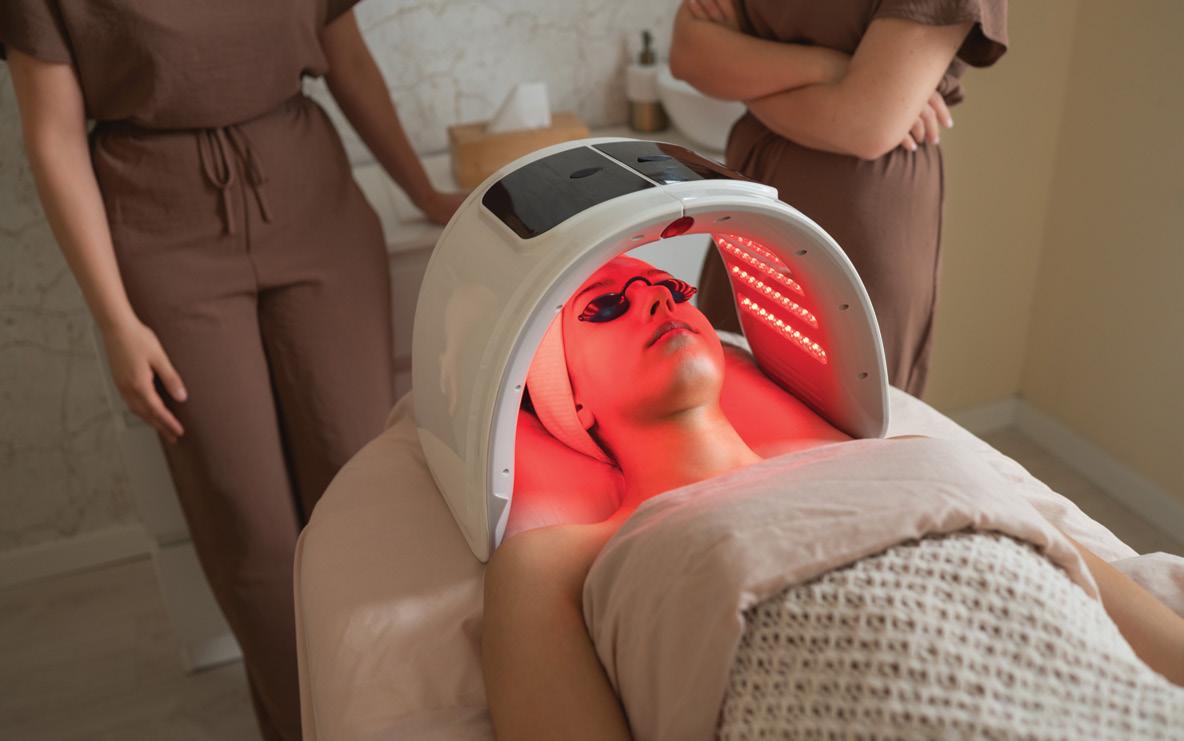
Red light therapy, also known as photobiomodulation, uses specific wavelengths of red and near-
infrared light to interact with the body. Research has explored its role in supporting cellular energy production, circulation, recovery, inflammation modulation, collagen production, skin appearance, and temporary relief of minor aches and discomfort. The science is promising, and when used correctly, it can be an incredible addition to a tanning salon or wellness business.
However, promising science does not give us permission to say whatever we want. Red light therapy does not cure disease. It does not replace medical care. It does not guarantee weight loss, erase wrinkles overnight, heal every injury, detox organs, or balance hormones because someone saw a post online saying it did. When salons repeat exaggerated or medical-sounding claims, even with good intentions, they risk confusing clients, damaging credibility, and
stepping into areas they are not legally licensed to address.
Wellness Language vs. Medical Claims
A major part of responsible innovation is understanding the difference between wellness language and medical claims. Claiming that red light therapy may support healthylooking skin, relaxation, recovery, or temporary comfort is very different from saying it treats arthritis, heals neuropathy, cures acne, or reverses a medical diagnosis. Those words carry legal weight. Salon owners and staff need to understand that marketing language is not just about sounding professional, it is part of risk management.
There is also widespread confusion around terms like “FDA approved” and “medical grade.” Many devices are not FDA approved. Some may be FDA cleared for specific intended uses, and those intended uses are narrow. A clearance for temporary relief of minor muscle or joint pain does not mean a salon can advertise that the device treats chronic disease. A skincare-related indication does not automatically allow claims about wound healing, autoimmune conditions, or medical rehabilitation. If we are going to invest in better technology, we also need to invest the time to understand what the documentation actually allows us to say.
Not All Devices Are Created Equal
The same is true for equipment quality and dosing. Not all red light devices are created equal, and not every red glow produces the same biological response. Wavelengths, irradiance, exposure time, treatment distance, consistency, and total dose all influence outcomes. More is not always better. Too little exposure may do very little, while excessive
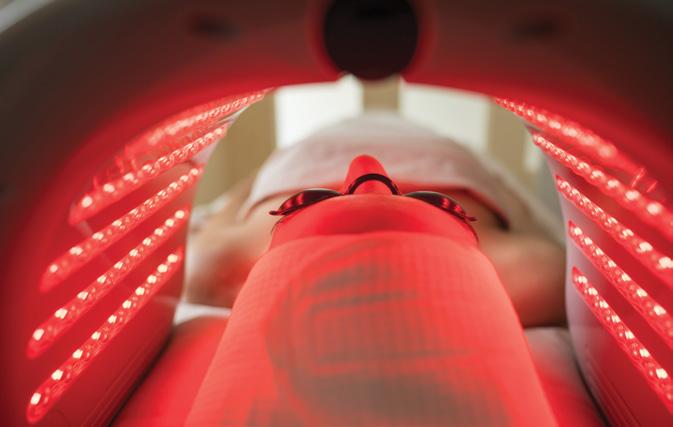
exposure may overwhelm the body or create unwanted responses in some clients. This is why salons should be cautious about offering unlimited use without education, intake forms, contraindication screening, and basic protocols.
Training Is the Real Innovation
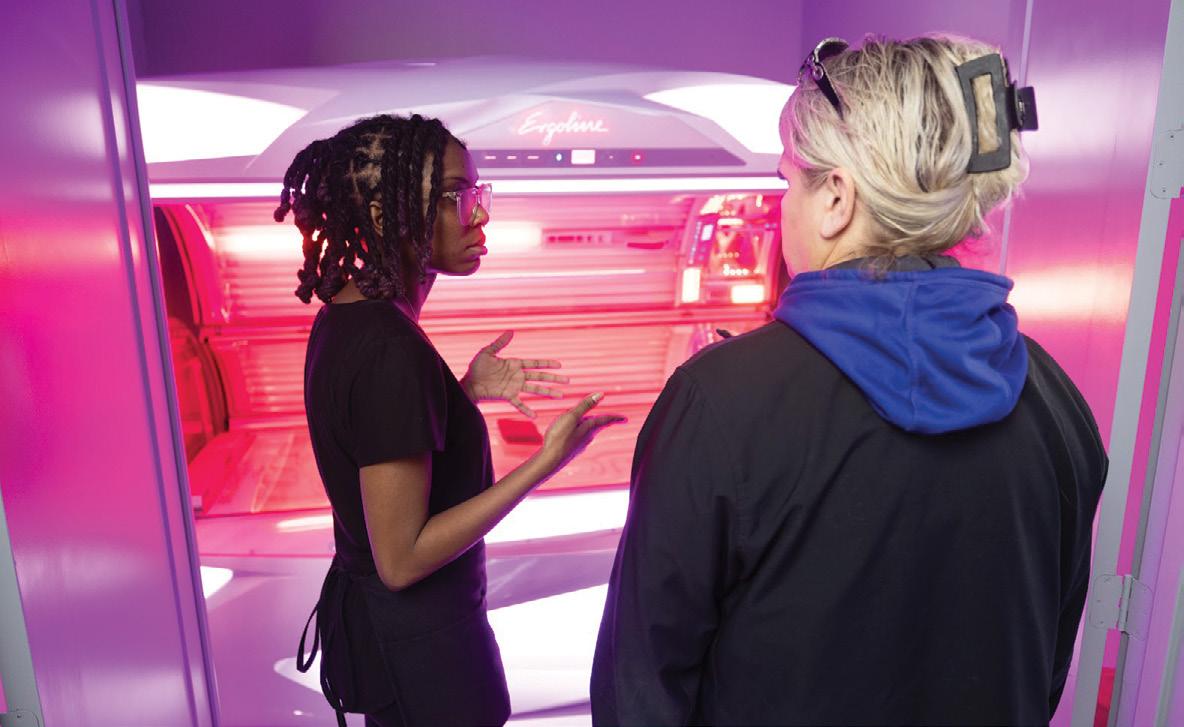
Training is where many salons can innovate immediately, even before purchasing another piece of equipment. Staff should know how to explain red light therapy in simple, accurate language. They should understand what clients may reasonably expect, what should never be promised, and when a client’s question needs to be redirected to a healthcare provider. A confident, educated employee can sell the service without overselling the outcome.
This is where the tanning industry has a unique opportunity. Our clients already trust us with exposure-based services. We already understand that timing, skin type, equipment maintenance, documentation, and responsible recommendations are part of running a professional salon. Red light therapy should be treated with the same level of care. It should
not be thrown into the business as a casual “do it every day, it fixes everything” add-on.
Building a More Credible Future
The salons that will lead the next phase of wellness will be the ones that combine technology with education. They will create realistic client routines, maintain their equipment, train their teams, document usage, and market their services responsibly. They will focus on long-term client relationships instead of quick hype. They will understand that trust is one of the most valuable assets a salon can build.
Red light therapy is an exciting and valuable innovation for our industry, but only if we respect it enough to use it correctly. The future of wellness in salons is not just about brighter lights, stronger machines, or trendier services. It is about stronger systems, smarter education, and more responsible communication.
Because when we build the right foundation, innovation does more than attract attention. It creates better client experiences, stronger businesses, and a more credible future for our industry.

The Confident Consultant: Innovation starts with Education
Innovation can mean much more than physical salon changes
BY EMILY CLEMENTS

When salon owners think about innovation, the conversation often centers around new equipment, updated software, or the latest wellness technology. While those advancements certainly shape the future of the industry, one of the most valuable and often overlooked forms of innovation is advancing education. Behind every successful salon experience is a team that has been properly trained, continuously developed, and empowered with the knowledge to create meaningful client interactions.
As the tanning and wellness industry continues to evolve, education is no longer something that happens once during onboarding. It has become an ongoing operational strategy that
directly impacts client satisfaction, service quality, retention, and longterm business growth. In many ways, staff education has become the foundation for modern salon innovation.
The quieter months of the industry create the perfect opportunity to focus on team development. While client traffic softens slightly during certain seasons, forward-thinking salons use that time intentionally strengthening communication skills, improving consultation techniques, introducing new product and service knowledge, and preparing staff for the next wave of client expectations. Instead of viewing slower periods as downtime, successful salons recognize them as training seasons.
CERTIFICATION TRAINING
The Modern Client Expects More
Today’s salon clients are more informed than ever before. Many arrive having already researched services online, explored wellness trends on social media, or compared experiences across multiple businesses. They are not simply looking for someone to explain pricing or operating instructions. They want further guidance, personalization, and expertise to what they are seeing online.
This shift has transformed the role of the consultant. Team members are now expected to understand skincare, wellness services, recoveryfocused treatments, membership options, and how different services work together to support individual goals. Without consistent furthering of education, it becomes difficult for staff to confidently meet and exceed these expectations.
Advancing your training program allows employees to move beyond memorized scripts and transactional conversations. Instead of simply answering questions, educated consultants can create experiences and recommendations that feel thoughtful and personalized. They are able to recommend services with clarity, explain benefits confidently, and build trust naturally through conversation.
Clients can immediately sense the difference between someone who is reciting information and someone who truly understands what they are recommending. Knowledge builds confidence, and confidence creates stronger client relationships.
Innovation Is Not Just Technology
In an industry focused heavily on equipment and wellness advancements, it can be easy to
define innovation only through physical upgrades. However, some of the most impactful innovation happens through improved communication, stronger service experiences, and better operational training.
A salon may invest in state-of-theart equipment, but if employees are not properly trained to explain the benefits or personalize recommendations, the value of that investment decreases significantly. Innovation becomes effective only when staff are equipped to support it.
Education bridges the gap between technology and client experience. When new equipment, services, or wellness offerings are introduced, thorough training becomes necessary to ensure employees can confidently integrate them into consultations and daily operations. This creates a smoother experience for clients and helps salons maximize the return on their investments.
Innovations in training also creates consistency. Clients expect the same level of professionalism and expertise regardless of which team member assists them. A strong education system ensures that the salon experience feels cohesive, reliable, and aligned with the salon’s overall brand.
Using Slower Seasons Strategically
One of the smartest operational strategies salons can adopt is treating slower seasons as opportunities for growth rather than periods of inactivity. The months when traffic softens slightly are often the ideal time to refine systems, strengthen consultants, and invest in education.
DEVELOPMENT

During peak season, employees are focused primarily on efficiency and client flow. Slower periods provide the breathing room
necessary for deeper learning and skill development. This is the time to revisit consultation strategies, improve product knowledge, practice communication skills, and introduce new wellness concepts.
Sun is Life Salon Operator
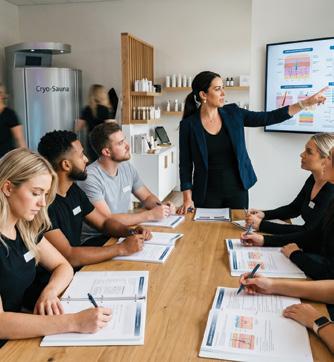
Certification training offers a comprehensive program built by industry professionals and designed to elevate professionalism, consistency, and guest experience. This program has remained one of the leading choices offered at industry expos over the years as the program focuses on the use of detailed factual industry information.
In addition to passive learning, effective training is then practiced through interactive experiences. Role-playing consultations with your team, practicing difficult client scenarios, shadowing experienced employees, and reviewing realworld service situations helps your staff develop practical confidence that translates directly onto the salon floor.
Monthly team meetings can also become more intentional during these periods. Instead of focusing only on sales numbers or scheduling, salons can use meetings to discuss client psychology, wellness trends, personalization strategies, and ways to elevate the overall experience.
The salons that invest in education during quieter months are often the ones best prepared when busy season returns.
Creating Stronger Consultations Through Innovated Training
Consultation quality has become one of the defining factors of the modern salon experience. Clients want to feel understood, not rushed. They are looking for recommendations that feel personalized rather than generic.

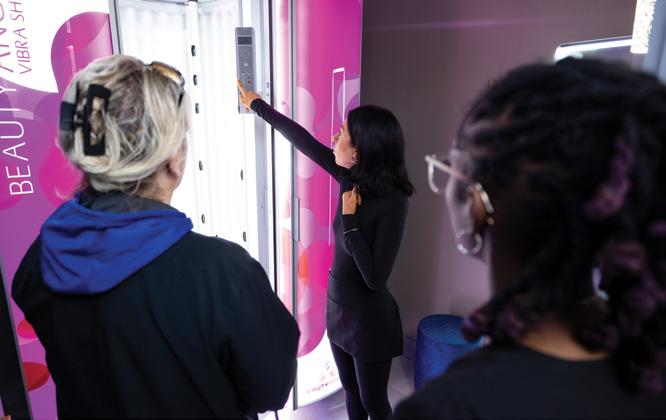
Strong consultation training teaches employees how to ask meaningful questions, actively listen, and adapt recommendations based on the client’s goals and comfort level. These are skills that require practice and development over time.
For example, instead of leading with pricing or package options, a well-trained consultant may begin by asking about the client’s previous experiences, skincare concerns, wellness goals, or desired results. This creates a more natural conversation and allows recommendations to feel customized instead of sales-oriented.
Training should also emphasize emotional intelligence and communication style. Tone, body language, pacing, and attentiveness all influence how clients perceive their experience. Often, it is not just what is said that matters, it is how it is communicated.
Salon owners who continue to innovate their training programs to advance their consultants as the industry advances will find higher success rates in salon sales and client membership retention, which remains one of the most valuable assets in the salon industry.
Building a Stronger Foundation Behind the Scenes
Ongoing training benefits more than just clients, it also strengthens employee satisfaction and retention. Team members who feel invested in are more likely to remain engaged, motivated, and committed to the salon’s success.
In many industries, employees leave positions because they feel stagnant or unsupported. Education creates growth opportunities that help staff feel valued and professionally developed. When salons prioritize learning, employees often become more confident in their roles and more connected to the business.
Advancing employee education isn’t restricted to constant course modules and worksheets. Education can be presented through daily/weekly challenges or competitions to finish off a strong pay period. This method steers from traditional classroom-like education, creating learning that is stress free and attainable for your entire staff. This creates a more positive work environment for both staff and management.
Additionally, continued education helps teams stay adaptable as the industry changes. Wellness trends, skincare innovations, and client expectations continue to evolve rapidly. Salons that encourage ongoing learning are more prepared to adjust and remain competitive within the market.
The Future of Innovation Is Human-Centered
As the salon industry continues to embrace technology, wellness integration, and operational advancements, the human element will remain the defining factor of a successful business. Clients may initially be attracted by equipment or services, but they return because of the experience and the people providing it.
This is why education has become one of the industry’s most important forms of innovation. A knowledgeable and well-trained team can elevate every part of the client journey, from the first consultation to long-term relationship building.
The most successful salons of the future will not simply be the ones with the newest technology. They will be the ones that understand how to continuously innovate their education, creating consultants that are prepared, adaptable, and genuinely client-focused.
When salons invest in their people, they strengthen every other part of the business. Better consultations lead to stronger trust. Stronger trust leads to improved retention. Improved retention creates longterm growth.
Innovation may begin with new ideas and technology, but lasting success is built through a strongly educated team. To access the Sun is Life Salon Operator Certification training visit www.sunislife.com.
BECOME CERTIFIED WITH NORVELL UNIVERSITY
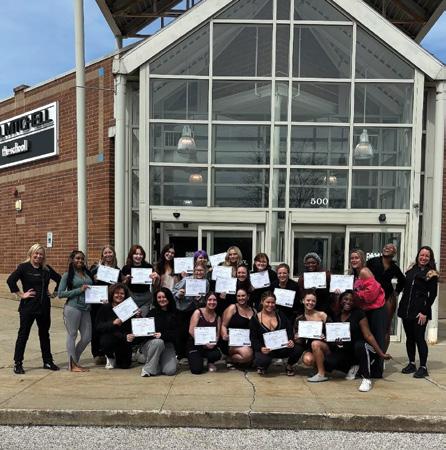
THE ORIGINAL & #1 PROFESSIONAL SPRAY TANNING CERTIFICATION PROGRAM
Partnering with norvell provides the bridge between self-taught skills & a certified professional spray tanning manufacturer curriculum. skills
YOUR PATH TO SUCCESS BEGINS HERE
Join our NU Educators for a full day of business building, technique honing and networking.
JULY 7/23/26: Heartland Tanning, Lee’s Summit, MO SEPT 9/13/26: Tan International, Phoenix, AZ NOV 11/1/26: Four Seasons National Tanning Expo, Ameristar Casino Resort Spa, St. Charles, MO
JOIN US FOR WINE DOWN WEDNESDAY AS WE CHAT ABOUT ALL THINGS SPRAY TAN BUSINESS!
WINE DOWN WEDN ESDAYS
THE LAST WEDNESDAY OF EVERY MONTH, 7PM EST
Introducing Top Ten with Ambria Hatcher
A New Monthly Column in Sun Is Life Magazine
BY ALIESHA COLVIN AND AMBRIA HATCHER

If you own a salon, you already know the feeling. The new hire who got trained differently than the last one. The manager texting you on your day off. The guest experience that’s great when the right person is working and shaky when they’re not. The nagging sense that the whole thing still runs on you.
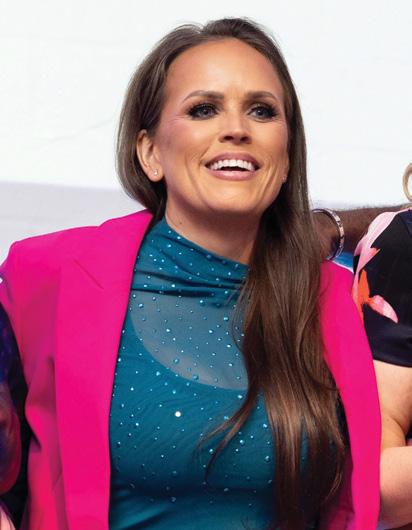
Ambria Hatcher knows that feeling too, because she’s lived every version of it.
Ambria didn’t enter the industry through a leadership role. She grew up in it. She got her start at 15 and spent the next 25 years working her way from salon employee to trainer, manager, owner, franchise leader, and executive and founder. She spent more than a decade working inside salons before she ever owned one, on the floor, in sales, and in training, learning the business one shift and one role at a time. So when she opened her own doors, she brought years of firsthand experience with her.
Then she found out what it’s really like to carry it. Over eight years, Ambria owned and operated three salon locations. She hired the teams, trained the staff, handled guest issues, managed the numbers, and carried the responsibility every owner knows well: when something goes wrong, it lands on your desk. She learned what breaks when
training isn’t consistent, what happens when a manager doesn’t have the right tools, and how exhausting it is to be the person every problem runs back to.
Those years taught her something that would become the foundation for everything that followed.
Most business problems aren’t people problems.
They’re system problems.
Over the years, she became known for asking a different question than most people: Why is this happening in the first place? Instead of treating symptoms, she focused on fixing the systems creating them.
guest experiences. The same problems she’d wrestled with as an owner, only now she could see the patterns repeated across hundreds of locations.

That same drive is what carried her into the next chapter. As Co-Founder of Glo Tanning Franchising and former Chief Visionary Officer of Glo Tanning, Ambria helped grow the company from a handful of locations to more than 300 sold nationwide. But she’ll tell you the scale was never the point. The point was building the systems underneath it: clear training, real accountability, better communication, and consistent
That’s exactly why Top Ten with Ambria Hatcher exists. Before we dive into future editions, we thought it was only fitting to let Ambria explain the vision behind the column in her own words.
“After more than 25 years in this industry, I’ve come to believe that owning a salon should be both profitable and enjoyable.

I’ve watched too many talented owners lose themselves in the day-to-day. They spend their time putting out fires, solving the same problems over and over, and carrying the weight of everything on their shoulders. Before long, they’re disconnected and burnt out.
My goal has always been simple: help owners build businesses that create freedom instead of burnout and have fun doing it.
The systems, training, and strategies we’ll talk about here are not the end goal. They’re the tools that make it possible. Because when a business is built well, the owner can spend less time managing chaos and more time growing and designing their dream business, developing their people, serving their guests, and rediscovering the spark that made them fall in love with the industry in the first place.
I’ve always been drawn to the problems many businesses simply accept as ‘part of the industry.’ High turnover. Inconsistent training. Communication breakdowns. Reactive leadership. I never believed those things had to stay broken.
But if I’m being honest, the part of my career I value most is the people. I’ve had the chance to mentor thousands of employees, leaders, and operators, and one thing I’ve learned is this: great businesses are not built by accident. They’re built intentionally.
That’s why I created the Top Ten segment. I wanted it to be practical, something leaders could take back into their businesses and apply immediately. Some months we’ll talk about leadership mistakes I see operators making repeatedly. Other months, guest retention, scaling challenges, hiring systems, team culture, or the blind spots that separate businesses that plateau
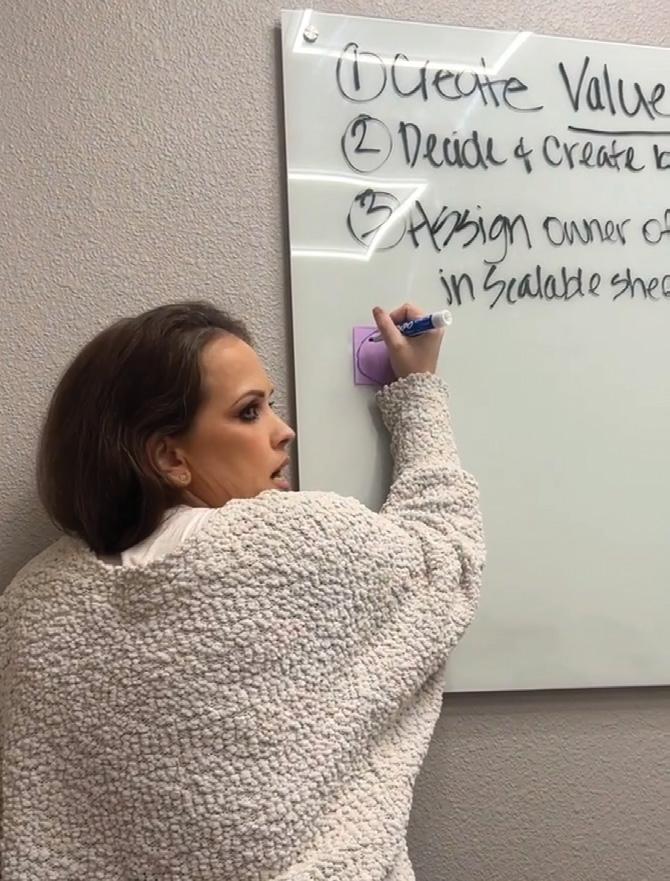
from businesses that keep growing.
But every article will have one goal: helping you think bigger and operate smarter. Because this industry is evolving, and the operators willing to evolve with it will be the ones who lead the future of wellness.”
Next month, we’re kicking things off with a topic that can either accelerate growth or quietly destroy it behind the scenes: Top Ten Training Rules Every Business Needs. We’ll break down the biggest onboarding and training gaps businesses make every day,

from inconsistent systems and accountability issues to leadership oversights that directly impact retention, team confidence, and long-term scalability.
If you’ve ever felt like training takes too long, employees are learning inconsistently, managers are constantly reteaching the same things, or your systems fall apart the moment business gets busy, you won’t want to miss it.
See you in the August 2026 issue of Sun Is Life!

When the Gym Comes for Your Industry
BY STAFF WRITER
By now, most salon owners have experienced it at least once.
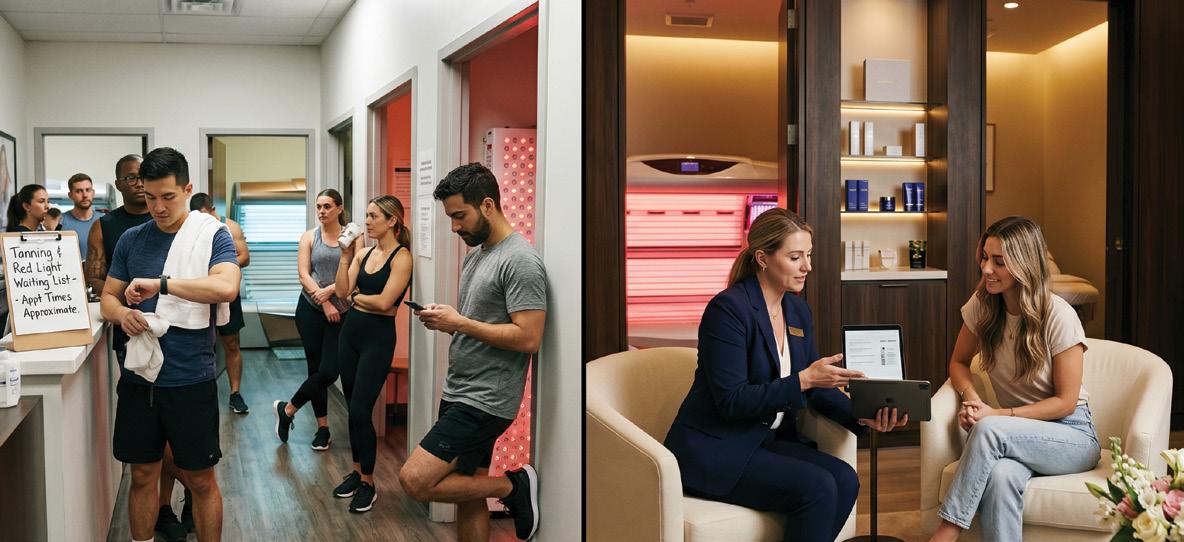
A new gym opens nearby and suddenly offers tanning. A few years later they add spray tanning, then red light therapy, then saunas, and eventually entire “wellness lounges” designed to mimic services our industry has spent decades building. At first, it can feel intimidating, especially when these facilities market heavily and bundle everything into one low monthly membership.
The reality, however, is that most gyms are not truly competing on expertise. They are competing on convenience and volume, and those are two very different business models.

Gyms thrive on large membership numbers. Their success often depends on having more members than active users at any given time. That structure works well for general fitness access, but it can create challenges when highly specialized services like tanning, spray tanning, red light therapy, or recovery services are added into the mix. As more people begin using those amenities, the cracks often start to show.
Salon owners hear the same complaints repeatedly after the excitement of a new gym wears off. Clients become frustrated with long waits, broken equipment, rushed experiences, and rooms that do not always feel properly maintained.
Many also discover that staff members often have very little education about skin typing, tanning schedules, contraindications, exposure timing, spray tan prep, or how wellness services should actually be used to achieve results safely and effectively.
To be fair, not every gym operates this way. Some genuinely invest into cleanliness, training, and high-end wellness experiences. There are certainly facilities doing it right. But those examples are still the exception rather than the rule, and that is where salon owners need to stop panicking and start recognizing what truly makes this industry valuable.
What we provide is specialized care.
A professional tanning salon does not simply “offer tanning.” Experienced salon owners and employees understand exposure schedules, lamp performance, acrylic care, skin typing, and responsible session progression. They know how to guide clients toward building color gradually while helping them avoid risky habits like overexposure and inconsistent routines. That knowledge matters far more than many people realize.
The same applies to spray tanning and wellness services. A dedicated spray tan professional understands undertones, prep, aftercare, timing, hydration, oxidation, and customization. Wellness professionals who offer red light therapy, infrared saunas, compression therapy, or recovery services understand that routine, consistency, and education play a major role in the client experience. These services are not meant to be treated as quick add-ons with little explanation or oversight.
One of the biggest mistakes salon owners make when a gym opens nearby is immediately trying to compete on pricing alone. They panic, lower prices, and assume they need to match “all-inclusive” gym memberships in order to survive. In reality, that is rarely the winning strategy because salons and gyms are not offering the same experience, even when the services appear similar on paper.
A gym may initially pull clients away because the convenience sounds appealing. “Unlimited tanning included” or “free red light therapy” catches attention quickly, especially for price-conscious consumers. It is also very common for salons to experience a temporary decline in revenue when a major gym enters the market. Many owners estimate
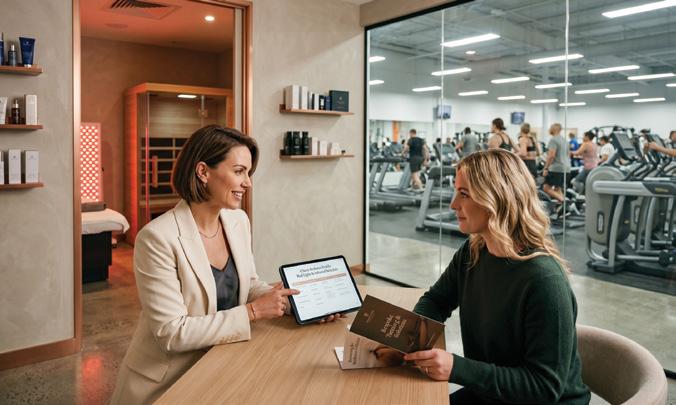
roughly a ten percent dip at first while clients explore the new option.
Over time, though, many of those same clients begin noticing the difference between access and expertise. They realize the tanning beds are constantly occupied, the spray tan machine is down, the sauna has a wait, or nobody can answer their questions about routines, skincare, or wellness goals. They miss the personalized recommendations, the atmosphere, the consistency, and the feeling of being genuinely cared for instead of processed through a high-volume system.
That is when many clients return.
Not because salons may be less expensive, but because salons deliver a better experience. This industry has always been built on relationships, education, customization, and customer service. Clients remember the employee who helped them prepare safely for vacation, the spray tan artist who customized their color perfectly for an event, or the staff member who educated them on how to use wellness services effectively instead of simply pointing toward a room.

That type of trust is difficult to mass produce.
Instead of viewing gyms as a threat, salon owners should recognize that gyms are actually validating the demand for what this industry has been offering for years. They are following trends salons helped pioneer long before wellness became a mainstream marketing buzzword.
The answer is not fear, and it is not becoming the cheapest option in town. The answer is leaning further into the things salons already do best: education, cleanliness, equipment maintenance, professional guidance, atmosphere, and true customer care.
Consumers are becoming increasingly wellness focused, which creates opportunity for everyone. But as the market becomes more crowded, clients also become more selective about where they spend their time and money. Convenience may attract them initially, but quality is what keeps them loyal long term.
The businesses that will continue thriving are not necessarily the largest ones. They are the ones clients trust the most, and trust is something this industry has spent decades earning.
- Tamie M., Salon Owner

Brand Management vs. Marketing
What Brand Management Actually Is (And Why It’s the Missing Link for Growing Businesses)
BY MACKENZIE MORRIS

Most businesses understand marketing.
They know they need social media, advertising, email marketing, content, websites, and campaigns to get attention and generate sales. Marketing is visible. It’s active. It’s the thing people see happening.
But there is another layer that sits above marketing—a strategic layer that shapes how marketing works, what it communicates, and how a company shows up in the world.
That layer is brand management
Brand management is one of the most powerful and misunderstood disciplines in business growth. It sits at the intersection of strategy, identity, communication, and execution. When done well, it aligns every piece of marketing, messaging, and experience a customer has with a business.
And when it’s missing, marketing starts to feel scattered, inconsistent, and harder than it should be.
This article breaks down what brand management actually is, who it’s for, what it includes, and how it works together with marketing to create powerful, cohesive growth.
What Brand Management Actually Is
At its simplest level, brand management is the ongoing process of shaping, protecting, and guiding how a brand exists in the world.
It is not just about logos, colors, or visual identity. Those elements are part of branding, but brand management goes much deeper.
Brand management focuses on how a brand behaves, communicates, evolves, and builds trust over time. It ensures that every touchpoint— from marketing campaigns to customer experience—reinforces a consistent story and identity.

Think of brand management as the strategic umbrella that sits above marketing execution.
Marketing is the set of actions you take to attract attention and drive results.
Brand management is the system that ensures those actions are aligned with the bigger vision of the company.
When brand management is working properly, the brand becomes recognizable, consistent, and memorable. The messaging feels intentional. The offers feel cohesive. Customers begin to understand not just what the business sells, but what it stands for.

Brand Management vs. Marketing
One of the easiest ways to understand brand management is by comparing it directly to marketing.
Marketing is about promotion and visibility. Brand management is about identity and direction
Marketing asks questions like:
• How do we reach more people?
• What content should we post?
• What ads should we run?
• How do we generate leads?
• How do we convert customers?
Brand management asks different questions:
• What do we stand for as a company?
• How should our brand feel to people?
• What story are we telling in the market?
• How should every marketing effort reinforce that story?
• How do we ensure consistency across platforms and campaigns?
Marketing is what people see on the surface.
Brand management is what ensures everything beneath the surface makes sense.
Without brand management, marketing can become reactive. Businesses chase trends, post content without direction, and launch campaigns that feel disconnected from each other.
With brand management in place, marketing becomes strategic and cohesive.
Who Brand Management Is For
Brand management is not only for
global corporations or massive consumer brands. In fact, many small and mid-sized companies benefit from brand management even more because they are often navigating rapid growth and evolving identity.
Businesses that benefit the most from brand management include:
• Personal brands and thought leaders who need consistent messaging across platforms
• Service-based businesses that rely on trust and reputation
• Creative agencies and marketing companies that need a strong market identity
• Experiential brands and events where perception and experience are critical
• Product-based businesses building recognizable consumer brands
• Organizations scaling quickly and needing internal alignment
Brand management is particularly valuable for businesses that are transitioning from early-stage growth into a more established presence. At that stage, consistency and positioning start to matter much more.
It is also extremely powerful for founders who want to build longterm brand equity, not just shortterm marketing wins.
What Brand Management Actually Includes
Brand management covers a wide range of strategic responsibilities. While every brand management approach is slightly different, most brand management work includes several core areas.
These areas typically include:
• brand positioning and identity development
• messaging and voice consistency
• visual identity and brand guidelines
• offer structure and brand architecture
• customer journey alignment
• reputation and perception management
• strategic campaign direction
• long-term brand growth planning
Each of these elements plays a role in shaping how the brand appears and behaves across every channel.
For example, brand positioning determines how a company differentiates itself in the market. Messaging frameworks help ensure that the same core story appears across websites, social media, sales conversations, and advertising.
Brand architecture determines how offers and services fit together so customers can easily understand what the company provides.

Brand management also involves protecting the integrity of the brand over time. As businesses grow, add services, launch new campaigns, and explore new channels, the brand management layer ensures those changes still align with the company’s core identity.
How Brand Management Supports Marketing
Brand management does not replace marketing. Instead, it strengthens and organizes it.
When brand management is in place, marketing decisions become easier and more effective. The marketing team has clear direction about tone, positioning, messaging, and priorities.
This allows marketing strategies to become more powerful because they are built on a strong foundation.
Marketing efforts that typically work hand-in-hand with brand management include:
• social media strategy and content development
BUSINESS OPERATIONS & MARKETING

• paid advertising campaigns
• website design and user experience
• email marketing and customer nurturing
• public relations and partnerships
• influencer collaborations
• event marketing and experiential campaigns
• search engine optimization (SEO)
Each of these marketing activities communicates something about the brand. Without brand management, these efforts may feel disconnected.
With brand management guiding them, they reinforce the same narrative and strengthen brand recognition over time.
Why Brand Management Matters More Than Ever
In today’s digital environment, customers are exposed to thousands of marketing messages every day. Attention is limited, trust is fragile, and competition is constant.
Brands that succeed are not always the loudest ones. They are the most consistent ones.
Brand management allows businesses to build familiarity and trust over time. Instead of appearing as a series of disconnected campaigns, the brand becomes a recognizable presence.
Customers begin to understand the brand’s voice, perspective, and value.
This consistency is what turns visibility into loyalty.
Brand Management and Long-Term Business Growth
Businesses that invest in brand management often see benefits that extend far beyond marketing metrics.
Strong brand management can lead to:
• higher perceived value in the market
• more consistent messaging and positioning
• stronger customer trust and loyalty
• clearer marketing direction
• easier decision-making for leadership teams
• better alignment between teams and departments
Over time, brand management helps businesses move from reactive marketing to intentional brand building.
Instead of constantly asking “What should we post?” or “What campaign should we run next?”, the company operates with a clear identity and strategic direction.
How Brand Management and Marketing Work Together
The most successful businesses treat brand management and marketing as two sides of the same system.
Brand management defines the story, positioning, and long-term direction.
Marketing brings that story to life through campaigns, content, and customer interactions.
Together, they create a cycle:
Brand strategy informs marketing execution.
Marketing results inform brand evolution.
When this system is working properly, businesses can grow visibility, generate leads, and strengthen brand equity simultaneously.
Brand Management at PrismHaus
Here at PrismHaus, brand management and marketing strategy
are designed to work together.
Our approach focuses on helping businesses clarify their brand identity, align their messaging, and then support that strategy with marketing execution that drives results.
This includes work across areas such as:
• brand positioning and messaging strategy
• marketing strategy and campaign planning
• funnel development and customer journey design
• content strategy and social media direction
• paid advertising and digital visibility
• website and brand experience optimization
By combining brand management with marketing execution, businesses are able to build brands that are not only visible, but memorable and trusted.
Brand Management Is the Strategic Layer Most Businesses Are Missing
Marketing will always be important. Businesses need visibility, leads, and sales.
But marketing works best when it is guided by a clear brand strategy.
Brand management provides that guidance. It ensures that every marketing effort reinforces a consistent story, builds recognition, and strengthens the long-term value of the brand.
For businesses looking to grow intentionally and build lasting impact, brand management is not just an extra service—it is a foundational strategy.
Click here to learn more about what brand management & marketing could look like for your brand.
Hybrid Units, Red Light Retrofits and the Federal Tan Tax
BY ALIESHA COLVIN
Understanding the Source of the Confusion
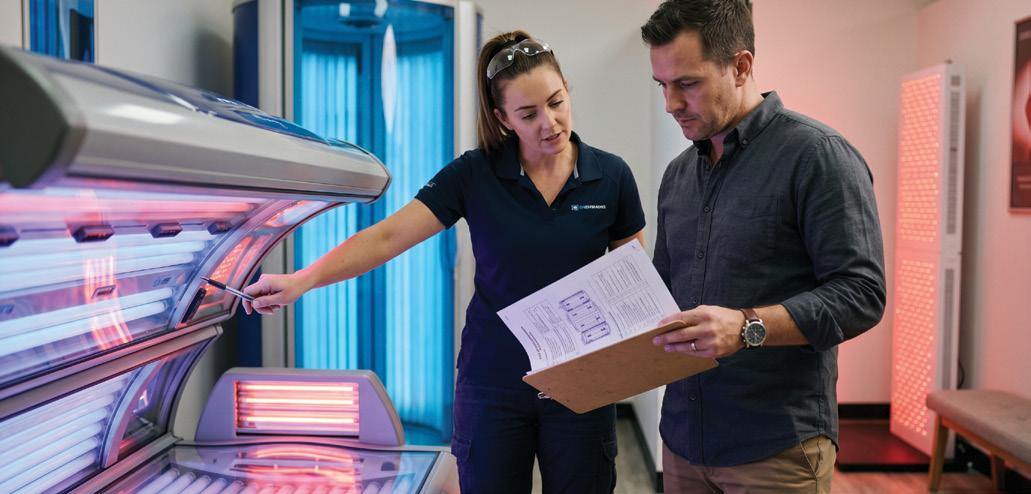
One of the biggest areas of confusion in our industry right now revolves around hybrid tanning units, retrofitted beds, and whether the federal indoor tanning excise tax still applies when a unit contains mostly red light.
As more salons add red light, near-infrared, beauty lamps, and hybrid technology into their service menus, the line can start to feel blurry. However, when it comes to IRS guidance, the key question is not how many red light lamps are in the unit. The key question is whether the unit still emits ultraviolet light intended to induce tanning.
Let’s clear this up as simply as
possible: if the unit emits UV for tanning purposes, the federal tan tax still applies.
While some operators may believe they can remove a portion or all of the UV lamps in a sunbed and replace them with red light lamps, it’s important to understand the regulatory implications. The FDA does not permit replacing tanning lamps with red light lamps that are not FDA registered as compatible replacements in a UV tanning device. Retrofitting or relamping an existing sunbed or sun booth with RLT lamps can be hazardous. This alters the device’s original design and potentially voids insurance coverage, as the product is now a misbranded, non compliant medical device. It has not been approved by the FDA as a compliant system with those specific RLT lamps, labeling or timing system.
It can also void the UL /CE/ETL listing, as the unit has not been certified with those replacement lamps and can expose the operator to liability.
From a tax perspective, however, the IRS evaluates the service based on whether any UV output remains. Even if a unit has been modified to include red light lamps, as long as UV lamps are still present and producing a tanning response, the service is considered indoor tanning for excise tax purposes. The red light portion may influence the client experience, marketing message, or skin-care benefits, but it does not eliminate the presence of UV or change the tax classification.
What the IRS Actually Says
The IRS definition is important here.
According to IRS guidance, taxable indoor tanning services involve using an electronic product designed to incorporate one or more ultraviolet lamps intended to irradiate an individual with ultraviolet radiation to induce tanning.
Those words matter: “one or more ultraviolet lamps.”
It does not say mostly UV. It does not say primarily UV. It does not say more UV than red light. One or more UV lamps being used for tanning is enough to bring that service under the federal indoor tanning tax rules.
Hybrid Beds vs. Pure Red Light Services
This is where many salon owners get tripped up.
True red light therapy equipment that does not emit UV is not the same thing as a hybrid tanning bed. A fully non-UV red light therapy service, infrared sauna session, spray tan, or other non-UV wellness service is generally treated differently from taxable indoor tanning.
However, once UV tanning capability is part of the equipment and the client is paying for a service that induces tanning, the classification changes. A hybrid tanning bed is still a tanning bed when UV is part of the service.
The Retrofit Question
This becomes even more important with retrofits.
Some salons have converted older tanning beds into red light beds while leaving a few UV lamps installed. Sometimes this is done intentionally to create a hybrid result, and sometimes it happens because operators believe that a small amount of UV will not matter.
From a tax standpoint, it does matter. From a liability position, it really matters, as covered above.
If the unit still emits UV for tanning purposes, it should not be treated as a pure red light therapy service.
Marketing Language Does Not Change Tax Classification
Marketing language also does not override tax classification.
Calling a unit “wellness,” “beauty light,” “skin rejuvenation,” or “hybrid light therapy” does not make the federal tan tax disappear if UV tanning is still part of the service.
We can absolutely educate clients on the differences between red light, infrared, and UV, but as business owners, we also have to classify our services responsibly.
Memberships, Packages, and Compliance
Salon owners should also pay close attention to memberships and bundles.
If a package includes access to UV tanning equipment, even if that equipment is hybrid, the taxable portion needs to be handled correctly. The IRS states that the tax is imposed on amounts paid for indoor tanning services, collected from the client, and reported by the provider, typically through quarterly excise tax filing.
That means accurate service classification, proper records, and clear point-of-sale setup are not optional details. They are part of running a compliant salon.
Understanding the Exemptions
There are legitimate exemptions
in the regulations, such as certain medical phototherapy situations or qualified physical fitness facility scenarios where tanning is incidental and not separately charged.
However, those exemptions are specific and should not be casually applied to a tanning salon simply because a unit has red light in it. Adding red light to a tanning service does not automatically turn it into a tax-exempt wellness treatment.
Keeping Up With Evolving Technology
As an industry, we need to be careful not to create our own myths because the technology is evolving faster than the conversations around it.
Red light and UV are different wavelengths with different biological effects, and hybrid equipment can offer a unique client experience. However, when UV is still present for the purpose of tanning, the IRS view is much more straightforward than the marketing language may be.
The Bottom Line
The safest approach is simple: know your equipment, know what wavelengths it emits, classify each service accurately, and collect the tan tax when UV tanning is involved.
If a service is truly UV-free, market it and structure it as such. If a unit emits UV, even alongside a large amount of red light, treat it as a tanning service for federal tan tax purposes.
At the end of the day, ripping out most of the lamps does not rip out the tax obligation if UV remains.
Hybrid may be the future of tanning technology, but compliance still has to come along for the ride.
From Employee to Expert: Building Long-Term Careers in the Industry
BY ALIESHA COLVIN
The tanning industry might seem straightforward on the surface, but there’s a massive difference between someone who just runs the front desk and a true professional who understands skin science, builds client relationships, and drives serious revenue.
If you’re treating this as “just a job,” you’re leaving money, opportunities, and career growth on the table—because salon owners are desperately looking for skilled team members who can do more than check people in.

Leveling up your expertise means you become indispensable, whether that’s mastering spray tan artistry, becoming a go-to product consultant, or developing the business savvy to eventually manage or even own your own location. The more you know, the better off you’ll be.
The beauty of investing in yourself in this industry is that it opens doors you might not even know exist yet, from higher pay and leadership roles to building a personal brand that keeps clients coming back specifically for you.
Choose your path.
One of the best-kept secrets about the tanning industry is that it’s packed with real upward mobility— way more than people realize. Most successful salon managers, regional directors, and even owners started exactly where you might be right now: at the front desk, learning the ropes, and figuring out the business one client at a time.
Even major tanning CEOs got their start at the bottom rung of the ladder. This is one of the only
industries where that happens to still be true. There is gold in these hills, and you better believe that working your way up can work.
The path from entry-level team member to leadership isn’t some distant dream in this industry; it’s actually the norm, especially because salon owners value handson experience and proven results over fancy degrees or corporate backgrounds. If you want to make it big, it makes sense to try to pick a specific trajectory before you really dive in.
Are you looking to be a manager? A future franchise owner? A franchise founder? A major sales rep in a toprated tanning lotion company? Look into what each option means.
Prove your mettle.
There’s no shortcut here. You need to show others that you know what you’re doing and that you’re hungry. Experience can be the best teacher. When you show initiative, master the technical skills, build strong client relationships, and understand what actually drives revenue, you naturally become the person management turns to when it’s time to promote— and that progression can happen surprisingly fast.
Whether you’re eyeing a management role, dreaming of running multiple locations, or planning to open your own salon someday, starting from the bottom in tanning gives you the realworld foundation that no amount of business school could replicate. With that said…
Get that paper (certification)!
Though experience is still king, certification and credentials are still queen. We’re in an industry in flux. Experience is no longer enough if you
want to stand out in a crowd. You need a little education to maximize your opportunities and really seal your expertise.
There are several options that you can choose:
Sun Is Life
Certification. Considered to be the premier certification for those in the tanning industry, this is an industry-recognized “seal of approval” when it comes to your knowledge. It covers everything from salon care to major tanning technology updates. Better still, it’s affordable for all salon staff members.
is added to salon services, this one might be one of the smartest moves you can make.
A degree in Business Management. A Business degree or an MBA can help prove to others that you are worthy of being put in a management position. If you are looking to become a tanning salon franchise founder, MBAs can offer immeasurably wise advice on almost every aspect of business creation.
Aesthetician Certification. As tanning becomes closer and closer to skincare wellness, more people than ever before are making the switch from aesthetician to tanning expert. Going to school for similar aesthetic work can help you cross-sell services, making your salon a true one-stop shop for all things beauty.
Tanning Bed Repair Certification. Manufacturers often have their own certificates, but you can also choose NTTI or Smart Tan certification if need be.
Red Light Therapy Certification. Yes, you can also become a certified light therapist. Considering how often RLT
Weight Loss/Wellness Coaching. The NASM® Program is a good way to cross-train for more body-centric services. If your salon is partnered with a gym, this is probably the best way to establish yourself as the goto guru in your area.
The tanning and wellness industry has always rewarded people who are willing to learn, adapt, and grow. What may begin as a front desk position can become a long-term career when someone chooses to treat every shift as an opportunity to build skill, confidence, and credibility. Certifications, handson experience, product knowledge, client relationships, and leadership development all work together to turn an employee into an expert.
For salon owners, this is a reminder to invest in the people who show initiative. For employees, it is encouragement to take the industry seriously and recognize the doors it can open. The more knowledge you build, the more valuable you become. In this industry, growth is not reserved for a select few. It is available to anyone willing to do the work.

Tech Talk
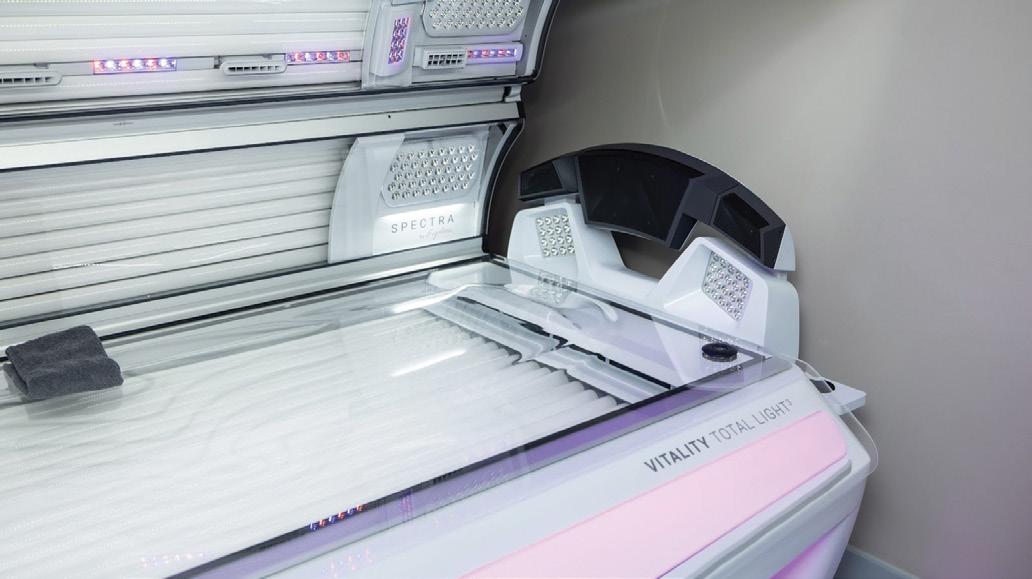
The industry forums are usually filled every week with comments or requests; “looking for a bed tech in my area”. What do you look for in an equipment technician? Price, experience, honesty, timeliness? This month, we check in with our Salon Pros on technical support. Who provides the tech serviceyou, a trusted electrician or service company?
At The SunShack & Co., my husband Paul (aka Babe, the Fix It King) handles a lot of our in-house maintenance. From lamp changes and starter changes to electrical issues and troubleshooting, he keeps things running smoothly behind the scenes. As far as the day-to-day staff, Krystal is truly a rockstar cleaner. She specializes in attention to detail. Cleanliness is something we take very seriously. For technical maintenance, we call in a tanning bed technician. He’s three and a half hours away, but having someone experienced and
knowledgeable in the tanning industry has been incredibly valuable to us. I think one of the biggest lessons in business ownership is learning what you can handle yourself, what your strengths are, and when it’s smart to call in professionals. There are certain repairs and technical situations where experience matters, and we never want to “guess” when client safety and expensive equipment are involved.
Shay Ellen The Sun Shack
Having reliable technical support is basically the salon version of having a good mechanic, you don’t realize how important they are until something starts making a weird noise. My husband is also our tech guy for most of our easy to fix issues, but with today’s newer, high-tech equipment, having a qualified bed tech is absolutely essential. KBL has been really great to work with.
The biggest things we look for are
honesty, experience, timeliness, and someone who doesn’t panic when you call saying, “It’s making a sound it definitely wasn’t making yesterday.” Price matters, but when you’ve got clients waiting and a bed down during the busy season, you quickly learn that a good tech is worth their weight in gold.
One of the funniest things about salon ownership is that equipment somehow always knows the worst possible time to act up, usually five minutes before your busiest Friday rush. I swear tanning beds can sense fear!
Kristy Mazeika Tan Oconee
Having good tech in this industry is so important, especially with how advanced tanning equipment has become. I’m very thankful that my husband is a handy man and can fix or figure out just about anything. For bigger jobs like moving equipment, installs, or the issues that are a little more complicated, we still call in a
certified bed tech when needed. During busy season, having a bed down is the last thing you want, so having someone dependable you can trust makes all the difference.I also always recommend getting involved in the tanning forums and Facebook groups. There are a lot of knowledgeable people in this industry, and you’d be surprised how much you can learn — or even troubleshoot — just by asking questions and connecting with other salon owners.
Victoria Cordes
Bear Naked Tanning

A great bed technician is worth their weight in gold. With today’s newer, more advanced equipment, having qualified technical support is no longer optional, it’s part of protecting your investment and your sanity. For me, peace of mind is worth every penny. I want someone I trust, someone I’ve built a real relationship with, not just a number on a service invoice. The best techs are the ones you can text when something suddenly goes sideways on a busy Saturday afternoon. Experience matters, of course, but so do honesty, responsiveness, and simply being dependable when you need them most. One of the biggest lessons I’ve learned in this industry is the value of relationships. Not just with your technician, but with tanning equipment manufacturers and distributors as well. Having actual people you can call directly instead of sitting on hold with a main customer service line has made all the difference for us over the years. Always show appreciation to your techs. Take them out for a steak dinner once in a while. Treat them well, show your gratitude. These are the people helping keep your business running when beds are down and customers are waiting.
Emily Sigmon, Owner Carolina Tan & Wellness
Bed tech? What bed tech? I’m the bed tech around here! That’s my go-to when a client asks if someone’s coming to fix a bed. As a single mom starting and running these salons, money was tight in the beginning, so I had to learn. Our manufacturer’s techs were great about walking me through things.
They’d send parts, and I’d handle the fixes myself most of the time. Last year I bought a salon and had to move beds between locations. I was in a time crunch, hired someone nearby who was available, and it turned into a disaster—he left without fully hooking up the wires while I was out of town. Thankfully, my daughter’s boyfriend is pretty mechanically inclined and helped get everything connected properly.
What I learned: be crystal clear about expectations, and always get recent references—from salon owners and from the manufacturer. I’ve even had a manufacturer tell me they wouldn’t allow certain techs to install their beds, so checking with them is a smart way to make sure the person is actually qualified.
Nikki Capps
Tantilizing Tans
Downtime means lost income, so having reliable support and resources is essential. Luckily, my husband is an elevator mechanic with over 40 years of electrician experience. Because of his extensive skill set, he is able to repair, install, and maintain about 90% of the equipment in our salons. Over the last 10 years of growing our salons, I’ve also been fortunate to build relationships with amazing mentors and fellow salon owners through industry forums. Having a dependable network like this is invaluable in our industry. Everyone understands the urgency behind equipment issues
because if our beds or booths are down, we are not generating income. Building those relationships and keeping trusted experts close has made all the difference for our business.
Michelle Walters
Island Glow
During my 10 years of salon ownership, I’ve learned how to perform many of the basic maintenance tasks and learned to get creative whenever possible to repair cosmetic features of a bed. I had an older sunbed that had multiple cracked pieces in the black curved acrylic along the front of the bench. I searched all over the internet and couldn’t locate it. I resorted to clear packing tape (a cheap fix) but had to be replaced every few weeks. Months later at the first MYB Owner’s Retreat hosted by Heartland, my wife Amie and I had the pleasure of meeting Scott and Audra Brown, salon owners from Colorado. We shared lots of mutual experiences including this cracked material. Scott suggested buying some vinyl wrap for under $50 that would solve it. A week later my bed looked good as new! When it comes to the electrical and technical aspects of equipment repair I’ve learned to always rely on a professional. Start your search for a technician with your product supplier. Go to any industry event you can and speak with other owners. The connections and information you leave with are well worth the cost to get there.
Vic Perrin Total Tan
Owning a tanning salon means you may be a business owner, customer service expert, marketing manager, cleaner, therapist…and occasionally, a full-time service tech. Like any business that relies
heavily on equipment and machines, having a qualified technician nearby is incredibly important. I have a husband and three adult sons who are all mechanically inclined, but we also rely heavily on tech support from Heartland Tan. Without them, we would have had a much harder time learning the ins and outs of this industry!
Most of the time, things run pretty smoothly. Recently, I decided it was time to relamp one of our stand-up tanning beds. Normally, it’s about a two-hour job from start to finish. Easy enough. I removed the acrylic from one side, got to work taking out the old lamps, vacuumed everything, wiped it all down, grabbed the new lamps, cleaned those too, and started installing them. I tested each before putting the acrylic back on. Every single lamp fired right up. At this point, I was feeling pretty proud of myself. I cleaned the acrylic, popped it back into place, and moved to the second side. Same process: remove acrylic, remove lamps, clean everything, wipe everything down, install new lamps. I fired the bed up to test it, and everything on that side looked great. But then I looked and saw 4 lamps out. I rotated lamps, checked connections, turned everything back on. Those four lamps were working, but now six different lamps were out on the opposite side. At this point, I started realizing this was no longer a “quick little two-hour project.” It became a bizarre game of tanning bed roulette to test each. Finally, I admitted defeat and called my son for backup. Together, we spent the rest of the evening moving lamps around like we were solving some sort of highly frustrating mechanical puzzle. But sometime around hour eleven, we moved a couple of lamps one final time, hit the power switch and magically, every single lamp came on. Success. But I learned a valuable lesson. “Don’t be stupid next time and think you can tackle a ‘quick’ two-hour project in the middle of Prom season”!
Christine Nelson Glow Tanning Spa
We’ve been extremely blessed over the years when it comes to equipment maintenance and repairs. My husband is an electrician and incredibly handy, so he has been able to handle the majority of our salon bed repairs inhouse. For many years, we also worked with an amazing technician, Rich Morgan, who helped us tremendously with our spray booths. Sadly, Rich recently passed away, and he has truly been irreplaceable. We’re also fortunate to be located close to Heartland Tan. When we first opened 15 years ago, we purchased all of our equipment from them, and at the time they had trained technicians available for service support. Over the years, Demetria and the Heartland team have continued to be incredibly helpful, especially with troubleshooting and phone support when needed. Having knowledgeable, trustworthy technical support is invaluable in this industry, and we’ve definitely learned how important those relationships are over the years.
Patty Warren Image Sun
Having a qualified equipment technician is absolutely essential to successful salon operations. After nearly 25 years in the industry, I can honestly say there are few things more frustrating than equipment not functioning properly. I have an incredible amount of respect for quality bed technicians. They spend long hours traveling, working demanding schedules, and sacrificing time away from their families to help keep salons operational. Their knowledge and problem-solving abilities are invaluable to this industry. I truly appreciate the work they do, and whenever a tech leaves
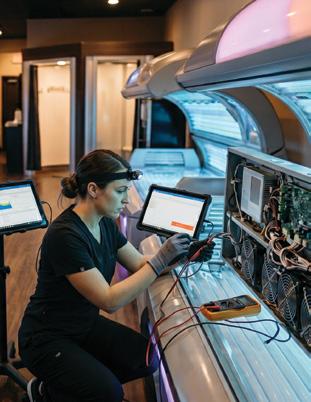
my salon, I always send them off with a little hometown treat for the road. (Cuba Cheese is famous where I live.) Case in point. When I was opening our Olean, NY location, the electricians were having ongoing issues getting our tanning beds to communicate with the Intellitan system delaying the opening of the salon. My electrician had successfully wired two previous locations for me, but despite weeks of troubleshooting, we simply could not figure out what was wrong. I had thousands of dollars of equipment that would not communicate with the software at the reception counter. While waiting for the delivery of a new sunless booth, the installer happened to arrive before the unit itself. I explained the issues we had been struggling with throughout the salon and asked if he could look at the problem. Within an hour, he had the entire salon operational. From that day forward, we stayed in contact, and over the years he has continued to help me troubleshoot and solve countless salon issues. Grateful is an understatement. That experience reminded me just how critical knowledgeable, dependable technicians are to this industry. Great bed techs don’t simply repair equipment — they help keep businesses running.
Lori VanDeWahl The Beach House






Building a Scalable Business Through Digitization and Processes
BY DR JIM SCHLECKSER

In today’s rapidly evolving business environment, growth no longer depends solely on adding more people, office space, or overhead. The most resilient and scalable companies are those learning to work smarter through digitization and virtualization.
Business leaders often talk about scaling, but true scalability requires more than ambition. It requires efficient systems, streamlined processes, and the ability to remove operational bottlenecks before they limit growth. As discussed in Great CEOs Are Lazy, every business eventually encounters a “kink in

the hose” — a single constraint that prevents the organization from moving to the next level.
For many growing companies, that constraint is process inefficiency.
Small businesses frequently grow by adding people to solve immediate problems. While that can work temporarily, it often creates longterm complexity. More employees mean more management layers, more communication gaps, and more operational friction. Eventually,
Human dependency itself becomes the limiting factor.
Consider a successful attorney running a thriving solo practice. Even billing at premium rates, there is still a ceiling tied directly to the number of hours available in a day. Without systems that extend productivity beyond individual capacity, scaling becomes difficult.
The solution is not necessarily to work harder. The solution is to leverage digital and virtual tools to amplify capabilities, improve efficiency, and drive sustainable growth.
For franchise operators in the tanning and wellness industry, scalability
presents a unique challenge. As customer expectations rise, salon owners must balance exceptional inperson experiences with operational efficiency across multiple locations. Whether managing one salon or an expanding franchise network, digitization and virtualization can help tanning businesses improve client retention, streamline operations, and increase profitability.
Modern tanning salon franchises rely heavily on repeat memberships, appointment management, compliance tracking, staffing coordination, and customer engagement. Without efficient systems, growth can quickly create operational complexity.
1. Use Digitization to Increase Productivity
Digitization allows businesses to simplify processes, reduce delays, and eliminate unnecessary manual work.
One example comes from a debt collection company that relied on physical “wet ink” signatures before beginning work with clients. Agents would spend significant time securing verbal agreements, only to discover many customers never returned the signed paperwork by mail. The

process created major inefficiencies and lost revenue opportunities.
When one lender approved electronic signatures, everything changed.
Clients could instantly sign agreements on their phones or computers, dramatically speeding up the process. More importantly, conversion rates nearly doubled because the experience became
simpler and more convenient. This example highlights an important truth: customers respond positively when businesses remove friction.
Digitization not only improves operational efficiency but also enhances the customer experience. Faster response times, simplified communication, electronic workflows, and automated systems all contribute to stronger engagement and better results.
For tanning salon franchise operators, digital tools can dramatically improve both customer convenience and revenue generation. Online booking systems, automated membership billing, mobile loyalty apps, and digital waiver forms reduce front-desk bottlenecks while improving the guest experience.
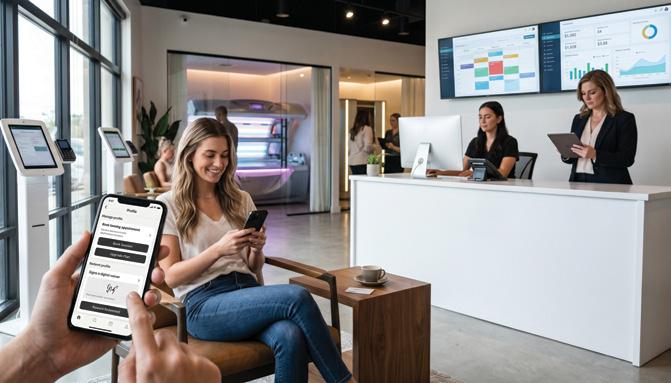
Imagine a customer booking a tanning session, upgrading services, purchasing lotion packages, and receiving promotional offers directly from their smartphone. Those conveniences not only increase customer satisfaction but also encourage repeat visits and recurring membership revenue.
Digital dashboards can also help franchise owners monitor key performance indicators across locations, including utilization rates, membership renewals, retail sales, staffing efficiency, and equipment maintenance schedules. This level of visibility allows operators to make faster, data-driven decisions.
While some industries still face regulatory limitations, the longterm trend is clear — businesses that embrace digital transformation position for greater scalability and adaptability.
2. Virtualization Creates Flexibility and Access to Talent
The widespread shift toward remote and hybrid work fundamentally changed how organizations think about productivity.
For many professionals, eliminating a long daily commute creates additional time, lower stress, and improved work-life balance. Employees often become more productive simply because they have greater flexibility and energy throughout the day.
Businesses benefit as well.
Virtual teams reduce overhead costs associated with large office spaces while allowing companies to recruit talent beyond geographic boundaries. Organizations are no longer limited to hiring within driving distance of headquarters. Instead, they can

build highly specialized teams from virtually anywhere in the world.
Virtualization also encourages businesses to rethink collaboration. Cloud-based platforms, video conferencing, project management systems, and digital communication tools enable efficient operations across multiple locations and time zones.
Companies that successfully embrace virtual operations often discover they can move faster, adapt more quickly, and remain more resilient during periods of uncertainty.
For tanning salon franchise systems, virtualization can also support centralized management functions, including customer service, marketing, recruiting, accounting, and training. Virtual onboarding and online employee training platforms help maintain consistency across locations while reducing travel and training costs.
In addition, franchise owners can use virtual management systems to monitor salon performance remotely, conduct team meetings, and maintain operational standards across multiple markets without being physically present every day.
3. Focus on Process Handoffs
One of the most effective ways to improve scalability is by identifying handoff points within the organization.
Every time information moves between departments, suppliers, customers, or team members, there is potential for delay, confusion, or inefficiency. These transition points often become hidden bottlenecks that slow growth.
By digitizing workflows and standardizing communication, businesses can reduce friction at these critical moments.
Within a tanning salon environment, process handoffs occur constantly — from online appointment scheduling and customer checkin to equipment sanitation, shift changes, membership renewals, and retail sales. Any breakdown in these transitions can negatively impact the client experience.
Automated reminders, digital checklists, integrated point-of-sale systems, and centralized customer management platforms help ensure a smooth, professional experience
at every step of the customer journey.
Returning to the attorney example, imagine how modern systems could transform the practice. Virtual consultations expand the client base beyond a single city or region. Automated document management reduces repetitive administrative work. Digital templates and streamlined workflows allow the attorney to complete projects in significantly less time while maintaining quality.
The result is a business model capable of generating more value without requiring proportional increases in hours worked.
That is the essence of scalability.
Preparing for the Future
The future belongs to businesses that can adapt quickly, operate efficiently, and leverage technology strategically.
Digitization and virtualization are not simply trends; they are foundational tools for long-term growth. They allow organizations to improve productivity, create better customer experiences, attract stronger talent, and reduce operational constraints.
Most importantly, these tools help business owners reclaim their most valuable resource: time.
Whether you lead a small entrepreneurial venture or a growing enterprise, now is an ideal time to evaluate where inefficiencies exist and where technology can help simplify operations.
The companies that embrace these changes today will be better positioned to thrive tomorrow.



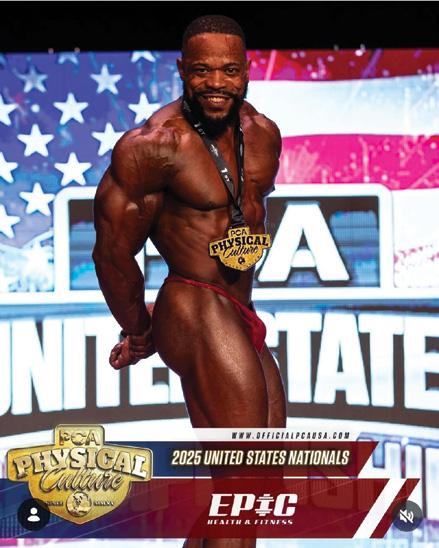


Sun is Life Certification Spotlight: Myths Busted
BY JOE SCHUSTER
Dangerous Tanning
Myths Busted
Health and Media sources typically tout these as “factual” myths followed by a myth bust during the late spring and early summer. Sun is Life takes each on, and offers accurate information that salons can offer to current and prospective clients regarding exposure to UV.
Myth: Tanning beds are safer than the sun.
Media “Fact”: Indoor tanning beds use concentrated UV rays that severely damage skin cell DNA, directly increasing your risk of developing melanoma, basal cell carcinoma, and squamous cell carcinoma.
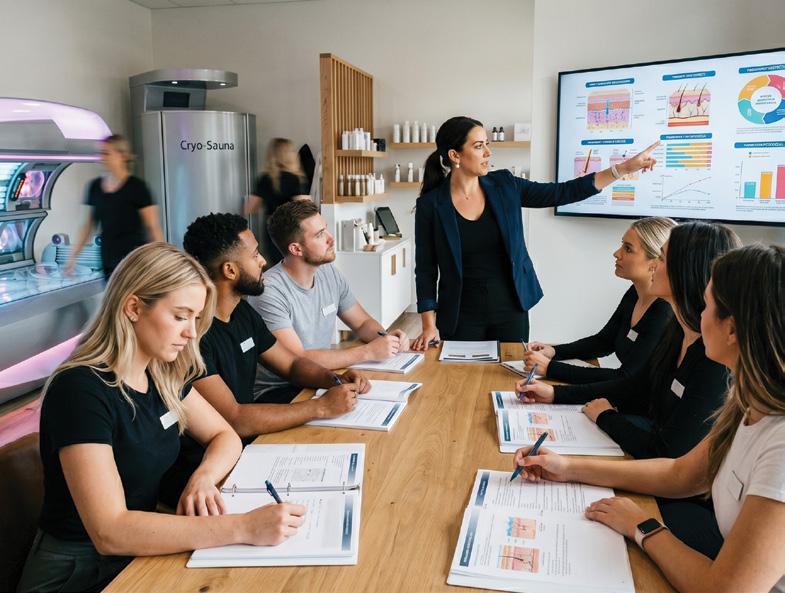

Sun is Life: The Food and Drug Administration forbids safety claims regarding sunbeds and booths. However, UV indoor tanning provides a controlled environment to obtain a cosmetic tan, by skin type and a timing system. Natural sunlight has no such controls.
Myth: A “base tan” prevents sunburn.
Media “Fact”: There is no such thing

as a safe, protective tan. Tanning simply means your skin is flooding melanin to an area to protect it from further cell damage, offering minimal to no sunburn protection.
Sun is Life: The reply obscures a direct response to the above statement. In fact, the World Health Organization confirms that sunbeds provide an SPF 2-3. Even a modicum of SPF is better than none whatsoever. Of course, no matter how tan the skin, use a proper SPF when exposed to natural sunlight.
Myth: Tanning beds safely boost vitamin D.
Media “Fact”: Tanning beds primarily emit UVA rays, while your skin requires UVB light to produce vitamin D. You cannot get a safe, sufficient amount of vitamin D from a tanning bed. The American Academy of Dermatology Association advises getting vitamin D safely through your diet or supplements.
Sun is LIfe: Referring back to Myth #1, regarding safety and health
claims. Sunbeds do produce vitamin D3 synthesis in the skin, but commercial salons are not allowed to make health claims, per the FDA. Yet, nearly two-thirds of Americans are insufficient or deficient in vitamin D levels per data from National Health and Nutrition Examination Survey data from 2001-2018. Overuse of supplements risks calcification.
Myth: Indoor tanning is a “controlled” environment.
Media “Fact”: Controlled or not, the UV radiation in tanning beds is highly damaging. The FDA regulates indoor tanning to mitigate significant health risks, and many states have banned minors from using them.
Sun is LIfe: Again, their answer avoids and circumvents the initial statement. Indoor UV systems are in fact controlled, by skin type and a timer to minimize the risk of overexposure and sunburn. The FDA requires indoor tanning devices to display a strict black-box warning label explicitly stating that the equipment should not be used on persons under the age of 18. While the agency previously proposed a nationwide ban for minors, it withdrew that restriction, relying instead on mandatory labeling “Attention: This sunlamp product should not be used on persons under the age of 18 years.”
Myth: Using sunbeds can damage an unborn fetus.
Media “Fact”: Avoid sunbeds throughout your entire pregnancy. Tanning beds pose several specific risks during early development, and most healthcare experts advise against them completely.
Sun is Life: This has been an oftrepeated myth that infers that UV from sunbeds will damage an unborn fetus. However, sunbed exposure interacts primarily with the epidermis and dermis skin layers with some
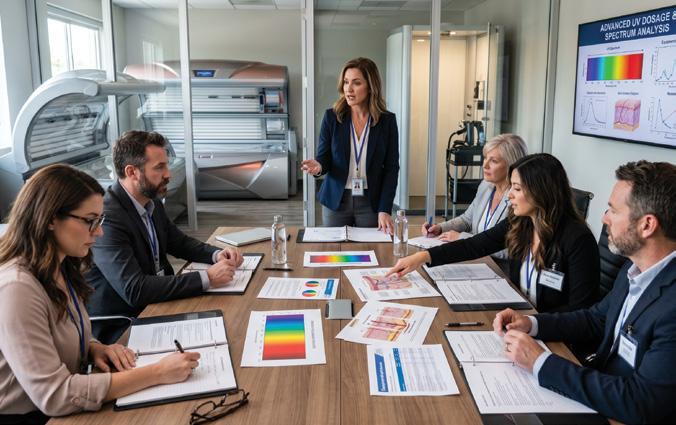
migration to the subcutaneous layer of the skin. It does not have sufficient energy to penetrate past that level. Sunbeds, as well as jacuzzis, whirlpools, saunas, etc should be avoided during pregnancy because of the risk of overheating the body.
Myth: Tanning beds only cause surface-level skin issues.
Media “Fact”: Tanning penetrates deep into the skin layers, permanently breaking down collagen and elastin, which rapidly accelerates wrinkling and skin sagging.
Sun is Life: Overexposure to any source of UV may break down collagen and elastin. As for the skin, we all suffer from wrinkling as we age. Alcohol, stress, smoking and environmental issues such as pollutants may all stimulate wrinkling.
Myth: Sunless tanning alternatives are less effective.
Media “Fact”: Sunless tanners and bronzers provide the exact same cosmetic bronzed look without the radiation, keeping your skin healthy and youthful.
Sun is Life: Sunless tanning systems offer a wonderful alternative and/

or enhancement to UV tanning. It’s important to note that while it provides the appearance of tanned skin, users should remember to use SPF when exposed to natural sunlight. Sunless systems rely on DHA for the tanned effect on the skin and do not provide SPF protection.
Myth: Tanning addiction isn’t real. Tanning cures Seasonal Affective Disorder.
Media “Fact”: Tanning stimulates the brain to release feel-good neurochemicals (endorphins), leading to genuine compulsive habits or dependency on UV. UV light from sunbeds does not provide an effective response to SAD.
Sun is LIfe: Indoor UV tanning does in fact, stimulate endorphins. We’ve always been a “look good, feel good” industry. Many that suffer from Seasonal Affective Disorder (SAD) have had a positive response from exposure to UV indoor tanning. Using a sunbed especially during the low light winter months combined with the warmth of laying on the acrylic surface does have a positive for many. However, as previously indicated here, health or safety claims about these products should not be made.
When a Tanning Bed Isn’t a Tanning Bed Anymore
Why lamp swaps, red light
retrofits,
and therapeutic claims can change the legal identity of a device
BY KRISTIN SMITHERS
Aconcerning trend that continues to circulate in the tanning industry is taking an older UV unit, swapping the lamps, and selling it as red light therapy. It seems like a simple swap and upgrade, but the U.S. Food and Drug Administration does not give this a thumbs up. They have actually put out guidance directly to the tanning industry that makes it clear this isn’t just a creative business decision, it can create a product that is adulterated, misbranded, and not legally marketable unless it goes through the proper clearance pathway.
In a formal memorandum issued to regulatory bodies, the FDA explicitly acknowledges that salon owners are removing UV lamps and replacing them with red light lamps, then marketing the units for a wide range of therapeutic and cosmetic claims. The claims range from wrinkle reduction and collagen production to pain relief, circulation, and skin repair.
The issue is not that red light therapy exists or that it has research behind it. The FDA even recognizes that red light exposure can affect skin structure, including collagen and elastin. The issue is how these devices are being created and represented.
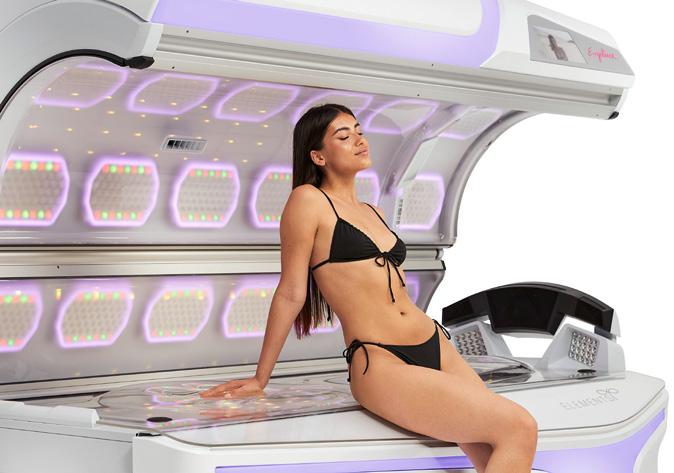
The Moment You Change The Lamps, You Change The Device
A tanning bed is not just a piece of equipment, it is a regulated product defined under federal law as both a “device” and an “electronic product.” This classification comes with specific performance standards, approved lamp configurations, defined exposure schedules, and a clearly established intended use.
When you remove UV lamps and install red light lamps and then market that unit for therapeutic or cosmetic purposes, you are not

“upgrading” the unit, you are creating a new type of device. This new device does not fall under the same regulatory category as a tanning bed.
The Problem
The FDA makes this clear. Once a tanning bed is converted and marketed for therapeutic or cosmetic purposes, it no longer falls under the same exemption as UV tanning devices. Instead, it becomes subject to a completely different regulatory pathway.
Red light devices intended for those types of claims are not exempt and

must go through proper review. And if they don’t, the FDA states that the product would be considered adulterated and misbranded and may not be legally marketed.
Claims Trigger Regulation
It is not just the equipment change that matters, it is also what you claim about the device.
The moment these units are marketed for wrinkle reduction, skin rejuvenation, pain, inflammation, circulation, or collagen production, they are being positioned as medical or therapeutic devices under federal definitions. These types of claims are specifically what bring the device under additional regulatory requirements.
But My State Doesn’t Say Anything
Confusion and risk often come in at the local level. Some states have minimal enforcement around equipment modifications, while others focus on operational rules like eyewear, timing, and operator presence.
The FDA even acknowledges that some states have raised concerns and taken actions independently.
State silence does not override federal classification. You can be operating in a state that “doesn’t care” while still being out of compliance on the federal level.
The Missing Step: Clearance
If a device is going to be used for red light therapy with therapeutic or structural claims, it must go through proper review.
This usually involves device classification based on intended use, submission through the 510(k)
premarket notification process, and demonstration of safety and equivalence. The FDA specifically states that devices like these may fall under multiple classifications depending on claims and technology, and require proper filing.
This process is not optional, and it is not automatic just because lamps were changed.
Liability
Even if enforcement is inconsistent, the risk is not theoretical. Operating a modified device without clearance creates exposure in multiple areas such as regulatory compliance and consumer protection related to advertising claims.
If a device becomes adulterated or misbranded, it is extremely difficult to defend its use in the event of a client complaint, adverse reaction, or legal issue. Installing non-compliant lamps effectively makes the operator the “manufacturer,” shifting liability for performance, safety, and UV output directly onto the salon. This can also void the unit’s electrical certification, removing manufacturer support and potentially affecting insurance coverage.
This Isn’t About Discouraging Red Light Therapy
Red light therapy is real. Photobiomodulation has legitimate applications.
But a properly designed red light device has known wavelengths, measured irradiance, defined dosing protocols, and has gone through appropriate regulatory pathways.
A converted tanning bed does not automatically meet these standards.
This is one of those areas where intention and compliance do not
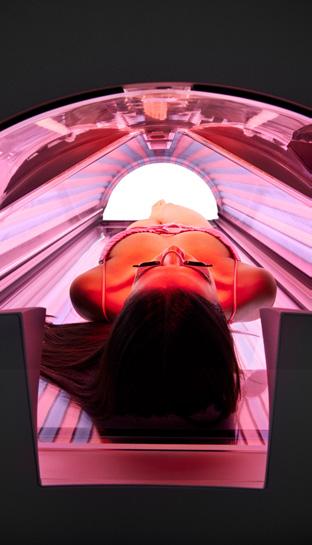
always align. You can have a genuine desire to offer beneficial services and still be operating outside of what is allowed.
The FDA has already addressed this practice directly, with a position that is not vague. If you convert a tanning bed into a red light unit and market it for therapeutic or cosmetic outcomes without proper clearance, you are no longer operating within the original device classification, and the product may be considered adulterated, misbranded, and not legally marketable.
In an industry that continues to evolve toward wellness, education, and credibility, how we implement new services matters just as much as what we offer. There is a right way to bring red light therapy into your business, and then there is the way that quietly puts everything you’ve built at risk.
Knowing the difference is what separates a trend from a standard.

Tired of
Managing Payroll, HR,
and Hiring
Alone?
How Smart Salon Owners Are Reclaiming Time (And Their Sanity)
Disconnected systems and poor support are out. Reliable tools and real help are in.
Running a salon should be about people, not paperwork
We hear this often from salon owners: “We were nervous to make a change because of how bad things had gone before.” Many had a provider that overpromised but underdelivered. When problems came up, there was no one to call, no follow-up, and no real help. Some even faced serious issues like taxes not being filed correctly.
We talk to salon owners every day who felt stuck, stressed, and unsure of what to do next. Many of them trusted a provider that promised to make things easier but ended up making things harder.
When problems came up—like payroll mistakes, system errors, or even missed tax filings—they had no one to call. The person who sold them the service stopped answering, and support was slow or unhelpful. These owners were left to fix big problems alone. Some waited on hold for hours or had to explain the same issue to different people. It was frustrating and unfair.
Here’s what we hear most:
Most salon systems are hard to use and don’t work well together. You waste time entering the same info again and again. Support is often missing. You need tools that are simple, connected, and backed by real people who are there when you need help.
“Our biggest frustration was the lack of customer service and follow-up. We experienced a wide variety of issues that even ranged to our taxes not being filed properly. The salesperson who previously sold the deal ended up being nowhere to be found.”
Glo Tanning CEO, Onyi Odunukwe
. Hiring and Onboarding Still Involves Binders and aperwork
1. Hiring and Onboarding Still Involves Binders and Paperwork
3 You’re Still the One Making Sure Everyone
Correctly
The Five Biggest Time-Wasters For Tanning Salon Owners (And What To Do About Them)
Hiring in salons happens a lot Whether it’s a busy season or omeone just left, you ’ re probably bringing in new people ften. If you ’ re still using paper packets, printing forms, and ollecting signatures in person, it can slow everything down Mistakes happen more often and managers spend extra ime doing tasks that could be easier
1. Hiring And Onboarding Still Involves Binders And Paperwork
Hiring in salons happens a lot Whether it’s a busy season or someone just left, you ’ re probably bringing in new people often If you ’ re still using paper packets, printing forms, and collecting signatures in person, it can slow everything down Mistakes happen more often and managers spend extra time doing tasks that could be easier.
Payroll can be stressful when you ’ re doing it all yourself. You may be checking timecards, making sure special rates are correct, or fixing problems before payday This can take hours each pay period and leaves room for mistakes
The Five Biggest Time-Wasters for Tanning Salon Owners (And What to Do About Them)
Hiring in salons is a regular occurrence. Whether it’s a busy season or someone just left, you’re probably bringing in new people on a somewhat regular basis.
The Five Biggest Time-Wasters for Tanning Salon Owners (And What to Do About Them)
Payroll can be stressful when you ’ re doing it all yourself You may be checking timecards, making sure special rates are correct, or fixing problems before payday This can take hours each pay period and leaves room for mistakes.
That could mean retyping hours, double-checking numbers, or fixing small mistakes that take too much time. When systems don’t share information, it slows everyone down.
est Practice: Many salons now use digital tools for hiring nd onboarding These tools let new hires apply online, fill ut forms, and complete tasks from their phones. This means everything is ready before their first day It saves me, lowers the chance of errors, and helps new team members feel ready to work right away.
Best Practice: Many salons now use digital tools for hiring and onboarding These tools let new hires apply online, fill out forms, and complete tasks from their phones This means everything is ready before their first day It saves time, lowers the chance of errors, and helps new team members feel ready to work right away.
4. You’re Fielding Every PTO Request And Shift Swap
Best Practice: Many salons switch to payroll systems that handle these tasks for them These systems can apply the right pay rates, catch errors, and handle taxes without extra work It gives you peace of mind and saves time
1 Hiring and Onboarding Still Involves Binders and Paperwork
1 Hiring and Onboarding Still Involves Binders and Paperwork
Best Practice :
Best Practice: Many salons switch to payroll systems that handle these tasks for them These systems can apply the right pay rates, catch errors, and handle taxes without extra work It gives you peace of mind and saves time
3 You’re Still the One Making Sure Everyone Gets Paid Correctly
3 You’re Still the One Making Sure Everyone Gets Paid Correctly
Hiring in salons happens a lot Whether it’s a busy season or someone just left, you ’ re probably bringing in new people often If you ’ re still using paper packets, printing forms, and collecting signatures in person, it can slow everything down Mistakes happen more often and managers spend extra time doing tasks that could be easier
Hiring in salons happens a lot Whether it’s a busy season or someone just left, you ’ re probably bringing in new people often If you ’ re still using paper packets, printing forms, and collecting signatures in person, it can slow everything down Mistakes happen more often and managers spend extra time doing tasks that could be easier
2 Your Systems Don’t Talk to Each Other
If you’re still using paper packets, printing forms, and collecting signatures in person, it can slow everything down. Mistakes happen more often and managers spend extra time doing tasks that could be easier.
Best Practice:
2 Your Systems Don’t Talk to Each Other
If your scheduling app, payroll provider, time clock, and point-of-sale system don’t connect, you might be doing the same work more than once That could mean retyping hours, checking numbers again, or fixing small mistakes that take too much time. When systems don’t share information, it slows everyone down
f your scheduling app, payroll provider, time clock, and oint-of-sale system don’t connect, you might be doing the ame work more than once. That could mean retyping ours, checking numbers again, or fixing small mistakes that ake too much time When systems don’t share information, t slows everyone down.
Best Practice: Many salons now use digital tools for hiring and onboarding These tools let new hires apply online, fill out forms, and complete tasks from their phones This means everything is ready before their first day It saves time, lowers the chance of errors, and helps new team members feel ready to work right away
3 You’re Still the One Making Sure Everyone Gets Paid Correctly
Using one connected system or linking your tools can make a big difference. When data flows between platforms, you don’t have to re-enter it. This saves time and makes sure pay, hours, and records are more accurate.
Best Practice: Many salons now use digital tools for hiring and onboarding These tools let new hires apply online, fill out forms, and complete tasks from their phones This means everything is ready before their first day It saves time, lowers the chance of errors, and helps new team members feel ready to work right away
Payroll can be stressful when you ’ re doing it all yourself You may be checking timecards, making sure special rates are correct, or fixing problems before payday This can take hours each pay period and leaves room for mistakes
Payroll can be stressful when you ’ re doing it all yourself You may be checking timecards, making sure special rates are correct, or fixing problems before payday This can take hours each pay period and leaves room for mistakes
1 Hiring and Onboarding Still Involves Binders and Paperwork
4. You’re Fielding Every PTO Request and Shift Swap.
4 You’re Fielding Every PTO Request and Shift Swap
Handling every time-off request and shift change by hand takes a lot of time It also slows down your day when you have to answer every question or update every schedule yourself
Payroll can be stressful when you ’ re doing it all yourself You may be checking timecards, making sure special rates are correct, or fixing problems before payday This can take hours each pay period and leaves room for mistakes
As a manager, you get it. It seems easy to be the one in charge of approving PTO at first glance. Handling every time-off request and shift change by hand takes a lot of time. It also slows down your day when you have to answer every question or update every schedule yourself.
Handling every time-off request and shift change by hand takes a lot of time It also slows down your day when you have to answer every question or update every schedule yourself
Best Practice: Many salons switch to payroll systems that handle these tasks for them These systems can apply the right pay rates, catch errors, and handle taxes without extra work. It gives you peace of mind and saves time.
Hiring in salons happens a lot Whether it’s a busy season or someone just left, you ’ re probably bringing in new people often If you ’ re still using paper packets, printing forms, and collecting signatures in person, it can slow everything down Mistakes happen more often and managers spend extra time doing tasks that could be easier
Best Practice: Many salons switch to payroll systems that handle these tasks for them These systems can apply the right pay rates, catch errors, and handle taxes without extra work It gives you peace of mind and saves time
Best Practice:
4 You’re Fielding Every PTO Request and Shift Swap
4 You’re Fielding Every PTO Request and Shift Swap
Best Practice: Many salons switch to payroll systems that handle these tasks for them These systems can apply the right pay rates, catch errors, and handle taxes without extra work It gives you peace of mind and saves time
3. You’re Still The Only One Making Sure Everyone Gets Paid Correctly
Best Practice: Self-service tools let employees make requests and see their schedules from their phones. Managers still approve changes, but they don’t have to be involved in every small detail This gives staff more control while helping managers focus on bigger tasks
4 You’re Fielding Every PTO Request and Shift Swap
Best Practice: Self-service tools let employees make requests and see their schedules from their phones Managers still approve changes, but they don’t have to be involved in every small detail This gives staff more control while helping managers focus on bigger tasks.
Handling every time-off request and shift change by hand takes a lot of time It also slows down your day when you have to answer every question or update every schedule yourself
Best Practice: Many salons now use digital tools for hiring and onboarding These tools let new hires apply online, fill out forms, and complete tasks from their phones This means everything is ready before their first day It saves time, lowers the chance of errors, and helps new team members feel ready to work right away
Handling every time-off request and shift change by hand takes a lot of time It also slows down your day when you have to answer every question or update every schedule yourself
2 Your Systems Don’t Talk to Each Other
2 Your Systems Don’t Talk to Each Other
2 Your Systems Don’t Talk to Each Other
Best Practice: Using one connected system or linking your ools can make a big difference When data flows between latforms, you don’t have to re-enter it This saves time and makes sure pay, hours, and records are more accurate.
Best Practice: Using one connected system or linking your tools can make a big difference When data flows between platforms, you don’t have to re-enter it This saves time and makes sure pay, hours, and records are more accurate
Many salons now use digital tools for hiring and onboarding. These tools let new hires apply online, fill out forms, and complete tasks seamlessly from their phones. This means everything is ready before their first day. It saves time, lowers the chance of errors, and helps new team members feel ready to work right away.
If your scheduling app, payroll provider, time clock, and point-of-sale system don’t connect, you might be doing the same work more than once That could mean retyping hours, checking numbers again, or fixing small mistakes that take too much time When systems don’t share information, it slows everyone down
Payroll can be stressful when you’re doing it all yourself. You may be checking timecards, making sure special rates are correct, or fixing problems right before payday. This can take hours each pay period and leaves room for mistakes—or even major legal issues.
Self-service tools let employees make requests and see their schedules from their phones. Managers still approve changes, but they don’t have to be involved in every small detail. This gives staff more control while helping managers focus on bigger tasks.
Handling every time-off request and shift change by hand takes a lot of time It also slows down your day when you have to answer every question or update every schedule yourself
If your scheduling app, payroll provider, time clock, and point-of-sale system don’t connect, you might be doing the same work more than once That could mean retyping hours, checking numbers again, or fixing small mistakes that take too much time When systems don’t share information, it slows everyone down
Best Practice:
2. Your Systems Don’t Talk To Each Other
5 When Something Goes Wrong, Support is Nowhere to Be Found
Best Practice: Self-service tools let employees make requests and see their schedules from their phones Managers still approve changes, but they don’t have to be involved in every small detail This gives staff more control while helping managers focus on bigger tasks
Best Practice: Self-service tools let employees make requests and see their schedules from their phones Managers still approve changes, but they don’t have to be involved in every small detail This gives staff more control while helping managers focus on bigger tasks
5. When Something Goes Wrong, Support is Nowhere to Be Found
5. When Something Goes Wrong, Support Is Nowhere To Be Found
If your scheduling app, payroll provider, time clock, and point-of-sale system don’t connect, you might be doing the same work more than once That could mean retyping hours, checking numbers again, or fixing small mistakes that take too much time When systems don’t share information, it slows everyone down
Best Practice: Using one connected system or linking your tools can make a big difference When data flows between platforms, you don’t have to re-enter it This saves time and makes sure pay, hours, and records are more accurate
Best Practice: Using one connected system or linking your tools can make a big difference When data flows between platforms, you don’t have to re-enter it This saves time and makes sure pay, hours, and records are more accurate
If your scheduling app, payroll provider, time clock, and pointof-sale system don’t connect to each other, you’re probably doing the same work more than once.
When a problem comes up, getting help should be easy But if you ’ re waiting on hold or explaining your issue to different people, it just adds more stress
Best Practice: Self-service tools let employees make requests and see their schedules from their phones Managers still approve changes, but they don’t have to be involved in every small detail This gives staff more control while helping managers focus on bigger tasks
When a problem comes up, getting help should be easy But if you ’ re waiting on hold or explaining your issue to different people, it just adds more stress.
5 When Something Goes Wrong, Support is Nowhere to Be Found
5 When Something Goes Wrong, Support is Nowhere to Be Found
Best Practice: Using one connected system or linking your tools can make a big difference When data flows between platforms, you don’t have to re-enter it This saves time and makes sure pay, hours, and records are more accurate
Or call 800-863-8013 to

Best Practice: A dedicated support rep who knows your setup can fix issues faster You don’t have to repeat yourself, and problems get solved quickly so you can stay focused on your business.
Most salons switch to payroll systems that handle these tasks for them. These systems can apply the right pay rates, catch errors, and handle taxes without extra work. It gives you peace of mind and saves time.
When a problem comes up, getting help should be easy. But if you’re waiting on hold or explaining your issue to different people, it just adds more stress.
5 When Something Goes Wrong, Support is Nowhere to Be Found
When a problem comes up, getting help should be easy But if you ’ re waiting on hold or explaining your issue to different people, it just adds more stress
When a problem comes up, getting help should be easy But if you ’ re waiting on hold or explaining your issue to different people, it just adds more stress
When a problem comes up, getting help should be easy But if you ’ re waiting on hold or explaining your issue to different people, it just adds more stress
Best Practice:
Best Practice: A dedicated support rep who knows your setup can fix issues faster You don’t have to repeat yourself, and problems get solved quickly so you can stay focused on your business.
Best Practice: A dedicated support rep who knows your setup can fix issues faster You don’t have to repeat yourself, and problems get solved quickly so you can stay focused on your business
Best Practice: A dedicated support rep who knows your setup can fix issues faster You don’t have to repeat yourself, and problems get solved quickly so you can stay focused on your business

A dedicated support rep who knows your setup can fix issues faster. You don’t have to repeat yourself, and problems get solved quickly so you can stay focused on your business.
Best Practice: A dedicated support rep who knows your setup can fix issues faster You don’t have to repeat yourself, and problems get solved quickly so you can stay focused on your business
The Five Biggest Time-Wasters for Tanning Salon Owners (And What to Do About Them)



Joe Schuster
In addition to serving as our Editor in Chief, he’s also one of our contributing writers and serves as the Director and Instructor for our SUN IS LIFE certification and training.

Mackenzie Morris
Mackenzie Morris is the CEO of Prism Haus, a brand management and marketing agency, leading the company’s big-picture strategy, brand direction, client experience, and operational execution. She works directly with brands, founders, and companies to map out high-impact marketing campaigns, visibility strategies, and revenue-driving ecosystems—bridging the gap between creative ideas and real business growth.
SUN & WELLNESS MAGAZINE
the experts

Aliesha Colvin
Executive Director of Sun is Life Magazine, Aliesha Colvin, has spent over a decade in the beauty world and the last three of those helping shape the tanning industry’s creative side. Outside of the office, she channels her energy into her photography business and her social media communities – where she platforms others loving the skin they’re in.

Dr Jim Schleckser
Jim Schleckser is the CEO of the Inc. CEO Project, helping leaders grow their companies. He specializes in the issues that fast-growth firms experience. He is also a member of the Forbes Coaches Council.

Quinn Cooper
Quinn Cooper has been a professional in the tanning industry for years, showing his passion for wellness at every turn. He is a proud Senior Account Executive of SUN IS LIFE as well as being a salon owner himself.
Emily Clements
Emily Clements is an Area Manager for the Oxford and Tuscaloosa franchise locations with Glo Tanning. Alongside management, Emily received her degree from the University of Mississippi in integrated marketing communications, minor in general business, and specialization in social media. Combining both passions for industry and writing, she is thrilled to bring her expertise into Sun is Life.

Kristin Smithers
Kristin Smithers, the Red Light Queen™, is a Board Certified Light Therapist through the Board of Advanced Natural Health Sciences. A lifetime SPIE member and WALT member, she’s been active in the tanning industry since 2016 and a salon owner since 2019, blending science with real-world results.

Ambria Hatcher
Ambria Hatcher has spent more than 25 years in the tanning industry helping businesses grow through strong leadership, intentional culture, and scalable systems. Known for her ability to see opportunities before others do, she is passionate about developing people, improving operations, and helping organizations create exceptional customer experiences.
Sudoku
8 9 3 1 6 2 7 2 8 9 4 7 1 4 2 9 5 9 1 5 7 3 5 6 8 4 2 1
Word Search
LOOK FOR
AUTOMATION BLUEPRINT DEVELOPMENT EFFICIENCY FRAMEWORK GROWTH IMPROVEMENT INFRASTRUCTURE INNOVATION MOMENTUM PROCESS PROGRESS SCALABILITY STRATEGY SYSTEMS TECHNOLOGY
EXPERIENCE
Treat y -where relaxation

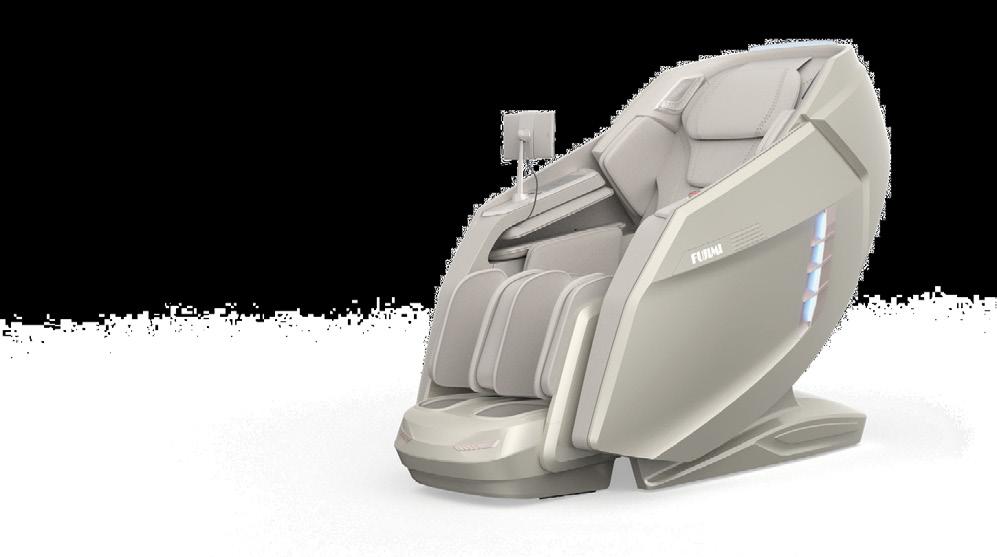


Indulge yourself in unparalleled comfort with our exclusive promotion on the Fujimi Luxury Massage Chairs! Introducing the EP9000MAX and EP7000S models, designed to bring the spa experience right to your home or business. Elevate your relaxation with advanced 3D massage technology, customizable settings, and heated therapy options for a truly transformative experience. Enjoy soothing massages with a sleek design, zero gravity recline, and a variety of invigorating programs to relieve tension and rejuvenate your body.
Don’t miss this opportunity, take advantage with the information provided below.
Word Search Answers

THIS ISN’T JUST A TAN GLOW UP THIS IS A
Enter the Total Light with Fusion Light Technology that blends UV light with Red & Blue LEDs for a deeper, longer-lasting, naturallooking tan. Glow smarter, shine longer, and experience tanning in a whole new light.