2741 E Belt Line Rd, Suite 113 Carrollton, Texas 75006
Interested In Advertising?
Contact quinn@sunislife.com
April 2026 | Volume 2 | Issue 4
Sun Is Life ISSN 2329-8545 (USPS 023-149) is published monthly by Glo Tanning Inc., 2741 E Belt Line Rd Apt 113, Carrollton, TX 75006. Periodicals postage is paid at Flint, MI and additional mailing offices. POSTMASTER: Send address changes to: Sun Is Life, 12335 N Rockwell Ave., Oklahoma City, OK 73142. To authors, photographers and people featured in this publication: All materials, articles, reports and photos published in this publication are the property of Sun Is Life Magazine and cannot be used without written permission. The opinions and conclusions recited herein are those of the respective authors and not of Sun Is Life Magazine. Sun Is Life Magazine is not responsible for returning unsolicited manuscripts, photos or other materials. Every effort will be made however, to return rejected manuscripts, etc., if they are accompanied by sufficient first-class postage, but the publisher will not be responsible for loss of any such material.
My wife and I recently joined longtime friends for a mid-winter escape to the Virgin Islands. For years, we talked about leaving town to enjoy the warmer Caribbean weather at the start of a new year. With some planning, we made it happen. The food was wonderful, the sun and water were healing, and the morning and sunset views were incredible.
But I digress.
If you’re in this industry, you’re in it 24/7. It’s hard not to think about your business—ways to improve, equipment to upgrade, lotions to stock, and promotions to run. However, when you have a drink and a mountaintop view over the ocean, those thoughts may pause.
During this “pause,” I noticed our interaction with the mountaintop bartender. She was chatting with locals at the other end of the bar. The bar was small, and it took a while before we got her attention to order. She came over, looked at us, and waited.
I’ll add that I’ve also been a bartender. As they say, “the gift of gab” serves drink slingers well. That, along with a well-placed tip jar, worked for me many times.
This time of year is prime for tourism and the annual migration from colder climates. It should also be prime time to earn tips. Clearly, our bartender either didn’t enjoy her job or was feeling the effects of burnout— that familiar feeling when something repetitive goes on too long.
And that brings me to our industry.
April is a point in the season when we’ve been doing the same routine for months: keeping equipment running, ordering supplies, managing staff call-outs, handling customer interactions, monitoring reviews, and posting on social media—often while juggling personal responsibilities. It can be exhausting.
But to borrow a phrase from the 1987 movie “Moonstruck,” “Snap out of it!”
Now is the time to review the day-to-day, especially with your staff. Everyone may be tired, but that feeling must stay outside the door. Your clients are choosing where to spend their discretionary income, and they chose you. Make sure the experience is worth it.
Don’t leave anything to chance that might cause them to visit another salon or look elsewhere for their “look good, feel good” routine.
As clients emerge from winter, be the salon that becomes their own island oasis.
All the best,
Joe Schuster Editor-in-Chief
2026 NU TOUR
APRIL
4/19/26: Phoenix, AZ
MAY
5/17/26: Chicago, IL
JUNE
6/28/26: Orlando, FL
JULY
7/23/26: Kansas City, MO
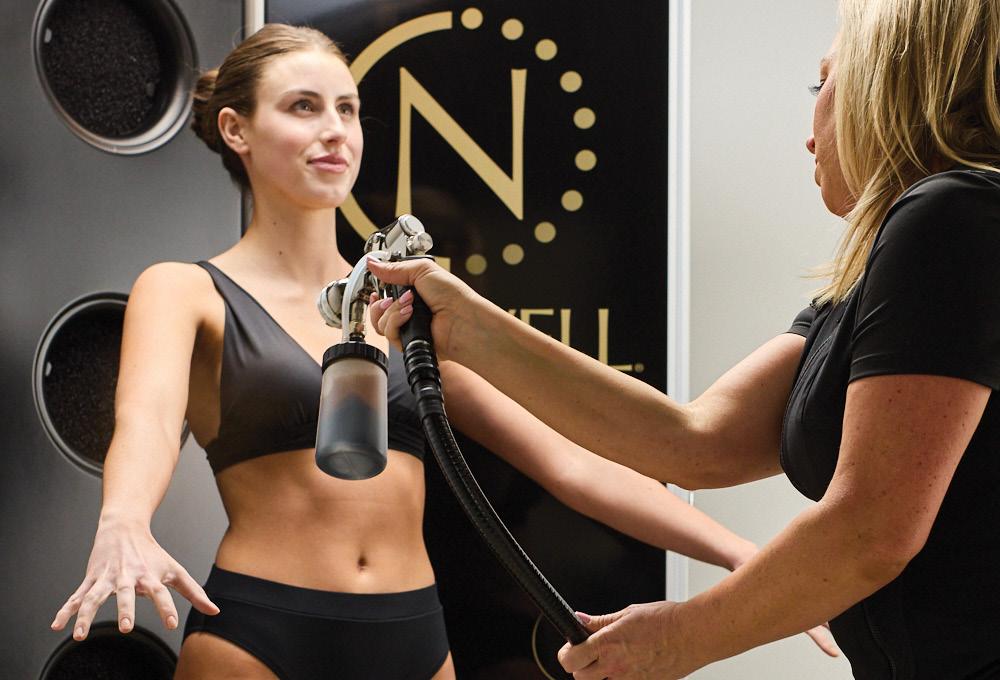
THE ORIGINAL AND #1 PROFESSIONAL SPRAY TANNING CERTIFICATION PROGRAM
PARTNERING WITH NORVELL PROVIDES THE BRIDGE BETWEEN SELF-TAUGHT SKILLS AND A CERTIFIED PROFESSIONAL SPRAY TANNING MANUFACTURER CURRICULUM.
WINE DOWN WEDN
ESDAYS
WEDNESDAY OF EVERY MONTH, 7PM EST JOIN US FOR WINE DOWN WEDNESDAY AS WE CHAT ABOUT ALL THINGS SPRAY TAN BUSINESS!
DEPARTMENT
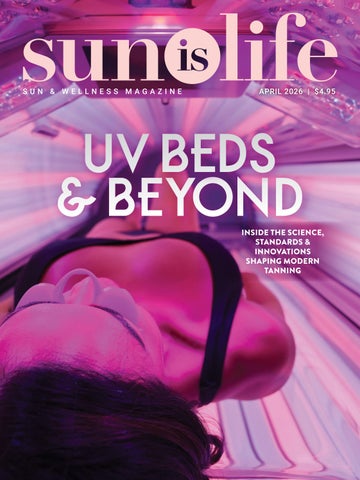
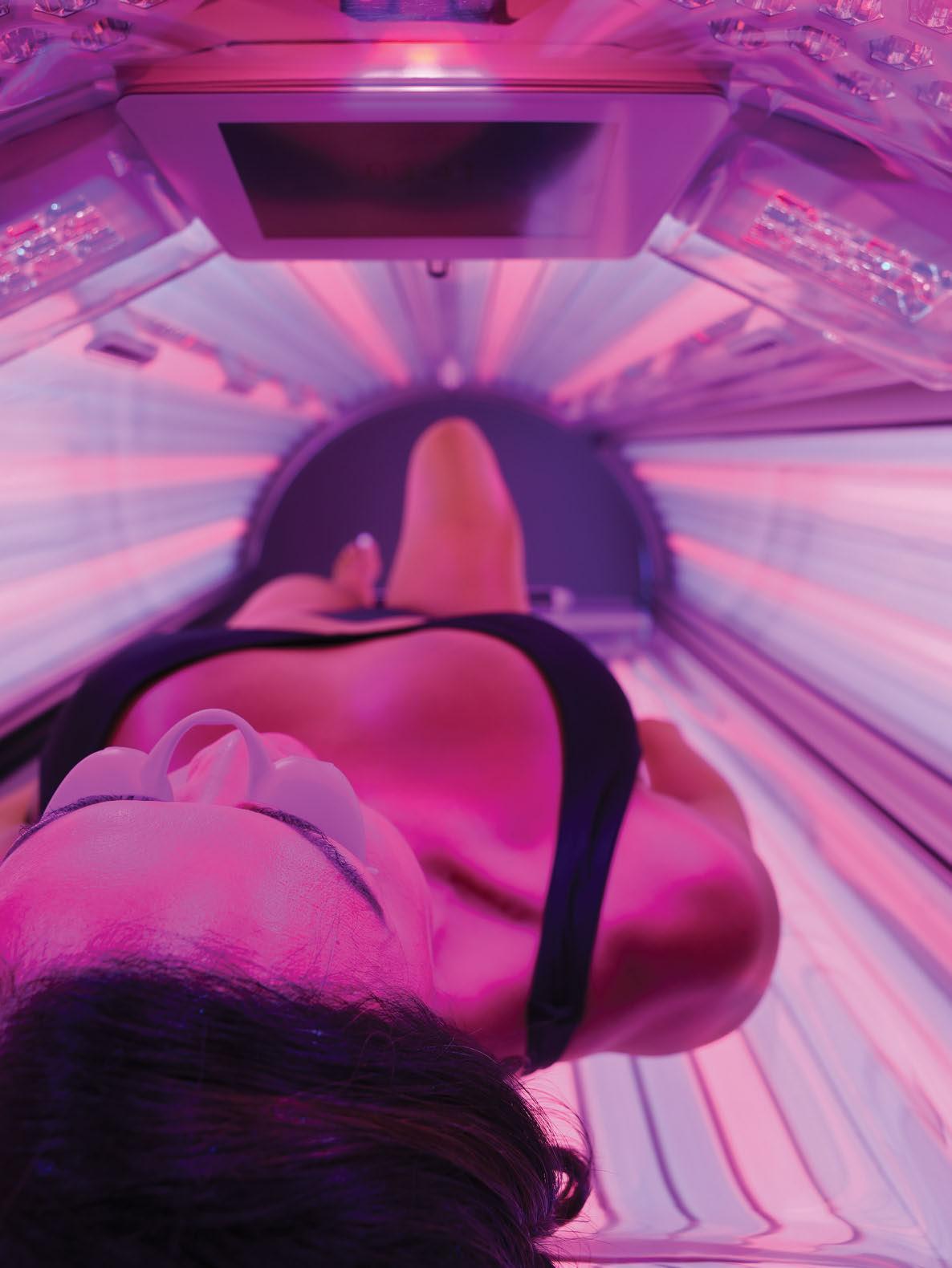
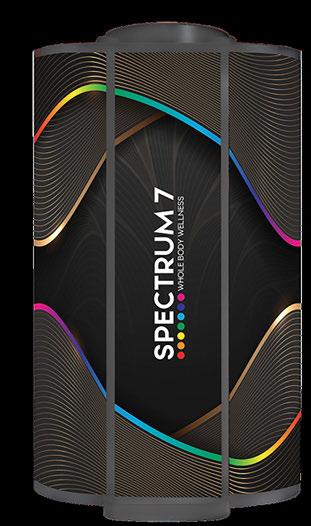
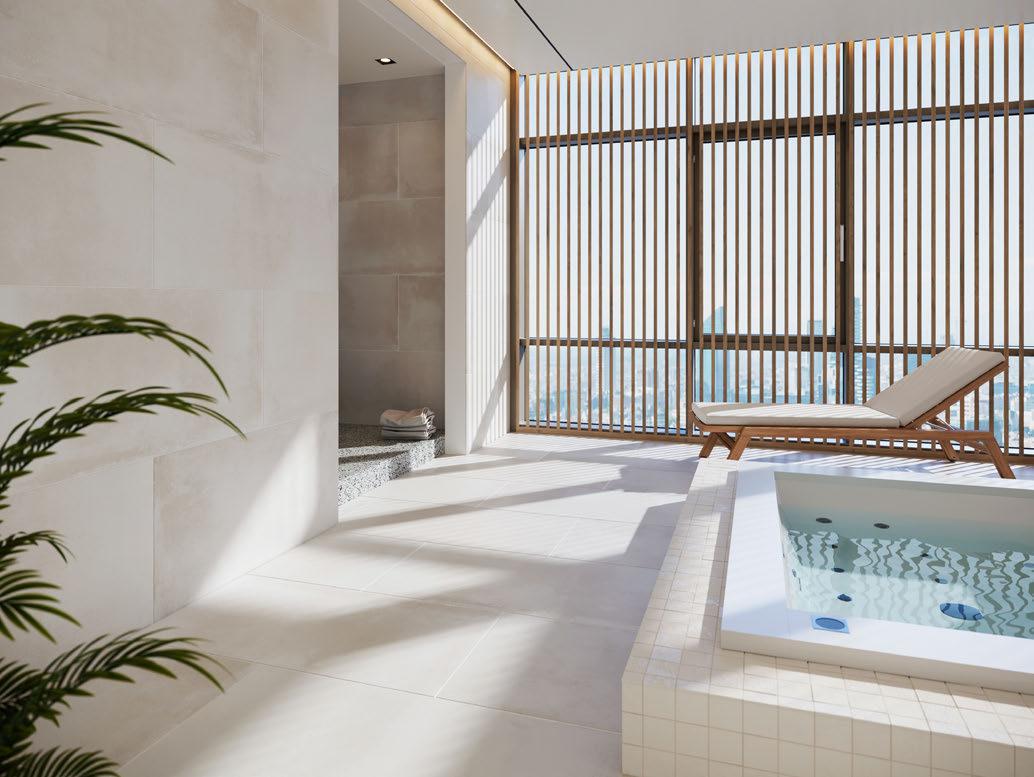
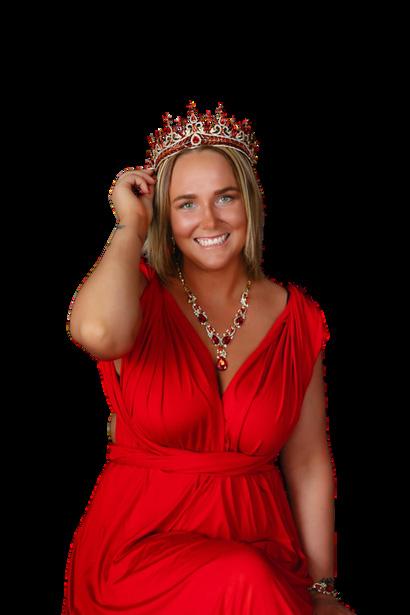
ABOUT THE COVER
Step into the next era of
this
ROUTINE
The standard that protects our industry
BY KRISTIN LEE SMITHERS, CLT
If there is one word that can elevate our entire industry, protect our clients, and strengthen our credibility, it is routine. As salon professionals, we do not just provide access to equipment. We provide structure, guidance, accountability, and that responsibility has never mattered more than it does today.
We are at a tipping point in the tanning industry. As more studies explore moderate, non-burning UV exposure, especially when dealing with indoor tanning, we have an opportunity to lead the conversation with professionalism and clarity. But leadership requires standards, and standards begin with teaching routine.
One of the biggest misconceptions in tanning is that more equals better and faster results. In reality, the most consistent color and the best client outcomes come from gradual, properly spaced exposure. Skin needs time to respond between sessions.
Pigment production and distribution do not happen instantly, and the biological processes triggered by UV exposure continue well beyond the moment a session ends.
State regulations and the Food and Drug Administration require operators to follow manufacturer labeling and exposure schedules. Because in FDA labeling law, “recommended” is not optional. It means:
• The manufacturer must provide the schedule
• Operators must follow it
• States enforce operator compliance with manufacturer instructions
• Insurance carriers treat deviation as misuse
So the 24-hour spacing is not a suggestion — it’s the manufacturer’s required operating instruction.
This commonly discussed 48-hour concept reflects what we understand
about how the skin adapts over time. When sessions are stacked too closely together, we increase the likelihood of irritation, visible redness, and DNA damage.
This is where the FDA exposure label becomes one of our strongest tools. Every UV tanning unit is required to display recommended maximum session times, exposure schedules and frequency guidance tied to skin type. These labels are designed for customer safety. Safeguards designed to prevent overexposure and erythema (sunburn) should be the foundation of every tanning plan.
If a salon is allowing clients to tan more frequently than the exposure label allows or below the required 24-hour minimum, it is time to reassess. It may even occur when the customer receives exposures from natural sunlight and attempts to tan indoors. Compliance is not restrictive; it is protective. We do not
CERTIFICATION, TRAINING & PROFESSIONAL DEVELOPMENT
control what happens in unregulated environments, but we do control the standards inside professional salons.
Routine also means no redness. Non-burning exposure must be the goal every time. Erythema is the medical term for skin redness caused by increased blood flow and inflammation after UV exposure. In a tanning setting, erythema is a warning sign. Even mild pinkness indicates that the skin received more UV than it could comfortably tolerate. Redness is not progress. It does not lead to a tan. It is overexposure.
When we define moderate exposure, it should mean staying within recommended session times, respecting the minimum 24-hour interval, spacing closer to 48 to 72 hours to follow the science of undamaging sun exposure, and adjusting exposure based on skin type. It also means stopping immediately if erythema occurs and reevaluating the exposure plan. Slow and steady wins the race.
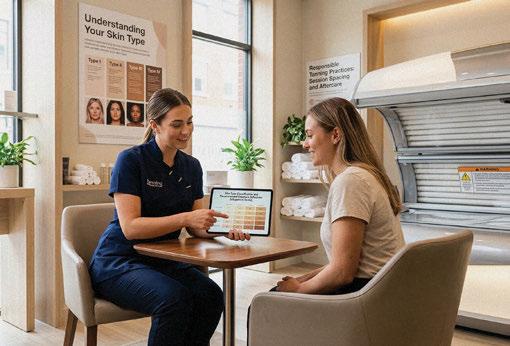
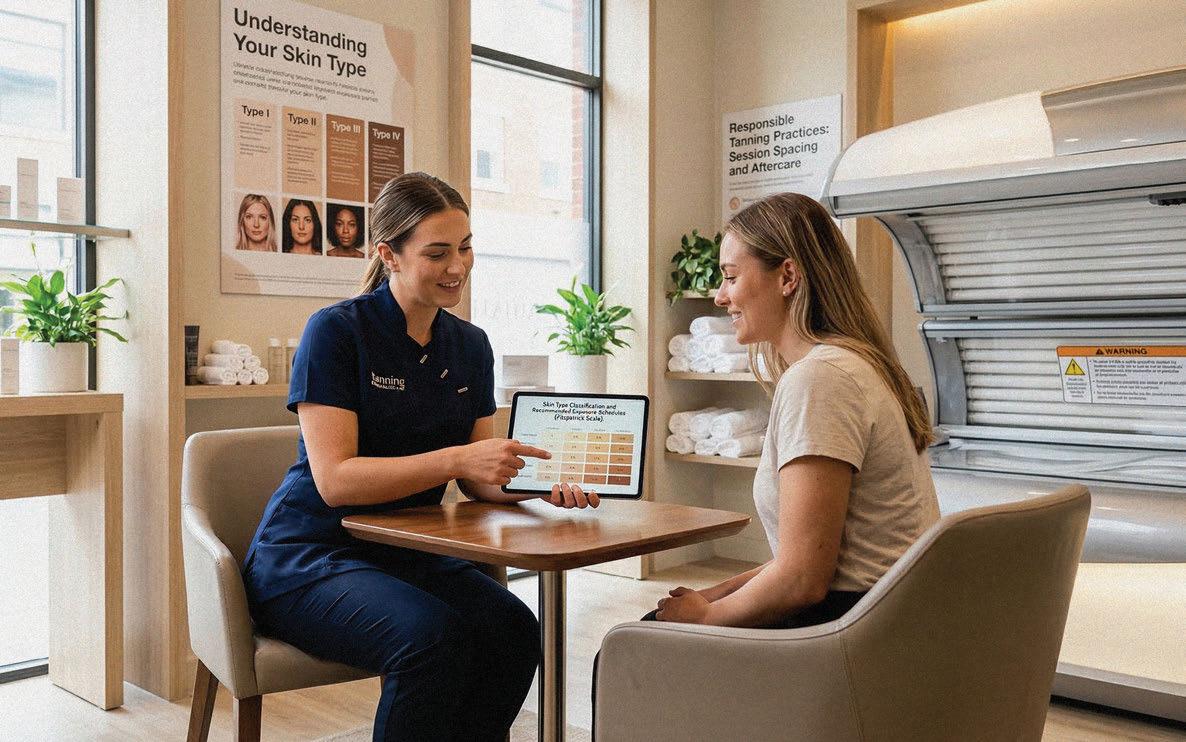
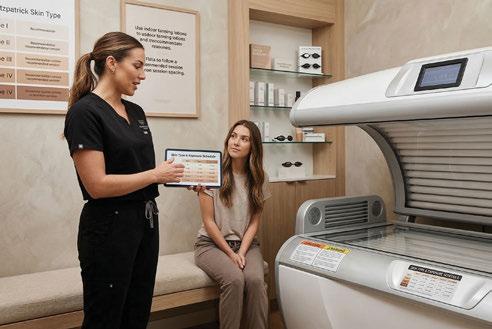
Skin typing is not optional. It is our responsibility. Salons should determine skin type using a structured questionnaire and trained staff, not leave it to clients to guess. Clients should understand what their skin type means, because education improves compliance. When people understand why they must wait or why their time is limited, they are more likely to follow the schedule.
Skin Type I is not recommended to tan indoors and in fact, they’re not included on any indoor tanning system exposure schedule. They should not be exposed to UV. These individuals do not tan reliably, or at all, and are highly prone to burning. The responsible approach is to direct them to sunless tanning options and sun protection.
Skin Type II should be treated conservatively because they burn
easily. They require shorter session times, strict adherence to schedule, and close monitoring for redness.
Skin Type III still has the potential to burn if they go too much too fast. They may tan more readily than Type II, but gradual progression is essential.
that is spaced appropriately and adjusted according to skin response.
Skin Type IV and higher may have greater natural tolerance, but that does not eliminate risk. Increased tolerance can create a false sense of safety, leading clients to push time or frequency.
This is where professional salons separate themselves from convenience-based environments. Gyms, apartment complexes, home units, and natural sun exposure often lack structured education and oversight. Exposure labels may be ignored. Skin typing may not occur. Frequency guidelines may not be enforced. That difference is our opportunity as educated professionals.
We are the ones who conduct skin assessments, review contraindications, adhere to the 24-hour recommended minimum, educate on why 48 hours is often better, and teach the importance of routine. If we loosen our standards to compete with convenience, we undermine our credibility. If we strengthen them, we elevate the entire industry.
Moderate exposure does not mean daily tanning. It does not mean pushing to the maximum time quickly. It does not mean chasing redness. Moderate means controlled, nonburning, label-compliant exposure
The FDA’s 21CFR1040.20 is the framework that supports this. Exposure labels provide a clear structure we can reference during consultations. When a client asks if they can return the next day, the answer should not be driven by sales pressure. It should be guided by compliance and skin response. Waiting 48 hours should always be suggested.
We cannot control what happens in unregulated facilities or how long someone lays in the natural sun. But we can control what happens inside our doors. If we commit to strict minimum intervals, accurate skin typing, label-based scheduling, and a non-burning approach, we protect our clients as well as our profession.
ROUTINE protects results, reduces risk, and builds trust.
At a time when public scrutiny is amplified by viral posts, comments, and pressure from lobbyists, our industry does not need louder messaging; it needs stronger standards. The most powerful thing we can preach is consistency, not intensity. Intelligently spaced sessions, not more. We must practice and preach a responsible routine, every time.
7 Questions With Vanessa Uei
From Airborne Infantry to Industry Leader in Alaska
BY STAFF WRITER
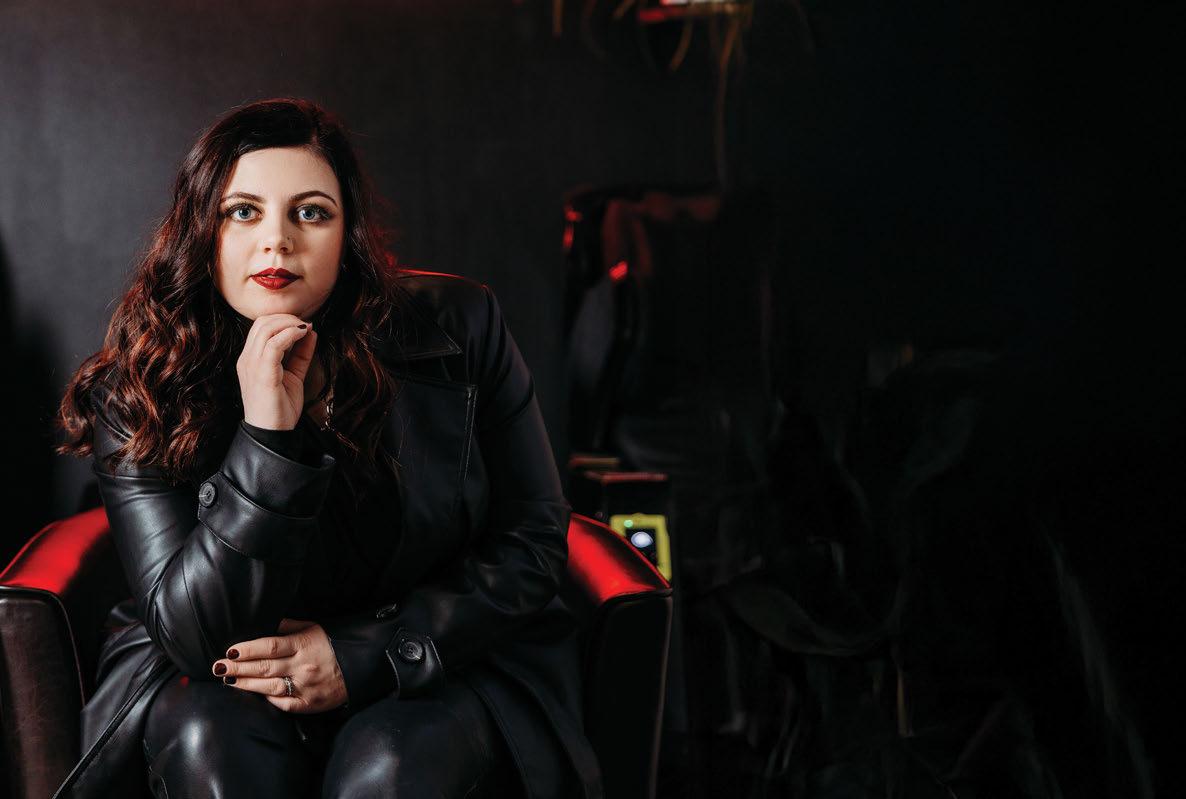
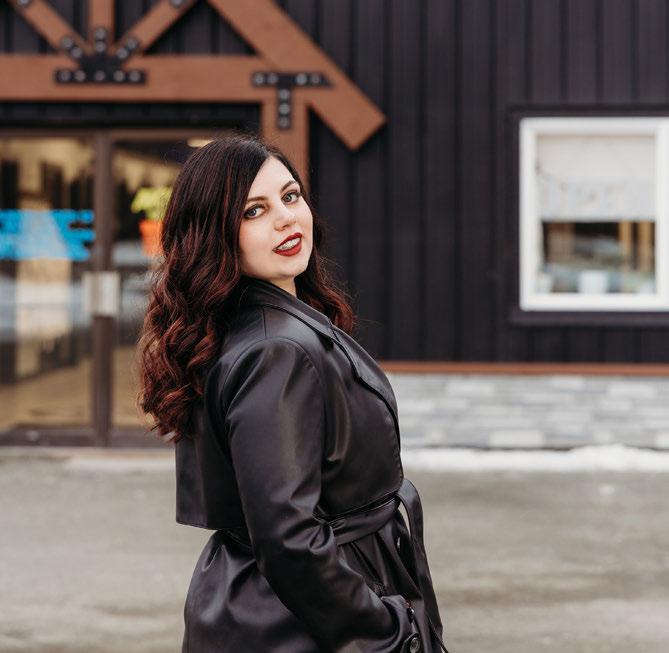
My name is Vanessa Uei, and I am the owner of AK Wellness & Tanning LLC in Kenai, Alaska. I opened my salon following a medical discharge from the U.S. Army, where I served as an Airborne Infantryman (11B). In August 2026, AK Wellness & Tanning will celebrate eight years in business.
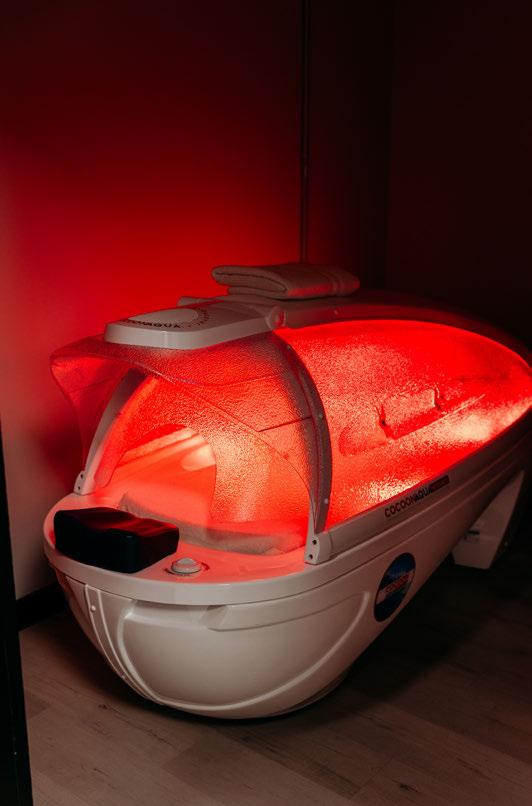
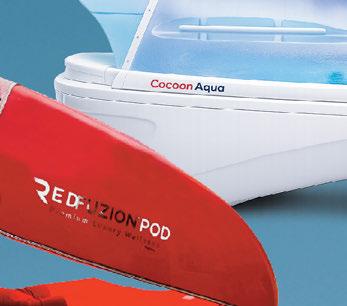
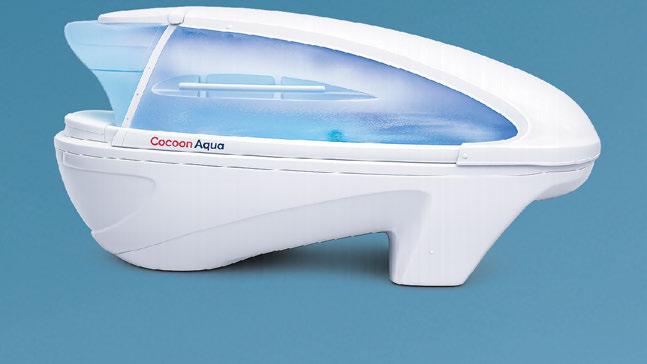
What sets my salon apart is our commitment to offering a diverse range of services paired with client education. Our services include UV tanning, Red-Light Therapy, the Cocoon Aqua IR Hydration Pod, Cocoon Wellness Pro Pod, pneumatic compression therapy, FIT BodyWrap, cold plunge therapy, and peptide therapy programs.
Placing a strong emphasis on continuing education, highlights include:
Board Certified Light Therapist,
(Board of Advanced Natural Health, Indoor Tanning Operator Certification, Certified Pool Operator, Certified Compression Specialist, Certified Pressotherapy Specialist, Certified Infrared Wrap Specialist, and in the process of completing Photopuncture Therapist Certification.
Your salon offers much more than traditional tanning. What originally made you decide to expand into wellness services, and how has that decision changed your business overall?
to me for confidence and self-care, and many expressed interest in services that supported how they felt year-round, not just how they looked.
Incorporating wellness services shifted how clients perceive our business—we are no longer viewed solely as a tanning salon but as a wellness center. That evolution elevated our brand and significantly strengthened client loyalty and retention.
2
The greatest benefit has been consistency. Wellness services encourage regular visits throughout 1
Expanding into wellness was driven by both client feedback and my personal experience using Photobiomodulation Therapy (RedLight Therapy) to recover from injuries sustained during my military service. Clients were already coming
For salon owners who are still “tanning only,” what benefits have you personally seen from offering a wider variety of wellness options under one roof?
the year rather than seasonal traffic limited to peak tanning months. Retention has also improved—clients who use multiple services tend to stay longer and feel more connected to the business. From a branding perspective, it allows us to align with long-term wellness instead of focusing solely on appearance.
regular wellness routine rather than a one-time visit.
Individually, Red-Light Therapy and the Cocoon Aqua IR Hydration Pod are our most in-demand services and often book out up to two weeks in advance during busy seasons.
3 4
What services or packages have become your most popular and why do you think clients gravitate toward those options specifically?
Our VIP Memberships have consistently been our top performers. These EFT-based memberships bundle multiple services into a single monthly price. Clients appreciate both the value and the simplicity, especially when services are framed as part of a
Was there any service you added that you truly believed in, but it did not take off the way you expected?
The FIT BodyWrap is the one service I regret adding. While a small group of clients absolutely love it, it has been challenging to attract new users or encourage existing clients to incorporate it alongside other services. Additionally, the ongoing cost of FIT Coats makes it more expensive to operate compared to other services.
5
Being located in Alaska definitely adds a unique layer to salon ownership. What challenges have you faced when it comes to getting equipment, supplies, or new technology into your salon?
Operating in Alaska adds a unique layer of complexity. Shipping costs are significantly higher, and delivery times are longer. Because the nearest bed technician must fly in from the Lower 48, I have learned to handle installations and maintenance tasks myself. While challenging, this has made me more resourceful, proactive, and disciplined about routine equipment care.
6
Do you find that your Alaska location changes how clients use tanning and wellness services compared to other regions?
Absolutely. Seasonal demand is more extreme, and wellness is viewed as a year-round necessity rather than a trend. During the darker months, clients prioritize energy, mood, and overall well-being. Tanning becomes less about aesthetics and more about how it helps people feel during our long winters. This mindset has heavily influenced how we market and bundle our services.
7
When you finally get a day or week off just for you, what does that look like?
Time off is about slowing down and reconnecting—spending time with my husband, family, and friends or getting outside and unplugging. I enjoy weekend getaways and exploring everything Alaska has to offer. After running a business, even a quiet, uncomplicated day feels like a luxury.
As the industry’s top trusted name, we set the standard for innovation, safety, and customer satisfaction, backed by years of expertise and proven success.
Our advanced VersaSpa spray system delivers whole-body skincare in minutes, leaving skin refreshed, radiant, & visibly improved.
“I’ve
completed 50+ sessions, it’s so easy to follow” – Tenley, Spa Owner
MORE THAN JUST A
Why National Spray Tan Day reflects the evolution of sunless tanning into a modern beauty and wellness experience
BY LAUREN HALL
Lauren Hall’s Perspective on National Spray Tanning Day 2026
National Spray Tan Day is more than a celebration of glowing skin; it’s a reflection of how far the sunless tanning industry has come. As a Major Account Manager at Innové Beauty & Wellness, working closely with salon operators across the country, I’ve seen firsthand how innovation, education, and skin wellness have transformed spray tanning into a modern beauty experience.
Experiencing National Spray Tan Day
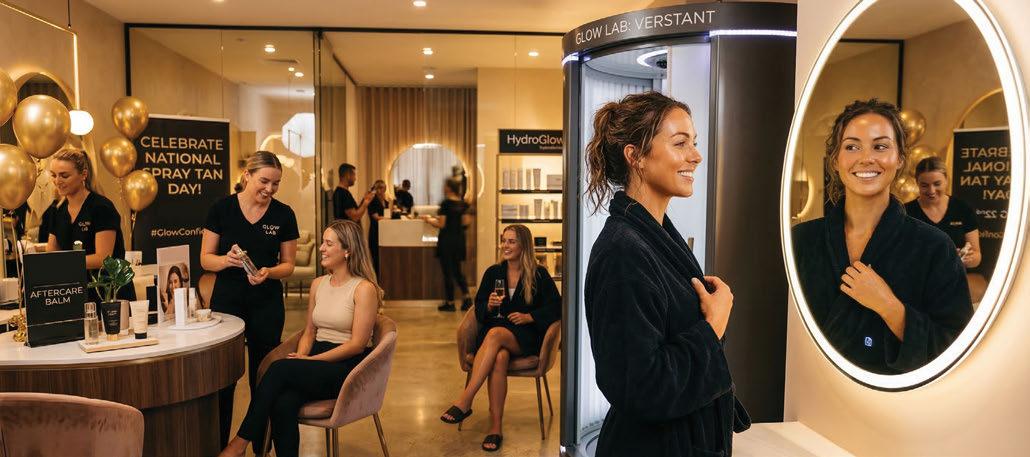
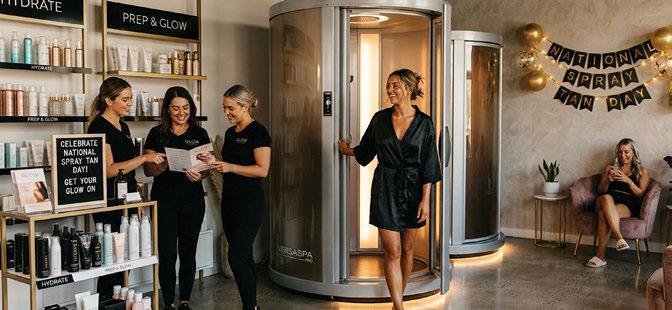
This year, I had the opportunity to spend National Spray Tan Day on site at a Glo Tanning location at Mockingbird Station in Dallas, capturing content and observing how the day resonated with both clients and staff. From the moment I walked in, the energy was unmistakable. Clients were excited to participate in the day. Staff members were sharing education about skin prep and aftercare. The salon buzzed with the kind of enthusiasm that reminds you how much people genuinely enjoy the confidence a great spray tan can bring.
Watching clients step out of the room after their session, checking their glow in the mirror and smiling at the results, was a simple but powerful reminder of the role this service plays in helping people feel confident in their own skin. Experiencing the day firsthand reinforced something I’ve always believed about this industry. Modern spray tanning is about far more than color. It’s about creating an experience that blends beauty, wellness, and confidence in a way that keeps clients coming back.
Seeing the Evolution Firsthand
One of the most exciting aspects of my role is seeing how rapidly innovation continues to shape the client experience. Today’s spray tan equipment is vastly different from what existed even a decade ago.
Clients today experience advanced sunless technology, including systems like the VersaSpa Pro and Mystic Tan Unity. These state-of-the-art booths provide customizable results, even coverage, and a comfortable experience designed to deliver consistent, natural-looking color.
What’s especially exciting is how these systems are evolving beyond tanning alone.
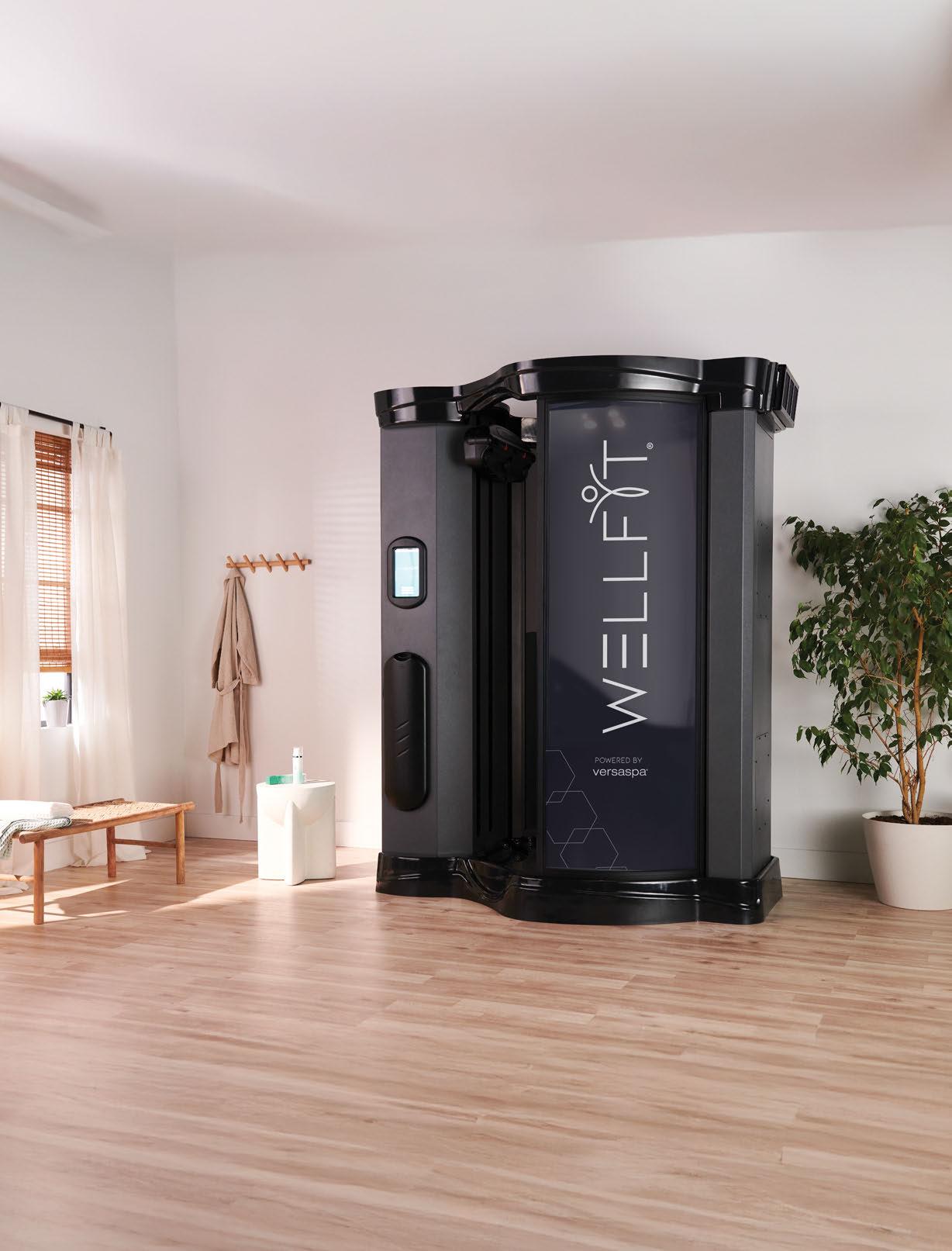
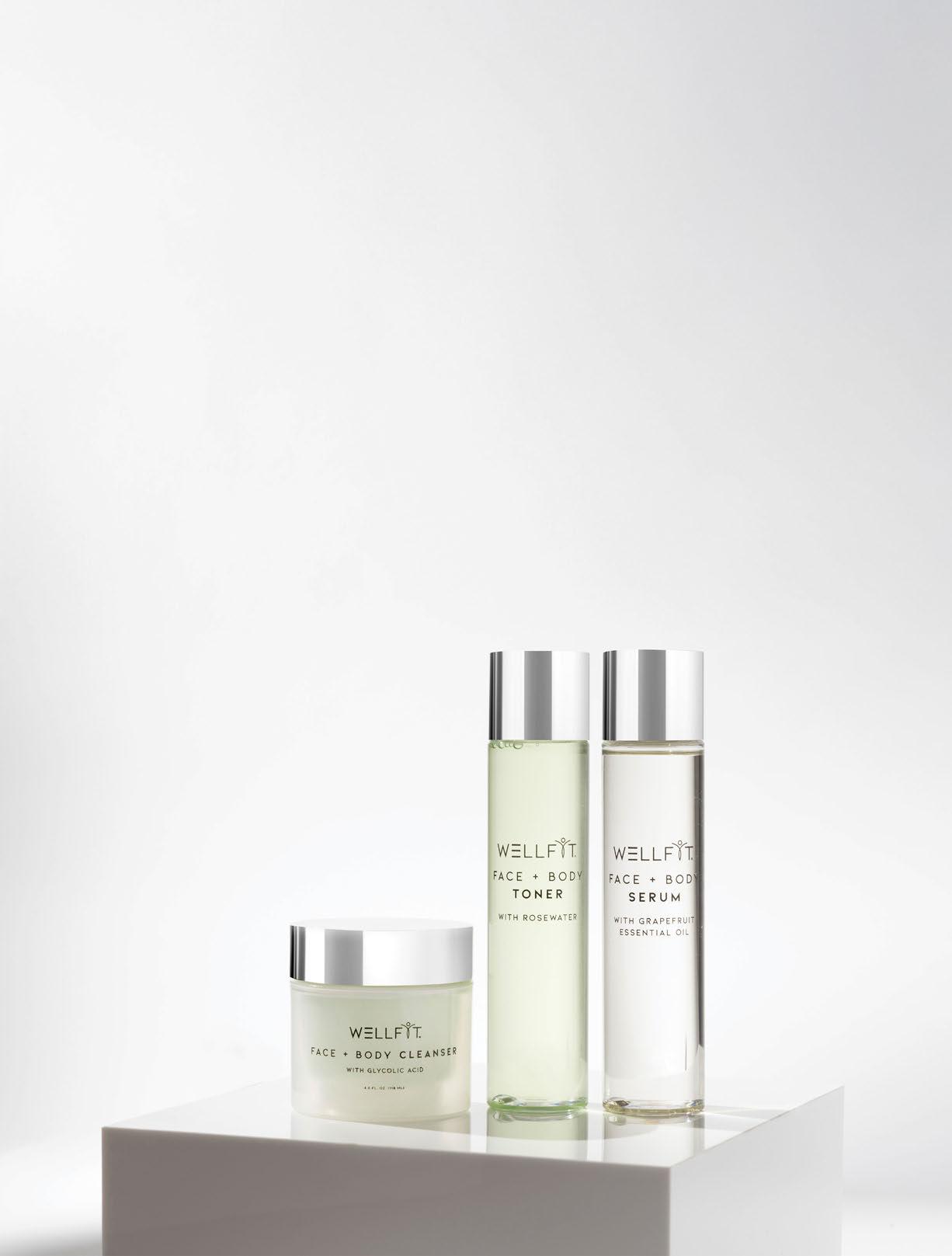
New innovations now allow salons to offer full-body skincare treatments within the spray booth environment. WellFit Skincare introduces targeted skin wellness treatments designed to hydrate, support collagen production, balance the skin barrier, and aid recovery. With customizable treatment options like Hydrate, Lyft, Balance, and Recover, salons can now deliver tailored full-body skincare solutions that address hydration, firmness, microbiome balance, and skin revitalization.
By introducing a second service alongside traditional spray tanning, salons can elevate the booth experience into a more comprehensive skin wellness offering. Clients are now able to enjoy treatments that hydrate, balance, and revitalize the skin further, bridging the gap between the beauty, wellness, and skincare industries.
What I find especially interesting is how today’s clients are far more informed about skincare and ingredients than ever before. That
shift has helped elevate spray tanning into a service that blends beauty, technology, and skin wellness.
From my perspective, this level of innovation is one of the biggest reasons spray tanning continues to grow in popularity. Clients expect results that look natural, feel healthy for their skin, and fit seamlessly into their lifestyle. Modern equipment allows salons to meet those expectations while raising the standard for what a sunless service can be.
The Power of a Complete Experience
Another trend shaping the industry is the move toward more complete, wellness-focused service models. One example I often point to is Glo Tanning, where innovations in service design and technology reflect the direction many modern tanning salons are moving.
Their trademarked concept, “Perfect Tan in One Day,” reflects something many professionals in our industry understand well. The best spray tan results start with healthy, prepared skin.
Instead of offering spray tanning as a stand-alone service, this approach creates a complete experience centered around skin wellness. Clients may begin with a session in the Skin Wellness Pro designed to prepare the skin, move on to sunbed tanning or red-light therapy, before finishing with a spray tan session. By combining skin preparation with advanced sunless technology, the result is a deeper, more even glow that develops beautifully and lasts longer. Experiences like this demonstrate how the modern spray tan has evolved into something much more comprehensive than it once was.
A Celebration That Reflects the Industry
This year’s National Spray Tan Day carries additional significance as the celebration moves to March 6, just ahead of International Women’s Day.
That timing feels especially fitting in an industry where so many salon owners, artists, and entrepreneurs are women building thriving beauty and wellness businesses. From brickand-mortar salon operators to mobile spray tan artists, women continue to drive innovation and education within the sunless category.
In my role, I see firsthand how these professionals are shaping the future of the industry. They are expanding education around DHA, developing inclusive services for diverse skin tones, and elevating spray tanning as a craft rooted in both artistry and skin science.
More Than Just a Glow
One of the most exciting changes I’ve witnessed over the years is how the conversation around spray tanning has matured. Today, it’s not just about achieving a bronzed look. It’s about skin wellness, confidence, and inclusivity.
Modern sunless technology allows professionals to create customized results for clients of every skin tone. With advanced formulations and
equipment, spray tanning has become an empowering service that helps people feel radiant and confident in their own skin.
Looking Ahead
If there’s one thing I’ve learned from working with salons across the country, it’s that the tanning and wellness industry never stands still. Innovation continues to drive the category forward, while increasingly educated clients are raising the bar for both results and overall experience.
Companies like Innové Beauty & Wellness continue advancing the science and technology behind sunless tanning, while salons like Glo Tanning demonstrate how those innovations translate into exceptional client experiences.
National Spray Tan Day gives us a moment to celebrate how far spray tanning has come, but it also highlights the exciting future ahead. From where I sit, watching the industry evolve through technology, education, and passionate professionals, the future of sunless tanning has never looked brighter.
As March 6 continues to grow as a day of recognition for our industry, the real question becomes: how will salons, artists, and professionals continue to shape and celebrate National Spray Tan Day in the years ahead?
The Confident Consultant: Confidence Starts at the Counter
The core UV education every consultant needs to guide new clients with clarity and authority.
BY EMILY CLEMENTS
Let’s take it back to basics!
Confidence behind the counter doesn’t happen by accident. It is built through knowledge, repetition, and preparation. As owners, if we want to create consultants who lead with authority and earn trust instantly, we have to start with the fundamentals. The strongest consultants are not just friendly faces. They are educators, problem solvers, and guides. This month, we’re going back to the basics.
As professionals, we know there’s a lot to learn within the UV tanning world. When a new client and beginner tanner comes into your salon, what are the most important things they need to know first? More importantly, is your staff of consultants ready for the moment that new customer walks in the door?
Here is a back-to-the-basics breakdown of the most important topics your consultants should have a full education on. Using this, not only will your consultants feel confident behind the counter, they will also make their new clients feel confident that they made the right choice by walking into your salon.
Start Intelligently: The Lowand-Slow Philosophy
Breaking it down, we know everyone’s skin type reacts differently to UV beds, especially in the beginning. As the professional, your consultants should know the Fitzpatrick skin type chart and how to convert that skin type into tanning minutes, tanning bed level, or sensitive level like the back of their hand.
Remember that tanning bed overexposure and sunburn (erythema) are similar to a sunburn from natural sunlight. Many have heard the myth “I always burn first and then it turns into a tan”. However, sunburn is a sign of overexposure and damage to the skin. New clients to the indoor UV tanning experience should be instructed by staff that “low and slow is the way to go and that the skin will react differently when new lamps are in place. Being able to overcome these kinds of objections is key to being a confident consultant.
Explaining the Science: UVA vs. UVB with Confidence
Along with your staff reviewing skin typing and recommended exposure times, they should also be familiar with the lamp types of each sunbed and/or sunbooth. Keeping it simple to the client’s understanding level is your best approach to a service that can feel complicated and intimidating. For a consultant, understanding the difference between systems with higher UVB content for a stronger exposure vs. systems with more UVA that are better at oxidizing rising melanin is important. However, all staff should be aware that sunbeds and booths can not exceed more than 4 MED’s in one session, based on a Skin Type II exposure. One MED is a “minimal erythemal dose” or the amount of exposure necessary to deliver the
slightest reddening to the skin. All UV systems in the US can not deliver more than 4 MED’s. Staff can determine the best avenue to avoid sunburn and deliver desired results based on the initial consultation. Giving a new tanning client a thorough review and plan for their end goal often relaxes those nerves of trying a bed for the first time.
Turning Education into Sales: Strategic Lotion Recommendations
Making sure your consultants know how to correctly market the importance of lotion not only continues client education but also drives sales in your salon. When the client asks “why,” there is always a factual answer that won’t sound like you’re only trying to make a sale.
When your consultant can explain that answer, it begins to sound a lot less like a sales pitch and more like
a moment with an educator. This moment allows a consultant to really invest in the client’s results, removes any thinking that they can tan without lotion, and puts the client in the mindset of repurchasing later on.
Not only do you want to make sure your consultants know why the client needs a lotion, but which lotion they need. Your salon offers many different types of lotions, and your staff should know something unique about each and every one of them.
Those key differences we all know; the difference between bronzers, accelerators, and tingles, and the difference between natural, cosmetic, and DHA bronzer lotions, only scratch the surface. It’s all about knowing what to recommend for each skin type, just as you would for your bed type and minutes of tanning.
Here are some questions to consider with your consultants while testing
their knowledge: Why would a client who loves spray tans love a DHA lotion? At what point in a client’s tanning experience would you recommend a tingle? Why would you not recommend a super dark triple-dip bronzer to somebody with very fair skin?
Solving the Plateau: Coaching Clients Through Stalls
The real confidence tester falls here. When that one new client isn’t so new anymore and expresses a decline in seeing color from their sessions, does your consultant know what kind of suggestions they should make?
Here is an ordered breakdown your consultants can follow to find a cause and solution for plateaus.
Are they using a lotion? This is always a great start to give consultants another chance to break down the skin’s melanin production if the client declined a tanning lotion the first time.
Are they rotating bed types? Much like checking in on lotion use, another easy eliminator should be making sure your consultant is suggesting different UVA and UVB beds for the client each time they come in.
Are they tanning every day? When a client comes daily, it doesn’t give their skin time to process and develop its color. As referenced page 10, “ROUTINE” The Standards that Protect Our Industry, the 24-hour spacing is not a suggestion — it’s the manufacturer’s required operating instruction. Suggesting they take a few days off and start transitioning to three to four times a week will give the skin a better chance to develop color.
Do they utilize any spa services? Making sure your consultants know how spa services like red light therapy and steam or sauna pods can enhance a tan will not only help
the client overcome their plateau but also increase their wellness experience while at your salon. Getting a frequent tanner into those new spa services opens a big door to membership upgrades, product suggestions, and will change the way a client sees your salon and the tanning industry as a whole.
The Follow-Up Factor: Where Loyalty Is Built
One last tool for a confident tanning consultant is following up with clients.
Set goals with your staff to complete “check-ins” with clients throughout their shift. Performing check-ins gives your consultants a wide-open opportunity to educate a client and offers a more personally connected experience while in your salon.
You want your clients to see that your team is interested and
invested. Make sure your team is ready and able to open that door to conversation about a client’s tanning results at any given moment, like it’s as easy as putting on shoes.
Conclusion
At the end of the day, a confident consultant is not created by chance. They are built through education, repetition, and leadership. When your team understands the science, the strategy, and the why behind every recommendation, they don’t just sell services, they build trust. And trust is what turns first-time tanners into lifelong clients.
This is just the beginning. The foundation matters. Master the basics, and confidence will follow. One of the best platforms to start with is Sun is Life salon operator certification. Sign up today at www.sunislife.com
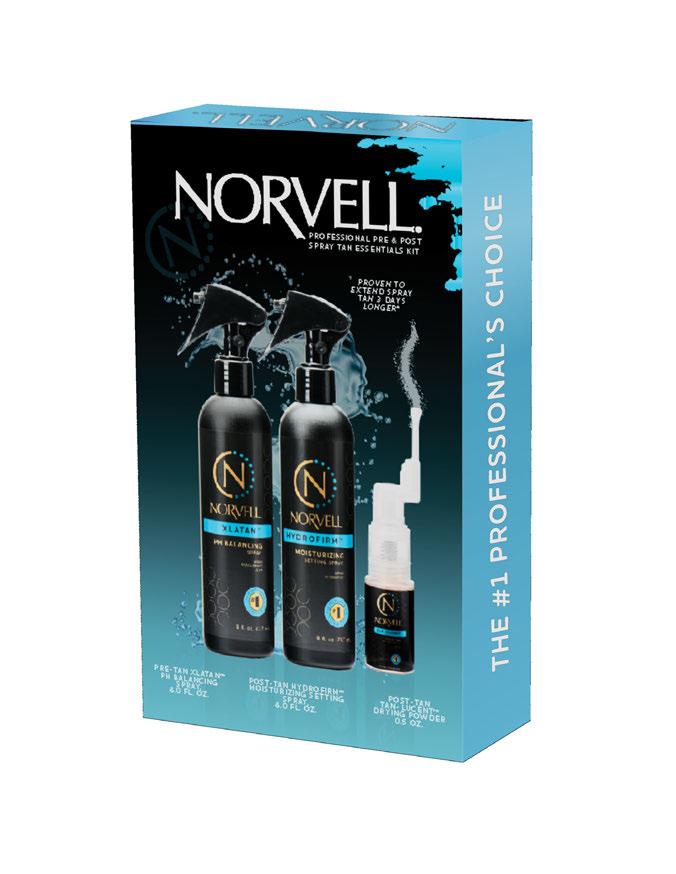
STEP 1: PREP SKIN FOR SPRAY TAN
Pre-Tan XLATAN pH Balance Spray primes & balances skin pH levels to accelerate tan development.
STEP 2: LIFT, HYDRATE AND LOCK-IN COLOR
NEW & Improved Formula! Post-Tan Hydrofirm
Setting Spray sets, seals and extends your spray tan with no color transfer while helping to firm, lift, and nourish skin for a radiant glow.
STEP 3: FINISH WITH LUXURIOUS DRYING POWDER
Post-Tan Tan-Lucent Drying Powder is the perfect way to end your spray tan session. Light-weight, fragrance-free, talc-free and translucent drying powder for a flawless finish. PROVEN TO EXTEND SPRAY TAN 3 DAYS
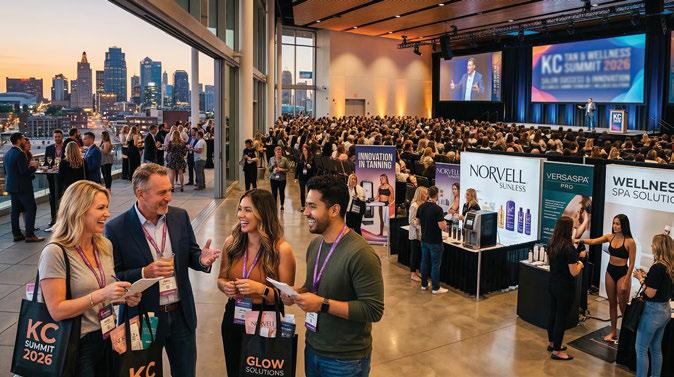
Where the Season Begins: Inside Heartland’s UV, Sunless & Wellness Summit
Education, community, and industry leadership take center stage as salon owners gather in Kansas City to kick off a new year of growth
BY STAFF WRITER
The beginning of the year typically serves as the “kick off” point to another new season in our industry. Coming out of the post holiday malaise over the last month has always been a tough time for customers, salon owners and staff alike. But nothing can get that drive going like a trade show full of education, information, equipment and product displays combined with a lot of fun! That’s what the attendees of Heartland’s UV, Sunless and Wellness Summit received at the recent event in KC.
Attendees chose from the education of Norvell University and Sun is Life certification class on the opening day followed by a roof top “Golden Glow Welcome Reception” sponsored by New Sunshine. The location provided great nighttime views, networking and beverages. Day Two started with the American Suntanning Association’s President, Melinda Norton providing a thorough overview of ASA “wins” for the industry. Executive Director Joe Levy gave an off site, big screen video presentation of his efforts with the FDA and new developments on the science of moderate UV exposure.
The remainder of the day was filled with mainstage presentations from leading vendors and staff on branding, sales strategies and solidifying your business followed by Devoted Creations “Pink Paradise” finale party. Attendees left with a mountain of knowledge, great deals and “goodie” bags filled with product. If you missed the Summit, make plans to attend Heartland’s “Mind Your Business” salon owners business retreat. It’s a “don’t miss” event and this year, MYB 6 will be held from June 3rd-5th at the Margaritaville Hotel in Kansas City, KS.
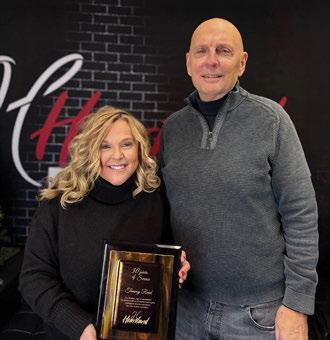
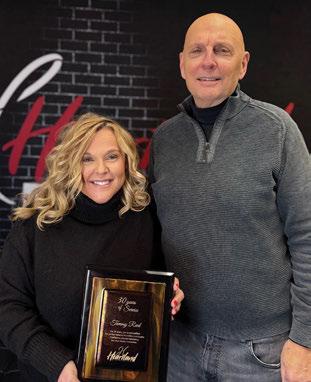
Heartland Distribution, a family-owned and operated full-service indoor tanning and wellness distributor, proudly celebrated Vice President of Distribution Tammy Reed for her 30 years of exceptional service during this summit event. Reed received a commemorative plaque during the Golden Glows Welcome Reception, where Heartland Distribution President Brad Henson delivered a heartfelt tribute recognizing her decades of dedication, loyalty, and unmatched industry insight. “Tammy’s devotion to this company
and to the salons we serve is extraordinary,” said Henson during his remarks. Tammy has been instrumental in elevating our service and strengthening the relationships that define who we are.” Reed’s roots in the industry run deep. Before joining Heartland Distribution, she was a salon owner herself, giving her a unique, practical understanding of the challenges salon owners face every day. This perspective has informed her leadership and made her an invaluable resource to both Heartland’s internal team and its national network of customers.
For three decades, Reed has played a central role in advancing Heartland Distribution’s mission as a leading provider of tanning equipment, lotions, supplies, and wellness solutions. Known for prioritizing education, service, and community in the indoor tanning industry, Heartland continues to thrive thanks in part to Reed’s influence and commitment.
For more information of their upcoming MYB 6, visit www.heartlandexpo.com
“In my 30 years with Heartland and after hosting hundreds of events, our goal has always been to make each
GLOBAL INSIGHTS
one feel different and special. The energy at our 2026 UV Sunless & Wellness Summit was unlike anything I’ve experienced. Our educational sessions were full from start to finish, which speaks volumes about the priorities of today’s business owners and the value they place on learning. One of my favorite parts of every show is the Owners’ Roundtable. The camaraderie, the advice, and the open sharing that happens in that room are truly special. In that space, we’re not competitors— we’re a community. So very much looking to see several of these faces and many new ones in June at Margaritaville for the MYB 6 Salon Owners Retreat”
Tammy Reed VP of Distribution, Heartland Tan
“Neither snow nor subzero wind chill kept the gathering from being a total success. Attendance was excellent and “the show must go on” attitude exhibited by our clients, vendor partners, and especially the Heartland team was truly very gratifying. I look forward to the summer temps for our annual MYB Salon Owners Retreat!”
Brad Henson
President, Heartland Tan
“ I really enjoyed the authentic meeting topics led by vendors that weren’t just trying to sell us something!”
Victoria Cordes Bear Naked Tanning
“I really enjoyed the owner”s “brainstorming sessions”. So many golden nuggets of information from them and the content was just amazing!
Shay Ellen
The Sun Shack
“The Heartland Summit is a reminder of how powerful it is to bring industry friends, professionals, and new faces together. We are always learning, always changing, and always evolving—and when we come together to support our industry, we elevate one another. Grateful to Heartland for hosting this event each season and investing in the continued professional and business growth of our industry”
Jess Snider Senior Sales Account Executive , New Sunshine
“This Heartland Summit was a great event. From a vendor perspective, the hotel display floor was easy to move our equipment in and their support services were very responsive. All important at a trade show. We had plenty of space to display our beds and room for customers to visit, try them out and sit down to discuss their needs. As always, the Heartland Team was right there to assist and we were thrilled to have salon attendees spend and actually tanning in our new KBL K11 Air all LED UV/Red Light bed and R11 all LED redlight/Infrared therapy bed.”
Bill Pipp VP of Sales, Tanning Supply Unlimited
“Every event is different and whether clients take home a tiny nugget or a business changing piece, when they capitalize on the networking opportunities and connections around them, they are sure to leave with a sense of fulfillment that will propel them into the upcoming season and that is something I am proud to be a part of.”
Jessica Stone Director of Sales, Heartland Tan
SLIP, SCENT, AND SHADE
What Tanning Lotions Are Made Of
BY STAFF WRITER
Top shelf, middle shelf, bottom shelf, oh my.
Take a peek at the ingredient label and they can seem like sisters or cousins. Tanning lotions are typically built from the same core ingredient families. The real difference is how those families are balanced, plus whether the brand invests in barrier-support lipids, more elegant humectants, and modern skincare technology.
Why Almost Every Lotion Starts
The Same Way
Water, often Aloe — “The Canvas”
Nearly every tanning lotion is a water-based emulsion. Water gives a light feel and allows brands to build skincare-like textures. Aloe frequently appears high on the list to support a soothing, comfort-forward story. In the labeling world, the first ingredient is typically present in the highest percentage.
Humectants — aka Hydration
These are the ingredients that pull and hold water in the outermost layer of the skin so your skin feels softer and looks smoother.
Glycerin is the classic workhorse humectant. Propanediol, butylene glycol, pentylene glycol, and sorbitol are modern multitaskers that help dissolve other ingredients, improve glide, and support hydration. Propanediol is widely used as both a solvent and a humectant, and it is often positioned as a gentler alternative to propylene glycol in personal care products.
Humectants are one of the reasons a lotion can apply more evenly and help skin look less dry and patchy, which matters for how a tan visually develops.
Emollients and “Slip” Ingredients — The Feel-Good Layer
These make lotions spread easily and feel luxe. Dimethicone shows up constantly because it adds slip, reduces tack, and helps lock in moisture by reducing water loss from the skin.
Isopropyl myristate, isopropyl palmitate, caprylic/capric triglyceride, safflower oil, jojoba oil, sunflower seed oil, squalane, shea butter, and cocoa butter are there to soften and condition the skin and to keep it from feeling tight after exposure.
Make-It-Stable Necessities
If a product contains water and oils, it needs emulsifiers and stabilizers, or it will separate, pill, or feel gritty.
Fatty alcohols like cetyl alcohol and cetearyl alcohol help provide structure and a creamy feel. Glyceryl stearate, PEG-100 stearate, and polysorbate 80 are added as emulsifiers. Acrylate/taurate copolymers, carbomer, and xanthan gum are added to help with texture, suspension, and stability.
These are why lotions can share similar benefits but feel totally different.
Accelerator Toolbox
Tyrosine and its cousins — acetyl tyrosine, oleoyl tyrosine, potassium caproyl tyrosine, and methylsilanol acetyltyrosine — are must-haves in tanning lotions because they enhance the tanning experience by being part of melanin-related biochemistry.
If a “tanning lotion” does not contain any of these ingredients, should it be labeled a tanning lotion? These provide what the skin needs to develop color.
Caffeine and other “energizers” show
up because they check off demanddriven, buzzword-worthy benefits like energizing, boosting, awakening, firming, and tightening.
Bronzers
The feel-good quick results that clients demand for instant satisfaction and delayed gratification come from ingredients like DHA, erythrulose, caramel, mica, and certain dyes.
When you see dihydroxyacetone (DHA), you can think of it like a spray tan in a bottle. It darkens over the day and holds color longer. DHA is permitted for external skin coloring in cosmetics. Erythrulose is usually added alongside DHA to adjust tone and timing. However, spray tans can darken skin but remember they do not contain SPFs.
Ingredients like caramel, mica, iron oxides, Blue 1, Yellow 4, Red 40, and similar colorants provide immediate payoff with instant color.
What Makes a Top-Shelf Recipe?
Ceramides
You’ll see multiple types of ceramides, cholesterol, and lipid helpers in premium formulas. The outermost
INDUSTRY INTELLIGENCE
layer of skin, the stratum corneum, is held together by a “mortar” of ceramides, cholesterol, and fatty acids. When a lotion includes several ceramide types along with cholesterol and supportive lipids like lecithin, it is a strong sign the formula is designed to support the skin barrier, helping skin feel less dry, more comfortable, and more resilient.
Often paired with cholesterol, hydrogenated lecithin (or lecithin), panthenol (pro-vitamin B5), and glycerin. These create a classic barrier-lipid and hydration partnership that helps ceramides perform like a “seal.”
Ceramide AP (alpha-hydroxy fatty acid + phytosphingosine)
Often paired with cholesterol, sodium hyaluronate (hyaluronic acid), niacinamide, and Centella asiatica extracts or vesicles. These combine barrier support with comfort ingredients that help skin look smoother and feel less reactive.
Often paired with cholesterol, hydrogenated lecithin, and linoleic-
acid-rich oils like Carthamus tinctorius (safflower) seed oil or Helianthus annuus (sunflower) seed oil, plus caprylic/capric triglyceride. EOP is the “structure” ceramide. It is commonly supported by cholesterol and fatty components that help reinforce that layered barrier feel.
Ceramide NS (regular fatty acid + sphingosine)
Often paired with cholesterol, squalane, ceramide NP (in multiceramide blends), and rich emollients like shea butter or cocoa butter in thicker lotions. This combination is very barrier-repair coded, especially when stacked with other ceramides and cushioning emollients.
Ceramide AS (alpha-hydroxy fatty acid + sphingosine)
Often paired with cholesterol, sodium hyaluronate, panthenol, and soothing botanicals like Althaea officinalis (marshmallow) root extract or Rosa damascena flower water. These provide comfort, hydration, and lipid support, ideal for clients who complain lotions make them feel dry or tight.
Hyaluronic Acid (Sodium Hyaluronate)
A well-known water-binding ingredient used to support hydration
and skin feel.
Niacinamide — The Multi-Benefit Workhorse
Benefits include barrier improvement, hydration support, and improved moisture retention.
Peptides, Antioxidants, and “Luxury Dust”
Peptides like palmitoyl tripeptide-1 and palmitoyl tetrapeptide-7 are common premium differentiators. Antioxidants appear in many forms, including vitamin C derivatives, tocopherol, resveratrol, and glutathione.
Meanwhile, ingredients like gold or diamond powder are usually more about brand story and sensorial marketing than heavy lifting.
Every product that goes on your skin needs preservation. Without it, you will have a product that can go bad or rancid in a short amount of time and potentially become useless or harmful.
Phenoxyethanol can be found naturally in green tea or made synthetically. Both forms are considered safe and gentle. At concentrations up to 1 percent, it offers strong thermal stability and works well across a range of pH levels.
Ethylhexylglycerin boosts the effectiveness of phenoxyethanol and improves skin feel. This combination also has side benefits, such as mild deodorizing properties and improved spreadability.
WATCH OUT
Not every budget lotion is “bad,” but
certain patterns show up more often in mass-retail items and can increase the likelihood of complications like stinging, itching, breakouts, or even equipment clouding. Some of these ingredients are also included in topshelf tanning lotions.
Propylene Glycol
Propylene glycol is a common solvent and humectant, but it is a known cause of irritant and allergic contact dermatitis in some individuals. It was named the American Contact Dermatitis Society’s Allergen of the Year in 2018.
Fragrance Allergens, Especially Oxidized Terpenes
Fragrance components like linalool and limonene can oxidize over time into hydroperoxides that are more potent sensitizers. Oxidized forms are a recognized cause of allergic contact dermatitis.
Heavy Dye Loads and Higher Alcohol
More dye can mean more transfer and more sensitivity complaints.
“Alcohol” listed higher on the ingredient list can contribute to dryness or stinging for some skin types.
“Polyacrylamide Gel Texture” Systems
That familiar trio — polyacrylamide + C13-14 isoparaffin + laureth-7 — often signals a cost-effective texture system. It is not automatically unsafe, and CIR has concluded polyacrylamide is safe as used in cosmetics.
Still, it can be a clue that you are looking at a formula built more for feel and shelf stability than barrier support.
Sodium Hydroxide (Lye)
Usually a pH adjuster used in very small amounts to bring the formula into a skin-friendly pH range. On very reactive or compromised skin, pH
adjusters can contribute to stinging or “that burning feeling,” especially if the skin is dry, freshly exfoliated, or irritated.
Its presence is not automatically bad. It is the combination of compromised skin plus other irritants like fragrance, alcohol, or bronzer dyes that tends to trigger complaints.
Isopropyl Myristate
Provides fast slip, a silky, luxurious spread, and helps prevent the lotion from feeling sticky. It can be comedogenic for some individuals, meaning more likely to trigger clogged pores or breakouts on acneprone areas such as the chest, back, or shoulders.
If a client says, “Lotions break me out,” this is one of the first emollients to check.
Myristyl Myristate
A richer, waxy emollient that boosts creaminess and body in the lotion. Like isopropyl myristate, it can clog pores for acne-prone clients and feel heavy or greasy on some skin types. A high concentration can also make it more difficult to clean off acrylic surfaces.
Mineral Oil (Paraffinum Liquidum) and Petrolatum
Very effective occlusives that lock in moisture and provide a protective feel. They can feel greasy and may be unpopular with clients who prefer a dry-touch finish. They may increase transfer and leave more residue on hands, clothing, towels, and surfaces.
Some acne-prone clients dislike heavy occlusives, even though mineral oil itself is generally considered low-reactivity for many people. These ingredients can be excellent for dryness, but if you are trying to avoid a slick feel and product transfer, they are
worth noting. These are also not recommended for acrylic surfaces.
Strong Essential Oils and Citrus Oils
Citrus limon peel oil, bergamot oil, and tea tree oil are often used for scent, “clean” branding, and botanical positioning. They can trigger irritation or allergic reactions in sensitive clients, and some citrus oils may be more reactive on certain skin types.
If a client reports itching, tingling, or redness from lotions, evaluate fragrance and essential oils together.
Drying Alcohols (When
“Alcohol”
Appears High on the List)
Helps create a quick-dry feel and can improve texture and stability. However, it can increase dryness or stinging, especially after shaving, exfoliation, or when the skin barrier is compromised. Non–plant-based alcohols tend to be more irritating.
With so many ingredients, variations, and the constant mix of plant-based extracts and synthetic cosmetic chemistry, it can be difficult to stay on top of every ingredient at all times. One of the best moments to do a deeper ingredient dive is when new batches arrive. It provides a natural pause point to scan the label, flag anything unfamiliar, and look up what each ingredient contributes to the formula.
That extra effort matters. Clients — especially those with allergies, sensitivities, acne-prone skin, or eczema tendencies — notice when you can speak beyond front-ofbottle marketing and help them choose a lotion that fits their skin, not just their color goal.
When you understand what is inside, you can guide with confidence, reduce complaints like “this burned” or “this broke me out,” and build trust that keeps people coming back.
From the innovators behind the most trusted spray technology in the industry comes a new standard in whole-body skincare. A step-by-step skincare system designed to cleanse, tone, and hydrate skin supporting whole-body skin wellness in between WellFit sessions.
PARABEN FREE
Sunless Exposed! TAKING SUNLESS HEAD ON
BY STAFF WRITER
Last month, we had our Pros dig into sunless spray tanning with a variety of questions. The responses were so good that we’ve broken them down into two groups over two issues. The responses are not only informative, but quite entertaining. Here is Part II of those questions.
Given the current technology, what features would you like to see incorporated with sunless systems in the future?
Andrea Pelesicini Beach Bums
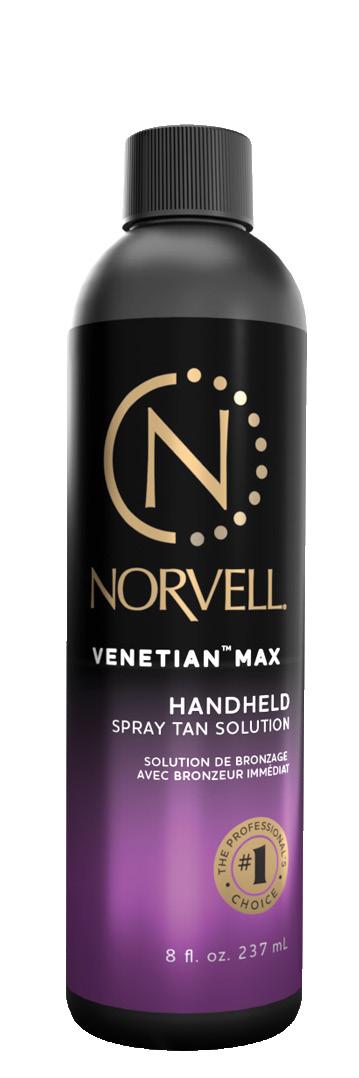
“When it comes to sunless options in the salon I continue to keep it simple for my clients. 18 years ago I began doing airbrush tanning using Norvell and have stayed with it. The Venetian solution is my favorite and my clients consistently rave about the end results. Although it’s really hard to pinpoint new features, my customers bring up the spray coverage itself. I’d love to see a more accurate spray pattern in future designs.”
Tara Saunders Touchable Tans
“In the near future, I really hope to see advancement in airbrush technology with the ability for a motor with reduced noise. I have tried every airbrush machine on the market, quiet boxes, noise canceling wall panels and they all leave a lot to be desired as far as sound compression goes. Some are fine in large spaces, but most salons are using them in small confined rooms which echoes the sound of the motor and results in a loud and less than ideal environment. Hope to see this advancement soon!”
Shay Ellen
The SunShack & Co.
pattern based on the unique body shape and size of each individual. This technology would ensure even and flawless coverage, eliminating the common pitfalls of uneven application.
Personalized Formulas:
Customizable solutions where clients can mix and match ingredients tailored to their specific needs. Additionally, integrating artificial intelligence could allow these devices to analyze a client’s skin tone and recommend the perfect shade for a natural, sunkissed look.
“I’ve been contemplating the future of sunless tanning and the exciting features that could revolutionize our offerings. Here are some innovative ideas that could enhance the tanning experience for our clients.
Smart Application Devices:
A sunless spray tanning machine that automatically adjusts its spray
Mobile App for Monitoring and Control: Designed specifically for our tanning services that could offer clients the ability to monitor their tanning progress. Perhaps a virtual try-on capability, allowing users to visualize how different shades would look on their skin before application. This not only enhances the user experience but also empowers clients to make informed decisions.
Incorporating Red Light Therapy: Combine the benefits of red light therapy with a sunless spray tan that delivers a wellness session while achieving the desired tan.
Skin Health Monitoring: Skin health sensors that monitor the condition of a client’s skin. These sensors could alert users to any adverse reactions or changes, ensuring they can make timely decisions about their tanning routine.
Dual-Action Products: Dual-action products that provide both a tan and SPF, allowing clients to enjoy outdoor activities with peace of mind, minimizing the potential for overexposure and sunburn.
Virtual Consultations: To further personalize the tanning experience, we could offer virtual consultations with skin care professionals. This would provide clients with tailored advice and recommendations, ensuring they choose the right products for their individual needs.”
What was the most embarrassing or difficult spray tan moment that you had to “unravel” ?
Nikki Capps Tantalizing Tans
“Helping people to instantly feel like bronzed beauties is one of the highlights of owning a wellness spa. I could write a book about all the “interesting” situations I’ve have encountered like finding out the person you are spraying is your child’s teacher, the spray guns stopping, realizing someone is drunk after you get them back to the spray room, men thinking they can get sprayed naked and even “pasties” falling off! But our business is all about rolling with the punches and accepting life is all about the adventure. Years ago, I had a friend who referred the tennis pro of our most exclusive club in town to come get sprayed because she told him that “I was the BEST”. So of course I spent extra time with her and we decided
that clear was the best option for her. So I sprayed her like I always do, chit chatting and then drying her with the hose. She told me, “this is awesome, I don’t feel sticky at all!” The next day, my friend goes to the club and the tennis pro says to her, “I have NO color, no tan line at all” So, I told her to tell her to come back, as I thought she was being dramatic. Sure enough, there was no line. I looked at the cup I sprayed her with, took off the lid and there was absolutely no smell!! I had sprayed this woman with water. I was so embarrassed! Of course, I resprayed her and we laughed about it, so all was well. When I train someone to start spraying, we always use water first, so they can get used to the gun without wasting training. We must have not dumped it out. Well, definitely a lesson learned and I always smell my clear solution years later.”
Michelle Walters Island Glow Tanning & Beauty Spa
“My most memorable and awkward moment was several years ago, where a new client was coming to my house on July 4 because his tanning salon was not open for the holiday. He said that he had a show that he needed to perform at in downtown Richmond, VA and he needed his spray tan. I gave him the address to my house and told him to come on out because that’s before I had a salon and I was the only mobile spray tan company at the time. As I was waiting for him to arrive, I kept thinking that the only clubs I knew downtown were the drag queen clubs! I was starting to feel very anxious about meeting this new client and what I had “signed up for”. house. He pulled up in a brand new Range Rover and as he got out, I quickly phoned my girlfriend. “Oh my gosh, this is a real man, 6’4, muscular, toned and very macho.” I found out that he was the owner of the men’s dance club in town and they were professional male dancers. He’d never had a handheld spray tan before so he wasn’t sure what to do. He showed up in flip-flops, a pair of sweats with no shirt and no underwear.
So when he went to pull his pants down to get in the tent, I was like whoa, that’s not gonna happen. My husband was out in the driveway washing his truck. So I asked him for a sock, He said “A sock? What for?” Luckily, I found one near our dryer for the customer to wear. Well, this guy loved his spray tan so much that he hired me on the spot to be the spray tan company for him and his 20 dancers for the next two years. Needless to say, Wednesday and Thursday mobile tan nights became a lot of fun (going to their house) and I got front row tickets to all of their shows!”
EQUIPMENT,
Prevention, accountability, and why acrylics fail
BY STAFF WRITER
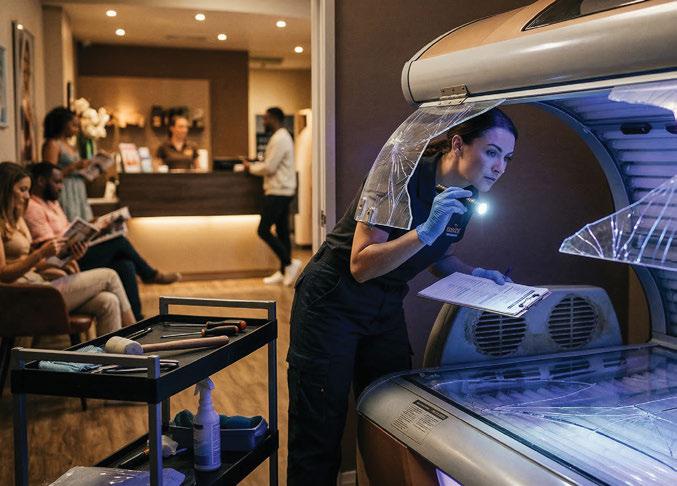
If you own a tanning spa long enough, an acrylic will crack. It might happen during peak season, on your busiest day, in your most popular unit, with a lobby full of people waiting. The big question is not only “How fast can I get the replacement?” While that matters, the bigger question is: “Why did it happen, who is responsible, and what do I do to prevent it from happening again?”
Acrylics are not “just plastic.” They are engineered, load-bearing components that endure repeated heat cycles, chemical exposure, weight stress, and constant flexing. They are designed to open up under heat so light can pass through. Most cracks are not a single dramatic event, they are the final chapter of a story that started weeks, months, or even years earlier. When you understand the story, you can respond fairly, protect your business, and reduce repeat failures.
The
Most Common Reasons
Acrylics Crack
1) Age and fatigue
Acrylics weaken over time. Heat cycling and repeated flexing create micro-fractures. As UV passes through, the acrylic suffers from a process called “solarization” which can actually begin to prevent UV from getting to the client. Acrylics typically may last up to 4,000 hours, but the actual useful life period is determined by the acrylic manufacturer. A fatigued acrylic may look fine until
one day it doesn’t. Cracks often begin at stress points, edges, corners, hinge areas, or spots that flex the most.
2) Weight stress and concentrated pressure
Acrylics are load-bearing, but they are not indestructible. Concentrated pressure is the enemy. Kneeling, standing, climbing onto the unit, dropping a knee, or placing full body weight on a small area can start a fracture instantly or create damage that shows up later.
3) Chemical damage and improper cleaning
Wrong cleaners cause clouding, brittleness, and stress cracking. Ammonia, alcohol-heavy products, harsh degreasers, and abrasive pads shorten acrylic life fast. Even “it
smells clean” products can be wrong. If the label is not acrylic-safe, it does not go on your acrylics.
4) Heat management and ventilation issues
If a unit is running hot due to blocked vents, dirty filters, failing fans, or poor room airflow, acrylics fatigue faster. Excessive heat can warp acrylics, create uneven expansion, and increase stress at mounting points.
5) Improper installation or frame stress
Acrylics should sit correctly in the frame with proper supports and no pinching. Warped frames, misaligned supports, missing bumpers, or overtightened hardware create constant stress. Over time, that stress becomes a crack.
The Accountability Question: Who Pays?
Acrylic cracks are not automatically “owner eats it” or “client pays.” The fair answer comes from cause, condition, and documentation.
When the salon should own it
• The acrylic was old, fatigued, or visibly worn, and you kept running it.
• Ventilation, fan failure, or excessive heat was ignored.
• Staff used the wrong cleaning chemicals or improper tools.
• The frame/support system was out of alignment and not corrected.
This is the cost of doing business, and it is preventable with better maintenance systems.
When a client should be responsible
A client should be charged when there is clear misuse or abuse, especially when it is documented on camera or witnessed by staff, such as:
• Standing, kneeling, jumping, or climbing on the acrylic
• Dropping objects, slamming the canopy, horseplay
• Bringing in unapproved oils, sprays, or chemicals that damage acrylics
• Ignoring posted rules after being warned
If your policies are clear, your staff enforces them consistently, and you have evidence, charging is reasonable.
When the bed tech should be responsible
This one matters, because it happens more than people admit. If a contracted technician damages an acrylic during installation or while repairing a unit, the cost should be on them. Period.
• Common tech-caused problems include:
• Dropping or flexing the acrylic incorrectly during removal/ installation
• Forcing an acrylic into a frame that is misaligned or warped
• Overtightening hardware or leaving missing supports/ bumpers
• Reinstalling with stress points that were not present before
If the acrylic cracked during service, or it cracks shortly after due to improper installation, that is not “normal wear.” A professional tech should carry insurance and stand behind their work. If they do not, they should not be touching your equipment.
What To Do When a Crack Happens
1. Take the unit out of service immediately. Safety first.
2. Photograph everything. Crack location, frame points, supports, hardware, and any visible stress marks.
3. Review camera footage and staff notes. Determine if there was misuse, a prior incident, or a service visit.
4. Inspect the frame and supports. Look for pinching, missing bumpers, warped surfaces, and overtightened areas.
5. Document the conclusion and action. This is how you prevent repeats.
How To Prolong Acrylic Life
• Use only acrylic-safe cleaner and microfiber cloths. No abrasives, no ammonia, no “whatever is at the front desk.”
• Control pressure points: ensure proper bumpers/supports, and consider protective rubber tubing or padding where appropriate.
• Train clients: no standing, no kneeling, no climbing, no rough handling. Post it, say it, enforce it.
• Track acrylic age and history: installation date, cracks, repairs, and any stress-related issues. Patterns tell the truth.
The Bottom Line
Acrylics crack, but repeat failures are almost always a systems problem. Prevention is training, maintenance, correct chemicals, and heat management. Accountability is determined by evidence and consistency, not emotion. When you treat acrylic care like a real safety and operations priority, you reduce downtime, protect your clients, and protect your profit.
If you want fewer “busiest day” acrylic emergencies, start reading the story before the final chapter.
Hybrid Tanning Technology
What It Does, What It Does Not, and Where Red Light Fits
BY KRISTIN LEE SMITHERS, CLT
Hybrid tanning technology has become one of the most talked-about innovations in modern UV equipment. By combining traditional ultraviolet lamps with integrated red light therapy, hybrid units promise enhanced skin benefits, improved comfort, and a more advanced tanning experience. These systems represent real progress in UV technology. However, it is equally important for salon professionals to understand their limitations, especially when it comes to therapeutic red light dosing.
Hybrid tanning is powerful, but it is not a substitute for true red light therapy. Understanding that distinction is where ethical education and responsible operation begin.
What Hybrid Tanning Technology Does Well
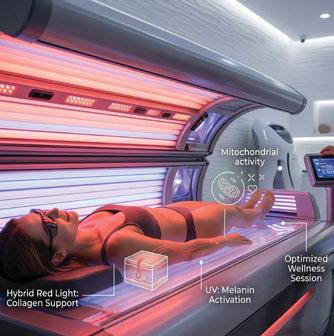
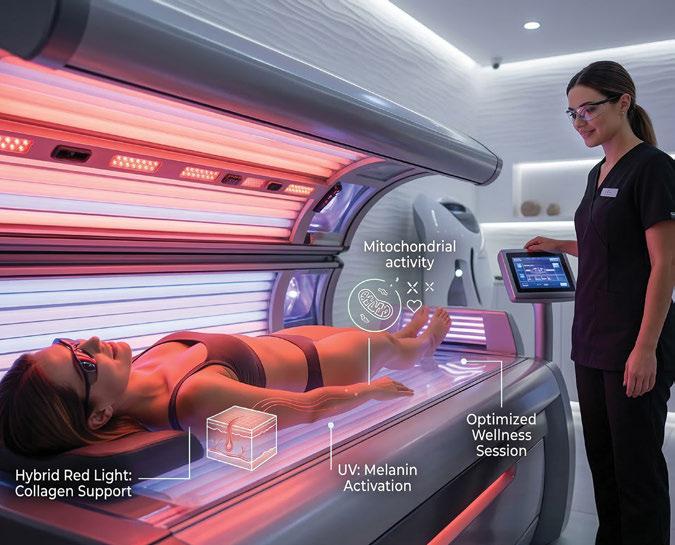
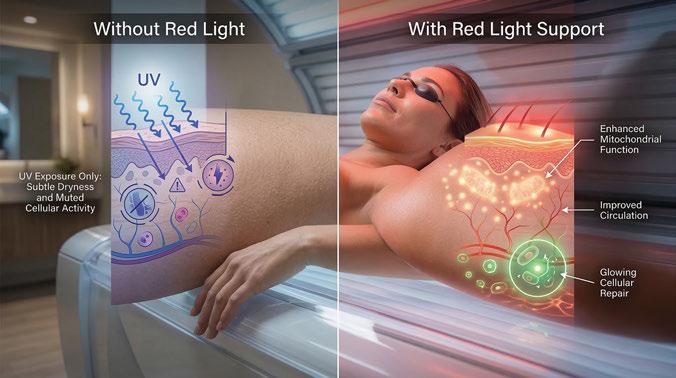
Hybrid tanning units pair UV lamps with visible red light, typically in the 630 to 660 nanometer range. During the session, red light operates simultaneously with UV exposure. This combination can offer meaningful benefits.
Red light supports circulation and cellular activity at the skin’s surface. When combined with UV, many clients report improved comfort, less dryness, and a more balanced-
looking tan. Hybrid technology may also help mitigate some of the oxidative stress associated with UV exposure by supporting mitochondrial activity during the session.
Oxidative stress is a natural biological response that occurs when UV exposure creates reactive oxygen species, often called free radicals, inside the skin. In controlled amounts, this process is part of how tanning occurs.
However, excessive oxidative stress can overwhelm repair systems and contribute to inflammation, dryness, and accelerated aging.
Mitochondria are the energyproducing structures inside our cells. They generate adenosine triphosphate, or ATP, which fuels cellular repair and recovery. Red light therapy stimulates lightsensitive components within the cell, encouraging more efficient ATP production. When mitochondrial
function is supported during UV exposure, the skin may be better equipped to manage stress in real time and recover more efficiently when exposure is appropriate and controlled.
From a business perspective, hybrid units elevate the tanning experience. They introduce a wellness element into UV services and shift the conversation toward a more skin-conscious, technologydriven approach.
That said, the red light delivered in a hybrid session is modest.
What Hybrid Tanning Technology Does Not Do
The most important clarification for both operators and clients is this: hybrid tanning does not deliver therapeutic red light doses.
Most hybrid units deliver approximately 1 to 5 joules of red light energy during a tanning session. While this exposure may support comfort and surfacelevel cellular signaling, it falls well below the dose required for true therapeutic photobiomodulation.
To trigger deeper effects such as collagen stimulation, inflammation modulation, or measurable skin rejuvenation, dosing typically needs to be closer to 30 to 60 joules, depending on wavelength, output, and treatment goals.
Hybrid units are not designed to deliver those doses. They are also not intended to replace dedicated light therapy devices, rooms, or structured protocols. This distinction matters. Overstating red light benefits within hybrid tanning (or any red light therapy system) is misleading and ultimately undermines the credibility of our industry.
Red Light Before a Sun Session
Using properly dosed red light therapy before UV can prime the skin by supporting circulation and oxygen delivery. This may help the skin manage exposure stress more efficiently and support barrier function and hydration. Clients often report greater comfort, particularly those prone to dryness or sensitivity.
This approach is not about intensifying UV. It is about supporting the skin’s readiness and resilience. Caution should be exercised with high-heat environments or lower Fitzpatrick skin types, as increased circulation can mimic the sensation of a tingle product and may enhance perceived intensity.
Red Light After a Sun Session
Using therapeutic red light after UV is a recovery-focused strategy. Even responsible UV exposure creates oxidative stress and microinflammation. Red light can help calm that response by supporting mitochondrial energy production and repair signaling.
Over time, post-UV red light sessions may support collagen maintenance,
reduce lingering redness, and improve overall skin quality. It does not undo UV exposure. It supports healthier recovery and better longterm outcomes when UV is used responsibly.
Education, Ethics, and Intelligent Integration
Hybrid tanning technology is a valuable advancement. It enhances the tanning experience, supports skin comfort, and introduces wellnessadjacent benefits. It does not replace therapeutic red light therapy, nor should it be marketed as such.
Salons that integrate dedicated red light therapy services alongside UV and hybrid systems are best positioned to deliver results-driven, science-based experiences. Educating clients on sequencing, dosing, and realistic expectations builds trust and elevates professional standards.
As UV technology continues to evolve, the future of tanning is not about exaggeration. It is about precision, education, and respect for how light truly interacts with the body. When we understand what our technology does and what it does not do, we serve our clients better and protect the integrity of our profession.
ARE YOU READY FOR THE
TANNING INDUSTRY’S
NEXT BIG THING?
Medical Grade Red Light Therapy Is Here.
Our Industry Is Shifting and Top Salons Are Leading the Way
Something fundamental is changing in the tanning industry, and the salons paying attention are already pulling ahead. Top-performing chains are no longer positioning themselves as Tanning only businesses, rather as “Wellness” businesses offering tanning; fundamentally reflecting a meaningful shift in brand positioning, demographic focus, and revenue optimization.
Driving this phenomenon is Red Light Therapy. Each month, more than 300,000 online searches create a burgeoning demand for this service. The question isn’t whether your customers and their friends, coworkers, and family, are looking for Red Light Therapy, the question is whether you can offer the most advanced ‘Medical Grade’ system on the market.
What the Industry Leaders Are Saying
Top brands such as Glo Sun Spa, California Sun, Sundays Sun Spa &
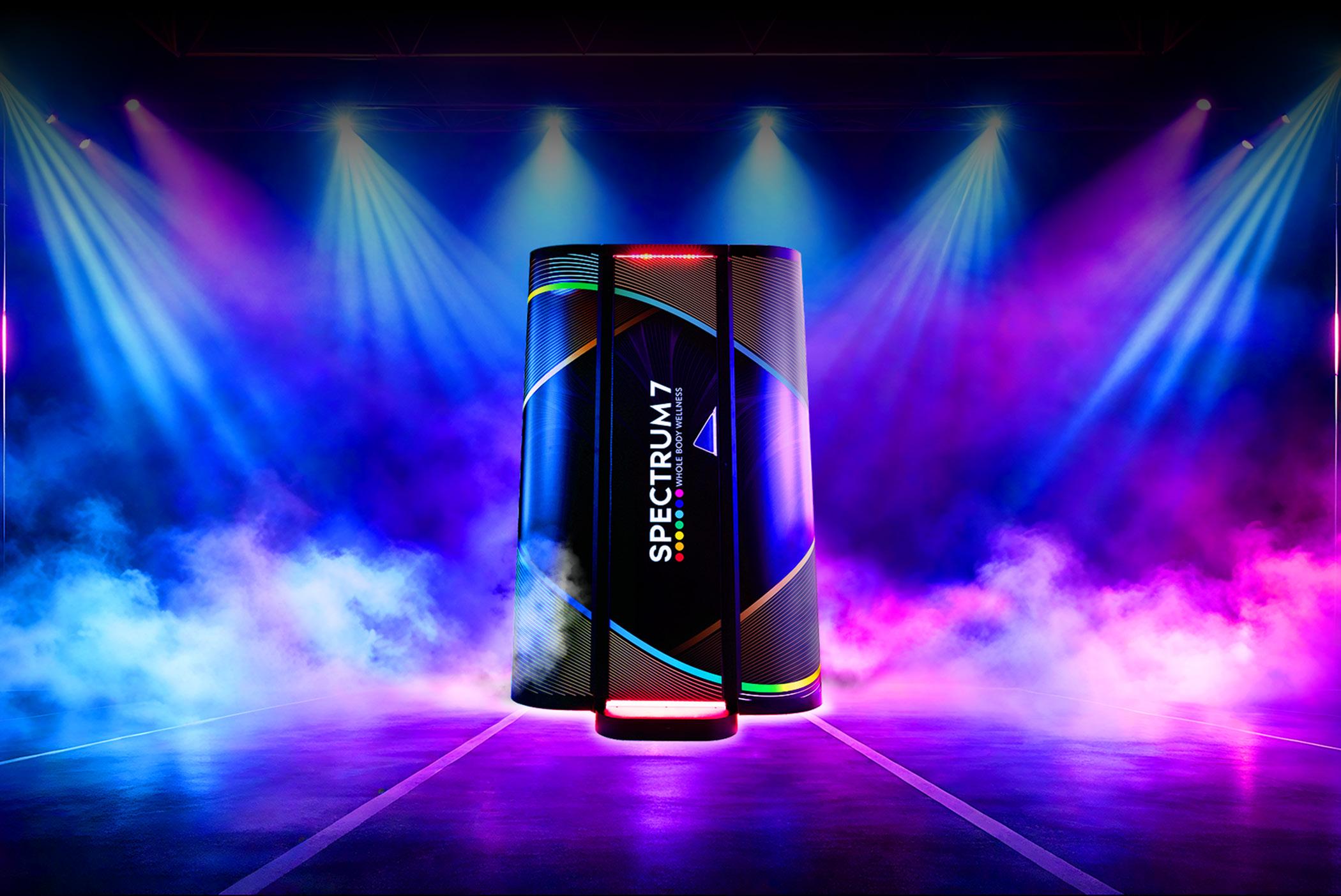
Wellness, Totally Tan & Spa, and many more have all added the new Spectrum 7 from EXCELL Red Light, to their new and existing salons. These industry leaders have one thing in common; they have all made Spectrum 7 the top-level red light device in their stores.
Todd Earnhart, Founder & CEO of Glo Sun Spa, has spent decades investing in various wellness systems: “Of all the red light therapy systems we have owned or tested over the years, the Spectrum 7 is far and away the winner in terms of overall efficacy, results, and most importantly customer satisfaction”.
Dean Albanese, owner of Exotic Tans in Warwick, Rhode Island, began with one Spectrum 7 system, found he needed a second, and today operates three systems which run almost nonstop. “I knew we would do well with red light but I never expected my customers would be so passionate about the results they get in as little as one treatment from my Spectrum 7. Perhaps the most exciting part for me is that the majority of my red light clients aren’t even tanners”.
Say Goodbye to Seasonality in Your Business
Gone are the days of navigating the peaks and valleys that have defined the tanning industry for decades. Red light therapy is a year-round wellness practice. Unlike tanners, your clients pursuing skin health, pain management, increased mobility, and overall wellness will use this service 12 months out of the year. This translates into consistent cashflow, higher profits, and a more valuable business.
Are You Ready For the Smartest Upgrade Your Business Can Make?
The EXCELL Spectrum 7 is the perfect complement to any indoor tanning business. Seven wavelengths, FDA registered, whole body wellness with the highest output of any Red Light Therapy device in production today. To date, over 90% of all EXCELL sales have been to existing clients re-ordering for their other salons. Join this group of knowledgeable and successful salon owners and call EXCELL at 800-272-8267.
Building Trust and Credibility in a Changing Marketplace
Sometimes, the answer is within us all along.
BY STAFF WRITER
Imagine the following situation:
You go into a restaurant and order a salad. The waiter gives you a massive, heaping salad with all your favorite fixings, plus a generous portion of sliced rare steak on top. You love it and decide to tell your friends about the new restaurant you went to.
A week later, you go back to the restaurant, ready to order the same steak salad. The waiter brings out the equivalent
of three wilted sprigs of arugula, plus what appears to be beef jerky on top of the salad. Then a roach crawls out of the salad.
You are disgusted.
You begin to wonder how your friends enjoyed it, or if your friends thought you were nutters for talking this place up. This, dear reader, is exactly the type of issue that many tanning salons struggle with.
The Trust Issue
It is often said that a company is nothing without trust from its buyers, but what is trust in the salon industry? It is a dynamic question. When a person goes to a tanning salon, it is not just about trusting the ad in the paper saying it’s affordable. There is a big leap of faith involved.
Patrons visit salons and trust them to be:
• Reliable, both in products, wellness systems, and in terms of actual care.
• Clean and sanitized equipment and salon interiors.
• Effective UV and sunless tanning, because no one likes splotchy tan.
• Repeatable and consistent experiences.
People often forget that tanning is not just a beauty service, it is part of the health and wellness industry. After all, early UV lamps were initially invented as a way to help treat symptoms of tuberculosis.
As an industry, we have to treat our clients as clients of a medspa. It is only right. That means we must hold ourselves to a higher standard, especially as we watch tanning grow more popular than ever before.
Building Trust in Tanning
Because tanning is a multifaceted industry with multiple services being offered, it is important to remember that trust will be equally multifaceted. Let us talk about the best protocols for the moment.
Get Reliable
The first thing to remember about any form of trust is the importance of reliability. Your clients should be able to know exactly what to expect when they book a tanning bed, when they book a full-body sauna, or when they get a red light treatment.
Reliability only happens when you have a set “recipe” for success that all of your staff follows. Your salon should have a strict protocol on every part of the visit, including:
• Client intake
• Client marketing
• Sales pitches
• Cleanup after client use
• Client pay setup
• Products used
• Equipment used
In other words, your salon should be standardized across the board.
Get Quality
Now, let us talk about the obvious elephant in the room: quality. People go to high-end salons for quality, not to pay extra money for the same results. In the tanning world, this means that you have to have highend beds, products, and machinery at your disposal.
Use your knowledge to get the best gear in the industry. Find the right lotions. More importantly, make sure that your staff members know how to use them correctly. Speaking of which.
Get Trained
What is the difference between the people manning your tanning salon’s counters and a random person walking down the street? In the standard tanning industry, the answer is often “not much,” and that should worry most clients. In fact, it is really starting to worry top-paying clients.
It does not have to be this way. As a salon manager and owner, your job is to hire people who understand the ins and outs of the industry. There are few things that elicit a feeling of trust as much as showing that your staff knows their stuff. Competence alone will set you ahead of the curve in many areas
of the nation. Training should start with salon operator certification and Sun is Life is the industry’s premier certification platform.
Take it today at www.sunislife.com
Trustworthy Is Reliable
Consider the way fast food companies run their businesses. One of the reasons they still manage to rake in billions every year is because they are predictable. You can rely on a certain burger from a burger chain to taste the same in both New York and California.
People pay for reliability. People trust reliable, standardized service.
The tanning salon world is no longer dominated by simple momand-pop stores. It is dominated by corporate-style stores that offer predictability. That is because people want something they can rely on, even if it is not a boutique experience.
As with all things, it is going to take time to get consistent results. If you want to build trust, now would be a good time to really look at how consistent your branding, decoration, services, and mannerisms are.
How’s Your D Level?
Understanding Vitamin D, Sunlight, and the Modern Dilemma
BY JOE SCHUSTER
As we plod our way to the end of another winter, most of us cherish the increasing amount of sunlight in the spring skies. Throughout the winter, the sun angle is really low in the sky, appearing lower and rising and setting further south. Our shorter days in the winter are marked by late sunrises and early sunsets. Some go to work in the dark and get home in the dark. That can lead to a low feeling associated with Seasonal Affective Disorder. I think it affects a lot of us, ranging from just feeling run down and tired to a fullblown mood swing.
Even more concerning is the alarming number of people in our population who suffer from vitamin D deficiency. Nearly two-thirds of Americans are insufficient or deficient in vitamin
D levels, according to National Health and Nutrition Examination Survey data from 2001 to 2018. The GrassrootsHealth Nutrient Research Institute indicates that, “some people are at a higher risk than others, including non-Hispanic Black Americans, women, older adults, and those with low income or education.”
So, what has led to this? Clearly, the overemphasized message of skin cancer and sun avoidance is at the heart of it. But job demands that include significant indoor work and colder winter temperatures add to the dilemma. Add in where you live in proximity to the equator, how much time you spend outdoors, sunscreen usage, and clothing coverage, and you have a recipe for deficiency, as vitamin D is crucial for bone health.
You can try increasing intake of foods that are typically fortified with vitamin D. Fish like cod, halibut, herring, mackerel, salmon, and sardines can help, as well as cod liver oil. You can also consume more egg yolk, milk, yogurt, soy milk, ricotta cheese, and orange juice that has been fortified with it. Note that fresh-squeezed orange juice does not contain it.
So, getting and keeping adequate vitamin D levels can be challenging. What about just taking a supplement in pill form? That can run the risk of over-calcification, mainly by causing high blood calcium (hypercalcemia), which deposits calcium in soft tissues like arteries, kidneys, and organs, damaging them and potentially causing kidney stones, heart issues, and weakness.
One of the foremost researchers on vitamin D and health is Dr. Michael Holick, Professor of Medicine, Physiology, and Biophysics at Boston University School of Medicine. I’ve had the pleasure of personally knowing him for almost 40 years. Dr. Holick has established global recommendations advising sunlight exposure as an integral source of vitamin D. His profile tells us that, “he has helped increase awareness in the pediatric and medical communities regarding the vitamin D deficiency pandemic and its role in causing not only metabolic bone disease and osteoporosis in adults, but also increasing the risk of children and adults developing common deadly cancers, schizophrenia, infectious diseases including TB and influenza, autoimmune diseases including type 1 diabetes and multiple sclerosis, type 2 diabetes, stroke, and heart disease. He also observed that pregnant women who were vitamin D deficient were at increased risk for preeclampsia and required a C-section. He has written more than 400 peer-reviewed articles, edited or wrote 12 books including The Vitamin D Solution, and is the recipient of numerous awards including the Linus Pauling Prize in Human Nutrition.”
You can read one of his studies on vitamin D, “VITAMIN D: A D-LIGHTFUL SOLUTION FOR HEALTH,” at https://pmc.ncbi.nlm. nih.gov/articles/PMC3738435/
According to the web resource Healthline, the signs of vitamin D deficiency include fatigue, bone and back pain, muscle weakness or aches, frequent illnesses, hair loss, mood changes such as depression or anxiety, slow wound healing, weight gain, sweating of the head or scalp, and impaired immunity, with severe cases affecting bone density (osteoporosis) or causing rickets in children.
Well, I’ve got several of those, for sure. As the symptoms can overlap with other conditions, getting a blood test is the best method to obtain a definitive diagnosis. I’m an avid hiker, biker, and overall outdoor enthusiast. We live close to the largest lake in Georgia and enjoy spending time on it. Despite this, my most recent visit to my doctor and bloodwork determined that yes, I was vitamin D deficient. I couldn’t believe it.
So, let’s bring this full circle. We know how large the deficiency issue is in the U.S. We know how to offset it with moderate UV exposure. So why not simply promote vitamin D through sunbed exposures? That has certainly been a conundrum in our industry for many years.
While some tanning salons have historically promoted vitamin D from sunbeds and sunbooths, it is considered misleading by many health organizations and is, in fact, legally restricted. Among the risks:
False Advertising: The Federal Trade Commission (FTC) has taken action against the tanning industry for making false or misleading health claims, including that indoor tanning is a safe way to get vitamin D.
State Restrictions: Many states have laws prohibiting UV tanning salons from advertising that their services are “safe” or that they provide medical or health benefits.
FDA Regulations: The Food and Drug Administration requires specific warning labels on tanning beds and does not recognize indoor tanning as a safe way to raise vitamin D levels.
What can be said? “Millions of people weigh the risk versus benefit of moderate UV exposure and choose indoor tanning, with exposures delivered by skin type and a timer, minimizing the risk of overexposure and sunburn.”
It is my belief that more information and research ( https://pmc.ncbi. nlm.nih.gov/articles/PMC5821157/ ) will continue to emerge supporting vitamin D through moderated exposure to UVB. In reality, whether your customers are aware of it or not, whether you promote it or not, they are still getting it.
Get more of the facts on indoor tanning by taking Sun is Life certification at www.sunislife.com
Customizable treatments for every body, every tone and every lifestyle
Smart technology guides clients through easy sessions
Automated mixing system helps to reduce waste and ensures consistent sprays
Powerful WellFit® skincare solutions help to nourish, tighten, and protect skin
E ortless full-body application in minutes
Warm, comfortable experience
Automatic washdown cycle for easy maintenance
TRANSFORM YOUR SALON With New Wellness Services & Product Sales Revenue
BY STEVEN DAFFER
Upgrade Your Memberships with Signature Quality Wellness Services
Today’s salon clients are wellnessfocused, results-driven, and committed to investing in self-care. For salon owners, that means a powerful opportunity to elevate memberships, introduce premium add-on services, and create new recurring revenue streams — especially with our exclusive product bundle available with the purchase of a new RedFuzion Red-Light POD.
The RedFuzion Red-Light POD represents our latest advancement in full-body wellness engineering. Featuring 125 red and near-infrared light modules powered by 5,625 highintensity LEDs, it delivers targeted photobiomodulation through preset and customizable Smart Wellness programs. Adjustable dry heat up to 190˚F, Himalayan salt therapy, cooling ventilation, enriched airflow, and a heated whole-body vibration massage system create a controlled, multi-sensory recovery experience designed to enhance performance, relaxation, and overall wellness.
The Cocoon Aqua Pod takes center stage with radiant infrared therapy combined with vitamin-infused steam at 118˚F — creating a detoxifying, skin-enhancing experience that clients immediately feel and see. The Cocoon Wellness Deluxe further enhances relaxation with dual heating, vibration massage, and aromatherapy for stress reduction and recovery.
The Cocoon Fitness POD Deluxe merges spa luxury with performance conditioning. By combining infrared heat with therapeutic comfort, it supports weight management, pain relief, and total-body conditioning while significantly increasing the value of salon memberships.
Personal wellness products like the RedFuzion LED Face Mask, RedFuzion LED Hat, for Targeted Red-Light Therapy. BIO-FIVE PEMF Mat, and RedFit Recovery Belt Infrared PEMF Therapy for Grounding & Relaxation. All products can be added to pod sessions to enhance results and increase per-visit revenue, then sold at retail so clients can continue their results at home, extending the impact of every session and bringing their wellness experience home.
More than 30 years ago, I introduced the original multi-sensory wellness POD concept — integrating advanced technologies into one immersive recovery environment. That innovation helped shape the modern wellness POD systems used worldwide today.
We also engineer commercial and residential infrared and red-light saunas, including a weather-resilient outdoor sauna.
The future of salon wellness is bright. Let 2026 be the year you illuminate your business with red light, recovery, and wellness.
Here’s to a powerful and prosperous 2026.
Tired of Managing Payroll, HR, and Hiring Alone?
How Smart Salon Owners Are Reclaiming Time (And Their Sanity)
Disconnected systems and poor support are out. Reliable tools and real help are in.
Running a salon should be about people, not paperwork
We hear this often from salon owners: “We were nervous to make a change because of how bad things had gone before.” Many had a provider that overpromised but underdelivered. When problems came up, there was no one to call, no follow-up, and no real help. Some even faced serious issues like taxes not being filed correctly.
We talk to salon owners every day who felt stuck, stressed, and unsure of what to do next. Many of them trusted a provider that promised to make things easier but ended up making things harder.
When problems came up—like payroll mistakes, system errors, or even missed tax filings—they had no one to call. The person who sold them the service stopped answering, and support was slow or unhelpful. These owners were left to fix big problems alone. Some waited on hold for hours or had to explain the same issue to different people. It was frustrating and unfair.
Here’s what we hear most:
Most salon systems are hard to use and don’t work well together. You waste time entering the same info again and again. Support is often missing. You need tools that are simple, connected, and backed by real people who are there when you need help.
“Our biggest frustration was the lack of customer service and follow-up. We experienced a wide variety of issues that even ranged to our taxes not being filed properly. The salesperson who previously sold the deal ended up being nowhere to be found.”
Glo Tanning CEO, Onyi Odunukwe
1. Hiring and Onboarding Still Involves Binders and Paperwork
1. Hiring and Onboarding Still Involves Binders and Paperwork
3.
3. You’re Still the One Making Sure Everyone Gets Paid Correctly
The Five Biggest Time-Wasters For Tanning Salon Owners (And What To Do About Them)
1. Hiring And Onboarding Still Involves Binders And Paperwork
The
Five
Hiring in salons happens a lot. Whether it’s a busy season or someone just left, you’re probably bringing in new people often. If you’re still using paper packets, printing forms, and collecting signatures in person, it can slow everything down. Mistakes happen more often and managers spend extra time doing tasks that could be easier.
Hiring in salons happens a lot. Whether it’s a busy season or someone just left, you’re probably bringing in new people often. If you’re still using paper packets, printing forms, and collecting signatures in person, it can slow everything down. Mistakes happen more often and managers spend extra time doing tasks that could be easier.
Payroll can be stressful when you’re doing it all yourself. You may be checking timecards, making sure special rates are correct, or fixing problems before payday. This can take hours each pay period and leaves room for mistakes.
The Five Biggest Time-Wasters for Tanning Salon Owners (And What to Do About Them)
Hiring in salons is a regular occurrence. Whether it’s a busy season or someone just left, you’re probably bringing in new people on a somewhat regular basis.
Biggest Time-Wasters for Tanning Salon Owners (And What to Do About Them)
Payroll can be stressful when you’re doing it all yourself. You may be checking timecards, making sure special rates are correct, or fixing problems before payday. This can take hours each pay period and leaves room for mistakes.
That could mean retyping hours, double-checking numbers, or fixing small mistakes that take too much time. When systems don’t share information, it slows everyone down.
Best Practice: Many salons now use digital tools for hiring and onboarding. These tools let new hires apply online, fill out forms, and complete tasks from their phones. This means everything is ready before their first day. It saves time, lowers the chance of errors, and helps new team members feel ready to work right away.
Best Practice: Many salons now use digital tools for hiring and onboarding. These tools let new hires apply online, fill out forms, and complete tasks from their phones. This means everything is ready before their first day. It saves time, lowers the chance of errors, and helps new team members feel ready to work right away.
4. You’re Fielding Every PTO Request And Shift Swap
Best Practice: Many salons switch to payroll systems that handle these tasks for them. These systems can apply the right pay rates, catch errors, and handle taxes without extra work. It gives you peace of mind and saves time.
Best Practice: Many salons switch to payroll systems that handle these tasks for them. These systems can apply the right pay rates, catch errors, and handle taxes without extra work. It gives you peace of mind and saves time.
1. Hiring and Onboarding Still Involves Binders and Paperwork
1. Hiring and Onboarding Still Involves Binders and Paperwork
Best Practice :
Hiring in salons happens a lot. Whether it’s a busy season or someone just left, you’re probably bringing in new people often. If you’re still using paper packets, printing forms, and collecting signatures in person, it can slow everything down. Mistakes happen more often and managers spend extra time doing tasks that could be easier.
Hiring in salons happens a lot. Whether it’s a busy season or someone just left, you’re probably bringing in new people often. If you’re still using paper packets, printing forms, and collecting signatures in person, it can slow everything down. Mistakes happen more often and managers spend extra time doing tasks that could be easier.
3. You’re Still the One Making Sure Everyone Gets Paid Correctly
3. You’re Still the One Making Sure Everyone Gets Paid Correctly
If you’re still using paper packets, printing forms, and collecting signatures in person, it can slow everything down. Mistakes happen more often and managers spend extra time doing tasks that could be easier.
Hiring in salons happens a lot. Whether it’s a busy
2. Your Systems Don’t Talk to Each Other
2. Your Systems Don’t Talk to Each Other
Best Practice:
If your scheduling app, payroll provider, time clock, and point-of-sale system don’t connect, you might be doing the same work more than once. That could mean retyping hours, checking numbers again, or fixing small mistakes that take too much time. When systems don’t share information, it slows everyone down.
If your scheduling app, payroll provider, time clock, and point-of-sale system don’t connect, you might be doing the same work more than once. That could mean retyping hours, checking numbers again, or fixing small mistakes that take too much time. When systems don’t share information, it slows everyone down.
Best Practice: Many salons now use digital tools for hiring and onboarding. These tools let new hires apply online, fill out forms, and complete tasks from their phones. This means everything is ready before their first day. It saves time, lowers the chance of errors, and helps new team members feel ready to work right away.
3. You’re Still the One Making Sure Everyone Gets Paid Correctly
Using one connected system or linking your tools can make a big difference. When data flows between platforms, you don’t have to re-enter it. This saves time and makes sure pay, hours, and records are more accurate.
Best Practice: Many salons now use digital tools for hiring and onboarding. These tools let new hires apply online, fill out forms, and complete tasks from their phones. This means everything is ready before their first day. It saves time, lowers the chance of errors, and helps new team members feel ready to work right away.
Payroll can be stressful when you’re doing it all yourself. You may be checking timecards, making sure special rates are correct, or fixing problems before payday. This can take hours each pay period and leaves room for mistakes.
Payroll can be stressful when you’re doing it all yourself. You may be checking timecards, making sure special rates are correct, or fixing problems before payday. This can take hours each pay period and leaves room for mistakes.
1. Hiring and Onboarding Still Involves Binders and Paperwork
4. You’re Fielding Every PTO Request and Shift Swap.
4. You’re Fielding Every PTO Request and Shift Swap.
Handling every time-off request and shift change by hand takes a lot of time. It also slows down your day when you have to answer every question or update every schedule yourself.
Payroll can be stressful when you’re doing it all yourself. You may be checking timecards, making sure special rates are correct, or fixing problems before payday. This can take hours each pay period and leaves room for mistakes.
As a manager, you get it. It seems easy to be the one in charge of approving PTO at first glance. Handling every time-off request and shift change by hand takes a lot of time. It also slows down your day when you have to answer every question or update every schedule yourself.
Handling every time-off request and shift change by hand takes a lot of time. It also slows down your day when you have to answer every question or update every schedule yourself.
Best Practice: Many salons switch to payroll systems that handle these tasks for them. These systems can apply the right pay rates, catch errors, and handle taxes without extra work. It gives you peace of mind and saves time.
or someone just left, you’re probably bringing in new people often. If you’re still using paper packets, printing forms, and collecting signatures in person, it can slow everything down. Mistakes happen more often and managers spend extra time doing tasks that could be easier.
Best Practice: Many salons switch to payroll systems that handle these tasks for them. These systems can apply the right pay rates, catch errors, and handle taxes without extra work. It gives you peace of mind and saves time.
Best Practice:
4. You’re Fielding Every PTO Request and Shift Swap.
4. You’re Fielding Every PTO Request and Shift Swap.
Best Practice: Many salons switch to payroll systems that handle these tasks for them. These systems can apply the right pay rates, catch errors, and handle taxes without extra work. It gives you peace of mind and saves time.
3. You’re Still The Only One Making Sure Everyone Gets Paid Correctly
Best Practice: Self-service tools let employees make requests and see their schedules from their phones. Managers still approve changes, but they don’t have to be involved in every small detail. This gives staff more control while helping managers focus on bigger tasks.
4. You’re Fielding Every PTO Request and Shift Swap.
2. Your Systems Don’t Talk to Each Other
Best Practice: Many salons now use digital tools for hiring and onboarding. These tools let new hires apply online, fill out forms, and complete tasks from their phones. This means everything is ready before their first day. It saves time, lowers the chance of errors, and helps new team members feel ready to work right away.
2. Your Systems Don’t Talk to Each Other
2. Your Systems Don’t Talk to Each Other
Best Practice: Using one connected system or linking your tools can make a big difference. When data flows between platforms, you don’t have to re-enter it. This saves time and makes sure pay, hours, and records are more accurate.
Best Practice: Using one connected system or linking your tools can make a big difference. When data flows between platforms, you don’t have to re-enter it. This saves time and makes sure pay, hours, and records are more accurate.
Many salons now use digital tools for hiring and onboarding. These tools let new hires apply online, fill out forms, and complete tasks seamlessly from their phones. This means everything is ready before their first day. It saves time, lowers the chance of errors, and helps new team members feel ready to work right away.
If your scheduling app, payroll provider, time clock, and point-of-sale system don’t connect, you might be doing the same work more than once. That could mean retyping hours, checking numbers again, or fixing small mistakes that take too much time. When systems don’t share information, it slows everyone down.
Handling every time-off request and shift change by hand takes a lot of time. It also slows down your day when you have to answer every question or update every schedule yourself.
Handling every time-off request and shift change by hand takes a lot of time. It also slows down your day when you have to answer every question or update every schedule yourself.
Payroll can be stressful when you’re doing it all yourself. You may be checking timecards, making sure special rates are correct, or fixing problems right before payday. This can take hours each pay period and leaves room for mistakes—or even major legal issues.
Self-service tools let employees make requests and see their schedules from their phones. Managers still approve changes, but they don’t have to be involved in every small detail. This gives staff more control while helping managers focus on bigger tasks.
Best Practice: Self-service tools let employees make requests and see their schedules from their phones. Managers still approve changes, but they don’t have to be involved in every small detail. This gives staff more control while helping managers focus on bigger tasks.
Handling every time-off request and shift change by hand takes a lot of time. It also slows down your day when you have to answer every question or update every schedule yourself.
If your scheduling app, payroll provider, time clock, and point-of-sale system don’t connect, you might be doing the same work more than once. That could mean retyping hours, checking numbers again, or fixing small mistakes that take too much time. When systems don’t share information, it slows everyone down.
Best Practice:
2. Your Systems Don’t Talk To Each Other
5. When Something Goes Wrong, Support is Nowhere to Be Found
Best Practice: Self-service tools let employees make requests and see their schedules from their phones. Managers still approve changes, but they don’t have to be involved in every small detail. This gives staff more control while helping managers focus on bigger tasks.
Best Practice: Self-service tools let employees make requests and see their schedules from their phones. Managers still approve changes, but they don’t have to be involved in every small detail. This gives staff more control while helping managers focus on bigger tasks.
5. When Something Goes Wrong, Support is Nowhere to Be Found
5. When Something Goes Wrong, Support Is Nowhere To Be Found
If your scheduling app, payroll provider, time clock, and point-of-sale system don’t connect, you might be doing the same work more than once. That could mean retyping hours, checking numbers again, or fixing small mistakes that take too much time. When systems don’t share information, it slows everyone down.
Best Practice: Using one connected system or linking your tools can make a big difference. When data flows between platforms, you don’t have to re-enter it. This saves time and makes sure pay, hours, and records are more accurate.
Best Practice: Using one connected system or linking your tools can make a big difference. When data flows between platforms, you don’t have to re-enter it. This saves time and makes sure pay, hours, and records are more accurate.
If your scheduling app, payroll provider, time clock, and pointof-sale system don’t connect to each other, you’re probably doing the same work more than once.
When a problem comes up, getting help should be easy. But if you’re waiting on hold or explaining your issue to different people, it just adds more stress.
Best Practice: Self-service tools let employees make requests and see their schedules from their phones. Managers still approve changes, but they don’t have to be involved in every small detail. This gives staff more control while helping managers focus on bigger tasks.
When a problem comes up, getting help should be easy. But if you’re waiting on hold or explaining your issue to different people, it just adds more stress.
5. When Something Goes Wrong, Support is Nowhere to Be Found
5. When Something Goes Wrong, Support is Nowhere to Be Found
Best Practice: Using one connected system or linking your tools can make a big difference. When data flows between platforms, you don’t have to re-enter it. This saves time and makes sure pay, hours, and records are more accurate.
Visit us at AllianceHCM.com Email tanning@alliancehcm.com Or call 800-863-8013 to talk to someone who understands the salon world.
Best Practice: A dedicated support rep who knows your setup can fix issues faster. You don’t have to repeat yourself, and problems get solved quickly so you can stay focused on your business.
Most salons switch to payroll systems that handle these tasks for them. These systems can apply the right pay rates, catch errors, and handle taxes without extra work. It gives you peace of mind and saves time.
When a problem comes up, getting help should be easy. But if you’re waiting on hold or explaining your issue to different people, it just adds more stress.
5. When Something Goes Wrong, Support is Nowhere to Be Found
When a problem comes up, getting help should be easy. But if you’re waiting on hold or explaining your issue to different people, it just adds more stress.
When a problem comes up, getting help should be easy. But if you’re waiting on hold or explaining your issue to different people, it just adds more stress.
When a problem comes up, getting help should be easy. But if you’re waiting on hold or explaining your issue to different people, it just adds more stress.
Best Practice:
Best Practice: A dedicated support rep who knows your setup can fix issues faster. You don’t have to repeat yourself, and problems get solved quickly so you can stay focused on your business.
Best Practice: A dedicated support rep who knows your setup can fix issues faster. You don’t have to repeat yourself, and problems get solved quickly so you can stay focused on your business.
Best Practice: A dedicated support rep who knows your setup can fix issues faster. You don’t have to repeat yourself, and problems get solved quickly so you can stay focused on your business.
A dedicated support rep who knows your setup can fix issues faster. You don’t have to repeat yourself, and problems get solved quickly so you can stay focused on your business.
Best Practice: A dedicated support rep who knows your setup can fix issues faster. You don’t have to repeat yourself, and problems get solved quickly so you can stay focused on your business.
The Five Biggest Time-Wasters for Tanning Salon Owners (And What to Do About Them)
SUN & WELLNESS MAGAZINE
the experts
Joe Schuster
In addition to serving as our Editor in Chief, he’s also one of our contributing writers and serves as the Director and Instructor for our SUN IS LIFE certification and training.
Quinn
Cooper
Quinn Cooper has been a professional in the tanning industry for years, showing his passion for wellness at every turn. He is a proud Senior Account Executive of SUN IS LIFE as well as being a salon owner himself.
Emily Clements
Emily Clements has worked as a professional in the tanning industry for three years and is currently transitioning to the management side for franchise locations with Glo Tanning. Alongside management, Emily will receive a degree in May from the University of Mississippi in integrated marketing communications, minor in general business, and specialization in social media. Combining both passions for industry and writing, she is thrilled to bring her expertise into Sun is Life.
Kristin Smithers
Kristin Smithers, the Red Light Queen™, is a Board Certified Light Therapist through the Board of Advanced Natural Health Sciences. A lifetime SPIE member and WALT member, she’s been active in the tanning industry since 2016 and a salon owner since 2019, blending science with real-world results.
Lauren Hall
Lauren Hall is a successful, influential and enthusiastic business development manager with INNOVE Beauty & Wellness, with over fifteen years of combined experience in training and sales with extensive industry and product knowledge. She is driven by achieving results through relationship building while leveraging both operational and corporate experience.
Aliesha Colvin
Executive Director of Sun is Life Magazine, Aliesha Colvin, has spent over a decade in the beauty world and the last three of those helping shape the tanning industry’s creative side. Outside of the office, she channels her energy into her photography business and her social media communities – where she platforms others loving the skin they’re in.
Steven Daffer
Steven Daffer is the founder of Sybaritic, Inc. and Wellness USA LLC and the original inventor of multisensory wellness POD systems. He holds 110 U.S. and international patents design in the United States.
Indulge yourself in unparalleled comfort with our exclusive promotion on the Fujimi Luxury Massage Chairs! Introducing the EP9000MAX and EP7000S models, designed to bring the spa experience right to your home or business. Elevate your relaxation with advanced 3D massage technology, customizable settings, and heated therapy options for a
and
Word Search Answers
ENERGIZED BY THE LIGHT.
• Industry-Leading ROI
The Industry’s Top-Selling Red Light Technology — Three Years Running
The wellsystem Redwave is engineered to deliver one of the strongest returns on investment in the red light category — helping you grow revenue from day one.
• German-Built Precision
Manufactured in Germany with premium components and craftsmanship for longterm durability and reliability.
• Proven Client Performance
Advanced red light technology designed to deliver consistent, high-performance results your customers can see and feel.
• Built for Business Growth
Redwave isn’t just equipment — it’s a revenue-generating asset that drives repeat visits, customer retention, and measurable profitability.
04.24.26 | 11am cst/12pm est
Register for our Interactive Webinar We’ll talk through how to sell it, simplify the science behind the treatment, and more.