Islamic Practices to Protect the Heart and Mind During Political Unrest Preserving Our Well-Being While Staying Informed
8 4 0 Mosques in
the
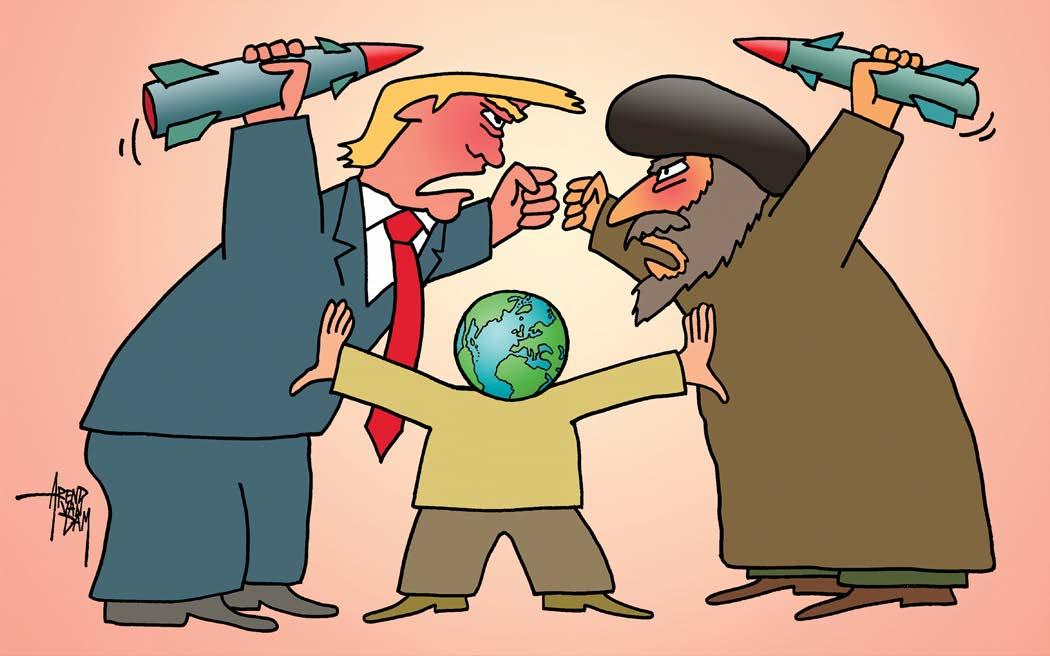
38 Guided Missiles, Misguided Humanity 40 The Great Script Transition
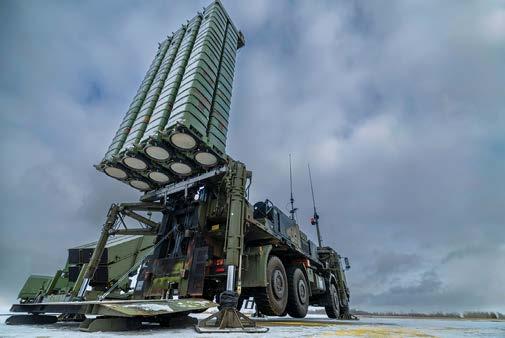
The Ethics of War and the Problem of Modern Weapons in Islam U.S. AFFAIRS
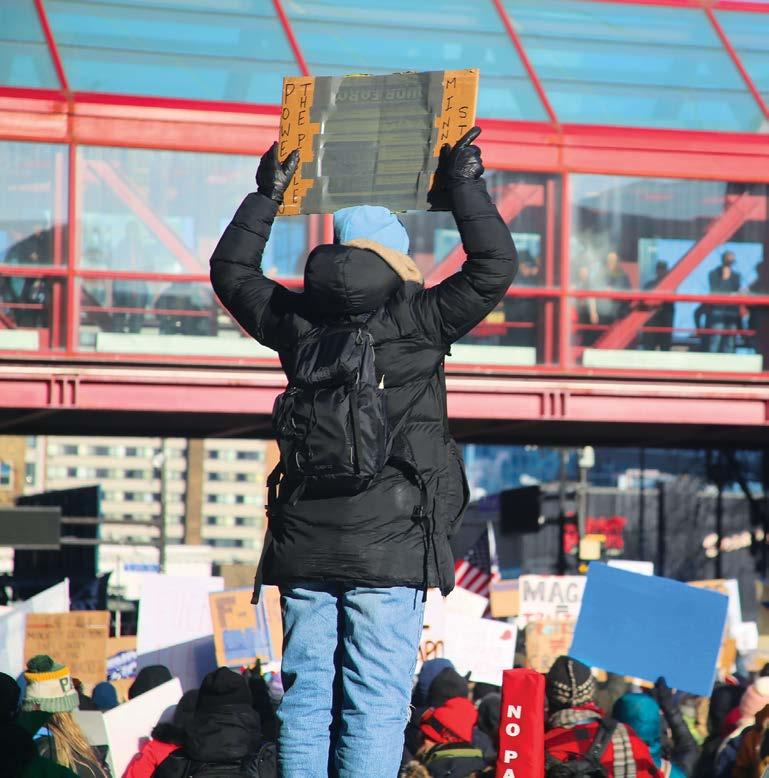
44 The Economic and Emotional Toll of ICE in Minnesota
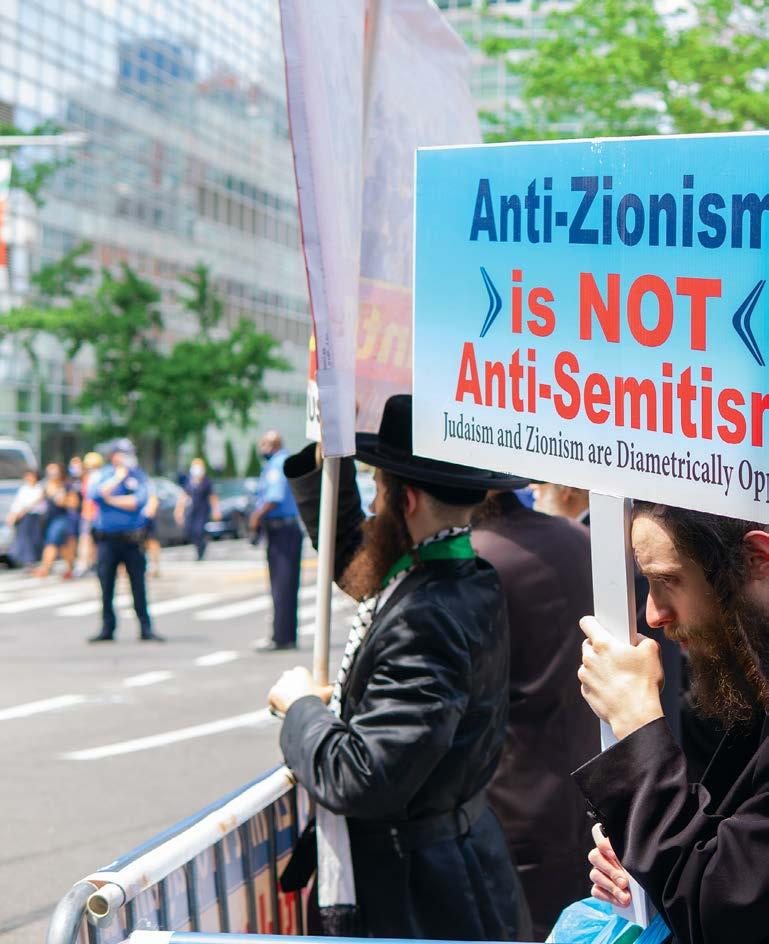
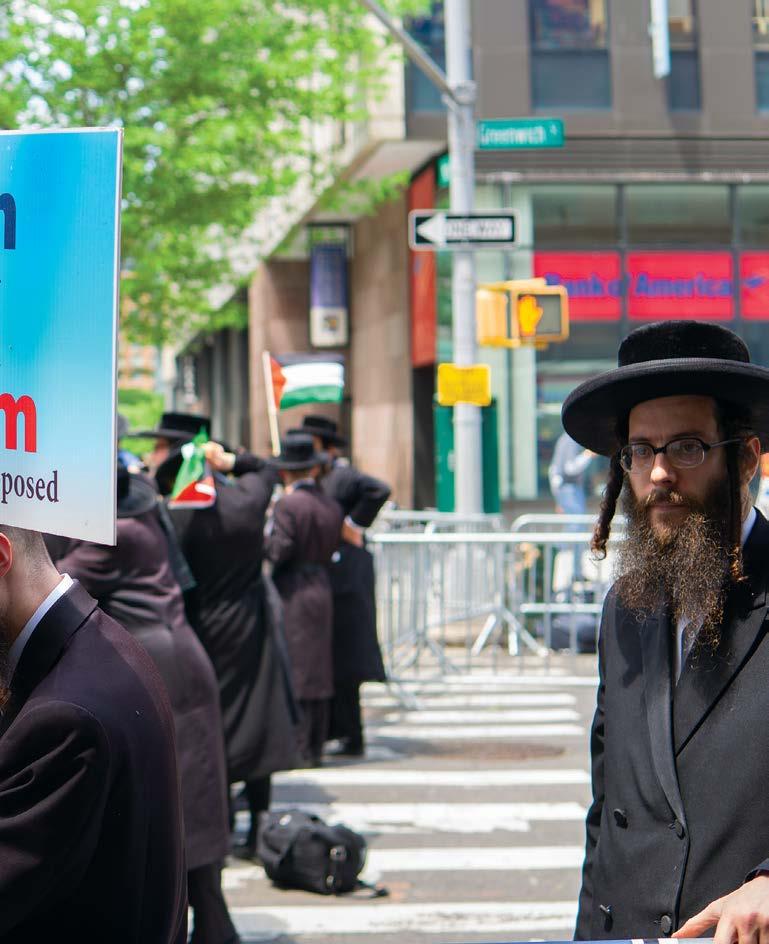
46 W hy Christian Zionism Isn’t Christian
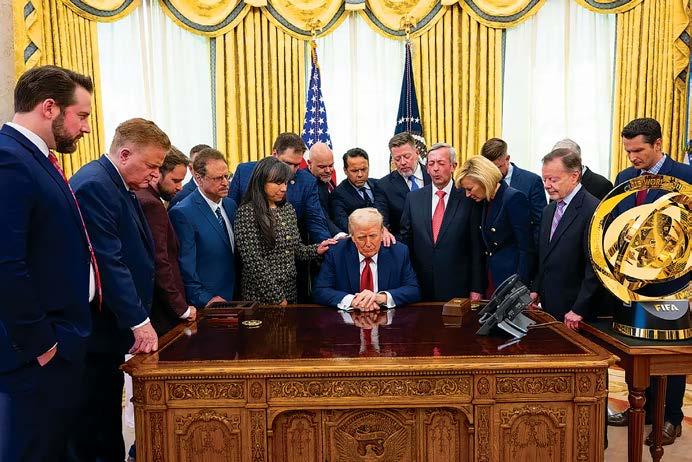
50 W hy Evangelical Christians Love the War with Iran
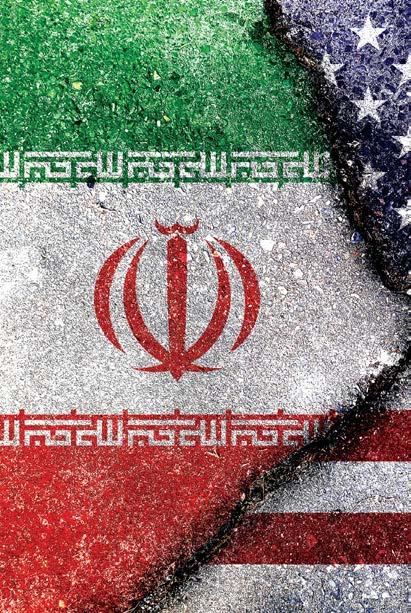
AFFAIRS 52 The U.S. War on Iran is In Vain OPINION
54 The Mississippi River and the Ummah ENVIRONMENT
56 Environment Advocacy in the Era of Deregulation MOVIE REVIEW
59 “Time Hoppers: The Silk Road”
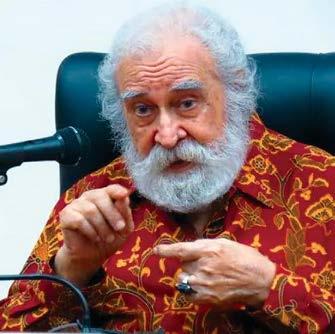
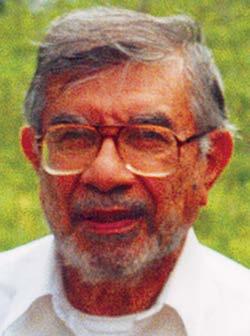
60 A Tribute to Syed Muhammad Naquib al-Attas
61 Mohammed Moinuddin Siddiqui
Time for Muslims to Rethink their Place in the World
As this issue goes to print, Muslims worldwide continue to face challenges to their faith, lives, sovereignty, and future.
Islamophobia is not a new occurrence; it sprouted when Prophet Muhammad (salla Allahu ‘alayhi wa sallam) proclaimed the Message of God.
What first comes to mind are the Crusades, a series of military campaigns launched by the papacy between 1095 and 1291 against Muslims, encouraged by promises of spiritual reward. The Crusades did not end in 1291, but continued under various monikers. And yet God continues to preserve and advance the carriers of His message.
In our times, muddle-headed anti-Muslim campaigns have been linked to equally muddle-headed “spiritual rewards” promised by an array of cults masquerading as leaders in religion.
Heart-rendering news from Gaza, Lebanon, Yemen, and Iran have not ceased. And still, Muslims persevere.
The hope for peace is nothing new. The phrase “beating swords into plowshares”— originating from the biblical prophecy of Isaiah (2:4) and Micah (4:3)— symbolizes converting military weapons into peaceful, productive tools. After the Cold War, this concept represented the hope for a “peace dividend” through which disarmament allows resources to shift from military to civilian economic development.
The erstwhile Soviet Union, at the height of the Cold War, gifted a sculpture named “Let Us Beat Our Swords into Ploughshares” to the United Nations in 1959 demonstrating a desire for global peace.
Another hope for peace appeared when the Cold War concluded between 1989 (fall of the Berlin Wall) and December 1991 (dissolution of the Soviet Union), establishing the United States as the sole global superpower. One of two main belligerent parties had been doused, leading to the belief that Isaiah and Micah’s prophecy would come to fruition.
However, the thirst for power and control over the world’s resources has not allowed people to live the joys of peace. The yearning for one-upmanship, and the covetousness of what God has given to others continues to arouse passions and hatred.
The Quran advises, “O believers! Do not devour one another’s wealth illegally, but rather trade by mutual consent. And do not kill each other or yourselves. Surely God is ever Merciful to you” (4-29). It further asks, “And do not crave what God has given some of you over others. Men will be rewarded according to their deeds and women equally according to theirs. Rather, ask God for His bounties. Surely God has perfect knowledge of all things” (4:32).
It seems unlikely that “interfaith” initiatives can heal a population afflicted with intellectual destruction by self-assumed spiritualists who equate certain politicians with prophets.
Isn’t it time and more that Muslims arouse from their slumber and act?
Such religious rhetoric gained new scrutiny after Feb. 28 when the U.S. and Israel attacked Iran igniting a regional war that engulfed the Middle East and claimed thousands of lives.
The real effort lies in educating fellow Americans about Islam and Muslims which would usher in true understanding and not just end with kind remarks about samosa and baklava.
The rising Islamophobia and Evangelist rhetoric should alert the world to a possible ninth iteration of the eight prior crusades.
“There’s a long history of Christian nationalism and Christian nationalist rhetoric in U.S. politics — but it’s unprecedented in modern times,” Matthew Taylor, a visiting scholar at the Center on Faith and Justice at Georgetown University told The Independent. Such a scenario also raises questions about certain Muslim Americans’ options. Muslims invest in ethical ventures, so why not extend the same values to job seeking?
Rasheed Rabbi, continuing the 1500 Hijri series, points out that Prophet Muhammad’s leadership wove conscience into every action. He sat and walked with his companions, listening, advising, resolving disputes, and checking on the vulnerable as one of them — not above them. His authority was rooted in proximity, humility, and responsibility.
This stands in stark contrast to modern power, where decisions are made far from the consequences they create. ih
PUBLISHER
The Islamic Society of North America (ISNA)
PRESIDENT
Syed Imtiaz Ahmad
CHIEF EXECUTIVE OFFICER Azhar Azeez
EDITOR
Omer Bin Abdullah
ASSISTANT EDITOR
Bareerah Zafar
EDITORIAL ADVISORY BOARD
Iqbal Unus, Chair: M. Ahmadullah Siddiqi, Saba Ali, Rasheed Rabbi, Wafa Unus
ISLAMIC HORIZONS
is a bimonthly publication of the Islamic Society of North America (ISNA) P.O. Box 38 Plainfield, IN 46168-0038
Reproduction, in whole or in part, of this material in mechanical or electronic form without written permission is strictly prohibited. Islamic Horizons magazine is available electronically on ProQuest’s Ethnic NewsWatch, Questia.com LexisNexis, and EBSCO Discovery Service, and is indexed by Readers’ Guide to Periodical Literature.
Please see your librarian for access. The name “Islamic Horizons” is protected through trademark registration ISSN 8756-2367
POSTMASTER
Send address changes to Islamic Horizons, P.O. Box 38 Plainfield, IN 46168-0038
Contact Islamic Horizons at https://isna.net/SubscribeToIH.html On-line: https://islamichorizons.net For inquiries: membership@isna.net
ADVERTISING
For rates contact Islamic Horizons at (703) 742-8108, E-mail horizons@isna.net, www.isna.net
CORRESPONDENCE
Send all correspondence and/or Letters to the Editor at: Islamic Horizons P.O. Box 38 Plainfield, IN 46168-0038
Email: horizons@isna.net
40 Mosques in 30 Days
ISNA’s Ramadan Mosque Campaign a Huge Success
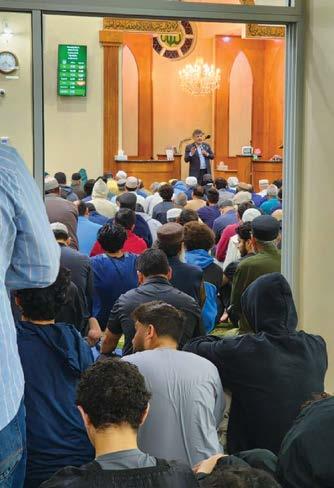
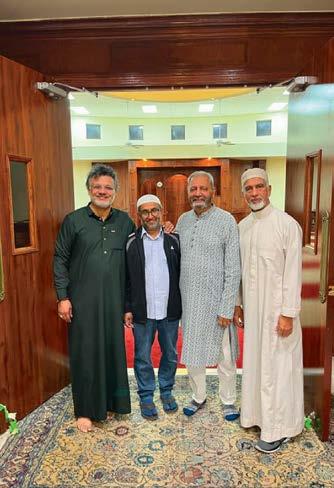
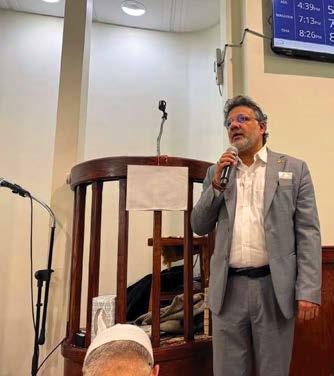
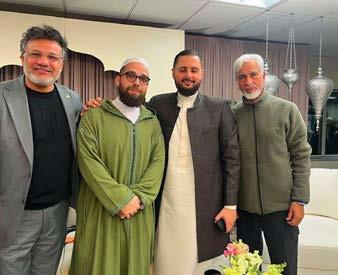
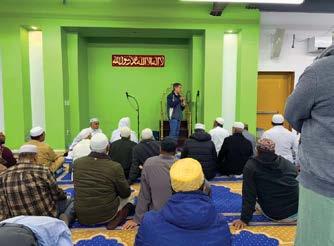
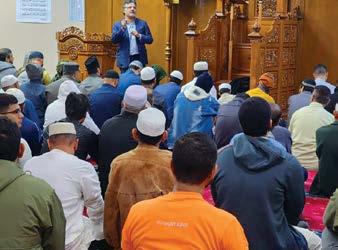
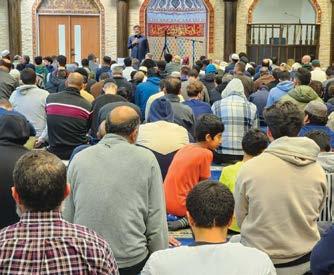
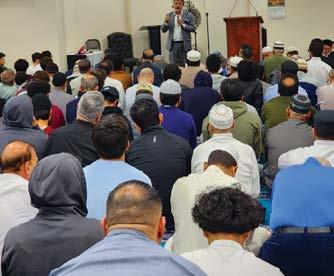
During Ramdan, Islamic Society of North America (ISNA) CEO Azhar Azeez and other ISNA representatives visited 40 mosques across the United States to address congregations, deliver Jummah khutbahs, and promote the organization’s work. What started as a campaign to visit 30 mosques in 30 days expanded into a celebration of community and faith.
Through this campaign, ISNA representatives raised over $400,000 in funding, distributed over 1000 copies of the Islamic Horizons magazine, and touched the hearts and minds of thousands of Muslim Americans during the holy month.
“Alhamdulillah, for the first time in ISNA’s history, we visited 40 mosques during the month of Ramadan while also conducting fundraising appeals — an unprecedented milestone,” said Azeez. “Looking ahead to 2026, our mission is to expand this effort by reaching 100 mosques and strengthening our connection with communities across America.”
The campaign kicked off at the Islamic Society of New Tampa in Florida and traveled to Muslim American institutions across the nation including Masjid Arafat in Sugar Land, Texas; the ADAMS Center in Virginia; the Muslim Education Center in Newark, Calif.; the Memphis Islamic Center in Tennessee; the Jamaica Muslim Center in Queens, N.Y.; Masjid Ar-Rahman in Carrollton, Texas; the Islamic Association of Collin County in Plano, Texas; the East Plano Islamic Center; Masjid Hamza in Atlanta; Islamic Center of Middleton in Georgia; Northwest Islamic Center in St Louis, Mo.; the Islamic Center of Columbia in Missouri; the East Texas Islamic Society and Masjid Quba in Tyler, Texas; the Tawheed Center in Farmington Hills, Mich.; and many more.
The campaign team, in addition to Azhar Azeez, included Executive Director of Development Basharat Saleem, Outreach Coordinator Syed Ansar Hasan, Fund Development Coordinator Ahmed Badawi, and Youth Development Manager Dahabo Kerow, along with several volunteers. ih
ISNA CEO Azhar Azeez addressing the congregation at the Islamic Center of Central Missouri.
(From left to right) Azhar Azeez, Imam Masmari, Sheikh Tariq Musleh, and ISNA volunteer Br Abdul Azeem at the UMMA Center in Columbia Station, Ohio.
Azhar Azeez addressing the congregation at the Islamic Association of Collin County in Plano, Texas.
Azhar Azeez with the leadership of Masjid Ar Rahman in Carrollton, Texas.
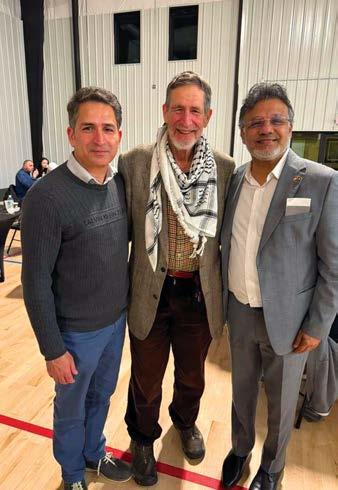
Basharat Saleem (left) and Azhar Azeez (right) with George P. Smith, the 2018 Nobel Laureate in Chemistry.
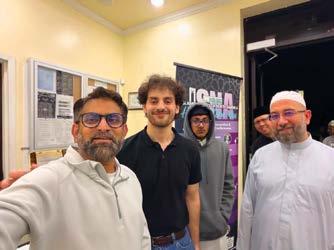
(From left to right) Syed Ansar Hasan and ISNA volunteers Sheikh Saad Hasanin and Br Abdul Azeem at the Islamic Center of Coppell in Texas.
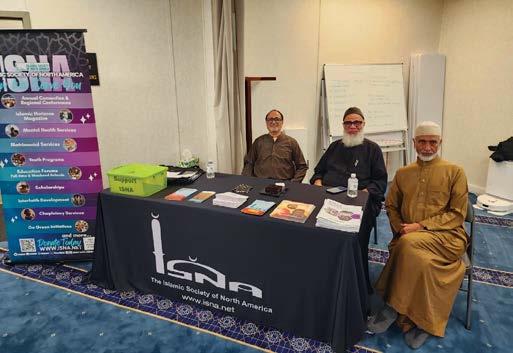
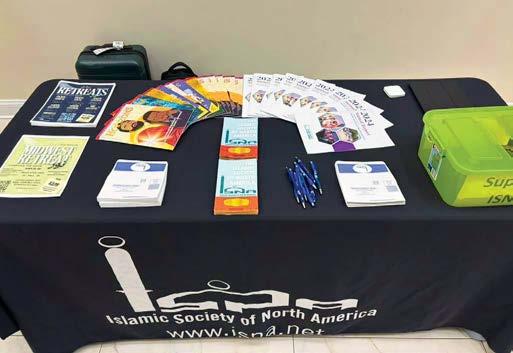
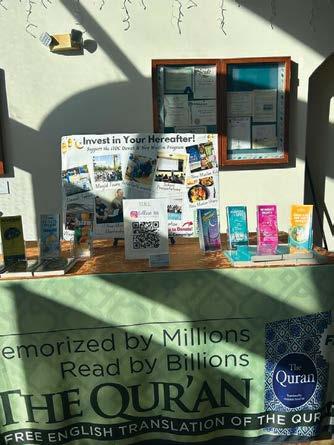
ISNA information table at the Memphis Islamic Center.
Ahmed Badawi (center left) with ISNA volunteer Shafi Rehman at Masjid Hamza in Atlanta.
Azhar Azeez addressing the congregation at Sachse Muslim Society in Sachse, Texas.
Azhar Azeez addressing the congregation at the Islamic Association of Allen in Texas.
Basharat Saleem addressing the congregation at the Jamaica Muslim Center in Queens, N.Y.
Azhar Azeez addressing the congregation at Masjid Arafat in Sugarland, Texas.
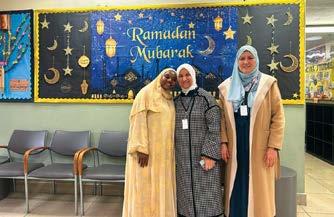
Dahabo Kerow (left) with dedicated staff of Al Huda Islamic School in Hawthrone, California.
New Muslim resources at Islamic Institute of Orange County.
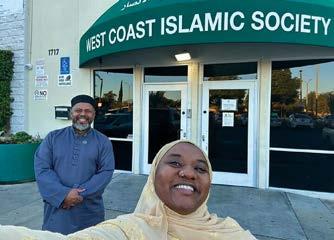
MYNA Director Fiyyaz Jaat and MYNA Development Manager Dahabo Kerow during a visit to West Coast Islamic Society in Anaheim, California.
ISNA’s 2026 Annual Convention to Interpret America’s Turbulent Moment
The Drift and the Duty
BY RASHEED RABBI
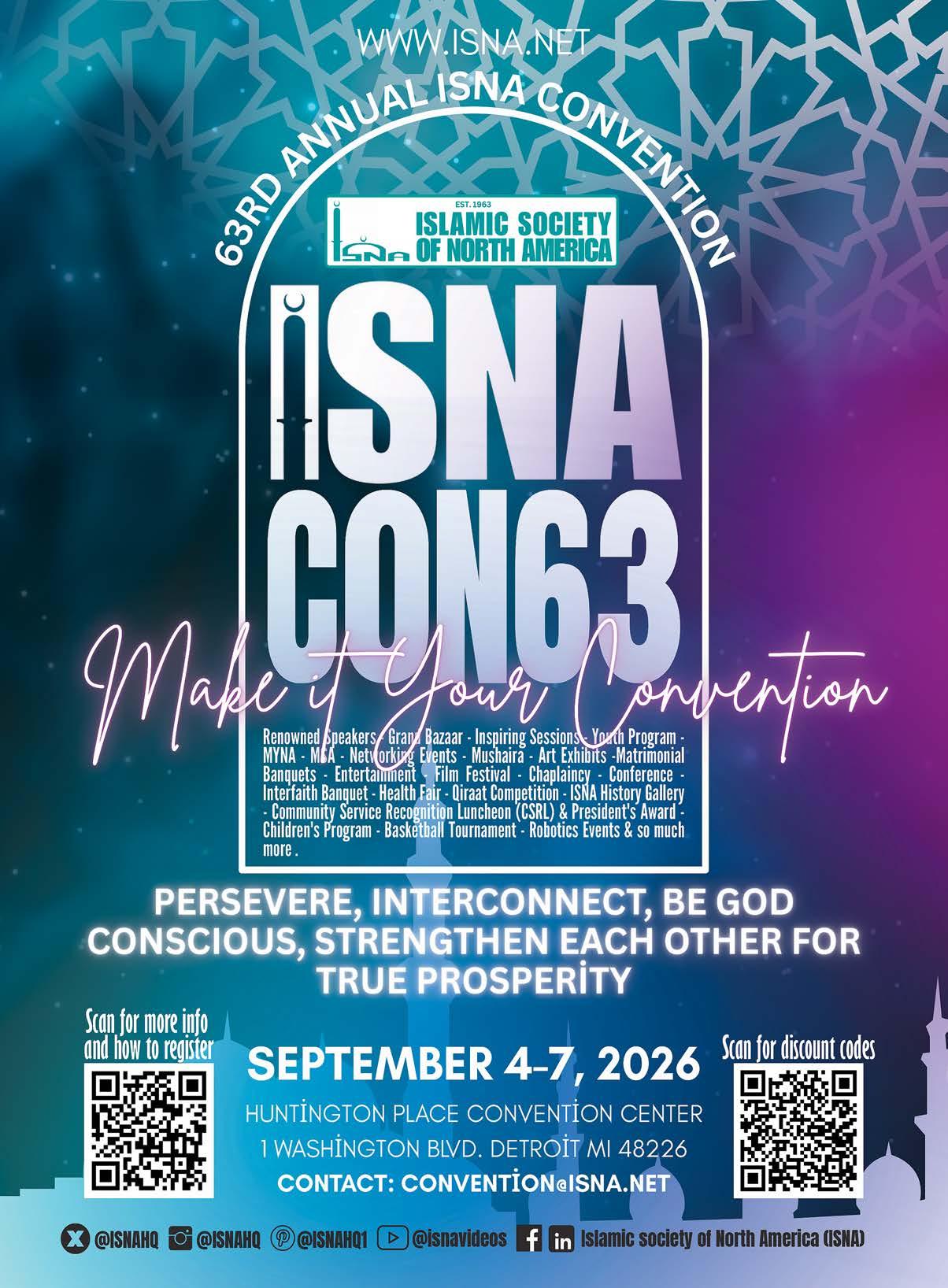
For over six decades, a single tradition has carried the weight of a community’s hopes, questions, and collective resolve: the Islamic Society of North America (ISNA) Annual Convention. This signature event of the ISNA calendar year unites thousands of souls, hundreds of the world’s most esteemed scholars, and a global network of organizations. It serves as a strategic point for ISNA to align its vision and priorities for the coming year among its leadership, members, partners, supporters, and the broader Muslim American community. And it all ignites from a single spark — a theme that sets the gathering’s coherence and a direction.
This year’s theme is “Persevere, Interconnect, Be God Conscious, Strengthen Each Other for True Prosperity.” It is not a slogan or a symbol, but a strategic expression of ISNA’s mission. This theme frames the moment we are living in as Muslim Americans, highlights the challenges before us, and elevates the values that must guide our collective work. To undertake this analysis with depth and integrity, the Convention Program Committee (CPC), a dedicated group of roughly 10 members — remains engaged all year long.
The CPC does not chase headlines or react to political noise. It examines the national landscape, the global pressures
shaping Muslim life, and the ethical responsibilities rooted in Islam. Through this disciplined approach, the theme-setting process moves through three steps:
❶ Analyzing the American moment — grounding the theme in the lived realities and sociopolitical context of the U.S.
❷ Framing within Islamic ethical lens — evaluating those realities through the principles of the Quran and Sunnah to ensure moral clarity.
❸ Refining a resonating theme — distilling the analysis into a concise expression to guide the convention’s conversations, speakers, and community energy.
This year, the process extended beyond internal deliberation. Nearly 40 respected leaders were invited to share concerns, insights, and recommendations to broaden the circle of ownership long before the convention begins. To widen that circle even further, we trace how the theme emerged, why it matters, and how it becomes a compass for the Muslim community to seek clarity, purpose, and strength.
Step 1: Analyzing the American Moment
The year 2026 marks the 250th anniversary of the Declaration of Independence — a milestone meant to honor a nation founded in the principles of freedom, justice, and democracy. Yet the country approaches this moment not in celebration but in chaos and
turmoil. The recent upheavals, at home and abroad, have stripped the anniversary of triumph and replaced it with a stark question: how far have these ideals drifted from their promise?
That drift becomes undeniably systematic when viewed through two interconnected lenses: domestic turmoil and international fracture.
a. Domestic Turmoil
The most unnerving shock to the American public has been the release of the Epstein Files, which scathe political elites, corporate giants, and Hollywood icons by exposing their dark, hedonic, satanic proclivities in full view. Reports of citizens killed, legal residents harassed, and due process eliminated have deepened fears that foundational rights are collapsing. The “shameless” (Democratic Erosion Consortium, Dec 1 2025) refusal of leaders to accept basic accountability has only intensified the sense of moral decay pervading the country.
The legal system, meanwhile, has become a scapegoat. A series of emergency orders bypassed full briefing or oral argument through its so-called “shadow docket” and handed in repeated victories to the Trump administration. These rulings carried sweeping consequences: maintaining tariffs, enabling immigration raids built on racial profiling, and reshaping policy without public scrutiny. Political pressure has strained democratic institutions to their limits and heightened concerns about the judicial process being weaponized not only to secure policy wins but to target political opponents.
Unresolved crises from 2025 now define the volatile terrain of 2026. Courts are weighing explosive legal battles: transgender athletes in sports, the constitutional status of birthright citizenship, and allegations that Louisiana’s redistricting efforts disenfranchised voters are all expected to reach critical decisions. Each ruling carries the potential to ignite new political and cultural battles. Layered onto this are looming midterm elections, economic decline, and accelerating climate instability — forces converging to create a national atmosphere thick with uncertainty, tension, and fracture.
b. Volatile Global Posture
International posture equally mirrors America’s domestic disarray. The year opened with a geopolitical shock as the U.S. carried out strikes inside Venezuela and kidnapped its president on Jan. 3. Such “reckless,
chaotic, self-serving, and unconstitutional” move, as described by the Daily Post, continued as the administration threatened to coerce Greenland into becoming a U.S. territory and culminated in the indiscriminate bombing of Iran on Feb. 28 even as every major ally criticized and distanced itself from the U.S.
This was not an aberration but part of a consistent pattern of rigid alignment with Israel driven by deep institutional (The American Israel Public Affairs Committee [AIPAC]) influence, according to Politico. Trump publicly echoed the Israeli government’s narrative on Gaza, asserting —
with differing beliefs not as fellow citizens with competing ideas, but as threats to the nation’s future. Trust in neighbors and institutions has eroded. Civil dialogue has evaporated. The shared sense of national identity that once defined American democracy has diminished.
The irony is sharpest in the technology sector. Breakthroughs in artificial intelligence and the global reach of social media have not slowed the fracture. Instead, they have amplified outrage and misinformation while rewarding tribal loyalty over mutual understanding, casting a growing shadow of oligarchy.
If we lose our ethical compass while criticizing society’s moral decline, we risk mirroring the very decay we condemn. Hence, silence in such contested times is not neutrality, it’s an ethical failure.
incorrectly — that Israel had fully complied with a ceasefire and placing sole blame on Hamas. The stance drew backlash even from parts of his own political base who accused the administration of distorting events and displaying troubling complacency in foreign affairs.
c. A Nation at an Inflection Point
Taken together, these domestic and global ruptures reveal a country standing at an inflection point. The U.S. experienced its most intense partisan division in decades as the nation stands more fractured than at any point since the Civil War. The longest government shutdown in U.S. history only underscored the paralysis. Hostility toward the opposing party has hardened into a strange zero-sum mindset in which any gain for one side is seen as a loss for the country.
Polarization in 2026 is no longer a simple disagreement. It is identity driven, emotionally charged, fueled by fragmented media ecosystems, intensified by high-stakes political battles, and rooted in fears about democracy, rights, and national identity. In this climate, compromise feels like betrayal, and many believe the opposing side poses a genuine threat to the nation’s future.
Such polarization cuts across every line — political, racial, religious, and cultural. Some Americans increasingly view those
Step 2: Framing within Islamic Ethical Lens
Political turmoil, institutional erosion, global volatility, and deepening moral fracture create not only a civic crisis but a profound moral test. Awareness alone is insufficient. Outrage destabilizes us. Despair defeats our resolve. If we lose our ethical compass while criticizing society’s moral decline, we risk mirroring the very decay we condemn. Hence, silence in such contested times is not neutrality, it’s an ethical failure.
ISNA’s CPC therefore seeks to extract meaning from chaos and distill it into a direction the community can trust. It views America’s moral crisis not as an opportunity for triumphalism. We are tasked with neither saving America nor judging it from afar, but with demonstrating perseverance in upholding a roadmap grounded in faith and responsibility.
Muslims in the U.S. — like many minority communities — have long navigated this turbulence. Our experiences reveal how ordinary people endure extraordinary times, and how communities adapt when the nation they call home enters profound uncertainty. These experiences answer urgent questions. How do Muslims preserve ethical integrity under pressure? How do we model justice without power? How do we speak when silence is rewarded?
The crux of these answers lies in confronting the tension: seeing the world clearly without surrendering to despair; acknowledging brokenness while believing in repair; facing darkness while protecting the capacity for light. The choice is not optimism versus pessimism; it is responsibility versus withdrawal.
Responsibility demands action, which may take many forms: advocacy, art, solidarity, repair, truth-telling, or creating spaces for others. The ISNA Convention is designed to articulate these responsibilities so Muslims may safeguard our rights amid deepening political divides and resist panic and cynicism in the face of renewed public anger over elite impunity. To bridge awareness and transformation, ISNA embraces the verse, “O believers! Patiently endure, persevere, stand on guard, and be mindful of Allah, so you may be successful” (Quran 3:200).
This verse calls us to move forward with constancy, to strengthen one another, and to remain conscious of God so that we may achieve collective prosperity. It highlights four key principles:
Sabr — perseverance, constancy, self-restraint.
R abita — coming together to strengthen one another.
Taqwa — an ever-present consciousness of God.
Falah — success, well-being, and flourishing.
Putting these principles to work is not an individual task but a communal responsibility. Each of us must step forward to strengthen bonds, build trust, and support one another as bipartisan politics try to divide us, both domestically and globally.
Step 3: Refining a Resonating Theme
At this intersection of reality and responsibility — where crisis must be translated into clarity, fracture into focus, and uncertainty into a shared path forward — the theme “Persevere, Interconnect, Be God-Conscious, Strengthen One Another for True Prosperity” emerged.
It is a duty call to resist the drift and anchor the convention. It is the lens through which every session is shaped. It is the direction we carry into the year ahead. Join us in claiming your participation. ih
Dr. Rasheed Rabbi, an Islamic Horizons board member, is the founder of e-Dawah and secretary of the Association of Muslim Scientists, Engineers and Technology Professionals. He serves as a khateeb at the ADAMS Center and is a certified Muslim chaplain at iNova Fairfax, iNova Loudoun, and Virginia’s Alexandria and Loudoun Adult Detention Centers.
Rooted and Ready
Recap
of ISNA’s 27th Annual Education Forum
BY CRYSTAL HABIB
On April 3 to 5, the Islamic Society of North America (ISNA) hosted its 27th Annual Education Forum in collaboration with WISER and The Council of Islamic Schools based in North America (CISNA), in Chicago. It welcomed about 450 educators, administrators, parents, counselors, curriculum designers, mental health professionals, and community leaders for a weekend of practical learning and prophetic inspiration under the theme “Rooted, Ready: Developing Authentically-Grounded Leaders — Identity, Wellness, Resilience in Challenging Times.”
A Live Classroom of Islamic Education
More than a conference, the Forum, which was supported by 22 vendors and eight sponsors, felt like a live classroom; a program that balanced actionable pedagogy with spiritual formation. Panels, workshops, and plenaries emphasized that Islamic education’s highest aim is the cultivation of ethically-grounded human beings — students and teachers who embody ihsān (excellence), amanah (trust), and rahmah (mercy) — so faith and excellence inform every classroom decision.
Framing the Work: Tazkiah, SEI, and Ihsān
A throughline across sessions was the insistence that interior formation (tazkiah) is
the foundation of effective schooling. Yusuf Jaaber, the director of Quran, Arabic, and Islamic studies at the Universal Academy of Florida in Tampa, reframed Social-Emotional Intelligence (SEI) as prophetic heart-work — SEI practiced, not merely taught — and offered simple daily routines (two-minute heart checks, comforting-voice scripts, private-correction protocols) for embedding relational work into school life. CISNA Vice President Farea Khan urged leaders to reframe teacher evaluation through Islamic values — ihsān, amanah, rahmah, niyyah (intention), adab (etiquette) — so observations and feedback become acts of tarbiyah (spiritual nurturing) rather than compliance.
Mental Health, Restorative Culture, and Staff Wellness
Mental health and restorative practice sessions centered on mercy and resilience. Psychiatrist Ali Syed modeled a biopsychosocial-spiritual approach to educator resilience (grounding techniques, peer-processing groups, niyyah resets), while educator, author, and trainer Dr. Suher Khirallah and Adjunct Professor of Clinical Psychiatry at the Indiana University School of Medicine Dr. Sarfraz Khan presented restorative frameworks — “What happened? Who was affected? How can we
fix it?” — that replace punitive discipline with relational repair. They emphasized a well-supported teacher multiplies goodness across generations.
Practical Curricula for Diverse Learners
Curriculum sessions bridged neuroscience, inclusion, and joyful pedagogy. Educational psychiatrist Nelly Kaakaty’s ACCESS framework (Anchor, Chunk, Check, Embed, Scaffold, Signal) offered ready classroom support for neurodivergent learners. Founder of Muslim Explorers Iman K. Hasan and her team demoed a play-based, Quran-centered Arabic sequence for students ages 3 to 6; Dr. Iman Hashem, a nationally-recognized leader in Arabic language education, showcased UDL strategies to center identity in Arabic classrooms; and Noor Academy Quranic Studies teacher Ustadh Hasan Peay argued convincingly for multimodal, differentiated approaches to Hifz that honor historical transmission while expanding access.
AI, Ethics, and Assignment Design
A timely panel on Artificial Intelligence led by technology leader Muhammad Aamir Usmani and colleagues positioned AI as a powerful tool under human stewardship. Speakers recommended an Islamic ethical lens (niyyah, amanah, adl [justice], ihsān, Hifz al‑Aql [preservation of intellect]), formation of school AI ethics committees, clear written policies, teacher training in prompt and verification practices, and redesigning assessments to foreground process, defense, and local/contextual work so student reasoning cannot be outsourced.
Weekend Schools, Parent Partnership, and Ecosystem Design
Weekend - school leaders grappled with short instructional time, volunteer burnout, and competing digital attention. Islamic educator Kristin Amina Laktaif urged a resilient ecosystem model — mandatory parent partnership orientations, PTO structures, hybrid reinforcement, gamification, and professional micro-PD — to transform weekend programs from transactional services to community anchors. Teacher and lawyer Mahdy Amine’s Paradigm Parenting reframed parent development as school infrastructure: mandatory short spark sessions and a 30 - day practice journey were recommended to align home and school.
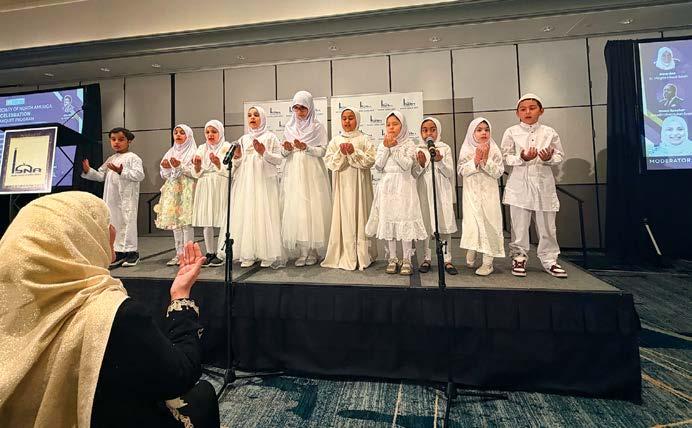
Nasheed Presentation from ICN Noor Academy students.
Governance, Compliance, and Institutional Resilience
A panel on practical, legal, and administrative underscored that many crises stem from procedural failure. Speakers urged clear governance boundaries, rigorous HR vetting (including social media checks), external financial audits and dual-signature controls, compliance calendars, and relationship-building with civic and political stakeholders as critical shields against targeted attacks.
Quran, Ethics, and the Sciences
The Quranic studies sessions emphasized minimalist, hinge-principle ethics for volatile times (Donald Bennett), differentiated, multi-modal Hifz strategies (Peay), and a thoughtful engagement between Quranic reflection and science (computer science and engineering professor at the University of Texas at Arlington Dr. Ishfaq Ahmed’s cosmology - linked “Quranic Laws”). Educators were reminded to anchor curricula in Quranic moral hinges while avoiding forced concordism.
Conference Life and Community Witness
The Forum’s opening ceremony and banquet celebrated the prophetic call to teach and build institutions. Islamic educator Magda Elkadi Saleh received the Lifetime Service Award; The American Learning Institute for Muslims’ first scholar-in-resident, Ustadh
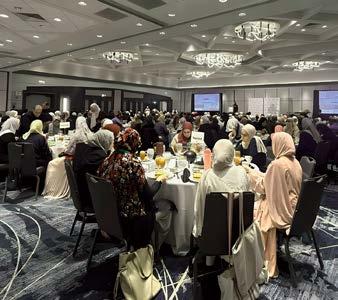
Award Banquet Attendees.
Ubaydullah Evans’s, banquet keynote urged institutional excellence as dawah. ISNA updates highlighted expanded regional engagement, scholarships, and ongoing resource posting.
As suggested by the attendees’ feedback, ISNA will work toward including more Q&A time, broadening representation to include Islamic schools of diverse backgrounds, and making logistical improvements.
Note on Arabic‑Track Content
Arabic-track sessions were delivered in Arabic. Their rich contributions — offered in the same spirit of tazkiah, ihsān, and communal care that animated the Forum — included: Games & Brain Breaks for an Engaged Classroom (Lindblom Math and Science Academy Department Chair Fadi Abughoush); Enhancing Dual-Language Learning with Cooperative Strategies (dual language teacher Rima Mekdashi); Engaging Tools to Unlock the Arabic Writing Potential (teacher at Elizabeth Learning Center Bayan Naamani); and Rooted in the Quran: Identity, Wellness, and Ethical Resilience Through Arabic and Quranic Science (Bayan Academy Quran and Arabic teacher Fatima Antakli). ISNA
plans to publish the speaker presentations to the ISNA website.
Accessing Materials
Slide decks and speaker resources will be posted on ISNA’s resources page. Contact programintern@isna.net with any questions.
Closing Reflection
The Forum modeled a living synthesis of knowledge and mercy: pedagogical craft anchored in prophetic ethics, practical systems to protect schools, and a communal commitment to raising learners who are both rooted in faith and ready to serve the common good. If there was one clear conviction from Chicago, it was this: when you invest in your teachers’ hearts and professionalism, you invest in generations.
Special Thanks
ISNA extends a heartfelt thanks to the program committee, speakers, moderators, attendees, staff, volunteers, and everyone whose labor, wisdom, and du’as turned the Forum into a living classroom of tarbiyah and learning. Special gratitude to our collaborators WISER and CISNA for their partnership, and deep appreciation to our sponsors — American Islamic College, ISF Publications, The Clear Publishing, IQRA Foundation, Dean Desk, ICNA Relief, ISLA, and School Pro — whose support made this gathering possible. ih Crystal Habib is the Communications and Social Media Coordinator at ISNA.
Friday Guest speaker: Preacher Moss Burned Out Ain’t Barakatu: Building Sustainable Islamic Classrooms in a Digital Age.
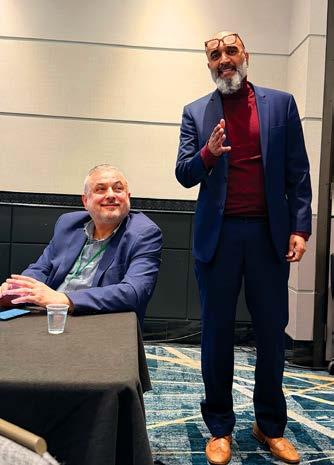
Habeeb Quadri (R) and Safaa Zarzour (L) at the Legal & Administrative Risk Zones: Governance, HR, Compliance, Safety Session.
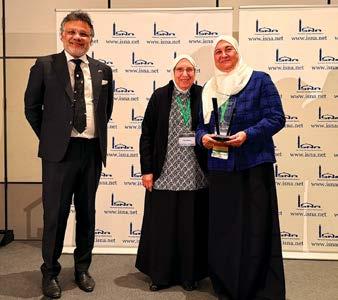
Lifetime Service Award Presented to Magda Elkadi Saleh (R) by her mother, Iman Elkadi (L).
COMMUNITY MATTERS
On Feb. 5, the Islamic Shura Council of Southern California announced the appointment of Masoud Nassimi as its interim executive director.
Nassimi has over three decades of experience in community leadership, nonprofit development, and service. He currently serves on the boards of North America Islamic Trust, Afghan American Muslim Outreach (AAMO), and Masjid Al-Hedayah. He also previously served on the boards of the Islamic Shura Council of Southern California, Orange Crescent School, and the Islamic Center of South Bay. He has played foundational roles in several organizations, including as AAMO founding president, and as President and founding member of Los Angeles chapter of the Council on American Islamic Relations (CAIR), serving as Chair of CAIR-California early in his career.
Nassimi, a retired permit engineer with the California Department of Transportation, was an adjunct professor at Los Angeles Valley College for more than three decades. He is the author of academic textbooks on algebra and several community-focused Islamic publications on topics including Hajj, mosque security, and regional history.
In his new role, Nassimi guides the Shura Council’s strategic initiatives, strengthens community partnerships, and supports service expansion throughout Southern California.
In a press release issued March 26, Washington, DC-based World Kashmir Awareness Forum (WKAF) condemned the life imprisonment verdict issued by India’s National Intelligence Agency against popular Kashmiri leaders, Asiya Andrabi, Fameeda Sofi, and Nahida Nasreen on March 24.
Andrabi, 64, has spent over 15 years in Indian jails, away from her homeland of Jammu and Kashmir. She was accused of “waging war against the state” and “conspiracy to commit terrorist acts” using the draconian
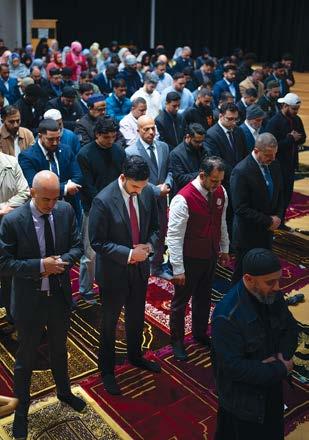
New York City Mayor Zohran Mamdani became the first mayor to attend the New York City Fire Department iftar hosted by the agency’s Islamic Society headquarters in Brooklyn. The iftar was attended by dozens of Muslim firefighters and EMS workers.
“[My goal during Ramadan is] to be myself and to share also what it means to be Muslim in New York City, and how these are not identities that are in tension. In fact, each one is a part of the other,” Mamdani told the Gothamist during an iftar hosted for local journalists at City Hall. A few weeks later, he hosted an iftar with Muslim and non-Muslim New York-based
Unlawful Activities Prevention Act (UAPA), which has frequently been criticized by the UN and human rights bodies for its vague definitions and restrictive bail conditions.
If left unchallenged, Andrabi’s new 30 year sentence will put her at 94-years-old if and when she is released.
Andrabi is a biochemist-turned political leader who spent her political life advocating Kashmiris’ civil and political rights, including the UN-guaranteed right to self-determination. A woman of admirable courage and unparalleled commitment to national freedom, Andrabi has now joined the ranks of daring political and human rights leaders like Nelson Mandella who dedicated their lives to resist foreign occupation and settler colonialism. Her husband, Ashiq Husain
content creators — an event that garnered anti-Muslim vitriol from the political right.
“ For nearly as long as there has been a New York City, there have been Muslim New Yorkers, and yet for nearly just as long, those with power and platform have sought to dehumanize us,” Mandani said in a speech during an iftar hosted for hundreds of city workers at the Museum of the City of New York.
Mamdani also attended an iftar in Brooklyn for South Asian gender-based violence survivors.
New York City is home to an estimated 1 million Muslims who comprise about 9% to 12% of the city’s population. ih
Fuktoo, has already spent 30 years in jail, mostly separated from her. He proposed to her and earned his doctorate in Islamic Studies while imprisoned.
India has illegally occupied and colonized Kashmir since 1947 and often conducts the forcible abduction and transfer of Kashmiri political leaders, human rights activists, and journalists.
WKAF has appealed to the world to stand in solidarity with Andrabi, Sofi, Nasreen, and other defenders of Kashmiri human rights and dignity.
WKAF seeks India to abrogate the tyrannical and draconian UAPA and Public Safety Act. It also calls for the release of all Kashmiri prisoners held in Indian jails without legal due process.
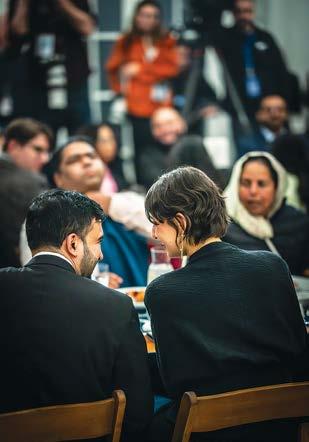
New York City Mayor Zohran Mamdani hosts Iftar for city workers at the Museum of the City of New York on Thursday, March 12, 2026. (Michael Appleton/ Mayoral Photography Office)
In a decision on March 26, the Stratford (Conn) Board of Education recognized Eid-ul-Fitr as a school holiday starting 2027
“On behalf of the Stratford community, we extend our sincere gratitude to the Stratford Superintendent of Schools and Board of Education for their strong support and collaboration since this process began last year,” said CAIR-CT chairman Farhan Memon. “Their leadership ensures that Stratford students can now enjoy Eid with their families and friends without fear of missing school or falling behind academically. This important step places Stratford at the forefront of efforts to combat bullying, racism, and hate, and affirms a commitment to creating a more inclusive and respectful environment for Muslim students.”
For many years, Muslim students had to decide between celebrating Eid-ul-Fitr and going to school. Although schools may grant excused absences in recognition of the holiday, this accommodation often does not fully address the impact of student absence as students are still responsible for making up tests, assignments, and missed lessons. These burdens can create added stress and disruption for both Muslim and non-Muslim students.
CAIR-CT has asked additional towns across Connecticut to build on the leadership of the 24 municipalities that have already made Eid a school holiday. The organization especially encourages districts such as Danbury, Bethel, North Haven, Cheshire, and Berlin to take similar action. ih
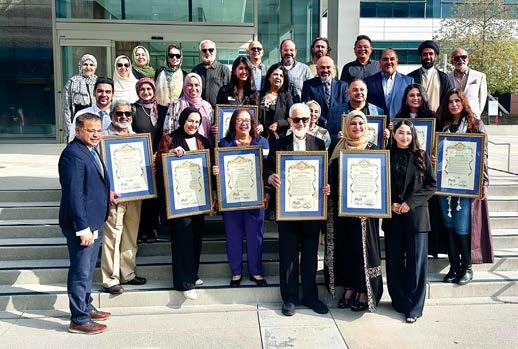
On March 24, the Orange County board of Supervisors in Southern California officially recognized and proclaimed Eidal-Fitr. This initiative was brought forth and sponsored by Orange County Supervisors Doug Chaffee and Vicente Sarmiento.
This proclamation honors the values of Ramadan and Eid which are acknowledged by over 100,000 Muslim residents in Orange County who play a vital role in the broader community.
Dr. Deana Helmy, chairwoman of the Islamic Shura Council of Southern California, and Muzammil Siddiqi, senior advisor of the Islamic Society of Orange County represented the community and shared a few words.
This outcome was a result of years of civic engagement and relationship-building. It is a reminder that Muslims are seen, valued, and woven into the fabric of Orange County. ih
Bergen Tech Students Host First Iftar in School History
MSA Brought Together Over 90 Community Members for a Free, Interfaith Evening
BY THE BERGEN TECH MUSLIM STUDENT ASSOCIATION
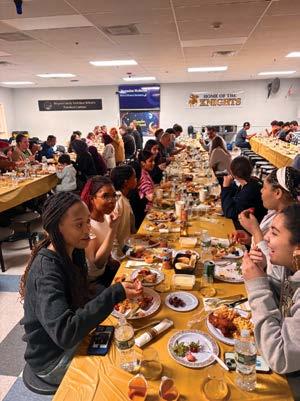
This Ramadan, Bergen County Technical High School - Teterboro made school history as over 90 students, parents, and teachers packed into the school cafeteria on March 12 to share a free meal for the school’s first-ever iftar.
The event was organized by the Bergen Tech Muslim Student Association (BTMSA), a newly formed club in its first year. Co-presidents junior Nazim Kaban and sophomore Zahhra Khan, along with vice presidents junior Yusuf Tunceroglu and sophomore Ayra Ali and a dedicated group of club members, spent weeks securing food sponsorships through Sky Academy NJ, marketing the event across the school, and coordinating a volunteer team of over 15 students.
For Kaban, the idea had been brewing for a while. “Ever since sophomore year, I heard about other schools hosting Iftar dinners during Ramadan and always thought—why not us?” he said. “When we finally got the chance this year, Alhamdulillah, we were all able to come together and create something beautiful that everyone who attended truly enjoyed.”
Despite being the club’s debut event, the turnout exceeded all expectations. A full cafeteria of students, teachers, and parents from different backgrounds broke fast together—a scene that captured the very spirit of Ramadan: community, generosity, and unity. The feedback spoke for itself, with attendees calling it among the best school events in recent memory.
For Khan, the night represented something bigger than just one event. “Starting this club has meant a lot to me,” she said. “Seeing the support from fellow students, teachers, and families at our Iftar dinner was truly fulfilling. We hope to continue representing Islam while fostering a welcoming and inclusive environment for everyone.”
The BTMSA has been busy beyond just the Iftar. Since launching, membership has grown from 7 to 43 students. Earlier this year, members organized a Muslim Heritage Month cultural fair for the whole school with stations representing Muslim-majority countries from around the world. The club is also currently raising money to build a water well in Benin. They have surpassed $1,600 of their $5,000 goal in just one month.
For a club that didn’t exist a year ago, the message is clear. If this Iftar is any indication, Bergen Tech’s Muslim community is only getting started, and its impact will only continue to grow. ih
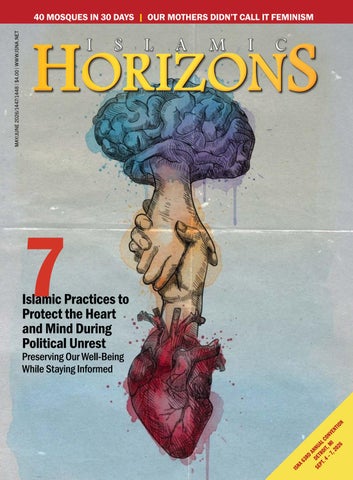
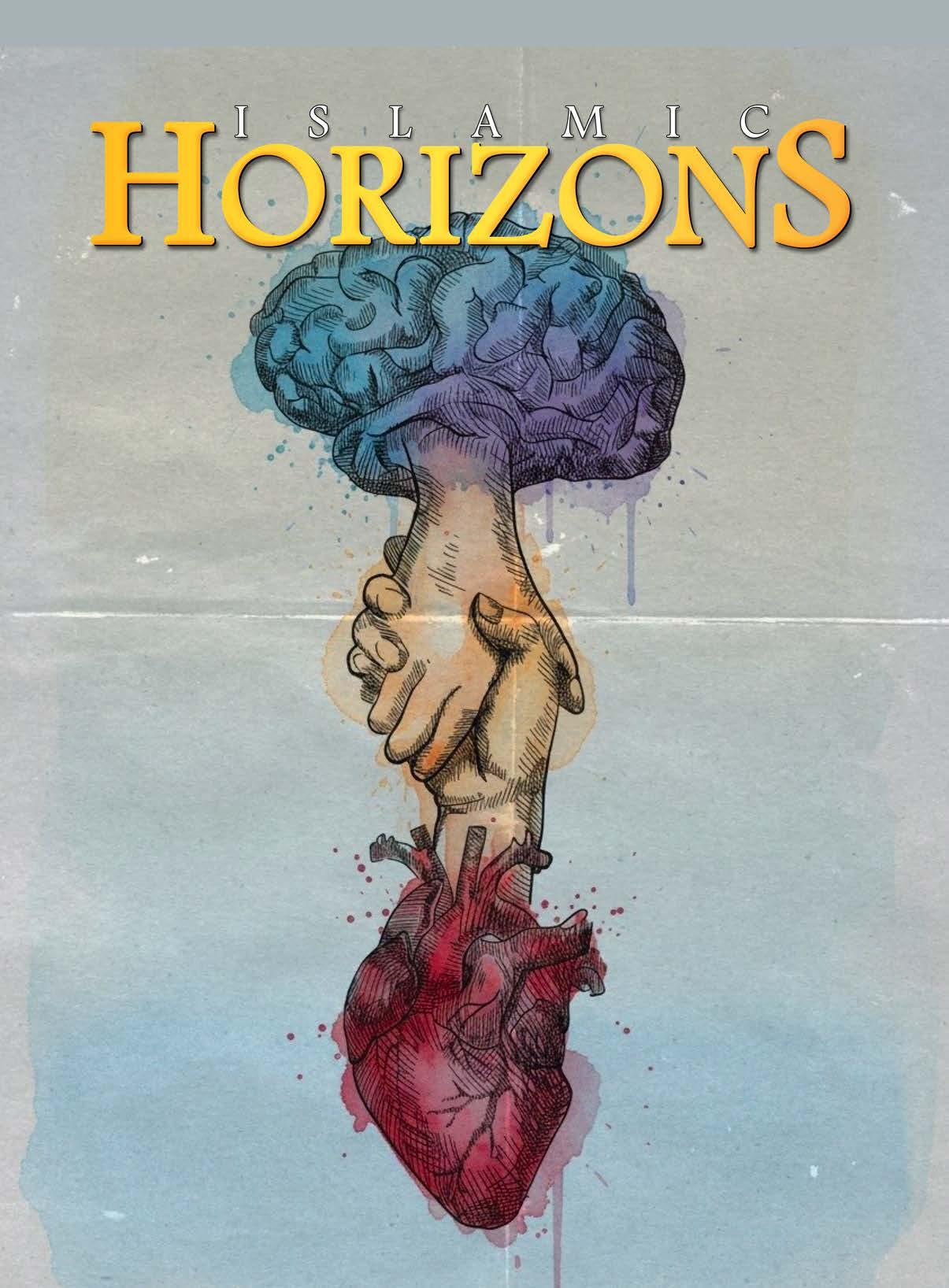
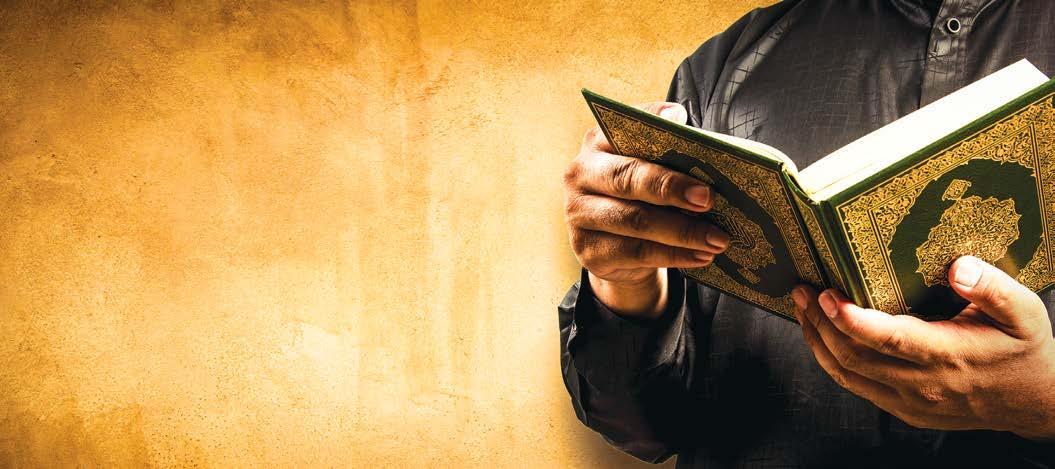
7 Islamic Practices to Protect the Heart and Mind During Political Unrest
Preserving Our Well-Being While Staying Informed
BY WENDY AYALA
In times of political unrest, it can feel as though the world is constantly pulling our hearts and minds in different directions. News cycles, social media debates, and the suffering of our Ummah can leave us feeling overwhelmed, anxious, or even hopeless. Islam recognizes the emotional weight of living through uncertain times and offers guidance not only for our actions, but for the care of our hearts and minds. Through the teachings of the Prophet Muhammad (salla Allahu ‘alayhi wa sallam), Muslims are reminded that
Indeed, in the remembrance of God do hearts find rest.” (13:28)
maintaining inner balance, sabr (patience), and tawakkul (trust in God) are essential for navigating uncertainty.
The following seven practices are drawn from Islam to help people remain spiritually grounded and emotionally balanced during turbulent times. Experiencing worry, sadness, or uncertainty does not mean any weakness of faith; rather, these moments invite people to turn back to God with greater awareness, patience, and trust. Even the previous prophets experienced moments of deep sorrow and hardship, which reminds us that emotional struggle is part of the human experience.
➊ Acknowledge Your Emotions Without Shame
Begin by acknowledging and identifying the emotions you are feeling, while keeping in mind that it is normal for human beings to feel uneasy during difficult times. God reminds us in the Quran, “Indeed, humankind was created impatient” (70:19). Feelings of anxiety, restlessness, or worry are part of human nature. Islam does not ask
people to deny their emotions, but rather to recognize them while turning to God for strength.
The Quran reassures, “God does not burden a soul beyond that it can bear” (2:286). This serves as a gentle reminder that even in the moments of distress or sorrow, people have been given the capacity to endure and grow through difficulty.
➋ A nchor Yourself in Salah
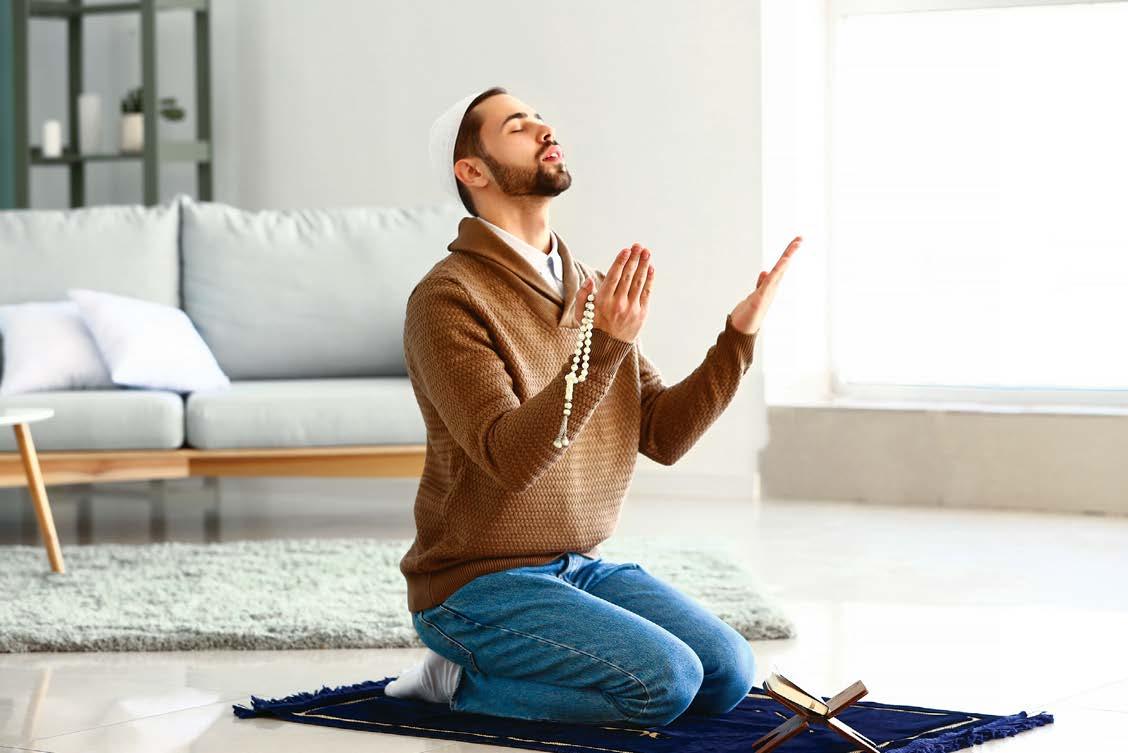
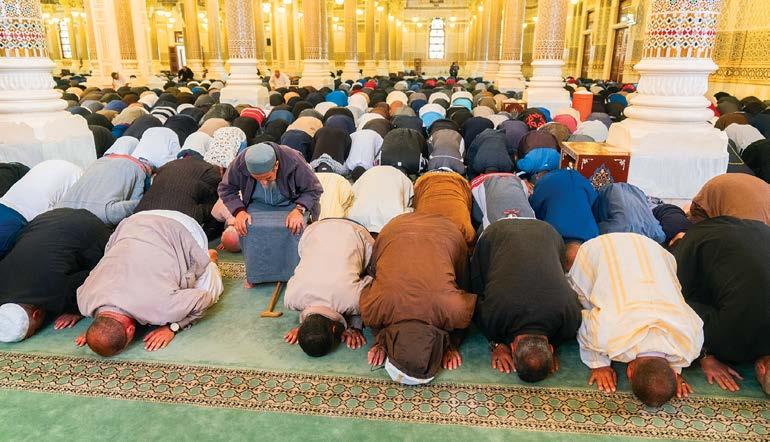
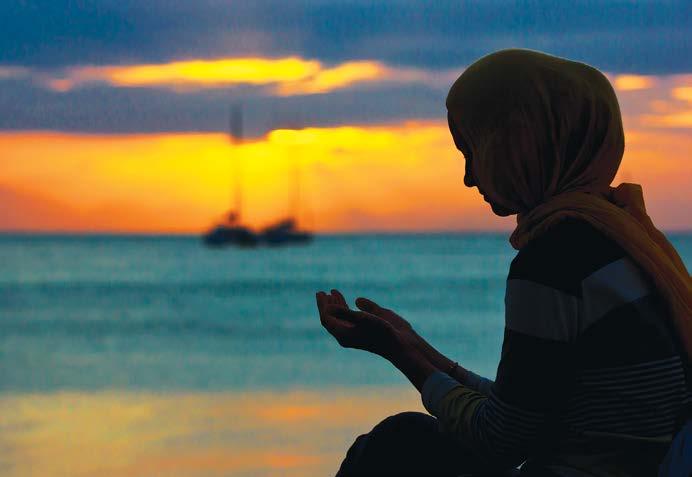
When the world feels unstable, prayer restores sakīnah (tranquility) in our hearts and minds. Salah (prayer) allows Muslims to pause, disconnect from the surrounding noises, and reconnect with God. The Quran states, “Seek help through patience and prayer” (2:45). The Prophet would turn to prayer whenever he felt distressed. Regular prayer provides emotional grounding and reminds Muslims that ultimate control belongs to God.
➌ L imit Harmful Information Overload
Constant exposure to distressing news and political debates can overwhelm the mind and heart. Islam encourages Muslims to practice taqwa (God consciousness) in what they consume and for the information with which they engage. In many ways, this means not only striving to purify their hearts, but also being mindful of what they allow their eyes and minds to take in. Just as we try to guard our hearts from harmful influences, we should occasionally step back and reset our habits with media and online platforms.
The Quran reminds us, “If a troublemaker brings you news, verify it” (49:6). Protecting mental health sometimes means stepping away from constant news consumption and setting healthy boundaries with the media.
➍ Strengthening Tawakkul
Political instability can make people feel powerless. Tawakkul reminds Muslims that while they take action and care about justice, the ultimate outcome belongs to God: “And whoever relies upon God — He is sufficient for them” (65:3). Trusting God does not mean ignoring reality; it means believing that His wisdom and justice extend beyond what we can immediately see.
The Prophet also reminded of this reliance when he said to Ibn ‘Abbās (radi Allahu ‘anh), “If you ask, ask God. And if you seek help, seek from God” (Tirmidhi). While the world around us may feel uncertain, the ultimate source of strength, help, and support
remains with God alone. Tawkkul allows the believer to act with sincerity while leaving the weight of outcomes in God’s hands.
➎ Turn to Dhikr and His Names for Inner Calm
The remembrance of God is one of the greatest sources of emotional and spiritual relief. In moments of distress, turning back to God through dhikr (remembrance) and reflecting on His beautiful names can help bring the heart back to a place of calm and trust. The Quran states,“Indeed, in the remembrance of God do hearts find rest” (13:28).
During these times, politics might have an impact on the way we experience the divine, the way we turn back to God, and how we’re able to reconnect with His names. Therefore, calling upon God through His names reminds Muslims of what they might need the most right now. When we feel overwhelmed, we should remember Al Latif (The Subtle, The Refined) and understand His subtle control of worldly affairs. When the future feels uncertain, reflecting on Al Hakīm (The Most Wise) reassures that God’s wisdom encompasses what humans cannot see. And when hearts feel heavy, turning to Ar Rahmān and Ar Rahīm (The Most Compassionate, the Most Merciful) reminds that Allah’s mercy is greater than any hardship we face.
Simple acts of dhikr — such as saying SubhanAllah, Alhamdulillah, and Allahu Akbar — can bring calm and clarity to a troubled heart.
➏
Focus on Small Acts of Good
During difficult times, focusing only on problems can lead to feelings of helplessness. Islam encourages believers to respond to hardship through acts of goodness and service.
The Prophet said, “The most beloved people to God are those who are most beneficial to others” (Al-Mu’jam al-Awsat lilTabarānī 5937). Helping others — whether through charity, community support, or kindness — restores a sense of purpose and hope.
➐
Hold Onto Hope
Finally, Islam teaches believers to never lose hope in God’s mercy and justice.
The Quran reminds, “Indeed, with hardship comes ease” (94:6).
Political turmoil and social challenges are not permanent. Maintaining hope helps
protect the heart from despair and strengthens our resilience.
It would be a disservice to yourself and those around you to shut yourself out from the world. God has created Muslims as a balanced community (2:143), and they are encouraged to nurture both the outward and inward aspects of their well-being. Some practices take form in the physical sense such as prayer, limiting harmful information, and acts of service while others take place in the heart and mind — acknowledging emotions, strengthening tawakkul, engaging in dhikr, and holding onto hope. Both are necessary.
As the constant flow of media continues, separating politics from daily life may seem impossible. In these times, Muslims are reminded that ultimate control belongs to God. Difficult times test one’s patience, but they also invite one to deepen the faith, strengthen the character, and embody the mercy and resilience taught in the Quran and the Sunnah: “God intends ease for you, and does not intend hardship for you” (2:185). ih
Wendy Ayala, MSW, is an associate psychotherapist at Khalil Center with over six years of experience serving diverse populations. Since embracing Islam in 2020, she integrates faith-centered care to support individuals and families.
ISNA is Rethinking Mental Health in Muslim Communities Understanding Stigma and Support
BY SALMAN SHAHEEN AHMAD
In recent years, mental health has become an increasingly important topic both globally and within Muslim communities. However, this was not always the case. For many years, mental disorders were placed into a single category: “crazy.” Diagnosable conditions were often dismissed or seen as irrelevant to some Muslims, sometimes justified through selective interpretations of scripture such as “verily, with hardship comes ease” (Quran 94:5).
To combat this stigma, Muslim communities must have a better understanding of what mental health is and the kinds of support available for those struggling with mental illnesses.
Mental health refers to our emotional, psychological, and/or social well-being. These aspects affect how we think, feel, manage stress, and relate to others. These God-given emotions serve important functions. For example, anxiety can protect us by reminding us to look both ways before crossing the road. But when emotions cause significant distress or impairment affecting work, personal relationships, and/or daily functioning, they may indicate a mental disorder. Importantly, when individuals are able to recognize these signs of distress and impairment, they are far more likely to seek help.
Mental disorders, such as major depressive disorder or social anxiety disorder, affect thinking, mood, and behavior and may require professional support. They arise from a combination of biological, psychological, and social or environmental factors that interact to increase risk for a disorder. As with physical health, most people will experience some mental health difficulty in their lives. Some challenges resolve on their own, while others may become more severe and require longer-term care. Early recognition and intervention can significantly reduce their impact.
A Complicated History and a Missed Legacy
Early approaches to mental illness were often inhumane and sometimes included long-term institutionalization. Over time, advances in medicine and scientific research
led to more compassionate approaches focusing on accurately diagnosing and treating disorders. Many researchers, including those shaped by the profound traumas of the 20th century, contributed to the development of evidence-based psychological treatments by implementing lessons from their lived experiences in well-funded scientific endeavors.
However, these developments did not reach all communities equally. In many Muslim societies, stigma and limited access to care slowed the adoption of modern mental health practices. The field itself continues to face important debates and limitations, but significant progress has been made.
At the same time, an important part of Islamic intellectual heritage has been largely forgotten. Scholars of the Islamic Golden Age not only advanced fields such as chemistry and algebra but also described mental disorders and holistic approaches to their treatment over a thousand years ago. These approaches integrated spiritual, medical, psychological, and social dimensions of care. While some historical practices are no longer considered effective (e.g., bloodletting and alchemy), others such as reframing unhelpful patterns of thinking (cognitive restructuring) and gradually facing situations that unnecessarily cause us to feel afraid (incremental exposures) closely resemble modern, evidence-based treatments.
This legacy demonstrates that mental health is not foreign to Islamic tradition and that empirical methods are an important way to find solutions to mental disorders as they have been for other diseases. It also reflects a long-standing commitment to understanding human well-being through both
faith and reason. Yet this history is rarely recognized in modern textbooks of mental health, contributing to the perception that these conversations are new or incompatible with Islamic cultures and values.
It is true that healing ultimately comes from God, and that patience and prayer are central to finding comfort. At the same time, the Prophet (salla Allahu ‘alayhi wa sallam) encouraged seeking treatment and caring for ourselves and one another. In many communities, however, mental health has been avoided due to stigma and fear of judgment. It has often felt safer to ignore distress and hope it resolves on its own, rather than to seek help. Some also use spiritual beliefs and practices to avoid facing difficulties (called spiritual bypass), but this was also discouraged by the Prophet as demonstrated by teachings such as “tie your camel and trust in [God]” (Al-Tirmidhi 2517).
Avoidance, however, is a hallmark of many mental health difficulties and is often a key focus of treatment. When combined with broader challenges such as conflict, economic instability, discrimination, and intergenerational trauma, the impact on the mental health of our Ummah can be profound. But people are resilient, and when faced with difficulties in themselves or their families and communities, they are motivated to find solutions.
Reclaiming Intellectual and Spiritual Heritage
In recent decades, scholars, clinicians, and community leaders have been investigating why many Muslims don’t seek mental health care and are working to address mental health needs in Muslim communities. Efforts have included developing Islamic approaches to care (e.g., Traditional Islamically-Integrated Psychotherapy), adapting evidence-based treatments to align with Islamic beliefs and values (e.g., Islamic Trauma Healing), and increasing awareness and access to services. This work has taken many forms. There
are now annual conferences dedicated to Muslim mental health (like Michigan State University’s Muslim Mental Health Consortium), 24/7 hotlines for Muslim youth and families (e.g., Naseeha), financial assistance programs for those who cannot afford care (e.g., Friends of Humanity), and directories of Muslim providers (e.g., Ruh Care). There are also emerging efforts to bring these resources together in more centralized and accessible ways (e.g., the Muslim Psychology Center, or the Inclusive Muslim Mental Health Alliance). These developments reflect a growing recognition of the need for culturally- and spiritually-responsive care, as well as a commitment to addressing longstanding gaps in services.
At the same time, high-quality research on Islamically-integrated treatments remains limited, often due to a lack of funding and trained researchers. Continued investment in both community-based initiatives and scientific research will be critical for sustaining and expanding these efforts.
From Awareness to Understanding: Why Mental Health Literacy Matters
Alhamdulillah, the tides are beginning to change. Yet acknowledging the importance of mental health alone is not enough. Many still lack clear, accessible, and trustworthy information about mental health and seeking support.
This gap highlights the importance of mental health literacy, the knowledge and skills needed to recognize mental health concerns, understand available supports, and respond effectively. This includes knowing when stress becomes something more serious, understanding treatment options, and feeling confident navigating available resources.
For Muslims, the pursuit of knowledge is deeply rooted in tradition. Seeking beneficial knowledge is an obligation, and acting upon it is a responsibility. Mental health literacy is not separate from faith; it is a continuation of it. Just as Muslims encourage the pursuit of
The
Islamic Society of North America (ISNA) launched its Mental Health Initiative to promote mental
well-being and resilience across
individuals, families, and
communities.
Muslim
The
initiative
aims to make mental health knowledge more accessible, relevant, and grounded in Islamic values.”
medicine and other fields, they should also encourage learning about and contributing to the advancement of mental health care.
Building a More Connected Path Forward
Recognizing this need, the Islamic Society of North America (ISNA) launched its Mental Health Initiative to promote mental well-being and resilience across Muslim individuals, families, and communities. The initiative aims to make mental health knowledge more accessible, relevant, and grounded in Islamic values.
Rather than creating new systems from scratch, the initiative seeks to connect and uplift the many scholars, clinicians, and organizations already engaged in this work, while making their resources easier to find and use. ISNA’s mission is to foster the development of the Muslim community s by facilitating existing efforts while also contributing its own.
The initiative focuses on several priorities: Connecting mental health to Islamic teachings and history
Helping individuals and families recognize challenges and seek appropriate care
Sharing tools to build resilience using both Islamic and evidence-based approaches
Improving access to trusted resources for prevention, support, and crisis situations
Supporting providers in delivering culturally and spiritually responsive care
While preventing all mental health difficulties may not be possible, increasing
knowledge, reducing stigma, and strengthening resilience can help communities respond earlier and more effectively. ISNA encourages the community to follow and engage with these efforts as it begins to share resources. Supporting mental health in Muslim communities requires more than any one profession can offer. Counselors, social workers, marriage and family therapists, chaplains, imams, community leaders, families, and friends all play essential roles in recognizing distress and helping individuals access care. When people can recognize signs of distress and understand how these challenges affect their daily functioning, they are far more likely to seek help or encourage others to do so.
This is the promise of mental health literacy: not that it removes hardship, but that it enables us to respond with clarity, compassion, and action. Muslims are called to seek knowledge, care for one another, and take the means available to them while placing trust in God. By strengthening understanding of mental health and making use of available resources, Muslims can move from silence and uncertainty toward support, resilience, dignity, and collective wellbeing. In doing so, they embody the Prophetic guidance to tie their camel — acting upon the means available to them — while placing trust in God. ih
Dr. Salman Shaheen Ahmad is a clinical psychologist and postdoctoral fellow at the University of Pennsylvania. His work focuses on cultural and spiritual factors influencing mental health and its care. He serves as Chair of ISNA’s Mental Health Initiative.
The Power of Routine
Lessons from the Quran and Sunnah on Mental Health
BY BATOUL KOUSSAN
The Quran and Sunnah provide countless lessons that support mental and emotional well-being by encouraging structure, balance, and intentional living. Islam teaches that a believer’s life should be organized around meaningful routines that nurture both the body and the soul. Acts of worship, such as the five daily prayers, naturally structure the day and allow for moments of contemplation and reconnection with God amid the chaos of daily life. These routines promote mindfulness, consistency, and spiritual grounding, all of which sustain one’s mental health.
From Islamic teachings and scientific and public health perspectives, the human mind thrives on predictability. When days lack organization, freedom can initially feel liberating; however, too much freedom without boundaries often leads to mental drift and a loss of purpose. Discipline is often mistaken for restriction, when in reality it serves as protection. Structure provides a container for our thoughts, emotions, and energy and helps our minds remain focused and grounded.
At the center of this is living with ma‘nā, purpose. Purpose shapes how we spend our time and how we connect our actions to our awareness of God. Without purpose, our days can feel unorganized and overwhelming. When routine is guided by intention and spiritual awareness, even simple activities have meaning.
Islamic teachings emphasize balance, reflection, and dependence on God in times of ease and difficulty. Through dhikr
(remembrance), du‘a (supplication), and tawakkul (trust in God), believers develop inner peace and mental resilience. The Sunnah also models healthy habits such as sleep, exercise, gratitude, and tending to the body as an amanah (trust) from God. Together, the Quran and Sunnah provide a holistic framework for overall health. When daily routines are grounded in niyyah (intention), ma‘nā, muhasabah (self-reflection), and tafakur (contemplation), ordinary habits become acts of worship. Consistent practices such as prayer, reflection, rest, and remembrance create a strong foundation for mental stability and general well-being.
The Three Pillars of a Healthy Routine ❶ Purpose
The first pillar of a healthy routine is ma‘nā. How we begin our day and set our intentions shapes our actions as well as our mental and physical states. Living with niyyah in even the smallest tasks transforms mundane moments into meaningful chances for growth. A clear purpose serves as an anchor for our minds and helps prevent mental instability. When our efforts are driven by awareness and direction, everyday duties such as making breakfast, responding to messages, or going to work take on greater value. Intentional living creates a barrier against chaos and the void that can contribute to poor mental health. Purpose reminds us that each moment has potential, and that aligning our actions with mindful intention helps both mental clarity and spiritual well-being.
❷ Movement
The second pillar of a healthy routine is movement. Physical activity is not only important for general fitness but also plays a vital part in regulating mood, energy levels, and mental health. The Quran states, “Spend in the cause of Allah and do not let your own hands throw you into destruction ‘by withholding’. And do good, for Allah certainly loves the good-doers” (2:195). Caring for the body is a sacred duty. Our bodies are an amanah entrusted to us by God, and how we treat them mirrors our respect for that trust. Movement does not have to be complicated or time consuming. Simple actions such as walking, stretching, or light exercise can help relieve stress, stabilize emotion, and maintain energy. When we consciously integrate movement into our routines, we, in return, strengthen our physical and mental health.
❸ Reflection
The third pillar of a healthy routine is reflection. Intentional breaks throughout the day allow us to process thoughts and emotions before they accumulate into stress or overthinking. According to Surah Al-Hashr, “O you who have believed, fear Allah. And let every soul look to what it has put forth for tomorrow - and fear Allah. Indeed, Allah is Acquainted with what you do” (59:18). Practicing muhasabah helps us reassess our intentions, actions, and habits, guaranteeing that we stay aligned with our values and purpose. Reflection enables clarity and self-awareness. By regularly checking in with ourselves, we create space to identify patterns, release negativity, and respond to
people and situations with intention rather than reacting impulsively. These efforts, whether journaling, reflecting, driving, or walking, serve as anchors for our mind. When reflection becomes part of daily life, it helps us strengthen mental resilience and deepens our connection with God.
Islamic Perspective on Routine and Well ‑ Being
Islam is a faith embedded in structure and intentional discipline. This discipline, modeled on the Sunnah, supports spiritual growth while also fostering mental, emotional, and physical well-being. The five daily salawat (prayers) serve as the foundation of this structure. They create natural pauses throughout the day and help believers reset emotionally and spiritually.
The Quran emphasizes the stabilizing influence of prayer, stating, “Indeed, prayer prohibits immorality and wrongdoing, and the remembrance of Allah is greater” (29:45). This verse explains that the more sin a person commits, the worse their mental, physical, and emotional health will be. Pausing to pray five times a day strengthens mental health by repeatedly reconnecting the believer to God. Beyond prayer, dhikr improves emotional regulation. The Quran reminds believers, “Unquestionably, by the remembrance of God hearts are assured” (13:28). Reflection through tafakur also cultivates sakīnah (tranquility), helping us to gain a better perspective during challenges.
Another essential principle in Islamic living is iqtisād (moderation). Examples include balancing work, moderating purchases, protecting mental well-being, and cultivating qanā‘ah (contentment). The Quran emphasizes this balance, stating, “And do not make your hand [as] chained to your neck or extend it completely and [thereby] become blameworthy and insolvent” (17:29). Routine also fortifies tawakkul. While believers make an effort, they eventually rely on God’s insight and guidance. As the Quran states, “And rely upon God; and sufficient is God as Disposer of affairs” (33:3).
Living with awareness of the akhirah (afterlife) gives routine deeper meaning. Every action becomes part of a larger spiritual purpose, remaking discipline into a trail toward spiritual and mental well-being.
Public Health Perspective on Routine
From a public health perspective, routine is a protective factor that sustains both mental
and physical health. Predictable daily patterns help regulate biological systems, reduce chronic stress, and protect against burnout. Research shows that consistent sleep routines, above simply getting enough sleep, play a vital role in mental health. Studies indicate that people with regular sleep patterns share significantly lower risks of depression and anxiety, emphasizing the significance of stable sleep-wake cycles in
which stabilize mood and support emotional regulation. Repetition also reinforces neural pathways associated with habit formation. Over time, predictable routines allow the brain to automate daily behaviors, decreasing the cognitive effort needed for decision-making. This is beneficial because the brain’s administrative functions are vulnerable to decision fatigue. When we face constant decisions throughout the day, cog-
Together, the Quran and Sunnah provide a holistic framework for overall health.
When daily routines are grounded in niyyah (intention), ma‘nā, muhasabah (selfreflection), and tafakur (contemplation), ordinary habits become acts of worship.
mental health promotion.
Physical activity is also identified as key for mental well-being. Scientific studies reveal that regular exercise improves mood and supports social connection, making it an essential element of health promotion strategies. Predictable social interactions also contribute to well-being. Regular communal activities strengthen ukhuwwah (brotherhood and social connection) and help build supportive networks that encourage emotional resilience.
By embedding health-promoting routines such as consistent sleep, daily movement, and social connection into everyday life, we can reduce stress and support healthy living in the long-term.
A Neuroscientific Perspective on Routine Neuroscience also reinforces the importance of routine. The brain is designed to function optimally within predictable patterns. When daily life is structured properly with good intentions, the brain spends less energy anticipating, feels less overwhelmed, and experiences less stress. By contrast, research shows that disorganized thought patterns and future-focused worry are associated with increased cortisol levels, the body’s main stress hormone.
Having a proper routine helps regulate these stress responses by aligning daily actions with the brain’s circadian rhythms,
nitive energy becomes depleted, leading to poorer judgment and reduced focus. By establishing predictable routines, we preserve mental energy, improve concentration, and strengthen our neural foundations.
Creating Order to Discipline the Mind
Creating order in daily life is more than a productivity hack; it is both an act of self-respect and a spiritual responsibility. When we structure our days, care for our bodies, and nurture our minds, we honor the amanah that God has given us. Small, consistent routines like waking up and going to bed at the same time, working out, and pausing to reflect, shape long-term mental, emotional, and spiritual stability. When discipline is understood as protection rather than punishment, routine becomes a pathway for barakah (divine blessing) in daily life. Through purposeful living and consistent habits, routine strengthens our sense of clarity, stability, and purpose.
All in all, the structure we cultivate in our daily lives is not simply about productivity; it is a holistic practice that promotes overall health, deepens our connection to God, and aligns our bodies and minds with ma‘nā. ih
Batoul Koussan is a public health professional and researcher dedicated to community health promotion. She integrates Islamic principles, public health, and neuroscience to cultivate healthier, empowered communities, especially within underserved and marginalized populations.
Prayers and Charity Improve Mental Health
The Unseen Benefits in Salat and Zakat
Prayers and charity are both acts of making connections. In prayers, connections are made with God and in giving, connections are made with those around us.
Connecting with God is an act of deep, conscious conversation. You are not alone. God is always present with you. Connecting with others fosters empathy and eliminates loneliness, thus improving mental health.
The Quranic term for regulated prayers is salat, interpreted as seeking God’s grace. There are five prescribed daily prayers at prescribed times, before dawn called fajr, early afternoon called dhuhr, late afternoon called ‘asr, right after sunset called maghrib, and late-night prayer called ‘isha. Details of how the prayers, salawat, are performed came from the practices of Prophet Muhammad (salla Allahu ‘alayhi wa sallam).
Praying five times a day disciplines human conduct by taking time away from work and business activities at regular intervals. Prayer regulates our thoughts and actions allowing us to remember who we are, and reminds us to make the right choices in our daily affairs.
Intention in Prayer
There are some overarching considerations to draw meaningful benefits from prayers: timeliness, humility, concentration, and recitation.
Adherence to timing means that prayers are performed with forethought and not as an afterthought. Humility is necessary for making a connection with God. Concentration is needed to reflect on the meaning of the verses from the Quran and to prevent the mind from wandering. A pleasing recitation creates more vivid impressions as well as it assists in memorization of verses.
Prayers are performed generally in units of two, three, or four, and even one in some special cases. Prayer postures in each unit are standing (qiyam), bowing (ruku), prostration (sajida), sitting between prostrations (jalsa), and final sitting (qa’dah). These postures are intended to discipline both the body and mind. In every unit one
BY SYED IMTIAZ AHMAD
recites the opening chapter of the Quran, Surah Al-Fatiha, followed by some verses from any other chapter. The opening chapter represents both the praises to, and covenant with God during which the reciter seeks His grace.
Scholars have advised that when reciting Surah Al-Fatiha, one should take a short pause after each verse allowing reflection on its meaning.
The chapter opens with a reminder that God is Entirely Merciful and He provides guidance on every aspect of our life through revelations in the Quran. God is Especially Merciful to those who seek His help to guide them in making the right choices in all their affairs. The Quran states, “Therefore remember me, I will remember you” (2:152). God remembers us by coming to our help in the time of our need, as reiterated by the verse, “Call on me and I will respond” (40:60).
Surah Al-Faitha is an inseparable fixture in our regulated prayers as Muslims recite it over 30 times a day.
Repetition, Cognition, and Remembrance
In his book, The Organization of Behavior: A Neuropsychological Theory, psychologist Donald Hebb explained that repetition acts as a primary mechanism for shaping the
human mind by strengthening neural connections. As you repeat something over and over again, it becomes ingrained in your subconscious, allowing you to act on it without conscious effort.
The Quran uses repetition intentionally. It emphasizes core messages, reinforces lessons, aids in memorization, and provides context-specific guidance. Every repetition brings you closer to your desired outcome. This is known as the ever-present consciousness of God and it enables us to make conscious, informed choices.
It is also known as the “examined life” famously championed by Socrates, meaning actively engaging in self-reflection and critical thinking about one’s beliefs, values, and actions, rather than living life on autopilot. An “examined life” can lead to thoughtful evaluation of our desires and emotions and allows us to reflect on our choices, be cognizant of our beliefs, and be purposeful with our intentions and actions.
All remembrances of God constitute prayers, and “Without doubt in the remembrance of God do hearts find peace” (13:28). Here, the Arabic term used for the heart is qalb and for peace is itminaan. Qalb is connected inalienably to the human mind, and itminaan denotes peace and tranquility of the mind. Prayer provides a calming
effect, offering rest to the heart and relief from anxiety, sakeenah. The act of bowing and prostrating can also help reduce anxiety, offering a moment of pause and reflection.
Charity as Connection
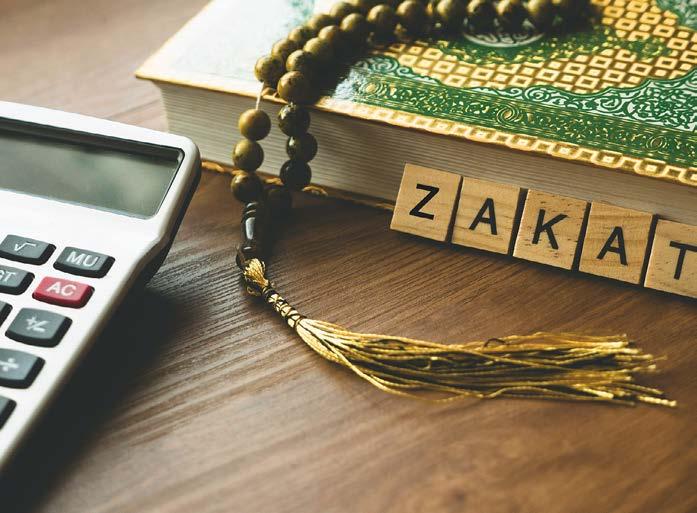
The Quran repeatedly pairs the word salat with charity(zakat or sadaqah). These words appear together in numerous verses to signify the inseparable link between making a connection with God and making a connection with our fellow humans.
Zakat is a regulated form of charity, a calculated minimum value based on earnings and accumulated wealth. Sadaqah is an open charity consisting of any acts of goodness to others, khaiyrat. Broadly speaking, charity in Islam aims to improve the well-being of individuals and society. Easily noticeable acts of goodness are monetary donations to individuals and community as well as other forms of material assistance. Less noticeable but equally important acts of charity include speaking kindly, greeting someone, meeting someone with a smile, removing obstacles from other’s paths, and more.
There is an important pre-requisite for engaging in acts of goodness in Islam. For example, there should be no expectation of reward, gratitude or indebtedness, as the Quran states charity should be “free of any expectation of reward or thanks” (76:9). Instead, the person giving charity should be thankful for being given an opportunity to give. Mentally, charitable giving boosts self-esteem, reduces depression and anxiety, and triggers the “helper’s high.” The Quran states, “Whatever good you do shall be referred back to you” (2:272). It also advises, “Give from what you love” (3:92). Conversely, undue attachment to wealth and possessions creates an urge for more, and often affects the mind negatively. Feelings of needing more can result in unwarranted stress.
When Prophet Muhammad was asked how much to give in charity, God told him to say, “what is beyond your needs” (2:219). The words “beyond your needs,” imply beyond your basic needs, not beyond adornments that one may desire. Life’s desires may be endless beyond basic needs. Desires (hawa or shahwa ) are overpowering natural inclinations that, if uncontrolled, lead to misguidance and destruction. The Quran emphasizes controlling these base desires through God-consciousness, taqwa, for achieving true prosperity.
[Like prayer], charitable giving boosts mental health by triggering endorphins, serotonin, and dopamine which reduces stress, anxiety, and depression while increasing feelings of purpose, connection, and community. It promotes gratitude and provides a sense of fulfillment.
The illuminating spirit of charity comes from the examples of the Prophet’s companions who liquidated some or all their assets for charity and welcomed guests into their homes and served them food, even while some or all of their family members went to bed hungry.
The Mental Benefits of Prayer and Charity
Both prayers and charity help improve one’s mental health. Rob Whitley, Ph.D., an assistant professor in the department of psychiatry at McGill University and a research scientist at the Douglas Hospital Research Centre, confirmed this sentiment in a Psychology Today article. “A growing literature indicates that recovery from mental illness is fostered by a range of psychosocial factors that are often under-harnessed by the official mental health system. More and more research studies indicate that regular prayer is one of these factors,” he said.
The New York Mental Health Center also reported that prayer “has been found to provide numerous mental health benefits.”
Likewise, charitable giving boosts mental health by triggering endorphins, serotonin, and dopamine which reduces stress, anxiety, and depression while increasing feelings of purpose, connection, and community. It promotes gratitude and provides a sense of fulfillment. A Psychology Today report found “donating to a charity activates neural activity in areas of the brain that are linked to reward processing.”
Markham Heid, a health, nutrition, fitness, and lifestyle journalist cited a report from the Journal of Science that found charitable spending was linked with increased levels of happiness, while money spent on personal expenses or new stuff had no effect on a person’s happiness levels. ih
Syed Imtiaz Ahmad, PhD, is currently the President of the Islamic Society of North America and Professor Emeritus at Eastern Michigan University.
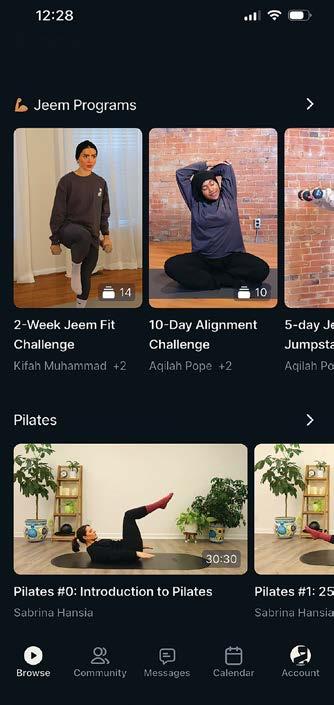
This App is Redefining Fitness for Muslim Women A Look Into Jeem Fitness
BY AMMARAH AHMED
The pursuit of health and fitness has created a culture with its own aesthetics and values.
Scroll through any major fitness platform and the message is the same: health is visual, strength is performative. Progress is measured not only by what you can do, but by what you’re willing to show for it.
For many women, that world can feel motivating. But for many Muslim women, it often feels like an unfavorable compromise.
Mainstream fitness culture is rarely culturally conscious. It’s built around mixed environments and a relentless obsession with displaying bodies. Even when the marketing claims empowerment, the underlying expectation is clear: if you want to take fitness seriously, you may have to leave your comfort — and sometimes your values — behind.
The founder of Jeem Fitness refused to accept that bargain.
“We are constantly surrounded by a narrative that equates health and fitness with showing skin and conforming to Western standards of beauty, fitness, and nutrition,” said Jeem Fitness co-founder Dhuha Baig. “Why is it that almost all fitness content considered authoritative requires bodies to be on display?”
It’s a question that cuts to the heart of why Jeem exists. Baig said the platform, an at-home fitness and wellness app designed specifically for Muslim women, is not trying to fit into the wellness industry as it currently stands. It’s trying to change what wellness can look like altogether by prioritizing privacy, women-only spaces, faith-aligned coaching, and a deeply intentional approach to health.
In other words, Jeem Fitness is building a safe space for health-conscious Muslim women.
A Product Built Out of Necessity
The story of Jeem Fitness, founded in 2024, begins in a familiar place to many women: the bustle of everyday life. The founders, Baig, Sana Mahmood, and Deena Farrukh are Muslim women, mothers, and professionals, living the exact reality their platform now serves.
The
Why should we have to compromise our values just to move our bodies?”
“Between work, kids, and caregiving, getting out of the house at a fixed time can feel impossible,” Baig said. For many women, fitness becomes another rigid obligation that adds stress rather than relieving it.
The Jeem founders tried fitness apps, weight loss plans, and popular online programs, but nothing fully fit their needs. “Using them meant sacrificing values that mattered deeply to us. Immodesty, explicit music, and the lack of women-only spaces seemed to be part of the trade-off,” Baig said.
At some point, the trade-off stopped feeling like a minor inconvenience and started feeling like a structural problem.
“We realized that if we were experiencing this tension, so were many other women,” Baig said. “Why should we have to compromise our values just to move our bodies?”
That simple question sparked the creation of Jeem.
The Jeem Fitness app interface includes live classes and on-demand workout options to accommodate individual user schedules.
What Jeem Offers
Once users sign up via the website or on the app, they can work out in two different ways: through live virtual classes or through on-demand guided programs.
“Jeem has helped me incorporate fitness and healthy lifestyle choices back into my life,” said Jeem community member Faria. “Having the ability to take live and on-demand classes with certified instructors has given me the encouragement to resume a lifestyle of exercise and healthy habits from the comfort of my home.”
The on-demand option offers flexibility and structured programs that women can follow at their own pace without feeling like they are improvising their health journey. But it’s Jeem’s live classes that have become one of the app’s biggest features, because they offer something most at-home fitness apps fail to provide: accountability that feels personal.
Jeem’s live classes use two-way camera functionality through which trainers can see participants, correct form, and encourage them in real time.
founders of Jeem Fitness (l-r): Deena Farrukh, Dhuha Baig, and Sana Mahmood.
“Accountability with two-way camera live classes is huge,” Baig said. “Trainers see you, support your form, and cheer you on.”
Jeem is designed with Muslim women in mind, and the environment reflects that with features such as modestly-dressed trainers, strictly women-only space, and a deliberate effort to remove elements that make many Muslim women uncomfortable.
Workouts are free from vulgar music and members can even select a “no music” filter. Educational content includes faithaligned guidance, women’s health resources, and programming tailored for seasons like Ramadan.
“What we hear from users is that this matters more than they expected. What sets Jeem apart isn’t just what we provide, but who provides it,” Baig said.
Jeem’s team includes certified female instructors and educational partners with expertise spanning fitness, nutrition, mental health, and women’s wellness. The founders described the platform as a one-stop destination for holistic health.
For many women, that sense of wholeness in being able to pursue health without splitting themselves into different versions becomes one of the most healing aspects of the platform.
Mahnoor, another Jeem member, spoke of her experience joining the community. “With Jeem I have been able to challenge myself to show up and take care of my body,” she said. “The coaches are so wonderful to work with because they give me real-time feedback and they are so approachable.”
The Promise of Privacy
“Privacy is always top of mind for our team,” Baig said, “because we believe in the amanah [trust] of taking care of our users, meeting their expectations, and maintaining their trust.”
During the platform’s earliest months, women could only subscribe after completing
a mandatory welcome call with the founders. The call served two purposes; it helped maintain women-only space and it gave founders direct insight into what Muslim women actually wanted from the platform.
“We had hundreds of conversations,” Baig recalled. “We were able to connect and get live feedback from the very women we were building a product for.”
As Jeem grew, the onboarding process was streamlined with ID verification through an intake form. Live classes are gated, and users must preregister so the team knows who to expect. Cameras are required, sessions are monitored, and names are cross-checked.
Jeem’s workouts are designed to be approachable and effective, requiring minimal space and equipment. “There is no expectation for perfection. We emphasize consistency over intensity,” Baig said. This approach helps build holistic strength.
Undoing the Damage of Mainstream Fitness Culture
Jeem is also positioned against the toxic messaging that dominates the wellness space. “We focus on strength, functionality, and how movements feel rather than simple appearance goals,” Baig said. “Our language avoids shame and comparison to undo the damage of toxic diet culture.”
The platform is also expanding its mental health content, including plans for partnerships with Muslim-led mental health wellness organizations.
“As part of my journey toward a healthier lifestyle, I was searching for a supportive,
all-female fitness community where I could begin at my own pace,” said Jeem user Shabana. “Jeem has been exactly that. . . I feel stronger, more consistent, and connected to a community of women like me.”
Looking Ahead
Baig said there is a shift in mainstream fitness culture as more platforms are recognizing the need for diversity and women-only spaces. “Mainstream brands are validating the demand, but they aren’t serving them deeply,” she said.
Jeem’s founders believe that the future of inclusive fitness will not be led by companies trying to appeal to everyone. It will be led by platforms willing to serve communities deeply and intentionally, with cultural fluency and trust.
“We’re built by and for Muslim women,” Dhuha said. “We are going to shape the fitness industry into something that works for us. We are no longer willing to bend to fit into the existing mold that does not honor our faith, our values, or our genetic makeup.”
Jeem founders described what they hope women feel when they download Jeem for the first time. “To women who first open Jeem, I want to say welcome. Oftentimes the step required of us to arrive at this point is crossing a canyon. You scaled obstacles seen and unseen,” Baig said.
The platform now includes 15 trainers certified in strength training, pilates, mobility, kickboxing, and yoga along with culturally-resonant health care partners.
Muslim women interested in joining the Jeem community can visit their website or download the app from the Apple App Store or Google Play Store. ih
Ammarah Ahmed is a Muslim-American journalist covering a wide range of topics spanning from Islamic identity to business, law, and politics. She has written articles that highlight the impactful work of Muslims across the globe. She also holds an LL.M. from SOAS, University of London, where she studied International Law, Human Rights Law, and Islamic Law.
Kifah Muhammad, a certified instructor with Jeem Fitness who specializes in strength training.
Noor Kabbani, a certified instructor with Jeem Fitness who specializes in strength training and endurance.
Aqilah Pope, in-house mobility expert at Jeem Fitness.
Palestinians in Diaspora Support Scholarships in Their Homeland
Rebuilding Palestine, One Student at a Time
BY SANDRA WHITEHEAD
After more than two years of relentless Israeli bombing and ground operations in Gaza that destroyed homes, hospitals, schools and universities, roads and infrastructure, and left behind mountains of rubble, talk about reconstructing Gaza has finally begun. World leaders met in Davos, Switzerland, in January to view U.S. plans for reconstruction featuring glitzy skyscrapers and high-end hotels. At the same time, and more practically, the United Nations Office for Project Services declared it was ready and able to help clear rubble, restore energy, manage waste, and provide shelter for the approximately 2 million internally displaced Palestinians in Gaza.
The Palestinian Student Scholarship Fund
Meanwhile, a dedicated group of Palestinian Americans is pursuing its own plan — to rebuild Palestine one student at a time.
The Palestinian Student Scholarship Fund (PSSF), a volunteer-run nonprofit, is doing what it has done since 2017 — investing in the education of Palestinians. Since its founding, PSSF has funded more than 3,300 scholarships to Palestinian university students.
“We know Palestinians need food, shelter,
and medicine. Fortunately, many humanitarian organizations have stepped up,” PSSF Founder and President Ali Ata told Islamic Horizons. “That need is immediate, but it’s short term. Education can’t take a back seat. In the long run, education is the ticket to a better future.”
PSSF members believe education is the most powerful tool for transforming individuals, communities and nations. Education creates future doctors, engineers, educators, and advocates who will help strengthen their communities for generations to come.
“[Education] is not only our vision, but also our history, our culture,” Ata said. “In 1948, Palestinians became refugees in camps throughout the region. Even at that time, they were more advanced in education than most.”
Ata said a Palestinian family would go hungry for their child to go to school. Once their education is complete, that child would go out and work in the Gulf states and send money back to their family. That money would go towards their siblings’ education and soon, the whole family would be educated.
Yet scholarships, important as they are, are not all that PSSF gives Palestinian students. “We’re a hands-on board, going there and listening to the students,” Ata said. “Whatever we come up with is not based on theoretical needs; it’s based on what students live through. Input from the Palestinian students helps PSSF evolve and develop better programs each year.”
Launching PSSF
PSSF was conceived when five Palestinian American friends met to talk about how they could help their homeland. “Many great organizations do good work [to help Palestinians],” Ata said. Some support certain villages or towns. Many aim to provide much-needed medical care, food and other basic needs. Most, if not all, use some of the money they raise to finance their operations. “We wanted to differentiate ourselves.”
In addition to focusing only on education, PSSF ensures that 100% of donations are delivered to the Palestinian people. “If you go to a donor and tell them 100% of your money will be delivered, that will appeal to people,” Ata said.
PSSF’s founders are committed to volunteering their time and paying 100% of their organization’s operating costs — pledges that the board continues to honor. They keep separate books and bank accounts
for scholarship donations and operating expenses and publish financial statements every year on their website.
Board members pay the salary of a parttime staff member and the travel expenses for their fundraising trips around the United States. They also pay the costs to attend an annual convention at a Palestinian university where they meet with students and leaders of their partner universities. In May, they are convening at Bethlehem University, a
“Because of PSSF, I will learn to be a businessman and get a regular job,” he told the visitors from PSSF.
Darwish also recalled meeting a pharmacy student from Gaza over a Zoom call. “He said, ‘Hey, we’re here. We barely have food. We barely have water, but if we don’t study, we have no hope for our future,’” she said. “You can take a lot of things away from people, but you can’t take their minds, and their ability to read and educate their families.”
The Palestinian Student Scholarship Fund (PSSF), a volunteer-run nonprofit, is doing what it has done since 2017 — invest in the education of Palestinians. Since its founding, PSSF has funded more than 3,300 scholarships to Palestinian university students.
Catholic institution in the Lasallian tradition.
Board members also contribute a significant portion of the funds raised for scholarships. “I was so impressed by how much time and money the board members each invested in supporting the organization and meeting with the students. That’s what made me want to join,” said new PSSF board member Sheila Badwan.
This small but dedicated band of Palestinian Americans eager to serve Palestinian students inspired others to join them. Ata said that in a decade the organization went from supporting 50 students at one university for $100,000 per year to supporting 1,000 students at 10 universities for $2 million last year.”
More Than a Scholarship
When PSSF board members visit Bethlehem University in May, they will hear firsthand what it means to Palestinian students to have the opportunity to study, said Nesreen Darwish, a board member who coordinates the annual trip and the daughter-in-law of PSSF founding memberAmir Darwish.
“I’m here to change the path of my family’s future,” an 18-year-old Palestinian student told board members last year. The fifth-generation farmer and his family were no longer allowed to plow their own fields. His grandmother was afraid settlers would harass her if she went to their property to pick grape leaves.
According to Darwish, the PSSF serves 4,000 students from Gaza who take online classes in the West Bank. She said that though universities and schools were among the first institutions bombed in Gaza, many Palestinians are determined to continue their education. “ “It’s not the building that’s giving you the education. It’s the people,” she said.
On rare occasions, PSSF’s Palestinian students have been able to visit the U.S. and share their stories, Darwish noted. Kareem Hijazi, a law student at Jerusalem’s Al Quds University, visited in September last year, to speak at PSSF fundraisers in Chicago and Milwaukee. He and a medical student at Al Quds won PSSF’s Strength and Strive Award for a tutoring program they developed. His project partner was not able to attend because the U.S. did not grant her a visa, Darwish explained.
“We created the award last year to encourage PSSF scholarship students to consider how they can, in turn, contribute to the homeland,” Ata said.
The organization also offered the Innovation Award won by a student who created a new, eco-friendly, lightweight, yet exceptionally strong type of concrete. Both awards included additional financial support.
“What we can offer is not only financial support but life experience,” Ata said. “We can help promote leadership. At the end
of the day, you want to graduate not only doctors and engineers, but you also want to graduate leaders who will take on the responsibility of building the society and the future of our people.”
Hijazi recorded a message for PSSF while he was in the U.S., describing the experience of being a student in Palestine. In it, he said,
“It feels like carrying the weight of family responsibilities while chasing grades that decide scholarship and future. It feels like choosing between buying a textbook or paying for transportation, between staying late on campus or getting home before it gets dark. It feels like studying through grief, through uncertainty, through headlines that sit on your chest while you try to memorize case laws or chemical equations.
“Sometimes it feels like you must be made of iron to just be ordinary, and yet students keep showing up. They show up with notebooks, with bruised hearts. They show up with coffee that tastes like bravery. They show up because every lecture is a small refusal to give up.”
This is what the PSSF protects. ih Sandra Whitehead, Ph.D., is the lead reporter for the Wisconsin Muslim Journal. She is also an author and educator in Milwaukee.
We Were Never New
Muslim Women, Latinidad, and the Sacred Work of Belonging
BY MELISSA MALDONADO‑SALCEDO
When Zohran Mamdani placed his hand on the Quran to be sworn in as Mayor of New York City in January, something unexpected settled in my chest. The copy of the Quran he used had belonged to Arturo Alfonso Schomburg, an Afro-Puerto Rican scholar, archivist, and historian whose life’s work preserved Black diasporic memory. Schomburg safeguarded evidence of belonging against erasure; Mamdani enacted that belonging in his first moment in public power. My own work lives between those acts, translating memory, faith, and diaspora into narratives that refuse disappearance and insist that presence does not need permission.
During Mamdani’s inauguration ceremony, Islam did not appear as newly arrived or narrowly defined. It appeared layered, diasporic, and already entangled with histories like mine. As a Latina woman, I felt seen not because the image was symbolic, but because it was truthful.
The Quran states, “O humankind, We created you from a single soul… and made you peoples and tribes so that you may know one another” (49:13)*.
Islam was never new to Latino communities. It has simply been managed, made visible within limits, and rendered invisible when inconvenient. When Islam is misrecognized within Latinidad, Muslim lives are treated as breaks from the past rather than part of what has always been present. When it is seen clearly, faith becomes continuity: a source of dignity, memory, and wholeness where belief and culture reinforce rather than erase one another.
Visible, but Bounded
Argentina helps make this tension visible. It is home to Latin America’s largest mosque, the King Fahd Islamic Cultural Center in Buenos Aires, where there has long been a public Muslim presence. The country twice elected Carlos Menem, the son of Syrian Muslim immigrants, as president. Although Menem converted to Catholicism decades earlier to meet constitutional requirements, his Muslim upbringing was never fully erased. When he died in 2021, he was buried in an Islamic cemetery, accompanied by Quranic prayer.
Even in death, his life reflected Islam’s position across the region: publicly
acknowledged, politically limited. The Quran speaks directly to this kind of tension, stating, “They recognize the blessing of God, yet they deny it” (16:83).
That boundary continues to shift. In 2019, the Lebanese-born Soher El Sukaria became the first Muslim woman elected to Argentina’s National Congress. She represented Córdoba Province, a name so dear to most Muslim minds. A practicing Muslim and the daughter of a Sunni imam, she speaks openly about faith, gender, and citizenship not as contradictions, but as mutually reinforcing commitments. Her public life challenges the idea that Islam is foreign to Latino culture and reminds us that Muslim histories in the region are shaped by migration, race, and political constraint.
Yet faith does not remain fixed in place. It travels.
From Buenos Aires to Brooklyn
The Quran repeatedly reminds that faith is something people carry, especially under pressure: “Those who believed, migrated, and strove with their wealth and lives… are protectors of one another” (8:72).
Islam’s movement into U.S. cities like Brooklyn, Chicago, and suburban Maryland has not been seamless. What travels easily is belief; what must be rebuilt again and again is infrastructure: language, community, and methods of care. As Imam Khalid Latif, executive director and university chaplain of the Islamic Center at New York University, explained, Latino Muslims are not recent additions to the American Ummah but part of a layered hemispheric history shaped by conversion, migration, intermarriage, and inheritance. “What’s missing isn’t numbers; it’s recognition,” he told Islamic Horizons.
For Latina Muslim women in the U.S., auspicious occasions like Ramadan are often when that recognition becomes real. It is the month when faith converges with memory and labor, especially in homes where women are asked to translate Islam and make it livable. Ramadan, Latif reflected, is “a training ground for social solidarity,” where ritual and ethical formation are inseparable, and exactly what “God intends” (3:10).
Islam as Recovery, Not Replacement
When Wendy Díaz converted to Islam at 20, just one year before the Sept. 11 attacks, she found herself explaining her faith to others before she had the language to claim it fully for herself. She is Puerto Rican and moved
frequently as an “Army brat.” Her first encounter with Islam came not through a mosque, but through The Autobiography of Malcolm X, a book that has since been repeatedly banned, narrowing the pathways through which people encounter faith, dignity, and moral consecration.
Malcolm X’s account of Hajj affirmed a Quranic promise: “Indeed, the believers are brethren” (49:10).
Years later, as Díaz began raising children,
“I thought I was the only Latina in the world who had ever done this,” she recalled. That loneliness eventually led Campos to Jordan, where she deepened her relationship to Islam and returned with clarity, not just about faith, but about belonging. She went on to found Latino Muslims of Chicago and later, the Ojalá Foundation, organizations devoted to affirming cultural identity within Islamic life.
“We can’t become someone else and expect to fully live as Muslims,” she said.
For Muslim women navigating Latinidad, interfaith marriage, motherhood, and migration, the question is not whether Islam belongs to them. It is whether the institutions meant to serve the Ummah will make room for who they already are.
she encountered something startling: there was almost nothing available for Muslim families in Spanish.
“When I realized there was nothing for children, I was flabbergasted,” she said. “So my husband and I said, ‘we’re going to have to take the matter into our own hands’.”
That decision became Hablamos Islam, a project producing bilingual Islamic children’s books rooted in Latino family life. For Diaz, language itself becomes religious infrastructure; without it, faith becomes inaccessible.
The Quran frames linguistic diversity as mercy, stating, “Among His signs is. . . the diversity of your tongues and colors” (30:22).
Diaz concluded that the absence of Spanish-language materials for Muslims was not accidental. It reflected a broader assumption Díaz spent decades resisting: that Latino Muslims are perpetual newcomers.
“Latinos have been converting since the 1920s,” she said. “We’re not new, we’re just more visible.”
Visibility, here, is survival.
Building Spaces
For award-winning Chicago journalist Alma Campos, 46, embracing Islam came with a loneliness she hadn’t anticipated. A Mexican American woman raised Catholic, she encountered Islam as a teenager, but when she formally embraced it in college, she believed she was alone.
Her work reflects a Quranic ethic of care: “God does not burden a soul beyond what it can bear” (2:286).
Her organizations host Eid in Spanish, support youth leadership, and engage in service work from feeding unhoused communities to building interfaith coalitions. During Ramadan, that commitment is felt most richly in kitchens: tamales beside maqluba, tortillas alongside pita. These are not compromises. They are continuities.
Motherhood, Choice, and Ethical Faith
Stephanie Razza, 23, lives another version of this reality. As a Bengali American woman from Queens, N.Y., now raising a daughter in Chicago with her Puerto Rican husband, she navigates an interfaith marriage shaped by care and daily negotiation.
“Having a daughter feels like having a version of myself,” she said. “I just want to do it right.”
For Razza, “doing it right” means giving her daughter a living archive of language, stories, and resources from both traditions without coercion. The Quran is clear: “There is no compulsion in religion” (2:256).
“We want to give her everything,” she said. “And if she decides she doesn’t want any of it, that’s okay too.”
For many women like Razza, often-dismissed online spaces have become portals of mutual care. “The internet has its issues,” she told me, “but it gave me pockets of peace.”
The Sacred Labor of Women
What binds these women is not a single theology but a shared ethic of care expressed through translation, community building, and domestic labor that is only rarely recognized as leadership. Across Muslim communities, women carry much of the work that sustains religious life: teaching, organizing, mentoring, and caring for others. This labor is often invisible but absolutely foundational.
The Quran names it, stating, “The believing women are protectors of one another” (9:71).
These women build classrooms, kitchens, storybooks, WhatsApp groups, youth programs, and Eid celebrations. In Islamic thought, knowledge is an amānah, a trust. For these women, knowledge isn’t about authority, it’s about responsibility: to translate faith into the ordinary textures of life.
This is why empanadas during Ramadan are not decorative. They are evidence that culture and faith are inextricable.
We Were Never New
For Muslim women navigating Latinidad, interfaith marriage, motherhood, and migration, the question is not whether Islam belongs to them. It is whether the institutions meant to serve the Ummah will make room for who they already are.
“We made du‘a years ago,” Campos reflected, “that one day we would have leaders who look like us.”
The Quran promises, “God does not let the work of those who do good go to waste” (18:30).
That future is already unfolding as seen in bilingual children’s books, Spanish-language khutbahs, and kitchens where cultures meet without competing. In these homes, Islamic practices are not diminished by difference. They are deepened by it.
When Mamdani stood with Schomburg’s Quran beneath his hand, that depth briefly became visible in public life, a reminder that Muslim presence in this city, like Muslim women’s labor across the diaspora, did not arrive asking permission. It arrived carrying memory and claiming what was already ours. ih
*Quotes from the Quran in this article are derived from the author’s English translation of the Spanish-language Quran and may differ slightly from standard English translations.
Melissa “Mel” Maldonado-Salcedo is a Brooklyn-based artist, anthropologist, and educator at NYU’s Tandon School of Engineering. Her work explores the intersections of culture, community, and storytelling. Learn more about her projects at www.melthestorydoc.com.
When Your Mosque is On a Screen
The Future of Faith in a Digitally-Connected World
BY UMAR IBRAHIM AGAIE
During the winter nights of Ramadan, a profound peace descends upon Muslim homes across the United States. In households from California to Connecticut, screens glow with the same purpose of connecting Muslims during the holy month. Six years after the Covid-19 pandemic, digital Ramadan has matured from a thin lifeline into a fundamental aspect of American Islamic life. For a community that is remarkably young, highly educated, and ethnically diverse, this integration is a natural evolution.
During a winter Ramadan, when shorter days make for an easier fast, Muslims experience a new religious life where congregations now connect, learn, and practice their faith through both traditional teachings and modern technology like apps and online platforms.
The concept of Jamā’ah (gathering) has undergone a transformation. The physical walls of the mosque , while irreplaceable in their sensory and spiritual gravity, are now porous. For Sarah El-Amin, a 48-year-old former teacher and full-time caregiver for her elderly mother in rural Montana, this shift has been nothing short of transformative.
“Before 2020, if I couldn’t physically be with the Jamā’ah, I would simply be absent,” she said. “The digital door opened, and suddenly that changed. I was in the chat making dua with everyone. It validated my place in the community.”
El-Amin’s experience shows the dual nature of digital presence which gives people access to information and connection. This model is a godsend for those isolated by geography, health, caregiving, or work.
Yet, to Imam Hassan Ali of the Muslim Community Center of Tucson (MCC), there is a downside to this digital shift. He remembered how Ramadan felt before 2020. “There was a special energy, a barakah (blessing), that you could only feel when with the Jamā’ah, performing salah (prayer), [and having] iftar together as one,” he said. He explained that praying side by side, going into sujud (prostration) together, and hearing everyone’s voices in supplication created an environment a screen can’t copy.
In 2026, Muslims are not giving up on physical connection, they are just using technology more thoughtfully, mixing online and offline experiences in a way that feels purposeful. Communities are finding new ways to stay connected. Some mosques such
as the Muslim Center of Detroit, the Islamic House of Wisdom in Michigan, the Muslim Community of the Western Suburbs, and the MCC now hold watch parties, where congregants gather in person to watch a global livestream together, blending high-definition digital content with the comfort of being with others. The aim now is not to simulate the physical experience online, but to create complementary forms of presence that meet community needs. Through this practice, the benefits of easy access do not come at the expense of the spirit of togetherness. Now that congregations can be both physical and online, participation is personalized. The online world turned worship from a communal ritual into a self-shaped spiritual journey. Muslims can now follow the same program, listen to lectures, pause for reflection, ask questions, and join in du’as all from their devices. The synchronous unity of worship led by the local imam now has to share space with a large, on-demand menu of religious lectures and recitations worldwide. Since Covid, people’s habits have shifted. Global research reveals 81% of global Muslims now use their mobile phones as their main way of connecting during Ramadan, making the smart phone a
modern mosque or minbar (pulpit). This digital setup allows people to plan their worship in a way that feels personal to them. In fact, 66% of Muslims plan to use Islamic apps to help structure their Ramadan this year, including tracking winter prayer times, reciting the Quran, and/or scheduling virtual halaqas (study circles)
For 29-year-old Seattle software engineer Kareem Mahmud, these apps turn acts of worship like praying on time and reciting the
The most profound shift has occurred in the landscape of religious authority. The traditional, geographically-bound hierarchy — local imam, regional scholar, and international institution — has been disrupted by the borderless nature of the internet. A young Muslim in Chicago can now effortlessly access sermons, theological lectures, and spiritual guidance from scholars in Cairo, Jeddah, Malaysia, or other parts of the world.
The digital door opened, and suddenly that changed. I was in the chat making dua with everyone. It validated my place in the community.”
Qur’an into interactive challenges that are trackable and measurable. “My parents’ generation measured Ramadan by the prayers they attended at the masjid,” he says. “For me, the app shows my streak: how many days I’ve prayed on time, how many pages of Qur’an I’ve read, how many minutes of lectures I’ve listened to. It turns spirituality into something I can see and sustain.” For Mahmud, this isn’t about replacing the sacred with the digital, but about making faith visible in a language his generation already speaks.
This empowerment challenges traditional structures. “When everyone worships according to their own spiritual playlist, what happens to our shared voice of the Ummah?” Ali asked.
To those skeptical of this technological surge, there is a risk people will drift apart. However, to others, those very tools create new kinds of community. According to the TGM Global Ramadan Survey, the platforms that let you curate your own spiritual journey are also used to connect with others. The survey found that 89% of Muslims use social media for learning, 87% to connect with friends and family, and 68% actively join online communities. Local mosques are also leveraging this impulse, creating online groups where people share thoughts, coordinate meal trains for the sick, and participate in challenges. These are not replacements for in-person gatherings, but digital alternatives with a local feel that provide care and harmonize local logistics and global fellowship.
As a result of this development, digital-first organizations like the Yaqeen Institute for Islamic Research have become popular transnational Islamic educational powerhouses. Their authority is built on research depth, production quality, and addressing issues that matter to Muslims living in the diaspora. In response, the role of the local imam is changing from solely a lecturer to a curator and pastoral guide. “People come to me having already gained knowledge from brilliant talks online,” said Ali. “My job is to help them apply that knowledge locally and offer support.”
Significantly, traditional institutions are not ceding this space. They are adapting and becoming a part of it. Prestigious bodies like Al-Azhar University, Egypt’s oldest university, are on social media and have digital outreach programs carried out by scholars trained on online engagement. In the United States, the Islamic Society of North America offered initiatives like its “Green Initiative Webinar” on composting. This is an effort to provide authoritative, relevant guidance through the very platforms where the community, especially its large youth demographic, already spends its time.
But at the heart of this digital integration lies a persistent, community-wide tension: the balance between the undeniable convenience of digital access and the potential erosion of spiritual depth. The 2026 winter Ramadan, with its shorter day and colder nights, throws this tension into sharp relief. Digital access makes worship more
convenient, but the season also invites a longing for the intimate warmth of physical community.
Proponents highlight the transformative inclusivity and flexibility of digital platforms and how they enable a scale of engagement that was once impossible, fostering a powerful sense of a global Ummah. For the homebound parent, the shift worker, or the student in a town with no nearby mosques, it is the difference between engagement and isolation.
Critics however, worry that digital worship might make faith feel too easy, like browsing social media. They are concerned people will just scroll through instead of engaging and miss out on meaningful connections with teachers in their community. The challenge is to leverage digital tools to enhance worship, not replace it. That means using technology to facilitate learning, increase charity, and create more consistent connection, not just more convenient consumption.
Many Muslims are not choosing between online and in-person worship, they are doing both. The physical mosque remains irreplaceable in the heart, the site of embodied prayer, shared iftars, and the handshake of fellowship. Yet its rhythm now extends through fiber-optic cables and wireless signals into countless homes.
We are not losing the masjid, we are just figuring out how to take its spirit with us. We want to make it accessible without losing what makes it special. ih
Umar Ibrahim Agaie writes about faith, technology, and community in American life. He documents how Muslims move between physical congregations and digital spaces, weighing what is gained when access expands against what is lost when togetherness travels through a screen.
Disability Rights Activist On the Courage to be Herself
A Conversation with Cara Elizabeth Yar Khan
BY NORA ZAKI
At 25, Cara Elizabeth Yar Khan started noticing her body acting differently. She fell a lot and did not understand why. Two years earlier, she had started her international career with the United Nations World Food Program in Ecuador followed by an executive role in corporate communications for Dell Technologies in Panama. Working for the UN required a lot of travel which was made difficult due to the physical barriers she had begun to face.
For five years, Yar Khan consulted doctors to understand, through a process of elimination, whether she had a devastating disease. “Not knowing, because you don’t know how it’s going to impact your life, is the hardest bit,” Yar Khan said.
A Life Changing Diagnosis
Then, in 2006 at the age of 30, Yar Khan was diagnosed with Hereditary Inclusion Body Myopathy (HIBM), also known as GNE Myopathy. HIBM is an incurable progressive, muscle wasting disease with only 2,000 known patients globally, according to the Advancement of Research for Myopathies. Prevalence is estimated to be higher, but most people with HIBM are misdiagnosed because it is so rare. The prognosis described by her doctor, which is now her reality, was onset tetraplegia (severe weakness of the arms, legs, and torso), and the use of a wheelchair for the remainder of her life. Today, at 49, her disease is still progressing.
While this certainly was a dramatic and life-altering change for Yar Khan, she made it clear that the attitudinal, physical, and institutional barriers she faces as a person living with a disability would not hold her back from living a full and productive life. She produced and participated in the film Facing the Falls about her epic journey to the Grand Canyon which included her riding a horse across the rugged canyon and kayaking down 150 miles of white water rivers.
She began to feel that the diagnosis was almost an anticlimactic moment. Her
approach was, “Let’s figure things out.” Yar Khan admitted that she was emotional and confused when diagnosed with HIBM as a
young woman, but she never had a sense of hopelessness nor tragedy about her condition.
Cara Elizabeth Yar Khan
Bringing Awareness to the United Nations
Yar Khan returned to the UN joining the United Nations Children Fund (UNICEF) in Angola in 2007. At the time, there was no protection policy for the rights of UN staff or applicants with disabilities, so she did not disclose her disability to her employer for several years. Only in 2011, when she went to Haiti, did she disclose her condition and seek reasonable accommodations with the UN. This disclosure ultimately helped her workplace dismantle barriers that had been keeping people with disabilities from participating equally.
For example, if she had to walk across uneven outdoor grounds on two canes to attend a meeting, a colleague would hold notebooks for her, as one way for Yar Khan to have some necessary tools in her meetings. Her accommodations also included adding physical steps into a 20-foot container when she and her staff worked at the end of an airport tarmac in Haiti after the 2010 earthquake. Yar Khan said these reasonable accommodations made a huge difference. They gave her colleagues a chance to challenge their own biases about what a person with a disability could contribute. And for Haitian staff especially — given their deep cultural stigma around disability — it was transformative. Over her two years there, they came to know Yar Khan not as “the woman with a disability” but as Cara, a qualified expert working hard for the rights of the children in their country.
Yar Khan has taken inspiration in her journey from several movements working for disability awareness and justice. She talked about Judith Heumann, who is often called the “mother of the disability rights movement.” Heumann, who had polio as a child, organized protests like the Capitol Crawl and pushed for the Rehabilitation Act of 1973, which laid the groundwork for the Americans with Disabilities Act. Yar Khan said that Heumann’s work spoke to the importance of documenting these movements while also recognizing the parallels between the disability rights movement and the civil rights movement.
Yar Khan is also inspired by movements such as the Black Lives Matter movement and its emphasis on ensuring that those most marginalized communities lead public demands for justice and equity. She shared
Only 1% of visitors to the Grand Canyon embark on the multi-day backpacking hike. Yar Khan was determined to become a part of that 1%, and that’s exactly what she did.
that the BLM movement fighting against racism, police brutality, and pervasive racial inequality in the United States has been led by Black, transgender, and disabled women. Allyship with this movement has meant standing together and showing strength in numbers while also ensuring that Black individuals are placed in positions of leadership across the movement. Yar Khan explained this should also be the case with disability advocacy. People with disabilities are not charity cases, and just like institutional racism, there are institutional barriers for people with disabilities that must be dismantled.
Yar Khan, who comes from a Muslim background, has worked with various disability rights organizations, including a Muslim organization called SMILE Canada that aids children and youths with disabilities in a “culturally-responsive manner.”
Conquering the Grand Canyon
Only 1% of visitors to the Grand Canyon embark on the multi-day, backpacking hike. Yar Khan was determined to become a part of that 1%, and that’s exactly what she did.
In 2014, she envisioned going on an outdoor expedition that would change the way people think about adventure for people with disabilities. In 2018, after four years of planning the expedition and learning to ride a horse, she embarked off the South Rim. During the 12-day expedition, she spent four days on horseback and eight days rafting on the Colorado River.
Yar Khan wanted to prove several points with this expeditious adventure. Firstly, she believes she can do anything in spite of the many barriers that exclude people with disabilities. Secondly, and simultaneously, while she struggles daily, she is not suffering. Thirdly and finally, the best way that Yar Khan can be a beacon and example for her community of people living with disabilities is to be herself.
Biases still run deep, Yar Khan noted. For example, when children see her in her wheelchair, they are curious and ask, “Why do you use that chair?” But adults often pull them away, saying, “Don’t bother the poor lady.” That tells children there is something inherently wrong with her and with their curiosity. If adults just let them ask, Cara could simply answer, and the moment would pass naturally.
Yar Khan also wishes more people understood that disability is a universal experience. “At some point, all of us will face it,” she said. “If you have a broken leg and can’t get around, that’s a disability — it’s not just about impairment, it’s about barriers. Society needs to dismantle those barriers. And people should know that disability is not tragic. While we may struggle, we’re not necessarily suffering. And not all disabled people are sick.”
Finally, Yar Khan encourages people to engage more with disability culture by following disabled activists on social media, reading about Judy Heumann, and noticing representation in the mainstream media. She also wishes that Muslim nonprofit organizations move beyond the charity or medical model of disability. Yar Khan noted that while giving zakat is important, inclusion should be rooted in dignity, respect, and leadership by people with disabilities themselves. ih
Nota Zaki is the founder of MyMuslimChaplain.com, a chaplain consultation company. She also served as the Muslim chaplain at Dominican University, Bard, and Vassar Colleges.
Our Mothers Didn’t Call It Feminism
What Liberation Looks Like for Muslim Women
BY TRACY MILLER
Idid not grow up hearing the word “feminism” spoken with warmth. It arrived later in classrooms, online threads, panel discussions usually carrying the implication that women like my mother had somehow missed it. Apparently, Muslim women were late, still learning the language of liberation.
But when I look back at the women who raised me, I don’t see absence. I see strategy. I see women who did not have the luxury of naming their resistance because they were too busy forging it for themselves.
My mother never called herself a feminist. Neither did my aunts nor the women who ran entire households while men worked abroad; who memorized prayer schedules and rent deadlines with the same precision; who navigated immigration systems that were not designed for them ; who held families together with unpaid labor that was seldom ever credited.
If feminism is the pursuit of dignity under constraint, then Muslim women were practicing it long before anyone gave them permission, and long before the West decided what counted.
The Problem With Being Included
Every March, Women’s History Month arrives with its familiar rituals: Panels,
quotes, social media graphics, and lists of “trailblazing women.” The celebration often feels generous until you notice who’s missing. Muslim women are usually framed as late arrivals to liberation. We are invited cautiously, conditionally, often with explanation required. Our stories are welcomed only when translated into recognizable frameworks: empowerment stripped of faith, resistance divorced from religion, strength proven by proximity to secular norms. The hijab becomes a problem to overcome. Faith becomes a contradiction to explain. Tradition becomes something survived rather than shaped.
This framing depends on a quiet erasure of the idea that Muslim women were not already negotiating power before Western feminism saw us. It assumes liberation must be loud to be real, must be public to be valid, and must be confrontational to count. And it forgets that many women never had the option of visibility, only endurance.
The Feminism that Lived in Kitchens
The feminism I know did not happen on stages. It happened in kitchens at dawn. It looked like my aunt waking before everyone else to prepare food she would later sell discreetly through community networks, cash folded carefully into envelopes that paid school fees and medical bills when men’s incomes fell short.
No nonprofit funded her, no grant recognized her entrepreneurship, no news article praised her resilience. She built an informal economy from trust and necessity. She negotiated autonomy without announcing it. She carved power where none was offered.
That is not submission. That is intelligence.
Many Muslim women learned early that survival required creativity more than confrontation, that challenging patriarchy directly was too costly. So resistance took on subtler forms.
They influenced quietly, redirected decisions, and controlled finances with quiet authority. They created women-led networks inside mosques, homes, and extended families. Their feminism was not about individual liberation; it was collective, intergenerational, deeply practical. They did not ask, “What do I deserve?” They asked, “How do we endure?” And endurance, when chosen actively, becomes its own form of rebellion.
Faith Is Not the Opposite of Freedom
One of the most persistent myths about Muslim women is that faith limits us, that devotion and autonomy exist in opposition. But for many women, faith is not a cage. It is language.
Islam gave structure where the world offered chaos. It offered moral authority in environments where women were otherwise dismissed. Muslim women quoted scripture not as obedience, but as negotiation. They used religion the way others use law: as a tool. They invoked rights embedded within tradition long before outsiders noticed them. They reminded men of the responsibilities they preferred to forget. They claimed spiritual legitimacy in spaces that attempted to silence them.
This is the part of the story that Western feminism forgets because Western feminism often imagines freedom as separation from religion, from family, from obligation.
But liberation does not look the same when your survival is collective.
The
Cost of Publicity
Muslim women’s feminism remains invisible because it was never documented. It lived in conversations, in memory, in repetition, and in oral instruction passed from mother to daughter. History favors what is written down, preferably in English, preferably in institutions that already hold power.
practiced transformation from inside, who shifted households slowly, who softened hard rules through persistence, and who protected younger girls by absorbing the consequences themselves.
This sacrifice is rarely mistaken for power but it requires extraordinary strength. There is violence in being told your survival does not count as politics, in being told your choices were too small, too quiet, too compromised to matter. But what is more political than choosing life inside systems designed to exhaust you? What is more radical than insisting on dignity when none is promised?
Muslim women were never passive recip-
Muslim women are usually framed as late arrivals to liberation. We are invited cautiously, conditionally, often with explanation required. Our stories are welcomed only when translated into recognizable frameworks: empowerment stripped of faith, resistance divorced from religion, strength proven by proximity to secular norms.
Our mothers did not publish manifestos; they published lives. They taught girls how to speak carefully and when to speak boldly. They taught silence as protection and speech as timing. They taught patience not as passivity, but as long-term resistance.
None of this fits easily into academic frameworks so it disappears, and then we are told we have no history. There is a particular loneliness that comes from realizing your mother’s life will never be studied.
History prefers women who announce themselves. My mother and so many women like her survived by disappearing strategically. She learned when visibility was dangerous, when asking questions would invite punishment. Endurance was not weakness but calculation. These choices are often misunderstood by people who believe resistance must always look like refusal. But refusal is not the only way women push back. Sometimes resistance looks like staying alive long enough to raise daughters who will ask the questions you simply could not.
When Western feminism frames liberation exclusively as leaving, breaking, or rejecting, it overlooks the women who
ients of culture. They were active interpreters of it, editing, reshaping, and renegotiating it daily. They learned to speak multiple languages at once: faith to elders, pragmatism to institutions, tenderness to children, strength to themselves.
Yet this intellectual labor does not flatter dominant ideas of feminism. It suggests feminism does not own the blueprint for freedom and that women have always been theorists of their own lives even without the language to describe it.
Our mothers were not waiting for feminism to arrive. They were practicing it in fragments in choices, in negotiations, in care, in their refusal to disappear completely even when silence was demanded. And if we listen closely, we can still hear them — not asking to be celebrated, only asking not to be forgotten.
Their feminism was not neat. But then again, neither is freedom
When Feminism Refuses to Recognize Us
What gets lost when publicly named feminism is the only kind that counts ? Everything — entire lineages of women who were never
waiting to be liberated because they were already doing the work, just not in a way that translated cleanly to Western theory.
When feminism refuses to recognize faith-based resistance, it reproduces the very hierarchy it claims to dismantle. It decides whose struggle is legitimate and whose must be mediated. It says liberation must look a certain way to be real.
But Muslim women were never trying to be legitimate. They were trying to live.
I Inherited More than Silence
Growing up, I did not inherit feminist theory first. I inherited memory. I inherited the stories of women who made decisions quietly and paid the price loudly from women who balanced dignity against danger every single day. Only later did I encounter the language that claimed to explain them and found it insufficient.
Muslim women like my mother and aunts navigated systems stacked against them: patriarchy, racism, immigration precarity, Islamophobia — often all at once. To call them less that feminist because they did not use the word itself feels not only inaccurate, but cruel.
A Different Feminist Timeline
Muslim women complicate feminist timelines because they disrupt the idea of progress as linear. Their resistance did not move cleanly from oppression to freedom. It looped, adjusted, retreated, and advanced. It was strategic, not symbolic, because not all women can afford visibility. Not all resistance can survive the spotlight.
Our mothers were not waiting to be saved. They were busy saving everyone else. And they deserve to be remembered not as women who lacked feminism but as women who practiced it long before the world learned how to pronounce their names. Women’s History Month cannot keep expanding its table while deciding whose stories require translation to be worthy.
Muslim women do not need to be added to feminism. We were already there, shaping it quietly, carrying it forward, holding it together with hands the world refused to see. And maybe the most radical thing feminists can do now is not speak for us but finally listen. ih
Tracy is a writer whose work explores culture, faith, identity, and social justice. She is particularly interested in the intersection of religion, gender, and community narratives. When she’s not writing, she spends time researching cultural histories and reflecting on everyday acts of resilience.
What the Treaty of Hudaibiyyah Reveals About Teams Under Pressure
When the Path Forward Isn’t Clear
BY ALI ISSA
The Treaty of Hudaibiyyah offers a prophetic model of team coherence under strain. It reveals how trust, alignment, and restraint prevent collective breakdown long before modern leadership theory named these failures.
Most teams do not fracture because of lack of commitment or intelligence; they wilt when they are asked to move forward without clarity, and the tension of not knowing weighs more than the trust holding them together.
Sometimes, decisions feel costly while their reasoning remains incomplete or inaccessible. Some feel the outcome is wrong; others feel it is premature to object. Voices grow quiet not because there is agreement, but because disagreement feels dangerous. Private conversations replace public alignment, loyalty narrows to subgroups, and cohesion quietly erodes.
Contemporary leadership literature attempted to name these failures. Patrick Lencioni’s widely-used framework The Five Dysfunctions of a Team describes how teams under pressure unravel through an absence of trust, fear of conflict, fragile commitment, weakened accountability, and confusion about results. Lencioni presented these failures as a pyramid where the absence of trust at the base quietly destabilizes everything above it before breakdown becomes visible.
These frameworks describe what tends to break when clarity is delayed and pressure mounts. What they often do not explain is how alignment survives when understanding behind the decision lags.
The Treaty of Hudaibiyyah signed in 6 Hijri/628 CE is a pivotal 10-year peace treaty reached between Muslims and their detractors. It presents one of the most instructive moments of collective strain in Islamic history — not because it appeared triumphant, but because it was deeply unsettling. The terms felt unequal. The outcome felt deferred. The wisdom was not immediately visible. And yet, the community did not fracture.
Instead, what emerges is a prophetic model of leadership and team coherence under pressure — one in which tension is carried without breaking alignment, disagreement is contained without dissolving trust, and restraint holds the group together until meaning catches up with obedience.
Situating Hudaibiyyah
The Treaty of Hudaibiyyah occurred at a moment of fragility. Prophet Muhammad (salla Allahu ‘alayhi wa sallam) and his Companions (‘alayhum rahma) set out toward Mecca to perform a peaceful pilgrimage. They were barred at the city’s outskirts and obliged to enter into negotiations with people who persecuted them for years. What followed was an agreement that postponed entry, imposed conditions that felt unequal, and demanded restraint at a moment when resolve was already stretched thin. It is within this tension that Hudaibiyyah must be understood.
For many Muslims living in the United States and Canada, leadership is rarely exercised from positions of dominance. It is practiced in mosques, nonprofit boards, professional workplaces, schools, and families often under scrutiny or quiet pressure to conform. Decisions must be made without full clarity, trust must be maintained across disagreement, and restraint is frequently demanded without the reassurance of shared authority or outcomes. Hudaibiyyah speaks powerfully into this reality, offering a model of leadership for communities navigating tension without fracture and fidelity without control.
When Understanding Lags Behind Loyalty
The Treaty of Hudaibiyyah did not strain the community because it asked too much of them — it asked them to move without clarity.
The terms felt unequal. Key among them was the requirement that any Meccan who fled to Medina be returned, while those
Al Hudaibiyyah, also known as “Al-Syumaisi,” sits nearly 19 miles from Mecca and also functions as a Miqat (sacred boundary) for pilgrims performing Hajj and Umrah who intend to enter the state of Ihram (spiritual purity). The new structure of Masjid Al Hudaibiyyah was built right next to the ruins of the old mosque.
who left Medina for Mecca would not be returned. The Muslims were turned back from entering Mecca that year and required to postpone their pilgrimage. These concessions appeared to favor longtime opponents. For a community shaped by persecution and displacement, the moment did not feel like peace. It felt like retreat.
It is here that one of the most revealing moments of Hudaibiyyah unfolds:
‘Umar ibn al-Khattāb (radi Allahu ‘anh), overwhelmed by the weight of the decision, approached the Prophet with urgent questions about why they should accept terms that felt humiliating (Sahih al-Bukhari 4844). This was not defiance; it was anguish — the voice of loyalty straining under uncertainty.
When the Prophet did not alter the decision or offer explanation, ‘Umar didn’t rally dissent or seek validation. Instead, he turned to Abu Bakr (radi Allahu ‘anh).
Abu Bakr didn’t amplify confusion. He anchored the moment in trust in the Messenger of God, and in a wisdom not yet visible. His response does not resolve the tension intellectually; it contains it relationally (Sahih Bukhari 4.53.406).
Here, trust functions as alignment in the absence of explanation. Disagreement exists, but it is not weaponized. Emotion is expressed, but it does not erode authority. The community remains intact.
Only later does meaning catch up with obedience. The Quran (48:1) would eventually name Hudaibiyyah a clear victory (Fathun Mubeen). What held the community together was not foresight, but trust. A Hadith states, “When Trust is lost, then await the Hour.” A man asked, “How will it be lost, O Messenger of Allah?” He responded, “When authority is given to those who do not deserve it, then wait for the Hour” (Sahih al-Bukhari 6496).
Expressing Dissent Without Dissolving Unity
As the treaty was written, the Prophet instructed that it begin with his name followed by the title “Messenger of Allah.” The Quraysh objected. They would not accept that designation.
The Prophet did not argue. He instructed that the title be removed. The concession was painful.. Yet it revealed a critical dimension of prophetic leadership.
The Prophet did not deny the truth of who he was. He refused only to make the truth the battlefield.
What emerges is a prophetic model of leadership and team coherence under pressure — one in which tension is carried without breaking alignment, disagreement is contained without dissolving trust, and restraint holds the group together until meaning catches up with obedience.
In moments of strain, teams fracture when symbolic losses are treated as existential ones — when asserting identity overtakes discernment. Hudaibiyyah models restraint in service of vision.
The conflict did not disappear. It was contained. By absorbing the emotional cost, the Prophet prevented it from cascading outward and destabilizing the community.
When Obedience Precedes Understanding
After the treaty was signed, the Prophet instructed the companions to end their state of Ihram (spiritual purity). The command was clear. The meaning was not. Still, the companions did not refuse, nor did they argue.
The Prophet withdrew and consulted his wife, Umm Salamah (‘alayha rahmah). She advised him to act first — to shave his head and offer the sacrifice — without speaking. He did. Only then did the companions rise and follow.
Leadership moved first, absorbing the emotional cost before asking others to do the same. Commitment preceded clarity.
When Victory Is Declared After the Fact
At Hudaibiyyah, nothing felt victorious. Entry into Mecca was denied. Terms appeared asymmetrical. Emotions remained unresolved.
And yet the Quran declares, “Indeed, We have granted you a clear victory.” (48:1) The victory was not immediate or symbolic. It became evident over time. The treaty stabilized the region, reduced cycles of retaliation, and allowed the Muslim community to grow in number and confidence. Within two years, it led to the peaceful entry into Mecca without the bloodshed many feared. Victory, in this case, was not defined by immediacy.
It was defined by restraint that preserved coherence long enough for outcomes to unfold.
Hudaibiyyah shows that maintaining alignment under ambiguity is itself a form of success.
What Hudaibiyyah Reveals in Modern Leadership
Modern leadership theory names how teams fracture under strain. Hudaibiyyah shows how they are preserved. What leadership theory diagnoses after failure, the prophetic model addresses before it occurs t hrough trust, containment of conflict, embodied leadership, and patience with results. Modern theory names the cracks; Hudaibiyyah shows how they are never allowed to form.
The Treaty of Hudaibiyyah endures not because it resolved tension quickly, but because it held tension without breaking alignment.
When meaning lags decision, leadership no longer persuades its way forward.
It moves. And others follow. ih
Ali Issa is an author and leadership advisor with over 35 years of experience. He founded 35N Consulting, LLC, through which he advises organizations and leadership teams on strategy, trust, and human-centered leadership.
Guided Missiles, Misguided Humanity
The Prophetic Clock that Could Recenter Us
BY RASHED RABBI
Martin Luther King Jr.’s warning is no longer a distant prophecy, but a living diagnosis. We inhabit a world where wars are launched via touchscreens, drones strike across continents, and cities are reduced to rubble before the public even understands the root causes of the war. The sheer scale of violence has become a convenient distraction, masking the profound moral decay exposed in the Epstein Files. These scandals did not merely expose individual crimes; they revealed a culture of impunity — a hidden network of power and influence where exploitation was encouraged and enabled.
Institutions meant to safeguard the future are now compromised. Leaders, once looked up to, have become corrupt. The pace of change has outstripped the pace of wisdom. The moral guardrails that once held society together are dissolving.
These failures point to the paradox of our age: we can map the remotest corners of the earth, but not our own conscience. We can track a missile with perfect accuracy, but not the moral collapse within our own systems. We can protect artificial borders, but not our children.
According to a 2026 Brookings Institution Global study, children’s cognitive
development is declining alarmingly. A 2026 Children’s Hospital of Philadelphia report said nearly 72% of adolescents are struggling to adjust to society, as “misguided humanity” inherits a world of technological giants and morally-insufficient leaders. Parents feel haunted by the dread awaiting their children.
Amid systemic corruption and escalating conflict, the daily life of Prophet Muhammad (salla Allahu ‘alayhi wa sallam) breaks in as an intervention. Though over 1400 years old, his life — disciplined and anchored in prayer, reflection, restraint, service, and accountability — offers a blueprint of sanity for contemporary people from every walk of life.
Muslims must focus on the intent behind his actions so they can carry that ethos into their postmodern lives. His day was structured around prayer, yet unified by purpose. As the world accelerates toward greater power and deeper confusion, his daily routine offers a model of grounded living — and it begins long before dawn.
Before Dawn: Begin with Conscience, Not Calculation
The Prophet was either awake from the middle of the night in voluntary worship or resting briefly after it. He devoted this time to reflection, submission, and accountability.
He reminded his followers that this life is built on tests. The only way to confidently navigate it is through a higher consciousness.
This isn’t a call to take on the full discipline of night prayer, which could lead to the lofty station of maqām mahmūd (Quran 17:79), but simply an invitation to understand the purpose of pre-dawn worship when the mind is clear: seeking forgiveness (51:17), finding hope (32:16), and praising and glorifying (76:26) the Lord of all creations (67:1).
Modern professionals often wake up before Fajr as a productivity hack, but the prophetic morning teaches that the early hour is for conscience, not calculation. Even his Fajr prayer, recited with 60 to 100 verses, reinforced this orientation.
Though the Prophet did not limit himself to specific surahs during Tahajjud or Fajr, reports like Abu Dawud’s list about 20 surahs he recited in pairs. Their length created space for reflection; their themes anchored the heart to truth while the world slept in silence. In an age when morning begins with notifications, news cycles, and strategic briefings, the Prophet’s pre-dawn routine shows that the first battle is internal: aligning ourselves with the One who sustains all.
After Sunrise: Grounding the Heart and the Home
After the Fajr prayer, the Prophet didn’t rush away. He stayed seated, meeting his companions, greeting them with warmth, and checking on the missing ones. He engaged the crowd discussing the ultimate “warning and glad tidings” (4:165). He interpreted their dreams, linking their inner unseen worlds to the demanding external world ahead. Upon returning home, he shared that same intentional presence with his family, grounding them morally and emotionally.
Do we care to set the same clarity and conscience for the relationships that shape us and the community that relies on us? The pressure of schedules, deadlines, and logistics often pushes us into calculation mode, while the prophetic morning reminds us to begin with a shared conscience. Morning is not a moment of individual productivity or power projection — it is a moment for collective moral calibration.
Daytime Discipline: Leadership with a Living Conscience
After attending to his household, the Prophet returned to the mosque and prayed beside the al Muhājirīn Pillar in al-Rawdah
before meeting companions and delegates to address their needs. His daytime work resembled ours — meetings, decisions, and problem-solving — but he never allowed the conscience to go bankrupt. He reminded his Companions of what true bankruptcy looks like: coming on the Day of Judgment with prayer, fasting, and charity, yet carrying a record of harming others, doing injustice, slandering, taking wealth unfairly, or shedding blood.
His leadership wove conscience into every action. He sat and walked with his companions, listening, advising, resolving disputes, and checking on the vulnerable as one of them — not above them. His authority was rooted in proximity, humility, and responsibility.
This stands in stark contrast to modern power where decisions are made far from the consequences they create. Screens replace human faces. Civilian deaths become “collateral damage .” The Prophet’s conduct rejects this logic. Our desks must become our own al Muhājirīn Pillar — places where intention is renewed, and moral clarity guides the work we do.
Midday: Collective Justice Before Individual Success
At high noon, the Dhuhur prayer, recited with about 30 verses, served as a mandatory pause to re-center the heart. The Prophet judged cases, mediated conflicts, and enforced justice — even when it went against his own allies. To him, compromised justice is the cause of collapse — as witnessed in the attacks on Palestine and Iran.
The Prophet also visited the sick, checked on those in need, and attended funerals — folding compassion into the center of his workday. These were not distractions but safeguards against becoming a slave to productivity as they keep our hearts connected to the community and reminded him that leadership is service, not distance.
He prayed for Madinah as Abraham prayed for Mecca: “My Lord, Abraham was Your servant, friend, and prophet, and I am Your servant and prophet. He prayed to You for Mecca, and I pray to You for Madinah” (Anas Bin Malik [‘alayhi rahmat], Bukhari, and Muslim). To live as God’s servants in America means praying for this nation’s well-being and working for its moral health — not criticizing from afar while withholding contribution. Justice begins where we live and work, in the communities we shape.
Afternoon: Restraint and Reflection
As the day peaked, the Prophet’s pace shifted toward brevity and presence. The Asr prayer was concise, about 15 verses, followed by brief discussions — respecting the energy and time of those returning to their demanding lives. This was not a withdrawal from the world, but a recalibration within it. He spent these hours in the company of his family, turning domestic moments into opportunities for deep reflection and learning.
It was during these quiet windows that he addressed the heavy questions of war and fate. When ‘A’isha (radi Allahu anha ) asked
of this — pausing before escalation, weighing human cost, and admitting mistakes instead of rewarding denial. The Prophet’s evening routine challenges a culture that values being right over being just.
Nighttime: Renewal Through Discipline
The Prophet preferred to delay the ‘Isha prayer so more Companions and their families could join. His recitation was of medium length with surahs like al-A‘lā, al-Burūj, and al-Inshiqāq. He rarely spoke after ‘Isha, respecting the body’s need for rest. He typically retired early.
These failures point to the paradox of our age: we can map the remotest corners of the earth, but not our own conscience. We can track a missile with perfect accuracy, but not the moral collapse within our own systems. We can protect artificial borders, but not our children.
if he had ever faced a day more soul-crushing than the defeat at Uhud, he reflected on the rejection at Ta’if. Reiterating Badr or Hudaybiyyah, he taught Hafsah (radi Allahu anha ) the true success of a civilization lies not in the ferocity of its conquest, but in the humanity of its restraint.
We need that same kind of continued reflection and restraint to navigate conflict and moral uncertainty. The Prophet’s discipline reminds us that guidance isn’t accidental — it’s built through steady practice and clarity of purpose.
Evening: Accountability and Clarity
The Prophet’s Maghrib prayer was usually short, though occasionally he recited longer passages from Surah al-A‘raf or al-Ma’idah. He discouraged post-Maghrib lectures and encouraged the Companions to return home for dinner. He famously prioritized human needs over ritual, advising, “If dinner is served, begin with it before prayer.”
At the dinner table, he encouraged light conversation and gentle reminders of the Hereafter — not as a threat, but as a lens for daily conduct. He ended his day with accountability, refusing to sleep with unresolved harm or uncorrected wrongs. Imagine if modern nations practiced even a fraction
If he approached his wife, he bathed before sleeping. In Islam, the new day begins at sunset, so his nightly routine wasn’t an ending but preparation for what lay ahead. Before the world woke to jāhiliyyah, today’s misguided humanity, he rose in the deep silence of the night to pray.
“Prayer was the apple of his eye,” said Ibn al-Qayyim, who noted the Prophet prayed 40 rak‘ahs daily: 17 obligatory, 10–12 voluntary, and 11–13 at night; anything beyond that wasn’t part of his routine (al Wabil al Sayyib). These prayers were not for domination or the accumulation of power; he prayed for guidance, for mercy, and for the strength to remain human in a world that pushes away from humanity.
Around the clock, day in and day out, his life did not drift into despair; it demonstrated direction and determination. His daily routine was orderly without monotony, structured without rigidity, adaptive without losing clarity or purpose. In a world that has lost its center, his routine is not merely inspiring — it is corrective. ih
Dr. Rasheed Rabbi, an IT professional, is the founder of e-Dawah and secretary of the Association of Muslim Scientists, Engineers and Technology Professionals. He serves as a khateeb and Friday prayer leader at the ADAMS Center and is a certified Muslim chaplain at iNova Fairfax, iNovaLoudoun and Virginia’s Alexandria and Loudoun Adult Detention Centers.
The Great Script Transition
How Muslim Nations Rewrote Their Languages
BY NAWAL ALI
For over a millennium, thë Àrabîc ßcrįpt şervéd aş a çommön wrîtïng syštem açross the Müslim wørld. Thén, wîthïn ä sïngle çentury, døzens öf languages abàndøned ït.
What did you notice about that sentence? The words are English, but the letters are the German ß, Turkish ş, French é and ç, and the Nordic ø. Your brain knows these are Latin letters, close enough to English to read, but the constant switching forces you to slow down, re-calibrate, and work harder. That cognitive friction you just felt is a glimpse at how script changes make your own language feel foreign.
The story of these transformations in the Muslim world reveals the profound relationship between writing systems, national identity, and modernization. It also exposes complex trade-offs when a society decides to rewrite itself.
The Reach of the Arabic Script
Before the 20th century, Azerbaijani, Uzbek, Kazakh, Kyrgyz, Turkmen, Tatar, Bosnian, Albanian, Somali, Malay, and dozens of other languages used Arabic-based scripts. These languages bore no linguistic relation to Arabic, yet adopted the script following Islam’s spread.
Each language developed its own modifications. Persian added four letters. Urdu created an elaborate system for Indo-Aryan sounds. But the Arabic script proved remarkably flexible, accommodating different linguistic structures while maintaining visual continuity across the Muslim world. This shared written tradition facilitated the exchange of religious, scientific, and literary knowledge across continents.
Turkey’s Experiment
The first major transition came in 1928 when founder and first president of the Republic of Turkey, Mustafa Kemal Atatürk,mandated the replacement of the Ottoman Arabicbased alphabet with a Latin script.
By Jan. 1, 1929, three months after Atatürk’s proclamation, the new alphabet became mandatory in all public communications, newspapers, books, and official
documents. Atatürk personally toured the country teaching the new letters in public squares, positioning language reform as key to Turkey’s modernization project.
The stated rationale for this change focused on practical concerns, implying the Arabic script’s vowel marking system was inadequate for the Turkish language which relies heavily on vowel harmony. Reformers also argued a phonetically transparent script would encourage education.
This script transition was paired with vocabulary reform as well, and a campaign to replace Arabic and Persian loanwords with Turkish alternatives dramatically altered the language within decades.
The results were profound. Turkey’s literacy rates rose significantly in subsequent generations. However, the transition created an immediate literacy divide. Within months, much of Turkey’s literate population found themselves unable to read their own literary and religious heritage. A thousand years of Ottoman and Islamic texts became accessible only to specialists trained in the old script.
The Soviet Alphabet Circus
Central Asia experienced three different writing systems within 50 years.
First came the push for Latin in the 1920s. Soviet officials declared that Arabic script actually prevented literacy. By 1929, every Turkic republic in the USSR had a new Latin alphabet. Communities fought back, especially in Dagestan and the North Caucasus.
But in 1939, Moscow reversed course completely to Cyrillic. Within two years, 60 out of 67 written languages in the Soviet Union were using Cyrillic. This decision came as a result of the government’s fear of revolution fueled by pan-Turkic feelings among the country’s non-Russian ethnic communities.
The changes were disruptive. In one lifetime, the average person in Uzbekistan learned Arabic script as a child, Latin in their 20s, Cyrillic in their 40s, and another version of Latin in their 70s after the USSR collapsed. Every single transition made the previous generation’s writing inaccessible and heritage inaccessible.
Language in the Digital Age
Try reading this:
That’s English, written in Arabic script. While governments spend years debating official alphabet policies, the people have already made their choice. They’re writing their languages in Latin letters on social media every single day.
It initially started because early Nokia phones had insufficient support for Arabic, Urdu, or Persian scripts. But that technological limitation disappeared years ago. Yet people keep using Latin alphabet because that’s what they’re used to.
Nobody mandated this; it emerged organically from the intersection of global technology platforms and local communication needs.
The Path to Cultural Hieroglyphics
This brings us to a troubling possibility: the transformation of entire literary and cultural traditions into something resembling Egyptian hieroglyphics. That is, traditional writing systems could soon require specialized academic training to decode, creating a new cultural elite. There will be a stark divide between people who can read traditional scripts and people who can’t.
Script changes don’t just lock away literature and history. They sever access to religious knowledge. Central Asia provides the starkest example. Decades of Soviet script changes deliberately disconnected people from Islamic texts. Now, post-independence, as communities try to reclaim their religious roots, they often struggle to read the primary sources of their own faith.
This creates a dangerous dependency where people become entirely reliant on religious scholars to interpret faith for them. What is lost in these circumstances is not
just the inability to read, but also the ability to think independently about spiritual and ethical questions.
New Words
The vocabulary purges that can accompany script changes make this problem worse. When Turkey replaced Arabic and Persian words, it eliminated the terminology for discussing complex theological concepts. But more than that, it severed the root system that connected Turkish words to deeper spiritual meanings.
Arabic, like many Semitic languages, builds words from three or four-letter roots. This creates profound semantic connections. The word for womb is “raham” ( ), which comes from the same root as “rahma” ( ) — mercy, compassion. The linguistic structure itself embeds the idea that the womb is a place of mercy, that motherhood is inherently connected to compassion. As a result, when you say “raham,” you’re invoking an entire theological and ethical framework about the sacred nature of the maternal bond.
When Turkish replaced these words with terms borrowed from French or invented from Turkic roots, these connections vanished. Young Turks learning about Islamic ethics now encounter these concepts through translations that use modern Turkish words, creating a fundamental disconnect from how earlier generations understood these ideas. The Turkish language, therefore, no longer teaches theology.
How Script Shapes the World
Reading different scripts also activates different neural pathways. Arabic script, written right to left with letters that change form based on position, creates distinct cognitive patterns from the Latin script which can affect memory and emotional processing too.
Script changes are never purely technical decisions. They’re political at the most fundamental level. They touch identity, sovereignty, cultural continuity, and practical communication all simultaneously.
Consider how Ottoman court culture developed around the visual aesthetics of Arabic. Entire genres of poetry depended on visual wordplay — chronograms where the numerical values of letters encoded dates, calligrams where the shape of the text formed images, the practice of ta’riz where changing a single letter’s dot could transform meaning.
But scripts don’t just shape individual minds; they shape connections between communities. A shared script creates immediate visual recognition across vast distances, even when spoken languages differ. This visual familiarity builds cultural bridges that transcend linguistic barriers.
Consider Mongolia. Though primarily Tengrist with Buddhist influence, Mongolia has a substantial Muslim community. Traditional Mongolian script used letters derived from Uyghur script, which itself came from Sogdian script, which originated
from Aramaic. Later, it was adapted for Arabic letters during periods of Islamic influence. Perhaps most remarkably, it was written vertically like Chinese, top to bottom in columns moving left to right.
This unique adaptation physically embodied Mongolia’s position between civilizations. This script was a cultural bridge, allowing Mongolia to participate in both the Chinese sphere and the broader Islamic world simultaneously.
When Mongolia transitioned to Cyrillic in 1941 under Soviet pressure, it severed both connections at once. The vertical orientation that tied Mongolia to East Asia disappeared. The letter forms that connected it to the Turkic world vanished. Mongolia became visually and linguistically isolated, its script now proclaiming allegiance to Moscow rather than bridging civilizations.
No Clean Answers, Just Messy Trade ‑ offs
Script changes are never purely technical decisions. They’re political at the most fundamental level. They touch identity, sovereignty, cultural continuity, and practical communication all simultaneously.
Arabic script didn’t vanish because it couldn’t function adequately. It got replaced in many places because societies faced intense pressure to transform their relationship with heritage, modernity, religious tradition, and the outside world.
Each script change creates winners and losers. Younger generations gain tools for global engagement, economic opportunity, cultural participation in international spaces. But they can lose their heritage. Standardization brings concrete, measurable practical benefits, but it competes with cultural continuity in ways that are harder to measure but no less real.
Understanding these trade-offs matters. We shouldn’t romanticize any particular script as inherently superior or demonize any particular transition as cultural betrayal. But understanding also means acknowledging what gets lost in these transitions.
Maybe the script transitions of the past century won’t be remembered as either progress or regression. Maybe they’ll be seen as the moment humanity collectively chose global connection over local continuity. And perhaps generations later, we will wake up to discover what that choice actually cost. ih
Nawal Ali is a public health graduate from Chicago with a background in development. She is currently researching Islamic culture in Central Asia.
The Ethics of War and the Problem of Modern Weapons in Islam
Subhead.
BY NAWAL ALI
More than a thousand years before the Geneva Convention, Islam had already articulated rules of war. Prophet Muhammad (salla Allahu ‘alyhi wa sallam) issued instructions that read like a modern humanitarian law treaty. Do not kill women or children. Do not kill the elderly. Do not cut down fruit-bearing trees. Do not destroy crops or burn houses. Do not harm monks or those who have not raised arms against you.
This ethical foundation for the rules of war appears in Quran 2:190: “Fight those who fight you, and do not go beyond that, because God does not love those who transgress.” From this single verse, scholars across the four Sunni legal schools built a detailed body of military law over several centuries. The core conclusion from these legal codes was highly consistent: civilians cannot be deliberately targeted.
Protection of civilians extended further than many realize. Eighth century jurist Al-Awza’i argued that destroying land
without military purpose constituted fasad fi al ard, corruption of the earth, and therefore is forbidden. Khalil al-Maliki’s book on Jihad prohibited weapons that cause unnecessary suffering such as napalm or rubber bullets. Farmers, traders, craftsmen, the sick, the blind, and the mentally ill were all protected according to classical scholarship. The underlying principle was always the same: if you are not actively fighting, you are not a legitimate target.
Then Came the Missile
The classical rules assumed something that no longer exists. They assumed one could see who one was fighting — that the fighter confronted the enemy, distinction was visible, and refusal was possible. Modern warfare complicates this framework because the scale of destruction has changed dramatically. Previous weapons were limited by distance, visibility, and physical presence. A sword or spear could only reach the person standing in front of the fighter. Weaponry up until the early 1900s required a visible
target. Today’s soldiers operate drones from control rooms thousands of miles from the people they are targeting. Cluster bombs scatter across hundreds of feet of ground. A grenade thrown into an urban area does not stop at apartment doors.
This is not merely a technical footnote. It sits at the center of whether Islamic war ethics can function in modern warfare at all. This raises a profound question. If a weapon cannot discriminate between soldiers and civilians, can it ever be used in a way that satisfies the ethical requirements set by Islam?
With a Grain of Salt
Although the question is challenging, Muslims as a community are forced to answer it at the risk of their own extinction. As it would not make sense to use premodern weaponry in our time with technologically advanced retaliation from the enemy, Islamic scholars have developed the principle of double effect to handle situations where civilian harm occurs alongside a legitimate military strike.
Double effect refers to the idea that one action causes two results: one good and the other bad. For example, in a military strike that kills the enemy but also harms nearby civilians, the harm has to be unintended, the target genuinely military, the civilian cost proportionate. For precision strikes that go slightly wrong, the principle holds. The doctrine of double effect accounts for regrettable accidents but it says nothing useful about weapons that make no attempt at distinction to begin with.
Nobody has worked this out cleanly. Not secular international law nor Islamic jurisprudence. The classical texts set a standard that modern weaponry structurally cannot meet, and most contemporary Muslim scholars acknowledge this tension. On the other hand, war is a reality of life and it will continue without us.
Farmers, traders, craftsmen, the sick, the blind, and the mentally ill were all protected according to classical scholarship. The underlying principle was always the same: if you are not actively fighting, you are not a legitimate target.
But there are options that allow for a more ethical battlefield. For example, international law dictates a ban on nuclear weapons. It also restricts the mistreatment of prisoners of war. International courts can pass judgment on the use of chemical weapons or methods of abuse such as starvation. Although not perfect, this judgment can lead to sanctions that may force the other side to reconsider their tactics. Yet it still does not reduce general civilian harm. So how does one fight an ethical war?
Iran in 2024
On April 13, 2024, twelve days after Israel bombed the Iranian consulate in Damascus and killed two Islamic Revolutionary Guard Corps generals, Iran launched more than 300 drones and missiles toward Israel. The targets were Nevatim and Ramon, two Israeli Air Force bases in the Negev desert. Before the launch, multiple countries had closed their airspace. They knew what was coming.
The 300 strikes resulted in an extremely low casualty count: one child. Analysts who covered the operation noted it was designed to show capability, not to kill. The targets were exclusively military and were even named ahead of time. Civilians were warned, and the casualty numbers reflect it.
Does this hold up against the classical Islamic framework? Largely, yes. The
targets were military. Civilians were not the intended targets. The warnings reduced as much harm as possible. But ballistic missiles are not precision tools, which poses an ethical problem. Still, when compared to most military operations of the last few decades, the April 13 strike is about as close to the Islamic tradition of mitigation of civilian harm as anything one will find.
Iran took the same approach in the retaliatory strikes that followed in 2026, hitting U.S. bases in Iraq, UAE, Bahrain, and Qatar rather than targeting civilians. Iran then closed the Strait of Hormuz and fought against the enemy through economic means. The message was clear and the harm was directed towards those who Iran deemed deserving of it. No one else needed to be involved.
The Question Nobody Wants to Answer
In the case of places like Israel, the situation gets more convoluted. There, a whole nation advocated for the genocide of another. The classical sources do not give a comfortable answer here. The prohibition on targeting civilians does not lift when the enemy targets yours. There is no retaliation clause in the Quranic tradition against transgression.
Some scholars have tried to find one. There is a minority position built around mu’amala bil mithl, reciprocal treatment, which was stretched to argue that civilian targeting could be justified as a response in kind. Mainstream Muslims rejected it. The civilians on the other side did not kill your people. Holding them responsible for what their government did is exactly the kind of collective punishment the classical prohibitions were built to prevent.
The genuine exception is darura, necessity. It permits otherwise forbidden acts when a community faces actual existential destruction and has exhausted every other option. Scholars kept the definition narrow on purpose. They knew what would happen if they did not; every army in a difficult war would find a way to qualify. Being outgunned does not meet the bar. Military disadvantage does not meet the bar. Genuine existential threat does, but only alongside exhausted alternatives and proportionality even within this singular exception.
Islamic tradition requires using whatever precision is available — serious assessment of who is present before a strike, avoiding area weapons near civilians, and issuing warnings when possible. The standard was never perfection. But it was, at least, an honest effort to mitigate harm.
The Prophet gave his army these instructions not because war in his time was clean. Armies then and now have found reasons to burn crops and kill civilians when things became militarily difficult. He gave these instructions because, in Islam, Muslims believe in self-defense without causing undue harm through which a society cannot recover. No matter how destructive one society or government may be, for Muslims, it does not allow the right for us to destroy the future of the next one. The rule of law must always be used to stop people from indulging in their worst impulses while also clarifying what is morally unacceptable. Over many centuries of human warfare from the time of the Prophet until now, those basic facts remain unchanged. ih
Nawal Ali is a public health graduate from Chicago with a background in development. She is currently researching Islamic culture in Central Asia.
The Economic and Emotional Toll of ICE in Minnesota
A Community Determined to Survive
BY JANELLE CARLSON
In Dec. 2025, the United States Immigration and Customs Enforcement (ICE) established a continuous presence in Minnesota as a part of Operation Metro Surge, ordered by the Department of Homeland Security (DHS). After the killing of mother and legal observer Renee Good by an ICE officer in January, about 650 officers are still present in the state as of March, according to the DHS.
The aim may not only have been to kidnap and deport immigrants, but rather to make an example out of the state. After all, Minnesota has a large Muslim population including its vocal Congressional Representative Ilhan Omar who has faced multiple harassment campaigns from the far right and whose son was pulled over by ICE in December.
A Community Terrorized
Good’s death was an earthquake that shook the whole state, ramping up protests and inspiring others to become legal observers and obstructors in the ICE machine. One of these observers, Veterans Affairs nurse Alex Pretti, was executed in January, a few weeks after Good’s death, while filming Customs and Border Patrol officers. In the wake of his death, protests ballooned and so did ICE’s use of nonlethal weapons against community members in residential neighborhoods.
Even now, ICE continues its campaign, stopping people on the basis of their skin color or assumed activism. This was the case of 23-year-old St. Paul resident Nasra Ahmed who was detained outside her apartment building, asked to provide her ID, then violently arrested. Ahmed was detained for two days despite being a U.S. citizen with no criminal history.
NBC found that at least 2,400 people have been arrested since Operation Metro Surge began in the Twin Cities of Minneapolis and St. Paul. However, it is hard to know the exact number of individuals detained in Minnesota given the sudden and informal nature of the
arrests, the number of those detained and released, and the fact that some high profile arrests were of individuals already imprisoned by the state of Minnesota. Officials have also denied access to state representatives seeking to enter the detention facilities. More concerningly, the Ogala Sioux tribe, who were officially granted access to find three of their tribal members who were detained, have been unable to do so.
Many of those arrested are members of the Somali and Latino communities, according to the ACLU of Minnesota. This is born out on the ground by Leo Leon of Leo’s Towing who has been retrieving vehicles
of those suddenly detained by ICE. He said he sees these assaults as targeting everyone in these communities, as well as an assault on the state itself. But in his work, Leon also sees what others may not, like the hundreds of cars left abandoned at courthouses because their drivers never returned as well as the damage done to the vehicles of those who were detained while on the road.
“A lot of vehicles look like they’re being T-boned or forced off the road,” Leon told Islamic Horizons. He said if he is unable to retrieve these vehicles, he runs a GoFundMe to provide free tows to those unexpectedly detained as the towing costs alone can be in
the hundreds of dollars. If those detained are unable to have their cars towed, their cars may disappear. Even if they are able to have their vehicles towed and are released, they will have to deal with the cost of upkeep and repairs.
The Economic Impact
Seth Goodspeed, Director of Development and Communications at OutFront MN, estimated it will take “at least five years for the city to recover from the economic impact [of ICE raids].”
Immigrant businesses have been hit especially hard with many closing in order to protect their workers who are afraid to leave their homes to work, much less shop or even pick up their children from school. Meanwhile, Hennepin Healthcare has been subpoenaed to provide employee data related to immigration status. The impact on the city overall has been so detrimental that city council members have requested an eviction moratorium be issued from Minnesota Gov. Tim Walz.
This impact has not only been a financial and economic challenge; it has a devastating
We really were targeted because they thought we would be the weakest link, for being a Muslim community, for [a] being Black, immigrant community,” said Wali. “But they don’t know Somali people, like other Muslim communities, tend to create our own communities with mosques… we [leaned] on each other and then, Minnesota responded in a way that I’ve never seen happen before and I’m in awe.”
emotional toll. Fartun Wali of Isuroon, a local nonprofit dedicated to providing halal food and community support, called these attacks, abductions, and financial devastation “one of the great assaults on human dignity… a huge trauma.”
These events have also been especially retraumatizing for members of the refugee community who, in the words of Betsy Brown of the Center for Victims of Torture, “come to Minnesota to find stability and safety. What it means for these folks to see highly-militarized personnel on the streets, even before the shooting, it was very difficult… It’s been very retraumatizing.”
A Community United
The ICE presence in Minnesota, while incredibly difficult to navigate, has brought the state together. Parents are coordinating pick ups and drop offs for children and grocery runs for families who are concerned about leaving their homes due to their immigration status or skin color. Many students across the cities and the state have been striking, and both students and teachers have protested attempted and actual arrests that occurred on school property. The resulting violence has seen some schools move to remote learning.
Meanwhile, the far right hosted a rally aimed in Somali neighborhoods in Minneapolis, echoing the sentiments of their leader, Jake Lang who specifically referenced his fear of Muslims. “We really were targeted because they thought we would be the weakest link, for being a Muslim community, for [a] being Black, immigrant community,” said Wali. “But they don’t know Somali people, like other Muslim communities,
tend to create our own communities with mosques… we [leaned] on each other and then Minnesota responded in a way that I’ve never seen happen before and I’m in awe.”
One way the people of Minnesota responded was in their collective response to the far right rally. This rally, promoted since November, was intended to draw in right-wing supporters from Minnesota and surrounding states. Instead, the rally only garnered 5 supporters and over a 1,000 counter marchers.
This was also part of the four-pronged demand of the general strike declared for the whole state of Minnesota on January 23. Strikers demand that ICE must leave Minnesota, the officers who killed Good and Pretti must be prosecuted, that ICE be abolished, and all businesses must be granted Fourth Amendment rights. Future strikes are being planned, and standing in solidarity with those strikes may be one way those outside Minnesota can help. Other ways include donating to the organizations on the ground, supporting local Minnesota news outlets, boycotting businesses working with ICE, and organizing within their own community.
Minnesota residents seeking support can look into organizations such as the Immigrant Defense Network, the Immigrant Law Center of MN, COPAL MN, Minnesota Immigrants Rights Action Committee, Every Meal, The Food Group, and Meals on Wheels MN. ih
Janelle Carlson is a Midwest-based journalist whose work focuses on human rights and reproductive and rural health care. Her work is available at Responsible Statecraft, Ambrook Research, and Nonprofit Quarterly among others.
Why Christian Zionism Isn’t Christian
‘Christian’ Zionism Has No Basis in the Christian Religion
BY LOT HILDEGARD
Christian Zionism isn’t Christian, and the fact that so many self-described Christians adhere to this bankrupt philosophy does not make it Christian.
To say that Zionism is un-Christian is not merely to protest that its inhumane consequences are at odds with Christian ideals. It is to recognize that Christian scriptures do not teach Zionism, which in its current form derives largely from a 19th century British “lunatic-fringe” theology that challenged mainstream Christianity and the emerging scientific rationalism of the age. So-called Christian Zionism, with its unsavory origins, has become normative among conservative evangelical Protestants only as traditional teachings and institutions have broken down since the 1960s. That’s not a very admirable pedigree for a belief system.
Anyone concerned with interfaith relations and with the plight of Palestine and especially the theologians should find “Christian” Zionism particularly troubling.
Zionism does not have roots in the teachings of the Catholic or the Orthodox Churches, and it is absent from the foundations of Protestantism. Elements of Christian Zionism began to appear in Protestantism only as certain Puritan theologians like William Perkins from the early 17th century onwards began to explore the implications of New Testament references to the eventual conversion of the Jews (Romans 11:15, 23-27).
However, the primary impetus to today’s Christian Zionism began in 19th century England with the teachings of John Nelson Darby, a contentious former Anglican clergyman who developed a body of teachings called dispensationalism. According to Darby, Christian scripture displays a schema that divides history into several epochs or dispensations during which God relates to man and man’s salvation in different ways.
This focus on historical periodization led to a preoccupation with Biblical prophecies related to the End Times. Some of these predictions were interpreted as forecasting
a return of the Jews to the Holy Land, and the establishment of a new state of Israel.
Teachings that originated in a fringe group became increasingly popular via “study Bibles” appending to the scriptures footnotes and margin notes purporting to explain it all. As traditional religion lost its authority in the cultural upheavals of the 1960s and after, Christians turned increasingly to alternative interpretations of the Bible, and dispensationalism took
hold among mainstream Protestants in the United States to such an extent that a large majority of conservative Protestants in the United States now subscribe to its teachings to some degree.
What should concern Christians of all denominations is whether an attempt to help the Jews acquire and maintain a presence in the Holy Land is consistent with Christianity, whatever dispensationalists may say. In fact, the Bible repeatedly warns that Jewish
possession of the Holy Land is conditional upon obedience to God’s law and righteous conduct in his sight (Leviticus 26:1-39). The scriptures relate that the Jews were driven out of the land between the Jordan River and the Mediterranean Sea twice for disobedience, first in the 8th century B.C.E. by the Assyrians, who exiled 10 of the 12 twelve Hebrew tribes, and by the Babylonians in the 6th century B.C.E. Around the time that the specifically Christian scriptures were being completed, the Romans expelled the Jews again in 70 C.E.
God also warned that the Jews must depend on their Covenant with Him, and righteous conduct under that relationship, rather than trusting their security to military might and powerful allies (Leviticus 26 and Deuteronomy). Modern Israel, founded
Anyone concerned with interfaith relations and with the plight of Palestine, and especially the theologians, should find “Christian” Zionism particularly troubling.
and dominated by non-religious ethnic Jews from Europe and existing at the pleasure of the United States, is a very poor candidate for the allegiance of persons who claim the Bible as their supreme authority regarding who is allowed to possess the Holy Land. Pop theology is usually ugly. It can be especially ugly when harnessed to politics.
As leaders respond to the desires of key constituencies, the resulting policies and policy proposals can be puzzling at best and repugnant at worst, especially repugnant to Muslims and to Arabs of various faiths.
One thinks immediately of the ouster from the Religious Liberty Commission of Carrie Prejean Boller, a Catholic whose rejection of Christian Zionism prompted accusations that she was anti-Semitic, as reported by The Hill (“Member of White House Religious Liberty Commission booted after antisemitism hearing”, Sophie Brams, 02/11/26, The Hill).
Meanwhile the U.S. Ambassador to Israel, the Rev. Mike Huckabee, is a militant Christian Zionist who is on record as having advocated the removal of the Palestinians in toto Islamic Horizons has commented on the effort by some American officials to rename the West Bank as “Judea and Samaria” for U.S. governmental purposes, a peculiar suggestion in a context that cries out for an honest broker.
Muslims should not make the mistake of believing that Zionism is an integral part of the Christian faith. It is in fact a freakish heresy made no less ludicrous by its popularity. Instead, Muslims should inform themselves about organizations such as Christians for a Free Palestine, International Orthodox Christian Charities, and the Palestinian Christian Alliance for Peace.
Muslims must remember that those who truly believe in the sovereignty of God know that no amount of money and military firepower can forever sustain that which God forbids, especially if those resources are being unrighteously used in His name. Christians who have their heads on straight are still on God’s side and would do well to remember these things–and that God always wins eventually. ih
Lot Hildegard is a retired English professor, news editor, and corporate ghostwriter. He spent two years at the Oxford Centre for Islamic Studies and has taught in a Palestinian university and in an American Muslim school. Readers can contact him at LotHildegard@yahoo.com
The Pulpit and the Presidency
Evangelical Power in the American Republic
BY ASLAM ABDULLAH
There is a particular American image — half-whimsical, half-mythic — of a president bowing his head while a preacher’s hand rests gently upon his shoulder. The room is often the Oval Office. The prayer is earnest, the moment solemn. It is a tableau repeated across decades: revivalist fervor meeting executive authority.
The story of evangelical influence in the United States is not merely about policy; it is about proximity to power, to the conscience of presidents, to the machinery of law, and to the anxieties of a nation perpetually negotiating for its very soul.
In the 19th century, long before political action committees and White House advisory councils, evangelical Protestantism functioned as America’s moral compass. The sermons of revivalists like Charles Grandison Finney and Dwight L. Moody did not draft legislation, but they shaped the republic’s moral grammar. The 19th and early-20th century temperance movement, the abolitionist inheritance, and the language of sin and redemption all entered public discourse not as partisan slogans but as spiritual imperatives.
Evangelicals and the Presidency
Presidents such as Theodore Roosevelt governed in a nation whose moral imagination had been baptized by Protestant revivalism.
Even expansionist rhetoric often carried the undertones of providential mission. Evangelical influence in this era was not institutional. It was atmospheric. It shaped what Americans believed was virtuous, necessary, and divinely sanctioned.
If evangelicalism once conditioned the air, it has since re-entered the room. No figure embodied this transition more than Billy Graham. Tall, composed, and resonant in voice, Graham became something unprecedented: a spiritual confidant to presidents.
From Dwight D. Eisenhower to Richard Nixon, Graham moved between revival tents and the White House. He prayed at inaugurations, counseled in crises, and framed the Cold War as not merely geopolitical but spiritual — Christian capitalism versus atheistic communism. Under Lyndon B. Johnson, he offered solace during the moral upheavals of the 1960s.
Graham’s influence was rarely legislative; it was symbolic, pastoral, legitimizing. He
helped normalize the idea that a president should publicly profess faith and seek evangelical blessing. The pulpit had found the presidency — not as an adversary, but as a partner.
The 1970s shattered the old Protestant consensus. Supreme Court rulings, cultural revolutions, sexual liberation, and abortion law unsettled many evangelicals who had once remained politically detached. Into this disquiet stepped Jerry Falwell. With the founding of the Moral Majority in 1979, Falwell transformed evangelical concern into electoral machinery. The pulpit no longer whispered into the ear of power; it mobilized voters. His alliance with Ronald Reagan marked a decisive shift. Reagan’s rhetoric — affirming faith, opposing abortion, invoking millenarian language — resonated deeply with evangelical voters. The relationship was mutually beneficial: evangelicals delivered turnout; the administration signaled allegiance to “family values.”
Parallel to Falwell’s organizing efforts was the media empire of Pat Robertson whose Christian Broadcasting Network blurred the boundary between sermon and political commentary. Television became an altar of political theology. And then came James Dobson, founder of Focus on the Family, whose influence extended deeply into Republican administrations, particularly those of George H. W. Bush and later George W. Bush. Dobson shaped debates over marriage, education, and judicial nominations, becoming less a preacher and more an architect of policy boundaries. Evangelical influence had matured into institutional power.
With George W. Bush, evangelical proximity to power reached an intimate apex. Bush openly described himself as “born again.” His administration created the FaithBased and Community Initiatives Office, integrating religious organizations into federal social services. Evangelical leaders were not merely visitors; they were consultants and stakeholders. Issues such as stem-cell research, marriage amendments, and religious liberty bore unmistakable evangelical fingerprints. Foreign policy, too, reflected theological sympathies. Strong support for Israel aligned with evangelical eschatological and biblical commitments. The alliance was less about symbolism and more about tangible outcomes.
The rise of Donald Trump introduced a paradox. Trump was not a traditional evangelical in comportment or biography.
President Donald Trump joins faith leaders in prayer on March 19.
Yet white evangelical voters supported him at historic levels. Why? The answer lies in strategic reciprocity. Evangelical leaders such as Franklin Graham, Paula White, and Robert Jeffress framed the 2016 election as a civilizational competition. In return for unwavering electoral loyalty, the administration delivered conservative Supreme Court appointments; the relocation of the U.S. embassy to Jerusalem; the expansion of religious liberty protections; and restrictive abortion policies.
The alliance was pragmatic rather than pastoral. It marked the transformation of evangelical influence into disciplined political bargaining.
Across these eras, evangelical influence has flowed through multiple channels: personal spiritual counsel (the Graham model); electoral mobilization (the Falwell model); media ecosystems (the Robertson model); policy advisory access (the Dobson model); judicial influence through nomination battles; and foreign policy alignment rooted in biblical interpretation.
The evolution is unmistakable: from moral atmosphere to organized bloc, from sermon to strategy.
What Are the Consequences?
Evangelical influence has been most visible in abortion jurisprudence, marriage
In return for unwavering electoral loyalty, the administration delivered conservative Supreme Court appointments; the relocation of the U.S. embassy to Jerusalem; the expansion of religious liberty protections; and restrictive abortion policies.
and LGBTQ+ policy debates, religious liberty law, Supreme Court nominations, U.S.–Israel foreign policy, education policy, and school prayer controversies. These are not peripheral issues. They sit at the crossroads of identity, morality, and constitutional interpretation.
Yet evangelical influence has never been monolithic. It contains tensions: between prophetic critique and political compromise, between moral absolutism and pragmatic alliance. Some leaders sought to shepherd the nation’s conscience. Others sought to secure policy victories. Some emphasized spiritual renewal; others pursued cultural defense. What unites them is not uniform ideology but a conviction that the American republic remains morally unique — that faith, when organized, can shape law.
What Does the Future Hold?
The American experiment has always wrestled with the question: Is it a secular state animated by private faith, or a covenantal nation guided by public theology? Evangelical leaders have answered, across generations, that faith must not retreat to the sanctuary. From revival tents to White House corridors, they have sought to bend the moral arc of governance toward their understanding of divine order. Their influence has waxed and waned. It has been pastoral, electoral, institutional, and strategic. But it has never disappeared. The pulpit and the presidency remain in dialogue — sometimes harmonious, sometimes strained — each aware that in America, power rarely moves far from belief. ih
Aslam Abdullah, Ph.D., is a Resident Scholar at Islamicity.com.
Why Evangelical Christians Love the War with Iran
A Theology of Escape
BY DENNIS P. ALLAN
In the early morning hours of Saturday Feb. 28, United States President Donald Trump posted a video to his social media platform, Truth Social, announcing that the U.S., in partnership with Israel, had launched an attack against the Islamic Republic of Iran. In the initial attack, Iran’s supreme leader, Ayatollah Khamenei, his immediate family, dozens of military leaders, over 180 schoolgirls, and hundreds of civilians across the country were killed.
A few hours later, John Hagee, founder and chair of Christians United for Israel and the pastor of an evangelical megachurch in San Antonio, Texas, delivered a sermon to his congregation while standing in front of a large graphic that read, “God’s Coming: Operation Epic Fury.” In his message, he declared the attack against Iran to be a fulfillment of biblical prophecy.
That evening, Sean Feucht, another wellknown evangelical leader, posted a YouTube video celebrating the attack against Iran for opening “end time doors” that could lead to millions of Iranian citizens coming to faith in Jesus while dismissing reporting of the schoolgirls’ deaths as Iranian propaganda.
How did we get here? How did a significant portion of American Christians get to a place where the bombing of another nation can be celebrated as a worship event?
Because even though Hagee and Feucht exist at the far-right fringe of Evangelical Christianity, the theology that informs their thinking isn’t a fringe position held by a handful of extremists. Instead, it’s the framework that, for the past century, has most prominently shaped the imagination of Evangelical Christians in the U.S. regarding the end times and Jesus’ Second Coming. Today, this philosophy operates at the highest levels of the nation.
Defining Dispensationalism
The rise of this philosophy began in the 1830s with John Nelson Darby, a British
preacher, who sought to address an age-old problem facing fundamentalist Christians and their literalist reading of the Bible. To reconcile what appear to be contradictions between the Old and New Testaments, Darby postulated seven distinct “dispensations,” or distinct ages, of God’s grace in history. Evangelical Christians, who hold to this Dispensationalist theological framework, believe we’re in the sixth “dispensation,” and they’re waiting with eager anticipation for the transition into the seventh and final “age” referred to as the “end times.”
In Darby’s framework, in the transition from the sixth “dispensation” to the seventh, Christians will be physically removed from the earth in an event called the Rapture, caught up to Heaven before a seven-year period of catastrophic global tribulation. During this seven-year period, nations from all over the world will converge on Israel in a final war. Then, after unimaginable suffering and death, Jesus will return, defeat the nations at war against Israel, and establish a thousand-year reign on Earth.
In 1909, the Oxford University Press published the Scofield Reference Bible (SRB), which included Darby’s Dispensational framework as study notes alongside the biblical text. More than 2 million people purchased the SRB in the first decades after its publication, and more than 10 million copies have been sold in total. Over time, Scofield’s notes became the dominant interpretive lens for reading and understanding the Bible for millions of Americans.
In 1995, Tim LaHaye and Jerry Jenkins published the first novel in their Left Behind series which dramatized the Rapture and its aftermath. The series, which has a total of 12 novels, has now sold over 80 million copies. For many evangelicals, Left Behind became their primary education on the “end times.” By the late 20th century, the theological system Darby innovated over a century earlier had become the default framework embraced by much of American Evangelical
Christianity. Darby’s model provided an understandable timeline, easily identifiable enemies, and ultimately, for evangelicals, an escape from suffering.
It is important to understand, though, that Dispensationalism isn’t representative of historic, Orthodox Christianity. It has no roots in the first century Christian church, nor in any of the foundational doctrinal creeds developed by the church in the fourth and fifth centuries. It would have been unrecognizable to the early church fathers like John Chrysostom or Augustine, or to the Reformers, such as Martin Luther or John Calvin, or, for that matter, to most Christians throughout the last 2,000 years.
Neither the Catholic nor the Protestant faith tradition has ever taught that Christians get to escape suffering while the rest of the world endures hardship and pain. Darby’s invention, and what modern figures like Hagee and Feucht teach, is a theological novelty that isn’t supported by Christian scholars or theologians who engage with the Bible seriously.
The Bad Fruit of Dispensational End Times Theology
The reason this theological framework produces a specific kind of support among Evangelical Christians for war with Iran is exegetical. In the Old Testament, the prophet
Ezekiel describes a coalition of nations led by “Gog, of the land of Magog” against Israel (Ezekiel 38:2, NIV). Dispensationalists read this passage as a literal prediction of a future invasion of modern-day Israel. Among the nations included in Gog’s coalition is Persia, which Dispensationalists identify as modern-day Iran. When read this way, real-world military conflict between Israel and Iran is not a geopolitical crisis, it’s a prophetic signal. This is how Hagee and Feucht can broadcast to their followers that the United States’ military operation against Iran is actually evidence of God’s unfolding plan. According to this Dispensationalist framework, any Muslims who die are not cause for grief, but are instead confirmation that God’s timeline is advancing on schedule, and Jesus’ return is imminent. The violence, then, isn’t tragic, but functional. Women, children, and even entire cities become instruments that bring the end times closer, when Evangelical Christians are delivered up to Heaven and everyone else is damned. What Dispensationalists fail to reckon with is what their theological framework means for the rest of the world. Only Christians get to escape suffering through the Rapture. Everyone else is left behind to face tribulation, pain, and ultimately eternal judgment. When Evangelical Christians who ascribe to this particular “end times”
theology express excitement about wars they believe will bring about Jesus’ return, they’re instrumentalizing the suffering of every non-Christian in the world as the collateral damage of their own salvation.
Reclaiming the Way of Jesus
Christianity and Islam both affirm that Jesus will return. In the Quran, ‘Isa (alayhi as sa laam) is spoken about as a sign of the Hour. The Bible affirms that Jesus will return and when He does, He’ll make all things new.
action as a step toward one’s own escape and exaltation has abandoned Jesus. Jesus, Himself, wept over Jerusalem. He didn’t instrumentalize its destruction as a necessary step towards His crucifixion and resurrection (Luke 19:41). Jesus took on pain and suffering on behalf of others, including His enemies. When Jesus/‘Isa returns, it will signify the return of a prophet whose posture towards the world has always been one of self-sacrifice and self-emptying, not triumphant abandonment.
The violence is not tragic, but functional. Women, children, and even entire cities become instruments that bring the end times closer, when Evangelical Christians are delivered up to Heaven and everyone else is damned.
But none of the biblical authors present Jesus’ return as a means of escape from this world. Instead, Jesus’ return is always depicted as the renewal of it. The apostle Paul, in a letter he wrote to the ancient church in Rome, described all of Creation as “groaning” in anticipation of redemption (Romans 8:22). According to Paul, Jesus would never rescue those He most likes and abandon everyone else. Then, in Revelation, the final book in the Bible, Heaven is depicted as coming down to earth, a city that descends from the heavens, and where God dwells with humanity and wipes away every tear (Revelation 21:1-4). The end of the biblical narrative is not escape, but restoration.
On July 21, 1944, Dietrich Bonhoeffer, a German pastor and theologian, wrote a letter to his friend, Eberhard Bethge, from inside a Nazi prison. In it he wrote, “During the last year or so I’ve come to know and understand more and more the profound this-worldliness of Christianity. . . I mean living unreservedly in life’s duties, problems, successes and failures, experiences and perplexities.” For Bonhoeffer, faithful Christian practice meant entering into suffering as a way of participating in Jesus’ own life. For Bonhoeffer, escape from suffering while others endure pain is not Christianity.
A theology that rejoices when another nation is bombed, interpreting that military
As followers of Jesus, Christians are meant to share in their neighbors’ successes and failures, joys and sufferings. The people who are being killed by the United States’ bombing of Iran are human beings made in the image of God. Their lives, and the lives of their families are sacred. No human being is meant to be reduced to an instrument used to bring about another person’s exaltation. Any Christian theology that cannot see this has lost the plot of its own holy text. ih
Dennis P. Allan is a pastor at Garden City Church in Pittsburgh, Pennsylvania. He studied theology at Trinity Evangelical Divinity School and was a 2025 Public Life Fellow at the Center for Christianity and Public Life in Washington D.C.
The U.S. War on Iran is In Vain
The Past Continues to Haunt America
BY LUKE PETERSON
Since late February, the United States and Israel have been engaged in a war of aggression against the Islamic Republic of Iran. During the war’s initial phases, the U.S. bombing campaign assassinated Iran’s spiritual leader. Grand Ayatollah Ali Khamenei’s assassination, along with the killing of several other political and military leaders in Iran, left a momentary vacuum in the upper echelons of the Iranian administration. Into that situation, Mojtaba Khamenei, the assassinated leader’s son, was elected as successor by the Assembly of Experts. Mojtaba, 56, was injured in the war’s initial phases but has survived his injuries and now appears to be acting at the head of the Iranian government. He appears to some onlookers to be much more aggressive in his foreign policy outlook than his father who had issued a fatwa against nuclear arms. Today, many fear that the new Grand Ayatollah has good reason to cancel this
edict. Add to that his clear motivation to avenge his father’s death at the beginning of what could be the longest tenure of an Islamic guardian in Iran’s history, his presence as the head of state demonstrates a gross miscalculation by the U.S.-Israeli alliance who have initiated this war in the Middle East.
This error committed by U.S. President Donald Trump and his advisors was just one of many critical missteps made in the launching of this brutal and unnecessary war — a war which will only serve to further inflame an already volatile region, and which will bring nothing but hardship and suffering to communities in more places than just Iran. In sum, the collective brutality, ignorance, and hubris of the American administration, in conjunction with their equally violent counterparts in Israel, have launched a completely unnecessary war in the Middle East. Indeed, the wreckage of this war will be felt for many years to come
and may well include the death knell of the already fragmented MAGA movement in the United States.
The Iranian Nuclear Program
For roughly 30 years, criminally-indicted Israeli Prime Minister Benjamin Netanyahu has called for a war against Iran to either change the nature of their government or to halt their energy-based nuclear program. Netanyahu, whose country possesses between 90 and 400 nuclear warheads of its own, according to The New York Times, maintains a profound nuclear hypocrisy by refusing to allow International Atomic Energy Agency inspections of his country’s arsenal while demanding that Iran be prevented from developing its own. Netanyahu has always chosen war over peace in his long and bloody political career, and it seems that he finally found an ally in the Oval Office to do his bidding in the Middle East.
But so far, the war has only made Iran’s nuclear capabilities more unpredictable. After the joint Israeli-U.S. bombing of Iranian nuclear energy sites at Fordow and Natanz in June 2025, the Iranian government mobilized their fissile nuclear material by moving it on trucks to locations currently unknown to American intelligence operatives. Now, with the senior Ayatollah Khamenei’s death, and the aggression that Iran is facing from both regional and international belligerents, the potential for Iran to weaponize their nuclear capacity is greater than ever. This fact makes the stated goal by both Israeli and U.S. administrations of eliminating Iran’s nuclear threat (while also continuing to stockpile their own substantial nuclear arsenals), a dark joke among policy analysts around the world.
All of this says nothing about the former guarantees that had been hard won by the Obama administration after immense diplomatic efforts by then Secretary of State John Kerry. His efforts to author the 2015 Joint Comprehensive Plan of Action, an international agreement which strictly monitored Iran’s nuclear energy program, ensured that Iran would stop far short of weaponizing their nuclear material. Known for his opposition to Obama, Trump tore up that agreement during his first term in office. Today’s unnecessary war in Iran is directly related to that short-sighted and predictably dangerous policy decision.
The Long Game
Today, Iran has a population of roughly 93 million and a standing army of over 600,000 soldiers (with an additional 350,000-plus soldiers in reserve). The core of their military is an elite force known as the Islamic Revolutionary Guard Corps (IRGC) which comprises between 150,000 and 200,000 of their total standing army. But within their military infrastructure is also the Basij (Farsi for “mobilization”), a paramilitary volunteer force that may number up to a million citizen soldiers who can be called up to operate within the military command as defenders of the homeland.
U.S. military planners know these facts and as such, have been hesitant to commit American soldiers on the ground in the sprawling, diverse, and well-protected Iranian state to this point in time, preferring to use air power to compel a regime change within the Islamic Republic.
But there is another, possibly simpler factor working in Iran’s favor and against
the joint Israel-American attackers: time. The Iranian leadership, from Khamenei to former president Hassan Rouhani, is composed of well-read people, many of whom have a finger on the pulse of regional and global history. They know that the staggering military defeats suffered by the U.S. military from the jungles of Vietnam to the mountains of Afghanistan came after years of war costing billions to taxpayers and leading to domestic war fatigue in the U.S. This fatigue
example in the mid-1960s: Trump could double down in Iran in the same way Johnson doubled down in Vietnam. That would mean U.S. troops on the ground in Iran fighting in diverse landscapes toe to toe with the IRGC, the Basij, and the rest of an Iranian citizenry determined to defend their homeland. The consequences for Johnson’s decision to expand the war in Vietnam were so devastating to him personally that he did not seek reelection in 1968. And after the
[Trump] could quit the war in the next month and suffer the consequences of the regional instability he has created. Or he could push forward with a full-scale invasion of Iran and suffer even greater consequences globally and at home.”
was also greatly accelerated by the deaths of tens of thousands of soldiers and sailors who died fighting in those distant theaters only to see the utter failure of U.S. policy to affect anything more than the most fleeting of changes in the targeted political systems.
As such, and even with the overt alliance between the U.S. military and Israel, Iran has the upper hand. They will be willing to suffer casualties, even grotesque slaughter like the deaths of over 180 children at the Shajareh Tayyebeh girls’ elementary school on the war’s first day, while the U.S. expends ordinance, political capital, and vast sums of money in a prolonged but ultimately unsuccessful bombing campaign. Iran has time on its side, a fact that bodes poorly for the U.S. government and their Israeli counterparts.
Trump’s Hobbesian Choice
With national elections in November, the current administration in Washington is, to quote former White House advisor and author Robert Pape, “on the horns of a dilemma.” Trump’s elective war against Iran will have to end without the regime change that he so desperately seeks. It would be better if it ended sooner because that would mean the overall losses to the U.S. military and his personal loss of political capital would be less than if the war drags on for months to come.
His other option would be to follow former President Lyndon B. Johnson’s
election of Republican Richard Nixon, the Democratic Party lost credibility for many years, and many elections, to come.
Trump’s capriciousness could set up the Republican Party and the MAGA movement for a similar fall suffered by Johnson and the Democrats in the late 1960s. He could quit the war in the next month and suffer the consequences of the regional instability he has created. Or he could push forward with a full-scale invasion of Iran and suffer even greater consequences globally and at home.
In either case, even while Trump loudly trumpets a possible deal with the remaining Iranian leadership, there is no winning this war for the United States. There is only deciding on the kind of loss the Trump administration and the MAGA movement want to suffer.
On April 7, after Trump publicly threatened the extermination of the people of Iran with the taunt “a whole civilization will die tonight,” the governments of Iran and the United States agreed to a two-week ceasefire (brokered by Pakistan) that includes a cessation of U.S. bombing of Iran and a reopening of the Straight of Hormuz to unrestricted commercial traffic. The long-term stability of this agreement, and the long-term consequences of this global war, remain to be seen. ih
Luke Peterson, Ph.D., is a professor who lectures on Middle East history and politics, U.S. foreign policy, and the Arabic language. His latest book, The U.S. Military in the Print News Media: Service and Sacrifice in Contemporary Discourse, is now available in paperback from most online book sellers.
The Mississippi River and the Ummah On Islam, Division, and Unchanging Water
BY ABU BATOOL ABDULLAH
The Mississippi River originates at Lake Itasca inside Itasca State Park in northern Minnesota. From this modest lake — small, quiet, almost humble — the river begins its long journey southward to the Gulf of Mexico, approximately 2,340 miles. From north to south, the river flows through or forms borders of the states of Minnesota, Wisconsin, Iowa, Illinois, Missouri, Kentucky, Tennessee, Arkansas, Mississippi, and Louisiana.
After joining the Missouri River near St. Louis, its volume increases dramatically. After joining the Ohio River at Cairo, Illinois, it becomes wider and more powerful. But the name remains “the Mississippi River” throughout. The water’s chemical composition also remains the same: H₂O.
As the river flows, it gathers sediments (mud, sand, and minerals) and absorbs nutrients. It receives runoff from farms and cities, changes temperature, speed, and depth. At its source in Minnesota, it is clearer, colder, and narrower. By the time it reaches Louisiana, it is brown with sediment — warm, vast, and slow-moving
The ecosystems differ in northern forests, in Midwestern agricultural regions, in Southern wetlands, and delta marshes. By the time the river reaches the delta in Louisiana, it carries millions of tons of sediment annually, agricultural nutrients,
and industrial and urban pollutants. The river begins as a quiet trickle in Minnesota and becomes a continental artery. Yet its chemical identity remains constant. Its form, force, color, and social meaning transform — but its essence remains water. Its character deepens. Its burdens increase. Its influence expands. But H₂O remains H₂O.
As does Islam.
The Flow of the Faith
The beginning of Islam is as clear as Northern Water. Revelation descended in a cave outside Mecca. A single Prophet (salla Allahu ‘alayhi wa sallam), a single recitation, and a single community bound not by tribe but by faith. The Quran flows pure, unadorned. But the early believers are few. There is no sect, no school, no theological debate — only tawhīd, prayer, fasting, struggle, and mercy. Like Lake Itasca, the source is modest yet decisive. The river at its origin is not yet burdened with silt. The community at its origin is not yet burdened with faction. Every river gathers tributaries. Every community gathers history. After the Prophet’s death, the current meets its first great convergence: the question of leadership. Who guides the flow? Who holds authority? What is succession? From this confluence emerge Sunni and Shia currents — not as separate rivers, but as powerful streams interpreting the same source differently. The water does
not change its molecular structure. But the river’s path begins to branch. Political contest becomes theological reflection. Loyalty becomes doctrine. Memory becomes identity. Sediment enters the current. The water is still H₂O. The Quran is still the Quran. The Shahada remains unchanged. But the river is no longer alone in its channel.
As the Mississippi flows southward, it gathers the Missouri, the Ohio, and countless smaller tributaries. Each adds volume, color, and force. Likewise, Islam gathers schools of jurisprudence — Hanafī, Mālikī, Shāfi‘ī, and Hanbalī. It gathers Ash‘arī and Māturīdī theology, Sufi mysticism, and philosophical kalām. It gathers local customs, languages, and empires. The current grows wider.
One may look at the water in Minnesota and compare it to the muddy breadth in Louisiana and wonder: Is this the same river? The answer is yes — and no. Yes, in essence. No, in appearance. The river now carries sediment from farms, minerals from mountains, and debris from cities. It reflects the skies of ten states. It bends to the terrain. It adapts to obstacles. It deepens where pressure demands.
Islam, too, carries civilizations — Persian poetry, Andalusian philosophy, Ottoman law, Indian spirituality, African resilience. The Quran remains. The prayer remains. The fasting month remains. But expression diversifies. Some currents emphasize law.
Some emphasize love. Some emphasize rationality. Some emphasize literal fidelity. Water remains water. The river becomes civilization.
Disturbance, Not Dissolution
No river escapes contamination. Industrial runoff darkens the Mississippi near cities. Agricultural nutrients flow into it. Sediment thickens its color. Yet, even as it carries impurities, the molecular identity of water remains H₂O.
Islam’s history, too, contains conflict — civil wars, sectarian polemics, political exploitation, colonial disruption. The names of sects multiply. Accusations harden. Identity becomes defensive. At times, observers look upon the surface — turbulent, brown, divided — and declare that the river itself has changed. But the essential recitation remains unchanged in its Arabic cadence. The daily prayers continue to align foreheads to earth. The call to prayer still echoes across continents. The divisions are banks, not essence. The disputes are sediment, not substance.
At its southern end, the Mississippi disperses into a delta — many channels spreading into the Gulf. From above, it appears fragmented, fractured into fingers of water and marsh. Yet these distributaries are not separate rivers. They are extensions of one flow, shaped by geography, gravity, and time. In the modern world, Islam appears similarly dispersed — Sunni, Shia, Ibādī; reformist, traditionalist, modernist; juridical, mystical, and philosophical. Movements rise and fall. Nations claim guardianship. Scholars debate authenticity. From above, it looks like fragmentation. From within, the shahada remains singular. The Quran recited in Jakarta is the same that is recited in Cairo. The river has widened. It
At the United States’ northern edge, in the quiet stillness of Lake Itasca, a thin ribbon of water begins its journey. It is hardly majestic, and it does not thunder. One could step across it easily. No delta announces it. No empire depends upon it. It is only a beginning. Yet this modest current will become the mighty Mississippi.
has carried burdens. It has absorbed history. It has bent around rocks of power and empire. But its molecular identity has not altered.
The Uninterrupted Course
There is a temptation — especially among critics — to judge a river by its sediment. To declare that because the water appears brown, its nature has changed. But sediment does not alter the chemical structure of water. It alters clarity, not essence. Similarly, sectarian division alters political expression, not theological foundation.
Islam’s core remains Tawhīd — the unity of God; Prophethood — the finality of Muhammad; Revelation — the Quran preserved; Worship — the five pillars. What changes is interpretation, emphasis, governance, culture — the banks along which the water flows. The river deepens with tributaries. The Ummah deepens with history.
The Mississippi does not deny its tributaries. It does not reject the Missouri for being muddy or the Ohio for altering its volume. It absorbs them and continues. Islam’s vitality has often rested in similar absorption — accommodating diversity while guarding core creed. Division becomes dangerous only
when tributaries forget their source. This happens when sect becomes greater than scripture, when identity becomes louder than revelation, and when sediment claims to be water. Yet the remedy is not to drain the river. It is to remember its origin.
Stand at Lake Itasca. Cup your hands in its clarity. Stand at the delta in Louisiana. Watch the immense, brown expanse enter the sea. Though unrecognizable in form, it is the same water.
Islam began in the desert with a single recitation. It now flows across continents, languages, and centuries. It carries jurisprudence, philosophy, mysticism, empire, reform, protest, renewal. It has known conflict and convergence. But the Quran remains recited in the same consonants. The prayer still turns toward the same qiblah. The call “Allāhu akbar” still proclaims the same transcendence. The river changes in expression. And yet the water remains water. And so too, beneath sect and school, beneath polemic and power, beneath history’s sediment, the essential current remains — tawhīd flowing, uninterrupted, from source to sea. ih
Abu Batool Abdullah is a freelance writer.
Environment Advocacy in the Era of Deregulation
Islam’s Central Role in Protecting the Earth
BY ISNA GREEN INITIATIVE
Black, brown, and Indigenous communities disproportionately breathe the most polluted air, live beside the most toxic industrial sites, and experience the earliest and most severe consequences of climate change despite contributing the least to its causes. This disparity is not accidental. It is the product of systemic injustice, a historical continuum that stretches from the legacy of slavery and dispossession to modern “sacrifice zones” where vulnerable communities bear the brunt of the environmental costs of industrial development. Environmental protection therefore intersects with fundamental questions of faith, equity, stewardship, and collective responsibility, calling for a response grounded in moral courage and social justice.
According to the Center for American Progress, the Environmental Protection Agency (EPA) is increasingly influenced by climate change deniers and individuals who appear hostile to the very environmental protections they are tasked with enforcing. With weak protections, the burden of pollution increasingly shifts onto already vulnerable populations. Policies that liberalize pollution standards for toxic chemicals effectively transfer environmental harm to those least able to protect themselves. The beneficiaries of such policies are most often powerful industries and economic elites.
Trump’s Deregulation Initiatives
On Feb. 12, the Trump administration took further steps to dismantle the scientific foundation underlying many of the nation’s climate pollution regulations. Central to this effort is the challenge to the EPA’s 2009 Endangerment Finding “which determined that greenhouse gases such as methane and carbon dioxide — produced through the development and combustion of fossil fuels — pose a threat to public health and welfare and can therefore be regulated under the Clean Air Act.” The EPA now argues that the
Clean Air Act does not grant it the authority to regulate greenhouse gases, a move that represents one of the most aggressive attempts to halt federal initiatives addressing climate change in U.S. history.
This decision comes despite mounting climate disasters. The past three years have been the hottest ever recorded, bringing deadly floods to communities across the United States — from Texas to Alaska — and climate-fueled wildfires that have destroyed thousands of homes in Los Angeles.
One immediate consequence of these policy changes is the elimination of federal greenhouse gas emission standards for light, medium, and heavy-duty vehicles. The removal of compliance mechanisms dismantles a major regulatory tool for reducing greenhouse gas emissions. Beyond environmental consequences, this move may also harm the industries it purports to support. Removing regulatory certainty creates a vacuum that leads to fragmented and inconsistent policies across states, complicating
long-term planning and investment decisions for businesses operating in the US.
Many environmental advocates have strongly criticized the administration’s actions. Abigail Dillen, president of Earthjustice, a nonprofit dedicated to environmental law, told NPR the move is “a slap in the face to the millions of Americans who are living through climate disasters and their aftermath. [The] EPA’s latest moves are all about putting polluters’ pocketbooks ahead of people’s health.”
In addition, the Trump administration has announced its intention to repeal greenhouse gas emission regulations for fossil-fuel power plants and delay the implementation of methane emission controls for oil and gas operations. If the Endangerment Finding is successfully overturned, such regulatory rollbacks will become significantly easier to implement — particularly for power plants, which are among the largest sources of greenhouse gas emissions in the United States.
A coal power plant.
The consequences of deregulation will be felt across major industrial regions countrywide. For example, southwest Michigan has more than 150 industrial facilities, including oil refineries, steel mills, and waste treatment plants, resulting in some of the worst air quality in the state. Despite these conditions, the U.S. Department of Energy demanded that the J.H. Campbell Complex in this region remains operational under the justification of national security. “Campbell’s plumes spread as far as Vermont, more than 800 miles away. Each year, the Campbell plant releases millions of pounds of air pollution, causing up to $879 million in health-related impacts,” journalist Susan Cosier wrote for the National Resources Defense Council.
Emergency orders that keep aging coal plants operating may be framed as necessary for national interests, but impose severe health costs on nearby residents. These industrial zones have disproportionally large Black and Hispanic populations. A 2020 report from the Princeton Student Climate Initiative found that 68% of Black Americans live within a 30-mile radius of a coal-fired power plant, compared with 56% of white Americans. This disparity is particularly striking given that Black Americans constitute only about 13% of the U.S. population. A 2018 Environmental Protection Agency report found that Black communities are exposed to significantly higher levels of pollution and are three times more likely to die from air pollution than white communities.
An Islamic Perspective on Stewardship and Community
It is imperative that Muslims care about these issues since the Islamic tradition offers guidance on justice, compassion, and care for the natural world. The Quran emphasizes humanity’s role as stewards (khalifah) on Earth, entrusted with maintaining balance (mizan) and preventing harm (2:30). This stewardship is understood as a sacred trust (amanah) that includes protecting the environment, caring for neighbors, and safeguarding the well-being of the broader community. Prophet Muhammad (salla Allahu ‘alayhi wa sallam) emphasized the interconnectedness of human welfare, teaching, “The believers, in their mutual kindness, compassion, and sympathy, are like one body. When any part of the body suffers, the whole body feels pain” (Sahih Bukhari 6011). This analogy underscores
a powerful ethical obligation to respond to suffering wherever it occurs.
Core Islamic principles — including ‘adl (justice), qist (fairness and equity), rahmah (mercy), and the prohibition against causing harm — provide a strong ethical framework for engaging with contemporary public policy debates. These values are challenged when legislation prioritizes corporate subsidies and tax advantages for the wealthiest
current legislation through the lens of Islamic ethics and discuss these issues in mosques, schools, and community gatherings.
➢ Build strategic alliances. Develop interfaith coalitions to meet with legislators, write op-eds, and organize public forums that amplify a shared moral voice.
➢ E ngage with moral clarity. Communicate to policymakers that faith communities are attentive and will hold lead-
The Quran emphasizes humanity’s role as stewards (khalifah) on Earth, entrusted with maintaining balance (mizan) and preventing harm (2:30). This stewardship is understood as a sacred trust (amanah) that includes protecting the environment, caring for neighbors, and safeguarding the well-being of the broader community.
among us while reducing access to nutrition assistance, health care, and environmental protections for vulnerable populations.
The Covenant for the Future: A Framework for Moral Governance
When legislation allocates billions of dollars to fossil fuel interests while cutting programs that support the poor, people of faith cannot remain neutral observers. Islam — and many other faiths — calls believers to a higher moral standard. We therefore invite the Muslim American community, and all people of conscience, to move beyond dialogue toward determined civic engagement.
In response to these concerns, a growing coalition of faith communities across the U.S. have affirmed a shared set of moral commitments. This initiative, known as the Covenant for the Future seeks to apply enduring spiritual principles to contemporary societal challenges and to foster dialogue, cooperation, and positive action. This covenant outlines a 10-point framework grounded in shared ethical commitments and intended to guide reflection and advocacy. Together, these principles provide a moral vision for governance and serve as a counterpoint to policies that deepen inequality and environmental harm.
➢ A nalyze and educate. Examine
ers accountable for decisions that increase suffering and inequality.
➢ Transform faith into action. Let prayer inspire purposeful action by supporting mutual aid networks, participating in advocacy initiatives, and voting with careful attention to policies that affect the most vulnerable.
ISNA’s Green Initiative: From Principle to Practice
The Islamic Society of North America (ISNA) has worked to translate Islamic environmental ethics into practical programs through its Green Initiative. By promoting sustainability within Muslim communities and building partnerships with other faith groups, ISNA demonstrates how spiritual principles can guide meaningful environmental stewardship. By uniting across faith traditions and grounding our work in initiatives such as ISNA’s Green Initiative, we can help guide national policy toward greater compassion and equity while building communities that are both environmentally sustainable and socially just. May our efforts be guided by steadfast principles, strengthened through solidarity, and directed toward achieving justice and dignity for all members of our shared human family. ih
ISNA
Green Initiative Team is composed of Huda Alkaff, Saffet Catovic, Nana Firman, Uzma Mirza, and S. Masroor Shah (Chair).
NEW RELEASES
The Life and Legacy of Ja’far al-Sadiq: At the Nexus of Islam Matthew Pierce 2026. Pp. 144. PB $26.95 Fons Viae, Louisville, Ky.
Ja’far al-Sadiq (702–765) is well regarded in all major Muslim traditions, including Sunni legal thought and Sufi mystical schools. He is particularly revered in Shia Muslim piety, often regarded as the central organizer of the Shia intellectual tradition.
The Life and Legacy of Ja’far al Sadiq: At the Nexus of Islam allows readers to understand Ja’far’s legacy and how his life’s work contributed to the evolution and trajectory of Islamic thought.
Matthew Pierce achieves this by introducing the stories and controversies surrounding a towering figure in early Islamic thought. Widely revered in his time and highly regarded around the world today, Ja’far al-Sadiq — a contemporary of Imam Abu Hanifa — lived an intriguing and illuminating life. Drawing upon classical Arabic and Persian sources with some passages translated into English for the first time, Pierce makes this history more accessible to readers and students of Islam and its dynamic intellectual history.
In The Life and Legacy of Ja’far al Sadiq, Ja’far’s life becomes a prism through which to examine the ideas, movements, and interpretive frameworks that have coalesced around his legacy from the Umayyad period through to the present day.
Engaging the Madrasa: Education and Islamic Thought in a Changing World
Ebrahim Moosa and Joshua Lupo (eds.) 2026. Pp. HB $125.00 PB $35.00. Ebook $27.99 University of Notre Dame Press, Notre Dame, Ind.
The rapid developments of the modern age have given rise to complex theological and philosophical challenges for Muslim communities. This collection of essays offers balanced and nuanced perspectives that amplify the richness of the Islamic tradition while avoiding both conservative nostalgia or progressive amnesia.
Engaging the Madrassa discusses the loss and reimagining of tradition in the modern world, bringing together madrasa scholars from India, Pakistan, and the United States to confront themes such as gender equality, the nation-state, colonial legacies, the role of technology, and more. The contributors use both modern science and Islamic theological discourse to chart new intellectual pathways on which Muslim scholars and theologians can draw.
Malcolm X and Indigenizing Islam in America
Khalil Abdur-Rashid 2025. Pp. 176. PB $15.00, Claritas Books, Swansea, UK
In Malcolm X and Indigenizing Islam in America, author Khalil Abdur-Rashid — a Muslim chaplain at Harvard University — explores the profound impact of Malcolm X’s conversion to Islam on 20th century American society. Throughout the book, he examines how Malcolm X’s influence helped shape Islam as an integral part of America’s diverse landscape, particularly within the African American community.
The book opens with a close look at Malcolm X in the context of American Islam, an appropriate framing for the rest of the work in which he proceeds to map out a wider history of Islam in the United States. Abdur-Rashid naturally pays special attention to African American contributions to American Islam focusing on the way Malcolm’s life and times shaped subsequent social and political
developments. The author also spends considerable time analyzing the challenges that Muslims in the U.S. have faced and continue to face today. Abdur-Rashid sees these obstacles as part and parcel of a process he calls the “indigenization of Islam in America.”
The Cambridge Handbook of Islam and Environmental Law
Nadia B. Ahmad, Saba Kareemi, Erum K. Sattar, and Oluwakemi A. Ayanleye (eds.) 2026. Pp. 450. HB $175.00, Kindle $166.25
Cambridge University Press, Cambridge, England
Environmental challenges require diverse legal approaches. In this handbook, scholars from around the globe examine the nexus of Islam and environmental law as a significant yet understudied framework for contemporary governance. Spanning 14 centuries of legal development, Islamic environmental jurisprudence offers sophisticated approaches to stewardship, resource management, and climate policy. Each contribution provides a nuanced analysis of how traditional concepts adapt to contemporary contexts across diverse Muslim-majority nations. This handbook is an ideal resource for environmental law scholars, comparative legal researchers, policy analysts, and practitioners working in multicultural contexts.
Black Muslim Freedom Dreams:
Islamic Education, Pan-Africanism, and Collective Care
In Black Muslim Freedom Dreams: Islamic Education, Pan Africanism, and Collective Care, Samiha Rahman explores three generations of Black American Muslims in their pursuit of education and liberation beyond the borders of the United States. Since the 1970s, hundreds of Black American Muslims in the Tijani Sufi order have sought refuge in a new world that would nurture their racial, religious and gender identities in the midst of anti-Black and anti-Muslim racism in the U.S. This new world is in Medina Baye, Senegal, the headquarters of a pan-African Sufi movement with tens of millions of members in Africa alone.
Drawing on a decade and a half of ethnographic engagement, Samiha Rahman explores the Islamic educational opportunities created for and by Black American Muslims in Medina Baye, chronicling the dreams, sacrifices, struggles, and joys of young people and parents who live, learn, and strive for liberation between the U.S. and Senegal. Rahman traces the journeys between these two worlds, zooming in to vividly portray everyday Black American and West African religious life, and zooming out to map the sociopolitical landscapes, educational circumstances, and the dynamic ideologies that shape believers’ perspectives.
The author argues that Black Muslim experiences of Islamic education and pan-African exchange are oriented towards collective care. This concept expresses a radical way of being and belonging through which believers journey on the path towards God’s love by caring for one another and addressing the material inequities that constrain their communities. This notion disrupts narratives of religion that are limited to systems of personal belief, showcasing instead how their educational experiences foster collective responsibility and solidarity. Rahman offers a compelling account of how Black Muslims engage with transnational religious and racial networks to build liberatory communities in the U.S. and beyond. ih
MOVIE REVIEW
“Time Hoppers: The Silk Road”
Islamic History in a Family Film
BY YUSRA SHAKAIB
Milo Productions film “Time Hoppers: The Silk Road” directed by Canadian Muslim filmmaker Flordeliza Dayrit takes an educational approach to exploring the history of technological growth during the Islamic Golden Age. The 80-minute runtime is ideal for viewers of all ages
The film, released in international theaters on Feb. 7, is set in the year 2050 and follows four children — Abdullah, Aysha, Khalid, and Layla — who are students at the Aqli Academy in Vancouver, British Columbia. The group stumbles upon a time machine that the academy had been developing and then accidentally go back in time to the ninth century Baghdad. There, they witness an alchemist named Fasid trying to steal the work of famous mathematician Al-Khwarizmi.
Academy teachers Hafsa and Habib guide the children through their journey in time. However, when Fasid steals a crucial piece of the time machine, the characters must work together, facing challenging obstacles along the Silk Road to retrieve it from him. Through their journey, the audience learns about some of the technological advancements developed by Muslim scholars such as the astrolabe and advanced mirrors.
The film stars Emily Gin as Abdullah, Angel Haven Rey as Aysha, Tareek Talati as Khalid, Jayce McKenzie as Layla, Morris Seng as Facid, Aliyah Harris as Hafsa, and Omar Regan as Habib. Other Muslim celebrity appearances in the film include the voices of Dalia Mogahed, Omar Suleiman, and Yasir Qadhi.
I saw the film in theaters with my younger cousins and was very excited to see a Muslim children’s film on a big screen for the first time. Many theaters in the Chicago area were sold out or almost filled to capacity. My favorite part of the film was seeing the excitement the characters from the past had about the astrolabe and its significance. The astrolabe was created by the ancient Greeks in 150-200 BC but later perfected by Muslims in the 8th or 9th century. In my experience, most inventions or historical advancements engineered by Muslims are usually glossed over or omitted from many American history lessons, so it was nice to see these accomplishments emphasized on the big screen.
The film stresses the ideas of empathy and selflessness and audiences witness this through the portrayal of relationships between the kids and the adults. They see this when Abdullah gets left behind in the year 900 because he dropped his time travel device and his friend Layla feels responsible for it. She then struggles later when debating if she should tell him about what happened. There were also scenes where Layla and her father Habib have honest conversations about the passing of Layla’s mother.
The film stresses the ideas of empathy and selflessness and audiences witness this through the portrayal of relationships between the kids and the adults.
This segment also featured a little girl named Maryam from the past who had been building an astrolabe for an inventors competition without her father, a respectable inventor, knowing. This was very wholesome to watch as it celebrated her creating something by herself and strengthening her relationship with her father. While overall a quality production, the filmmakers could have made some tweaks that would have made for a better viewing experience. For example, characters would sometimes speak without animation in their faces or bodies. And as the target audience is children, more funny and goofy moments between the characters were needed. While the emotional and serious scenes added depth, some children may have been more engaged if there was some comedy to balance everything out. Additionally, the movie was also only in theaters for two days during Super Bowl weekend when many families may not have prioritized seeing it. The limited release coupled with the lack of a large marketing campaign may have worked to the film’s disadvantage. Those interested in watching “Time Hoppers: The Silk Road” can buy or rent the film on YouTube, AppleTV, or Fandango at Home. ih
Yusra Shakaib is a college student who enjoys writing and traveling.
A Tribute to Syed Muhammad Naquib
al-Attas
(1931-2026)
A Lesson in Adab
BY WADUD HASSAN
This Ramadan, the Muslim world bid farewell to one of the greatest intellectual giants of our age, Professor Syed Muhammad Naquib al-Attas. He returned to his Lord on March 8 (18th of Ramadan).
Prof. al-Attas came from the Ba Alawi lineage, a family entrusted with carrying the light of Islam across the Malay-Indonesian archipelago. Through this lineage, he was a descendant of the Prophet Muhammad (salla Allahu ‘alayhi wa sallam) through Husayn (radi Allahu ‘anhu), the son of Fatima and Ali (radi Allahu unhuma).
Al-Attas’ life, work, and even the timing of his demise reflects a deep connection to a legacy of knowledge, service, and spiritual refinement. For many engaged in education and Islamic work, he was not simply a scholar. He was a civilizational thinker. His ideas reshaped how the revival of Islam is understood within our schools, institutions, and intellectual frameworks. His writings on Islamic worldview, knowledge, and adab quietly guided many long before they ever had the opportunity to engage in his work directly.
Adab: Putting Things in Their Proper Place
AlAttas defined adab as putting things in their proper places. At first glance, this may seem simple, but it is one of the most profound definitions of knowledge and human conduct. Adab is not merely etiquette, nor is it limited to outward manners. It is wisdom rooted in prophetic knowledge. It is the ability to recognize the proper order of reality, beginning with people’s relationship with God, and to act accordingly with humility and awareness.
But when adab is absent, it often triggers the lower self. Ego takes over, reactions become sharp, and interactions can bring people down rather than raise them up.
The Highest Role of a Teacher
Al-Attas also emphasized that the highest role of a teacher is not simply to be a muallim, but a transmitter of information. The highest role is to be a muaddib, one who cultivates adab. A muaddib does not only teach facts; they shape hearts, refine character, and nurture the awareness of Allah within their students. This is the essence of prophetic education.
The true goal of education is not simply academic success. It is to cultivate beautiful human beings whose hearts are alive with taqwa, whose character reflects the beauty of Islam, and whose presence brings goodness wherever they go.
He would often remind that there are people who possess knowledge but lack adab. This distinction is critical. Knowledge without adab can lead to arrogance, confusion, and even harm. But knowledge rooted in adab elevates the soul. It refines the heart and aligns the individual with divine purpose.
A person of adab carries themselves differently. Their presence brings calm. Their words bring clarity. Their conduct brings out the best in others. When adab is present, it calls forth the higher self within people. It elevates environments and nurtures relationships.
Adab with God
Adab begins first with the person’s first relationship with God The Quran states, “Indeed those who lower their voices in the presence of the Messenger of God are the ones whose hearts God has tested for taqwa (49:3).
Lowering the voice is not simply etiquette. It reflects the inward reverence. God connects this outward act to a heart that has been refined and tested for taqwa (Godconsciousness). Adab is deeply tied to the inner state of the heart.
Healing the Distracted Heart
Today, cultivating this level of adab is increasingly difficult. Our children are growing up in a world filled with distraction, materialism, and hyper-individualism. The dominant culture pulls us toward self-centeredness rather than God-centeredness. It trains us to react quickly rather than reflect deeply.
This is why developing adab requires intentional effort. It requires tazkiyah of the nafs, purification of the soul. It requires that we cleanse our hearts from arrogance, distraction, and heedlessness. It also requires that we examine and heal our mindset, which is often shaped by ideologies that do not align with the prophetic worldview.
Moving from a hyper-capitalistic, individualistic way of living to a God-centered life rooted in adab is not easy. It is a lifelong struggle. But it is a struggle that defines the path of growth and nearness to Allah.
Why Our School Centers Adab
At The Muraqaba School in Frisco, Tex., this understanding has deeply shaped how education is approached. The first two weeks of the school year are dedicated to cultivating adab. After the winter break, students return to re-center themselves with another week focused on adab. Because adab is not something that can be taught once; it must be lived, practiced, and renewed continuously.
This is why the Prophetic Codes of Conduct was developed within the school. Parents commit to them at the time of admission. Teachers commit to them when they sign their contracts and
remind themselves of these principles throughout the year. The true goal of education is not simply academic success. It is to cultivate beautiful human beings whose hearts are alive with taqwa, whose character reflects the beauty of Islam, and whose presence brings goodness wherever they go.
The Importance of Islamic Worldview
One of al-Attas’s greatest contributions was restoring the importance of Islamic worldview. Islam is not merely a set of practices or rules. It is a way of seeing the world through the light of revelation. Without this worldview, knowledge becomes fragmented. A person may pray and fast, yet still interpret the world through lenses shaped by conflicting ideologies.
This is why we sometimes see individuals who are confident in their opinions about institutions, leadership, and community matters, yet lack the grounding of adab, humility, and spiritual refinement. Without the prophetic worldview, knowledge can inflate the ego rather than illuminate the heart.
Reviving Islamic worldview within our educational systems is therefore essential. It shapes how we think, how we lead, and how we build institutions that are rooted in divine guidance rather than cultural trends.
A Legacy That Lives On
While his ill-health prevented a meeting with him, it became the opportunity to meet with one of his highest-revered students, Prof. Wan Mohd Nor Wan Daud, PhD. He is the founder and director of the Center for Advanced Studies on Islam, Science and Civilization and was the first Syed Muhammad Naquib al-Attas Distinguished Chair of Islamic Thought at the Universiti Teknologi Malaysia.
This meeting felt like coming close to that light. Even that moment felt like a continuation of a legacy that connects teachers, students, and institutions across generations.
Al-Attas’ writings have already deeply influenced the work the Muraqaba School is striving to do in prophetic tarbiyah, Godcentered education. His legacy will continue to shape hearts, minds, and institutions for years to come.
Al-Attas was the author of 27 works on various aspects of Islamic thought and civilization, particularly on Sufism, cosmology, metaphysics, philosophy and Malay language, and literature.
A Prayer for Our Teacher
We ask God to shower His mercy upon Prof. Syed Muhammad Naquib al-Attas. May He grant him a beautiful return. May his soul be welcomed by his noble ancestors and by the Messenger of God. May God make his writings, his students, and the institutions he inspired a continuous charity flowing toward his grave.
We remain in awe of the One to whom all awe belongs — the One who creates remarkable servants who illuminate the path for others. May God grant peace, tranquility, and patience to his family, and may his legacy continue to guide hearts for generations to come.
Al-Attas is preceded in death by his wife, Latifah Abdullah (also known as Latifah Moira Maureen O’Shay), who passed away in 2020. He is survived by four children Sharifah Faizah, Ali Tawfik, Shifa Al-Attas, and Haidar. ih
Wadud
leader of The Muraqaba School and developer of the HEARTcentered Prophetic Tarbiyah framework, integrating Islamic worldview, spiritual psychology, and school transformation.
Mohammed Moinuddin Siddiqui
(1927 – 2026) An ISNA Stalwart
Mohammed Moinuddin Siddiqui, PhD, was born in Hyderabad, India and was the first in his family to migrate to Pakistan during India’s partition. He taught at colleges and worked with the Pakistani Air Force in Lahore for a few years before coming to the United States in 1953 for training in the U.S. Census Bureau in Washington, D.C.
He went on to obtain a PhD in statistics from University of North Carolina in 1957. He accepted a job as a researcher with the National Bureau of Standards in Boulder, Col. the same year he married Elisabeth (Zeba), who would be his wife for the next 65 years. In 1964, he joined the Statistics Department at Colorado State University in Fort Collins where he conducted research and taught graduate students until his retirement in 2010. He was an American Statistical Association Fellow and received the 1963 Department of Commerce Superior Performance Award.
He excelled academically and was a local and national pioneering Muslim activist. As one of the earliest Muslim couples in Fort Collins, Col., he and his wife served as parents to countless Muslim students, counseling them, performing weddings, and giving many local talks and khutbahs. In the 1980s, they sponsored several families of Cambodian refugees and founded various projects to support them. In the 1970s, Siddiqui helped establish the first masjid in Fort Collins, moving to various venues until the completion of the Ottoman-style building in 2013.
He also helped found and lead national American Muslim institutions including the North American Islamic Trust and the Association of Muslim Scientists and Engineers. He authored and edited various works of Islamic literature, beginning in 1967 with the Islamic Correspondence Course, a mail-in mini-course for Muslim converts. In 1969, he became the first editor of the journal Muslim Scientist. He also translated several Islamic books from Arabic into English and authored a few books, including his last work, Words of Hope, Comfort, and Reassurance from the Holy Qur’an and the Messenger of Allah
Siddiqui served on The Islamic Society of North America’s Majlis ash-Shura in the 1970s and received the annual Mahboob Khan Community Service Award in 1999.
A loving husband, father, and grandfather, he lived a life filled with the love of Allah, family, and the outdoors.
His wife, Zeba, preceded him in death in 2021. He is survived by his brother, Waheed Siddiqui, his five children, Mateen, Ameena, Selima, Yusuf, and Hediye, and their spouses along with 18 grandchildren, 26 great-grandchildren, and many nieces and nephews. ih