capacity access to skills communityengagementdiversity
capacity access to skills communityengagementdiversity
VALUE OF VOLUNTEERING WHEEL
informedenhanceddemocracy publicpolicy citizen engagement just society attracting talent workforce developmentstakeholderemployeeengagement relations resiliency leadership cohesion social inclusion
informedenhanceddemocracy publicpolicy citizen engagement just society attracting talent workforce developmentstakeholderemployeeengagement relations
resiliency leadership cohesion social inclusion
NEIGHBOURHOODS
NEIGHBOURHOODS
The Value of Volunteering Wheel illustrates the many benefits of volunteering to building confidence, competence, connections, and community. It also serves as a portal to research that examines the social and economic value to organizations, neighbourhoods, businesses, society-at-large and to volunteers themselves.
The Value of Volunteering Wheel illustrates the many benefits of volunteering to building confidence, competence, connections, and community. It also serves as a
By clicking on the words in the diagram, you can explore this field from many angles.
Jim Schneider, Publisher/Managing Editor publisher@islandparent.ca
Igniting Impact A Conversation with Dr. Megan Conway
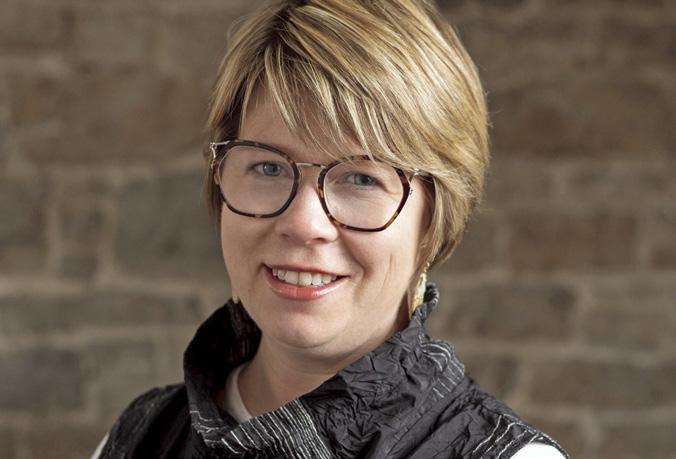
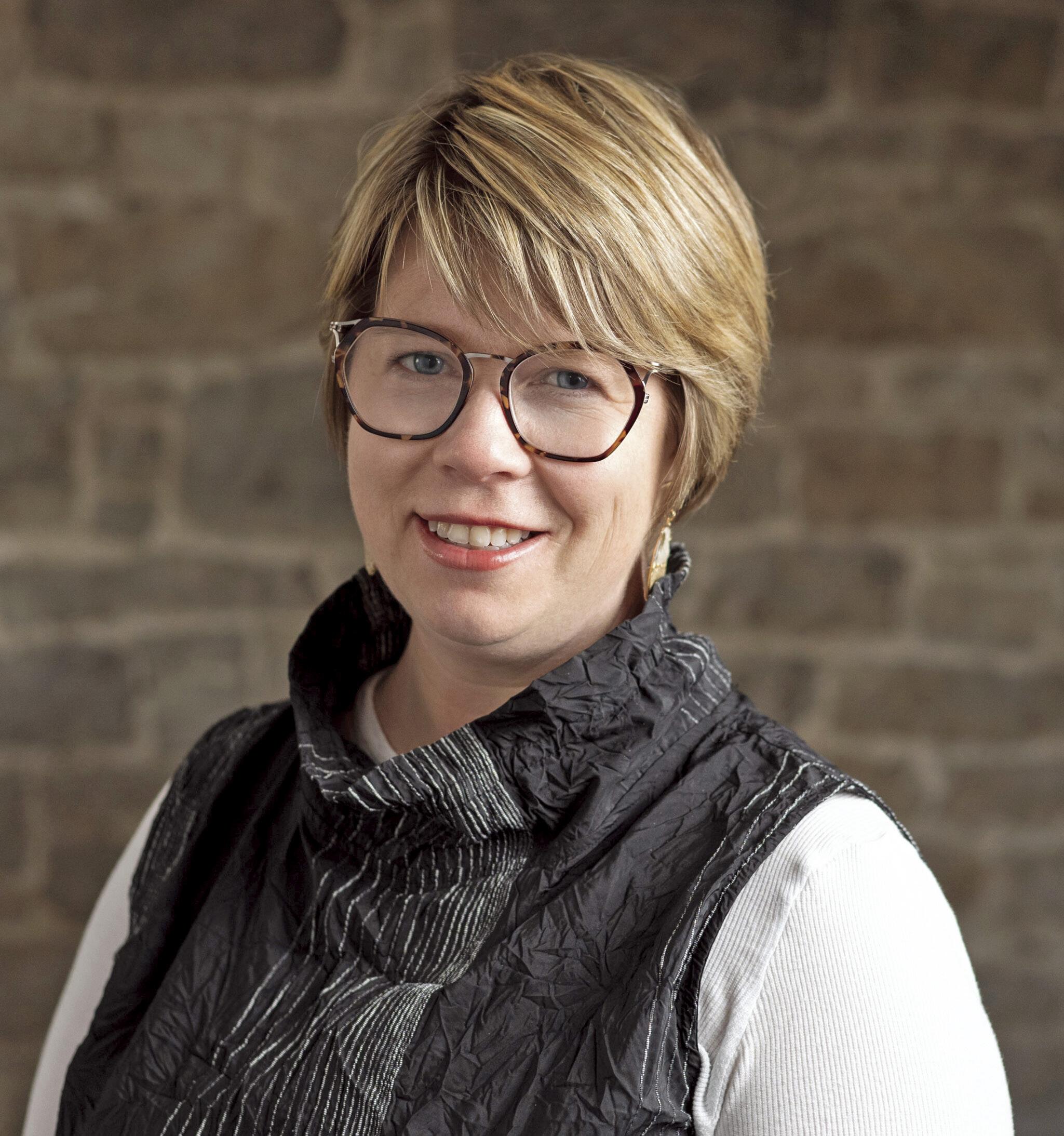
Dr. Megan Conway is on a mission to spark creativity, curiosity and capacity to mobilize social change. As the president and CEO of Volunteer Canada, she brings 20 years of powerhouse leadership across government, charitable and academic sectors. Renowned for her ability to scale innovation and use evaluative thinking to adapt programs, Dr. Conway holds a PhD from the University of Waterloo in Urban Planning, specializing in community development and social innovations.
When she isn’t leading Canada’s national organization for volunteerism, she serves as a Fellow at Carleton University’s School of Public Administration and Policy, heading international research on place-based change and charitable sector capacity.
We sat down with Dr. Conway to get her take on the vital importance of giving back during the International Year of Volunteers.
also volunteered as a soccer coach in my youth, something I have recently come back to. Throughout my life, I’ve had a strong desire to participate in my community in various ways. I now spend most of my time volunteering on boards of directors and advisory committees and coaching my kids’ soccer teams.
Q: Why is volunteering so important to you?
A: Volunteering has been a way for me to connect with my neighbours and my community. I’ve also benefitted from the opportunity to gain skills that I’ve applied in career or job contexts.
Volunteering also enables me to contribute to civic life. It gives me the opportunity to have a voice in my community and a positive impact on the issues we collectively face. When we work together, we can create the communities we want to live in.
participation and renew Canada’s culture of volunteering. It’s a call to action for the future of volunteering.
Q: What role does volunteering play in our society today?
A: Volunteering is omnipresent— from healthcare, to sports, to the environment and arts and culture—it’s the connective tissue of our communities. Volunteers play an essential role in solving complex problems, providing critical services, strengthening civic ties and reducing isolation and loneliness.
Q: What do you think is the biggest misconception about volunteering?
A: There are many different understandings of what it means to volunteer, and we need to create a new narrative of volunteering that brings together these understandings and all the diverse ways of participating.
“When we work together, we can create the communities we want to live in.”
Q: How long have you been involved with Volunteer Canada?
A: I’ve been the President & CEO of Volunteer Canada since November 2021.
Q: What volunteer roles have you had in your lifetime?
A: I’ve had several diverse volunteer roles throughout my lifetime. As a young child, I had a relative who was an elected official, and I would help do basic election campaign tasks and duties. Later, when I was in Grade 6, I started a compost club at my elementary school. When in high school, I had several volunteer roles on student council as well as on the athletic association. I
Q: What does 2026 being the International Year of Volunteers mean to you?
A: 2026 is an opportunity to get loud and to put volunteering front and centre. Volunteers do so many things across our communities, they are woven through the fabric of our communities. Yet, the work of volunteers is often unseen, and this contributes to them not being valued.
Further, volunteering rates are on the decline. During the last five years, the overall volunteering rate dropped by eight percent, according to the 2023 General Social Survey on Giving, Volunteering and Participating.
2026 is a once-in-a-generation opportunity to celebrate the power of civic
There’s also a significant misconception that volunteering is free. That no resources are required to support volunteers and the work that they do. This contributes to volunteering being devalued economically, culturally and societally. Volunteers deserve strong infrastructure to support them as they contribute their time and expertise.
Q: What would you say to encourage someone to volunteer?
A: Tap into your motivation and find your thing! Talk to your friends and family about how they volunteer, visit your local volunteer centre, library or community centre for ideas, or tap into your passion explore your own
unique way of contributing your gifts to your community.
Follow us on your favourite social media platform and get inspired by great stories about how people are volunteering across the country, and what volunteering means to them.
Q: What would you most like people to know about Volunteer Canada?
A: Our mission is to advance volunteerism to grow connection, community and belonging. Since 1977, our organization has acted as the national voice and leadership body for volunteerism. Ultimately, our role is to be a bridge and build capacity across our network by providing research, standards of practice and resources for the public, private and charitable sectors.
Q: In your role as a volunteer leader, what are you most proud of?
A: I don’t see myself as a volunteer leader but rather someone who
leads an organization that is dedicated to strengthening volunteerism. Leaders of volunteers play an important role providing the support system for both organizations and volunteers. Responsible for recruitment, retention and recognition, leaders of volunteers are relationship builders, coaches and teachers. They are doing huge work within organizations and within communities creating welcoming spaces and meaningful opportunities; training, motivating and inspiring people to share their time and talents; and at the same time as coordinating timetables and managing risks! It’s massive. What I’m most proud of in my role is helping to lead an amazing team of people who care deeply about the work.
Q: What is the most challenging part of your role?
A: Balancing resources and capacity while maintaining momentum and progress towards the core mission is hard in today’s world where the landscape is changing rapidly. It can be challenging to secure funding for volunteer infrastructure and capacity building. As with most nonprofits, raising resources to support the work is a significant effort.
Q: What is a quote or motto that helps guide you in your life?
A: “Hope is a verb.”
Q: Is there anything else you would like our readers to know?
A:
As we approach National Volunteer Week (NVW), I’m excited to share information about our NVW Celebration that I’ll be hosting on April 23 from 9:30 to 11 am. This online celebration features a keynote address by Senator Farah Mohamed who will share her insights on volunteering in Canada and beyond. Senator Mohamed will be joined by two 2024 Canada Volunteer Award recipients, Udlu Hanson and Priscilla Ojomu, who will share their stories of volunteering and advocating for social justice, inclusion and their communities’ most pressing needs. This engaging conversation will be followed by a Q&A with participants. Please join us! Register at tinyurl.com/33hkm9m6
Health
Aberdeen Hospital
250-370-5626 | islandhealth.ca
Alzheimer Society of BC 250-382-2052 | alzheimerbc.org
AVI Health & Community Services
250-384-2366 | avi.org
BC Association for Living Mindfully lokhorstgroup.com
Borderline Personality Disorder Society of BC bpdbc.ca
Broadmead Care Society
250-658-0311 | broadmeadcare.com
Canadian Blood Services 1-888-236-6283 | blood.ca
Children’s Health Foundation of Vancouver Island
250-940-4950 | islandkidsfirst.com
Diabetes Canada
778-622-4275 | diabetes.ca
Immunity Canada
250-381-7134 | immunitycanada.org
Island Community Mental Health Association
250-389-1211 | icmha.ca
Island Kids Cancer Association ikca.ca
Island Prostate Centre
250-388-0214 | islandprostatecentre.com
Island Sexual Health Society
250-592-3479 | islandsexualhealth.org
Canadian Mental Health Association, BC Region
604-688-3234 | bc.cmha.ca
Cancer DriveLine Society
778-265-0906 | cancerdriveline.ca
Capital Region Food Share Network 236-464-7551 | foodsharenetwork.ca
James Bay Care Centre
250-388-6457 | reveraliving.com
Luther Court Society 250-477-7241 | luthercourt.org
Mental Health Society of Greater Victoria mhsvictoria.org
Mercy Ships Canada 250-381-2160 | mercyships.ca
Mount St. Mary Hospital 250-480-3100 x3201 | mountstmary.ca
Oak Bay Lodge, VIHA 250-370-6642 | islandhealth.ca
Power to Be
Adventure Therapy Society 250-385-2363 | powertobe.ca
Royal Jubilee Hospital Auxiliary 250-217-0600 | rjhaux.ca
Saanich Peninsula Stroke Recovery Association 250-656-6221 | spstrokerecovery.org
Sooke Region Community Health Network 778-365-1878 | sookeregionchn.org
The First Open Heart Society of BC 250-595-2123 | fohs.ca
Umbrella Society for Addictions & Mental Health 250-380-0595 | umbrellasociety.ca
Uvic Institute on Aging & Lifelong Health 604-940-3580 | uvic.ca
Victoria Brain Injury Society 250-598-9339 | vbis.ca
Victoria General Hospital Auxiliary 250-294-4078 | vgha.ca
Victoria Hospice 250-370-8715 | victoriahospice.org
Victoria Therapeutic Riding Association 778-426-0506 | vtra.ca
WomenMD Clinic 250-940-6010 | womenmd.ca
YMCA-YWCA of Vancouver Island 250-386-7511 | vancouverislandy.ca
Social Services
1 Up Victoria Single Parent Resource Centre
250-385-1114 X3 | singleparentvictoria.ca
9–10 Club Serving Soup to the Hungry Society 778-440-7687 | thesoupkitchen.ca
Action Committee of People with Disabilities
250-383-4105 | actioncommittee.ca
CFB Esquimalt Military Family Resource Centre
250-363-2640 | emfrc.com
CHOICES Adoption & Counselling
250-479-9811 | choicesadoption.ca
Community Social Planning Council 250-383-6166 | communitycouncil.ca
Fairfield Gonzales Community Association 250-382-4604 x104 fairfieldcommunity.ca
Family Caregivers Society of BC 250-384-0408 familycaregiversbc.ca
Fernwood Neighbourhood Resource Group 250-381-1552 fernwoodnrg.ca
Friends of Bowker Creek Society friendsofbowkercreek@gmail.com bowkercreek.org
Gorge View Society 250-360-1977 gorgeviewsociety.ca
Greater Victoria Citizens’ Counselling Centre 250-384-2934 citizenscounselling.com
Greater Victoria Coalition to End Homelessness Society 250-370-1512 victoriahomelessness.ca
Greater Victoria Housing Society 250-384-3434 greatervichousing.org
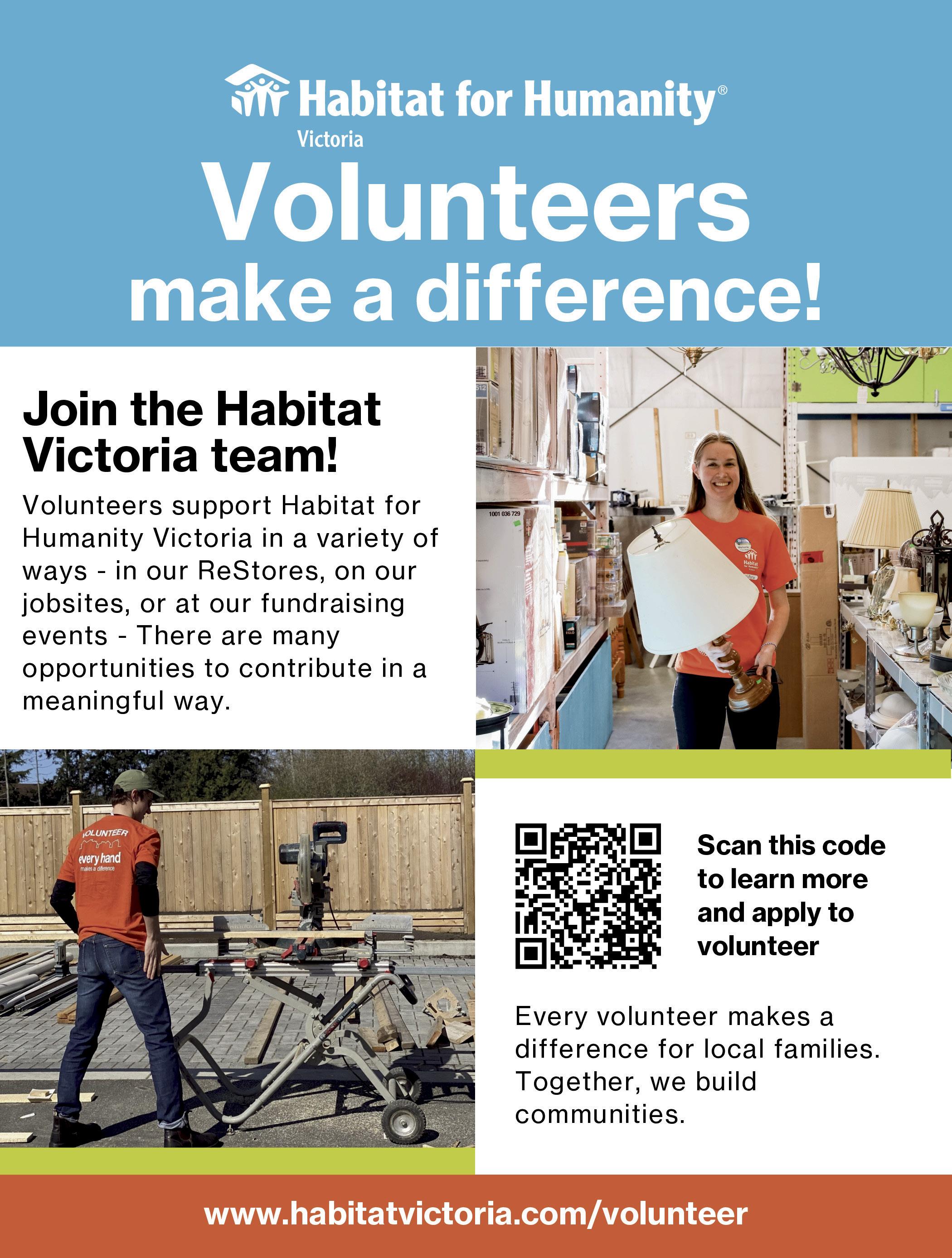
Habitat for Humanity – Victoria 250-480-7688 habitatvictoria.com
Help Fill A Dream Foundation 250-382-3135 helpfilladream.com
InnovativeCommunities.Org Foundation 250-896-3236 innovativecommunities.org
Inter-Cultural Association 250-388-4728 icavictoria.org
Island Deaf & Hard of Hearing Centre
250-592-8144 idhhc.ca
James Bay Community Project
250-388-7844
jbcp.bc.ca
James Bay Community School Society
250-389-1470 sd61.bc.ca
James Bay Market Society
250-381-5323 jamesbaymarket.com
James Bay New Horizons Society 250-386-3035 jamesbaynewhorizons.ca
John Howard Society of Victoria 250-386-3428 jhsvic.ca
Learning Through Loss
250-413-3114 learningthroughloss.org
Lifetime Networks Victoria 250-477-4112 lifetimenetworks.org
Mental Health Society of Greater Victoria 250-363-9429 mhsvictoria.org
Mercy Ships Canada
250-381-2160 mercyships.ca
Monterey Recreation Centre 250-370-7300 oakbay.ca
The Mustard Seed Street Church 250-953-1575 mustardseed.ca
Oaklands Community Association & Centre 250-370-9101 oaklandsca.com
Open Space Arts Society
250-383-8833 openspace.ca
Our Place
250-388-7112 ourplacesociety.com Thank you to all who support Our Place Society. You ignite volunteerism in our community—fueling hope and belonging, and helping people move from surviving to thriving.
Pacific Centre Family Services Association
1-866-478-8357 pcfsa.org
Pacifica Housing Advisory Association
250-385-2131 x2212 pacificahousing.ca
Phoenix Human Services Assoc. (Thrive Social Services Soc.)
250-995-5510 thrivevictoria.org
Power to Be Adventure Therapy Society
250-385-2363 powertobe.ca
Grocery Shopping & Delivery Service
Quadra Village Community Centre
250-388-7696 x225 quadravillagecc.com
Rainbow Health Cooperative 1-888-241-9992 rainbowhealth.coop
Red Cedar Cafe Association 778-817-0395 redcedarcafe.ca
Royal Jubilee Hospital Auxiliary 250-217-0600 rjhaux.ca
Saanich Neighbourhood Place
250-360-1148 snplace.org
Saanich Volunteer Services
250-595-8008 saanichvolunteers.org
Sendial
250-544-1234 thriftyfoods.com
Seniors Serving Seniors Association of BC 250-413-3211 sssbc.org
Southern Gulf Islands Community Resources Centre 250-629-3665 sgicommunityresources.ca
Southern Gulf Islands Neighbourhood House sginh.ca
Threshold Housing Society 250-383-8830 thresholdhousing.ca
Together Against Poverty Society 250-361-3521 tapsbc.ca
Vancouver Island Strata Owners Association 250-920-0688 visoa.bc.ca
Victoria Community Resources Society – Twin Oaks 250-658-4931 vcrs.ca
Victoria Cool Aid Society 250-595-8619 coolaid.org
Victoria Disability Resource Centre
250-595-0044 drcvictoria.com
Victoria Downtown Residents’ Association victoriadra.ca
Victoria Rainbow Kitchen Society 250-384-2069 rainbowkitchen.ca
Victoria Therapeutic Riding Association 778-426-0506 vtra.ca
Victoria West Community Association 250-590-8922 victoriawest.ca
Victoria Women In Need Community Cooperative
250-480-4006 x204 womeninneed.ca
Victoria Women’s Transition House Society
250-592-2927 x229 vwth.bc.ca
Wear 2 Start Society
250-472-9327
wear2start.com
West Coast Reach Association
250-882-4339
westcoastreach.org
WITS Programs Foundation
250-386-7625
witsprogram.ca
Worklink Employment Society
250-478-9525
worklink.bc.ca
YMCA-YWCA of Vancouver Island
Small Moments, Big Differences
The Art of the Connection
Julia Harrison understands that healing is rarely a linear path. Sometimes, the most potent medicine isn’t a prescription or a clinical intervention—it is a shared cup of coffee, a competitive hand of cards or a simple walk through a local park.
As the program manager of Volunteer Victoria’s Mental Health Visiting and Activity Program, Harrison is in the business of building bridges. She connects those navigating the often-isolating
ferences in people’s lives—including my own.”
A Commitment to Specialized Care
Harrison’s approach to her work is grounded in a deep academic and professional understanding of the complexities of the human mind. Having joined Volunteer Victoria in January of 2022, she brought with her a formidable educational background from the University
navigate privately—on their own,” she says.
Even as she manages a vital community program, she keeps her eyes on the horizon. She remains fiercely committed to continuing her education, with plans to pursue a PhD in 2026. This drive ensures that the programs she oversees are not just compassionate but informed by the latest research and best practices in the field.
journey of mental health and substanceuse recovery back to the vibrant pulse of their community.
“Working here, seeing the difference our organization makes confirms that we are all better off when we can work with and lift up each other,” says Harrison.
“I love being a part of that—seeing the small moments that add up to big dif-
of Victoria. With a Bachelor of Science (BSc) in Psychology and a Master of Science (MSc) in Dual Diagnosis, she possesses a specialized lens for the intersection of mental health and substance use.
“It’s an area that is vitally important to an individual’s and ultimately a society’s success but can be easy to overlook or to assume that it is an area people have to
More Than Just a Visit
The Mental Health Visiting and Activity Program is a cornerstone of Volunteer Victoria’s mission. It operates on a simple yet profound premise: matching community volunteers with individuals currently on a mental health or substance-use journey. Many of these clients reside within Island Health’s Mental Health and Substance Use residential services, envi-
ronments that, while necessary for clinical care, can sometimes feel disconnected from the outside world.
“Volunteers provide companionship and social connection with an aim to reduce isolation and help individuals in our communities feel more connected,” says Harrison.
“Volunteers are central to this program because they provide something that clinical services often can’t: consistent, human connection in everyday life.”
Under Harrison’s leadership, the program emphasizes the ordinary things in life. A volunteer’s day might include attending community events to re-acclimatize clients to social settings, going out for coffee to practice conversation and connection, and playing card games or visiting on a regular basis to build trust.
“Regular visits from a consistent volunteer creates a relaxed, equal relationship with less pressure or stigma, and space for participants to be themselves,” says Harrison.
“Our program focuses heavily on trust and a sense of being valued.”
The Art of the Match
One of the most critical roles is matching the volunteer and the resident. Matches are carefully curated according to compatibility, shared interests, locations and time availability.
“We focus on volunteers meeting clients where they are in their lives and journeys,” says Harrison.
This intentionality benefits the volunteers as much as the residents. For those looking to give back, the program offers a unique vantage point.
“As a volunteer, this is an excellent opportunity to develop an understanding of mental illness and to support someone to achieve their recovery goals,” adds Harrison.
Harrison’s work is about shifting the narrative from patient back to person. Through the Mental Health Visiting and Activity Program, she is proving every day that community integration is not just a goal for the end of recovery—it is a vital part of the recovery process.
With Harrison’s help, Volunteer Victoria is weaving a stronger, more empathetic social fabric—one coffee date and card game at a time.
Climate Conversations: Eco-Anxiety Project
In 2023 and 2024, Harrison worked on a project supported by an Island Health grant that has helped Victoria-area youth deal with anxiety about climate change and inspired them to learn about local efforts that are making a difference.
“The Eco-Anxiety Project was born out of a recognition that today’s youth were consistently being inundated with distressing information about climate change and environmental crises, often without adequate emotional support or tools to process these realities,” says Harrison.
“There was a consistent storytelling within our youth programming that led us to believe that youth were being told that the climate crisis was their responsibility to fix, and this narrative was contributing to rising feelings of anxiety, helplessness and uncertainty about the future.”
The initiative, called Eco-Anxious Stories and Next Steps, received $50,000 in funding from Island Health’s Resilience and Safety Grant program.
In partnering with the Capital Regional District, University of Victoria and Eco-Anxious Stories, Volunteer Victoria set out to name the feelings associated with climate change, removing their power and replacing those feelings with real-life action and understanding. Through a series of workshops, field trips and storytelling, the project provided a toolkit to youth to navigate this heavy topic.
“We didn’t want to focus on the negatives (of climate change),” says Harrison. “We wanted to say, ‘Okay, we’ve recognized that and we’ve done the research. Now who can we bring in to teach these youth how to harness the positive emotions surrounding it, and what can we use to tell their stories in a more positive way?’”
While this project is complete, Volunteer Victoria has applied for other grants in the hope of continuing to support young people who are dealing with eco-anxiety and eager for climate action.
“It has been truly incredible and encouraging to watch youth harness their eco-anxiety and turn it into something productive, to turn it into a storytelling tool that is positive and isn’t overshadowed by dread and doom,” says Harrison.
“I’m particularly proud of this project allowing youth to talk about their anxieties surrounding the status of our environment without feeling as though their generation is ‘in charge’ of making these changes and ‘changing the outcome.’”
Learn more at ecoanxious.ca
Stacie Gaetz is the managing editor of Volunteer Matters. She has donated her time to several organizations for nearly 30 years, has sat on a number of volunteer boards, and is a co-founding director of an advocacy-based nonprofit.
Mapping the Future of Volunteerism
University of Victoria Volunteer of the Year Project
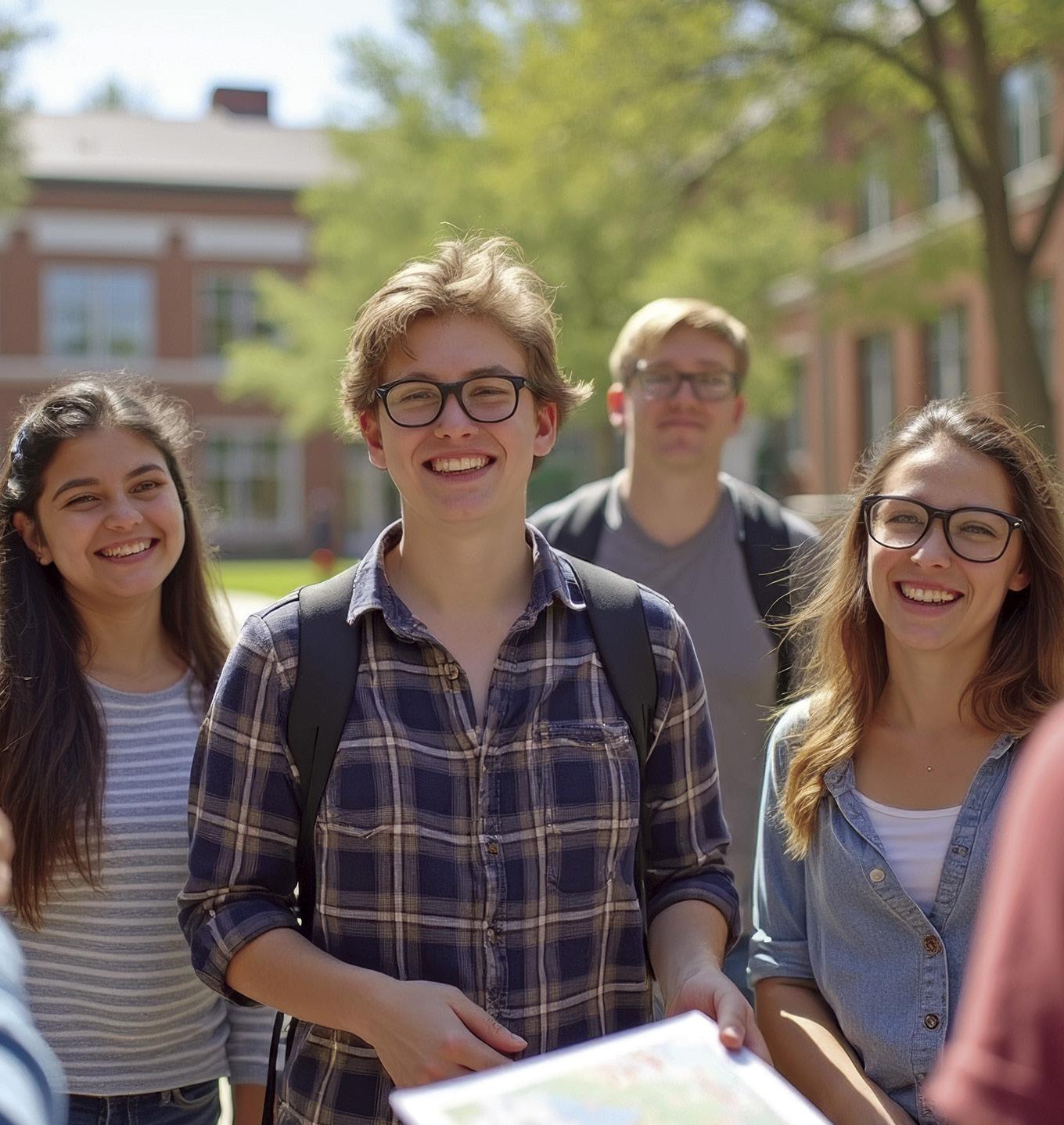
2026 is the International Year of Volunteers for Sustainable Development. The University of Victoria (UVic) Volunteer of the Year Project is bringing together students, sector leaders and community organizations to better understand, strengthen and reimagine volunteerism in the context of sustainable development goals.
Led by students Maddie Grout and Sydney Pilot, in partnership with Volunteer Victoria, the project represents a significant collaborative effort. Funded by the Victoria Foundation, the initiative is embedded within UVic’s Community Engagement courses and engages more than 75 students alongside over 250 local volunteer managers, organizations and
more than 100 youth and emerging professionals aged 17 to 29.
At its core, the project seeks to answer the question: What does volunteerism look like now, and what does it need to become to effectively support sustainable development?
“We are mapping the current and future state of volunteerism locally so organizations can better recruit, retain and mobilize volunteers to address sustainable development challenges,” says Emma Kirkland, executive director of Volunteer Victoria.
A Sector at a Turning Point
The timing of the project is critical. Volunteer-led organizations are navi-
gating increasing pressure in a rapidly changing social landscape. Data from the 2023 General Social Survey on Giving, Volunteering and Participating indicate an eight percent decrease in volunteerism between 2018 and 2023. At the same time, organizations face growing demands tied to poverty reduction, climate action, education access and building inclusive communities.
One of the project’s most striking early insights challenges a common assumption.
“The biggest issue may not be ‘lack of volunteers,’” says Kirkland. “The system has volunteers, but organizations lack the capacity to effectively engage and retain them.”
This finding reframes the problem. Rather than focusing solely on recruitment, the project highlights systemic barriers such as onboarding challenges, coordination gaps, burnout and limited volunteer management infrastructure.
The implications are significant. If the constraint lies in capacity rather than supply, solutions must shift toward strengthening systems, training and organizational design.
Listening at Scale
To build a comprehensive picture, the project is conducting more than 250 interviews with volunteer managers and volunteers, analyzing over 1,100 local charity listings and engaging youth-led groups to identify both gaps and success stories. This large-scale data collection is paired with a focus on storytelling, particularly from young people whose perspectives are often underrepresented in traditional volunteer structures.
“Youth interest is high, but mismatched with traditional volunteer structures,” says Kirkland.
“Young people are highly motivated for sustainable development goals (SDGs) aligned impact, but disengage from rigid, time-heavy or poorly defined volunteer roles.”
This insight underscores the importance of redesigning volunteer opportunities to align with evolving expectations, particularly among younger generations who are eager to engage in meaningful, flexible and impact-driven work.
All About the People
Despite its scale and analytical depth, the project remains grounded in a simple principle: volunteerism is fundamentally about people.
“At its heart, this initiative is about understanding and supporting volunteers— what motivates them, what challenges they face and how we can help them make a bigger impact in their communities,” says Kirkland.
The emphasis on lived experience— particularly youth voices—ensures that
the project remains responsive, inclusive and forward-looking.
“Young people are shaping the future of volunteering,” she adds.
“We’re capturing their ideas, stories and needs to make volunteerism more accessible, meaningful and impactful for the next generation.”
At the same time, the project recognizes that volunteers are already making a difference.
“Many local volunteer programs are contributing to sustainable development goals, even if they don’t always recognize it,” says Kirkland.
“This project shines a light on that work and helps it grow.”
From Research to Action
While the project is grounded in research, its ambitions extend far beyond analysis. A central goal is to produce practical, actionable tools that organizations can use to improve volunteer engagement and program design.
“I hope the project produces actionable outputs—training resources, frameworks and insights that organizations can use,” says Kirkland.
These outputs will include training materials, strategic resources and an evidence-informed roadmap to help forecast local volunteer trends. The findings will also inform youth engagement pathways, improve coordination across the sector and support strategic planning and funding decisions.
“The findings will be used to improve volunteer program design, strengthen recruitment and retention strategies and build targeted training and support tools for organizations,” says Kirkland.
In this way, the project bridges the gap between research and implementation, ensuring that insights translate into meaningful change.
A Phased Approach
The initiative is structured across multiple phases, beginning with project setup in August 2025 and moving through data collection, analysis and output development before culminating in publication and sector-wide implementation in late 2026.
However, the project’s impact is intended to extend well beyond. Shortterm outcomes include improved understanding of the sector, increased youth engagement and the development of new data-driven strategies. Intermediate results aim to enhance volunteer recruitment and retention while enabling organizations to respond more proactively to community needs.
In the long term, the vision is a more resilient volunteer sector—one that contributes meaningfully to SDGs at the local level, sustains higher levels of engagement and empowers communities with the tools needed for ongoing participation in sustainable development.
Building a Shared Future
Ultimately, the UVic Volunteer of the Year Project is about creating alignment—between data and action, between volunteers and organizations and between local efforts and global goals.
“I hope this project helps create a shared, evidence-based understanding of local volunteerism,” says Kirkland.
She adds that it can strengthen the alignment between volunteer expectations and organizational capacity and help organizations better recognize and scale their contribution to sustainable development at the community level.
By fostering collaboration, building capacity and amplifying voices across the sector, the initiative positions Volunteer Victoria and its partners to respond more effectively to emerging challenges and opportunities.
Stacie Gaetz is the managing editor of Volunteer Matters. She has donated her time to several organizations for nearly 30 years, has sat on a number of volunteer boards, and is a co-founding director of an advocacy-based nonprofit.
Breaking the Cycle of Loneliness
A Community Project Connecting Generations
Loneliness is often thought of as something that primarily affects older adults, but the reality is that social isolation touches every generation. Young people, working adults and seniors can all experience moments when meaningful connection feels out of reach. While strong relationships are known to support both physical and mental wellbeing, taking the first step toward building those connections can sometimes feel overwhelming.
For seniors facing isolation, community programs and resources can be a lifeline to help alleviate loneliness and improve their mental, emotional and physical well-being. The District of Saanich and local partners can expand these offerings thanks to more than $2.5 million in funding over five years from the federal government.
The initiative focuses on strengthening community belonging by encouraging meaningful relationships across generations.
“Isolation is a serious issue for seniors, particularly for those facing language barriers, a lack of familiarity with available resources and transportation or mobility concerns,” says Saanich Mayor Dean Murdock.
“This funding will go a long way towards ensuring all members of our community can participate in activities, improve their social connections and feel like they belong in Saanich.”
The District of Saanich will collaborate with municipalities and non-profit partners to increase social inclusion of isolated older adults including newcomer, Indigenous, Black, racialized and gender diverse seniors aged 55+ in the Greater Victoria area. The initiative, Equitable Social Connection Opportunities for Vul-
nerable Seniors in Our Region, is funded in part by the Government of Canada’s New Horizon for Seniors program. The program addresses gaps in current services by offering a range of activities—from organized events to drop-in sessions—and transportation support to ensure accessibility.
Activities That Bring Generations Together
Intergenerational activities are at the heart of the initiative. Plans include developing:
• 150 or more activities involving youth aged 15 to 29 and adults aged 30 to 54.
• Experiences where 70 percent are co-led by older adults and youth.
• Programs where 75 percent or more participants report that expectations were met or exceeded.
These activities are designed not only to create opportunities for connection but also to build understanding and communication across generations.
Children & Youth
Big Brothers Big Sisters of Victoria 250-475-1117 X40 bigbrothersbigsisters.ca
Our vision is that all children and youth are empowered to reach their full potential through mentorship. Visit our website to learn more about becoming a volunteer.
Boys and Girls Club Services of Greater Victoria 250-384-9133 | bgcvic.org
CFAX Santas Anonymous Society 778-561-1070 | cfaxsantas.com
Children’s Health Foundation of Vancouver Island 250-940-4950 | islandkidsfirst.com
CHOICES Adoption & Counselling
250-479-9811 | choicesadoption.ca
Community Options for Children & Families
250-380-6363 | cocf.ca
George Pringle Memorial Camp Society 250-743-2189 | camppringle.ca
Help Fill A Dream Foundation
250-382-3135 | helpfilladream.com
Island Kids Cancer Association ikca.ca
KidSport Greater Victoria 250-380-1518 | kidsportvictoria.ca
Strengthening Skills & Relationships
The project is focused on building lasting relationships and stronger communication between generations. Organizers hope at least 70 percent of participants report improved cross-generational communication skills. They would like to see at least 70 percent form two or more meaningful new connections.
More than 100 older adults will participate as co-creators, evaluators and ambassadors, helping shape inclusive and accessible volunteer opportunities. Working groups will also bring together more than 100 seniors and 100 youth to develop ideas and test new approaches that strengthen community connection.
Engaging in Meaningful Ways
Older adults are central to the initiative and can participate in several ways:
• Volunteering in intergenerational activities, sharing their experience while building social connections and learning new skills
• Receiving support from volunteers while engaging socially in their homes or neighbourhoods
• Both offering and receiving volunteer support within a 12-month period
This flexible approach allows participants to engage in ways that feel meaningful and comfortable.
Measuring Real Impact
To ensure the project makes a measurable difference, organizers have set clear goals for participation and engagement. The project aims to engage more than 800 older adults in intergenerational volunteering opportunities.
A Region-Wide Collaboration
The initiative brings together a network of organizations committed to strengthening community relationships and reducing social isolation. Participating partners include:
• District of Saanich
• Capital Regional District (CRD)
• Greater Victoria Volunteer Society (GVVS)
Nature Kids BC naturekidsbc.ca/find-a-club/vancouverisland/naturekids-victoria
Scouts Francophones De Victoria 604-936-3624 | scoutsfranco.com
Support Soweto Junior School 250-598-0708 supportsowetojuniorschool.org
Vancouver Island Cooperative Preschool Association vicpa.org
Victoria General Hospital Auxiliary 250-294-4078 | vgha.ca
Victoria Youth Empowerment Society 250-383-3514 | vyes.ca
• Victoria Immigrant and Refugee Centre Society (VIRCS)
• Saanich Neighbourhood Place (SNP)
• Family Caregivers of BC (FCBC)
• Métis Nation
• Silver Threads Service
• Vancouver Island Counseling Centre for Immigrants and Refugees (VICCIR)
• Westshore partners
• City of Victoria
A Breakthrough Approach to Belonging
Loneliness can affect anyone, but it doesn’t have to be permanent. By intentionally creating opportunities for people to connect, share experiences and work together, this initiative offers a promising approach to strengthening communities.
Through collaboration, shared learning and intergenerational engagement, the project demonstrates that connection can be built, and when it is, entire communities benefit.
Erika Palmer is a writer living in Victoria with her husband and son. She believes most problems can be solved with a good cup of tea and a huge piece of chocolate.
Animals
BC SPCA
250-478-9453 | spca.bc.ca
ElderDog Canada – Victoria Chapter 1-855-336-4226 | elderdog.ca
Pacific Animal Therapy Society 250-590-9082 | patspets.ca
Corporate
Better Business Bureau of Vancouver Island
250-386-6348 | vi.bbb.org
Coast Capital Savings
250-483-7000 | coastcapitalsavings.com
erative with an 80-year legacy of unlocking financial opportunities that positively impact people and communities. We believe that every Canadian deserves a financial partner who actually cares how things turn out.
Driven by our social purpose, we look at everything we do through the lens of how we can help our 600,000 members, our employees and our communities. A proud Certified B Corporation®, we’re part of a global movement building a more inclusive, equitable and regenerative economic system. We’re deeply committed to making our financial cooperative a great place to work, as demonstrated by some of our accolades, and have significantly invested in our communities over the past two decades.
Coast Capital is a platinum member of Canada’s Best Managed Companies, one of Canada’s Most Admired Corporate Cultures and a BC Top Employer.
Indigenous
Indigenous Perspectives Society 250-391-0007 | ipsociety.ca
M’akola ILBC Housing Society 250-474-1524 X2 | makola.bc.ca
Inter-Cultural Association 250-388-4728 | icavictoria.org
Vancouver Island Counselling Centre for Immigrants & Refugees 778-404-1777 | viccir.org
At Coast Capital, we’re not dreaming about a better future, we’re building one. We’re a member-owned financial coop-
Downtown Victoria Business Association
250-386-2238 | downtownvictoria.ca Vancity
250-519-7000 | vancity.com
Spiritual
International Metaphysical Academy 250-472-0909 | metaphysicalacademy.com
Because every story matters.
Volunteers inspire connection across generations at Luther Court
Luther Court is a growing non-profit campus of care located in the Cedar Hill–Shelbourne corridor. Through the exceptional health services offered on site—Adult Day Programming, assisted-living, long-term care, affordable intergenerational housing and the Community Health Centre’s primary care and outreach programs—people in Greater Victoria can access the resources they need to flourish.
Today’s seniors are living longer and are more active, but too many still are coping with social isolation and loneliness. Volunteers of all ages make a lasting impact by bringing joy and supporting a sense of belonging for everyone who comes to Luther Court to find care and connection.
Luther Court recently introduced two new initiatives that shine a spotlight on the magic that comes from bringing volunteers and stories together. The initiatives received significant support from the Government of Canada’s New Horizons for Seniors Program, a federal grants and contributions program whose goal is to support projects that help improve the well-being of seniors and foster social inclusion and engagement in their communities.
• Luther Court’s Legacy Stories: Passing it Forward began in 2025. It empowers volunteers of all ages to connect with older adults and digitally record memorable moments from their
lives—to pass on to their loved ones, or keep as part of their living legacy.
• This year marks the launch of Turning Pages Across Ages—an intergenerational volunteer initiative that matches volunteers with seniors who have made Luther Court their home. Conversation and connection grow through reading aloud, with volunteers and residents side by side.
“Connecting or engaging with anyone, no matter the age group is so very important for everyone, no matter their age or circumstance. A smile is the best introduction. My storyteller was such an interesting individual and made us both laugh during our time together. Even though I’m close to 79, she in her 90’s, gives me hope that I am as sharp as she is when I’m in my 90’s. A lofty goal indeed.”
– Volunteer, Luther Court Legacy Stories
With support from partners like Canada’s New Horizons for Seniors Program and hundreds of dedicated volunteers and donors, Luther Court continues to inspire connection across generations. Because everyone deserves a high quality of life, at every age.
Visit us at luthercourt.org and sign up to volunteer or make a donation and help transform lives.
Seniors
Abbeyfield House St. Peter’s Society
250-479-6140
abbeyfieldstpeters.org
Broadmead Care Society
250-658-0311 broadmeadcare.com
Cook Street Village Activity Centre
250-384-6542
csvac.ca
James Bay Care Centre
250-388-6457
reveraliving.com
James Bay New Horizons Society
250-386-3035
jamesbaynewhorizons.ca
James Bay New Horizons provides opportunities for individuals to lead more meaningful, active, healthy and complete lives.
Mount Douglas Seniors Housing Society
250-721-1818 mdshs.net
Mount St. Mary Hospital
250-480-3100 x3201 mountstmary.ca
Government
Aberdeen Hospital
250-370-5626
islandhealth.ca
Camosun College Co-op Education & Career Services
250-370-3420 camosun.bc.ca
CFB Esquimalt Military Family Resource Centre
250-363-2640 emfrc.com
City of Victoria 250-361-0397 victoria.ca
Oak Bay Lodge, VIHA 250-370-6642 islandhealth.ca
Selkirk Seniors Village 250-940-1028 selkirkplace.ca
Seniors Serving Seniors Association of BC 250-413-3211 sssbc.org
Shaw Centre for the Salish Sea (New Marine Centre Society) 250-665-7511 salishseacentre.org
Southern Vancouver Island Nature Trails Society naturetrailssociety.com
Swan Lake/Christmas Hill Nature Sanctuary 250-479-0211 swanlake.bc.ca
TLC The Land Conservancy 250-479-8053 conservancy.bc.ca
TLC The Land Conservancy of British Columbia is a charitable land trust protecting critical ecosystems and vital habitat throughout the province for the benefit of current and future generations.
Creating Intentional Spaces for Newcomer Volunteers
Did you know that newcomers to Canada are more likely to spend more hours per year volunteering than people who have lived in Canada for more than 10 years?
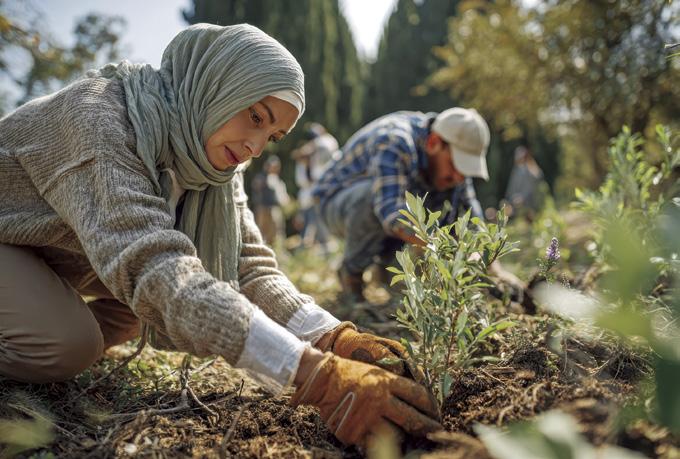
Welcoming newcomer volunteers to your organization can include people with diverse perspectives, experience and skills, help to expand your network of volunteers and build stronger connections with newcomer and immigrant communities.
For newcomers, volunteering is a great way to get involved locally and meet people in their new communities. Building meaningful relationships
and keeping busy with causes they care about can help newcomers feel more grounded in their new home and support a transition period that may be challenging.
Volunteering can also help newcomers to seek future employment by gaining experience in Canada. It can be an opportunity to practice English language skills, alongside other skills like organization, teamwork and communication. It can also provide connections for employment or education reference letters and allow newcomers to tap into Canada’s “hidden” job market, where many jobs are network-based or not
publicly posted. While volunteering is not a requirement for citizenship, many newcomer support organizations recommend volunteering for these reasons.
If you are involved with an organization that works with volunteers, you may already have newcomers volunteering with you. If not, you might be wondering how you can create a more supportive and accessible environment to welcome newcomer volunteers.
Here are a few tips and resources to make your volunteer programs more intentional, welcoming and supportive of newcomers.
Accessible Info
One of the biggest barriers to volunteering for many newcomers is language. Think about your volunteer information package, or the information listed on your website. Is it accessible to read for someone who is learning English? Consider reviewing your communications through this lens and see what adjustments you could make to allow for improved language accessibility. You might offer translations for key information, add more images or graphics to illustrate your meaning or train volunteer recruitment staff on providing information to newcomer volunteers.
If your recruitment information is not accessible, you may not see newcomers applying to volunteer with you. Improving this accessibility is a simple way to welcome newcomer volunteers to your organization.
Trained Staff
Another barrier for newcomer volunteers can be the volunteer intake process. Your volunteer policies should have standards about diversity and inclusion but go beyond just statements: providing culturally informed training to your staff, including newcomers and immigrants in the intake process, and ensuring that screening practices are designed with fairness and sensitivity in mind.
Inclusive Onboarding
Onboarding your new volunteers is another area of opportunity for inclusion. Consider again your volunteer information, this time at the onboarding stage. Is it accessible for people of diverse cultural backgrounds? Providing translations, visuals and opportunities for clarification during training are simple ways to support various levels of English language proficiency.
A “buddy” system can be a great way to support newcomer volunteers by pairing them with an experienced volunteer. This allows for one-to-one support and relationship-building as the new volunteer navigates onboarding, training and starting their new volunteer position.
Cultural Connections
If you’re looking to include more newcomers in your volunteer network, connecting with organizations that support newcomers is a great place to start. The Inter-Cultural Association of Greater Victoria provides resources, training programs and support for newcomer immigrants and refugees. You might also connect with different cultural organizations in your community to share information about volunteering with your organization. Including both longer-term immigrants and newcomers can create bridges between communities and make newcomers feel more supported in your organization.
Visit volunteercanada.ca to get started with an inclusivity checklist, information on newcomer volunteers and resources on supporting a welcoming volunteer community.
Allie McFarlane works in leadership with a youth nonprofit and manages digital content for several other local brands. When she’s not writing blogs or making reels, you might find her hiking around Vancouver Island, browsing her local record store or volunteering at youth groups.
Education
BC Aviation Museum 250-655-3300 bcam.net
Big Brothers Big Sisters of Victoria 250-475-1117 x40 bigbrothersbigsisters.ca
Bridges for Women Society 250-385-7410 bridgesforwomen.ca
Camosun College-Co-op Education & Career Services 250-370-3420 camosun.bc.ca
Diabetes Canada
778-622-4275 diabetes.ca
Greater Victoria Down Syndrome Society gvdss.org
Horticulture Centre of the Pacific 250-479-6162 hcp.ca
Indigenous Perspectives Society 250-391-0007 ipsociety.ca
InnovativeCommunities.Org Foundation 250-896-3236 innovativecommunities.org
International Metaphysical Academy 250-472-0909 metaphysicalacademy.com
James Bay Community School Society 250-389-1470 jamesbaycentre.ca
Learning Through Loss 250-413-3114 learningthroughloss.org
Mental Health Society of Greater Victoria mhsvictoria.org
Oak & Orca Bioregional School
250-383-6609 orcapod.ca
Pacific Institute for Sport Excellence Society 250-220-2587 pise.ca
Pacific Training Centre for the Blind 250-580-4910 pacifictrainingcentre.ca
Scouts Francophones De Victoria 604-936-3624 scoutsfranco.com
Shaw Centre for the Salish Sea (New Marine Centre Society) 250-665-7511 salishseacentre.org
Support Soweto Junior School
250-598-0708 supportsowetojuniorschool.org
The Circle Salt Spring Education Society 250-537-1336 thecircleeducation.org
University of Victoria Graduate Students’ Society 250-472-4543
uvic.ca
University of Victoria Students Society 250-472-4317
uvss.ca
UVic Community Engaged Learning Department 250-472-5667 uvic.ca
Uvic Institute on Aging & Lifelong Health uvic.ca
Victoria Literacy Connection Society 250-385-0014 victorialiteracyconnection.ca
WITS Programs Foundation 250-386-7625 witsprogram.ca
Worklink Employment Society 250-478-9525 worklink.bc.ca
Arts & Culture
Alliance Française Victoria 250-686-4065 afvictoria.ca
Art Gallery of Greater Victoria 250-384-4171 x232 aggv.ca
artsREACH
250-475-0354 artsreach.ca
Ballet Victoria 250-380-6063 balletvictoria.ca
CFB Esquimalt Naval & Military Museum
250-363-4312 forces.gc.ca
Civic Orchestra of Victoria 778-426-9048 civicorchestraofvictoria.org
Dance Victoria Society
250-595-1829 dancevictoria.com
Destination Greater Victoria (Tourism Victoria) 250-953-2022 tourismvictoria.com
Early Music Society of the Islands 250-882-5058 gov.bc.ca
Friends of Government House fghgs.ca
Friends of Music Society
250-592-5114 friendsofmusic.ca
Greater Victoria Festival Society 250-382-3111 gvfs.ca
Greater Victoria Folk Festival Society folktoria.ca
Greater Victoria Performing Arts Festival
250-386-9223 gvpaf.org
Intrepid Theatre Company Society
250-383-2663 intrepidtheatre.com
James Bay Market Society
250-381-5323 jamesbaymarket.com
La Societe Francophone De Victoria
250-388-7350 sfvictoria.ca
Langham Court Theatre
250-384-2142 langhamtheatre.ca
Maritime Museum of BC 250-385-4222 mmbc.bc.ca
Oak Bay Figure Skating Club oakbayfsc.ca
Open Space Arts Society
250-383-8833 openspace.ca
Pandora Arts Collective Society
250-920-7227 pandoraarts.ca
Royal BC Museum
250-387-7902 royalbcmuseum.bc.ca
Sooke Region Historical Society
250-642-6351 sookeregionmuseum.com
Soroptimist International of Victoria, Westshore sivw.ca
Victoria BC Ska & Reggae Society victoriaskafest.ca
Victoria Film Festival 250-389-0444 victoriafilmfestival.com
Victoria Symphony 250-385-9771 victoriasymphony.ca
West Shore Arts Council 250-478-2286 westshorearts.org
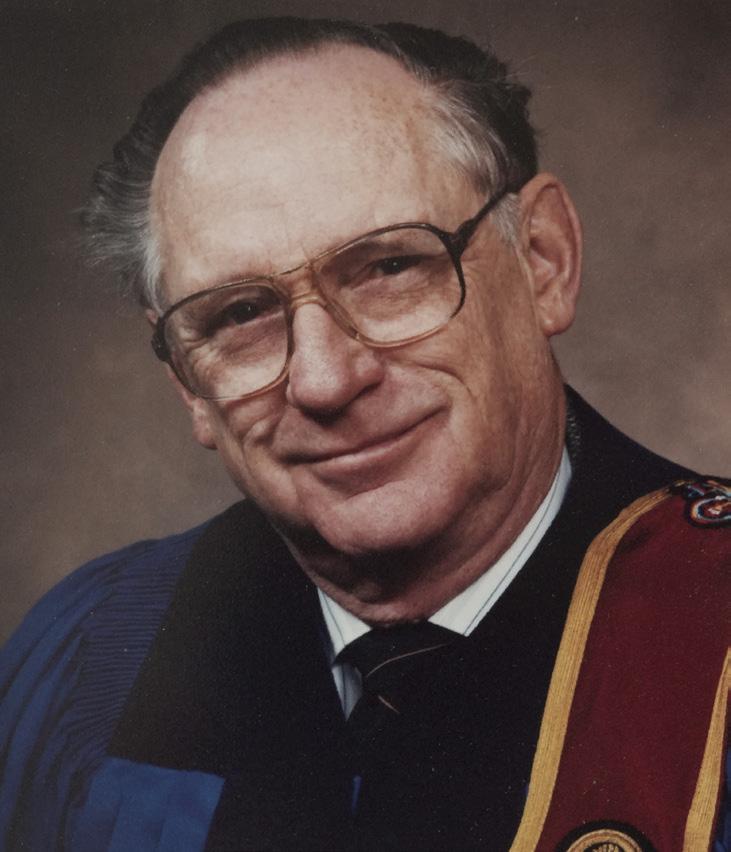
Trained as an engineer at McGill University, Carl built a successful career in Kitchener, Ontario, eventually becoming a partner in a consulting engineering firm. While his professional accomplishments were significant, they were only one part of his story. He was equally invested in the communities around him, offering his time, leadership, and energy to causes that mattered deeply.
Carl served as both a board member and Chair of Grand River Hospital, helping guide healthcare in his region. Alongside his wife, he was also involved in a wide range of community initiatives, including helping establish one of the first Meals on Wheels programs in the Kitchener-Waterloo area. “There was always an expectation in our family to be involved and to make the community better,” Carol recalls. “That was a core value we grew up with.”
A Legacy Rooted in Community
When Carol Hennigar reflects on her father, Carl, she describes a man guided by curiosity, discipline, and a deep commitment to community. He grew up from humble beginnings and worked hard throughout his life, always thoughtful in his decisions and actions. “Giving back was just part of who he was,” she says. That belief in contributing to something larger than oneself was not a single act, but a thread woven throughout Carl’s life.
operator. He also found great joy in time spent with family, particularly in the outdoors. One of Carol’s most vivid memories is a three-week canoe trip in the Canadian wilderness with her father and brothers, an experience that reflected both his adventurous spirit and his desire to create meaningful family moments.
Later in life, Carl found his way to Vancouver Island, where he developed a strong connection to the Saanich Peninsula Hospital. He fondly referred to it as “my little hospital,” a reflection of both his affection for the facility and the sense of comfort he found there. Whether visiting for routine care or more complex health needs, the hospital became an important part of his life. Even as his mobility changed, he remained determined to maintain his independence and continued to access care in a way that allowed him to stay connected to the community.
Legacy is not only what we leave behind, but how our values continue to live on.
His curiosity extended well beyond his work and volunteer efforts. Carl was a lifelong learner who embraced new challenges with enthusiasm. Over the years, his interests ranged from building a model railway and becoming a licensed pilot to connecting with people around the world as a ham radio
That connection, combined with a lifetime of community-minded values, shaped one of his most meaningful decisions. Upon his passing, Carl left a generous legacy gift of approximately $1.3 million to the Saanich Peninsula Hospital & Healthcare Foundation, alongside a similar contribution to Conestoga
College. His intention was to support the institutions that had played a role in his life and to invest in the well-being of others for years to come.
For Carol, the decision reflects exactly who her father was. He believed strongly in personal responsibility and the value of hard work. “He felt it was important to give back to the communities that meant something to him,” she says.
Today, Carl’s generosity continues to support care at Saanich Peninsula Hospital, helping ensure patients and families receive the services they need close to home. His story is a reminder that legacy is not only what we leave behind, but how our values continue to live on through the choices we make.
For those considering their own legacy, his example offers something simple but powerful to reflect on. What has shaped your life? What communities have supported you or your loved ones? And how might you choose to give back in a way that reflects what matters most?
A gift in your will, of any size, can help support local healthcare and ensure compassionate, high-quality care continues for future generations.
To learn more about Legacy Giving, visit sphf.ca or connect with the Saanich Peninsula Hospital & Healthcare Foundation to explore how your values can create a lasting impact.
Carl Hennigar
LEARN THINK GROW with LEARNING & TRAINING
Volunteer Victoria’s learning and training workshops bring people together to learn, grow, and lead with purpose. Guided by local facilitators who bring lived experience, professional insight, and a strong connection to our community, these sessions are offered in a range of engaging formats - including in-person, online, and customized learning experiences. From leadership and communication to community engagement, inclusion, collaboration, and organizational development, these workshops offer meaningful learning for nonprofits, businesses, government organizations, and individuals looking to strengthen their impact and build more connected communities.
Explore our Learning and Training page to discover upcoming workshops and find the right fit for you or your team.