

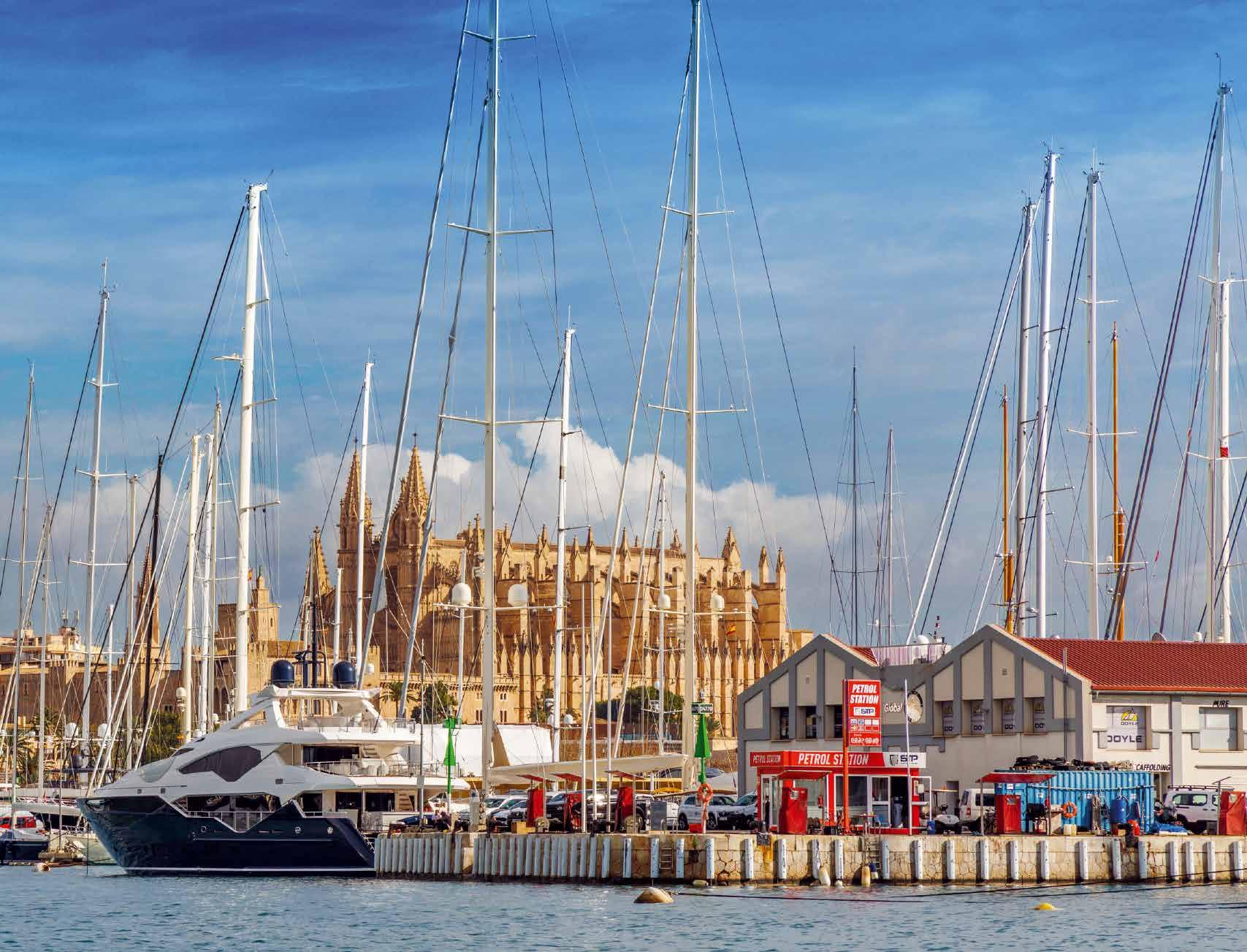

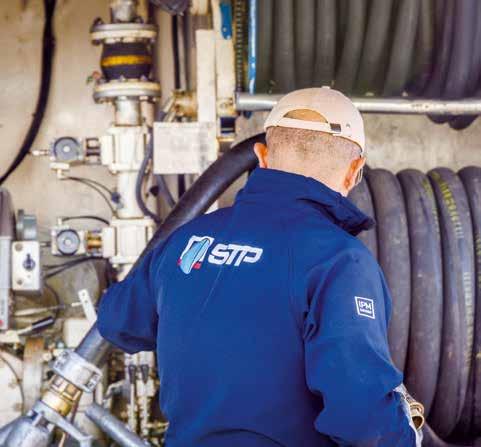
4 FUEL PUMPS 80L/MINUTE
2 HIGH FLOW-VOLUME FUEL PUMPS 280L/MINUTE
100M OF MOORINGS VOLUME DISCOUNT
SUMMER OPENING HOURS (mid May - mid September) from monday to sunday from 8:00 am to 8:00 pm
from monday to sunday from 8:00 am to 4:30 pm
CEO (Creative Enthusiastic Owner) Jens Oomes
Office Manager Natalie Tempelers
Admin & Communications Marlot Cathalina
Design CreArte Studio
Editorial Support Kjell Van Hoecke
Client Relations & Partnerships Sara Vermeulen
Contributors
Marlot Cathalina
Karine Rayson, The Crew Coach
Clair Minto, Chief Stew Shop
Barry D’Arcy, Ocean Earth Chefs
Chef Raffie
Bec McKeever and Dominique Smit, Virtual Pursers
Sales: sara@theislander.online
Tzarina Mace-Ralph
Macarena Marambio, Observadores del Mar
Save The Med
Fundación Palma Aquarium
Joves Navegants
Editorial contributions & press releases: editor@theislander.online
Admin: admin@theislander.online
Accounts: accounts@theislander.online
Newsletter

Event calendar

*Creative Enthusiastic Owner
As we head into the heart of summer and another busy Mediterranean season, it looks like this is a year of lastminute decisions.
Across our industry, we've seen guests waiting longer to confirm their plans, charters being booked closer to departure, and travel decisions made almost at the final hour. It's obviously the result of the uncertainty created by geopolitics, shifting economies, and a constantly changing world. Many people are struggling to make cool-headed decisions.
And yet, some things remain reassuringly constant.
A trip to Mallorca is always a good idea, and so is stepping aboard a yacht.
Perhaps that's because both offer something increasingly valuable: the opportunity to disconnect from the noise. Whether it's a week exploring hidden coves, a long lunch overlooking the sea, or simply watching the sunset from the deck, these moments remind us that not everything has to move at the heated pace of the news cycle.
In this issue, you won't find any of those articles designed to trigger your fears, and we hope you enjoy reading this issue from your terrace at home, the aft deck, the beach club, or another tranquil space.
While many of you will be enjoying the Mediterranean sunshine and, at times, be challenged to beat the heat, I'm spending July, August, and part of September trying to stay warm. This summer takes me to the Arctic. You can read more about that adventure elsewhere in this issue and in the next two issues.
Wherever this summer finds you, I hope it brings calm seas, memorable journeys, and plenty of opportunities to get away from it all.
Thank you, as always, for being part of our community, and enjoy the July/August edition of The Islander.
09. Note from the CEO
12. Judged by The Cover: Flensburger Yacht Service Mallorca
16. Tune in Thursdays
22. Industry updates 26. Rondal
32. Salón Náutico Internacional de Barcelona
33. Balearic Ports
36. Simbad Yachts
38. Bluewater Yachting
46. Meet The Crew: Sven Vandendriessche
50. The Crew Coach
52. Chief Stew Shop
55. Chef Tzarina Spits it out
56. Chef’s Chat
58. MSOS
62. Chef Raffie
64. Virtual Pursers
68. Riccardo Benoni tribute
70. Northwest Passage expedition
74. Purser Support
76. Tarati education fund
78. Observadores del Mar
82. Save the Med
86. Reef Regeneration
88. Fundacion Palma Aquarium
90. Fundacion Joves Navegants
94. What's on in Mallorca
96. JoyRon Foundation
98. Vivian Borsani
101. Aethos Mallorca
102. BMComposites
104. ADN Mediterráneo
106. Les voiles d’Antibes
109. MC-ZERO Tenders
110. Luckia Casino Mallorca
112. Echezo Ibiza
114. SELECT Boutique Agency
116. Asia Pacific
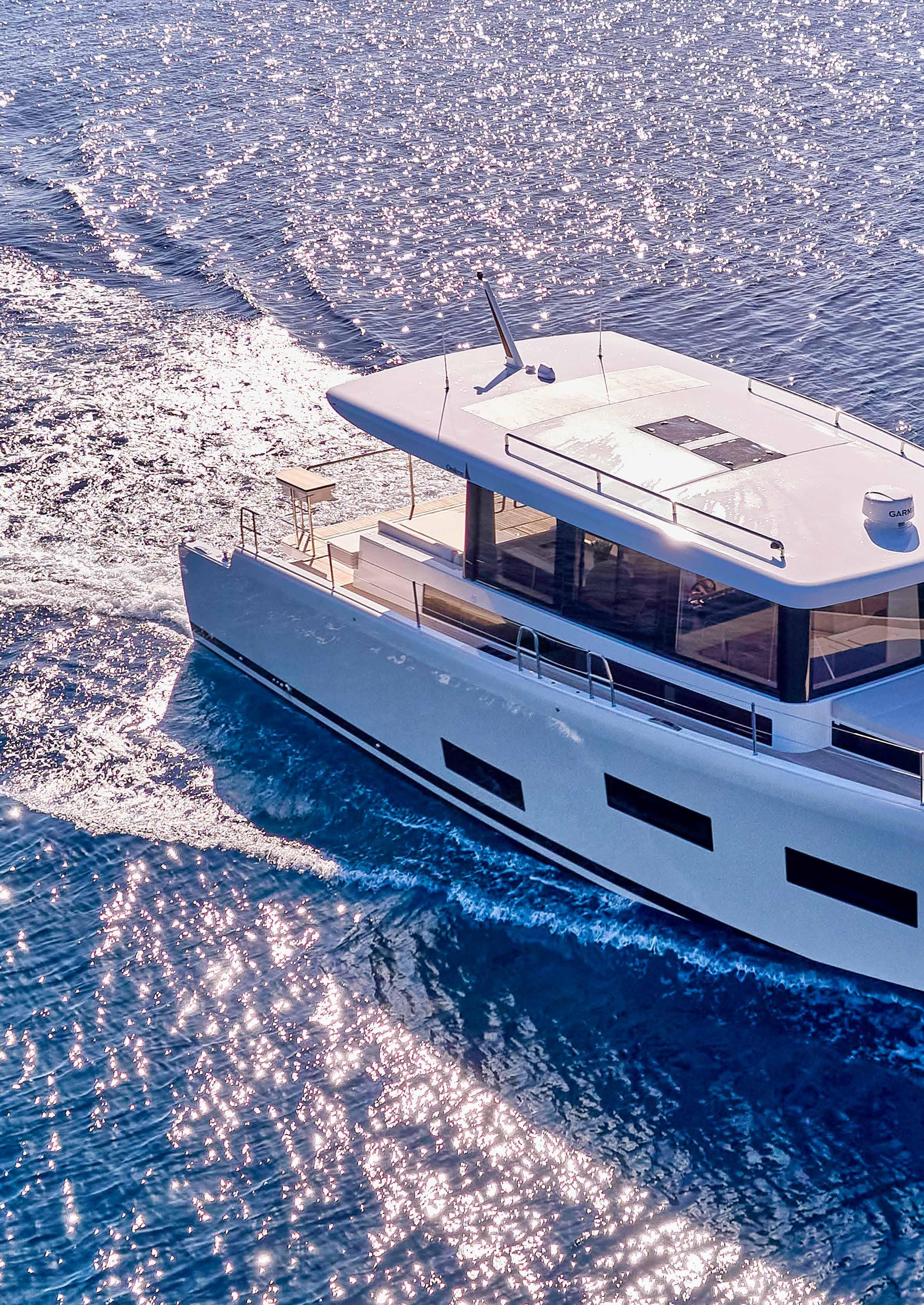
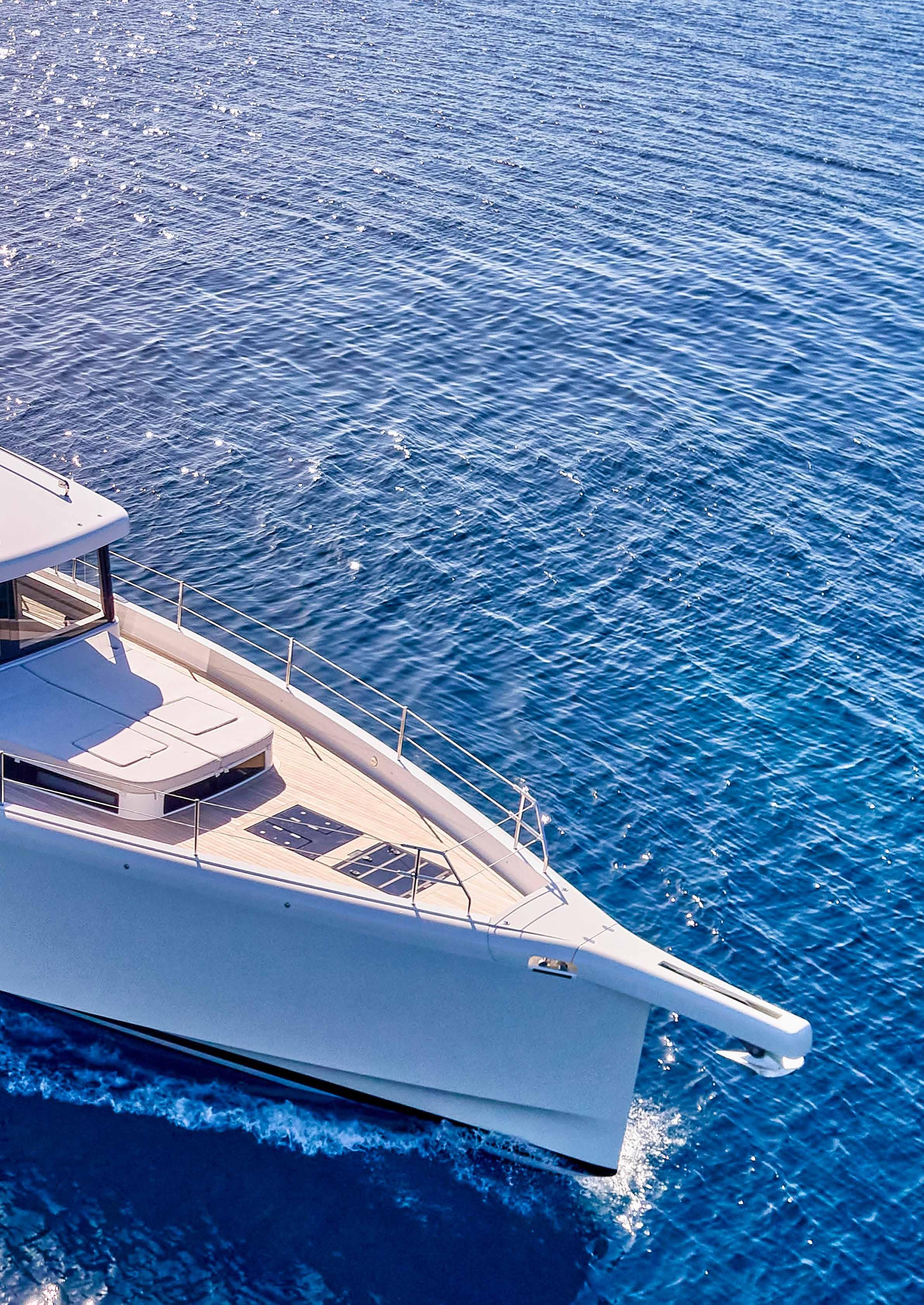
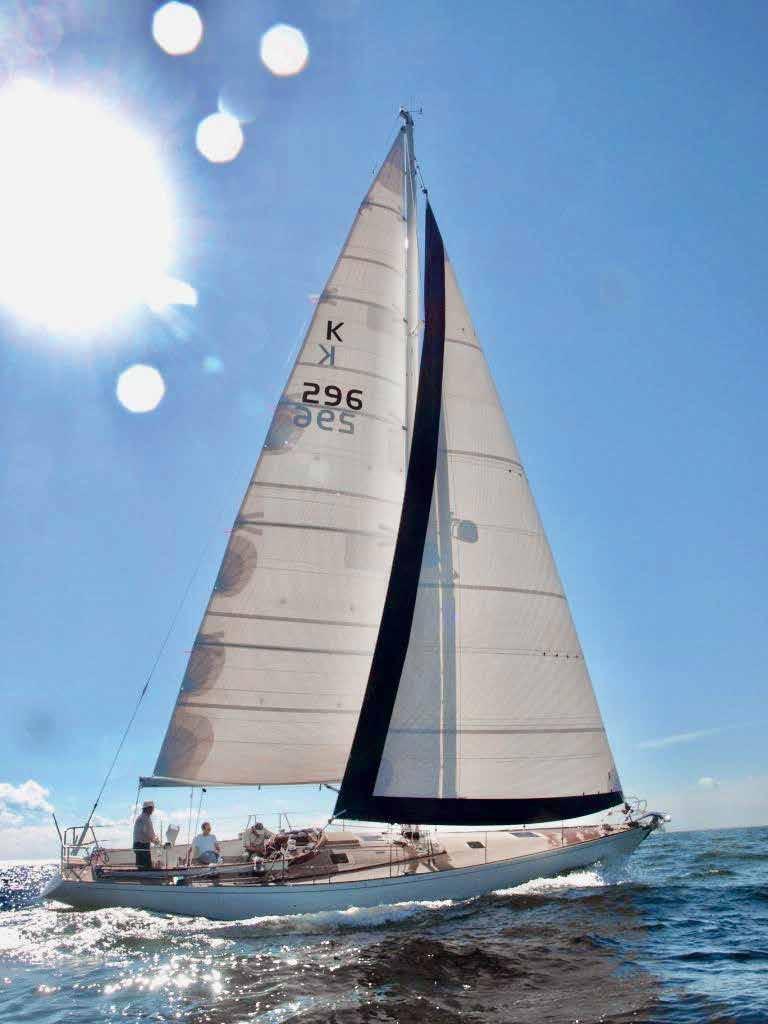
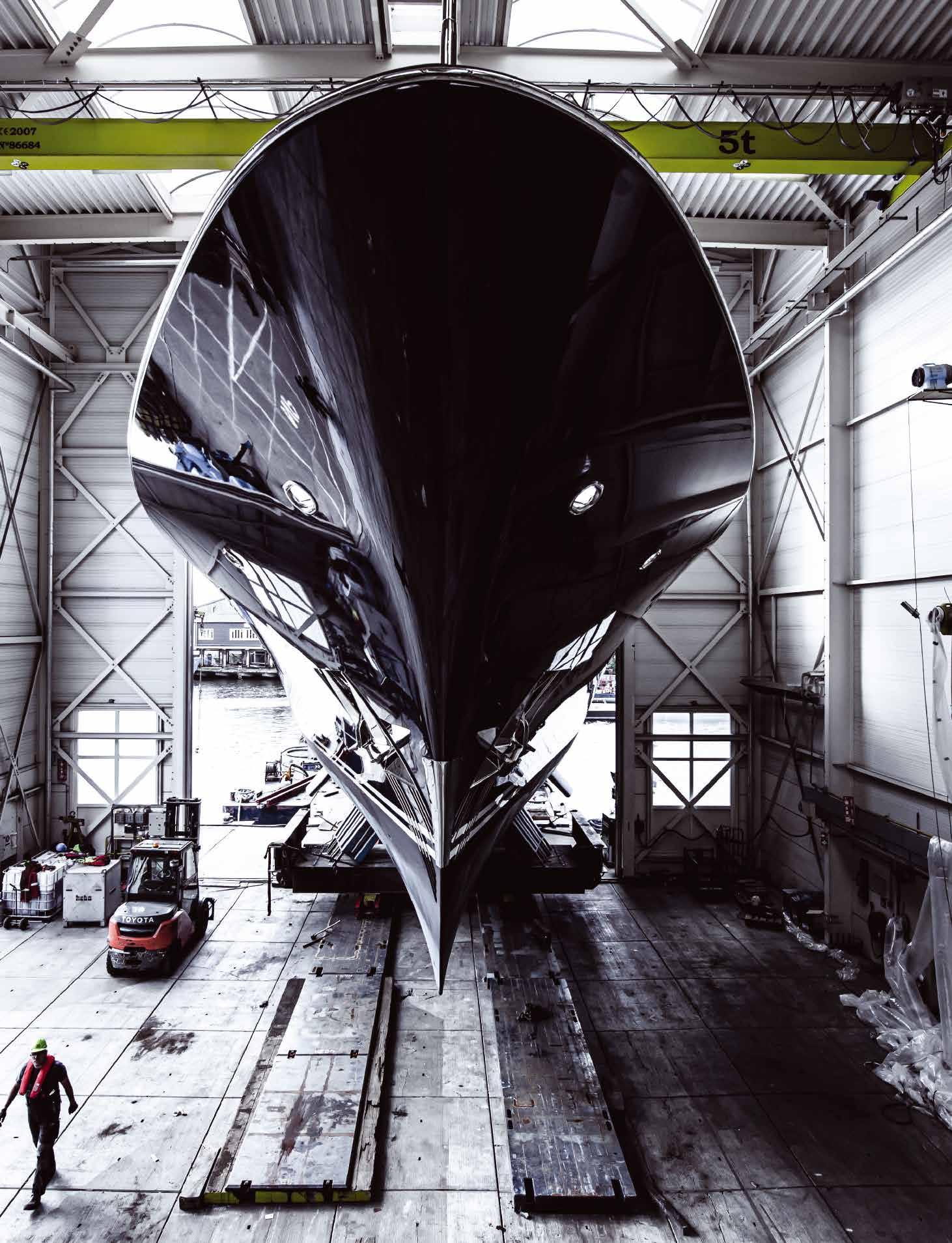
JUDGED BY THE COVER
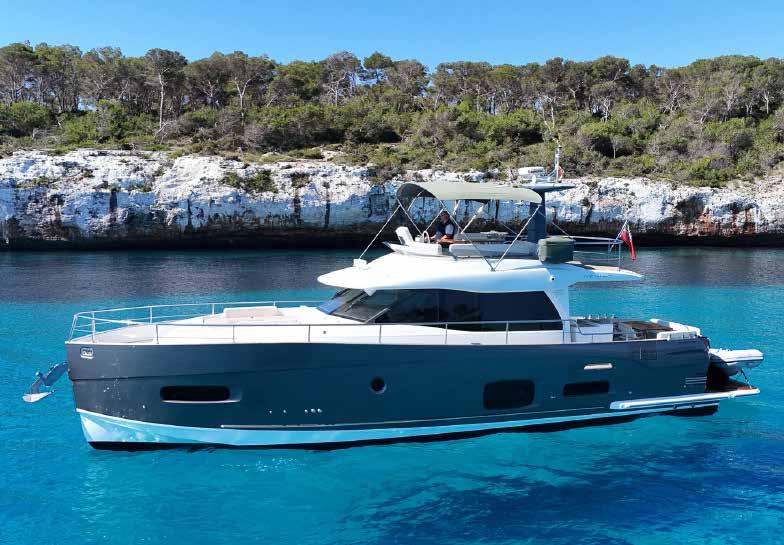
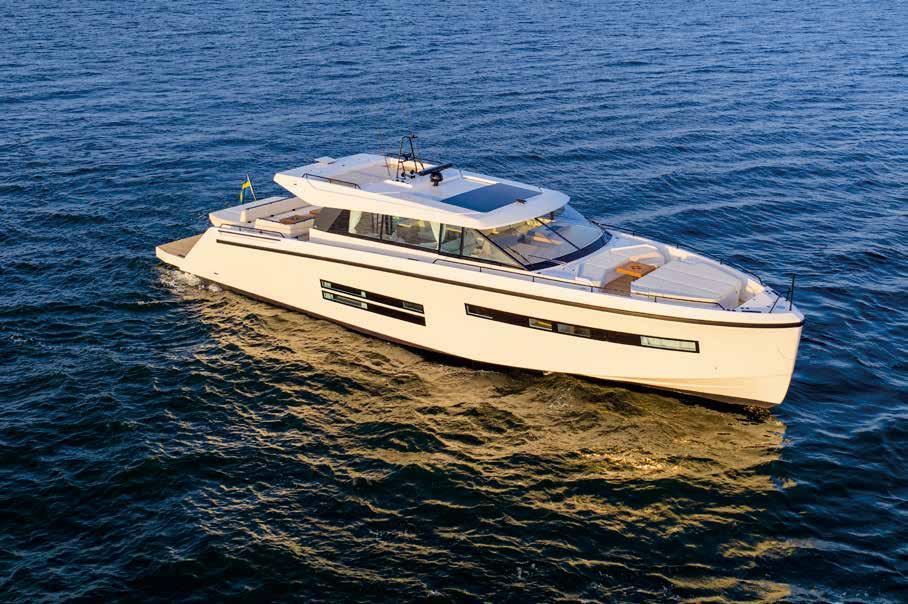
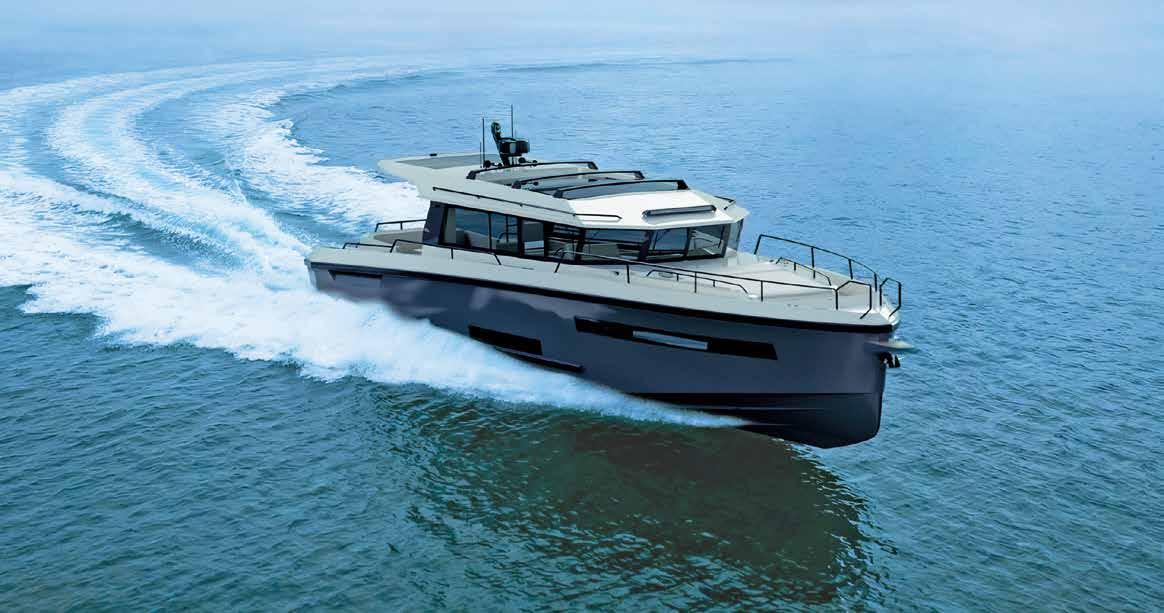
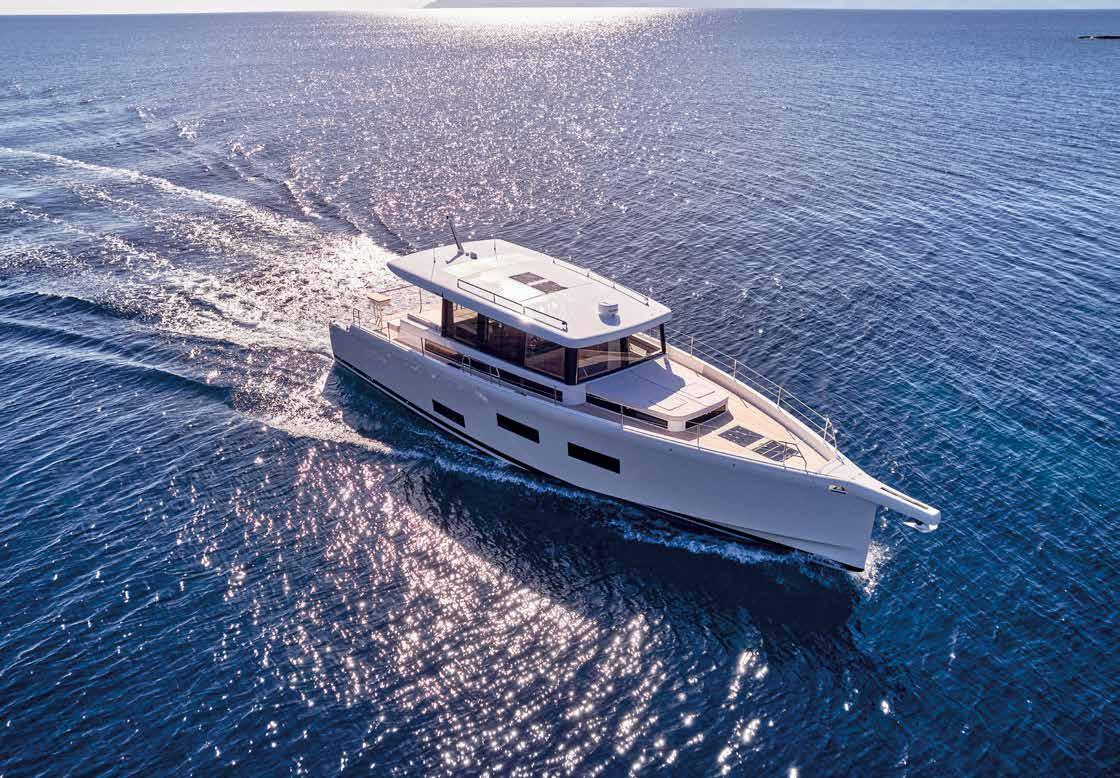
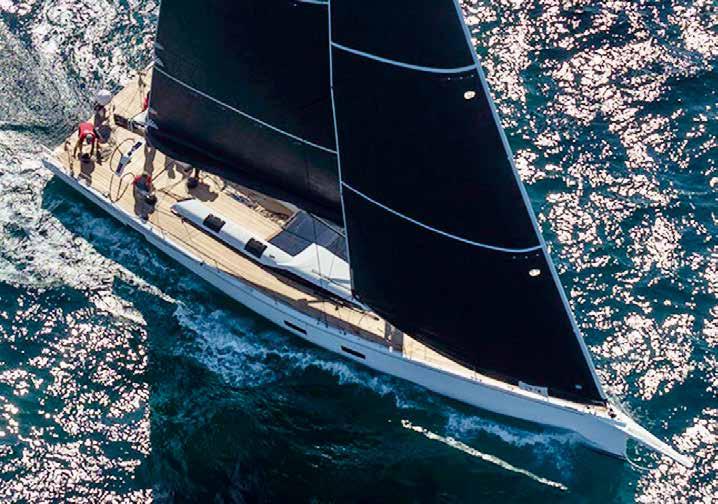
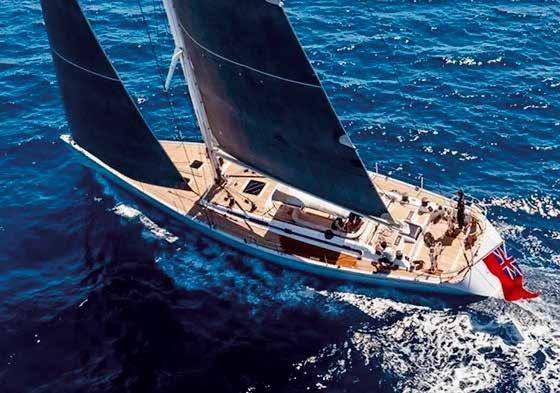
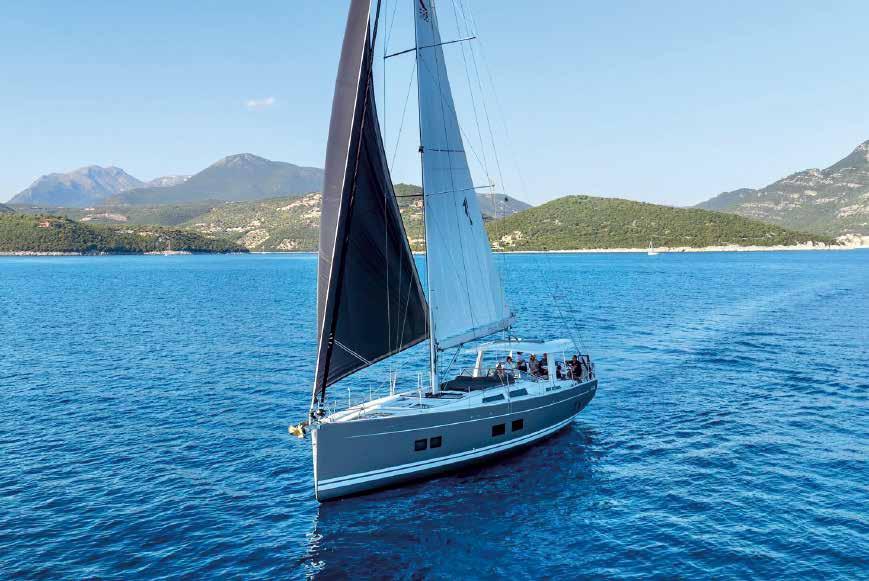
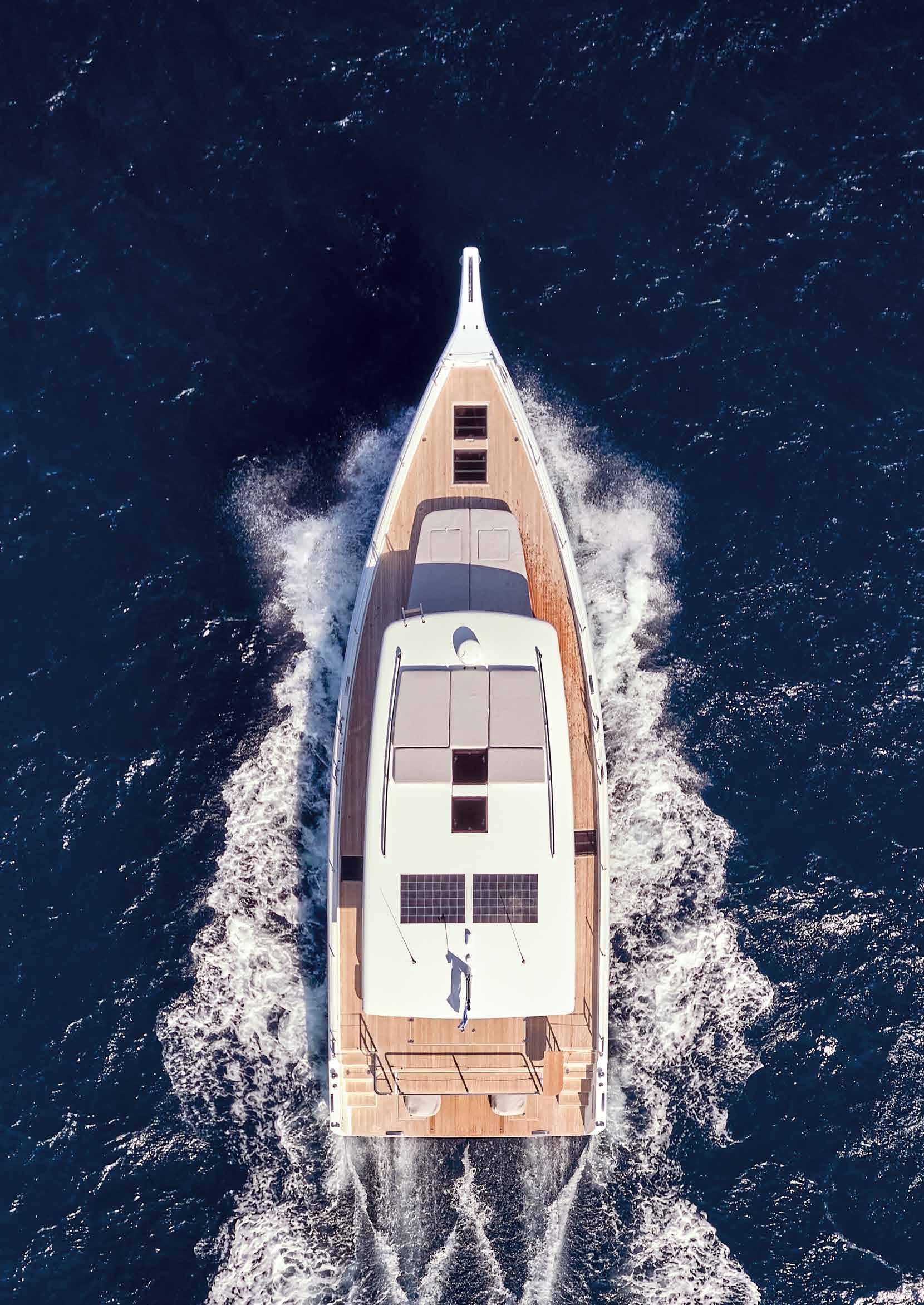
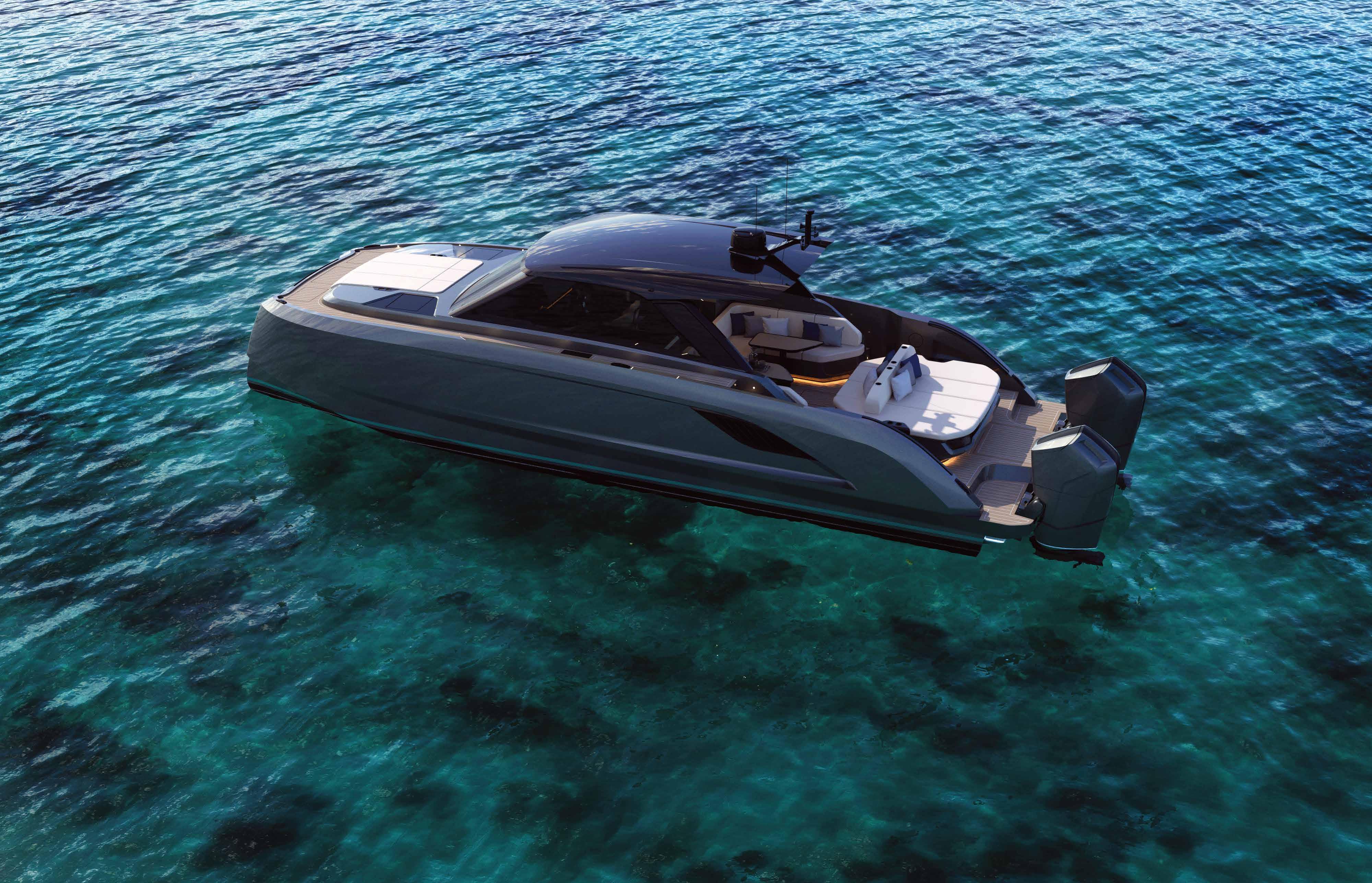
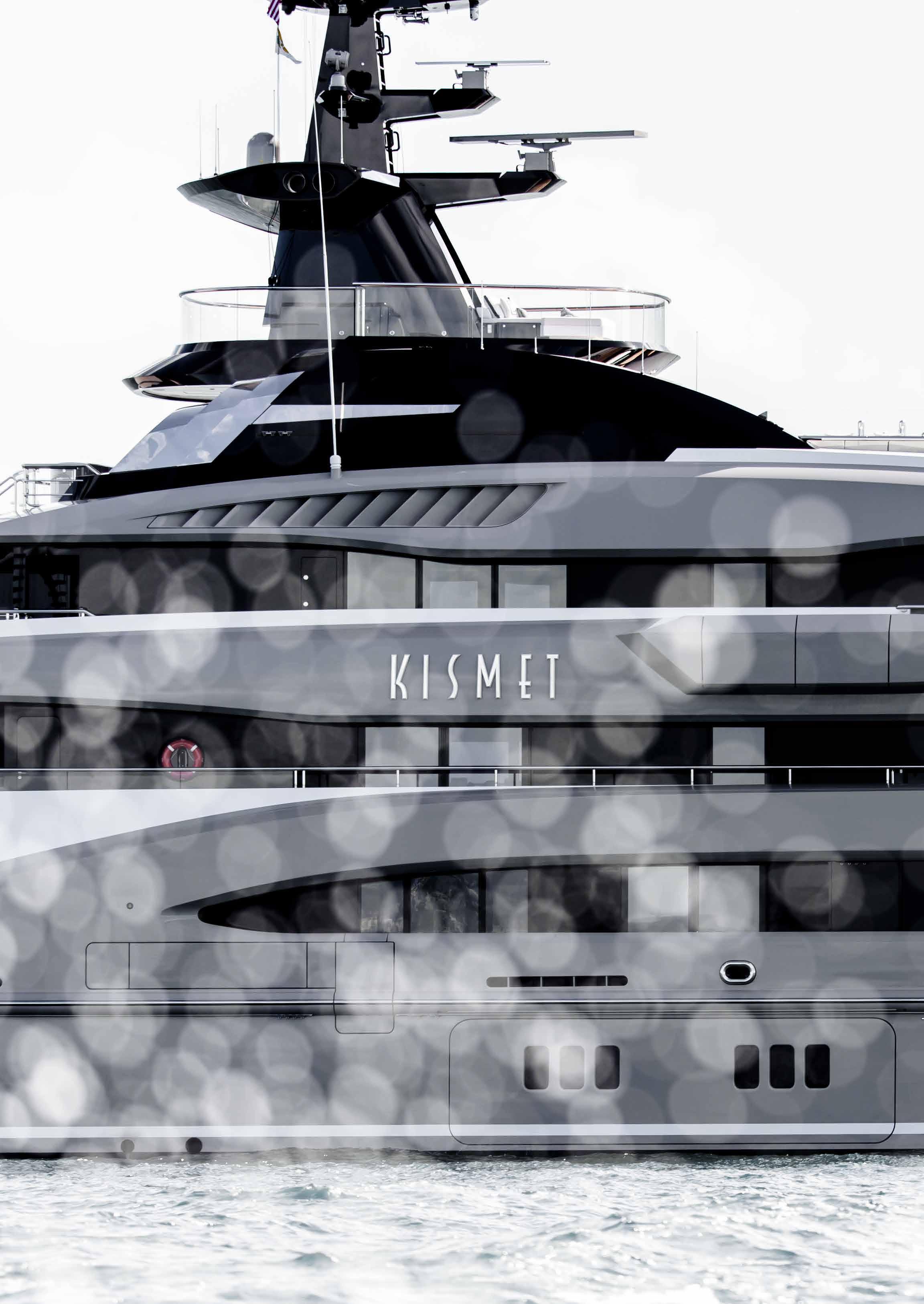
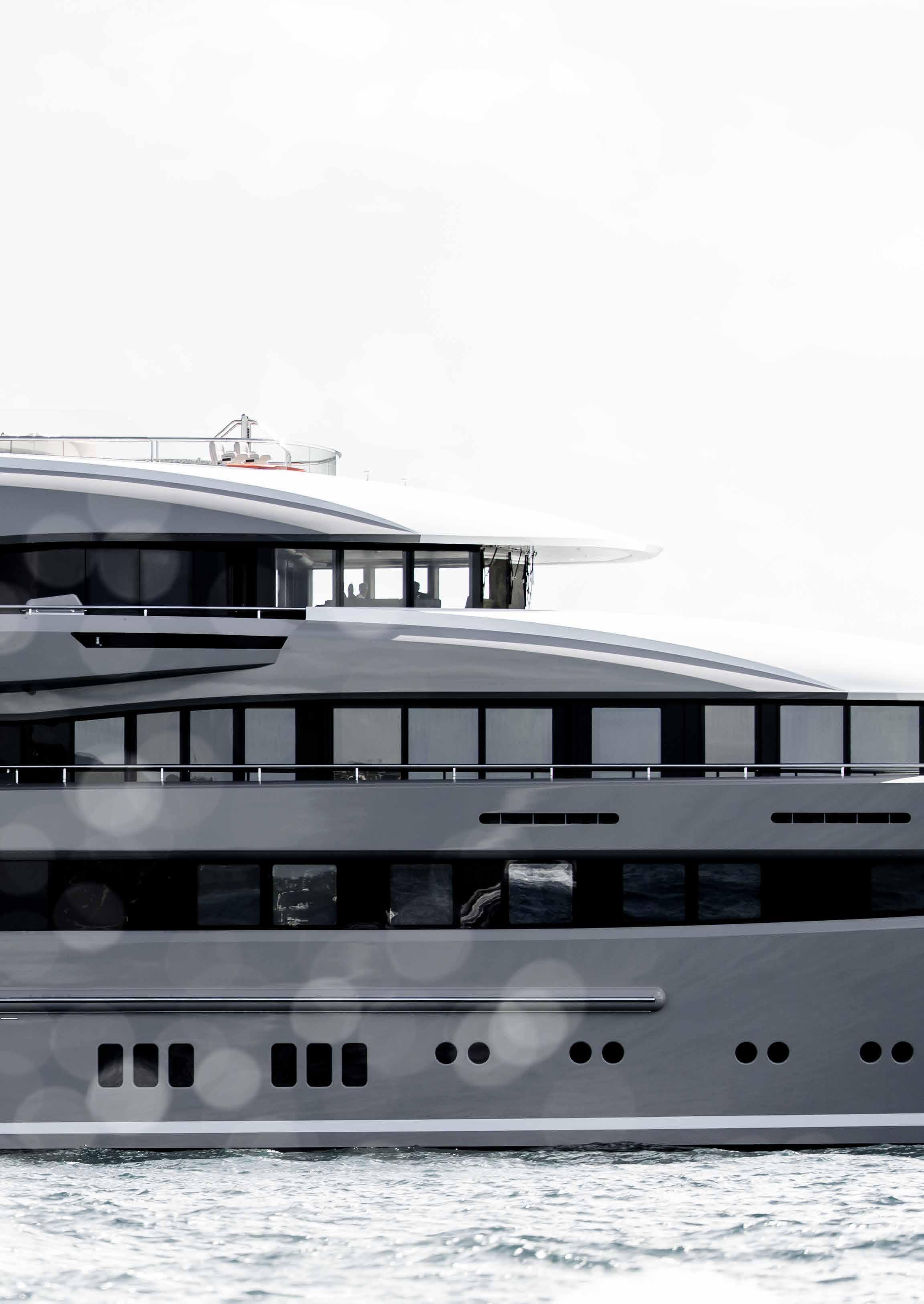
OMIKRON OT-60: THE MOTOR YACHT THAT FEELS LIKE A SAILBOAT
Thereare yachts that impress you at first glance, and others that reveal their character only once you are underway. The Omikron OT-60 belongs to the second category. She is a yacht built around a simple but compelling idea: offer the quiet rhythm, efficiency, and comfort of sailing, while keeping the convenience, autonomy, and simplicity of a powerboat.
That concept has clearly resonated. In 2024, the OT-60 was awarded the European Powerboat Award for Long Range yachts, recognition that confirmed this was not just another 60-footer, but a fresh take on how a modern cruising yacht should behave. The yacht's appeal comes from the balance between performance and restraint, with low fuel consumption, long range, and a hull designed to reduce drag at true cruising speeds.
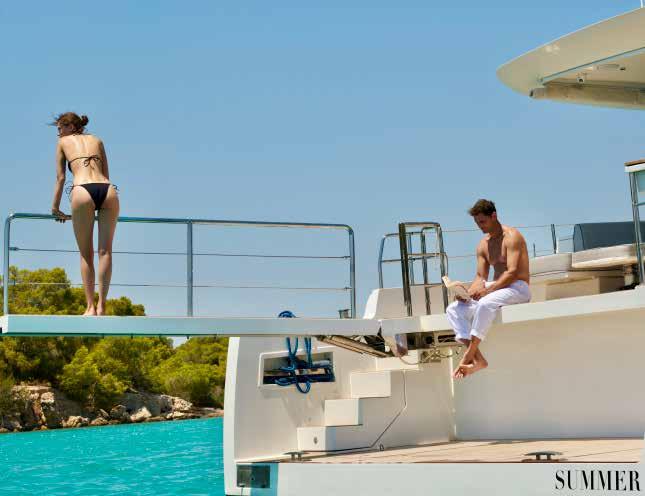
The team behind the concept
The OT-60 is the product of two highly respected names in yacht design. Naval architect Juan Kouyoumdjian, known in the industry as Juan K., teamed up with Lorenzo Argento, whose exterior and interior design work helped shape the yacht's distinctive character. Together, they created a boat that translates the soul of sailing into a power yacht, without forcing the owner to compromise on space, efficiency, or refinement.
This collaboration is one of the reasons the OT-60 feels so different from conventional motor yachts. The concept is not about excess. It is about intelligent proportions, reduced resistance, and a calmer onboard experience. That design philosophy is part of what made the yacht stand out in the European market and helped position Omikron as a serious new name in efficient cruising.
A shipyard with deep roots
Omikron Yachts is based in Lavrio, near Athens, and grew out of the technical expertise of Olympic Marine. That background matters. The shipyard combines modern build methods with a practical understanding of how owners actually use their boats, especially for long-distance cruising in the Mediterranean and beyond.
The OT-60's construction reflects that approach. It is built with vacuum-infused composite construction and a carbonfibre superstructure, keeping weight down and efficiency up. The result is a yacht that is significantly lighter than many in its class, with the kind of engineering detail usually associated with much larger projects.
Omikron's credibility also extends beyond the OT range. The shipyard has built the 54-metre SY Argo, an aluminium superyacht that reinforces its capability at the top end of yacht construction. That is an important signal to buyers: Omikron is not simply launching a successful model, but proving it can execute ambitious projects across different scales.
Palma International Boat Show success and the road to Cannes
The OT-60 has already made a strong impression in Palma. Omikron chose the Palma International Boat Show as the stage to present an upgraded model, including a more powerful twin-Yanmar 370 hp propulsion option that allows top speeds of 19 to 20 knots while preserving the yacht's efficiency-led character. The show marked Omikron's first participation in Palma and was an important moment for the brand's visibility in the Mediterranean market.
That momentum continues with the Cannes Yachting Festival, taking place from 8 to 13 September 2026, where the OT-60 is expected to be seen again by a wider international audience and for potential owners to experience the concept firsthand.
The OT-60 is built for serious cruising. Key figures include a fuel capacity of 2,000 litres, a water capacity of 600 litres, cruising speed of 12 knots, maximum speed of 19 knots, and an optimal range of 1,900 nautical miles at 8 knots. For owners who value independence and efficient passagemaking, those numbers make the yacht especially attractive.
Just as important, Omikron supports owners well beyond the handover. The shipyard and their dealers offer full support during and after the buying process. The boat can remain in Lavrio, the shipyard's port near Athens, so new owners can get to know her properly with technical assistance on hand. That kind of after-sales approach is increasingly valuable for international buyers who want confidence as well as performance.
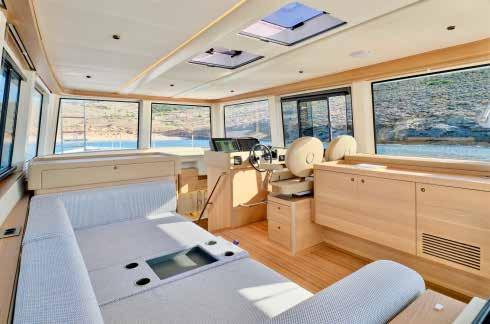
360 views and the perfect flow: glass all around, windows wide open, the OT-60 saloon brings the outside in.
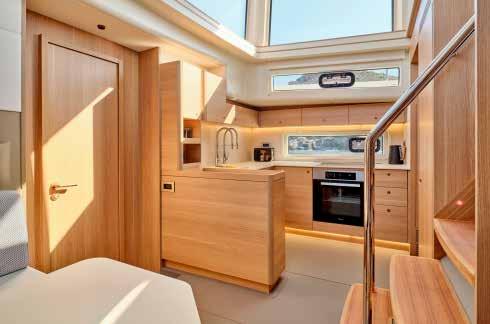
Double-height galley, loads of natural light and storage, open to the helm and saloonplus a cosy seating area.
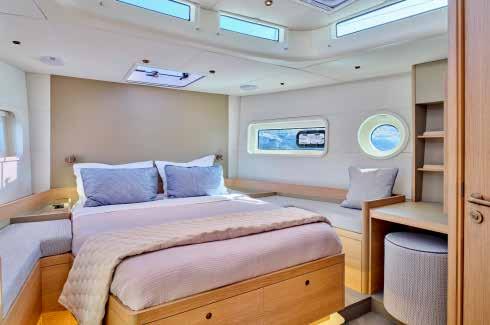
Full-beam owner's cabin forward, with private head and separate shower
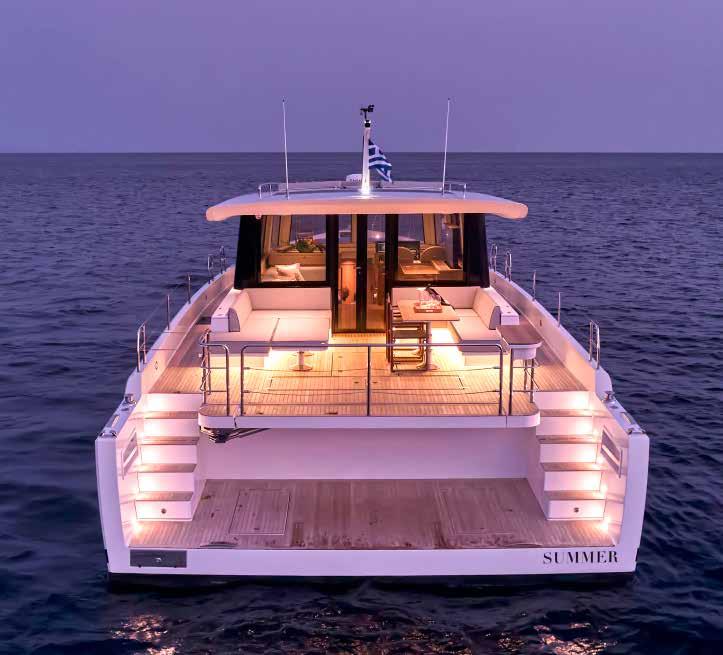
Future models OT-80 and OT-44
The success of the OT-60 has already led to the next steps. The new OT-80 is now in project management, following completion of the design process, and it carries the same efficient philosophy into a larger yacht with transatlantic range, one owner's cabin, three guest cabins, and crew accommodation for two plus a captain's cabin. At the same time, Omikron is developing a new 44-footer in the early design phase, conceived as a family weekender with higher speed than the OT range, while retaining the same emphasis on efficiency.◆
Cabins:
Full beam Master cabin with separate head & shower, VIP Cabin & Twin Guest, each with head & shower,
Optional Crew cabin forward
LOA: 18.40 m (60.4 ft)
Beam: 6.00 m (19.7 ft)
Draft: 0.90 m (2.8 ft)
Light displacement: 18.5 t (40,800 lb)
Engines (dual options): 2 x 150 hp / 2 x 250 hp / 2 x 370 hp
Fuel capacity: 2,000 L (528 US gal)
Fresh water capacity: 600 L (158 US gal)
Maximum speed: 19 knots
Range (optimum): 1,900 NM @ 8 knots
CE certification: Category A-12 / C-30
Hull design: Juan K / JYD C.F.D.
Interior/exterior design: Lorenzo Argento
Production/manufacturing: Omikron Yachts Shipyard
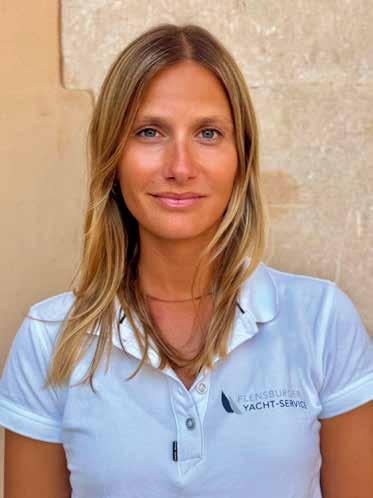
Dealer for Spain and Germany: Flensburger Yacht Service, Office Mallorca
C/ de la Victoria 4, 1
07001 Palma de Mallorca, Spain
Phone +34 971 23 25 78 - Mobile +34 644 307 304
Email anja.eckart@fys.de
The company has been represented in Mallorca for over a decade and supports buyers with newbuild configuration, worry-free brokerage, after-sales and charter expertise. Contact them for price list and more information.
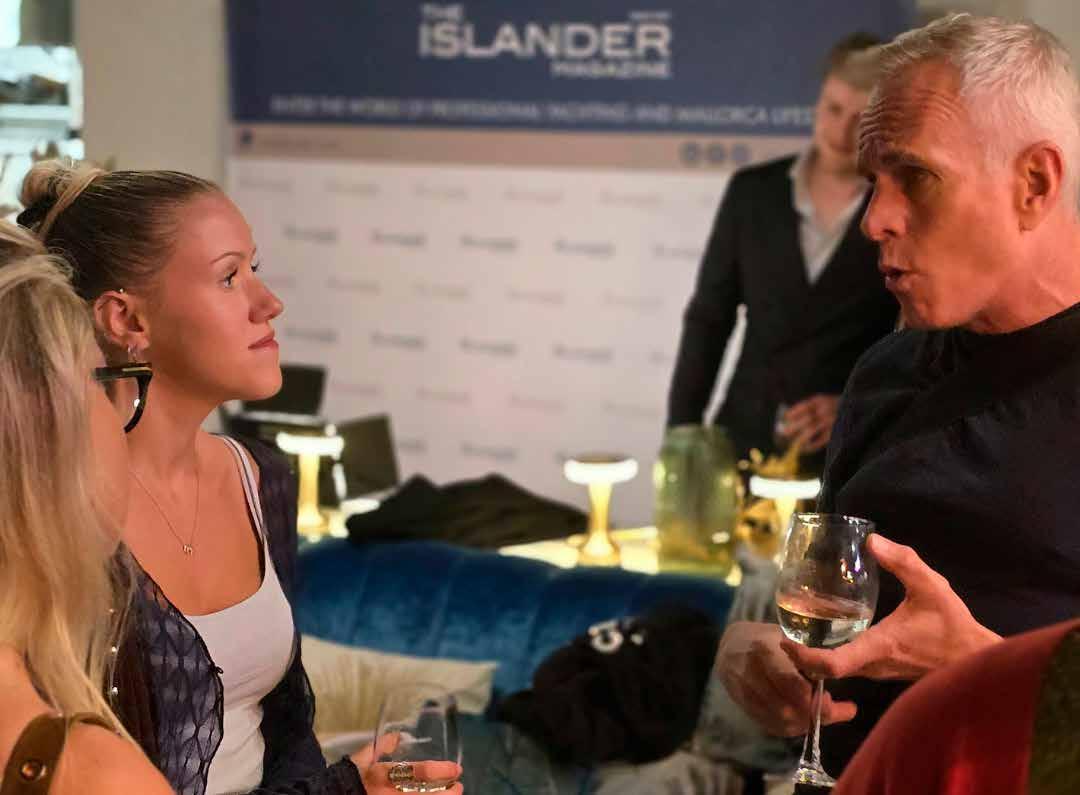
On 7 May, less than a week after the Palma International Boat Show, the final Tune In Thursday gathering before the summer break brought together another lively mix of professionals from Mallorca’s yachting and luxury lifestyle community.
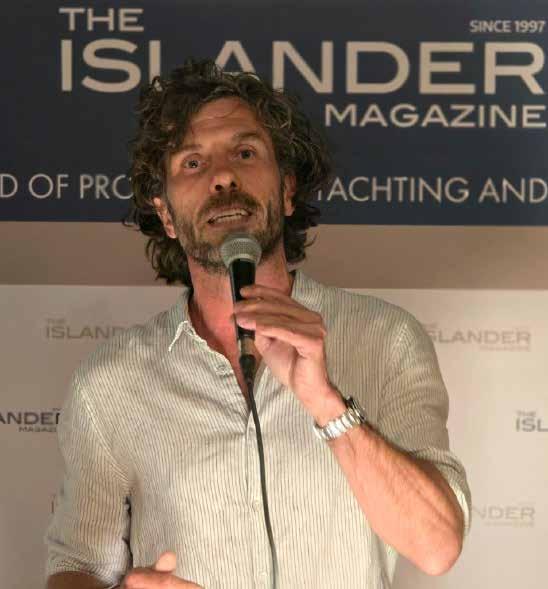
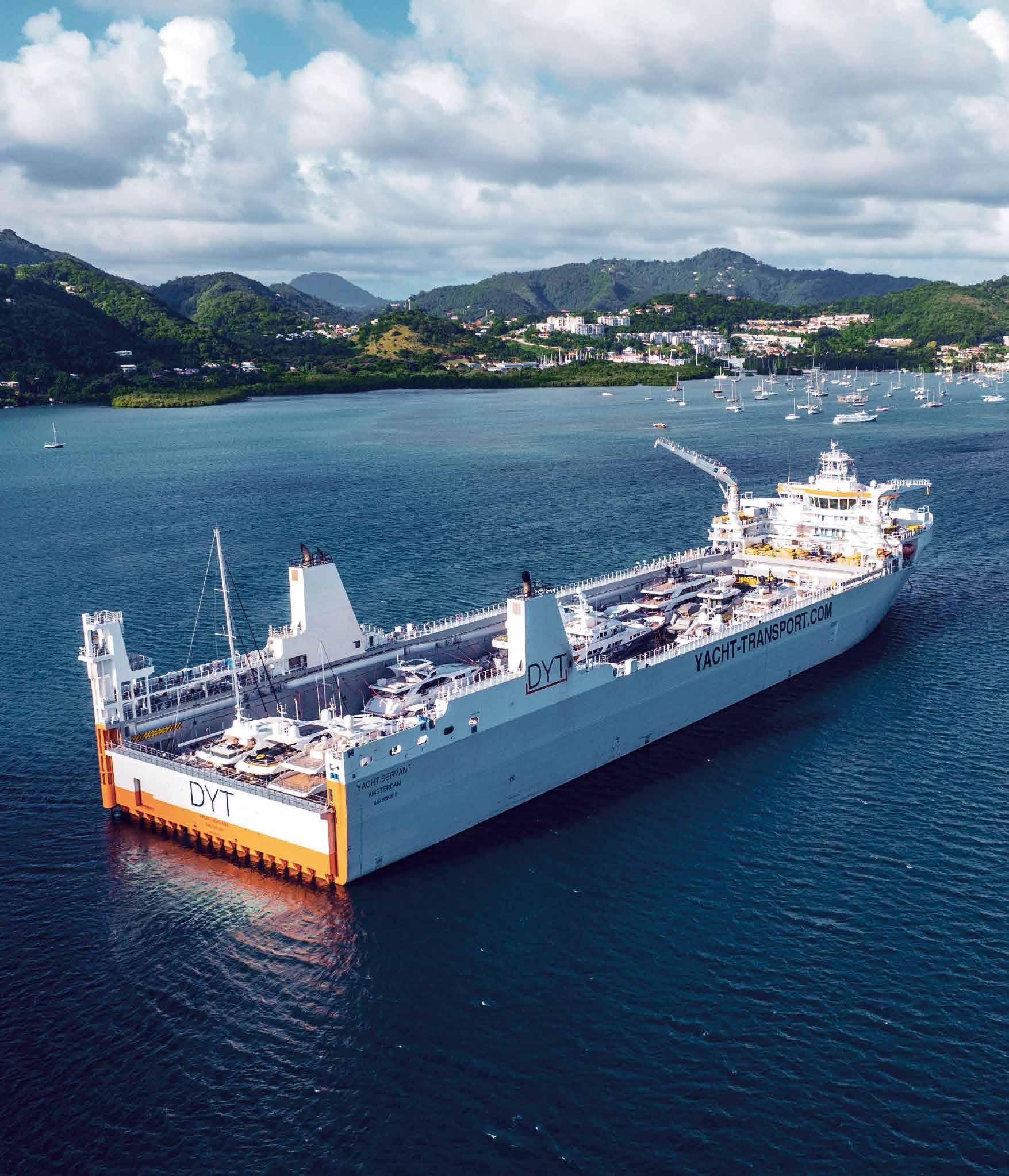
This edition was generously supported by Dockwise Yacht Transport (DYT), with Sven Geboers delivering an engaging presentation on the company’s yacht transport services. Attendees gained valuable insight into how DYT has established itself as one of the industry's most trusted providers, offering highly reliable transport solutions for yachts worldwide.
Despite a Code Orange weather warning across the island, around 40 guests attended the event, highlighting the continued appeal of the Tune In Thursday format and the strength of the community it has built.
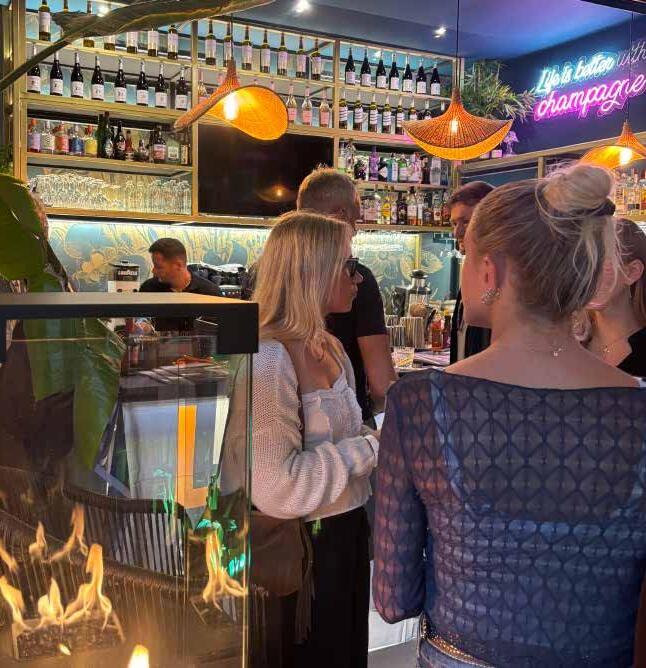
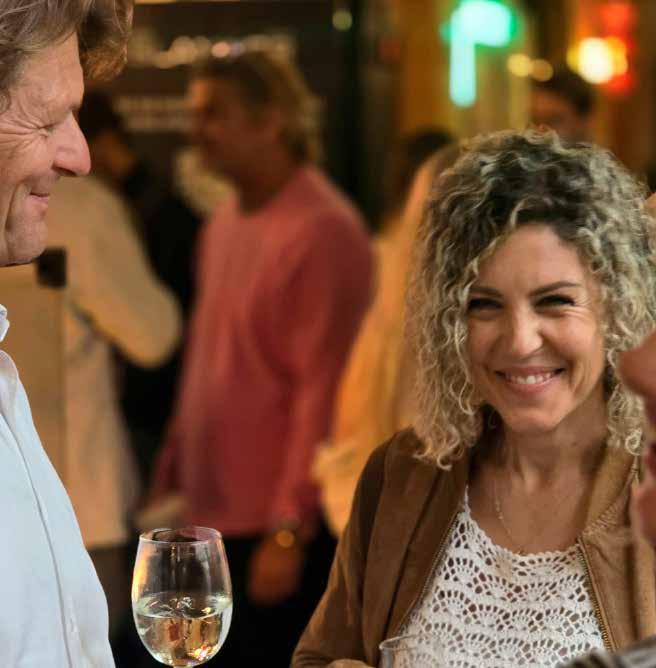
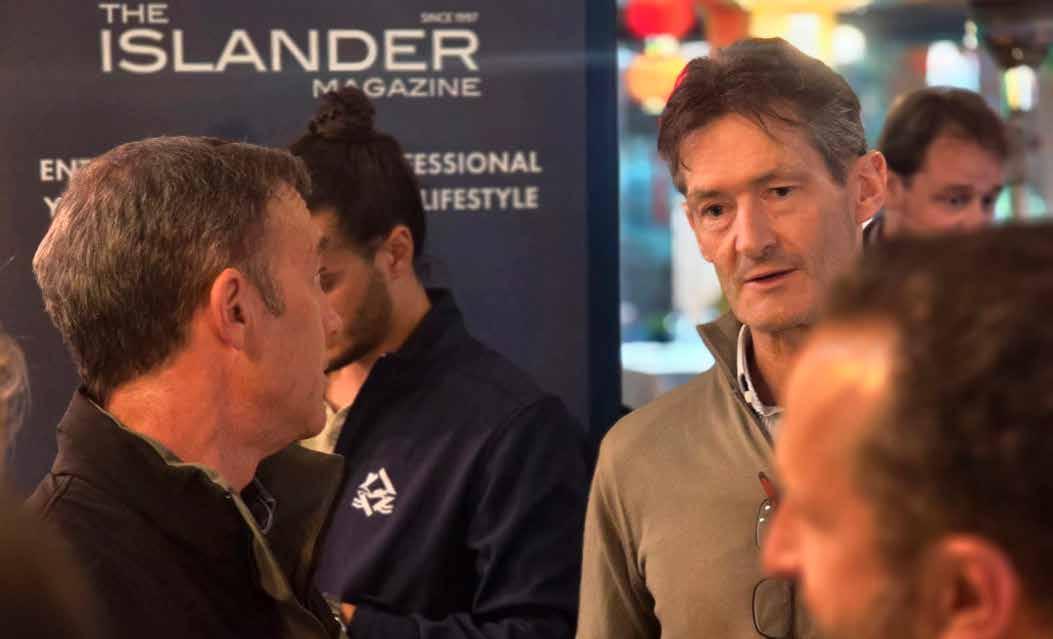
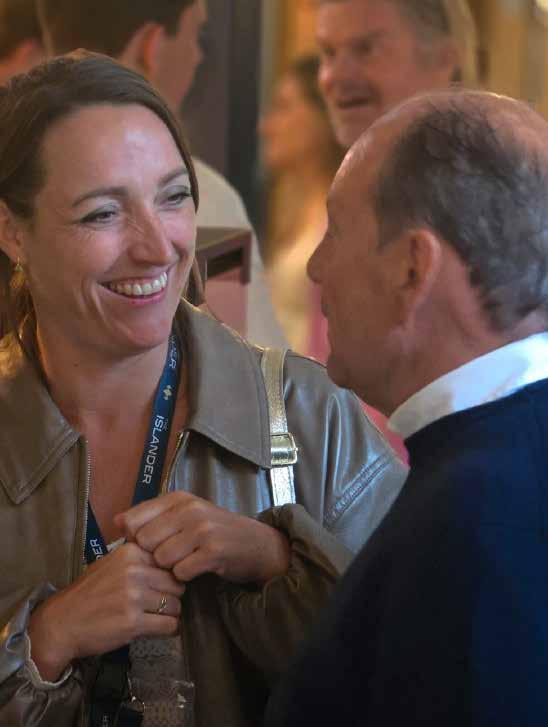
As always, the guest list reflected the diversity that makes these gatherings so worthwhile. The evening welcomed yacht brokers, yacht owners, captains, aspiring crew members, expat residents and professionals from across the luxury sector. Among them were private jet charter brokers, managers of high-net-worth member clubs and several firsttime attendees looking to expand their network and learn more about the industry.
While business opportunities are often generated at Tune In Thursday, the emphasis remains on creating genuine personal connections. The relaxed atmosphere encouraged conversations between familiar faces and newcomers alike, helping to strengthen relationships across the local and international community.
The evening provided a fitting conclusion to the spring season of events and once again demonstrated the value of bringing together people from different sectors in an informal and welcoming environment. Tune In Thursday will return after the summer, continuing to connect Mallorca’s yachting, luxury and business communities.

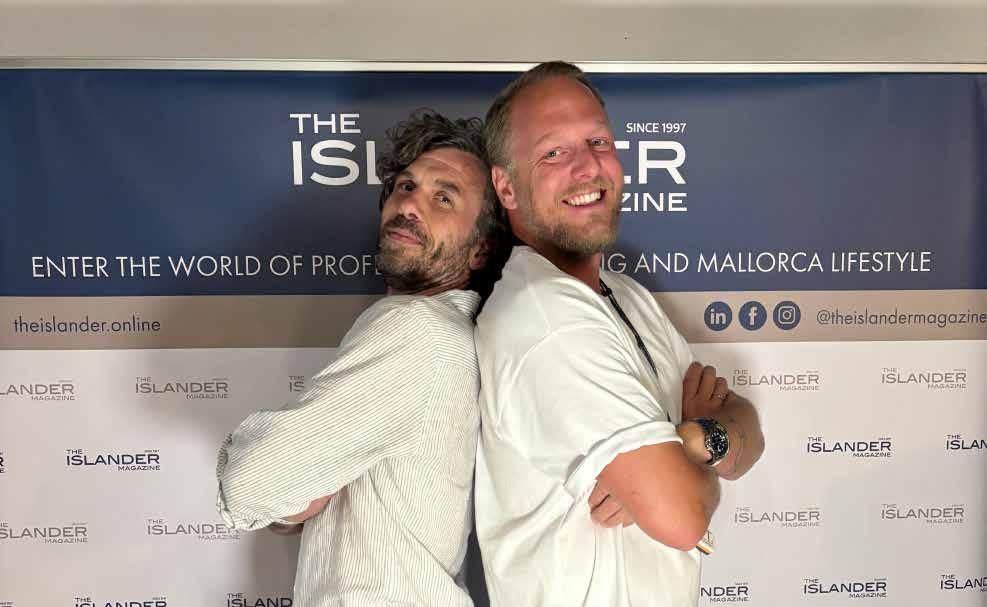



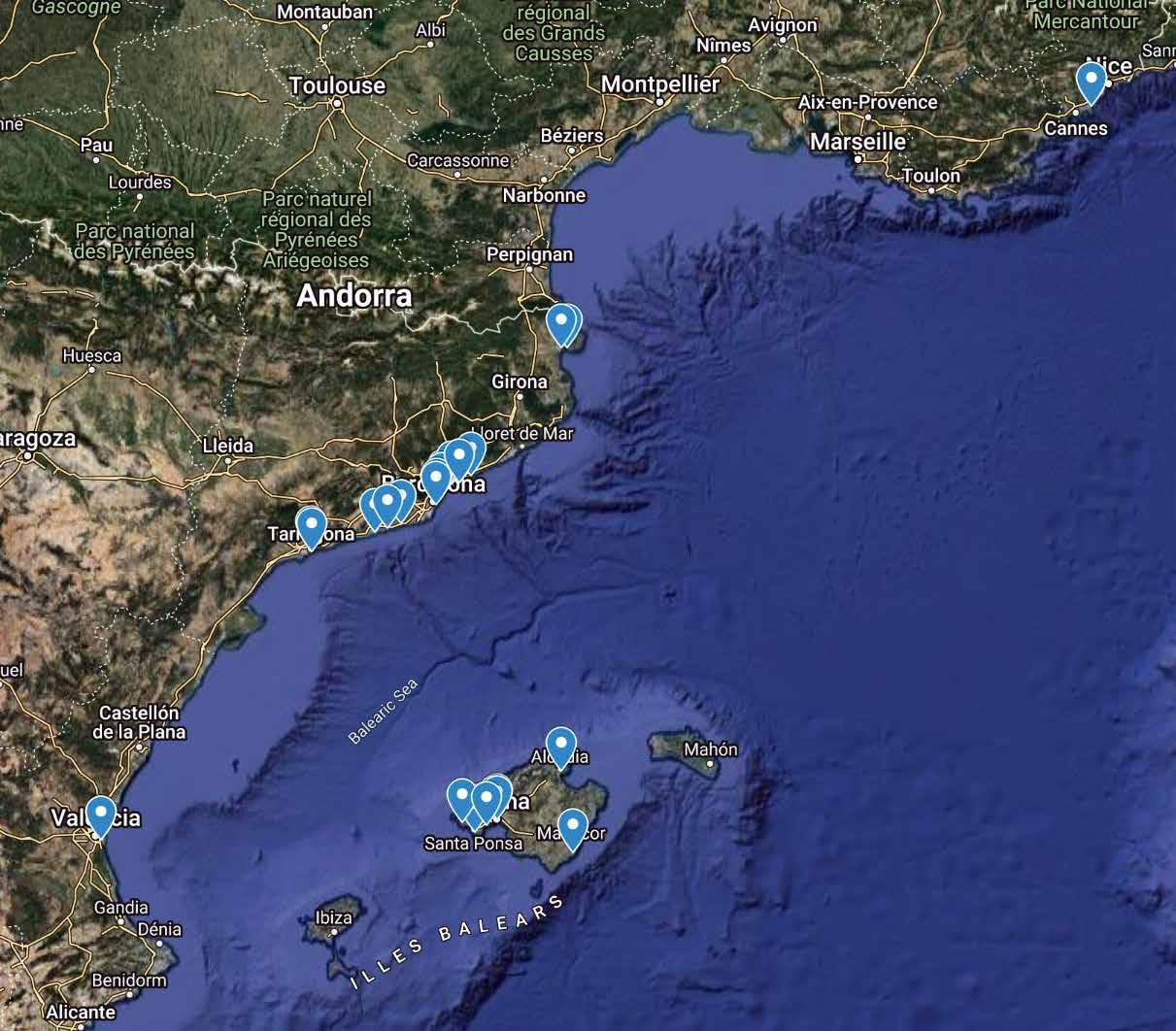

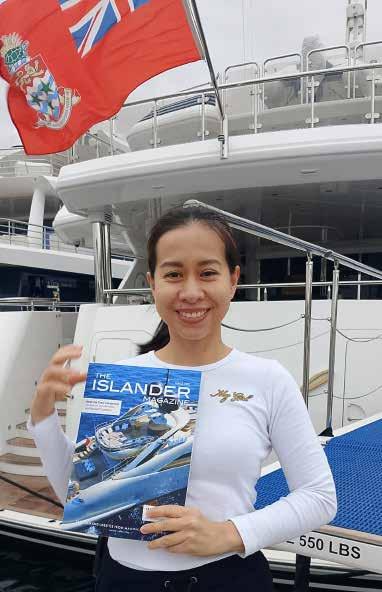
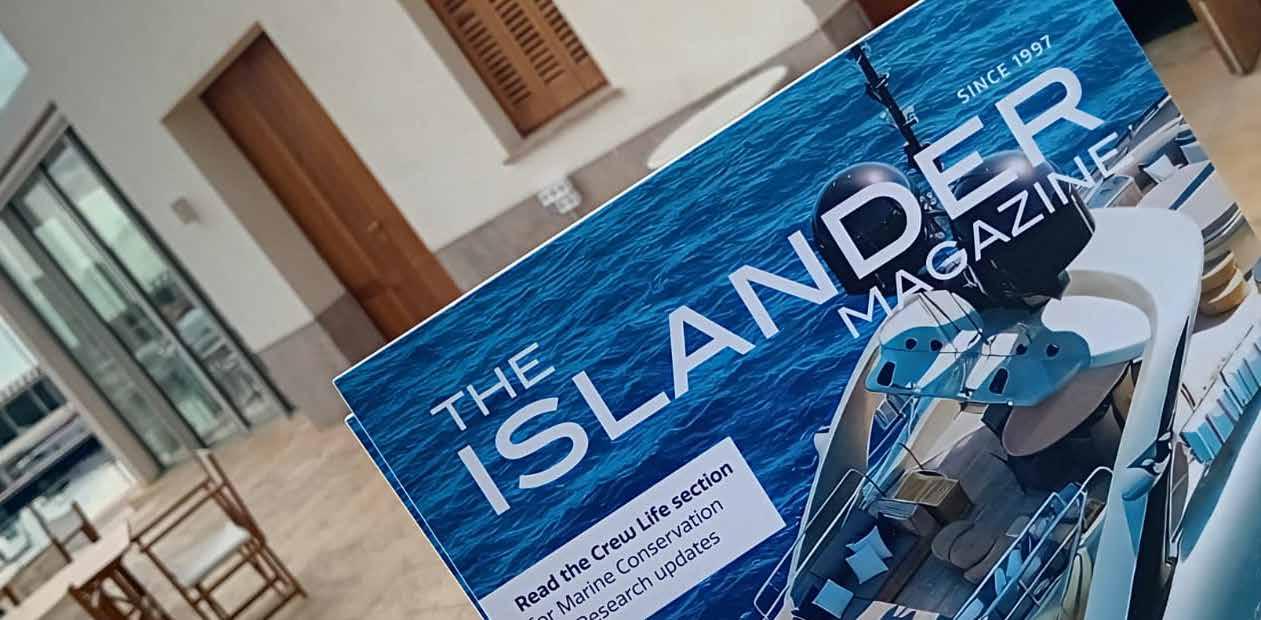
The Islander Magazine can be found in +100 pickup points in Mallorca and in all superyacht marinas of Spain. We are also represented in strategic points in the French Riviera such as at the exclusive Billionaire's Quay in the port of Antibes. And you can also find us in all Cappuccino’s in Spain and Gstaad.

22. Industry updates
26. Rondal
32. Salón Náutico Internacional de Barcelona
33. Balearic Ports
36. Simbad Yachts
38. Bluewater Yachting
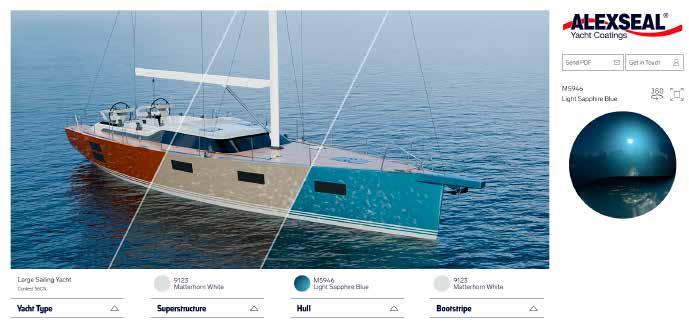
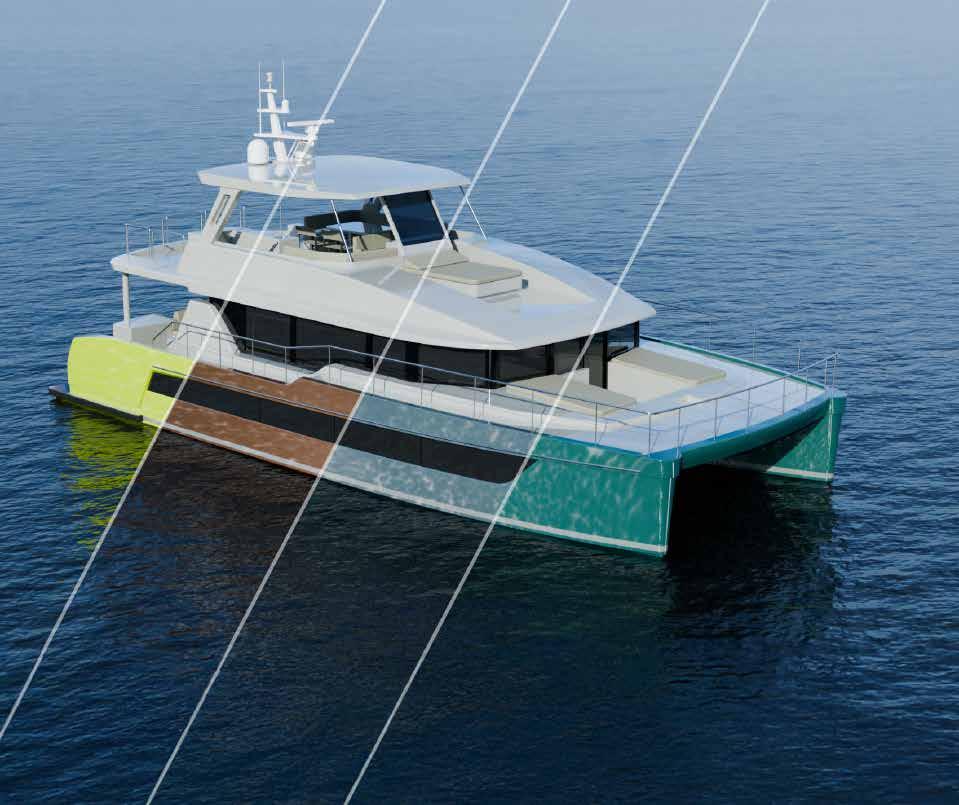
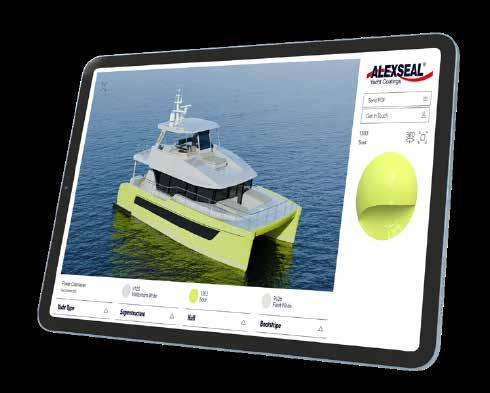
Alexseal Yacht Coatings has significantly expanded its Color Configurator, adding four new yacht models and three new colour shades. “Shortly after the 2025 launch, many of our customers were using the tool and even asked for more model variety,” says Thomas Schultz, Global Sales Director of Alexseal Yacht Coatings. “The highly positive feedback from Color Configurator users pushed us to extend the configurator massively.”
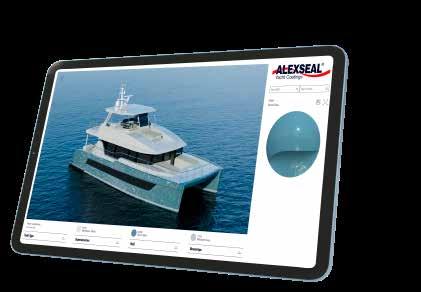
New additions include a large sailing yacht, a Dutch motor yacht, a motor catamaran and a compact centre console. For this expansion, Alexseal partnered with three shipyards: Contest Yachts contributed the new Contest 56CS, Boarnstream Yachting provided the Boarncruiser 1440 Elegance and Two Oceans supplied the 555 power catamaran.
Alexseal is also adding three new shades: SOUR, a vivid yellowgreen; TREE HOUSE, a rich brown; and ICE WATER, a light blue-grey. Based on the Colors of the Year 2026 from Mankiewicz, the shades reflect broader social developments and global colour trends and are shown exclusively in the Configurator.
Launched in spring 2025, the Color Configurator allows users to apply Alexseal standard solid and metallic colours digitally to various yacht types, helping owners and prospective owners evaluate colours across a yacht’s geometry and large surface areas. ◆ www.alexseal.com.
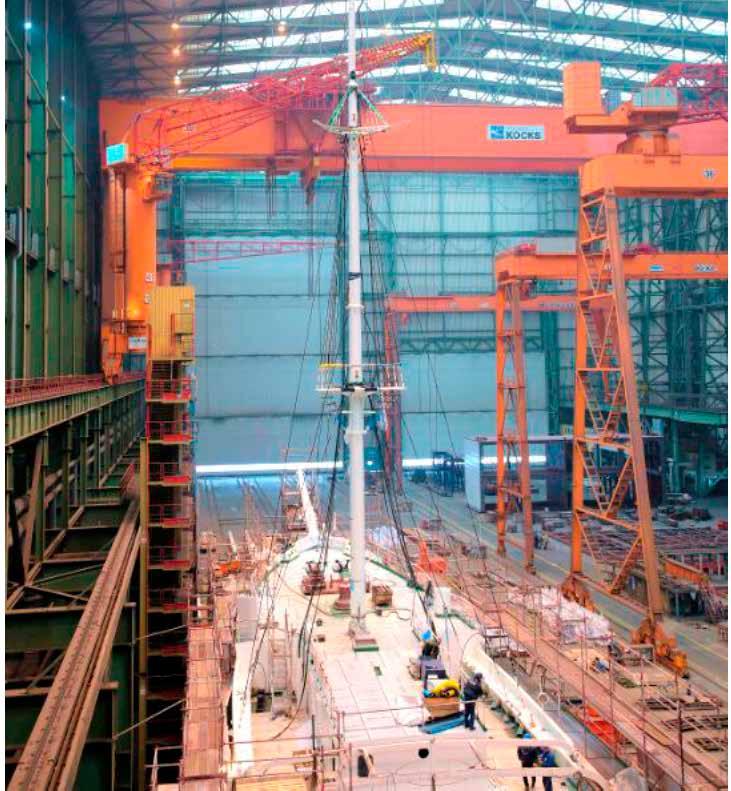
German custom yacht builder Dörries Yachts has secured a lease for construction facilities at the Maritime Industry and Business Park Volkswerft Stralsund, significantly expanding its capabilities in refit, conversion and new-build support projects.
Located on a 50-hectare waterfront site in northern Germany, the former shipyard offers extensive production halls, heavy-lift infrastructure, direct road, rail and sea connections, and access to a ship lift capable of handling vessels up to 290 metres in length. The facility also benefits from a strong regional network of maritime suppliers, engineering firms and specialist contractors.
The move strengthens Dörries Yachts’ operational capacity, particularly for technically demanding refit and conversion projects. The site provides access to crane capacities of up to 1,000 tonnes, large workshop and outfitting areas, and direct waterfront access. Around 20 maritime and industrial companies are already based within the Volkswerft complex, creating a collaborative environment backed by decades of shipbuilding expertise.
“Stralsund offers exactly the kind of environment we were looking for,” said Henning Dörries, CEO of Dörries Yachts. “The infrastructure, technical capabilities and concentration of maritime expertise create an ideal platform for us to expand our activities while maintaining the engineering-led approach that defines our business.”
Dörries Yachts expects to commence operations at the facility immediately. ◆ www.dorriesyachts.com
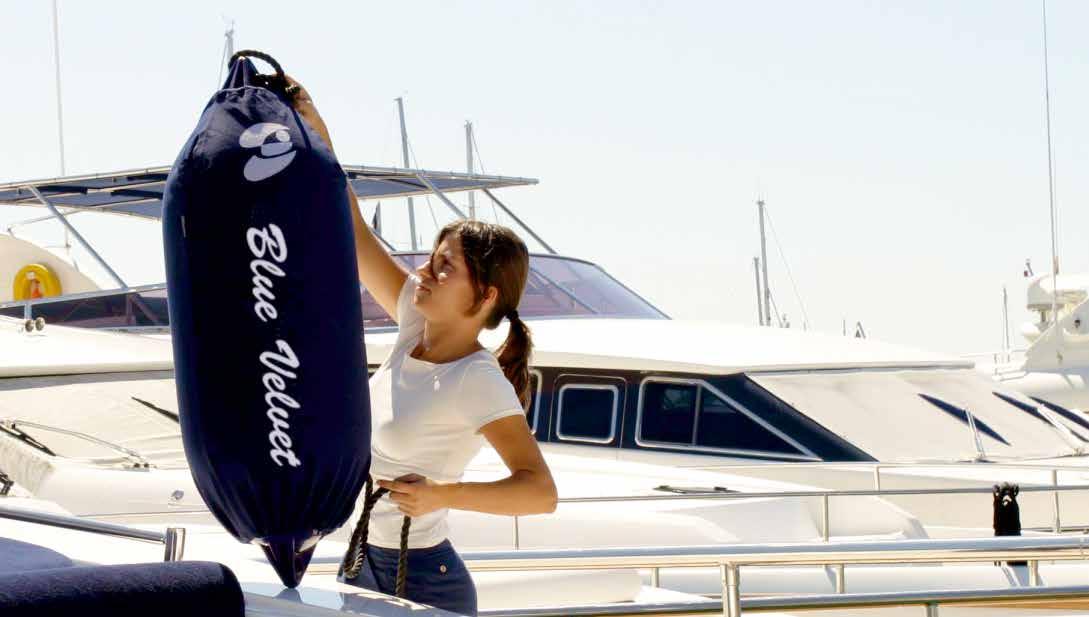
Visit our website or request a quote via email fender-design.com visit our Booth @ Palma Boatshow +34 677 814 789 paul@fender-design.com
Yacht Support Group - Mr. Paul van Westing

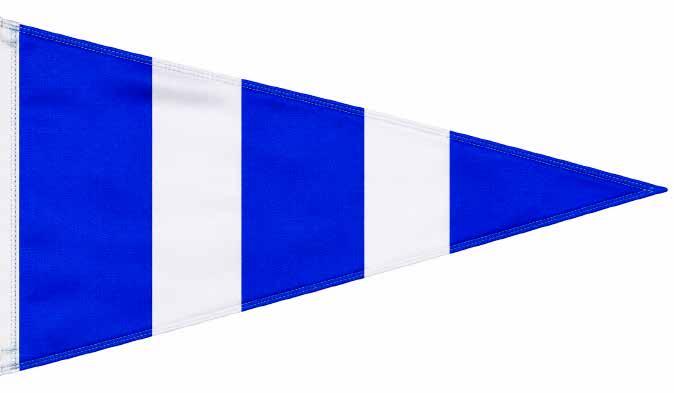
Is your yacht commercial? Fly the No. 6 pennant this summer!
Commercial charter yachts operating in Balearic waters this summer are being reminded of new identification requirements aimed at helping authorities tackle illegal charter activity, a longstanding concern across the islands.
Under the regulations, charter vessels are required to display the appropriate International Code of Signals pennant corresponding to the final digit of the current charter licence year. For 2026, this means flying the No. 6 pennant while operating commercially in Balearic waters.
The measure has been introduced to make legitimate charter yachts more readily identifiable to inspectors and enforcement agencies, while assisting efforts to distinguish licensed operators from vessels conducting unauthorised charter activity.
Illegal chartering remains a significant issue in the Balearics,
particularly during the peak summer season, prompting authorities to introduce additional monitoring and compliance measures across the sector.
Charter operators are advised to ensure the correct pennant is displayed whenever the vessel is engaged in commercial activity within Balearic waters, as authorities continue to strengthen oversight of the region’s busy charter market. ◆
Lürssen has delivered the 114.2-metre NAUSICAÄ, a vessel that establishes a new definition of yachting. Built under the project name COSMOS, she was designed in her entirety by acclaimed Australian industrial designer Marc Newson.
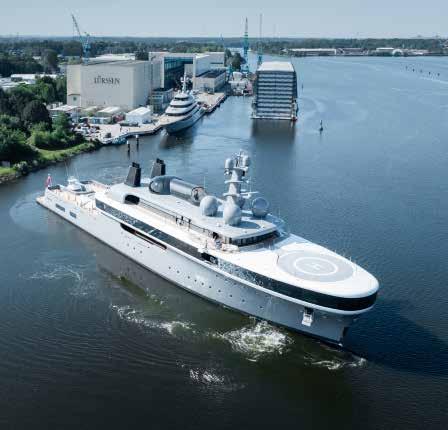
Every aspect of NAUSICAÄ, from the smallest feature to the striking silhouette, exterior, interior and every element in between, is custom Marc Newson and reflects a singular design vision. The aesthetic remains unmistakably within his lexicon, yet is ground-breaking within the industry. There are hardly any flat architectural surfaces, with NAUSICAÄ shaped throughout by curvatures and louvred details.
Beneath her bold design is an Ice Class 1D hull that allows her to cruise safely in light ice conditions, ensuring no destination is beyond reach. She carries an extraordinary amount of glass throughout for panoramic vistas from nearly every space on board.
One of the most remarkable architectural elements is the Skydome, a glass structure composed of seven hot-bent panes,
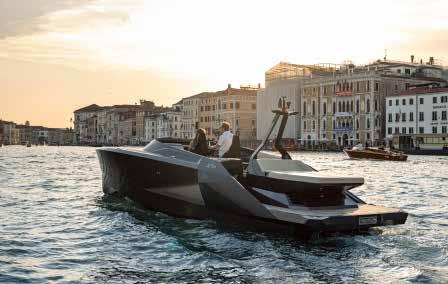
SAY Carbon Yachts unveiled the all-new SAY 32 during an exclusive world premiere at the Venice Boat Show, introducing their most compact model within the German shipyard's range to date.
Hosted during a special aperitivo hour on Venice's iconic waterways, the SAY 32 was presented as a fresh take on SAY's signature lightweight carbon-fibre design. Guests quickly took notice of its striking design, but equally of its suitability for inland lake and coastal cruising, combining agile handling with impressive practicality. Its debut in Venice provided a seamless backdrop to showcase the yacht on the water.
each measuring 3,000 by 2,800 mm, 62 mm thick and weighing 1,050 kg. This uppermost vantage point houses a 56-squaremetre Owner’s office with 3.15 metres of head height, complete with ornate bronze shutters set within a sliding circular rail. A continuous glass band wraps around the entire upper deck, culminating forward in a 19-metre wide observation lounge directly below the fully certified bow helipad.
In lieu of a main salon, NAUSICAÄ opens into a two-level atrium, with the main deck dedicated as an art gallery. The upper aft atrium is devoted to hospitality with a sushi bar, table-tennis area and inlaid settees, every detail custom designed by Marc Newson. Her open aft deck spans the full 18-metre beam and is
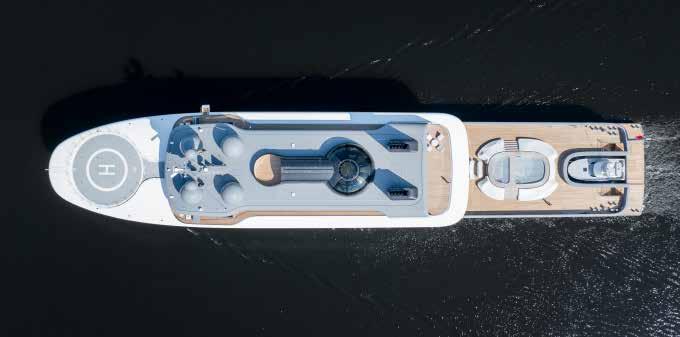
centred around a Jacuzzi and a swimming pool long enough for laps and deep enough for diving.
NAUSICAÄ runs a diesel-electric plant comprising five engines that drive fully electric Azimuth pods, with a battery plant delivering up to 2 MW, sufficient to power all hotel systems simultaneously at peak load. This allows silent operation with zero local emissions for extended periods. A provision for a future methanol fuel cell will take her ambitions further still, marking a major step away from traditional fossil fuels in large-yacht propulsion. ◆ www.lurssen.com
For the first time, guests stepped onboard and explored the yacht's social spaces. Sun-lounging areas at the bow and stern, dining space for up to eight guests and a spacious swim platform created an idyllic setting for a day out on the water.
Measuring 9.98 metres in length and weighing just 2.75 tonnes, the SAY 32 has been designed with modern-day owners in mind, reducing the footprint of a traditional power yacht. Typically reaching top speeds of up to 50 knots, the yacht delivers the responsive handling the brand is renowned for while offering greater flexibility for smaller marinas.
The debut of the SAY 32 isn't just about the model itself; it strikes an important chord in the brand's growth. While expanding its fleet, the model remains rooted in the lightweight carbon-fibre design ethos that established SAY's reputation. Throughout the unveiling, guests were particularly drawn to SAY's refreshed look, with a buzz around its newly compact dimensions as guests discovered the yacht for the very first time.
Following its successful world premiere in Venice, sea trials are now available throughout the Mediterranean season and on Lake Garda, allowing prospective owners and industry professionals to experience the new model on the water.◆ saycarbonyachts.com.


In professional yachting, some of the most influential companies operate largely behind the scenes. While yacht owners and designers often attract the spotlight, many of the breakthroughs that have shaped modern sailing yachts have come from specialist engineering firms tasked with solving increasingly complex challenges. Among them is Dutch company Rondal, which this year marks its 50th anniversary.
The company's history mirrors the evolution of the large sailing yacht sector itself. As yachts have grown larger, lighter, more automated and more ambitious, Rondal has repeatedly found itself developing solutions for problems that did not yet have an answer.
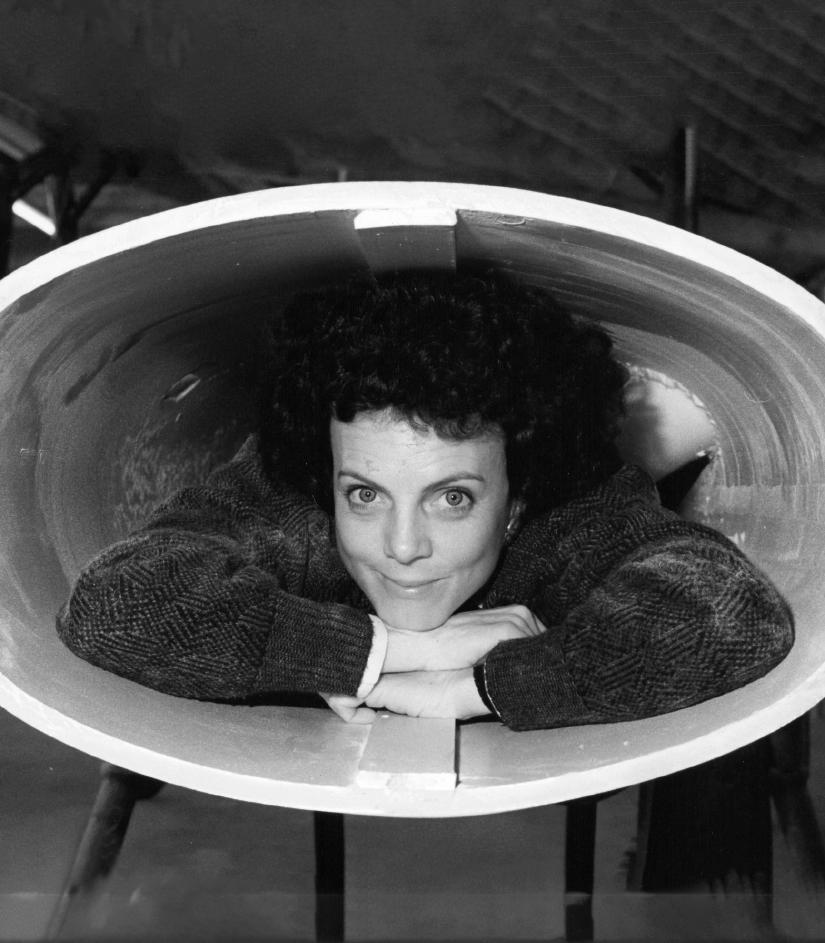
Originally established in 1976 as Marquip, the company began as the mast-building division of what is now Royal Huisman. Founder Wolter Huisman created the business to maintain control over both quality and delivery of critical yacht components. It was a practical decision, but one that would eventually lead to decades of innovation. By the early 1980s, yacht owners were demanding larger vessels that could still be handled efficiently by relatively small crews. The shift created new engineering challenges and accelerated the development of technologies that are now commonplace throughout the industry.
One early example was the hydraulic mast jack system developed for Flyer II in 1981. Designed to simplify rigging operations, it reflected a growing emphasis on making large sailing yachts safer and easier to operate. Around the same period, Rondal helped pioneer furling systems for larger yachts, allowing sails to be deployed and reefed at the push of a button. The company's approach was shaped by a simple but demanding question often asked by Wolter Huisman: "Can we do better?"
transition to Rondal and bigger ambitions
That mindset became increasingly important as yacht projects grew more ambitious. In 1989, Marquip became Rondal and took on one of its defining challenges: the restoration of the J-Class yacht Endeavour. The project required a 53-metre mast unlike anything available commercially. Rather than relying on conventional solutions, Rondal developed a mast built from curved aluminium plates, creating a lighter and more efficient structure while opening the door to a new generation of fully custom rigs.
driven by demanding clients
The project highlighted a recurring theme throughout the company's history. Many of its most significant innovations emerged not from internal research programmes but from highly demanding clients pushing the boundaries of what was possible. That pattern continued with projects such as Juliet, whose owner inspired the development of a single-drum captive winch system that remains notable for its reliability decades later.
More dramatically, it appeared in the late 1990s when technology entrepreneur Jim Clark commissioned the sailing yacht Hyperion. Clark insisted on a carbon mast at a time when large-scale composite structures were still relatively unproven in the superyacht sector. Rather than step aside, Rondal invested heavily in new facilities, materials and expertise. The resulting 60-metre mast became the tallest carbon mast ever built at the time and helped establish manufacturing techniques that would later become standard across the industry.
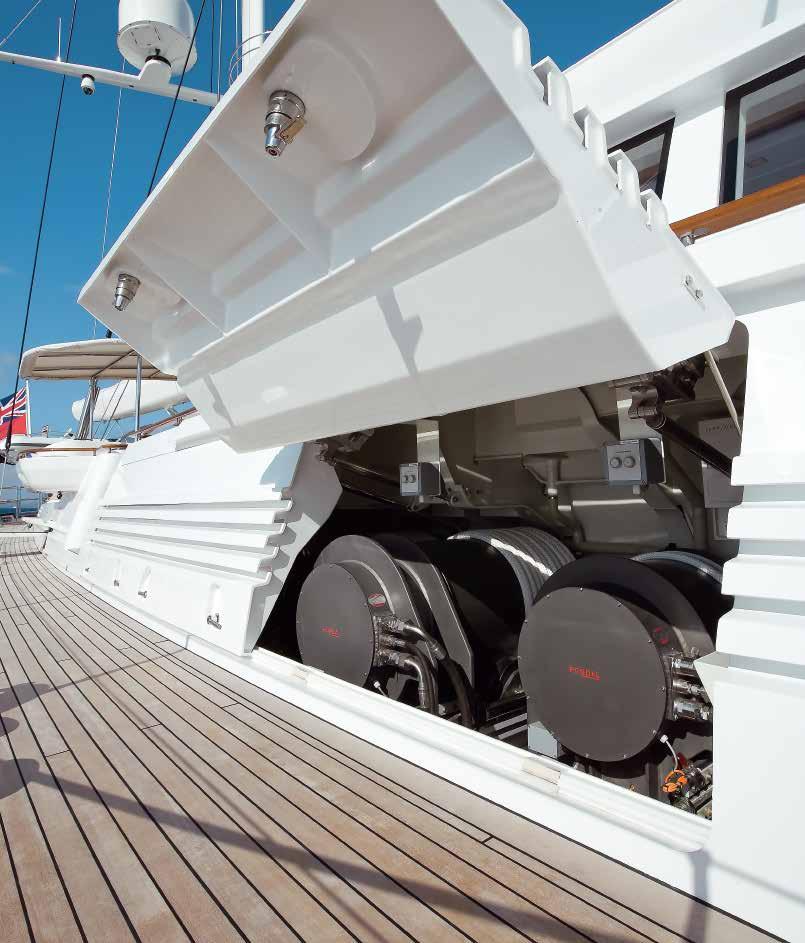
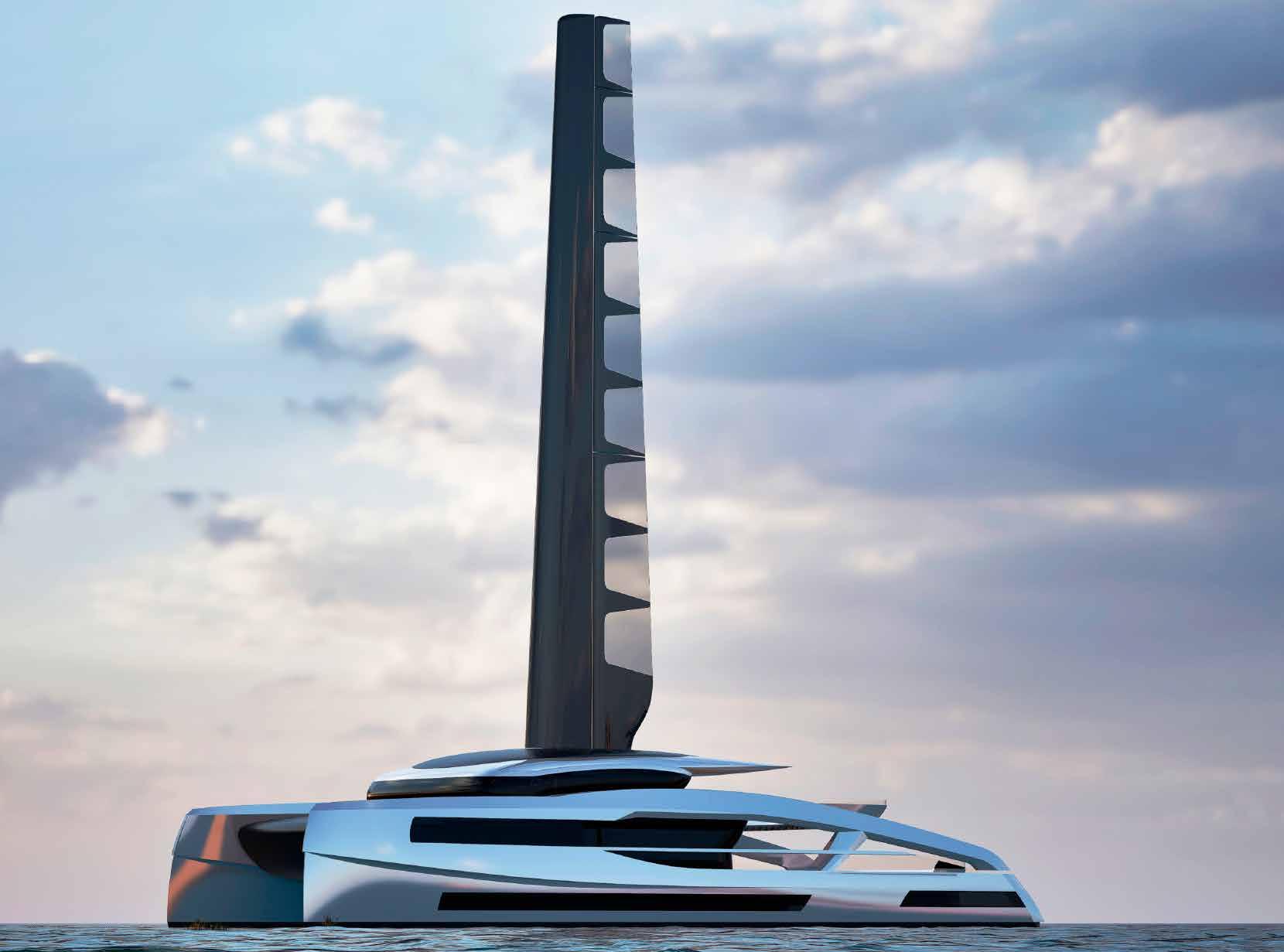
The move into composites transformed the company and positioned it at the forefront of a new era in yacht construction. Over the following decades, Rondal continued expanding its capabilities as projects became larger and more technically demanding. Successive investments in curing ovens, autoclaves, testing equipment and advanced manufacturing technologies allowed the company to produce increasingly sophisticated structures, including some of the world's largest carbon masts, rudders and sailing systems.
At the same time, performance became an increasingly important priority for superyacht owners. Weight reduction, structural efficiency and sail-handling optimisation moved to the forefront of design discussions. Rondal's racing heritage proved valuable in this environment. Developments in mast design, furling systems, booms and winches contributed to measurable gains in both performance and usability.
On recent projects such as Nilaya, cumulative improvements across multiple systems delivered significant weight savings while maintaining the reliability demanded by long-distance cruising yachts. That balance between innovation and dependability remains central to the company's reputation.
Today, Rondal's expertise is increasingly being applied beyond traditional sailing yachts. Technologies originally developed for specialised sailing systems are finding applications in motor yachts and other sectors, while newer concepts reflect broader industry trends toward sustainability and efficiency.
Recent developments include the Aero Wing Sail, a rigid carbon wing concept designed to improve propulsion efficiency, and a hydro-generator capable of producing onboard electrical power while a yacht is under sail. Both projects demonstrate how engineering knowledge developed within the niche world of professional yachting can contribute to wider conversations about energy use, performance and advanced manufacturing. As the industry looks toward larger vessels, new materials and alternative propulsion technologies, the challenges facing designers and builders will continue to evolve.
For fifty years, Rondal's role has been to tackle those challenges when conventional solutions were no longer enough. Its story offers a reminder that progress in yachting is often driven not only by bold visions, but also by the specialist engineers who find ways to make them possible. ◆ Rondal.com
The International Barcelona Boat Show is getting ready to return to the Port of Barcelona from 14 to 18 October 2026 with an edition set to take another big step forward in size and quality.
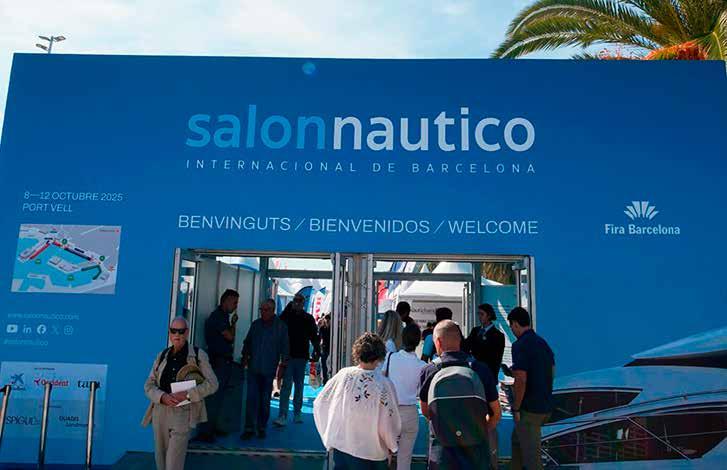
More than 110 brands have already confirmed their participation, including some of the most recognised names in the nautical industry, reinforcing Barcelona’s position as one of Europe’s key boating events.
You’ll once again be able to discover the latest boats, water sports, accessories and nautical lifestyle trends in a unique Mediterranean setting.
With just one month to go, demand is already building for this year’s edition, so get your ticket as soon as possible to make sure you don’t miss out. ◆ www.salonnautico.com
Get your ticket:

TEST AND CHOOSE YOUR BOAT FROM OVER 200 MODELS
• MOTOR YACHTS
• SAILING YACHTS
• CATAMARANS
• EQUIPMENT & ACCESSORIES
• SEA TRIALS
• VILLAGE & GASTRONOMY
Written by The Islander & photos via Pexels.com
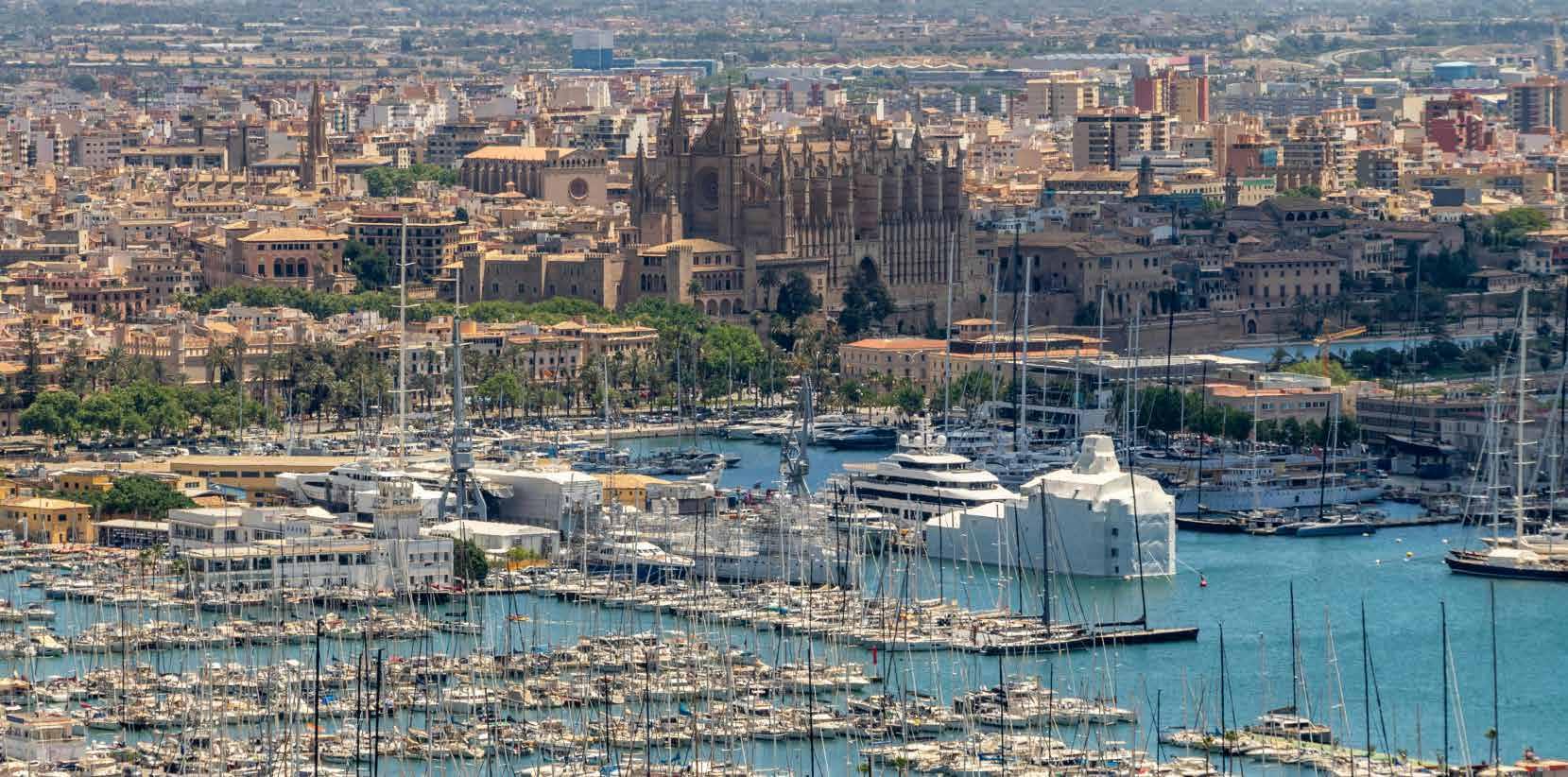
Port operators across the Balearic Islands can now extend public port concessions for up to 75 years if they invest in sustainability, energy efficiency and digitalisation, following a significant change to the Balearic Ports Law approved on 12 May.
Under the previous framework, concessions on public port land were limited to a maximum of 35 years. The new legislation establishes a standard term of 50 years and allows extraordinary extensions of up to 75 years for operators that modernise their facilities through environmentally focused investments.
In practical terms, marinas, yacht clubs and other concession holders in Mallorca, Menorca, Ibiza and Formentera now have a stronger incentive to invest in projects such as electric service vessels, shore charging infrastructure, smart energy management systems and other measures aimed at reducing emissions and improving efficiency.
The reform also includes a specific provision for non-profit yacht clubs. Those that obtain “public utility” status may renew their concessions without going through an open tender process, a measure intended to preserve clubs that provide a social and community benefit.
While much of the public debate has centred on the extension of concession terms, some industry observers believe the real significance lies in the conditions attached to them.
According to Palma-based marine electrification company Phoenix One, the law creates a direct economic incentive for sustainability investments that previously struggled to justify their cost.
“The debate has focused on concession terms, but the real story is the condition attached to them,” says Lucas Nowak, CEO of Phoenix One. “For the first time, investments in energy efficiency, sustainability and digitalisation can generate a direct legal and economic return for concession holders.”
The Balearic Islands are one of the Mediterranean’s leading nautical destinations, with more than 15,000 berths across a dense network of marinas and ports. Many of these facilities operate under public concessions and face increasing pressure to reduce their environmental impact while remaining competitive.
Phoenix One argues that longer concession periods make major sustainability projects financially viable because operators have more time to recover their investment. The company also notes growing demand among European boat owners for electric and hybrid propulsion.
As marinas and ports adapt to changing environmental expectations, the new law positions sustainability not only as an environmental objective but also as a factor in securing long-term operating rights. For the Balearic nautical sector, that could prove to be one of the amendment’s most significant consequences. ◆


Written by Valeriia Filippska & photos by Simbad Yachts
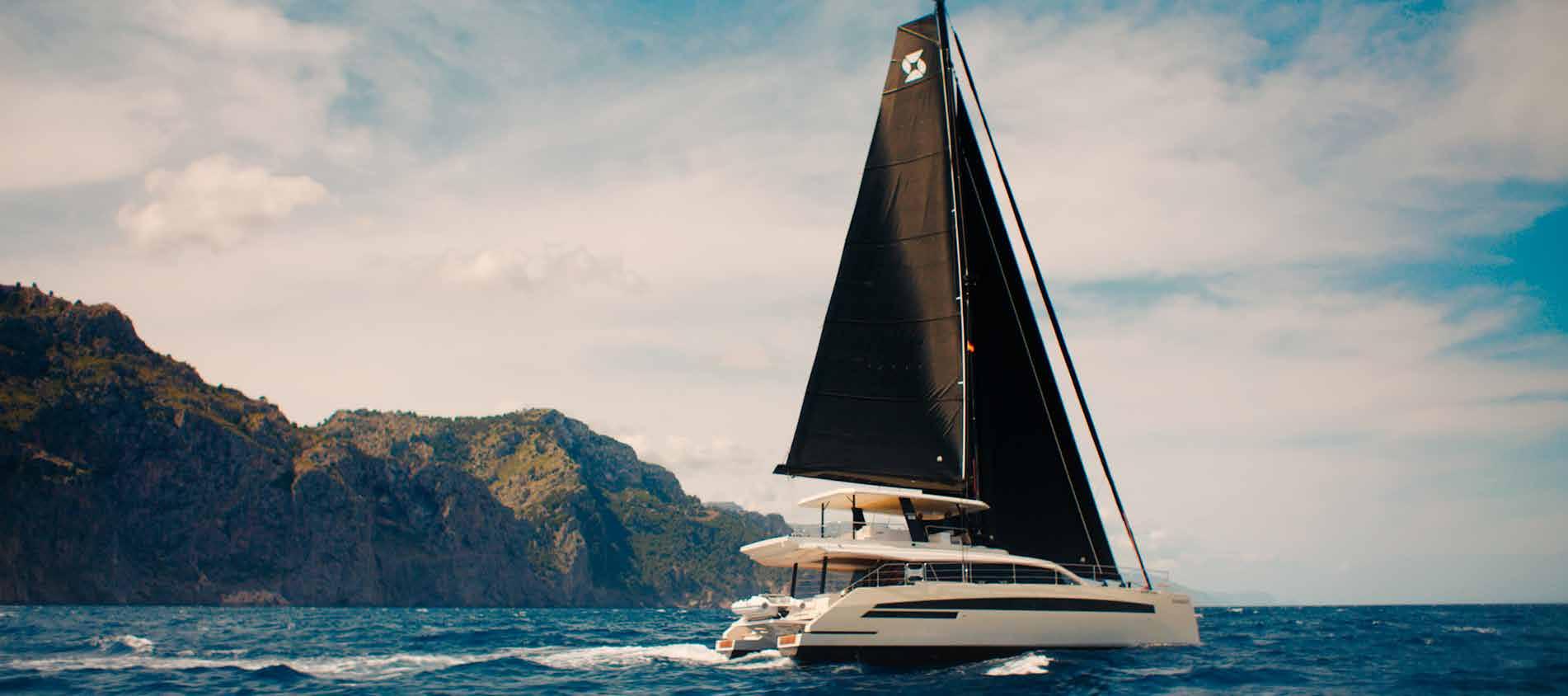
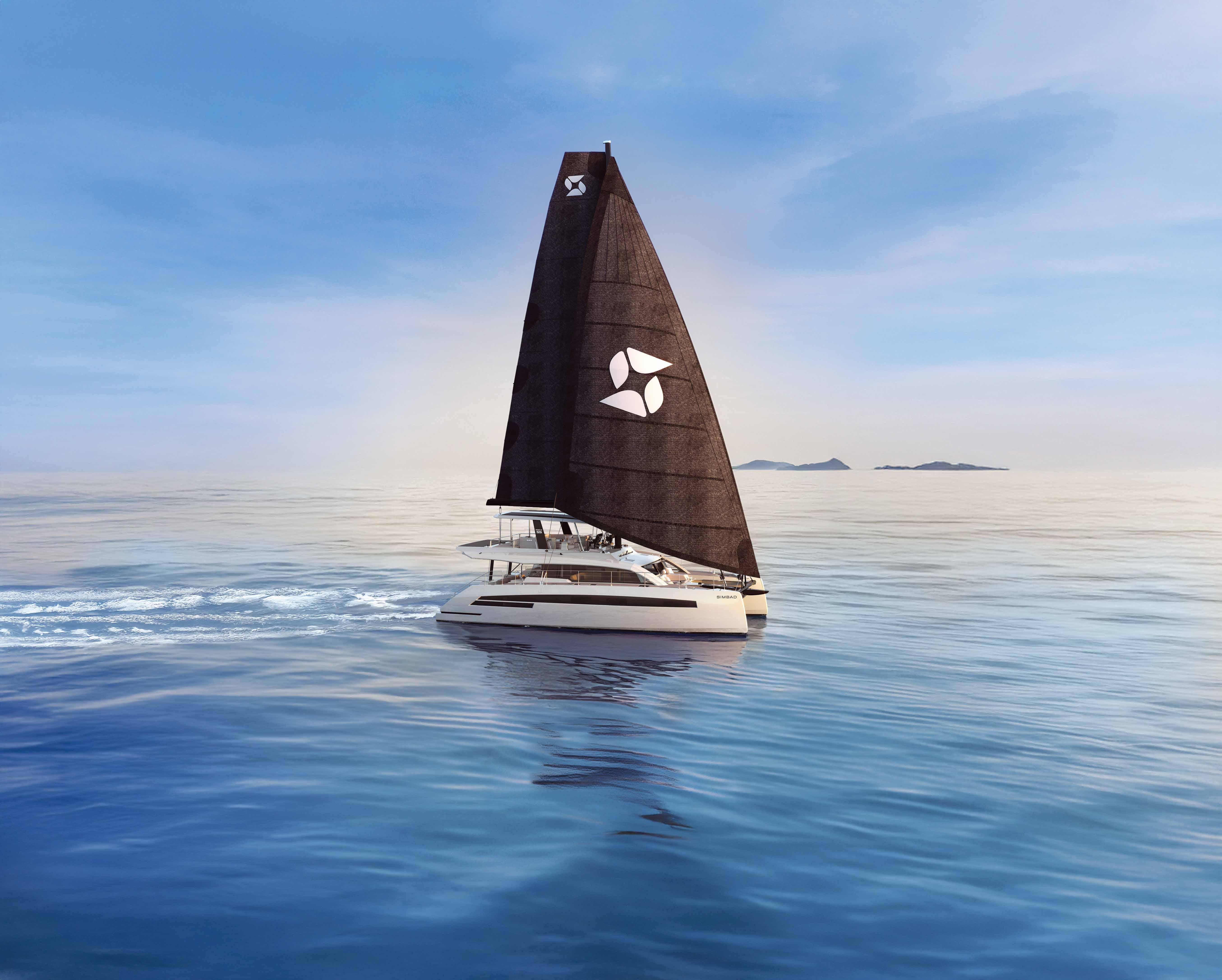
ASpanish newcomer is entering the 55ft sailing catamaran segment with a proposition built around clarity, integration, and life on the water from day one.
Based in Alicante, Spain, Simbad Yachts was founded on a simple yet compelling belief: a modern cruising catamaran should feel effortless to own as well as to sail. In a market where delivery often marks the beginning of further decisions, upgrades, and complexity, Simbad’s ambition is to remove friction from the ownership experience by designing each yacht as a complete, coherent system from the outset. The result is not only a boat, but a broader proposition shaped around time, comfort, and ease of use.
Making her debut at the International Multihull Show in La Grande Motte, Simbad 55 has already attracted significant attention as the brand's inaugural model. This 55-foot luxury sailing catamaran expresses Simbad’s philosophy on two levels: through a carefully resolved onboard specification, and through the ownership and after-sales programmes that accompany the yacht. Rather than presenting buyers with a stripped-back platform and an exhaustive list of costly addons, Simbad offers their catamarans in three fully equipped versions - Select, Ultra, and Legend, all delivered Readyto-Sail. From integrated yacht-management systems to the tender itself, the emphasis is on completeness from day one: less uncertainty, fewer post-delivery decisions, and no lost season spent commissioning upgrades in the marina.
The three versions are tailored to different budgets and ownership styles, yet they share a common character. With its refined French design language and multiple systems working quietly in the background to deliver what Simbad describes as invisible comforts, the yacht has already earned the nickname “mini-superyacht.” Natural wood furniture, Burmese teak across all decks, bronze & leather detailing, and a remarkable attention to the smallest finishing elements create an onboard atmosphere that feels unmistakably highend.
Yet this emphasis on design does not come at the expense of performance. Thanks to a carefully engineered hull and a suite of electrified sailing, navigation, and docking systems, Simbad 55 remains agile, quick, and notably easy to handle in real-world use.
Across all three versions, the yacht includes a hydraulic tenderlift, solar panels, Miele galley appliances, a smarthome system, air conditioning throughout, a watermaker, a 50-inch television, and a long list of additional equipment that would often sit on an options list elsewhere.
Select features a painted aluminium mast, Furlerboom, polyester sails, and twin 110 hp Yanmar engines, together with an outboard-powered tender and teak decking in the aft cockpit. From there, Ultra and Legend progressively elevate the specification with more advanced systems and more ambitious equipment. At the top of the range, Legend adds a carbon mast and Furlerboom, Doyle carbon Technora sails, electric winches and furlers, extra-large chartplotters, and Sea.ai collision avoidance, alongside electric deck hardware such as mooring cleats and capstans. On the lifestyle side, Legend also includes a projector for movie nights with a premium sound system, multiple refrigerators, ice makers, and wine storage distributed throughout the yacht, as well as a jet tender.
What makes the Simbad 55 interesting is not any one isolated feature, but the coherence of the whole. The yacht is positioned as a luxury sailing catamaran that seeks to reduce compromise: generous without feeling cumbersome, sophisticated without becoming excessive, and highly equipped without demanding that the owner become a project manager. In a crowded multihull segment, that sense of resolution may prove to be one of its strongest selling points.
To experience the Simbad 55 in person, visit Simbad Yachts at the Cannes Yachting Festival, 8–13 September 2026. ◆ https://simbad-yachts.com
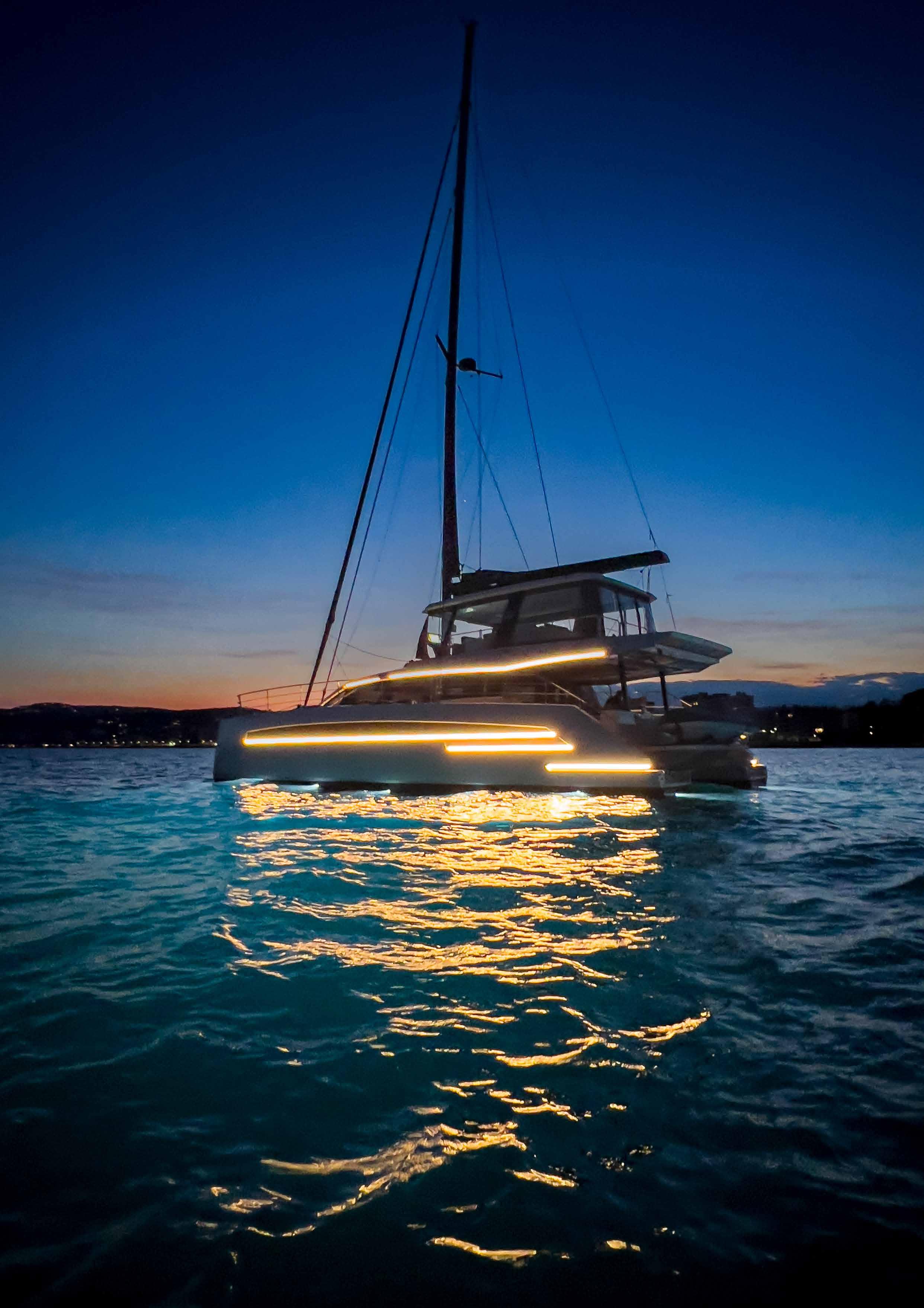
LOA: 17.59 m
Beam: 8.92 m
Draft: 1.64 m
Mast length: 22.6 m
Sails: Doyle
Mainsail: 89 m²
Self-tacking jib: 40.8 m²
Engines: Yanmar 2 × 110 hp or 2 × 150 hp
Designer: Franck Darnet
Naval architect: Pierre Delion
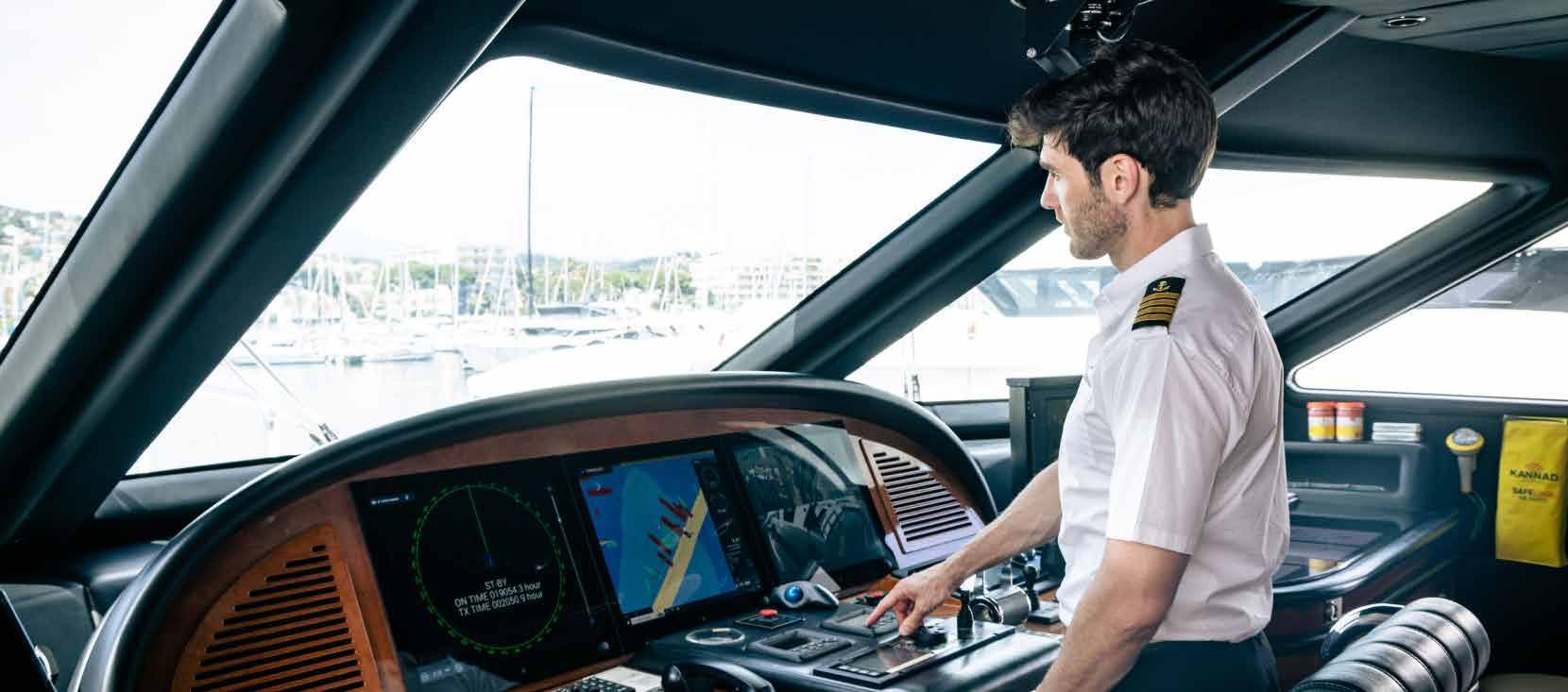
The MCA has recently published an amendment to MSN 1858, which opens a new qualification pathway to Yacht Deck Officers. The result is a new Yacht Unlimited CoC certification, opening a safe and professional pathway for careers in the large yacht sector (over 3,000 GT). Deck Officers can now safely advance their careers on large yachts, a rapidly growing sector of the industry, and become Chief Mate or Master of Yachts over 3,000 GT.
The new Yacht Unlimited CoC follows the MCA’s ongoing Cadet Training and Modernisation Programme and was created through extensive collaboration between the MCA, seafarer representatives, maritime colleges and industry operators.
The previous unlimited certification route required experienced Master of Yachts to first obtain an Officer of the Watch (OOW) Unlimited Merchant CoC. They then had to complete further training and additional seagoing service, progressing through Chief Mate Unlimited and further seagoing service before ultimately achieving Master Unlimited. This long-winded process frequently took many years to complete and proved unfeasible for many experienced professionals.
Today, the new route streamlines progression, allowing
seagoing service on yachts to be accepted as operationally appropriate, while continuing to be fully aligned with the high competency and safety standards of the STCW convention for Unlimited CoC.
This approach avoids unnecessary duplication of service and loss of career continuity for experienced seafarers. The new route enables progression from Master (Yachts) less than 3,000 GT to a Master Unlimited (Yachts) CoC, and a new route for Chief Mate Unlimited (Yachts) CoC.
Keep yourself updated on Bluewater social media channels, where first-hand industry insights and guidance will be shared.
Contact their dedicated Training Team, training@ bluewateryachting.com, to help plan your next career move and book the necessary courses. They have training facilities in Antibes and Palma, two of the main yachting hubs of the Mediterranean. ◆ www.bluewateryachting.com
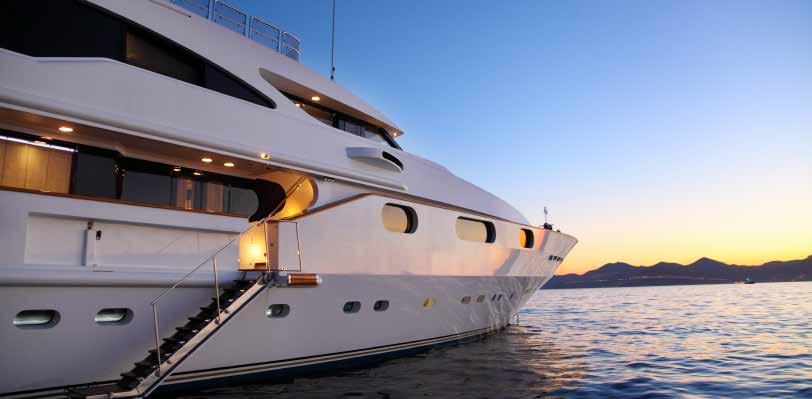






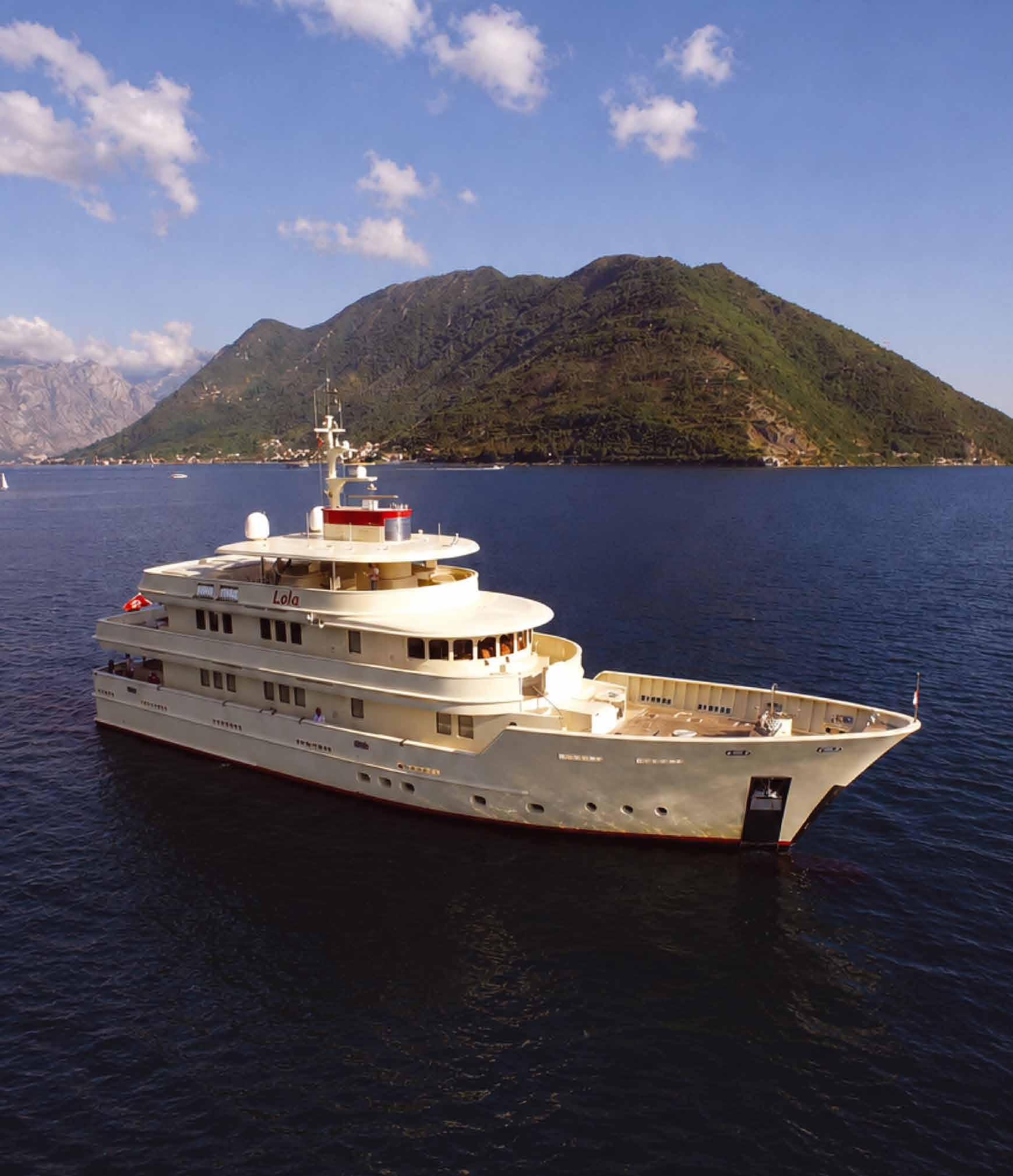




instagram.com/alexsealpaint linkedin.com/company/alexseal-yacht-coatings





46. Meet The Crew: Sven Vandendriessche
50. The Crew Coach
52. Chief Stew Shop
55. Chef Tzarina Spits it out
56. Chef’s Chat
58. MSOS
62. Chef Raffie
64. Virtual Pursers
68. Riccardo Benoni tribute
70. Northwest Passage expedition
74. Purser Support
76. Tarati education fund
78. Observadores del Mar
82. Save the Med
86. Reef Regeneration
88. Fundacion Palma Aquarium
90. Fundacion Joves Navegants
Written by Jens Oomes - Photos by Sven Vandendriessche
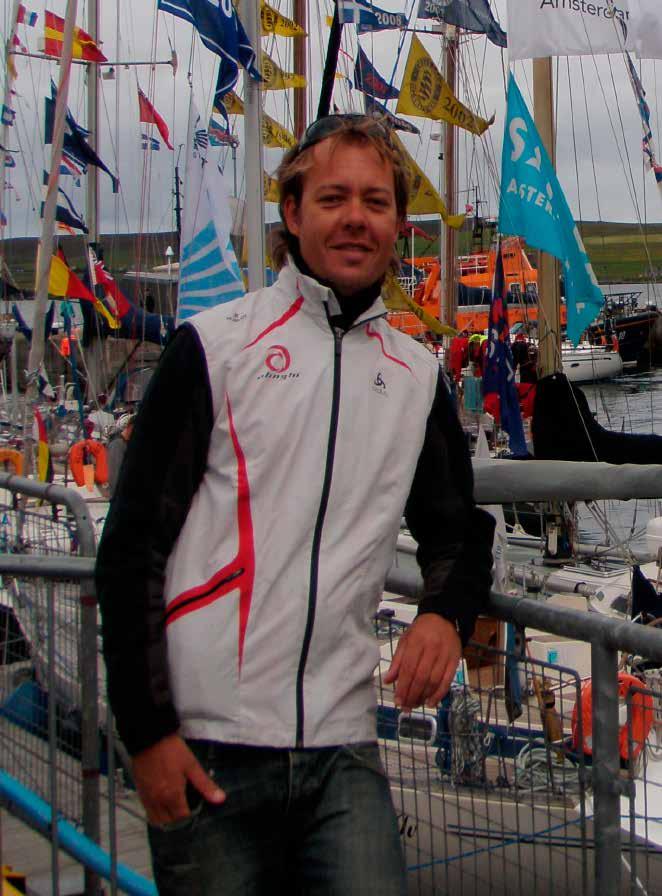
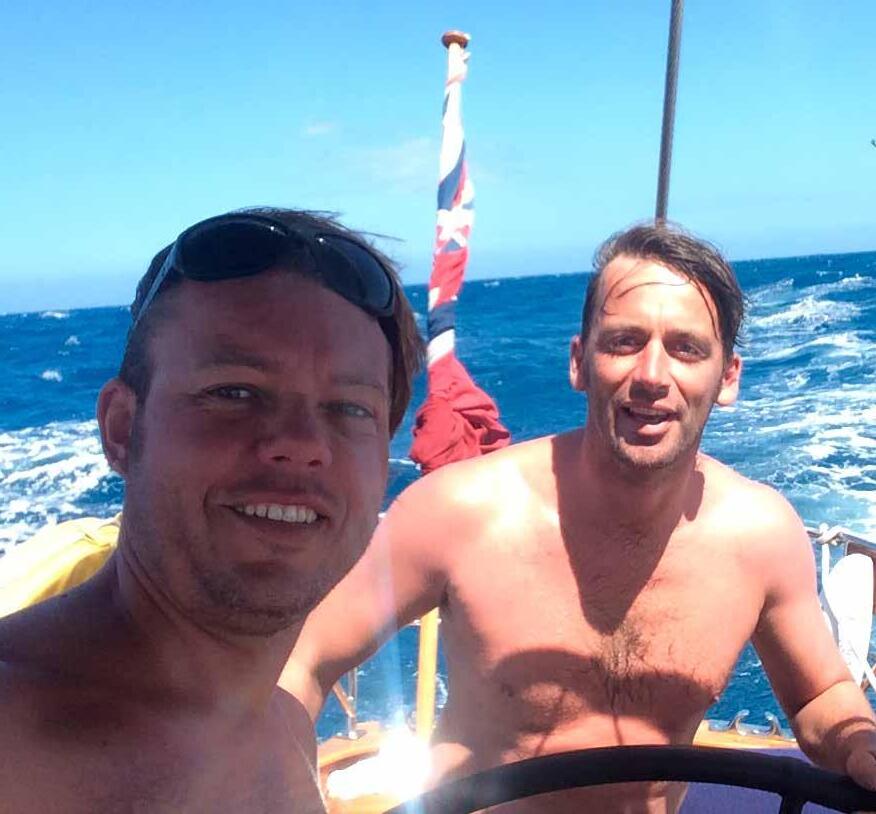
For Captain Sven Vandendriessche, a life in yachting was never a career choice so much as a natural progression. Raised in a family-run shipyard in Estepona and shaped by both his Belgian heritage and Andalusian upbringing, Sven’s earliest lessons came not from a classroom but from the workshop floor and the waters beyond. Today, after decades at sea, involvement in high-profile racing campaigns, the construction of world-class yachts, and years of trusted service to owners, he reflects on the experiences that have defined an extraordinary career.
Growing up around your father’s shipyard in Estepona must have given you a unique introduction to the maritime world. What are your earliest memories of boats and shipbuilding, and when did you realise yachting would become your career?
As the oldest of three children, I was always the first one expected to help in the family business. In those days,
particularly with my father’s Belgian traditions, it was simply understood that children would contribute.
My earliest memories are from when I was 13 or 14 years old, spending weekends and school holidays working at the shipyard. I helped in the chandlery and worked on our painting and antifouling concession. I spent countless hours sanding and painting the bottoms of boats, usually wearing nothing more than shorts and a T-shirt. There were no masks, safety glasses or protective equipment back then; you simply turned up and got on with the job.
The moment I realised yachting would become my life came when I was 14. My uncle, Geert Vandendriessche, regularly sailed in the North Sea and took part in the Cutty Sark Tall Ships Race. In the summer of 1995, my father sent me to sail with him, and that experience changed everything. From that moment, I knew this was what I wanted to do.
Afterwards, I continued spending summers at the shipyard, and in 1997, at the age of 17, I travelled to Hamble in the UK to complete what was then known as the “Zero to Hero” Yachtmaster course. Soon after, I began chartering our family’s 49-foot Sciarelli yacht in Puerto Banús, and the journey continued from there.
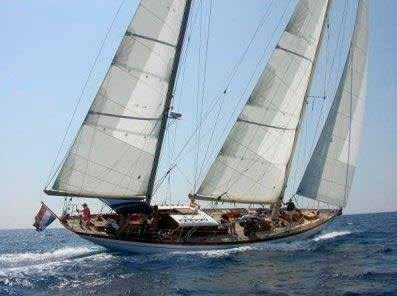
You’ve spent many years in the industry and worked your way onto some exceptional yachts, including Swan Alix. Can you walk us through the key moments and decisions that shaped your progression from your first role to captaincy?
One of the defining moments came in 1999 while I was working at the shipyard. A Dutch gentleman walked into the office looking for someone to deliver his newly purchased 72foot yacht from IJmuiden in the Netherlands to Greece. I still remember him bursting through the door and saying, “I need a captain to get my boat from Holland to Greece.” I looked at my father in disbelief, raised my hand immediately and said, “That’s me.” Before I knew it, I was setting off on my first major adventure.
Another pivotal moment came in 2006 when I met the owner of what would later become Aegir. He had just purchased a Jeanneau 54DS and was looking for someone to maintain the yacht and occasionally sail with him. That opportunity developed into serious racing campaigns, involvement in the construction of an 82-foot yacht in the United States, and ultimately led me to where I am today in Palma. Looking back, many of the biggest opportunities in my career came from simply saying yes when adventure presented itself.
After nearly ten years with the same owner, you’ve experienced a level of longevity that few in the yachting industry achieve today. What has been the secret to building and sustaining such a successful relationship?
As difficult as it may sound, one of the lessons I learned early on was to be willing to find solutions rather than focus on obstacles. The industry in the early 2000s was very different from what it is today. There were fewer regulations and more freedom to learn through experience. While professionalism and safety standards have rightly evolved, owners still appreciate people who are adaptable, dependable and willing to go the extra mile. Trust is built through consistency. Owners want to know that when challenges arise, you will take responsibility, find solutions and always act in their best interests. If you can do that over many years, strong relationships naturally follow.
same goal. It is a complex process, but seeing all those moving parts come together successfully is incredibly rewarding.
Looking back on your career so far, what has been your proudest moment in yachting, and what advice would you give to young crew members hoping to build a long and successful career in the industry?
That is a difficult question because much of my career has been spent finding my own way. I was never completely sure whether I was making the right decisions, and there were very few moments where someone would stop and tell me I was doing a good job.
One memory that stands out took place in Finland in early 2021. I was standing alone outside the Nautor Swan shed as Swan 98 Alix emerged after her final paintwork. The yacht was being moved out on a truck, and there was nobody else there, no owner, no crew, just me.
I remember looking at her and thinking, “What a beautiful yacht and what a special moment. Why is nobody here to see this?”
Then it dawned on me that I was there. I had been part of the journey and was witnessing the culmination of years of work, planning and dedication. It was a quiet moment, but one that made me immensely proud.
For young crew entering the industry today, my advice would be simple: work hard, stay curious and never stop learning. Opportunities often arrive when you least expect them, and success usually comes to those who are willing to step forward and embrace them. Every challenge teaches you something valuable, and over time those lessons become the foundation of a rewarding and lasting career. ◆
“Many of the biggest opportunities in my career came from simply saying yes when adventure presented itself.”
You were also involved in a new-build project, which is a very different challenge compared to running an existing yacht. What did that experience teach you, and what part of the process did you enjoy most?
What I enjoyed most was the communication and collaboration. A new-build project brings together owners, designers, contractors, suppliers and shipyard teams, all with different perspectives and priorities. One of the captain’s responsibilities is to listen carefully, keep communication open and ensure everyone understands the bigger picture. The experience taught me the value of building strong relationships across every part of a project. By bringing people’s ideas, concerns and objectives together, you help create an environment where everyone is working towards the
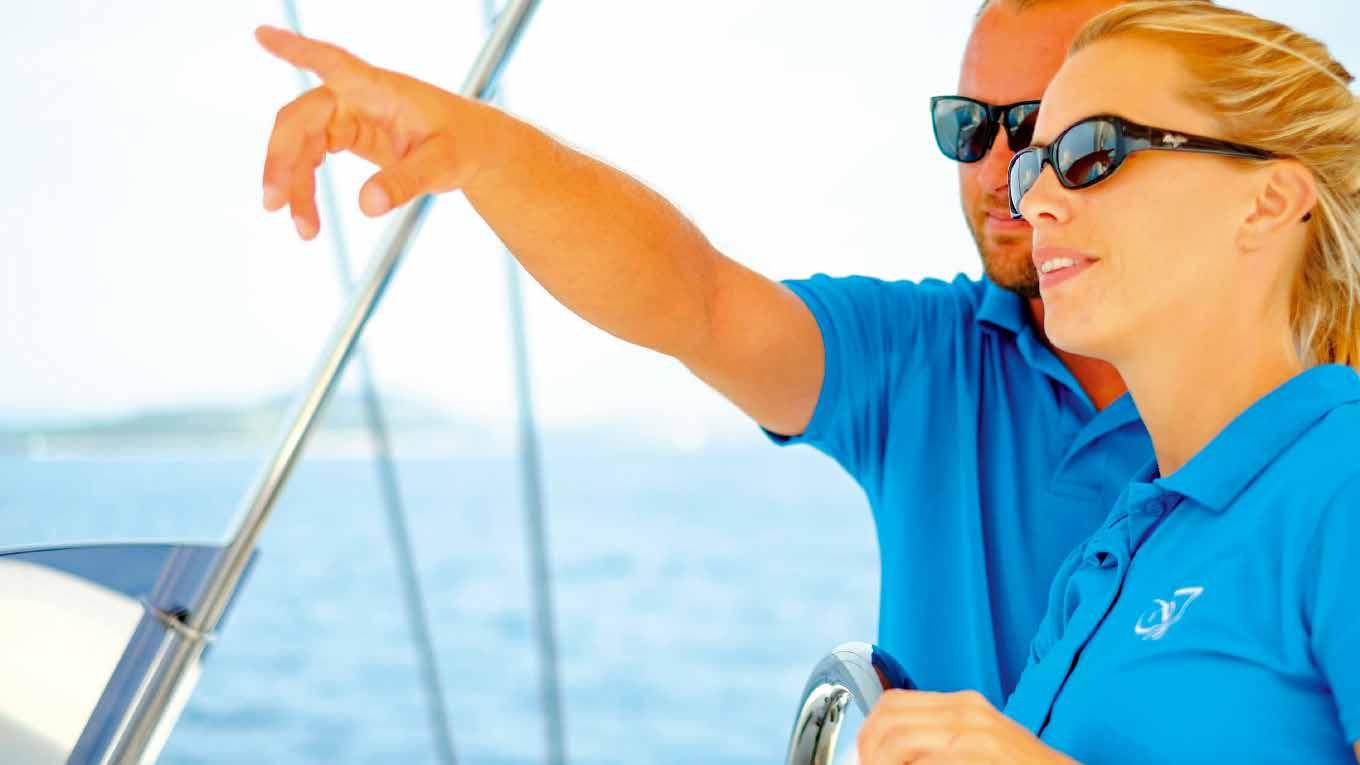


https://wops.teachable.com/p/how-to-work-on-pocket-superyachts


Written by Karine Rayson
It does not always look like raised voices in the crew mess or a formal complaint filed at the end of a charter season.
Sometimes, conflict onboard looks like silence.
A crew dinner where one person is not invited. A WhatsApp group that everyone seems to know about except one crew member. A junior stew who has started eating alone. A deckhand who has quietly become “the difficult one”, not because their behaviour changed, but because they no longer feel psychologically safe within the team.
Social exclusion is one of the most under-recognised dynamics in yachting leadership. By the time it becomes visible to a Head of Department, the damage is often already well underway.
The onboard environment changes everything On land, a difficult workplace interaction may end at 5pm. At sea, the same person still eats beside you, cabins near you and shares limited personal space for weeks or months at a time.
That distinction matters enormously when assessing the psychological weight of social friction onboard superyachts.
When crew feel excluded from the social fabric of their team, the impact rarely stays contained. It spills into service delivery, communication, morale and the broader sense of psychological safety across the vessel. What begins as a personality clash between two crew members can, if left unaddressed, quietly reshape the culture of an entire department.
Leaders often notice the secondary symptoms long before they identify the root cause: withdrawal, performance decline, increased emotional reactivity, or a crew member requesting to leave the vessel with no clear explanation.
The leadership trap of minimising social dynamics onboard
One of the most common mistakes Heads of Department make is treating social exclusion as a personal matter, outside the scope of professional yachting leadership.
“They’re adults.” “It’s just personalities.” “We are a drama-free boat.”
These are conflict-avoidant responses and they come at a cost. Humans are wired for belonging. Research consistently shows that social exclusion activates the same neural pathways associated with physical pain and threat perception. When crew feel socially unsafe, their capacity to communicate clearly, regulate emotions and perform their role is genuinely compromised, not as a character failing, but as a physiological response.
This is precisely why emotionally intelligent leadership is no longer a “soft skill” in the superyacht industry. It is an operational requirement.

Recognising the difference between friction and exclusion
Not every interpersonal tension constitutes bullying, and not every friendship group within a department signals dysfunction. Strong Heads of Department learn to distinguish between occasional friction and a consistent pattern of isolation, undermining or social ostracism, particularly where a power imbalance exists.
The first instinct of many leaders is to address the dynamic publicly: calling crew out in front of others, forcing group conversations before the full picture is clear, or using language that invites shame rather than reflection. This approach tends to deepen the divide rather than resolve it.
More effective is a quieter, more curious form of leadership. Gathering information before drawing conclusions. Exploring privately what assumptions are being made, what stressors may be driving the behaviour, and whether the dynamic
reflects a communication issue, a cultural misunderstanding or something more process-driven, such as poor onboarding, unclear expectations or leadership inconsistency further up the chain.
What yachting leaders can actually do
Heads of Department are not responsible for ensuring their crew become close friends. They are responsible for maintaining an environment where every crew member feels respected, included and psychologically safe enough to perform their role.
That means being clear about professional standards, not policing friendships, but consistently reinforcing expectations around respect, communication and inclusion as nonnegotiable elements of working onboard.
Yachting culture is rarely shaped by policy but rather by the behaviours we promote and those we choose to ignore.
If gossip goes unchallenged among senior crew, it normalises throughout the department. If concerns are dismissed, crew stop raising them. If favouritism appears present, even unintentionally, trust erodes quickly and rarely recovers within a season.
The healthiest teams onboard are not those without conflict. They are those where crew feel safe enough to work through it constructively. That requires leadership consistency, not occasional intervention.
The question worth asking
Behind many yacht crew resignations, emotional breakdowns and “difficult crew member” labels is a far more straightforward reality: someone stopped feeling safe, valued or connected within their team, long before anyone in a leadership position noticed.
The question worth asking is not “why are they behaving like this?”
It is: “what dynamic has been allowed to develop, and when did leadership stop paying attention?”
Psychological safety onboard is not a well-being initiative. It is an operational priority, and it is built, or dismantled, by what Captains and Heads of Department choose to notice, name and act on every day. ◆

The Crew Coach
karine@thecrewcoach.com
https://thecrewcoach.com
Written by Clair Minto
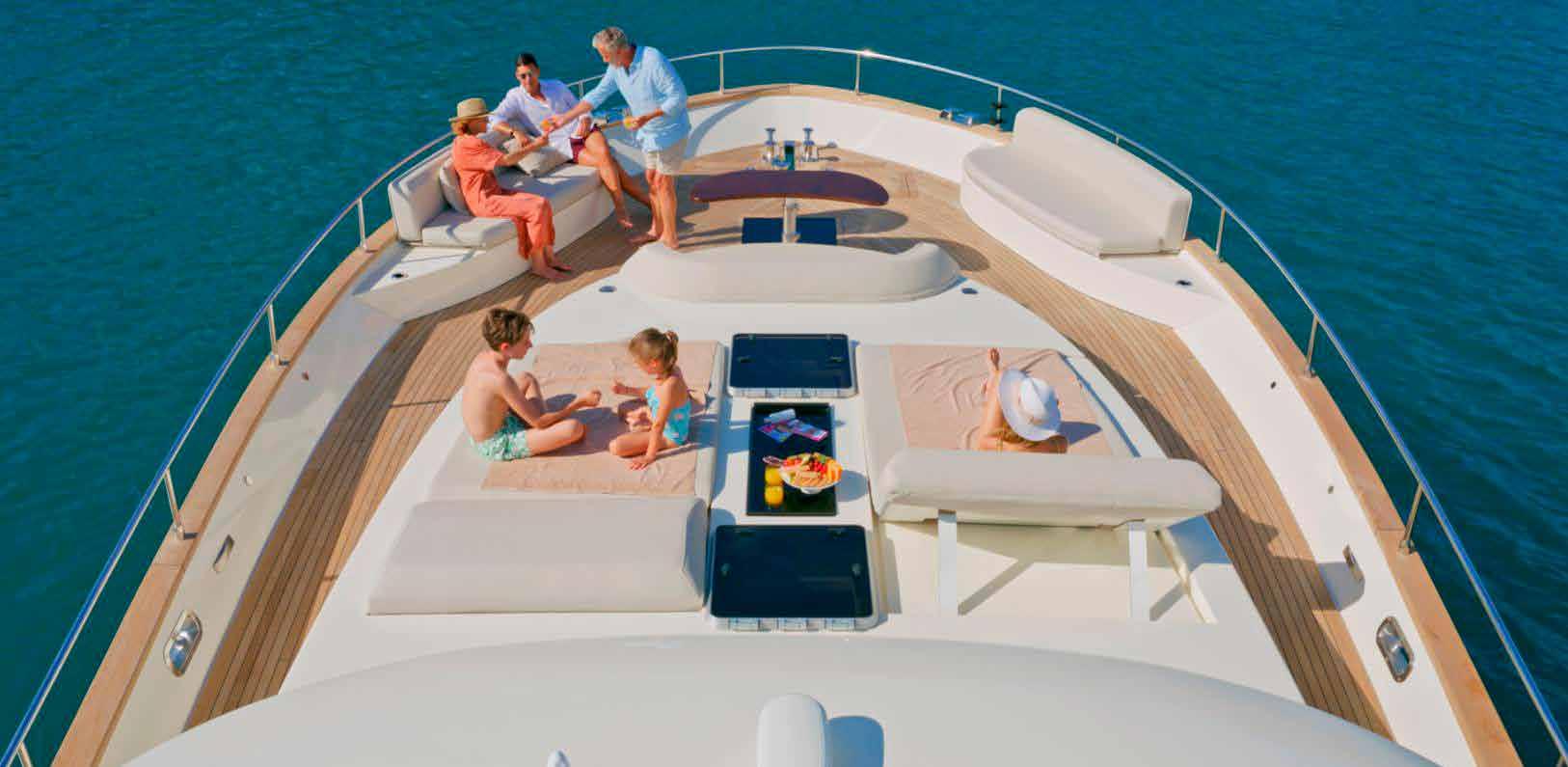
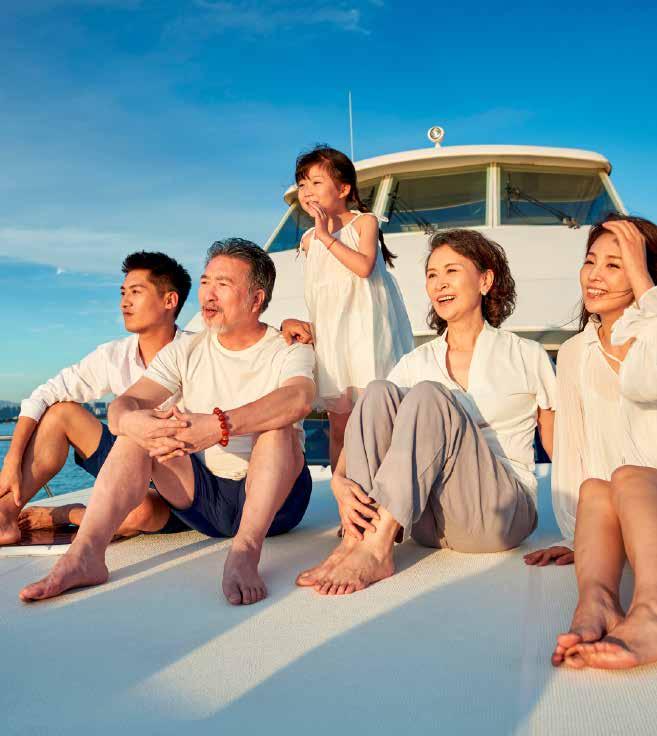
As family travel continues to evolve, multigenerational charters are becoming increasingly common on board both private and charter yachts. Grandparents, adult children, teenagers and younger children are choosing to spend precious time together, creating lasting memories in some of the world’s most beautiful destinations. While these charters can be incredibly rewarding, they also present a unique challenge for interior crews: how do you create an experience that feels equally luxurious and enjoyable for guests aged five to eighty-five?
The answer lies in recognising that luxury means something different to every generation. While a grandparent may appreciate a peaceful morning coffee on deck and attentive service, younger guests may be seeking adventure, entertainment and flexibility. The best crew understand how to anticipate these differing needs and create an experience where every guest feels considered, comfortable and valued.
Understanding different expectations
One of the first steps in preparing for a multi-generational charter is understanding that not all guests measure luxury in the same way.
For older generations, luxury is often found in comfort, routine and thoughtful service. They may appreciate a favourite newspaper waiting at breakfast, a comfortable shaded seating area, or a stewardess who remembers exactly how they take their tea.
Parents, on the other hand, often value convenience above all else. A seamless holiday where logistics are handled effortlessly allows them to relax and spend quality time with their family.
Teenagers typically seek independence and connection. Reliable Wi-Fi, access to water sports, movie nights and opportunities to socialise often rank highly on their list of priorities.
For younger children, luxury is simply fun. Whether it’s a treasure hunt around the yacht, a themed picnic ashore or their favourite snacks waiting in the cabin, creating moments of excitement can transform their entire experience.
Understanding these different perspectives allows the crew to tailor service in a way that resonates with each guest.
Creating spaces for togetherness and independence
One common misconception about family charters is that everyone wants to spend every moment together. In reality, successful multi-generational holidays strike a balance between shared experiences and personal time.
The yacht naturally provides opportunities for both.
Family breakfasts, beach picnics and evening dinners can become memorable moments of connection. At the same time, quiet corners for reading, separate activities for children and teenagers, or a peaceful sun deck retreat for grandparents allow guests to recharge in their own way.
Interior crew can play an important role in facilitating this balance. Setting up a family movie night in the sky lounge, arranging a quiet card game for older guests, or preparing a children’s craft activity during cocktail hour helps ensure every guest has a space where they feel comfortable.
The goal is not to keep everyone together at all times, but to create opportunities for meaningful connection while respecting individual preferences.
Dining across generations
Few aspects of service require more flexibility than dining during a family charter.
A beautifully presented formal dinner may be appreciated by adults, while younger guests may prefer something simpler and more familiar. The challenge is ensuring that every meal feels special, regardless of what is being served.
Family-style dining often works particularly well, encouraging conversation and interaction between generations. Sharing platters, relaxed lunches and themed dinners can create a more inclusive atmosphere than highly structured service. Flexibility is also key. Some guests may prefer an early breakfast, while teenagers emerge closer to lunchtime. Working closely with the galley to accommodate varying schedules helps maintain a relaxed and enjoyable environment.
Remember that children’s meals do not need to feel separate from the luxury experience. Thoughtfully presented favourites served with the same attention to detail as adult dishes can make younger guests feel just as important.
One of the defining characteristics of multi-generational charters is the variety of energy levels on board.
While younger guests may be eager to spend hours on water toys, older family members may prefer a more leisurely pace. Planning activities that offer options for participation allows everyone to enjoy the day without feeling pressured.
A morning excursion might include both a scenic coastal cruise and opportunities for paddleboarding or swimming. An afternoon ashore could combine sightseeing for some guests with a relaxed lunch for others.
As stewardesses, remaining attentive to these differing needs can make a significant difference. Offering refreshments at the right moment, arranging transport when needed or simply recognising when a guest may appreciate a quiet break demonstrates a high level of professional awareness.
The small details that matter most
When reflecting on a memorable charter, guests rarely talk about the polished glassware or perfectly folded napkins. Instead, they remember how the crew made them feel.
They remember the stewardess who noticed a child was fascinated by dolphins and arranged a marine-life guidebook in their cabin. They remember the blanket offered before the evening breeze arrived. They remember the birthday cake that appeared unexpectedly at dinner, or the framed family photograph presented before departure. These seemingly small gestures often become the moments that guests treasure most.
For multi-generational groups, these thoughtful touches are particularly meaningful because they demonstrate that every family member has been seen and considered as an individual.
At its heart, a multi-generational charter is about more than luxury travel. It is about bringing families together and creating memories that may be talked about for years to come
The role of the interior crew extends far beyond service. Through thoughtful preparation, personalised attention and a genuine understanding of different guest needs, stewardesses help create the environment in which those memories are made.
When every guest, from the youngest child to the oldest grandparent, leaves the yacht feeling valued and cared for, the charter has been a success. In an industry built on exceptional experiences, few achievements are more rewarding than delivering luxury for every age.
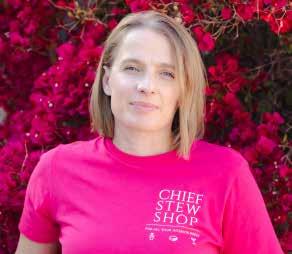
info@chiefstewshop.com (+44) 781 667 8634
www.chiefstewshop.com
IG: @chief_stew_shop Clair Minto
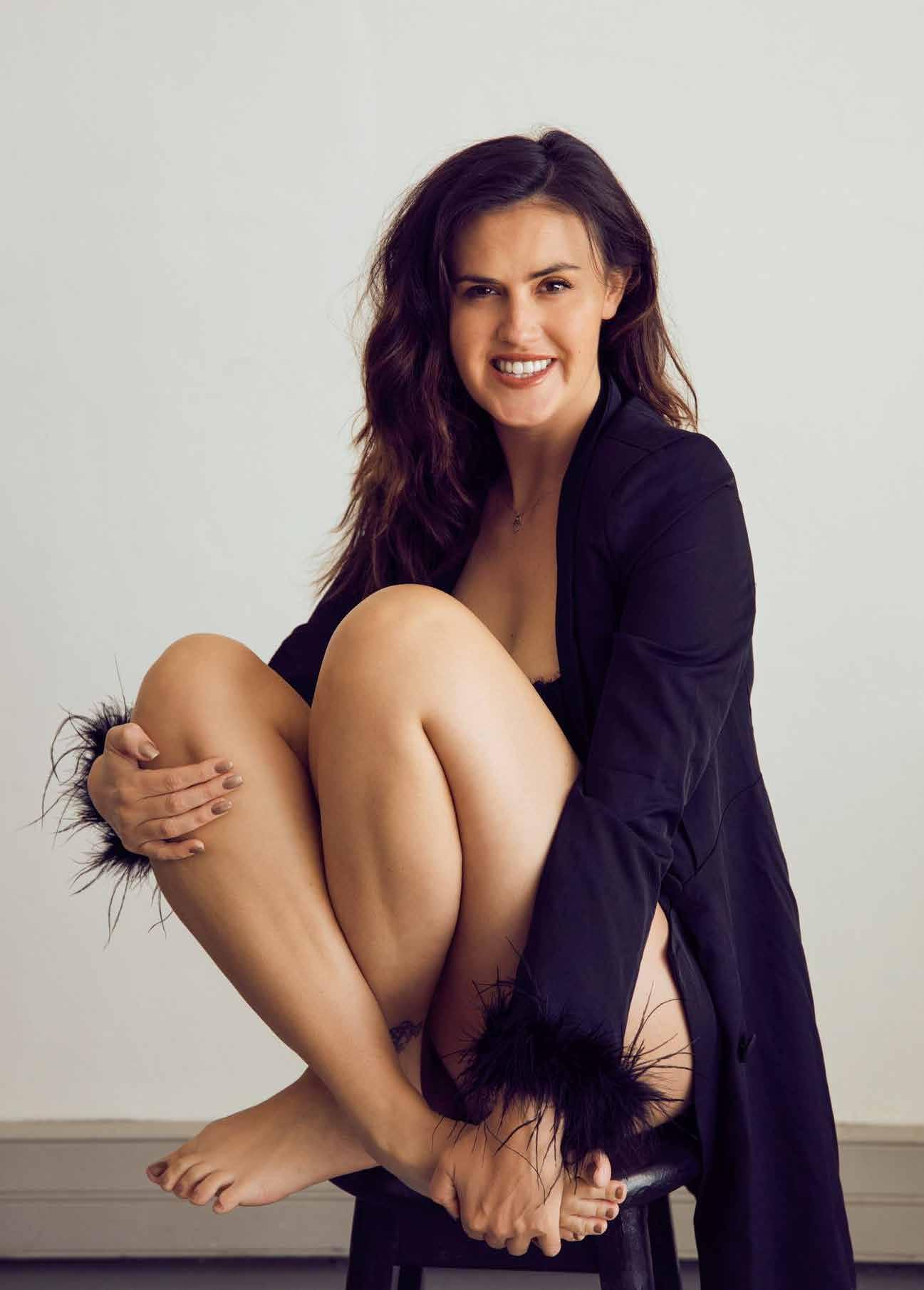
Tzarina Mace-Ralph is a talented yacht chef who appears in season 2 and the current season 3 of reality TV show Below Deck.
Overnight she became a public figure with a large, predominantly U.S. fan base. While the yachting industry may have its own ideas of the show, Tzarina decided intuitively to use her reach to support deep causes. She was quoted in Rolling Stone magazine on how she addressed a sexual assault case. She has been featured in medical trade magazines on the impact of truly healthy food. In her regular Islander column, she shares her thoughts and observations on the yachting industry. Specifically, matters that affect crew. From Below Deck to under the surface.
Written by Tzarina Mace-Ralph
As many of you know, I dip in and out of yachting. I still work with incredible private clients, relationships so close I can’t share them online. But there are also big gaps when I’m not on board. And that’s when I’ve been forced to face the transition: stepping from sea life to land life, from adrenaline to stillness..
At the age many in yachting consider “young”, I’ve already felt “too old” to stay forever. The pull to begin family life and ground myself is real. But leaving isn’t just about logistics; it’s emotional. It means letting go of the golden handcuffs, the comfort of high earnings and constant adventure, and stepping into the unknown..
The pull of yachting
For all its challenges, yachting is addictive.
• Travel: waking up in a new port, discovering unfamiliar streets, laughing with your crew in a country you’d never have reached otherwise.
• Validation: in yachting, your work is visible. Guests notice, feedback is immediate, and you feel part of something bigger.
• Community: crew life bonds people in a way few industries do. Those relationships are deep and often lifelong.
Leaving means you lose more than a job, you lose an entire lifestyle.
The hard transition
1. Emotional dissonance
One day you’re thrilled with your freedom; the next, you long for the pressure and unpredictability of sea life.
2. Financial reality
No more daily tips or seasonal stashes. Life ashore comes with rent, utilities and taxes. Without savings, it can be a shock.
3. Identity crisis
Who are you without the uniform? The title? The passport full of stamps? That’s a hard question to answer.
4. Skill mismatch
Chefs and stews can often adapt, but deckhands and engineers may struggle to translate their roles into landbased work.
5. Slower pace
Land life feels stable, sometimes too stable. After years of high stakes and fast rhythms, stillness can feel like boredom.
My path forward
Being a chef gave me one advantage: my skills are universal. I leaned into food and wellness, retraining as a gut health expert. I invested my yacht savings in qualifications, courses, and building a career I could own on land.
But it hasn’t been a clean break. Some days I miss the thrill of dropping anchor somewhere new or cooking under a full moon at sea. I’ve considered stepping back into restaurants, even knowing the stress that comes with them. The truth is, leaving yachting isn’t black and white. Many of us weave back and forth until we find balance.
Practical advice for crew considering the leap
1. Save seriously, aim for at least six months of living expenses before you leave.
2. Audit your skills, service, logistics, events, safety, cooking, and translate them into land jobs. “Stewardess” becomes “luxury service specialist.”
3. Experiment early, freelance, consult or test side hustles while still in yachting.
4. Use your network, guests, clients and agencies can open doors in hospitality, wellness, estate management or luxury travel.
5. Be open-minded, former crew often thrive in private households, boutique hotels, recruitment, training or even starting their own businesses.
6. Invest in yourself, certifications, courses or training in what truly excites you.
7. Be patient, some days the transition feels like failure. It isn’t. It’s growth.
Final word
I miss the rush of discovery, the family-like crew bonds and the sense of worth the industry gave me. But life on land offers something too: roots, stability and the chance to build a legacy beyond the deck.
Yachting gave me wings, but at some point, we all need roots. If you’re preparing to step off, remember: your worth isn’t tied to saltwater. It’s tied to the skills, resilience and drive that got you through the toughest days at sea.
So save, plan, invest and step ashore with confidence. You’re more prepared than you think. ◆ Instagram: @ cheftzarina
Interview by Barry D'Arcy from Ocean Earth Chefs.
Photos by Evello Mayor
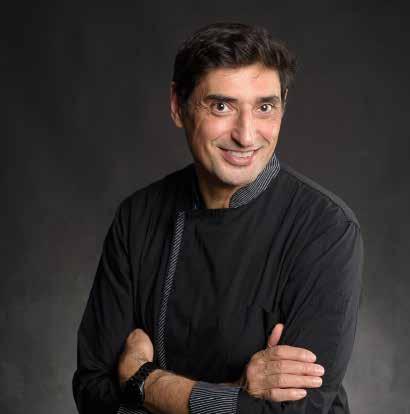
Chef Evello Mayor is a Spanish chef with a solid, ground-up understanding of the industry, from running his own restaurant to now working in the demanding yacht-chef industry.
Where do you come from, and what is your age?
I am originally from Burgos, in the rural heart of northern Spain, and I am currently 52 years old. Growing up in a region with such a deep connection to the land and its raw produce definitely laid the foundation for how I respect ingredients today..
What made you want to become a chef?
It was a natural evolution. I’ve always seen cooking and art as interlaced; they both start with a raw material and require a vision to transform it into something that moves people. Since I first stepped into a kitchen, my motivation has always been to create unique, sensory experiences for guests
Where have you worked as a chef?
My career took off in London, where I studied art and simultaneously cut my teeth in professional kitchens. I’m talking about the end of the nineties and the beginning of this century, ages ago! I moved to Valencia, where I opened and ran my own restaurant for nearly a decade. I also helped open a couple of other places from scratch (that was a lot of fun!). Since 2019, I’ve transitioned all those experiences into the superyacht industry.
How would you describe your style of cooking?
I call it “Ingredient-First”. My philosophy is that the quality of the produce dictates the dish. Combine the traditional soul of Spanish cooking with the global influences I picked up in London, all presented with an artist’s eye for detail. What is the best thing about being a yacht chef?
What do you like to cook?
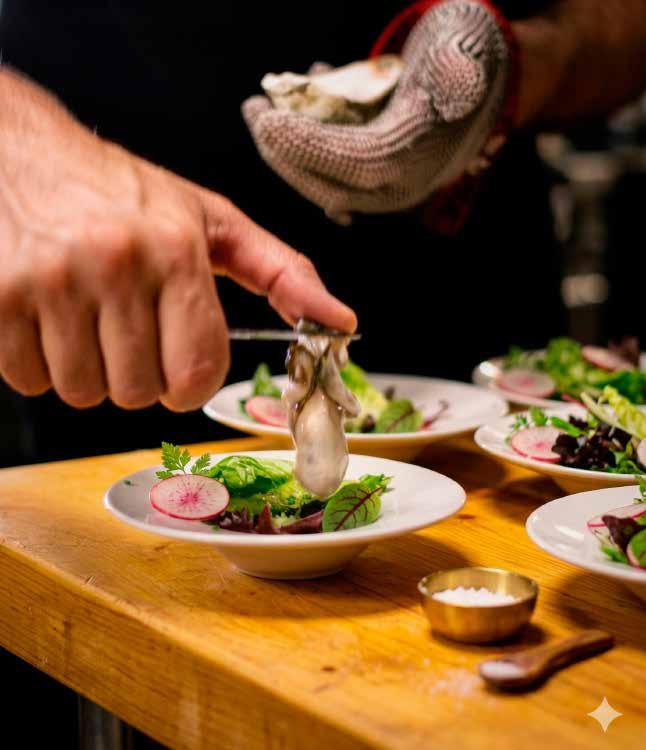
I love working with fresh seafood and vibrant Mediterranean vegetables, but I always enjoy bringing in world cuisines. My time in London opened my palate to everything from Asian spices to Middle Eastern techniques, or South American vibrancy.
Where do you get your ideas and inspiration from for cooking?
My inspiration is a mosaic of travel and professional discovery. I draw heavily from the diverse food cultures I embraced in London, and the culinary innovation found in world-class restaurants I visit globally. Whether it’s a specific spice blend or a technical plating style,
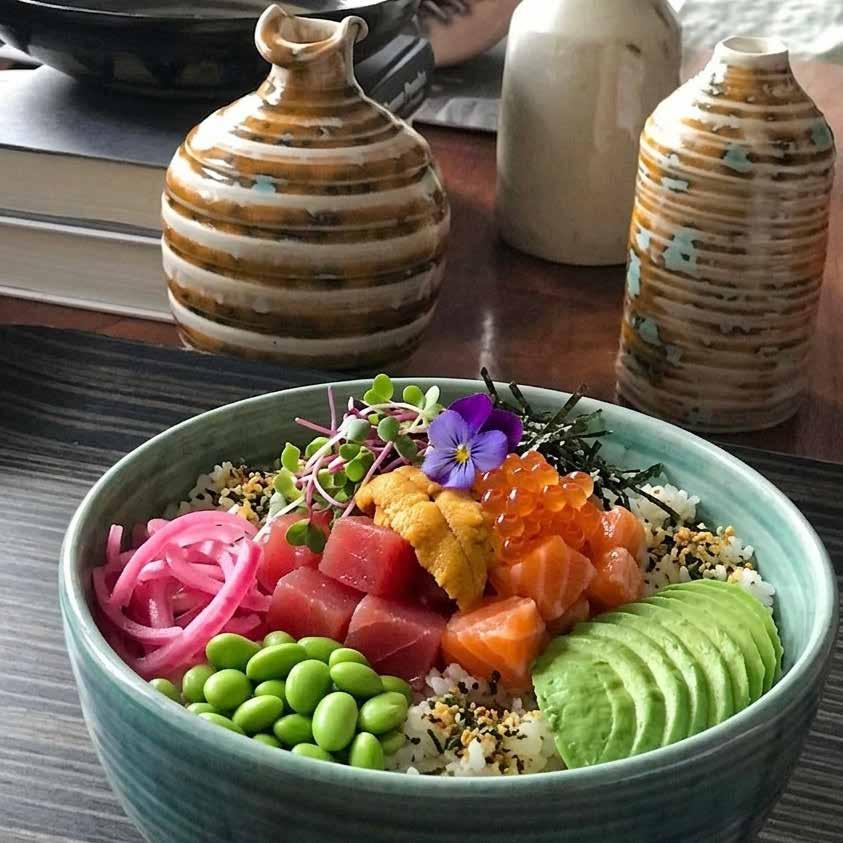
I’m constantly absorbing new ideas to evolve my palate. This process is deeply connected to my background as a ceramic artist. I love to design and hand-craft the very plates the food is served on, so a dish can pair with the texture of the clay or the specific glaze of a bowl.
What is the most challenging thing about being a yacht chef?
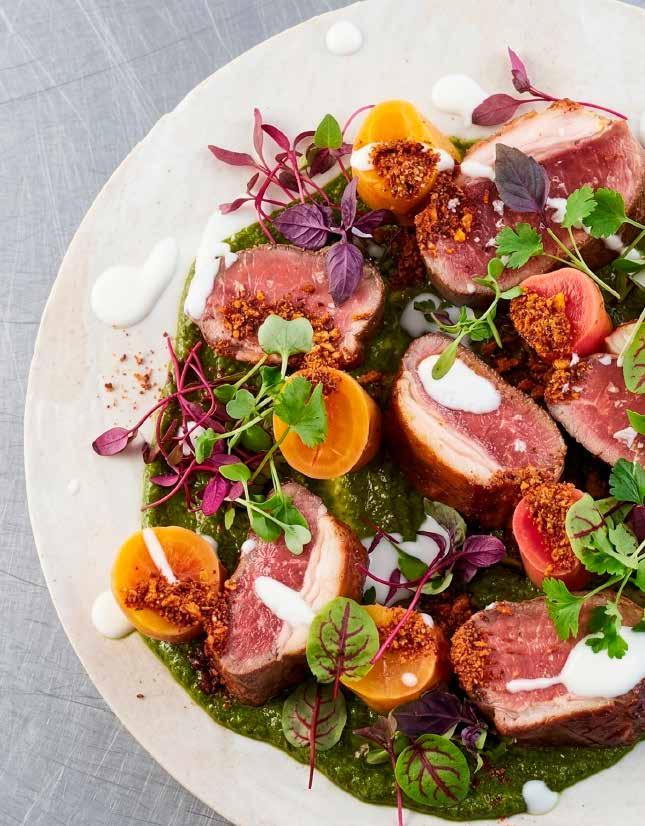
Space, logistics and time. In a restaurant, you have a fixed supply chain and a specialised team. On a yacht, you are the head chef, the sous chef and the provisioner. You have to be a master of organisation to deliver Michelin-level food from a moving galley.
What is the best thing about being a yacht chef?
The intimacy of the service. You get to know the guests’ preferences so deeply that you can anticipate what they want before they even ask. Plus, the “office view” is hard to beat!
Chefs that inspire you and why?
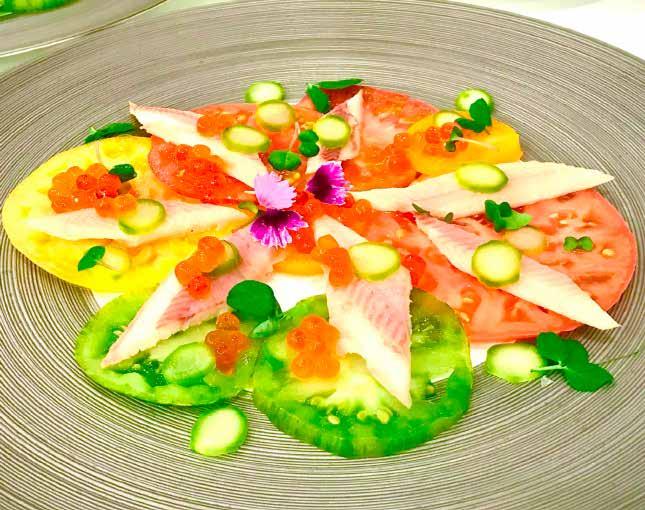
I’ve always admired chefs who respect the environment and the heritage of their ingredients, and at the same time are able to change the game, people like Angel Leon for his heart, or the masters of Mediterranean simplicity who let the olive oil and the salt do the talking.
What is the best piece of advice given to you as a chef?
“Listen to the product.” If the fish is perfect, don’t overcomplicate it. Your job is to highlight its excellence, not hide it.
What keeps you going on the long days in the galley?
The creative drive. Even on hour 14, the thrill of plating a dish that looks like a piece of art and seeing the guest’s reaction keeps the adrenaline high.
Has the way you cook changed over the years?
Definitely. I’ve become more refined and perhaps more patient. Having owned my own restaurant gives me a “macro” view of the kitchen, I understand the business, the costs and the flow in ways that make me a much more efficient chef on board.
What are your favourite places to eat?
I love the hidden gems. A small tavern in Thessaloniki (my second home) for authentic Greek flavours, or a traditional grill house in Burgos, where the lamb is cooked to perfection in a wood-fired oven.
At 52, I feel I am at my peak in terms of balancing skill with maturity. I see myself dedicated to the yachting industry for the next two or three years, after which I plan to focus on my project in Burgos, combining ceramics and gastronomy, while remaining available for select, temporary freelance yacht assignments.◆ www.oceanearthchefs.com
Written by Sara Grace Butler of MSOS & photos via Pexels
In the yacht medical training courses I teach in the classroom and onboard, there is one thing that appears in almost every session: anecdotal evidence.
In fact, some of the most passionately defended medical advice I hear on yachts comes not from doctors, nurses or research papers, but from friends, family members, captains, other crew, and occasionally somebody's grandmother.
The problem is that anecdotal evidence can sound extremely convincing, whilst being completely wrong and even potentially harmful.
What is anecdotal evidence?
An anecdote is simply a personal story or experience.
For example: "We always hang choking children upside down and it works or "my mate peed on a jellyfish sting and the pain disappeared"
These stories are memorable because they involve real people and real experiences, are often told with confidence and repeated many times therefore spreading far and wide, and sometimes entering folklore as the most recommended treatment.
The issue is that a single experience does not prove that something is safe, effective or the reason the person recovered. Just because somebody recovered one time after a particular treatment, does not automatically mean they recovered because of it. Medicine is full of conditions that improve naturally over time. If someone applies a completely ineffective treatment and then gets better anyway, that may prompt them to genuinely believe the treatment worked.
This is how medical myths survive for generations.
So why do we love anecdotes?
Humans are storytellers: Long before scientific journals existed, knowledge was passed from person to person through stories and making observations.
If a sailor was stung by a jellyfish in 1850 and another sailor urinated on the sting and the pain improved an hour later, a story was born. That story may then be passed through generations of seafarers until it becomes accepted as fact. The problem is that nobody stops to ask: Would the pain have improved anyway? Was it actually the urine that helped? Could something else have worked better?
Asking these questions forms the basis of evidence-based medicine.
The butter on a burn myth
This is one of my favourites because almost everyone has heard it.
For decades, people applied butter, oils, creams and various household substances to burns. The theory was simple: butter felt cool and soothing, so people assumed it was helping.
In reality, butter acts as an insulator. It traps heat inside the skin and can potentially worsen tissue damage. It also introduces contamination to an already damaged wound.
Modern burn management is remarkably simple: cool the burn under cool running water for twenty minutes as soon as possible after injury. Remove jewellery and restrictive clothing, cover the burn with a clean dressing and seek medical advice when appropriate: No butter required.
Yet even today, I still hear crew members confidently suggesting it.

This myth has achieved almost legendary status. Part of its popularity came from a scene in Friends the TV show where Joey peed on Monica at the beach.
Even today, many crew still believe urine neutralises jellyfish venom. Unfortunately, scientific studies have shown that urine may actually trigger additional stinging in some jellyfish species by causing unfired stinging cells to release more venom: Not ideal.
Current recommendations vary depending on the species involved, but flushing with seawater, heat, and vinegar are primary treatments.
The old "just pee on it" advice has largely been abandoned by modern marine medicine, but despite this it remains one of the most frequently repeated pieces of first aid folklore in yachting, perhaps because it makes for a better story than evidence-based treatment. But, as I always say, if you pee on someone after a sting, you are just enjoying yourself, but if you are the victim, not so much.
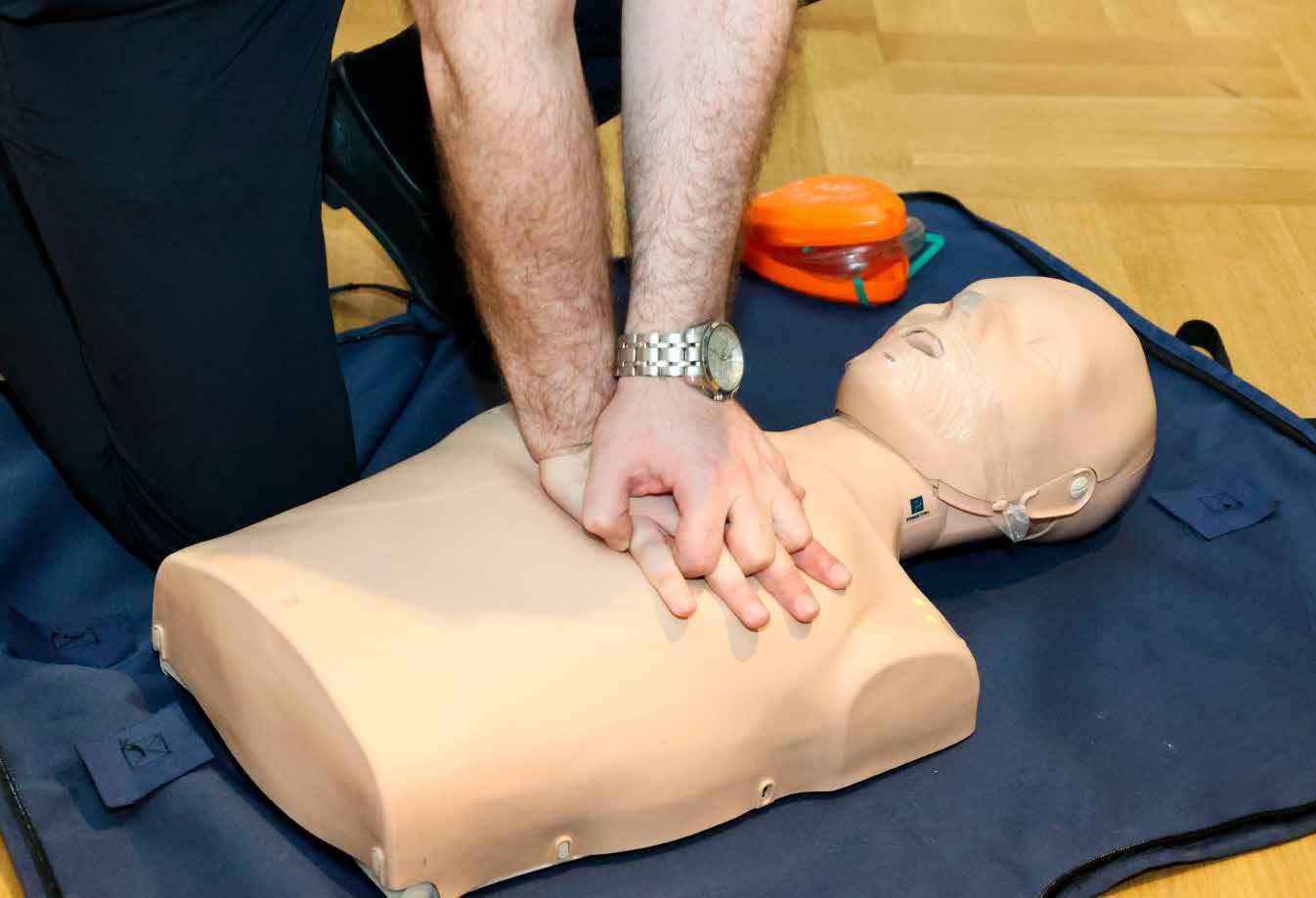
Hanging a choking child upside down
This is another one that regularly appears during training. Many people remember being told that if a child is choking, you should grab them by the ankles and hang them upside down.
The problem is that it doesn't follow what we know about airway obstruction management. Suspending a child upside down can delay effective treatment and risks injury.
Modern choking management uses carefully taught sequences of back blows and abdominal thrusts (previously the Heimlich manoeuvre) or chest thrusts, depending on age and circumstances.
These techniques have been studied, evaluated and refined over many years to ensure you don't end up in a CPR protocol from a choking incident. These techniques may not look as dramatic as hanging someone upside down, but they work far better.
"We've always done it this way"
Perhaps the most dangerous phrase in medicine. History is filled with medical practices that were widely accepted before evidence proved they were ineffective or harmful.
Bloodletting was once a standard treatment for disease, smoking was recommended by doctors, patients were routinely kept on prolonged bed rest after heart attacks. Many of these accepted practices disappeared once proper research showed they caused more harm than good. Medicine advances because it questions tradition.
So what is evidence-based practice?
Evidence-based practice combines three things:
• The best available scientific evidence
• Clinical expertise
• The needs and circumstances of the patient
It doesn't mean blindly following research papers, it means using the best information available rather than relying solely on stories, assumptions or "we've always done it this way".
In my work training yacht crew with Medical Support Offshore (MSOS), this principle is central to everything we teach. As I am sure you are well aware, we have limited medical equipment, no doctor onboard and delayed access to hospital. This makes it even more important that the actions we take, especially in the first few minutes of a medical incident, are based on evidence rather than myth, because the wrong intervention can waste precious time. In some situations, it can make the victim worse
The challenge for yacht crew Yacht crew are particularly vulnerable to anecdotal medicine. People join the industry from different countries, backgrounds and training systems. They bring with them advice learned from parents, previous captains, social media, YouTube videos and old first aid courses. Some of that advice is excellent, but some of it is decades out of date.
One of the most rewarding moments during my training is seeing a crew member suddenly realise that something they have believed for years simply isn't supported by evidence, and then teaching them what actually works, ensuring they feel confident in rescuing someone sick or injured in the best way possible with easy-to-follow protocols.
So the next time someone says: "Trust me, this really worked for my mate."
Pause for a moment.
Ask where the information came from, ask whether it has been tested, ask whether there is evidence behind it.
Anecdotes can be useful starting points, they can generate ideas, observations and questions, but they should never be the final answer, because when it comes to medical emergencies at sea: good stories are interesting, good evidence saves lives.
If you would like to ensure your crew are up to date with the latest evidence-based protocols, which is particularly relevant after the 2025 European and UK Resuscitation Council Guidelines update, get in touch for a pre-season training day with an MSOS trainer anywhere worldwide. ◆
Sara Grace Butler
DTN RN Bsc, Expert Yacht Medical Trainer, MSOS sally@msos.org.uk www.msos.org.uk


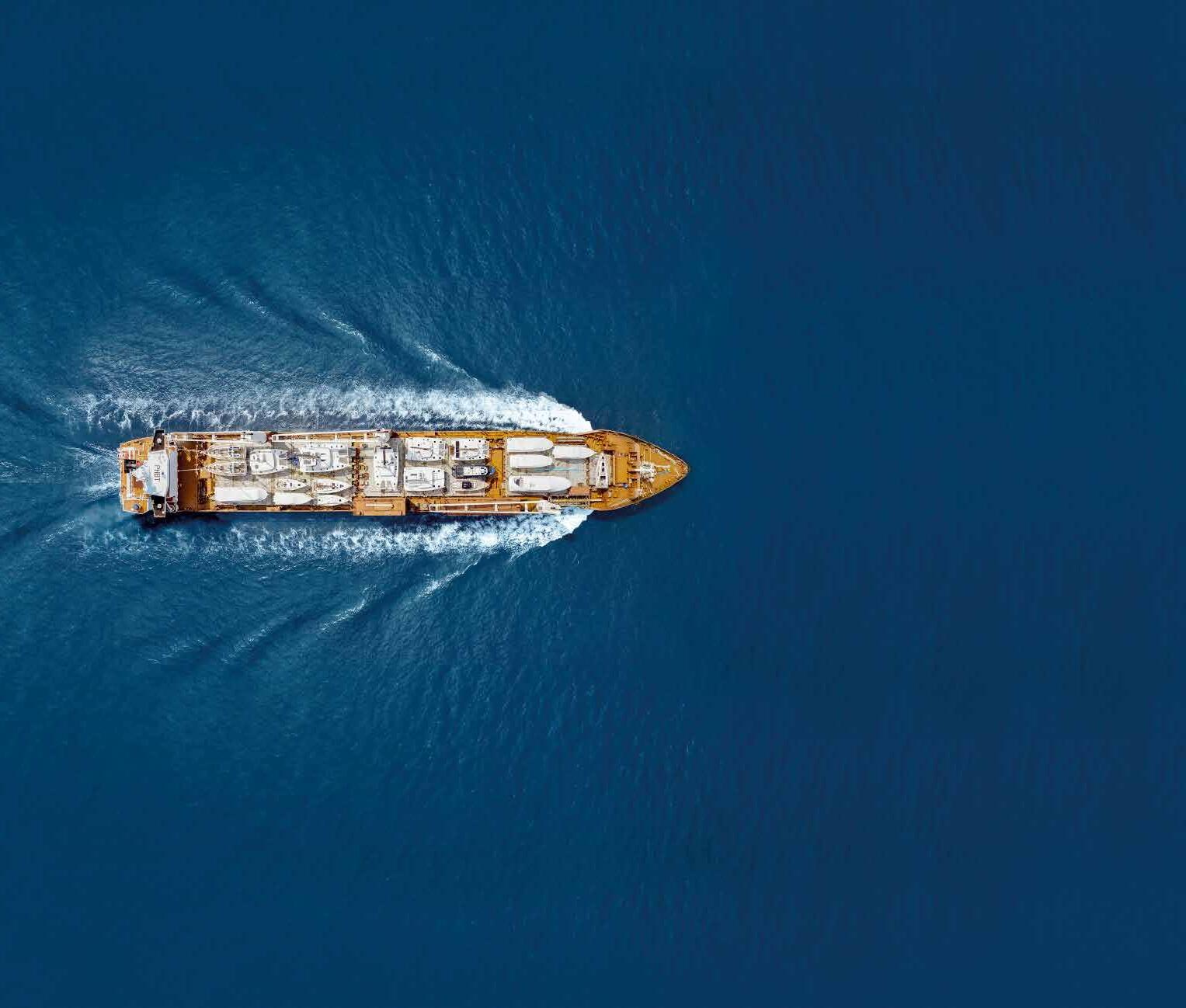
With our fixed sailing schedules and dedicated float-on/float-off yacht transport vessels, you can rest assured that your yacht is on time where it needs to be, which gives you the time to relax, enjoy, or reunite. We offer dedicated sailings to the most sought-after destinations and events.


SEPT | OCT | NOV Palma Port Everglades
OCTOBER Palma St. Thomas
NOVEMBER Palma Le Marin
SEPT | OCT Port Everglades Palma
JANUARY Papeete Auckland Brisbane Palma
JANUARY Ensenada Palma




time using


Explore all our sailings


By



Written & photos by Chef Raffie
Not a stew, not crew. A full-time tropical content creator accidentally trapped inside a uniform.
Allow me to introduce: Twerking Tara, Chief Influencer of M/Y Delusion.
She arrived in St. Maarten looking less like freelance crew and more like someone out of New York Fashion Week. Two giant duffel bags. One ring light. Three selfie sticks, one of which was waterproof. Eight pairs of shoes, including three high heels, because apparently somewhere between Antigua and St. Barths she planned to accept a Grammy.
The captain asked: “Did you bring your black skort and polo?” She replied: “No, but I brought my silver glitter bikini for sunset content.” That should have been the first warning.
By the time she boarded, the passerelle looked like a Louis Vuitton yard sale exploded during hurricane season. Half the crew thought provisioning had arrived early. Inside one bag: 20 bikinis. Inside the second bag: a makeup collection so extensive Sephora could have opened a satellite branch onboard.
The mate/stew stared into the abyss of bronzers, eyelashes, contour kits, lip glosses, tanning oils and mysterious glitter sprays like an archaeologist discovering a lost civilisation in the Peruvian altiplano. Meanwhile, not a single stain remover pen. Not one polishing cloth. Not even a Sharpie. Professional priorities?
Now, to be fair, Tara did work hard. Very hard. Every morning she trained intensely for what she described as “an upcoming twerking championship in LA.” Apparently some “music producers from Atlanta” had discwovered her Instagram and promised to sponsor her career. Naturally, they wanted “nothing in return.” Of course. Because throughout history, random men have always flown girls from Minnesota to Miami strictly for their artistic contribution to dance culture.
The yacht, unfortunately, became her training facility. As soon as guests left for water sports, Tara disappeared. Five minutes later: new bikini. New pose. New location. Twerking on the bow. Twerking on the swim platform. Twerking beside the jacuzzi. Twerking next to the grill while burgers burned in the background like sacrificial offerings to social media.
At one point she was filming slow-motion hair flips on the sundeck while twelve charter guests sat inside wondering if dinner was theoretical. The captain radioed: “Tara, the table isn’t set.” Static. Then, faintly over the radio: “Hold on captain… content creation…” The guests eventually began setting their own napkins out of pure survival instinct.
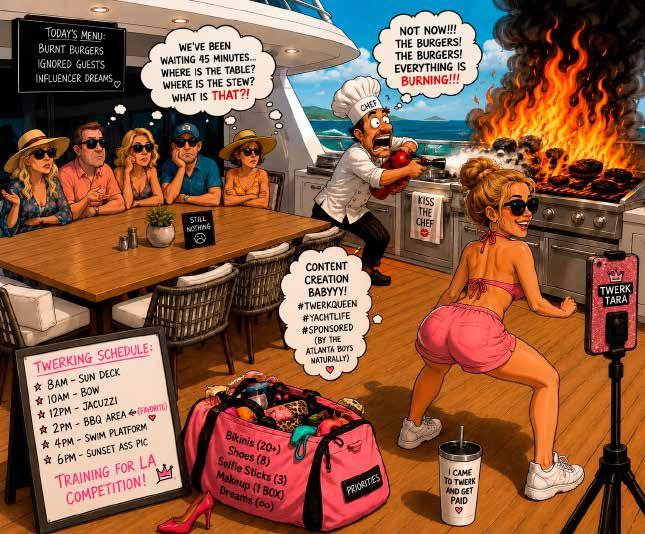
One night the owner asked for espresso after dinner. Tara returned 35 minutes later holding 1 cappuccino, 2 selfies and a fully edited TikTok captioned: “Living my best yacht life #Blessed #SoftLife #Manifestation.” Meanwhile the chef was in the galley fighting for his life like a Navy SEAL trapped inside a floating IKEA kitchen.
She was never able to locate cleaning products, the vacuum cleaner or stain removers, but she always had nearby three waterproof phone tripods.
The captain finally snapped after discovering Tara filming a sunset dance video during docking operations. There she was, balanced on the bow in a fluorescent thong bikini, wind blowing dramatically, while a 130-foot yacht attempted to med-moor between ten million-dollar vessels. The captain screamed: “TARA, GET INSIDE NOW!” She replied: “Can you redo the docking? I wasn’t recording.”
Legend says that somewhere near St. Barts, the captain briefly considered abandoning maritime law entirely and trading her to another yacht for two deckhands and a case of Red Bull. But here’s the beautiful part. Twerking Tara never gave up on her dream. No matter how many tables she forgot to set, no matter how many guests waited three hours for cocktails, no matter how many times the chief stew discovered Tara using linen napkins as bikini padding, she believed.
And honestly? There is something inspirational about a woman who managed to spend an entire charter season avoiding housekeeping, ignoring service, rehearsing dance routines beside the jacuzzi and still getting paid. That, my friend, is true luxury hospitality in 2026. The guests wanted silver service. Tara wanted followers. And in the end, the only thing properly set on that yacht was her phone camera on a tripod facing the sunset, while the rest of the guests silently questioned their life choices.◆

Chef
Luis Rafael “Raffie” Hurtado is a globetrotting yacht chef–turned–chef-writer known for his sharp, satirical and flavorful culinary storytelling.
Instagram: @chefraffie







Written by Virtual Pursers

The yachts that consistently deliver exceptional experiences, to owners, to charter guests, to crew, tend to share a common characteristic that goes beyond the quality of their interiors or the talent of their crew. They are operationally well-founded. Their administrative systems support their onboard teams rather than competing with them for attention. Their governance structures create confidence rather than uncertainty. Their operational rhythm is sustainable rather than reactive.
That foundation does not happen by chance. It is built deliberately, maintained consistently, and treated as a genuine operational priority rather than a background task.
The most professionally administered yachts demonstrate something that is increasingly visible to owners, brokers and management companies: operational maturity. This means clear workflows that continue functioning through crew rotations. Financial reporting that arrives consistently and makes sense to its recipients. Administrative processes that support decision-making rather than slowing it down.
Vessels with this level of operational maturity give their captains something genuinely valuable, the ability to lead rather than administer. When the systems are working well, the captain’s attention stays where it belongs: on seamanship, on guest experience, on crew development and on the strategic operation of the vessel. Administration becomes a support function rather than a competing demand.
The value of operational visibility
One of the clearest markers of a well-run yacht is centralised operational visibility. When information is structured and accessible, for example financial records maintained in real time, crew documentation current and complete, vendor relationships properly logged, the captain and management team can make good decisions quickly and answer any ownership query from documented evidence rather than memory.
This visibility also creates confidence. Owners who receive consistent, clear reporting develop trust in the management team over time. Brokers who work with well-administered vessels develop a preference for recommending them. The reputational return on strong operational governance is real and compounding.
How strong systems support great crew
There is a meaningful connection between operational structure and crew wellbeing. When workflows are clearly defined and administrative responsibilities are properly allocated, crew spend their energy on the skilled work they were hired to do rather than absorbing tasks that fall outside their core roles. The Chief Stewardess can be focused entirely on guest experience. The First Officer can focus on clear maintenance reporting protocols rather than administrative improvisation.
Well-run operational systems also make yachts easier to join. When a new crew member arrives to a vessel with documented processes, clear task ownership and a complete operational record, they integrate faster and contribute sooner. The vessel’s operational quality does not reset with every rotation, it carries forward.
The role of shoreside support
One of the most significant operational developments in modern yacht management is the growing availability and sophistication of shoreside purser support. For vessels that cannot justify a full-time onboard purser, professional shoreside administration provides access to specialist expertise across financial management, charter administration, crew logistics and operational governance, without adding to crew headcount.

The most effective vessels use shoreside support not as a substitute for onboard capability but as an extension of it: a consistent administrative layer that maintains financial records, manages reporting and preserves institutional knowledge through crew rotations, busy charter seasons and ownership transitions alike.
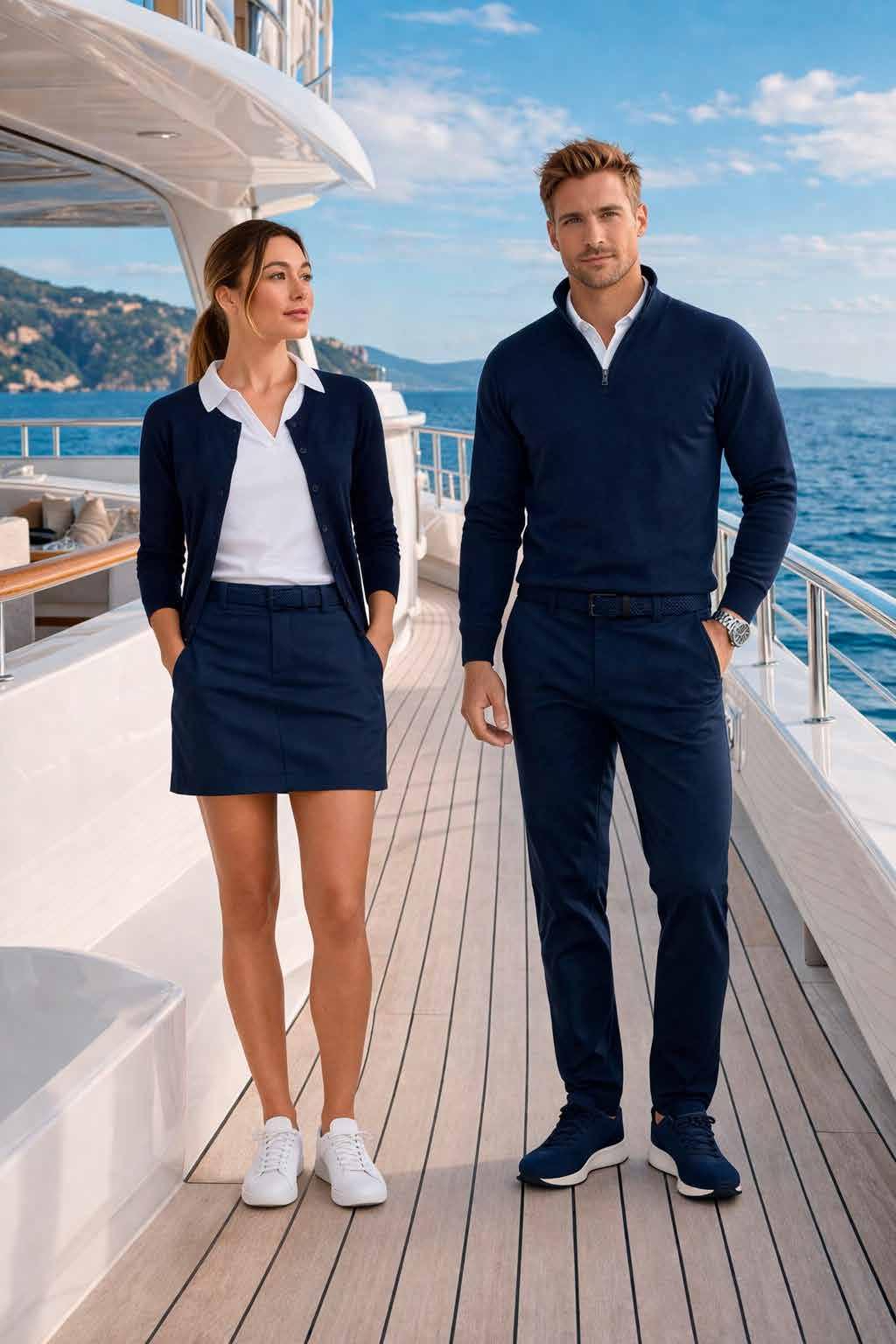
Building something that lasts
The investment in operational systems, whether it be in documentation, in defined workflows or in professional administrative support, creates operational assets that appreciate over time. A vessel with five years of wellmaintained financial records, clearly documented operational processes and consistent reporting history is genuinely easier to manage, easier to crew and easier to own than one where that work has not been done.
The yachts building that foundation today are making one of the most leveraged operational investments available to them. The returns compound quietly and consistently, in owner confidence, crew retention, charter reputation and in the professional standing of the vessel across the industry. ◆ https://virtualpursers.com
Virtual Pursers co-founders, Bec McKeever and Dominique Smit provide yacht administrative assistance to all vessels, no matter the size of the yacht or the extent of the need.

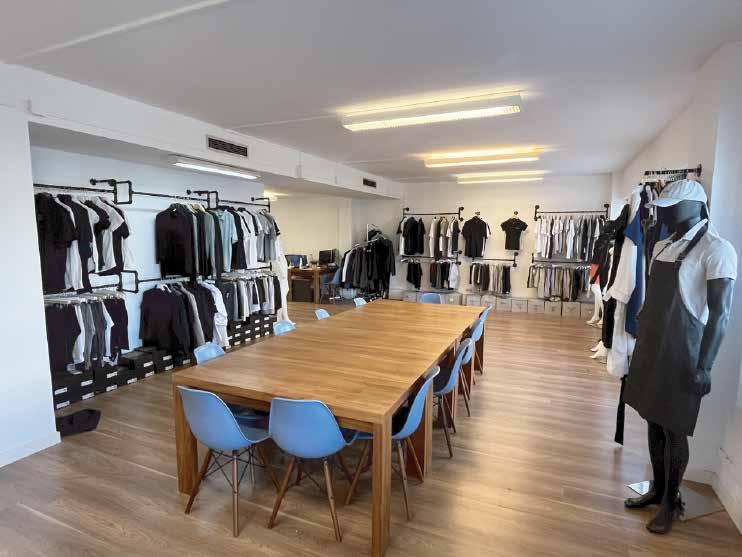





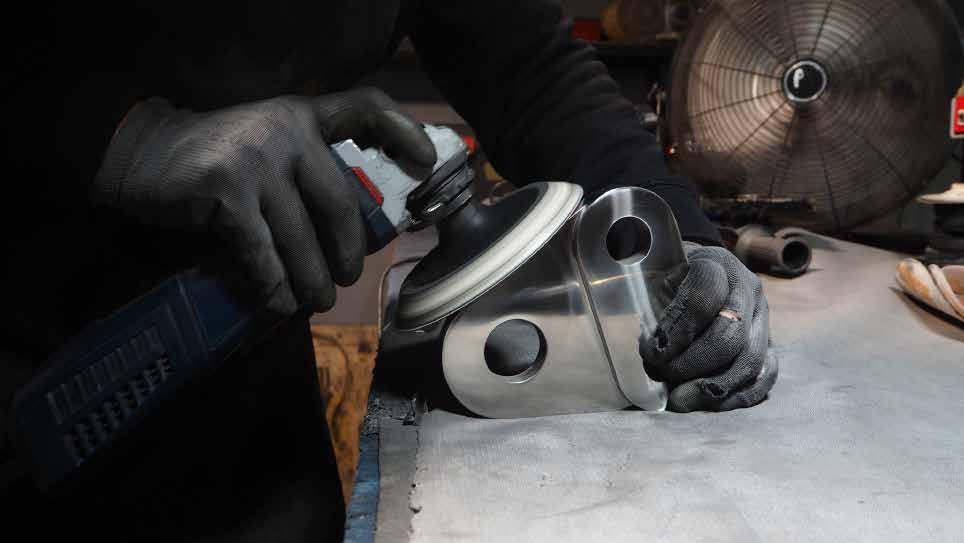

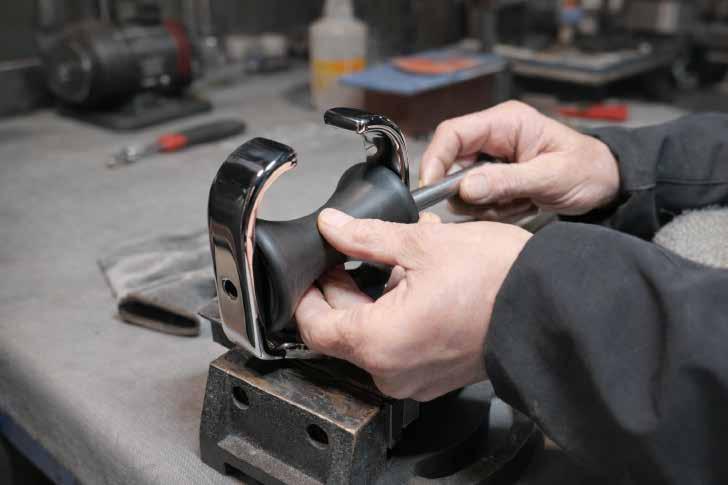

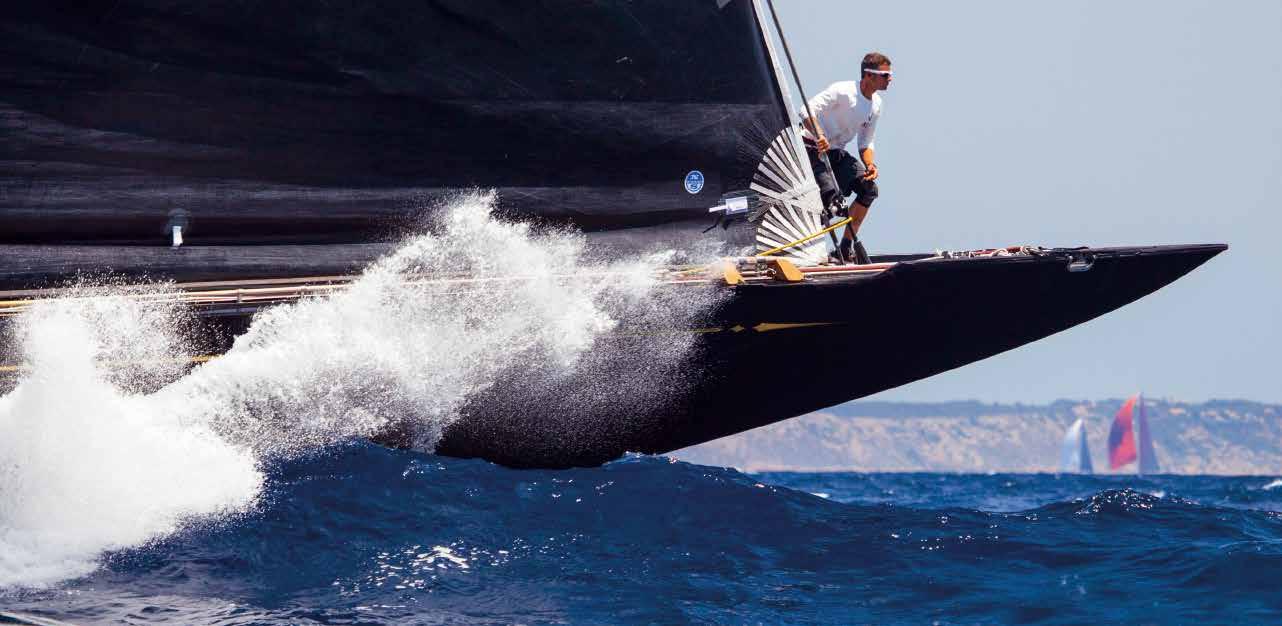
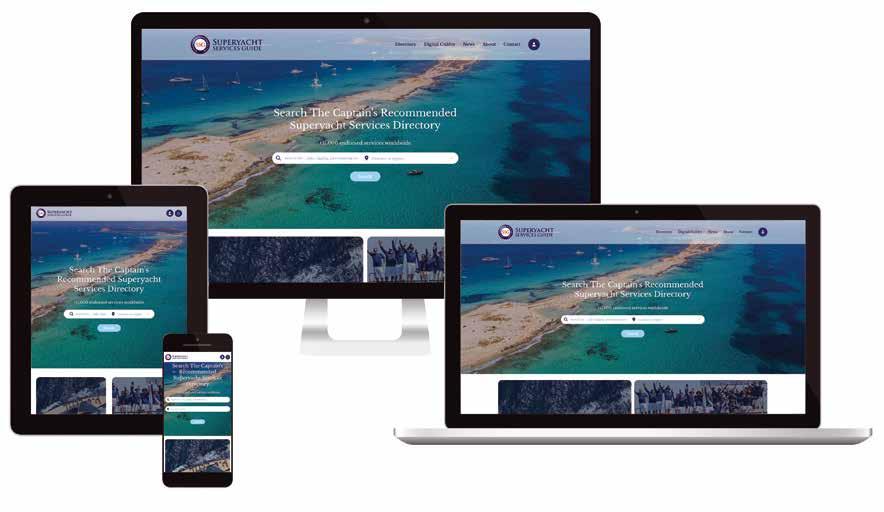

Written by Elettra Baruchello & photos by Familie Benoni
In the wake of Captain Riccardo Benoni’s passing, family, friends and members of the global sailing community have come together through a GoFundMe campaign to support his wife, Elettra, and their three children. In this deeply personal tribute, Elettra shares the story of the man behind the captain, a devoted husband, father, mentor and sailor whose impact continues to be felt across oceans and generations.
Riccardo was water.
Clear, transparent and crystal pure. Sometimes calm and still, other times impossible to contain, wild with emotions, instincts, ideas and dreams. Like the sea he chose as his home, he could be gentle one moment and overwhelming the next. Water adapts, moves, carries life, and leaves traces everywhere it goes.
So did Riccardo.
Riccardo was born in Lazise, on Lake Garda, and grew up with a large window overlooking the water. No one in his family sailed, yet somehow the water called to him from the very beginning.
Before sailing, there was rowing. And even there, the person he would become revealed himself immediately. It did not take long before he became an instructor. That was simply who Riccardo was: whatever he did, people naturally followed him. He guided, encouraged, taught and made others believe they could do more than they imagined.
He often told me the story of the day he and his cousin found an abandoned sailboat on a beach near home, a Star Class Olympic boat. They had almost no money and almost no experience, but they decided to rebuild her anyway.
They called her Staren a Vedar, a dialect expression from Lake Garda meaning:
“Let’s see what happens.”
“Let’s see if we can repair her.”
“Let’s see if we can sail her.”
“Let’s see if we can afford our first regatta.”
Without realising it, they were also saying:
“Let’s see if sailing becomes our life.”
And it did.
Riccardo later found seasonal work aboard one of the historic sailing ships on Lake Garda. That was where he understood that boats, crews and life at sea were not simply a passion, they were where he belonged.
Against expectations, he left engineering studies behind and followed the life he felt drawn to.
His journey eventually led him to New Zealand, the place he would always call his second home.
Crossing after crossing, storm after storm, he transformed himself from deckhand into the captain so many trusted without hesitation.
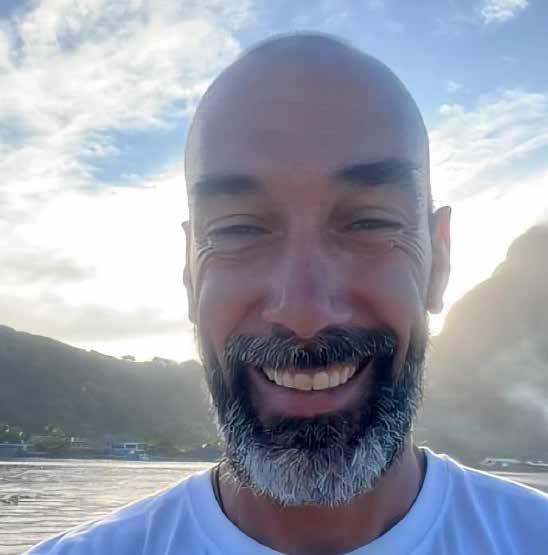
By the age of forty-three, he had completed five Atlantic crossings, two Pacific crossings, two Indian Ocean crossings and two full circumnavigations through the canals. Weather systems, routing, rigging, sail repair, electronics, ropework and mechanical engineering, he carried an extraordinary depth of knowledge.
But what made him truly exceptional was never only what he knew.
It was the way he shared it.
Riccardo believed in people before they believed in themselves. He trusted others with responsibilities usually reserved for highly experienced sailors because he saw potential everywhere.
He did not build crews. He built confidence, loyalty and family.
Since his passing, stories have reached us from every corner of the world. Voice messages, photographs, memories and moments I had never heard before.
Again and again, I found myself reading the same words:
“He believed in me.”
“He made me feel capable.”
“He changed my life.”
Only now am I beginning to understand how many lives he quietly touched.
For years, Riccardo believed that a life at sea could never coexist with lasting love.
Then we met.
From that moment on, his adventures became ours.
I stepped aboard Ammonite, and together we crossed oceans and built a life shaped by freedom, resilience and shared dreams.
Then came Luna.
Then Zeno.
Then Milo.
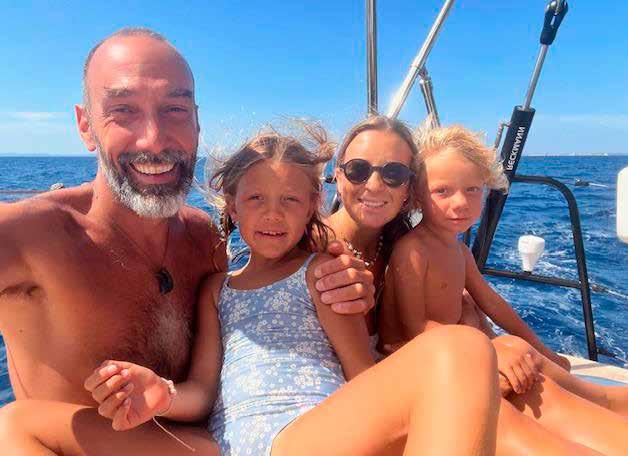
For us, the sea was never simply work.
It was home.
I can still see him laughing endlessly with our children on deck, inventing games between sunsets and waves, making the middle of the ocean somehow feel safer than land. No matter how exhausted he was or how much responsibility rested on his shoulders, he always gave our children the very best of himself.
Even when he was far away, he never truly felt distant.
A voice message.
A photo.
A quick call saying:
“I was thinking about you.”
That was enough to make us feel loved and protected.
On 12 March, our world shattered.
But after the shock came something extraordinary.
People from all over the world began reaching out. Friends, crew members, owners, and people whose lives had crossed paths with his. Through grief we discovered something beautiful:
Riccardo had left pieces of himself everywhere.
In kindness.
In courage.
In friendship.
In knowledge shared freely.
In every person he made feel seen.
This fundraiser was created to support me and our three children as we face a future we never imagined. But more than that, it exists to honour everything Riccardo represented: love, resilience, generosity, and the rare ability to make every person feel valued and welcome.
Everyone who met Riccardo carries something of him within them.
And I believe that is how a person continues sailing, even after the horizon takes them out of sight. ◆ gofund.me/e591cce24
Scan to support Elettra and the children via GoFundMe:

Written by Jens Oomes & photos by Jens Oomes
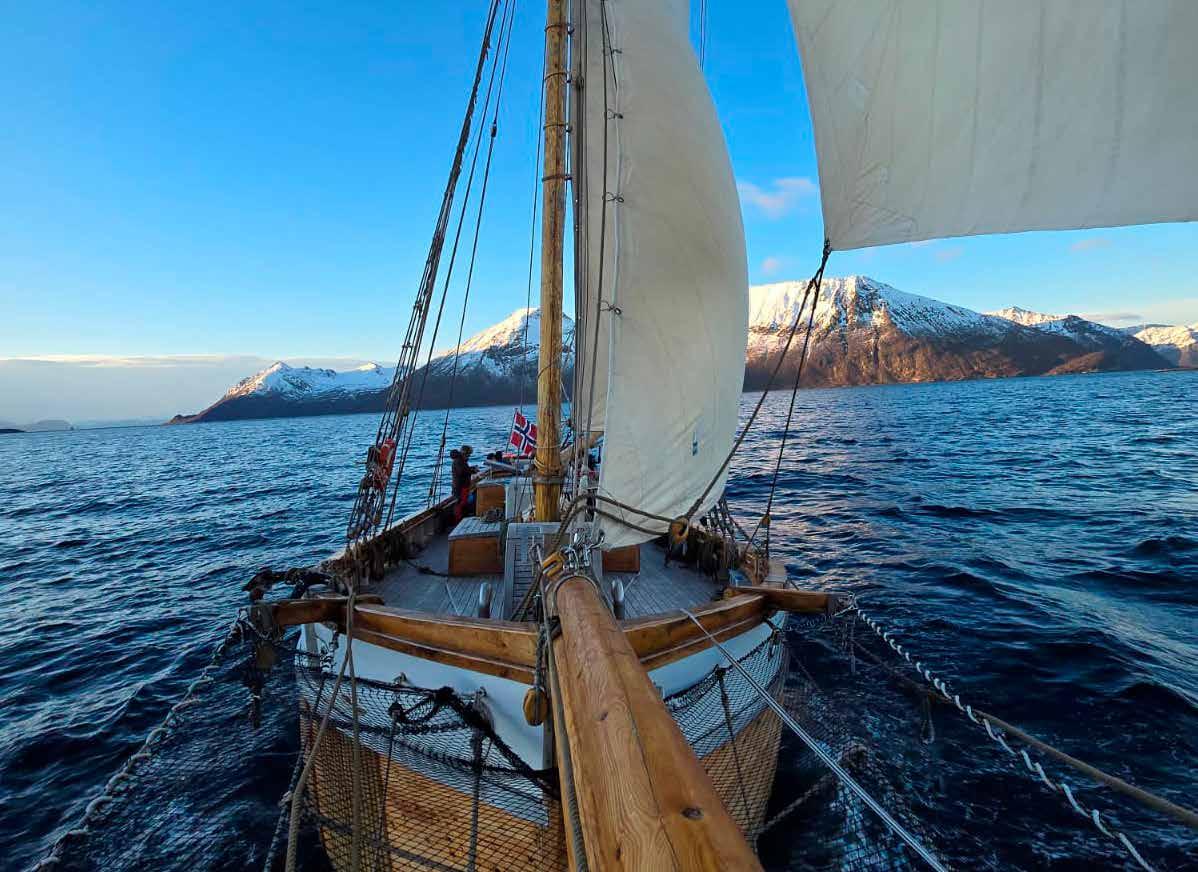
This summer I am joining an expedition through the Northwest Passage aboard Alma af Frøya, a replica of the Gjøa, the wooden, gaff-rigged vessel Roald Amundsen sailed during the first successful transit of the Northwest Passage between 1903 and 1906.
Loyal Islander readers may remember that in November last year I travelled to Norway to meet the crew, see the boat and get a small taste of what operating in those temperatures feels like. At the time it all still felt quite theoretical. Now, with my flight to Greenland booked for 17 July, it is becoming very real.
Since then I have been preparing in different ways. I’ve spent a lot of time reading about Amundsen and other polar expeditions, understanding the history gives context to the route we are about to sail. I have also spoken with a number of sailors who have completed the Northwest Passage in recent years. Like most cruising grounds, every season is different, but practical advice from people who have actually been there is worth a lot more than anything you can find online.
I’m also happy to announce that Henri-Lloyd has made me a brand ambassador and has equipped me with their
top technical gear, including offshore layers, mid-layers and merino base layers. I suspect that somewhere between Greenland and Arctic Canada I will be very grateful for every layer I have!
The plan is to start in Ilulissat on Greenland’s west coast and sail north before crossing Baffin Bay towards Pond Inlet in Nunavut, Canada. From there we continue west through the Northwest Passage and onwards through the Bering Sea to Nome, Alaska.
For historical reasons we can’t miss stopping over in Gjoa Haven, named after Amundsen’s original vessel. When Amundsen overwintered there, there was no settlement. Local Inuit were living in the area and became interested in the small Norwegian vessel and her crew. Today around 1,400 people live there and the town remains closely connected to the history of Arctic exploration.
History is never far away on this route. The Oslo-based Fram Museum has asked us to keep an eye out for possible remnants of the Fram, the famous ship used by Fridtjof Nansen and later by Amundsen during his South Pole expedition. Whether there is anything left to find is another question, but it certainly adds an interesting dimension to the voyage.
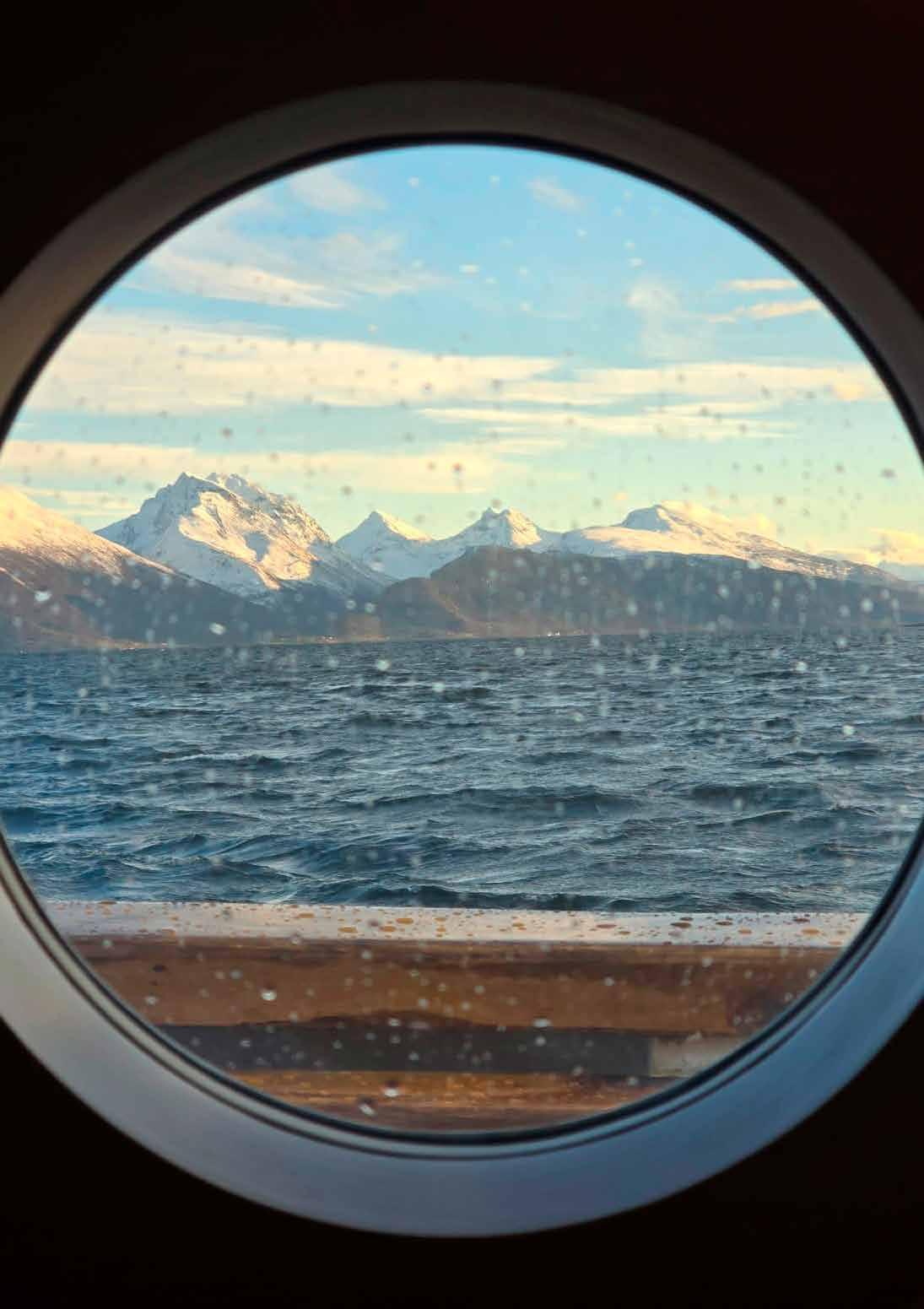
“There are very few places left where nature still gets such a decisive vote in your daily plans.”
We will also pass near the wreck site of HMS Erebus, one of the ships from Sir John Franklin’s failed expedition. Unlike many historic wrecks, the location of Erebus is known and, if conditions allow, we hope to do some underwater exploration there.
At the moment, the ice charts are looking encouraging. That’s good news for anyone attempting the passage, but obviously less positive when viewed in the context of climate change. The Arctic is changing rapidly. At the same time, the Northwest Passage remains perfectly capable of reminding sailors who’s in charge. In 2018, conditions were significantly colder than expected. Several yachts turned back and one became trapped in the ice, was crushed and eventually sank. The two Argentinian crew escaped over the ice. That’s exactly what makes this route so appealing. The challenge comes from the same things that make it beautiful: ice, fog, shifting winds, cold water, wildlife and isolation. There are very few places left where nature still gets such a decisive vote in your daily plans.
For me personally, this trip will take me further outside my comfort zone than anything I’ve done before. That may sound strange after close to 100,000 nautical miles at sea, but the reality is that my sailing experience has limited relevance once you start operating at these latitudes. Everything
changes. Weather routing changes. Risk assessment changes. Even simple decisions become different when the water temperature can kill you in minutes. The learning curve is a big attraction to me.
The crew dynamic will also be new for me. We will be nine people aboard a 52-foot vessel. During most delivery passages I rarely sail with more than five crew, so that will require some adjustment from everyone on board.
If all goes to plan, my part of the expedition will end in mid-September in Nome, Alaska. By then we will have completed the Northwest Passage and passed through the Bering Strait into the Pacific Ocean. Reaching the Pacific will be a significant milestone, not only because it marks the completion of one of the world’s most famous sea routes, but also because it closes a chapter that began for me many months ago in a Norwegian winter.
Another very challenging part will be being away from my family for more than two months. Having sailed with me from Mallorca to Fiji in 2025, they understand better than most why I want to do this. Even my youngest daughter, now ten years old, gets it.
People often ask me if I’m nervous. The answer is yes, a little. Not because I think something will necessarily go wrong, but because I have enough respect for the place to know that things can.
By the time you are reading this, we will almost certainly be somewhere along the Northwest Passage. Depending on ice, weather and satellite connectivity, we’ll be posting regular updates from the voyage. You can follow the expedition on Instagram via @invisiblecrew, while The Islander’s Instagram channels will also be sharing updates, photos and stories from the route as they come in.◆
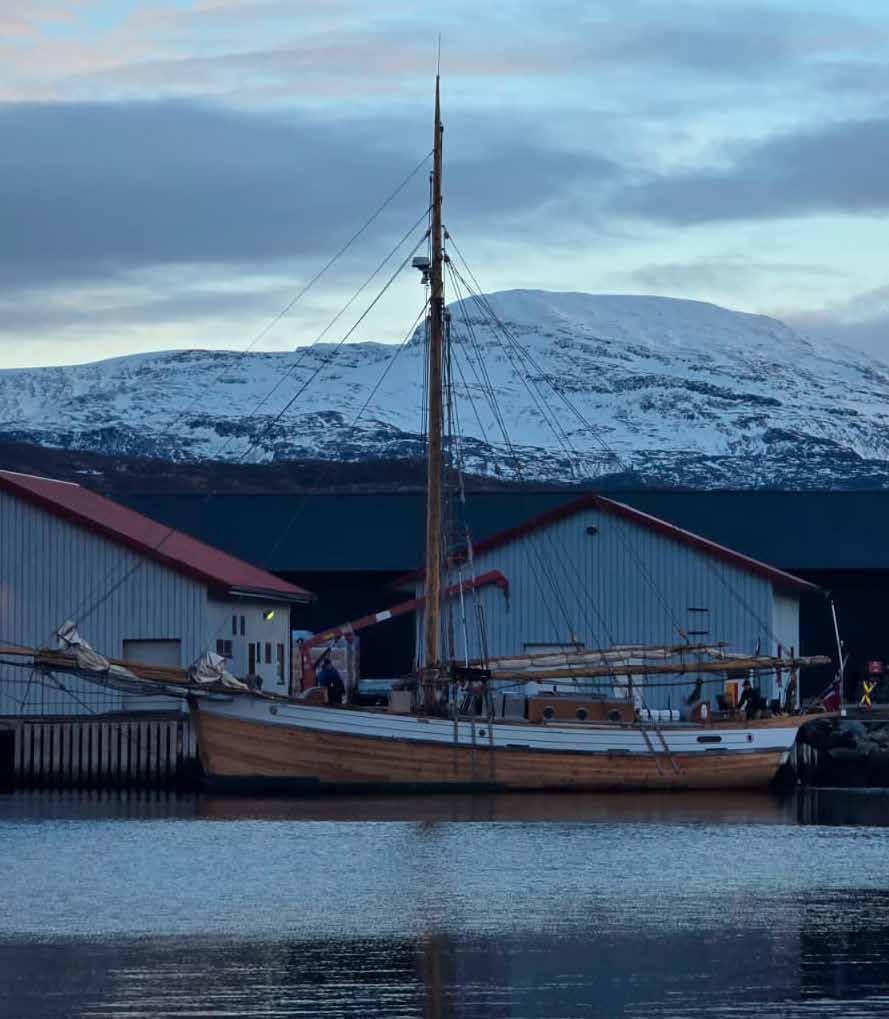

Our crew are talented. Professional. Unflappable. They are also, inconveniently, human.
Life happens at sea and on shore. Crew fall ill. Family calls.
When life interrupts, we step in — arranging cover, support and seamless continuity of the yacht's program.

Written by Rebecca Whitlocke & photos by Lena Karelova
rom Mallorca to Miami, industry data indicates that the onboard workload is higher than the crew can handle. Insight from ISWAN shows turnover can reach 50% within a year, with junior crew most at risk. Stress and fatigue are now widely linked to lower performance and higher safety risk, highlighting the strain of sustained workload at sea.
Against this backdrop, Carla Brothers established Purser Support to support captains, crew and yacht managers as demands continue to rise. Drawing on more than ten years as a purser, Brothers has seen a clear change in how yachts are run.
“Purser Support reflects a wider shift across the sector. Admin tasks are no longer kept on board, they are moving ashore. More and more, captains are the ones starting the conversation. Their role now spans compliance, crew logistics, budgets, yard work and guest plans, often at the same time.”
Crew travel, once straightforward, now brings added pressure. Cross-border rules, visa needs and tight crew rotations require careful planning and constant checks. Handling this ashore helps remove delays and keeps crew changes smooth.
For owners and yacht managers, rules set by the International Maritime Organization, Lloyd’s Register and the Maritime and Coastguard Agency call for ongoing monitoring and strict compliance.
Purser Support shapes its role around each yacht, whether during yard phases or busy charter periods, without adding extra crew or fixed packages. Brothers notes: “Senior crew cannot carry all admin tasks alongside daily duties. When that workload shifts ashore, stress falls, focus returns and crew are more likely to stay”. ◆ www.pursersupport.com




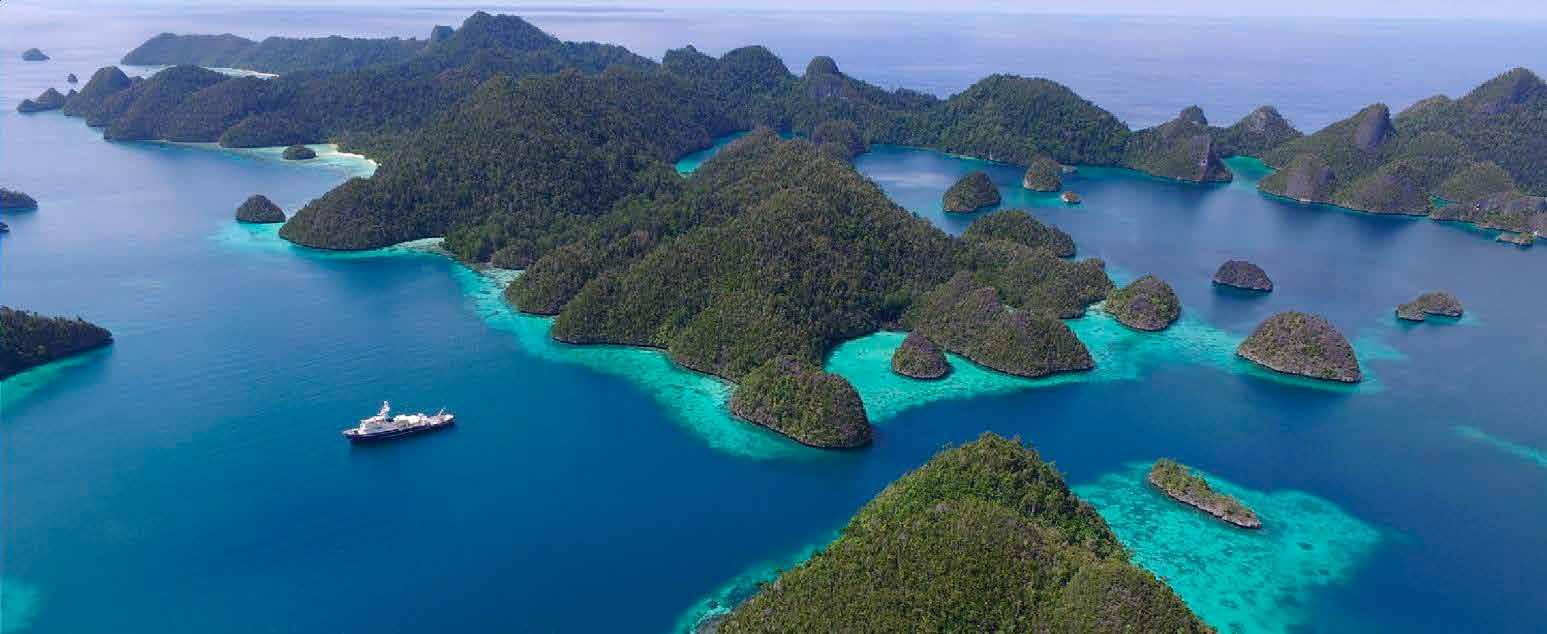
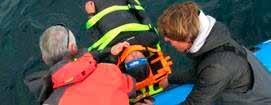
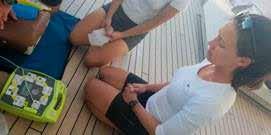
Written by Tamzin Gennissen

For most people working in yachting, the industry represents opportunity. A chance to see the world, build a career, support family back home and create a future that might otherwise have felt out of reach.
That is exactly why Tamzin and George hope this story resonates with the yachting community.
Tamzin Gennissen, whose career includes roles on super sail yachts Hanuman, Aquijo and Singularity to name a few, and George Edwards, engineer on SY Halekai, went on a trek in the mountains of Nepal.
They came back with a simple but impactful goal: help create a pathway for a young Nepalese girl named Tarati to access an education and, one day, potentially build a career in the yachting industry herself.
The idea was born thousands of miles from the Mediterranean, high in the mountains of Nepal.
In April 2025, Tamzin and George travelled there in search of adventure. Like countless trekkers before them, they
expected challenging climbs, breathtaking scenery and stories to bring home.
What they didn’t expect was to meet a porter named Metri. Over several days on the trail, they watched him carry heavy loads across steep mountain passes with a quiet determination that never seemed to waver. Despite the physical demands of the job, he remained positive, generous and proud of the life he was working so hard to build for his family.
As the days passed and conversations deepened, Metri spoke about his daughter, Tarati.
Like many young girls growing up in remote parts of Nepal, the opportunities available to her are limited. Access to quality education comes at a cost many families simply cannot afford, making it difficult to imagine a future beyond the circumstances she was born into.
For Tamzin and George, meeting Metri changed the nature of the journey entirely.
What began as a trekking adventure became something much more personal.
They saw a father doing everything possible to create a better
life for his daughter and a young girl whose future could be transformed through education and opportunity.
Today, they are raising funds to support Tarati’s education and future development. Their ambition extends beyond school fees alone. They hope to give her access to opportunities that would otherwise remain out of reach, including the possibility of professional training later in life.
As yacht crew themselves, they understand how transformative this industry can be. A career at sea has allowed countless crew members from all over the world to support families, travel globally and build long-term financial independence. Their hope is that one day Tarati might have the same opportunity. This is not a short-term project or a one-off donation drive.
It’s about creating a genuine pathway for one young girl to build a different future for herself and, ultimately, for her family.
They’re asking the yachting community to help make that happen.
A contribution of €20 may seem small by industry standards,

but collectively it can have a significant impact. Their goal is to bring together 250 people willing to contribute at least €20 and help invest in a future that, without support, may never have the chance to unfold.
Sometimes the most meaningful journeys aren’t measured by the miles travelled, but by the people we meet along the way. For Tamzin and George, Tarati’s story is one of those journeys. sea. ◆
Scan to support Tarati’s education via GoFundMe:


Written by Macarena Marambio, executive coordinator of Observadores del Mar
Imagine discovering a new invasive species, helping scientists track the effects of climate change, or contributing to the protection of endangered marine life, all while enjoying a day at the beach, diving, sailing, or simply walking along the coast.
This is not the work of professional scientists alone. It is the mission of thousands of citizens who have joined Observadores del Mar, Spain’s leading marine citizen science platform, proving that anyone can make a meaningful contribution to ocean conservation.
For more than a decade, Observadores del Mar has been building a bridge between science and society. Coordinated by several marine research centers of the Spanish National Research Council (CSIC), the platform connects citizens with scientists to answer real scientific questions about the health of our seas. What makes it unique is its simple but powerful idea: the ocean is too vast for scientists to monitor alone, but together, thousands of observers can generate knowledge on an unprecedented scale.
Today, more than 5,000 volunteers and over 500 organizations, including diving centers, NGOs, schools, foundations, and
marine clubs, form a growing community committed to understanding and protecting marine ecosystems. Their observations help researchers investigate some of the most pressing environmental challenges of our time: biodiversity loss, climate change, the spread of invasive species, impacts on marine habitats, and the conservation of vulnerable species.
Participation is surprisingly easy. Through the platform’s website, citizens can join one or more scientific projects and follow simple protocols designed by experts. Whether you are an experienced diver, a sailor, a fisherman, a student, or simply someone who loves the sea, there is a project where your observations can make a difference.
And those observations matter.
Citizens participating in Observadores del Mar have helped document mass mortality events affecting marine organisms, detected the arrival and expansion of invasive species, monitored shifts in fish distributions linked to ocean warming, and recorded changes in reproductive patterns of marine species. These contributions provide scientists with rigorous long-term data that has been validated by scientific expert teams. These highly valuable data, impossible to obtain only through scientific projects, may contribute to conservation, management, and environmental policy.
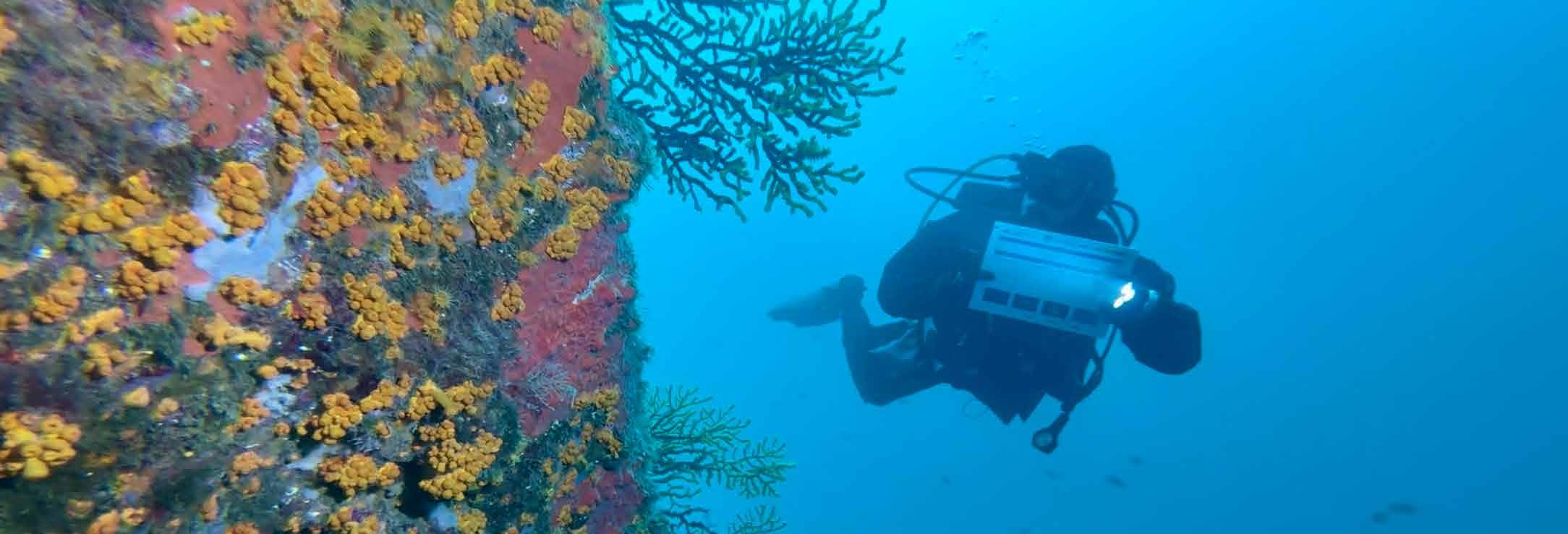
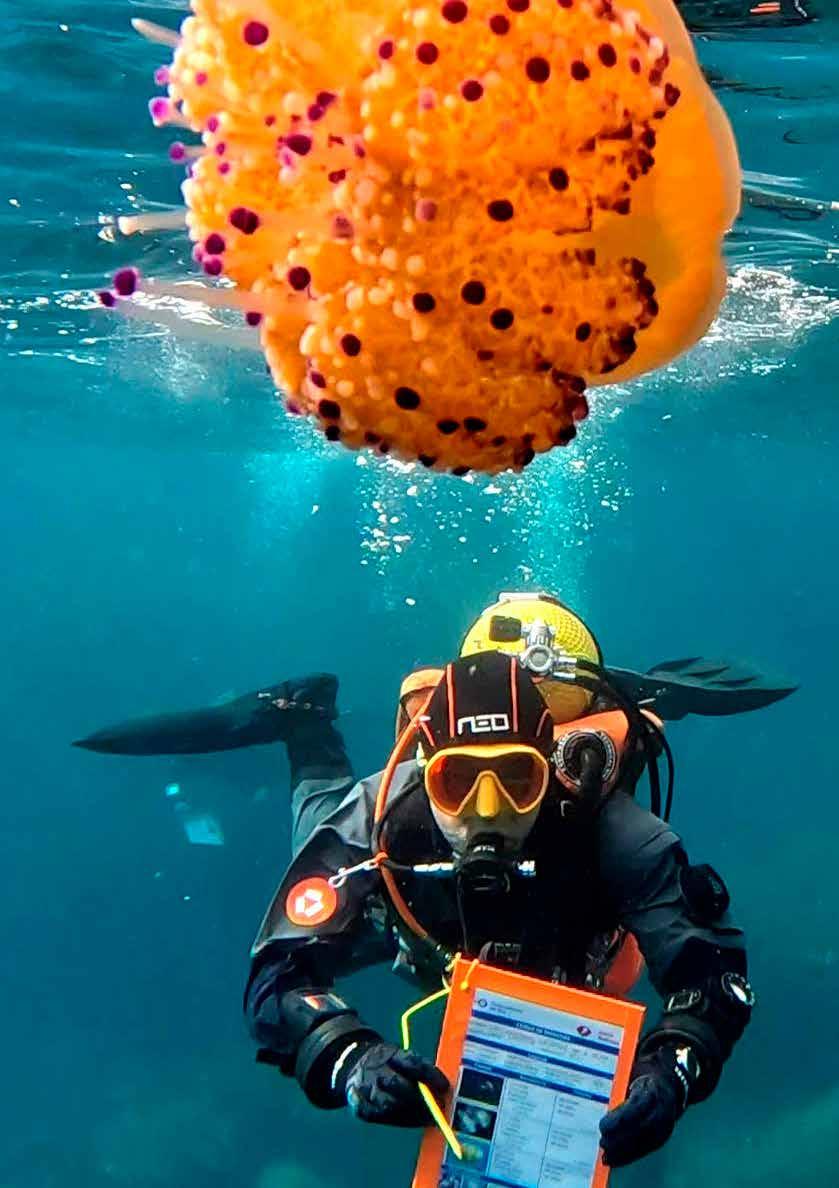
"The next important marine discovery may not come from a research vessel or a laboratory. It could come from someone like you."
But the benefits go beyond science.
Participants often discover a new way of experiencing the ocean. Instead of being passive visitors, they become active guardians of marine ecosystems. They learn how scientific research works, develop a deeper understanding of environmental challenges, and become part of a community united by a shared goal: ensuring healthy seas for future generations.
At a time when the ocean faces increasing pressure from human activities and global environmental change, citizen science offers something powerful, hope through action. Every observation uploaded, every species identified, and every challenge completed contributes to a larger picture of ocean health.
The next important marine discovery may not come from a research vessel or a laboratory. It could come from someone like you.
So, the next time you visit the coast, dive beneath the waves, or simply notice something unusual in the sea, remember that science is no longer confined to scientists. With Observadores del Mar, anyone can become part of the solution.
The ocean is calling for more observers. Will you answer? ◆ Visit www.observadoresdelmar.es and check the 16 projects where you can contribute.
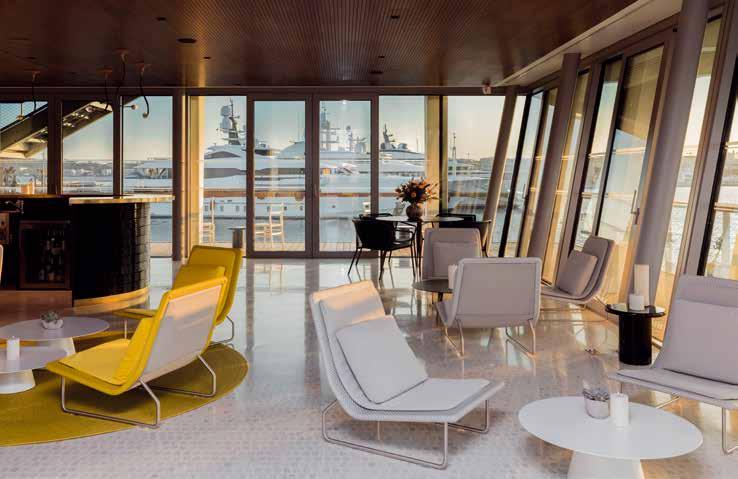
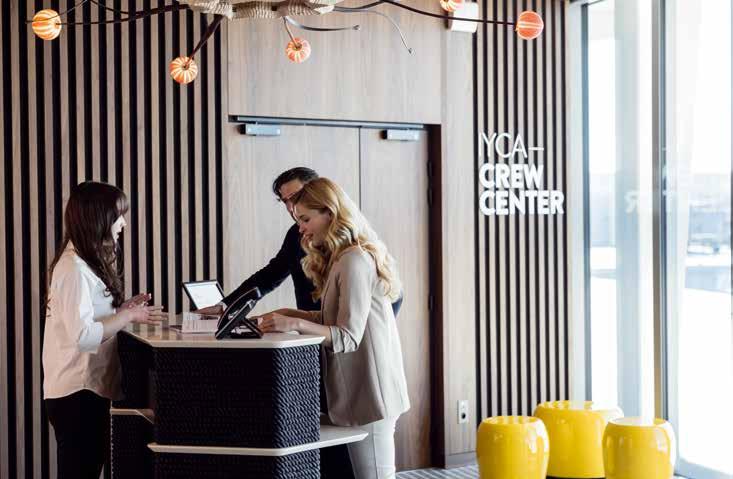
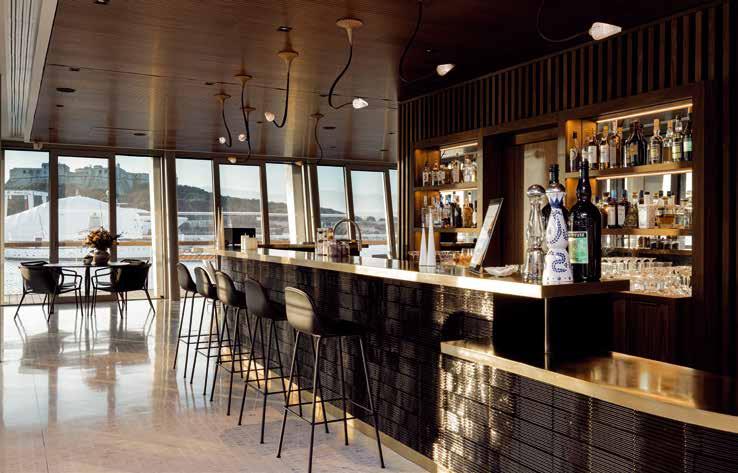
THE EXCLUSIVITY
Nestled in the heart of the French Riviera the International Yacht Club of Antibes welcomes its esteemed members in search of confidentiality and prestige in breathtaking settings.
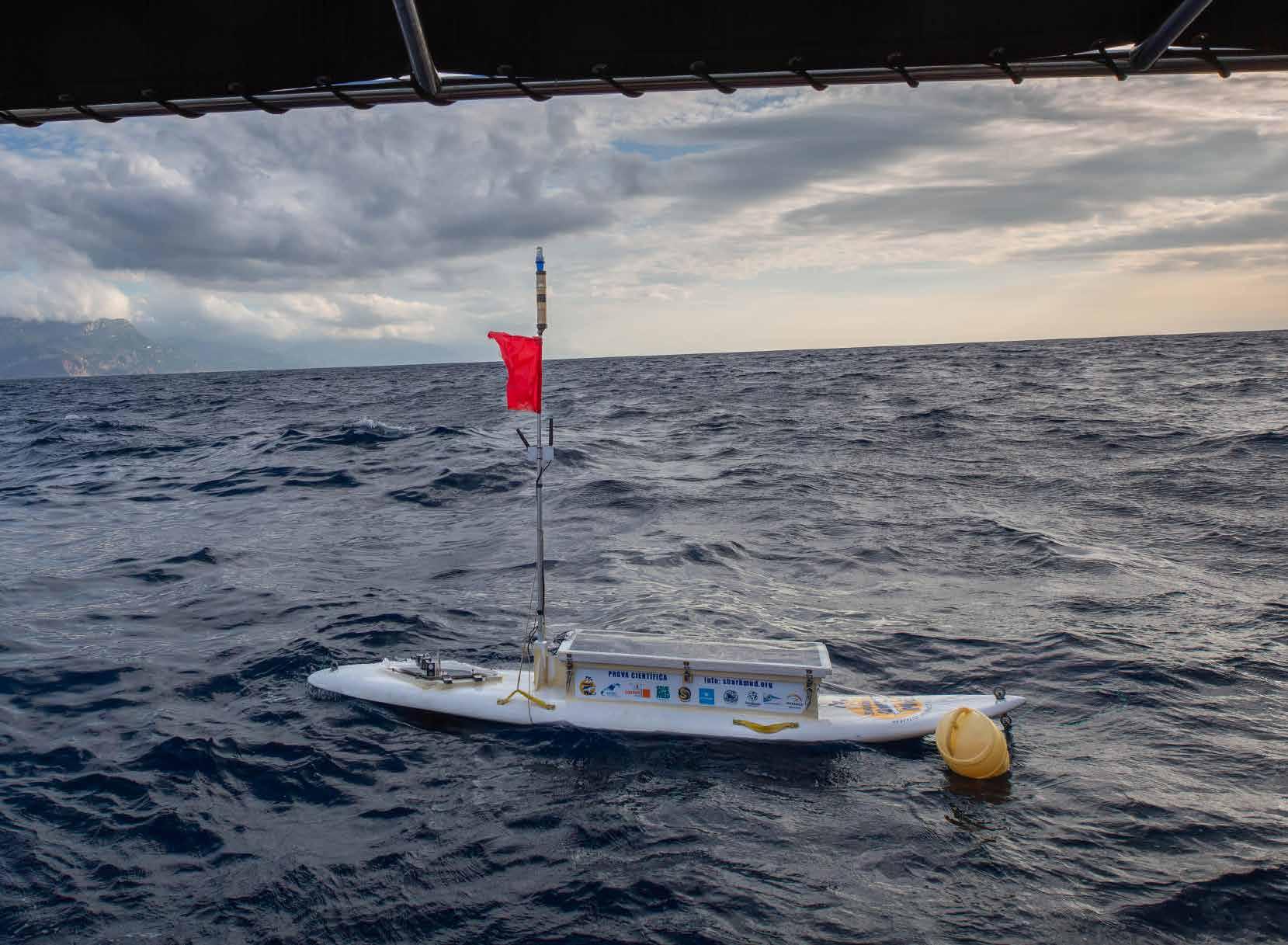
Marine biologists from Mallorca-based organisations Shark Med and Save the Med Foundation, as well as from Université Perpignan Via Domitia, placed the Balearics at the forefront of marine conservation after presenting innovative underwater filming systems at the Sharks International Conference 2026 in Sri Lanka.
Sharks International is the global epicentre of elasmobranch (sharks and rays) research and conservation, where this year marine biologists from Mallorca took centre stage. On behalf of two marine conservation organisations and Eric Clua, a renowned French scientific research faculty, Save the Med cofounder and shark expert Gabriel Morey gave a presentation on improved and more accessible Baited.
Remote Underwater Video systems (BRUVs). He explained what these BRUVs consist of and the improvements made that make a key difference in facilitating research compared to classic systems used to date. He demonstrated to the international scientific community that uncovering crucial information for the protection of threatened shark species is possible in the Mediterranean, and anywhere else worldwide, thanks to a low-cost and easily deployable technological innovation.
The Mediterranean challenge: finding needles in a blue haystack
Studying sharks in the Mediterranean Sea is a monumental challenge. Due to historical overfishing and habitat degradation, population densities of elasmobranchs are critically low. Home to 44 species of sharks, 34 species of rays and 2 species of chimaeras, almost half (40%)
of these species are threatened with extinction in the region according to the 2022 IUCN Red List of Marine Mediterranean Fish. Improving access and quality of research efforts to inform conservation strategies is therefore all the more urgent.
Traditionally, most studies have been based on fishing activity, with a number of life-history features (e.g. age, growth, diet, fecundity) making necessary the examination of dead specimens. BRUVs are a more modern tool that complements fishery-dependent research. Though the latter continues to play an important role in uncovering findings, BRUVs make it possible for marine biologists to study sharks and rays in their natural habitat without interfering or disturbing them. For a picture tells a thousand words: a wealth of information can be extracted from these recordings, including the diversity of species captured on camera, the physical condition of individual animals, such as identifying fishhook injuries, and the number of sharks attracted to the bait. Recorded images help inform the abundance (or scarcity), health and threats to sharks and rays.
While BRUVs are a scientifically viable and technically straightforward tool, these systems face two major limitations: battery autonomy and image data storage. In waters where sharks are scarce and can take days to appear, cameras must be capable of recording for extended periods. To overcome these limitations, Shark Med developed an innovative and low-cost technology tailored to the specific needs of the Mediterranean.
In his presentation “Improved BRUV-24h adapted for scarce and elusive elasmobranch species of the Mediterranean Sea”, Gabriel Morey explained how the first BRUV was designed for the surface and open waters or water column, otherwise known as pelagic environments in science-speak. Powered by a solar panel system that fuels a large on-board battery and integrated hard drives, this device can run for days or even weeks without human intervention, requiring only periodic bait refreshes every few days. This technology is already providing crucial data on Blue shark (Prionace glauca) populations around the Balearic Islands without having to rely on information from the fishing sector.
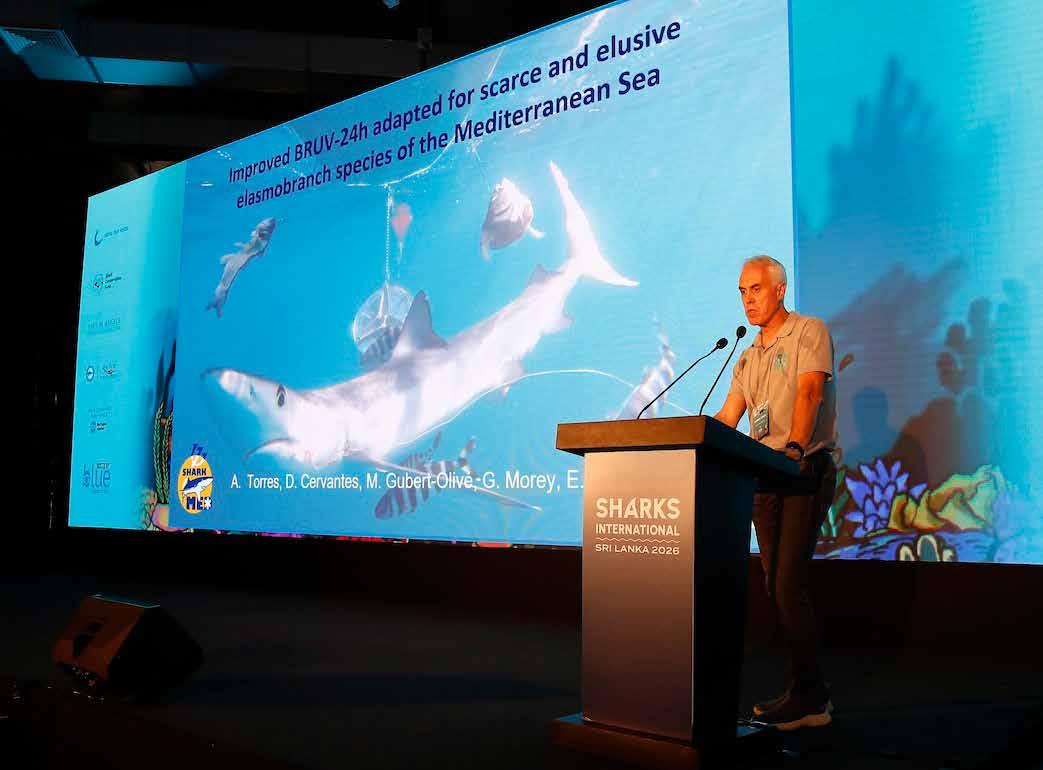
Findings from the deep: what 3,000 hours of video reveals To address the critical lack of data on Mediterranean elasmobranchs, the BRUV innovations were successfully tested and deployed during a two-year study from 2024 to 2025 in the protected waters of the Cabrera National Park, led by Shark Med and Save the Med, and backed by the European Union’s NextGenerationEU fund alongside the Marilles Foundation.
The data gathered using these technologies has been significant for elasmobranch conservation efforts in the Balearic Islands. A total of 17 elasmobranch species were identified, and 3,000 hours of video, combining pelagic and benthic BRUVs, were recorded across both day and night. The information obtained throughout different seasons, made possible thanks to the improved autonomy of the devices, allowed our team to analyse solid findings related to seasonality, ecology and potential external interference, as well as to draw important conclusions from the evidence.
For example, aside from blue sharks, numerous large pelagic species should be observable in our waters, such as the great white, hammerhead, mako, thresher or copper shark. Yet, out of thousands of hours of footage, only a single mako
was recorded, captured by a benthic BRUV positioned at a depth of 80 metres. This finding alone confirms that shark populations in the Mediterranean remain at a critical level, and that action must be taken immediately to improve the protection and conservation of elasmobranch species, not only for their own sake and right to exist, but also to preserve the ecosystem balance of the Mediterranean Sea.
By making advanced BRUV technology accessible and lowcost, this Mallorcan innovation gives researchers everywhere a practical tool to advance the research and protection of threatened sharks and rays worldwide. Presenting these breakthroughs at the Sharks International Conference 2026 not only highlights the hard work of Save the Med and Shark Med, but it also proves that Mallorca is now exporting real, working conservation solutions to other oceans facing similar challenges.
www.savethemed.org • www.sadragonera.org


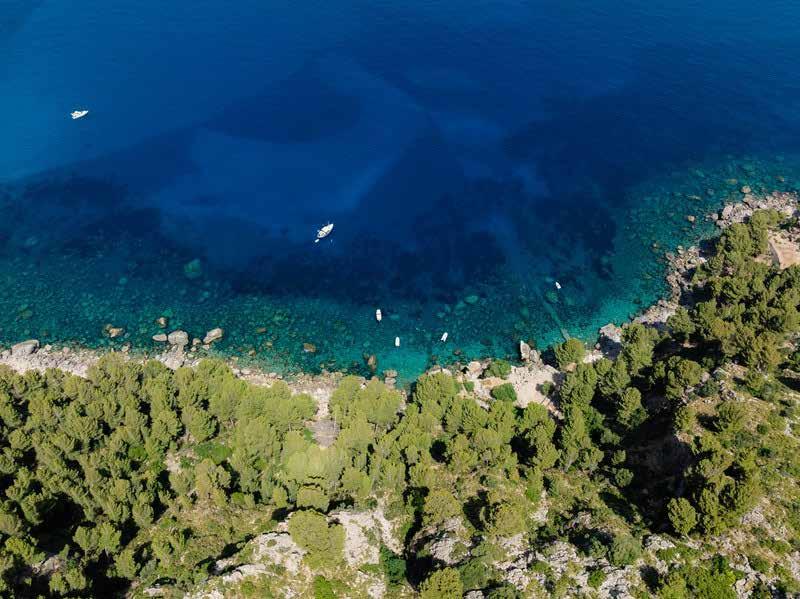
Save the Med is regenerating the Balearic Sea - from marine research to community stewardship - and we need your help.
Your in-kind donations (new or pre-loved) make our work in the field possible. Help us regenerate a thriving Mediterranean, one contribution at a time.
Have questions or want to donate an item? We'd love to hear from you! Reach out to us at info@savethemed.org and help us make a difference!
Thank you!
The Save the Med team
O p e r a t i o n s
3 vehicles (small vans)
Office space/desk in or near
Port d'Andratx, Sóller and Pollença
Storage space for 20ft container
Storage space for 7 5m RIB + trailer
Battery-powered tool set Coleman + speakers
Berths (Mallorca)
Depth Transducer
Radar (Furuno/Raymarine)
Rope handling winch (24V)
Small pot hauler (24V)
Inverter (2KW+)
Search light (24V)
2 VHF hand-held radios
D i v i n g
Diving compressor
2 Kayaks
2 SUP (inflatable)
SCUBA tanks (12/15L)
Dive computer(s)
Scuba regulator(s)
Underwater scooters
Underwater Housing for Sony
A6700 and Olympus TG-7
Underwater camera
Use of submarine N a v i g a t i o n
Inflatable life jackets
Mooring lines (small diameter)
Personal Locator Beacons
Emergency Position Indicating Radio Beacons (EPIRB)
accessories (UW Lights, Tray, Ball arms & Clamps)
Action Camera
R e s e a r c h
Microscope
Use of light aircrafts
Use of helicopter
Written by Jens Oomes & photos via Pexels.com
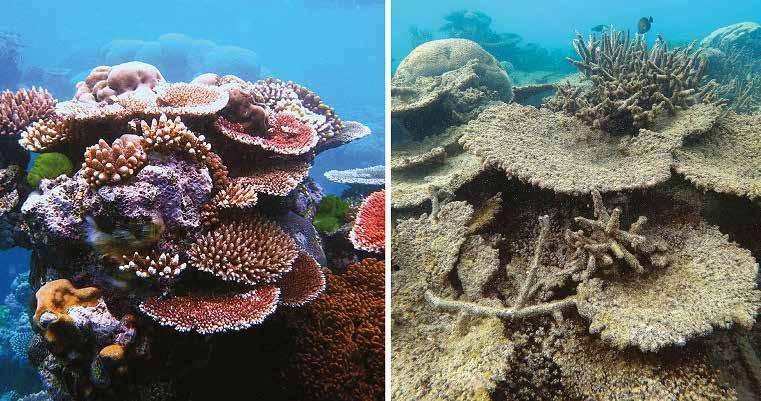
Coral reefs are often called the rainforests of the sea, supporting nearly a quarter of all marine life while protecting coastlines, sustaining fisheries, and driving tourism economies. Yet rising ocean temperatures, pollution, and destructive fishing practices are pushing reefs toward collapse. Across the world, scientists, NGOs, governments, and coastal communities are now racing to regenerate damaged reefs before climate change outpaces restoration efforts.
Today, reef regeneration projects are most active in the Caribbean, the Great Barrier Reef, the Maldives, Indonesia, French Polynesia, and parts of the Red Sea. Florida’s coral restoration initiatives, led by organisations such as NOAA and Coral Restoration Foundation, have become some of the largest in the world, involving underwater coral nurseries and mass coral planting programmes. Australia is also investing heavily in larval reseeding, coral farming, and heat-resistant coral research on the Great Barrier Reef.
The most successful regeneration programmes share a common formula: local stress reduction combined with
long-term climate resilience planning. In Indonesia and the Maldives, coral gardening and artificial reef structures have restored reef growth in localised areas within just a few years. Some projects now use selectively bred or naturally heattolerant “super corals” capable of surviving warmer waters.
However, restoration is far from guaranteed. Scientists estimate that 30–40% of coral restoration projects fail because of poor planning, lack of maintenance, pollution, or ongoing warming events. In some locations, newly planted corals have been wiped out by a single marine heatwave only months after transplantation.
The greatest threat remains rising ocean temperatures. Global bleaching events are becoming more frequent and severe, with more than 80% of reef systems recently exposed to extreme heat stress. Even healthy restored reefs may struggle to survive if global warming exceeds 1.5–2°C.
Despite these challenges, restoration still matters. Healthy reefs can recover faster after bleaching events, support fisheries, and preserve biodiversity while broader climate action develops. Experts increasingly describe reef regeneration not as a permanent solution, but as a critical tool to buy time for ecosystems under pressure.
Yacht crews, divers, and ocean enthusiasts also play a growing role in reef recovery. Simple actions can have measurable impact: using reef-safe sunscreen, avoiding anchoring on coral, reducing plastic waste, reporting bleaching events, and
supporting marine protected areas all help reduce local stress on reefs. Volunteer dive programmes now allow yacht crew members to assist with coral nurseries, monitoring, and reef-cleaning operations in destinations such as Fiji, French Polynesia, and the Caribbean.
Encouragingly, significant reef regeneration work is now happening directly in the cruising grounds that yacht crews frequent. In the Pacific, Atlantic, and Indian Ocean alike, local projects are actively restoring reefs in popular anchorages and island groups, meaning crews are increasingly likely to encounter restoration buoys, nursery frames, or protected regeneration zones on passage.
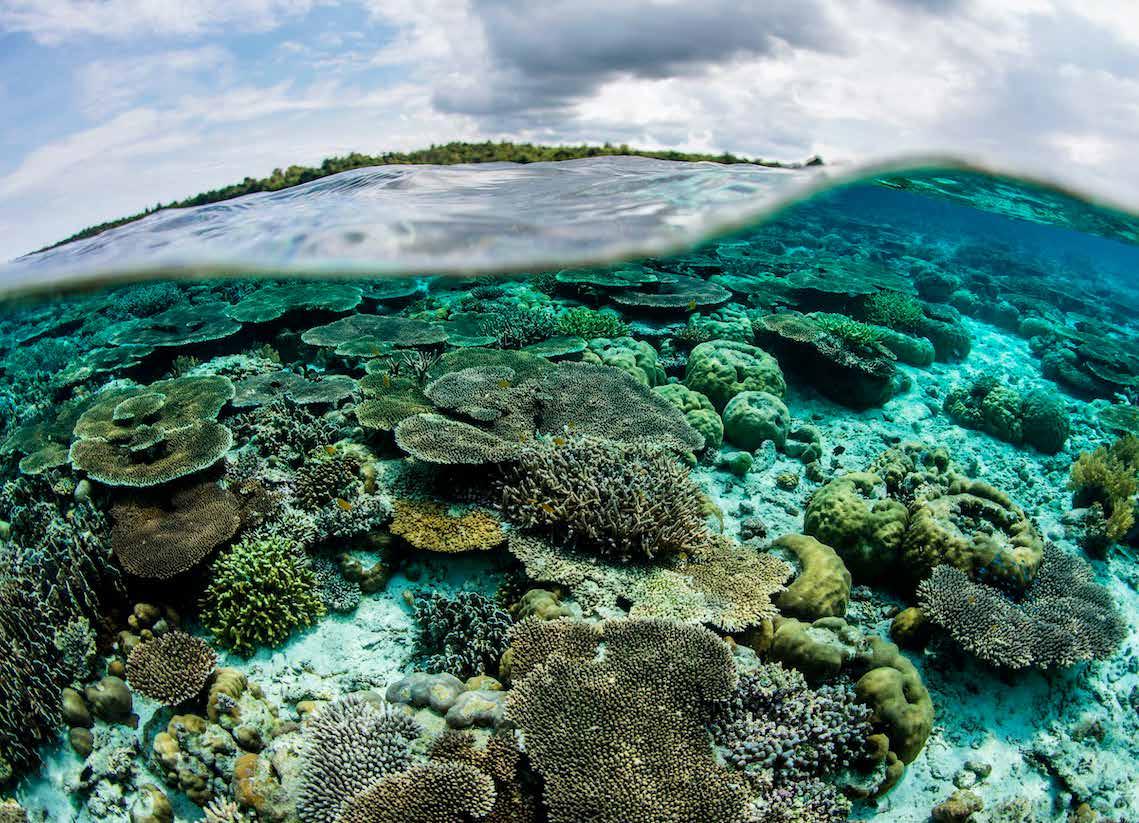
This is especially true in the Eastern Caribbean, where dedicated local organisations are doing hands-on work in some of the region’s most-visited yacht destinations: in St Maarten, the Nature Foundation SXM runs coral nurseries and the IntelliReefs programme restoring reefs damaged by hurricanes (@naturefoundationsxm).
In Antigua, AnuBlue Ocean Restoration operates underwater nurseries at Green Island and Cades Reef, growing and outplanting elkhorn and brain corals onto degraded reef sites. (@anublueocean)
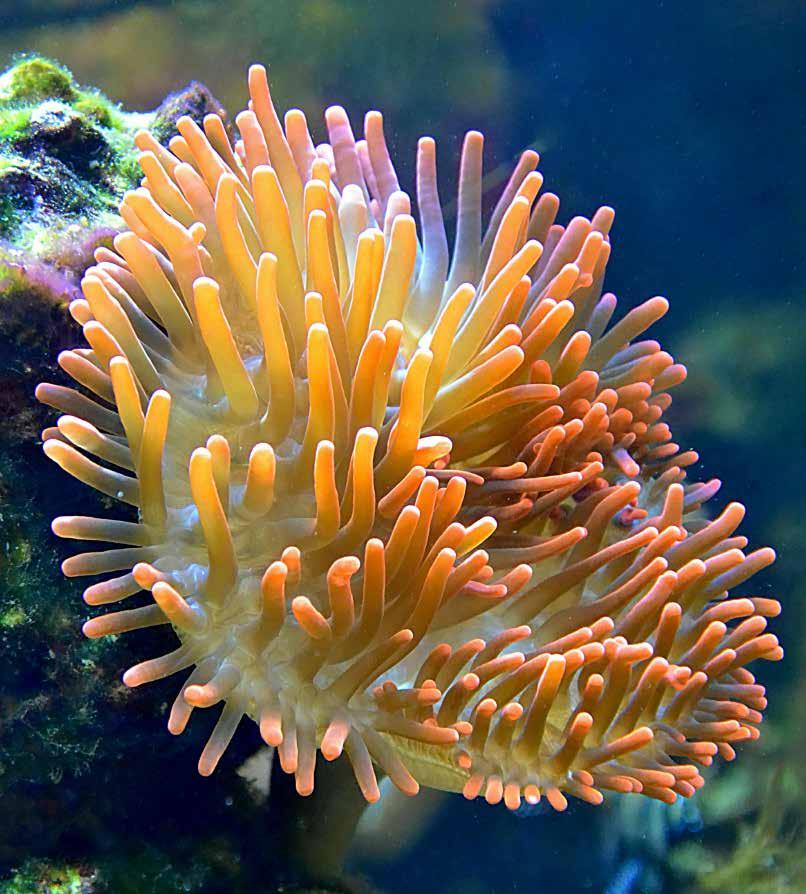
In the BVI, both the Association of Reef Keepers, which runs coral restoration and sustainable cruising programmes across the territory (@bviark), and Beyond The Reef, which creates artificial reef structures and treats coral disease (@1beyondthereef), are active in waters crews sail through every day. For broader regional and global coverage, also follow: @coralrestorationfoundation (Florida Keys and wider Caribbean), @coral_gardeners (Moorea, French Polynesia), @coraltriangle (Indonesia and the Coral Triangle), and @ reefcheck (global reef monitoring across multiple cruising regions).
Follow these Instagram accounts to educate yourself and others and as part of your support to the oceans we work on. ◆
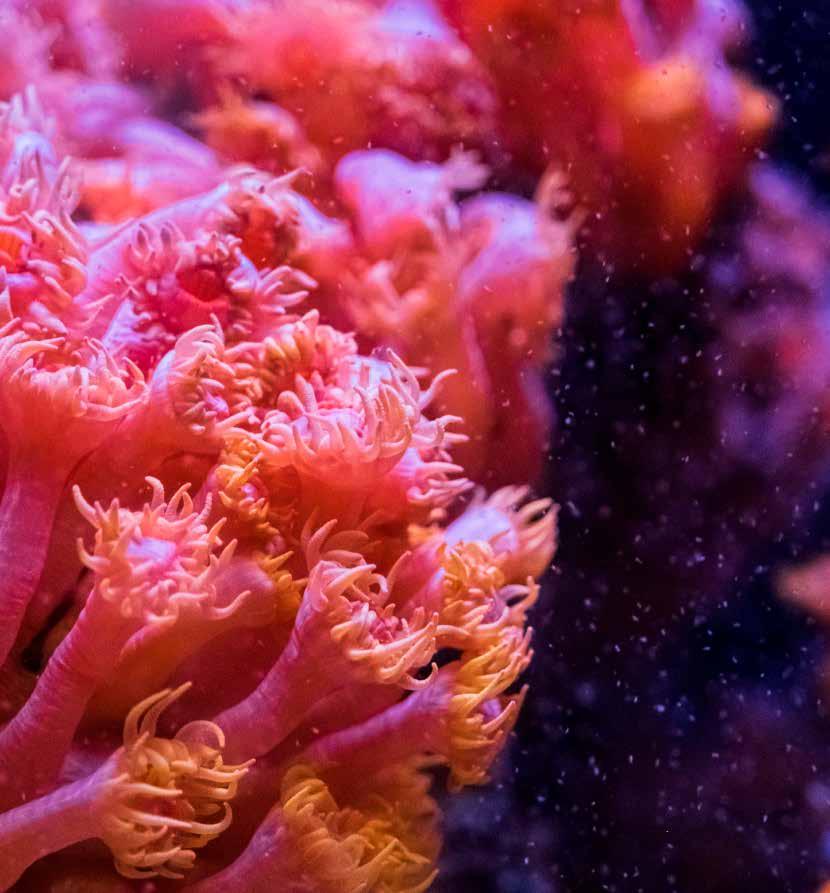
Written by Debora Morrison,
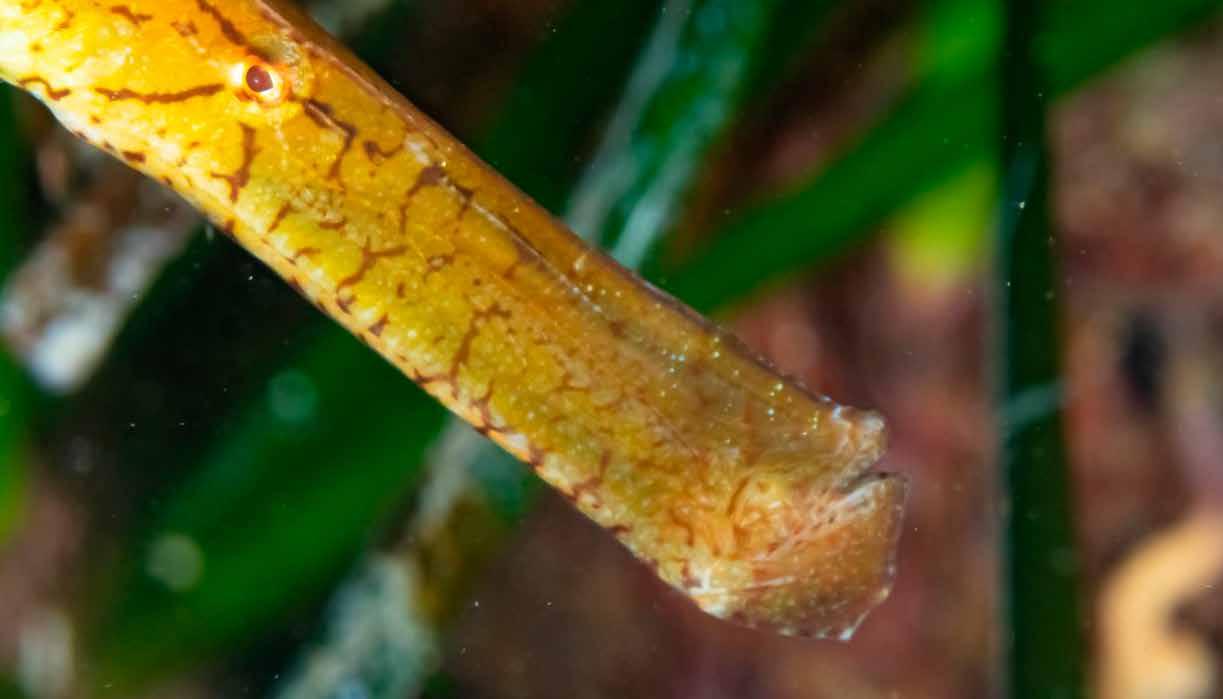
Seahorses and pipefish are some of the most eccentric, structurally bizarre and fascinating creatures in the sea. Belonging to the family Syngnathidae (from the Greek syn, meaning “fused” or “together”, and gnathos, meaning “jaw”), they are specialised bony fish that have abandoned typical fish anatomy in favour of a highly evolved armour-and-tube design.
Despite looking radically different from each other at first glance, one resembling a fairytale chess piece and the other a blade of seagrass, they share an identical evolutionary toolkit, including a fused snout and a unique approach to parenting. Neither creature has teeth or a moveable jaw. Instead, their jaws are fused into a rigid pipette-like snout. They feed by utilising suction, snapping their heads up to vacuum up tiny crustaceans (like mysid shrimp or copepods) at lightning speed, and are known as the most efficient predators of the sea.
This family features the only known species in the animal kingdom where the male becomes pregnant and gives birth. Females deposit eggs into a specialised brooding pouch on the
male’s abdomen or tail, where the male fertilises, protects and nourishes the developing embryos until they are born as fully formed, independent miniature versions of the adults.
Seahorses have completely lost their caudal (tail) fin. In its place, they have evolved a muscular, prehensile tail. They use this tail like a monkey does, wrapping it tightly around seagrass, mangroves or corals to anchor themselves against ocean currents.
Much like a chameleon, they can move each of their eyes independently. This allows them to track food with one eye while keeping the other eye on the lookout for predators.
Many species can change colour to match their surroundings or grow fleshy filaments (dermal appendages) that make them blend in perfectly with local soft corals or seaweeds.
Pipefish are essentially the linear, horizontally oriented cousins of the seahorse, designed to look exactly like the marine vegetation they inhabit. Unlike seahorses, most pipefish species retain a very small, fan-shaped caudal (tail) fin, which gives them a bit more steering control and slightly better swimming speed.
While all seahorses have a fully enclosed pouch for pregnancy, pipefish brooding methods vary by species. Some have a fully
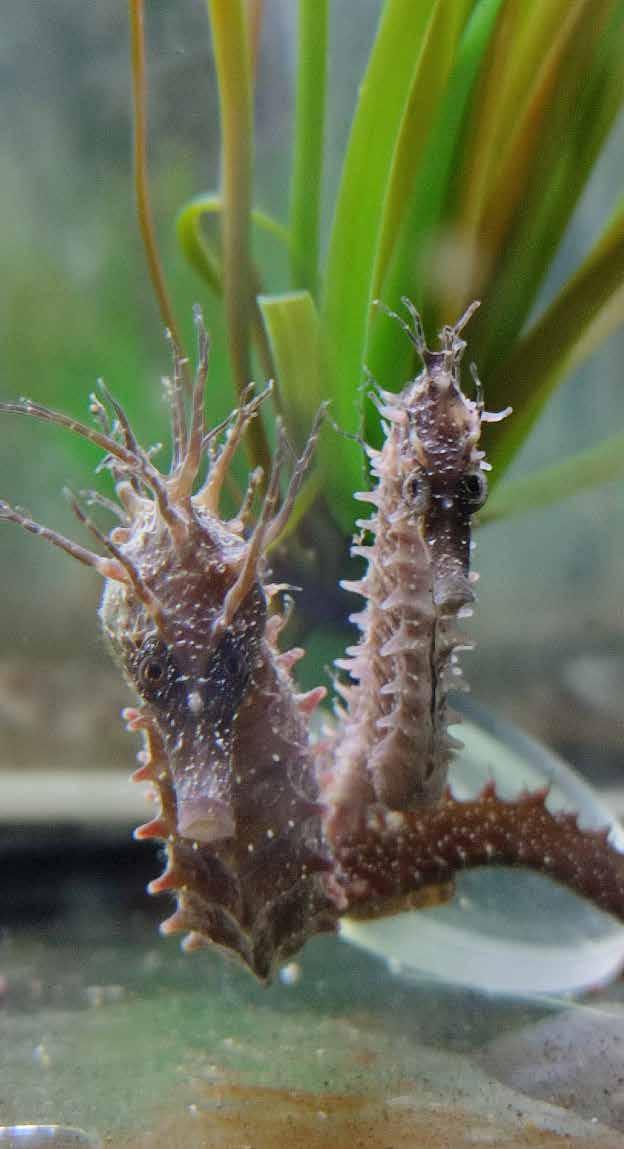
enclosed pouch, while more primitive species simply carry the eggs glued in rows directly to the underside of their bellies or tails, exposed to the water but guarded by the male.
Both seahorses and pipefish are vital apex predators of the micro-world, keeping small crustacean populations in check within shallow coastal habitats like seagrass meadows.
They are poor swimmers and highly dependent on these specific, fragile ecosystems. They serve as excellent environmental indicator species, their decline is a direct warning sign of a degrading habitat. Today, both face severe threats from habitat destruction, climate change and other dangers, making modern conservation and captive-breeding initiatives crucial to their survival.
The Fundación Palma Aquarium actively develops and carries out specialised conservation programmes for both species, with the ultimate objective of supporting and restoring the populations of these amazing animals in the Balearic Sea. ◆ palmaaquarium.com
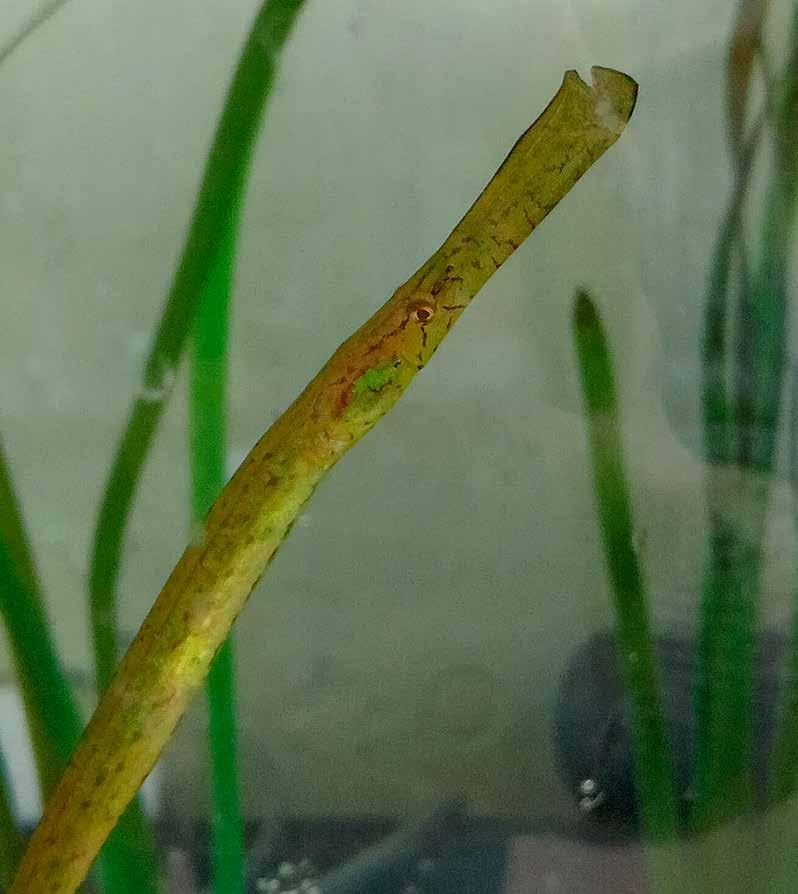
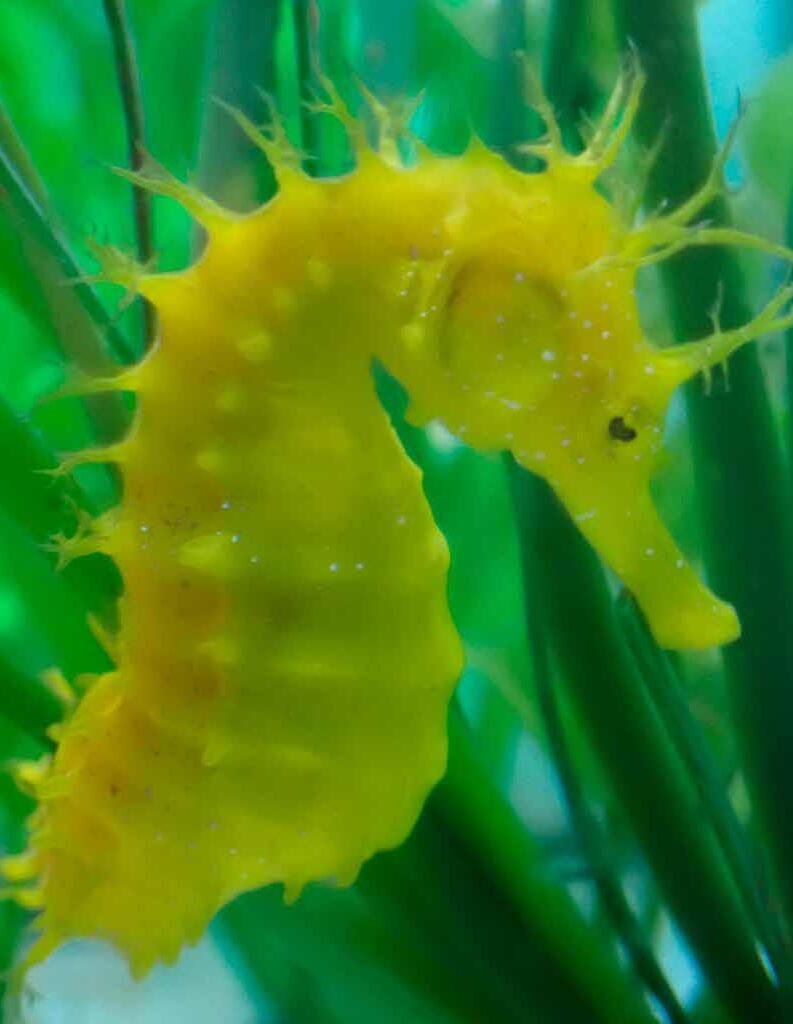
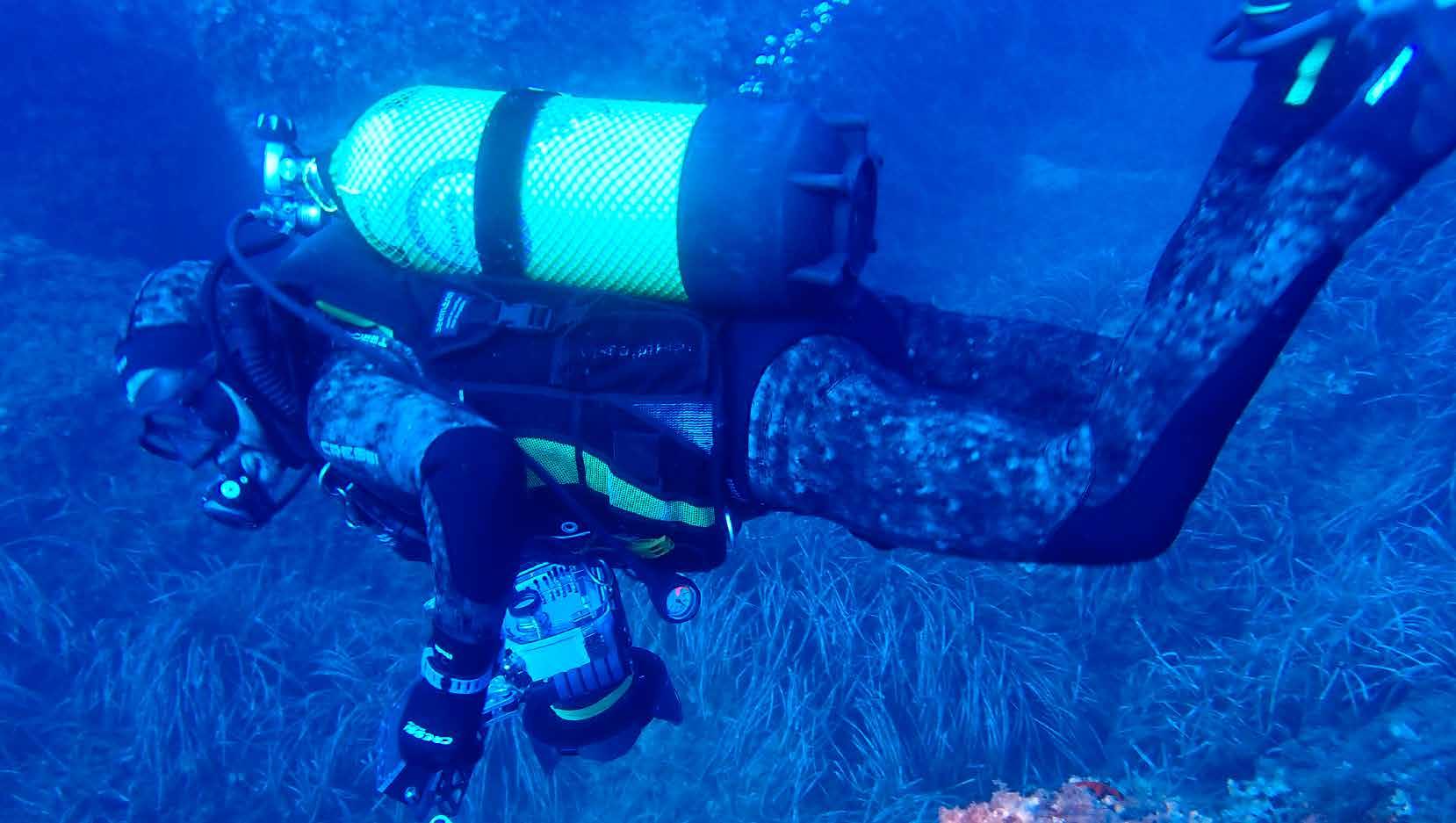
The Mediterranean is more than beaches, sea and sunshine. It is a living ecosystem, rich in stories, biodiversity and environmental challenges that deserve to be better understood. At Fundació Joves Navegants, we believe the best way to understand the sea is to experience it first-hand.
For this reason, the foundation has developed a programme of experiences and expeditions that combine low-impact sailing, science and education from one of Mallorca’s most privileged natural settings: the Bay of Portocolom.
Aboard Galaxie and Stenella, our zero-emission vessels powered by electric propulsion and solar energy, participants discover a different way of connecting with the Mediterranean. These experiences are designed for curious individuals, families, schools, companies and sea lovers looking for something more meaningful than a traditional boat trip.
Our experiences
Biodiversity under sail
This full-day experience aboard Galaxie, our 22-metre electric sailing yacht, offers guests the opportunity to explore the coastline of Portocolom while respecting the natural environment. Along the way, they learn the fundamentals of sailing and discover how sustainable technologies can
The journey combines navigation with environmental observation and interpretation. Depending on the programme, activities may include snorkelling, underwater photography, marine wildlife observation or thematic routes guided by conservation specialists, helping guests understand the ecological value of the Mediterranean’s often hidden landscapes.
Beyond sailing, the experience promotes what we call Mediterranean Literacy: learning to read the sea, understand its ecosystems and appreciate the role it plays in our lives and shared future.
SeaLab: scientific exploration
Citizen science and innovation come together aboard Stenella, a vessel conceived as a floating climate observation station. During the activity, guests navigate through Posidonia oceanica restoration areas, authentic underwater forests that play a vital role in biodiversity conservation and carbon capture.
This experience uses scientific exploration tools such as underwater cameras and remotely operated vehicles, allowing guests to observe the seabed in real time, identify species and engage directly with marine science.
Through this hands-on approach, guests gain a deeper understanding of Mediterranean health, exploring the challenges facing marine ecosystems and the actions needed to protect them.
For those seeking a more immersive experience, this expedition aboard Galaxie offers the opportunity to spend a night in Cabrera, Spain’s largest marine reserve and one of the bestpreserved marine environments in the Mediterranean.
The Cabrera Archipelago has become a benchmark for ecological recovery and marine conservation. The voyage includes hiking, snorkelling and diving in pristine waters, as well as personalised activities with marine biologists, such as wildlife observation, marine ecology workshops and nature photography.
Spending time in this exceptional environment allows guests to connect with the Mediterranean in a deeper way, while understanding the importance of protected areas and our shared responsibility to safeguard marine ecosystems for future generations.
This expedition reflects the spirit of Mediterranean Rights: recognising the importance of protecting marine habitats and ensuring a healthy sea for generations to come. Much more than a sea experience
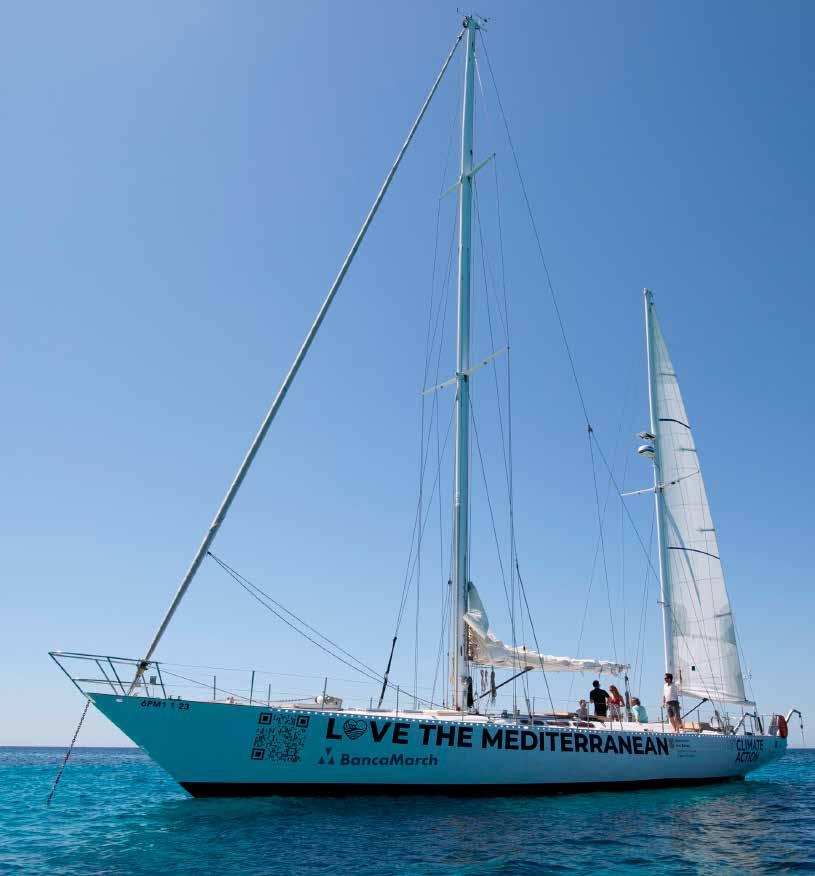
Every activity is designed around a simple principle: we protect what we value, and we value what we are able to experience. By combining adventure, learning and environmental awareness, each experience helps guests build a stronger connection with the Mediterranean and a deeper understanding of the challenges it faces.
Every booking also creates a double impact. Revenue generated through these activities directly supports the social programmes of Fundació Joves Navegants, enabling young people in vulnerable situations to access the sea as a space for learning, inclusion and personal growth.
A historic event: Mallorca and the total solar eclipse of 2026
Being out at sea is one of the most immediate and powerful ways to reconnect with nature, especially in a world increasingly saturated by screens, noise and constant demands for our attention. It is from this setting, with boundless horizons as far as the eye can see, that we plan to witness one of the planet’s rarest and most extraordinary moments: a total solar eclipse.
On 12 August 2026, Mallorca will become one of Europe’s most privileged locations to witness a total solar eclipse, a phenomenon not seen from Spain for more than a century and not expected to return to the Balearic Islands for generations. At 8:31 pm, the Moon will completely cover the Sun, revealing its glowing corona and turning the golden Mediterranean sunset into an eerie twilight, as temperatures drop and bright planets such as Venus may appear.
With totality occurring just a few degrees above the horizon, land-based views may be obstructed by mountains, buildings or coastal relief, making the open sea one of the best and most unobstructed places from which to experience it.
Participate and be a part of this historic moment!
Scan the QR code to learn how to enter the draw for an exclusive place aboard one of our silent electric vessels during the Total Solar Eclipse of 2026.
In addition to securing a place in one of the Mediterranean’s most extraordinary natural observatories, you will discover our full programme of expeditions and experiences, and learn how every journey supports the social and environmental mission of Fundació Joves Navegants.
A truly once-in-a-lifetime opportunity. ◆ www.jovesnavegants.org
Expeditions

Sorteo


94. What's on in Mallorca
96. JoyRon Foundation
98. Vivian Borsani
101. Aethos Mallorca
102. BMComposites
104. ADN Mediterráneo
106. Les voiles d’Antibes
109. MC-ZERO Tenders
110. Luckia Casino Mallorca
112. Echezo Ibiza
114. SELECT Boutique Agency
116. Asia Pacific
Written by Marlot Cathalina

The Palma International Boat Show and Superyacht
The DEKA Strong & MILE comes to Mallorca this summer, hosted at the athletics track of Happy Gym Magaluf in Calvià. DEKA is a standardised fitness challenge built around ten functional zones designed to test strength, endurance and grit in equal measure. Whether you’re a seasoned competitor or simply looking for a new kind of summer challenge, this could be a different way to spend a July morning on the island. ◆ https://tickets-euda.spartan.com/event/DS2247
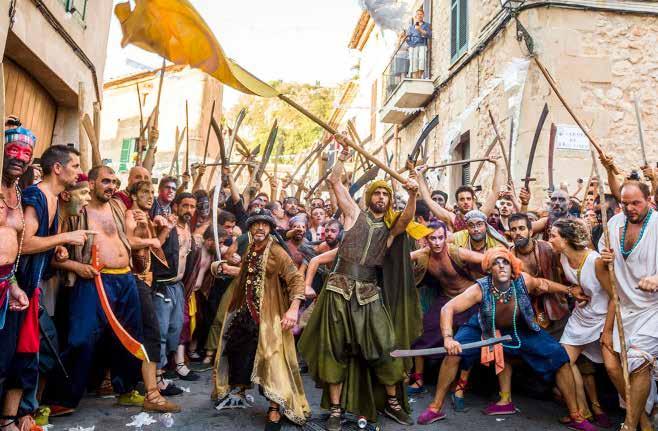
Pollença’s biggest annual celebration builds over a week of nightly events towards the grand finale: the Battle of the Moors and Christians on 2 August. From five in the morning, the streets of Pollença come alive as Mallorcans re-enact the legendary battle of 1550, when the town’s hero Joan Mas rallied the Christians to repel an attack by Turkish corsairs. Dressed in white as sleeping Christians or painted as Moorish pirates, residents of all ages throw themselves into one of the most theatrical, chaotic and joyful events on the island. ◆
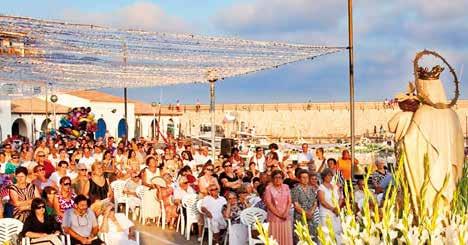
https://visitcapdepera.com
One of Mallorca’s most heartfelt summer traditions, the Fiesta de la Virgen del Carmen honours the patron saint of sailors and fishermen every year on the 16th of July. Across the island’s ports and harbours, from Port de Pollença and Port d’Alcúdia to Porto Cristo and Sóller, a beautifully decorated statue of the Virgin is carried in procession from church to harbour, before being taken out to sea aboard a flower-adorned boat, accompanied by a flotilla of traditional fishing vessels. Onshore, the celebrations continue with music, food and fireworks. A window into the soul of the island. ◆
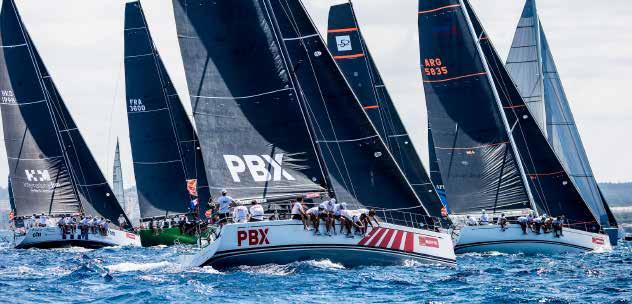
The Copa del Rey MAPFRE returns to the Bay of Palma for its 44th edition, once again establishing itself as one of the most prestigious sailing regattas in the Mediterranean. Organised by the Real Club Náutico de Palma, the event brings together elite international teams competing across multiple classes under the Balearic sun, with His Majesty King Felipe VI traditionally among those on the water. The race village buzzes with activity throughout the week, and the bay itself offers spectacular free viewing from the Palma waterfront. One of the highlights of The Islander’s sailing calendar. ◆
www.ajpollenca.net www.copadelreymapfre.com
11-15 August,
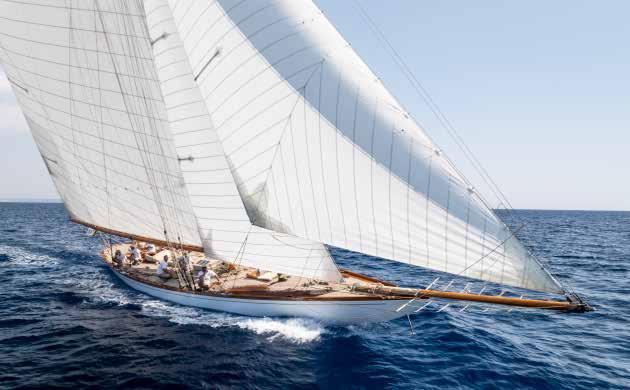
The Illes Balears Clàssics brings some of the most beautiful vintage and classic sailing yachts in the world to the Bay of Palma each August, and this year marks its 31st edition. Hosted by Club de Mar, the regatta is a celebration of maritime craftsmanship and heritage as much as it is a competition, with vessels ranging from true pre-1950s classics to Spirit of Tradition yachts racing across a series of coastal courses. If you’ve ever wanted to see sailing at its most elegant and timeless, this is the week to be down at the harbour. ◆
www.velaclasicamallorca.com

On the evening of 12 August 2026, Mallorca finds itself directly on the centreline of totality for a total solar eclipse, one of nature’s most breathtaking and humbling spectacles and an exceptionally rare event for the island. As the sun sets over the Mediterranean, the sky will darken in a way that no photograph can fully capture. Whether you watch from a clifftop, a hilltop terrace, or the deck of a yacht offshore, this is one of those moments worth building an evening, or an entire trip, around. ◆
Virtual assistant Marlot Cathalina supports companies on Mallorca and beyond with their online content and communication. Instagram: @marlotcathalina


Written by Ronald M.
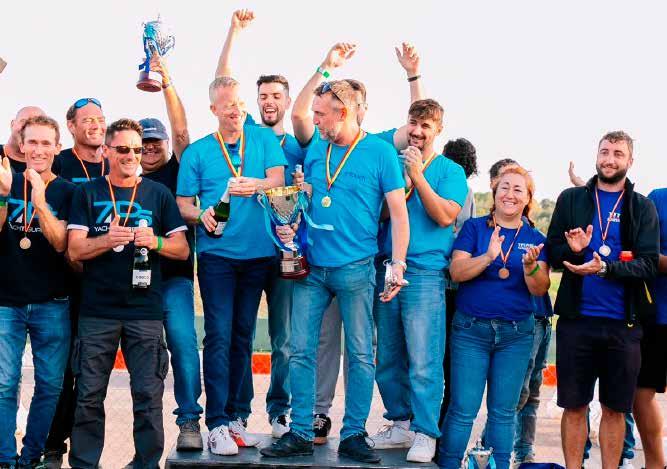
A date for your diary, Sunday 11th October, our next main fundraising event
JoyRon Foundation and E-Touch Systems located within STP, in collaboration together, are organising our fifth annual Go-Kart Racing Championship and Family Fun Day at the Magaluf Go-Kart Race Track. With 18 teams of 6 drivers per team that will practice/race throughout the day. All net proceeds raised will be for the benefit of JoyRon Foundation, helping children in need in the Baleares.
Many of the teams are from the yachting fraternity. All are welcome to join us for our 2026 event. This competitive day incorporates plenty of fun and family social activity from 10:00 to 18:00, all there for the taking, with entry to the venue being FREE ADMISSION. Where else can you experience Go-Kart racing, food, bar service, a selection of DJs lead by Diablo V, raffle prizes, children’s entertainment, children’s market, all for the benefit of a charitable local cause. Bring your family and friends, arrive when you want and leave when you want.
Anyone interested, be it as a go-kart racing team of six drivers or an individual competitor to be part of a team, or alternatively any corporation interested in being an event sponsor or giving organisational assistance on the day. Various levels of event activity / race sponsorship are available from €500 to €2,000 (sponsor one of the heats, sponsor the final, sponsor the DJ booth, sponsor the food catering, sponsor the children’s market). For team entries, event sponsorship or general support on the day just contact Jamie Brown at E-Touch Systems +34 649 277 463, jamie@etsys.eu, or Ronald Hawes at JoyRon Foundation +34 608 531 211, info@ joyronfoundation.org
The event poster will be published during the week of 17th August, so to ensure your logo is included on the event poster, please provide it by 10th August at the latest. For previous short videos of this event in past years, please go to joyronfoundation.org/joyron-foundation-go-kartingevent-archive.
We regret that due to unforeseen circumstances JoyRon has had to cancel this year’s intended gala dinner scheduled for 27th June 2026.
JoyRon is currently considering and organising a Halloween dinner and optional fancy-dress night for Saturday 31st October 2026. Watch this space for further details in the September edition.
JoyRon is in the process of launching an online art auction platform; any artists interested in being involved, please contact Ronald for more details (see below).
JoyRon advises that the small building projects totalling some €30,000 to support Granja Escola Jovent Palma are now underway. The school has been operative for 25 years and is run by a co-operative management team of five individuals (the original volunteers). Many of the children attending the facility are handicapped, autism sufferers, have Down syndrome or are suffering from other medical conditions, and most come from underprivileged families. The enhancement building facilities that JoyRon is financing will greatly improve the children’s participation in the various activities organised for them, and also improve their safety.

JoyRon is there to help the many children in need in the Baleares who are underprivileged and require support. Interested in event sponsorship? Financial corporate or individual donations? Providing an auction item or raffle prize? New volunteers to support us are also always welcome. Please contact us, together we can make it happen. ◆
www.joyronfoundation.org
E-mail info@joyronfoundation.org Phone: +34 608 531 211.



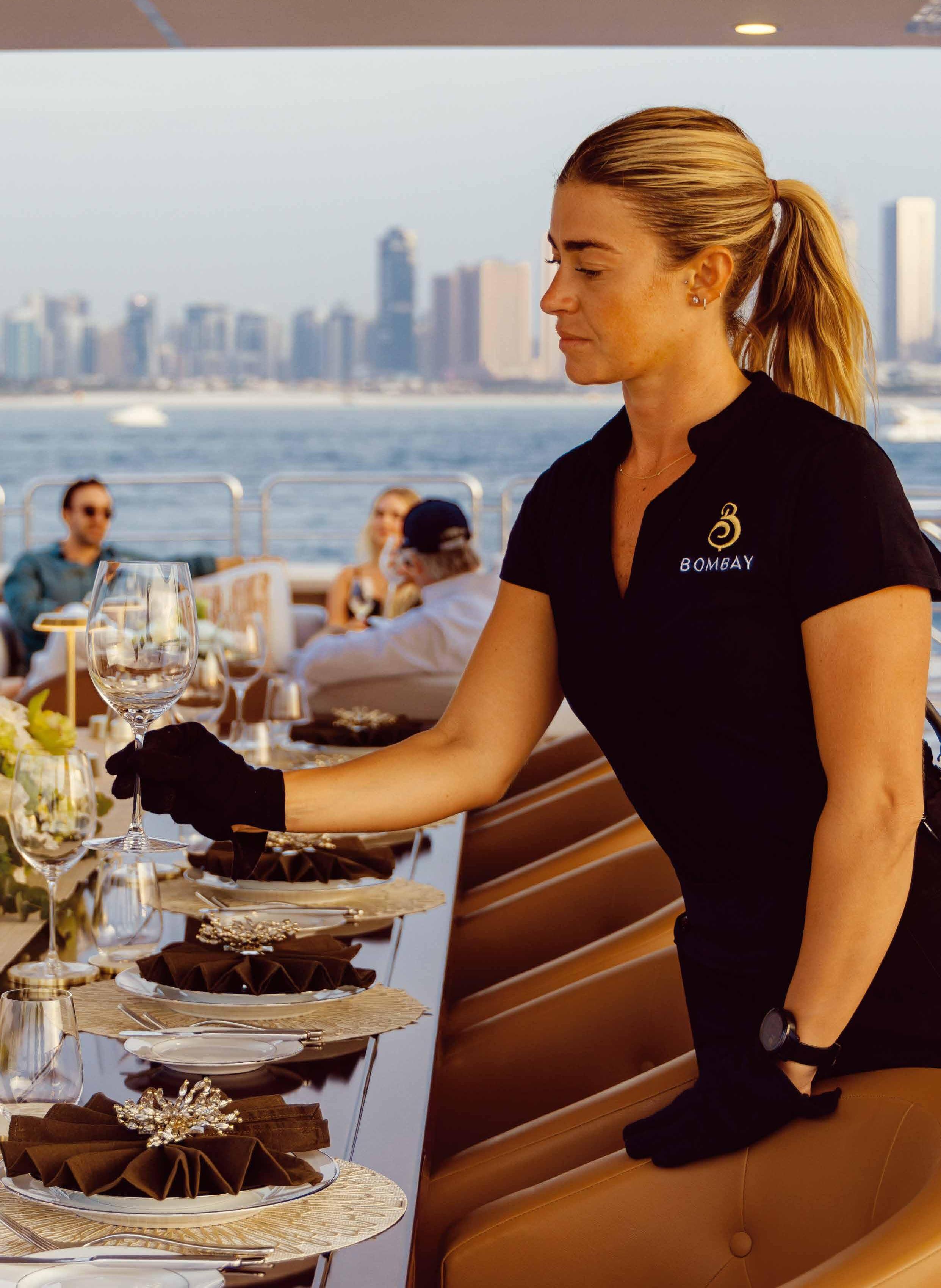
Interview by The Islander
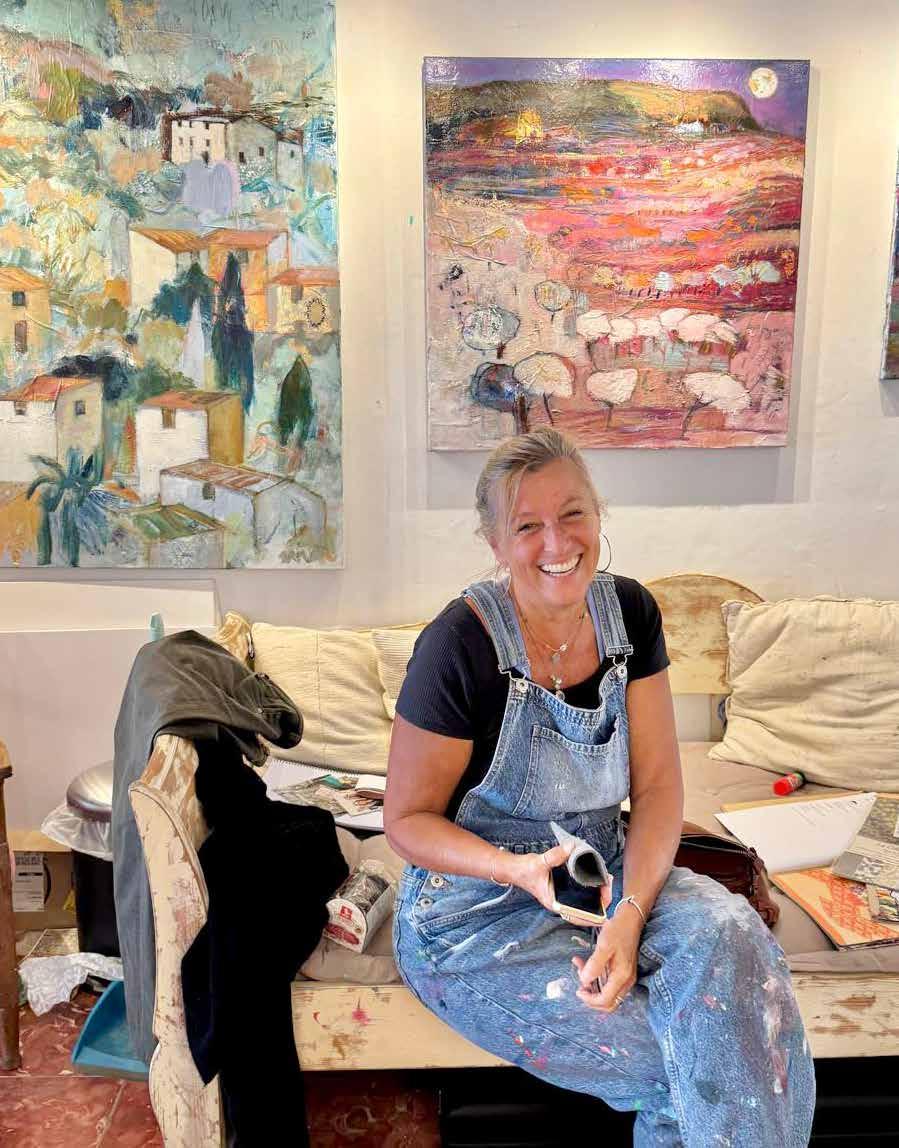
For over three decades, artist Vivian Borsani has called Mallorca home. With a rich multicultural background spanning Brazil, France and Europe, her paintings radiate colour, movement and emotion, capturing the essence of Mediterranean life through an intuitive and deeply personal visual language. In this interview, she reflects on her artistic universe, the influence of Mallorca, and the joy that continues to guide her work.
How would you describe your artistic universe to someone discovering your work for the first time? What emotions, themes, or ideas are you hoping people experience when they stand in front of your paintings?
My paintings have accompanied me through every phase of my life. They speak of my passions, desires, visions and the quiet gratitude of being alive. At their heart, they are a celebration, of colour, emotion and of Mallorca, whose nature I deeply adore.
Whether I begin with flowers, trees, fish or the sea, the subjects often dissolve into one another and become part of a vibrant composition. I work intuitively; as I paint, a piece frequently moves towards abstraction, and I simply follow where it wants to go. The result is an expression of joy and discovery, a visual diary of place, memory and feeling.
Above all, I hope viewers are drawn into the emotion each painting reveals and that they fall a little in love with it.
In what ways has Mallorca, and perhaps the Mediterranean itself, influenced your work? Do the island’s light, colours, textures or rhythms consciously appear in your paintings, or is the influence more intuitive?
Mallorca, my home, shapes everything I paint. Its light, landscapes and rhythms lived within me long before they appeared on canvas. As a young artist, I constantly sketched villages, mountains, almond-tree fields and coastlines because everything around me felt paintable.
Over time, those observations became internalised. Today, the island’s brightness, its mountains and the sea exist in my work more as memory and sensation than as direct representation. I don’t paint specific views; instead, I translate accumulated feelings into colour, form and movement. Mallorca’s light becomes my palette, its shapes become gestures, and the resulting paintings are driven by emotion rather than depiction.
How long have you been living on Mallorca, and what originally brought you here? Was there a particular moment that made you decide this island was where you wanted to live and create?
Mallorca has been my home for more than 30 years, although my connection to the island began much earlier. I first came here when I was 13, and because my parents moved to Mallorca in 1985, it always felt like home, even while I was studying and working abroad.
I was born in São Paulo, Brazil, to Lithuanian and German parents, and I was raised mostly in France, spending holidays on the island. Later, while studying in Paris, I continued to feel drawn back to Mallorca.
The decisive moment came when I had my daughters. I wanted them to grow up surrounded by nature, with the freedom of the sea and the outdoors. Around the same time, a German gallerist in Port d’Andratx offered to exhibit my work, making the decision feel both personally and professionally right.
My artistic education took me from École Graphique Penninghen and the École Nationale Supérieure des Arts Décoratifs in Paris to the School of Visual Arts in New York and the Peggy Guggenheim Museum in Venice.
Yet Mallorca remained the place where everything came together. What is perhaps most visible in my work is the influence of Brazil. My colourful palette certainly doesn’t reflect the more restrained tones often associated with Northern Europe. The exuberance, warmth and energy of Brazilian culture continue to resonate strongly in my paintings. Combined with the Mediterranean light of Mallorca and my European artistic training, these influences have helped shape a visual language that feels both personal and universal.
Who tends to connect most strongly with your art? What kinds of collectors are usually drawn to your paintings, and why do you think they resonate with them?
Many of my collectors have a second home in Mallorca. They often discover a painting while visiting the island, fall in love with it, and then take a piece of Mallorca back home with them. Many return over the years and become long-term collectors.
I also work closely with interior designers who enjoy introducing a vibrant burst of colour into spaces dominated by beige, taupe and grey tones. My paintings bring warmth, energy and personality to contemporary interiors.
Another important group of clients are yacht owners, who often commission works in custom sizes specifically designed for their boats. I enjoy creating these bespoke pieces and adapting my work to unique spaces.
What I find especially touching is that young couples often choose one of my paintings for their first home together. They tell me they are drawn to the joie de vivre and positive energy in the work. I think that sense of optimism is what connects many different collectors, regardless of where they come from.
What does a typical day in your studio look like on Mallorca?
My days begin early. I love the tranquility of Santa Catalina in the morning, and by 8:30, with a cup of tea in hand, I am already preparing canvases and getting ready to paint.
Music is essential to my process. I usually start the day by putting on music, dancing a little, and then moving between several paintings at once. I almost always have two or three works in progress, allowing ideas and energy to flow from one canvas to another.
After about three hours of painting, I take a short break and enjoy a tea at Perritos Café before returning to the studio. The rest of the day unfolds much like the paintings themselves, intuitively, guided by colour, movement and whatever new discoveries emerge on the canvas.◆ https://www.vivianborsani.com/
Written & photos by Aethos Mallorca
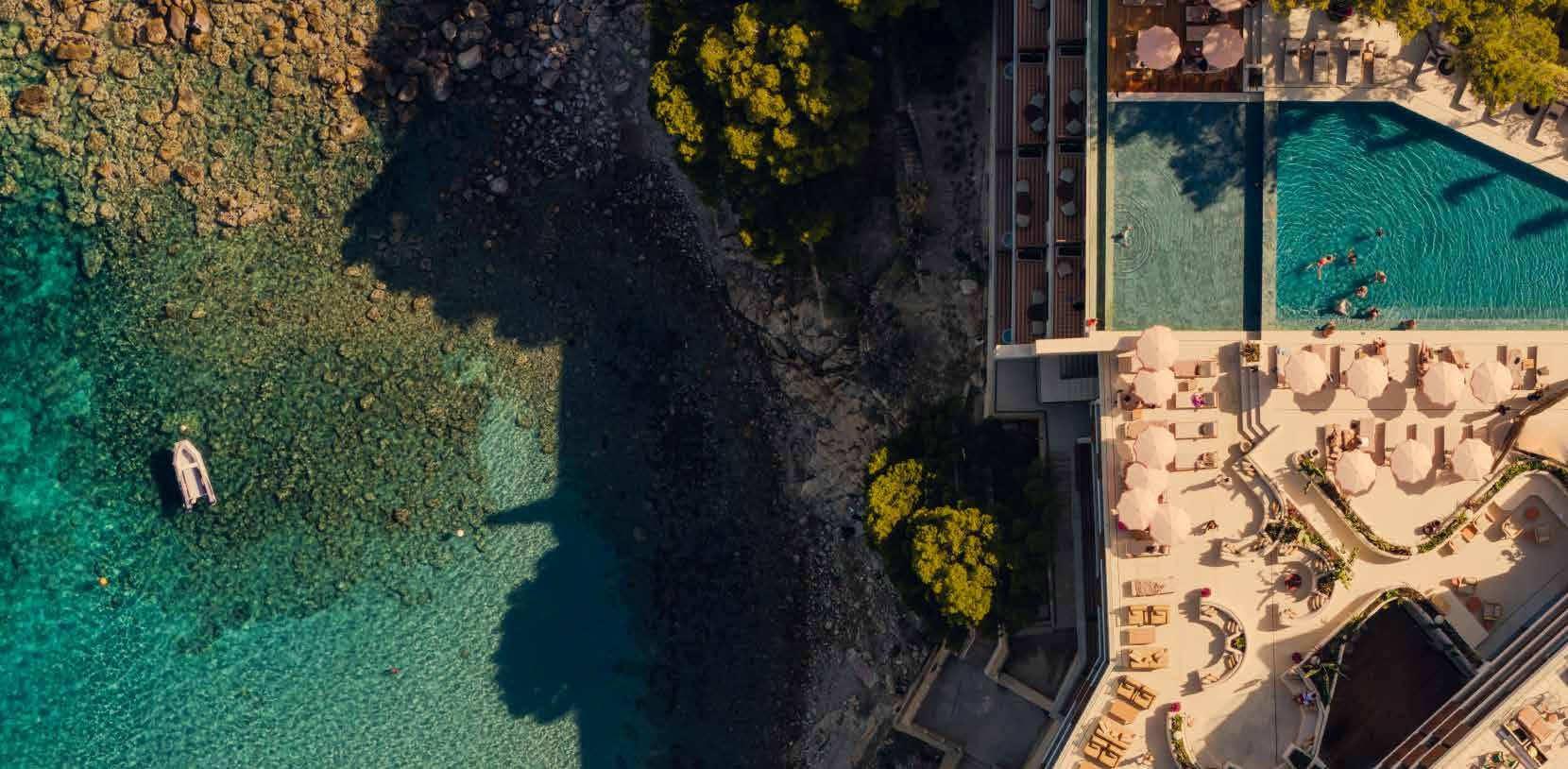
AA luxury retreat by the sea. Welcome to Aethos Mallorca, where the essence of island living comes together effortlessly.
Perched between Paguera and Cala Fornells, the hotel offers a refined yet effortless approach to Mallorca, where design, nature and a slower pace coexist in balance. Home to 61 rooms and suites, most with sweeping sea views, Aethos Mallorca invites guests to experience the island from a unique perspective. Yacht owners and guests can anchor directly in the bay below and access the hotel directly from the water, making it an ideal stop for those exploring Mallorca by sea.
More than a traditional hotel, it is a place for both rest and exploration, where days unfold between wellness, movement, gastronomy and moments of pause.
The hotel's three dining venues each offer a distinct experience. ONDA, the sea-to-table restaurant, celebrates local and seasonal ingredients through a contemporary menu inspired by the region. IKAT Pool Club provides a relaxed setting for long lunches overlooking the bay, while RAIG Rooftop offers sunset cocktails and spectacular sea views.
The Spa features a Finnish sauna, steam room, sensory showers, indoor pool, jacuzzi and a curated selection of bespoke treatments, including massages and facials.
At its core, Aethos Mallorca reflects a lifestyle rooted in connection to the island, to oneself and to a wider community , shaping a contemporary vision of Mediterranean living.◆ www.aethos.com/mallorca
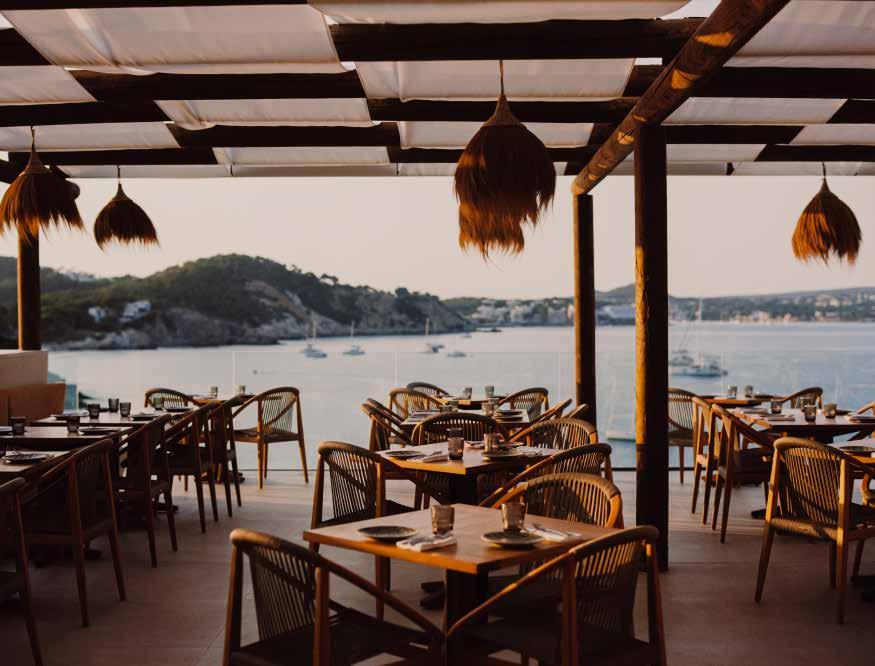
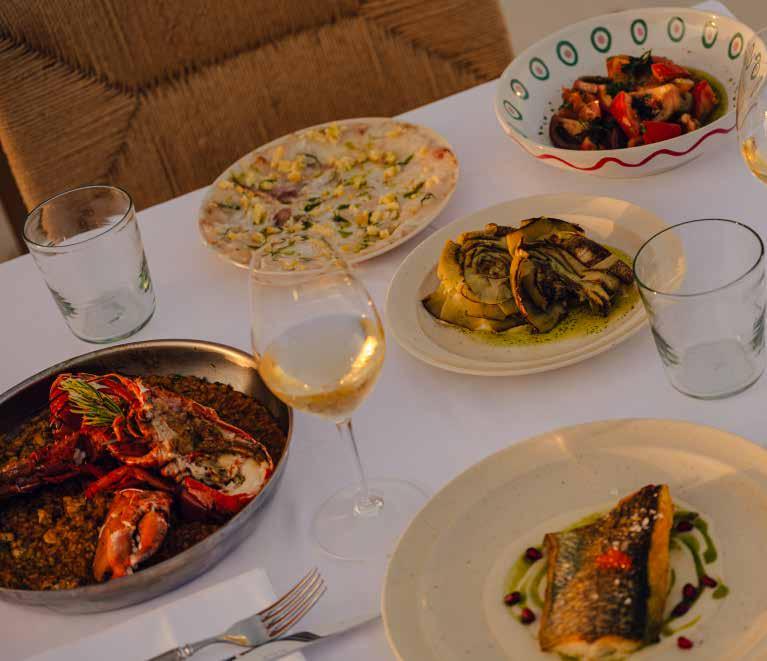
Written by Mark Branagh, BMComposites & photos by PalmaVela
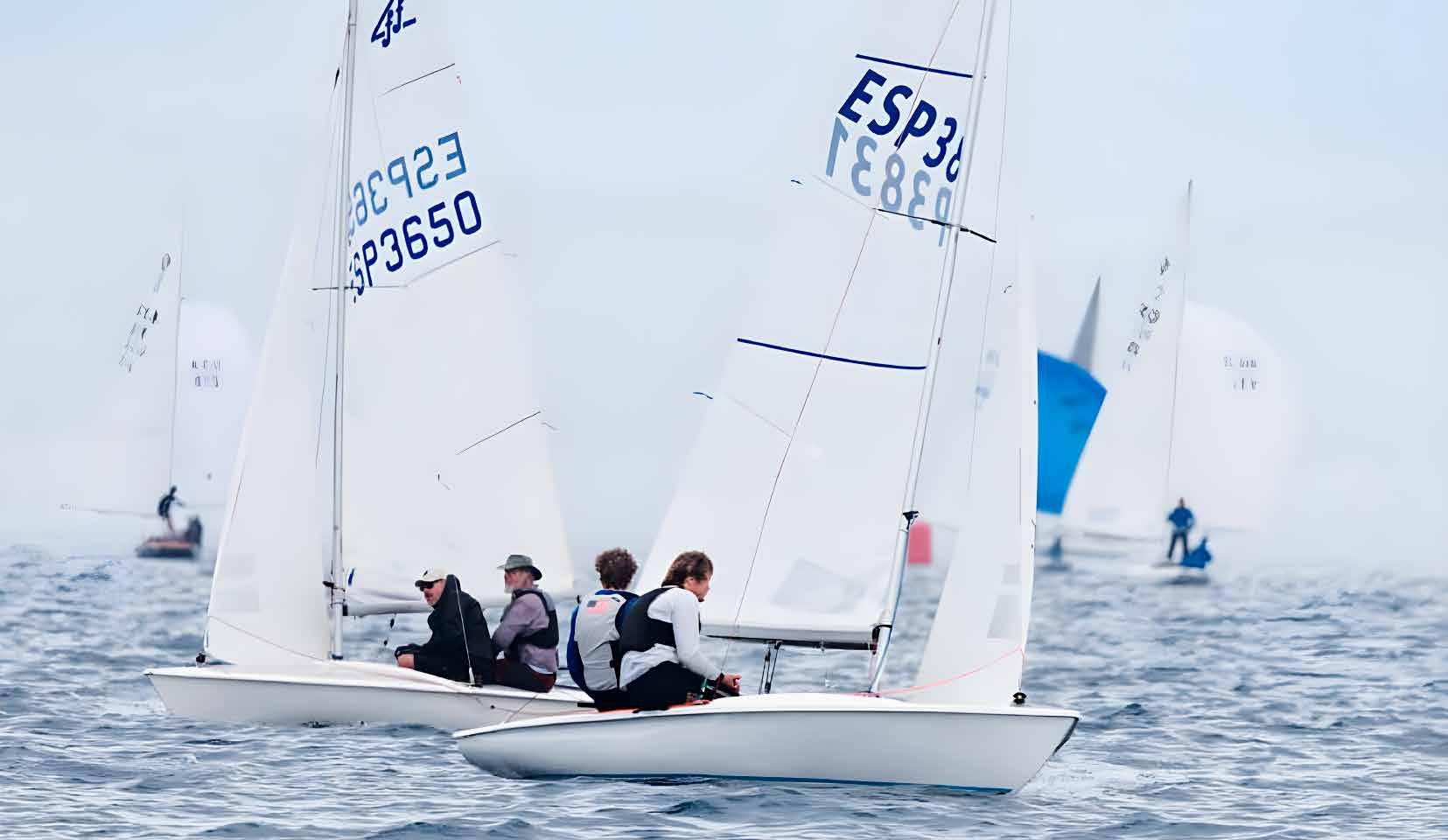
Day two was also light and shifty from the east, which gave some tactical challenges, waves and light wind is always difficult in the Flying Fifteen so the ability to gear change when necessary is an important factor.
Day three was unfortunately cancelled due to rain, storm clouds and unpredictable winds.
With several new sailors in the class, the competition was tight, but the series was won by Mark Branagh and Victor Pérez with three race wins, sailing Femme Fatale 4009.
Josh Banks and Dylan Long in Osprey 3831 sailed well to secure 2nd place, while a fierce battle raged for 3rd place between the two Brazilian teams. Bernardo Arndt (three-time Olympian) and crew Patrick Hallkvist in FFiskado 3650 finally got ahead in the final race ahead of Ralph Henning and his son Ivo.
Congratulations to the two women's teams competing, and to all those who made the effort to attend, as well as to our fleet captain, Rafa, who helped arrange the logistics for moving boats to Palma.
Also, a big thanks to the Real Club Náutico de Palma for hosting such a great event and welcoming the Flying Fifteen class back to Sandberg PalmaVela.
We hope to be back next year in larger numbers.◆ www.palmavela.com
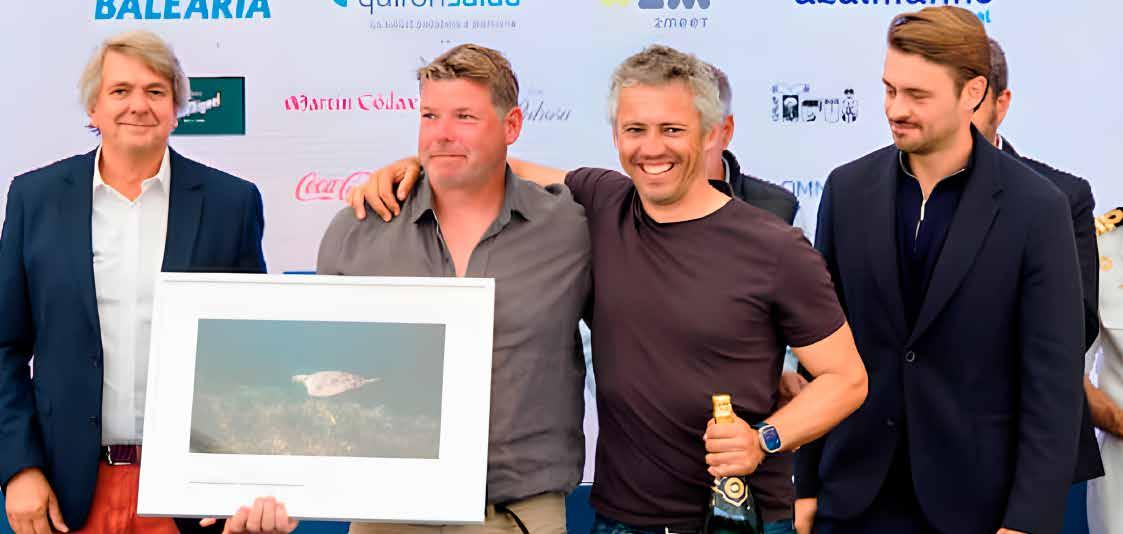
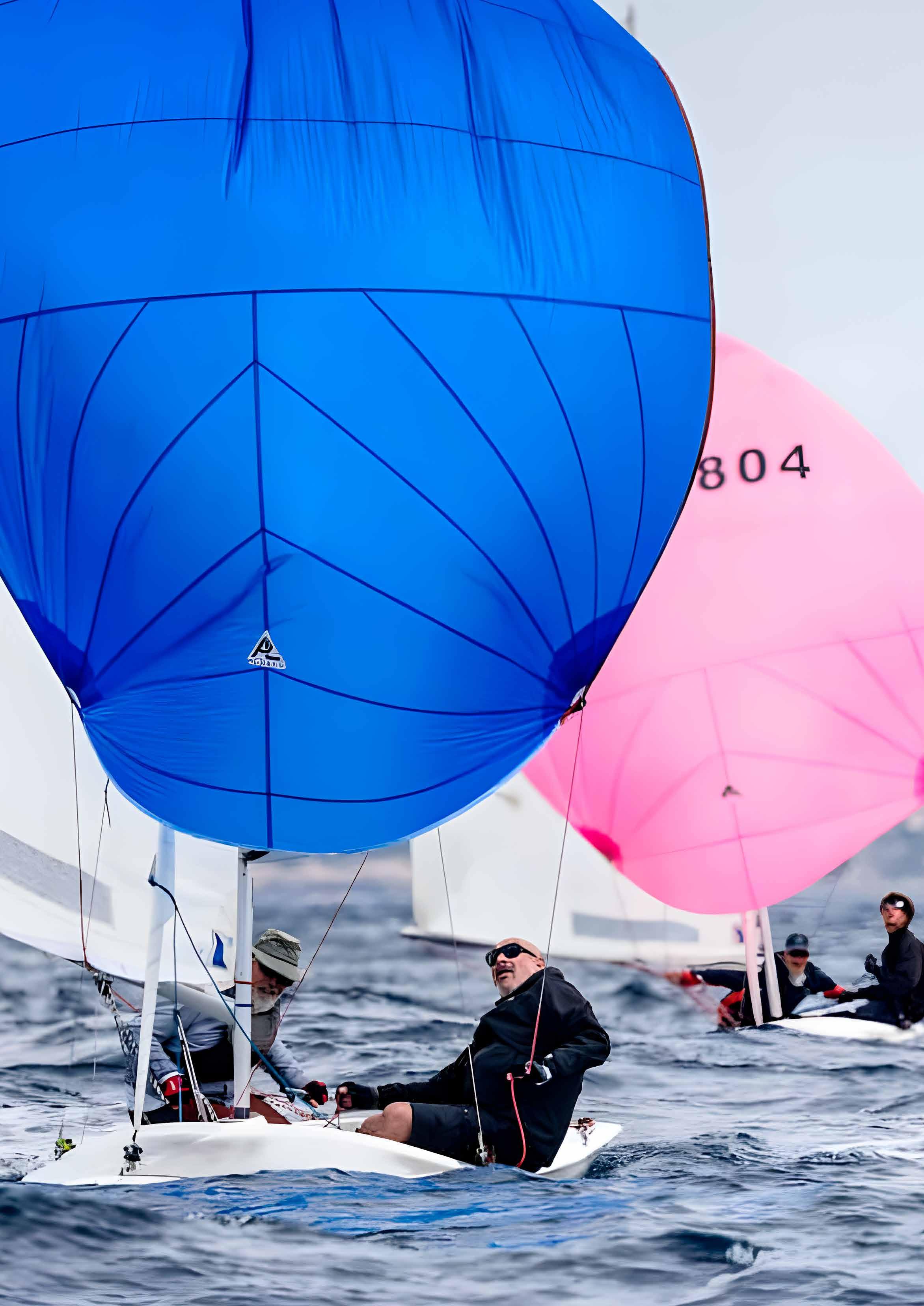
"The fleet was exceptionally competitive this year, and the changing conditions across the bay made every race a challenge. We were pleased to put together a consistent series, and it was great to be back racing at Sandberg PalmaVela with such a strong turnout on the water."
— Mark Branagh
Written by The Islander & photos by Shutterstock
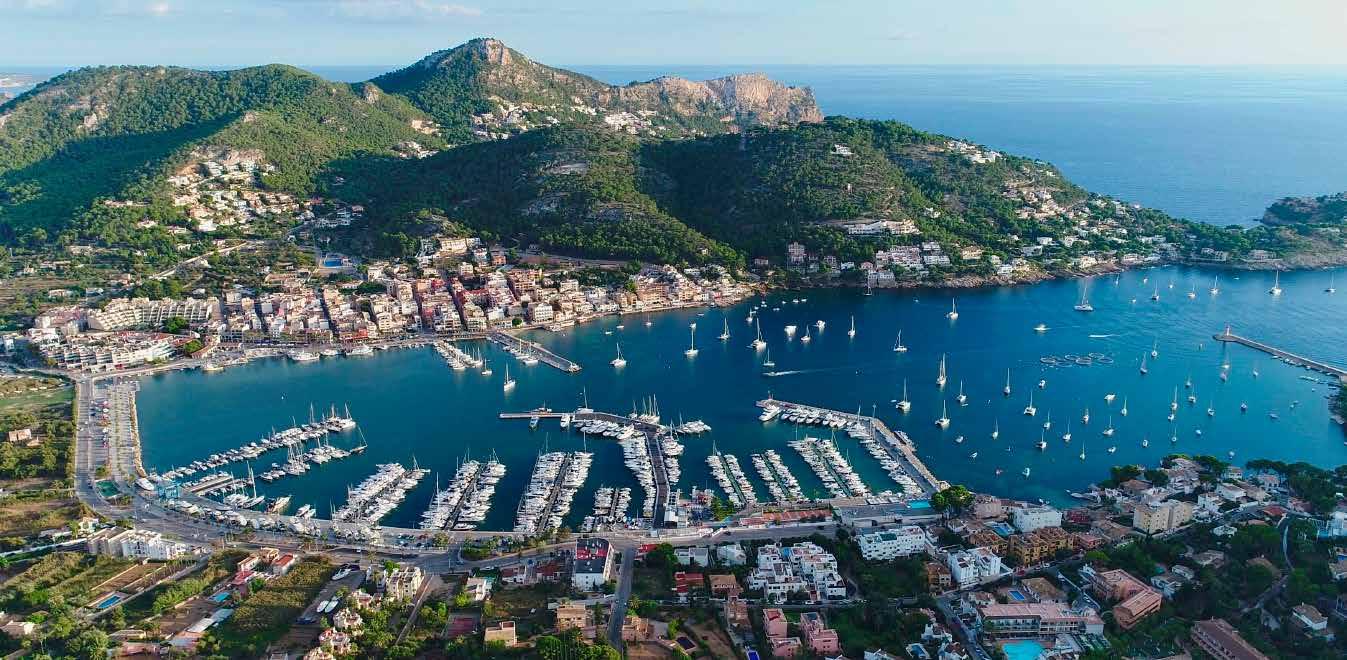
ADN Mediterráneo and the Association of Berth Holders of Andratx have joined forces to seek an urgent solution for nearly 100 small recreational boats affected by recent changes at Port d'Andratx.
The issue affects mostly Mallorca residents who, following a change in port management, have lost their status as permanent berth holders and are now being treated as transient users.
According to those affected, this has led to dramatic increases in berth fees, with some boat owners facing costs rising from less than €200 per month to around €1,300.
Both associations warn that the increases threaten the future
of local, family-oriented boating and could force many residents to give up access to the sea.
The Association of Berth Holders is compiling a register of affected vessels while continuing discussions with the marina, the Andratx Sailing Club and PortsIB. Toni Oliver, president of the association, said a temporary proposal has already been submitted and is awaiting a response.
ADN Mediterráneo president Lorenzo Pons said the case reflects a wider challenge facing social boating in the Balearic Islands.
He called on public institutions and PortsIB to explore all available options to preserve the social function of ports and ensure they remain accessible to local communities.◆
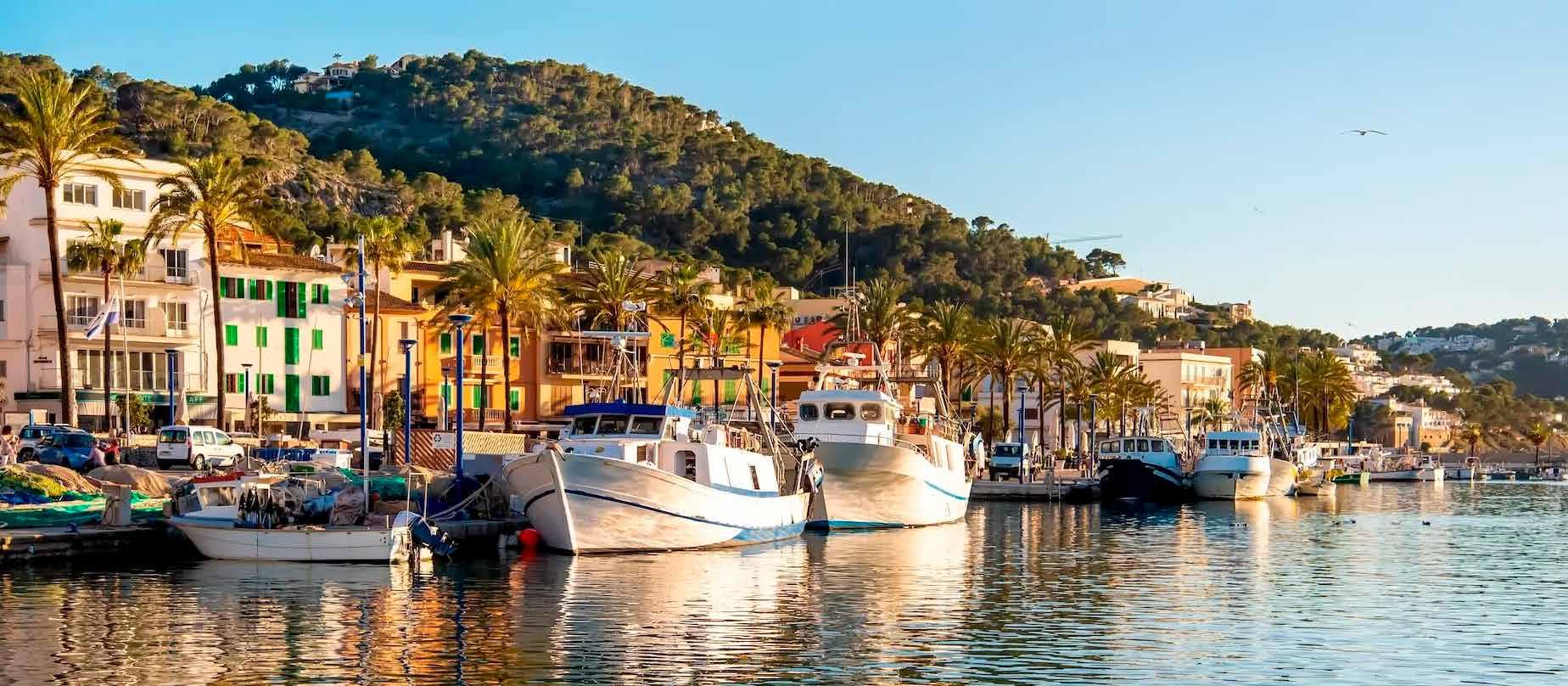
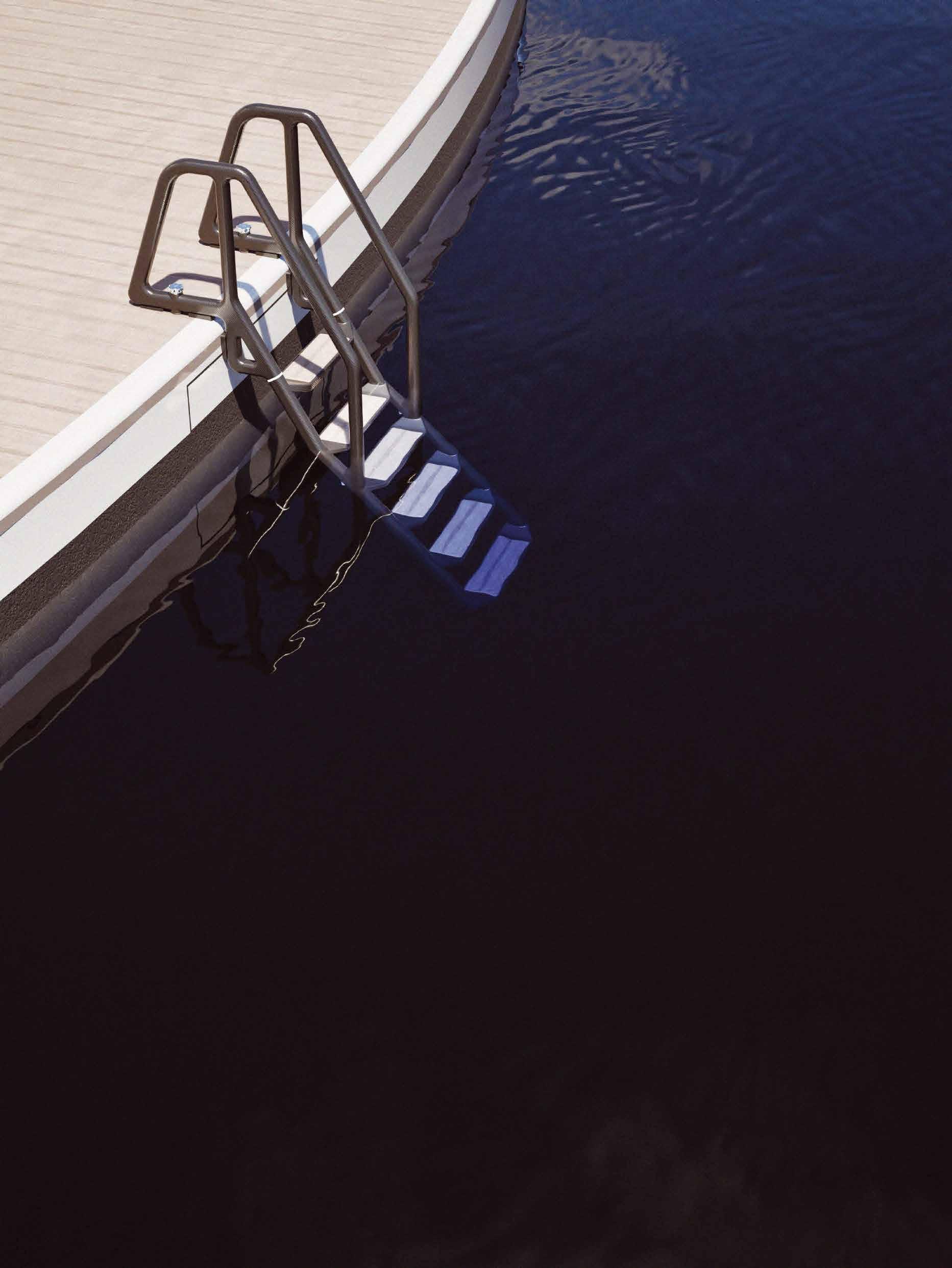



Written
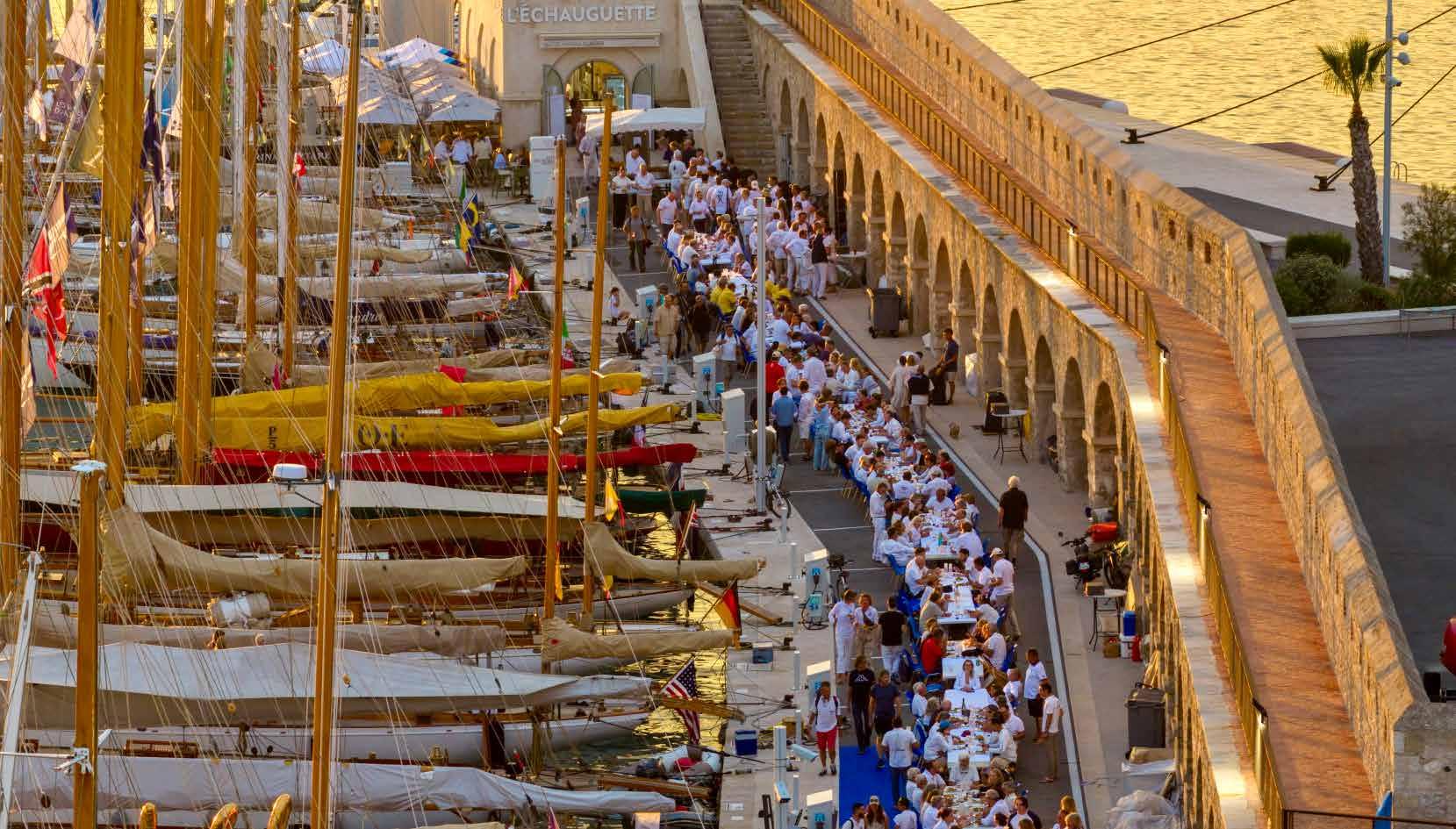
Some regattas are about trophies. Les Voiles d’Antibes is about community and tradition. Since 1996, the Société des Régates d’Antibes has opened the Mediterranean classic sailing season with this gathering of époque, classique, and Spirit of Tradition yachts in the Bay of Antibes, that luminous stretch of water framed by Cap d’Antibes on one side and the old Vauban ramparts on the other.
Neighbouring to the left and right: Cannes, Monaco, St Tropez, the beautiful cities and etapes of the classic racing circuit. Thirty editions in, it remains the first major rendezvous of the circuit, the moment the season officially begins.
The 2026 edition carried extra weight. Billed as the 30th anniversary, the event returned to the Bastion Saint-Jaume at Port Vauban with a redesigned village concept capped at 2,500 visitors at a time, a deliberate move to recapture the intimacy of the early editions. President Thierry Piel succeeded. The harbour felt alive rather than overrun.
All seventy competing yachts in the nine different classes were berthed along the same pier, open to the public, no velvet ropes, no distance. One more beautiful than the next. All full of stories of races, adventures of brave owners and famous guests. You could walk alongside these extraordinary vessels,
peer into cockpits, and talk to the people who sail them.
The fleet brought its own anniversaries. Two icons of the Panerai Classic Yachts Challenge circuit celebrated its centenary_ the Irish Hallowe’en - and its 90th birthday – the Irish Eilean - this year, both born from the drawing board of William Fife III. Hallowe’en, the 24.7-metre cutter launched in 1926, set a Fastnet record that year which stood for thirteen years and has been winning classic regattas ever since.
Eilean, her fleet-mate and near-contemporary, is the 22-metre Bermudan ketch designed in 1936, the same year Panerai produced its first watch. And now sailing under Officine Panerai’s flag after a meticulous restoration. Her name means “little island” in Gaelic, and she carries it with grace.
Seeing both yachts on the start line of the Big Boat category, along with Mariska 1908, Viveka 1930, and the 40 m Black Swan 1899 under full sail, with Cap d’Antibes in the background, was exactly the kind of moment this circuit is made for.
On the water, the Mediterranean offered its characteristic unpredictability. Wind conditions were moderate through most of the week, enough to race, not enough to be entirely comfortable about it. One race was cancelled when conditions failed to reach the minimum threshold; courses were shortened on other days. Adding a thoroughly modern complication, the bay was thick with fancy superyachts at
• Founded: 1996, Antibes, France
• 2026 Edition: 30th anniversary, 27–31 May, Port Vauban, Bastion Saint-Jaume
• Organiser: Société des Régates d’Antibes
• Panerai title sponsor: Part of the Panerai Classic Yachts Challenge circuit
• Classes: Époque (pre-1950), Classique (pre-1976), Classic IOR, Spirit of Tradition, Tofinou
• Notable anniversaries: Hallowe’en (1926, Fife, 24.7m cutter), Eilean (1936, Fife, 22m ketch, owned by Panerai) Falcon (1926, Herreshoff, Q-class)
• Big Boats winner: Mariska (1908, William Fife III) all races + Concours d’Élégance
• Admission: Free to the public
anchor in numbers that exceeded all expectations; a forest of superyacht hulls in the racing course that sent the fleet weaving between them.
With the old town of Antibes rising behind the anchored giants and the hillsides of Cap d’Antibes as backdrop, the scenery was absolutely stunning. The final day rewarded everyone’s patience: a clean northwesterly settled in, and racing was everything a classic regatta should be.
I had the privilege of racing aboard stunning 15 Metre class Mariska 1908, a William Fife III gaff cutter. Mariska is oldest of the last three surviving 15 Metres still actively racing: Tuiga 1909, flagship of the Yacht Club de Monaco, and Lady Anne 1912.
At 27 metres overall, Mariska is as much an architectural statement as she is a racing machine, defined by her long overhangs, impeccable pedigree, and a presence that turns heads in any harbour. In the Big Boat category, she performed exactly as her palmarès would suggest, by winning every single race. And I enjoyed every second racing on Mariska at this exceptional 30th anniversary regatta.
Then came the Concours d’Élégance: If the racing belongs to the stopwatch, the Concours d’Élégance belongs to the soul of the event. The crew had decided, that winning it would require something more than simply looking smart
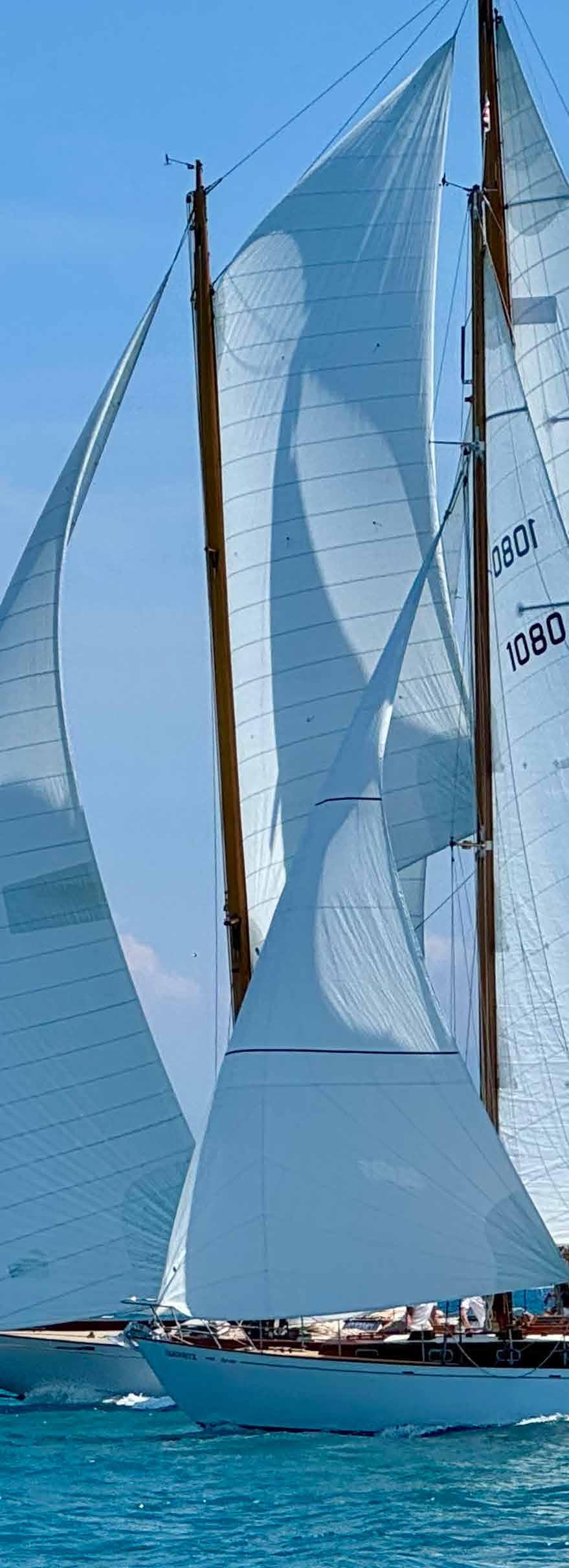
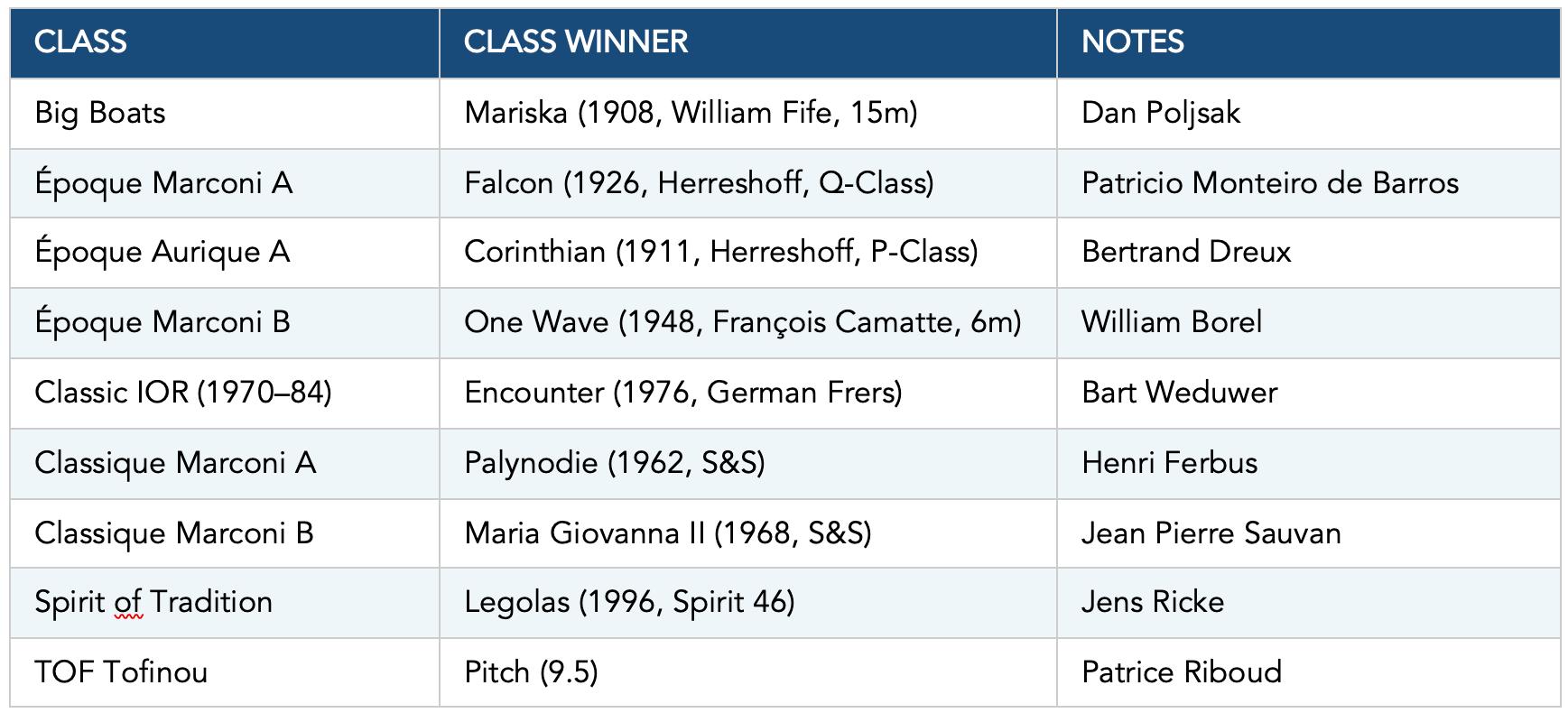
on deck. A classic Riva was arranged to tow us slowly past the judges’ platform and two of our sailing girls climbed the spreaders.
The rest stood on deck in matching kit, French music playing, the whole crew cheering to the crowds lining the quay. The audience cheered back. It was one of those moments a regatta programme cannot manufacture. It either happens or it doesn’t. It happened. The judges agreed. We won.
Ashore, the evenings matched the days. One night, a long table was set up dockside for a white paella dinner, one of those easy going Mediterranean meals that starts at sunset and ends well after the stars are out. Crews from different boats, owners, guests, and organisers mixed together without
hierarchy. That ease is one of the things that sets Les Voiles d’Antibes apart from more gilded events. The atmosphere is genuinely inclusive. Live music drifted across the village, the old town was minutes away, and the quays glowed with the warm light that the Riviera does so effortlessly in late May.
Thirty years in, Les Voiles d’Antibes has earned its place as the season’s defining preamble. The racing is real, the classic yachts are irreplaceable, and the setting does not get old.
Looking very much forward to the 31st edition.
Save the date: June 2 to June 6, 2027 ◆
www.voilesdantibes.com
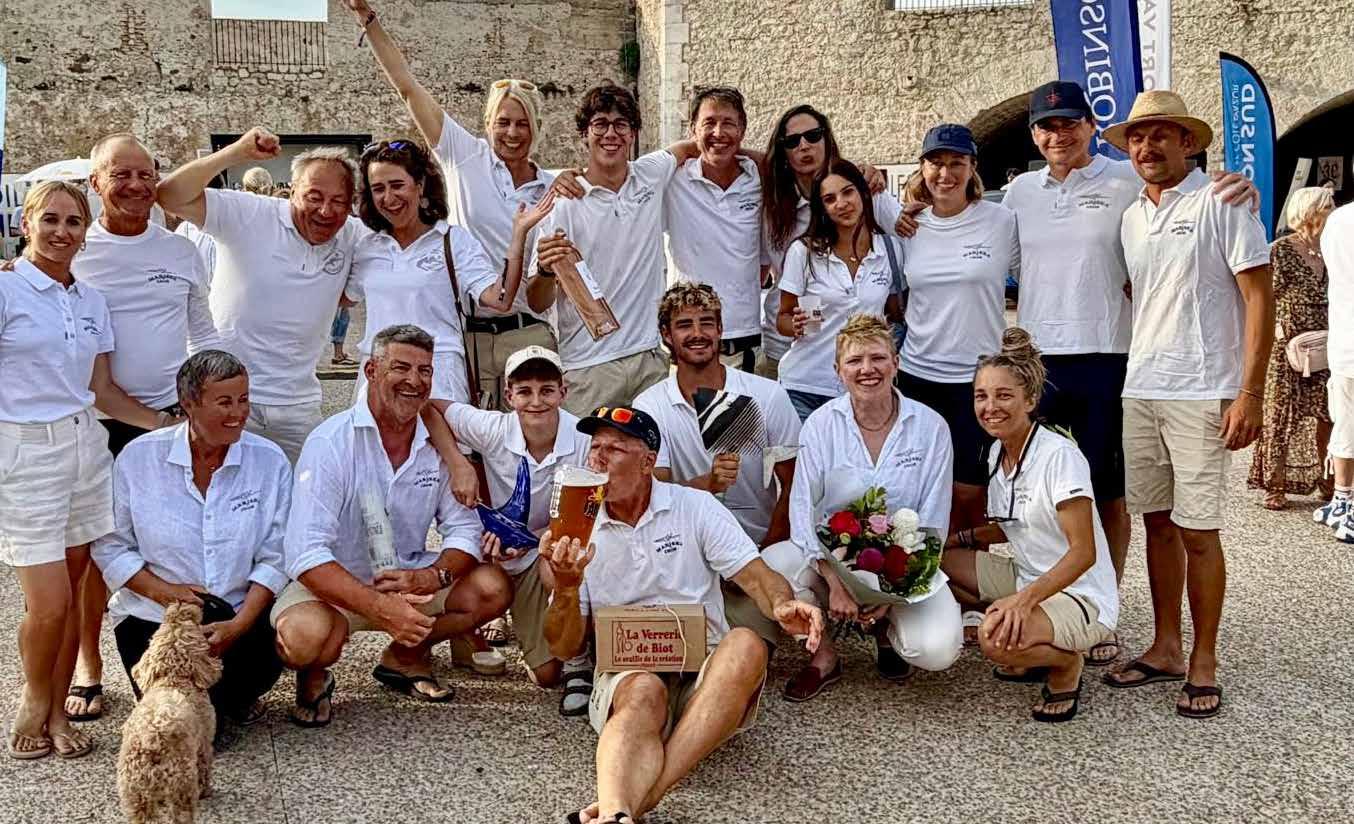
Written by Chris Baird & photos by MC-ZERO
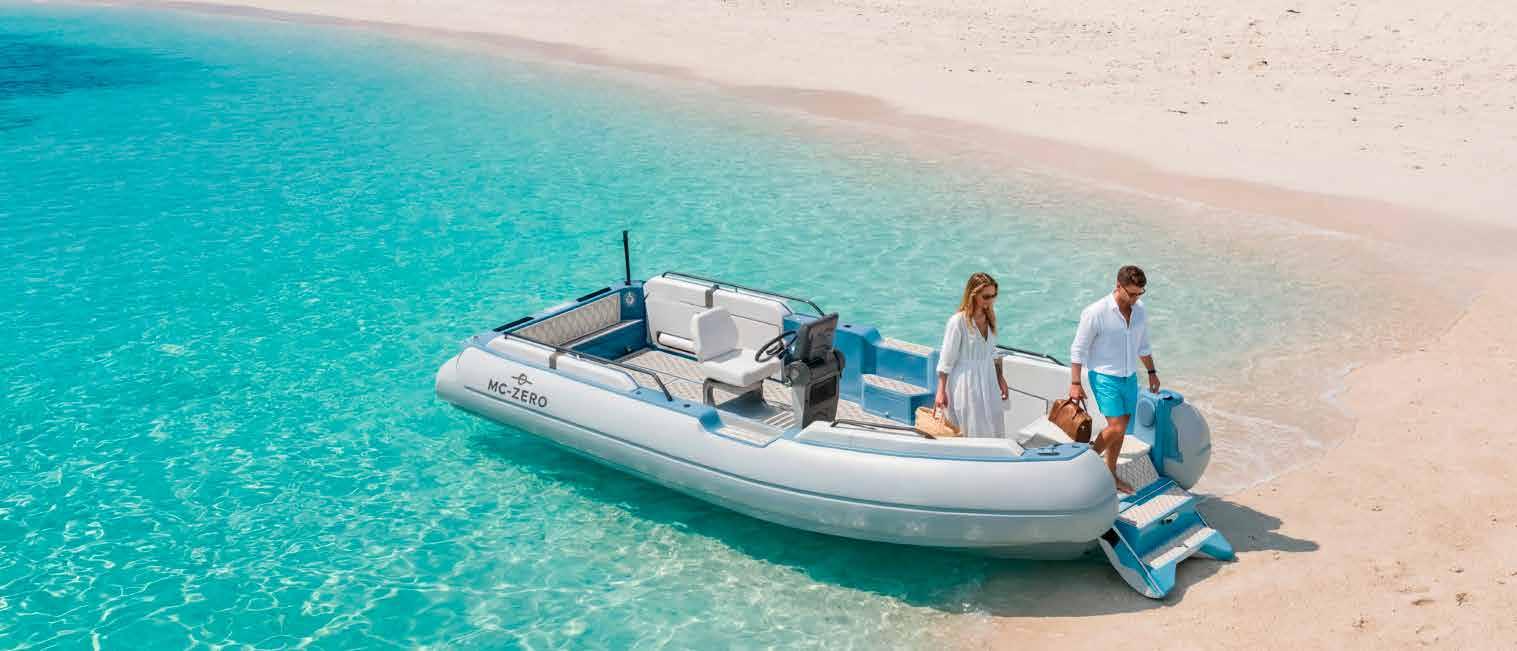
What happens when you combine sixty years of elite composite hull and racing yacht expertise with award-winning electric jet technology? You get the MC-ZERO, a groundbreaking collaboration between McConaghy Boats and ZeroJet that is completely redefining the luxury yacht tender. After turning heads and earning rave reviews at the Palm Beach and Palma boat shows, this electric carbon-fibre tender has officially proven it is more than the sum of its parts.
Power meets sustainability
The flagship model, the MC-ZERO 450 (4.5 m), comes fully kitted with premium features that other brands would usually lock behind an upgrade menu. At its heart is a sustainable, emission-free propulsion system that eliminates the hassle of carrying extra fuel sources on your mothership.
The tender is packed with high-end, intelligent engineering:
Dual electric jets: it features two 30 kW (40 hp each) ZeroJet electric motors, the most efficient power-to-weight motors in the world. This dual setup provides vital built-in redundancy for peace of mind when exploring remote areas. Advanced battery tech: powered by Safiery's cutting-edge 3C LiPo semi-solid-state batteries, the tender can continually discharge three times its capacity, giving you the instant punch needed to get up on the plane effortlessly.
Mothership back-up: with 32 kWh of onboard battery storage and advanced DC-to-DC chargers, the tender can even act as a backup
Innovation doesn't stop at the motor; the MC-ZERO features a patented, world-first movable helm. Boaters can smoothly shift the helm from the stern to mid-ships or right to the bow. This clever design opens up unparalleled deck space to transport dive gear, provisions, or water toys with ease. Furthermore, the abundant battery power drives luxury conveniences like electrically dropping bow steps, helm and an adjustable rear platform. Finally, the tender is wrapped in a continuous, highimpact but soft fendering system.
The MC-ZERO will be on display at the upcoming Cannes boat show and available for on-water testing in the stunning South of France. Coming soon will be the 325 model (3.25 m).
◆ Discover the next generation of tendering at www.mc-zerotenders.com.
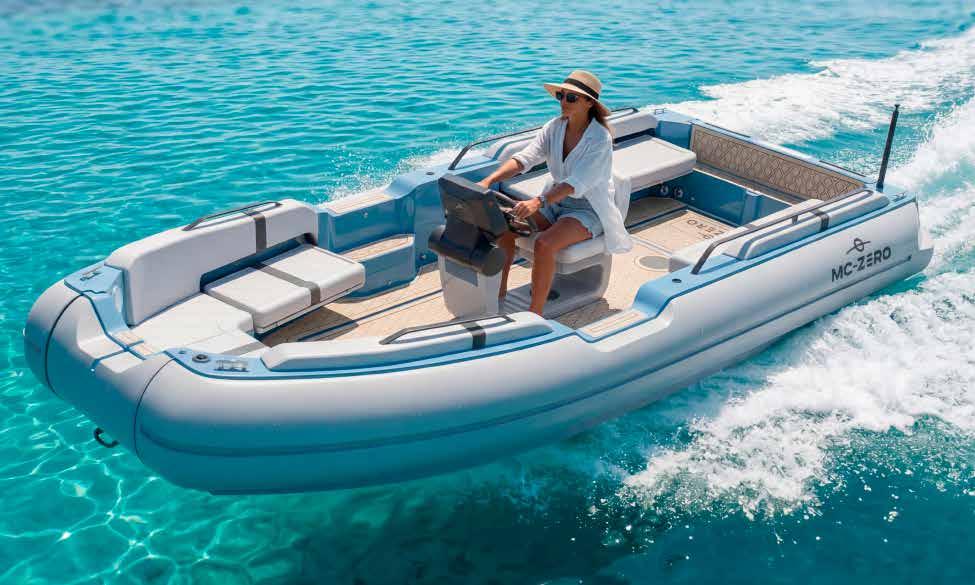
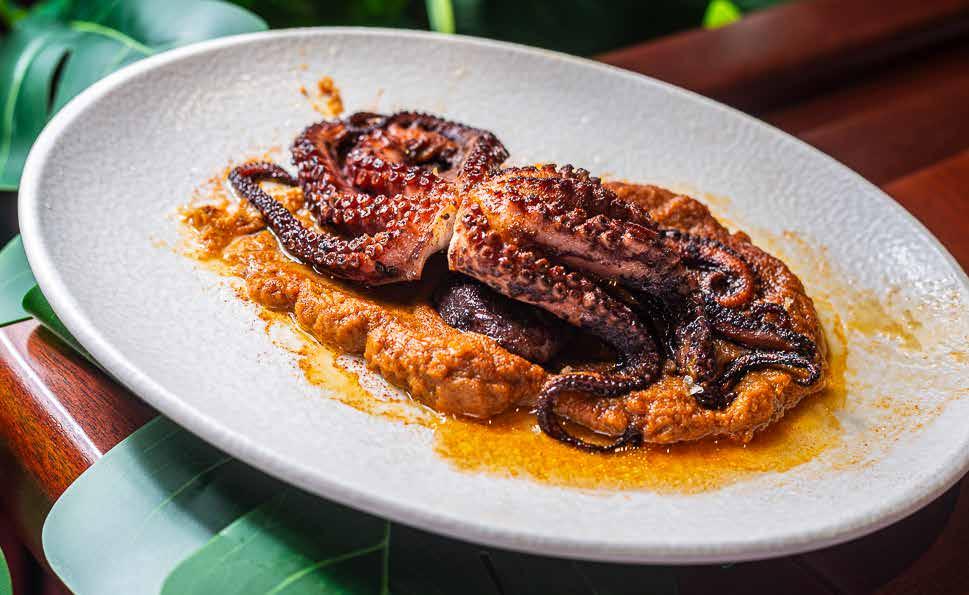
Located in Casino de Mallorca, S’hort has made a name for itself as a unique dining experience in Palma for those seeking to enjoy Mediterranean cuisine with a distinctive character. The restaurant combines tradition and innovation with a menu designed to delight diners with authentic flavours and meticulously prepared dishes, always with a focus on high-quality ingredients.
The restaurant is open daily for dinner from 8 pm to midnight, extending its opening hours to 1 am on Fridays and Saturdays. The venue also offers bar and cocktail services from morning onwards, making it an ideal meeting place for both locals and visitors looking to enjoy a unique dining experience within Casino de Mallorca.
Its location at Avenida Gabriel Roca in Palma, inside Casino de Mallorca, situates it in the heart of one of the city’s most popular areas: Porto Pi and its seafront promenade. This location ensures easy access both for those visiting the island’s capital as well as those searching for a unique restaurant where they can enjoy a special dining experience.
The name S’hort has a significant meaning closely related to Mallorca’s identity and tradition. The word originates from the Mallorcan language and is associated with ‘luck’, whilst also evoking the freshness and authenticity of a ‘vegetable garden’. Both concepts reflect the restaurant’s philosophy: good fortune shared around a table and fresh, carefully selected ingredients for every dish. This idea relates directly to a cuisine that focuses on produce and flavour as the key elements of every culinary experience.
S’hort’s culinary concept excels in its reinterpretation of Mediterranean recipes with a contemporary and creative twist. Each dish balances tradition and innovation, offering surprising combinations whilst maintaining the essence of local cuisine. The menu features dishes designed for group sharing, as well as more elaborate creations that allow diners to discover new flavour combinations and nuances.
The recognition S’hort has received at various gastronomic competitions confirms the reputation and quality of its cuisine. The restaurant received the Bronze Tapa award at TaPalma 2026 and was also acknowledged with first prize at the 4th HORECA Popular Seafood Competition, firmly establishing itself as a benchmark in contemporary Mallorcan cuisine. These accolades are a reflection of the team’s commitment to creativity, quality produce and a type of cuisine capable of surprising and delighting diners every time. ◆ www.casinodemallorca.com
What does Echezo bring to Ibiza that didn’t exist before?
Discretion. Access. Precision. Ibiza has energy, but very few places treat wine with the same seriousness as the world’s great cellars. Echezo was created to fill that gap, quietly.
Who is it really for?
Collectors, yacht hosts and clients who are not looking for a wine list, but for the right bottle. People who understand that provenance matters more than price, and that the story behind a wine is part of its value.
What defines your selection?
We focus on the most exacting terroirs of France, Burgundy, Bordeaux, Champagne. Not volume, only relevance. Producers such as Domaine de la Romanée-Conti, CocheDury, Domaine Prieuré Roch, Antoine Jobard and Salon, as well as icons of Bordeaux such as Château Cheval Blanc or Château Lafite Rothschild. Wines that are allocated, often unobtainable. Every bottle is sourced with full traceability, stored correctly and offered only when it meets our standards.
And the experience?
Echezo is not a shop. It’s a controlled environment. A place where you can open a rare bottle without noise or spectacle. The bar exists for that, to taste, to compare, to understand.
You also work beyond the boutique?
Most of our clients never come in. We deliver directly to yachts and villas across Ibiza under strict transport conditions. We build private cellars, advise on acquisitions and verify provenance. We also curate private tastings and dinners, on board or at home, always led by a sommelier.
And the indulgence element?
Wine is complemented with a precise selection of caviar (Baeri, Oscietra, Beluga) and foie gras. Not extensive. Just exact.
What’s the philosophy behind it all?
Less noise, more substance. Echezo is about access to exceptional bottles, without ostentation, where craftsmanship, patience and conversation still matter. ◆
www.echezo.com +34 636 350 695 echezo@proton.me
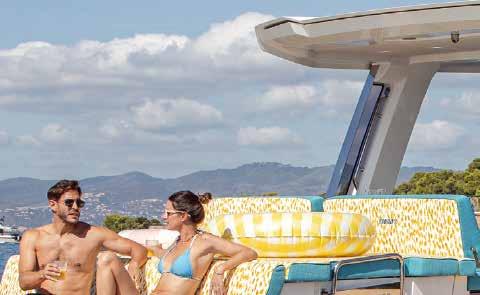
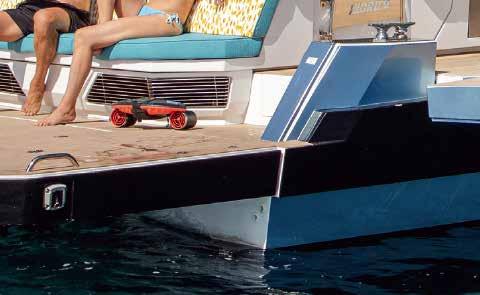
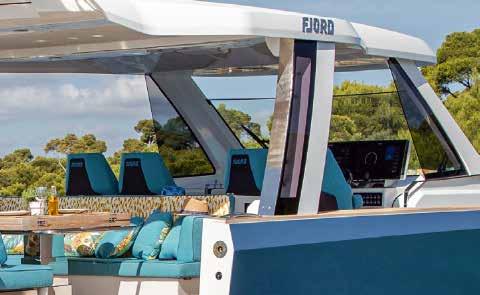



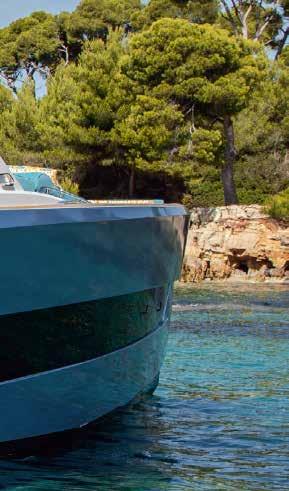
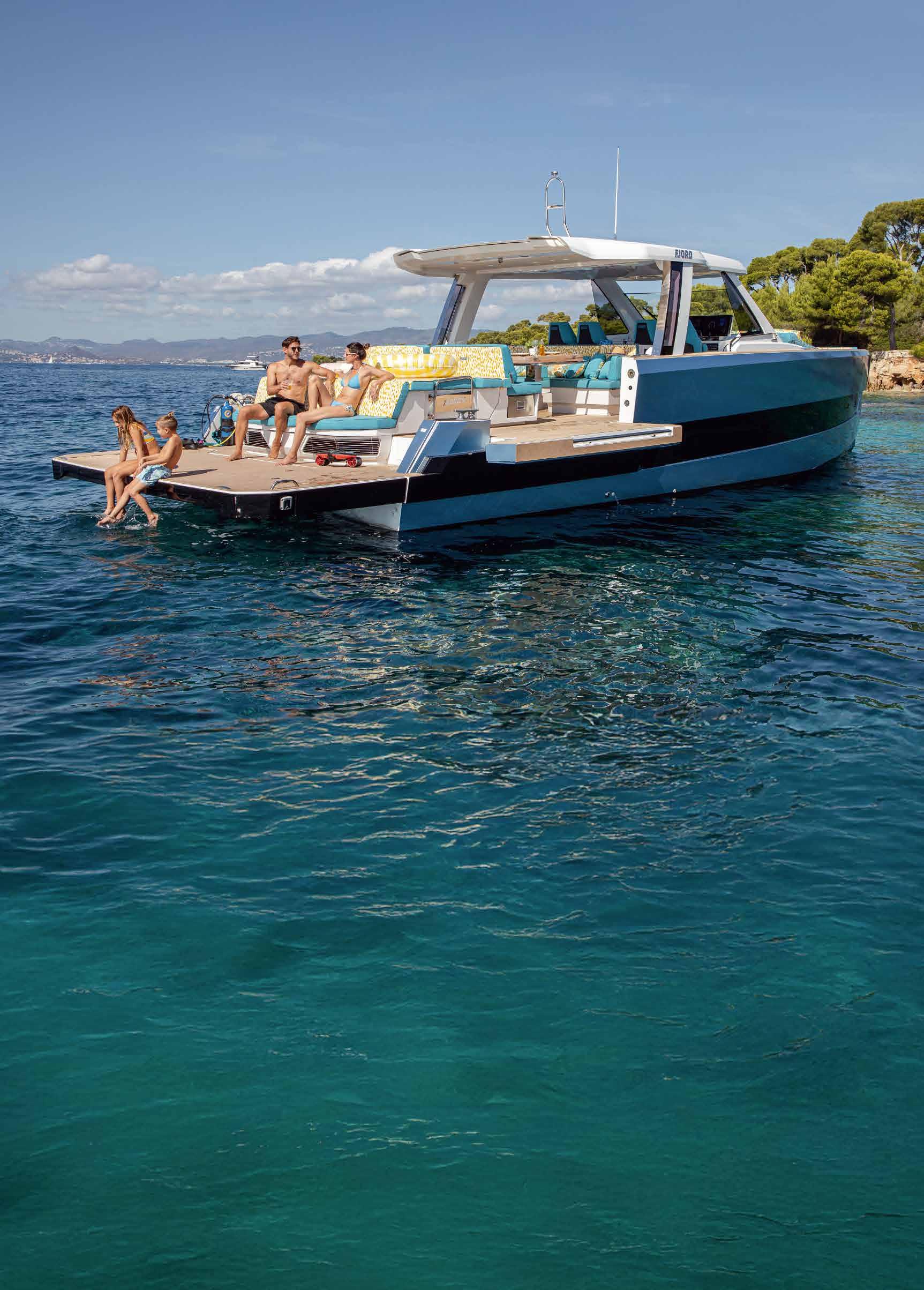
One of the more interesting observations from the yacht charter industry is that conversations rarely end where they begin.
Many enquiries start with questions about yacht size, amenities or availability. Yet according to Mallorca-based brokerage SELECT Boutique Agency, the most successful charters often begin with a different question altogether: not “Which yacht would you like?” but rather “What would you like your day to feel like?”
While yacht charter is often associated with yacht brands, specifications and lifestyle imagery, guest priorities are typically far more nuanced. Behind many enquiries lies a desire for something less tangible: uninterrupted time with family, the flexibility to celebrate a special occasion without constraints, or the opportunity to experience the sea from a perspective that feels both private and personal.
For charter professionals, this highlights an important distinction between what initially attracts attention and what ultimately shapes the guest experience. In practice, very few guests enquire about a specific yacht brand. Equally, a higher charter price does not necessarily translate into a more successful experience. The most successful charters are often those in which the yacht, crew and itinerary are aligned with the purpose of the trip rather than simply maximising size or amenities.
Another notable shift has been the growing emphasis on personalisation. While popular beach clubs, waterfront restaurants and well-known anchorages remain highly sought after, guests increasingly value flexibility and the ability to shape the day around their own preferences. The yacht provides the platform, but the value increasingly lies in the freedom to adapt plans, extend a stop or simply slow the pace when the occasion calls for it.
As specialists in Mallorca, SELECT Boutique Agency notes that local knowledge frequently plays a significant role in shaping a successful charter. The right anchorage, a restaurant accessible by tender or the confidence to adapt plans based on weather conditions can influence the overall experience as much as the yacht itself.
This also explains the role of a brokerage beyond simply sourcing a yacht. In many cases, the process involves interpreting guest expectations, identifying priorities and translating those into recommendations that balance yacht selection, crew dynamics and destination knowledge.
Perhaps that is why the most memorable charters are rarely defined by a yacht’s specifications. They are remembered for the experiences created around them. ◆ www.select-agency.world https://www.instagram.com/coenvlothuizen






Written by The Islander & photos by Asia Pacific Superyachts
Seychelles offers a range of unique experiences and stunning cruising to those visiting this prized superyacht destination. Situated in the Indian Ocean, this archipelago is celebrated for its impressive coral reefs, diverse wildlife, secluded beaches and growing reputation of stunning cruising.
Eden Island is a man-made luxury destination off the coast of Mahé in the heart of the Seychelles archipelago. Created on a bleached coral reef reclaimed approximately 20 years ago, this private island retreat is connected to Mahé by a 300-metre bridge. This is a world where nature and luxury are in perfect harmony. The Seychelles is a premier Indian Ocean destination for superyachts, offering year-round cruising outside the hurricane belt. The archipelago provides secluded white-sand beaches, exceptional diving, and exclusive rainforest excursions.
The Seychelles welcomes luxury and superyachts with its awe-inspiring beauty, collection of picture-perfect islands, irresistible mainland attractions and the Eden Island Marina, a deepwater marina on the eastern side of Eden Island with state-of-the-art facilities, capable of handling superyachts up to 120 metres.
Eden Island Marina
Eden Island Marina is a world-class superyacht facility seamlessly integrated with the prestigious Eden Island luxury residential projects. The deep-water superyacht facility is located on a 56-hectare man-made island off the coast of Mahé, developed by the Eden Island Development Company (Seychelles Ltd.) and managed by Superyacht Services (Seychelles) a subsidiary of Hunt Deltel & Co. Ltd.
The Eden Island Marina offers facilities (and much more) for superyachts, cruising yachts and local leisure craft.
Key historical milestones include the island’s creation in the 2000s when the artificial island of Eden was reclaimed from bleached coral reefs. The Marina inauguration was in 2007 as the Eden Island Marina officially opened its doors, becoming the first superyacht marina in the Seychelles. Eden Island Marina was designed as the central hub of the island from the beginning, allowing residential units to have private moorings.
In 2010 the Marina North Extension was in place, adding over 60 new berths for yachts ranging from 15 to 50 metres. Superyacht partnerships were next as the Marina partnered with Asia-Pacific Superyachts (APS) to provide seamless,
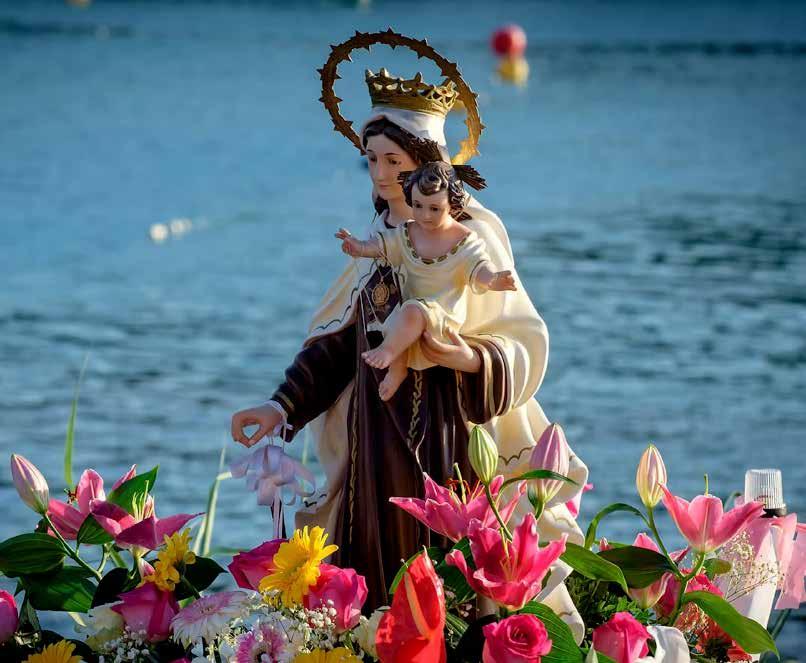
high-end agency services to visiting superyachts. The superyacht pontoon section is 4m wide with varying 500mm to 750mm of freeboard and berthing available astern to or alongside, depending on occupancy. It offers 1 berth for a yacht up to 120m and 6x berths for yachts ranging between 30m and 80m.
Accommodating the larger superyachts which are drawn to the region, the Seychelles has a number of marinas and harbours which make visiting all the easier for those arriving on the water. Eden Island is the largest of the marinas, providing convenient access and outstanding facilities to its visitors.
Eden Island is more than just a high-end destination, it’s a lifestyle. With its stunning marina, luxurious residences, excellent amenities, and vibrant social scene,
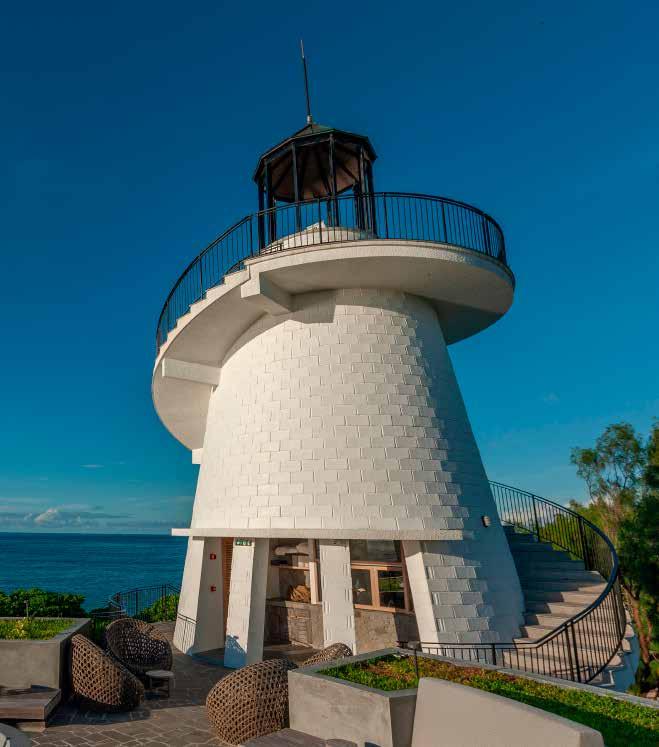
it offers a unique blend of relaxation and sophistication. The island’s infrastructure is built for effortless luxury. At its core is the deep-water marina, a central feature that allows each residence on the island to have its own mooring. This unique feature makes navigating the surrounding crystal-clear waters incredibly easy.
Seychelles is a melting pot of many cultures, which have commingled and coexisted since the first settlement of the islands in 1770. The architectural and urban design of Eden Island is deeply rooted in Seychellois heritage, drawing inspiration from the “sensed qualities” of the island’s history, craft and nature.
The architectural and urban design of Eden Island was designed with purpose and is deeply rooted in Seychellois heritage, drawing inspiration from the “sensed qualities” of the island’s history, craft and nature. The Creole architecture is a sophisticated blend of French, Asian and Victorian settler influences with elegant red pitched roofs, expansive verandas and urban spaces thoughtfully defined by buildings with internal waterways and inlets serving as tranquil streets and squares. Beyond Eden Island Marina is Eden Plaza shopping centre, four private beaches and a range of recreational amenities, all designed to ensure a seamless and unforgettable experience. Moreover, there is a host of new cuisine to try, with outstanding fine dining and local restaurants throughout the region.
Appealing to the adventurous as well as those who just like to kick back, the expansive and private waters are also home to numerous dive spots. Many of these spots are accessible to divers of all abilities under the inviting climate of the Indian Ocean, also offering an ideal place to try out any water toys. Fast becoming the discerning superyacht owners’ and charterers’ destination of choice, the Seychelles is as beautiful as it is exciting. The sheltered port of Victoria, situated close to Mahé’s east coast, is also within a short distance from the charms of the capital city.
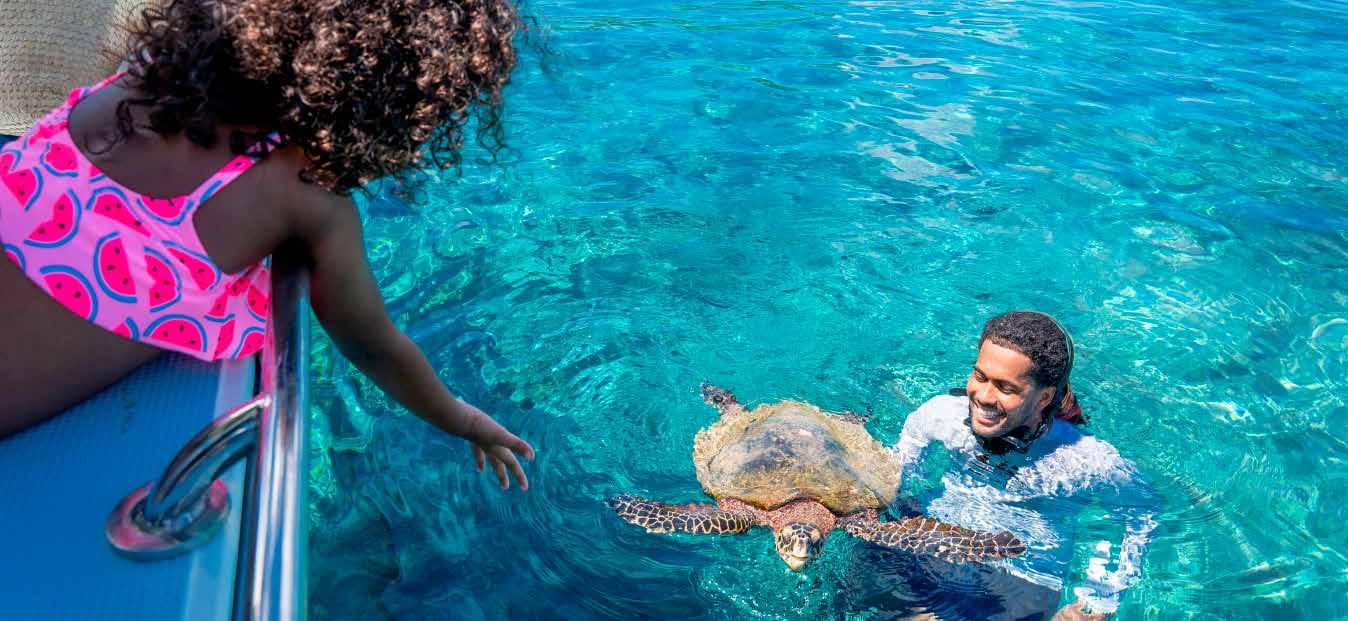
A fantastic superyacht destination for tranquil cruising grounds offers new experiences to be enjoyed on the water, as well as on land.
Guests can choose to enjoy cruising or immerse themselves in the thriving island life found in the heart of the action, the islands of Mahé, Silhouette, Praslin and La Digue, home to a bustling local life underlined by a healthy hospitality. The port of Victoria is certainly worth checking out and, when it comes to cruising away from the main islands, there are a number of bays along the various coastlines forming inviting spaces for comfortable anchorage.
The Farquhar Atoll in the Outer Islands is perhaps the most colourful dive location, with a vast array of marine life found at a relatively shallow depth. Similarly, Francois Island enjoys environmental protection to allow visitors to get up close and personal to a vibrant range of underwater species. With angelfish, butterflyfish, and octopus all native to the waters of the Seychelles, it is well worth diving in and exploring.
For something a little quieter, the lagoon at Desroches Island or the cluster of small islands around the St Joseph Atoll are certain to please and, thanks to well-positioned anchorages, many of the islands which comprise the Seychelles are accessible to every kind of superyacht.
Renowned for colourful and vibrant festivals, Seychelles is the place to be when it comes to music, dance and food. With a range of events taking place across the year, visitors are likely to encounter some kind of celebration taking place in the course of their exploring.
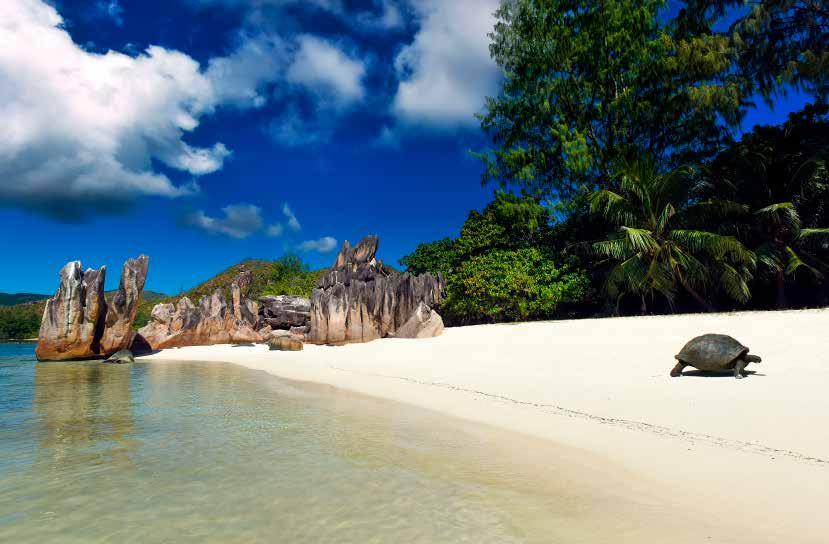
Perhaps the largest of these events is the ‘International Carnival of Victoria’. Taking place over three days in February, numerous small parties celebrate the various cultures, making the Seychelles what it is today. The whole region also is swept up on June 29 when ‘Independence Day’ is celebrated with festive street parties, all-day beach events, and a number of frivolities taking place out on the water.
Just south of the Equator, Seychelles enjoys a year-round tropical climate and nearly 12 hours of sunlight. The climate is such that there are no extremes of weather, with the temperature seldom dropping below 24°C or rising above 32°C. With 115 islands to visit, Seychelles is an explorer’s paradise. ◆ www.asia-pacific-superyachts.com
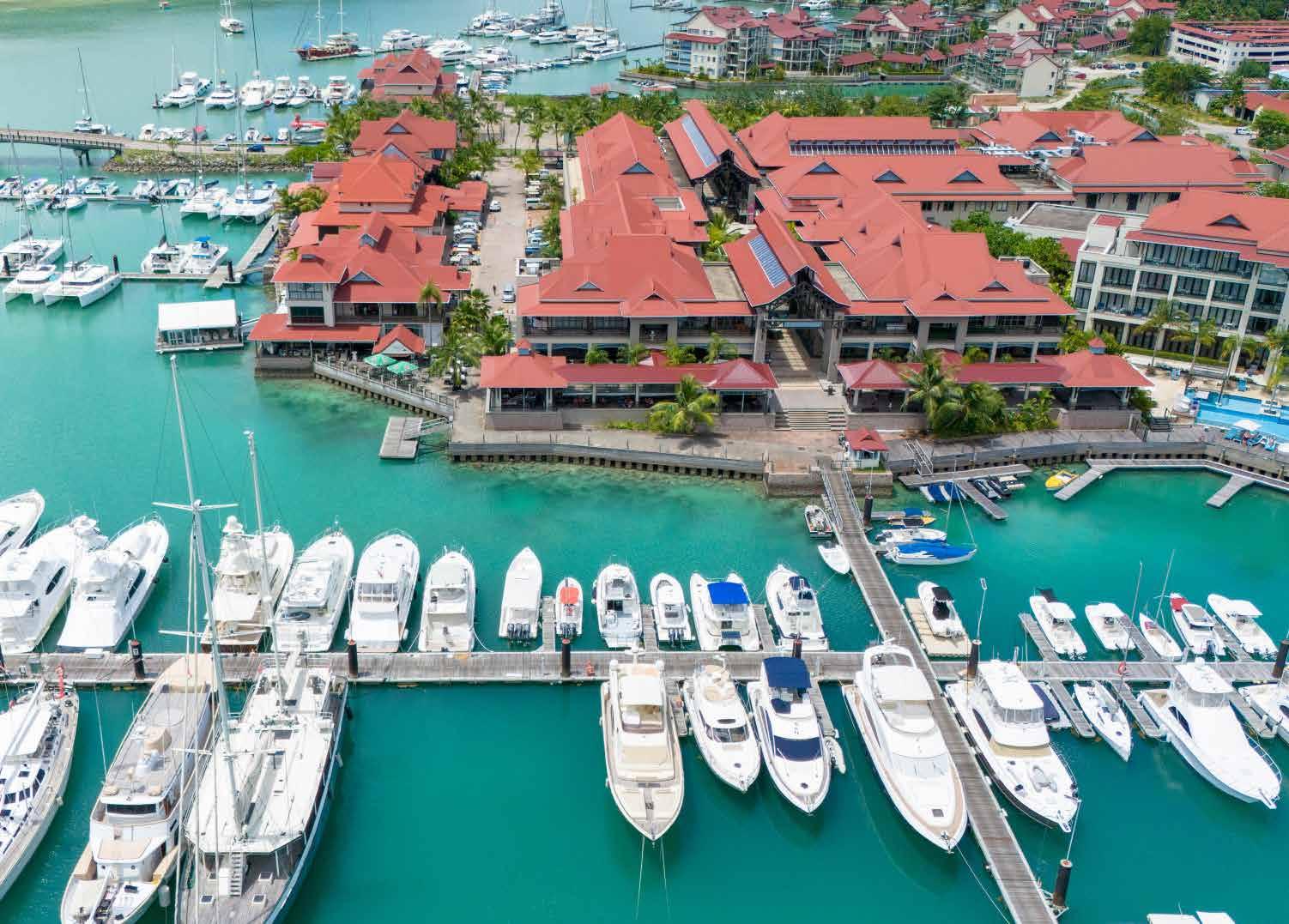
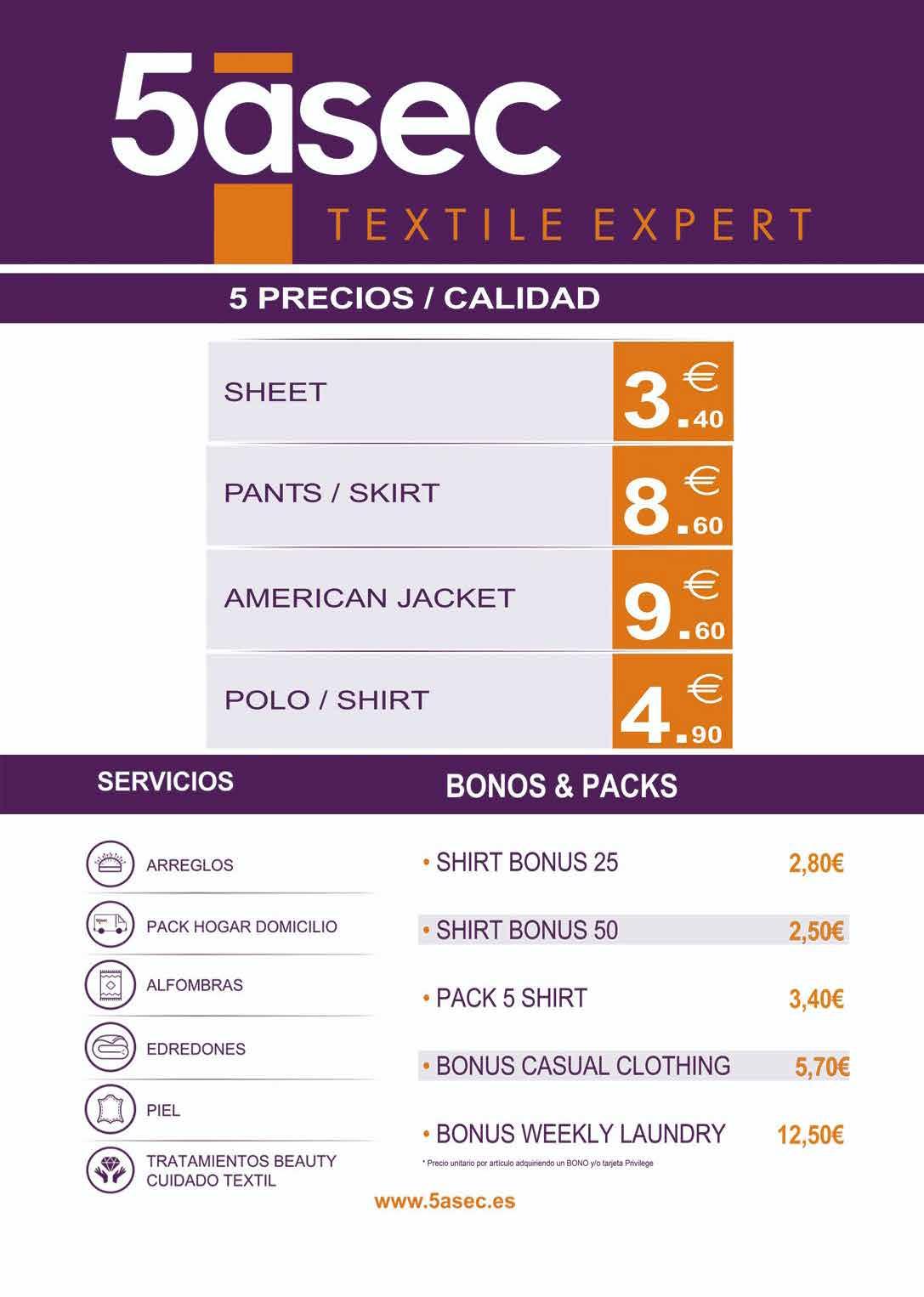




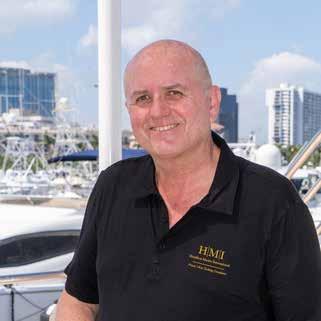
Built: 2015 - Asking price: € 650.000 VAT not paid
This Azimut Magellano 53, complete with a highly desirable berth in Mallorca, combines elegant Italian styling with genuine long-range cruising capability, making her one of the most versatile yachts in her class.
Highly regarded for her seaworthiness, efficiency and exceptional onboard volume, the Magellano 53 offers a rare balance of performance, comfort and practicality. Her semi-displacement hull delivers comfortable and economical cruising at around 15 knots, with a range of over 1,000 nautical miles and top speeds of approximately 22 knots when required.
Equally suited to Mediterranean cruising or longer passages further afield, she is a yacht designed for owners who value both capability and comfort in equal measure.