About Loose Ends
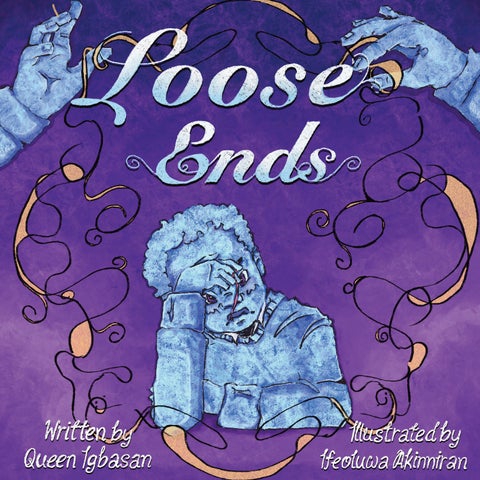
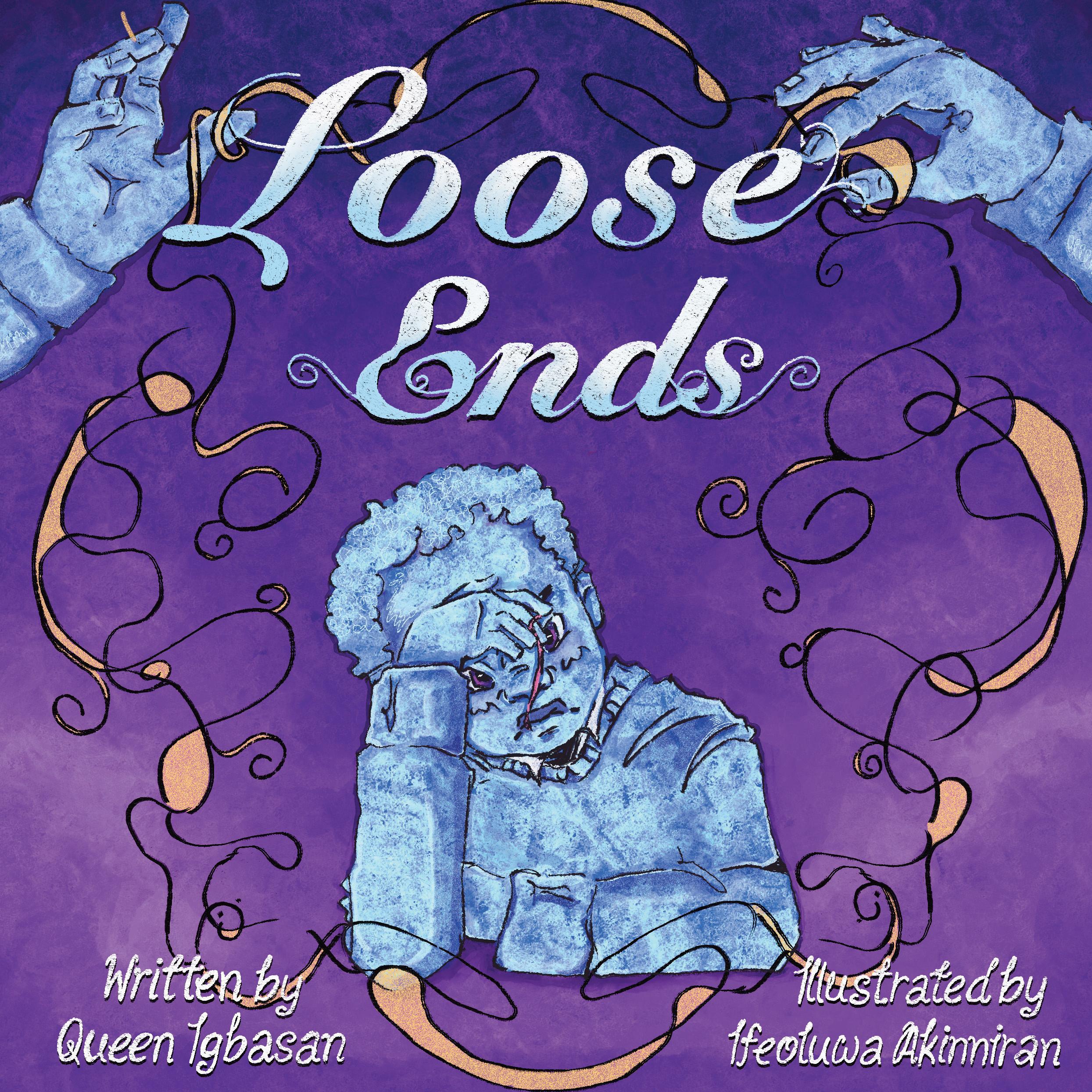
The winning story for writers in Years 10 and 11 in the ISEB and IAPS 2026 Time to Write competition, Loose Ends, is a story about a teenage boy who receives an anonymous gift of a mysteriously familiar school jumper on his birthday. As unsettling thoughts, feelings and compulsions begin to consume him, he begins to find relief through pulling at the jumper’s threads. But with each pull of a thread comes a terrible incident, and Daniel starts to worry that his actions may be ruining everything for those around him.
“A strong sense of suspense and intrigue created by a brilliant first sentence.” The Time to Write judging panel.
About the writer
Queen Igbasan is from Ghana and was 15 years old at the time of writing Loose Ends. Reflecting on her story, she said, “Loose Ends was born from a desire to raise awareness of children’s mental health, the quiet battles happening beneath the surface, mistaken for quirks or carelessness by everyone watching. My favourite part to write about was Daniel’s compulsion moments: that odd, sudden nervousness before each pull, and the fleeting relief after, because that tension felt most true. I want readers to walk away knowing that nervousness and compulsions are normal, but the power lies in your hands. You can either control them or let them control you.”
About the illustrator
Ifeoluwa Akinniran is an illustrator from Nigeria specialising in middle-grade to young adult publishing illustration. She enjoys character design and creating visual narratives for people to explore. Her memories, experiences, and the world around her serve as an inspiration to her work. She enjoys the arts in their multiple forms, literature, music and performing arts.
Loose Ends
Written by Queen Igbasan
Illustrated by Ifeoluwa Akinniran

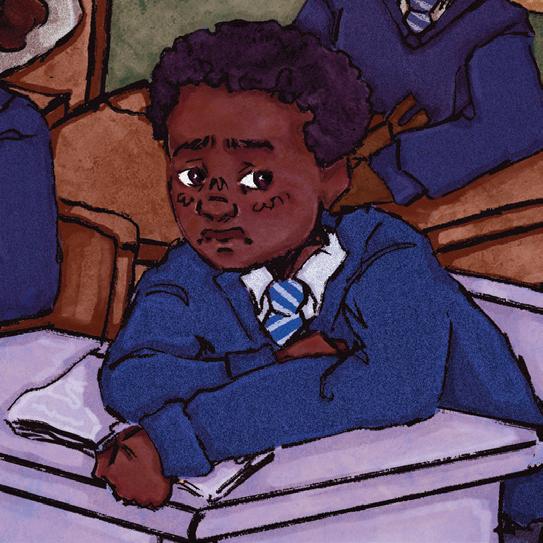
The jumper arrives on my fifteenth birthday, wrapped in brown paper that smells faintly of lavender and something older I can’t name. There’s no card, no return address , just my name, Daniel, written in elegant script across the front, the ink slightly indented as if pressed slowly, deliberately.
Mum frowns when she sees it on the doorstep. “Did you order something?”
I shake my head. The paper feels strange under my fingers, almost warm, like it’s been sitting in sunlight, even though it’s October and raining. Inside is a navy school jumper, identical to the ones we wear at Riverside Academy. The fabric is soft, perfectly worn-in, like it’s been mine for years. Like it remembers me.
I try it on. It fits perfectly, hugging my shoulders, the sleeves stopping exactly where they should. “Secret admirer?” my sister Keisha teases, grinning. I force a smile, but something about the jumper makes my skin prickle, a quiet wrongness I can’t explain.
I wear it to school the next day anyway.
The compulsion starts in double maths. I’ve had intrusive thoughts before, the kind Dr Williams says everyone gets, but mine stick. What if I shouted right now? What if I threw my bag out the window? Thoughts that tighten my chest until I count to seventeen, my safe number, over and over until the edges soften. This thought is different. I notice a loose fibre on my cuff, barely visible against the navy fabric. Once I’ve seen it, I can’t unsee it. It pulses at the edge of my vision, demanding attention. My mind screams: “Pull it. It’s ruining your jumper. Everyone can see.”
My fingers tingle. My heart starts to race.
So I do. I don’t notice Jamie slump forward at the desk behind me until Mrs Patterson stops mid-equation, chalk frozen in her hand.
“Jamie? Are you alright?”
He’s pale, sweating, gripping the desk like it’s the only thing holding him upright. “Don’t feel well, miss.”
She sends him to the nurse. The class whispers. I slip the thread into my pocket.
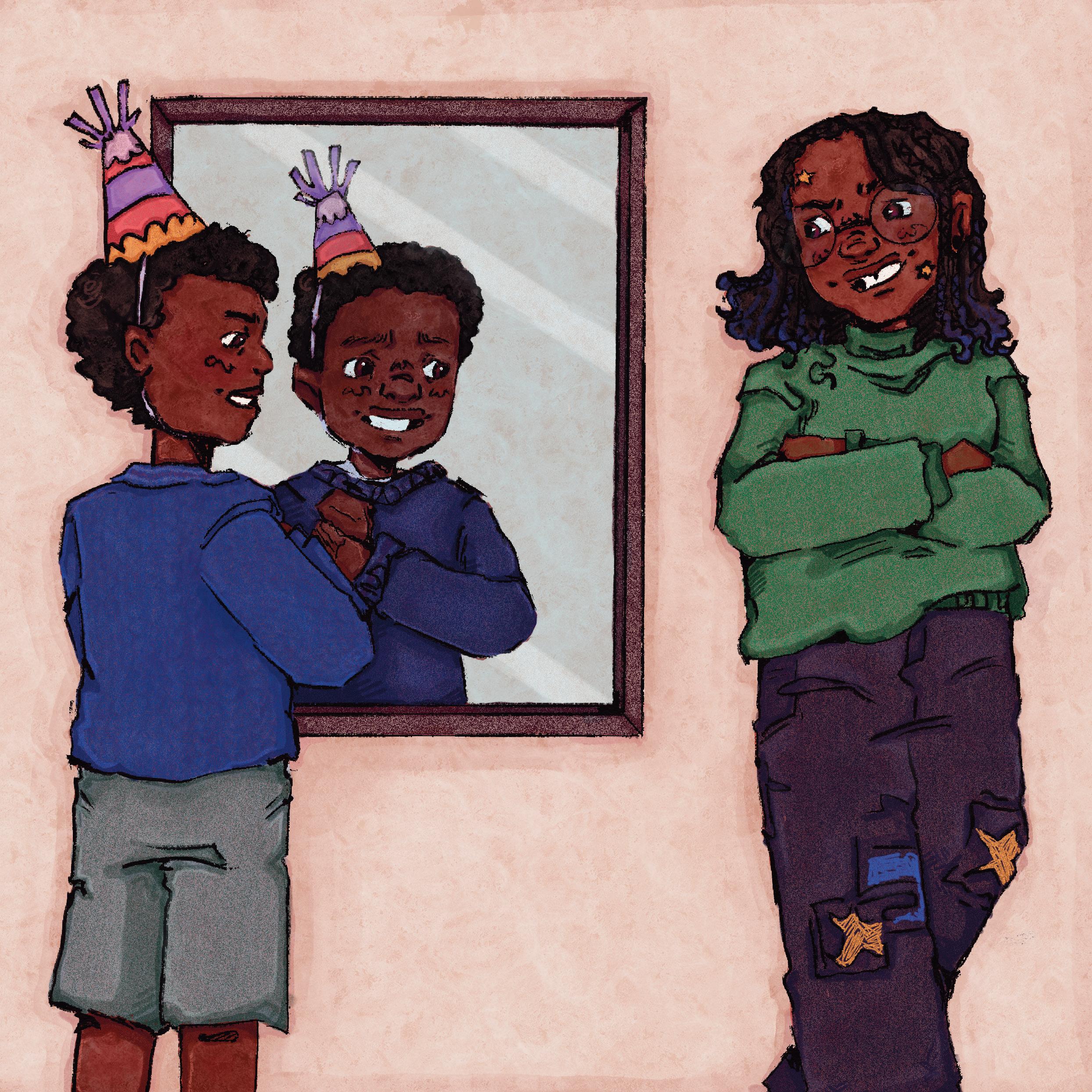
By Wednesday, I’ve pulled several threads. Each one brings the same chemical relief. I keep them in a small tin in my bedside drawer, lined up neatly like evidence.
That evening, Mum mentions that Dad’s been made redundant. “Budget cuts,” she says carefully, the words chosen and measured. “He’ll find something else.”
On Thursday, I pull a thicker blue thread during lunch. The relief barely registers.
The next day, Becca doesn’t come into school. Her Instagram story from the night before shows “I can’t believe she’d do this to me”. She and her best friend inseparable since Year six, aren’t speaking anymore. Everyone says it came out of nowhere.
My hands start to shake. I pulled a red thread yesterday, right before last period. On Friday, I pull another during assembly. The headteacher is talking about resilience when my phone buzzes in my pocket. Gran’s in hospital. Mum’s going now.
The words blur. Everyone seems to be staring at my jumper, whispering. My eyes can see the damage now, tiny gaps, uneven patches , but my mind refuses to accept it. All it sees are loose threads, imperfections screaming to be fixed. Still insists they ruin everything.
I stare at the white thread between my fingers, my stomach dropping into free-fall.
No. It can’t be. But I’m counting already, faster now, the numbers tumbling over each other. Jamie’s collapse. Dad’s redundancy. Becca’s friendship. My failed Chemistry mock. I pulled that thread Tuesday morning. Mrs Patterson’s car accident. Now Gran.
That night I search for the packaging of the jumper, a card, anything that might explain where it came from. There’s nothing. I text everyone who might have sent it. Nobody knows what I’m talking about.
Dr Williams would say I’m being irrational. She’d say correlation isn’t causation. She’d say my brain is desperate for control, desperate to believe that if I just do the right thing, nothing bad will happen.
But my brain has never made someone collapse.
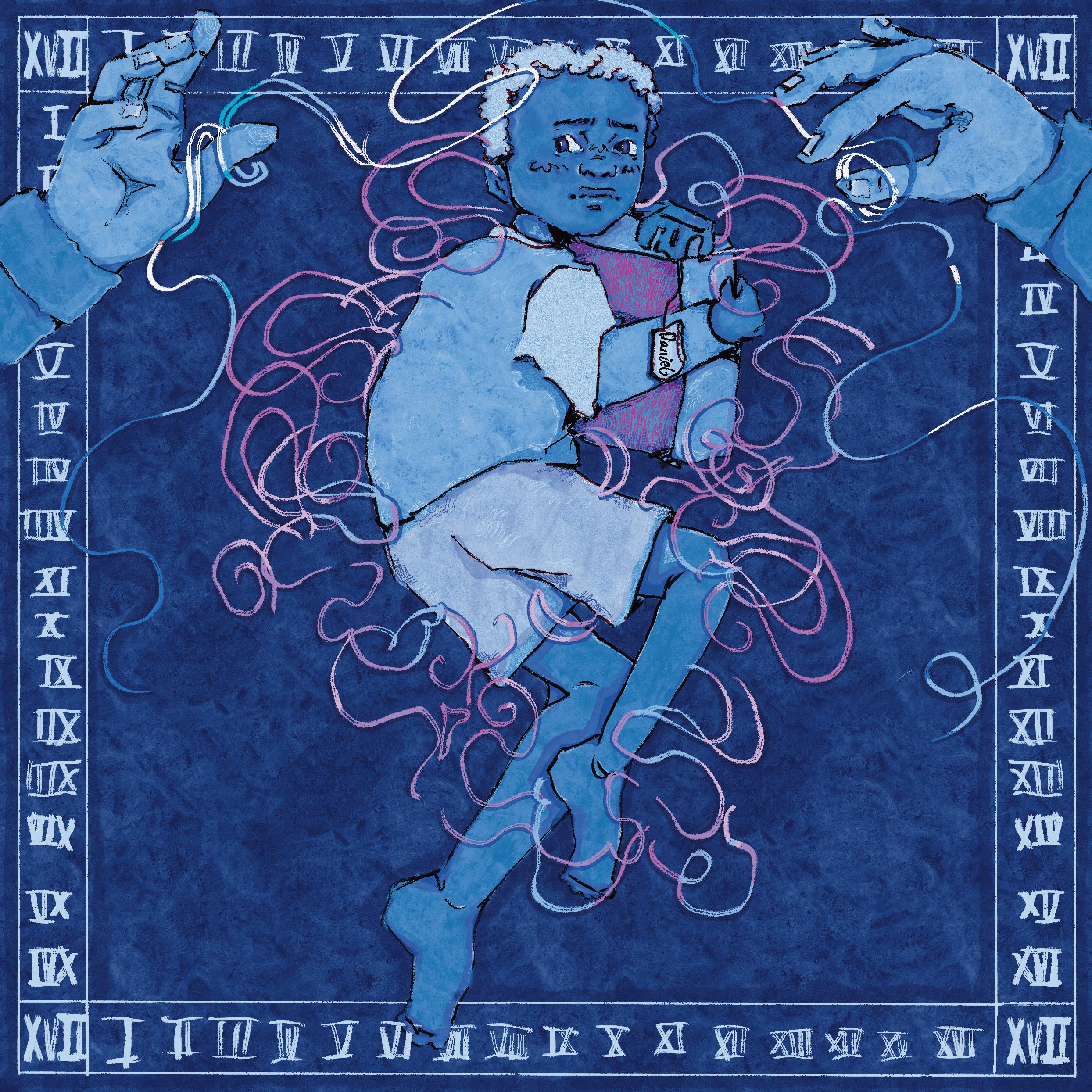
I count the remaining threads, visible on the cuffs, the hem, the collar. Hundreds. Maybe thousands. Each one a potential catastrophe, waiting for my fingers.
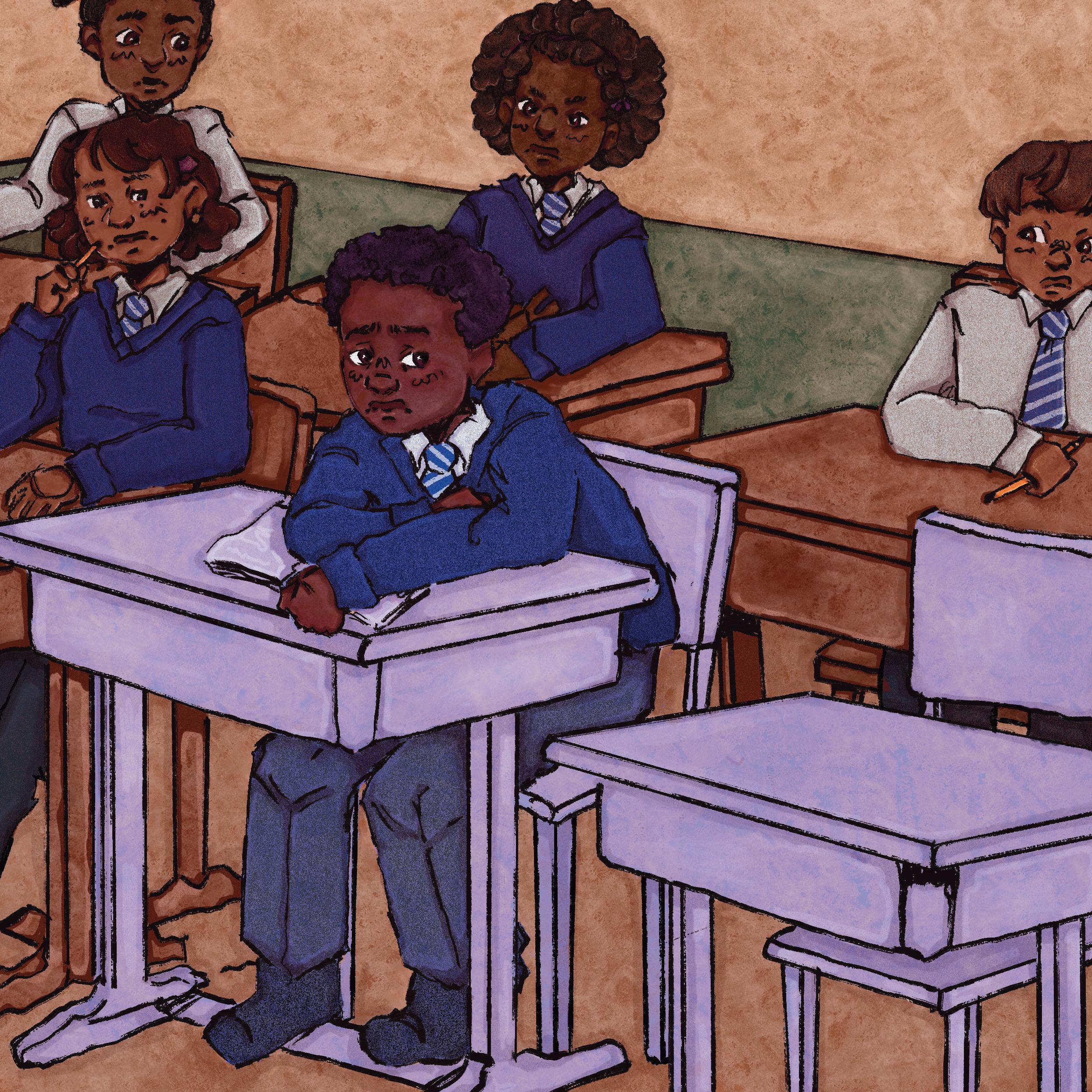
On Saturday morning, the compulsion hits like a physical force. I’m eating cereal when my eyes snag on a loose thread at my wrist. “Pull it!”
Counting doesn’t help. Seventeen seconds pass, then another seventeen. The thread fills my vision. It’s ruining my uniform. It’s ruining everything. And then I understand. This is the trap. The jumper was sent to someone with OCD. Someone who couldn’t resist. Someone who would slowly destroy everything around them while desperately trying to feel better, mistaking relief for safety.
On Monday, I sit in Dr Williams’s office. The jumper lies folded on her desk, smaller somehow, diminished.
“I need you to keep this,” I say. “Lock it away.”
She runs her fingers over the gaps, her expression unreadable. I tell her everything. When I finish, she’s quiet for a moment. Then she says, “What if they were trying to help you?”
“Help? Gran’s in hospital.”
“Is she? Or did she have a scare?” she asks softly. “Your dad , was he happy in that job? Becca and her friend, were they really okay?”
I open my mouth. Close it.
“Someone gave your compulsions consequences,” she continues. “Something you couldn’t ignore.”
“It’s cruel,” I whisper.
“Maybe,” Dr Williams says. She locks the jumper in her filing cabinet. “Or maybe it’s the only way you could have learned.”
I don’t ask who sent it, or how they knew. Whoever it was understood me better than I understood myself.
For the first time, I count to seventeen, take a breath, and walk away.
About Time to Write
Building on two successful years of Time to Write, ISEB partnered with IAPS to bring the international creative writing competition back for a third year in 2026. Time to Write was open to all schools everywhere, and asked young writers to submit short stories written in response to the theme ‘thread’.
Almost 3,000 pupils from schools all over the world entered the competition, with entries shortlisted collaboratively by a pool of judges using cutting-edge adaptive comparative judgement technology, in partnership with RM Compare. This resulted in a reliable, fair and accurate ranking of entries.
The top ten stories in each category were reviewed by a panel of judges, including a children’s book editor from Oxford University Press, a literary events interviewer, a senior lecturer from Arts University Bournemouth, and Heads of English from St Swithun’s School, Marlborough House Vinehall School, and York House School.
To find out more about the ISEB and IAPS Time to Write 2026 competition for schools, visit write.iseb.co.uk.
ISEB and IAPS would like to thank RM Compare; the judging panel Emma Drage, James Cole, Marc Knight, Naomi Anson, Rebecca Fletcher and Rebecca Henderson; the talented illustrators who helped bring each story to life; sponsors Arts University Bournemouth, Oxford University Press, Team Elite and Voxblock; everyone involved in the shortlisting process; and, most importantly, all the young writers who took part in the Time to Write 2026 competition.
The four winning stories of Time to Write 2026
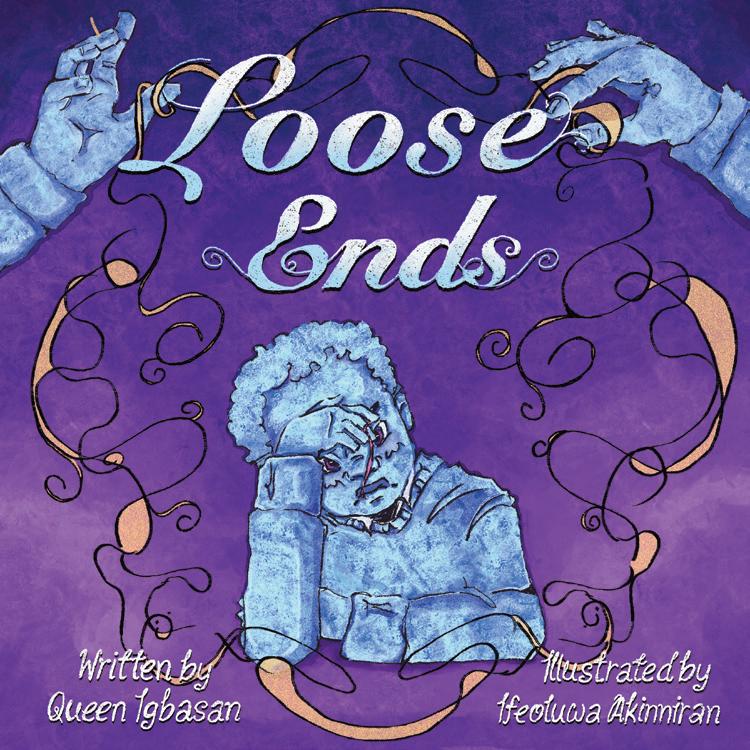
Daniel receives an anonymous birthday gift of a school jumper that seems to fit him perfectly. As compulsive and intrusive thoughts begin to take hold of him, he starts to pull threads from the jumper. But with the relief of each thread pulled comes a new problem for his family and friends, sending Daniel into a spiral of self-blame. Can he unravel the mystery before it tightens around him completely, or can he find the power to control his compulsions within himself?
The winning story in the category for writers in Years 10 and 11 in the 2026 ISEB and IAPS Time to Write international creative writing competition.
“An impressive use of suspense creates a real sense of anxiety in this story.“ The Time to Write judging panel.