
The iSchool at Illinois educates leaders in the information sciences who impact our communities, nation, and world.

Spring 2026
School of Information Sciences
University of Illinois Urbana-Champaign
Published by iSchool Communications and Marketing. For more information or to submit story ideas, please contact brya@illinois.edu.
Interim Dean: Emily Knox
Editor: Cindy Brya
Contributing Writers: Cindy Brya, Logan Mullins, Amanda Nguyen, Natasha Sims
Photography: Cindy Brya, Michelle Hassel, Amanda Nguyen, The News-Gazette, Thompson-McClellan Photography, Travis Willmann/University of Texas at Austin
Design: Pat Mayer
501 East Daniel Street
Champaign, Illinois 61820 ischool.illinois.edu
Phone: (217) 333-3280
Email: ischool@illinois.edu
People use information for analysis, inquiry, collaboration, and play—and in so doing, change the world. The iSchool at Illinois is dedicated to shaping the future of information through research, education, and engagement, both public and professional. Intersections highlights our current work in these areas as well as achievements of our students, alumni, faculty, and staff.
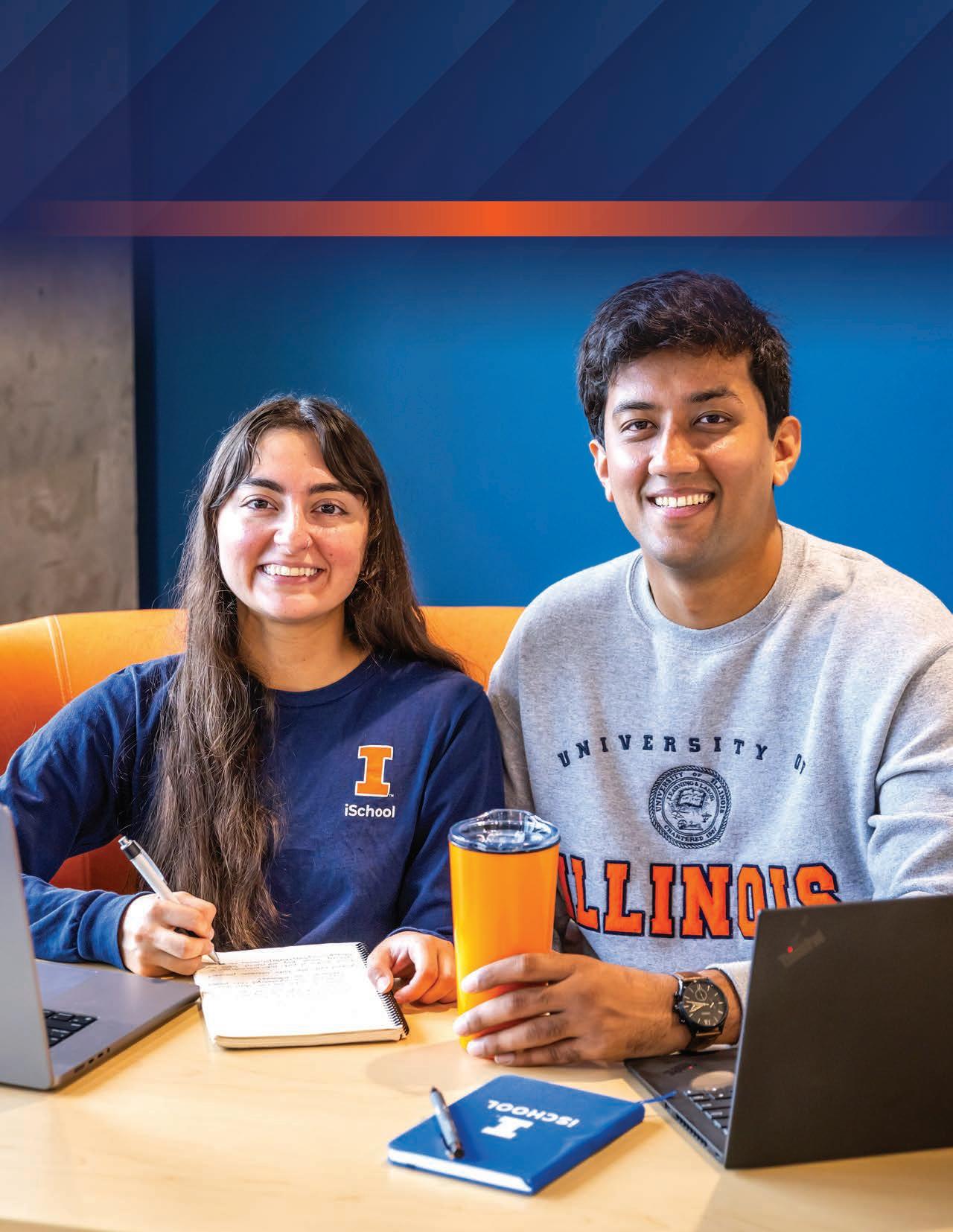
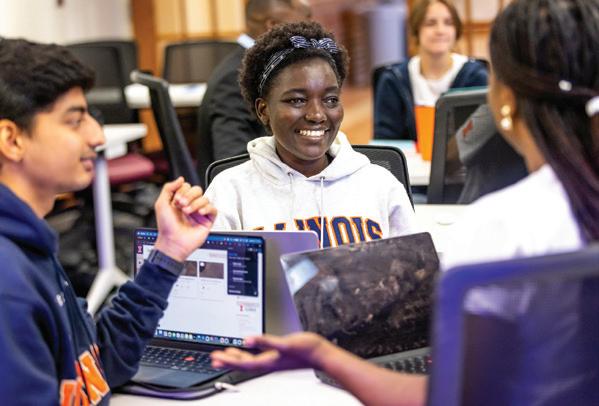
On the cover: MSIM students Sara Kiel and Simit Shah in the student lounge on the 4th floor of 614 E. Daniel St. The iSchool will celebrate the 10th anniversary of the MSIM degree program this fall.

Commencementmarks the conclusion of higher education for many of our graduates and the conclusion of an incredibly busy and productive academic year for all our faculty and staff. We celebrated the graduation of over 600 students this spring, adding to the more than 12,000 iSchool alumni who live and work in the U.S. and around the globe.
As is written in our 2022–2027 strategic plan, “Our programs do not just address the needs of the moment—they prepare students for evolving careers, and they prepare them to be thought leaders who are instrumental in building the new areas of their fields of practice.” We are proud of the impressive number of iSchool alumni who serve as leaders in organizations big and small. In this issue, we celebrate 150 years of the American Library Association with reflections from a few alumni who have held leadership roles in ALA over the years and play an active role today, including current president Sam Helmick (MSLIS ’12) and Executive Board member Ziba Pérez (MSLIS ’12).
In addition to ALA’s 150th anniversary, we have anniversaries to celebrate in 2026. This fall, we celebrate the 10th anniversary of our MSIM program and 30th anniversary of our Leep (MSLIS online) program. Stay tuned for a Leep reunion at the end of August! This year also marks 30 consecutive years that our MSLIS degree program has been ranked number one by U.S. News & World Report
As our iSchool community grows, we find ourselves again in need of more space. Five years ago, we expanded to the fourth and fifth floors of the Hub Champaign Daniel building located at 614 East Daniel Street. The location increased our School’s visibility on campus and provided much-needed additional space, including offices, conference rooms, research labs, and common and event areas. We will be repurposing underutilized space in the Hub (such as copy rooms) and expanding to a vacant area on the third floor. This construction will add 26 offices, 3 lab spaces, and an enclosed classroom space on the fifth floor.
With over 150 thousand square feet spread over 501 and 614 East Daniel Street, plus the Champaign-Urbana Fab Lab, you can imagine the challenges associated with building maintenance. Tad Schroeder, associate director of facilities, has dealt with a fair share of issues over the past academic year—water leaks, heating and air conditioning problems, elevator and door malfunctions and access control issues, and the occasional wildlife. It can certainly keep work interesting sometimes! I look forward to sharing an update on our construction in a future issue and encourage you to follow our social media for photos.
Summer is a time to recharge and plan before the hectic start of the fall semester is upon us. I hope that your summer includes some relaxation as well. If your summer travels bring you to campus, please drop by!

Emily Knox Interim Dean
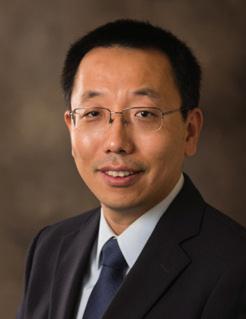
The iSchool is pleased to announce that Professor Dong Wang has been appointed associate dean for research. In this role, Wang will provide leadership in the support, integration, communication, and administration of the iSchool’s research and scholarship endeavors. This includes supervising the iSchool’s Research Services unit, supporting the research centers, and assisting faculty in the acquisition of research funding.
“I see my role as a bridge—connecting people, ideas, and research areas across the iSchool to spark new interdisciplinary collaborations and shared intellectual momentum,” said Wang. “Supporting research isn’t just about resources; it’s about building systems and relationships that help faculty and students thrive as our School evolves.”
Wang brings years of leadership and deep knowledge of the iSchool to the position. Since joining the iSchool faculty in 2021, he has served on a number of committees, including the iSchool’s Doctoral Studies Committee and Research Advisory Committee.
“Professor Wang’s dedication to the iSchool, collaborative nature, experience in attracting substantial research funding, and campus-wide connections will move our School’s research forward in new and exciting ways,” said Interim Dean Emily Knox.
Wang’s research includes human-centered AI, social sensing, intelligence and computing, and big data analytics. His work has been applied in a wide range of real-world applications such as social network analysis, crowdsourcing, disaster response, education, smart cities, and AI for science. His books include Social Intelligence (Springer, 2025), Social Edge Computing (Springer, 2023), and Social Sensing (Elsevier, 2015). He is a senior member of the Institute of Electrical and Electronics Engineers (IEEE) and a member of the Association for Computing Machinery (ACM) and Association for the Advancement of Artificial Intelligence (AAAI).
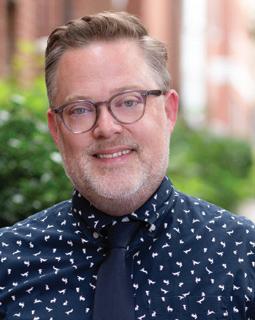
AssociateProfessor Colin Rhinesmith has been elected to serve on the iSchools board of directors for 2026–2027. The board consists of six general members; Rhinesmith will serve as one of three members representing the North American region. He will assist in developing the strategic direction of the iSchools organization, which includes over 130 universities worldwide. His experience working with the iSchools includes serving as a conference reviewer for multiple iConferences and co-chairing the iSchools Community Informatics Group.
Rhinesmith’s areas of research include community informatics, engaged scholarship, and information policy. Through his Digital Equity Action Research (DEAR) Lab at the iSchool, he is working with civil society organizations, government agencies, and philanthropic organizations to advance digital equity through community-engaged and participatory research.
AssociateProfessor Sarah Park Dahlen has been selected as one of six jurors for the 2026 Kirkus Prize, given annually in the categories of fiction, nonfiction, and young readers’ literature. The prize is one of the richest in the literary world, with awards of $50,000 in each category.
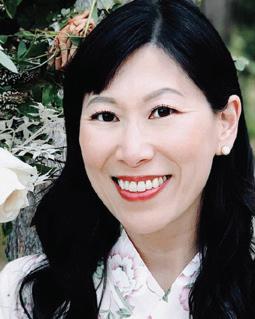
Dahlen will serve as a juror for the young readers’ literature category. Her research addresses transracially adopted Koreans in youth literature, Asian American youth literature, and diversity in children’s literature and library education. She is co-editor of the open access journal Research on Diversity in Youth Literature, with Sonia Alejandra Rodríguez. She has served on several children’s book award committees, including the National Book Award jury for Young People’s Literature. She is a member of the organizing committee for the University of Illinois Youth Literature Festival and a member of the International Research Society for Children’s Literature board of directors.
All books that receive a Kirkus star during the 12-month eligibility period are considered for the prize. Jurors will evaluate eligible titles and select a list of six finalists in each category. In the young readers’ literature category, the finalists will include two picture books, two middle-grade books, and two young adult books. Finalists for the 2026 prizes will be announced on August 26, with the winners revealed at a ceremony in New York City on October 7.
Gregory B. Newby passed away on October 21, 2025. Newby was an assistant professor at the iSchool at Illinois from 1991 to 1997 and held a joint appointment in the National Center for Supercomputing Applications (NCSA) as a senior research scientist. In addition to the University of Illinois, Newby spent his academic career at the University of North Carolina, University of Alaska Fairbanks, and King Abdullah University of Science and Technology in Saudi Arabia.
Newby’s legacy at the iSchool looms large. Newby taught graduate-level courses in information technology; networking tools and use; information organization and
system design; and user-based design and analysis. In 1993, he co-founded Prairienet, a revolutionary online information and resource network for Champaign-Urbana and the surrounding East-Central Illinois region. This free community network provided an entry point and useful resources for regional users who were just discovering the internet.
He also helped pioneer the iSchool’s first online degree program, which is still in place today. In 1996, he was appointed as assistant dean for one year to inform the design of Leep, then known as Library Education Experimental Program. His rich knowledge of information systems and
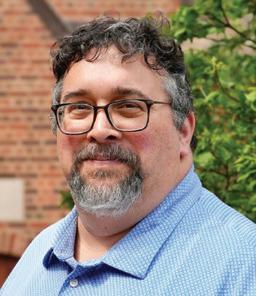
J.B. Bailey Coordinator of Events
Develops, manages, and implements all iSchool events with a cohesive brand identity and supports communications and marketing efforts.
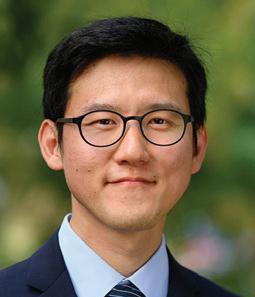
Kyu-Been Chun
Coordinator of
Student and Academic Affairs
Supports PhD students with their academic affairs throughout their doctoral journey.
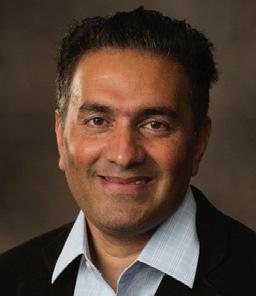
Iftikhar Haider
Assistant
Director
for Experiential Learning
Collaborates with faculty, staff, students, and external partners to facilitate successful experiential learning in iSchool programs.
technology brought a depth of foresight to the possibilities that technology could deliver in the future, setting up the online MSLIS program for decades of success and national recognition.
Newby went on to be an integral volunteer of Project Gutenberg, an online library of more than 75,000 free ebooks. His work with Project Gutenberg led him to found and lead the nonprofit Project Gutenberg Literary Archive Foundation in the early 2000s. In 2020, Newby and his wife Ilana Kingsley moved to Whitehorse, Yukon, where he worked in IT for the government of Yukon, Canada. They also ran a dog sledding rescue kennel.
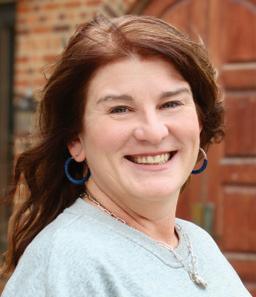
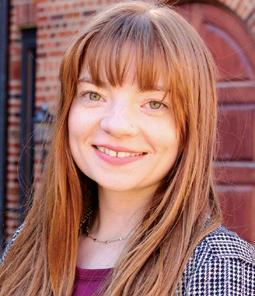
Kim Hooper Office Support Specialist
Provides administrative support to the admissions and records team.
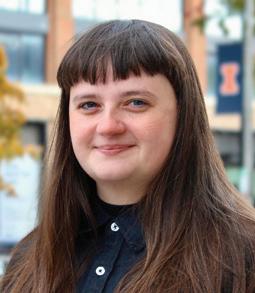
Quinn Kennelly Office Support Specialist
Serves as the first point of contact for visitors to the iSchool building at 614 E. Daniel Street and provides administrative support for Informatics.
Katie Murphy
Academic Advisor and Coordinator

Provides academic advising and support to students in the BS in information sciences and BSIS + data science programs.

The University of Illinois is expanding its portfolio of online graduate programs with a new opportunity for creative problem-solvers and technical thinkers. The Master of Science in Game Development is a fully online degree designed for students who want to turn their passion for interactive media into careers in game development, animation, simulation, and related industries.
Offered through Informatics Programs in the School of Information Sciences, the program blends technical skill-building with creative exploration and professional training. Students learn to design engaging interactive experiences while collaborating effectively and adapting to a rapidly changing digital landscape.
“From Unity and Unreal Engine to storytelling, AI, and pipeline tools, [students are] building portfolios that actually get noticed,” said Alex Damarjian, program developer and teaching associate professor.
This 48-credit-hour degree program is highly customizable, allowing students to choose from five concentrations: Art, Design, Narrative, Production, and Programming. Across all pathways, students develop a strong foundation through hands-on coursework and interdisciplinary teamwork.
A key feature of the program is its studio-based second year, where students work in teams alongside industry partners to develop fully realized games and interactive projects.
Designed for both working professionals and recent graduates, the program offers flexibility and can be completed in as little as two years. Faculty bring industry experience from leading companies across the game and animation sectors, such as Amazon Games, Netflix, Cartoon Network Games, Deep Silver Volition, Electronic Arts, Pixar, Nickelodeon, and Play Mechanix.
The MS in Game Development is an excellent fit for those looking to pivot into game development, strengthen their skills, or advance their careers.
The application deadline for Fall 2026 is July 1, and the deadline for Spring 2027 is September 1. For more information, visit ischool.illinois.edu/MSGD.

for
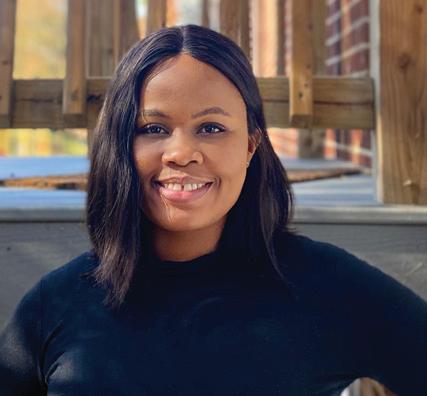
student Ebubechukwu Uba received the Illinois International Graduate Achievement Award, which recognizes a University of Illinois graduate student whose innovative and sustained international research or public service abroad has had a significant, societal impact. She was recognized for her work with Step-Up Academy, a nonprofit education and digital inclusion initiative in Nigeria that she founded in 2023. Step-Up Academy has been running programs in rural Nigerian communities that include foundational digital literacy training for youth in low-income and orphanage communities, support for basic device use and navigation of educational resources, training local teachers and volunteers as trusted community digital support contacts, and adapting learning materials for use in low-resource environments.
In her doctoral research, Uba is examining how education technologies, including AI-driven tools, are designed and implemented to shape learning equity, especially in underserved rural communities in Nigeria and across Africa.
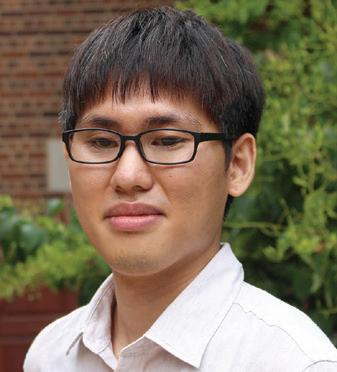
AssistantProfessor JooYoung Seo has been selected as a Center for Advanced Study (CAS) Beckman Fellow for the 2026–2027 academic year. CAS is one of the most prestigious faculty recognition programs at the University of Illinois. Its primary mission is to identify and support the most productive and innovative faculty across all disciplines. CAS Fellows are nominated by their unit heads and selected by the Center’s permanent faculty through a competitive review process, with final approval by the Board of Trustees.
Seo is one of four faculty CAS Beckman Fellows, a distinction awarded to early-career candidates in recognition of their unique and impactful scholarly work. The appointment grants faculty one semester of teaching release time to pursue an individual scholarly or creative project. Fellows also participate in a yearly roundtable discussion of research interests and are invited to offer a future CAS presentation.
Seo will work on the project “Bridging Visual and Nonvisual Data Insights Through AIPowered Multimodal Data Representations.” The goal of this project is to assist blind and low-vision people with data visualization. Using a single natural-language prompt, AI will generate multimodal data explanations, including coordinated visual plots, tactile shapes for refreshable Braille displays, plain-language summaries, auditory sonification revealing patterns by sound, and interactive chat. The work will build on Seo’s Multimodal Access and Interactive Data Representation (MAIDR) framework. During his CAS semester, Seo plans to connect AI agents to MAIDR through a Model Context Protocol (MCP).
“MCP functions like a plug-and-play interface that lets AI ‘use the right tools’ without the user writing code,” Seo explained. “It makes the MAIDR system easy to use: plain language in, accessible outputs out.”

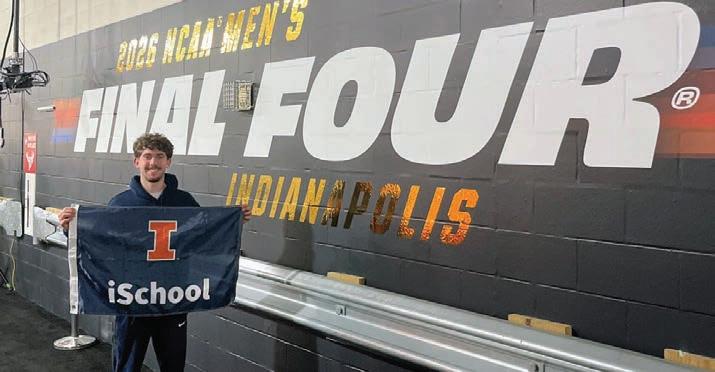
It was an exciting season for the Fighting Illini men’s basketball team as they made it to the Final Four. BSIS student John Kramer experienced the excitement firsthand through his position as the men’s basketball team manager.
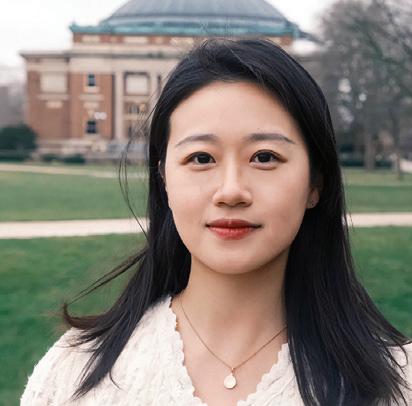
Inthe fall semester, PhD student Yaman Yu was awarded the 2025 Google PhD Fellowship in Privacy, Safety, and Security. The fellowship program recognizes outstanding graduate students who are conducting exceptional and innovative research in computer science and related fields, with a special focus on candidates who seek to influence the future of technology. Google PhD fellowships include tuition and fees, a stipend, and mentorship from a Google Research Mentor for up to two years.
Yu’s research bridges cybersecurity and human-computer interaction (HCI), focusing on safeguarding AI systems and mitigating harms from AI misuse, particularly for vulnerable populations. Her primary project tackles generative AI safety for youth. She developed the first youth–AI risk taxonomy (YAIR) and benchmark from real-world and synthetic data and used the benchmark to train a new, more effective AI guardrail model for youth (YouthSafe). Yu is now building YouthSafeAgent, a collaborative safety platform that helps parents and teens navigate these new technologies together safely.
Yu’s work has been published in top security, privacy, and HCI conferences, and her research has been featured in media outlets such as The New York Times, MIT Technology Review, and Business Insider.
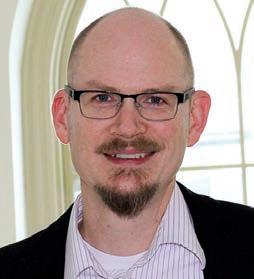
Anewproject led by a team of researchers from four universities aims to create and evaluate language models that represent past historical periods. The project, “Artificial Intelligence for Cultural and Historical Reasoning,” was recently selected for a 2025 Humanities and AI Virtual Institute (HAVI) award from Schmidt Sciences. The $800,000 grant will be split among four institutions: Cornell University, the University of Illinois UrbanaChampaign, The University of British Columbia, and McGill University. Professor Ted Underwood will serve as the principal investigator for the portion of the project at Illinois.
A major concern about AI is that language models are too alike, leading to similar responses. This stems from their reliance on massive web-crawled datasets that favor perspectives dominant on the 21st century internet. To address this lack of diversity, researchers need to be able to train models that represent different points of view and social contexts. In the new project, Underwood and his fellow principal investigators will be evaluating and testing training methods so that models can reason and express themselves across cultures.
The team will also build evaluations to assess whether language models can really represent 19th and 20th century culture, in both English- and Chinese-speaking contexts. Once the researchers have good benchmarks, they will test different ways of training models that can reason and express themselves like writers in the past.
Imagine your favorite apps had a “digital twin” of your personality that actually grew up with you. Right now, most AI systems create a static snapshot of your interests. For example, a personal shopper who keeps recommending video games just because you bought one three years ago, even though you’ve long since moved on to hiking and cooking. To bridge this gap, Professor Dong Wang’s team at the University of Illinois is partnering with Snap Research to build a “Profile Agent.”
Instead of writing a one-time bio of your likes and dislikes, this smart system constantly refines its notes to make sure it actually reflects who you are today, rather than who you were last year. The secret sauce is a “drift detection” system that acts like a real-time pulse check on your interests, said Wang. The goal is to create a digital experience that feels less like a cold algorithm and more like a helpful assistant that can explain exactly why it’s recommending something, making your time on social media or shopping apps feel intuitive and genuinely personal.

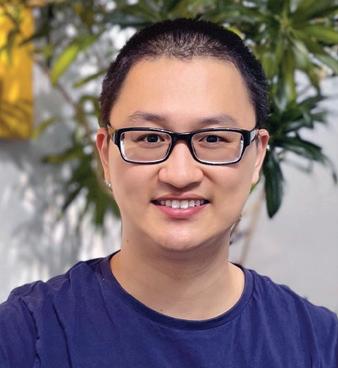
Assistant Professor Yaoyao Liu has been awarded a grant through the NVIDIA Academic Grant Program. NVIDIA, a world leader in accelerated computing and AI, established the program to advance academic research by providing world-class computing access and resources to researchers. Liu has received 32,000 A100 GPU-hours on Brev, an AI and machine-learning platform that empowers developers to run, build, train, deploy, and scale AI models with GPU in the cloud. Through his project, “Multimodal Generative Models for Large-Scale Continual Learning,” Liu’s aim is to build AI systems that can continuously learn and adapt over time, rather than being trained once and becoming outdated. According to Liu, by allowing the system to expand its capabilities in a structured and efficient manner, this project makes AI more reliable, scalable, and practical for real-world applications where information is constantly evolving.

Anewgrant from the National Science Foundation will support an innovative effort to strengthen research security by using structured role-playing games to model the threats facing academic research environments. The project, “REDTEAM: Research Environment Defense Through Expert Attack Modeling,” addresses a growing challenge: balancing the open, collaborative nature of academic research with increasing national security risks and sophisticated adversarial threats. Traditional cybersecurity and compliance frameworks often overlook the human factors that shape real-world decision-making in research environments, where collaboration pressures, funding incentives, and international partnerships can introduce unexpected risks. This project led by Anita Nikolich, director of research and technology innovation and research scientist, aims to help universities better understand these dynamics by examining the human and behavioral dimensions of research security. Teaching Associate Professor David Dubin will serve as co-principal investigator.
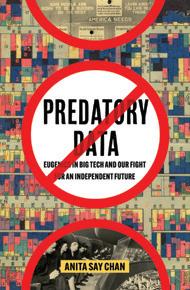
ProfessorAnita Say Chan’s book Predatory Data: Eugenics in Big Tech and Our Fight for an Independent Future (University of California Press, 2025) was named a finalist in the Computing and Information Sciences Category of the 2026 PROSE Awards. The annual awards bestowed by the Association of American Publishers recognize the very best in professional and scholarly publishing and celebrate works that have made significant advancements in their respective fields of study.
Predatory Data examines how the eugenics movement foreshadows the predatory data tactics used in today’s tech industry. Chan defines “predatory data” as “the habitual use of data and research methods that exploits the vulnerable”—from race and gendered minoritized communities, to disabled populations, and the working poor—through datafication and prediction operations that reify majoritarian politics and normalize authoritarian appetites. In her book, she reveals how Big Tech uses these predatory data collection methods to target minoritized populations with the goal of generating profit and anti-pluralistic monocultures. She also shares lessons from the data collaborations of earlier feminists, immigrants, and other minorities who refused eugenic models, to remind us of the long legacies of global justice-based data initiatives that worked to defend knowledge pluralisms.
The following students and recent graduates successfully defended their PhD dissertations from May 2025–March 2026.
Chaewon (Michelle) Bak, “Promoting a Healthy and Comprehensive Diet through Theory-Driven Large Language Models-Based Agents”
Chair: Associate Professor Jessie Chin
Clara Belitz, “Fair for Whom? Investigating Learning Identity, Algorithmic Fairness, and Educational Technologies”
Chair: Associate Professor Nigel Bosch
Liri Fang, “Modeling of Graph and Text Data: Applications in Citation Networks, Taxonomy Expansion, Entity Resolution and Claim Verification”
Chair: Associate Professor Vetle Torvik
Yingying Han, “Community Archives as Agency: Documenting
Chinese American Experiences in the U.S.”
Chair: Professor Anita Say Chan
Xiaoliang Jiang, “Identifying Place Names in Scientific Writing
Based on Language Models, Linked Data, and Metadata”
Chair: Associate Professor Vetle Torvik
Jean Kanengoni, “Measuring Up: Public Libraries Discovering Their Impact in Zimbabwe”
Chair: Professor Emily Knox
Smirity Kaushik, “Digital Trust, Safety, and Privacy in the Age of Emerging Technologies”
Chair: Professor Yang Wang
HaeJin Lee, “Human-Centered Explainable AI to Support Metacognitive Strategies in Computer-Based Learning Environments”
Chair: Associate Professor Nigel Bosch
Lan Li, “Transparent, Reusable, and Purpose-Driven Data Cleaning”
Chair: Professor Bertram Ludäscher
Apratim Mishra, “Hype and Diversity in Science: A Bibliometric Study of Biomedical Literature”
Chair: Associate Professor Vetle Torvik
Vairavan Murugappan, “A Framework for Large-Scale Dynamic Social Network Analysis with Application to Key Actor Analysis”
Chair: Professor Eunice E. Santos
Jana M. Perkins, “Scholarship Writ Large: Professionalization in English Literary Scholarship from 1940 to the Present”
Chair: Associate Professor Ryan Cordell
Suresh Subramanian, “A Unified Computational Framework for Modeling Health Policy Adoption in Complex Real-World Environments”
Chair: Professor Eunice E. Santos
Liang (Jackie) Tang, “The Role of Proximity in Human-Agent Trust”
Chair: Associate Professor Masooda Bashir
Andrew Zalot, “‘Tweet of the Town:’ Synthesizing Local and Social Media Discourse on Book Bans”
Chair: Assistant Professor Rachel M. Magee
Huimin Zeng, “Trustworthy Representation Learning in Federated and Multi-Modal Foundation Models”
Chair: Professor J. Stephen Downie
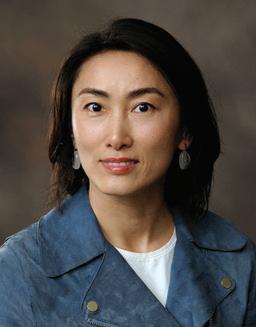
Anewapp developed by Associate Professor Yun Huang will make navigating conferences less work and more fun, so that attendees can meet others, discover fresh ideas, and “experience academic life as an exciting adventure.” The app, PapersClaw.fun, debuted in April at the ACM Conference on Human Factors in Computing Systems (CHI 2026).
Huang built the app based on her own conference experiences.
“When I was a junior researcher, I noticed that some senior scholars seemed to navigate large conferences effortlessly, always knowing exactly which sessions would spark insight,” she said. “I first created PapersClaw.fun for myself—to make sure I never missed important sessions and to help visually map out where I wanted to go during a conference.”
PapersClaw.fun helps attendees quickly bootstrap a conference plan without clicking through individual papers on the conference website, which is often mission impossible for a large conference that has several thousands of papers. It recommends relevant sessions based on people’s interests, and scholars who published on adjacent topics. Paper authors have the option of adding a “backstage story” to their paper for a more personal touch. For CHI 2026, the app mapped out the Centre de Convencions Internacional de Barcelona so that users could easily find their way around the venue.
Last year, CHI drew 50,000 attendees. To better enable serendipitous discovery, Huang designed AI agents that can prompt cross-domain collaborations that are out of people’s current collaboration networks.
“My colleagues suggested adding a ‘coffee hour’ feature, which would allow users to drop a pin on a map to host informal meetups and help others find them,” she said.
Users can also customize digital ribbons to highlight their current interests. For example, faculty might tag “hiring undergraduate students,” while students can indicate that they are “on the job market.”
“To address privacy and safety concerns, the app only presents names to people who authorized their work and school accounts when logging in,” said Huang. “For better privacy, users’ schedules are saved in the local browser, not on the server, regardless of login or not.”
Huang noted that though the data are conference papers, PapersClaw.fun can be used anytime. She is piloting her own “claw fish” to livestream paper reading and allowing authorized users to have their own AI agents contribute data to the site.
Check out the app: papersclaw.fun

Research
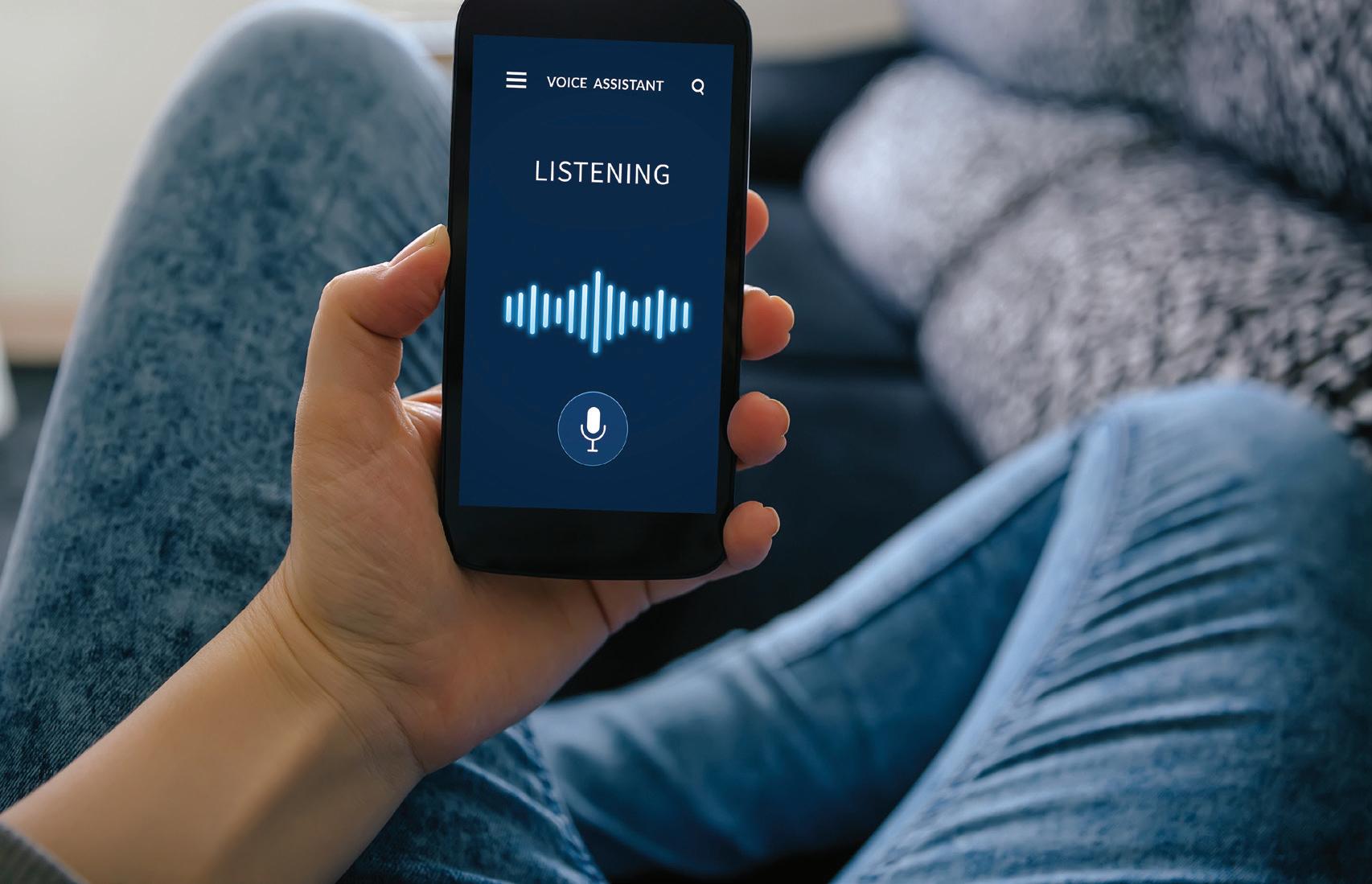
led by Associate Professor Masooda Bashir played a central role in one of the most significant consumer privacy settlements in recent history.
Bashir’s co-authored study, “Privacy as Pretense: Empirically Mapping the Gap between Legislative & Judicial Protections of Privacy,” became a key authority in Lopez v. Apple Inc., a case addressing the intrusive recording of private conversations by Apple’s Siri voice assistant. The lawsuit claimed data collected during these conversations was shared with third-party advertisers. Some users said they later saw ads related to things they had only spoken about out loud. Others said Siri listened even when they never tried to turn it on. The litigation concluded in late 2025 with a landmark $95 million settlement, with payments to millions of affected users beginning in January 2026.
The research was conducted in collaboration with Bashir’s former PhD student Christopher Muhawe, now an assistant professor of law at the University of Illinois Chicago.
“We wanted to better understand whether privacy protections promised by law in the U.S. actually hold up in practice,”
Bashir said. “While I am not a legal scholar, our approach used data-driven analysis of how courts interpret and apply privacy laws in real-world cases. We found that although there is a strong focus on creating privacy legislation, far less attention is given to how those laws function in practice. This was one of the first empirical studies of its kind to systematically examine that gap, and I’m especially proud that this work was conducted with Christopher.”
Their findings revealed a striking pattern that, despite strong legislative intent, privacy protections are often weakened in the courts. Specifically, 60 percent of data privacy violation cases are dismissed in federal court, which plaintiffs’ counsel successfully cited as authority to demonstrate the “extraordinary complexity and litigation risk” inherent in holding tech giants accountable for privacy violations.
“This work is important because it shifts the conversation from what privacy laws promise to how they actually function in practice,” Bashir said. “Its relevance is reflected in cases like Lopez v. Apple Inc., where questions about everyday technologies and user expectations of privacy are central.”
“This work is important because it shifts the conversation from what privacy laws promise to how they actually function in practice.”
Looking ahead, Bashir emphasizes the need for stronger alignment between legislation, judicial interpretation, and technological design.
“As AI-driven and always-on systems become more embedded in daily life, ensuring that privacy protections remain meaningful in practice not just in theory will become increasingly critical,” she said.
Bashir’s research focuses on the interface of information technology, human psychology, and society, especially how privacy, security, and trust intersect from a psychological point of view with information systems. She received degrees in mathematics, computer science, and psychology and earned her PhD in psychology from Purdue University.
This year, the American Library Association (ALA) celebrates its 150th anniversary in our backyard at its Chicago headquarters. As the oldest iSchool in the Midwest, our MSLIS program, established 133 years ago, has left an indelible mark on the ALA. Some of our alumni paused to reflect on their time at the iSchool and their tenure as leaders in the ALA.
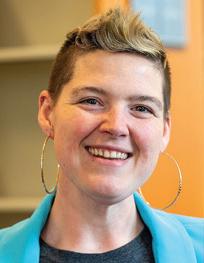
Sam Helmick (MSLIS ’12), current president of ALA
The iSchool’s focus on understanding how information shapes society and supports positive change was central to my experience. Already in a management role halfway through my degree, I was able to immediately blend theory with practice, applying what I learned to real-world leadership challenges. The program’s flexibility allowed me to explore organizational strategy and community engagement in depth, giving me the tools to structure learning and growth both for myself and for the teams I lead.
As the current ALA president, leading ALA through both opportunities (like celebrating its 150th anniversary during our nation’s 250th anniversary) and challenges (operating while hiring our new executive director, navigating a post-COVID strategic plan, and supporting an institutional reorganization) has been deeply meaningful and energizing.
I am especially proud of our work to protect the Institute of Museum and Library Services (IMLS) and its funding, ensuring the continuation of critical support for libraries and museums nationwide. I’ve also deeply valued meeting with MSLIS students to encourage and better understand the next generation of library leaders.
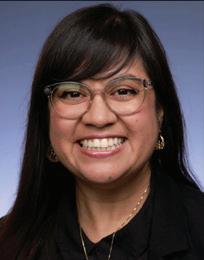

Ziba Pérez (MSLIS ’12), current member of the ALA Executive Board
I completed the degree both online and in person, visiting campus three times a year during the two years I was in the
program. I’m from Los Angeles and had never been to Illinois before or seen fresh snowfall. Now that I’m on the ALA Executive Board (June 2025–2028), I visit the Chicago headquarters for in-person meetings at least three times a year as well! This is my first year on the board, and I am most proud of the work our organization does to advocate for library funding by letting our representatives in D.C. hear directly from the public about the importance of supporting libraries.
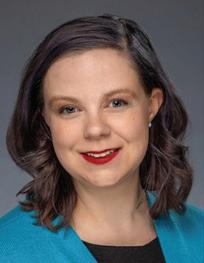
Margaret Heller (MSLIS ’08), past president of Core
When I was president, Core was still a new organization with a lot to build on, and I relied on my network to make it happen. We had such a wonderful cohort during my two years in graduate school, and I am still close friends with many people I met during that time. That encouraged me to pursue leadership opportunities to be on the board of student chapters for ALA and Special Libraries Association, as well as participate in other professional development events. I developed a strong professional network that allowed me to reach out to colleagues for help or advice. Several of my classes helped me to understand the needs of members in areas of library work outside my direct experience as a professional librarian.
Core is the amalgamation of three former ALA divisions, each of which did things slightly differently, had different cultures, and had members rightfully concerned that the organization might not meet their needs in the same way as before. During my tenure as the thirdever president, there was a long list of needs, including writing a strategic plan,
reassessing committee structures, updating the bylaws and procedures, reestablishing fundraising streams, and listening to member concerns. When I left the Core board as past president, I could look around and see how much groundwork I laid for a much sturdier organization.
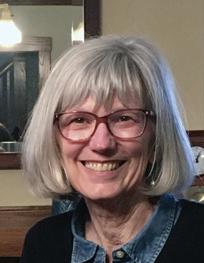
Mary Ellen Davis (MSLIS ’81), past executive director of Association of the College and Research Libraries (ACRL)
As I consider my work as the executive director of ACRL, the management class taught by Kathleen de La Peña McCook was the most applicable class I had at GSLIS (as we called it then). I remember her saying something along the lines of “whether you are managing the Pentagon or a small library, the principles are the same.” And she was right—it was so helpful to learn these principles early on.
As I reflect on my work at ACRL, I am especially proud of advocating for the value of academic and research libraries, as well as the vital role that academic and research library workers play in higher education. I worked to create a strong culture of innovation and a focus on advocacy, professional development, and equity, diversity, and inclusion. During my tenure, I oversaw the development of programs and publications that helped academic and research librarians advance learning, transform scholarship, and document their contributions to the broader campus and higher education communities. I am also proud of the relationships I built within higher education. It was a joy to work with so many talented academic and research librarians and the ACRL team, and I wish ACRL and its members continued success.
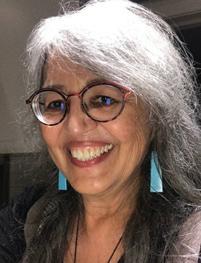

Loriene Roy (PhD ’87), past president of ALA
I had many excellent, capable classmates in the School, and seeing their achievements also gave me confidence that I could also excel in leadership roles.
I was proud of providing opportunities for my students and colleagues to be recognized for their work and their potential to contribute to librarianship. That included supporting graduate student attendance at conferences, appointing colleagues to committees, and establishing the ALA Presidential Citations for Innovative International Library Projects in ALA’s International Relations Round Table.
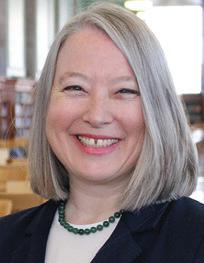
Lisa Janicke Hinchliffe (MSLIS ’95), past president of ACRL
In 1994, the iSchool selected me as the program’s nominee for the ALA Student-to-Staff program, and I attended the ALA Annual Conference in Miami Beach, Florida, working with the ALA Office for Literacy and Outreach Services. I had never attended a professional conference before. I experienced such a warm welcome and realized that I wanted to be part of the cross-institutional collaborations that ALA fostered. That early support from the iSchool set me on a path that eventually led to the ACRL presidential role in 2010–2011. The trip to Miami was also the first time I had ever flown on an airplane!
Establishing the Value of Academic Libraries Initiative as a signature ACRL program, an initiative that continues to develop and deliver for ACRL members to this day, is something that I am very proud of. But, I can’t say that without also giving credit to the large team of people who helped lay the groundwork and build out the effort. It was a team effort. I am also very grateful to Mary Ellen Davis, then ACRL executive director, an innovative association leader who not only mentored me but was willing to dream big with me.
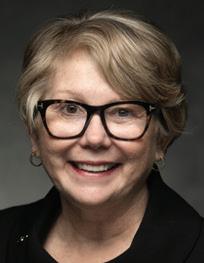
Beth McNeil (MSLIS ’89), past president of ACRL
ACRL is a large division of the ALA, representing more than 8,000 members. After serving on many ACRL committees, I was delighted to be elected as its 2023–2024 president. ACRL truly lives its mission to advance learning, transform scholarship, and create diverse and inclusive communities in higher education, through its committee work, publications, programming, national conferences, and more. I owe my success as an ACRL leader and my 35+ year career working for university libraries to what I learned while studying at the iSchool (GSLIS, at the time!). I was a young student, had never worked for a library, and found the coursework challenging (to say the least), and the instruction excellent: thought-provoking, enlightening, and engaging. I particularly remember classes with Professors Donald Krummel, Linda Smith, and Terry Weech.
An ACRL presidency is actually a threeyear commitment, first as vice-president/ president-elect, then president, and then as past president, with responsibilities each year. So, in 2022 I stepped into the VP role and immediately began the task of making appointments to ACRL’s divisional
committees, during a post-COVID time when many members were not sure they could participate, for a variety of reasons. As president, my plan was to build on the excellent progress made by previous ACRL boards and past presidents to advance equity, diversity, and inclusion in ACRL and academic libraries. I am very proud of the work ACRL did during my term in this area and continues to do.
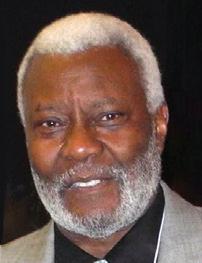
Robert Wedgeworth (MSLIS ’61), past executive director of ALA
My major achievements as executive director of ALA include stabilizing its finances, adding significant value to its endowment by building a new building, restructuring its membership dues that led to a growth spiral, and bringing National Library Week to ALA, which has become the cornerstone for a robust public relations program. Obviously, I did not achieve these things alone. But I was the instigator and driving force behind them all.
My degree from Illinois led to a careerlong interest in bibliographics that became the foundation for my career. I have a new book scheduled to be published by Rowman & Littlefield in early June, and it describes my life and career.
by Logan Mullins, MSLIS student and ALA Archives graduate assistant
TheAmerican Library Association Archives is housed at the University of Illinois, where graduate assistants like me have been continuously helping with the stewardship of these records since 1973. GAs work under the direction of the ALA archivist and are responsible for carrying out many of the same duties and responsibilities expected of archivists. It’s a great deal: the archives get fresh perspectives and enthusiastic workers, and GAs gain valuable practical experience and a sweet, sweet tuition waiver.
As the ALA is celebrating its 150th anniversary this year, the archives staff are busy researching our collections to uncover the association’s history. Have you ever wondered what ALA’s first division was or when the first Round Table meeting was held? Our records tell the story: ALA Council meeting minutes show that the Association of College and Research Libraries was the first division established in 1940, and the first Round Table meeting was held all the way back in 1900, according to conference programs in our archive. The ALA Archives is responsible for stewarding the first 150 years of ALA’s history, and we’ll continue that work to ensure its records are preserved for years to come.
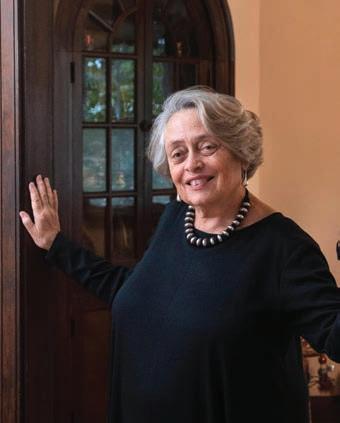

The American Library Association is set to confer an honorary lifetime membership upon former ALA President Barbara J. Ford (MSLIS ’73). Recommended by the ALA Executive Board and elected by the ALA Council, honorary membership is the highest honor given by the Association and conferred upon a living person whose outstanding contributions have made a lasting impact on librarianship, libraries, and the communities they serve.
Ford is a distinguished librarian with a career in librarianship and with ALA spanning more than 50 years. She served as ALA president from 1997–1998 where she launched her initiative, “Libraries: Global Reach – Local Touch,” which emphasized international collaboration and community engagement.
“Barbara exemplifies the best of librarianship—visionary leadership, steadfast service, and a deep belief that libraries strengthen communities everywhere,” said ALA President Sam Helmick (MSLIS ’12). “It is a profound honor to recognize her with an honorary lifetime membership, the Association’s
highest distinction, in celebration of the lasting impact she has made on ALA and on the global library community.”
Ford has contributed and engaged with the Association in many ways including as president of the Association of College and Research Libraries (ACRL, 1990–1991), as a councilor at large and chapter councilor (1980–1989), and most recently on the Philanthropic Advisory Group (2019–2025).
Ford has made significant contributions to the international library community. As director and distinguished professor at the Mortenson Center for International Library Programs at the University of Illinois (2003–2014), she organized professional development programs for librarians worldwide, fostering global collaboration and enhancing library services in diverse contexts.
Her involvement with the U.S. National Commission for UNESCO (2011–2013) furthered worldwide efforts to foster education and information access as public goods. She co-founded the UNESCO Center for Global Citizenship, which promotes multicultural knowledge and intercultural
You are invited to join us for an iSchool alumni reception during the ALA Annual Conference. We will present the 2026 iSchool Alumni Association Awards and the 2025 Robert B. Downs Intellectual Freedom Award.
Sunday, June 28, 2026 I 5:00–7:00 p.m. I Marriott Marquis, Great Lakes E Room I Chicago, IL Hors d’oeuvres will be served. Guests are welcome.
Visit go.ischool.illinois.edu/Chicago for more details and to RSVP.
“
Barbara exemplifies the best of librarianship— visionary leadership, steadfast service, and a deep belief that libraries strengthen communities everywhere.”
understanding. Ford also served as an elected member of the Governing Board of the International Federation of Library Associations and Institutions from 2005 to 2009.
Ford has participated in more than 150 conferences at the state, national and international levels, using her experience in academic and public libraries including director of libraries at Virginia Commonwealth University and director of the Harold Washington Library in her capacity as assistant commissioner of the Chicago Public Library, to deliver impactful presentations and contribute to professional development worldwide. On the local level, Ford’s community engagement has included service on the boards of the friends of the public library in the communities where she lived.
ALA is slated to officially confer the honorary membership upon Ford this June during the ALA Annual Conference & Exhibition in Chicago.
—courtesy of the ALA

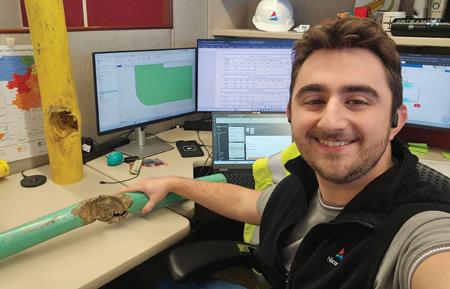
After graduation, Eugene Gurevich (BSIS ’23) joined Nicor Gas, a natural gas utility company that provides natural gas service to customers across northern and central Illinois. He works as an analyst in the Distribution Integrity department, which is responsible for ensuring the safety and reliability of nearly 34,000 miles of distribution pipelines.
What do you like best about your job?
What I enjoy most about my role is the diversity of work and the opportunity to apply my information science background in so many different ways. Some days I’m deep into data analysis, building and maintaining data pipelines that integrate complex tabular and geospatial data to help us understand what’s happening across our system. Other days, I’m out in the field with our crews, investigating potential pipeline issues firsthand and helping guide decisions about how to address them.
I also get to work in project management, overseeing capital pipeline replacement projects and collaborating with engineers to determine the most effective strategies for reducing future risk. I love that my job allows me to see the full picture, from data
models to real-world applications, and that I can contribute to decisions that have a tangible impact on people’s safety and comfort.
How did the iSchool at Illinois help you get to where you are today?
The iSchool provided the foundation I needed to succeed in a data-driven but interdisciplinary role. Courses in data analytics and data science taught me how to approach problems systematically; how to clean, transform, and visualize data; and how to apply machine learning algorithms to uncover patterns and insights. Those technical skills have been essential in building and maintaining the risk model that underpins much of my department’s work.
Beyond the technical side, the iSchool also taught me how to communicate effectively with different audiences. IS 419 [Entrepreneurial Information Technology Design], for example, emphasized the importance of tailoring your message depending on who you’re speaking to. In my case, it can be field mechanics, engineers, or executives. That ability to translate complex data into clear, actionable information has
been one of the most valuable skills I use every day.
Even courses that seemed less directly related to my current field, like those focused on librarianship and information organization, have proven relevant. I often have to dig through historical records and archives to understand how our system has evolved, and the research and information retrieval skills I learned at the iSchool have been instrumental in that work. The program really prepared me to think critically about how information is created, stored, and used, no matter the industry.
What advice would you like to share with iSchool students?
My biggest piece of advice is don’t be afraid to explore unconventional career paths. It’s easy to assume that an information sciences degree has to lead to a job in tech or data analytics at a big-name company, but the truth is that information professionals are needed everywhere. Utilities, health care, government, manufacturing . . . these industries all rely on data and information management to operate efficiently and safely.

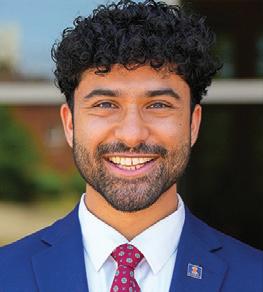
Inhis role with the University of Illinois Alumni Association, Sid Patil (MSIM ’24) turns data into meaningful connections with alumni and students, an approach grounded in the human-centered thinking he developed at the iSchool.
As director of data strategy and alumni insights, Patil leads efforts that shape how the organization understands and engages its community. His work spans maintaining data pipelines, ensuring Tableau reports
reflect accurate and timely information, and guiding strategic decision-making across teams. He also focuses on improving systems and processes to ensure the organization is prepared for the future.
“What I enjoy most is being able to connect data with real human outcomes,” Patil said. “Every analysis, insight, or improvement to our data infrastructure directly impacts how we support alumni and strengthen their lifelong connection to Illinois.”
That connection-driven mindset is central to the impact of his work. By translating data into actionable insights, Patil is improving alumni engagement, guiding outreach efforts, and identifying
ways to better support students and graduates, and initiatives that reflect the needs of the community, which includes more than 500,000 alumni.
Patil credits the iSchool for shaping both his technical foundation and his approach to problem-solving. “The iSchool gave me a strong foundation in information management and human-centered thinking,” he said. “Beyond technical skills, it taught me how to approach information problems with curiosity, creativity, and rigor.”
The program’s interdisciplinary nature, he added, helped him see how data can drive impact across industries, an outlook that continues to guide his work today.
Willis (Bill) Hubbard (MSLIS ’63) passed away on September 15, 2025. During his career, he served as library director at Eureka College, Stephens College, Gettysburg College, and Warren Wilson College.
Gene Rinkel (MSLIS ’67) passed away on December 12, 2025.
Nelson R. Beck (MSLS ’76) published the book Protecting Your Retirement income: Four Techniques to Help Secure Your Retirement Income.
Michele Finerty (MSLIS ’72) passed away on March 17, 2026.
Victoria Cogswell Hahn (MSLIS ’78) retired from Beloit (WI) Public Library in 2019 after 26 years as a librarian and department head. She continues her genealogy blog and Stateline Genealogy Club as a business, researching and giving genealogy presentations in Illinois and Wisconsin on several topics.
Mary Beth Riedner (MSLIS ’71) was awarded the 2025 RUSA Margaret E. Monroe Library Adult Services Award.
Gerald (Jerry) Specht (MSLIS ’79) passed away on February 6, 2025.
Molly Horio (MSLIS ’89) passed away on November 12, 2025.
Curt McKay (MSLIS ’88) was selected as an honorary grand marshal for the 2025 Rockford (IL) Area Pride Parade.
Bonnie (Ferguson) Parr (MSLIS ’84) has retired after “40 satisfying years” as historical documents conservator for the Abraham Lincoln Presidential Library and Museum (formerly Illinois State Historical Library). She was active with the CARLI Preservation Committee, enjoyed mentoring students interested in conservation, and taught workshops on conservation and preservation.
Mike Rogalla (MSLIS ’89) retired in November 2025 from his position as the children’s services manager at the Champaign Public
Library. Across 36 years as a children’s librarian, he had the honor to serve on several youth media award committees to include Notable Children’s Books, Sibert, YALSA Award for Excellence on Nonfiction, Scott O’Dell, and Newbery.
Kwasi Sarkodie-Mensah (PhD ’88) retired from Boston College at the end of September 2025.
Judith Siess (MSLIS ’82) passed away on January 20, 2026.
Laura L. Barnes (MSLIS ’93) concluded her 34-year career at the Illinois Sustainable Technology Center and retired in December 2025. Post-retirement plans include continuing the Environmental News Bits blog, working with librarians to foster sustainability in their communities, traveling with her husband, and making a dent in her enormous “to read” pile.
Scott V. Dermont (MSLIS ’90) retired from his job at the State Library of Iowa at the end of 2024. His career included managing several programs as a library consultant at the State Library from 2008 to 2024 and working as a librarian at the Ames (IA) Public Library from 1990 to 2008.
Elizabeth Dupuis (MSLIS ’92) retired in January 2026 as the senior associate university librarian for educational initiatives, user services, and strategic projects and director of the Doe, Moffitt and Subject Specialty Libraries at the University of California, Berkeley.
After 34 years of service, Lisa Janicke Hinchliffe (MSLIS ’94) retired from the University of Illinois at the end of May and began a new chapter—launching her own consultancy focused on working with publishers and libraries.
Jian Qin (PhD ’96) has been awarded emerita status upon her retirement from Syracuse University.
Myron Schirer-Suter (MSLIS ’94) of Beverly, Massachusetts, is retiring as director of library services at Gordon College at the end of the spring semester.
After 38 years working at libraries in Southern Illinois, Loretta Broomfield (MSLIS ’02) retired in November as the director of Marion Carnegie Library.
Eric Edwards (MSLIS ’06) received the Health Science Librarians of Illinois President’s Award, in recognition of significant service to the organization. He was also recently elected to the Association of College and Research Libraries (ACRL) Board of Directors as director-at-large.
Leah Gregory (MSLIS ’04) is the new director of membership and outreach at Illinois Heartland Library System.
James R. Jacobs (MSLIS ’02) has received the Margaret T. Lane/Virginia F. Saunders Memorial Research Award. He was recognized for Preserving Government Information: Past, Present, and Future, which he co-authored with James A. Jacobs.
Morris Levy (MSLIS ’00) has joined the Center for Research Libraries as a metadata initiatives program officer.
Heather Moulaison-Sandy (MSLIS ’02) became the editor in chief of Cataloging & Classification Quarterly on January 1, 2026.
Liz Muller (MSLIS ’08) began a new position as curator of prints, photographs, and architectural collections at The New York Historical in January 2026.
Matthew Murrey (MSLIS ’03) had his second book of poetry published in January. The book is Little Joy, and is published by Cornerstone Press (University of WisconsinStevens Point).
Dennis Prieto (MSLIS ’05) celebrated his 20th year of service to the Rutgers Law School by earning promotion to librarian 1. He has been active with the National Council of Bar Examiners in framing and promoting the Next Gen Bar Exam, and is currently updating a bilingual English/Spanish law dictionary.
Hallie Pritchett (MSLIS ’06) began her new position as director of Ferris State University Libraries and Archives in April 2026.
Kim Christiansen Sigle (MSLIS ’09) has been appointed a director on the United States Board on Books for Young People (USBBY), a nonprofit organization devoted to building bridges of international understanding through children’s and young adult books.
Alec Sonsteby (MSLIS ’05) was elected president of the Inter Faculty Organization (IFO), the union representing the 3,400 teaching faculty, librarians, coaches, and counselors at the seven Minnesota State universities, effective July 1, 2026.
In January 2026, the University of Illinois Press published Christopher Sweet’s (MSLIS ’03) first book, A History of Bicycling in Illinois: 160 Years of Booms and Busts.
C.J. Wong (MSLIS ’00) is now an assistant professor and engineering and physical sciences librarian at the University of New Hampshire.
2010s
the University of Nebraska–Lincoln Libraries associate dean for research and learning.
Ryan A. Ross (MSLIS ’10) took over as editor in chief of Illinois Alumni magazine in April 2025, after serving on its editorial staff since 2020. He continues to oversee the university’s heritage museum, the Richmond Family Welcome Gallery at Alice Campbell Alumni Center.
Yasmeen Shorish (MSLIS '11), associate dean for research & scholarly communications at James Madison University, has been elected ACRL vice-president/ president-elect. She will become president-elect in July 2026 and assume the presidency in July 2027 for a one-year term.
Emily Schaub (MSLIS ’16) began her new position as executive director of the Freeport (IL) Public Library in February.
Yasmeen Shorish (MSLIS ’11), associate dean for research & scholarly communications at James Madison University, has been elected ACRL vice-president/president-elect. She will become president-elect in July 2026 and assume the presidency in July 2027 for a one-year term.
Tristan Draper (MSLIS ’21) received the 2026 ACRL College Libraries Section Innovation in College Libraries Award.
Xochitl Quiroz (MSLIS ’23) served on the bargaining committee for the first collective bargaining agreement of the newly-formed Smith College Libraries Workers Union, part of OPEIU Local 153. SCLWU voted to unionize on April 9, 2024 (Library Workers Day!), and ratified their first CBA on November 11, 2025.
Caelin Ross (MSLIS ’20) was recently appointed as the humanities librarian at the University of Chicago Library. Her role includes supporting music, theatre, and performance studies. She previously served as the performing arts librarian and curator of the Theatre for Youth and Community Collection at Arizona State University in Tempe, Arizona.
Mary Schiavone (MSLIS ’23) received the 2026 ACRL CLS Innovation in College Libraries Award.
Sara Benson (MSLIS ’17) has been awarded a Fulbright Specialist Grant. This summer, she will spend time in Bulgaria studying text and data mining exceptions.
Lauren Chambers (MSLIS ’12) was featured in the Illinois Library Association (ILA) Member Spotlight on November 24, 2025.
Chris D’Arpa (PhD ’17) was recently promoted to associate professor with tenure in the School of Information Sciences at Wayne State University.
EvaAnne Johnson (MSLIS ’18) has been selected as chair to the Illinois State Archives Advisory Board/Illinois Historical Records Advisory Board.
Samantha LeGrand (MSLIS ’15) received the 2026 ACRL Instruction Section Innovation Award.
Gail Murray (MSLIS ’15) served on the bargaining committee for the first collective bargaining agreement of the newly-formed Smith College Libraries Workers Union, part of OPEIU Local 153. SCLWU voted to unionize on April 9, 2024 (Library Workers Day!), and ratified their first CBA on November 11, 2025.
Thomas Padilla (MSLIS ’13), an internationally sought-after voice on responsible uses of technology that advance research and learning, has been appointed as
Cassidy Steinke (MSLIS ’15) began her new appointment as the library director of the Limestone Township Library District in Kankakee, Illinois, in November 2025.
Jamie Wittenberg (MSLIS ’15) began her appointment as dean of libraries at Loyola University Chicago, in January 2026.
Lena Bohman (MSLIS ’20), senior data management and research impact librarian at the Zucker School of Medicine at Hofstra University and Northwell Health, is quoted in the Center for Open Science blog post “Libraries and Open Science: Overlaps and Gaps with the Research Community.”
Joshua Short (MSLIS ’24) was appointed to the Illinois State Library Advisory Committee by Illinois Secretary of State Alexi Giannoulias on December 1, 2025.
Alex Towers (MSLIS ’21) was featured in the ILA’s Member Spotlight for the week of October 27, 2025.
Kaitlyn Weger (MSLIS ’24) has been elected to a two-year term (2025–2027) as Member-at-Large on the Network of Illinois Learning Resources in Community Colleges Board.
Aren Yoon (BSIS ’24) has joined Apple’s Learning and Development team as a project manager.


As a teenager helping her mother sort books in the public library in Stellenbosch, South Africa, Lorraine Haricombe (MSLIS ’88, PhD ’92) didn’t realize that one day she would become a recognized leader in the field of librarianship. As director of their hometown library, Haricombe’s mother influenced her daughter’s career path and instilled in her a love of learning.
“She taught me to read stories of our culture to the young. And she taught me to make sure they checked out books in the (then) two languages: our spoken language and our written language,” said Haricombe.
Haricombe earned a bachelor’s degree in library and information science, psychology, and sociology and an honors graduate degree in library and information science from the University of the Western Cape in South Africa. She served as assistant library director and library director at the (then) Peninsula Technikon in Bellville, South Africa, before applying to graduate programs in the US.
When Haricombe received a scholarship from the Graduate School of Library and Information Science (now iSchool) at the University of Illinois to pursue her MSLIS degree, she was elated.
“As a single mother with two young daughters, it was a letter from the University of Illinois that would change the rest of my life and that of my family. I was excited to check the atlas in my house in South Africa to locate Urbana-Champaign on the map,” said Haricombe.
Once she arrived, she felt she had made the right choice. With its “beautiful tree-
lined streets,” the community felt like her hometown in South Africa. At the iSchool, Haricombe found the faculty to be globally minded and welcoming to international students such as herself.
“The opportunity to study at one of the largest research libraries in the world opened my eyes to a whole new world of information. I discovered more books about my own country on the library shelves than I could ever have access to in South Africa as a librarian,” she said. “The support I received and my experience as an international graduate student at the top-ranked iSchool and University Library prepared me to lead large academic libraries for impact with passion and confidence.”
After completing her MSLIS, she continued her studies and earned her PhD. Professor F. W. Lancaster served as her dissertation advisor. According to Haricombe, her education at Illinois provided her with the skills she needed for a successful career in academic libraries.
“I graduated with a ‘tool kit’ of techniques. I was taught how to use the tools, but their actual use would be up to me. The techniques included such topics as knowledge organization, working with teams, budgets, and the lofty reaches of leadership,” said Haricombe. “I remain eternally grateful for the doors that the iSchool helped open for me to enjoy a long and fulfilling career. As I reflect on it, I realize I have been blessed beyond measure and that I could not do it alone.”
Throughout her career, Haricombe served in leadership roles at several academic libraries, including Northern
“I remain eternally grateful for the doors that
the iSchool helped open for
me
to enjoy a long and fulfilling career.
”
Illinois University, Bowling Green State University, the University of Kansas, and the University of Texas at Austin. Her accomplishments include directing the implementation of a faculty-led, open access policy at the University of Kansas, the first public institution in the U.S. with such a policy. During the COVID-19 pandemic, Haricombe steered the University of Texas Libraries to ensure academic continuity, while also serving as president of the Association of Research Libraries Board of Directors. Haricombe retired as director and vice provost of the University of Texas Libraries in 2025. In her retirement, she enjoys traveling, reading, running/walking, and volunteering in community services.
She has been a loyal donor to the iSchool over the years, especially to funds in honor of her former professors, and recently established the Lorraine Haricombe Scholarship Fund. The new scholarship is a token of appreciation for the support she received as a graduate student.
“I am giving back in gratitude for the iSchool’s investment in me to prepare me for a wonderful career in academic librarianship,” she said. “I want to pay forward and give other students, especially international students, a similar opportunity. It’s the right thing to do.”

Asa middle school student in Accra Newtown, Ghana, Fatihi Mohammed put his education on hold. According to Mohammed, he dropped out because he didn’t fully appreciate the long-term importance of education until he read Dr. Ben Carson’s book Think Big, which inspired him to return to school. Returning to school was a challenge, but his perseverance and dedication paid off. Through renewed focus and efforts, the student has shown remarkable academic growth and is now working toward his MSLIS degree at the University of Illinois. Mohammed is receiving support for his studies through the Anna Mae Koval Scholarship Fund at the iSchool. The scholarship is a powerful reminder that honors the hard-won progress he has made.
“This scholarship validates the challenging journey I have undertaken, and the countless times I have had to remind myself that the nights spent studying after years away from the classroom would eventually make sense,” he said. “I see this opportunity and the many I have received in the pursuit of my education through the lens of my experience in my community, where many bright minds often have had to put their education on hold and eventually not pursue further education due to various challenges.”
Mohammed earned his bachelor’s degree in information studies and psychology at the University of Ghana. There he learned how data can empower decision-making as well as the risks of mishandling information.
“Through my academic and professional experiences, I have seen how poor data management can compromise privacy and erode trust,” he said. “This realization inspired me to pursue an LIS degree as I believe that robust data privacy and sound data governance practices are essential for navigating our increasingly digital world.”
Mohammed chose the MSLIS degree program at the iSchool because of its
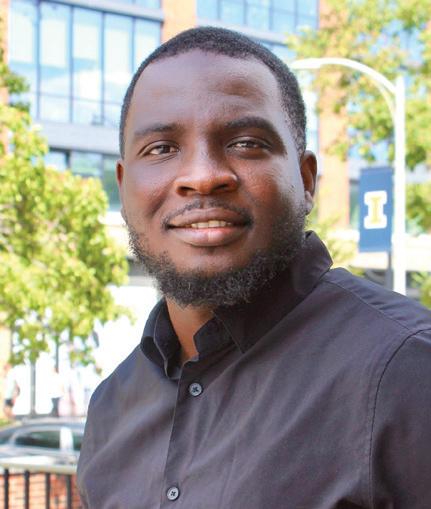
flexibility, which allows him to take additional courses that align with his interests in data privacy, AI governance, digital forensics, risk, and compliance. Outside class, he works as a teaching assistant for Social Aspects of Information Technology (IS 202), and as a graduate assistant at the iSchool Help Desk, where he provides technical IT support to the iSchool community. He enjoys playing soccer, reading, and networking. Support from the Koval Scholarship has lifted part of his financial burden, making it easier to balance his academics with work and extracurricular activities.
“As a Koval Scholar, this reminds me that perseverance can open doors and now I have a far greater responsibility to keep those doors open for others as I have done in my own small ways ever since I got back to school,” said Mohammed. “This scholarship goes far beyond an individual success, it represents hope and possibility for others in my Zango community. It strengthens my resolve to continue to excel academically and, more importantly, to return to the community to provide guidance to young people who might be considering leaving school and grant them similar opportunities. As we say in Hausa language, “Ubangiji yana nan raye, wannan ma zai yiwu—to wit, My God is alive; this too will be possible.”
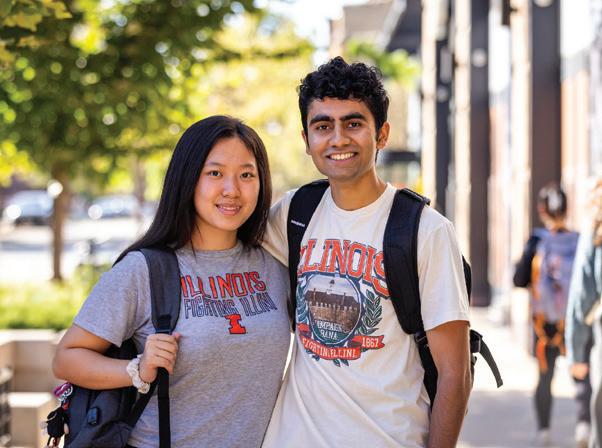
Your gift makes a difference in the educational experience of our students
When you support iSchool students, you can change the course of someone’s life. Every gift, large or small, matters. There are a number of ways to give to the iSchool. These include short- and long-term options. The iSchool Advancement Office is happy to work with you to determine which option best fits your needs.
Eileen Prillaman Assistant Dean for Advancement (217) 333-7344 prillamn@illinois.edu
Nick Giacchina Director of Advancement (217) 300-3430 ngiacch2@illinois.edu
For more information about giving to the School, or to make a gift, visit go.ischool.illinois.edu/give

University of Illinois Urbana-Champaign
501 East Daniel Street, MC-493 Champaign, IL 61820-6211
Alumni

iSchool open house
Friday, August 28
10:00 a.m. – 2:00 p.m.
University of Illinois campus
Share your Leep memories at go.ischool.illinois.edu/Leep.