Ref. Ares(2025)11618459 - 29/12/2025
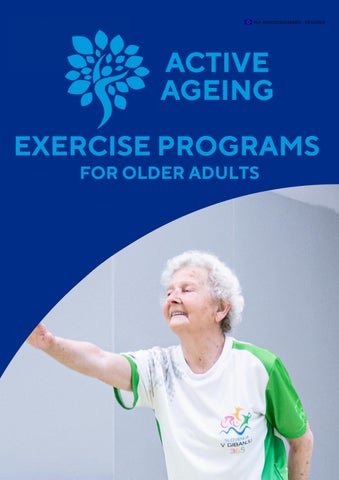
EXERCISE PROGRAMS FOR OLDER ADULTS
Funded by the European Union. Views and opinions expressed are however those of the author(s) only and do not necessarily reflect those of the European Union or the European Education and Culture Executive Agency (EACEA). Neither the European Union nor EACEA can be held responsible for them. All photo and video materials used in the ACTIVE AGEING project were collected with informed consent, fully in line with GDPR and applicable EU data protection regulations. Consent was obtained from all identifiable individuals prior to any publication or use.
INTRODUCTION The ABC+ Movement Programme was delivered as the core intervention of the Active Ageing for Falls Prevention project, with the primary objective of testing whether an evidence-based, multicomponent falls-prevention exercise programme can be implemented effectively, safely and consistently in real-life community and sport settings across different European contexts. The delivery phase was not conceived as a controlled experimental environment, but as a pragmatic pilot, intentionally embedded in existing local systems and infrastructures in order to generate meaningful implementation learning and assess real-world feasibility. The delivery objectives were fourfold. First, to implement the ABC+ programme with high methodological fidelity, ensuring that balance, strength and functional mobility were systematically addressed as core components. Second, to verify that the programme could be delivered by trained practitioners in diverse organisational contexts (sport clubs, HEPA organisations, universities, community centres). Third, to ensure participant safety and acceptability, particularly among older adults with heterogeneous functional abilities and health profiles. Fourth, to integrate monitoring and evaluation into routine delivery, thereby supporting quality assurance, learning, and future scalability. Across all pilot countries, delivery was guided by the same shared framework, learning materials and evaluation tools, while allowing for contextual adaptation. This balance between standardisation and flexibility was a defining feature of the ABC+ delivery model. The ABC+ Movement Programme was developed with the clear purpose of upgrading common exercise programmes for older adults by systematically integrating falls prevention, balance and functional mobility into regular physical activity practice. While many existing exercise offers for older people focus primarily on general fitness, strength, stretching or light aerobic activity, they often address balance and mobility only superficially or inconsistently. ABC+ responds to this gap by placing balance control, postural stability and functional movement at the core of programme design, rather than treating them as optional or supplementary elements. A central aim of the programme is to reduce fall risk while supporting independence in everyday life. Falls in older age are rarely caused by a single factor; they result from the interaction of reduced strength, impaired balance, limited mobility, slowed reactions and decreased confidence. The ABC+ Movement Programme addresses these interacting factors through a structured, multicomponent approach that combines progressive strength training with static and dynamic balance exercises and functional mobility tasks directly linked to daily activities, such as sit-to-stand transitions, walking stability, turning, and negotiating obstacles. Another key purpose of ABC+ is to enhance balance confidence and reduce fear of falling, which are recognised barriers to physical activity participation in older adults. Even individuals with adequate physical capacity may restrict their activity due to fear, leading to further deconditioning and increased risk. By offering a safe, supportive and progressive training environment, the programme helps participants rebuild trust in their bodies, gain confidence in movement, and remain active both indoors and outdoors.
The programme is also designed to support high-quality delivery by trainers and organisations. ABC+ provides a ready-to-use structure, clear progression logic and practical learning materials that reduce the need for trainers to design sessions independently. This ensures that fallsprevention principles are applied consistently across settings and that balance and mobility are not overlooked due to time constraints, lack of expertise or uncertainty about progression. In this way, ABC+ upgrades existing practice not only for participants, but also for professionals delivering exercise to older adults. The ABC+ Movement Programme aims to embed falls prevention within sustainable, community-based physical activity pathways. Rather than functioning as a standalone clinical intervention, ABC+ is intended to be integrated into sport clubs, community programmes and HEPA initiatives, reaching older adults before severe functional decline occurs. By strengthening balance, mobility and confidence within regular exercise programmes, ABC+ contributes to healthier ageing, prolonged independence and improved quality of life for older adults. An important and distinctive feature of the ABC+ Movement Programme is the systematic inclusion of transfers and functional mobility training, with a specific focus on teaching older adults safe and efficient techniques for changing body positions. This includes standing up from sitting, sitting down in a controlled manner, rising from the floor or a lying position, and transitioning between different postures during movement. These skills are fundamental for everyday independence, yet they are often insufficiently addressed in common exercise programmes for older people. The purpose of integrating transfer training is twofold. First, it aims to improve physical capacity and movement quality, helping participants use appropriate muscle activation, alignment and momentum when standing up or sitting down. Through repeated practice and clear instruction, older adults learn how to distribute load effectively, protect their joints and maintain balance during transitions. This not only reduces fall risk but also supports confidence in daily activities such as getting out of bed, standing up from a chair, or rising after kneeling or lying down. Second, the programme explicitly addresses a practical barrier to participation in exercise programmes. Difficulties in standing up from the floor, mats or low seating are a common reason why older adults avoid or discontinue group exercise, as many sessions require frequent position changes. By practising transfers progressively and safely within the ABC+ sessions, participants become more comfortable and capable of changing positions independently. This reduces anxiety related to getting up or down during classes and removes a key obstacle that can prevent older adults from attending or fully engaging in physical activity programmes. By embedding transfer and mobility training as core components—rather than avoiding floorbased or transitional movements altogether—the ABC+ Movement Programme empowers older adults with practical skills that are immediately transferable to everyday life and to other forms of exercise. In doing so, it not only improves functional independence and safety, but also enhances inclusiveness and long-term participation in physical activity by ensuring that position changes are no longer a source of fear or exclusion.
PROGRAMME DELIVERY MODEL AND STRUCTURE Duration and frequency Across all pilot sites, the ABC+ Movement Programme was delivered as a structured 12-week intervention, reflecting both scientific recommendations for falls-prevention exercise and practical considerations of community-based implementation. Participants attended two supervised group exercise sessions per week, resulting in approximately 24 organised sessions per participant over the programme period. This frequency was considered sufficient to provide regular stimulus for strength, balance and mobility development, while remaining realistic and acceptable for older adults in everyday life. In addition to the supervised sessions, participants were actively encouraged to perform at least one independent home-based session per week. Trainers provided guidance on suitable exercises, progression and safety, and regularly followed up on participants’ experiences during group sessions. This element was intentionally included to support the transfer of learned skills into daily routines, reinforce autonomy, and foster long-term physical activity habits beyond the structured programme. By combining supervised and independent practice, the programme aimed to balance structured support with gradual selfmanagement. The choice of a 12-week duration represented a pragmatic compromise between feasibility and expected impact. In community and sport settings, longer interventions may face challenges related to adherence, scheduling, costs and organisational capacity. At the same time, the 12week timeframe allowed sufficient time to introduce the programme structure, build trust between participants and trainers, progress exercise difficulty safely, and observe early but meaningful changes—particularly in balance confidence, fear of falling, movement quality and physical activity behaviour. While larger changes in objective functional performance often require longer-term or higher-dose interventions, the 12-week model proved appropriate for a pilot implementation. It allowed participants to experience tangible benefits without excessive burden and provided valuable insight into programme feasibility, acceptability and early outcomes. Importantly, the duration also supported the programme’s preventive focus: engaging older adults early enough to influence behaviour and confidence before severe functional decline occurs, while encouraging continuation into longer-term physical activity pathways after the pilot period. Session architecture Each ABC+ Movement Programme session was delivered according to a clear and consistent session architecture, applied across all pilot countries. This structure was intentionally designed to support safety, learning, progression and transfer to daily life, while ensuring that all key determinants of fall risk were addressed within every session. The standardised architecture also supported delivery quality and consistency across different trainers, organisations and national contexts. The warm-up phase focused on mobility, coordination and gradual cardiovascular activation. Exercises in this phase prepared the body for more demanding tasks by gently increasing heart
rate, mobilising major joints, and activating postural muscles. Coordination tasks and simple balance challenges were often included already in the warm-up, helping participants shift attention to body awareness, alignment and movement control. This phase was particularly important for older adults, as it reduced injury risk, supported confidence at the beginning of the session, and created a smooth transition from everyday movement into structured exercise. The main training phase formed the core of each session and combined progressive strength training with static and dynamic balance exercises and functional mobility tasks. Strength exercises targeted key muscle groups relevant to falls prevention, such as the lower limbs and trunk, and were progressively adapted over time. Balance training included both static tasks (e.g. stance variations, weight shifts) and dynamic challenges (e.g. stepping, changes of direction, dualtask elements). Functional mobility exercises focused on movements directly related to daily life, such as sit-to-stand transitions, walking stability, turning, reaching and obstacle negotiation. By integrating these elements within the same phase, the programme reflected the real-life interaction between strength, balance and mobility rather than treating them as separate capacities. The cool-down phase emphasised stretching, breathing and recovery, allowing participants to gradually lower physical intensity and regain a calm physiological state. Stretching supported flexibility and comfort, while breathing and relaxation exercises contributed to body awareness and stress reduction. This phase also offered an opportunity for reflection, feedback and informal interaction between participants and trainers, reinforcing positive experience and group cohesion. Described session architecture ensured that balance and functional mobility were embedded as core components from the outset, rather than being introduced only at advanced stages or for selected participants. By addressing multiple determinants of fall risk in every session, the ABC+ Movement Programme provided a comprehensive, realistic and effective training stimulus that closely mirrors the demands of everyday movement and supports safer, more confident participation in physical activity. Progression and exercise levels A defining feature of the ABC+ Movement Programme delivery was its clear, structured progression framework, which supported both safety and effectiveness when working with older adults. Exercises were systematically organised into phases and levels, allowing trainers to introduce challenge gradually and transparently, while ensuring that participants were never exposed to unnecessary risk. This framework provided a shared reference for progression across all pilot countries, contributing to consistency in delivery and quality assurance. Progression within the ABC+ programme was multidimensional, meaning that challenge was not increased simply by adding repetitions or resistance. Instead, trainers progressed exercises by adjusting key variables such as base of support, use of external support, range of motion, movement speed, coordination demands, task complexity and environmental conditions. For example, balance exercises could be progressed from wide to narrow stance, from supported to unsupported positions, or from singletask to dual-task situations (e.g. combining balance with cognitive or coordination tasks).
Functional mobility exercises, such as sit-to-stand or stepping tasks, were similarly progressed by altering starting height, tempo, direction or movement combinations. This structured progression approach allowed trainers to individualise exercises within a group setting. Participants could perform the same core exercise at different levels of difficulty, depending on their functional ability, confidence and health status. This avoided the need to split groups or exclude participants, while still providing an appropriate challenge for more capable individuals. Importantly, progression decisions were always guided by observation of movement quality, balance control and participant confidence, rather than by a fixed timetable or pressure to advance. From a delivery perspective, trainers consistently reported that the progression framework reduced preparation time and increased confidence. Instead of improvising progression or relying solely on subjective judgement, instructors could draw on a clear, predefined structure that supported professional decision-making. This not only improved efficiency but also enhanced safety and consistency, ensuring that balance and mobility challenges were applied systematically rather than sporadically. Overall, the progression and exercise level framework proved to be a critical enabler for high-quality, scalable delivery of the ABC+ Movement Programme across diverse real-life settings.
DELIVERY SETTINGS The delivery of the ABC+ Movement Programme took place in a wide range of real-life community settings, deliberately reflecting the diversity of organisational structures and service models for older adults across Europe. Rather than relying on a single type of provider, the programme was implemented through sport, health, education and community sectors, demonstrating its adaptability and relevance across national contexts. In Finland, delivery was closely linked to established health-enhancing physical activity and public-health infrastructures, with sessions hosted in community sport facilities and settings already familiar to older adults through municipal and research-supported initiatives. This context enabled systematic recruitment, strong alignment with national active ageing strategies, and comprehensive monitoring and evaluation. Participants benefited from structured environments where falls prevention and functional capacity are already recognised priorities, which supported high engagement and trust in the programme. In France, the programme was delivered through HEPA organisations and community-based structures, in collaboration with academic partners such as university faculties of sport. This mixed sport–health model allowed the programme to reach different municipalities and local populations while maintaining a shared protocol and quality standards. Delivery across multiple sites illustrated how ABC+ can function within decentralised systems, while also highlighting the importance of organisational coordination and contingency planning in response to contextual factors such as recruitment timing and climatic conditions. In Italy, implementation was embedded within a university-linked sports organisation (CUS Palermo), combining academic expertise with an operational sport environment. This setting enabled efficient recruitment through existing user networks and strong participant retention, with no dropouts reported during the pilot. The familiar sport facility environment and continuity of staff played a key role in participant confidence, while also facilitating post-programme continuation into existing postural and physical activity groups. In Slovenia, delivery took place primarily through local sports clubs coordinated by the Sports Union of Slovenia, reflecting the country’s strong sport-for-all tradition. These community-based clubs provided accessible, trusted environments where participants felt comfortable engaging in regular exercise. The close relationship between clubs and participants supported high attendance and exceptionally low dropout rates, while also enabling trainers to tailor delivery closely to individual needs within group settings. Across all countries, a key delivery principle was embedding the ABC+ Movement Programme within existing systems, rather than creating parallel or short-term project structures. This approach enhanced feasibility by using available facilities, staff and communication channels, supported recruitment through trusted organisations, and increased the likelihood of sustainability after the pilot period. Participants were more willing to attend sessions in settings they already knew and trusted, which was particularly important for those with fear of falling or low confidence in movement. Organisers consistently reported that familiar, accessible environments reduced anxiety and hesitation among participants. Clear schedules, appropriate facilities, and
continuity of trainers and organisations contributed significantly to participant satisfaction, retention and perceived safety. Overall, the diversity of delivery settings across national contexts demonstrates that the ABC+ Movement Programme is highly adaptable and transferable, capable of being integrated into a broad range of community infrastructures while maintaining quality and core programme principles.
TRAINERS PREPARATION AND FEEDBACK The Train-the-Trainer (TTT) model was a cornerstone of the successful delivery of the ABC+ Movement Programme across all pilot countries. Its primary purpose was to ensure that trainers responsible for implementation possessed not only practical exercise skills, but also a shared conceptual understanding of active ageing, falls prevention and quality standards. This was particularly important given the diversity of professional backgrounds involved in delivery, including sport trainers, HEPA instructors, physiotherapy-related professionals and students of sport sciences. The workshops were designed as integrated learning experiences, combining theoretical foundations with practical application. Trainers were introduced to the scientific principles of active ageing and falls prevention, including the multifactorial nature of falls, the role of balance, strength and mobility, and the behavioural aspects influencing physical activity in older age. This theoretical grounding helped trainers understand why specific programme components were included, strengthening their ability to deliver the programme with purpose rather than mechanically following instructions. A substantial part of the workshops was dedicated to hands-on practice with ABC+ exercises, allowing trainers to experience the movements themselves, test different levels of difficulty and explore progression options. Practical sessions focused on how to adapt exercises safely, how to observe movement quality, and how to respond to signs of fatigue, discomfort or insecurity among participants. Trainers also received clear guidance on progression logic, individualisation within group settings and risk management. In addition, the workshops introduced trainers to the monitoring and evaluation tools used in the project, reinforcing the idea that documentation and reflection are integral parts of high-quality delivery rather than external requirements. Overall, the TTT model ensured a common language, methodology and quality framework across countries. Trainer feedback Trainer feedback collected during and after implementation was consistently highly positive across all participating countries. Trainers strongly valued the ready-to-use structure of the ABC+ Movement Programme, emphasising that it reduced preparation time and uncertainty while enabling immediate, confident delivery. Unlike many exercise programmes that require instructors to design sessions independently, ABC+ provided a clear framework that supported both consistency and flexibility. A recurring theme in trainer feedback was appreciation for the systematic integration of balance and functional mobility. Trainers explicitly noted that many existing exercise programmes for older adults focus mainly on strength, stretching or light aerobic activity, with balance training
addressed only sporadically or informally. The ABC+ programme helped close this gap by embedding balance and mobility as core components of every session, supported by structured progression and clear objectives. Trainers also highlighted the practical and user-friendly nature of the learning materials, which supported both workshop learning and day-to-day delivery. The ability to apply workshop content directly in practice was frequently mentioned as a key strength. Importantly, many trainers reported a professional learning effect beyond technical skills: increased confidence in working with older adults, greater sensitivity to safety and progression, and a deeper understanding of how psychological factors such as fear of falling influence participation. These reflections indicate that the programme contributed not only to delivery capacity, but also to the professional development and mindset of trainers. An important and encouraging delivery insight was trainers’ positive attitude towards monitoring and evaluation. Across countries, trainers did not perceive data collection, attendance tracking or outcome assessment as an administrative burden. Instead, they recognised monitoring as a valuable tool for guiding training decisions, ensuring participant safety and demonstrating programme effectiveness. Trainers reported that tracking participant progress helped them adapt exercises more accurately, identify early signs of discomfort or regression, and communicate progress to participants in a motivating way. From a professional perspective, evaluation tools also supported reflection on delivery quality and reinforced accountability. This acceptance is particularly significant for future scale-up, as sustainable implementation depends on routine quality assurance rather than one-off evaluation activities linked only to project requirements. The strong trainer buy-in to monitoring and evaluation indicates that the ABC+ Movement Programme fosters a culture of quality and learning, where evidence and practice reinforce each other. This creates a solid foundation for replication, scaling and long-term integration of the programme into regular active ageing and falls-prevention offers.
DELIVERY CHALLENGES AND CONTEXTUAL ADAPTATION While the delivery of the ABC+ Movement Programme was overall successful across all pilot countries, the implementation phase also revealed a number of contextual challenges that are typical for community-based programmes targeting older adults. Identifying and understanding these challenges is a key strength of the pilot, as it provides valuable learning for future replication, scaling and long-term integration into regular practice. One of the most frequently observed challenges related to recruitment timing and seasonal effects. In several contexts, recruitment coincided with periods that are traditionally more demanding for older adults, such as winter months, holiday periods or the transition into summer. These timing factors influenced both initial enrolment and continuity of participation. Where recruitment started later than planned, it reduced the time available for programme delivery or created scheduling pressure. This experience highlights the importance of aligning recruitment and delivery calendars with local seasonal patterns and social rhythms, and of initiating outreach early enough to allow participants to plan their involvement. Extreme weather conditions, particularly heat waves, emerged as a significant contextual factor affecting delivery. In southern regions, high temperatures directly impacted attendance, participant comfort and safety, and in one case led to the interruption of programme delivery. Older adults are particularly vulnerable to heat-related stress, which can reduce motivation to attend sessions and increase health risks during physical activity. This experience underlines the need for climate-sensitive delivery planning, including options such as adjusting session intensity, changing session times, using climate-controlled facilities, or temporarily shifting to alternative formats when extreme weather occurs. Another challenge observed across countries was variation in attendance due to health fluctuations. Older adults may experience temporary illnesses, exacerbation of chronic conditions, or medical appointments that affect their ability to attend sessions consistently. These fluctuations are a normal part of ageing and require delivery models that are tolerant of intermittent participation. Trainers responded by adapting progression individually, allowing participants to re-enter sessions safely after short absences, and maintaining a supportive, non-punitive approach to attendance. This flexibility was essential for sustaining engagement and preventing dropouts. Facility constraints also influenced delivery in some locations. Availability of suitable spaces, accessibility, equipment storage, or shared use of facilities occasionally limited scheduling options or group size. In such cases, organisers adapted by adjusting group numbers, modifying exercises to fit available space, or reorganising session flow. These experiences reinforce the importance of conducting early facility assessments and maintaining open communication with host organisations to anticipate and address logistical limitations. Crucially, despite these challenges, the ABC+ Movement Programme proved to be highly adaptable without compromising its core principles. Trainers and organisers were able to adjust scheduling, session intensity, group organisation and exercise selection while preserving the essential components of the programme: progressive balance and mobility training, safe delivery, individualisation and quality monitoring. This adaptability is a major strength of the ABC+ model, demonstrating that it can respond to real-world constraints while maintaining effectiveness and integrity.
Working with older adults requires a distinct, thoughtful and person-centred approach, and the delivery of the ABC+ Movement Programme explicitly took these specifics into account. Older participants often present with highly varied functional abilities, health conditions, movement histories and confidence levels. For this reason, the programme placed strong emphasis on individualisation within group settings, ensuring that exercises could be adapted in difficulty, intensity and complexity without excluding participants or creating pressure to perform beyond their comfort level. Trainers paid close attention to movement quality, balance control and signs of fatigue, adjusting exercises in real time to match participants’ capabilities on any given day. A key area requiring special attention was safety and risk management. Older adults may live with chronic conditions, joint limitations, reduced sensory function or medication effects that influence balance and reaction time. Trainers therefore applied gradual progression, clear demonstrations and verbal cues, and ensured sufficient time for transitions between exercises. Exercises were designed to minimise sudden changes of direction or uncontrolled movements, while still providing appropriate challenge. Continuous monitoring of discomfort, pain or dizziness was embedded into delivery, and participants were encouraged to communicate openly about how they felt during sessions. Fear of falling and low movement confidence were recognised as critical psychological factors affecting participation. Many older adults restrict their activity not because of physical incapacity, but due to fear of injury or embarrassment. The ABC+ programme addressed this by creating a supportive, non-judgemental training environment where mistakes were normalised and progress was measured in small, achievable steps. Positive reinforcement, repetition and reassurance were used deliberately to rebuild confidence, particularly during balance exercises and functional mobility tasks. Another important specificity was the need to support functional relevance and transfer to daily life. Older participants were more engaged when exercises were clearly linked to everyday activities such as walking outdoors, standing up from a chair, climbing stairs or maintaining balance while carrying objects. Trainers explicitly explained the purpose of exercises and how they related to daily movement, which increased motivation and understanding. This practical relevance helped participants perceive the programme as meaningful rather than abstract or purely fitness-oriented. Social interaction and emotional wellbeing were treated as integral components of delivery. Group sessions provided structure, routine and social contact, which are particularly important for older adults at risk of isolation. Trainers fostered a welcoming group atmosphere, encouraged peer support and allowed time for informal interaction before and after sessions. This social dimension not only enhanced enjoyment and adherence, but also contributed to participants’ overall wellbeing and willingness to continue being physically active beyond the programme. Together, these considerations demonstrate that successful delivery of the ABC+ Movement Programme depended not only on exercise selection, but on a holistic understanding of ageing, combining physical, psychological and social perspectives. By giving special attention to these specifics, the programme was able to engage older adults safely, confidently and sustainably.
SUSTAINABILITY AND SCALABILITY OF DELIVERY The delivery experience of the ABC+ Movement Programme across all pilot countries demonstrates strong potential for long-term sustainability beyond the project lifecycle. One of the most important enabling factors is the high level of trainer readiness and satisfaction observed during and after implementation. Trainers reported confidence in delivering the programme independently, appreciation for its clear structure, and motivation to continue using the ABC+ methodology in their regular work. This professional ownership is a critical prerequisite for sustainability, as programmes are far more likely to continue when trainers perceive them as useful, manageable and aligned with their everyday practice. Equally important is the high level of participant acceptability and enjoyment. Participants consistently reported positive experiences, perceived improvements and enjoyment of group sessions, which translated into strong attendance and low dropout rates in most contexts. Enjoyment and perceived relevance are key predictors of continued participation among older adults. The fact that participants expressed a desire to continue exercising and felt more confident in movement suggests that the programme not only delivered short-term benefits but also contributed to longer-term behaviour change. Sustainability was further strengthened by the integration of the ABC+ programme into existing organisational structures rather than its delivery as a stand-alone, project-specific activity. By embedding implementation within sport clubs, HEPA organisations, universities, municipal services and community centres, the programme made use of existing facilities, staff and communication channels. This reduced operational costs, increased feasibility and enabled direct continuation pathways. In several pilot contexts, participants transitioned seamlessly into ongoing exercise or postural training groups after the pilot period ended, demonstrating that ABC+ can function as an effective entry point or upgrade within broader active ageing offers. The availability of comprehensive learning and delivery materials also plays a central role in sustainability. Readyto-use session plans, progression frameworks, safety guidance and evaluation tools reduce dependence on individual expertise and support consistent delivery even when staff change. These materials enable organisations to train new instructors, replicate the programme in additional locations and maintain quality standards over time without excessive resource demands. From a scalability perspective, the combination of standardised core components and adaptable delivery positions the ABC+ Movement Programme well for wider adoption. The programme can be scaled across different organisational models and national systems while preserving its essential principles: structured progression, systematic balance and mobility training, participantcentred adaptation and embedded monitoring. This flexibility makes ABC+ suitable for municipalities, sport organisations, health services and community providers seeking evidencebased solutions for falls prevention and active ageing. The programme’s embedded monitoring and quality assurance framework supports both sustainability and scale-up. Routine data collection allows organisations to demonstrate impact, refine delivery and respond to participant needs over time. This evidence base is essential for securing long-term support from policymakers, funders and health stakeholders. Taken together, these factors indicate that ABC+ is not only a successful pilot intervention, but a scalable and sustainable model capable of contributing meaningfully to long-term active ageing and falls-prevention strategies across Europe.
CONCLUSION The delivery and evaluation of the ABC+ Movement Programme clearly demonstrate its added value as an upgraded model for exercise with older adults, specifically designed to address falls prevention, functional independence and quality of life. Across all pilot countries, the programme proved feasible, safe and highly acceptable, while also filling important gaps present in many common exercise offers for older people. The structured integration of balance, functional mobility and transfer training—combined with progressive strength work—distinguishes ABC+ from programmes that rely primarily on walking or general fitness activity. A key impact of the programme was its influence on confidence, balance perception and fear of falling, which are central determinants of independence in older age. Participants consistently reported feeling more stable, more confident in movement and less afraid of falling, both indoors and outdoors. These psychological and functional gains are particularly meaningful, as fear of falling often leads to activity avoidance, social withdrawal and further physical decline. By addressing both physical capacity and confidence, the ABC+ programme supported older adults in maintaining active and engaged daily lives. Participant satisfaction was consistently very high. Older adults described the sessions as enjoyable, motivating and socially rewarding, and many expressed a clear wish to continue exercising after the pilot period. In several national contexts, participants actively transitioned into ongoing exercise or postural training groups, confirming that the programme functioned as a gateway to long-term physical activity rather than a one-off intervention. This willingness to continue reflects not only enjoyment, but also a sense of safety, relevance and personal benefit derived from the programme. The evaluation also highlights the critical importance of a multicomponent approach to falls prevention. While walking remains an important and accessible form of physical activity, the pilot results clearly reinforce that walking alone is not sufficient to maintain balance, mobility, strength and functional independence in older age. Falls prevention requires targeted training of postural control, lower-limb strength, coordination, reaction and the ability to perform transfers such as standing up from sitting or lying positions. By explicitly teaching these skills, the ABC+ programme equips older adults with practical tools that directly support everyday functioning. In particular, the inclusion of transfer and mobility training addressed a frequently overlooked barrier to participation. Difficulties in changing positions—such as standing up from the floor or low seating—often discourage older adults from attending exercise programmes altogether. By practising these movements safely and progressively, participants not only improved functional ability but also gained confidence to participate fully in group exercise settings and daily activities. In conclusion, the ABC+ Movement Programme represents a high-quality, evidence-informed and practice-oriented solution for active ageing and falls prevention. Its added value lies in upgrading traditional exercise approaches by embedding balance, mobility, transfers and strength within a coherent, progressive and accessible framework. The strong participant satisfaction, observed behavioural change and expressed desire to continue exercising underscore the programme’s impact and sustainability potential. As such, ABC+ offers a robust model for communities, sport organisations and health systems seeking to support older adults in remaining active, vital and independent for longer.
Funded by the European Union. Views and opinions expressed are however those of the author(s) only and do not necessarily reflect those of the European Union or the European Education and Culture Executive Agency (EACEA). Neither the European Union nor EACEA can be held responsible for them. All photo and video materials used in the ACTIVE AGEING project were collected with informed consent, fully in line with GDPR and applicable EU data protection regulations. Consent was obtained from all identifiable individuals prior to any publication or use.