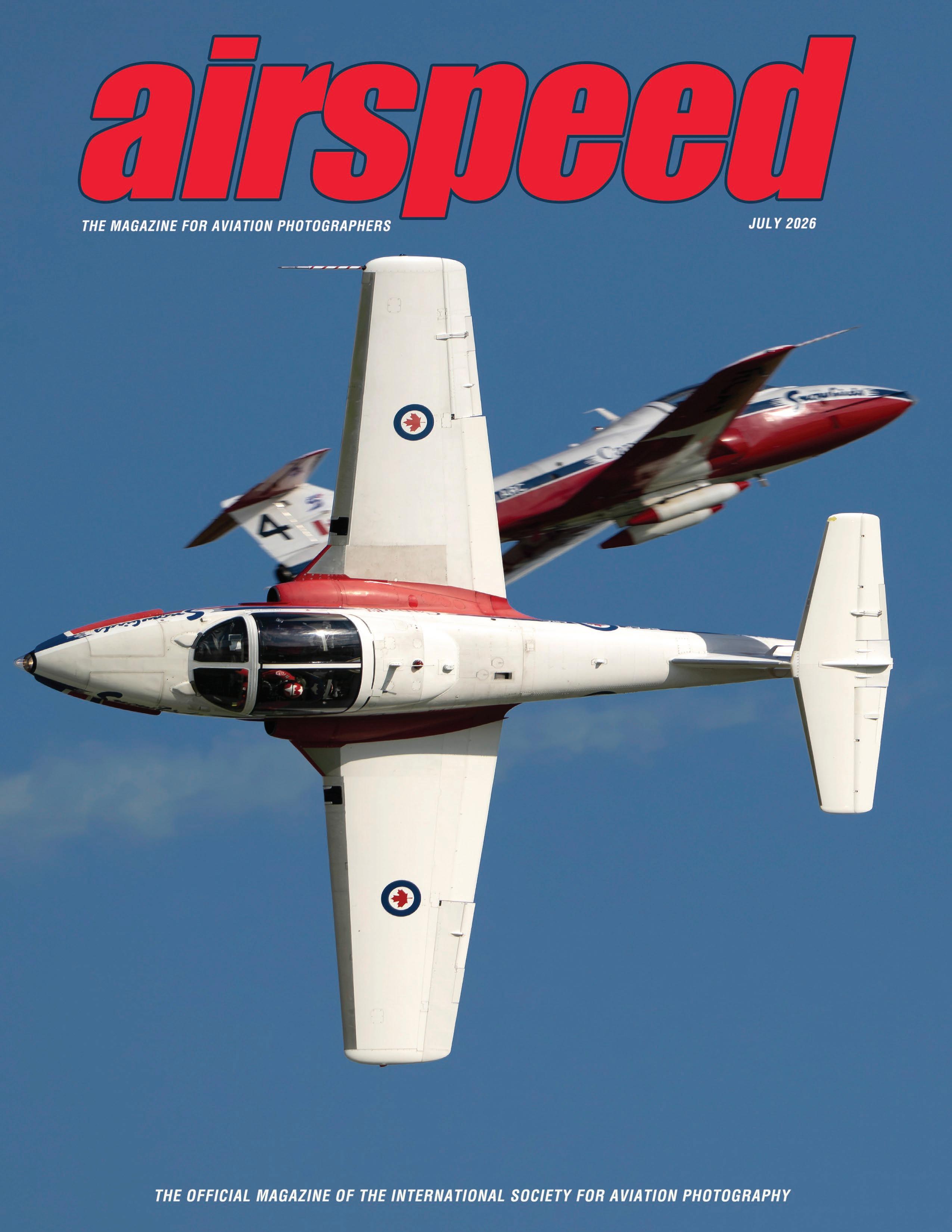
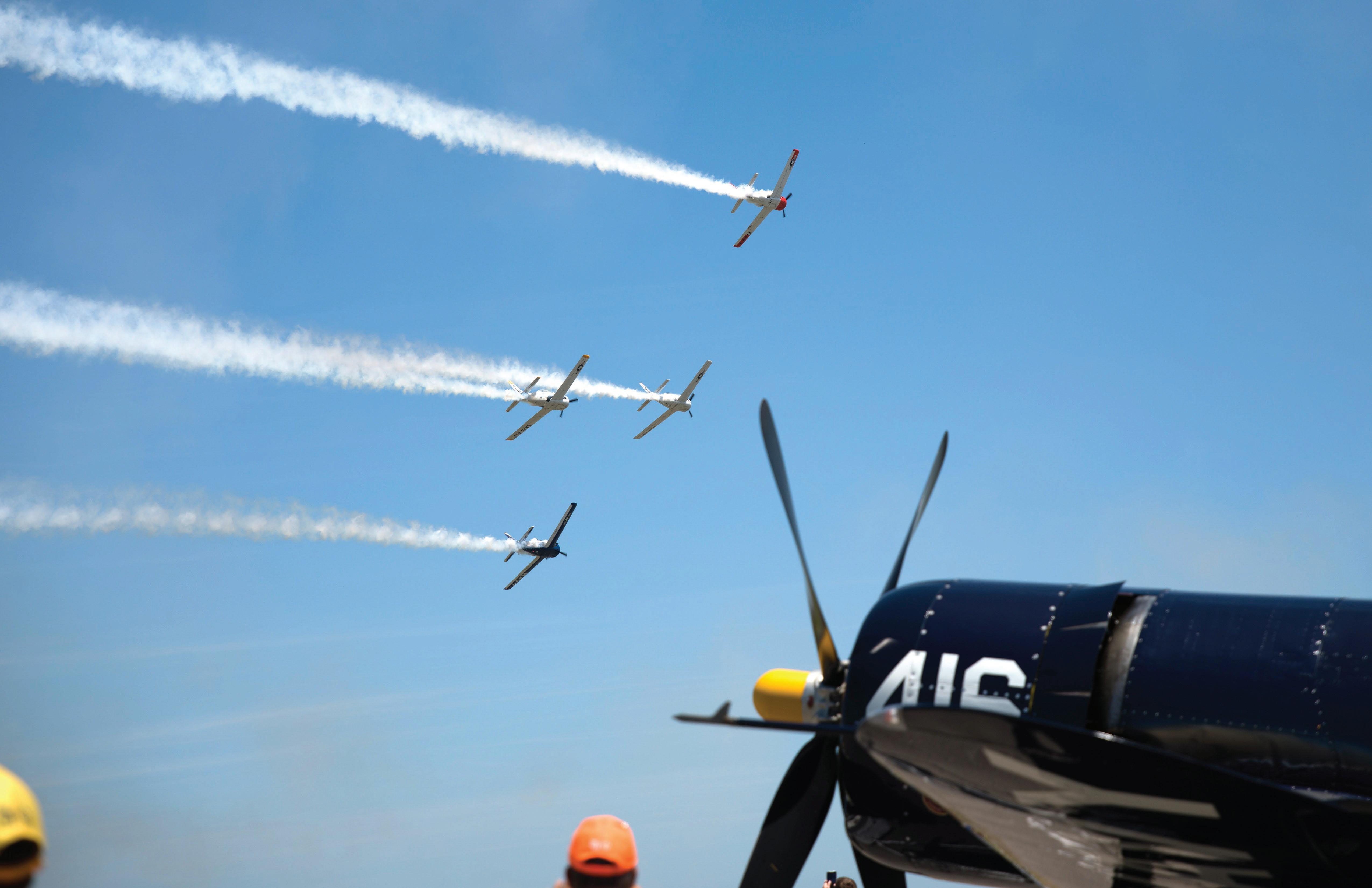
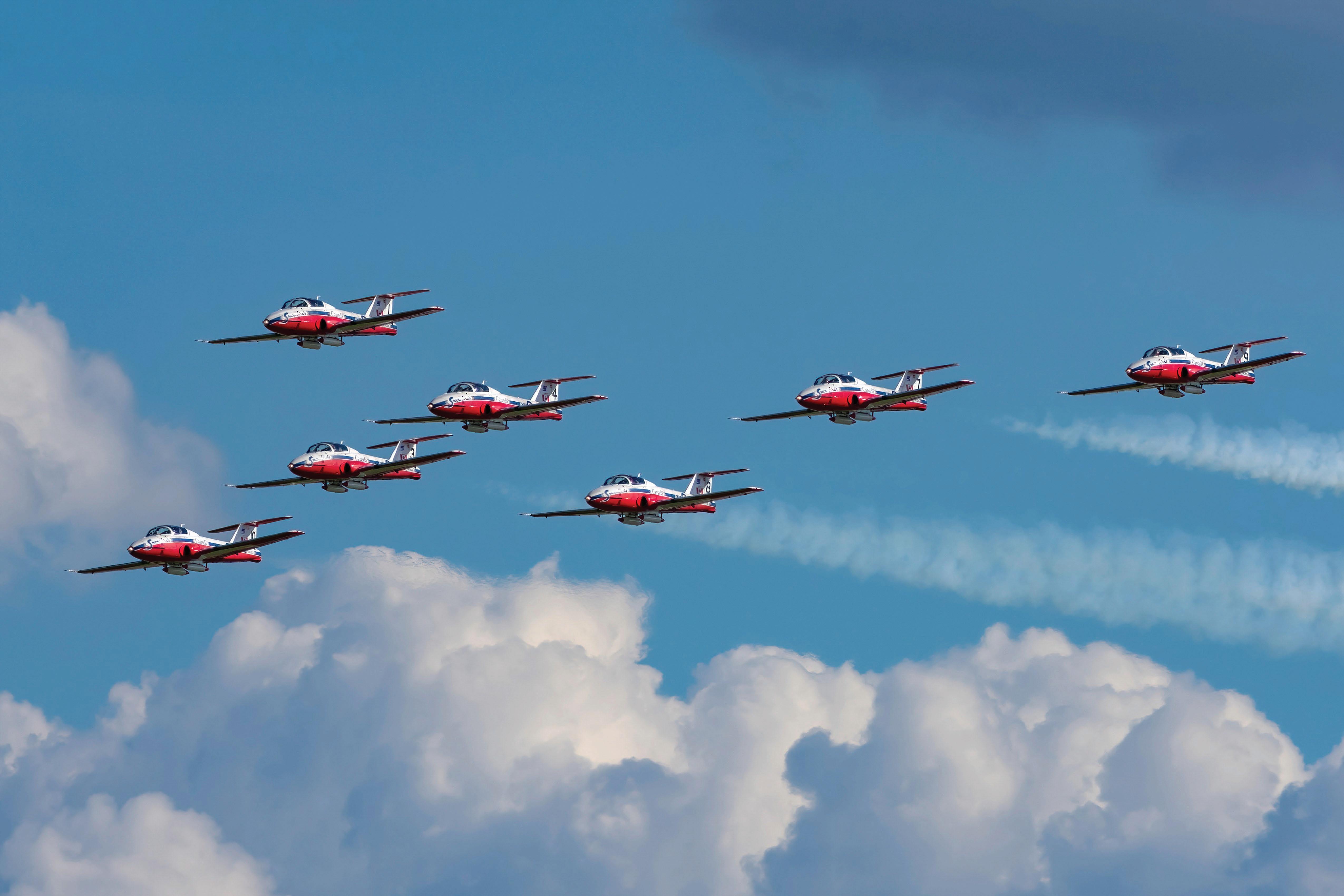
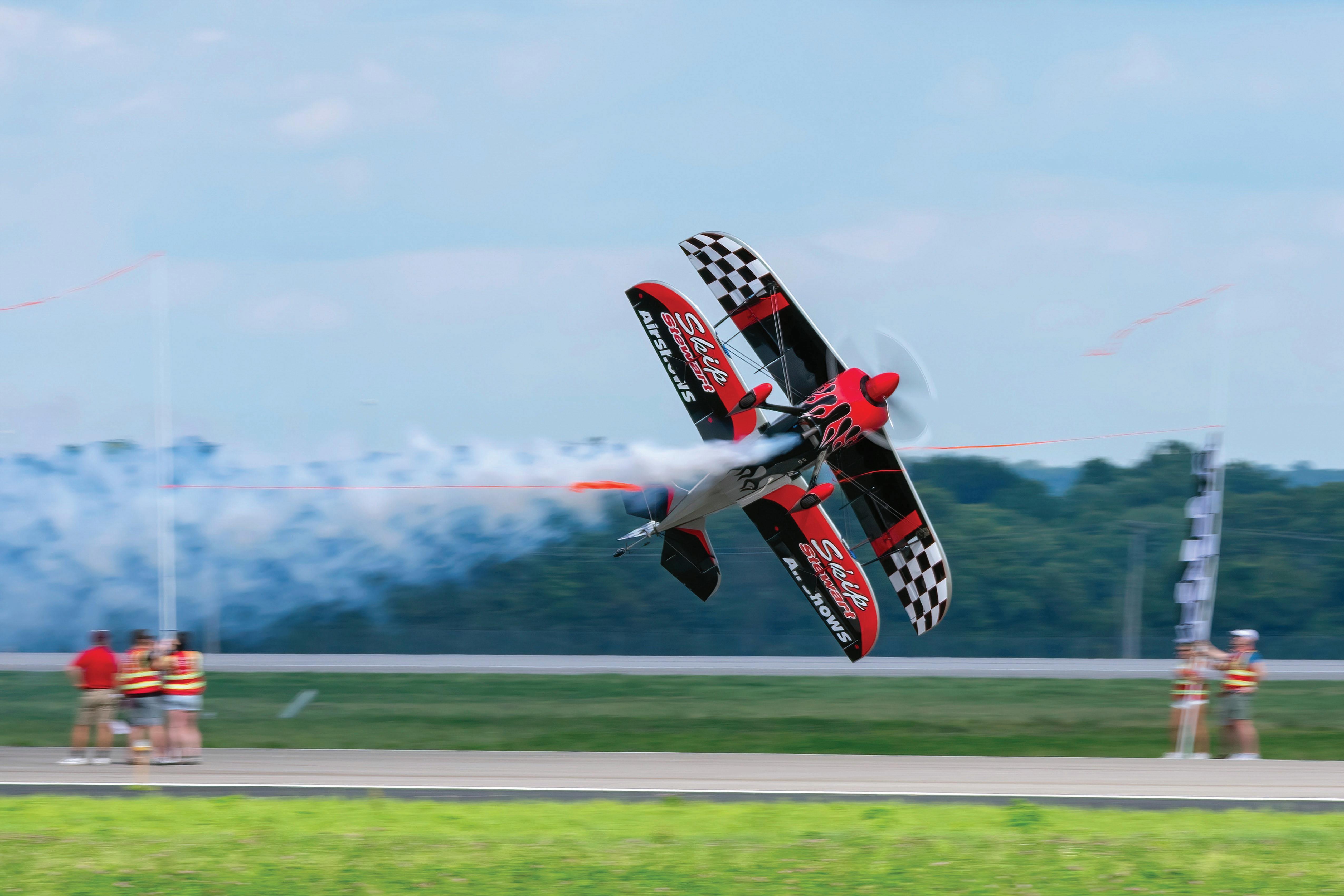
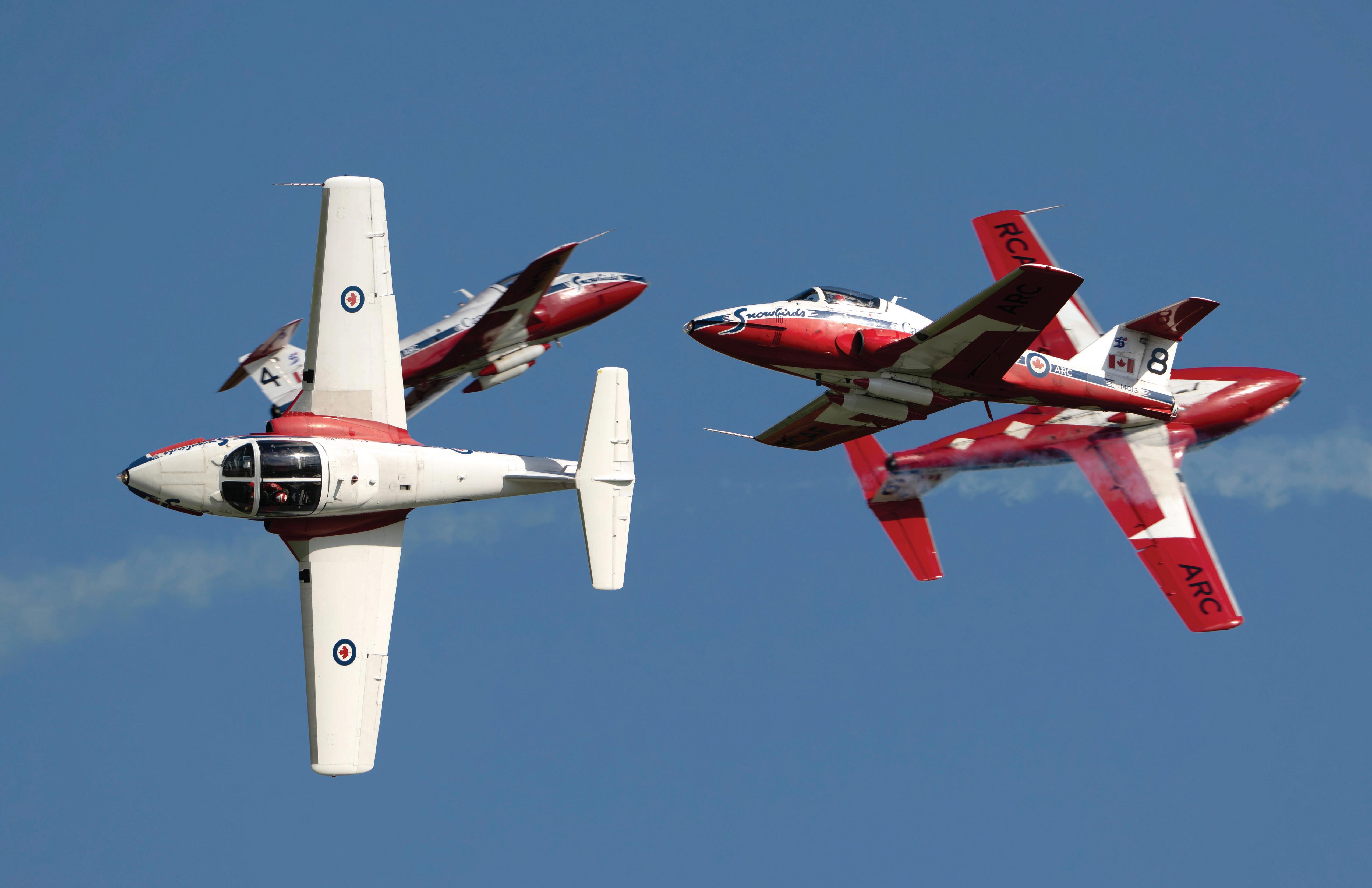
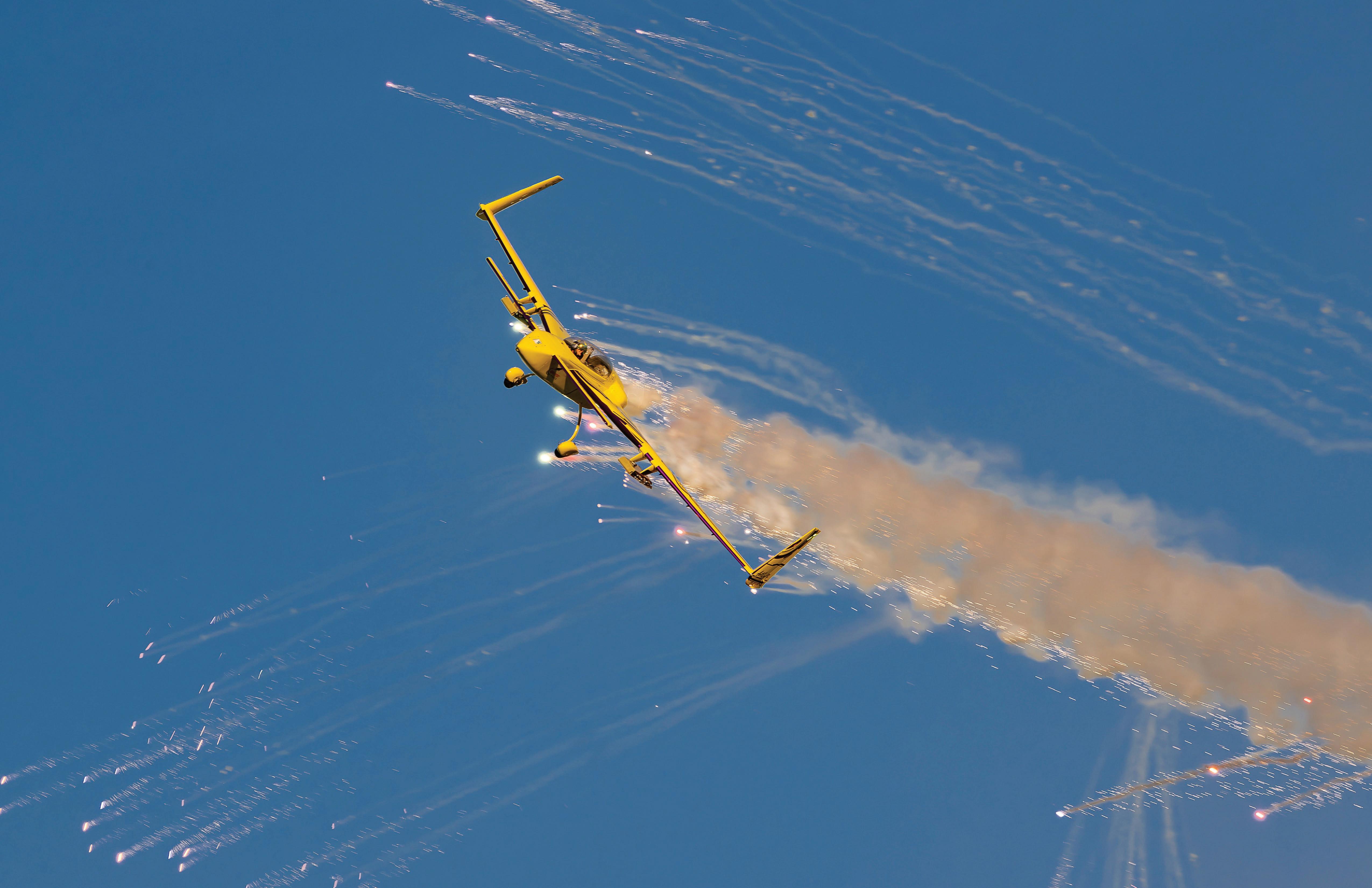
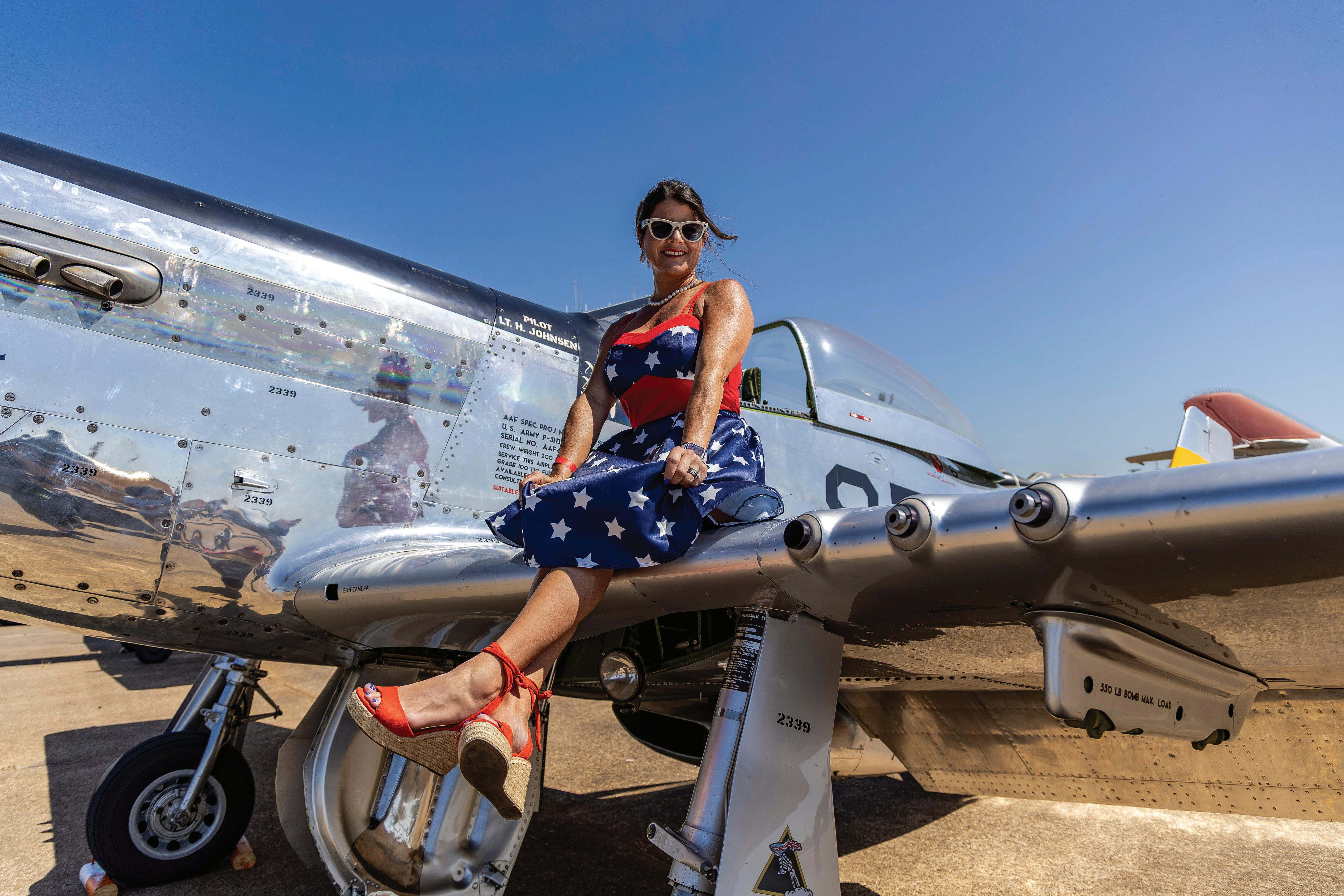
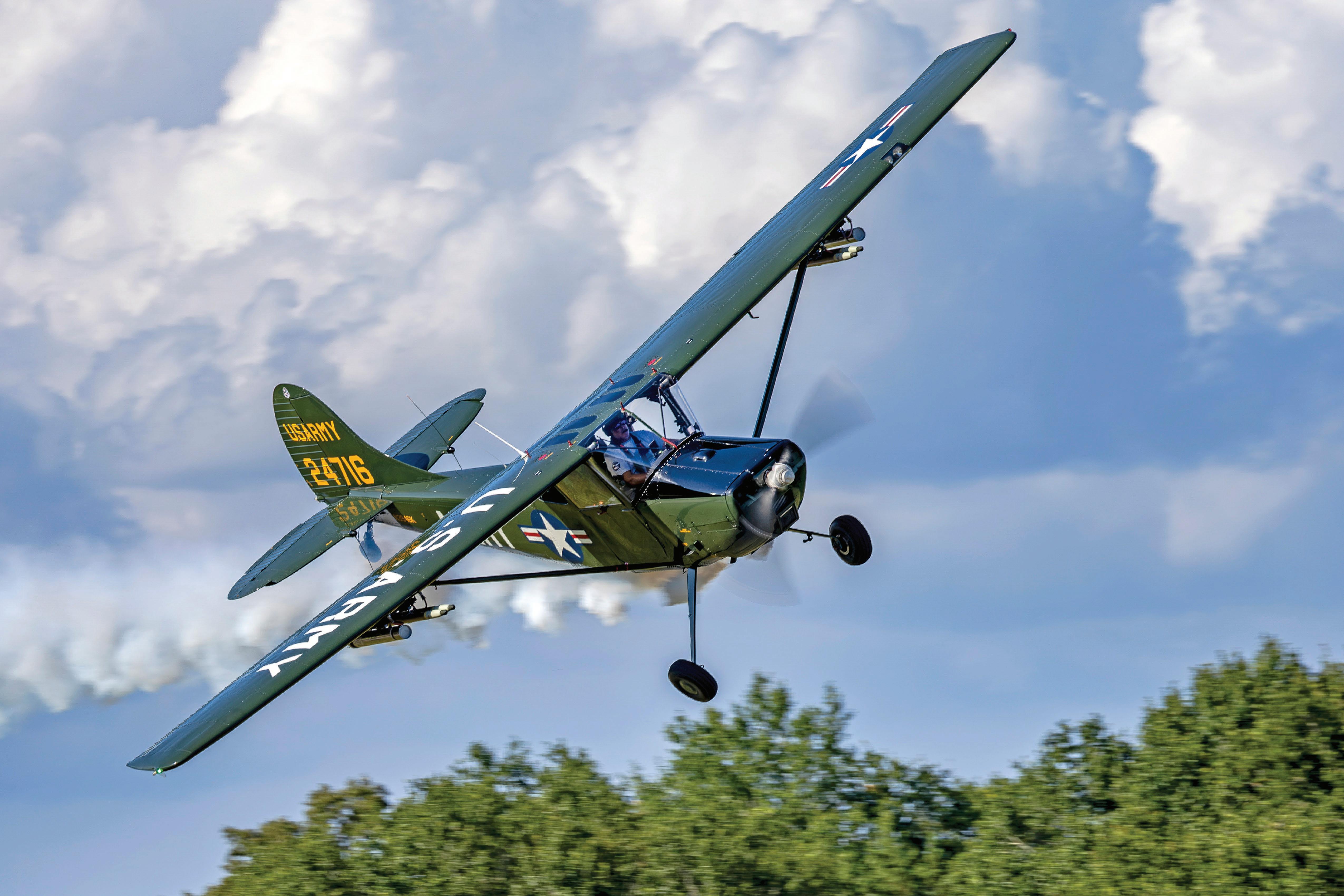
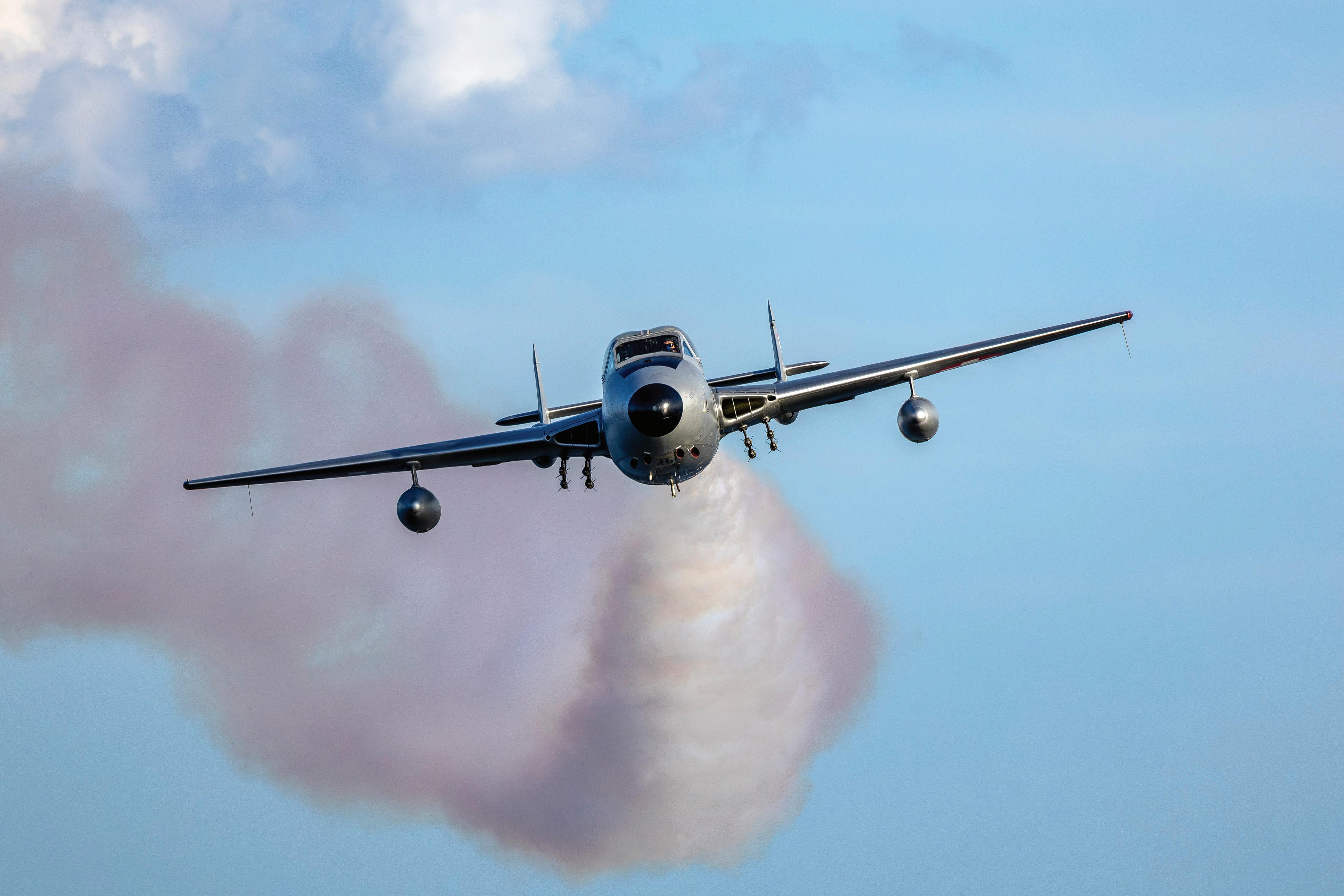
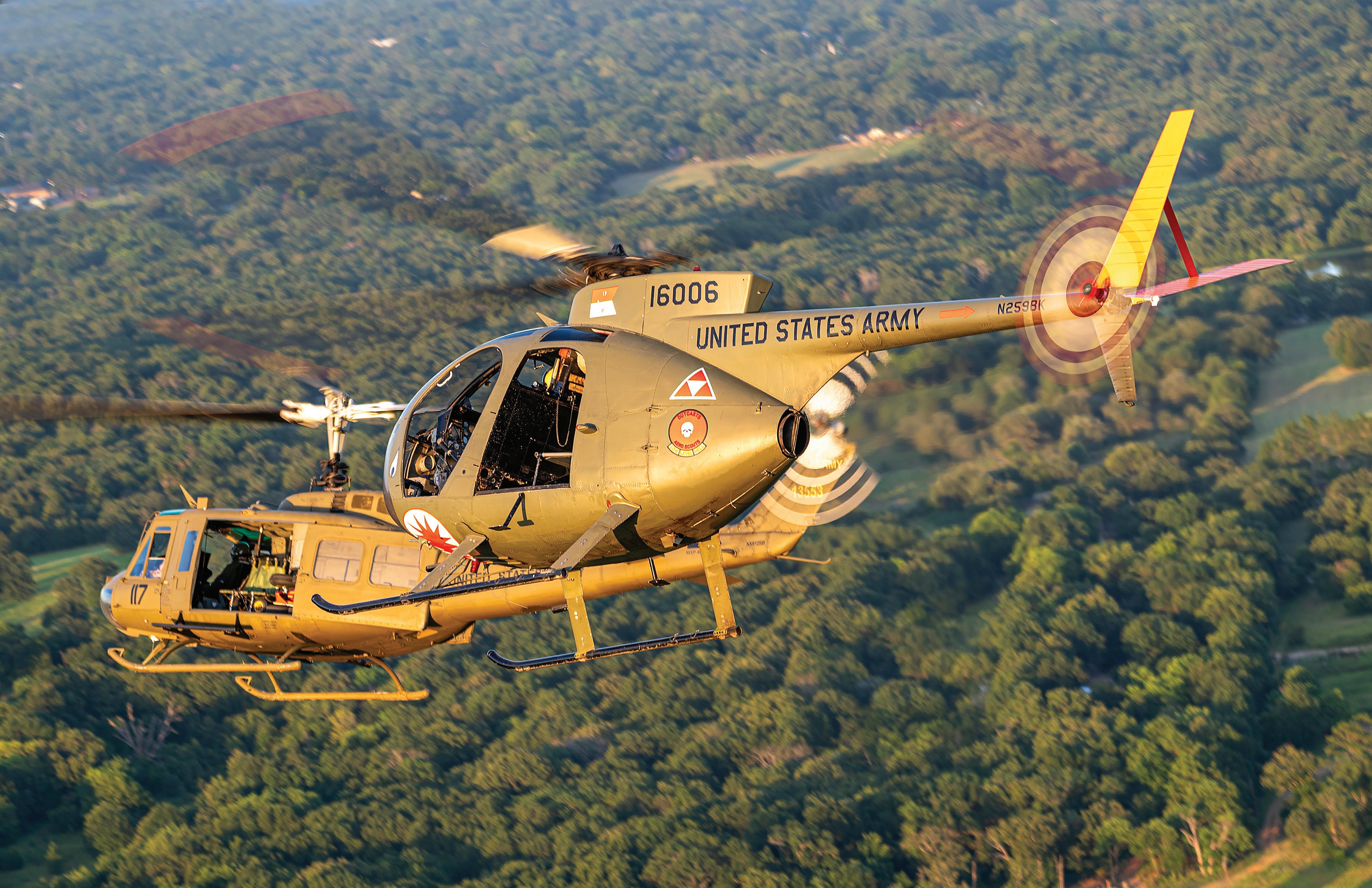
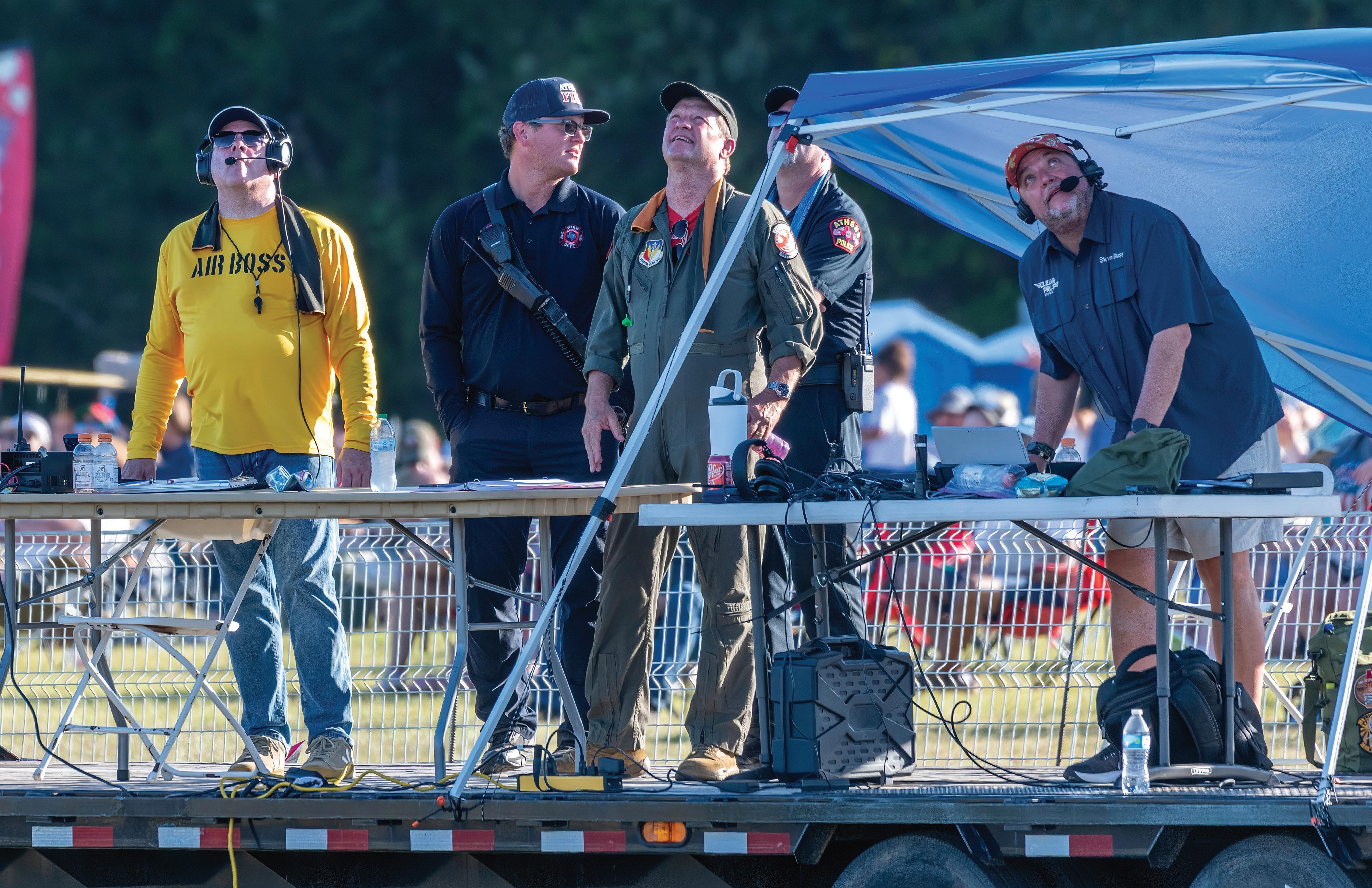
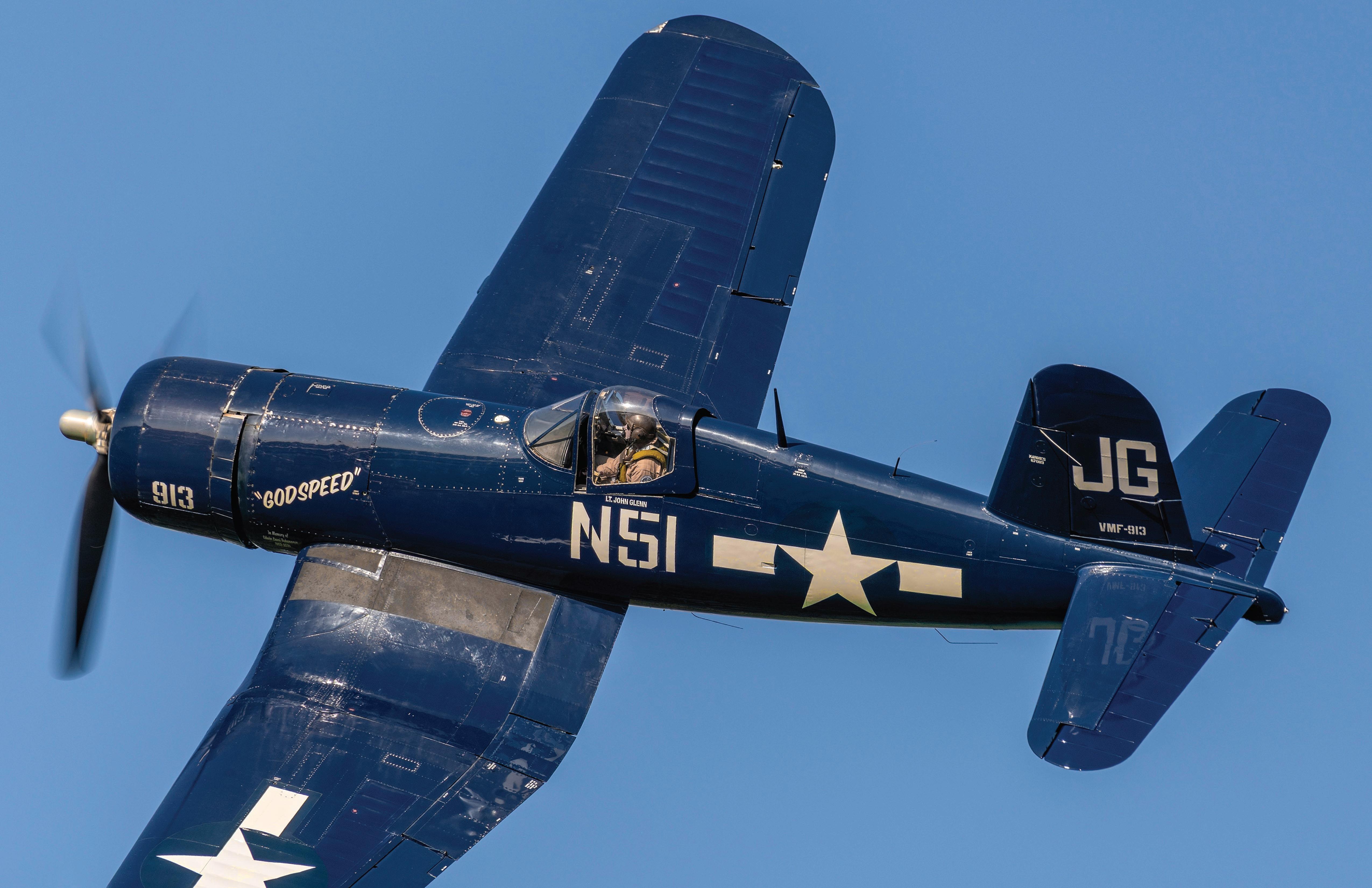
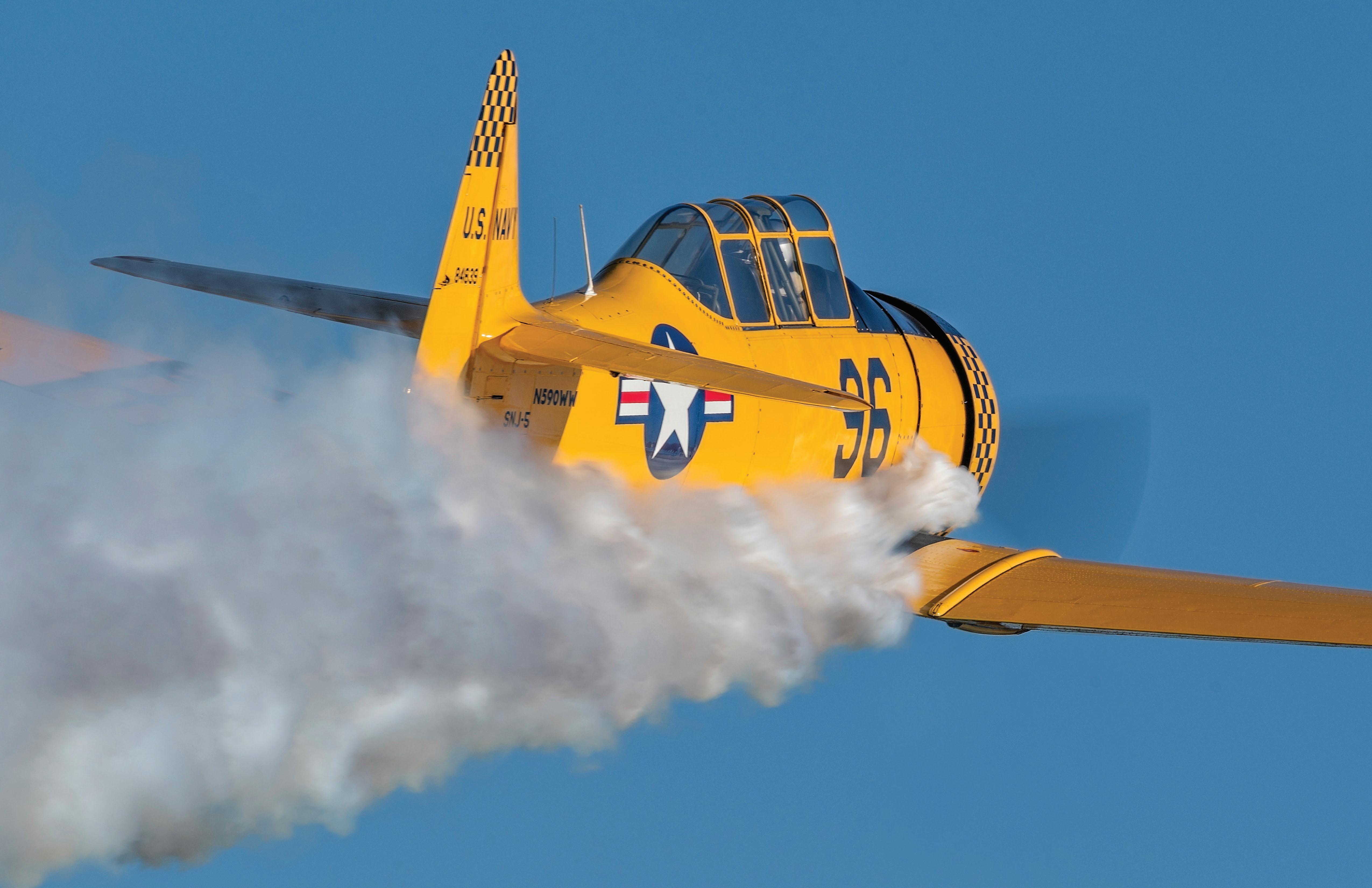
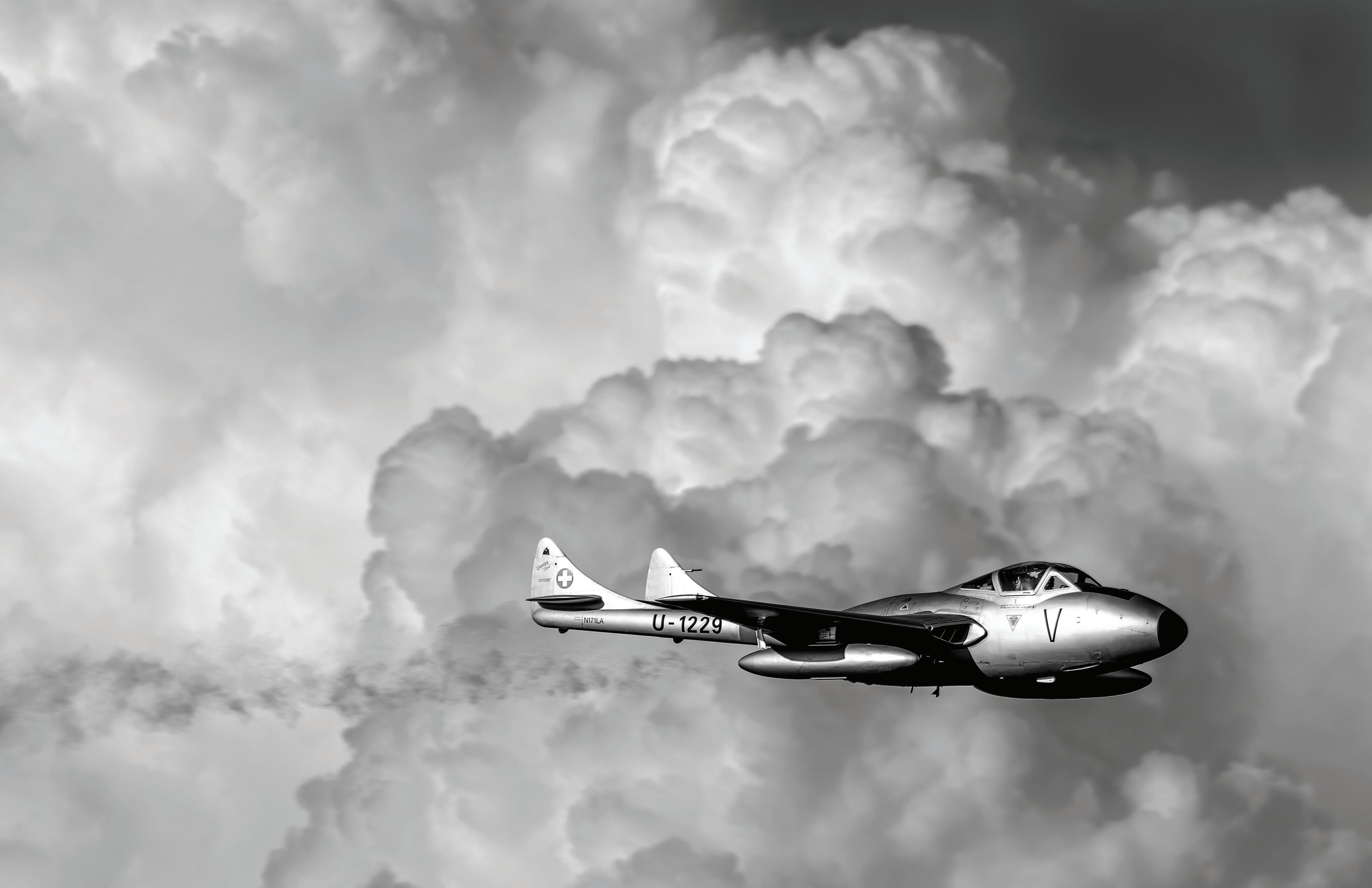
Canadian Forces Snowbirds demonstrate their four ship cross for the crowds during the 2026 Columbus Air Show.
Photo by Larry Grace
Camera: Nikon Z9
Lens: Nikkor 180 - 600mm f/5.6-6.3 VR
Shutter speed: 1/3200 ISO: 450 Exposure: f/6.3
Image processed in Adobe Camera RAW and Photoshop
Back Cover
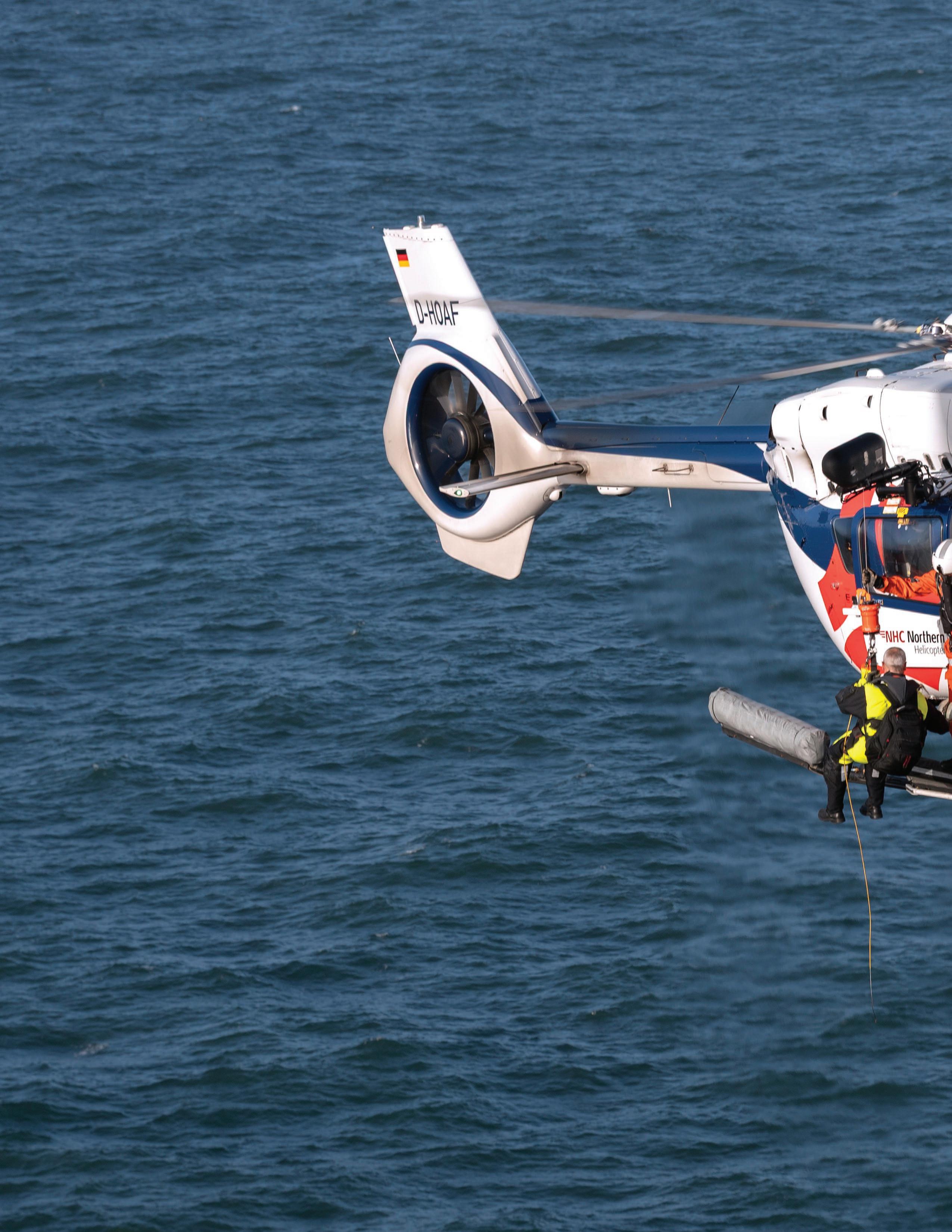
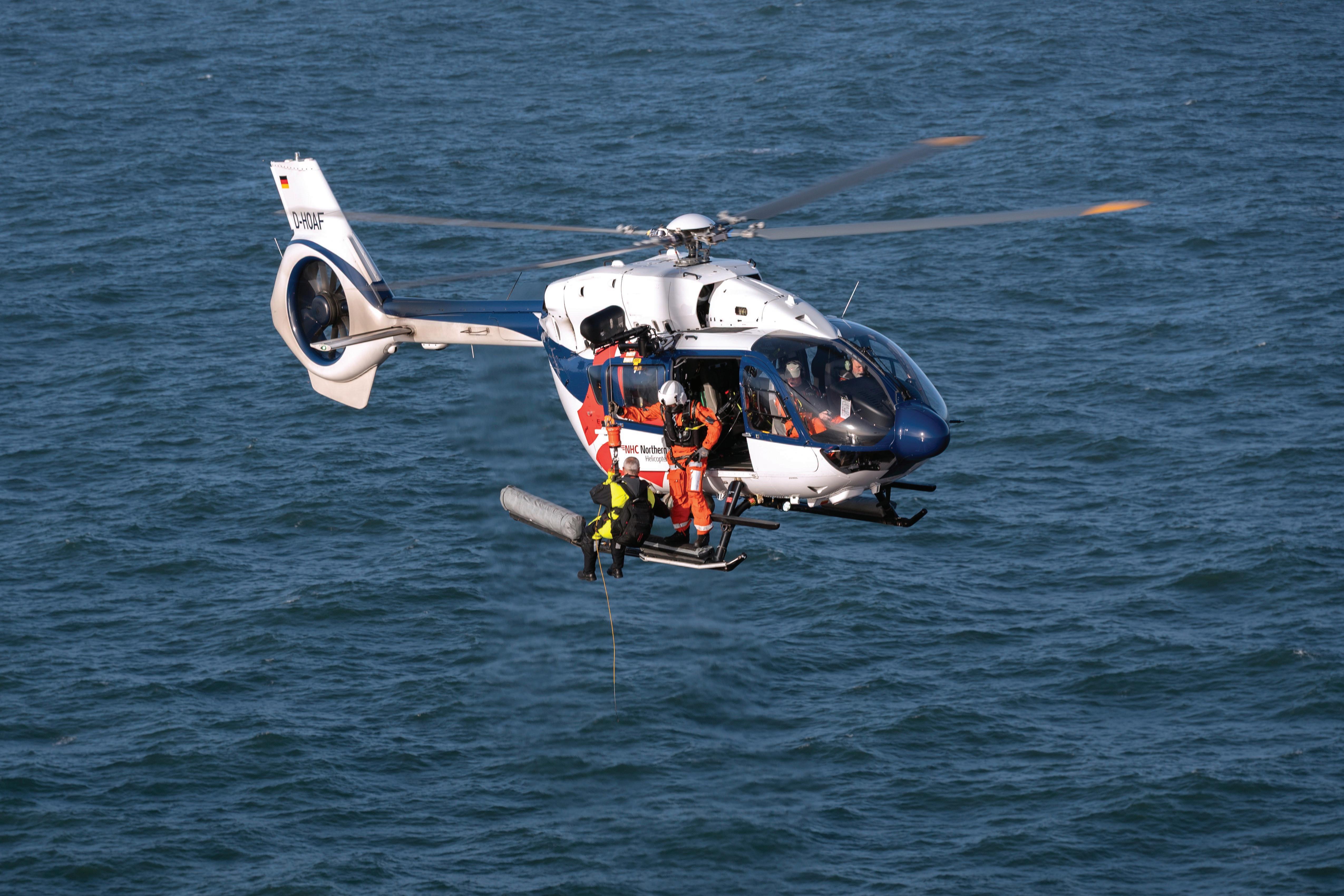
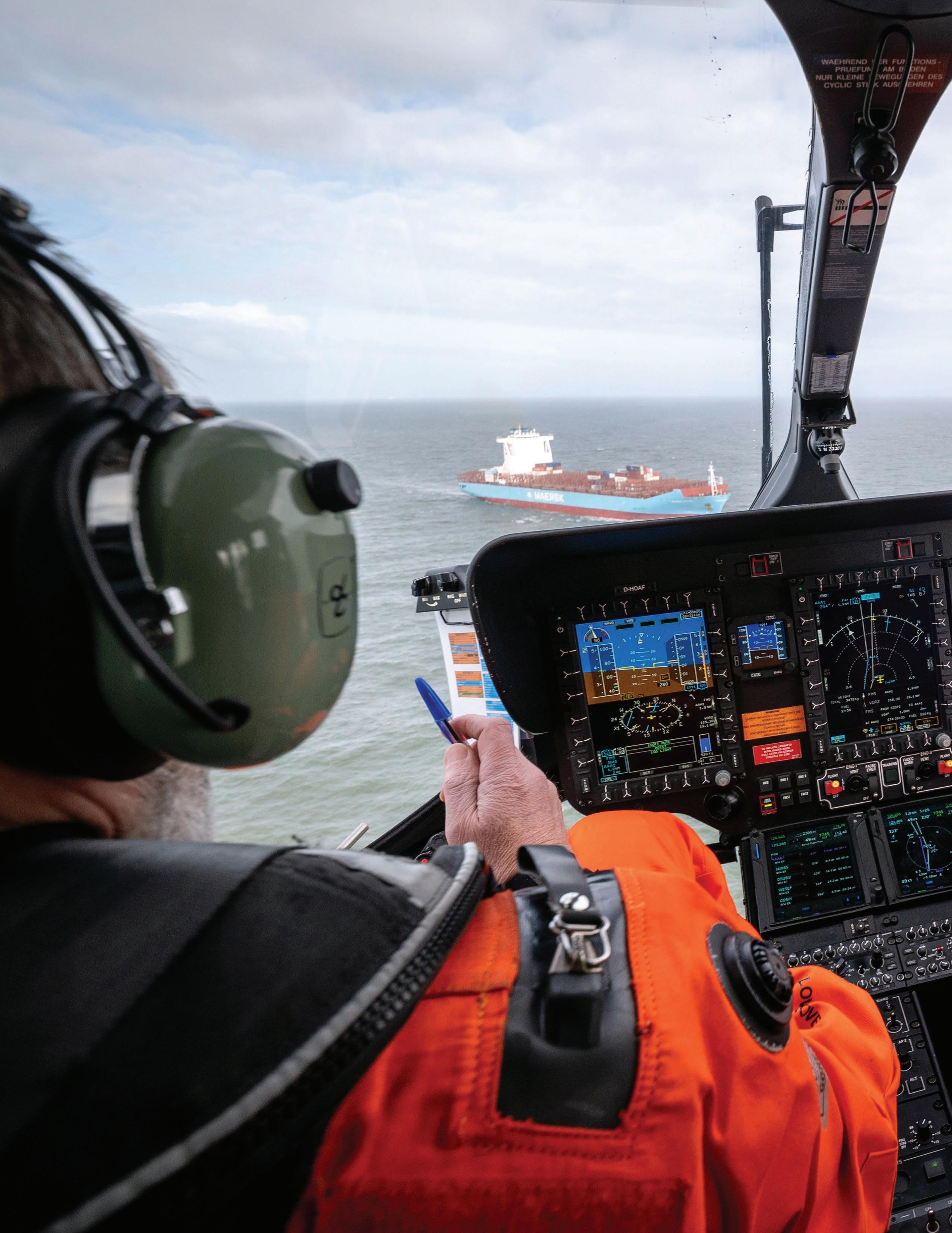
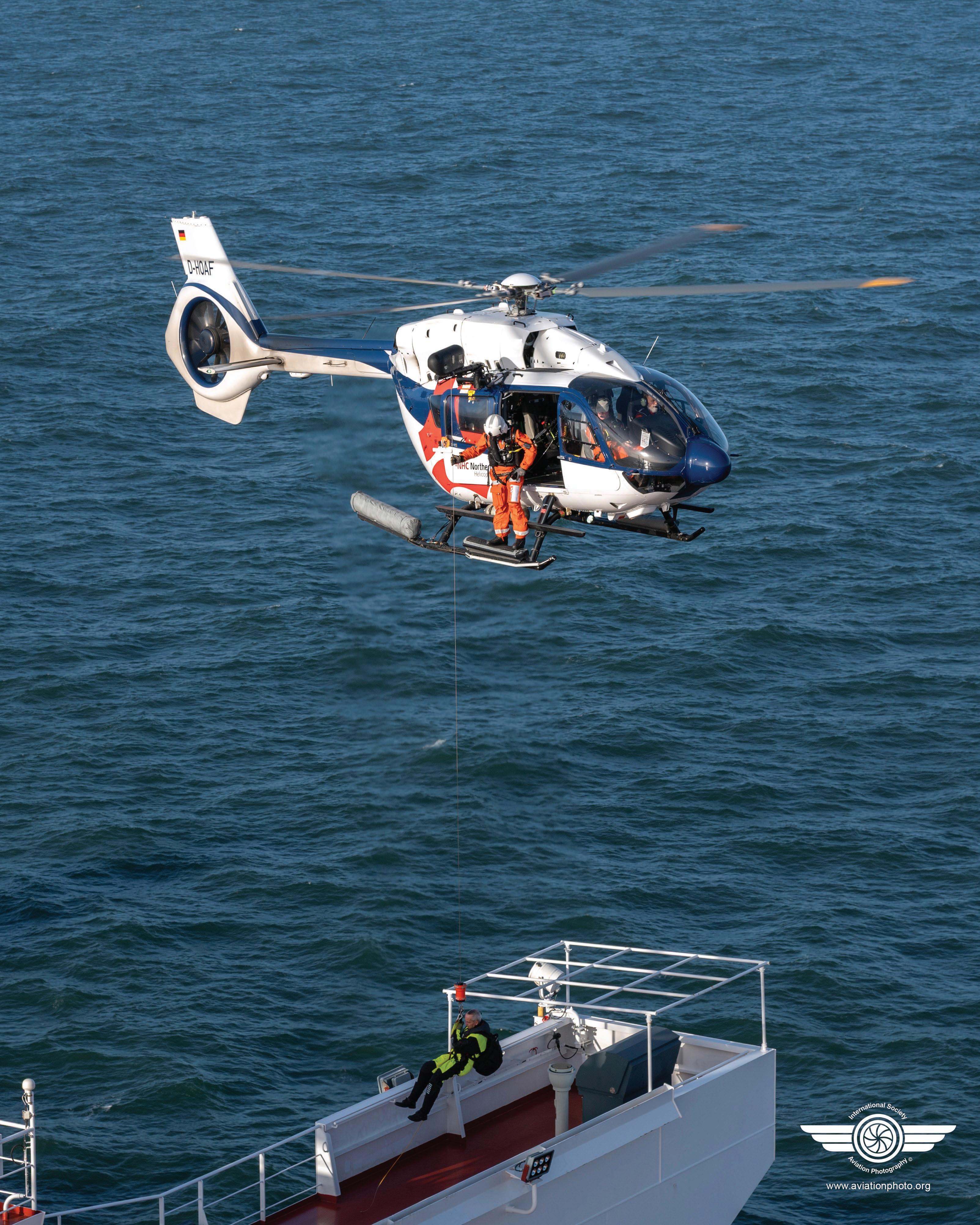
Sea-pilot transfer descending directly onto the ship’s bridge.
Photo by Marc Schultz
Camera: Nikon Z6 III
Lens: Nikkor Z 24 - 120mm f/4 S
Shutter speed: 1/400 ISO: 100 Exposure: f/6.3
Image processed in Adobe Photoshop and Lightroom
Ismael Abeytua
John Agather
Reece Belcher
Joshua Epps
Craig Hewitt
Donald Linn
NEW AND RETURNING ISAP MEMBERS
Jan-Arie van der Linden
David H McFarland
Larry Melby
Mike Miley
Frank Moriaty
Ivan Mustafa
Tom Pawlesh
Moose Peterson
Glenn Riegel
Paul Russo
Bill Standerfer
Gregg Stansbery
Angie Stansbery
Chaz Teets
Bill Ullings
Peter Yee
The goal of International Society for Aviation Photography (ISAP) is to bring together our members who share a love of aviation, and want to preserve its history through their images. Through our organization, members can seek to enhance their artistic quality, advance technical knowledge, and improve safety for all areas of aviation photography while fostering professionalism, high ethical standards, and camaraderie.
ISAP continues to help our members to better their photography skills, workflow, and set up resources to help with business questions that our members have. Updates are being made to the ISAP website and member portfolio section, and we are showcasing ISAP members’ images and accomplishments on our social media pages.
The new Airspeed magazine will highlight ISAP members and their photography, experiences, and their passion for aviation from around the world. From military and commercial aviation, you’ll be able to see it all while learning about aviation photography, post processing tips in Lightroom and Photoshop, aviation history, air show reports, aviation museums, and more. We look forward to sharing our members’ images and articles with everyone.
Enjoy this issue of Airspeed!
Sincerely,
Larry Grace, ISAP President
Kevin Hong, Airspeed Editor
International Society for Aviation Photography www.aviationphoto.org • www.facebook.com/ISAPorg
Airspeed magazine will highlight ISAP members and their photography, experiences, and their passion for aviation from around the world. From military and commercial aviation, you’ll be able to see it all while learning about aviation photography, post-processing tips in Lightroom and Photoshop, aviation history, air show reports, aviation museums, and more. We look forward to sharing our members’ images and articles with everyone.
Rob Tabor
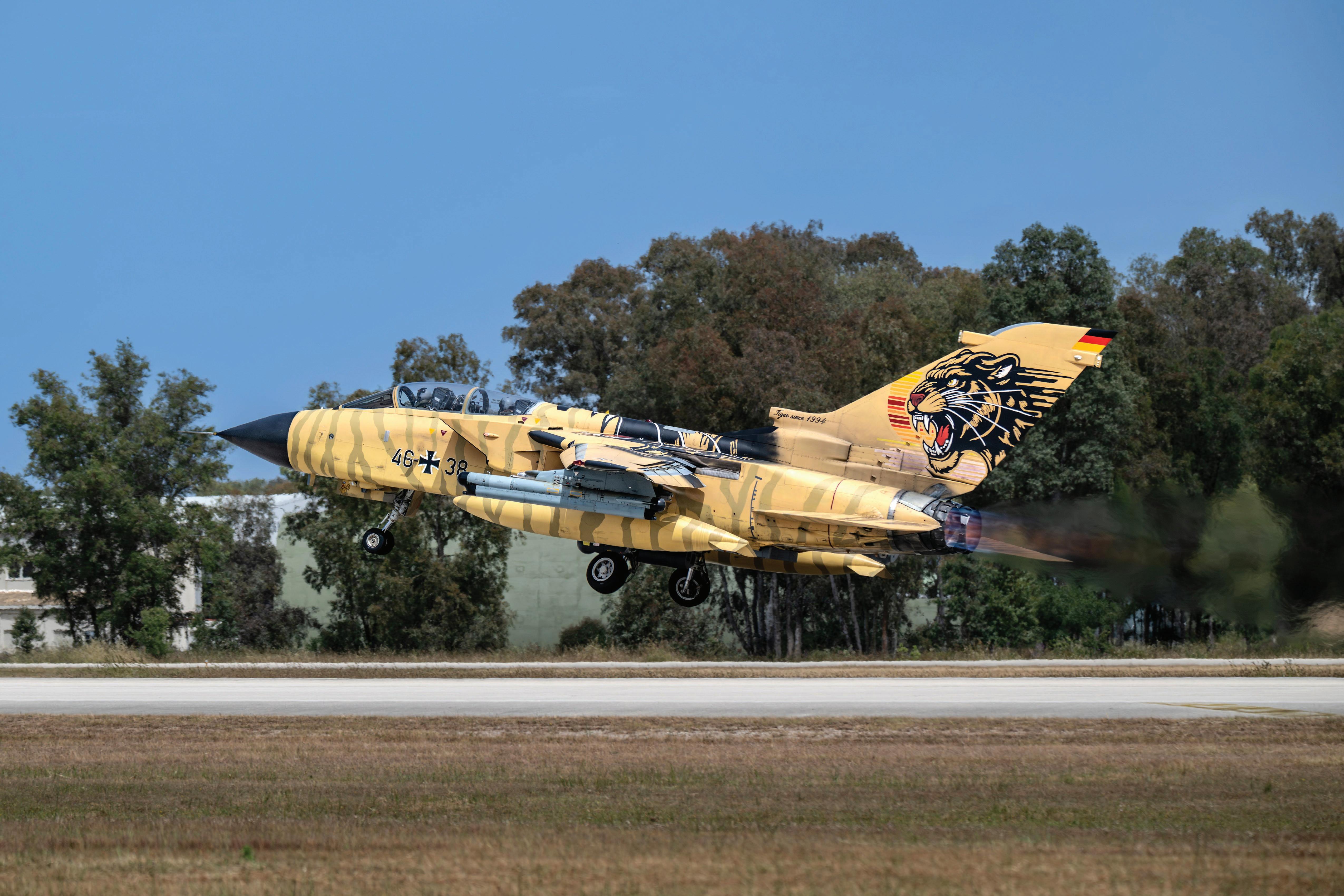
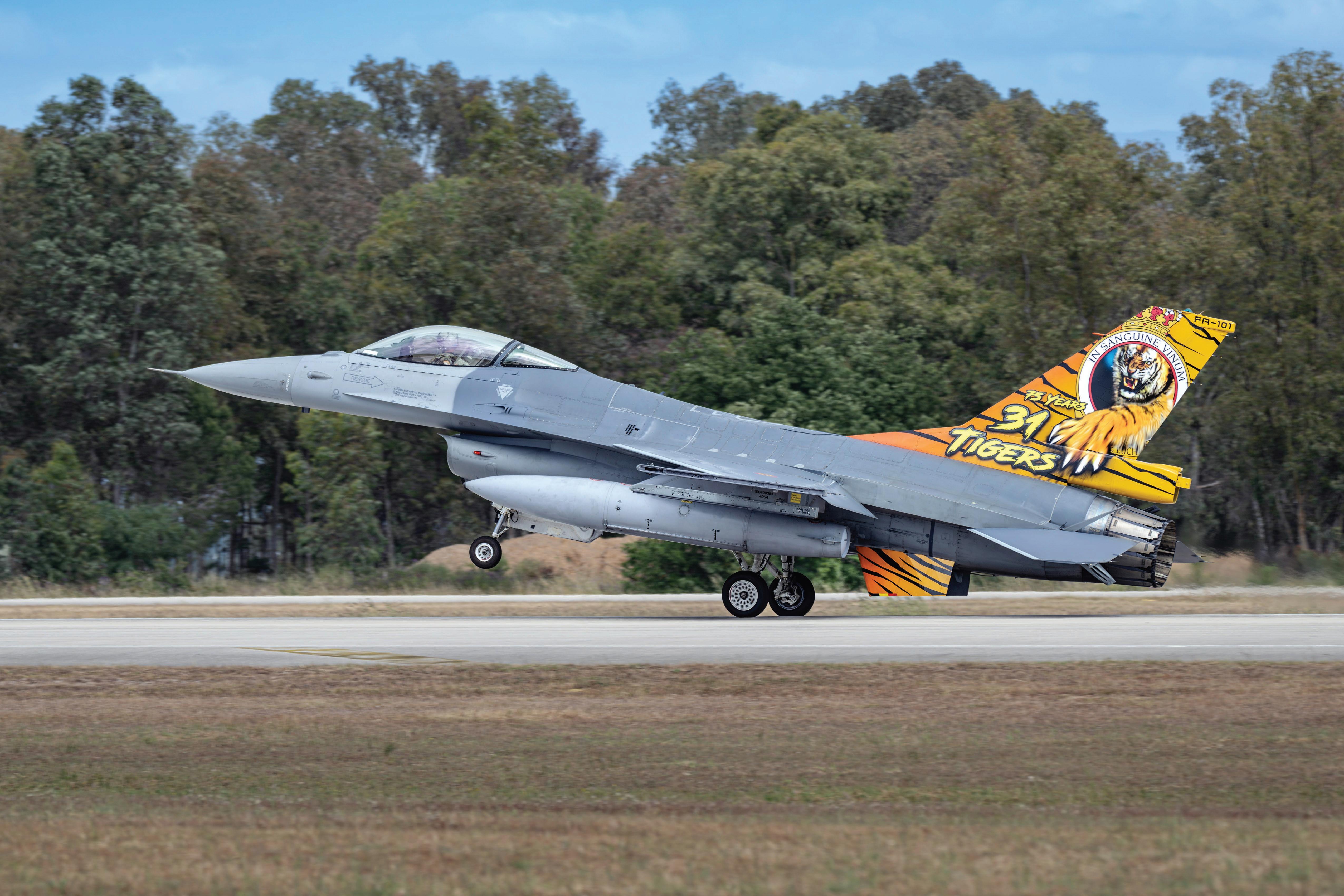
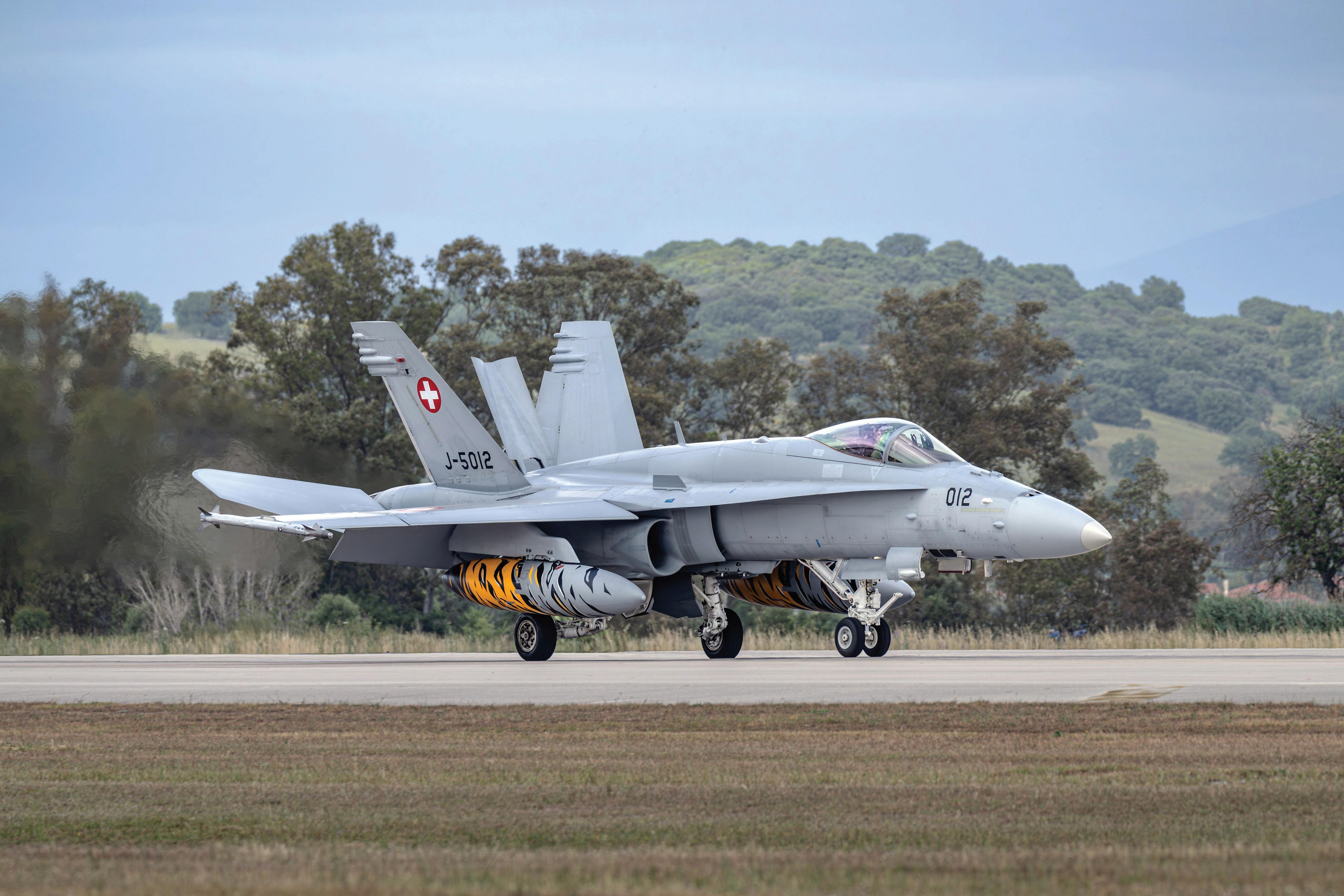
NATO TIGER MEET 2026
Article and
by Dragos Munteanu
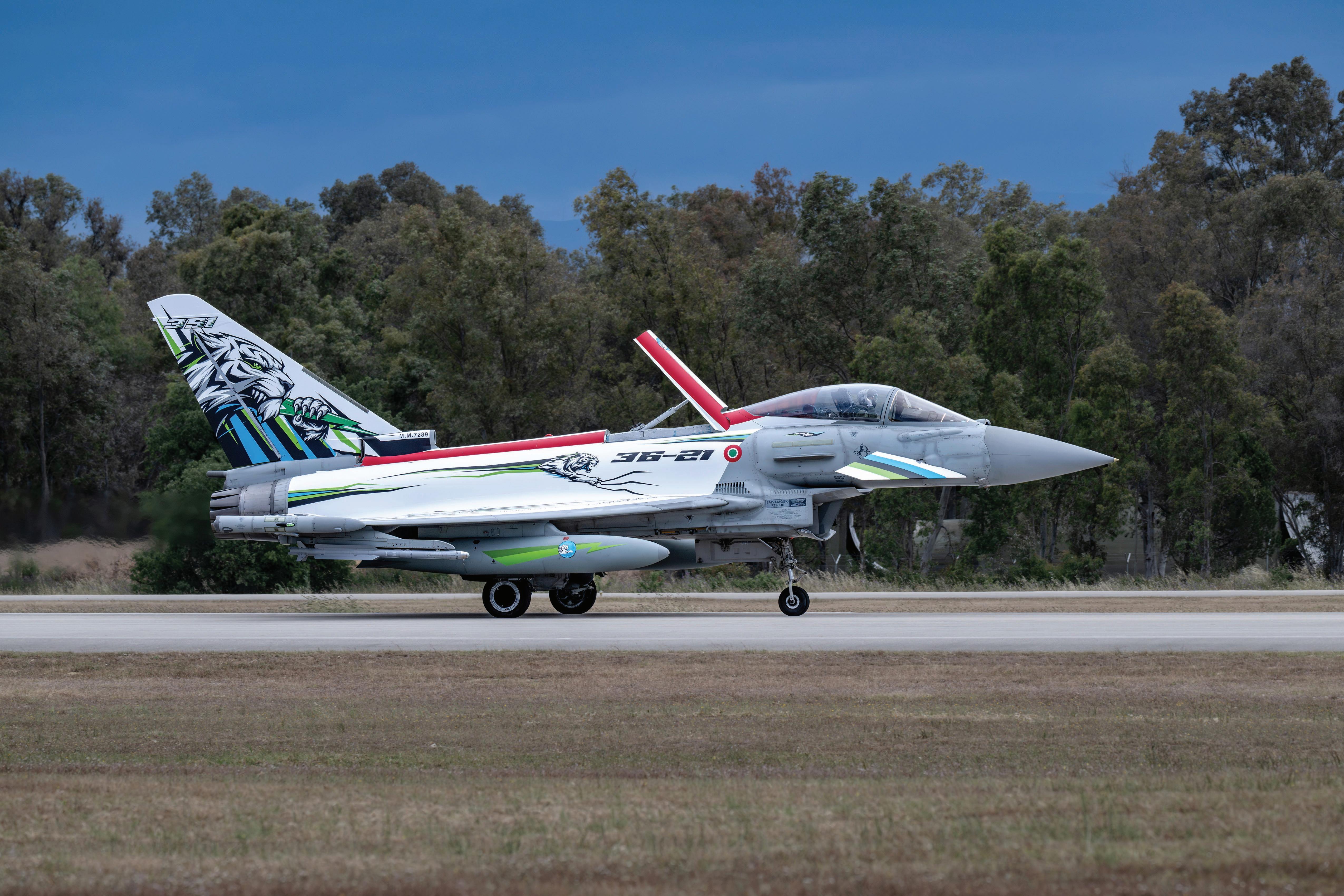
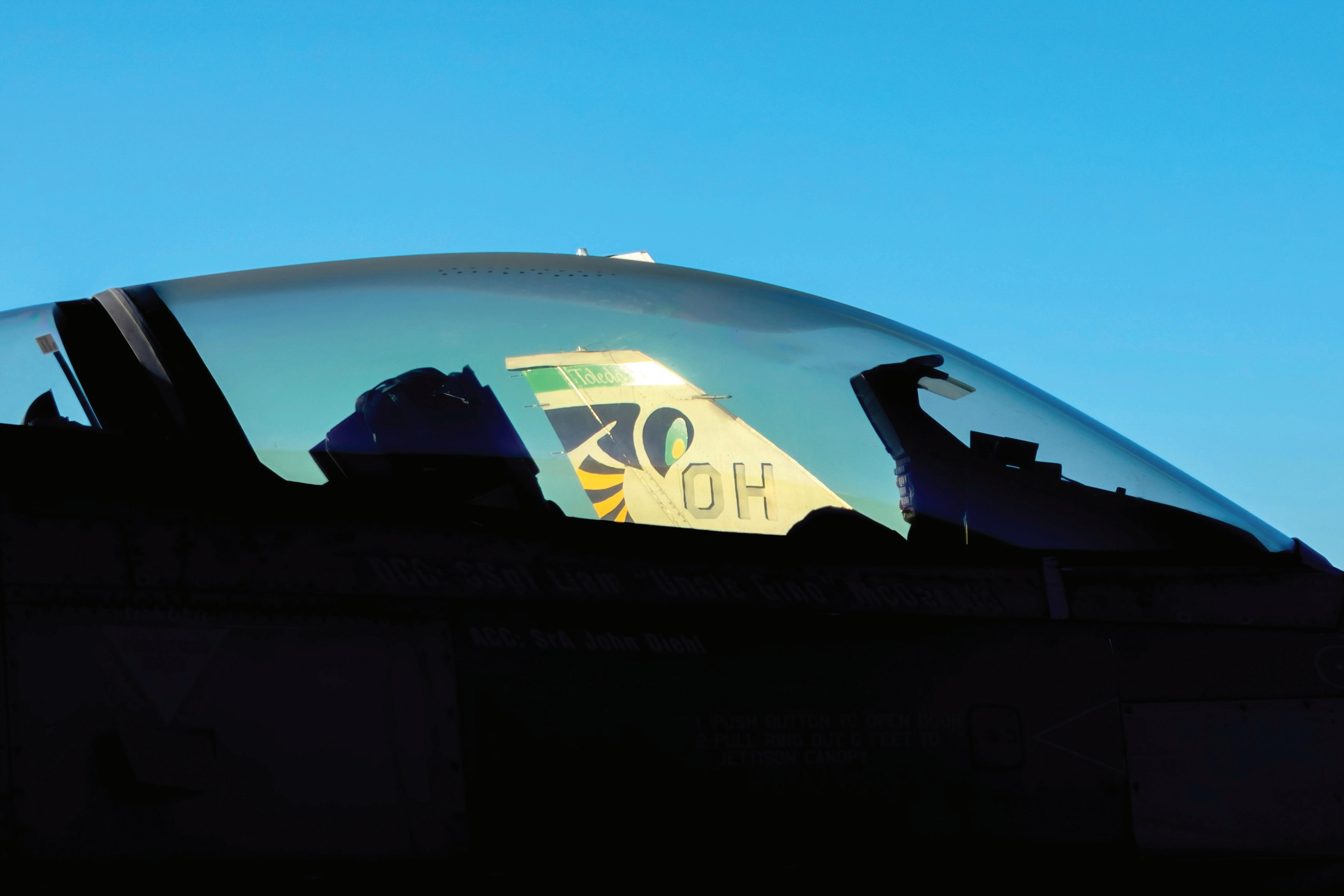
The yearly NATO Tiger Meet was back in Greece for its 2026 edition. If you remember in 2022 I have covered the NATO Tiger Meet happening at the Araxos airbase. I was very happy to return to the same airbase in May 2026.
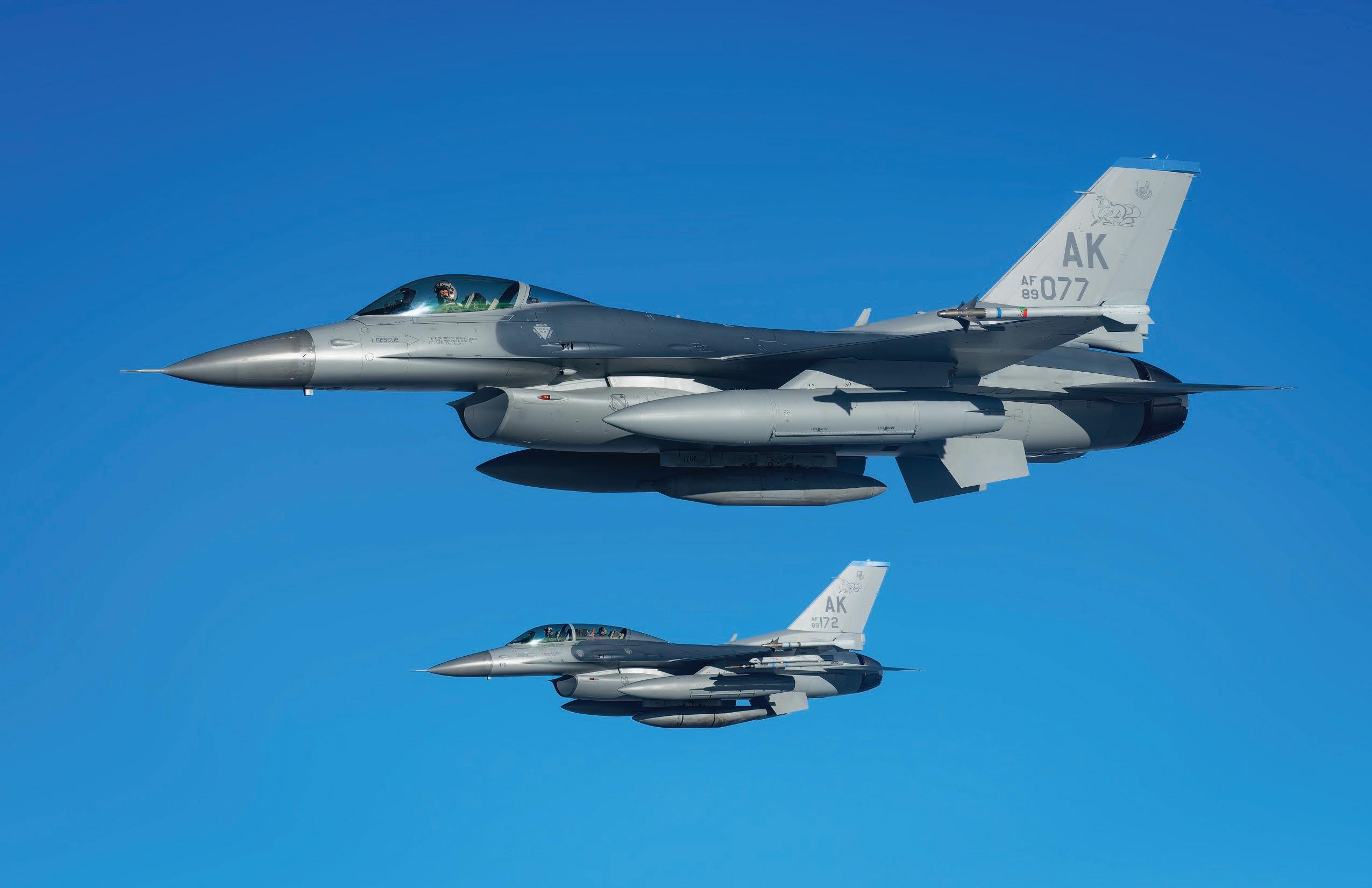
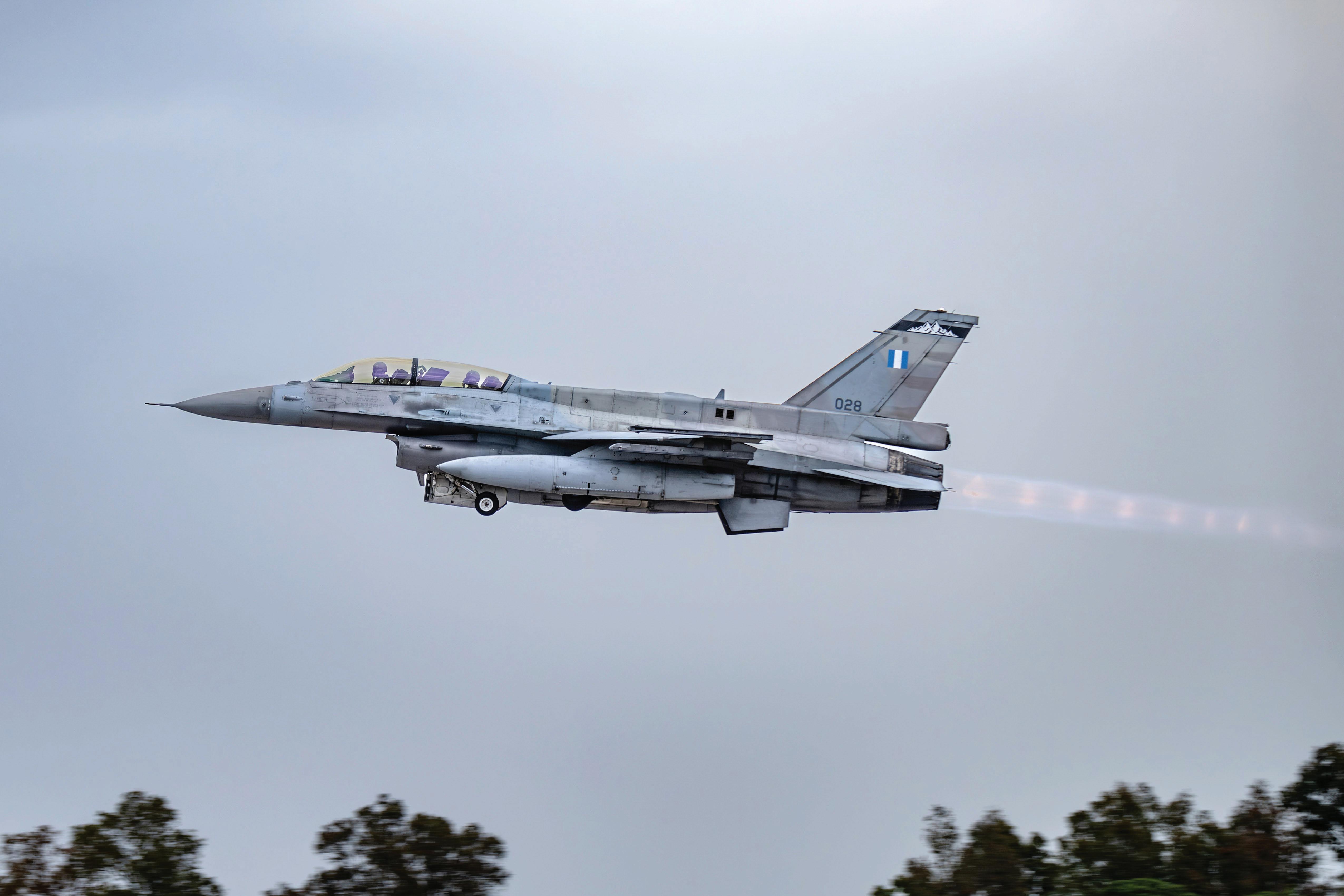
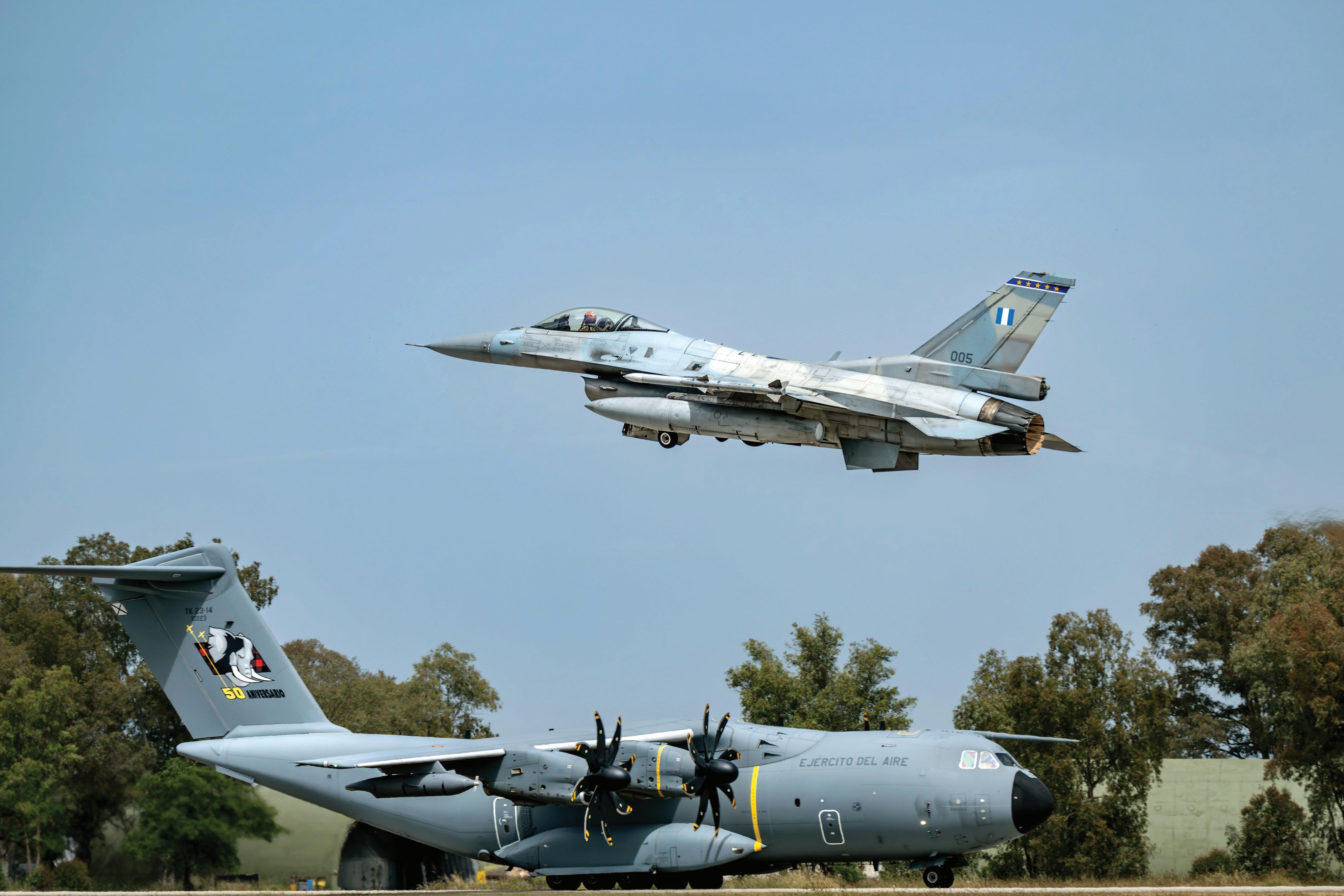
The Greek Tiger unit is the 335 Squadron, flying F-16 C/Ds out of this airbase. Araxos is at a distance of 250 kilometers West of Athens.
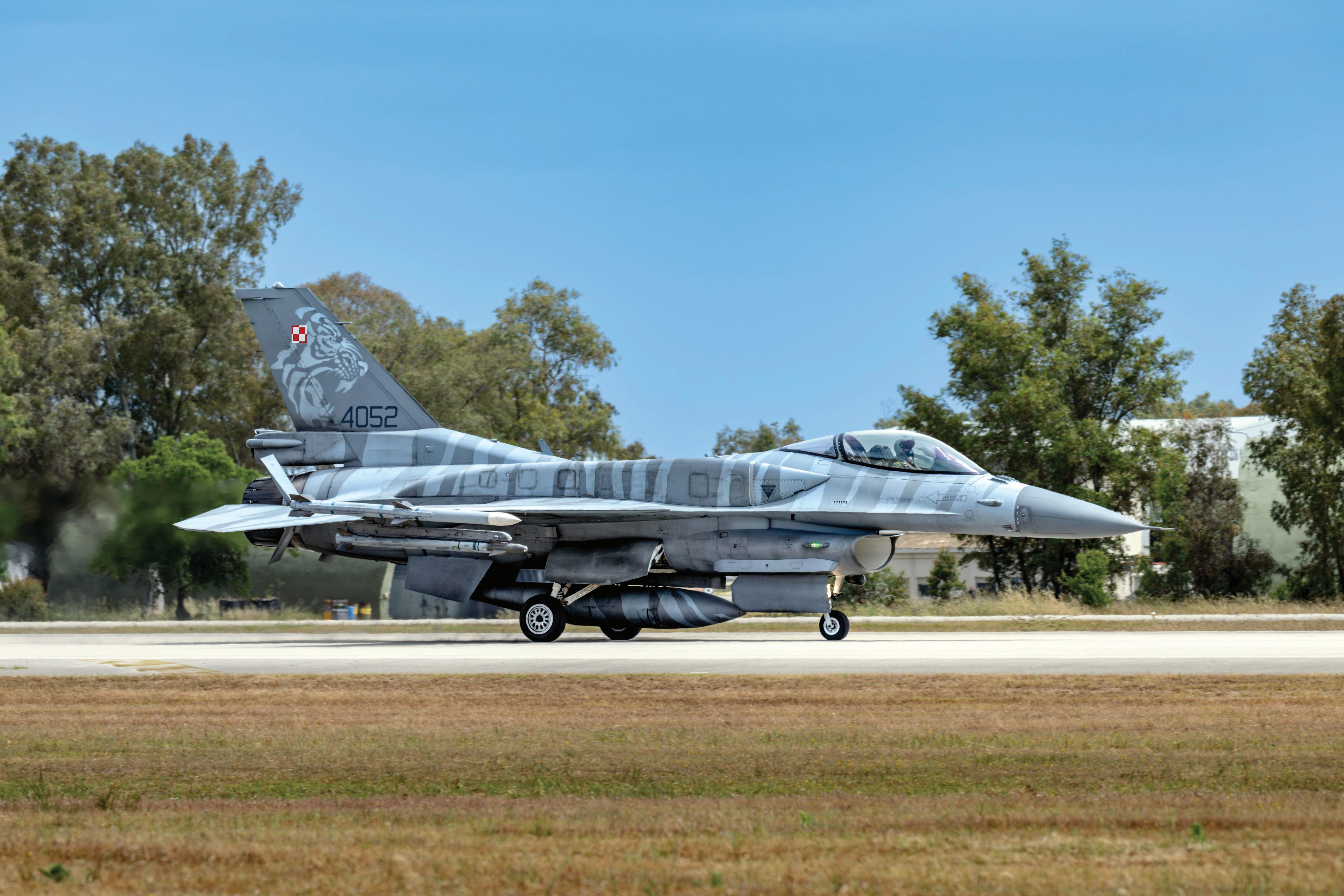
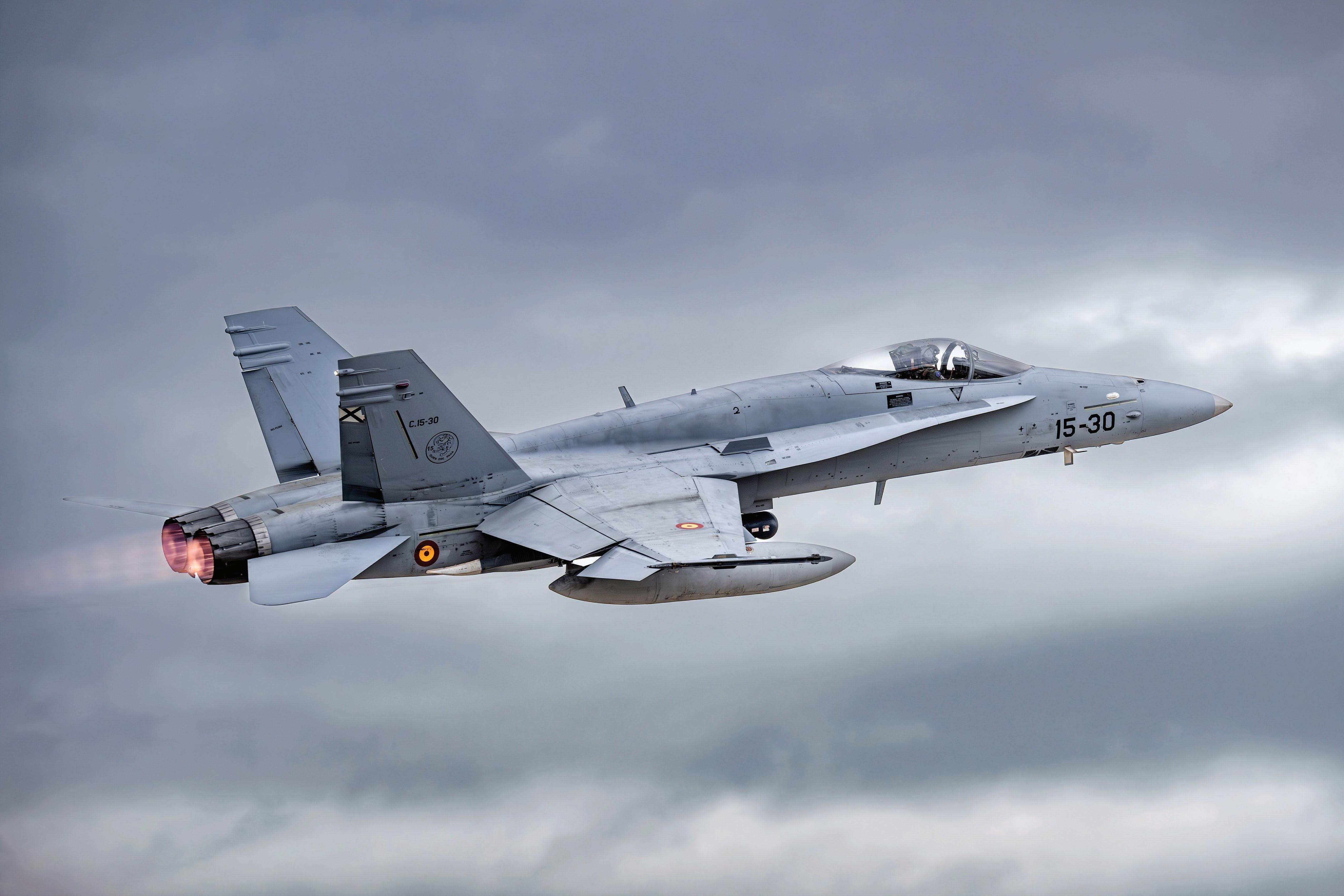
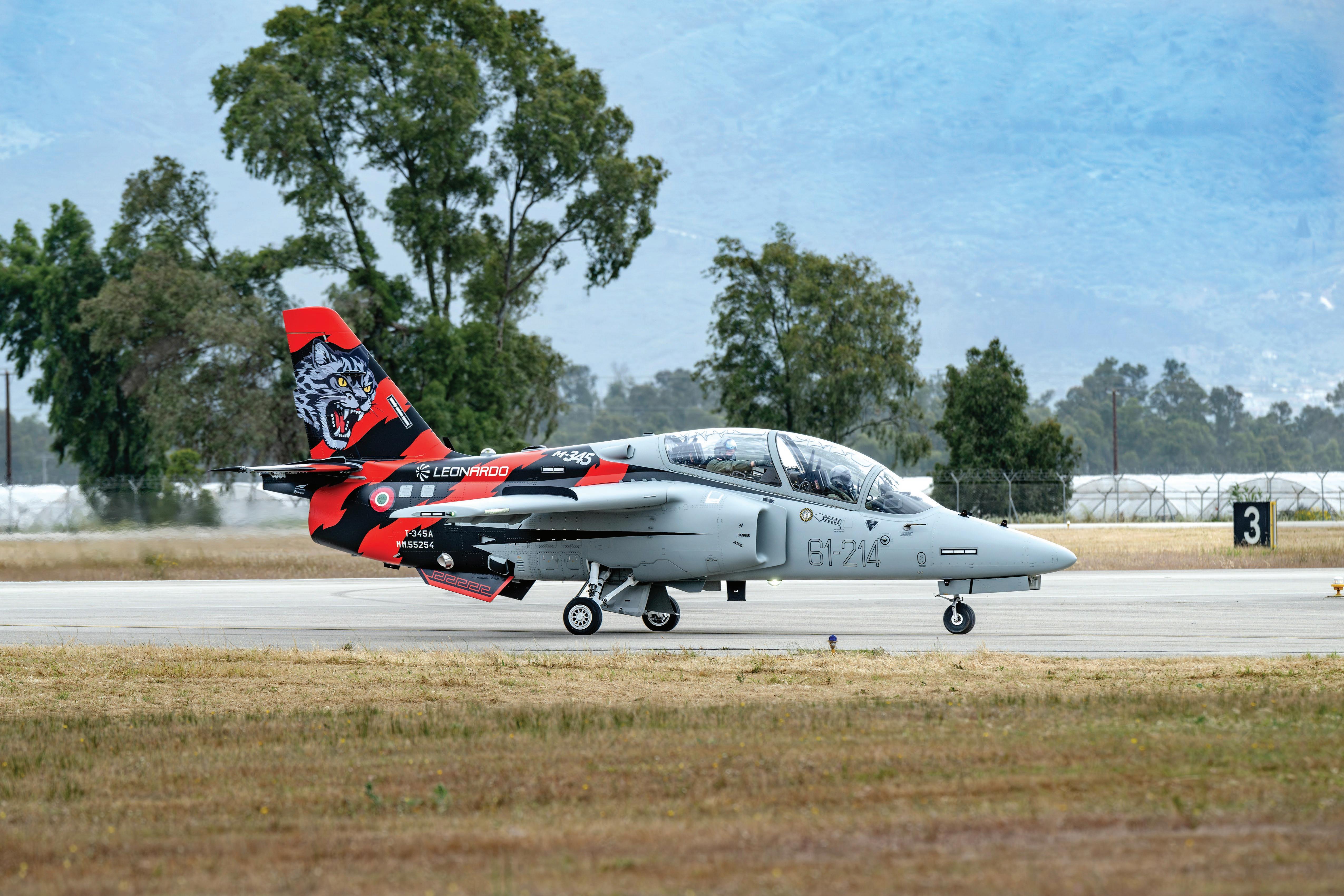
The Spotters day was organized on the Friday, 8th of May. Around 300 spotters from all over the world congregated to Araxos – we stayed in the airbase from 8 in the morning to 5 in the evening. Weather was a mixed bag - rain and cloudy in the morning and a summer sunny day for the afternoon. The countries participating in the event were: Greece with F-16s, Belgium with F-16s, Polish Air Force with F-16s, Swiss Air Force with F-18s, Czech Air Force with Bell AH-1Y Venom, Italian
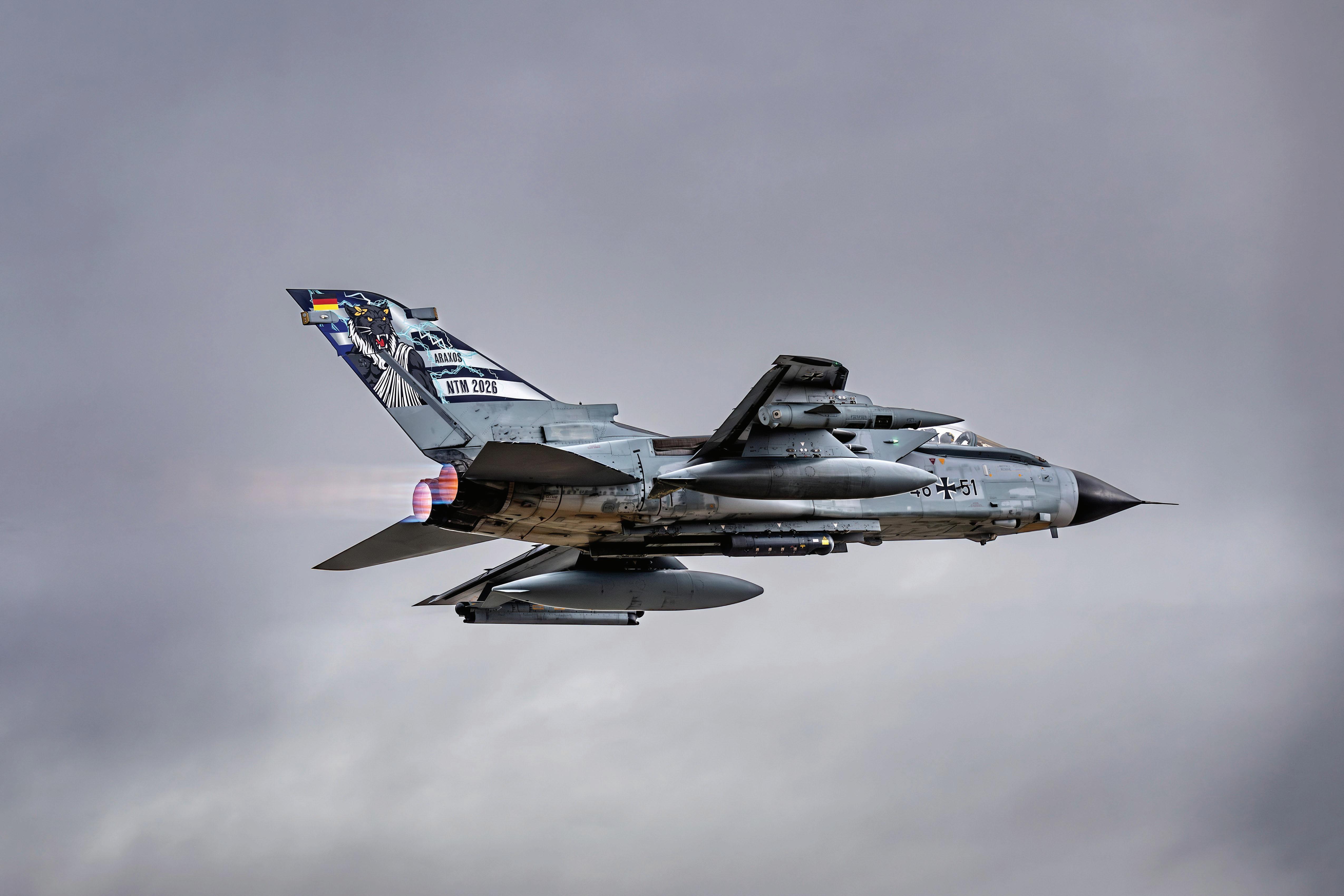
Air Force with Eurofighters EF-2000, T-345A and HH.101 Caesar, Spanish Air Force with F-18s, German Air Force with Tornados, and the Hungarian Air Force with Gripens.
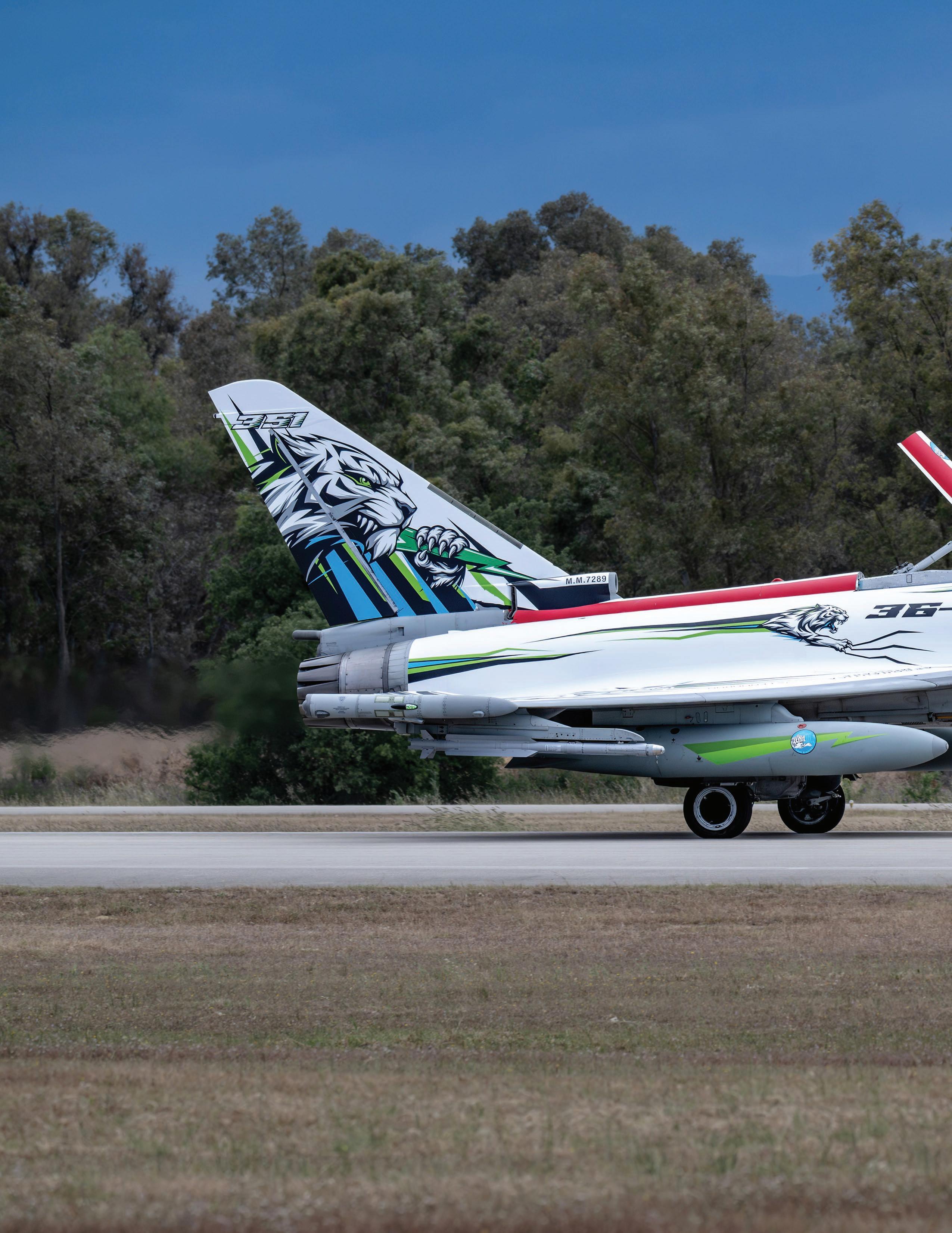
The day saw two mass departures of participating planes – one in the morning and one in the afternoon. The times when planes were not at the airbase were filled by rehearsals of some solo displays. A few aircraft were painted with Tiger paint schemes and were closely monitored by the Spotters. To note that there are less painted aircraft than some years ago and this is concerning some spotters as more and more air forces will be transitioning to the F-35 which does not work well with color paint schemes because of is stealth cover.
The Greek Air Force organized again a very nice event, Spotters were clearly happy to have a day filled with jet operations.
photos
Dragos Munteanu
Dragos Munteanu
Dragos Munteanu
Dragos Munteanu
Dragos Munteanu
PRECISION PERFORMANCE SEA PILOT TRANSFER OVER THE NORTH SEA WITH
NORTHERN HELICOPTER
Article and photos by
Marc Schultz / www.flugsicht.com
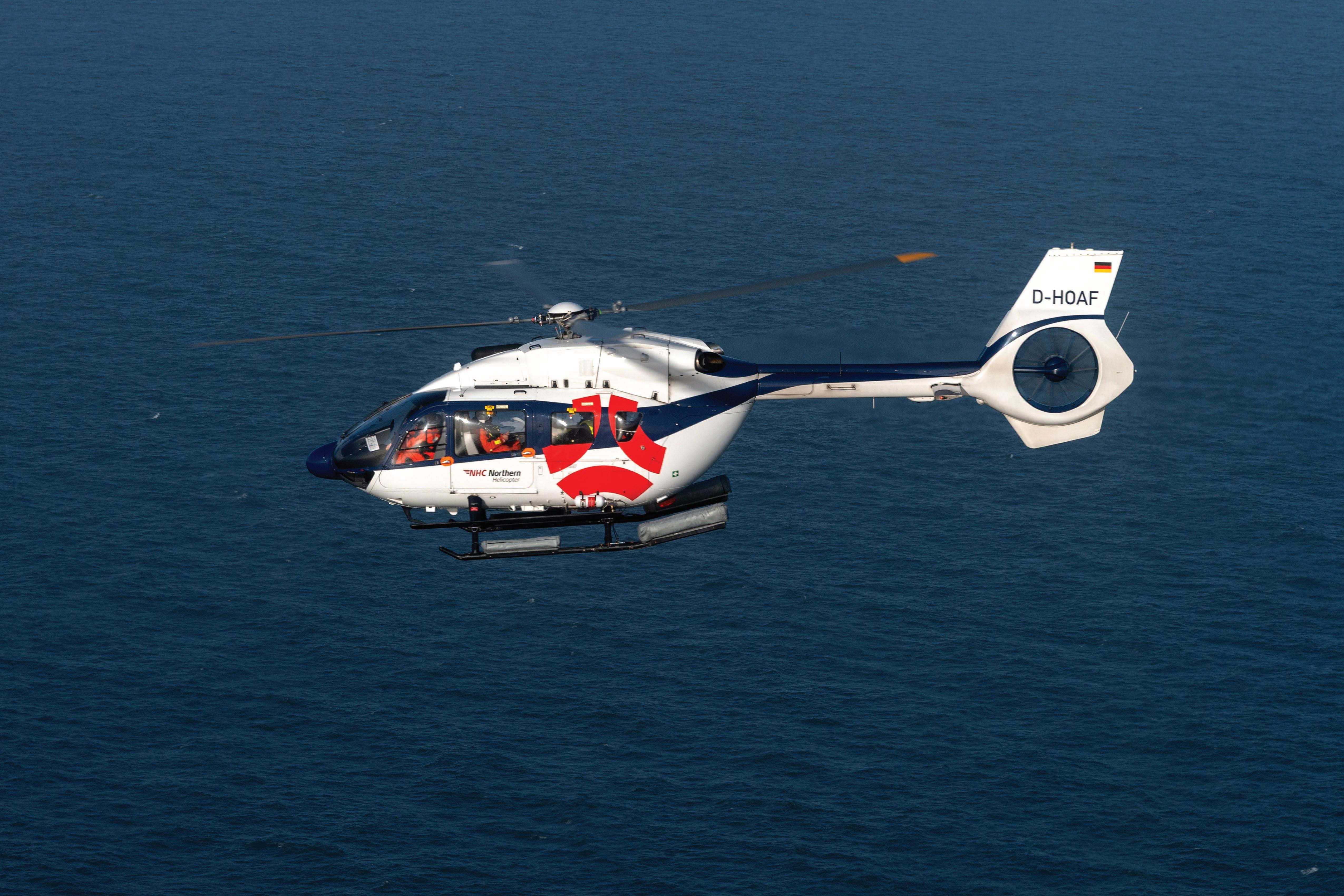
When the North Sea lashes beneath the helicopter’s skids and massive container ships dance like toys in the swell, everyday life begins for the crews of Northern Helicopter (NHC) in Wilhelmshaven-Mariensiel. Transferring sea pilots by helicopter is a key logistical service for global trade, combining technological progress with peak aeronautical performance. Jan Brandtner, Seapilot Project Manager and experienced pilot on the Airbus H145, had the idea to capture these demanding missions up close with a camera. Ideally, the shoot was to take place under extraordinary wind and weather conditions—a task as interesting as it was challenging from a photographer’s perspective.
The Weather Window Opens
Monday, March 30, 2026: The day begins at the Wilhelmshaven-Mariensiel airfield with ideal conditions for the planned photo flight. Visibility over the German Bight is generally fair at more than
10 kilometers. But the North Sea wouldn’t be the North Sea without a healthy dose of adrenaline: the wind is blowing at 15 knots from the northwest, with gusts of up to 30 knots whipping across the apron at the NHC base.
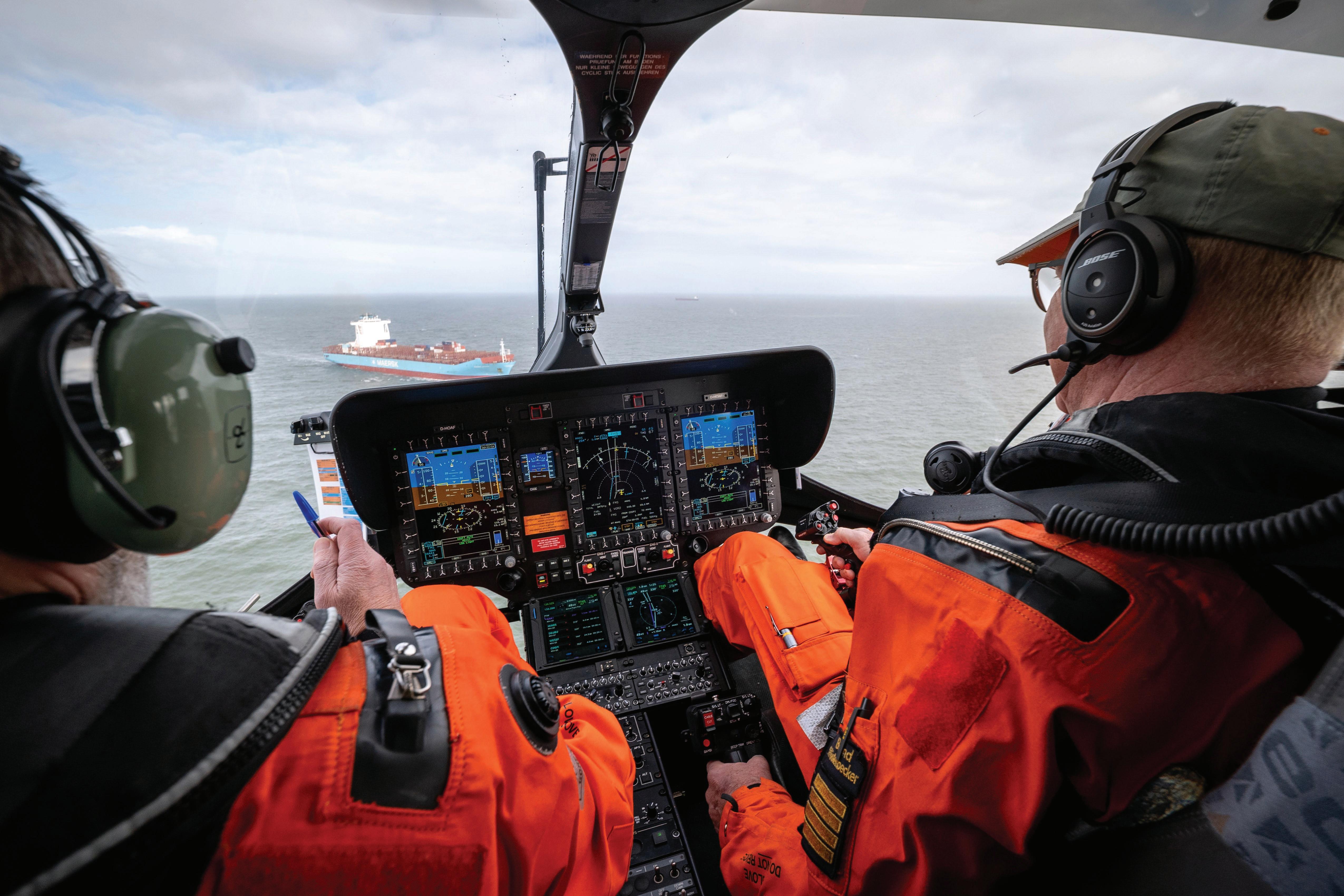
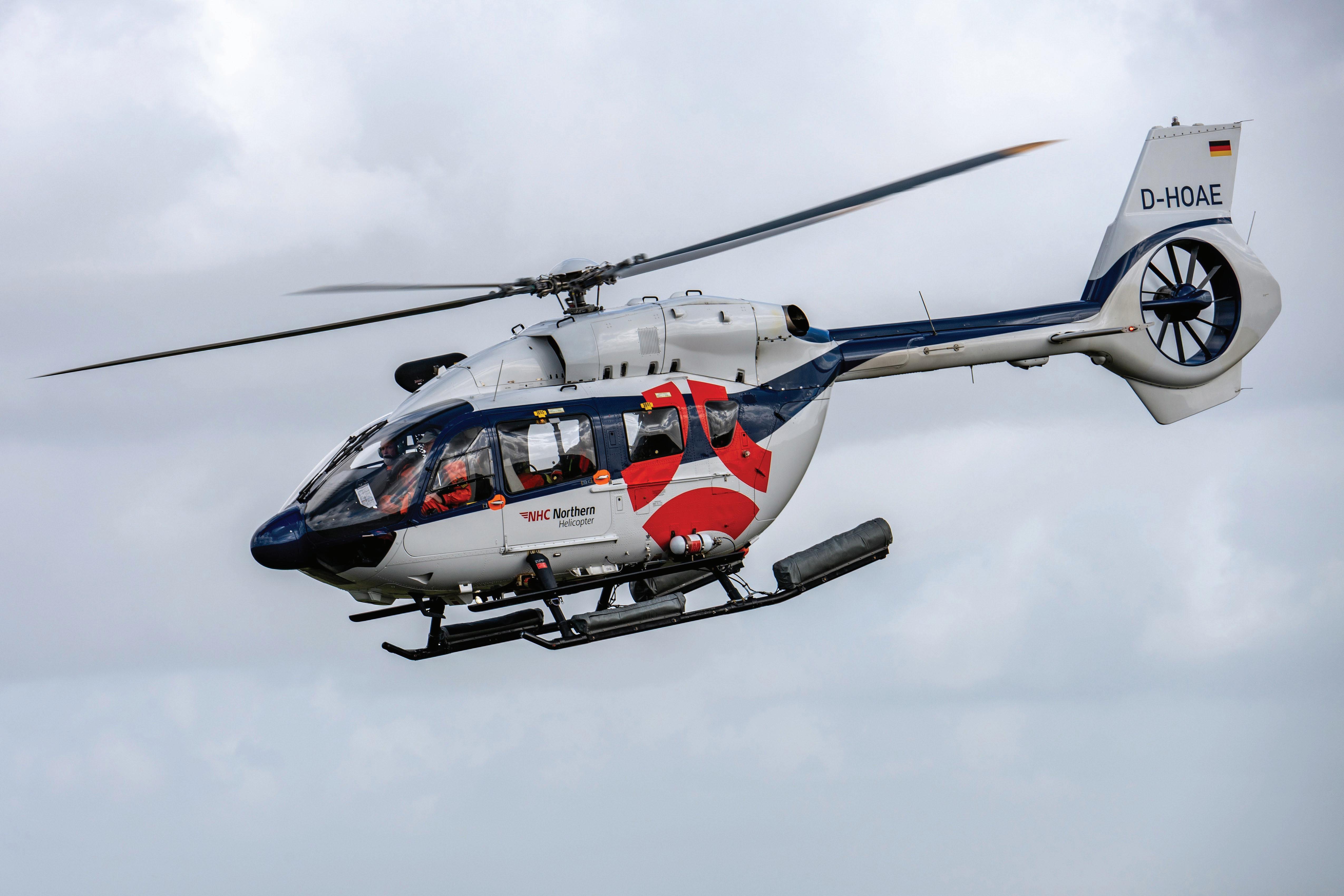
Today’s team includes Jan Brandtner and his colleague Bernd Wüstenbecker, who will serve as Pilot in Command (PIC) in the right-hand seat of the cockpit. The crew is completed by George Bühler, the HOIST operator responsible for operating the electrically powered Goodrich winch. Our aircraft for the day is an AIRBUS H145 with the registration D-HOAF. Powered by two high-performance TURBOMECA Arriel 2E turbines, each delivering 782 hp, it features a cruise speed of 130 knots and maximum redundancy in the event of engine failure— making it the ideal platform for such demanding offshore missions.
While the pilots hold “Alpha Fox” in a stable hover, the sea-pilot begins the descent via winch directly onto the ship’s bridge.
Tanker Teamwork
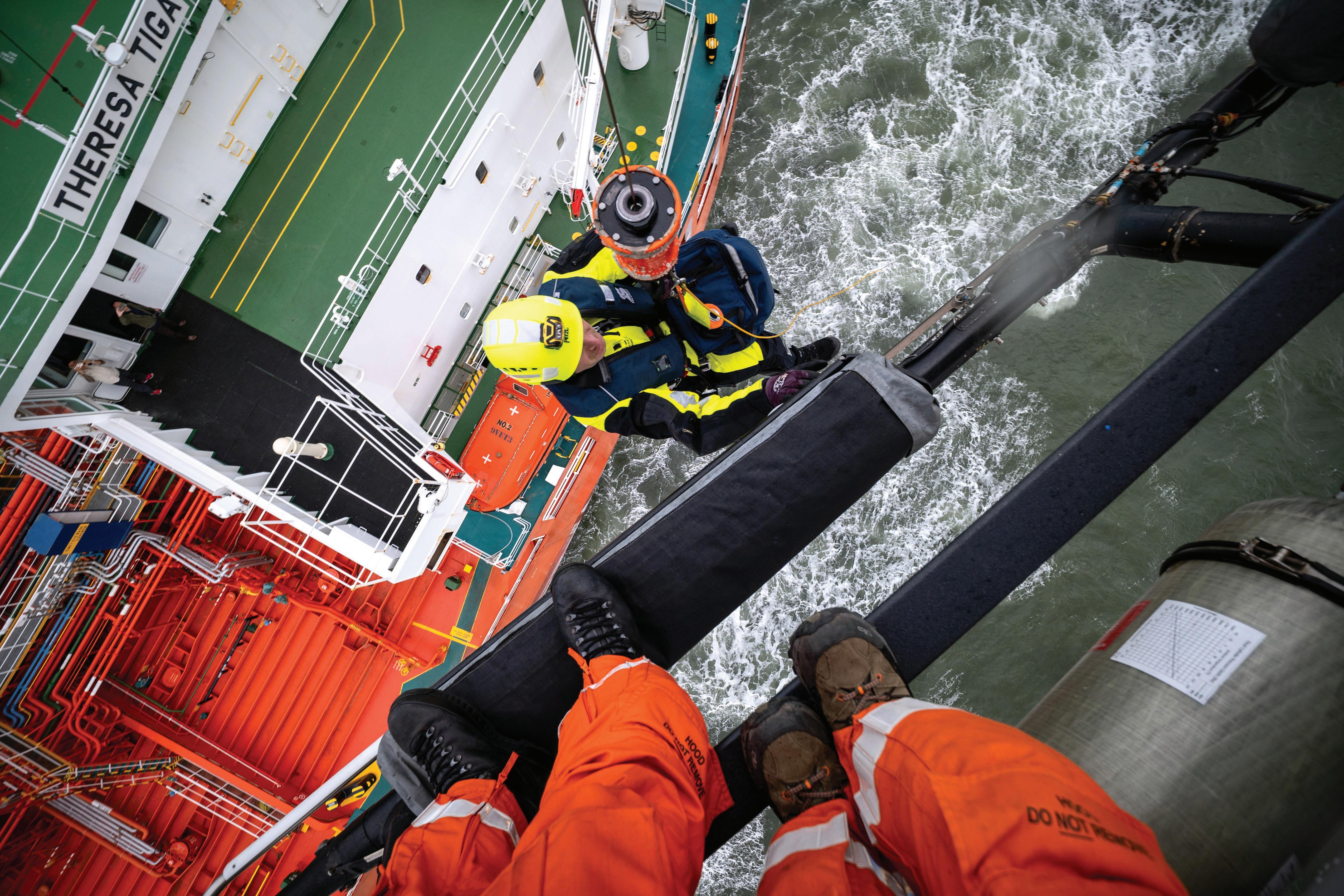
After a thorough briefing and intensive safety induction, we take off at 9:30 AM. Together with the sea pilot on board, we head toward the North Sea for the day’s first mission. Our task is to drop the pilot onto the “Theresa Tiga,” a 183-meter-long tanker flying the flag of Singapore. The ship, easily spotted with its red hull, lies several nautical miles off the East Frisian Islands. After about 20 minutes of flight, we make visual contact and establish communication with the tanker crew on marine radio channel 72.
Then, things get serious. The following procedures require precise coordination between the helicopter and ship crews. After approaching the vessel from the port side in a constant descent, the pilots hold “Alpha Fox” in a precise hover approximately 25 meters above the bridge wing. Meanwhile, the “Theresa Tiga” continues to move
through the waves at a speed of about 15 knots. The deck structures are close enough to touch, and we have a stable position for the most critical phase: the pilot’s deployment.
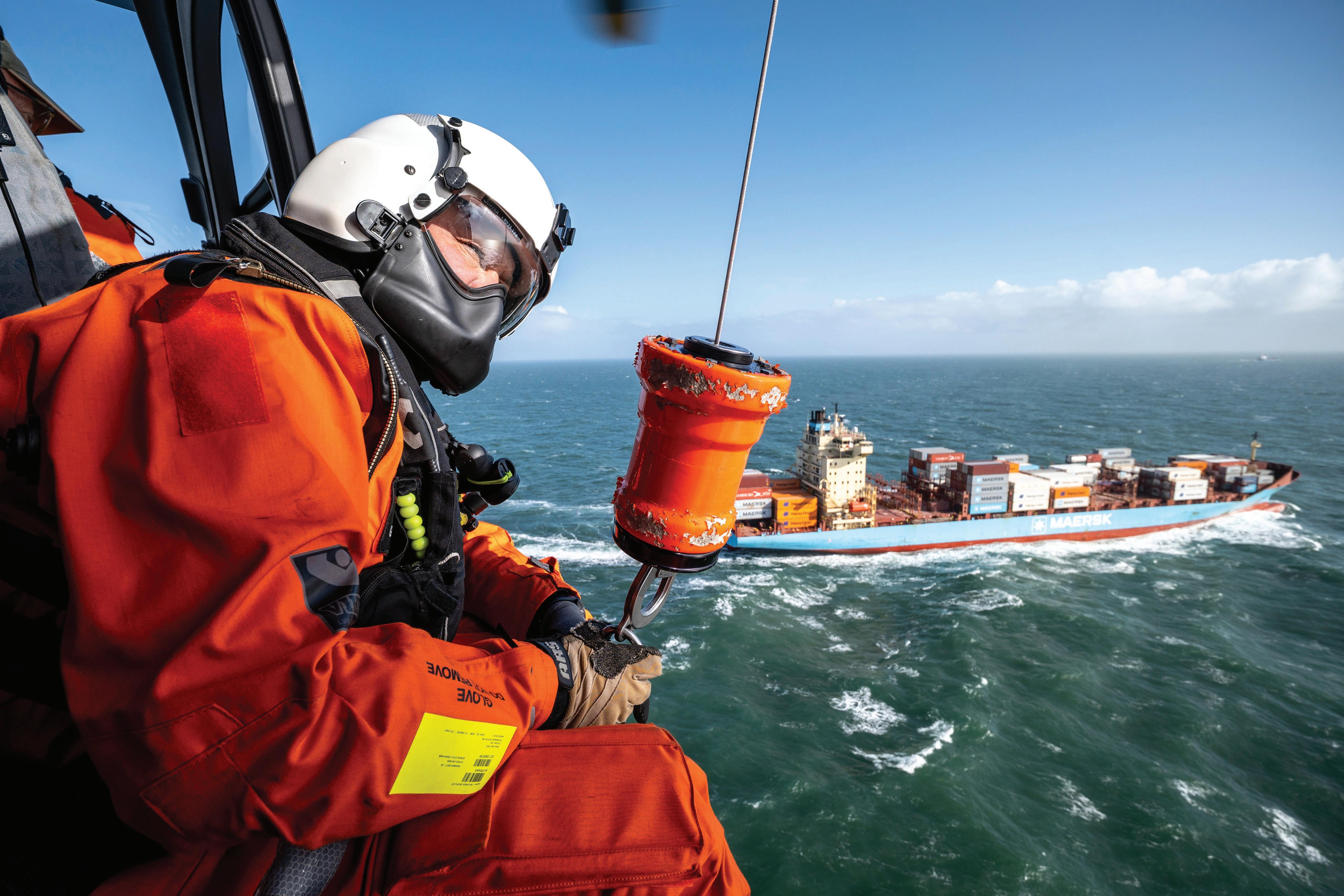
After opening the right side door, HOIST operator George takes his position on the helicopter’s skids. At this point, the pilot is already securely connected to the electric Goodrich winch, which can handle a significant load of nearly 250 kg. For added safety, a special 3-meter steel cable serves as a potential equalization bond at the end of the hoist cable. Because the rotation of the rotors causes the helicopter to build up an electrical charge, this bond prevents a dangerous discharge when a person touches down on the ship’s deck. Within a short time, the job is done—the pilot has reached his destination safely.
Demanding Pilot Standards
The requirements for NHC crews to perform such maneuvers safely are considerable. Around 2,500 hours of offshore experience as a co-pilot are required before a pilot can take flight responsibility as Pilot-in-Command for sea pilot transfers. NHC has been responsible for this demanding service in the German Bight since the beginning of January 2023. To guide shipping traffic precisely through complex waterways, several thousand flight hours are completed annually on behalf of the federal government.
Throughout the day, we fly three more missions, picking up pilots and delivering them precisely to targets at sea or on land. Each time, the routine procedures in the cockpit and at the winch are impressive.
A Piece of Maritime History
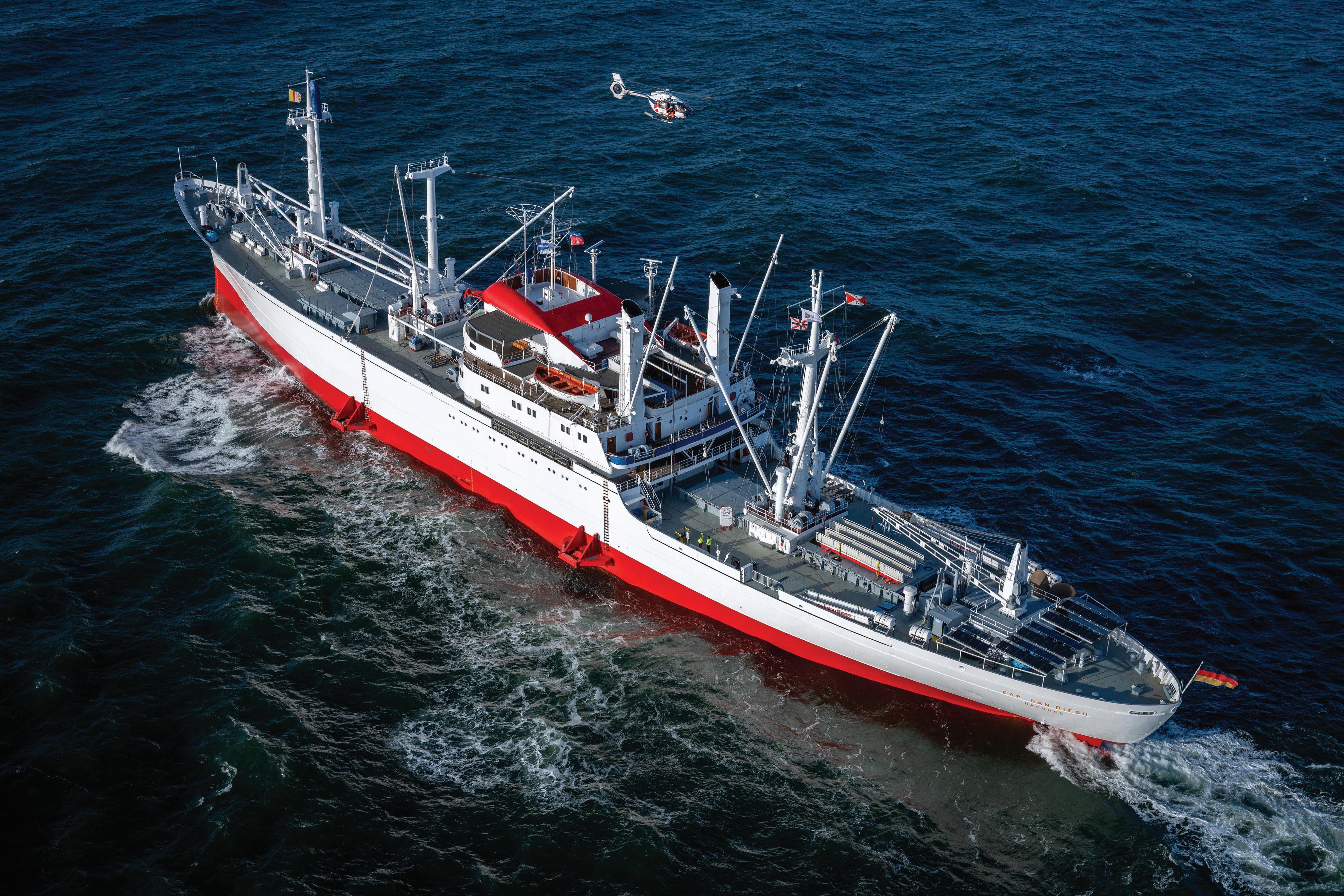
Our final mission of the day provides a photographic highlight: in the warm light of the evening sun, we cross paths with the “Cap San Diego”. The world’s largest seaworthy museum ship is currently touring off
the East Frisian Islands. Launched in Hamburg in 1961, her elegant, snow-white silhouette and curved lines stand out distinctly from the clunkier freighters of that era. This earned the series of six “Cap San class” ships the nickname “White Swans of the South Atlantic”.
As we land back in Mariensiel after this long day, it is clear: sea pilotage is much more than just a transport service. It is a central component of maritime logistics on the German North Sea coast, secured by the professionalism of those who fly even when others would have long since turned back.
Photographic information: For this type of documentary photography, I use a Nikon Z6III with the NIKKOR Z 24-120mm f/4. The interior shots inside the helicopter were taken with a Nikon Z50II and a Viltrox 9mm f/2.8. All shots were taken in RAW-format and post-processed in Adobe Lightroom Classic.
Marc Schultz
HOIST operator George Bühler concentrates as he prepares for the upcoming deployment.
Marc Schultz
Mission
different
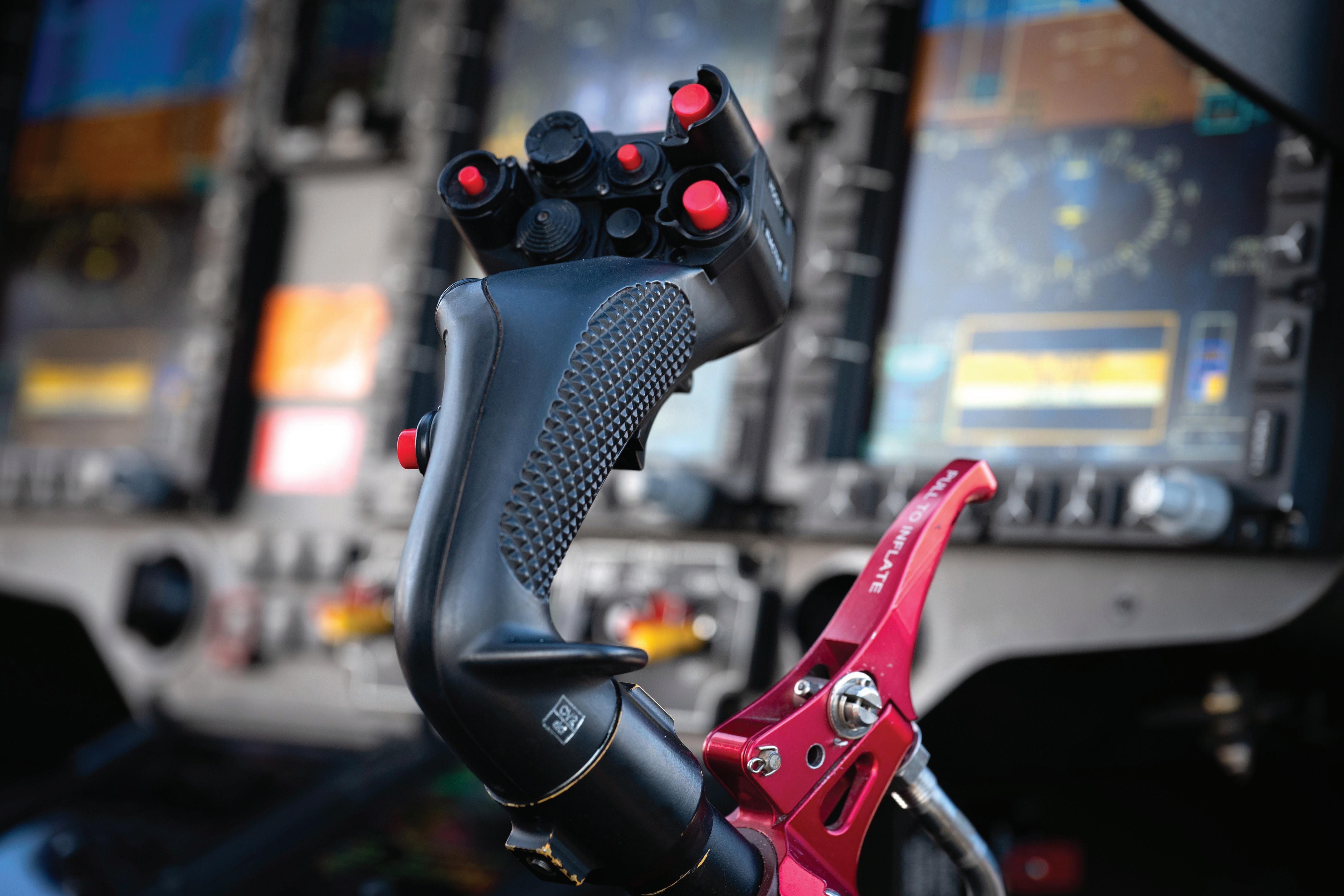
Cockpit multi-tool: With over ten
functions, the H145’s cyclic pitch serves as a true operations center.
Marc Schultz
With “Alpha Fox” over the North Sea. The standard H145 crew typically consists of a PIC, a Pilot Flying, and a HOIST operator.
Marc Schultz
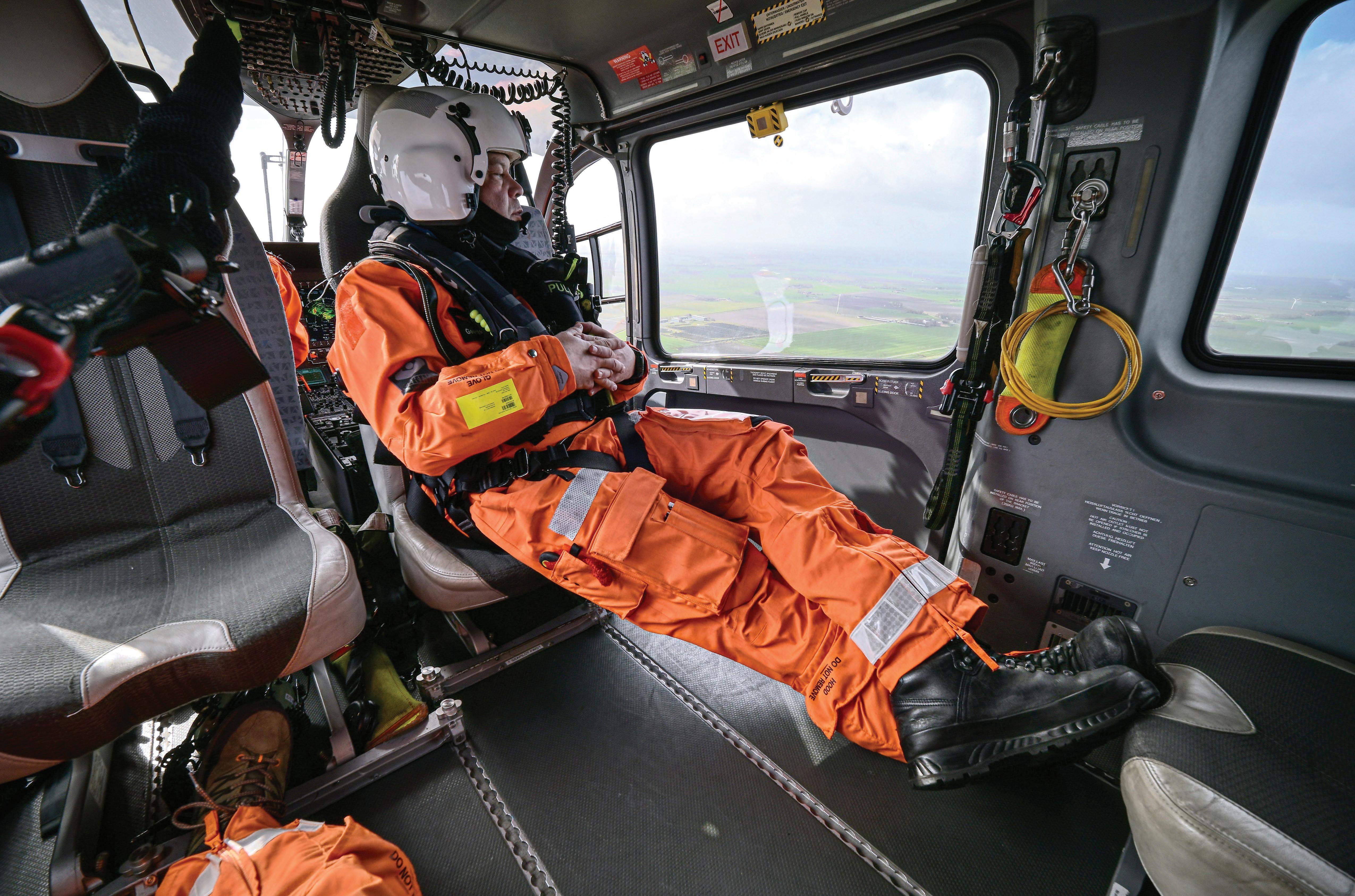
Vertigo-free between sky and sea. Once the winch pulls and the deck shrinks, it’s clear: this job is not for the faint-hearted.
David meets Goliath. The true scale of the massive container freighter only becomes apparent from
Marc Schultz
Looking at a legend. The 1961-built “Cap San Diego,” known as one of the “White Swans of the South Atlantic,” passes below in the evening light.
Marc Schultz
Heading North—the mission continues. “Alpha Echo” leaves its base in Mariensiel for the next operation toward the coast.
Marc Schultz
On the road to Sun ‘n Fun
Article and photos by John Agather
The most important part of flight planning from Fort Worth, Texas to Sun n Fun in Lakeland, Florida is when and where you will have bathroom opportunities. Flying in a warbird for many hours on end does not present readily available chances to visit the little pilot’s room. And there is the added danger of what my good friend the late, great Flying Tiger’s ace Tex Hill used to say. “At my age the shit/fart separator is no longer under warranty”.
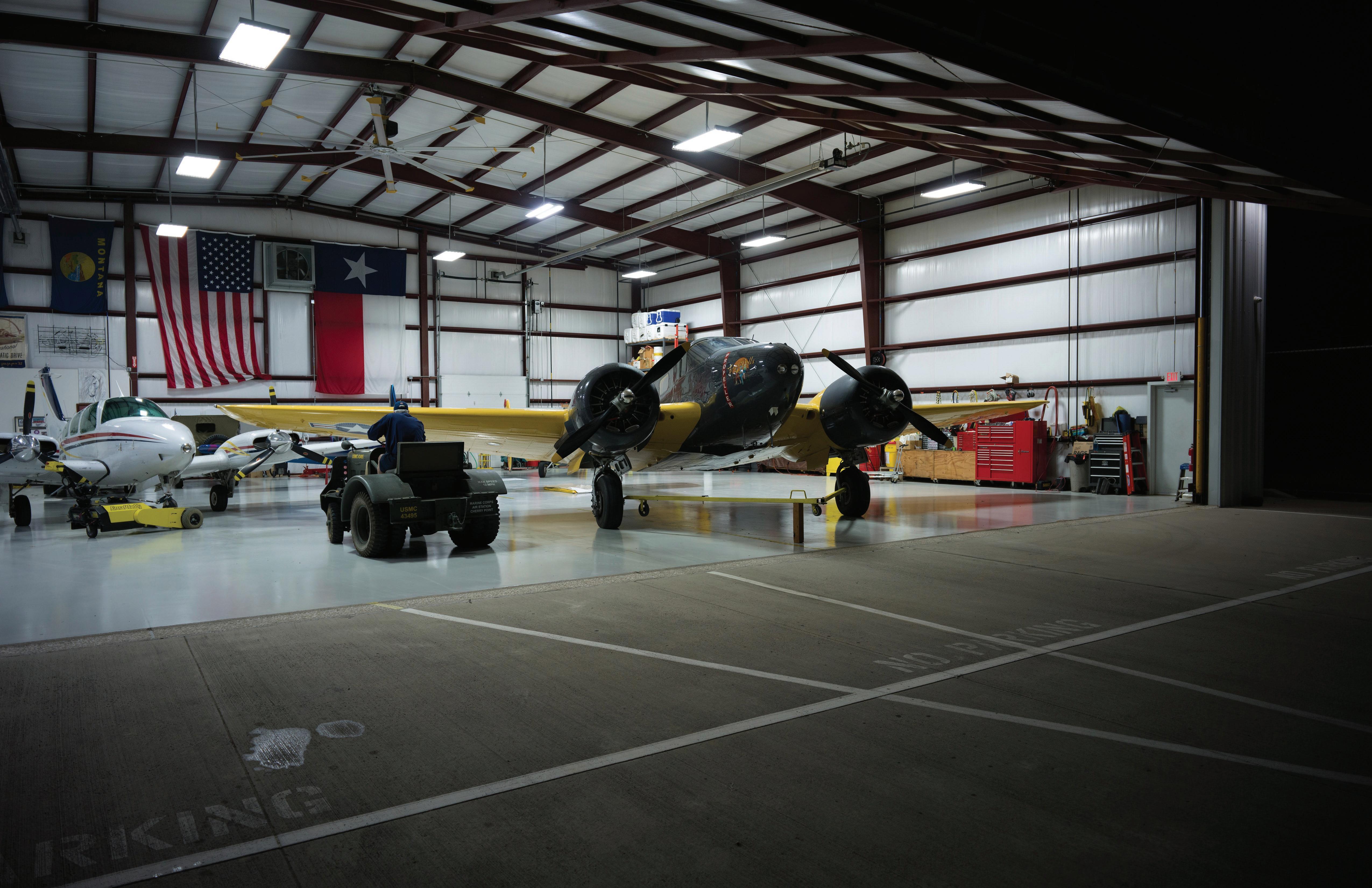
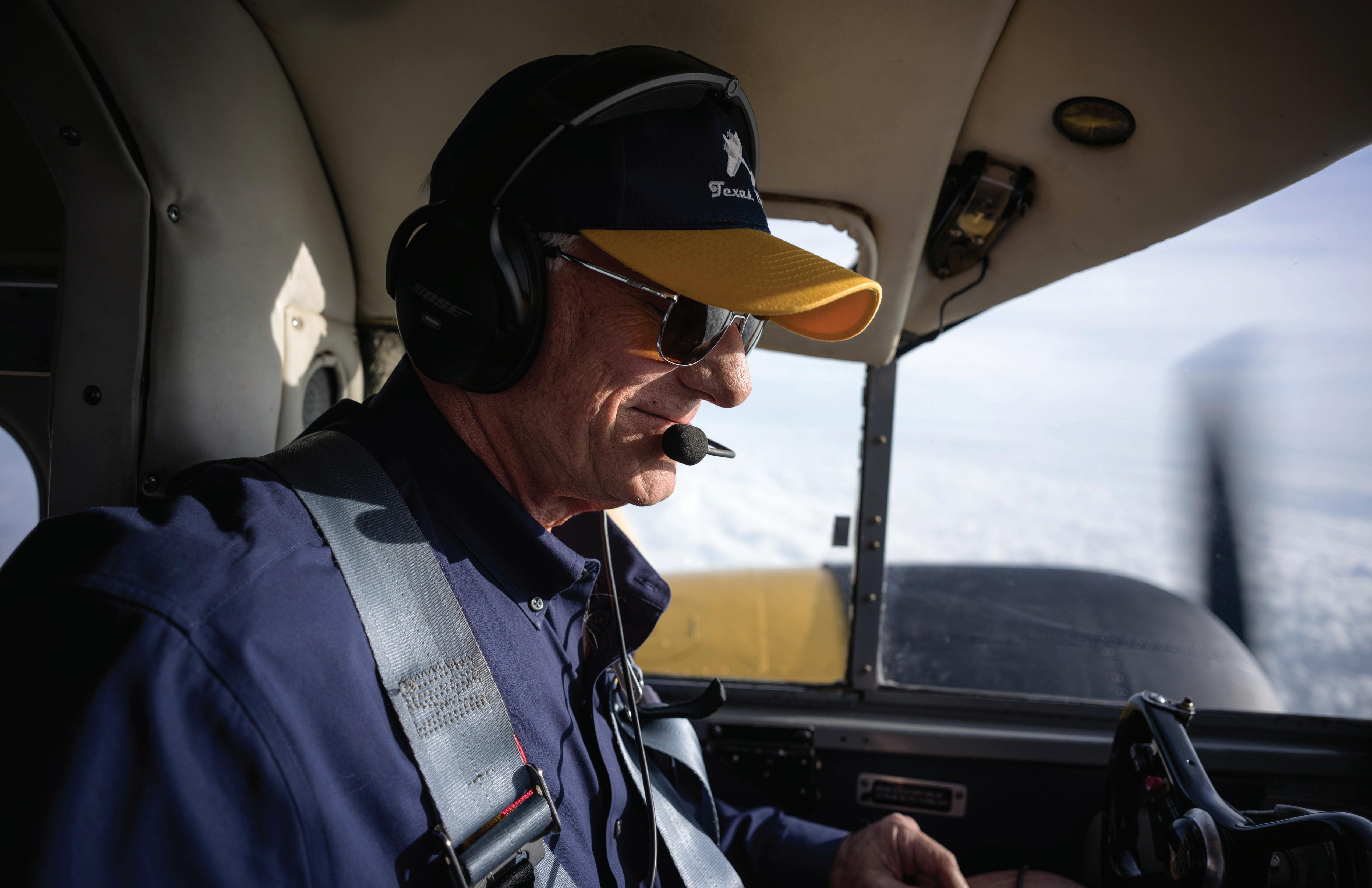
I confess that I love road/flying trips. My brother Neils and I grew up flying in our family Twin Beech which we affectionately called the Bucket of Bolts. We donated it to the Commemorative Air Force forty five years ago and it still flies. My brother now has a similar aircraft that he named Texas Dolls. It is my lucky day to fly with Neils and a couple of other folks on Dolls to Lakeland , Florida for Sun n Fun, with a stopover at Kermit Weeks Fantasy of Flight in Orlampa, Florida. Projected flight time is six hours, more or less.
I do not sleep well the night before a trip. I just want to get going. Even though our projected departure time from the house to the airport is 5:15 AM, I am up at 3:00. Breakfast is a small yogurt and a quick cup of coffee. The weather is not looking promising for a 7:00 AM takeoff. Neils and I drive through a constant drizzle on the way to his hangar. Always ahead of the airplane, my brother has pre-fueled and loaded the airplane the day before. All that is left to do is to pull props, load the passenger baggage, sump the tanks, and pull the airplane out onto the ramp. It is still dark outside and raining. Neils wisely performs all these tasks in the comfort of the hangar. Once everyone has arrived and bags loaded, Neils fires up his vintage tug and pulls Dolls out into the light rain. While he is unhooking the tug and parking it back in the hangar I climb into the right seat to co-pilot the first leg of our flight.
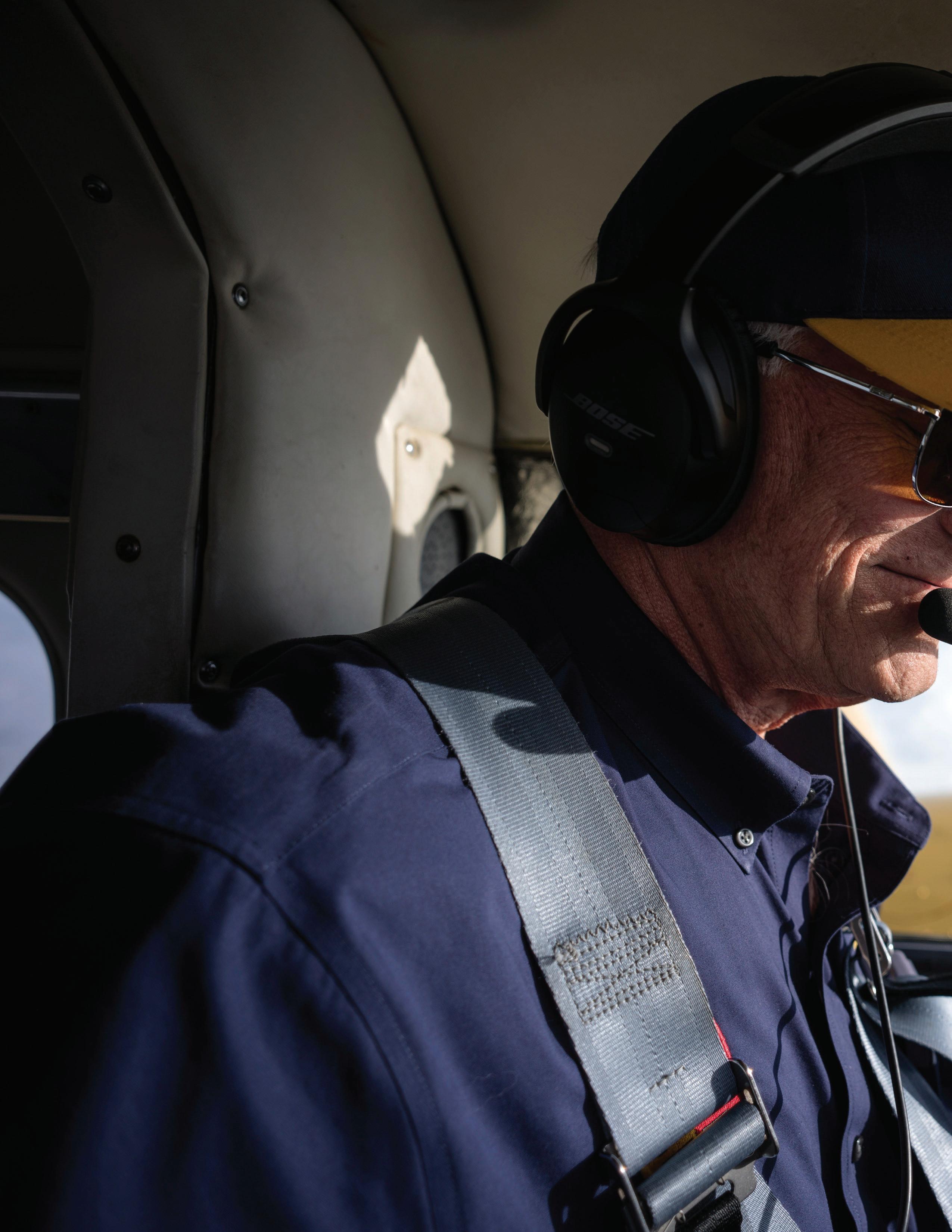
Although it has been years since I formally flew an airplane myself, sitting in the right seat is very familiar territory for me. Our dad started teaching us how to hold heading and altitude when we were only four years old. I performed my first takeoff in the Bucket of Bolts at six years old, sitting on a stack of my schoolbooks. I loved flying with my father. Getting to sit next to Neils is the next best thing. He is an extremely competent pilot and very thorough.
With the steady sound of sprinkles on the windshield in the darkened hour, Neils places a small flashlight in his mouth and methodically starts going through his checklist. Starting a Twin Beech is old school and fun. There are many items to go through before throwing the ignition switches. As he holds the starter button the left prop starts to spin. A couple of quick pumps on the throttle, magneto switches to “on”, and the familiar roar of a Pratt and Whitney R-985 comes to life. The process is repeated for the right engine. As we wait for
the engines to warm up, we get our Instrument Flight Rules (IFR) clearance from KFTW Fort Worth, Meacham Field to 2RO, in Waynesboro, Mississippi, about three hours away. Wisps of light illuminate the horizon as Neils loads in all the navigation data into the radios. We begin our taxi roll to the north end of the airport using this time to let the engines settle into proper temperature range for flight.
It is often said that the most challenging part of flying a Twin Beech is on the ground. I agree with that. Because it is a taildragger, viewpoints straight ahead from the cockpit are limited. Very often you will see WWII fighters like a P-51 Mustang zigzagging on a taxiway so the pilot can see what is in front of the airplane. A Twin Beech also has very closely coupled gear with an enormous amount of power being delivered from 450 horsepower engines. What that means is that the wheels of the airplane are very close to each other making maneuverability challenging, especially at take-off and landing speeds.
All reciprocating engine, propeller driven aircraft need to perform runups before taking flight. In a Twin Beech that means pulling back on the control column and advancing the throttles to 1,600 RPM. Each engine has two sets of magnetos, the spark that ignites the fuel. Magnetos are checked at this advanced speed to make sure they are delivering the fire needed. If all the banks have the appropriate levels, the throttles are then pushed up to 2,000 RPM’s. At this point the propeller levers are pulled all the way back and a perceptible change in noise occurs when the blades change angle. The prop levers control the pitch of the propellers in flight to help the airplane fly more efficiently. The props are exercised three times and finally we are ready for take-off.
The tower clears us to line up and wait on the runway. This is when to make the final adjustments so we can transition to flight easily. Twin Beeches have a lockable tailwheel that help keep the airplane going straight down the runway on takeoff and landing. We are cleared for takeoff. Neils pulls back on the control yoke and advances the throttles to take-off position, leading a bit with the left engine to compensate for torque from the propellers. Twin Beeches are loud, like really, really loud, especially with the engines running full out. As the airplane crosses 40 knots, back pressure is released from the control column moving it forward and the tail begins to lift from the ground. This is when a Twin Beech gets very sporty to handle. The airplane is surprisingly nimble and reacts well to pilot inputs, but you have to be on it. The large surface area of the fuselage and the double tails make the aircraft into a sort of sail craft, and this is a critical phase to control. Wind can help you and hurt you, sometimes simultaneously. My brother keeps Dolls straight as an arrow down the runway and we lift off. God, how I love this.
John Agather
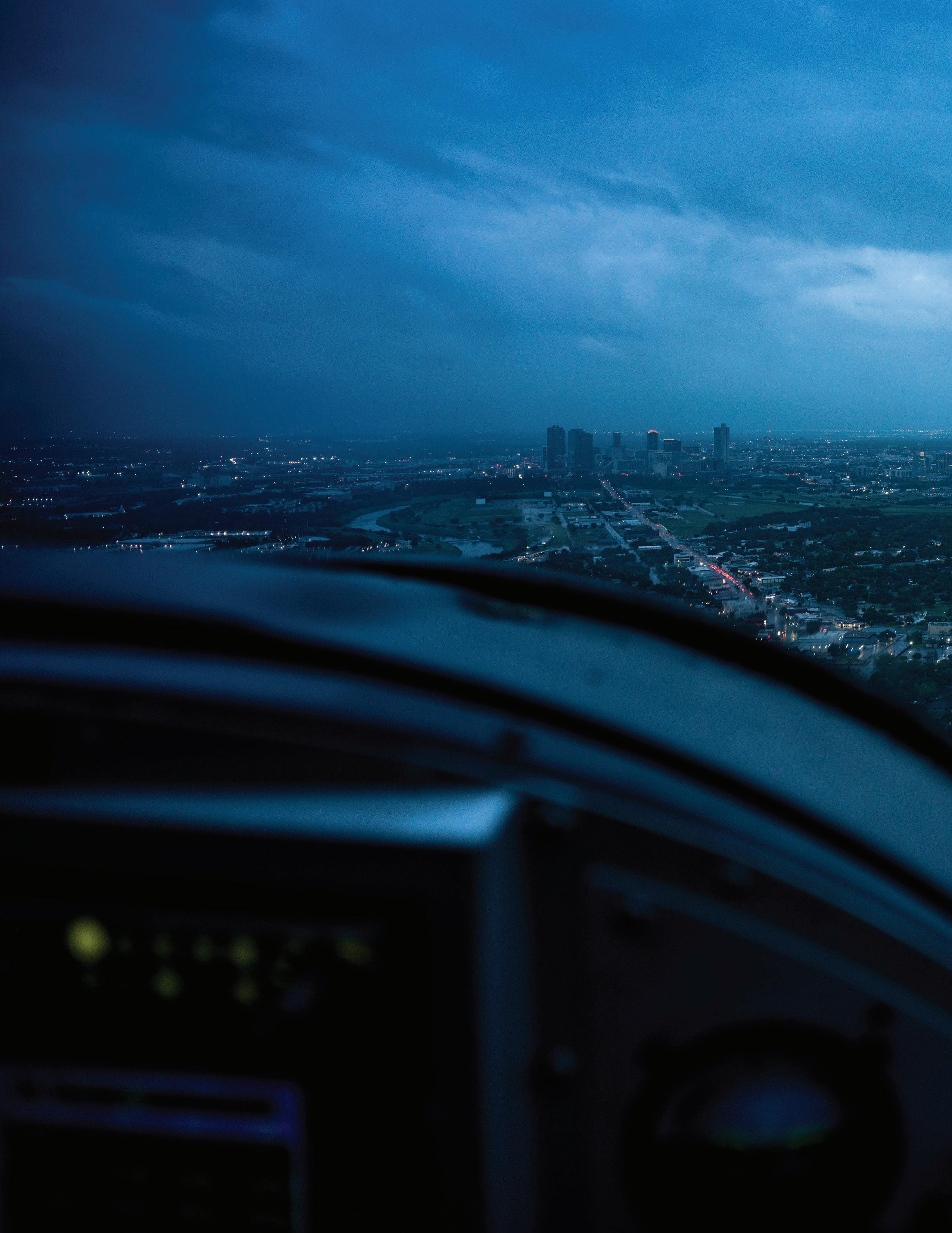
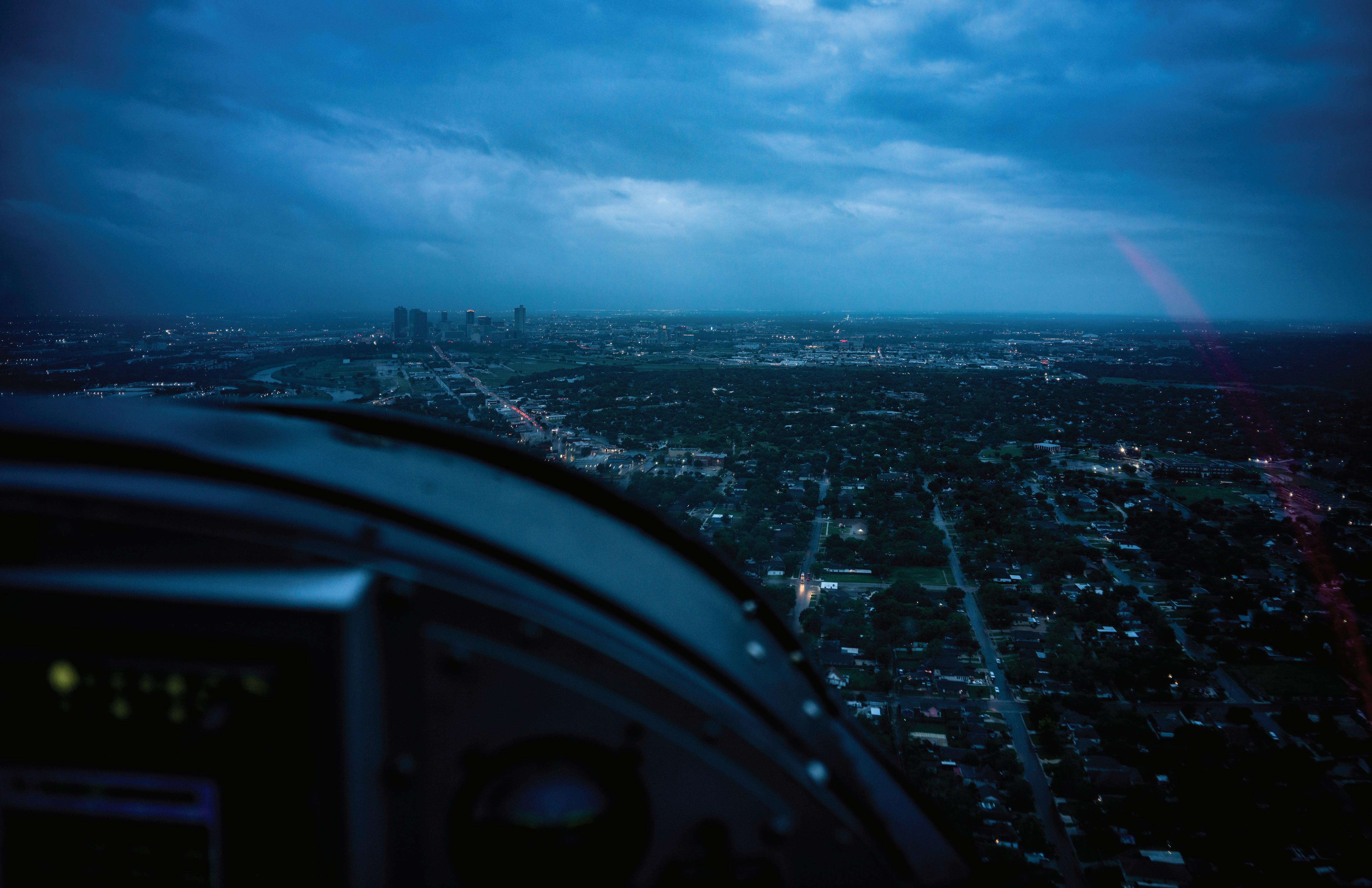
Climbing to the south is spectacular, with downtown Fort Worth filling the glass in front of us. It never gets old. Cheating the laws of physics in flight is one of man’s remarkable achievements. There is flying airplanes, fire, antibiotics, and Reese’s Peanut Butter Cups as benchmarks of human advancement. Witnessing an early morning sunrise from the cockpit on an aircraft is a privilege. Today’s appearance is muffled by clouds but nevertheless glorious.
The forecast called for clear skies east of Dallas. That is not to be. Climbing to 7,000 feet we are unobstructed but there is a dense cloud/fog layer below us. There are occasional breaks in the visibility and patches of ground pop through. But mostly it looks like a white fluffy blanket as far as the eye can see. Checking the prognosis for Waynesboro doesn’t look promising, but the predictions are two hours old. As we inch closer hope is that the fog will lift and our landing will be in good visibility. Here is where it pays off to have multiple pilots onboard. Every single one of us is checking our phones/tablets and searching Foreflight (flight planning service) for suitable landing
alternatives that have good fuel prices. We opt to continue flying another 40 minutes and fuel in Gainesville, Alabama where the weather is acceptable. As we fly over Waynesboro, we can see that landing there would have been no problem. If you were secretly holding a desire to go to the bathroom, the sight of a passing opportunity that you had mentally prepared for would feel defeating.
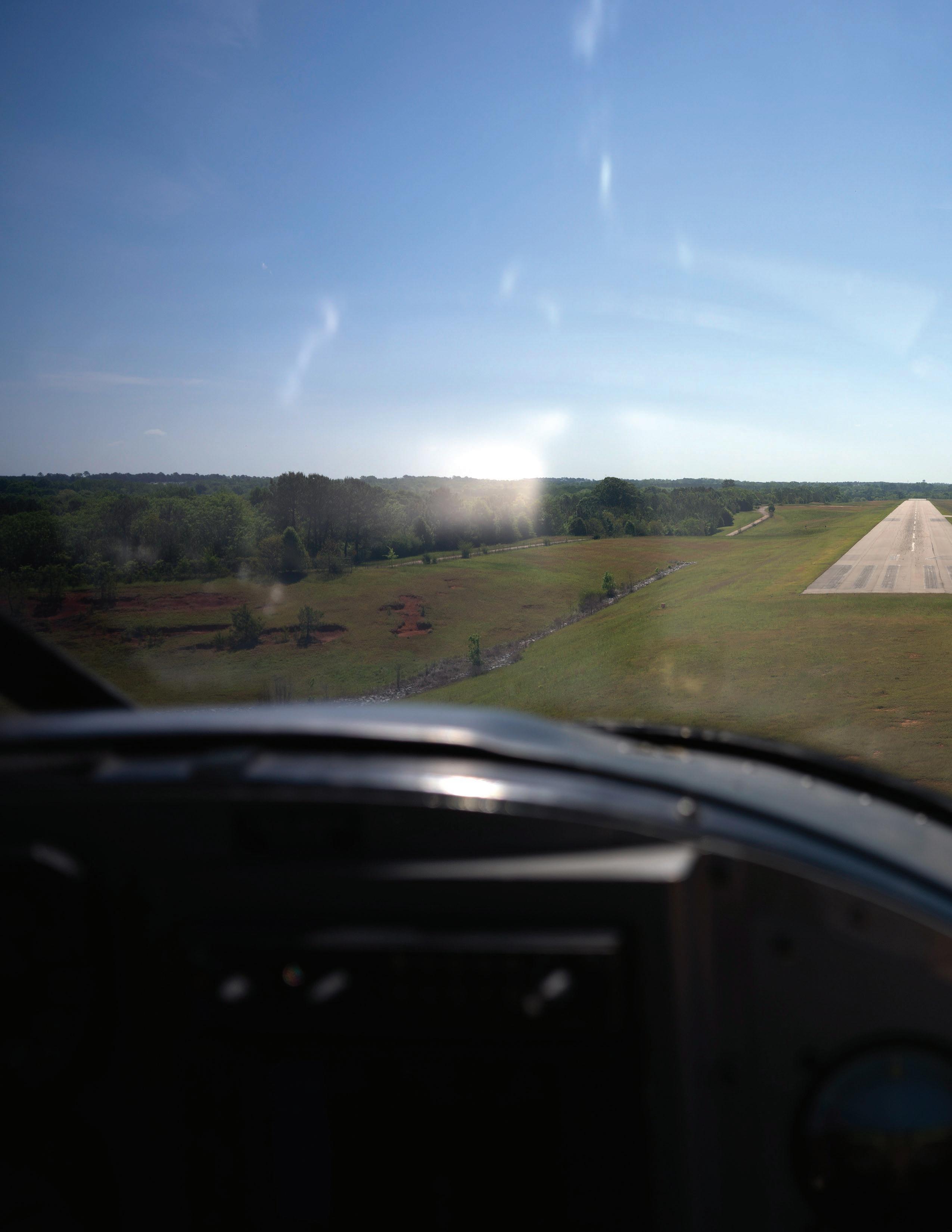
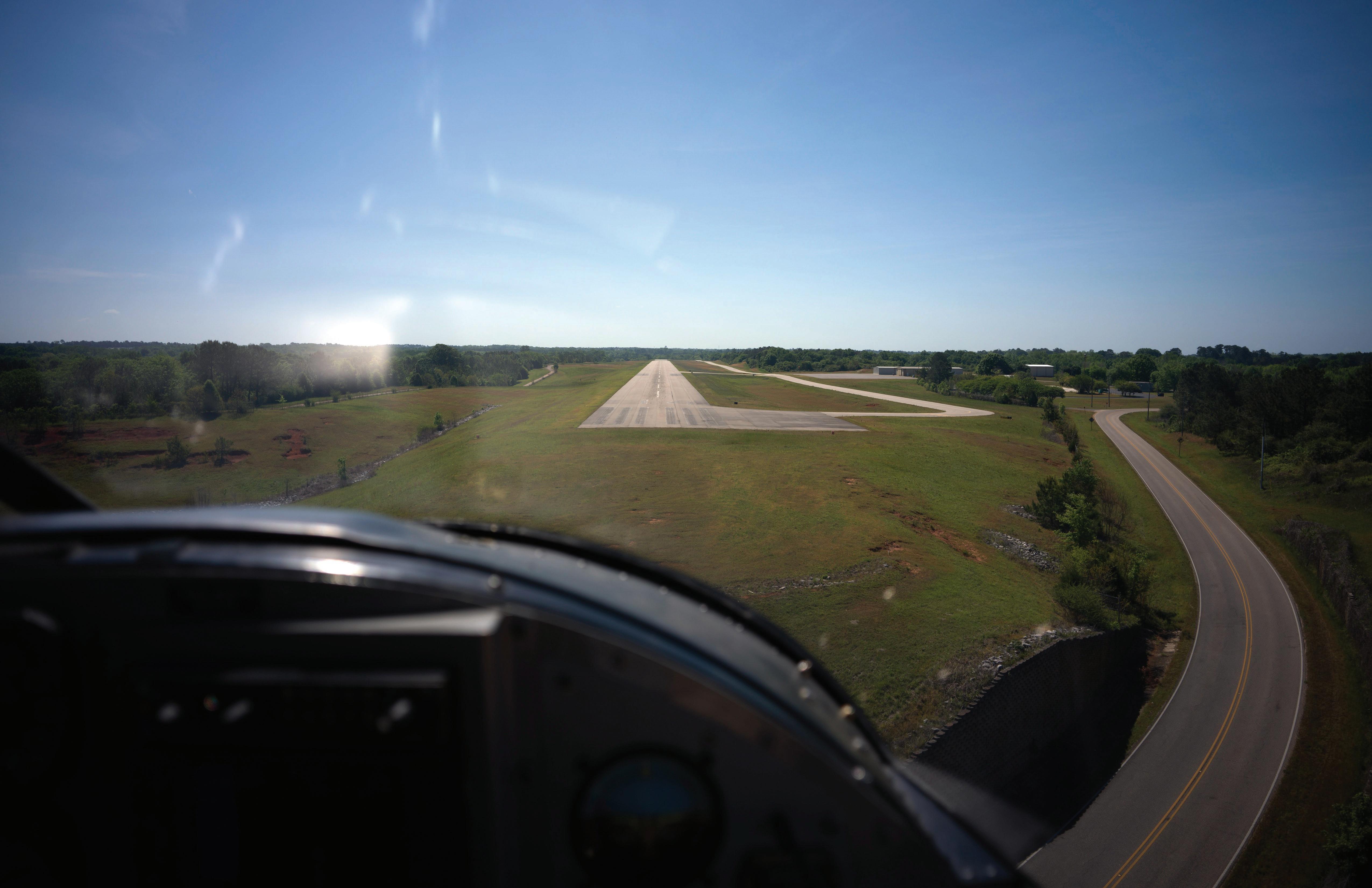
Descending into our new destination is tricky because the light is being diffracted by the clouds and moisture in the air. Our GPS indicates that the runway is dead ahead of us but it is difficult to pick out. When I was a little boy, we flew over the broken wreckage of an Aero Mexico DC-8 lying three miles short of the runway in Mexico City. My dad explained that water plays weird visual tricks, and the pilot thought the Texcoco Lakebed was actually the runway. He attempted to land a perfectly good airplane in the water by mistake. Neils and I know this story very well and make sure that we do indeed have verification of the runway before signing off with air traffic control and lining up to land in this rural airport.
John Agather
As soon as the mixture controls are pulled back to idle cutoff position, the exit door is flung open and the rear passengers are scrambling to line up at the bathroom entrance inside the modest building that is the pilot lounge in Gainesville. The sense of relief using the facilities after a three-and-a-half-hour flight is hard to describe. But at my advancing age let’s just say it’s goooood.
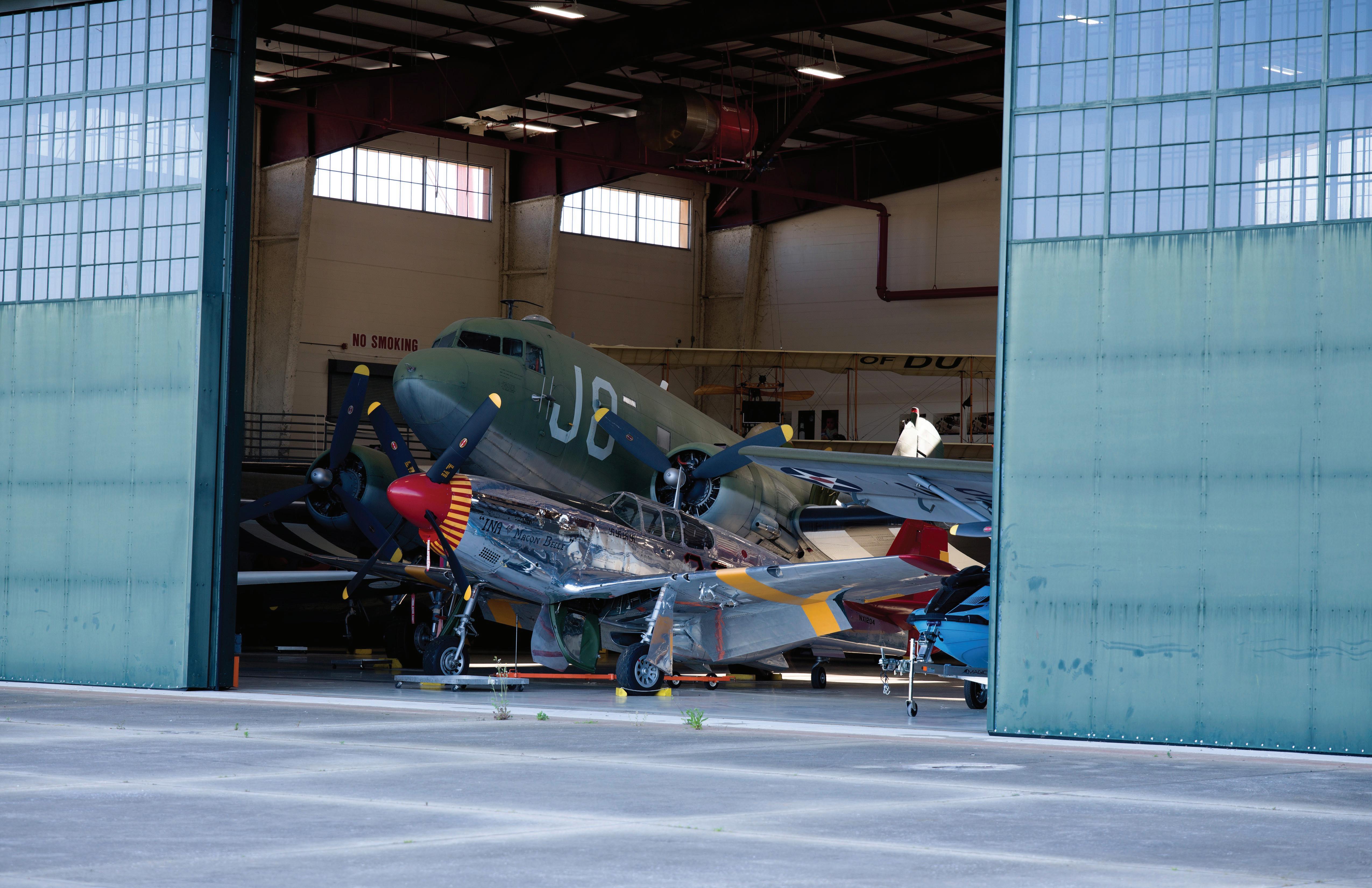
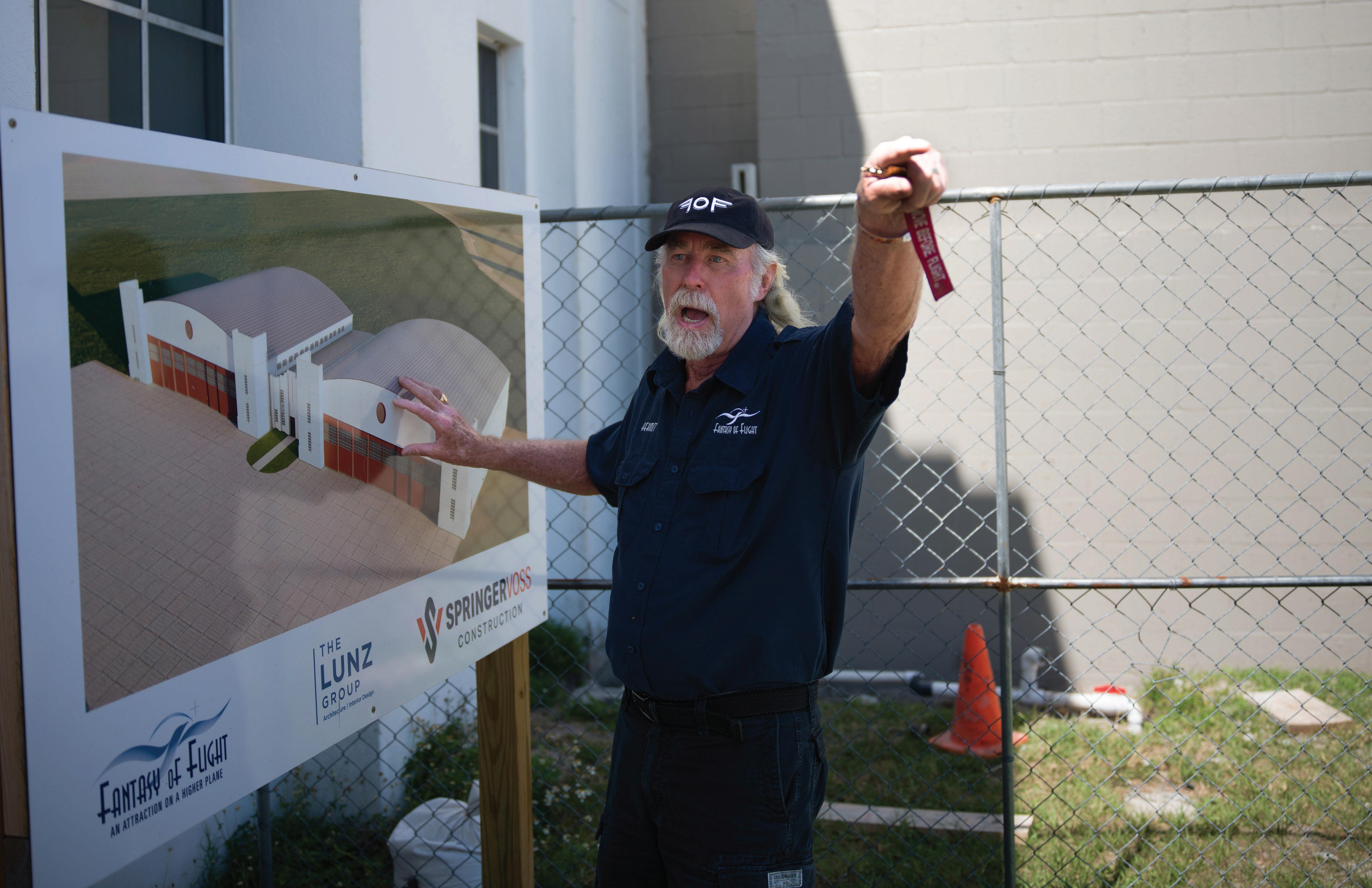
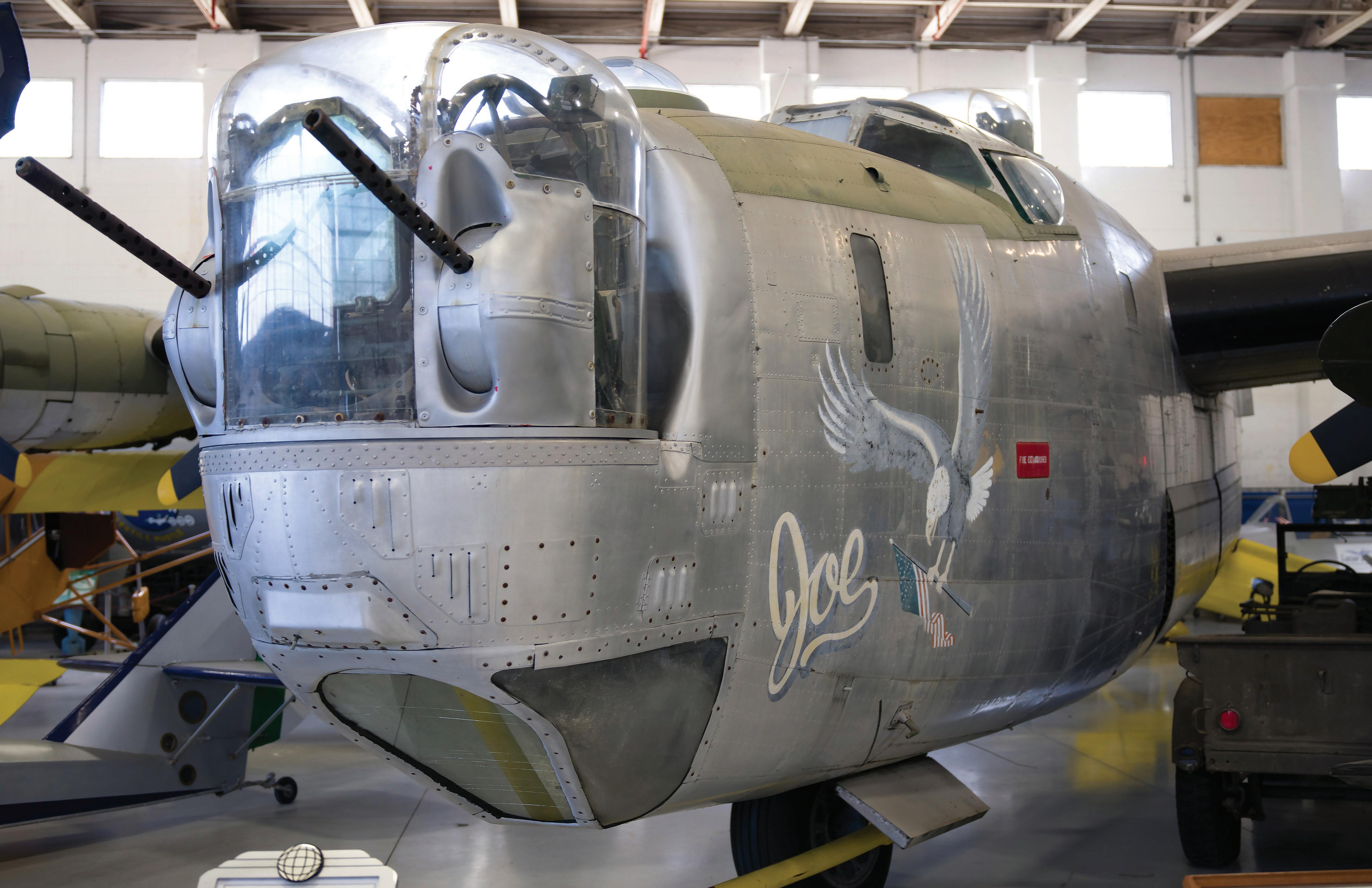
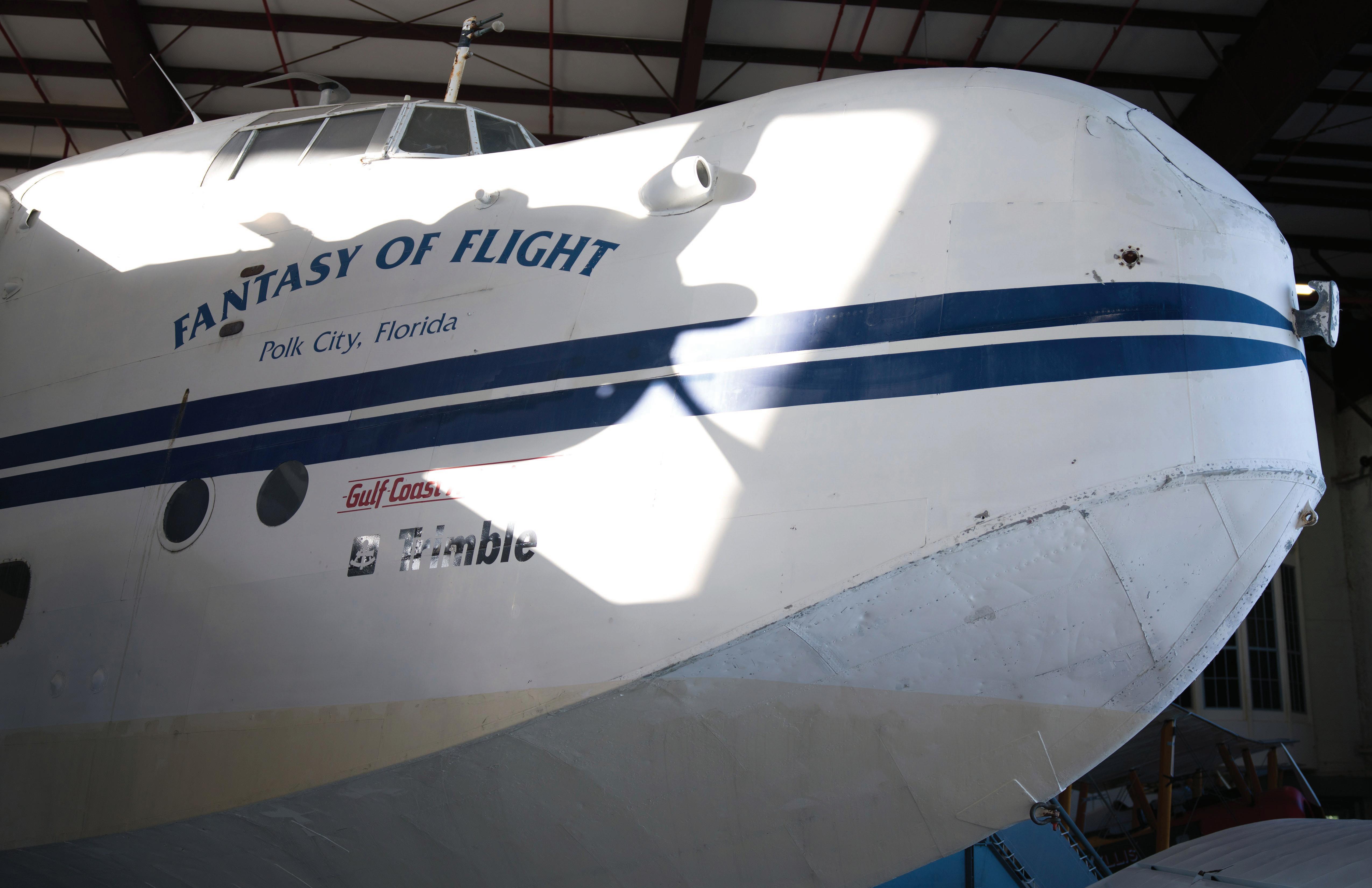
Our next flight is to Kermit Weeks Fantasy of Flight in Orlampa, Florida, not far from Lakeland where Sun n Fun is taking place. I met Kermit over forty five years ago and have always known him to be a perfect gentleman. He also possesses incredible knowledge of aircraft and engines. His assemblage of both is epic. As we land on one of his grass runways Kermit greets us for a personal tour of his collections. I have been here before, but Neils has not. You know how pilots are impressed? When they stay quiet. All of us are transfixed by the magical array in Orlampa.
Kermit kindly let us keep Texas Dolls overnight at Fantasy of Flight and even lent us his car to get to our hotel. Like I said, always a gentleman. The next morning was another early rise for the quick flight to Sun N Fun.
A visit to Lakeland or Oshkosh is a must in any flight enthusiast’s career. For me the chance to share some fellowship with like-minded pilots is the real reward. At this stage of my life, I enjoy flying with my brother very much and think of when my dad was sitting where Neils is now and just smile.
John Agather
John Agather
John Agather
John Agather
John Agather
John Agather
John Agather
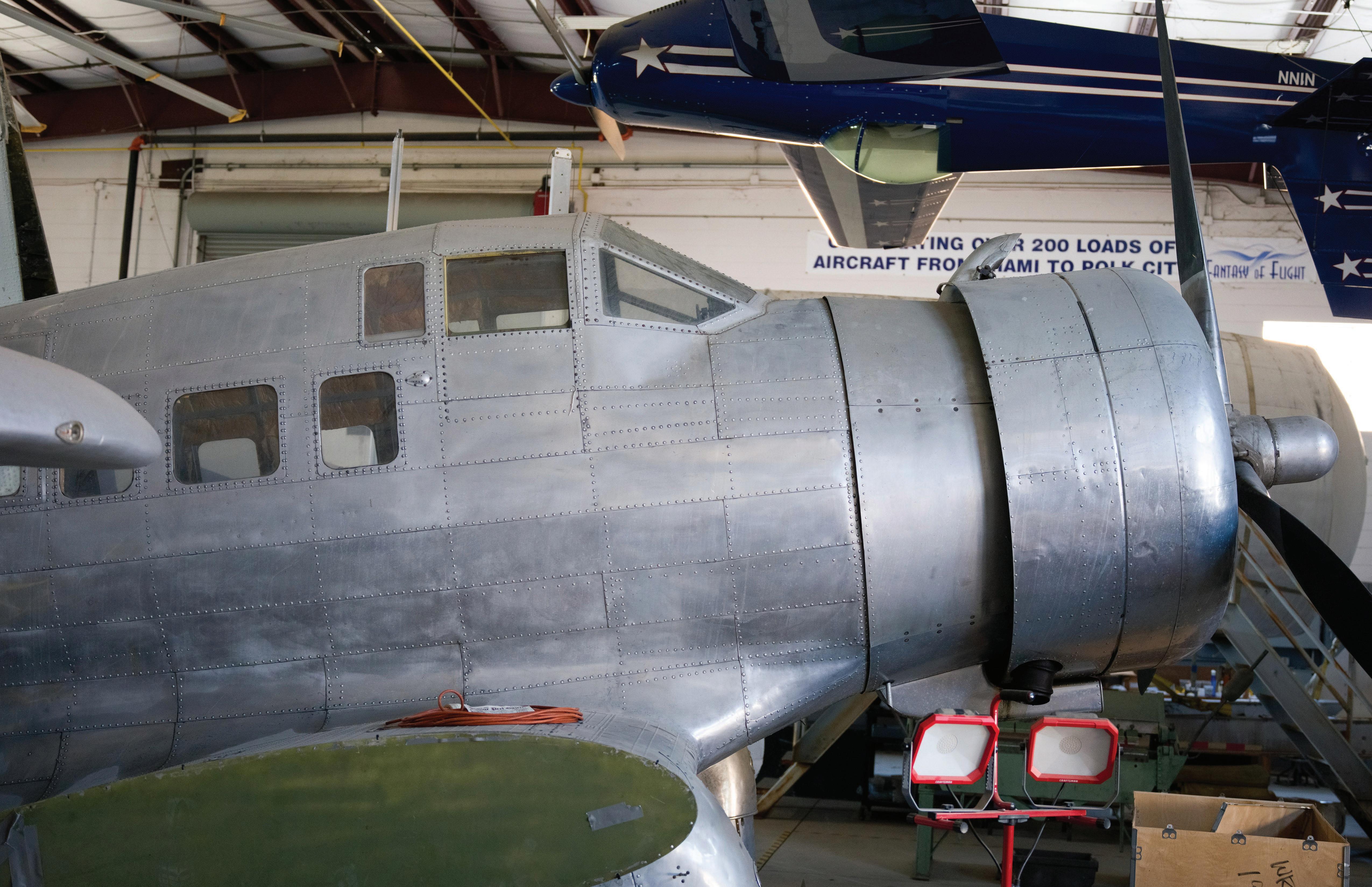
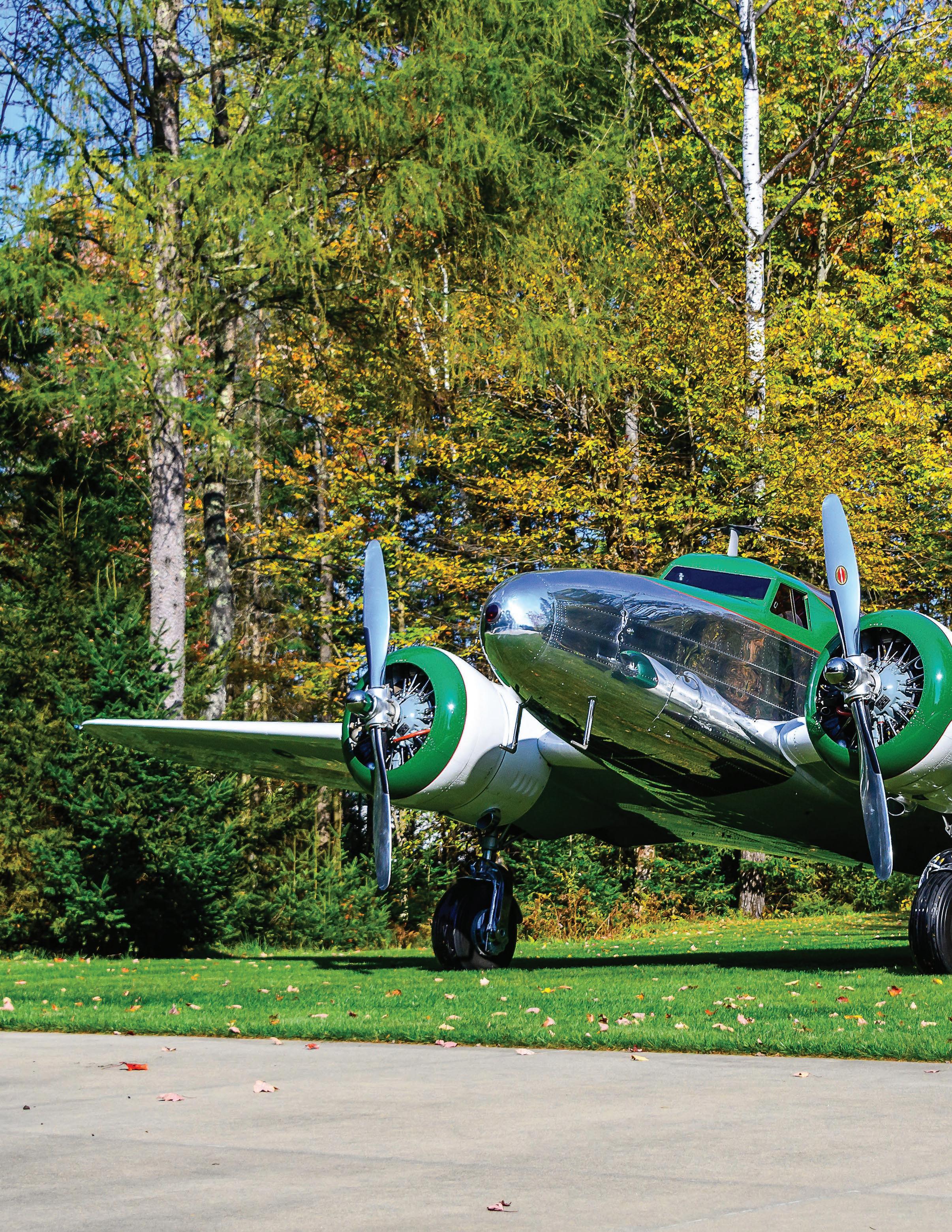
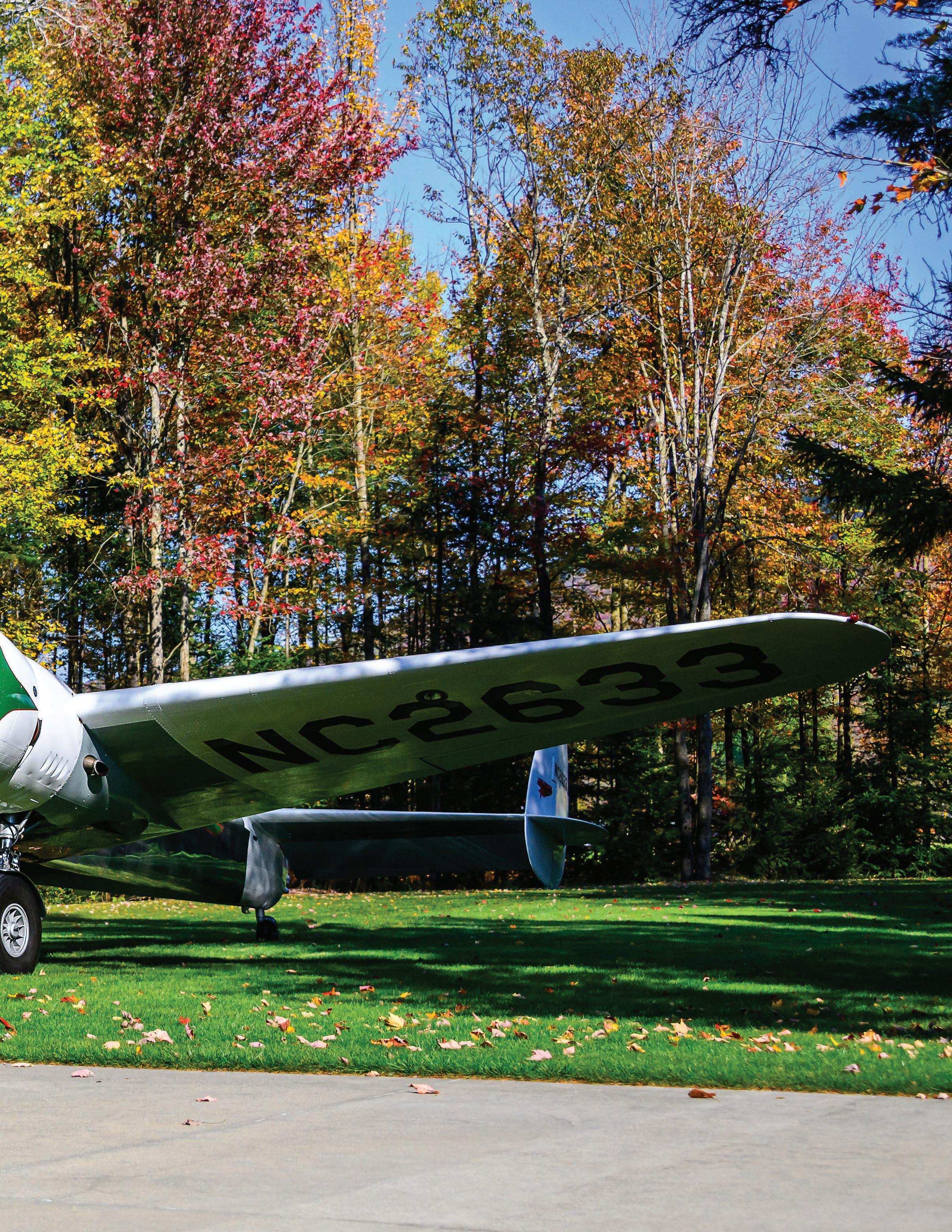
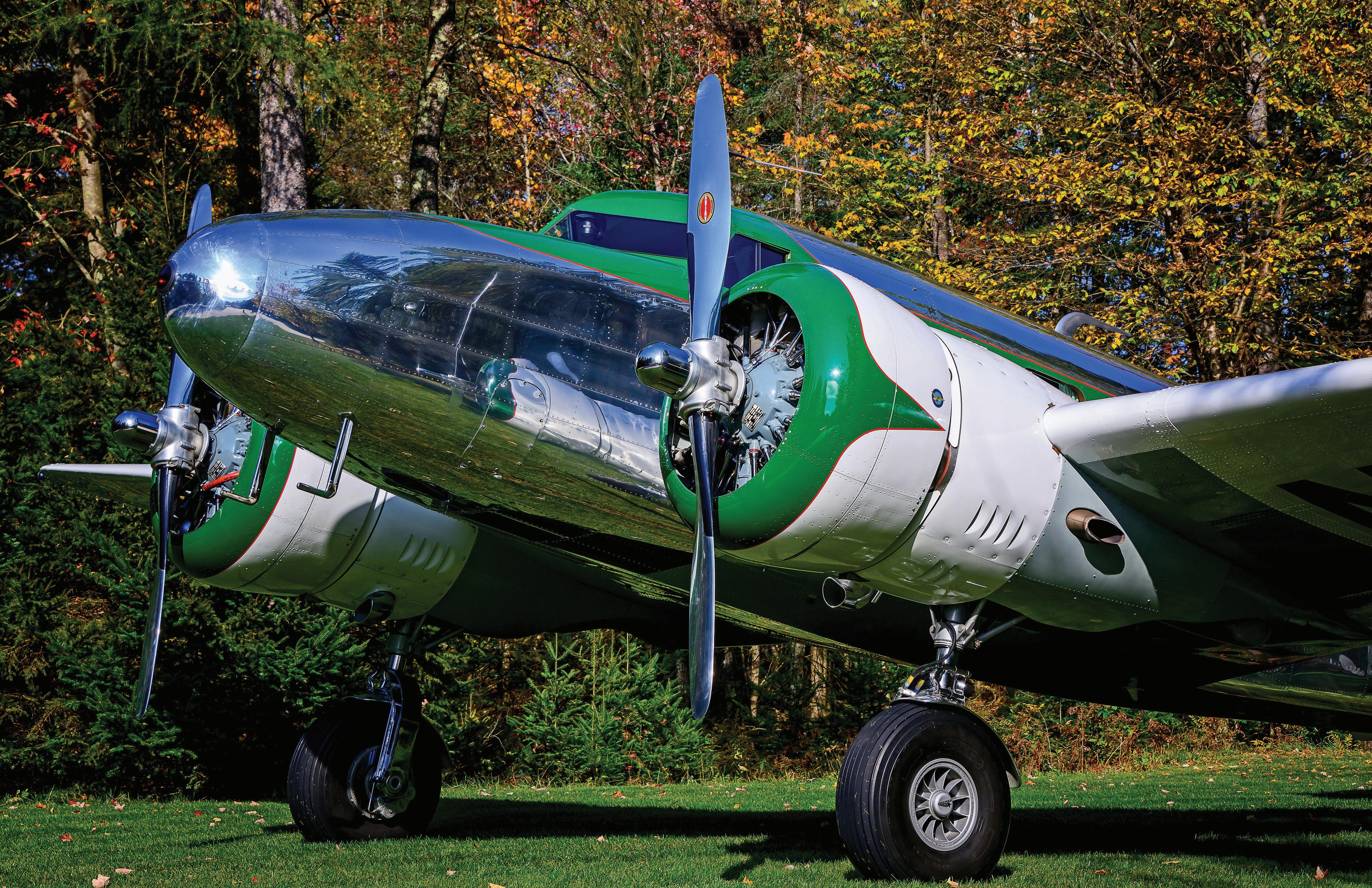
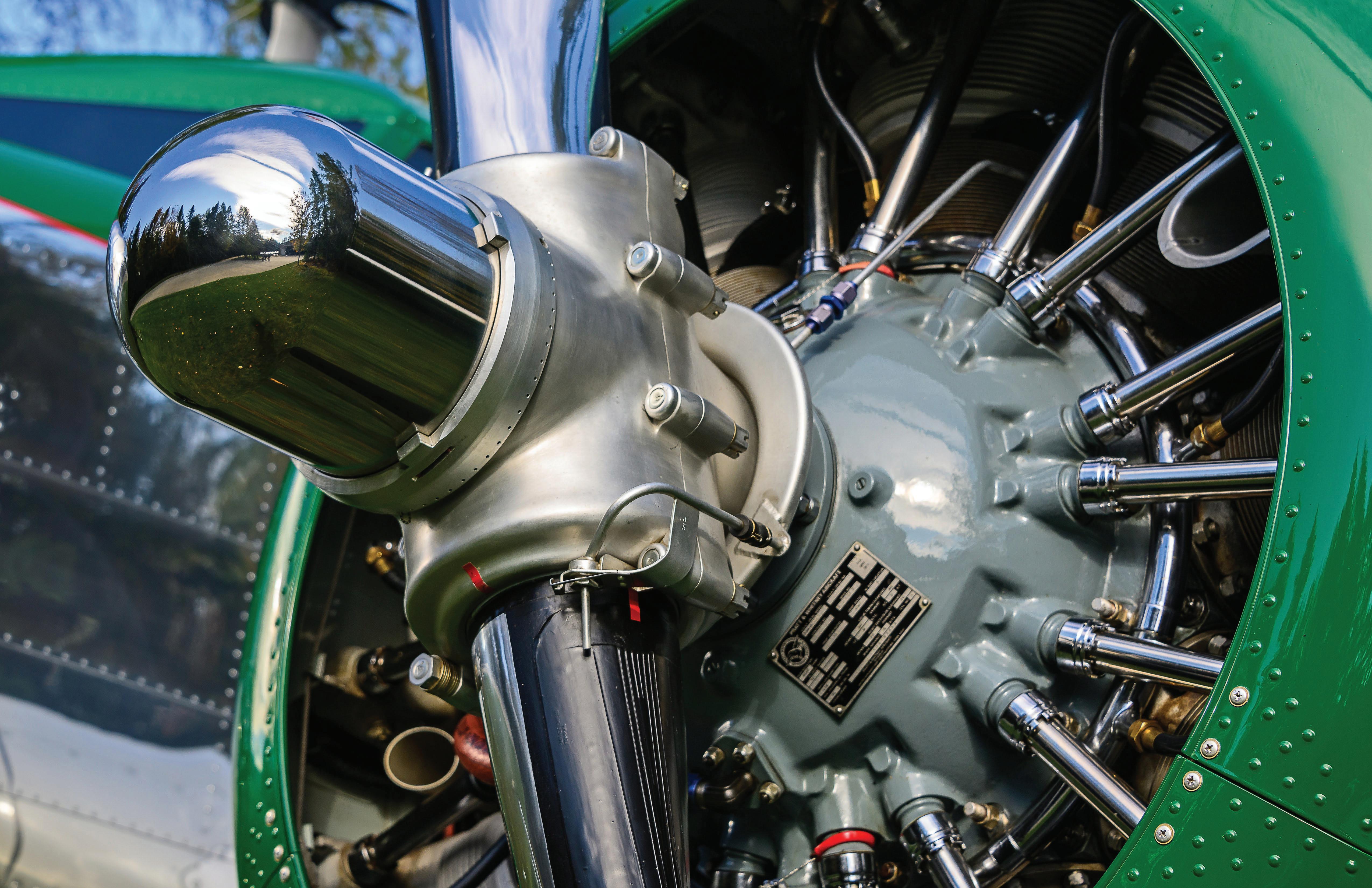
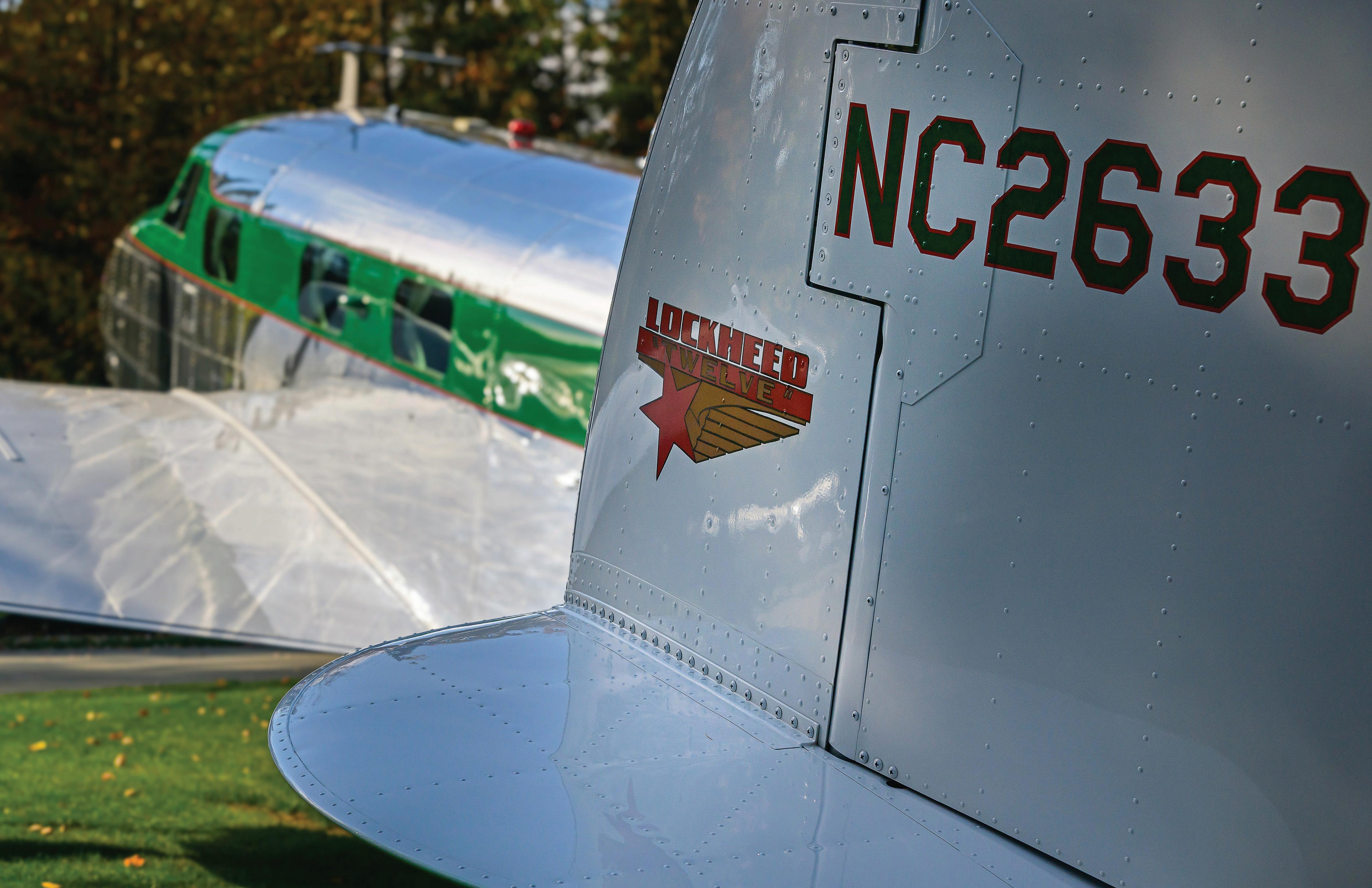
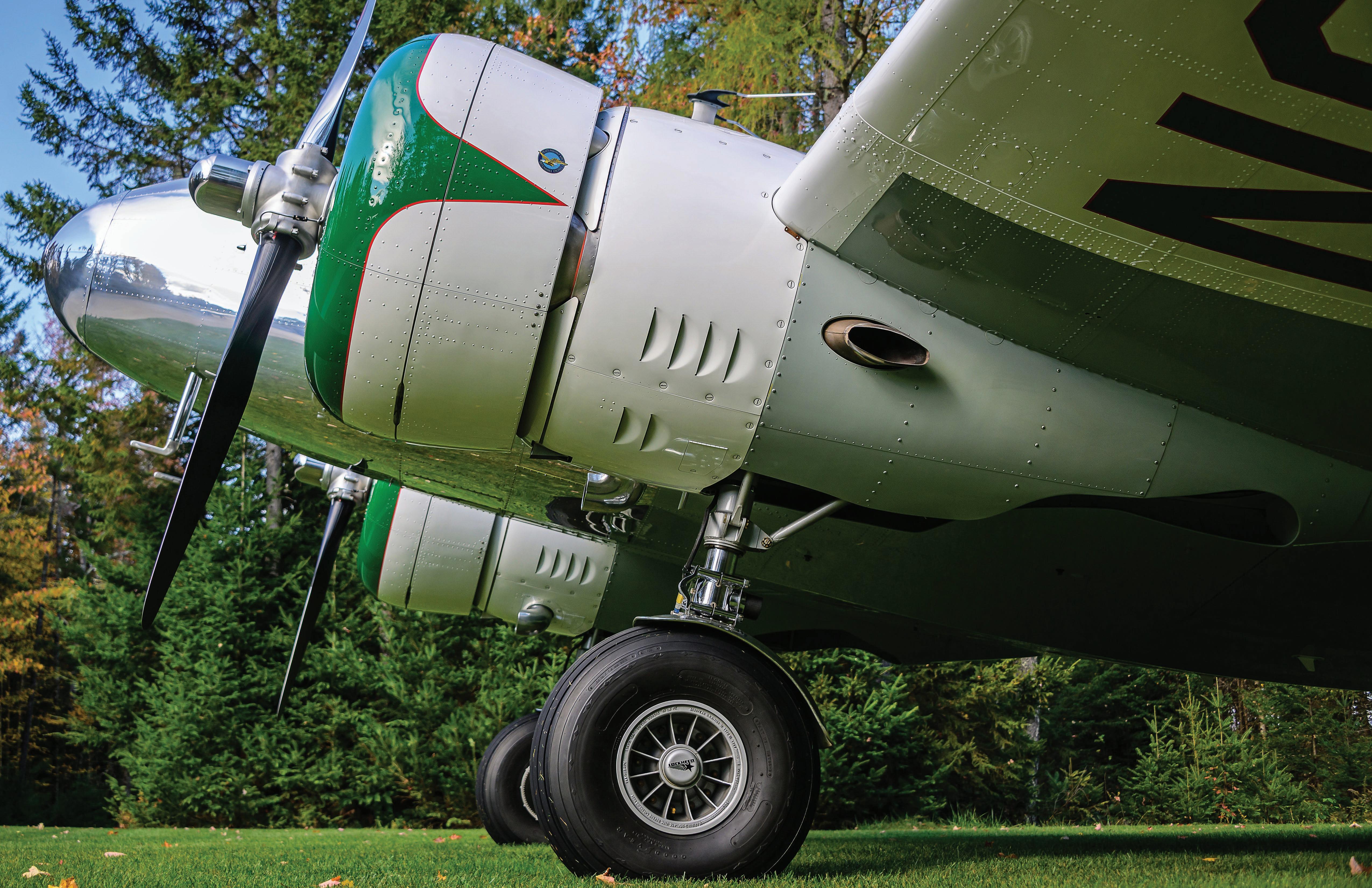
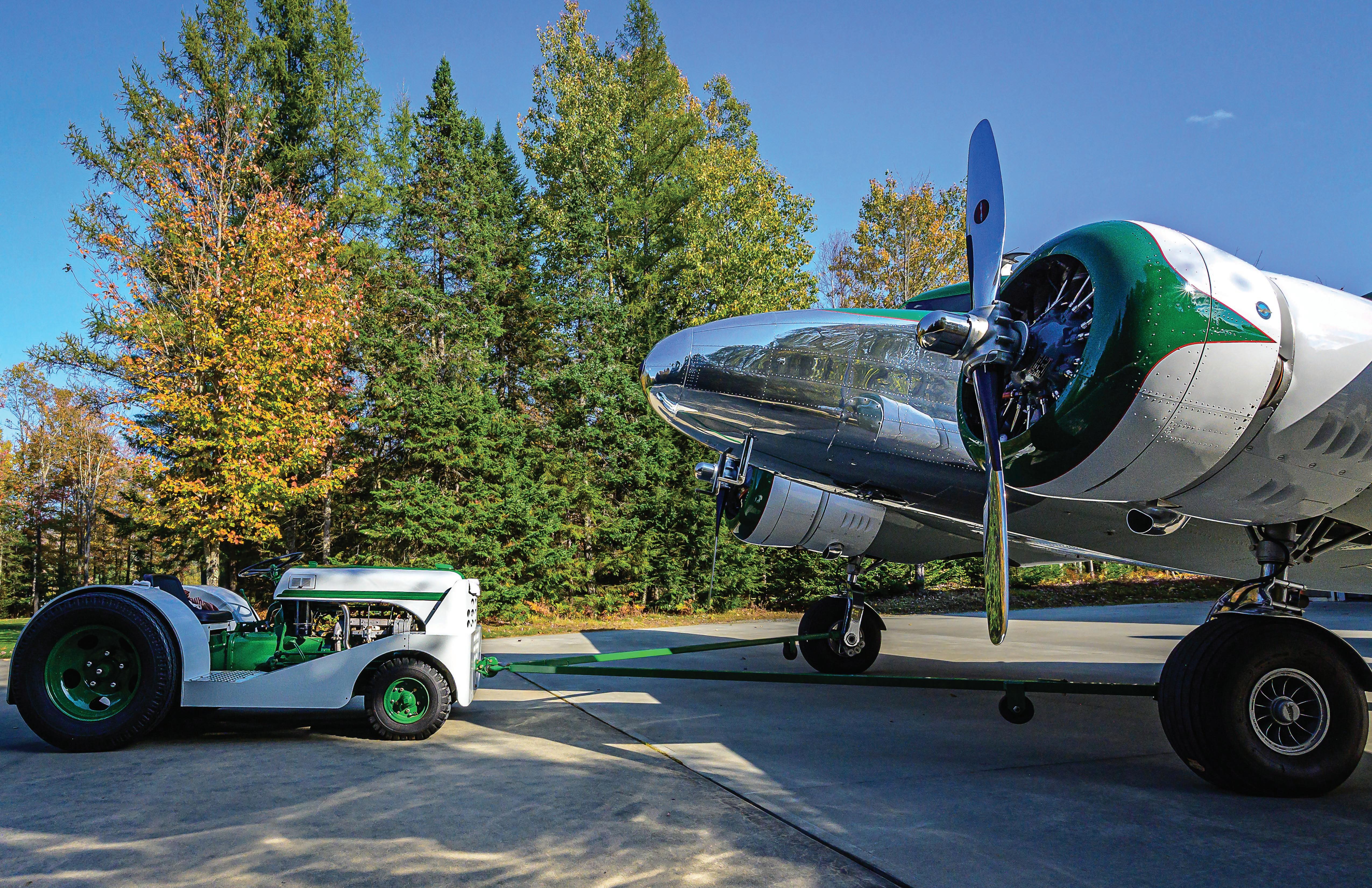
Tucked away in Vermont, where back roads wind through maples and hangars feel more like workshops than museums, lives a rare and beautiful airplane with a very personal story: a Lockheed Model 12 Electra Junior owned by Jon and Uwana Perras.
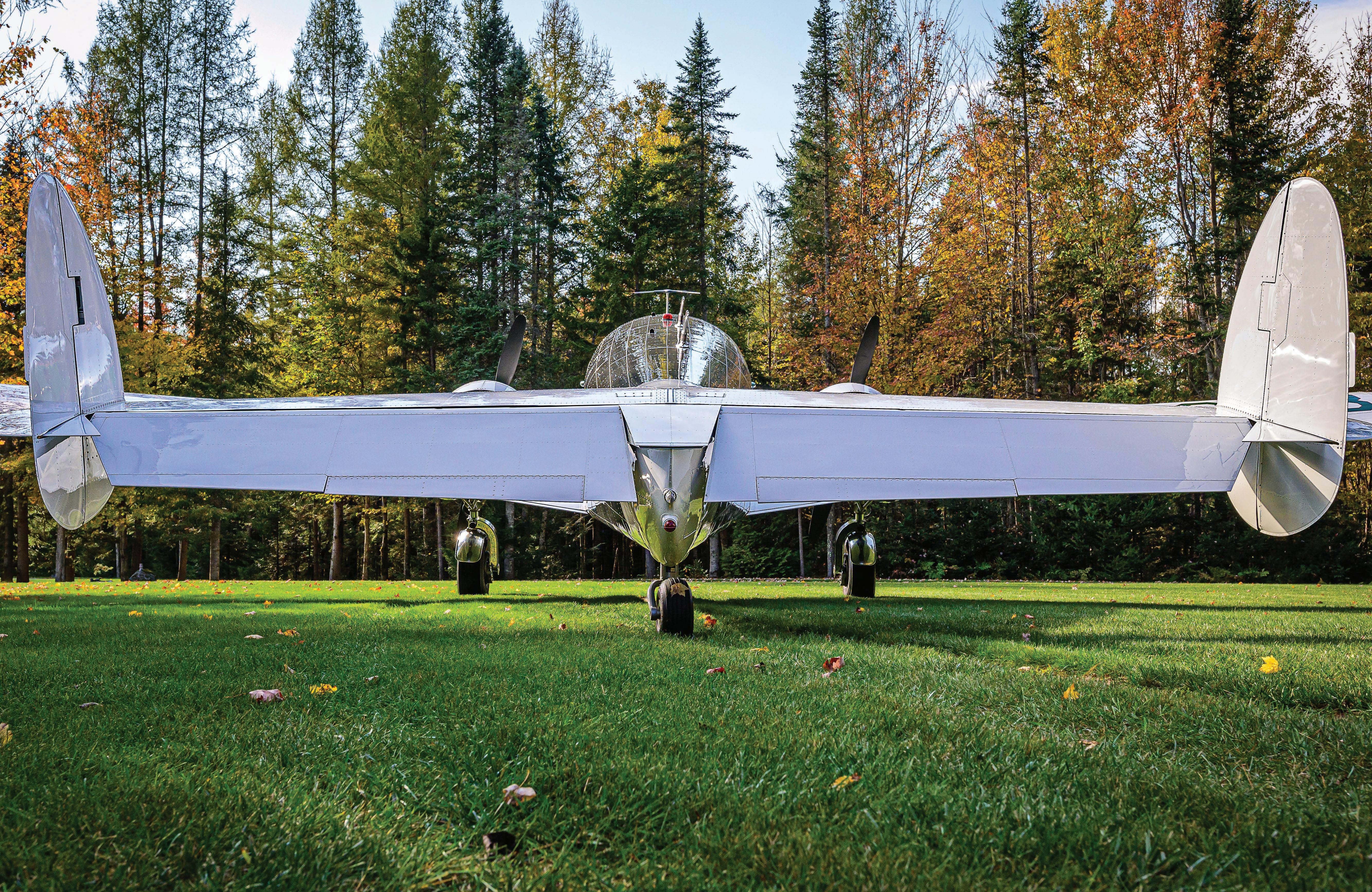
The Lockheed 12A is one of those airplanes that stops people mid-sentence. Sleek, purposeful, and unmistakably Lockheed, it was designed in the late 1930s as a fast, small twin for corporate and government use. Only a limited number were built, and even fewer survive today, which makes the Perrases’ aircraft something special every time its engines turn over.
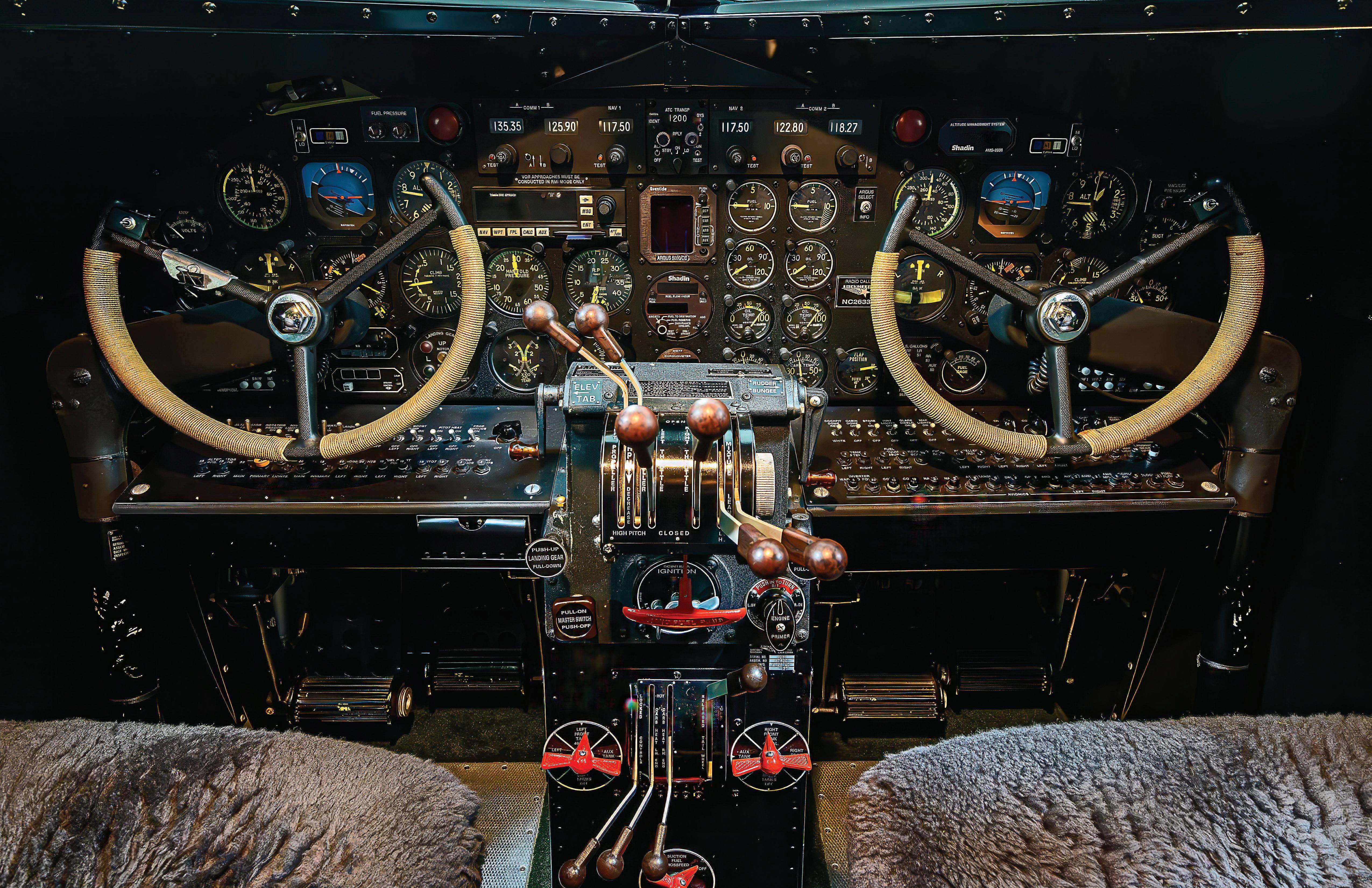
Jon and Uwana didn’t just acquire an old airplane—they took on a long-term relationship. Their restoration of the 12A has been a careful balance of historical respect and practical craftsmanship. The goal wasn’t to create a static showpiece, but a living, breathing aircraft that could still do what it was designed to do: fly. From airframe work to systems refurbishment, the project demanded patience, research, and a willingness to chase down hard-to-find parts and period-correct details. Friends, specialists, and fellow vintage-aircraft enthusiasts all played a role, but the steady vision behind it remained firmly Jon and Uwana’s.
Lockheed Electra Junior
Article and photos by Scott Slingsby
Jon’s background in aviation runs deep. A lifelong airplane person, he’s the kind who enjoys as much time with manuals and maintenance logs as he does in the cockpit. His hands-on approach and respect for old machinery made him a natural caretaker for a classic Lockheed. Uwana, equally passionate, brings an eye for detail and history, grounding the project in the human stories that surround the airplane—not just how it flies, but why it matters.
Together, they see the Electra Junior as a bridge between eras. When the 12A taxis out, it carries echoes of a time when aluminum, radial
engines, and art-deco design defined progress. Yet it also reflects a very modern idea: that preservation is best done in motion.
Today, the Perras Lockheed 12A is more than a rare aircraft—it’s a testament to dedication, teamwork, and the quiet magic of keeping aviation history alive in the Vermont countryside. For anyone lucky enough to see it up close, or hear it fly, it’s a reminder that some stories are best told at 2,000 RPM, with two engines singing in harmony.
Scott Slingsby
Scott Slingsby
Scott Slingsby
Scott Slingsby
Scott Slingsby
Scott Slingsby
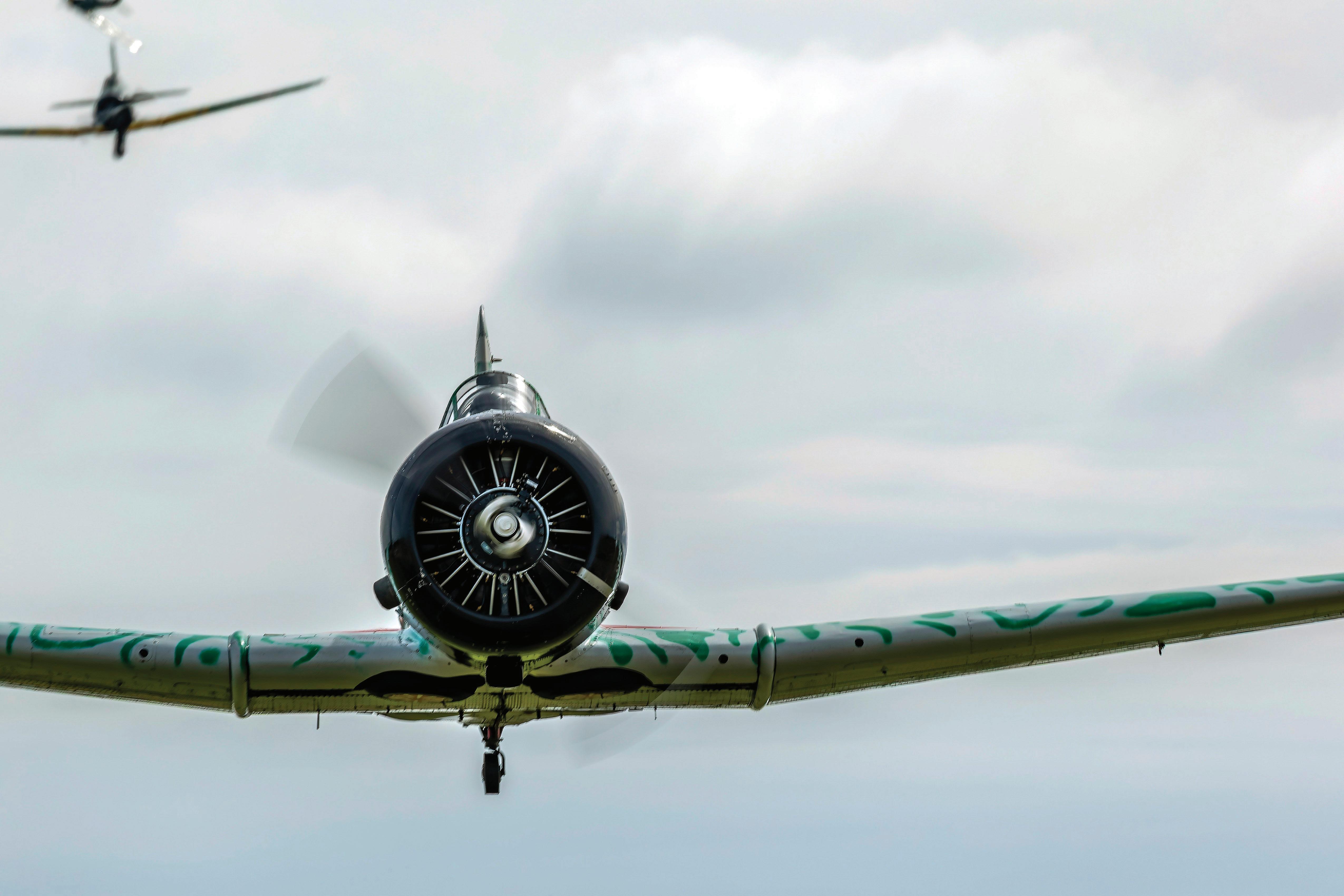
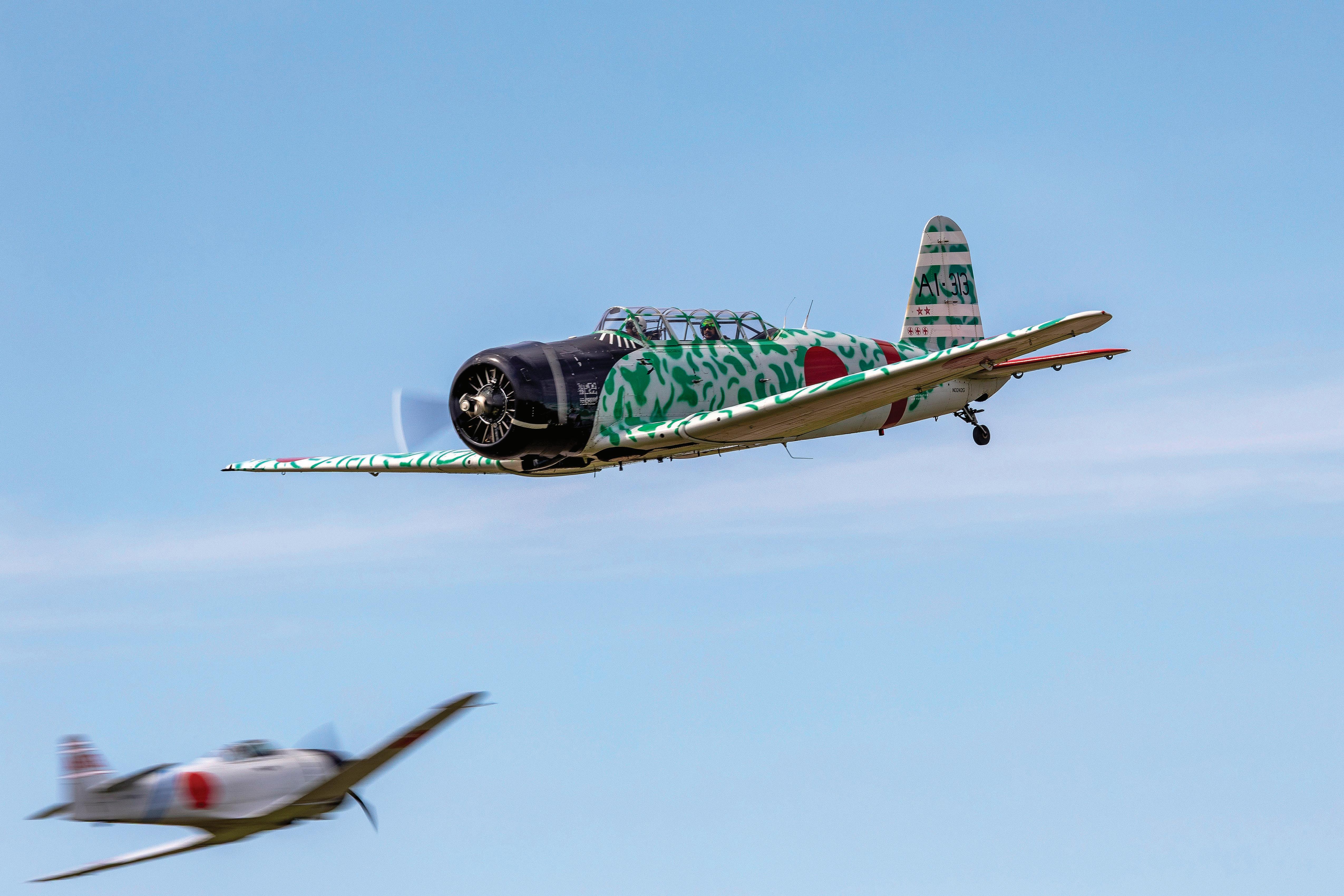
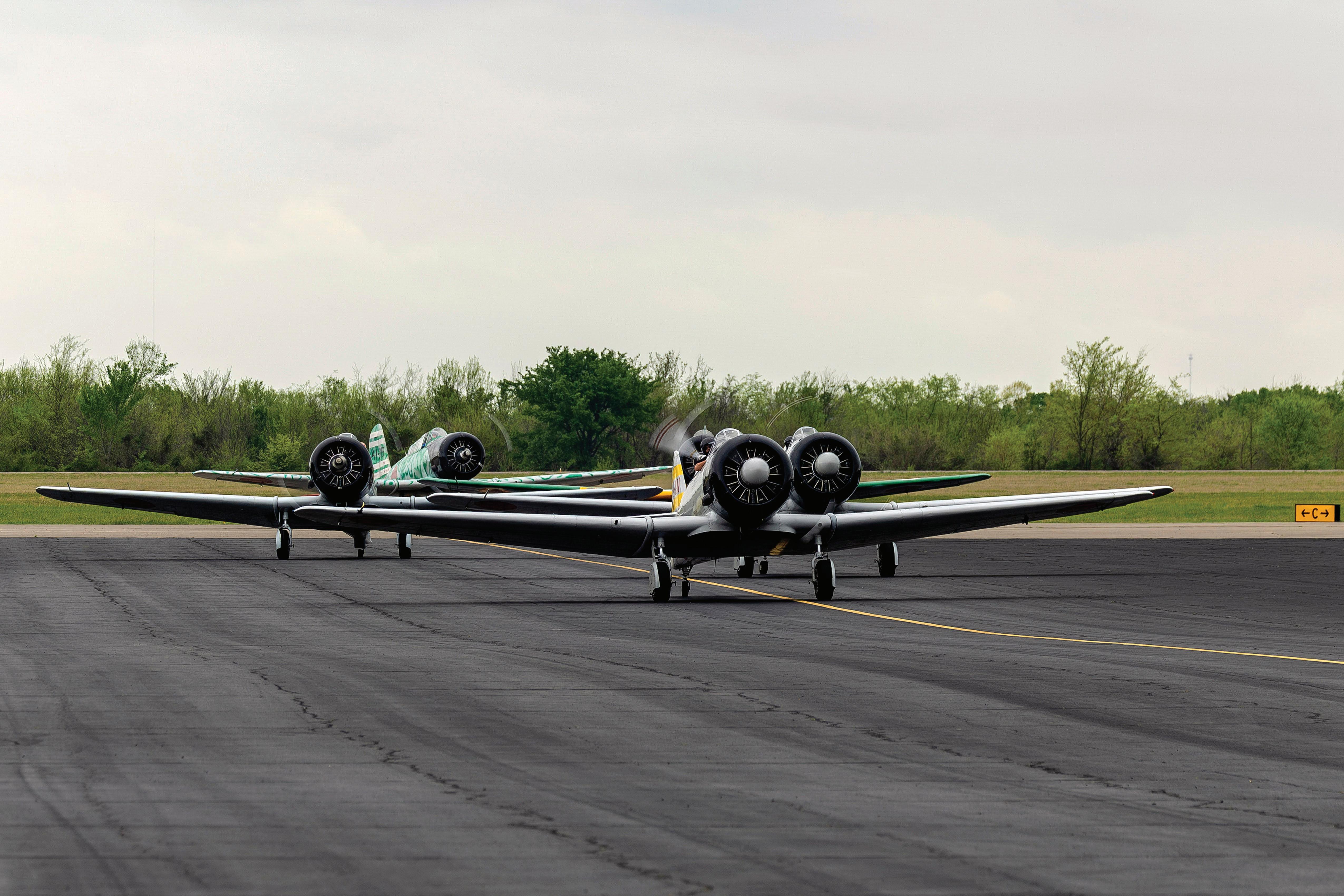
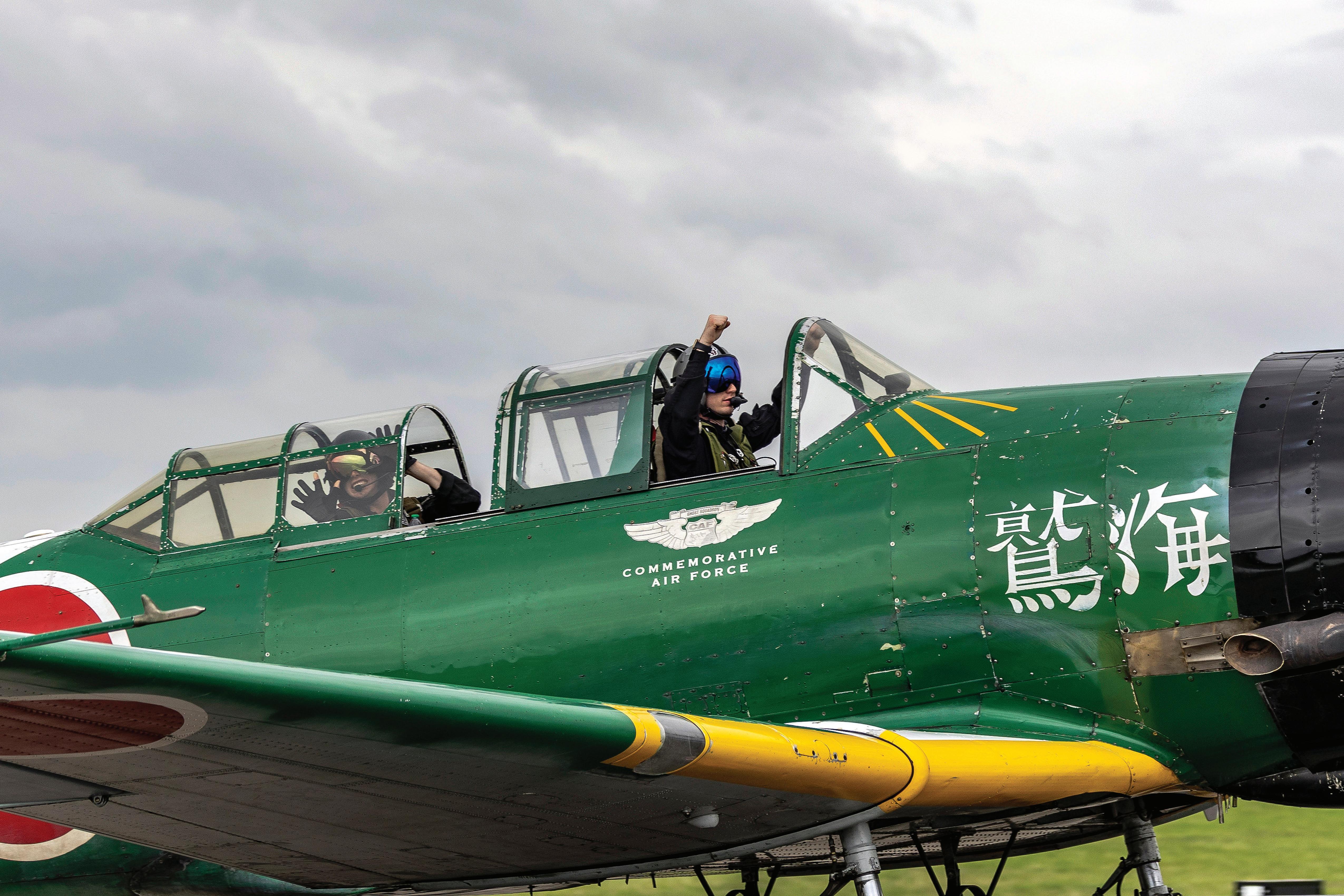
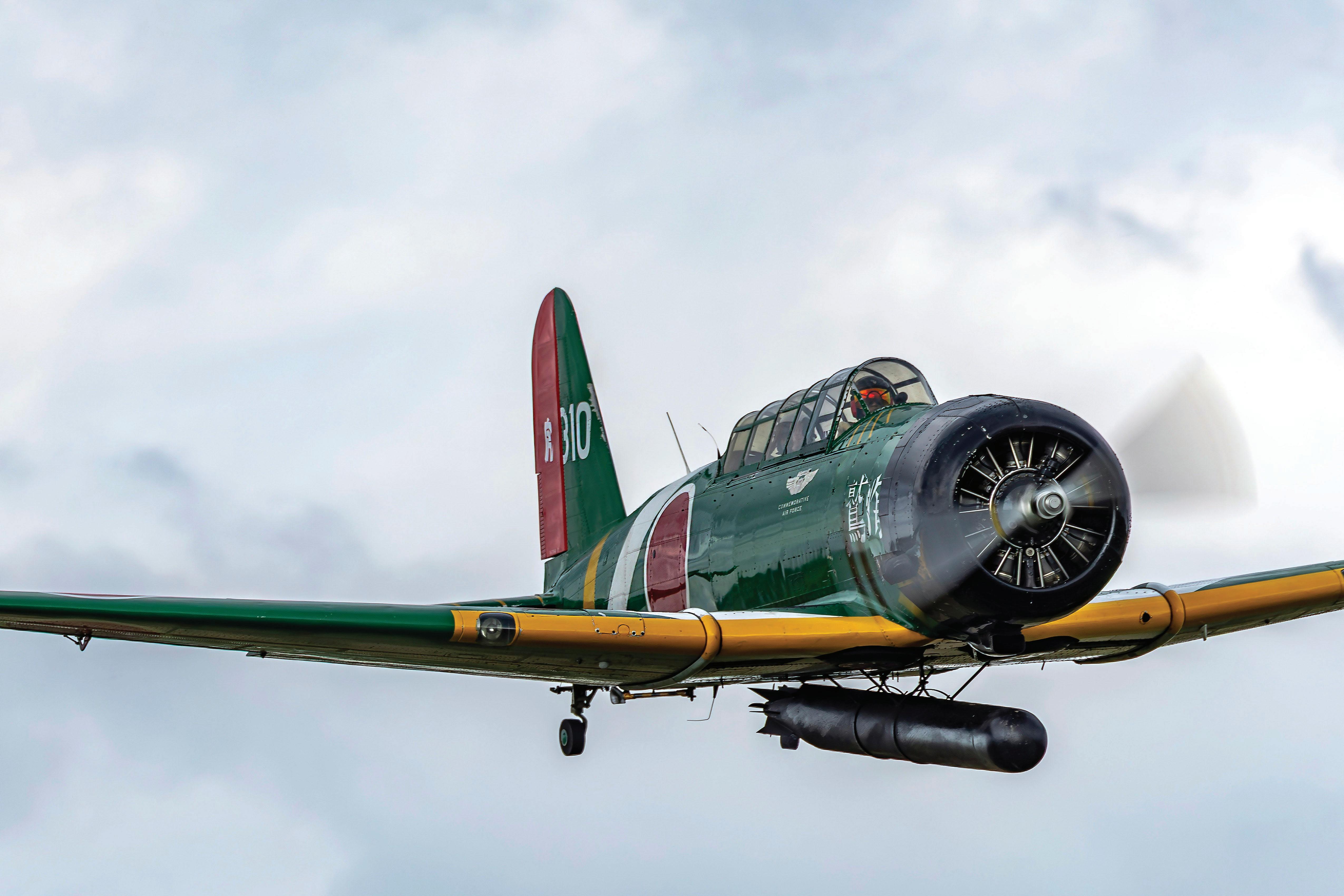
BANZAI! TORA PRACTICE 2026
Photos and text by Kevin Hong / Airspeed Editor
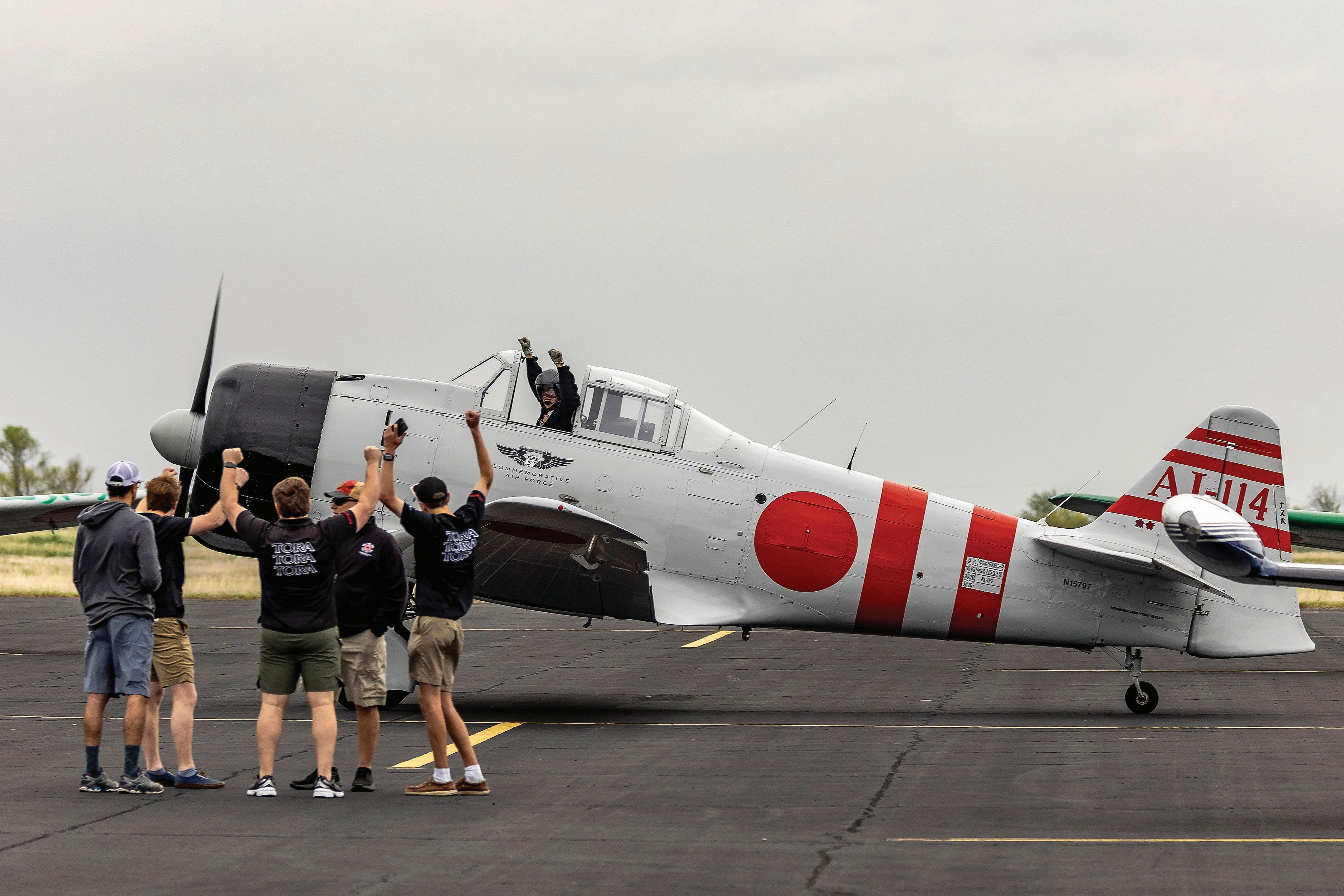
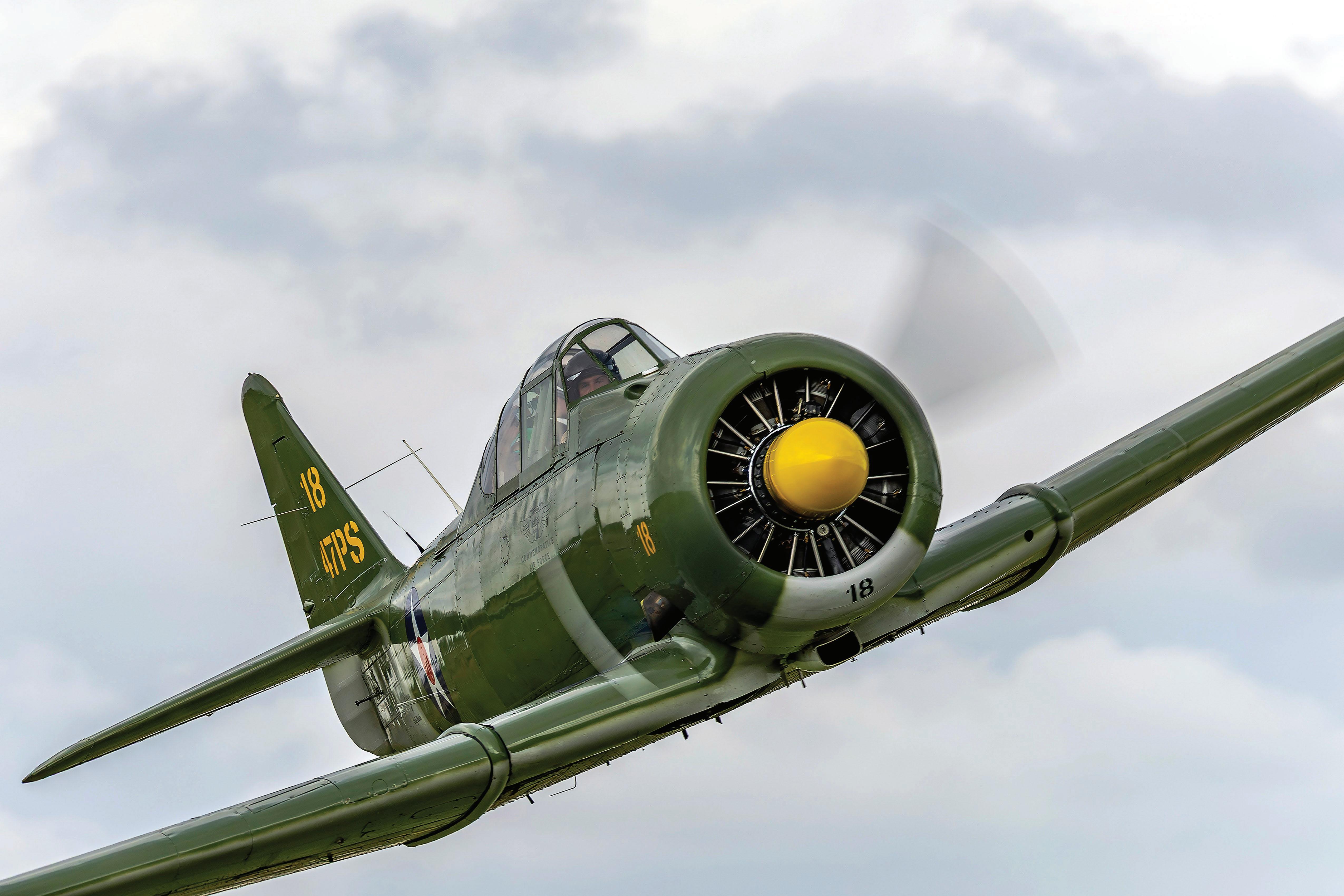
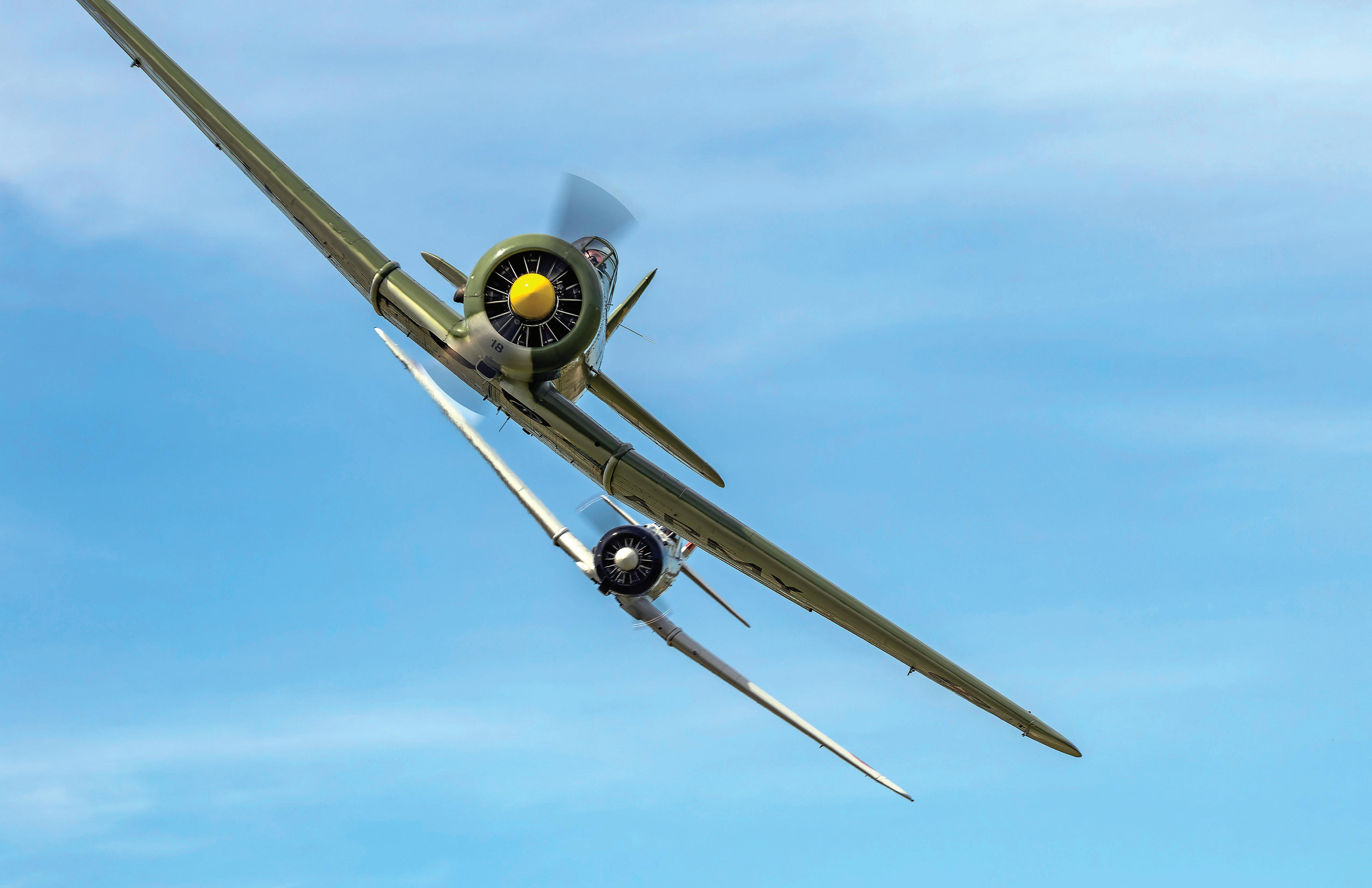
The Commemorative Air Force “Tora! Tora! Tora!” air show act made its debut performance at the Galveston Air Show in 1972. Since that time the group has grown from six up to 13 planes at one point. Over the years I have been a part of the team comprised of pilots, narrators, and the Tora Bomb Squad doing the pyrotechnics for the act. The mission of the act is a living history lesson about the Pearl Harbor attack and honoring the veterans. To teach this history lesson, we get together every year to practice the act and groom the younger pilots to continue the legacy.
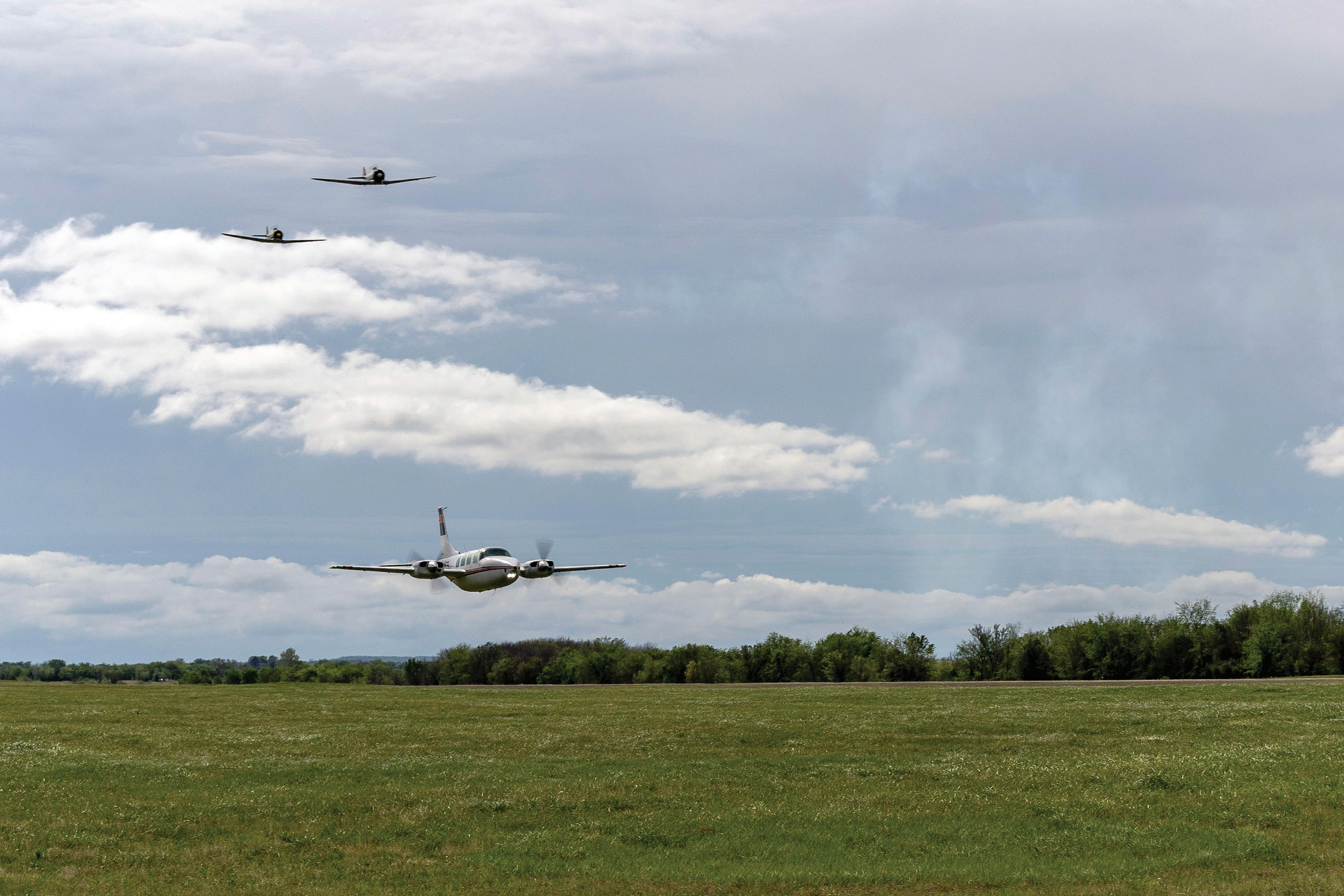
In the past I flew commercial to our practice location of a small town called Muskogee, OK but this time I was fortunate to hitch a ride with two of my Tora pilots in a slick ride called a Piper Aerostar. The Aerostar would also be used later to fly the bomber pattern during the Tora act. Due to the government shutdown I was faced with some challenges looking at four hours of TSA lines at the airport so I was relieved when my friends said I could go with them.
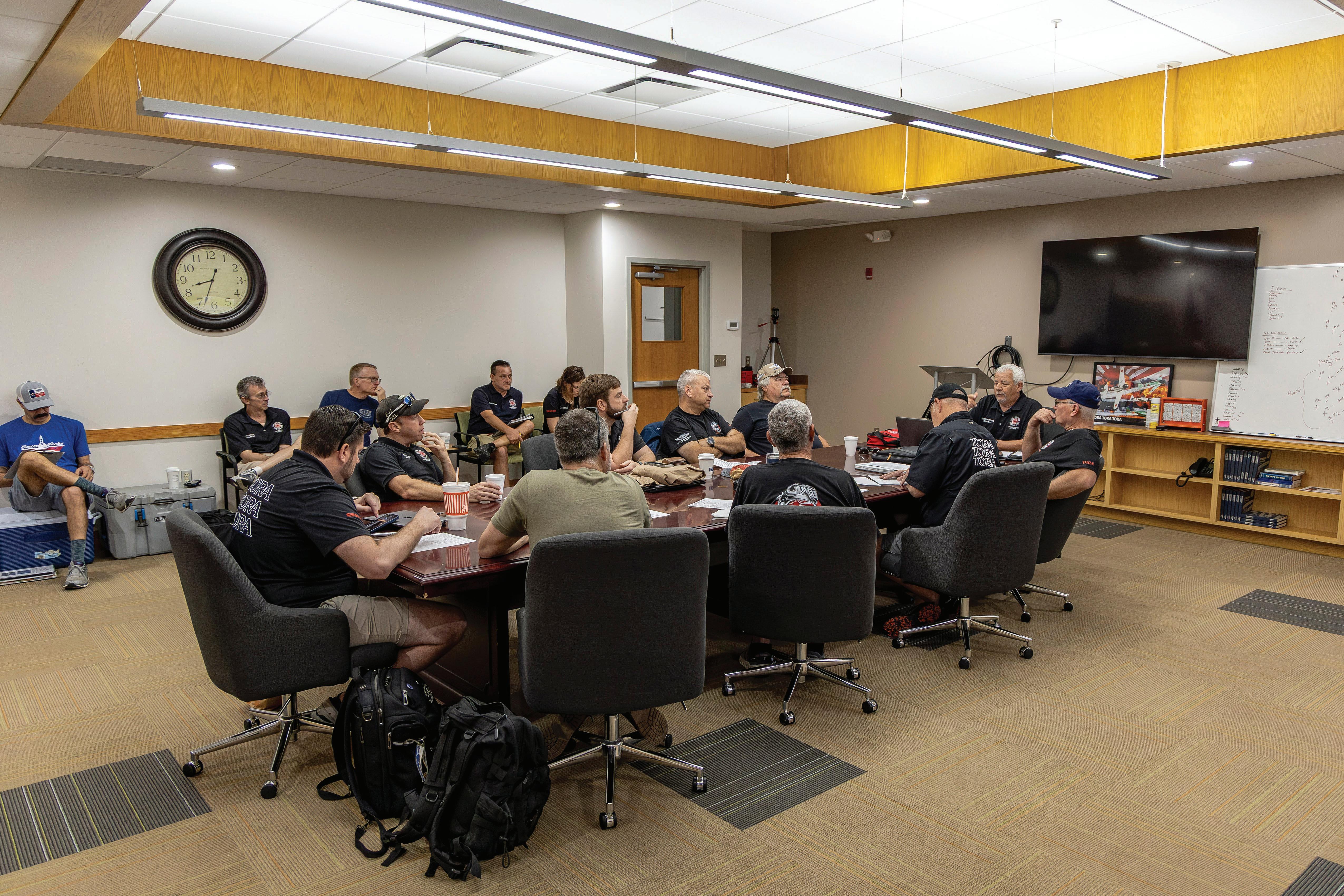
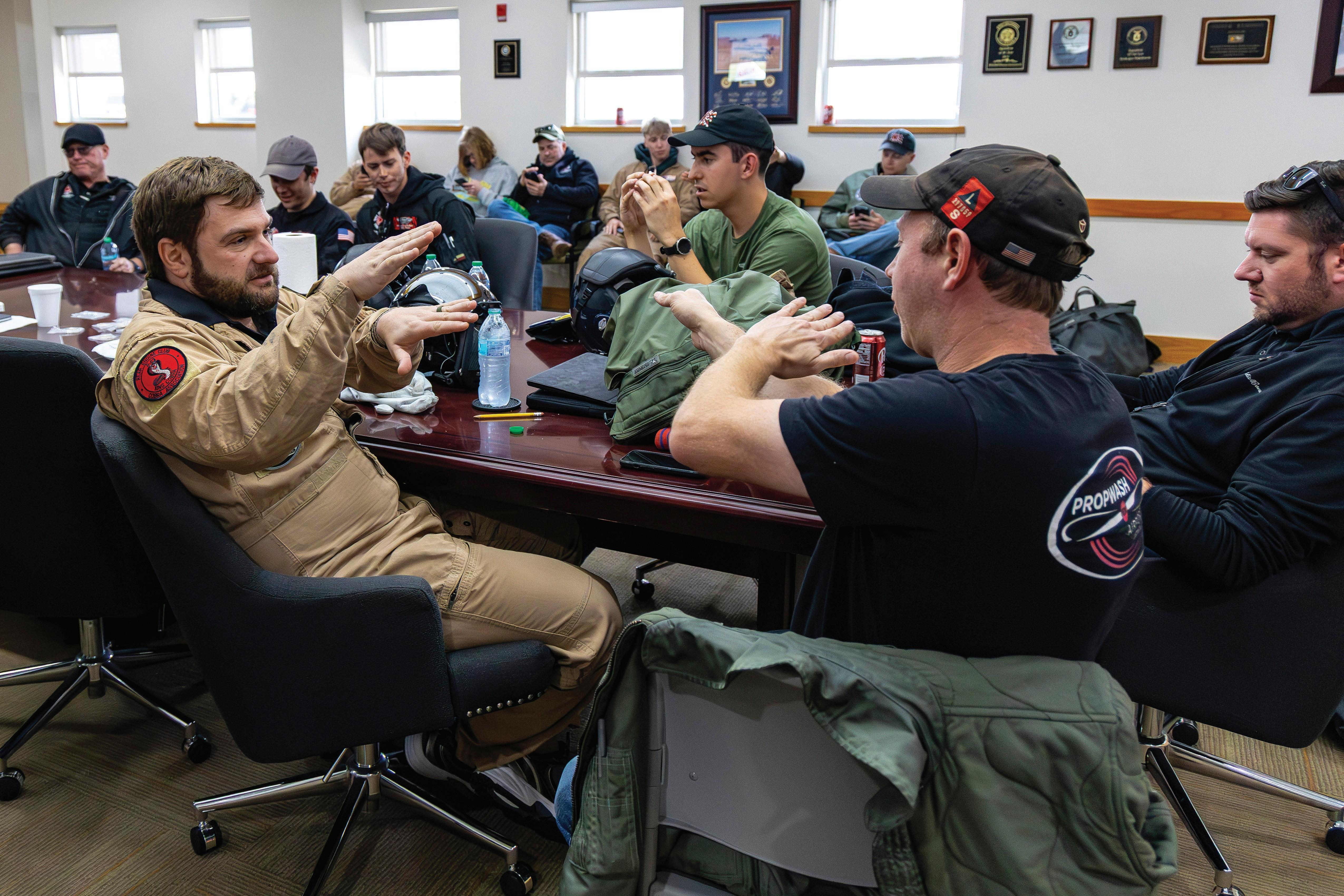
For the Tora group we are a close family and look forward to seeing each other and hanging out. This year the weather was not the best we made the most of flying each day. Every morning the day would start off towing the planes onto the ramp from the hangars and gather for a briefing. Since some pilots may not be available for all the shows it’s
crucial that all Tora pilots learn how to fly the formations upon entry to start the attacks at different airshows across the country. For me I like to watch the more experienced pilots talk with new pilots coming into the Tora group. And among the pilots I have watched some of the kids grow up to fly with their fathers in Tora which I find amazing.
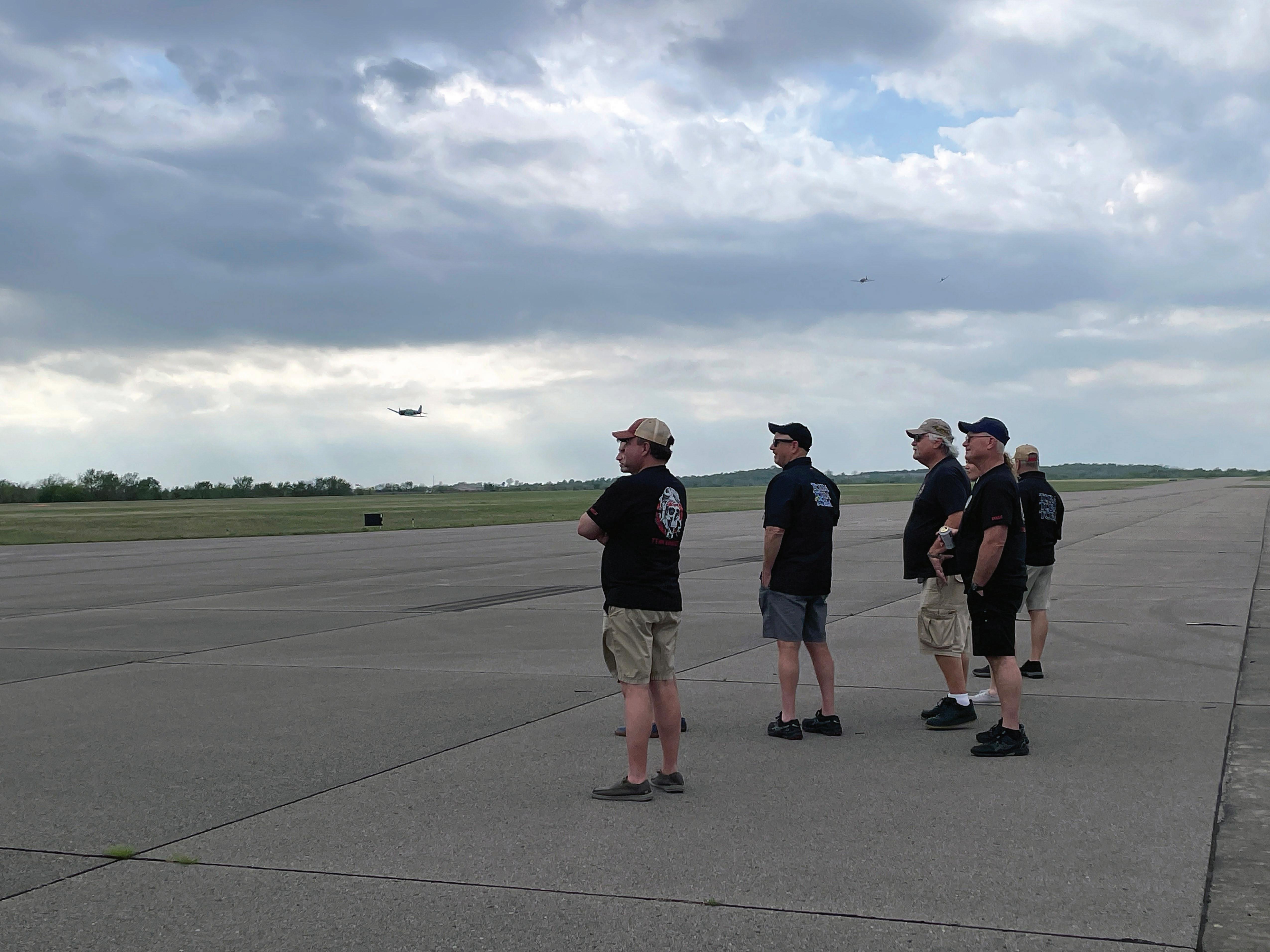
The more experienced pilots would take up the new pilots and get them familiar with the routine and flying in formation. The Kate, Zero, bomber, and chase patterns were discussed and flown. Afterwards the pilots would get together and debrief. It’s important that all the new pilots understand the patterns and trust everyone will fly their patterns. By the end of each day every element came together for the full Tora act in the sky.
Just like the Blues and T-Birds do I try to shoot photos and videos that will help the pilots improve the act by reviewing the flights during practice. The videos help to teach new pilots where they need to be and how to make the act even more flawless.
I’ve enjoyed being a part of the team. I hope the Tora Tora Tora airshow act will continue to entertain crowds at airshows for many years to come.
Kevin Hong
Kevin Hong
Kevin Hong
Kevin Hong
Kevin Hong
Kevin Hong
Kevin Hong
Expedition to the top of the world
Photos and article by Jim Wilson / ISAP Vice President
Several months ago a longtime client and friend asked if I could meet him for breakfast to discuss being a part of an amazing assignment that was unfolding. He and his team were planning a centennial commemorative flight to honor Admiral Richard E. Byrd’s 1926 aerial expedition to the North Pole and they wanted me to join the expedition as photographer/videographer.
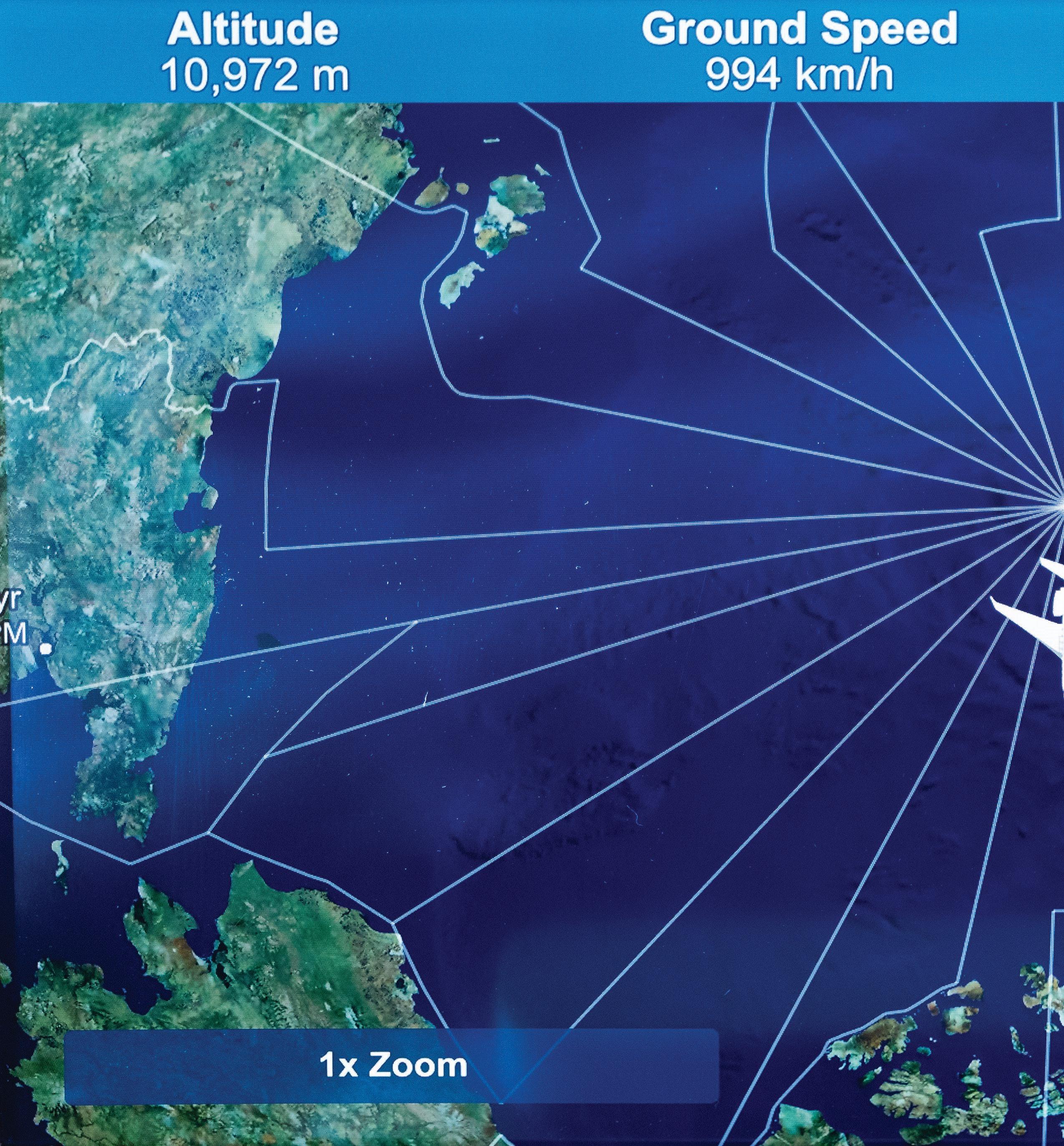
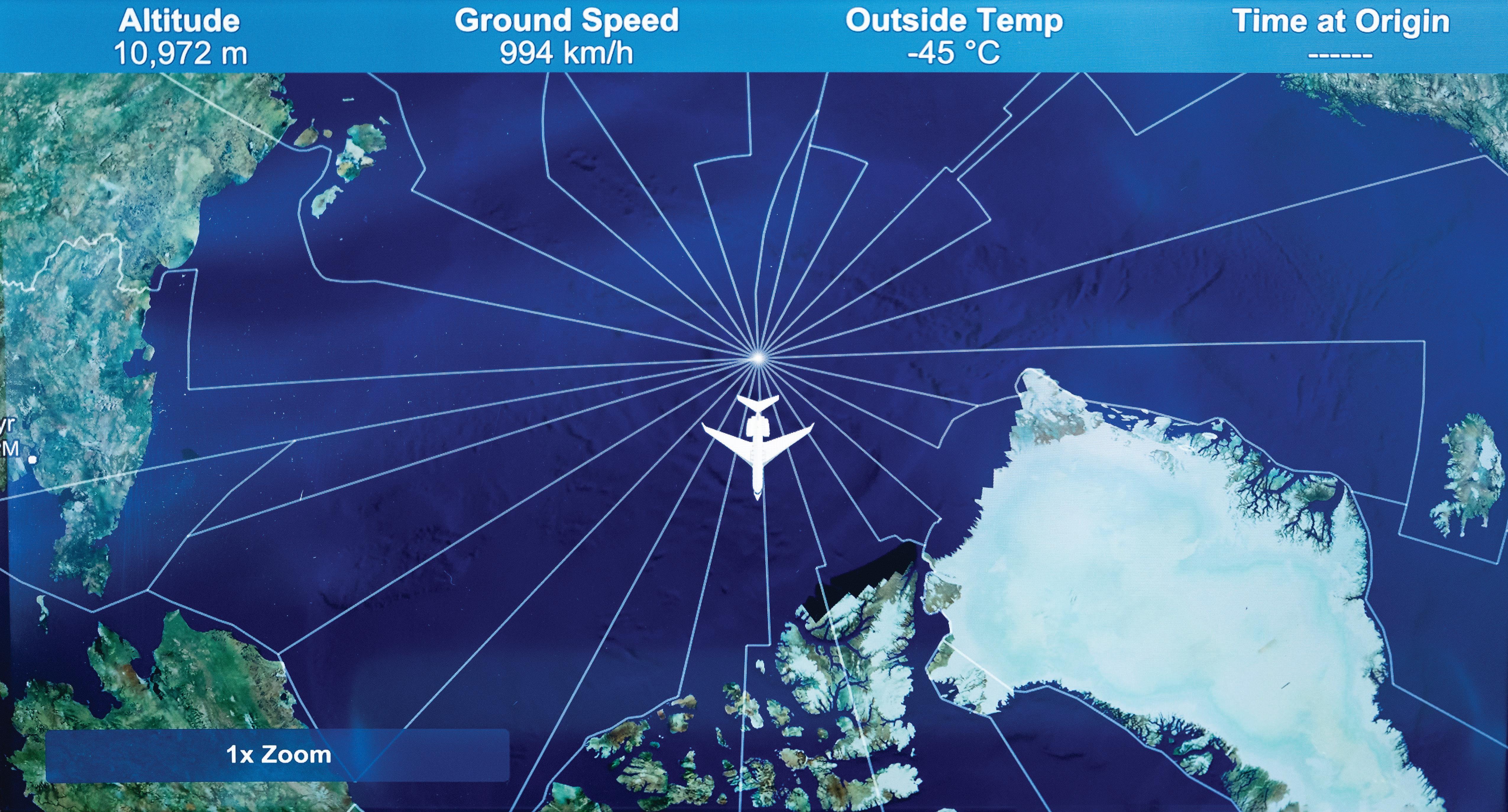
The details were just beginning to be lined out, but basically I would fly from Love Field to Dulles Airport, spend a day getting the jet prepped for our trip, then launch from Dulles to Bodo Norway. Admiral Byrd and his team departed from Spitzbergen Norway in a 1926 Fokker Tri-Motor on skis. Their expedition would take 15+ hours in very challenging conditions, temperatures hovering around zero and intermittent low visiblity. Our flight would pick up their course at Spitsbergen, about 760 miles from Bodo. The goal was to arrive over 90 Degrees North at 9:02 am on May the 9th, exactly the same time Admiral Byrd and his team recorded reaching The Pole.
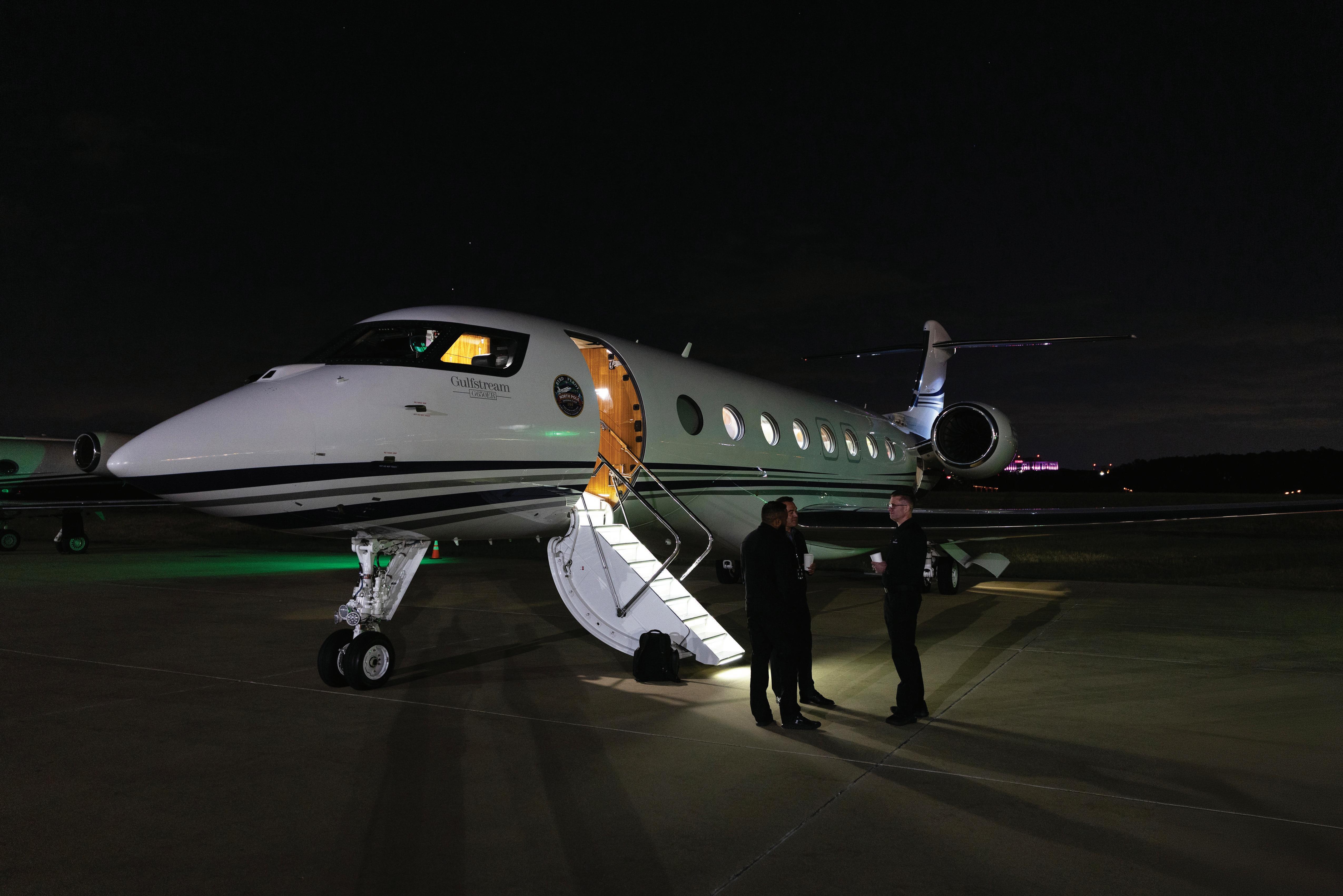
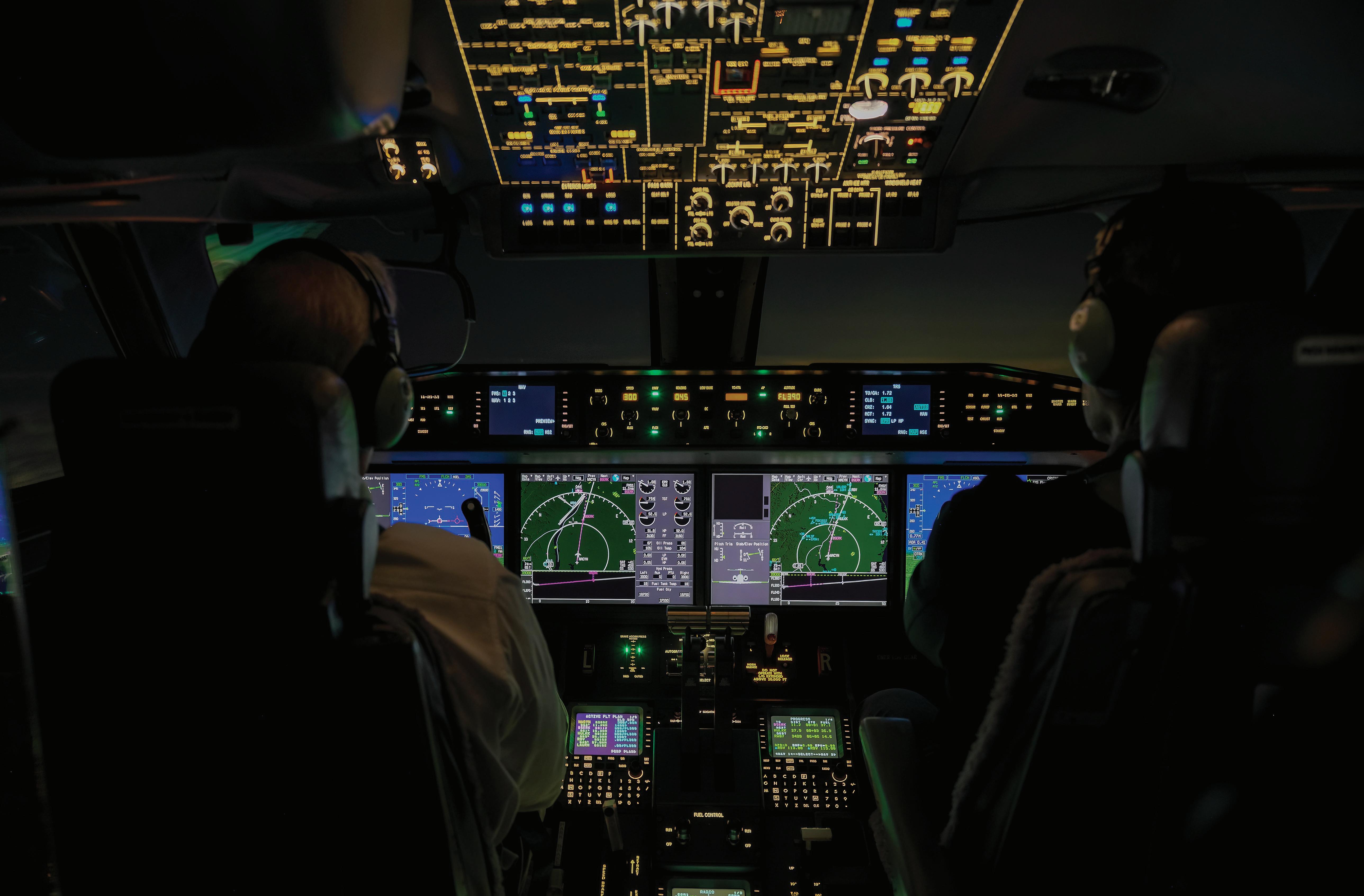
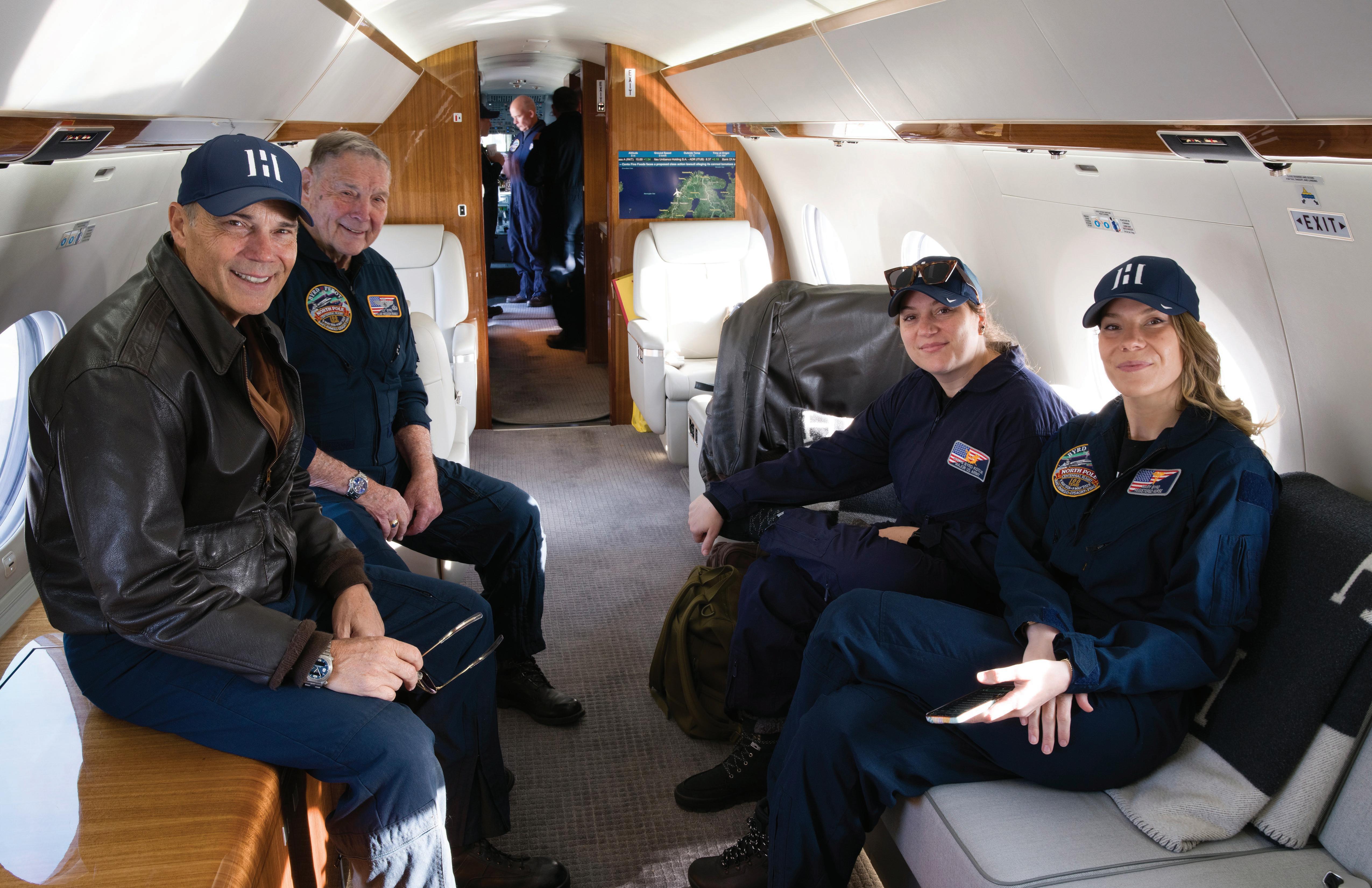
Our expedition experience would be considerably different thanks to the heroic efforts of Admiral Byrd and men like him, plus a century of technological advances. We would fly a beautiful Gulfstream G650ER at .925 Mach, cruising at FL410 utilizing state of the art navigational tools. Ironically, those navigational tools would be of very little help as we approached the top of the world due to a lack of satellite coverage. Photographically I could see immediately that there would be some incredible opportunities, as well as some serious challenges. We would be carrying a host of dignitaries including my client, four relatives of Admiral Byrd’s, the Director of The Smithsonian Air and Space Museum, and multiple flight crews so we could stay in compliance on the long legs we were going to fly. Once we were “wheels up” out of Bodo, they would not come down again until we were on final for Perot Field in Fort Worth Texas. One doesn’t land at The North Pole as it’s hundreds of miles out in the frozen Arctic Ocean, so much of the documentation of our expedition was going to be captured in flight.
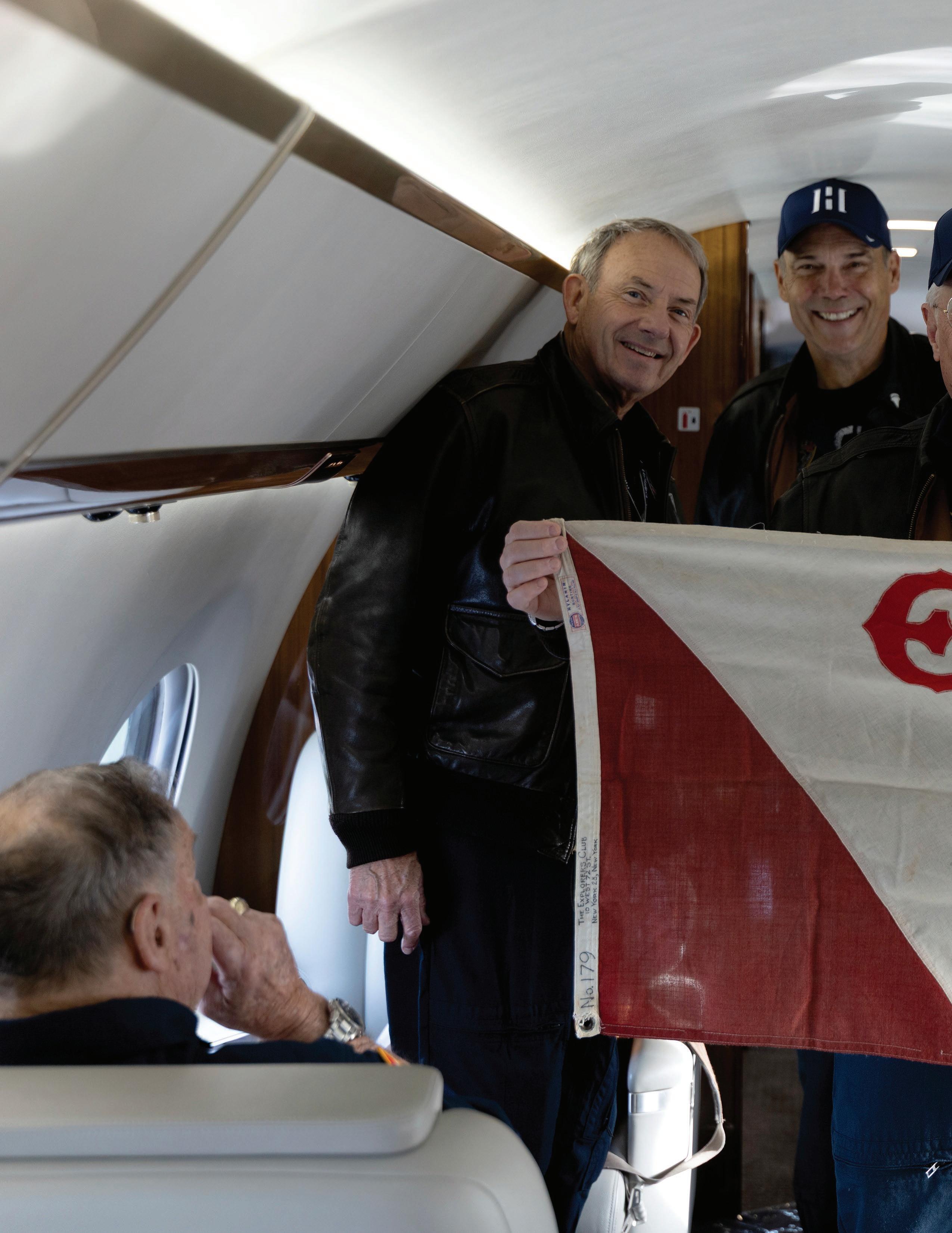
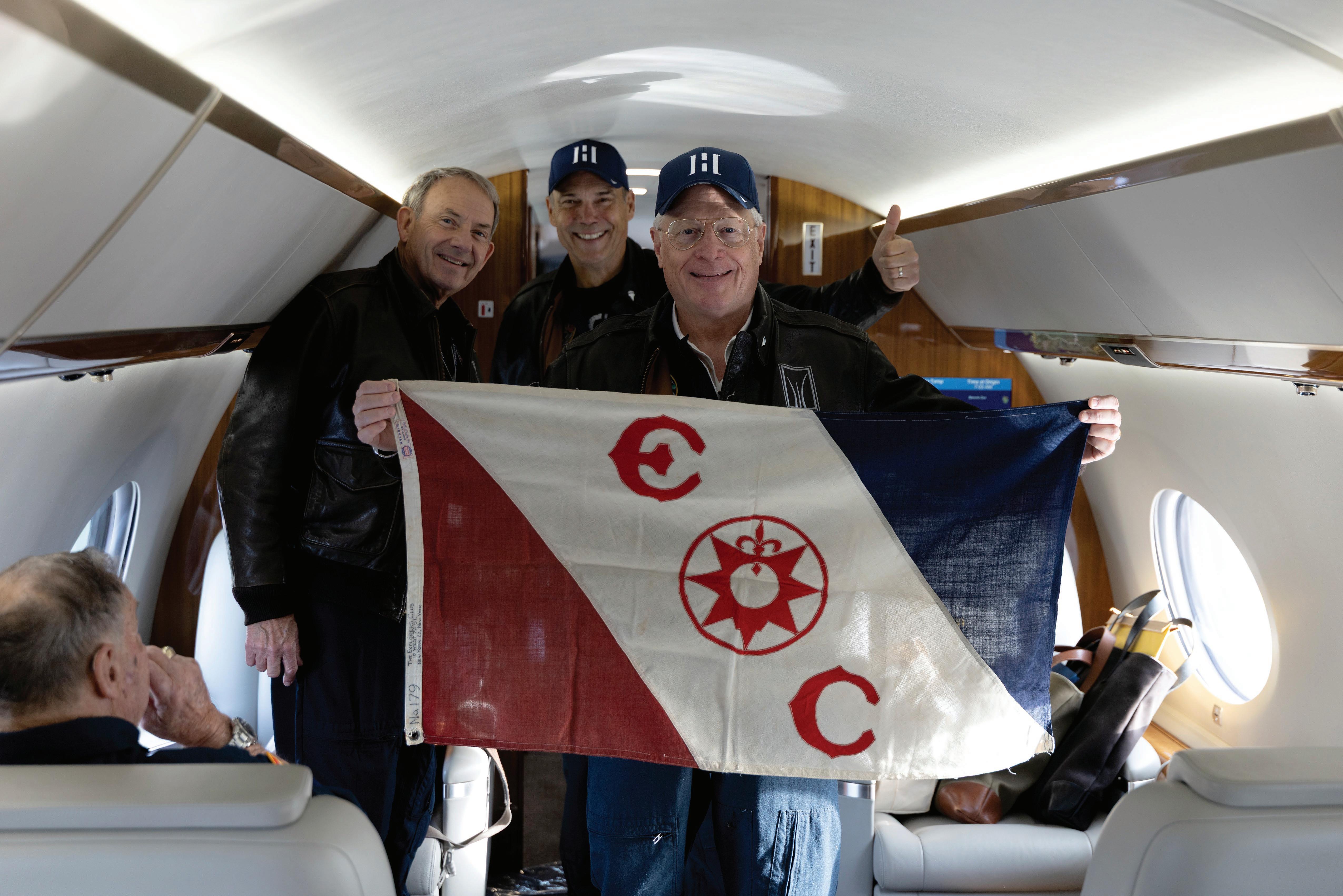
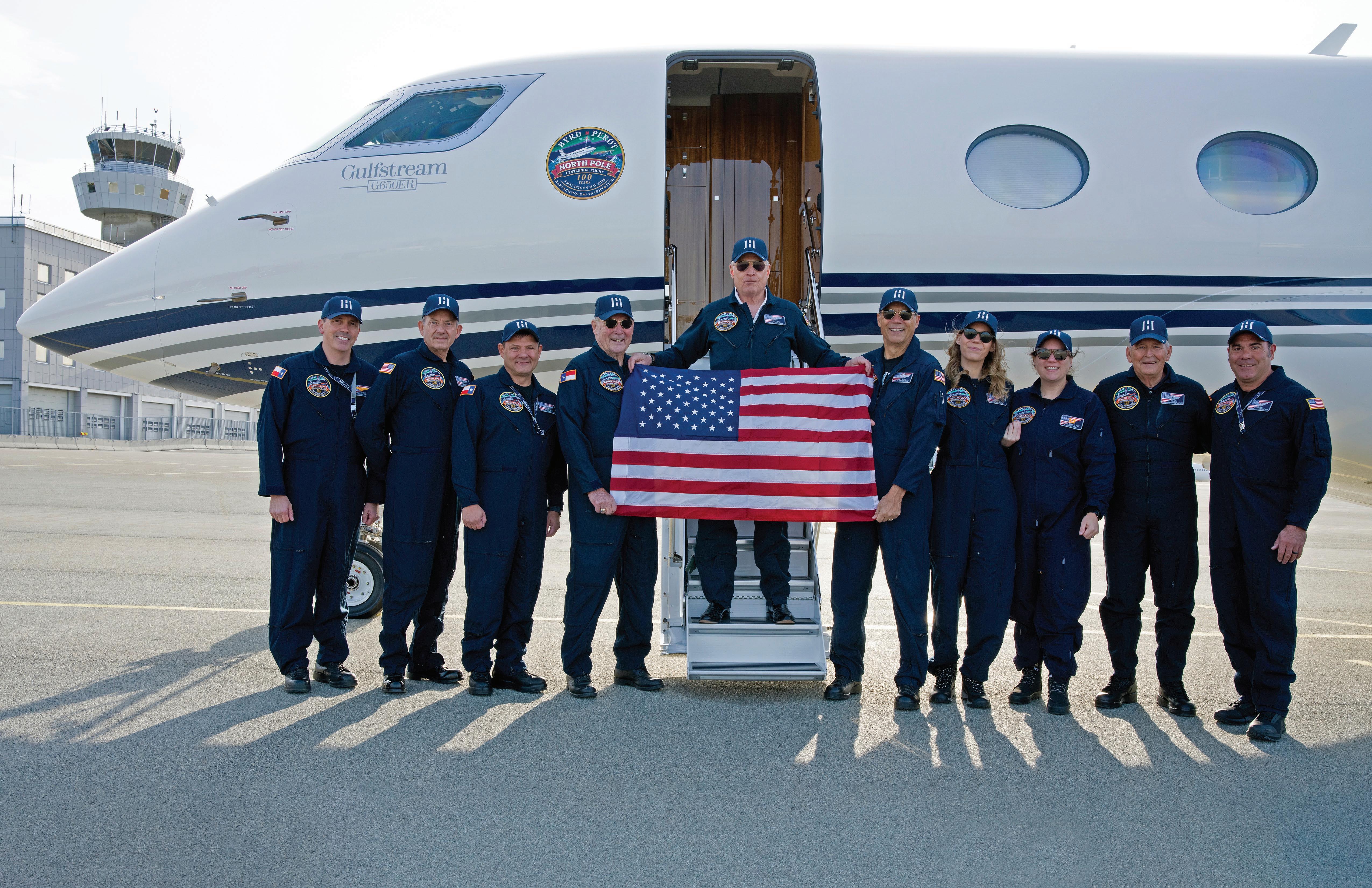
My responsibilities, as I began to imagine them, would be capturing the spirit of our adventure, honoring those that went before us and illustrating how amazingly far these kinds of efforts have progressed over the course of a century. Several well know expeditionary groups gave us flags to carry with us on our journey. These flags have accompanied explorers to the top of Mount Everest, The Marianna Trench, even the surface of the moon. We photographed our team with them at significant junctions during our trip.
While I was beyond grateful that my client had chosen me as the photographer for this incredible adventure, I have to admit to considerable soul searching and no small amount of angst surrounding what I imagined would be four days of very spontaneous situations over which I would really have very little control. Ansel Adams “F8 and be there…!” advice came to mind more than once, but his subjects weren’t in an aluminum tube going 700 miles an hour eight miles up. I tried to imagine compositions that would describe the experience, the quality of the light that I’d be dealing with, and the weather, yet another uncontrollable variable. All of this was actually a wonderful exercise for me, first I was forced to trust that 45 years of assignments had prepared me for about any situation that could arise. Second, it caused me to imagine light that I had never seen, in situations that were going to be a bit different from the norm. By the time we lifted off the runway at Love Field I had a series of images in my mind that I could see as clear as a bell, and a second series of compositions if the first ones didn’t work out. I live my life depending upon a considerable measure of Divine Providence and this assignment was no different.
The day before departure I got a call telling me that I would be the only passenger on the Gulfstream from Dallas to Dulles. This gave me a perfect opportunity to run exposure tests, get familiar with operating the window shades in the fuselage, and to actually see many of the compositions that I had been imagining in the middle of the night for the previous three weeks. Actually, once I had the operation of the window shades down, I realized that I could replicate “Old Masters” north light just about anywhere in the cabin with the press of a couple of buttons, it was perfect.
Another concern that I had was what if we were above a solid undercast for most of our trip, no air to ground perspectives would be possible as we flew over Spitsbergen, or 90 Degrees North. There would be
Jim Wilson
nothing that I could do if that was the case, but it would severely limit the story my images could tell none the less.
Redundancy is a consideration on any photographic assignment, but on a shoot of this proportion and significance, it would be paramount. I chose Hasselblad’s latest and greatest X2DII medium format camera and the two new lenses that they designed specifically for the X2DII to capture much of the trip. The camera has 1TB of internal memory and an additional slot for a 1TB CF Express card which I programmed to mimic everything the camera records. The Hasselblad’s 15.2 stops of dynamic range and 5 axis, 10 stop in body stabilization seemed like a perfect match for this assignment and the 2-3 second tack sharp cockpit images I captured as we climbed out over the North Atlantic bore that out. Backing up the medium format were two Canon R5 MKII bodies with RF24-105Z lenses mounted on them. The R5II is no slouch in it’s own right, as can be seen in the razor sharp image that I captured of The Aurora Borealis dancing in the night sky as we made our way to Norway.
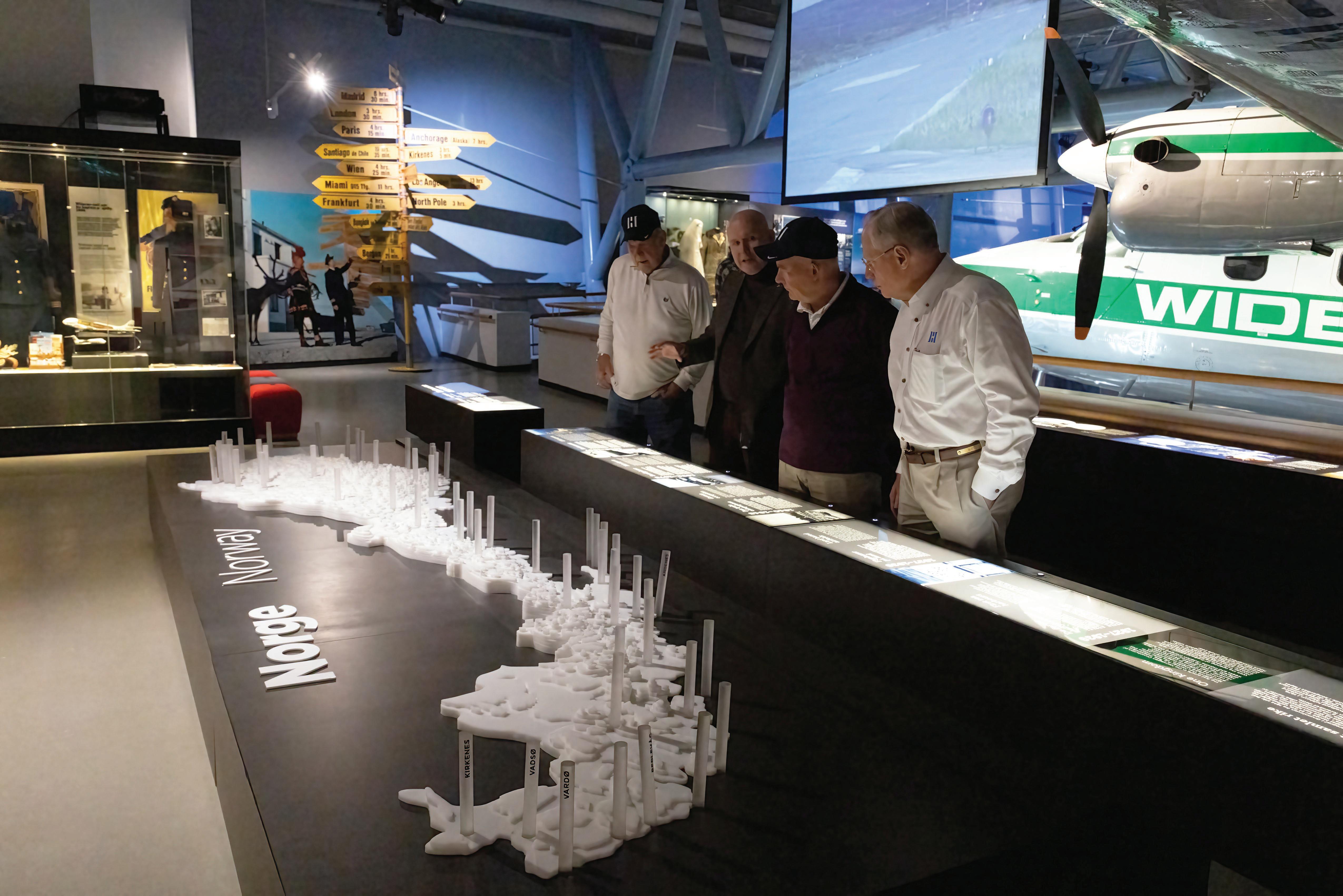
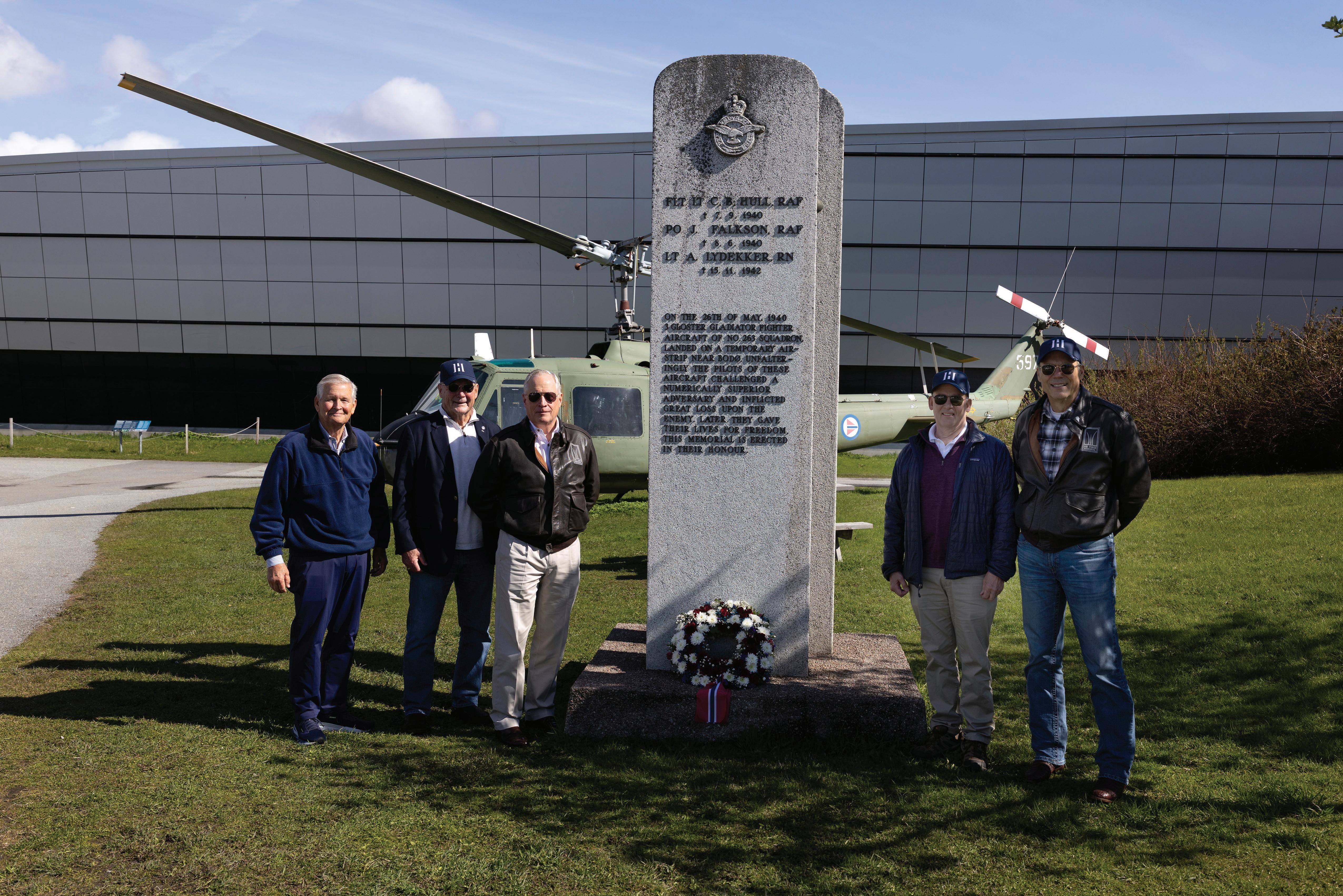
Our early morning approach into Bodo was beautiful, crystal clear air and snow covered mountains greeted us as we banked to line up with the runway. A quick stop with customs and we were headed to our hotel. Bodo has an impressive aviation museum. We were treated to breakfast and a VIP tour led by the museum director, lot’s of unexpected photo opportunities. The shot list that I had imagined was lining up nicely with reality at this point. I had anticipated mostly genuine, candid compositions with just a few posed images. Most of the posed shots involved all of us with the explorer flags and the Gulfstream as a backdrop.
Friday evening found us all at dinner together going over our plans for the trip to the North Pole the next morning. This was another great photo opportunity, there were presentations from our flight crew describing the preparations they had made for the journey and some of the unique challenges they faced, reflections on the courage and tenacity of the explorers who had blazed the trail before us, it was a wonderful time of camaraderie and fellowship.
Early the next morning my alarm went off, I had long since quit looking at my watch because none of what it was telling me made sense anymore. The crew and I headed to customs and on to the aircraft well in advance of the rest of our team. I wanted to look at the light and figure out our pre-departure photographs. We were into 24 hour daylight so the light was very nice, the winds were brisk, but workable. We all had custom navy blue flight suits with our expedition medallion patch proudly displayed, the American flag on one shoulder and the Lone Star flag on the other. Our fur lined hooded parka’s felt pretty good against the chilly Norwegian wind, but they were largely ceremonial compared to the one’s Admiral Byrd and his team wore to keep them alive on their frigid 15 hour quest. The many contrasts between their trip and our commemoration 100 years later were not lost on any of us.
The Gulfstream leapt off the runway at Bodo and set a course for Spitsbergen. My client and friend Ross Perot Jr. was in the left seat, Hillwood Director of Aviation and good friend Ched Bart occupied the right seat as we headed for the flight levels and the thousands of miles of frozen ocean that lay between us and 90 Degrees North. The undercast parted just in time to see Spitsbergen come into view, it was
here that Admiral Byrd and his team broke a ski on their first attempt to take off, fixed that and forged ahead. They were in the Fokker’s bone chilling fuselage for 15+ hours, navigating in and out of frozen fog and dropping smoke bombs out the window to calculate wind velocity and direction. We were at FL 410, flying along at .925 mach, monitoring our aircraft systems and navigation on a series of flat screen displays, our parka’s neatly folded next to our seats. Somewhere between Spitsbergen and the North Pole one of the Fokker’s three radial engines began to leak oil, eventually needing to be shut down but the admiral and his team forged on undaunted.
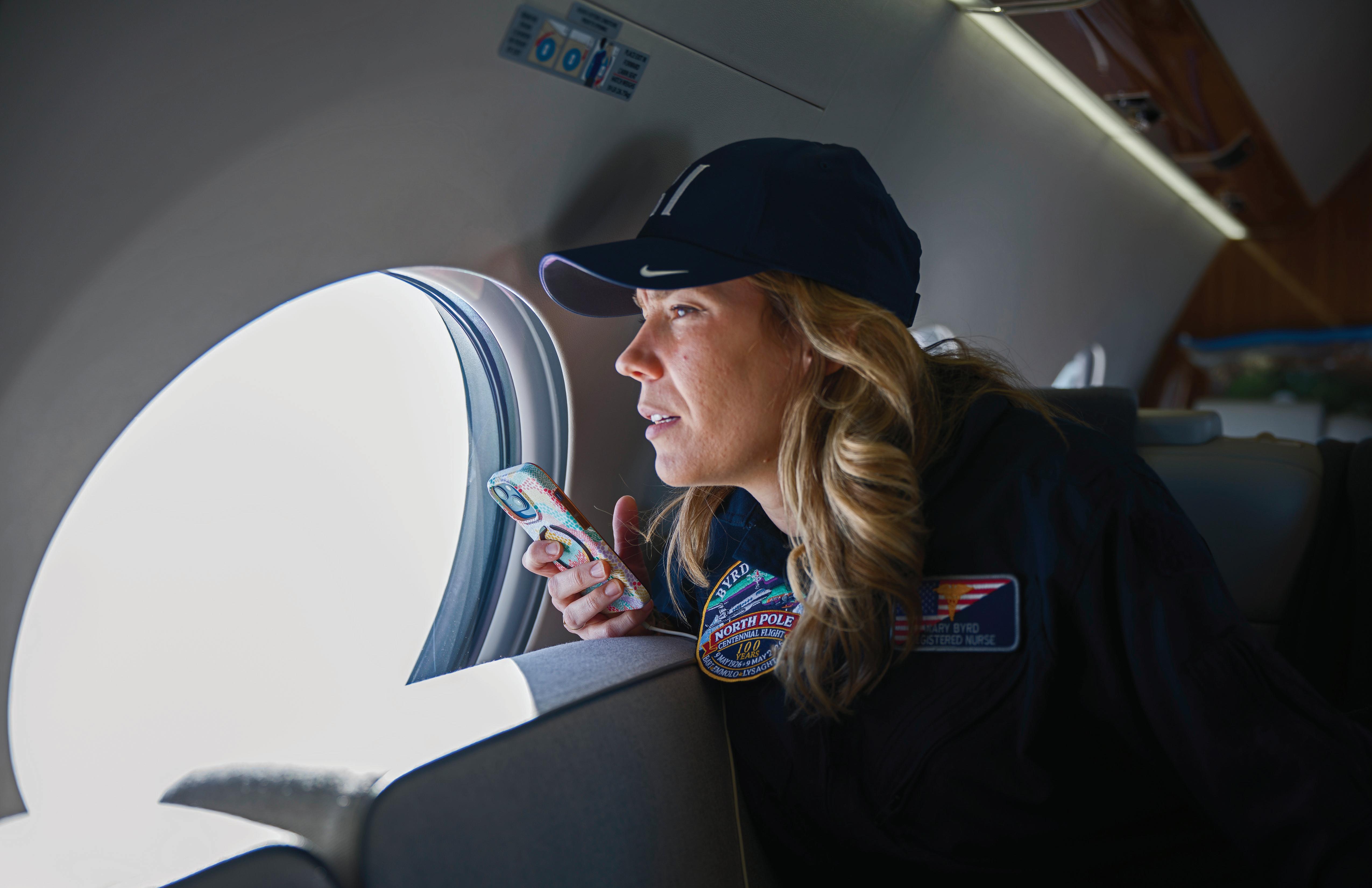
The ambient light in the fuselage was just as I had imagined, beautiful “old masters” wrapping around the team members as they moved about the cabin peering out the windows, mesmerized by the frozen arctic seascape miles below us. I moved around the fuselage capturing everyone taking in the experience in their own way. We got a heads up from the cockpit that we were 15 minutes out from our target, so I moved up to the cockpit to fire up the GoPro’s and 360 cameras that I had strategically positioned earlier that morning. We dropped down from our perch at 41,000’ in order to find slightly warmer air,
Jim Wilson
something about our fuel turning to gel in the colder temperature at FL410. The undercast broke on cue, revealing the stark beauty of our destination, an azure quilt of fractured sea ice and pristine white as far as the eye could see. These were photographic perspectives that the 100 megapixel sensor of the Hasselblad was created for, as I captured the beauty below, I imagined what it would be like to be standing down there in that isolation, surrounded by white, unbelievable cold nothing but the sound of the wind and shifting ice. I didn’t want to imagine it for too long because, even with our survival gear we all knew we’d last less than 5 minutes in that environment.
A few minutes out from The North Pole, a senior member of the Byrd family recited a short history of the expedition that had taken place one hundred years before, we crossed our target at 9:02 am, the exact same time Admiral Byrd and his team reached it. Ross recited Isaiah 40:31 from the cockpit, “But they that wait upon The Lord shall renew their strength; they shall mount up with wings as eagles; they will run and not grow weary, they will walk and not be faint.” Matt Byrd recited the same scripture surrounded by his daughters back in the cabin.
The Gulfstream 650ER’s incredible range not withstanding, we were going through the 44,000 pounds of fuel we took on in Bodo at a pretty good clip, so we did not tarry above the North Pole. We set our course for Perot Field in Fort Worth Texas and the cabin fell silent as each member of the expedition reflected on what we had experienced that morning, more importantly what Admiral Byrd and his courageous team experienced a century before.
Our flight crew had meticulously planned this trip, even flying it in a simulator, they made it look easy, but we all knew that it wasn’t. This was one of those experiences that bonds the participants together in a very special way. This assignment was a very unique experience, it formed new relationships and deepened existing ones, I was honored to be a small part of it.
Jim Wilson
Jim Wilson
Jim Wilson
Jim Wilson
Jim Wilson
Jim Wilson
Jim Wilson
Jim Wilson
Jim Wilson
Dayton Airshow 2026: Success Despite Adversity
Photos and article by Brian La Fetra
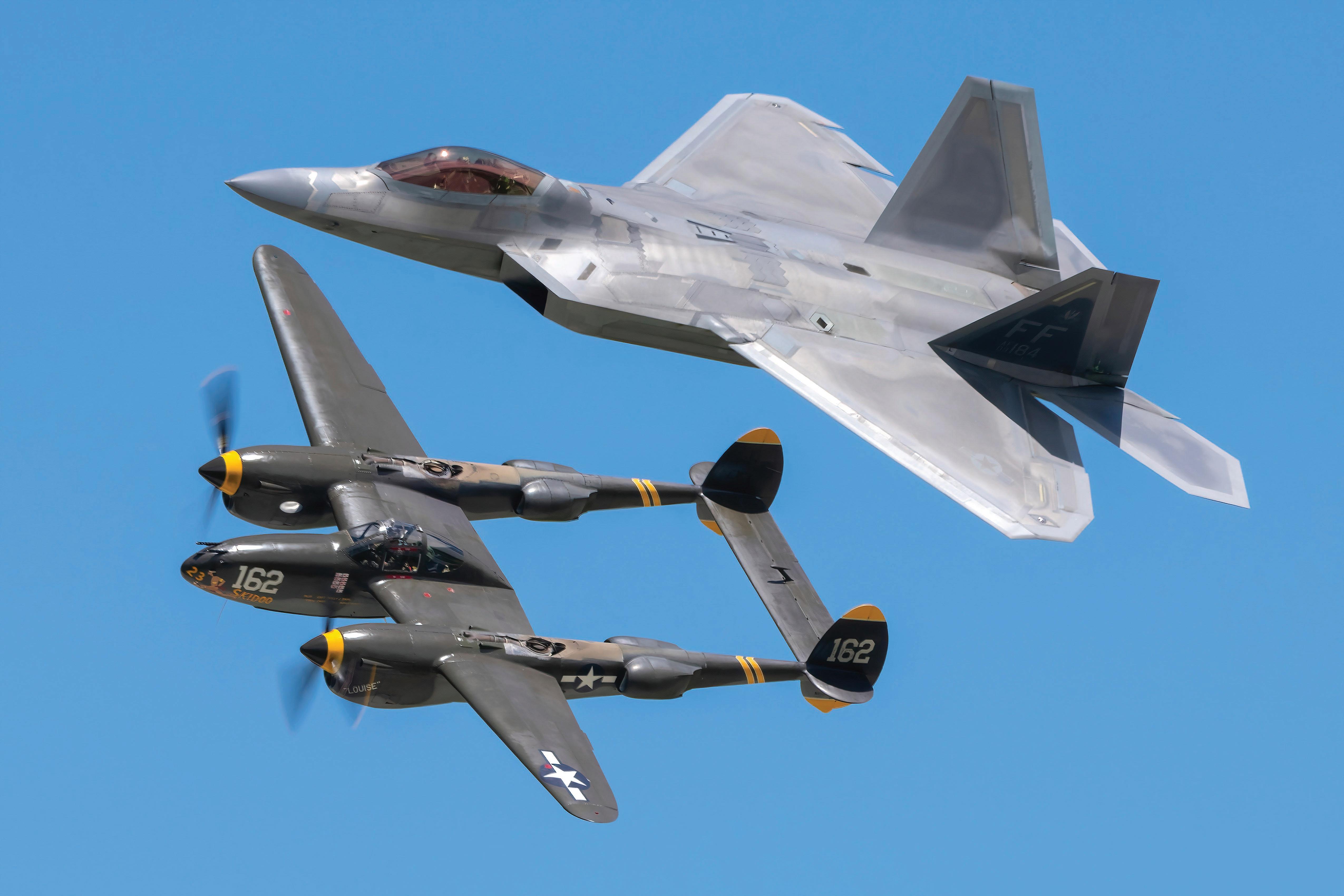
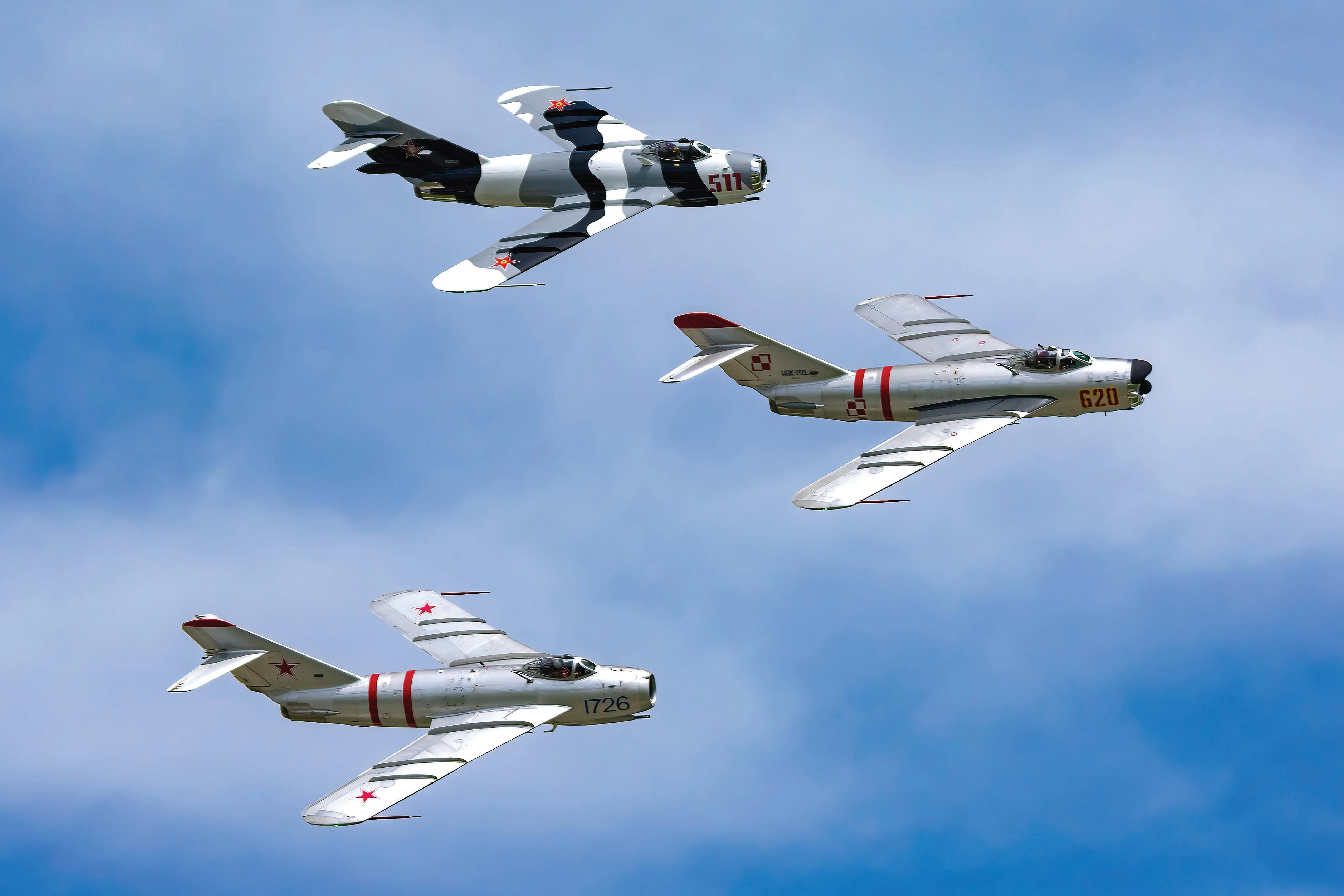
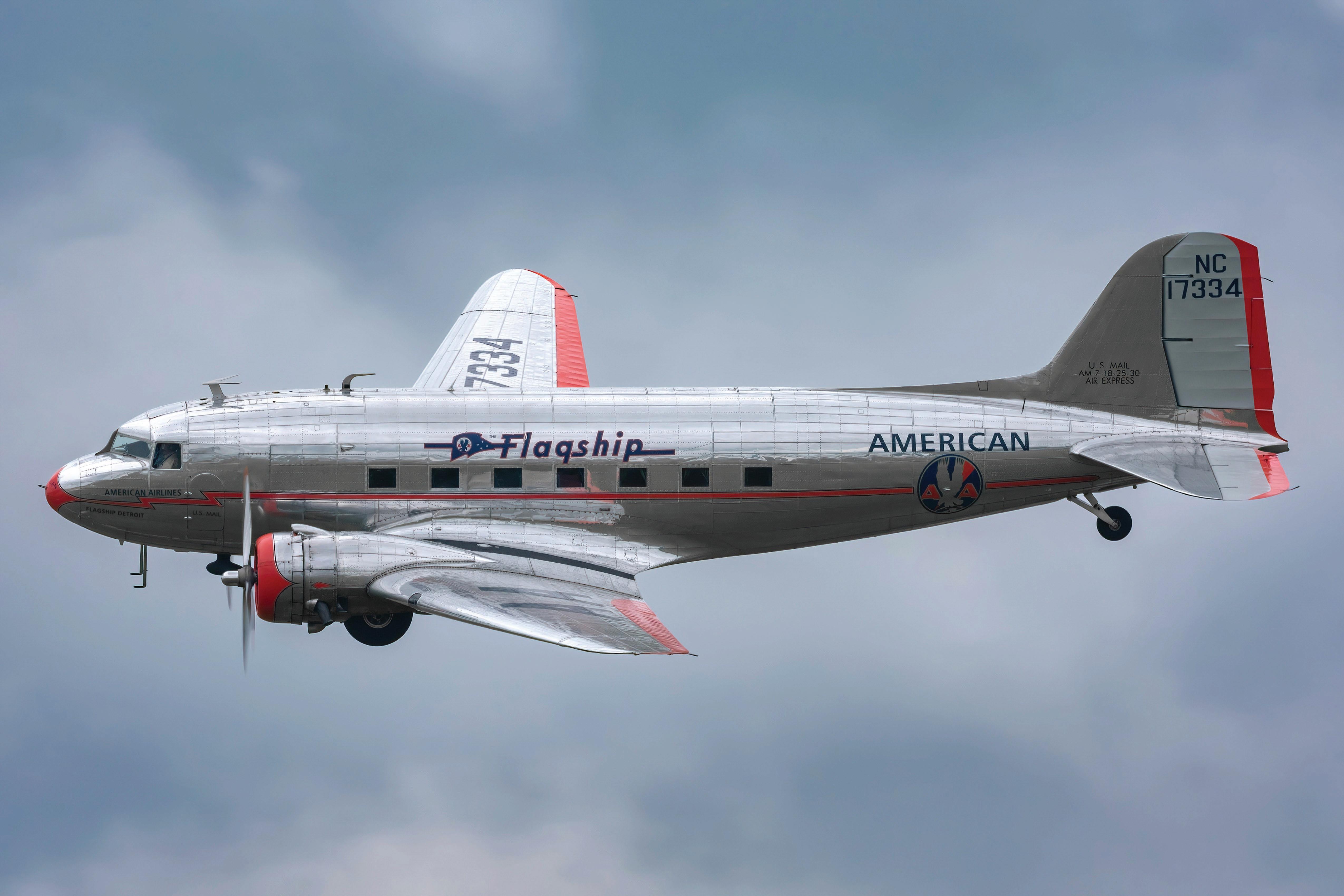
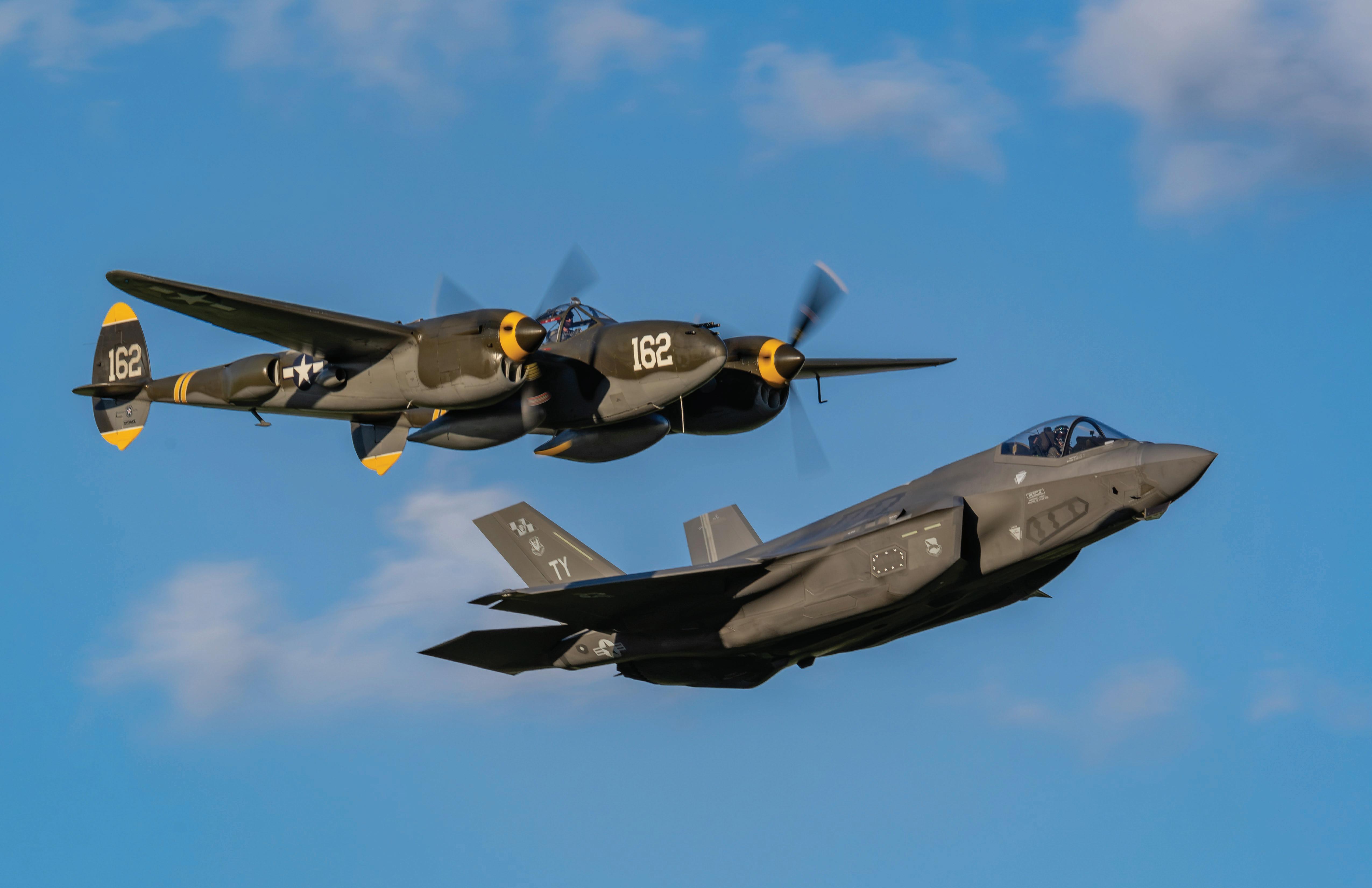
The 2026 Dayton Airshow, despite an outsize impact from military cancellations, resulted in an extraordinarily well-balanced lineup and a static lineup that would be impressive at most other airshows. What would have been a very military-heavy show ended up with some significant warbird additions in the form of Planes of Fame’s P-38 Lightning, making an easy stop in between the St. Louis and Columbus airshows, perennial static participant DC-3 “Flagship Detroit” taking to the skies, and the Fighterjets, Inc. triple MiG-17 demonstration.
The MiGs have really upped their game over the last couple years, with the demo now including opposing crosses, high and low speed combinations, and in multiple configurations. Of note to me personally was the one-of-a-kind MiG-17PF, back out on the circuit after several years away.
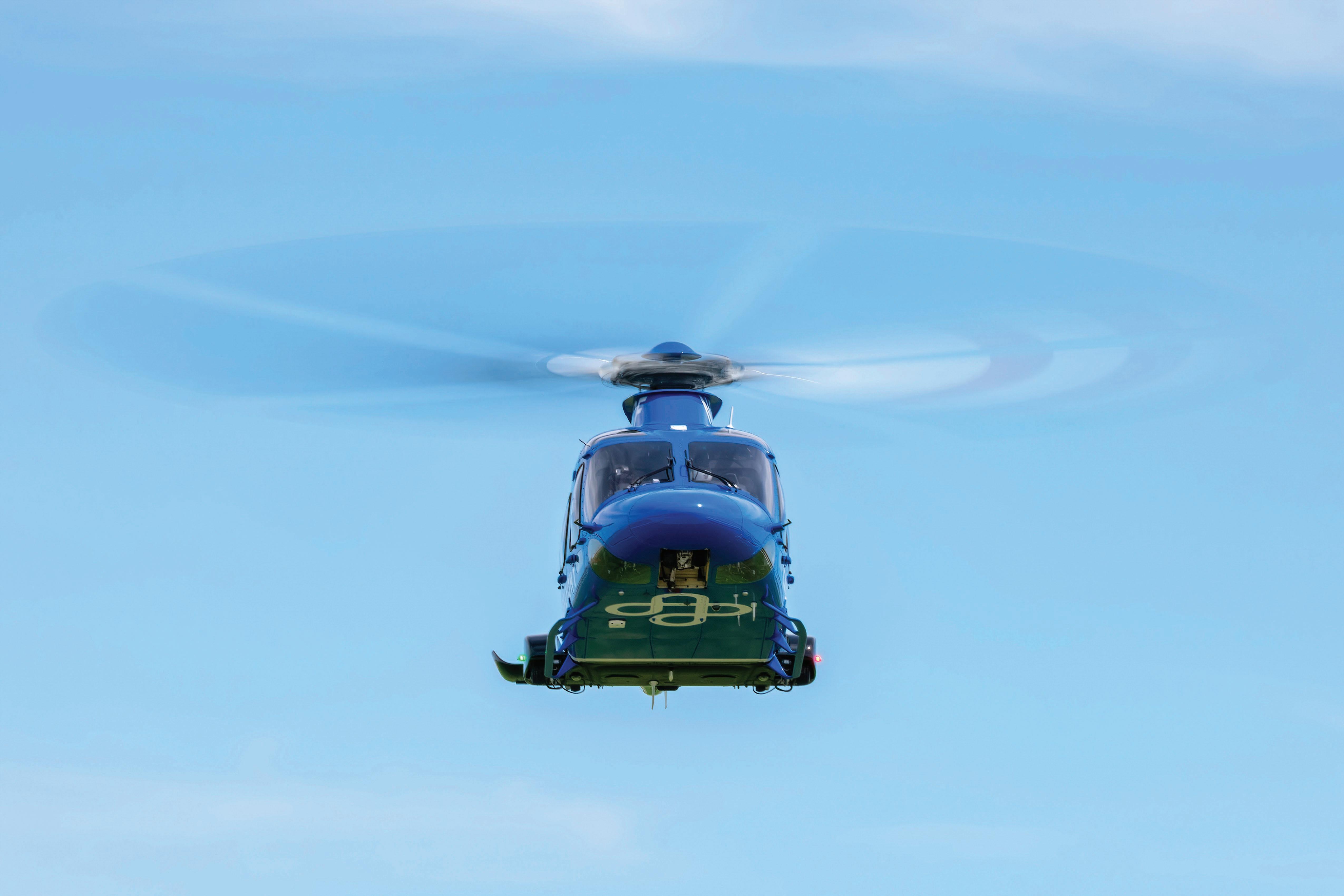
Surprisingly, the Premier Health Careflight demo, normally conducted out over the runway, few a much more dynamic demo much closer to the crowd line in their brand new AW169s.
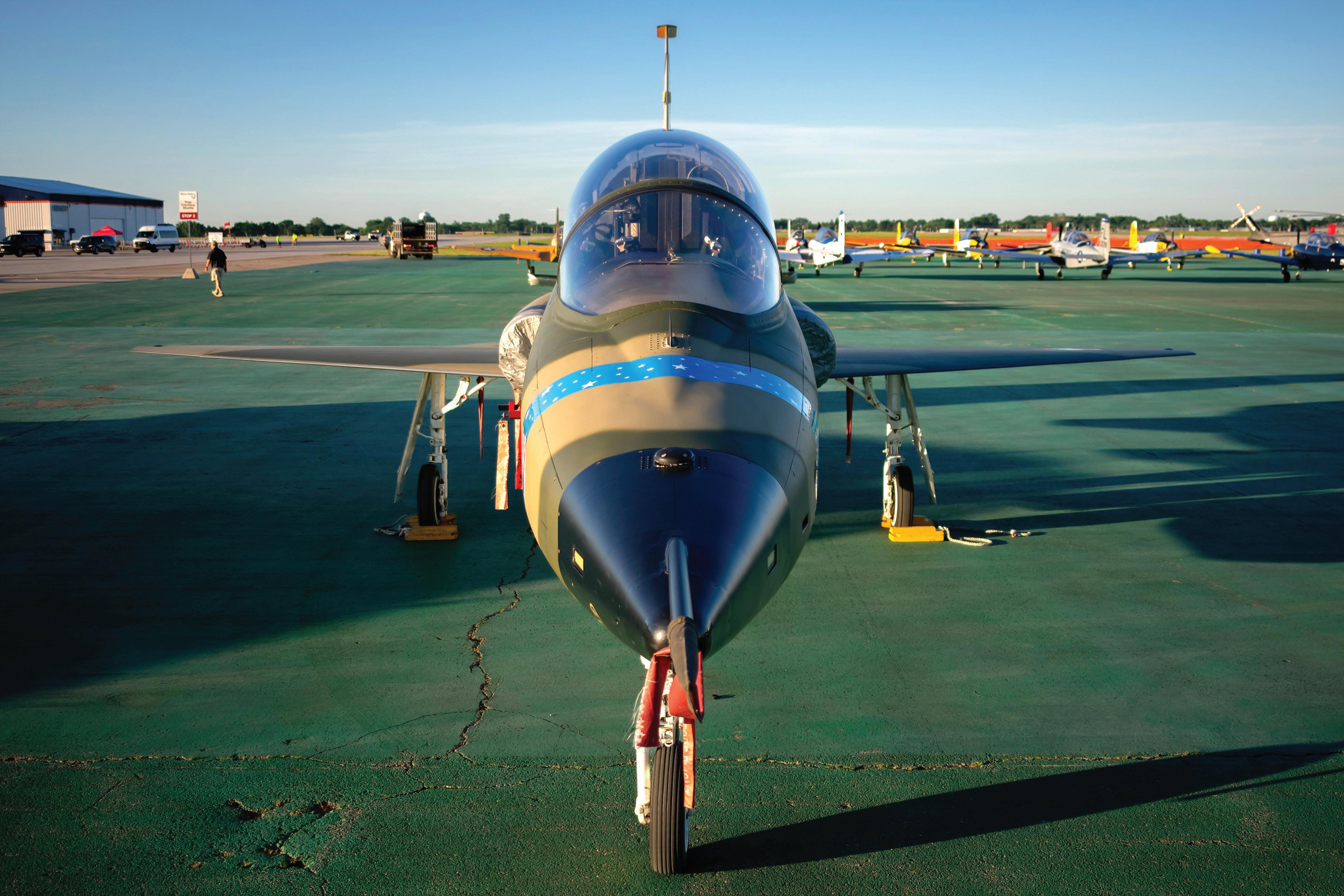
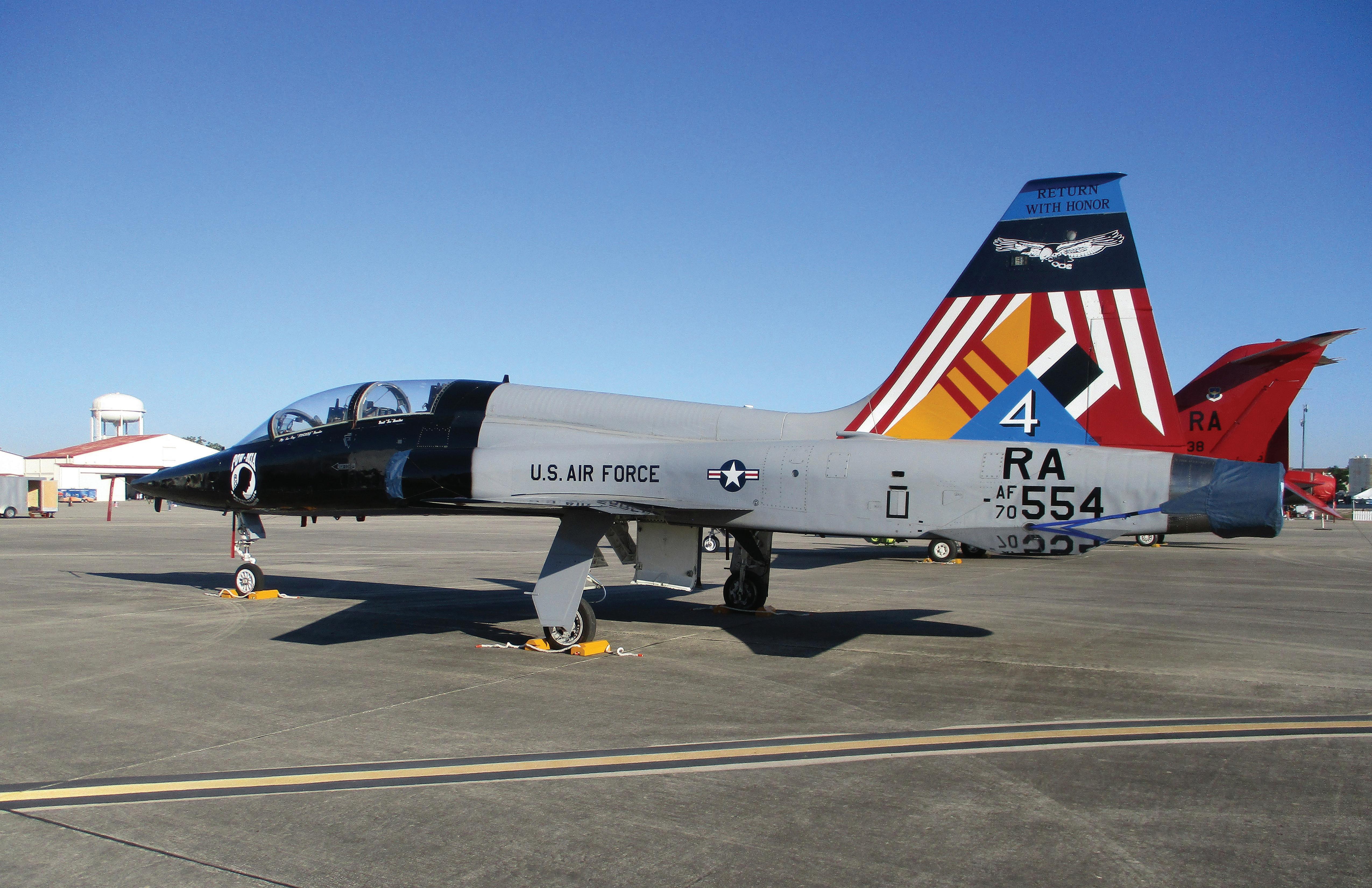
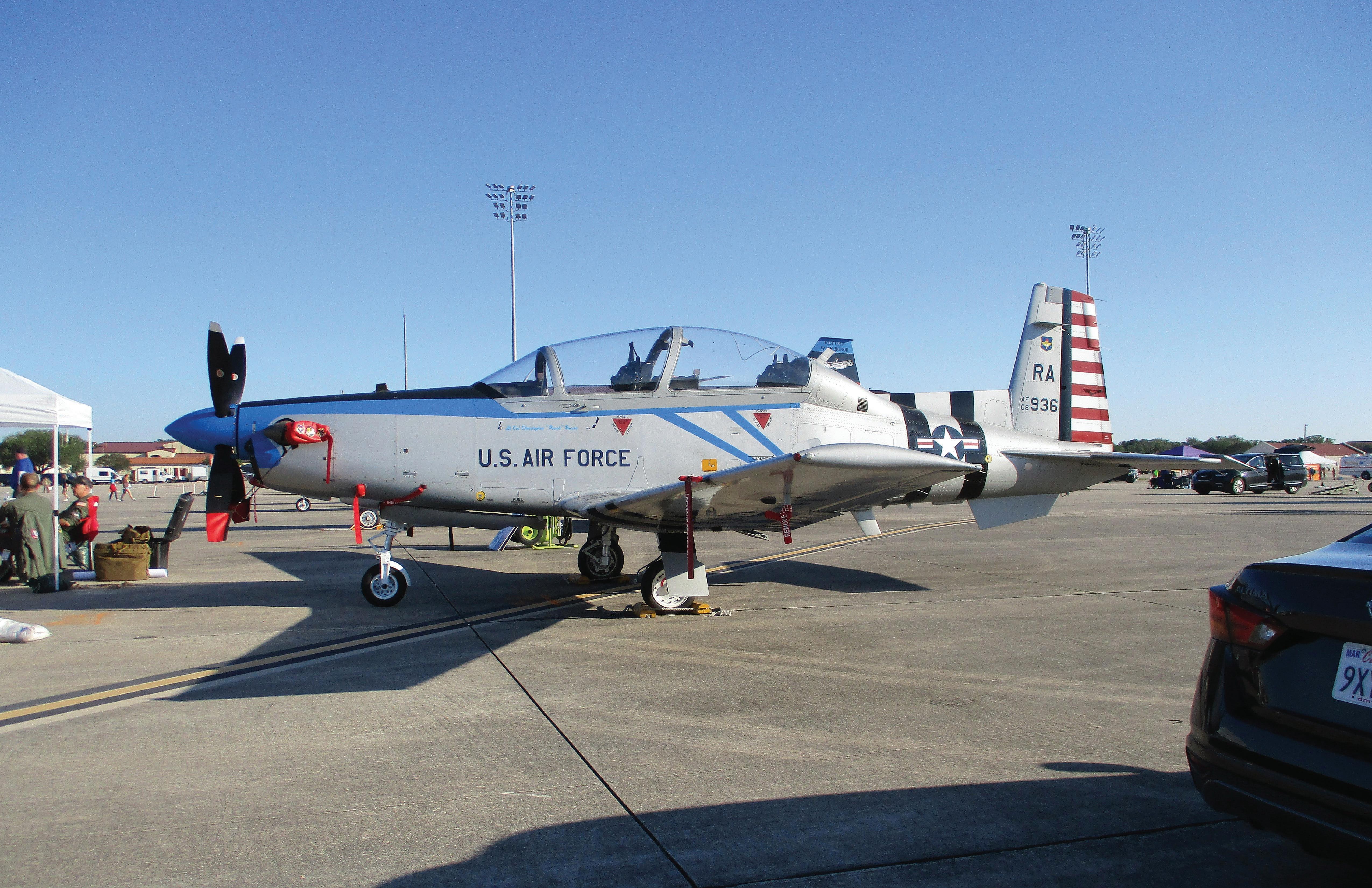
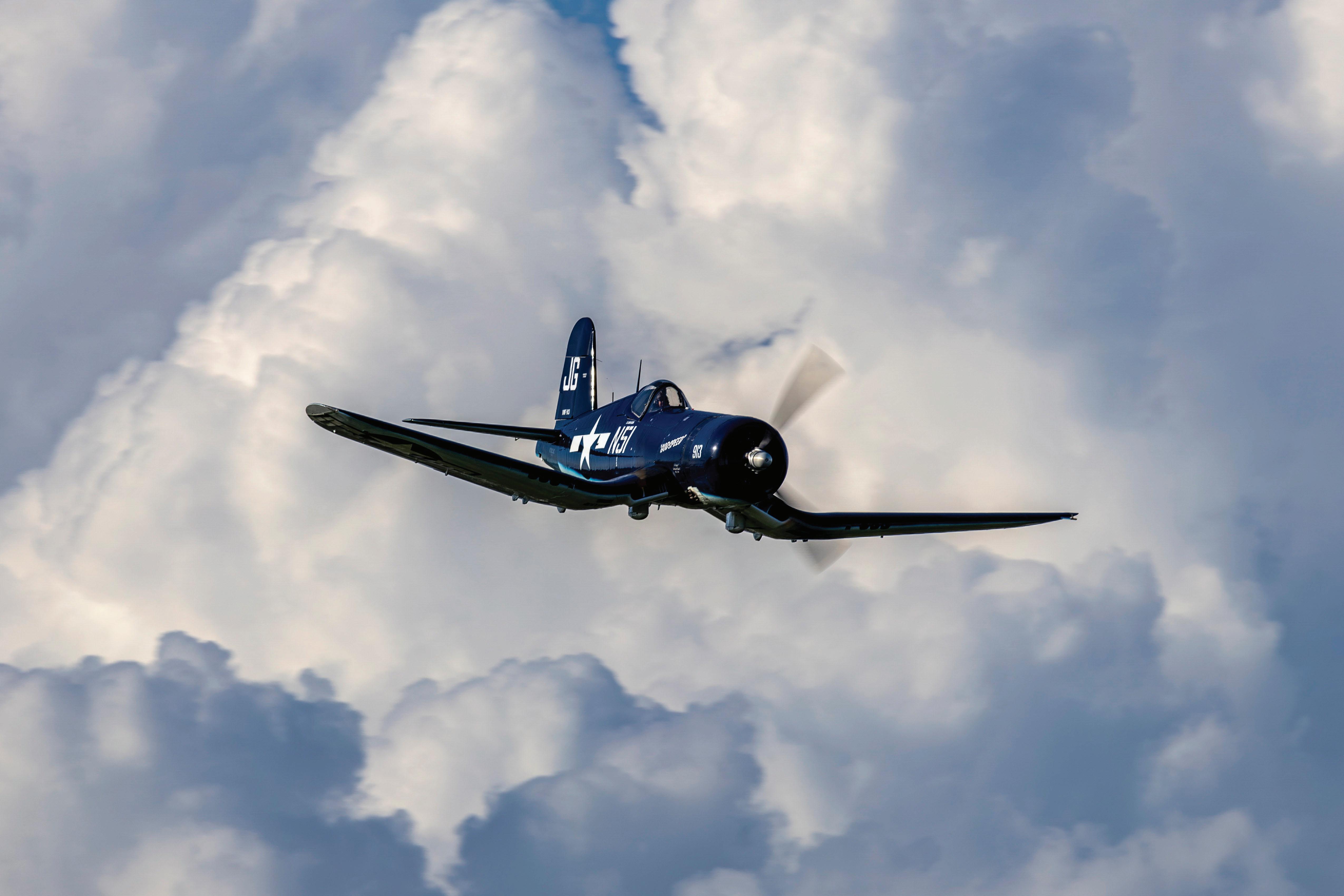
The USAF F-22 Demo Team and Jim Tobul in the F4U both flew their normal fantastic demonstrations. Static displays were light compared to the normally spectacular Dayton lineup, but even with real-world operations limiting combat aircraft, the ramp still had four T-38s (including two heritage schemes), two T-6A Texan IIs, all three USAF transport types, the brand-new Samaritan’s Purse 767-300, new MH-139 Grey Wolf, Ohio ANG F-16 Vipers, and in one of the final airshow appearances for the type, a lone T-1A Jayhawk, one of about a dozen left in USAF service.
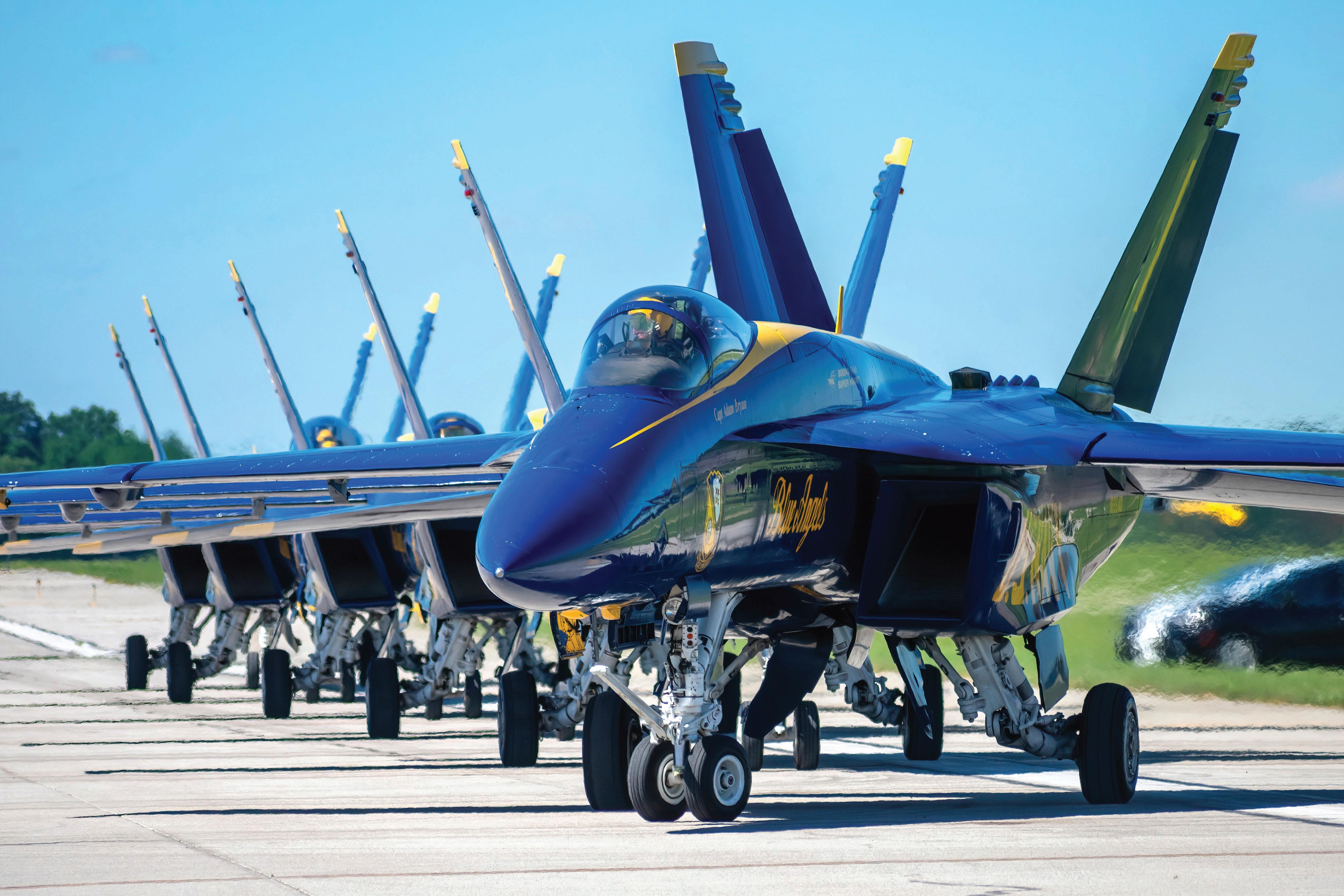
Low ceilings delayed some acts and the eventual torrential downpour canceled the Blue Angels on Sunday, but Saturday was a lovely day. All in all, Dayton pulled together a perfectly good airshow, and one that arguably benefited from the extra variety.
Brian La Fetra
Brian La Fetra
Brian La Fetra
Brian La Fetra
Brian La Fetra
Brian La Fetra
WINGS OVER CANNON 2026
Photos and article by Robin Guess
The 27th Special Operations Wing opened the gates to Cannon AFB near Clovis, NM to the public on the 82nd anniversary of the D-Day invasion of Normandy, France. The theme of the open house was “Normandy to Now” to showcase the evolution of special forces from World War II to today.
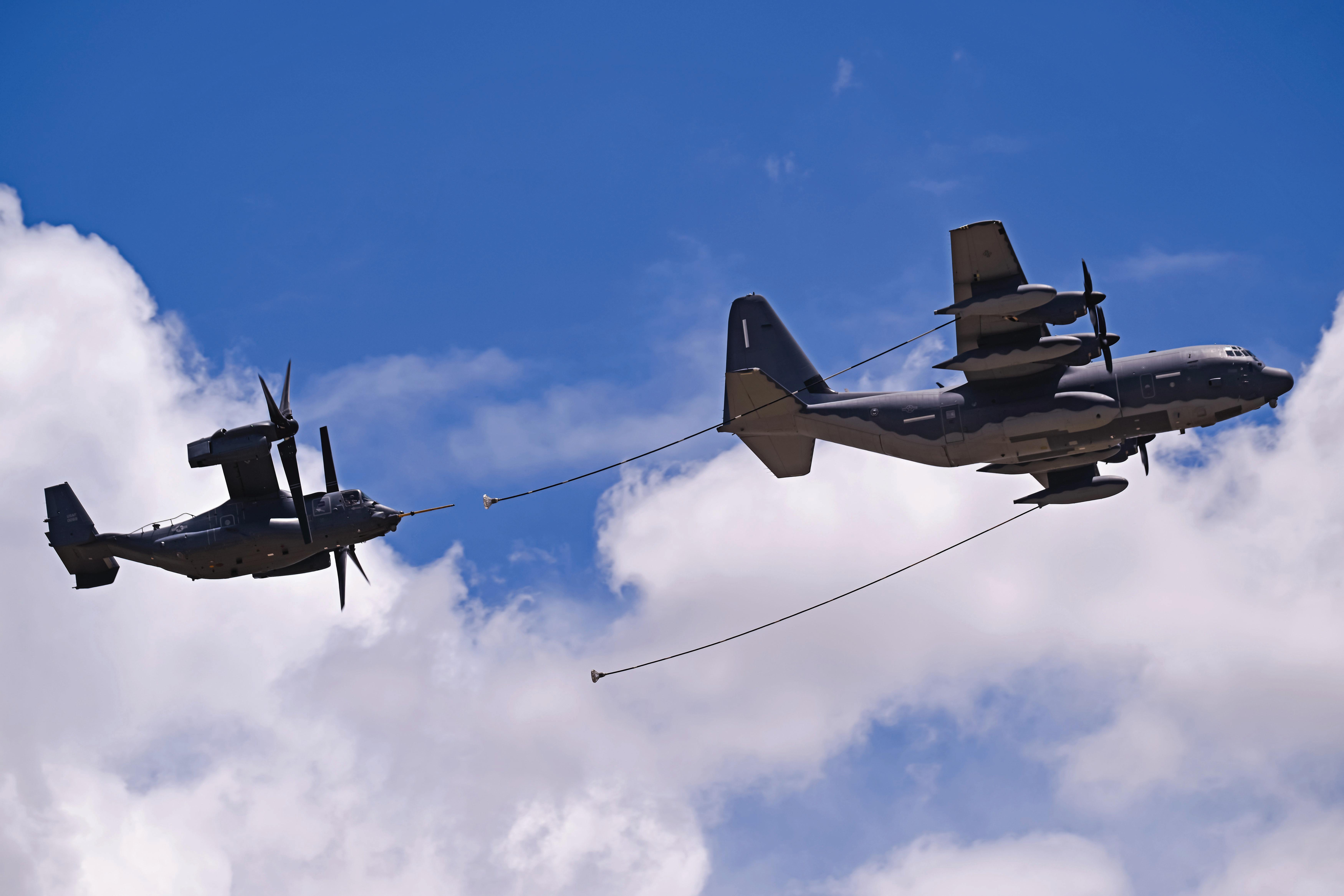
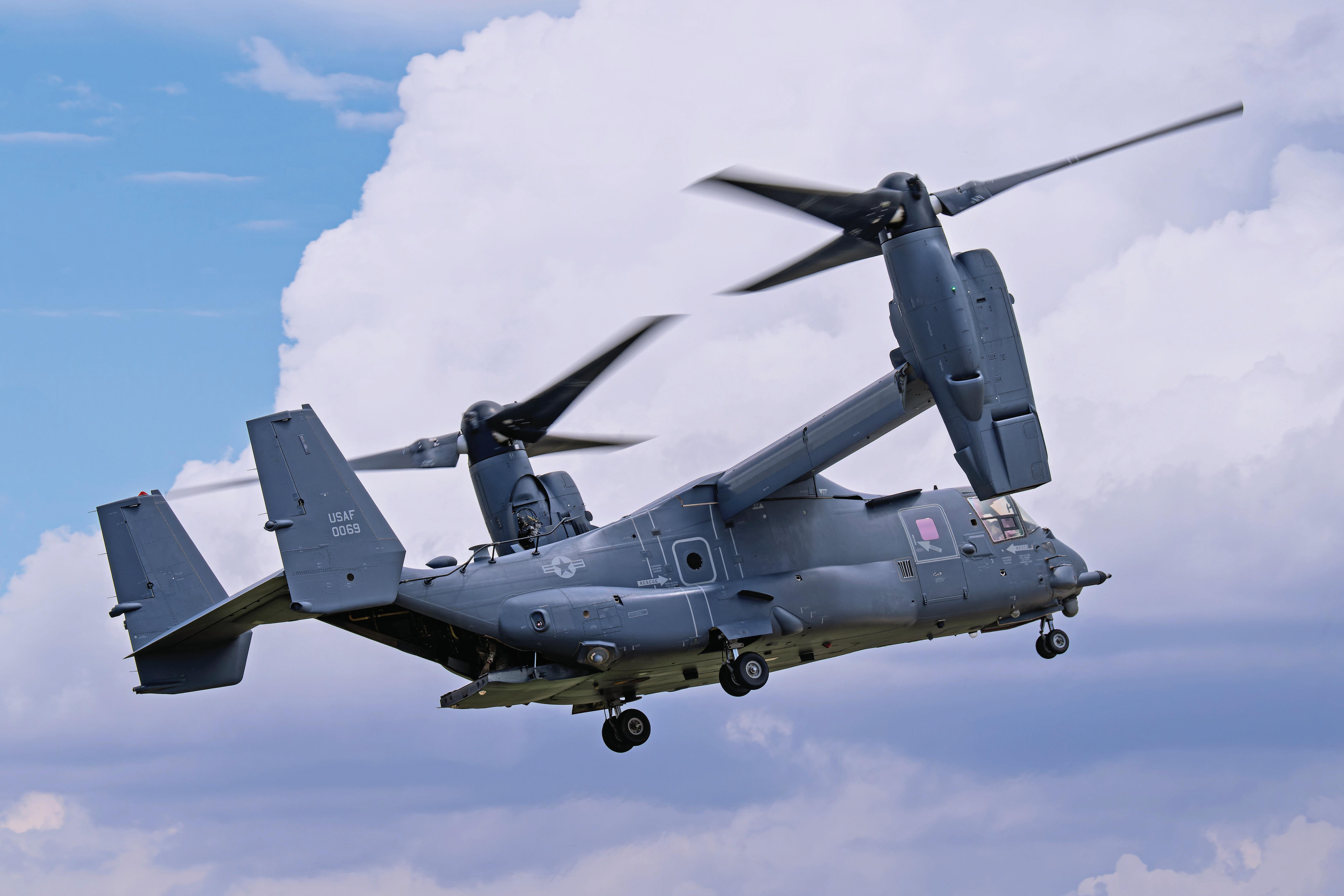
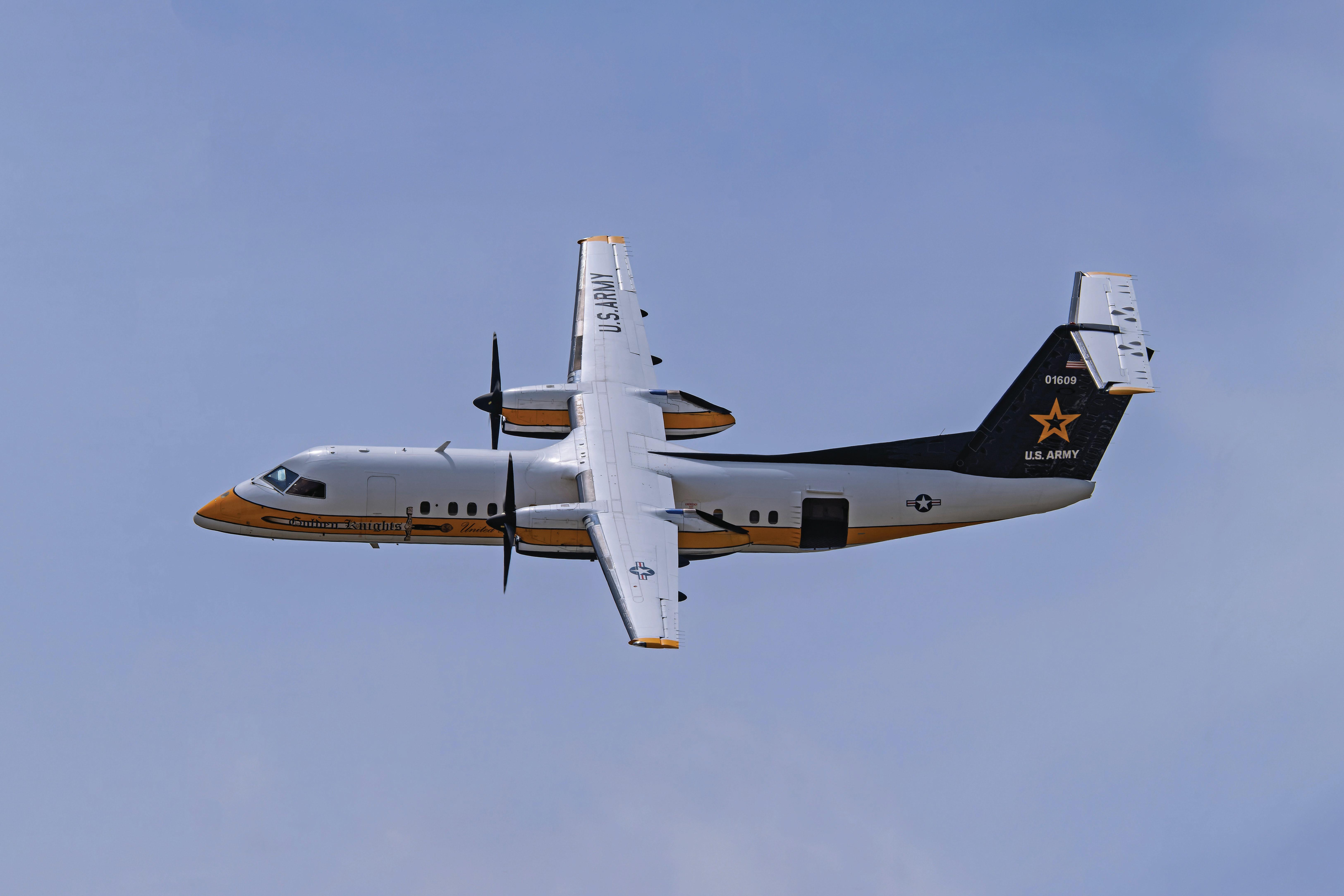
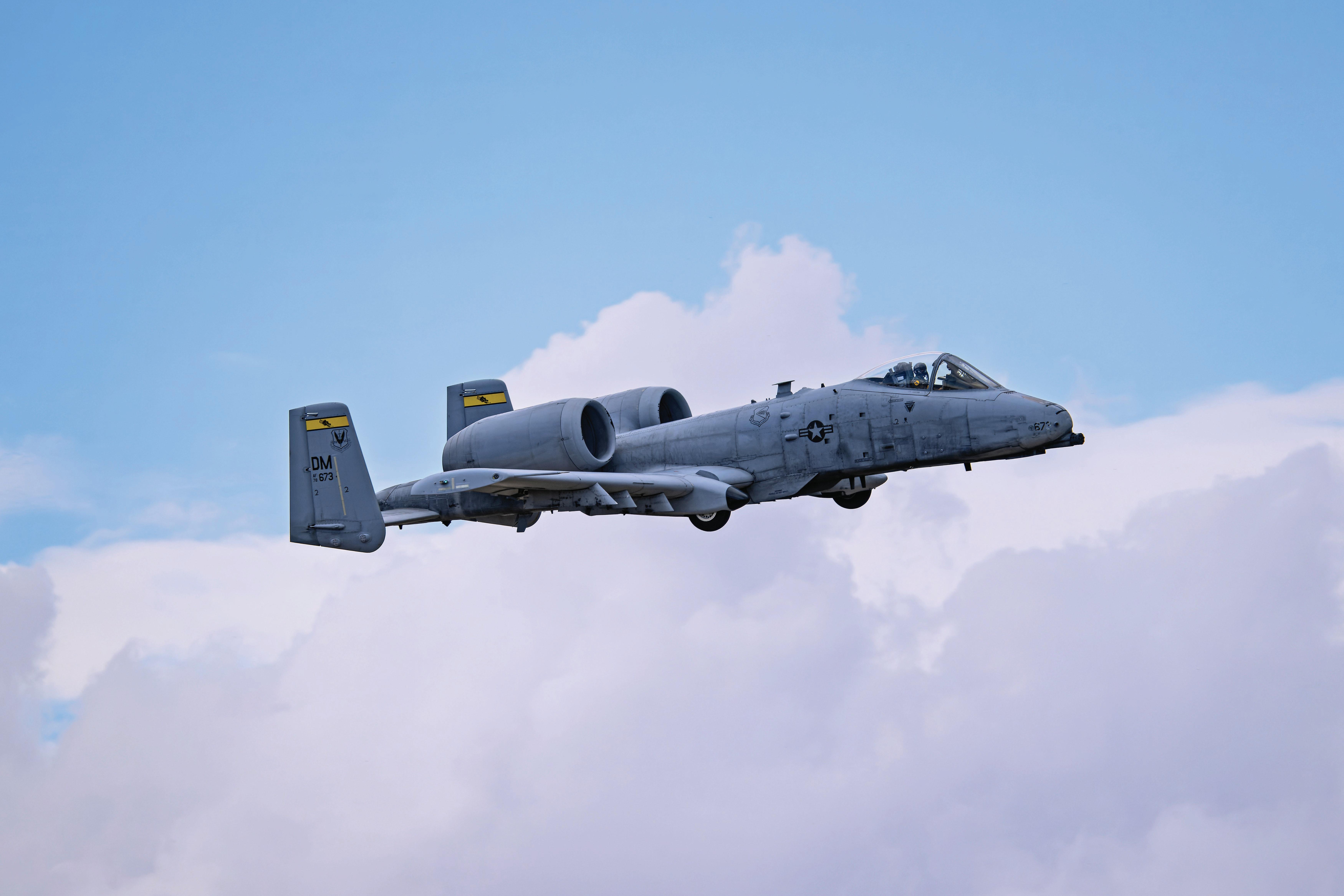
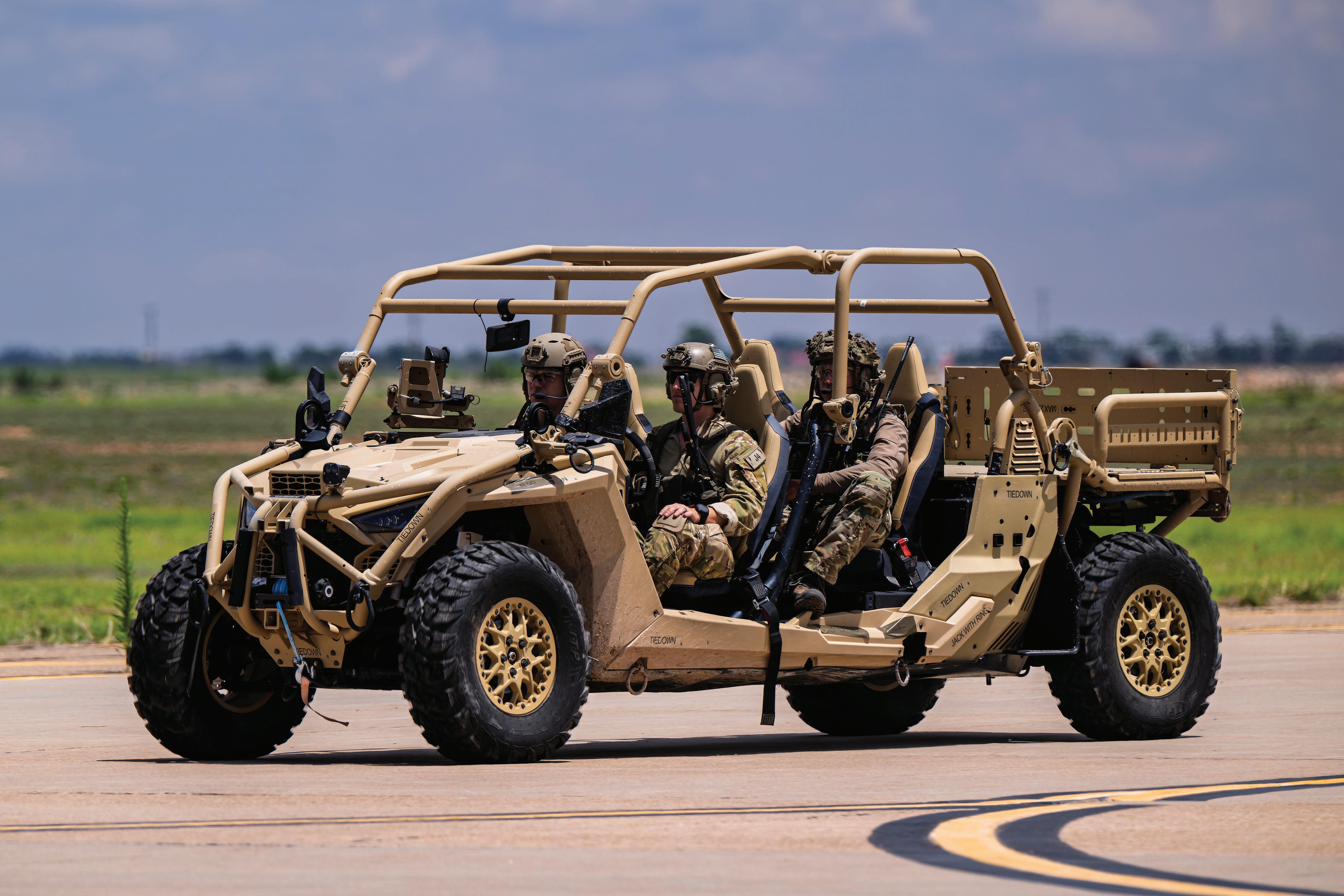
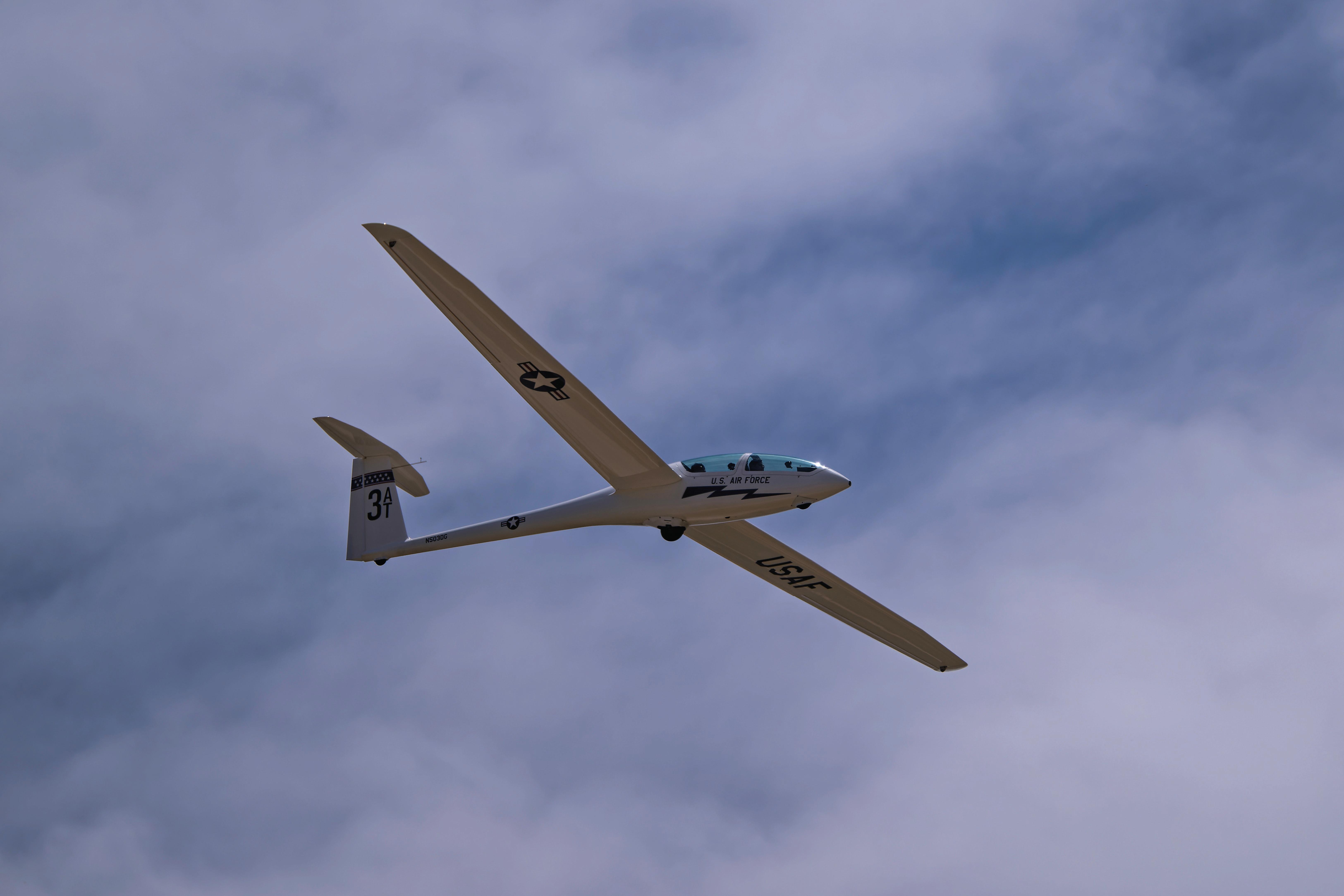
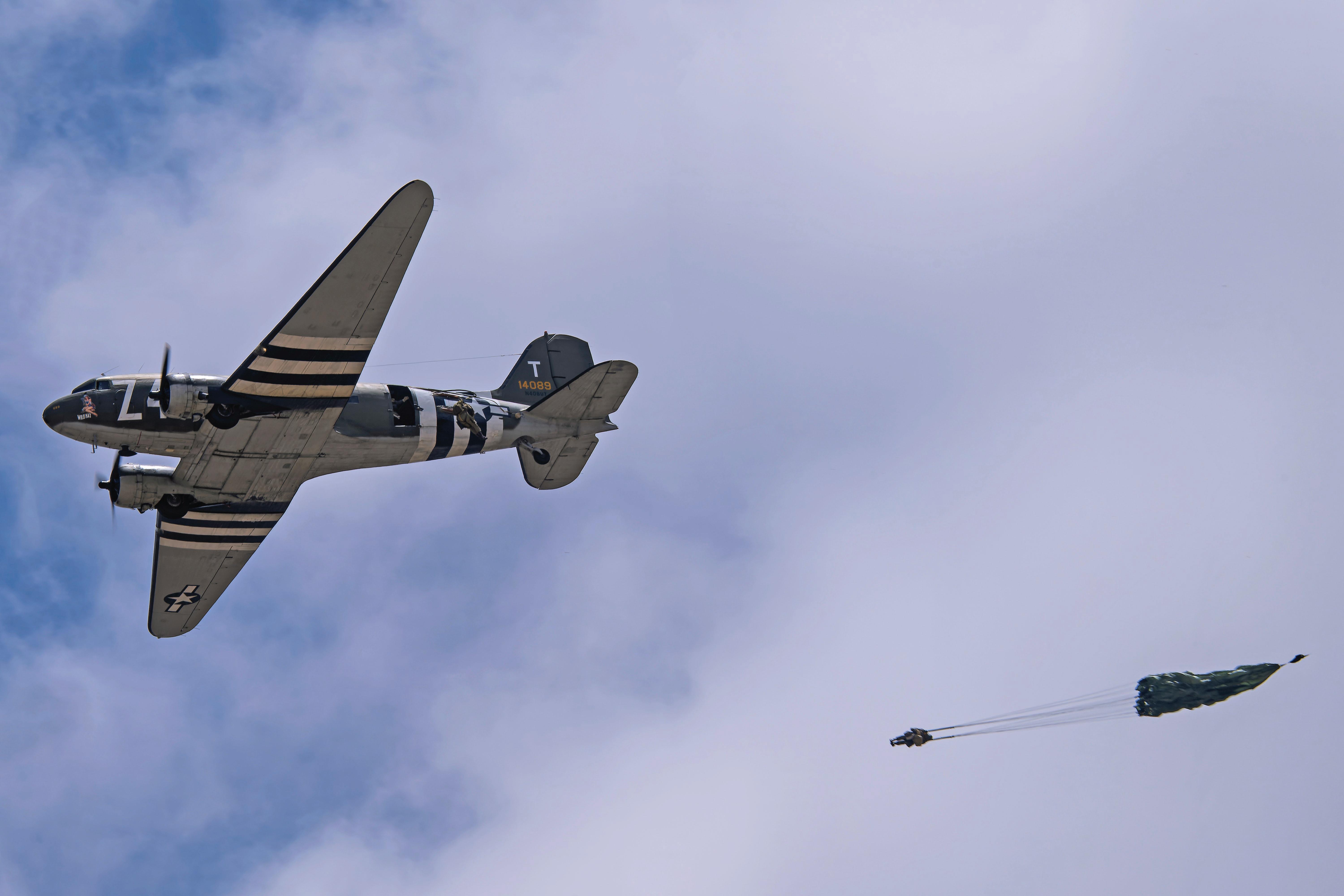
This included the WW II Airborne Demonstration Teams C-47 Wild Kat to a demonstration of current USAF Special Forces Operations using an AC-130J Ghost Rider, MC-130J Commando II, CV-22B Osprey along with Tactical Off Road vehicles. Military performers included the US Army Golden Knights, Air Force Academy Wings of Blue, Air Force Academy Aerobatic Glider Demonstration and a pair of A-10C’s.
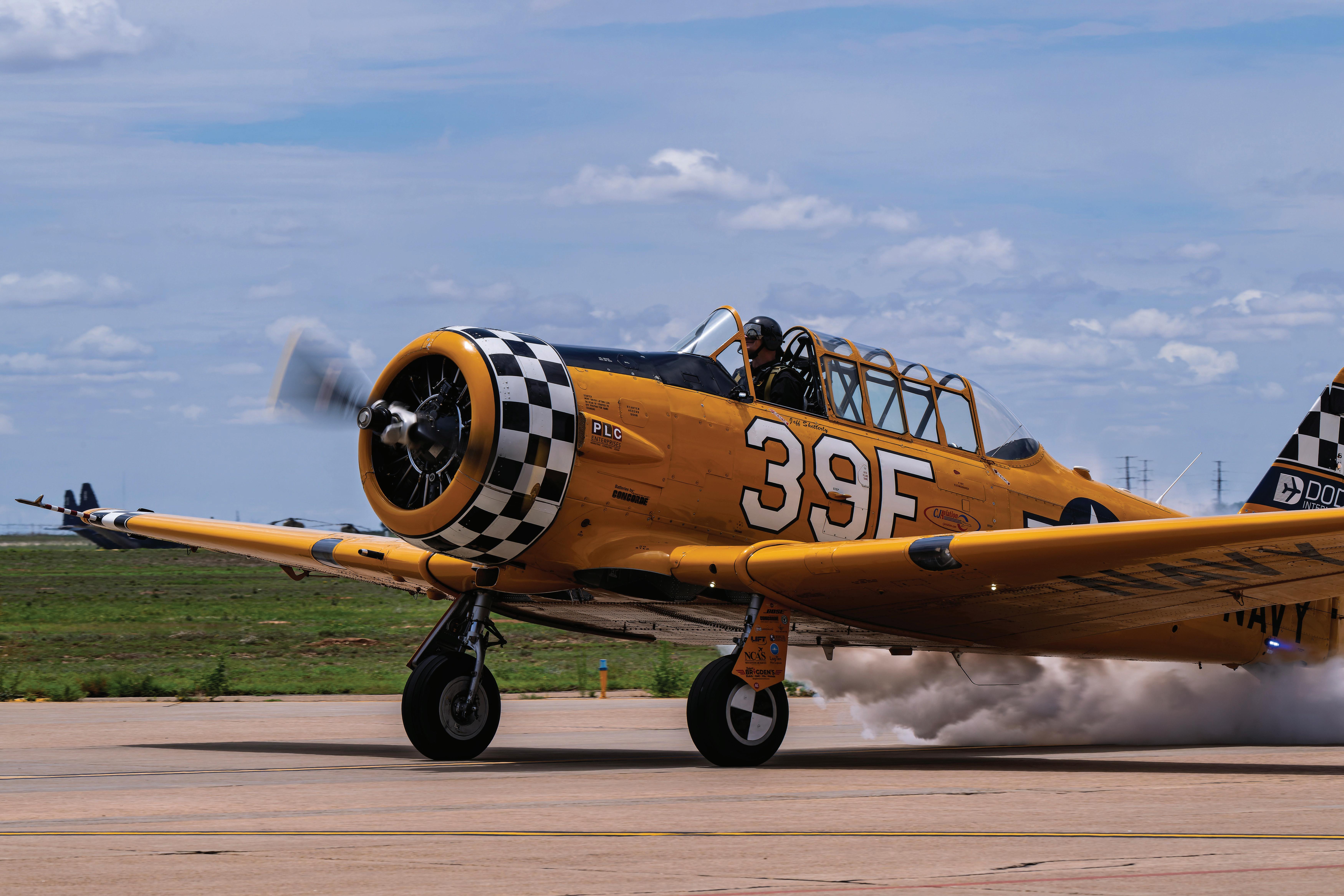
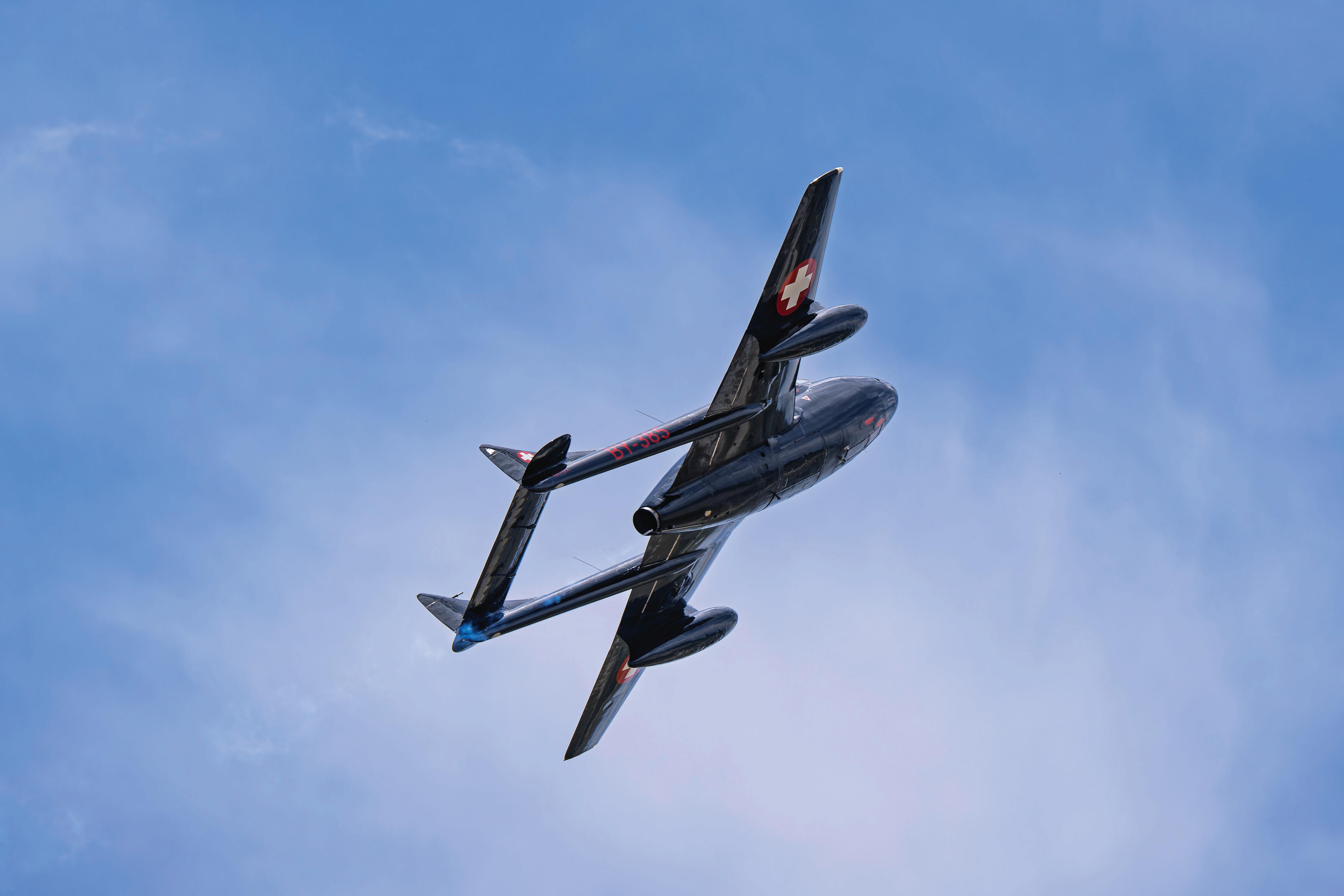
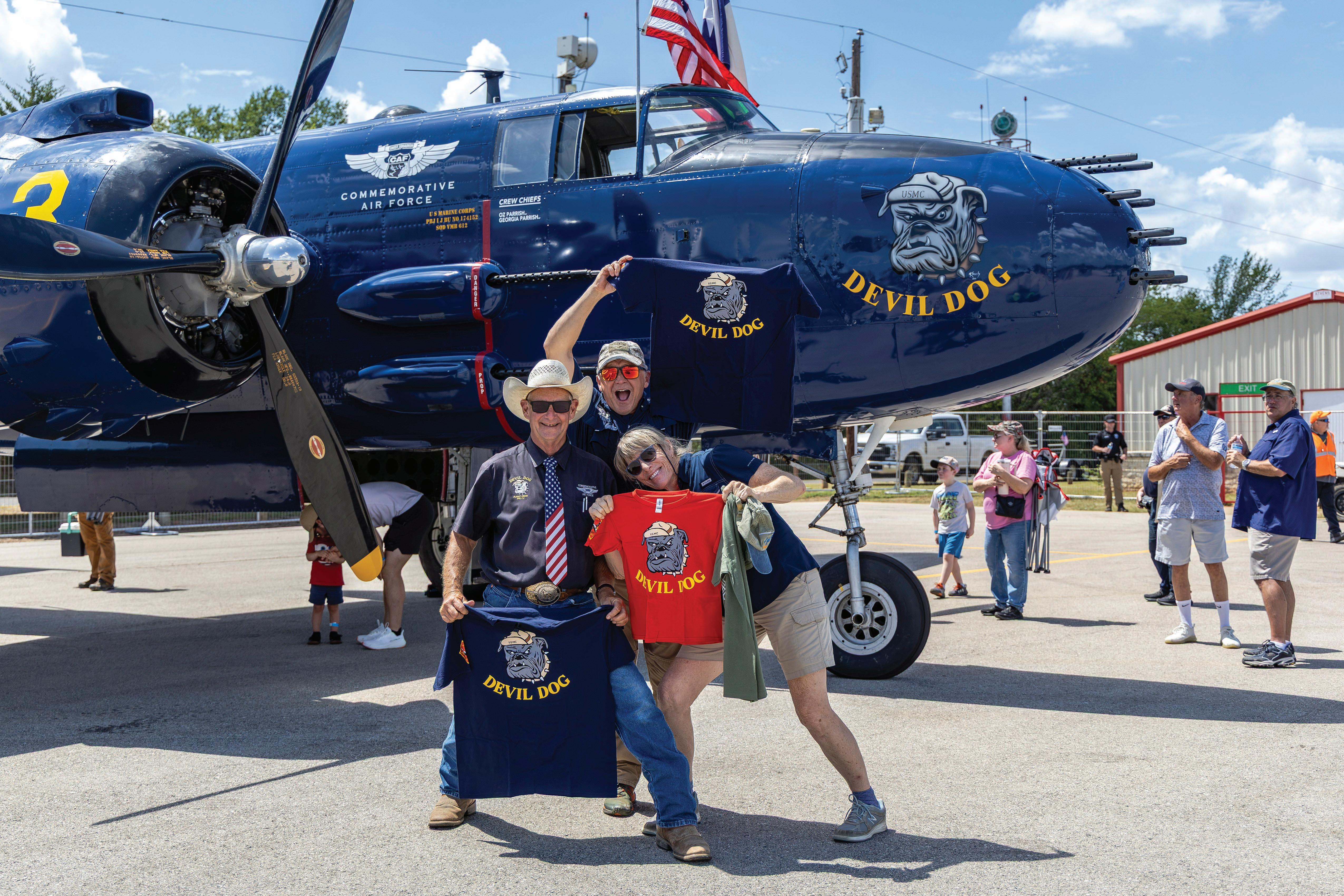
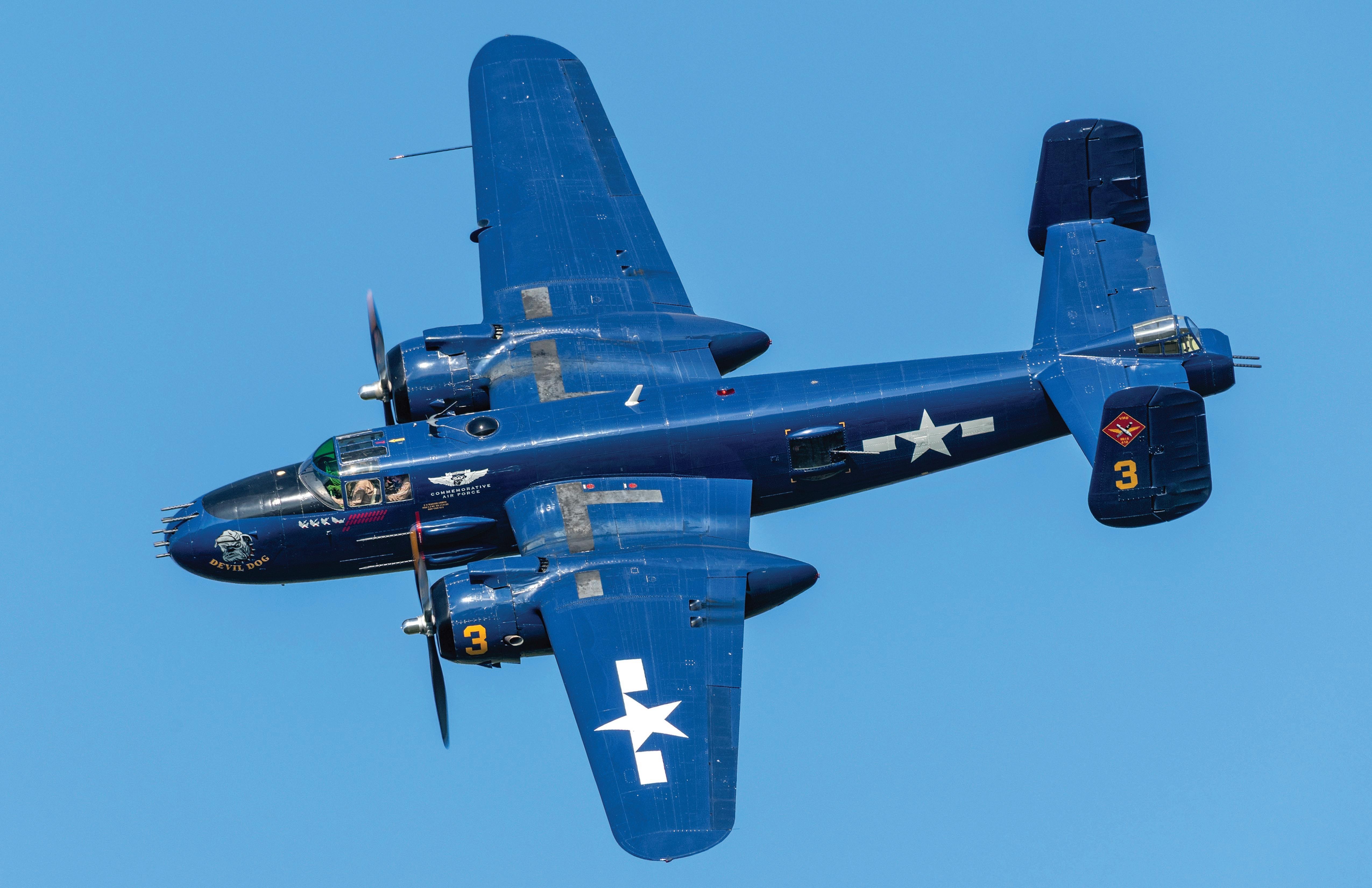
Civilian performers included Jerry Conley in his DH-115 Vampire “Vampy 5”, CAF B-25J “Devil Dog” and Jeff Shetterly in his SNJ.
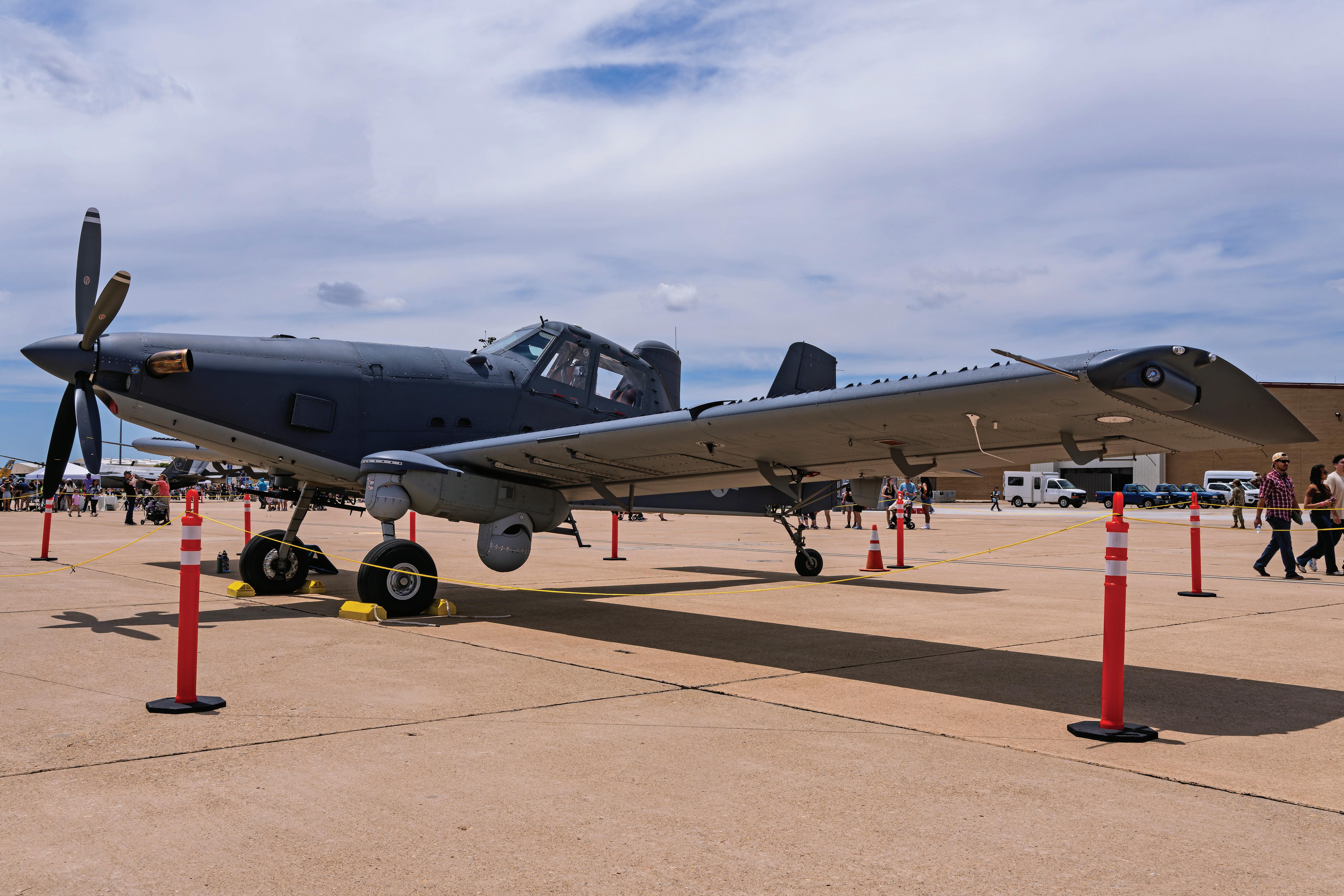
Static displays included 3 CV-22B with the rotors in different positions, OA-1K Sky Raider II, F-35A, F-16C, MC-130J, T-6A, UH-1 just to name a few for the estimated crowd of 9-10 thousand to enjoy between flying displays.
The 27 SOW is already in the planning stages for Wings over Cannon 2028. A special thanks to the 27th SOW public affairs team for their hospitality for the media day and air show.
Robin Guess
Robin Guess
Robin Guess
Robin Guess
Robin Guess
Robin Guess
Robin Guess
Robin Guess
Robin Guess
Naval Icons at AERONAUTICUM in Nordholz
Photos and article by Marc Schultz
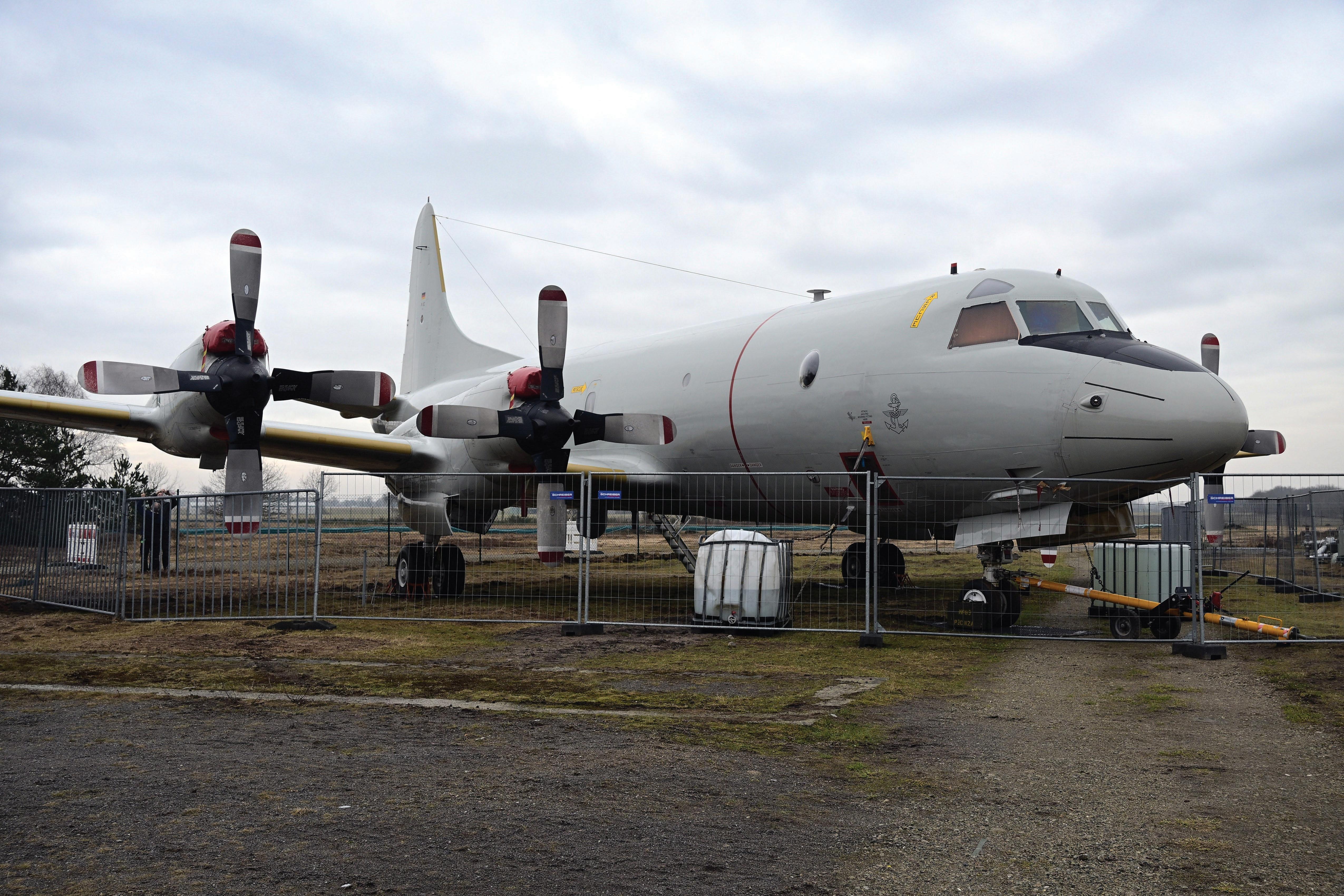
The decommissioning of two iconic German Navy aircraft in 2024 and 2025 marks the beginning of a new chapter at the AERONAUTICUM, located at the naval airbase in Nordholz at the German North Sea coast. The German Airship and Naval Aviation Museum is further expanding its position as one of Northern Germany’s most significant technology museums by adding two impressive historical witnesses: the Lockheed P-3C Orion and the Westland Sea King Mk.41. Both aircraft shaped the image of German naval aviation for decades; they have now found their final resting place on the museum’s approximately 36,000-square-meter outdoor grounds.
Lockheed P-3C Orion: The Navy’s “Flying Eye”
In December 2025, the P-3C Orion arrived at its new home in rather extraordinary fashion. Due to its massive dimensions, the four-engine maritime patrol aircraft was not moved via traditional transport. Instead, it was towed directly from the neighboring airbase to the museum across open terrain in a complex precision maneuver that left even experienced observers in awe.
• Service History: Since 2006, Naval Air Wing 3 “Graf Zeppelin” operated eight of these machines.
• Role: The Orion served as the backbone of German maritime reconnaissance, designed for anti-submarine warfare (ASW) and long-range sea surveillance.
• Operations: It proved its worth in international missions, most notably off the Horn of Africa as part of the EU’s Operation Atalanta.
• Technical Features: Key characteristics include its four turboprop engines and the distinctive MAD boom (Magnetic Anomaly Detector) at the tail, used to detect minute magnetic deviations— a vital tool for hunting submarines.
• Museum Status: Weighing roughly 28 tons empty, it is currently the museum’s largest exhibit.
While the six sister aircraft 60+03 through 60+08 are all finding a new homes in Southern Europe, Orion 60+01 will remain at the AERONAUTICUM in Nordholz.
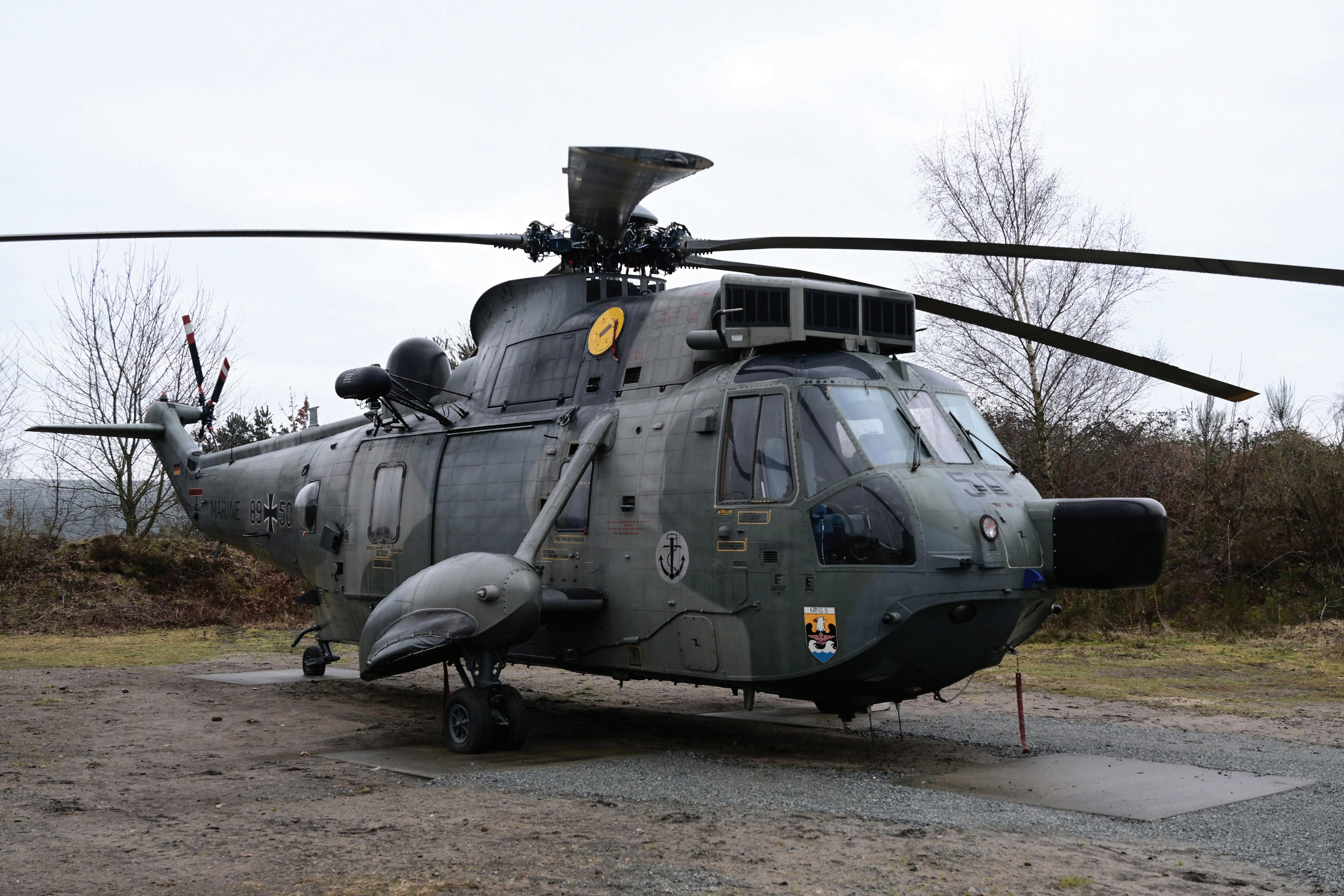
Westland Sea King Mk.41: Lifesaver over the North and Baltic Seas August 2024 saw the end of another flying era when the Navy decommissioned the Sea King Mk.41 after more than five decades of service.
• Legacy: Hardly any other aircraft is as synonymous with search and rescue (SAR) in Germany. For generations of coastal residents, the characteristic sound of its rotors has been associated with help in times of dire need.
• Reliability: Since its introduction in 1972, the Sea King was on duty 24/7, operating through storms, darkness, and the harshest weather conditions.
At the AERONAUTICUM, visitors can experience the evolution of German naval aviation from the Cold War to the present day through accessible and “hands-on” exhibits. A particular highlight is the “Open Plane” event. Depending on weather and scheduling, selected large exhibits are opened to the public, offering a rare look inside icons like the Orion and Sea King—a perspective usually reserved only for their crews. For more information, contact the museum’s website at www.aeronauticum.de
• Design: A unique feature visible on the museum exhibit is its boat-shaped hull, which theoretically allows the helicopter to land on water—a capability that underscored its role as a rescue craft.
While the Sea King and Orion have become part of history, a new generation has taken over: the NH90 Sea Lion and the P-8A Poseidon now secure maritime capabilities at Nordholz Naval Air Station.
Marc Schultz
Tucked away in Vermont, where back roads wind through maples and hangars feel more like workshops than museums, lives a rare and beautiful airplane with a very personal story: a Lockheed Model 12 Electra Junior owned by Jon and Uwana Perras.
The Lockheed 12A is one of those airplanes that stops people mid-sentence. Sleek, purposeful, and unmistakably Lockheed, it was designed in the late 1930s as a fast, small twin for corporate and government use. Only a limited number were built, and even fewer survive today, which makes the Perrases’ aircraft something special every time its engines turn over.
Jon and Uwana didn’t just acquire an old airplane—they took on a long-term relationship. Their restoration of the 12A has been a careful balance of historical respect and practical craftsmanship. The goal wasn’t to create a static showpiece, but a living, breathing aircraft that could still do what it was designed to do: fly. From airframe work to systems refurbishment, the project demanded patience, research, and a willingness to chase down hard-to-find parts and period-correct details. Friends, specialists, and fellow vintage-aircraft enthusiasts all played a role, but the steady vision behind it remained firmly Jon and Uwana’s.
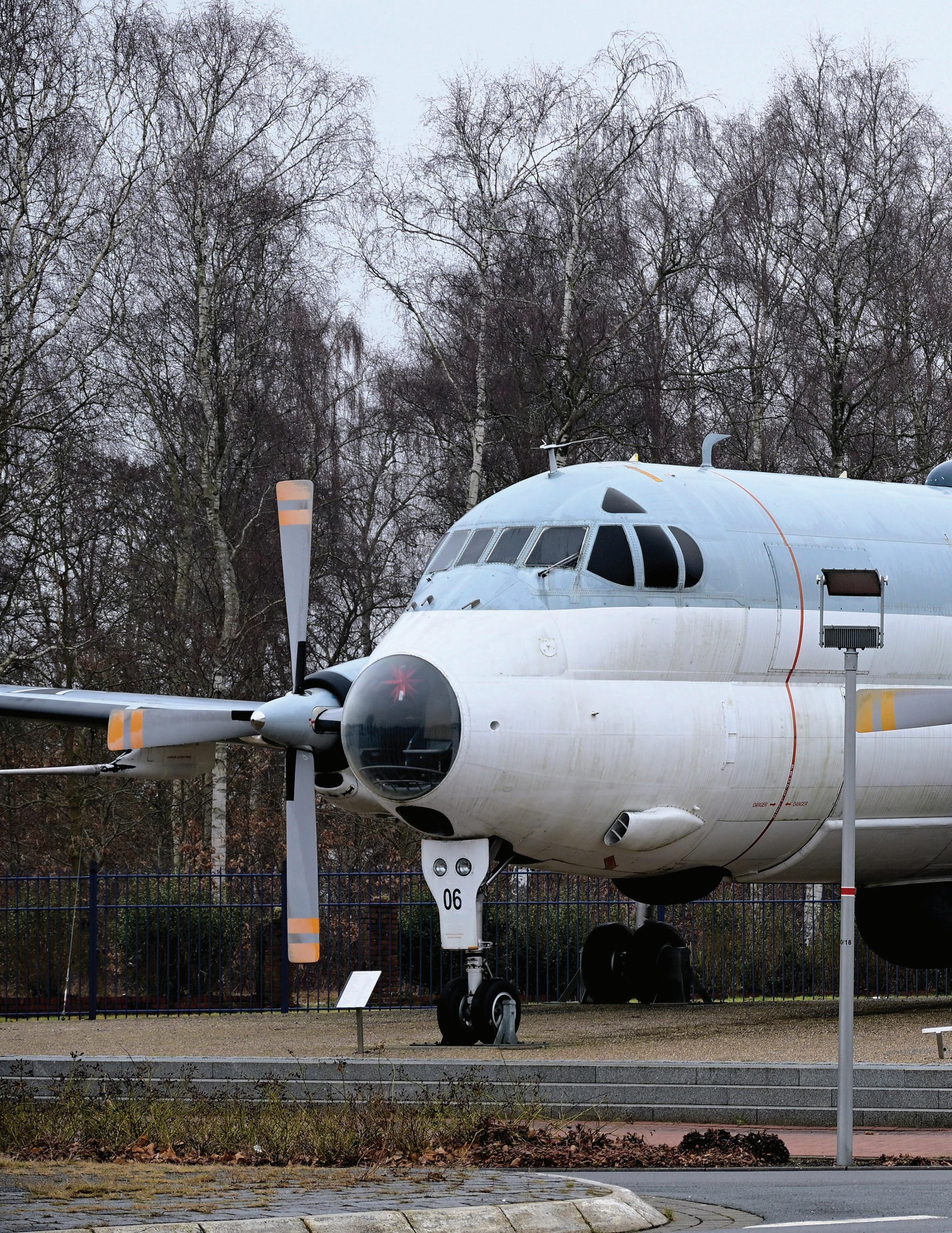
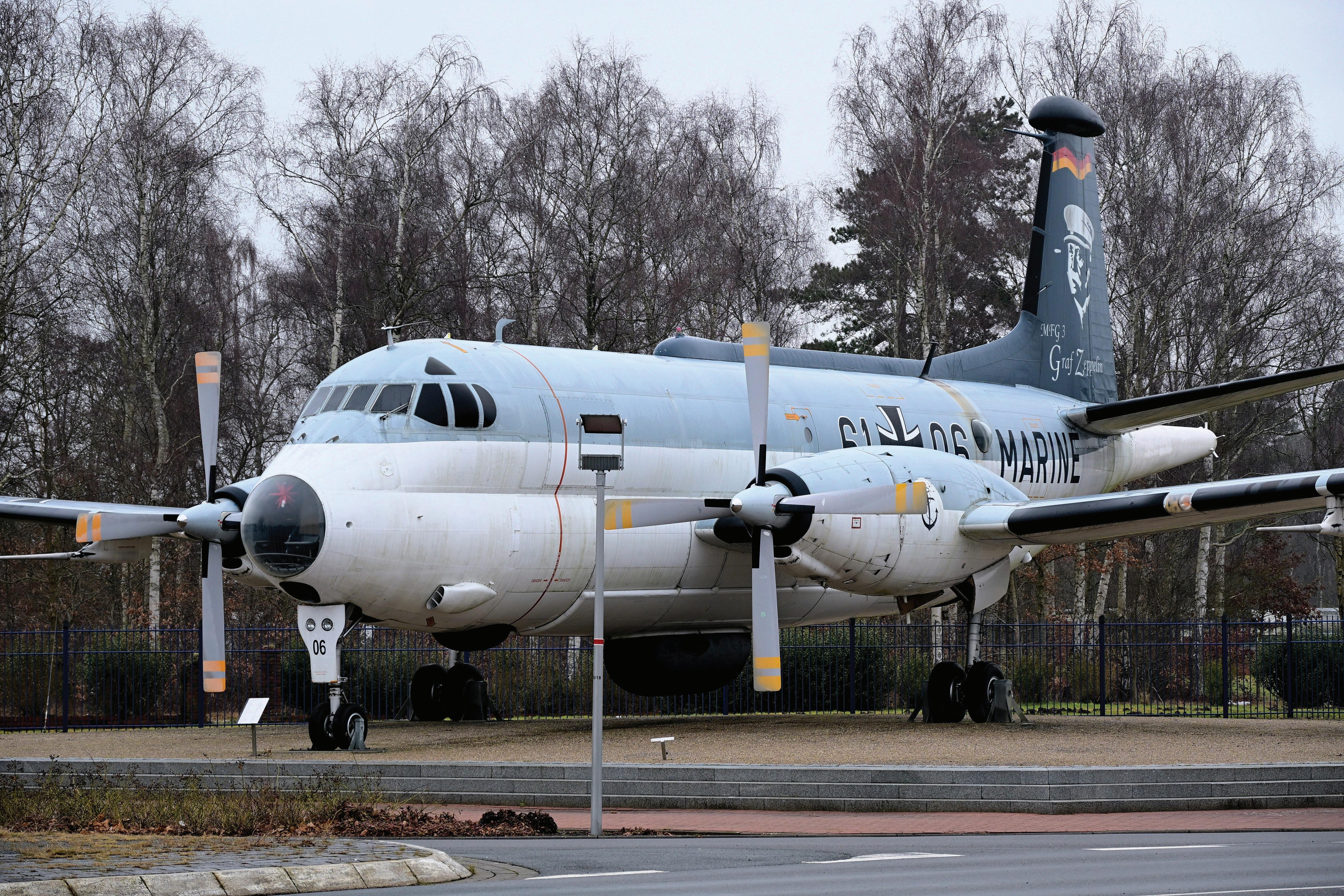
The predecessor of the P-3C was the Breguet Atlantic. This particular aircraft, carrying naval registration 61+06, is one of two remaining examples at the Nordholz site. It serves as the station’s “Gate Guardian”.
Marc Schultz
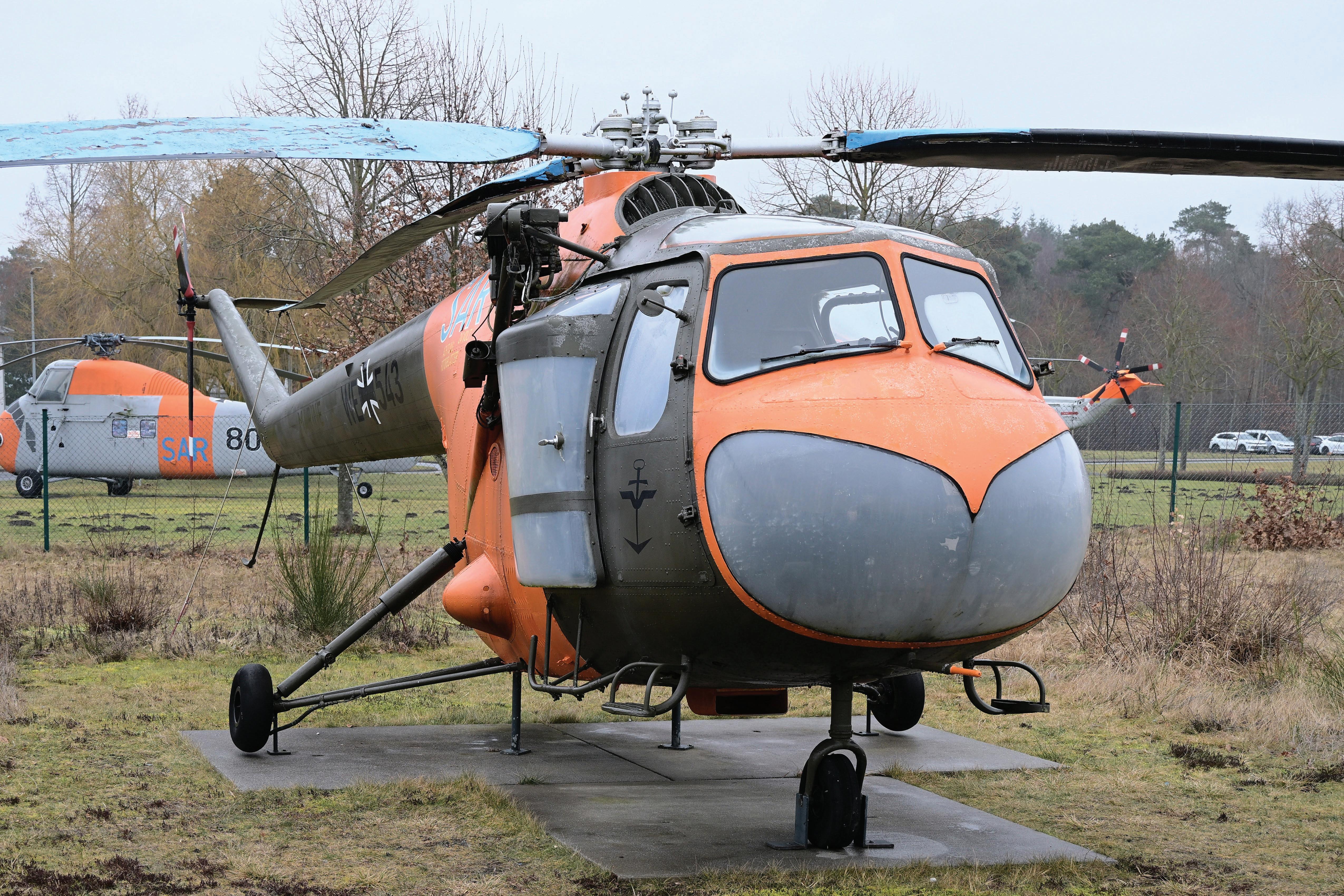
Despite its rather short service life, the Bristol Sycamore holds a special place in the history of the German Armed Forces. As the very first helicopter to enter service with the newly formed military in the late 1950s, it marked the beginning of vertical flight operations for both the Luftwaffe and Navy (Bundesmarine).
Marc Schultz
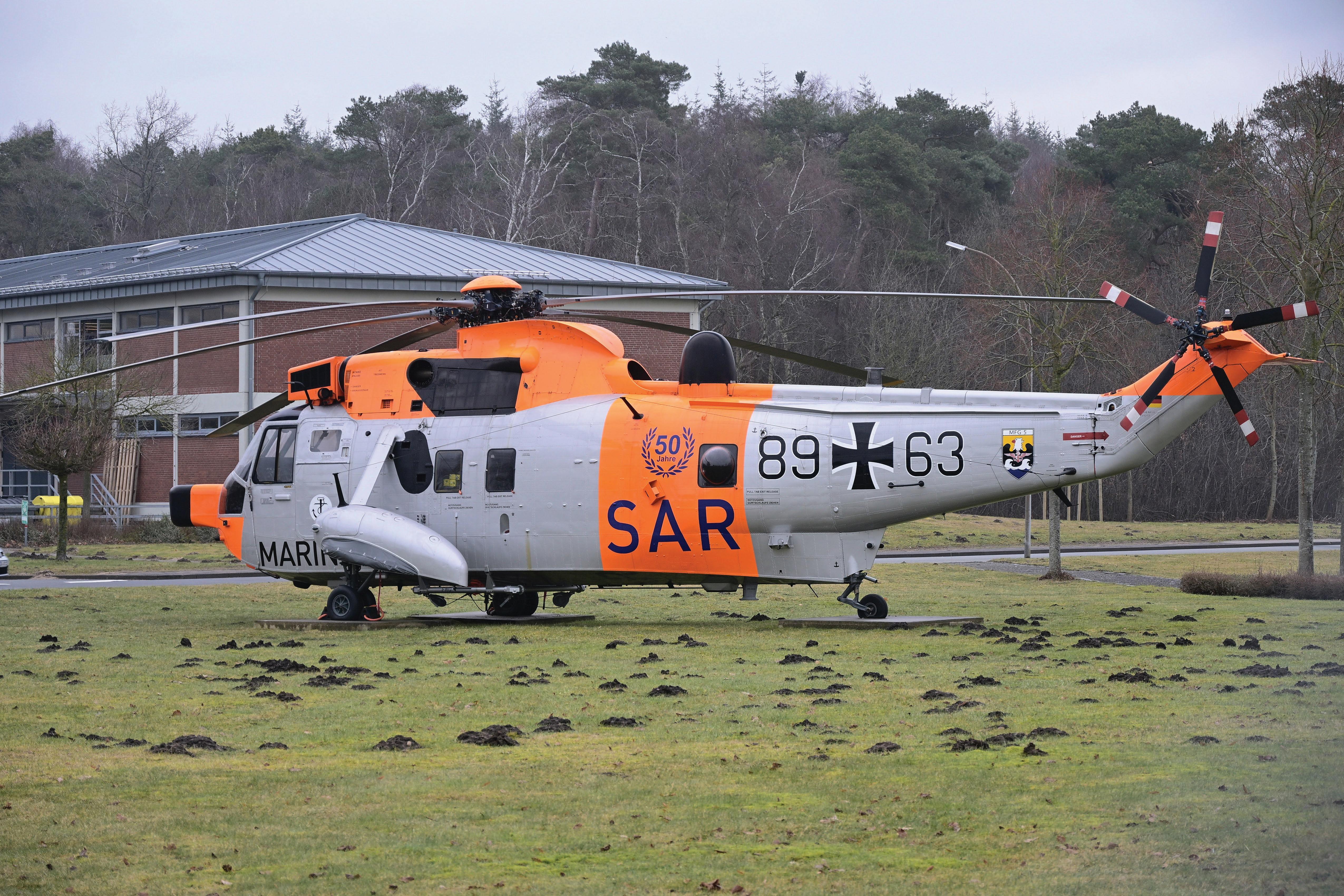
Westland Sea King Mk. 41 in special SAR-colors. The aircraft “89+63” is not part of the museum but serves as a Gate-Guardian at the base entrance.
Marc Schultz
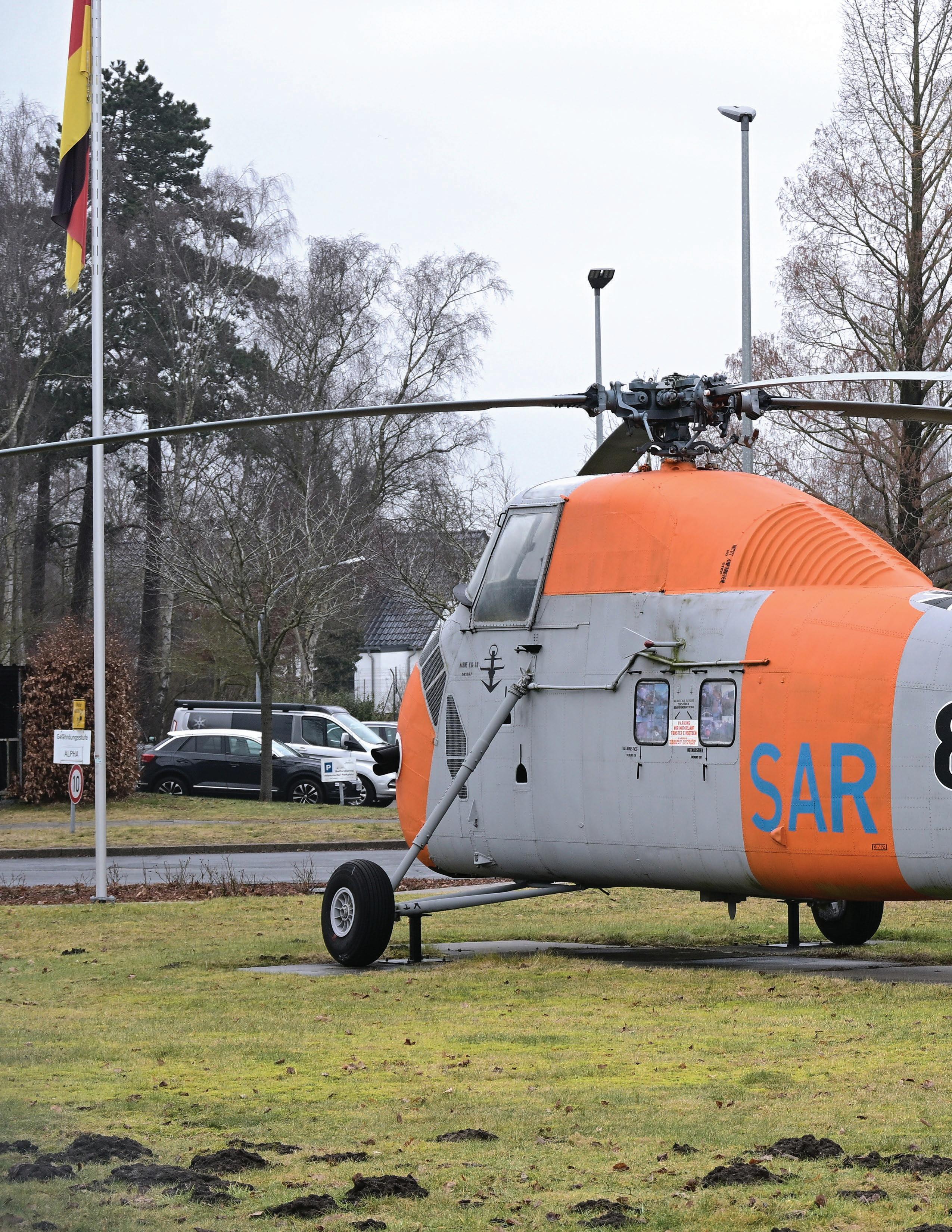
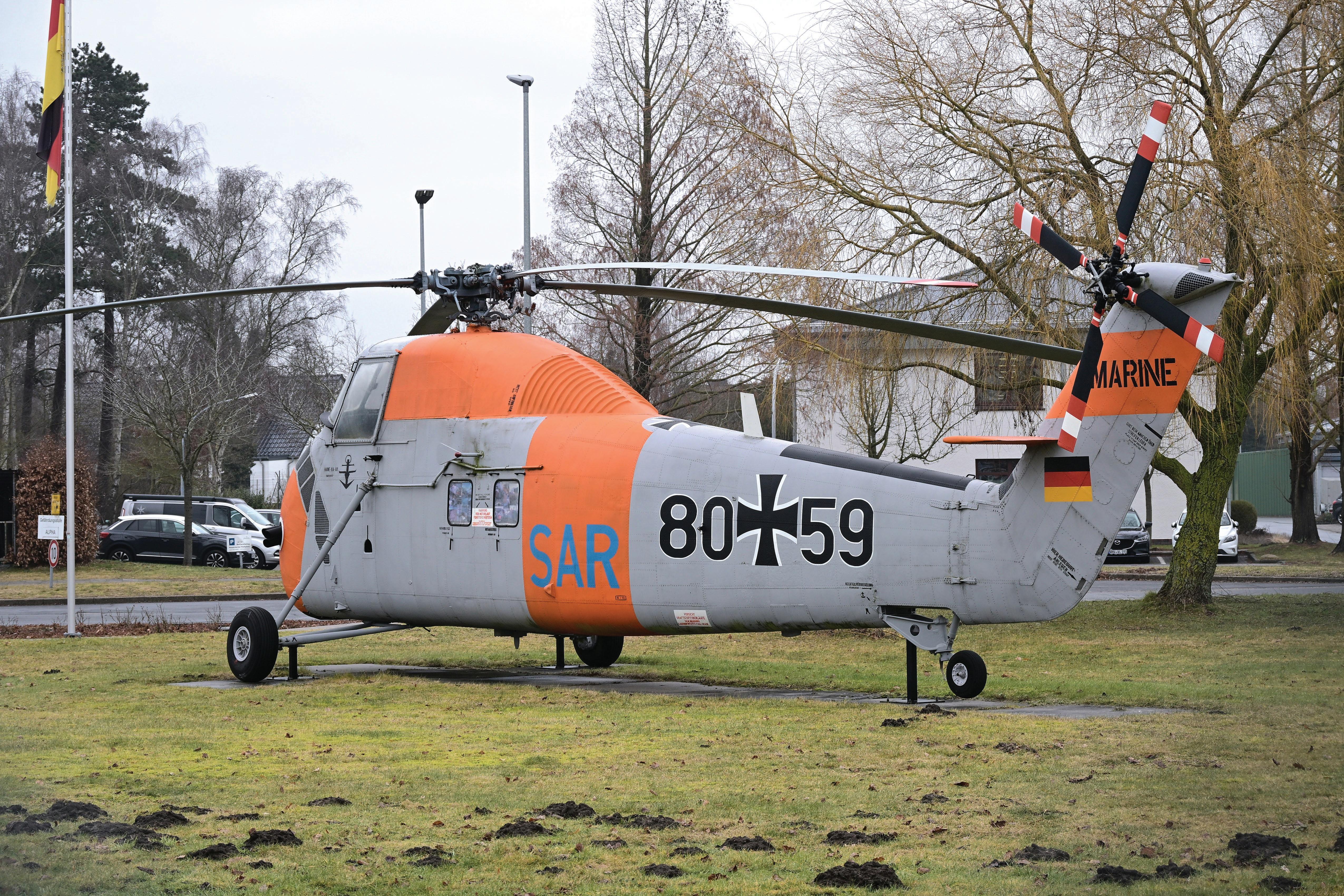
The Sikorsky H-34 was the backbone of early tactical transport and Search and Rescue (SAR) operations. Entering service in the late 1950s, it served with all three branches: Army (Heer), Air Force (Luftwaffe), and Navy (Bundesmarine).
Marc Schultz
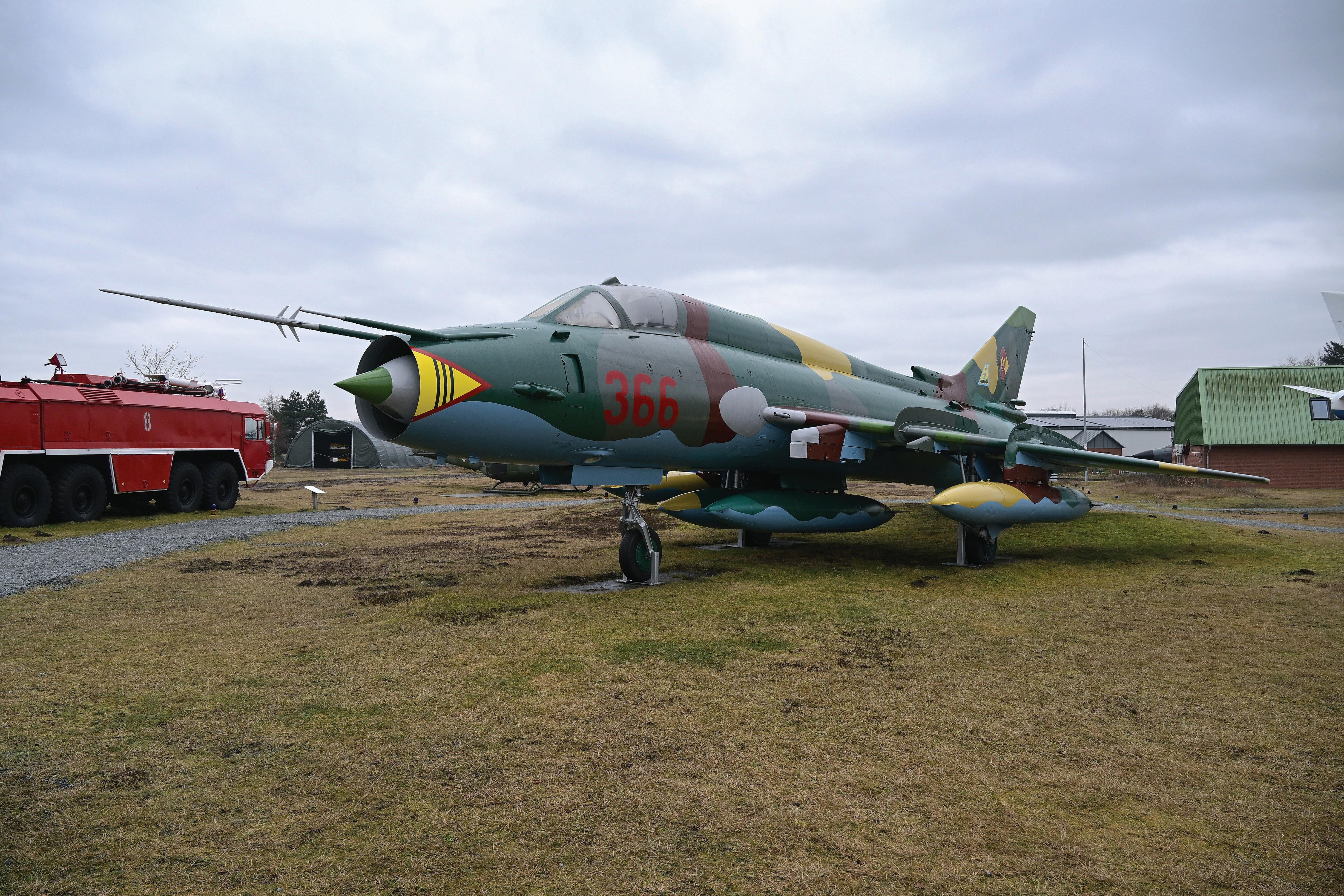
This Sukhoi Su-22M4 originates from the East German Air Force (LSK/LV) inventory of the National People’s Army (NVA). It was operated there by Naval Air Wing 28 (MFG-28) “Paul Wieczorek,” based in Laage.
Marc Schultz
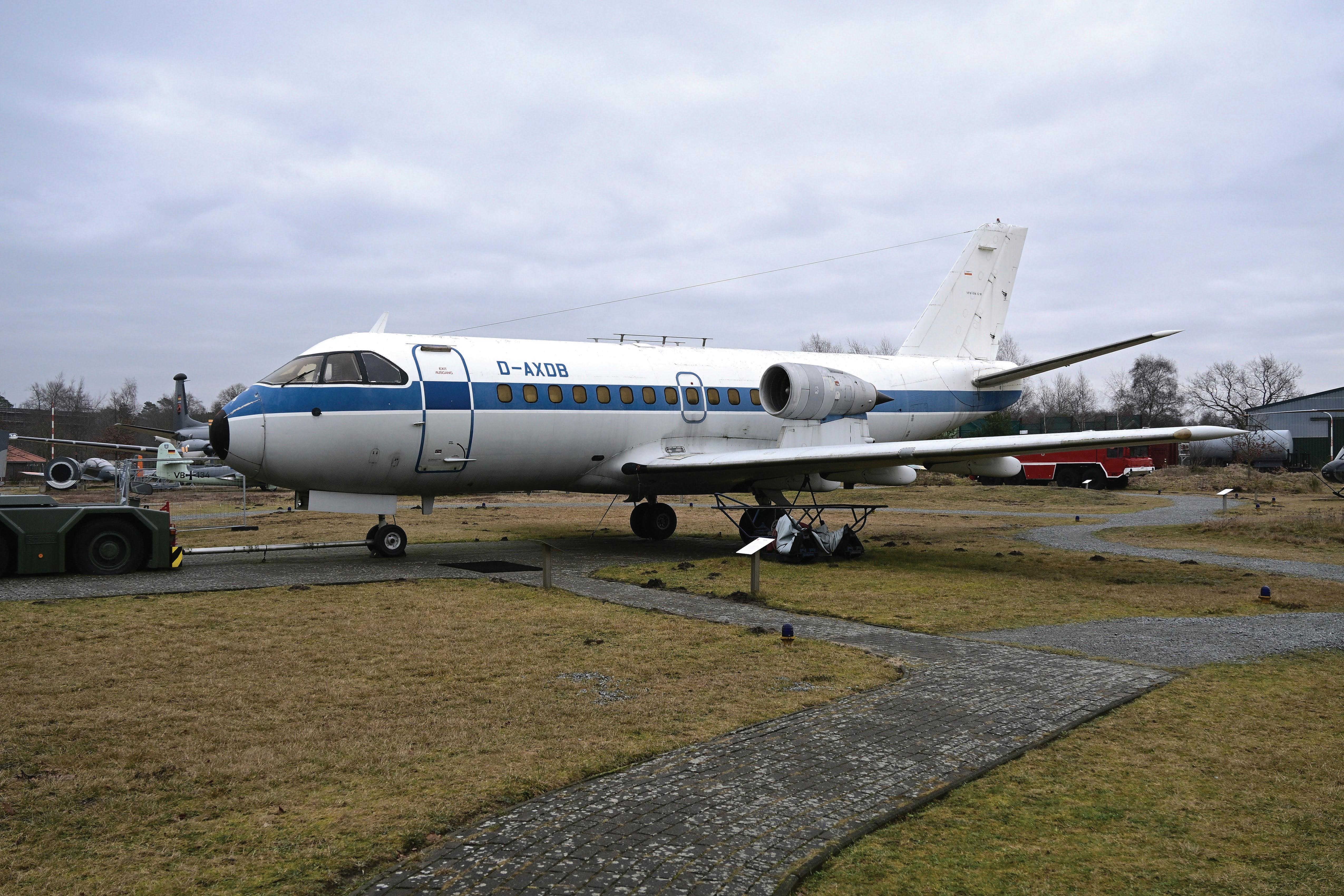
Distinguished by its over-wing engines, this VFW 614 initially served the German Air Force (17+02) for VIP transport between 1977 and 1998.
Marc Schultz
The Great Texas Airshow 2026
Article and photos by Eric Renth
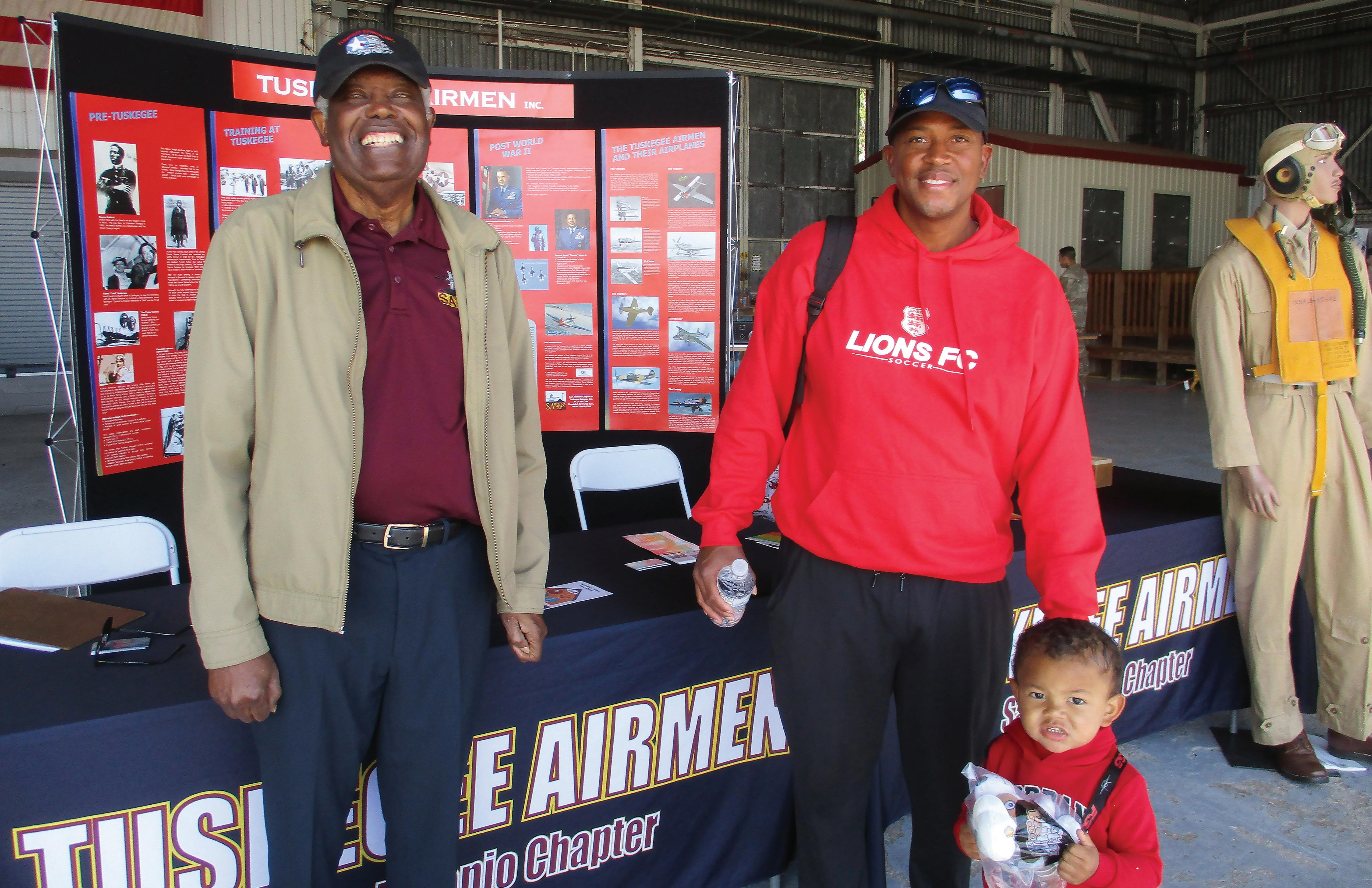
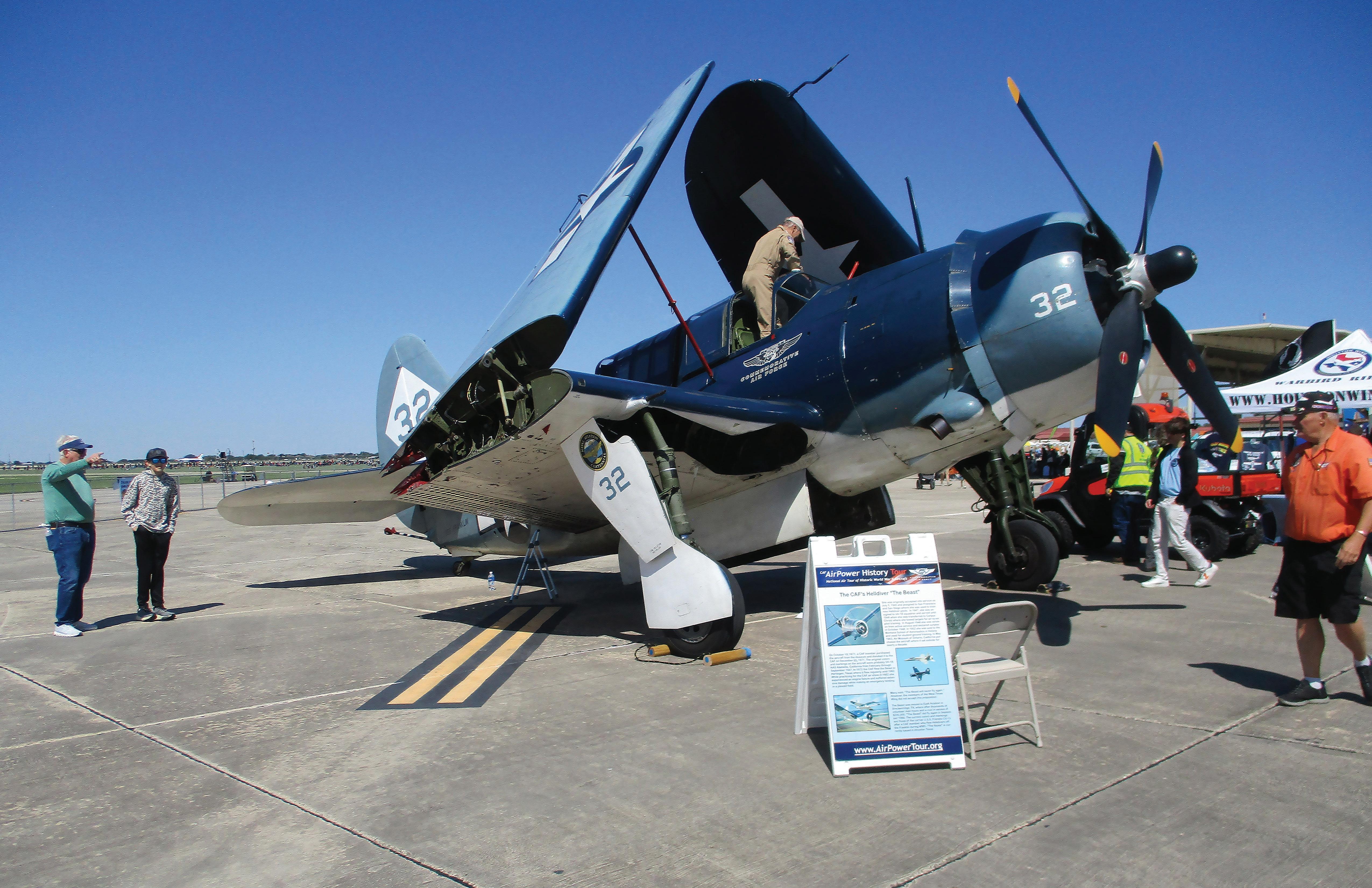
The Great Texas Airshow at Joint Base San Antonio on May 2-3 truly was great. The flying included the USAF Thunderbird F-16s, Army Golden Knights Parachute team, the outstanding F-22 Raptor, and the Commemorative Air Force (CAF) Tora Tora Tora Pearl Harbor reenactment (proud CAF member myself).
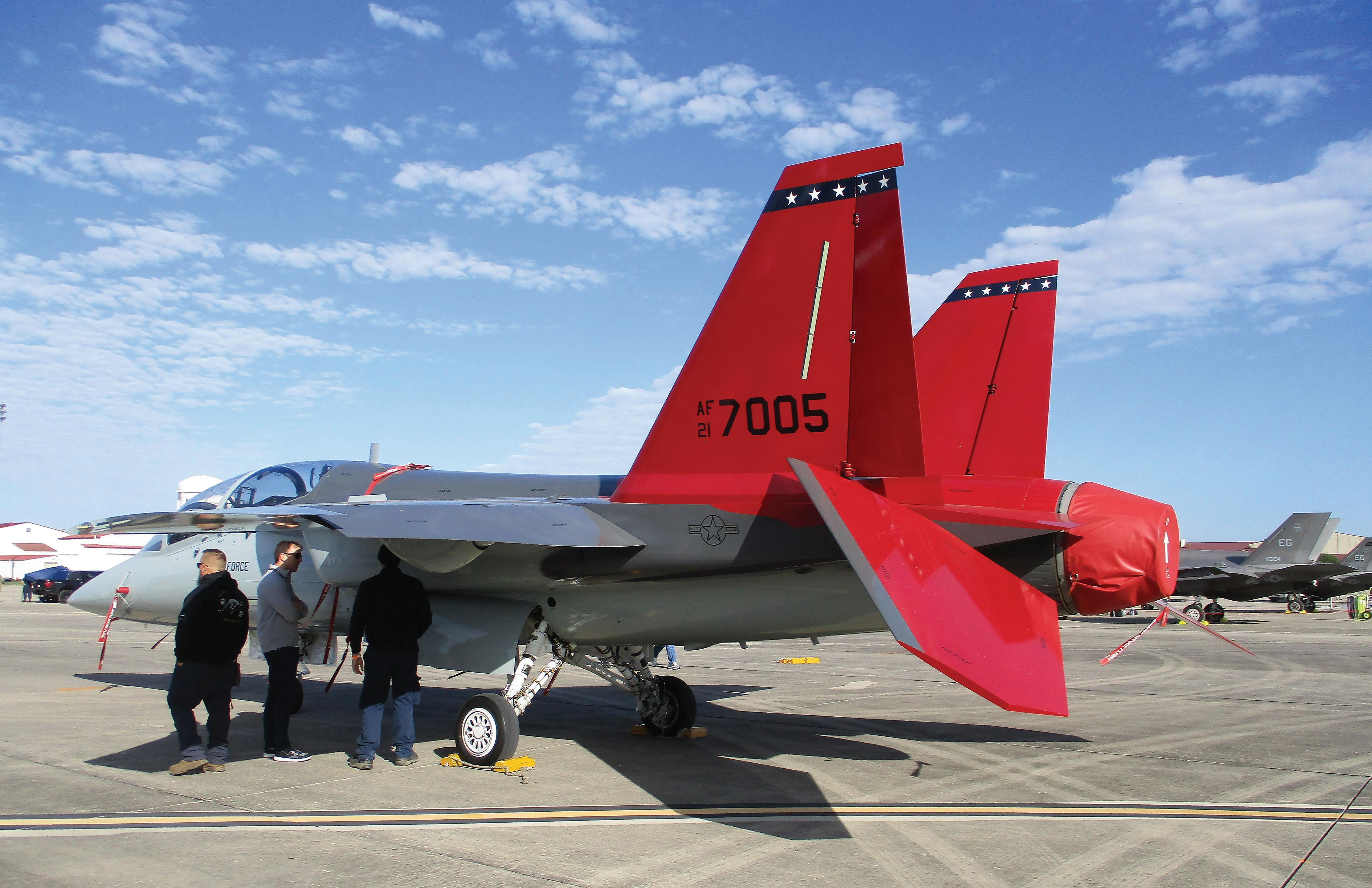
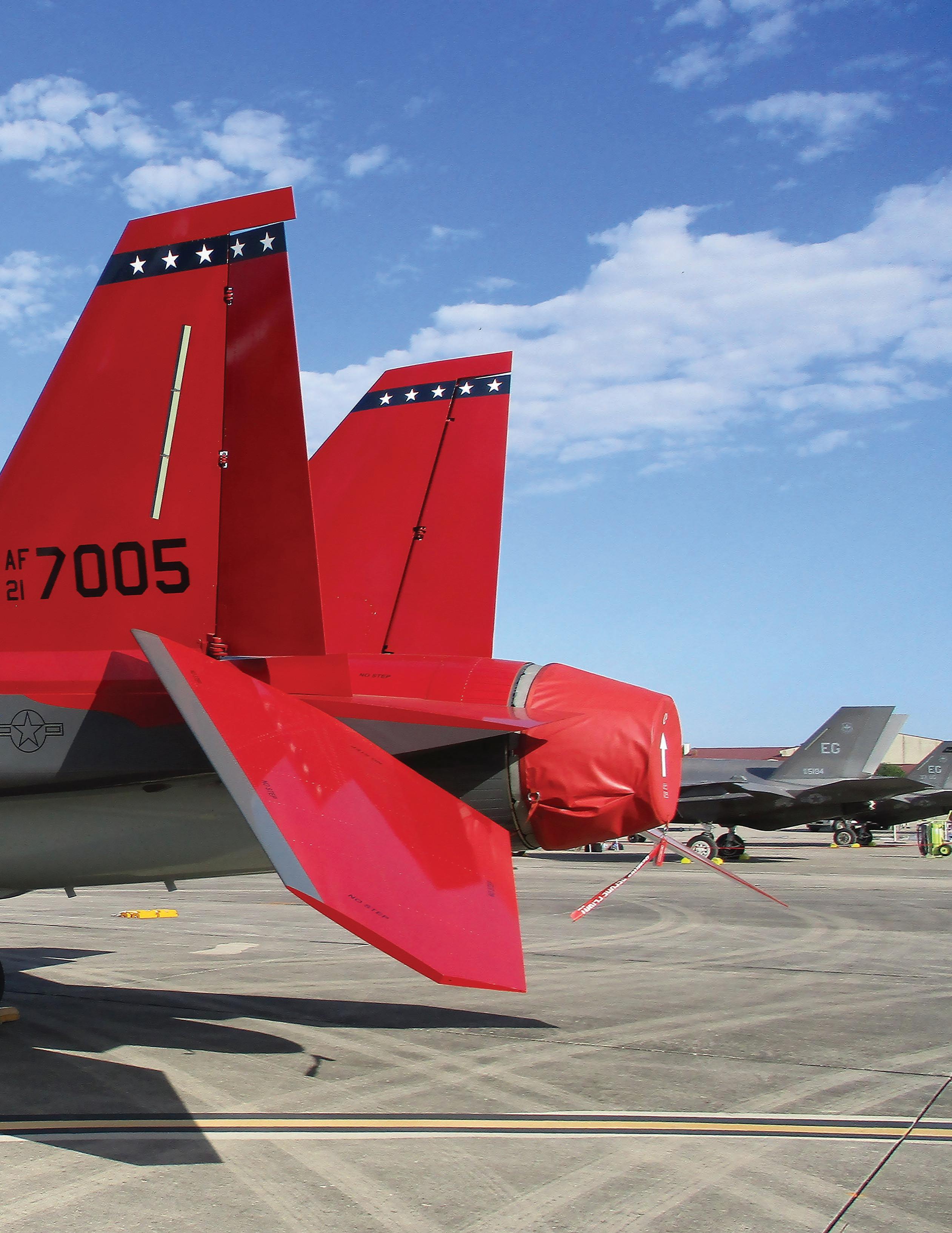
Despite storms of May 1st causing the canceled appearance of some static displays, What was there was impressive. The one plane I was looking to see up close was the new Boeing T-7A Redhawk trainer that
is replacing the iconic Northrup T-38 Talon. Two Redhawks are now at Joint Base San Antonio and the base will get around 24 more in the next two years. They will train the instructor pilots and maintenance folks who will go on to other training bases as they get their T-7s.
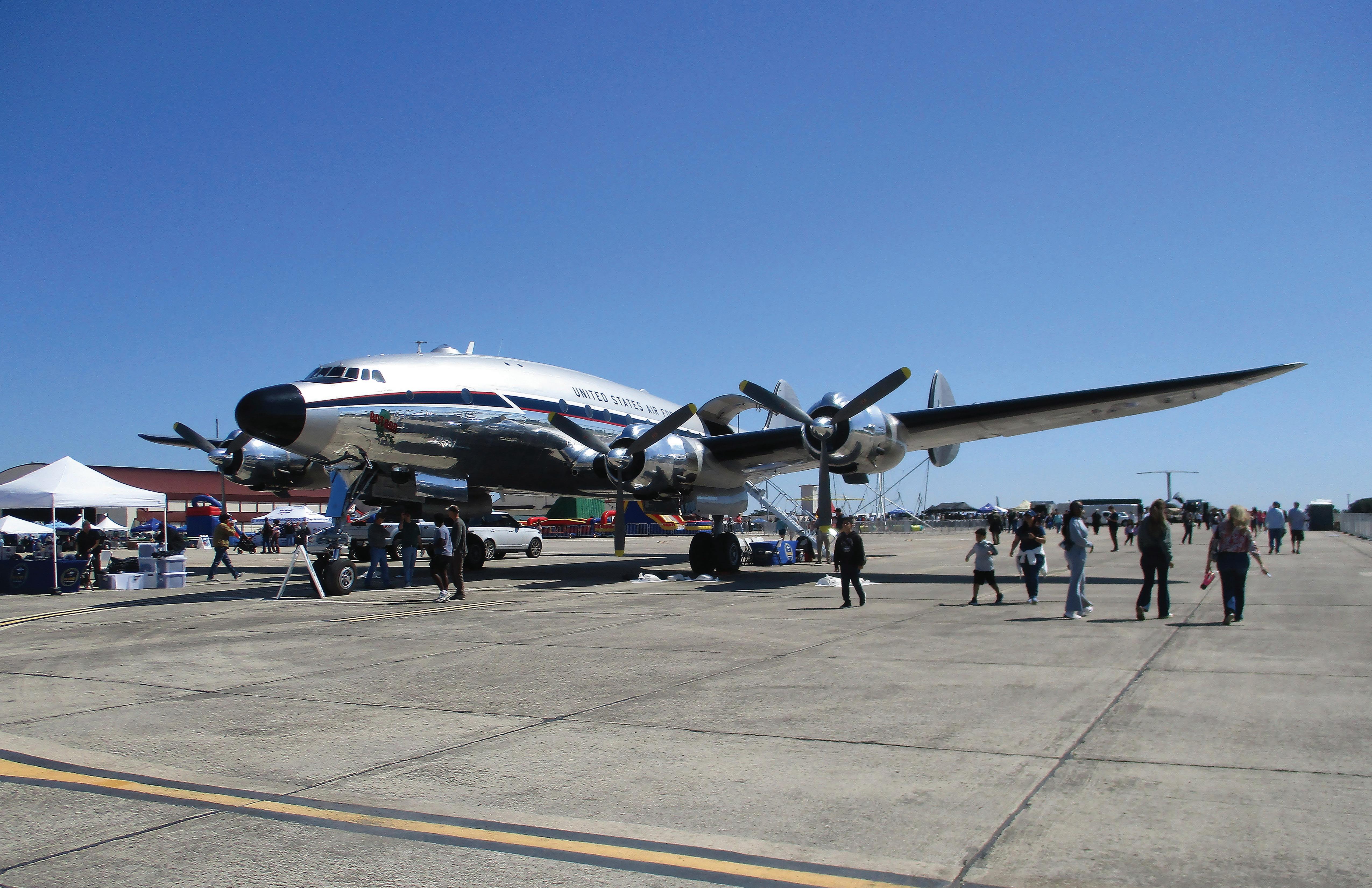
The Lewis Air Legends brought the beautiful C-121A Constellation BATAAN that was once General Douglas MacArthur’s transport.
Eric Renth
Eric Renth
Eric Renth
Eric Renth
Columbus Airshow 2026: A VERY WELCOME SHIFT
Article and photos by Brian La Fetra
The fourth iteration of the modern Columbus Airshow brought significant changes to the show. In what seems to be a trend among shows in 2026, Friday and Saturday’s airshow shifted from a traditional early-afternoon show to a late-afternoon into evening show. From a photography perspective, this was a huge boon as Columbus’s orientation is backlit for much of the day, with light shifting right at the new start time.
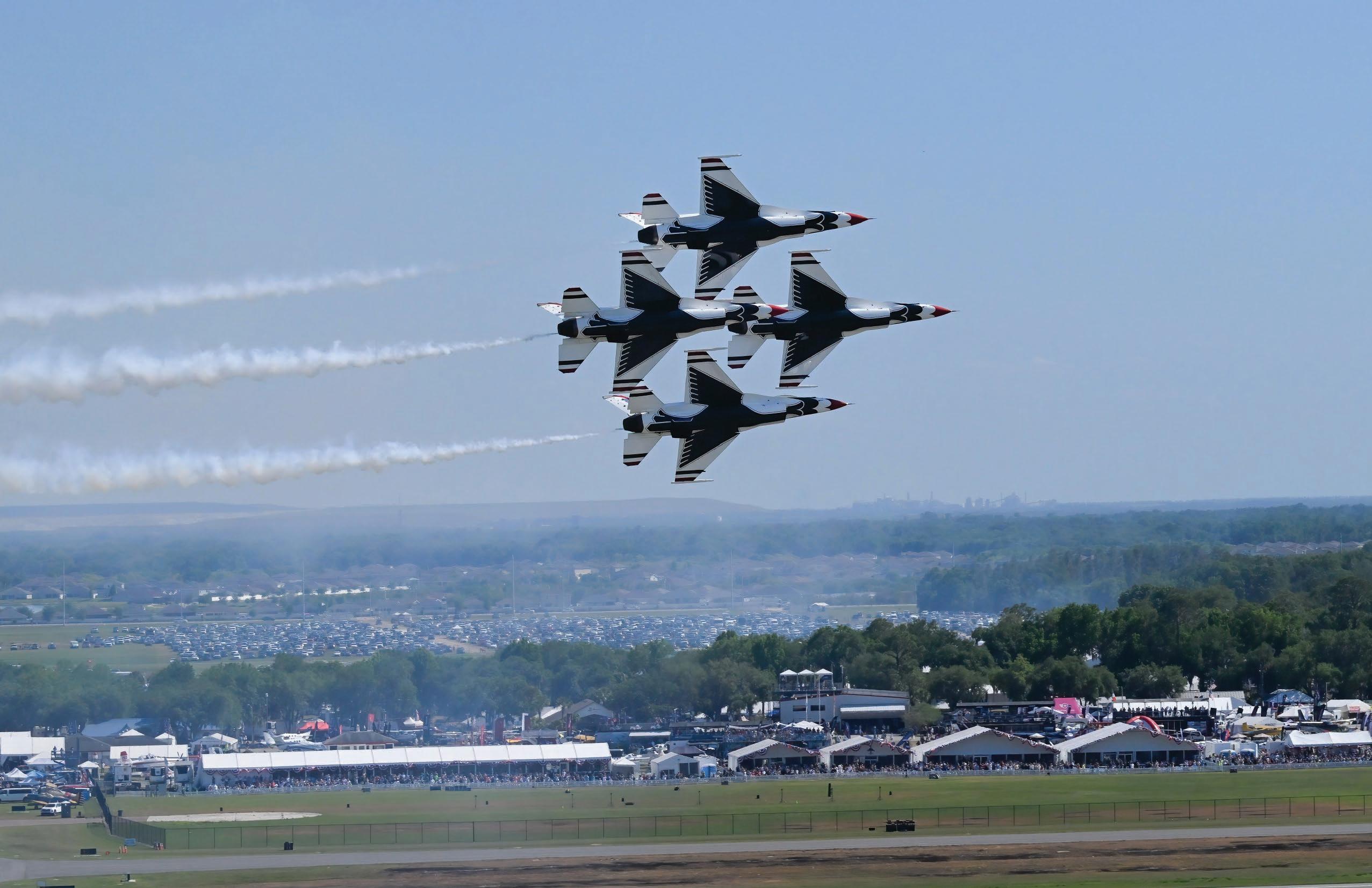
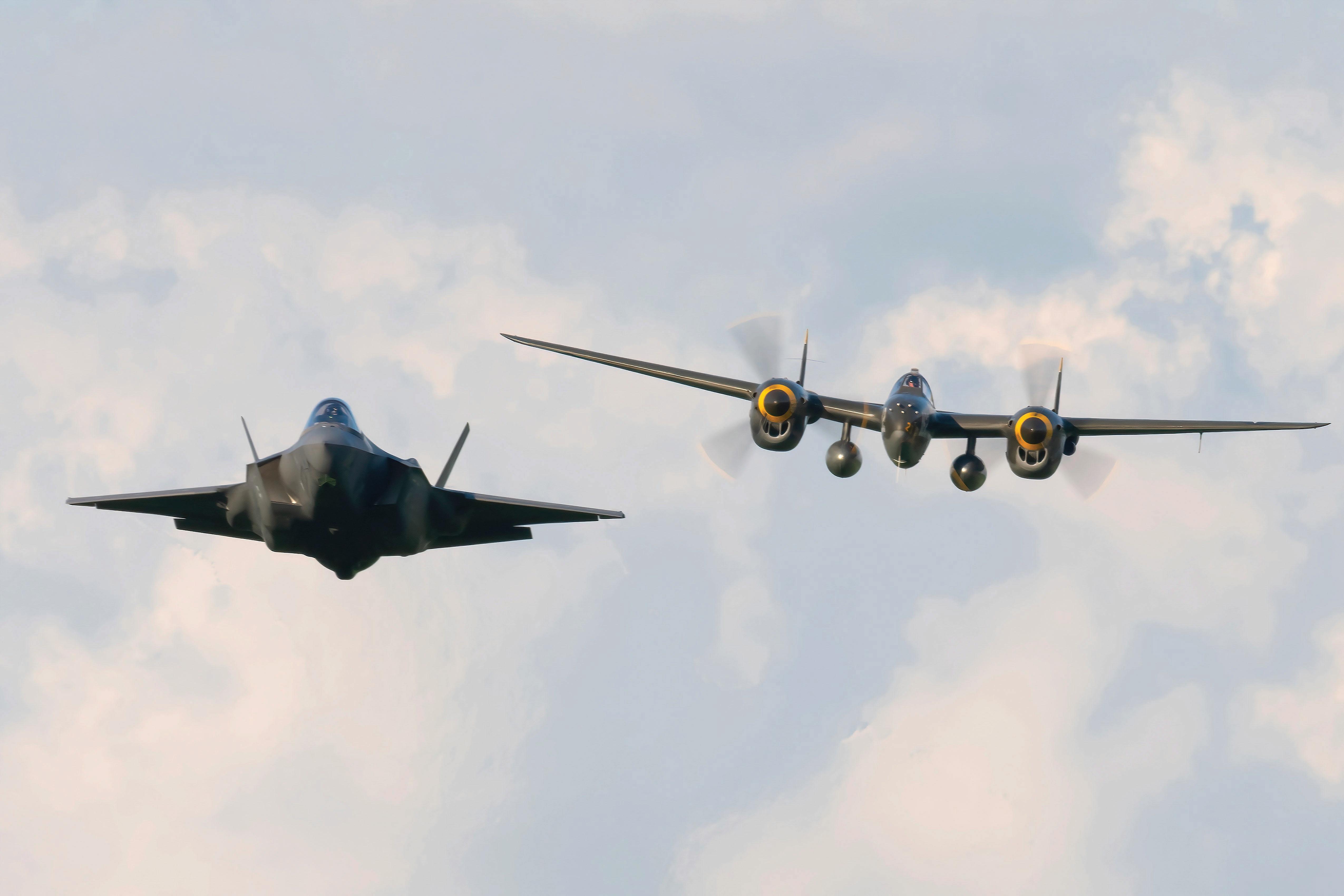
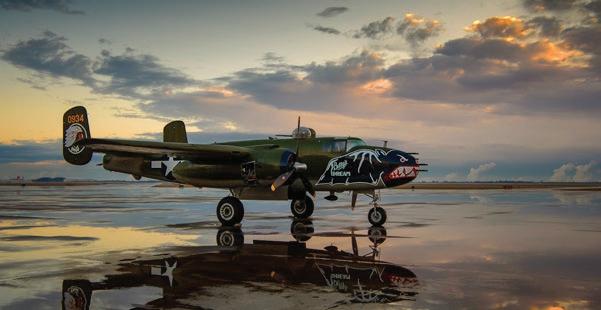
The weather cooperated to provide absolutely gorgeous lighting, with stunning clouds making an appearance on Saturday. Sunday’s rain held off until after the show, allowing for a full display as well. The show lineup was really quite solid, with the Planes of Fame P-38 the highlight among the warbird segments alongside show regulars B-25D “Rosie’s Reply” and P-51C “By Request,” and a relative rarity in two national demonstration teams in the Thunderbirds and Royal Canadian Air Force Snowbirds anchoring the jet side, along with the F-35A Demo Team.
As this is the last year in Tutors before a long hiatus, I was very glad to see the Snowbirds all three days, even if they never flew a full nine-ship demonstration. The latter two participated in the continually more elaborate “Battlefield Europe” segment, which now includes two tanks, two half-tracks, two field artillery pieces, one anti-aircraft cannon, and several light vehicles.
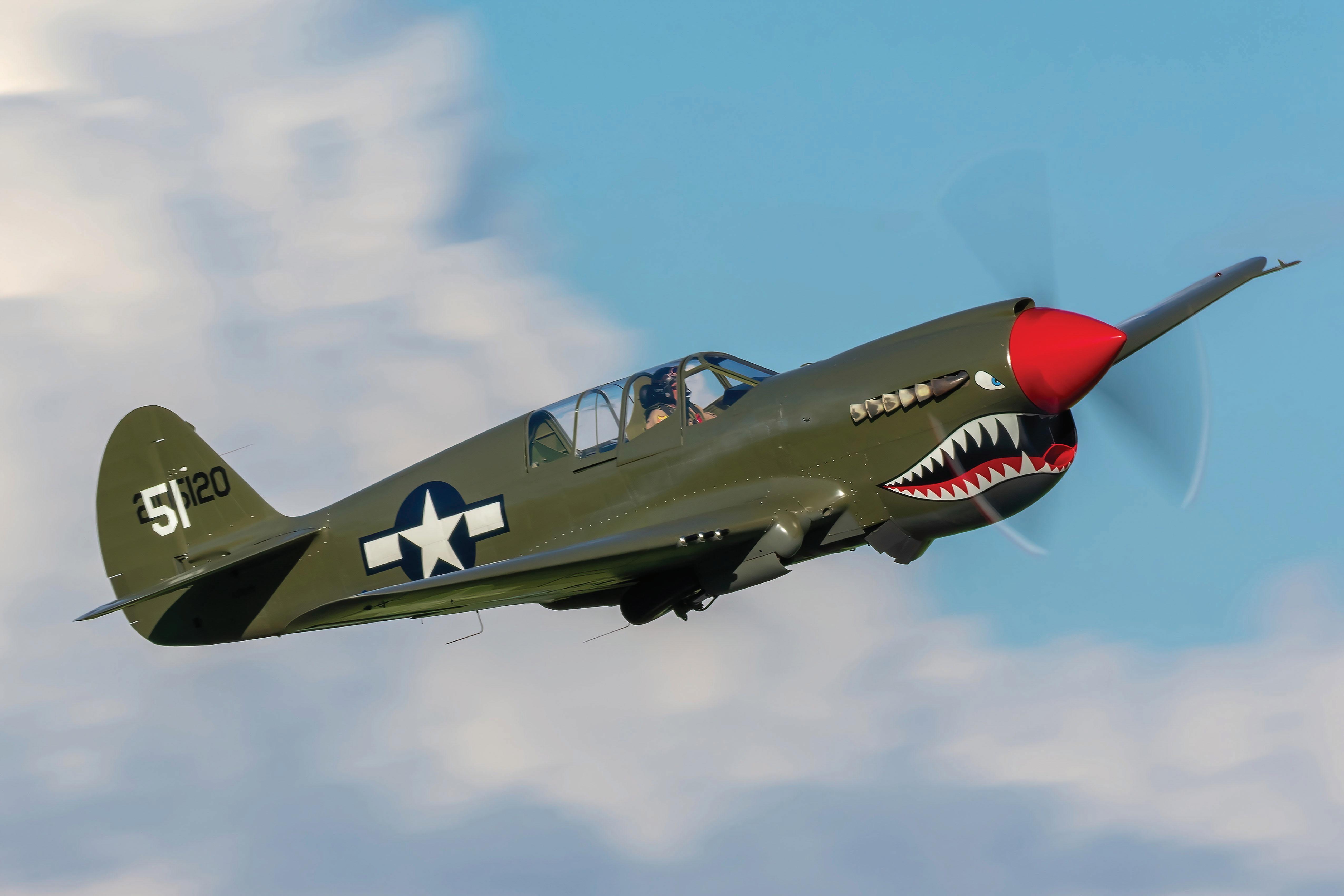
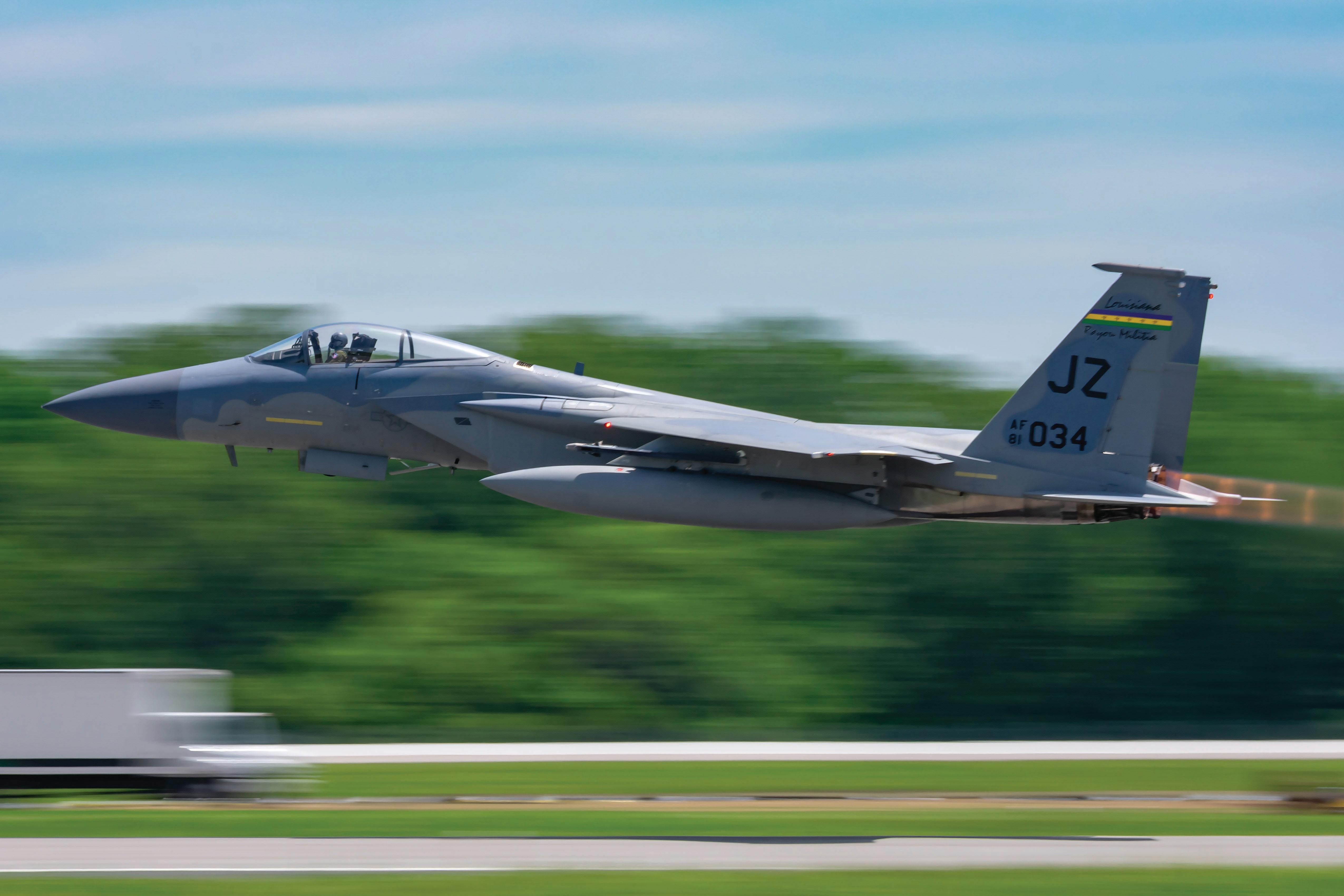
This was also my first time seeing Thom Richard’s routine in the P-40N, which was just spectacular. The show had a couple bonus “performers” as well, with a Western Global 747-400 freighter arriving in perfect golden hour light on Saturday, and all four F-15C Eagles from static display departing during Sunday’s show.
While the warbird section (my personal interest) has never quite replicated the spectacular lineup of the initial 2023 show, Columbus remains overall a very solid show and should the time changes become permanent, it will easily become my favorite Ohio show to attend as a photographer.
Brian La Fetra
Brian La Fetra
Brian La Fetra
Brian La Fetra
Brian La Fetra
Brian La Fetra
Canadian Forces Snowbirds demonstrate their four ship cross for the crowds during the 2026 Columbus Air Show.
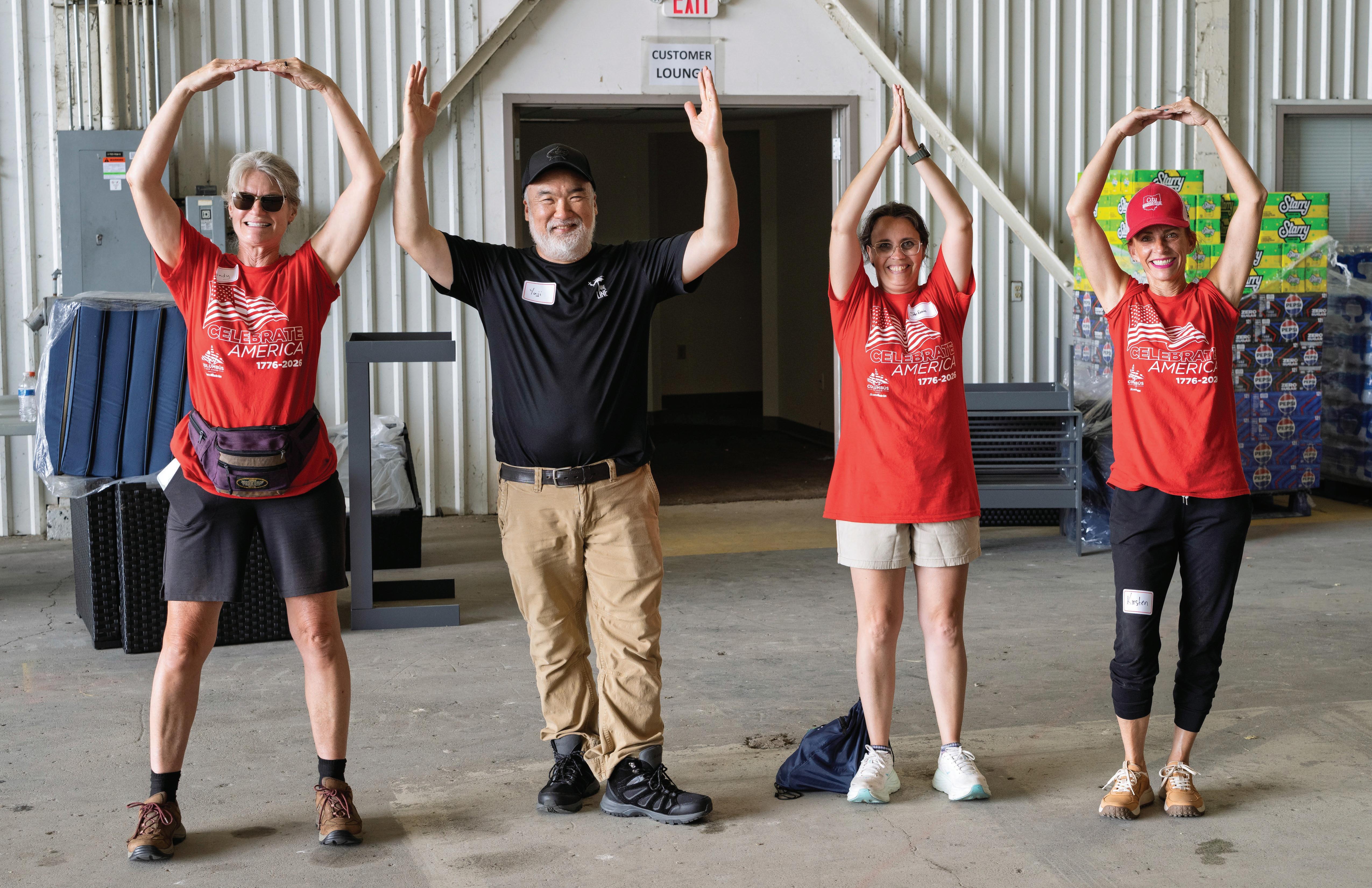
Columbus Airshow staff, welcome to Ohio and the Columbus Airshow!
Larry Grace
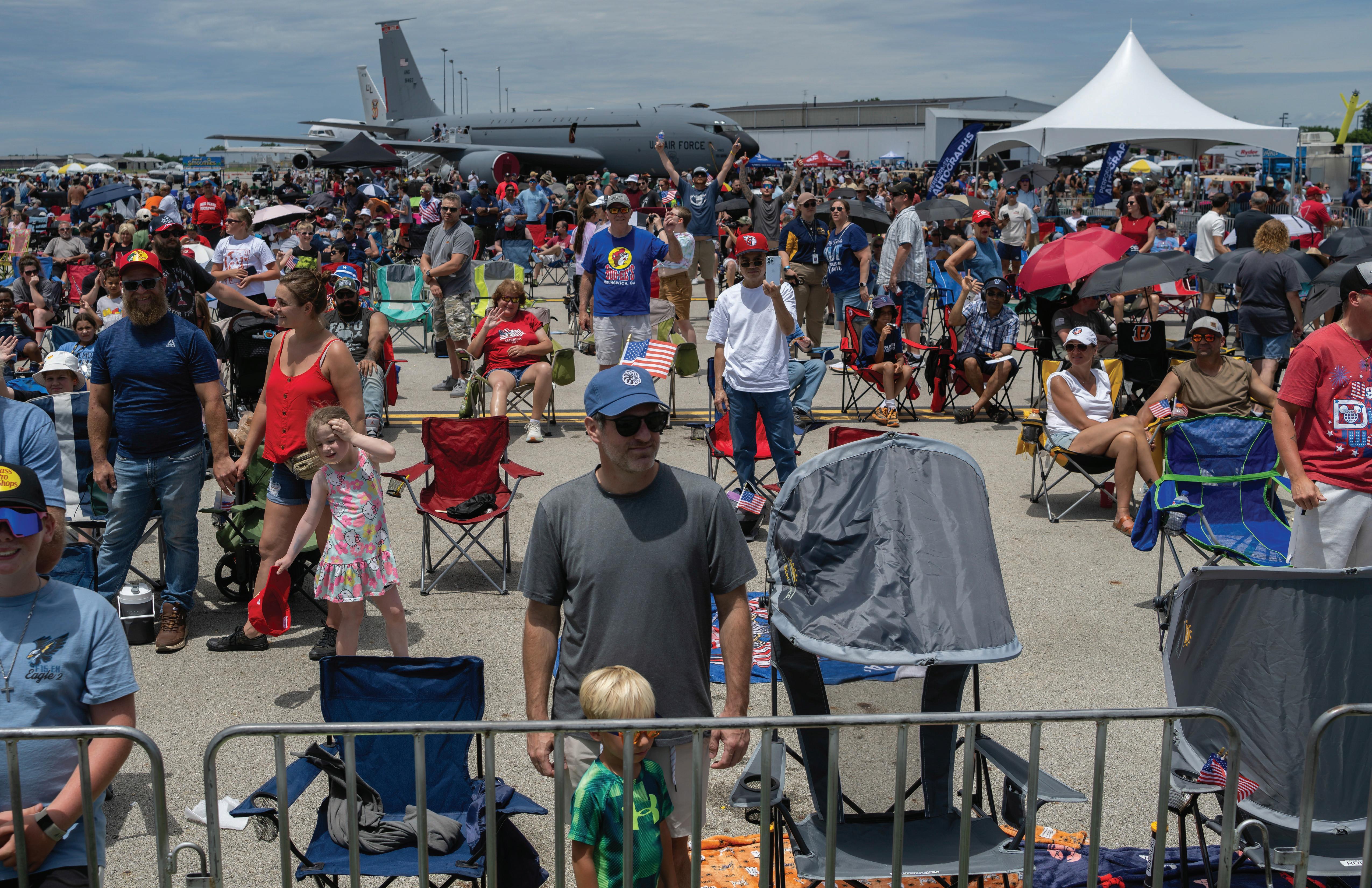
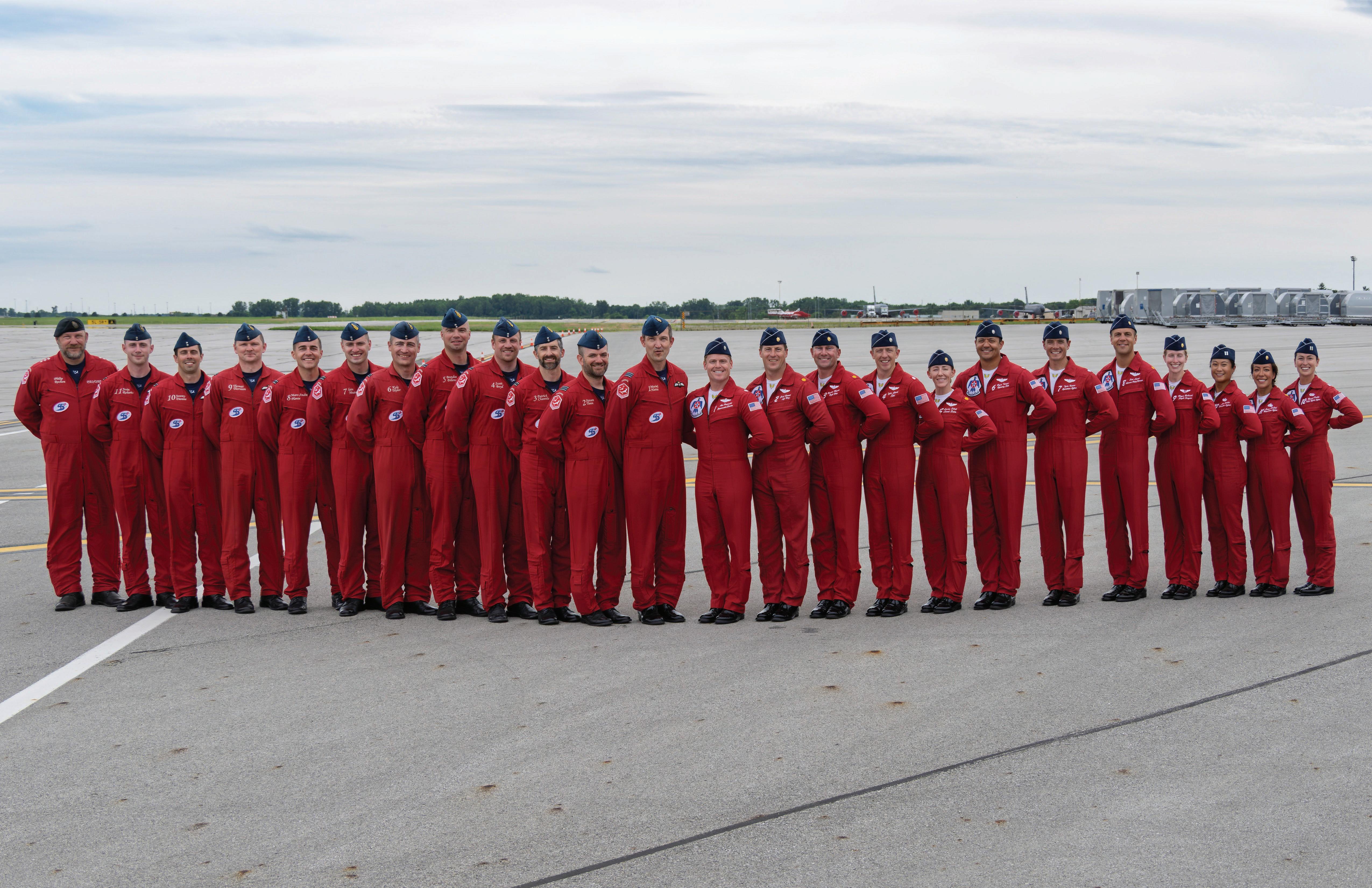
A memorable weekend was spent at the 2026 Columbus Air Show, featuring the Thunderbirds and Snowbirds.
Larry Grace
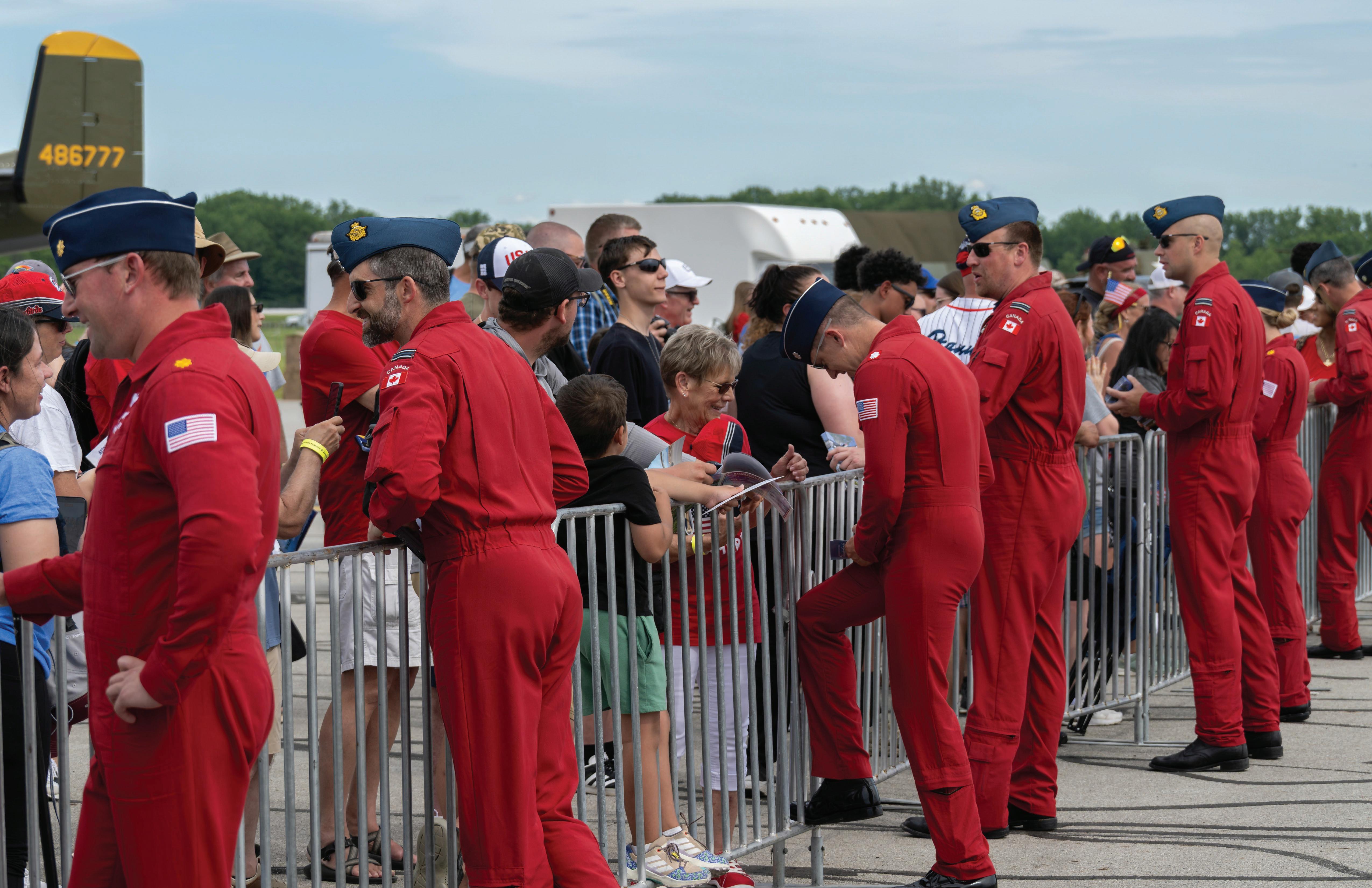
The Thunderbirds and Snowbirds graciously signed autographs for the enthusiastic crowds.
Larry Grace
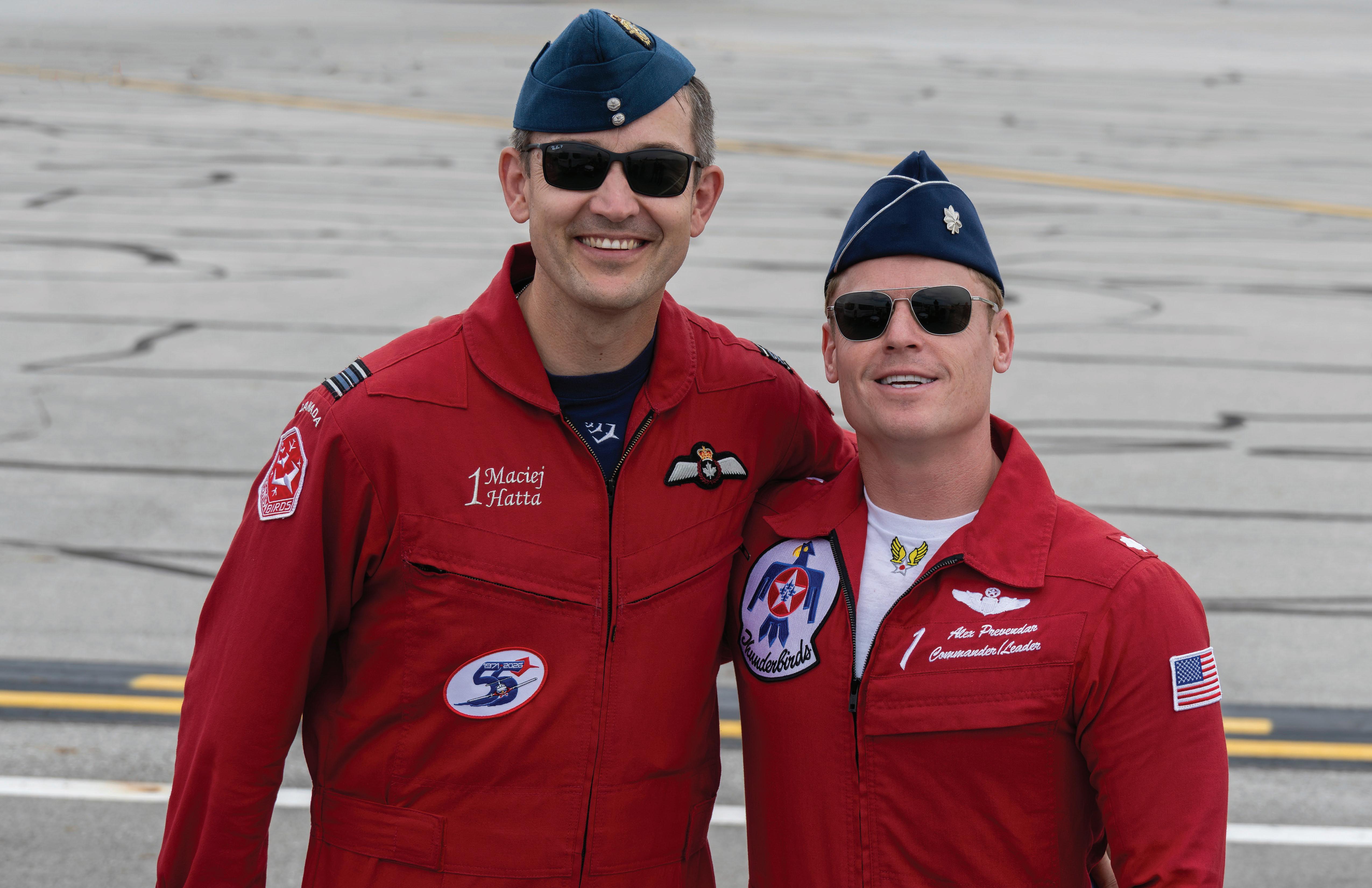
Snowbird #1 Maj. Maciej Hatta and Thunderbird #1 Lt. Col Alexander Prevendar.
Larry Grace
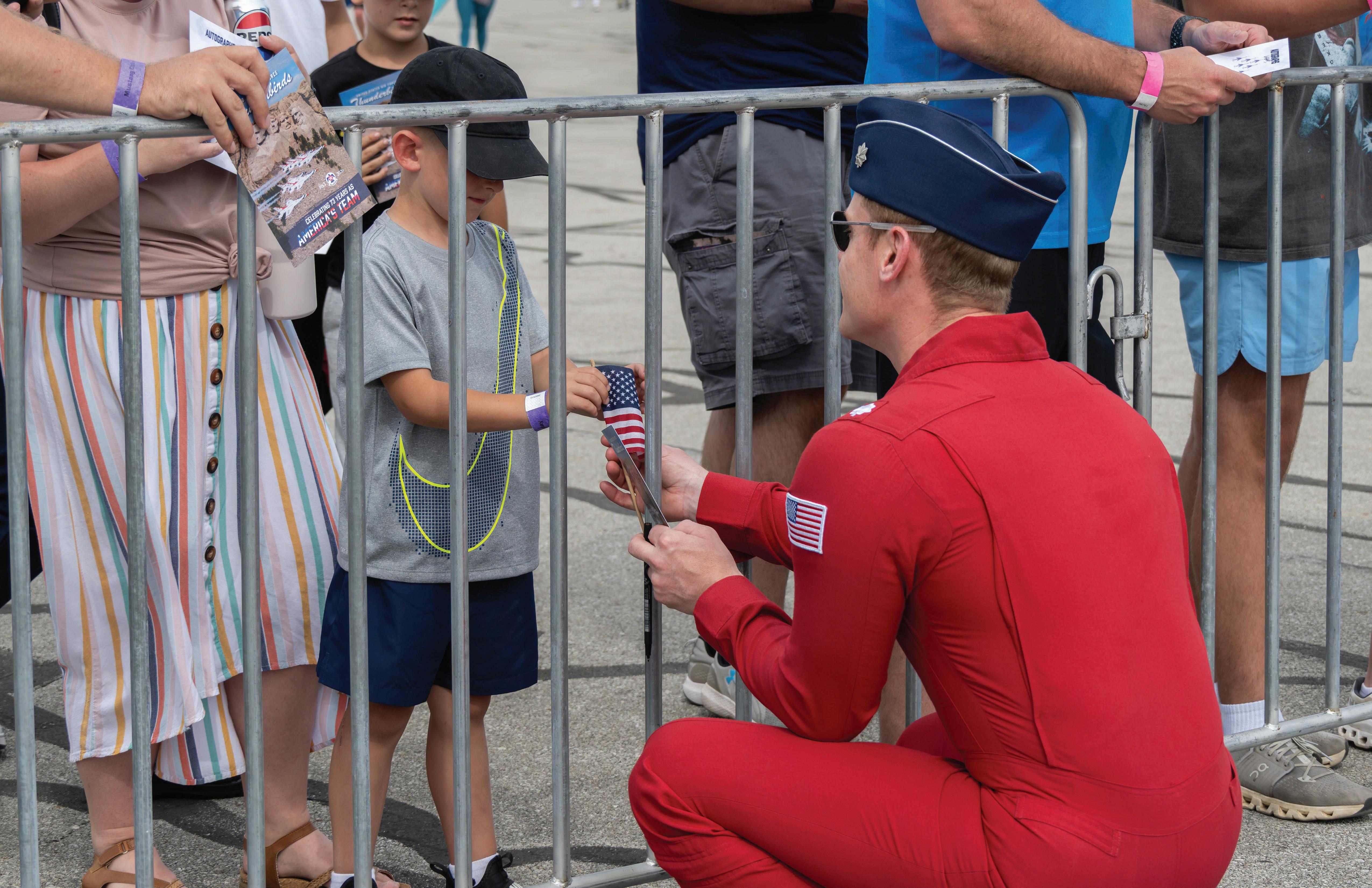
Lt. Col. Alexander Prevendar, Thunderbird #1, shared the US flag he flew with a young airshow enthusiast.
Larry Grace
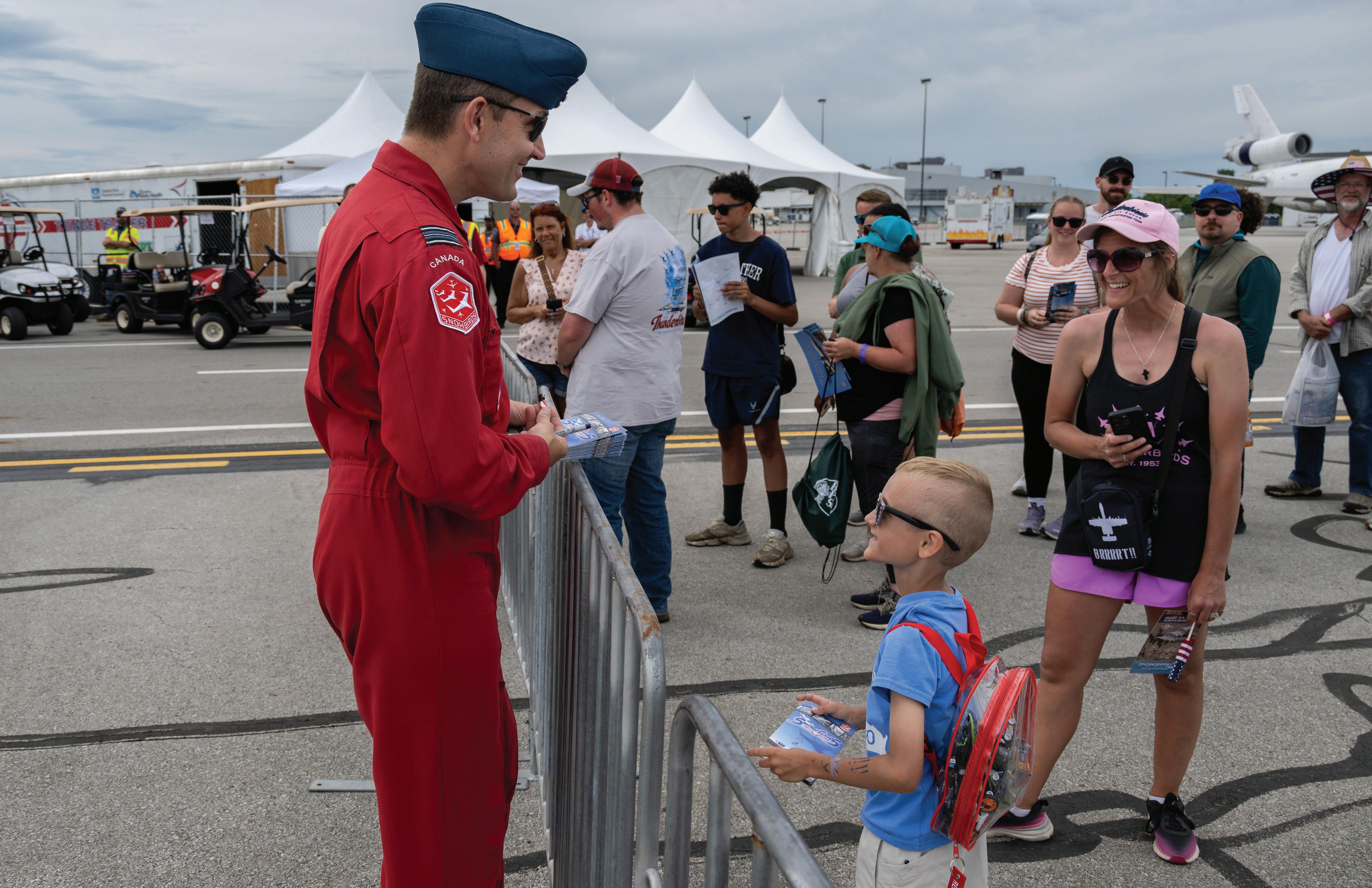
A young fan shared a gift and engaged in a conversation with
Snowbird #1, Major Maciej Hatta.
Larry Grace
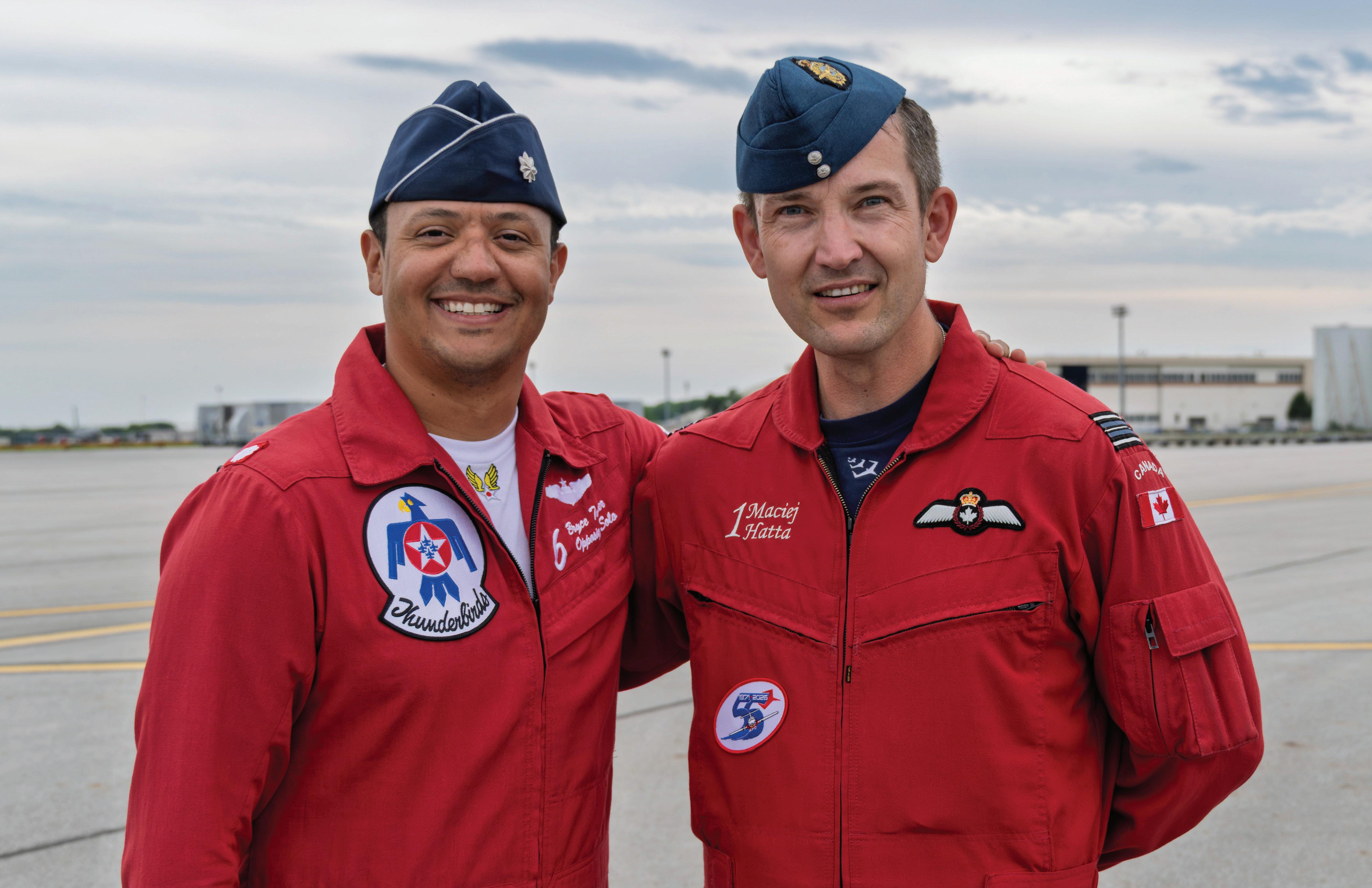
Thunderbird #6, Lt. Col. Bryce Turner, and Snowbird #1, Maj. Maciej Hatta, reunited at the Columbus Airshow. They were classmates at Edwards AFB for the one-year course, the USAF Experimental Test Pilot Course.
Larry Grace
Larry Grace
Kyle
Larry Grace
SSA STANDARD NATIONALS 2026
Article and photos by Robin Guess
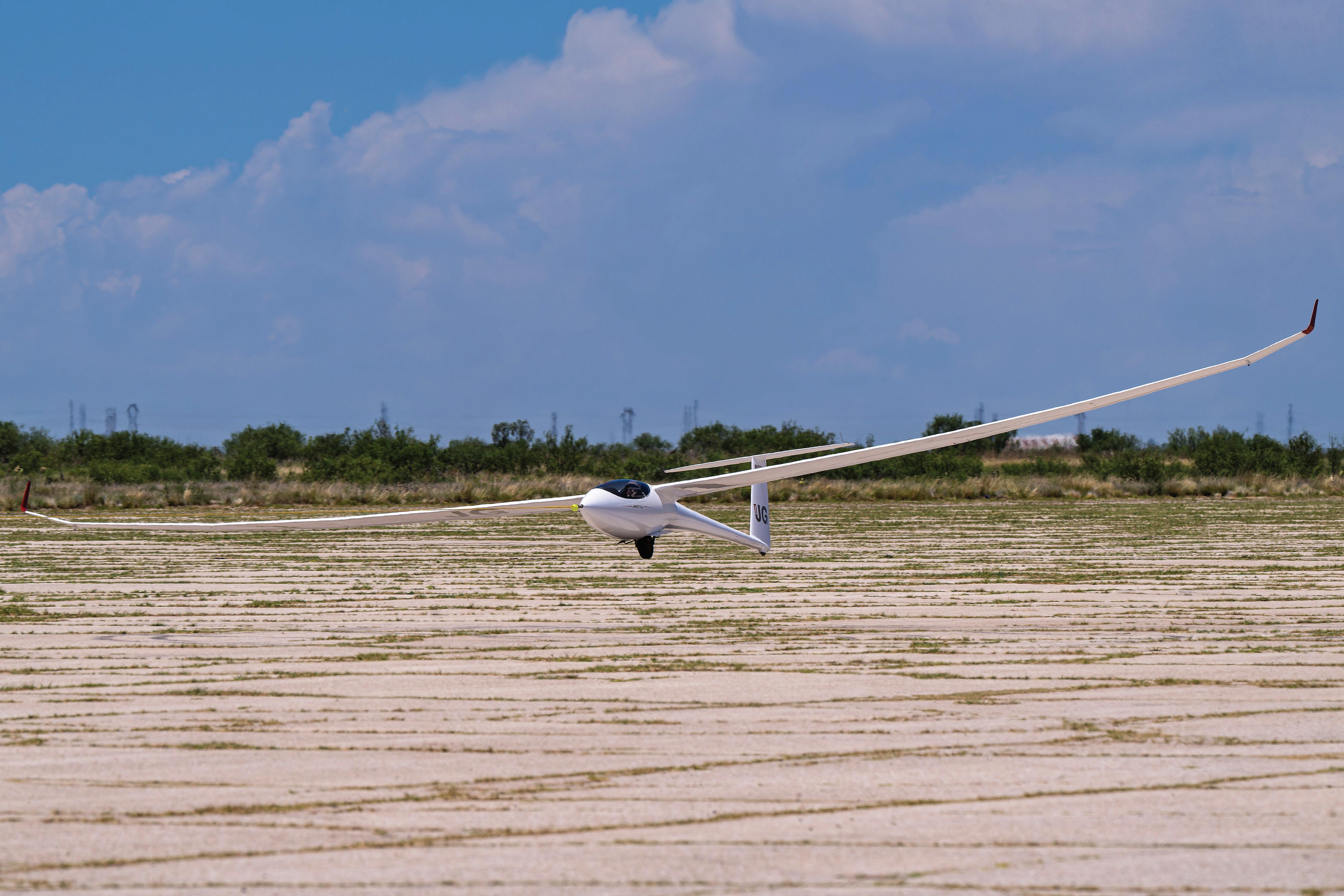
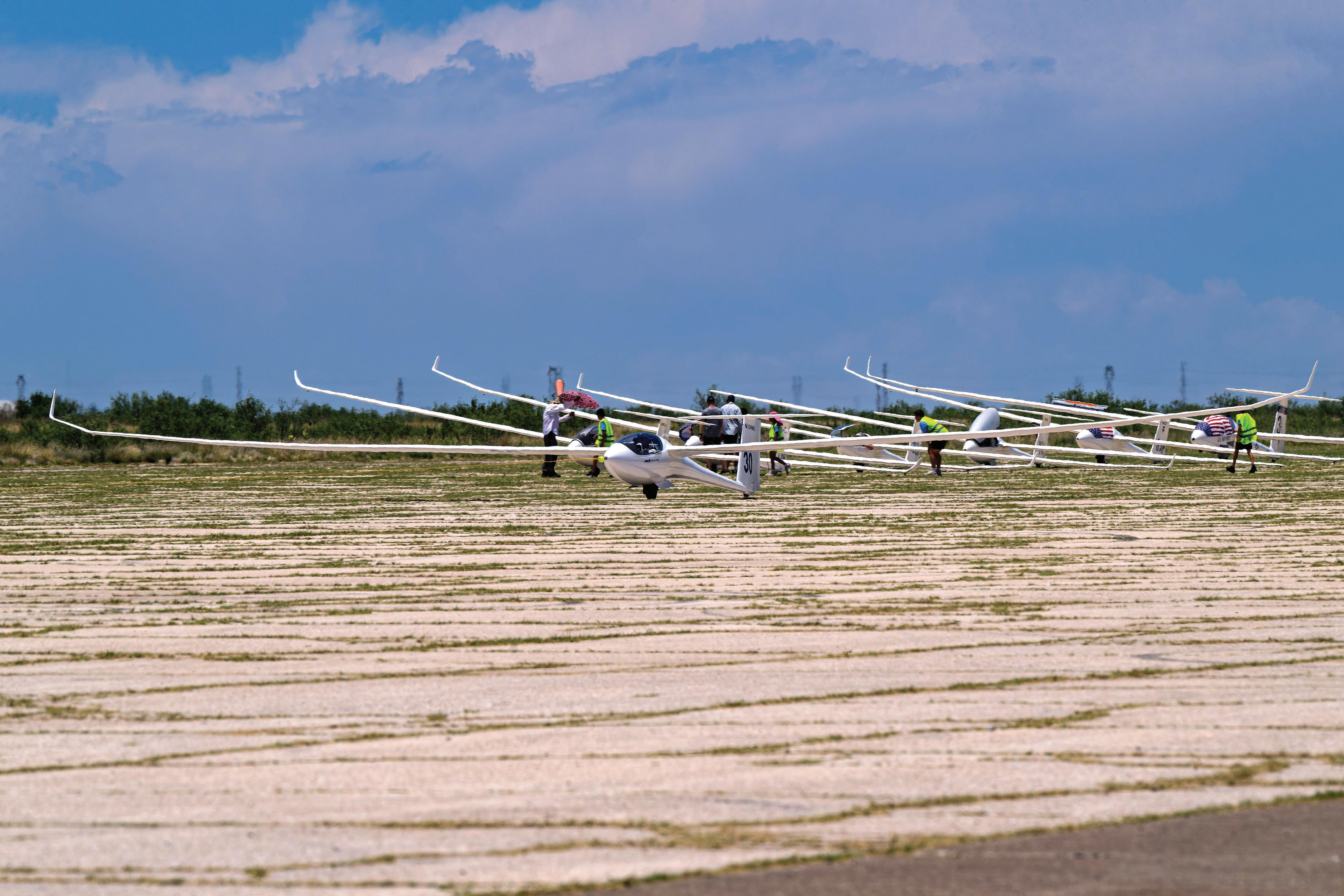
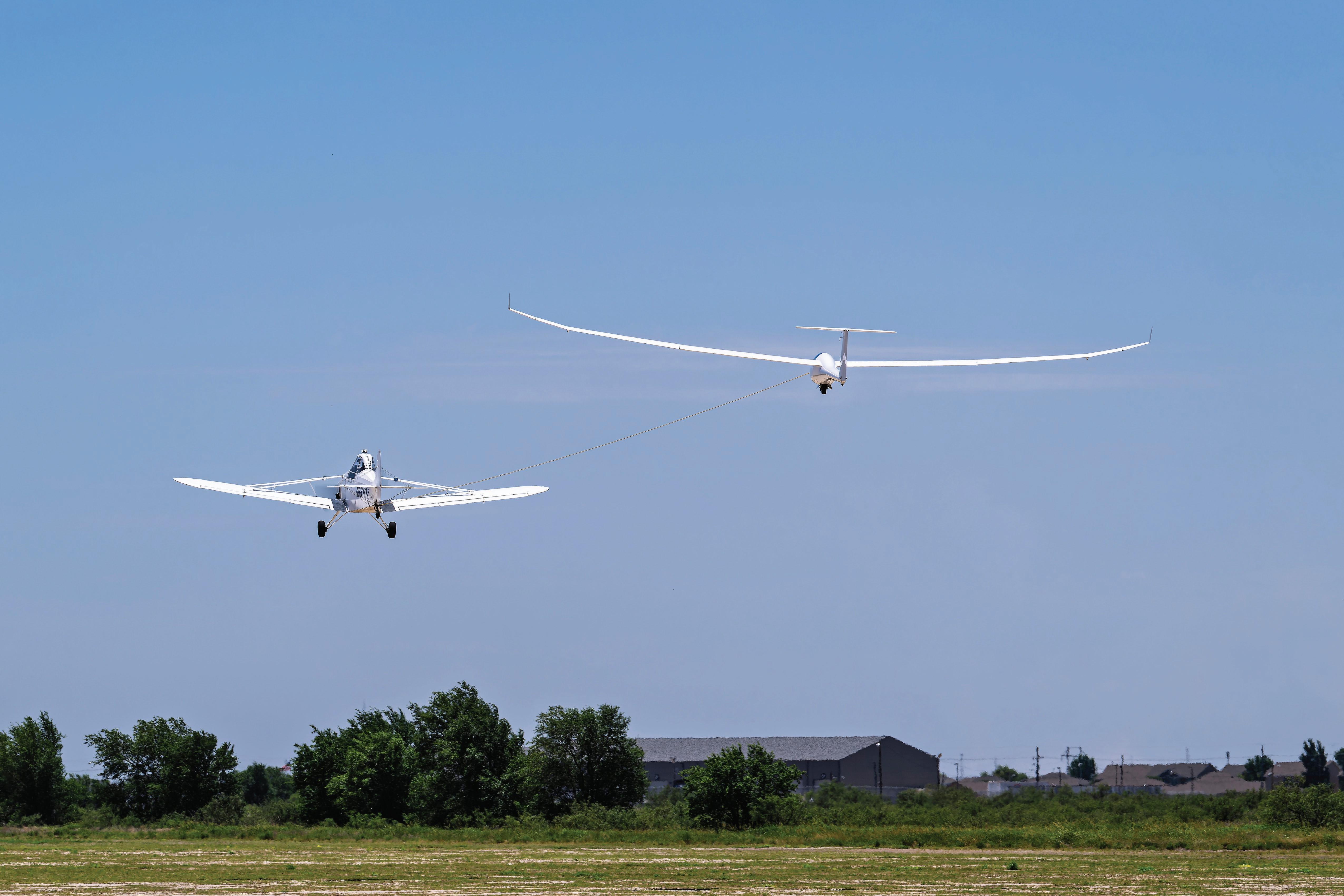
The Soaring Society of America (SSA) held the Nationals for Standard class sailplanes on June 17 – 26 at the former Hobbs Army Airfield just north of Hobbs, NM. While the airfield is no longer an active airport for commercial or general aviation, the SSA and Hobbs Soaring Society are both located at the former airfield. The airfield now is host to a city golf course, Veterans memorial, city park and other state and city operations. Google searches on Hobbs Army Airfield will result in a large amount of information on the B-17 training base including a 100+ page PDF commissioned by the City of Hobbs about the history and layout of the airfield when it was in operations. Today about the only remaining items are a couple of storage buildings for Norden bomb sights and the ramp.
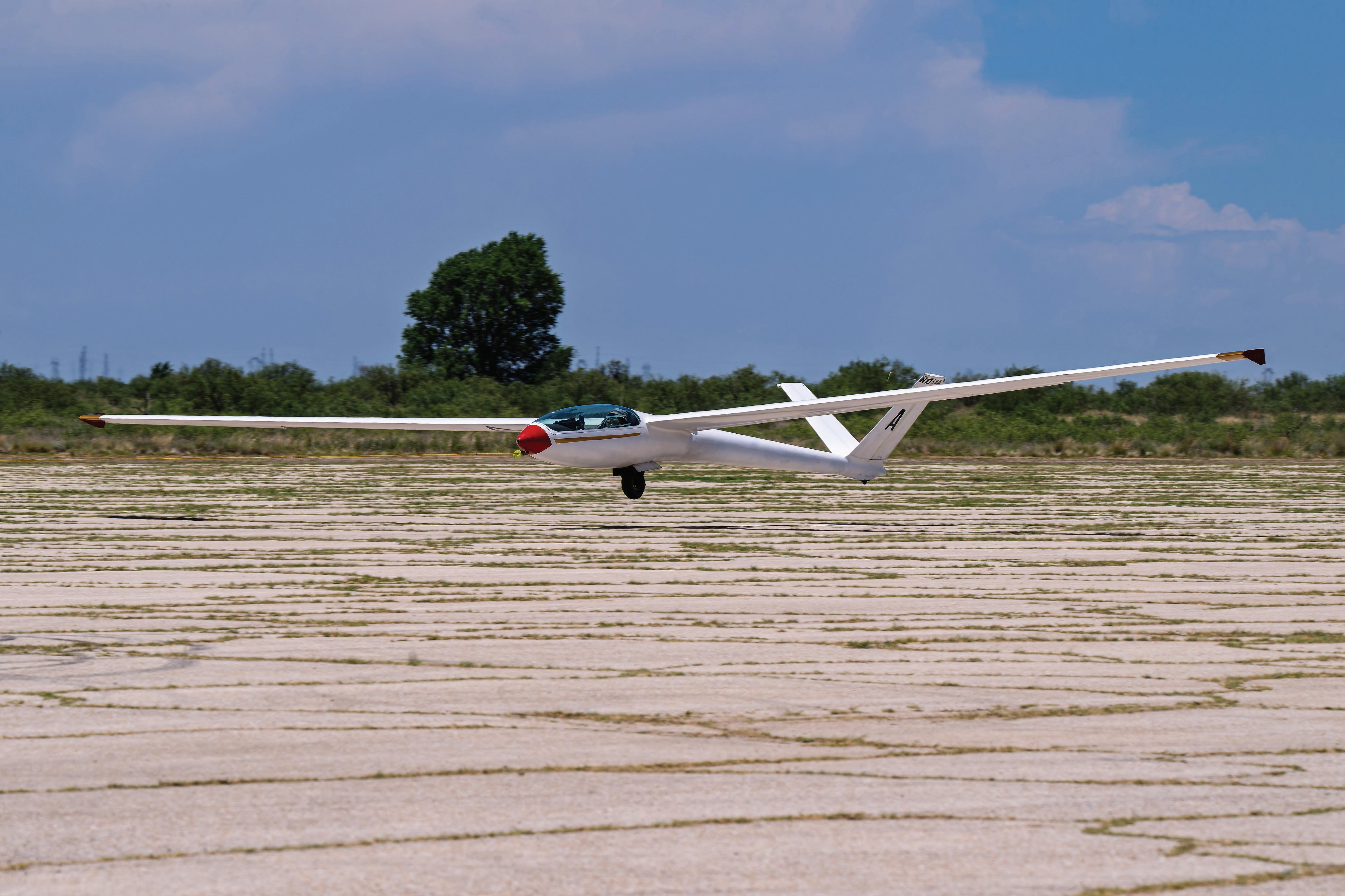
The standard class for sailplanes is defined as a sailplane with a wingspan of 15 meters, 1 or 2 seats. For iRacing competitions, the pilots are towed to a set release height and fly to set way points set by the SSA. The pilots have to find thermals for the duration of the flight to gain altitude in order to cover the distance. The pilot that covers the flight reaching all way points the fastest is declared the winner for the day. Points are awarded for each flight and the pilot with the highest point count for the week is the overall winner. All flights are recorded with a GPS device to insure that the pilot reaches each way point.
CLASS
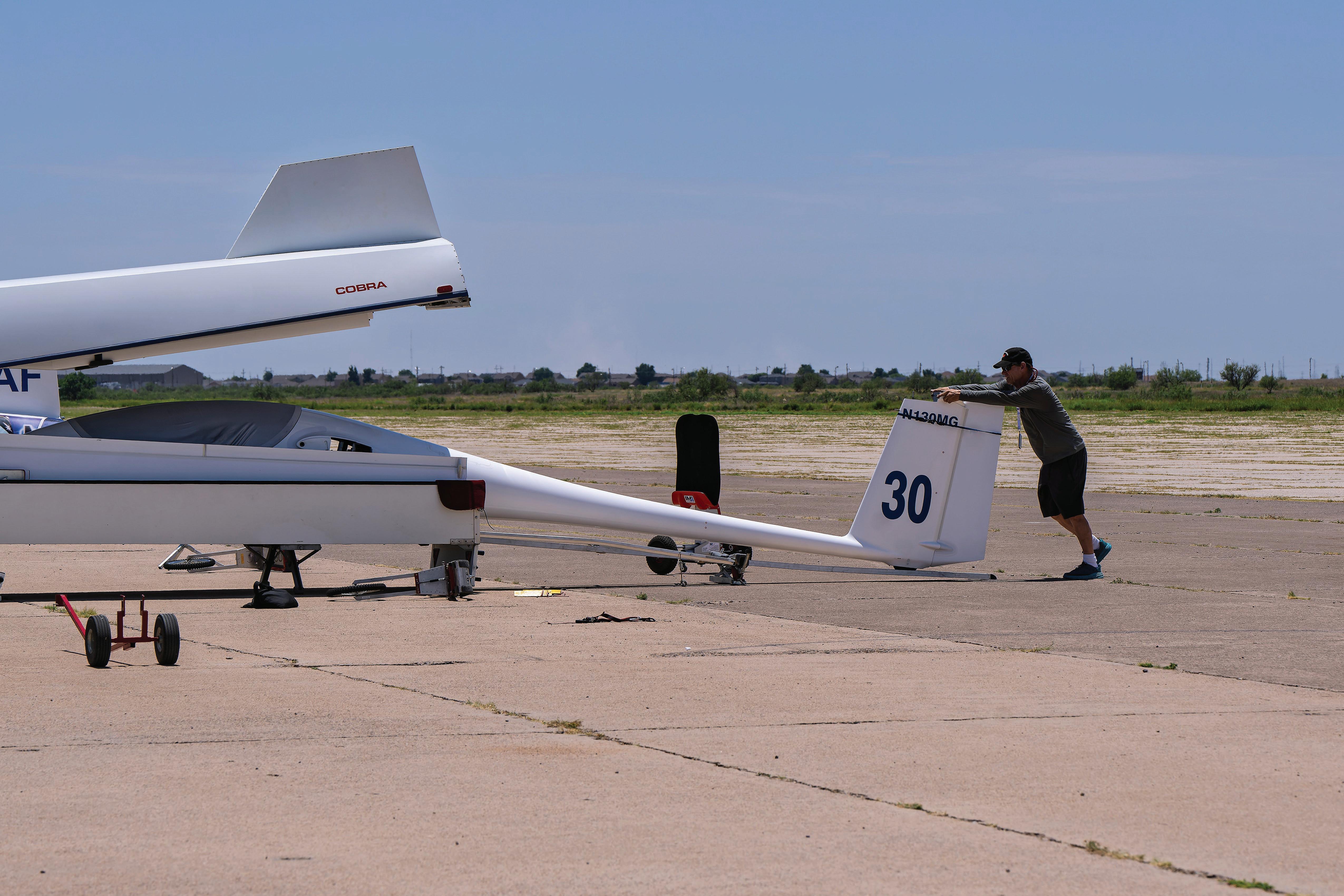
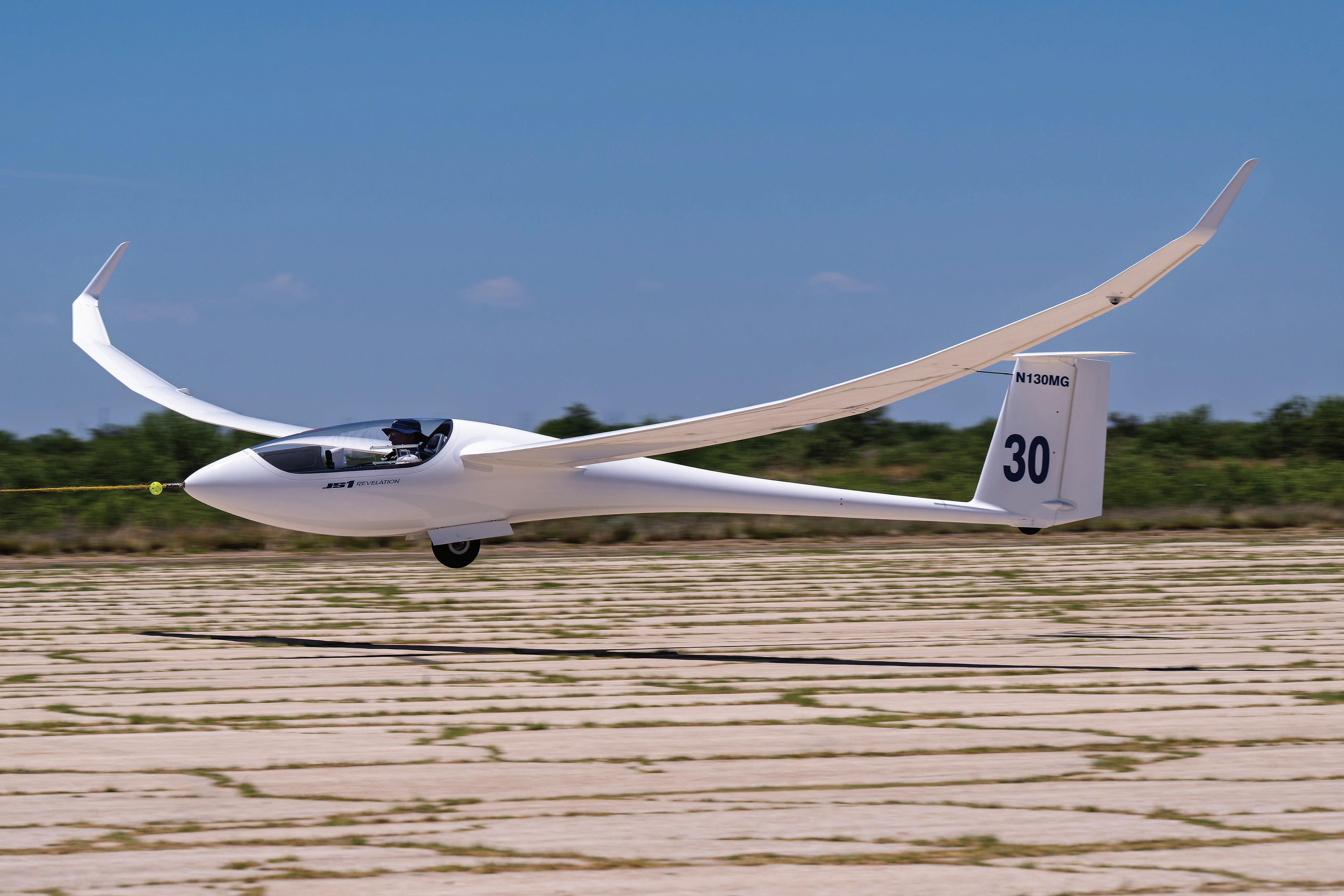
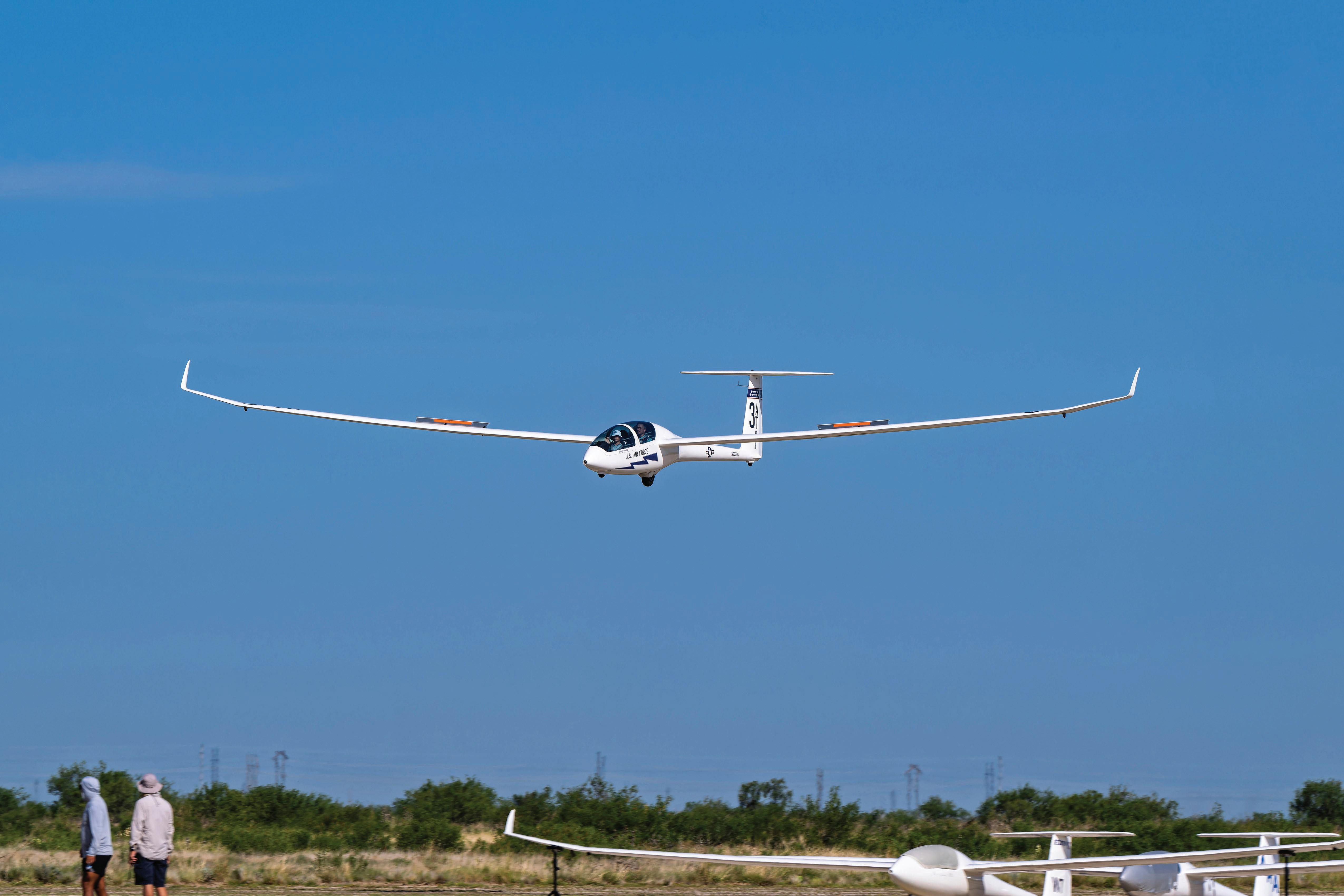
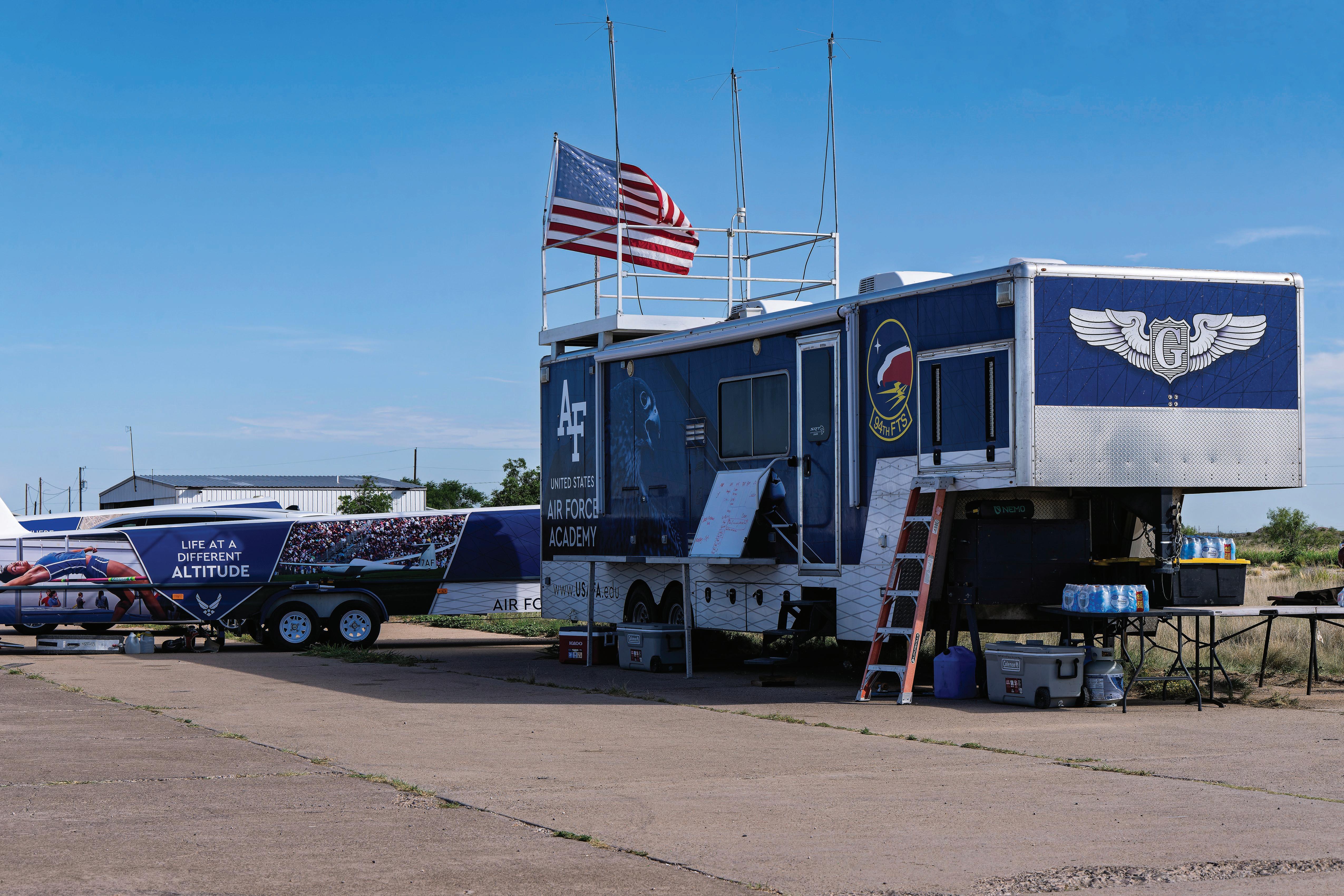
On Friday the 26th, the final day of the competition about 20 sailplanes took off including 5 from the US Air Force Academy competing in the region 9 contest. One notable AFA sailplane was TG-16A N503DG “Saber 3” that normally is flown by the AFA Aerobatic Glider Team at airshows, this week it was flown by the AFA Glider Racing Team. The rest of the remaining pilots were civilian pilots that not only had to fly their aircraft but also had to unpack, assemble, and break down and repack the air frame each day on their own.
With the flying taking place over the nearby area and the sailplanes flying up to 12,000 feet above sea level, after the mass launch there was not much to see at the airfield until the pilots return 3 to 5 hours after departing the airfield. The overall winner was Jacob Fairbairn in his Discus A Y4 covering a distance of 235 miles with an average speed of 78.5 mph. Over the week he finished consistently in the top 3 all competition days.
A warm thanks to the members of the SSA for a tour of their headquarters as well as the pilots that were open about the aircraft, flying and the competition. More info can be found about Sailplane racing, events, and clubs in the US can be found at www.ssa.org
Robin Guess
Robin Guess
Robin Guess
Robin Guess
Robin Guess
Robin Guess
Robin Guess
Robin Guess
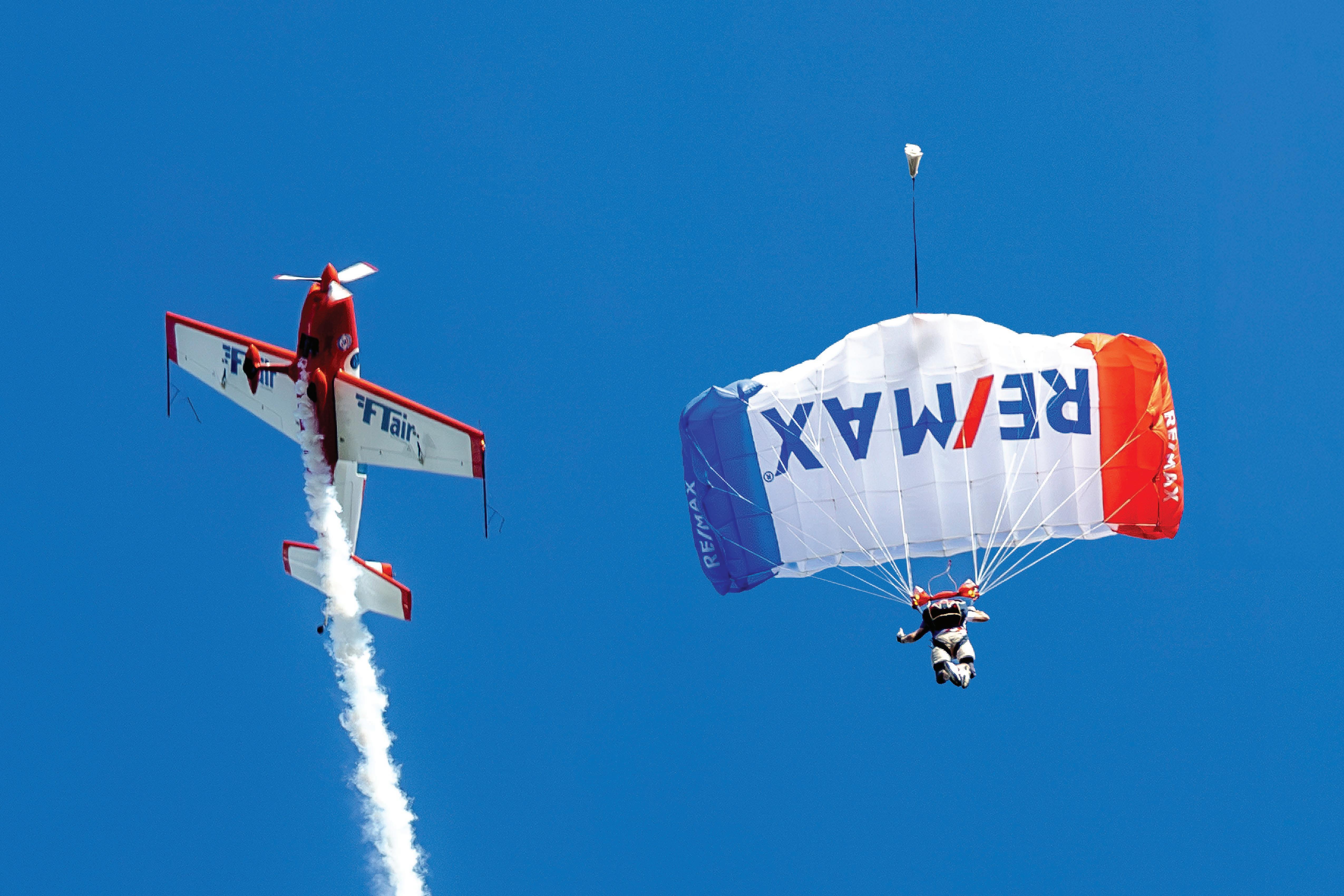
This year marks the 250th Anniversary of America and I had the chance to once again shoot the airshows at Thunder Over East Texas in Athens, Texas and Thunder Over Cedar Creek Lake hosted by Cedar Creek Veterans Foundation. This year’s theme was a salute to Vietnam Veterans. It was a great way to celebrate the 4th of July weekend celebrating the freedom we have in the United States of America.
With the summertime Texas heat I wasn’t sure how this year would go with the heat and rain. This year we were blessed with clear skies and some nice clouds in the distance to make some great photos. I’m glad these two shows are at twilight. As the sun went down on both days of the shows, the lighting was perfect especially during the Vietnam demo at the Athens airport.
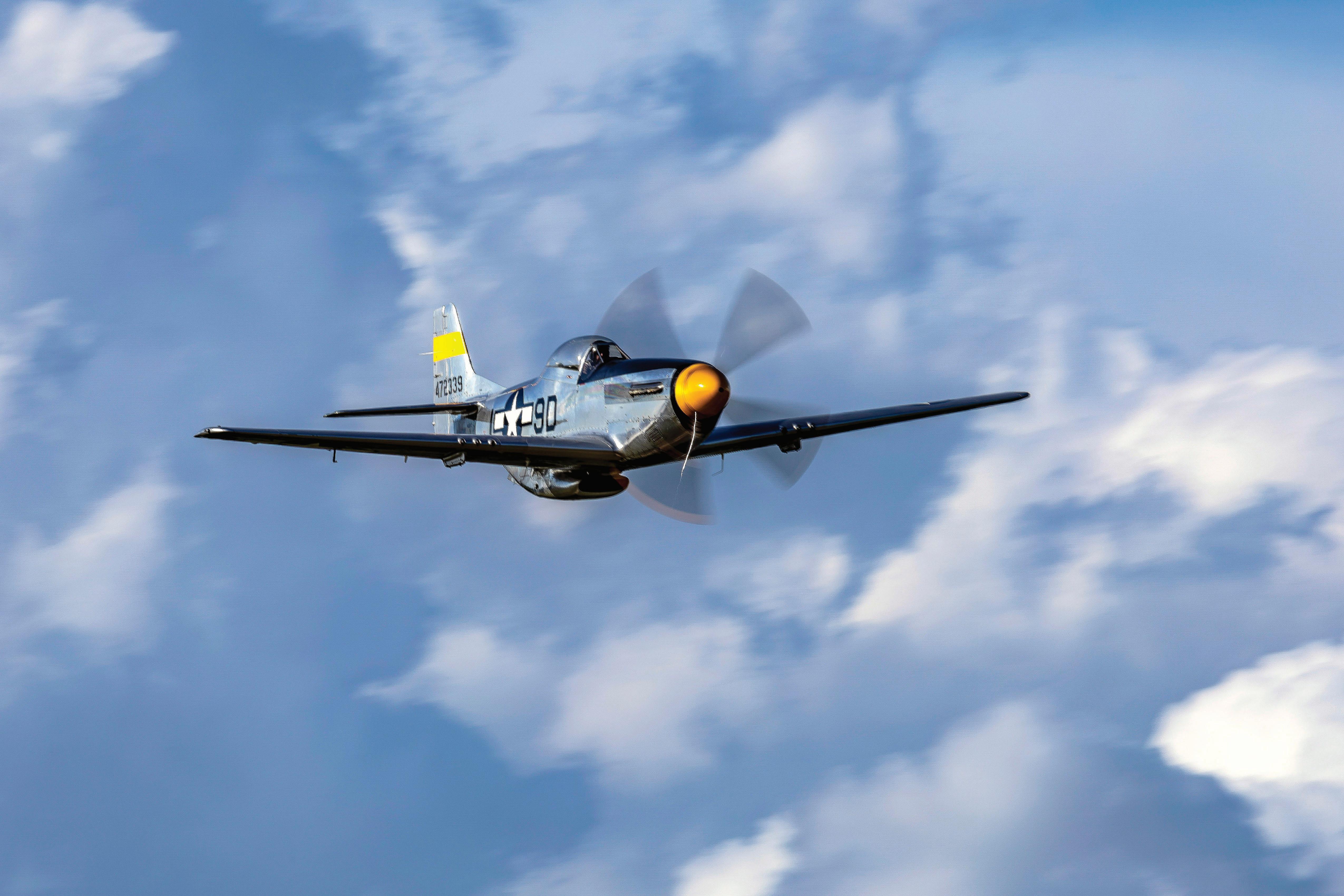
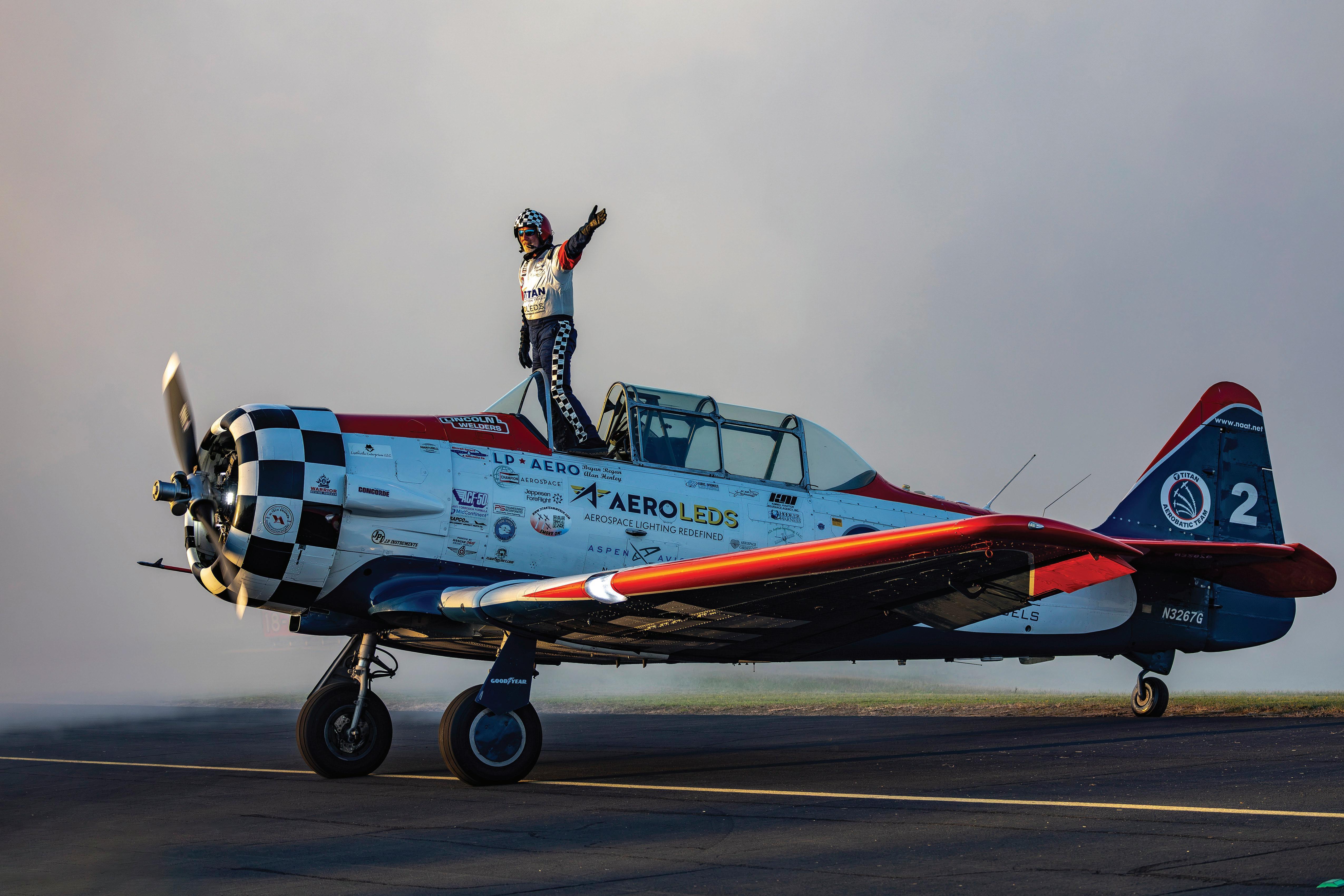
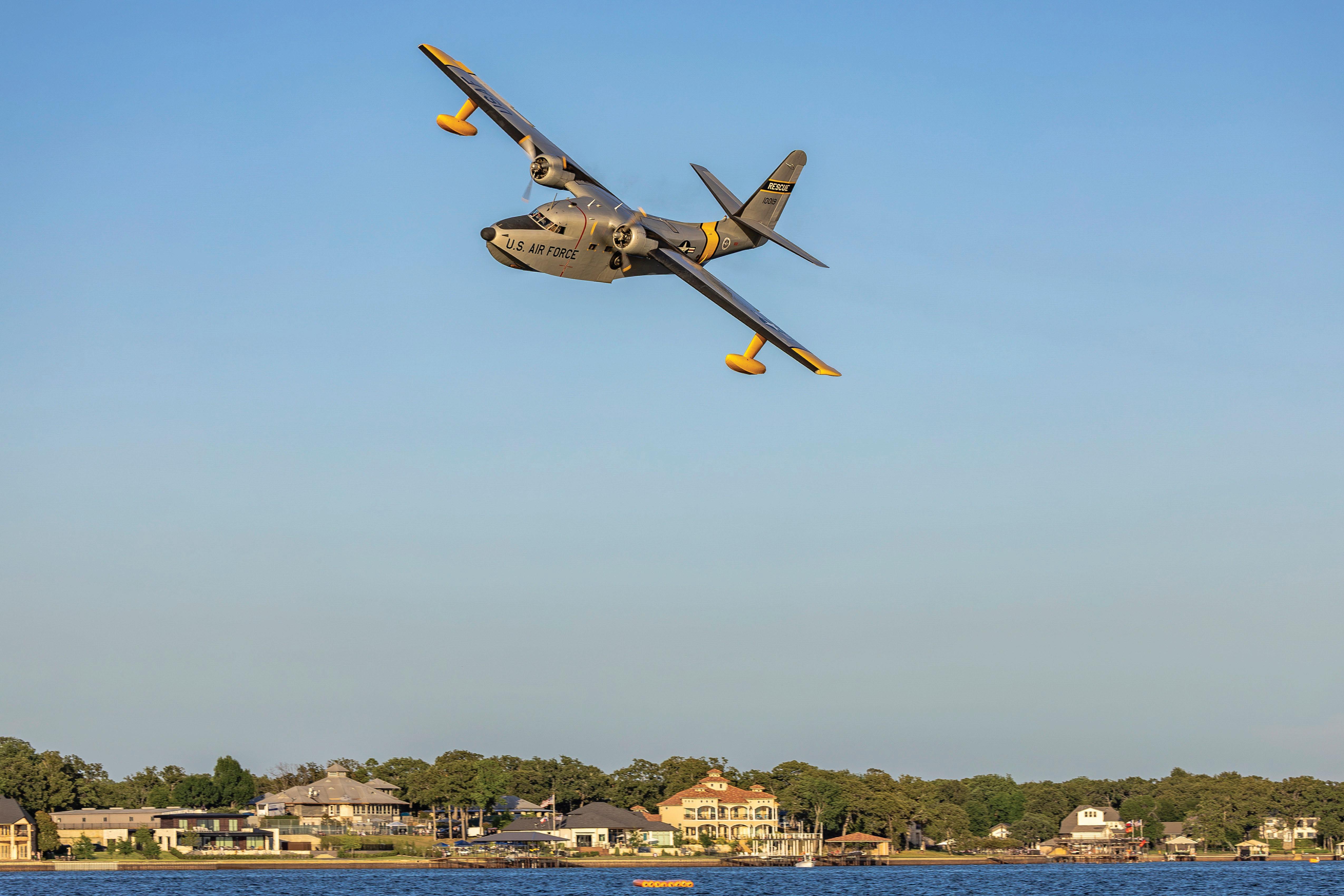
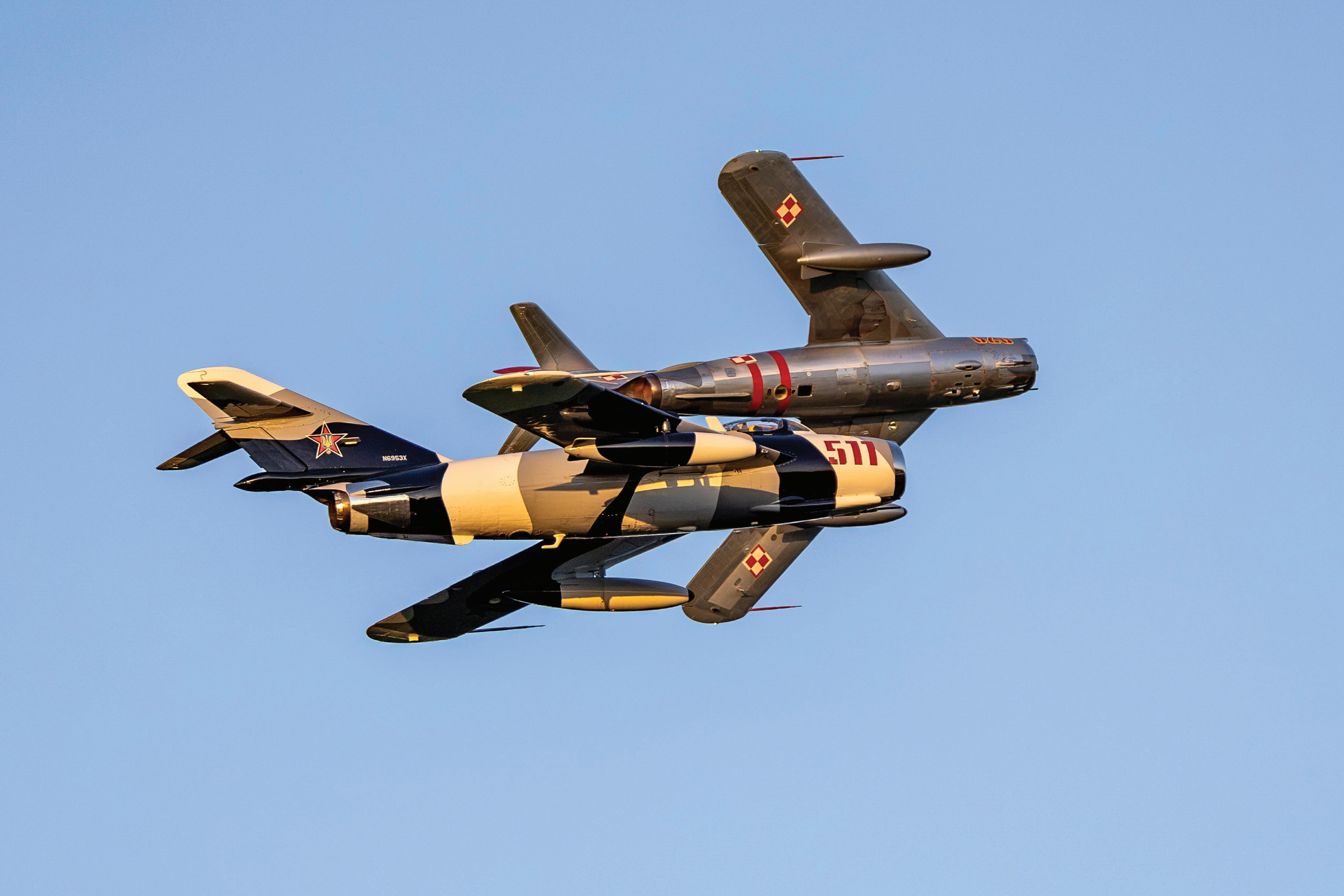
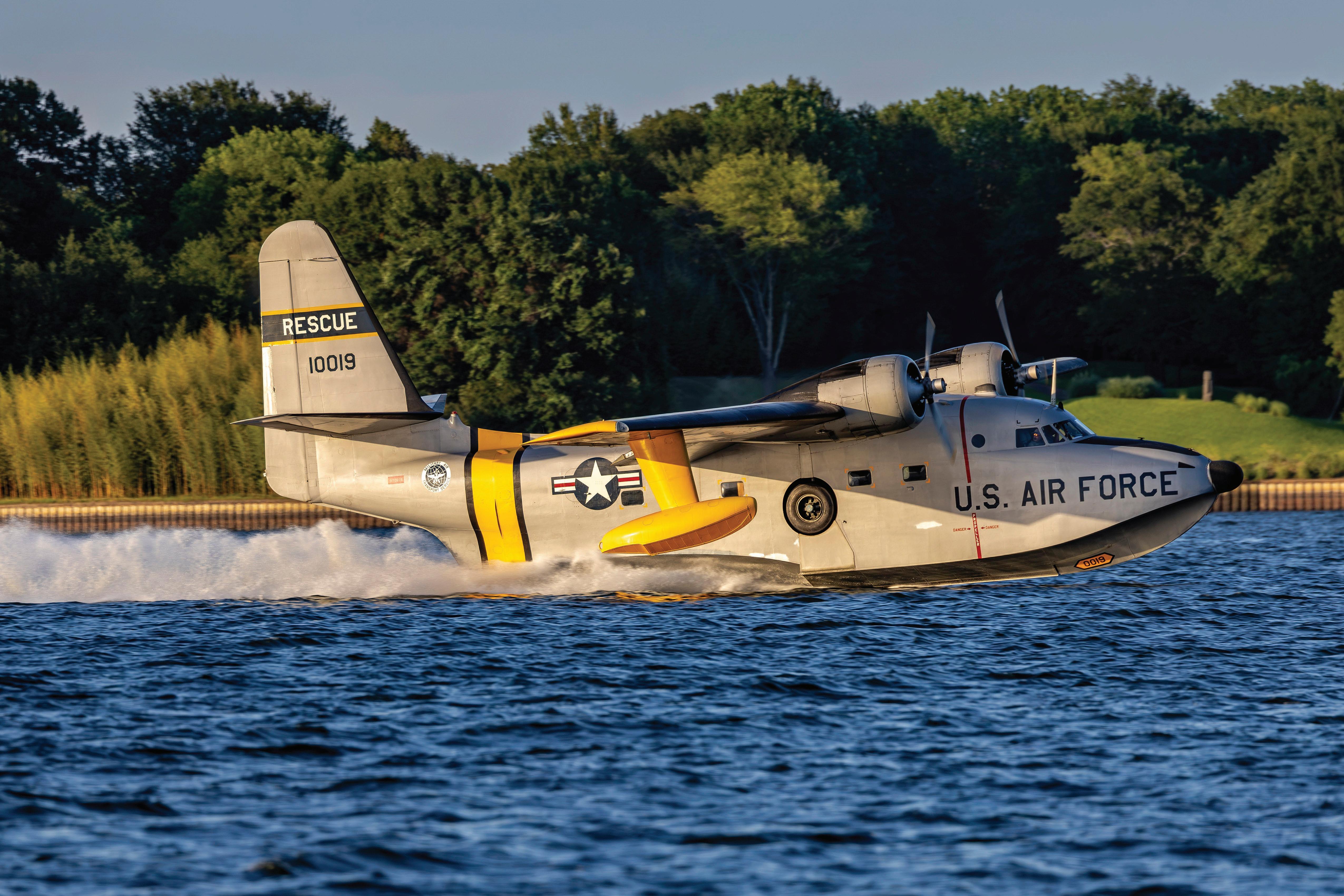
We had a great mixture of performers for the show from the ReMax Skydive team to aerobatic acts and the Titan Aerobatic Team closing out the shows at both locations. The Corsair, P-51, DeHavilland Vampire, MIG-17s and Albatross were also a great addition to the show especially when they skimmed the water at the lake.
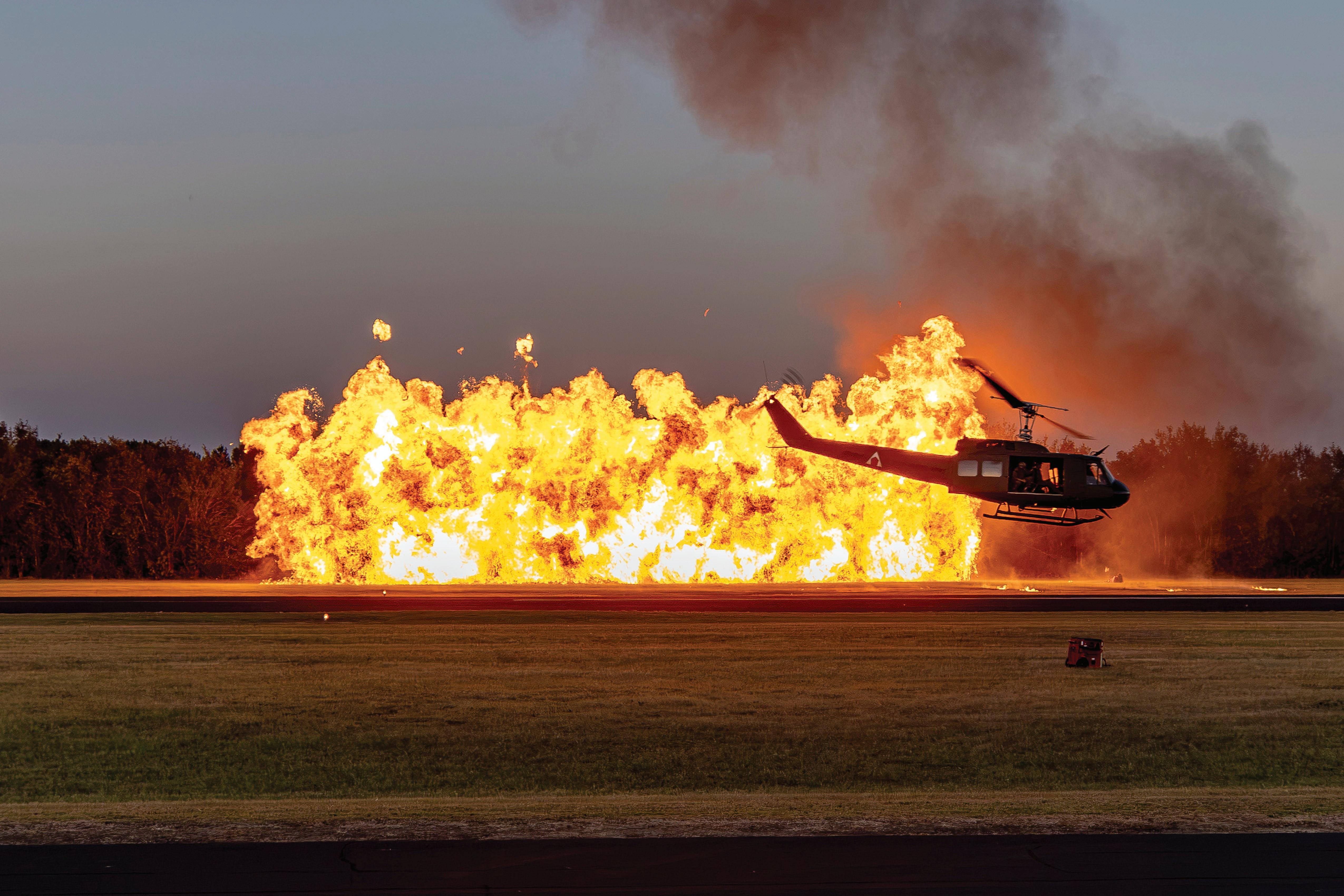
For the first time at Thunder Over East Texas we were able to have the CAF Blastards Pyro Team come in and do the pyrotechnics for the airshow and the Vietnam demo. They made a spectacular wall of fire at the end of the Vietnam act with two Hueys lifting off after rescuing the downed airman which ironically was Randy Ball who flies a Mig-17 with Fighterjets, Inc. Fellow ISAP member Gary Daniels was also fortunate enough to be a part of the flight crew in one of the Hueys and get some great photos as well. For saluting the Vietnam demo we had a fleet of aircraft perform a Vietnam reenactment consisting of an AE-1 Skyraider, two UH-1 Hueys, an OH-6 Loach, and O-1 Bird Dog.
Sitting on a boat on the 4th of July has been a tradition for almost 20 years shooting Thunder Over Cedar Creek Lake. Adding the Thunder Over East Texas show is great getting the best of both worlds shooting on land and over the water. I hope the tradition continues and the Cedar Creek Veterans Foundation will be around to continue to raise money and support the veterans.
BRINGING THE HEAT
ON THE 4 TH OF JULY!
Article and photos by Kevin Hong / ISAP Editor and Gary Daniels
Kevin Hong
Kevin Hong
Kevin Hong
Kevin Hong
Kevin Hong
Kevin Hong
Kevin Hong
Kevin Hong
Gary Daniels
Gary Daniels
Gary Daniels
Gary Daniels
Gary Daniels
Gary Daniels
Gary Daniels
ISAP MEMBER’S SHOWCASE
Article and photo by Bryan Turner
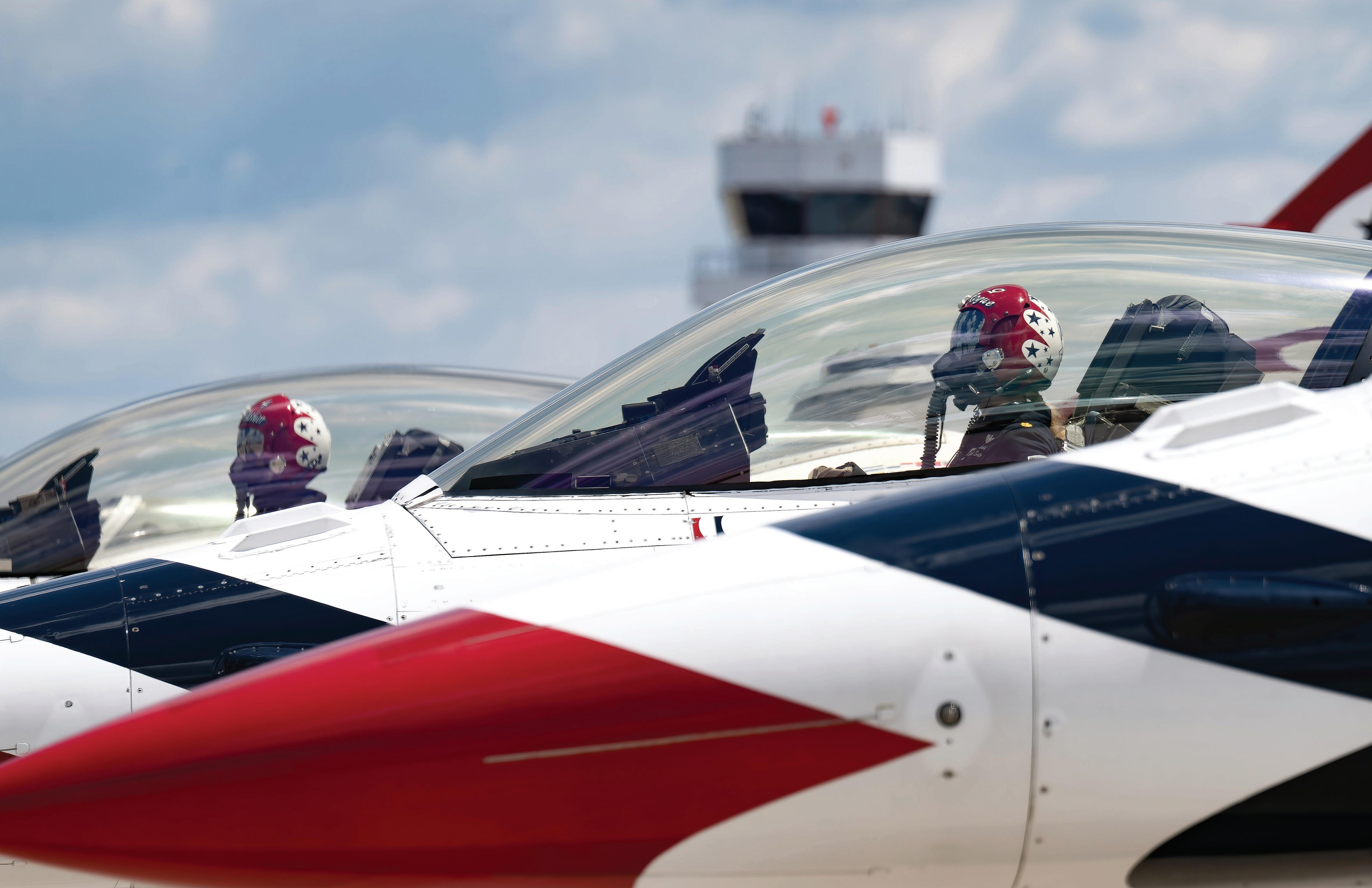
Thunderbird #5, Maj Laney “Rogue” Schol, ready for taxi for Friday practice at the 2026 Columbus Air Show. Camera: Nikon Z9 Lens: Nikkor Z 100-400mm f/4.5-5.6 ISO: 64 Shutter speed: 1/250 Exposure: f/9 Processed in Adobe Lightroom
KelbyOne is an online education community for creative people to help them create the type of images they’ve always wanted.
We are driven by a passion to provide incredible training, with over 800 courses. Our HD-quality lessons, are available to stream 24/7 and taught by world-class industry instructors. Online Access also includes digital editions of Photoshop User magazine and Lightroom Magazine, guided learning tracks, a community forum, brushes, presets and so much more.
The Professionals Source
Professionals in the world of imaging rely on the professionals of B&H for their equipment needs. We have experts ready to give courteous service with a phone call, a click of the mouse or a personal visit.
Our SuperStore
We pay tribute to the wealth of possibilities available for photography, videography and other media industries. We make the wonders of technology available through our complete lines of photo, video, audio, lighting, pro accessories, computers, data storage, optics, entertainment, projection and surveillance devices, to which we add a wonderful, personal experience for professionals, hobbyists and consumers alike.
History
We opened our original storefront in 1973. Our reputation for extensive inventory and intelligent conversation about photography began with our first customer. We grew from a small photography shop in Manhattan’s Financial District to a major supplier of photo, video and audio equipment on 17th Street, with customers returning again and again for our low pricing and high reliability. The new millennium’s explosion of affordable technology for pros and consumers alike brought new lines of computers, home entertainment, and consumer devices at our location or online at www.bhphotovideo.com
We continue to expand to meet your needs with showrooms, classes, educational and social media, and more.
Grumman Goose
ISAP Board Members
President and Board Chairman Larry Grace
Vice President and Vice Chairman Jim Wilson
Treasurer Gary Edwards
ISAP Board Member
ISAP Staff Member
Kevin Hong
John Sepp
Chairman Emeritus Jay Miller
Airspeed Editor Kevin Hong
Airspeed is a periodic publication of the International Society for Aviation Photography (ISAP) and is used to communicate news, functions, convention information, and other information of interest on the local, regional, and national scenes. The views and opinions expressed in this newsletter are those of the authors and should not be construed as the views or opinions of the International Society for Aviation Photography (ISAP). Please contact us at info@aviationphoto.org
Airspeed is a publication to showcase our members’ work capturing aviation.