Airspeed - The Magazine for Aviation Photographers
Featuring aviation photography from around the world
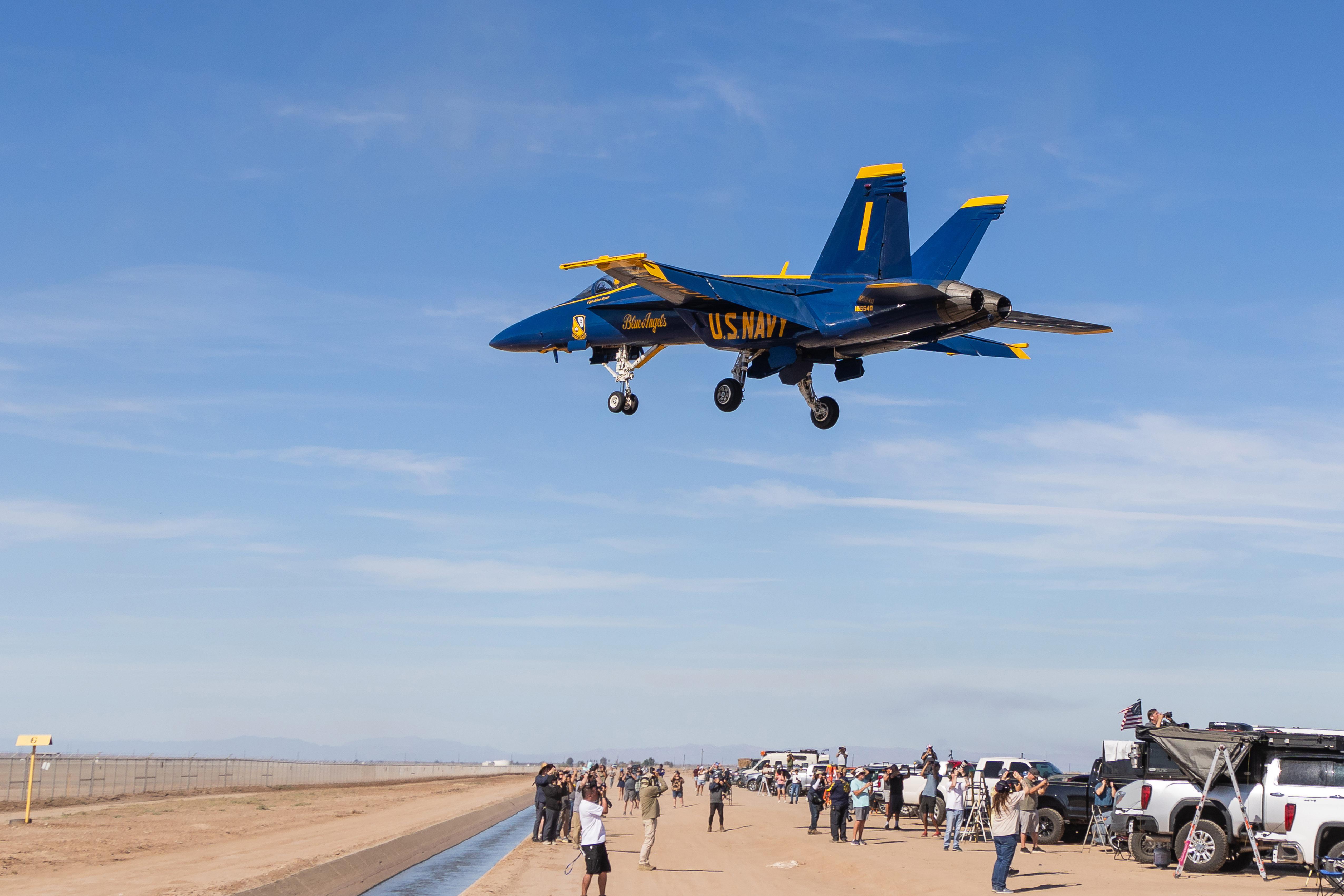
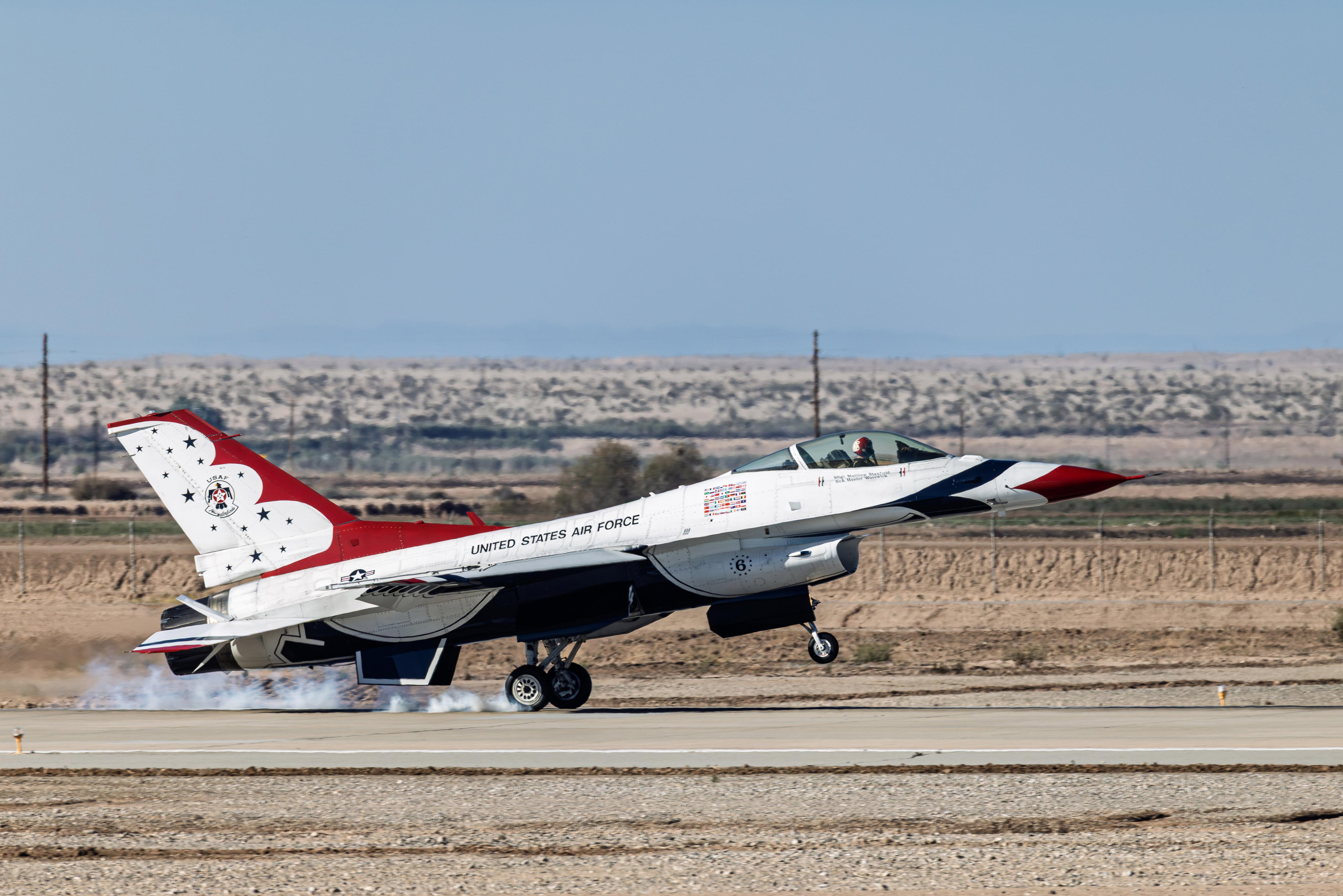
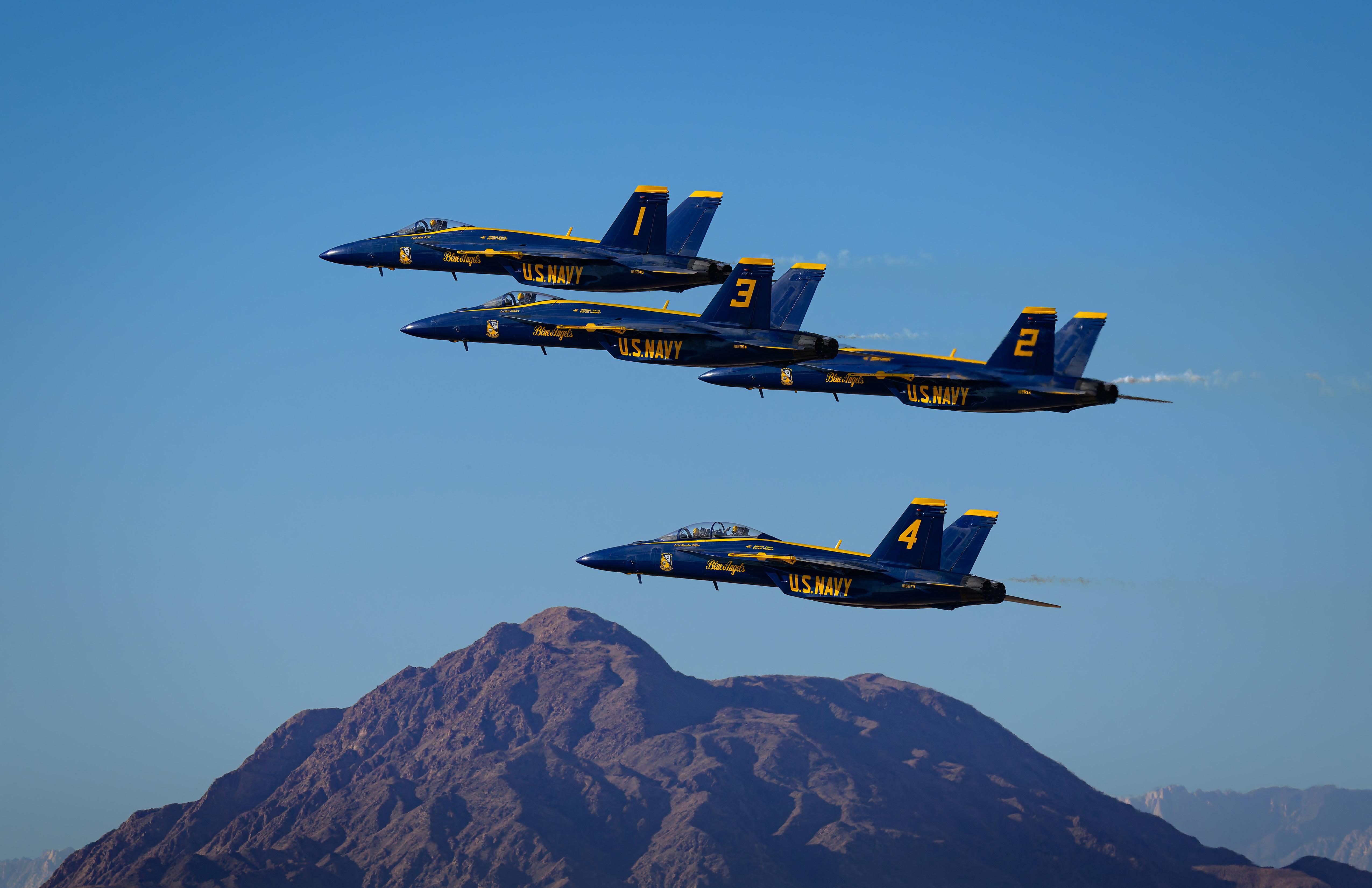
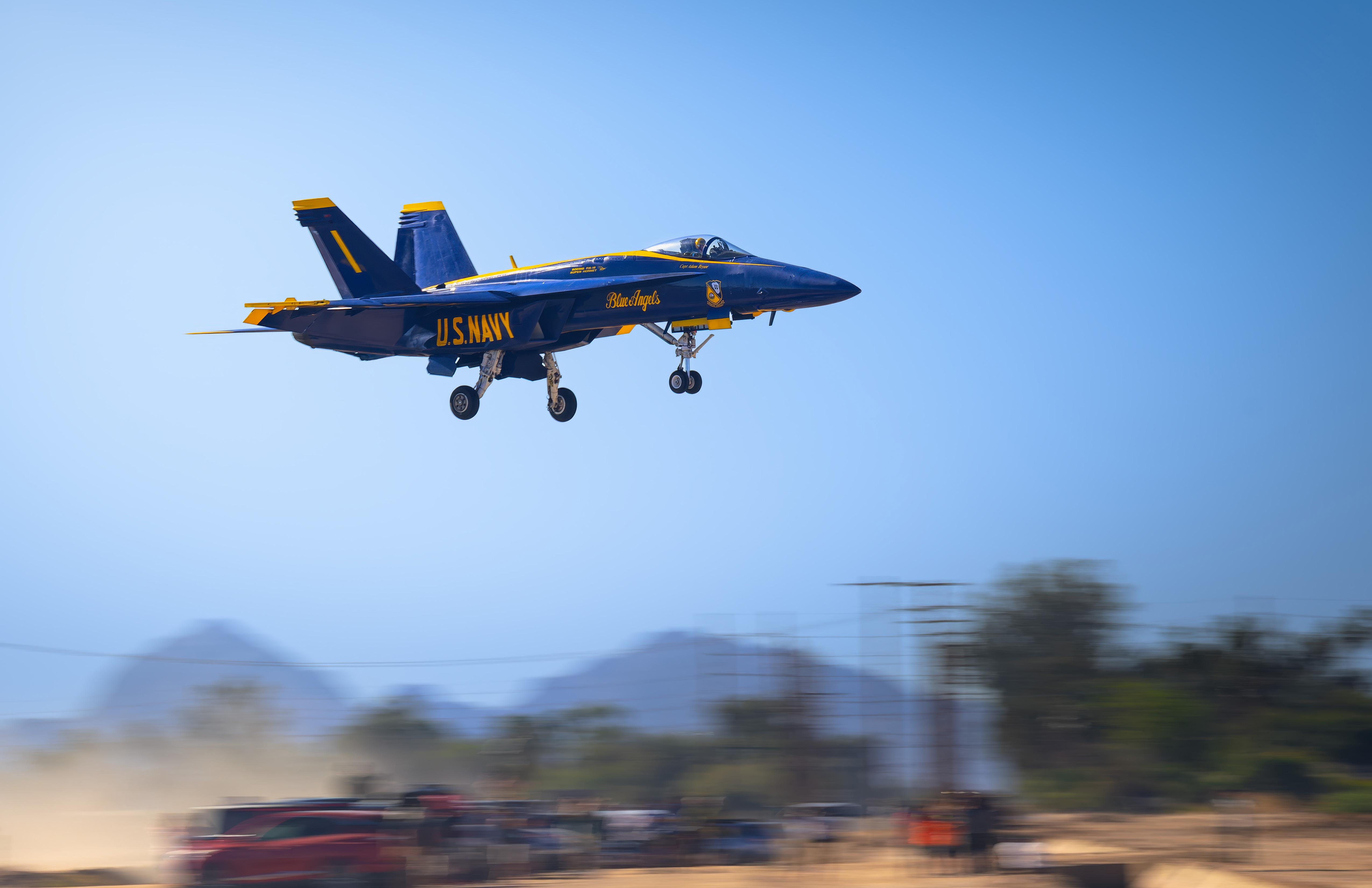
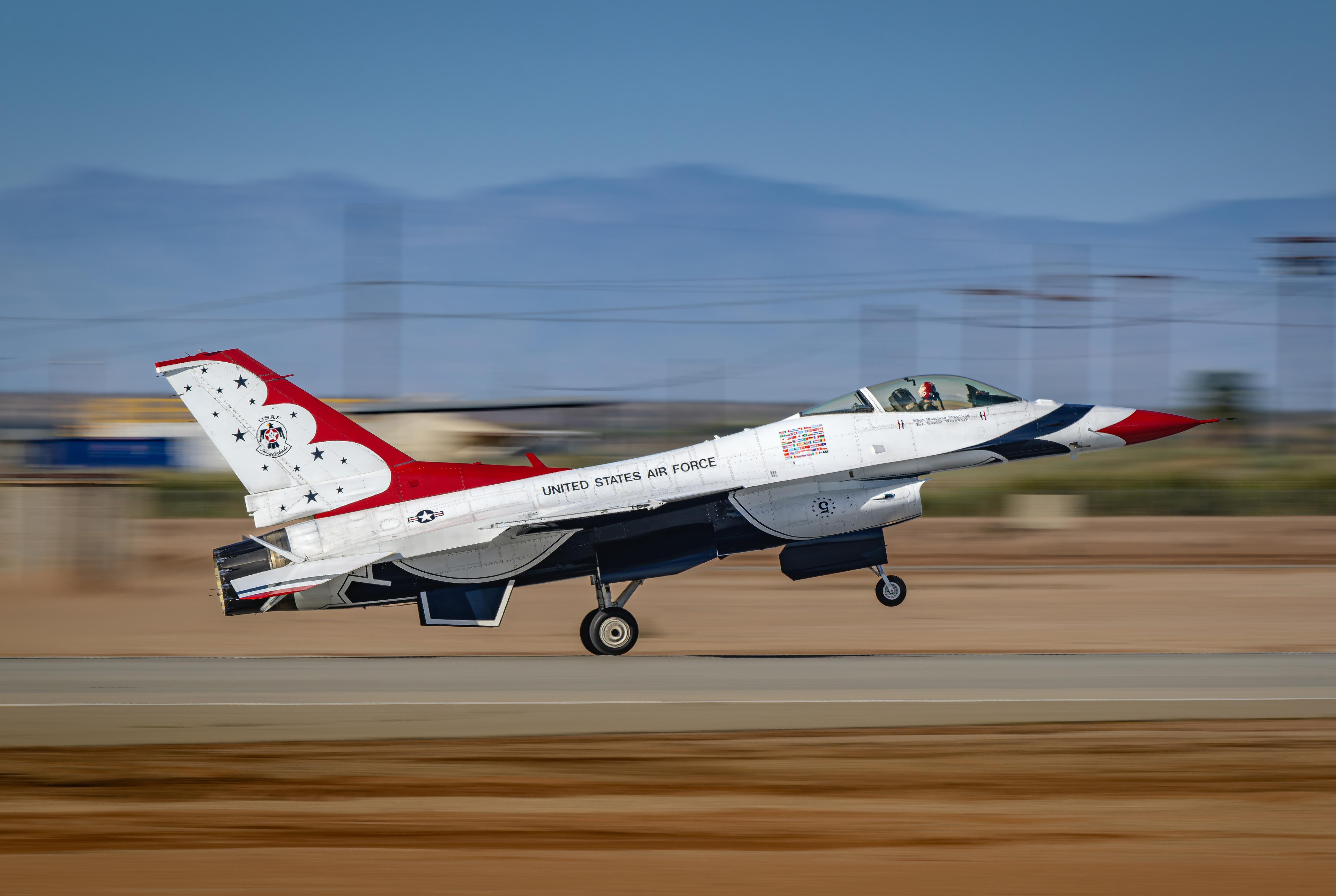
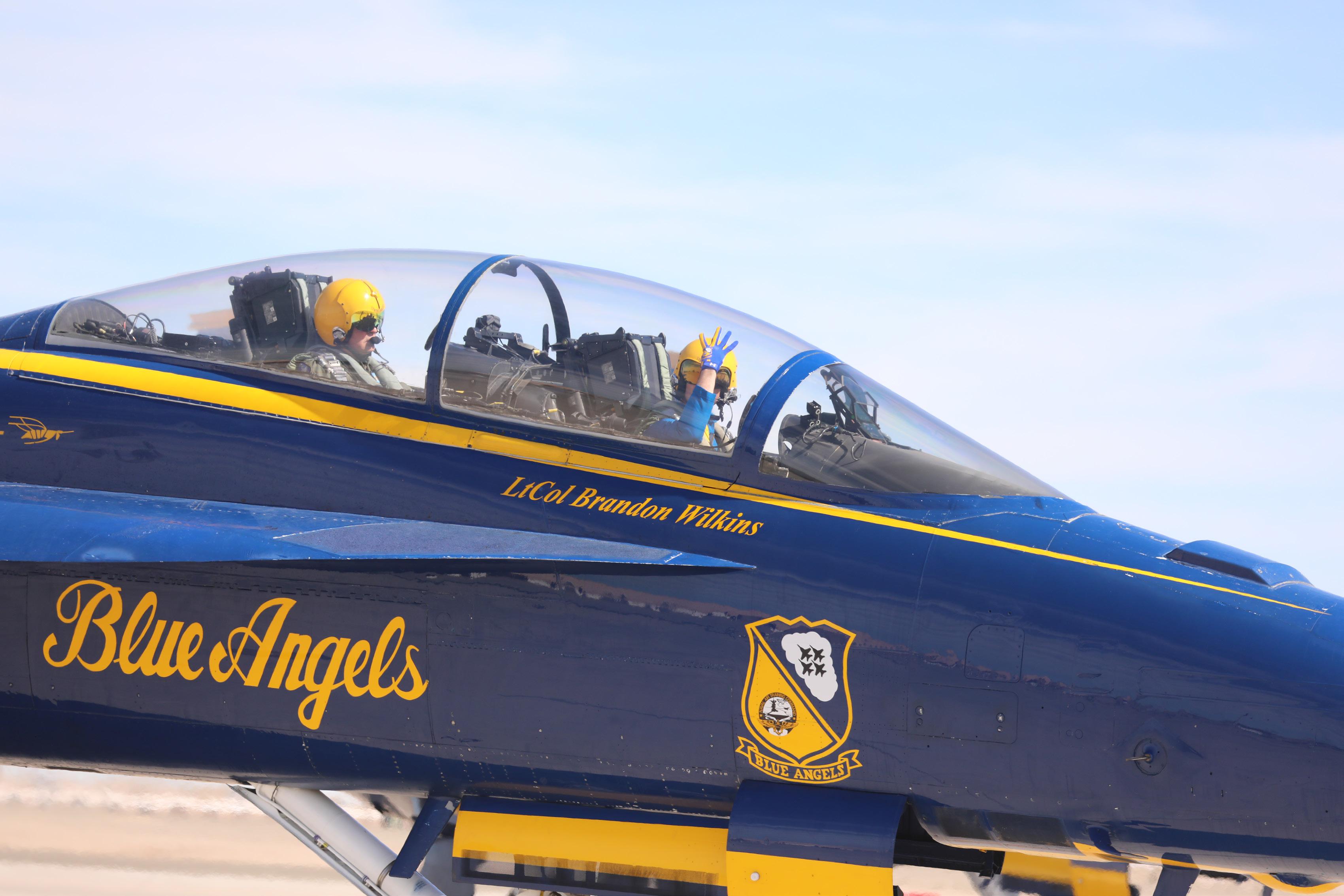
NAF El Centro Blue Angels and T-Birds
Hasselblad X2DII 100C review
Meet the members and more!
WELCOME TO THE 2026 APRIL ISSUE OF AIRSPEED !
Blue Angels and Thunderbirds
Jeff Krueger Angie Stansbery
Rob Tabor Gregg Stansbery
Larry Grace
Sling Load Operations
Joshua Epps
European Rotors 2025
Marc Schultz
X2DII 100C…Not Your Father’s Hasselblad!
Jim Wilson
Pioneer Flight Museum
Eric Renth
America’s Greatest Warbird Secret
Brian La Fetra
Luke Days
Larry Grace
The Old Rhinebeck Aerodrome
Scott Slingsby
Follow The Leader
Kevin Hong
How I Got The Shot
Scott Slingsby
Photo Tips - Removing Reflections
Larry Grace
Meet the Members
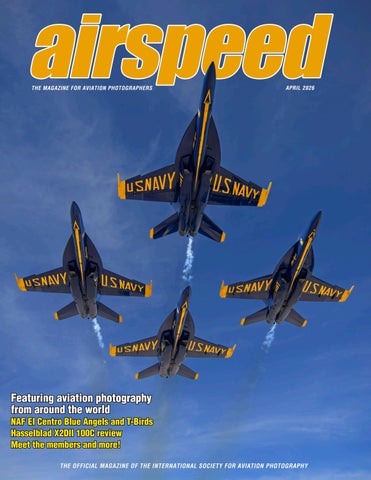
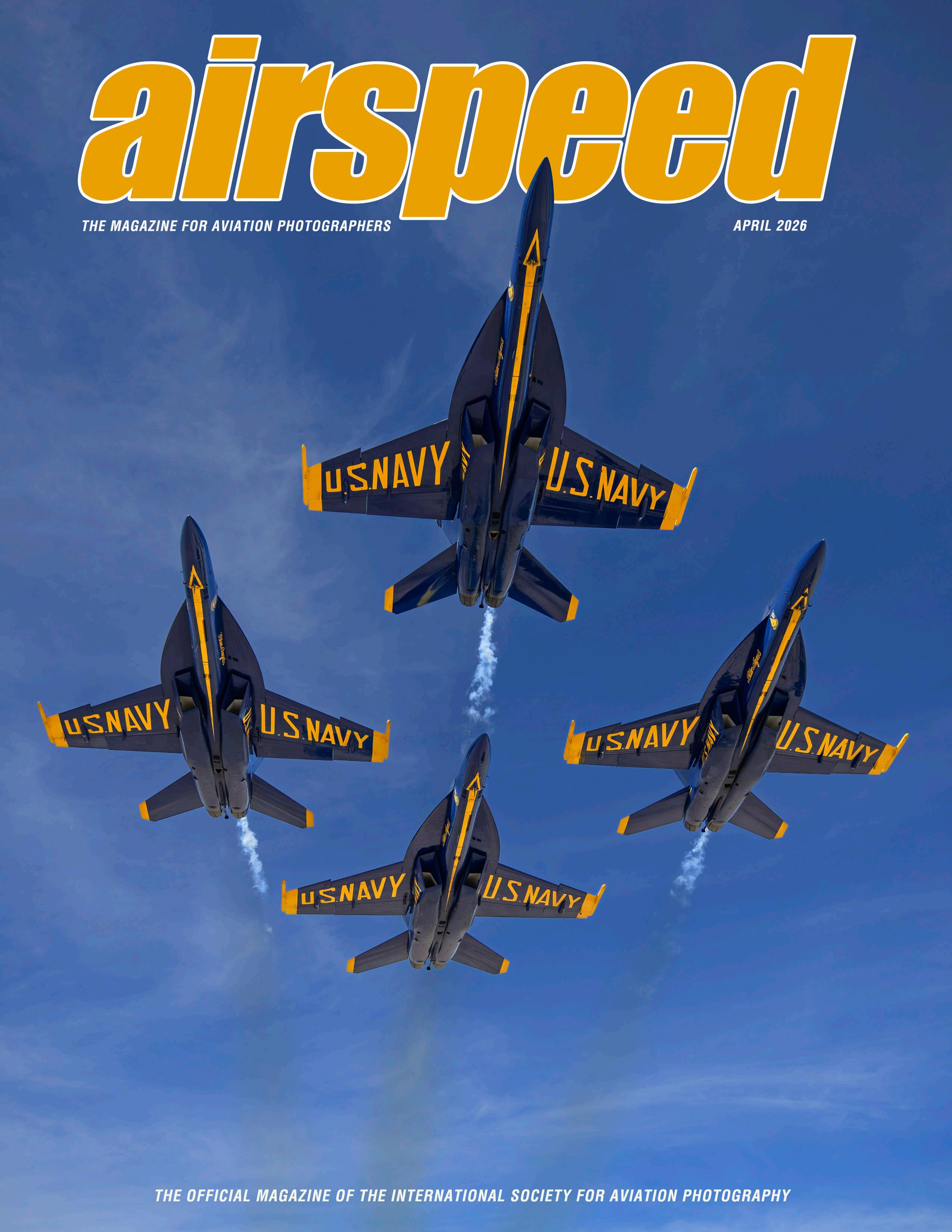
Cover
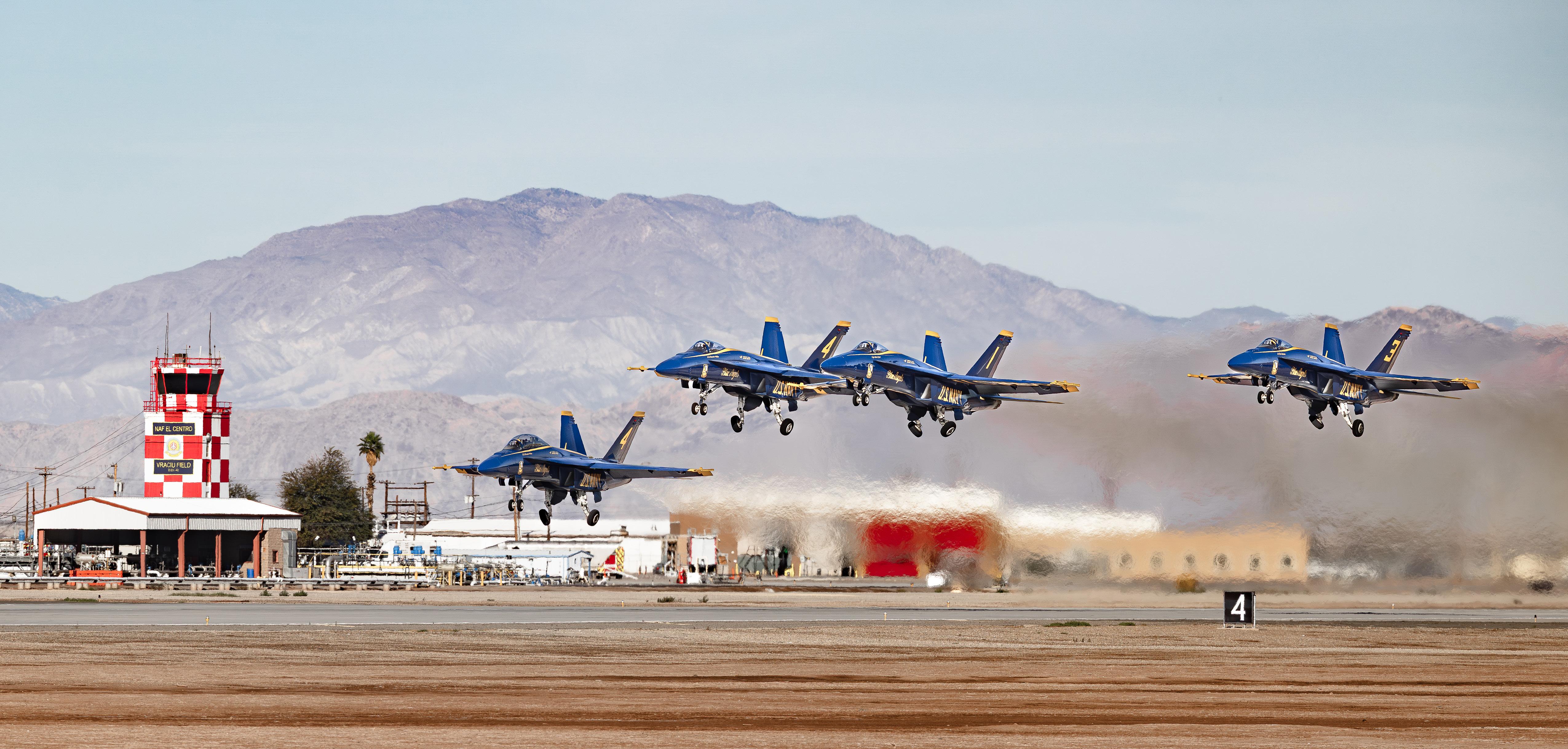
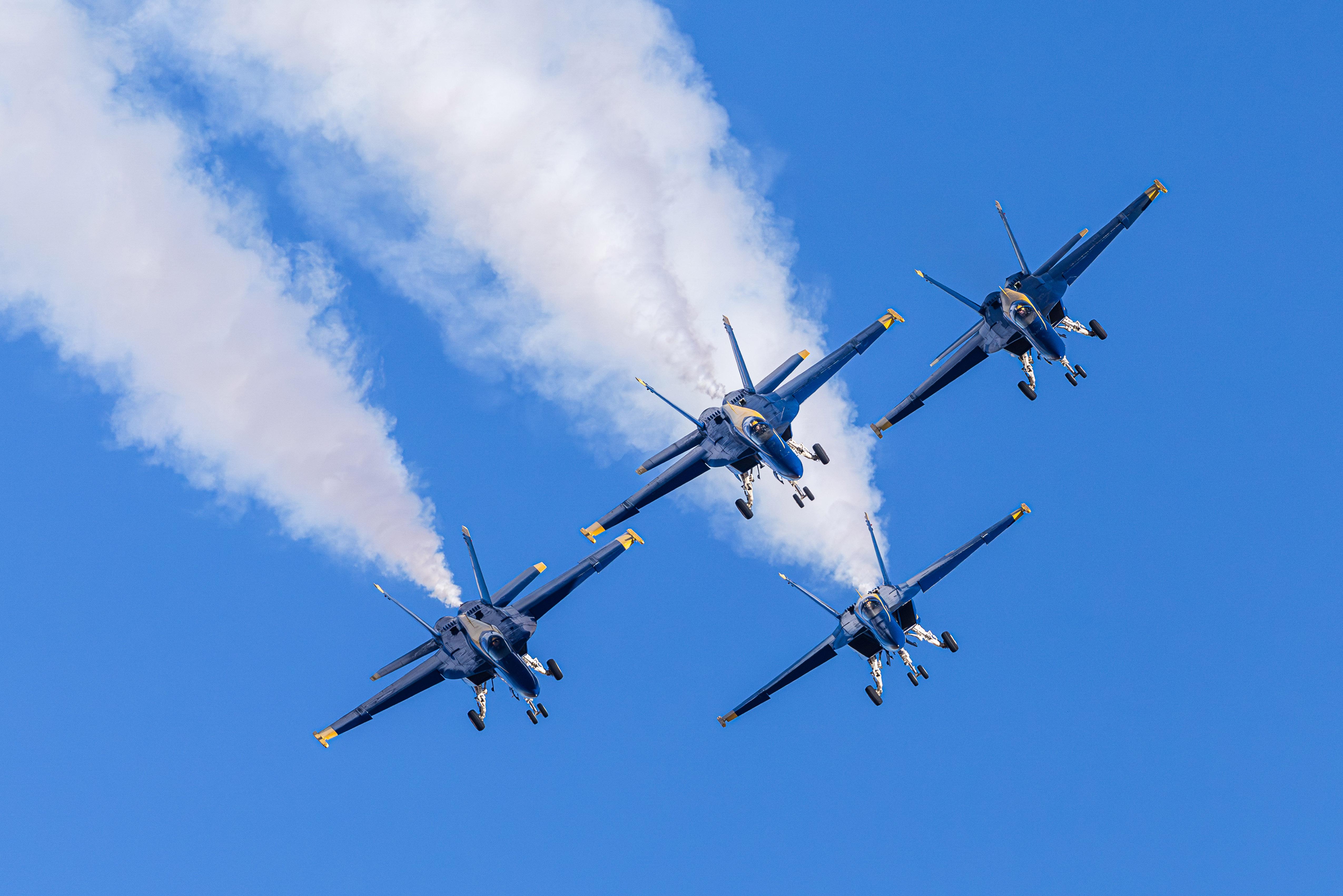
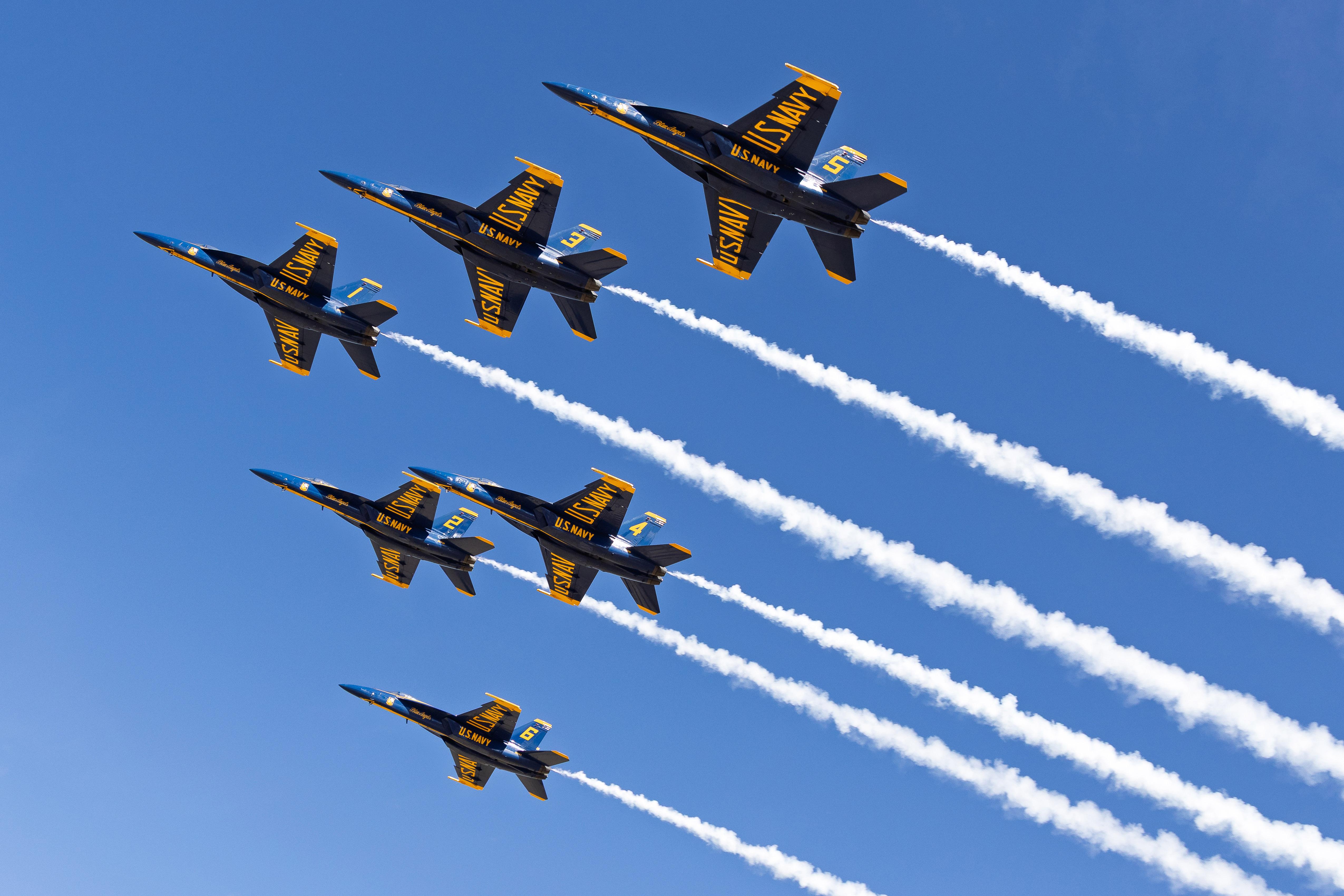
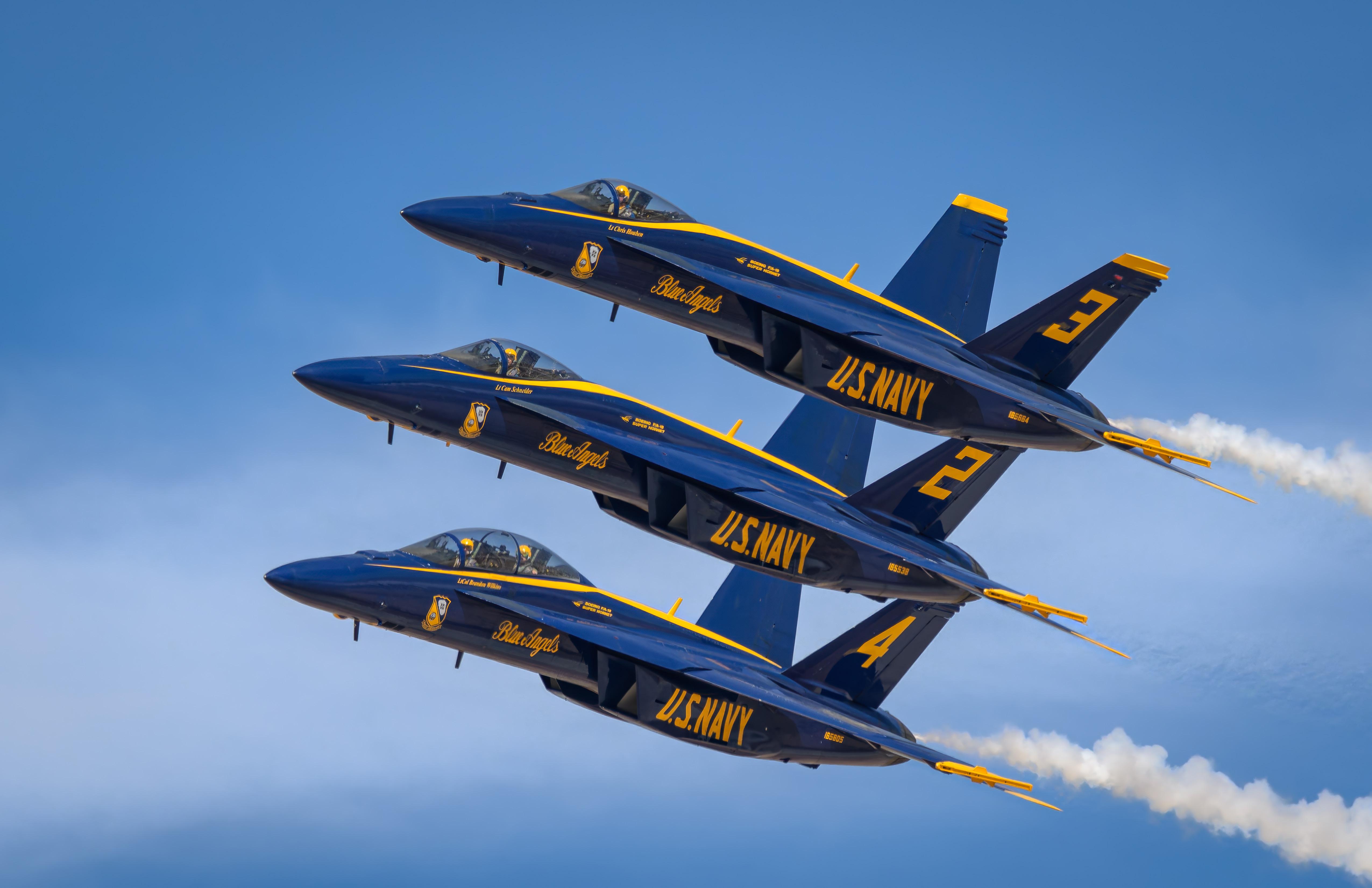
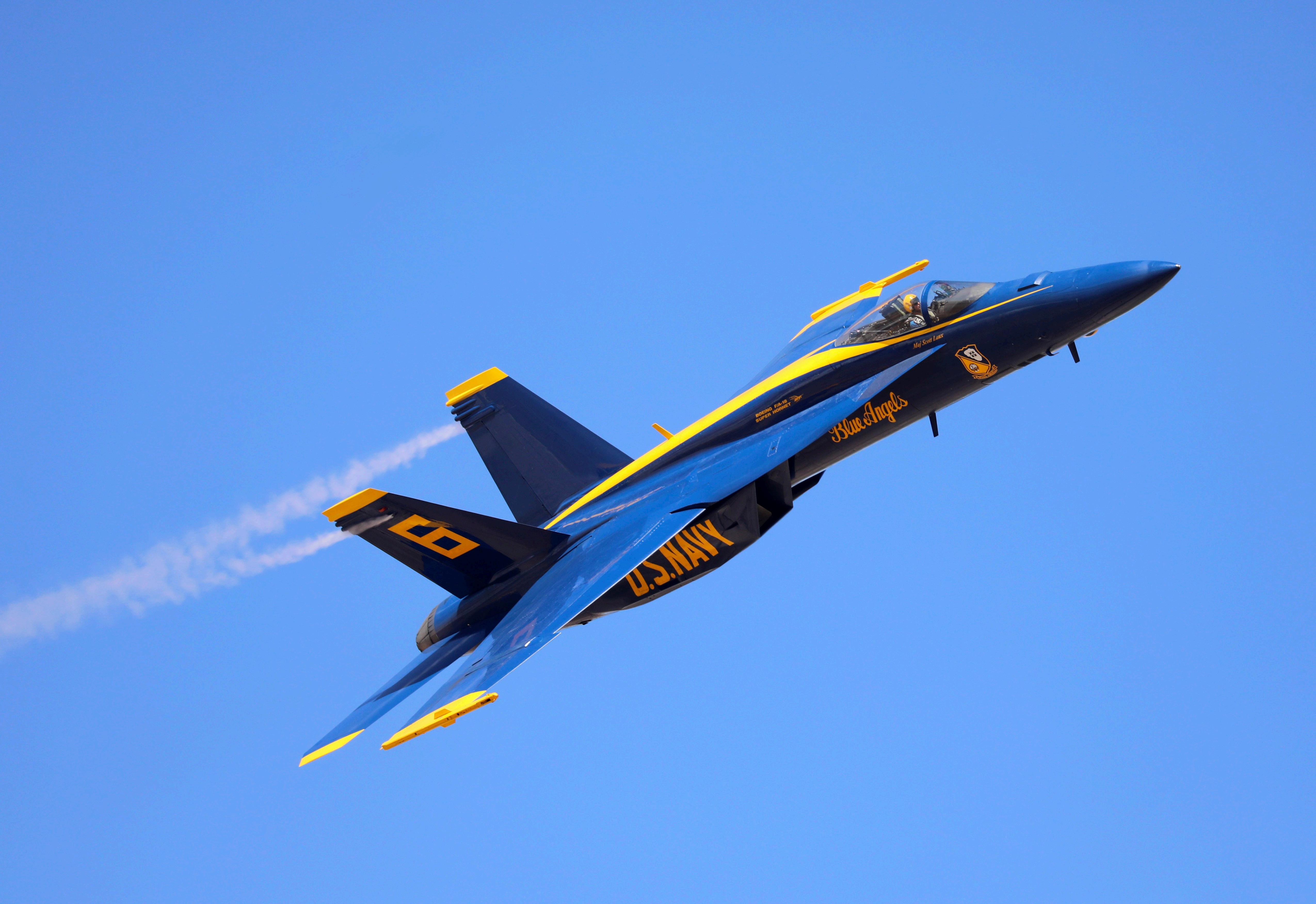
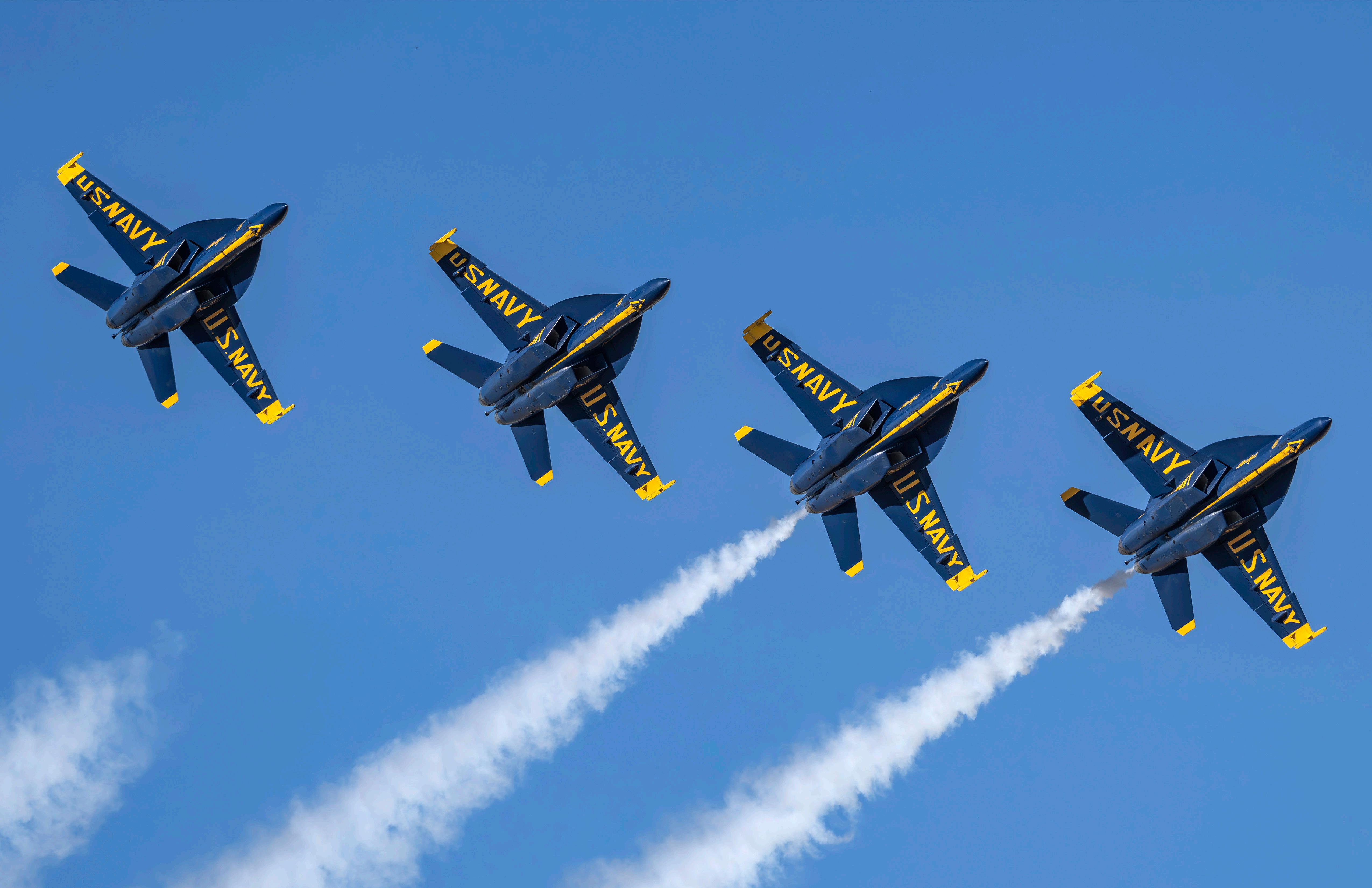
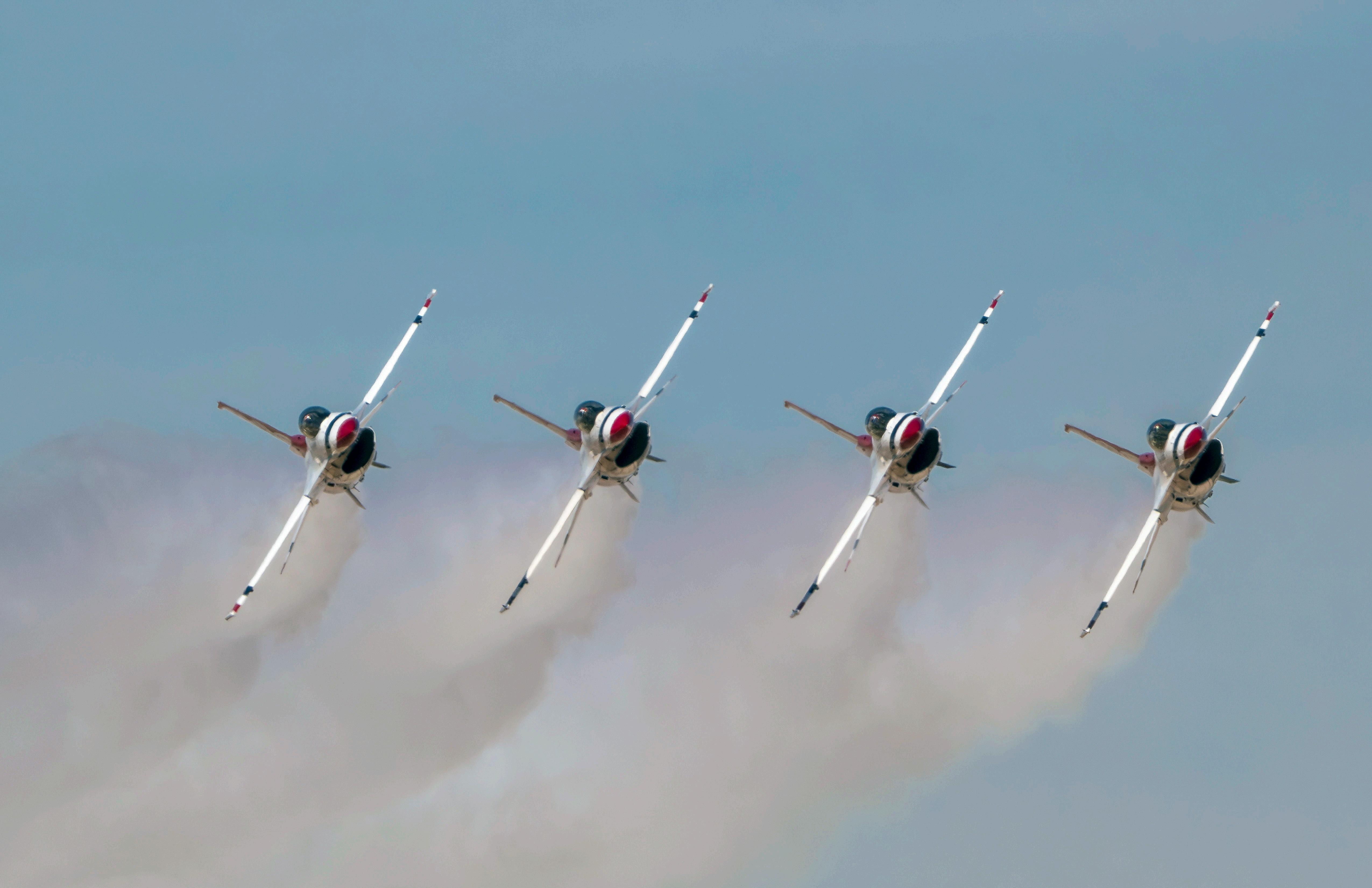
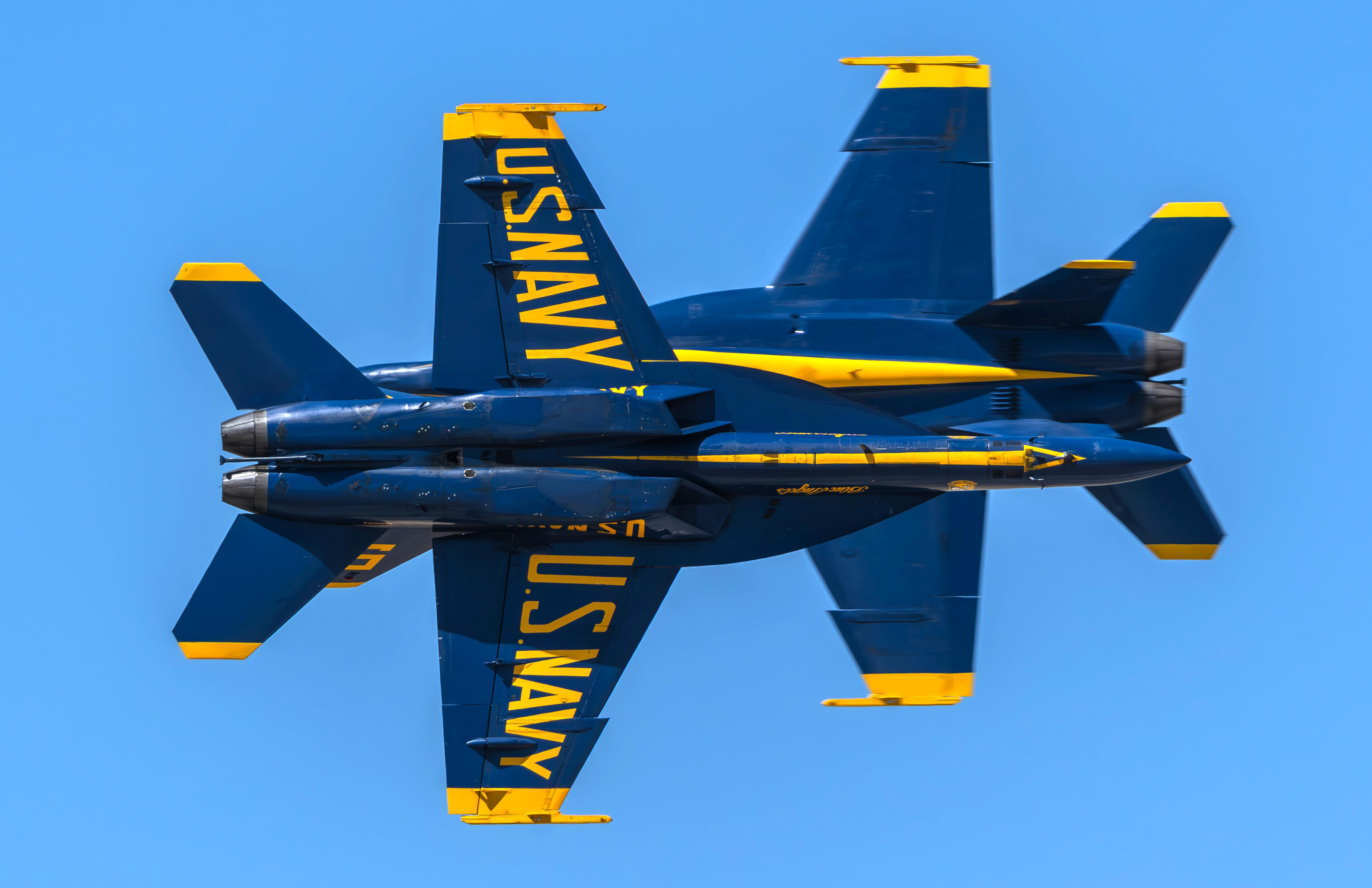
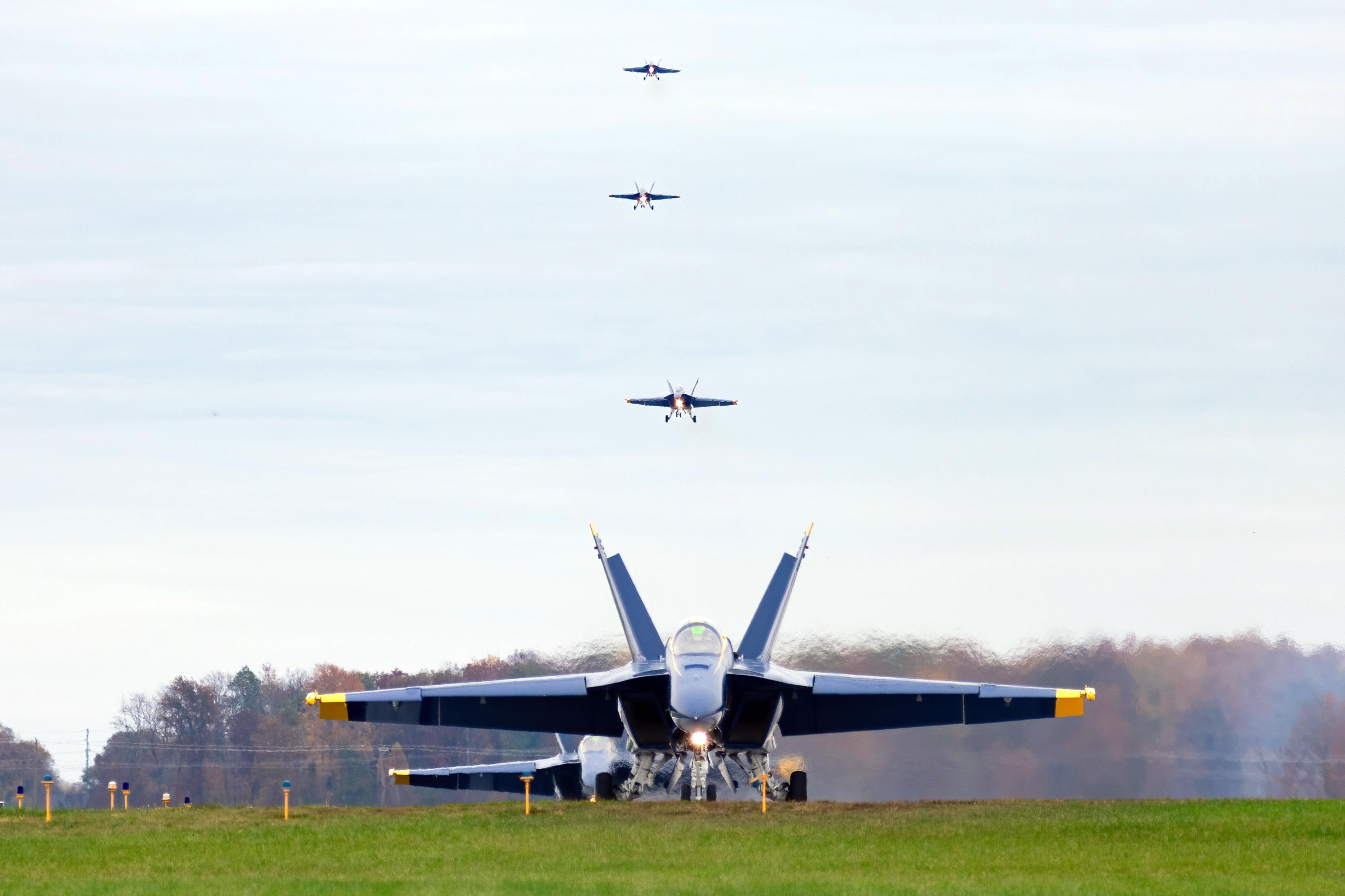
Angels diamond 4-ship take off at NAF El Centro.
Camera: Nikon Z9
Lens: Nikkor 14 - 24mm f/2.8 S
Shutter speed: 1/5,000 ISO: 140 Exposure: f/4
RAW images processed in DxO PureRAW 5
Back Cover
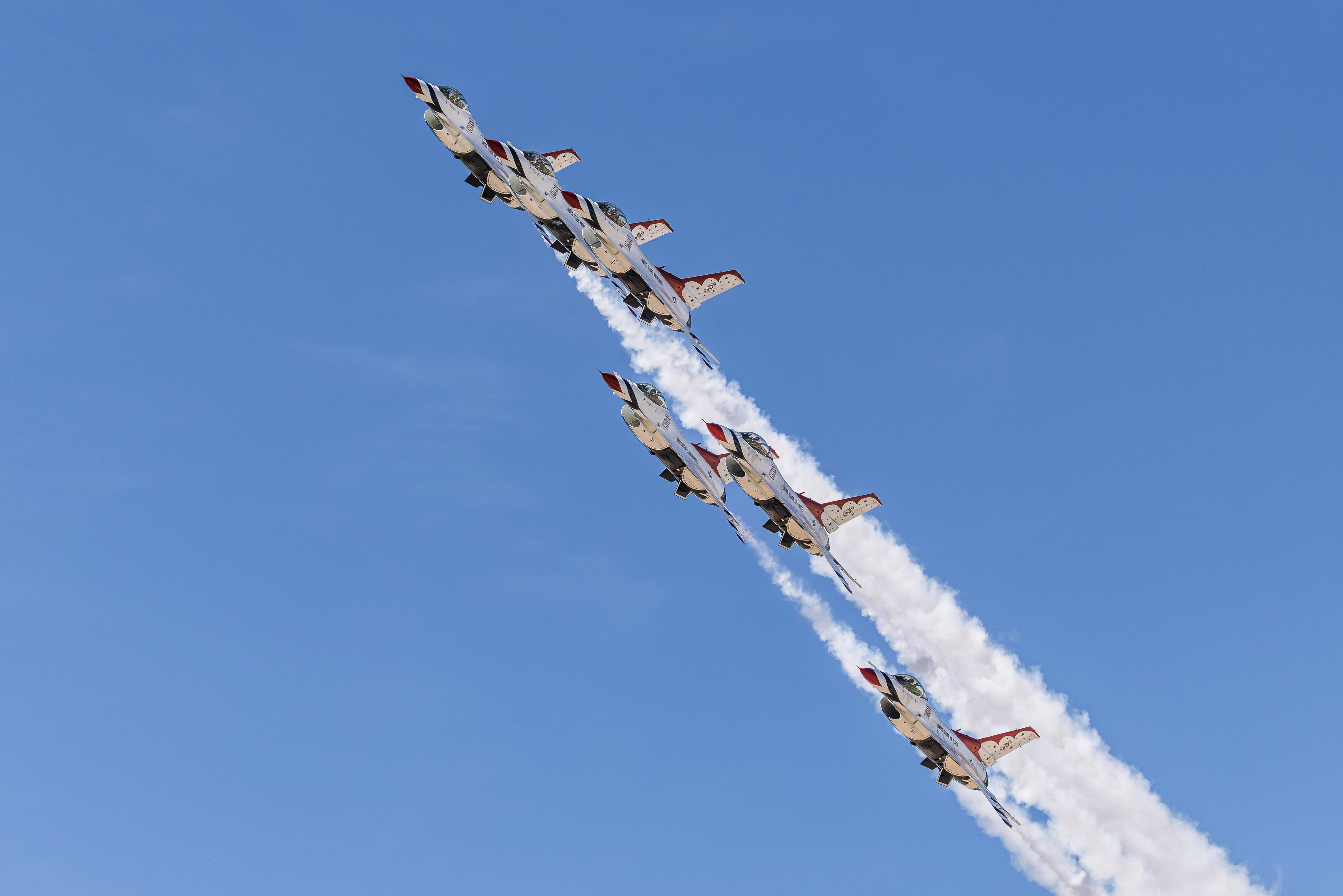
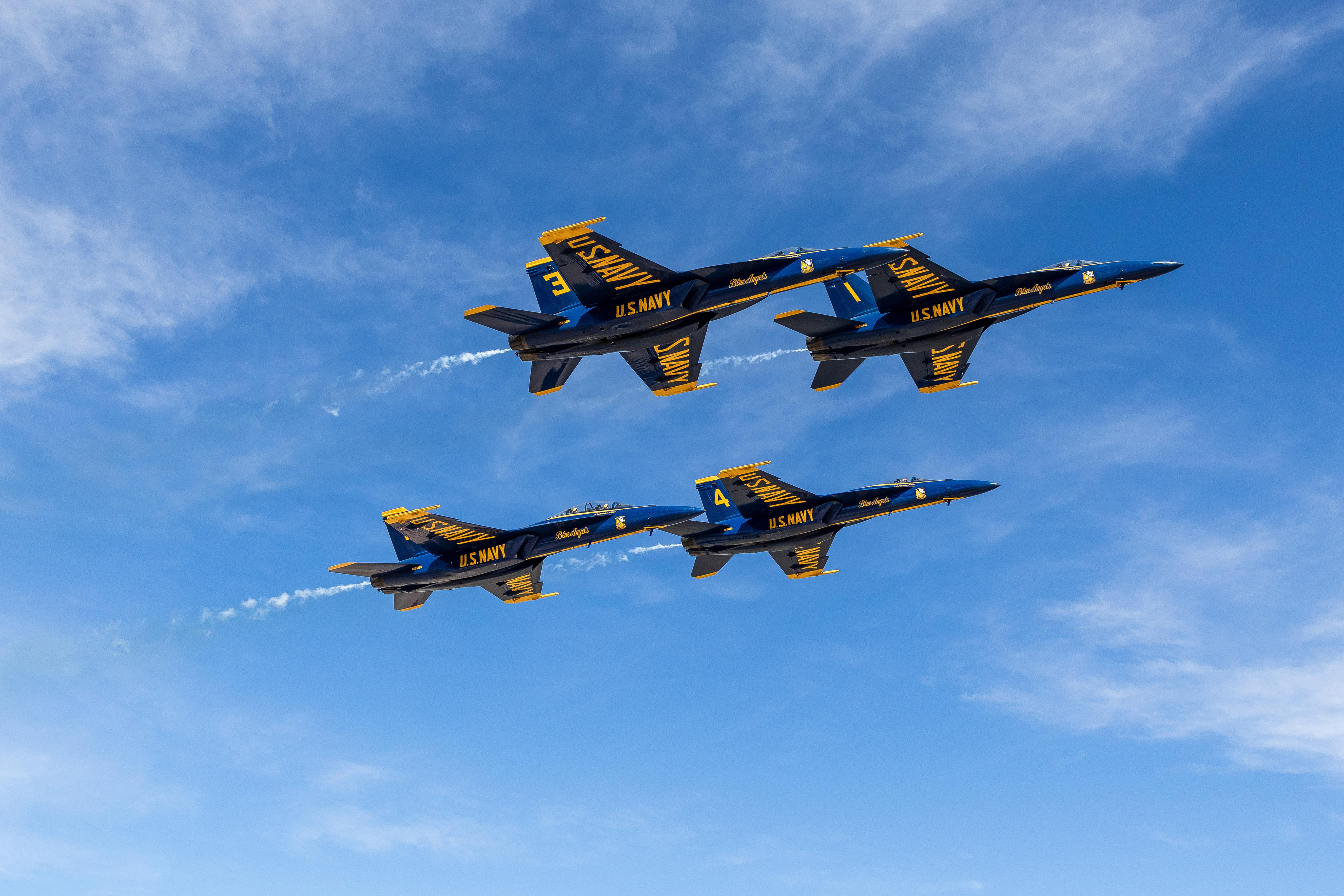
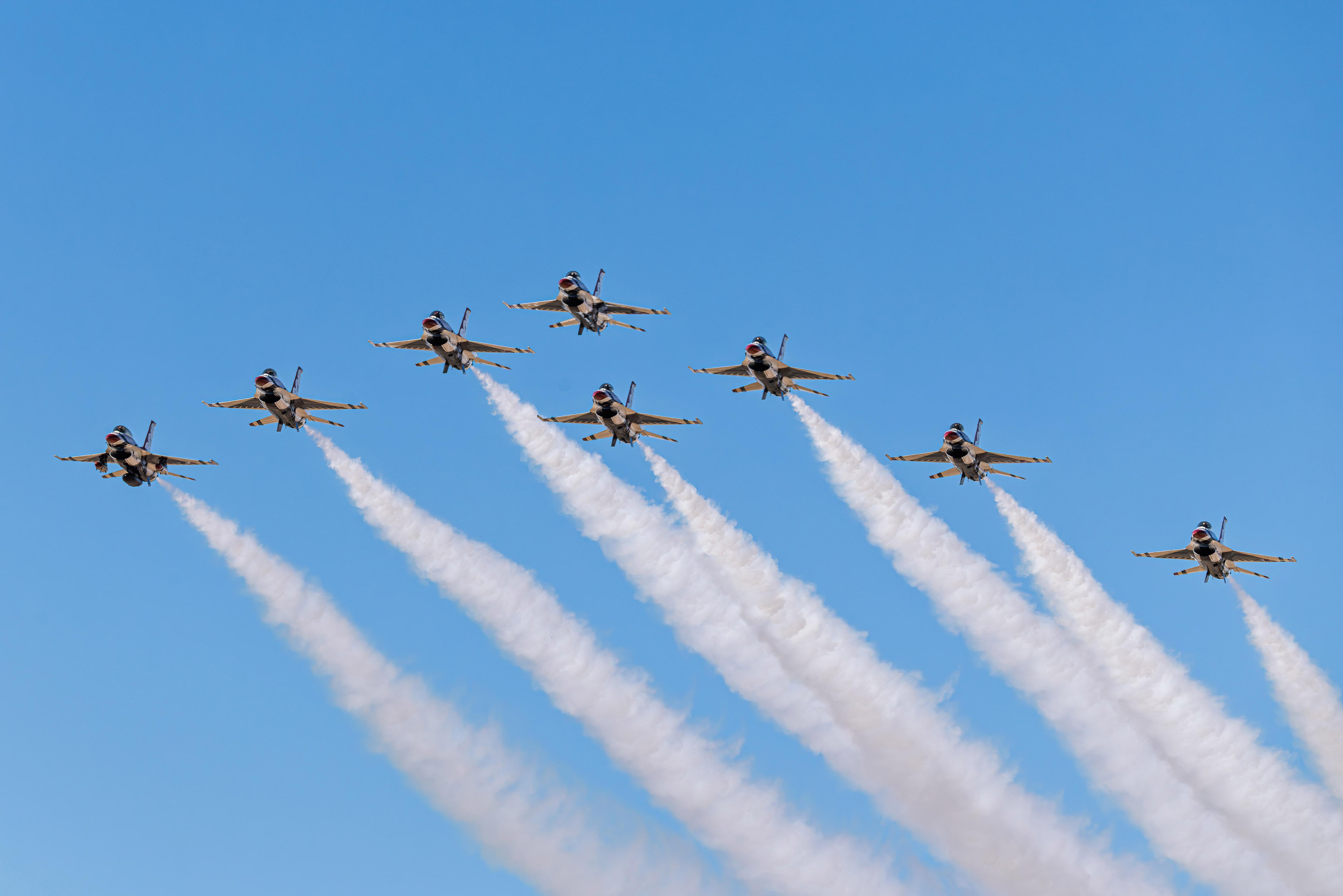
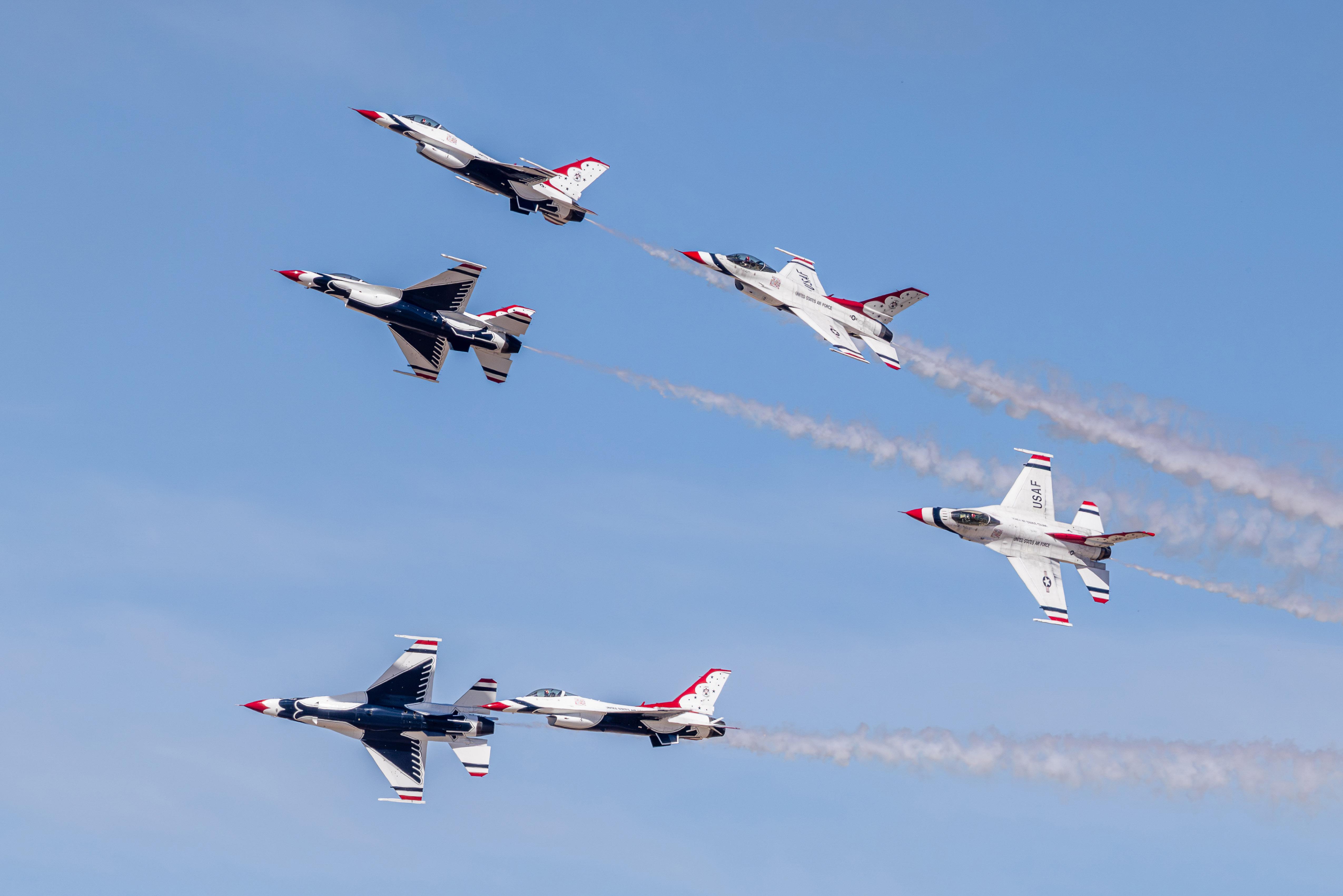
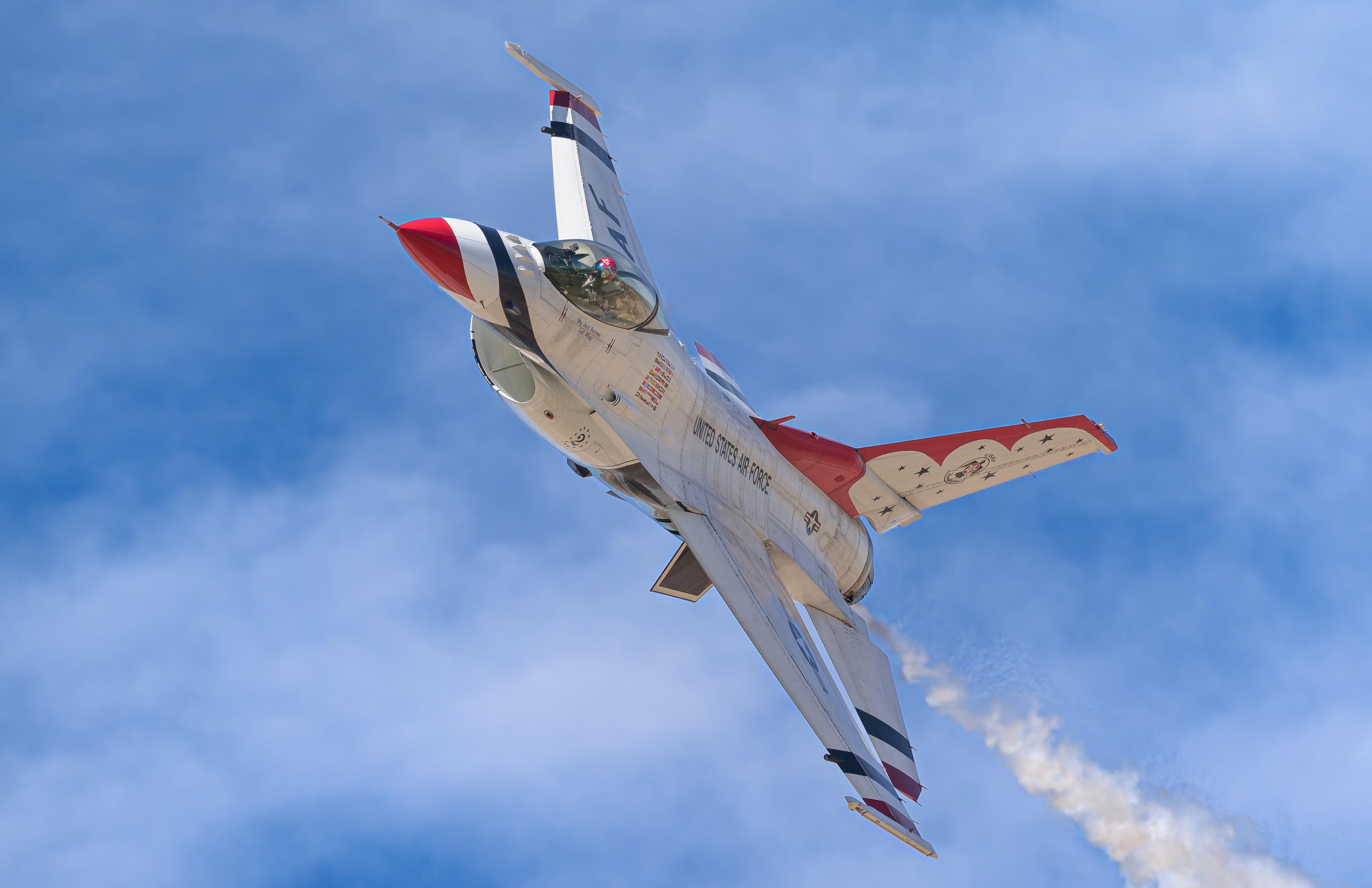
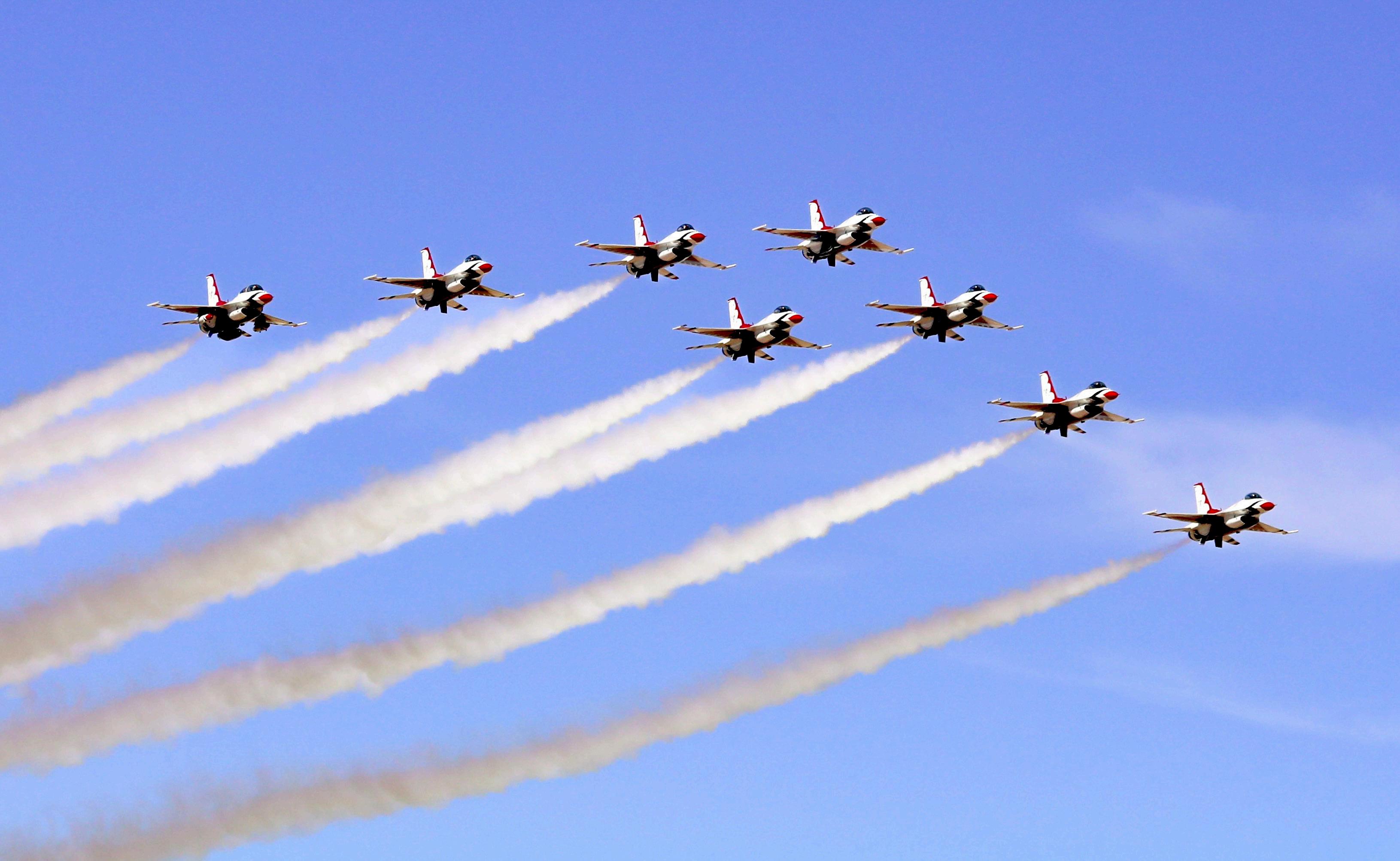
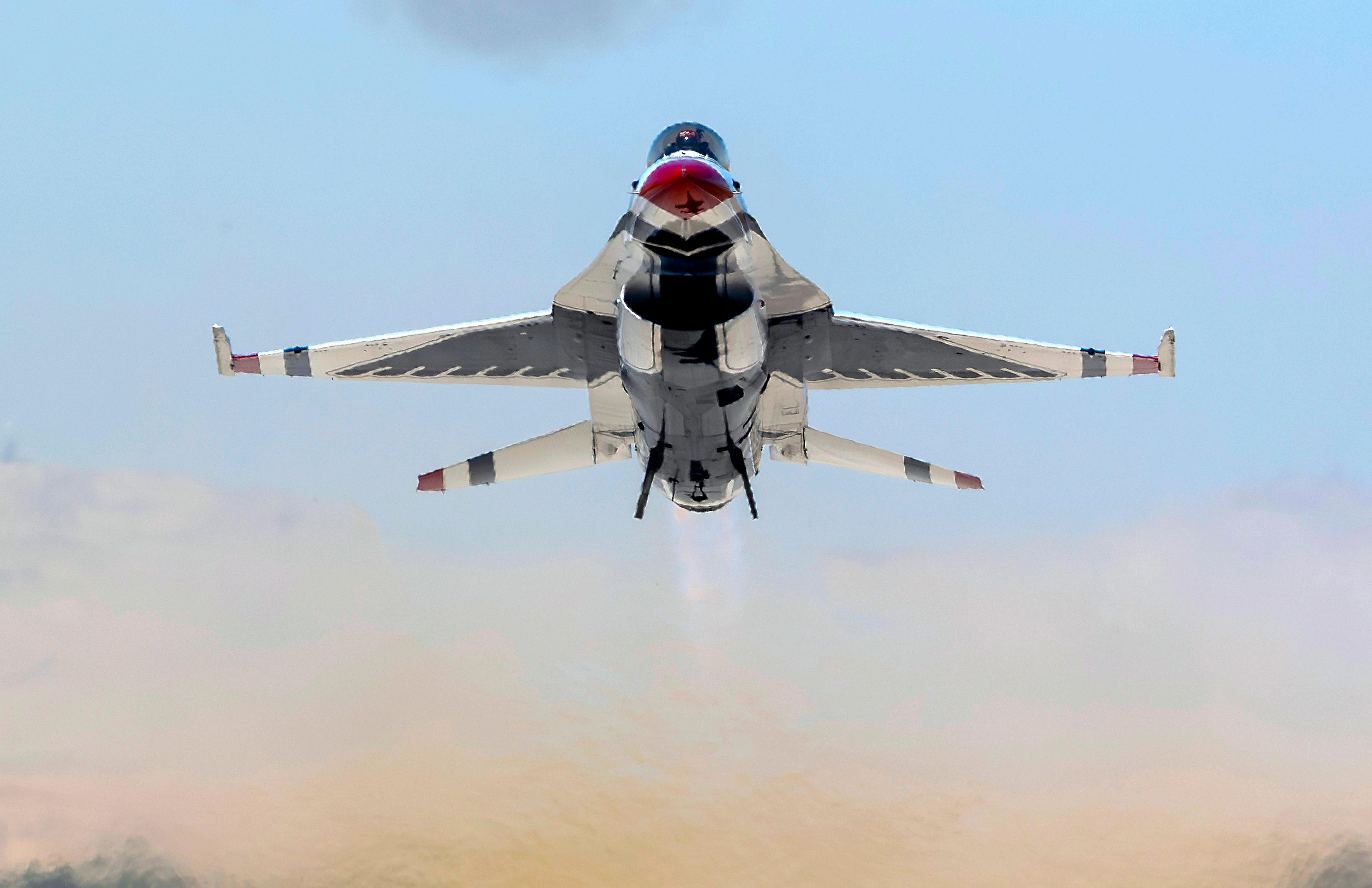
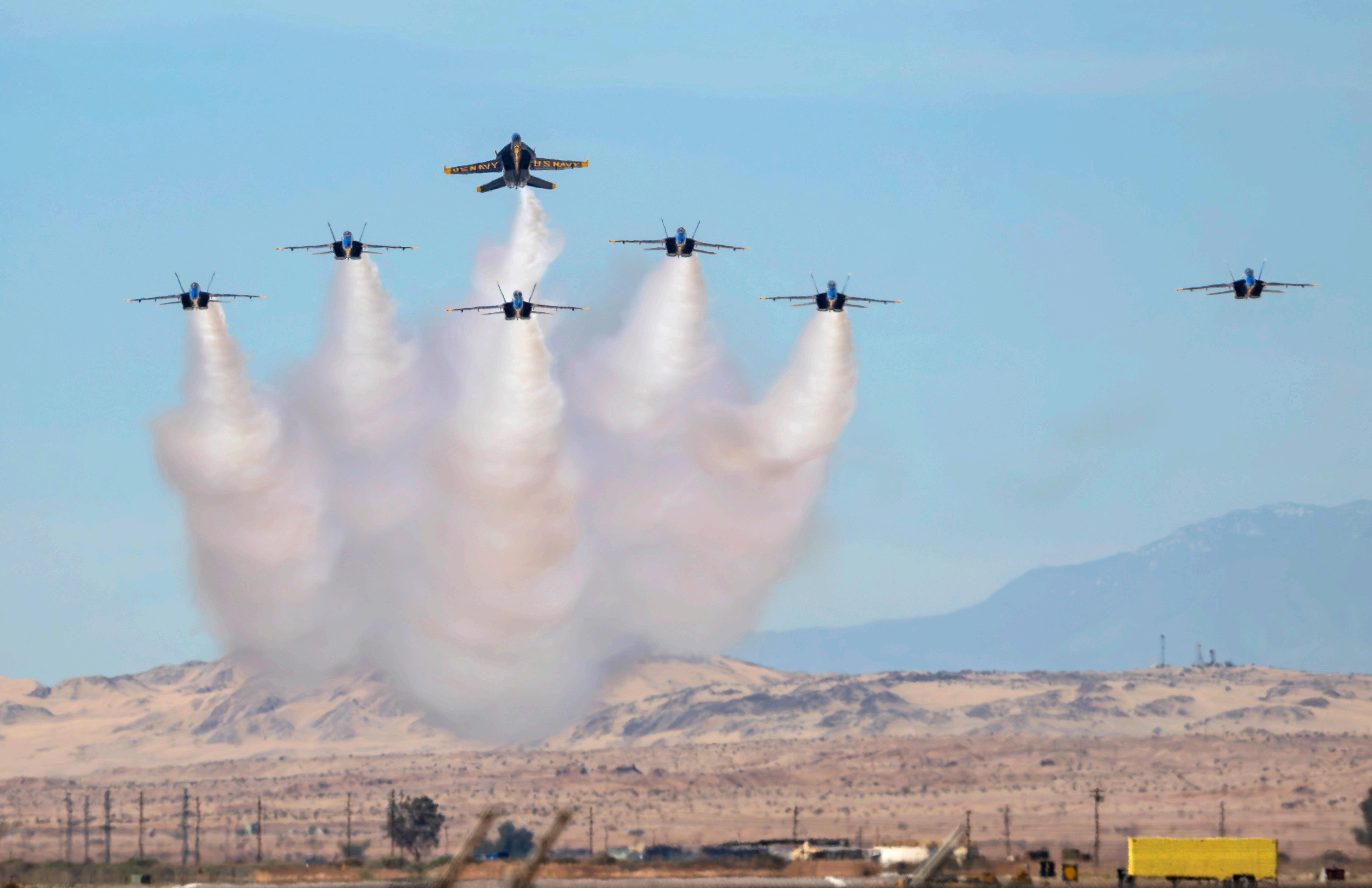
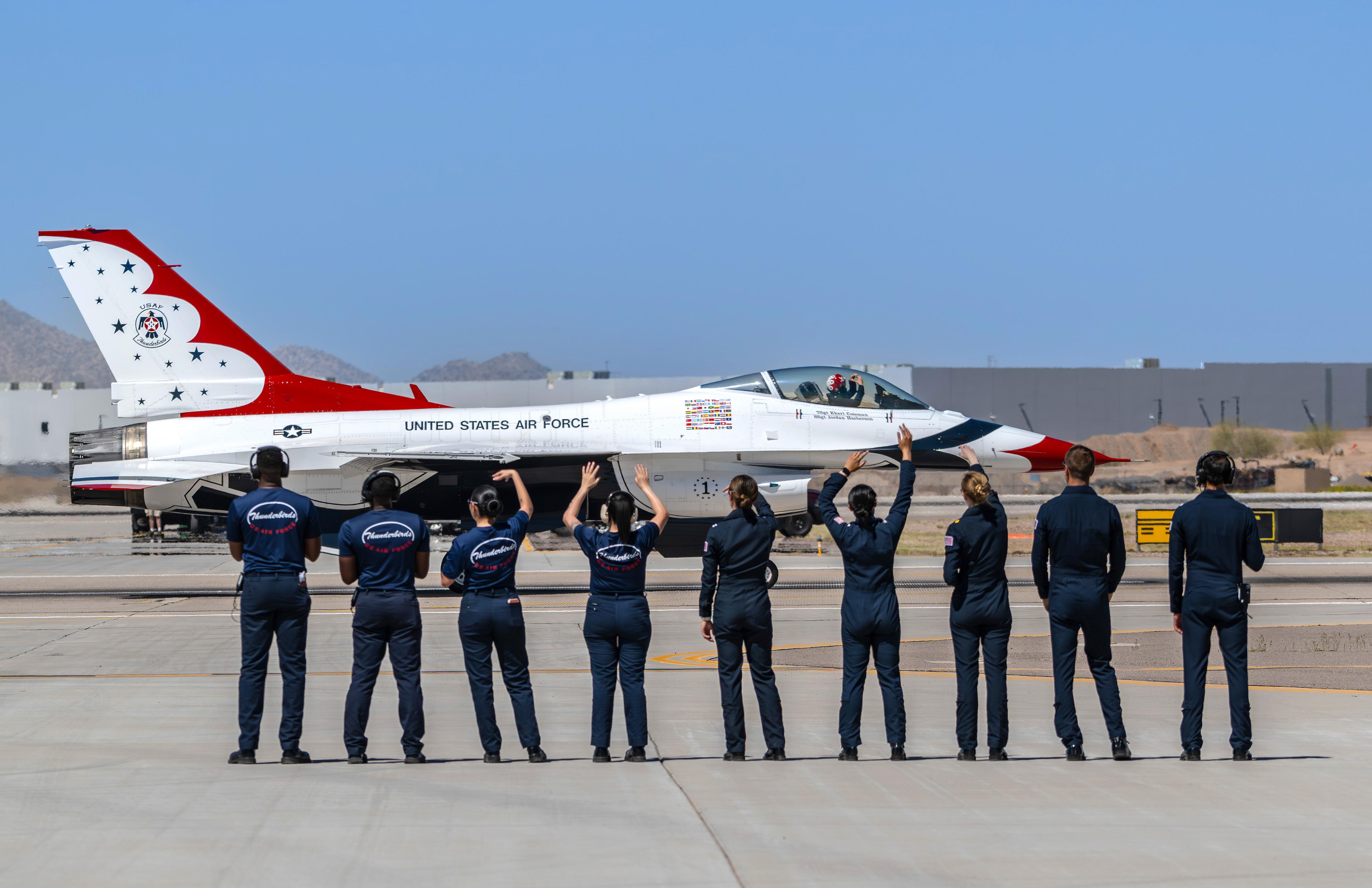
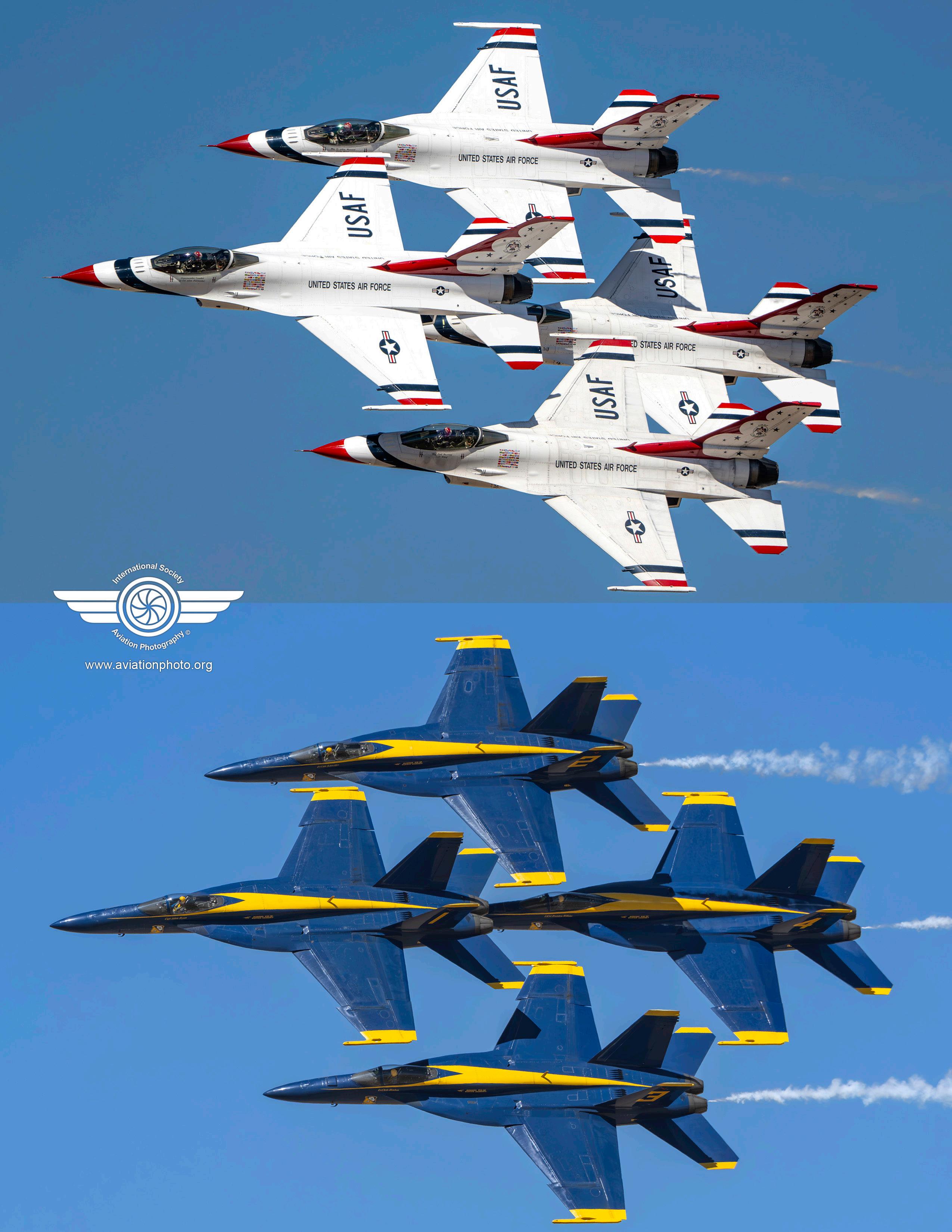
Thunderbirds and the Blue Angels Diamond Formation at Luke Days - Luke AFB airshow
Grace
Camera: Nikon Z9
Lens: Nikkor 180 - 600mm f/5.6-6.3 VR
Shutter speed: 1/3200 ISO: 220 and 400 Exposure: f/6.3
RAW images processed in Adobe Photoshop and Adobe Camera RAW
Brian La Fetra
Front
Blue
Photo by Rob Tabor
Photo by Larry
John Agather
Reese Belcher
Joshua Epps
Craig Hewitt
NEW AND RETURNING ISAP MEMBERS
Brian La Fetra
Jan-Arie van der Linden
Larry Melby
Mike Miley
Frank Moriaty
Ivan Mustafa
Tom Pawlesh
Glenn Riegel
Greg Stansbery
Angie Stansbery
Chaz Teets
Peter Yee
The goal of International Society for Aviation Photography (ISAP) is to bring together our members who share a love of aviation, and want to preserve its history through their images. Through our organization, members can seek to enhance their artistic quality, advance technical knowledge, and improve safety for all areas of aviation photography while fostering professionalism, high ethical standards, and camaraderie.
ISAP continues to help our members to better their photography skills, workflow, and set up resources to help with business questions that our members have. Updates are being made to the ISAP website and member portfolio section, and we are showcasing ISAP members’ images and accomplishments on our social media pages.
The new Airspeed magazine will highlight ISAP members and their photography, experiences, and their passion for aviation from around the world. From military and commercial aviation, you’ll be able to see it all while learning about aviation photography, post processing tips in Lightroom and Photoshop, aviation history, air show reports, aviation museums, and more. We look forward to sharing our members’ images and articles with everyone.
Enjoy this issue of Airspeed!
Sincerely,
Larry Grace, ISAP President
Kevin Hong, Airspeed Editor
International Society for Aviation Photography www.aviationphoto.org • www.facebook.com/ISAPorg
Airspeed magazine will highlight ISAP members and their photography, experiences, and their passion for aviation from around the world. From military and commercial aviation, you’ll be able to see it all while learning about aviation photography, post-processing tips in Lightroom and Photoshop, aviation history, air show reports, aviation museums, and more. We look forward to sharing our members’ images and articles with everyone.
Rob Tabor
After spending much of the fall and winter doing other types of photography, I decided to take a road trip to El Centro, California the last week of February and shake the dust off of my aviation photography. The opportunity to capture the two top aviation demo teams in the world at the same time was too good to pass up. It was also a great time to meet up with several friends I’ve shot with over the years and catch up.
Over the four days I was there, the weather was the typical clear blue skies and fairly calm winds, and HOT…of course the ever-present dust along the fence line was with us much of the time as well, but over the years, I’ve come to expect that. Overall, the group of aviation enthusiasts and photographers was manageable, except maybe Thursday due to a rumored “super delta”, which unfortunately didn’t happen, but we had some great flying to capture and enjoy each day. As always, normal flight operations kept up in between the three of four practices sessions, alternating between the Blues and the T-Birds.
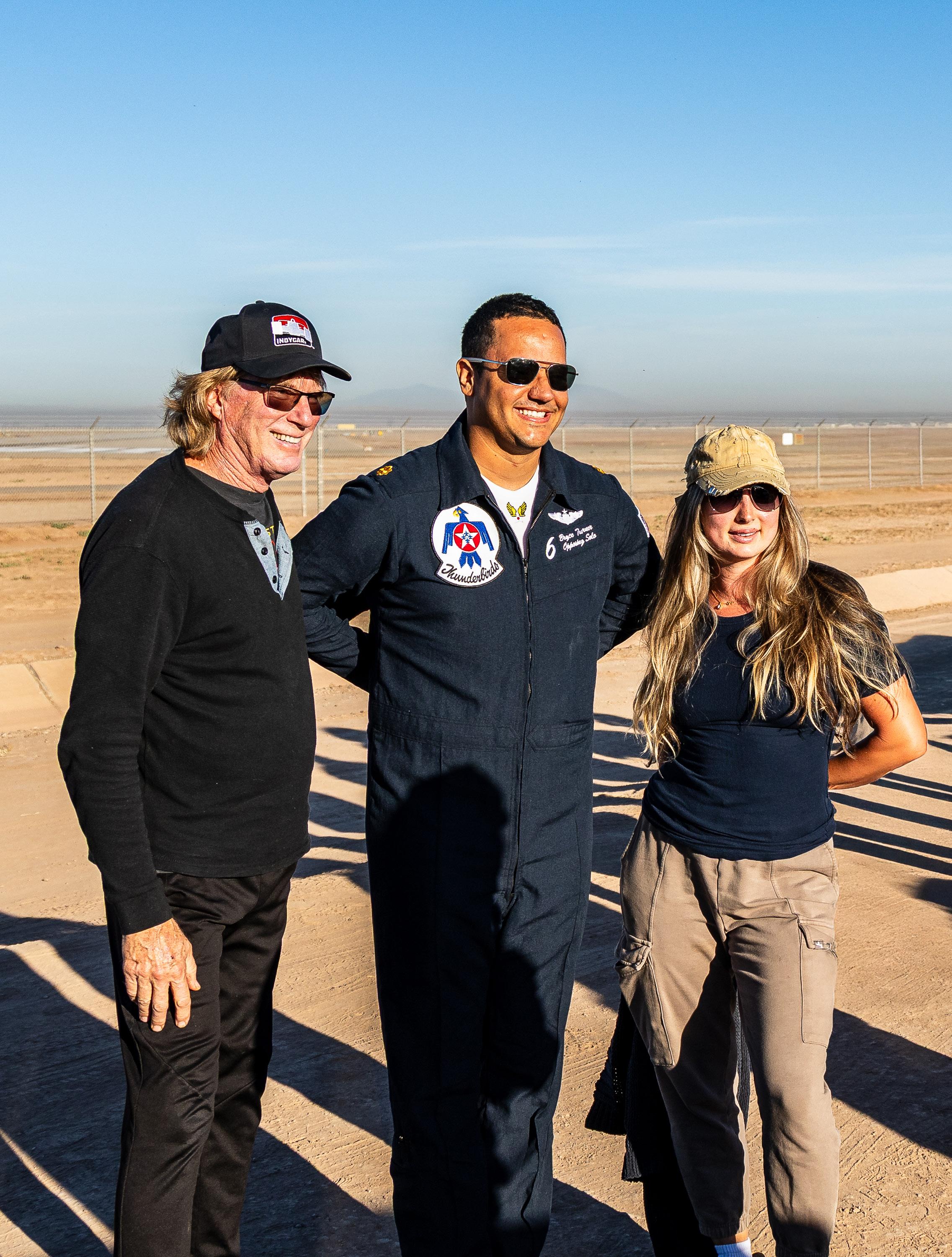
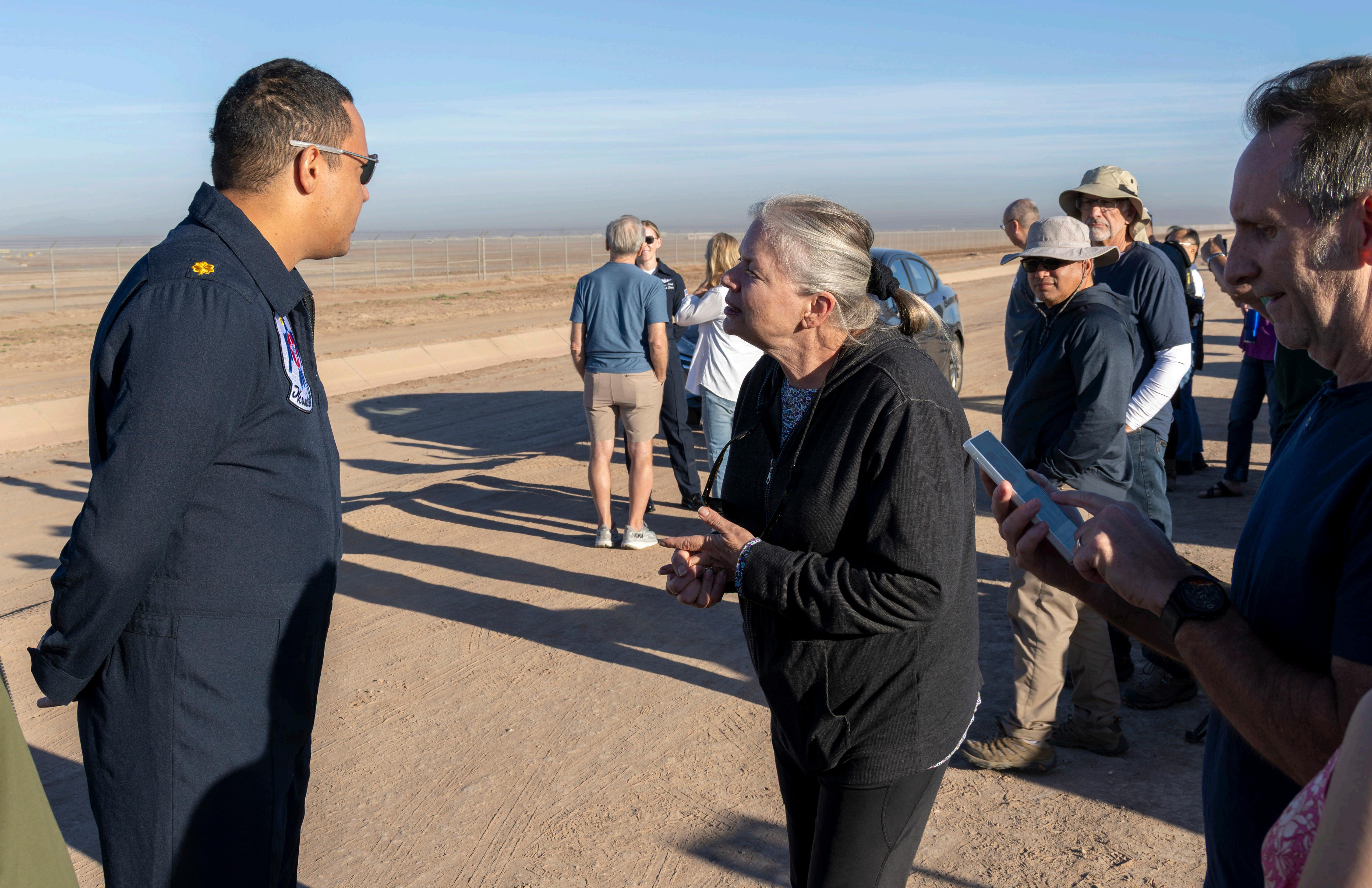
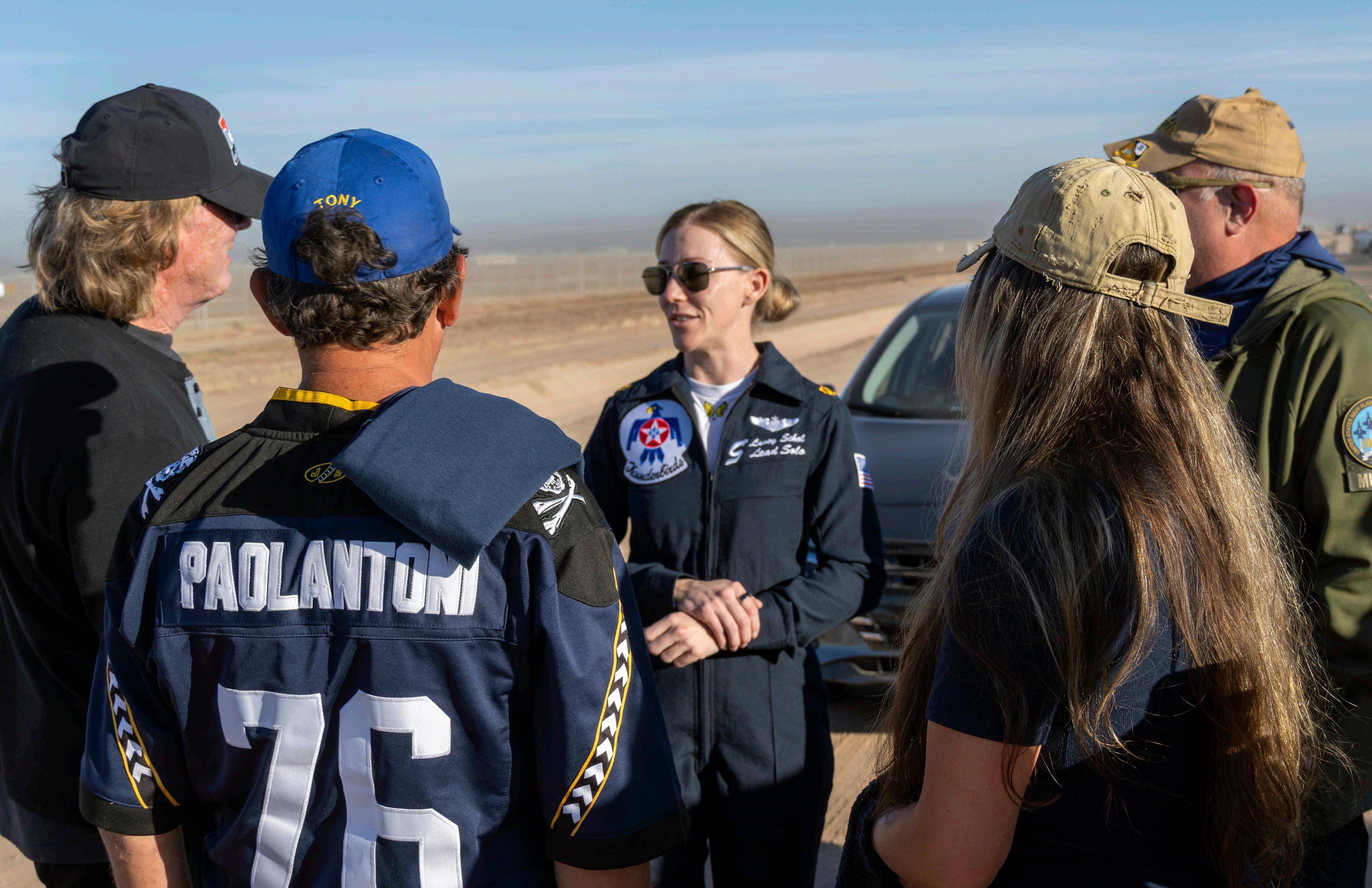
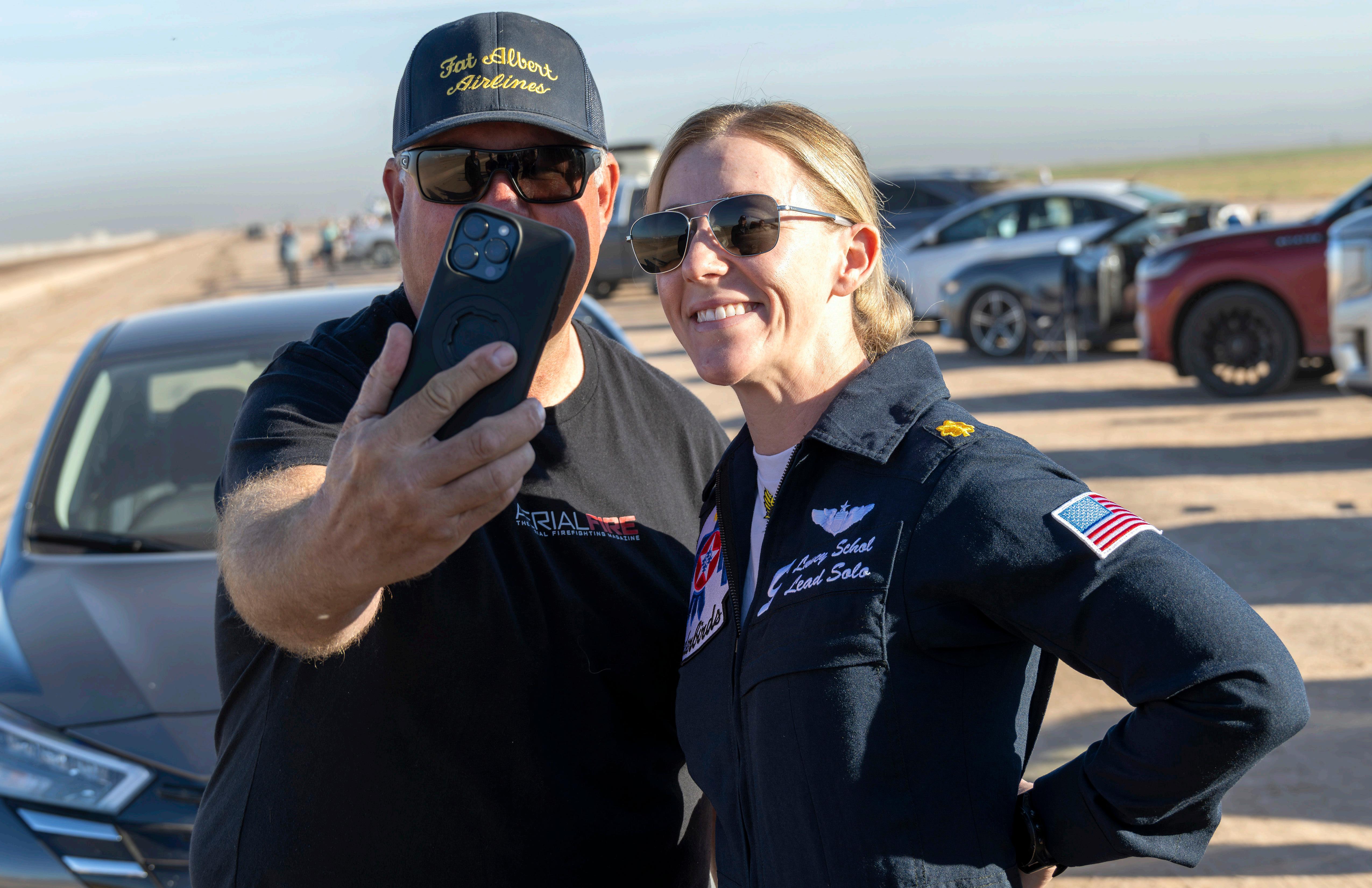
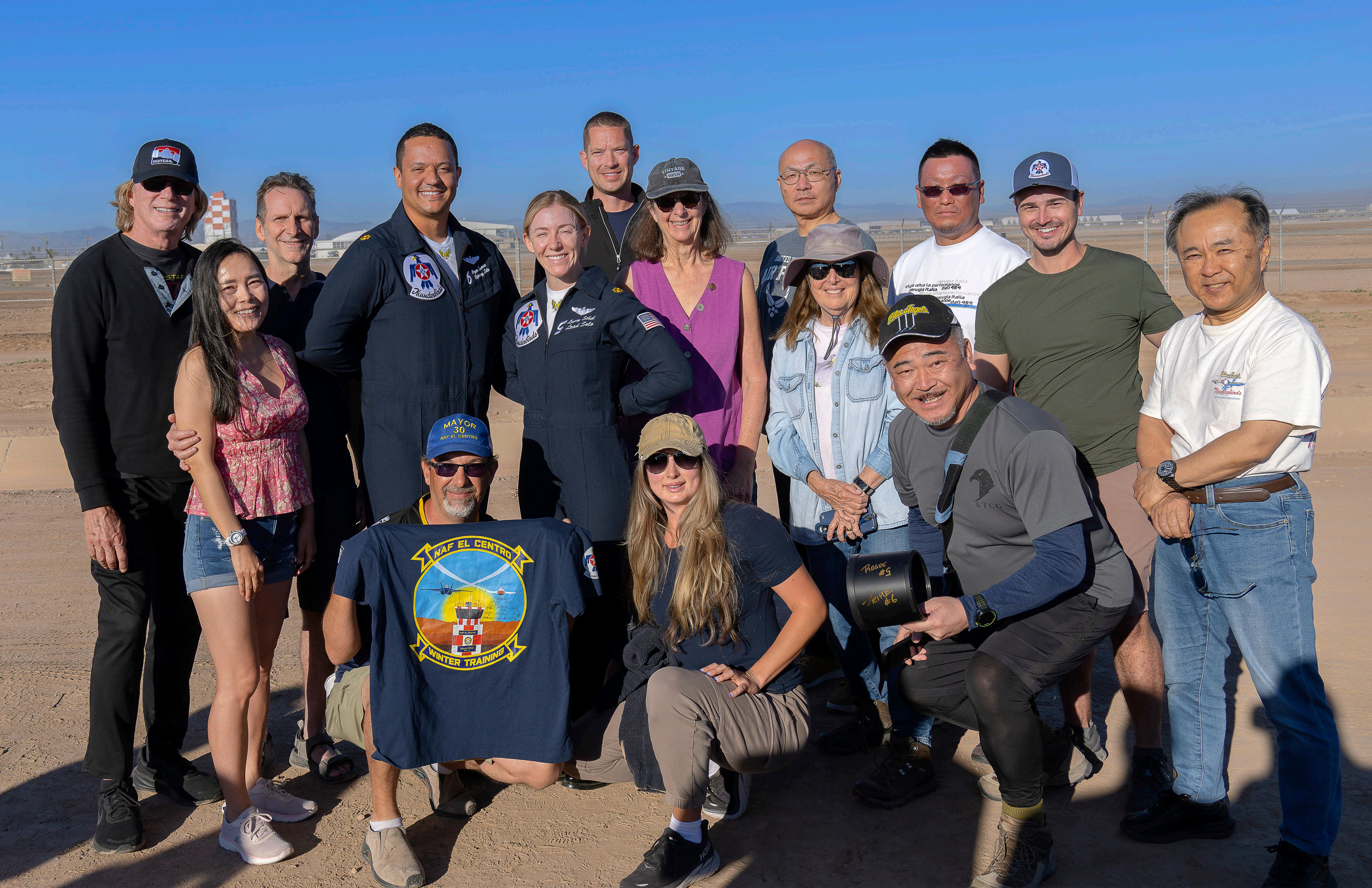
On several occasions, we were visited by team members like Maj, Laney “Rogue” Schol (T-Bird #5) and Maj. Bryce “Triple” Turner (T-Bird #6). They were gracious enough to spend time meeting folks and answering questions, and of course having photos taken. Taking some of their well earned “off time” to come out and greet us is really something special.
I always enjoy my visits to NAF El Centro. To me, it’s a privilege to be able to photograph from where we are able to be. It is a unique opportunity that doesn’t happen everywhere. With one exception this year, all of the aviation photographers kept safety first and respected the needs of the teams as they showed their skill in the air. As long as we all cooperate with each other and understand the concerns of NAFEC, the teams and the FAA, I hope to continue to come out and document this event.
BLUE ANGELS AND THUNDERBIRDS
2026
Article and photos by Jeff Krueger
Jeff Krueger
Jeff Krueger
Jeff Krueger
Jeff Krueger
Jeff Krueger
Jeff Krueger
Jeff Krueger
Jeff Krueger
Jeff Krueger
ROB TABOR
As the old saying goes, you can’t get what you want, until you know what you want and that was the dilemma that I faced rolling into the combined winter practice at El Centro this year. After four previous trips, I had pretty much checked most of the boxes of shots I wanted, so this time I decided to mix things up a bit and try some new spots on both sides of the field. The crowds were light the first half of the week, so I did shoot from the familiar spot directly off the departure end of runway 12. But as the throngs descended later in the week, I elected to make the move further down the line in the morning and as the sun shifted, I moved to the opposite side of the field. Invariably, some things worked, some things, not so much. My old nemesis, heat haze was in full force this trip and quite a few potentially good shots were reduced to an impressionist painting. Maybe one day there will be an AI editing tool for that. Either way, it was a good experience for next time, if there is a next time. Those who are aware of the thoughtless and irresponsible act of one individual understand what I mean by that.
As always, one the best parts of the El Centro experience is seeing and shooting with good friends and fellow ISAP members. Hope to see you out there!
Rob Tabor
Rob Tabor
ANGIE STANSBERY
Angie Stansbery
Angie Stansbery
Angie Stansbery
Gregg Stansbery
Each winter, the desert skies over Southern California become a proving ground for two of the most elite flight demonstration teams in the world—the U.S. Navy Blue Angels and the U.S. Air Force Thunderbirds. In February 2026, both teams converged once again at Naval Air Facility El Centro, continuing a long-standing tradition of joint winter training.
A Unique Convergence of Precision and Performance
While each team conducts its own intensive preseason workups— refining formations, timing, and safety procedures—the overlap at El Centro offers something more valuable than just shared airspace. It provides an opportunity for collaboration at the highest level of aerial demonstration flying.
During this period, both teams operated concurrently in and around El Centro, with multiple training flights taking place on the same days throughout mid-to-late February. The desert environment, with its predictable weather and wide-open airspace, makes it an ideal location for this kind of high-tempo training.
Not a Public Event—But a Photographer’s Opportunity It’s important to understand that this joint training is not a public airshow. There are no official viewing areas, schedules, or announcements tied to the overlap. However, for those familiar with El Centro, that’s
part of the appeal. Photographers and aviation enthusiasts often position themselves along perimeter roads, canals, and known vantage points outside the facility. The environment presents its own challenges—distance, heat shimmer, and the stark desert light—but also rewards those who understand the rhythms of the field.
The focus remained entirely on training, making any sighting of both teams operating in proximity feel like a behind-the-scenes glimpse into the start of the airshow season.
A Tradition of Excellence
The annual overlap at Naval Air Facility El Centro is more than a logistical coincidence—it’s a reflection of a shared commitment to precision, safety, and performance. While the public may never see the two teams fly together in a formal routine, the influence they have on each other during these sessions carries into every show they perform throughout the season.
For those fortunate enough to witness it—especially through the lens—it remains one of aviation’s most compelling, if understated, experiences.
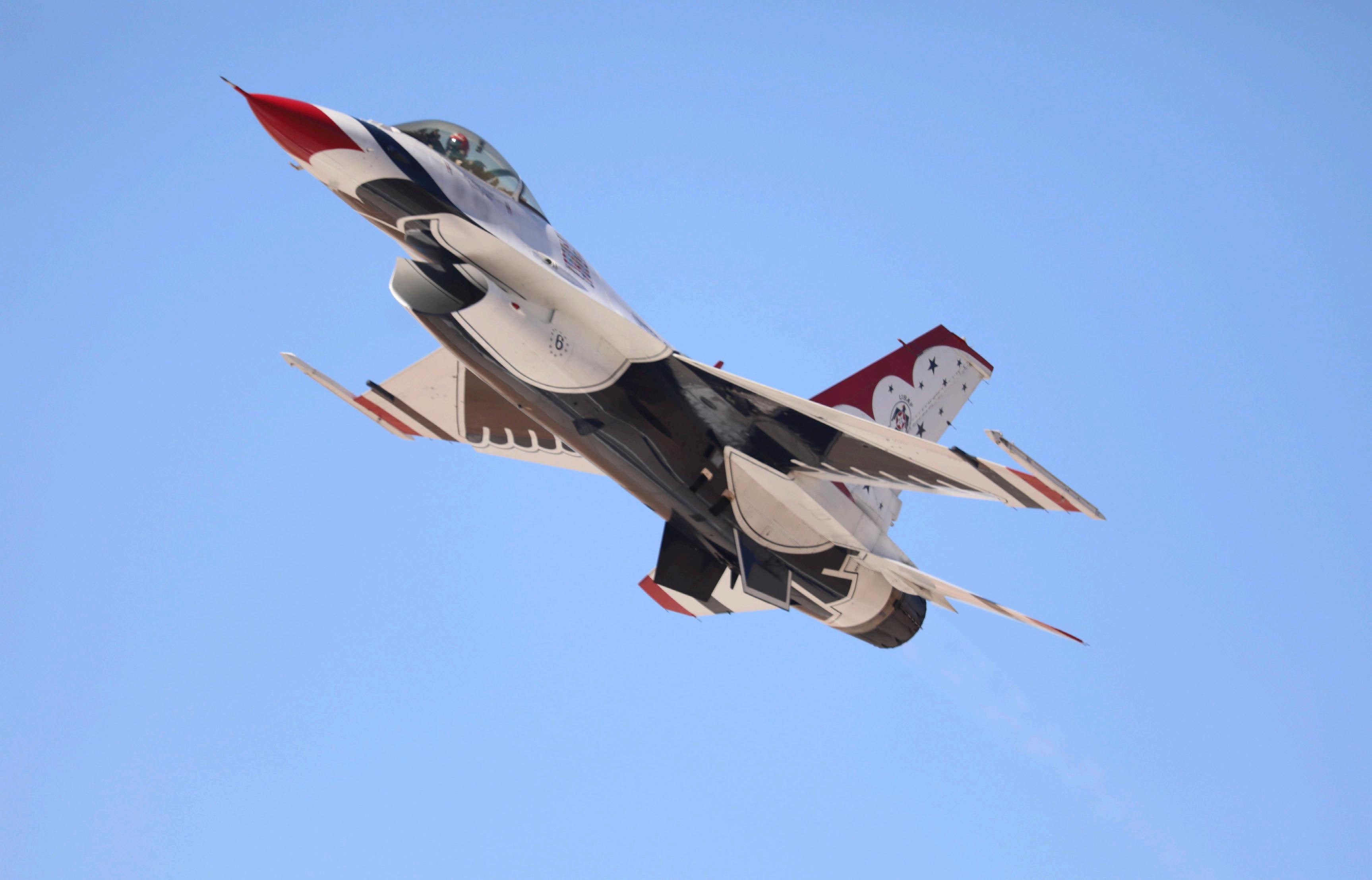
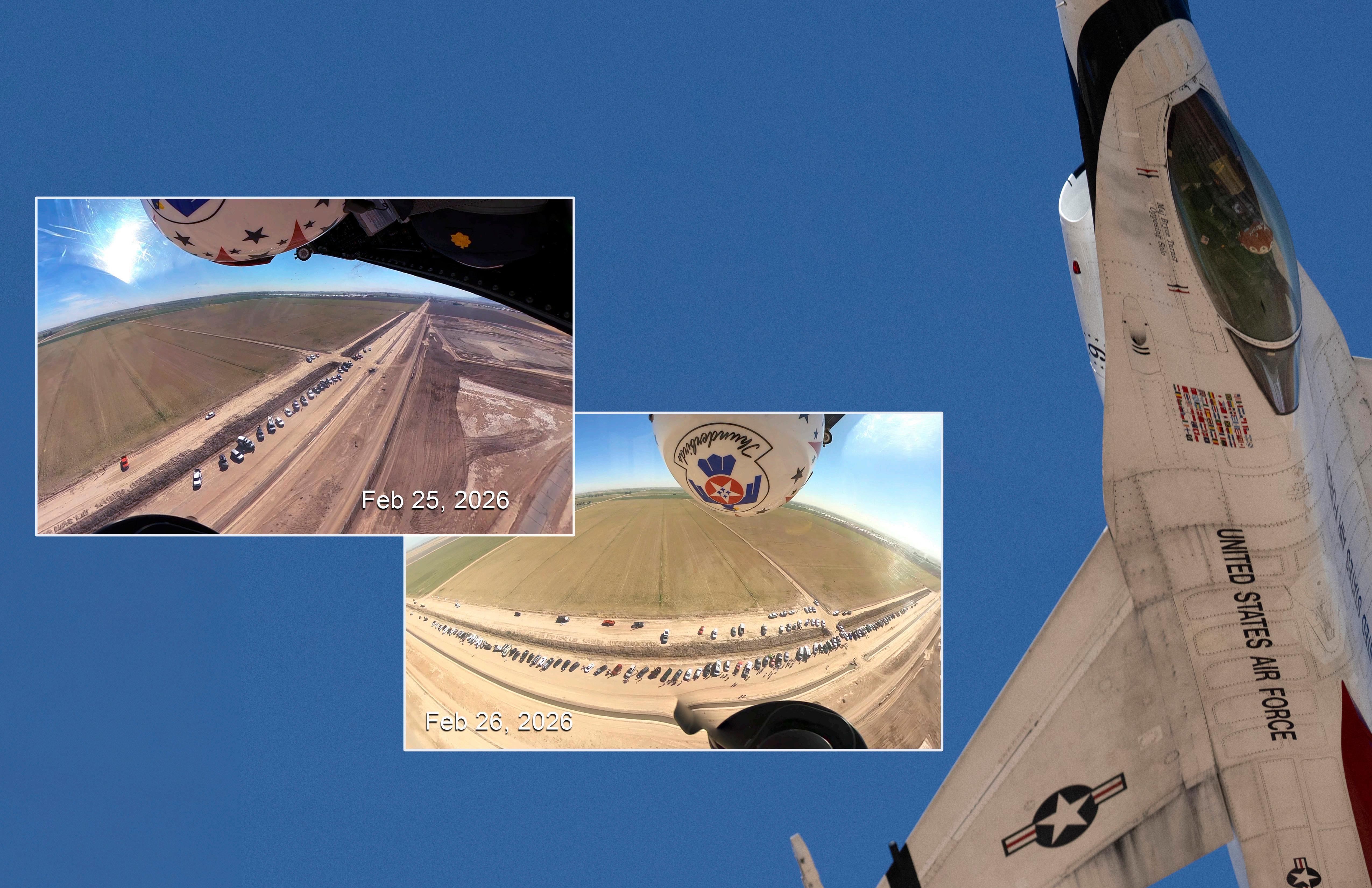
Maj Bryce “Triple” Turner, the Opposing Solo Pilot, shared a viewpoint from his takeoff roll captured on his onboard camera. This view offers a unique perspective, sharing a glimpse of the photographers from two distinct days.
Bryce “Triple” Turner
Bryce “Triple” Turner
Larry Grace
Larry Grace
Larry Grace
Larry Grace
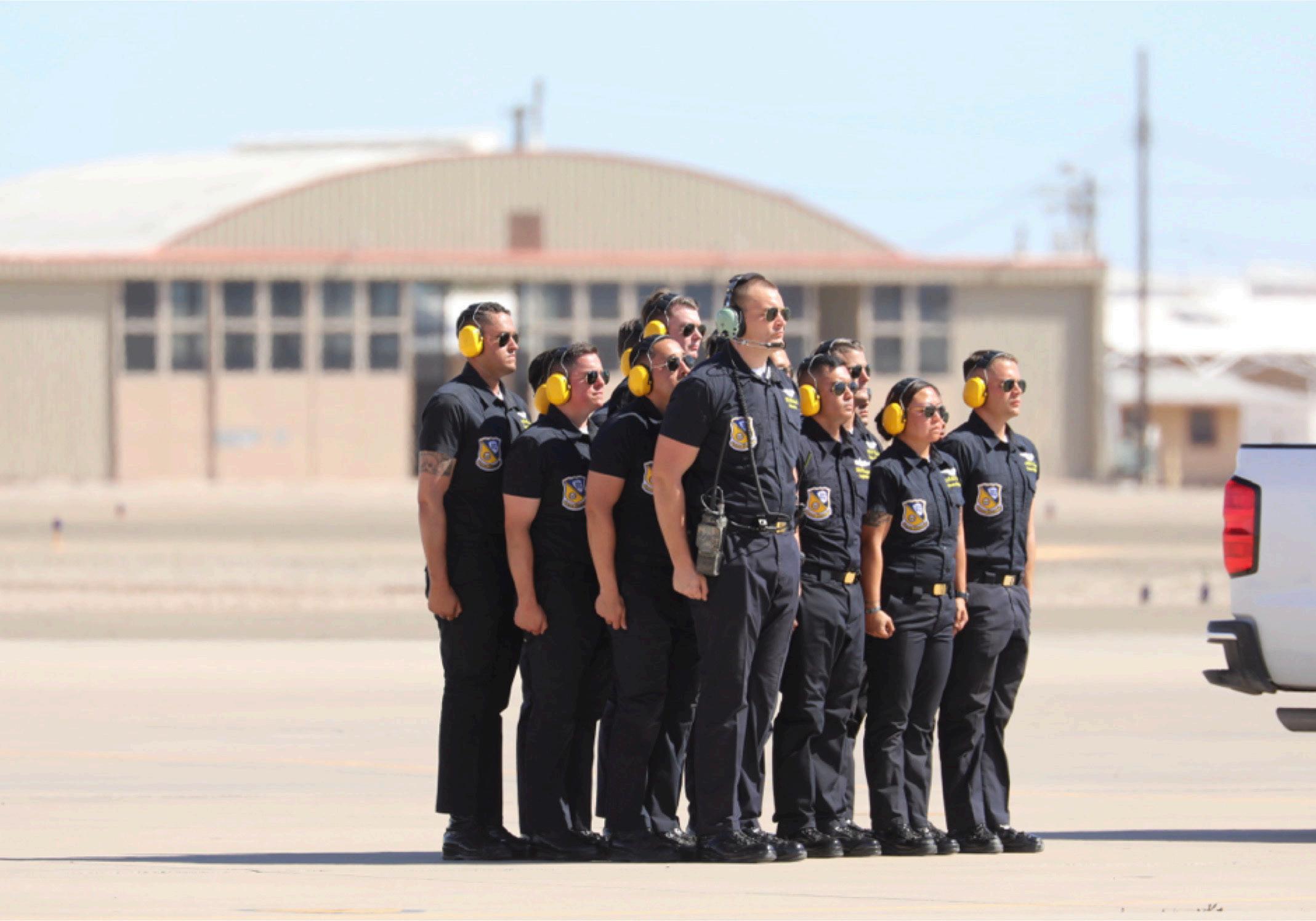
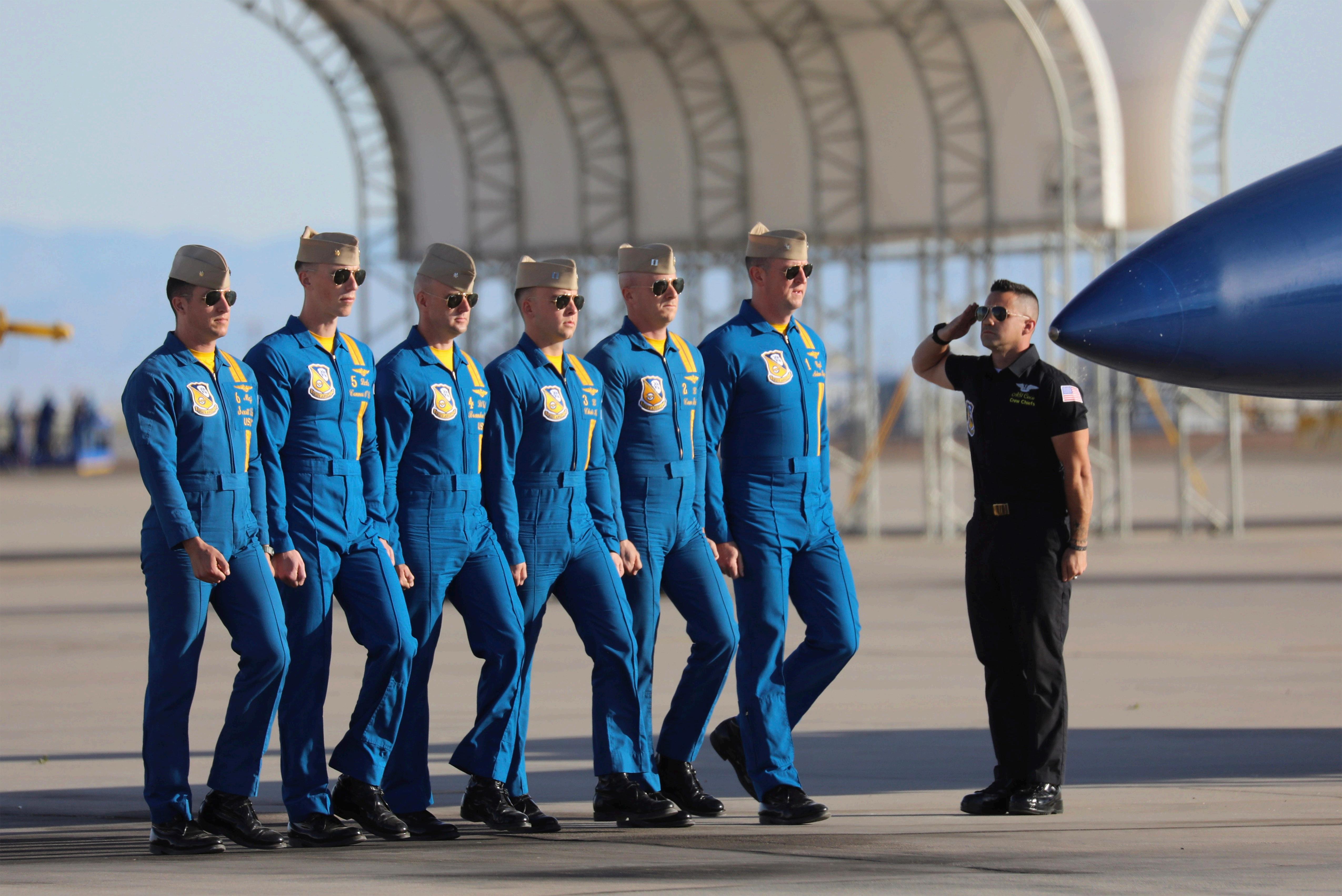
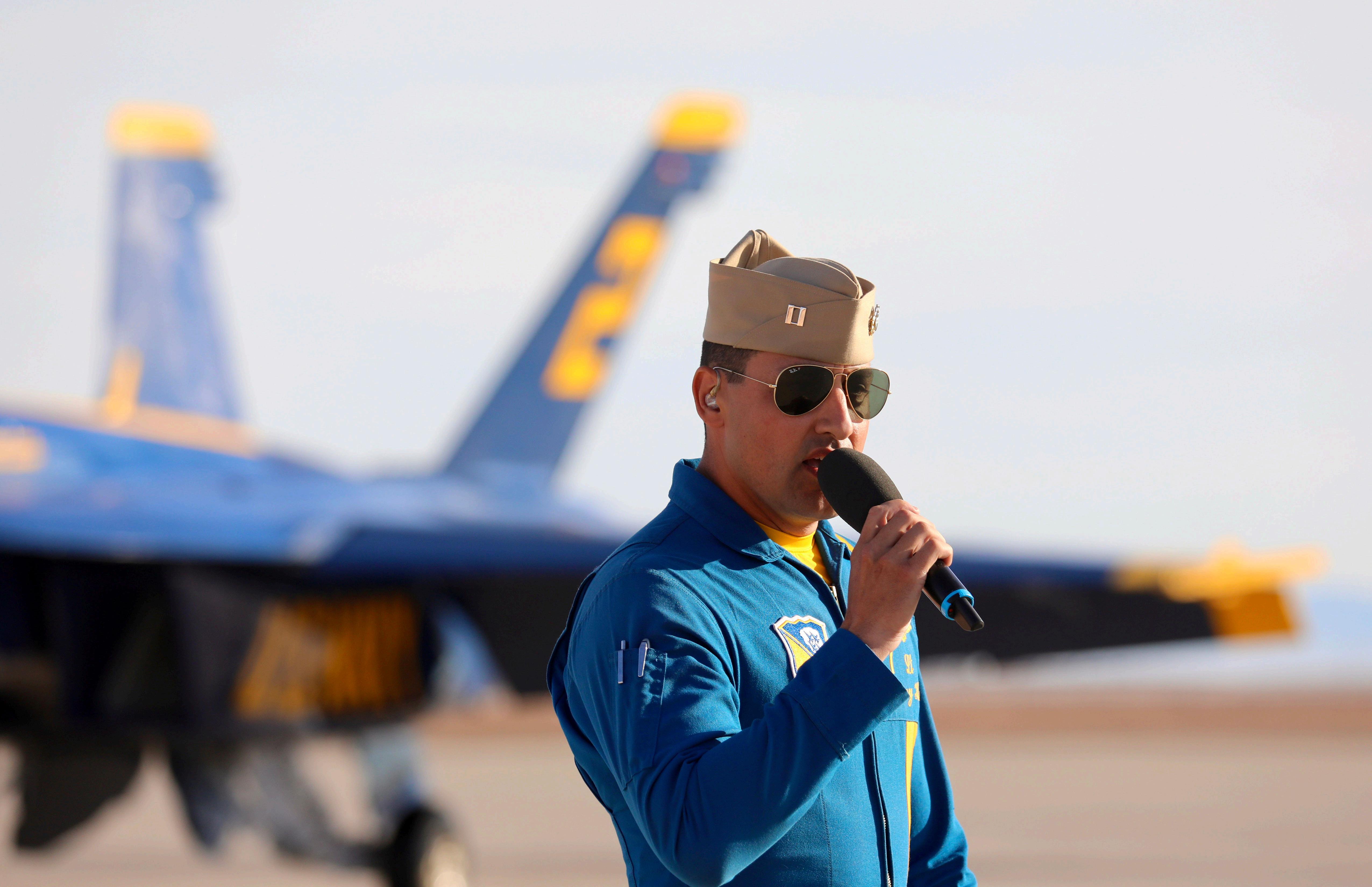
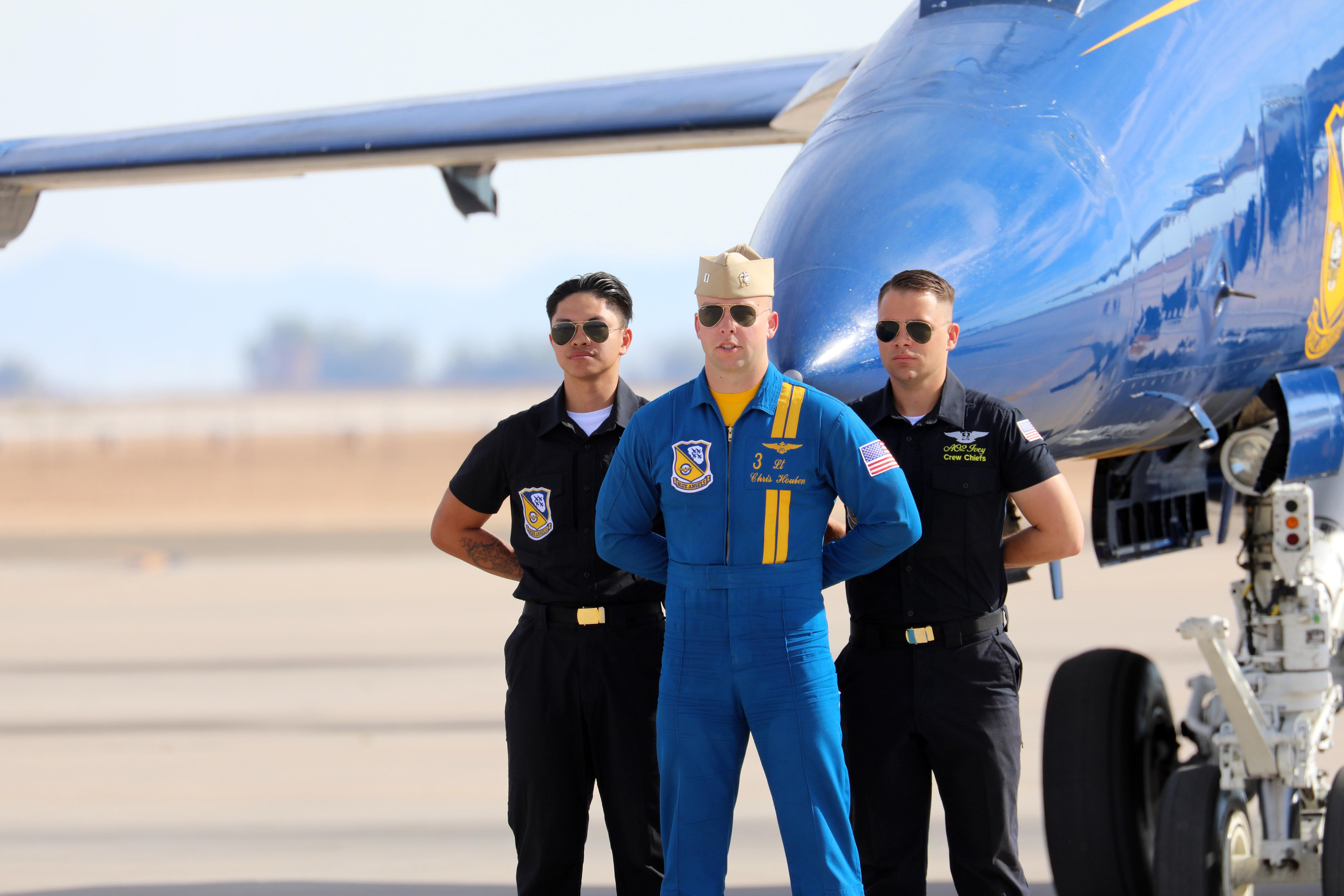
Maj Bryce “Triple” Turner and Maj Laney “Rogue” Schol visited the photographers stationed at NAFEC one morning prior to their daily briefing. They engaged in a brief meeting and exchange of pleasantries with the photographers who were observing the daily training exercises.
Larry Grace
Larry Grace
Larry Grace
Larry Grace
S LING LOAD OPERATIONS
Photos and text by Joshua Epps
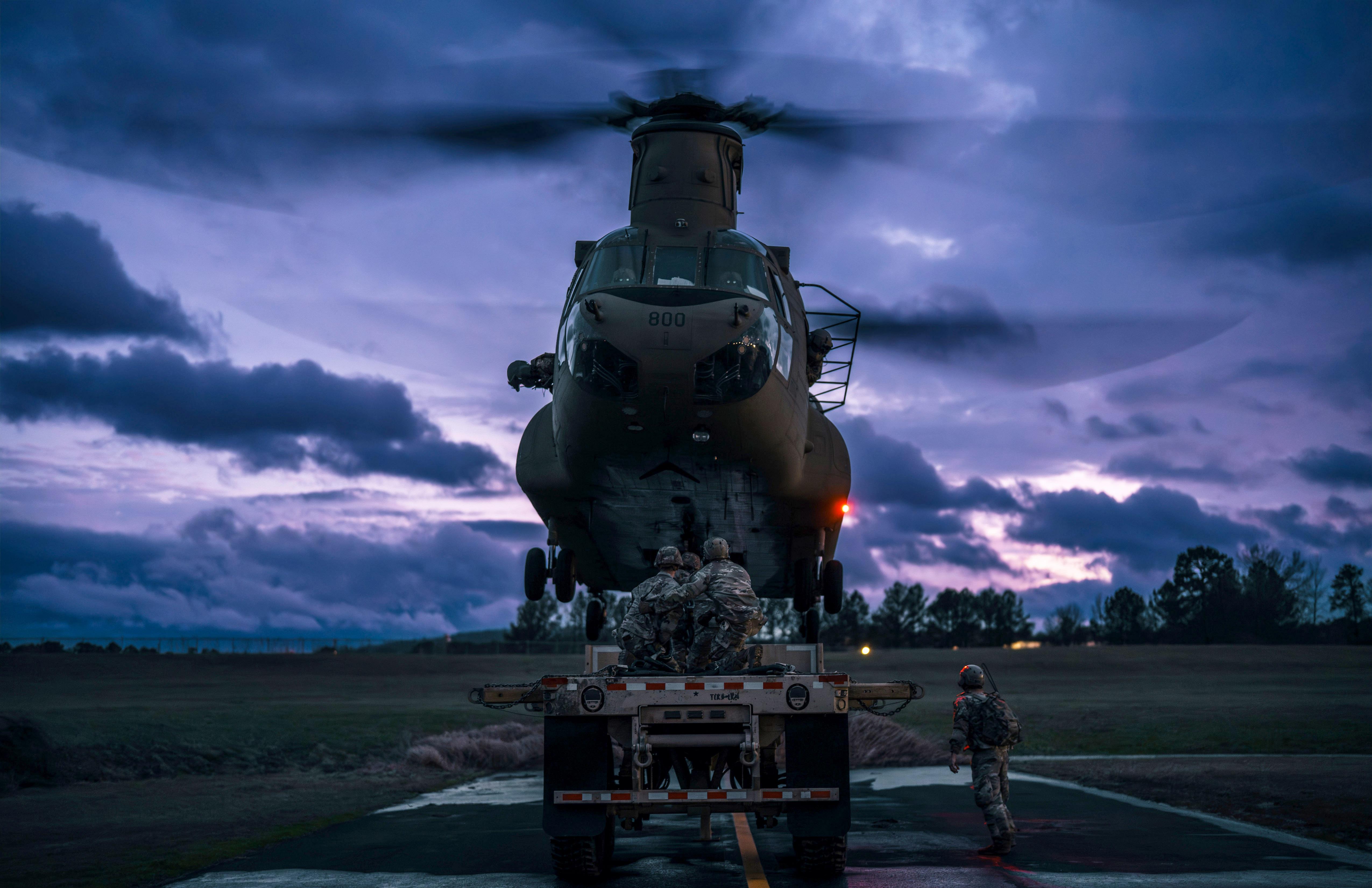
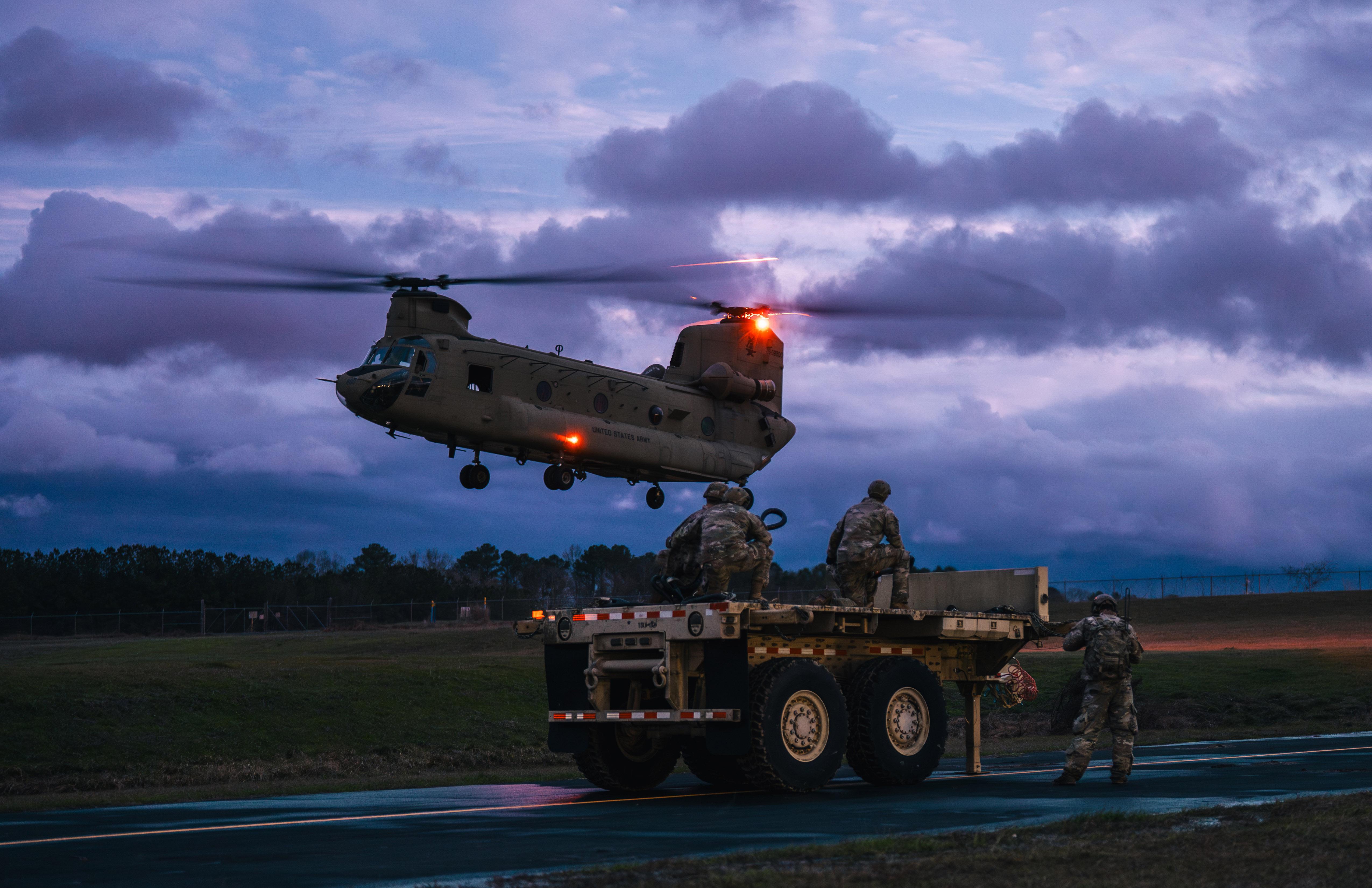
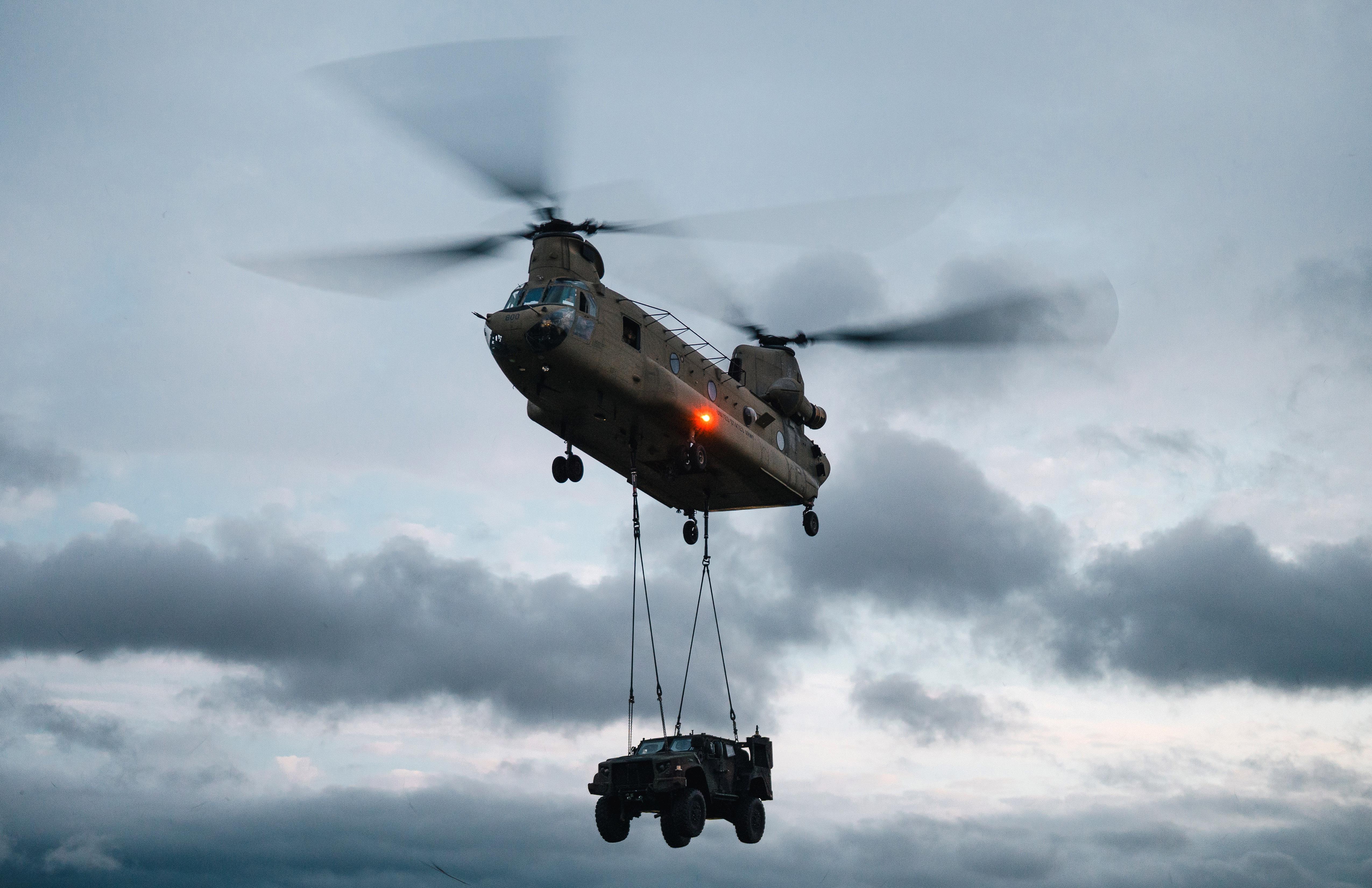
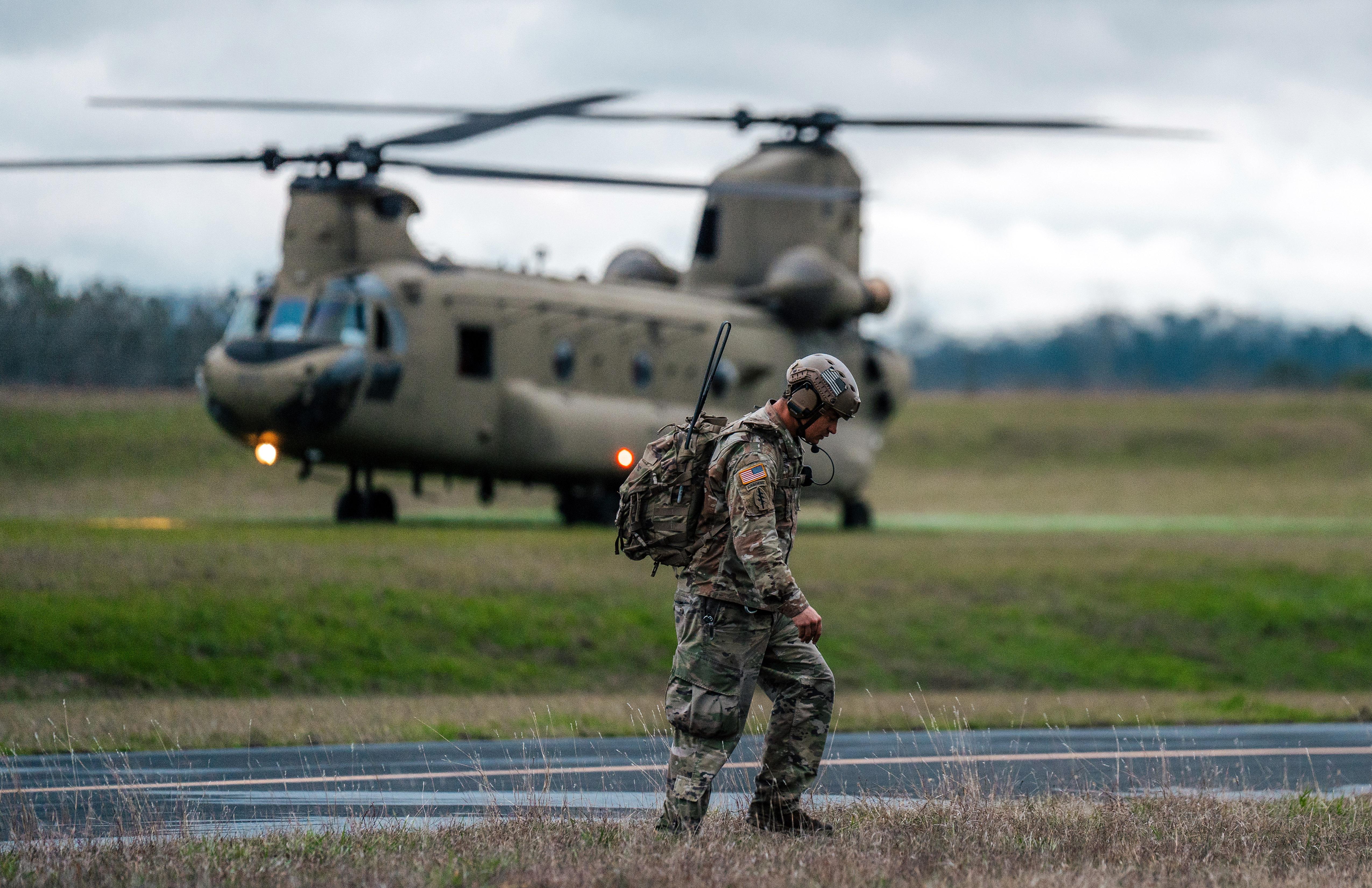
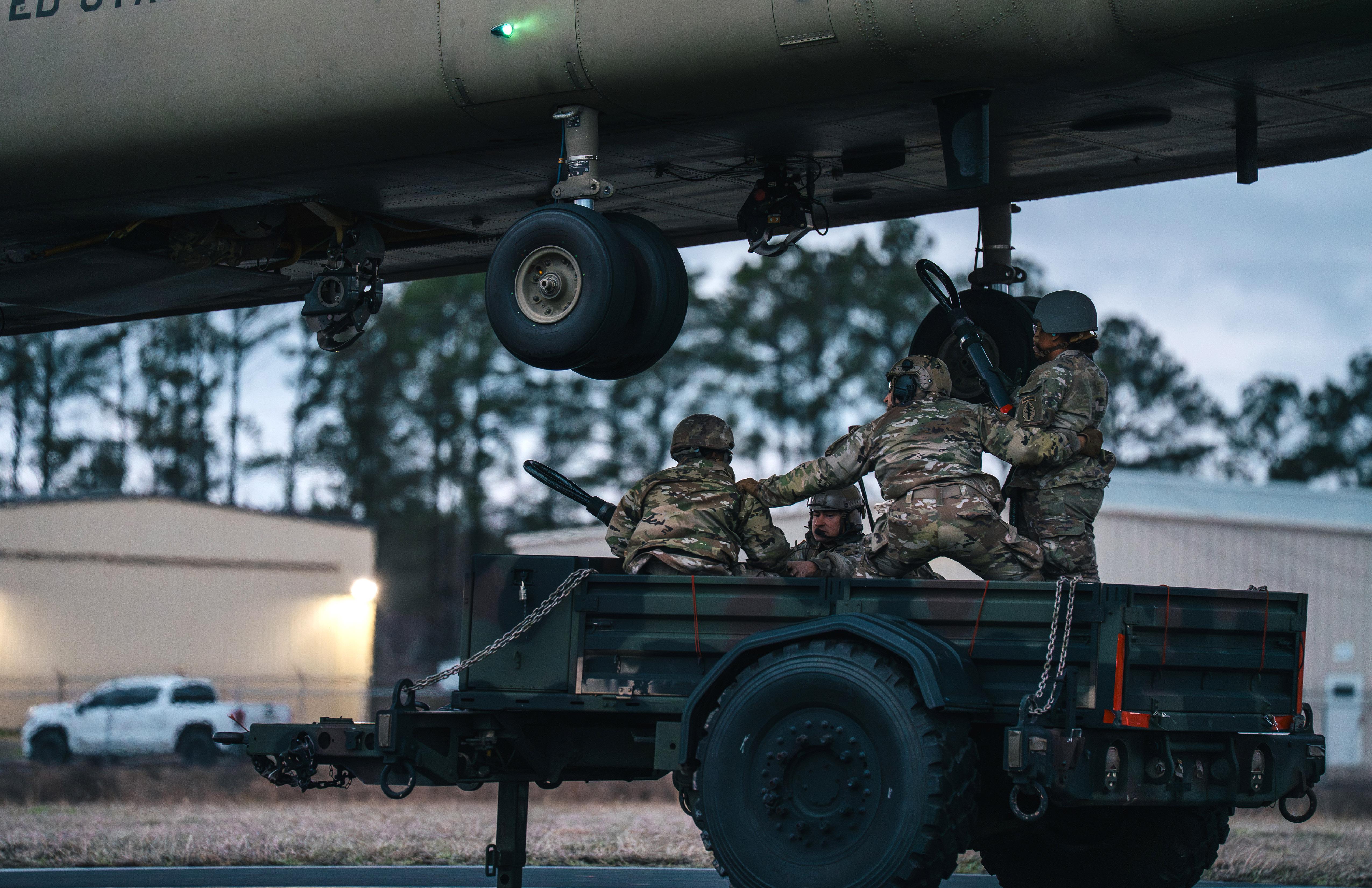
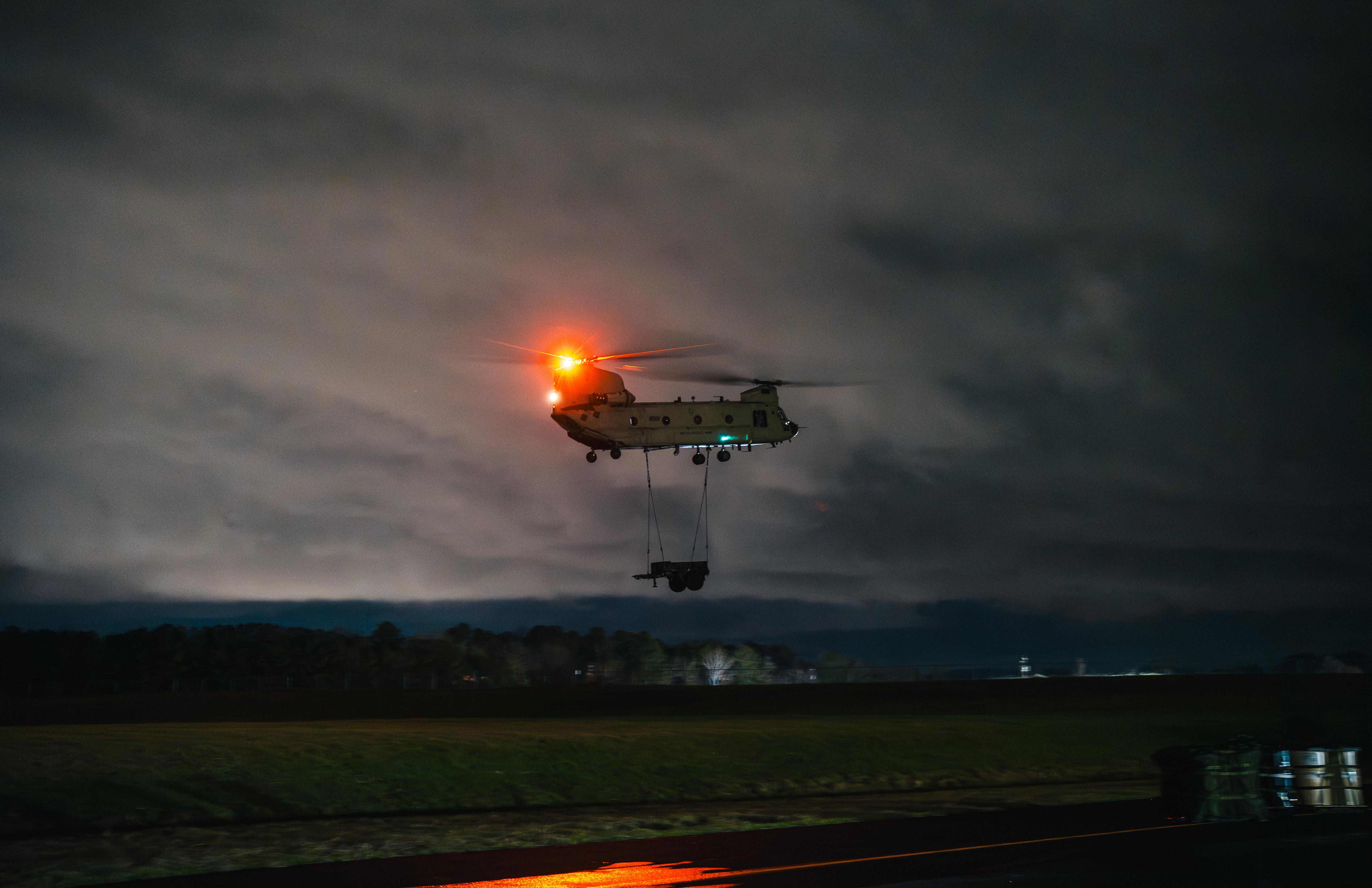
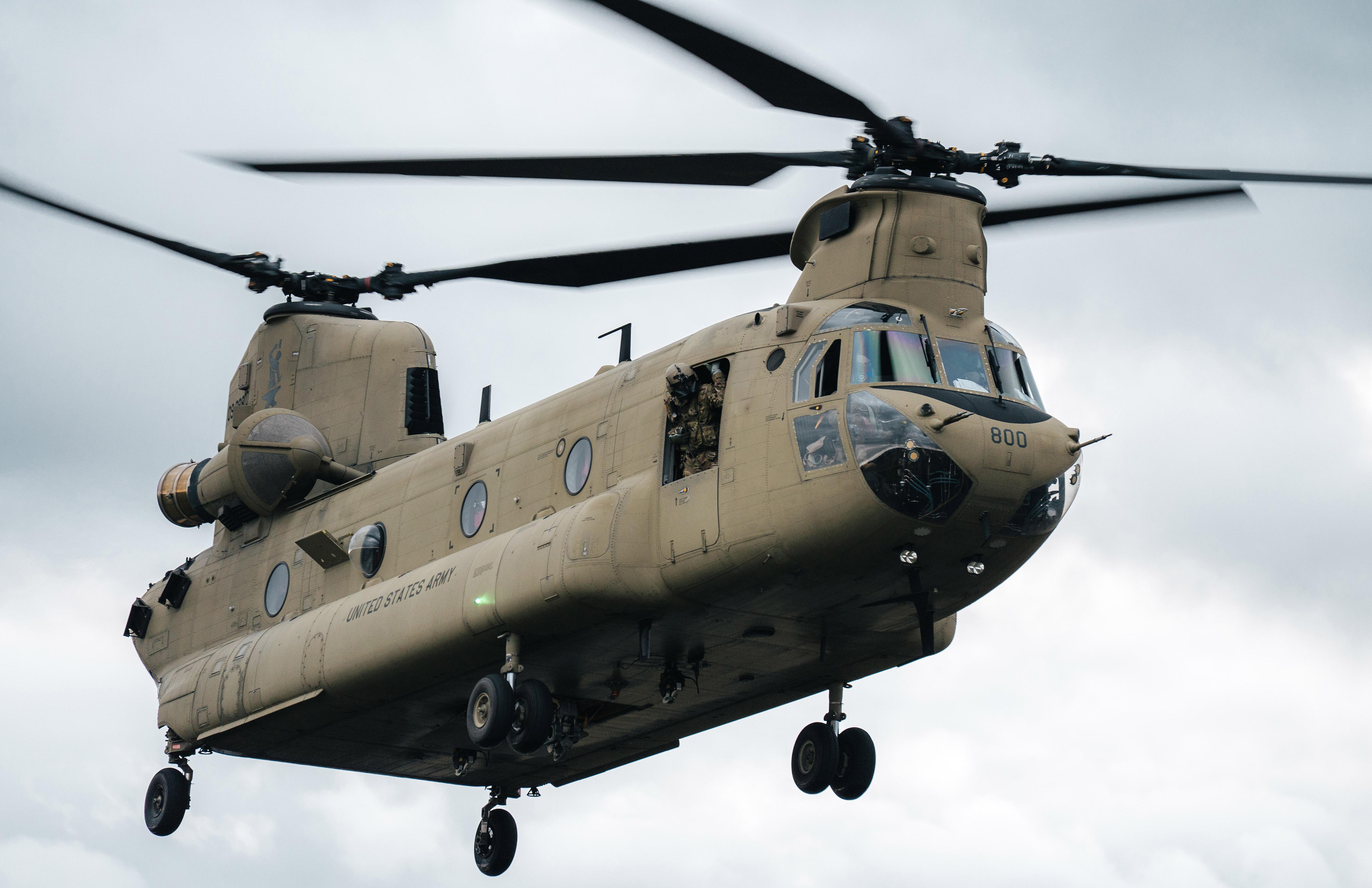
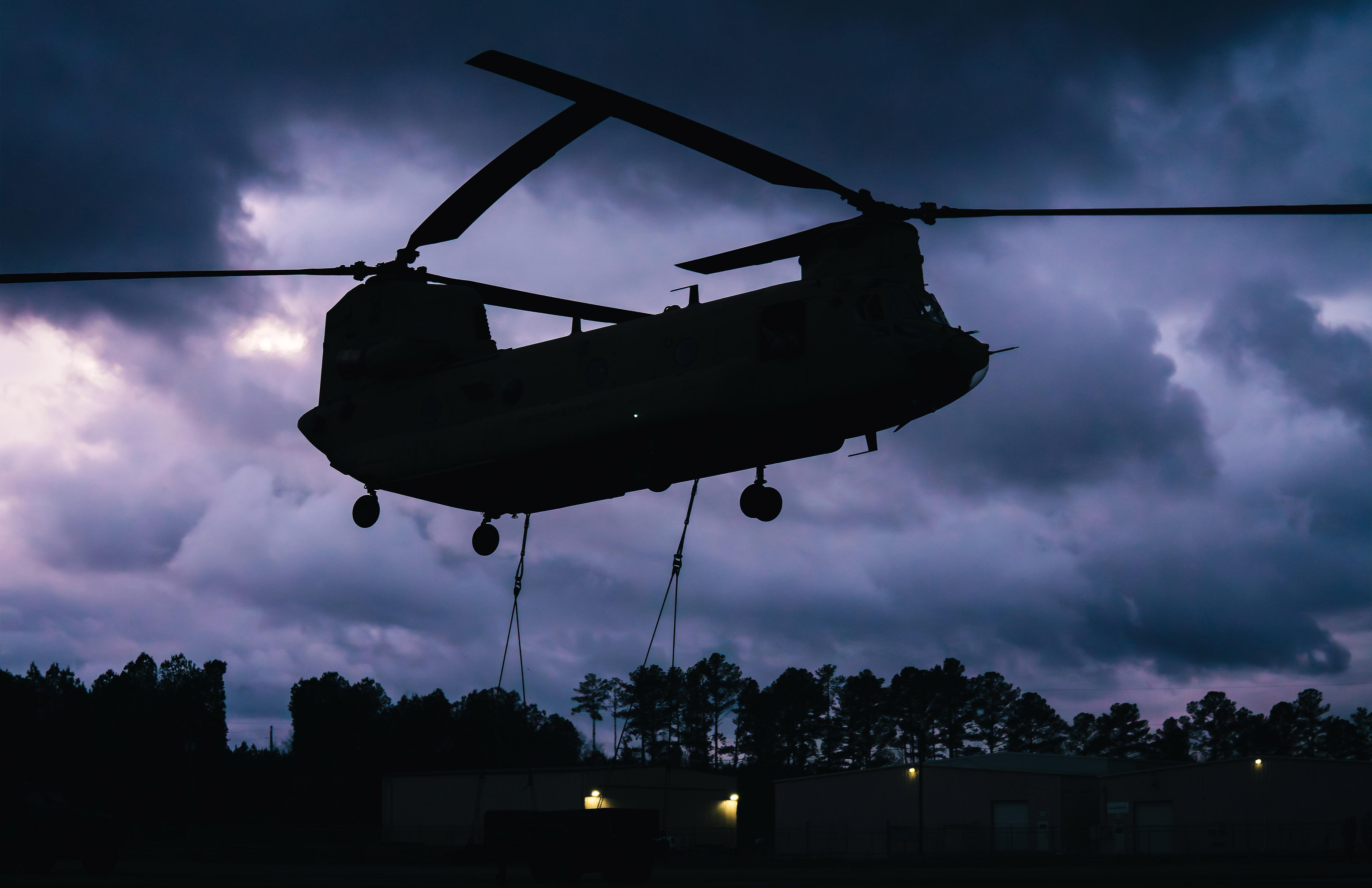
The images capture the disciplined power of Alabama National Guard CH-47 Chinook crews as they conducted intensive sling load operations at Northeast Alabama Regional Airport on January 10, 2026. Working in seamless coordination with Alpha Company, Group Support Battalion (20th Special Forces Group (Airborne)), the heavy-lift helicopters from Bravo Company 1-169 General Support Aviation Battalion dominated the Gadsden sky with technical precision.
The photographs freeze moments of tactical artistry: the rhythmic thrum of tandem rotors, the grit of soldiers working beneath the airframe, and the tension of cables hoisting essential cargo. These maneuvers are vital for transporting heavy equipment to remote or hostile locations inaccessible by ground transport, a capability that significantly enhances operational flexibility and safety. From the dust-swirled airfield to the focused intensity of the crews, the display embodies the elite readiness and responsiveness of the Alabama National Guard in a demonstration of logistical strength.
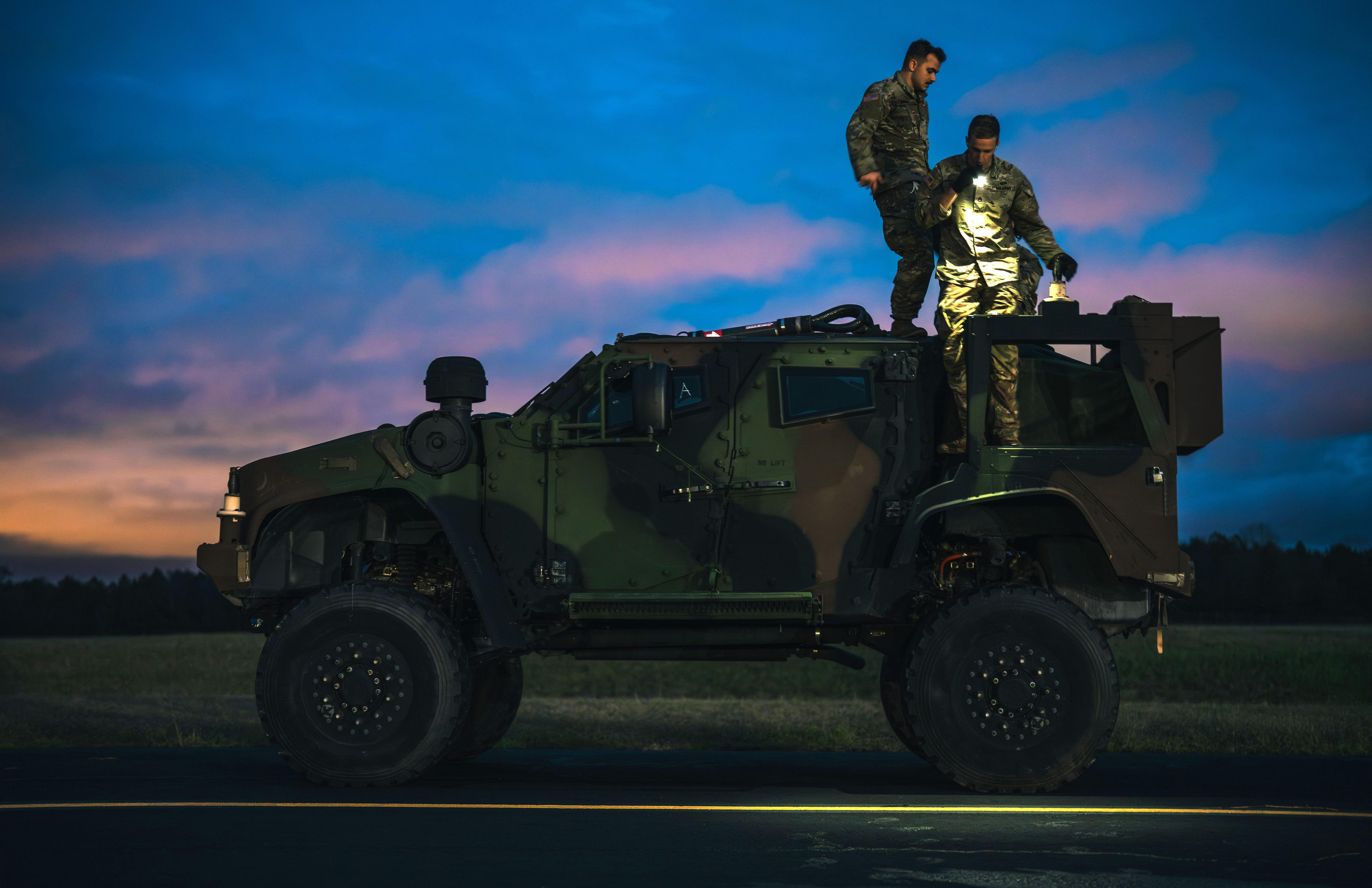
Post engine run inspection - SSgt Eloy Licona and SSgt Yarely Vega.
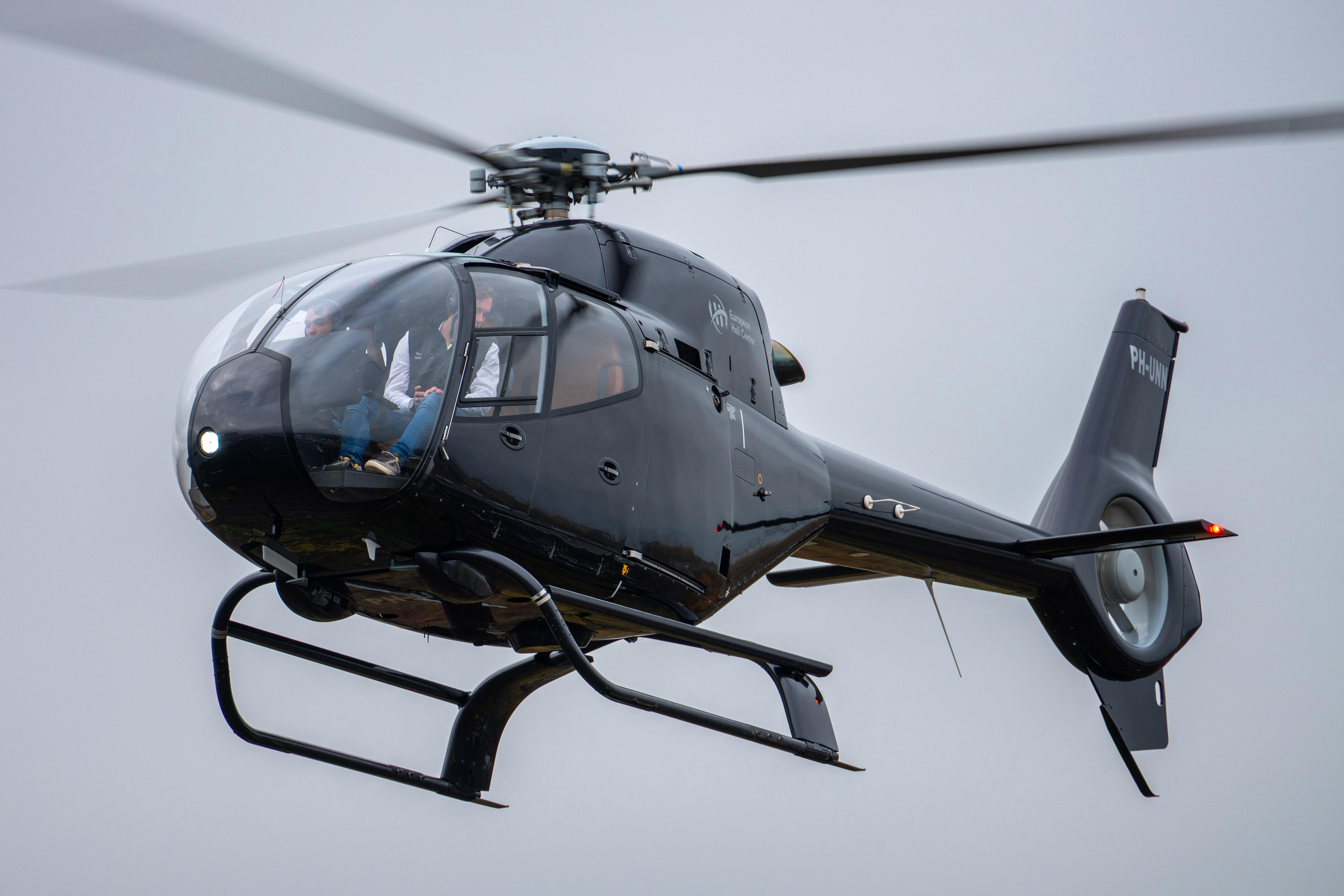
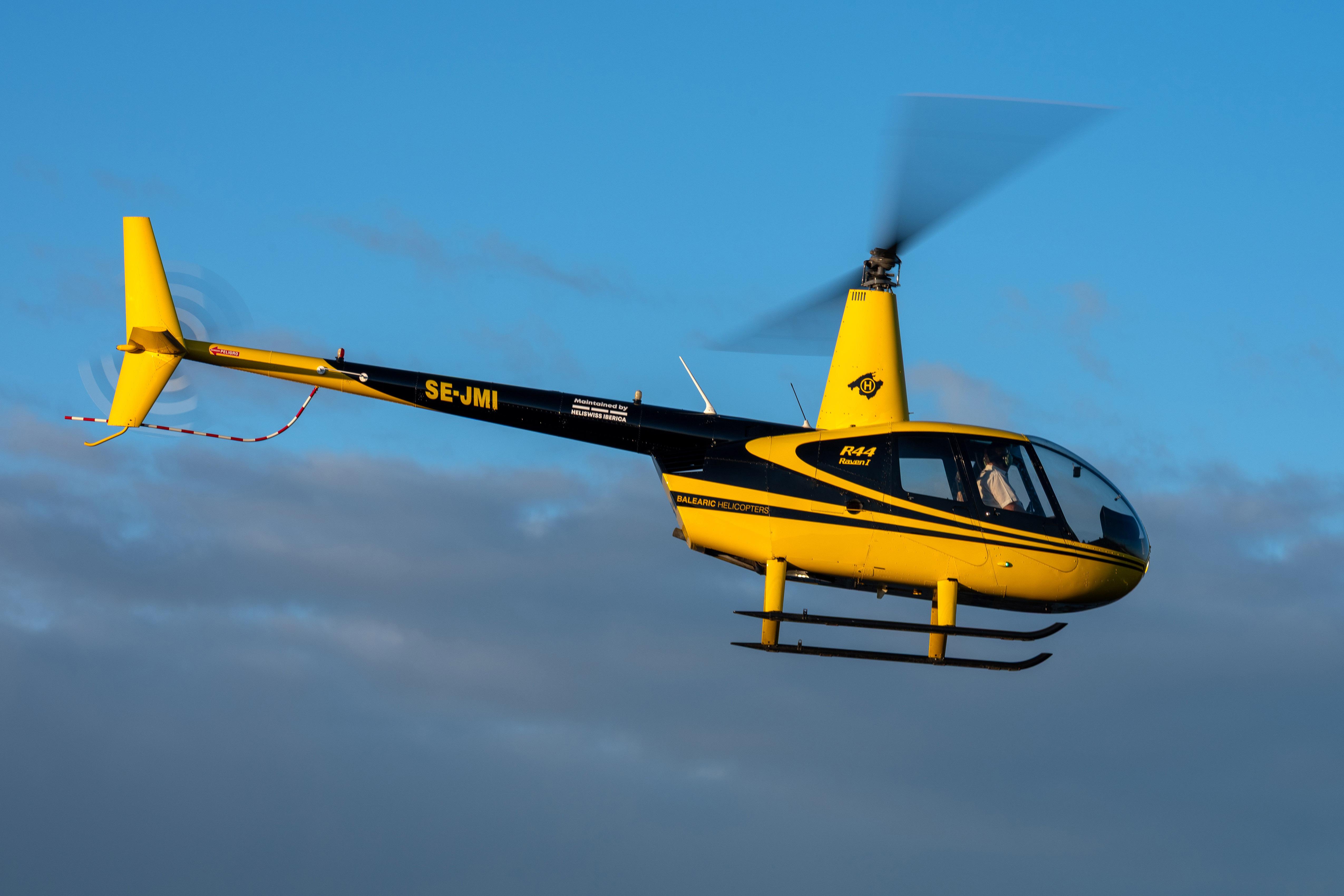
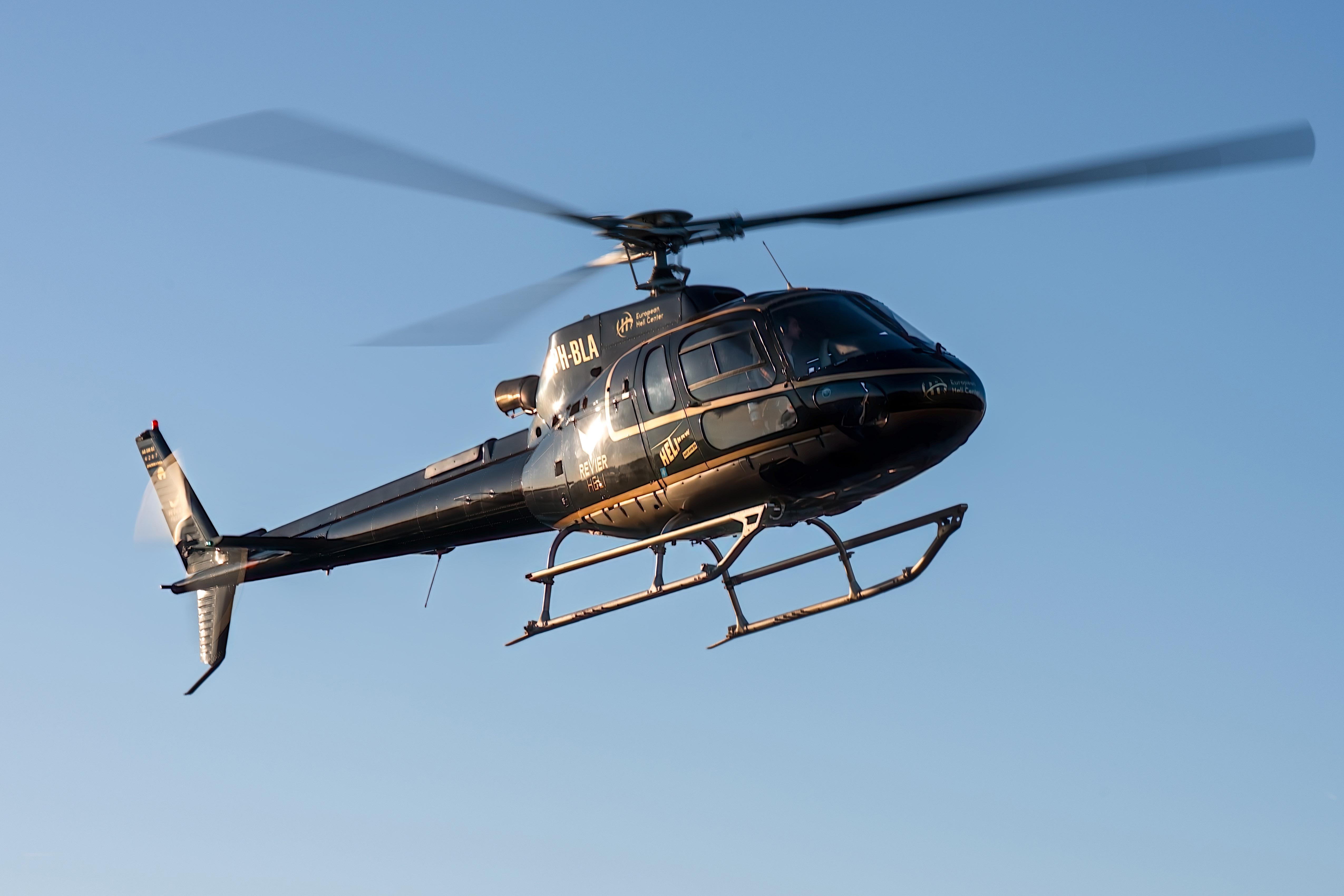
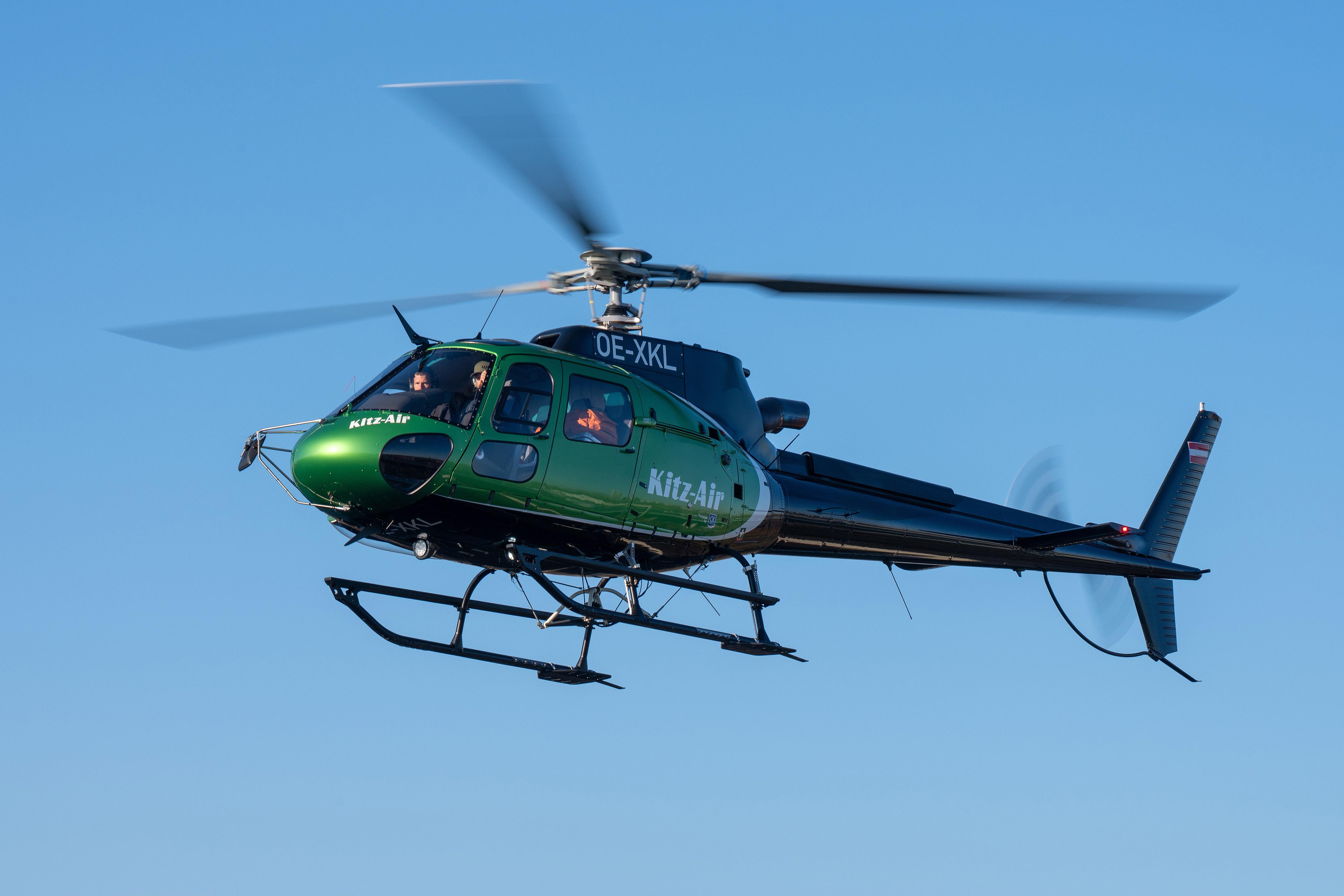
EUROPEAN ROTORS 2025
Rotary-Wing Industry Gathering in Cologne
/ www.flugsicht.com
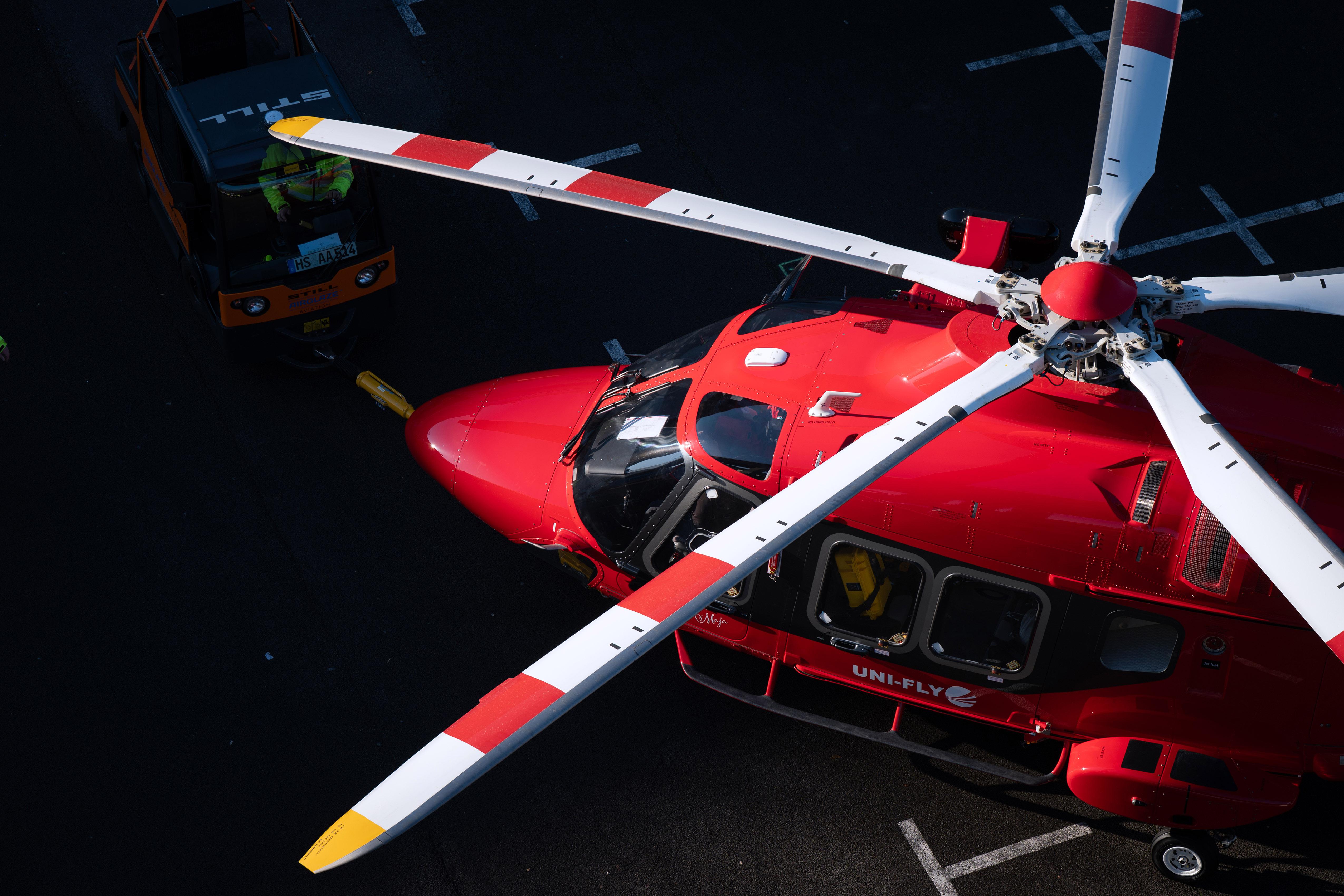
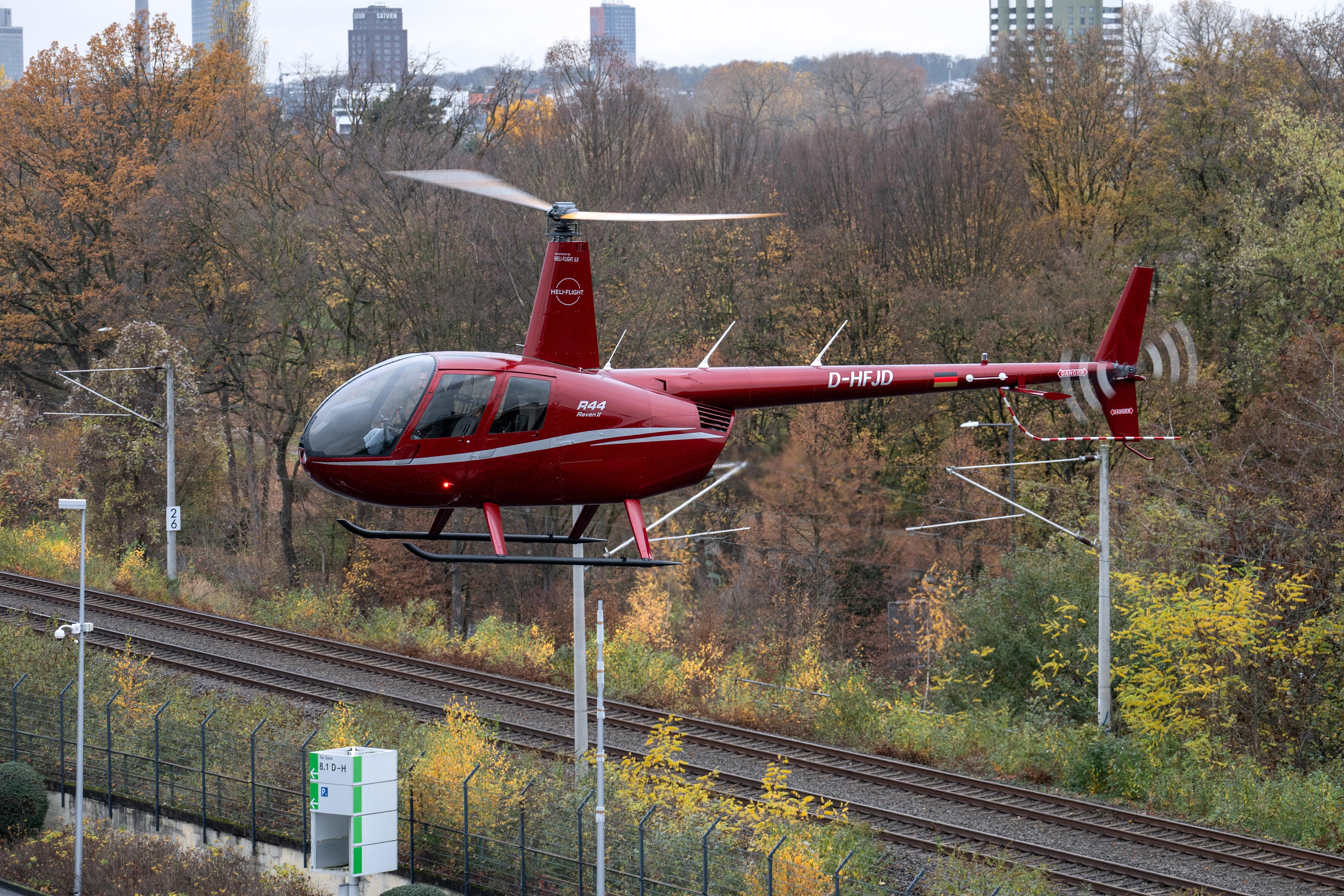
The helicopter community directed its attention to “EUROPEAN ROTORS 2025”, which took place from November 17 to 20, 2025, in Hall 8 of the Koelnmesse in Cologne. As the most important industry event of the year, the exhibition, under the guiding principle “Shaping The Future of Vertical Flight,” once again promised to be a central forum for innovation and education.
The exhibition itself was open to trade visitors from November 18 to 20. However, this year’s EUROPEAN ROTORS was more than just a pure product showcase: this year’s event placed a strong focus on training and safety. The EASA Rotorcraft Symposium was an integral part. Complementary to this, the extensive supporting program offered interesting sessions and panels, the Rotor Safety Zone, and a special Career Day, which underpinned the show’s role as the leading platform for knowledge exchange in the helicopter industry. With this, “EUROPEAN ROTORS 2025” once again confirmed its claim to consolidate the essential themes and future developments of the international rotorcraft industry. The photographs of this report are from the Saturday Fly-IN, which followed a specially established approach route to the Cologne exhibition grounds on November 15. The Fly-OUT took place on Friday, November 21. All shots were taken from a location on Cologne’s Zoo Bridge which is close to the helipad at the Koelmesse fairground. The camera equipment consisted of a NIKON Z6III body paired with the NIKKOR 28 - 400mm f/4.0 and 70 - 200mm f/2.8 lenses.
Photos and text by Marc Schultz
Marc Schultz
Marc Schultz
Marc Schultz
Marc Schultz
Marc Schultz
Marc Schultz
Marc Schultz
X2DII 100C…Not Your Father’s Hasselblad
Medium format isn’t just about resolution— it’s about intentionality, technique, and a level of image quality that was unachievable just a few years ago.
I didn’t come back to Hasselblad for nostalgia or status. I came in search of ultimate image quality and a return to more intentionality in my photography. In a working world that moves ever faster toward “pray and spray” techniques —more frames, more deliverables, more revisions, medium format asks a different question: what happens when
every exposure costs you just enough extra effort to make you look harder?
On a typical job—briefing in a quiet room, then climbing into my photo platform with a harness check and a headset full of callouts—the Hasselblad is the moment the pace changes. Air-to-air is choreography at speed: you’re reading light and composition all at once, at blistering speed with only short windows where everything lines up. I stop chasing quantity and start chasing the one frame that explains the subject in it’s environment. That shift
Photos and text by Jim Wilson / Vice President of ISAP
is the real tool I invested in. Long before anyone zooms in to admire the breathtaking beauty of flight, or the way sunlight bounces off a propeller or wraps around a wing, “the shot” is in my mind’s eye.
Why Hasselblad (and Why Now)
My work lives at the intersection of machines and story. Aviation photography isn’t just about recording an aircraft —it’s about translating scale, speed, and purpose into a still frame. I’m often hired for images that need to be both technically clean and emotionally captivating. Photographs need to be of extraordinary quality for print, but retaining enough character to feel like you can smell the jet fuel and feel the subject’s power in your chest. Over time, I’ve learned that the camera you choose quietly
shapes not only the file you deliver, but the decisions you make in the first place: where you stand, how you read light on metal, and how patient you can be while you wait for the right moment in the sky.
The Hasselblad X2DII-100-C is not always the perfect air to air tool, it takes patience and technique to achieve the quality it’s capable of producing, but when it’s right, there is no imaging tool in the world that compares. In the air, the look I’m after is a combination of things: a gentle transition from sharpness to softness, color that stays calm under pressure, and files that tolerate post-production without falling apart—especially when trying to hold subtle gradients in sky, haze, and clouds.
Jim Wilson
Hasselblad’s “color science” is legendary and you can see it in each frame, indescribable yet unmistakable. Force of habit tempts me to tweak the imagery in post processing, but most of the time it is perfection straight out of the camera. The X2DII has 15.2 stops of dynamic range, combine that with 10 stops of image stabilization and a 16-bit file, you quickly realize that you are holding one of the finest imaging tools available today.
What Medium Format Changes in the Way I See
The biggest shift is psychological. With the Hasselblad, because you cannot shoot 30 frames per second, the work must be more intentionaI, more planned, you compose like the final image already exists and you are simply aligning the world to meet it.
I also think in print more naturally when I shoot medium format. I’m watching edges, negative space, and tonal
Jim Wilson
transitions because I know someone may experience the photograph on a large scale, across a spread, or on a wall—not just as a glowing rectangle on a phone. The extra resolution is real, but the real advantage is how forgiving the files are when I need to crop, straighten, or hold fine texture without turning it brittle.
A Day on Assignment With the Hasselblad
Before we ever taxi out, there’s a briefing, each shot is planned safely, positions, timing, and the simple language that keeps everyone aligned once the engines are running and the dance begins. In the air one is besieged with constraints: limited room to move, ever changing light, composition and camera settings, planning, experience and muscle memory now take precedent. The Hasselblad’s pace requires preparation, visualization and patience.
I shoot fewer frames, analyze and direct more between them, in the end each exposure becomes a decision rather than a guess.
In air-to-air, shutter choice becomes narrative. Sometimes the story is precision—frozen detail, clean lines, a 200 knot moment forever frozen in time. Other times it’s about speed and just enough motion to make the air feel alive or to render a propeller as a shiny disc with a lightening bolt of sunlight gracing it’s surface.
The Tradeoffs (and How I Work Around Them)
Using a Hasselblad in this fast-paced environment is a choice with consequences. The camera is slower than smaller formats, it’s 3.2 fps capture rate is prehistoric when compared to today’s mirrorless cameras. Weight can
Jim Wilson
be a factor depending on the configuration, the Hasselblad ecosystem is thoughtfully designed to be a precision still imaging instrument, it is not a “do everything” camera platform. That said, most of the tradeoff’s disappear when you build the shoot around what the camera does best, which is producing some of the most striking imagery you have ever seen. When thoughtfully approached, this camera will reward it’s user with images that will astonish both the creator and their clients. Hasselblad’s new “E” Series zoom lenses have been designed specifically for the X2DII, they have the flexibility of a zoom while maintaining the superb image quality of the finest prime lenses. The lens I find myself using most often is the new 35-100 “E”, and I have found it to be without compromise.
What the Hasselblad Ultimately Gives Me
At the end of the day, the Hasselblad doesn’t make my work “better” by default. It makes it more intentional. I shot with Hasselblads for decades back in the days of film, wonderful as those cameras were, the X2DII is light years ahead of them. Auto focus, subject recognition and tracking, a 102-megapixel sensor and one terabyte of internal storage are all features that I never dreamed I’d see in a Hasselblad camera. The one commonality this newest iteration shares with it’s predecessors, aside from the respect the Hasselblad name has earned over the years, is the fact that just holding it in your hands demands that you be a better image maker and you cannot put a price on that.
Jim Wilson
Jim Wilson
Jim Wilson
Jim Wilson
Pioneer MuseumFlight
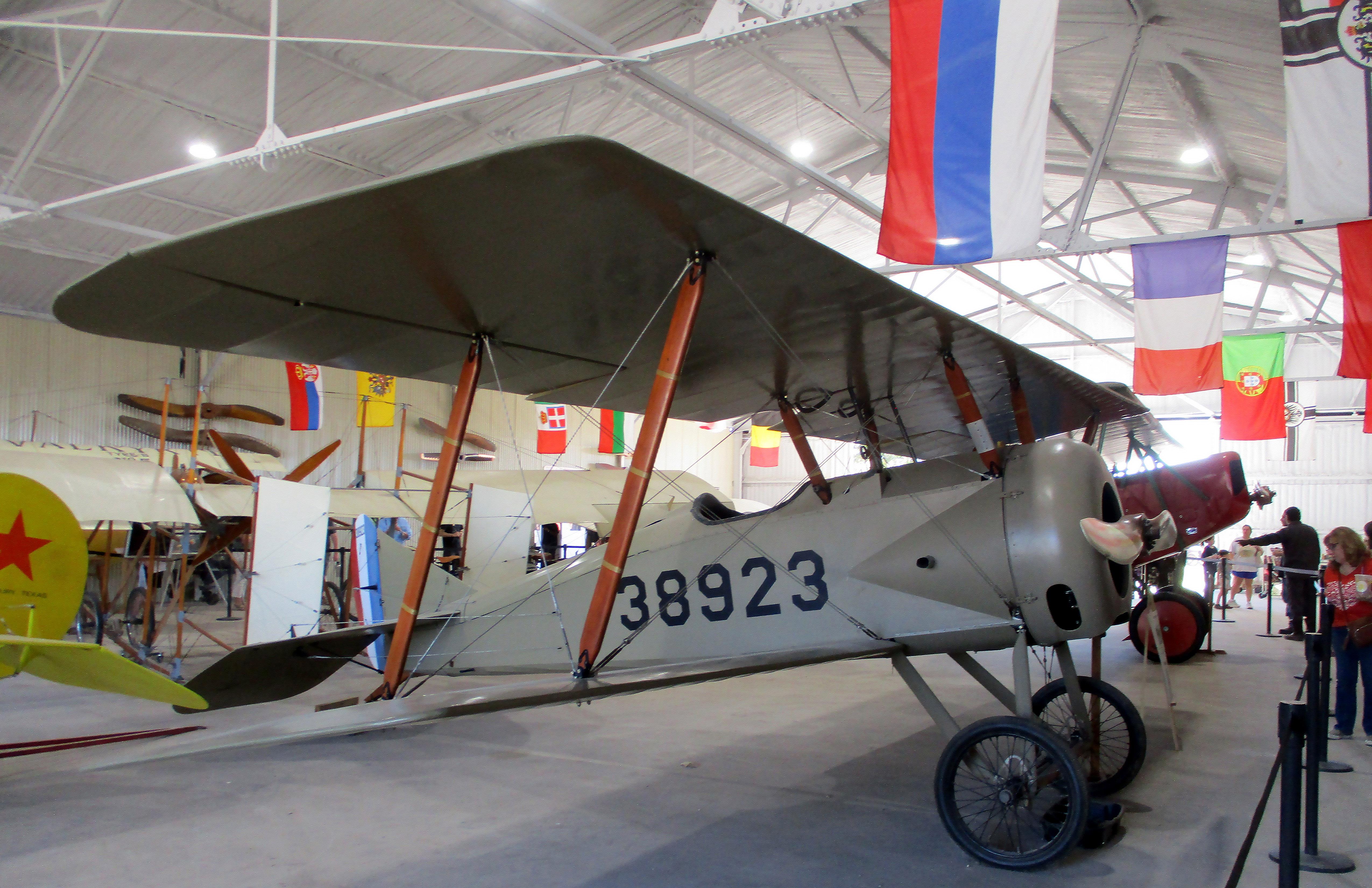
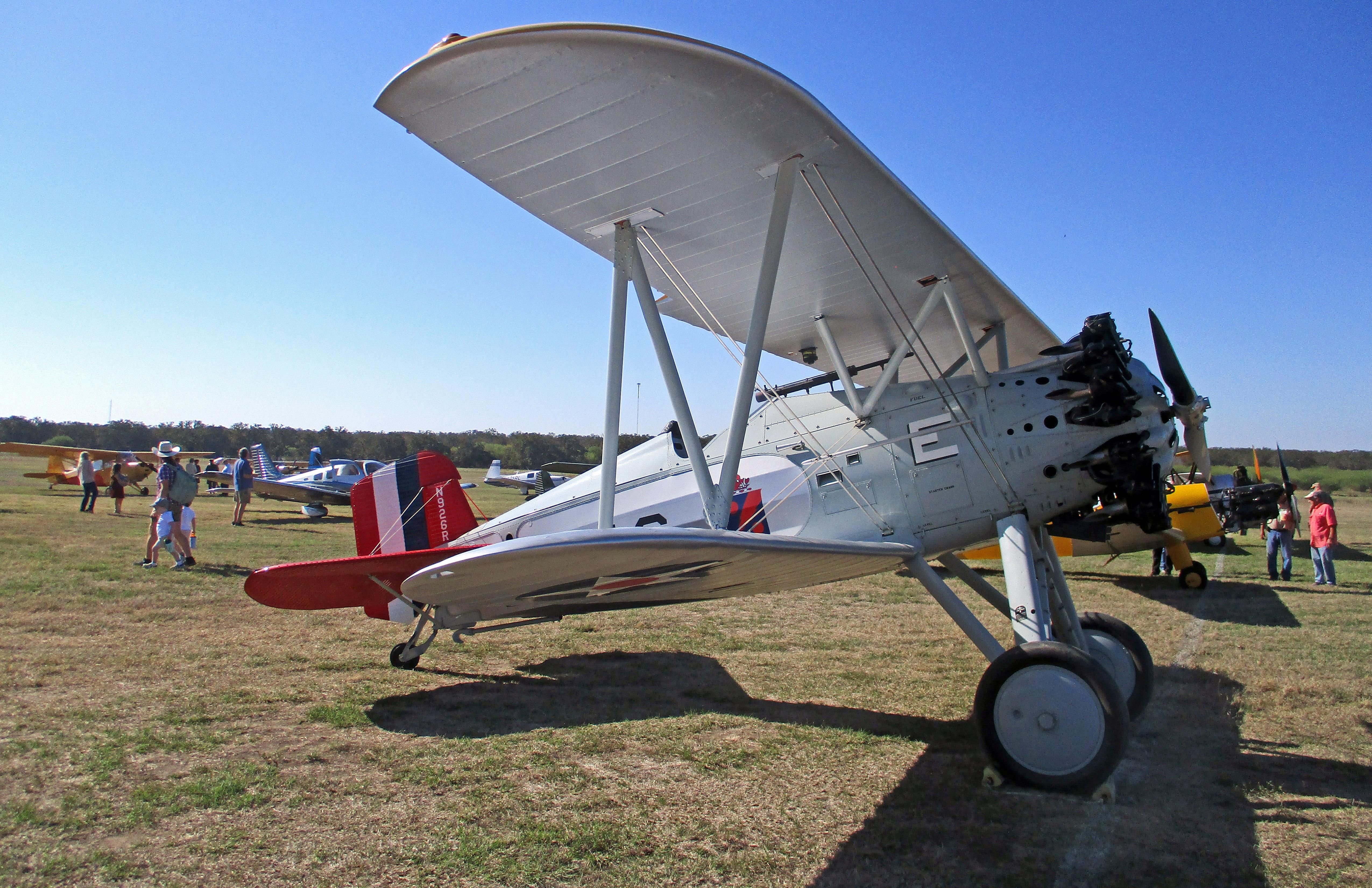
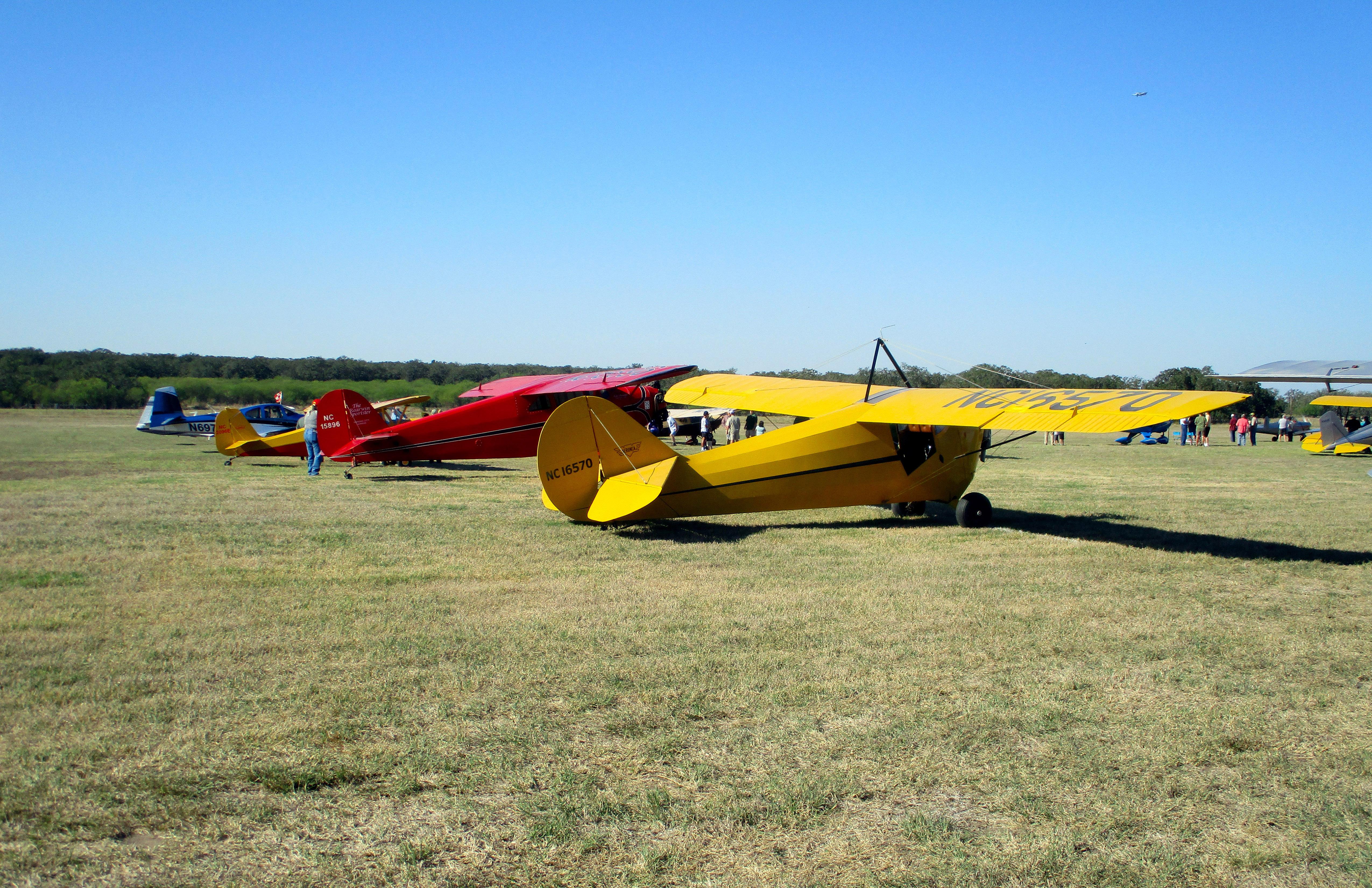
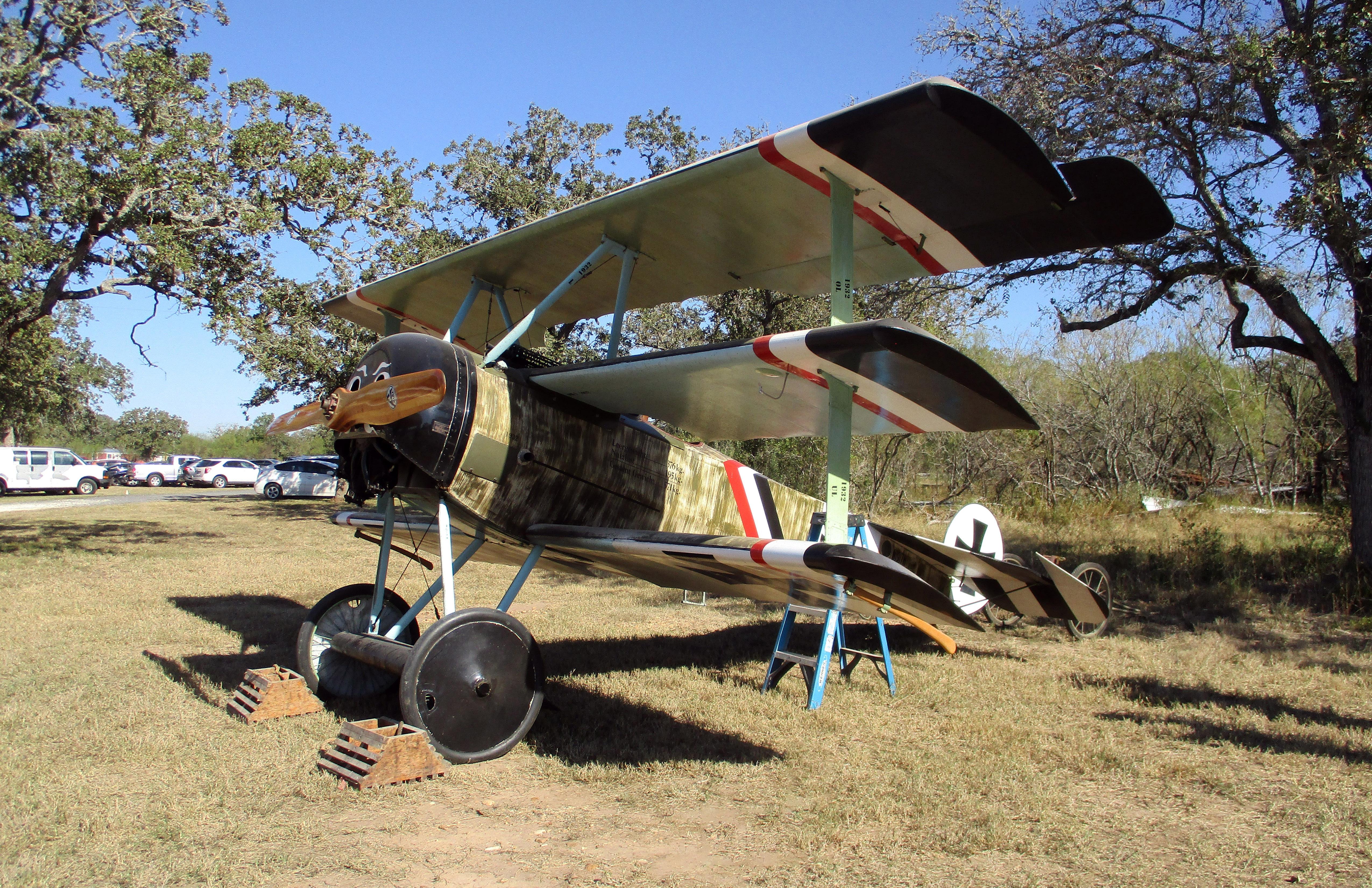
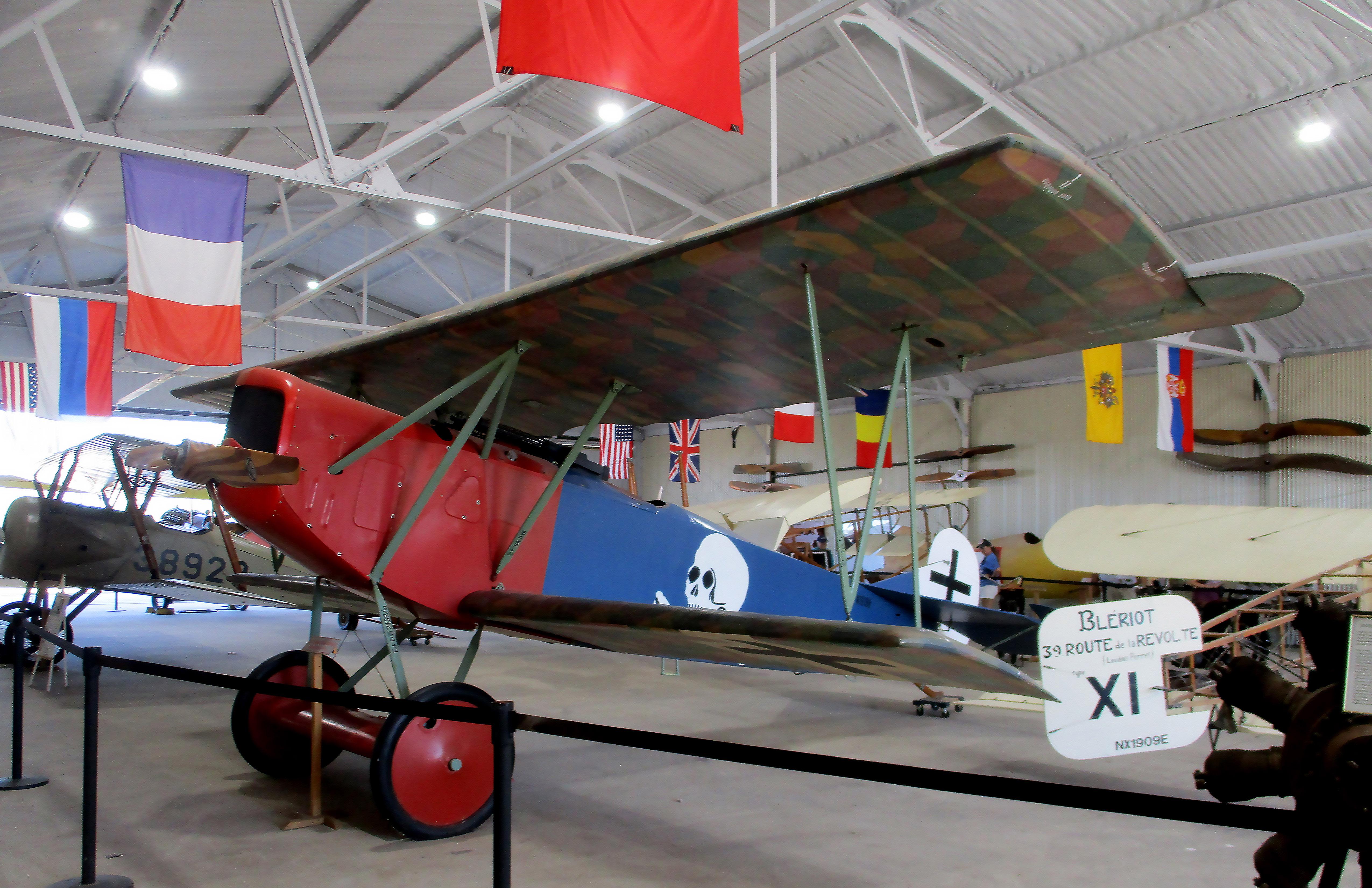
Pioneer Flight Museum Kingsbury, TX Fly-In Nov 9, 2025. A great way to go back in time! The folks running this fine museum are dedicated to the restoration, preservation and reproduction of aircraft and other artifacts from the start of flight to the early years of World War II. Many of their aircraft are flyable!
Article and photos by Eric Renth
Eric Renth
Eric Renth
America’s Greatest Warbird Secret
Article and photos by Brian La Fetra
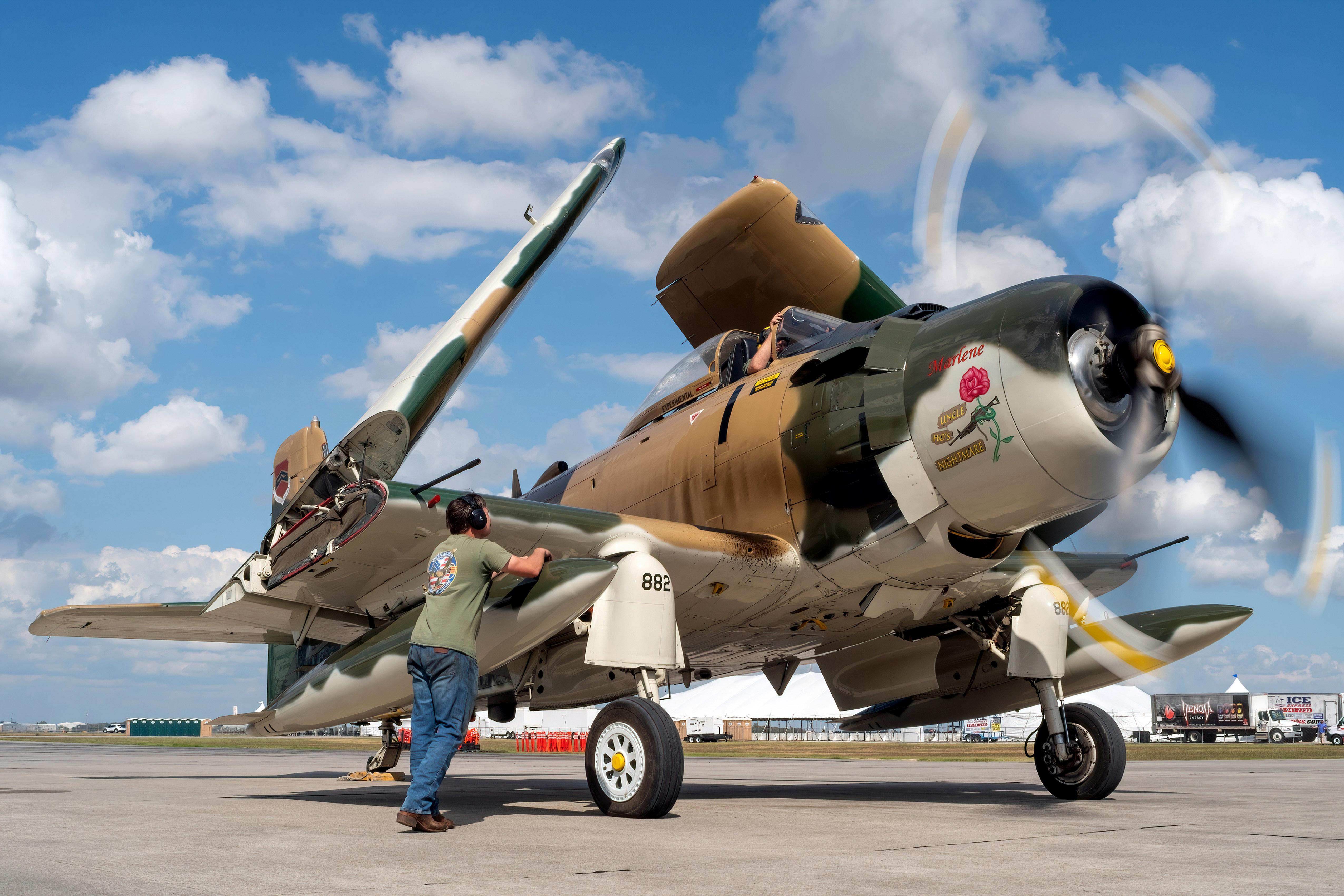
On the south side of Houston’s Ellington Field lies a large hangar containing two of the most incredible collections of post-World War II airworthy warbirds in America. While hundreds of WWII aircraft grace the skies, there are relatively few Cold War area aircraft in flying condition, and even fewer turbine-powered ones. However, that is exactly what the Vietnam War Flight Museum and National United States Armed Forces Museum specialize in. While they tend to get much less press than other organizations, these two combine to create one of the most unique warbird experiences in the country.
VWFM has a broad collection of mostly foreign aircraft, including a 1950 MiG-15 with likely combat history, MiG-17 (late Lim-6 variant), Folland Gnat T.1 used in the movie Hot Shots!, MiG-21UM, and
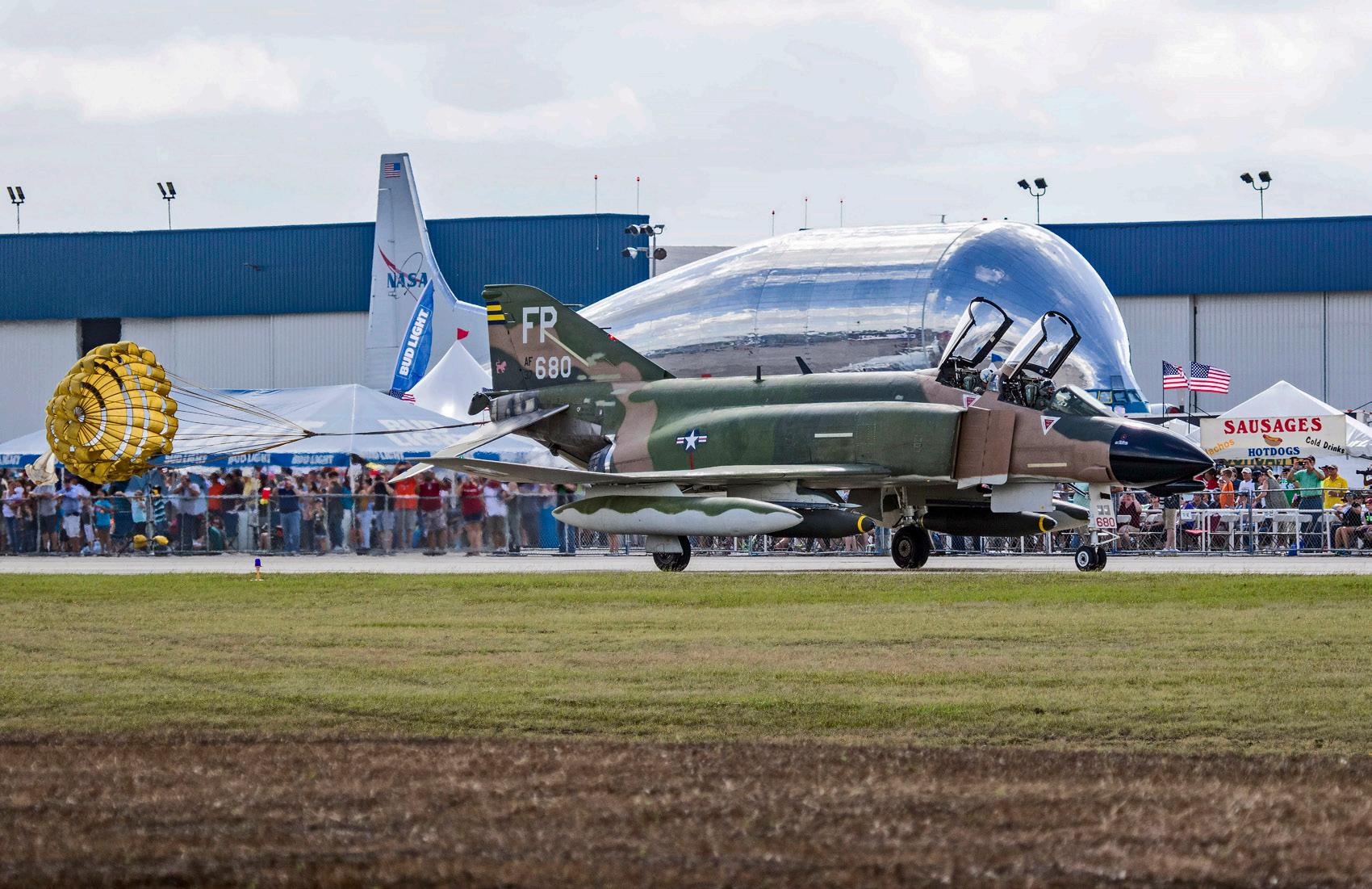
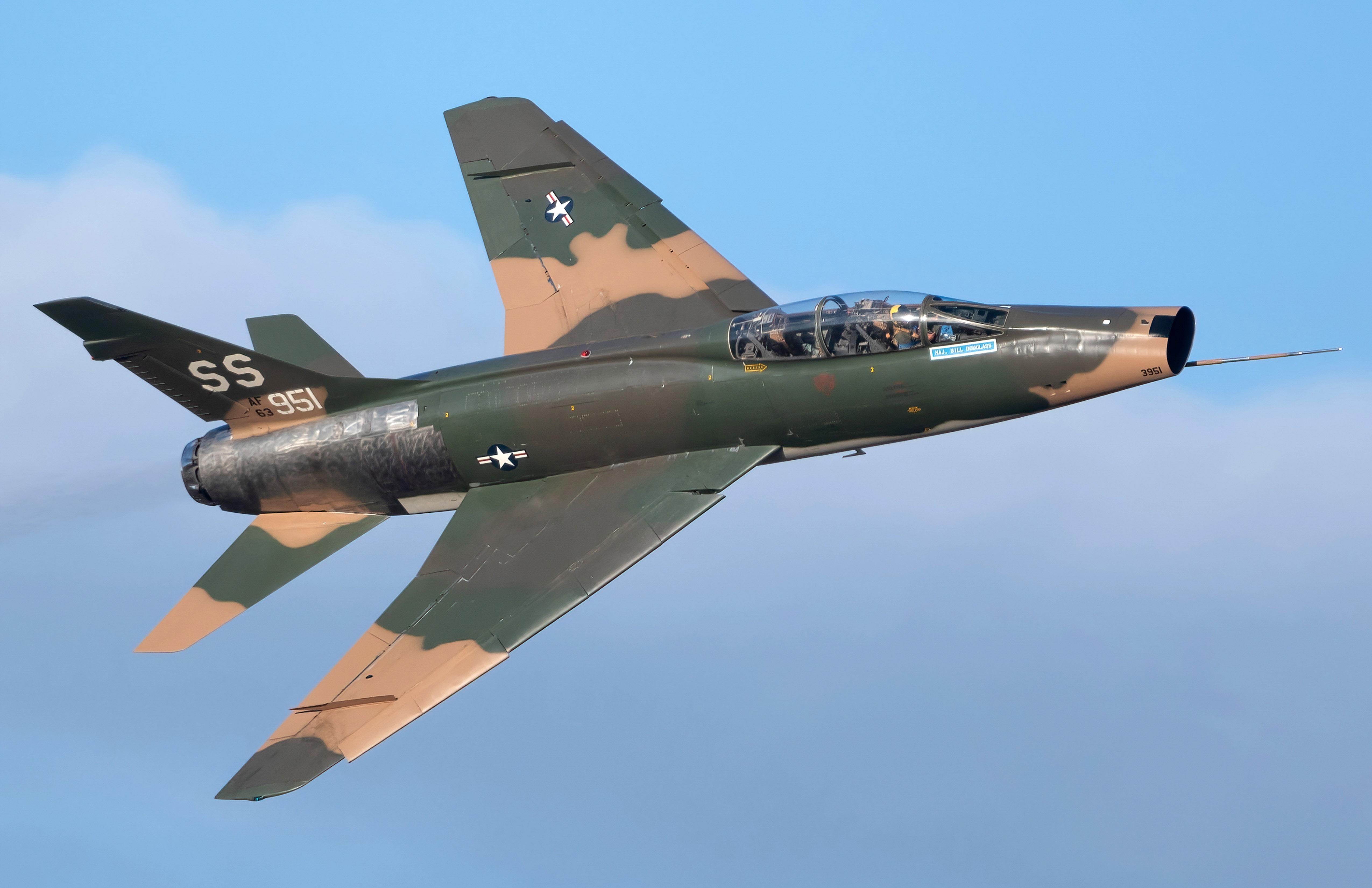
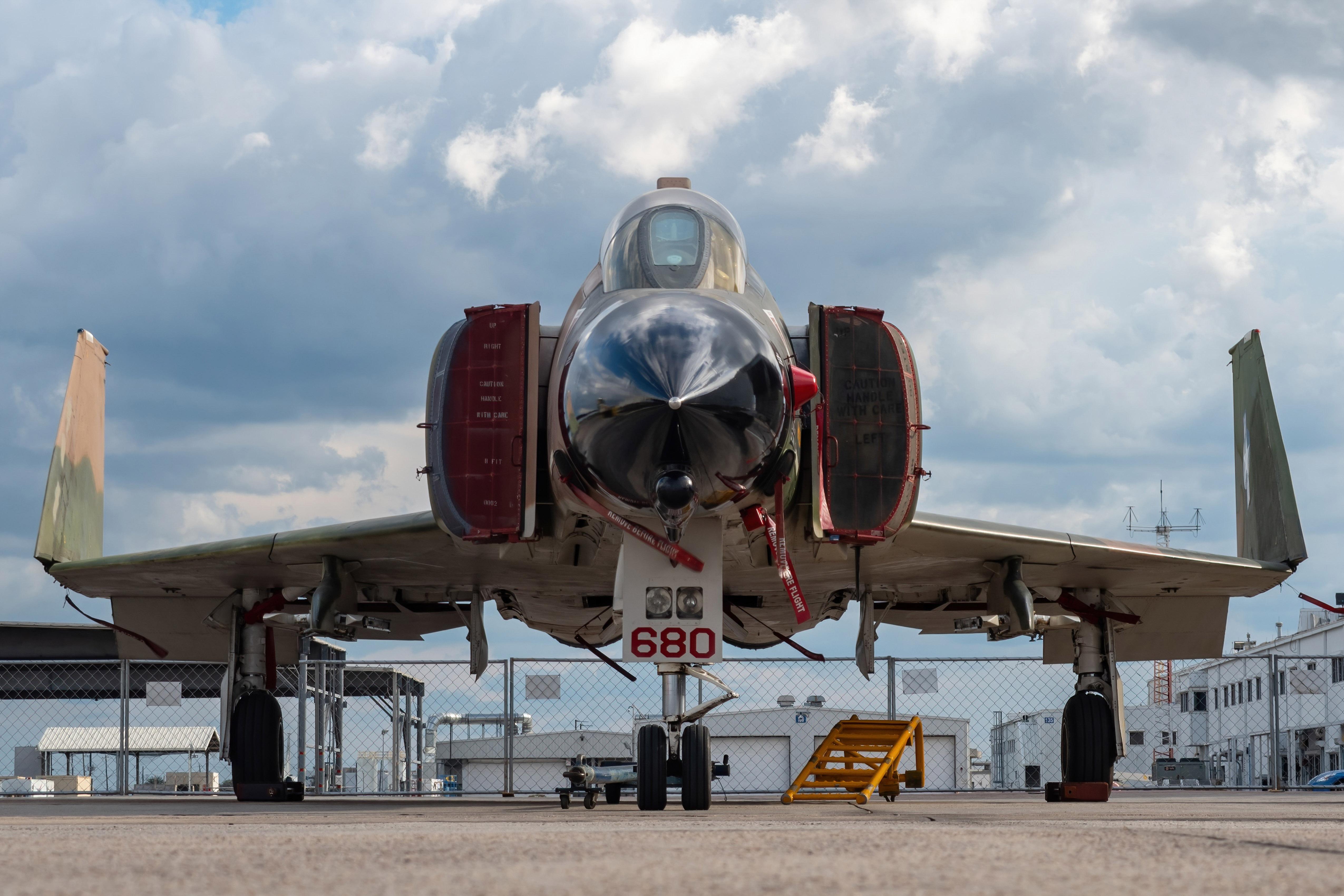
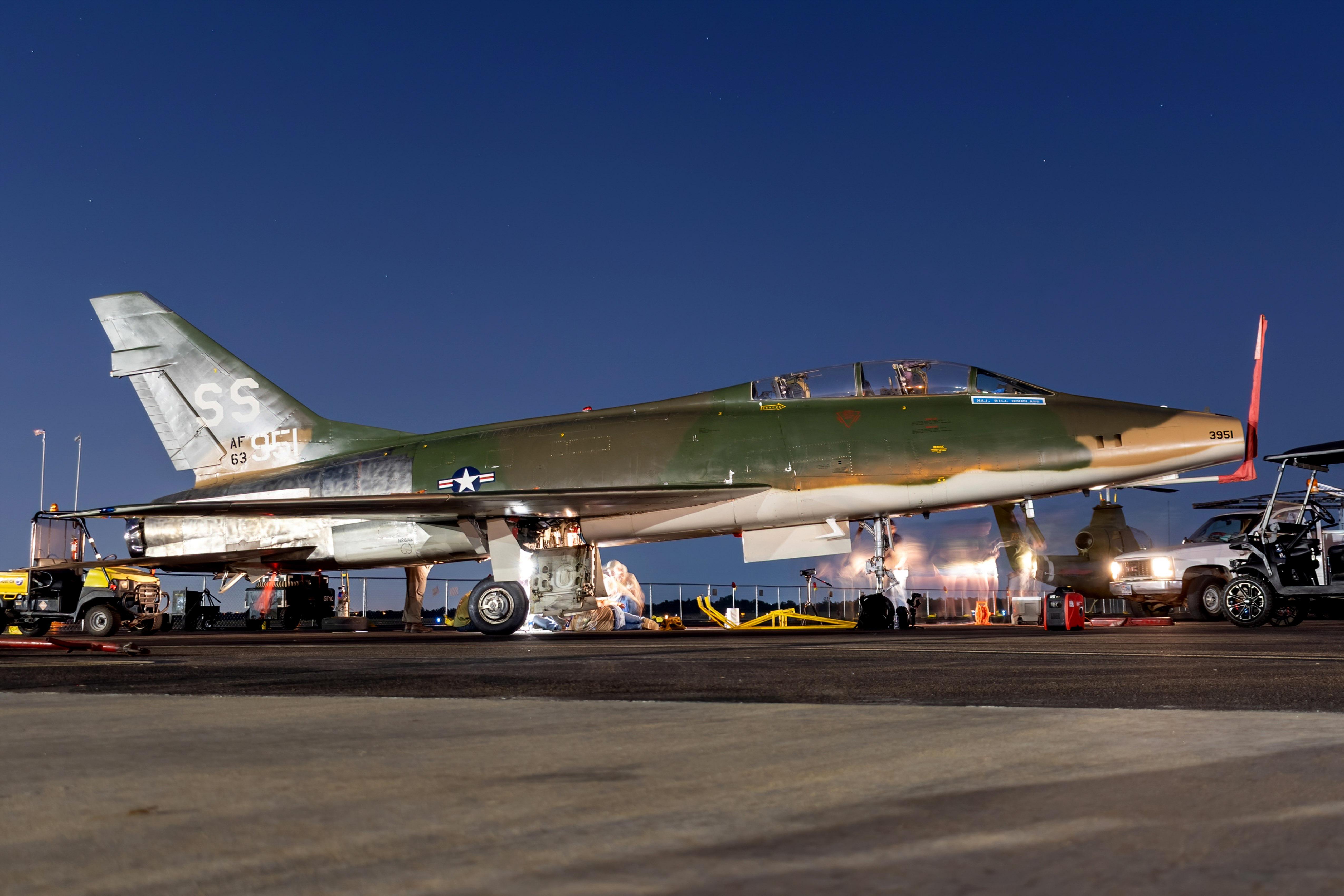
recent addition L-39 Albatross. The sole American combat aircraft is an A-1 (AD-4) Skyraider, marked in 56th Special Operations Wing colors. However, VWFM also has an extremely close relationship with the Collings Foundation, also located on Ellington Field, and shares hangar space, crews, and pilots with the Collings F-100F Super Sabre, TA-4F Skyhawk, replica Me-262B, and world-famous F-4D Phantom II. The A-1, F-100F, and TA-4F combine to form a powerhouse trio showcasing the earlier years of American involvement in Southeast Asia, with the F-4 planning to rejoin them in the skies in 2026.
Of note, VWFM is a remarkably young organization compared to the stereotypes of warbird owners, with a significant number of crew in their 20s and 30s.
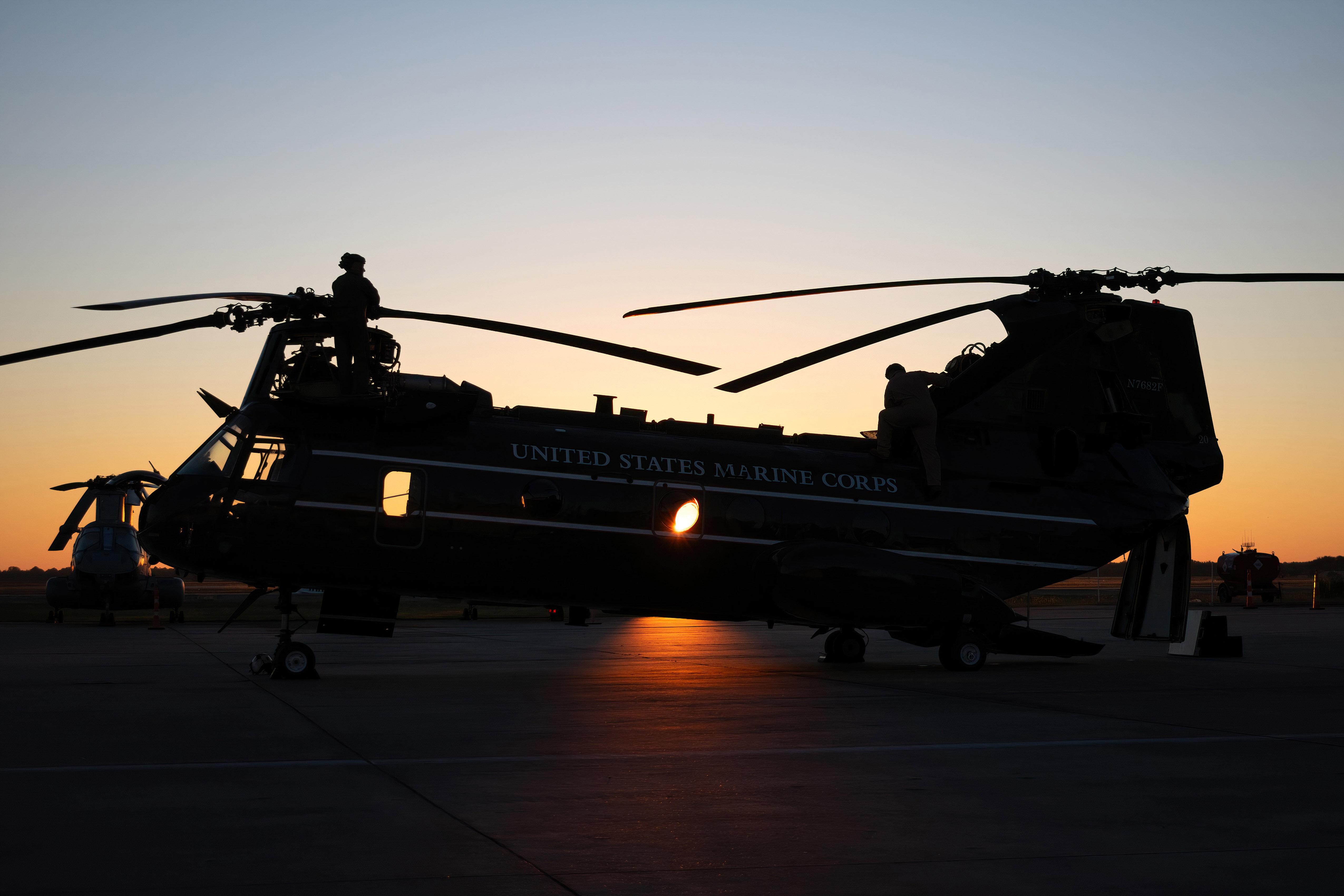
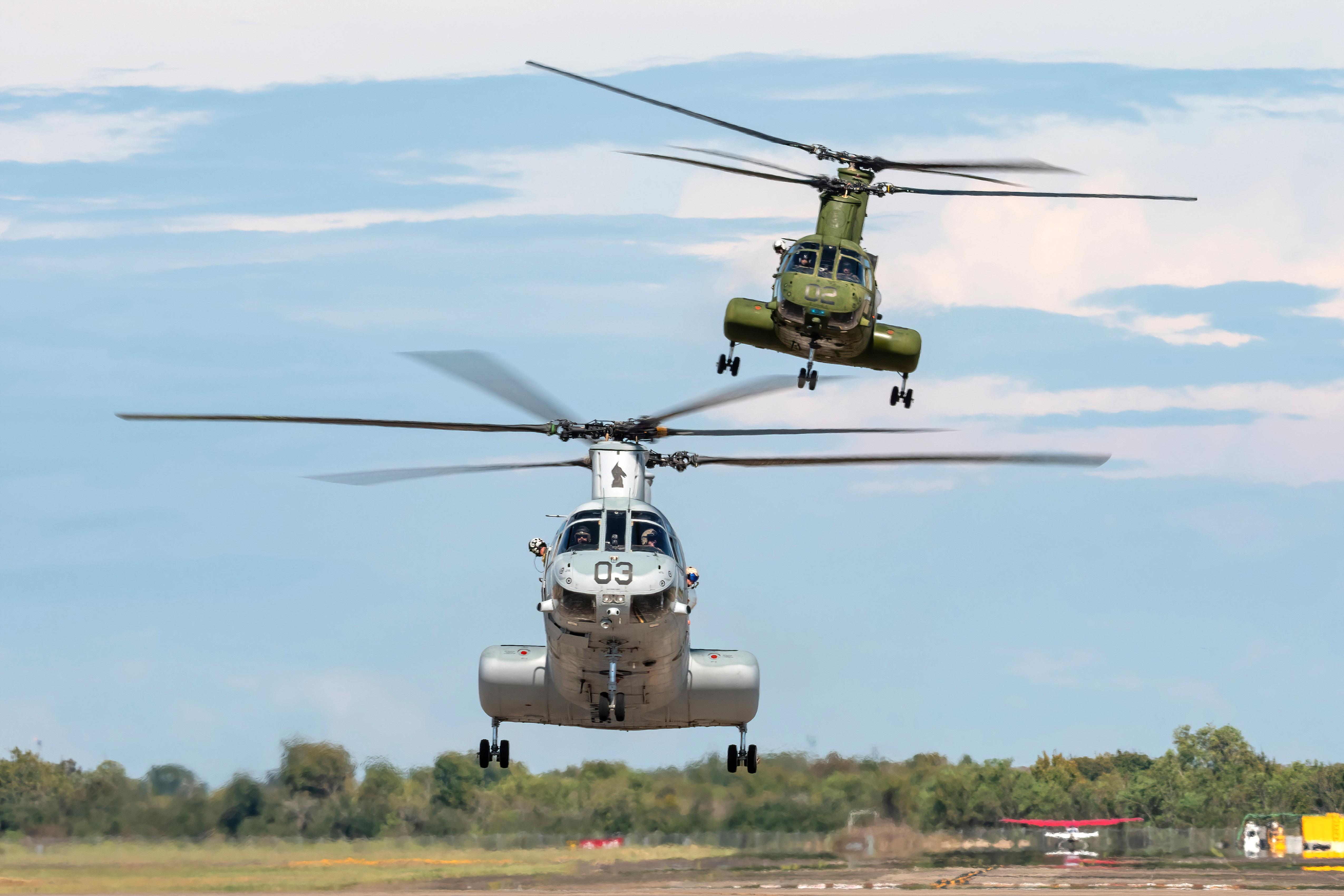
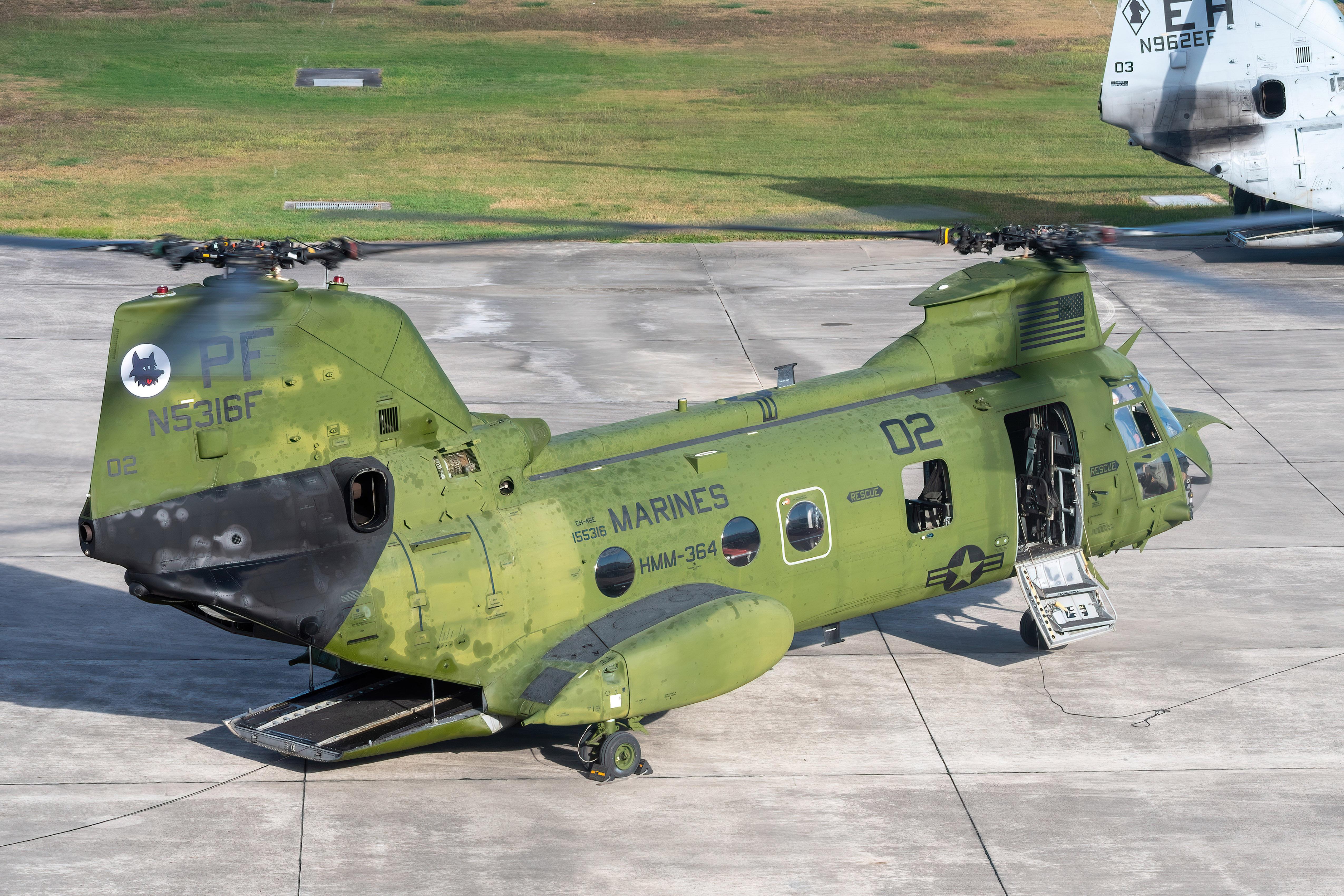
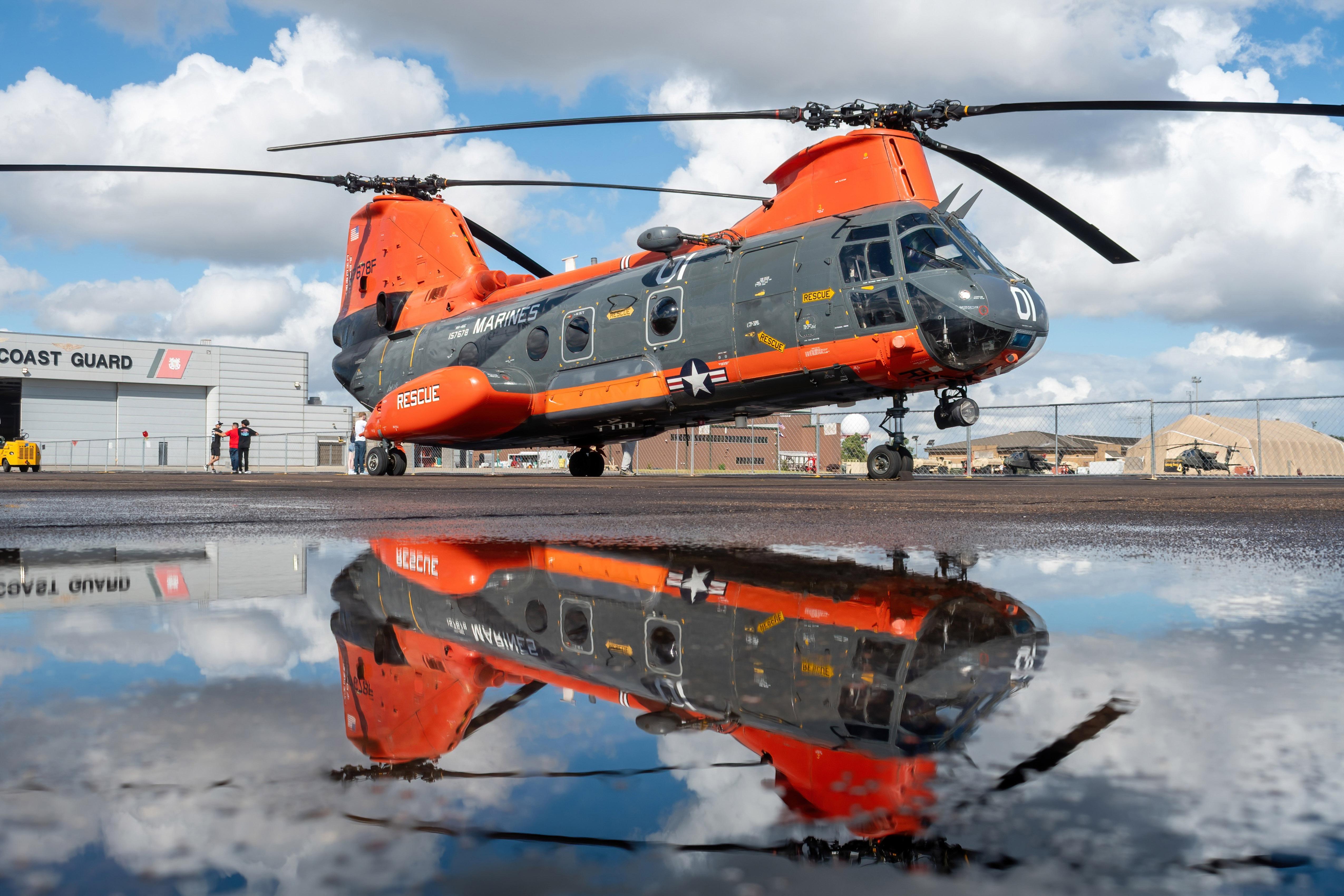
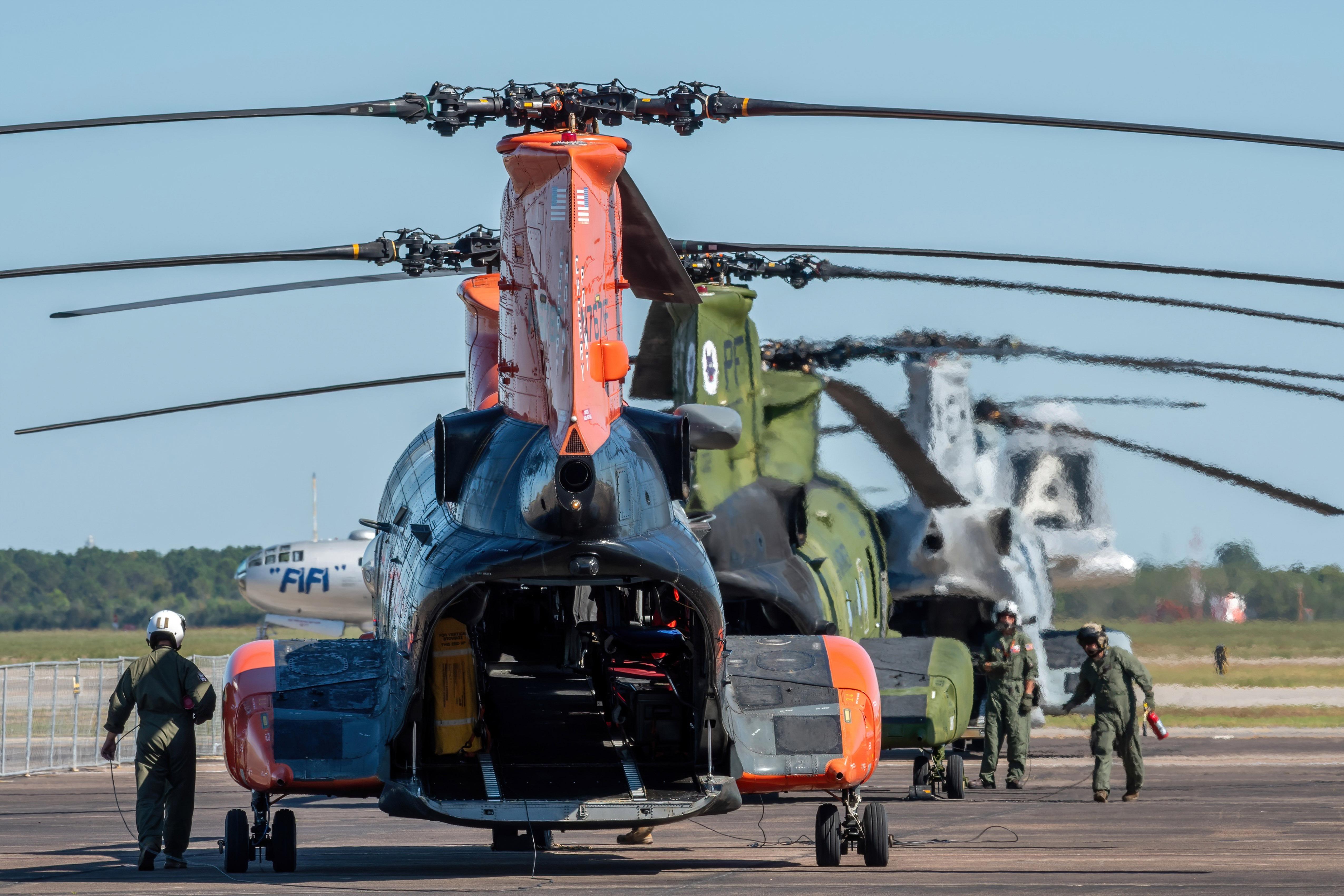
On the other side of the hangar is a collection arguably even more rare than a flying F-100 or MiG: the only privately-owned CH-46 Sea Knights that still wear military markings. The NUSAFM owns six of the “Phrogs,” each one painted in a different scheme from their service in the United States Marine Corps. These include “Pedro,” one of three HH-46Es formerly operated by MCAS Cherry Point Search and Rescue, “HMX,” a former Presidential Airlift Squadron CH-46E wearing the famous stunning “green top” VIP paint scheme, and “Swifty,” an CH-46E wearing the camouflage green paint scheme from Vietnam and marked in HMM-364 “Purple Foxes” colors. Run by a cadre of veterans from across the military, they not only fly the Phrogs for
display, but also work with local law enforcement and the Texas State Guard to provide airborne and search and rescue training for those organizations.
I’ve been lucky enough to spend time with both organizations at the past two Wings over Houston airshows, and there’s truly no other place where one can see these types of aircraft in the sky regularly. Seeing an F-100 scream past while CH-46s land in front and an A-4 and A-1 fly orbits overhead is something not even Oshkosh has done. If Cold War, especially Vietnam-era, aircraft are of interest, I cannot recommend a visit to Ellington Field enough.
On March 21-22, 2026, Luke Air Force Base in Glendale, Arizona, hosted a rare dual performance of the U.S. Navy Blue Angels and the U.S. Air Force Thunderbirds. The Blue Angels had initially planned to perform at two Airshows, but due to the cancellation of the first two, they shifted their performances to MCAS Yuma and Luke AFB, both located in Arizona.
For 2026, Luke Days will be featuring a historic appearance by not only the U.S. Air Force Thunderbirds but also the U.S. Navy Blue Angels. It’s a rare event that these two premier flight demonstrations perform alongside one another.
The Navy’s Blue Angels last performedat Luke AFB in 1995. The 2026 Luke Days performers included the Combat Arms Demo featuring the
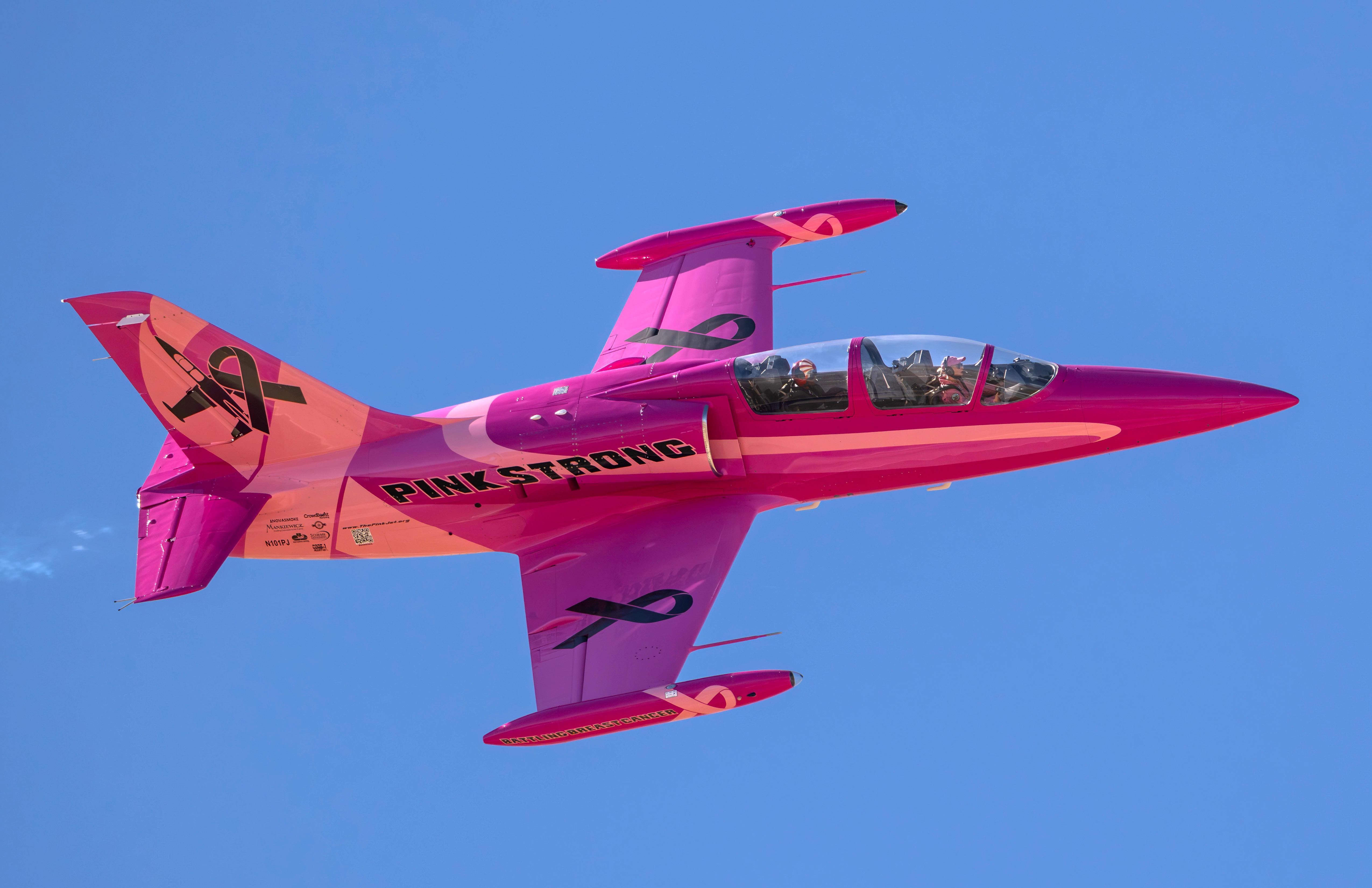
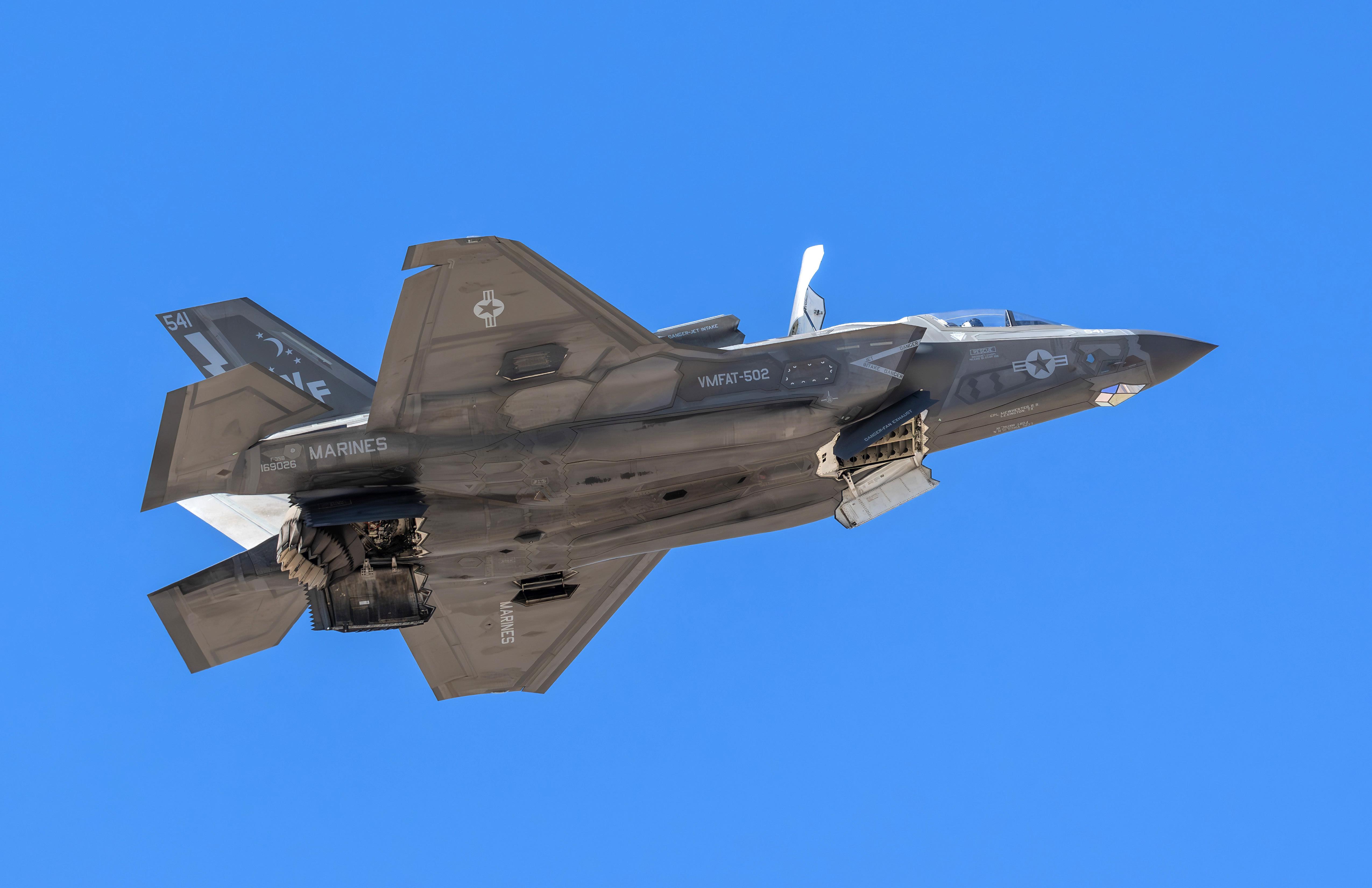
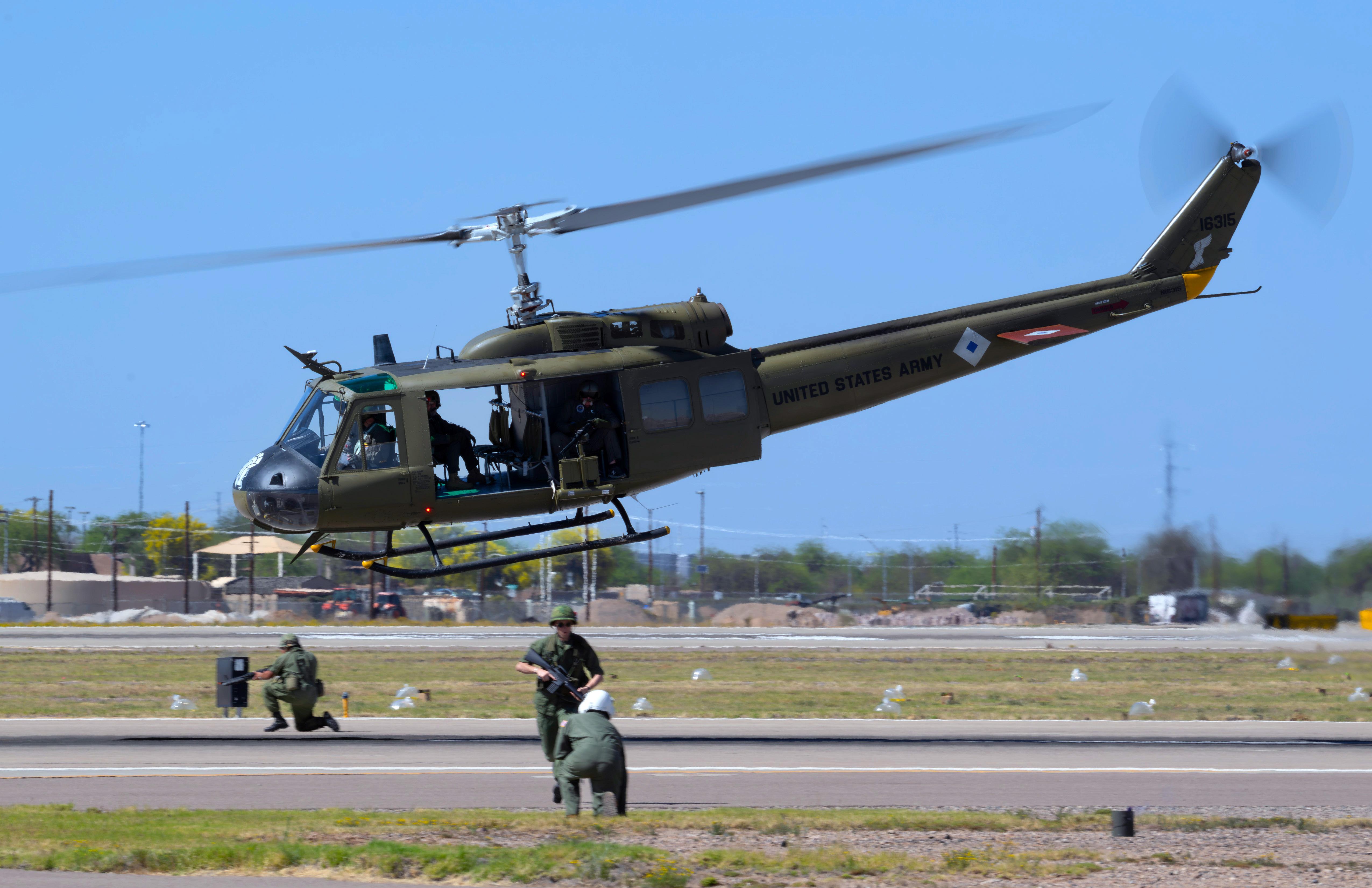
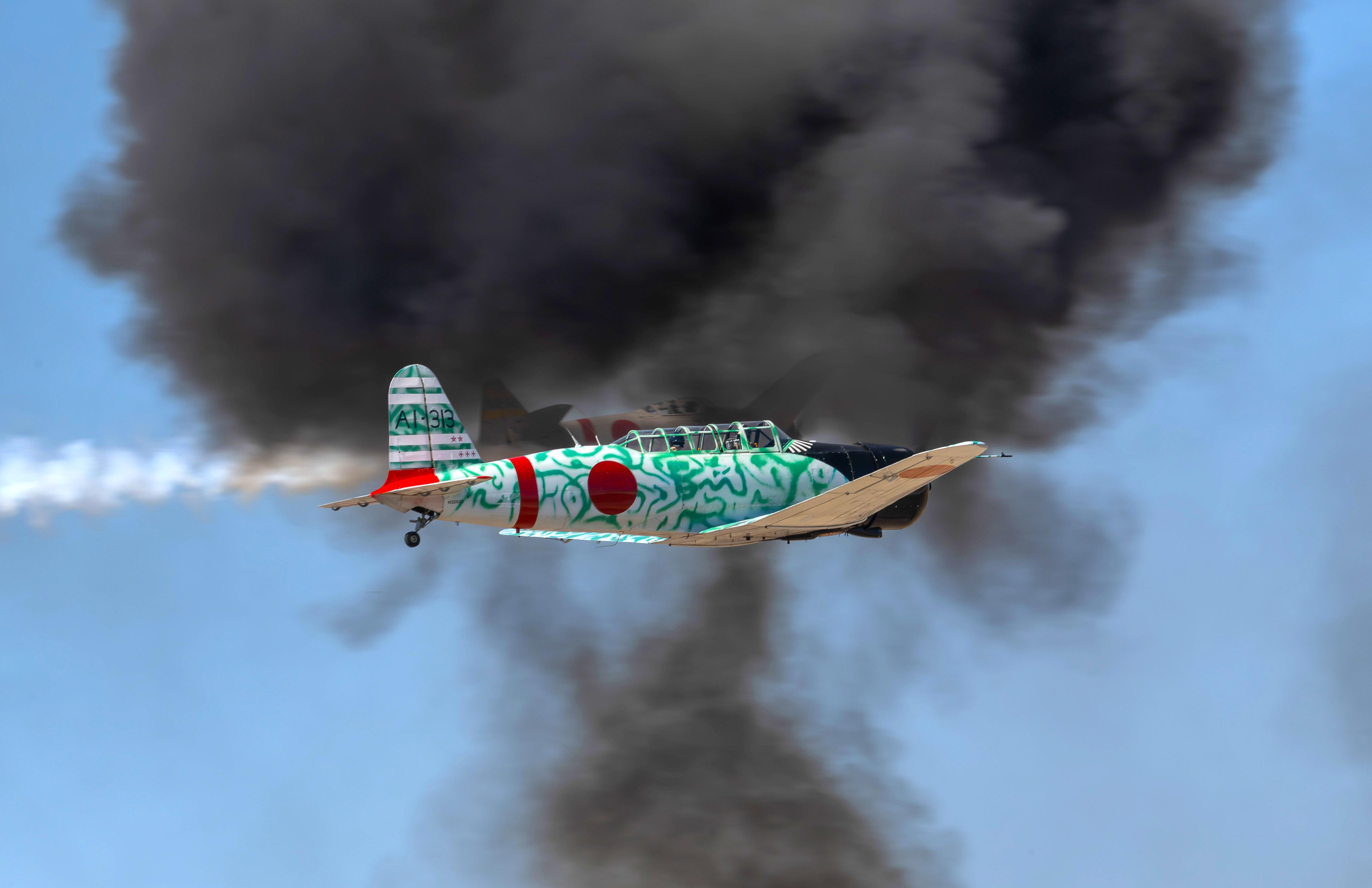
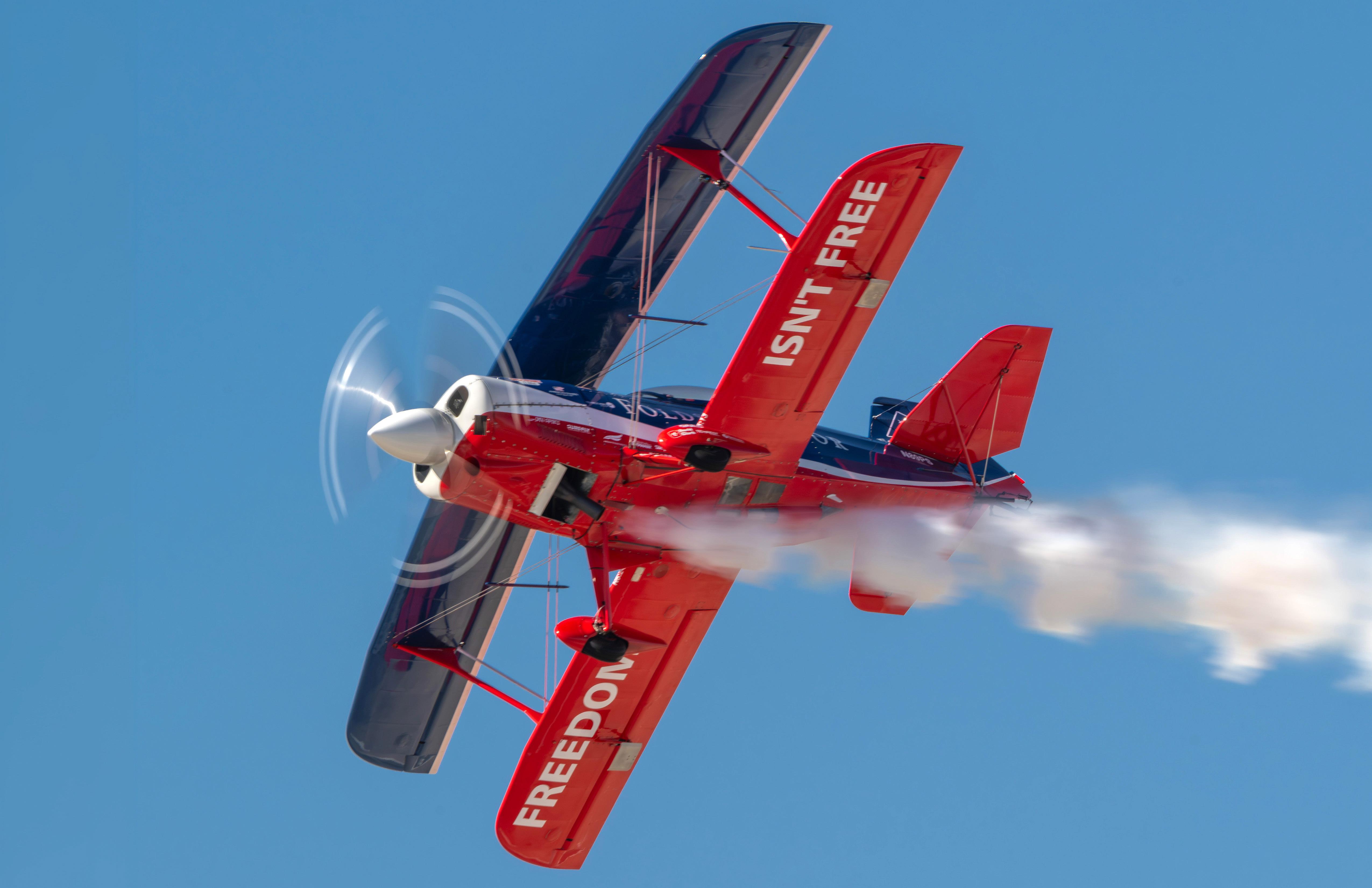
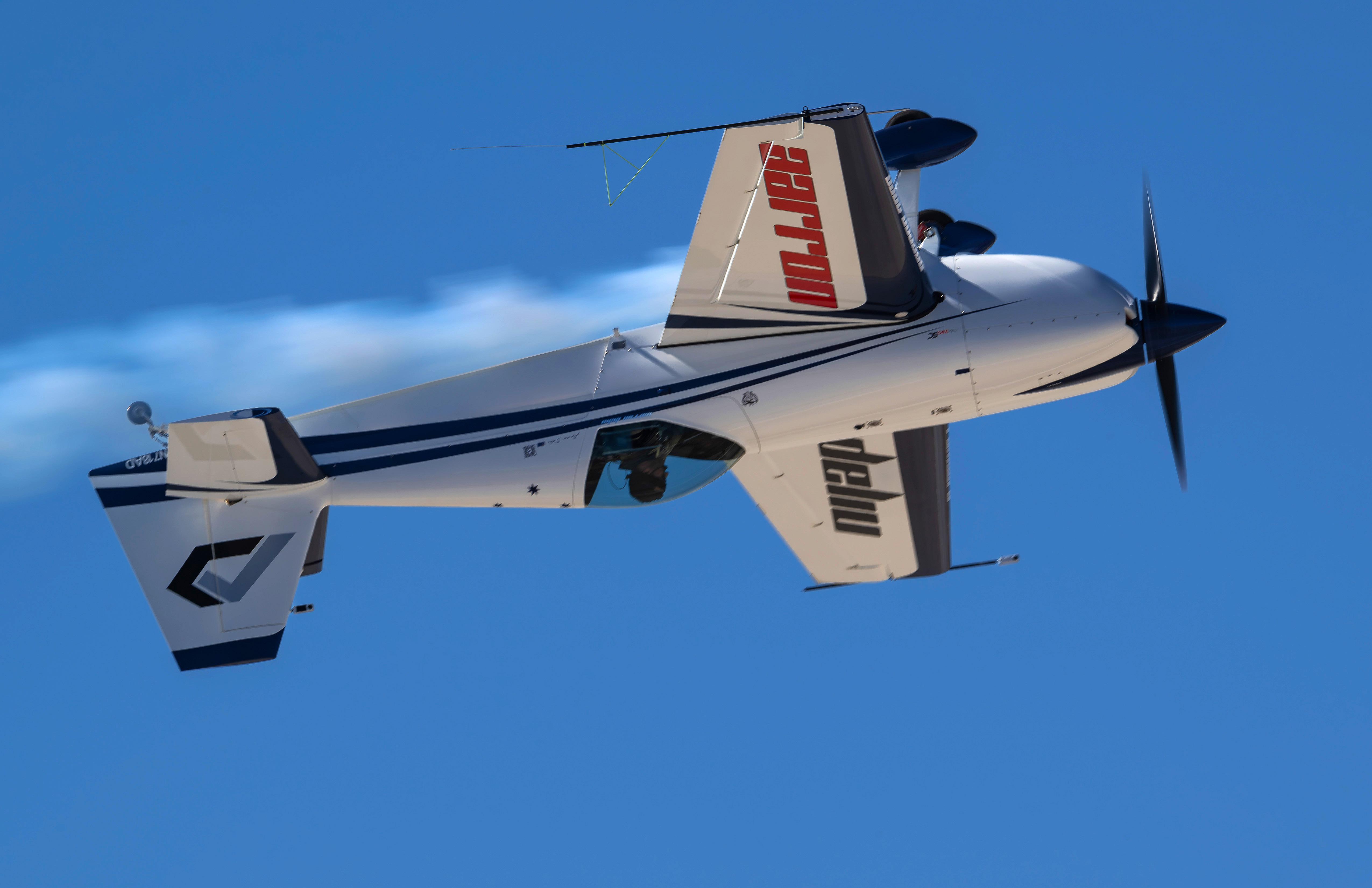
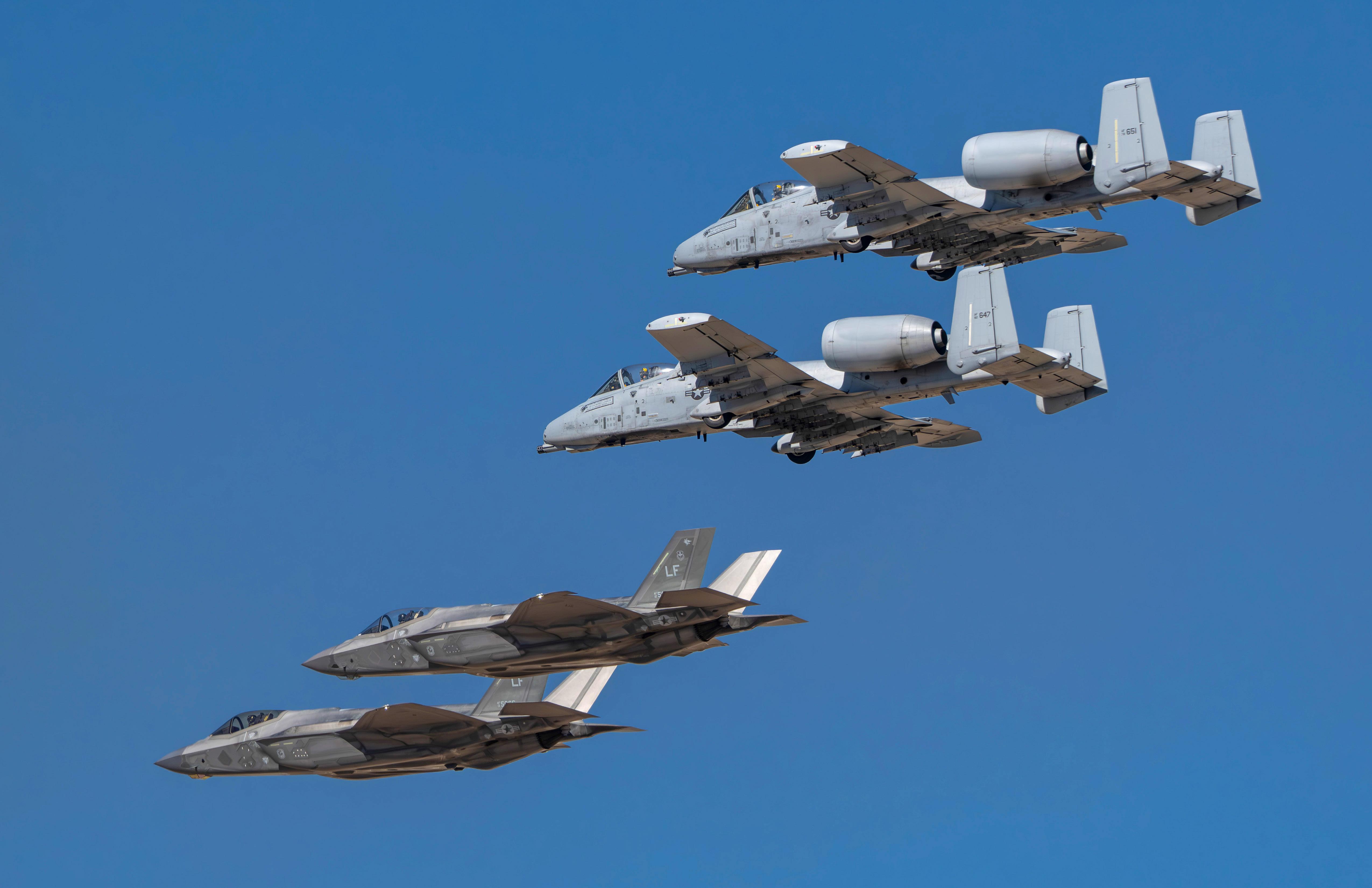
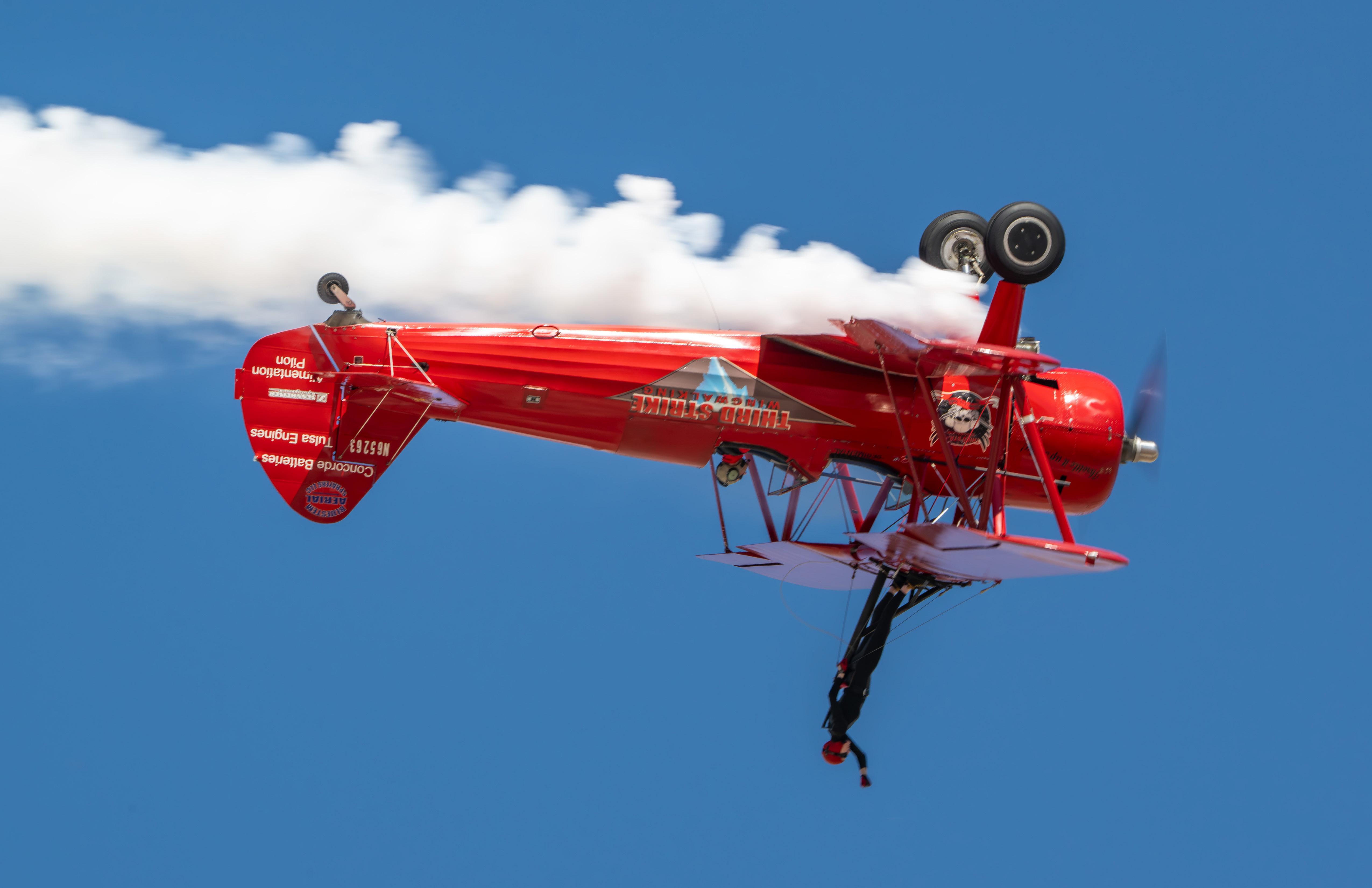
F-35 and A-10, USAF F-35A, USMC F-35B Demo Teams, Tora! Tora! Tora!, Rutledge Airborne, Folds of Honor Biplane, Aaron Dileu, Third Strike Wingwalker, Smoke n ThunderJet Truck, The Pink Jet, Huey/ AH-1 Cobra Demo, Ace Maker T-33, P-51, and C-17 Demo.
Despite the scorching temperatures experienced over the weekend, the dedicated team at Luke AFB worked tirelessly to ensure that airshow enthusiasts could comfortably manage the heat and fully immerse themselves in the exhilarating airshow experience.
Luke Days
Article and photos by Larry Grace / ISAP President
Larry Grace
Larry Grace
Larry Grace
Larry Grace
Larry Grace
Larry Grace
Larry Grace
Larry Grace
Larry Grace
Larry Grace
Larry Grace
The Old Rhinebeck Aerodrome
Old Rhinebeck had long been a bucket list show for me and this past fall I finally put a checkmark next to it.
Nestled in New York’s rural farming area of the Hudson Valley, it’s located just 3 miles north of downtown Rhinebeck in the town of Red Hook. It’s surrounded by open fields, rolling farmland and low hills, very much in keeping with it’s vintage aviation theme. And it’s a relatively easy three and a half hour drive from my home in New Hampshire.
The catalyst for the trip was the night photo shoot hosted by ISAP member Tom Pawlesh. But before that, my goal was to explore the world aviation visionary Cole Palen created.
Palen’s idea, altogether radical at the time: early airplanes must be flown, not just displayed.
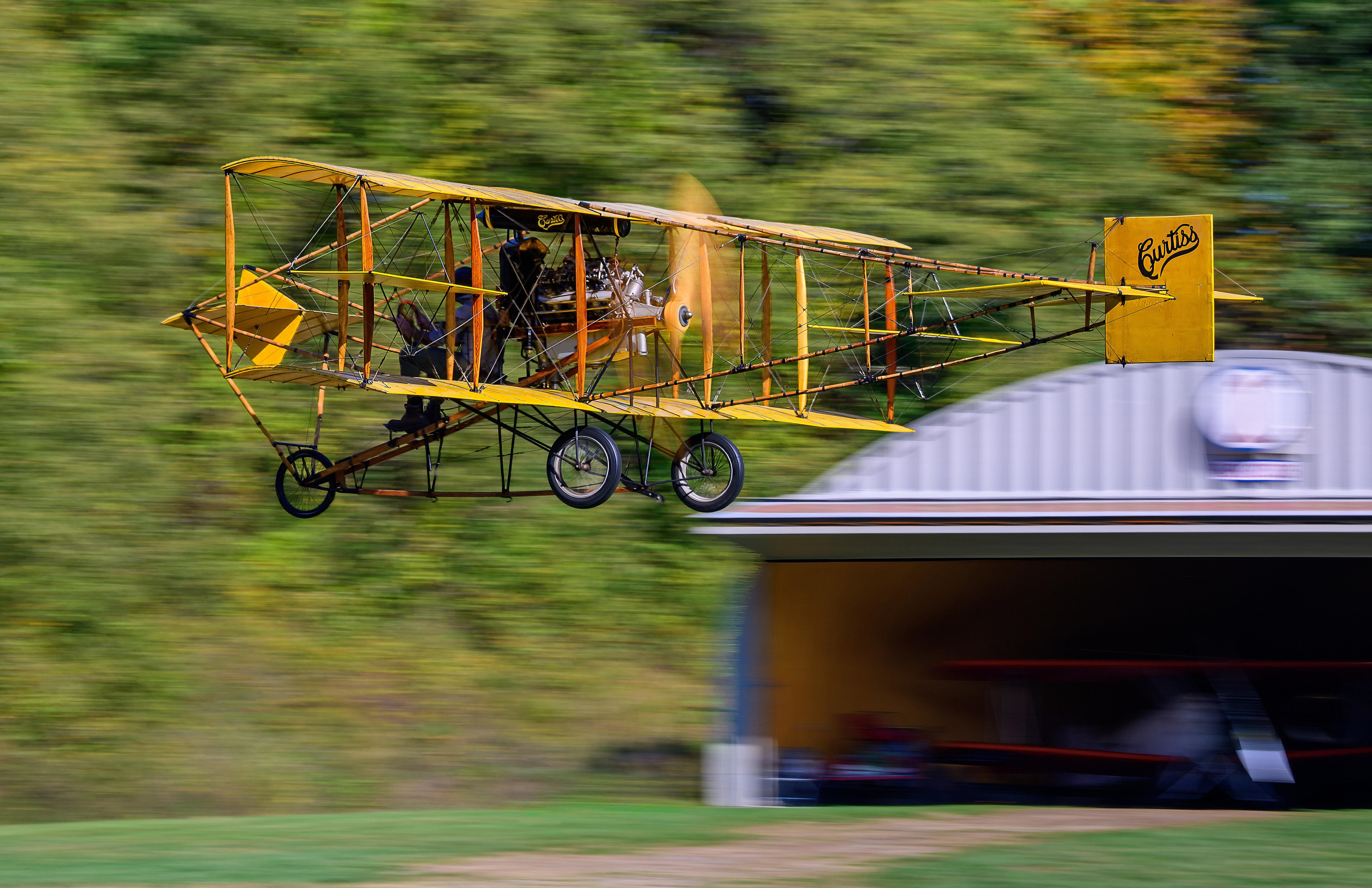
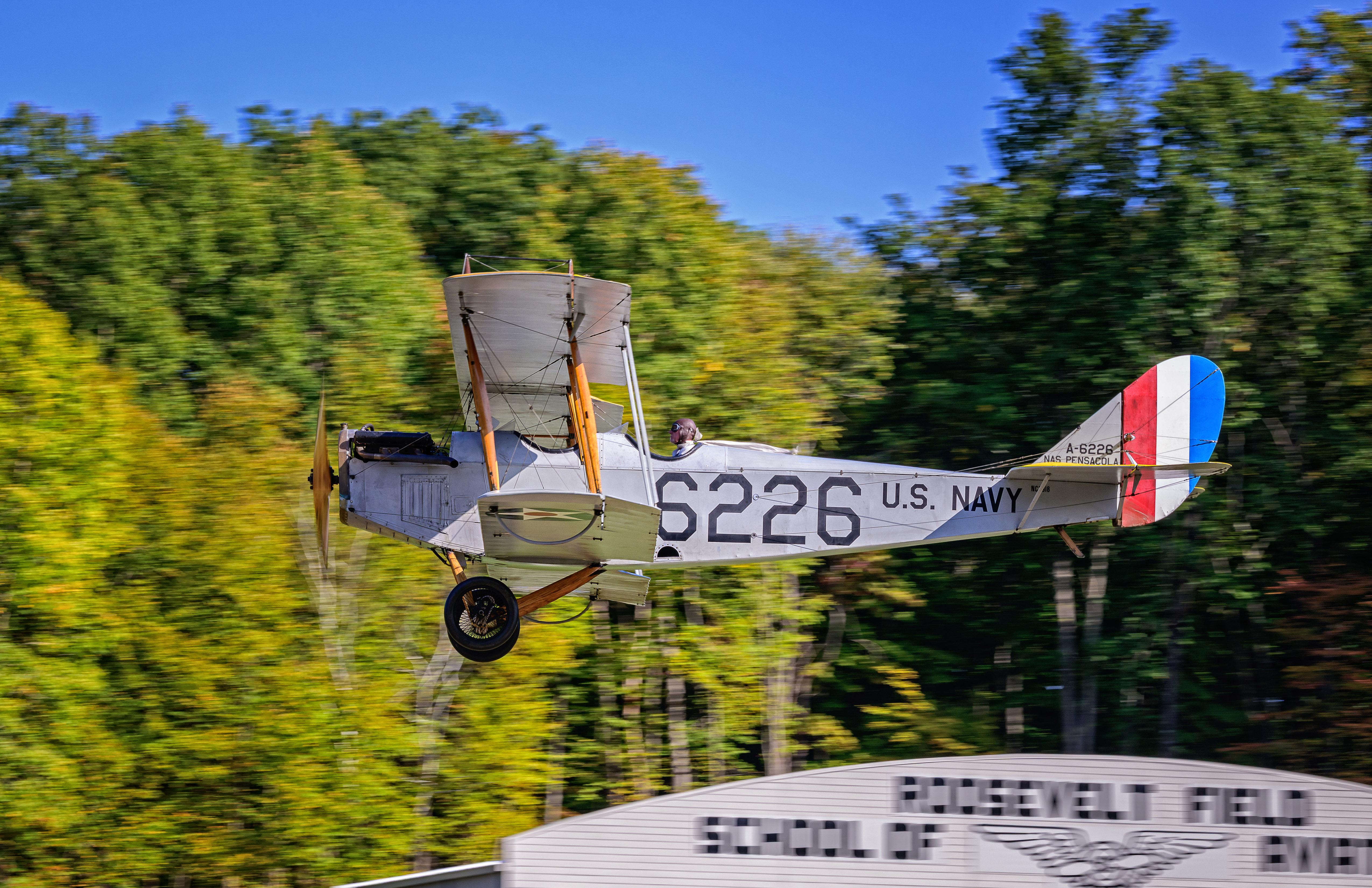
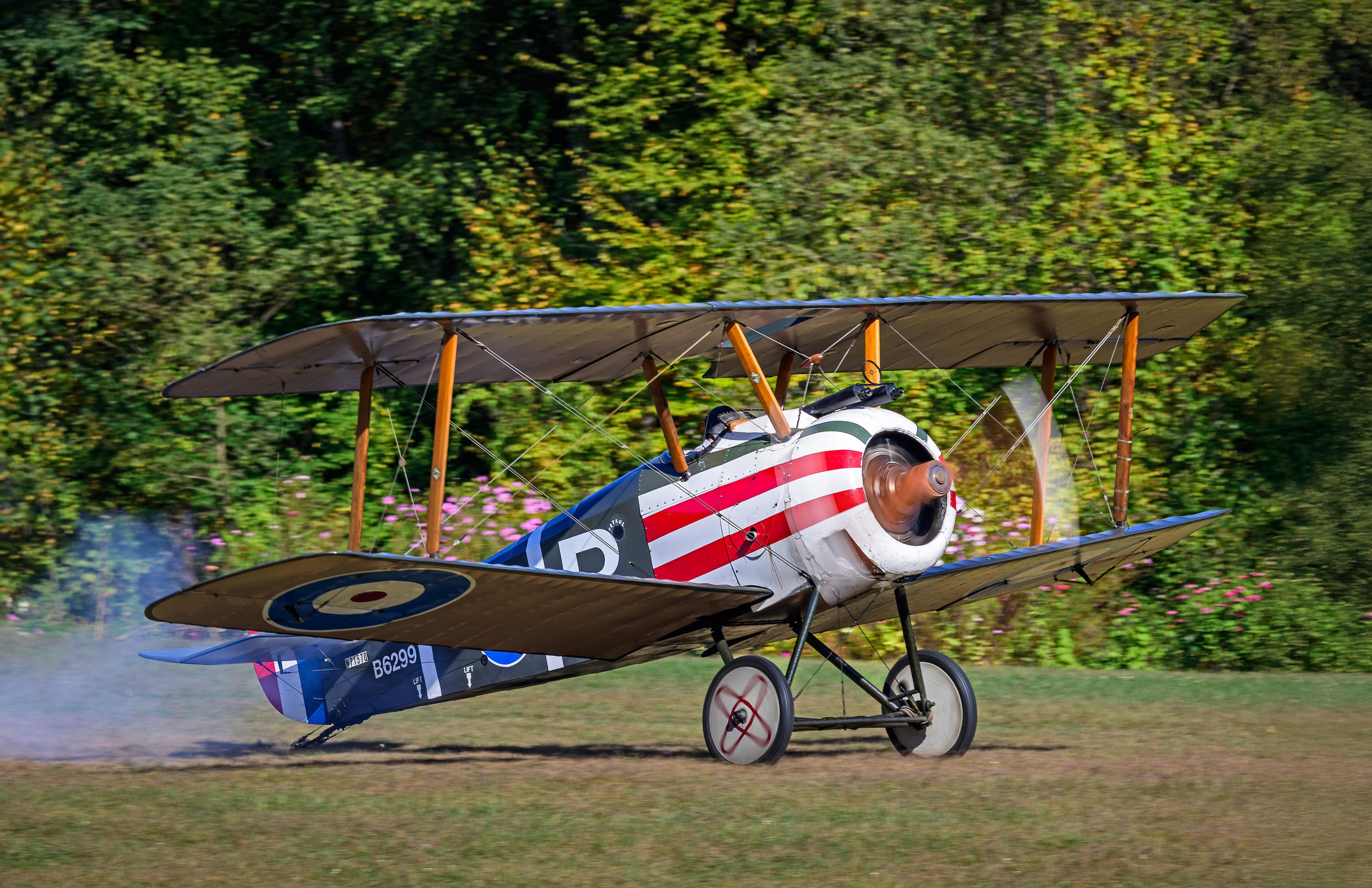
And fly they do. Whether you’re listening to the soft sounds of Curtiss Jenny floating down the runway or the high pitched staccato roar of the gnome rotary engine attached to a replica Sopwith Camel it’s all here for the aviation enthusiast to enjoy.
Photos and text by Scott Slingsby
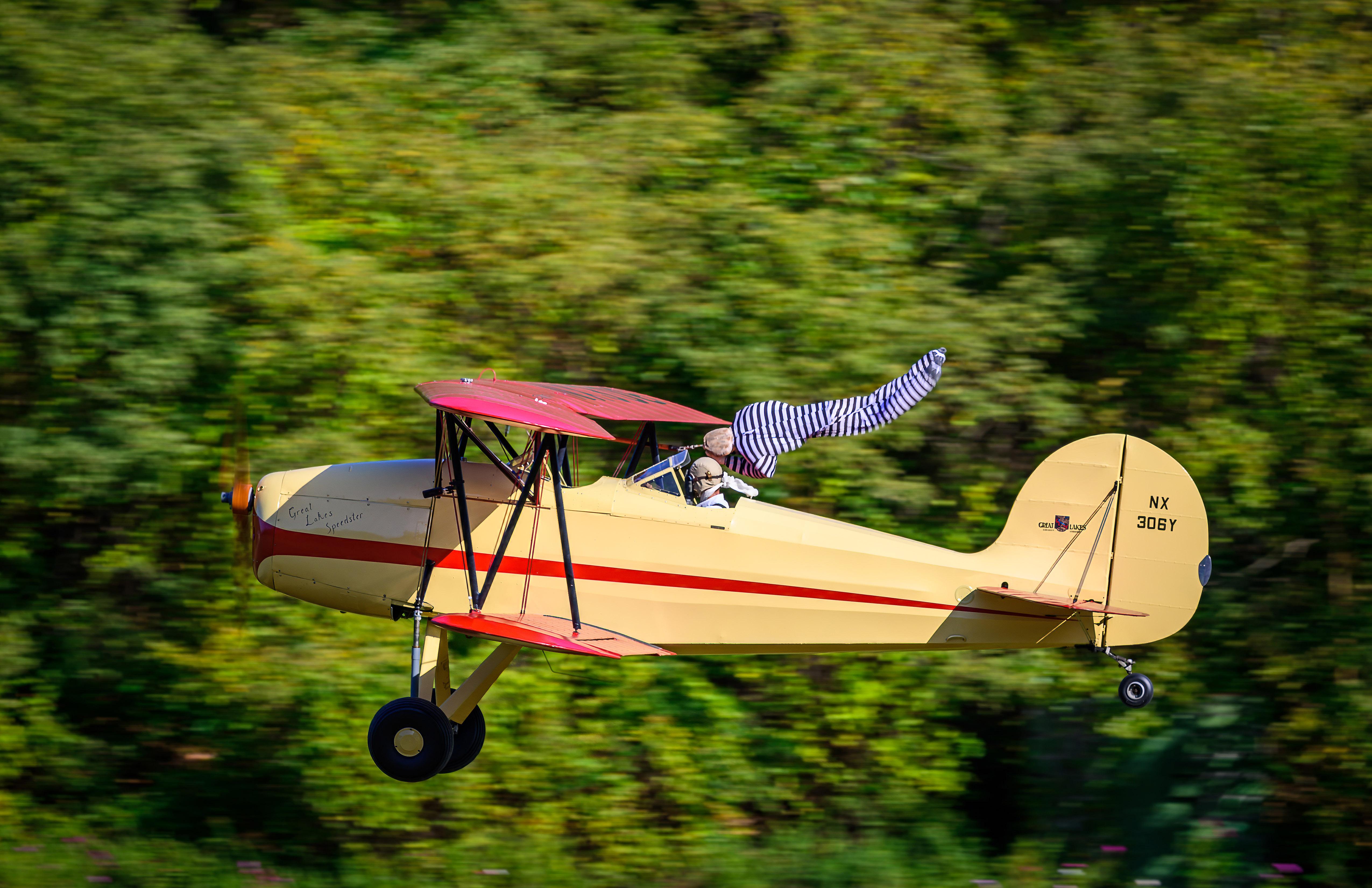
Announcer Jerry O’Neil kept the crowd entertained with his fun facts and trivia as each act rolled out in front of us, such as an old fashioned ribbon cutting using rolls of toilet paper and my personal favorite, a keystone cops themed skit where the bad guy hops a ride on a Great Lakes biplane and proceeds to get shot out of the sky and reacquired by local law enforcement with a fishing net.
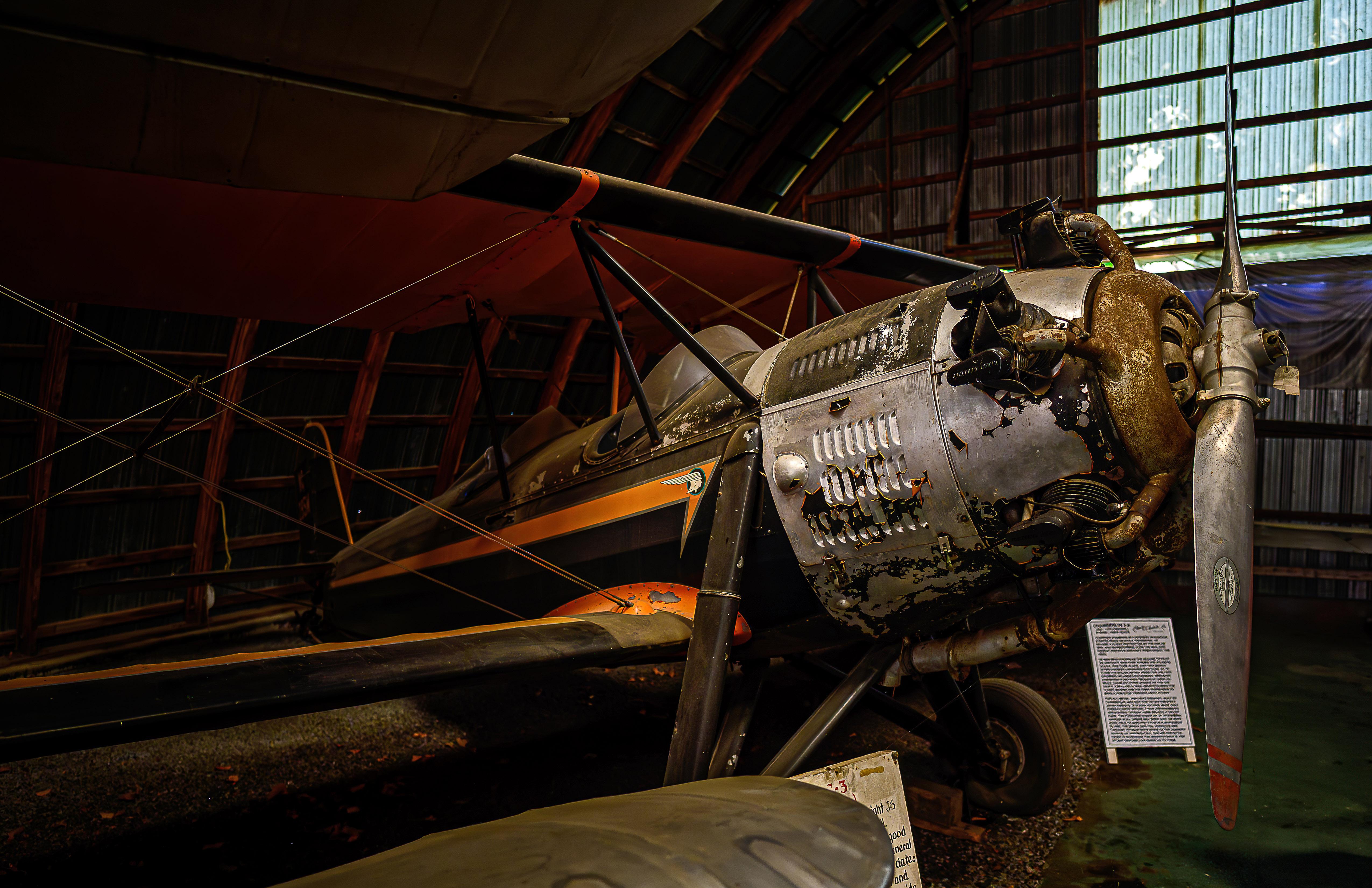
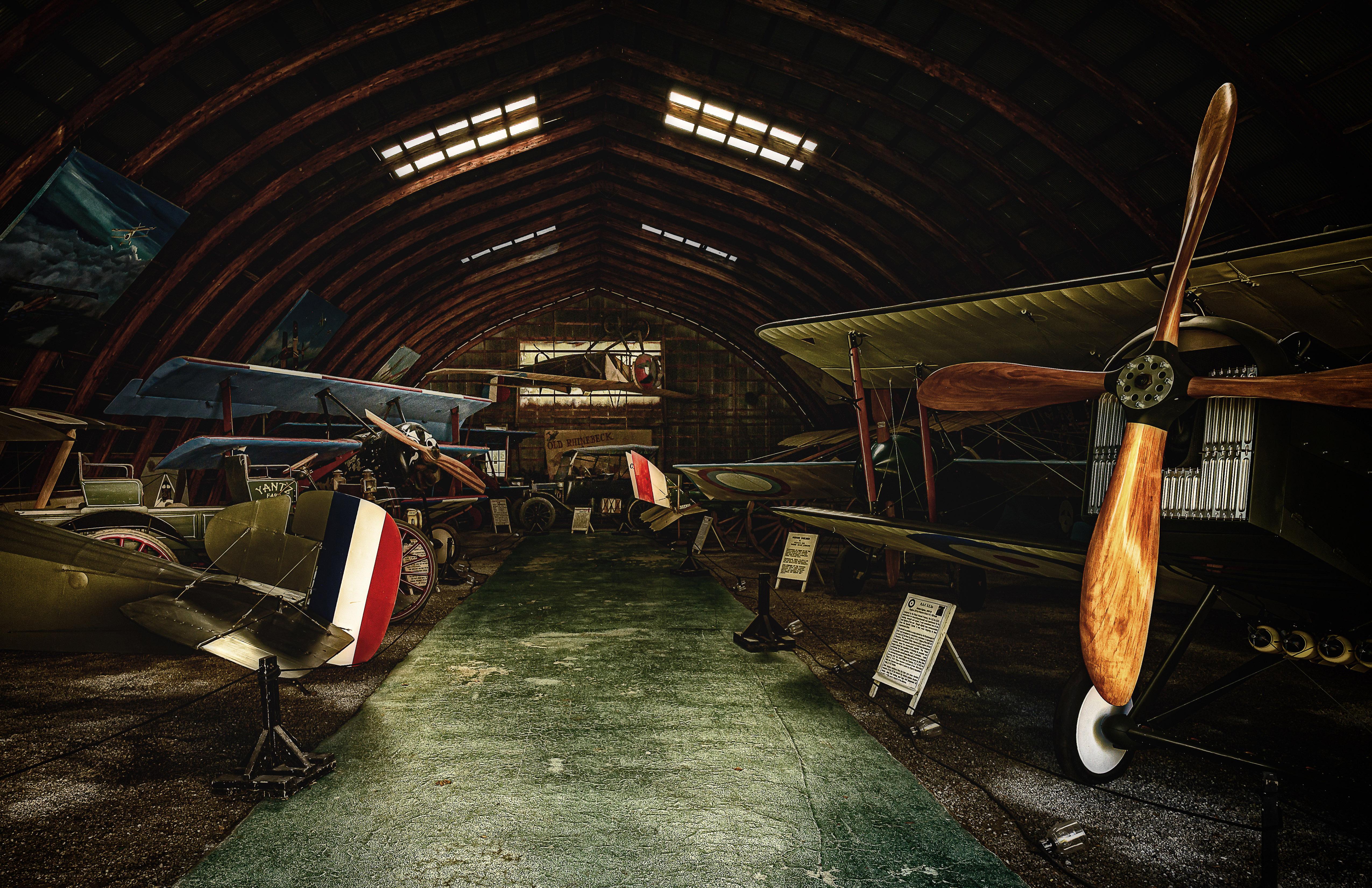
Also not to be missed is the collection of aviation history that resides above the parking lot. These hangars hold the treasures of a bygone era that must be explored. From the cloth covered wing warping era through World War I and the golden age of the twenties and thirties, there’s something of interest for everyone. It gave me the feeling of exploring your grandparents aviation attic.
To shoot inside these hangars I’d recommend bringing your fastest glass and shooting at your highest ISO as the only available light comes from the open hangar doors and some diffused skylights. My kit of choice was the 20mm, f/1.8 attached to the Nikon Z6II with Lightroom and Topaz handling the heavy lifting of noise reduction.
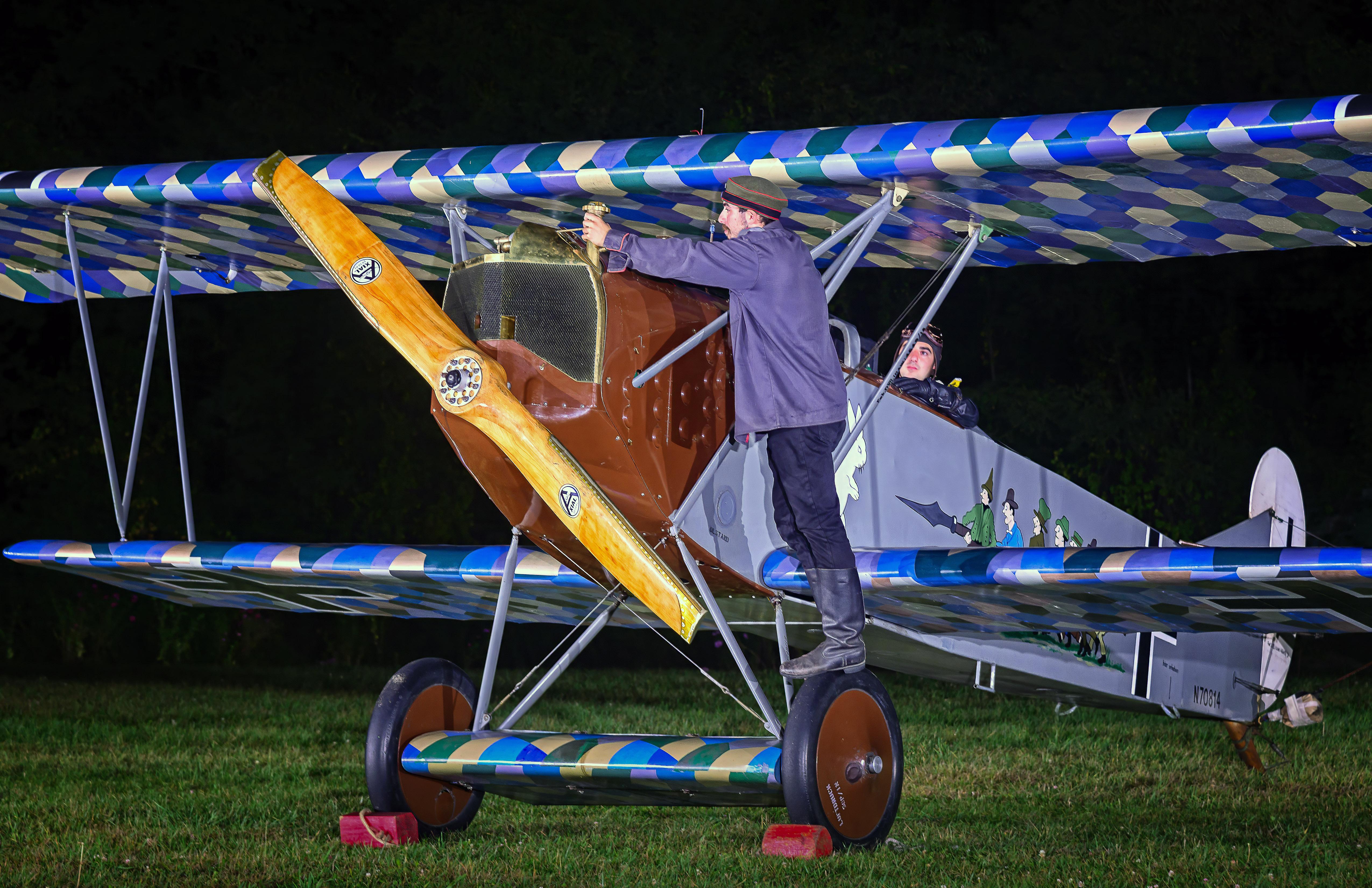
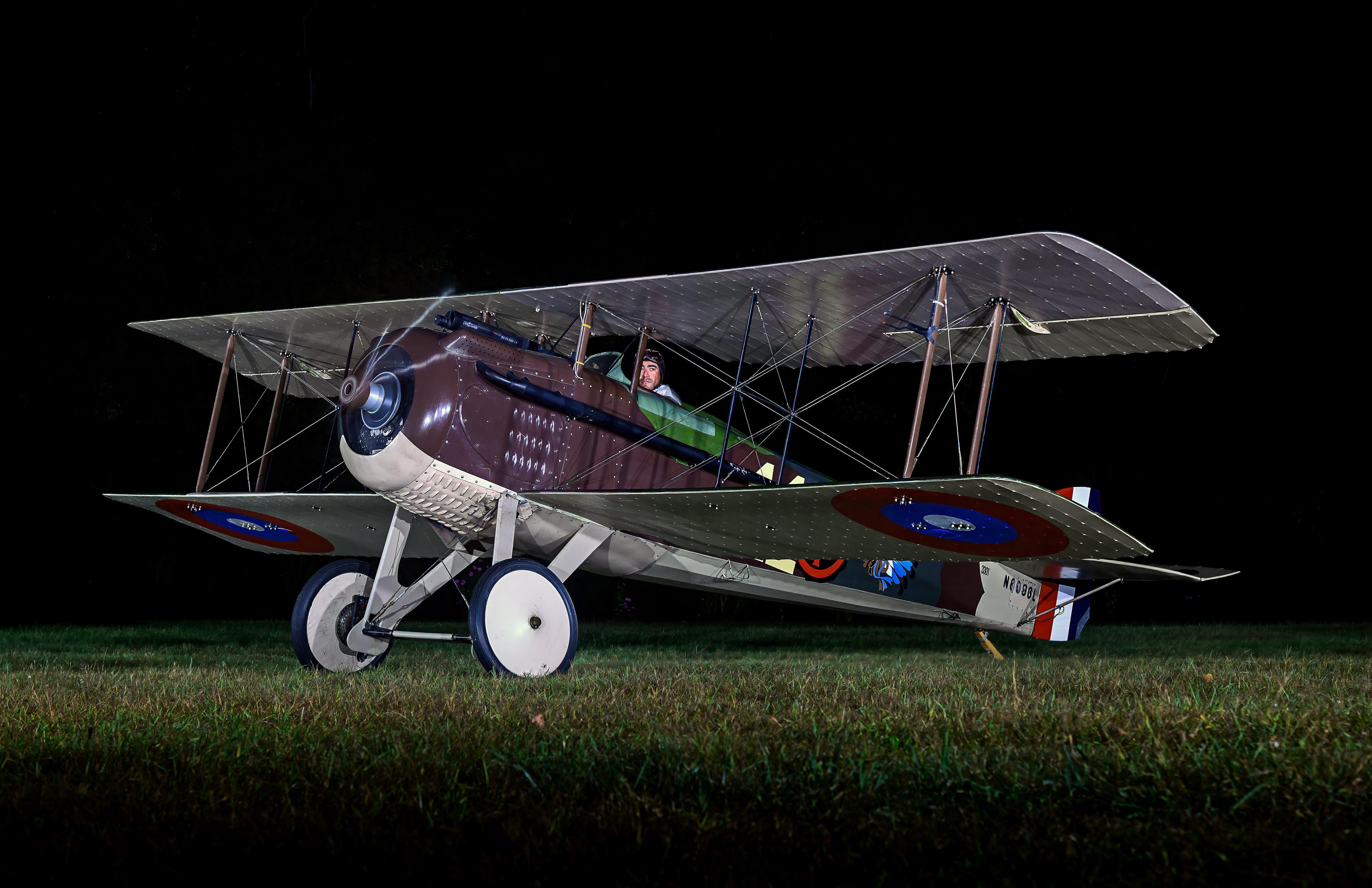
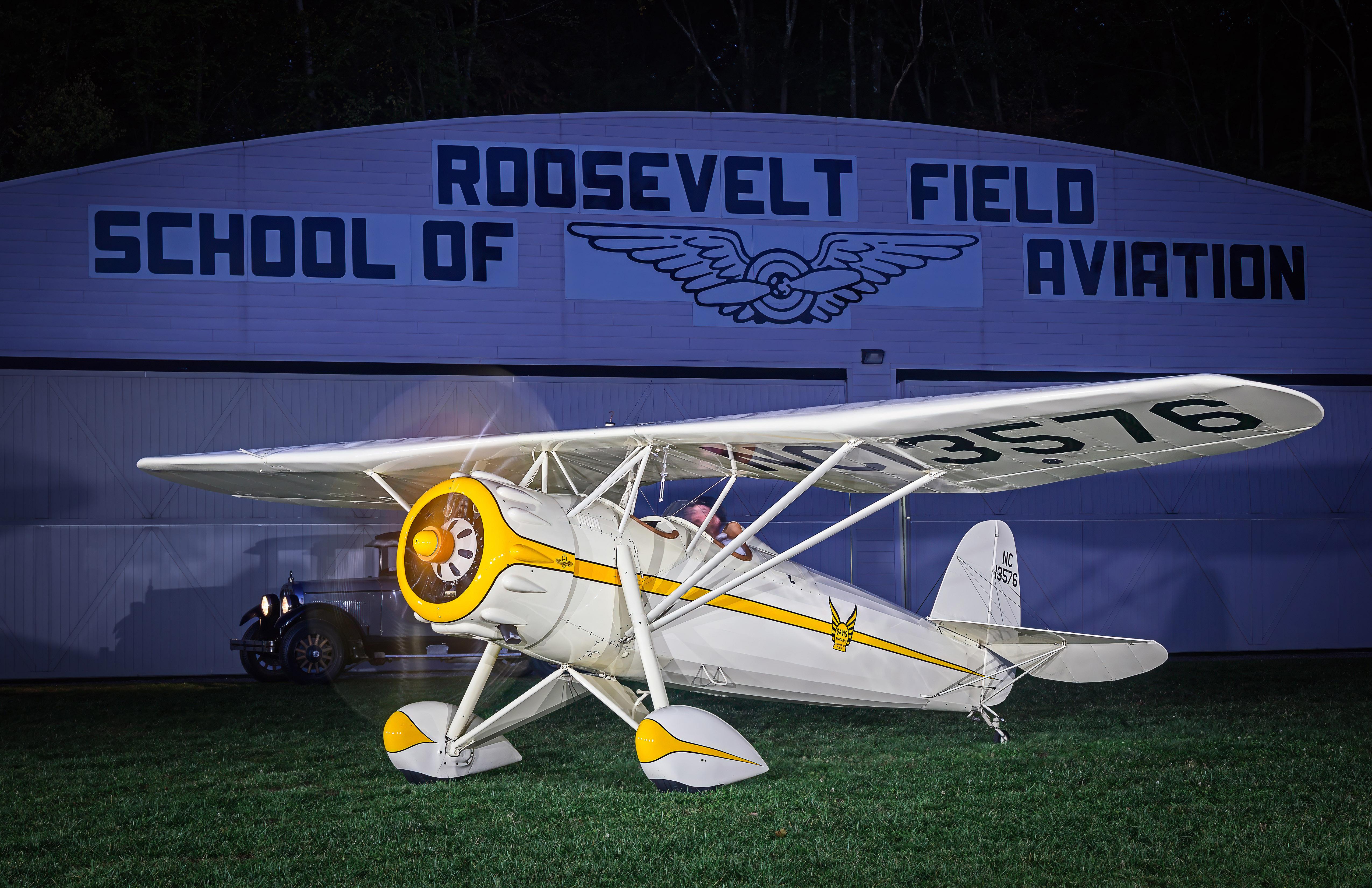
After a couple of hours break to recharge it was on to the night shoot. Tom briefed about 15 of us on what was ahead for the evening such as lighting and shooting techniques and also a request for help moving light stands from plane to plane. I was light stand #3. More than ready and willing to help the cause.
Our targets for the night ranged from Wacos to Great Lakes and World War I fighters to the “wild card” bonus airplane, Ken Cassens’ amazing aviation oddity, the ARUP S-2. This airplane could fill a whole article by itself. As a side note, about a week after my visit, The ARUP was certified by the FAA for flight. Sometime this coming spring Ken’s labor of love should take to the skies over the aerodrome.
So if you’re looking for an aviation themed getaway that is fun for the whole family, don’t wait as long as i did and start planning a visit to Old Rhinebeck.
Scott Slingsby
Scott Slingsby
Scott Slingsby
Scott Slingsby
Slingsby
Scott
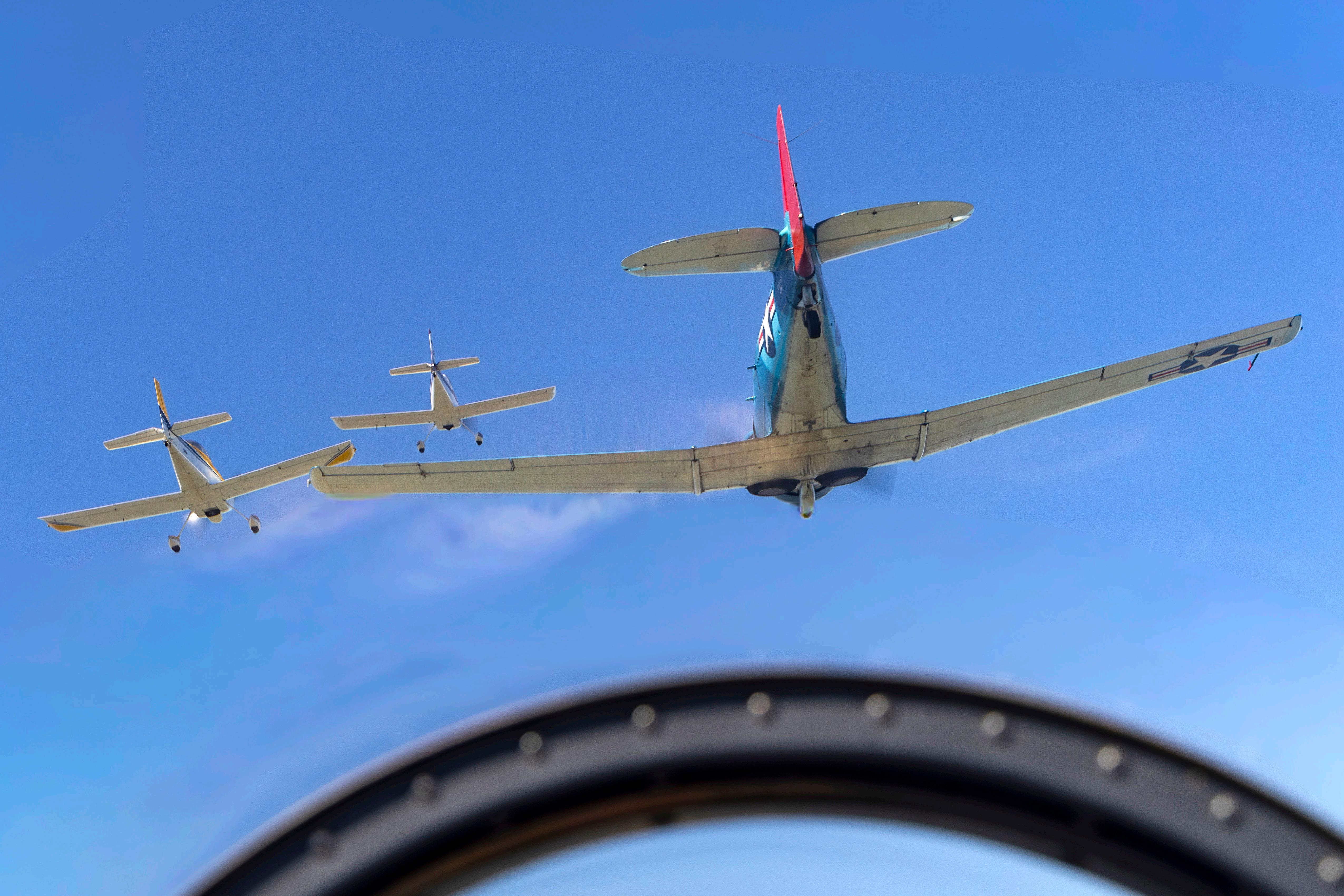
Follow The Leader
Photos and text by Kevin Hong / Airspeed Editor
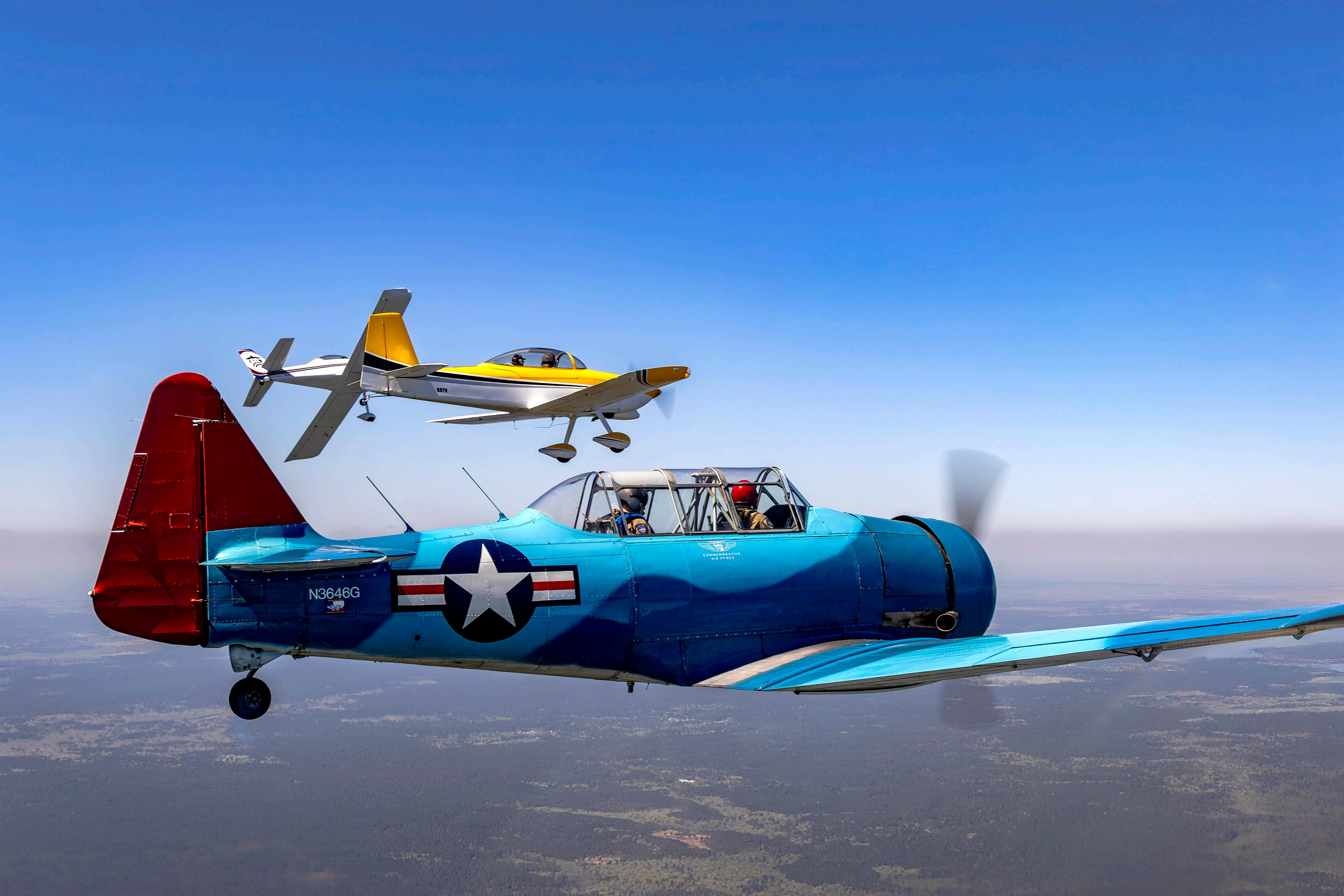
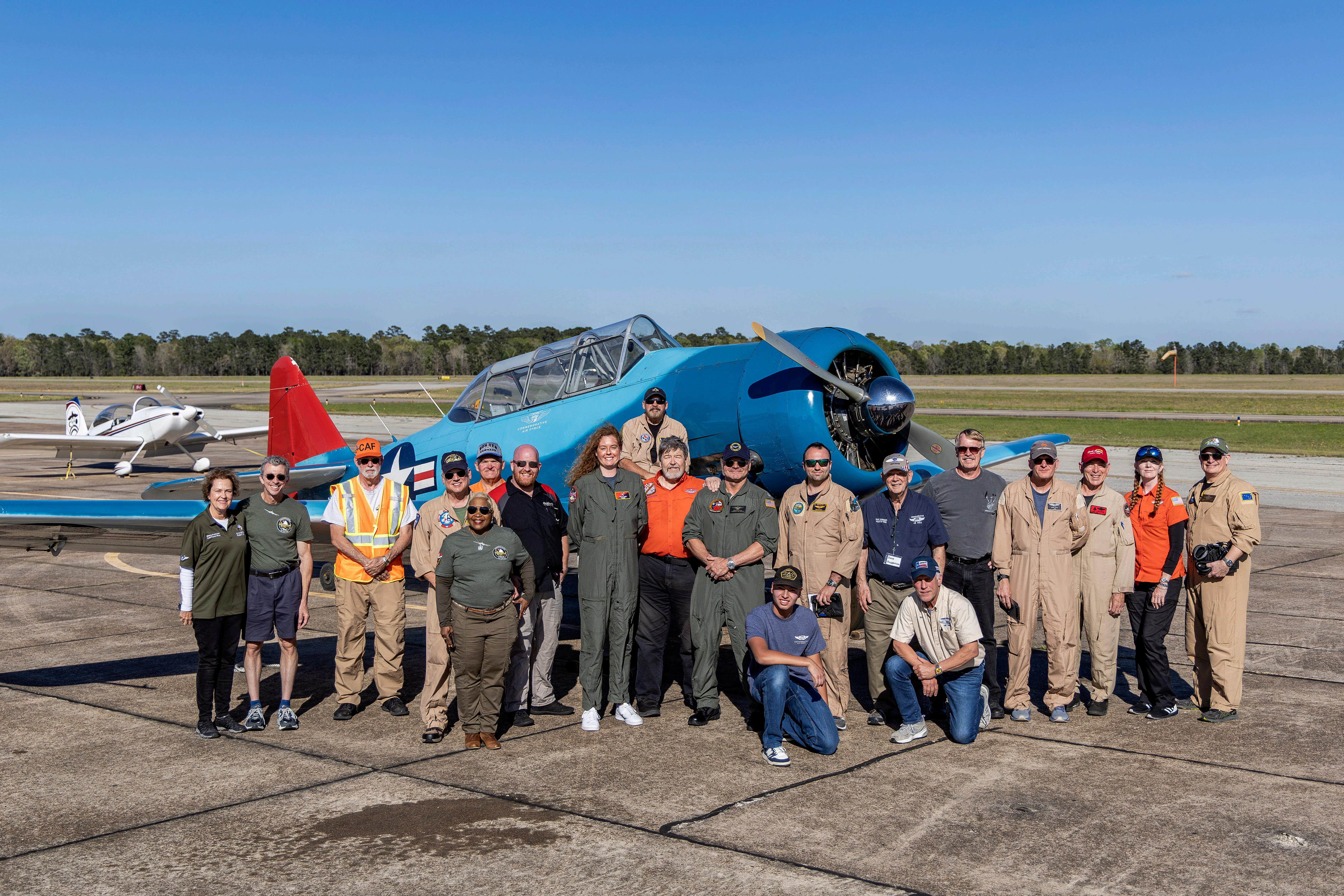
The Commemorative Air Force (CAF) Training Squadron One (TRARON) exists to provide oversight, leadership, and instruction to CAF pilots, ensuring the highest standards and certification in safe formation flying.
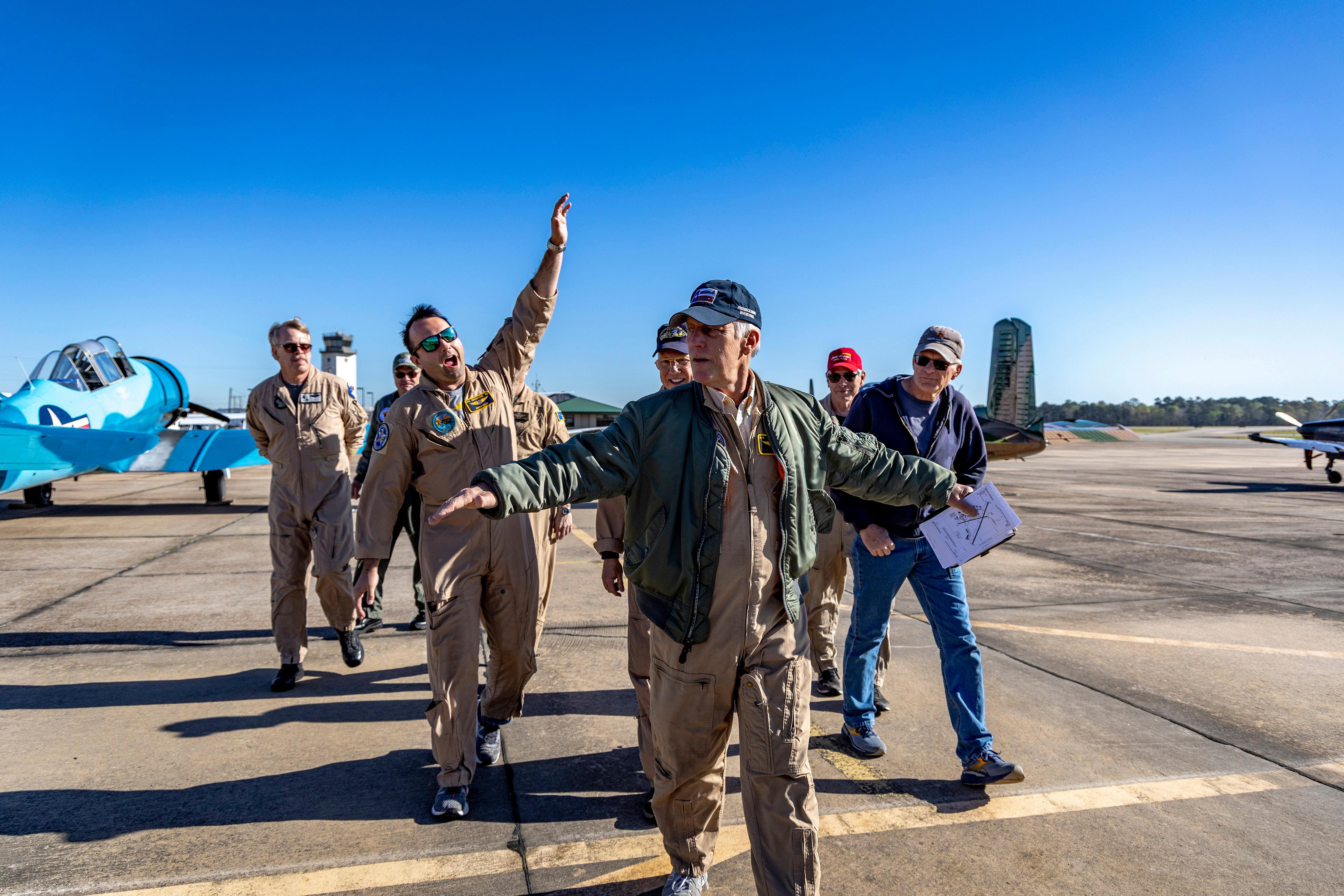
The first Houston-area CAF TRARON clinic of 2026 was held March 12–15 at Conroe-North Houston Regional Airport in Conroe, Texas. The event was made possible through the support of the Gulf Coast Wing and General Aviation Services FBO. Ramp operations were expertly managed by the CAF Marshalling Detachment, led by Dani Plagens, with Marty Huvar, Gary Herzog, and trainee Jim Redd directing aircraft after long flying days.
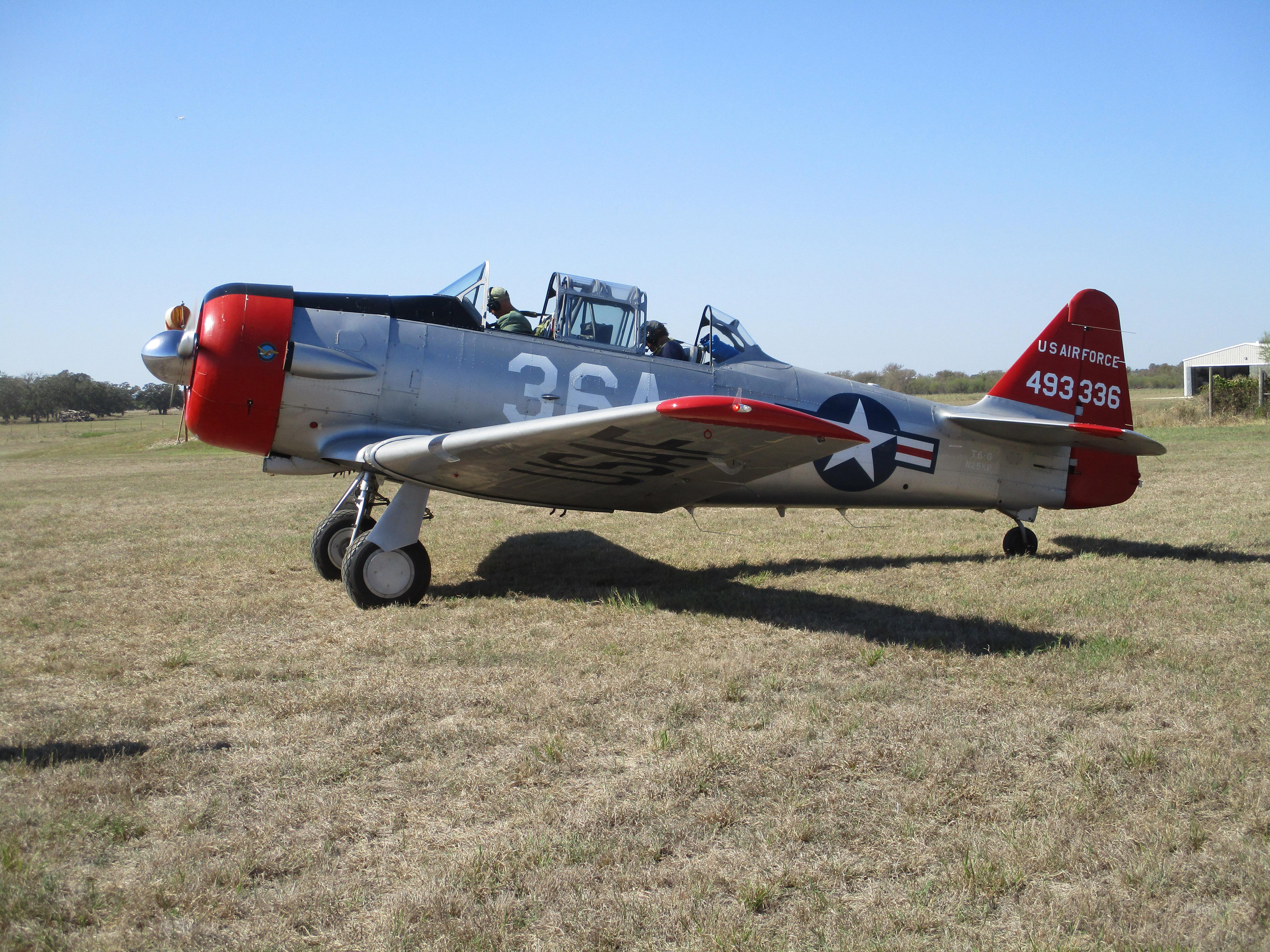
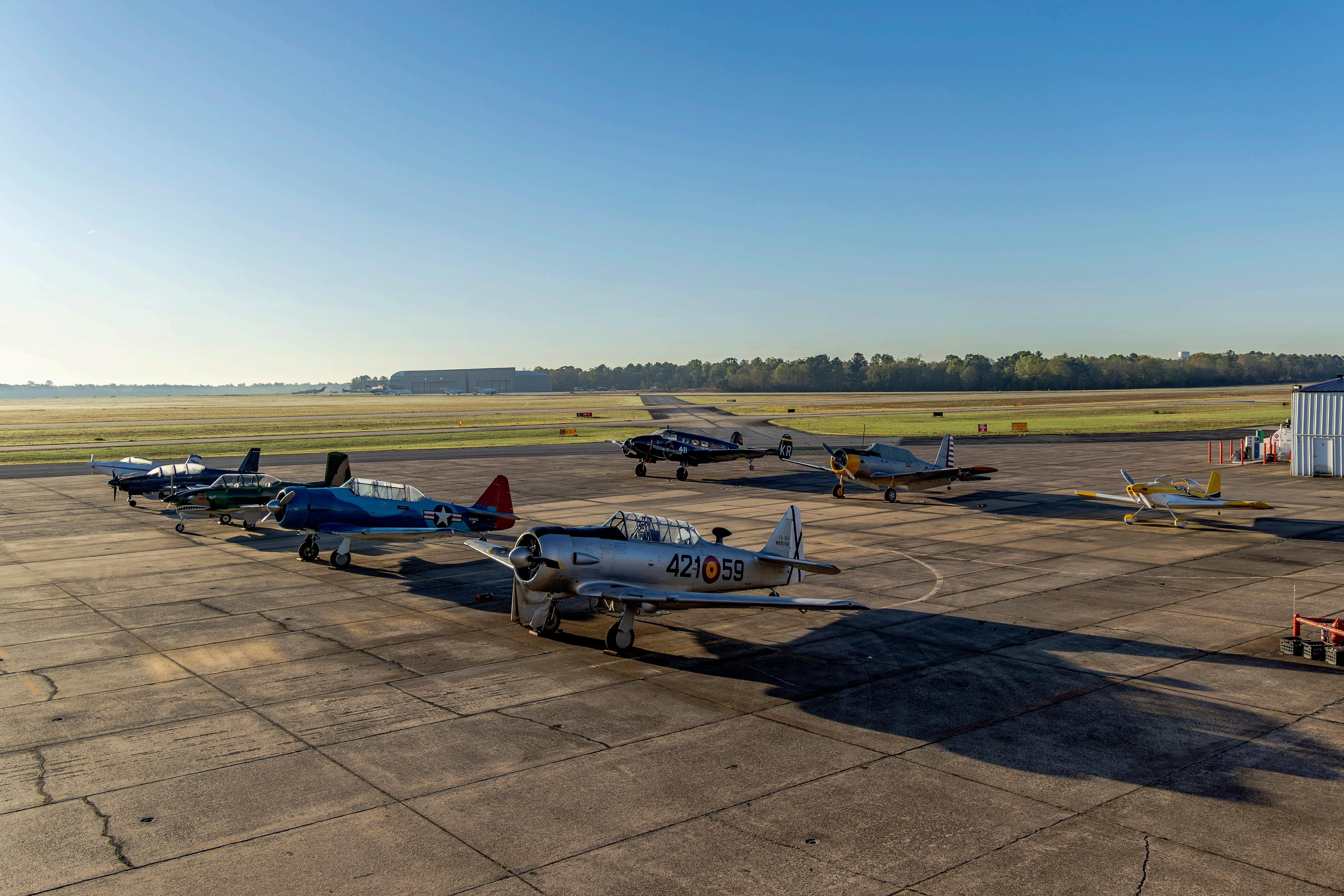
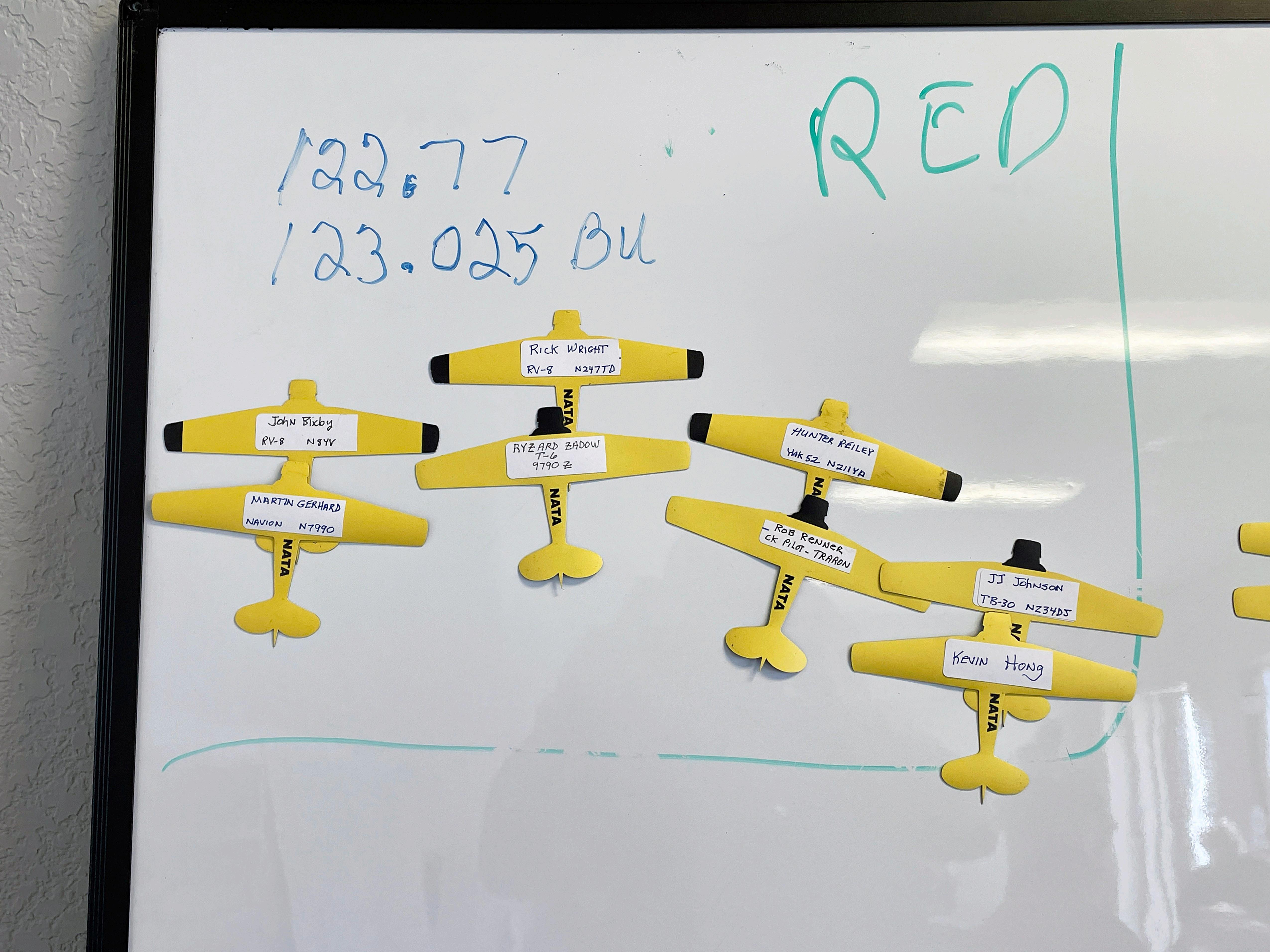
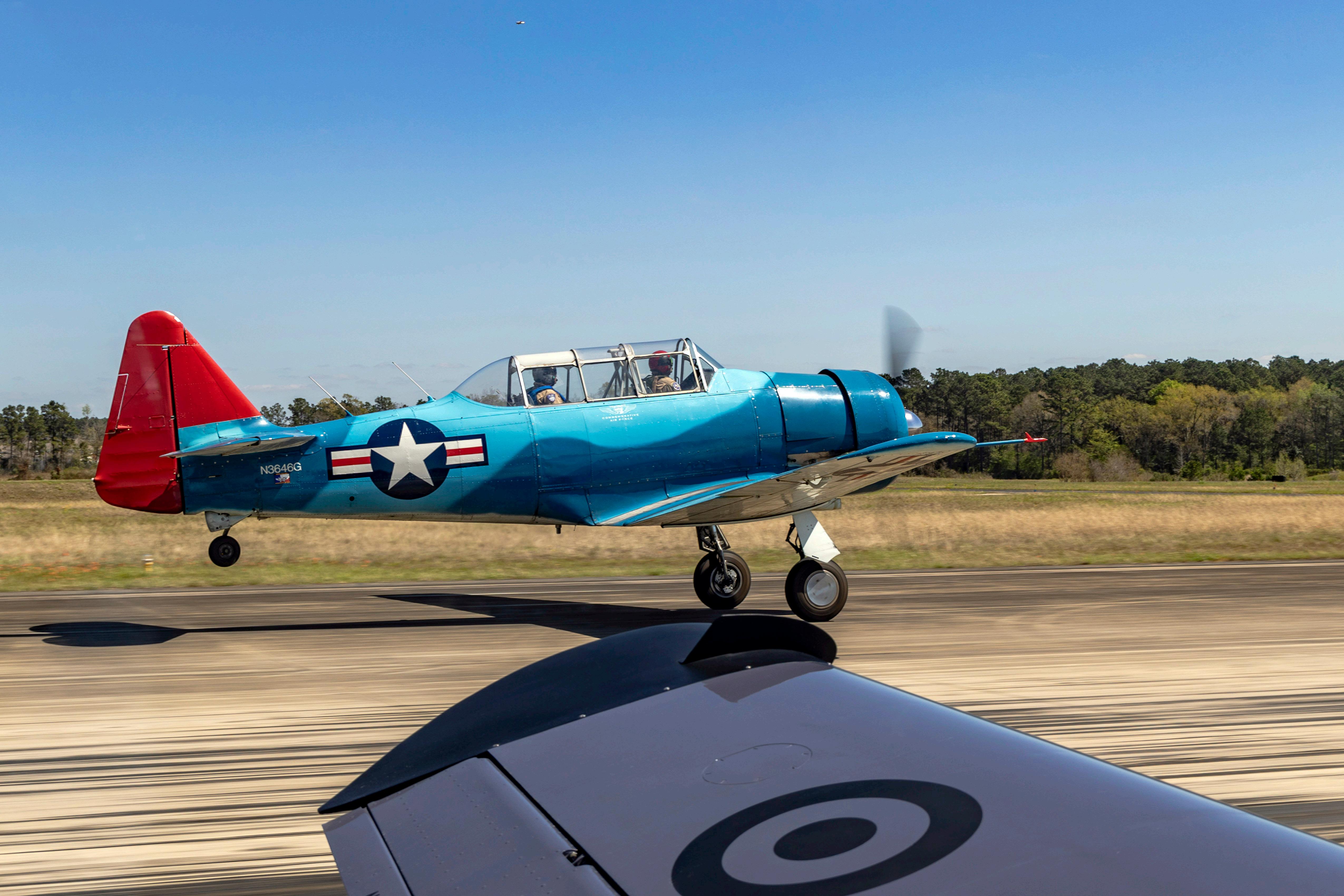
The clinic hosted 11 pilots flying 8 dissimilar aircraft, including two T-6s, a T-34, BT-13, JRB-6, TB 30, and two RV-8s. Pilots traveled from across the country—including Alaska—to instruct and complete check rides. Over the course of the weekend, 31 sorties were flown, supported by 18 additional instructor pilot (IP) backseat flights. Attendees included six trainees (three beginners), check pilots, and experienced leads serving as instructors.
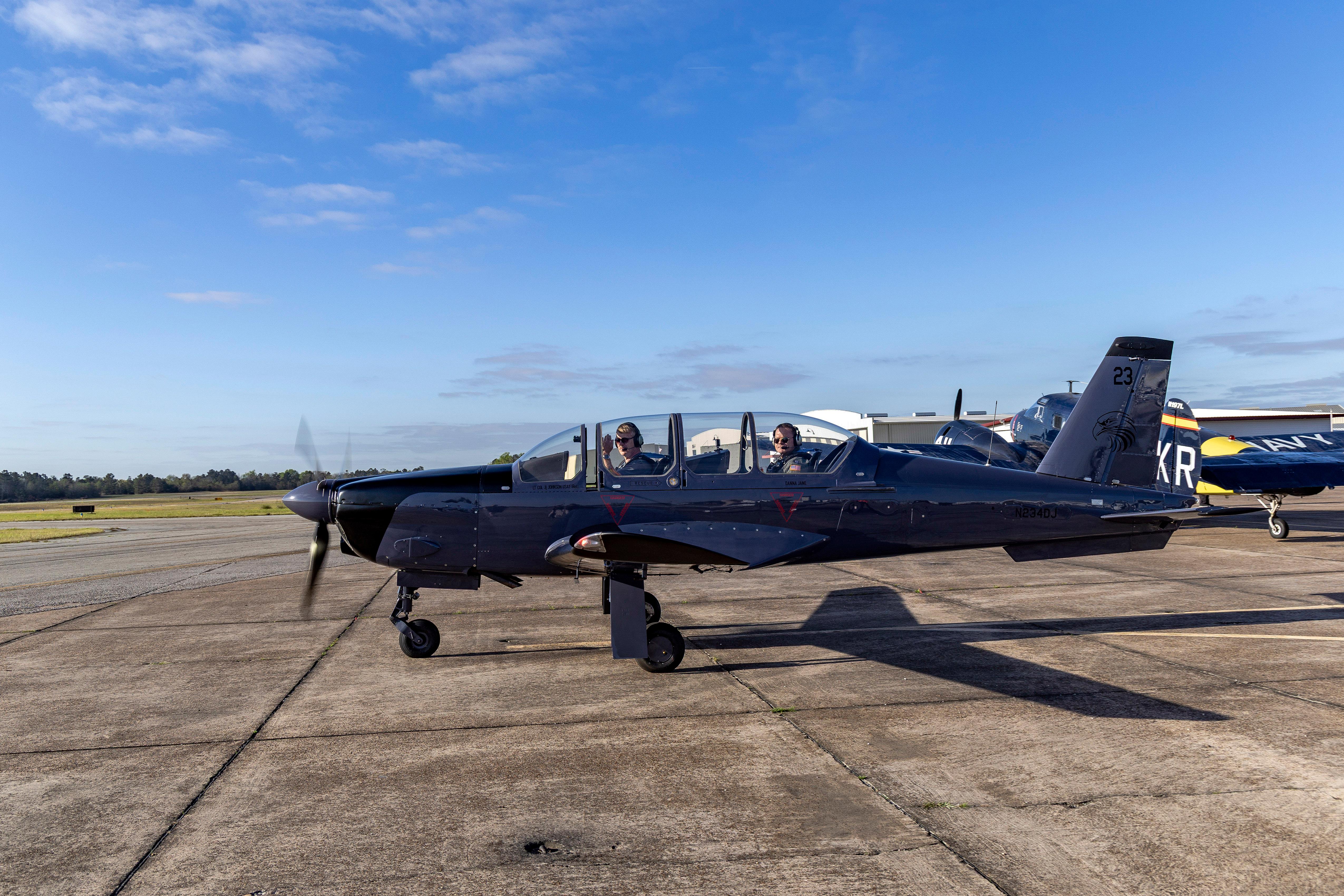
Thursday’s arrival day provided an opportunity to meet pilots and explore the diverse aircraft. One standout was the Socata TB 30 Epsilon, which would later play a key role in the weekend’s flying.
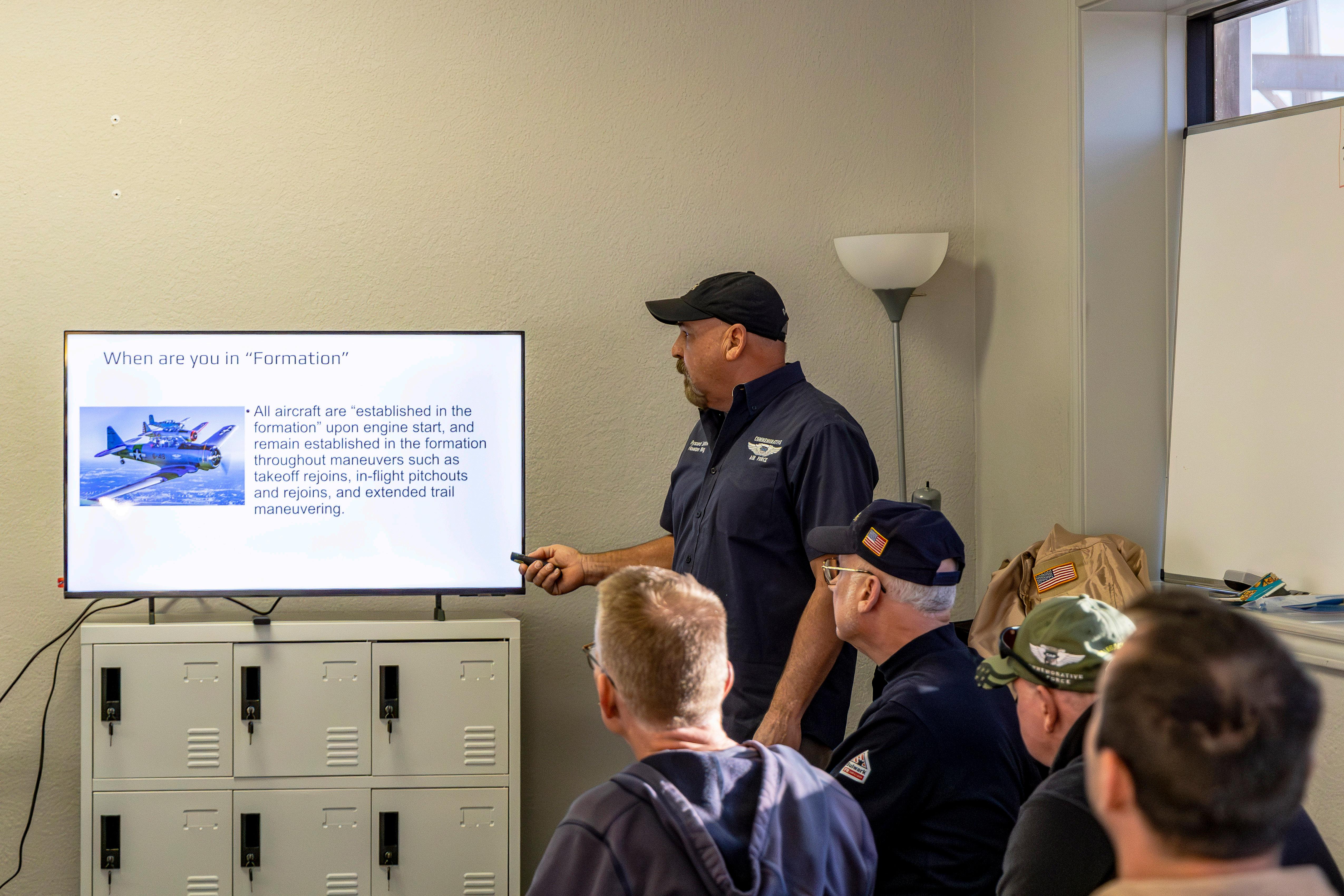
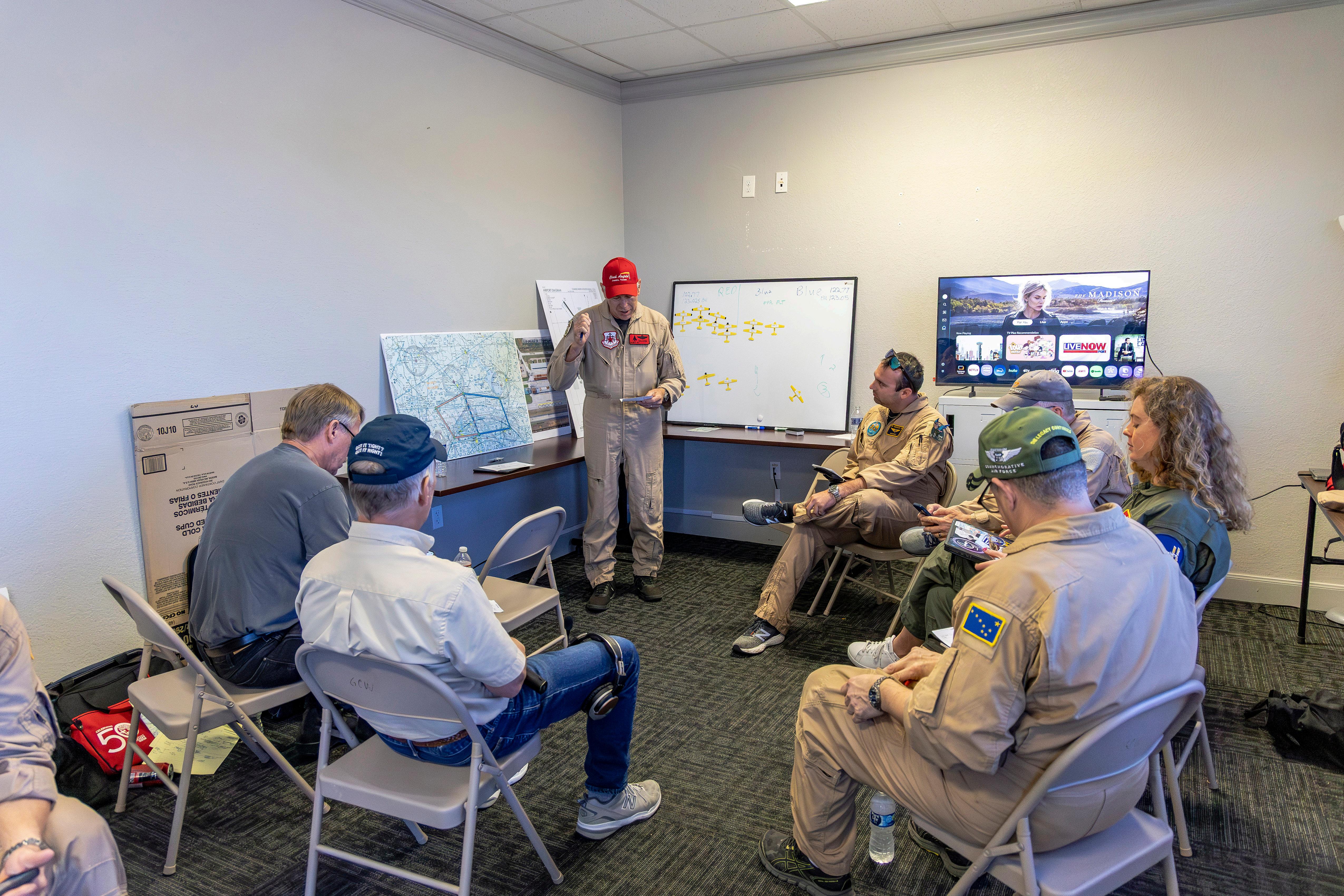
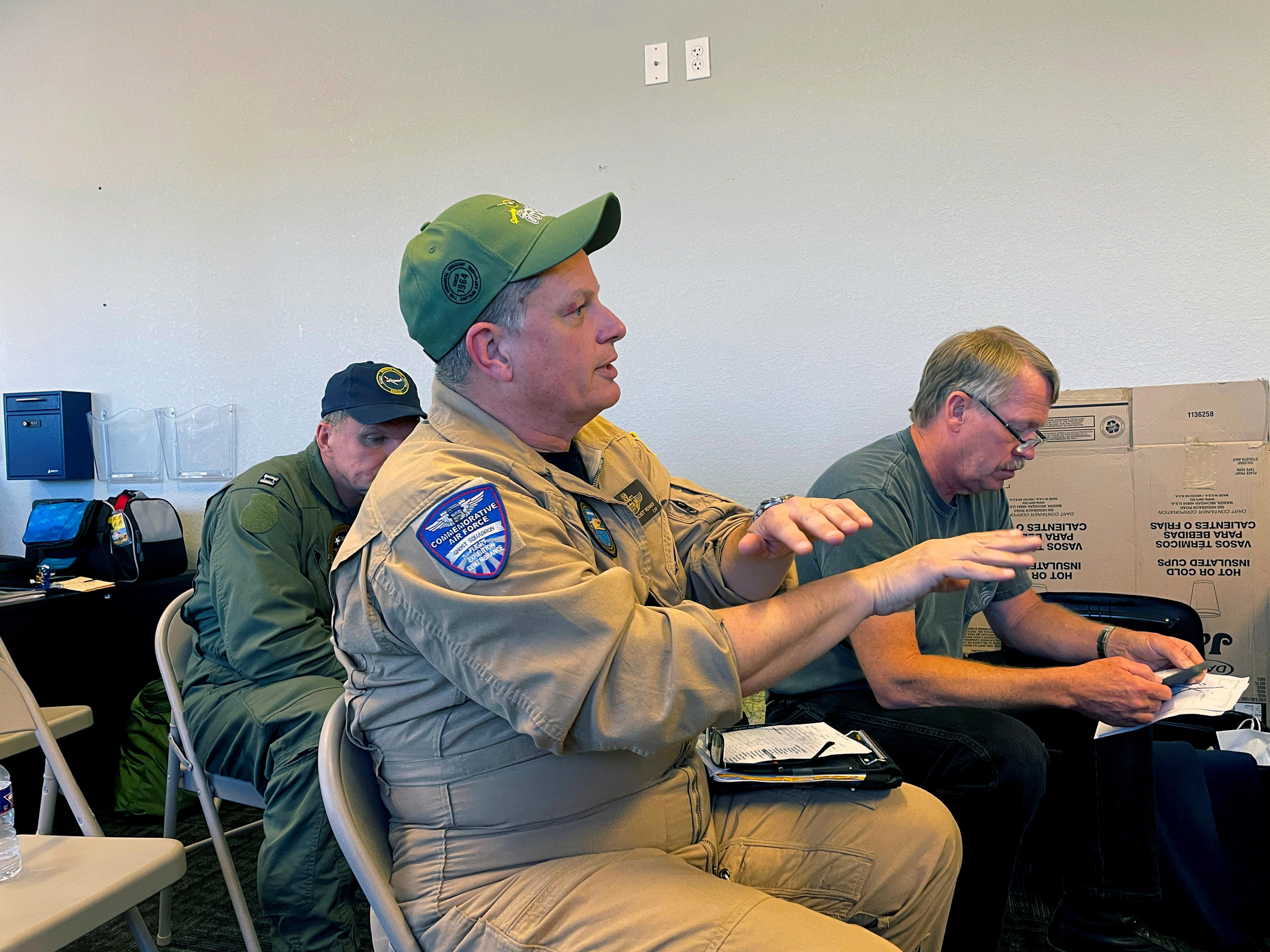
Training began early Friday with classroom instruction covering formation basics and communication procedures. Ryszard Zadow led the safety briefing, coordinating closely with ATC on airspace, altitudes, and contingencies. Dave Guggemos and Nathan Harnegal organized the sortie schedule, followed by detailed pre-flight briefings conducted by each flight group. The day saw 15 sorties launched, with an additional 16 on Saturday.
Each flight was followed by thorough debriefs emphasizing honest evaluation and safety. These sessions reinforced a critical principle of formation flying: setting ego aside to openly discuss performance, identify mistakes, and improve as a team.
Saturday provided a highlight experience: a backseat ride in the TB 30 Epsilon during a four-ship formation recommendation (REC) ride. The formation included aircraft flown by Hunter Reiley (T-6) with
Ryszard Zadow observing in back, Rick “Seldom” Wright and Rob “Cricket” Renner observing in back (RV-8), and John Bixby with Martin Gerhard (RV-8), JJ Johnson and me in the back (TB 30).
Flying with JJ Johnson, a former U.S. Air Force test and fighter pilot, added a unique dimension to the sortie. After reviewing emergency procedures, the flight launched in two elements and joined into formation under clear skies.
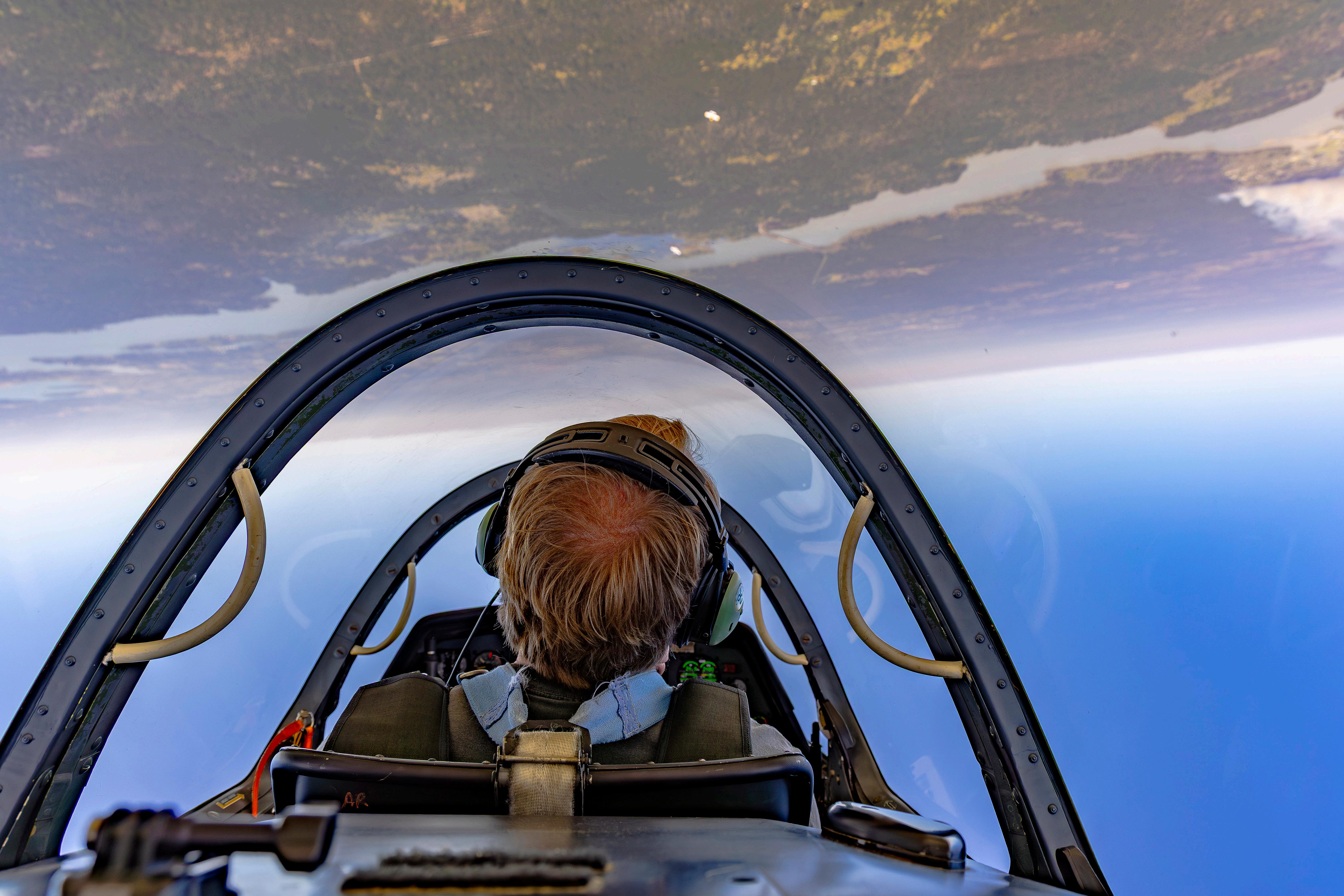
During the flight, pilots practiced transitions, lead changes, and emergency procedures—including handling a “blind” call, where a pilot loses visual contact with the formation. I had an interesting perspective since JJ and I were the lost pilot. I found it fascinating to watch and listen to the leads instruct us back to the formation. The exercise demonstrated the importance of communication, discipline, and situational awareness as leads guided aircraft safely back into position.
The sortie also highlighted the physical demands of high-performance flying, particularly during maneuvers such as inverted flight. It was both an educational and exhilarating experience.
Post-flight debriefs confirmed successful recommendation rides for several pilots, advancing them toward higher formation qualifications. Sunday’s schedule was ultimately canceled due to weather, postponing planned check rides.
According to the TRARON coordinator, Dave Guggemos, the clinic curriculum emphasized two-ship operations supported by instructor pilots. Training included beginner students, pilots working toward lead qualifications, and experienced aviators renewing expired credentials.
The clinic proved highly valuable, reinforcing safety, improving pilot proficiency, and preparing participants for formation flying in airshow environments. The presence of pilots with military experience added significant depth to the training.
Overall, the success of the Houston TRARON clinic highlights the value of expanding regional training opportunities. Whether pilots are earning FAST cards for the first time or advancing to lead qualifications, the program plays a critical role in promoting safety and excellence in formation flying.
Kevin Hong
Kevin Hong
Kevin Hong
Kevin Hong
Kevin Hong
Kevin Hong
Kevin Hong
Kevin Hong
Kevin Hong
Kevin Hong
HOW I GOT THE SHOT
Photo by Scott Slingsby
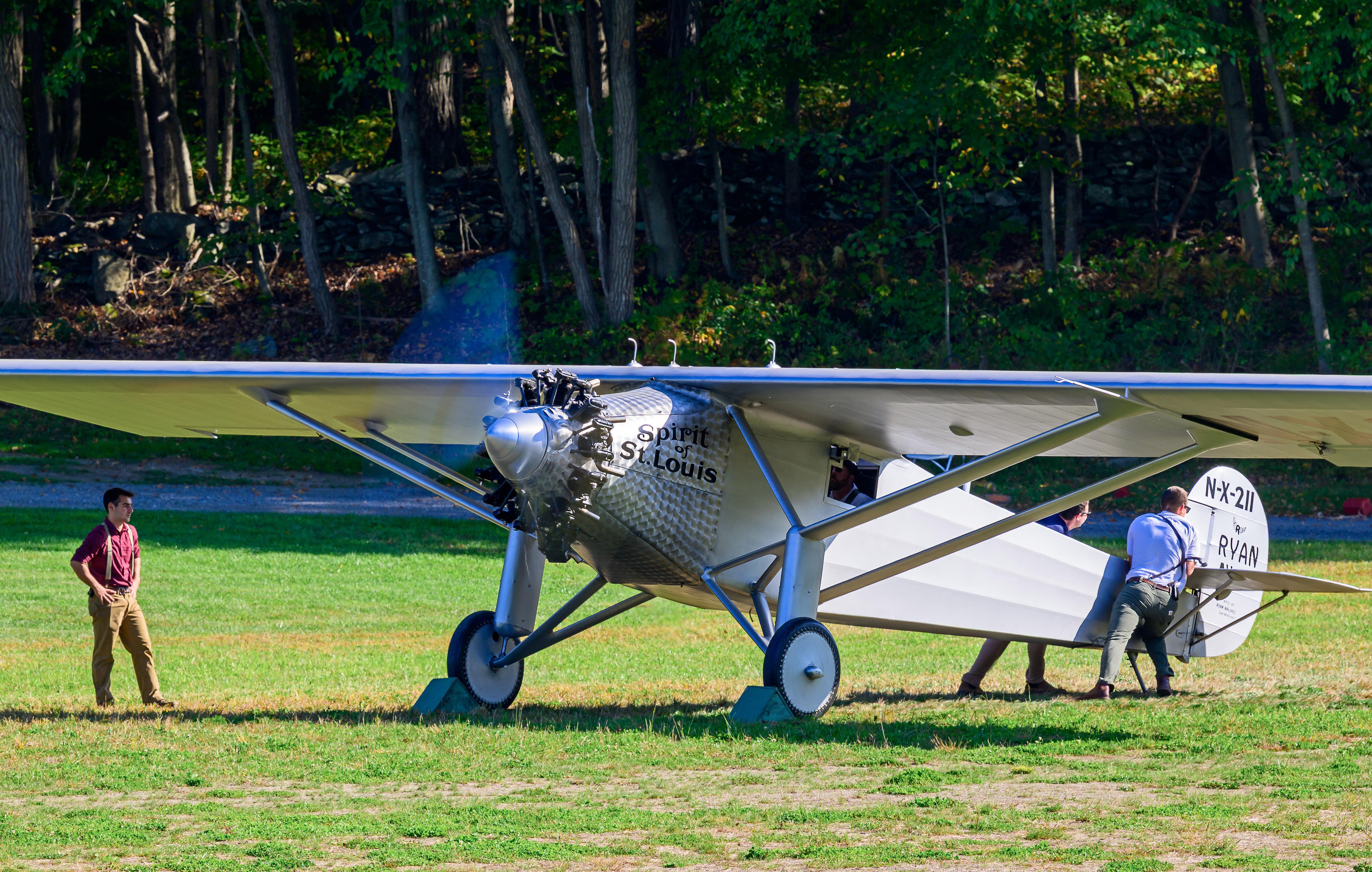
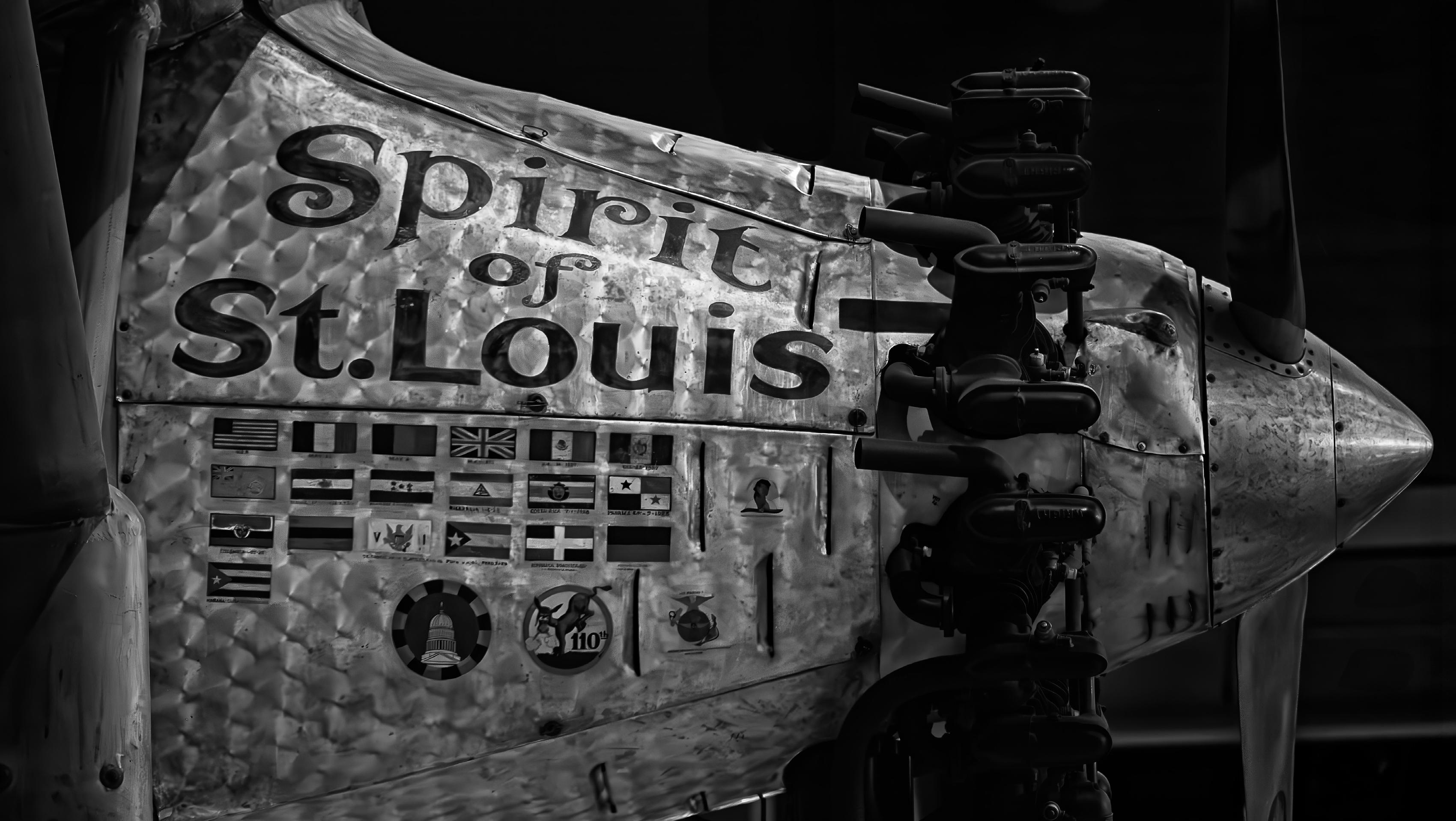
The iconic nose art on the Spirit of St. Louis as it hangs today in the newly renovated National Air and Space Museum in Washington, D.C. Shot with a Nikon Z6II with a 28-400 lens. Converted to black and white with Lightroom and Silver Efex Pro.
Camera: Nikon Z6 II Lens: Nikkor Z 28-400mm f/4-8 VR ISO: 10,000 Shutter speed: 1/250 Exposure: f/8
Adobe Photoshop and Lightroom classic
PHOTO TIPS - REFLECTIONS
by Larry Grace / ISAP President
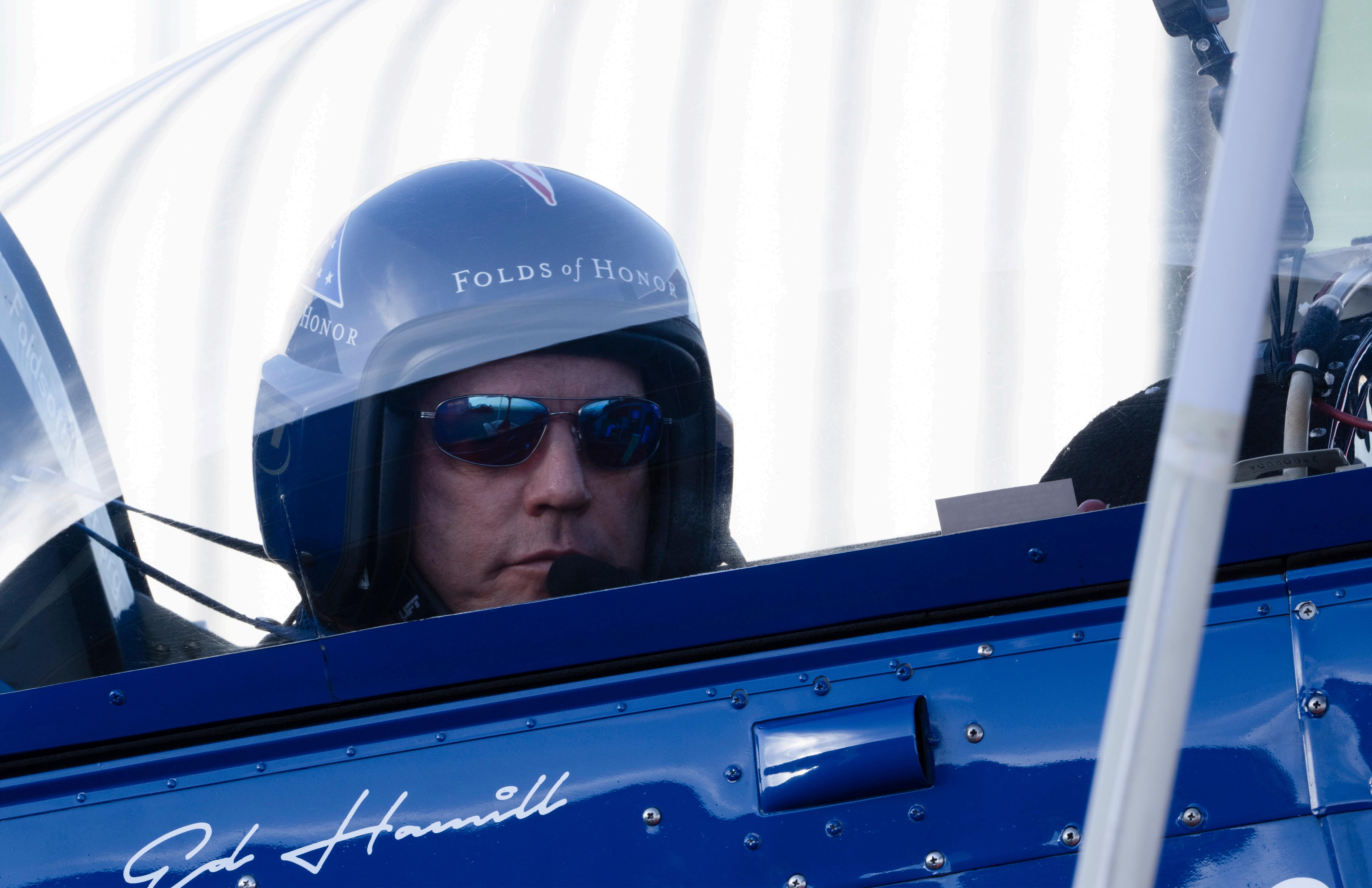
Photoshop/Lightroom Tip: Removing Reflections from Cockpit Images
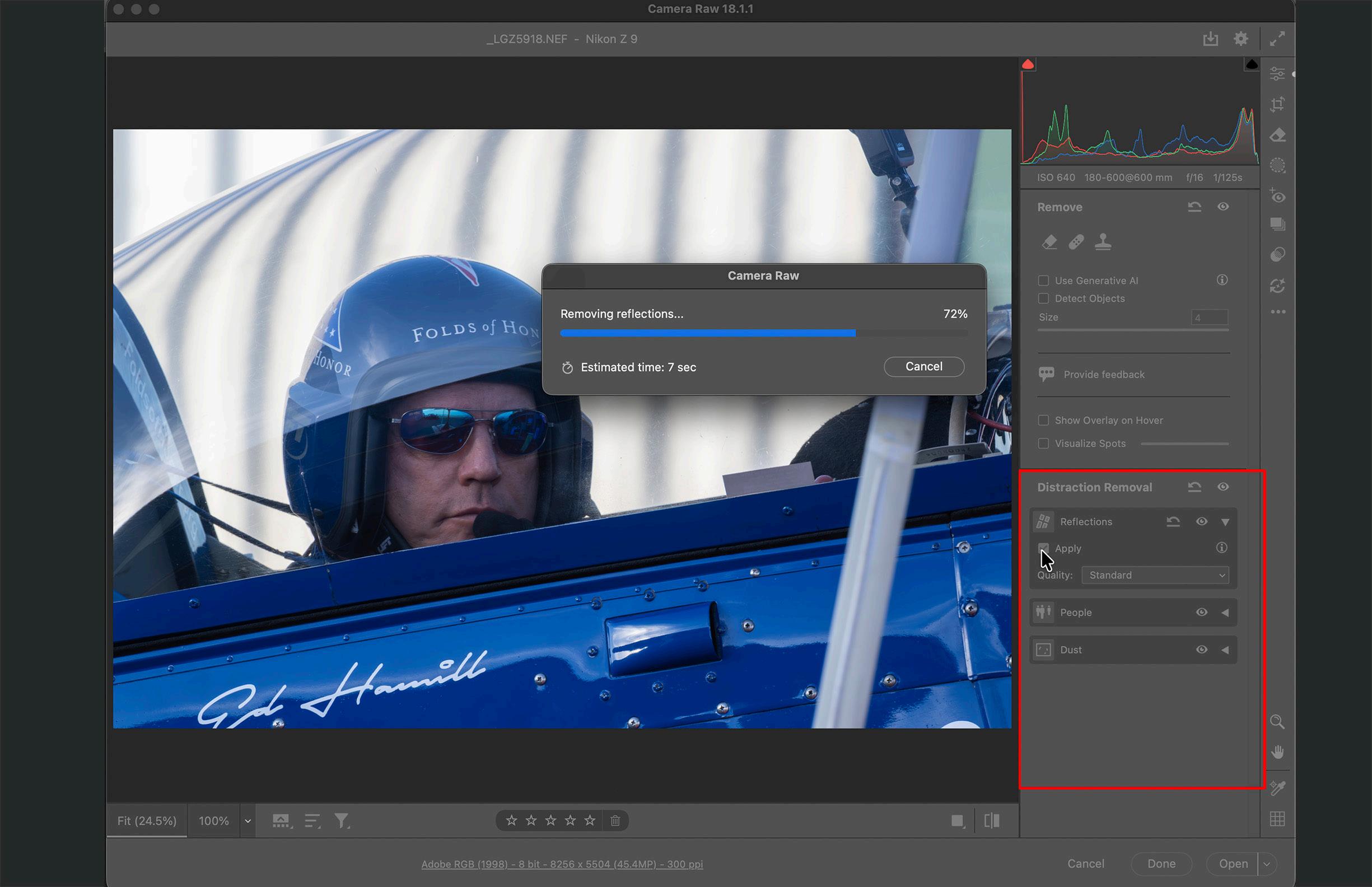
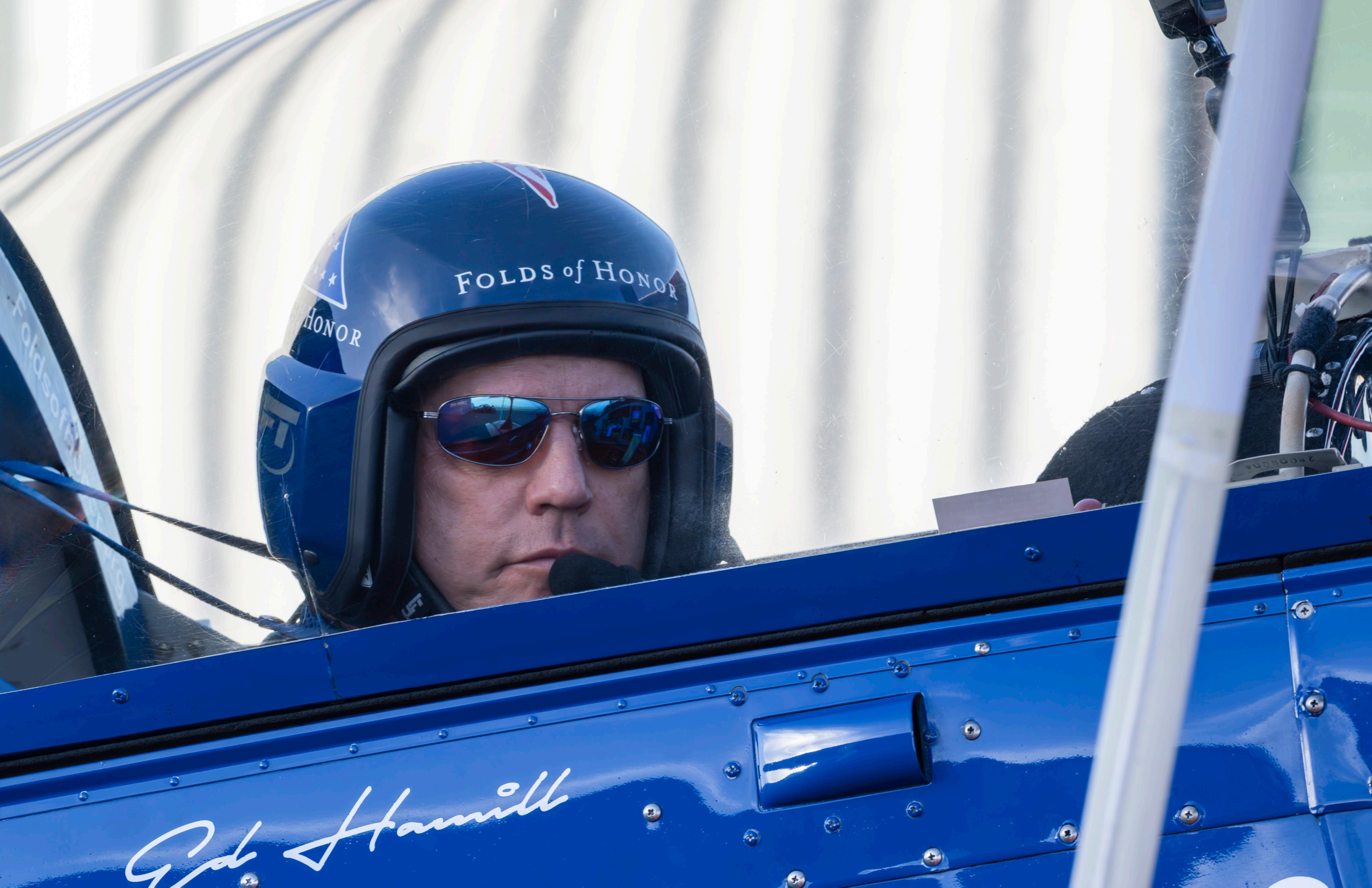
When photographing an up-close shot of a cockpit with the canopy closed, reflections on the canopy can hinder the clarity of the image. While a polarizer can effectively eliminate reflections, it may not always be feasible during an airshow due to time constraints or the risk of missing the moment.
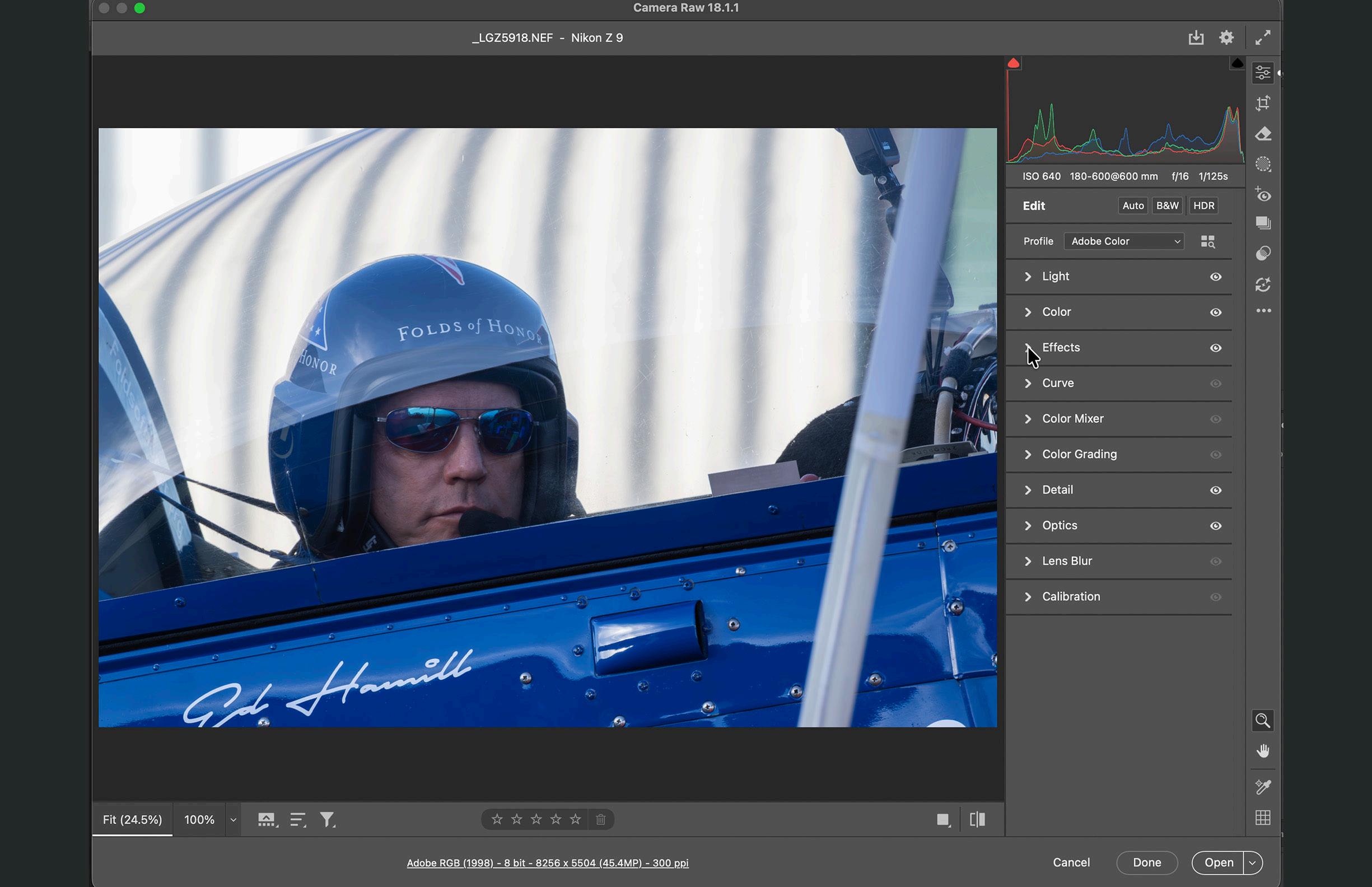
Fortunately, modern technology offers a solution. Camera Raw, available in Lightroom and Photoshop, provides a powerful tool to remove reflections from images. Camera RAW 18.2.2 in Photoshop 2025 & 2026, this AI-based feature is particularly efficient for complex window reflections.
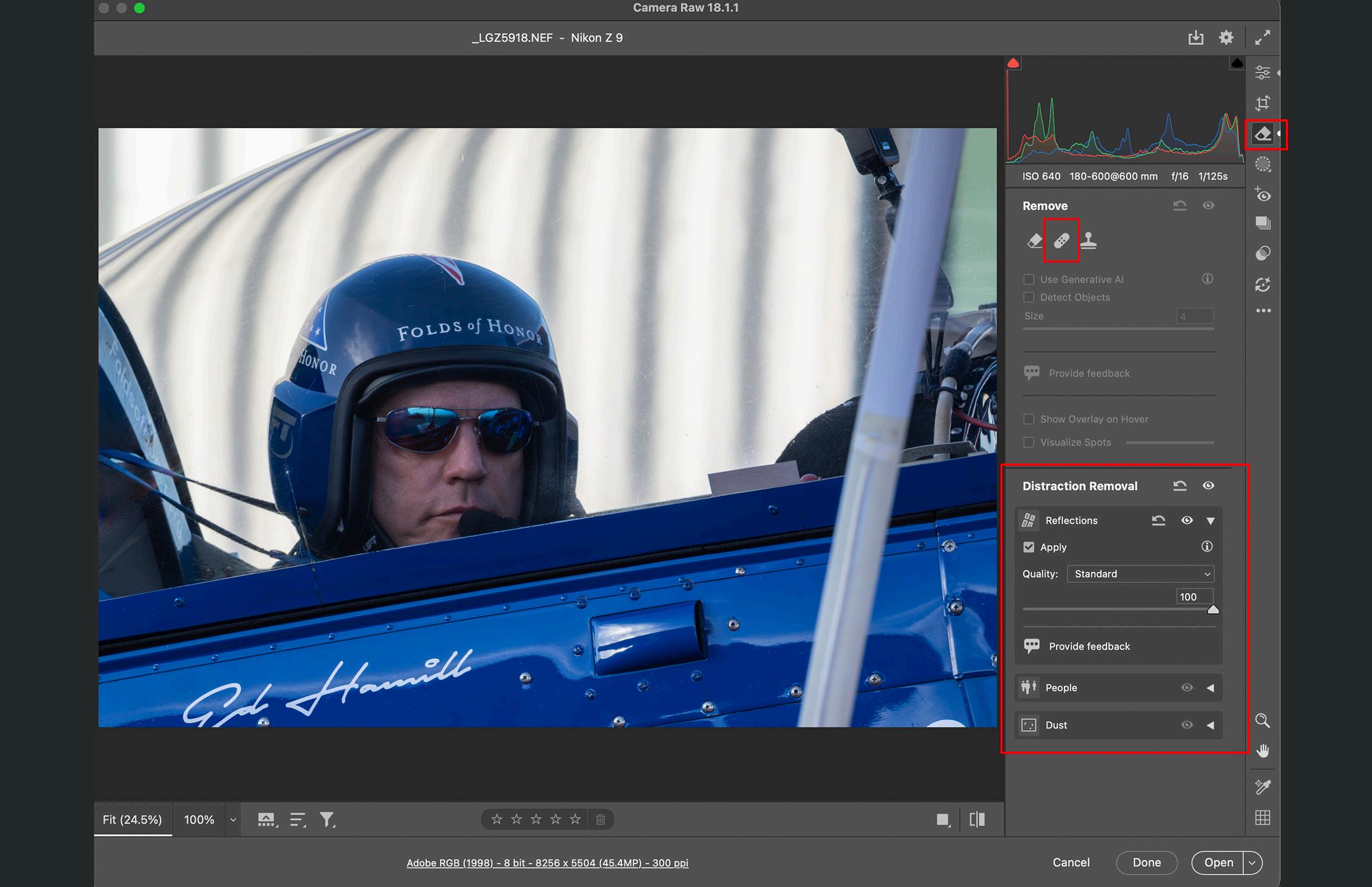
How to Use the Camera Raw Filter:
1. Open your photo in Photoshop.
2. Go to Filter > Camera Raw Filter.
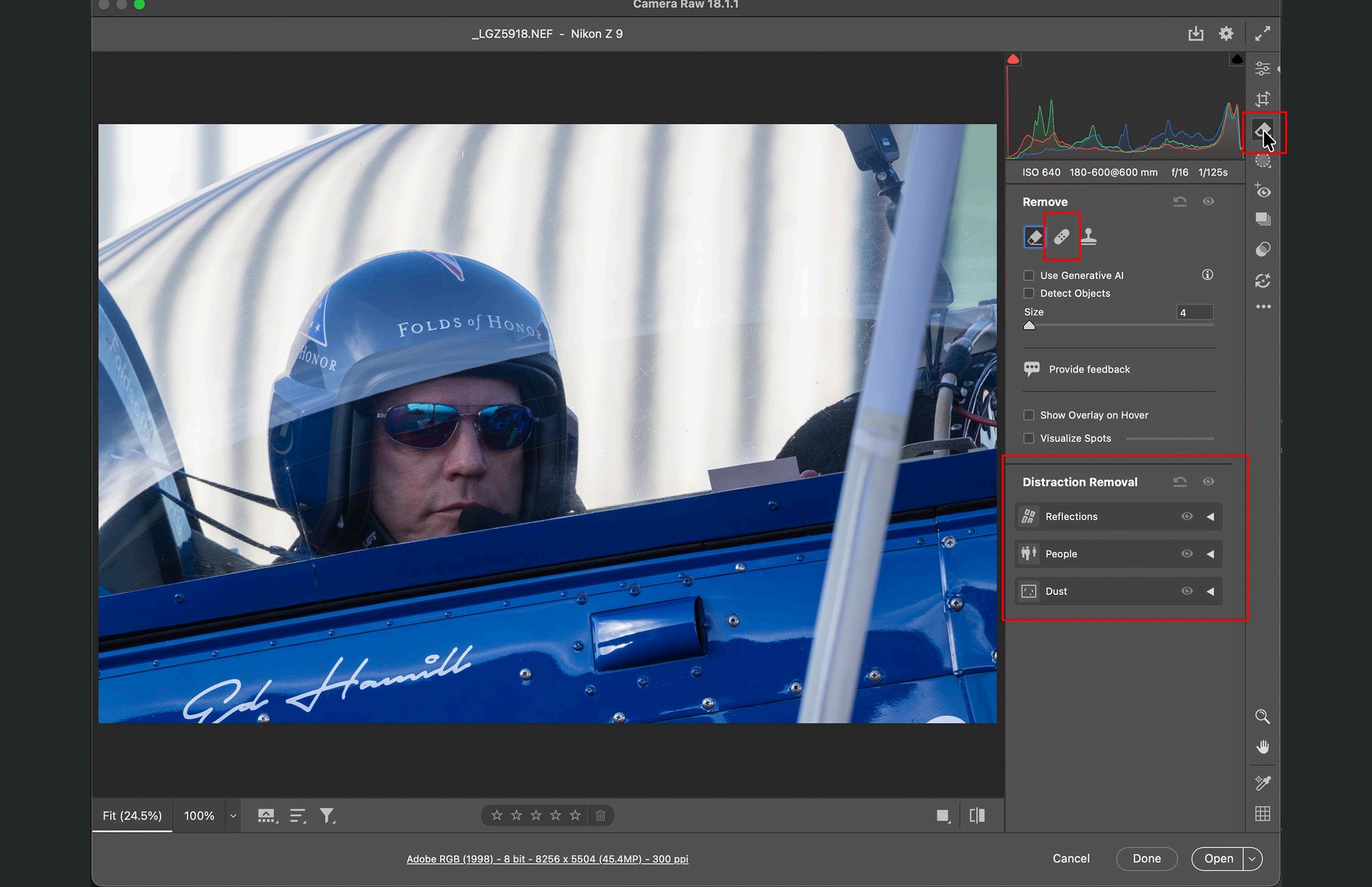
3. Select the Remove Tool (icon resembling a bandage).
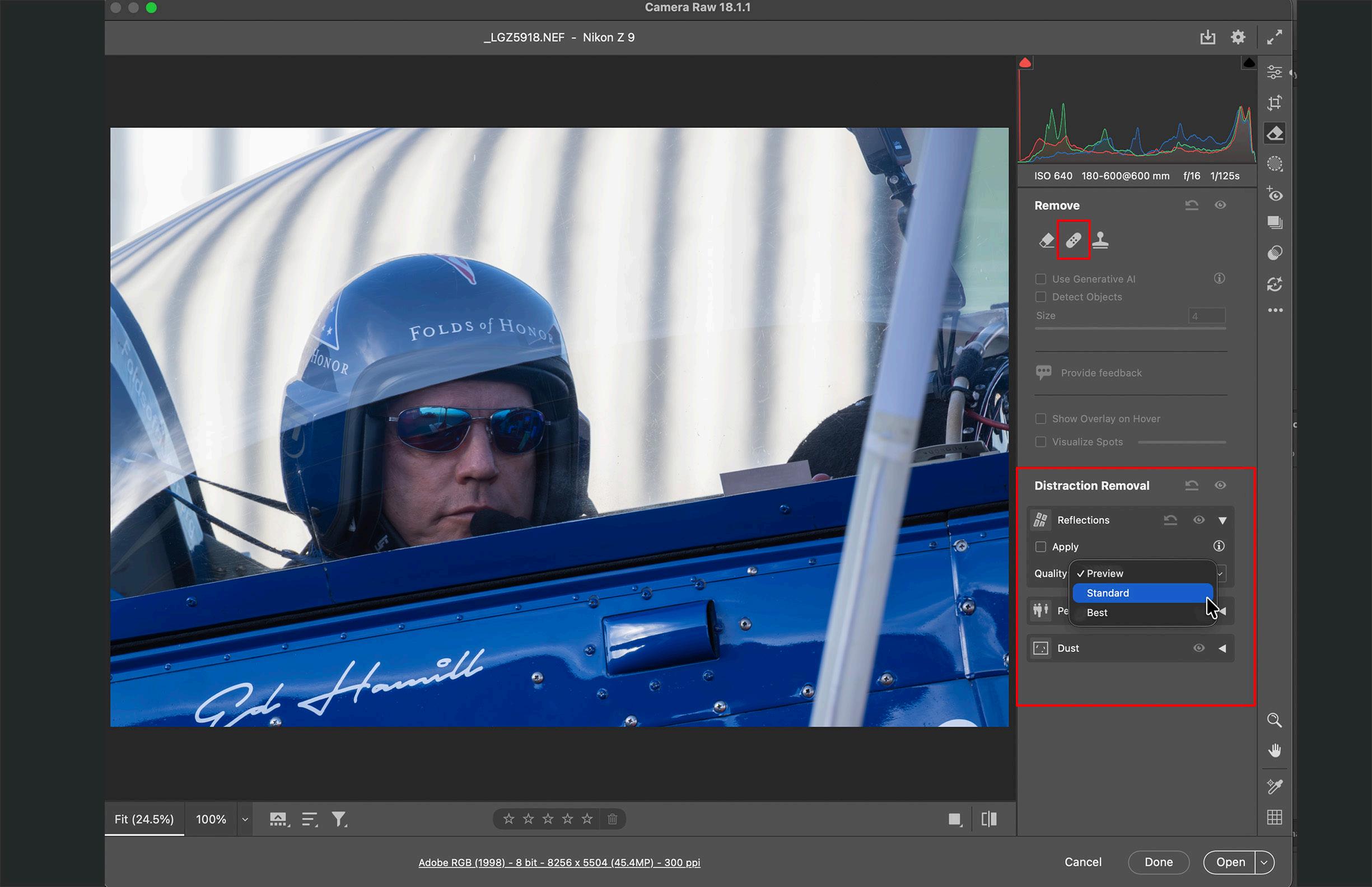
4. In the panel, locate Distraction Removal > Reflections.
5. Click the Apply button. Photoshop will analyze and remove the reflection.
6. Adjust the Intensity slider to modify the strength of the removal if necessary.
If the tool is not visible, ensure that the feature is activated. In Camera Raw, navigate to the top-right settings > Technology Previews > and enable the feature. While the process may take some time, the results are well worth the effort. Experiment with this technique on your images that you may have deemed lost causes. We welcome your feedback. For more photography tips, please email us or comment on our members’ Facebook page.
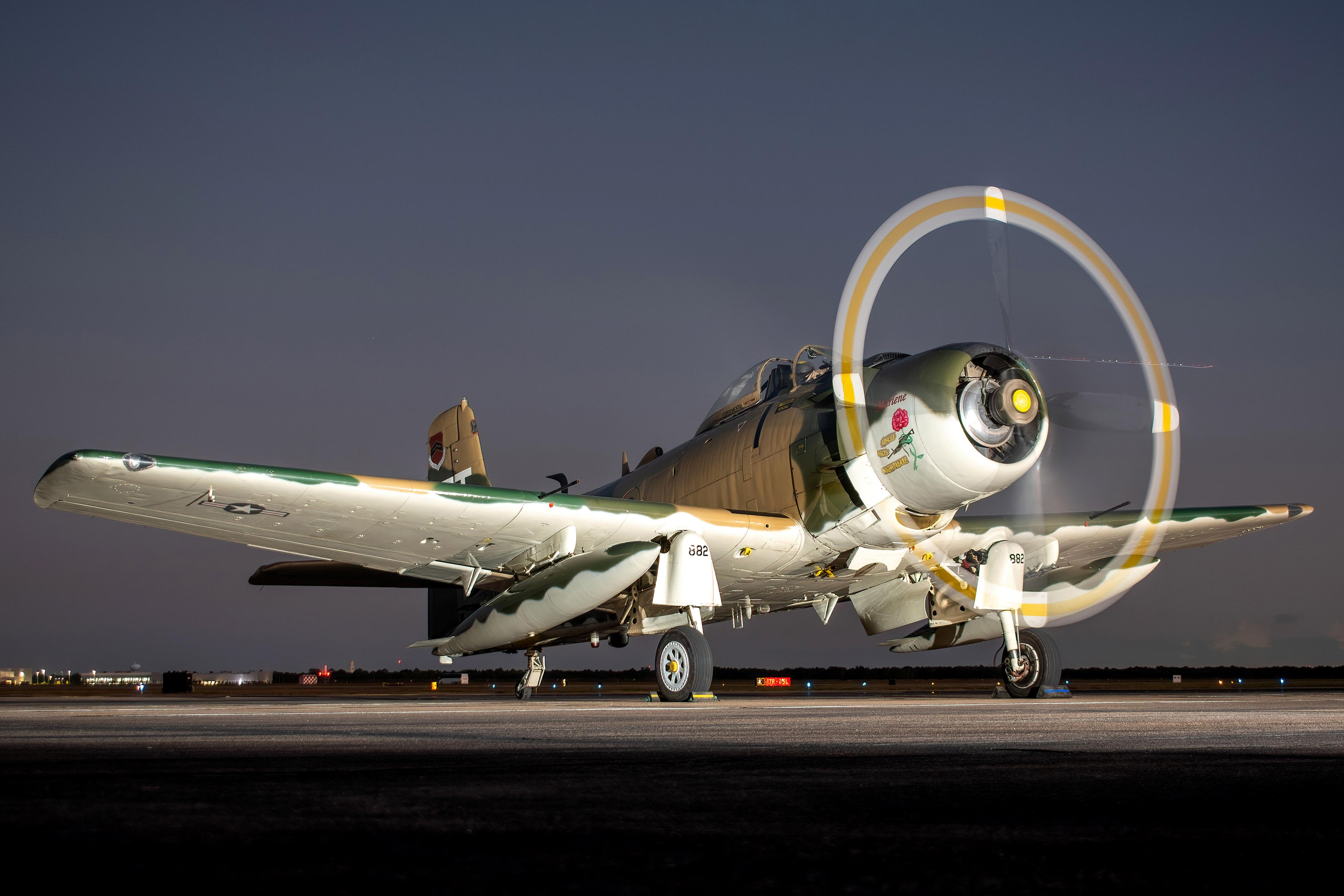
Vietnam War Flight Museum’s A-1D Skyraider during the 2024 Wings over Houston night shoot. 4 second exposure.
Brian La Fetra
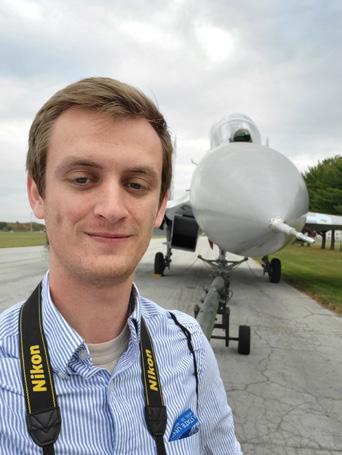
I’ve been passionate about aviation as long as I can remember. My first airshow was at age three, and it hasn’t stopped since. My dad took me all over California to different airshows and museums as I grew up, including Edwards Air Force Base, Castle Air Museum, and our perennial favorite, Planes of Fame in Chino. We even did a two-week trip in 2011 to Oshkosh, the Air Force Museum in Dayton, and the National Air and Space Museum in Washington, DC. While in college in Arizona several years later, I decided to pick up my own DSLR after playing around with my father’s during trips back home. After shooting two airshows, in two different states, six hours apart, in a 30-hour timespan, I was hooked. Six years later, I’ve traveled coast to coast shooting almost anything that flies. My preferred subjects are Cold War-era military aircraft, but truly anything in the sky, from WWI biplanes all the way to 5th generation fighters, is something I’m interested in. I also dabble in landscapes and more recently automotive photography as well. Very occasionally, I’ll toss some vintage Nikon glass on and play with macro photography.
I’m entirely self-taught and still use the Nikon D3400 body I learned on, with the Sigma 150 - 600mm Contemporary having been my main airshow lens for the last three seasons. 18 - 55mm and 70300mm lenses are used mainly for non-flying photos. About three years ago I started down the film path as well, starting with a 1980’s vintage Polaroid SLR 680SE I acquired many years prior but had never tested. From there I inherited several 35mm and one medium
format camera from my grandparents, and I learned a whole new type of photography. Now whenever I travel to a big event, I usually take at least one film camera along with the digital. My preferred SLR is a Minolta SRT-101, almost always with an MC Rokkor 58mm F/1.4 mounted on it. Distance shots use a MC Tele Rokkor 200mm f/4.5 and 2x extender. The 1938 Kodak Senior Six-20 is my favorite to use though, just because of how unique an experience it is to shoot. Metering is all handheld, focusing is a guesstimate formed from pacing out the distance (if able) and reading a table in the instruction booklet, and framing uses a tiny “viewfinder” stuck on top of the camera. I use it almost exclusively for vintage subjects, usually loaded with Ilford XP-2 black and white film. Utilizing such a wide variety of cameras, from fully automated digital to 100% manual film, really helps me learn not just how to click a shutter, but how to meter, how to frame, and how to make every shot count.
I shoot exclusively RAW and use Lightroom Creative Cloud with Topaz Denoise to process the digital shots. Film gets shipped off for development and scanning, though I now have the ability to scan 35mm slides and negatives if I so choose.
Throughout the year you can find me at airshows and fly-ins throughout west-central Ohio and the bigger tri-state area. I also am a volunteer event judge and photographer with the National Intercollegiate Flying Association, an organization dedicated to the advancement of collegiate aviation, and have done photography work with the Grimes Flying Lab Foundation and National Museum of the United States Air Force. I’m excited to showcase, via ISAP, some of the smaller, more local aspects of the aviation community, as well as some of the organizations I’ve been lucky enough to spend time with over the last couple years.
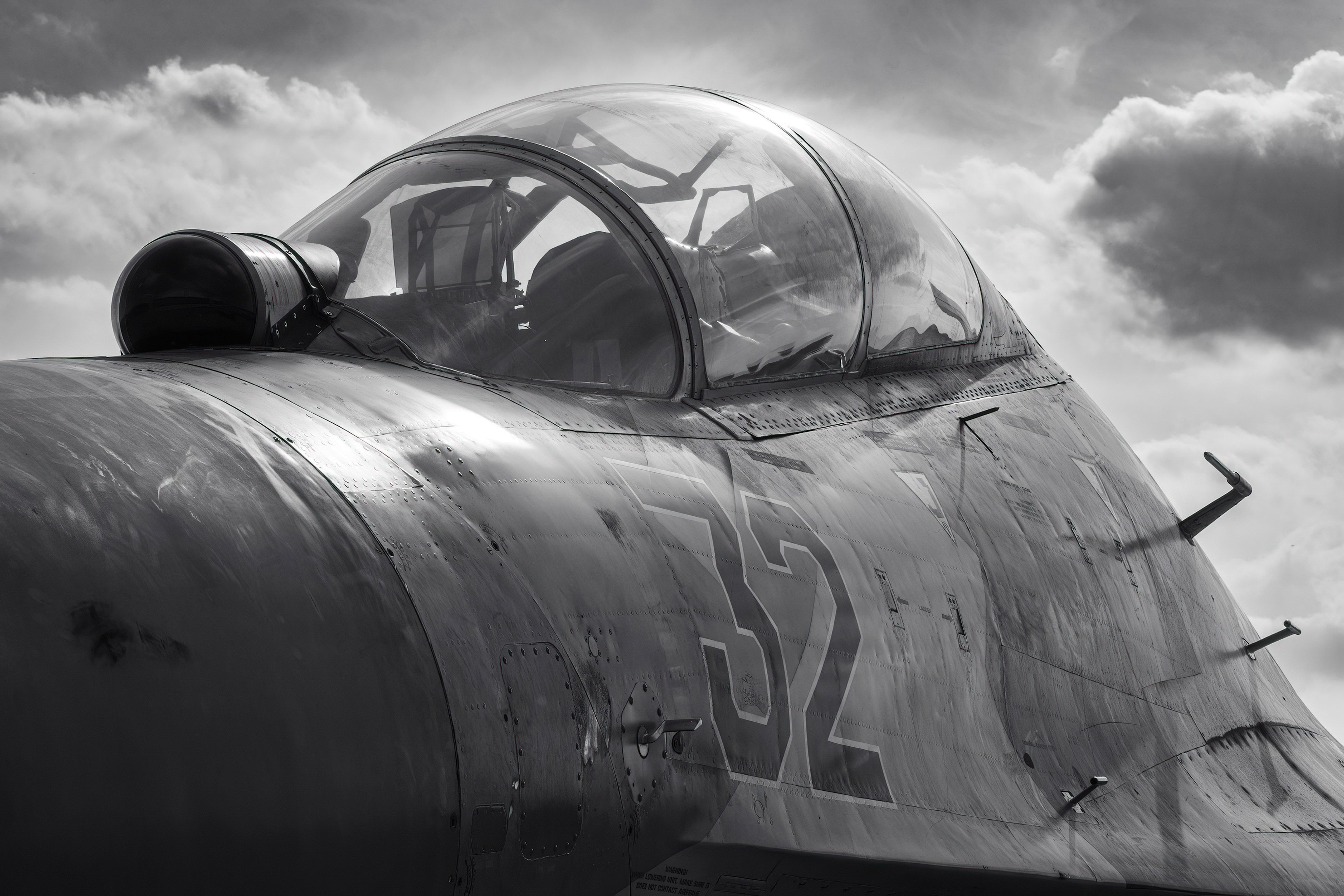
Su-27UB Flanker at the National Museum of the US Air Force.
Brian La Fetra
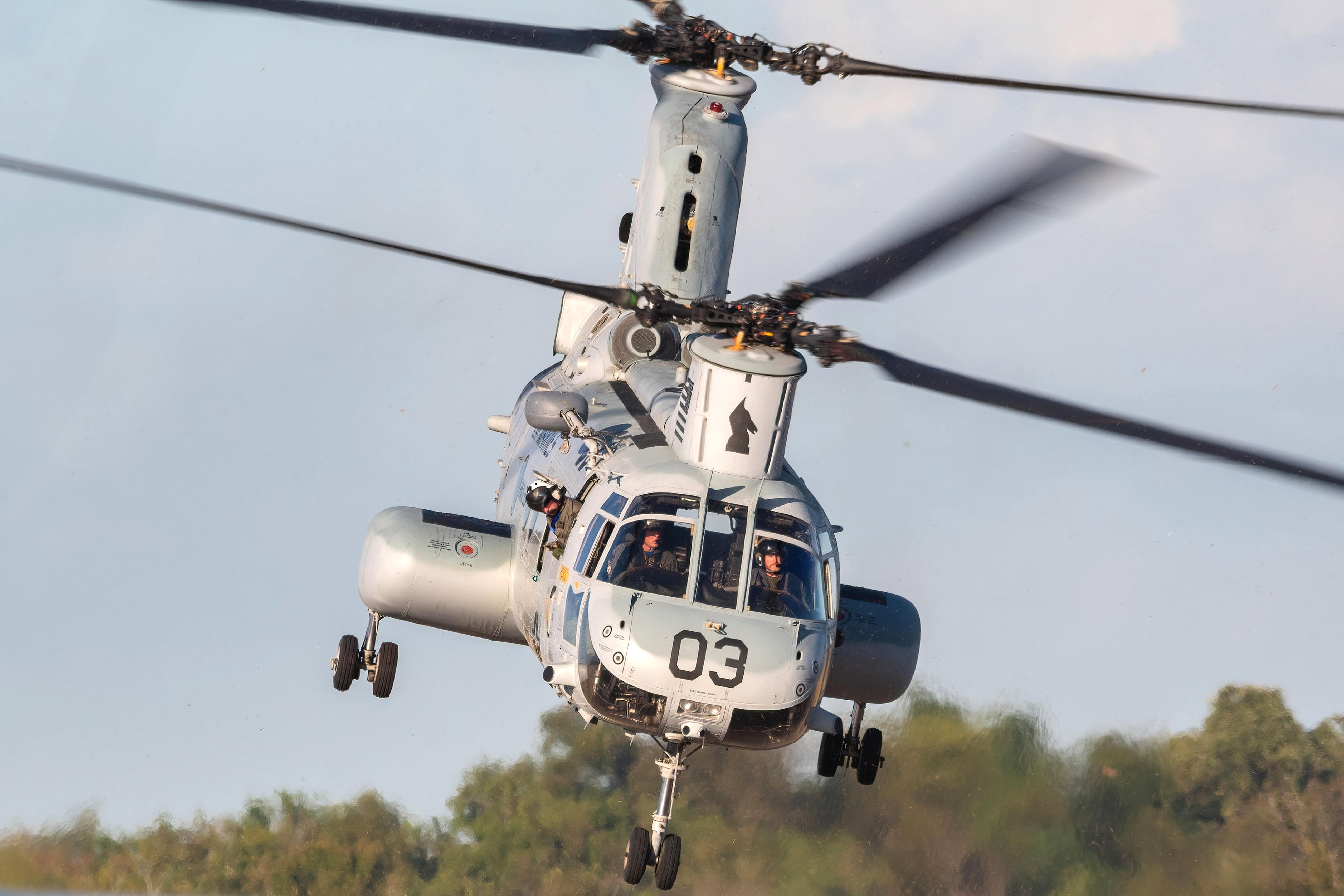
One of the National US Armed Forces Museum’s six CH-46 Sea Knights at 2024 Wings over Houston.
Brian La Fetra
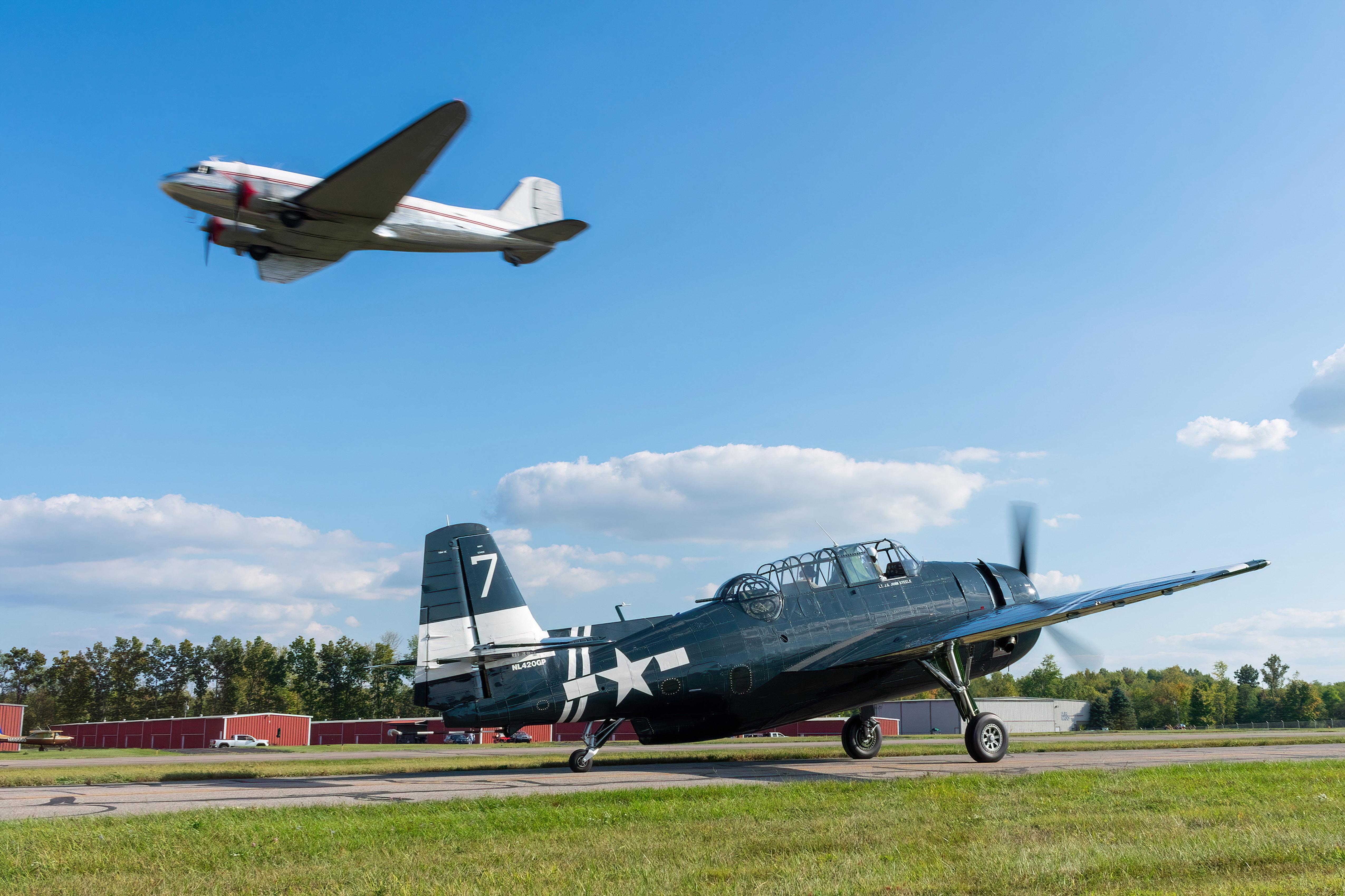
A Douglas C-47 Dakota passes over Tri-State Warbird Museum’s TBM Avenger during their annual showcase in 2023 .
Brian La Fetra
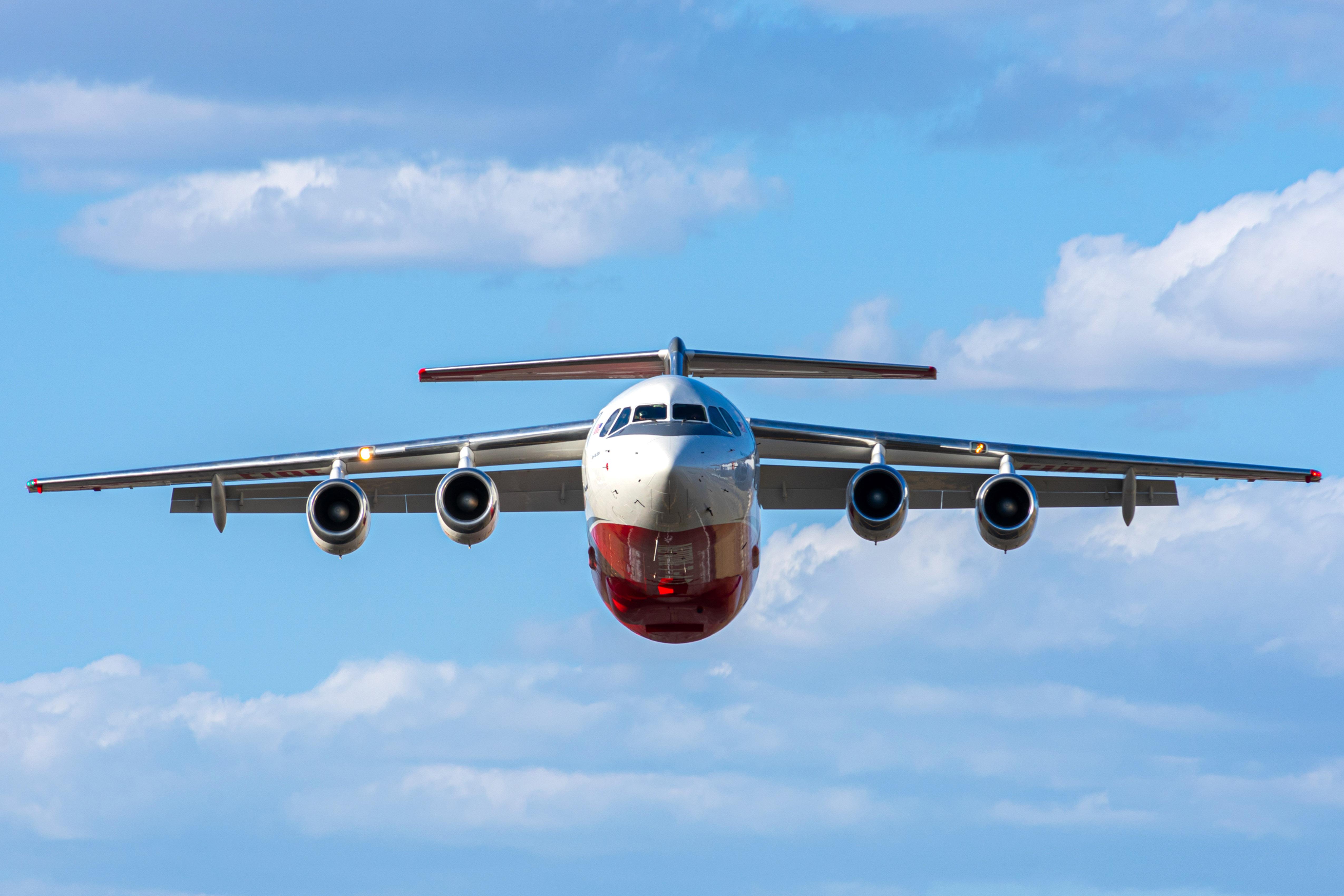
Neptune Aviation’s heavily loaded BAe-146 Tanker 40 departing Prescott Regional Airport for a drop in 2021.
Brian La Fetra
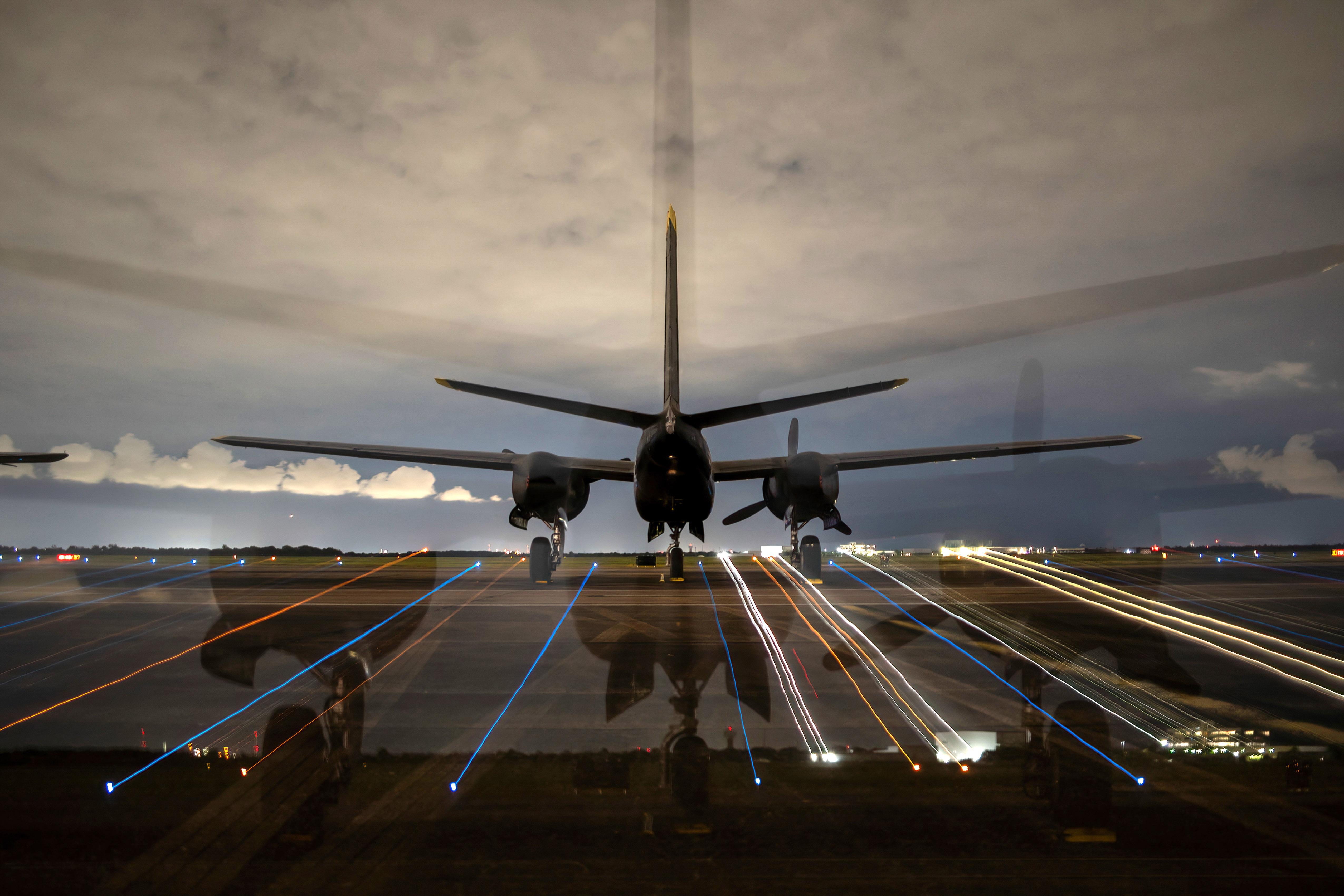
CAF Invader Squadron’s A-26B Night Mission on the ramp during Wings over Houston 2025. Six second exposure, zoomed from 55mm to 18mm in the last 1.5 seconds.
Brian La Fetra
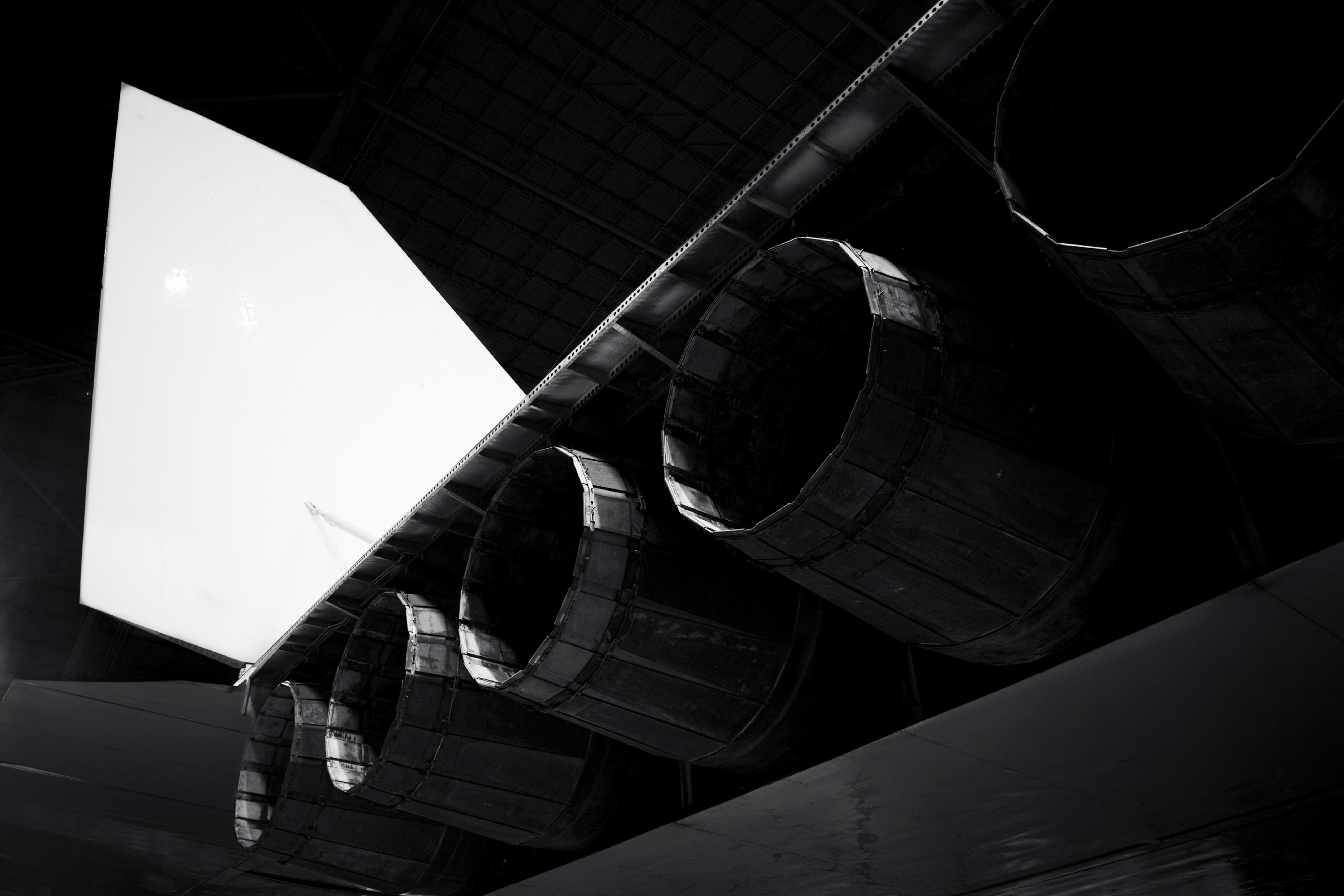
The iconic XB-70 Valkyrie in Dayton.
Brian La Fetra
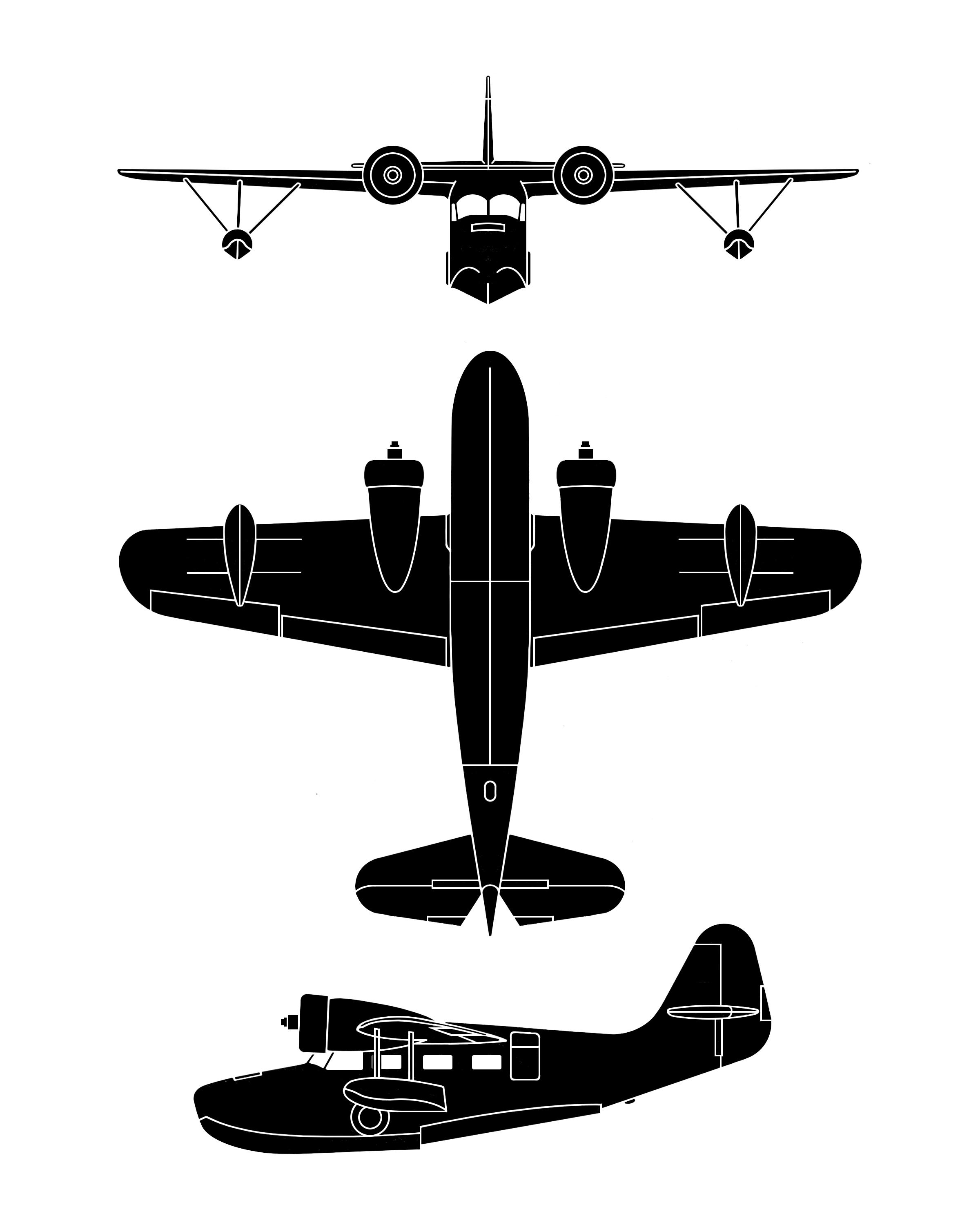
AIRPLANE SILHOUETTES
by John Ford
Identify these aircraft. The answers are found next to the Kenyon Gyro Ad.
KelbyOne is an online education community for creative people to help them create the type of images they’ve always wanted.
We are driven by a passion to provide incredible training, with over 800 courses. Our HD-quality lessons, are available to stream 24/7 and taught by world-class industry instructors. Online Access also includes digital editions of Photoshop User magazine and Lightroom Magazine, guided learning tracks, a community forum, brushes, presets and so much more.
The Professionals Source
Professionals in the world of imaging rely on the professionals of B&H for their equipment needs. We have experts ready to give courteous service with a phone call, a click of the mouse or a personal visit.
Our SuperStore
We pay tribute to the wealth of possibilities available for photography, videography and other media industries. We make the wonders of technology available through our complete lines of photo, video, audio, lighting, pro accessories, computers, data storage, optics, entertainment, projection and surveillance devices, to which we add a wonderful, personal experience for professionals, hobbyists and consumers alike.
History
We opened our original storefront in 1973. Our reputation for extensive inventory and intelligent conversation about photography began with our first customer. We grew from a small photography shop in Manhattan’s Financial District to a major supplier of photo, video and audio equipment on 17th Street, with customers returning again and again for our low pricing and high reliability. The new millennium’s explosion of affordable technology for pros and consumers alike brought new lines of computers, home entertainment, and consumer devices at our location or online at www.bhphotovideo.com
We continue to expand to meet your needs with showrooms, classes, educational and social media, and more.
Grumman Goose
Photo by John E S Team member
Photo: John Eckmier
ISAP Board Members
President and Board Chairman Larry Grace
Vice President and Vice Chairman Jim Wilson
Treasurer Gary Edwards
ISAP Board Member
ISAP Staff Member
Kevin Hong
John Sepp
Chairman Emeritus Jay Miller
Airspeed Editor Kevin Hong
Airspeed is a periodic publication of the International Society for Aviation Photography (ISAP) and is used to communicate news, functions, convention information, and other information of interest on the local, regional, and national scenes. The views and opinions expressed in this newsletter are those of the authors and should not be construed as the views or opinions of the International Society for Aviation Photography (ISAP). Please contact us at info@aviationphoto.org
Airspeed is a publication to showcase our members’ work capturing aviation.