Your Koi care calendar for the year
Every pond is different. Use this guide as a starting point and adapt the advice based on water temperature, climate, water quality, and fish behaviour. Regular temperature checks and water quality tests will help you get it right.
Year-round tasks
✓ Maintain your filter at least once a month, some Koi keepers also monitor filters each day.
✓ Test the water every 2-4 weeks
January
• Switch on ice preventers and/or pond heaters
• Check for water loss and damage from freezing
• Avoid water changes
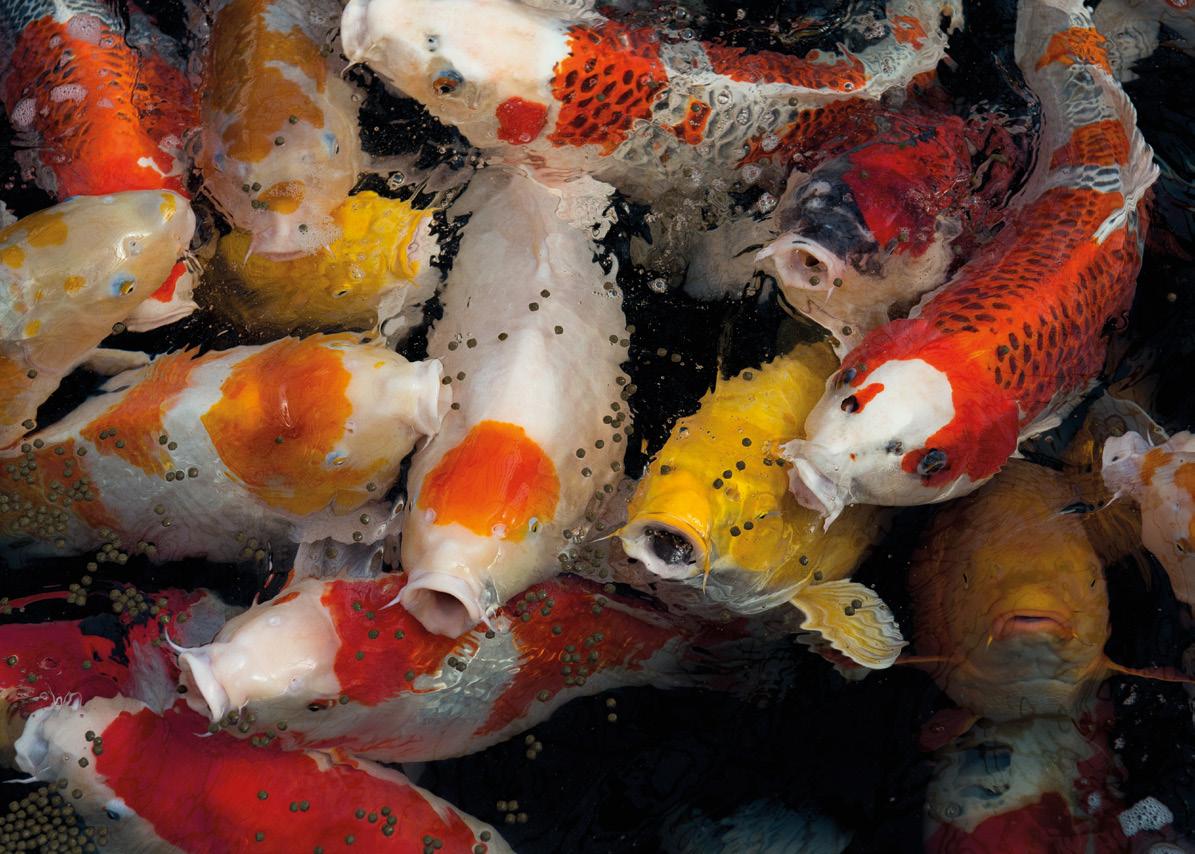
• Feed Koi sparingly with a wheatgerm-based food
• Skim debris from the surface
March
February
• Dig new ponds or extend your existing one
• Check for water loss and damage from freezing
• Avoid water changes
• Feed Koi sparingly with a wheatgerm-based food
• Skim debris from the surface
• Lower the pump back to the bottom of the pond (if raised in winter)
• Perform a 20% water change, and continue with 10% changes weekly – dose pond with Oase OptiPond to stabilise water parameters – low KH is a danger at this time of year
• Increase Koi food, feeding little and often, and monitor behaviour for signs of hunger
• Remove ice preventers and pond heaters
• Switch on UV filters
• Optional: Apply a phosphate-binding treatment (e.g. Oase Phosless Direct) to reduce phosphate levels and help limit early-season algae growth
• Check over any stored equipment ready for summer
April
• Maintain your pump by descaling, removing and cleaning the impeller – use Oase PumpClean (one of two recommended cleans per year)
• Clean, polish, and check water features and other equipment
• Replace filter media and UV bulbs
• Scoop out debris
• Use a pond vacuum to remove sludge, and/or treat with Oase Sedifree
• Watch out for predators – consider using pond covers or decoys
• Increase fish food back to normal levels
May
• Watch Koi for signs of breeding, e.g. bloated females
• Consider a spawning mop to support egg laying
• Check water temperature – 18-20°C (68°F) is best for breeding
• Feed Koi up to four times per day
• Remove stringy algae and blanket weed
• Pond areation can be switched on – especially with heavy fish load
June
• Separate Koi fry and adults into different ponds or tanks
• Remove stringy algae and blanket weed
• Increase UV clarifier and/or filter capacity if necessary

July August
• Ensure pump and filter are optimised as temperatures rise – for reference our Oase Aquamax Eco Premium pumps have ‘Seasonal Flow Control’ (SFC ), automatically increasing and decreasing flow according to pond temperature (this can help reduce energy use)
• Keep fountains and waterfalls running overnight
• Add beneficial bacteria to pond
• Check water levels and top up if needed
• Check fish for signs of low oxygen, e.g. gulping air at the surface
• Feed fish small amounts several times per day
• Remove stringy algae and blanket weed
• Check water levels and top up if needed
• Remove stringy algae and blanket weed
• Keep fountains and waterfalls running overnight
• Ensure plenty of shade in the pond
• Increase fish food
September
• Prepare for falling leaves: check any nets and skimmers are functional
• Start cutting back dead plants
• Check the water temperature regularly
• Feed Koi well to keep them healthy through winter
• Maintain your pump by descaling and removing the impeller for a thorough clean
October
• Remove fallen leaves from water surface every day
• Empty out pond skimmers every day
• Remove all dead plant material from water
• Switch Koi to a low protein food when water temperature drops below 10°C (50°F)
• Watch for fish starting to hibernate
• Switch off water features ready for winter storage
December
• If possible, reduce water flow or raise the pump outlet to minimise turbulence while the pond is semi-dormant
• Avoid water changes
• Skim debris and fallen leaves from the surface
• Switch on ice preventer or pond heater
• Continue feeding Koi low-protein food (e.g. wheatgerm-based food)
• Check fish behaviour: expect them to be very slow
November
• Clear out sludge, skim debris, vacuum bottom of pool
• Remove fallen leaves from water surface every day
• Empty out pond skimmers every day
• Remove all dead plant material from water
• Slow down water changes
• Check water temperature regularly
• Add ice preventer or pond heater if freezing is a possibility
• Give fish any preventative health treatments needed before winter
• Continue feeding Koi low-protein food (e.g. wheatgerm-based food)
Expert guidance whenever you need it
Whether you’re maintaining an existing pond or building one from scratch, our specialist knowledge is always within reach.
Browse our FAQs for expert answers, or explore our detailed DIY guides for step-by-step support.
Prefer to speak with us directly? Reach our team at enquiries@oase com
Follow us for more pond tips & inspiration