
International Research Journal of Engineering and Technology (IRJET) e-ISSN: 2395-0056
Volume: 13 Issue: 05 | May 2026 www.irjet.net p-ISSN: 2395-0072
International Research Journal of Engineering and Technology (IRJET) e-ISSN: 2395-0056
Volume: 13 Issue: 05 | May 2026 www.irjet.net p-ISSN: 2395-0072
1Final Year B.E Marine Cadet, PSNCET, Tamil Nadu.
24Professor, Dept. of B.E Marine Engineering, PSNCET, Tamil Nadu, India.
3Assistant Professor, Dept. of B.E Marine Engineering, PSNCET, Tamil Nadu, India.
ABSTRACT-This report examines the development and implementation of magnetic docking systems for the portside mooring and departure of vessels. Traditional mooring, which relies on manual handling of ropes and other physical connections, presents a number of challenges, including increased docking time, safety risks, and significant wear andtearonbothvesselsandportinfrastructure.Thisproject proposes to use magnetic technology–specifically, strategically placed electromagnets or permanent magnets on both vessels and docks – to create a contactless and efficient mooring system. The magnetic docking system aims to increase port efficiency, improve crew safety, and reduce environmental impact. By eliminating the need for physical ropes and reducing reliance on tugboats, this approach allows for faster and safer docking procedures, especially in challenging weather conditions. Key project components include the design of magnetic systems capable of securing various ship sizes, modifications to the docking infrastructure, and automated control systems for precise alignment and separation. Through rigorous testing and phased implementation, this magnetic mooring system demonstrates its potential to transform port operations, delivering cost savings and environmental benefits. This report details the technical approach, safety considerations and anticipated benefits, and makes a case for the widespread adoption of magnetic technology in marine docking.
Keywords: Magnetic docking, smart mooring, automated port operations, vessel safety, marine automation, sustainable shipping, efficient berthing.
Port-side Docking and Departure Using Magnetic Technology Port-side docking and departure are critical components of maritime operations, requiring precision, safety and efficiency. Traditional methods often involve mechanical mooring systems, ropes and tugboats, which can be labor-intensive, time-consuming and prone to operationalrisks.Withthegrowingdemandforfasterand moresustainableportoperations,innovativesolutionsare
neededtoaddressthesechallenges.
One such innovative approach is the use of magnetic technology for docking and departure. This technology leverages the principles of magnetism to enable ships to dock and undock seamlessly with minimal manual intervention. Magnetic docking systems use powerful, controllable magnets installed on the dock and corresponding magnetic elements on the ships, allowing automaticalignment,safedockingandsmoothdeparture.
This approach has the potential to revolutionize maritime logistics by improving operational efficiency, enhancing safety and reducing the environmental footprint. This eliminates the need for tugboats and traditional mooring equipment, making operations faster and reducing fuel consumption
The aim of the project is to design and implement a magneticdockinganddeparturesystemthat:
Ensures accurate positioning of the ship during docking.
Enhances safety by minimizing human involvementinriskyprocessed
Reduces operational delays and improves port flow
Minimizes environmental impact by reducing fueluseandemissions.
Magneticsystemsoffersignificantadvantagesin marineapplications:
International Research Journal of Engineering and Technology (IRJET) e-ISSN: 2395-0056
Volume: 13 Issue: 05 | May 2026 www.irjet.net p-ISSN: 2395-0072
Precision: Magnetic fields can be precisely controlled, ensuring correct alignment of the ship.
Contactless operation: Unlike ropes or mechanicalsystems,magnetsdonotcausewear andtearontheshipordock.
Automation: The system can be integrated with advanced control mechanisms for remote or automatedoperation.
Thistechnologyissuitableforavarietyofmarine operations,including:
Largecommercialcargovessels.
Passengercruiseterminals.
Industrial ports that handle frequent ship movements.
Byincorporatingmagnetic technologyintoportside operations, this project seeks to increase the efficiency and sustainability of maritime transport,aswellasreduceriskandoperational costs.Thisinnovationrepresentsasteptowards the modernization of global shipping infrastructure
Executive Summary
This project explores the use of magnetic technology for docking and departing ships from the port side, a system that aims to reduce docking times, minimize structural impact on ships and docks, and increase overall operational safety. By using powerful electromagnets or permanentmagnetsonboththeshipanddock,wecreatea system that allows for safe and efficient mooring, facilitating smooth arrival and departure processes withouttraditionalmooringropesorphysicalcontactwith theportside.
1. Increase docking efficiency: Reduce the time and labor spent docking and departing ships by eliminating traditionalmooringsystems.
2. Improve safety: Reduce the risk of physical injuries relatedto manual mooring andpotential accidentscaused byropehandling.
3. Reduce structural wear and tear: Reduce wear and tear on both the ship hull and dock structures due to direct physicalcontact,potentiallyreducingmaintenancecosts.
4. Reduction of environmental impact: Reduce emissions by reducing the need for tugboats and other mooring supportvehicles.
Designandtestingofmagneticmooringsystems: Developandtestmagneticdockingmechanisms, including electromagnets or high-strength permanent magnets, to ensure they can handle variousshipsizesandweights.
Infrastructure adjustments at docking facilities: Installmagneticsystemsontheportsidetoalign withship-mountedmagnetsforsafedocking.
Development of control systems: Create automatedcontrolstoaligntheshiptothedock, adjust magnetic strength, and facilitate easy detachingduringdeparture.
Safety assessments and protocols: Evaluate safety measures and implement emergency release mechanisms in case of electrical or mechanicalfailure.
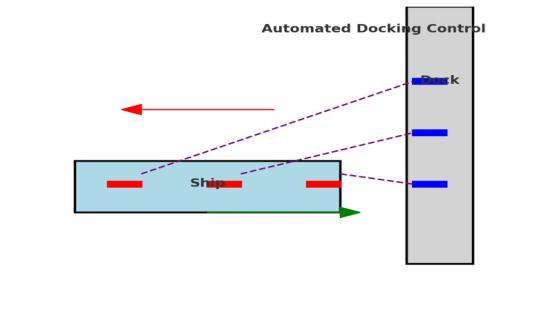
Electromagnets vs. Permanent Magnets: Electromagnets allow adjustable magnetic force and can be deactivated quickly, whereas permanent magnets offer a simple, passivesolution.Thesolutionchosencanbeacombination ofthetwo,providingflexibilityandcontrol.
International Research Journal of Engineering and Technology (IRJET) e-ISSN: 2395-0056
Volume: 13 Issue: 05 | May 2026 www.irjet.net p-ISSN: 2395-0072
Magnetic Field Intensity Calculation: To accommodate the weightandsizeofvessels,magneticforcecalculationswill be tailored to the docking requirements of each vessel, ensuringstrongandsecureattachment.
Alignment Mechanism: Ship and dock are positioned to ensure magnet alignment, preventing any slippage or driftingduringdocking.
Dock-Side Installation: Ports must be fitted with strong magnetic systems, with spacing and alignment matching standardshipconfigurations.
Ship Modifications: Ships involved in this program will be fitted with magnet housing compartments to ensure properalignmentwithdock-sidemagnets.
Sensors and Control System: Use sensors to detect ship distance,speed,andalignmentforsafedocking.
Control Interface: A digital interface will control magnetic power, facilitating the mooring and release process while allowingmanualoverrideforsafety.
EmergencyReleaseSystem:Anoverridesystemallowsfor quick disconnection in an emergency, ensuring safety in caseofsuddenshipmovementormagneticfailure.
Magnetic Field Shielding: Design precautions to protect port and crew equipment from unintended magnetic interference.
Environmental Benefits: Reduced tugboat use and streamlined docking procedures will reduce fuel consumption,emissions,andnoisepollutioninportareas.
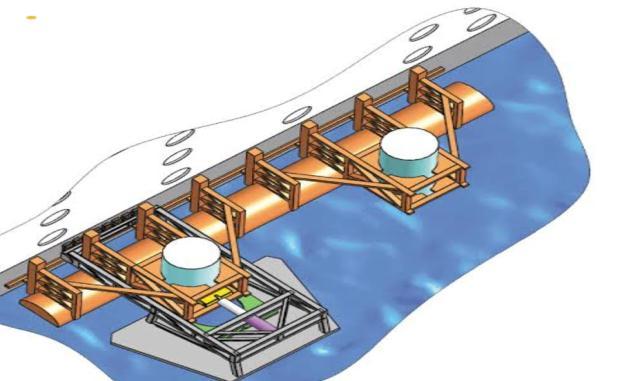
Prototype Testing
Initial testingwithscaled-downmodelstoverifymagnetic strength,alignmentaccuracy,andsystemstability.
Field testing with small vessels to confirm the effectiveness of magnet-based docking in real-world scenarios.
Reduction in docking time: Compare the time taken for magneticmooringversusconventionalmooring. Safety Improvement: Document and analyze incidents relatedtoconventionalversusmagneticdocking.
CostSavingsinOperations:Evaluatethereductioninlabor andoperationalcostsduetoautomateddocking.
Implementation Plan
Phase 1: Prototype development and testing in a controlledenvironment.
Phase 2: Full-scale testing with small and medium-sized vesselsatpartnerports.
3. Phase 3: Refinement of technology based on test feedback, including any necessary safety and structural improvements.
4. Phase 4: Rollout to larger ships and multiple ports, including crew training and full-scale operational guidelines
The implementation of magnetic technology for docking and departure offers a revolutionary approach to modernizing port operations. This project demonstrates significant potential for increased efficiency, safety, and cost-effectiveness while aligning with sustainability goals by reducing emissions. Through detailed testing and evaluation, this initiative aims to set a new standard in marinedocking.
Here are some reference books that could provide additionalinsightsintotheconceptdescribed: 1.Books: Naval Architecture and Ship Stability by D.G.M. Watson: Provides information on ship design and docking
International Research Journal of Engineering and Technology (IRJET) e-ISSN: 2395-0056
Volume: 13 Issue: 05 | May 2026 www.irjet.net p-ISSN: 2395-0072
techniques.
Modern Marine Engineering by H.D. McGeorge: Discusses innovativetechniquesinmarineengineering.
2.Researchpapers:
Articlesonautomateddockingsystemsinjournalssuchas OceanEngineeringorMarineTechnologySocietyJournal.
"Electromagnetic Mooring Systems: A Feasibility Study" is availablethroughscholarlyarchives.
3.Onlineresources:
Industry websites such as Lloyd's Register or IMO (InternationalMaritimeOrganization)foradvancesinport technology.
Technology providers such as Wartsila or ABB for automatedmarinesystems.
4.Existingprojects:
Case studies on magnetic docking or mooring systems implemented in ports of the future. Ports like Rotterdam and Singapore are known for testing advanced docking solutions.
5.StandardsandGuidelines:
Review international standards like ISO 5798 (mooring operations).
BIOGRAPHIES:


TAMILSELVANA pursuingB.EFinalyear Marine Engineeringcadet atPSN College ofEngineering&Technology,Tirunelveli, TamilNadu.


R. SATHEES RAJA Working as a Professor, Dept. of B.E Marine Engineering, PSNCET, Tamil Nadu, India.

M.R. SUDHAKAR Working as a Professor, Dept. of B.E Marine Engineering, PSNCET, Tamil Nadu, India. 0
C. INDRA KUMAR Working as a Assistant Professor, Dept. of B.E Marine Engineering, PSNCET, TamilNadu,India.