
International Research Journal of Engineering and Technology (IRJET) e-ISSN: 2395-0056
Volume: 13 Issue: 05 | May 2026 www.irjet.net p-ISSN: 2395-0072

International Research Journal of Engineering and Technology (IRJET) e-ISSN: 2395-0056
Volume: 13 Issue: 05 | May 2026 www.irjet.net p-ISSN: 2395-0072
Mr. Vijay D. Jadhav1, Prof. A. A. Kumbhojkar2, Prof. Sangram J. Patil3 , Prof. Rahul S. Patil4
1 PG Student, Mechanical Engineering Department, PVPIT Budhgaon, Sangli, Maharashtra (India)
2 Associate Professor, Mechanical Engineering Department, PVPIT Budhgaon, Sangli, Maharashtra (India)
3 Assistant Professor, Mechanical Engineering Department, RIT Ishwarpur, Sangli, Maharashtra (India)
4 Assistant Professor, Mechanical Engineering Department, SRPIT Shirol, Sangli, Maharashtra (India) ***
Abstract -Theimportance oflubricationinmachines,their life, wear, friction, and prevention from failure cannot be understated. Poor lubricant performance may lead to huge losses in terms of energy and materials. To enhance lubricating behavior of bearing oil, one canuse nanoparticles in their oils. In this study, CuO and TiO2 nanoparticles were incorporated in the base oil called SN-500 and their tribologicalpropertieswere investigated.Theconcentrations of CuO andTiO2 nanoparticles usedinSN-500 base oil are 0.1 wt.%, 0.5 wt.%, 0.75 wt.%, and 1 wt.%. Experiments were conducted to study friction and wear using a Four Ball tribotester where different amounts of concentrations of nanoparticlesalongwithdifferentnano-particles,weretested. Results obtained from all tests conducted on CuO, TiO2 nanoparticles and SN-500 base oil were compared. In case of friction reduction test, the optimum amount of nanoparticles is 0.5 wt.% of CuO is observed.
Key Words: tribotester, nanoparticles, Titanium Dioxide, bearing oils, base oil. Copper oxide
Nanotechnology has been seen as the most revolutionary techniqueofthe21stcentury.Itcanbeappliedinvarious sectorsandintroducesanewageinmaterialscience.Many studieshavebeenconductedonthetribologicalbehaviorof thelubricantwithvariousnanoparticlesadded.
Tribology is said to be the 'science and technology of interacting surfaces in relative motion and related topics. ThetopicTribologyincludesmostlytechnologiesthatrelate to lubrication, wear resistance, and friction in relation to relativemotionbetweensurfaces.Tribologyprinciplessuch as friction and wear are the main factors in design of machineryparts[1].
Materialsareevaluatedaspairsinnominallynon-abrasive conditions.Thepinsampleissubjectedtoaknownforcein relationtothediscusinganarmorleverwithweights.The wearratedataareprovidedincubicmillimetersofvolume lossanddimensionallossmeasuredlinearlyonthepinand thedisc.
Purva Uniyal et.al. [2] examined the integration of metal oxide nanoparticles into plant-based biolubricants. The
resultsdemonstratethataddingoptimumconcentrationsof nanoparticle-suchas0.1%Al2O3injojobaoilor0.2%TiO2 in castor oil - significantly reduces friction and wear by formingprotectivetribo-filmsandconvertingslidingfriction intorollingfriction.Theauthorsconcludethatthesenanobiolubricantsareeffective,eco-friendlyalternativestotoxic petroleumproducts,offeringenhancedenergyefficiencyand industrialsustainability.
Serag salem et.al. [3] Evaluates SAE 20W-50 oil modified withultra-lowconcentrations(0.02–0.12wt%)ofCuOand TiO₂nanoparticles.Usingpin-on-disctribometry,thestudy reveals that TiO₂ at 0.12 wt% dramatically reduces wear volume by 90%, while CuO at 0.02 wt% lowers the coefficientoffrictionby25%.Thesetraceadditionsenhance performance throughmechanisms likethe rolling-bearing effect and tribofilm formation. Ultimately, the study concludes that these cost-effective, low-concentration additives significantly improve engine efficiency and component longevity without compromising lubricant stabilityorincreasingcosts.
CorinaBirleanuet.al.[4]investigatedSAE10W40engineoil enhanced with 0.05 wt% TiO2 nanoparticles. The methodology involved calcining nanoparticles at various temperatures (450–750°C) and conducting four-ball tribometer tests under ASTM D4172 conditions. Results revealed that TiO_2 treated at 550°C provided the best performance,yieldingthelowestcoefficientoffrictionand wear scar area at both 23°C and 75°C. In conclusion, intermediate thermal treatment optimizes crystalline structure and dispersion stability, significantly enhancing thelubricant'santi-wearandfriction-reducingcapabilities underboundarylubrication.
R K Danga et. al. [5] investigates the static thermal performanceofcircularjournalbearingsusingTiO2andCuO nano-lubricants.Researchersdevelopeda MATLABmodel using the Finite Difference Method to solve Reynolds and energy equations, incorporating the modified KriegerDoughertymethodforviscosity.Resultsshowedthatadding 2wt%TiO2increasedloadcapacityby14.23%,significantly outperformingCuO's9.23%increase,withonlyamarginal riseinoilfilmtemperature.Thestudyconcludesthatthese nano-lubricantssubstantiallyenhancebearingperformance, offering high potential for optimizing power generation turbo-machinery.
International Research Journal of Engineering and Technology (IRJET) e-ISSN: 2395-0056
Volume: 13 Issue: 05 | May 2026 www.irjet.net p-ISSN: 2395-0072
LPena-paraset.al.[6]employsarobustdual-methodology using T-02 four-ball (ASTM D5183) and T-11 ball-on-disk (ASTMG-99)tribo-testerstoevaluatepolymericlubricants enhancedwithCuOandTiO2nanoparticles.Resultsindicate thatwhilehigh-loadtestsshowednegligibleimprovement, the ball-on-disk tests revealed dramatic wear reductions: 33%for0.05wt.%CuOand 77%for0.01wt.%TiO2.The study concludes that nanoparticles significantly improve anti-wearpropertiesbyactingas"valleyfillers"orspacers, though it warns that higher concentrations may cause detrimentalparticleagglomeration.
R A Arul raja et. al. [7] provides a clear framework for evaluatingnano-lubricantsusingtheFour-ballweartestto simulatereal-worldtribo-systems.Whileiteffectivelydetails the measurement of wear scar diameter and load wear index,thepaperlacksspecificexperimentalresultsordata trends to validate these methods. The conclusion successfullyreaffirmstheimportanceofbalancingchemicophysical propertieswithmechanico-dynamical testingbut would be stronger if it summarized specific performance gainsfromnanoparticleadditives.
TFInescueet.al.[8]concludesthataddingTiO2andZnO nanoparticlestorapeseedoilprovidesmarginaltribological improvements,astheyfailtoformacontinuousprotective film. While nano-additives reduced wear scar diameters during light regimes, they generally increased the friction coefficient and lubricant bath temperature due to "thirdbody"frictionandparticleagglomeration.ZnOdemonstrated slightly better anti-wear performance than TiO2, yet neat rapeseedoiloftenmaintainedsuperiorfrictionalproperties, suggestingthattheadditives'tendencytoclusterlimitstheir effectivenessinenhancingvegetable-basedlubricants.
In this experimental analysis we have added CuO & TiO2 nano-particles separately with Oleic Acid in base oil by sonication method to get uniform dispersability. Nanoparticlesactasthirdbodyparticles.Theresultsofthese experimental studiesindicatethatnano-particlesimprove thetribologicalpropertiesofthebaseoil.
2. EXPERIMENTAL SETUP
2. 1. Selection of Nanoparticles
Inthispresentresearchtwonanoparticleswereshortlistedandstudiedviz.
1.Copperoxide(CuO)
2.TitaniumDioxide(TiO2)
On the bases of availability, properties and cost, Copper oxide(CuO)&TitaniumDioxide(TiO2)nanoparticleswere selected and purchased from TECHINSTRO, India. The properties of CuO & TiO2 nano-particles as per the manufacturesspecificationaregivenbelow.
Table .1 PropertiesofNanoparticles
Oxide) Size smaller than 100 nm, Purity 99.95%withnearlysphericalshape
(Titanium Dioxide) Sizelessthan100nm,Purity99.5% withnearlysphericalshape
Table .2 PropertiesofCuONanoparticles
Table .3 PropertiesofTiO2Nanoparticles
International Research Journal of Engineering and Technology (IRJET) e-ISSN: 2395-0056
Volume: 13 Issue: 05 | May 2026 www.irjet.net p-ISSN: 2395-0072
ForthisresearchworkisSN500baseoilmanufacturedby B.P.C.L.Mumbai isused. Theconventional purelubricants engine oil contains some additives for enhancement of frictionreductionandanti-wearproperties,buttheBaseoil purchaseddoesnotcontainsuchadditives.Purelubricants aremanufacturersofindustriallubricant,automobileoiland greases.
Table .4 PropertiesofBaseOil
ViscosityKin.,@40°C 101mm2/s
ViscosityKin.,@100°C 10.5mm2/s
ViscosityIndex
Density@40°C 864-875kg/m3
FlashPoint(°C)
PourPoint(°C)
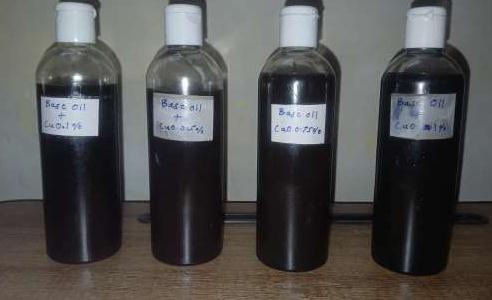
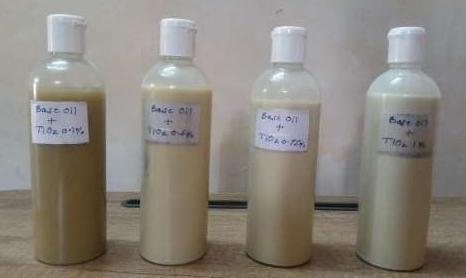
Thenano-particlesthatareutilizedasanadditiveinbaseoil areknownasNanoOil.SamplesofNanoOilwereprepared aspertheweightconcentrations.Atotaloffoursamplesof NanoOilwereprepared.Eachsamplecomprisesof500ml baseoilwithweightconcentrationsof0.1%,0.5%,0.75% and 1 %. Weight of 227.5 ml base oil is 200 gm. Thus, sampleswerepreparedbasedonweightconcentrationusing 200gm base oil. According to above weight concentration criteriaeightsampleswerepreparedbyaddingrespective quantityofnanoparticles.
Stabilization of the nanoparticles plays a key role for the effective dispersion of the nanoparticles in the base lubricant.ThishappensbecausetheNano-particlespossess highsurfaceenergylevels.
Asaresult,theparticlesaresubjectedtoeitheraggregation or settling during usage. Stabilization helps in the maintenanceofahomogenoussuspension.Commonlyused methods for stabilization include mechanical dispersion, ultrasonic treatment along with surfactants and/or dispersants. Ultrasonic treatment enables the breaking of nanoparticle agglomerates and dispersion throughout the lubricant.Stabilityofthenanoparticlesenhanceslubricating and wear resistance capabilities of Nano-lubricants using Cupric Oxide (CuO) and Titanium Dioxide (TiO2) Nanoparticles[9][10].
ForthestabilizationandhomogenousdistributionofNanoparticles,‘Surfactant’suchasoleicacidisusedinorder to disperseCuOandTiO2nanoparticlesinthebaseoil.Based onweightconcentration,thenanoparticleswerepouredinto aglassbeaker.Then,10mlofoleicacidwasmixedwiththe nanoparticlesslowly.Toproperlymixthenanoparticlesand oleic acid, magnetic stirring was carried out. It was performed for 15 minutes, after which sonication was carried out for 35 minutes using probe type ultrasonic sonicater[11].Aftercompletingsonication,themixturewas poured into the base oil. Then, it was stirred again with magnetic stirring process for 15 minutes, followed by sonicationusingultrasonicsonicaterfor45minutes.Dueto formationofoleicacidfilmonthesurfaceofNano-particles, theycanbeevenlydistributedinthebaseoil.Whichisbasic requirement of this tribological investigation assures consistentresultsthroughouttheexperiment[12].
5. Selection of Steel Balls
Thesteelballsusedfortribologicaltestingaremanufactured according to the material standard AISI E-52100, which consists of a high-nickel alloy steel containing carbon and chromium.Usedwidelyinprecisionrollingbearings,owing toitshighhardness,fatigue strengthand wearresistance. Ballshavea diameter of 12.7mm with themanufacturing accuracy of G10, which means that it has extremely small dimensions tolerance and surface quality, fit for use in
International Research Journal of Engineering and Technology (IRJET) e-ISSN: 2395-0056
Volume: 13 Issue: 05 | May 2026 www.irjet.net p-ISSN: 2395-0072
precision mechanical devices The hardness of these balls has been tested at 62-64 HRC, which falls within the specified range of 58-67 HRC. This ensures the required hardness of the balls that would make the application possibleunderhighloadsandhigh-speedoperations.These typesofsteelballsareusedinrollingelementbearingssuch as,deepgrooveballbearings,thrustballbearings,andwheel hubbearings.
3.1
In this thesis, different test parameters are chosen while conducting the tests which are compliant with the ASTM D4172standards.Accordingtothestandardtestconditions of ASTM D4172 for evaluating the Wear Preventive Properties of various Lubricating Fluids, AISI 52100 steel ballsareutilizedasthestandardtestsamplesinthefourball tester.
TheAISI52100alloysteelcontainshighcarbon,highnickel, andhighchromiumcontentandisusedinthemanufacturing of rolling element bearings. This alloy steel is suitable for tribologyexperimentsduetoitshighstrength,hardness,and wearresistanceproperties.AccordingtoASTMD4172test standards,thefollowingparametervaluesneedtobechosen. Loadselectedis392Nor40kg,whichisselectedto createtheconditionsofboundarylubrication.Therotational velocity is selected as 1200 rpm to replicate the real operatingconditionsofmachinecomponents.Thisspeedis chosentocreatestablelubricantfilmformation,sufficient slidingmotionbetweenballsandrepeatableresultsofwear. The time duration is kept as 60 min i.e. 3600 sec so that there is sufficient time for development of wear scar and thereisnoexcessivewear.
Table .5 SteelBallspecifications
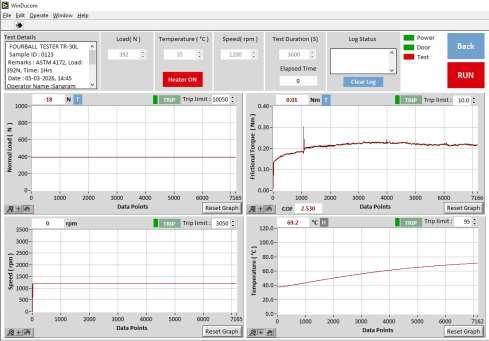
Fig. 3 FourBallTesterTestResultforBaseOil
Result path of these graphs has been examined after analyzingthesegraphs.Nowthesegraphsof baseoil, SAE 20W40lubricatingoil,andnanoparticleadditiveforvarious concentrationpercentagesincluding0.1%,0.5%,0.75%and 1%,amongothers,arebeingcomparedwitheachotherto findwhichsamplehasprovidedoptimalresultvalues.
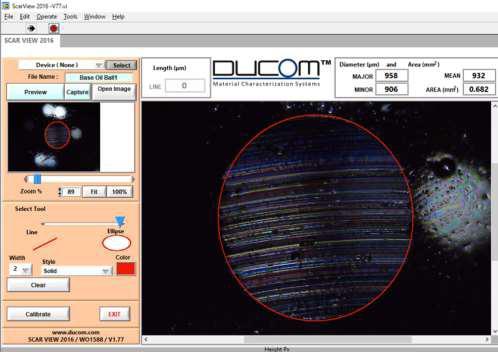
AsseenaboveFig.,scarwearisobservedononeofthethree steelballsthathavebeenlubricatedbythebaseoil.Here,the average diameter is 932 μm while the scar wear area is 0.682 mm². The scar wear formed is nearly circular with visible concentric wear marks due to lack of additives, implyingboundaryormixedlubricationusinganunblended baseoil.
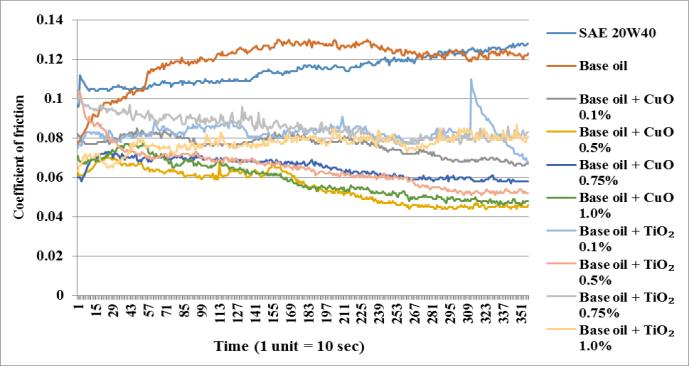
Chart. 1CoefficientofFrictionvs.TimeGraph
International Research Journal of Engineering and Technology (IRJET) e-ISSN: 2395-0056
Volume: 13 Issue: 05 | May 2026 www.irjet.net p-ISSN: 2395-0072
The CuO and TiO₂ nano-particles are very efficient in reducingtheCOFinthebaseoilcomparedtotheSAE20W40 engine oil where the COF is high even at steady state conditions.TheCOFreduceswithanincreaseintheamount of nano-particles used. This could be due to the rolling, stitching,polishing,andtribo-filming.TheCuOnanoparticles have performed better than the TiO₂ nanoparticles at differentconcentrationsofnanoparticles.
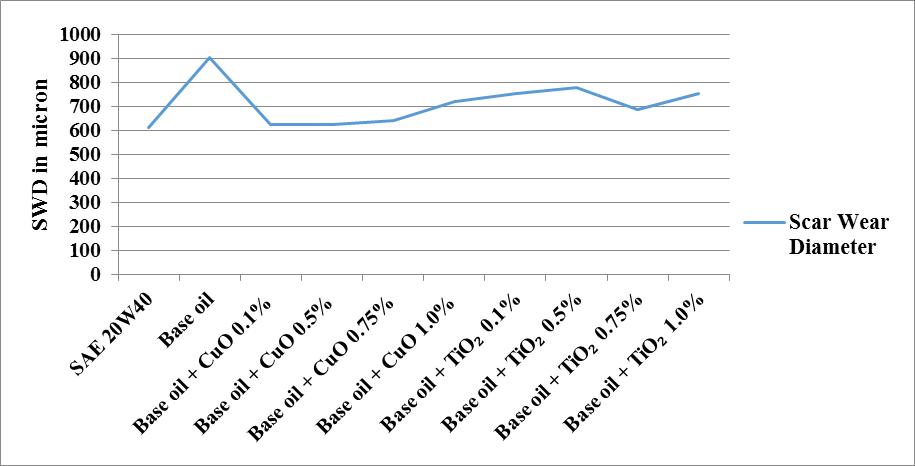
Chart. 2 SWDVsNano-oils
The above observations from Fig. show that for CuO dispersed oils, there are low wear scar diameters comparabletoSAE20W40lubricatingoilsrangingbetween 625to721μm.ForTiO₂dispersedoils,theresultsarerather gloomy as the wear scar diameters fall between 688 to 779μm,exceptinthecaseofoilcontaining0.75%byweight. ThusitcanbeconcludedthatiftherightpercentageofCuO nanoparticles is used with dispersion, then there will be remarkableresultswithreducedmetaltometalcontact.
At the same testing conditions (based on ASTM D41721200rpm,392Nloading,60minutes),thelowestaverage COF (0.056) and highest friction coefficient (0.071) are obtained with 0.5% weight concentration CuO in base oil. Thisisequivalenttoa52%reductionfromcommercialSAE 20W40(about0.115)anda53%decreasecomparedwith purebaseoil(about0.119).
For all the blends, the optimum concentration of 0.5 % weightconcentrationwasobservedtobebestforbothCuO andTiO₂,astheyprovidedtheleastCOFwithstablecurves. Althoughconcentrationsabove0.5%weightconcentration wereobservedtoperformbetterthancommercialoil,they showedslightlyhigherCOF.
Ingeneral,experimentalstudiesshowthatthepresenceof nanoparticles as additives has a significant effect on tribologicalpropertiesinboundarylubrication.Inparticular, theapplication ofCuO nanoparticlesshowsgreat promise foruseasanadditiveforlubricants.Itisnecessarytoselect the proper concentration of the additive (0.5 wt.% is
optimal) and dispersion of nanoparticles to provide the greatestreductioninfriction(upto53%decreaseinCOF).
1.BharatBhushan“Principleandapplicationoftribology”A Wiley-IntersciencePublication(1999)ISBN0-471-59407-5
2. Uniyal, P., Gaur, P., Yadav, J., Khan, T., & Ahmed, O.S. (2024).“AReviewontheEffectofMetalOxideNanoparticles on Tribological Properties of Biolubricants”.ACS Omega, March8,2024,12436-12456
3.SeragSalem,HodaAbuzied,WesamMSadek,KareemSakr andTarekElmeligy“Experimentalevaluationoftribological behavior in engine lubricants with trace additions of CuO andTiO₂nanoparticles”JournalofEngineeringandApplied Science, (2025) 72:266, https://doi.org/10.1186/s44147025-00855-x
4. Corina Birleanu, Mircea Cioaza, Ramona-Crina Suciu, AndreiaMolea,MariusPustan,GladContiuandFlorinPopa “Tribological Performance of SAE 10W-40 Engine Oil Enhanced with Thermally Treated TiO2 Nanoparticles” LubricantsOctober2025,Vol.13
5.R.K.Danga,S.S.Dhamib,D.Goyalc,A.Chauhand,“Effectof TiO2andCuOBasedNanolubricantsontheStaticThermal Performance of Circular Journal Bearings” Tribology in IndustryFebruary2021,Vol.43,No.3.pp420-433
6. L Pena-Paras, J Gutiérrez, M Irigoyen, M Lozano, M Velarde,DMaldonado-CortesandJTaha-Tijerina“Studyon the anti-wear properties of metal-forming lubricants with TiO2andCuOnanoparticleadditives”MaterialsScienceand Engineering400(2018)062022
7.R.A.ArulRaja,J.SunilandK.K.Sadasivuni,“Estimationof lubricity properties of nano-lubricants”, Materials Today: Proceedings,https://doi.org/10.1016/j.matpr.2019.04.208
8.TFIonescuetal2020IOPConf.Ser.:Mater.Sci.Eng.997 012013“Rapeseedoilwithanti-wearadditivesonthefour balltester”
9.PatilSJ,PatilDP,ShrotriAP,PatilVP.“Areviewoneffectof addition of nano-particles on tribological properties of lubricants”.Int.J.Mech.Eng.Technol.2014Nov;5(11):120-9.
10.JasonYJ,HowHG,TeohYH,ChuahHG.”Astudyonthe tribological performance of nano-lubricants. Processes”. 2020Oct29;8(11):1372.
11.MaL,MaL,MaX,ZhouC,JiangZ,ZhaoJ.“Tribological Properties and Lubrication Mechanisms of Water-Based Nano-lubricantsContainingTiO2NanoparticlesduringMicro RollingofTitaniumFoils”.Materials.2023Dec28;17(1):170.
12. Suryawanshi SR, Pattiwar JT. “Effect of TiO2 nanoparticlesblendedwithlubricatingoilonthetribological performanceofthejournalbearing.TribologyinIndustry”. 2018;40(3):370.