
International Research Journal of Engineering and Technology (IRJET) e-ISSN: 2395-0056
Volume: 13 Issue: 05 | May 2026 www.irjet.net p-ISSN: 2395-0072
International Research Journal of Engineering and Technology (IRJET) e-ISSN: 2395-0056
Volume: 13 Issue: 05 | May 2026 www.irjet.net p-ISSN: 2395-0072
Pannala Harshitha Reddy1 , Putta Dharmendar2 , Nagar Goje Vittal3 , Mudigonda Srinivas Yadav4 , Kadigalla Premchandar5, G Uma Shanker6
1, 2,3,4,5 UG Students, Department of Civil Engineering, Vidya Jyothi Institute of Technology, Hyderabad, India 6 AssistantProfessor, Department of Civil Engineering, Vidya Jyothi Institute of Technology, Hyderabad, India
Abstract-Rapid urbanization and increasing vehicle ownershiphaveintensifiedtrafficcongestionatmajorurban intersections,reducingtransportationefficiencyandtravel reliability at Appa Junction in Hyderabad, Telangana, experiencesseverecongestionduetoheterogeneoustraffic flow,frequentturningmovements,andinadequateroadway capacity.Thisstudyevaluatestheoperationalperformance ofthejunctionusingstandardtrafficengineeringmethods and proposes a suitable long-term improvement strategy. Trafficvolumesurveyswereconductedmanuallyatallfour approachesduringpeakandoff-peakperiods.Vehiclecounts wereconvertedintoPassengerCarUnits(PCU)accordingto IRC:106-1990guidelinestoanalyzemixedtrafficconditions accurately. The study recorded a peak traffic volume of 4806.5PCU/hragainstanavailablecapacityof3600PCU/hr, resulting in a Volume-to-Capacity (V/C) ratio of 1.33 and indicating oversaturated conditions with Level of Service (LOS) F. Future traffic projections, considering an annual growth rate of 7.5%, estimate traffic demand to reach approximately6900PCU/hrwithinfiveyears.Conventional at-grade improvements such as signal optimization, road widening, and roundabouts were found inadequate to accommodate future demand. Therefore, the study recommends a flyover as the most effective solution to improve traffic flow, reduce delays, enhance safety, and support future urban growth. The findings emphasize the importance of data-driven transportation planning and sustainableinfrastructuredevelopmentforrapidlygrowing cities
Keywords: Traffic Congestion, Passenger CarUnit,Level of Service, Flyover, Urban Transportation, Traffic Engineering, Junction Improvement.
Becausecitiesgrowfast,theirroadsoftenstruggletokeep up [1]. Moving people and goods shapes how well urban areasdevelopeconomicallyandsocially.Wherestreetsmeet on busy routes, delays pile up when design fails to match risingtravelneeds.Evenso,bettertransportnetworkscan easecrowding,connectcommunities,openmarkets,boost productivity, and lift daily living standards [8]. As vehicle numbers climb sharply across large cities, jams become common during peak hours. Though essential, many junctionsnowoperatebelowexpectedperformancelevels. Despite its recent surge in size, Hyderabad continues to adaptashomes,offices,andpublicfacilitiesspreadrapidly
throughout the region. Because of this shift, movement withinthecityhasgrownmorecomplex,especiallywhere roads meet under heavy daily use. Located along a key stretchlinkingMehdipatnamtooutlyingneighborhoodslike Chevella and Kokapet, Appa Junction handles constant vehicleflow.NeartheFinancialDistrict,thiscrossingplaysa central role in how people travel across southern and westernzones.Pressurebuildsduringpeakhourswhentoo many routes converge without enough space to absorb delays[4].
Becauseofunevenvehiclemixes,thecurrentground-level crossing at Appa Junction clogs badly when traffic peaks. Turningmaneuversgrowmorefrequent,whilelanelayouts failtokeepup-spaceontheroadsimplyrunsshort.Twowheelersweavebetweenbuses,autoscutacrosscarpaths, trucksstruggletomerge;eachtypemovesatitsownpace. Flowbreaksdownundersuchimbalance,creatingstop-andgopatternsthatstretchwaitingtimes.Delayspileup,linesof vehiclesextendfartherback,movementturnsunpredictable. Crashesbecomemorelikelywheretimingandspacingare constantlydisrupted[6].
Heavy traffic slows travel times while increasing fuel consumption, harming air quality, costing cities money, cutting productivity, raising frustration among drivers. Because of these impacts, researchers now prioritize analyzing road networks through data-driven methods so planners can design better layouts that fix weak spots in currentinfrastructure[5].
Thoughcitiesgrowfast,movementslowsdownwhereroads jam. Traffic counts help see how many vehicles pass by during set times. Instead of counting every vehicle type separately,theygetturnedintostandardcarunitsforeasier math [1]. When road use climbs near its limit, engineers checkhowfullitrunsusingacapacityfractionmethod[8]. How smooth travel feels to drivers gets rated on a scale called service level. Where tangles of cars pile up, going overheadwithbridgesletssometrafficskipthestop-and-go below. These raised paths split flows by height, cutting delayswithoutwideningstreets[2].
A closer look at Appa Junction reveals current traffic conditions shaped by growing demand, where movement patterns suggest persistent strain during peak intervals. Instead of continuing surface-level adjustments, elevated infrastructureemergesasaresponsivemeasuretoeaseflow
International Research Journal of Engineering and Technology (IRJET) e-ISSN: 2395-0056
Volume: 13 Issue: 05 | May 2026 www.irjet.net p-ISSN: 2395-0072
disruptions.Analysismethodsincludevolumecounts,delay observations, and intersection behavior trends gathered over multiple time windows. When delays accumulate beyond acceptable thresholds, separation of conflicting streams becomes necessary. Elevated passage structures allow uninterrupted crossings, reducing stoppage times significantly. Findings point toward vertical divergencewherevehiclesbypassconflictzones-asthemosteffective path forward. Long-term functionality depends less on construction scale and more on alignment precision with travelcorridors[2][4].
Despitegrowingvehiclenumbers,AppaJunctionstillrelies onaground-levelcrossingthatstrugglestokeepup.Because ofmixedvehicletypesandfrequentturns,flowbreaksdown often.Poorlanelayoutadds pressure, while signalsfail to manage the load effectively. As conditions worsen, delays climbandmovementbecomesunpredictable.Solutionstried so far do little to ease present or future needs. Elevated structuresnowappearnecessarytorestorereliablepassage throughthejunction.
This study focuses on assessing how well Appa Junction functionsindailyoperationswhileintroducingalong-term solution through an elevated road design. One objective involves measuring current traffic flow patterns before suggesting structural changes. A redesigned layout using bridgeelementscouldeasebottlenecksduringpeakhours. Performanceindicatorsincludetraveltime,stopfrequency, andvehiclethroughput.Insteadofexpandingground-level lanes, raising key segments may offer better results. Adjustments rely on spatial analysis and movement data collectedoverseveralweeks.Efficiencygainswouldcome fromseparatingconflictingtrafficstreams.Solutionsemerge fromobservingreal-worldbehaviorratherthantheoretical modelsalone.
Themajorobjectivesofthestudyare:
For gathering classified traffic volumesurveys AppaJunction.
To analyze heterogeneous traffic flow using PassengerCarUnit(PCU)conversionmethods.
ExaminingroadefficiencybeginswithVolume-toCapacity metrics instead of relying solely on traditionalmeasures.
To identify major causes of congestion and operationalinefficienciesatthejunction.
To forecast future traffic demand using standard trafficgrowthmodels.
Toproposeasuitablegrade-separatedflyover systemforimprovingtrafficperformanceand roadwaysafety.
Despitegrowthincitypopulations,roadnetworksoftenfail to keep pace, leading to worsening traffic jams in fastexpanding urban centers. Around the globe, experts have explored structural fixes like elevated highways, circular junctions, timing adjustments for lights, along with reconfiguring road layouts - each aimed at easing bottlenecks where roads meet. Though vehicles multiply quickly,spaceandplanningstruggletoadapt.Somemethods target how lanes curve or merge, others fine-tune flow through signals; together they shape how smoothly movementoccursduringpeakperiods[2].
Afterbuildingflyoversystemsatbusycitycrossings,Singh andMehta(2022)examinedhowwelltheycutdowntraffic jams.Resultsshowedtheseelevatedroadssharplylowered waiting times for vehicles, even when traffic demand exceeded road capacity. Instead of merging lanes, the separatedflowdesignhelpedshortenbackuplengthsbehind red lights. Because traffic moved more freely, journey durationsdroppednoticeablyacrossmonitoredroutes.More than four out of every ten congestion cases eased once structureswereoperational.Thoughnotperfect,outcomes pointedtowardconsistentimprovementwheretraditional signalshadfailed[4].
PonSoundaryaandSindhuVaardini(2021)lookedintohow well city flyovers function, along with effects on steady trafficflow.Thestudyshowedreductionsinfueluse,vehicle pollution,andcrashes - thishappensbecausecrossings at groundlevelareremovedentirely[5].
Later came Rao and Reddy (2021), testing traffic flow throughsimulationsfocusedonhowflyoversfunctionamid varied vehicle types sharing roads. Their results showed shorterlinesofvehicles,lesstimespentpaused,alongwith fewerhold-upsatcrossingsonceelevatedrouteswereadded [6].
Roundaboutshandlecitytrafficbetterthansignals -when volumesstaywithinreasonablebounds.ThoughGuptaand Shetty found them efficient at mid-level congestion, performance drops once roads get too busy. Their 2021 analysisshowedgainsfadebeyondusablethresholds[7].
A design combining flyovers with roundabouts was introducedbyMututantriandcolleaguesin2020,following guidelines from IRC and AUSTROADS to tackle heavy city traffic. Because of its elevated structure, movement along major routes saw measurable gains in flow. Although ground-levelcrossingsremaincomplex,suchseparationof traffic streams supports rising vehicle numbers over time [2].
Volume: 13 Issue: 05 | May 2026 www.irjet.net p-ISSN: 2395-0072
Looking beyond surface-level fixes, studies consistently highlightelevatedcrossingsasarobustresponsetointense city traffic jams. Where intersections handle heavy flows, these structures help ease movement without demanding constantupkeep.Evidenceshowstheirimpactonefficiency stands out over time. Instead of temporary patches, such separation designs support lasting gains in how roads functionunderpressure.
WestofHyderabadinTelanganaliesAppaJunction,linking key zones like Mehdipatnam, Kokapet, Chevella, the FinancialDistrict,alongwithemergingsuburbs.Busyflows pass through here daily - spurred by city spread, rising housing projects, expanding institutions, and growing businesspresencenearby.Movementneverslows,shaped heavily by how fast these outer neighborhoods evolve. Connectionsstretchoutward,pullingcommuters,services, andinfrastructureintoconstantmotion. Most vehicles meeting at the intersection differ greatly in sizeandfunction-scooterssharespacewithcompactcars, three-wheeledtaxisrollalongsidecitybuses,deliverytrucks move between larger freight carriers. Rush hour crowds appearearlyeachday,swellingagainlateafternoonwhen worktraveloverlapswithgeneralmovementacrossthecity. Heavy traffic now overwhelms the ground-level junction, whichstrugglestokeepup.Becauseofthismismatch,jams growworsewhentraveldemandpeakseachday.Movement becomes unpredictable, flowing unevenly through the crossing points. Delays pile up, stretching commute times wellbeyondnormallimits.
4.1 Traffic Volume Survey
Throughoutseveraldays,observerscollectedtrafficdataby hand at every entrance to Appa Junction, relying on tally sheetsforclassification.Recordedin15-minutesegments, the volumes emerged during busy times - morning, afternoon, and night - to capture consistent patterns. Becauseprecisionmattered,repeatedobservationsunfolded acrossseparateoccasions.
During the survey, several ways of managing traffic flow cameunderreview
1. AppaJunctiontoMehdipatnam
2. MehdipatnamtoAppaJunction
3. AppaJunctiontoChevella
4. ChevellatoAppaJunction
Among those listed were different types of transport groupedbyclass
Two-wheelers
Passengercars
Auto-rickshaws
Utilityvehicles
Buses
Goodsvehicles
Heavycommercialvehicles
Table -1: ClassifiedTrafficVolumeSurveyatAppaJunction
Using conversion rates from IRC:106-1990, varied traffic types became uniform flows through passenger car equivalents. Data once mixed now matched a common standardbyapplyingtheseunitfactors.
At its peak, the highest traffic count recorded for the intersectionreached: V=4806.5PCU/hr
Capacity on the road at the intersection turned out to be basedonactualobservedusageratherthantheoreticallimits C=3600PCU/hr
TheVolumetoCapacityRatioWasCalculated V/C=4806.5/3600=1.33
OperatingatahigherV/Cratioshowstheintersectionnow exceedsitsrealistichandlingthreshold.
ThroughstandardLevelofServicemeasures,thejunction's workingstategotassessed.Performanceattheintersection received judgment based on established service levels. Evaluationhingeduponrecognizedbenchmarksfortraffic flow.Usingcommonindicators,analystsreviewedhowwell the crossing functioned. Judgment drew from typical standards tied to movement efficiency. The way vehicles moved through the point shaped its rating. Assessment reliedonconventionalmethodsmeasuringuserexperience. The junction's operational performance, judged by its computedV/Cratio,fellintoaspecificcategory LOS=F
International Research Journal of Engineering and Technology (IRJET) e-ISSN: 2395-0056
Volume: 13 Issue: 05 | May 2026 www.irjet.net p-ISSN: 2395-0072
LevelofServiceFrepresentsoversaturatedtrafficconditions characterizedby:
Severecongestion
Longvehiclequeues
Excessivetraveldelays
Reducedtravelspeed
Unstabletrafficoperations
With city expansion accelerating near the study area, plannersprojectedtravelneedsaheadbyapplyingayearly increase of 7.5%. Growth trends shaped these long-term volumeforecasts.
The formula applied to predict traffic volume within the researchtakesshapeasfollows Pn=P(1+r)n Where:
(P)=Presenttrafficvolume
(r)=Annualtrafficgrowthrate
(n)=Numberofyears
After five years, the expected traffic flow came out to approximately: P5 ≈6900PCU/hr
Future traffic volumes are expected to surpass what the current junction can handle. Though designed for lower usage, today's flow already strains its limits. Where once gaps between vehicles allowed smooth movement, now congestionbuildsduringpeakperiods.Evenwithoptimized signal timing, delays grow longer each year. Without structuralchanges,bottleneckswillworsensteadily.
Despiteitscurrentlayout,AppaJunctionstrugglestohandle rushhourdemand,asshownbyrecenttrafficobservations. With a recorded flow of 4806.5 PCU per hour, movement through the crossing becomes erratic when volumes rise. Thislevelofusagegoesbeyondwhatthejunctionwasbuilt tomanageefficiently.Asaresult,delaysgrowlongerwhile vehicles wait in extended queues. Performance drops sharply once thresholds are crossed, revealing structural shortcomings.Insteadofsmoothprogression,stop-and-go patternsdominatethroughoutpeakperiods.
Avalueof1.33fortheVolume-to-Capacityratioshowsthe intersectionfunctionsbeyonditslimit,fallingintoLevelof Service F. Long lines of vehicles appear because demand exceeds available space. Delays grow sharply when flow breaks down. Travel speeds drop noticeably during peak periods.Movementbecomesunpredictableoncecongestion setsin.
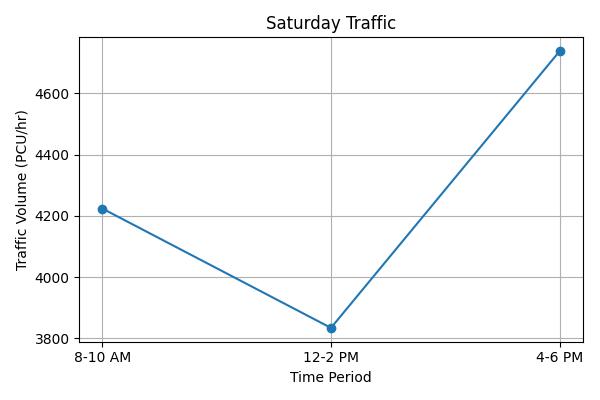
Figure 1: SaturdayTrafficVolumeVariation
Evening rush periods show growing gridlock, as vehicle counts near maximum roadway capacity. Though flow persists,movementslowssharplywhendemandpeaksafter workhours.
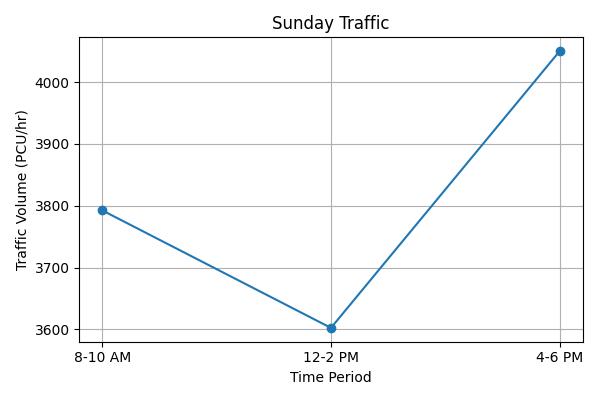
Figure 2: SundayTrafficVolumeVariation
OnSundays,trafficflowsmorelightlythanonworkdays-yet pocketsofslowdownsremainvisibleacrossroutes.
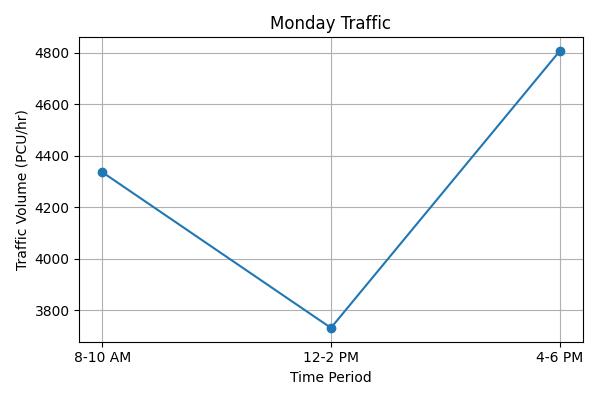
Figure 3: MondayTrafficVolumeVariation
International
Volume: 13 Issue: 05 | May 2026 www.irjet.net p-ISSN: 2395-0072
That Monday saw more than 4800 PCU/hr in the evening rush hints at serious gridlock forming right there. Severe crowdingattheintersectionbecomesclearwhenvolumes spikepastthatmarkafterworkhours.
Yearsahead,trafficvolumesareexpectedtoclimbsharply, drivenbyexpandingcities,risingbusinessactivityandmore vehiclesownedlocally.Withnumberslikelyreachingaround 6900 passenger car units per hour by year five, today's junction setup would struggle even more without timely upgrades.Withoutaddedcapacityorredesigns,congestion willworsennoticeablyundersuchloads.
Table -2: ComparisonofTrafficImprovementAlternatives forAppaJunction
Improveme
Signal
Road
Widening
Roundabout Modera te Low Mediu m Suitablefor Medium Traffic
Flyover High High High BestLongTerm Solution
Despitetestingoptionsliketimedsignals,broaderroads,or circularintersections,resultsshowedlimits.Thesestandard ground-levelfixesfallshortwhenfacingexpectedincreases invehicleflow.
Aboveall,anelevatedcrossingstandsoutasthebestlongtermfixforAppaJunction’slayoutissues.Whileground-level changes could help short term, they lack lasting impact. Instead of merging lanes, lifting traffic overhead reduces conflictsnaturally.Becausedelayspileupduringpeakhours, freeing movement vertically makes sense. With vehicles flowing above intersections, interruptions drop sharply. Rather than widening roads, building upward uses space morewisely.Overtime,thisdesigneasescongestionwithout demandingconstantadjustments.
The proposed flyover system is expected to provide the followingbenefits:
Significantreductionintrafficcongestion
Improvedtrafficcontinuityandtravelspeed
Vehiclewaittimesdroponaverage
Improvedroadwayoperationalefficiency
Reducedfuelconsumptionandvehicularemissions
Enhancedroadwaysafety
Efficientaccommodationoffuturetrafficgrowth
Performance at Appa Junction was examined through categorizedtrafficcounts,convertedintostandardvehicle equivalents.Insteadofrawnumbers,movementefficiency relied on service quality indicators. Forecasting methods helped anticipate upcoming demand patterns. Analysis combinedtheseelementswithouttreatingthemasisolated inputs.
Despite its current layout, the ground-level crossing faces heavyoverloadduringbusyperiods-officialdatashowsa flow reaching 4806.5 passenger car units per hour. This amount pushes past what the site can efficiently manage, bringing prolonged wait times and erratic movement patterns.Performancedropssharply,landinginthelowest tierofservicequalitywhendemandpeaks.Asthroughput strains beyond limits, stop-and-go conditions become routineratherthanexceptional.
Lookingahead,trafficvolumesareexpectedtorisesharplyhitting around 6900 PCU per hour by year five. Without adjustments, the junction's performance will decline noticeably.Yearafteryear,strainbuildswhenflowoutpaces infrastructurecapacity.
Athoroughreviewoftrafficpatterns,guidedbyestablished IRC guidelines, leads to the conclusion that separation of flowsthroughanelevatedstructurebestaddressesdelaysat Appa Junction. When weighed against other control strategies,thisapproachholdsupunderlong-termdemand projections.Unlikesignaladjustmentsorroadwidening,the overhead crossing avoids ongoing interference between streams. Evaluation shows it maintains efficiency even duringpeakfluctuations.Thechoiceemergesclearlywhen performance,safety,andurbanintegrationareconsidered together.
With construction underway,the new flyover shouldease movement along busy roads. Traffic jams may shrink as vehiclesflowmoresmoothlythroughthearea.Safetycould rise due to fewer conflict points at ground level. Future growth in travel volume might be handled without major upgrades. Efficiency gains would come from separating crossingstreamsoftraffic.
Futureresearchstudiesmayinclude:
TrafficsimulationanalysisusingVISSIM,SIDRA,or SYNCHROsoftware.
Examining whether the suggested elevated road makesfinancialsense.Alookatexpensesweighed againstexpectedgainsfollowscloselybehind.
Environmentalimpactassessmentoftheproposed infrastructuresystem.
Integration of Intelligent Transportation Systems (ITS)foradvancedtrafficmanagement.
Comparative analysis of alternative interchange configurations.
International Research Journal of Engineering and Technology (IRJET) e-ISSN: 2395-0056
Volume: 13 Issue: 05 | May 2026 www.irjet.net p-ISSN: 2395-0072
[1] IRC:106-1990,GuidelinesforCapacityofUrbanRoadsin PlainAreas,IndianRoadsCongress,NewDelhi.
[2] IRC:SP:90-2010, Manual for Grade Separators and ElevatedStructures,IndianRoadsCongress,NewDelhi.
[3] IRC:65-2017, Guidelines for Planning and Design of Roundabouts,IndianRoadsCongress,NewDelhi.
[4] Singh, D. P., and Mehta, R. (2022), “Traffic Congestion Reduction Using Flyovers under High Traffic Conditions,” International Journal of Transportation Engineering.
[5] PonSoundaryaandSindhuVaardiniU.(2021),“Flyover DesignandTrafficFlowImprovementinUrbanAreas,” JournalofUrbanTransportationStudies.
[6] Rao, M. J., and Reddy, K. S. (2021), “Simulation-Based AnalysisofFlyoverPerformanceatUrbanIntersections,” InternationalJournalofCivilEngineeringResearch.
[7] Gupta,R.,andShetty,A.(2021),“ComparativeAnalysis of Roundabouts and Signalized Intersections,” TransportationInfrastructureJournal.
[8] Highway Capacity Manual (HCM), Transportation ResearchBoard,WashingtonD.C.,USA.