
International Research Journal of Engineering and Technology (IRJET) e-ISSN: 2395-0056
Volume: 13 Issue: 06 | Jun 2026 www.irjet.net p-ISSN: 2395-0072
International Research Journal of Engineering and Technology (IRJET) e-ISSN: 2395-0056
Volume: 13 Issue: 06 | Jun 2026 www.irjet.net p-ISSN: 2395-0072
1Qurat ul mushtaq, 2Er Sourabh Lalotra
1Student, 2Assistant professor, SSCET, Punjab Technical University, Punjab, India
Abstract-This study investigates the mechanical and durability properties of concrete containing Walnut Shell Ash (WSA) and Waste Paper Ash (WPA) as partial cement replacements, with addition of urea. Equal proportions of WSA and WPA were used to replace cement at various replacement levels, while urea was added at a constant dosage of 0.5 by weight of cement. The mechanical performance of concrete was evaluated through compressive strength, split tensile strength, and flexural strength tests. The experimental results revealed that concrete containing a total replacement of 12% (6% WSA + 6% WPA) with 3% urea exhibited the optimum mechanical performance, achieving higher strength values compared to other replacement levels. The findings indicate that the combined use of WSA, WPA, and urea can enhance concrete properties while promoting the sustainable utilization of agricultural and paper industry wastes, thereby reducing cement consumption and environmental impact.
Keywords: Walnut Shell Ash (WSA), Waste Paper Ash (WPA), Urea, Compressive Strength, Split tensile , Workability, Water Absorption, Eco-friendly Construction, Waste Utilization.
Concreteisoneofthemostwidelyusedconstructionmaterialsduetoitsstrength,durability,andversatility.Itisproducedby combining cement, fine aggregate, coarse aggregate, and water, which harden into a solid mass. The incorporation of supplementary materials and admixtures can further enhance its mechanical and durability properties while promoting sustainableconstructionpractices
Walnut Shell Ash (WSA) is an agricultural waste material obtained by the controlled burning of walnut shells. It contains significant amounts of silica and other mineral compounds that exhibit pozzolanic properties. The utilization of WSA as a partialcementreplacementhelpsreduceenvironmentalpollutionandcementconsumption.Itsincorporationinconcretecan improvesustainabilitywhilemaintainingsatisfactoryWaste
Paper Ash (WPA) is a by-product obtained from the controlled burning of waste paper materials. It contains silica, calcium, and other mineral constituents that can contribute to the pozzolanic activity of concrete. The utilization of WPA as a partial replacement for cement helps in reducing waste disposal problems and conserving natural resources. Its use in concrete promotes sustainable construction while potentially improving certain engineering properties, mechanical and durability performance.
Ureaisanitrogen-basedcompoundthathasrecentlybeenexploredasanadditivein cementationsmaterials.Whenaddedin small quantities, urea can influence the hydration process and modify the properties of concrete. Its incorporation may improveworkabilityandcontributetostrengthdevelopmentundercertainconditions.Therefore,ureahasgainedattentionas apotentialadmixtureforenhancingtheperformanceofconcrete.
Darweesh(2025)investigated the use of Walnut Shell Ash(WSA) asa partial replacementforcementat replacementlevels rangingfrom 5%to 25%. Thestudy reportedthatconcretecontainingupto 15–20%WSAexhibitedsatisfactorymechanical properties, while higher replacement levels resulted in a reduction in strength. The improvement in performance was attributedtothepozzolanicactivityoftheashanditsfillereffectwithinthecementmatrix.
Kejela (2020) evaluated Waste Paper Ash (WPA) as a partial cement replacement at levels of 0%, 5%, 10%, 15%, and 20%. Theresultsshowedthatconcretewith5–10%WPAachievedstrengthvaluescomparabletoconventionalconcrete.However, furtherincreasesinWPAcontentledtoagradualdecreaseincompressivestrengthduetothereducedcementationscontent.
International Research Journal of Engineering and Technology (IRJET) e-ISSN: 2395-0056
Volume: 13 Issue: 06 | Jun 2026 www.irjet.net p-ISSN: 2395-0072
Wangetal.(2020)studiedtheeffectofureaadditiononconcretebyincorporatingureaatdosagesrangingfrom1%to5%by weightofcement.Theresearchersobservedthatlowerdosages,particularlyaround1–3%,positivelyinfluencedthehydration process and strength development, whereas higher dosages caused a reduction in mechanical performance. The study concludedthatanoptimumamountofureacanenhanceconcretepropertieswithoutadverselyaffectingdurability.
A. Cement
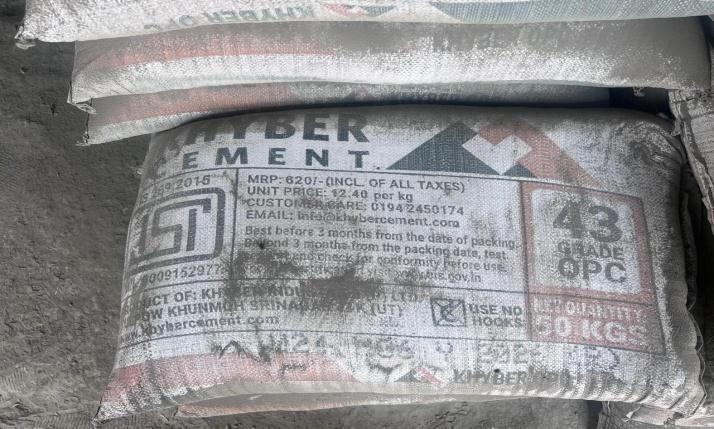
Ordinary Portland Cement (OPC) conforming to 43 grade specifications was employed as the main cementitious material in this investigation. This grade of cement exhibits satisfactory resistance to sulphate attack and develops moderate heat upon hydration.Thecementwasobtainedfromanearbyconstructionmaterialdealer,andKhyberCementwasusedthroughoutthe studyforconcreteproduction.

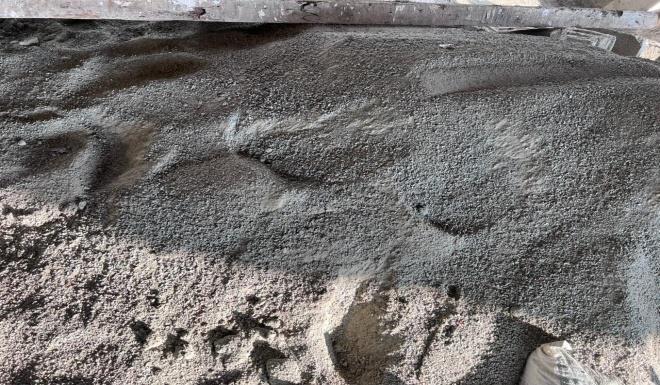
B. Fine Aggregate
Naturalriversandpassingthrougha4.75mmsievewasusedasfineaggregate.Itwascleanandfreefromimpurities.Ithelps fill voids between coarse aggregates and improves concrete workability. The properties of sand, including specific gravity, finenessmodulus,andwaterabsorption,weretestedasperISspecifications.
International Research Journal of Engineering and Technology (IRJET) e-ISSN: 2395-0056
Volume: 13 Issue: 06 | Jun 2026 www.irjet.net p-ISSN: 2395-0072
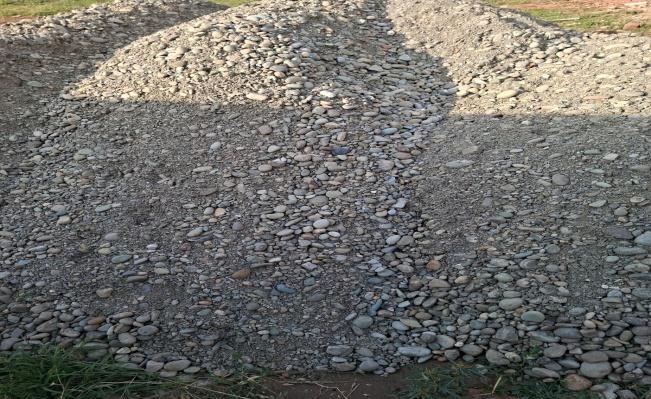
Crushedstoneof20mmnominalsizewasusedascoarseaggregate.Theaggregates wereclean,hard,anddurable,providing strength and stability to concrete. Tests such as specific gravity, water absorption, and impact value were conducted before use.
Walnutshellscollectedfromthelocal villageKanganinDistrictGanderbal werecleaned,sun-dried,burnedundercontrolled conditions, and sieved through a 300 μm sieve to obtain fine ash. This walnut shell ash (WSA) was used as a partial cement replacementduetoitspozzolanicpotential,therebyreducingcementconsumptionandaidinginthesustainablemanagement ofagriculturalwaste.
Waste paper was collected, dried, burned to produce ash, and sieved to obtain uniform fine particles. WPA, containing silica andothercompounds,wasusedasasupplementarycementationsmaterialtoenhanceconcretepropertiesthroughsecondary hydrationreactions.
International Research Journal of Engineering and Technology (IRJET) e-ISSN: 2395-0056
Volume: 13 Issue: 06 | Jun 2026 www.irjet.net p-ISSN: 2395-0072
SiliconDioxide
CalciumOxide
AluminumOxide
FerricOxide
5-15
1-5
MagnesiumOxide MgO 1-5
PotassiumOxide K₂O 1-8
SodiumOxide
SulfurTrioxide
0.5-3
<3 LossonIgnition
2-15
Commercially available urea was added in controlled proportions based on cement weight. It was dissolved in mixing water beforeusetoensureuniformdistributionandtomodifythehydrationandmechanicalpropertiesofconcrete.
A. Mixing Concrete
All theingredientsof concretearethoroughly mixed in the required proportions toobtaina homogeneous mixwith uniform color and consistency. Mixing is carried out either manually or using a mechanical mixer to ensure proper distributionofthematerials
B. Curing
Before testing, the specimens are kept in the moulds for 24 hours, then demoulded, marked for identification, and cured in a water tank. The specimens are removed after 3, 7, and 28 days of curing, surface-dried, and tested in the respectivetestingmachine.
C. Workability
The workability of fresh concrete was determined using the slump cone test, which can be conducted both in the laboratory and at construction sites. The slump cone is a frustum-shaped mould having a top diameter of 10 cm, bottomdiameterof20cm,andheightof30cm.Thistestissuitableforconcretewithmediumworkabilityandisnot recommendedforveryloworveryhighworkabilitymixes.
Concrete was placed in the slump cone in four equal layers, and each layer was compacted with 25 strokes of a standardtampingrod.Theconewasthenliftedvertically,andtheslumpoftheconcretewasmeasuredtodetermine itsworkability.
International Research Journal of Engineering and Technology (IRJET) e-ISSN: 2395-0056
Volume: 13 Issue: 06 | Jun 2026 www.irjet.net p-ISSN: 2395-0072
Fresh concrete is placed in moulds in four layers, and each layer is compacted with 35 strokes for cubes and 25 strokes for cylinders using a standard tamping rod. The top surface is leveled with a trowel, and after 24 hours the specimens are demoulded andcuredinwaterat27±2°C.Thespecimensaretestedafter7,14,and28daysofcuring.
2: compressivestrengthtest7
3: compressivestrengthtest14
4 :compressivestrengthtest28
The split tensile strength test was performed on cylindrical specimens of 150 mm diameter and 300 mm height using a UniversalTestingMachine(UTM).Freshconcretewasplacedinmouldsinlayersandcompactedwith25blowsperlayerusing astandardtampingrod.After24hours,thespecimensweredemouldedandcuredinwaterat27±2°Cfor7,14,and28days. Beforetesting,diametricallinesweremarkedonthespecimens,andthemaximumloadatfailurewasrecordedtodetermine thesplittensilestrength.
International Research Journal of Engineering and Technology (IRJET) e-ISSN: 2395-0056
5:splittensiletest7
6 :splittensiletest14
Fig.7:splittensiletest 28
Volume: 13 Issue: 06 | Jun 2026 www.irjet.net p-ISSN: 2395-0072 © 2026, IRJET | Impact Factor value: 8.315 | ISO 9001:2008 Certified Journal | Page683
7 Days Split Tensile Strength 14 Days Split Tensile Strength 28 Days Split Tensile Strength 7 Days Flexural Strength Test 14 Days Flexural Strength Test
Concrete was cast in beam moulds according to the required mix proportions and compacted with 25 strokes of a standard tamping rod for each layer. After 24 hours, the specimens were demoulded and cured in water at 27 ± 2°C for 7, 14, and 28 days.Beforetesting,thespecimenswereremovedfromthecuringtank,wipeddry,andtestedforflexuralstrength
Fig. 8 :flexuralstrength test7 Fig. 9 :flexuralstrength test14
International Research Journal of Engineering and Technology (IRJET) e-ISSN: 2395-0056
Volume: 13 Issue: 06 | Jun 2026 www.irjet.net p-ISSN: 2395-0072
28 Days Flexural Strength Test
Water Absorption Test
Concretespecimensarecuredfortherequiredperiodandthendriedinanovenuntilaconstantweightisobtained.Thedried specimens are immersed in water for 24 hours, after which they are removed, surface-dried, and weighed to determine the percentageofwaterabsorbed
Concretespecimensarecuredfor28daysandthenimmersedinasulphatesolution.Afterthespecified exposureperiod,the specimensareremoved,surface-dried,andtestedtoevaluatetheeffectofsulphateattackonconcretestrengthanddurability.
International Research Journal of Engineering and Technology (IRJET) e-ISSN: 2395-0056
Volume: 13 Issue: 06 | Jun 2026 www.irjet.net p-ISSN: 2395-0072
This study investigates the effect of replacing cement with Walnut Shell Ash (WSA) and Waste Paper Ash (WPA), along with the addition of 3% urea, on the mechanical and durability properties of concrete. The results indicate that the strength and workabilityofconcreteimproveuptoanoptimumreplacementlevel,afterwhichareductioninperformanceisobserved.The compressive strength of concrete compared to conventional concrete shows optimum performance at 12% replacement of cementwithequalproportionsofWSAandWPAalongwith3%ureaaddition,withamaximumcompressivestrengthof28.23 N/mm² at 28 days of curing. Similarly, the flexural strength also reaches its highest value at the same optimum mix, with a maximum flexural strength of 8.5 N/mm² at 28 days. The split tensile strength of concrete is also enhanced, achieving a maximumvalueof5.6N/mm²at28days ofcuringforthesamemixproportion.In termsofdurability,thewaterabsorption wasfoundtobeminimumattheoptimummixof12%WSAandWPAreplacementwith3%ureaaddition,indicatingimproved densification and reduced porosity of the concrete matrix. Overall, the study concludes that the optimum mix significantly enhancesthemechanicalstrengthanddurabilitycharacteristicsofconcretecomparedtoconventionalconcrete.
1. Adhikary, S. K., N. Rathod, S. D. Adhikary, A. Kumar, and P. Perumal. 2024. “Chemical-Based Self-Healing Concrete: A Review.”DiscoverCivilEngineering1(1):119.
2. Ahmed,A.F.,M.Z.Islam,M.S.Mahmud,M.E.Sarker,andM.R.Islam.2022.“HempasaPotentialRawMaterialtoward aSustainableWorld:AReview.”Heliyon8(1).
3. Akinyemi, B. A., T. E. Kolajo, and O. Adedolu. 2022. “Blended Formaldehyde Adhesive Bonded Particleboards Made fromGroundnutShellandRiceHuskWastes.”CleanTechnologiesandEnvironmentalPolicy24(6):1653–1662.
4. Alfattani,R.,M.A.Shah,M.I.H.Siddiqui,M.A.Ali,andI.A.Alnaser.2021.“Bio-CharCharacterizationProducedfrom Walnut Shell Biomass through Slow Pyrolysis: Sustainable for Soil Amendment and an Alternate Bio-Fuel.” Energies 15(1):1.
5. Awoh, E. T., J. Kiplagat, S. K. Kimutai, and A. C. Mecha. 2023. “Current Trends in Palm Oil Waste Management: A ComparativeReviewofCameroonandMalaysia.”Heliyon9(11).