
International Research Journal of Engineering and Technology (IRJET) e-ISSN:2395-0056
Volume: 13 Issue: 04 | Apr 2026 www.irjet.net p-ISSN:2395-0072

International Research Journal of Engineering and Technology (IRJET) e-ISSN:2395-0056
Volume: 13 Issue: 04 | Apr 2026 www.irjet.net p-ISSN:2395-0072
Zuhaib Ahmed Khan
Department of Civil Engineering, JSS Science and Technology University Mysuru, Karnataka, India
Abstract - 3D printing technology has recently started gaining attention in the construction industry due to its ability to reduce construction time, labour work, and material wastage. Many developed countries have already adoptedthistechnologyandsuccessfullyuseditforbuilding houses and structural components. In India, a few companies have begun working with 3D printing in construction, proving that the technology is possible and practical. However, its use is still limited and not yet commonly adopted across the construction sector. Traditional construction methods continue to dominate because they are more familiar and widely accepted, even though they often require more time, higher labour effort, and may lead to increased cost in the long run. 3D printing provides advantages such as faster construction, improved accuracy,reducedwaste,andflexibilityindesign.Thispaper discusses the present situation of 3D printing in India, highlights the gap between traditional and modern construction methods, and explains why adopting this technology can help improve efficiency in the future. Increasing awareness, research, and practical implementationcanhelpmake3Dprintingamorecommon and accepted method in India’s construction industry
Key Words: 3D Printing,Construction Technology ,Civil Engineering,AdditiveManufacturing,Sustainable Construction, Digital Fabrication
3D printing in construction is an emerging technology in which structures are created layer by layer using a computer controlled printing system and a digital design model. Instead of using traditional construction methods that require extensive manual labour, formwork, and longer construction time, 3D printing uses automated machines to place construction material precisely accordingtotherequireddesign.Thistechnologyhelpsin reducing material wastage, improving construction accuracy, and completing projects in less time compared to conventional techniques. It also allows engineers and architects to design complex shapes and structures that aredifficulttoconstructusingtraditionalmethods.
In recent years, the demand for faster, economical, and sustainable construction methods has increased due to rapid urbanization and population growth. Traditional
construction methods, although reliable, often involve high labour cost, longer project duration, and significant materialwaste.3Dprintingtechnologyprovidesamodern solution to these challenges by introducing automation and digital accuracy into the construction process. Because of its potential advantages, many countries have already started adopting 3D printing technology in construction projects. Although India has also begun exploring thistechnology,itsusageisstill limitedandhas not yet become a common practice in the construction industry
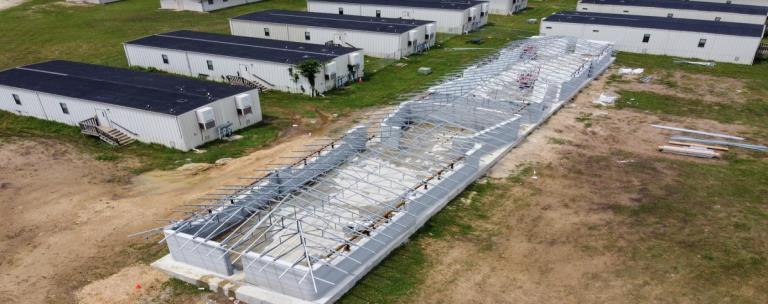
.Many developed countries have already started implementing 3D printing technology in the construction industry,showingpromisingresultsintermsofefficiency, accuracy, and reduction in construction time. One of the well known companies working in this field is ICON, a United States based construction technology company. In 2018, ICON developed one of the first 3D printed houses using its advanced Vulcan printing technology. The companylaterexpandeditsworkin2022byparticipating in large scale housing projects in Texas, where multiple residential buildings were constructed using automated printing systems. These houses were built using specially developed concrete materials that allow the printer to create strong and durable structures layer by layer. ICON has also been involved in projects such as 3D printed militarybarracksfortheUnitedStatesArmy,showingthat this technology can be used for both residential and institutionalconstructionpurposes.
International Research Journal of Engineering and Technology (IRJET) e-ISSN:2395-0056
Volume: 13 Issue: 04 | Apr 2026 www.irjet.net
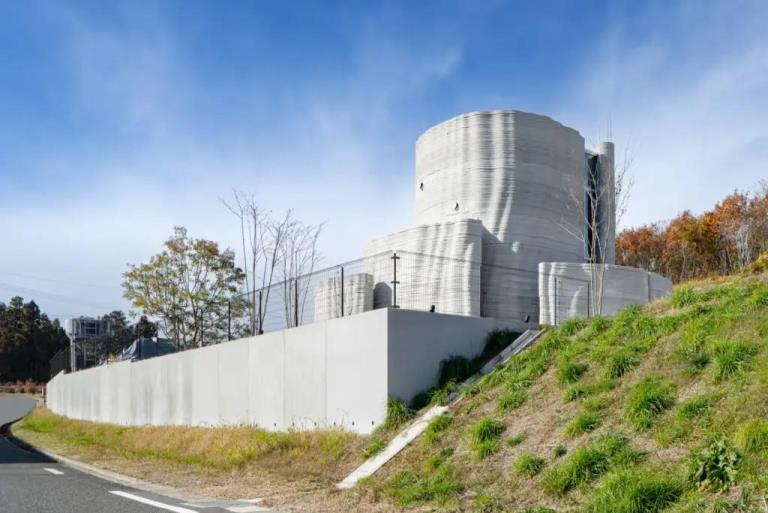
Apart from the United States, Japan has also shown significant progress in this field. In 2023, a Japanese construction company developed a 3D printed house designed to withstand earthquake forces, which is an important factor in regions that are prone to seismic activity. The structure was created using robotic printing techniques and specially prepared concrete material to improve structural strength and durability. The project demonstrated that 3D printing technology can also be adapted to meet safety requirements in disaster prone areas.
These international examples show that 3D printing technologyisgraduallymovingfromexperimentalstageto practical implementation. Continuous improvements are being made in printing software, material composition, andautomationsystemsinordertomaketheconstruction process faster, more economical, and environmentally friendly. Many researchers believe that 3D printing can play an important role in the future of construction by reducing labour dependency, construction time, and overallprojectcost.
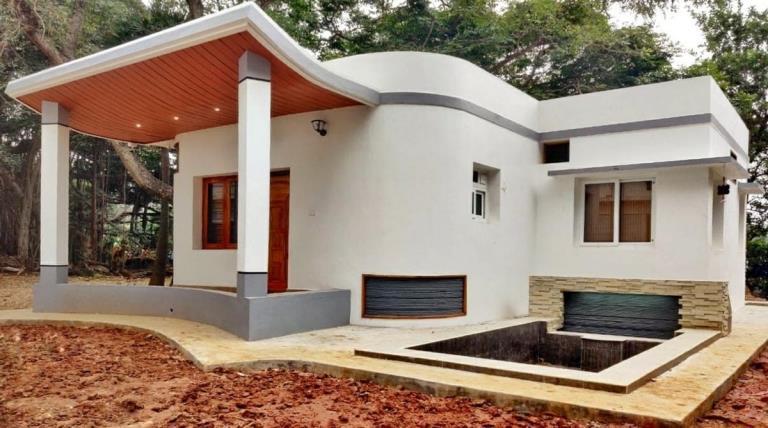
In India, 3D printing technology in construction is still developing, but several companies and research organizations have started working towards implementing this technology in real construction projects. One of the early examples is Tvasta Manufacturing Solutions, a Chennai based startup, which constructedoneofIndia’sfirst3Dprintedhousesin2021 atIITMadras.Theprojectdemonstratedthatconstruction using automated printing systems is possible in India using specially prepared concrete material. The building was completed in a shorter duration when compared to conventionalconstructionmethodsandshowedreduction inmaterialwastage.
p-ISSN:2395-0072
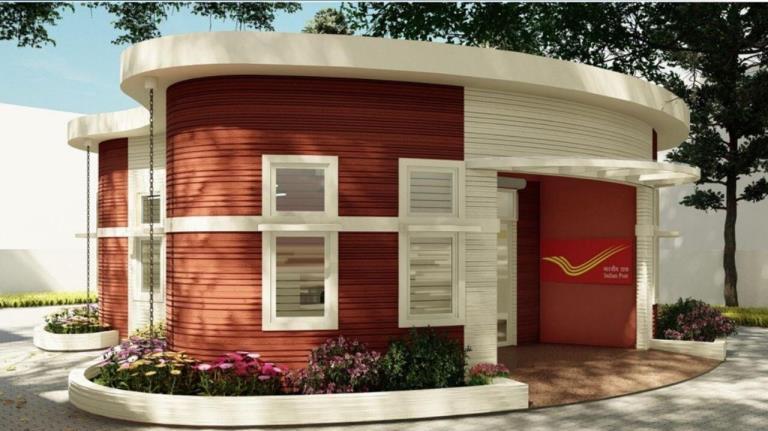
Another importantdevelopmenttookplacein2023 when L and T Construction completed India’s first 3D printed postofficebuildinginBengaluru.Theconstructionprocess required less time and labour when compared to traditional methods, proving that additive manufacturing technology can be applied successfully in real infrastructure projects. In addition to this, Simpliforge Creations,an Indiancompanyworkinginconstruction 3D printing technology, has also contributed towards development of 3D printed infrastructure components such as bridge structures around 2024. These developments show that interest in 3D printing technology is gradually increasing within the Indian constructionsector.
However, despite these advancements, 3D printing technology has not yet become common in everyday construction practices in India. Limited awareness, high initial investment cost, lack of technical training, and limitedavailabilityofspecializedmaterialsaresomeofthe major factors that slow down the adoption of this technology.Whencomparedtodevelopedcountries,India isstillintheearlystageofimplementing3Dprintingona larger scale. With increasing research, government support, and educational awareness, 3D printing has the potential to become a widely accepted construction methodinthefuture.
International Research Journal of Engineering and Technology (IRJET) e-ISSN:2395-0056
Volume: 13 Issue: 04 | Apr 2026 www.irjet.net p-ISSN:2395-0072
One of the major challenges in implementing 3D printing technology in India is the limited awareness regarding its practical use in the construction industry. Although many engineeringinstitutionshaveintroducedbasic3Dprinting for educational purposes, its application in civil engineering construction is still not widely understood. Many students and professionals are more familiar with traditional construction methods, which makes them hesitant toadopt new technologies. Studiesshowthat the additive manufacturing market in India is growing at a rate of more than 20 percent annually, indicating increasinginterestinthetechnology.However,largescale constructionapplicationsarestillnotcommonlytaughtor practicedinmanyinstitutions.
Another important challenge is the high initial cost required to adopt 3D printing technology in construction. Largescale3Dprinters,specializedsoftware,andsuitable construction materials require significant investment. Manysmallandmediumconstructioncompaniesmayfind it difficult to afford such technology at an early stage. Traditional construction methods generally require lower initial investment, which makes them more commonly preferred despite the long term benefits of 3D printing suchasreducedlabourcostandfasterprojectcompletion.
3D printing in construction requires specially prepared concrete mixtures that allow smooth printing and strong bonding between layers. In India, research on cost effective and locally available printable materials is still developing. Limited availability of suitable materials increases dependence on expensive mixtures, which affectstheaffordabilityofthetechnology.Moreresearchis required to develop materials that are economical and suitableforIndianenvironmentalconditions.
Since 3D printing technology is relatively new in the construction sector, many engineers and workers do not have practical knowledge about operating large scale printers or using digital modelling software. Proper training and technical education are required to improve understanding of this technology. Without skilled professionals, companies may face difficulty in implementing3Dprintinginrealconstructionprojects.
Another challenge is the absence of clear construction guidelines for 3D printed structures in India. Current building codes are mainly designed for traditional construction methods. Because 3D printing is still developing, standard rules and approval procedures for printed structures are not fully established. This creates uncertainty for companies who want to adopt this technologyinrealprojects.
One of the main advantages of using 3D printing in constructionisthereductionintimerequiredtocomplete projects. Since the process is automated and controlled using digital design, construction work can be carried out continuously with less interruption. In many global examples, small houses have been constructed within a few days using 3D printing technology, while traditional construction methods may take several weeks or even months for completion. Faster construction can be very useful in countries like India where there is high demand forhousingandinfrastructuredevelopment.
3D printing technology reduces the need for a large number of workers at the construction site. The printing machine performs most of the work based on the digital design, and only a few trained professionals are required to operate and monitor the system. This can help reduce labour cost and also reduce the chances of human error during construction. Although skilled workers are still necessary, the overall dependency on manual labour can bereducedcomparedtotraditionalconstructionmethods.
In traditional construction, a considerable amount of material is often wasted due to improper estimation, cutting, and manual handling. 3D printing technology helps reduce this problem because the material is placed only where it is required according to the digital design. The layer by layer method ensures better use of material andreducesunnecessarywastage.Thiscanhelpinmaking construction more economical and environmentally friendly.
Another benefit of 3D printing is the ability to create complex shapes and designs more easily. In traditional construction, complex structures may require more time, labour, and cost. However, with digital modelling and
International Research Journal of Engineering and Technology (IRJET) e-ISSN:2395-0056
Volume: 13 Issue: 04 | Apr 2026 www.irjet.net p-ISSN:2395-0072
automated printing, engineers and architects can design structures with better flexibility. This allows more innovation in construction design without significantly increasingthedifficultyofconstruction.
With increasing awareness and continuous research, 3D printing technology has strong future potential in the Indian construction industry. Educational institutions can help by introducing topics related to digital construction and 3D printing so that future engineers become familiar with this technology. As more companies start using this method, the cost of equipment and materials may also reduce. In the future, 3D printing can help in faster construction of houses, infrastructure development, and moreefficientuseofconstructionmaterials.
3D printing technology has the potential to bring significant improvement in the construction industry by reducing construction time, minimizing material wastage, and providing better design flexibility. Many developed countries have already started implementing this technology in real construction projects, showing that automatedconstructionispracticalandeffective.InIndia, some companies have successfully demonstrated the use of3Dprintinginconstruction,butthetechnologyisstillin theearlystageofadoption.
Several challenges such as lack of awareness, high initial investment cost, limited research on construction materials, and lack of proper technical training currently slowdownthewidespreaduseofthistechnologyinIndia. However, with increasing research, educational support, and collaboration between government and private organizations,thesechallengescanbegraduallyreduced.
3D printing can help improve efficiency in construction and support faster development of infrastructure and housing projects. With proper planning and increased awareness, this technology can become a useful solution for modern construction requirements in India. In the future, 3D printing may play an important role in transforming traditional construction practices into more efficientandinnovativemethods.
[1] ICON Technology, “3D Printed Homes Using Vulcan ConstructionSystem,”ICONOfficialWebsite,2018.
[2]U.S.ArmyEngineerResearchandDevelopmentCenter, “Construction of 3D Printed Military Barracks using AutomatedPrintingTechnology,”2022.
[3] Serendix Corporation, “Development of 3D Printed EarthquakeResistantHouseinJapan,”2023.
[4] Tvasta Manufacturing Solutions, “3D Printed House ConstructionatIITMadras,”Chennai,India,2021.
[5] Larsen and Toubro Construction, “India’s First 3D PrintedPostOfficeBuildingatBengaluru,”2023.
[6] S. Lim, R. Buswell, T. Le, S. Austin, A. Gibb and T. Thorpe, “Developments in Construction Scale Additive Manufacturing Processes,” Automation in Construction Journal,2012.
[7] Wohlers Associates, “Wohlers Report on Additive Manufacturingand3DPrintingIndustry,”2023.
[8] IMARC Group, “India 3D Printing Market Size, Share andGrowthForecast,”2025.