
International Research Journal of Engineering and Technology (IRJET) e-ISSN: 2395-0056
Volume: 13 Issue: 04 | Apr 2026 www.irjet.net p-ISSN: 2395-0072
International Research Journal of Engineering and Technology (IRJET) e-ISSN: 2395-0056
Volume: 13 Issue: 04 | Apr 2026 www.irjet.net p-ISSN: 2395-0072
Suhas Sawant¹, Piyush Vasudev1, Tanmay Wankhade1, Rutik Thokal1, Prof. M. D. Ahirrao2
1B.Tech Students, Department of Civil Engineering, JSPM's Rajarshi Shahu College of Engineering, Pune, India
2Professor, Department of Civil Engineering, JSPM's Rajarshi Shahu College of Engineering, Pune, India
ABSTRACT - Concrete remains one of the most essential materials in modern construction; however, its production poses serious environmental concerns due to high carbon emissions from cement manufacturing and the extensive use of natural resources. Simultaneously, construction and demolition (C&D) activities generate significant waste, creatingdisposalandsustainabilitychallenges.
The experimental investigation focuses on evaluating key properties such as workability, compressive strength, flexural strength, load–deflection response, and failure behaviorofRCCbeams.Theresultsindicatethatbeamswith controlled material replacement, particularly in low-stress regions such as the neutral axis, demonstrate comparable structural performance to conventional beams without significant loss of strength. Among the tested mixes, 4% replacement of cement with CSP showed optimal performance with minimal reduction in mechanical properties.
Overall, the study demonstrates that the combined use of agriculturalandconstructionwastematerialscanprovidea sustainable and cost-effective alternative for concrete production, contributing to resource conservation and environmentallyresponsibleconstructionpractices.
KEY WORDS: Coconut Shell Powder, Recycled Aggregates, Sustainable Concrete, RCC Beams, Compressive Strength, Eco-friendly Materials
1.INTRODUCTION
In recent years, the demand for concrete has increased rapidly due to continuous growth in construction and infrastructure development. Concrete is one of the most preferred construction materials due to its high strength and long-term durability & use in different types of structuressuchasbuildings,roads,andbridges.However, the production of concrete, especially cement, has a negative impact on the environment as it releases a large amount of carbon dioxide. In addition, excessive use of natural aggregates is leading to depletion of natural resources.
At the same time, construction and demolition (C&D) activitiesaregeneratingahugeamountofwastematerials. Most of this waste is not properly reused and ends up causing environmental problems such as land pollution. Because of this, there is a need to find alternative materials that are both sustainable and economical. Coconut Shell Powder (CSP), which is an agricultural waste, can be used as a partial replacement for cement. Similarly, recycled aggregates obtained from construction waste can be used instead of natural aggregates. This not only helps in reducing waste but also decreases the demandfornaturalresources.
Inthisstudy,anattemptismadetousethesematerialsin reinforced cement concrete (RCC) beams and study their behavior. Special attention is given to the neutral axis region of the beam, where the stress is relatively low. By replacing materials in this zone, it is possible to reduce material usage without affecting the overall strength significantly.
This study focuses on evaluating the structural performance of reinforced cement concrete (RCC) beams incorporatingCSPandrecycledaggregates.Akeyaspectof the investigation is the strategic use of these materials in regions of the beam that experience relatively low stress, particularly near the neutral axis. Since concrete in this zonecontributeslesstoloadresistance,selectivematerial replacement can optimize resource utilization without significantlyaffectingstructuralbehavior.
In this study, an experimental approach was used to understandthebehaviorofRCCbeamsmadewithCoconut ShellPowder(CSP)andrecycledaggregates.Theworkwas carried out in a step-by-step manner, starting from material preparation to final testing and analysis. The experimental program consists of different mix combinations,assummarizedinTable1.
Volume: 13 Issue: 04 | Apr 2026 www.irjet.net
Table 1: Mix Proportions for Different Cases
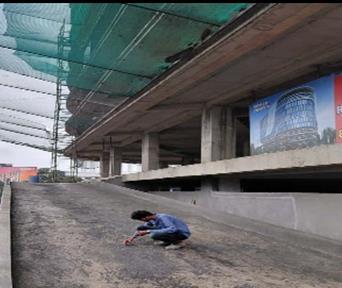
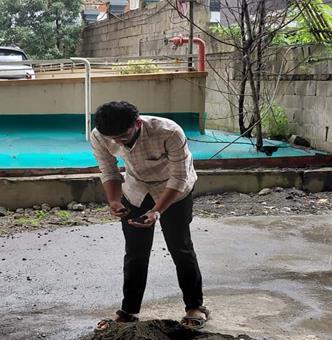
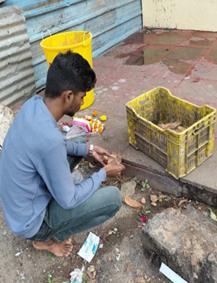
The entire process was divided into stages such as materialcollection,mixdesign,casting,curing,testing,and resultevaluation.
a) Coconut Shell Powder (CSP)
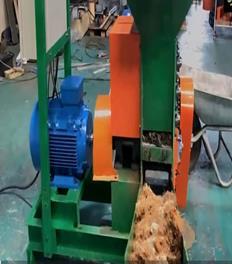
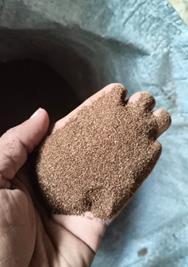
Waste coconut shells were collected from local sources, cleaned, and dried. The shells were then crushed and ground to obtain Coconut Shell Powder (CSP), which was sieved through a 90-micron sieve to achieve uniform fineness. FTIR analysis was carried out to confirm the presenceofsilicaandpozzolanicproperties.
b) Construction and Demolition (C&D) Waste
Demolition waste was collected from nearby construction sitesandprocessedtoobtainusableaggregates.Thewaste materials were crushed manually and mechanically to produce coarse and fine aggregates, which were then sievedintorequiredsizes(10mmand20mm).Duetothe higher water absorption capacity of recycled aggregates, they were pre-soaked prior to mixing to maintain proper workability and water balance. Basic tests such as aggregate impact value were conducted in accordance with relevant IS standards to evaluate their suitability for concreteapplications.
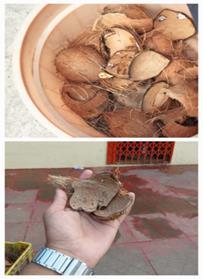


A control mix of M20 grade concrete was designed in accordance with IS 10262:2019 guidelines. Coconut Shell Powder(CSP)wasusedasapartialreplacementofcement atlevelsof4%and8%,whileconstructionanddemolition (C&D)wasteaggregateswereusedaspartialreplacement ofnaturalaggregates.
RCC beam specimens were prepared with different combinations of CSP and recycled aggregates. Special emphasis was given to the region below the neutral axis, whereconcreteprimarilyactsasastresstransfermedium rather than a load-resisting component. This approach helps in optimizing material usage without significantly affecting structural performance. A constant water–cement ratioof0.45–0.50wasmaintainedforall mixes to ensure uniformity and reliable comparison of results. Propercontrolofwatercontentalsohelpedinmaintaining consistent workability and strength characteristics across differentmixes.
Volume: 13 Issue: 04 | Apr 2026 www.irjet.net
Concrete specimens were cast in the form of cubes (150×150×150mm) for compressive strength testing and beams(150×150×700mm)forflexuraltesting.
The freshly prepared concrete was placed into oiled Moulds in three equal layers, with each layer compacted using a table vibrator to eliminate entrapped air and achieve proper densification. After casting, the specimens werekeptundisturbedfor24hourstoallowinitialsetting. Subsequently, the specimens were Demoulded and cured in a water tank for 7, 14, and 28 days to ensure adequate hydrationandstrengthdevelopment.
2.4.1 Fresh Concrete Tests
Workability of fresh concrete was evaluated using the slump test to study the effect of CSP and recycled aggregates on consistency. The variation in slump values was used to assess the ease of mixing, placing, and compactionofdifferentconcretemixes
2.4.2 Mechanical Properties
Compressive strength tests were conducted on cube specimens at 7, 14, and 28 days as per IS 516:2014 to evaluate the strength development of concrete with replacementmaterials.
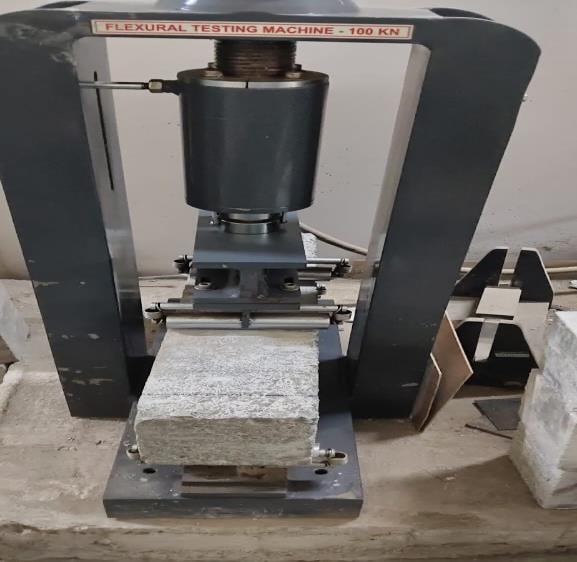
Flexural strength of RCC beams was determined under two-point loading using a Universal Testing Machine (UTM) to evaluate load-carrying capacity and crack behavior. The test also helped in understanding the structural performance and failure characteristics of the beams.
2.4.3 Structural Performance of Beams
The structural behavior of beams was assessed through load–deflection analysis, where mid-span deflection was measured using a dial gauge under incremental loading.Thepositionof the neutral axiswasobserved and compared with conventional beams. Crack patterns and failure modes, including flexural and shearfailure,werecarefullyrecorded.
2.5
The experimental results were compared with conventional RCC beams to evaluate performance variations. The optimum replacement levels of CSP and C&D waste aggregates were determined based on the followingcriteria:
Compressivestrengthretentionofatleast90%of thecontrolmix
Comparableflexuralperformance
Reductionindensityandself-weight Furtheranalysiswascarriedoutintermsofcost efficiency,resourceconservation,andoverall sustainabilitybenefits.
Fourier Transform Infrared Spectroscopy (FTIR) analysis was carried out on the collected Coconut Shell Powder (CSP)sampleatNationalChemicalLaboratory(NCL),Pune to identify the chemical functional groups and pozzolanic characteristics of the ash. The FTIR spectrum shows a strong absorption peak around 1000–1050 cm⁻¹, confirmingthepresenceofsilicateandaluminategroups.
These groups are responsible for pozzolanic reactions in concrete. The additional presence of hydroxyl and carbonyl groups indicates partially burnt biomass components.
The results clearly show that Coconut Shell Powder possessespozzolaniccharacteristicsandcanbeeffectively used as a partial cement replacement in concrete. The selected replacement levels of 4% and 8% used in this projectarejustifiedbasedonFTIRanalysis.
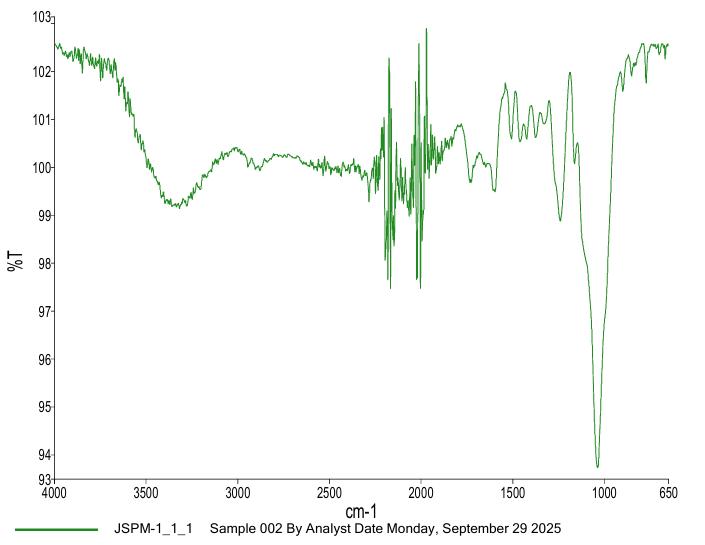
Fig.3.1
The FTIR test conducted at NCL Pune confirms that Coconut Shell Powder contains silicate and aluminate functional groups, indicating potential for pozzolanic activity.
To determine the impact resistance of Recycled Aggregates(RA)andtoevaluatetheirsuitabilityforpartial or full replacement of natural aggregates in concrete and pavementworks.
Recycled aggregates are obtained from demolished concrete and generally consist of natural aggregate particles covered with old adhered mortar. Due to this
International Research Journal of Engineering and Technology (IRJET) e-ISSN: 2395-0056
Volume: 13 Issue: 04 | Apr 2026 www.irjet.net p-ISSN: 2395-0072
mortar layer, RA shows lower strength, higher porosity, higherwaterabsorption,andhigherimpactvalue.The RA tested show an AIV of 13.58% suitable for use as 20-40% replacementofnaturalfineandcoarseaggregates
Table2: Determination of Aggregate Impact Value (AIV) of Recycled Aggregates

Weightofoven-dryRAsample 501gm
Weightpassing2.36mmsieve 68gm
AIVResult 13.58%
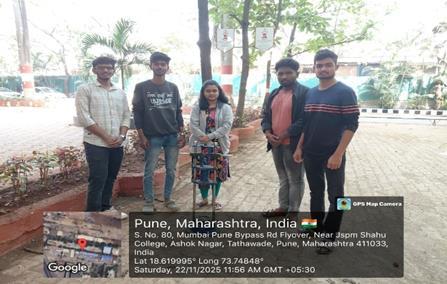
3.3 SLUMP CONE TEST
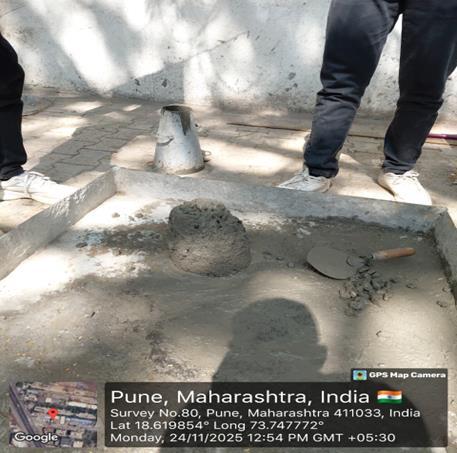
To determine the workability of freshly prepared concreteusingtheSlumpConeTest.
Workability refers to the ease with which concrete can be mixed, placed, compacted, and finished. Theslumpconetestisthemostwidelyusedfieldtest to measure workability. The slump values of the nominalmixandreplacementmixeswererecorded.
Table 3: Workability Comparison of Nominal and Replacement Mixes
The results indicate the relative workability and consistencyofeachmix.
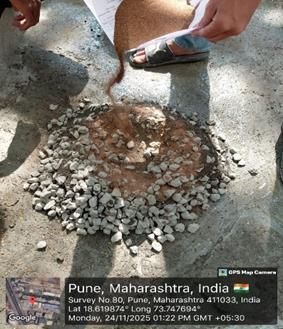
AIV TEST

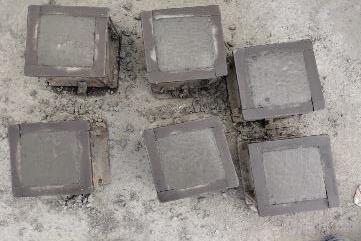
A) CUBE CASTING
To cat cubes for Nominal, 4%, and 8% replacement of cement,aggregateandevaluatecompressivestrength.The concrete mix was designed for M20 grade and the mix design was done as per is 10262:2019 and is 456:2000.
Concreteisthemostwidelyusedconstructionmaterialdue toits strength,durability,andavailabilityofrawmaterials. However, the extraction of natural aggregates and cement production causes environmental stress. To reduce this, sustainable replacements such as agricultural waste, demolitionwaste,andrecycledaggregatesarebeingused. Theobjectiveistoevaluatetheeffectsoftheseeco-friendly replacements on workability and compressive strength of concrete.
International Research Journal of Engineering and Technology (IRJET) e-ISSN: 2395-0056
Volume: 13 Issue: 04 | Apr 2026 www.irjet.net p-ISSN: 2395-0072
Thisstudyfocusesonpartialreplacementof-
Cementwithcoconutshellpowder–4%and8%
Fine aggregate with demolition waste sand– 1020%
Coarse aggregate with recycled coarse aggregate–25-40%
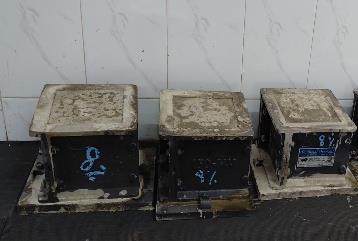
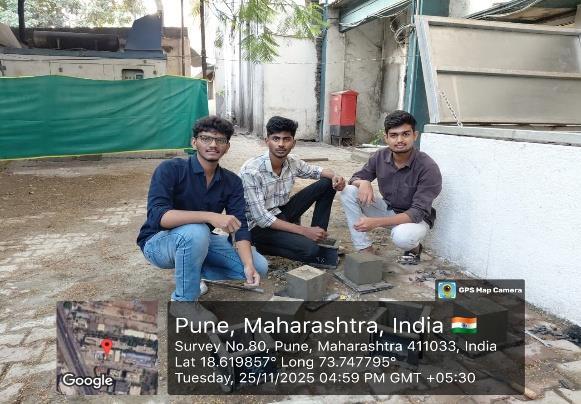
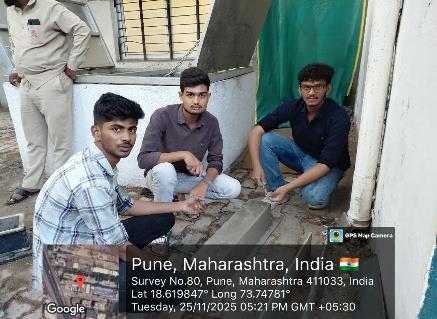
To cast reinforced concrete beams using modified concrete containing 4% CoconutShell Powder (CSP) ascementreplacement,10%DemolitionWasteSand (DWS) as fine aggregate replacement, and 25% Recycled Coarse Aggregate (RCA) as coarse aggregate replacement, and evaluate the fresh &
hardened properties. Beam casting for Case B was not performed as the mix exhibited lower compressive strength and poor cohesiveness. The higher replacement levels adversely affected workabilityandstructuralintegrity;therefore,itwas notconsideredsuitableforflexuralbeamtesting.
Inthiscasestudy,threetypesofreinforcedconcrete beamswerecasttoevaluatetheeffectofsustainable materialreplacementonstructuralperformance.
Beam–1 (Control Beam) Thecontrolbeamwascast using the conventional M20 concrete mix without anyreplacementofcementoraggregates.Thisbeam served as a reference to compare the structural performance, flexural strength, and crack behavior with the beams incorporatingpartial replacementof CoconutShellPowder(CSP)andrecycledaggregates.
Beam–2 (Partial Replacement Beam) was prepared with 4% Coconut Shell Powder (CSP) as cement replacement, 10% Demolition Waste Sand (DWS) as fine aggregate replacement, and 25% Recycled Coarse Aggregate (RCA) as coarse aggregate replacement. The Beam–2 was to investigate the flexural behavior of beams with partialreplacementofconventionalmaterials.
Beam–3 (Neutral Axis Beam) was cast such that only the neutral axis region, which experiences low tensilestresses,usedthereplacementmix(4%CSP+ 10% DWS + 25% RCA),while the remaining portion of the beam was made with normal concrete. The purpose of Beam–2 was to study the impact of selective material replacement in the zero-stress region on the overall flexural performance of the beam.
Volume: 13 Issue: 04 | Apr 2026 www.irjet.net
4.1
Compressive strength tests were carried out on cube specimens at 7, 14, and 28 days in accordance with IS 516:2014 to evaluate the effect of partial replacement of cementandaggregates.
Discussion
The early-age strength of the replacement mixes was slightly lower than that of conventional concrete due to the slower pozzolanic reaction of Coconut Shell Powder (CSP). However, at later stages (28 days), strength development improved as CSP contributed to secondary hydration, leading to the formation of additional C–S–H gel.The inclusion of Recycled Coarse Aggregate (RCA) resultedina marginal reductioninstrengthduetohigher water absorption and a weaker interfacial transition zone (ITZ).Despitethis,CaseAretainedasignificantportionof the strength (around 85–90% of control), indicating its suitabilityforM20gradestructuralapplications
Key Observations
CSP enhances micro-filling and contributes to long-termstrengthgain.
RCAincreasesporosity,butpropercuringhelpsin minimizingstrengthloss. Overallcompressivestrengthremainswithinacceptable structurallimits.

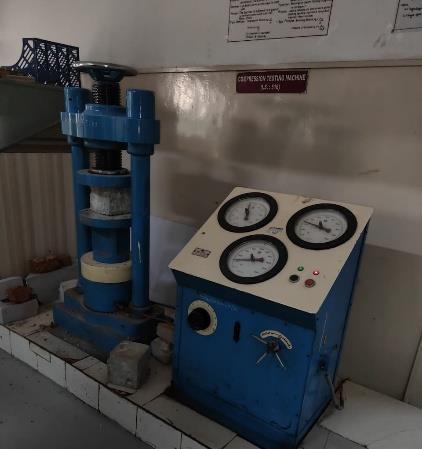
FlexuralstrengthtestingwascarriedoutusingaUniversal Testing Machine under two-point loading to evaluate the bending performance of RCC beams. Beam–1 (Control Beam), cast with conventional concrete, was used as a reference for comparison. Beam–2 (Partial Replacement Beam) exhibited comparable load-carrying capacity with slightvariationduetotheinclusionofrecycledaggregates. Beam–3(Neutral AxisReplacement Beam)showed nearly similar flexural strength, as the replacement was limited to the zero-stress region. The mid-span deflection values of all beams were found to be within permissible serviceabilitylimits.
Initial cracks appeared at the tension zone (bottom).
Cracks propagated vertically indicating flexural failure.
Nosuddenbrittlefailurewasobserved
Neutral axis position remained within expected depthrange.
Volume: 13 Issue: 04 | Apr 2026 www.irjet.net
Since replacement in Beam–2 was done only at Neutral Axis (zero-stress zone), it did not significantlyaffectbendingresistance.
Thisprovesthatselectivematerialreplacementin low-stress zones can maintain structural performance.
Sustainability & Cost Analysis
Utilization of demolition waste reduces landfill burden.
Coconut Shell Powder is an agricultural byproduct,reducingcementconsumption.
Reduction in natural aggregate extraction conservesresources.
Estimated material cost reduction: 5-6 % (based onlocalrates).
Environmental Benefits:
Lower carbon footprint due to reduced cement usage.
Promotes circular economy in construction industry.
Sustainablewastemanagementapproach.
Table 6 Flexural Comparison of Beam
From the experimental study carried out on RCC beams using Coconut Shell Powder (CSP) and recycled aggregates,afewimportantobservationsweremade. It was found that partial replacement of cement with CSP canbeusedwithoutcausingamajorreductioninstrength. In this study, 4% replacement gave better results compared to higher percentages. Similarly, replacing a portion of fine and coarse aggregates with demolition waste materials produced acceptable results in terms of strengthandworkability.
Overall, the study shows that using CSP and recycled aggregates can help in reducing waste, saving natural resources,andmakingconcretemoresustainable,without major loss in performance when used in proper proportions.
A. Partial replacement of cement with 4% Coconut Shell Powder (CSP) resulted in satisfactory compressive strength and maintained structural integrity of concrete.
B. Replacement of fine aggregate with 10% Demolition Waste Sand (DWS) and coarse aggregate with 25% Recycled Coarse Aggregate (RCA) produced concrete withacceptablemechanicalproperties.
C. The compressive strength of the modified mix remained within permissible limits for M20 grade concrete, confirming its suitability for structural applications.
D. Flexural strength of RCC beams with partial replacement was found to be comparable to conventional beams, with similar load–deflection behavior.
International Research Journal of Engineering and Technology (IRJET) e-ISSN: 2395-0056
Volume: 13 Issue: 04 | Apr 2026 www.irjet.net p-ISSN: 2395-0072
E. Crack patterns observed were typical flexural cracks, and all beams exhibited ductile failure without brittle behavior
F. The beam with replacement only at the neutral axis (zero-stress zone) showed no significant reduction in flexural strength, proving that selective replacement inlow-stressregionsisstructurallyfeasible.
G. Higher replacement levels (Case B) resulted in reduced compressive strength and poor workability, makingthemunsuitableforstructuralapplications.
H. TheuseofCSPandrecycledaggregatescontributesto reduction in cement consumption, conservation of naturalresources,andeffectivewasteutilization.
The following references were consulted to understand the properties of concrete, behavior of recycled aggregates,andtheapplicationofCoconutShellPowderas asustainableconstructionmaterial.
These studies provide a strong foundation for evaluating mechanical performance, durability aspects, and environmental benefits of modified concrete. Relevant IS codes were also referred to for mix design, testing procedures, and standard specifications. The selected literaturesupportsthefeasibilityofusingwastematerials inRCCstructuresforsustainabledevelopment.
1) Experimental Study on Partial Replacement of Concrete Below Neutral Axis of Beam. (Volume 3, Issue29SpecialIssue–2024)
2) Coconut Shell Ash As Partial Replacement of OrdinaryPortlandCementInConcreteProduction (Volume1,Issue8,September2018)
3) Construction and Demolition Waste Management –AReview(Vol.84(2015)
4) The use of coconut shell ash as partial replacement of cement to improve the thermal properties of concrete and waste management sustainability in nigeria and africa, for radiation shielding application. Scientific african 27 (2025) e02578,5february2025.
5) Utilizing Construction and Demolition (C&D) Waste as Recycled Aggregates (RA) in Concrete (ProcediaEngineering174 (2017)1028–1035)
6) Investigation on partial replacement of cement with coconut shell ash and coarse aggregate with coconut shell with the addition of steel fibers (Received July 15, 2024, Revised December 14, 2024,AcceptedJanuary2,2025)
7) Evaluation of optimal concrete mix design with coconutshellashasapartialcementreplacement.
8) Compressive strength and durability of concrete with coconut shell ash as cement replacement international journal of geomate, june, 2020, vol.18,issue70
9) Preliminary Analysis of the Use of Construction
Waste to Replace Conventional Aggregates in Concrete
10) RecycledAggregateFromC&DWaste&ItsUseIn Concrete – A Breakthrough Towards SustainabilityInConstructionSector:AReview 11) IS 10262:2019 – Concrete Mix Proportioning –Guidelines
12) IS 516:2014 – Methods of Tests for Strength of Concrete