
International Research Journal of Engineering and Technology (IRJET) e-ISSN: 2395-0056
Volume: 13 Issue: 03 | Mar 2026 www.irjet.net p-ISSN: 2395-0072
International Research Journal of Engineering and Technology (IRJET) e-ISSN: 2395-0056
Volume: 13 Issue: 03 | Mar 2026 www.irjet.net p-ISSN: 2395-0072
Ranjitha U1 , Sahil Pasha2 , Shriya Shridhar3,Vishwasnayaka S4
1234Department of ECE,PES College Of Engineering Mandya, Karnataka, India
5AssistantProfessor, Department of ECE,PES College Of Engineering Mandya, Karnataka, India
Abstract - Heart disease is one of the major causes of death across the world. Early detection of cardiovascular problems can help prevent serious medical conditions and improve patient health. With the development ofmachinelearningand smart healthcare technologies, it has become possible to analyze medical data and predict diseases more efficiently. This paper presents a smart heart disease prediction and monitoring system that combines hardware monitoring with machine learning techniques. The proposed system measures heart rate using sensors and displaystheheartconditiononan LCD screen. The system categorizes the heart rate into three conditions: tachycardia, bradycardia,andnormal.Inaddition, a machine learning model analyzes medical attributes from a dataset to predict whether a patient has heart disease.The results demonstrate that the system can effectively monitor heart conditions and provide predictive analysis using machine learning algorithms. This system can assist healthcare professionals in early diagnosis and improve preventive healthcare.
Key Words: Heart Disease Prediction, Machine Learning, Heart Rate Sensor, Healthcare Monitoring, Artificial Intelligence
Heartdiseaseisoneofthemostcommonhealthproblems affecting people worldwide. Many individuals suffer from cardiovasculardisordersdue tounhealthylifestylehabits, stress,lackofphysicalactivity,andpoordiet.Ifheartdisease is not detected at an early stage, it may lead to severe complicationsorevendeath.Traditionaldiagnosticmethods relyonmedicaltestsanddoctorevaluation.Althoughthese methods provide accurate results, they require regular hospital visits and laboratory examinations. With the increasingavailabilityofhealthcaredata,machinelearning techniquescanbeappliedtoanalyzepatientinformationand identifypotentialhealthrisks.Machinelearningalgorithms arecapableoflearningpatternsfrommedicaldatasetsand predicting whether a patient is likely to develop heart disease.Byintegratingmachinelearningwithsensor-based monitoringsystems,itbecomespossibletodevelopsmart healthcaresolutionsthatprovidereal-timemonitoringand predictive analysis. The objective of this research is to developaheartdiseasemonitoringandpredictionsystem that uses a heart rate sensor and machine learning algorithmstodetectabnormalheartconditionsandpredict thelikelihoodofheartdisease.
Several research studies have focused on using machine learning algorithms for predicting heart disease. These approaches analyze patient medical data and use classification techniques to determine the probability of disease.Decisiontreealgorithmshavebeenwidelyusedfor disease classification due to their simplicity and interpretability. Support vector machines have also been applied for heart disease prediction because they can effectively classify complex datasets. Random forest algorithms combine multiple decision trees and provide improvedaccuracycomparedtoindividualmodels.Recent studies have also explored neural networks and deep learningmethodsforanalyzinghealthcaredatasets.These techniques can detect complex relationships between different medical attributes and improve prediction accuracy. Although many prediction models have been proposed, combining hardware monitoring with machine learning analysis can provide more practical healthcare solutions. This research focuses on integrating heart rate monitoringwithmachinelearningbaseddiseaseprediction.
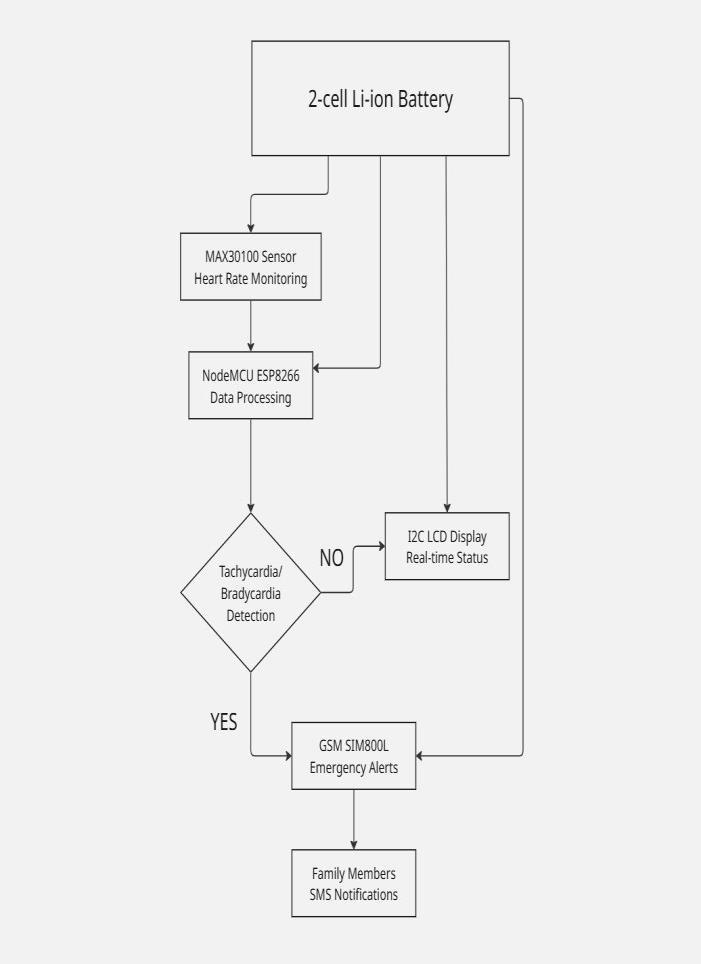
Theproposedsystemmonitorsheartrateusingasensorand analyzes patient health data using machine learning algorithms. The system measures heart rate values and categorizes the heart condition into different states. The measuredvaluesaredisplayedonanLCDscreen.Theheart rateconditionsareclassifiedasfollows:
Tachycardia–highheartrate
Bradycardia–lowheartrate
Normal–healthyheartrate
Inadditiontoheartratemonitoring,themachinelearning modelanalyzesmedicalattributessuchasage,cholesterol level,bloodpressure,andheartratetodeterminewhethera patientislikelytohaveheartdisease
International Research Journal of Engineering and Technology (IRJET) e-ISSN: 2395-0056
Volume: 13 Issue: 03 | Mar 2026 www.irjet.net p-ISSN: 2395-0072
4. METHODOLOGY
The methodology of the proposed system includes data collection,preprocessing,modeltraining,andprediction.
4.1 DATA COLLECTION
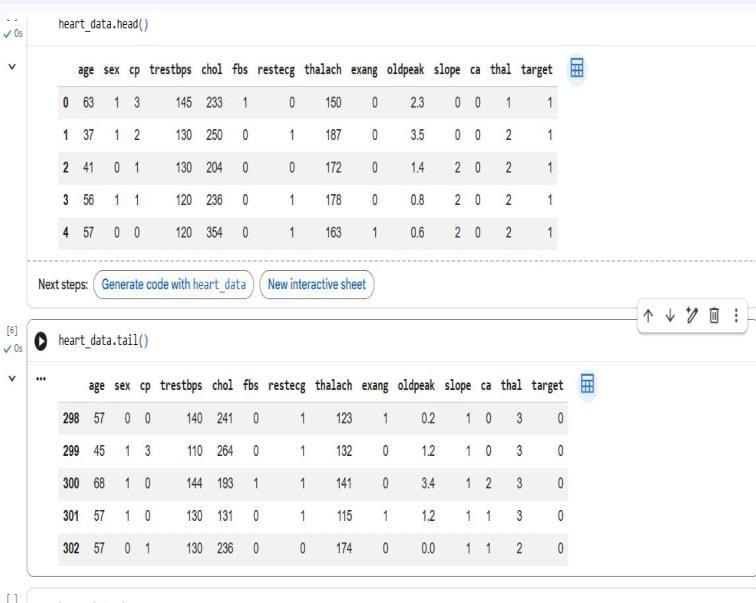
The dataset used in this study contains various medical parametersrelatedtoheartdisease.Theseparametersare used as input features for training the machine learning model.
Table -1: Sample Dataset Attributes
Attribute Description
Age Ageofthepatient
Sex Genderofthepatient
ChestPainType Type of chest pain
experienced
BloodPressure Restingbloodpressure
Cholesterol Serumcholesterollevel
MaximumHeartRate Maximum heart rate achieved
Target Presence or absence of heartdisease
4.2
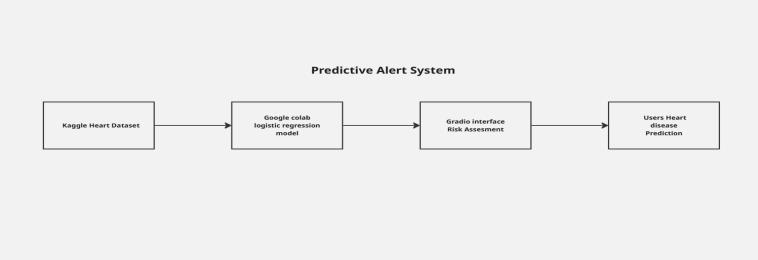
Themachinelearningmodelistrainedusingthedatasetto identifypatternsassociatedwithheartdisease.Thetrained modelisthenusedtopredictthepresenceofheartdisease basedoninputmedicalparameters.
5. RESULTS AND DISCUSSION
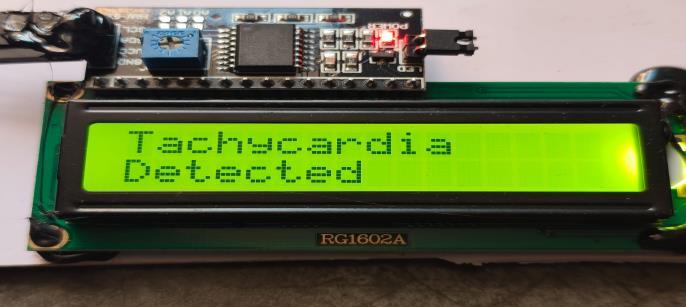
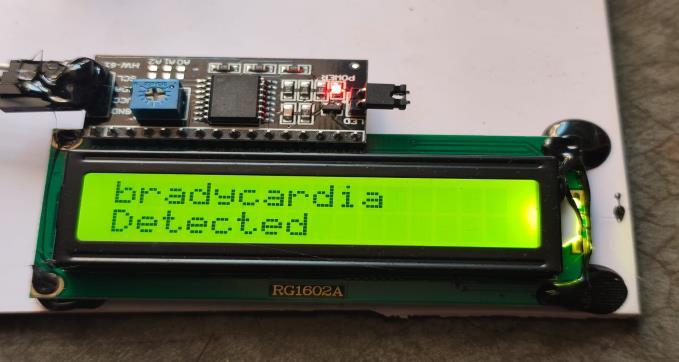
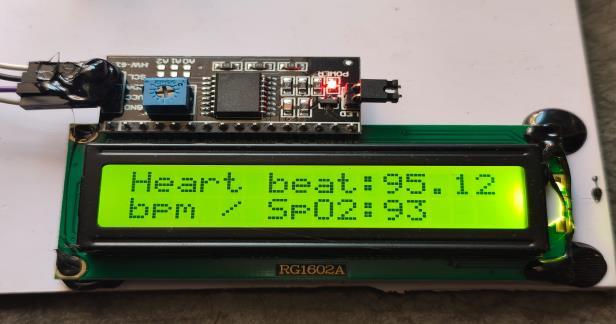
The developed system was tested using both hardware monitoring and machine learning prediction models. The heart rate sensor measures the heart rate of the user and displaystheresultonanLCDscreen.Thesystemcategorizes the heart rate based on beats per minute. The prediction
International Research
Volume: 13 Issue: 03 | Mar 2026 www.irjet.net p-ISSN: 2395-0072
modelisimplementedusingaLogisticRegressionalgorithm, which provides reliable classification performance. The modelachievedanaccuracyofapproximately85%during testing.
Table -2: Heart Rate Classification
Heart Rate (BPM)
<60BPM
60–100BPM
>100BPM
5.1Hardware Results
5.2Software Results
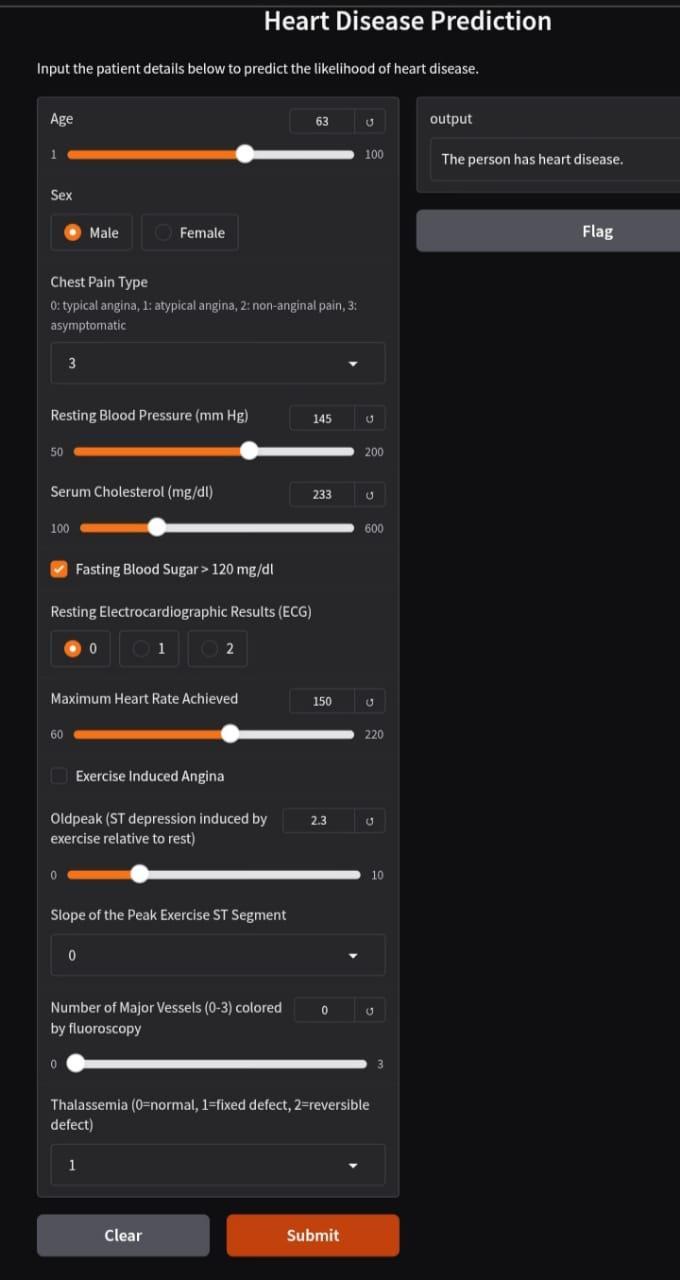
Amachinelearningmodelstudiespatienthealthinformation such as age, blood pressure, cholesterol levels, and heart activitytounderstandpatternsrelatedtoheartdisease.Itis trainedusingpastmedicalrecordswheretheconditionof thepatientisalreadyknown,whichhelpsthesystemlearn how different factors are connected to the disease. When newdata isgiven,themodel comparesitwith whatithas learned and predicts whether the person may have heart disease, often providing a likelihood score. Different techniquescanbeusedtoimprovehowaccuratelythemodel makesthesepredictions.Suchasystemcansupportdoctors bygivingquickinsightsandhelpinginearlydetection,butit isnotmeanttoreplacemedicalexpertise.
International Research Journal of Engineering and Technology (IRJET) e-ISSN: 2395-0056
Volume: 13 Issue: 03 | Mar 2026 www.irjet.net p-ISSN: 2395-0072
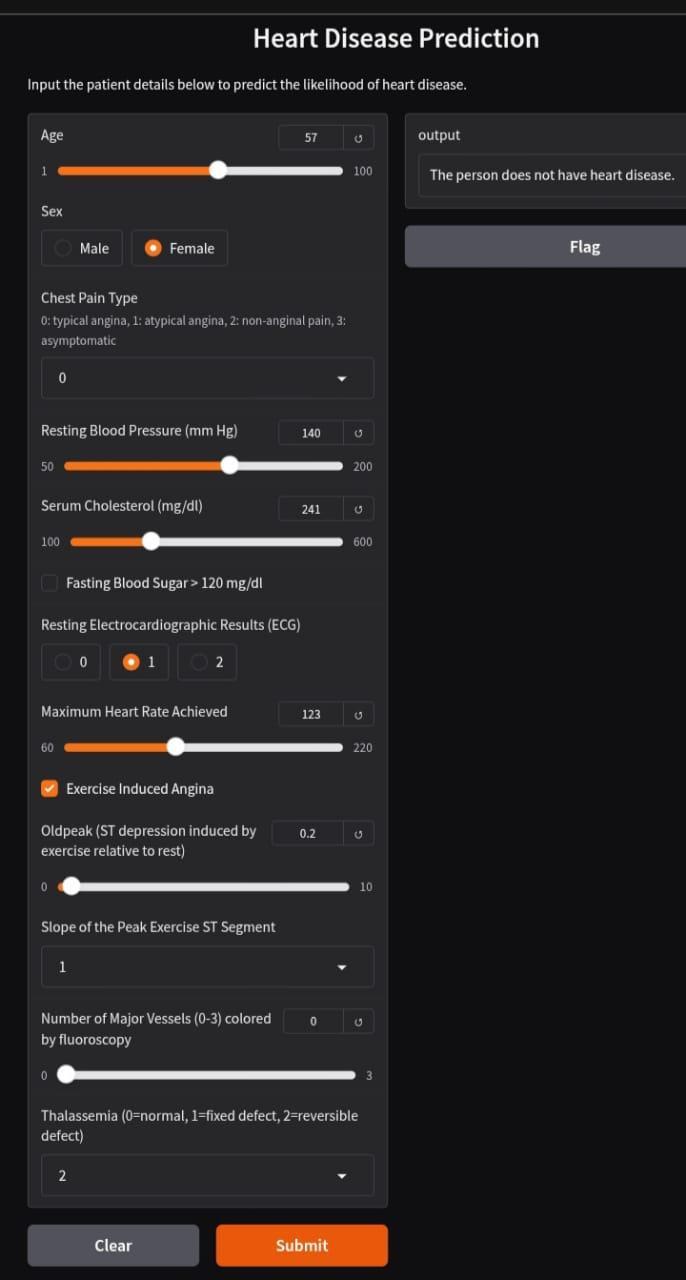
The experimental results demonstrate that the proposed system can effectively monitor heart rate conditions and providepredictiveanalysisforheartdiseasedetection.
Thispaperpresentedasmartheartdiseasemonitoringand predictionsystemusingmachinelearningtechniques.The systemmonitorsheartrateusingsensorsanddisplaysthe condition on an LCD screen. The machine learning model analyzesmedicalattributesandpredictswhetherapatientis likelytohaveheartdisease.Theresultsdemonstratethatthe proposedsystemcanassisthealthcareprofessionalsinearly detection of cardiovascular diseases and improve patient monitoring. Integrating machine learning with health monitoring devices can significantly enhance preventive healthcare.
The proposed heart disease prediction and monitoring systemcanbefurtherimprovedinseveralways.Infuture work,thesystemcanbeintegratedwithInternetofThings (IoT)technologytoenablereal-timeremotemonitoringof patienthealthdata.Thiswouldallowdoctorsandhealthcare professionalstotrackpatientconditionsfromanylocation. Additionalphysiologicalparameterssuchasbloodoxygen level, body temperature, and ECG signals can also be incorporated to improve the accuracy of heart disease prediction. Advanced machine learning and deep learning algorithms can be implemented to enhance prediction performanceandprovidemorereliablediagnosticresults. Furthermore, the system can be developed as a mobile or web-based application to make it easily accessible for patients and healthcare providers. This will enable continuousmonitoringandearlydetectionofcardiovascular diseases, ultimately contributing to improved healthcare servicesandpatientsafety.
[1] A. Kumar and S. Reddy, “IoT-Based Wearable Heart Monitoring Systems,” International Journal of Smart HealthcareSystems(IJSHS),
[2] L. Zhang, Y. Chen, and F. Liu, “Cloud-Assisted ECG Monitoring for Early Cardiac Risk Detection,” Journal of CloudComputingApplications(JCCA),
[3]R.PatelandT.H.Wong,“Low-PowerEdgeDevicesfor Cardiovascular Health Tracking,” Edge Computing in HealthcareJournal(ECHJ),
[4]J.FernandesandK.Rao,“MobileApplicationsforRealTime ECG Visualization,” Mobile Health Innovations Magazine(MHIM),
[5]T.AlvarezandM.Choi,“PredictiveHealthMonitoring Using Physiological Time-Series Data,” Smart Health AnalyticsJournal(SHAJ),