
International Research Journal of Engineering and Technology (IRJET) e-ISSN: 2395-0056
Volume: 13 Issue: 02 | Feb 2026 www.irjet.net p-ISSN: 2395-0072
International Research Journal of Engineering and Technology (IRJET) e-ISSN: 2395-0056
Volume: 13 Issue: 02 | Feb 2026 www.irjet.net p-ISSN: 2395-0072
Dr. S. Parthasarathy¹, Harini S 2,Deeksha G 3, Peraambigai Dhevi V S 4, Sivasusila S 5 , Mr. R. Thangasankaran 6
1 Professor, Department of Electrical and Electronics Engineering
6 Assistant Professor, Department of Electrical and Electronics Engineering
2,3 Undergraduate Students, Department of Information Technology
4,5 Undergraduate Students, Department of Computer Science and Engineering
K.L.N. College of Engineering, Sivagangai, Tamil Nadu, India
Abstract – Mobile-based women safety applications have emerged as an effective medium for providing immediate assistance during emergency situations. Despite their increasing adoption, a significant limitation in many existing systems is their dependence on continuous internet connectivity. In real-world scenarios such as network outages, low-signal regions, or power constraints, this dependency can disrupt alert delivery and reduce system reliabilityduringcriticalmoments.
This paper presents Safety Shield, a women safety mobile application developed to ensure consistent and reliable emergency alert generation under both online and offline conditions. The system classifies emergency situations into three categories unsafe, mid danger, and most danger and enables alert activation through multiple mechanisms, including SOS button interaction, device shake detection, and voice-based commands. In the absence of internet connectivity, the application switches to SMS-based communication and incorporates an OTP verification mechanismtoconfirmrescueacknowledgment.
Each generated alert includes essential contextual information such as the selected danger level, the user’s geographical location, and the device battery status, allowing responders to better assess the situation. The system was evaluated under controlled usage conditions to examine alert triggering accuracy, delivery reliability, and offline behavior. The results demonstrate that the proposed approach improves alert continuity and response assurance when compared to conventional solutions that rely exclusivelyoninternet-basedcommunication.
Key Words: Women safety, offline alert system, emergency response, OTP confirmation, mobile application,Flutter-basedsystem
Concerns related to women’s personal safety continue to increase across urban and semi-urban environments. While the widespread use of smartphones presents an opportunity to deliver rapid emergency assistance through mobile applications, practical challenges often
arise during real-life distress situations. Conditions such as poor network availability, sudden panic, and restricted ability to interact with application interfaces can significantly reduce the effectiveness of existing safety solutions.
Several women safety applications provide functionalities such as SOS alerts, live location sharing, and emergency contactnotifications.However,mostofthesesystemsrely primarily on active internet connectivity for alert transmission and confirmation. Experimental observations indicate that alerts may fail or experience delayswhenmobiledataisunavailable,eventhoughbasic communication services such as SMS remain functional. Additionally, applications that depend on a single alerttriggeringmechanismmaynotbereliablewhentheuseris unable to operate the device manually during an emergency
To address these limitations, this work proposes Safety Shield, a multi-trigger women safety application designed tofunctionreliablyundervaryingnetworkconditions.The system integrates multiple alert activation methods and introduces an offline confirmation mechanism to ensure that emergency notifications are both delivered and acknowledged. The primary objective of this study is to enhancealertreliabilityandprovideuserswithassurance that assistance has been successfully initiated, even in environmentswithlimitedornointernet
Despite the growing availability of mobile-based women safety applications, real-world emergency response remains constrained by structural and operational limitationswithinexistingsystems.Mostcurrentsolutions dependheavilyonuninterruptedinternetconnectivityfor alert dissemination, live location sharing, and responder notification. In practical emergency scenarios, such dependency proves unreliable due to network outages, low signal availability, or battery constraints, resulting in delayedorfailedalerts.Thiscreatesacriticalgapbetween the moment assistance is required and the time help is actuallyinitiated.
2026, IRJET | Impact Factor value: 8.315 | ISO 9001:2008 Certified Journal | Page 114
Volume: 13 Issue: 02 | Feb 2026 www.irjet.net p-ISSN: 2395-0072
In addition to connectivity challenges, many safety applications rely on single-mode activation mechanisms that require deliberate manual interaction. During highstress or physically restrictive situations, users may be unable to unlock their devices or navigate application interfaces, rendering such systems ineffective. Furthermore, the lack of acknowledgment mechanisms leaves users uncertain about whether their emergency alerts have been received or acted upon. This absence of confirmationincreasespsychologicaldistressandreduces trust in the system. Collectively, these shortcomings limit the reliability, responsiveness, and practical usability of existing women safetysolutions,highlighting the need for asystemcapableofensuringalertcontinuity,multi-modal activation, and response assurance under diverse operationalconditions.
Safety Shield is proposed as a resilient women safety mobile application engineered to provide continuous and reliable emergency assistance under both online and offline conditions. The system adopts a multi-level emergency classification model that categorizes incidents into unsafe, mid danger, and most danger, allowing responses to be proportionate to the severity of the situation. Emergency alerts can be triggered using multiple activation methods, including an SOS button, device shake detection, and voice-based commands, ensuring accessibility even when manual interaction is limited.
To address connectivity constraints, the system integrates an offline alert mechanism using SMS through an Android native communication module. When internet access is unavailable, emergency messages containing critical contextual information such as danger level, geographical location, and device battery status are transmitted directly to trusted contacts. An OTP-based verification mechanism is incorporated to confirm legitimate rescue attempts and to notify the user once assistance has been acknowledged. Incident data is securely logged for future analysis and reference. By combiningmulti-triggeractivation,offlinecommunication, andconfirmation-basedresponseassurance, SafetyShield establishes a dependable safety framework that enhances user confidence, reduces response uncertainty, and strengthensreal-worldemergencyintervention.
ThedevelopmentoftheSafetyShieldapplicationfollowed a structured and iterative methodology, with primary emphasis on operational reliability, accessibility during emergencies, and confirmation of response initiation. The design approach was guided by practical observations of existing women safety systems and the challenges encountered during real-world emergency situations.
Based on these observations, the system architecture and functional workflow were progressively refined to ensure dependablealertgenerationunderbothonlineandoffline conditions.
The initial analysis identified a recurring limitation in existingwomensafetyapplications:excessivedependence oncontinuousinternetconnectivityandsingle-modealert activation. During emergency situations, users may encounter poor network coverage or may not be in a position to interact with complex application interfaces. To address this, the scope of the system was defined around two key requirements: ensuring alert delivery even in the absence of internet access and enabling emergency activation through multiple, easily accessible triggers. This focus shaped the overall system design, prioritizing reliability and simplicity over feature complexity.
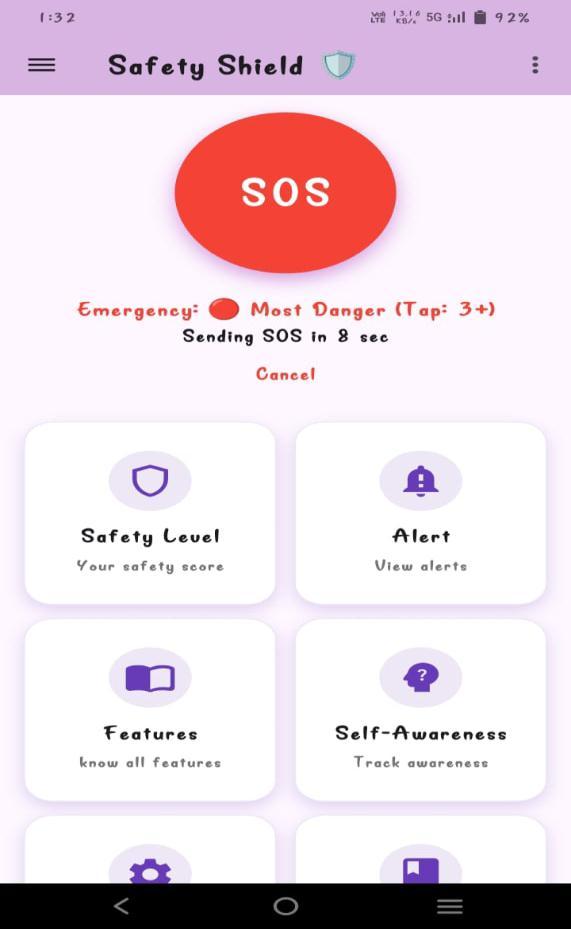
To improve usability during high-stress situations, the system was designed to support multiple emergency activation mechanisms. In addition to a conventional SOS button, the application integrates device shake detection
Volume: 13 Issue: 02 | Feb 2026 www.irjet.net
and voice-based commands as alternative triggers. This multi-triggerapproachensuresthatalertscanbeinitiated even when manual interaction is restricted. Trigger validation logic was incorporated to minimize accidental activation while maintaining rapid responsiveness during genuineemergencies.
3. Offline Alert Communication and Confirmation Mechanism
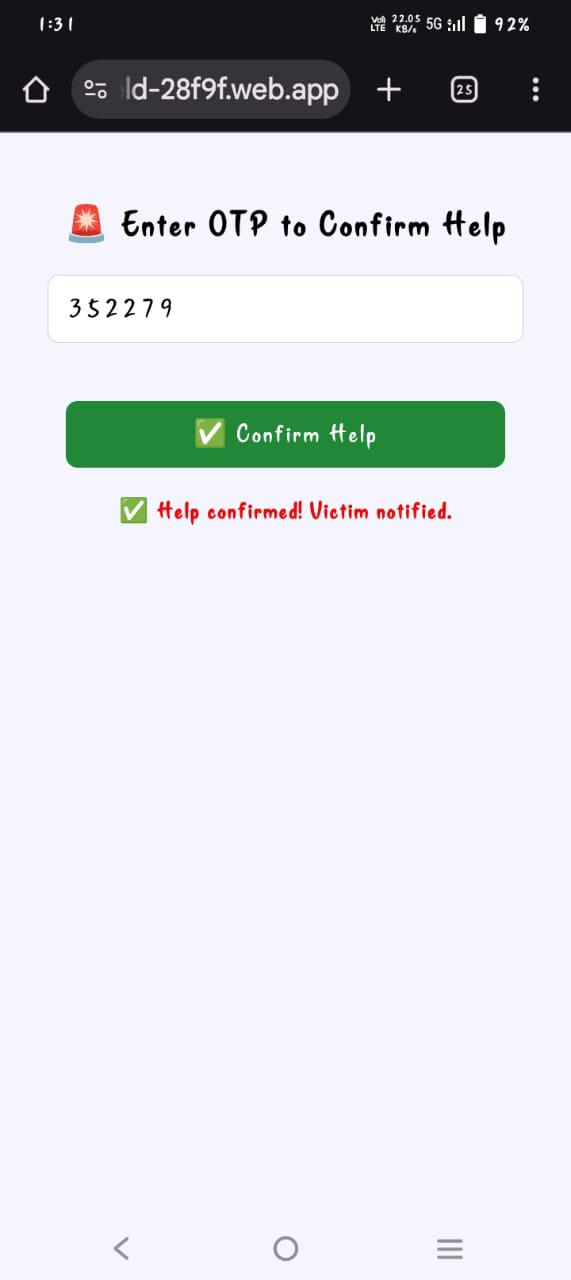
A key methodological component of Safety Shield is its ability to function under constrained connectivity conditions. When internet access is unavailable, the system automatically switches to an offline communication mode using SMS through an Android native module. Emergency messages are delivered to preconfigured trusted contacts along with contextual details required for immediate response. An OTP-based verification mechanism is employed to confirm that a trusted contact has acknowledged the alert, providing the user with reassurance that assistance has been initiated. This confirmation mechanism also helps prevent misuse andfalsealerts.
4.DataCaptureandSecureIncidentLogging
Upon emergencyactivation, the systemcaptures essential contextual information, including the selected danger level, the user’s current geographical location, and the device battery percentage. This information is packaged with the alert to support informed decision-making by responders.Allincident-relateddataissecurelystoredfor traceability and future reference, ensuring transparency andaccountabilitywithoutcompromisinguserprivacy.
5.PlatformSelectionandImplementationStrategy
A mobile-first development approach was adopted based on the widespread availability of smartphones and their suitability for rapid emergency interaction. The application frontend was developed using Flutter to ensure cross-platform compatibility, while backend servicesandauthenticationweremanagedusingFirebase. Native Android components were integrated for handling offline SMS and voice-based alert delivery. This hybrid implementation strategy enabled seamless coordination betweenapplicationlogicanddevice-levelcommunication services.
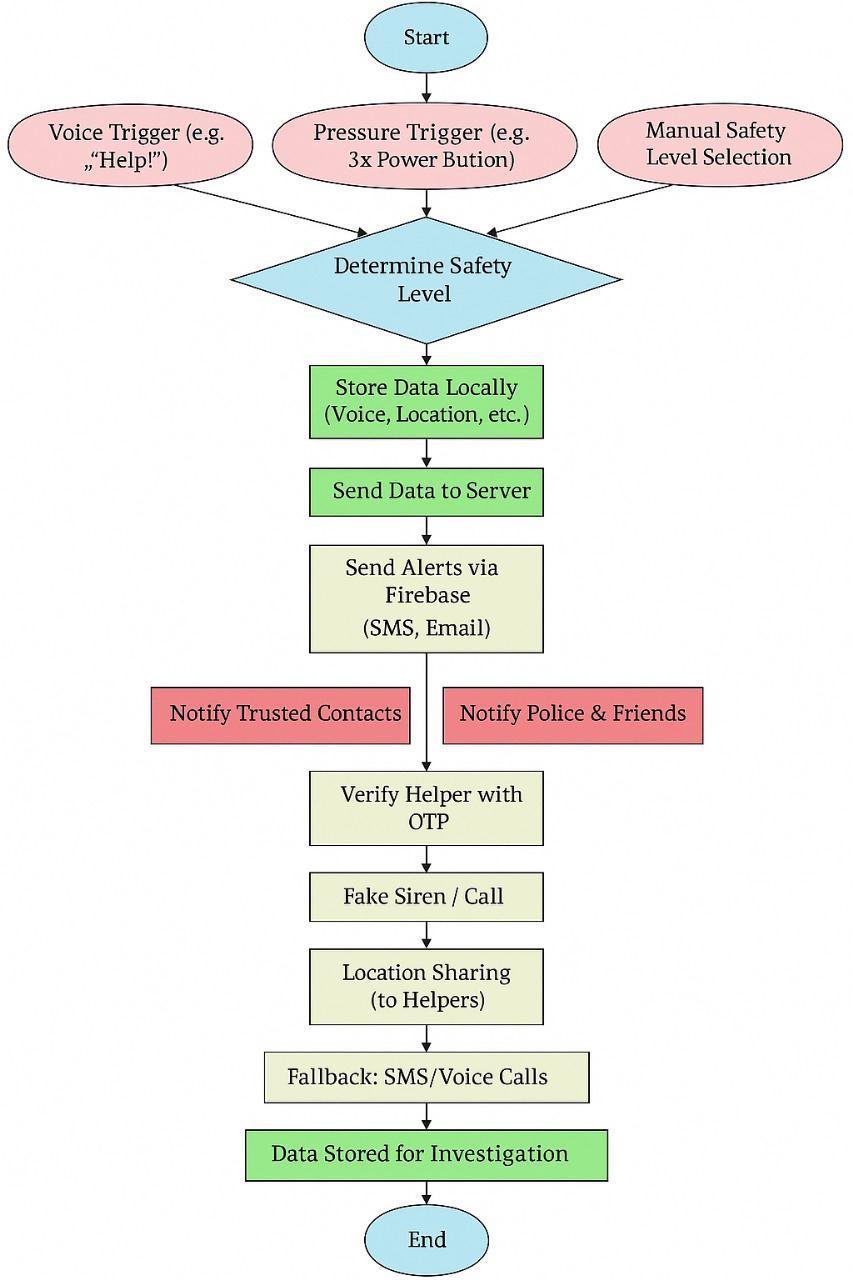
After trigger validation, the application captures essential contextual information, including the user’s geographical location at the time of activation, device battery percentage, and emergency severity classification. A connectivity check is then performed to determine the mostsuitablecommunicationmode.Wheninternetaccess is available, alert information is transmitted through the backend for processing and notification. In scenarios whereconnectivityislimitedorunavailable,theworkflow is automatically redirected to the offline communication module, enabling the delivery of SMS and voice alerts directlytotrustedcontacts.
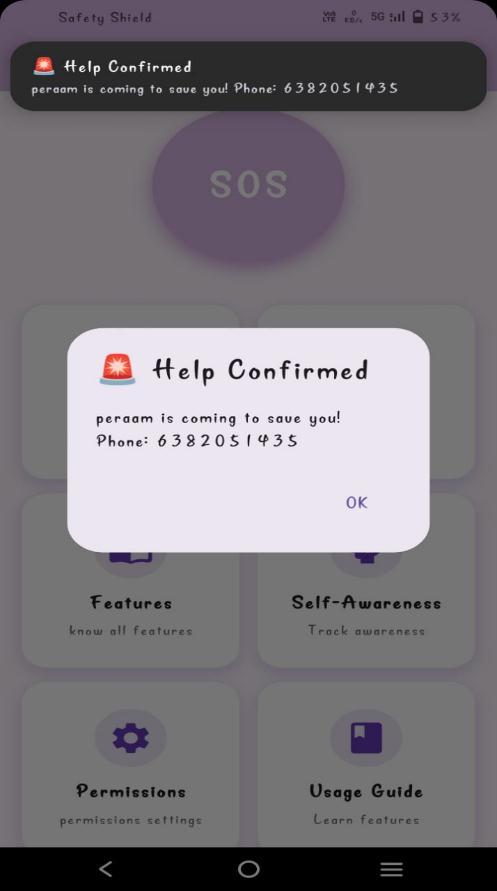
AnOTPverificationstepservesasacriticaldecisionpoint within the workflow, confirming that the emergency alert has been acknowledged and that assistance has been initiated. All actions within the process, including alert generation, delivery status, and acknowledgment, are securely logged to maintain transparency and enable future reference. By structuring the emergency response through clearly defined stages and decision points, the Safety Shield system ensures reliable alert execution, efficient communication, and response assurance, even underadversenetworkconditions.
Volume: 13 Issue: 02 | Feb 2026 www.irjet.net
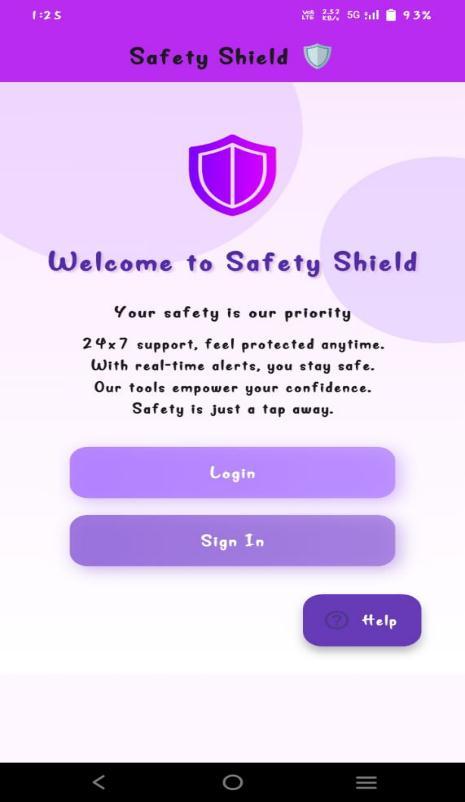
The Safety Shield ecosystem is structured around a modular client–server architecture designed to support reliable emergency communication under varying network conditions. The mobile application frontend is developed using the Flutter framework, enabling a consistent and responsive user interface across Android devices with diverse hardware specifications. This design choice ensures that emergency interactions remain accessible and intuitive, which is critical during highstress situations where rapid user response is required. Theseparationofpresentationlogicfromsystemservices allows the interface to remain lightweight while maintainingstableinteractionwithbackendcomponents.
Volume: 13 Issue: 02 | Feb 2026 www.irjet.net p-ISSN: 2395-0072
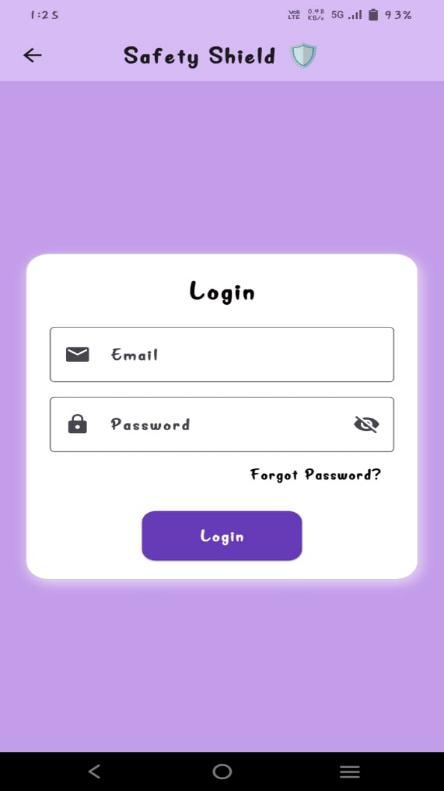
Userauthentication,datastorage,andincidentloggingare managed through Firebase services, providing secure identity veriftication and controlled access to sensitive user information. Emergency alert processing and OTP generationarehandledbythebackend,whichcoordinates communication between the user device and designated trusted contacts. To address connectivity constraints, the architecture integrates an Android native communication layer implemented using Kotlin. This module operates independently of internet availability and is responsible for dispatching SMS when network access is limited or unavailable. By combining cloud-based services with device-level communication capabilities, the system ensurescontinuityofalertdeliverywhilemaintainingdata integrity and system reliability. The modular design further supports maintainability and scalability, allowing individualcomponentstobeenhancedwithoutdisrupting coresafetyfunctionalities.
In conclusion, Safety Shield presents a reliable and context-aware women safety solution that addresses critical shortcomings observed in existing emergency response applications. By integrating multi-trigger alert activation, offline communication support, and acknowledgment-based confirmation mechanisms, the system enhances the dependability of emergency assistance in real-world scenarios. The hybrid architecture, which combines a responsive mobile
interface with secure backend services and native device communication, enables timely alert delivery while maintaininguserprivacyandoperationaltransparency.As aresult,SafetyShieldstrengthenstheconnectionbetween individuals in distress and their trusted support network, contributing to improved personal safety and confidence ineverydaymobility.
Looking ahead, the future scope of Safety Shield extends toward deeper integration with institutional emergency services such as local law enforcement and healthcare providers, enabling coordinated response beyond personal contacts. Additional enhancements may include contextual evidence capture, suchas optional background audio or visual recording during emergencies, and analytical tools to study alert patterns for system optimization. As the application evolves, continued refinement of its technical and operational architecture will ensure adaptability to broader deployment environments, reinforcing its role as a scalable and dependablesafetyplatformdesignedtomeetthedynamic needsofmodernsociety.
The authors express sincere gratitude to the mentors and coordinators of the Industrial Research Park (IRP), K.L.N. Autonomous College, for their guidance and continuous support throughout the development of the Safety Shield project.
[1]S.Mandapati,S.PamidiandS.Ambati,“Amobilebased women safety application (I Safe Apps),” IOSR Journal of Computer Engineering (IOSR-JCE), vol. 17, no. 1, pp. 29–34,2015.
[2] A. Kumar, A. Sharma and R. Gupta, “Women Safety Application Using GPS Tracking and SOS Alert,” International Journal of Engineering Research & Technology(IJERT),vol.9,no.6,pp.512–516,2020.
[3] P. Verma and S. Gupta, “Emergency Alert System for Women Safety Using Android,” International Journal of ComputerApplications,vol.181,no.43,pp.1–5,2018.
[4]R.Priyanka,M.Keerthana,S.RanjaniandV.Rajesh,“An Android Application for Women Safety with Real-Time Location Tracking,” International Journal of Advanced Research in Computer Science, vol. 10, no. 3, pp. 45–49, 2019.
[5] M. E. Joorabchi, A. Mesbah and P. Kruchten, “Real challenges in mobile app development,” 2013 ACM/IEEE International Symposium on Empirical Software EngineeringandMeasurement,Baltimore,MD,USA,2013, pp.15–24,doi:10.1109/ESEM.2013.9.
International Research Journal of Engineering and Technology (IRJET) e-ISSN: 2395-0056
Volume: 13 Issue: 02 | Feb 2026 www.irjet.net p-ISSN: 2395-0072
[6] S. Boukhary and E. Colmenares, “A clean approach to Flutter development through the Flutter clean architecture package,” 2019 International Conference on Computational Science and Computational Intelligence (CSCI), Las Vegas, NV, USA, 2019, pp. 1115–1120, doi: 10.1109/CSCI49370.2019.00211.
[7] S. Sharma, S. Khare, V. Uniyal and S. Verma, “Hybrid development in Flutter and its widgets,” 2022 International Conference on Cyber Resilience (ICCR), Dubai, United Arab Emirates, 2022, pp. 1–4, doi: 10.1109/ICCR56254.2022.9995973.
[8] A. K. Jain, S. Gupta and P. Tiwari, “SMS-Based EmergencyAlertSystemforPersonalSafetyApplications,” International Journal of Advanced Computer Science and Applications,vol.11,no.4,pp.312–318,2020.
[9] K. Patel, R. Shah and M. Desai, “Secure Authentication and Real-Time Data Management Using Cloud-Based Mobile Applications,” International Journal of Computer Applications,vol.175,no.32,pp.18–23,2019.
[10] S. Ramesh and P. Karthikeyan, “Design and Implementation of an Offline Emergency Alert System Using SMS,” International Journal of Emerging Technologies and Innovative Research, vol. 8, no. 5, pp. 1021–1026,2021.