
International Research Journal of Engineering and Technology (IRJET) e-ISSN: 2395-0056
Volume: 13 Issue: 06 | Jun 2026 www.irjet.net p-ISSN: 2395-0072

International Research Journal of Engineering and Technology (IRJET) e-ISSN: 2395-0056
Volume: 13 Issue: 06 | Jun 2026 www.irjet.net p-ISSN: 2395-0072
Akunuri Roshini1 , Dr. A. Damodaram2
¹M.Tech Scholar, Dept. of CSE, JNTUH UCESTH, Hyderabad, India
2Senior Professor, Dept. of CSE, JNTUH UCESTH, Hyderabad, India
Abstract - Smart License Plate Recognition (SLPR) is an important component of modern intelligent transportation systems, enabling automatic vehicle identification for applications such as traffic surveillance, toll processing, and parking control. This project presents a robust vision-based framework for detecting and recognizing license plates in dynamic and real-world environments. The proposed system combines deep learning with computer vision techniques by employing a YOLO version 8 model for real-time license plate detectionand PaddleOCR for accuratecharacterrecognition. The detection model efficiently locates license plates within images, while the OCR module extracts alphanumeric information even in challenging scenarios, including low illumination, motion blur, and partial occlusions. To evaluate the system, standard performance metrics are used, and the results demonstrate improved accuracy and reliability compared to traditional approaches. The model achieves an overall accuracy of approximately 98%, highlighting its effectiveness and scalability
Key Words: License Plate Recognition, Computer Vision, YOLO, OCR, Deep Learning, PaddleOCR.
Numberplaterecognitionisakeytechnologyusedinseveral real-world applications, including traffic surveillance, automatedtollcollection,parkingaccesssystems,andstolen vehicle detection. Since each vehicle is associated with a uniquelicensenumber,itservesasareliableidentifierfor trackingandmanagementpurposes.
Real-time number plate recognition systems contribute significantlytoenforcingtrafficregulationsbycontinuously monitoringvehiclesontheroad.Thesesystemscanalsobe integratedintoautomatedparkingsolutions,wherevehicle entry and exit are managed based on license plate information. Cameras are employed to capture images or videostreams,enablingseamlessdataacquisitionwithout manualintervention.
Thisprojecthighlightstheuseofmoderncomputervision and deep learning techniques for real-time license plate detectionandrecognition.Specifically,itutilizesaYOLOv8basedobjectdetectionmodel tolocatenumberplatesand Optical Character Recognition (OCR) methods to extract textualinformation.Theapproachdemonstratesanefficient
and practical implementation suitable for intelligent transportationapplications.
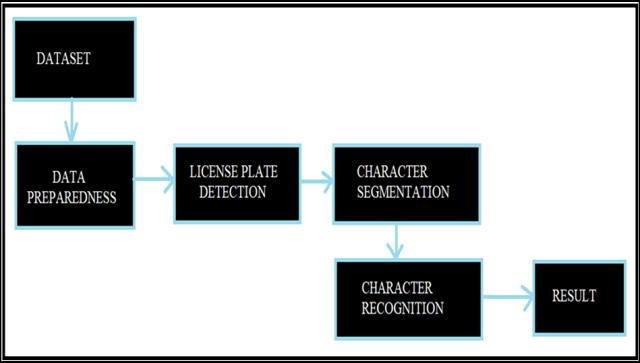
License plate recognition is a key component of intelligent transportation systems, where identifying vehicles accurately is essentials for applications such as trafficregulations Variousfactorsmakethistask difficult, includingchangesinlightingconditions,motionblurcaused by moving vehicles, partial blocking of license plates, and differencesinplatedesignsacrossregions.Tohandlethese issueseffectively,thesystemmustbecapableofadaptingto dynamic conditions while maintaining high accuracy and reliability[6].Basedonthelevelofprocessing,licenseplate recognition can be divided into detection and recognition stages,wheredetectionfocusesonlocalizingtheplateregion and recognition focuses on extracting the alphanumeric characters.
Traditionalapproachesforlicenseplaterecognitionmainly relyonimageprocessingtechniquessuchasedgedetection, thresholding,morphologicaloperations,andsegmentation. These methods are computationally simple but lack robustness and fail to perform effectively under complex environmental conditions. Machine learning-based approaches such as Support Vector Machines (SVM) have been used to improve classification accuracy, but they require manual feature extraction and are limited in handlinglarge-scaledata[1]
Recent research has focused on deep learning techniques, whichautomaticallylearnfeaturerepresentationsfromdata. ConvolutionalNeuralNetworks(CNNs)arewidelyusedfor image-basedtaskssuchasobjectdetectionandclassification due to their ability to capture spatial features. Advanced objectdetectionmodelssuchasYOLO(YouOnlyLookOnce) version8 have significantly improved detection speed and accuracy by processing the entire image in a single pass. YOLO-basedmodelsareparticularlyeffectiveforreal-time license plate detection. For character recognition, Optical Character Recognition (OCR) techniques are employed to extract text from detected plate regions[3]. Modern frameworks such as PaddleOCR integrate deep learningbased detection and recognition models to achieve high accuracy even in challenging conditions. These models
International Research Journal of Engineering and Technology (IRJET) e-ISSN: 2395-0056
Volume: 13 Issue: 06 | Jun 2026 www.irjet.net p-ISSN: 2395-0072
utilize feature extraction and sequence modelling to recognizecharactersefficiently.
Deep learning has gained significant importance due to advancements in computational power and availability of large datasets. It enables automatic learning of complex patterns without manual intervention and supports supervised, semi-supervised, and unsupervised learning methods[4]. In license plate recognition systems, deep learning-based approaches provide improved accuracy, scalability, and real-time performance compared to traditionalmethods.
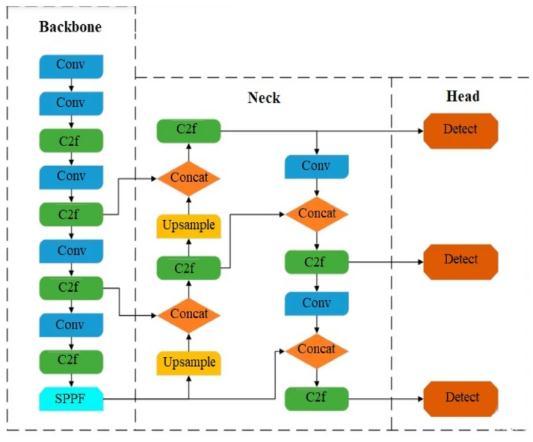
YOLOv8istheneweststate-of-the-artYOLOmodelcanbe usedforobjectdetection,imageclassification,andinstance segmentationtasks.Itdeliversstrongperformanceinterms ofaccuracy,asdemonstratedon benchmark datasetslike MicrosoftCOCOandRoboflow100.YOLOv8'sarchitectureis composed of three main parts:the backbone, which is a deep convolutional neural network (CNN) for feature extraction;the neck, which fuses and aggregates features fromthebackboneatdifferentscales;andthehead,which makesthefinalpredictions[2]
PaddleOCR isnot a single algorithm but anopen-source framework or toolkitfor Optical Character Recognition (OCR) that integrates a collection of deep learning algorithms.ItwasdevelopedbyBaiduResearchandisbuilt onthePaddlePaddledeeplearningplatform.
PaddleOCRprovides a CLI tool for easy text detection andrecognitiononimagesanddocuments.Thelibraryisa greatoptionforlicenseplaterecognitionbecauseofitsbuiltin capabilities, multi-language support, flexibility and sophisticated recognition methods. Optical Character Recognition(OCR)canbeappliedtothelicenseplateimage
using paddleOCR once a clear picture of it is taken with a camera orsmartphone.Developerscan effectivelyinclude this feature into their apps because of it swift nature and flexibility
Recent advancements in intelligent transportation and security systems require efficient vehicle identification mechanisms because license plates serve as the primary gatewayforidentifyingvehiclesacrossvariousapplications. Thisbecomesahighlydynamicproblemasvehicleimages captured in real-world environments are influenced by multiple factors such as lighting conditions, motion blur, cameraangles,occlusions,andvaryingplateformats.These challengessignificantlyaffecttheaccuracyandreliabilityof traditionallicenseplaterecognitionsystems.Recentstudies indicate that for effective traffic management and law enforcementinvestigations,itisessentialtodevelopsystems that can accurately extract license plate information from imagesandvideostreams.Incriticalscenariossuchaspolice investigations,analyzingsurveillancefootageandidentifying vehiclesquicklyiscrucialfordecision-makingandsecurity enforcement. This study aims at developing an intelligent system based on deep learning techniques for automatic detectionandrecognitionofvehiclelicenseplates[5].This work considers the problem of identifying license plate regions and extracting alphanumeric information under diverseenvironmentalconditions.Thesystemisdesignedto provideaccurateandefficientrecognitionresults,thereby improving automationand reliabilityintrafficmonitoring andinvestigativeapplications.
3.1
3.2
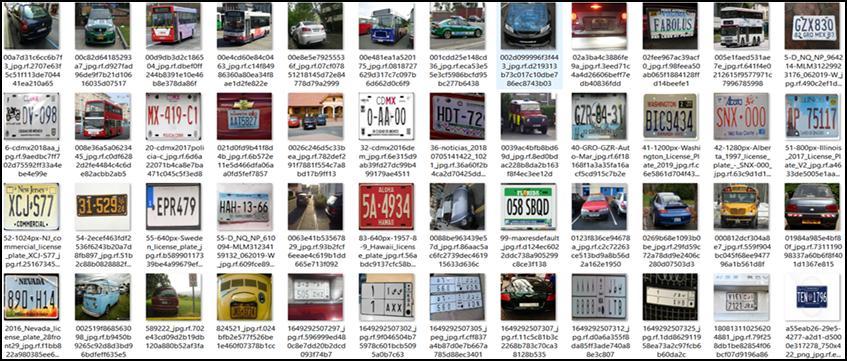
Thedatasetconsistsofapproximately1,000+alltypes ofvehicleimageswhichissourcedfromkaggle,eachlabeled with the location of number plates. In the project, after removingthenoisydataandunnecessarydatathedataset used is almost 1k+ for proper and efficient training. The datasetissplitintothreeparts:
International Research Journal of Engineering and Technology (IRJET) e-ISSN: 2395-0056
Volume: 13 Issue: 06 | Jun 2026 www.irjet.net p-ISSN: 2395-0072
TrainingSet: 85%ofthedataset
ValidationSet:9%ofthedataset
TestingSet: 6%of thedataset
Theoverviewofthedataset
YOLOv8modelcanobservetheentireimageatatime and can identify different spatial arrangements of objects withinthescene.Differentarrangementsofvisualfeatures such as edges, textures, and shapes may correspond to differentobjects.Anobjectmayloseitsidentitywhenthese features are not considered together. Consequently, convolutional layersareusedfor retainingspatial context andextractingmeaningfulpatternsfromtheimage.YOLOv8 utilizes convolutional filters to scan across the width and heightoftheimage,capturingbothlocalandglobalfeatures. Typical convolution operations process the input image through multiple layers to generate feature maps that highlightimportantregions.
The pre-processed image data after resizing and normalizationisrepresentedasstructuredpixelarrays.To enable efficient detection, the model learns dense feature representations through deep convolutional layers. The YOLOv8 architecture consists of a backbone for feature extraction,aneckforfeatureaggregationatmultiplescales, andadetectionheadforpredictingboundingboxesandclass probabilities.Themodelprocessesinputimagesinasingle forwardpass,enablingreal-timedetectionperformance.
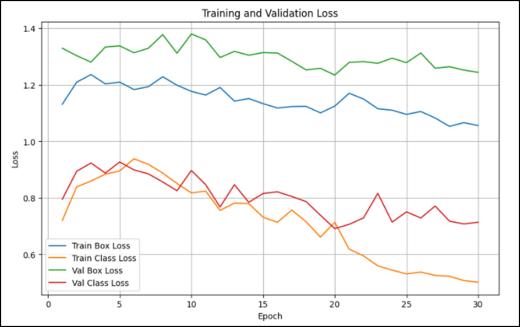
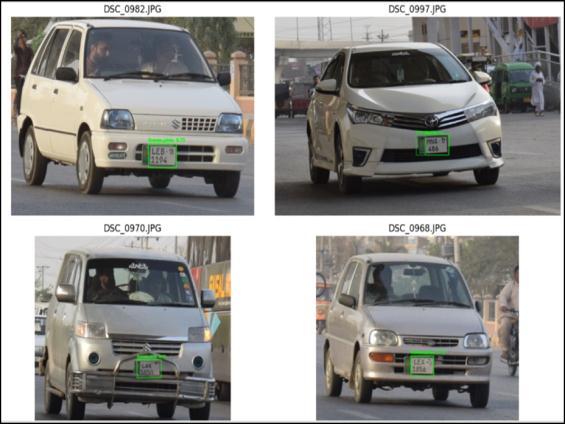
ForYOLOv8modelling,theinputisasetofannotatedimages with bounding boxes representing license plate locations. The model is trained using optimization techniques to minimize detection loss, which includes localization and classification errors Next, once the license plate region is detected, the cropped image is passed to a recognition module.
After detecting the license plate using the object detectionmodel,theidentifiedregioniscroppedfromthe original image. This cropped plate image is then preprocessedusingtechniquessuchasresizing,normalization, and noise reduction to improve image quality and readability.
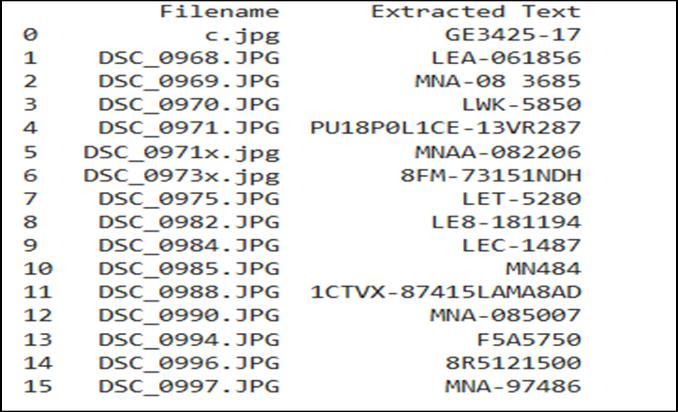
The processed image is passed to the PaddleOCR model, which performs two main steps: text detection and text recognition.Inthefirststep,themodelidentifiestheregions within the image that contain text. In the second step, it analyzes these regions and converts the visual characters intomachine-readabletext.
PaddleOCRusesdeeplearning-basedfeatureextractionand sequencemodellingtorecognizecharactersaccurately,even in challenging conditions such as low lighting, blur, or distorted images. The final output is the extracted alphanumeric sequence representing the license plate number. This workflow ensures efficient and accurate extraction of license plate information for further applicationssuchastrafficmonitoringandlawenforcement
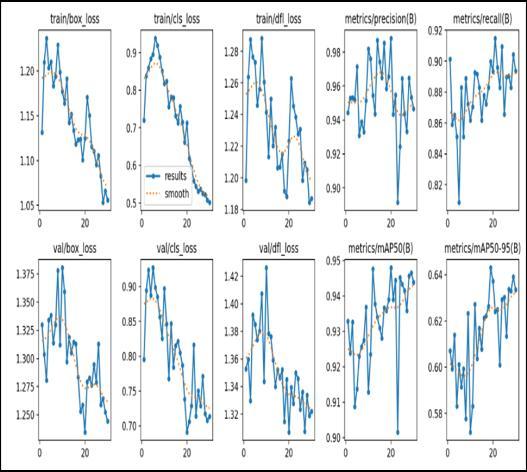
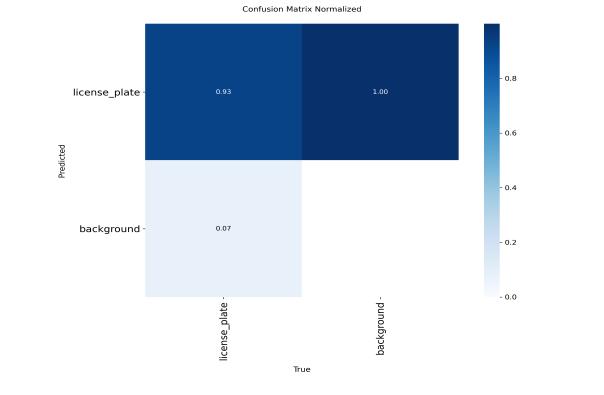
Table -1: Accuracy Performance YoloV8(before FineTune)
FineTune)
International Research Journal of Engineering and Technology (IRJET) e-ISSN: 2395-0056
Volume: 13 Issue: 06 | Jun 2026 www.irjet.net p-ISSN: 2395-0072
4. CONCLUSIONS
This paper presents a robust license plate recognition systemusingdeeplearningandcomputervisiontechniques. TheintegrationofobjectdetectionandpaddleOCRimproves accuracyandefficiencyinreal-worldscenarios.Thesystem demonstratesstrongperformanceindynamicenvironments and can be effectively used in traffic management and securitysystems.
[1] Amninder Kaur et al, Sonikal Jindal, Richa Jindal., “LicensePlateRecognitionusingSVM,”IJARCSSE,2024
[2] Elhanashi, Abdussalam, Dini, Pierpaolo, Saponara, Sergio, Qinghe, Zheng, “TeleStroke: real-time stroke detectionwithfederatedlearningandYOLOv8onedge devices” ,2024.
[3] Aayush Gattawar et al., “Automatic Number Plate Recognition using YOLO,” IRJET, 2021.
[4] Li et al., “Reading car license plates using CNNs and LSTMs,” 2018
[5] Mitra&Banerjee, “Histogram-based LPR system,” 2016.
[6] Hsieh et al., “Automatic traffic surveillance system,” IEEE ITS,2012.