
International Research Journal of Engineering and Technology (IRJET) e-ISSN: 2395-0056
Volume: 13 Issue: 05 | May 2026 www.irjet.net p-ISSN: 2395-0072

International Research Journal of Engineering and Technology (IRJET) e-ISSN: 2395-0056
Volume: 13 Issue: 05 | May 2026 www.irjet.net p-ISSN: 2395-0072
Vijayant Rajpoot
Manager – Smelter Reliability and Costing, BEE Energy Manager, CAT-III Vibration Analyst, 15+ Years’ Experience Aditya Aluminium, Hindalco Industries Limited, Lapanga, Odisha, India
Abstract-This paper presents an applied reliability study on acoustic testing of alumina and coke conveyors at Aditya Aluminium, Hindalco Industries Limited, Lapanga, and Odisha. Aditya Aluminium is an integrated aluminium smelter complex with tightly linked raw-material handling, smelting, power, and carbon-related operations, which makes conveyor reliability fundamental to uninterrupted production. Alumina and coke conveyors are critical because they transport essential raw materials for electrolytic reduction and anode-related process continuity. The attached conveyor design sheet, acoustic reports, and field photographs were used as the primary basis for this paper, together with public plant information and technical references on conveyor acoustics and fault detection.
Keywords-Acoustic testing, conveyor reliability, alumina conveyor, coke conveyor, Fluke i910, ultrasonic inspection, belt conveyor, Aditya Aluminums, condition-based maintenance, smelter reliability.
AdityaAluminumsatLapangaisoneofHindalco’smajoraluminumoperationsandfunctionsasahighlyintegratedindustrial complexinwhichraw-materialhandlingsystemssupportcoresmelterperformance.Insuchaplant,conveyorsarenotmerely transporting equipment; they are process-enabling assets, whose failure can propagate into production loss, maintenance disruption, housekeeping deterioration, and increased risk exposure. For alumina and coke systems in particular, uninterrupted conveying is indispensable because these materials form the basis of smelter feed and carbon-process continuity.
The needfor earlydetectionofconveyordefectsisthereforestrong.Conventional inspection methodssuchasroutinevisual checks and localized vibration measurement remain valuable, but long conveyor routes containing thousands of rotating elements demand a faster screening approach. Acoustic testing using ultrasonic or high-frequency sound detection provides that capability by enabling rapid route-based scanning and defect localization before visible damage or catastrophic failure occurs.
Aditya Aluminium is an integrated smelter complex where several subsystems must operate in coordination, including rawmaterial receipt and handling, storage, conveying, process feed systems, power support, and smelting operations. The complexity of the plant lies in this interdependency: a disturbance in one enabling system can affect multiple downstream functions.Thisisespeciallytrueforbulkmaterialconveyingroutesthattransportproduction-criticalrawmaterialsoverlong distancesthroughenclosedgalleriesandstructuralspans.
The conveyor photographs supplied for this paper show long enclosed gallery arrangements, extensive idler stations, structural steel frameworks, guarded access walkways, and utility/fire-water piping. These features illustrate both the engineeringscaleandthemaintenancecomplexityoftheconveyorsystem.Theyalsodemonstratewhyroute-basedscreening tools are valuable in practice, as the number of rotating elements is large and manual point-to-point assessment is timeintensive.
Volume: 13 Issue: 05 | May 2026 www.irjet.net
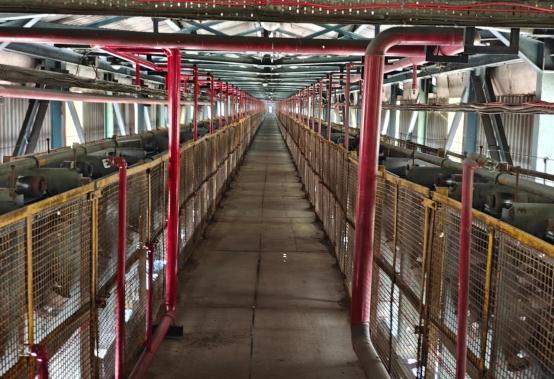
1:Enclosedconveyorgalleryshowinglong route,idlerarrangement,walkway,andservicepiping.
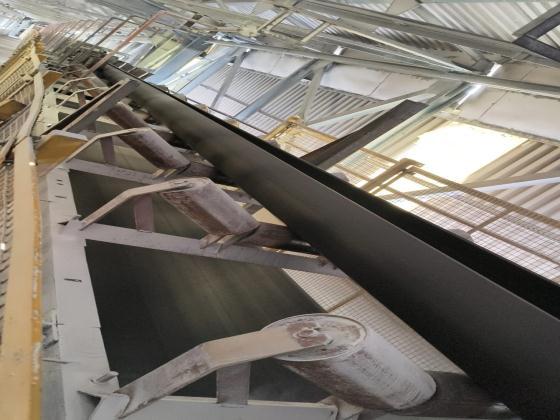
Figure3:Centrallong-runviewshowingthe distributednatureofconveyorrotatingelements
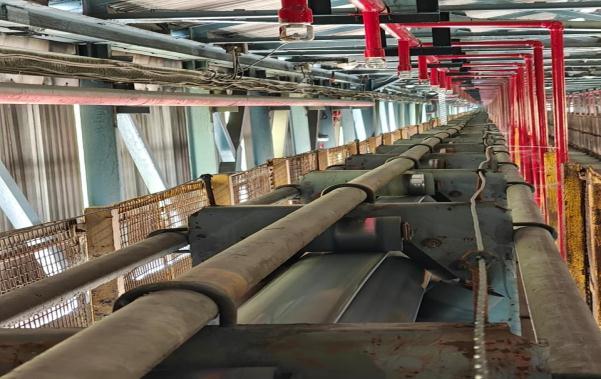
2:
perspectivehighlighting scale,accessibility,andinspectionpath.
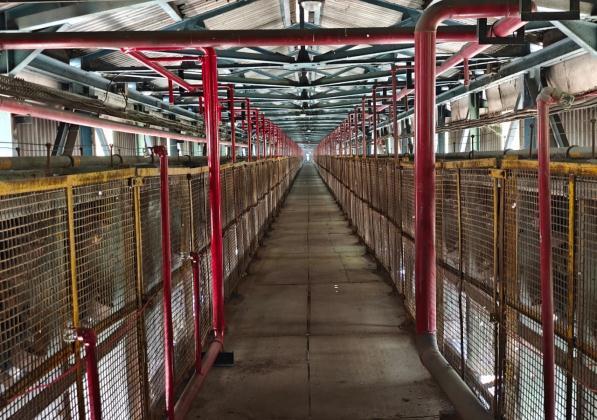
Figure4:Additionalgalleryviewsupportingroute scaleandmaintainabilitydiscussion
Theattacheddesignsheetforbeltconveyor831BC-01identifiesa ratedcapacityof1200TPH,designcapacityof1380TPH, horizontallengthof258.3m,liftof44.3m,andmaximuminclinationof11degrees.Thesevaluesconfirmthattheconveyoris a major process asset with significant throughput responsibility and nontrivial mechanical loading. Conveyors of this class typically contain numerous idlers, pulleys, supports, splices, and loading/discharge interfaces, all of which must perform reliablytoavoidfeedinginterruptions.
In an aluminum smelter context, conveyor failure has consequences beyond mechanical downtime. Alumina is the primary feedforelectrolyticreduction,andcokeiscriticaltocarbonandanode-relatedfunctions.Becauseofthis,conveyorreliability directly supports plotline continuity, maintenance stability, housekeeping, and overall production assurance. The reliability objective is therefore not only to repair failures quickly, but to detect degradation early enough to prevent failure from occurring.
Acoustic testing is a high-value advanced condition-monitoring technique for long conveyor systems because it captures abnormalsoundenergygeneratedbydefectiverollingelements,friction,misalignment,andrelatedmechanicaldistress.When combinedwithroute-wiseinspectionpractices,itenableslargepopulationsofrollersandrotatingcomponentstobescreened more rapidly than traditional point-based methods. This is especially useful in enclosed galleries where access is repetitive andwheredefectsmustbelocalizedbeforetheyescalateintobeltdamageorforcedstoppage.
International Research Journal of Engineering and Technology (IRJET) e-ISSN: 2395-0056
Volume: 13 Issue: 05 | May 2026 www.irjet.net p-ISSN: 2395-0072
The present work refers to Fluke i910 technology in the context of industrial acoustic imaging and ultrasonic detection. Acousticimagers of this typeare used toidentify high-frequencysound sourcesassociated with frictionand other abnormal conditions,allowingthemaintenanceteamtopinpointsuspectlocationsalongtheconveyorroute.Theinspectionreportsalso indicate practical use of digitally traceable acoustic survey methods, including MECQ feature capture information, which supportssystematicauditinganddefecttracking.
Advantages of Acoustic Technology
Early fault detection: Identifies defects in bearings, rollers, and misalignment at an incipient stage before visible damageorvibrationspikesoccur.
Rapid inspection of large systems: Enables fast, route-based scanning of thousands of conveyor components, drasticallyreducinginspectiontime.
Precise fault localization: Acoustic imaging pinpoints exact defect locations, minimizing trial-and-error during maintenance.
Fire hazard prevention: Detects abnormal friction and overheating, helping mitigate ignition risks in alumina and cokedustenvironments.
Improved maintenance prioritization: Converts large datasets into targeted actionable defects, enabling focused andefficientmaintenanceplanning.
Digital traceability: Ensures structured data capture, auditability, and historical trend analysis for reliability decision-making.
Reduced downtime and secondary damage: Early intervention prevents belt damage, breakdowns, and cascading failures.
Effective in inaccessible areas: Highlyusefulforlong,enclosedconveyorgallerieswhereconventionalinspectionis difficult.
Complementary to vibration analysis: Actsasafast-screeningtool,enhancingoverallcondition-basedmaintenance (CBM)strategy.
Supports cost optimization: Minimizes unnecessary maintenance and aligns with cost-control frameworks while improvingassetreliability.
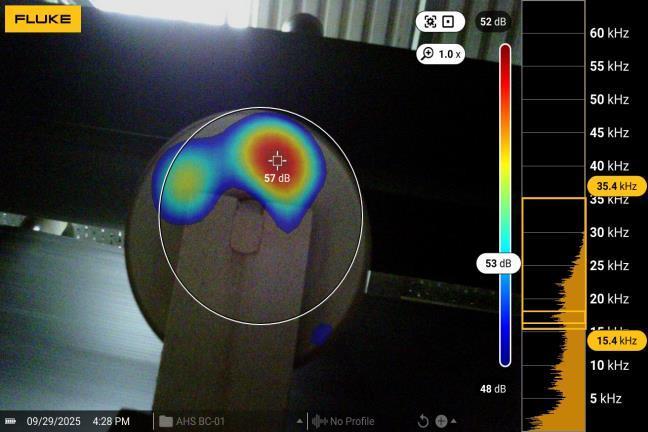
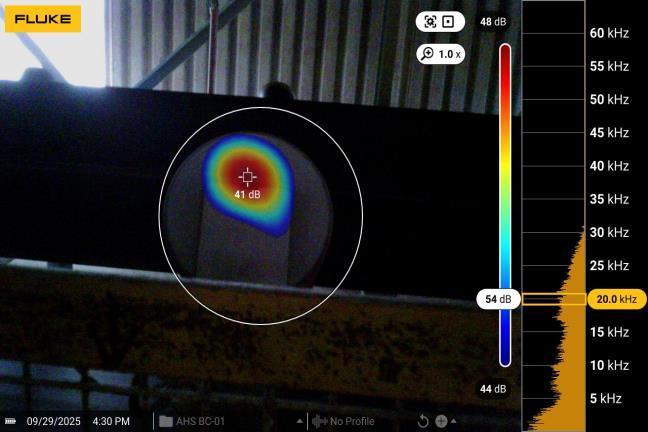
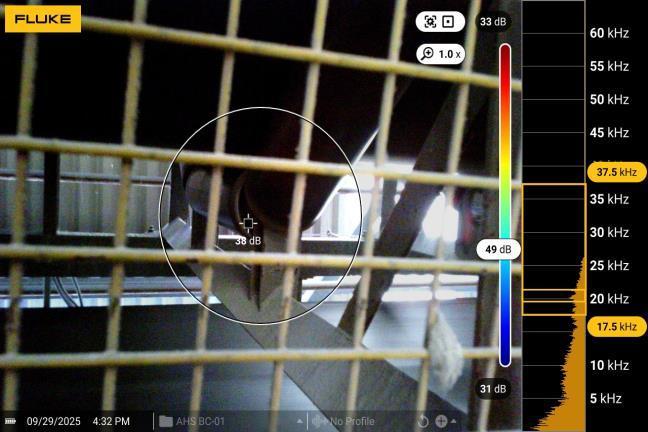
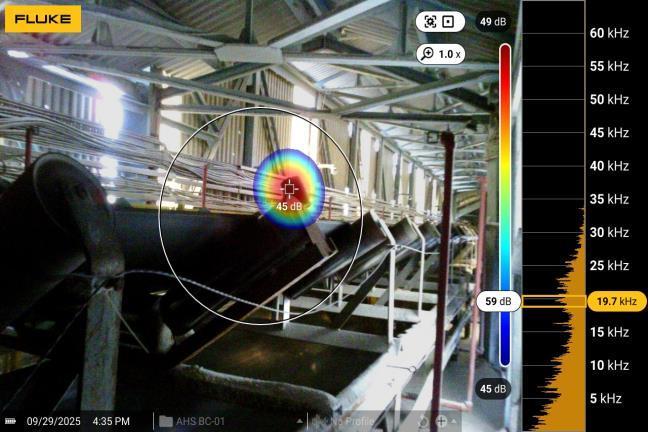
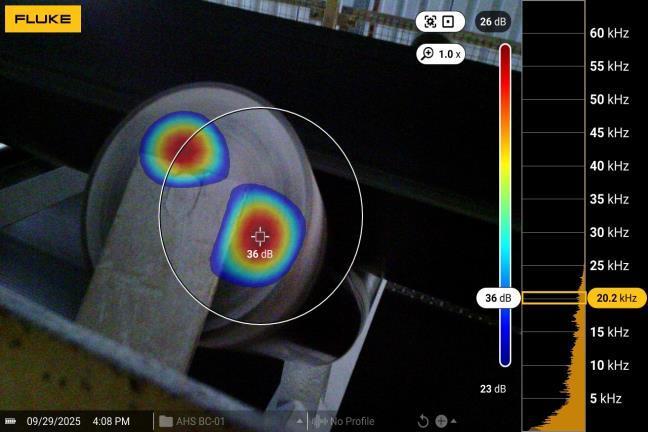
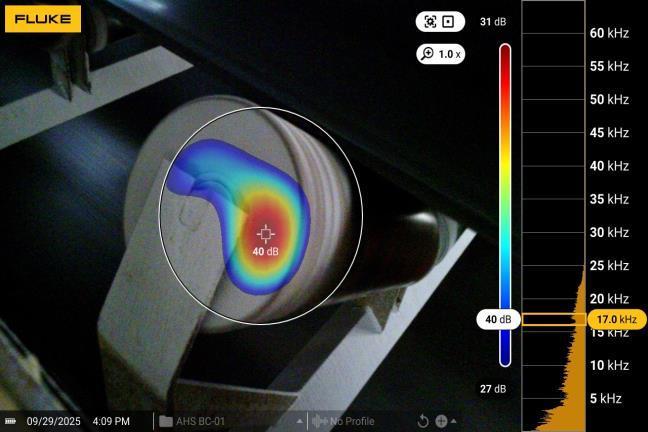
The referenced acoustic report for AHS Belt Conveyor BC-01 documents a structured acoustic inspection under Smelter Reliability CBM. The report shows target-point-based assessment and detected points, indicating that the alumina-handling system has already been subjected to organized route inspection. This evidence is important because it demonstrates field applicationofacousticreliabilitymethodsonplantequipmentratherthanapurelytheoreticaldiscussion. Together,theseevidenceshowsthatacousticauditingcaninspectlargepopulationsofrollersandisolateasmallerdefectset formaintenanceaction,whichisexactlythetypeofleverageneededinlongconveyorsystems.
7. DB BASELINE DEVELOPMENT AND DEFECT CATEGORIZATION
Ausefulextensionofacousticconveyortestingisthedevelopmentofaroute-specificdBbaselinesothatdetectedpointscan be classified by severity instead of being reported only as isolated readings. For the visible AHS BC-01 report data, the measuredsound-pressurevalueswereanalyzedtoestablishapracticaloperatingbaseline.Themedianofthevisiblereadings is 41 dB, the lower quartile is 38.75 dB, the upper quartile is 42.75 dB, and the maximum observed value is 57 dB. These valuesindicatethatmostdetectedpointsaregroupedinarelativelynarrowbandaroundthelow-forties,whileonelocationis clearlyseparatedasahigh-severityoutlier.
For maintenance decision-making, the following categorization logic is proposed for this route: Normal at or below 39 dB, Watchfrom40to44dB,Alarmfrom45to49dB,andCriticalatorabove50dB.Usingthisapproach,the36to39dBpoints maybetreatedaslowconcernorconfirmation-checkobservations,the40to44dBgroupmaybemonitoredand trended,the 45 dB points may be prioritized for planned intervention, and the 57 dB point should be treated as the highest-priority inspection location. This kind of banding makes the report more actionable because it converts measured sound levels into maintenancecategories.
Category
Normal
Watch
Alarm
Critical
dBBand SuggestedMaintenanceResponse
<=39dB
40–44dB
45–49dB
>=50dB
Acceptable/verifyduringroutineinspection
Monitortrendandinspectinplannedround
Likelydevelopingdefect;plancorrection
Immediateinspection/correctiveaction
International Research Journal of Engineering and Technology (IRJET) e-ISSN: 2395-0056
Volume: 13 Issue: 05 | May 2026 www.irjet.net p-ISSN: 2395-0072
This baseline framework can be strengthened further in future campaigns by collecting a larger number of healthy-route measurements under similar operating conditions and by correlating acoustic levels with physical inspection findings, roller replacement history,vibration readings, and operating load.Over time, route-specificbaselines can become stable reliability standardsforaluminaandcokeconveyors,enablingtrend-basedmaintenanceratherthanone-timedefectscreening.
The attached photographs and reports together support a clear reliability conclusion: the conveyor routes under consideration are large, repetitive, and mechanically dense systems that benefit from rapid screening technologies. Acoustic testing fits this need well because it can be applied route-wise, improves defect localization, and supports prioritization of suspect rollers or locations before severe secondary damage occurs. In a plant handling alumina and coke for aluminium production,thatearlydetectioncapabilityhasstrongoperationalvalue.
Acoustic testing should be treated as part of a broader condition-based maintenance framework. It complements vibration analysis,visualinspection,maintenancehistory,andshutdownplanning.Forareliabilityfunction,thecombinationofacoustic andvibrationevidencecan significantlyimprove diagnostic confidenceand improvethequalityofmaintenancedecisionson conveyors.
It is recommended that route-wise acoustic testing be formalized for critical alumina and coke conveyors, with inspection frequency based on asset criticality and defect history. Results should be trended by conveyor section and correlated with roller replacement data, belt incidents, and vibration observations. Design information should be used to identify high-risk zonessuchasloadingpoints,inclinedsections,transitions,anddischargeareasforfocusedmonitoring.Whereavailable,Fluke i910 or equivalent acoustic-imaging tools should be used to improve localization and speed of inspection in long conveyor galleries.
The alumina and coke conveyors at Aditya Aluminium are critical production-support systems whose reliability directly impactsplantcontinuityandoperational stability. The designdata,fieldobservations,andacousticauditreportscollectively highlight the complexity of the conveyor network and underscore the practical effectiveness of acoustic inspection. Acoustic testing enables early identification of incipient defects in rollers and rotating components, facilitating timely maintenance prioritization and minimizing the risk of unplanned stoppages. In addition, early detection of abnormal friction and overheatingthroughacousticmethodssignificantlycontributestomitigatingpotentialfirehazards,particularlyindust-prone conveying environments handling alumina and coke. Overall, the integration of acoustic testing within the condition-based maintenanceframeworkenhancessystemreliability,improvessafety,andsupportssustainablesmelteroperations.
I would like to sincerely acknowledge the valuable contributions of my team members Mr. Dipesh Sriwas (Area Head –SystemsandAudits),Mr.VijayBharti(AreaHead–ReliabilityMechanical),andMr.SurendraSahu(ACME)fortheirdedicated effortsandsteadfastsupportinensuringseamlesson-siteimplementation.
I also extend my gratitude to Mr. Sangram Dhal (Head – Mechanical & Facilities) and Mr. Amit Bharadwaj (Head – Carbon Plant)forenablinganddrivingtheteamtowardeffectiveadoptionoftheinitiative.MyappreciationfurthergoestoMr.Anamit Deb Gupta (Head – Carbon Green Anode Plant), Mr. Shakti Sarangi (Area Head – Alumina Handling System), and Mr. Tapas Panda(SectionHead–AluminaHandlingSystem)fortheircontinuoussupportinrectificationandsuccessfulimplementation.
Special thanks are due to Mr. J.P. Nayak (Unit Head – Aditya Aluminium), Mr. Sandeep Singh (Smelter Head – Aditya Aluminium), Mr. Atish Mandal (Head – MCOE Maintenance & Projects), and Mr. Surendra Singh Solanki (Lead – Asset Reliability, MCOE) for their constant motivation and encouragement toward driving innovation, enhancing safety, and strengtheningreliabilitypractices.
Finally, I express my sincere gratitude to Mr. Kailash Pandey (Business Head – Mining and Head – Sambalpur Cluster) for inspiringtheteamtothinkbeyondconventionalapproachesandfosteringaculturefocusedonplantreliability,sustainability, andsafetyexcellence.
International Research Journal of Engineering and Technology (IRJET) e-ISSN: 2395-0056
Volume: 13 Issue: 05 | May 2026 www.irjet.net p-ISSN: 2395-0072
1.HindalcoIndustries,AdityaAluminiumplantoverviewandoperations.
2.Publictechnicalreferencesonaluminiumsmelterrawmaterialsandprocessdependenceonaluminaandcarboninputs.
3.Technicalreferencesonconveyornoise,acoustics,andacoustic-basedfaultdetection.
4.Conveyordesigndatasheetforbeltconveyor831BC-01.
5.AHSBeltConveyorBC-01acousticreport.
6.Pipeconveyorrolleracousticauditreport.
7.CHSpipeconveyorrollertestingreport.
8.Attachedfieldphotographsofconveyorgalleryandidlerarrangements