
International Research Journal of Engineering and Technology (IRJET) e-ISSN: 2395-0056
Volume: 12 Issue: 11 | Nov 2025 www.irjet.net p-ISSN: 2395-0072
International Research Journal of Engineering and Technology (IRJET) e-ISSN: 2395-0056
Volume: 12 Issue: 11 | Nov 2025 www.irjet.net p-ISSN: 2395-0072
Supriya Rajput,1 Zain Mulla2 , Ashutosh kanbarkar3 , Harsh Patil4 , Smitesh Hattarki5
1Assistant Professor, Maratha Mandal’s Engineering College, Belagavi, Karnataka, India
2Student, Maratha Mandal’s Engineering College, Belagavi, Karnataka, India
3Student, Maratha Mandal’s Engineering College, Belagavi, Karnataka, India
4Student, Maratha Mandal’s Engineering College, Belagavi, Karnataka, India
5Student, Maratha Mandal’s Engineering College, Belagavi, Karnataka, India
Abstract - The QR Code Scanning-Based Medicine Vending Machine is an innovative solution designed to provide convenient access to over-the counter medications, supplements, and health related products. The Medicine Dispenser is a machine which dispenses or gives the medicine based on the authentication of the user, which was registered by to user in machine. This machine will give medicine which is in QR-Code prescription which was provided by the user’s doctor and also the quantity of medicine is also determined by the user’s choice. This machine will dispense medicine according to the user prescription provided by the user’s doctor. The main goal of the dispensing machine is to provide the medicine to the users 24/7 so it can help the village people Who are for away from the hospital or the clinic to buy the medicine and also it can be installed like an ATM machine so it is easy to use by the people even though if they cannot read and write. The medicine can be replaced by the administrator of the machine by time to time based on the expiration date or is it is empty the machine will alarm the administrator to refill the machine through SMS or telecom messenger.
1.INTRODUCTION
In this project based seminar on QR code scanning-based medicine vending machines in a healthcare setting can offer several benefits and innovations. The patients can quickly access their medications without waiting in long pharmacyqueues.Theautomatedprocessreduceswaiting timesandallowsfor24/7accesstoessentialmedications. By linking QR codes to specific prescriptions or patient profiles, the vending machine ensures that the right medications are dispensed to the right individual. This reduces the risk of human error often associated with manual dispensing.Byautomatingmedicationdispensing, healthcare facilities can optimize staff resources, allowing pharmacists and healthcare professionals to focus on more complex patient care tasks. Integrating these machines with electronic health records (EHR) systems can provide real-time updates on medication dispensing, improving tracking and management of patient medications.
The aim of introducing QR code scanning-based medicine vending machines in healthcare is to revolutionize
medication dispensing by leveraging technology to enhance efficiency, accessibility, and safety. The project aims to streamline the process of medication distribution by providing patients with a convenient and automated way to access their prescribed medications. By using QR codes linked to patient profiles or prescriptions, individuals can quickly and efficiently retrieve their medications from vending machines without the need for extensive waiting times or interactions with pharmacy staff and targets improved patient safety and medication accuracy. By linking QR codes to specific prescriptions or patient records, the vending machines can significantly reduce the risk of medication errors associated with manual dispensing processes. This automation helps ensure that the right medications are dispensed to the right patients at the right time, enhancing overall patient safetyandreducingadversedrugevents.
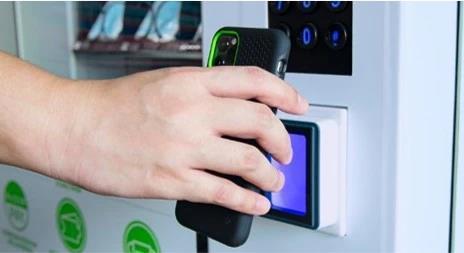
Evaluate additional features such as medication selection, payment options, and user interface. Assess vendor support, including training, troubleshooting, and ongoing maintenance services. Assess vendor Evaluate the reliability and uptime of vending machine machine hardwareandsoftware.
Determine initial costs, including procurement of vending machines, installation, and setup fees. Consider Estimate potential cost savings from reduced labor requirements
Volume: 12 Issue: 11 | Nov 2025 www.irjet.net p-ISSN: 2395-0072
(e.g., fewer staff needed for medication dispensing). Consider ongoing operational costs, such as maintenance, servicing,andrestockingofmedications.
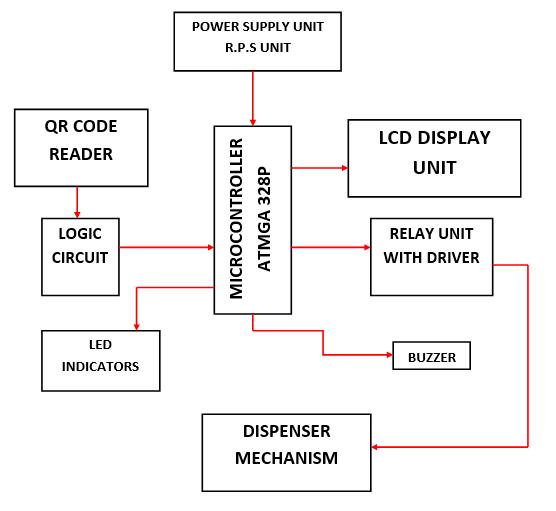
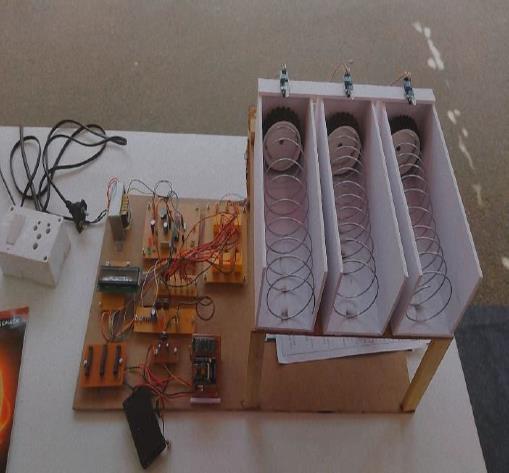
The system architecture of the QR Code Scanning-Based Medicine Vending Machine is designed to provide an efficientandautomatedsolutionfordispensingmedicines. At its core, the system utilizes an embedded QR code scanning module to read prescriptions encoded in QR codes, which are linked to patient profiles or doctorprovided prescriptions. The scanned data is transmitted to an ATMEGA328 microcontroller, which acts as the centralprocessingunit,controllingtheentiresystem. The microcontroller interfaces with various components, including relay drivers for operating the dispensing mechanism,anLCDdisplayforuserfeedback,andsensors such as IR sensors to detect user interaction. A servo motor is employed to physically dispense the medicines, while a buzzer provides alerts during the dispensing process or in case of errors. The system is powered by a regulatedpowersupplyunitthatdelivers+5Vand+12Vto the components, ensuring stable operation. The communication between the QR scanner and the microcontroller is facilitated through a UART/Serial connection, and the software is programmed using Arduino-based code to manage the scanning, dispensing, and user interaction processes. The methodology for developingtheQRCodeScanning-BasedMedicineVending Machinefollowsa structuredapproach.It begins with the initiationphase,whereprojectgoals,scope,andobjectives are defined, followed by the planning phase, which involves establishing system requirements, stakeholder involvement, and timelines. The designing phase focuses on creating detailed specifications for hardware and software, user interface designs, and prototypes. In the developmentphase,hardwarecomponentssuchastheQR scanner, microcontroller, relay, and sensors are integrated, and the system is programmed and tested for functionality. The control phase ensures final testing, quality assurance, and regulatory compliance before deployment. Once the machine is built and installed, testing and validation are conducted to ensure reliability, functionality, and performance. Risk monitoring and control are implemented throughout the project lifecycle to address potential challenges such as hardware malfunctions,datasecuritybreaches,anduserresistance. Finally, the system is maintained through regular monitoring, medicine refills, and software updates to ensure its continued efficiency and effectiveness. This comprehensive methodology ensures the successful implementation of the vending machine, addressing user needs, technical constraints, and compliance requirements.
The operational principle of the QR Code Scanning-Based Medicine Vending Machine revolves around automation, userauthentication,andefficientmedicinedispensing.The process begins when a user scans a QR code, which contains their prescription details provided by a doctor. TheQRcodescanningmodulereadstheencodeddataand transmits it to the microcontroller (ATMEGA328), which acts as the central processing unit of the system. The microcontroller processes the data, verifies the prescription, and determines the type and quantity of medicine to be dispensed. Once the prescription is authenticated, the microcontroller activates the relay system to control the dispensing mechanism. The servo motor operates to release the prescribed medicine, while the LCD display provides real-time feedback to the user, such as instructions and status updates. If the medicine is unavailable or an error occurs, the buzzer alerts the user. The system is powered by a regulated power supply unit, ensuringstableoperationofall components. Additionally, sensors like IR sensors detect user interaction and ensure the proper functioning of the machine. The machine is designed to operate 24/7, making it accessible to users in remote areas or those requiring medications outside regular pharmacyhours. The administrator is notifiedvia SMS or telecom messenger when the machine needs refilling or when medicines are nearing expiration. This operational principle ensures convenience, accuracy, and efficiency in medicine dispensing, while also addressing accessibilityandsafetyconcerns.
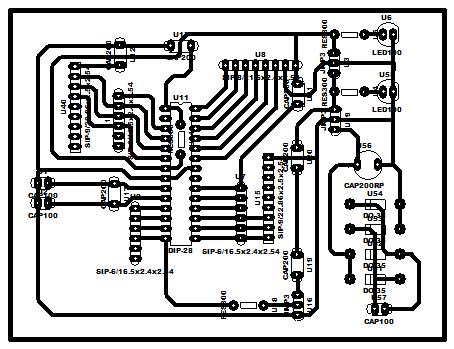
The software implementation of the QR Code ScanningBased Medicine Vending Machine is primarily based on Arduino programming using C/C++ code. The microcontroller, ATMEGA328, is programmed to manage theentireoperationofthevendingmachine,includingQR code scanning, user authentication, medicine dispensing, and system alerts. The software begins by initializing the components, such as the QR code scanner, LCD display, servo motors, relays, and buzzer. It also sets up the input and output pins for the microcontroller to interact with these components. The main functionality of the software involves reading the QR code data through the scanner, which is connected to the microcontroller via a UART/Serial interface. Themicrocontrollerprocessesthe scanneddata toverifytheprescriptionanddeterminethe required medicine and quantity. Based on the input, the software triggers the corresponding relay to activate the servo motor, which dispenses the medicine. The LCD display provides user feedback, such as instructions to scan the QR code, medicine availability, and collection status. The buzzer is programmed to sound alerts in case oferrorsorto notifytheuser whenthe medicineisready forcollection.
International Research Journal of Engineering and Technology (IRJET) e-ISSN: 2395-0056
Volume: 12 Issue: 11 | Nov 2025 www.irjet.net p-ISSN: 2395-0072
Theimplementationofasmartlibrarymanagementsystem yields improved efficiency through automation and digitization, enhancing user experience by offering personalized recommendations and convenient access to digital resources. Datadriven decision-making enables better resource allocation and service enhancements, leading to cost savings and optimized operations. Smart libraries serve as hubs of community engagement, fostering lifelong learning and cultural enrichment. Challengessuchastechnological barriersanddata privacy concernsmustbeaddressedtomaximizebenefits.Ongoing maintenance, staff training,and user supportare essential for sustained success. Overall, smart libraries represent a transformative shift , aligning with the demands of the digitalagewhilepreservingthecoremission.
In conclusion, the implementation of a medicine vending machine represents a significant advancement in the way libraries operate and serve their communities. By leveraging cutting-edge technology and innovative solutions, vending machine offer a host of benefits to users,doctors,andstaffalike.
The integration of features such as RFID technology, digital resources, personalized recommendations, and interactive interfaces enhances the overall user experience, making it more convenient, efficient, and engagingtoaccessandutilizemachineservices.
From a business perspective, vending machine present opportunitiesforcostsavings,revenuegeneration,market expansion, and strategic partnerships. By adopting a robust business model, coupled with effective marketing andpromotionstrategies,
[1] Design and Implementation of a Smart Medicine Vending Machine" (by M. Elangovan, et al.): This article discusses the design and development of a smart medicine vending machine that uses RFID technology for authentication and dispensing of medicines.
[2] "Development of a Low-Cost Medicine Vending Machine"(byS.John,etal.):Thisarticledescribesthe development ofa low-costmedicinevendingmachine using microcontroller-based technology for dispensingmedicines
[3] "Automated Medicine Dispenser" (by P. Pacharne, et al.): This research paper presents an automated medicine dispenser system that includes a vending machine for dispensing medicines based on prescriptionanduserauthentication