
International Research Journal of Engineering and Technology (IRJET) e-ISSN: 2395-0056
Volume: 13 Issue: 05 | May 2026 www.irjet.net p-ISSN: 2395-0072

International Research Journal of Engineering and Technology (IRJET) e-ISSN: 2395-0056
Volume: 13 Issue: 05 | May 2026 www.irjet.net p-ISSN: 2395-0072
A1 , R. SATHEESH RAJA2 , A.C. MARIAPPAN3 , M. R. SUDHAHAR4
1Final Year B.E Marine Cadet, PSNCET, Tamil Nadu.
2Professor, Dept. of B.E Marine Engineering, PSNCET, Tamil Nadu, India.
3Associate Professor, Dept. of B.E Marine Engineering, PSNCET, Tamil Nadu, India
4 Professor, Dept. of B.E Marine Engineering, PSNCET, Tamil Nadu, India
ABSTRACT:
Theefficientutilizationofenergyinmaritimeoperationsis critical to reducing fuel consumption, minimizing emissions, and enhancing sustainability. This article explores an innovative energy recovery system designed for ships, which integrates a turbine generator with a turbocharger to harness wasted energy from exhaust gases. The proposed system involves connecting an alternator to a turbocharger, allowing the alternator to rotateastheturbochargeroperates.Therotationalenergy from the turbocharger is converted into electrical energy by the alternator, creating a self-sustaining power generation system that repurposes energy otherwise lost duringengineoperation.
The generated electricity is stored in a battery system, serving as a reliable energy source for powering essential navigation lights on the ship. Navigation lights play a critical role in ensuring the safety and operational visibility of maritime vessels, particularly during nighttime and adverse weather conditions. By leveraging the turbocharger’s functionality, this system reduces dependency onthemain engineorauxiliary generators for power generation, offering an energy-efficient and ecofriendlysolution.
The article delves into the design, functionality, and benefits of the system. It highlights the key components required, including the turbocharger, alternator, coupling mechanism, voltage regulator, battery system, and power distribution unit. The coupling mechanism ensures efficient energy transfer between the turbocharger and alternator, while the voltage regulator stabilizes the alternator’s output for safe storage in the battery. The stored energy is then routed to the navigation lights via a power distribution system, ensuring uninterrupted operation.
This method of energy recovery offers several advantages.
Firstly, it reduces the ship's fuel consumption by eliminating the need for auxiliary generators to power navigationlights.Secondly,itcontributestoenvironmental sustainability by lowering greenhouse gas emissions associated with maritime operations. Lastly, it provides a cost-effective solution by utilizing existing ship machinery, reducing the need for additional infrastructure or energy sources.
The system also incorporates monitoring and control mechanisms to ensure optimal performance and safety. These include a battery management system (BMS) for efficient charging and discharging, as well as real-time monitoring to prevent overloading or system failure. The article emphasizes the practicality of implementing such a system in ships, demonstrating its feasibility through detailedtechnicaldescriptionsandperformanceanalyses.
In conclusion, this turbocharger-driven alternator system presents a promising solution for improving energy efficiency in maritime applications. By repurposing wasted energyandstoringitforcriticaloperations, thesystemnot only enhances operational reliability but also aligns with the global shift toward greener and more sustainable technologies in the shipping industry. This innovative approachcanpavethewayforbroaderadoptionofenergy recovery systems, offering both environmental and economicbenefitsformaritimestakeholders.
Keywords:
Turbocharger, Alternator, Turbine generator, Electricalenergy,Batterysystem,Navigationlights, Battery management system (BMS), Energy utilization.
In modern maritime systems, energy efficiency and sustainability are crucial considerations. This paper
International Research Journal of Engineering and Technology (IRJET) e-ISSN: 2395-0056
Volume: 13 Issue: 05 | May 2026 www.irjet.net p-ISSN: 2395-0072
presents an innovative method to generate electricity using a turbocharger-driven alternator system. By connecting an alternator to a turbocharger, the system utilizes the rotational energy from the turbocharger to generateelectricity.Theelectricityproducedisstoredina battery and used to power navigation lights on the ship, ensuring essential lighting functionality without depending solely on the main power source. This approach not only optimizes energy utilization but also reduces the ship's fuel consumption and emissions, contributing to a more sustainable and eco-friendly maritime operation. The system leverages existing machinery,makingitapracticalandcost-effectivesolution for improving energy efficiency aboard ships. This introduction outlines the concept, highlighting its potential to enhance maritime energy systems while maintainingsafetyandoperationalreliability.
The proposed turbocharger-driven alternator system operates by harnessing the energy produced by the ship's turbocharger,whichistypicallypoweredbyexhaustgases fromtheengine.Thesystemworksasfollows:
2.1. Turbocharger Operation:
The turbocharger consists of a turbine and a compressor. Exhaust gases from the ship's engine drive the turbine, causingittospin.Thisrotationalenergyisusuallyusedto compressairandimproveengineefficiency.
2.2. Connection to Alternator:
An alternator is mechanically connected to the turbocharger's turbine via a coupling mechanism, such as a shaft or belt. As the turbocharger turbine rotates, it drivesthealternator.
2.3
The alternator converts the mechanical rotational energy into electrical energy through electromagnetic induction. Inside the alternator, the rotating motion causes a magnetic field to induce an electric current in the stator windings.
2.4. Voltage Regulation:
The output from the alternator is stabilized by a voltage regulator to ensure consistent and safe power for downstreamapplications.
2.5. Energy Storage:
Theregulatedelectricityisstoredinabatterysystem.The battery acts as a reservoir, holding the generated energy forlateruse.
2.6. Power Distribution:
The stored energy is routed to the navigation lights through a power distribution unit. This ensures a steady supplyofpowerforthelights,whicharecriticalforsafety andvisibilityduringshipoperations.
2.7. System Monitoring and Management:
A battery management system (BMS) monitors the charging and discharging processes to prevent overcharging or over-discharging of the battery. It also ensuresefficientandsafeenergyuse.
By utilizing the rotational energy from the turbocharger, this system creates a sustainable method for powering navigation lights without requiring additional fuel or energysources.Theprocessoptimizesenergyefficiencyby repurposing otherwise wasted energy, contributing to reduced fuel consumption, lower emissions, and a more sustainablemaritimeoperation.
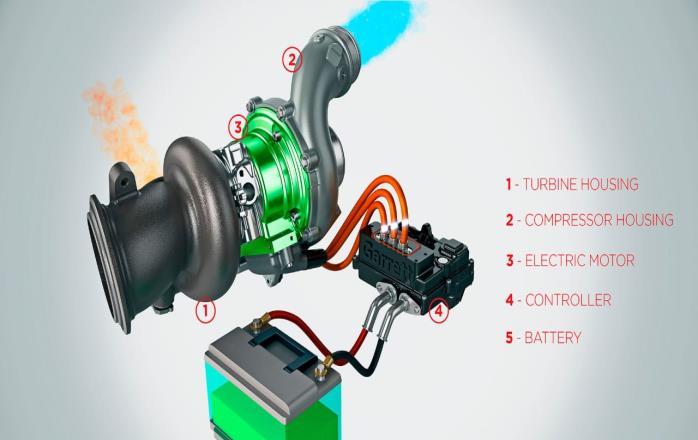
ConstructingaTurbocharger-DrivenAlternatorSystemTo constructtheproposedsystem,followthesesteps:
International Research Journal of Engineering and Technology (IRJET) e-ISSN: 2395-0056
Volume: 13 Issue: 05 | May 2026 www.irjet.net p-ISSN: 2395-0072
Install a turbocharger on the ship’s engine if not already present. Ensure it is appropriately sized fortheengineandcapableofhandlingtheexhaust gasflowefficiently.
The turbocharger should have a provision for mechanicalcouplingtothealternator.
Choose an alternator compatible with the turbocharger’s rotational speed and power output.Ensureitcangeneratesufficientelectricity tomeetthenavigationlights'powerdemands.
Useacouplingmechanism,suchasashaft,belt,or gear system, to connect the alternator to the turbocharger'sturbine.Alignthesystemtoensure efficientenergytransferwithminimallosses.
Install a voltage regulator between the alternator andthebatterysystemtostabilizethealternator's electricaloutput.
The voltage regulator should be capable of handling fluctuations and maintaining a steady voltagelevelsuitableforthebattery.
Select a battery system with adequate capacity to store the generated electricity. Lithium-ion or lead-acid batteries can be used based on cost, weight,andreliabilityrequirements.
Include a Battery Management System (BMS) to monitor andcontrol thecharging and discharging cycles, ensuring the safety and longevity of the battery.
Install a power distribution unit to deliver the stored energy from the battery to the navigation lights. This unit should include proper fuses and switchesforsafety.
Ensure the wiring and connectors are marinegrade to withstand the harsh shipboard environment.
Implementacontrolpaneltomonitorthesystem’s performance, including the turbocharger, alternator,voltageregulator,andbatterysystem.
Use sensors and indicators to track parameters such as battery charge level, alternator output, andsystemtemperature.
Connect the navigation lights to the power distribution system. Use energy-efficient LED navigationlightstominimizepowerconsumption andextendthebatterylife.
Test the system under different operating conditionstoensurereliabilityandefficiency.
Optimizethecouplingmechanism,alternatorsize, and voltage regulation settings for maximum performance.
Regularly inspect and maintain the turbocharger, alternator, and battery system to ensure longtermreliability.
Replace worn-out components and update the control system as needed for optimal performance.
This construction process ensures a robust and efficient turbocharger-driven alternator system that enhances energy efficiency while meeting the ship's operational requirementssustainably.
International Research Journal of Engineering and Technology (IRJET) e-ISSN: 2395-0056
Volume: 13 Issue: 05 | May 2026 www.irjet.net p-ISSN: 2395-0072
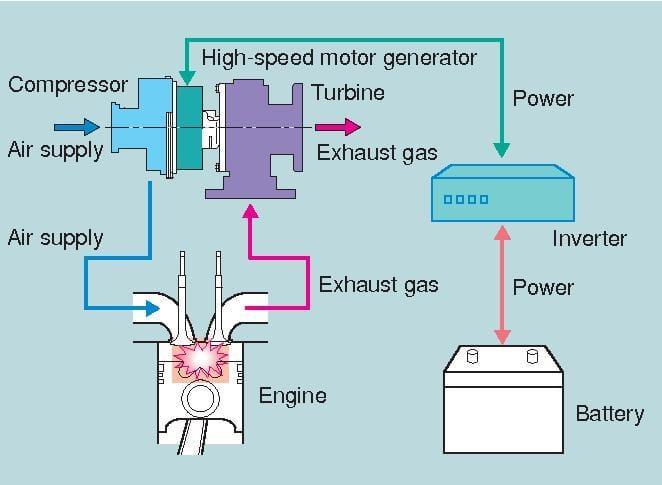
Fig:2systematicdiagramfortheEnergyGenerationfrom Turbocharger
4. APPLICATIONS OF THE TURBOCHARGERDRIVEN ALTERNATOR SYSTEM
The turbocharger-driven alternator system has severalpracticalapplicationsinmaritimeoperations:
4.1. Powering Navigation Lights:
Provides a sustainable power source for navigation lights, ensuring safety and visibility during nighttime operations and adverse weather conditions.
4.2. Supplementary Energy Source:
Acts as an auxiliary power system to reduce the load on the ship's primary generator, enhancing energyefficiency.
4.3. Emergency Lighting:
Serves as a reliable backup power source for emergency lighting systems, ensuring operational safetyduringpowerfailures.
4.4. Energy Recovery from Exhaust Gases:
Harnessesotherwise wastedenergy from exhaust gases, optimizing energy use and reducing environmentalimpact.
4.5. Support for Small Electrical Loads:
Powers minor electrical equipment orsystemson board,suchascommunicationdevicesorsensors, improvingoverallenergymanagement.
4.6. Eco-Friendly Maritime Operations:
Contributestoreducinggreenhousegasemissions by decreasing reliance on traditional fuel-based power systems, aligning with global environmentalstandards.
4.7. Cost-Effective Solution for Older Ships:
Provides an efficient way to retrofit older ships with a modern energy recovery system without significant overhauls, extending their operational life.
4.8. Enhanced Fuel Efficiency:
By offloading minor energy demands from the main engine or generator, it improves the overall fuelefficiencyofthevessel.
4.9. Scalability for Different Vessel Types:
Canbeadaptedforvariousvesselsizes,fromsmall boats to large commercial ships, making it versatilefordiversemaritimeapplications.
4.10. Support for Renewable Energy Initiatives:
Complements other renewable energy technologies, such as solar or wind systems, in creating hybrid energy solutions for maritime operations.
By integrating this system, ships can achieve greater energy efficiency, reduce operational costs, and enhance compliancewithenvironmentalregulations.
5. ADVANTAGES OF THE TURBOCHARGERDRIVEN ALTERNATOR SYSTEM
5.1. Energy Efficiency:
Utilizes wasted energy from exhaust gases, improving overall energy efficiency without additionalfuelconsumption.
5.2. Sustainability:
Reduces greenhouse gas emissions, contributing toenvironmentallyfriendlymaritimeoperations.
5.3. Cost-Effectiveness:
Leveragesexistingshipmachinery,minimizingthe need for new infrastructure or costly modifications.
International Research Journal of Engineering and Technology (IRJET) e-ISSN: 2395-0056
Volume: 13 Issue: 05 | May 2026 www.irjet.net p-ISSN: 2395-0072
5.4. Reliability:
Providesaconsistentpowersourcefornavigation lights,evenduringengineoperationfluctuations.
5.5. Compact Design:
Can be integrated into existing ship systems without requiring significant space or additional equipment.
5.6. Enhanced Safety:
Ensures uninterrupted power for navigation lights, improving operational safety in lowvisibilityconditions.
5.7. Scalability:
Can be adapted for various vessel sizes and applications, making it versatile for different maritimeneeds.
5.8. Compliance with Regulations:
Helps ships meet environmental regulations and energyefficiencystandards.
5.9. Low Maintenance:
Designedtoworkwithexistingsystems,requiring minimaladditionalmaintenanceefforts
6. DISADVANTAGES OF THE TURBOCHARGERDRIVEN ALTERNATOR SYSTEM
6.1. Initial Installation Cost:
Although cost-effective in the long run, the initial setup and integration of the system may require significantinvestment.
6.2. Performance Dependence:
The system's efficiency is directly tied to the turbocharger's performance, which depends on engineloadandexhaustconditions.
6.3. Limited Energy Output:
The amount of electricity generated may be insufficient for high-power applications beyond navigationlights.
6.4. System Complexity:
Adding an alternator and battery system to the turbocharger increases the complexity of ship systems, requiring skilled personnel for maintenanceandoperation.
6.5. Space Constraints:
Whilecompact,thesystem still requiresspacefor additionalcomponentslike thealternator,voltage regulator, and battery, which may be challenging onsmallervessels.
6.6. Wear and Tear:
The mechanical coupling between the turbochargerandalternatormayleadtoincreased wear,requiringperiodicreplacementofparts.
6.7. Dependence on Engine Operation:
The system relies on engine exhaust, meaning it may not generate electricity when the engine is idleoroperatingatlowloads.
6.8. Battery Lifespan:
The battery system will require periodic replacement, adding to operational costs over time.
6.9. Potential for Overheating:
The system components, particularly the alternator and battery, could overheat if not adequately cooled, especially in high-load conditions.
6.10. Integration Challenges:
Retrofitting older ships may pose integration difficulties, as existing systems may not be compatiblewithoutmodifications.
By weighing these advantages and disadvantages, ship operators can determine the feasibility of adopting this system based on their specific operational needs and constrain
The turbocharger-driven alternator system presents an innovative and sustainable solution for optimizing energy utilization aboard ships. By repurposing the rotational energy of the turbocharger, the system effectively generates electricity to power essential navigation lights, reducing the reliance on the ship's main power systems. This approach leverages existing machinery, making it a practical, cost-effective, andeco-friendlyadditiontomaritimeoperations.
International Research Journal of Engineering and Technology (IRJET) e-ISSN: 2395-0056
Volume: 13 Issue: 05 | May 2026 www.irjet.net p-ISSN: 2395-0072
The implementation of such a system offers numerous advantages, including improved fuel efficiency,reducedgreenhousegasemissions,and enhanced operational reliability. Moreover, it aligns with global sustainability goals and regulatorystandards,promotinggreenershipping practices.
While there are challenges such as initial setup costs and system integration complexities, the long-term benefits in energy savings and environmental impact outweigh these drawbacks. This concept demonstrates the potential for innovative energy recovery technologies to revolutionizemaritimeenergysystems,pavingthe way for a more efficient and sustainable future in theshippingindustry.
1."MarineAuxiliaryMachinery"byH.D.McGeorge
2."PrinciplesofTurbocharging"byNikolausI.Meyer
3. "Marine Electrical Equipment and Practice" by H.D. McGeorge
4."MarineEngineering"byRoyL.Harrington
5. "Shipboard Electrical Power Systems" by Mukund R. Patel
6."TurbochargersandTurbocharging"byConstantineD. RakopoulosandEvangelosG.Giakoumis
7."HandbookofMarineEngineering"byE.A.Stokoe
These books provide a strong foundation for understanding the technical, operational, and sustainabilityaspectsoftheproposedsystem.
BIOGRAPHIES:





THRANESHWARAN A, pursuing B.E fnal year Marine Engineering cadet at PSN College of Engineering & Technology, Tamil Nadu India
R.SATHEES RAJA Working as a Professor, Dept. of B.E Marine Engineering, PSNCET, Tamil Nadu, India.
A.C. MARIAPPAN Working as a Associate Professor, Dept. of B.E Marine Engineering, PSNCET, Tamil Nadu, India.
M.R. SUDHAKAR Working as a Professor, Dept. of B.E Marine Engineering, PSNCET, Tamil Nadu, India.