
International Research Journal of Engineering and Technology (IRJET) e-ISSN: 2395-0056
Volume: 13 Issue: 01 | Jan 2026 www.irjet.net p-ISSN: 2395-0072
International Research Journal of Engineering and Technology (IRJET) e-ISSN: 2395-0056
Volume: 13 Issue: 01 | Jan 2026 www.irjet.net p-ISSN: 2395-0072
Akshada Sanjay Jadhav¹, Prof. A. R. Joshi², Prof. N. B. Karwa³
¹Diploma Final Year, Civil Engineering K.V.N. Naik Shikshan Prasarak Sanstha’s Loknete Gopinathji Munde Institute of Engineering Education and Research, Nashik, Maharashtra, India ²Professor, Department of Civil Engineering,K.V.N. Shikshan Prasarak Sanstha’s Loknete Gopinathji Munde Institute of Engineering and Education & Research,Nashik, Maharashtra, India
³Head of Department, Department of Civil Engineering,K.V.N. Shikshan Prasarak Sanstha’s Loknete Gopinathji Munde Institute of Engineering and Education & Research,Nashik, Maharashtra, India ***
Abstract - Drip irrigation is an efficient method of water application that delivers water directly to the plant root zone, thereby reducing losses and improving crop performance. This paper presents a field-based case study of a drip irrigation system implemented for cucumber cultivation at Sinner, Nashik district, Maharashtra, with the objective of evaluating system performance, water application practices, operational challenges, and improvement possibilities under small-scale farming conditions. Water was supplied from an agricultural well through a filtration unit and distributed using PVC mainline and submain pipelines along with durable lateral drip pipes fitted with inline emitters at one foot spacing. The total cultivated area was one bigha, equivalent to twenty-one thousand seven hundred eighty square feet, requiring an equal number of emitters for uniform water application. During the initial crop growth stage, lower quantities of water were applied, followed by a gradual increase as plant growth progressed. On average, each emitter delivered approximately one liter of water in ten minutes, with irrigation applied at intervals of two to three days based on crop stage and soil moisture conditions. Field observations revealed uniform water distribution, improved soil moisture retention, reduced weed growth, and nearly forty percent water savings compared to conventional irrigation practices. However, challenges such as emitter clogging due to algae formation and limitations of secondary filtration were observed. To overcome these issues, the study proposes the adoption of soil moisture based irrigation scheduling, improved filtration, and energy efficient pumping systems suitable for small farmers.
Key Words: Drip Irrigation, Water Use Efficiency, Soil Moisture Sensor, Smart Irrigation, Cucumber Cultivation, LowCost Automation, Sustainable Agriculture
Water scarcity and inefficient irrigation practices are major challenges faced by Indian agriculture. Traditional irrigation methodssuchasfloodingleadtoexcessivewaterlossduetoevaporation,runoff,anddeeppercolation.Dripirrigationoffersa modernsolutionbydeliveringwaterdirectlytotheplantrootzoneincontrolledquantities,therebyimprovingwateruse efficiencyandcropyield.
Vegetablecropssuchascucumberrequirefrequentbutcontrolledirrigationforoptimalgrowth.Dripirrigationhelpsmaintain uniform soil moisture, reduces weed growth, and improves nutrient uptake. However, many field-level drip systems still operatewithfixedschedules,manualcontrol,andbasicfiltration,whichlimitstheirlong-termperformance.
Thisstudyfocusesonareal-timefieldimplementationofadripirrigationsystemforcucumbercultivationinNashikdistrict. Theobjectivesaretoanalysesystemlayout,waterapplicationpractice,operationalperformance,problemsfacedduringuse, andtoproposefuturelow-costsmartimprovementssuitableforsmallandmediumfarmers.
ThefieldstudywasconductedatacucumbercultivationfarmlocatedinSinnertalukaofNashikdistrict,Maharashtra.Thetotal cultivatedareaunderdripirrigationwasonebigha,equivalentto21,780squarefeet.Cucumberwasselectedasthestudycrop duetoitshighwatersensitivityandsuitabilityfordripirrigationsystems.Waterforirrigationwassourcedfromanagricultural welllocatedwithinthefarmpremises.Thesitevisitandsystemassessmentwerecarriedoutundertheguidanceofthefarm owner, Mr. Yogesh Shinde, who provided detailed information regarding system operation, irrigation practices, and maintenanceroutines
International Research Journal of Engineering and Technology (IRJET) e-ISSN: 2395-0056
Volume: 13 Issue: 01 | Jan 2026 www.irjet.net p-ISSN: 2395-0072
Thedripirrigationsystematthestudysiteusedanagriculturalwellwithapumpasthewatersource.Waterfromthewell waspassedthroughasecondaryscreenfilterbeforeenteringPVCmainlineandsub-mainpipelines.Fromthesub-mains,Pepsisizelateral drippipeswerelaidalongthecucumberbeds.Inlineemitterswitha 1mmopeningwereprovided atregular spacingtosupplywaterdirectlytothecroprootzone.Flushvalveswereinstalledattheendsofthelateralstoallowperiodic cleaning. This system arrangement ensured uniform water application and smooth field operation during the cultivation period.
Waterapplicationwasadjustedaccordingtothecropgrowthstage.Duringtheinitialstage,whenthecucumberplantswere small,alowerquantityofwaterwassupplied.Asthecropenteredthevegetativeandfloweringstages,theamountofwater appliedwasgraduallyincreasedtomeethighermoisturerequirements.Irrigationwasgenerallyscheduledatanintervalof2–3 daysbasedonfieldconditions.Eachemitterdeliveredapproximately1litreofwaterwithin10minutesofoperation.This stage-wiseirrigationpracticemaintainedadequatesoilmoistureintherootzonewhilepreventingwaterlogging.
Table -1: DripIrrigationSystemDesignDetails
Parameter
TotalFarmArea
Value
21,780sqft(1Bigha)
Crop Cucumber
EmitterSpacing 1ft×1ft
TotalNumberofEmitters 21,780
EmitterDischarge 1litre/10minutes
LateralPipeType
Pepsi-sizedrippipe
Main/Sub-mainPipe PVC
PressureCondition
Lowpressure
WaterSavingReported 40%
Operatingpressureatemitter kg/cm²
Waterflowsfromthewelltothepumpandthenpassesthroughafilterunit.FilteredwaterentersthePVCmainlineandsubmainpipelines,fromwhereitisdistributedthroughlateraldrippipes.Inlineemittersallowwatertodripslowlyanduniformly at the crop root zone. The system operates at an average pressure of about 1 kg/cm² (approximately 100 kPa), which is sufficienttoensureuniformdischargefromallemitterswithoutcausingdamageorexcessiveflow.
4. METHODS:-
Thepresentstudyadoptedafield-basedcasestudyapproachtoevaluatetheperformanceofanexistingdripirrigationsystem usedforcucumbercultivationunderactualfarmingconditions.Theresearchfocusedonon-siteobservationtoassesssystem layout,waterapplicationpractices,operationalefficiency,andmaintenanceissuesratherthanlaboratoryexperimentation.The studywasconductedonacucumberfarmlocatedinSinnertalukaofNashikdistrict,Maharashtra,coveringanirrigatedareaof one bigha (21,780 sq ft). Cucumber was selected as the study crop due to its sensitivity to irrigation scheduling and its suitabilityfordripirrigationsystemscommonlyusedinvegetablefarming.
Systemevaluationwascarriedoutthroughdirectfieldobservationduringirrigationoperationsanddiscussionswiththefarm ownerregardingschedulingandmaintenancepractices.Thedripsystemconsistedofanagriculturalwellandpump,secondary filtrationunit,PVCmainandsub-mainpipelines,Pepsi-sizelateralpipes,andinlineemittersspacedatone-footintervals. Emitter discharge was estimated by observing water output over a fixed time period, with an average discharge of approximately one litre per emitter in ten minutes. Water application frequency, soil moisture condition, uniformity of distribution,weedgrowth,andperformanceunderlow-pressureconditionswereassessedduringdifferentcropgrowthstages. Operationalissuessuchasemitterclogging,filtrationlimitations,andover-irrigationduetomanualcontrolwereidentified, based on which low-cost and farmer-friendly modernization options were proposed to improve system efficiency and sustainability.
International Research Journal of Engineering and Technology (IRJET) e-ISSN: 2395-0056
Volume: 13 Issue: 01 | Jan 2026 www.irjet.net p-ISSN: 2395-0072
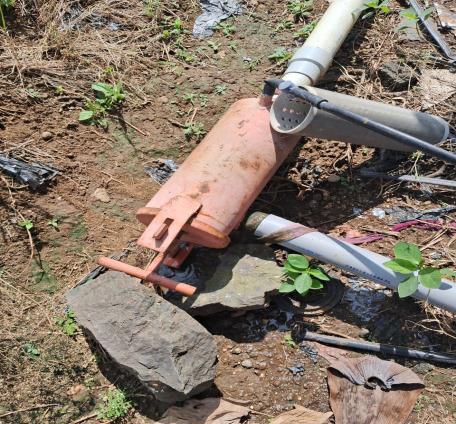
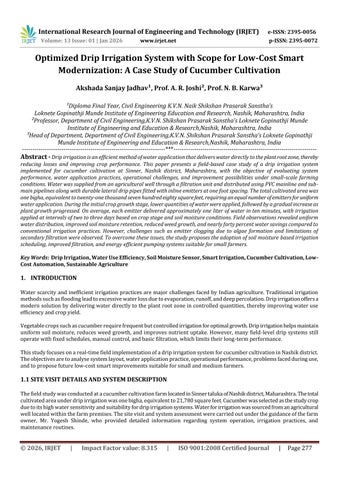
Theon-fieldassessmentofthedripirrigationsystemusedforcucumbercultivationin sinner,Nashikindicatedreliable performancewithrespecttowaterdelivery,soilmoisturemaintenance,andcropgrowthresponse.Waterdrawnfromthe agriculturalwellwaspumpedthroughafiltrationunitandthendistributedthroughPVCmainandsub-mainpipelinestothe lateraldriplines.Waterapplicationoccurredthroughinlineemitters,whichsuppliedmoistureslowlyanddirectlytotheplant rootzone.Properpressureregulationacrossthenetworkensurednearlyuniformdischargefromallemitters,reducingwater lossduetorunoff,evaporation,andunevenwetting,therebyimprovingoverallirrigationefficiency.
Field-levelobservationsshowedthatwaterdistributionacrosstheplotwasuniformandthesystemfunctionedefficiently evenunderlowoperatingpressure.Soilmoistureconditionsweremaintainedwithintherequiredrange,whileweedgrowth wasnoticeablyreducedduetolocalizedwaterapplicationnearplantroots.Comparedtoconventionalirrigationpractices,the dripsystemresultedinnearly40%watersavings.Adjustingwaterapplicationaccordingtocropgrowthstagesloweramounts during early growth and increased supply during later stages helped support healthy crop development without causing waterlogging.
Despitethesebenefits,certainoperationallimitationswereobservedduringextendeduse.Whenthesystemremained unusedforseveraldays,algaeandweedgrowthdevelopedinsidethedrippipes,leadingtoblockageofemitteropeningsand unevendischarge.Furthermore,relianceononlyasecondaryfiltrationunitallowedfineparticlestoenterthesystem,gradually causingpartialcloggingofemitters.Suchissuesarecommonlyreportedinfield-baseddripirrigationsystemswherefiltrationis inadequate.
Anotherchallengewasthemanualoperationofvalvesandpumps,whichoccasionallyresultedinexcesswaterapplication duetolackofcontinuousmonitoring.Thissometimesledtosoilconditionsbecomingwetterthanrequired,affectingirrigation efficiency.
International Research Journal of Engineering and Technology (IRJET) e-ISSN: 2395-0056
Volume: 13 Issue: 01 | Jan 2026 www.irjet.net
p-ISSN: 2395-0072
Toovercometheselimitations,affordablemodernizationoptionsaresuggested,suchassoilmoisturesensor–basedirrigation control,timer-assistedautomation,improvedprimaryfiltrationorsedimentchambers,solar-supportedpumpingsystems,and sensor-guidedirrigationscheduling.Thesemeasurescanimprovesystemperformance,reducemaintenancerequirements,and enhancewaterandenergyefficiencywhileremainingpracticalforsmall-scaleIndianfarmers.
Table -2: ProposedModernLow-CostSolutions
Existing Problem
Fixedirrigation decision
Manualvalve operation
Emitterclogging
Highenergycost
Over-irrigation
Proposed Modern Solution How It Can Be Implemented
Soilmoisture sensor
Timer-based automation
Improvedfiltration
Solar-assisted pumping
Sensor-based control
Low-costsensor installednearroot zone
Batteryorelectric timers
Primaryfilteror sedimentchamber
Solarpanel+DC pump
Irrigationonly whensoilisdry
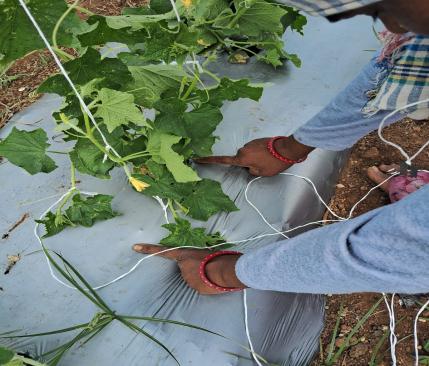
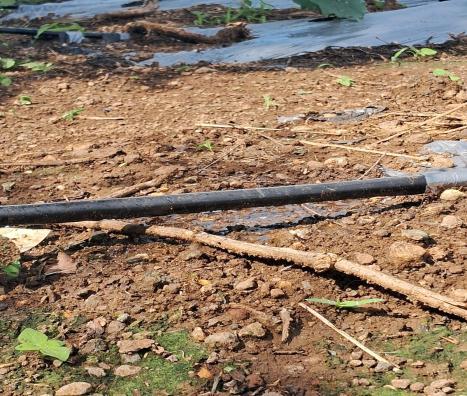
Table -3: Cucumbercropspacingof1ftmaintainedundermulchedfieldconditions
Compared to existing research solutions that rely on high-cost automation and advanced IoT platforms, the proposed system achieves comparable improvements in water efficiency, labour reduction, and crop productivity using low-cost, farmerfriendly technologies suitable for Indian field conditions.
Table 2: ComparisonofSite-LevelProblemsandModernSolutions
Aspect Site Problem
Irrigation
Schedulin g Fixed irrigation interval regardless ofsoil moisture
Similar Problem Identified in Research Papers
ZakariM.D. etal., “Design, Constructio nand Installation ofLocalized Drip Irrigation System,” 2013. SantiniA.et
Modern Solution (literatur e)
Estimate d Cost (Their Solution )
Soilmoisture and weatherbased irrigation schedulin g ₹25,000–₹40,000 (advance dsensors + weather station)
Output if Their Solution is Applied
Accurate irrigation, water savingsat farmscale
Propose d LowCost Solution (India)
Soilmoisture threshold -based irrigation using basic sensors
Implementati on Method (Practically)
Estimat ed Cost (India)
Install2–3 low-cost capacitivesoil moisture sensorsnear rootzone; manuallyor semiautomatically trigger irrigation when ₹3,000–₹6,000
Output if our Solution is Applied
25–40% water saving, reduced stress, suitable forsmall farmers
International Research Journal of Engineering and Technology (IRJET) e-ISSN: 2395-0056
Volume: 13 Issue: 01 | Jan 2026 www.irjet.net p-ISSN: 2395-0072
al.,“From Floodto Drip
thresholdis reached System Operatio n Manual valve operation causing labor dependen cy
Irrigation:A Review,” 2025.
ZakariM.D. etal., “Design, Constructio nand Installation ofLocalized Drip Irrigation System,” 2013.
Filtration and Clogging
Improvise dfilter proneto clogging
Energy
Source Dependen ceon electric/fu elpump
ZakariM.D. etal., “Design, Constructio nand Installation ofLocalized Drip Irrigation System,” 2013. JaiswalN.et al.,“Smart Drip Irrigation Systems UsingIoT,” 2025.
Khalifa W.M.A.etal., “FarmBased Environmen taland Economic Impactsof Drip Irrigation,” 2020.
SantiniA.et al.,“From Floodto Drip Irrigation:A Review,” 2025. JaiswalN.et al.,“Smart Drip Irrigation Systems UsingIoT,” 2025
JaiswalN.et al.,“Smart
Fully automate dvalve andpump control using controller s ₹30,000–₹50,000
Standard sand+ screen filtration with pressure regulation ₹10,000–₹15,000
Reduced laborand consistent irrigation
Solarpowered pressurize ddrip systems ₹1,00,00
Less clogging, longer systemlife
Timerbased semiautomati on
Renewable energy, lower emissions
Low-cost screen filter+ periodic flushing
Usebatteryoperated irrigation timers connectedto controlvalves ₹2,500–₹5,000
Reduced labor, timely irrigation, minimal training needed
Install commercial screenfilter andschedule weekly flushing ₹2,000–₹4,000
Acceptable clogging control withvery low maintenan cecost
Small solar pump+ gravityfeddrip
Use0.5HPDC solarpumpto filloverhead tank,gravity flowfor irrigation ₹35,000
50,000 60–70% energy cost reduction, feasiblefor ruralIndia
Earlyfault detection,
International Research Journal of Engineering and Technology (IRJET) e-ISSN: 2395-0056
Volume: 13 Issue: 01 | Jan 2026 www.irjet.net p-ISSN: 2395-0072
Use gof pressure, flow,or moisture Drip Irrigation Systems UsingIoT,” 2025.
Technolo gy Complexi ty
Limited technical skillsof farmers
JaiswalN.et al,“Smart Drip Irrigation Systems UsingIoT,” 2025
monitorin g
SmartAIdriven irrigation platforms
Veryhigh (₹1–2 lakh)
performan cetracking digital monitori ng gauge,flow meter,and moisture sensors acceptable accuracy atlowcost
High accuracy but complex
Farmerfriendly simple tech
Usevisual indicators, mobilealerts (optional), manual override
Minimal High adoption, easy operation
The drip irrigation system studied in this project proved to be efficient in conserving water and improving irrigation performanceforcucumbercultivation.Thesystemdelivereduniformwateratlowpressureandresultedinapproximately40% water savings. The site visit provided valuable practical knowledge regarding system layout, discharge control, and maintenancerequirements.
However, issues such as clogging, manual operation, and over-irrigation highlight the need for modernization. Low-cost solutionssuchassoilmoisturesensors,timers,improvedfiltration,andsolarenergyintegrationcansignificantlyimprove systemreliabilityandsustainability.Thisstudyconfirmsthataffordablesmartirrigationtechnologiescansupportsustainable agricultureandbenefitsmall-scaleIndianfarmers.
ACKNOWLEDGEMENT
TheauthorsincerelythanksMr.YogeshShinde,farmowner,forprovidingfieldaccessandpracticalinsights.Gratitudeisalso expressedtoProf.AditiJoshiforcontinuousguidanceandsupportthroughouttheprojectwork.
[1] Futri Wulandari, Reynaldi Laurenze, “Optimizing Drip Irrigation Systems to Enhance Water Use Efficiency and Crop Productivity,”2025.
[2] ZakariM.D.etal.,“Design,ConstructionandInstallationofLocalizedDripIrrigationSystem,”2013.
[3] KhalifaW.M.A.etal.,“Farm-BasedEnvironmentalandEconomicImpactsofDripIrrigation,”2020.
[4] SantiniA.etal.,“FromFloodtoDripIrrigation:AReview,”2025.
[5] JaiswalN.etal.,“SmartDripIrrigationSystemsUsingIoT,”2025.
[6] C.K.Arya,R.C.Purohit,L.K.Dashora,P.K.Singh,MaheshKothari,“Performanceevaluationofdripirrigationsystems,” 2017.
[7] DiegoChamba,SergioZubelzu,LuisJuana,“Determininghydrauliccharacteristicsinlateralsanddripirrigationsystems,” 2019.
[8] MohakAnilJadhav,YashJagdishJadhav,SoniaKadam,“Thedripirrigationsystem,”2024.