
International Research Journal of Engineering and Technology (IRJET) e-ISSN: 2395-0056
Volume: 13 Issue: 01 | Jan 2026 www.irjet.net p-ISSN: 2395-0072
International Research Journal of Engineering and Technology (IRJET) e-ISSN: 2395-0056
Volume: 13 Issue: 01 | Jan 2026 www.irjet.net p-ISSN: 2395-0072
Yoqubjoni Saivali 1,4* , Ping Fang 1,4 , Ziyoev Sohibjon 1,4 , Mahmudov Dalerjon 1,4
1 College of Environmental Science and Engineering, Tongji University, Shanghai, 200092, China
2 UNEP-Tongji Institute of Environment for Sustainable Development Tongji University, Shanghai, 200092, China
3 Department of Foreign Economic Cooperation, Ministry of Economic Development and Trade of the Republic of Tajikistan
4 College of Environmental Science and Engineering, Tongji University, Shanghai, 200092, China***
Abstract – Endowed with one of the most substantial hydropower potentials in Central Asia, the region is strategically positioned to advance its transition to a lowcarbonenergyfuture.Hydropowercurrentlycontributesover 95% of the region’s electricity generation; however, a considerable share of its potential remains underexploited. This paper provides a comprehensive analysis of the role of hydropower in fostering sustainable development, with a focusontheeconomic,environmental,andsocialdimensions of expanding this renewable energy source. Utilizing a detailed assessment of the existing hydropower infrastructure, this study identifies key barriers, including financing constraints, and regional cooperation challenges, while simultaneously highlighting the opportunities for scaling up hydropower production.
A case study of the Rogun Hydropower Plant is presented, illustrating that the project could increase electricity generation by over 3,600 MW, effectively reducing national energy deficits by 40% and providing a potential for surplus export to neighboring regions. The findings underscore the critical importance of overcoming financial and governance obstacles to fully capitalize on hydropower resources. Moreover,thestudyemphasizesthenecessityforrobustlongterm planning, the development of innovative financing mechanisms, and enhanced multilateral cooperation to securethesustainable deployment ofhydropowerresources. These strategies are essential to ensuring the long-term resilienceofhydropowerasacornerstoneofregionalenergy security and climate mitigation.
Key Words: Electricity generation, Sustainable Development, Environmental Impact, and Energy Security
Hydropower is widely recognized as a key renewable energysourcethatcansignificantlycontributetomitigating climate change by reducing reliance on fossil fuels. However, its sustainability is highly debated due to the complex trade-offs between energy production and environmental and social impacts. The sustainability of hydropowerprojects,particularlylarge-scaleones,hasbeen
assessed using multiple frameworks that integrate economic, environmental, social, and governance (ESG) factors[1].InthecontextofTajikistan,wherehydropower constitutes the majority of electricity production, it is essential to evaluate these factors comprehensively to determine how to maximize the benefits of hydropower whileaddressingthepotentialrisks.
Recentstudieshaveemphasizedtheeconomicbenefits of hydropower, particularly in developing countries. For Tajikistan, hydropower offers the potential for economic growth, industrialization, and energy security. However, studies also highlight the macroeconomic challenges associated with large-scale hydropower projects, particularlythecapital-intensivenatureofplantslikeRogun andthecountry’slimitedaccesstointernationalfinance[2]. Furthermore, the economic viability of such projects depends on the ability to balance construction costs, operational efficiency, and long-term revenue from electricityexports[3]
Whenassessinghydroelectricpowerplantprojects, environmentalsustainabilityisacrucialfactor.Inthefight against climate change, hydroelectric power is acknowledgedasacleanandsustainableenergysourcethat helps lower greenhouse gas emissions. Greenhouse gas emissions can be decreased by large-scale initiatives like the Rogun Hydroelectric Power Plant (Rogun HPP) [2] In addition, the Rogun HPP is strategically significant for TajikistanandallofCentralAsia. Because hydroelectric electricity replaces conventional fossil fuel power plants andbalancesintermittentsourceslikesolarandwind,these factors contribute to a decrease in CO2 emissions. Asaresult,Rogunguaranteesenergysecurityandregional economic growth in addition to helping to improve the climatic conditions. The Rogun HPP may successfully demonstratehowenergydevelopmentandenvironmental preservation can coexist in harmony by upholding international standards and a strong environmental managementframework.
Social sustainability is also a critical component of hydropower assessments, particularly in areas where communitiesaredisplacedorimpactedbyenvironmental
International Research Journal of Engineering and Technology (IRJET) e-ISSN: 2395-0056
Volume: 13 Issue: 01 | Jan 2026 www.irjet.net p-ISSN: 2395-0072
changes. Large hydropower projects often lead to the displacement of local populations, which necessitates carefulplanningandexecutionofresettlementpolicies[4]. Thesocialimpactsofhydropowerprojectscanalsoinclude changes in livelihood opportunities, access to water, and regionalinequalities.FortheRogunHydropowerPlant,the potential displacement of communities and the need for equitable compensation and community participation in decision-making are central social concerns that must be addressedthroughinclusivegovernanceframeworks.
Finally, governance mechanisms play a pivotal role in ensuring the sustainability of hydropower projects [5]. Effective governance is essential for managing financial, environmental, and social risks, as well as for fostering transparencyandaccountabilityinprojectimplementation.
The aim of this study is to conduct a comprehensive, multidimensionalanalysisoftheRogunHydropowerPlant inCentralAsia,withafocusonitsroleinenhancingregional energy security and advancing green development. Specifically, the study seeks to evaluate the economic, environmental,social,andgovernanceaspectsoftheRogun HydropowerPlant,providingactionablerecommendations for ensuring its sustainable contribution to the region's energyfuture[6].Toachievethis,thestudywillassessthe economicimpactoftheRogunHydropowerPlant,including itspotentialtoreduceenergydeficits,increaseelectricity exports, and contribute to long-term economic growth. Additionally,theenvironmentalsustainabilityoftheplant willbeevaluated,consideringitseffectsonwaterresources, biodiversity,andecosystemhealth,aswellasitscapacityto mitigategreenhousegasemissionscomparedtofossilfuelbasedenergygeneration[7]
The social implications will also be examined, particularly the impact on local communities, the resettlement process, employment generation, and improvedaccesstoenergyinruralareas.Furthermore,the study will analyze the governance and financing mechanisms essential forthesustainabledevelopmentof the plant, focusing on overcoming challenges related to governance,financing,andregionalcooperation.Ultimately, thestudyaims to providestrategic recommendationsfor optimizing hydropower development in Central Asia, emphasizing the importance of integrated long-term planning, robust financial models, and international collaboration[8]
Tajikistan’s hydropower resources are among the largestintheworld,rankingithighlyintermsofgeneration capacitypersquarekilometerandpercapita.Thecountry’s rivers,particularlytheVakhsh,AmuDarya,andSyrDarya, provide a rich source of renewable energy that can be exploitedthroughtheconstructionofhydropowerplants.
Despitethis,Tajikistanhasonlytappedintoasmallfraction ofitshydropowerpotential.Currentestimatessuggestthat Tajikistanhasthecapacitytogenerateover527billionkWh of electricity annually, which is three times the current electricityconsumptioninCentralAsia[9]
As of 2025, Tajikistan's total installed hydropower capacityhasgrowntoapproximately6,000MW,reflecting ongoinginvestmentsandmodernizationsthatpositionthe countryasakeyplayerinCentralAsia'srenewableenergy landscape, though it remains behind global leaders like Brazil,China,andCanadainabsoluteterms[6].
TheRogunHydropowerPlant,underconstructionsincethe 1980s,issettobecomethelargesthydropowerstationin Central Asia once completed 10]. With an estimated capacityof3,600MWandanexpectedannualoutputof17 billion kWh, Rogun is expected to significantly reduce Tajikistan’senergydeficitandincreaseelectricityexportsto neighboring countries [11] According to estimates, Tajikistan’s neighboring countries face substantial electricitydeficitsmeasuredinthehundredstothousands of megawatts (MW), particularly during winter peak demand. Uzbekistan, Afghanistan, and Kyrgyzstan are among the nations that border Tajikistan and experience significantseasonalelectricityshortages,particularlyinthe winter, as a result of their excessive reliance on erratic hydropower,poorinfrastructure,andgrowingdemandthat exceedssupply.Alongwiththesecountries,Pakistanalso facessimilarshortcomings[12]
Afghanistan,whosepowersystemremainsunderdeveloped andhighlyimport-dependent,isestimatedtofaceshortfalls ofroughly300–500MWduringpeakwintermonths,when heatingdemandrisessharply,anddomesticgenerationis insufficient.Uzbekistan,despitehavingalargerandmore diversified power system, regularly experiences seasonal deficitsrangingfrom1,000to2,000MWinwinter,driven by surging residential heating demand, aging thermal infrastructure,andconstraintsinfuelsupply.Kyrgyzstan, like Tajikistan, relies heavily on hydropower and suffers fromlowreservoirlevelsinwinter,resultinginelectricity shortages of approximately 400–700 MW during peak periods [13]. Pakistan, although not a direct neighbor to Tajikistan,facescomparablestructuralchallenges;during high-demand seasons-particularly winter evenings and summer heat waves-its power shortfall has historically ranged from 2,000 to over 5,000 MW, affecting both households and industry. Collectively, these deficits underscore a regional pattern in which winter demand consistently exceeds available supply, highlighting the urgent need for cross-border power trade, grid modernization, and diversification away from exclusive dependenceonseasonalhydropower[14].
Tajikistan'shydropowerpotentialisnotonlycrucialfor meetingdomesticenergyneedsbutalsoforpositioningthe
International Research Journal of Engineering and Technology (IRJET) e-ISSN: 2395-0056
Volume: 13 Issue: 01 | Jan 2026 www.irjet.net p-ISSN: 2395-0072
countryasakeyplayerintheregionalenergymarket.The country’s role as an energy exporter could contribute to economic growth, particularly through trade agreements withneighboringnationsandtheimplementationofcrossborder energy infrastructure. In particular, Tajikistan’s participationinregionalinitiatives,suchastheCentralAsiaSouth Asia Electricity Transmission and Trade Project (CASA-1000), can facilitate the export of surplus energy, boostingthecountry'seconomicdevelopmentandfostering regionalcooperation[15]
Furthermore,Tajikistan'spositionasamajorenergyhub in the region is reinforced by the current unified Central AsianPowerSystem(CAPS),whichhasready-madehighvoltagetransmissioninfrastructurefromtheSovieterathat enables instantaneous electricity exchanges among Tajikistan,Uzbekistan,Kyrgyzstan,andKazakhstan[16]
The underutilization of Tajikistan's hydropower potentialpresentsasignificantopportunityforthecountry. The expansion of hydropower capacity, including both large-scaleprojectslikeRogunandsmaller,decentralized hydropower systems, could help ensure energy security, reduce reliance on imported fossil fuels, and address the powershortagesthataffectruralcommunities[17].
Table 1: MajorHydropowerPlantsinTajikistan
HydropowerPlant Owner Capacity(MW) River
NurekHPP BarkiTojik 3000 Vakhsh
SangtudaHPP-1 Sangob(Iran) 670 Vakhsh
BaipazaHPP BarkiTojik 600 Vakhsh
GolovnayaHPP BarkiTojik 240 Vakhsh
KairakumHPP BarkiTojik 126 SyrDarya
PereadnayaHPP BarkiTojik 29.95 VakhshCanal
Pamir-1HPP PamirEnergy 28 Gunt
CentralnayaHPP BarkiTojik 15.1 VakhshCanal
VarzobHPP-2 BarkiTojik 14.7 Varzob
VarzobHPP-1 BarkiTojik 9.5 Varzob
Source:InvestmentsintheWaterandEnergyComplex ofCentralAsia,EurasianDevelopmentBank,Almaty,2021, p.13.
2.1. The Role of Hydropower in Sustainable Development
Hydropower is central to Tajikistan’s energy strategy and its broader goal of sustainable development. Hydropower offers numerous economic, environmental, and social benefits, making it a critical component of Tajikistan's green energy transition. This section will explore how hydropower contributes to Tajikistan’s economic growth, energy security, and environmental sustainability.
Using Central Asia as an example, the development of the energy sector can ensure rapid economic growth not only for Tajikistan, but also for neighboring countries through the export of cheap, environmentally friendly energy[18]
Hydropower in Tajikistan plays a crucial role in the country’seconomicdevelopment.Astheprimarysourceof electricity, hydropower supports industries such as manufacturing, agriculture, and services, all of which are essentialtothecountry’seconomicgrowth.Theavailability of low-cost, renewable electricity is essential for industrialization, particularly in energy-intensive sectors such as mining and textiles. Hydropower also offers significantexportpotential,allowingTajikistantogenerate revenuefromthesaleofelectricitytoneighboringcountries suchasAfghanistan,Pakistan,andUzbekistan[19].
Beyond energy generation, the development of hydropower infrastructure generates employment opportunities, both during the construction phase and throughongoingmaintenanceandoperations.Italsofosters the development of ancillary industries, including the construction sector, equipment manufacturing, and researchanddevelopment.Furthermore,thedevelopment of hydropower projects can stimulate regional economic cooperation, particularly in the context of cross-border energytradeandinfrastructuredevelopment[18].
Agricultural development in Central Asian countries dependslargelyonthewaterresourcesoftheAmuDarya andSyrDaryarivers,whichprovideirrigation,sustainable agriculture,andseasonalemployment.
According to the Interstate Commission for Water Coordination(ICWC),thetotalwaterwithdrawallimitfor the Syr Darya will be 4.2 billion m³ by 2026. Water distributionremainsuneven:Kazakhstanwillreceive460 millionm³,Kyrgyzstan47millionm³,Tajikistan365million m³,whileUzbekistanwillreceivethelargestshare 3.347 billionm³(79.3%).Thisdistributionisdrivenbytheneed to maintain environmental flows and prevent soil salinizationintheriver'slowerreaches[20].
Despitehighwaterinflowsintotheupperreachesofthe Syr Darya (6.119 billion m³, or 119% of the norm), a number of reservoirs received significant volumes: Toktogul - 500 million m³, Andijan - 320 million m³, Charvak-428millionm³,andShardara-576millionm³. This requires coordinated water releases to maintain sanitaryflows,whichsimultaneouslyreducesresourcesfor irrigatedagriculture[21]
Atthe same time, Tajikistan did not experience water shortagesin2025:thecountryreceived9.8billionm³from
International Research Journal of Engineering and Technology (IRJET) e-ISSN: 2395-0056
Volume: 13 Issue: 01 | Jan 2026 www.irjet.net p-ISSN: 2395-0072
theAmuDarya,usingapproximately83%oftheestablished limit. This ensured the stable operation of reservoirs, prevented drought, and ensured sustainable irrigation of farmland,supportingruralemploymentandincomes.
Kazakhstan, located in the lower reaches of the Syr DaryaRiver,willfaceareductioninwaterresources:during thenon-growingseason,thevolumeofincomingwaterwill bealmosthalvedcomparedto2025levels(460millionm³ versus 909 million m³). In response, predictive reservoir operating modes and water redistribution measures are being developed, allowing farmers to adapt cropping patternsandreducetheriskofcroplosses[22].
Overall, water availability remains a key factor in the region's agricultural development. Although coordinated water resource management helps reduce the risk of drought and maintain irrigation, lower river reaches, particularlyinKazakhstan,remainthemostvulnerableto watershortages[6]
Hydropower is a key driver of Tajikistan’s environmentalsustainability.Asarenewableenergysource, hydropowerreducesthecountry’srelianceonfossilfuels, mitigatingtheenvironmentaldegradationassociatedwith coal, oil, and natural gas extraction. Hydropower has a significantly lower carbon footprint than conventional power generation technologies, and its use can help Tajikistan meet its climate goals, including reducing greenhousegasemissionsinlinewithinternationalclimate agreements.
Inadditiontoreducingcarbonemissions,hydropower contributes to water management and flood control, particularly in regions vulnerable to seasonal flooding. Large dams like Rogun can help regulate river flows, provideirrigationforagriculture,andensureasteadywater supply for both human consumption and ecosystem preservation.Tajikistan’svastnetworkofriversoffersthe potential forintegratinghydropower withotherforms of water resource management, enhancing both energy productionandenvironmentalresilience[23].
Tajikistan's hydropower infrastructure, located in the upperreachesoftheAmuDaryaandSyrDaryariverbasins, plays a key role in regulating the water balance of the Central Asian region, contributing to sustainability and preventingfurtherdepletionoftheAralSea.
Inparticular,theNurekreservoirontheVakhshRiver(a tributaryoftheAmuDarya)operatesinamodeofregulated releases, smoothing out fluctuations in flow and accumulating reserves during intense glacier melting (in August-September 2025, the inflow reached 115% of the norm),whichpreventswatershortagesduringperiodsof
variable flow and ensures a stable water supply for irrigationandthepopulationofdownstreamcountries.
Similarly,the"BakhriTojik"reservoirontheSyrDarya, jointlyusedbyTajikistan,Kazakhstan,andUzbekistansince May 2025 based on a trilateral protocol, is being transformedintoacoordinatedflowmanagementsystem.
During the winter (non-irrigation) period, when the demand for water for irrigation decreases, Tajikistan significantly reduces releases from the reservoirs of the VakhshcascadeandtheSyrDarya:forexample,in2024–2025,thevolumeofadditionalreleasesamountedtoalmost 1.8 billion m³ above the plan to maintain sanitary and ecologicalflowintheriverbedandpreventsalinizationand desertificationofdownstreamterritories[24].
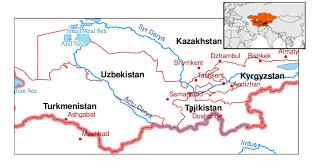
Thesemeasuresimmediatelyensurethepreservationof theAralSeaanditsdeltas:in2025–2026,4.2billionm³of waterareplannedtobeallocatedspecificallyfortheAral Sea (half in the winter-spring period), plus an additional 800millionm³forsanitaryandecologicalreleasesintothe irrigationsystemsoftheAralSearegion.Thus,Tajikistan's position in the upper reaches of the river and its hydropower facilities provide a buffer against seasonal fluctuations in water flow, contributing to short-term cooperationwithintheframeworkoftheInterstateWater Management Coordination Commission (ICWC) and preventingenvironmentaldisastersintheAralSeabasin.
The social benefits of hydropower in Tajikistan are equally important. As a source of renewable energy, hydropowercanprovidereliableelectricitytoremoteand underserved communities, reducing energy poverty and improving living standards. In rural areas, where energy accessislimited,hydropowerdevelopmentcanfacilitatethe provision of electricity to homes, schools, healthcare facilities, and businesses. This, in turn, can drive socioeconomic development, improve health outcomes, and providebetteropportunitiesforeducation.
However, the social impacts of hydropower development must also be carefully considered. Large hydropowerprojectsoftenrequirethedisplacementoflocal communities,andensuringfaircompensation,resettlement,
International Research Journal of Engineering and Technology (IRJET) e-ISSN: 2395-0056
Volume: 13 Issue: 01 | Jan 2026 www.irjet.net p-ISSN: 2395-0072
and access to social services is essential. Tajikistan must implement robust resettlement policies, following international best practices, to mitigate the social consequencesofhydropowerprojects.Effectivecommunity engagement and participation in decision-making are essentialforensuringthatthebenefitsofhydropowerare sharedequitablyamongallstakeholders[25]
Access to drinking and irrigation water in Central Asian countriesislargelydeterminedbytheregulationoftheflow ofthetransboundaryAmuDaryaandSyrDaryariversby Tajikistan's hydropower facilities. In downstream countries-Uzbekistan, Turkmenistan, and the southern regionsofKazakhstan-wherethemajorityofthepopulation lives in rural areas and is employed in agriculture, this regulation directly impacts the standard of living, food security,andsocioeconomicstabilityofmillionsofpeople. During the non-growing season (winter), despite its own energyneeds,Tajikistanincreaseswaterreleasesfromthe Vakhsh Cascade and Syr Darya reservoirs to maintain sanitary and environmental flows downstream. In 2024–2025, the volume of additional releases exceeded the planned volume by almost 1.8 billion m³, preventing riverbed salinization and critical downstream water shortages. The Nurek Reservoir effectively smoothed out fluctuations in the Amu Darya's flow, accumulating the necessaryreservesduringtheperiodofintenseglaciermelt (up to 115% of normal in August–September 2025), ensuring a stable water supply to fields and settlements downstreamwithoutmajordisruptions[26]
Ecological releases are particularly important for preservingtheAralSeaandtheAralSearegion:4.2billion m³ofwaterareallocatedspecificallyfortheAralSeaandits delta in 2025–2026 (half of this is allocated during the winter-springperiod),aswellasanadditional800million m³forsanitaryandenvironmentalneedsoftheirrigation systemsoftheDashoguzvelayat(Turkmenistan),Khorezm region,andKarakalpakstan(Uzbekistan).Thisiscriticalfor preserving floodplain ecosystemsand providing water to the region's population, which is already suffering from shortages.
Tajikistan'shydropowerinfrastructurethusservesasakey instrument for regional water management, directly determiningaccesstowaterandqualityoflifeinruralareas ofdownstreamCentralAsiancountries[27]
For Tajikistan to fully capitalize on its hydropower potential,thecountrymust adopta multifacetedstrategy thataddressesthefinancial,environmental,andgovernance challenges associated with large-scale hydropower development.Thissectiondiscussesthekeystrategiesthat
Tajikistancanadopttoensurethesustainabledevelopment ofitshydropowersector.
Oneofthecriticalobstaclestohydropowerdevelopment inTajikistanissecuringsufficient financing.Hydropower projects, especially large-scale ones like Rogun, require significantinvestment,andTajikistan’snationalbudgetis alreadystretchedthinduetootherdevelopmentpriorities. Toovercomethischallenge,Tajikistanmustexplorediverse financing options, including public-private partnerships, internationalloans,andgreenbonds.Engaginginregional and international funding initiatives will be crucial in ensuring the completion of ongoing projects and the initiationofnewones[29]
Additionally,Tajikistanmuststrengthenitsgovernance framework to ensure transparency and accountability in hydropowerdevelopment.Effectiveprojectmanagement, coupled with stringent anti-corruption measures, will enhanceinvestorconfidenceandensurethatthebenefitsof hydropoweraredistributedequitably.
However,Tajikistan'spublic-privatepartnership(PPP) mechanismforimplementingprojectsisunderdeveloped, especially for hydropower projects. First and foremost, Tajikistanneedstoliberalizeitsenergysectortoalleviate significant burdens on the state budget. This year alone, 20% of the budget is allocated to the construction of the Rogunhydroelectricpowerstation.WidespreaduseofPPPs could alleviate this burden on the country's budget and reallocate it toward addressing equally important social issues[29].
Large-scalehydropowerprojectsinTajikistan,suchas theRogunDam,areexposedtosignificantmacroeconomic risks.Theseincludefluctuationsinexchangerates,inflation, andoveralleconomicgrowth.Forinstance,depreciationof thenationalcurrencycanincreasethelocalcostofimported equipmentandmaterials,whileinflationcanerodethereal value of government and investor contributions. Additionally, dependence on hydropower revenue for budgetary planning exposes the country to revenue volatility, especially in years of low water inflow due to climaticvariability.
Hydropower projects require massive upfront investments,oftenfinancedthroughlong-termloansfrom international institutions or bilateral agreements. High levels of debt can strain Tajikistan’s public finances, especially if projected revenues from energy exports or domestic electricity sales are delayed or underperform.
International Research Journal of Engineering and Technology (IRJET) e-ISSN: 2395-0056
Volume: 13 Issue: 01 | Jan 2026 www.irjet.net p-ISSN: 2395-0072
Debtsustainabilityassessmentsmustconsidertheabilityto meetprincipalandinterestpaymentswithoutjeopardizing social spending or other development priorities [28]. Maintaining a sustainable debt-to-GDP ratio is crucial to ensurethathydropowerinvestmentsdonotcompromise fiscalstability.
Largehydropowerprojectsarevulnerabletobecoming non-performing investments if they face construction delays, technical inefficiencies, or lower-than-expected output.Factorscontributingtothisriskincludeinsufficient projectmanagementcapacity,environmentalconstraints, and unforeseen hydrological variability. Non-performing projects tie up significant capital without delivering expectedreturns,therebyreducinginvestorconfidenceand potentiallydeterringfutureinvestment.
Hydropower projects typically have long gestation periods, often spanning decades from planning to full operational capacity. This long-term horizon increases exposuretopolitical,economic,andtechnologicalchanges thatcanalterprojectviability.Investorsandgovernments mustaccountforshiftsinenergydemand,regionalenergy markets, and climate conditions over these extended periodstoensurethesustainabilityofreturns.
Cost escalation is a common challenge in large hydropower projects. Factors include rising material and laborcosts,delaysinconstruction,andunforeseentechnical difficulties.Climate-relatedfactors,suchasextremefloods ordroughts,canalsodriveupcostsbyrequiringadditional infrastructure or mitigation measures. Without effective risk management and contingency planning, project budgets can overrun, potentially leading to funding shortfallsanddelaysincommissioning[30].
Together, these factors highlight why financial and governancereforms,includingdiversifiedfinancing,robust project oversight, and risk mitigation strategies, are essential for the sustainable development of Tajikistan’s hydropowersector.
Regional cooperation is essential for maximizing the benefits of hydropower development in Tajikistan. The Central Asian region is home to several countries with significanthydropowerpotential,andthedevelopmentofa regional energy market could provide mutual benefits. Tajikistan, along with its neighbors, should work to harmonize energy policies, share resources, and develop
jointenergyinfrastructureprojects.TheCASA-1000project, which aims to connect Tajikistan and Kyrgyzstan with PakistanandAfghanistanthroughanenergytransmission network,isapromisingexampleofregionalcollaboration. Expanding such initiatives could position Tajikistan as a regionalenergyhub[30]
Tajikistananditsneighborscanmaximizehydropower production,balanceseasonalelectricitysupply,andlower regionalenergyshortfallsbyworkingtogetherwithinthe CentralAsianEnergySystem.InitiativessuchastheCASA1000 project show how Central Asia may become a connectedandmutuallybeneficialregionalenergymarket through coordinated energy policies and shared infrastructure.
Technological innovation is another critical factor in enhancing the efficiency and sustainability of Tajikistan’s hydropowersector.
Basedonavailabledatafromgovernmentandenergysectorreporting,Tajikistanhasimplementedasubstantial number of energy infrastructure and modernization projects,includingthoseinhydropower:
Since2001,Tajikistanhascompleted36energyprojects inthebroaderenergysector(whichincludesconstruction andmodernizationofhydroelectricplants,powerlines,grid upgrades, and related infrastructure). These are directly linked to improving generation capacity and reliability.[31]
In addition, the government is actively implementing another 18 projects currently under way. These ongoing projectsalsoencompassmodernizationandnewcapacity expansioninhydropowerandtransmissioninfrastructure.[6]
Specific major hydropower modernization efforts include the complete rehabilitation of all six units at the Qairokkum Hydropower Plant (increasing capacity and resilience) and the ongoing multi-year modernization of units at the Nurek Hydropower Plant, both of which are centraltoTajikistan’seffortstoenhancewintergeneration capacityandsystemreliability[32]
Takentogether,thesefiguresindicatethatmorethan50 projectsrelatedtoenergyproduction,gridmodernization, and hydropower infrastructure-many of which involve technological upgrades-have been implemented or are in activedevelopmentinTajikistan’senergysector,including significantinvestmentsinhydropowermodernization[6].
Anotableexampleisthecomprehensiverehabilitation oftheNurekHydropowerPlant,whereagedturbinesand auxiliaryequipmentarebeingreplacedwithhigh efficiency
International Research Journal of Engineering and Technology (IRJET) e-ISSN: 2395-0056
Volume: 13 Issue: 01 | Jan 2026 www.irjet.net p-ISSN: 2395-0072
units;byAugust2024,fouroftheninegeneratingunitshad been modernized and reconnected to the grid, and additionalturbineupgradeswereunderwaythrough2025, with the project expected to increase total capacity from approximately 3 015 MW to about 3 375 MW upon full completion[33]
Inparallel,theKairakkumHydropowerPlantinSughd region completed modernization of all six of its hydroelectric units by November 2025, increasing the station’s capacity from 126 MW to 174 MW and boosting annualelectricitygenerationfromroughly650 million kWh toabout900 million kWh.
By the end of 2025, these projects - including the multi phase rehabilitation of Nurek and the complete upgradeofKairakkum-representthecoremodernization initiativesimplementedtodate,contributingtoimproved operationalperformance,reducedmaintenancecosts,and enhanced energy output, while laying the foundation for futureintegrationofsmartgridtechnologiesandadvanced monitoring systems to optimize generation and distribution.
In Tajikistan, electricity losses remain a significant obstacle to the efficient use of hydropower potential and stableenergysupply.AccordingtotheMinistryofEnergy andWaterResources,thetotalleveloflossesintheenergy system in 2024 amounted to approximately 20% of the electricityproduced,meaningthateveryfifthkilowatt-hour of generated energy is lost before reaching the end consumer.
This situation is largely due to the inefficient state of distribution networks and commercial losses (including theft and unaccounted consumption). In the country's distribution networks, commercial losses in 2024 were recorded at approximately 21.6%, while independent expertsbelievethat theactual level oflossesmay exceed 40%withoutsystemmodernization.
InthecapitalDushanbe,progresswasmadeinreducing lossesduringthefirsthalfof2025,andthisfiguredecreased to 16.9%, however, it remains significantly higher than internationalstandardsandlimitstheabilityofpowergrids to effectively support the growth of the agricultural and industrialsectors.
Thus, modernization of distribution networks, the introduction of smart metering and control systems, and combating commercial losses are critically important elementsforincreasingtheefficiencyofTajikistan'senergy sector and ensuring the sustainable development of the economyasawhole[34]
The integration of smart grid technologies, energy storage systems, and advanced monitoring tools can
optimize the distribution and management of electricity, particularly during periods of peak demand. Tajikistan shouldalsoinvestinresearchanddevelopmenttoexplore thepotentialformicro-hydropowerprojects,whichcould providedecentralizedenergysolutionsforremoteareas.
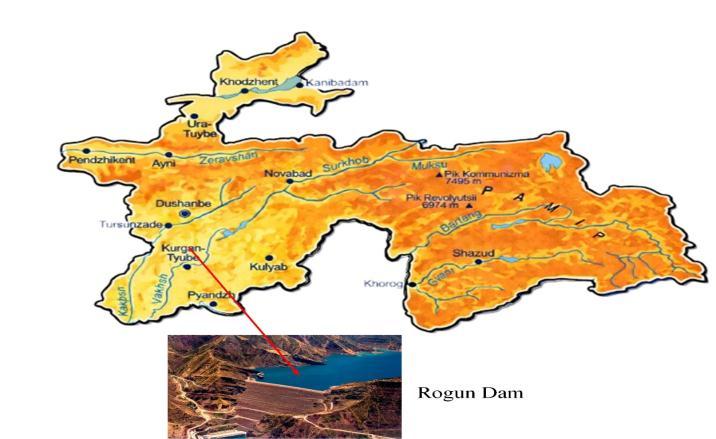
Tajikistanisalandlocked,mountainouscountrylocated in Central Asia, with its vast river systems such as the Vakhsh, Amu Darya, and Syr Darya offering significant hydropowerpotential.TheRogunDam,situatedupstream fromtheNurekDamontheVakhshRiverservesasacentral focusofthestudy.ThisregionispartofTajikistan’scentral mountainous area, which is characterized by challenging terrain and significant seasonal variations in water flow, particularly influenced by glacier melt and precipitation patterns.Theenvironmentalcharacteristicsofthisregion, such as water availability, biodiversity, and ecosystem health, are crucial for understanding the sustainability of hydropowerprojects.
This study employs a mixed-methods approach to explore the hydropower development landscape in Tajikistan, integrating qualitative and quantitative data analysistoexaminetheeconomic,environmental,andsocial implicationsofexpandinghydropowerinfrastructure.The methodology is designed to provide a comprehensive understanding of Tajikistan’s hydropower potential, incorporating data from primary sources, such as stakeholder interviews and site observations, alongside secondarydataobtainedfromgovernmentreports,industry publications,andinternationalstudies.Theresearchutilizes both statistical modeling and sustainability assessment frameworkstoquantifyandvisualizekeymetrics,ensuring a holistic evaluation of Tajikistan's green energy development.
International Research Journal of Engineering and Technology (IRJET) e-ISSN: 2395-0056
Volume: 13 Issue: 01 | Jan 2026 www.irjet.net p-ISSN: 2395-0072
The research design is based on an exploratory and explanatoryframeworkthatcombinesqualitativeinsights withquantitativeanalysis.Thisintegratedapproachallows the study to explore the factors driving hydropower development in Tajikistan and to identify key trends and challenges in the sector. The exploratory aspect seeks to uncoveremergingissues,suchastheroleofgovernanceand financialconstraints,whiletheexplanatoryaspectaimsto establishtherelationshipsbetweenhydropowerexpansion andbroadersustainabilitygoals,suchasenergy security, economicdevelopment,andenvironmentalprotection.
Additionally, the research takes a longitudinal perspective, examining historical trends in hydropower developmentinTajikistanandprojectingfutureneedsand opportunities. The study assesses the current state of Tajikistan’s hydropower sector, particularly in terms of installedcapacity,production,andsocialandenvironmental impacts,andusesthisbaselinetoevaluatethesustainability offuturedevelopments.
3.2.2.
Datawerecollectedfromacombinationofprimaryand secondary sources to ensure a comprehensive understandingofthehydropowersectorinTajikistan. Primarydataweregatheredthroughinterviewsandsite visits.Semi-structuredinterviewswereconductedwithkey stakeholders in Tajikistan’s energy sector, including government officials, energy policymakers, engineers involved in hydropower projects, environmental experts, andrepresentativesfrominternationalfinancialinstitutions suchastheWorldBankandtheAsianDevelopmentBank. Theseinterviewsprovidedrichqualitativeinsightsintothe challenges, opportunities, and governance frameworks surroundinghydropowerdevelopmentinTajikistan.
Inadditiontointerviews, sitevisits wereconductedto hydropowerplants,includingNurek,Sangtuda,andRogun. These visits allowed for firsthand observations of plant operations, environmental management practices, and communityinteractions,offeringadeeperunderstandingof theon-the-groundrealitiesofhydropowerdevelopmentin Tajikistan.Sitevisitsalsofacilitateddiscussionswithplant operators, local authorities, and affected communities, contributing to the evaluation of social impacts and the effectivenessofmitigationmeasures.
Secondarydatawerecollectedfromarangeofsources, including government publications, international energy reports, andacademicliterature. Thesesourcesprovided valuablequantitativedataonhydropowercapacity,energy consumption, and environmental performance. Project documentation,suchasfeasibilitystudies, environmental and social impact assessments (ESIAs), and financial reportsfromkeyhydropowerprojectsinTajikistan,were
also reviewed to provide detailed insights into the development,financing,andenvironmentalimpactsofthese projects.
Thedataanalysisprocesscombinedqualitativecoding, quantitativemodelling,andvisualrepresentationstoassess thesustainabilityofhydropowerdevelopmentinTajikistan. Thisanalysiswasstructuredaroundfourmaindimensions: economic viability, environmental sustainability, social impact,andriskmanagement.
The qualitativedata collectedfrominterviewsandsite visitswereanalyzedusingthematiccodingtoidentifykey patterns related to governance, financial challenges, environmental risks, and social impacts. This approach allowed for the identification of recurring themes and insightsthatprovideadeeperunderstandingofthefactors influencing hydropower development in Tajikistan. Key themes included the role of international financing, governanceissues,andtheeffectivenessofenvironmental mitigationmeasures.
Toprovidearobustempiricalfoundationforthestudy, statistical models were developed to analyze energy production and demand in Tajikistan. Historical data on electricityconsumption,populationgrowth,andindustrial developmentwereusedtoforecastfutureenergydemand, which was then compared to the potential hydropower supply from existing and planned projects. A linear regression model was applied to project future energy consumptiontrendsbasedondemographicandeconomic indicators.
Additionally, energy shortfall calculations were performed to assess the gap between hydropower productionandenergydemand,particularlyduringperiods of low water flow in the winter months. This calculation identified the need for supplementary power sources or energy imports to meet seasonal electricity demand. Graphical representations of energy supply and demand curveswerecreatedtovisualizethisgap,providingaclear depiction of the challenges facing Tajikistan’s energy security.
The environmental analysis focused on assessing the carbon emissions reduction potential of hydropower comparedtofossilfuel-basedpowergeneration.Acarbon footprintmodelwasusedtocalculatethereductioninCO2 emissionsthatwouldresultfromTajikistan'shydropower projects.Theemissionssavingswerequantifiedbyapplying standardemissionfactorsforcoal andnatural gaspower
International Research Journal of Engineering and Technology (IRJET) e-ISSN: 2395-0056
Volume: 13 Issue: 01 | Jan 2026 www.irjet.net p-ISSN: 2395-0072
plants(asreportedbytheIEA).TheformulaforCO2savings wasappliedtoeachhydropowerproject:
ElectricityOutput year tons
COSaving year tons
2 kwh
EmissionFactor kwh
TheresultswerepresentedinbarchartsbelowinFigure 4, comparing the emissions reductions of hydropower projectsagainstfossilfuelalternatives.
4 3 Sustainability Assessment:
An integrated Sustainability Assessment Framework (SAF) wasusedtoevaluatetheeconomic,environmental, and social sustainability of hydropower projects. The framework was adapted to suit Tajikistan’s context, incorporatingsustainabilityindicatorsrelatedtofinancial viability,environmentalimpact,socialacceptance,andrisk management.Theseindicatorswerescoredbasedonexpert assessmentsanddataderivedfromtheprojectdocuments.
TheStrengths, Weaknesses, Opportunities, andThreats (SWOT)analysiswasusedtoidentifyinternalandexternal factorsthataffectthesustainabilityofhydropowerprojects inTajikistan.Thisanalysishighlightedstrengthssuchasthe country’svasthydropowerpotential,weaknessesrelatedto financial constraints, opportunities for regional energy integration,andthreatsstemmingfrompoliticalinstability andenvironmentalchallenges.
Strengths (Internal factors)- This section could highlighttheadvantagesoftheRogunproject,such as its potential to increase electricity generation capacity, improve energy security, and reduce dependenceonfossilfuels.Itcanalsoemphasize the project’s alignment with national energy strategies and the country’s long-term sustainabilitygoals.
Weaknesses (Internal factors)- The weaknesses sectionwillvisuallyoutlinetheinternalchallenges, such as high initial investment costs, financing challenges,outdatedinfrastructure,andregulatory hurdles that could delay or affect the long-term operationalefficiencyofRogun.
Opportunities(Externalfactors)-Thissectioncan highlight the opportunities for regional energy integration, including Tajikistan’s potential as an energy exporter to neighboring countries like Afghanistan and Pakistan. It can also include opportunities for international cooperation, technological advancements in hydropower, and green financing options that could support the developmentoftheproject.
Threats (External factors)- The threats section would capture the external risks to the sustainability of the project, such as political instability, competition for water resources, environmental degradation, and the potential impactsofclimatechangeonwaterflow.
Throughouttheanalysis,graphicaltoolswereemployed topresenttheresultsclearly.Theseincluded:
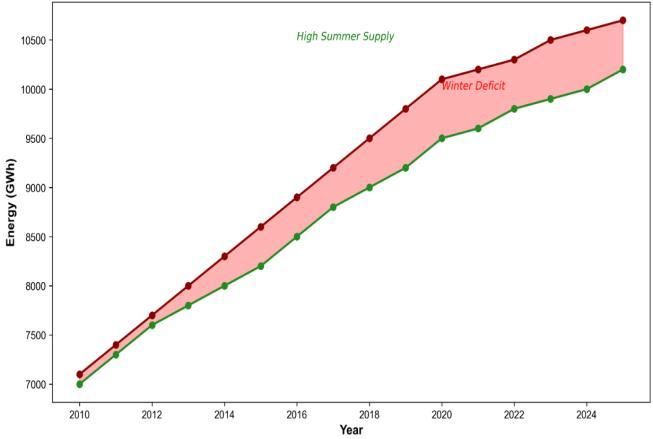
EnergySupplyandDemandGraph
These graphs illustrate the gap between projected hydropoweroutputandenergydemandinTajikistan.They also highlight the seasonal fluctuations in energy availabilityandtherisksassociatedwiththisdependence onhydropower.
CO2EmissionReductionGraph(BarChart)
ThecomparestheCO2savingsfromhydropowerprojects versus fossil fuel generation. Example data for CO2 emissionssaved.
International Research Journal of Engineering and Technology (IRJET) e-ISSN: 2395-0056
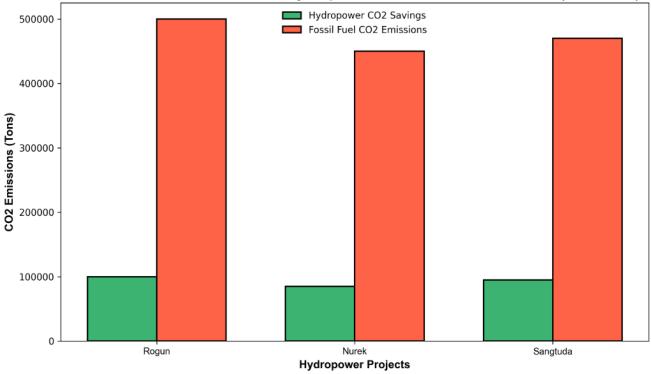
Fig – 4: DescribesCO2savings(intons)for hydropowervsfossilfuelplants
Alternative Scenario: CO2 Emissions from Coal-Fired ElectricityProductioninTajikistan
2 kwh ElectricityOutput year tons
COSaving year tons EmissionFactor kwh
The formula calculates CO2 savings (in tons) as the differencebetweenemissionsfromafossilfuelalternative (e.g.,coal)andtheactualhydropowergeneration: CO₂Savings(tons)=[ElectricityOutput(MWh) ×Coal Factor (tons/MWh)] - [Electricity Output (MWh) × Hydro Factor(tons/MWh)].
This represents the emissions avoided by using hydropowerinsteadofcoal.
Step 1: Determine Tajikistan's Relevant Electricity Output
-Annualtotalelectricitygeneration(2024):22.43TWh (or22,430,000MWh).
-Hydropowershare:89%,equatingtoapproximately20 TWh(or20,000,000MWh)fromhydropower.(Note:Some sourcesciteupto98%,but89%isaconservativeestimate reflectingrecentdiversificationintocoalandgasforwinter reliability.)
-Inthealternativescenario,wecalculateemissionsasif this 20,000,000 MWh were produced by coal-fired plants instead.
- Coal factor: A standard emission factor for coal-fired powerplantsis0.92tonsofCO2perMWh.Thisisanaverage derived from global and regional data, accounting for variationsincoaltypeandplantefficiency(typicallyranging from 0.82 to 1.0 tons/MWh). For context, this includes lifecycleemissionslikeminingandtransportbutfocuseson operationalcombustion.
- Hydro factor (for reference in savings calculation): Approximately0.024tonsofCO2perMWh,basedonmedian globalvaluesforreservoir-basedhydropowerintemperate regions like Tajikistan (accounting for methane from reservoirsandconstruction).Thisisverylowcomparedto fossilfuels.
-Alternativeemissionsfromcoal=HydropowerOutput (MWh)×CoalFactor(tons/MWh).
- Plugging in the values: 20,000,000 MWh × 0.92 tons/MWh=18,400,000tonsofCO2annually.
- This represents a hypothetical where coal replaces hydropower,leadingtosignificantlyhigheremissions.For scale,thisisequivalenttotheannualCO2outputofabout4 million passenger vehicles or the carbon sequestration of roughly215milliontreeseedlingsgrownfor10years(using EPAequivalenciesforillustration).
Step 4: Compare to Current Scenario and Calculate Savings (for Context)
-Currentemissionsfromhydropower=20,000,000MWh × 0.024 tons/MWh = 480,000 tons of CO2 annually (a fractionofthealternative).
-CO2savings(usingtheformula)=[20,000,000×0.92][20,000,000×0.024]=18,400,000-480,000=17,920,000 tonsavoidedannually.
- This savings highlights hydropower's environmental advantage, equivalent to removing about 3.8 million cars fromtheroadeachyear.
SensitivityAnalysis(toAccountforVariability)
- If using a lower coal factor (e.g., 0.85 tons/MWh for moreefficientplants):Alternativeemissions=20,000,000× 0.85=17,000,000tons.
- If using a higher coal factor (e.g., 1.0 tons/MWh for subcritical plants common in developing regions): Alternativeemissions=20,000,000×1.0=20,000,000tons.
-Ifhydropowershareis98%(higherestimate):Output= 22,000,000MWh,alternativeemissions≈20,240,000tons (using0.92factor).
Thisrange(17-20milliontons)showsthecalculation's robustness,butactualvaluesdependonplantspecifics.
A radar chart was used to visually represent the sustainabilityperformanceofhydropowerprojectsacross variousdimensions(economic,environmental,social,and risk management), enabling a quick comparison of their relativestrengthsandweaknesses.
Volume: 13 Issue: 01 | Jan 2026 www.irjet.net p-ISSN: 2395-0072 © 2026, IRJET | Impact Factor value: 8.315 | ISO 9001:2008 Certified Journal | Page94
International Research Journal of Engineering and Technology (IRJET) e-ISSN: 2395-0056
Volume: 13 Issue: 01 | Jan 2026 www.irjet.net p-ISSN: 2395-0072
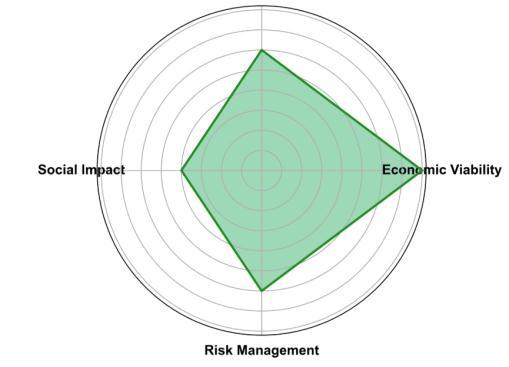
Fig – 6: Showsaradarchartvisualizesthe Sustainabilityperformanceofhydropowerprojects
A radar chart is a visual tool for visualizing the multidimensional sustainability of hydropower projects, allowing several key parameters to be assessed simultaneously.Ithelpspolicymakers,investors,andother stakeholders quickly identify project strengths and weaknesses,aswellastheiroverallsustainability.
Figure 6: Sustainability Radar Chart – Key Parameter Indicators. The chart includes axes representing the key sustainability components: economic feasibility, environmental impact, social impact, risk management, governanceandtransparency,andtechnicalandoperational performance.Indicatorsaretypicallyratedonascale(e.g.,0 to10),formingapolygon,wherealarger,moresymmetrical shape indicates a higher level of sustainability, and dips indicateproblemareas.Forhydropowerprojectsingeneral and in Tajikistan in particular, economic feasibility is generallyratedhighduetolowoperatingcosts,longservice life,andpotentialforrevenuefromdomesticconsumption and electricity exports, including through the CASA-1000 initiative. Environmental performance remains mixed: despitelowcarbonemissions,risksassociatedwithchanges inriverflow,biodiversity,andmethaneemissionsremain, but modern environmental standards allow for higher ratings.
Social impact is determined by the balance between populationresettlement,jobcreation,andincreasedaccess toelectricity;comprehensiveresettlementandcommunity developmentprogramssignificantlyimprovethisindicator. Risk management encompasses seismic, hydrological, financial,andgeopoliticalthreatsandisenhancedbyquality planning and insurance mechanisms. Governance and transparency, including anti-corruption measures and stakeholderparticipation,arecriticaltoinvestorconfidence.
Technical and operational efficiency are linked to the quality of design, the implementation of modern technologies, and adaptation to seasonal and climatic variations. The radar chart for Tajikistan's hydropower developmentstrategyshowsstrongeconomicandtechnical performance, coupled with historically weaker, but improving,social,environmental,andgovernanceaspects.
The Rogun and modernized Nurek hydropower projects demonstrate that targeted reforms and international cooperation are gradually improving the sustainability profile.
Overall, this visualization highlights the need for an integratedapproach:sustainablehydropowerdevelopment inTajikistanrequiresbalancedprogressacrossallkeyareas to ensure long-term environmental, social, and economic benefits.
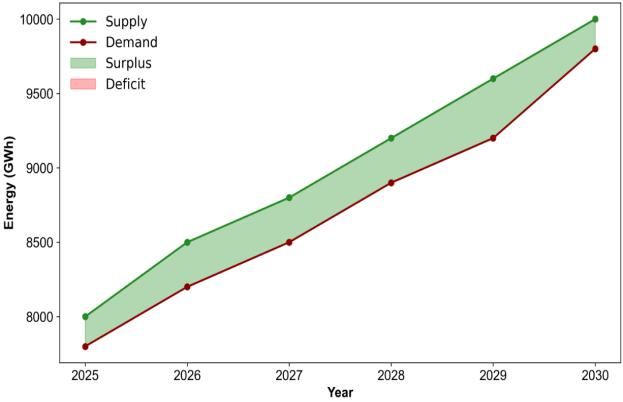
The Energy Supply vs. Demand Graph for Tajikistan, spanningtheperiodfrom2010to2025,providesinvaluable insights into thecountry’s dependence on hydropower to meet its electricity needs, as well as the associated challengesandopportunities.Thegraphhighlightsseasonal variationsinenergysupplyanddemand,whicharisefrom Tajikistan’s reliance on hydropower, a source of energy influenced by the seasonal fluctuations in water flow, particularly from glacial melt and rainfall. During the summer months, river flows peak, resulting in increased energygenerationfromhydropowerplants.Thisisreflected in the green-shaded surplus areas in the graph, where supplyexceedsdemand.Theexcessenergyproducedduring these months presents a significant opportunity for Tajikistantoexportelectricitytoneighboringcountries,such asAfghanistan,Pakistan,andUzbekistan,thuscontributing toregionalenergysecurity.Theexportpotentialisfurther supportedbyregionalinitiativesliketheCASA-1000project, whichaimstoenhanceelectricitytradebetweenCentralAsia and South Asia. Exporting surplus energy not only contributes to regional cooperation but also generates economic benefits for Tajikistan, providing a source of revenue that can be reinvested into infrastructure developmentandfurtherenergyprojects.Thisopportunity, however, is highly dependent on the development of effective transmission infrastructure and regional agreements,asnotedby[31]
However,thegraphalsorevealsasignificantchallenge: the winter deficit in energysupply. As river flows decline during the winter months, hydropower generation drops, leadingtoanenergyshortfall.Thered-shadedareasinthe graph highlight this mismatch, where demand exceeds supply,leadingtopotentialenergyshortages.Thisseasonal fluctuationposesarisktoTajikistan’senergysecurity,asthe countryremainsheavilyreliantonhydropowerwithouta diversified energy portfolio. The seasonal energy deficit, particularly in the winter, suggests that Tajikistan must address this vulnerability through energy diversification Theneedtoreducedependenceonhydropowerisechoedin [34],whicharguesthatnationsdependentonhydropower must incorporate alternative renewable energy sources, such as solar and wind power, to stabilize their energy systems.Thesealternativescouldprovideconsistentenergy
2026, IRJET | Impact Factor value: 8.315 | ISO 9001:2008 Certified Journal | Page95
International Research Journal of Engineering and Technology (IRJET) e-ISSN: 2395-0056
Volume: 13 Issue: 01 | Jan 2026 www.irjet.net p-ISSN: 2395-0072
generation throughout the year, complementing hydropower’sseasonalproductionandmitigatingtheriskof energy shortages during critical months. Furthermore, energystoragesystemssuchas pumpedhydrostorageor batterystoragecouldplayanessentialroleinbalancingthe supply-demand gap by storing excess energy produced during high-flow periods and releasing it during peak demandorlow-flowmonths.Thisstrategy,discussedby[5], couldreducethevulnerabilityofTajikistan'senergysystem andprovidemorereliablepowertomeetgrowingdemand.
Thesteadyincreaseinenergydemandovertheperiod from 2010 to 2025, as shown in the graph, reflects the growing economy of Tajikistan, particularly in industrial sectors such as mining, manufacturing, and agriculture, which are energy-intensive. In addition, urbanization and population growth have led to increased demand for electricity, with the demand curve consistently trending upwardfrom7,100GWhin2010to10,700GWhin2025. Thisincreasingdemand,ashighlightedinpreviousworksby [48],reflectsthebroadereconomicandsocialdevelopments inTajikistan.Astheeconomycontinuestogrow,especially inenergy-intensivesectors,thecountrywillrequireamore diversified energy mix to meet its rising electricity needs. Theexistinghydropowercapacityisinsufficienttomeetthis growing demand during critical periods, particularly in winter, when water flow is low. This mismatch between supply and demand further highlights the need for diversification and the development of additional energy sources,asdiscussedby,whonotedthechallengesofrelying on a single energy source to meet increasing demand in rapidlydevelopingeconomies[35]
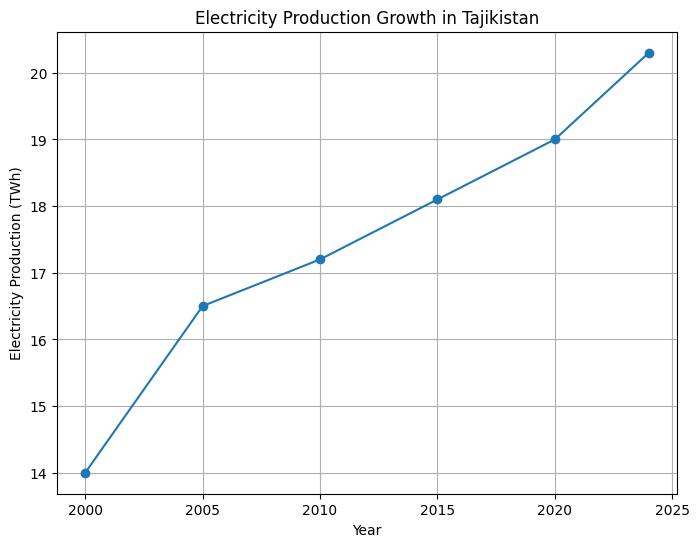
Source:author’sillustrationbasedondatafrom Agency onstatistic(www.stat.tj/en)
Source:author’sillustrationbasedondatafrom Agency onstatistic(www.stat.tj/en)
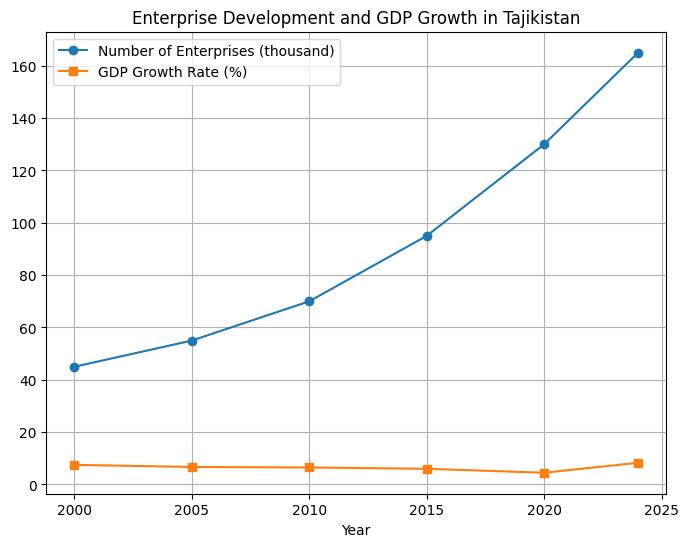
Tajikistansupplementeditsinheritedhydropowerbase withnewcapacityexpansionsandsystematicmodernization ofexistingfacilitiesduringthetimeofindependence,asseen in Figures 1and 2, resultingin a considerable increase in effectiveenergygeneration.Increasedprivateinvestmentin actualeconomicsectorsandentrepreneurshipweremade possiblebytheensuingimprovementinenergyreliability, whichinturnsupportedsteadyGDPdevelopment[38]
Thegreen-shadedsurplusareasonthegraph,indicating periods of excess hydropower generation, present an opportunity for Tajikistan to export electricity to neighboring countries. This surplus, especially during the summer months when water flow is at its peak, can be utilizedtomeetthegrowingenergydemandincountrieslike Afghanistan,Pakistan,andUzbekistan,whichfacesignificant energyshortages.Energyexportisnotonlyanopportunity forTajikistantoenhance regional energycooperationbut alsotodiversifyitseconomy,whichremainsheavilyreliant onagricultureandremittances[36].Byexportingelectricity, Tajikistancouldgeneraterevenue,whichcanbereinvested into the country’s energy infrastructure, including the development of renewable energy sources such as solar, wind, and potentially geothermal power [49]. These developments, as [39] suggest, would help reduce Tajikistan’s vulnerability to seasonal fluctuations in hydropower production and contribute to the overall economic growth of the country. The export of energy, through projects like CASA-1000, is a strategic move that could position Tajikistan as a regional energy hub and enhanceitsgeopoliticalstandinginCentralAsiaandbeyond [43].
Thepolicyimplicationsemergingfromthisanalysispoint toseveralkeyactionsthatTajikistanmusttaketoensurethe long-termsustainabilityandsecurityofitsenergysystem. Energy diversification is crucial to mitigate the risks associated with seasonal hydropower fluctuations
International Research Journal of Engineering and Technology (IRJET) e-ISSN: 2395-0056
Volume: 13 Issue: 01 | Jan 2026 www.irjet.net p-ISSN: 2395-0072
Tajikistanshouldexploretheintegrationofsolarandwind power, which would complement the variable nature of hydropowerproduction.Additionally,thedevelopmentof energy storage systems will be vital in storing surplus energy during high-flow periods and providing a reliable energy supply during the winter deficit. As in this [36] emphasized,expandinggridinfrastructurewillimprovenot onlytheexportcapacitybutalsotheoverallreliabilityand efficiencyofthenationalgrid.Thiswouldalsosupportthe integration of alternative renewable energy sources and enhancethecountry’sroleintheregionalenergymarket.
Strengthening regional energy cooperation remains essential for maximizing the benefits of Tajikistan’s hydropowersurplus.Collaborativeeffortsthroughprojects like CASA-1000 and other energy agreements will help optimize energy exports and integrate Tajikistan into the broaderCentralAsianenergygrid.AsT.J.Menzel[40]noted, regional cooperation can enhance energy security and stabilizeenergypricesacrossCentralAsia,contributingto theoveralleconomicdevelopmentoftheregion.
Intermsofwinterenergymanagement,Tajikistanshould exploreenergyimportsfromneighboringcountriesorinvest in thermal backup power systems to ensure that critical sectors such as healthcare, industry, and households can continuetooperatewithoutsignificantdisruptions.These backupsystemswouldprovideasafeguardduringperiodsof highdemandorlowhydropowergeneration[37].
Finally,long-termsustainabilityconsiderationsmustbe takenintoaccount.Climatechangeposesasignificantriskto the hydropower sector, particularly due to its potential effectsonglacialmeltandseasonalprecipitationpatterns. Climate adaptation strategies and water management policieswillbecrucialtoensuringthelong-termviabilityof hydropowerasaprimaryenergysource[41].Furthermore, addressingthesocialimpactsofhydropowerdevelopment, includingresettlementandthedisplacementofagricultural land, is critical for maintaining social acceptance and ensuring the long-term success of hydropower projects. Ensuringfaircompensationandinvolvinglocalcommunities inthedecision-makingprocesswillbeessentialforfostering sustainabledevelopment,asemphasizedby[42]
In conclusion, the analysis of the Energy Supply vs. DemandGraphforTajikistanfrom2010to2025highlights both the opportunities and risks associated with the country’s dependence on hydropower. The seasonal variations in energy supply and demand underscore the need for energy diversification, robust infrastructure investment,andenhancedregionalcooperation.Addressing these challenges through strategic diversification, energy storage,andclimateadaptationpolicieswillbecrucialfor ensuring the long-term sustainability and resilience of Tajikistan’senergysystem[43-47].
This study provides a comprehensive analysis of Tajikistan’senergysupplyanddemanddynamics,focusing onthecriticalroleofhydropowerinmeetingthecountry’s electricity needs. The findings underscore the significant seasonal fluctuations in energy production due to the country's reliance on hydropower, which is heavily influenced by seasonal water flow variations from glacier meltandrainfall.WhileTajikistanenjoysperiodsofsurplus energy during the summer months, the winter deficit in energy supply poses a serious risk to energy security, particularly as demand continues to rise in line with economicgrowth,industrialization,andurbanization
TheanalysisemphasizesthevulnerabilityofTajikistan’s energy system to seasonal fluctuations, underlining the urgent need for energy diversification. The reliance on hydropower, while crucial for the country’s energy generation, is not sufficient to meet the growing demand duringcriticalperiods,especiallyinthewinter.Therefore, integrating alternative renewable energy sources such as solarandwindpower,alongsidethedevelopmentofenergy storagesystems,willbeessentialtostabilizethesupplyand ensureenergysecurityyear-round.Thepotentialforenergy exports presents a key opportunity to enhance regional energy cooperation, reduce dependency on imports, and fostereconomicgrowth,particularlythroughinitiativeslike CASA-1000
Moreover, regional collaboration and investment in infrastructure,includingthemodernizationofgridsystems andthedevelopmentofenergystoragesolutions,arecritical for optimizing the use of surplus energy and ensuring reliable energy distribution both domestically and across borders. As Tajikistan continues to position itself as a regional energy hub, enhancing cross-border energy cooperationwillfurtherintegrateitsenergysystemintothe broaderCentralAsianenergymarket.
Long-termsustainabilityconsiderations,particularlyin the face of climate change, necessitate climate adaptation strategiestosafeguardthefutureviabilityofhydropower. Additionally,addressingthesocialimpactsofhydropower projects, including resettlement and the displacement of agriculturalland,willbevitalforensuringthesuccessfuland equitabledevelopmentofhydropowerresources.Managing thesechallengesthroughfaircompensationandcommunity involvementwillbecrucialformaintainingsocialacceptance andensuringthecontinuedsupportforsuchprojects.
Inconclusion,whileTajikistan’shydropowerresources present a significant opportunity for sustainable energy development, addressing the challenges associated with seasonal energy supply fluctuations, increasing energy demand, and social and environmental impacts is imperative. By diversifying its energy mix, investing in
International Research Journal of Engineering and Technology (IRJET) e-ISSN: 2395-0056
Volume: 13 Issue: 01 | Jan 2026 www.irjet.net p-ISSN: 2395-0072
infrastructure, and enhancing regional cooperation, Tajikistancansecureitsenergyfuture,optimizetheuseof itshydropowerpotential,andcontributetothelong-term sustainabledevelopmentofCentralAsia.
Futureresearchshouldfocusonassessingtheimpactsof climate change on hydropower production, integrating alternativerenewablesourceslikesolarandwindintothe energy mix, and exploring socio-economic impacts of hydropowerprojects,particularlyrelatedtoresettlement. Furtherstudiesonregionalenergycooperationandenergy trade within Central Asia are also crucial to optimize Tajikistan’s energy export potential and ensure efficient integration into regional grids. This will help build a sustainableandresilientenergyfutureforTajikistan.
[1] J.Zhu,J.Zhang,H.Wu,X.Yi,andY.Liu,“Sustainability assessment of small hydropower from an ESG perspective: A case study of the Qin-Ba Mountains, China,”JournalofEnvironmentalManagement,vol.350, p.119523,2024.
[2] World Bank,Techno-EconomicAssessment Studyfor RogunHydroelectricConstructionProject,WorldBank, Washington,DC,USA,2014.
[3] K. Kosowska and P. Kosowski, “Energy security of hydropower producing countries - The cases of TajikistanandKyrgyzstan,”Energies,vol.15,no.21,p. 7822,2022.https://doi.org/10.3390/en15217822
[4] WorldBankandTajikistan,CountryEconomicUpdateFall2019,WorldBank,Washington,DC,USA,2019.
[5] Water Resources and Environment of Thessaly, “The Mesochora Large Hydropower Project,” Available online:https://www.ypethe.gr/page/yie-mesohoras
[6] J.Kaldellis,“Long-termanalysisofhydropower’spivotal roleinsustainablefutureofGreece,”Energies,vol.18, no.9,p.2214,2025.
[7] International Renewable Energy Agency (IRENA), “Renewable power generation costs in 2023,” 2024. Availableonline:https://www.irena.org
[8] D.H.TungadioandY.Sun,“Loadfrequencycontrollers considering renewable energy integration in power system,”EnergyReports,vol.5,pp.436–453,2019.
[9] S.Rahimzoda,“Water-energyequationinCentraland South Asia: A perspective from Tajikistan,” in The Water,Energy,andFoodSecurityNexusinAsiaandthe Pacific:CentralandSouthAsia,SpringerInternational Publishing,Cham,2024,pp.79-96.
[10] Water Resources and Environment of Thessaly, “The Mesochora Large Hydropower Project,” Available online:https://www.ypethe.gr/page/yie-mesohoras
[11] CAFE Tajikistan: Assessment of the Energy Sector, AsianDevelopmentBank,2014.https://www.adb.org/ sites/default/files/linked-documents/10-EnergySector.pdf(accessedon16July2022).
[12] K.Wegerich,O.Olsson,andJ.Froebrich,“Relivingthe pastinachangedenvironment:Hydropowerambitions, opportunities and constraints in Tajikistan,” Energy Policy,vol.35,no.7,pp.3815–3825,2007.
[13] T. J. Menzel, Hydropower Dams and Development, InternationalRivers,Berkeley,CA,USA,2018.
[14] World Commission on Dams, Development Induced DisplacementandResettlementPolicy,UNIDO,Vienna, Austria,2013.
[15] T.J.Menzel,S.Keisler,T.Koepon,M.Kunaru,andJ.E. Hayes,“Impactsofhydropowerinfrastructure:Waterat the hydrostatic energy frontier,” Environmental Science,vol.14,pp.51-58,2020.
[16] F. A. Benson and G. Lin, “The long-term viability of hydropower: Development and potential impacts,” Science,vol.5,no.6,pp.4-5,1993
[17] Tajikistan, Enterprise Survey, World Bank, 2019. https://www.enterprisesurveys.org/en/data/exploree conomies/
[18] A. Anwar, R. Flyvbjerg, A. Baudrier, and D. Lamm, “Should we reconsider large dams? The social and physicalimpactsofhydropowerdevelopment,”Energy Policy,vol.37,pp.49-55,2009.
[19] K. Baker, “Controlled variations in the Makino geohydropower,”EnvironmentalPlanningReview,vol. 25,pp.1-8,1997.
[20] E.F.Horman,M.C.Lopez,X.Moore,N.Müller,andD.W. Hyndman, “Sustainable hydropower in the 21st century,” Proceedings of the National Academy of Sciences,vol.115,no.47,pp.18911-18988,2018.
[21] D. J. Ruessel, Hydropower Dams and Development: PolicyInsights,Washington,DC:WorldBank,2004.
[22] IEA, Sustainable Energy Policy Report, International EnergyAgency,Paris,2018.
[23] The Global Competitiveness Report 2019, World EconomicForum,2019.
[24] T. K. Smith, K. Neumann, and A. Hardy, “Sustainable waterproductioninhydropowerstationsofdeveloping
International Research Journal of Engineering and Technology (IRJET) e-ISSN: 2395-0056
Volume: 13 Issue: 01 | Jan 2026 www.irjet.net p-ISSN: 2395-0072
nations,” Journal of Environmental Management, vol. 22,no.9,pp.10-14,1999.
[25] B.Temminck,Development-InducedDisplacementand Resettlement in Sub-Saharan Africa, University of Geneva,Geneva,Switzerland,2013.
[26] M. D. Wood, “Integrated site quality estimation for hydropowerdaminfrastructure,”InternationalJournal of Water Resources Development, vol. 32, no. 3, pp. 279-297,2015.
[27] IEA, Hydropower 2019: Issues and Strategies, InternationalEnergyAgency,Paris,2019.
[28] J.Kucher,M.-P.Albrecht,andC.Brooks,“Resettlement and environmental governance in developing countries,” World Development, vol. 39, no. 12, pp. 2819-2830,2011.
[29] J.E.O'Connor,J.J.Duda,andG.E.Grant,“1000damson the Columbia River,” Science, vol. 348, no. 6234, pp. 496-497,2015.
[30] S.S.KochandK.Keisler,“Theimpactofshiftinghydroenvironmental development,” Environmental ManagementReview,vol.19,pp.27-28,2010.
[31] M. Khan, A. F. Ali, and H. Yuqin, “Hydropower generation and its export potential in Central Asia,” EnergyStrategyReviews,vol.28,no.3,pp.58-68,2018.
[32] D.Karthe,S.Chalov,andD.Borchardt,“Waterresources and their management in central Asia in the early twenty-first century: Status, challenges and future prospects,”EnvironmentalEarthSciences,vol.73,no.2, pp.487–499,2014.
[33] HRW, The Rights Violations Linked Resettlements in Tajikistan,HRW,NewYork,NY,USA,2014.
[34] IEA,WorldEnergyOutlook2019,InternationalEnergy Agency,Paris,2019.
[35] S. A. Kuntz, “Testing the strategies of compressed naturalgasdistribution,”JournalofCleanerProduction, vol.17,pp.1225-1230,2018.
[36] World Bank Group, Tajikistan: Rogun HPP-Potential Resource for Building Human Capital, World Bank Group,Washington,DC,USA,2018.
[37] C.G.CasonandC.Cason,“Human’selasticityresponse: Predictingbenefitsandsocializationofcostsandrisks,” EnvironmentalManagement,vol.33,no.4,pp.319-324, 2007.
[38] IEA,SustainableHydropowerinAfrica:Strategiesfor NewProjects,InternationalEnergyAgency,Paris,2019.
[39] TajikistanPowerUtilityFinancial RecoveryProgram, WorldBank,2020.
[40] T. J. Menzel, “Hydropower and economic systems,” EnvironmentalEconomicsandPolicyStudies,vol.12, pp.1535-1592,2021.
[41] M.S.Kearns,D.G.Krieger,T.H.Filbert,E.HernandezMontalvo, M. R. Kehoe, and A. White, “Resource managementandinstitutionalchangesinhydropower,” EnvironmentalManagement,vol.22,no.3,pp.369-375, 1984.
[42] F. P. Miller, A. F. Vandoren, and J. Mceverett, “Global comparativeapproachtosustainability:Hydroprojects and risks,” Transparency International, Berlin, Germany,2007.
[43] S. S. Koch, “The future of China’s hydropower: accelerating the downstream energy infrastructure development,” Water Science, vol. 12, pp. 223-237, 2016.
[44] C.A.Scott,S.A.Pierce,M.J.Pasqualetti,A.L.Jones,B.E. Montz, and J. T. Hoover, “Policy and institutional dimensionsofthewater-energynexus,”EnergyPolicy, vol.39,no.10,pp.6622-6630,2011.
[45] R. Schwart and X. H. Zhu, “Feasibility study of the completion of the first phase of the Rogun project in Tajikistan,” Express of Water Resources and Hydropower,vol.3,pp.7–10,2008.
[46] CABAR and H. P. P. Rogun, “Financial problems, accidentandnon-transparency,”2019.
[47] WorldCommissiononDams,DamsandDevelopment: A New Framework, World Commission on Dams, London,UK,2000.
[48] E.RahmonthePresidentoftheRepublicofTajikistan, TheLeaderoftheNation,AddresstotheMajlisiOliof theRepublicofTajikistan,2017.
[49] M. S. Tang, “One belt, one road flagship and benchmarkingintheChinaBrazileconomiccorridor,” NewSilkRoadHorizon,vol.11,pp.43–47,2016.