
Semi-Autonomous Vehicle
Aadesh S. Tawte1, Tanmay N. Shindolkar2, Deep P. Maru3, Prof. Swati H. Shinde123Students, Department of Electronics and Telecommunication
Engineering, K. J. Somaiya Institute of Engineering and Information Technology, Mumbai, Maharashtra, India.

4Assistant Professor, Department of Electronics and Telecommunication Engineering, K. J. Somaiya Institute of Engineering and Information Technology, Mumbai, Maharashtra, India.
Abstract - In the fashionable era, the vehicles are centre to be automated to grant human driver relaxed driving within the numerous aspects are thought of that makes a vehicle machine-driven. Google, the most important network has started working on the self-driving cars since 2010 and still developing new changes to grant an entire new level to the automated vehicles. The major causes of accidents on the national highways are due to vehicle design and condition, speeding, driving on the wrong side, road engineering, use of mobile phones, jumping the red lights, etc. The need of semi autonomous vehicle is important which is significantly automated and thereby reduces the death ratio due to accidents.
Keywords RaspberryPi,ArduinoUNO,OpenComputer Vision,MachineLearning,ImageProcessing,Autonomous Vehicle.
I. INTRODUCTION
In the recent years, there has been a major attention of research for autonomous vehicles in automotive engineering.Oneoftheenormoustechnicalchallengesof autonomousvehiclesisdesigningofdynamicpathtracking, asakeycomponentofthecontrolsystem.Thenumberof severeroadaccidentsareincreasingeveryyearfrom347 in 2020 to 389 in 2021. As a concern there is a need to automate the vehicle industry. The control method of trending autonomous vehicles which are based upon steeringangleresultsininaccuratetrackingwithrespectto positionontothedesiredpath,becauseasavehiclemoves inreal time,thesteeringwheel directionchangesasper the way Autonomous vehicle defines itself as a vehicle havingextraordinaryfeaturesthatallowsittosteer,brake and,acceleratewithlimitedornodriverinteraction.There are mainly two types of autonomous vehicles: semi autonomousandfully autonomous.Semi autonomouscars are able to accelerate, brake and steer, and keep the distancefromthecarinfrontandalsokeepthelaneatthe speed of up to 130 km/h, but the need of driver is still requiredandisstillinfullcommand Withoutanydriver interaction,afullyautonomousvehicleisabletodrivefrom one point to another. Recent research has proposed to constructtheintelligenttransportationsystems,variable
smartersuspensions,steeringsystems,torquedistribution, steering by wire, and vehicle dynamic modelling improvement on designing more safer and intelligent vehicles Varieties of studies are conducted about social impacts, regulations, human machine interfaces, and implementationmethodsofautonomous.Theobjectiveof Semi Autonomous vehicle is to allow an algorithm to detect or learn various parts of a car such as wheels or othercomponentsofacar,objects/personspresentaround theself automatedcarandasithasbeenexposedtomuch inputs, connections that has begun to develop to the endmostoutputsandthestepstobeprovokedinthecarin response.
II. LITERATURE SURVEY
Talking about autonomous vehicles (AVs) is a topic that has been discussed for several decades, but in the last decade the advances in computation, sensors and other hardware have allowed the development of this type of technology to be more real All over the world, the evolutionofself automatedvehicleshasbeenobserved,in cities such as Munich, Beijing, Paris, London, Boston, Singapore, San Francisco, Pheonix and New york, in companiessuchasWaymo,NuTonomy,Uber,Lift,Aurora, VW,BMWandothers,justtomentionafew.Driverlesscars today sense their surroundings using radar, GPS, and computervision,whichcouldhaveanexcellentmarginfor error,andthesensoryinformationneedstobeprocessed tonavigateinpathways.
A. Levels of Automation
TheSocietyofAutomotiveEngineers(SAE)stablishedthat therearesixlevelsofvehicleautonomy:
1.Level0(NoAutomation):Thedriverhasfullcontroland alwaysperformsalldrivingfunctions.
2.Level1(DriverAssistance):Thehumandriverhasfull control, but the vehicle helps with one or more driving functions, e.g., electronic stability control (ESC) and assistedbraking.
3. Level 2 (Partial Automation): The human driver has primarycontroloverthevehicle,butthevehiclecantake
Level 3 (Conditional Automation): Under certain conditions the automated driving system
primary control
performsalldrivingfunctions.
interventionofhumandriving
5. Level 4 (High Automation): The self operated driving process has almost full control over the vehicle. The arbitration of human driver is desired in few driving modesonly.
6.Level 5(Full Automation):The full automated driving systemhasentirecontroloverthevehicle.Interventionof humandrivingisnegligibletozero
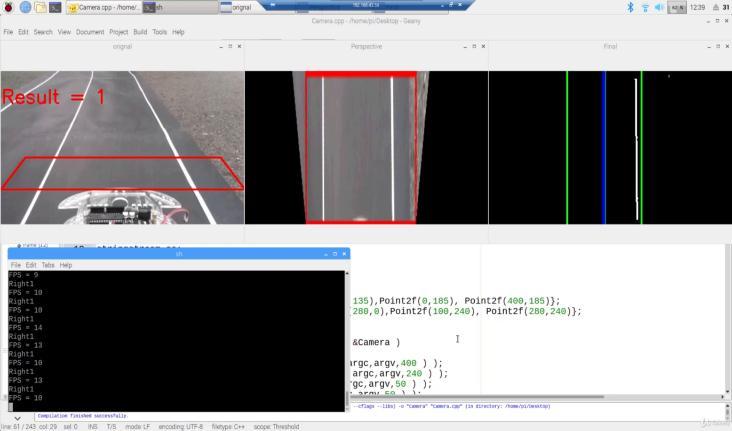
Researchdemonstratesthatmostdriverstake700msto react to a dangerous situation by taking evasive or preventive actions. With the unit of 1 millisecond low latency, self automated vehicles and Advanced Driver AssistanceSystems(ADAS)willbeabletolowertherisks andsavelivesbyreducingthenumberofaccidents. One High Definitioncameraismountedontherearendofthe vehicleconnecttothesystemforrelayinglowlatencyreal time video of the pathways. The relevance and making processdifferedbysomepointsbasedontechnologiesand components.Thepresentedmodeltakesapicturewiththe help of Pi camera linked with the Raspberry Pi on the vehicle.TheRaspberryPiandthelaptopisconnectedto the same network, the Raspberry Pi sends the captured imageandweareabletoseethesameonthelaptop. An image is grey scaled before passing it to the Neural Network. Uponpredictionthemodelgivesoneofthefour outputsi.e.,left,right,forwardorstop.
B. Hardware Environment
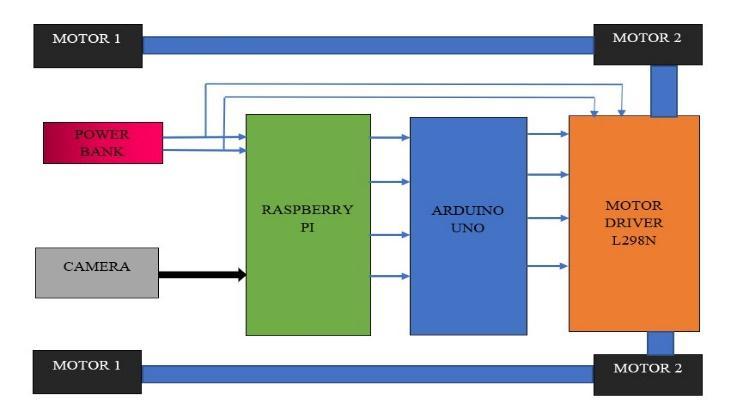
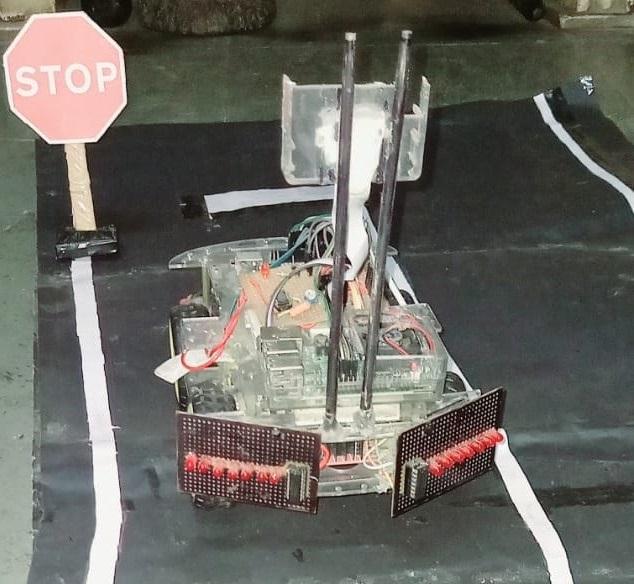
Thecarconsistsoftwomotors,L298NH Bridgewhichisa motor driver that allows a full control of the two car motorsatthesametime,andArduinoUNOthatsimulate thecarmovement.Themaincomponentofthesystemis the Raspberry pi that is connected to the Arduino, and visioncamera.Thecameraalsorecognizesthetrafficsignal and the stop sign By connecting all of these hardware components together, the system is able to accurately recognizeitswholesurroundingenvironment.Asshown, the two motors are being controlled by L298N motor driverbasedonthereceivedsignalsfromArduinothatis powered by an external 9volt battery, and Arduino transmits these signals which are based on the serials received from the Raspberry pi. These serials, thus, are being transmitted on a serial path which is connected between Arduino and raspberry pi. Furthermore, the algorithmstaketheirinputeitherasdatareadingsorvideo framesfromthecamerasandsensorsconnectedwiththe raspberrypi.TheSDcardusedisalsoapartofthemodel asithastheRaspbianoperatingsystemoftheraspberrypi.
III. PRESENTED APPROACH
A. Block Diagram
B. Our Proposed Method
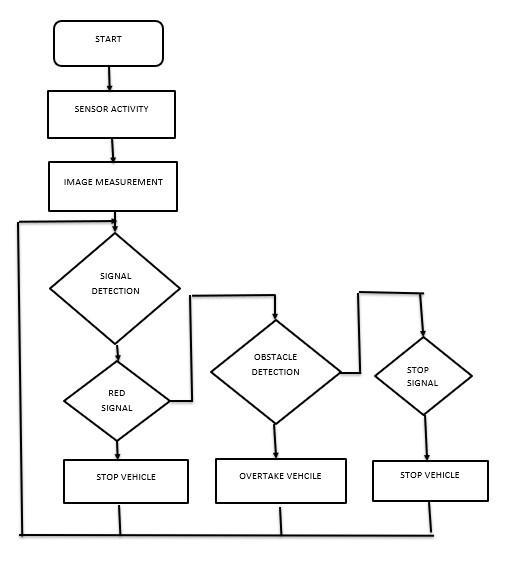
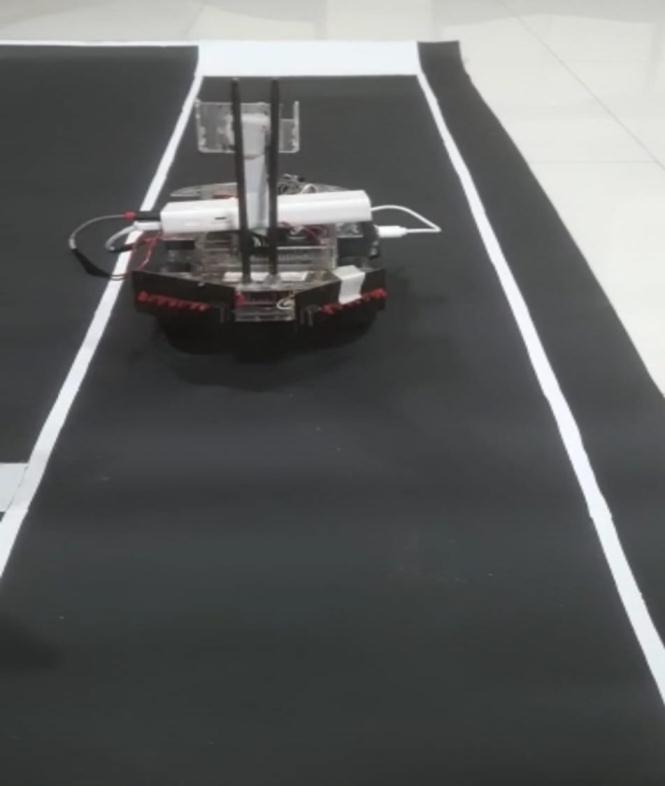
Inordertoimplementtheprototype,themaindevicesare ArduinoandRaspberryPi.TheRaspberryPistreamsthe videotoInternet Itrequiresabunchofprocessingpower for both working simultaneously on running Computer Vision as well as video streaming. The Raspberry Pi 3 model B+ is a single board computer with a powerful processingunitandserialandcamerainterface.Inorderto takehigh qualityvideo,TheRaspberryPicameracanbe utilized. It can be accessed through the V4L (Video for Linux)APIs,andtherearenumerousthird partylibraries builtforit,includingthePicameraPythonandC++library whichwillbebeneficialtothelivestreamingpurpose.To access into the hardware, one only need to know the IP addressoftheRaspberryPiandausernameandpassword tologin.Thevehiclerequirestoworkonitsownifthereis anyconnectivityfailure.It needstokeepitselfsafefrom collision and abide by the traffic rules. The Arduino controlsthemotordrivercircuit.TheArduinoterminates themotorfromrunningifthereisanyobstacledetected Meanwhile the Raspberry Pi uses computer vision algorithms to detect the lane and traffic light signals. PythonandC++Open SourceComputerVision(OpenCV)is alibraryofprogrammingfunctionsmainlyaimedatreal time computer vision. We can use over 2500 optimized algorithmsfordetections,classificationofactions,image processing, object identification, traces and other functions.TheRaspberryPiisinterfacedwiththeArduino withserialcommunication.ItcontrolstheArduinotorun thevehicleaccordingly.
IV. RESULTS AND DISCUSSIONS
Autonomous vehicle uses hundreds of sensors to make vehiclesfasterandsmarter.Thesensorsusedareableto generate unparalleled amount of data. Controlling, purifying,andinspectingthisamountofdata demandsa muchfasterconnectivity.
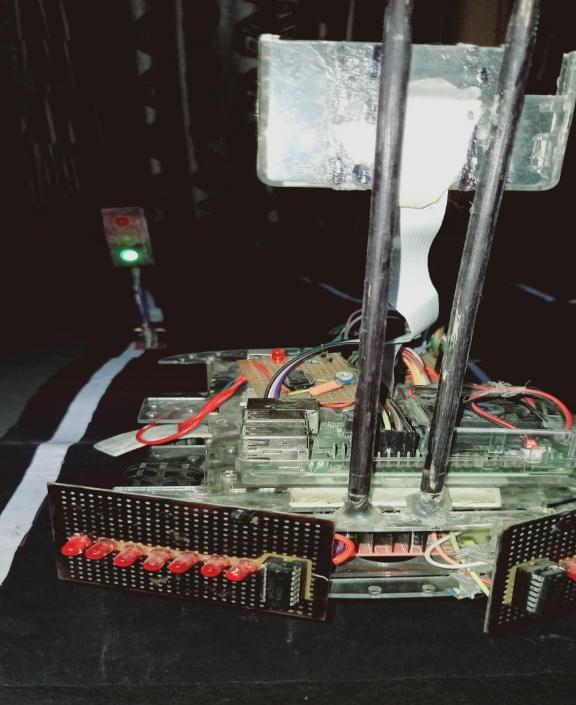
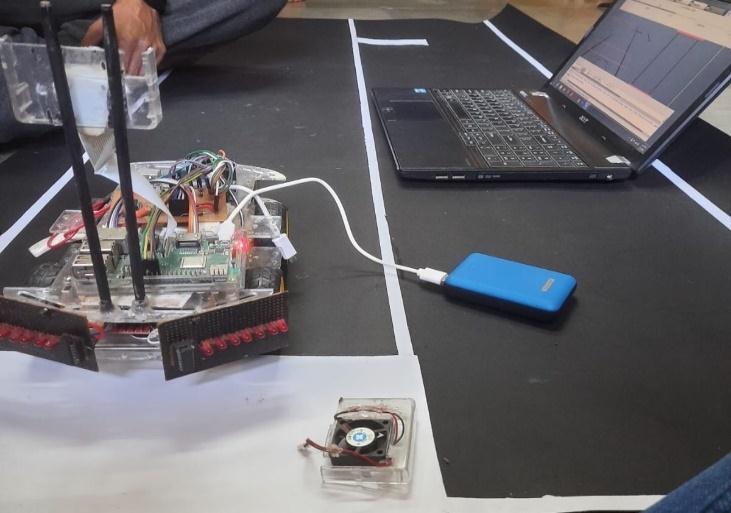
Detections: In this journey of project, we experimented varioustypesofdetectionsonourmodelwhichmakesit work in autonomous mode. These detections are as follows:
V. APPLICATIONS
Trouble free parking Like self parking Autonomous Vehicles do not involve open door space for de escalating the passengers when stopped, admitting them to settle the parking spaceswhichare15percentcompact
AVsaccelerateroboticsdevelopmentforconsumer applications These include remote advanced sensing, hyper precise positioning/GPS, image recognition,andadvancedartificialintelligence.
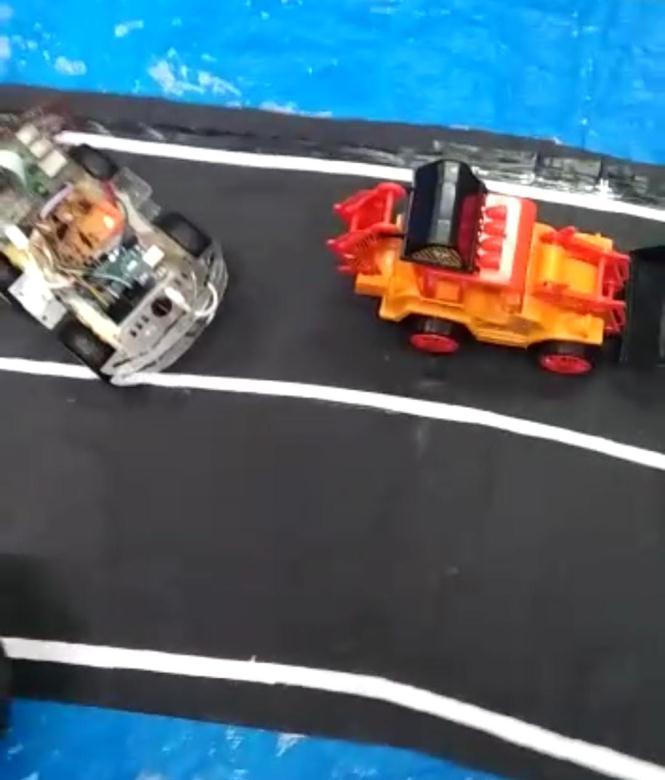
TrafficJamManeuveringsystem Usingcameras, predictiveemergencybrakes,radartechnologyand sensorsthesystemhasafasterreactiontimethan thehumanbraindoes.
VI. CONCLUSIONS AND FUTURE SCOPE
The calculations and results obtained currently have permitted us to observe and examine with certain simulationsand executions ofsemi autonomousdriving. Future tests will lead us to do semi autonomous driving experimentationincontrolledconditions,emulatingurban drivingsituations,focusingontheimprovementofvehicle control,datacollectionandanalysisofdriverbehaviourin front of these semi autonomous driving systems. Since Autonomous Vehicles is the major upgradation in automatable industry in future, this project focuses on bring changes in road safety and commuting and significantlyreduceaccidentsandhumanerrorsthrough
by the system.
assessed.
autonomous
efficiently trained with quite hundred
VII. ACKNOWLEDGEMENT
Theauthorsgratefullyacknowledgetheteachers,labin chargeandfriendsforthesupportandguidance.Thework would have not come to the present shape without the supervision and help of many people. All the eminent authors are in debt to Prof. Swati H. Shinde for the guidanceandwithoutherpersistenthelp,thegoalofthis projectwouldnothavebeenrealized.
REFERENCES
[1]Jain,AdityaKumar.“WorkingmodelofSelf drivingcar using Convolutional Neural Network, Raspberry Pi and Arduino.” 2018 Second International Conference on Electronics, Communication and Aerospace Technology (ICECA) (2018):1630 1635.
[2] T. Banerjee, S. Bose, A. Chakraborty, T. Samadder, B. KumarandT.K.Rana,"Selfdrivingcars:Apeepintothe future," 2017 8th Annual Industrial Automation and Electromechanical Engineering Conference (IEMECON), 2017,pp.33 38,doi:10.1109/IEMECON.2017.8079556.
[3]RahulP.Kharapkar,AbhishekS.Khandare,ZeeshaanW. Siddiqui,VaibhavU.Bodhe,Prof.M.Nasiruddin,Volume: 07Issue:03|Mar2020,IoTbasedSelfDrivingCar
[4]L.A.Curiel Ramirez,J.Izquierdo Reyes,R.Bustamante Bello, R. A. Ramirez Mendoza and J. A. de la Tejera, "Analysis and Approach of Semi Autonomous Driving Architectures," 2018 International Conference on Mechatronics, Electronics and Automotive Engineering (ICMEAE), 2018, pp. 139 143, doi: 10.1109/ICMEAE.2018.00033.
[5]S.Baskaran,S.Kaul,S.JhaandS.Kumar,"5G Connected Remote Controlled Semi Autonomous Car Trial," 2020 IEEEInternational ConferenceonMachineLearningand AppliedNetworkTechnologies(ICMLANT),2020,pp.1 6, doi:10.1109/ICMLANT50963.2020.9355989.
[6]Gandhi,MananandGada,DeepandDesai,Khushbuand Khanapuri,Jayashree,AutonomousVehicle(April8,2020).
Proceedings of the 3rd International Conference on AdvancesinScience&Technology(ICAST)2020,Available at SSRN :https://ssrn.com/abstract=3564503orhttp://dx.doi.org/ 10.2139/ssrn.3564503