
In view of the recent rise in the costs of oil, gas, uranium, and coal, it is imperative that all nations explore alternate energy sources.Asaresultofthesepricerises,manynationsthathavepreviouslybeenpoorwouldbeunabletoaffordgasolineand food,healthcare,education,andotheressentials1.Humanemissionsofcarbon burninggreenhousegasesposeagravedanger to the long term stability of our planet's climate. 2) Fossil fuels are used in all major emerging nations. Burning nuclear fuel hasserioushealthandenvironmentalconsequences,aswellasenvironmentaldegradationandsecurityrisks[1].Asaresultof thesecircumstances,theworldhasalreadyreacted."Investmentinrenewableenergyhasrisenfrom$6billionin1995to$17 billion in 2002, according to the International Renewable Energy Agency (IRENA). Renewable energy sources are seen as criticalbyeveryoneinvolvedinthefieldofsustainableenergy.Animportantgoalofthiseffortisestablishingacommitmentto adding more power, recognizing the role of national and intentional national aims and current actions, and ensuring that vitality strategies support building up countries' attempts to eliminate poverty. To monitor progress on points [2], evaluate existingdataonaregularbasis.Eveninrichanddevelopingnations,renewableresources,thefastest growingenergysource, haveyettorealizetheirfull potentialintermsofbothtechnologyand economics.Just3%oftheworld'sentireenergysupply comes from renewable sources. There are several economic, societal, and legal obstacles to renewable resources achieving theirfullpotential.It'spossibletoovercomethesebarriers.Inmanyjurisdictions,theyhavebeeneffectivelyfoughtoff.Many emerging nations have shown success. In order to eliminate these impediments, acquire the proper pricing signals, and stimulate effective usage of renewable resources everywhere, legislation may be implemented. For developing nations, this studyfocusesonwaystoeliminatetheseobstaclesandencouragetheuseofrenewableresources,especiallyinruralregions, indevelopingcountries.
2.1 Resources Covered Solar electricity produced by individual buildings or groups of buildings, or the power generated by central stations used to form vast arrays, are included in this category of renewable resources. Hot water or heating is provided by companies that focusonfixedhotwatersourcesorsolarponds,electricityfromcentralstations,powerfromwind,heatfromgroundowingto various geothermal applications, heat from ground, ocean tides and waves, and heat from the earth. Make use of parabolic collectors. Small hydroelectric power plants, agricultural waste [3] to biomethanization, biomass crops cultivated for energy
International Research Journal of Engineering and Technology (IRJET) e ISSN: 2395 0056 Volume: 09 Issue: 01 | Jan 2022 www.irjet.net p ISSN: 2395 0072 © 2022, IRJET | Impact Factor value: 7.529 | ISO 9001:2008 Certified Journal | Page547 Optimization of PV Cell through MPPT Algorithm Vivek Patel1 , Lalit Verma2* 1M.tech Student, Department of Energy Technology, Aditya College of technology & Science, Satna 2*Asst. Professor, Department of Energy Technology, Aditya College of technology & Science, Satna *** I. ABSTRACT
On the other hand, the design of a stand alone system, which is insulated from the grid, is often tailored to meet DC and/or electrical demands. Photovoltaic (PV) modules, whether used at night or at any time of day, convert sunlight into direct current (DC) electricity, which is then stored in a bank of batteries. It is possible to utilize the battery's DC output to power low voltage DC loads like a light bulb or a refrigerator, or it may be used to operate the load under negative pressure. The collective activity of the complicated mechanism system is designed to fulfil the demands of solar energy and the maximum capacity of the battery, because the solar system outputs under seasonal circumstances. Rather of relying on conventional grid expansion, independent PV systems may explore using high quality power services. Solar and rural electricity program and forums use it as the most popular option. Fuel is the primary source of most energy initiatives and conventional energy sources like fossil. Coal, natural gas, and crude oil, for example, are often utilized as energy sources. It's often referred to as "renewable energy." However, a water storage system is required to create energy. Traditional sources of energy have a finite supply. Renewable energy sources like solar power and equipment are vital to their success. First, we'll employ the DC independent voltage source inverter model. Instead of utilizing an input source, connect to the PVC system. Input source and inverter manufacturing were examined and assessed. An unstructured DC power output. Changing weather conditions have a major impact on the supply of solar arrays. Solar PV Standalone systems are examined in this thesis, and the MPPT method used to maximize output power is a major focus area.
Keyword: Solar PV Standalone, Battery’s DC Output, Solar and Rural Electricity II. INTRODUCTION

consumption,orcellulosewastefromcropsmayallbeusedtogenerateelectricity.Ethanolorgasificationisusedtogenerate heat, power, and transportation fuels from the biomass.Traditional biomass, such as straw, is not, however, regarded as a regenerative resource. If these women and children are boiled and cooked in a tight environment, they are at risk of major health complications. The same holds true for cooking and heating using animal excrement. Biomass, however, is said to include ethanol, gasified wood, and agricultural waste from the current day.Nuclear power is not included in this study because of its high capital and operating costs, complicated specialized requirements for task and maintenance, and unresolved distribution and waste transport difficulties. A nuclear power plant's vulnerability to terrorist assaults, particularlyinspentfuelpoolsoutsidethecontrolroomandcontainment,isanissuethathasarisenaftertheSeptember11, 2001, attacks on the World Trade Center in New York.Nuclear power is not a sustainable source of energy for poor nations since it is both costly and technically complex to reprocess spent fuel. Dissemination of the process of reprocessing is especiallyvulnerable.Thisissincecockroachesmaybeusedasaweaponanddonotposeasignificantthreattothedetection process.Becausetrashincinerationisverypollutingandwasterecycling programsarecleanerandmorecost effective,waste incinerationenergyisabolished.
Work Many cells (often silicon) are arranged on a metal frame to create a module in photovoltaic systems. In vast numbers, these batteriescreatesignificantamountsofelectricitywithoutmovingcomponents,noise,orpollutantswhenexposedtothesun's radiation. More than one factor determines how much power is produced. How much solar energy can be converted into useable electricity depends on several factors, including the size of the PV system, the layout and arrangement of the PV modules,andtheefficiencyoftheelectricalcomponentsusedtodoso[7].
2.2 Photovoltaic Systems
International Research Journal of Engineering and Technology (IRJET) e ISSN: 2395 0056 Volume: 09 Issue: 01 | Jan 2022 www.irjet.net p ISSN: 2395 0072 © 2022, IRJET | Impact Factor value: 7.529 | ISO 9001:2008 Certified Journal | Page548
Utility companies deliver most of the electricity. Produces and distributes energy to regional or state customers via a firm calledapowercompany.Thecentralhubdistributespowertoendusersthroughanetworkoftransmissionlines,distribution networks,substations,andequipmentnetworks.Frompowerplantstothousandsofresidencesandbusinesses,thegridmay stretchacrosshundredsofkilometers.
The Sun is powered by Hydrogen: Currently,thesunispropelledbytheburningofhydrogen,butassoonasthe hydrogensupplyrunsout,thesolarwillbegintoconsumetheheliumsupply.
2.2.2 Owning a Photovoltaic System
Even though the distribution of the solar system is categorized along the grid, it is not required to depend on a power business. There are practically no power outages when the system is overloaded or there is terrible weather.There's no need to worry about the electricity system in your house or lifestyle if you have solar panels installed. Only the utility company's system must be activated. Until your system is producing enough energy to meet your home and business demands, you should continue to rely on the utility grid. A solar system's output will fluctuate over the course of a year, and the power provider will store the energy you don't need. [8]. At night or when the sun isn't shining as brightly, or whenthereareshadowsowingtotheweather,itmaybe use.
2.3 Facts about PV Systems
Multifunctional Land Use: The range of territory that may be covered by a solar power system is vast (1 MW of output Equals 6 8 acres). Sun generating buildings may also offer cover for parking lots and/or crops in need of protectionfromthesun'srays,inadditiontoproducingelectricity.
2.2.1 How Photovoltaic Energy is Distributed
Photovoltaic Cells Work on Cloudy Days: It's a common misconception that when a cloud blocks a solar cell's lighttransmission,itdoesn'taffectitsabilitytogenerateelectricity.
Sunlight for a Year: Calculationsshowthattheamountofenergythattheplanetreceivesfromthesuninanhour maylastthewholeyear.
PV Cells Face South in the USA: Due to the equator's position in the south of the world's 50 sunniest states, the solarcellshouldfacesouthoftheUnitedStatesifitwantsthemostsunlight.
International Research Journal of Engineering and Technology (IRJET) e ISSN: 2395 0056 Volume: 09 Issue: 01 | Jan 2022 www.irjet.net p ISSN: 2395 0072 © 2022, IRJET | Impact Factor value: 7.529 | ISO 9001:2008 Certified Journal | Page549 2.4 MPPT Techniques
Likeloweringstepsize,reducingthealgorithm'sconvergencespeedincreasesaccuracy.Inordertoresolvethisissue,Leeetal. [11]investigatedavariableICstepsizetechnology.Asthesolararray'soutputincreases,thestepsizedecreasesaccordingly. IncreasingthestepsizeofthealgorithmiftheoperatingpointisdistantfromtheMPPallowsittofastmovetowardstheMPP operation.However,thestepsizereducesastheoperatingpointapproachestheMPP.Accuracyandspeedbothbenefitfrom
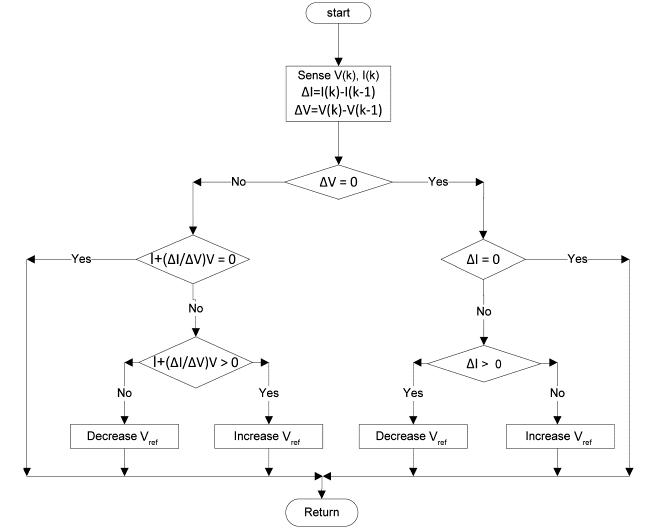
When combined with an incremental conductance photovoltaic method (IC), the perturbation and observation algorithm's drawbacks are solved. When calculating conductance, this approach uses the incremental conductance to find a voltage operatingpointthatisequivalenttothatconductance.Systemsarenotinterfering withthispointintime.Totakeuseofthis approach,youmustfirstknowhowfarawaythemaximumpowerpoint(MPP)isinordertocalculateitsapproximatelocation. EvenwhileimprovingP&Otechniques,itcanmonitorMPPmorepreciselyunderchangingweathercircumstances,compareP &Oapproaches,andhavelessoscillatorybehavioraroundMPP.Inaddition,theICalgorithm'susageofdifferentialoperations mightleadtoinstability,whichisadrawback.Alackofsunshinemakesthedifferentiationprocessmoredifficult,whichmight lead to measurement errors. Some of the findings may not suffice. It is common for IC tracking systems to employ predetermined iteration step sizes based on the accuracy and tracking speed requirements. If you want to enhance tracking speed,youmayraisethestepsize.However,thiswillimpairaccuracy.
2.6 Incremental Conductance (IC) Method
Whenitcomestosolarpanelsystems,trackingthemaximumpowerpoint(MPP)ofanarrayisanessentialcomponent.This hasresultedinawiderangeofMPPTapproaches,eachofwhichhasbeentweakedtoaddressitsshortcomings.Itistoughto choosetheoptimalapproachforbuildingaPVsystemsincetherearesomanyoptions.Theintricacyofthesetechnologies,the numberofsensorsnecessary,thedigital oranalogue implementation,theconvergencespeed,trackingcapabilities,andcost effectivenessallvary.MPPTalgorithmsmaybeselectedbasedonthekindofapplication,aswell.Asaresult,thispagesumsup themostprevalentMPPTtechnologyinusetoday.Inordertoconstructasystemthatrespondstoabroadvarietyoflighting situations,twointerestingtechniqueshavebeensuggested.
2 5. Perturbation and Observation (P & O) Method
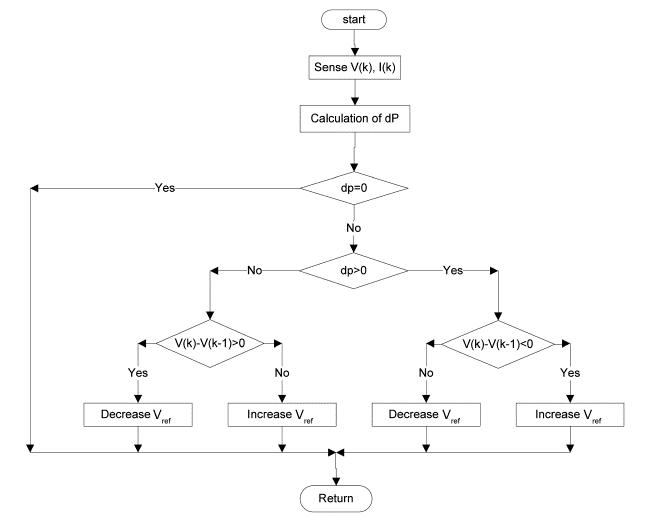
At regular intervals, voltage or current changes are made to the array terminals and compared to prior sample points, as illustratedin Figure1.1.1.Thecontrol system adjuststhePVarrayoperating pointifthe PVarrayoperatingvoltagechanges andthepowerrises(dP/dVPV>0).Theoperatingpointshiftsintheotherdirectionifthishappens.Thealgorithmcontinues tooperateinthesamemannerateachdisruptionlocation.Thetechnologyissimple,whichisthekeybenefitofthisapproach. In addition, there is no need to be familiar with the properties of traditional solar panels. The basic variant of this strategy workswelluntilthesunradiationvariestooquickly.Wheninsteadycondition,theoperatingpointvariessomewhataboutthe MPP voltage. When disturbances occur often, it is imperative that the system attain steady state before another disturbance occurs.Ifthedisturbance stepsizeis toosmall,it might impactthecontroller'sperformanceand generateinconsistenciesin thePVarray'soutput,whichisnotdesirable. At low radiation levels, classical perturbation observation (P & O) approaches are ineffective. Because of this, different solutionshavebeensuggested.Asanexample,see[4]forexample.Figure1.2showshowtheCValgorithmandtheenhancedP &OapproachworktogethertoefficientlymonitorMPPsinbothlowandhighsunlightsituations.WhenthePVoutputvoltage reachesthepanel'sopencircuitvoltage(VOC),thismethodincreasesthedutycycleandusesitasabeginningconditionforthe MPP tracker. Afterwards, the algorithm analyses the current output. Po technique is used when current exceeds (0.7 A) in algorithm.Ifit'slow,usetheCVtechniqueinstead.Usingsimulations,itispossibletoextractmoreenergyfromthePVpanel. Across a broad variety of illumination conditions, efficiency ratings of 95% to 99% are reported. Combining these two approaches is difficult, though. When there are sudden variations in light levels, the P & O approach also tends to be uncooperative. MPP tracking may become incorrect or sluggish as a result of this. A modified P&O (MP&O) technique was devisedbyLiuetal.andWu[12]toaddressthisissue.Addanirradiancechangeestimatingmechanismtoeachdisturbanceto determine how much power is lost as a result of the change in circumstances. Compared to the old P & O approach, the findingsdemonstratean improvement in performance.MP&O tracking, on the otherhand,isa lotslowerthan typical P& O methods.LuiandothersTospeeduptheMP&Omethod'strackingspeed.Theestimate,disturbance,anddisturbance(EPP) approachproposedbyLuietal.[[12]]isavailable.Everytwoperturbation stages,theEPPalgorithmperforms anestimating step.ResearchersfoundthatEPP'strackingspeedandaccuracywerecomparabletothoseofMP&O'salgorithm.
2.8 Temperature (T) Method
OneofthesimplestMPPTalgorithmsistheconstantvoltage(CV)technique.Solaroutputvoltagesmaybematchedtothefixed reference voltage Vref to keep photovoltaic array operating points always close to the maximum power point (MPP). The voltage (Vmpp) at the maximum power point of the typical photovoltaic array is used as the reference voltage. Using this approach, one assumes that the PV panel change (such as temperature and radiation) is not considerable and that it is adequate to attain near MPP performance with a constant reference voltage. As a result, the CV algorithm fails to locate the MPPaccuratelyinreality.Aconsistentvoltagereferencemustoftenbeestablished whenthesystemisbeinginstalled,which necessitatesgatheringdata.Thisissinceitmightshiftfromonelocationtothenext.Inlowlight,constantvoltageapproaches outperformperturbationandobservation(P&O)andincrementalconductancealgorithmsintermsofperformance.
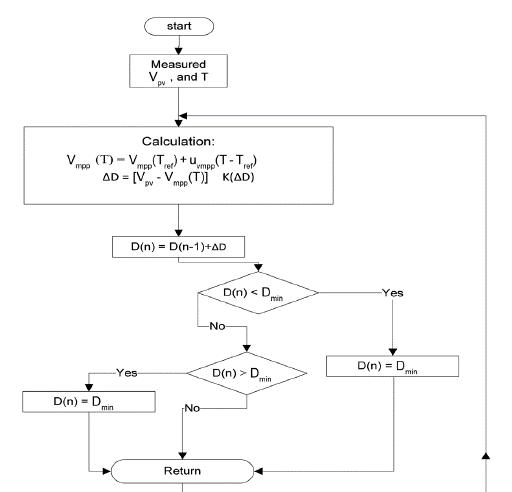
Faranda and Coelho's works introduce the temperature MPPT algorithm. The short circuit current (Isc) and open circuit voltage(Vov)ofasolarcellarraymaybedeterminedusingtheVIcharacteristicssincetheformeris relatedtotheirradiance level(G)andthelatterisstablewhenthecelltemperaturevaries.Adirectrelationshipexistsbetweenthetemperature(T) of thesolarpanelsandthewholearraytemperature(T).Thistechniquemakesuseofatemperaturesensorandavoltagesensor, bothofwhichareattachedtotherearofthePVarray.Initialmeasurementsincludeacomparisonoftwodifferentparameters: thermal output temperature (T) and the photovoltaic output voltage (Vvp). The following equation is used to calculate the maximumpowerpointvoltage(Vmpp)basedonthetestfindings.
( ) ( ) ( )
2.7 Constant Voltage (CV) Method
International Research Journal of Engineering and Technology (IRJET) e ISSN: 2395 0056 Volume: 09 Issue: 01 | Jan 2022 www.irjet.net p ISSN: 2395 0072 © 2022, IRJET | Impact Factor value: 7.529 | ISO 9001:2008 Certified Journal | Page550 step changes. Based on experimental findings, the suggested approach is shown to be both fast and resilient. Small signal modellingfurthervalidatesthesystem'sstabilityinmostsituations. Fig. 1: FlowchartofthedP P&Omethod. Fig. 2: FlowchartoftheICmethod.
III. LITERATURE SURVEY
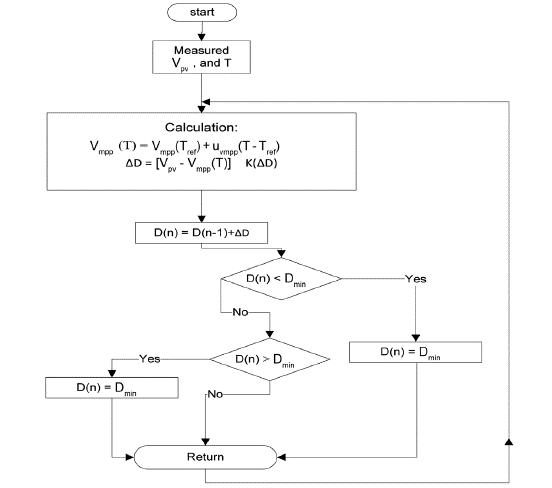
In this example, u vmpp is the temperature coefficient of Vmpp, and Tref is the temperature reference. Since the predicted value of Vmpp differs from the actual PV voltage, an incremental duty cycle (D) may be calculated (Vvp). At each sample interval, the PV array output voltage is updated to get it closer to the maximum power point voltage (Figure 1.5). [7] emphasisesthatthetemperatureapproachislessefficientthantheP&OandICalgorithm[5].[7]Datasheetinformationfrom thePVarrayisalsoneededfortemperaturecalculations.Inaddition,thealgorithmmustbeupdatedtoaccountforchangesin systemparametersbroughtonbyageing[23]. Fig. 3: Flowchartoftemperaturemethod Fig. 4: flowchart
International Research Journal of Engineering and Technology (IRJET) e ISSN: 2395 0056 Volume: 09 Issue: 01 | Jan 2022 www.irjet.net p ISSN: 2395 0072 © 2022, IRJET | Impact Factor value: 7.529 | ISO 9001:2008 Certified Journal | Page551
Zhou et al. (2019)Photovoltaic(PV)systemsandmaximumpowerpointtracking(MPPT)algorithmsarebeingdevelopedto meetthegrowingdemandforrenewableenergy.Classicalascendingandproportionalintegrationmethodsaredifficulttouse inquicklychangingenvironments.FasttransientreactionandmaximumPVapplicationefficiencyarethefocusofthisarticle, whichpresentstheMPPTmethod.Dp/Dvtrackingandasecondaryswitchingsurfacecontrollerareusedinthisnewapproach to a boost converter.Farhadi-Kangarlu&Marangalu (2019) For stand alone photovoltaic (PV) systems, a 5 level photovoltaicinverterstructureisdescribedinthisstudy.Afive level inverterandaDC DCconverterarepartoftheplanned PV conversion system. Under order to accomplish maximum power point tracking (MPPT) in a variety of environmental circumstances, a DC DC converter incorporated in an inverter structure is employed (temperature and radiation). Mehiri et al. (2019)It is proposed in this study that the maximum solar power be tracked using a resilient fractional nonlinear cooperative (FNSC) MPPT algorithm with strong dynamic responsiveness and quicker convergence to the maximum power point.Themostefficientmacrovariablesappliedtofractionaloperatorsarecomparedtovariousco controlmacrovariables. Asidefromthat,theimpactofmodifyingthescorevaluedependentonthefractionaloperatorusedbythecontrollerwasalso discovered.Matlab/SimulinkisusedtocomparetheproposedMPPTagainsttheNSC,SMC,andP&OMPPT methods,allof which are well known.Elmelegi et al. (2019)By virtue of its flexibility and smaller filter size, multi level inverters provide various advantages over typical two stage inverters. In addition to basic frequency switching and high frequency switching, multilevel inverters may be generated this way as well. In distributed photovoltaic (PV) systems, phase shift pulse width modulation (PWM) is used to monitor the maximum power point (MPPT). To deal with partial shading, the suggested modulation approach generates modulation signals for each PV module based on the MPPT, or maximum power point tracking, algorithm. No additional complexity or look up tables are required to apply this technique to any number of PV modules.MATLABSIMULINKwasusedtomodelandevaluatetheproposedtechnology'sperformanceundervariousradiation and loading situations.Das et al. (2019)Solar irradiation levels and local climatic variables (temperature and humidity)
Munisekhar et al. (2019)UsingthelatestandmostflexiblevoltagereferenceMPPTforAustraliaandcoolingapplicationsin solararrayswithBLDCdrive,thisstudypresentsthefastestandmostversatilevoltagereferenceMPPTever.Fastestandmost extreme power point tracking (MPPT) keeps track of variations in the amount of solar powered radiation. It is possible to reduce the overall cost of the system by eliminating the standard DC/DC support converter, which reduces exchanging mishapsandfurtherlowerstheoverallcostoftheframework,inthiswayrestrictingtheimpacttransformationarrangement. Evenunderthemostextremecircumstances,theconstructionanddemonstrationoftheshortestMPPTcalculationpresented for a BLDC engine driven PV demonstrate feed cooling framework has no influence on performance. Using a reenactment method,theframeworkistested.
Dengsheng et al .(2018), theysuggestedanMPPTapproachbasedonanadjustableloadresistancematchingmodelinorder to address the issue of photovoltaic power production MPPT and local photovoltaic power generation system temperature management. Amara et al. (2018)Solar panel performance may be improved by using an adaptive neural fuzzy inference system (ANFIS) based on the maximum power point tracking (ANFIS MPPT) algorithm and a PI controller. The ANFIS approach was conceived and developed in this work utilisingMatlab/Simulink software. An additional way of demonstrating theefficiencyofthisANFIS MPPTtechnologyhasbeentocompareitdirectlytothePerturb&ObserveP&O MPPTtechnique findings. From the findings, it can be concluded that the ANFIS MPPT command has a higher performance, a more dynamic manipulation,a quicker convergence,andless delivery thanthestandard P& O MPPTcommand. Fluctuation.Here, wehave shownthat ANFIS MPPTtechnology'scapabilitiesnot onlyincrease performance,butalsoimprove trackingaccuracy,speed, and system stability in a variety of climates. Given the significance of networked solar systems, this enhancement is quite advantageous. Nour Ali (2018)Agrid connectedphotovoltaic(PV)systemefficiencyenhancementispresentedinthis thesis.
Accuratemonitoringofthe maximumpowerpointisanimportantaspectindeterminingefficiency.Thereare severalclassic approaches that are used to monitor the maximum power point, including perturbation, observation, and incremental conductance (MPPT). Create a better MPPT control system using artificial intelligence (AI). Maximizing the output of grid connected solar systems may be achieved via the use of an artificial neural network (ANN). Alternative inputs to solar radiation and temperature have been provided in this study to enhance the performance of an ANN based MPPT system. Genetic algorithm (GA) ideal for building ANN topology, e.g. the number of neurons in the hidden layer, type of learning
Zurbriggen & Ordonez (2019)Itisproposed.UsingMPPTandlarge signgeometrymanagement,thesystemcreatesarobust, superiorsetupthatis ideal for rapidly expandingirradianceapplications,suchaswearable innovationandhousetop electric cars,forexample(EVs).Scientifictacticsandreenactmentandtestingoutcomessupportandverifythetheoreticalevaluation.
International Research Journal of Engineering and Technology (IRJET) e ISSN: 2395 0056 Volume: 09 Issue: 01 | Jan 2022 www.irjet.net p ISSN: 2395 0072 © 2022, IRJET | Impact Factor value: 7.529 | ISO 9001:2008 Certified Journal | Page552
necessitate the usage of Photovoltaic System Maximum Power Point Tracking (MPPT) technology. MPPT ensures that the greatestamountofelectricitymaybegenerated.Photovoltaicsystemsoftenneedvoltageandcurrentsensorstomonitortheir output. PV systems may be monitored without the need of current sensors, according to a new technology. It not only decreases system expenses, but also reduces communication strain, internal interference, and complexity inside the organisation. Luenberger observer technology is used to estimate the current in the proposed system. As a result, the MPPT approach is used to create the necessary duty cycle for the DC DC boost converter based on disturbances and observations. Becauseofthistesting,thesuggestedprocedurewasevaluatedincomparisontothewidelyestablishedMPPTapproach.Ithas beenfoundthatthesuggestedsystem'sfindingsarequiteliketheresultsobtainedbysensor basedMPPTtechnology.Dangor et al. (2019)Modelingthemaininductorcurrentofthediscontinuousflybackconverterisshown.Asensingresistorisusedto compare the model's predicted current to the actual current measured. If you have a solar panel (PV) that is connected throughaflybackconvertertoa12Vleadacidbattery,thismodelapplies.Amodel basedCurrentDisruptionObservation(P& O) Maximum Power Point Tracking (MPPT) method is used to manage the power flow from the PV module.Ghosh (2019)A unique cross breed MPPT (maximum extreme power point following) computation is presented in this study. Simple Binary Sequence(IBS)MPPTandthewell knownPerturbandObserve(PandO)MPPThavebeencombinedtocreatethenewMPPT computation.Themaximumpowerpoint(MPP)ofanysun poweredmodulemayfluctuateduetotemperatureandinsolation fluctuations,hencethiscomputationprovidestheflexibilityneededbytheIBScalculation.UsetheIBScalculationtolocatethe underlyingworkingpoint.ThePandOcomputationisusedtohandledynamicandmomentarychangesatthisstage.Usingthe IBS calculation and reinitializing the parameters if there is any indication of a change in operating circumstances, the whole calculation is resumed from the earliest beginning point. Using the administrator's points of confinement, the suggested computation determines when to re instate the parameters. Simulink and MATLAB are used to run the suggested computation.
Selvakumar et al. (2019)proposed photovoltaic (PV) systems under normal irradiation circumstances and fractional shadowing, the study of the Maximum Power Point Tracking (MPPT) is essential (PSC). Heydari&Varjani (2019)studied Topologies such as single level topology are common in low effort matrices that are linked to PV frameworks. Power point tracking and lattice side controllers are implemented in these systems' primary converter, which is a transformer.
Photovoltaic cell
ManyPV modulesare often organized in anarrangementor parallel tosatisfy energyrequirements. 'PVmodulesof various sizesmaybeaffordablypurchased(generally60Wto170W).Asanexample,atypicalsmall scaledesalinationplantconsumes severalkilowattsofelectricity. PV modeling
IV. STANDALONE PHOTOVOLTAIC SYSTEM COMPONENTS
Aphotovoltaiccellisasemiconductordevicethatutilizesthephotovoltaiceffecttoconvertlightenergyintoelectricalenergy. Tocreate current, electronsmust be released when the photon's energy is greater thanthe band gap's.Photovoltaic cells,on theotherhand,areadistincttechnologyfromphotodiodes.Toconvertlightintoanelectricalsignal,thephotodiodeusesthe n channelofasemiconductorcircuit,whichisforwardone sided[9]. PV module
International Research Journal of Engineering and Technology (IRJET) e ISSN: 2395 0056 Volume: 09 Issue: 01 | Jan 2022 www.irjet.net p ISSN: 2395 0072 © 2022, IRJET | Impact Factor value: 7.529 | ISO 9001:2008 Certified Journal | Page553 method, and type of activation function for each neuron is the second suggested improvement The advantages of the MPPT modified ANN design are shown by comparing simulation results.Kazeza& Chowdhury (2018)Stand alone photovoltaic powered pump systems (SPVWSS) in irrigation, agricultural, water, and water treatment applications have been studied extensivelyAlotofattentionisbeingpaidtotechnologicaladvancementsthatmighthelpthemoperatebetter. Forsolarand motorpumpsystems,designexpertshavecomeupwithnoveltechniquestospeedupandincreasetheaccuracyofmaximum power point tracking (MPPT) and maximal efficiency point tracking (BEPT). It was not viable, however, to regard the pump system'ssubsystemsaslinkedandinterdependentsubsystemsthroughoutthedesignphase.Consequently,theyonlyenhance theMPPT'sperformancewhileignoringthepump'sBEPT'soptimaloperatingposition.PumpmappingalgorithmBEPTandPV generatorfuzzylogicincrementalconductancespecificgroupoptimization(FL IC PSO)MPPTmethodareimplementedinthis article.Inmyunderstanding,whentheBEPTcontrol loopisstarted,thesystemrunsawayfromthePVgenerator'sMPP and thepowerpulledfromthePVgeneratorisgreaterorlowerthantheneededpower.Byuseofavehicle.Thepump'sefficiency has been maximized by operating in the pump's "sweet spot" (BER). For the next generation of SPVWSS, this white paper provides the plan for optimal solar use and pumping efficiency while ensuring long term safety. Sankar et al. (2017)Fuzzy logic and dual MPPT controllers are used in this thesis to develop a novel digital control strategy for a photovoltaic (PV) system. For maximum solar cell output, the PV module incorporates two MPPT controllers. Tracking the maximum output powerofthePVmoduleisdonebyadjustingtheDCvoltageandcurrent.Inordertorunatpeakefficiency,MPPTtechnologyis used. As an astronomical two axis solar tracker, the first MPPT controller ensures that maximum solar radiation is always achieved. a new fuzzy logic controller (FLC) based P & O (disruption and observation) strategy is used to maintain the system'spoweroperatingpointatmaximumImplementationofthesecondMPPTcontrollerThereisnoneedtoworryabout any vibrations near the maximum power operating point according to the suggested control method. Reddy & Ramasamy (2017)Based on fuzzy logic controllers, this research presented a three phase grid connected solar generator (FLC). By controllingtheDClink voltage,thepurposeistoalterthevoltageonthegridside.Self adaptiveDClinkvoltageregulationis included into the design. Solar energy is extracted from the photovoltaic module using a boost converter that uses the Maximum Power Point Tracking(MPPT) software to power the DC link of the PV inverter. Power generated by PV inverters maybesentintotheutilitygridusingaVSC(VoltageSourceConverter).ThesuggestedMPPTtechnologyhasgreaterdynamic performance than existing MPPT technology when the CPI voltage fluctuates quickly. MATLAB / SIMULINK was used to simulateandverifytheproposedFLCMPPT basedsolarsystem.
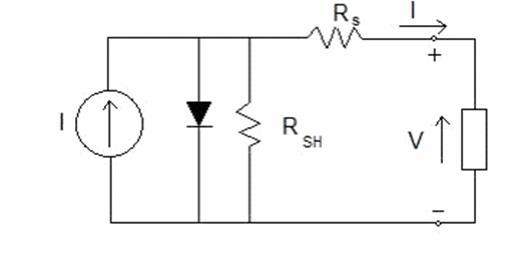
A few solar cells are grouped together and connected in series to form a PV cluster. The arrangement association is responsible for increasing the module voltage, whereas the parallel association is responsible for increasing the exhibit current[10]. An upsetting diode and a current source are often used to depict a sun oriented cell. It has its own set up and defences in place. There is a series resistance because electrons cannot travel to the n top junction and a parallel resistance becauseofleakagecurrents.
•Boost Converter
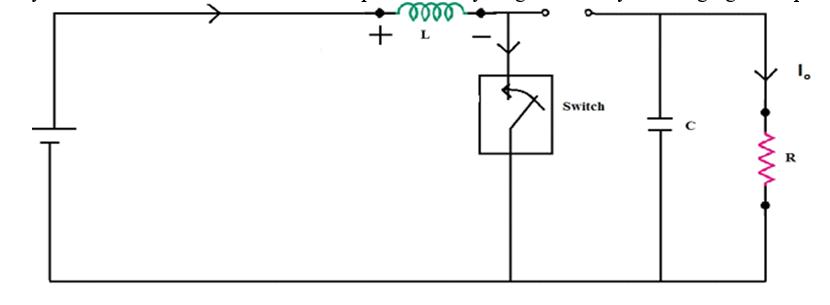
Fig. 7: Mode1operationofBoostConverter
Thecurrentsource(I)anddiodeandseriesresistance(R)areincludedinthismodel(Rs).Whenitcomestotheparallelshunt resistance(RSH),thisisanon issue.
Mode 1 operation of the Boost Converter Chargeistransferredfrombatterytoinductorwhentheswitchisclosed,allowingenergytobestored.Adirectchargingand dischargingofacapacitorispredictedinthismode,whichcausesthecurrenttorise(exponentially).Duetothediode'sability tomaintainaconstantflow,theheapcurrentmaybegeneratedbydischargingthecapacitor.
Fig. 5: SinglediodemodelofaPVcell
International Research Journal of Engineering and Technology (IRJET) e ISSN: 2395 0056 Volume: 09 Issue: 01 | Jan 2022 www.irjet.net p ISSN: 2395 0072 © 2022, IRJET | Impact Factor value: 7.529 | ISO 9001:2008 Certified Journal | Page554
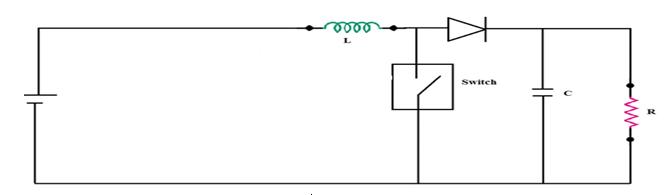
Buckconvertershavethebestefficiency,followedbybuck boostsandfinallyboostconverters,buttheyarelinkedtothegrid ortoapumpsystemthatrequiresaDC DCconverter.Anexternalboostconverterisneededinordertoget230V.
Fig. 6: CircuitdiagramofaBoostConverter
Thebestpowerpointfollowingisprimarilyaproblemofheapcoordination,asstatedinthepresentation.Itisnecessarytouse aDC DCconvertertomodifytheboard'sinformationprotectionfrommatchingthatoftheheapimpediment(bychangingthe obligationcycle).
•Perturb & Observe
Itiscommonforaconventionalsolarpaneltoconvert30%to40%ofthesolarradiationitreceivesintoelectricity.Thesolar panels' efficiency may be improved by using the latest in maximum power point tracking technology. Maximum Power TransferTheoremstatesthatthecircuithasthehighestpoweroutput.Wheneverthesourceimpedanceofthesystemisequal to the load impedance. Therefore, we have an issue with impedance matching while trying to locate the maximum power Solarpoint.panels employ boost converters to increase the output voltage for a range of applications, such as motor loads, by connectingthesolarpanelstoboostconverters.Thesourceimpedancemaybematchedtotheloadimpedancebyalteringthe dutycycleoftheboostconverter. MPPT techniques
In order to follow the MPP, a computation must have a time multifaceted character, cost of execution, and ease of use necessary.
Forthemostpart,P&O(perturbationandobservation)arethemoststraightforwardmethod.Here,asinglevoltagesensoris utilizedtodeterminethevoltageofaphotovoltaic(PV)array,makinginstallationbothinexpensiveandsimple.Atinyamount of computation is required to run the process, but it still perturbs in both directions as it approaches the MPP, not only the MPP. When using this technique, you must either specify the right error limits or utilize the wait function in order to avoid runningintotheMPP.Thealgorithm'stimewillbesloweddownasaresultofthis.OwingtovariationsinMPPT,thistechnique doesnotaccountforabruptchangesinilluminationlevels(whichareinterpretedasMPPchangesduetointerference),andso calculatesanincorrectMPP.Anincrementalconductanceapproachmaybeusedtopreventthisissue
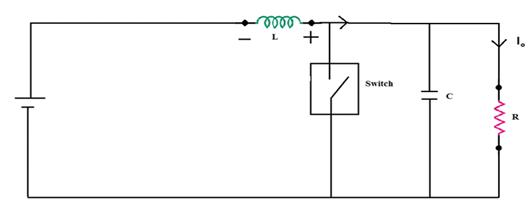
International Research Journal of Engineering and Technology (IRJET) e ISSN: 2395 0056 Volume: 09 Issue: 01 | Jan 2022 www.irjet.net p ISSN: 2395 0072 © 2022, IRJET | Impact Factor value: 7.529 | ISO 9001:2008 Certified Journal | Page555 •Mode 2 operation of the Boost Converter Dial diodes are shorted in mode 2 (switch on). Using the inverter, the inductor's stored vitality is released and charged the capacitor.Duringnormaloperation,theloadcurrentdoesnotchange.Figure3.7showstheboostconverter'swaveform. Fig. 8: Mode2operationofBoostConverter V. MAXIMUM POWER POINT TRACKING ALGORITHMS 5.1 An overview of Maximum Power Point Tracking
Different
The
A variety of ways exist for determining the moment at which maximum power is attained. Technology that has gained the greatesttractionincludes: ObserveandBeAffected(hillclimbingmethod) IncrementalConductancetechnique. Shortcircuitcurrentinfractions afractionoftheopencircuitvoltage Networksofneurons Fuzzyreasoning
International Research Journal of Engineering and Technology (IRJET) e ISSN: 2395 0056 Volume: 09 Issue: 01 | Jan 2022 www.irjet.net p ISSN: 2395 0072 © 2022, IRJET | Impact Factor value: 7.529 | ISO 9001:2008 Certified Journal | Page556 •Fuzzy Logic Control ThegenericfuzzylogiccontrolofMPPThasbeenadoptedbymicrocontrollersinthelastdecade.[15]Fuzzylogiccontrollers offerthebenefitofprocessingnon linearitysincetheyemployimpreciseinputs. •Neural Network MicrocontrollersthatareneuralnetworksmayalsouseanothermethodofimplementingMPPT.Theinput,hiddenlayer,and output layers of a neural network are the most common configuration. Each layer has a different number of nodes, and this fluctuates according on the user. For example, VOC and ISC of a PV array may be entered, along with irradiance or temperature,oranycombinationofthesefactors.Oneormorereferencesignals,suchasadutycyclesignal,areoften utilized todirectthepowerconvertertorunatorneartheMPP[15]. Table 1 : Characteristics of different MPPT techniques [15] MPPT technique Convergence Implementation Periodic Sensed parameters speed complexity tuning Perturb&observe Varies Low No Voltage Incremental Varies Medium No Voltage,current FractionalconductanceVoc Medium Low Yes Voltage FractionalIsc Medium Medium Yes Current Fuzzylogiccontrol Fast High Yes Varies Neuralnetwork Fast High Yes Varies
Solar panel output power and module voltage may be seen in Figure 4.1, which displays the link between the two. The PV panel'stheoretical maximumoutput,denoted bytheMPPdesignation, may be foundatthis position.Consider AandB to be two different operational locations. A is on the left side of the MPP, as illustrated above. Because of this, it is feasible to progress to MPP by introducinga positive voltage disturbance. However, point B islocated on theleft sideof MPP. P will be
•Perturb & Algorithm
Observe
APVpanel'soperationalvoltageisperturbedintinysteps usingthePerturb&Observemethod.IfthechangeinpowerPthat results is positive, the panel's oscillation will travel in the direction of the MPP. If P is negative, we must divert from the directionofMPPandmodifythesignofthedisturbanceprovided.
Fig. 9: SolarpanelcharacteristicsshowingMPPandoperatingpointsAandB[16]
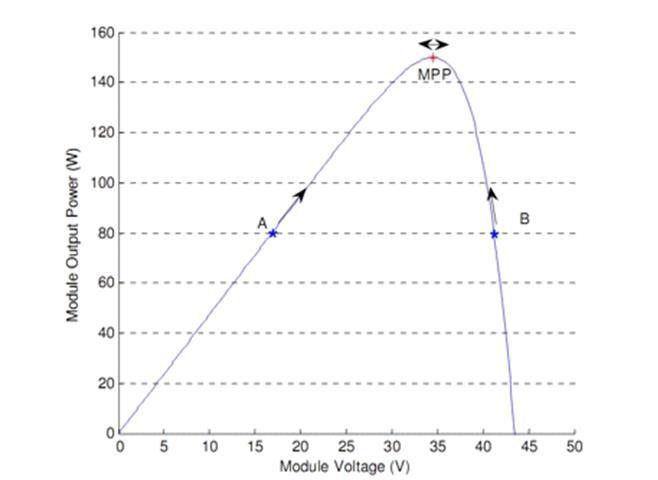
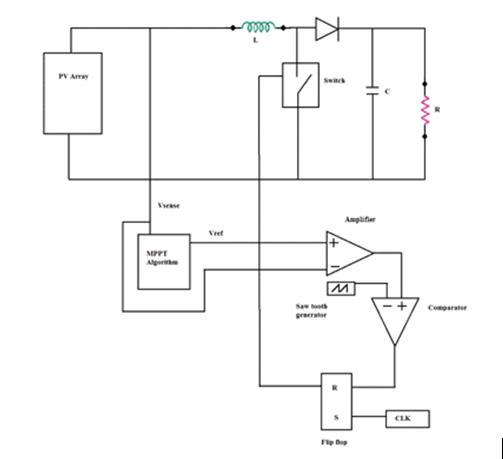
Figure4.3depictsahigh levelperspectiveofthenecessaryimplementation.
5.2 Implementation of MPPT using a boost converter
International Research Journal of Engineering and Technology (IRJET) e ISSN: 2395 0056 Volume: 09 Issue: 01 | Jan 2022 www.irjet.net p ISSN: 2395 0072 © 2022, IRJET | Impact Factor value: 7.529 | ISO 9001:2008 Certified Journal | Page557 negativeinthepresenceofapositiveperturbation,requiringareorientationoftheperturbationinordertoattainMPP.Figure 4.2showsaflowchartoftheP&Oalgorithm. Limitations of Perturb & Observe algorithm
In order to maximise the utility of solar panels, this system includes a boost converter. Switching losses will occur, however the low voltage output will be stepped up to a higher voltage level by the boost converter when employing the converter.
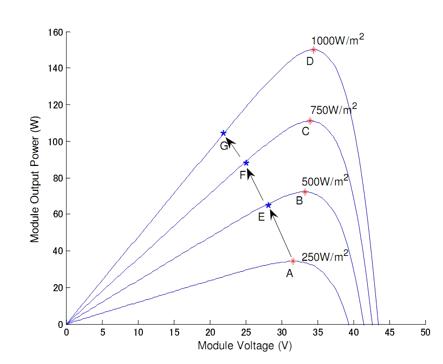
Fig. 10: CurveshowingwrongtrackingofMPPbyP&Oalgorithmunderrapidlyatryingirradiance[16] TheMPPwillshifttotherightiftheirradiancevariesquickly.Asdemonstrated,thealgorithmseesthisasachangeresulting from a disturbance, which changes the direction of the disturbance in its following iteration.Although this approach just requiresavoltagesensortomeasurethePVarrayvoltage,ithasalowerimplementationcostandiseasiertoimplement.The algorithm has a very low time complexity, but when it gets very near to the MPP, it doesn't stay there; it's still disturbed in bothdirections.Whenusingthistechnique,youmusteitherspecifytherighterrorlimitsorutilisethewaitfunctioninorderto avoidrunningintotheMPP.Thealgorithm'stimewillbesloweddownasaresultofthis.
Fig. 11: RequisiteimplementationforMPPTsystem
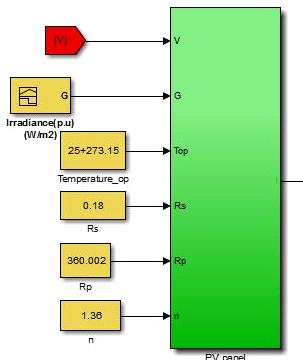
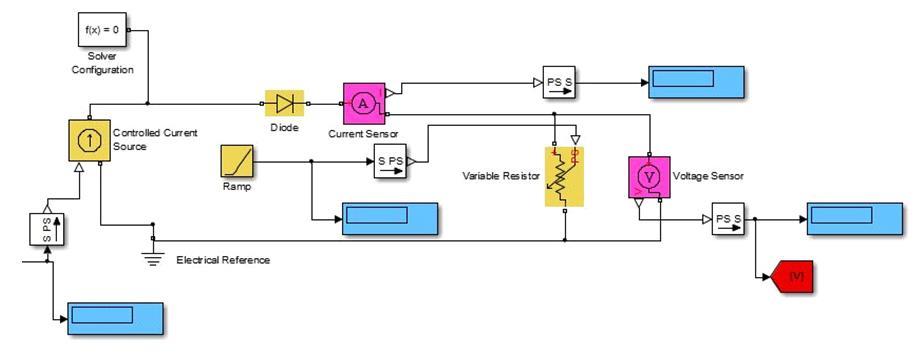
International Research Journal of Engineering and Technology (IRJET) e ISSN: 2395 0056 Volume: 09 Issue: 01 | Jan 2022 www.irjet.net p ISSN: 2395 0072 © 2022, IRJET | Impact Factor value: 7.529 | ISO 9001:2008 Certified Journal | Page558 5.3 simulation work Fig. 12: ComparisonModel Fig. 13: pv1 Fig. 14: P VCharacteristicsP&O Fig. 15: P VCharacteristicsP&O
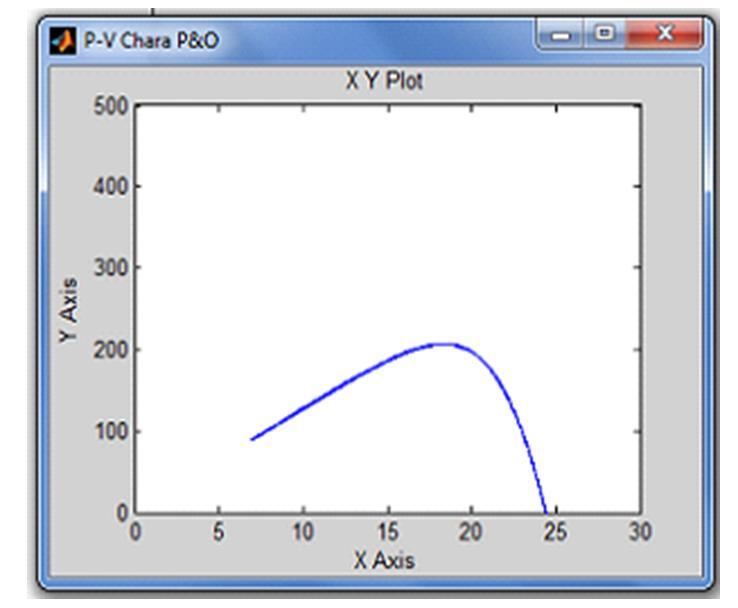
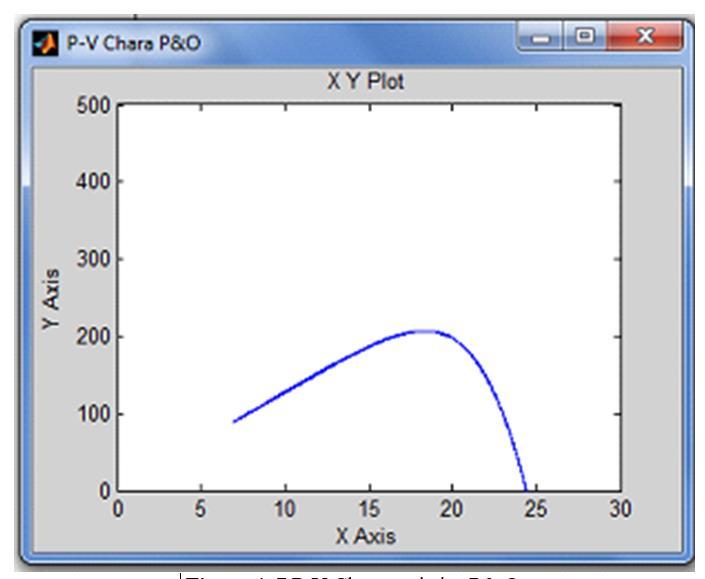
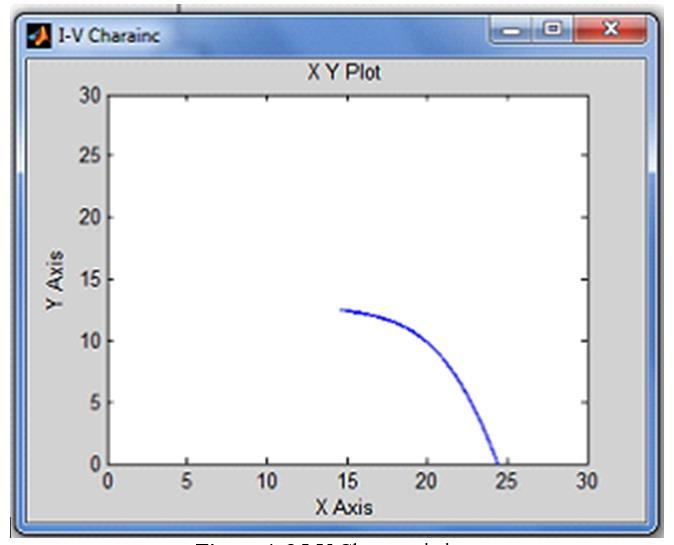
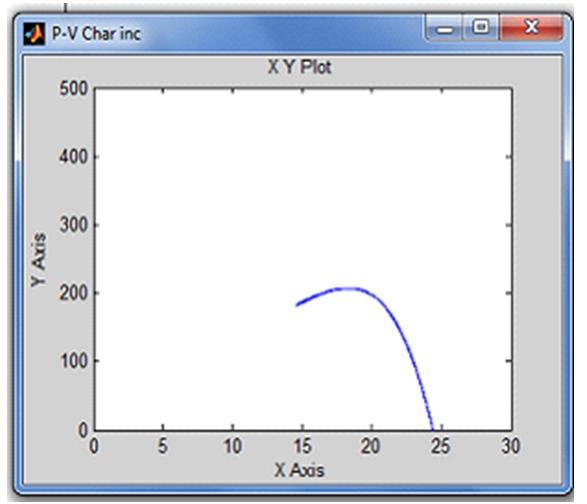
International Research Journal of Engineering and Technology (IRJET) e ISSN: 2395 0056 Volume: 09 Issue: 01 | Jan 2022 www.irjet.net p ISSN: 2395 0072 © 2022, IRJET | Impact Factor value: 7.529 | ISO 9001:2008 Certified Journal | Page559 Fig. 16: I VCharacteristics Fig. 17: P VCharacteristicsinc Table 2: ComparisonofdifferentMPPTtechniques MPPT technique Convergence Implementation Periodic parametersSensed speed complexity tuning Perturb &Observe Varies Low No Voltage Incremental Varies Medium No Voltage,current FractionalConductanceVoc Medium Low Yes Voltage Fractional I sc Medium Medium Yes Current Fuzzy Logic Control Fast High Yes Varies Neural Network Fast High Yes Varies Solarpanelefficiencyhasincreasedgreatlyandmistakesduetofluctuationsinirradiancehavebeenremoved,asillustrated in this paper Using perturbation, observation and incremental conductance approaches decreases implementation complexity andcostshere.Thegraphshownintheimageaboveshowsthattheplannedsimulationhasbeenenhancedandthecompanyis doingquitewell,ascanbeseen. VI. CONCLUSION AND FUTURE WORK Simulink and MATLAB were used to create the model. An analysis of the various graphs was done. After running the simulationinMPPTmode,theMPPTalgorithmmoduleinthecircuitisbypassedforthefirsttime.Youcanseethatifyoudon't applytheMPPTalgorithm,thepoweravailableontheloadsideis95wattsandthevalueofsolarradiationis85watts/cm2 Inthiscase,PVpanelsmaygeneratearound250wattsofelectricityfromthesun'srays.Thismeansthattheefficiencyof the conversionisquitepoor.SwitchtoMPPTmodeandrunasimulationatthispointTheMPPTblockispartofthecircuit,andthe PI controller uses the P & O algorithm to figure out Vref. Under the same illumination, the PV panel continues to produce roughly 250 watts of electricity. As a result, this photovoltaic system's overall conversion efficiency has been increased by roughly 215 watts. Losses in the high frequency PWM switching circuit and inductance and capacitance losses in the boost convertercircuitaccountforthe250 wattpowerlossfromthePVpanel.Becauseofthis,itcanbeobservedthattheefficiency ofthesolarsystemgrowsbyroughly126%fromaninitialoutputpowerof95watts,culminatinginanoutput powerof215 wattswhenemployingthePerturb&MonitorMPPTtechnology.Conclusionsaresummarizedbelow.Thispaperexaminesand comparesseveralMPPTstrategiesthathavebeenproposedintheliterature.ResearchshowsthatinadditiontoMPPT,there are several additional technologies available. Using the chart and the previous explanation, it may determine which MPPT
2.Y.Zhou,C.N.M.HoandK.K.Siu,"AFastPVMPPTSchemeUsingBoundaryControlwithSecond OrderSwitchingSurface," inIEEEJournalofPhotovoltaics,vol.9,no.3,pp.849 857,May2019.doi:10.1109/JPHOTOV.2019.2899470
6.E.Heydariand A. Y.Varjani, "ANew VariableStep Size P&OAlgorithm withPower Output and SensorlessDPC Method for Grid Connected PV System,"2019 10th International Power Electronics, Drive Systems and Technologies Conference (PEDSTC),Shiraz,Iran,2019,pp.545 550.doi:10.1109/PEDSTC.2019.8697651. 7.Elmelegi, M. Aly and E. M. Ahmed, "Developing Phase Shift PWM Based Distributed MPPT Technique for Photovoltaic Systems,"2019 International Conference on Innovative Trends in Computer Engineering (ITCE), Aswan, Egypt, 2019, pp.492 497.doi:10.1109/ITCE.2019.8646399
4.S. Selvakumar, M. Madhusmita, C. Koodalsamy, S. P. Simon and Y. R. Sood, "High Speed Maximum Power Point Tracking Module for PV Systems," inIEEE Transactions on Industrial Electronics, vol. 66, no. 2, pp. 1119 1129, Feb. 2019. doi:10.1109/TIE.2018.2833036
13. K. Amaraet al., "Improved Performance of a PV Solar Panel with Adaptive Neuro Fuzzy Inference System ANFIS based MPPT,"20187thInternationalConferenceonRenewableEnergyResearchandApplications(ICRERA),Paris,2018,pp. 1098 1101. doi:10.1109/ICRERA.2018.8566818
10. Mehiri,M.BettayebandA.Hamid,"FractionalNonlinearSynergeticControlbasedMPPTAlgorithmforPVSystem,"2019 AdvancesinScienceandEngineeringTechnologyInternationalConferences(ASET),Dubai,UnitedArabEmirates,2019, pp.1 5.doi:10.1109/ICASET.2019.8714527
11. I.G. Zurbriggen and M. Ordonez, "PV Energy Harvesting Under Extremely Fast Changing Irradiance: State Plane Direct MPPT," inIEEE Transactions on Industrial Electronics, vol. 66, no. 3, pp. 1852 1861, March 2019. doi: 10.1109/TIE.2018.283811
15.W. H. Kazeza and S. P. Chowdhury, "Both Way Effects of PV Generator MPPT on BLDCM Centrifugal Pump BEPT Performance,"2018 IEEE PES/IAS Power Africa, Cape Town, 2018, pp. 781 786. doi: 10.1109/PowerAfrica.2018.8521117
12. M. Nour Ali, "Improved Design of Artificial Neural Network for MPPT of Grid Connected PV Systems,"2018 Twentieth International Middle East Power Systems Conference (MEPCON), Cairo, Egypt, 2018, pp. 97 102. doi: 10.1109/MEPCON.2018.8635202
3.S. N. Ghosh, "IBS P&O Hybrid MPPT Algorithm for Solar PV Applications,"2019 IEEE PES GTD Grand International Conference and Exposition Asia (GTD Asia), Bangkok, Thailand, 2019, pp. 119 123. doi: 10.1109/GTDAsia.2019.8715847
5.Das,S.Madichetty,B.SinghandS.Mishra,"LuenbergerObserverBasedCurrentEstimatedBoostConverterforPVMaximum PowerExtraction.ACurrentSensorlessApproach,"inIEEEJournalofPhotovoltaics,vol.9,no.1,pp.278 286,Jan.2019. doi:10.1109/JPHOTOV.2018.2877418.
8.M. Farhadi Kangarlu and M. G. Marangalu, "A Single DC Source Five Level Inverter Applied in Stand Alone Photovoltaic Systems Considering MPPT Capability,"2019 10th International Power Electronics, Drive Systems and Technologies Conference(PEDSTC),Shiraz,Iran,2019,pp.338 342.doi:10.1109/PEDSTC.2019.8697896
1.S. Munisekhar, G. V. Marutheswar and P. Sujatha, "The Fastest MPPT Tracking Algorithm for a PV array fed BLDC Motor Driven Air Conditioning system,"2019 Fifth International Conference on Electrical Energy Systems (ICEES), Chennai, India,2019,pp.1 5.doi:10.1109/ICEES.2019.8719321.
REFERENCES
International Research Journal of Engineering and Technology (IRJET) e ISSN: 2395 0056 Volume: 09 Issue: 01 | Jan 2022 www.irjet.net p ISSN: 2395 0072 © 2022, IRJET | Impact Factor value: 7.529 | ISO 9001:2008 Certified Journal | Page560 approach is best for the solar system.There are two reasons why the perturb and observation methods are slower than the incremental conductance. In comparison to the Icon algorithm, the P & O implementation is easier to use. Comparisons, integrators,anddifferentiatorsmustbeusedincomplicatedcircuits.
9.M. R. E. Dangor, M. Aswat and W. Cronje, "Flyback Converter Controlled by Model Based Current MPPT for a Photovoltaic PowerSystem,"2019SouthernAfricanUniversitiesPowerEngineeringConference/RoboticsandMechatronics/Pattern Recognition Association of South Africa (SAUPEC/RobMech/PRASA), Bloemfontein, South Africa, 2019, pp. 481 486. doi:10.1109/RoboMech.2019.8704756
14.W.Dengsheng,W.Lidi,H.Chuncheng,L.Tong,Z.ChenglongandL.Chenyang,"ResearchandDesignofPVMPPTBasedon STM32,"2018 Chinese Control And Decision Conference (CCDC), Shenyang, 2018, pp. 4971 4974. doi: 10.1109/CCDC.2018.8407992
16.Y. Xue, S. Sun, J. Fei and H. Wu, "A new piecewise adaptive step MPPT algorithm for PV systems,"2017 12th IEEE Conference on Industrial Electronics and Applications (ICIEA), Siem Reap, 2017, pp. 1652 1656. doi: 10.1109/ICIEA.2017.8283104
International Research Journal of Engineering and Technology (IRJET) e ISSN: 2395 0056 Volume: 09 Issue: 01 | Jan 2022 www.irjet.net p ISSN: 2395 0072 © 2022, IRJET | Impact Factor value: 7.529 | ISO 9001:2008 Certified Journal | Page561
18.R. Patii and H. Anantwar, "Comparitive analysis of fuzzy based MPPT for buck and boost converter topologies for PV application,"2017 International Conference On Smart Technologies For Smart Nation (SmartTechCon), Bangalore, 2017,pp.1479 1484.doi:10.1109/SmartTechCon.2017.8358610
20.Reddy and S. Ramasamy, "A fuzzy logic MPPT controller based three phase grid tied solar PV system with improved CPI voltage,"2017 Innovations in Power and Advanced Computing Technologies (i PACT), Vellore, 2017, pp. 1 6. doi: 10.1109/IPACT.2017.8244953
29. Liu, C., Wu, B. and Cheung, R. (2004) Advanced Algorithm for MPPT Control of Photovoltaic Systems. Canadian Solar BuildingsConference,Montreal,20 24August2004.
19.R.Sankar,S.Velladurai,R.RajarajanandJ.A.Thulasi,"II.PVsystemdescription:MaximumpowerextractioninPVsystem usingfuzzylogicanddualMPPTcontrol,"2017InternationalConferenceonEnergy,Communication,DataAnalyticsand SoftComputing(ICECDS),Chennai,2017,pp.3764 3769.doi:10.1109/ICECDS.2017.8390168
28. Femia,N.,Petrone,G.,Spagnuolo,G.andVitelli,M.(2005)OptimizationofPerturbandObserveMaximumPower\Point TrackingMethod.IEEETransactionsonPowerElectronics, 20,963 973.http://dx.doi.org/10.1109/TPEL.2005.850975
26. Lee,J.H.,Bae,H.andCho,B.H.(2006)AdvancedIncrementalConductanceMPPTAlgorithmwithaVariableStepSize.12th International Power Electronics and Motion Control Conference, EPE PEMC 2006, Portoroz, 30 August 1 September 2006,603 607. 27. Dorofte, C., Borup, U. and Blaabjerg, F. (2005) A Combined Two Method MPPT Control Scheme for Grid Connected Photovoltaic Systems. 2005 European Conference on Power Electronics and Applications, Dresden, 11 14 September 2005,10.http://dx.doi.org/10.1109/EPE.2005.219714
21. Coelho,R.F.,Concer,F.M.andMartins,D.C.(2010)AMPPTApproachBasedonTemperatureMeasurementsAppliedinPV Systems.20109thIEEE/IASInternationalConferenceonIndustryApplications(INDUSCON),SãoPaulo,8 10November 2010,1 6. 22. Faranda,R.andLeva,S.(2008)EnergyComparisonofMPPTTechniquesforPVSystems. WSEASTransactionsonPower Systems, 3,447 455. 23. Yafaoui, A., Wu, B. and Cheung, R. (2007) Implementation of Maximum Power Point Tracking Algorithm for Residenial PhotovoltaicSystems.2ndCanadianSolarBuildingsConference,Calgary,10 14June2007. 24. Sera, D., Kerekes, T., Teodorescu, R. and Blaabjerg, F. (2006) Improved MPPT Method for Rapidly Changing Environmental 25. Conditions. 2006 IEEE International Symposium on Industrial Electronics, 2, 1420 1425.http://dx.doi.org/10.1109/ISIE.2006.295680
17.P. Nayak and A. Shaw, "Design of MPPT controllers and PV cells using MATLAB Simulink and their analysis,"2017 International Conference on Nascent Technologies in Engineering (ICNTE), Navi Mumbai, 2017, pp. 1 6. doi: 10.1109/ICNTE.2017.7947932