
1.2 Soil Stablisation
2.2 Lime : Limeis a byproductoflimestone combustion.Lime based soilstabilisationiswidelyemployedinavarietyofbuilding projects,includingfoundations,highways,railways,airports, embankments, slope protection, canal lining, and so on. Becauselimeisinexpensiveandeasilyavailable,itisoften utilisedforsoilstabilisation.Limeisemployedasabinding ingredientinthisstudy,aswellasfortreatingpolyethylene to make the surface rougher, improving the bonding betweenpolyethyleneandsoiltosomeextent.Whenlimeis put to the soil, it absorbs porewater for hydration and increasestheamountofwaterneededforsoilstabilisation.
2.1 Soil :-
2.2 MATERIALS USED
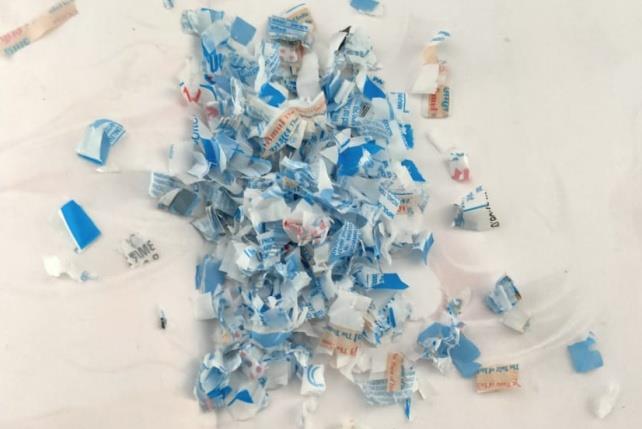
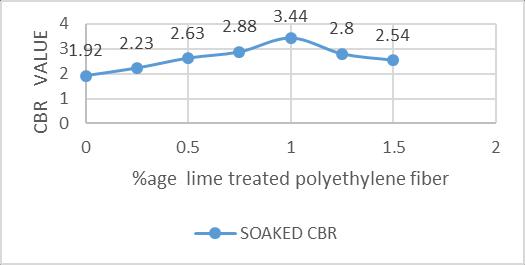
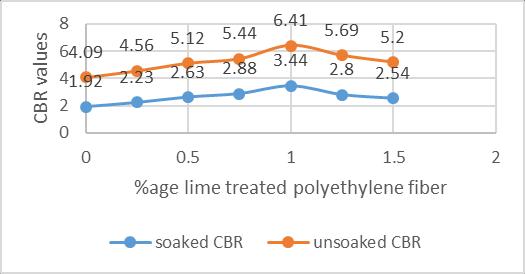
The amount of waste polyethylene fibre materials is rapidly increasing; these wastes Becausepolyethylenefibres are non biodegradable fibre materials, they are commonly dumped or thrown, endangering the ecology and ecosystem. Polyethylene fibre materials are one of the waste fibre materials among these. Polyethylene fibre (Milkpacketsstrips LDPE ) was employed as an element in this study to improve the qualities of natural soil. Polyethylene fibre has been used to replace soil in a given percentage, and tests have been conducted. To determine the optimal amount of polyethylene fibre, the soil was replaced with varied quantities of polyethylene fibre.Based on the findings of the experiments, it was discovered that replacing various soil qualities with 1.0 percent polyethylene fibre by weight of soil produces the best results. Unconfined Compressive Strength has increased from 3.24 kg/cm2 to 7.40 kg/cm2, indicating that it can now withstand higher loads. MDD has also grown in value from 1.71 g/cm3 to 1.78 g/cm3, equal to 1% polyethylene fibre. However, due to the low density of polyethylene fibre, the percentage of increase is minimal. In addition, the value of Soaked CBR rises from 1.92 to 3.44, corresponding to 1% polyethylene fibre. Which shows that it can be utilised for pavement in locations with a high ground water table. And at 1% polyethylene fibre, the value of Unsoaked CBR increases from 4.09 to 6.41, indicating that we can reduce pavement thickness in pavement design, lowering construction costs in highway and railway construction.
Clayey soil covers a considerable chunk of our country's entire land area. A major amount of this is pricey dirt. Minerals capable of absorbing water, such as montmorillonite,canbefoundinthesesoils.Theirvolume grows as theyabsorb water.Because of its extreme swell shrinkagebehaviour,structuresbuiltonthispriceysoilmay bebadlyharmed.Asaresult,suchsoilsmustbestabilisedin ordertoincreasetheirstrength,durability,andresistanceto erosion.Variousstudiesonclayeysoilhavebeenconducted inordertoimproveitsqualities.
Key Words: Polyethylene fiber, soil, Sodium hydroxide, maximum dry density, optimum moisture content, unconfinedcompressivestrength,CBR 1.11.INTRODUCTIONGeneral
Thesoilsampleforthisinvestigationwasacquiredbyopen excavationfromthebankoftheSwarnrekhariverinSingh more,Ranchi,toadepthof1.0 1.5metresbelowthenatural ground surface, as indicated in fig 3.1. To conduct the numerousexperiments,thedirtwaspulverisedanddried.
2.1 GENERAL
Soilstabilisationistheprocessofalteringsoilparametersin order to improve soil strength and durability. Soil stabilisationcanbeaccomplished byavarietyofmethods, including compaction, dewatering, and the addition of reinforcing materialssuchaslimetreatedpolyethylene to the soil. Before constructing any form of construction, we mustfirstensurethatthesoilisstable.Asweallknow,any structure'sloadiscarriedtotheearthanddispersedamong thesoilparticles.
2. EXPERIMENTAL SETUP
International Research Journal of Engineering and Technology (IRJET) e ISSN: 2395 0056 Volume: 09 Issue: 01 | Jan 2022 www.irjet.net p ISSN: 2395 0072 © 2022, IRJET | Impact Factor value: 7.529 | ISO 9001:2008 Certified Journal | Page805 SOIL STABILITY INVESTIGATION WITH POLYETHYLENE (LDPE) USING LIME Krishna kumar1, Prof J.P.Singh2, Dr. M.K. Mishra3, Ms. Sudha Das Khan4 1M. Tech Student, Department of Civil Engineering, BIT Sindri, Dhanbad, India 2Associate Professor, Department of Civil Engineering, BIT Sindri, Dhanbad, India 3Assistant Professor, Department of Chemistry, BIT Sindri, Dhanbad 4Assistant Professor, Department of Civil Engineering, BIT Sindri, Dhanbad *** Abstract
Thequalitiesofnaturalsoilhavebeendeterminedthrougha seriesoflaboratoryinvestigations.Theappropriateadditive requirements have also been obtained. Various tests have been carried out in order to investigate the changing properties of stabilised soil. Grain size distribution test, Atterberg'slimittest,Proctorcompactiontest,Unconfined Compressive Strength test, and CBR test are some of the testsavailable.

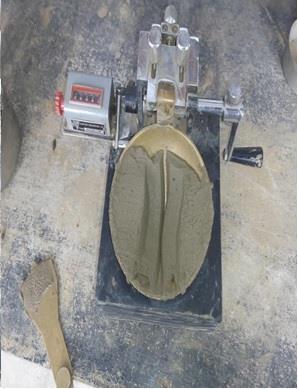
Fig2.3:Liquidlimitapparatus
The optimum moisture content is the water content that corresponds to the highest dry unit weight (OMC). The standardsforfieldcompactionoffillingsarenormallybased onMDD,buttheycanalsobebasedonbothMDDandOMC. The OMC and MDD tests were performed on clayey soil accordingtotheprocedureoutlinedinIS:2720,Part7 1974. Thestandardproctortestorlightcompactiontestisanother nameforthistest.
2.3.5 Unconfined Compressive Strength test
2.3.2 Grain size distribution The grain size analysis is done in accordance with IS:2720 part 4 1985. The percentageofthetotalweightofsoilflowingthrougheach sievecanbeestimatedusingthetotalweightofdirtobtained andtheweightofsoilretainedoneachsievethatconforms totheISstandard.
2.4 Properties of soil : S.No. Parameters Values 1. SpecificGravity 2.59 2. Liquidlimit 39.20% 3. Plasticlimit 21.90%
2.3.6 California Bearing Ratio test
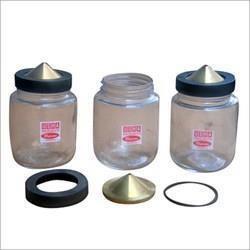
The mass of a certain volume of sampledividedbythemassofanidenticalamountofwater at the same temperature is the specific gravity of soil. On clayeysoil,thespecificgravitytestwasperformedaccording totheprocedureoutlinedinIS:2720Part3 section1 1980. Thespecificgravitytestwasdonewithapycnometerbottle.
Thisisa type oftriaxial test thatisperformed atzerocell pressure.Thisisafastorundrainedtestthatisfrequently usedtomeasuretheinsitustrengthofsoft,saturatedfine grained soil layers. The test was conducted on clayey soil according to the procedure outlined in IS: 2720 Part 10 1991.
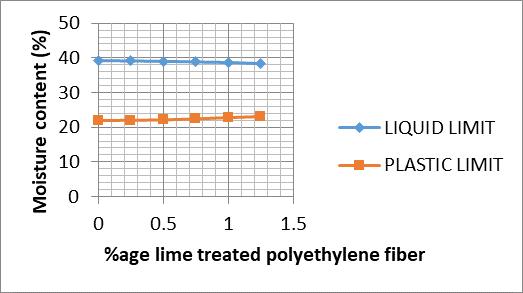
2.3.3 Atterberg’s Limit Tests : Liquid limit-It'sthewatercontentatwhichasoilisalmost liquidbuthasminusculeresistancetoflow,asmeasuredby anyconventionalliquidlimitequipment.Theliquidlimittest was performed on clayey soil according to the procedure outlined in IS:2720 Part 5 1985. The liquid limit test was performedusingtheCasagrandeapparatus.
2.3 2.3.1METHODOLOGYSpecificGravity
Plastic limit When rolled into a thread of around 3mm diameter,itisdescribedasthewatercontentatwhichasoil begins to collapse. This test was performed on clayey soil accordingtotheinstructionsinIS:2720Part5 1985..
Fig2.2:Pycnometer
Low density Polyethylene : Waste milk packets are collected from Sindri Tea stalls. These wastes are the type of LDPE (low density polyethylene).Thecollectedmilkpacketsarecutintostrips withlengthofapprox.10mm,andwidthof5mm, Fig2.1:Limetreatedpolyethylenestrips
2.3
CBR is a penetration test that is used to determine the mechanicalstrengthofnaturalground,subgrades,andbase coursesbeneathanewcarriageway.CBRvaluesaretypically calculatedat2.5and5.0mmpenetration.TheCBRvalueis determined using the corrected load value from the load penetration curve, which corresponds to the penetration valueatwhichtheCBRvalueiswanted.TheCBRtestwas performedaccordingtotheprocedureoutlinedinIS:2720 Part16 1987.
International Research Journal of Engineering and Technology (IRJET) e ISSN: 2395 0056 Volume: 09 Issue: 01 | Jan 2022 www.irjet.net p ISSN: 2395 0072 © 2022, IRJET | Impact Factor value: 7.529 | ISO 9001:2008 Certified Journal | Page806
2.3.4 Maximum dry density & optimum moisture content
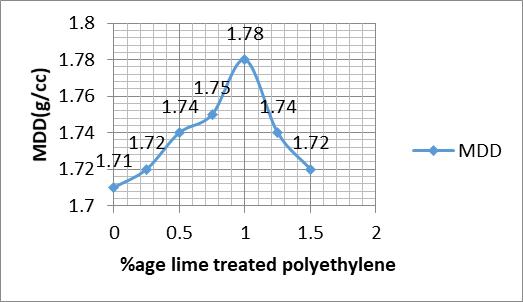
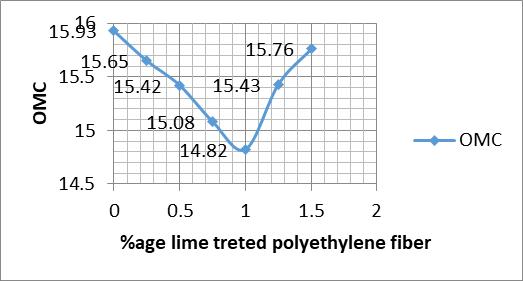
International Research Journal of Engineering and Technology (IRJET) e ISSN: 2395 0056 Volume: 09 Issue: 01 | Jan 2022 www.irjet.net p ISSN: 2395 0072 © 2022, IRJET | Impact Factor value: 7.529 | ISO 9001:2008 Certified Journal | Page807 4. Plasticityindex 17.30% 5. OMC 15.93% 6. MDD 1.710g/cc 7. UCS 3.24kg/cm2 8. SoakedCBR 1.93% 9. Un soakedCBR 4.09% 10. Percentagefinerthan 75micron(clay+silt) 58.8% 11. Percentageofclay 15.32% 2.5 Dosing and mixing Different % of polyethylene fiber i.e..0.25%,0.50%,0.75%,1.0% and 1.25% of polyethylene fiberbyweightofsoilareused.Treatedpolyethylenefiber arethenmixedwithsoilbyhandproperlytogetuniformmix andaddwaterasperrequirement 2.6 Preparation of soil sample For experimental study different samples have been prepared with different proportions of lime treated polyethylenefiber,whichhavebeengiveninthetablebelow Sample Soil(%) Lime Polyethylenetreatedstrips(%) 1 100 0 2 99.75 0.25 3 99.5 0.50 4 99.25 0.75 5 99 1 6 98.75 1.25 3. RESULTS AND DISCUSSIONS 3.1 Atterberg’s limit test results Liquid limit and plastic limit test The result obtained from the Aterberg’s limit test on soil withdifferentpercentageoflimetreatedpolyethylenehas givenintable Table3.1 Liquidlimitandplasticlimittestresults notationSample Soil% polyethylenetreated%lime WL% WP% S1 100 0 39.20 21.90 S2 99.75 0.25 39.12 22.04 S3 99.50 0.50 39.04 22.13 S4 99.25 0.75 38.86 22.47 S5 99.0 1.0 38.73 22.89 S6 98.75 1.25 38.54 23.14 Fig3.1:Atterberg’slimitwithdifferent%agesoflime treatedpolyethylenefibers 3.2 Proctor test results Tableshowsthevariationsofmaximumdrydensitywiththe variationoflimetreatedpolyethylenefibers Table3.2 ValuesofMDD&OMCTestresults S.N. Soil(%) Lime polyethylenetreated(%) (g/cc)MDD OMC(%) 1. 100.00 0 1.71 15.93 2. 99.75 0.25 1.72 15.65 3. 99.50 0.50 1.74 15.42 4. 99.25 0.75 1.75 15.08 5. 99.0 1.0 1.78 14.82 6. 98.75 1.25 1.74 15.43 7 98.5 1.50 1.72 15.76
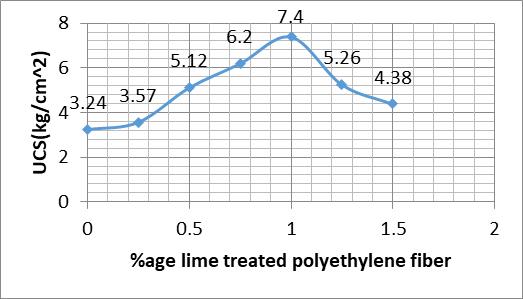
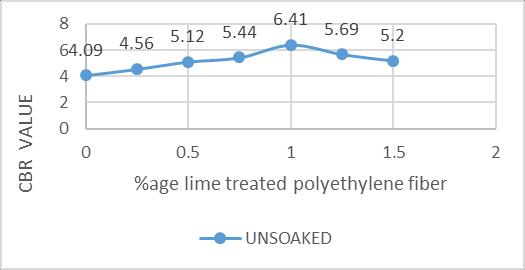
International Research Journal of Engineering and Technology (IRJET) e ISSN: 2395 0056 Volume: 09 Issue: 01 | Jan 2022 www.irjet.net p ISSN: 2395 0072 © 2022, IRJET | Impact Factor value: 7.529 | ISO 9001:2008 Certified Journal | Page808 Fig3.2:VariationofMDDwith%agelimetreated polyethylenefibers Fig3.3:VariationofOMCwith%agelimetreated polyethylenefibers 3.3 Unconfined compressive strength test result Values of UCS of the soil sample mixed with different percentage of polyethylene fiber and its variation with naturalsoilhavebeentabulatedbelow: Table3.3 UCStestresult S.No. Soil(%) %age limit polyethylenetreatedfiber UCS(kg/cm2) 1. 100.0 0 3.24 2. 99.75 0.25 3.57 3. 99.50 0.50 5.12 4. 99.25 0.75 6.20 5. 99.0 1.0 7.40 6. 98.75 1.25 5.26 7. 98.5 1.50 4.38 Fig3.4:VariationofUCSwith%agelimetreated polyethylenefiber 3.4 CBR test results Unsoaked CBR CBR value of the soil samples mixed with different percentageofpolyethylenefiberinunsoakedconditionand itsvariationwithnaturalsoilhavebeentabulatedbelow Table3.4 UnsoakedCBRTestresults S.N. Soil% % lime fiberPolyethylenetreated %UnsoakedCBR 1 100.0 0 4.09 2 99.75 0.25 4.56 3 99.50 0.50 5.12 4 99.25 0.75 5.44 5 99.0 1.0 6.41 6 98.75 1.25 5.69 7 98.50 1.50 5.20 Fig3.5 Variationof UnsoakedCBRwith%agelime treatedpolyethylenefiber
[2]
1. TheUCSvaluehasgrownfrom3.24kg/cm2to7.40 kg/cm2, equating to 1.0 percent lime treated polyethylene fibre, a 128.39 percent increase, indicatingthatitcansupportheavierloads..
REFERENCES
3. SoakedCBR'svaluerisesfrom1.92percentto3.44 percent, equating to 1.0 %age lime treated polyethylenefibre,indicatingthatitcanbeutilised for pavement in places with a high ground water table.
83 88,2013
4. At 1.0 %age lime treated polyethylene fibre, the valueofUnsoakedCBRincreasesfrom4.09to6.41 percent, indicating that we can reduce pavement thicknessforpavementdesign.Wecanincreasethe slope of the pavement to lower the cost of construction in highways and railways, as well as forslopestability..
[1] AK Choudhary, J.N Jha , and K.S.Gill, “A study on CBR behaviorofwasteplasticstripreinforcedsoil”,EmiratesJ.for Engg.Res.,Vol.15,Issu.eNo.1pp.5157,2010 Pragyan Bhattarai, A.V.A Bharat Kumar, K.Santosh, ofT.C.ManikantantaandK.Tejeswini,“Engineeringbehavioursoilreinforcedwithplasticbottlestrips”,International ofCivil,Structural,EnvironmentalandInfrastructure and Engineering Research and Development (IJCSEIERD) ISSN2249 6866,Volume3,Issue pp
Fromtheexperimentalresults,ithasbeenfoundthevarious properties of soil replaced with 1.0% of lime treated polyethylenefiberbyweightofsoilgivesoptimumresults.
2,
2. TheMDDvaluehasalsobeenenhancedfrom1.71 g/cm3 to 1.78 g/cm3, equal to 1.0 %age lime treatedpolyethylenefibre,althoughduetothelow density of polyethylene fibre, the percentage of increaseisminimal.
journal
International Research Journal of Engineering and Technology (IRJET) e ISSN: 2395 0056 Volume: 09 Issue: 01 | Jan 2022 www.irjet.net p ISSN: 2395 0072 © 2022, IRJET | Impact Factor value: 7.529 | ISO 9001:2008 Certified Journal | Page809 Soaked CBR CBR values of the soil samples mixed with different percentage of lime treated polyethylene fiber in soaked condition and its variation with natural soil have been tabulatedbelow:Table3.5 SoakedCBRtestresults S.N. Soil(%) %lime fiberpolyethylenetreated SoakedCBR(%) 1 100 0 1.92 2 99.75 0.25 2.23 3 99.50 0.50 2.63 4 99.25 0.75 2.88 5 99.00 1.0 3.44 6 98.75 1.25 2.80 7 98.50 1.50 2.54 Fig3.6 VariationofSoakedCBRwith%agelimetreated polyethylenefiber Comparison between Soaked CBR and Unsoaked CBR Table3.6 ComparisonbetweenSoakedCBRand UnsoakedCBR S.N. Soil(%) % lime fiberpolyethylenetreated CBRSoaked(%) CBR(%)Unsoaked 1 100 0 1.92 4.09 2 99.75 0.25 2.23 4.56 3 99.50 0.50 2.63 5.12 4 99.25 0.75 2.88 5.44 5 99.00 1.0 3.44 6.41 6 98.75 1.25 2.80 5.69 7 98.50 1.50 2.54 5.20 Fig3.7 ComparisonofSoakedandUnsoakedCBR 4. CONCLUSIONS
International Research Journal of Engineering and Technology (IRJET) e ISSN: 2395 0056 Volume: 09 Issue: 01 | Jan 2022 www.irjet.net p ISSN: 2395 0072 © 2022, IRJET | Impact Factor value: 7.529 | ISO 9001:2008 Certified Journal | Page810
[15]Pooja Upadhyay,Ms.Kshama Singh,Soil Stabilization with Flyash and Coir Fiber, International Journal for Research in Engineering Application & Management (IJREAM),04,3,2018 [16]S.S.Lande,V.P.Urkude,O.S.Gaikwad,R.P.Borkar,Soil Stabilisation using Plastic Waste, International Journal of CreativeResearchThoughts(IJCRT),8,9,74 83,2020 [17] Mercy Joseph Poweth, Femeeda Muhammed Haneef, Melvin T Jacob, Remya Krishnan, Sheethal Rajan, Effect of Plastic Granules on the Properties of Soil, International JournalofEngineeringResearchandApplications,4,4,160 164,2014 [18] S. Saravanaganesh, R. Priyanka, S. Sinduja, K. Balakumar, A. Chellaiah, Experimental Study on the Stabilization of Soil by Using Plastic Wastes, International JournalofScientificResearchinCivilEngineering,1,1,10 [19]14,2016IS:2720 Part III: “Determination of Specific gravity”, [20]1980IS:2720 Part 7: “Determination of water content dry densityrelationusinglightcompaction”,1980 [21] IS:2720 Part 5: “Determination of Liquid limit and Plasticlimit”,1985 [22]IS:2720 Part4:“GrainSizeDistribution”,1985 [23] IS:2720 Part 16: “Laboratory determination of CBR”,1987 [24] IS:2720 Part 10: “Determination of Unconfined CompressiveStrength”,1991.
[3]HatemNsaif,BehaviorofSoilsStrengthenedByPlastic WasteMaterials,JournalofEngineeringandDevelopment, ISSN1813 7822,Vol.17,No.4,pp 183 193,October2013.
[4] Rajkumar Nagle, Prof. R.Jain and Prof. A.K. Shinghi “ComparativestudyofCBRofsoil,reinforcedwithnatural waste plastic material” Int. J. of Engineering and Science Research,Vol.4,Issue.6,pp304 308,2014 [5]F.CChebet,.andDKalumba,,“Laboratoryinvestigations on reusing polythene (plastic) bag waste material for soil reinforcement in geotechnical Engineering”,CivilEngg. &.UrbanPlanning: AnInt.J.(CIVEJ),Vol.1, Issue No.1, pp 67 82,2014 [6] A. I. Dhatrak,. And S.D Konmare , “Performance of randomlyorientedplasticwasteinflexiblepavement”,Int.J. of pure and applied research in Engineering and Technology,Vol.3,IssueNo.9,pp 193 202,2015 [7]T.PAmrutha,AKrishnan,Anoverviewonplasticwaste soil stabilizing agent. Int J Adv Res Trends EngTechnol2(10):36 39,2015 [8]AchmadFauzi,ZuraidahDjauhari,andUsamaJuniansyah Fauzi “Soil engineering properties improvement by Utilizationofcutwasteplasticandcrushedwasteglass as additive”, International Journal of engineering and Technology,Vol.8,IssueNo.1,pp.15 18,2016 [9] C .Harish,. and H.M Ashwini, ,“Stabilization of soil by using plastic bottle strips as a stabilizer”, Int. Res. J. of EngineeringandTechnology.,Vol.4,pp 1877,2015 [10]KiranKumarPatil,ShrutiNeeralagi,GCArpithaandBV Dayanandha, “Soil Stabilization by using Plastic Waste”, International conference on Emerging Trends in Engineering, Technology, Science and Management, ISSN 2348 7550,Vol.5,IssueNo.07,pp 279 280,July2017 [11]R.K.Dutta,V.Gayathri,V.K.Sarada,Astudyofthecbr behavior of low density polyethylene waste plastic strip, IndianGeotechnicalSociety,2009 [12]ShishPal1,VinodKumarSonthwal,JasvirSRattan,Soil StabilisationUsingPolypropyleneasWasteFibreMaterial, International Journal of Innovative Research in Science, EngineeringandTechnology,4,11,10459 10569,2015 [13]PalS,MaityJ,ChattopadhyayBC,SoilStabilizationusing Waste Plastic Fibers, International Research Journal of EngineeringandTechnology,5,3,2158 2161,2018 [14] Prof.S. Ayyappan, Ms.K.Hemalatha and Prof.M.Sundaram,InvestigationofEngineeringBehaviourof Soil,PolypropyleneFibresandFlyAsh MixturesforRoad andConstruction,InternationalJournalofEnvironmentalScienceDevelopment,1,2,171175,2010