Let’sconsideraverysimplebusinessproblemtodiscuss thesolutionhere.Wehavetocreateabinaryclassification modeltosegregatetheemailbody(text)fromthesignature block.Itmeanswheneverwefeedanemailtextfile(singleor multiple)inthemodel,itcansuccessfullygeneratethetokens ofeachsentences/blocksandpredictcorrectlyonthebasisof contents available in the tokens and thereby identify the signatureblock,whichbasicallycomprisesofName,emailid, organization Name, Contact Number, Social Media details alongwithsomeHTMLtagsorlogos.
Eventually, we have to maintain a series of data preprocessingandaugmentationtechniquestocleanupthe dataandinordertobettertraininginjectsomeperturbation andrandomeffectstothedatatomakeitmoregenericand stable.Asthisisnotthefocuspointofthisresearch,willnot discuss in detail that what are the different preprocessing andaugmentationtechniqueshavebeenusedtogetthedata readyforthemodelconsumption.Finally,wehavelabelled thedataandcleaneditandaugmentedbyntimestohavea standardtrainingset.Wehavekepta10%ofthedataaside for out of bad validation and rests 90% for the key model building and out of that as well we make a 70:30 split to createatrainingandtestingset.
Optimizing Learning Solution Custom Blending for Typical Natural Language Processing Business Problems. Dutta Principal Consultant and Lead Data Scientist this research will show case a very simple but effective mechanism to achieve high accurate results from standard Deep learning algorithms for typical NLP business problems. The analysis depicts how to optimize the performance of the models by stacking or blending one with other and the logic behind selection of each algorithms. Here we will simply create a neural network type structure where instead of each neural node we will be using either single Deep learning models or a stack of multiple deep learning models and pass through the results by other layers of advanced machine learning models called the Meta model layers and again throw the output through a soft voting classifier as the final layer. The key contrast of this mechanism is all the model(nodes) contributes the same weightages andthere is no back propagation to update the weights through any gradient. will discuss how these architectures will optimize the overall performance with some standard metrices. Words: NLP, Deep Learning, Stacking, Meta Model, Classification
Inmodern era ofArtificial IntelligenceData scientists and engineers use many a state of art technologies like BERT, GPT,T5,XLNet,ALBERT,ROBERTaandmanymoretotackle the typical NLP problems like classification, relation embedding, sentiment analysis, question answering, summarization, language translation and so many. These methodologies are computation heavy and requires advanced configuration to perform the task. Also, a very small dataset sometimes shows high variances by using theseSOTAmodels. But the following analysis shows a very simple but tricky methodology to use the standard deep learning methodologies along with advanced machine learning algorithms to optimize the overall purpose of a business problemwithoutusinganytransformerbasedorattention model.ToavailthesecomputationsevennoGPUisrequired. The methodology we called stacking or blending in the MachineLearninglandscape,orifanyoneiswellversedwith R,couldbefamiliarwithSuperlearning.AsimpleNLPbinary classification problem to classify the email body from the signature block for a bunch of 1000 emails can be easily performedthroughthesemechanismsandfinallyIamgoing to show you how the model performance improved with respect to the individual models. The architecture is very flexibleanddatascientistorMLengineerscanplayaround thesetechniquesbytheirowndiscretionandchoice.Also, the same architecture can be fitted in GPU or TPU environment as well once the training dataset is heavy or Datascientistoptforalittlecomplexarchitecturetoachieve thebusinessgoal.
Indranil
Key
1.INTRODUCTION
In simple Machine Learning Predictive use cases we have usedtheconceptslikeStackingandBlendingwheremultiple different classification/regressors stacked each other. The difference between stacking and blending is that Stacking usesout of foldpredictionsforthetrainsetofthenextlayer (i.emeta model),andBlendingusesavalidationset(let’ssay, 10 15%ofthetrainingset)totrainthenextlayer.Mostofthe casesit’sbeenobservedthatitachieveshigherprecisionand accuracy that the individual model but sometimes it’s suffered a high variance issue as well. Hence the most effective way of using this technique lying behind the selectionofrightalgorithmstostackeachothertooptimize theperformance.
*** Abstract : In
International Research Journal of Engineering and Technology (IRJET) e ISSN: 2395 0056 Volume: 09 Issue: 01 | Jan 2022 www.irjet.net p ISSN: 2395 0072 © 2022, IRJET | Impact Factor value: 7.529 | ISO 9001:2008 Certified Journal | Page682
4. SOLUTION DESIGN
2. BUSINESS PROBLEM
Finally,
Performance by
3. DATA PREPERATION
Deep

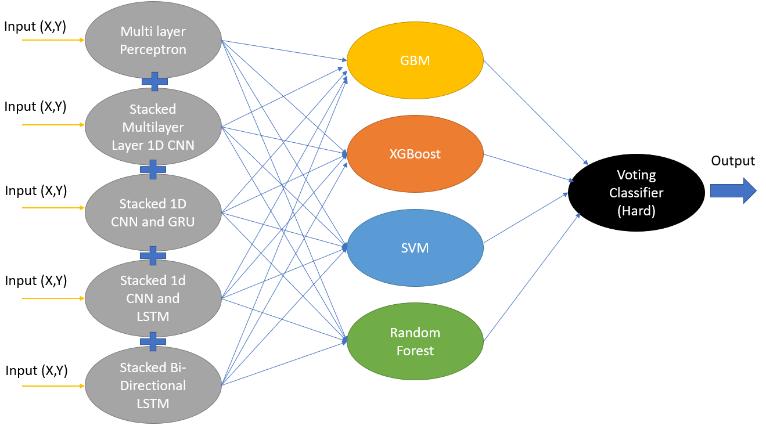
Figure 1: Acustomblendingset 1 On the similar side we will create another block of a one DimensionalCNNandastackingofLSTMlayer.AstheLSTM also have a different architecture altogether, it allows the datatoadaptthroughadifferentlearning.Andfinally,keep another block ofa bidirectional LSTM which can learn the sequence and dependency of words from left to right and righttoleft(bothdirection).Thisisobviouslyaddinganother valuetotheoveralllearning. The tricks of the stacking is not to club two similar architectureinasamenodetoavoidthebenefitofdiversified Nowleaning.inthe second layer the Meta model will absorb the outputofthese5individualblocksandtrainitself.It’salways agoodpracticeistousedifferentflavorsofMetaModelsto giveaverygeneralizedviewoftheoveralllearning.Maybe the bagging model doesn’t fit the data properly, but the boosting does. Otherwise, both bagging and boosting ensemblesdonotfitthedataproperlybutasimpleKNNor naïvebayesdoes.Henceifweuseagroupof4MetaModelsin thesecondlayertrytodistributebetweendifferentflavors andarchitectures.Likewedidinfirstdiagramasequential ensemble,aparallelensembleandakernel basedmodelto test the learning. Finally use a voting classifier with a soft votingwherewegettheoptiontodecidetheweightageof individual Meta models and based on the higher vote of a particularclassthefinalclasshasbeendefined.
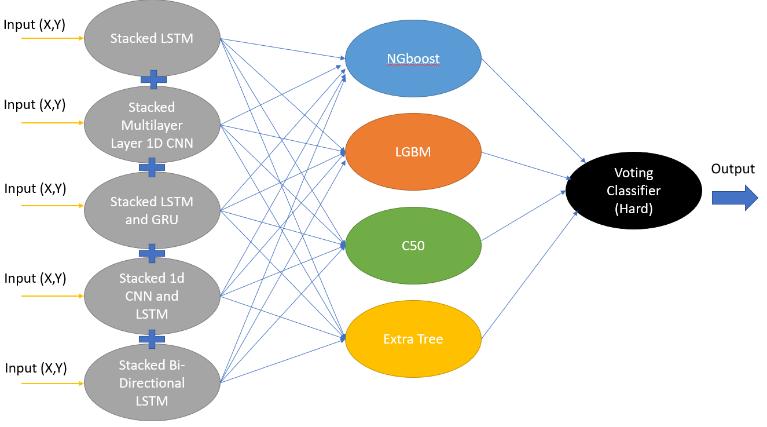
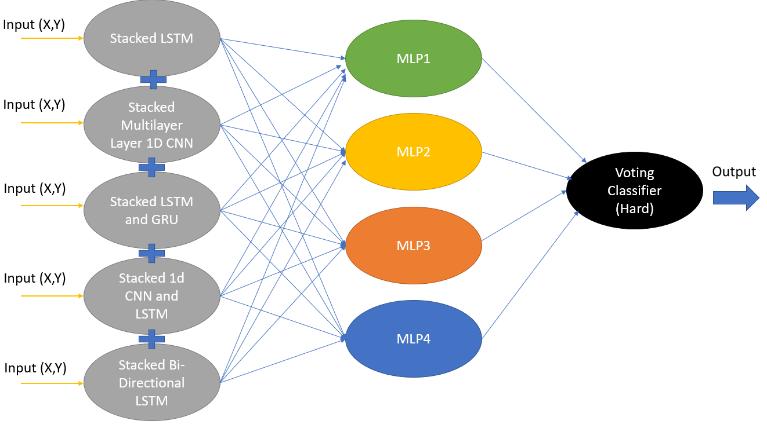
Figure 2: Acustomblendingset 2 Nowreferthediagramno1,wecanseeanoverlappingof twoboostingAlgorithmofsimilararchitectureonthesecond layerwhichisactuallylimitsthelearningefficiencyoftwo nodes in a single learning. Similarly, if we observe the diagramno 2,thethirdnodeoffirstlayer,thecombination of LSTM and GRU which both are the extension of RNN architecturesactuallylimitsthelearningpotentialityofthat particularblock.Thisitemhasdeliberatelyincludedinthe diagram to show case where are the common mistakes happens and what are the best tricks to create a perfect architecturetogaintheoptimizedresults.Nowcomparingto the Diagram 1, the second architecture will suffer a little lessdiversifiedlearningasitlimitsthelearninginbothofthe layers. It has included the NGboost and LGBM both in the secondlayerwhicheventuallyactsasasinglenode. There could be another angle of limiting the learning potentialityofthemodel.Ifwereferthefollowingdiagram, wecanseetherearemajordrawbacksinthesecondlayer. ThoughtheconfiguringofeachnodeofMLPisdifferentbut using the similar learning across all Meta Models actually
International Research Journal of Engineering and Technology (IRJET) e ISSN: 2395 0056 Volume: 09 Issue: 01 | Jan 2022 www.irjet.net p ISSN: 2395 0072 © 2022, IRJET | Impact Factor value: 7.529 | ISO 9001:2008 Certified Journal | Page683
These techniques get encouraged from the traditional stacking and blending architecture but follows a totally differentarchitecture.Herewefeedthetrainingdatatoeach one of the blocks.
The first layer is a Modern Multi layer perceptronwhichisnothingbutajungleofdenselayerswith areluactivation.Butdatascientistsusefewdropoutlayeras well to manage the overfitting issues for each one of the blocks.Thesecondblockisaone dimensionalconvolution Neural Network which is also very effective for language classification.It’satotallydifferentstructurewhichusesa Kernelbasedscanningofthetextblockandconvertavector against each frame and then apply the max or average pooling to summarize the data and apply flatten layer to organizethedatainaserializedmannerandfinallyapplythe dense layer with a sigmoid function to classify the class. Hencethishastotallyadifferentflavourthanatraditional MLPstructure. We cannot judge the skill of the model from a single or double evaluation. The reason for this is that Neural Networks are stochastic, meaning that a different specific model will result when training the same model configuration on the same data. This is a feature of the network in that it gives the model its adaptive ability but requires a slightly more complicated evaluation of the Hence,model. we introduce the hybrid structure models in subsequentnodestogivemorecomplexevaluationonthe given data. The gated recurrent Unit model follows a differentstructurealtogetherwithacombinationofareset gate and update gate with sigmoid and tanh activation functions. Hence once we pass the data through a one dimensional convolution layer and then through another GRUlayer,theblockwilllearnanewevaluationoftheinput data.
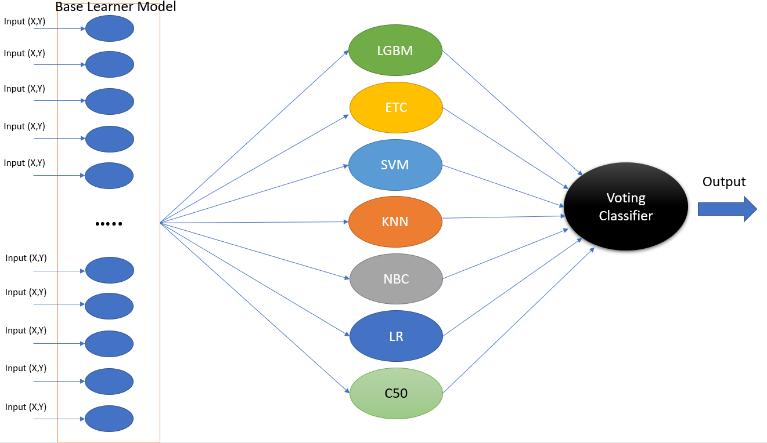
Henceusingthistypeofarchitectureactuallydrivesaless accurateresultsinspiteofusingacomplexstructure. Butpracticallyoncethereal businessscenariocomesinto the picture data scientist mostly follows the underlying architecture to get the best possible results. As of now whatever architecture we have discussed is just to demonstratethecoreideaoftheprocess.Butfrompractical applicationpointofviewtheunderlyingdiagramisthemost optimized.Theruleofthumbsaysifthereare7nodesinthe secondlayerthenwehavetoatleastkeep4Xnodesi.e.(4*7) = 28 nodes in the first layers. Now we have to use the commonnodesmultipletimetooccupythe28nodes.Here thetrickistousethefollowing: IfweusesameCNNinmultiplecaseusedifferent Kernelwithdifferentstrides,insomecaseusethe maxpoolingandsomecasesaveragepoolingtokeep agenericdifferentiationbetweenthearchitectures. IfweusetheLSTMandGRU,mustusethedropout layerwithdifferentpercentagesandusedifferent batch size. The training time of LSTM and GRU is moresobettertouseacomparativelyhigherbatch size.
International Research Journal of Engineering and Technology (IRJET) e ISSN: 2395 0056 Volume: 09 Issue: 01 | Jan 2022 www.irjet.net p ISSN: 2395 0072 © 2022, IRJET | Impact Factor value: 7.529 | ISO 9001:2008 Certified Journal | Page684
Figure 3: Acustomblendingset 3
Usedifferentlearningratesanddifferentoptimizers likeAdam,Nadam,RMSpropetc. IncaseofMLPwecanusedifferentcombinationof Inputsforeachdenselayerwithdifferentdropout ratio. Usedifferentearlycallbackcriteria UsethemetricesasaccuracyinsomecasesandF1 scoreinsomeothercases. ThiswillgiveadiversifiedflavorintheMetaModellayers andmodellearnsdifferentscenariosfromeachinput.Thisis averypowerfulmethodology.Nowinthesecondlayerhere weutilizethemostoptimumcombinationofMetalearners, each one belongs to different class to enable the best learning capability. One from bagging, boosting, kernel basedlearning,BayesianLearning,simplelogitclassification, decisiontree basedclassifier,Distancebasedclassifier.Allof themlearnsbasedontheirindividuallearningcapacity.Now once we throw the outputs to a voting classifier after assigningequalweightagetoallofthemetalearners.Wecan surely see a variety of prediction comes and based on the majorityclasswecantagtheclassforthecase.Thisisindeed apowerfultechnique.
Wecannotusethecrossvalidationoftheoverallstructure togetherormakingthehyperparametertuningtogether.We needtoperformthecrossvalidationandhyperparameter tuningforalloftheindividualmodelsonebyone.Butonce weareusingdifferentmodelswithdifferentparameters,in thatscenariohyperparametertuningisnotthatrequiredas thenumberofnodesinfirstlayerislargeenough.Incasewe areusingonly4 5nodesinthefirstlayerandeachmodelis usedonce,weneedtousethehyperparametertuningusing Kerastunertogetthebestpossiblevalue.
limits the learning potentiality. Already the input data is passed through the neural network blocks from standard deeplearningalgorithmsandalreadyusedtherelufunction andspecificoptimizerslikeAdam.Ifthesameinputsagain feeds through the same layer with relu activation there is nothing different to transform and nothing much to learn from the second layer. Hence all the layers are just replicating almost the same results that comes from the previouslayersandthereisnomajorpurposeofusingthe votingclassifiertoexpectamajorityvote.
Figure 4: Acustomblendingset 4 Obviouslybaseduponthecomplexityofthearchitecturethe processing time would also spikes. In this shape i.e., 28 nodesinfirstlayeralongwith7nodesinsecondlayerand wehave1000email(afteraugmentationthesizeis12000 emails).Outof1200arekeptforoutofbadevaluationand fromrests10800emails70%i.e.,7560emailcontenthave been used for training. After tokenizing there are 37342 lines of records are there and we have created a vector embedding of these words where we considered the vocabularysizeas5000.So,theentiredatasetisamatrixof 37342*5000whichisachallengingtaskforalocalmachine tohandlewiththattypeofarchitecture.
8. CONCLUSION
International Research Journal of Engineering and Technology (IRJET) e ISSN: 2395 0056 Volume: 09 Issue: 01 | Jan 2022 www.irjet.net p ISSN: 2395 0072 © 2022, IRJET | Impact Factor value: 7.529 | ISO 9001:2008 Certified Journal | Page685
IfweusehighernoofLSTM,BidirectionalLSTMor GRUmodules,itdirectlyimpactstheoveralltraining timeoftheentireblendedarchitectures.
Higher accuracy and precision within limited resources. NoneedforanyGPU/TPUifweusesimple5or6 nodesfirstlayer.Butgivesbetterresultsthanany standalonemodel. No need to train any Transformer or attention modelforgettingbetterresults.
Withthehighernumberofnodesinfirstlayerthe computationeffortwouldbeheavy. Inverysmalldatasethighchancesofoverfitting.
5.
6.
7. LIMITATIONS
Less memory consuming and less parameters. Unline SOTA models it doesn’t show millions parameteroccupancy.
3. 1D Convolutional Neural Network Models for Human ActivityRecognition(machinelearningmastery.com)
REFERENCES
Finally, the entire module can be used as an importable package for readymade and quick usage anywhere in any environments.Oncedevelopedasamoduleitcanserveasa lowcodenocodesolutionforanyofyourNLPclassification problems. There is a high affinity among Data science aspirantstodirectlyusetheSOTAmodelsfromsourceslike hugging face or John Hopkins SparkNLP. It unnecessary consumes the resources and memory to tackle simple problems.Whereasthisareaverywideusedtechniquesin Machine learning landscape and shows promising results over decades. The research is to encourage data science aspirantstoexploretheoptiontogetagoodaccuratemodel with the use of the above mentioned architectures and tricks.
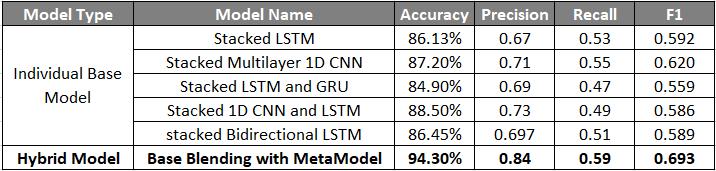
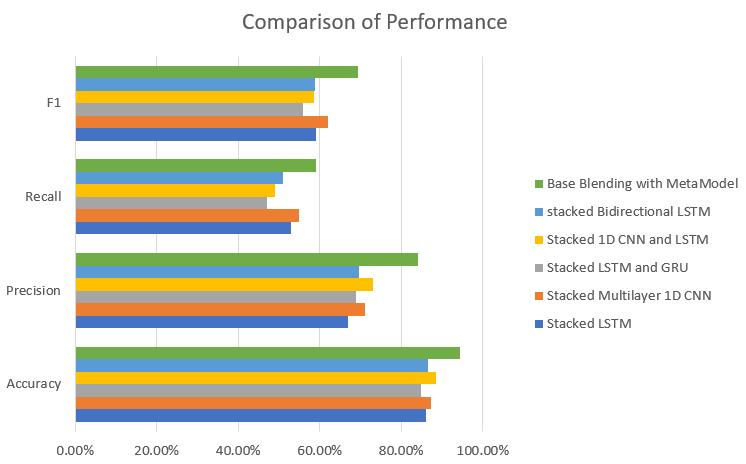
Table 1: Resultcomparison Figure 5: Avisualcomparisonoftheindividualmodel andtheblendedonewithmetamodelsandvoting classifier BENEFITS
Let’s see the result comparison of the models and how to improvise the efficiency using that architecture. The following table shows the clear comparison of all the individualmodelsaswelltheBlendedoneandwecansee the Blended one outperformed the other models by significant extent. The efficiency can be increased by increasingitsnodes.HeretheHybridmodelresultsshowed forthemodelofdiagramno 1.Thishasbeenperformedin the local system only. Now you imagine how the performancecouldbeifyoucheckthemodelwithdiagram n0 4.Therecouldbeapotentialityofoverfittingbutusing thedropoutlayerscarefullywithlittlehigherpercentages acrossallmodelswouldeasilyremovetheissues.
Simple coding exercise for data scientist or engineersratherthanusinganyhighendedSOTA modelsforsimpleNLPusecases.
2. Illustrated Guide to LSTM’s and GRU’s: A step by step explanation|byMichaelPhi|TowardsDataScience
This architecture is used to overcome the performance of individualmodelsatgoodextentwithinlimitedresources, butithassomelimitationaswell. Unlike Transformer architecture it has never focusesonanypositionalencoder There is no option for specific attention for any specificcharacters.
1.EnsemblelearningwithStackingandBlending|Whatis EnsembleLearning(mygreatlearning.com)
Inthatcaseweneedthedistributedcomputingorthepower of GPU processing to cater the requirement. But using a lesser number of first layer nodes with a small vocab size thiscanbeeasilydoableinalocalsystemwith4coresand 16GBRAM. RESULT COMPARISON
International Research Journal of Engineering and Technology (IRJET) e ISSN: 2395 0056 Volume: 09 Issue: 01 | Jan 2022 www.irjet.net p ISSN: 2395 0072 © 2022, IRJET | Impact Factor value: 7.529 | ISO 9001:2008 Certified Journal | Page686 BIOGRAPHIES Indranil Dutta is a Principal consultantandLeadDatascientist with more than 11 years of rich experience in Data science and Artificial Intelligence in various industries.Hiscorecompetencyis indeliveringscalableDatascience and AI projects in Big data and Cloudenvironments. uthor Photo