International Research Journal of Engineering and Technology (IRJET)
e-ISSN: 2395 -0056
Volume: 03 Issue: 11 | Nov -2016
p-ISSN: 2395-0072
www.irjet.net
A Novel Approach to IoT Based Plant Health Monitoring System Srinidhi Siddagangaiah Department of Computer Science and Engineering Atria Institute of Technology affiliated to VTU, Bangalore, Karnataka, India -------------------------------------------------------------------***-------------------------------------------------------------------
Abstract - Plant health management is the science and
exchange data. The IoT allows objects to be sensed and
practice of understanding and overcoming the succession
controlled
of biotic and abiotic factors that limit plants from
infrastructure.”
achieving
their
full
genetic
potential
as
remotely
across
existing
network
crops,
ornamentals, timber trees, or other uses. Plant monitoring is one of the most important tasks in any agriculture based environment. In this paper, we discuss about the implementation of a plant health monitoring system. Which will check some environment parameters like temperature, humidity and light intensity that has effects on plants. In addition, retrieve the soil moisture. All this information is sent by Arduino Uno dev boards to the Ubidots IoT (Internet of Things) cloud platform. If there are any deviations in the stored sensor value then alert message is sent to the user’s smartphone.
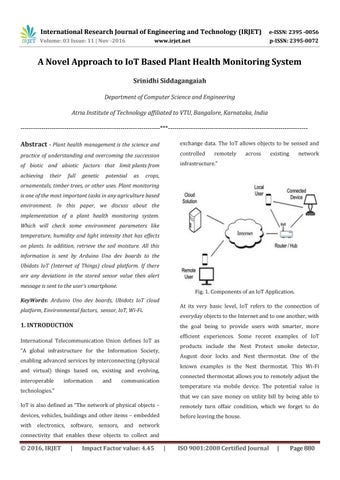
Fig. 1. Components of an IoT Application.
KeyWords: Arduino Uno dev boards, Ubidots IoT cloud
At its very basic level, IoT refers to the connection of
platform, Environmental factors, sensor, IoT, Wi-Fi.
everyday objects to the Internet and to one another, with
1. INTRODUCTION
the goal being to provide users with smarter, more efficient experiences. Some recent examples of IoT
International Telecommunication Union defines IoT as
products include the Nest Protect smoke detector,
“A global infrastructure for the Information Society,
August door locks and Nest thermostat. One of the
enabling advanced services by interconnecting (physical
known examples is the Nest thermostat. This Wi-Fi
and virtual) things based on, existing and evolving, interoperable
information
and
connected thermostat allows you to remotely adjust the
communication
temperature via mobile device. The potential value is
technologies.”
that we can save money on utility bill by being able to
IoT is also defined as “The network of physical objects –
remotely turn offair condition, which we forget to do
devices, vehicles, buildings and other items – embedded
before leaving the house.
with electronics, software, sensors, and network connectivity that enables these objects to collect and
© 2016, IRJET
|
Impact Factor value: 4.45
|
ISO 9001:2008 Certified Journal
|
Page 880
International Research Journal of Engineering and Technology (IRJET)
e-ISSN: 2395 -0056
Volume: 03 Issue: 11 | Nov -2016
p-ISSN: 2395-0072
www.irjet.net
Certain important factors such as temperature, humidity,
relative humidity in one minute interval to the Bridge
light and the level of carbon dioxide has an impact on the
node.
productivity of plant growth. Therefore, continuous monitoring of these
environmental
factors
Teemu Ahonen, Reino Virrankoski and Mohammed
gives
Elmusrati [2], have done a research in Martens
information to the user, how each factor affects growth
Greenhouse Research Center in the Narpio town in
and how to maximize the growth of plants. In recent
Western Finland, they had integrated three commercial
years, precision agriculture has become the trend in
sensors with Sensinode’s sensor platform to measure
agriculture. Here the focus is mainly on understanding
four environmental key variables in greenhouse control.
the environment through the interpretation of wide
The system feasibility was verified in a simple star
variety of data. The main idea of the system is to monitor
topology setup in a tomato greenhouse. The sensors
the plants whether they get required amount of water
used were SHT75 humidity/temperature sensor and
and light. If there is enough moisture in the soil, the same
TSL262R light irradiance sensor, and Figaro’s TGS4161
will be reported to the user. This will help the user to
CO2 sensor used. Application of the concept in the
give the resources to the plants every day without much
greenhouse: temperature, luminosity and humidity
manual effort and constantly monitor the health of a
sensors measured climate variables and communicated
plant from a remote location.
directly with the gateway node. The gateway node acted
Improvement of agricultural field has become biggest
as a coordinator and received the measured data from
challenge for countries like India, so new technologies
the sensor nodes. The maximal communication range, 15
are to be adopted. We have implemented a novel
meters was figured out in individual test where the
methodology of physical parameter monitoring, data
distance between the coordinator and the sensor node
integration to the cloud, alert generation and predicting
inside the greenhouse dense flora was increased, the
the future values. We have used Temperature humidity
reliable communication range fell to one third in the
sensor, Soil moisture sensor and Light intensity sensor.
greenhouse’s dense flora.
These sensors have been installed in the agriculture field
3. SYSTEM ARCHITECTURE
to collect the data, and thus data is stored into the cloud using Ubidots IoT cloud platform.
The proposed IoT based plant health monitoring system consists of hardware and software modules as shown in
2. LITERATURE SURVEY
Fig. 2.
Mancuso and Franco [1], have done a similar research work in a tomato greenhouse in the South of Italy. The Sensicast device is used for air temperature, humidity and soil temperature with wireless sensor network and a web based plant monitoring system is developed. User can read the measurements over the Internet, and an alert message is sent to his mobile phone through SMS if there are any deviations from normal measurements. Fig. 2. Block diagram of IoT based plant health
Sensor node will transmit the data of temperature and
monitoring system.
© 2016, IRJET
|
Impact Factor value: 4.45
|
ISO 9001:2008 Certified Journal
|
Page 881
International Research Journal of Engineering and Technology (IRJET)
e-ISSN: 2395 -0056
Volume: 03 Issue: 11 | Nov -2016
p-ISSN: 2395-0072
www.irjet.net
Hardware used:
3.1 DHT11
Fig. 4. YL-38 + YL-69 Soil Moisture sensor.
3.3 TEMT6000 Fig. 3. DHT11 humidity and temperature sensor.
TEMT6000 is a sensor to measure the light intensity so
DHT11 is a Temperature and Humidity monitoring
that we can know how much light the plant is receiving.
sensor using digital signal acquisition technique and
Sensor acts like a transistor greater the incoming light,
temperature & humidity sensing technology. This sensor
higher will be the voltage on signal pin. It detects the
consists of a resistive type humidity measurement
light density and reflect the analog voltage signal back to
component and an NTC temperature measurement
Arduino controller. It mimics the human eye, it does not
component, connects to a high performance 8-bit
react well to IR or UV light. TEMT6000 has following
microcontroller, offering excellent quality, fast response,
specifications like supply voltage range from 3.3V to
anti-interference ability, low power consumption, cost-
5.5V, operating temperature range 40 to 85 C and
effective cheap sensor and suitable for Arduino. It has
illumination range 1 to 1000 Lux.
following specifications humidity measuring range 20% to 90% RH with an accuracy of 5.0% RH and temperature measuring range of 0 to 50 C with an accuracy of 2.0 C.
3.2 YL-38 + YL-69 YL-38 + YL-69 is a soil moisture sensor also known as hygrometer used to detect the humidity of the soil. Which helps to monitor the soil moisture of plants or build an automatic plant watering system. The sensor is
Fig. 5. TEMT6000 Light Intensity Monitoring sensor.
made up of two parts namely the electronic board and a
3.4 Arduino
probe with two pads, that detects the water content in soil. When the soil is wet the output voltage decreases
Arduino was born at the Ivera Interaction Design
and when the soil is dry the output voltage increases.
Institute as an easy tool for fast prototyping, started as a
The output can be a digital signal low or high, depending
simple 8 – bit board to products for IoT applications. All
on the water content. If the soil humidity exceeds a
Arduino boards are completely open source electronics
certain predefined threshold value, the modules outputs
platform based on easy to use hardware and software. It
low, otherwise it outputs high.
has been the brain of thousands of projects, from everyday objects to complex scientific instruments.
© 2016, IRJET
|
Impact Factor value: 4.45
|
ISO 9001:2008 Certified Journal
|
Page 882
International Research Journal of Engineering and Technology (IRJET)
e-ISSN: 2395 -0056
Volume: 03 Issue: 11 | Nov -2016
p-ISSN: 2395-0072
www.irjet.net
Arduino board can read inputs like light on a sensor, a
Fig. 6. Arduino Uno Dev Board.
finger on a button, or a Twitter message and turn it into
Software used:
an output activating a motor, turning on an LED, publishing something online.
3.5 Ubidots IoT Cloud platform
Arduino board can be instructed by sending a set of
Ubidots is the most important component of the plant
instructions to the microcontroller on the board.
health monitoring system. When building an IoT system
Instructions are written in Arduino programming
based on sensors, dev board sends data to the cloud
language and the Arduino software is used as Integrated
platform. These platforms store data and use it to build
development environment (IDE) for processing these
charts. An Ubidots IoT cloud platform is like a PaaS
instructions. Arduino offers many advantages over other
(Platform as a service) that provides some services
microcontrollers such as cross platform – Arduino IDE
useful in IoT ecosystem. These services enable dev
runs on Windows, Macintosh OSX and Linux operating
boards connecting to remote services or other service
systems, inexpensive, simple programming environment
providers. It would be expensive to connect Arduino to a remote service. These platforms make the heavy work. They execute a set of custom rules based on the incoming events from Arduino sensors. These events trigger external action like sending a short message. Most of these platforms have a free account that is useful to build an IoT Project.
4.EXPERIMENTAL SETUP AND RESULTS
and open source. In this system Arduino Uno dev board is used as a microcontroller that can be programmed in C or C++. It has an IDE to simplify the development process. Arduino Uno can use an Ethernet shield or Wi-Fi shield so that it can send and receive data. It can be controlled remotely. Arduino Uno is perfect for IoT project based on sensors when the project requirements are sending sensor data to the cloud.
© 2016, IRJET
|
Impact Factor value: 4.45
Fig. 7. Experimental Setup.
|
ISO 9001:2008 Certified Journal
|
Page 883
International Research Journal of Engineering and Technology (IRJET)
e-ISSN: 2395 -0056
Volume: 03 Issue: 11 | Nov -2016
p-ISSN: 2395-0072
www.irjet.net
As shown in the figure the system consists of sensors like
sensor values. Ubidots IoT cloud platform also uses
DTH11, YL-38 + YL-69 and TEMT6000 interfaced with
Arduino Rest API mechanism, by using this mechanism
Arduino Uno dev board. Arduino dev board is connected
when client sends a request Arduino replies with some
to IoT based cloud platform known as Ubidots using
data. Arduino Rest API works over HTTP protocol plays
Ethernet or Wi-Fi. Ubidots will allow users to create a
an important role in a client server scenario where
dashboard and to represent stored data as graph. DTH11
Arduino acts as a server. Arduino Rest API uses a library
will monitor temperature and humidity, YL-38+YL-69
called aRest. This library supports Rest services in
will monitor soil moisture and TEMT6000 monitors light
different dev boards. Its open source and easy to use.
intensity. These sensors will gather environment
Using the library we can implement Arduino Rest API
information and send the information to Arduino dev
paradigm because it supports reading pin values and
board.
writing pin values. Sensor values are stored in Arduino.
IoT ecosystem uses several protocols to exchange
Now we need to configure the Ubidots so that the
information between components.
Some of these
Arduino client can send data. This can be done using
protocols are widely used in other fields like HTTP and
Ubidots web interface. While configuring the cloud,
this protocol is used in IoT ecosystem too. It is very
variable id’s and authentication token are created. Using
useful when we want to integrate IoT components to the
authentication token Arduino establishes a connection to
rest of the world. Arduino Uno supports an HTTP Web
the cloud. Arduino HTTP client sends each sensor value
server so that it handles HTTP connection.
assigned with a variable id using JSON (Java Script Object Notation) service. Arduino is connected to the Ubidots cloud using an Ethernet shield then the data is stored in cloud and analyzed. Once the data, like sensor values, is stored in the cloud it is possible to access it using smart phones remotely. Configuring Ubidots IoT cloud platform is shown below
Fig. 8. Flow diagram of Experimental Setup. Arduino Rest API is used to exchange data from Arduino
Fig. 9. Creating Ubidots project.
to other external systems. Arduino Rest API will read and send information to Arduino board. It will retrieve
© 2016, IRJET
|
Impact Factor value: 4.45
|
ISO 9001:2008 Certified Journal
|
Page 884
International Research Journal of Engineering and Technology (IRJET)
e-ISSN: 2395 -0056
Volume: 03 Issue: 11 | Nov -2016
p-ISSN: 2395-0072
www.irjet.net
Results are generated in the form of dashboards and graphs using stored data from cloud.
Fig.14. Ubidots dashboard Fig. 10. Defining variables.
Fig. 11. Visualizing variables. Fig.
15.
Graphical
temperature values
representation
of
stored in cloud.
Fig. 12. Variable id configuration in Ubidots. For secure access to the data in the cloud authentication token is generated as shown below
Fig. 16. Graphical representation of humidity values stored in cloud.
Fig. 13. Authentication token.
© 2016, IRJET
|
Impact Factor value: 4.45
|
ISO 9001:2008 Certified Journal
|
Page 885
International Research Journal of Engineering and Technology (IRJET)
e-ISSN: 2395 -0056
Volume: 03 Issue: 11 | Nov -2016
p-ISSN: 2395-0072
www.irjet.net Monitoring with Wireless
Sensor Network”
University of Vaasa. [3]
Keerthi.V and Dr.G.N.Kodandaramaiah, “Cloud IoT Based greenhouse Monitoring System” IJERA, IISN: 2248-9622, Vol.5,Issue 10,(Part-3) October 2015.
[4]
Nikesh Gondchawar, Prof. Dr. R. S. Kawitkar,
Fig. 17. Graphical representation of moisture
“IoT
values stored in cloud.
Based Smart Agriculture” IJARCCE, IISN:22781021, Vol. 5, Issue 6, June 2016. [5]
W.
David
introduction
Stephenson, to
the
“Smart
Internet
Stuff: of
an
Things”.
ISBN:978-0-9836490-4-5 [6]
Shruti A Jaishetty, Rekha Patil, “IoT Sensor Network Based Approach for Agricultural Field Monitoring and Control”, IJRET, eISSN:23191163, Vol:05 Issue:06, June 2016.
Fig. 18. Graphical representation of Light
[7]
Intensity values stored in cloud.
S.K.Khamuruddeen,
S.K.
Khamurunnisa, Jayanth Thota, khalesha Shaik,”
5.CONCLUSION
Arduino
Based
Automatic
Plant
Watering
System” IJARCSSE, ISSN:2277 128X, Vol.4, Issue
The sensors and microcontroller are successfully
10, October 2014.
interfaced with the cloud. The data is stored successfully
BIOGRAPHY
and can be accessed remotely. All observations and experimental set up proves that this is a complete
Mr. Srinidhi Siddagangaiah has
solution to monitor the health of a plant. User can have
received
access to the data and can know if there are any
B.E
in
Computer
Science and Engineering from
deviations with respect to temperature, humidity, soil
Atria Institute of Technology,
moisture and light intensity. Implementing this system
Bangalore affiliated to VTU,
will allow users like farmers to monitor and improve the
Belgaum.
yield of crops and overall production.
working
REFERENCES [1]
S.V.Devika,
He at
is
currently Anabatic
Technologies India Pvt. Ltd. as a Software Engineer.His area of
Marco Mancuso and Franco Bustaffa, “A
interest are Cloud computing,
Wireless
Big data and Internet of things.
Sensor Network for Monitoring Environmental Variables in a Tomato Greenhouse”. [2]
Teemu
Ahonen,
Mohammed
© 2016, IRJET
Reino
Virrankoski
Elmusrati,
|
and
“Greenhouse
Impact Factor value: 4.45
|
ISO 9001:2008 Certified Journal
|
Page 886