
International Research Journal of Engineering and Technology (IRJET) e-ISSN: 2395-0056
Volume: 11 Issue: 12 | Dec 2024 www.irjet.net p-ISSN: 2395-0072

International Research Journal of Engineering and Technology (IRJET) e-ISSN: 2395-0056
Volume: 11 Issue: 12 | Dec 2024 www.irjet.net p-ISSN: 2395-0072
Bilal Ahmad1 , Deepak Aggarwal2 , Rahul kumar3
1Scholar, B.Tech in Civil Engineering, Sanskar College of Engineering and Technology, Uttar Pradesh, India
2 Assistant professor, Dept. of Civil Engineering, Sanskar College of Engineering and Technology, Uttar Pradesh, India
3Assistant professor, Dept. of Civil Engineering, Sanskar College of Engineering and Technology, Uttar Pradesh, India
Abstract - Thispaperpresentsatheoreticalexplorationof the potential use of coconut waste as a partial replacement for coarse aggregate in concrete construction. It examines the comprehensive application of coconut waste in this context, drawing conclusions and results from prior experimental studies that investigated key properties of concrete, such as compressive strength (CS), with partial incorporation of coconut waste. The study aims to evaluate the impact of such replacements on the compressive strengthanddensityofconcrete.
Theresearchhighlightsnumerousadvantages,includingthe efficient utilization of coconut waste, conservation of natural resources, and enhanced sustainability. These findings provide guidance on determining the optimal proportionofcoconutwastetouseasasubstituteforcoarse aggregateinconcreteproduction.
Coconut shells, abundantly available in tropical regions, often remain as waste in the environment. Repurposing these materials for construction offers a significant opportunity to promote eco-friendly and sustainable practices. This study investigates the feasibility of using coconut shells as a partial replacement for coarse aggregate, demonstrating the potential to produce lightweight, cost-effective construction materials. An analysisofeconomicbenefitswasalsoconducted.
**Keywords:** coarse aggregate, compressive strength, density, coconut waste, concrete production, coconut shell, workability,sustainability,constructionmaterials.
Indiaranksasthethird-largestcoconut-producingcountry in the world, following Indonesia and the Philippines. According to 2021-22 data, India contributes 31.45% of the global coconut production, with an annual yield exceeding19,000millioncoconuts.While17Indianstates cultivatecoconuts, 90% of theproduction isconcentrated inKerala,Tamil Nadu, Karnataka,andAndhraPradesh. In Bengaluru alone, 200-300 metric tons of tender coconut waste is generated daily, as reported by an official from BengaluruSWMLtd.
The increasing concerns over resource depletion and global pollution have driven researchers to explore and develop alternative materials utilizing renewable resources.Thisincludestheinnovativeuseofby-products and waste materials in the construction industry. Additionally, the high cost of conventional building materials significantly impacts construction activities in India. In developing countries, where vast amounts of agricultural and industrial waste are generated, these materialsoffera sustainable andcost-effectivealternative forconstructionapplications.
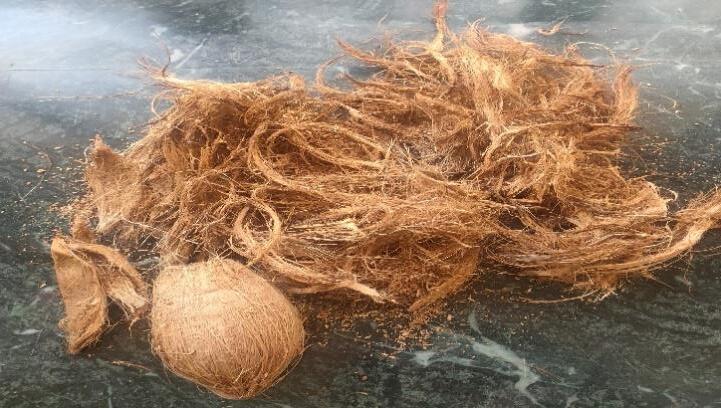
Coconut shell, a palm-related agricultural waste, is commonly sourced from temples, coconut oil producers, and other locations. Coconut cultivation spans over 90 countries, including India, the Philippines, and the Americas, with significant availability in Asia, Africa, and America.Itisbelievedthatthefirstcoconutsoriginatedin Southeast Asia. While coconut shells are abundantly available as waste from local coconut industries, their improperdisposalposesenvironmentalchallenges.
In many developing nations, where surplus coconut shell waste accumulates, this material has the potential to be utilized as a sustainable alternative in the construction industry.Repurposingcoconutshellsnotonlyreducesthe cost of construction materials but also provides an ecofriendlysolutiontowastemanagementchallenges.
International Research Journal of Engineering and Technology (IRJET) e-ISSN: 2395-0056
Volume: 11 Issue: 12 | Dec 2024 www.irjet.net p-ISSN: 2395-0072
Concrete is a construction material made by combining cement, fine aggregates, coarse aggregates, and water, which solidifies over time. It is widely used in building construction for structural elements such as foundations, columns, beams, slabs, and other load-bearing components.
Coarse aggregates with a maximum size of 20 mm were utilizedinthisstudy.Varioustestswereconductedonthe coarse aggregates, including fineness, specific gravity, waterabsorption,andimpacttests.
Coconut shells, already broken into two pieces, were collected from nearby hotels and the college canteen. Theseshellswereair-dried forapproximatelyfivedays at a temperature of 25–100°C. After drying, the fiber and husk were removed, and the shells were further broken into smaller chips manually using a hammer, then sieved througha20mmsieve.
Coconutshellscanserveascoarseaggregatesduetotheir abundant availability and durability. As they do not decompose, they can be effectively incorporated into concrete, meeting most of the properties of conventional concrete. In developed countries, the construction industry has adopted various lightweight aggregate materials as substitutes for traditional aggregates, reducing the size and weight of structural elements. Coconut shells possess desirable characteristics such as non-biodegradability, excellent strength, high weather resistance, and low cellulose content, which minimizes waterabsorption.These propertiesmakecoconutshellsa viable alternative for coarse aggregates in concrete production.
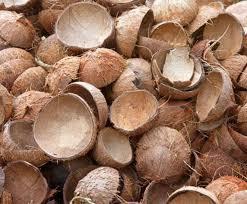
OrdinaryPortlandCement(53Grade)
CoarseAggregate
FineAggregate
Water CoconutShell
Sand
Coconut shells are widely utilized in the production of variousproducts,includingfurnishingmaterialsandother valuableitems.
The chemical composition of coconut shells includes elements such as carbon, potassium, chloride, iron oxide, sodium oxide, and calcium oxide, measured in percentage values.
Table -1:ChemicalPropertiesofCoconutShell
Following are the properties of coarse aggregate that are found in coarse aggregate such as water absorption, specific gravity, fineness modulus, bulk density(loose and compacted).
Table 2.PropertiesofCoarseAggregate
Improper disposal of coconut waste can adversely impact the environment, contributing to issues such as air pollution, land and water contamination, and excessive landfilling. These practices can lead to problems like pollution, unmanaged waste dumps, and health hazards. However, utilizing coconut waste (CW) as a sustainable construction material can mitigate these negative effects byreducingtherelianceon non-renewableresourcesthat harmtheenvironment.
International Research Journal of Engineering and Technology (IRJET) e-ISSN: 2395-0056
Volume: 11 Issue: 12 | Dec 2024 www.irjet.net p-ISSN: 2395-0072
Coconut waste (CW) is increasingly being recognized as a viable substitute for natural aggregates in concrete, particularly in developing regions where waste management poses significant challenges. The use of coconut waste not only addresses environmental issues related to waste disposal but also promotes sustainable concrete production. Studies indicate that incorporating coconutwastecanenhancethemechanicalpropertiesand workability of concrete mixtures, potentially influencing the durability and micro-structural characteristics of the concrete.
1. In March 2014, Vignesh Kumar Nagarajan, Assistant Professor at KCET, Virudhunagar, India, and his team studied the partial replacement of cement with coconut shell ash (CSA) in concrete. Their findings revealed that compressive strength decreased as the percentage of Ordinary Portland Cement (OPC) replaced with CSA increased.Strengthtestswereconductedat7and28days.
2.OlugbengaO.Amu(2011),aSeniorLectureratObafemi Awolowo University, Nigeria, evaluated the potential of coconut shell and husk ash (CSHA) for improving the geotechnical properties of lateritic soil in road construction.ThestudyfoundthataddingCSHAincreased the unit weight and shear strength of the samples, with optimal performance at 4% CSHA. Additionally, California Bearing Ratio (CBR) values showed a gradual increase withhigherCSHApercentages.
3. Daniel Yaw Osei (2013), from the Department of Civil Engineering at Cape Coast Polytechnic, Ghana, conducted anexperimentalassessmentofcoconutshellsasaggregate in concrete. The results demonstrated that replacing granite with palm kernel shells by volume produced better-performingconcretethanreplacingbyweight.
4. In 2012, Amarnath Yerramala and Ramachandrudu investigated the properties of concrete using coconut shells as aggregate replacement. The study aimed to evaluate the performance of coconut shell concrete in terms of strength and transport properties under normal water curing without chemical admixtures. Compression andsplittensilestrengthtestswereconductedat1,7,and 28 days, with results based on the average of two measurements.
5.Sanjay Kumar Verma and his team(2019) explored the partialsubstitutionofcoarseaggregate withcoconutshell to assess the characteristic strength of M-20 grade concrete at a water-cement ratio of 0.50. This research highlighted the potential of using coconut shells as a sustainable replacement for conventional aggregates, addressingenvironmentalandsocialconcerns.
6. In 2021, Kajal Bansal, a Civil Engineering student at AIETM Jaipur, Rajasthan, and her team investigated the partial replacement of coarse aggregate with coconut shells. The study concluded that coconut shells have potential as lightweight aggregate in concrete. However, compressive strength and workability decreased as the percentageofcoconutshellincreased.
7. Vivek Kumar Kashyap (2017), a Master's student in Structural Engineering at Lovely Professional University, studied the partial replacement of coarse aggregate with coconut shells and cement with rice husk ash (RHA). The research demonstrated that coconut shells contribute to lightweight concrete, while RHA can partially replace cementwithoutsignificantlyaffectingitsproperties.
8. Sourav Ghosal and S.C. Moulik examined the use of coconut shells as a partial replacement for conventional coarse aggregates. Their research suggested that incorporating coconut shells in concrete could reduce the environmental impact of waste while enabling the development of lightweight, precast construction units. The study also explored key properties like compressive strength,splittensilestrength,andflexuralstrength.
9.ParagS.KambliandSandhyaR.Mathapati(March2014) focused on the compressive strength of concrete made with crushed, granular coconut shells as partial replacements for traditional coarse aggregates. Their findings indicated that coconut shells have potential as a lightweight aggregate, helping reduce construction materialcostsduetotheirlowpriceandavailability.
10.B.DamodharaReddy,S.ArunaJyothy,andFawazShaik analyzed the flexural and compressive strength of M30grade concrete partially replaced with coconut shells. Theirstudyrevealedthatcoconutshellconcreteexhibited betterworkabilityduetothesmoothsurfaceoftheshells, making it suitable for applications requiring high workability.
11. Sangeetha G. et al. (2016) investigated the partial substitution of aggregate with coconut shells and cement with clay to produce M-20 grade concrete. Replacement percentages of 0%, 10%, 20%, and 30% were tested, and the compressive strength was evaluated at 7, 14, and 28 days. The results demonstrated the potential for ecofriendly and economical construction using these materials.
12. Sabarudin Bin Mohd and Tukiman (2009) studied the use of grained palm kernel shell and coconut shell as substitutes for aggregates in concrete. Five mixes with varying percentages (0%, 25%, 50%, 75%, and 100%) were tested. The research concluded that these materials could serve as lightweight aggregates, reducing material costsduetotheiravailabilityasagriculturalwaste.
International Research Journal of Engineering and Technology (IRJET) e-ISSN: 2395-0056
Volume: 11 Issue: 12 | Dec 2024 www.irjet.net p-ISSN: 2395-0072
13. K. Gunasekaran et al. (2013) examined the durability characteristics of Coconut Shell Aggregate Concrete (CSAC). The study assessed parameters such as chloride penetration, sorptivity, water absorption, and salt resistance, concluding that CSAC has comparable durabilitytootherlightweightconcretes.
14.Apeksha KanojiaandSarveshK. Jain(2017)evaluated theuseofcoconutshellsaspartialreplacementsforcoarse aggregate in M-20 grade concrete. Concrete with replacement levels of 10%, 20%, 30%, and 40% was tested with different water-cement ratios (0.55, 0.50, and 0.45).Thestudyshoweda reductionin densityand noted that a 5% replacement required no additional cement, while a 10% replacement increased cement demand by 3.6%.
15. Jerin M. George et al. (2016) explored the use of crushed coconut shells as coarse aggregate in concrete. Replacement levels of 25%, 50%, and 100% were tested. The results indicated that a 25% replacement achieved similarpropertiestostandardconcrete,demonstratingthe feasibilityofusingcoconutshellsinconstruction.
3. Methodology
Step1:CollectionofMaterials
The first and essential step in this research involves gatheringcoconutshell samples.This isa challengingand time-consuming process. The coconut waste is sourced fromlocaltemples,aswellasafewotherlocationswhere coconutwasteisreadilyavailable.
Step2:MaterialTesting
Oncethecoconutwasteiscollected,itundergoesatesting phase to identify the most suitable shells for partial replacement of coarse aggregate in concrete. After evaluating and selecting the appropriate materials, they arethenusedinthemixproportioningprocess.
Step3:MixProportioning
The mix proportioning phase determines the ratio of various ingredients required to create the concrete mixture. This includes cement, sand, aggregate, coconut shell, and water. The mix ratio plays a crucial role in influencing concrete’s strength, workability, and durability. Different ratios are applied depending on the specificrequirementsoftheinvestigation.
Step4:CubeCasting
Following mix proportioning, concrete cubes are cast to evaluate the performance of the concrete with partial replacement of coarse aggregate using coconut shells. Aftercasting,thecubesarecuredfordifferentperiods,and
theirstrengthismeasuredat7,14,and28days.Oncethis stepiscompleted,theprocessmovestothenextstage.
Step5:Observation
Aftertestingthespecimens,theyarecarefullyobservedto understand the behavior of concrete when coarse aggregate is partially replaced by coconut shells. The observations form the basis for analyzing and discussing the results derived from the tests on the prepared specimens.
Step6:ResultsandDiscussion
In this step, various properties of concrete are studied, focusing on the effects of partially replacing coarse aggregate with coconut shells. Balancing the trade-offs between strength, workability, and durability is critical, which is achieved by selecting suitable mix proportions and material processing methods. Moreover, using coconut shells as an aggregate can reduce construction material costs due to their abundance and low cost, thus offeringaneco-friendlysolution.
The main stages which are concerned within the project areasfollows:
Collectionofcoconutsample.
Collectionofcoconutlocationdetails.
Laboratoryanalysis.
Observation.
ResultandDiscussion.
Following is the flowchart that shows the various steps thatareincludedintheinvestigation:
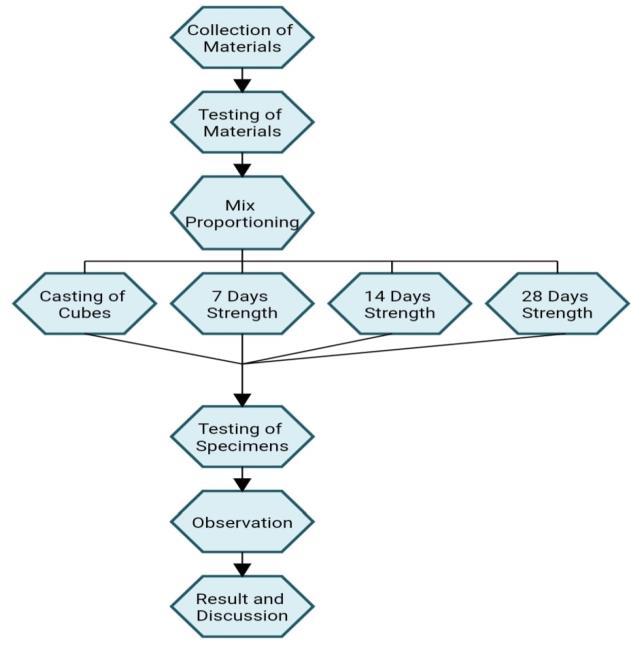
3: Flowchartoftheexperimentwork
International Research Journal of Engineering and Technology (IRJET) e-ISSN:
Volume: 11 Issue: 12 | Dec 2024 www.irjet.net
4. Result and Discussion
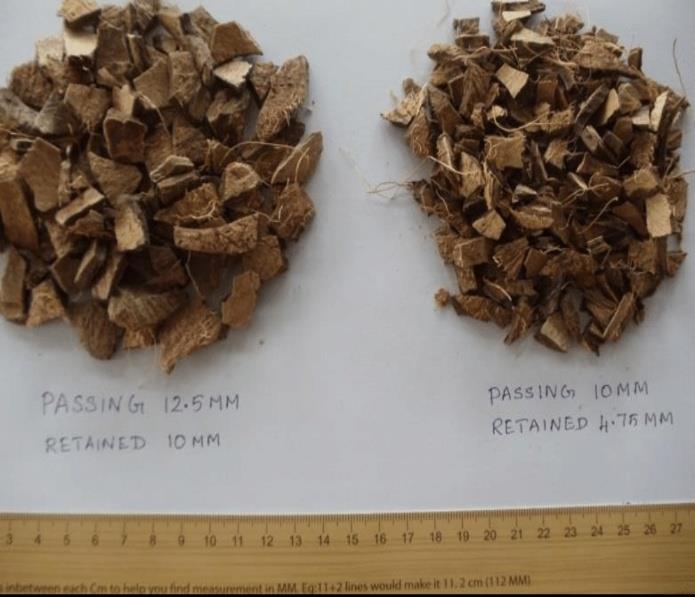
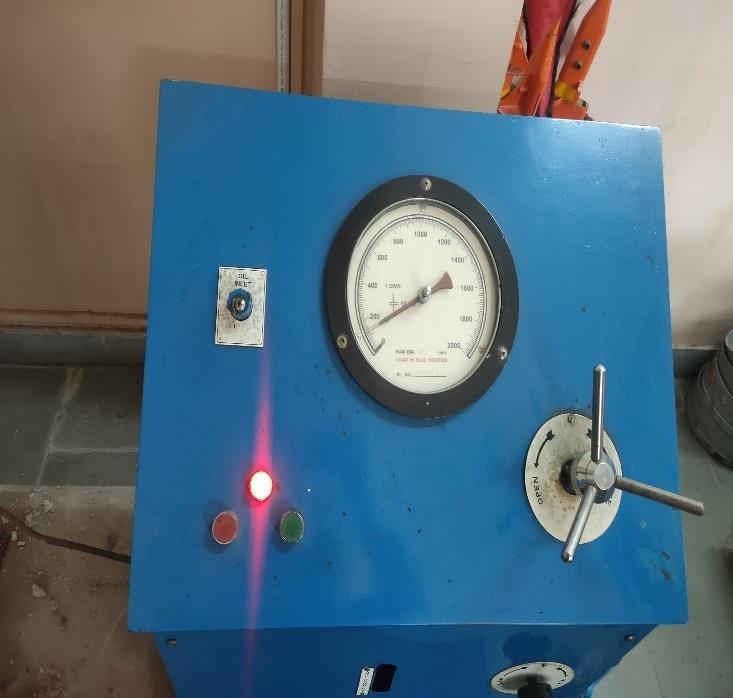
Table -3: Compressivestrengthofconcrete
The data from the table indicates that the compressive strength remains stable with up to a 10% replacement of coarse aggregate with coconut waste. However, beyond this percentage, the compressive strength noticeably declines. The concrete demonstrates good strength after 14 days of curing. Coconut shell concrete exhibits improved workability due to the smooth surface on one side of the shells and their smaller size. As a result, coconut shell concrete can be effectively used in applications where high workability is required. Furthermore,incorporatingcoconutshellsasanaggregate in cement can reduce material costs due to their affordability and the abundant availability of agricultural waste.
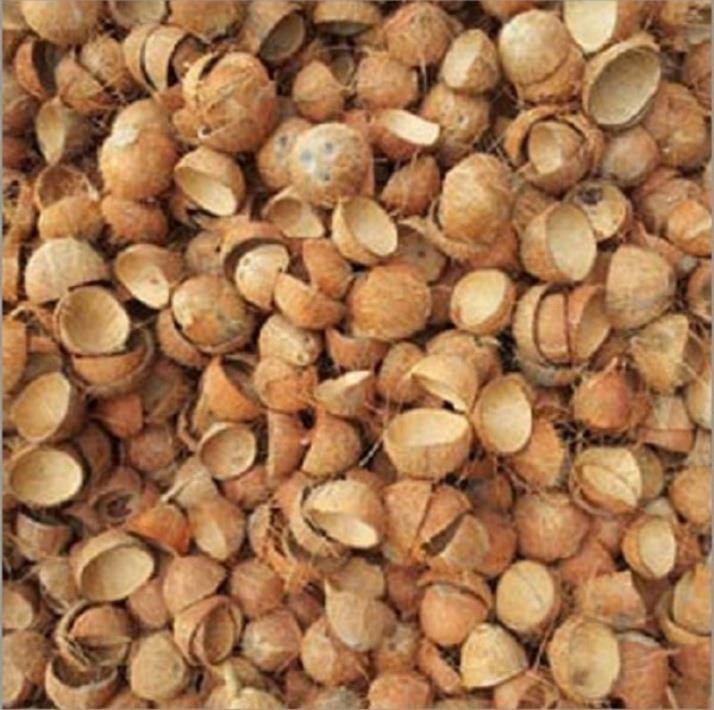
Table -4: AverageCompressiveStrengthofConcrete
ofAggregate
International Research Journal of Engineering and Technology (IRJET) e-ISSN: 2395-0056
Volume: 11 Issue: 12 | Dec 2024 www.irjet.net p-ISSN: 2395-0072
Fromtheabovetablethecompressivestrengthholdswell only up to 10% replacement of coarse aggregate by coconutwaste.
From the experimental work it is clear that with CS (compressive strength) percentage increases the 7 days strengthgainalso.
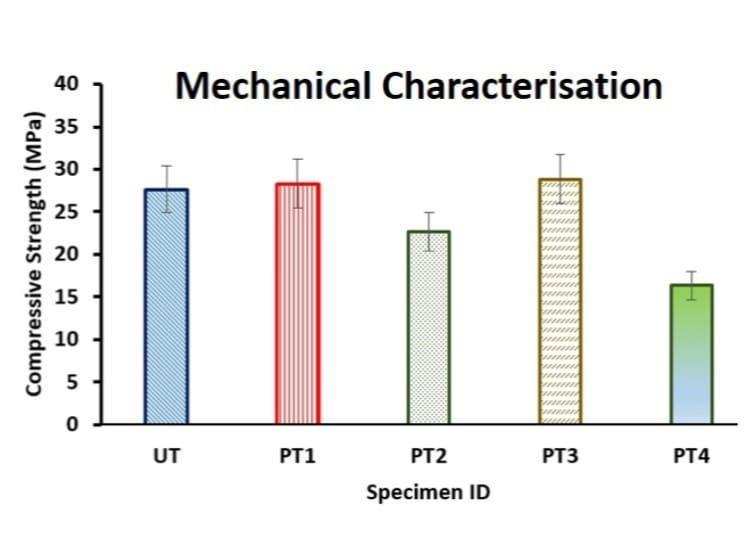
Chart -1:MechanicalCharacterisation
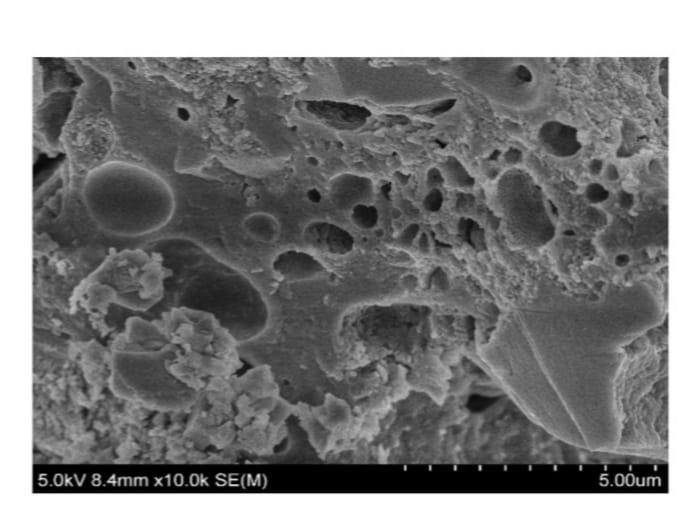
Figure -8:Micro-StructuralCharacterisation
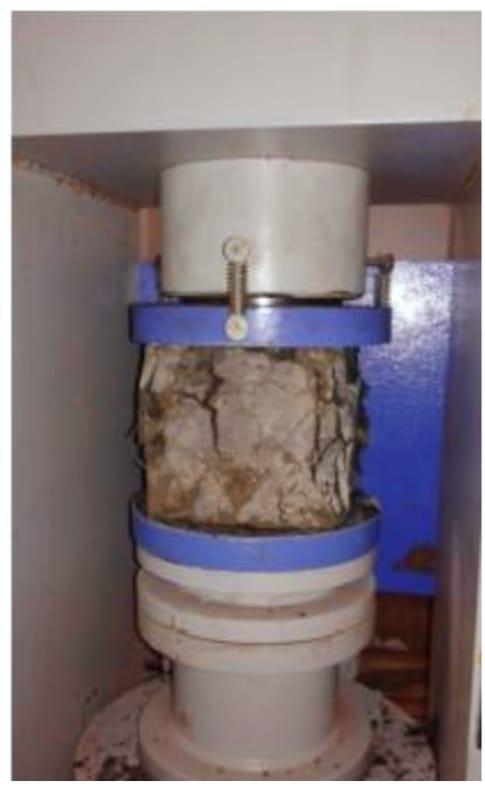
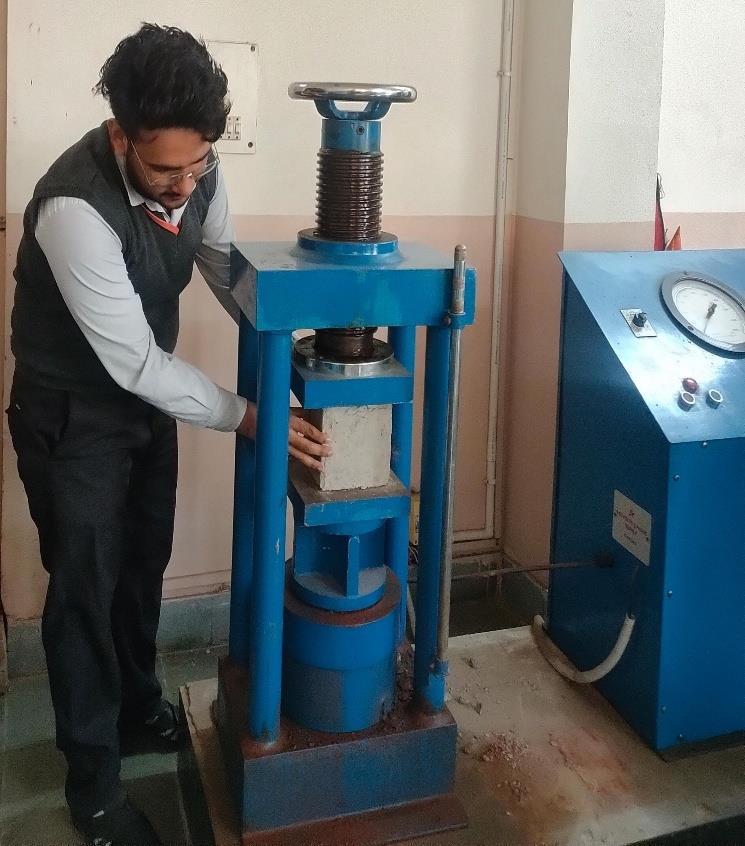
Figure 9: TestingMachine(sample)
Coconut waste is sourced from coconut processing industries or local markets, then thoroughly cleaned and dried before being crushed into suitable pieces to replace coarse aggregates. Standard-grade cement is used in the concrete mix. Clean and dry fine aggregates are incorporated, along with clean, potable water for mixing theconcrete.
International Research Journal of Engineering and Technology (IRJET) e-ISSN: 2395-0056
Volume: 11 Issue: 12 | Dec 2024 www.irjet.net p-ISSN: 2395-0072
Replacing a portion of coarse aggregate with coconut waste in concrete presents an innovative method that could support sustainable construction, particularly in areaswherecoconutwasteisplentiful.However,acareful balance between strength, workability, and durability must be maintained through careful selection of mix proportions and material processing. Experimental researchiscrucialtooptimizethemixdesignandidentify the ideal replacement percentage that provides a satisfactory balance between performance and environmentalsustainability.
1.Kamaletal.(2015)conductedastudyoncoconutwaste concrete, considering particle sizes ranging from 1020mm.
2.EarthDay,earthday.org.
3. Amarnath Yerramala et al. (2012) explored the properties of concrete with coconut shells as a replacementforaggregates,publishedintheInternational Journal of Engineering Inventions, Volume 1, Issue 6, Pages21-31.
4.Mongabay,india.mongabay.com.
5. Olugbenga O. Amu et al. (2011) examined the potential of coconut shell and husk ash on the geotechnical propertiesoflateriticsoilforroadconstruction,published in the International Journal of Engineering and Technology,Volume3(2),Pages87-94.
6. Shrikant M. Harle (2017) studied the partial replacementofaggregateswithcoconutshellsinconcrete.
7.Scispace,typeset.io,etc.
8. IS: 12269-1987. Specifications for 53-grade ordinary Portlandcement.
9. IS: 456:2000. Specifications for concrete and its properties.
10. IS: 516–1959. Methods for testing the strength of concrete.
11. Daniel Yaw Osei et al. (2013) performed an experimental assessment on coconut shells as aggregates in concrete at the Department of Civil Engineering, Cape CoastPolytechnic,Ghana.
12. Sanjay Kumar Verma et al. examined the use of coconut shells as partial substitutes for coarse aggregates at the Department of Civil Engineering, Takshshila InstituteofEngineeringandTechnology,Jabalpur,India
13.J.M.Crow(2006).“TheConcreteConundrum.” 14.NationalMulti-CommodityExchangeofIndia.
Author Details
1.

Mr. Bilal Ahmad, currently pursing B.Tech in Civil Engineering (Final year) from SANSKAR College of Engineering & Technology, Ghaziabad. He has deep interestinresearch.
2.

Mr. Deepak Aggarwal, currently serving as an Assistant Professor in the Department of Civil Engineering at Sanskar College, affiliated with Dr. A.P.J. Abdul Kalam TechnicalUniversity(AKTU),Lucknow.
He has published books on Hydraulics Engineering and machinesandseveralotherresearchpapers.
3.

Mr. Rahul Kumar is presently working as an Assistant Professor & Head in the Department of Civil Engineering at Sanskar College of Engineering and Technology, Ghaziabad, UP, India. He has published so many research papersinnationalandinternationaljournals.