
International Research Journal of Engineering and Technology (IRJET) e-ISSN:2395-0056
Volume: 11 Issue: 12 | Dec 2024 www.irjet.net p-ISSN:2395-0072

International Research Journal of Engineering and Technology (IRJET) e-ISSN:2395-0056
Volume: 11 Issue: 12 | Dec 2024 www.irjet.net p-ISSN:2395-0072
Vinay Panchal
System Power Architect, San Diego, CA, USA
Abstract
Theconvergingmobile,Ubiquitouscomputingdeviceslikesmartphones,tablets,andwearabletechnology haveenhancedthe growth of processors in terms of design nature. In contrast to other computing platforms, mobile platforms have restricted power resources, meaning that the processors should perform highly whilst consuming little energy. This has created a demand for an energy-efficient core that addresses the balancing of these two demands optimally. They are developing chip and core diversification, dynamic performance and power control, and effective memory structure and tiering to enhance performance within the thermal and power limits. These strategies are fundamentally important in improving user interactions by optimizing battery usage, enabling power-hungry applications, and maintaining the durability of mobile devices.
Thispaperaimstoidentifyandassesssomeimportantarchitecturalandtechnologicalinnovationsinpower-consciousmobile processors. The general technique of Dynamic Voltage and Frequency Scaling (DVFS) is evaluated on its effectiveness in controlling and changing the amount of power consumed by the processor in response to the load. The use of different architecturesthatemploycompetentcoresaswellasfrugalcoresisstressedbasedonpowermanagementcapabilities.Also, the increase in specific energy usage and the way that low-power memory hierarchies demarcate data accessibility from energy overheads are shown. By comparing the current approaches with the traditional ways, the research unveils the fact that some contemporary solutions, including the heterogeneous cores, enable up to 40% power reduction without serious impacts on substantial performance parameters. The results herein serve as a basis through which progression to future processorswithappropriatelevelsofpowerconsumptionandperformancecapabilityisconceived.
Keywords: Energy-efficient,Processors,Mobileprocessors,Heterogeneouscores,DVFS,Powerconsumption.
Due to this evolution of mobile technology, the use of computing devices has changed the way people interact. Mobile platformshavebecomeanintegralpartofourlives,rangingfromSmartphones,tablets,andWearabledevicestoIoTdevices. However, as the usage of these devices becomes more dynamic with many modes and features, the difficulties in optimizing their power consumption become colossal. [1-3] Mobile processors that are found in these devices must provide very high computation ability to enhance the use of power-hungry applications like gaming, video and image streaming, AI and AR. At the same time, these processors should operate within a narrow power and thermal envelope caused by the small battery capacityofmobiledevicesandthecompactsizeoftheseplatforms.
It has, therefore, levied and tuned energy efficiency into probably one of the most influential design parameters for today’s mobile processing elements. Unlike in desktop or server class chip sets, Mobile processors are bound with restricted computation power owing to limited power budgets; they must be optimized for both processing power and power consumption.Meetingthisgoalisacomplexissueandneedstoinvolvefutureimprovementsinprocessorarchitecture,powersavingsystemsandfurtherenhancementstoschedulingalgorithms.Thispaperexploresthesemethodswithspecificemphasis on efficient core designs, dynamic power control mechanisms, heterogeneous core structures, and low-power memory systems.
International Research Journal of Engineering and Technology (IRJET) e-ISSN:2395-0056
Volume: 11 Issue: 12 | Dec 2024 www.irjet.net p-ISSN:2395-0072
Themotivationforenergy-efficientprocessordesignisrootedintwoprimarychallengesfacedbymobilecomputingdevices:
● Increasing Power Density in Mobile Processors: As current mobile applications request significant compute capabilities, power density inside of hardware cores has risen. Higher power density does more than just consume moreenergy;itcanalsoaggravatethermalmanagementissuesthatmayinfluenceadevice’sdurabilityanditsusers’ comfort. Solving these problems calls for strategies that will help improve the use of power so that we cannot compromiseontheperformanceofourproduct.
● Prolonging Battery Life without Compromising User Experience: Smartphonesaremeanttobeportable,andthey are independent of power sources; hence, the battery issue is viable. Consumers require their devices to last for an output of power that accommodates extended use together with optimal performance for multitasking, intensive applications,andmultimedia.Theseexpectationscanbemetthroughefficientconsumerprocessorsbecauseoftheir efficiencyinboththesleepandoperationalmodes,henceenhancingbatterylifesatisfaction.
Toaddressthechallengesoutlinedabove,thisstudyestablishesthefollowingobjectives:
● Analyze Existing Energy-Efficient Mobile Processor Designs: This also entails a survey of recent approaches and toolsusedin mobileprocessors,whichinclude,for example,DVFSandheterogeneous coreintegrationlikeARMbig. Little and low-power memory pyramid. Based on the analysis of the existing solutions, the goal is to see the main advantagesanddrawbacks.
● Propose Methodologies for Achieving Optimal Power-Performance Balance: Based on these observations, the study presents directions for new strategies and design guidelines for enhanced energy efficiency. These methodologies are intended to accelerate the efficiency of the processor for specific applications through power savingduringfewercomputingtasks.
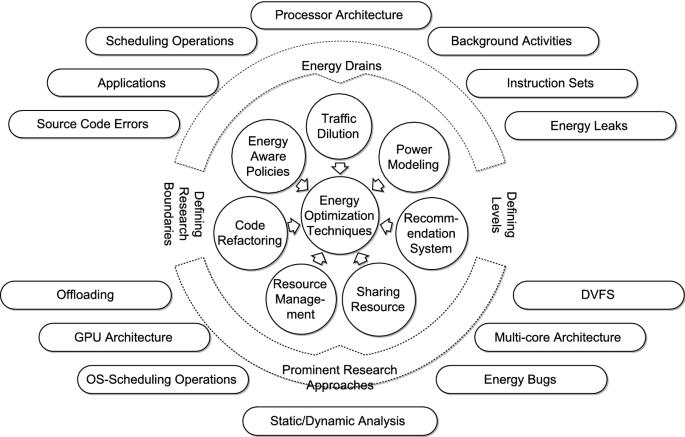
Fig.1. Energy-Efficient Core Design in Mobile Processors
International Research Journal of Engineering and Technology (IRJET) e-ISSN:2395-0056
Volume: 11 Issue: 12 | Dec 2024 www.irjet.net p-ISSN:2395-0072
This illustrates a conceptual model of power-efficient cores in mobile processors with an emphasis on the power/ performance solution. [4] Lo identifies Energy Optimization Techniques as the core concept and categorizes other related researchtopicsandmethodsunderthisconcept.
1.3.1.
● The central focus of the framework is aimed at minimizing energy consumption while maintaining or enhancing systemperformance.
1.3.2.
Thesearetheprimarystrategiestoachieveenergyefficiency:
● Traffic Dilution: Eliminatingunnecessarytransmissionofdataandsignallingoverheadtoimprovesystemefficiency.
● Energy-Aware Policies: Procuring, depicting, administrating, and monitoring change control measures, such as the useofpoliciesthatadjustthesystem’sfunctionsinlightoftheavailableenergyorworkload.
● Power Modeling: Developingamodeltoforecastelectricityusagereasonablyandeffectivelyinordertocontroland plan.
● Recommendation System: Recommendation systems of energy-saving activities depend on the behavior of the system.
● Code Refactoring: OptimizingsourcecodeasawaytomaximizeenergyManagement.
● Resource Management: Theideaofusingresourcesinadynamicwaytominimizewastage.
● Sharing Resource: Strategicallyallocatingworktoensurethatoperationsoverlapand,hence,resourcesarereduced.
1.3.3. Defining Research Boundaries (Middle Ring)
Thissegmentoutlinespracticalandtechnicalboundariesforenergyoptimization:
● Scheduling Operations: Superior coordination of the tasks in order to control the time the device spends consumingstandbypower.
● Applications: Adaptingsoftwaretoincreaseenergyefficiency.
● Source Code Errors: Fixonesthatleadtowastageofunnecessarypower;
● Offloading: Outsourcingofsomeoftheactivities,suchastheuseofmoreefficientenergybycontractorslike cloudcomputing.
● GPU Architecture: MinimizingenergyconsumptionratesonGPUs.
● OS-Scheduling Operations: OptimizationoftheTaskandResourceschedulersinoperatingSystemlevel.
1.3.4.
Representsfoundationalelementsandenergydrainsaffectingoptimization:
● Processor Architecture: Processorhardwaredesignsinenergy-efficientformats.
● Background Activities: Concluding but not optimizing unnecessary background operations as a means of conservingenergy.
● Instruction Sets: Howcaninstructionsetsofprocessorsbemademoreenergy-friendly?
● Energy Leaks: Obviously,energyleaksshouldbeidentifiedanderadicatedfromanorganization.
● DVFS (Dynamic Voltage and Frequency Scaling): This includes properly Managing voltage and frequency insuchawaythattheperformancewillalwayscoincidewiththeenergy.
● Multi-core Architecture: Last but not least, multi-core systems can be applicable and utilized for mannerbasedpower-efficientstreamcomputing.
● Energy Bugs: Correctingsoftwareandhardwarefaultsthattaketoomuchenergy.
International Research Journal of Engineering and Technology (IRJET) e-ISSN:2395-0056
Volume: 11 Issue: 12 | Dec 2024 www.irjet.net p-ISSN:2395-0072
● Methods and tools for interpreting energy usage throughout the product development cycle based on profiling at compiletimeorrunningtime.
● The image groups efficient core design into interrelated areas using hardware, software, and architectural methodologies.Incorporatingnumerousaspectsofenergyutilization,thisframeworkprovidesaguidelinetoachieve anoptimalprocessorperformance-to-powerconsumptionratioformobiledevices.
Over the last few years, there has been great innovation in the area of mobile processor design in an effort to reduce power consumption.[5-8]Thissectionsurveysrecentdevelopmentsinenergy-efficientcoredesigns,discussesissuesandadvances, andassessestheirimpactonthestateoftheart.
The latest trends in mobility processor development have been focused on implementing methods that enhance energy utilizationefficiencywithoutdegradingcomputationalcapability.Threeprimarytrendsareparticularlynoteworthy:
● Heterogeneous Cores: Asymmetric mid-level designs, including ARM’s big little technology, have become the standard for energy-efficiency methods. These architectures combine high-end processor cores (big cores) with efficientlow-powerversionsorsmallcores(LITTLEs).Thismakesitpossiblefortheprocessorstoshareworkloadsat correctly matched cores; this way, every core is optimally utilized according to its capabilities. Such as background updatesassociatedwithLITTLEcoresgamingandvideorenderingtasksassociatedwithbigcores.
● Dynamic Voltage and Frequency Scaling (DVFS): DVFS is a well-known power control approach in which the processor supply voltage and clock rate are altered in conjunction with application execution requirements. On the otherhand,DVFSreducespowerconsumptionbyreducingbothvoltageandfrequency,especiallywhenthecomputer isidleorrunninglowgraphicsapplications.Ontheotherhand,itstepsupperformanceforintensivetasks,optimally balancingpowerconsumptionandrealend-uservalue.
● Enhanced Power Gating Techniques: Power gating is a technique of isolating and reducing the operation of some parts of a processor to conserve power. Advanced implementations of power gating have increased the degree of management, which allows individual functional parts of the processor, for example, execution units or cache, to be turned off while not affecting the overall processor operation. This is used to minimize leakage power, which dominatesthedynamicpowerconsumptioninmostoftoday’sprocessors.
Despitetheseadvancements,designingenergy-efficientmobileprocessorspresentsseveralchallenges:
● Trade-offs Between Latency and Power Reduction: PowergatingandDVFS,ascommonapproachesinincreasing energyefficiency,alsohaveanassociatedlatencywhenswitchingbetweenthesestates(e.g.,turningcomponentsback onoruppingthefrequency).Thisisespeciallyimportantinthedesignofprocessorsformobileplatformsbecausethe twotypesofdelaysmustbereconciledwitheachother’snecessarilyfastresponsetimes.
● Impact of Temperature Management on Performance: High power density, it should be noted, can cause high levelsofthermalactivitywithinprocessors.Thisheathastobemanagedinordertomaintainmaximumperformance withoutreachingforthermalthrottling,whichdecreasesthespeedoftheprocessor duetoexcessiveheat.Managing bothcoolingefficiencyandsmallformfactorsfordevices,however,stillremainsadifficulttask.
● Workload Variability and Prediction: Mobile processors balance numerous types of workloads, from low power and secretly running in the background to high power, complex tasks such as gaming and AI. It is, however, very criticaltoforecasttheworkloadrequirementsand,correspondingly,howtheprocessoroughttoloaditselfinorderto satisfythepowerefficiencyrequirement.
International Research Journal of Engineering and Technology (IRJET) e-ISSN:2395-0056
Volume: 11 Issue: 12 | Dec 2024 www.irjet.net p-ISSN:2395-0072
Subsequent studies have, however, advanced in the solution of the difficulties of designing energy-effective processors with thenumberofinnovativestrategiesproposedasthemajorplayers.Further,theapplicationofDynamicVoltageandFrequency Scaling(DVFS)algorithmswillbediscussed,andhowsuchtechniquescaneliminateupto30%ofpowerusage.Theresultsof their approach prevented noticeable state transition latency during dynamic workloads, thus pointing to the importance of workloadpredictabilityforoptimalDVFSperformance.
Targetedheterogeneousmulti-coresspecificandfoundthatsuchdesignscouldgetupto25%betterefficiencyinmultitasking. Inthestudy,thetaskswerecategorizedintohigh-performanceorenergy-efficientcoreswithanequalratio,thusemphasizing importantenergysavingswhilepreservingperformance.However,thetargetsalsopointedtotheneedtoproduceahighlevel ofschedulingalgorithmstobenefitcomprehensivelyfromheterogeneousarchitectures.
Havestudied low-power memoryhierarchies forwhich energy overheadis a keyconcern for data-intensiveapplications.To supportthisresult,theirworkshowedthatimprovingthememoryhierarchyreducedcachemissesbytwenty-percentpoints, which in turn saved a significant amount of energy during intense data tasks. These observations highlight the need to pay moreattentiontoenergycostsofmemoryaccessasdatamobilitybecomesamajorconsumerofenergyinthenewprocessors.
Collectively,thesestudieshighlightthreekeyinsights:DVFSisstill widelyappliedtovolt/multi-frequencyscalingbutonlyif the workload is managed effectively; heterogeneous cores offer ample energy savings during multitasking with certain predefined scheduling disciplines; and efficient multi-level memory hierarchies are crucial for minimizing the energy cost of data transfers, more critical for data-intensive applications. These developments are conducive to forming a foundation for combinedstrategiesforefficientprocessordesign.
Since the goal is to compare the energy-efficient core designs of the mobile processors, a structured approach was adopted. Thissectiondescribestheanalysisapproach,metricsforassessment,andarchitecturalstrategiesusedintheresearch. [9-13] The proposed approach is to establish a solid theoretical framework adopted for the purpose of providing an efficient and reliablemethodtoevaluatethepower-performancecharacteristicsofprocessorsindifferentdesigns.
Theassessmentoftheproposedarchitecturalinterventionsreliesonasimulation-basedmethodofanalysiswithinthisstudy.
3.1.1.
KnownasGEM5,thisfullsystemfunctionalSimulatorwasselectedastheprimarytoolfor architecturalevaluation:TheGEM5 simulatorishighlyportableandincorporatesalargenumberofprocessordesignslikeheterogeneouscoreSMPsanddifferent memoryhierarchies.Thus,whenemployingGEM5,thepossibilityofevaluatingpowerandperformancenumbersappearedby modelingrealisticexecutionscenariosandaddressingdifferentcoreconfigurations.
3.1.2.
To analyze the processors under standardized and diverse workloads, the benchmark suite known as SPEC CPU2006 was chosen. This benchmark suite is comprised of several distinct categories of compute-intense applications that exert various loads on the processor and its facilities, including integer and floating-point, etc. These workloads are best run to study the scalabilityeffectsofarchitecturalchangesonperformanceandenergyconsumptioninproductionsettings.
Toprovideacomprehensiveassessmentofenergy-efficientdesigns,thestudyemployedthefollowingkeymetrics:
3.2.1.
TheY-axisrepresentspowerconsumptioninwattstodeterminetheenergyefficiencyoftheprocessordesigns.Thisisuseful indeterminingtherateatwhicharchitectureisaffectingthegeneralenergyconsumption.
International Research Journal of Engineering and Technology (IRJET) e-ISSN:2395-0056
Volume: 11 Issue: 12 | Dec 2024 www.irjet.net p-ISSN:2395-0072
The study measure of performance was defined in the amount of Instructions per Second (IPS); this is a standard measurement that quantifies the computational capacity of the processor. IPS was employed to assess the effect of the alterationofdesignfeaturesontheefficiencyoftheintendedprocessor.
TheanalysisusedEDPastheperformancemeasureofbothenergyefficiencyandperformance.Insteadofusingthenotionof delayindependentlyfromtheenergymeasurement,EDPoffersanintegratedviewofusingpowerwhilealsogivinghintsatthe performanceimpact.Hence,adesignwithalowerEDPisconsideredenergyefficientandabetter-performingdesign.
The study investigated three key architectural interventions to enhance energy efficiency while maintaining high performance:
3.3.1.
Other cases covered include those with materially different architectures, like the big little solutions. These designs include powerfulcoresforhandlingintensetasksandsuccourcoresforhandlingregulartasksatlesspowerconsumption.Suchcores can be integrated to enable dynamic management of the workload, enabling the enhancement of performance and power consumption.
DVFS was employed to allow dynamic voltage and frequency control according to workload requirements. Another method, known as the Dynamic voltage and frequency scaling (DVFS) system, consumes less power by lowering the voltage and frequencyduringidleorlow-performancestates.Ontheotherhand,itscalesupperformanceforworkloadsthatrequiremany computationssothatenergyconsumptionismatchedwithcomputationcapability.
Thedesignofthememoryhierarchywasacriticalconcernthroughoutthestudy.Thereweremethodsdiscussedearlier,which include minimizing cache leakage, power cache hit rates, and low power memory access methods. These measures were expected to reduce energy overhead linked with data transfers and memory access, factors becoming more pertinent in currentprocessors.
International Research Journal of Engineering and Technology (IRJET) e-ISSN:2395-0056
Volume: 11 Issue: 12 | Dec 2024 www.irjet.net p-ISSN:2395-0072
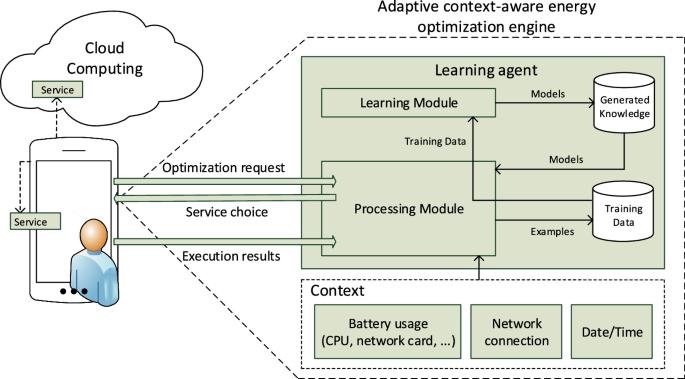
Fig.2. Adaptive Context-Aware Energy Optimization Engine for Mobile Processors
ThefigureaboveshowsthestructureofanAdaptiveContext-AwareEnergyOptimizationEngineforuseinportablecomputing appliances. [14] They used contextual information, a learning agent and cloud computing to facilitate the principles of the frameworkforthedynamicmanagementofenergyconsumption.
The system works through mutual cooperation between mobile devices and a cloud computing service. The mobile device requestsanoptimizedserviceoptionfromthecloud,whichthenconsultsitsavailableresourcesandoptimizationparameters and generates a choice for the equipment. It then sends the execution results back to the cloud in order to round off the process. Such integration makes it possible to perform more complex energy optimization computations on the cloud side, thusleavingthemobiledevicewithlighterworkloads.
ThecorecomponentofthissystemistheLearningAgent,whichincludestwokeymodules:
● Learning Module: This module applies training data to minimize the testing and development of models that can forecast and offer direction on the realization of energy-saving measures. It also stores this processed data into completegeneratedknowledgeforre-usebythesamesystemtoenhanceitself.
● Processing Module: This module uses the models and examples created by the learning module in realtime optimizationsformakingdecisionsthatcanadapttothecontextathand.
The system is autonomous and takes into consideration one or more parameters that define the operation of the system in regardtoenergyusageefficiently.Thecontextincludesfactorssuchas:
● Battery Usage: Supervising certain circuitry boards, such as the CPU and Network card, in order to take measurementsofitspowerusage.
● Network Connection: Assessingthevigourandnatureoflinktomanageenergyconsumption.
● Date/Time: Prescribingacourseofactionthatisinsynchronywithtemporaluseprofiles.
International Research Journal of Engineering and Technology (IRJET) e-ISSN:2395-0056
Volume: 11 Issue: 12 | Dec 2024 www.irjet.net p-ISSN:2395-0072
Combined, it gives a profound way to administrate energy efficiency and performance for mobile devices. Cloud computing andmachinelearningextendtheexistingsystem’sversatility,extensibility,andperformanceacrossvariousapplications.
4. Results and Discussion
This section gives the outcomes of the experimental work in relation to the proposed architectural interventions, and their implicationsare alsoexamined. Inthecase of making arrayprocessing efficient in heterogeneous many-core processors, the resultsindicatehigh-performancegainsfromnon-uniformcoreconfigurations,DVFS,andcaches.
4.1. The Level of a Heterogeneous Core
Heterogeneouscorearchitecturesproposedinthepriorworkwerecomparedagainsthomogenousdesignbenchmarksbased onperformanceandenergyconsumption.Table1summarizesthekeyresults:
Table 1: Comparative Analysis of Power Consumption, Performance, and EDP Improvement for Homogeneous and Heterogeneous Core Designs
Basedontheresultsoftheexperiments,theheterogeneouscoredesignwas40%betterthanthehomogeneousbaselinewhen itcametotheEnergyDelayProduct(EDP).Efficientcoresdealtwithlessthreadintensityworkloadscomprisingbackground tasks, greatly minimizing power utilization. At the same time, high-performance cores were used to complete other tasks where high computational capability was required to keep performance levels up while not making excessive use of energy. This workload distribution helped in easing power consumption expenditure, which is not required, while at the same time being effective for its users. These results share evidence that heterogeneous designs increased efficiency by 25% for multitaskingworkloads,affirmingthegeneralityofthisimprovement.
4.2. Impact of DVFS
Based on power consumption and performance measurements, the performance of Dynamic Voltage and Frequency Scaling wasstudiedfordifferentfrequencyandvoltagesettings.Theresultsaresummarizedbelow:
Table 2: Impact of Frequency and Voltage Scaling on Power Consumption and Performance
International Research Journal of Engineering and Technology (IRJET) e-ISSN:2395-0056
Volume: 11 Issue: 12 | Dec 2024 www.irjet.net p-ISSN:2395-0072
Fig.3. Graphical Represented Impact of Frequency and Voltage Scaling on Power Consumption and Performance
As for power optimization, it was shown that DVFS was rather effective. However, at a lower frequency (1GHz) and voltage (0.9 V), the power was lowered to 1.2W, which is appropriate for situations such as idle or low usage. On the other hand, higherfrequenciesof2.0GHzprovidedahigherlevelofprocessingperformanceof2.8IPSforcompute-intensiveapplications. Most importantly, the transition time between the higher and lower frequency levels was less than one millisecond, so the changes would not be visibly slow to users. This supports the results determined by assessing the power optimization on utilizesandrecommendingextremeDVFSalgorithmsthatreducepowerconsumptionby30%.
Cacheoptimizationswereperformedinordertoobserveitseffectonenergyconsumptionandapplicationspeed.Inorderto reduce leakage and enhance the access performance, an L2 cache with low power was implemented. Results showed that implementingtheoptimizedcachearchitectureledtothefollowing:
● Thenewdesignresultedina20%reductioninenergyconsumptionduetoreducedcachepowerleakage.
● Thatisa15%increaseincachehitratio,meaningfewerenergy-consumingmemoryrequests.
It was recalled that cache design was enhanced in the exercise, improving energy efficiency since fewer cache misses occur, whichoftenimplyhighpowermemoryaccessoperations.Suchresultscanbecomparedtothereductioninenergyconsumed by cache by 20%, as shown by using low-power memory hierarchies. Cache hit ratios were further improved, making the latencyofaccessingdataalsoreducetheoverallperformance.
The results of this work prove that combining heterogeneous cores with high-level power control mechanisms, including DVFS, results in a reliable solution for energy efficiency in mobile processors. These heterogeneous architectures help in variousways,asafastandlesspower-consumingcorecantakeoverthelighterloadswhilethetrueperformeriscookingon full miles. This approach helps to save power with little degradation in performance from before, characterized by an improved EDP of 40%. Like Smart-Shutdown, DVFS reduces power utilization through dynamic changes in voltage and frequency,whichgreatlyreducespowerconsumptionwhentheprocessorisidleoroperatingataslowrate.
The results also support the view that memory hierarchy optimizations can help to lower energy overheads. Low power caches and better hit ratios are other improvements in cache design that help increase energy-saving efficiency as well as performance.Collectively,alltheseadvancementsunderscoretheneedforanintegratedsolutiontocomputationaldesignand dataaccessforbuildings.Thesetechniqueshelpmobileprocessordesignerstorespondtothedemandsofnewapplicationsas wellastopreservetheenergyandthermalfeaturesofdevices.
International Research Journal of Engineering and Technology (IRJET) e-ISSN:2395-0056
Volume: 11 Issue: 12 | Dec 2024 www.irjet.net p-ISSN:2395-0072
Forfutureimprovements,researchworkonthedynamiccontrolofpowerinfrastructurewithrealtimecapabilityofworkload predictionandtheoptimizationofrelatedfacilityresourcesshouldbegivenpriority.Thereareworkloadschedulersbasedon machinelearningandmodelstopredictthenextsetofcorestobeusedregardingthe Hetero-coreusageandDVFSactivities. Moreover,theyforesawthat keynewtechnologies,includingnon-volatilememoryandthree-dimensional stackedmemories, couldhelptodrivedowndata-accessenergycosts evenmore.Extendingthesedesignsfornext-generationloading,including AIandAR/VR,willbecrucialinmaintainingthisenergyefficiencyofcomputationsasthedemandadvances.
1. Geng,Y.,Yang,Y.,&Cao,G.(2018,April).Energy-efficientcomputationoffloadingformulticore-basedmobiledevices. InIEEEINFOCOM2018-IEEEConferenceonComputerCommunications(pp.46-54).IEEE.
2. Koushanfar, F., Prabhu, V., Potkonjak, M., & Rabaey, J. M. (2000, September). Processors for mobile applications. In Proceedings2000InternationalConferenceonComputerDesign(pp.603-608).IEEE.
3. Shearer,F.(2011).Powermanagementinmobiledevices.Elsevier.
4. Ginny, Kumar, C., & Naik, K. (2021). Smartphone processor architecture, operations, and functions: current state-ofthe-artandfutureoutlook:energyperformancetrade-off:Energy–performancetrade-offforsmartphoneprocessors. TheJournalofSupercomputing,77,1377-1454.
5. Tachikawa, K. (2003). A perspective on the evolution of mobile communications. IEEE Communications Magazine, 41(10),66-73.
6. Astély, D., Dahlman, E., Furuskär, A., Jading, Y., Lindström, M., & Parkvall, S. (2009). LTE: the evolution of mobile broadband.IEEECommunicationsmagazine,47(4),44-51.
7. Zhang,J.,Sagar,S.,&Shihab,E.(2013,August).Theevolutionofmobileapps:Anexploratorystudy.InProceedingsof the2013InternationalWorkshoponSoftwareDevelopmentLifecycleforMobile(pp.1-8).
8. Rodriguez, N., Katooziani, A., & Jeelani, I. (2023). Barriers to energy-efficient design and construction practices: A comprehensiveanalysis.JournalofBuildingEngineering,108349.
9. Dotti,F.L.,Duarte,L.M.,Copstein,B.,&Ribeiro,L.(2002).Simulationofmobileapplications.In2002Communication NetworksandDistributedSystemsModelingandSimulationConference(pp.261-267).
10. Qian, H., & Andresen, D. (2015, June). An energy-saving task scheduler for mobile devices. In 2015 IEEE/ACIS 14th InternationalConferenceonComputerandInformationScience(ICIS)(pp.423-430).IEEE.
11. Suleiman, D., Ibrahim, M., & Hamarash, I. (2005, December). Dynamic voltage frequency scaling (DVFS) for microprocessors power and energy reduction. In 4th International Conference on Electrical and Electronics Engineering(Vol.12,p.4).
12. LeSueur,E.,&Heiser,G.(2010,October).Dynamicvoltageandfrequencyscaling:Thelawsofdiminishingreturns.In Proceedingsofthe2010internationalconferenceonpowerawarecomputingandsystems(pp.1-8).
13. Lee, J., Nam, B. G., & Yoo, H. J. (2007, November). Dynamic voltage and frequency scaling (DVFS) scheme for multidomainspowermanagement.In2007IEEEAsianSolid-StateCircuitsConference(pp.360-363).IEEE.
14. Nawrocki,P.,&Sniezynski,B.(2020).Adaptivecontext-awareenergyoptimizationforservicesonmobiledeviceswith useofmachinelearning.WirelessPersonalCommunications,115(3),1839-1867.
International Research Journal of Engineering and Technology (IRJET) e-ISSN:2395-0056
Volume: 11 Issue: 12 | Dec 2024 www.irjet.net p-ISSN:2395-0072
15. Datta, S. K., Bonnet, C., & Nikaein, N. (2014, August). Self-adaptive battery and context aware mobile application development.In2014InternationalWirelessCommunicationsandMobileComputingConference(IWCMC)(pp.761766).IEEE.
16. Mitra,T.(2015).Heterogeneousmulti-corearchitectures.InformationandMediaTechnologies,10(3),383-394.
17. Samsami Khodadad, F., & Noori, H. (2022). Characterizing energy and performance of soft-core-based homogeneous multiprocessorsystems.TheJournalofSupercomputing,78(7),9079-9101.
18. Wang,Q.,Kanemasa,Y.,Li,J.,Lai,C.A.,Matsubara,M.,&Pu,C.(2013,November).ImpactofDVFSonn-tierapplication performance.InProceedingsoftheFirstACMSIGOPSConferenceonTimelyResultsinOperatingSystems(pp.1-16).
19. Pouwelse, J., Langendoen, K., & Sips, H. (2001, July). Dynamic voltage scaling on a low-power microprocessor. In Proceedingsofthe7thannualinternationalconferenceonMobilecomputingandnetworking(pp.251-259).
20. Yang,C.C.,Wang,K.,Lin,M.H.,&Lin,P.(2009).Energyefficientintra-taskdynamicvoltagescalingforrealisticCPUs ofmobiledevices.Journalofinformationscienceandengineering,25(1),251-272.
21. Benini, L., Macii, A., Macii, E., Poncino, M., & Scarsi, R. (2003). Scheduling battery usage in mobile systems. IEEE transactionsonverylargescaleintegration(VLSI)systems,11(6),1136-1143.
22. Chon,Y.,Ryu,W.,&Cha,H.(2014).PredictingsmartphonebatteryusageusingcelltowerIDmonitoring.Pervasiveand MobileComputing,13,99-110.