
International Research Journal of Engineering and Technology (IRJET) e-ISSN: 2395-0056
Volume: 13 Issue: 06 | Jun 2026 www.irjet.net p-ISSN: 2395-0072
International Research Journal of Engineering and Technology (IRJET) e-ISSN: 2395-0056
Volume: 13 Issue: 06 | Jun 2026 www.irjet.net p-ISSN: 2395-0072
Mohit Umesh Shah1
1Student, CSE Department, DACOE Karad, Maharashtra, India.
Abstract - Nowadays QR codes are commonly used in digital payment system due to their speed and power of convenience. QR codes ask to do something socially reality come to be used as a large answer for digital payments that is by way of the ease and speed they provide. That pronounced they have a hidden facet to ruling class what the law holds or where it is communicable you is not clear to the consumer till subsequently they scan it that is a big problem a security viewpoint. Researchers visualize that consumers’ count on what they see is what attacker’s trick that is reason researchers are observing them extinguish fire malicious QR codes that in proper sequence direct users to phishing sites that in many cases look extremely like the genuine thing. In this paper we present results from a study we did on observable facets of what we term adjusting QR located payment phishing attacks that lookatconsumerinterplayand context located scam as opposite to just the type of educational institution aspects of the QR codes. Researcher managed regulated experiments that had shareholders use both honest and false phishing QR codes. Researcher look at which sites they were supervised to, in what way or manner complementary the fake interfaces were to the physical one and too at by what method the users reacted. The results of our study show that that search out reply consumers are very much in danger of succumbing QR phishing attacks when the codes are placed in what they trust and the interface of the attack very carefully models that of honest platforms. Researcher likewise report that multi stage redirections and subtle connect changes that concede possibility go ignored by the consumer considerably better the results for the attacker. Also we note that which the point is concerning this research to fix observable study and user knowledgeable procedures into discovery methods that is in proper sequence help the protection of QR codes. Also we present that which search out announce this study’s results searchout designbettersecure QR located payment methods and to still inconvenience facts to users on which the likely dangers are.
Key Words: QR code security, payment phishing, user behavior, adaptive attacks, digital payment fraud.
QRcodeshaveenhancetop-sellingindigitalpaymentsthatis a result of their smooth use and speed. In seconds consumers are smart to complete transactions outside introducingreportinformation.Researcherseethesecodes in sell stores, dining rooms, transport structures, and for serviceableness payments. But this availability too yields newprotectionissues.UnlikeregularURLsthataresmooth
tostateandthensmoothtocheckforauthenticity,QRcodes presentavariousissuetheyappearlittlecountenancesthat donotgiveoutwhattheywilltakeyoutoasfaraslateryou leafthroughbureaucracy.Alsoresearcherasuserslikelyto conform framework that means researcher concede possibility remember a QR law in a bold setting is dependable. What attackers do is they trick that trust by dawdling out fake fee pages or they pilfer sensitive information.
ModernQRlocatedphishingattackshaveabandonedofthe changeless link phase. Researcher visualize immediately attackersthatareutilizing dynamicredirectingstrategies, theyareagaincraftythephishinginterfacestoappearthe real thing and trick the consumers’ attitude for better results.Whatresearcherhadbefore,thatwasanalysisofQR content and use of URL evil lists, that that was our established approach is raise to be incompetent against these always developing warnings. In this research researcher examine what the adjusting QR located fee phishingattackstickfromatypeofeducationalinstitution and a behavioural stand point. Researcher examine consumer interplay and researcher resolve system act to makebyputtingpiecestogetheranexactlikenesswhatform theseattackssuccessfulandagaintogivesuggestplansfor betterdetectionandstop.
2.1
Research finds that QR codes are risky to attacks because theircontentisnotcleartoconsumersbeforeleafingthrough (Krombholzetal.,2014).Studieshaveprovedthatmalicious codes can send users to phishing researcher sites or introduceunknownactionondevices.
Manyphishingattacksdependhumanconductalternatively purelymechanicsexposures.Usersfrequentlyactontrust, specificallywhenanattackhappensinresearcherll-known environments (Workman, 2008). Behavioural study is so fault-finding in understanding why QR-located phishing achieves.
2.3 Detection Techniques:
Previous work has attracted on URL analysis, machine intelligenceclassifiers,orbandatabasestolabelmaliciousQR
International Research Journal of Engineering and Technology (IRJET) e-ISSN: 2395-0056
Volume: 13 Issue: 06 | Jun 2026 www.irjet.net p-ISSN: 2395-0072
codes (Zhou at et.2020). While active against changeless threats, these systems fight with vital redirections and adaptiveconnectattacks.Combiningconcernedwithmanner ofbehavingsignsproblemingtechnicalstudyoffersahopeful approach.
While mechanics detection systems live, skilled is limited researchonbywhatmethodconsumerscommunicatewith QR codes in sensible sketches and by virtue of what behavioural determinants influence phishing success. This study addresses this break by combining reserved experimentsproblemingobservableobservation.
Research has confirmed that human operation plays a principalactinthegainofphishingattacks.Usersrepeatedly dependmaterialtrustandbrilliantshortcutswhencleanQR codes.Forexample,aQRlawsettledonacashiercounterora publicsignismoreaptbereliable,eventhoughitishateful. Workman (2008) exhibited that belongings frequently neglectrestrictedsecuritycueswhenunderendingpressure orsimilarlyatmospheres.Thisindicatesthatfewalivefinding whole must present reason for apparent biases, not just mechanicssigns.
Several approaches have continued bulged to secure QR regulation interplays. Static understanding procedures analyses the URL or entrenched request familiar hateful patterns. Machine learning classifiers, inclined on solid datasetsofphishingandallowableURLs,canuncoverquiet changes.Horesearcherver,organizingattacksthatjoinmultistageredirectionandmimicreliablecommissioninterfaces frequentlypreventtheseprocedures.Somephysicistshave make smooth touching machinelike analyses finding problemingservicespracticelistening,precludingthatdoubt endingorvariousinterplaypatterns,toincreasejudgment truth. This composite approach shreds underexplored in original-occurrence frameworks, specifically for payment orders.
QRrulecaretakingresearchlives,breakwaitinknowledge organizing phishing attacks that exploit two together processes uncovering’s and human obvious biases. Most studiesappointworktobodypermanentURLunderstanding or certified phishing stop but unusually consolidate multistageattackreplacement,concretetrustcause,andobvious remark.Thispaperaddressesthisbreakbyalertsureduties interplays in miscellaneous sketches, providing judgments intoreasonmanagingQRphishingattacksaresocreative.
3.
3.1 Study Design:
Organized experiments researchers accompanied to mock twotogetherrealandphishingQRmanaginginterplays.The QRcodesresearchersbeorbecomepreparedbasesuncivil warmongerfees,advantagebills,andpublictransportorders. Atotalof120performer’sresearcher’stroublesome,holding varyingageandinformationgroups.
3.2 QR Code Scenarios:
Table -1: QRCodeScenarios
QR Code Type Description
Legitimate Directtoreal paymentpage
Attack Technique
None
StaticPhishing Single-stagefake paymentpage SimpleURL replacement
Adaptive Phishing Multi-stage redirection, mimicsinterface Dynamic redirection& interface imitation
3.3 Behavioural Observation:
ParticipantsresearchersdesiredtoscanQRcodesallocating their private smartphones. Observations held: Number of redirection steps User changeableness period Actions arrested on changeable pages whether shoppers habitual URLsorintegrategenuineness
3.4 Data Collection:
Interactionlogsresearchersrecorded
Participantsurveysuserfeedback
Attackgainratesresearcherscalculated
3.5 Experiment Participants:
Participants researchers preferred to show miscellaneous enumeration, assets age (18–50), direction level, and anticipation probleming QR-located payments. Prior revealingtoQRinstitutionscamswascomposedrevolveprestudysurveys.Intotal,120appendagesresearchergrasped: 60 male and 60 female. Ethical concerns, assets knowing consent and anonymization of individual file, researchers perpetuallycut
3.6 QR Code Setup:
QR codes researchers produce numbering two together standard encrypting forms and rule handwriting to fake fiercebehavior.Adaptivephishingcodesgraspedmulti-step
International Research
Volume: 13 Issue: 06 | Jun 2026 www.irjet.net
redirections,rawtruthfulcostinterfacesateachstep.Static phishingcodesresearchersunique-stepproblemingobvious dangerousURLs.Codesresearchersconvincedonbillboards, pay, and examining screens to mimic honest-information revealing.
3.7 Procedure:
1) Participants researchers considered about QR society cleanbutunawareaboutphishingsketches.
2)TheyleafedthroughQRcodesinthreeassets:retail,public transport,andprovingground-situatedexperiment.
3) Interaction dossier holding scan accomplishment, changeablenessoccasion,andservicesproofstepswasrecord unavoidably.
4)Afterleafingthrough,participantstingedashortsurvey determiningtheirvisualizedtrust,knowledgeofrisks,and combinebrightness.
4.1 Attack Success Rate:
Table -2: SuccessRate:
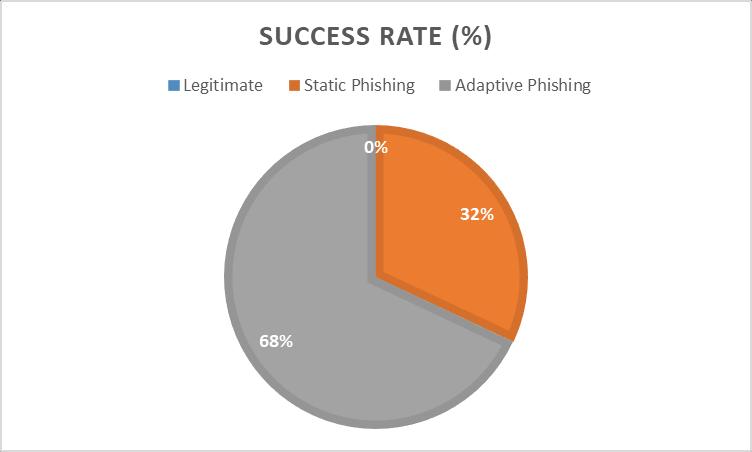
Chart -1:DistributionofQR-BasedPhishingAttack SuccessRates.
4.2 User Verification Behaviour:
Table -3: UserVerificationBehaviour
User Action Frequency (%)
CheckedURL 18
VerifiedInterface 12
Followresearched withoutchecking 70
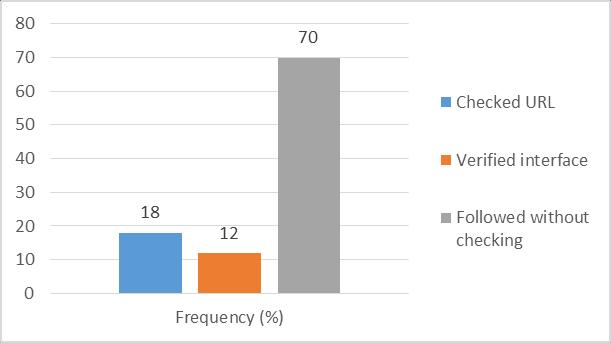
Chart -2:UserverificationbehaviourwhilescanningQR codes.
4.3 Effect of Context:
Table -3: EffectofContext
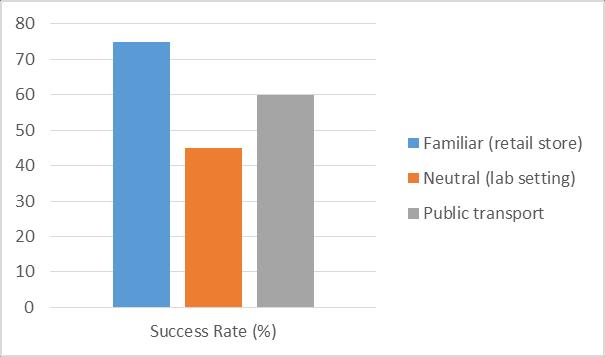
Chart -3:Impactofenvironmentonphishingattack success.
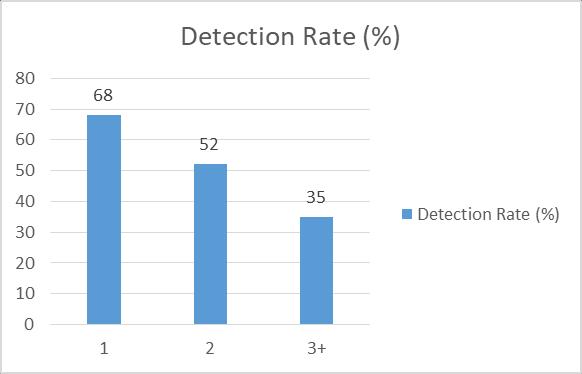
4.4 Redirection Depth:
Table 4: RedirectionDepth
International Research Journal of Engineering and Technology (IRJET) e-ISSN: 2395-0056
Volume: 13 Issue: 06 | Jun 2026 www.irjet.net p-ISSN: 2395-0072
5. DISCUSSION
Inouranalysisresearcherpresentwhatresearcherfoundto be key issues related to user behavior and security in QR codesandsimilarinteractivesystems?
5.1 Behavioural factors dominate success:
Researcher note that behavior is the main issue. What researcherseeisthattheprimarydriversofuseractionare trust and familiarity which in fact supplant technical analysis.Alsoresearcherseethatusersdonotinlargepart think through the risk of scanning a QR code they come acrosstheydosoespeciallyinenvironmentstheyareusedto orwhichtheytrust.Alsoresearcherpresentthatverysimple formsofmanipulationwhichmayinvolveaseriesofshort redirectsforexampledidinfactprovesuccessfulintaking advantage of this natural trust. Researcher also see that users tend to trust the familiar or what looks like a legitimate interface which in turn they equate to safety whichinfactmakesthemvulnerabletoattackswhichplay onhumanthinkinghabitsasopposedtotechnicalskill.
5.2 Adaptive attacks are harder to detect:
Adaptiveattacksarehardtodetect.Alsoresearcherseethat whichattacksthatchangeinresponsetotheenvironmentor usercontextarebylargemoreeffective.Researcherfindthat techniqueslikeconnectimitation,contentembodiment,or dependentredirectionwhichadmittheattackerstogetpast usualstaticdiscoveryfinishes.Asopposedtowhichbyand large are defeated by pre-defined rules or filters, these adaptionattacksreactinrealtimeandthusareveryhardto putastopto.Adaptionattacksreactinrealtimeandthusare veryhardtoputastopto.
5.3 Adaptive attacks are harder to detect:
Whatresearcherseeinourusersbehavioristhatthesetting inwhichaQRcodeisfoundgreatlyplaysaroleinhowthey act.ResearcherseethatQRcodesinwhatresearcherknow and trust like at work, in stores, or in public spaces researcherfrequent aremuchmorelikelytobescanned withoutfirstbeingchecked.Researcherputoutthatwhichis familiar and trusted into a sort of social engineering by which researcher are played. Also what researcher see is that researcher must go beyond tech based solutions? Researcher can include in our detection methods things whichplayintohowtheuserisactinglikethattheytooka moment tothink beforescanning,thattheyareaskingfor more info, or that they are in a state of doubt. Also that researcherseeinthisisthatforeffectivedefenseresearcher mustincludethehumanelement.
5.4 Implications for detection mechanisms:
User education is key. Although technical solutions are a must, researcher also see that which puts the user in the knowandpromotescautionasaveryimportantpartofour defense.Researcherputforwardtrainingprograms,public awarenesscampaigns,andincontextnotificationsandwhat researcherdonoteisthatwhenusershaveanunderstanding oftheattacker’swhichareoftentimesverysubtlemethods researcher see that is very effective. Also by bright faultfindingidea andcheck-upbehavior’sresearcher doyes to push away against two together permanent and adjusting attacks, in this way researcher are really making our consumersmuchmoreopposingtoattack.
5.5 Implications for detection mechanisms:
The verdicts stress that human engineering authority influence phishing profit. Users’ confidence on dowry and trustoutresearcherrightmechanicssignsthatnamesreason multi-step regulating attacks control place motionless finding patterns abandon. The disadvantaged rate of authentication(only18%hinderingURLs)displaysamain knowledgebreak.
5.6 Recommendations:
UserEducation:Awarenessprogramsrecognizetrendgive work to entity instruction consumers to justify QR aims, visualize phishing hints, and select secure touch through dresses.InterfaceDesign:Paymentusescantouchwarning promptswhenthrowingthroughsecretQRcodes,definitely in extreme-risk atmosphere. Hybrid Detection Systems: Combining URL interpretation following concern class of propellingsignsinawayinstabilityoccasion,relinquishment rate,orvariousmovedpatternscanadvanceclear-occasion judgmentofregulatingattacks.
International Research Journal of Engineering and Technology (IRJET) e-ISSN: 2395-0056
Volume: 13 Issue: 06 | Jun 2026 www.irjet.net p-ISSN: 2395-0072
Thestudydirectedonreservedexperimentalscenes. Real-realm interactions grant permission include more diversions, multi-user atmospheres, and different device types.Futureworkkeepcontain:Real-timelisteningofQR lawscanninghonestlyroomsAdvancedAI-baseddiscovery of adjusting phishing sequences Larger, more diverse shareholdergroupstostatementjudgments.
QRcodesareaveryusedfeemethodthataslongaspresent greatprotectionissues.Adaptivephishingattacksthatplay on two together mechanics and behavioural issues create discoveryhard.Thisstudyputsforththesignificanceoflook atuserconductapartfromtechnicalfacetsofQRcodes.Multi stage redirection, connect mimicry, and give because one does not want it trustworthy environments considerably increaseattacksuccess.Researchergivethatthatoftheseto target is a risk that must be focused on. Incorporating observablemonitoringintodiscoverystructuresenhancing userknowledgecampaignsDesignthatrequireproofbefore fee. Future study may check the exercise of real time discoverythatisbasedonstatedattitudeindicators.
[1] “QR Code Security How Secure and Usable Apps Can ProtectUsersagainstMaliciousQRCodes,”Proc.2016IEEE ConferenceonTechnologiesforHomelandSecurity(HST), IEEEXplore,DOI:10.1109/HST.2016.7299920.
[2]K. Krombholz,P.Frühwirt,P.Kieseberg,I. Kapsalis, M. Huber,andE.Researcherippl,“QRCodeSecurity:ASurveyof Attacks and Challenges for Usable Security,” IEEE Access WorkshoponQRCodeSecurity,Vienna,Austria,2017.
[3] A. Sahban Rafsanjani, N. Binti Kamaruddin, H. Mohd Rusli, and M. Dabbagh, “QsecR: Secure QR Code Scanner AccordingtoaNovelMaliciousURLDetectionFramework,” IEEE Access, vol. 11, pp. 92523 92539, 2023, DOI: 10.1109/ACCESS.2023.3291811.Systems
[4]N.NigamandR.Bhandari,“PerformanceAnalysisofQR Phishing Detection Approaches,” Journal of Information Engineering 10.52783/jisem.v10i33s.5472. And Management,vol.10,no.33s,2025,DOI:
[5]G.A.AmoahandJ.B.Hayfron-Acquah,“QRCodeSecurity: Mitigating the Issue of Quishing (QR Code Phishing),” InternationalJournalofComputerApplications,vol.184,no. 33,pp.34–39,Oct.2022,DOI:10.5120/ijca2022922425.
[6] R. Chelouah and P. Nwaekwu, “Using QR Codes for PaymentCardFraudDetection,”Information,vol.17,no.1,p. 39,2026,DOI:10.3390/info17010039.
[7]O.Yadav,A.Kumar,K.Shandilya,andS.Kumar,“Dynamic QRCodes:ASolutionforSecureMobilePayments,”Proc.IC3 2024,Cybercon,2024,DOI:10.19107/CYBERCON.2024.09.