
International Research Journal of Engineering and Technology (IRJET) e-ISSN: 2395-0056
Volume: 12 Issue: 07 | Jul 2025 www.irjet.net p-ISSN: 2395-0072
International Research Journal of Engineering and Technology (IRJET) e-ISSN: 2395-0056
Volume: 12 Issue: 07 | Jul 2025 www.irjet.net p-ISSN: 2395-0072
Tanmay Khaladkar
Tanmay Khaladkar , Department of Mechatronics Engineering, Symbiosis Skills & Professional University, Pune, Maharashtra, India
Abstract - The NodeMCU (ESP8266) microcontroller, the MAX30100 pulse oximeter sensor, and a 0.96-inch OLED display were utilized to develop the small, reliable, and lowcost IoT-based pulse oximeter system described in this paper. The system's purpose is continuous measurement of two important health parameters, Blood oxygen saturation (SpO₂) and pulse rate (BPM), and display in real-time on the OLED screen. In addition to displaying locally, the measured data is sent via Wi-Fi to Blynk IoT platform wirelessly. This allows users to monitor remotely (from their home) these health metrics from the mobile application through Blynk. Since this solution is simple to use, inexpensive, and continuous health monitoring, it is helpful for individuals living in rural and remote areas of the country, elderlypatients requiringregular monitoring, and individuals recovering at home from COVID19 or other comparable ailments.
Key Words: NodeMCU, MAX30100, OLED Display, Pulse Rate,SpO₂,Blynk,IoTHealthcareMonitoring
Pulseoximetersareessentialmedicaldevicesthatenablethe monitoring of two important physiological parameters heart rate and blood oxygen saturation (SpO₂). With the recentfocusonremotehealthcare,theuseofportablehealth monitoring devices,andthe two coming together through theintegrationofInternetofThings(IoT)technologywith biomedicalsensors,theneedforIoTintegrationhasbecome important.ByincorporatingIoT,real-timetracking,remote access,anddatalogging,patientcarecanbeenhancedand healthanomaliescanbedetectedearly.Themaingoalofthis project is to build and develop a low-cost, portable, and energy-efficient pulse oximeter system using NodeMCU (ESP8266)microcontrollerandBlynkIoTPlatform.Thegoal istoprovidereal-timevitalsignmonitoringwhileallowing users, (patients, caregivers and healthcare professionals) remote,smartphoneapplicationaccess.Thisdesignprovides thepossibilityforapplicationinhome-basedmonitoring,in rural healthcare, and as a post-hospitalization recovery periodmeasurementtool.
The goal is to create a real-time, mobile-based, low-cost health monitoring system with a low power model. This
system can be used to monitor patient data, especially in rural settings without regular medical oversight or during quarantine.
TheNodeMCUisaWi-Fi-enabledmicrocontrollerthatis greatforInternetofThingsprojects.TheMAX30100isan integrated pulse oximetry and heart-rate monitor sensor. WiththeBlynkplatform,youcaneasilyaddmobileappsthat showsensordataonamobiledevice.
Thedesignofthehardwareforthisproposedprojectisbased aroundaNodeMCUESP8266microcontrollerthatformsthe mainprocessingandcommunicationunitoftheproject.This unit interfaces with the MAX30100 pulse oximeter sensor thatmeasurestherelevantvitalparameters-bloodoxygen saturation (SpO₂) and heart rate (BPM). A local real-time displayofthecritical parametersisprovidedusinga 0.96inch OLED screen based on the SSD1306 driver. The MAX30100sensorcommunicateswiththeNodeMCUusing I²C (Inter-Integrated Circuit) and the OLED display also communicatestotheNodeMCUusingI²Callowingsensorand display data to be exchanged over only two wires. The ApplicationfirmwareisbuiltintheArduinoIDEdevelopment platform,incorporatingalllibraries,whichsupportvarious functions,likeWi-Fimenu,acquisitionofsampledatafrom sensor,disruptingthefunctionofanOLEDdisplay,andwith theBlynkplatform.ThesensordataisdisplayedontheOLED andtransferredoverWi-FitotheBlynkplatformforremote monitoringonauser-friendlymobiledashboard.
Both devices share the I²C bus but operate with different addresses. The NodeMCU sends data to the Blynk server throughWi-Fi.
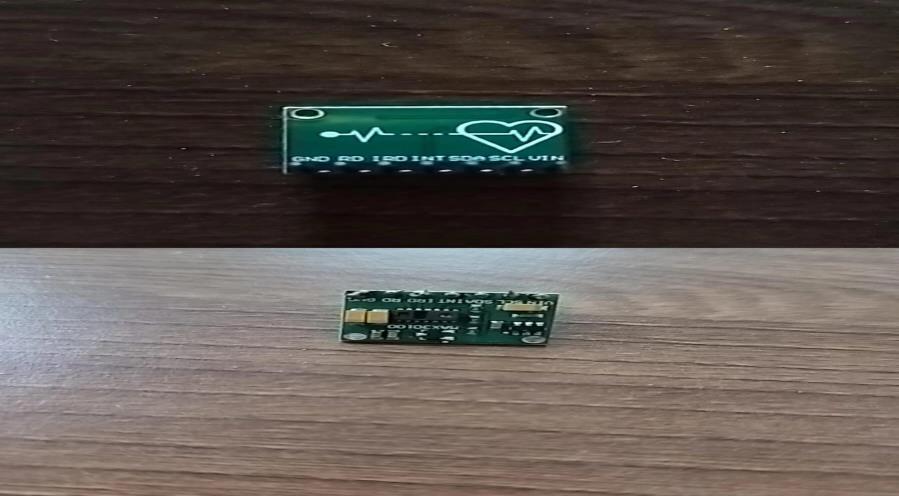
TheMAX30100isacompactandlow-poweropticalsensor thatusesoptics,a photodetector,twoLEDs,andlow-noise analoguesignalprocessingtomeasurebloodoxygenlevels and pulse rate. In summary, the device combines these elements to operate based on the principle of photoplethysmography(PPG)byemittinglightanddetecting reflected light traversing human tissue to measure SpO₂
International Research Journal of Engineering and Technology (IRJET) e-ISSN: 2395-0056
Volume: 12 Issue: 07 | Jul 2025 www.irjet.net p-ISSN: 2395-0072
(oxygenlevelsinyourblood)andheartrate.TheMAX30100 communicateswithmicrocontrollersusingtheI²Cprotocol. The device has an internal temperature sensor for compensation and can take supply voltage from 1.8 to 3.3 volts. You may need to use external pull-up high-value resistorsforeffectivecommunication.
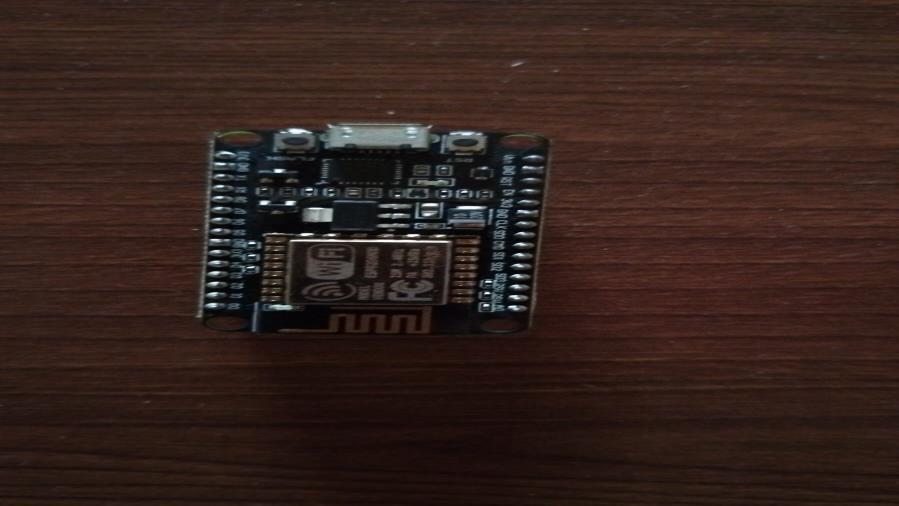
The NodeMCU:
TheNodeMCU,isanopen-sourcedevelopmentboardbased ontheESP8266Wi-FimodulethatisperfectforIoTprojects since it contains built-in Wi-Fi capability and can convenientlybeprogrammedusingtheArduinoIDE.Italso includes a USB-to-Serial interface and is capable of UART communicationoveritsstandardTX,RX,3.3V,GNDandGPIO pinsforinterfacingwithperipherals.TheNodeMCUoperates at 3.3V logic level, draws very little power and does not requiretheuseofanexternalprogrammer.Powerissupplied viatheUSBconnectionorthroughits5Vsupplywhichisa standardfeatureinprototypinganddebugging.
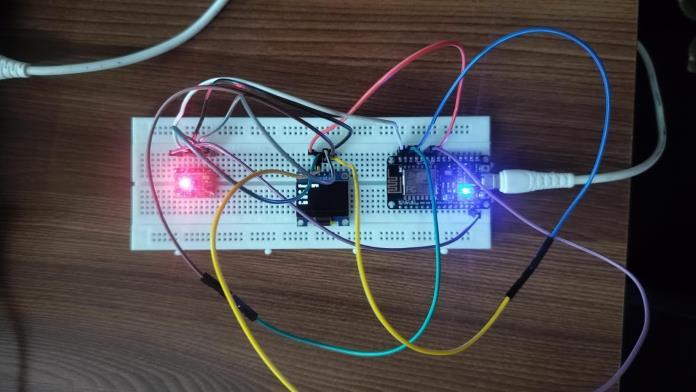
Hardware Connections:
MAX30100: VCC → 3.3V, GND → GND, SDA → D2, SCL → D1
OLED Display: VCC → 3.3V, GND → GND, SDA → D2, SCL → D1
The Arduino IDE is responsible for coding and includes libraries such as MAX30100_PulseOximeter.h, Wire.h, Adafruit_GFX.h, Adafruit_SSD1306.h, and BlynkSimpleEsp8266.h.
TheprogramsetstheBlynkauthtoken,initializesthesensor, connects to Wi-Fi,andcontinuously reads the SpO₂ , BPM, anddisplaystheSpO₂valueevery2secondstoavirtualpinin BlynkandontheOLED.
TherearetwovaluedisplayscreatedintheBlynkmobileapp:
V0→BPM
V1→SpO₂
Userscanmonitortheirvitalsinreal-timefromthecomfort oftheirhome.
The evaluation of the developed system and performance under real-world conditions took place in the home environment, where SpO₂ and pulse readings from the MAX30100sensorwerecomparedtothevaluesreadfroma standard commercial fingertip pulse oximeter during the testing. The values showed strong agreement with the commercialdeviceandtherewasahighlevelofaccuracyfor the values. Latency for communicating data and showing readingsfromthesystemwasalsoverylow,withreadings almost instantaneously displayed on the nearby OLED screenandfurtherrelayedtotheBlynkmobiledashboarda short distance away. This indicates the system can be reliableandresponsiveforreal-timehealthmonitoring.
International Research Journal of Engineering and Technology (IRJET) e-ISSN: 2395-0056
Volume: 12 Issue: 07 | Jul 2025 www.irjet.net p-ISSN: 2395-0072
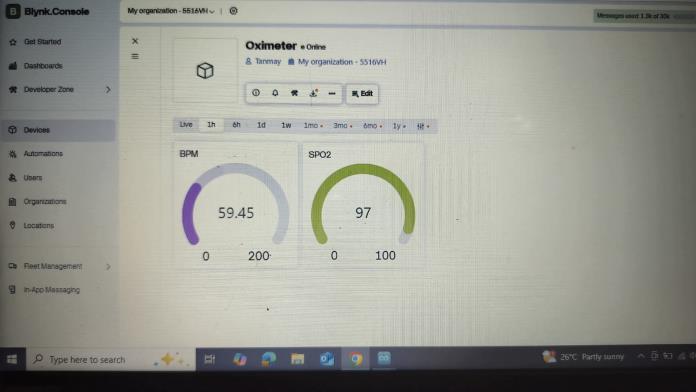
The same system results were tested on the Blynk IOT mobileapplicationandtheyweresuccessful.
Blynk is a reliable Internet of Things (IoT) platform that helpsdevelopers buildIoT projectsthatcan becontrolled andmonitoredoveranetworkinrealtime.WithsimpleAPIs andwidgets,BlynkconnectsmicrocontrollerslikeNodeMCU toacloudserver.Userscanviewreal-timesensordataand interact with the system remotely using the Blynk mobile app,whichfeaturesaweb-likeinterface.Theappisavailable fordownloadonanyiOSorAndroiddevice.
In the oximeter project, real-time SpO₂ and heart rate readingsfromtheMAX30100sensoraredisplayedthrough Blynk.TheappgetsconstantupdatesfromtheNodeMCUvia Wi-Fi, allowing users to monitor their vital signs from anywhere.Thisinteractivesetupenablesrecoveryathome, seniorcare,andremotemonitoring.
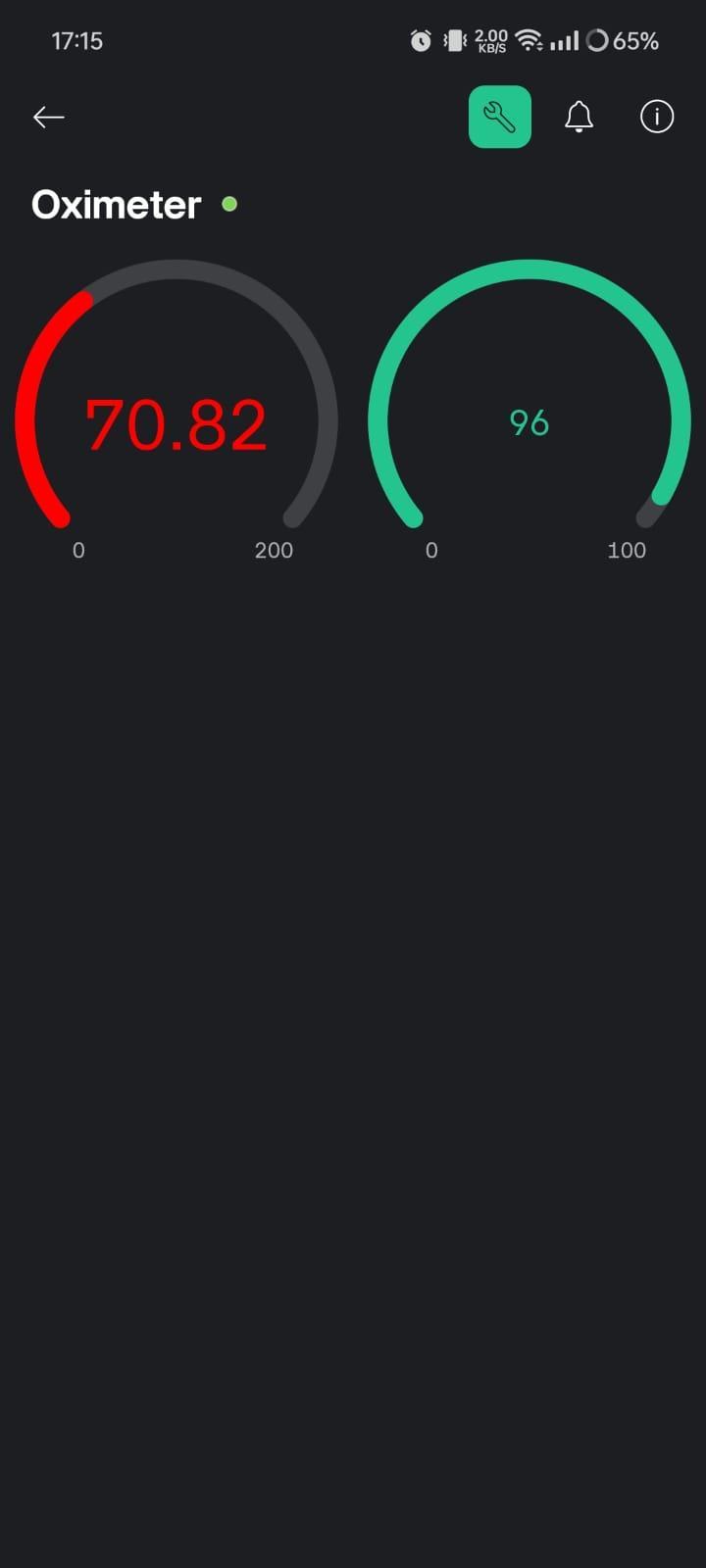
The results show that developing an IoT-based health monitordeviceispossiblewithNodeMCU,MAX30100,and Blynk.TheIoThealthmonitorisalsoaffordableandeasyto build,makingitsuitableforbasicmedicalmonitoring.Future improvementscouldincludecloudstorage,batterypower formobility,andalertsforabnormalreadings
International Research Journal of Engineering and Technology (IRJET) e-ISSN: 2395-0056
Volume: 12 Issue: 07 | Jul 2025 www.irjet.net p-ISSN: 2395-0072
[1]Datasheet:MAX30100PulseOximeterSensor
[2]https://docs.blynk.io
[3]AdafruitSSD1306OLEDLibraryDocumentation
[4]https://github.com/oxullo/Arduino-MAX30100
[5]ArduinoIDE–https://www.arduino.cc/en/software
© 2025, IRJET | Impact Factor value: 8.315 | ISO 9001:2008 Certified Journal | Page861