
International Research Journal of Engineering and Technology (IRJET) e-ISSN: 2395-0056
Volume: 13 Issue: 04 | Apr 2026 www.irjet.net p-ISSN: 2395-0072

International Research Journal of Engineering and Technology (IRJET) e-ISSN: 2395-0056
Volume: 13 Issue: 04 | Apr 2026 www.irjet.net p-ISSN: 2395-0072
Ms. Minugu B1 , Ranjitha U2 , Sahil Pasha3 , Shriya Shridhar4 , Vishwasnayaka S5
1Assistant Professor, Department of ECE, PES College Of Engineering Mandya, Karnataka, India 2345Students of ECE, PES College Of Engineering Mandya, Karnataka, India
Abstract - Heart-related disorders are a major cause of deathworldwide,makingearlydetectionextremelyimportant for improving survival rates. Continuous monitoring of heart activity can help identify abnormal conditions at an early stage and reduce serious health risks. This work presents a smart heart health monitoring and prediction system that combines sensor-based measurement with intelligent data analysis. The system uses a pulse sensor to measure heart activity in terms of beats per minute (BPM) and displays the results in real time. Based on the measured values, the system categorizesheartconditionsintonormalrange,lowpulserate, and high pulse rate. In addition to hardware monitoring, a predictive model is developed using machine learning techniques toanalyze patient medicaldata.Themodelstudies different health parameters such as age, blood pressure, cholesterol level, and heart rate patterns to determine the possibility of heart disease. The proposed approach provides both monitoring and prediction, which improves the effectiveness of healthcare systems. The results show that the system can assist in early identification of cardiovascular problems and support better decision-making in medical applications.
Key Words: MachineLearning(ML),PulseRateMonitoring, Beats Per Minute (BPM), Internet of Things (IoT), Electrocardiogram(ECG),Real-TimeHealthcareSystem.
Cardiovasculardiseasesarebecomingincreasinglycommon duetomodernlifestylechanges.Factorssuchasstress,lack of physical exercise, unhealthy diet, and irregular daily routinescontributesignificantlytoheart-relatedproblems. Manyindividualsremainunawareoftheirconditionuntilit becomessevere,whichhighlightsthe needforcontinuous monitoringsystems.Heartrateisoneofthemostimportant indicatorsofcardiachealth.Itisusuallymeasuredinbeats perminute(BPM),whichrepresentsthenumberoftimesthe heartbeatsinoneminute.Asuddenincreaseordecreasein BPMmayindicateabnormalconditionssuchastachycardia (highrate)orbradycardia(lowrate).Traditionaldiagnosis methods depend on periodic medical checkups and laboratorytests.Althoughthesemethodsarereliable,they do not provide continuous observation. With the advancement of digital healthcare technologies, it is now possible to design systems that can monitor physiological
signals in real time. Machine learning plays a key role in modern healthcare by analyzing large amounts of patient data.Ithelpsinidentifyingpatternsandpredictingpossible diseasesbeforetheybecomecritical.Byintegratingsensorbased monitoring with predictive algorithms, a smart healthcaresolutioncanbedeveloped.Themainaimofthis projectistodesignasystemthatcontinuouslytracksheart activity and predicts the likelihood of heart disease using data-driven techniques. This approach supports early diagnosisandimprovespreventivehealthcare.
Manyresearchershavefocusedondevelopingsystemsfor heartdisease prediction using machinelearning methods. Different algorithms have been applied to analyze patient data and classify disease conditions. Decision tree models arecommonlyusedbecausetheyprovideaclearstructure fordecision-making.Theysplitdataintodifferentbranches based on conditions, making them easy to understand. Support Vector Machines are also widely used for classificationproblemsduetotheirabilitytohandlecomplex datasets. Random Forest algorithms combine multiple decision trees to improve prediction accuracy and reduce errors. In recent studies, deep learning models such as neural networks have been used to capture complex relationshipsbetweenmedicalparameters.
However,mostexistingapproachesfocusonlyonsoftwarebasedpredictionanddonotincludereal-timemonitoring. Somesystemsusewearabledevicestotrackheartactivity, buttheylackintegrationwithpredictivemodels.Thiswork improves upon existing methods by combining both hardware monitoring and machine learning analysis. The integrationprovidesamorepracticalandefficientsolution forreal-worldhealthcareapplications.
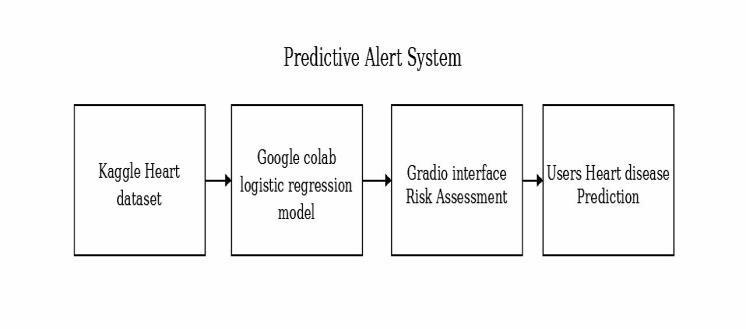
Theproposedsystemconsistsoftwomaincomponents:a hardware monitoring unit and a software prediction unit. Both components work together to provide accurate and real-time health analysis.The hardware unit uses a pulse sensortomeasureheartactivity.Thesensordetectschanges inbloodflowandconvertsthemintoelectricalsignals.These
International Research Journal of Engineering and Technology (IRJET) e-ISSN: 2395-0056
Volume: 13 Issue: 04 | Apr 2026 www.irjet.net p-ISSN: 2395-0072
signals are processed to calculate heart rate in beats per minute(BPM).
Thesystemclassifiesheartconditionsintothreecategories:
• Lowheartratecondition
• Normalheartraterange
• Highheartratecondition
The measured values are displayed on an LCD screen, allowinguserstoeasilyunderstandtheirheartstatus. Thesoftwareunitusesamachinelearningmodeltoanalyze medicaldata.Itconsidersmultipleparameterssuchasage, cholesterol level, blood pressure, and heart rate trends. Based on these inputs, the system predicts whether the patientislikelytohaveheartdisease. This combined approach enhances the accuracy and usefulness of the system. It provides both immediate feedback and long-term prediction, making it suitable for healthcaremonitoring.
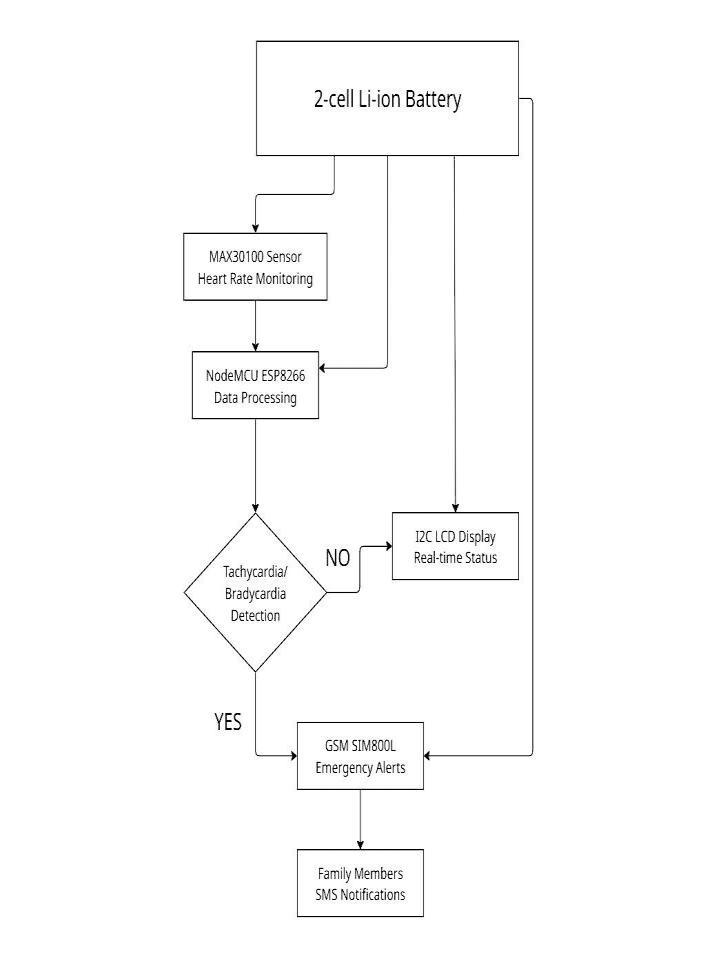
4. METHODOLOGY
The methodology includes data collection, preprocessing, modeltraining,andprediction.
[1] Data Collection
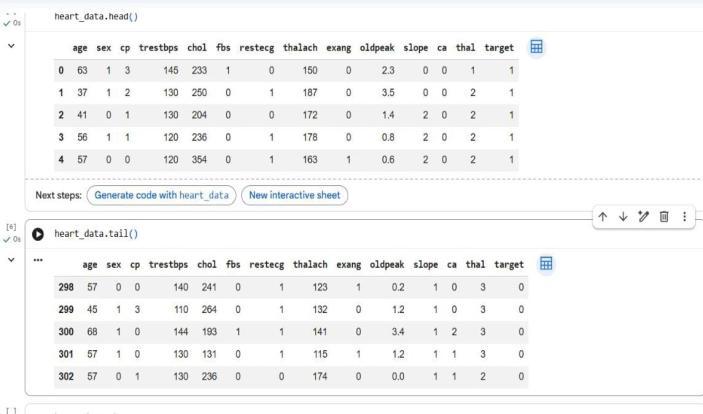
The dataset used contains important medical attributes relatedtohearthealth.Theseincludeage,gender,chestpain type,bloodpressure,cholesterollevel,andmaximumheart rate.Theseparametershelpinidentifyingpatternsthatare associatedwithheartdisease.Thedatasetiscollectedfrom reliablesourcestoensureaccuracy.
Table – 1: SampleDatasetAttributes
Attribute Description
Age
Sex
ChestPainType
BloodPressure
Cholesterol
MaximumHeartRate
Target
Ageofthepatient
Genderofthepatient
Type of chest pain experienced
RestingBloodPressure
Serumcholesterollevel
Maximum heart rate achieved
Presenceorabsenceofheart disease
[2] Data Preprocessing
Before training the model, the data is cleaned to remove missing or incorrect values. Normalization techniques are appliedtobringallvaluesintoastandardrange.Thisstep improvestheperformanceofthealgorithm.Categoricaldata isconvertedintonumericalformsothatitcanbeprocessed bymachinelearningmodels.
[3] Model Training
The system uses Logistic Regression for prediction. This algorithm is suitable for binary classification problems, wheretheoutputiseitherpresenceorabsenceofdisease. The model is trained using historical data, allowing it to learn relationships between different health parameters. Oncetrained,itcanpredictresultsfornewinputdata.
Research
Volume: 13 Issue: 04 | Apr 2026 www.irjet.net
Thesystemwastestedusingbothhardwareandsoftware components.Thepulsesensorsuccessfullymeasuredheart rateanddisplayedtheresultsontheLCDscreen.
Heart rate values were categorized based on beats per minute(BPM):
• Below60BPMindicateslowheartrate
• Between 60 and 100 BPM indicates normal condition
• Above100BPMindicateshighheartrate
Theseclassificationshelpinidentifyingabnormalconditions quickly.Themachinelearningmodelanalyzedpatientdata andprovided predictions withgoodaccuracy.The system achieved approximately 85% accuracy, which indicates reliableperformance.Theresultsshowthatcombiningrealtime monitoring with predictive analysis improves healthcareefficiency.Thesystemcanbeusedasasupportive toolforearlydiagnosis.
Table – 2: HeartRateClassification
Heart Rate (BPM)
Condition
<60BPM Bradycardia
60–100BPM
5.1
Normal
>100BPM Tachycardia
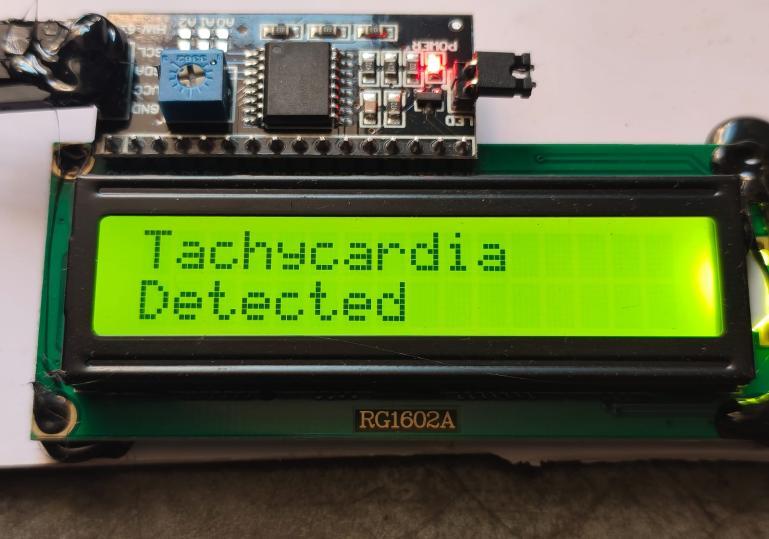
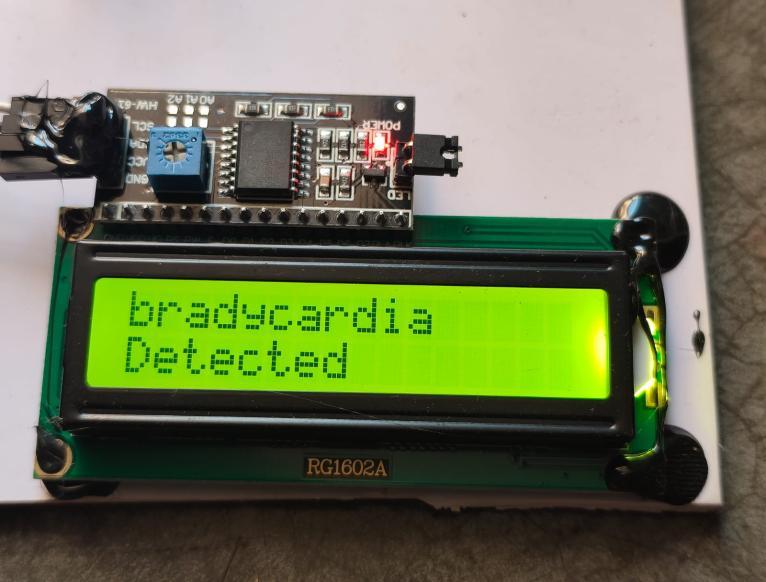
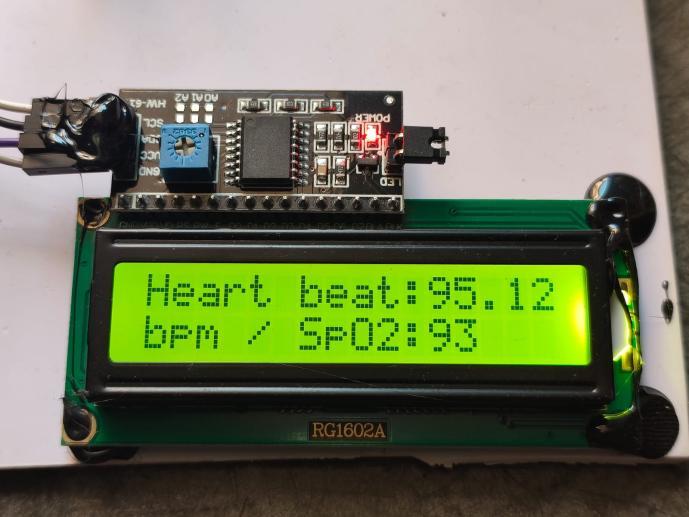
Thehardwaresystemwastestedtomeasureheartrateusing apulsesensor.Itdetectedheartbeatsandcalculatedtherate in beats per minute (BPM). The output was shown on the LCDscreeninrealtime.Thesystemclassifiedthereadingsas low,normal,orhigh.The resultswerestableandupdated quickly.Thisshowsthatthehardwareworkswellforbasic heartmonitoring.
International Research Journal of Engineering and Technology (IRJET) e-ISSN: 2395-0056
Volume: 13 Issue: 04 | Apr 2026 www.irjet.net p-ISSN: 2395-0072
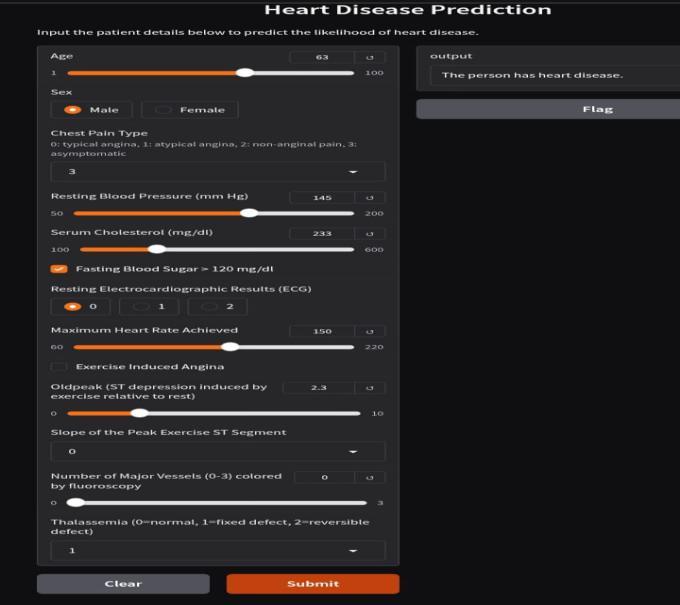
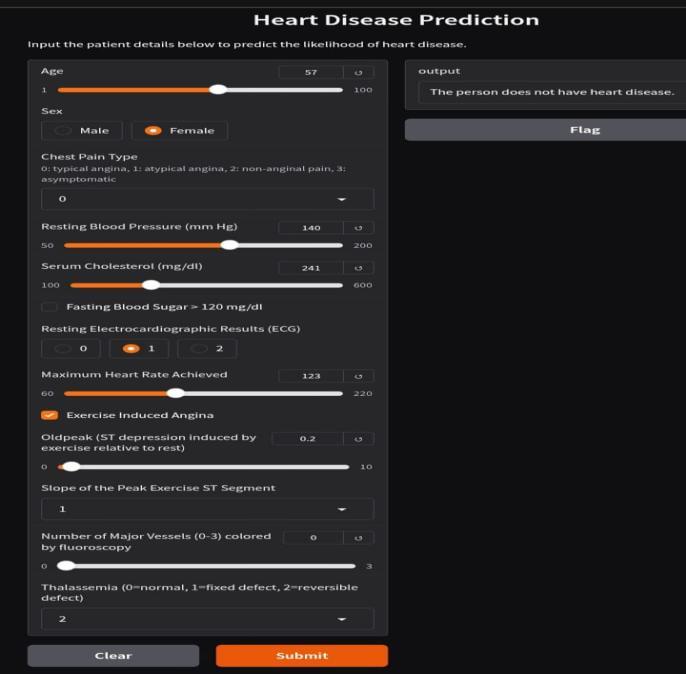
Thesoftwaremodelwasusedtopredictheartdiseasebased onpatientdata.Itanalyzedfactorslikeage,bloodpressure, andcholesterol.Thesystemgaveresultsshowingwhether the person may have heart disease or not. Logistic Regression was used for prediction. The model achieved around 85% accuracy. The results were fast and easy to understand.
The developed system provides an effective solution for monitoring heart activity and predicting heart disease. It combinessensor-basedmeasurementwithmachinelearning techniques to deliver accurate results. The hardware unit measurespulserateanddisplaysreal-timedata,whilethe software model analyzes health parameters to predict diseaserisk.Thisdualapproachenhancesthefunctionality ofthesystem.Theresultsdemonstratethatthesystemcan assist healthcare professionals in early detection and monitoring.Italsohelpsindividualsbecomemoreawareof their health condition. Overall, the integration of smart technologiesinhealthcareimprovesefficiencyandsupports preventivemedicalpractices.
ThesystemcanbefurtherimprovedbyintegratingInternet ofThings(IoT)technologyforremotemonitoring.Thiswill allow doctors to access patient data from any location. Additional parameters such as oxygen level, body temperature, and ECG signals can be included to improve prediction accuracy. These parameters provide more detailed information about heart health. Advanced algorithms such as deep learning can be used to enhance prediction performance. Mobile and web applications can also be developed to make the system more userfriendly.Futuredevelopmentscanincludealertsystemsthat
International Research Journal of Engineering and Technology (IRJET) e-ISSN: 2395-0056
Volume: 13 Issue: 04 | Apr 2026 www.irjet.net p-ISSN: 2395-0072
notifyusersduringabnormalconditions.Thiswillimprove emergencyresponseandpatientsafety.
[1] A. Kumar and S. Reddy, “IoT-Based Wearable Heart Monitoring Systems,” International Journal of Smart HealthcareSystems(IJSHS)
[2] L. Zhang, Y. Chen, and F. Liu, “Cloud-Assisted ECG MonitoringforEarlyCardiacRiskDetection,”Journalof CloudComputingApplications(JCCA)
[3] R.PatelandT.H.Wong,“Low-PowerEdgeDevicesfor Cardiovascular Health Tracking,” Edge Computing in HealthcareJournal(ECHJ)
[4] J. Fernandes and K. Rao, “Mobile Applications for RealTimeECGVisualization,”MobileHealthInnovations Magazine(MHIM)
[5] T. Alvarez and M. Choi, “Predictive Health Monitoring Using Physiological Time-Series Data,” Smart Health AnalyticsJournal(SHAJ)