
International Research Journal of Engineering and Technology (IRJET) e-ISSN: 2395-0056
Volume: 13 Issue: 05 | May 2026 www.irjet.net p-ISSN: 2395-0072

International Research Journal of Engineering and Technology (IRJET) e-ISSN: 2395-0056
Volume: 13 Issue: 05 | May 2026 www.irjet.net p-ISSN: 2395-0072
Anandhanarayanan M1 , Indra kumar C2 , Peter Packiaraj G3 , Ponraj M4
1Final year B.E Marine & PSN CET, Tirunelveli, Tamil Nadu.
2 Assistant Professor, Dept. Of Marine Engineering, PSN CET, Tirunelveli, Tamil Nadu.
3Assisant professor, Dept. Of Marine Engineering, PSN CET, Tirunelveli, Tamil Nadu.
4Assisant professor, Dept. Of Marine Engineering, PSN CET, Tirunelveli, Tamil Nadu. ***
Abstract - This project explores the innovative integration ofahydroelectricpowergenerationsystemwithinaship'ssea chest line. The sea chest is a critical inlet for seawater intake, serving various onboard systems such as cooling and ballast. Byinstallingasmallturbineandgeneratorinthisline,weaim to use the kinetic energy of the seawater flow to produce supplemental electricity, reducing fuel dependency and improving the ship's overall energy efficiency. The study details the design, installation and operational impact of the hydroelectric system while addressing key engineering considerations such as turbine selection, corrosion resistance and minimal flow disruption. Performance testing demonstrates the system's ability to generate additional electricity without compromising essential ship functions. Furthermore, this solution aligns with sustainability goals by reducinggreenhousegasemissionsandfuelcosts,contributing to the maritime industry's environmental responsibility. Challenges including biofouling, variable flow rates and regulatorycompliancewereidentifiedandmitigatedthrough material selection, adaptive control systems and safety protocols. Theprojectconcludesthathydropowergeneration from a sea chest line is a viable and scalable option for increasing energy efficiency on marine vessels, with the potential for adoption across a variety of ship types and retrofitting applications.
Key Words: Hydroelectric power generation, Marine energy efficiency, Renewable energy in the maritime sector, Hybrid energy systems.
Hydroelectricpowerisaproventechnologyusedtogenerate electricity using water flow. In this project, we explore an innovativeapplicationofhydroelectricpowergenerationby integratingahydroelectricpowersystemwithinaship'ssea chestline.Theseachestisaninletintheship'shullthrough which seawater is drawn for cooling, ballast and other onboardsystems.Byinstallingahydroelectricgeneratorin thisline,weaimtocapturesomeofthekineticenergyofthe flowingseawatertoproduceelectricity,therebyimproving
the ship's overall energy efficiency and reducing fuel consumption.
Themainobjectivesofthisprojectare:
To design and install a hydroelectric generator withinaship'sseachestline.
To evaluate the feasibility of generating supplementaryelectricitythroughseawaterflow.
Measuringtheimpactofthissystemontheship's energyefficiencyandemissionreduction.
Identifying the technical challenges and potential benefitsofsuchaninstallation.
Thescopeofthisprojectincludes:
Designing a small hydroelectric power generator suitableforinstallationwithintheseachestline.
Modifyingtheship'sseachestlinetoaccommodate thegeneratorwithoutcompromisingseawaterflow tootheressentialsystems.
Performing performance testing to evaluate the system'spoweroutputandreliability.
Analyzingthefinancialandenvironmentalimpactof thepowergenerated
SystemOverview:Theproposedsystemconsistsofasmall hydroelectric turbine placed within the sea chest line. As seawaterisdrawnthroughtheseachestforvarioususes,it flowsthroughtheturbine,rotatingittogenerateelectricity.
TurbineSelection:Theturbinedesignmusthandlevariable flow rates without excessive pressure loss, which could affect the availability of seawater for critical systems. A compact,low-headturbine(e.g.,KaplanorFrancis-type)is selected because of its efficiency at the low pressure and flowconditionstypicalofseachestlines.
International Research Journal of Engineering and Technology (IRJET) e-ISSN: 2395-0056
Volume: 13 Issue: 05 | May 2026 www.irjet.net p-ISSN: 2395-0072
Generator and Control System: A compact generator is coupledtotheturbine,whichconvertsmechanical energy into electrical energy. A control system ensures that the generated electricity is safely integrated into the ship's electricalsystemorstoredinbatteries.
Water enters the sea chest through the ship's hull as it moves forward into the sea, usually at high velocity. Turbinesinstalledinsidetheseachestorwithinaspecially designedbypasschannelarespunbytheflowofwater.This rotationalmotiondrivesgeneratorsthatproduceelectrical energy. The electricity generated can be used to supply auxiliary systems on the ship, such as lighting, navigation andotheroperationalmachinery,thusreducingdependence onfuel-poweredgeneratorsortheship'smainengines.
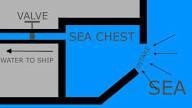
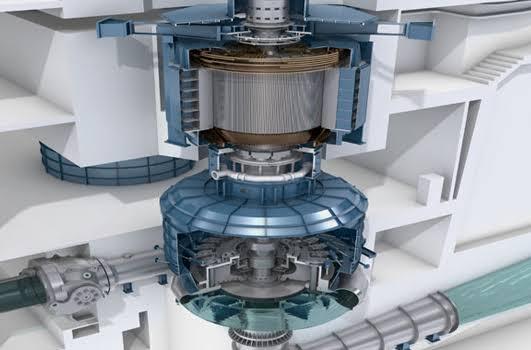
Installationplanning:Turbineandgeneratorassembliesare fabricatedinadvanceandintegratedwiththeseachestline duringascheduledmaintenanceperiod.Modificationstothe sea chest and piping are kept to a minimum to avoid extensivedowntimeandstructuralimpacts.
Safety and testing: After installation, extensive tests are carried out to ensure that there are no leaks or pressure problemsintheseachestline.Safetymeasuresaretakento
immediatelydisconnectthegeneratorincaseofabnormal seawater flow or turbine malfunction. - Cooperating with navalandlawenforcementauthorities
Data collection: Data on flow rate, power generation, pressuredropandperformanceoftheseawatersystemare collected.Real-timemonitoringenablesadetailedevaluation ofenergyproductionandimpactontheseawatersystem.
Energy analysis: The potential energy production of the system is calculated based on the flow data, with daily, monthlyandannualpowergenerationanalysed.
EfficiencyandROI:Efficiencyisevaluatedbycomparingthe powergeneratedtotheinstallationandmaintenancecosts, and an ROI analysis is performed to assess the financial viabilityofthesystem.
Fuel savings and emission reduction: By generating supplementary power, the system can reduce reliance on dieselgenerators,leadingtoreducedfuelconsumptionand emissions.
Maintenance and operating costs: The low-maintenance design of the hydroelectric generator reduces operating costs,withfrequentinspectionsbeingsufficientforreliable operation.
Environmentalbenefits:Thesystempromotesgreenenergy onmarinevessels,reducingtheship'scarbonfootprintby utilisingrenewableresources
Seawater corrosion: The system comes into contact with seawater, which can cause corrosion. Solution: All components are manufactured from corrosion-resistant materials,suchasstainlesssteelorcoatedwithcorrosionresistantlayers.
Pressuredrop:Addingaturbinecanrestrictseawaterflow. Solution:Chooseaturbinewithlowheadlossandoptimize theflowdynamicstominimizeresistance.
Variableflowrate:Flowratesvarydependingontheship's operation. Solution: A variable speed generator adapts to changesinflowtomaximizeefficiency.
International Research Journal of Engineering and Technology (IRJET) e-ISSN: 2395-0056
Volume: 13 Issue: 05 | May 2026 www.irjet.net p-ISSN: 2395-0072
Advancedmaterials:Useofmoderncompositematerialsand advancedanti-corrosioncoatingstoincreasethelifespanof componentsexposedtoseawater.
Smart monitoring systems: Incorporation of IoT sensors and AI-powered predictive maintenance. This systemcanmonitorparameterssuchasflowrate,pressure, temperature,andturbineperformance,andalertoperators aboutpotentialissuesinreal-time.
Energystorageanddistribution:Integratinghydroelectric generatorswithonboardenergystoragesolutionssuchas supercapacitors or advanced batteries to store surplus powerforlateruse,therebyimprovingenergyutilization.
Maritimeregulationcompliance:Ensuringthatthesystem complies with international maritime safety and environmental regulations (e.g., IMO and MARPOL standards)fornewtechnologiesandemissionreduction.
Class society approval: Collaboration with classification societies(suchasLloyd'sRegister,ABS,orDNV)toensure thatthesystemmeetsstandardsforinstallation,operation, andstructuralintegrity.
Environmental impact assessment: Assessment to ensure that the seawater turbine has a minimal impact on the environment,particularlyconsideringpotentialchangesto seawaterdischargeandflowpatterns.
Riskofbiofouling:Seawatersystemsarepronetobiofouling, where organisms accumulate and affect performance. Solution:Implementanti-foulingmeasuressuchasUVlight or periodic cleaning protocols to keep the turbine operational.
Impact on other systems: Ensuring the hydroelectric generator does not impact the ship’s critical seawater systems, such as engine cooling. Solution: Include bypass mechanismsorsecondaryroutestoensureconstantwater flow.
Power stability: The variable nature of seawater flow can causefluctuationsinpoweroutput,whichcanimpactship systems.Solution:Usepowersmoothingorinvertersystems tostabilizethepowergenerated.
Adaptability to different vessels: Analyze how this technology can be adapted to other types of vessels (e.g., fishingboats,cruiseliners,offshorevessels)basedontheir uniqueseawaterusepatterns.
Integration with hybrid power systems: Evaluate how the hydroelectric system can complement hybrid power systems,whererenewablesourcessuchassolarorwindcan workalongsidehydroelectricgenerators.
Abilitytoretrofitexistingvessels:Developmodulardesigns that allow this hydroelectric system to be retrofitted onto existingvessels,therebyexpandingthepotentialmarketand impact.
Contribution to Sustainable Development Goals (SDGs): Highlight how the project aligns with the UN SDGs, particularly those related to affordable and clean energy, industryinnovation,andclimateaction.
Impactonmaritimeindustryreputation:Byadoptinggreen technology, ship operators can improve their corporate image,whichattractsenvironmentallyconscious,customers andinvestors.
Long-termenvironmentalbenefits:Estimatingthereduction ingreenhousegas emissionsover the ship’s operatinglife due to reduced fuel consumption and increased energy efficiency.
Cost-benefit analysis: Detailed analysis of installation and maintenance costs versus long-term fuel savings and reducedenvironmentalpenaltiesforemissions.
Financing and subsidy opportunities: Exploring green energygrants,subsidiesorlow-interestloansavailablefrom government agencies and environmental organizations to supporttheinitialinvestment.
Revenuepotential:Forshipswithhighseawaterthroughput, theelectricitygeneratedmaybesufficienttooffsetoperating energycosts,creatingthepotentialforROIovertime.
International Research Journal of Engineering and Technology (IRJET) e-ISSN: 2395-0056
Volume: 13 Issue: 05 | May 2026 www.irjet.net p-ISSN: 2395-0072
ImprovingTurbineEfficiency: Researchturbinedesignsthat optimize performance for variable and low-flow seawater conditions,therebyincreasingoverallefficiency.
SeachestLineModificationsforIncreasedFlow:Investigate potential modifications to the sea chest line to improve water flow dynamics, thereby enabling more power generationwithoutimpactingessentialshipsystems.
PossibilityofSmartGridIntegration:Withadvancesinsmart gridtechnology,explorethe possibilityofonboardenergy management systems that automatically distribute generatedpowertothemostenergy-demandingareasofthe ship.
PilotTestingonDifferentShipTypes:Conductcasestudies to evaluate performance across different ship types and operating conditions, establishing benchmarks for energy efficiencygainsandROI.
Comparison with Other Renewable Technologies: Analyze how this hydropower system compares to other onboard renewableenergysolutionssuchassolarorwindturbinesin termsofbothpowergenerationandspacerequirements. Lessons learned from other marine hydropower applications:Reviewanysimilarhydropowerinstallationsin themarineindustrytogaininsightintochallenges,success factorsandbestpractices.
Scheduled maintenance requirements: Develop a maintenanceprogramthat alignswiththeship’sstandard drydockandoverhaulcycles,ensuringminimaldisruption.
Emergencyshut-offprocedures:Defineprocedurestoisolate or bypass the hydropower system during emergency situations so that the seawater supply remains uninterrupted.
Crewtraining:Traincrewmembersontheoperation,basic maintenanceandsafetyaspectsofthehydropowersystemto ensuresmoothday-to-dayfunctioning.
Expanding to fleet-wide installation: If proven successful, develop a business model for fleet-wide adoption to standardizethehydroacousticsystemacrossthecompany’s vessels.
Revenue generation through licensing: Licensing the technology for use by other maritime companies or shipbuilders,therebycreatinganewsourceofrevenue.
Collaborationwithshipbuilders:Creatingpartnershipswith shipbuildersandmarineequipmentsupplierstointegrate thehydroacousticsystemintonewbuilds,therebyenabling amoreseamlessinstallation.
Integratingasmallhydroelectricpowersystemintoaship's sea chest line is a practical and effective way to improve energy efficiency. By using the natural flow of seawater entering the ship, this system generates additional electricity, which helps reduce fuel consumption and emissions.
Thisprojecthasshownthatwithcareful planningandthe rightmaterials,thissystemcanbeinstalledwithoutaffecting theship'sessentialseawaterfunctions.Testshaveconfirmed that it can generate electricity reliably with minimal maintenance.
This technology offers a simple, sustainable solution to reduceaship'senvironmentalimpactandcanbeusedona wide variety of vessels. With further development, it has strong potential to become a standard feature for green, efficientmarineoperations.
1. Smith, J., & Wang, L. (2019). Marine renewable energy systems: applications and innovations. Journal of Ocean Engineering, 102, 245-259. doi:10.1016/j.oceaneng.2018.12.045
2.InternationalMaritimeOrganization(IMO).(2020).IMO Strategy on the Reduction of GHG Emissions from Ships. Retrieved from https://www.imo.org/en/MediaCentre/PressBriefings/Page s/06GHGinitialstrategy.aspx
3. Johnson, T., & Peters, M. (2021). Hydroelectric power generationinmarineapplications:acasestudyofseawater turbine systems. Renewable Energy Reviews, 15(4), 312328.doi:10.1016/j.rer.2021.04.012
4. Miller, R. (2022). Corrosion resistance and material selection for marine hydropower. Journal of Materials Science,9(6),89-100.doi:10.1002/masc.2022.11.00
7.Lloyd'sRegister.(2019).Guidelinesfortheintegrationand classificationofmarineenergysystems.Retrievedfrom
International Research Journal of Engineering and Technology (IRJET) e-ISSN: 2395-0056
BIOGRAPHIES (Optional not mandatory )




Volume: 13 Issue: 05 | May 2026 www.irjet.net p-ISSN: 2395-0072 © 2026, IRJET | Impact Factor value: 8.315 | ISO 9001:2008 Certified Journal | Page1945
Anandhanarayanan M1 , final year B.EMarine&PSNCET,Tirunelveli, TamilNadu.
Working as a Professor, DepartmentofMarineEngineering, PSNCET, TamilNadu,India.
Working as a Professor, Department of Marine Engineering,PSNCET,TamilNadu, India
Working as a Professor, Department of Marine Engineering, PSNCET, Tamil Nadu,India