
International Research Journal of Engineering and Technology (IRJET) e-ISSN: 2395-0056
Volume: 13 Issue: 03 | Mar 2026 www.irjet.net p-ISSN: 2395-0072
International Research Journal of Engineering and Technology (IRJET) e-ISSN: 2395-0056
Volume: 13 Issue: 03 | Mar 2026 www.irjet.net p-ISSN: 2395-0072
Abhijit Chaudhari, Darshan Wale , Hiren Sonaiya , Nitin Chougule, Sameer Naik, Pankaj Khachane
Tata Motors Passenger Vehicles Ltd.
Abstract - Study focuses on enhancing the ride comfort of passenger vehicles by optimizing floor level vibrations via usingoptimizedsuspensionparametersduringvariousdriving conditions like straight-line, steady state, transient handling, accelerations, cornering and braking. This research study showcases the controlling measures for the objective of reducing transmissibility, which governs and reflects the transfer mechanism of the road vibrations from tyre to the floor and passenger Floor. The study focuses on reduction of transmittedvibrationstofloorbyaddressingandlimitingthe transmittedaccelerationsatthefloorduringvariouscommon driving conditions.
The study reveals the parameters which are responsible for vibration transfer mechanism and highlights the real time relationship of these parameters for acceleration levels at floor. These parameters are like sprung, unsprung masses, frequency ratio along with spring stiffness, damping coefficientandsuspensionbushingcompliances.Thefrequency ratio defined as the ratio of the unsprung mass frequency to the sprung mass frequency. The shift of frequency ration in higher frequency ratio zones enhances the ride quality of vehicle and leads to reduction in transmitted vibrations at floor level, results in enhanced passenger comfort. This is due tothecharacteristicsoffrequencyratiohelpstoshiftthezone away from the resonance marked in transmissibility trend.
Enhanced suspension design process with development strategies are employed to achieve the lower vibrations and transmissibility by studying the effect of suspension parameters. The analytical study verified and validated with simulation for vehicle physical level driving scenarios, ensuringtheflooraccelerationsremainwithintargetedlimits. Thefindings showsasignificantenhancementinridecomfort and also provides a robust framework for designing highperformance suspension systems which leads to minimize discomfort during dynamic driving conditions. Experimental trails with no. of iterations performed to explore the relationship and change impact of parameters on transmissibility and transferred accelerations at floor. The results compared and shown the 88% correlation and helped in establishing the proven methodology approach for advanced suspension design.
Thecomfortablerideismainaspectofdesigningsuspension for passenger vehicles. This is due to the direct linkage of better ride with passenger satisfaction and passenger comfort zones related to health as well. The better ride is measured in the vibrations transmitted and perceived at floorlevel.Transmissibilityisthefactorwhichdescribesthe vibrationtransmissionmechanismfromroadtofloorlevel including the vibration transmission from road to tyre to suspensiontofloor.Thesevibrationsshouldbereducedby using effective damping and springing characteristics of suspension system otherwise it can cause passenger discomfort,uneasinessandfatigue.Suspensionsystemand itscharacteristicstobedefinedanddesignedinsuchaway thatvibrationsshouldbereducedandalongwithcomfortit should raise the confidence during vehicle handling at differentdrivingconditions.
Theidentificationofsuspensionparametersresponsiblefor vibrations transmission has been done and also studied there effects and relationship to reduce floor level accelerationshasbeendone.Thisdetailedstudyrevealsthe iterationsperformedtomeasuretheimpactandrelationship of identified suspension parameters to reduce floor accelerations. Study showcases the parameters and their contributions to enhance the ride comfort by lowering transmittedvibrationsinpassengercars.Thisstudyhasalso considered handling aspects like vehicle handling in differentscenariosincludescornering,braking,andstraightline motion. Vibrations generated and transmitted during vehicle maneuvering are considered in this study with transfermechanismandthereeffects.Transmissibilityfactor plays a major role in suspension design by using vehicle dynamics. Transmissibility is defined as the functions of excitation frequency described as ratio of vibrations amplitude at output to the input. This is reflected as the quantitativemeasureoftransfervibrationsfromoutputto inputlocations.Transmissibilityisdependentonfrequency responseandalsodefinedthewayofvibrationstransferand propagatesthroughmechanicalcomponentslikesuspension, chassisandfloorlevel.
During design of suspension for passenger vehicle, transmissibility plays an important role to evaluate ride comfort. As the transmissibility defined the transfer mechanism from road to tyre to suspension to floor and abilityofsuspensionsystemtofilterthesevibrationsbefore
International Research Journal of Engineering and Technology (IRJET) e-ISSN: 2395-0056
Volume: 13 Issue: 03 | Mar 2026 www.irjet.net p-ISSN: 2395-0072
reaching to passenger. During study of transmissibility characteristics,designimprovementsandenhancementscan be done to minimize the transfer of vibration so that suspension design can be optimized in most sensitive frequencyzonetohumanfeel(typically4–8Hz).Optimized suspension design governs a way of controlling of the transmissibility leads to better ride comfort and overall vehiclemaneuvering.
Ride comfort analysis is done using segmental vibration transmissibility [1] which describes how the transmitted vibrationsaffectstodifferentbodysegmentsofapassenger. This method helps to figure out on vibrations level and impactsoncriticalbodyparts(e.g.,pelvis,spine,andhead) whichexperiencethemostdiscomfort.Itenablestargeted vibration level so that design improvements or enhancementscanbedoneinsuspensionandFloordesign forenhancedridecomfort.
Segmental Vibration Transmissibility (SVT) is a vibrobiomechanicalmeasureofhowvibrationtransfersfromthe Floortovariousbodyparts[1].It’scriticalfor:
Occupanttargetedcomfortandsafety.
Improvingsuspensiondesign.
Identifyingbodysegmentspecificrisks,especiallyin frequencies that resonate with human tissue or organs.
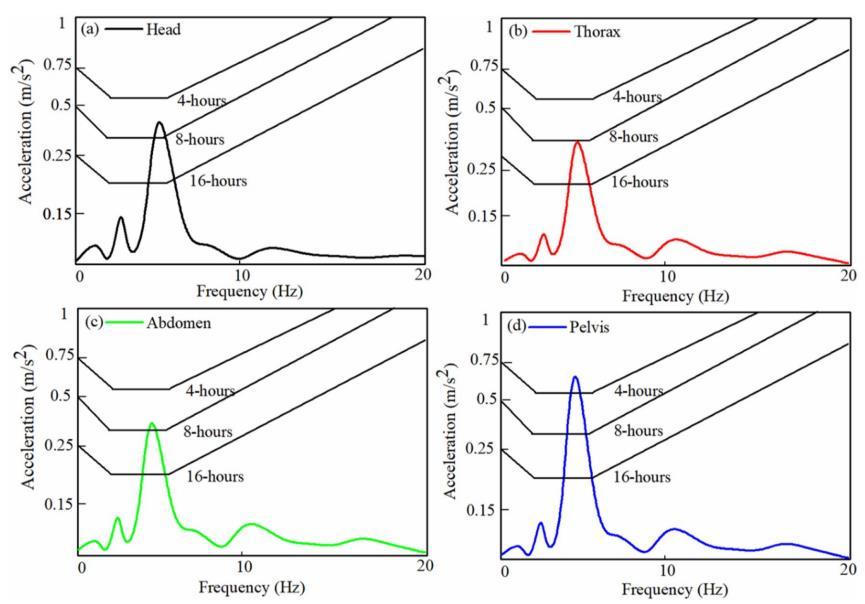
Thehumanbodyisacomplexphysicalandbiologicalsystem consistingofcriticalorgans.Eachorganhasitsowninherent limitingfrequencyunderwhichitperformsprecisely.From Figure 1 it may observe that all the critical organs (head, thorax,abdomen,andpelvis)representmaximumvibration transmissibilitybetween4–6Hz.UponcomparisonFigure1 it may observe that the input vibration has maximum influence on the head and least on the abdomen at the resonancefrequency.
Ridecomfortandhandlingarefundamentaltosuspension systemdesignanddevelopment[1,5],whiletheimportance of a cost effective and most efficient design cannot be
overlooked. Conventional suspension design involves complexdesigns,multipleprototypes,anditerativetuning, allofwhichcontributetoincreasedtimeandinvolvescost. Therefore,fine-tuningofsuspensionsystemsnotonlyfor dynamic performance but also for manufacturability, simplifieddesignandcost-efficiencyisessentialconsidering mass production of passenger vehicles. Performance and practicalityistobeconsideredduringsuspensiondesignso thatthebalanceinrideandhandlingcanbemaintainedat optimum level. To achieve the vehicle level targets along with optimized ride and handling can be done by using lightweightmaterialsandadvanceddampingtechnologies willbethekeyaspect.
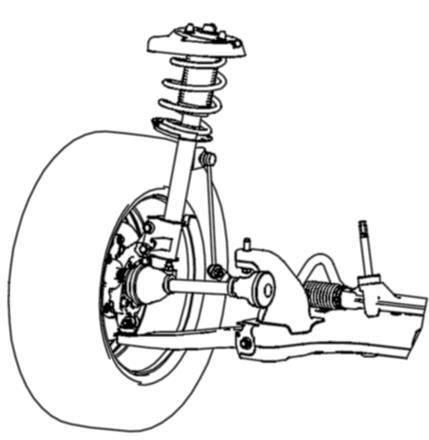
Macpherson strut suspension system is commonly considered in modern passenger vehicle design due to its benefits related to compact geometry, less space requirement and proven design. Macpherson strut suspensionsystemdesignhelpstoreduceunsprungmass, resultingimprovingridecomfortandhandling.Inaddition MacPhersonstrutoffersimprovedanti-divecharacteristics during braking and provides robust and high structural stiffness, which contributes to both vehicle stability and steeringprecision.
Inthefirstsectionofthisstudy,MATLABisusedtopredict thedampingforcesandvehiclebehavior for givenvehicle inputsasinitialdesignparameter.Suspensionparameters like spring stiffness, damping ratio, unsprung mass, and sprung mass are adjusted by performing no. of iterations analyzing vehicle characteristics. [3,4]. This experimental ride comfort predictions is performed using acceleration data measured at the floor level, in reference to the ISO standards[6].
Ridecomfortanalysisisperformedintheearlydesignphase byadjustingsuspensionparameters,followedbyaseriesof DOEinvirtualdomain.Thisapproachenhancesthedesign robustnessandreducesdevelopmentcosts byminimizing thenumberofphysicaliterations.Optimizeddesignislater manufacturedandtakenupforphysicaltesting.
In the second part of the study, vehicle-level tests were conducted using sensors to measure vibrations with the designintendedcomponentsinplace.Accelerometerswere mountedatdesignatedlocationsonthefloortocapturerealtime acceleration data. This study helps to analyses how vibrationaretransmittedtofloor.
Thesimulationresultsshowedbettercorrelationwiththe experimental data, demonstrating the validity of the proposedsuspensiondesign.
The design philosophy proposed in this paper starts with dampingforceestimationusingMATLABandconcludeswith meetingthetargetflooraccelerationcriteria.Thisapproach enablesdesignoptimizationwithfewerphysicaliterations byleveragingdigitalsimulations,makingitaneffectiveand
International Research Journal of Engineering and Technology (IRJET) e-ISSN: 2395-0056
Volume: 13 Issue: 03 | Mar 2026 www.irjet.net p-ISSN: 2395-0072
most efficient method for modern suspension design and development.
The design methodology was performed through the followingsteps:
1. Estimation of damping forces using MATLABMATLABisusedtoestimatedampingforce,wherethe damping coefficients are determined. This helps to understand the vehicle level dynamic responses with bodyheaveandbodypitchmotionstakeninaccount.
Keyparametersconsideredareasbelow:
Sprung and unsprung masses to understandvehicleweightdistribution.
Suspension spring stiffness and tyre stiffness.
Body mass, rotational inertia, center of gravity(COG)heightandlocation.
Methodology: The system dynamics were modeled in MATLAB to simulate vehicle motion,thedampingcoefficientswereadjusted tounderstandandachievethedesiredbehavior ofthevehicle.
ThisMATLABsimulationbasedapproachallowsforthe rapid identification of critical damping parameters which reduces the dependency on physical prototype andrigleveliterationsinearlystageoftheproductlife cycle.
2. Calculation Floor-Level Accelerations - To assist suspension tuning at the concept stage, floor-level accelerationswerecalculated.
Objective:Toidentifycriticalsuspensiontuning parameterswhichassiststomeetthefloorlevel acceleration.
Approach: MATLAB simulation is done to analyze results to understand the trends of suspensionparameterswhichhelpstofinetune the parameters in order to meet the target floor-levelaccelerationvalues.
3. VerificationandValidationofproposedsuspension design parameters -IterationsweredoneinMATLAB tounderstandthetrends–
Objective: To confirm that the proposed suspensionparameterseffectivelyreducefloor accelerations.
Validation Criteria: Simulated vertical accelerations at both the floor levels were evaluatedtoensurefloorlevelaccelerationto meettheacceptancevalue.
Approach:Thedynamicmodelwassubjectedto roadexcitationinputsandtheresponseswere analyzed to validate that the design meets requiredridecomfortrequirementsandinline withtheMATLABsimulationprediction.
4. Vehicle Level Measurements – Vehicle level measurements done to measure real-time floor level accelerationdataatkeydesignatedlocations.
Objective:Accelerationmeasuredatfloorlevel underactualdrivingconditions.
Instrumentation: At designated location, accelerometerswereinstalled.
Purpose:Furtherthisdatawasusedtoevaluate ride comfort and validate the effectiveness of thesuspensionparametersdeterminedthrough MATLABsimulation.
5. Correlation Analysis between Measured and MATLAB Data - An analysis is conducted to compare theresultsofverticalaccelerationatthefloorlevels.
Objective: To evaluate the accuracy and reliabilityoftheMATLABsimulationmodelby quantifying its alignment with experimental data.
Method: Time and frequency domain comparisonswereperformedforcorrelations andmodelvalidationisdone.
Outcome: A strong correlation between simulated and measured values validated the proposed suspension design and simulation model, demonstrating its effectiveness in achievingridecomfortandhandlingtargets.
Estimation of damping forces using MATLAB Damping forceisestimatedusingMATLABwhichinvolvessimulating the suspension dynamics to compute the forces to get the desired ride comfort and handling characteristics. Vehicle condition with sprung mass, unsprung mass, suspension stiffness,suspensiontraveletc.areconsideredforanalysis. MATLABcodinghasbeenestablishedtofacilitateprediction oftheforce–velocityrelationshipbasedonstudyingvehicle behaviorlikebodypitchandbodyheavemotionsandbody roll,whichservesasabasisforinitialdampertuning.
International Research Journal of Engineering and Technology (IRJET) e-ISSN: 2395-0056
Volume: 13 Issue: 03 | Mar 2026 www.irjet.net p-ISSN: 2395-0072
Pitchmotionisoneofthecriticalaspectofvehicledynamics, referringtotheoscillatorymotionofthevehiclebodyabout its lateral axis. This motion typically occurs during acceleration, braking, or when the vehicle traverses on unevenroadsurfaces.Resultinginthefrontandrearendsof thevehiclemoveinoppositeverticaldirections,producinga nose-upordownnature.Thisvibrationshaveaconsiderable impact on ride comfort, vehicle stability and occupant comfort.Therefore,itmustbecarefullyaddressedduringthe designandtuningofthesuspensionsystem.
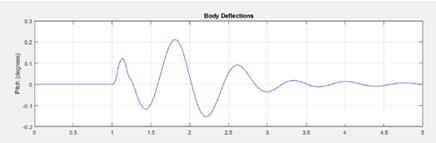
Figure 3.Pitch
Heavemotionreferstotheverticaltranslationalmotionof thevehiclebody,inwhichtheentirevehiclemovesupward anddownwardasacompleterigidmass.Heavevibrations influence ride comfort due to vertical acceleration felt by occupantswhichareinducedbyroadinstabilities.
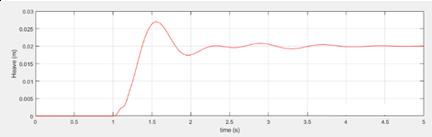
Figure 4. Heave
Bodyrollistherotationalmotionofthevehiclebodyaround itslongitudinalaxis,whenrunningfromfronttorearwhich typically occurs during cornering and lateral maneuvers. Thiscausesthevehicletoleanoutwardfromtheturndueto lateralmotionofthevehicle.Rollisinfluencedbysuspension geometry,rollcentreheight,andanti-rollstiffness.Itplaysa critical role in determining vehiclehandling, stability, and occupantcomfortduringturns.
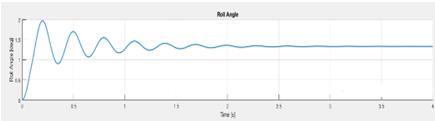
Figure 5. BodyRoll
Calculationoffloor-levelaccelerations –Stepstoachieve improvedperformance:-
Step 1: Calculation of Natural Frequency for Sprung and UnsprungMass-Thenaturalfrequencyforthesprungmass (fn−s)andunsprungmass(fn−us)
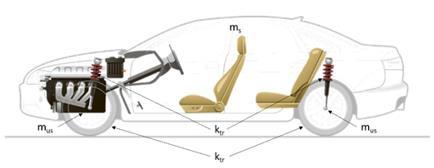
Figure 6. RoadVibrationtoFloorTransmission
Step 2 -Frequencyratio:-It‘sratioofunsprungfrequency (fn-us)tosprungfrequency(fn-s).Forbetteroccupantcomfort, higherfrequencyratioisidealcondition.Lowerfrequency ratios are considered undesirable, as they lead to higher peaks in the transmissibility ratio and require increased damping, indicating the need for suspension design improvements.
Step 3 -DampingRatio:Criticaldampingcoefficientisthe valueofdampingatwhichasystemmovesfromoscillatory to non-oscillatory motion. This represents the minimum dampingneededtopreventoscillationsafteradisturbance i.e.,thesystemreturnstoequilibriumasquicklyaspossible withoutoscillating.
Force transmissibility (Ts) is effectiveness of vibration isolation.AlowerTsindicatesbetterisolation,whichmeans lessforceistransmittedthroughthesystem.Forapassenger car,Floor–floortransmissibilityisawidelyusedmeasureto evaluatetheeffectivenessofvibrationisolationbetweenthe vehiclechassisandtheoccupant.Thisratiohelpsdetermine howmuchoftheroad-inducedvibration,originatingfrom tyre–road interaction and transmitted through the suspension and body structure, ultimately reaches the passengerthroughthefloor.
Excessivevibrationsresultsinfatigue,discomfort,andeven long-term health concerns. Hence, minimizing floor accelerations is essential for ensuring a smooth and comfortableride.Toensurethis,designiterationshasbeen performedouttooptimizesuspensiondesignparameters. Thisiterationsisdoneacrossarangeofdrivingconditions suchasstraight-linetravel,cornering,andbraking.Design iteration for suspension parameters are done basis on requiredvehicle'sdynamicresponsefromtheroadvibration forbetterpassengercomfort.Tosummarize,transmissibility isanimportantparametertodesignoptimizedsuspension andFlooringsystemsforthepassengercars,whichdirectly influences the occupant ride comfort and overall driving experience.
Graphshowsthetransmissibilityratioasafunctionofthe frequency ratio (r) for a damped vibrating system, with differentcurvesrepresentingvaryingdampingratios.
International Research Journal of Engineering and Technology (IRJET) e-ISSN: 2395-0056
Volume: 13 Issue: 03 | Mar 2026 www.irjet.net p-ISSN: 2395-0072
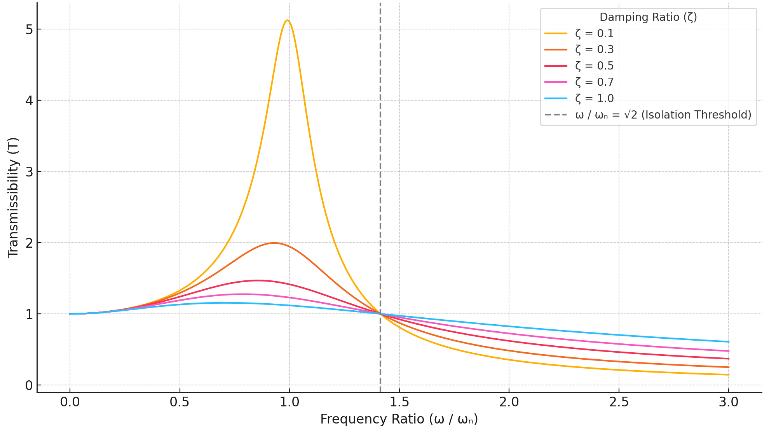
7.Transmissibility[7]
Step4:-Floorlevelacceleration:-Floorlevelaccelerationare derived by using the relation with transmitted force from roadcontacttothefloor.
Adesign-of-experiments(DOE)simulationswereperformed byvaryingsuspensionparameterssuchasspringstiffness, dampingcoefficient,andunsprungmass,alongwithbraking andcorneringconditions.
Spring Stiffness – Springstiffnessdirectlyeffectssystem's naturalfrequencyasitenhancesvibrationtransmissibilityto thepassenger.Higherthespringstiffnessresultsinincrease the suspension's natural frequency, leading to shift of the peaktransmissibilitytoahigherfrequencyband.Thisshift results in increased floor level accelerations, potentially worseningverticalvibrations.Belowtablesummarizesthe effectofspringstiffnessonfloorandFloorlevelacceleration.
Table 1 –SpringStiffness-DOETableforFloorlevel Accelerations
Table 2 –Dampingratio-DOETableforFloorlevel Accelerations
Dampingratio- ThedampingratioinFloor-levelvibration is a critical parameter influencing how vibrations are absorbed and transmitted to the occupant. A fine-tuned dampingratiohelpstoreducethefloorlevelaccelerationsby minimizing vibration in the range of system's natural frequency.However,excessivedampingcanintroduceride harshness,whileinsufficientdampingmayallowexcessive oscillations.
Sprung and Unsprung mass – Balancing of sprung and unsprung masses is crucial, as it ensures optimal mass distribution resulting in frequency shift and reduces transmissibility.Thisbalancingofmassdistributionresults in better suspension performance in terms of ride and passenger comfort. Suspension design with a lower transmissibility ratio has better isolation from road disturbances, resulting in the enhanced occupant comfort andbetteroverallvehicledynamics.
Table 3 –SprungMass-DOETableforFloorlevel Accelerations
Cornering Conditions – During cornering, the vehicle’s weightshiftstowardslateralside,causingatransferofthe sprung mass towards the outer wheel. To understand the effectduringcorneringcondition,it‘sessential toevaluate the impact of suspension parameters on floor level acceleration under these conditions. Later the results are verified through simulation to ensure accuracy and to supportthedesignoptimizationprocess.
The table below summarizes the effect of spring stiffnessanddampingratioduringcorneringconditions.
Table 4 –Cornering-DOETableforFloorlevel Accelerations
Conditions
International Research Journal of Engineering and Technology (IRJET) e-ISSN: 2395-0056
Volume: 13 Issue: 03 | Mar 2026 www.irjet.net p-ISSN: 2395-0072
acceleration (m/s2)
Effectivesuspensiondesignasmentionedinabovesection enhancesbothridecomfortandvehiclestability.
To verify the suspension design effectiveness with the optimized parameters, simulations are conducted in MATLAB to evaluate the model performance. MATLAB simulationsdonearetounderstandtheaccelerationlevelsat floor positions under various driving conditions. Model performance is checked with the optimized damping parameters and the suspension's ability to minimize vibrationtransmissionisevaluated.
Thisverificationstepiscrucialtoconfirmthatthetargetride acceleration levels are met before moving into part manufacturingwhichinturnreducesthephysicaliterations whichinvolveslotofcostandensuringalignmentwithrealworldperformanceexpectations.
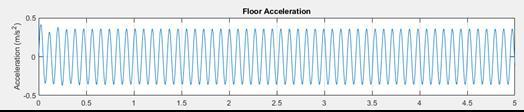
Vehicle-levelmeasurements- Vehicle-levelmeasurements were carried out using the design intended suspension componentstoevaluateperformance.
Driving Conditions: Ride tests conducted under various driving scenarios across different road patches, which also includes uneven surfaces and urban conditions, assisting to simulate realistic operationalconditions.
Instrumentation:Accelerometersmountingsdone at the floor levels to capture acceleration data duringthisdrivingconditions.
Results: Floor level acceleration as per above mentioned driving conditions were is in line to target.
Table 5 –Measuredaccelerationlevel–Floor
The finalized suspension design with the correct configuration was tested at the vehicle level to validate simulationaccuracy.
Approach:Vehicletestresultswerecomparedwith simulationresultsforfloorandFlooraccelerations.
Outcome: The correlation analysis demonstrated approximately 88% between the measured and simulated results, confirming the accuracy of the MATLABmodelandtheeffectivenessofthedesign approachtowardsthisoptimizationstudy.
Table 6 –Correlation
Thisresearchdemonstratesthatoptimizingfloorvibrations by tuning tire stiffness, spring stiffness, bush stiffness, dampingcoefficient,unsprungmassandsprungmass.
Targeted Comfort Thresholds - Achieving floor accelerations level within targetacross drivingconditions likenormal,cruising,cornering,andbrakingcreatesinhigh comfortbenchmark.
Effective Damping Strategies - Implementing the optimizeddamperdesignalongwithtunedsuspensionparts reducesvibrationsinthefloorstructure.
High Correlation between Simulation and physical results- This outcomes showed an 89% correlation with physicaltesting,underscoringthepracticalapplicabilityof themethodology.
Comprehensive Design Approach- The combined use of stiffness tuning, mass ratio adjustment, and damping optimization offers a holistic framework for suspension design, moving beyond isolated component tweaks in physical world with first time right design and reducing numberofiterationinphysicalworld.
International Research Journal of Engineering and Technology (IRJET) e-ISSN: 2395-0056
Volume: 13 Issue: 03 | Mar 2026 www.irjet.net p-ISSN: 2395-0072
1. Guruguntla, V., Lal, M., Ghantasala, G.S.P. et al. Ride comfort and segmental vibration transmissibility analysisofanautomobilepassengermodelunderwhole body vibration. Sci Rep 13, 11619 (2023). https://doi.org/10.1038/s41598-023-38592-x
2. Wong,J.Y.(2022)TheoryofGroundVehicles.JohnWiley & Sons, Hoboken. https://doi.org/10.1002/9781119719984.
3. Gillespie,T.D,Fundamentalsofvehicledynamics,1992.
4. Dixon,J.,"TheShockAbsorberHandbook,”(Warrendale, PA:SAEInternational,1999).
5. Heißing, Bernd & Ersoy, Metin. (2011). Chassis Handbook: Fundamentals, Driving Dynamics, Components,Mechatronics,Perspectives.10.1007/9783-8348-9789-3.
6. ISO2631,EvaluationofHumanExposuretoWholeBody Vibration,Part-1.1997.
7. Zhu,Y.;Yang,Q.;Liu,S.;Chai,K.DesignMethodologyand ApplicationDynamicsofCompactQuasi-ZeroStiffness Isolators. Appl. Sci. 2025, 15, 3478. https://doi.org/10.3390/app15073478.
2026, IRJET | Impact Factor value: 8.315 | ISO 9001:2008