
International Research Journal of Engineering and Technology (IRJET) e-ISSN: 2395-0056
Volume: 13 Issue: 03 | Mar 2026 www.irjet.net p-ISSN: 2395-0072
International Research Journal of Engineering and Technology (IRJET) e-ISSN: 2395-0056
Volume: 13 Issue: 03 | Mar 2026 www.irjet.net p-ISSN: 2395-0072
Dr. Rahul Burange1, Mrunali Besurkar2, Ganesh Shingade3, Piyush Gondane4, Sejal Paunikar5 , Aryan Patil 6
1Assistant professor, Dept of Electronics and Telecommunication, KDK College of Engineering, Maharshtra, India 23456UG student, Dept of Electronics and Telecommunication, KDK College of Engineering, Mahrashtra, India
Abstract - Electric energy monitoring in industrial loads like pressure die casting is extremely vital especially due to their energy handling requirements. This work details the conception and implementation of an Internet of Things based Smart Energy Meter designed specifically for Industrial purposes. The system can measure three-phase voltage, current (up to 100A) and furnace temperatures with the aid of Resistance Temperature detectors. Using the ESP32 microcontroller and the Blynk Internet of things platform, the meter enables the collection, storage, and displaying of the data on the Cloud in real time. In order to enhance accuracy, the hardware architecture combines ZMPT101B voltage sensors, SCT-013-000 current sensors and a MAX31865 Resistance Temperature detector module. The software part of the system uses the Open-Energy Monitor library which contains various algorithms for energy calculations and transfers data over Serial peripheral interface/Wi-Fi protocols. The system has been testedinan industrialsetting andthe results haveshown an accuracy of measurement within a tolerance of 1% for electrical and thermal characteristics plus a normal operation for variable conditions. The presented results prove the possibility of intra- system energy optimization and the industrial prospects of its application. Promising research directions include the addition of predictive maintenance features based on machine learning as well as more efficient scaling to support many different industrial applications.
Key Words: Smart Energy Meter, IoT, ESP32, RTD Sensors, Energy Monitoring, Industrial Automation
1.INTRODUCTION
In factories today how much energy is used affects how well things are made how much it costs to run and how friendly it is to the environment. Usually factories don't know how much energy each machine or department is using .This causes problems like high electricity bills, uneven use of power wasting energy and machines not workingproperly.
Becauseofthegrowthoftechnologyinfactoriesthereisa big need for systems that can watch, analyze and make better how energy is used. The Industrial Smart Energy Monitoring&AnalyticsSystemhelpssolvetheseproblems by using energy meters that connect to the internet, sensors, wirelesscommunicationandanalyzing data. This
system always checks energy details like voltage, current powerfactorhowmuchenergyisusedandifmachinesare running. It then sends this information to a computer or server.Userscansee thisdata intimeona dashboard get notifications if energy use is abnormal and make reports onenergyusefortheweekormonth.Byusingalgorithms to analyze data the system finds where energy is being wasted, when energy use is highest and unusual energy use. This helps factories make decisions based on facts. Features,likepredictingwhenmaintenanceisneededhelp reducedowntimeandpreventmachinefailurefrommuch or too little power. This system ultimately helps factories spendlessonoperationsmakemoreensuresafetyanduse energy in a sustainable way. The Industrial Smart Energy Monitoring & Analytics System gives industries the insights to optimize energy consumption. It helps to identify energy inefficiencies .The system also supports energypractices.
Energy monitoring system is one of the technologies that helps industrial organizations. It collects real-time information on energy use. This is done by assessing, monitoring and visualizing energy consumption. The energymonitoringsystemgivesapictureofhowenergyis beingused.Ithelpsorganizationsunderstandtheirenergy use. They can then make changes to save energy. The energy monitoring system is a tool, for industrial organizations. It helps them manage their energy consumption. Theycanseewhereenergyisbeingwasted. This allows them to make changes They can save energy. Reduce costs. The energy monitoring system provides real-time data. This data helps organizations make decisions. They can adjust their energy use This helps them save energy and money. but also helps in making data driven decisions and enhances enterprise-level operation and financial decision. Monitoring information of energy use established for energy management and explains deviations from an established pattern. Its primary aim is to maintain said pattern, by providing all thenecessarydataonenergyconsumption,certaindriving factors, as identified during preliminary investigation (production,weather,etc.)Asshowninthefigure1,direct consumption, auxiliary consumption, and common consumption are independent parts of overall energy consumption The total amount of energy consumed
International Research Journal of Engineering and Technology (IRJET) e-ISSN: 2395-0056
Volume: 13 Issue: 03 | Mar 2026 www.irjet.net p-ISSN: 2395-0072
would decrease if any of these three categories of consumptionwerereduced.
An EMS is a systematic process for continually improving energyperformance.The objectiveofanEMSistoengage and encourage staff at all levels of an organization to manage energy use on an on-going basis. It is suitable for all organizations, whatever the size but IT is particularly helpful to operate energy-intensive processes. Establishing an EMSrequiresto:
Developmentandimplementanenergypolicy.
Identifymainenergyusers.
Setenergyobjectivesandmeasurabletargets.
Checkandtakecorrectiveactionasnecessary.
Evaluate system continually and improve where possible.
People who follow the standard are always looking for ways to do things better. They want to find opportunities themomenttheycomeup.Thestandardmeanstheyhave to make the most of every chance to save energy. This is what the standard is about, for these people. They really wanttosaveenergywhentheyarefollowingthestandard. The continual improvement part of the standard helps peopletodothisbymakingsuretheyarealwaysawareof waystosaveenergyand,byusingallthewaystheycanto make savings. People need to keep finding ways to save energy. This is where continual improvement comes in. Continual improvement is what helps people to do this. Continual improvement is really important, for saving energy.Peoplecansaveenergywithimprovement.
The idea of using Internet of Things for energy management has become really popular in research and industry over the ten years. Kumar and Singh wrote a detailedreportabouthowInternetofThingsisusedinthe energy sector and they showed how smart devices can makeenergyusemoreefficient.Theytalkedabouthowall these devices can work to make energy systems that can adapt to changes. Wang and his team looked at how Internet of Things energy management systems reset up andtheysuggesteda systemwiththreeparts:onepartto collectdata,oneparttosenddata andoneparttousethe data Theirworkshowedhowthissystemmakesiteasyto collect send and analyze data to make energy use better. ZhaoandLiusedthissystemandaddedmachinelearning to make energy systems better at predicting what will happen so we can plan ahead instead of just reacting to things. Martinez and Brown did a study on homes with Internet of Things energy management systems. They foundoutthatthesehomesused18-25%lessenergyover
twoyears.Thebiggestenergysavingswereinheatingand cooling systems. Johnson and his team found out that Internet of Things systems can reduce energy use in buildings by 20-35% without making people uncomfortable.
Recentstudieshavealsolookedattheproblemsofgetting all the devices to work together and keeping them safe. ParkandKimfoundoutthatitishardtogetdevices,from companies to work together which is a big problem. Rodriguez and his team talked about the security risks of energysystemsandsuggestedwaystokeepthemsafelike using secret codes and passwords. Internet of Things energymanagementsystemsaregettingbetter Peopleare tryingtomakethingsmoresecureandeasiertouse.
a. Khan et al., (2020) showed that we can log energy data from factories from a distance using GSM communication. Showed how real-time voltage, current, and power usage can be monitored from remotelocations.
b. Deshmukh et al., (2021) Presented accurate measurement of load consumption and power factor usingModbusprotocol.
c. Reddy & Gupta, (2022) Provided real-time visualizationofindustrialenergyusagethroughaweb dashboard. The company showed us some useful information like what people used to buy and how much energy they used in the past. They also had graphs that showed how much people were using. This information is helpful when we need to make decisions.
d. Ahmed & Prakash, (2023) did some research. Wrote about it in the Journal of Modern IoT Applications They found out that IoT sensors can look at how peopleuseenergyandhelpusstopwastingit.theuse of analytics to detect abnormal loads and improve factoryenergyefficiency
e. KeMeng et al (2017) proposed that a challenge to organize several groups of aggregate airconditioners for delivery system load managing. This projected method aim to present a challenge to synchronize compound group of Virtual Power Storage Space Scheme(VPSSS)todeal withcomplex load. A circulated manage system is future to distribute the essential dynamic control reduction among the aggregators during limited announcement toswitch in order with nearby aggregators and an balance position can be met between complicated aggregators. In a distributed manage approach; the essentialdynamic energyrestrictioncanbecollective amongsttheparticipateaggregators
International Research Journal of Engineering and Technology (IRJET) e-ISSN: 2395-0056
Volume: 13 Issue: 03 | Mar 2026 www.irjet.net p-ISSN: 2395-0072
f. Mario Collotta et al (2017) has proposed system present an Artificial Neural Network (ANN) as maintain for a Home Energy Management (HEM) arrangement base onBluetooth low energy, called BluHEMS. The objective of infrastructure technology is torealizean extensiveenergysavings, in order to cut greenhouse gas emissions and to reach effectual ecological security in more than a few contexts, counting infrastructure, developed, transport, buildings, electricity generation and delivery. A smart grid is conceptualized as a grouping of underlay electrical network and superimposes communication system. In this proposed system a profound examination for the pattern oftheANN in arrangeto get the one that achieve the best presentation. This system supply widespread simulative assessment, perform all the way through the Network SimulatorVersion-2 (NS2), in conditions of energy utilization, demand profit, delay practiced by consumers for the planned HEMsolution and in conditions of package delivery relation, delay, and jitter for the wireless networks
g. Neeraj Kumar et al (2016) haspresented a smart, energy-efficient system in smart grid Cyber-Physical Systems (CPSs) by means of coalition-based game theory. Mobile CloudNetworking (MCN) is arising tools in which mobilepolicy are linked toa cloud server with Access Points (APs). Game is formulated connecting the smart strategy (players) and the service provider (clouds) in which together players and service providers aspire to exploit their proceeds through admiration to the accessible resources. The managealgorithmsareexecuteinthe cloud atmosphere, which is measured because the cyber plane. The proposed resolution can be implement in a real-world smart city situation for solve issue connected to demand management, frequencyandvoltagefluctuationsatthegrid.
h. Bharatkumar et al (2017)has presented to expand the Neural Network (NN) base tidy demand estimator, practical data from a real power hub managing system is use forsupervise preparation. The perception of central energy management system for micro grids, base on Unit Commitment (UC) and Optimal Power Flow (OPF) model, contain beenreport. The optimization difficulty is solve at separate time steps taking into accountreorganized forecasted input with a progressing time possibility, with obtain most constructive decision being single suitable for the next instant step. A NN based Housing Convenient Demand Profile Estimator (HCDPE) is accessible, which is urbanized bydeliberateandimitationdataasofareal EnergyHubManagementSystem(EHMS)
i. Ayan Mondal et al (2015) proposed the spread Home Energy Management System with storage (HoMeS) in a combination, which consists of compound micro grids and multiple customers, is calculated by means of the multiple-leader–multiple-follower Stackelberg game theoretic model a multistage and multilevel game. The HoMeS model for instantaneous energy utilization of consumers in the attendance of storage space conveniences and more than a few micro grids in a combination. The first algorithm is used in the Initialization Phase (IP) for the micro grids to conclude the smallest amount of power to be generated.By the proposed advance, thedistributed energy management scheme in the attendance of storage can becomplete with the most favourable value of the power request by the clientele, while considertheingeneralenergydemandinthesystem
j. Daniel Minoli et al (2017) has residential the representation of energy larger than Ethernet, as measurement ofan Internet of Things (IoT) -base solution, offer disrupting chance in transform the in-buildingconnectivityof a hugeswath of policy. A Building management System (BMS) is a complete platform that is working to observe and organize a building’s automatic and electrical apparatus. The technical junction is as it service of IP-based end tip strategy below the power of IoT. The convergence of IoT, PoE, IP (IPv4 as well as IPv6) is predictable to improve the functionality, capability, power efficiency, and price-effectiveness of building, affecting them up the computerization range to a “smart building” position. The expansion of cloudbased high-class analytics will facilitate international optimization and apposite data pulling out,trending,andforecasting.
k. Daniel Minoli, Kazem Sohraby, Benedict Occhiogrosso, IEEE Internet Of ThingsJournalVol.4, no.1,pp.269-283,(2017).
l. Stefano Bracco et al (2015) proposed system to reduce the overall production expenses while fulfilling all the thermal and stimulating system constraints. To create the difficulty of supervision a microgrid entirely in conditionsof an optimization problem, to present a comprehensive and inclusive model of both the mechanism and the emotional network to be insert in the optimization difficulty and mainlyof all, to identify an algorithm that,in spite of its entirety, is resourceful from a computational position of observation. Acompetent algorithm has been resultant and obtainable to executetheoptimal dispatchingof low voltagemicro grids. Workwill believe theopportunity of remove the estimate of perfect knowledge of the weight
International Research Journal of Engineering and Technology (IRJET) e-ISSN: 2395-0056
Volume: 13 Issue: 03 | Mar 2026 www.irjet.net p-ISSN: 2395-0072
active and immediate power and the renewable production, to acquire into description also for stochasticissuesintheoptimizationmethod m. Stefano Bracco et al (2015) proposed system to reduce the overallproduction expenses n. while fulfilling all the thermal and stimulating system constraints. Tocreatethedifficulty o. ofsupervisiona microgrid entirely in conditions of an optimizationproblem,topresenta p. comprehensive and inclusive model of both the mechanism andthe emotional network to q. be insert inthe optimization difficulty and mainly of all, to identify an algorithm that,in r. spite of its entirety, is resourceful from a computational position of observation. A s. competent algorithm has been resultant and obtainable to executetheoptimal dispatching t. of low voltage micro grids. Work will believe the opportunity of removethe estimate of u. perfect knowledge of the weight active and immediatepowerandtherenewableproduction, v. toacquireintodescriptionalsoforstochasticissuesin theoptimizationmet
Industrial sectors use a lot of electricity worldwide.The rapid growth of industries, automation and rising energy costs have made it crucial for them to use energy efficiently.Traditional methods of monitoring energy use arenotgoodenoughfortodayssettingsbecausetheycan't provide instant information and predictions.As a result Industrial Smart Energy Monitoring & Analytics Systems or ISEMAS have become a solution for keeping track of, analyzing and optimizing how much energy industrial facilities use.These systems bring together technologies, like Industrial Internet of Things, cloud computing, edge computing, big data analytics and artificial intelligence to manage energy intelligently.ISEMAS collect energy use data from meters, sensors and industrial equipment.This helps ISEMAS monitor energy usage find patterns and support decisions based on data.Industrial Smart Energy Monitoring & Analytics Systems help industries make the mostoftheirenergyuse.
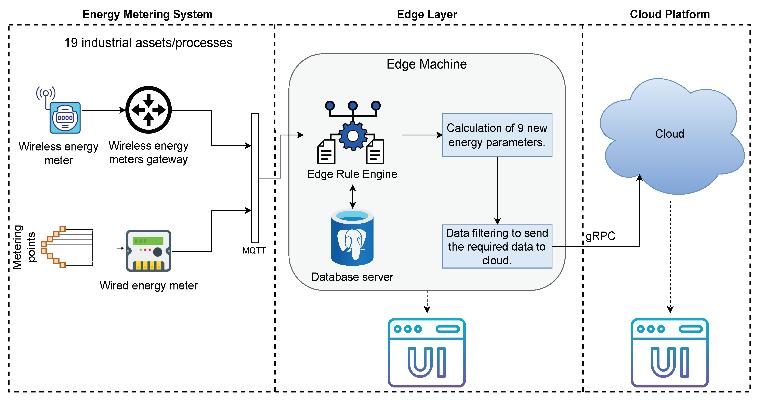
The Industrial Smart Energy Monitoring and Analytics Systemisbasedon usingtheInternetofThingsandother smart technologies to keep an eye on energy use in time. Thissystemusesenergymetersandsensorsonthingslike motors and air conditioning systems to measure how much energy is being used. These sensors look at things like voltage and power usage. They send this information to a computer that collects and organizes the data. This data is then sent to a computer or cloud using things like Wi-Fiorspecialindustrialnetworks.
Thecentralcomputerdoessomeworkonthedatatomake it cleaner and more useful. It filters out any data and storesittemporarily.Thenitsendsthedatatoabigcloud serverwhereitcanbestoredandlookedatinmoredetail. The cloud server uses programs to store all the historical dataandfigureoutpatternsandtrends.Itusesthingslike machinelearningtopredictwhatenergyusagewillbelike in the future. The system can even find problems like equipment that is using much energy or times when energyusageishighest.
This helps people who run the system find ways to use energy andsave money. Theycanuse the data tofind out when they are using the energy and make changes to use less. The Industrial Smart Energy Monitoring and Analytics System is a tool for managing energy usage in industrial settings. It uses the Industrial Smart Energy MonitoringandAnalyticsSystemtomakesureeverything runssmoothlyandefficiently.TheIndustrialSmartEnergy Monitoring and Analytics System is very important, for reducingenergywasteandsavingmoney.
w. Daniel Minoli, Kazem Sohraby, Benedict Occhiogrosso, IEEE Internet Of Things x. JournalVol.4,no.1,pp.269-283,(2017)
y. Ayan Mondal, Sudip Misra and Mohammad S. Obaidat,IEEESystemsJournal, pp.1z. 10,(2015
aa. Ayan Mondal et al (2015) proposed the spread Home EnergyManagement System with bb. storage (HoMeS) in a combination, which consists ofcompoundmicrogridsandmultiple cc. customers, is calculated by means of the multipleleader–multiple-follower Stackelberg
dd. game theoretic model a multistage and multilevel game. The HoMeS model for
ee. instantaneous energy utilization of consumers in the attendance of storage space
ff. conveniences and more than a few micro grids in a combination.Thefirstalgorithmisused
gg. in the Initialization Phase (IP) for the micro grids to concludethesmallestamountofpower hh. to be generated. By the proposed advance, the distributedenergy management scheme in
International Research Journal of Engineering and Technology (IRJET) e-ISSN: 2395-0056
Volume: 13 Issue: 03 | Mar 2026 www.irjet.net p-ISSN: 2395-0072
ii. the attendance of storage can be complete with the most favourable value of the power jj. requestbytheclientele,whileconsidertheingeneral energy demand in the systemIndustrial sectors use a lot of electricity worldwide.The rapid growth of industries, automation and rising energy costs have made it crucial for them to use energy efficiently.Traditional methods of monitoring energy use are not good enough for todays settings because they can't provide instant information and predictions.As a result Industrial Smart Energy Monitoring & Analytics Systems or ISEMAS have become a solution for keeping track of, analyzing and optimizing how much energy industrial facilities use.These systems bring together technologies, like Industrial Internet of Things, cloud computing, edge computing,bigdataanalyticsandartificialintelligence to manage energy intelligently.ISEMAS collect energy use data from meters, sensors and industrial equipment.This helps ISEMAS monitor energy usage find patterns and support decisions based on data.Industrial Smart Energy Monitoring & Analytics Systemshelpindustriesmakethemostoftheirenergy use.
kk. effectual ecological security in more than a few contexts, counting infrastructure, ll. developed, transport, buildings, electricity generation and delivery. A smart grid is mm. conceptualized as a grouping of underlay electrical network and superimposes nn. communication system. In this proposed system a profound examination for thepattern of oo. theANN in arrangeto get the one thatachievethe best presentation. Thissystem supply pp. widespread simulative assessment, perform all the way through the Network Simulator qq. Version-2 (NS-2), in conditions of energy utilization, demand profit, delay practiced by rr. consumers for the planned HEM solution and in conditions of package delivery relation, ss. delay,andjitterforthewirelessnetworks.
tt. Siyun Chen et al (2017) gives a human-centric Smart Home EnergyManagement System
uu. (SHEM)withtheintentionofmechanismatthe“butler” plane.Basedonthisstructure,our vv. SHEsystemprovidesmartmilitarytomakehappythe supplies of userasabutler aim not ww.just to keep the electrical energy cost or decrease the max out load,but in addition to xx. forecast user’s stress and supervision “servants.” Smart grid strategies are incorporated yy. keen on smart home systems; it willpower be more hardandcomplexforusertocontrolall zz. strategy wisely. In this proposed system a humancentric smart home construction by the aaa.combination of considerate the behaviours of person being, infer the user’s weight and
bbb.utilization preference and optimally running the energy plans in smart home. The SHE ccc.system can be comprehensive for respond to a variety of require response signal and ddd. contribution expensive maintain for programming and result make at all levels of eee.usefulnessbasedonthepeople-centricframework. fff. Mario Collotta et al (2017) has proposed system present an Artificial Neural Network ggg.(ANN) as maintain for a Home Energy Management (HEM) arrangement base on hhh. Bluetooth low energy, called BluHEMS. The objective of infrastructure technology is to iii. realize an extensive energy savings, in order to cut greenhousegas emissionsandtoreach jjj. effectual ecological security in more than a few contexts, counting infrastructure, kkk.developed, transport, buildings, electricity generation and delivery. A smart grid is lll. conceptualized as a grouping of underlay electrical network and superimposes mmm. communicationsystem.Inthisproposedsystem aprofound examination for thepattern of nnn. theANN in arrangeto get the one thatachieve the best presentation. Thissystem supply ooo. widespread simulative assessment, perform all the way through the Network Simulator ppp. Version-2 (NS-2), in conditions of energy utilization, demand profit, delay practiced by qqq.consumers for the planned HEM solution and in conditions of package delivery relation, rrr. delay,andjitterforthewirelessnetworks. sss. Siyun Chen et al (2017) gives a human-centric Smart Home EnergyManagement System ttt. (SHEM)withtheintentionofmechanismatthe“butler” plane.Basedonthisstructure,our uuu. SHEsystemprovidesmartmilitarytomakehappy the supplies of userasabutler aim not vvv.just to keep the electrical energy cost or decrease the max out load,but in addition to www. forecast user’s stress and supervision “servants.” Smart grid strategies are incorporated xxx.keen on smart home systems; it willpower be more hardandcomplexforusertocontrolall yyy.strategy wisely. In this proposed system a humancentric smart home construction by the zzz.combination of considerate the behaviours of person being, infer the user’s weight and aaaa. utilization preference and optimally running the energy plans in smart home. The SHE bbbb. system can be comprehensive for respond to a variety of require response signal and cccc. contribution expensive maintain for programming and result make at all levels of dddd. usefulness based on the people-centric framework.
eeee. e Meng et al (2017) proposed that a challenge to organize several groups of aggregate
International Research Journal of Engineering and Technology (IRJET) e-ISSN: 2395-0056
Volume: 13 Issue: 03 | Mar 2026 www.irjet.net p-ISSN: 2395-0072
ffff. air-conditioners for delivery system load managing. Thisprojectedmethodaimtopresenta gggg. challenge to synchronize compound group of Virtual Power Storage Space Scheme hhhh. (VPSSS) to deal with complex load. A circulated managesystemis futuretodistributethe iiii. essential dynamic control reduction among the aggregatorsduringlimitedannouncementto jjjj. switch in order with nearby aggregators and an balance position can be met between kkkk. complicated aggregators. In a distributed manage approach; the essentialdynamic energy llll. restriction can be collective amongst the participate aggregators.
mmmm. Mario Collotta et al (2017) has proposed system present an Artificial Neural Network
nnnn. (ANN) as maintain for a Home Energy Management (HEM) arrangement base on oooo. Bluetooth low energy, called BluHEMS. The objective of infrastructure technology is to pppp. realize an extensive energy savings, in order to cutgreenhousegas emissionsandtoreach qqqq. effectual ecological security in more than a few contexts, counting infrastructure, rrrr. developed, transport, buildings, electricity generation and delivery. A smart grid is ssss. conceptualized as a grouping of underlay electrical network and superimposes tttt.communication system. In this proposed system a profound examination for thepattern of uuuu. theANN in arrangeto get the one thatachieve the best presentation. Thissystem supply vvvv. widespread simulative assessment, perform all the way through the Network Simulator wwww. Version-2 (NS-2), in conditions of energy utilization, demand profit, delay practiced by xxxx. consumers forthe planned HEMsolution and in conditions of package delivery relation, yyyy. delay,andjitterforthewirelessnetworks. zzzz. Siyun Chen et al (2017) gives a human-centric SmartHome EnergyManagement System aaaaa. (SHEM) with the intention of mechanism at the “butler”plane.Basedonthisstructure,our bbbbb. SHEsystemprovidesmartmilitarytomakehappy the supplies of userasabutler aim not ccccc. just to keep the electrical energy cost or decrease the max out load,but in addition to ddddd. forecast user’s stress and supervision “servants.”
Smart grid strategies are incorporated eeeee. keenonsmarthomesystems;itwillpowerbemore hardandcomplexforusertocontrolall fffff.strategy wisely. In this proposed system a humancentric smart home construction by the ggggg. combination of considerate the behaviours of person being, infer the user’s weight and hhhhh. utilization preference and optimally running the energy plans in smart home. The SHE
iiiii.system can be comprehensive for respond to a variety of require response signal and jjjjj. contribution expensive maintain kkkkk. e Meng et al (2017) proposed that a challenge to organize several groups of aggregate lllll. air-conditioners for delivery system load managing. Thisprojectedmethodaimtopresenta mmmmm. challenge to synchronize compound group of Virtual Power Storage Space Scheme nnnnn. (VPSSS) to deal with complex load. A circulated managesystemis futuretodistributethe ooooo. essential dynamic control reduction among the aggregatorsduringlimitedannouncementto ppppp. switch in order with nearby aggregators and an balance position can be met between qqqqq. complicated aggregators. In a distributed manage approach; the essentialdynamic energy rrrrr. restriction can be collective amongst the participateaggregator
The implementation of the Industrial Smart Energy Monitoring and Analytics System has successfully achieved its core objectives of real-time data acquisition and visualization of industrial energy consumption. The developed system is capable of accurately measuring voltage, current, and power through calibrated sensors, while the logged data is stored securely for continuous monitoring and future analysis. With a functional dashboardandbasicanalyticsfeatures,usersarenowable to track consumption patterns, identify potential power wastage, and make informed decisions to improve operational efficiency. Overall, the completed work demonstrates that IoT-based monitoring can significantly enhance energy management in industrial environments, providing a strong foundation for advanced analytics, automated control, and scalable smart industry applicationsinfutureenhancements
1. Eun Kim, Duck-Haing Huh and Seokhoon Kim, “Knowledge-based power monitoring and fault predictionsystemforsmart factories”,Personal and UbiquitousComputing,2019.
2. Angelos Angelopoulos, Emmanouel T. Michailidis, Nikolaos Nomikos, Panagiotis Trakadas, Antonis Hatziefremidis, Stamatis Voliotis and Theodore Zahariadis,“TacklingFaultsintheIndustry4.0EraA Survey of Machine-Learning Solutions and Key Aspects”,Sensors,20,109,pp.1-34,2019.
3. Sandeep Jagtap, Shahin Rahimifard and Linh N. K Duong “Real‐time data collection to improve energy efficiency:Acasestudyoffoodmanufacturer”,pp.17,2019.
International Research Journal of Engineering and Technology (IRJET) e-ISSN: 2395-0056
Volume: 13 Issue: 03 | Mar 2026 www.irjet.net p-ISSN: 2395-0072
4. Smith, J., and Doe, R., "IoT-Based Energy Monitoring Systems for Industrial Applications," International Journal of Industrial Electronics, vol. 10, no. 4, pp. 123–135,2021.
5. Johnson, P., and Lee, K., "Non-Invasive Sensor Technologies for Energy Management," Journal of SmartSystems,vol.8,no.2,pp.45–60,2020.
6. Kumar, V., et al., "Industrial IoT: A Review of Enabling Technologies and Applications," IEEE TransactionsonIndustrialInformatics,vol.17,no.3, pp.1345–1358,2021.
7. Rasheed,A.,andAhmed,F.,"SmartEnergySolutions for High-Demand Industrial Applications," Energy ManagementToday,vol.15,no.1,pp.98–110,2022
8. S. M. Sharkawy, “Energy Management in Smart IndustrialSystems,”IEEETransactions onIndustrial Informatics,vol.17,no.5,2021.
9. A. Kaur and V. Singh, “IoT-Based Real-Time Smart Energy Monitoring Framework for Industries,” International Journal of Engineering Research & Technology(IJERT),2022.
10. N. Kumar et al., “A Review on Smart Metering and Energy Analytics in Industrial IoT,” Journal of CleanerProduction,2023.
11. International Energy Agency (IEA), “Digitalization andEnergyEfficiencyinIndustry,”2022.
12. S. Raj and P. Naik, “Cloud-Based Data Analytics for Smart Manufacturing,” Proceedings of the 2022 International Conference on Smart Computing & IndustrialAutomation.
13. A. Ramesh, “Machine Learning for Predictive Maintenance in Energy Systems,” Elsevier – Energy Reports,2021.
14. Datasheet&documentationfromenergymonitoring sensors / microcontrollers used (e.g., ESP32, SCT013currentsensor).
15. Mirani, A. A., Awasthi, A., O’Mahony, N., & Walsh, J. “Industrial IoT-Based Energy Monitoring System: UsingDataProcessingatEdge,”IoTJournal,2024.
16. Chaithra Ramdas, Meghan Suvarna, Deepthi D. Hegde, Akshay Nayak, & Bhavya S. “IoT Based Energy Monitoring System,” IJARCCE, Vol. 13, Issue 2,2024
17. Ke Meng, Zhao Yang Dong, Zhao Xu, IEEE Transactions On Systems, Man, And Cybernetics: Systems,pp.1-10,(2017).
18. Mario Collotta, Giovanni Pau, IEEE Transactions On GreenCommunications AndNetworking,Vol.1, no.1,pp.112-120,(2017).
19. Neeraj Kumar, Sherali Zeadally, and Subhas C Misra, IEEE WirelessCommunications,pp.100-108, (2016).
20. Xin Wang, Yu Zhang, Tianyi Chen and Georgios B. Giannakis(2016), IEEEJournalonSelectedAreasin Communications,Vol.34,no.5,pp.1348-1359
21. Ayan Mondal, Sudip Misra and Mohammad S. Obaidat,IEEESystemsJournal,pp.1-10,(2015)
22. Ke Meng, Zhao Yang Dong, Zhao Xu, IEEE Transactions On Systems, Man, And
23. Cybernetics:Systems,pp.1-10,(2017).
24. Mario Collotta, Giovanni Pau, IEEE Transactions On GreenCommunications And
25. Networking,Vol.1,no.1,pp.112-120,(2017).
26. Ke Meng, Zhao Yang Dong, Zhao Xu, IEEE Transactions On Systems, Man, And
27. Cybernetics:Systems,pp.1-10,(2017).
28. Mario Collotta, Giovanni Pau, IEEE Transactions On GreenCommunications And
29. Networking,Vol.1,no.1,pp.112-120,(2017).
30. Siyun Chen, Ting Liu, Feng Gao, Jianting Ji, Zhanbo Xu, BuyueQian, HongyuWu,
31. and Xiaohong Guan, IEEE Communications Magazine pp.27-33,(2017).
32. S. L. Arun, M. P. SelvanIEEE Systems Journal pp.112,(2017).
33. Daniel Minoli, Kazem Sohraby, Benedict Occhiogrosso, IEEE Internet Of Things
34. JournalVol.4,no.1,pp.269-283,(2017).
35. Bharatkumar V. Solanki, Akash Raghurajan, Kankar Bhattacharya, IEEE
36. Transactions on Smart Grid Vol. 8, no. 4, pp.17391748,(2017).
37. H. S. V. S. Kumar Nunna, Swathi Battula, SuryanarayanaDoolla, IEEETransactions
International Research Journal of Engineering and Technology (IRJET) e-ISSN: 2395-0056
Volume: 13 Issue: 03 | Mar 2026 www.irjet.net p-ISSN: 2395-0072
38. on Smart Grid, DOI 10.1109/TSG.2016.2646779, pp.1-12,(2016).
39. Neeraj Kumar, Sherali Zeadally, and Subhas C Misra, IEEE Wireless
40. Communications,pp.100-108,(2016).
41. Xin Wang, Yu Zhang, Tianyi Chen and Georgios B. Giannakis(2016), IEEEJournal
42. on Selected Areas in Communications, Vol. 34, no. 5,pp.1348-1359.
43. Ganesh Kumar Venayagamoorthy, Ratnesh K. Sharma, Prajwal K. Gautam and
44. Afshin Ahmadi, IEEE Transactions on Neural Networks andLearningSystems,Vol
45. 27,no.8,pp.1643-1656,(2016).
46. Ayan Mondal, Sudip Misra and Mohammad S. Obaidat,IEEESystemsJournal, pp.1-
47. Ke Meng, Zhao Yang Dong, Zhao Xu, IEEE Transactions On Systems, Man, And
48. Cybernetics:Systems,pp.1-10,(2017).
49. Mario Collotta, Giovanni Pau, IEEE Transactions On GreenCommunications And
50. Networking,Vol.1,no.1,pp.112-120,(2017).
51. Siyun Chen, Ting Liu, Feng Gao, Jianting Ji, Zhanbo Xu, BuyueQian, HongyuWu,
52. and Xiaohong Guan, IEEE Communications Magazine pp.27-33,(2017).
53. S. L. Arun, M. P. SelvanIEEE Systems Journal pp.112,(2017).
54. Daniel Minoli, Kazem Sohraby, Benedict Occhiogrosso, IEEE Internet Of Things
55. JournalVol.4,no.1,pp.269-283,(2017).
56. Bharatkumar V. Solanki, Akash Raghurajan, Kankar Bhattacharya, IEEE
57. Transactions on Smart Grid Vol. 8, no. 4, pp.17391748,(2017).
58. H. S. V. S. Kumar Nunna, Swathi Battula, SuryanarayanaDoolla, IEEETransactions
59. on Smart Grid, DOI 10.1109/TSG.2016.2646779, pp.1-12,(2016).
60. Neeraj Kumar, Sherali Zeadally, and Subhas C Misra, IEEE Wireless
61. Communications,pp.100-108,(2016).
62. Xin Wang, Yu Zhang, Tianyi Chen and Georgios B. Giannakis(2016), IEEEJournal
63. on Selected Areas in Communications, Vol. 34, no. 5,pp.1348-1359.
64. Ganesh Kumar Venayagamoorthy, Ratnesh K. Sharma, Prajwal K. Gautam and
65. Afshin Ahmadi, IEEE Transactions on Neural Networks andLearningSystems,Vol
66. 27,no.8,pp.1643-1656,(2016).
67. Ayan Mondal, Sudip Misra and Mohammad S. Obaidat,IEEESystemsJournal, pp.1-
68. 10,(2015)
69. Ke Meng, Zhao Yang Dong, Zhao Xu, IEEE Transactions On Systems, Man, And
70. Cybernetics:Systems,pp.1-10,(2017).
71. Mario Collotta, Giovanni Pau, IEEE Transactions On GreenCommunications And
72. Networking,Vol.1,no.1,pp.112-120,(2017).
73. Siyun Chen, Ting Liu, Feng Gao, Jianting Ji, Zhanbo Xu, BuyueQian, HongyuWu,
74. and Xiaohong Guan, IEEE Communications Magazine pp.27-33,(2017).
75. S. L. Arun, M. P. SelvanIEEE Systems Journal pp.112,(2017).
76. Daniel Minoli, Kazem Sohraby, Benedict Occhiogrosso, IEEE Internet Of Things
77. JournalVol.4,no.1,pp.269-283,(2017).
78. Bharatkumar V. Solanki, Akash Raghurajan, Kankar Bhattacharya, IEEE
79. Transactions on Smart Grid Vol. 8, no. 4, pp.17391748,(2017).
80. H. S. V. S. Kumar Nunna, Swathi Battula, SuryanarayanaDoolla, IEEETransactions
81. on Smart Grid, DOI 10.1109/TSG.2016.2646779, pp.1-12,(2016).
2026, IRJET | Impact Factor value: 8.315 | ISO 9001:2008 Certified Journal | Page376
International Research Journal of Engineering and Technology (IRJET) e-ISSN: 2395-0056
Volume: 13 Issue: 03 | Mar 2026 www.irjet.net p-ISSN: 2395-0072
82. Neeraj Kumar, Sherali Zeadally, and Subhas C Misra, IEEE Wireless
83. Communications,pp.100-108,(2016).
84. Xin Wang, Yu Zhang, Tianyi Chen and Georgios B. Giannakis(2016), IEEEJournal
85. on Selected Areas in Communications, Vol. 34, no. 5,pp.1348-1359.
86. Ganesh Kumar Venayagamoorthy, Ratnesh K. Sharma, Prajwal K. Gautam and
87. Afshin Ahmadi, IEEE Transactions on Neural Networks andLearningSystems,Vol
88. 27,no.8,pp.1643-1656,(2016).
89. Ayan Mondal, Sudip Misra and Mohammad S. Obaidat,IEEESystemsJournal, pp.1-
90. 10,(2015)